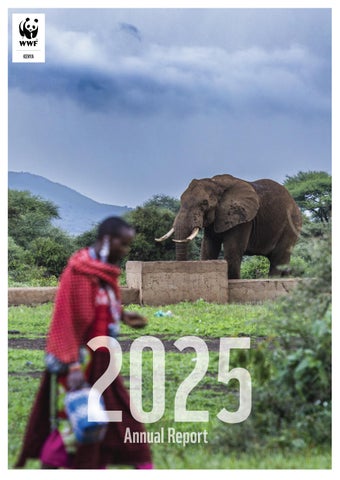
Annual Report 2025

Page 1


Phone:

Email:

Our Vision

We are on a mission A healthy natural environment supporting people and sustainable development in Kenya

To stop degradation of our planet’s natural environment, and build a future in which humans live in harmony with nature

Designed by Anthony Diang’a - WWF-Kenya
Edited and Reviewed by Joel Muinde - WWF-Kenya

MESSAGE FROM OUR CHAIRMAN

FY25 has been a year of transition, reflection, and renewed commitment to conservation impact. As Chair of the WWF-Kenya Board, I am honoured to share this Annual Report, a reflection of the organization’s resilience, innovation, and dedication to nature and people.

This year, WWF-Kenya continued to deliver results that matter. From the growth in Kenya’s black rhino population to the restoration of over 7,000 hectares of degraded land, the organization has remained focused on its mission, guided by six strategic goals.

The Board has remained actively engaged in ensuring that WWF-Kenya’s governance structures, strategic direction, and resource stewardship are aligned with the evolving conservation landscape. We have supported the organization in strengthening its financial resilience, enhancing operational efficiency, and deepening its footprint across Kenya’s priority landscapes.

We are particularly encouraged by the organization’s progress in:

• Advancing nature-based solutions such as carbon abatement and clean energy technologies.

• Supporting communities to earn over KShs 85 million through conservation-linked enterprises.

• Reaching over 216,000 direct beneficiaries through inclusive programming.

• Driving policy adoption and implementation to embed sustainability into governance systems.

• Maintaining strong donor confidence and delivering over 86% of planned activities.

As WWF-Kenya prepares for a leadership transition with the planned retirement of Mohamed Awer as the Chief Executive Officer, the Board acknowledges his exceptional contribution since 2016 when he took the helm of the national office and prior to that when he served as the Country Director. His stewardship has guided WWF-Kenya’s transformation into a strong, independent National Office within the WWF Network, and his legacy will continue to shape the organization’s future.

The Board recognizes that WWF-Kenya’s success is built on collaboration with communities, the National and County Governments, state agencies, partners, and donors. We remain committed to enabling bold, transparent, and inclusive conservation action guided by the values of respect, collaboration, integrity and courage. Our governance role is to ensure that the organization remains accountable, agile, and aligned with its mission, a future where nature and people thrive together while supporting sustainable development in Kenya

On behalf of the Board, I extend sincere gratitude to all who contributed to the achievements of FY25. The journey continues, and so does our commitment.

Isaac Awuondo
© Curtis Obimbo / WWF-Kenya

MESSAGE FROM OUR CEO

I am filled with deep gratitude and pride for the remarkable journey we have been on since 2016, when WWF-Kenya transitioned from a Country Office to an autonomous National Office within the WWF International Network. Going through this journey of transformation, growth, and impact has been one of the most fulfilling for me as the team leader driving this organization through this process.

On behalf of the WWF-Kenya staff and partners in the WWF Network and beyond, I am privileged to present our FY 25 Annual Report for the period July 2024 – June 2025. This report showcases our integrated conservation and development work in Kenya’s priority landscapes and national engagements, guided by six strategic goals: Thriving Wildlife, Functioning Habitats, People Benefitting , Footprint Greened, Improved Governance, and Organizational Excellence. These goals contribute to our vision to deliver conservation impact at scale, aligned with national priorities and the WWF Roadmap 2030.

This year, we celebrated several significant milestones:

• Thriving Wildlife: Kenya’s black rhino population grew by 5.5%, reaching 1,059 rhinos, exceeding the national target. WWFKenya supported the rollout of the Rhino Monitoring System and deployed AI-enabled thermal cameras in high risk conservation areas to proactively combat wildlife poaching.

• Functioning Habitats: We restored degraded lands, marine, water resources and forests, bringing our cumulative total to 183,980 hectares. Our investment in the integrated Kaptagat Forest restoration work is being replicated in Mau Forest, Mt Elgon Forests and Eastern Mt Kenya.

• People Benefitting: We have given financial resources to 75,113 new individuals, raising our total direct beneficiaries to over 500,000. Communities earned Kshs 85.5 million this year, with cumulative income now at Kshs 525.8 million. Seven solar-powered boreholes are now serving 1,846 households and 949 learners.

• Footprint Greened: We have developed a standardized carbon accounting methodology, with 60,808 tonnes of carbon abated to date. Clean energy technologies reached 739 households and institutions, bringing the total to 2,385 households.

• Improved Governance: WWF-Kenya supported the adoption of 15 policies and management plans, with 18 progressing to implementation— doubling last year’s figure and marking a shift from planning to action.

• Organizational Excellence: We achieved 87.4% of our annual funding target. We made tangible progress with an overall funds utilization rate rising to 91% of forecasted budget up from 76% in FY24. Similarly, the work plan execution improved to 86% during the year up from 76.7% in FY24. This demonstrated strong alignment between resources and results.

These achievements are a testament to the dedication of our staff, the strength of our partnerships and the unwavering support of communities, government agencies, donors and conservation allies. We recognize the passionate individuals and organisations that are equally committed to protecting our planet and that are our partners.

Together we have built enduring relationships, driven innovation and made meaningful strides in addressing the triple planetary crises of biodiversity loss, climate change, and plastic pollution. Thank you for walking this journey with us.

Mohamed Awer

OUR LANDSCAPES

Trans Nzoia

Elgeyo Marakwet

Bungoma Busia Nakuru

Kakamega

Uasin Gishu Vihiga

Kisumu

Laikipia

Nyamira Nyeri Siaya

Migori

Kisii

Nandi Narok

Kiambu

Muranga Nairobi

Kajiado

United Republic of Tanzania

Legend

WWF - Kenya Offices

County Boundary

Kenya Rift Lakes Landscape (KRL)

Southern Kenya Landscape (SKL)

Coastal Kenya Landscape (CKL)

Northern Kenya Landscape

070140 35 Km

INDIAN OCEAN
Baringo
Bomet
Embu
Garissa
Homa Bay
Isiolo
Kericho
Kilifi
Kirinyaga
Kitui
Lamu
Machakos
Makueni
Marsabit
Meru
Mombasa
Tharaka Nithi
Turkana
West Pokot
Nyandarua
Samburu
Taita Taveta
Kwale
Mandera
Tana River
Wajir
L. VICTORIA
L. TURKANA
Ethiopia
Somalia
Kenya
Uganda
South Sudan

Coastal Kenya Landscape - CKL

Coastal Kenya Landscape (CKL) encompasses land and seascape, managed under two sub-landscapes:

i) Kwale-Kilifi

ii) Lamu-Ijara.

Kenya’s coastal region is endowed with a variety of habitats and ecosystems that carry valuable natural resources with rich biological diversity. Rich in species of Conservation value to WWFKenya and the country, the landscape’s major habitats include rain forest (Shimba Hills Ecosystem), dryland forest, woodlands, scrublands, freshwater ecosystems (rivers, lakes and wetlands), rangelands and farmlands. The seascape is home to marine turtles, one of WWF’s priority species. It encompasses vital habitats such as mangrove forests, estuaries, seagrass, coral reefs, beaches and open waters.

South of Kenya North of Tanzania Landscape - SOKNOT

The Southern Kenya Landscape (SKL) l is part of the transboundary landscape that covers the Southern Kenya and Northern Tanzania (commonly known as Unganisha-SOKNOT). The Southern Kenya landscape is divided into three sub-landscapes:

i) Amboseli-Chyulu

ii) Greater Mara -Loita

iii) Tsavo

This landscape is rich in biodiversity and home to over 60% of Kenya’s wildlife. It is also home to over two million people, benefitting from the usually vibrant tourism sector, livestock rearing and agriculture.

Kenya Rift Lakes Landscape - KRL

Kenya Rift Lakes Landscape (KRL) covers three sublandscapes, namely;

(i) Naivasha-Western Aberdares

(ii) Eastern Mau-Nakuru

(iii) Baringo-Bogoria-Elgeyo Marakwet

This region is dominated by two key water towers (Mau and Aberdares) and five lakes (Naivasha, Elementaita, Nakuru, Bogoria and Baringo), and significant areas of irrigated land for food and flowers: for the nation and export.

Northern Kenya Landscape - NKP

Northern Kenya Landscape (NKL) is a new conservation frontier for WWF-Kenya. The expansive landscape, which presents an unparalleled opportunity for biodiversity conservation, is highly vulnerable to extreme effects of climate change. The landscape has untapped potential for WWF-Kenya with unique habitats, endemic and endangered species and critical wildlife corridors. Given the vasteness of the landscape, we will identify and implement scalable solutions in key areas. This ensures our efforts have a ripple effect, positively impacting a wider portion of NKL over time.

© Chris Kirimi / WWF-Kenya

Our Goals

Populations of priority wildlife species are stable or increasing

30% well being improvement in target communities

30% of WWF-Kenya's priority terrestrial, freshwater, coastal, and marine areas are effectively protected and managed

Production and consumption systems, and infrastructure development have reduced impact on nature

Natural resource governance is more inclusive and equitable

A credible and respected organization and partner driving conservation impact at scale

2025 in Numbers

Solio Game Reserve, Lake Nakuru National Park and Ol Pejeta Conservancy equipped with AI-enabled FLIR thermal cameras

1,059 black rhinos 5.5% growth

7,199.8 ha

9.3 km

183,980 ha restored since 2020

restored, contributing to a solar fence in 10 schools in Amboseli,

2,000 learners protected

75,113 beneficiaries in FY25

216,754 beneficiaries since 2020

KSh 85.5 million million earned by communities in FY25

KSh 525.8 million earned by communities since 2020

7 solar-powered boreholes, serving 1,846 households & 949 learners

Policies and management plans adopted increased to 15 (from 9), with 18 now implemented (up from 9).

60,808 tonnes of carbon were abated

739 households/institutions adopted clean cooking technologies in FY25

2,385 households/institutions adopted clean cooking technologies since 2020

KSh 2.27 billion secured funding

© Faith Tanui / WWF-Kenya
© Red Square LTD / WWF-Kenya
© Anthony Diang’a / WWF-Kenya

Thriving Wildlife

Reducing human-wildlife conflict

WWF-Kenya facilitated a repeat SAFE System assessment in Loita, Mara South, Mara Reserve, and Transmara.

The SAFE System assessment tracks four dimensions in places where people co-exist with wildlife; the safety of habitats, safety of wildlife, safety of assets, and the safety of people. The assessment of the four areas is then combined into an overall average score. The 2025 assessment revealed an improved score, reflecting growing harmony between communities and wildlife, and progress in securing safe habitats, assets and protecting people.

• Loita & Mara South: Improved from 49% to 54%

• Mara Reserve & Adjacent Conservancies: 37% to 47%

• Transmara: 41% to 45%

Black rhino population on the rise

Kenya’s Black Rhino population grew by 5.5%, reaching 1,059 rhinos by December 2024- surpassing the national annual target of 5%. This marks a major milestone toward the Black Rhino Action Plan target of 1,200 by 2026, and the long-term vision of 2,000 by 2037. WWF-Kenya’s support in operationalizing the Rhino Monitoring System has been key to this success.

Only two rhinos were poached in 2024, down from four in 2023, bringing the poaching rate to 0.2%, well below the national threshold of under 0.5%. This is a strong indicator of improved protection and surveillance in rhino habitats.

© Chris Kirimi / WWF-Kenya

“The FLIR cameras have inbuilt analytics that send automated alerts every time they detect an intrusion. This equips rangers with modern technology to protect rhinos.”

Kenya’s fight against rhino poaching has entered a new era

With support from the US Department of State and WWF, the Kenya Wildlife Service (KWS) has installed AIenabled Forward Looking Infrared (FLIR) thermal cameras in three critical black rhino sites:

• Solio Game Reserve

• Lake Nakuru National Park

• Ol Pejeta Conservancy

These cutting-edge cameras detect and alert rangers to human, vehicle, or wildlife movement, in real time.

“Rangers are the most important people. They’re on the front line. We must give them the same technology potential poachers might have.”
Kevin Carr-Hartley, Manager, Solio Game Reserve

Why It Matters

• Solio Game Reserve hosts 30% of Kenya’s rhino population and has the highest density of black rhinos in East Africa.

• It has provided founder populations to over 90% of rhino sites in Kenya.

• Despite past poaching challenges, no rhino has been lost in Solio in the last six years.

Looking Ahead

The next site to receive FLIR cameras is Meru National Park, as part of the 2022–2027 Black Rhino Recovery and Action Plan. Kenya’s vision is bold: 2,000 black rhinos by 2037. With AI and global partnerships, that future is within reach.

“Over the last six years, we haven’t lost a single black rhino in this sanctuary. That speaks volumes.”

Prof. Erustus Kanga, Director General, KWS

“Our goal is to minimize intrusion, especially from poachers, by using technology to complement the incredible work done by our rangers. The FLIR thermal cameras not only help detect threats in real time, but also protect the lives of rangers by providing critical information that shortens response time and enhances safety.”

© Faith Tanui / WWF-Kenya

Functioning Habitats

Summary of Achievements

Restoring nature, one hectare at a time

WWF-Kenya’s restoration efforts brought 7,199.8 hectares of degraded land back to life in FY25 alone. This pushed the cumulative restored area to 183,980 hectares, up from 176,780 hectares in FY24, a testament to the growing momentum in habitat recovery across Kenya’s priority landscapes.

Rangeland management

Repeat Monitoring Effectiveness Tracking Tool (METT) assessments in the Greater Mara Sub-Landscape revealed a mixed picture. Mara Siana Conservancy showed encouraging improvement in management effectiveness, while Oloisukut Conservancy experienced a decline.

The drop was linked to land leasing challenges as community members weighed WWF-Kenya’s lease model against more appealing offers from other competing land use investments. This signals a need to reimagine conservation incentives to remain competitive and community-centered.

Rivers that sustain life

The Mara River, a lifeline for wildlife and people, recorded a River Health Index score of 2.3, a slight improvement from 2.19 in FY24. While nutrient levels remained within safe limits (Total Nitrogen: 1.041 mg/L, Total Phosphates: 0.088 mg/L), pressures from agricultural runoff, livestock access, and deforestation continue to threaten its resilience. The data suggests the river is functioning, but under moderate stress, a call to action for stronger watershed management.

Leopold Owino / WWF-Kenya
© United Pictures / WWF-Kenya

Securing Nasaru-Olosho wildlife corridor, for people and wildlife

In Kenya’s Southern Kenya Landscape, home to our over 60% of the country’s wildlife, human-wildlife conflict threatens both conservation and livelihoods. But a transformative shift is underway.

Thanks to the Michael Otto Foundation for Sustainability, communities are leading the way in restoring ecosystems, securing water, and creating sustainable livelihoods, proving that people and nature can thrive together

Tales of human-wildlife conflict before the establishment of Nasaru-Olosho Conservancy

“My father was a teacher heading home from a school sports day. He could see our home from a distance and was walking through our shamba, but he didn’t see an elephant hiding in the bushes. It ambushed and charged towards him. He ran fast towards home, but just a few meters away, he tripped on a tree root. The elephant trampled him to death. I was in my third year at the University of Nairobi studying education when I received the dreaded phone call. His death marked the end of my education.”

“They call me Mama Dinna. Dinna is six months old. Having a small baby could not stop me from attending the Nasaru Olosho Conservancy stakeholders’ meeting. We live near the Amboseli National Park. All the animals you see in the park also roam freely in our farms. I know that through this initiative, the conservancy and wildlife will be like an ATM to us. If we set up the systems properly and invest sustainably, my six-month-old baby’s future is secure.”

© Judy Kosgei-Ekwam/WWF-Kenya
© United Pictures / WWF-Kenya
© Judy Kosgei-Ekwam/WWF-Kenya

“I feel honored and happy that women have been involved in the conservancy establishment process. This has broadened my mind. As women, we now feel we are part of decision-making in our society. Before, women were classified as children, not included in any conversations on land. But now it’s different. I am a committee member of the Imbuko region. We are three women out of 11 leaders. The number is still small, but there’s hope.”

Purity Nkoi, resident, Amboseli & Member of Nasaru Olosho Conservancy

9.3km of solar-powered fences

“I was chased by an elephant just a few meters from Oloikara Primary School in Amboseli, where I am the headteacher. I had to be tactful and hide because I couldn’t run. I knew the odds of outrunning the elephant in my condition were zero. I use a walking aid because of a permanent disability on my left leg following a road accident in the past. To imagine children have to play hide and seek with death every day when they head to school and back home is heartbreaking.”

Stephen Ntokote, Headteacher Oloikara Primary School

2,000 learners

10 schools

15,640,118 Kenya Shillings An investment of across

© Faith Tanui / WWF-Kenya
© Judy Kosgei-Ekwam/WWF-Kenya
© United Pictures / WWF-Kenya

Reducing human-wildlife conflict by keeping learners safe: 10 schools solar-fenced

For years, learners in Amboseli faced constant disruptions from elephants straying into schools.

In 2025, 9.3km of solar-powered fences are protecting about 2,000 learners across 10 schools. An investment made possible through the generous donation of the Michael Otto Foundation for Sustainability at a cost of Ksh 15,640,118.

Schools

benefitting from the project:

1. Eluai Nalepo Primary & Junior Secondary
2. Naorr-Enkare Primary
3. Ilkilunyeti Primary School
4. Oldonyo Primary School 5. Olosinya Primary School 6. Esarunoto Primary School
7. Oloikara Primary School
8. Kunchu Primary School
9. Lewis Secondary School
© United Pictures / WWF-Kenya
© Faith Tanui / WWF-Kenya
© United Pictures / WWF-Kenya
© Curtis Obimbo / WWF-Kenya

Restoring lifelines: community-led mangrove recovery across coastal Kenya

Through rain, mud, and rising tides, women, men, and youth stood side by side restoring a lifeline for both communities and coastal ecosystems.

Over two weeks in June, coastal communities in Kilifi and Lamu counties planted 211,029 mangrove seedlings across 27.7 ha, underscoring the strength of community action, donor support and collaborative partnerships.

Kilifi County

• 3.6 ha restored in Manda Tita and Njia Ndovu through the Lamu Mangrove Conservation Project with support from the Swiss Development Agency.

• 3.5 ha in Lamu Southern Swamp ( Manda Tita and Njia Ndovu) restored under Triple Benefit Project.

Lamu County

• 10 ha under restoration by Mkunumbi Community Forest Association under the Building Community Resilience through Nature-based Solutions project, thanks to funding by the players of People’s Postcode Lottery through WWF-UK and the British Red Cross Society.

• 3.5 ha under restoration in Mida Creek by Gede Community Forest Association with support from the Triple Benefit Project, thanks to funding from DANIDA through WWFDenmark.

• 7.1 ha under restoration in Mtwapa Creek by Mtakimau Community Forest Association under the Bengo Project. Thanks to funding from the German Federal Ministry for Economic Cooperation and Development through WWF-Germany.

These efforts were made possible through strong collaboration between WWF-Kenya, the Kenya Red Cross Society, Kenya Forest Service, Kenya Forestry Research Institute, Kenya Wildlife Service, and the county governments of Lamu and Kilifi demonstrating the power of partnership.

© Curtis Obimbo / WWF-Kenya

People Benefitting

Summary of Achievements

More lives changed than ever before

WWF-Kenya’s interventions reached 75,113 new individuals, bringing the total number of direct beneficiaries to 216,754. This is a big leap from 141,641 in FY24, reflecting the expanding footprint of conservation-linked community development.

Income that transforms communities

The economic impact was equally compelling. In FY25 alone, communities earned KShs 85.5 million through WWF-Kenya and partner-supported initiatives.

Cumulatively, this brought total income generated to KShs 525.8 million, up from KShs 440.3 million the previous year. These figures represent more than just money, they reflect dignity, opportunity, and hope.

© Leopold Owino / WWF-Kenya
© Rich Allela / Picha Images / WWF-Kenya
© Faith Tanui / WWF-Kenya
© Leopold Owino / WWF-Kenya
© United Pictures / WWF-Kenya

Repeat community wellbeing assessments across key WWF-Kenya landscapes revealed encouraging trends. These assessments measured the proportion of people satisfied with their wellbeing, considering governance of natural resources, human-wildlife conflict, tolerance, and economic wellbeing.

• Lamu-Ijara stood out with a +11.82% improvement, driven by strengthened resource governance and reduced human-wildlife conflict.

• Kilifi recorded a +5.32% gain, showing steady progress in economic and social indicators.

• Amboseli-Chyulu followed with a +3.93% increase, suggesting strong potential for scale-up.

• Greater Mara, while showing a modest +0.37% improvement, highlighted areas needing targeted support, especially in governance and dispute resolution.

Water for All: 7 boreholes renovated and/or solarized in Southern Kenya

With prolonged droughts, both communities and wildlife struggle to access water. Our Water for All initiative is addressing this by ensuring a sustainable supply for people, their livestock, and wildlife. The boreholes serve households, learners, livestock and wildlife.

Currently, the 7 boreholes serve about 1,846 households and 949 learners. An investment made possible through the generous donation of the Michael Otto Foundation for Sustainability at a cost of 12,470,220 Kenya Shillings.

© Evans Ogetto - United Pictures / WWF-Kenya
© Faith Tanui / WWF-Kenya

Nature-based livelihoods: the rise of beekeeping

Through the Michael Otto Foundation for Sustainability project, WWF-Kenya joined hands with mostly women-led farmer groups in Nasaru-Olosho Conservancy to educate local communities in beekeeping. We enhanced the capacity of community groups from Rombo, Namelok and Mashenani through training on maintaining clean hives, a critical factor in attracting bees to hives for bumper harvests.

In 2024, 12 community groups harvested 249 kg honey, generating an income of 199,200 Kenya Shillings while in 2025, the groups harvested 203.5kg, generating 162,800 Kenya Shillings. The majority of the groups received their beehives, thanks to the Michael Otto Foundation for Sustainability project. The maintenance of the beehives was also funded by the project.

“Our group harvested 20 kilograms of honey. With the money, we bought a goat. It may not seem like much, but it’s a step towards financial independence. We are growing, learning, and little by little, our vision is coming to life.”

Emma Rukarine, Enduata Onkera Women’s Group
© Faith Tanui / WWF-Kenya

Honey Dome Innovation Challenge: Empowering Local Beekeepers Through Market Access and Certification

Honey Dome Enterprises is a beneficiary of WWF-Kenya’s Triple Benefit Project (TBP) Innovation Challenge Fund, which supports community-led enterprises that deliver conservation, livelihood, and climate benefits. In 2023, the enterprise received KES 150,000 to strengthen beekeeping operations, improve productivity, and enhance value addition, a grant that would fundamentally transform the business.

“My name is Ester Kalama from Honey Dome Enterprises. We’ve been in beekeeping for five years, and it’s become a thriving business,” says the chairperson. The enterprise manages 30 beehives across multiple apiaries, producing four premium honey varieties: mangrove honey from coastal forests, Arabuko multi floral honey from terrestrial forests, stingless bee honey, and propollen-enriched honey. Beyond honey production, they sell beeswax candles and jelly, and offer apiary management services including consultations and colony divisions for new beekeepers.

With WWF-Kenya’s grant, Honey Dome expanded its apiaries, acquired ten new beehives, and secured KEBS certification, unlocking access to national and international markets. “Most people don’t invest in apiculture, but I believe it’s one of the best investments you can make. We say: there is no life without trees, and there are no trees without bees. That means there is no life without bees,” Ester explains.

The results speak for themselves. In 2024, the enterprise generated 280,000 Kenya Shillings in revenue from 180 liters of honey sold, demonstrating significant growth in production and profitability.

“WWF-Kenya’s funding and business skills training helped us formalize as a registered company, expand our hives, and achieve KEBS certification. Now our products can reach international markets,” says Ester. “We’ve gained customers countrywide, and tourists visiting Mida Creek regularly buy our honey. This support has been a game-changer, taking us from a local operation to a certified enterprise with national and international reach.”

© Curtis Obimbo / WWF-Kenya

Integrated Conservation: Pesa Mfukoni, Kawi Safi, na Maji Nyumbani’ initiative

launched in Kaptagat

In Kenya’s Kaptagat Forest ecosystem, Elgeyo Marakwet County, a story of transformation is being written.

Thanks to the Greening Kaptagat Project, a multistakeholder integrated initiative implemented in collaboration with the Kaptagat Integrated Conservation Programme, a community-based organization whose patron is Dr Chris Kiptoo, PS The National Treasury — and partners like The Eliud Kipchoge Foundation and government agencies like the Kenya Forest Service, the intertwined challenges of livelihoods improvement and environmental degradation are being tackled.

Our CEO, Mohamed Awer, explained this initiative during the handover of 20 high-yielding in-calf heifers, sourced from the Kenya Agricultural and Livestock Research Organization (KALRO), to Community Forest Association members at a ceremony graced by His Excellency President Dr William Ruto.

“Why are people turning to a forest they have long protected? To holistically address environmental challenges, we must deal with the root cause, economic and social challenges. This question guided the design of a people-centred integrated programme that places livelihood improvement first in forest restoration and conservation efforts.”

The 10-year multi-stakeholder programme, launched through the innovative ‘One Acre, One Cow Initiative’, will benefit 28,000 forest-adjacent households. They will be supported to acquire at least one high-yielding dairy cow and put one acre of land under cash crops and livestock pasture.

The transformative power lies in its sustainable circular-loop system. A key component is the transition to biogas, a clean cooking technology powered by cow dung from the high-yielding cow.

The nutrient-rich slurry from the digesters is then used as organic fertiliser, enriching the soil and boosting the growth of crops and livestock fodder. This not only improves food security and income generation for families from the sale of dairy products, cash crops, surplus farm produce, and animal feed but also reduces pressure on the forest for firewood and grazing.

With less stress on the forest water catchment, there will be better water quality, quantity, management, and distribution for irrigation, domestic, and industrial use.

The initiative’s impact is encapsulated in the slogan ‘Pesa Mfukoni, Kawi Safi, na Maji Nyumbani’- money in the pocket, clean energy at home, and clean, potable water at your doorstep.

© Chris Kirimi / WWF-Kenya
“This One Cow Has Changed Everything” – Brian Kosgei Tuitoek, Bombo, CFA Sabor

Someone might ask why we take our cows to the forest. The reason is simple, we have very small plots of land. My farm, for instance, is only half an acre. But this year, we received support through a livestock project, and it has made a huge difference. I was given one cow, and although it’s just one, the benefits I’ve gained are far greater than from the cows we used to graze in the forest.

I received this cow while it was in-calf on the 2nd of September. Just ten days later, it gave birth, and I’ve been getting milk ever since. The cow produces between 15 to 20 liters of milk per day.

I had never seen a cow produce 20 liters of milk in a single day, it’s truly remarkable. I encourage others to join this project because moving from five liters to 20 liters is nothing short of a miracle. Thank you so much, WWF. You’ve helped us tremendously.

With the income we’ve earned, we’re asking for guidance on where to source these productive cows so we can phase out the ones that don’t bring benefits. If you show us the way, we’ll buy them ourselves. I’ve already received one cow and I don’t want another for free, I want to buy the next one myself. Just show me where, because I’ve seen the value. If you give me the opportunity, I’ll go and purchase it. You don’t always have to be given things for free. As you’ve seen, we can manage on our own.

There are many benefits. I use the manure from the cow on my small plot where I’ve planted Napier grass. Nothing goes to waste, and I don’t need to buy fertilizer. When it comes to fodder, I use the manure to grow my own grass, and everything is done within my own space.

© Chris Kirimi / WWF-Kenya

Footprint Greened

Carbon removal gains

A major milestone was achieved with the development of a standardized methodology for accounting carbon removal because of WWF-Kenya’s and partners’ interventions. Using this new approach, WWF-Kenya and its partners recorded a total of 60,808 tonnes of carbon abated to date. The Lake Naivasha Basin Reforestation Project alone contributed 53,000 tons, while Sanivation, through the Dutch Fund for Climate Development project, added 7,808 tonnes,.

Clean-cooking, healthier communities & reduced pressure on forests

Energy-efficient technologies reached 739 households and institutions in FY25, up from 525 in the previous year. These included energy-saving stoves installed for 677 households in Amboseli-Chyulu, 60 households in Shurr Conservancy, Marsabit and two schools in Kilifi, coastal Kenya.

The results were transformative: cleaner, smoke-free kitchens, improved food quality, and better school attendance. In Nasaru-Olosho Conservancy, fuelwood use dropped by 50%, and cases of eye irritation significantly declined, delivering both environmental and health benefits. Overall, 2,385 households and institutions have adopted these technologies, contributing to significant reduction on reliance of nearby forest resources for fuelwood.

© Leopold Owino / WWF-Kenya

Energy-efficient cooking stoves: women leading the way

Before

After

“My name is Eunice Tom Nakutiti, and I come from the Osotua area. Life used to be difficult, especially when it came to cooking. Every day, I carried heavy loads of firewood on my back just to prepare a simple meal. My eyes constantly burned from the smoke, my chest ached, and the old stove I used consumed so much wood—yet the food still cooked unevenly.

Everything changed when the team from WWF-Kenya visited our community. They trained us on how to construct and use a clean cook stove, and what I learned that day completely changed how I view cooking. The new energy-saving stove uses just two small pieces of firewood, yet it can cook a large meal for my entire family. I was shocked, and honestly, a bit skeptical at first, but once I used it, I saw the difference immediately.”

© Faith Tanui / WWF-Kenya

Sustainable Investments Driving Change

WWF-Kenya influenced the channeling of $1.18 million into sustainable investments in FY25, bringing the cumulative total to $2.17 million. These investments supported:

Turning waste into value: With a grant from WWF-Kenya through the Dutch Fund for Climate and Development (DFCD), Chanzi Ltd expanded its food waste collection system in the Nairobi metropolitan area. The scaled-up operations now convert organic waste into protein-rich animal feed using black soldier fly larvae, supporting sustainable waste management.

Sanivation turning waste into clean energy:

With a grant from WWF-Kenya through the Dutch Fund for Climate and Development, Sanivation scaled up its operations in Naivasha, transforming untreated waste into affordable biomass briquettes that replace wood fuel and support climate-smart energy solutions.

Securing water at its source

Building local climate leadership: Through the Voices for Just Climate Action programme, WWF-Kenya WWF-Kenya provided a grant to support the establishment and capacity strengthening of nine Climate Change Ward Planning Committees in Nakuru County. The support enhanced their ability to access climate finance through the Financing Locally Led Climate Action (FLOCCA) programme, laying the groundwork for inclusive, community-driven climate solutions.

Water is life, flowing from the heart of catchment areas that nourish our rivers, lakes, and springs. But these lifelines are under threat. Through the Catchment to Tap project, WWF-Kenya, with funding from the Embassy of the Netherlands in Kenya, awarded a grant of $148,462 (KSh 18 million) to Mbogo and Narosura Water Resources Users’ Associations (WRUAs) in Nandi and Baringo Ccounties. The funding is restoring critical freshwater sources, empowering local communities to protect riparian zones, and building resilience for people, nature, and the economy.

©Tony Wild Foundation Ltd / WWF-Kenya
©Leopold Owino / WWF-Kenya

Improved Governance

Summary of Achievements

In FY25, WWF-Kenya, working in collaboration with partners, supported the adoption of 15 policies and management plans, up from 9 in FY24. These frameworks are vital in integrating conservation and sustainability into county and national governance systems.

Policy Adopted

Environmental Management and Co-ordination Act (Deposit Bonds) Regulations, 2025

Extended Producer Responsibility Regulations(EPR), 2023

Kajiado Water Policy

Strategic and integrated environmental assessments and environmental audits regulation 2025

Mangrove Restoration Plan for Mida Creek - (2024-2029)

Lamu Southern Swamp Mangrove Restoration Plan - (20242029)

Loitokitok Participatory Forest Management Plan - 20242029

Fisheries Management and Development (Marine Fisheries) Regulations 2024

Fisheries Management and Development (Beach Management Units) Regulations 2024

Fisheries Management and Development (Safety and Quality) Regulations 2024

Even more encouraging, 10 policies and plans progressed to implementation, doubling last year’s figure. This marks a strong shift from planning to action, ensuring that environmental priorities are not only written into law but actively shaping decisions on the ground.

© Curtis Obimbo / WWF-Kenya

For the first time, Mtwapa -Takaungu-Kilifi (Mtakimau) Community Forest Association has a Mangrove Restoration Plan. Kenya Forest Service Service and Mtakimau CFA officially launched the plan and the CFA’s Participatory Forest Management Plan (2024-2028) at a ceremony held on Tuesday in Mtwapa, Kilifi County.

These plans will guide restoration in the area that covers approximately 2,550 hectares of mangrove forests in Mtwapa, Takaungu and Kilifi creeks. WWF-Kenya, in collaboration with the Kenya Forest Service, worked with the local communities to develop the restoration plans in a consultative process involving all the stakeholders.

This initiative was made possible with support from the Sustainable Use of Mangroves in Western Indian Ocean Region Project funded by the Federal Ministry for Economic Cooperation and Development (BMZ) and BENGO through Engagement Global.

© Curtis Obimbo / WWF-Kenya

Organizational Excellence

Summary of Achievements

Aligning Resources with Impact

WWF-Kenya secured KShs 2.27 billion in funding for FY25, achieving 87.4% of its annual target—demonstrating strong donor confidence and network support. By year-end, 88% of funds were utilized, a significant improvement from previous years, reflecting efficient financial management.

Work plan execution closely matched this performance, with 86% of planned activities delivered, showing strong alignment between resources and results.

FY25 Secured Funding by source

WWF-Network - 32.3%

PSP via NOS (Indirect Network PSP) - 50.2%

PSP direct (in country income PSP) - 16.4%

Other income (in country corporates) - 0.8%

Individual giving - 0.07%

FY25 Overall Funds Utilization (Currency in KShs)

We bear witness to the accelerating decline of nature and our climate, with serious consequences for life on Earth, including our own.

Our vision is to build a future in which people live in harmony with nature. To deliver this mission, we work to conserve and restore biodiversity, the web that supports all life on Earth; to reduce humanity’s environmental footprint; and to ensure the sustainable use of natural resources to support current and future generations.

We celebrate and respect diversity in nature and among the people, partners, and communities with whom we work.

Across the many cultures and individuals that represent WWF, we are unified by one mission, one brand, and one common set of values:

Courage: We demonstrate courage through our actions, we work for change where it’s needed, and we inspire people and institutions to tackle the greatest threats to nature and the future of the planet, which is our home.

Integrity: We live the principles we call on others to meet. We act with integrity, accountability and transparency, and we rely on facts and science to guide us and to ensure we learn and evolve.

Respect: We honor the voices and knowledge of the people and communities that we serve, and we work to secure their rights to a sustainable future.

Collaboration: We deliver impact at the scale of the challenges we face through the power of collective action and innovation.

Workforce Demographics

Rivers Kimegelia & Noolturesh

Kenya and Tanzania unite to protect shared water resources

The fourth Journey of Water campaign marked a historic milestone as the first to cross national borders, bringing together stakeholders from Kenya and Tanzania to address critical water challenges along the transboundary River Kimengelia. The campaign traced the river from its source in Rongai, Tanzania, through Noolturesh Spring and Oldip, to Olposare Spring in Iltilal, Kenya.

Participants discovered stark contrasts between well-preserved upper catchments in Tanzania— characterized by clean water, intact forests, and minimal pollution—and increasingly degraded middle and lower catchment areas. Critical environmental challenges identified included: widespread encroachment on riparian zones through farming and settlement; illegal water abstraction using portable generators; pollution from pesticides, plastics, and livestock runoff; unsustainable irrigation practices including complete river diversion; inadequate sanitation infrastructure; deforestation and charcoal burning; and limited community awareness of water laws. Women disproportionately bore the burden of water scarcity, while rising conflicts over access, including illegal security groups, highlighted urgent governance needs.

Communities pledged grassroots conservation through public meetings, radio broadcasts, local language

translations, and cultural practices. They prioritized women’s empowerment through water committee representation and governance training, youth engagement via environmental clubs and ambassador programs, and equitable water allocation schedules.

Governments committed to strengthening law enforcement, protecting riparian zones, prosecuting illegal abstraction, and developing infrastructure including rainwater harvesting systems, check dams, and community reservoirs. They also pledged legal awareness campaigns, inclusive governance platforms, and funding for local conservation efforts.

NGOs, private sector actors, and civil society committed to ecosystem restoration through tree planting and agroforestry, innovation in smart irrigation and water recycling technologies, partnerships with religious and community leaders, and gender equity initiatives ensuring women’s safe water access and leadership.

The campaign established a new precedent for regional cooperation, demonstrating that transboundary water resources can unite nations rather than divide them. Success now depends on implementing these resolutions, monitoring progress, and maintaining accountability toward a water-secure future for all communities.

© Chris Kirimi / WWF-Kenya

Panda Club

Nurturing young nature champions through fun and experiential learning

Launched in 2018, WWF-Kenya’s Panda Club is a flagship initiative that nurtures environmental stewardship among children aged 5 to 14 years. By combining hands-on learning, Science, Technology, Engineering and Mathematics (STEM)-based activities, outdoor exploration, and creative expression, Panda Club fosters a deep sense of responsibility and curiosity about nature and conservation.

Panda Club continues to grow as a vibrant platform for experiential learning, empowering the next generation to become champions of environmental sustainability. Through regular events, expeditions, and interactive sessions, children are exposed to real-world conservation challenges and solutions in ways that are both educational and fun.

A major milestone in the journey of Panda Club was the grand launch event held on 30 September 2023 at WWF-Kenya’s Panda House in Karen, Nairobi. This celebration brought together children and families for a day of immersive conservation learning. The event featured a wide array of engaging activities co-hosted by WWF-Kenya and its partners, showcasing the Club’s commitment to innovative environmental education.

Highlights included conservation-themed board games such as Adala Studio’s Downstream: The H2O Game, which teaches water conservation, and Furies Enterprise’s Baharia Ninja, focused on plastic waste management. These games offered children a playful yet impactful way to understand pressing environmental issues.

In partnership with the Tony Wild Foundation, Panda Club also introduced photography training, enabling participants to capture the beauty of nature through the lens. This creative approach helps deepen their connection to nature while building new skills.

Further, the event featured arts and crafts sessions using recycled materials, virtual reality tours of WWFKenya’s conservation areas, and a live storytelling performance inspired by The Choking Tree & Other Stories, supported by Momo Pencils. These activities blended creativity, technology, and storytelling to reinforce conservation messages in memorable ways.

Beyond the launch, Panda Club has continued to offer enriching experiences. In October 2023, members visited Naretunoi Conservancy for a ranger-led expedition. This hands-on outing allowed children to learn directly from wildlife rangers, observe predator deterrent lights used to reduce human-wildlife conflict, and gain insights into the conservation of endangered species and habitat management.

Through such ongoing activities, Panda Club remains a cornerstone of WWF-Kenya’s children and youth engagement strategy. It prepares young minds to think critically, act responsibly, and innovate for a sustainable future. By integrating fun with purpose, the initiative is cultivating a generation that not only understands the value of nature but is inspired to protect it.

© Faith Kibor / WWF-Kenya

Blue Explorers

© Faith Kibor / WWF-Kenya

Diving into marine Conservation: The Blue Explorers Programme

Marine conservation education in Kenya took a bold step forward with the launch of the Blue Explorers Programme, a joint initiative between WWF-Kenya’s Panda Club and Village Market’s Under the Sea recreational park. This innovative programme seeks to spark curiosity and environmental responsibility in children through immersive, hands-on learning experiences focused on marine ecosystems.

The Blue Explorers Programme offers children opportunities to explore marine life through interactive exhibits, creative activities, and guided learning sessions. By blending fun with education, the programme fosters deeper understanding of ocean conservation and the importance of protecting Kenya’s rich marine biodiversity.

“The Blue Explorers Programme aligns perfectly with Village Market’s vision of enriching community experiences. Our partnership will provide children with engaging marine life education, instilling lifelong respect for our environment. We’re proud to foster a generation of conservation-minded individuals who will champion the preservation of our marine ecosystems,” said Hamed Ehsani, Managing Director of Village Market.

Since its launch, the programme has hosted a series of engaging events, drawing families, schools, and conservation partners. These events have featured storytelling, marine-themed games, art sessions using recycled materials, and guided tours of the Under the Sea park, all designed to make marine conservation accessible and exciting for young learners.

Beyond children’s activities, the partnership also aims to raise public awareness and build support for marine conservation efforts across Kenya. Through outreach and collaboration, WWF-Kenya and Village Market are working to inspire broader community involvement in safeguarding coastal and marine environments.

“The success of conservation will depend on the efforts we invest today to nurture young nature champions. The Blue Explorers programme is a great platform for children to learn and appreciate the importance of preserving marine life,” said Mohamed Awer, Chief Executive Officer of WWF-Kenya.

© Chris Kirimi / WWF-Kenya

Safe for People Safe for Nature

In March 2024, WWF-Kenya, in collaboration with Sankara Nairobi, launched the Safe for People, Safe for Nature Initiative, a bold effort to catalyze private-sector partnerships in tackling the triple planetary crises of biodiversity loss, pollution, and climate change.

To address these urgent challenges, the initiative is anchored on three strategic pillars:

• Landscape restoration

• Human-wildlife coexistence

• Circular economy transition

The inaugural fundraising dinner, held on 21 March 2024, raised Ksh 2.8 million, thanks to the generous support of our private-sector partners.

One of the flagship activities under this initiative is the ongoing restoration of a 25-hectare block of Ngong Hills Forest, adopted by WWF-Kenya in partnership with the Ngong Hills Community Forest Association, Kenya Forest Service, corporate partners, and the public. Since October 2024, three hectares of this block have been restored with 4,000 indigenous tree seedlings, and the area has been fenced off, an investment valued at Ksh 2.1 million.

We thank our corporate partners that graced our inaugural Safe for People Safe for Nature Dinner.

• Open Capital

• Entumoto/Mara Siana Conservancy

• Ole Sereni Hotel

• Amani Institute

• Bottle Logistics East Africa Limited

• PAKPRO

Main sponsors:

• Aksaya Investments Holdings Ltd

• Ellams Products Ltd

• Bowmans

• Serena Hotel

• Workable LLP

• Knight Frank

© Anthony Diang’a / WWF-Kenya
©Billy Mutahi / WWF-Kenya

Additionally, Ksh 700,000 was allocated to support human-wildlife conflict prevention in Marsabit. This included the provision of motorbikes to community rangers under the Marsabit Wildlife Conservancies Association. These motorbikes enhance wildlife security through patrols and enable rapid response to conflict incidents, helping communities resolve disputes and prevent retaliatory attacks.

© Anthony Diang’a / WWF-Kenya

Organogram – Senior Leadership Team

Maggie Ireri
Isaac Awuondo Chair of the Board Dr Richard Kaguamba
Dr Ibrahim Ali
Krishna Unni
Axel Wenblad
Saadia Karimbux-Effendy
Ravinder Sikand
Caroline Okong’o
Joe Otin Agnes Nangira Odhiambo
Mohamed Awer CEO & Secretary

Donors and Partners

Donors

• Bill & Melinda Gates Foundation

• Coop Group (Switzerland)

• Danish International Development Agency (Danida)

• Danish Ministry of Foreign Affairs

• Deutsche Gesellschaft für Internationale Zusammenarbeit (GIZ)

• Dorit & Alexander Otto Stiftung

• Dutch Fund for Climate and Development (DFCD).

• Embassy of the Kingdom of the Netherlands in Kenya

• European Union (E.U)

• Federal Ministry for Environment, Nature Conservation and Nuclear Safety

• German Federal Ministry for Economic Cooperation and Development (BMZ)

• Government of Norway

• Laudes Foundation

• Michael Otto Foundation for Sustainability

• REDDA (Reducing Emissions from Deforestation and Degradation in Africa)

• WWF-International

• WWF-Denmark

• WWF-Finland

• WWF-Germany

• WWF-Netherlands

Implementing Partners

• South Pole Carbon Asset Management

• Swedish International Development Cooperation Agency (SIDA)

• Swiss Agency for Development and Cooperation (SDC)

• Terra Fund

• The Coca-Cola Foundation (TCCF) Project

• The Kingdom of the Netherlands

• The People’s Postcode Lottery Limited

• United Nations Industrial Development Organization (UNIDO)

• UK Aid

• UK Partnering for Accelerated Climate Transitions (UK-PACT)

• Waste and Resources Action Programme (WRAP)

• Western Indian Ocean Marine Science Association (WIOMSA)

• WWF-Norway

• WWF Switzerland

• WWF-Sweden

• WWF-UK

• WWF-US

WWF-Kenya’s success is built on collaboration with various entities. Government and State Agencies:

• The National Government

• County Governments

• Kenya Agricultural and Livestock Research Organization (KALRO)

• Kenya Forest Service (KFS)

• Kenya Forestry Research Institute (KeFri)

• Kenya Marine and Fisheries Research Institute (KeMFRI)

• Kenya Red Cross Society

• Kenya Wildlife Service (KWS)

• National Environment Management Authority (NEMA)

• Wildlife Research and. Training Institute (WRTI)

• National Environment Trust Fund (NETFUND)

WWF Network

Other Implementing Partners:

• Chanzi Ltd

• Community Forest Associations

• Eliud Kipchoge Foundation

• Furies Enterprise

• Kaptagat Integrated Conservation Programme

• Kenya Bankers Association

• Kenya National Water Resource Users Association (KeNAWRUA)

• Kenya Red Cross Society

• Kenya Wildlife Conservancies Association (KWCA)

• Kenya Wildlife Trust (KWT)

• National Alliance of Community Forest Associations (NACOFA)

• National Environment Civil Society Alliance of Kenya (NECSA)

• Sanivation

Corporate Partners

• Absa Bank Kenya

• AAR Healthcare

• Amani Institute

• Bowmans

• Best Energy

• Bottle Logistics East Africa Limited - Cocacola

• Diamond Trust Bank Kenya (DTB)

• Excel

• Ellams Products Ltd

• Entumoto Safari Camp

• Fallohide Africa

• Kenya Commercial Bank Ltd (KCB)

• Knight Frank Kenya

• Momo Pencil

• NCBA Bank Kenya

• Old Mutual Ltd

• Open Capital

• Packaging Producer Responsibility Organization (PAKPRO)

• Pz Cussons East Africa Ltd

• Photography Auction

• Safaricom PLC

• Sankara Nairobi, Autograph Collection

• Serena Hotels & Resorts

• SBM Bank

• Village Market

• Workable LLP

A healthy natural environment supporting people and sustainable development in Kenya

Turn static files into dynamic content formats.
Create a flipbook
Issuu converts static files into: digital portfolios, online yearbooks, online catalogs, digital photo albums and more. Sign up and create your flipbook.