Ocean Reef Unveils Its
$30M Employee Hub p. 24
Canoe Brook’s Two-Level Range p. 32
An Email Strategy for Onboarding p. 38
Ocean Reef Unveils Its
$30M Employee Hub p. 24
Canoe Brook’s Two-Level Range p. 32
An Email Strategy for Onboarding p. 38
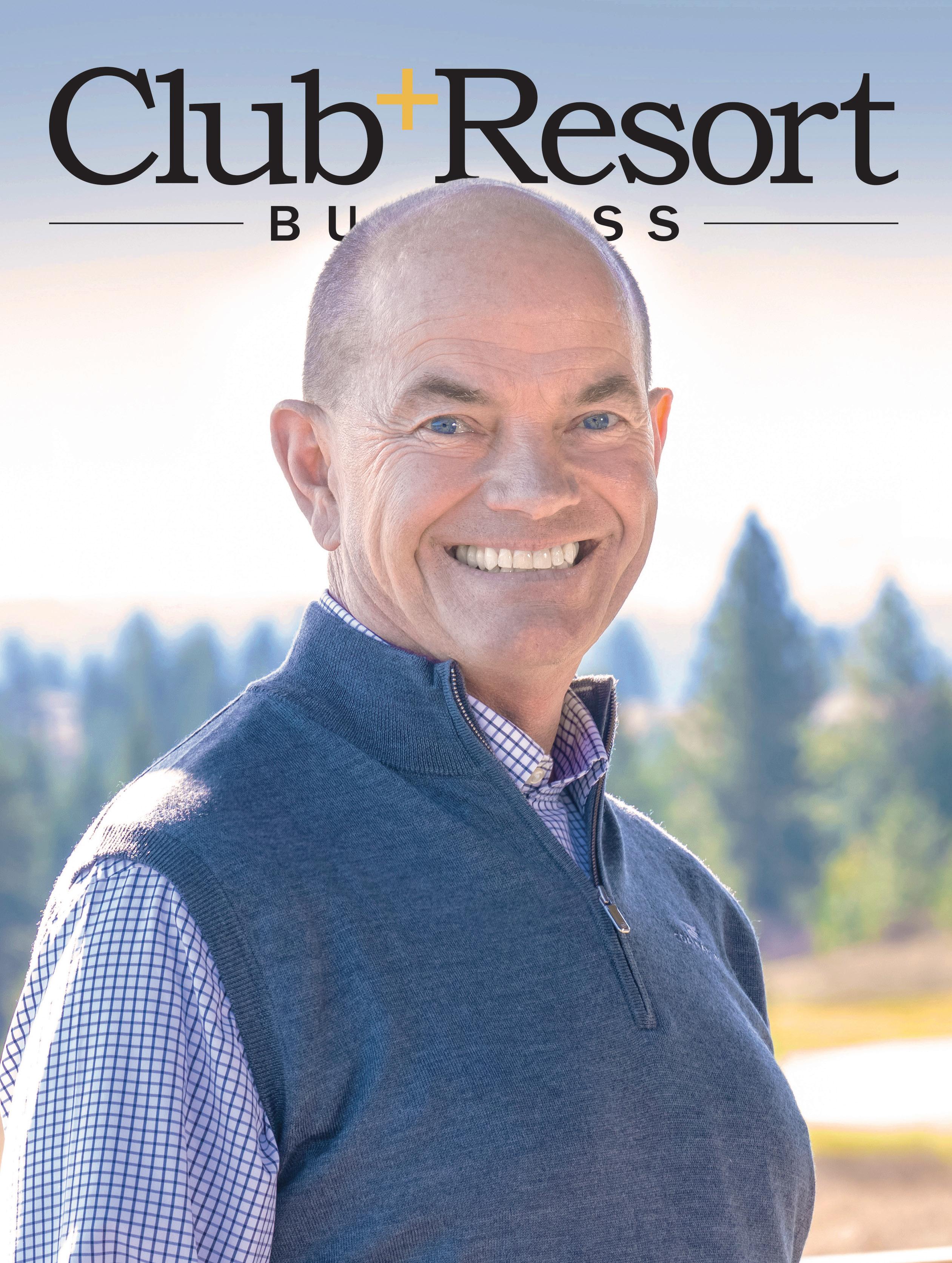
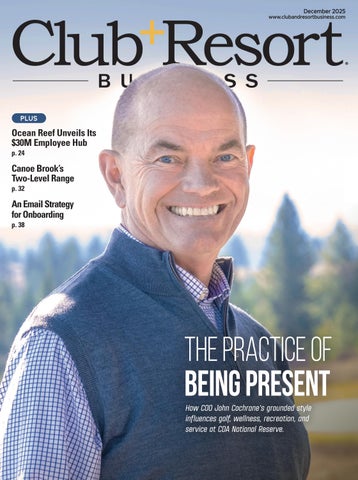
How COO John Cochrane’s grounded style influences golf, wellness, recreation, and service at CDA National Reserve.





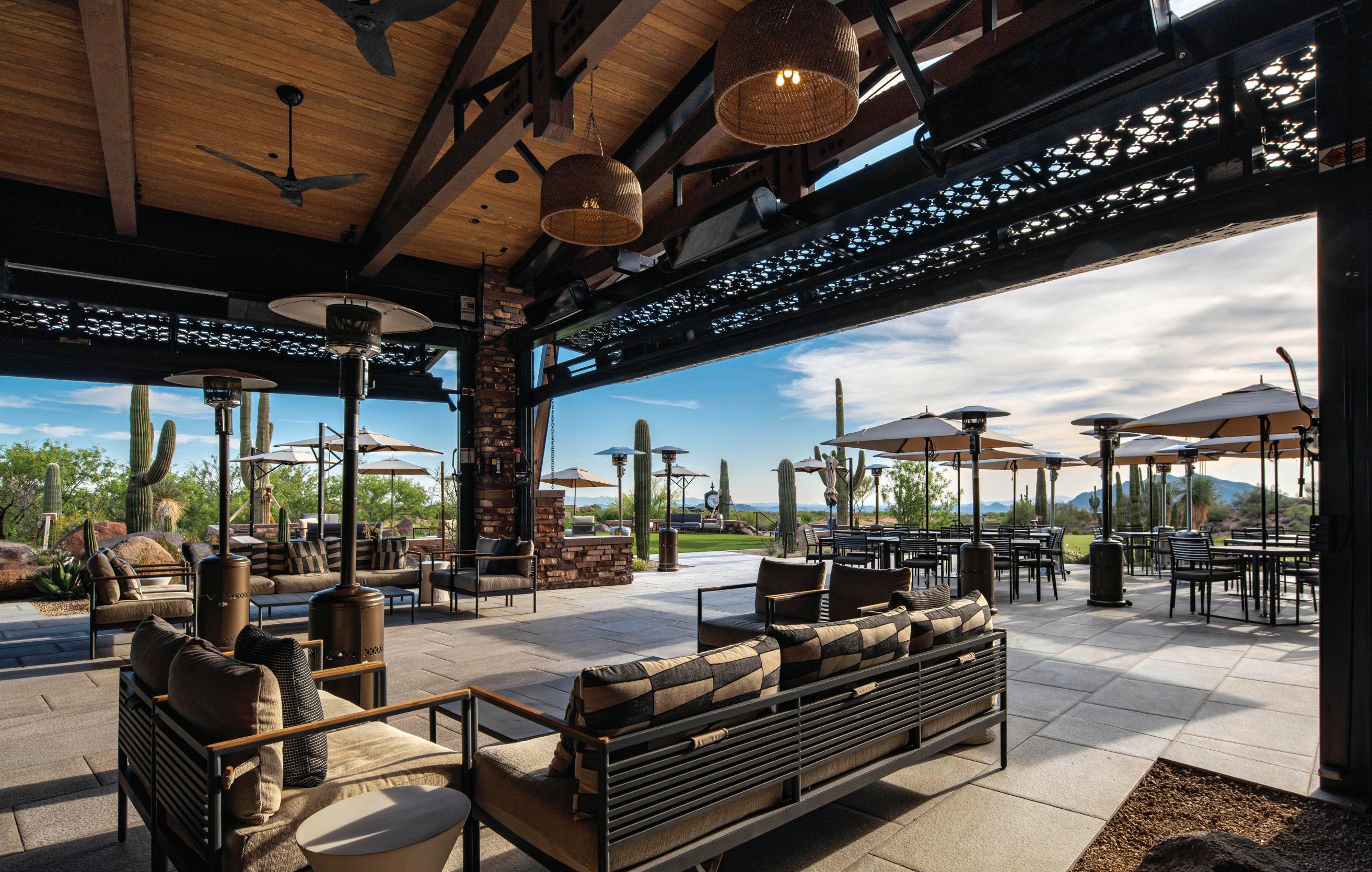

Give your members and guests the break they deserve by outfitting your rest stops and halfway houses with custom-built amenity products from Landmark. Made from durable Rinowood ™ or sustainable EasyCare ™ , they’re designed to withstand wear, weather, and more.
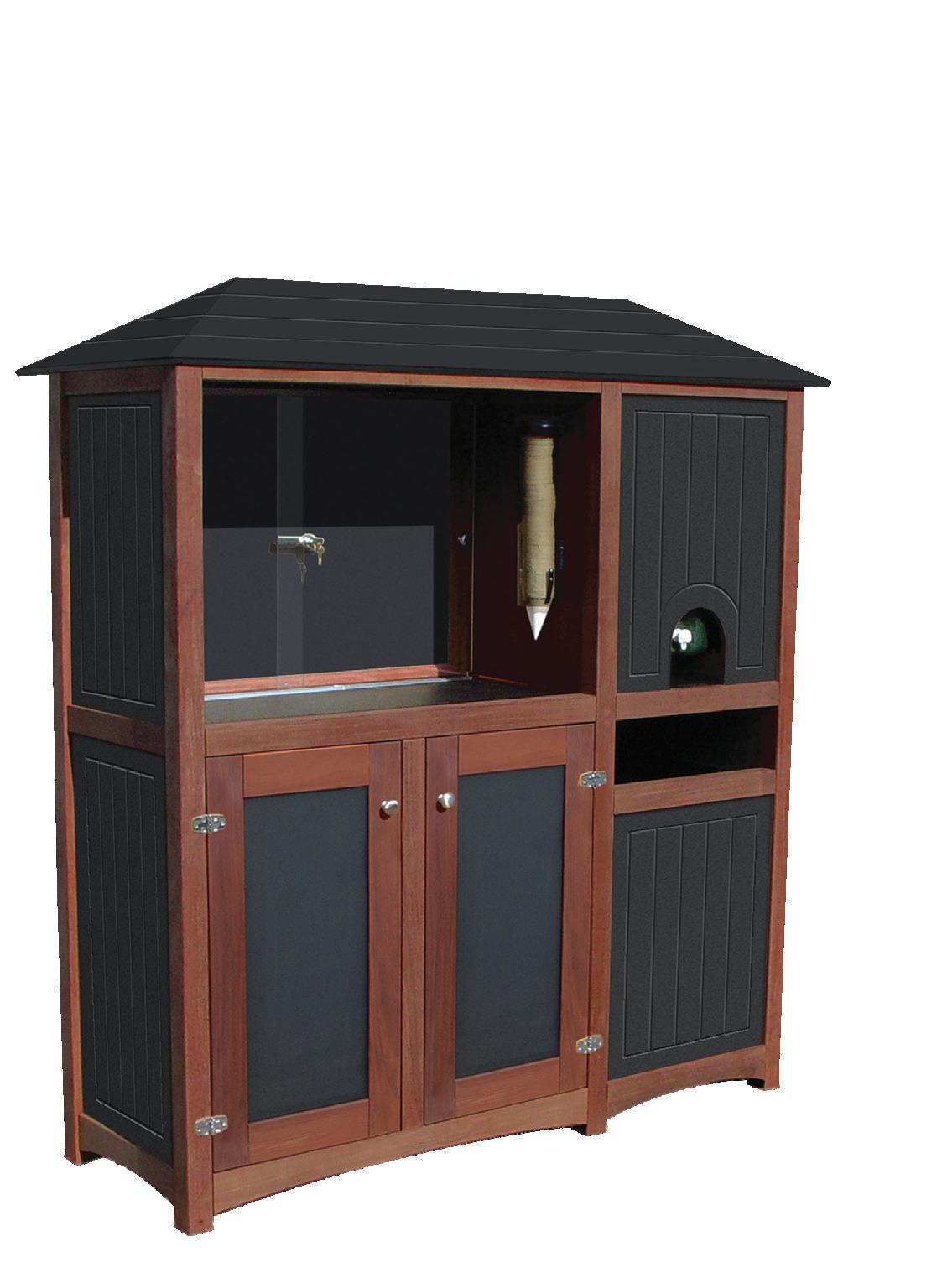
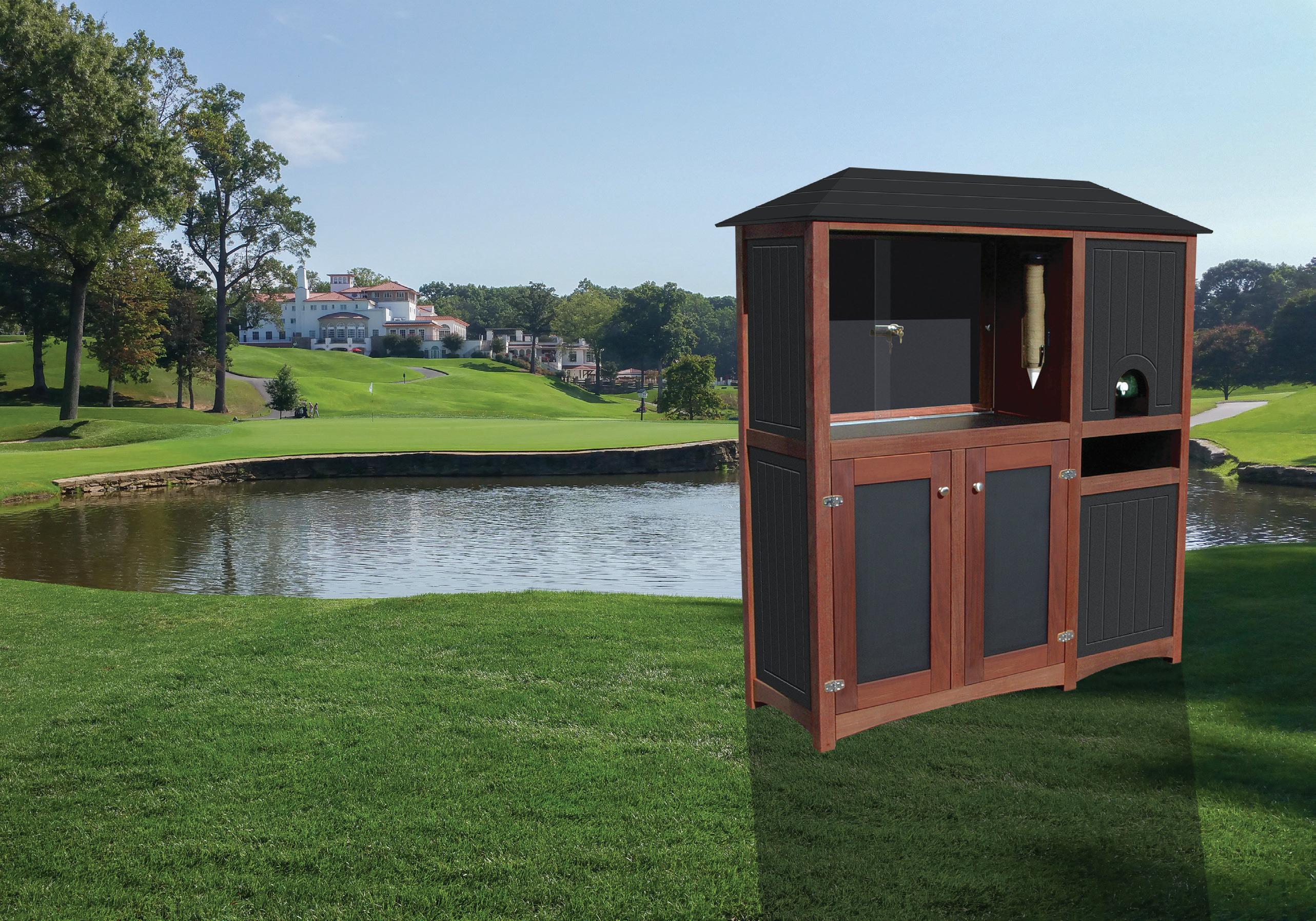
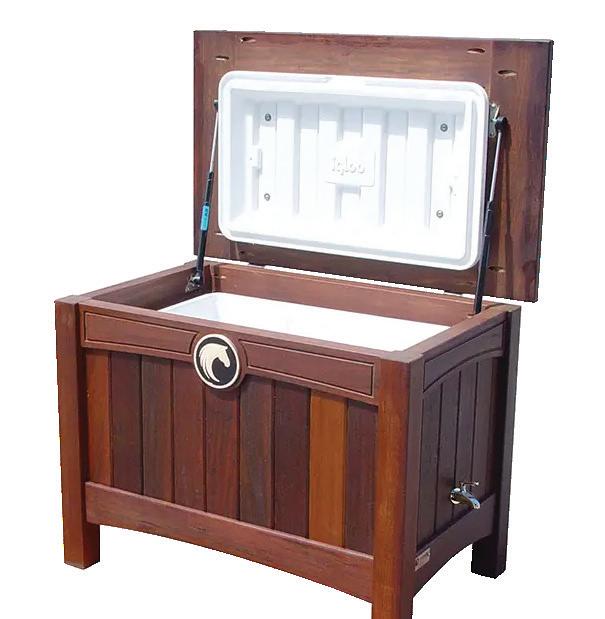
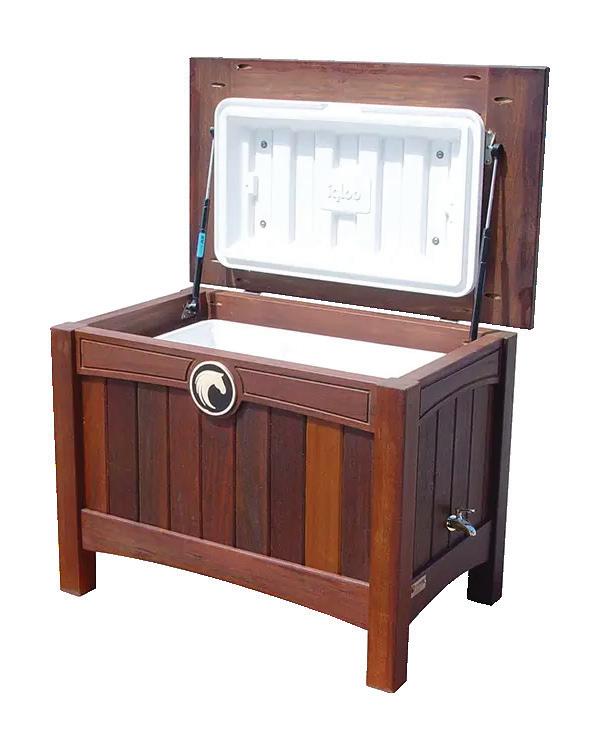
Be ready for refreshment runs with custom-built amenity stations. Find products such as luxurious cabinetry, and units with spike cleaners and water cooler enclosures.
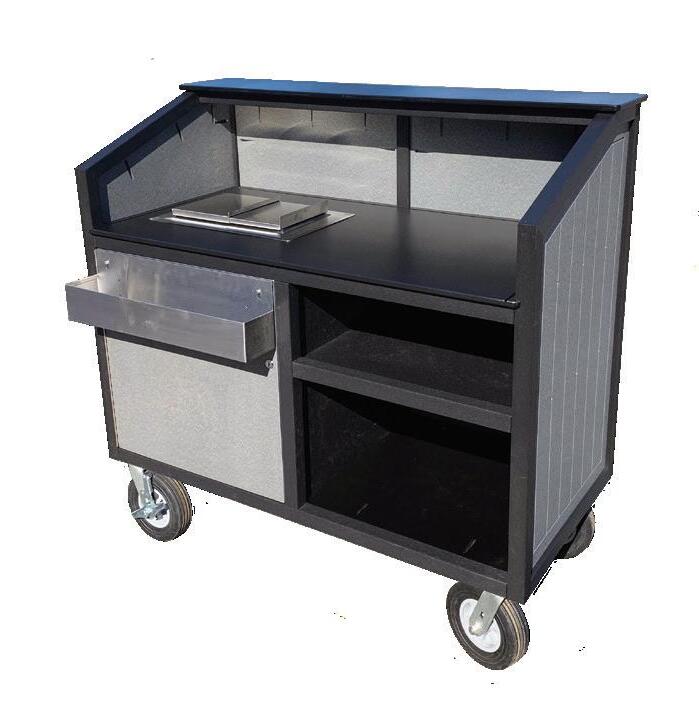
Deliver beverages anywhere with our bars—available in multiple sizes. Easily maneuverable over any indoor and outdoor surface, each one features speed rails, ice bins, storage, and more.
Landmark’s ice chests keep drinks cold while being simple to use and sanitize. Personalize them with your logo to keep your brand top-of-mind for golfers.

Scan

ONE OF MY PROFESSORS used to preach that good writing lives in what you show, not in what you announce. Don’t tell readers a character is brave. Let them see it.
That advice sits at the center of how we’re shaping the future of Club + Resort Business.
Online, our structure is clearer and easier to navigate. Content sits in defined lanes, and the layout makes it simple for readers to move directly to the topics that matter to them.
In print, the structure is intentional. Each section supports a core part of club leadership, and the issue is arranged to feel connected from start to finish. The result is a print product that mirrors how club leaders consider their priorities
This issue shows the approach in action. A leadership-driven club profile sits alongside a community story and a major investment in employee experience. Training grounds, racquet growth, capital planning, technology, and onboarding all build toward a complete picture of club management.
Our newsletters follow the same thinking. They deliver a mix of exclusive content, original reporting, and timely industry news. Each edition elevates the stories that matter most in the moment and pairs them with features that provide context.
Social now reflects the everyday pulse of the industry. We’re highlighting people, projects, small wins, and smart ideas in real time,

which makes the feed feel closer to the conversations club and resort leaders are having with each other. It also gives readers a clearer sense of the community they’re part of.
In person, the evolution is clear. The Engagement Summit gathered decision-makers for conversations that impacted all parts of membership marketing, and the exchange reflected the same honesty and practicality that define C+RB
And now, instead of letting the work speak on its own (sorry, Dr. Hawthorne), I’m stepping in to name what it all adds up to. The choices we’ve made across digital, print, social, and events already show who we are becoming. This memo simply gives it language: a multi-platform, reader-centered brand shaped around the real work of club and resort leadership.

EDITORIAL DIRECTOR

Joanna DeChellis jdechellis@wtwhmedia.com
Scan this QR code to sign up for our newsletter and join the conversation.

WTWH MEDIA, LLC
1111 Superior Ave., Suite 1120 • Cleveland, OH 44114
Ph: 888.543.2447
www.clubandresortbusiness.com • www.clubandresortchef.com
SUBSCRIPTION INQUIRIES
To enter, change or cancel a subscription: Web (fastest service): https://clubandresortbusiness.com
Phone: 888-543-2447 (U.S. only, toll-free)
Mail: Club & Resort B≠≠usiness 1111 Superior Ave., Suite 1120 Cleveland, Ohio 44114
Copyright 2025, WTWH Media, LLC











Subscriptions: Qualified U.S. subscribers receive Club + Resort Business at no charge. For all others the cost is $75 U.S. and possessions, $90 Canada, and $145 all other countries. Per copy price is $3. Club + Resort Business does not endorse any products, programs or services of advertisers or editorial contributors. Copyright© 2025 by WTWH Media, LLC. No part of this publication may be reproduced in any form or by any means, electronic or mechanical, or by recording, or by any information storage or retrieval system, without written permission from the publisher.
Club + Resort Business (ISSN 1556-13X), USPS Publication #23658 is published 10 times: (January, February, March, April, May, June, July, August, October, December) by WTWH Media, LLC, 1111 Superior Avenue, Suite 1120, Cleveland, OH 44114 Copyright© 2025.
Periodicals postage paid at Cleveland, Ohio, and additional mailing offices. Postmaster: Send change of address notices to Club + Resort Business, 1111 Superior Ave., Suite 1120, Cleveland, Ohio 44114.
Editorial
EDITORIAL DIRECTOR Joanna DeChellis jdechellis@wtwhmedia.com • 412-260-9233
SENIOR EDITOR Isabelle Gustafson igustafson@wtwhmedia.com • 216-296-2041
ASSOCIATE EDITOR Madison Hartline mhartline@wtwhmedia.com
VP, EDITORIAL Danny Klein dklein@wtwhmedia.com • 919-945-0726
Content Studio
VP, CONTENT STUDIO Peggy Carouthers pcarouthers@wtwhmedia.com
WRITER, CONTENT STUDIO Ya'el McLoud ymcloud@wtwhmedia.com
WRITER, CONTENT STUDIO Drew Filipski dfilipski@wtwhmedia.com
Art + Production
VP, CREATIVE DIRECTOR Matthew Claney mclaney@wtwhmedia.com
CREATIVE DIRECTOR Erin Canetta ecanetta@wtwhmedia.com
Sales + Business Development
SVP SALES & STRATEGY Matt Waddell mwaddell@wtwhmedia.com • 312-961-6840
NATIONAL SALES MANAGER Amber Dobsovic adobsovic@wtwhmedia.com
BRAND LEADER Patrick McIntyre pmcintyre@wtwhmedia.com • 216-372-8112
SALES DIRECTOR Mike Peck mpeck@wtwhmedia.com • 773-859-1107
KEY ACCOUNT MANAGER John Petersen jpetersen@wtwhmedia.com • 216-346-8790
CUSTOMER SERVICE REPRESENTATIVE Annie Paoletta apaoletta@wtwhmedia.com
Leadership CEO Matt Logan mlogan@wtwhmedia.com
CHIEF OPERATING OFFICER George Yedinak gyedinak@wtwhmedia.com
CHIEF REVENUE OFFICER Scott Kelliher skelliher@wtwhmedia.com
VP OF MARKETING Annie Wissner awissner@wtwhmedia.com
SENIOR VP, AUDIENCE GROWTH Greg Sanders gsanders@wtwhmedia.com
www.clubandresortbusiness.com I www.clubandresortchef.com

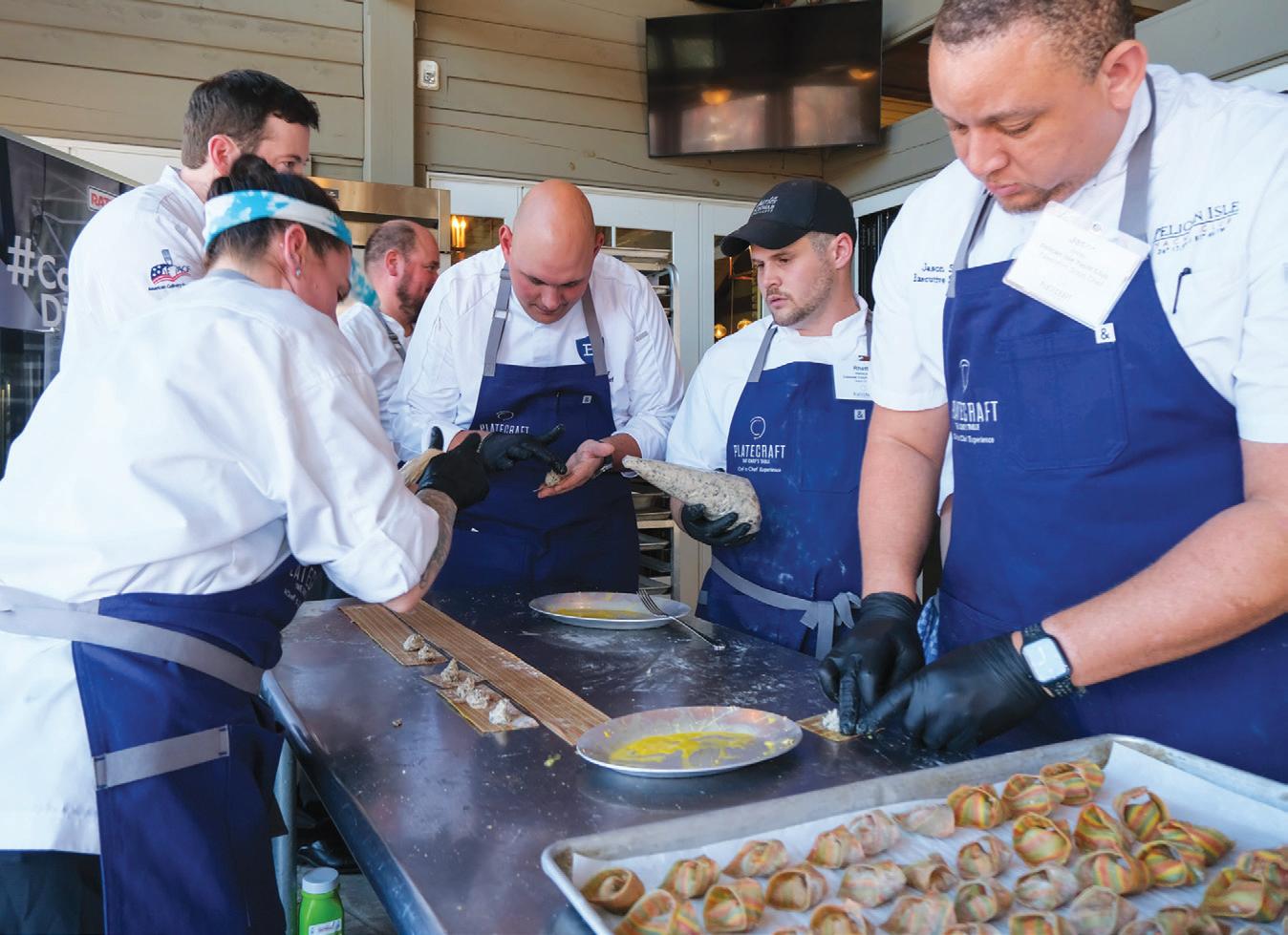
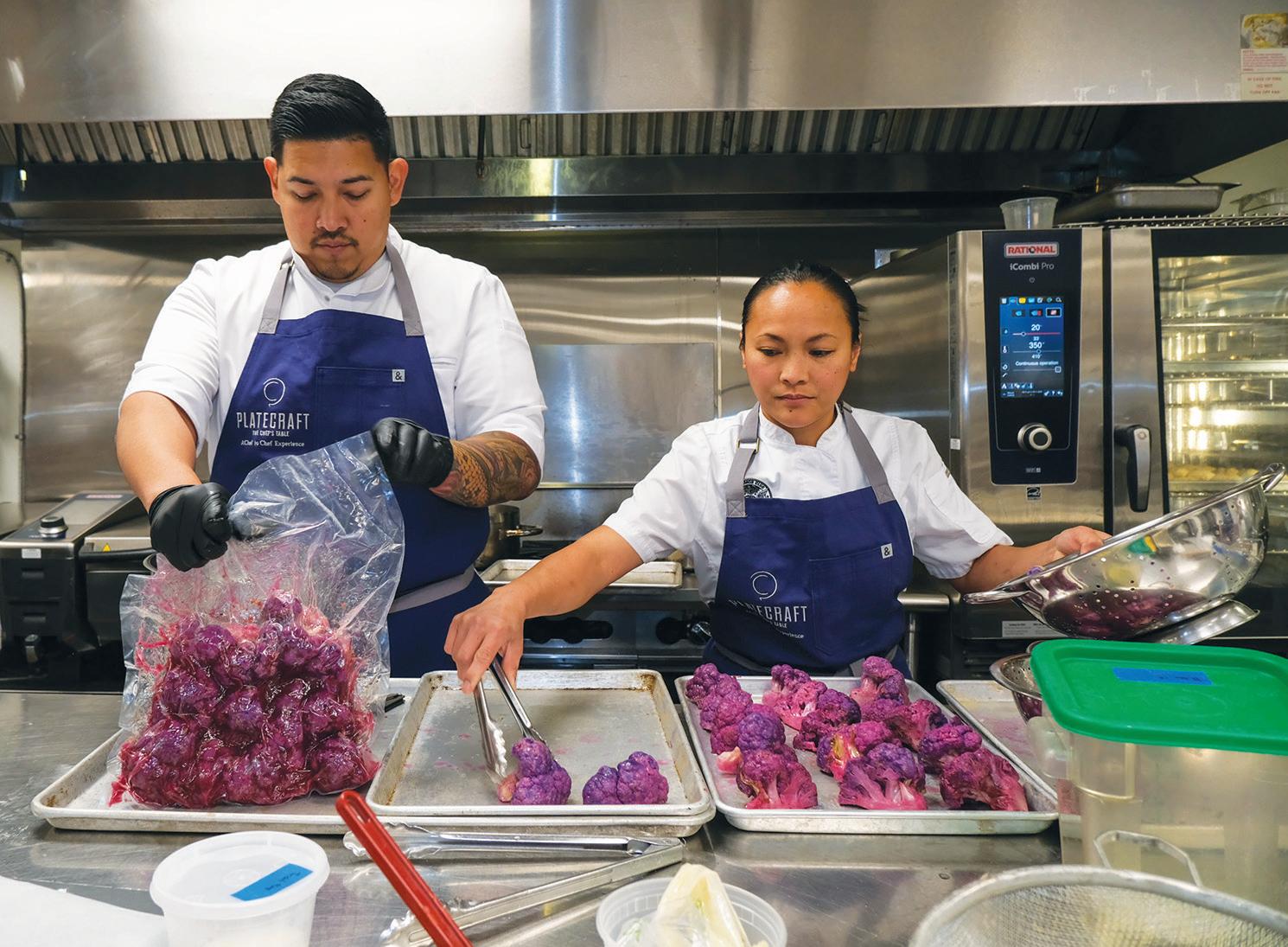
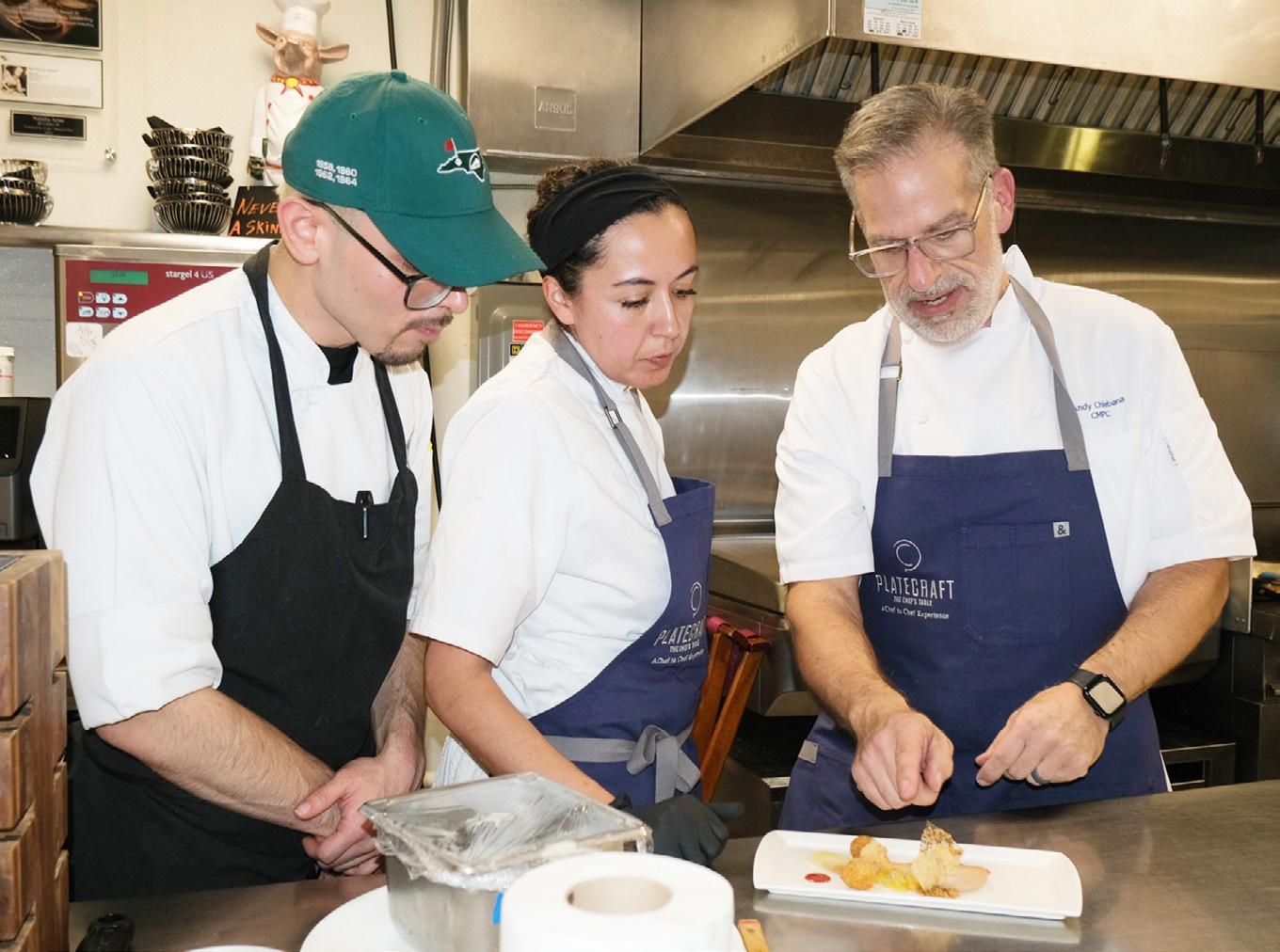
NOVEMBER MARKED YEAR THREE of PlateCraft, a Chef to Chef Experience, hosted by Club + Resort Chef and Cullasaja Club (Executive Chef Scott Craig, WCMC, CCCD) in Highlands, N.C., with additional support from neighboring Highlands Country Club (Executive Chef Angel Herrera).
Like the annual Chef to Chef Conference, PlateCraft is an event specifically dedicated to club and resort chefs’ continuous learning, but the experience for attendees of these events is vastly different. While Chef to Chef hosts hundreds, PlateCraft is an immersive, two-day workshop for a small group of about 25 club chefs from across the country who want to push their craft in a highly hands-on environment.
While last year’s PlateCraft centered around The Grand Buffet, this year’s event honed in on the Chef’s Table. Teams of attendees collaborated, cooked together, and created a chef’s table-style meal together with guidance from top culinary leaders: Cullasaja Club’s Craig; The Country Club of North Carolina’s Adam Deviney, CEC; Forsyth Country Club’s Lance Cook, WCMC, CCCD, WSET II; Mizner Country Club’s Daniel Montano, CECC; and Andy Chlebana, CMPC, instructor at Joliet Junior College.
At the end of day two, attendees were able to take a seat at the table to experience the meal as members would, tasting the results of their work, collaboration, and shared commitment to craft. The evening served as a celebration of process, precision, and the connection that happens when chefs get the opportunity to gather and create together.
View the full menu, plus photos of the dishes and attendees in action at clubandresortchef.com
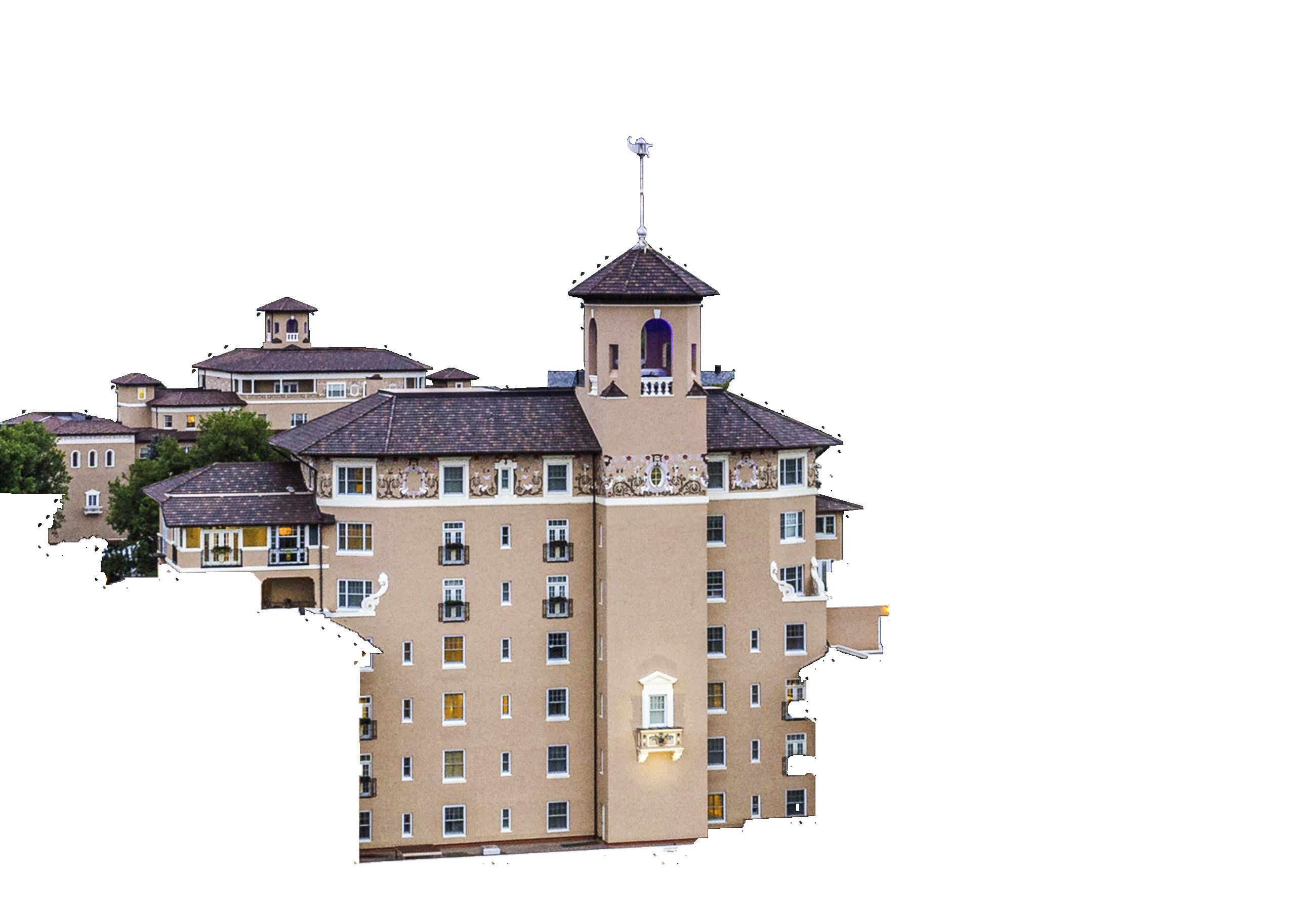
We’ll see you at The Broadmoor in March.

SENIOR EDITOR Isabelle Gustafson
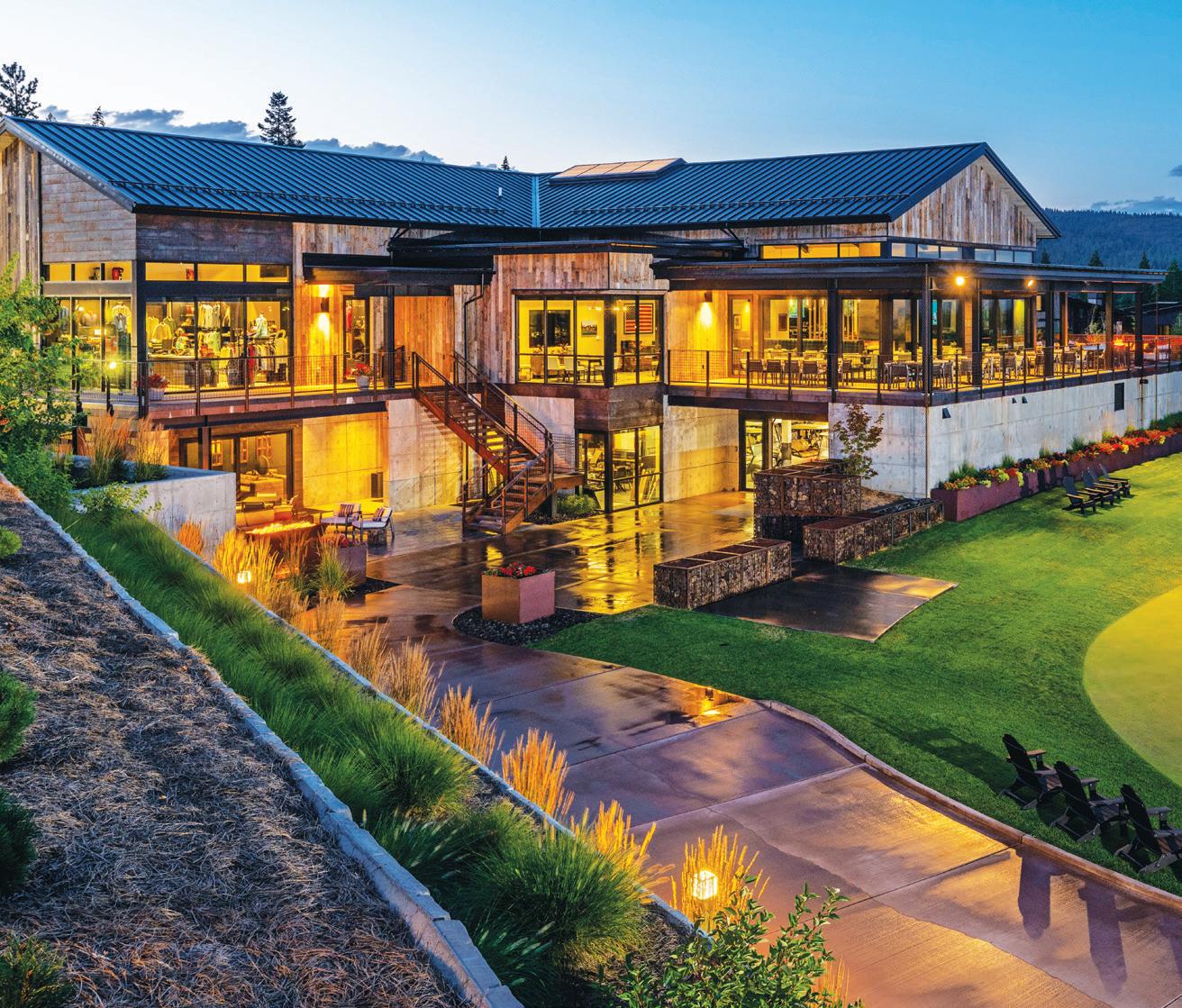
Inside the everyday decisions and people who shape the rhythm of CDA National Reserve.
(Cover photo and photo above courtesy of CDA National Reserve.)
4 EDIT MEMO: Show Don’t Tell
6 ON THE PASS: PlateCraft 2025: The Chef’s Table Experience
8 CLUB PEOPLE ON THE MOVE: Sponsored by Kopplin, Kuebler & Wallace
14 CLUB PROFILE:
How a Small-Town Club Builds Big-Time Community
By listening closely and delivering consistently, Corning CC demonstrates how a tight-knit market can fuel a powerful club community.
18 GOLF + RECREATION: Where Better Swings Begin
The new Performance Lab at PGA West offers tools and technology for golfers of all levels to learn more about their game and how to better themselves.
20 DESIGN + RENOVATION: Ladies’ Locker Rooms Receive Long-Overdue Makeovers
Clubs are updating these facilities with more than just new showers and vanities.
24 RECRUITMENT + RETENTION:
Ocean Reef Unveils $30M Employee HubRollin
Designed exclusively for employees, the new space raises the bar on how clubs support their teams.
26 FOOD + BEVERAGE: Rolling Out Pizza Programs
New York to Neapolitan, clubs and resorts are doubling down on pizza with new ovens, housemade dough, and quality toppings.
29 FOOD + BEVERAGE: The Details That Elevate Wine Service
A closer look at the temperature, timing, and tasting habits that strengthen wine service.
32 GOLF + RECREATION: Canoe Brook’s Two-Level Training Ground
The club’s new practice structure delivers a modern platform for coaching, fittings, junior golf, and winter programming.
35 RACQUET + FIELD SPORTS: Game. Set. Shift
Clubs are investing in pickleball, paddle, and padel to attract new members, increase court utilization, and offer year-round programming. Three racquet directors explain what’s working.
38 GM TO GM: The GM Behind Knickerbocker’s Biggest Project in Decades
With a $25 million master plan underway, Joe Kelly is stabilizing the transition, elevating the culture, and preparing the club for a new era.
40 TECHNOLOGY: What Holds the Message Together
Technology is helping Shelter Harbor deliver clearer, more consistent communication.
42 MEMBERSHIP MARKETING: An Email Strategy for Onboarding
Shadow Wood CC’s structured email cadence welcomes new members, reduces confusion, and speeds up participation.

Located in Saint Andrews, Scotland, Saint Andrews Trust - Links, welcomes Jamie Aton as General Manager to oversee the Trust’s flagship clubhouse. Saint Andrews Trust manages Europe’s largest public golf complex, and is home to the iconic Old Course, the “Home of Golf.” The Trust oversees seven courses and hosts prestigious events. As a registered charity, it promotes public participation in sport and maintains the Links as a public park for residents and visitors. Anton was most recently National Director of Golf with Macdonald Hotels & Resorts in Scotland.
Founded in 1869, The Chicago Club, located in Chicago, Ill., welcomes Gayle Bobo, MBA, CPA, as Chief Financial Officer. The Chicago Club is one of the nation’s most historic and distinguished private clubs, serving as a cornerstone of the city’s business and civic life. With exceptional amenities, refined dining, and a diverse, accomplished membership, the club provides a timeless environment where tradition, progress, and service converge in the heart of the city. Bobo was most recently Vice President, Asset Management and Financial Planning for the National Association of Realtors in Chicago, Ill.


Founded in 1892, one of the nation’s most prestigious private clubs, Chevy Chase Club in Chevy Chase, Md., welcomes Elisha Cicerone, CCM as General Manager/COO. The club’s historic eighteenhole golf course, originally designed by Donald Ross, is currently undergoing a large-scale renovation led by Andrew Green. Additional amenities include extensive racquets facilities, a fitness center, three pools, duckpin bowling, and an outdoor ice rink. Dining options comprise two formal clubhouse dining rooms, banquet venues, and two seasonal sports canteens. Cicerone was most recently General Manager/COO at Saddle & Cycle Club in Chicago, Ill.

Siwanoy Country Club, situated in the heart of Westchester County in Bronxville, N.Y., welcomes Tomas Christian as Director of Racquets. In addition to its Donald Ross-designed eighteen-hole golf course, the club places a strong emphasis on racquet sports, featuring four Har-Tru tennis courts, two of which are winterized, four pickleball courts, and four platform courts supported by a modern platform hut. A recent clubhouse renovation introduced enhanced dining options, including a rooftop terrace and wine cellar, reinforcing Siwanoy’s commitment to providing an exceptional, family-friendly experience. Christian was most recently Director of Racquets at Beacon Hill Club in Summit, N.J.
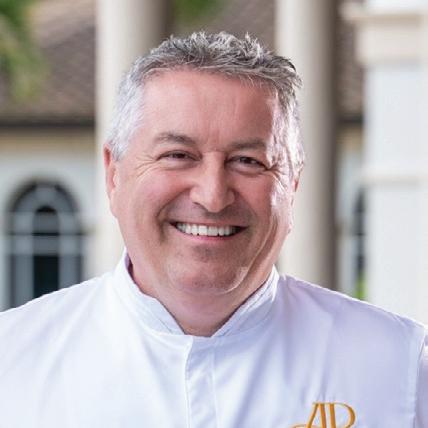
A premier private community nestled in Delray Beach, Fla., Addison Reserve Country Club welcomes Yann Chupin as Executive Chef. The club is timeless elegance meets modern luxury. Consistently ranked among the top Platinum Clubs, Addison Reserve offers world-class amenities, exceptional service, and a vibrant community. With three pristine nine-hole championship golf courses and a Lifestyle Complex featuring a state-of-theart fitness center, a spa, resort-style pools, and premier sports courts, members enjoy a blend of wellness, recreation, and social connection. Chupin was most recently Executive Chef at The Ritz-Carlton in Sarasota, Fla.

Jupiter Island Club, a serene retreat in Martin County, Fla., welcomes Spencer Gentry as Director of People & Culture. This exclusive club is about thirty miles north of Palm Beach and has been renowned for its exclusivity and elegance. The club features an eighteen-hole golf course along the Intracoastal Waterway, three clubhouses, a thirty-six-slip yacht basin, fourteen tennis courts, a croquet court, a two-hundred-seat theater, shops, two pools, a spa, and a fitness center. The fifty-two guestrooms are spread across twelve buildings and cottages, including the Main Club. Gentry was most recently a Leadership and Employee Development Consultant with Southwest Airlines Co. in Dallas, Texas.
Located in Nashville, Tenn., Belle Meade Country Club welcomes Michelle McGee as Director of Food & Beverage. From its inception, the club, with its superb leadership and magnificent staff, has been renowned for its social activities and exceptional hospitality. Its history of parties, charitable galas, debutante balls, and wedding receptions is unsurpassed in Nashville. Members enjoy multiple dining venues, several of which have undergone highly successful recent renovations, in addition to a championship golf course, wellness center, and an array of activities designed for all, including swimming and tennis. McGree was most recently Clubhouse Manager at Gulf Stream Bath & Tennis Club in Gulf Stream, Fla.


Southern Hills Country Club in Tulsa, Okla., welcomes Kimberly Warren, CCM as General Manager/COO. Founded in 1935, this prestigious, member-owned club is known for its world-class Championship Golf Course, originally designed by Perry Maxwell and restored by Gil Hanse. The club has hosted many major championships and will host its sixth PGA Championship in 2032. Beyond the golf course, members enjoy a variety of premier amenities including a tennis center, pool complex, golf performance center, a state-of-the-art health and wellness center, and diverse dining venues. Warren was most recently General Manager/COO at Saucon Valley Country Club in Bethlehem, Pa.

"We


Jonathan Abbott | General Manager Minnesota Valley Country Club
Williams Alejo | Vice President of Operations Chileno Bay Golf & Beach Club
Robbie Ames | Chief Operating Officer The Club at Quail Ridge
Christopher Antonio | Director of Racquets Bocaire Country Club
Drew Barnett | Director of Agronomy Baltimore Country Club
Amy Beardsley-Comerer | General Manager/COO Genesee Valley Club
Christopher Bee | General Manager/COO Shadow Hills Country Club
Richard Beswick | Secretary Gullane Golf Club
James Bruder | Course Manager Broadstone Golf Club
Stephen Burkhart | General Manager/COO Dallas Athletic Club
Kyle Cannon | General Manager Portmarnock Golf Club
Marshall Carpenter | Director of Racquets Pinehurst Country Club
J.P. Connelly | Director of Golf Bald Peak Colony Club
Mihai Danila | Executive Chef Missouri Athletic Club - Clayton Clubhouse
Alex Davies | General Manager - Eden St Andrews Links Trust
Kathy Ferguson | Chief Financial Officer Lakewood Country Club
DeMichael Givens | Clubhouse Manager The Forest Country Club
Tyler Hathaway | General Manager Balboa Bay Club
Harrison Hinds | Director of Operations Royal Auckland and Grange Golf Club
Jordan Kelly-Houston | Director of Finance Royal Auckland and Grange Golf Club
Brendan Kilroy | Executive Chef Riverton Country Club
Bobby Lambert | General Manager/COO Sugar Mill Country Club
Russ Lowther | General Manager/COO Shorehaven Golf Club
John Maher | Executive Chef Wildcat Run Golf & Country Club
Liam McAuley | Director of Operations Taymouth Castle Golf & Sport Club
Sandy McCaslin | Director of Wellness The Landings Golf & Athletic Club
Gene Miller | General Manager/COO Sewickley Heights Golf Club
Paul Mroz | Chief Executive Officer Old Palm Golf Club
Paula Provoznik | General Manager Green Hills Country Club
Denise Ramirez | Director of Communications Big Canyon Country Club
Scott Roberts | Course Manager Hindhead Golf Club
Patrick Rose | Director of Agronomy Belle Meade Country Club
André Smith | Manager Private Estate
Gayle Starke | General Manager The Club at Balsam Mountain
Nathan Stremlow | Clubhouse Manager Marrakesh Country Club & Community Assoc.
Anne Stryhn | General Manager/COO The Country Club of Virginia
Richard Tee | Head of IT Loch Lomond Golf Club
Andrew Tkach | General Manager/COO North Ridge Country Club
Ashley Varela | General Manager/COO Marrakesh Country Club & Community Assoc.
Allen Wills | General Manager Blue Ridge Mountain Club POA, Inc.
Denise Woods | Chief Financial Officer Belfair Property Owners' Assoc.


Inside the everyday decisions and people who shape the rhythm of CDA National Reserve.
By Joanna DeChellis • Editorial Director
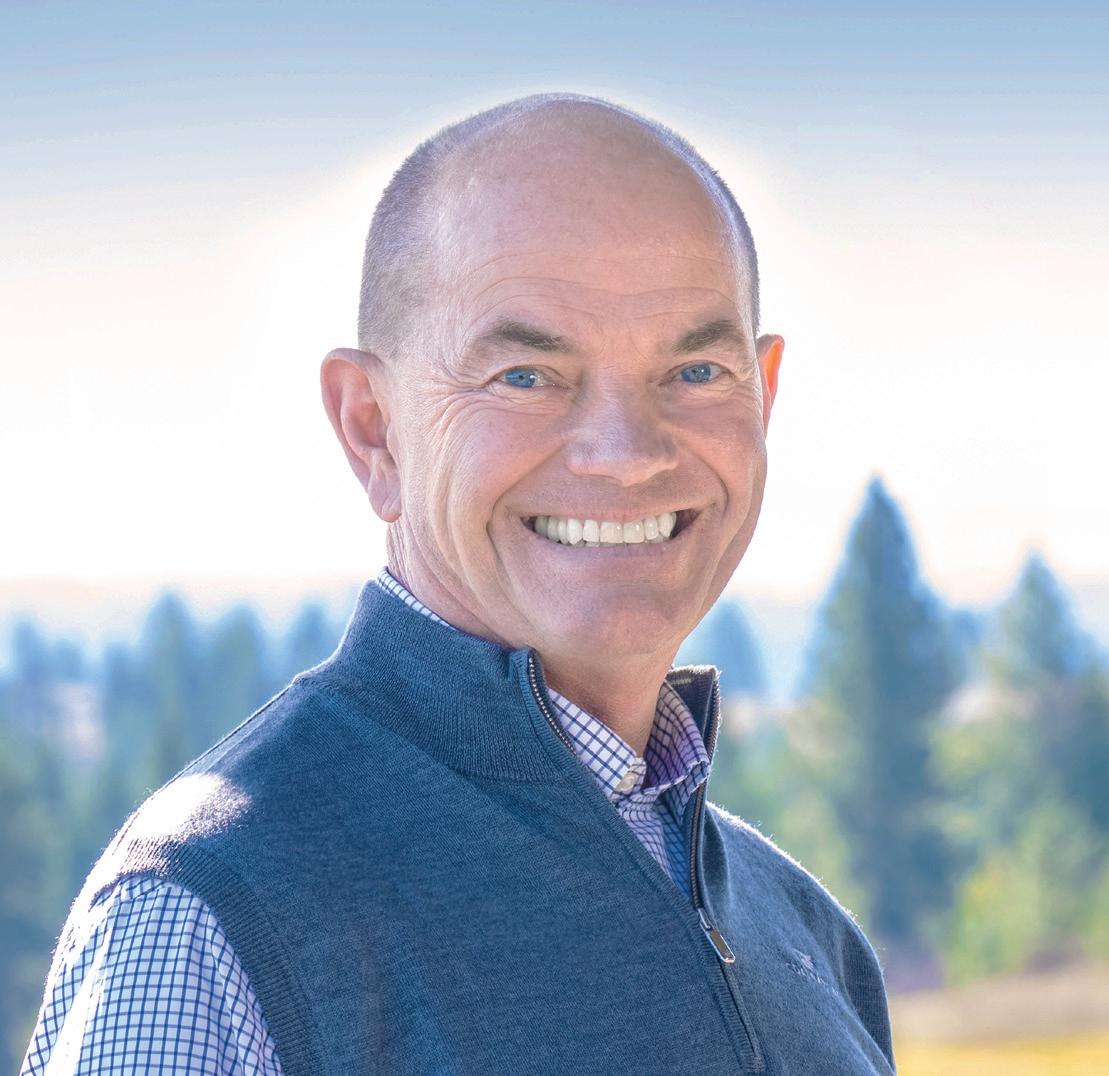
MOST MORNINGS AT CDA NATIONAL RESERVE (Coeur d’Alene, Idaho) begin the same way. The lake is glassy. The first carts roll out. And somewhere between the practice tee and the putting green, Chief Operating Officer John Cochrane is already in motion.
“I like to see the day start with the people who make it work,” he says.
That visibility is the lens through which CDA’s leadership team has built a high-touch, high-activity club into a seamless experience that stretches from the golf course to the lake to the backcountry trails.
The past few seasons have brought a rerouted Tom Weiskopf course, expanded recreation, and a wellness program that has quickly become a signature. But the story behind those improvements is less about amenities and more about how the team running them works.
And that story begins with a leadership style rooted in being present.
For Director of Golf Gabriel Dorosh, CDA’s course reroute reshaped the daily heartbeat of the operation.
“We had to rethink how players move, how staff move, how we communicate in real time,” Dorosh says. “The changes made the course more walkable and improved the pace of play, but it also required us to build new systems around it.”
With no tee times, the reroute could have created bottlenecks. Instead, Dorosh and his team use a coordination point near the first tee to keep rounds moving smoothly. Small touches like adjusting start intervals by a few minutes, shifting staff to meet demand, and redirecting players at the right moment, have become an art form.
“The members feel like the day is flowing for them,” he says. “That’s not accidental.”
Cochrane sees those decisions up close. “You cannot understand the rhythm of a golf operation unless you stand in the middle of it,” he says. “My job is to see how decisions play out and make sure the staff has what they need to keep it smooth.”
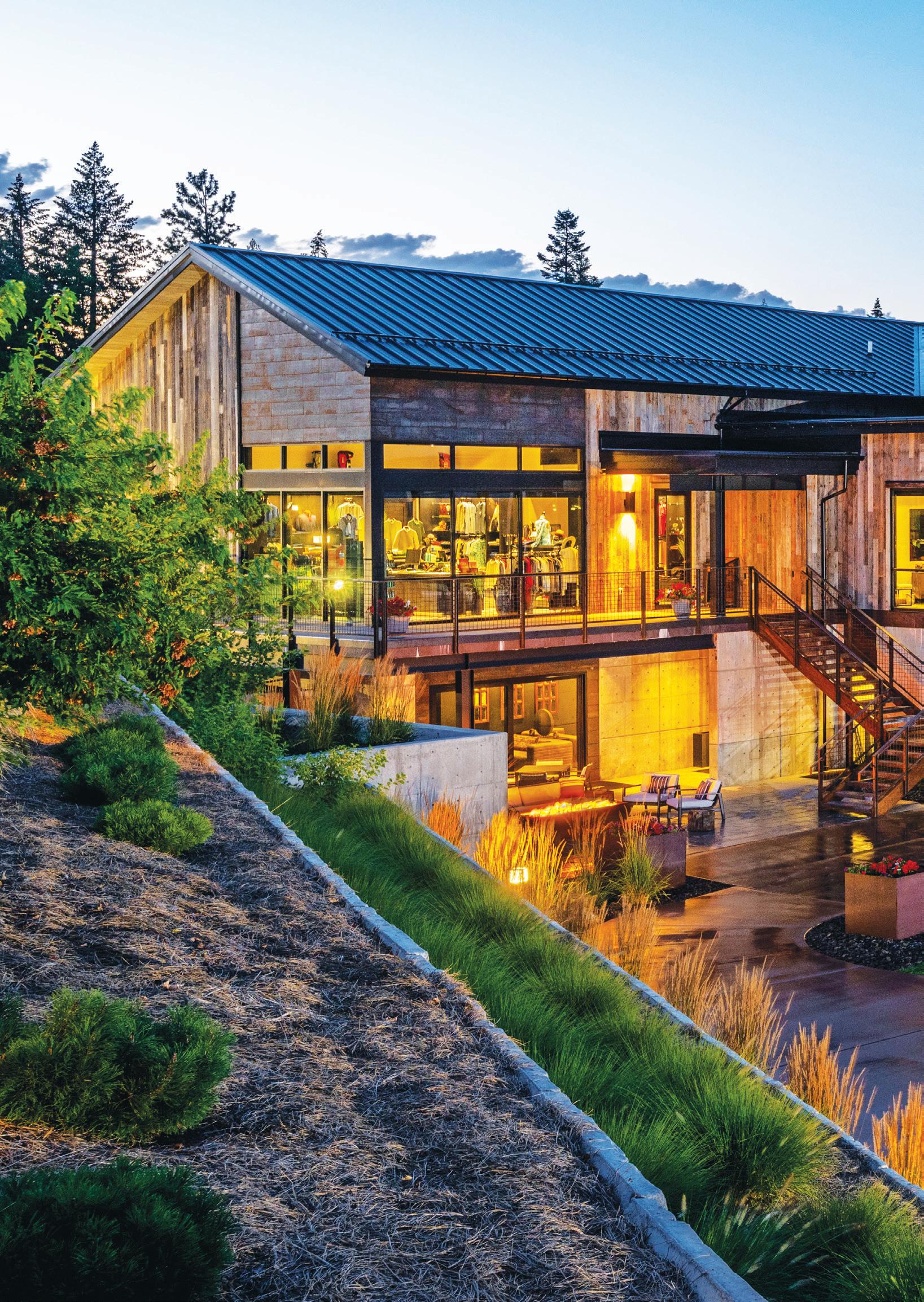
“You cannot understand the rhythm of a golf operation unless you stand in the middle of it,” says COO John Cochrane. “My job is to see how decisions play out and make sure the staff has what they need to keep it smooth.”
For Director of Agronomy Zach Bauer, CDA’s terrain and short growing season demand precision.
“You get one shot at a lot of things here,” he says. “You pick the wrong week for a key cultural practice and you’ve lost your window.”
Bauer arrived to a course that needed stabilization after overfertilization. His first task was rebuilding plant health, but the long-term work came from smarter labor use and sustainability choices. Native grass conversion reduced both maintenance hours and water use. New technology helped the team cover more ground with fewer people.
“Efficiency isn’t about cutting corners,” Bauer says. “It’s about giving members the conditions they expect while working with the realities of the environment.”
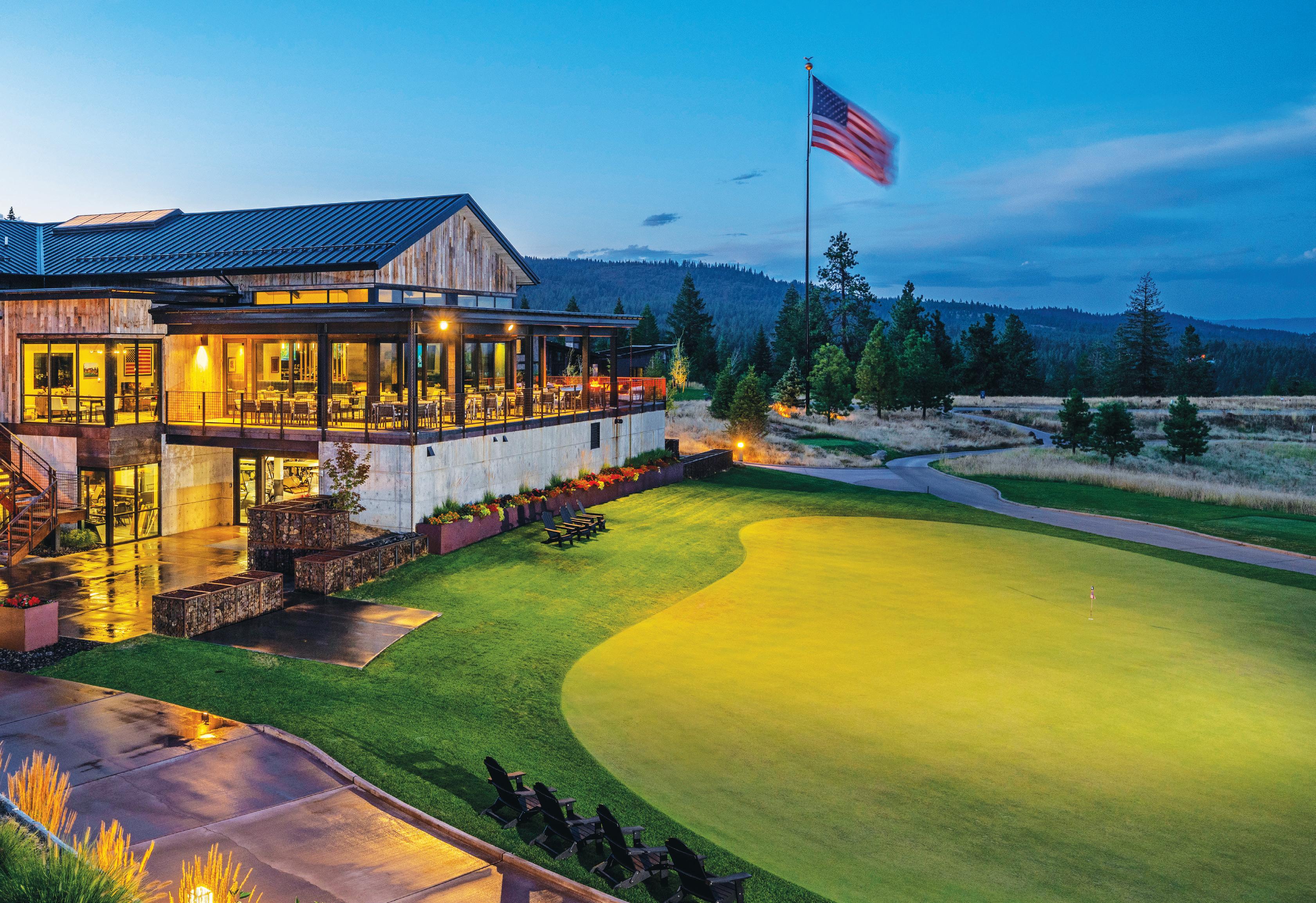
Cochrane sees Bauer’s team as the quiet engine of the club. “I walk the course every morning,” he says, “not because Zach needs me there but because members feel the tone of the day the moment they step on that fairway. I want to feel it, too.”
CDA’s operational complexity across golf, lake, trails, dining, wellness, and lodging requires departments to overlap rather than operate in parallel. That is where Cochrane’s presence becomes connective rather than supervisory.
“You see the same faces supporting different parts of the day,” says F&B Director Scot Smith. “People jump in where they’re needed. The lines between departments feel thinner here, and that benefits members more than anything.”
Smith’s team has leaned into wellness-forward dining, which ties directly into the club’s partnership with an integrative medical practice that oversees CDA’s longevity program. The kitchen shifted toward clean ingredients and recovery-supportive options to match what members are focusing on in their health plans.
“Wellness isn’t something we bolt on,” Smith says. “It’s something we cook and serve.”
This cross-departmental mindset shows up everywhere. Golf staff assist comfort stations. Recreation staff support lake opera-
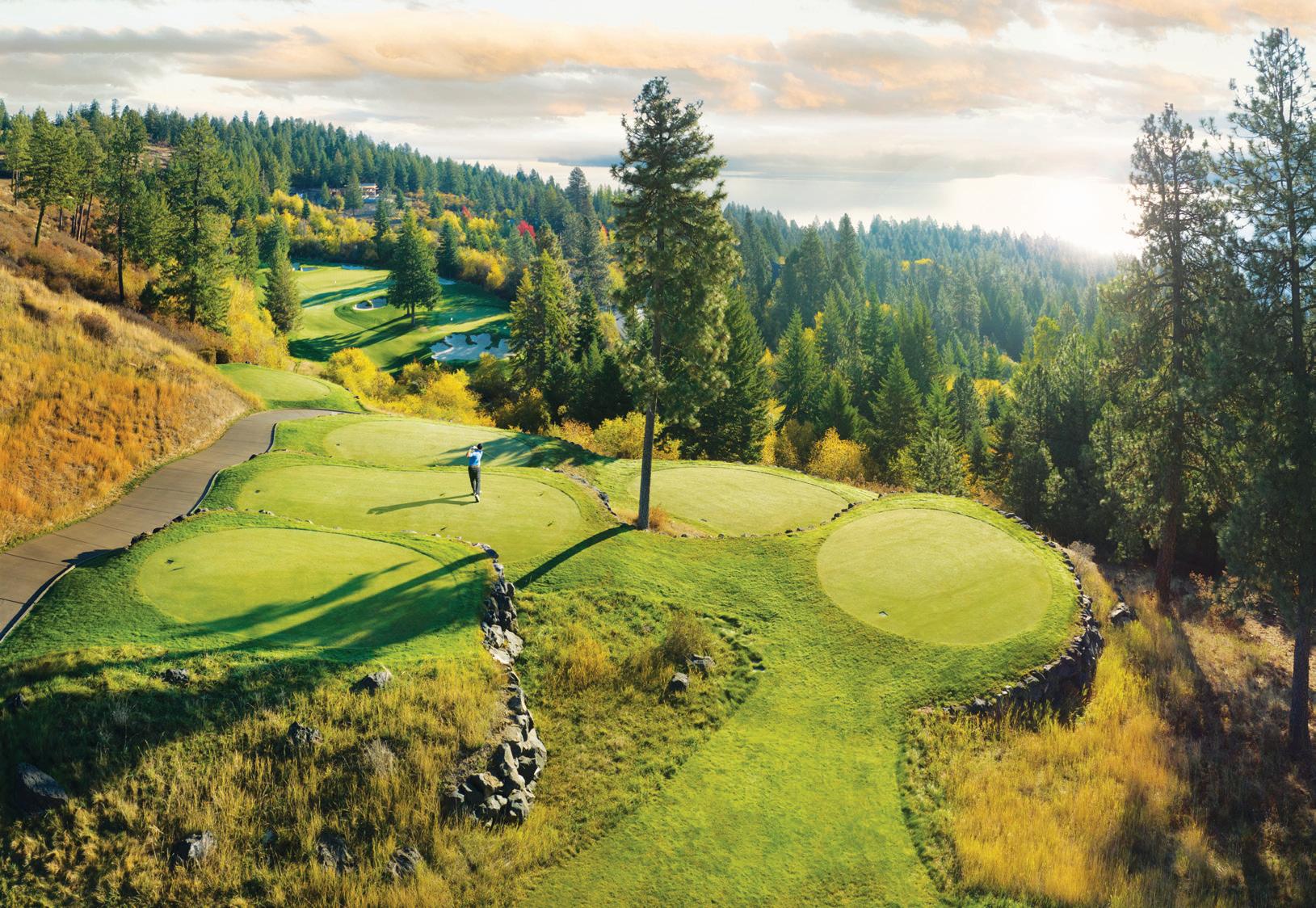
tions. Dining staff help with events far from the clubhouse.
“It makes the club feel lighter, more responsive,” says Smith.
CDA’s Premier Longevity Membership brings a level of personalization new to clubs. Members track biometrics, receive IV therapy, and use recovery tools such as cold plunge and infrared therapy.
“The demand surprised us,” Cochrane says. “We added a second cold plunge because the first has been in constant use.”
The club expanded its outdoor movement programs and added recovery-focused education to support members who are embracing the wellness offerings.
For Lyon Living Managing Partner Kasey Suryan, who oversees the real estate and long-term vision, wellness is a core differentiator.
“People want to feel good and stay active,” Suryan says. “CDA’s environment is already built for that. We’re just leaning into what members naturally want.”
CDA National Reserve did not rely on one sweeping plan to find its rhythm. The club’s progress has come from a series of practical choices made by leaders who watch how the day actually unfolds. These are a few of the decisions and approaches that shaped the operation and may spark ideas for clubs facing similar challenges:
A NO-TEE-TIME MODEL SUPPORTED BY REAL STAFFING, NOT WISHFUL THINKING
A coordination point near the first tee acts as an information hub. Staff read the flow, adjust spacing, redirect groups, and communicate waits that feel like service instead of delay. The model works because it is actively managed, not left to chance.
A MARINA SOLUTION THAT TURNS A LIMITATION INTO A SERVICE TOUCHPOINT
With only a handful of slips, CDA built a full concierge boat program. Boats are stored off-site. Staff handle transport, fueling, cleaning, and prep. Members arrive to a boat that is ready for them, and the club avoids an arms race for waterfront space.
A RECREATION PROGRAM BUILT FROM OBSERVED USE, NOT A MENU OF TRENDS
Trails grew because members kept using them. Shooting sports expanded because staff saw consistent interest. Programming shifts with the seasons because members do. Growth follows behavior.
CROSS-TRAINED TEAMS THAT KEEP THE DAY FROM BREAKING
Golf supports comfort stations. Recreation helps with lake operations. Dining assists with events outside the clubhouse. Departments overlap just enough to prevent service gaps on peak days without inflating labor.
A WELLNESS PARTNERSHIP THAT SHAPES REAL HABITS
The longevity program with a local integrative medical practice is not treated as an amenity. It influences dining, recovery options, and daily routines. Members engage because it fits into how they already live.
A LEADERSHIP MODEL THAT SPOTS FRICTION EARLY
Directors observe their areas in motion. Small issues are addressed before they become full breakdowns. Adjustments happen during the day, not after it.
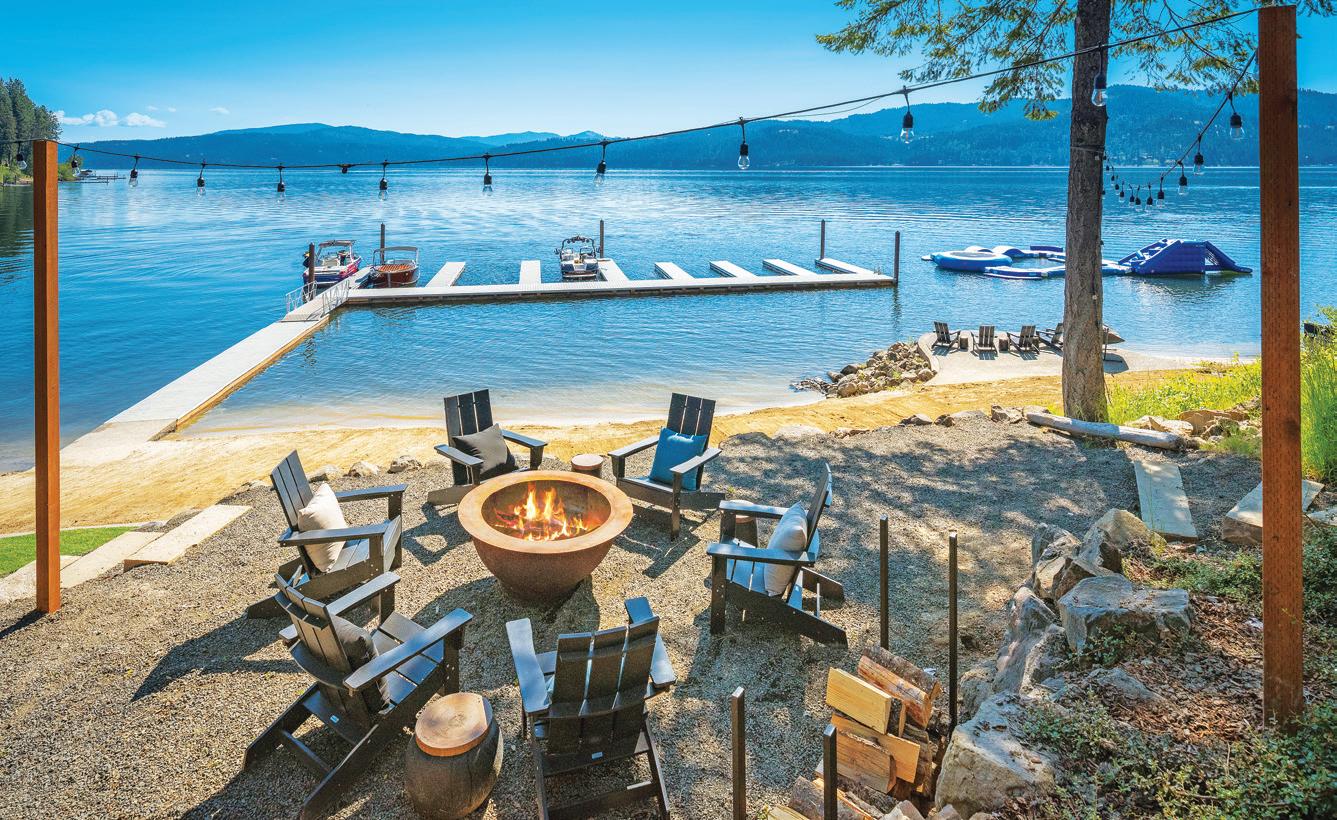
At CDA National Reserve in Coeur d’Alene, Idaho, evolution has come from a series of practical choices that match the way members actually use the property.
For Director of Communications and Member Services Gayle Cochrane, the property’s variety is its biggest asset.
“You can have a morning on the course, a workout at The Outpost, a family lake day, and then dinner at The Clubhouse,” she says. “Our job is to make those transitions feel effortless.”
Referral programs and personalized communication have strengthened member engagement. Events like the progressive home tour show how the community interacts far beyond the tee sheet.
“It’s a place where people build traditions,” she says. “We see that in the way members invite each other into their lives.”
CDA’s evolution has come from a series of practical choices that match the way members actually use the property. Some ideas surfaced from watching how people move through the day. Others came from the land itself. Many grew from staff who noticed a better way to handle something. The no-tee-time flow, the overlap between departments, the interest in wellness and longevity, and the steady expansion of programming all developed in response to what members chose again and again.
That momentum has continued. Membership is rising. Amenities are expanding. Trails are growing. New lodging options are on the way. The movement is steady and visible.
“You can build anything,” Cochrane says. “What matters is paying attention to how it works once people start using it.”
What emerges at CDA National Reserve is a collective way of working that stays close to the day. It shows up in the way directors watch their areas, in how staff move between responsibilities, and in how small decisions shape the way members experience the club. Leadership at eye level became the starting point, but the rhythm of the club is carried by the people who keep it moving. C+RB
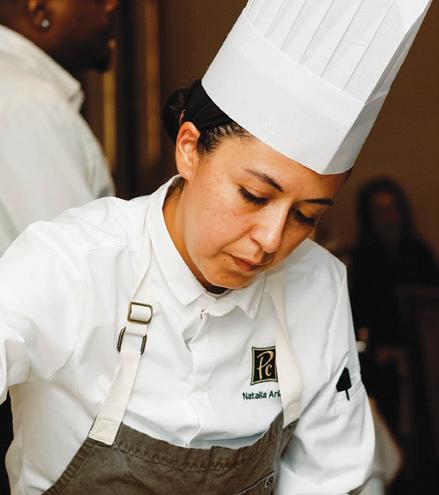
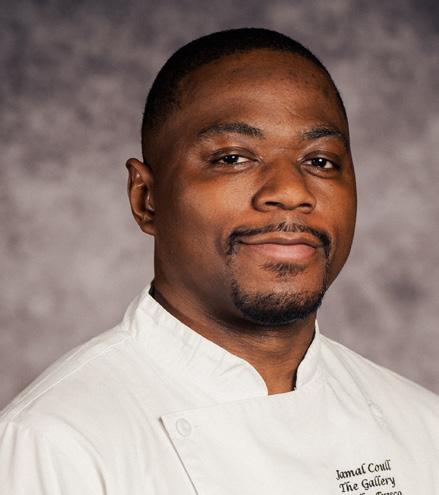
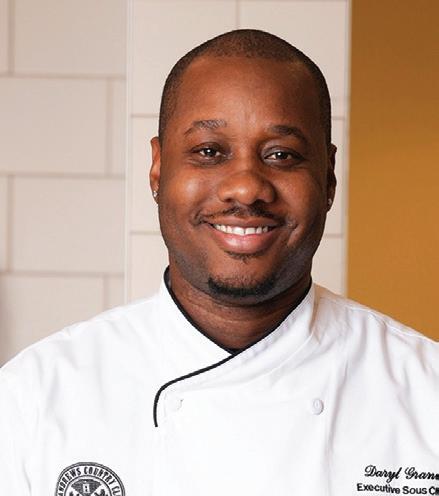
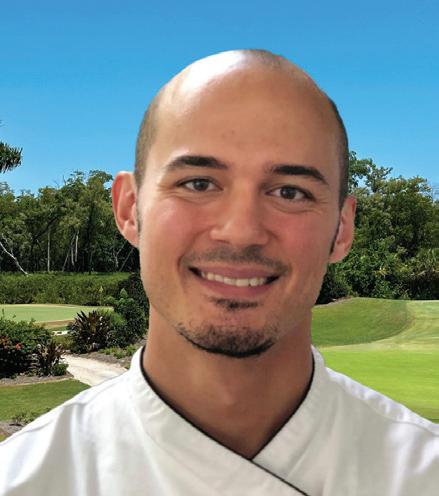


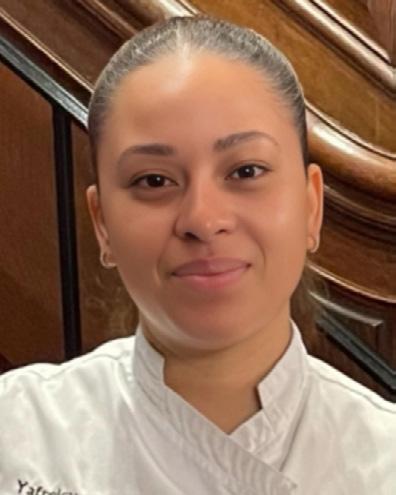

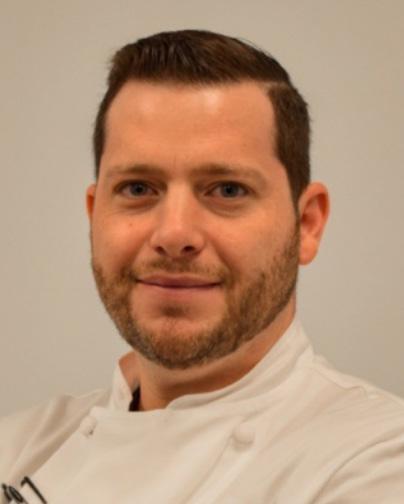

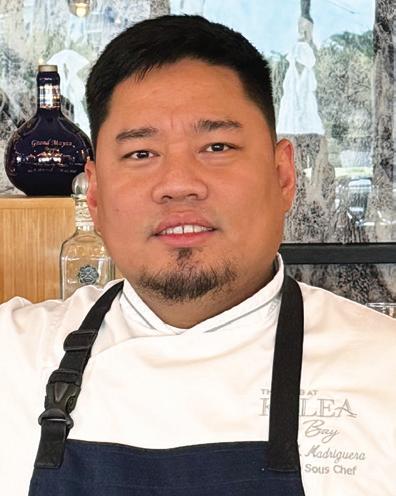
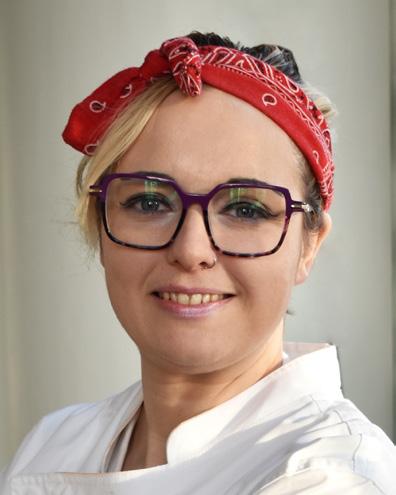
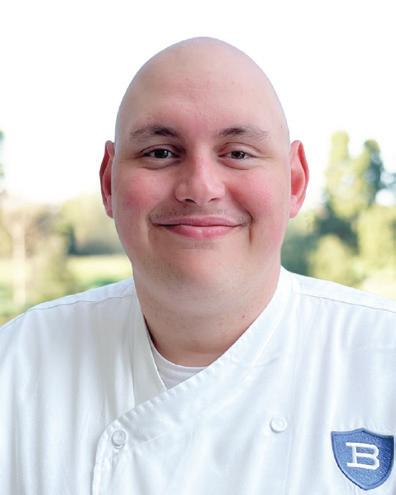

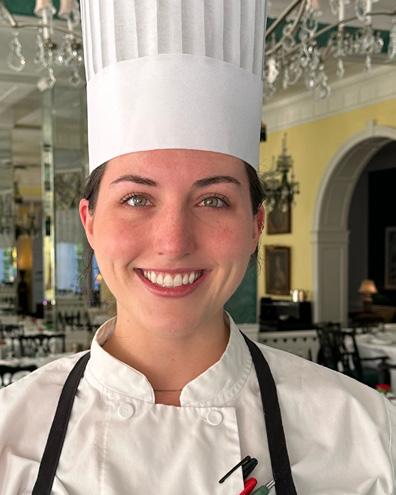

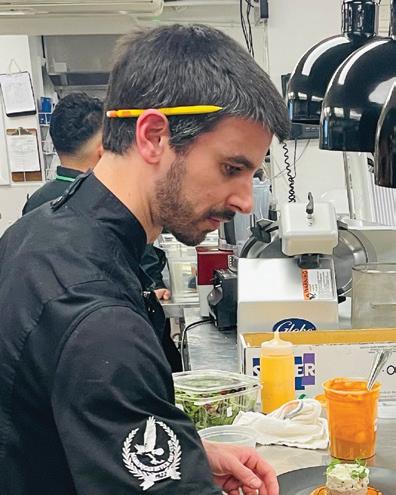
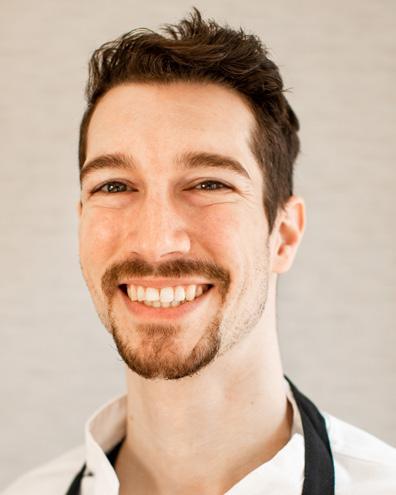
Club + Resort Chef is now accepting nominations for the 2026 Class of 40 Under 40, a prestigious program recognizing outstanding young culinary talent in the club and resort industry. This annual accolade honors the brightest rising stars. Nominations are open until February 3rd, 2026.
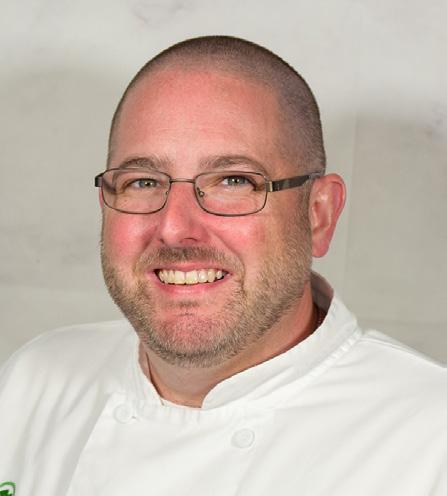
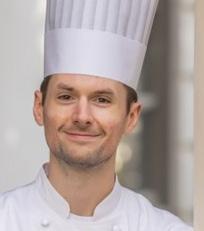
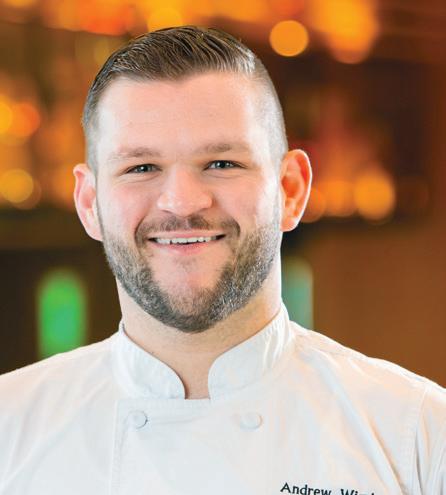

Eligibility and Nomination Process: Nominees must be currently active in a club or resort culinary setting and born in or after 1986. While the list will exclusively recognize culinarians, nominations are welcomed from chefs, managers, colleagues, members, suppliers, and other industry professionals. This inclusive approach ensures the recognition captures diverse talents and achievements within the club and resort culinary sphere. Scan the QR code to access the nomination form. Submit your nomination at clubandresortchef.com/40-under-40-nomination-form
By listening closely and delivering consistently, Corning CC demonstrates how a tight-knit market can fuel a powerful club community.
By Joanna DeChellis • Editorial Director
WHEN JEFF THOMAS ARRIVED at Corning (N.Y.) Country Club 10 years ago as general manager, the property had modest numbers, quiet usage, and low momentum. The fundamentals were there with loyal members, a scenic course, and a community that took pride in the club’s legacy, yet the energy had waned. What Corning CC did have was potential. Today, the club feels anything but small. Membership is strong, engagement is high, and the culture has turned into the connective tissue of the community.
Thomas began with the simplest and often hardest step: listening. He reached out to every member who had
resigned in the previous three years and invited each one to lunch. He met individually with every staff member. He laid out a plan for the club’s future, acknowledging the challenges while outlining what Corning could become with alignment and belief.
“I wanted people to see that Corning’s best days were ahead of it,” he says. “Trust came first. Everything else followed.”
Trust deepened because Thomas backed his words with presence. He is on the front steps greeting members on Friday nights. He thanks every outing guest personally. He shows up at local
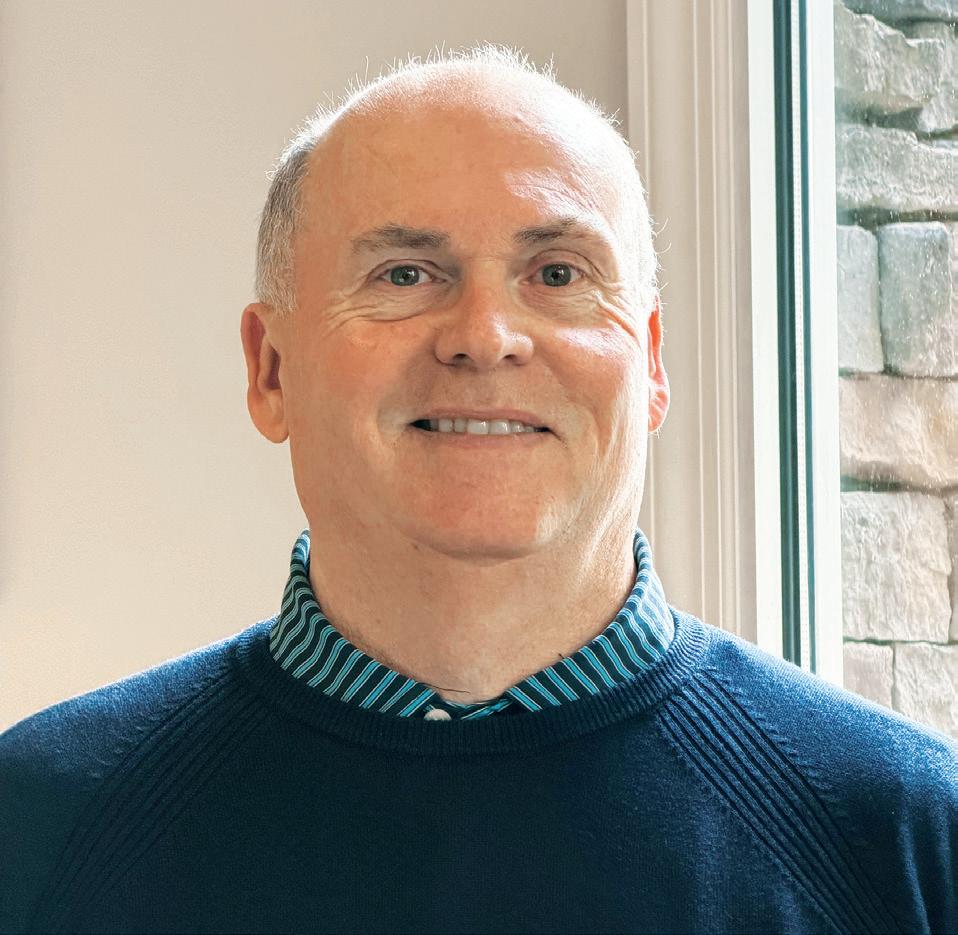
“I wanted people to see that Corning’s best days were ahead of it,” says Jeff Thomas, General Manager of Corning CC.
games and graduations. Members do not need to look for the GM because he is already there.
“Visibility matters. If members walk through the door, I want them to know I’m here and paying attention,” he says.
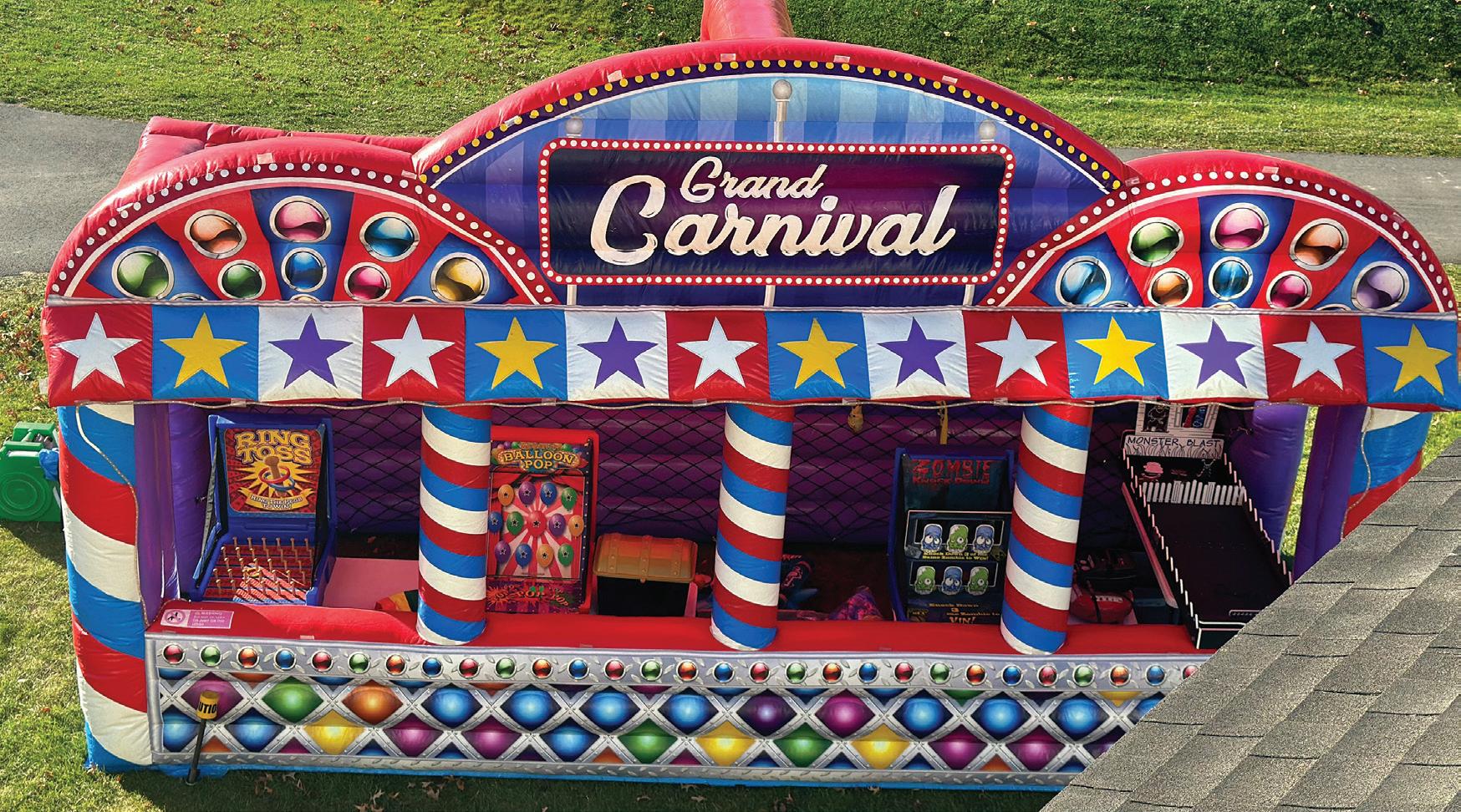
That presence set the tone for the programming that followed. Signature events became anchors for the club’s evolving culture. Corning’s Halloween carnival drew more than 300 kids this year. The candlelight wine dinner, featuring wineries like Silver Oak and Nickel & Nickel, has become a highlight of the winter season. The club’s annual tree lighting now brings together more than 400 members and feels like the town’s unof-
“We created a place where members want to spend time,” says Jeff Thomas, General Manager of Corning CC. “The culture changed long before the buildings did.”
ficial start to the holidays. Even Corning’s private-label beer, brewed locally and named The Country Club, has developed a devoted following.
“We created a place where members want to spend time,” Thomas says. “The culture changed long before the buildings did.”
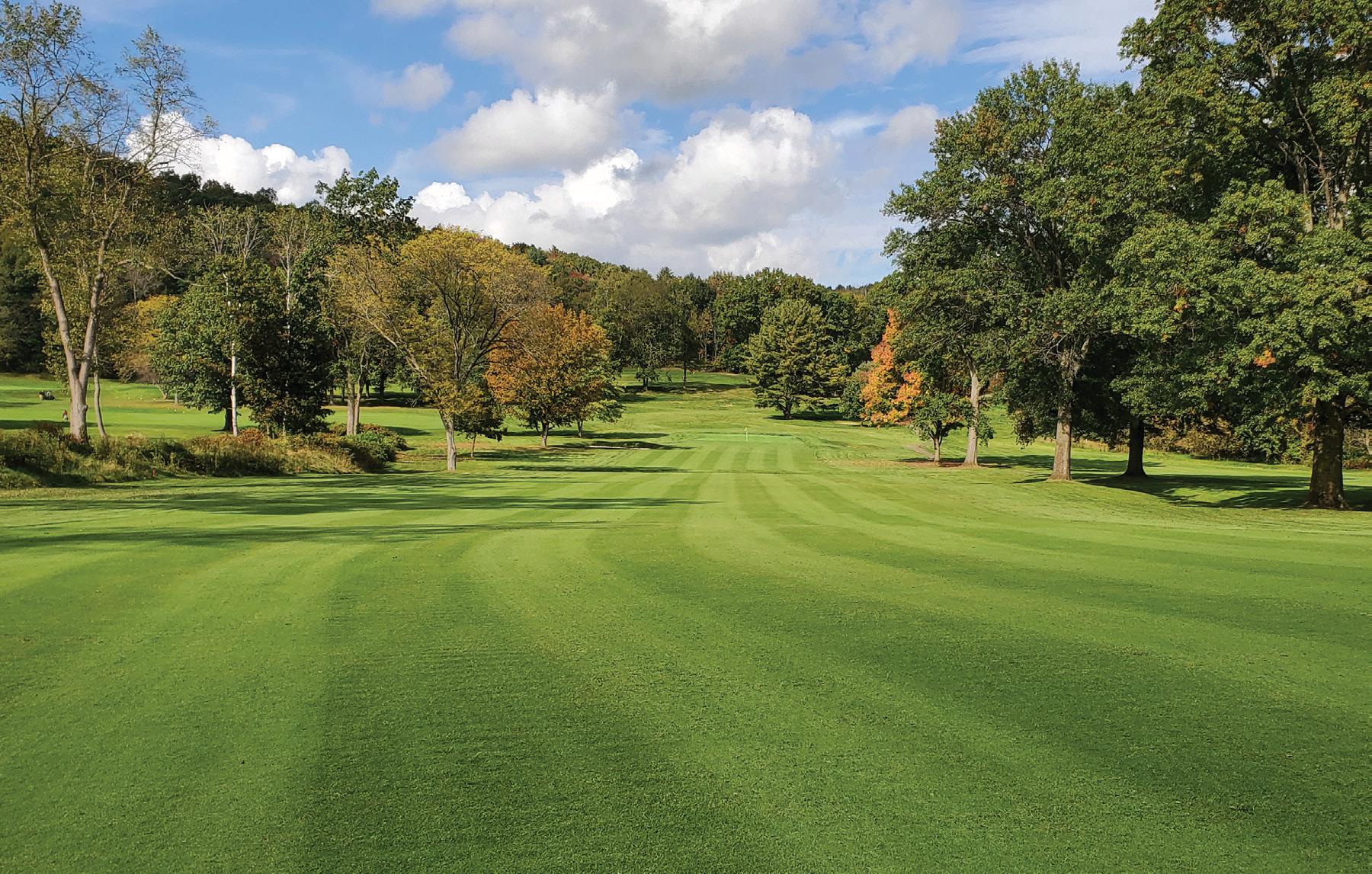
Families now drive the demographic shift. The average member age sits in the late forties. Children come to the club after sports to eat in the grill room. The pool functions as a local escape. What started as a modest operation has become a third place for the community that is predictable, welcoming, and woven into daily life.
“Our growth came from simple things,” he says. “Listen well. Respond quickly. Make every experience feel personal.”
Running that experience falls to a small, cross-trained staff who under-
stand the rhythm of the club and each other. The lead server supports management duties. The chef steps into the front of house during peak periods. The receptionist handles membership and wedding tours when needed. Even the superintendent can talk comfortably through membership details and course conditions.
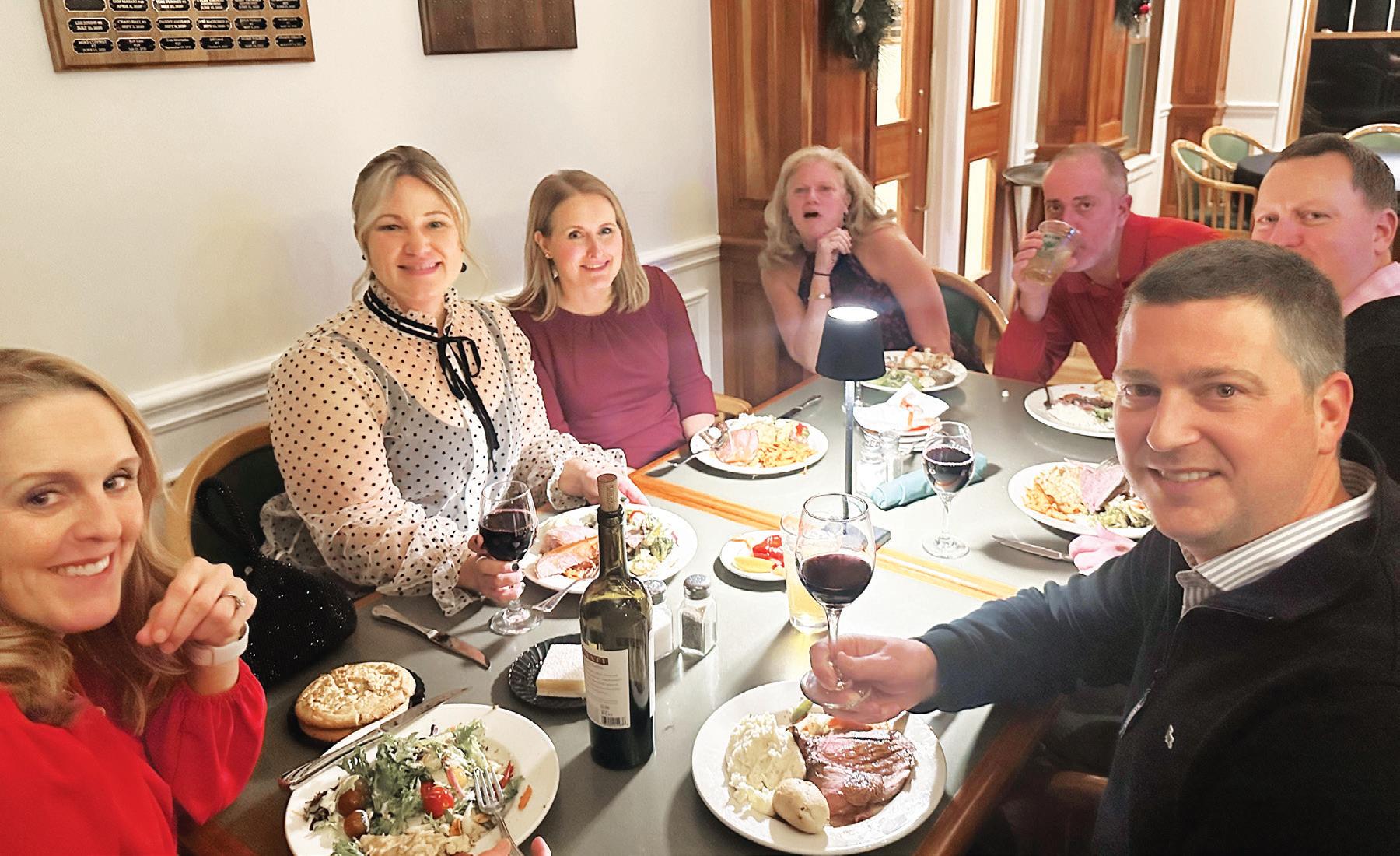
Staff members track birthdays, anniversaries, graduation years, and family milestones. They log feedback weekly and return emails quickly. The philosophy is clear: Members should feel recognized and not processed.
That same intentionality shapes Corning’s capital planning. After conducting a detailed member survey, the club drafted a master plan guided directly
by what members said they would use and value. Expanded outdoor dining leads phase one. A resort-style pool, simulators, refreshed dining spaces, and broader clubhouse updates follow. Phase one is expected to cost between $3.5 million and $5 million.
“We leaned on data to guide every step of the master plan,” Thomas says. “It keeps everyone aligned and moving forward.”
The board’s unity reflects that alignment. When new ideas surface that fall outside the survey results, Thomas brings the conversation back to what the membership prioritized.
“We’re following the priorities members outlined,” he says. “It keeps the process focused and grounded.”
Even the club’s largest operational decisions followed that same rhythm. Regrassing every fairway required closing nine holes at a time, which demanded patience and trust. Early skepticism was common. The payoff came quickly.
“When the fairways reopened, the same members who questioned the project said they wished we had done it sooner,” Thomas says.
Today, Corning Country Club feels larger than its footprint and livelier than its market size would suggest. Member engagement is steady. Signature programs feel baked into the club’s identity. The master plan reflects the membership’s voice.
“Success looks like a full membership and families who genuinely enjoy being here,” Thomas says. “That is what counts.” C+RB




The new Performance Lab at PGA West offers tools and technology for golfers of all levels to learn more about their game and how to better themselves.
By Madison Hartline
•
Associate
Editor
INSIDE THE 18,000-SQUARE-FOOT PERFORMANCE LAB at PGA WEST in La Quinta, Calif., data becomes insight into a golf player’s performance. From force plates that track each swing to motion-capture cameras that record every degree of rotation, the space feels equally comfortable for Tour-level players and complete beginners.
“The Performance Lab is for anyone looking to improve and pick up useful tools,” says Bryan Lebedevitch, Director of Instruction at PGA WEST, who has been with the club for 29 seasons. Lebedevitch and the lab’s philosophy centers on customization, allowing novice players a small peek behind the curtain of technology while letting experienced players run wild with all the offerings.
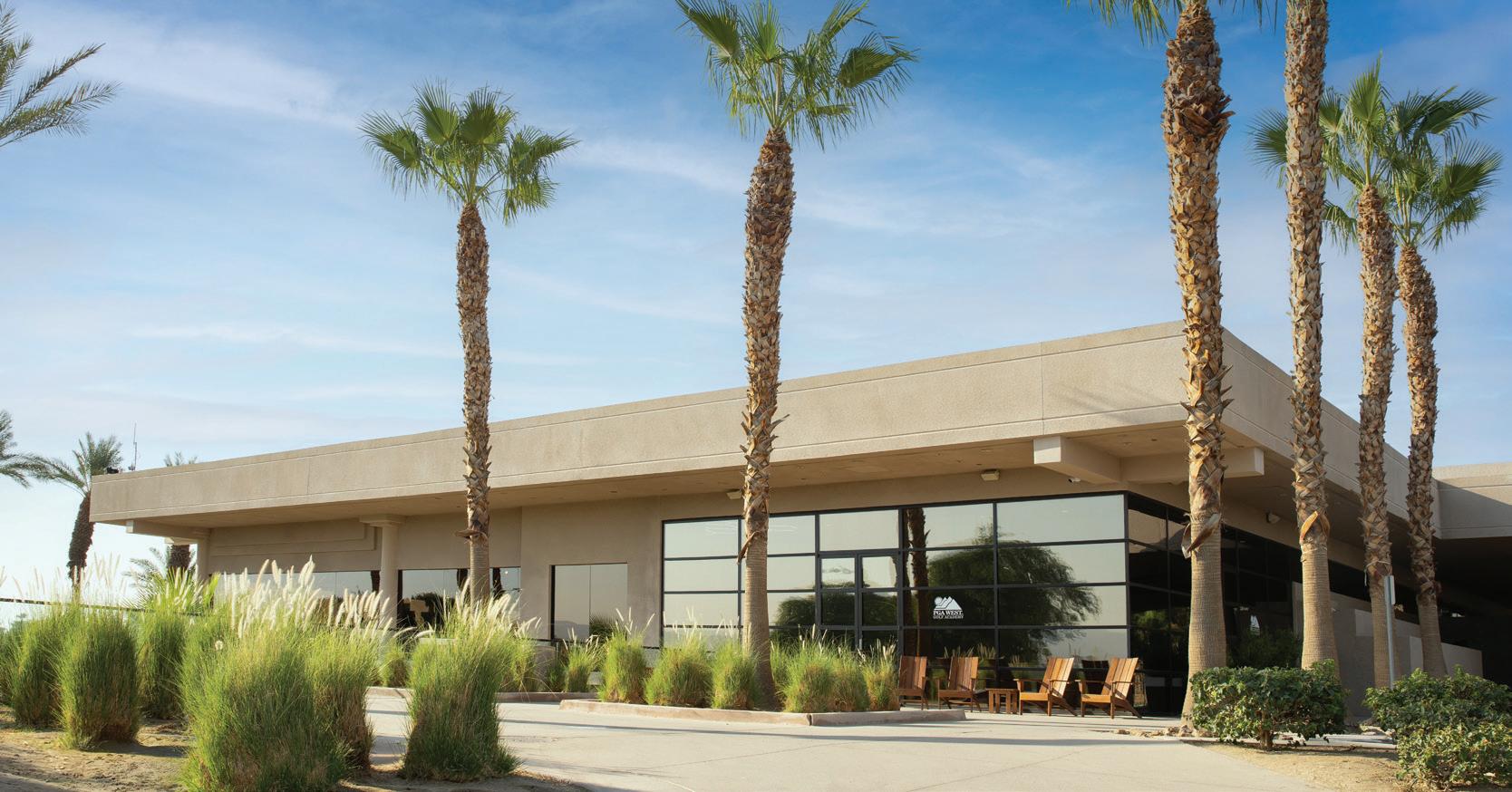
The Performance Lab opened in June, transforming a former real estate office into a space built to push golf instruction forward. Opening in the summer also gave instructors time to familiarize themselves with the technology during a slower stretch for the team.
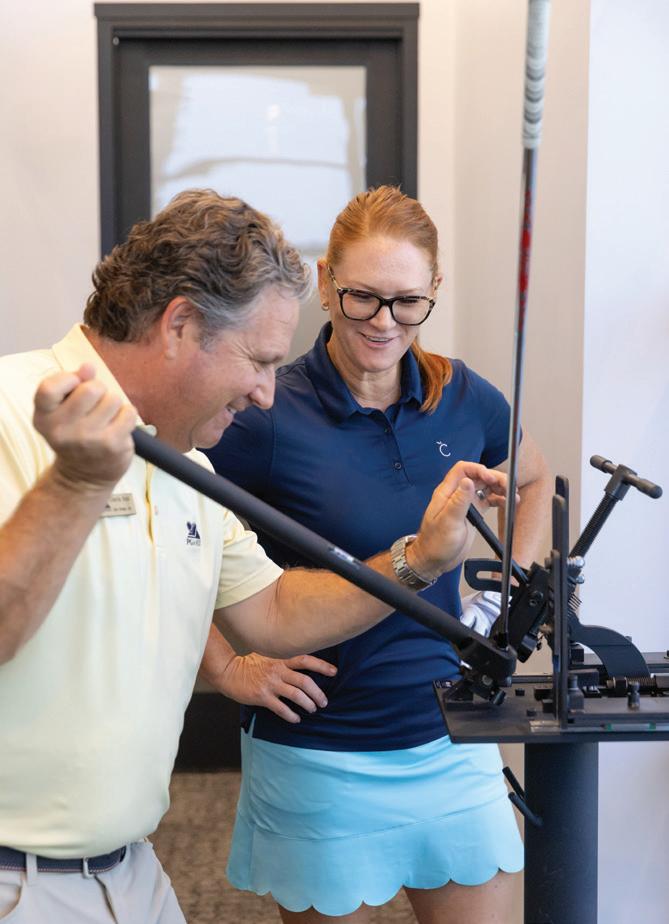
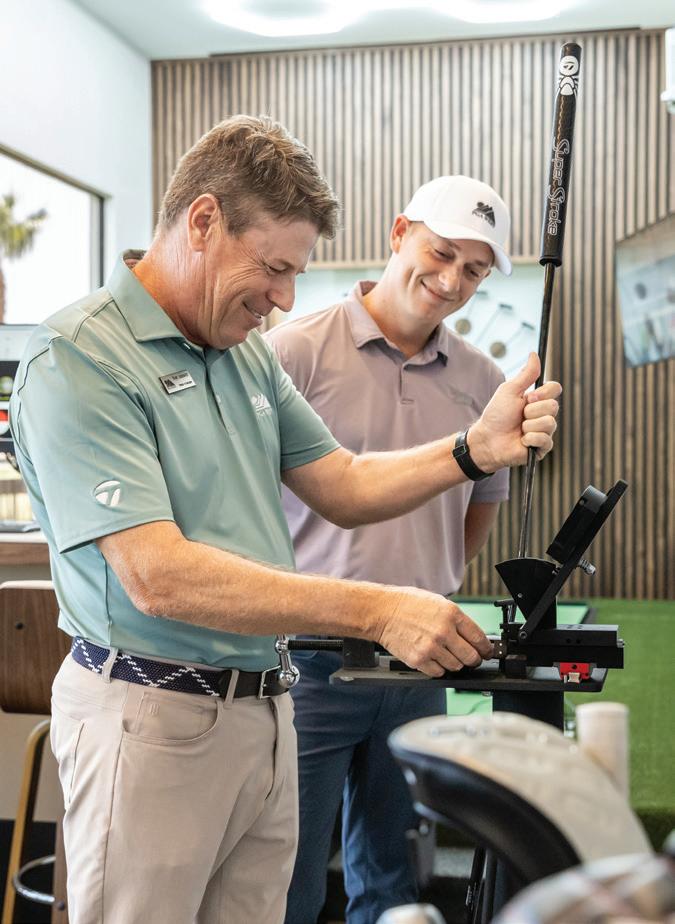
Lebedevitch says he worked with Jim and Ben Dobbs, Executive Directors of PGA WEST, and General Manager Jeff Mueller to research technology for the space. Together they finalized the current layout, which includes two simulator bays, a 16foot adjustable putting platform, and the full mix of tools now in the Performance Lab.

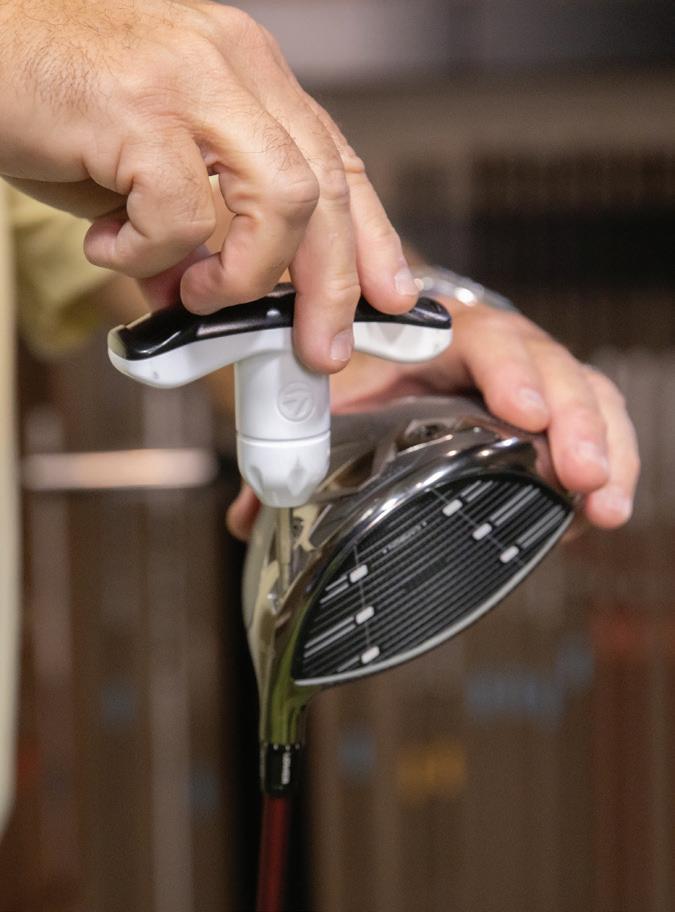
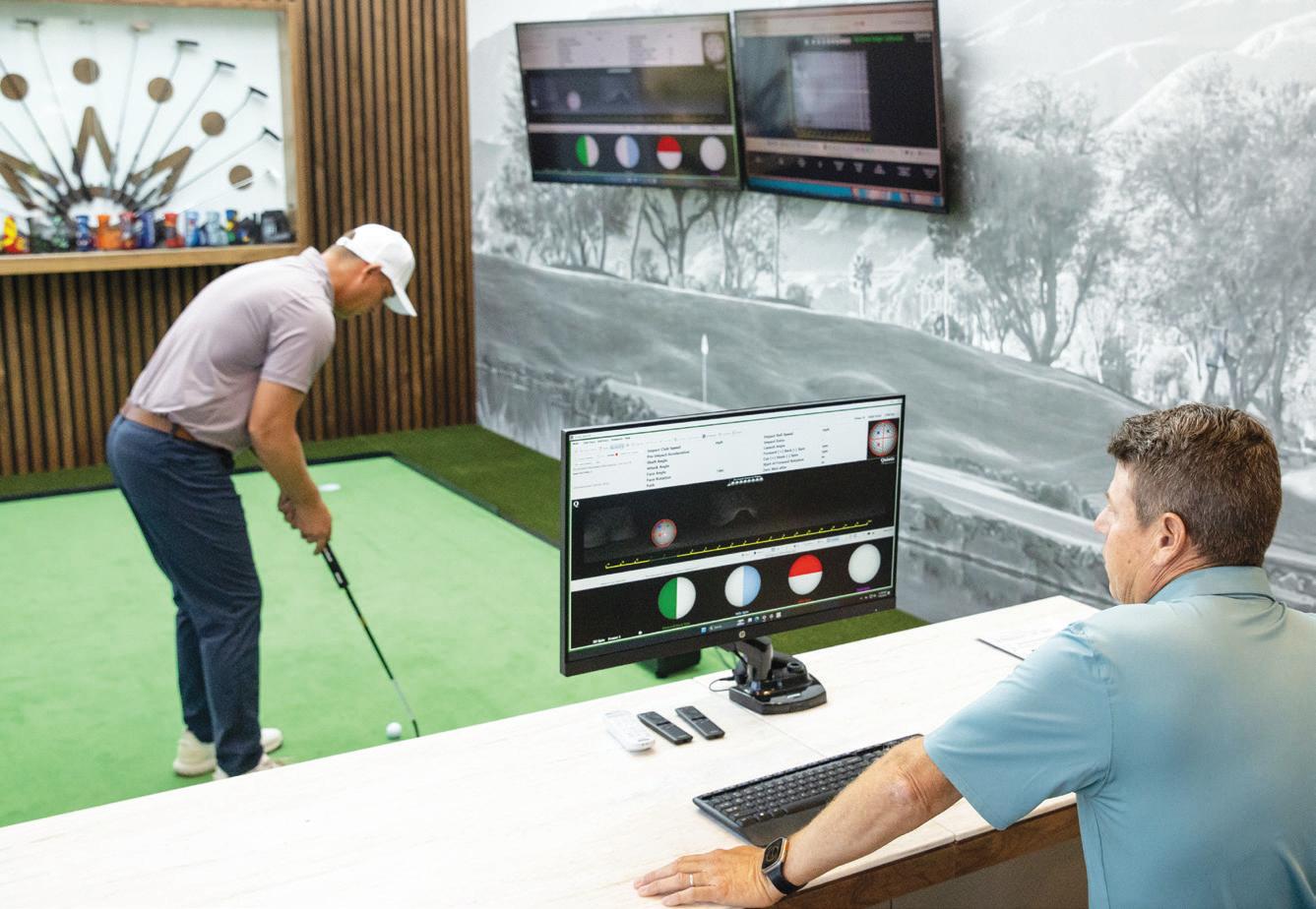
Director of Instruction Bryan Lebedevitch believes the new Performance Lab will drive business at PGA WEST because of its ability to provide concrete data and measurement that golfers want.
There are three dedicated areas in the facility: two same-size hitting bays and a separate putting zone. The putting space features a launch monitor that shows how the putter head affects the ball. An overhead system also projects a dynamic grid onto the green, tracing the ball’s path with light to help students visualize breaks and improve their reads on breaking putts.
One of the bays functions as a fitting area equipped with a ceiling-mounted launch monitor and a four-camera system that measures two primary elements: ball flight and video.
“The main reason we chose this putting platform was the ability for it to tilt in different directions at the same time,” explains Lebedevitch. The club also invested in a swing stage that lets PGA WEST tilt the ground to mirror on-course conditions and speed up the learning process for players working through specific swing challenges, he adds.
“The force-plate technology is incredible,” he says. “It measures pressure on the right and left sides and the combined force, and it gives us a full 3D read as well.” From there, the club invested in 3D motion capture to study a golfer’s swing through detailed tracking of body movement, rotation, and speed.
“We might use some of that technology or all of it, depending upon the skill level of the player,” he says. “We have clients who are Tour players and playing tournament golf on a regular basis, right down to almost beginner-level. We can cater the environment to the individual. If I am teaching a beginner lesson in that space, I don’t have to show them everything under the curtain. I can choose what they see and cater it to their ability level to not overwhelm them. That’s kind of what our specialty is, being able to customize the learning environment to the student that’s there.”
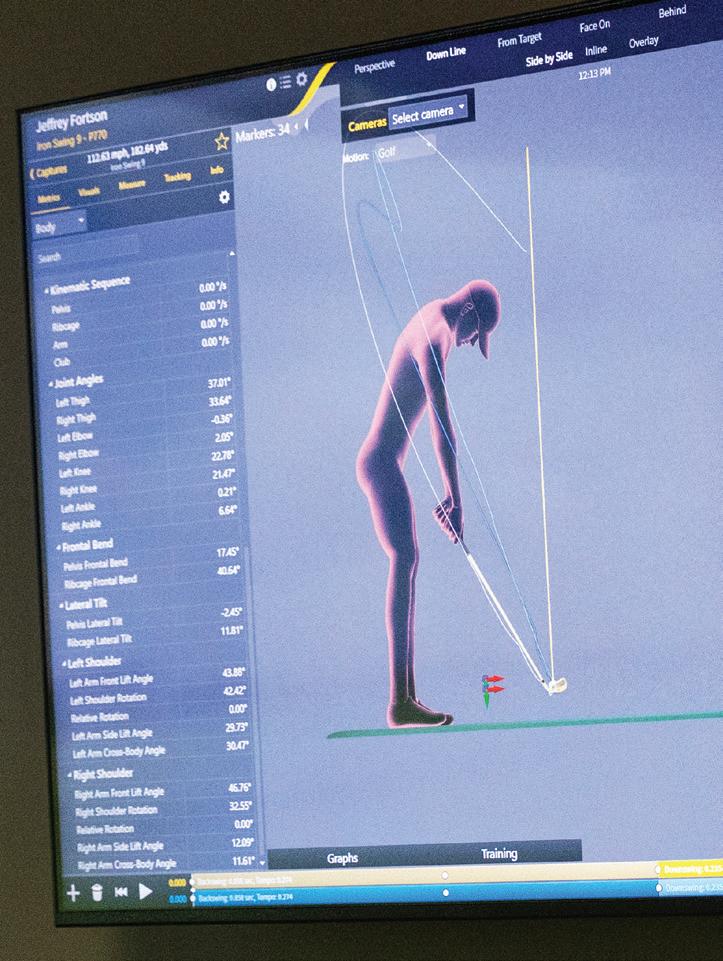

For example, he says a more comfortable player may want specific data like movement in the right knee during the swing. The technology allows Lebedevitch and his team to measure everything a player is doing and give them the information they are looking for.
Lebedevitch says both men and women are interested in and utilizing these technologies, and the flexibility allows both groups to get the most out of their time. Although PGA WEST does not have a high junior membership, junior golfers from the area have expressed interest in trying out the new technology offered as well.
The Performance Lab can be utilized in small groups or oneon-one trainings, but students cannot rent it out on their own. There must always be a PGA WEST staff member working the technology for them.
“I think that opening this Performance Lab will help drive business,” says Lebedevitch. “Nowadays, golf instruction has shifted more into being able to measure and define things. When you have tech that can deliver answers, people are more likely to welcome that environment. I think it will continue to push private instruction in golf schools, and member involvement will [increase significantly].” C+RB
By Pamela Brill • Contributing Editor
THE LADIES’ LOCKER ROOM is finally ready for its close-up. After years of serving primarily as a pit stop for a quick shower and a change of clothes, these refreshed facilities have become social meccas for card games, book clubs, or simply for catching up with friends. Here’s how some clubs are investing in their female membership with spaces they can truly call their own.
A game of Mahjong or bridge was once a regular occurrence at Hope Valley Country Club in Durham, N.C. But when the gathering space inside the ladies’ locker room became outdated, members stopped using it. Now, ever since last January’s renovation of the wet areas and adjoining lounge, women are breaking out their tiles and playing cards, indulging in the comfort of this updated haven.
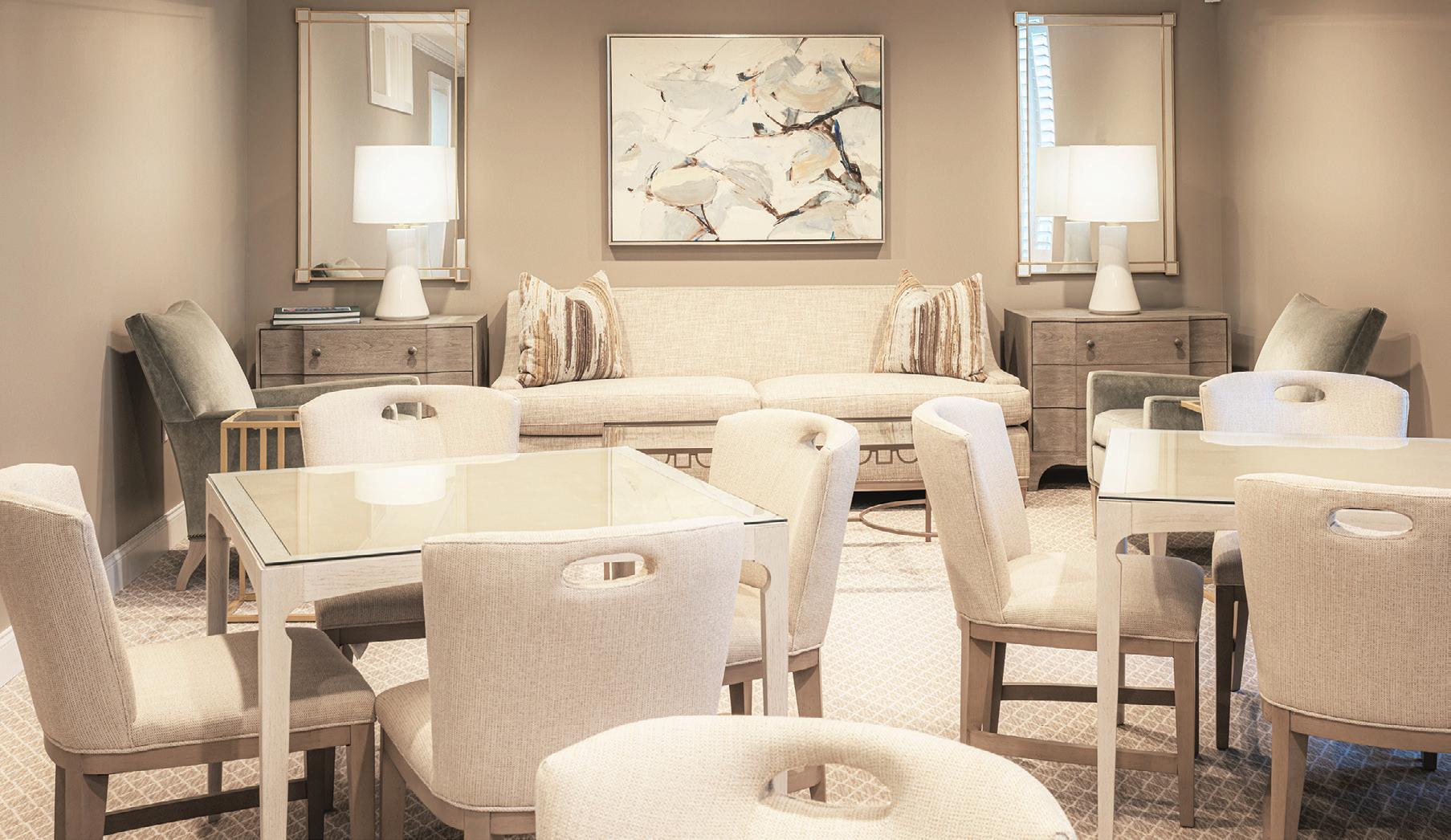
The locker room overhaul was the direct result of member feedback and Hope Valley’s continued commitment to providing a stellar member experience. “Many of our ladies expressed a desire for a private, welcoming area where they could enjoy a cup of coffee in a quiet
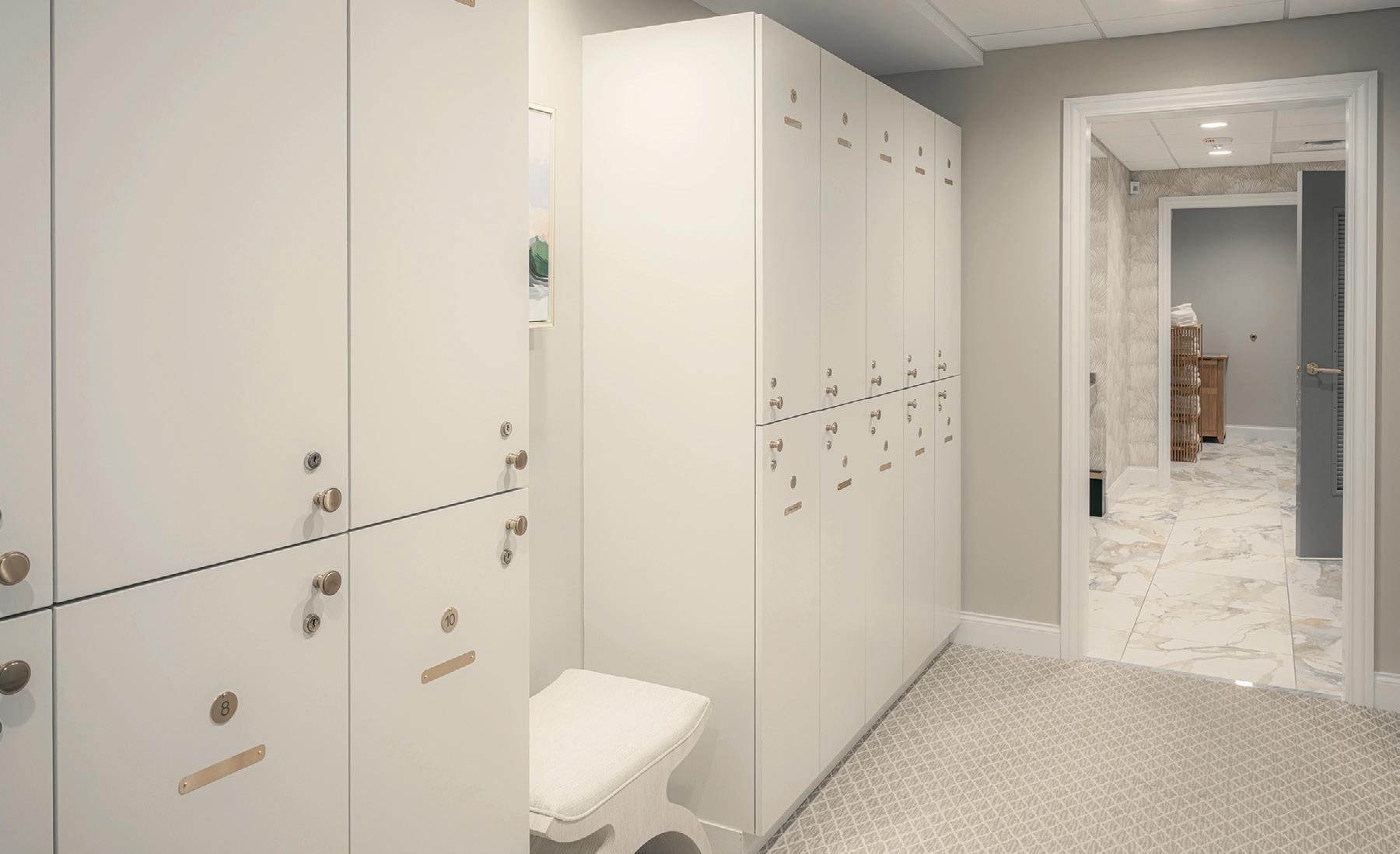
space, as well as casual conversations before or after a round,” explains Membership Marketing Director Lindsey Foschi. To establish a more welcoming environment that blended traditional amenities with modern-day décor, a plan for a new design was put into place.
Durham, N.C.
“Every
detail, from the finishes to the layout, was chosen to reflect a balance of beauty and practicality.”
- Lindsey Foschi, Membership Marketing Director
KNOLLWOOD CLUB
Lake Forest, Ill.
“We wanted this locker room to feel like an extension of the members’ homes. ... Our hope was to bring new life to this expansive space, so that women could enjoy the space for more than just a place to change their shoes.”
- Randall W. Harper, CCM, General Manager
“Every detail, from the finishes to the layout, was chosen to reflect a balance of beauty and practicality,” she describes. Upon entering the 2,100-square-foot ladies’ locker room, members have private access to the wet area, comprised of lockers, showers, a vanity area and restrooms. Cream-colored metal lockers, increasing from 16 to 20 half-size lockers, have replaced outdated wooden slat versions. Forest green carpeting in the locker room and salmon pink tiling in the wet area was swapped out in favor of cool marble, a grey palette that is carried into the adjoining area.
Directly opposite the wet spaces is the 900-square-foot lounge, outfitted with soft seating that includes a couch and comfortable chairs, along with four tables for hosting intimate gatherings.
Contemporary artwork adorning the walls makes for tasteful decorating, while the combination of natural lighting, high hats and tableside lamps add to the ambiance of the spacious room.
The atmosphere fostered by these newly updated spaces has turned Hope Valley’s ladies’ locker room and lounge into a social hot spot. “Members now enjoy a more private and relaxing space to prepare for their activities, unwind afterwards, or connect with friends through Mahjong, bridge or casual conversation,” says Foschi. “By blending style, comfort and convenience, the new locker room has elevated the overall club experience, offering a retreat that feels both practical and indulgent.”
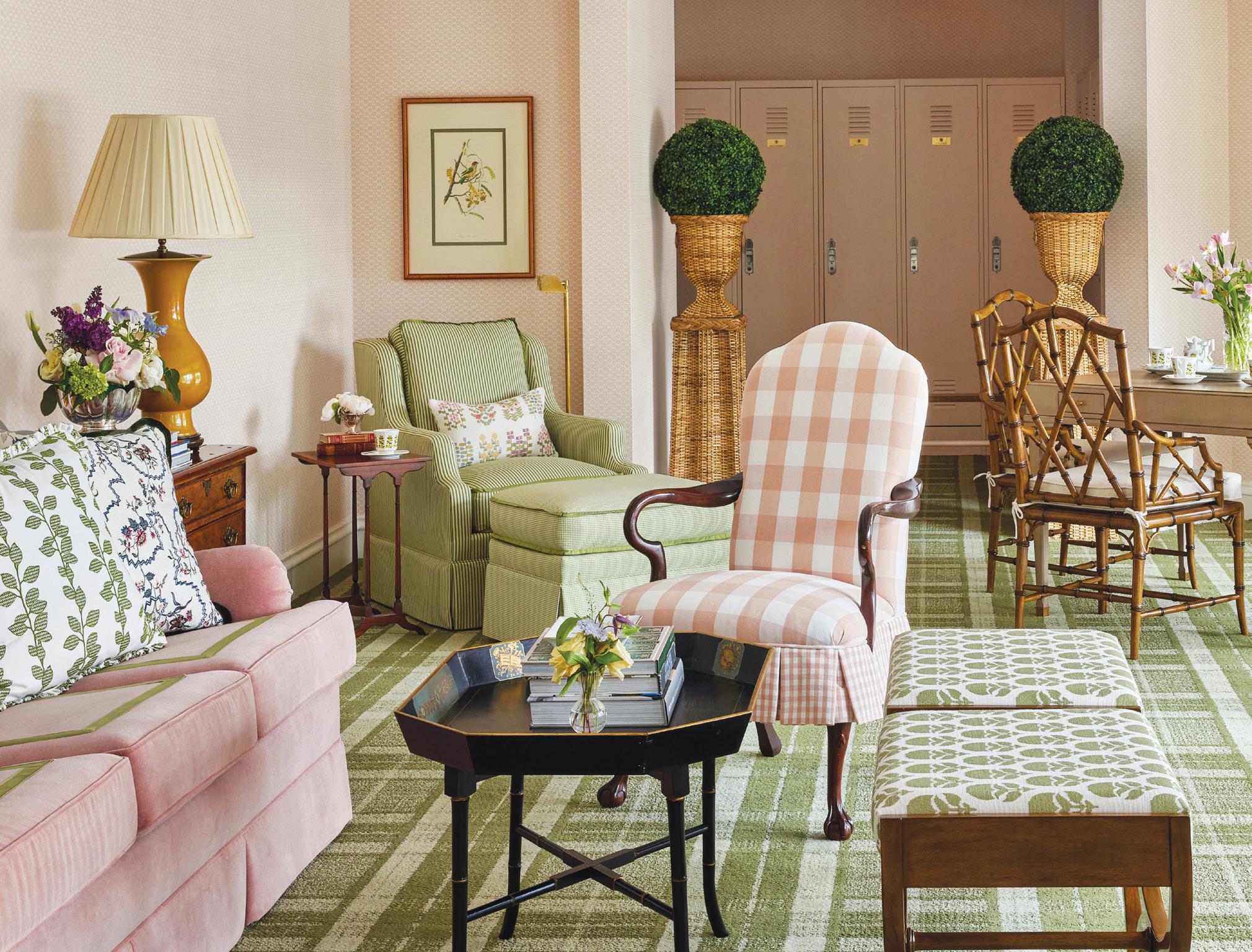
Dorothy from “The Wizard of Oz” may have believed there was no place like home, but for the female membership at Knollwood Club in Lake Forest, Ill., the adjoining spaces within their locker room are a close second. Last winter’s renovation included an updated lounge area and brand-new card room that gives purpose to a previously underutilized area. Members are now opting to host card games and other informal gatherings onsite instead of inviting their guests back to their homes.
It had been 25 years since Knollwood last updated its 3,000-square-foot locker room inside the clubhouse. “Our hope was to bring new life to this expansive space, so that women could enjoy the space for more than just a place to change their shoes,” says General Manager Randall W. Harper, CCM. “We wanted this locker room to feel like an extension of the members’ homes.” Determining which areas to refurbish and which would benefit from a complete overhaul was the first step in the reconstruction process.
Working with Chicago-based designer Kim Scodro, the club approved a floor plan in which the layout of the wet area remained intact, while the lounge was reconfigured with new furnishings. A feminine-leaning color palette of pink, soft, moss green, and cream is evident in the floral wallpaper and drapery. Similarhued seating includes an upholstered chair, easy chair with ottoman, and a pink
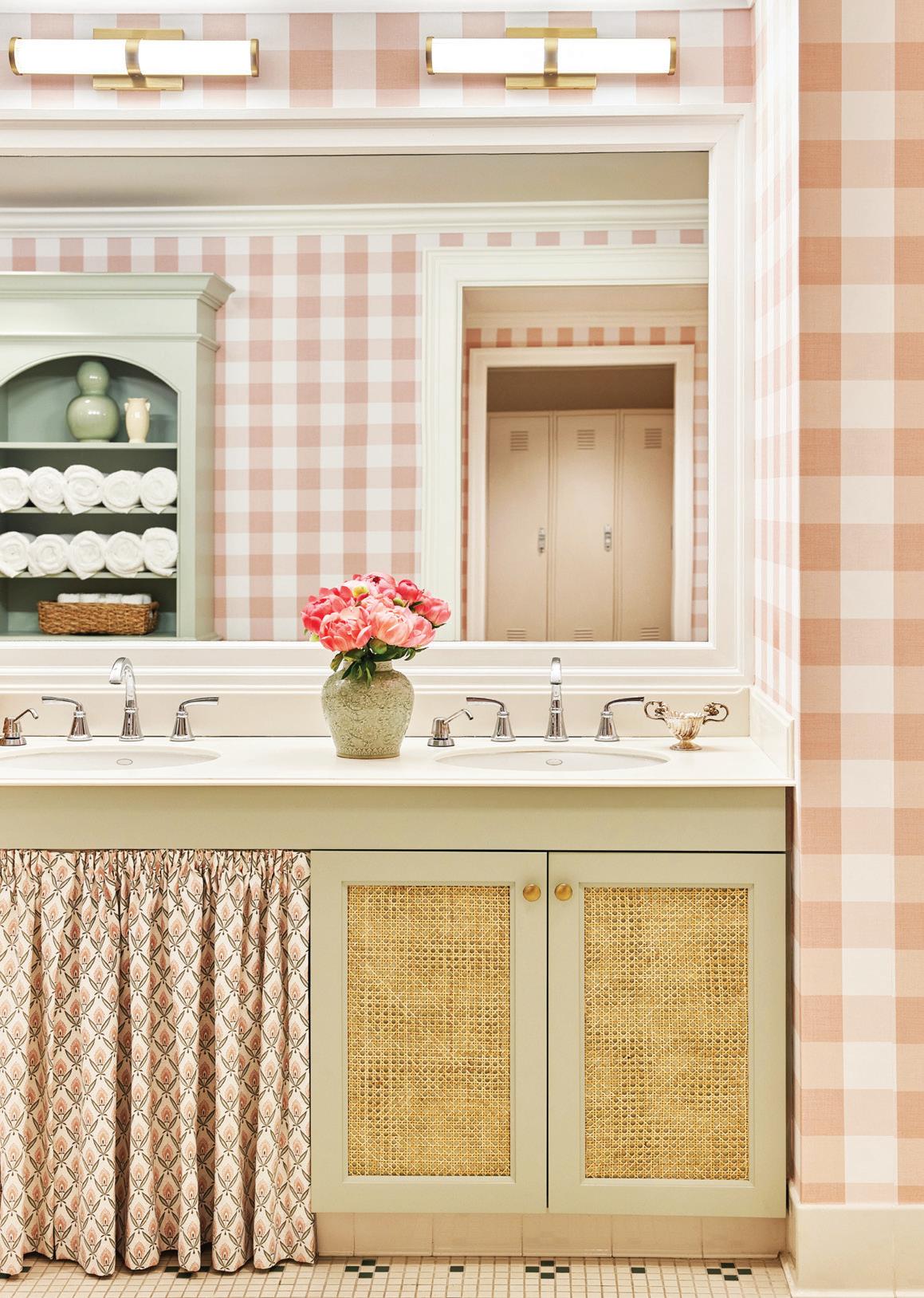
velour couch. The restroom area features pink gingham wallpaper and a vanity with green cabinetry and pink sink skirt, underlining the playful palette.
Just off the ladies’ restroom area are the lockers themselves (pink, of course), which have been reduced from 120 to 85. Before the renovation, Harper noted, only 30 or lockers were utilized on a consistent basis. Streamlining this section helped pave the way for the locker room’s pièce de résistance: a 1,000-square-foot card room. Located in the back of the room and overlooking the property’s lush grounds, this new social spot opens up a world of possibilities for members and their guests.
“The club’s mission has always been to ensure that every member, regardless of age or gender, feels a genuine sense of comfort and belonging.”
- Henry C. Wise, General Manager
“By removing some of the lockers, we were able to create a space for women to play cards, host needlepoint and book club, or simply enjoy a glass of wine,” he says. A green breakfront serves as a focal point and anchors the room, which features pink and cream wallpaper with green trim and wooden tables with gingham-padded, high-back chairs.
Thanks to these myriad updates, the ladies’ locker room has been transformed into a lively spot. Harper reported that members are using the facilities now more than ever and that locker requests have increased. “The ladies are really enjoying using the space for pleasure—not just in a utilitarian manner,” he notes.
Equal opportunity is not only synonymous with employment opportunities; it’s the basis for membership satisfaction at the club level. So when Shaker Heights (Ohio) Country Club set out to determine which existing facilities would benefit from large-scale improvements, the ladies’ locker room, which had not been updated in the past 40 years, received a resounding response.
This area of the club, according
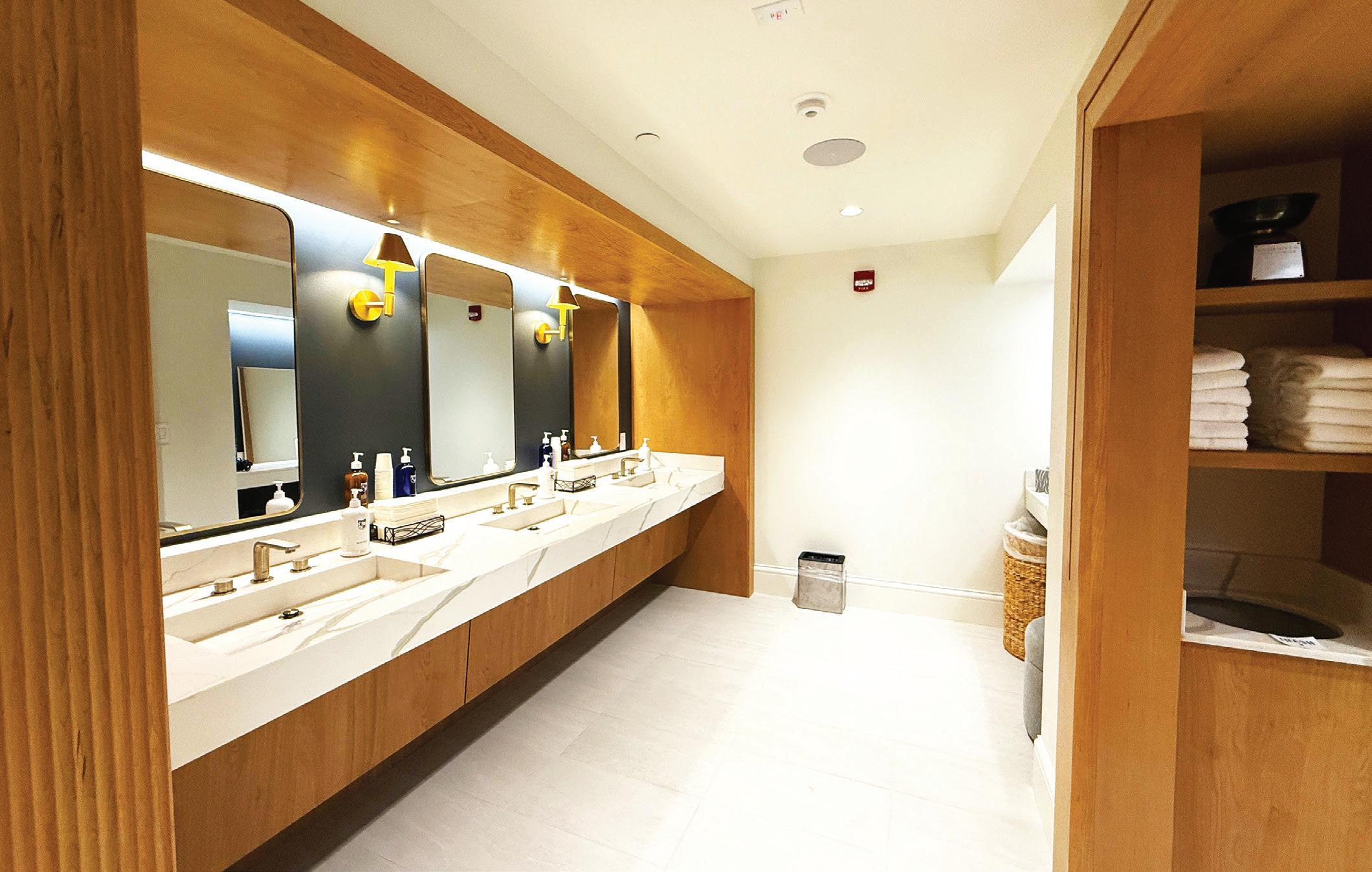
to General Manager Henry C. Wise, “stood in sharp contrast to the men’s facilities and did not reflect the inclusive, family-oriented spirit that defines Shaker Heights Country Club,” he says. “The club’s mission has always been to ensure that every member, regardless of age or gender, feels a genuine sense of comfort and belonging.” To better address the needs of its evolving membership—one that has lowered its average age by 10 years—an expanded layout with targeted amenities was in order.
Shaker Heights CC’s younger membership, especially those with growing families, prompted the reconfiguration of the ladies’ locker room, which now accommodates 140 full and 40 half wood-grained lockers that complement the wood-paneled ceiling. A combination of porcelain and luxury vinyl tile, along with plush carpeting, completes the look, while the adjacent wet area is decked out in floor-to-ceiling stone tile. Soft, indirect uplighting is enhanced by strategically placed accent lighting to create a spa-like atmosphere.
A major addition that enhances this facility was two 32x14 family changing rooms, providing a convenient space for moms with multiples. Just down the
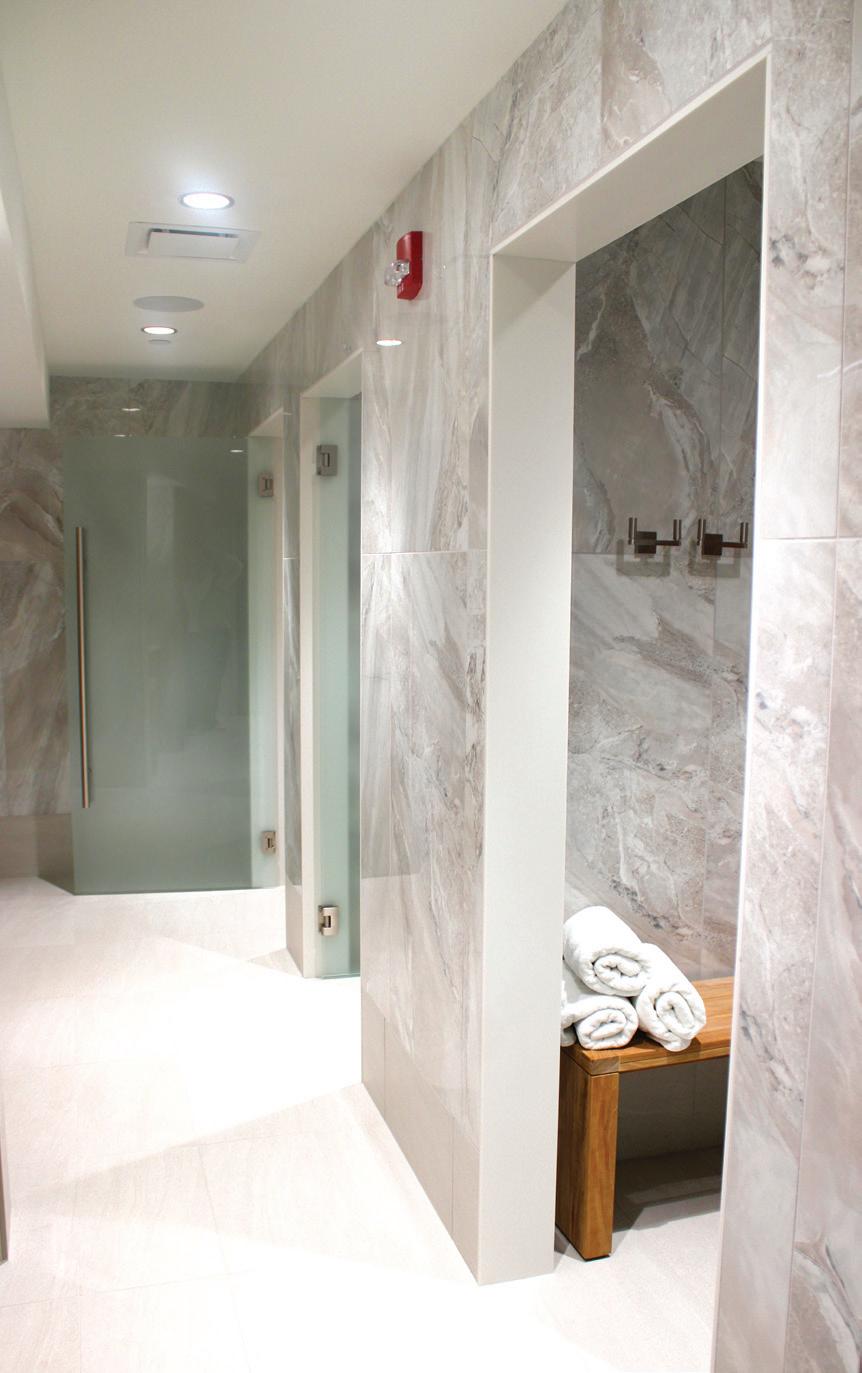
hall is a 12x10 quiet/nursing room, a member-requested amenity that offers privacy for new mothers. “This thoughtfully designed space also serves as an ideal option for teenagers who are not yet old enough to utilize the adult locker rooms,” says Wise.
Parents and teens aren’t the only ones to benefit from these new spaces. After the successful renovation of the club board room in 2024, management scouted out additional spots to support the growing number of members working remotely. A tucked-away locale within the ladies’ locker room has been reimagined as a work space, complete with adjustable laptop desks, outlets for electronic devices and a complementary beverage station. “While we await the arrival of a custom bench for upholstering, the space has already garnered enthusiastic interest—so much so that several members have already claimed it as their preferred spot,” notes Wise.
While the enhanced locker facility has only been open since mid-August, it has already made a remarkable impact. Wise is thrilled to hear the comments—both from existing and prospective members—and witness a renewed sense of pride in their club. “In my 20-plus years working in private clubs, it’s rare to see so many members in complete agreement about a project,” he says. “But this time, the consensus is clear.” C+RB


Designed exclusively for employees, the new space raises the bar on how clubs support their teams.
By Joanna DeChellis • Editorial Director
OCEAN REEF CLUB (Key Largo, Fla.) has always expected its team to deliver a world-class experience. The club’s leadership decided it was time to give its employees an environment that reflected that same standard.
For decades, staff dining and housing operated out of a one-story building that had outlived its usefulness. The structure was hard to clean, difficult to maintain, and never designed to support a workforce that can reach 1,300 people during peak season.
“It was an old slab of concrete,” says Executive Chef Jared Reardon, MBA, WCMC, CEC. “It had character, but it was tired, and it was holding us back.”
Housing was stretched thin as well. The property had 300 beds on-site, which left many employees in a remote hotel 25 miles away.
“We had people living off property without cars,” Reardon says. “We were running a shuttle up and down a dark road all day and night. It was expensive, and it wasn’t a great experience for anyone.”
Instead of patching together shortterm fixes, the club committed to a longterm solution. The result is a four-story building that reimagines how employees live, eat, and build community.
The new hub sits on the footprint of the original structure but adds three floors of housing above it. The additional
150 rooms bring the total number of onsite beds to 450. Rooms are intentionally modest. The goal is to encourage employees to use the shared spaces on the first floor and create a stronger sense of community.
The entire ground level is dedicated to employees. Half of the floor is a bright dining hall and half is a social and recreation space modeled after contemporary workplace environments. Reardon often sees staff in sweatpants and t-shirts using the area as a living room between shifts.
“People actually want to be there,” he says. “They come down and hang out. They meet people they never would have met before. It feels like a real community now.”
This is a building designed exclusively
for staff. Members do not have access to it. That clarity of purpose mattered when leadership made the case for a $30 million investment.
“The membership approved it with zero hesitation,” Reardon says. “They know the staff by name. They know their families. Supporting this project lined up with their values.”
The old cafeteria served the basics. The new dining program aims higher. Staff choose from a full hot station, a build-your-own-sandwich station, and an expansive salad bar that rivals the club’s member dining outlets. Everything costs the same, and employees pay only half.
“It is a $7 meal, and the club covers 50 percent,” Reardon says. “So, for $3.50, they can get a real lunch. And it is the same product we use for our members. There is no second tier.”
The salad bar alone requires up to four staff members each day. Nothing is canned. Everything is fresh. Employees who work in fitness and wellness, along with clinical staff from the club’s health center, eat there daily.
“They probably eat healthier than anyone on property,” Reardon says. “We had to match that.”
The shift required more staffing and more intention, but leadership supported the increase. “Food is one of the biggest pieces of morale,” says Reardon. “When you eat something good after
a long day, you feel valued. For some people, this is more important than the paycheck. It is immediate. It is real.”
The hub has become the place where employees from every corner of the operation naturally meet. Golf staff sit with culinary staff. Finance joins wellness. Housekeeping shares lunch with recreation.
“You start breaking down the walls between departments,” says Reardon. “People talk to each other. They realize how their jobs connect. It makes the whole place run better.”
The building has also changed how employees see their own career paths. Staff who begin in entry level roles can now explore the broader operation simply by sharing meals and conversations.
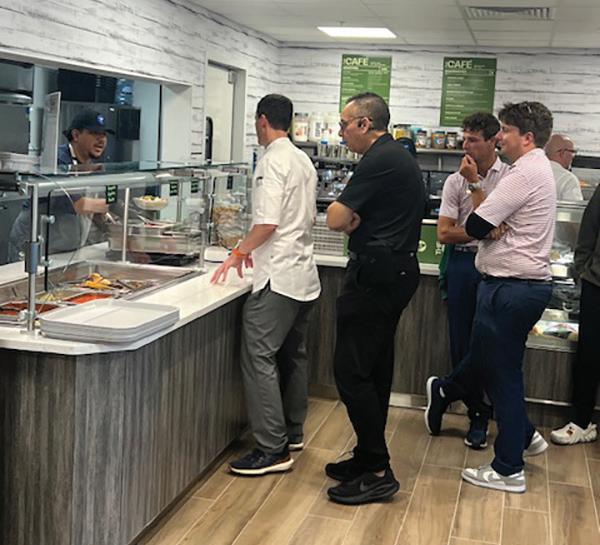
Ocean Reef’s new employee dining program offers a full hot station, a buildyour-own-sandwich station, and an expansive salad bar.
“Someone might start as a dishwasher and end up discovering they want to work in communications or fitness,” Reardon says. “You cannot do that if people never interact.”
The impact is already visible. Daily traffic through the hub increases each week, and the club added a front-ofhouse manager to support the growing activity. Feedback flows quickly, and the team adjusts in real time.
Ocean Reef’s new employee hub is a punctuation mark. The club chose to invest in its staff with the same care and seriousness it invests in its member experience. The result is a space that brings people together, supports their daily lives, and reinforces the culture the club is known for.
“It shows we mean it when we say people matter here,” Reardon says. “This has changed how our staff live and how they feel when they walk into work. And that changes everything.” C+RB

New York to Neapolitan, clubs and resorts are doubling down on pizza with new ovens, housemade dough, and quality toppings.
By Isabelle Gustafson • Senior Editor
AT COLUMBIA COUNTRY CLUB in Chevy Chase, Md., Executive Chef Brandon Gross and team have put years into perfecting their pizza program.
“Our pizza dough is made from a sourdough starter that we have been curating since I arrived six years ago,” notes Gross. “This gives the base of the pizza some texture and holds great.”
The team tried various iterations and tested the dough for a while through pizza stations at member events before officially rolling it out.
“We even started holding pizza nights with these portable ovens for the restaurants to give the members a taste of what was to come and help build up the program,” Gross says.
After years of planning and testing ovens and recipes, Columbia CC now has a custom-branded, rotating deck oven, which is run at 600°F typically, and at times 750°F. Pizzas cook for about 90-120 seconds.
“We can keep up with the demand at this rate,” Gross says, “and it rivals every pizza place around us.”
The club offers 12-inch and 16-inch Neapolitan-style pizzas with a choice of toppings.
“Our specialty pizzas started out as a huge hit, but as we were open for more time, we realized that our membership wanted to make their own pizzas,” Gross notes. “This is why, on our current menu, we do a one-topping, two-topping, and a three-topping or more. This gives the member more control.”
On Thursdays, the club offers half-price pizza, which is especially popular during paddle season. On these nights, popular
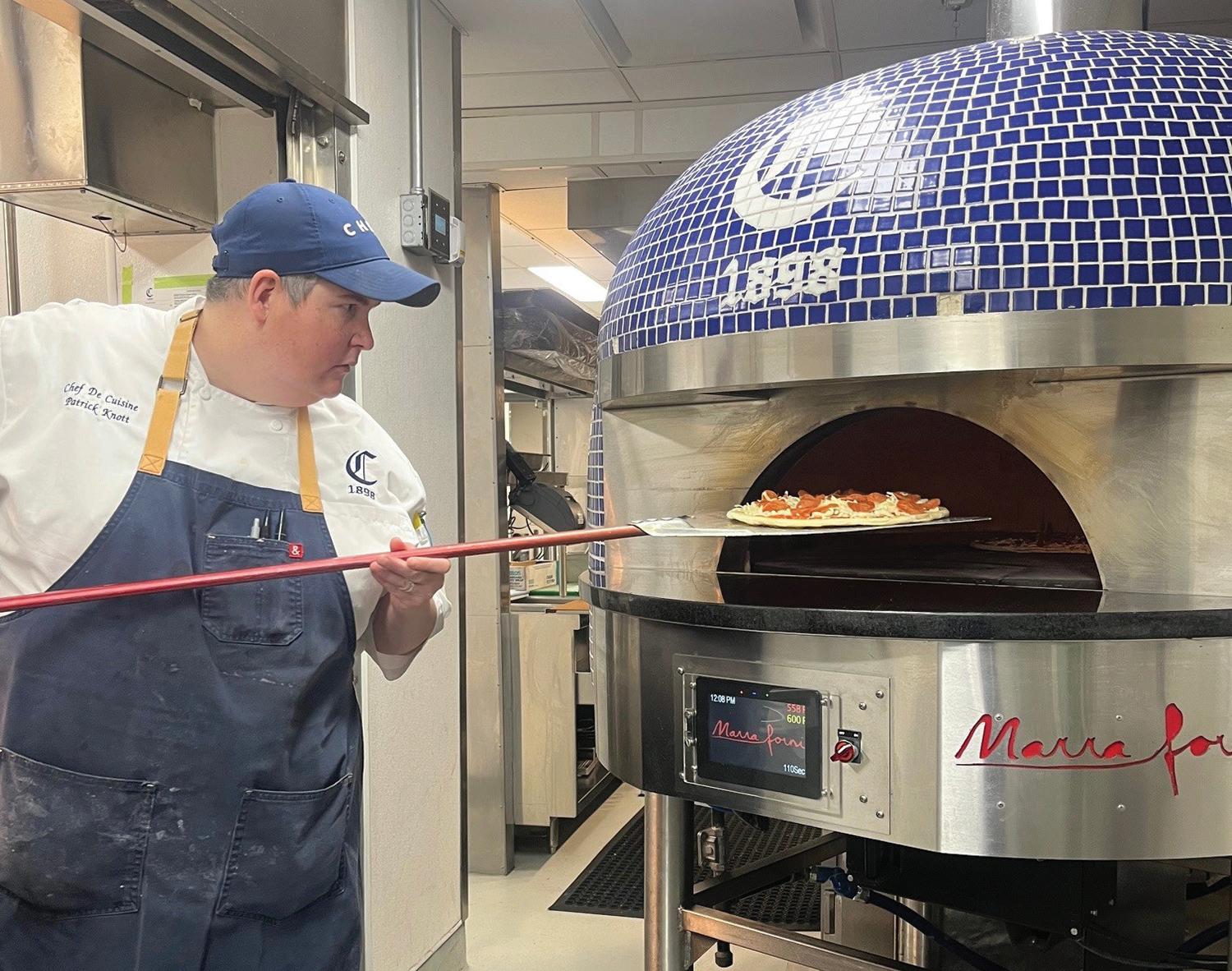
Columbia CC’s pizza dough is made from a sourdough starter that Executive Chef Brandon Gross and his culinary team have been curating for six years.
specialty pizzas include a Buffalo chicken and a mushroom and Italian sausage with truffle oil.
Pizza also makes an appearance on the brunch menu at Columbia CC. The ‘breakfast bianca’ features mozzarella, prosciutto, egg, and chives.
“Chef [de Cuisine] Patrick Knott has recently been rolling out calzones and strombolis, which have been a huge hit at the club,” Gross adds. “We have also worked on using the oven for other

items, such as truffle gnocchi in a cast iron dish, ‘pizziola’ sandwiches made from the pizza dough, lobster macaroni and cheese, baked mussels, and a few other items.”

At Eaglewood Golf Course and Event Center in North Salt Lake, Utah, pizza was among the first items Justin Field added to the catering menu when he joined as Executive Chef/Kitchen Manager. Today, the club offers not one or two but three styles: Sicilian, Detroit, and New York.
“My dough process has been ongoing,” Field says. “My first job was in a pizza place at 15 years old. Throughout the years, I’ve held on to the [NY-style] recipe and made it my own. The Detroit pizza, I did a little bit of R&D for. I just wanted to make sure I was getting the ratio on that dough correct. And then the Sicilian pizza, I actually reached out to a place I used to go when I was a child in Queens, called Rizzo’s, and they helped me out with that”
Their advice? Keep it simple.
“Keep it simple, and make it like grandma made it,” Field recalls. Sicilian pizzas in particular are easy to make for a crowd, Field notes.
”It’s a little different dough than a focaccia, but it’s a very easy-to-put-together dough. You make sheet pans of them, load them up with sauce and toppings, and throw them in the oven. Golfers love them after a tournament.”
The most important thing with any dough product, Field says, is giving it the time and care it needs.
“Especially on a thicker-crust pizza,” he says, “you don’t want to overwork the
the CO2 out of it; you want to stretch it gently. And if it’s fighting you, let it rest a couple minutes and then continue with the stretching process.”
Pizza-makers can sometimes be overzealous, he notes. They want to get it done quickly.
“People aren’t necessarily breadmakers, so they don’t understand that it’s still a form of bread.”
Eaglewood’s kitchen is home to a relatively small, double-decker pizza oven. At some point, Field hopes to add a woodfired oven to the lineup.
“I would love a wood-fired oven that
out there, where we can cook a more Neapolitan, traditional-style pizza and have events focused around it,” Field says. “Currently, though, I think our pizza oven is quite sufficient for our needs.”
The biggest consumers of pizza at Eaglewood are families with children.
“Pizza made from scratch with good ingredients is actually pretty healthy for you,” Field adds, “compared to other popular kids’ foods. ... A lot of people want to take something home with them that reheats well, too. That’s a great way to spread the word because they tend to share with friends.”

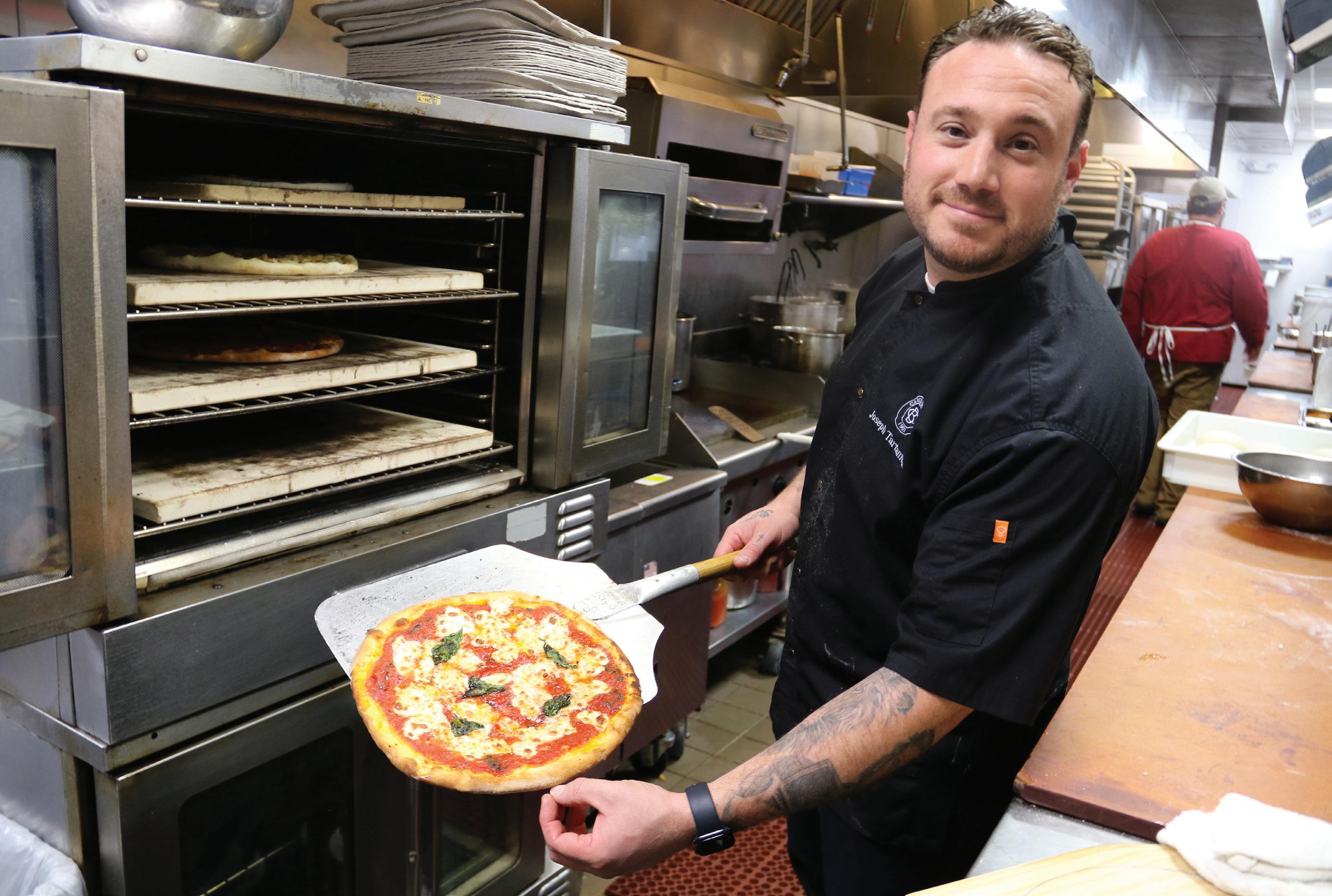
Joe Tartamella has an extensive culinary background in restaurants and hotels in Manhattan and New Jersey. He also competed on the 23rd season of Hell’s Kitchen. In March, he began as Executive Chef of Canoe Brook Country Club in Summit, N.J.
As a first-generation Italian-American, Tartamella is incredibly proud of his heritage. He was also exposed to the culinary world early.
“My dad was born in Sicily. He started very young—nine years old—as a breadbaker,” Tartamella says. “From a young age, I developed a passion for working in kitchens.”
After attending college for a while— and working at his cousin’s pizzeria—Tartamella signed up for the French Culinary Institute in New York.
Today, at Canoe Brook CC, he’s focusing on “great ingredients, clean flavors, and dishes that feel both refined and soulful,” which he demos with dishes like his signature chicken scarpariello, featured on Hell’s Kitchen, and 14-ounce sage-crusted
pork chop, which quickly became one of the club’s most popular entrées.
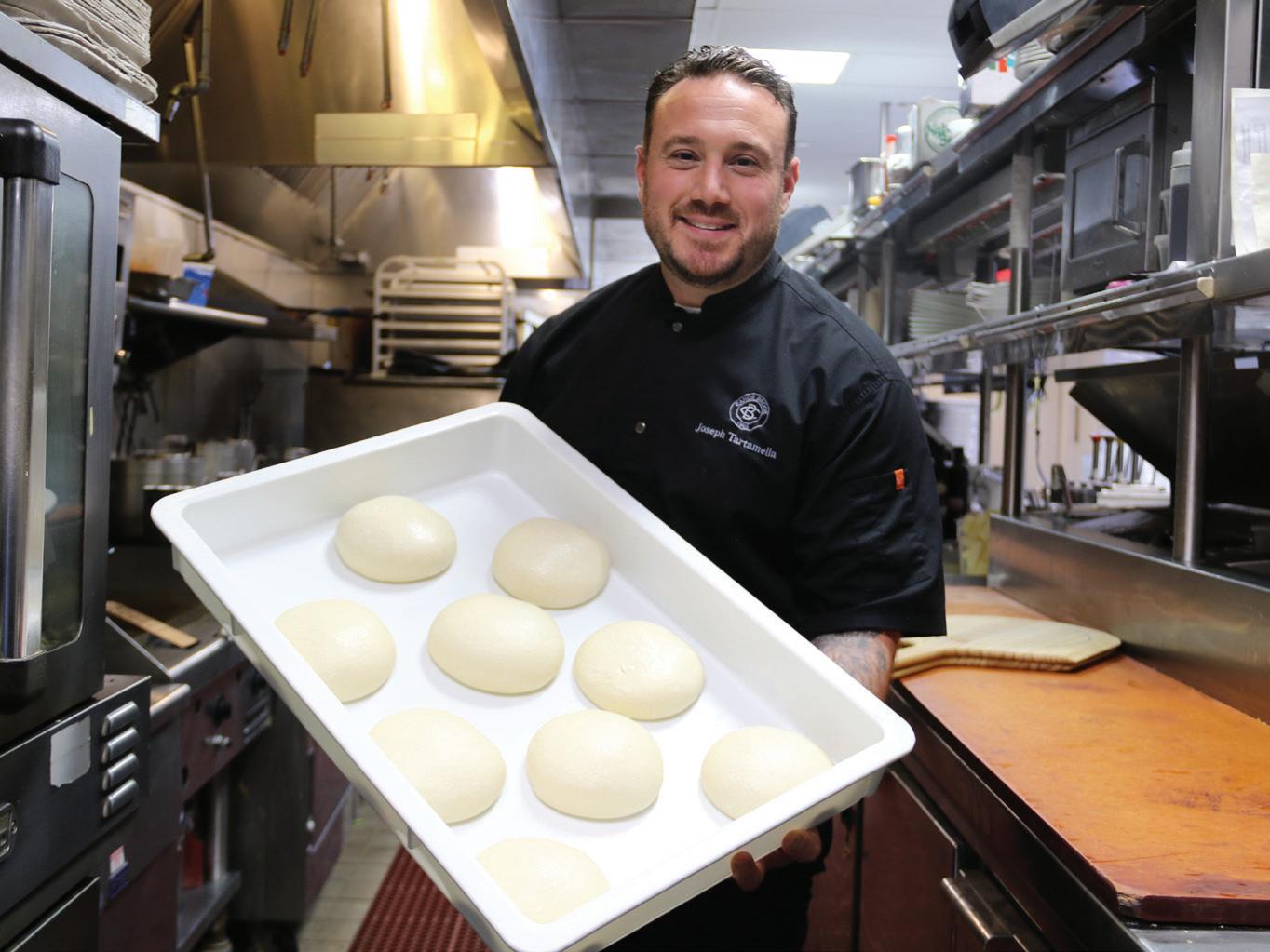
But his New York-style bar pizza—not to be underestimated—has also become an instant staple.
His dough is fermented for 24 hours, and the sauce is simple and fresh: San Marzano tomatoes, fresh basil, salt, pepper, olive oil.
“It doesn’t get cooked [fully] in the oven, so [the sauce] has a bit of rawness to it,” Tartamella notes. “ It has a really nice, tangy kick.”
Member favorites include a white clam pie and a pepperoni and hot honey, which Tartamella calls ‘the stinger.’ Ultimately, this first year at the club
has been about getting acclimated. Tartamella’s introducing his cuisine to members and learning what they’re looking for, as well as building relationships.
“My goal at CBCC is to elevate the culinary experience in a way that feels fresh, consistent, and member-focused,” Tartamella says. “Whether it’s a handmade pasta, a seasonal entrée, a gardendriven dish, a Sicilian pomodoro, a prime rib roast, or a NY-style bar pizza, I want everything that leaves the kitchen to reflect integrity, care, and a genuine love of cooking.” C+RB
A closer look at the temperature, timing, and tasting habits that strengthen wine service.
By Joanna DeChellis • Editorial Director
WINE SERVICE IS SHAPED by small choices. Temperature, tasting, and timing matter, and when these details are handled with care, the entire experience feels more deliberate and polished.
Temperature often sets the tone.
“It is one of the most underrated parts of wine service,” says Pedro Sanchez, CEC, CCA, WSET II, Executive Chef of BraeBurn Country Club (Houston, Texas).
Reds served too warm can feel heavy. Whites served too cold can lose texture and aroma. Many clubs store bottles between 55° and 57° Fahrenheit and make fine adjustments from there. Sparkling wines receive extra chilling. Aromatic whites may come out slightly earlier. Structured reds rest a bit before service. The aim is to let the wine show at its best while still honoring member preference.
“There is no wrong way to enjoy wine,” says Sanchez. “But temperature has a huge impact on expression.”
Pairings rely on this same level of attention. Wines are first tasted at room temperature to understand structure and balance before any cooling or warming is applied. A few degrees of difference can soften tannins or brighten acidity. These changes are used selectively and only when they support the dish.
Sparkling wines require even more discipline. Once opened, they begin to lose their character, so many programs

choose to serve the bottle immediately. Preservation systems help with still wines poured by the glass, and clubs with strong turnover rarely see significant flavor drift.
“A preserved bottle will never be identical to a fresh one,” Sanchez notes. Consistency depends on tasting every bottle before service. This quick check catches faults, temperature issues, or tannins that need air. It is a habit that strengthens service across busy nights and multiple outlets. Good communication reinforces these standards.
Sanchez credits his general manager for a simple rule: If it is not written, it does not exist. Pre-service notes and clear direction help maintain pacing between the kitchen and the beverage team, especially during wine dinners.
Teaching moments matter as well. When a Chardonnay served too cold muted a pairing at a recent event, Sanchez brought his cooks over to taste the wine with the food. They tried it chilled and again at a slightly warmer temperature. The difference was significant, and the lesson was immediate. Small adjustments can reshape an entire pairing.
“Consistency, patience, and pride in execution are what keep the quality and the trust intact,” says Sanchez.
Read the expanded interview online at clubandresortchef.com.
EARLY-BIRD RATE: $2,950 (through 1/15/26)
REGULAR RATE: $3,200 (after Early Bird; late registration rates may apply)
ROOM BLOCK: $299* per night plus tax is available at The Broadmoor
*Attendees can book at the group rate at cheftochefconference.com/book-hotel
REGISTRATION INCLUDES:
• Kickoff party at The Broadmoor, one of the country’s most iconic resorts
• Exclusive kitchen and property tours of The Broadmoor’s legacy-driven culinary program
• Breakfasts, lunches, and breaks curated with chefs in mind
• General sessions and live cooking demos led by the industry’s top talent
• The reimagined Club + Resort Chef of the Year Culinary Competition
• 40 Under 40 Cocktail Party recognizing the next generation of chefs
• C+RC Hall of Fame Induction Reception celebrating industry leaders
• Built-in networking at every turn, with hundreds of peers who understand the club world
• Access to the expanded sponsor hall with partners showcasing products and services tailored to club and resort culinary operations
• Continuing education credits through CRCA, ACF, and CMAA


Colorado Springs • MARCH 8-10 2026

The club’s new practice structure delivers a modern platform for coaching, fittings, junior golf, and winter programming.
By Joanna DeChellis • Editorial Director
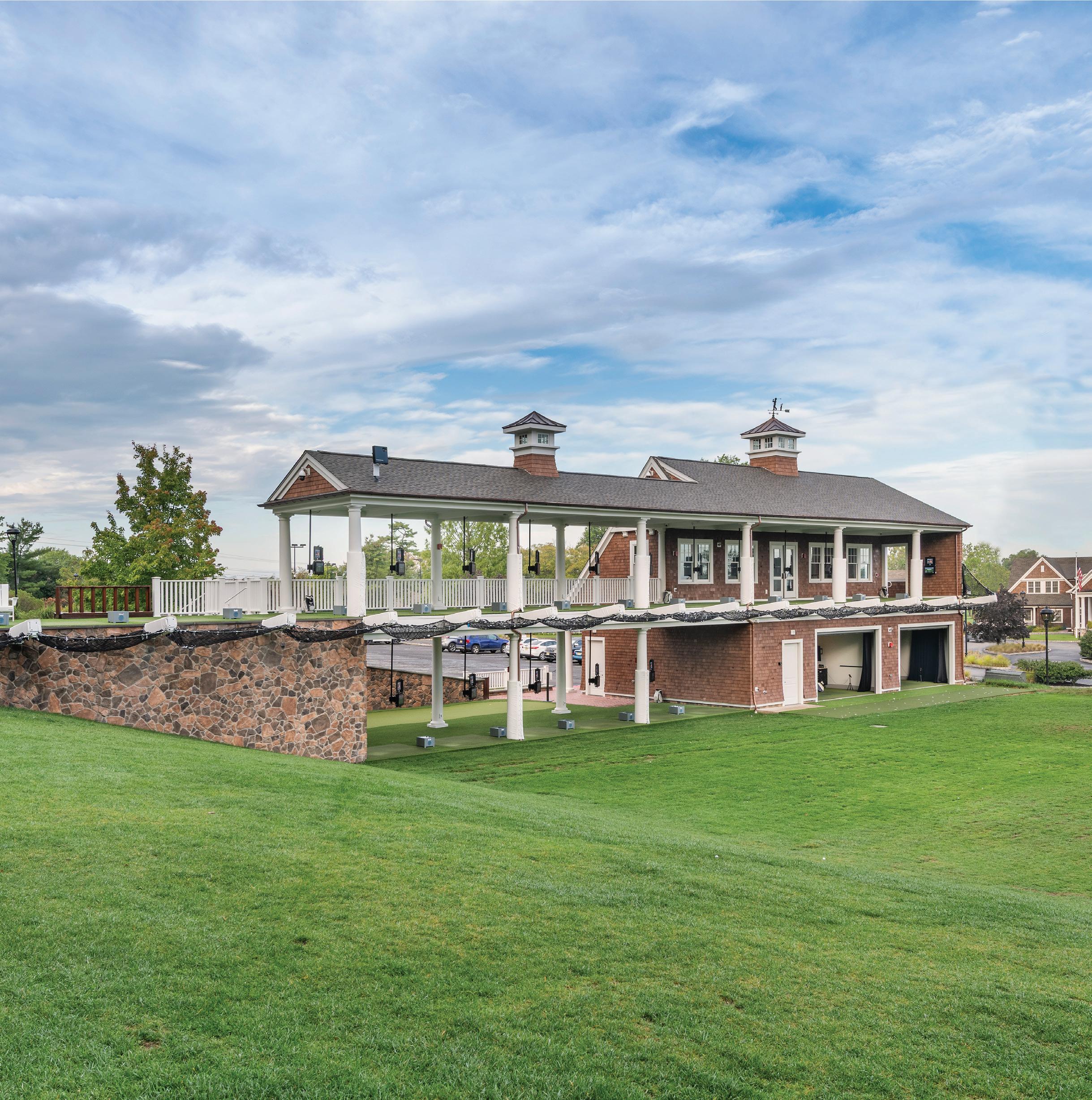
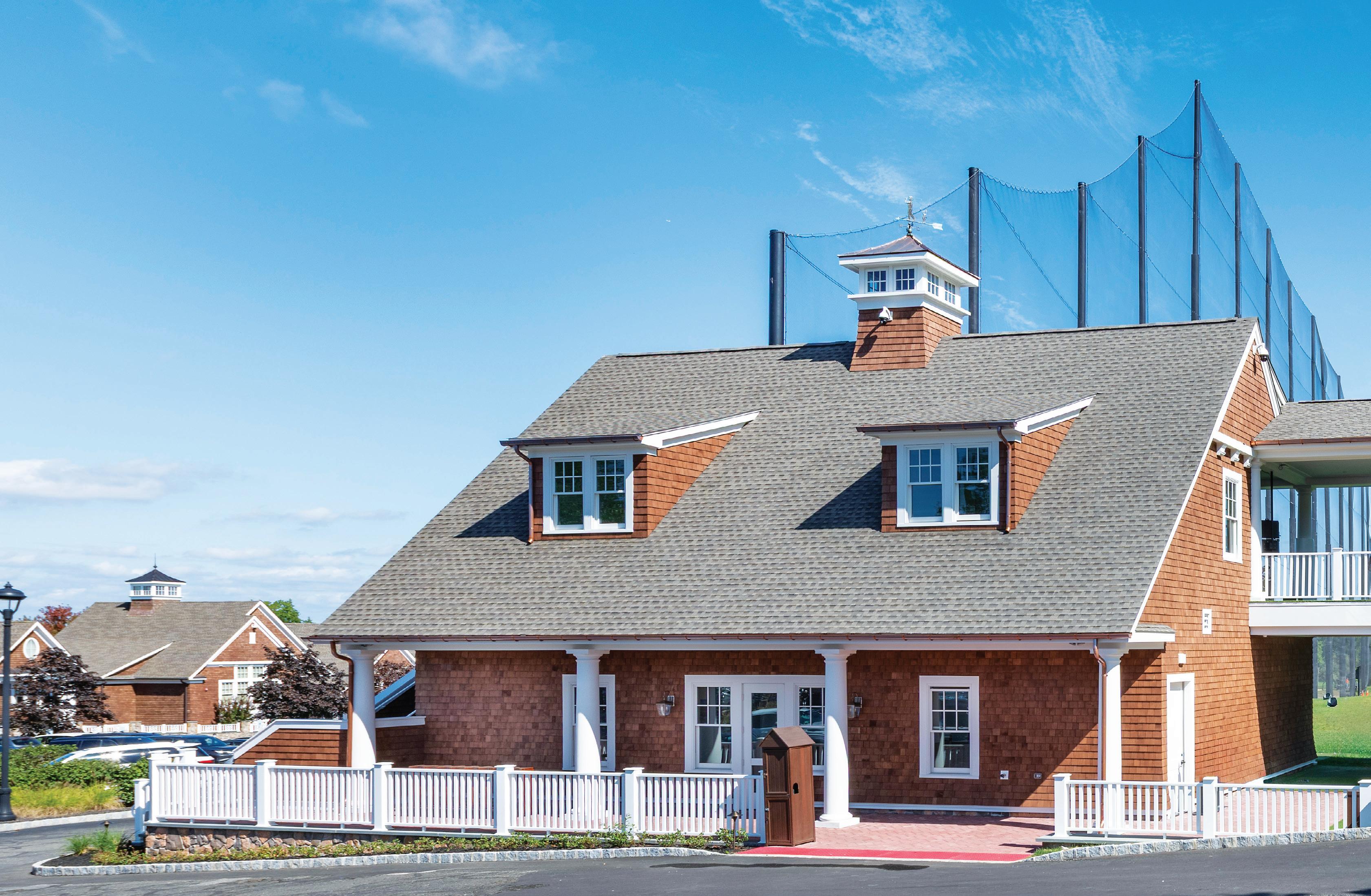
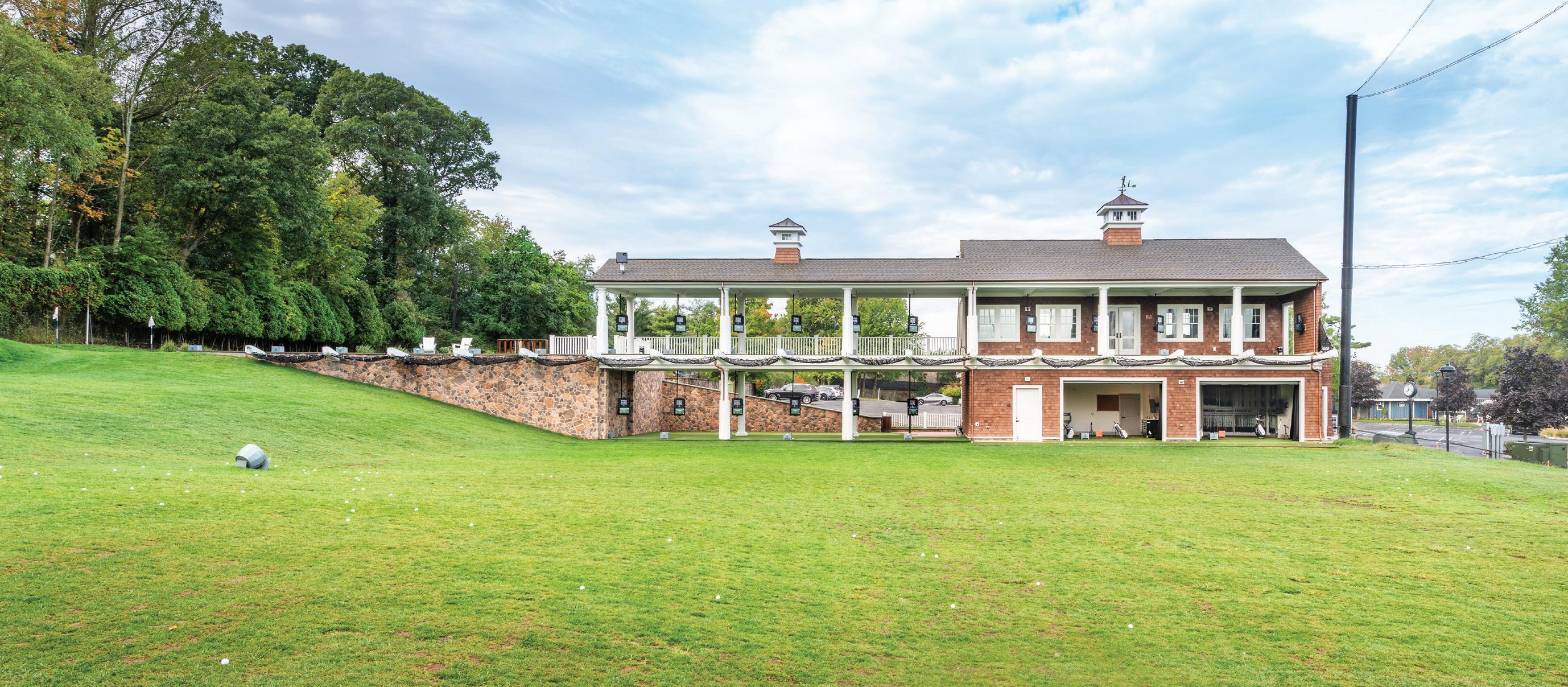
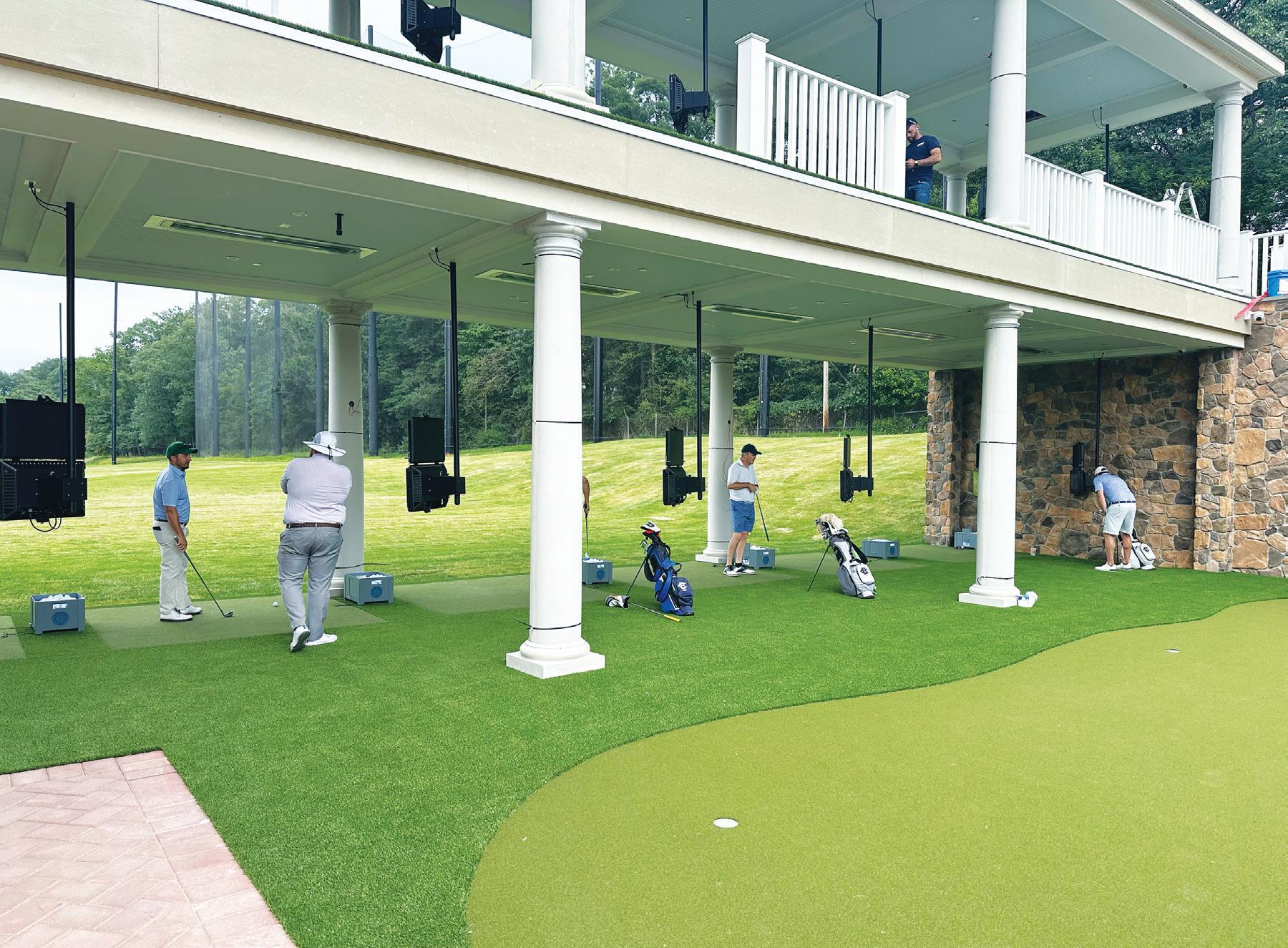
SPACE IS TIGHT AT CANOE BROOK COUNTRY CLUB in Summit, N.J. Homes border one side of the property, and a mall borders the other, leaving no room to expand the practice range outward, so the club built up instead.
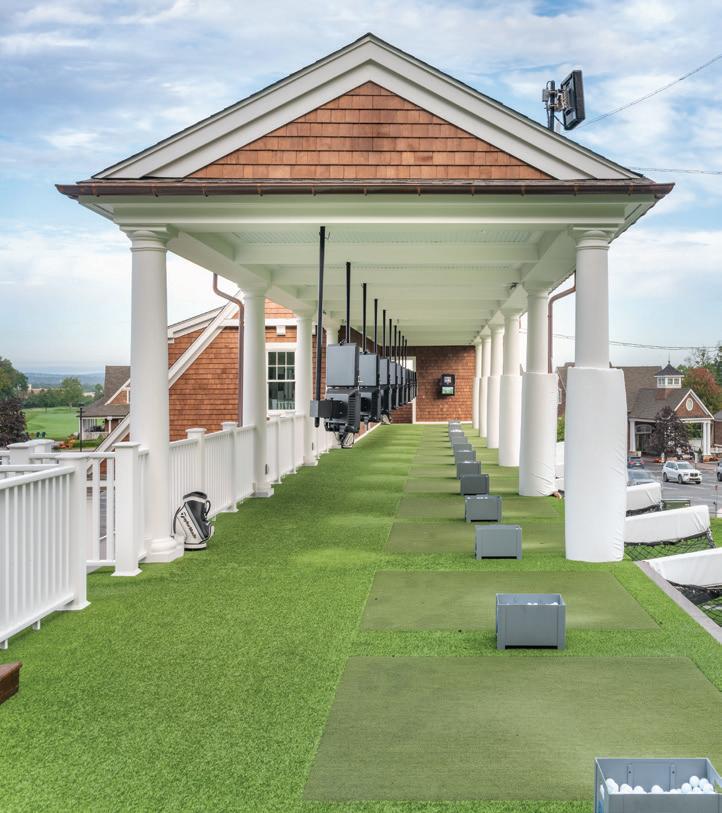
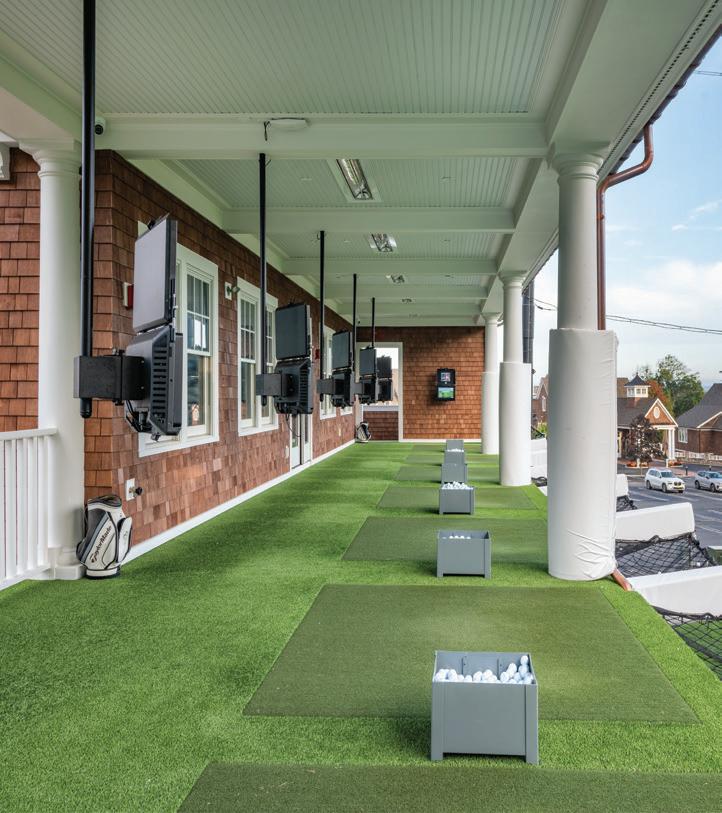
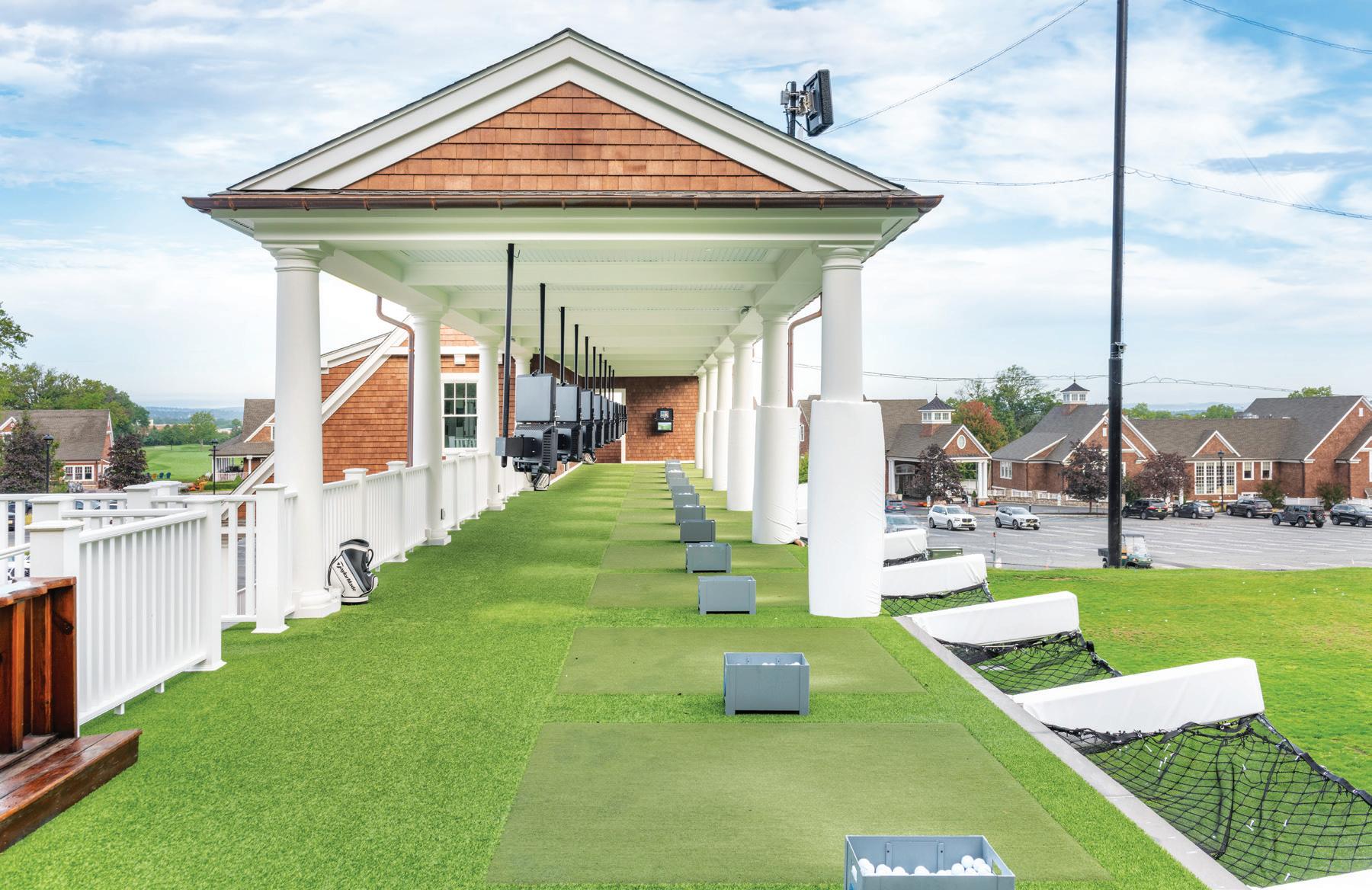
The result is a two-level, 23-stall practice facility that now rises behind the clubhouse. It introduces covered hitting space, dedicated coaching bays, and full-field technology that supports
instruction, fittings, junior programs, and winter use. “We had nowhere to go but up,” says Director of Golf Reed Lansinger, PGA. “Building vertically was the only way to create the space our golfers needed.”
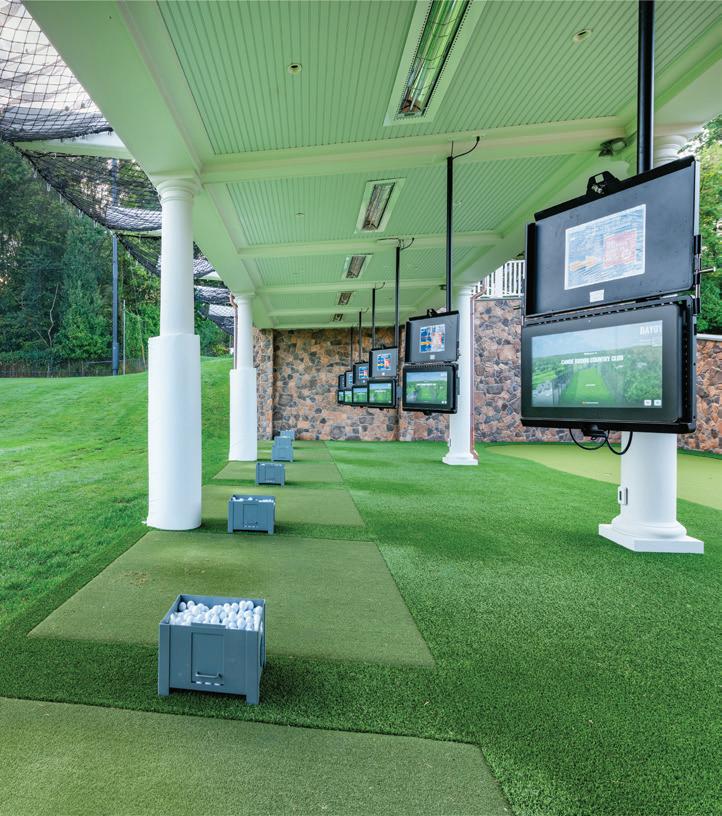
The project cost about $3.5 million and opened in July 2025. A full-field shot-tracking system now covers the range from end to end. Seventeen stalls include integrated display screens,
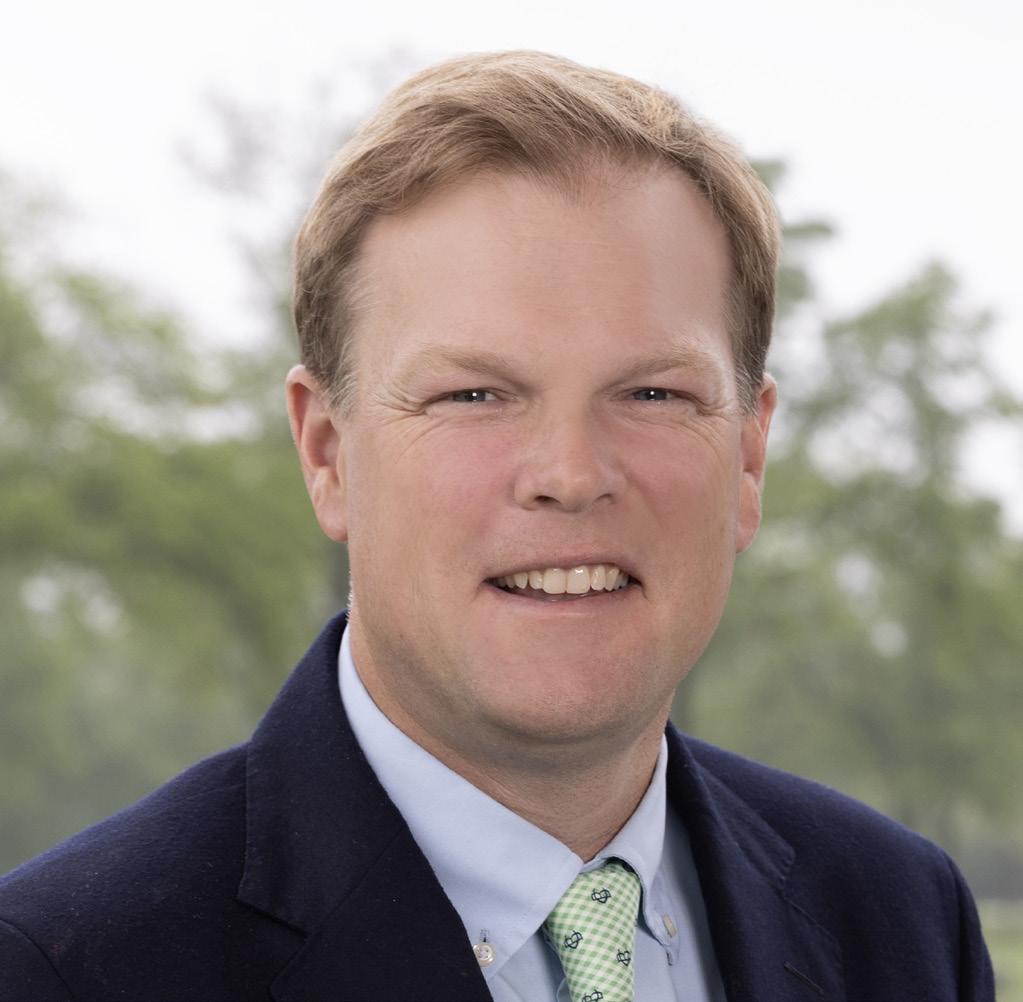
Reed Lansinger, PGA, Canoe Brook CC’s Director of Golf, uses the new facility to run more focused instruction and guide members toward practice that leads to real improvement.
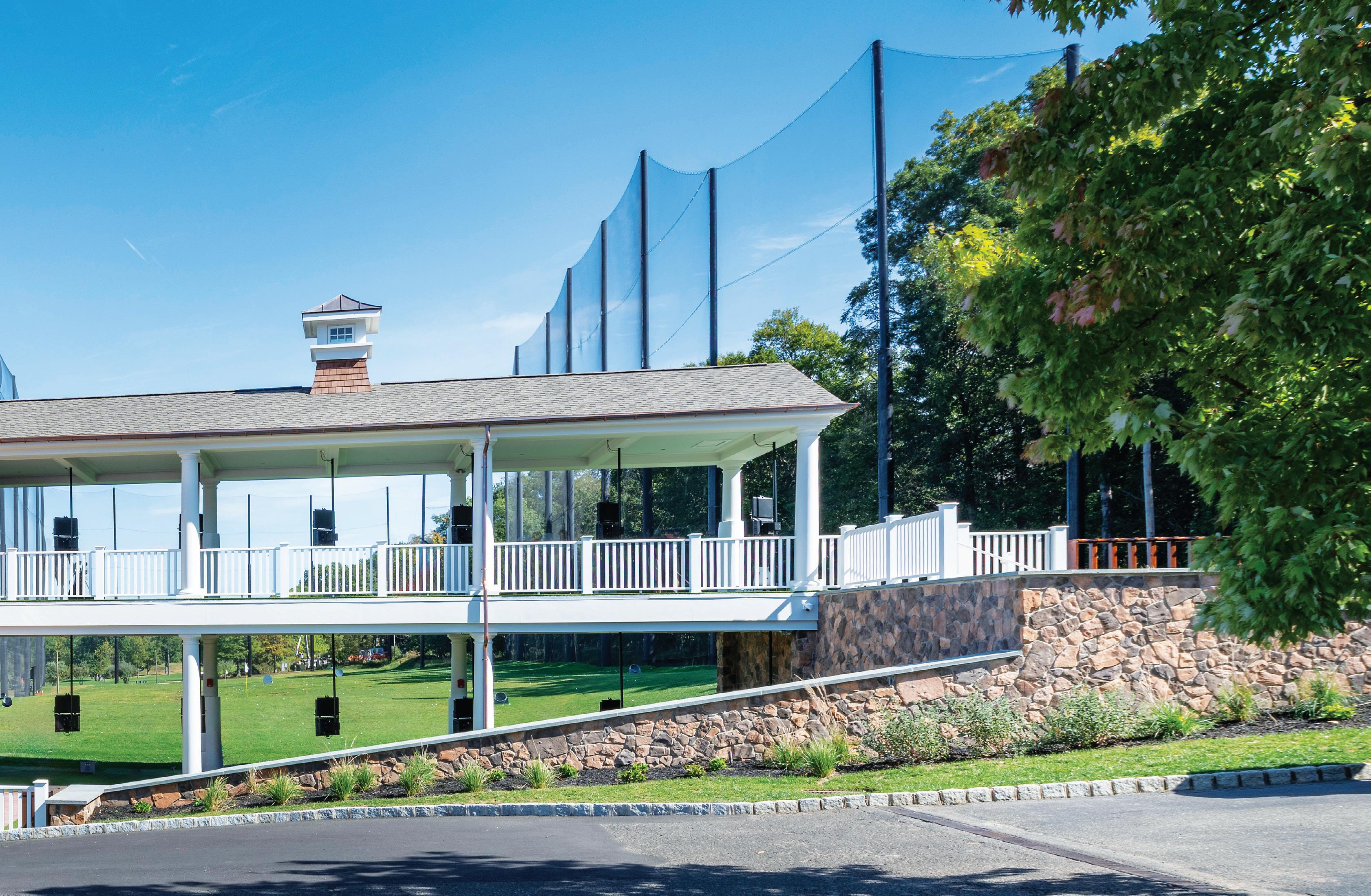
and 11 offer overhead heat. The two enclosed coaching bays feature cameras, monitors, and complete fitting systems.
“We wanted something that matched how our staff teaches and how our members practice,” Lansinger says. “Every piece of it is designed with that in mind.”
Members adopted the facility immediately. More than 800,000 golf balls were hit between July and early fall. The previous range saw heavy use, but without measurable data.
“Now we can see exactly how members are using the space,” Lansinger says. “It became part of their routine right away.”
The way Canoe Brook’s members practice has also shifted.
“People used to hit 70 balls in 20 minutes and call it practice,” Lansinger says. “Now they look at gapping, launch angles, dispersion. They can even play our North Course virtually from the tee line. They are working on shots that matter.”
Instruction followed the same upward path. With two private coaching bays,
the staff can run more focused sessions.
“Members come in with better information,” Lansinger says. “[Staff] understand their numbers, so the conversations are clearer and the progress is faster.”
Club fitting expanded as well. Canoe Brook added more head and shaft systems from major manufacturers and now fits on site, using the bays for realtime feedback.
“Every person who goes in there sees
something that helps them,” Lansinger says. “Many of them walk out with clubs that actually match their swings.”
Junior golf also benefited immediately. Weather once forced the club to cancel a notable portion of youth programming. The covered areas now eliminate most of those disruptions.
“We used to cancel junior golf because of rain,” Lansinger says. “Now we don’t. The kids understand the technology and use it in ways that keep them
excited about learning.”
Operations continue to evolve. Range staff manages picking and restocking, but Lansinger expects autonomous pickers and nighttime mowers to become part of the long-term plan. Winter hours will be limited to daylight to accommodate neighbors.
“We are still learning how members want to use the space in the colder months,” he says. “That will guide how we staff it and how we program it.”
Winter programming is the next priority. The staff is preparing clinics and themed sessions that will keep golfers engaged even when the courses are quiet.
“If you build opportunities, people will show up,” Lansinger says. “We want to give them reasons to be here in January as well as July.”
General Manager and COO Albert Costantini, CCM, CCE, frames the project as a direct outcome of member feedback and the club’s long-term facilities plan. Surveys identified a better practice experience as a top priority. The board approved the project, and the club funded it with cash.
“This was part of our strategic plan,” Costantini says. “Members made it clear that they wanted an improved range, and we delivered it without an assessment.”
Early ROI can be seen in usage, instruction volume, and increased fitting activity. Member satisfaction and year-round engagement will shape the long-term impact. Time on property may become the most important indicator, as winter practice often leads to visits to the dining room, the fitness center, and other amenities.
“This was not about attracting new members,” Costantini says. “It was about meeting the expectations of the members we already have and giving them a practice environment that matches the rest of the club.” C+RB
Clubs are investing in pickleball, paddle, and padel to attract new members, increase court utilization, and offer year-round programming. Three racquet directors explain what’s working.
By Madison Hartline • Associate Editor
FROM REBUILT PADDLE COURTS in Ohio to booming pickleball in Maryland to new padel courts in Florida, clubs are reshaping their racquet programs in real time.
Three racquet directors explain how they’re expanding programs, reallocating courts and adjusting strategy to meet member demand.
Carlo Impeduglia, Director of Tennis & Racquets at Cattail Creek Country Club (Glenwood, Md.), started at the club in 2021, when COVID was coming to an end and the pickleball craze was just beginning.
Impeduglia says tennis dominated the scene at Cattail Creek CC then, with seven courts devoted to it, yet it was clear that pickleball was accelerating in popularity.
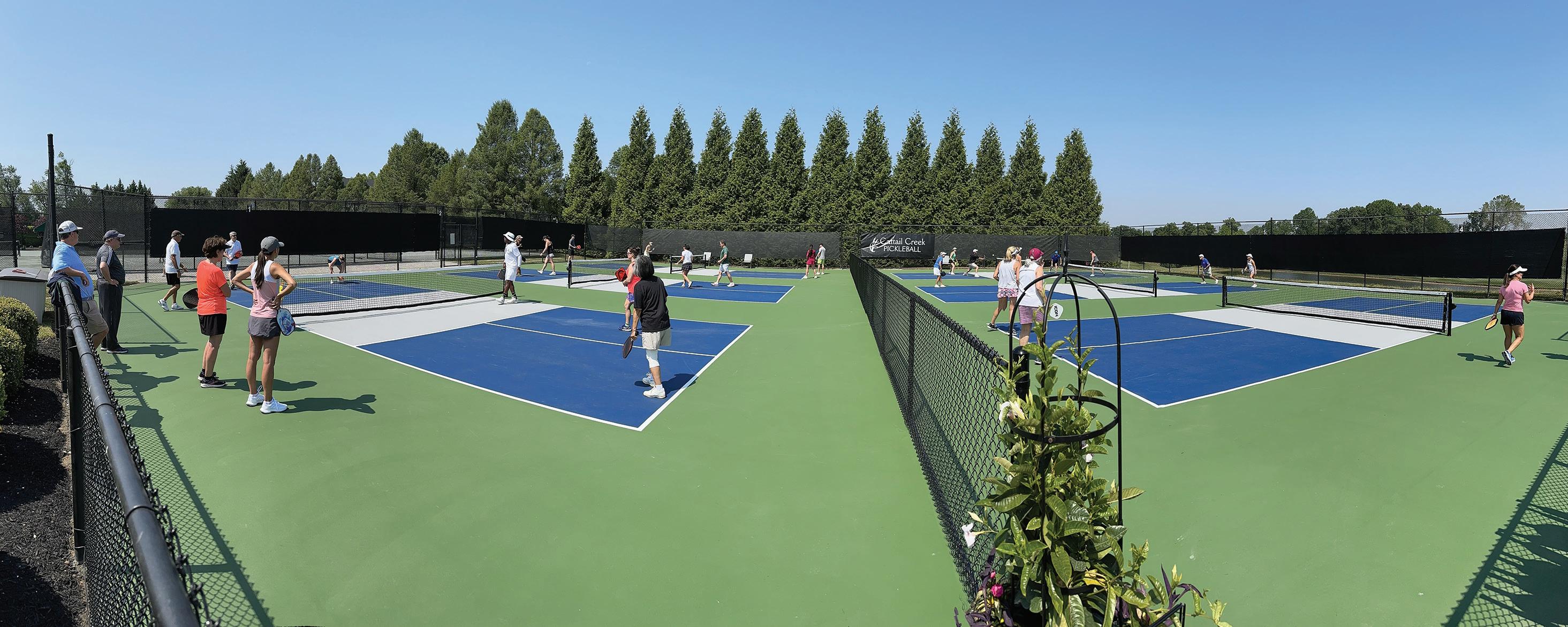
“That’s when the club decided to convert two tennis courts into six dedicated pickleball courts,” says Impeduglia. “Pickleball attracts players from all walks of life and all ability levels. We started to draw in golfers, who make up most of our membership, and saw strong crossover from tennis to pickleball.”
Since opening the new courts, Cattail Creek CC’s program has, according to Impeduglia, flourished in a lot of different ways.
“Pickleball attracts a lot of events that we run for companies and private parties,” he says. “We also have instructional programs for those who are still new to pickleball or those who want to advance their skills.”
These events—which happen around 12 to 15 times a year—plus tourna-
Cattail Creek CC took advantage of the pickleball boom and opened six dedicated courts, inviting members of all ages to take part in the rising sport.
ments, casual open play, and even teambuilding activities, fill Cattail Creek CC’s event calendar.
The biggest pickleball event at Cattail Creek CC is ‘glo-ball,’ a glow-in-the-dark tournament that turns the courts into a neon playground every spring and fall.
“As soon as registration opens, it sells out immediately,” Impeduglia says, adding that, much like the sport itself, glo-ball attracts players of all ages and abilities.
“That’s what sets pickleball apart,” he says: “You can mix beginners with
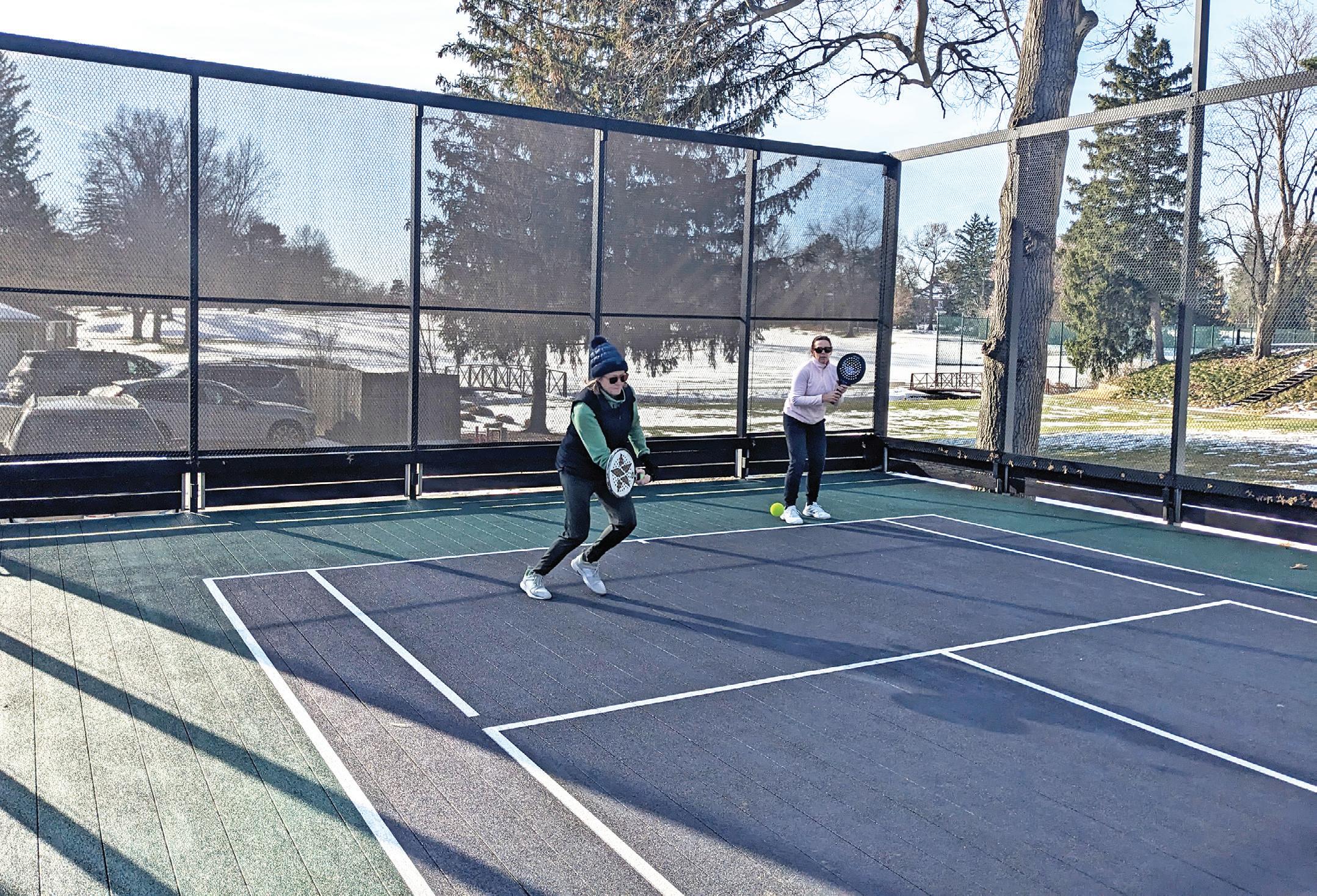
With the opening of new paddle courts, members at Shaker Heights CC are now privy to another racquet sport. When golf and tennis season ends, members transition to paddle, giving them something to look forward to when the weather turns cold.
advanced players on the same court, and everyone still has a good time. In tennis, the difference in levels is obvious, and the match falls flat. Pickleball is so much more flexible.”
Now, Cattail Creek CC has two dedicated pickleball coaches. Although busiest in the spring, summer, and fall, the courts stay open year-round, adding another layer of flexibility to the sport.
Cattail Creek CC has a younger membership demographic, with average member age in the mid-40s, all of whom Impeduglia is seeing partake in the sport.
“Parents, grandparents, kids—they’re all coming out to play,” he says.
This flexibility allows Cattail Creek and the organizers to host a slew of events, rather than events aimed only at specific skill levels.
Pickleball also gives members a fast path into regular play. Impeduglia says that with a handful of clinics or lessons, most players settle in and start enjoying the game right away.
“The hardest part of pickleball is
understanding the rules and the scoring,” he says.
Impeduglia says there is a lot of crossover from tennis to pickleball players, but not as much from the reverse.
“A lot of people think I’m biased toward tennis because it’s been around a lot longer and it really drives the business of our racquets program, but pickleball is great for clubs like Cattail because it’s an inclusive amenity and a great social activity where, if you’re looking to make new friends, I’d direct you here,” says Impeduglia.
“Tennis takes time to build your skills and takes a lot of consistency with play and instruction. Pickleball has a lower barrier of entry.”
Cattail Creek CC offers private, oneon-one, semi-private, two-on-one, and private group lessons, as well as basic clinics. Right now, Impeduglia isn’t seeing a lot of interest in advanced programs. If members are advanced, he says, they prioritize play.
“[At first] I thought that this would just
be a fad,” says Impeduglia, “but it’s an addictive sport and I definitely think it’s here to stay.”
Impeduglia says the new challenge is figuring out how to stay on top of latest trends, such as the rise in indoor pickleball courts. This forces him and his team to think strategically about the future, how they can improve their facilities for the long term.
At Shaker Heights (Ohio) Country Club, paddle was nearly dormant until Walter Oden, CPA, Director of Racquets, stepped in and began rebuilding the sport from the courts up. His approach was simple: Instead of treating tennis and paddle as separate lanes, he reframed the program as a full racquet experience. Members learned tennis in the summer, then rolled those skills straight into paddle once the weather shifted.
Oden says the sport clicked quickly with the club’s younger, family-driven membership. Couples with kids make up most of the paddle participation. And the ease of scheduling, shorter court time, and built-in social element fit the way many families use the club today. He notes that paddle carries its own culture. Players often bring a beverage onto the court, the games move fast, and the atmosphere stays relaxed—even when the competition heats up.
Its winter personality is part of the appeal. Paddle courts sit a few feet above ground with heaters underneath, melting snow and keeping play going through the cold months. Golf winds down, tennis pauses, and paddle takes over.
“I see paddle as fitting in the gap in Northeast Ohio weather,” Oden says. “It gives members something to look forward to and rounds out the overall racquet experience.”
To strengthen participation, Oden tied Shaker Heights CC’s paddle program into the Greater Cleveland Platform Tennis Association. Instead of treating outside leagues as a burden, he positioned league access as a membership benefit. The move worked. Participation surged
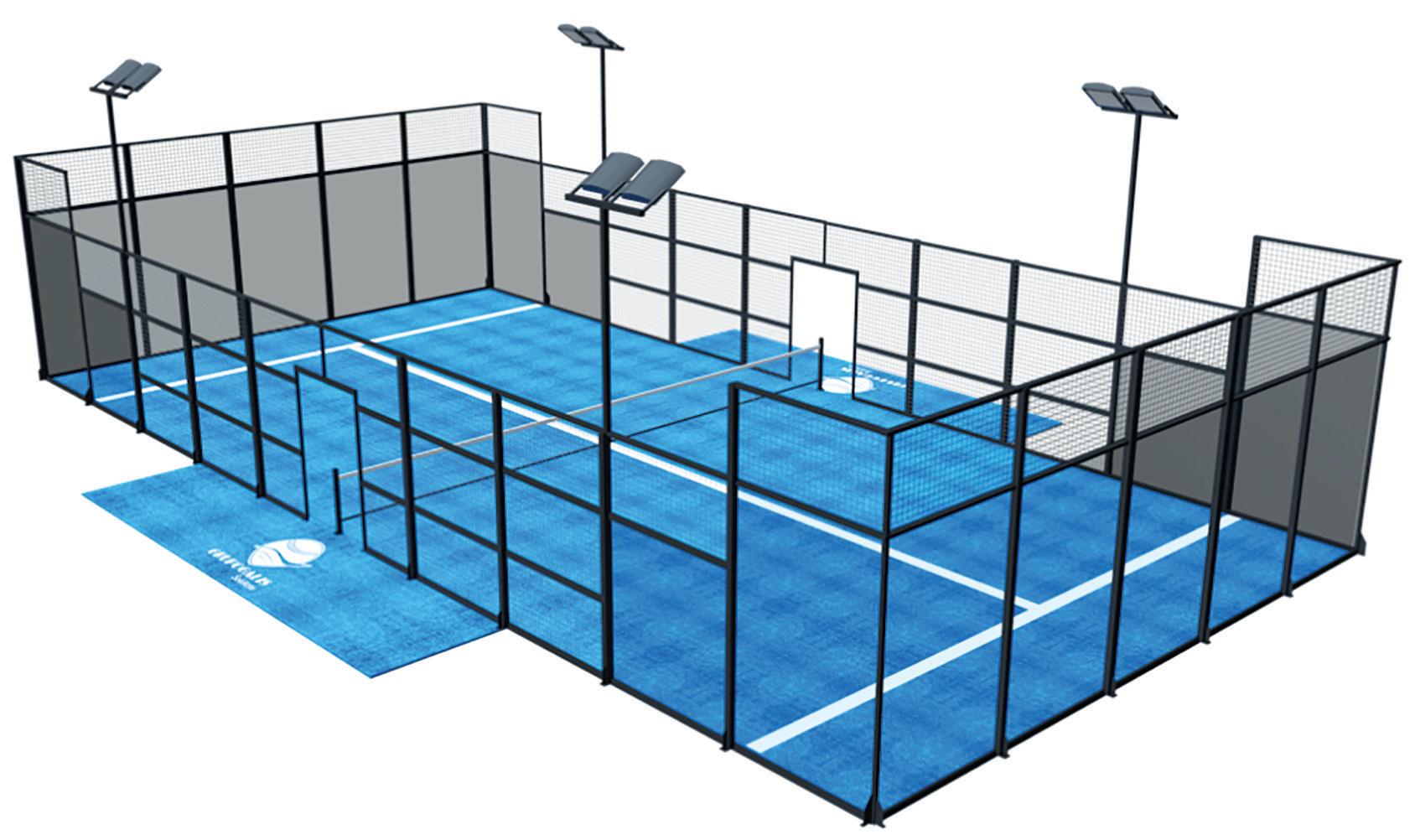
A hybrid between tennis and pickleball, padel offers members more exercise, longer playing time, and a new social amenity.
Boca Pointe CC opened six new padel courts within the past few months and has already seen a rise in member interest.
across men’s and women’s paddle, and the club became one of the most active programs in the region.
The courts were fully rehabilitated last year, and Oden hopes to add two more in the future as internal leagues and holiday events continue to grow.
Where paddle excels in colder climates, padel is growing in popularity in southern states like Florida.
Boca Pointe Country Club in Boca Raton, Fla., just introduced six new padel courts.
According to Ville Jansson, Director of Racquets at Heritage Golf Group, the management group behind Boca Pointe CC, the club was looking for something new and exciting to add to its offerings.
“Padel is a perfect hybrid between tennis and pickleball,” he says. “Compared to pickleball, it’s more exercise and strategy. In tennis, once the ball gets past you the point is over. In padel, the walls
return the ball to play, which makes the rallies longer.”
Jansson says a plus of padel is that the courts are smaller, so clubs can put four padel courts on two tennis courts and get 16 players on the court versus eight.
“Normally, attendance booking is [about] two hours, and in padel, it could be an hour,” Jansson says. “Members get plenty of time, and if you can stretch it to an hour and a half and rotate players over a 12-hour span, you get more usage of the court.”
He says padel also helps clubs manage court compaction in tennis and pickleball because players tend to migrate. “The latest studies show a 30-35-percent migration from tennis to padel, and the numbers are pretty similar from pickleball to padel,” he explains.
Jansson notes that padel is attracting a new demographic as well, especially members in their 30s and 40s.
To support that growth, the club offers free introductions two to three times a week. “We invest a lot of hours to make
sure members learn the sport,” he says. “Scoring-wise, it is a lot easier than pickleball, so that’s a plus, but unlike pickleball, you can’t just throw people out on the courts and have them figure it out.”
The club’s newsletter has highlighted YouTube explainers and how-to videos.
Boca Pointe CC also chose to certify its current tennis pros in padel and pickleball rather than hire new staff, ensuring they were ready for upcoming programming.
“We’ve seen that the 15 minutes before play and the 30 minutes after play are just as important as the actual play because of the friendships that are being created, so we see this continuing to be a social sport,” he says.
Boca Pointe CC leaned into that social element by adding awnings and seating along the courts to encourage members to linger, relax, and connect.
“Five years from now,” says Jansson, “my view is that a club has to have tennis, pickle, and padel.” C+RB
With a $25 million master plan underway, Joe Kelly is stabilizing the transition, el
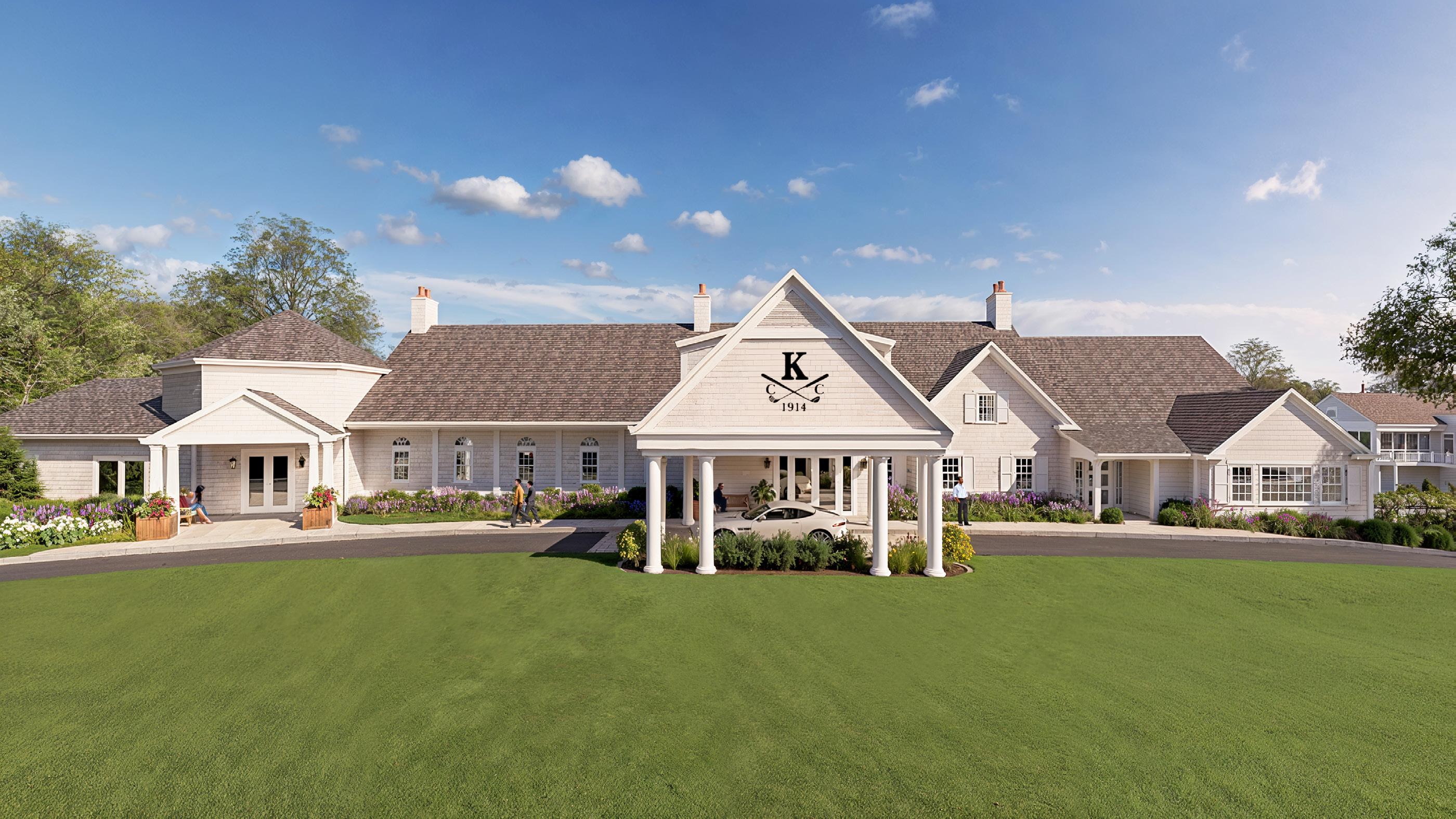
steeped in history and surrounded by construction fencing. The 1914 clubhouse is being gutted, the pool is being rebuilt, and long-term plans for racquets, shortgame, and irrigation improvements are moving forward. For many clubs, this would be a precarious moment. Kelly sees it as a career-defining opportunity. In this exclusive conversation, he shares his approach to change management, building culture in temporary spaces, and preparing a legacy club for its next chapter.
Club + Resort Business (C+RB): You’ve been in the role for just a few months. What made this the right move for you?
Joe Kelly (JK): Knickerbocker has always been part of my story. I grew up in Bergen County, played high school golf in the area, and have spent most of my professional life around New Jersey clubs. I knew the club, its reputation, and its
responsibilities more than anything else. When Knickerbocker made the strategic decision to reestablish the GM/COO role, especially with major renovations ahead, it felt like the exact kind of challenge that energizes me.
C+RB: You started on the golf side. Walk us through how your career evolved and how that brought you here.
JK: I came into the business through the PGA side. I played in high school and college, became a PGA member, and began my career as an assistant professional. My first head professional job was at a semi-private residential club that I helped open. In my second year there, the ownership group decided to move on from the general manager and asked me to take on both roles. That experience pulled me into the management side. After seven years, I repositioned my career

GM/COO Joe Kelly brings his golf-driven background and steady leadership to Knickerbocker CC as the club prepares for major upgrades.
toward private equity clubs and moved to Ridgewood CC (Paramus, N.J.) to strengthen my platform for future opportunities. That eventually led to my role at Mendham Golf & Tennis Club (Mendham Township, N.J.), then to Essex County CC (West Orange, N.J.). When Knickerbocker decided it needed a general manager and chief operating officer, especially with major renovation work ahead, it felt like the right time for me to consider it seriously.
“The goal is to bring a 1914 building into 2025 in a way that respects its lineage while delivering the kind of experience members expect in a club so close to New York City,” says Knickerbocker CC GM/COO Joe Kelly. “Outdoor dining, quality-driven F&B, comfortable and relevant locker rooms—those are the must-haves.”
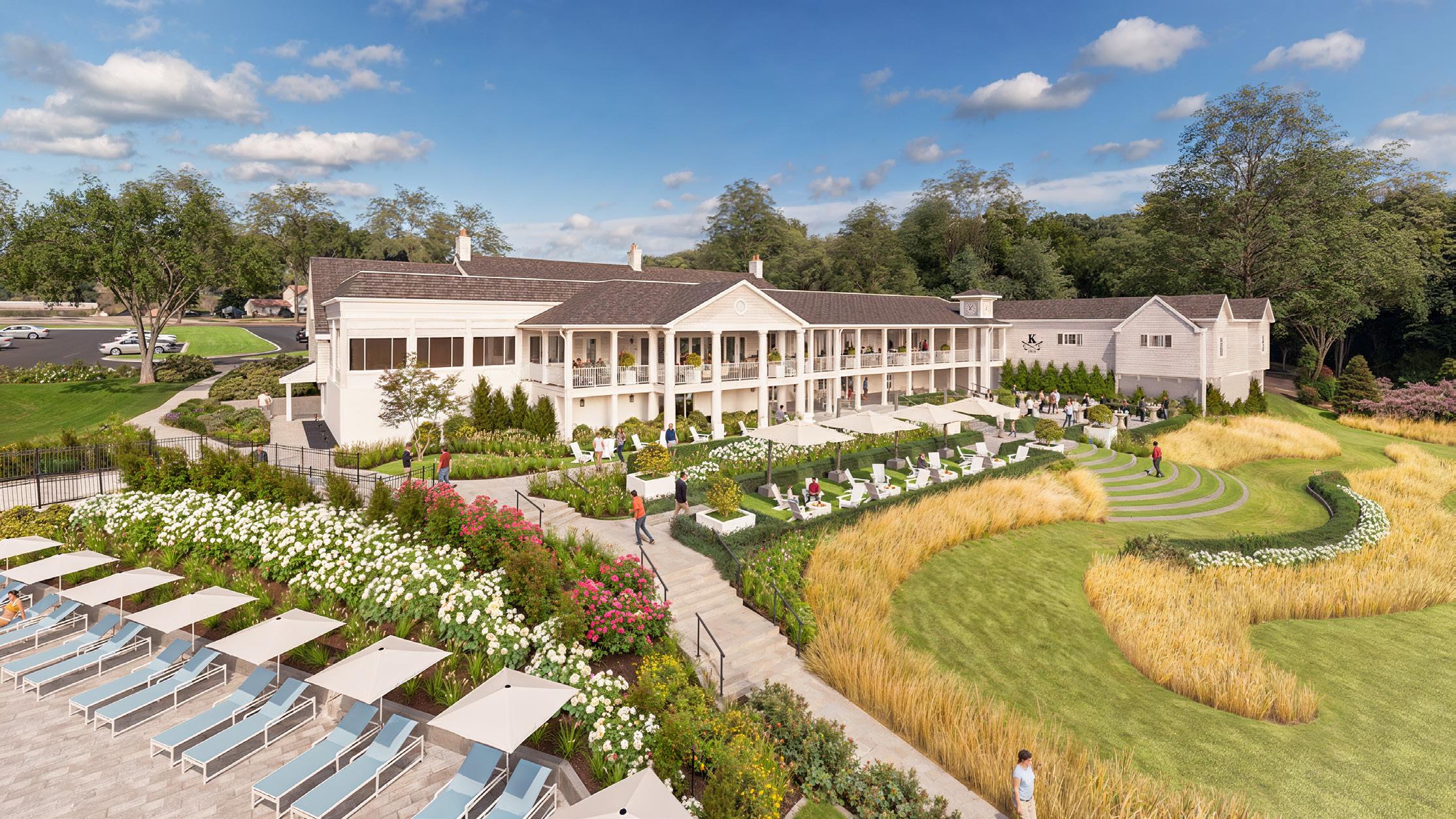
C+RB: You’ve shepherded multiple clubs through large renovations. What’s your strategic framework for doing this well?
JK: Renovations succeed or fail on expectations. The member vote is only the starting line. After that, you have to communicate constantly not just about construction timelines, but about the dayto-day realities members will encounter. Where to park. What’s open this week. How F&B will work. Whether bringing guests makes sense. If you get ahead of those questions, members stay engaged. If you don’t, even a project they voted for can feel like a burden. For me, transparency isn’t a courtesy. It’s the operational backbone of a renovation year.
C+RB: Let’s dig into the clubhouse project. What’s happening inside the walls?
JK: Nearly everything is being rebuilt from the inside out: old electrical, ancient HVAC, outdated utilities, aging locker rooms, dated décor, all of it. The goal isn’t to erase history. The goal is to bring a 1914 building into 2025 in a way that respects its lineage while delivering the kind of experience members expect in a club so close to New York City. Outdoor dining, quality-driven F&B, comfortable and relevant locker rooms—those are the must-haves.
C+RB: This is the first GM/COO structure Knickerbocker has had in years. How did you approach stepping into that?
JK: Timing helped. July is not a month when members expect dramatic change, which gave me the space to manage the clubhouse shutdown, oversee the move out, and spend the rest of the year
studying the operation. The club had been functioning with department heads reporting directly to board committees, which naturally created different rhythms on each side of the property. My focus has been to bring those rhythms into alignment, build one cohesive culture, and ensure that every member enjoys a consistent and unified experience across Knickerbocker Road.
C+RB: How are you strengthening culture while the club is operating out of temporary spaces during construction?
JK: Working in temporary spaces has actually helped us come together. The pavilion is our dining base for now, but we also have offices and work areas spread across other parts of the property. That setup forces everyone to communicate more intentionally and stay connected. The team works closer together, checks in more often, and supports one another in a very natural way. Members feel that closeness, too. They see us more, and we see them, which creates a stronger sense of connection.
C+RB: Give us a sense of club size. Who are you serving?
JK: We’re roughly 525 households total. About 305 are full active golf members, plus juniors, senior actives, and around 120 House members who primarily use racquets, pool, and dining. The active category is effectively full. House has room to grow, and we expect demand to be strong as soon as the new pool opens.
C+RB: Do you expect membership changes during construction?
JK: The timing worked in our favor.
Anyone who would have left because of the assessment would’ve left already. The pool reopens this Memorial Day, so we won’t miss a season. That’s huge. And the clubhouse progress will be very visible by next summer, which should drive interest among younger House prospects.
C+RB: What demographic shifts are you seeing?
JK: House prospects tend to be in their 40s. They’re young families, busy professionals, or have kids looking to join our summer camp. They may play golf, but they don’t have the time commitment for the active category yet. Our youth camp is a major draw. It’s been part of the club’s DNA for a generation. It’s often the entry point for families who eventually become long-term members.
C+RB: What excites you most about this role and this moment?
JK: My enthusiasm for this business keeps growing. My network continues to expand, and the challenges become more compelling every year. I love mentoring employees, developing teams, and shaping cultures that last. I also appreciate the sense of stewardship that comes with a club like Knickerbocker. It is a Donald Ross course with more than a century of history, and helping it stay relevant, vibrant, and meaningful to members is incredibly motivating. Supporting staff as they grow into their next opportunities is equally important to me.
This role offers the chance to influence the future of a place with real significance. Opportunities like that do not come around often. C+RB
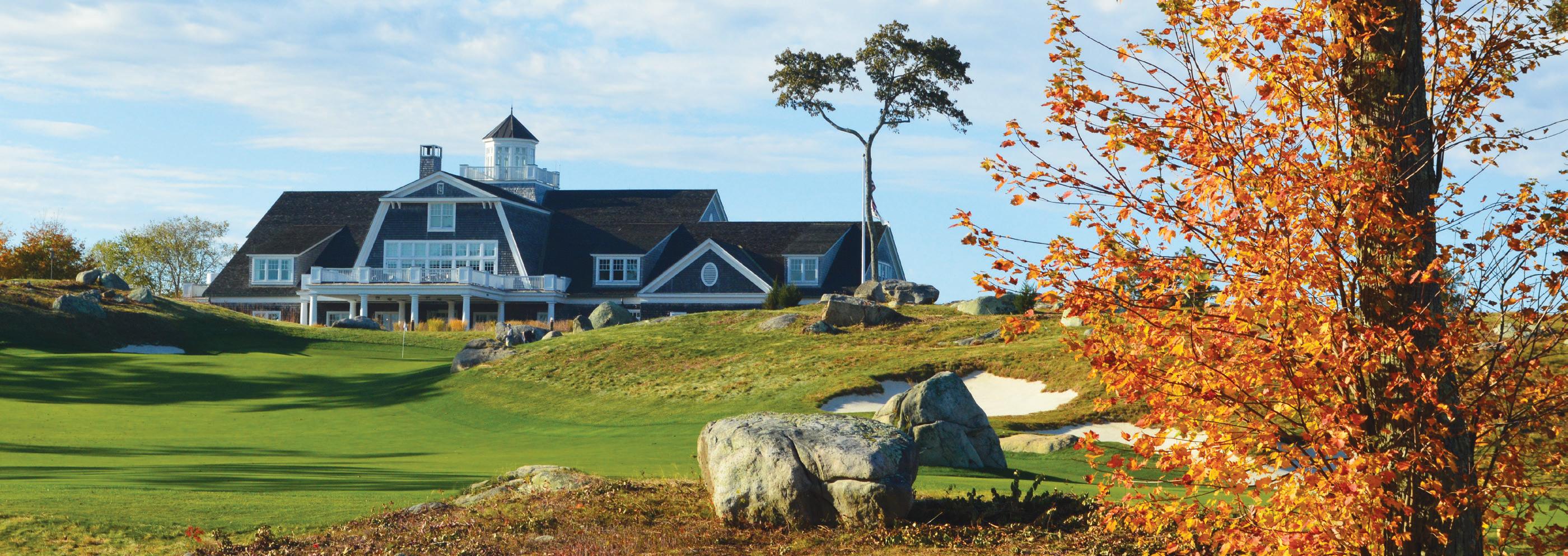
Technology is helping Shelter Harbor deliver clearer, more consistent communication.
By Joanna DeChellis • Editorial Director
& ENGAGEMENT Director Greg Surine arrived at Shelter Harbor Golf Club in Charlestown, Rhode Island, the communication program was little more than a weekly golf email and a few static flyers. The club had a respected history and an exceptional golf operation, but the way information moved through the membership needed structure and clarity. Surine saw an opportunity to build something modern that still felt true to the rhythm of the club.
His background made him unusually suited for the work ahead. He grew up caddying at Gulf Mills Golf Club near Philadelphia, earned a degree in broadcast journalism from Penn State, worked in FM radio, and later held roles in marketing and events before returning to the club world at The Club at Spruce Peak in Vermont. Each stop gave him a different
lens on communication.
Broadcasting taught him timing and tone. Marketing taught him how visuals create feeling. Club operations taught him how people actually use information. At Shelter Harbor, all three came together.
“When I arrived, the website was simple and mostly static,” Surine says. “Over time, we built a coordinated system that keeps everything consistent. Members see the same style and the same message wherever they look.”
The first major breakthrough came during the Founders Cup Invitational. Surine transformed the men’s golf page into a live tournament hub, updating scores, pairings, results, photographs, and daily notes throughout the event. Members followed the action on their phones and laptops as if they were checking the page of a favorite team.

“It was current and easy to follow, and people loved it,” he says.
That success shaped the future of the site. Surine reorganized all golf content into four active destinations for men, women, mixed programs, and juniors. He sharpened the color palette, refined the fonts, and cleaned up the logo. The goal was to make everything feel familiar but sharper.
“The intention was no one would notice,” he says. “We wanted the website to look cleaner and work better without changing what members already liked.”
Inside the clubhouse, digital screens

now reinforce the same sense of calm order. They rotate through reminders, highlights, and short stories that match the tone of email and web updates. Members do not have to search for information. It appears within the flow of their day and never overwhelms the space.
“These bulletins are phenomenal at reinforcing storylines and initiatives,” Surine says. “They make communication feel seamless.”
Photography and video have become essential parts of this visual system, too. The club follows a phone-free culture, which means members trust Surine to capture moments for them. The trust did not come immediately. In his first year, people wondered why he had his phone out. By his third year, they were calling him over for group shots.
“A smile goes a lot farther than perfect lighting,” he says. “You do not need the latest equipment to tell a great story.”
He handles every part of production himself. There is no outside firm and no elaborate camera setup. Most of the time it is simply Surine moving through an event with his phone, watching for genuine moments. He edits quickly and lightly so the energy of the moment still feels alive.
“The point is to make people feel something,” he says. “It is not about perfection. It is about connection.”
His daily recaps during the Founders

“Good communication should feel natural,” says Shelter Harbor GC Communications & Engagement Director Greg Surine. “If we are doing it right, the technology fades into the background and the connection stands out.”
Cup showed that philosophy in motion. Each evening, he created a short video from that day’s competition and shared it across the club’s digital channels. The clips became a living record of the tournament and a shared memory for players and spectators.
Those visuals and others like them now appear in emails, on the website, and across the digital screens inside the clubhouse. They give members a sense of themselves within the story of the club.
“Pictures make information human,” Surine says. “You can send a schedule or a scorecard, but when people see themselves or their friends in it, that is when it connects.”
Technology supports all of this work, but it never dominates it. Surine treats it as a quiet foundation rather than a feature. He refines list-building, website structure, digital signage, and segmentation with the same intention. None of it is meant to be flashy. All of it is meant to be clear.
“Good communication should feel natural,” he says. “If we are doing it right, the technology fades into the background and the connection stands out.”

The system he has built at Shelter Harbor feels modern but understated. It supports the calm pace of the club and reflects the way members prefer to receive information. It links tradition to present-day expectations without changing the character of the place.
What Surine created is more than a collection of tools. It is an architecture of connection—a structure that members never need to think about, even though it touches nearly everything they experience.
And for him, that is the goal. C+RB
Shadow Wood CC’s structured email cadence welcomes new members, reduces confusion, and speeds up participation.
By Joanna DeChellis • Editorial Director
SHADOW WOOD COUNTRY CLUB (Estero, Fla.) has always delivered a polished and personal welcome. A few seasons ago, Danita Osborn, Director of Membership & Marketing, saw a chance to make that welcome even stronger. She wanted a process that felt guided from the start. She also wanted something that supported members who could not attend an orientation right away. Her answer was an organized email journey that introduced information in clear and manageable pieces.
“Our goal was to create a warm and informative experience that started immediately. We wanted new members to feel comfortable using the club from the moment they joined,” Danita says.
The result is a 12-week email drip campaign that has become the foundation of the club’s onboarding program. Each message arrives once a week and covers one topic at a time. Tee times. Dining. Dress code. Guest policies. Events. Every message also introduces one staff member so new members can connect a face with a name and understand who to turn to for help.
The series reflects input from every department. Osborn asked each team to identify the questions they answer most often and the information new members usually need in their first few weeks. Dining shared guidance about reservations and seasonal rhythms. Golf outlined booking expectations and provided clarity on peak times. As new amenities come online, the series grows to reflect them. When the club added a new ball-tracking and practice improvement system, the emails expanded to include that program.
The messages feel light and easy to absorb. Clear subject lines. Short paragraphs. One main idea per week. Visual tools perform especially well. The dining video shows members where they can eat and remains the most clicked link in the entire sequence. Maps and dress code graphics also rank high in engagement.
The impact has been significant. The series carries an 89-percent open rate, which is well above the club’s standard communication metrics. New members also participate sooner.
“They arrive with a strong foundation.
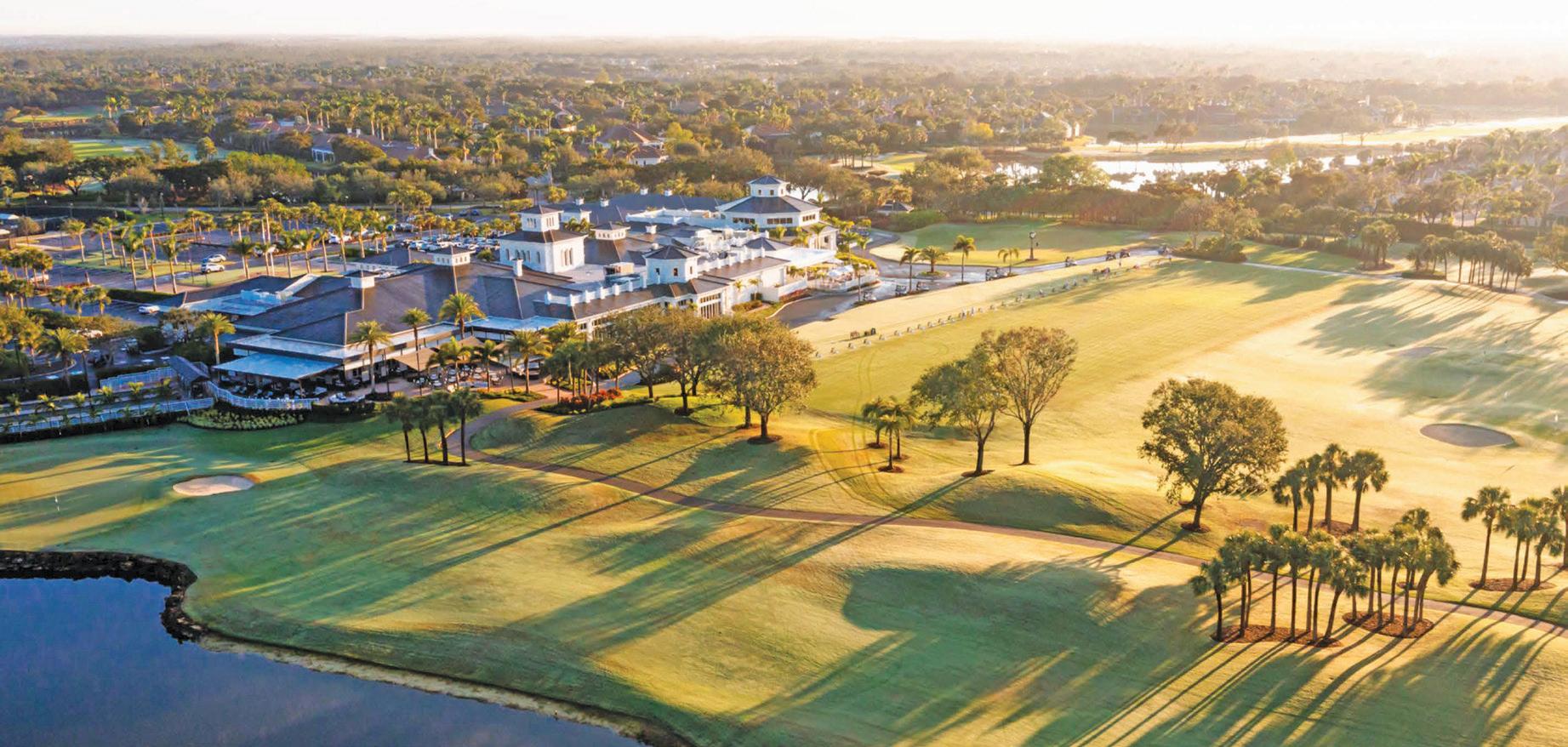

When we meet in person, we can focus on details they want to explore further,” Osborn says. Several members have even shared the email series with their northern clubs because they found it helpful.
Automation keeps the program consistent, and the club relies on its email system to handle scheduling and personalization. The entire flow runs quietly and reliably, which frees staff to focus on individual member needs.
“Automation ensures that every new member receives the same high-quality experience. It also reduces the amount of manual work on my end,” says Osborn.
The Shadow Wood CC team is already looking ahead. Osborn is exploring segmented tracks based on member interests. Golf-first families or social members could receive messages tailored to their priorities. She is also considering video introductions from department heads and a companion portal for members who want to explore even further.
“We always aim to be helpful and resourceful,” says Osborn. “If new members feel confident and supported from the start, the series is doing exactly what it should.” C+RB

Models range in capacity from 100 lbs to 1,400 lbs
Made with pride in the USA since 1976