
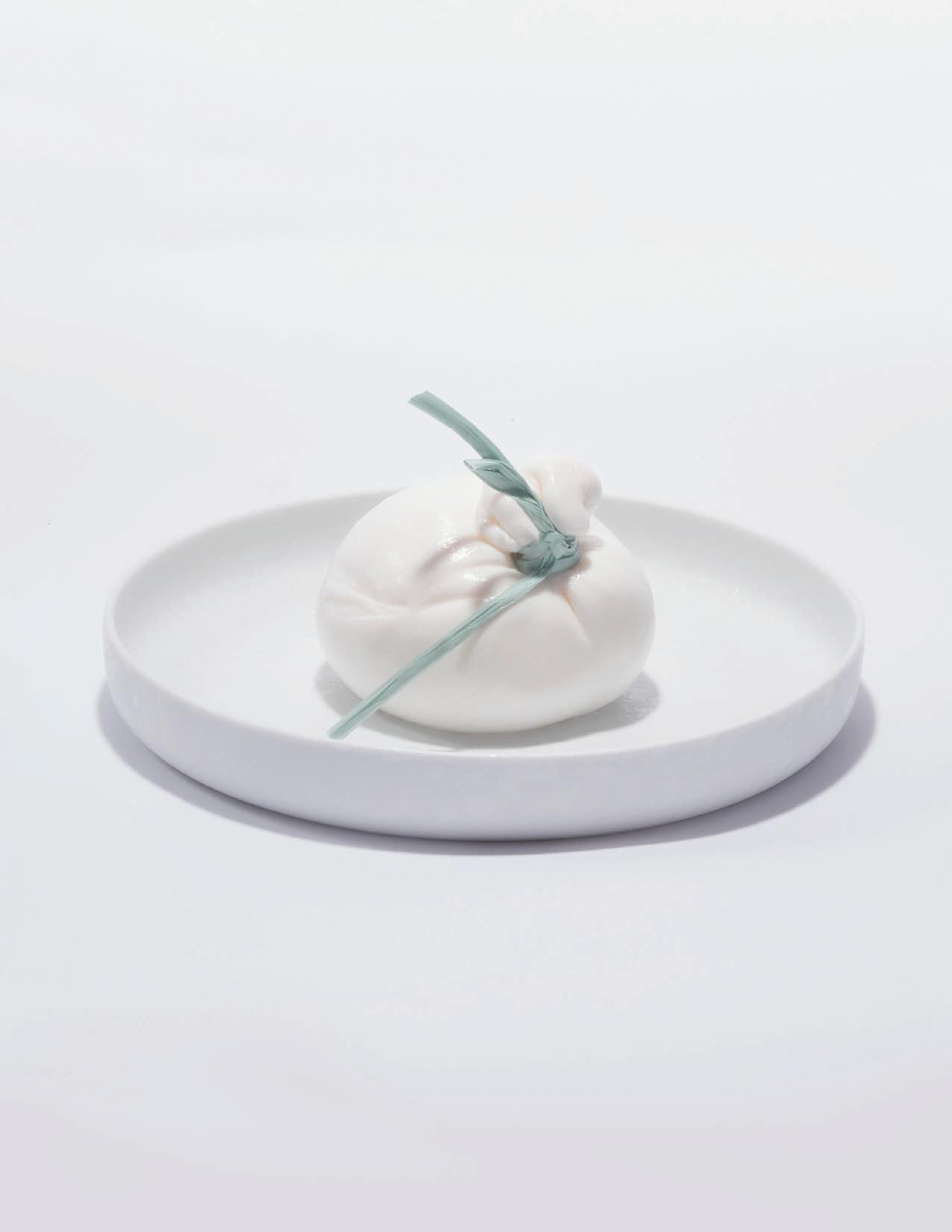
“A bold tribute to the passion, precision, and persistence of hundreds of cheese producers”
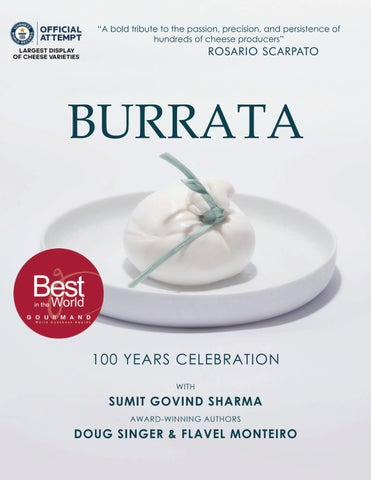
“A bold tribute to the passion, precision, and persistence of hundreds of cheese producers”
AWARD-WINNING AUTHORS
Exclusive eBook specially made for:

“Something extraordinary is happening: this Guinness World Record is not just a number. It’s a bold tribute to the passion, precision, and persistence of hundreds of cheese producers.”
ROSARIO SCARPATO
This book is dedicated to the memory of Philomena Julia de Noronha e deCastro Monteiro, Caesar, Hanan Jozaih Shafair, José Esbelto deCastro Monteiro, Maya Cointreau, Nikolai Shashirin and Prachi Sumit Sharma. You all have touched and made a difference in people’s lives.
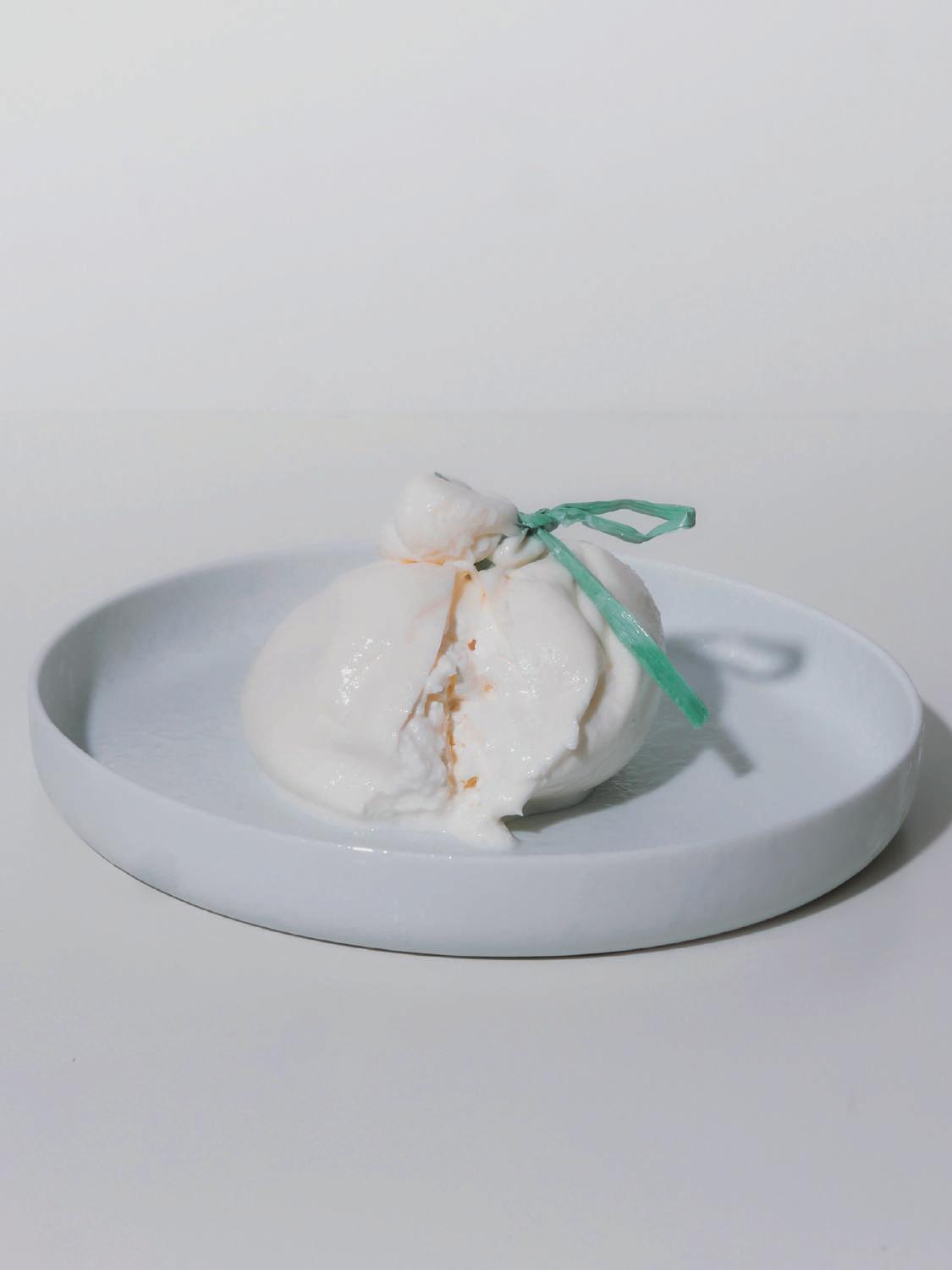
“Burrata di Andria is more than a cheese it’s Puglia’s ultimate agri-food expression”
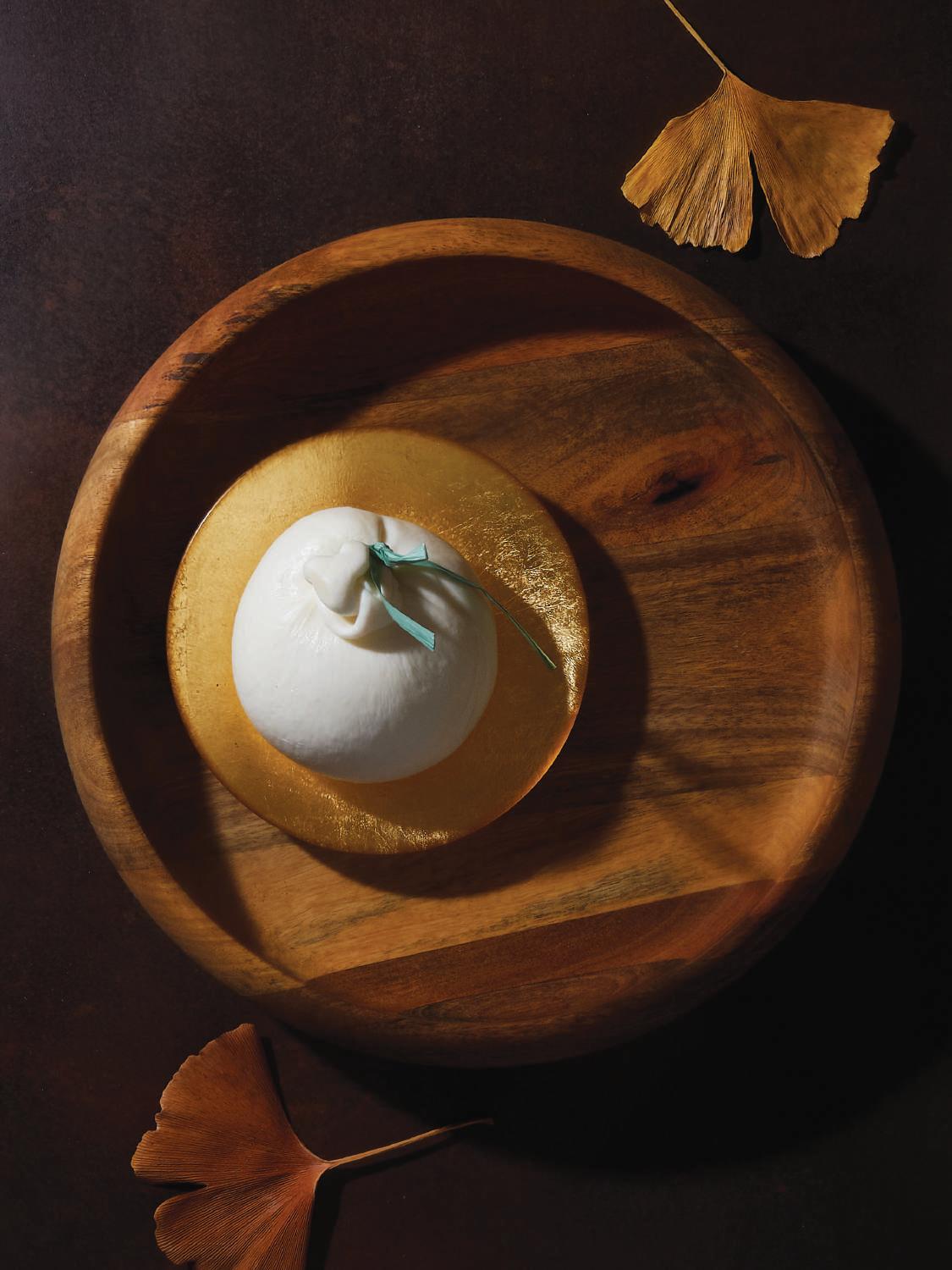
100 YEARS CELEBRATION
WITH SUMIT GOVIND SHARMA
AWARD-WINNING AUTHORS DOUG SINGER & FLAVEL MONTEIRO
8 FIRST WORDS BY HEINZ BECK
11 SILKEN BURRATA: A TASTE OF PUGLIA’S SOUL
12 HUNDRED YEARS OF BURRATA
15 A GREAT TREASURE OF APULIAN GASTRONOMY
17 CONSORZIO DELLA BURRATA DI ANDRIA PGI
21 FAMIGLIA OLANDA
29 THE SPOTTED COW FROMAGERIE
32 FRANCESCO MAZZEI
33 HEINZ BECK
34 SILVIA BARACCHI
35 GRAZIA ANTONNI
36 GAETANO TROVATO
37 ALFREDO RUSSO
38 VALENTINO CASSANELLI
39 MANUELA BUFFARA
40 GATEANO SIMONATO
41 MAURIZIO BUFI
42 SAM AISBETT
43 SIMONE CAPONNETTO
70 FRANCESCO LENZI AND STEFANO MERLO
71 GIUSEPPE MOLARO
72 ALESSANDRO ROSSI
73 GIOVANNI PAPI
74 ANDREA FIORAVANTI
75 DIMOS BALOPOULOS
76 CLAUDIO SANTINI
77 GIORGIO DIANA
78 ALESSANDRO MICELI
79 ANDREA VIGNALI
104 HARRY HAKUEI KOSATO
106 JORDAN HOUSTON
107 LUCA ROSATI
108 SUJIRA PONGMORN
109 MARIA AQUINO
110 ALKIS THEOCHARIDIS
111 ALESSIO BANCHERO
112 GIOVANNI LONGO
113 SANKET MORE
114 ABHISHEK SINGH
115 GAURAV KUTHARI
116 RAFFAEL KABLY
117 SANTOSH MAGDUM
134 DIPENDER TIWARI
135 DEEPANSHU GIRDHAR
136 PARTH SAXENA
137 YUGAL KISHOR
138 SUDHIR PAI
139 AKSHAY BATRA
140 GOPAL SETHI
141 MARLEEN YASHIMA
142 ROHAN NIPPANI
143 VIVEQ PAWAR
144 RITHICK SANYAL
145 ABHISHEK GUPTA
147 MANAN VASUDEVA
44 TOMATO TORTELLINI FILLED WITH BURRATA
46 BURRATA SALAD WITH HEIRLOOM TOMATOES
47 AGUA SIGNATURE BURRATA SALAD
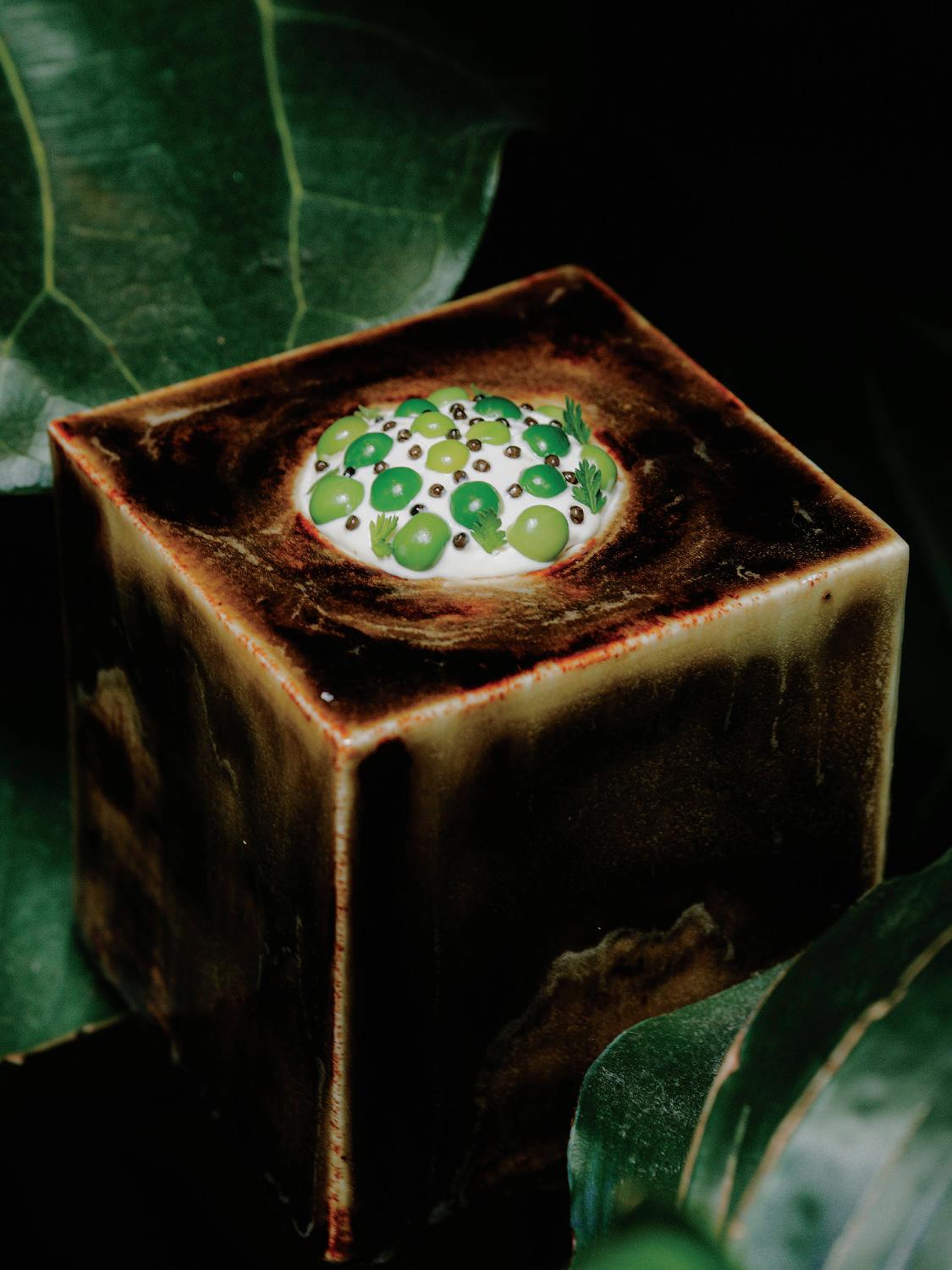
49 BURRATA FOAM WITH MINT AND BASIL PEA CREAM
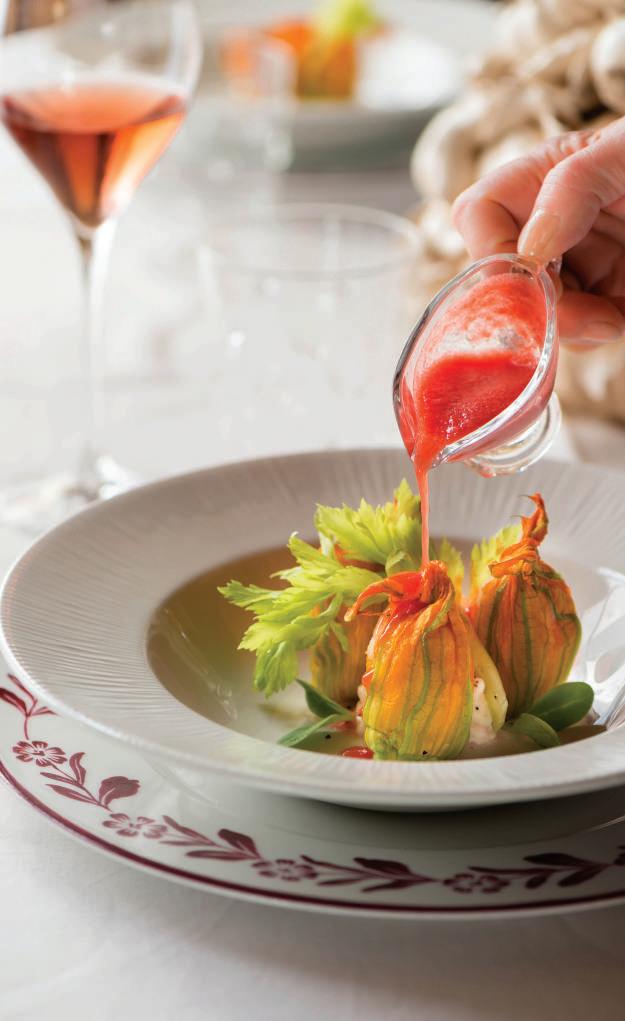
50 BAKED ZUCCHINI BLOSSOMS OVER BLOODY MARY
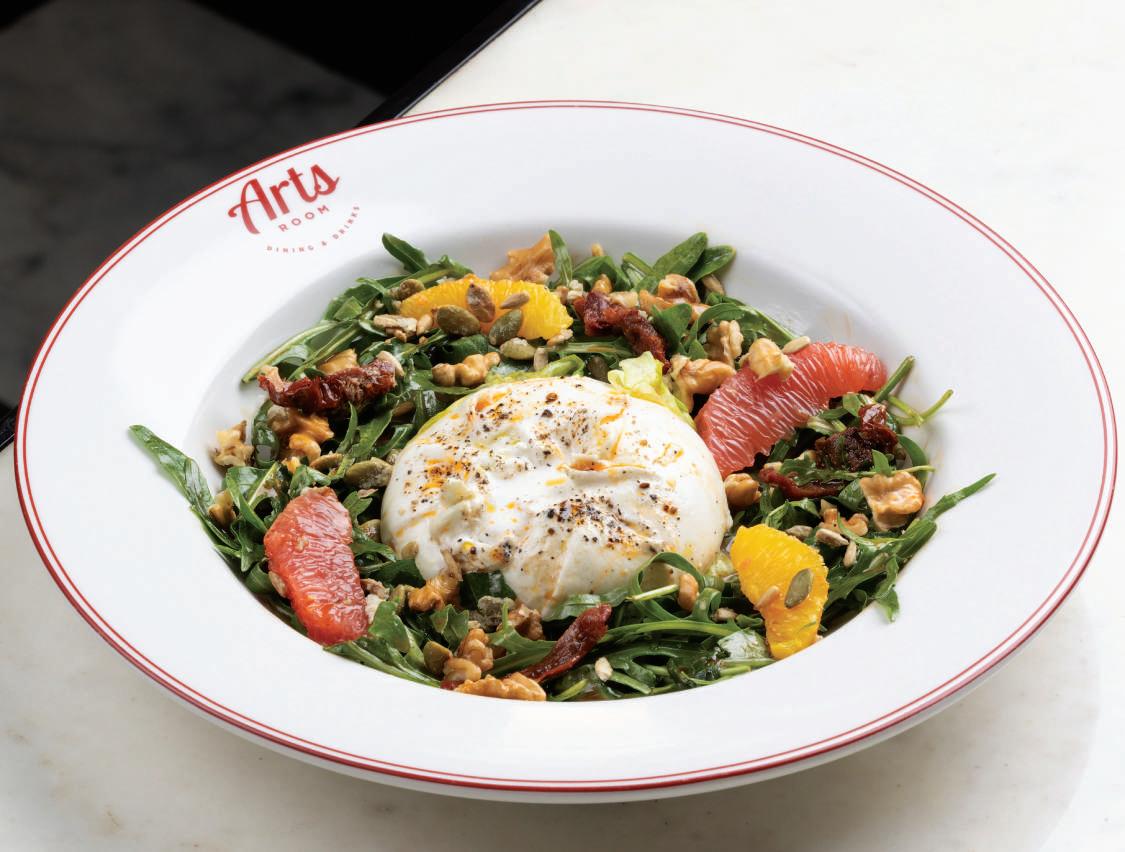
51 BURRATA FOR DAYS
53 BURRATA SALAD
54 BURRATA CORN PALAK
55 BURRATA WITH BASIL-PARSLEY PESTO
57 BURRATA WITH CONFIT TOMATOES
58 ARTISANAL BURRATA CHEESE SALAD
59 TRADITIONAL BURRATA
61 TORTELLI PAGLIA E FIENO WITH BURRATA
62 BURRATA SU CAPONATA DI VERDURE
63 MANGO BURRATA SALAD
64 BURRATA WITH UDON NOODLES IN A SUNDAY SAUCE
66 BURRATA WITH GREEN THECHA
67 MODERN DAY BURRATA
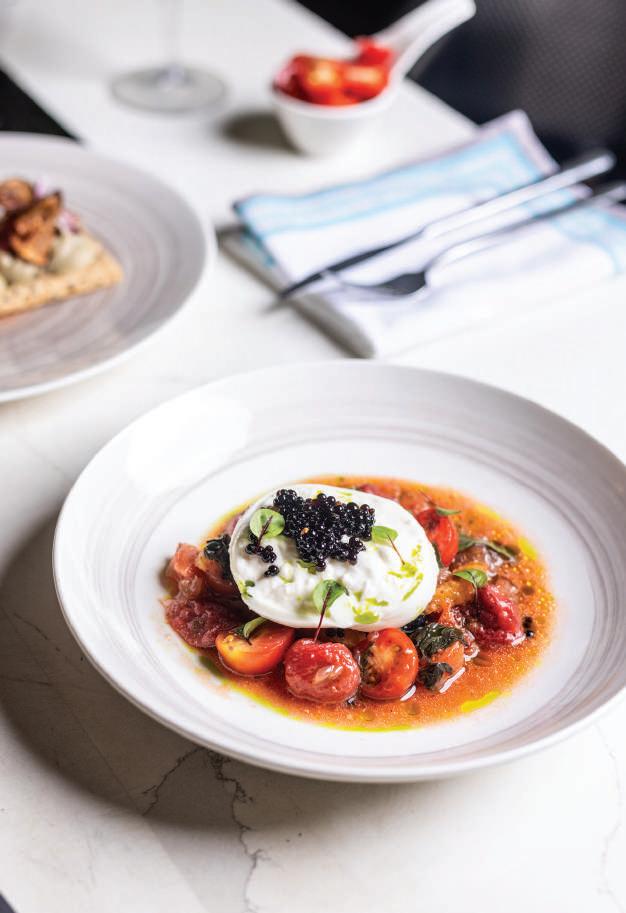
69 CREAMY BURRATA MARINATED CHERRY TOMATOES
80 RISOTTO, LEMON, BURRATA AND LICORICE
83 ZUCCHINI TARTLET
85 BURRATA DEL FUTURO
86 MEDITERRANEAN GIARDINIERA
88 PANZANELLA WITH BURRATA
91 AFGHAN CHERRY & BURRRATA SALAD
93 TEXTURES OF ASPARAGUS AND BURRATA
94 CREAMY BURRATA CHEESE SALAD
96 BOTTONI PASTA CAPRESE, BURRATA DI ANDRIA PGI
99 ROASTED BEETROOT DUKKHA SPICE
100 ROASTED BUTTERNUT SQUASH
102 BURRATA WITH CURRY LEAF THECHA PESTO
119 TORTELLINI CAPRESE
120 I GP BURRATA ROYAL BELUGA
121 SPAGHETTONI WITH ANCHOVIES
122 HAND SHELLED SPANNER CRAB WITH FRESH BURRATA
124 MULLET WITH POTATOES AND BURRATA CHEESE
125 STEAMED RED PRAWNS WITH BURRATA CREAM
126 TORTELLI WITH SHRIMP & BURRATA FILLING
128 SCALLOPS & BURATTA
129 MASALA BURRATTA CON IKURA
130 BURRATINA MARE E MONTI
132 BUFFALO BURRATA BALL STUFFED WITH RED MULLET
149 CARPEGNA PROSCIUTTO AND BURRATA
150 TEMPURA BURRATA WITH PORK STEW
151 POACHED PLUM & BURRATA CAPRESE
153 CHICKEN BURRATA SOMTUM
155 WHITE PEACH AND POMODORO FIORENTINO TARTARE
157 BURRATA PANNACOTTA
158 TRUFFLE SHAPED BURRATA CHEESE
Text © 2025 Flavel Monteiro and Doug Singer
Photo Credits: All photographs are Copyright
Cover design: © Flavel Monteiro and Luca Rosati
Cover image: Caseificio Olanda, Andria, Puglia, Italy
First Words: Heinz Beck and Alfredo Russo
Co-author’s: Sumit Govind Sharma and Doug Singer
IZZY Media and WG: Commissioning Editor: Fabian deCastro
Editorial Assistants: Maria Aquino
Design: IZZY Media and WG
Picture Editor: FJMdesign
FAD Publishing: Editors: Flavel Monteiro and Doug Singer
Digital Content: IZZY Media and FAD Publishing
Published by: FAD Publishing New York 14850, U.S.A.
www.wgmagazines.com I www.thegastronomesguide.com
Copyright ©IZZY Media FZ-LLC 2025
IZZY Media has asserted its right under the Copyright Designs and Patents Act 1988 to be identified as the author of this work.
All rights reserved. No part of this publication may be reproduced, stored in a retrieval system or transmitted in any form or by any means, electronic or mechanical, recording or otherwise, without the prior permission in writing from the copyright owner.
Printed at Thomson Press.
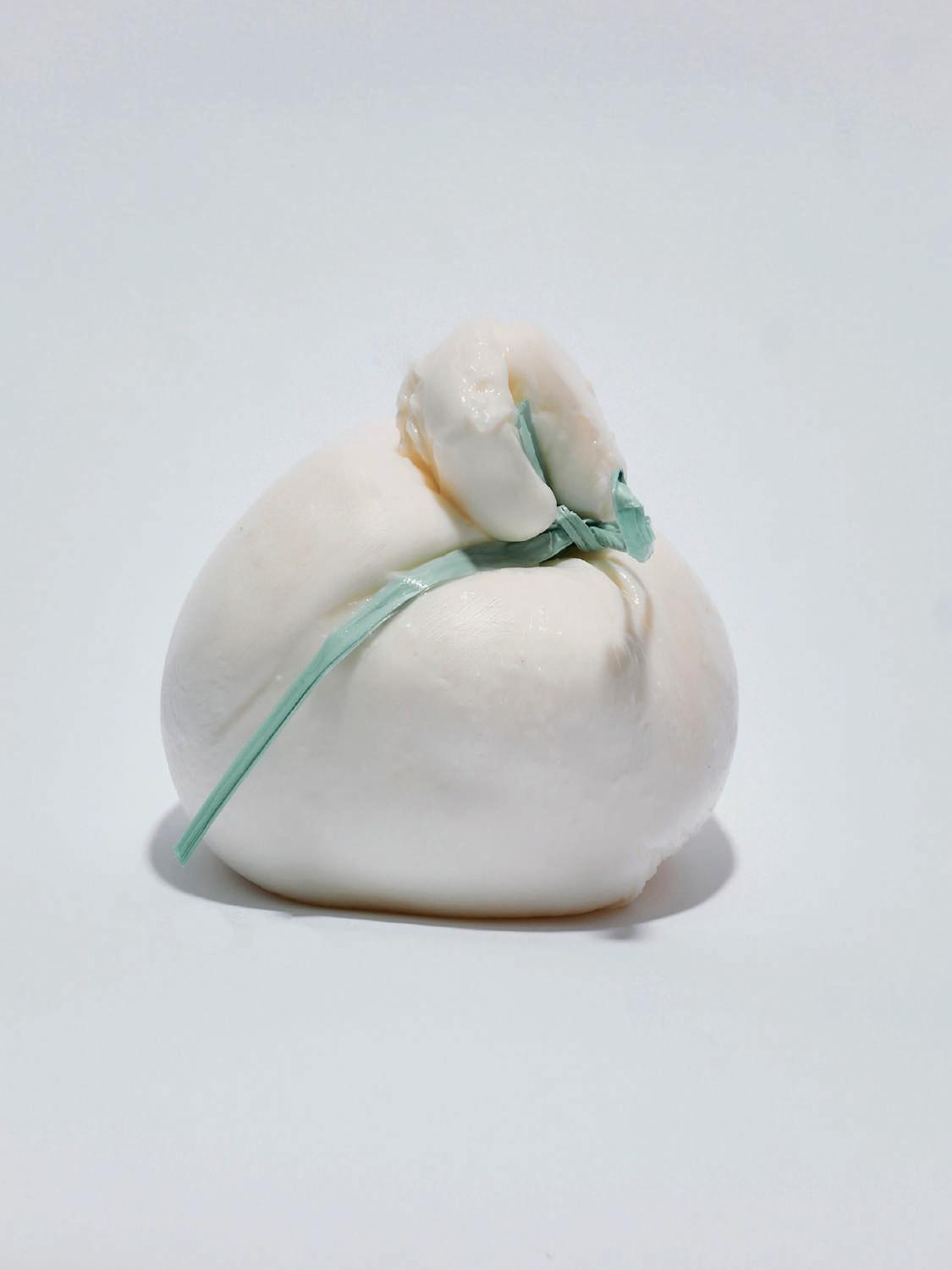
“The original Burrata di Andria, is the symbol of Puglia that strikes right to the Heart”
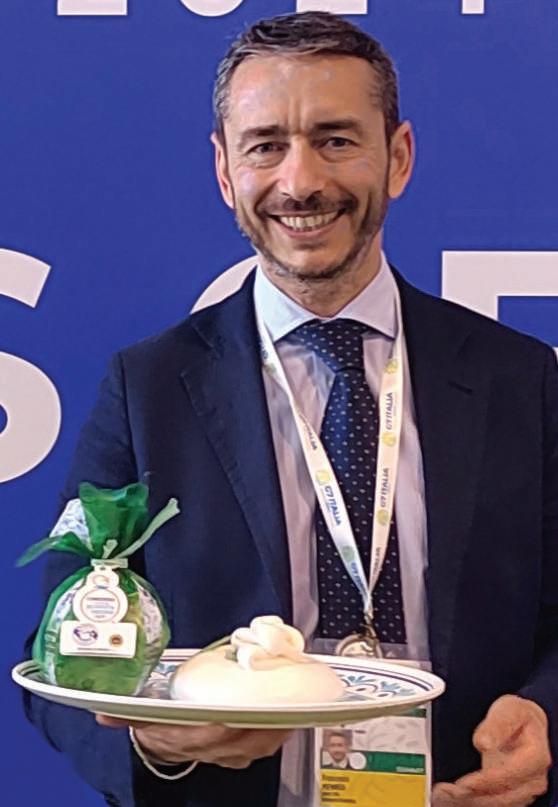
FRANCESCO MENNEA Il Direttore, Consorzio Della Burrata di Andria PGI



“Conceived amidst a fierce snowfall a century ago, the legacy of master cheesemaker Lorenzo Bianchino endures in the creation of burrata. This artisanal cheese, born from inspired craftsmanship, remains a cherished tradition—a comforting, sentimental treasure that elevates family gatherings and celebrations worldwide.”
Burrata: A Century of Celebration honors the artisanal cheesemakers of Andria, Puglia, whose passion and craftsmanship embody the heart of Italian culinary tradition. This book is a tribute to their legacy and the creamy, indulgent essence of burrata.
The concept for this book was born over a memorable dinner, sparking a call the next day to the Consorzio Della Burrata di Andria PGI and Famiglia Olanda. Their enthusiastic support, led by Francesco Mennes, Director of the Consorzio, and Riccardo Olanda, set the project in motion. To craft a culinary experience worthy of burrata’s centenary, I enlisted dear friends and celebrated chefs Heinz Beck and Alfredo Russo to contribute their expertise, alongside the world’s finest chefs, who each share an exquisite recipe.
To bring this vision to life, I partnered with co-authors Doug Singer, a trusted collaborator of over a decade, and Sumit Govind Sharma, whose unique perspective added vibrancy to the project. Luca Rosati’s artistry graces the cover, echoing the magic of our past work together, grazie Luca.
My heartfelt thanks go to Francesco Mazzei and Riccardo Olanda for illuminating burrata’s rich history. Special recognition goes to Harry Hakuei Kosato, Japanese Cuisine Goodwill Ambassador, for his innovative East-West fusion.
We celebrate the culinary brilliance of the finest chefs from Curitiba in Brazil to Melbourne in Australia with Francesco Mazzei, Valentino Cascanelli, Tano Simonato, Silvia Baracchi, Grazia Antonini, Manuela Buffara, Maria Aquino, Maurizio Bufi, Abhishek Gupta, Sam Aisbett, Abhishek Singh, Akshay Bhatra, Alessandro Miceli, Alessandro Rossi, Alessio
Banchero, Alkis Theocharidis, Andrea Fioravanti, Andrea Vignali, Claudio Santini, Deepanshu Girdhar, Dimos Balopoulos, Dipender Tiwari, Francesco Lenzi, Stefano Merlo, Gaetano Trovato, Gaurav Kuthari, Giorgio Diana, Giovanni Longo, Giovanni Papi, Giuseppe Molaro, Gopal Sethi, Manan Vasudeva, Marleen Yashima, Parth Saxena, Raffael Kably, Rithick Sanyal, Rohan Nippani, Sanket More, Santosh Keshav Magdum, Simone Caponnetto, Sudhir Pai, Sujira “Aom” Pongmorn, Vivek Pawar, Yugal Kishor and Jordan Houston.
A special thank you to Riccardo Olanda and Caseificio Olanda for shipping burrata to Tuscany for Luca Rosati’s stunning cover photography. I’m deeply grateful to the photographers, the editorial and creative teams at WG and FAD, and Sumit and his team at LuxExclusive for making this book a visual masterpiece.
I would also like to thank Maria Giulia Castri, Alessio D’Aguanno, Alice Trovato, Richard Cowling, Remy Tancred, Peeya Dhaul, Sai Vaidaya, Sumedha Chaudhary, Lévvie Trang, Ilaria Bertuletti. Aicha Kadri-Prestamero, Drishty Gandhi, Julia Pimentel, Francesca Longo, Pansy Chung, Jeel Shah, and Alba D’Souza. Finally, my appreciation to Tarini and The Spotted Cow Fromagerie for supplying burrata to our chefs.
May you savor the Gem of Italy as much as we loved creating this tribute.
In an era when nothing went to waste, Lorenzo Bianchino, in Andria, Apulia, had the idea of recovering the leftover strips of stretched curd from mozzarella production, blending them with fresh cream, and enclosing them in a pouch of stretched curd, similar to a small sack. This is how burrata was born: a cheese with a smooth and delicate exterior that holds a rich and creamy heart, stracciatella, which soon became a beloved product around the world. Thanks to its characteristics, versatility, and unmistakable flavor, it has become an outstanding ambassador of Made in Italy. Its fresh and creamy taste makes it perfect to enjoy especially on a hot summer day and I believe there’s no better way to truly appreciate it.
Celebrating the centenary of burrata means paying tribute not only to an exceptional product, but also to those who have preserved and passed down a unique artisanal knowledge, made of ancient gestures and love for the land. A symbol of identity and culture that, even after one hundred years, continues to inspire emotion.
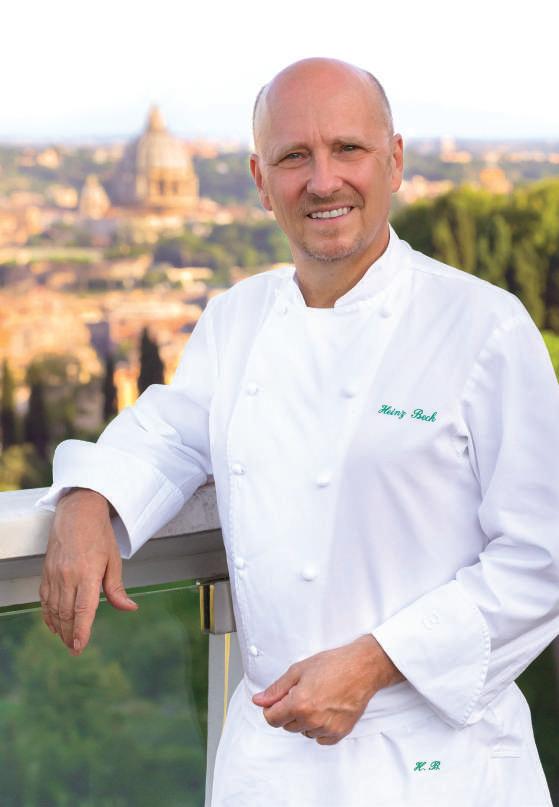

LA PERGOLA, ROME


Burrata, with its creamy heart, is a fleeting joy that melts on the tongue, calling to mind the sun-drenched fields of Puglia. One bite, and I’m carried to southern Italy, where this cheese weaves a story of tradition and indulgence, born from the land’s fertile embrace.
Around 1920, in Andria, Puglia, the Bianchino family birthed burrata from necessity and ingenious craftsmanship. Faced with surplus cream, they shaped warm mozzarella into a delicate, silken pouch, filled it with a rich blend of cream and mozzarella scraps, and tied it off like a precious, handcrafted gift. The result, named “buttered” in Italian, was a revelation—a cheese that melded rustic thrift with opulent, unforgettable flavor. Puglia’s wild herbs and grazing cows give the milk a sweet, earthy depth, infusing burrata with the region’s vibrant soul.
Burrata is no mere cheese; it’s alchemy. Its glossy mozzarella shell yields with a soft sigh, releasing a creamy torrent studded with tender, soft curds. It demands to be savored fresh, within a day or two, its ephemerality part of its timeless charm. In Puglia, it’s served simply—crusty bread, ripe, juicy tomatoes, a drizzle of emerald-hued olive oil that tastes of grass and warm sunshine. Yet it plays beautifully with others: a pinch of sea salt, a fragrant basil leaf, or a shred of prosciutto elevates without overshadowing.
From Puglia’s farms, burrata conquered global
tables. By the late 20th century, it graced Michelin-starred menus from New York to Tokyo, nestled atop pizzas or paired with roasted beets in vibrant dishes. Yet in Puglia, artisanal producers like Caseificio Olanda still craft it by hand, their care preserving its heritage, a quiet nod to its rustic roots.
Burrata is more than food; it’s a celebration of slowness. In Italy, it’s shared at long, laughterfilled lunches under grapevine-draped pergolas, embodying la dolce vita’s timeless, joyful spirit. It invites stories—of weathered farmers, skilled cheesemakers, or innovative chefs dreaming up bold new pairings. Beyond Italy, devotees on platforms like X share burrata-laden dishes, captioned “Puglia in a bite,” with vibrant recipes from burrata with sweet figs to delicate stuffed zucchini blossoms, each a testament to its boundless versatility. I once tasted burrata with charred peaches and 20-year aged balsamic—a transcendent bite, soaring over Puglia’s sunlit fields.
To honor burrata, seek it from a trusted cheese monger or local maker. Serve it at room temperature, when its cream is silkiest, with seasonal treasures—summer tomatoes, fall squash, or just a spoon for pure indulgence. With each bite, let your senses drift to Puglia, to the hands that shaped this cheese. Burrata is a fleeting joy, a reminder that the richest pleasures is wrapped in edible silk.
Burrata is one of the most iconic symbols of Italian dairy tradition—an excellence that has enchanted chefs, gourmets, and food lovers around the world for a hundred years. Its origin lies in the most authentic part of Puglia, in Andria, where rural ingenuity turned an unexpected challenge into a culinary masterpiece. According to tradition, it was Lorenzo Bianchino who first created burrata in the 1920s, during an unusual snowfall that blocked the rural roads. Unable to deliver milk and mozzarella, he decided to repurpose leftover mozzarella curds by mixing them with fresh cream, sealing the mixture in a handcrafted pouch made from the same stretched curd. Perhaps born out of necessity, a new kind of cheese emerged—soft on the outside, incredibly creamy at its core.
The name burrata evokes its unique texture: a velvety, buttery heart enclosed in a delicate shell of pasta filata that both protects and enhances it. Today, burrata holds IGP status (Protected Geographical Indication), safeguarding its authenticity and its ties to the region’s time-honored production methods.
Over the past hundred years, burrata has transcended time without ever losing its soul. From its humble birth in a countryside dairy to becoming a true ambassador of Italian cuisine worldwide, it proves that beauty and greatness can be born from simplicity and resilience. Personally, I deeply love this product. I use it often in my kitchen, appreciating its versatility and unmistakable flavor. My Pugliese roots make this connection even stronger: burrata is a truly extraordinary creation, now rightfully ranked among Italy’s greatest cheeses— alongside Parmigiano Reggiano and a rare few others. It is cherished, recognized and deservedly celebrated across the globe.
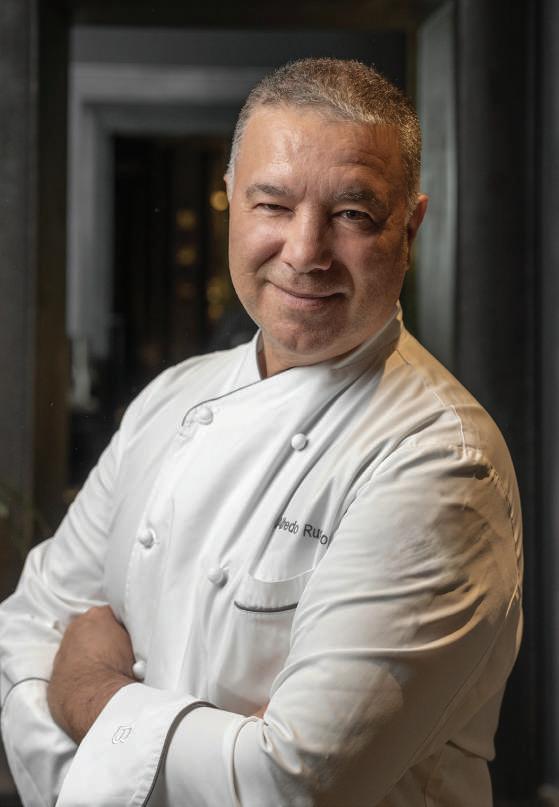
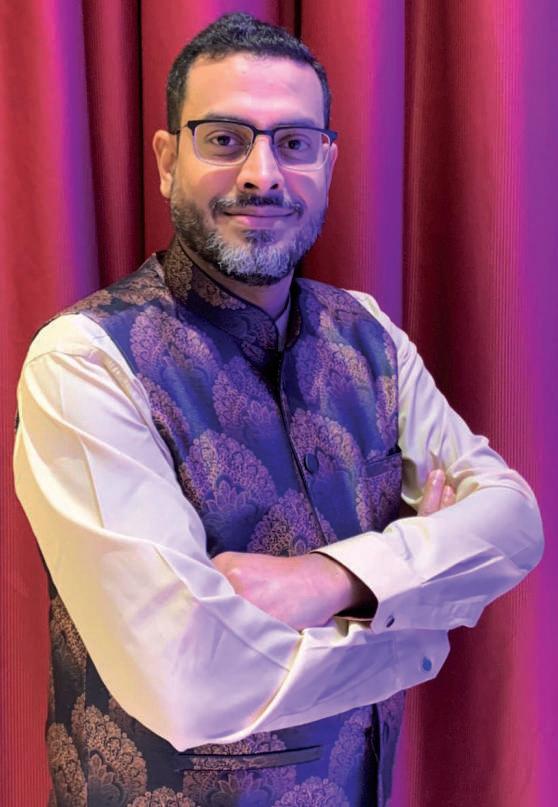
SUMIT GOVIND SHARMA FOUNDER DIRECTOR MONARCH LIBERTY HOSPITALITY PVT.
As President of the Indo-African Chamber of Commerce & Industry and a Restaurateur, my culinary journey weaves together India’s vibrant food traditions with a passion for global flavors. This book celebrates a century of burrata, a cheese that embodies artistry, tradition, and food’s power to connect cultures. I invite you to explore its story through my experiences in India’s dynamic food scene and my efforts to foster international culinary exchange.
Growing up in India, I was immersed in a kaleidoscope of flavors—fiery northern curries, fragrant southern coastal dishes, and more. Food was a language of love and community. As I entered the restaurant business, I aimed to honor this diversity while introducing global cuisines. Italian cuisine, renowned for its simplicity and quality, enchanted me, with burrata—Puglia’s creamy, luscious gem—elevating every dish it graced.
Burrata is more than cheese; it’s a testament to Apulian artisans who, for 100 years, have perfected its mozzarella shell and creamy stracciatella core. My first taste, with its lush center spilling out, felt like a bridge between Puglia’s hills and India’s bustling markets, showing how food carries stories of place and people.
In my role with the Indo-African Chamber of Commerce & Industry, I’ve seen food transcend borders, fostering cultural and economic ties.
Burrata symbolizes this mission. In India, where Italian cuisine has a devoted following, burrata reflects a growing love for global gastronomy. In Africa, with its diverse culinary traditions, it offers a new flavor while celebrating shared values of craftsmanship. Through trade initiatives, I aim to bring authentic ingredients like Burrata to new markets, mirroring my efforts to connect cultures through commerce and shared experiences. This book celebrates burrata’s century-long legacy, from its origins in Andria to its status as a global culinary icon. As a restaurateur, I’ve seen burrata enchant diners; as a commerce leader, I recognize its potential to unite people. Whether in a fine-dining restaurant or a rustic Puglian trattoria, burrata carries the warmth of its makers and the love of those who share it.
You’ll discover the history of burrata, from its creation by Lorenzo Bianchino to the artisans at Caseificio Olanda, who uphold its traditions. You’ll explore its role in Apulian gastronomy, where simplicity meets excellence, and see how it has captivated chefs and home cooks worldwide. I hope this book deepens your appreciation for burrata’ s artistry and inspires you to savor it with an Indian spice or African twist. Above all, I hope it reminds you of food’s power to tell stories, build bridges and bring joy.
As we toast 100 years of burrata’s creaminess and craftsmanship, join me in celebrating this Apulian treasure that has found a home in my heart and on tables worldwide.
The invention of Burrata is a testament to Andria’s skillful dairy artistry. In the early 1900s, during a heavy snowfall, it was impossible to transport milk from farms near Castel del Monte (the renowned manor of Frederick II of Swabia, now a UNESCO World Heritage site) to the city of Andria. To avoid wasting the milk, Andriesi cheesemakers, experts in the manteca art (the technique of preserving butter within scamorza cheese), used these skills to create a new product. They crafted a “bag” of spun paste, enclosing threads (production residues of the spun paste) and the cream that naturally emerged from the milk (this combination of threads and cream is called stracciatella). They carefully sealed and shaped the embouchure, giving it its characteristic apical form. Thus, the first Burrata di Andria was born, now the most precious and distinctive dairy product of Puglia, recognized by the European Union as a Protected Geographical Indication (PGI).
Burrata di Andria adheres to a Production Regulation that defines the quality of raw materials, organoleptic characteristics, and production methods in accordance with Andria’s cheesemaking tradition. The European Geographical Indication logo, which only certified producers can affix, guarantees the authenticity of Burrata to consumers.
• Raw materials selected and mandatorily compliant with the qualitative parameters outlined in the production specification, from physical-chemical, organoleptic, and hygienic-sanitary perspectives.
• Exclusively manual fraying of the dough to obtain thin, “irregular lights” (manual fraying ensures better amalgamation of cream and frayed strands, or stracciatella, significantly enhancing its distinctive taste).
• A thin, uniform outer bag (or wrapping), approximately 2 mm thick.
• Cream and strands leaking when cut.
• Apical closure.
• Pleasant notes of fresh lactic and cream flavors on the palate.
The European Geographical Indication logo, affixed only by certified producers, guarantees authenticity to consumers worldwide.
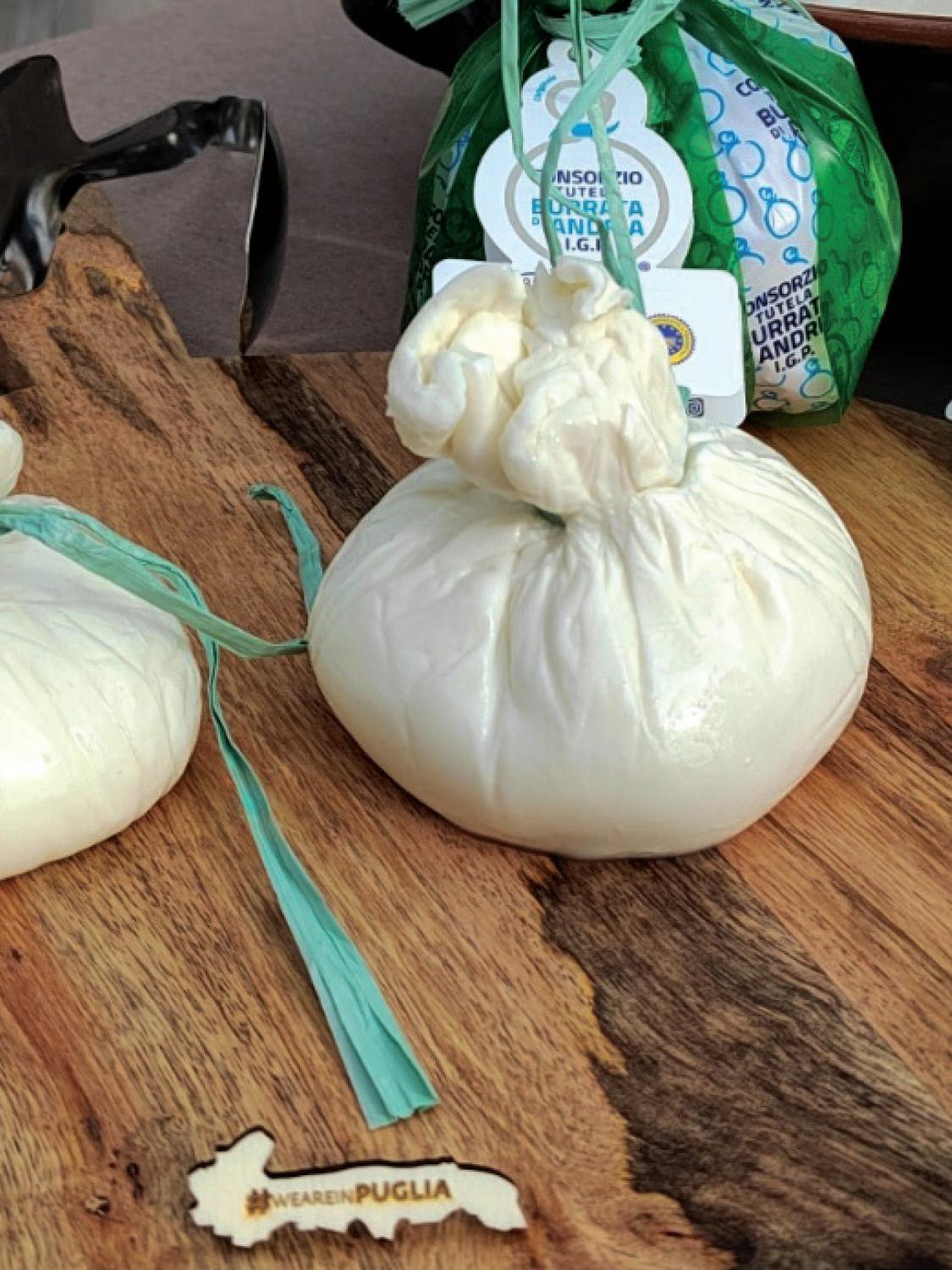
Burrata di Andria is the pinnacle of Puglia’s agrifood heritage, exemplifying the ability to turn necessity into virtue. It showcases how a region’s knowledge and culture can solve a problem while creating an excellence—not only gastronomic but also cultural, capable of representing an entire territory, its values, history, and people. This is why the flavor of Burrata di Andria is truly unique.
Burrata di Andria has a remarkable ability to enrich and elevate the ingredients of any dish, making it a staple on the menus of Michelin-starred chefs worldwide. It is increasingly synonymous with Italian cuisine while enhancing international dishes. In Andria, it is enjoyed simply with a drizzle of our exceptional “Coratina” cultivar extra virgin olive oil, another excellence of our territory.
Burrata di Andria was born with a strong vocation for international markets. In the 1960s, the passion of the Scia di Persia led to requests for air-shipped Burrata to ensure maximum freshness. While its primary markets are Italy and Europe, its fame now spans the globe—from New York to Dubai, Vancouver to Singapore, and Shanghai to Tokyo—thanks to its presence in haute cuisine. It has become synonymous with “Italianness” in top restaurants worldwide, and its numerous imitations only attest to its success. In February 2017, the Consortium for the Protection of Burrata di Andria PGI was established to enhance and promote the product with its brand of origin. Recognized by Italy’s Ministry of Agriculture, the Consortium protects Burrata di Andria PGI from fraud, imitations, and misleading information worldwide.
“Burrata di Andria is more than a cheese it’s Puglia’s ultimate agri-food expression”
Since its founding in 2017, the Consortium for Burrata di Andria PGI has been the guardian of this culinary gem. Recognized by Italy’s Ministry of Agriculture, the Consortium promotes and protects Burrata di Andria, ensuring its authenticity through rigorous oversight. From combating fraud and imitations to educating global consumers, the Consortium safeguards the product’s heritage while fueling its worldwide acclaim.
Artisanal quality impacts the product’s shelf life. The challenge today is to maintain high production standards while reaching increasingly distant markets. Consortium members achieve this through process innovation while adhering to the Production Regulations.
Burrata di Andria is establishing itself as a product of utmost excellence, an international symbol of Puglia and synonymous with Italian identity. The Protection Consortium, which recently completed an innovative project with local university research centers to extend the product’s shelf life, supports Burrata di Andria’s global rise. At the same time, the Geographical Indication certification, through its associated controls, ensures respect for tradition and the quality on which the distinctive characteristics of this excellence depend.
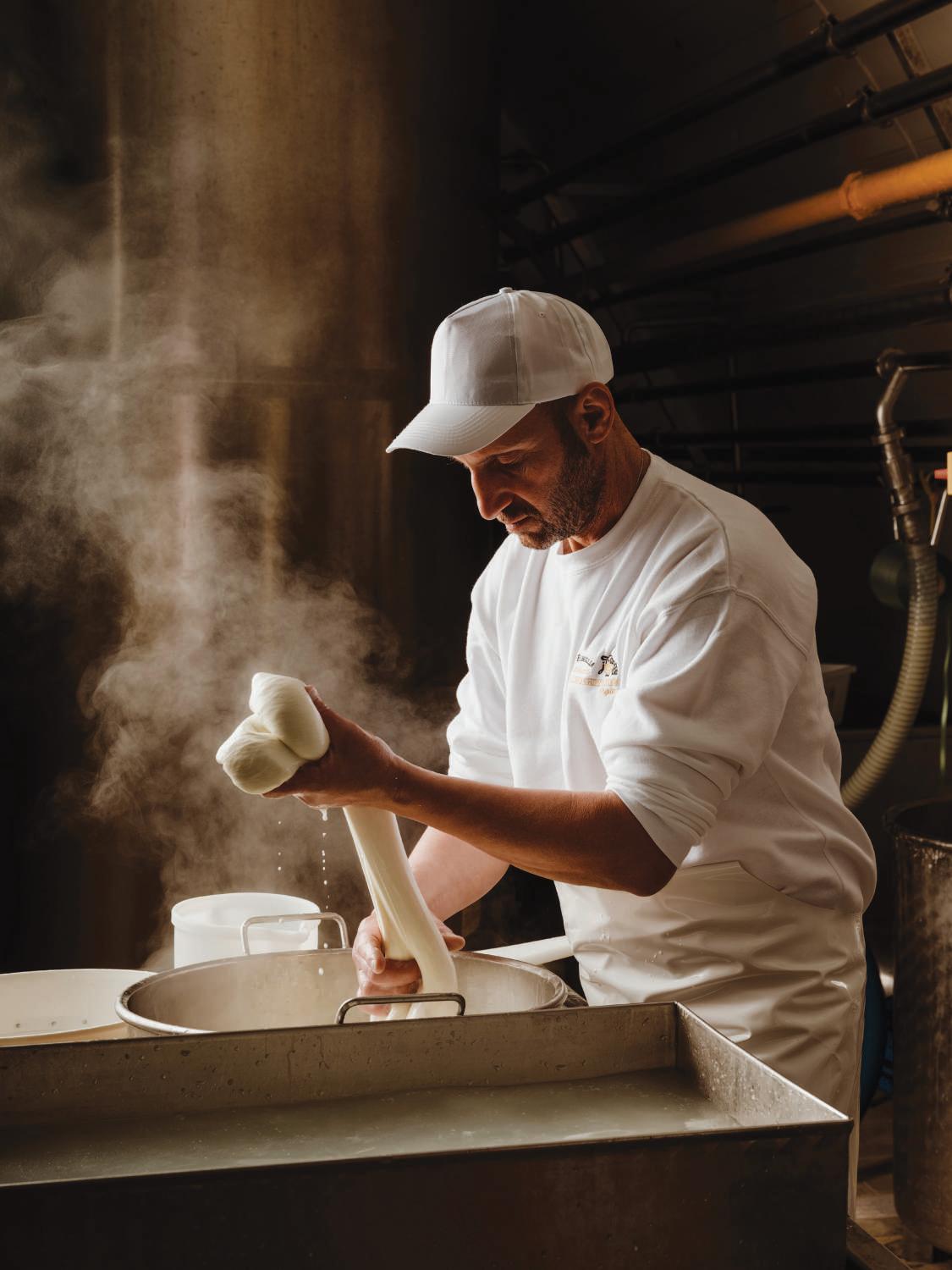
The origin of Burrata is deeply tied to Andria in Puglia and dates back to the early 20th century. It is said to have been born from the ingenuity of cheesemaker Lorenzo Bianchino.
During a heavy snowfall at the Piana Padula farmhouse, he was stranded for several days, unable to return to the city. To preserve milk and repurpose scraps from pasta filata processing, he had a brilliant idea: he created an outer casing of pasta filata, similar to a pouch, and filled it with shredded pasta filata (now called stracciatella) mixed with cream skimmed from the milk. This not only preserved the ingredients but also created a unique, “buttery” flavour, hence the name “Burrata.” This innovation transformed a resourceful practice into a dairy excellence. Over the years, Burrata’s quality improved, and thanks to the cheesemakers of Andria who formed a protection association, it achieved Protected Geographical Indication (PGI) status from the European Union in 2016. This safeguards its production and its unbreakable link to the Puglian
territory, particularly the city of Andria, its birthplace.
Caseificio Olanda was founded in 1988 in Andria, a city renowned for dairy production, by Michele Olanda and his wife, Carmela. Nestled amidst the picturesque Alta Murgia hills and the famous Castel del Monte, Michele, Carmela, and their children, Riccardo and Savino, select the finest ingredients to craft Burrata, mozzarella, and other dairy products.
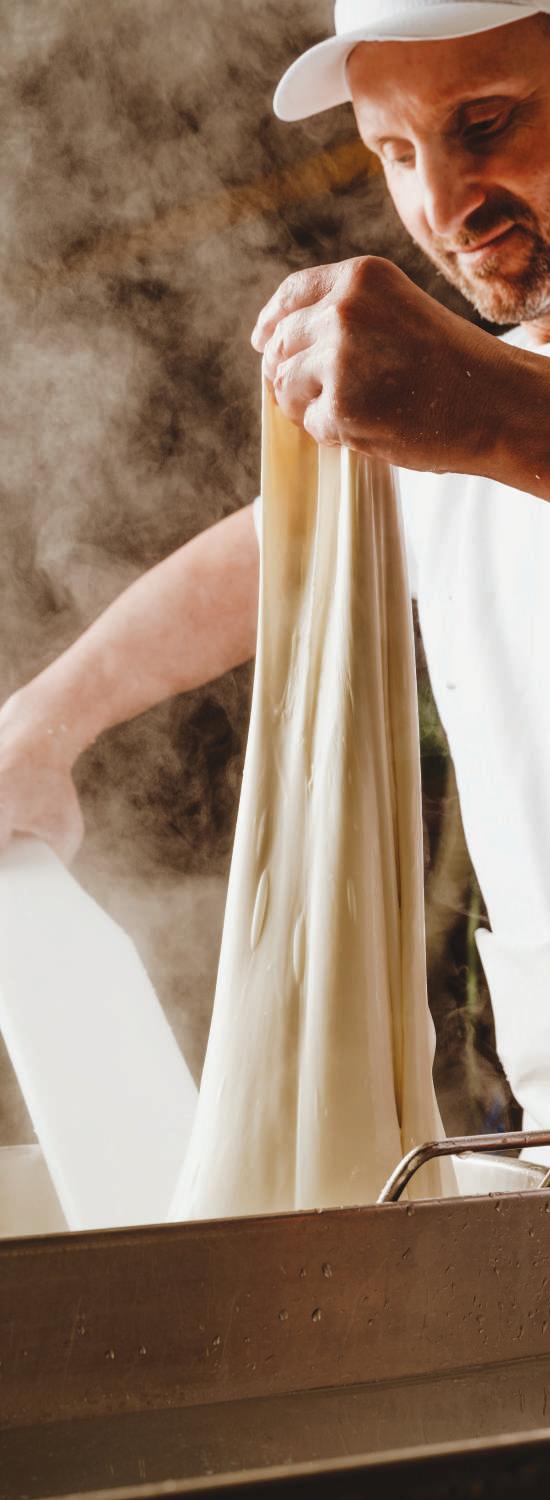
At Caseificio Olanda, traditional Burrata production is at the heart of their philosophy and family history. Every step is carried out with the care and expertise passed down through generations, ensuring a product of authentic excellence. Olanda Burrata is made exclusively from high-quality fresh local milk, collected daily from the Murgia pastures. The process begins with renneting, using natural rennet, followed by finely breaking the curd. Next comes the crucial spinning phase, an art requiring experience and sensitivity to achieve the right consistency and sheen. From this pasta filata, the outer casing of the Burrata is formed.
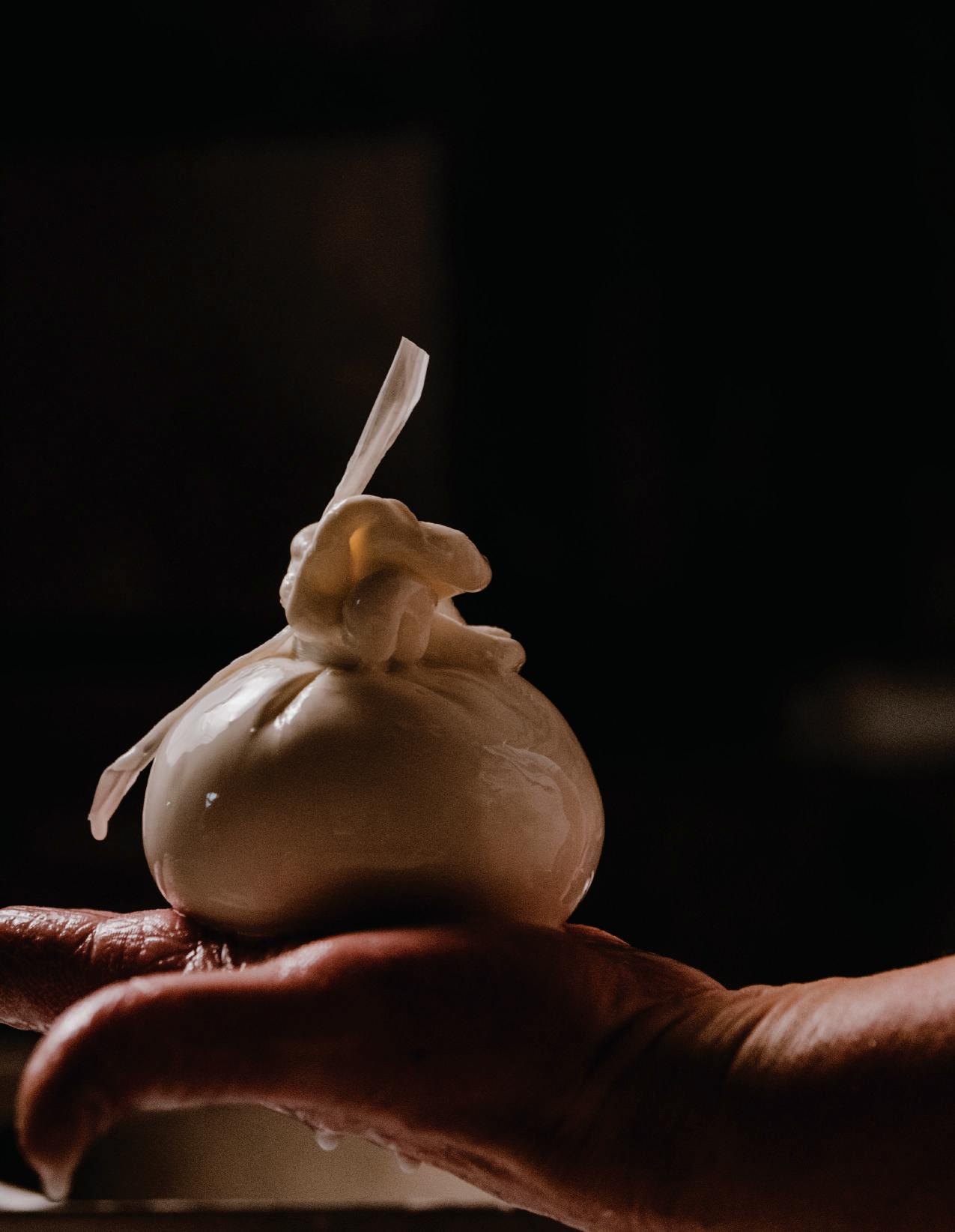
The true secret, ensuring its authenticity, lies in the filling: the Stracciatella – Cuordiburrata®. This is prepared by hand-shredding the pasta filata and mixing it with creamy milk cream, creating the surprising explosion of flavour and unique texture that makes Burrata unforgettable. Each Burrata is then hand-closed, giving it its distinctive shape while preserving its freshness and creaminess. Strict adherence to the Burrata di Andria PGI disciplinary guidelines guarantees the authenticity of our ingredients, origin, and traditional production methods, protecting a heritage integral to our identity and land.
At Caseificio Olanda, the Burrata production is a harmonious balance between deep-rooted tradition and a constant focus on innovation, understood as continuous improvement while respecting the past. It’s not just about techniques but an almost instinctive sensitivity to the right paste consistency, ideal temperature, and perfect timing for each step. This manual expertise gives every Olanda Family Burrata its unique touch and artisanal soul. In terms of innovation, while staying true to tradition, they have invested in technologies to ensure hygiene and health standards and to optimize processes without altering the final product’s quality, such as milk supply chain control and refrigeration systems. This enables them to offer consistently safer and fresher Burrata with optimal shelf life, without compromising its artisanal nature.
“One of the most cherished traditions is the craftsmanship of Olanda cheesemakers who have learned the art directly from previous generations.”
Attention to environmental sustainability, through optimized energy consumption and responsible resource management.
Maintaining the artisanal quality of Burrata in today’s market presents both significant challenges and immense joys. Key challenges include commercial competition from lower-quality products or imitations produced abroad, which offer lower prices but cannot match the complexity and freshness of
artisanal Burrata. Another challenge is ensuring a consistent supply of the highest-quality raw materials, as we depend on the health of our territory and the quality of milk from our suppliers, necessitating rigorous selection. Additionally, the labour-intensive process of training new cheesemakers to master this art, which requires years of experience, is increasingly difficult but essential to preserving knowledge. However, the joys far outweigh the difficulties. For Olanda, the greatest joy is the appreciation from customers, both in Italy and abroad, who recognize and value Caseificio Olanda’s dedication to quality. Receiving praise for the freshness, creaminess, and authentic flavour of their Burrata is the greatest reward. Moreover, there is immense satisfaction in preserving an ancient art, knowing that they contribute to keeping a centuries-old tradition alive and producing something that embodies the history and identity of their land. This dedication makes them the guardians of a gastronomic heritage.
What distinguishes Burrata from other cheeses, particularly mozzarella, is its creamy, surprising core. While it may outwardly resemble mozzarella with its white, elastic pasta filata, its interior reveals its true uniqueness: a soft, stringy filling of stracciatella (shredded pasta filata) immersed in cream. This combination gives Burrata an unmistakable texture and flavor: the exterior offers slight elasticity and a delicate fresh milk taste, while the interior bursts with rich, enveloping creaminess, blending the savoury and subtly sweet notes of the cream. This duality of textures and flavor, combined with its freshness and characteristic pouch shape with an apical closure and raffia tie, makes Burrata a unique cheese appreciated worldwide.
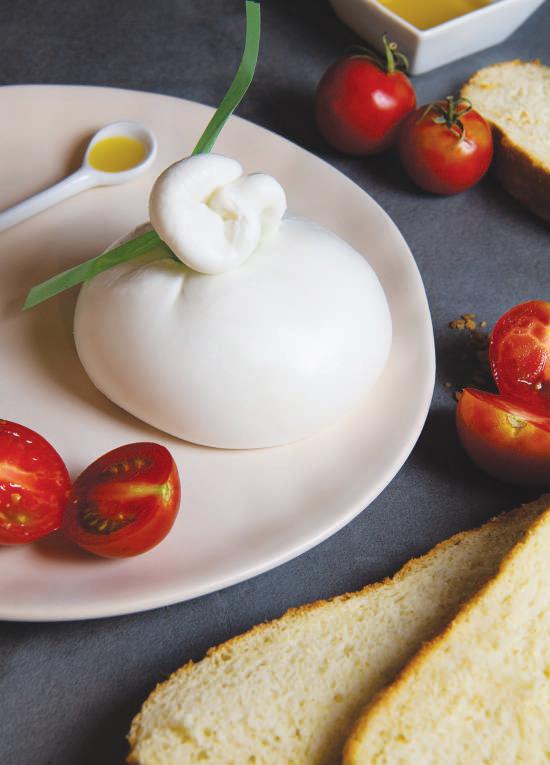
In Puglian gastronomy, particularly in Andria, Burrata is not just an ingredient but a true icon, symbolizing freshness, authenticity, and the region’s rich dairy heritage. It is typically enjoyed in its simplicity to fully highlight its unique flavor and texture. In Andria and Puglia, it is common to serve Burrata plain at room temperature, perhaps drizzled with local extra virgin olive oil, a pinch of salt, freshly ground black pepper, and a few fresh basil leaves. It is often paired with ripe tomatoes, as in the classic Caprese salad, or served on bruschetta or crusty homemade bread. Its creaminess makes it perfect for enriching first courses, such as fresh pasta with cherry tomatoes or vegetables, or for creaming risottos, always added at the end of cooking to preserve its integrity. Burrata is an indispensable element on Puglian tables, for both everyday meals and special occasions, representing a sensory experience that celebrates local culinary tradition.
Here are some pairing suggestions to highlight its deliciousness:
Serve it plain with a drizzle of Puglian extra virgin olive oil, a pinch of salt, and freshly ground black pepper. Adding basil leaves or fresh cherry tomatoes creates a perfect combination.
Burrata pairs wonderfully with seasonal vegetables, such as grilled courgettes, aubergines, asparagus, or roasted peppers, in addition to tomatoes.
Place it on bruschetta or crusty homemade bread with a sprinkle of oregano for a delicious and satisfying starter.
Use its stracciatella to cream pasta or risottos, added raw at the end for unparalleled creaminess and flavor. It pairs excellently with tomato pasta, pesto, or vegetables.
For the adventurous, Burrata complements fresh fruit (figs, peaches), delicate cured meats like Capocollo di Martina Franca, or more elaborate preparations like savory tarts or involtini.

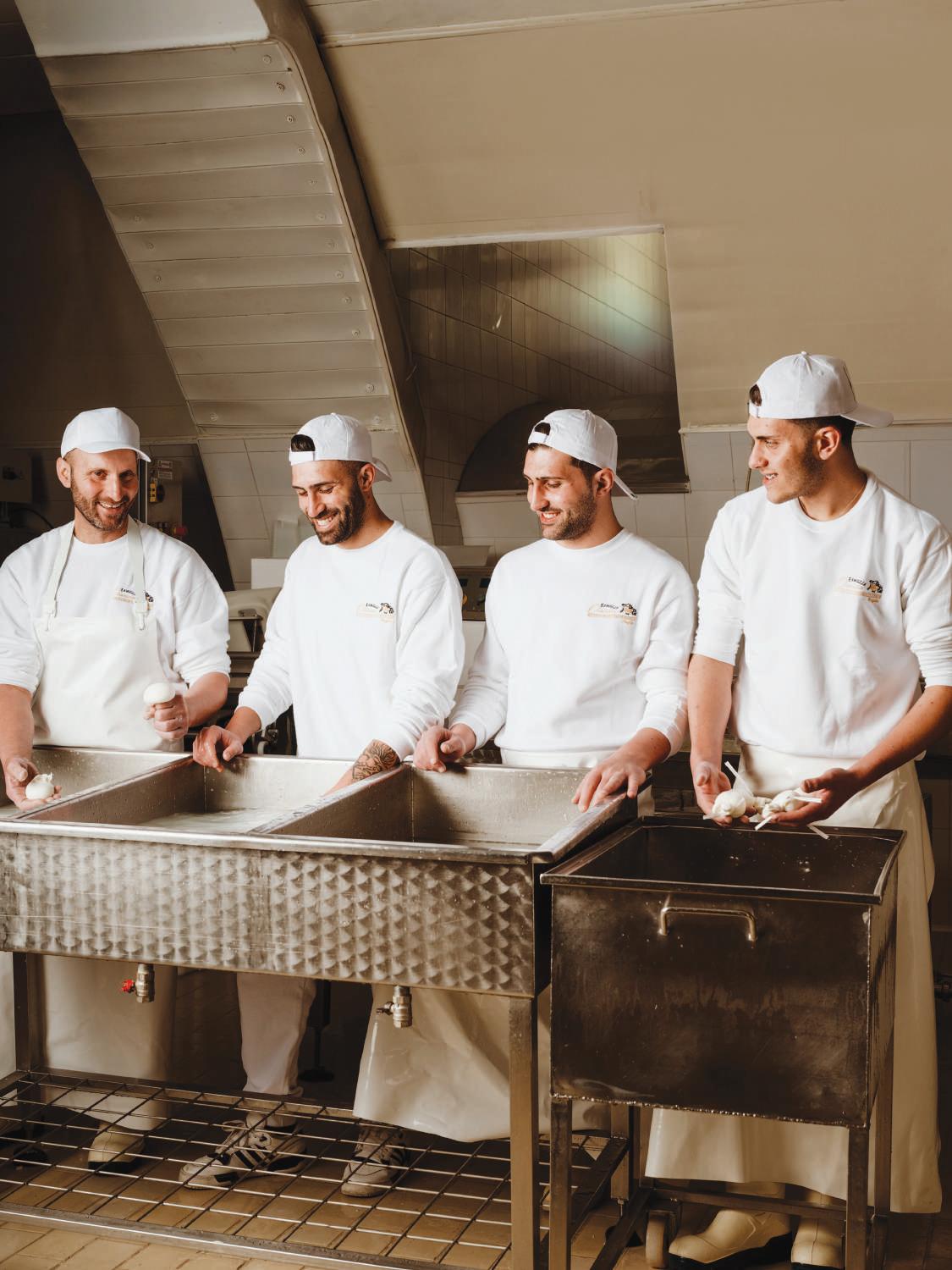
The future of Burrata is bright but requires constant commitment to preserve its authenticity while embracing new opportunities. Its global appeal lies in its artisanal nature and connection to its territory. At Famiglia Olanda, the primary goal is to preserve the tradition through the continuity of artisanal production and the training of new generations. The aim to ensure that the art of Burrata and Puglian dairy products is passed down with the same passion and expertise that was inherited. This involves investing in the training of young cheesemakers and maintaining steadfast production methods. Simultaneously, the plan to evolve this tradition sustainably by exploring new markets while prioritizing quality production and logistics to ensure product freshness. They are also focused on sharing the story of Burrata and their Caseificio with a wider audience, educating consumers about the value of an authentic artisanal product. In summary, the future of Burrata for Olanda is to maintain the excellence that defines it, bringing a piece of Puglia and their artisanal heritage to tables worldwide.
“An extraordinary collaboration by cheesemaker Riccardo Olanda of Caseificio
Famiglia Olanda, with Chef Grazia Antonini”
Burrata di Andria PGI is not only the pride of Italian tables; its incredible versatility also makes it a star in the world of desserts. Imagine its unmistakable creaminess transformed into a sweet and surprising experience. Caseificio Famiglia Olanda and restaurant Cucromia in Andria (the first restaurant with a certified Burrata di Andria PGI menu), boldly partner with the excellence of Veronero Caffè. Together, Riccardo Olanda and Chef Grazia Antonini have created a creamy Burrata dessert that exceeds all expectations. Chef Antonini has captured the delicate essence of Burrata, elevating it to an artistic level. Paired with the aroma and depth of Veronero Caffè, new dimensions of taste emerge, where the milky freshness of Burrata meets the deep notes of coffee, creating perfect harmony. This is proof that Burrata di Andria is an icon capable of continually reinventing itself, inspiring new, delicious culinary adventures. One bite, and you’ll discover a new side of our beloved Burrata.
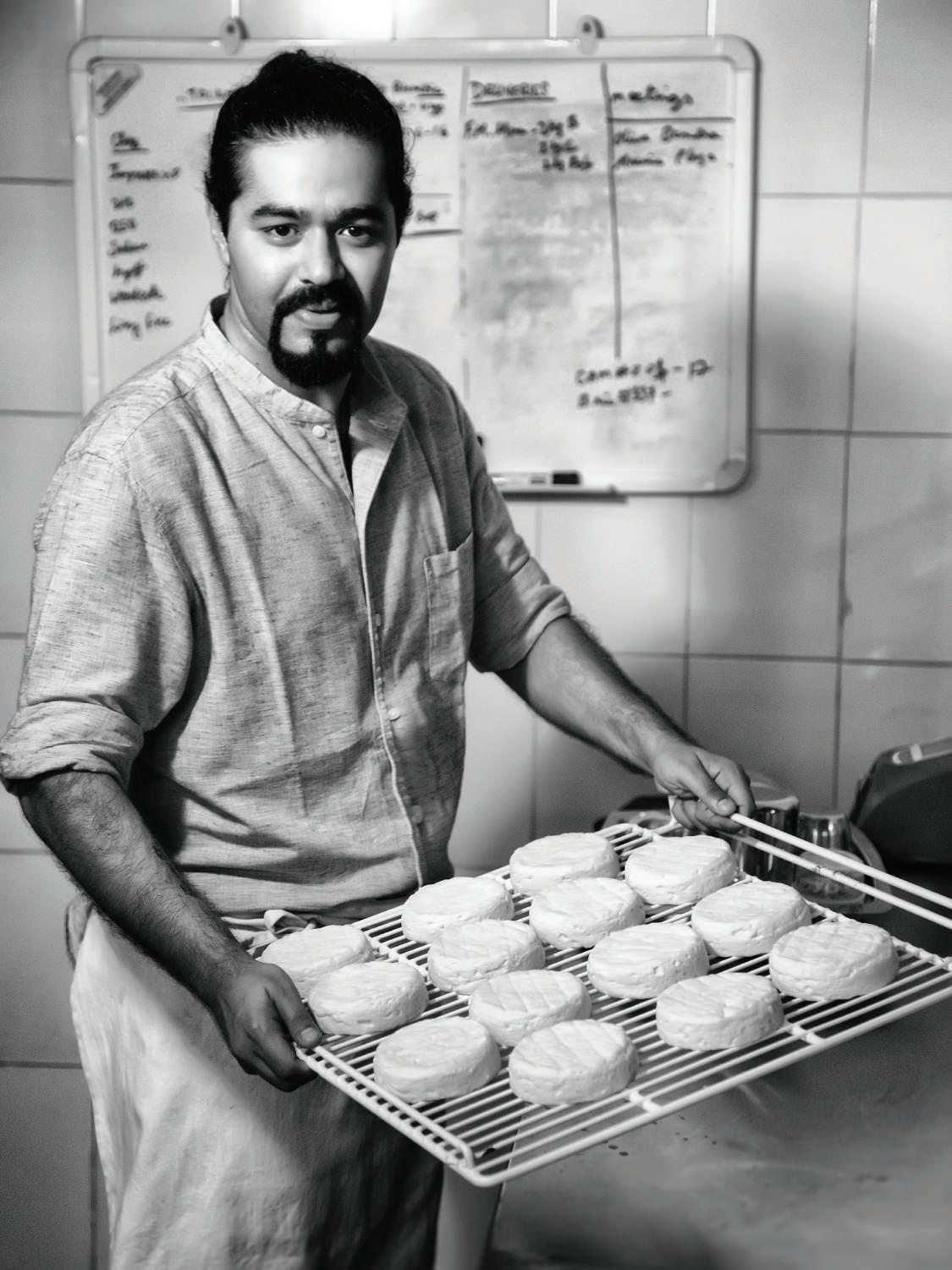
In Mumbai, where the air hums with spice and ambition, a quiet revolution unfolds in a creamery tucked amid the city’s clamor.
The Spotted Cow Fromagerie, born from the dreams of Prateeksh and Agnay Mehra and their partner Tarini Gupta, has spun the humble burrata into a star of India’s culinary constellation. This trio, bound by a shared hunger for excellence, has taken a cheese rooted in Puglia’s sun-drenched fields and made it sing on Indian plates— vegetarian, preservative-free, and pulsing with possibility.
It began in 2014, in a basement where curiosity met courage. The Mehras and Gupta, none of them Italian, tasted burrata abroad and felt a jolt of revelation. That delicate mozzarella pouch, bursting with creamy stracciatella, was a stranger to India’s tables. Paneer and chenna reigned, but burrata? It was a whisper of a dream. Undeterred, they dove into Puglia’s traditions—hand-stitching mozzarella, coaxing milk into silken curds, balancing cream and texture with obsessive care. They sourced pristine vegetarian milk, trained with Mumbai artisans, and built a small-batch creamery that honored Italy while embracing India’s pulse. Their burrata isn’t a reinvention; it’s a homage, crafted to thrive in Mumbai’s humid embrace.
India loves its dairy—malai’s (cream) richness, paneer’s (cottage cheese) soft crumble, the simplicity of fresh chenna’s (fresh, unripened cheese). Burrata slips into this lineage like a prodigal cousin, its lush fat and subtle tang echoing the comfort of home yet offering something more: a creamy indulgence that dances between familiar and exotic. Its versatility is its magic. Chefs smear it onto kulchas, weave it into chaat’s tangy chaos, or let it melt into curries as a silken stand-in for butter. It crowns pizzettas, elevates regional breads, and even plays a savory note in fusion desserts. Burrata has become a culinary chameleon, as at ease in a Mumbai fine-dining room as in a bustling street stall.
At The Spotted Cow Fromagerie, authenticity is sacred. Their burrata follows Puglian methods— hand-tied, fresh, untainted by preservatives. Yet they’re not purists blind to India’s vibrancy. They’ve infused burrata with pesto for a pop-up, laced it with black truffle for a gala, or spiced the stracciatella with masalas for a wedding feast. These are not betrayals but conversations, blending East and West without losing the cheese’s soul. The result? A burrata that feels both timeless and thrillingly new.
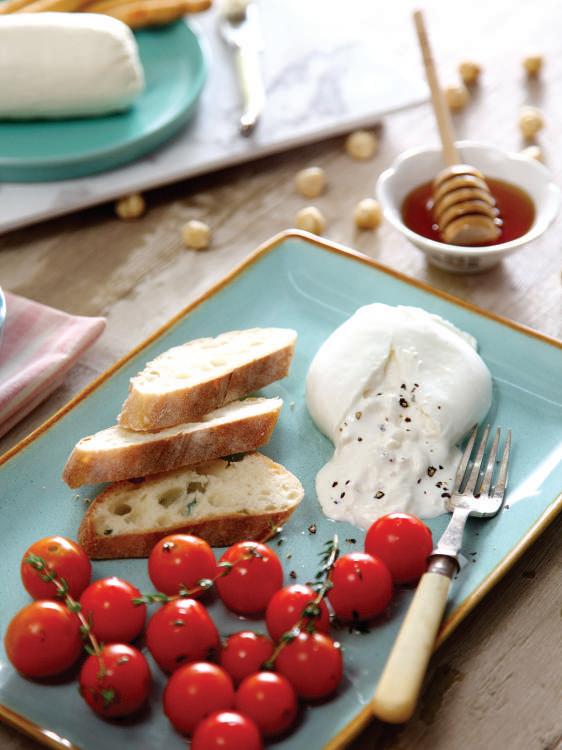
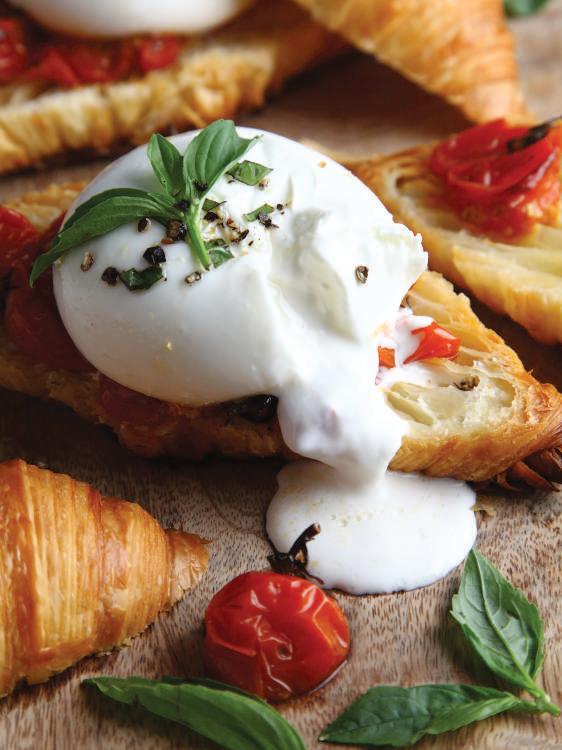
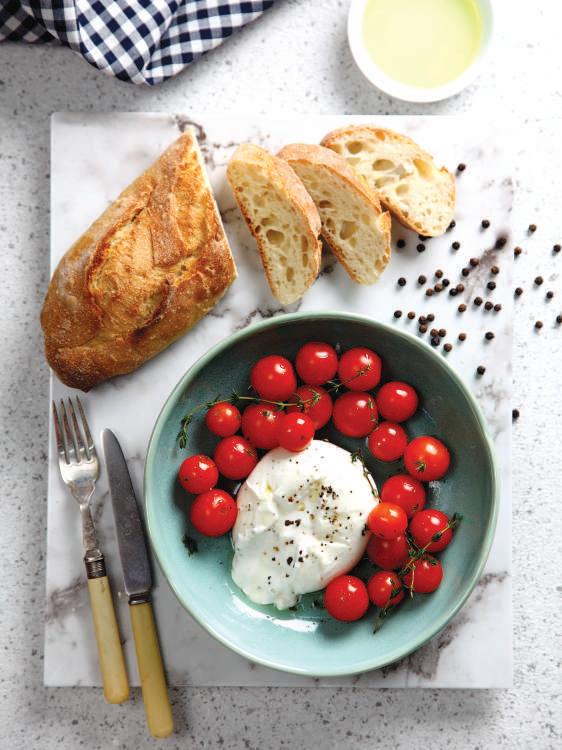
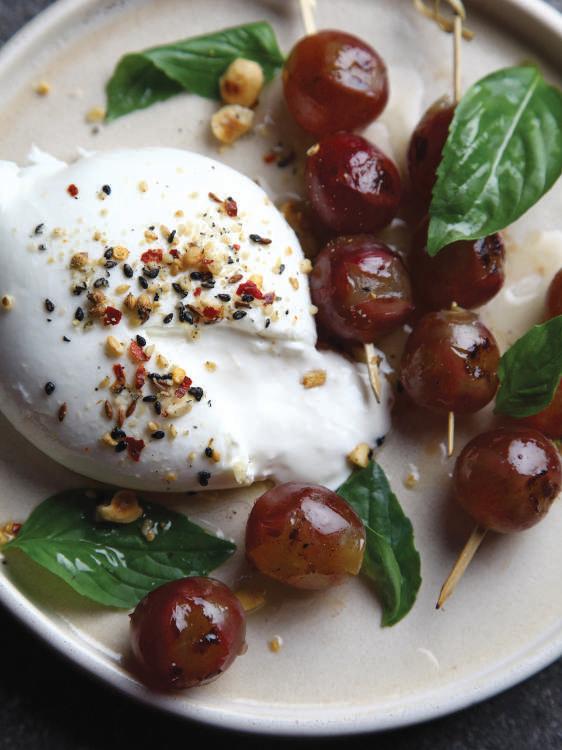
It’s the texture—pillowy, decadent, a sigh of luxury. India’s palate, conditioned to dairy’s embrace, finds a kindred spirit in burrata’s creamy heart. Its mild savoriness is a canvas for spices, herbs, or nothing at all, much like the white butter slathered on naan. And then there’s the theater: slice it open, and the stracciatella spills like a secret, captivating diners and Instagram feeds alike. In a land where food tells stories, burrata is a born performer, weaving tales of craft and connection.
“A blend of passion, craftsmanship, and cultural homage to craft cheeses that captivate India’s gourmet palates.”
The Spotted Cow Fromagerie has done more than make cheese. They’ve built a bridge—between Puglia’s traditions and Mumbai’s innovation, between a cheese’s past and its future. Each burrata is a small miracle, a testament to what happens when passion meets precision. It’s no wonder India has fallen hard for this creamy interloper, now as much a part of its culinary story as the spices that define it. Raise a fork, and savor the magic.
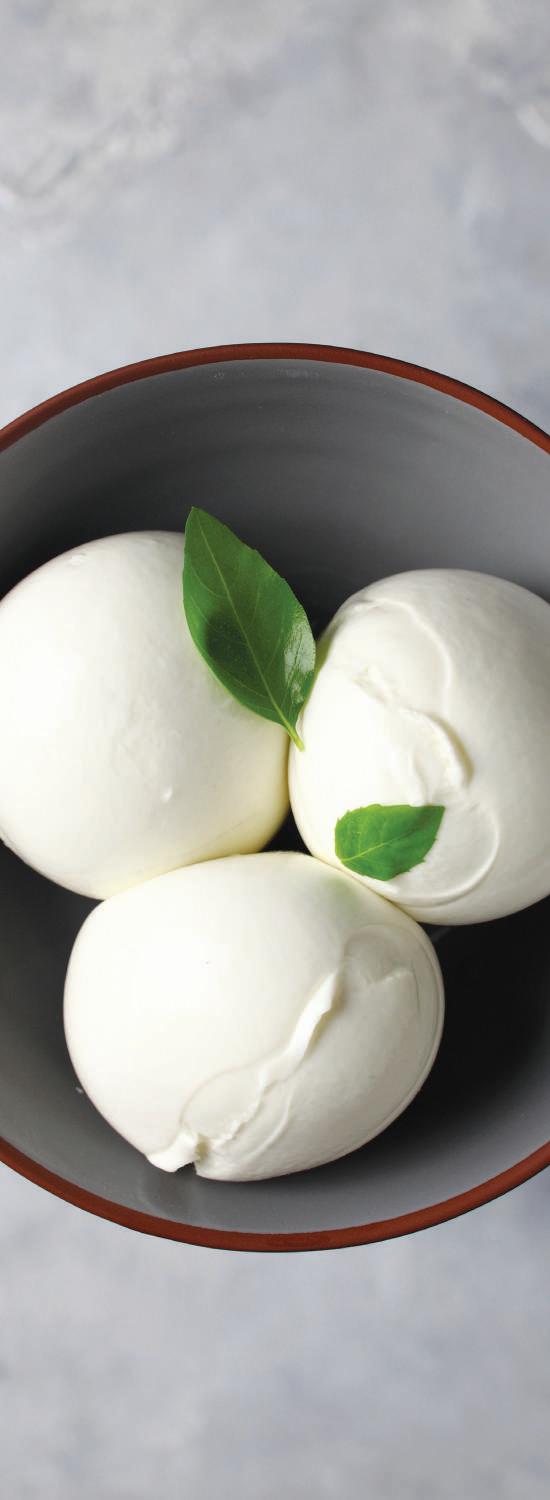

SECRET GARDEN
BY
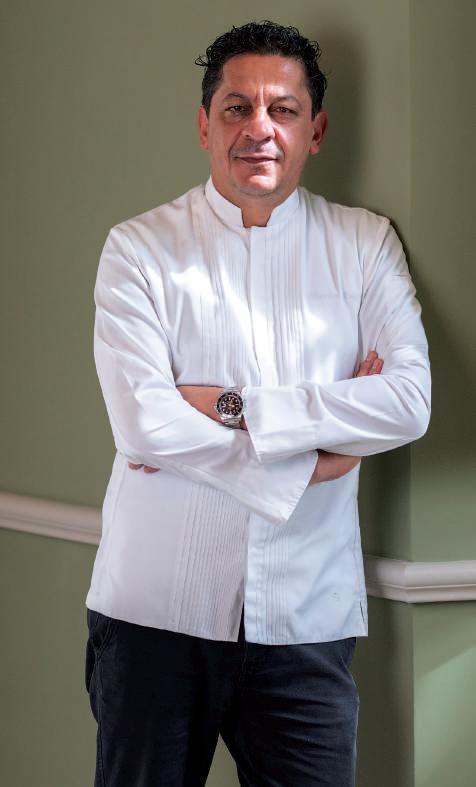
FRANCESCO MAZZEI, CORINTHIA PALACE, MALTA
Hailing from Calabria’s rugged landscapes, Francesco Mazzei weaves southern Italy’s bold, soulful flavors into a modern culinary tapestry. First nurtured in his grandmother’s kitchen, he mastered Italian cakes and gelato by nine at his uncle’s Gelateria, and by 18, he was excelling in Rome and Milan’s top eateries. Over four decades, Mazzei has dazzled in five-star hotels and Michelin-starred restaurants across Europe, Asia, and the Middle East, earning the OMRI in 2019. Since 2022, he’s brought southern Italian warmth to Villa Corinthia at Malta’s Corinthia Palace.
His journey spans The Dorchester in London, Rome’s La Terrazza dell’Eden, Santini in Edinburgh and Milan, and Bangkok’s Royal Sporting Club. Working with Alan Yau in Mumbai and the UK, he also helmed Franco’s, St Alban, and launched L’Anima, Sartoria, Radici, and Fiume in London, earning praise for authentic, refined Italian cuisine.
His “Mamma’s cooking with chef’s hands” ethos elevates Calabria’s fiery ‘nduja and bright citrus with masterful technique.
Advising Calabria’s government to promote its artisan goods, Mazzei authored Mezzogiorno (2015). Set to unveil Mezzogiorno by Francesco Mazzei at Corinthia London in Q4 2025, he crafts dishes that fuse heritage with innovation, sparking connection through every bite.
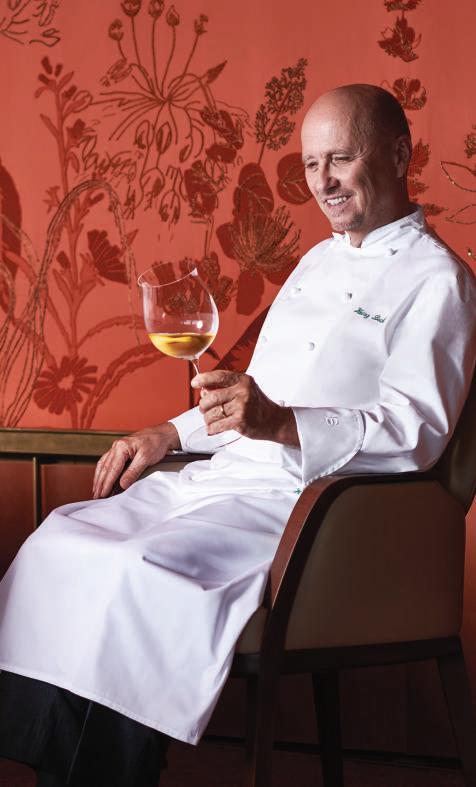
Chef Heinz Beck, a global icon of gastronomy, redefines modern cuisine with an unparalleled focus on ingredient quality and innovative flavor alchemy. Beyond his culinary mastery, Beck’s deep reverence for Italian and Mediterranean traditions has cemented his legacy as a visionary leader. His acclaimed books, including the bestselling L’Ingrediente Segreto, alongside Arte e Scienza del Servizio, Vegetariano, Pasta Heinz Beck, Finger Food, and health-focused Ipertensione e Alimentazione and Consigli e Ricette per Piccoli Gourmet, explore cuisine’s cultural and nutritional dimensions.
Beck’s long list of accolades includes the Five Star Diamond Award (1998) and Six Star Diamond Award (2013) from the American Academy of Hospitality Sciences, a historic first for an Italian chef, and the Gold Medal at the Foyer of Artists (2000) from Rome’s La Sapienza University. In 2010, Germany honored him as a Knight of the Order of Merit, and in 2016, he was named Ambassador of Extraordinary Italian Taste by Italy’s Ministry of Agricultural Policies. His Michelin-starred empire spans La Pergola in Rome, Café Les Paillotes in Pescara, Gusto in Portugal, Heinz Beck in Tokyo, and Social and ATTIMI in Dubai, Milan, and Rome.
Beck’s cuisine weaves tradition with bold ingenuity, crafting unforgettable sensory experiences.
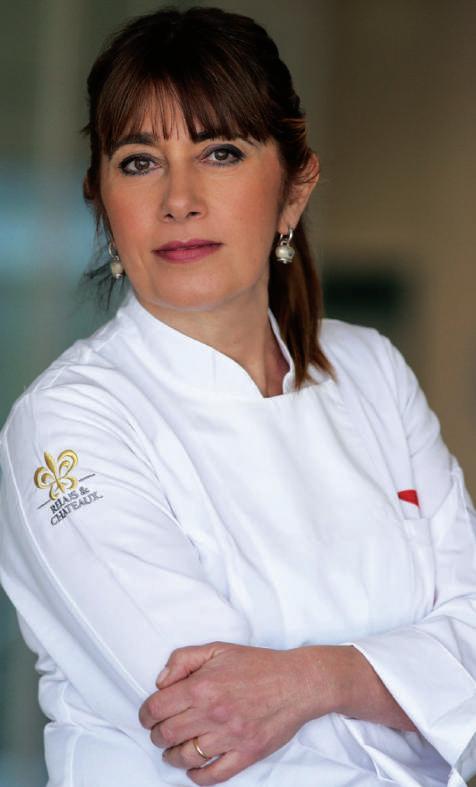
Raised in Cortona’s embrace, Chef Silvia Baracchi channels her Etruscan roots into the soulful cuisine of Il Falconiere, a Michelin-starred gem opened in 1989 within a 17th-century villa on her husband Riccardo’s Baracchi Winery estate. Born into a family of restaurateurs, Silvia’s love for Tuscan traditions blossomed under her mother and grandmother’s guidance—their kitchen rituals embedding a deep respect for hospitality and local bounty. Transforming the villa into a luxurious resort and spa amid 150 acres of vineyards and olive groves, she earned a Michelin Star in 2002, cementing Il Falconiere’s status as a Tuscan culinary beacon.
Silvia’s dishes draw inspiration from the Chiana Valley’s seasonal riches—spring’s fresh herbs, summer’s savory notes, autumn’s truffles and game, and winter’s warming flavors. Sourcing Chianina beef, Lake Trasimeno’s sustainable fish, and estate-grown olive oil and wines, she crafts small masterpieces that balance tradition with modern flair. Her garden’s spices and herbs elevate each plate, reflecting Cortona’s unparalleled quality. A trailblazer in a male-dominated field, Silvia’s evolving cuisine and mentorship inspire, weaving Tuscany’s fragrant legacy into every vibrant, soul-nourishing bite.
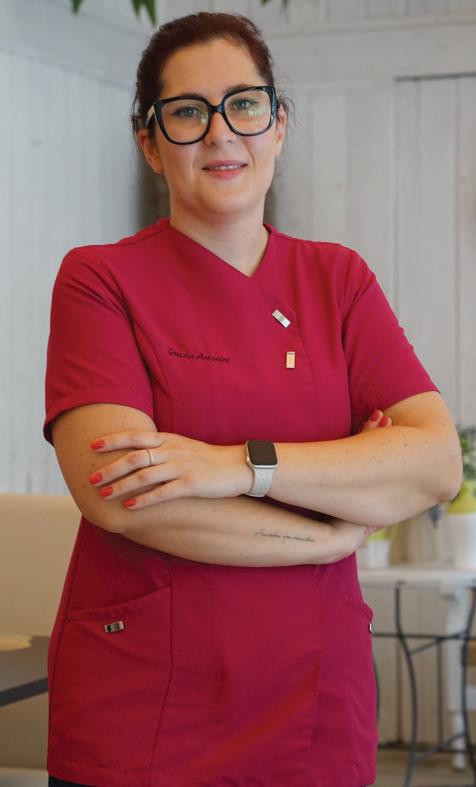
Chef Grazia Antonini, 31, channels Puglia’s vibrant heritage into culinary masterpieces at Cucromia in Andria, where she has led the kitchen since graduating from Pescara’s De Cecco Hotel Management Institute. With over 15 years of relentless dedication, she blends time-honored traditions with bold innovation, transforming food into a canvas that captures the essence of her region. At Cucromia, dishes like burnt wheat tagliolini with zucchini tops, and the revered Burrata PGI di Andria are meticulously crafted to deliver an authentic journey through Puglia’s flavors.
Partnering with Riccardo Olanda of Famiglia Olanda dairy, Antonini created a Burrata-focused menu, spanning appetizers to a signature dessert of creamy burrata, homemade chocolate bread, and Veronero Caffè espresso, which dazzled at Polignano a Mare’s Il Libro Possibile festival. Handcrafting taralli, bread, and most pastas, she honors Puglia’s ancestral roots while embracing modern creativity. Based at Villa Ceci, Antonini elevates festive occasions with dishes from rustic burnt wheat orecchiette to delicate cappelletto, finding profound satisfaction in empty plates returned to the kitchen. For her, cooking is a heartfelt mission to weave heritage and artistry.
ARNOLFO, COLLE VAL D’ELSA
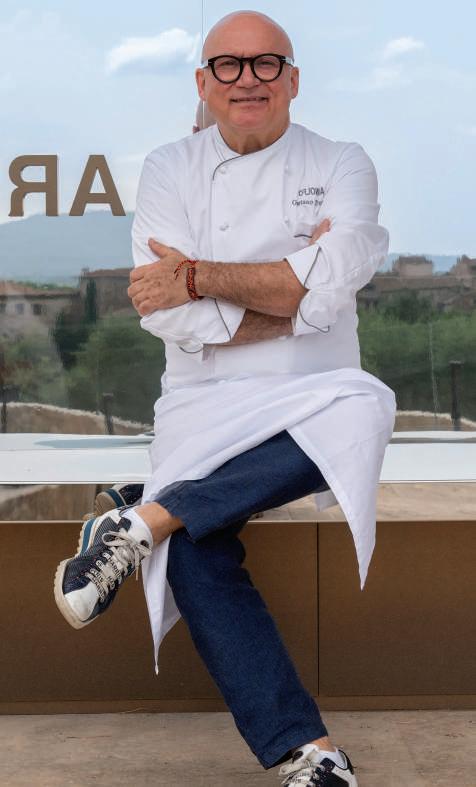
Born in Sicily and embraced by Tuscany since childhood, Chef Gaetano Trovato has woven his heritage into the soul of Arnolfo, his culinary haven in Colle di Val d’Elsa, opened in 1982 with his mother’s guiding passion for pristine ingredients. A champion of the land, Trovato crafts dishes that sing of Tuscany’s terroir, 80% of his ingredients locally sourced and the rest within Italy’s borders. His commitment to “Artisans of Taste” like Laura Peri and Simone Fracassi earned him Michelin’s “Mentor Chef” and “Passion Dessert” titles in 2023, alongside his role as a Slow Food and Relais & Chateaux Ambassador in 2021 for saving the Valdarno Chicken from extinction.
With his brother Giovanni, a sommelier, Trovato transformed a 16th-century palace into Arnolfo’s elegant home in 1994, earning a second Michelin Star in 1999 after his first in 1986 as the youngest starred chef. A 2022 relocation marked Arnolfo’s 40th anniversary, reflecting their ethos of quality and beauty. Trovato’s “Edible Architecture” blends sustainability with artistry, from vibrant plates to morning flower arrangements. As a mentor at Four Seasons Maldives since 2021, he inspires new chefs, ensuring Tuscany’s legacy thrives.
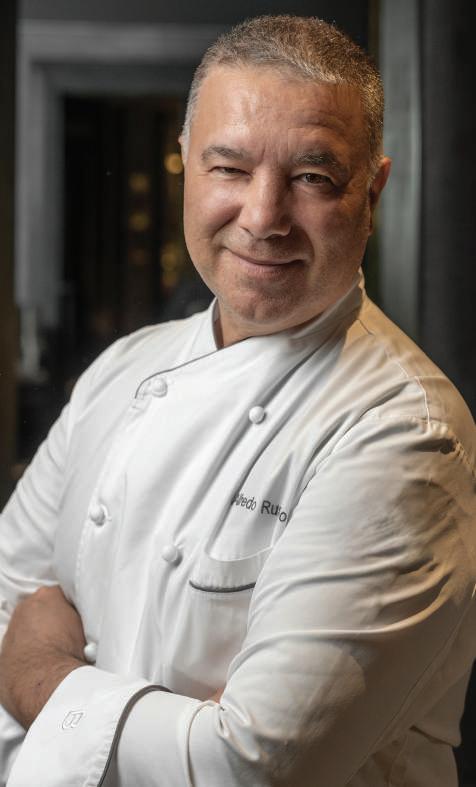
Turin-born Alfredo Russo, ignited by his childhood passion for cooking, defied his family’s expectations to pursue a culinary path. At 13, he chose the kitchen, starting as a dishwasher and rising with relentless determination. By 20, he opened his first restaurant in a modest space, quickly earning a Michelin Star just two years later in 1990. Russo’s journey expanded globally as a consultant for Starwood, launching Italian restaurants in Japan, Thailand, Dubai’s Vivaldi by Alfredo Russo, and London’s Franklin. In 2008, he earned the rare privilege of cooking at Italy’s Reggia di Venaria Reale, a UNESCO-listed royal palace, cementing his legacy.
His cuisine, rooted in Piedmontese tradition, dances between heritage and innovation, delivering playful textures and pure flavors. Russo’s signature multi-course menus, with the freshest produce, spark joy and surprise, evoking shared memories through dishes.
A self-made culinary artist, Russo’s global footprint reflects his creative spirit and unwavering commitment to excellence, making every meal a vibrant, unforgettable adventure that honors Italy’s soul while pushing gastronomic boundaries.
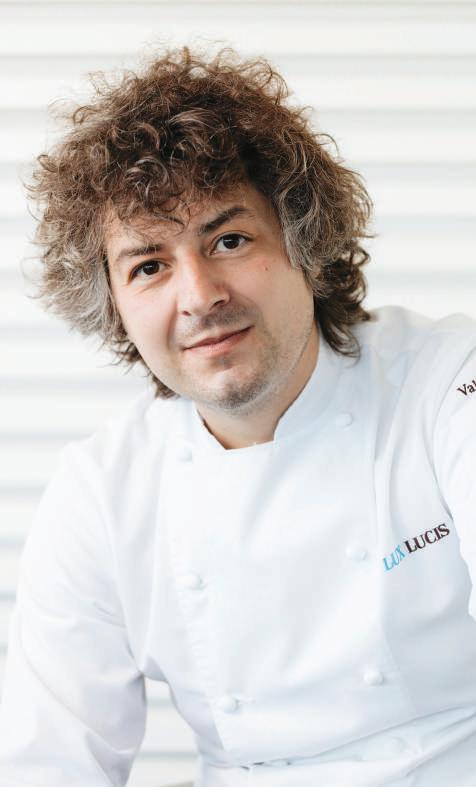
LUX LUCIS, FORTE DEI MARMI
Growing up in Spilamberto near Modena, Chef Valentino Cassanelli, born in 1984, channels Italy’s culinary soul into Lux Lucis, the Michelin-starred rooftop gem at Hotel Principe Forte dei Marmi. Influenced by his grandmother’s deft handling of local ingredients, he trained at Serramazzoni’s catering college, stepping into London’s Floriana kitchen at 16.
After refining his craft in Modena, he returned to London, excelling at Mosaic, Locanda Locatelli, and Nobu. In 2007, he joined Carlo Cracco’s twoMichelin-starred restaurant in Milan, ascending to Junior Sous Chef over three years.
In 2010, he teamed up with chefs at Venice’s Sangal, exploring bold techniques before contributing to Cracco’s 2011 pop-up at Principe Forte dei Marmi. Launching Lux Lucis in 2012, Cassanelli earned a Michelin Star in 2017, Condé Nast Johanssens’ Best Dining Experience in 2018, and Le Guide de L’Espresso’s Pasta of the Year in 2020. Set against the Tyrrhenian Sea and Apuan Alps, his 24-seat sanctuary celebrates Tuscany’s biodiversity with sustainable sourcing, crafting dishes that fuse innovation with deep regional respect, fostering community and environmental care.
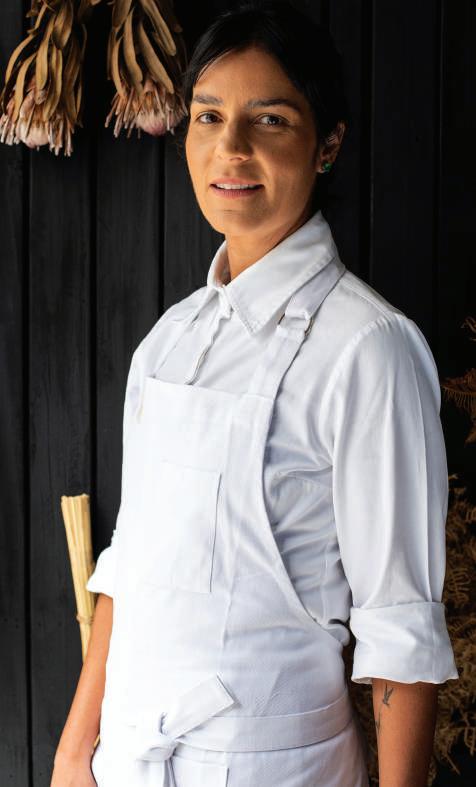
Chef Manu Buffara, a trailblazer in global gastronomy, commands Restaurante Manu in Curitiba, ranked 60th on Latin America’s 50 Best Restaurants list. Honored with the 2024 “Three Knives” award from The Best Chef Awards and named Latin America’s Best Female Chef in 2022, she also earned the Flor de Caña Sustainable Restaurant Award for her eco-conscious ethos. Buffara’s cuisine celebrates Brazil’s rich biodiversity, harnessing seasonal, organic ingredients from urban gardens and small-scale producers to craft dishes that fuse tradition with avant-garde creativity.
Her restaurant serves as a culinary laboratory, where vibrant flavors reflect a deep bond with culture and community. Through the Manu Buffara Institute, she drives impact by promoting food education and supporting distribution in Curitiba’s underserved communities.
As culinary director at Suryaa Hotel and partner at São Paulo’s Exímia Bar, she extends her vision, while her role as judge and host on The Taste Brasil amplifies her influence. Buffara’s work transcends cooking, blending sustainability, heritage, and innovation to create soulful experiences that honor Brazil.
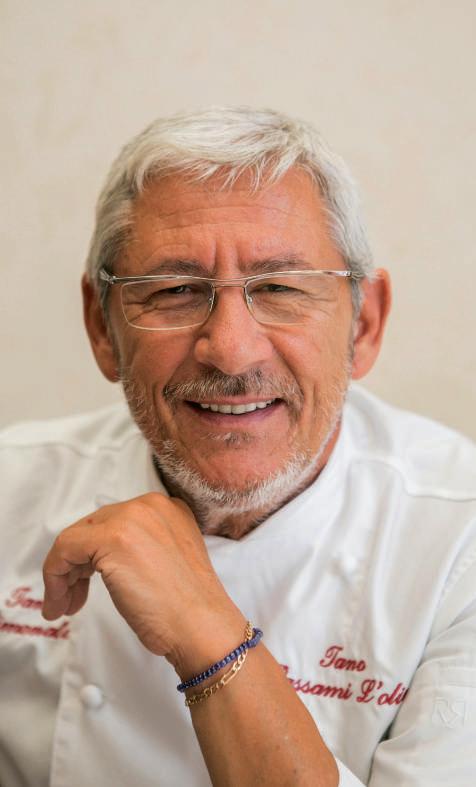
TANO PASSAMI L’OLIO, MILANO
Chef Gaetano “Tano” Simonato, a self-taught culinary visionary, discovered his passion at 15, cooking for his siblings after their father’s death in Milan. Raised in a family of restaurateurs, he sharpened his skills running Tanus Bar before launching Tano Passami L’Olio in 1995, a Michelinstarred haven since 2008. His philosophy centers on extra virgin olive oil—sourced from over 40 varieties—as the cornerstone of his healthful, flavorful cuisine, eschewing butter and cream to let ingredients shine.
At Tano Passami L’Olio, diners begin with a tasting of breads and oils, setting the stage for dishes that balance consistency, softness, crunch, flavor, sweetness, and acidity. His innovative yet simple approach, rooted in Milan’s gastronomic traditions, earned the restaurant Il Glossario’s “Best Italian Restaurant” in 2015 and the Best Table in Italy award by Guida Critica Golosa. Driven by curiosity, Tano’s seasonal menus celebrate local produce, weaving creativity with timeless techniques to craft nourishing, memorable plates that elevate Italian cuisine to an art form.
Chef Maurizio Bufi, born in 1977 in Molfetta, Puglia, discovered his culinary passion at 15, leaving home for Lake Como and then cruise ships, where he soaked up global techniques and rigorous discipline from veteran chefs. After a brief period in Switzerland, he anchored in Gargnano in 2008 to spearhead the opening of Lefay Resort & Spa. In 2012, he became Executive Chef at Villa Giulia, earning a Michelin Star in 2017 for his elegant, ingredient-focused cuisine. Since October 2021, Bufi has led Il Fagiano at the 5-star Grand Hotel Fasano & Villa Principe in Gardone Riviera, securing another Michelin Star in 2024.
Rooted in Mediterranean vibrancy yet captivated by Lake Garda’s tranquil allure, Bufi masterfully blends southern Italy’s bold flavors with northern sophistication. His tasting menus, paired with curated wines and cocktails, and à la carte dishes offer a sensory journey, harmonizing tradition with refined artistry. Bufi infuses every detail with care, transforming meals into celebrations of Italy’s rich culinary tapestry, inviting diners to revel in timeless flavors and serene elegance.
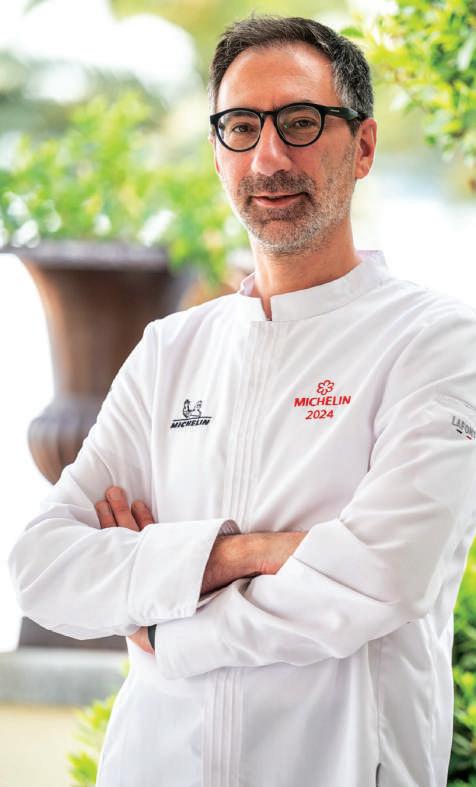
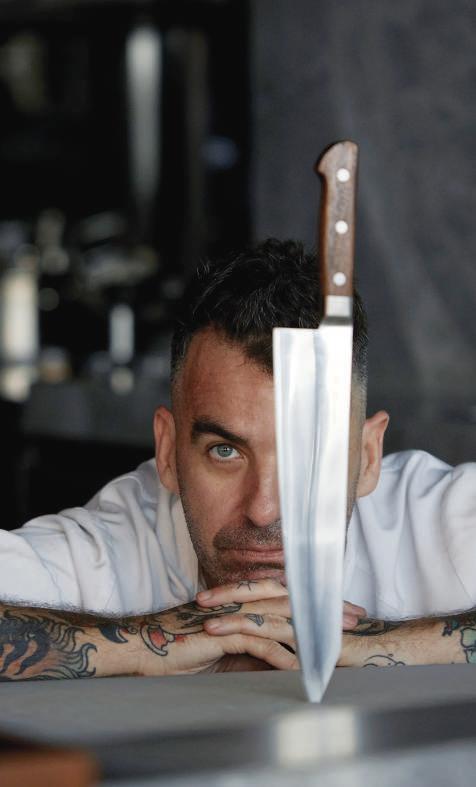
AKUNA, HO CHI MINH CITY
Chef Sam Aisbett, with over 20 years of global culinary experience, has redefined fine dining at Akuna in Ho Chi Minh City since its 2023 debut. His cuisine, a vibrant tapestry of inspirations from four continents, defies regional constraints, embracing Vietnam’s indigenous herbs, spices, and produce to create dishes that reflect his identity as a chef, traveler, and produce advocate. At Akuna, his “authentic cooking” offers a glimpse into his philosophy, blending innovation with heartfelt storytelling.
Leading a skilled team, Aisbett propelled Akuna to a Michelin Star in 2024 and 2025, alongside LaListe’s “New Opening of the Year” award, establishing it as a global culinary beacon. Born in Melbourne and raised in North Queensland, he honed his craft in Queensland’s top kitchens before rising to Head Chef at Sydney’s Quay under Peter Gilmore, earning Three Hats and a World’s 50 Best Restaurants nod. At Tetsuya Wakuda’s restaurant, he mastered Japanese flavors, which still echo in his work. After launching Singapore’s Whitegrass to three Michelin Stars, Aisbett returned to Vietnam’s “beautiful chaos” in 2022, where he continues to craft dining experiences that celebrates its vibrant culture and pristine ingredients.
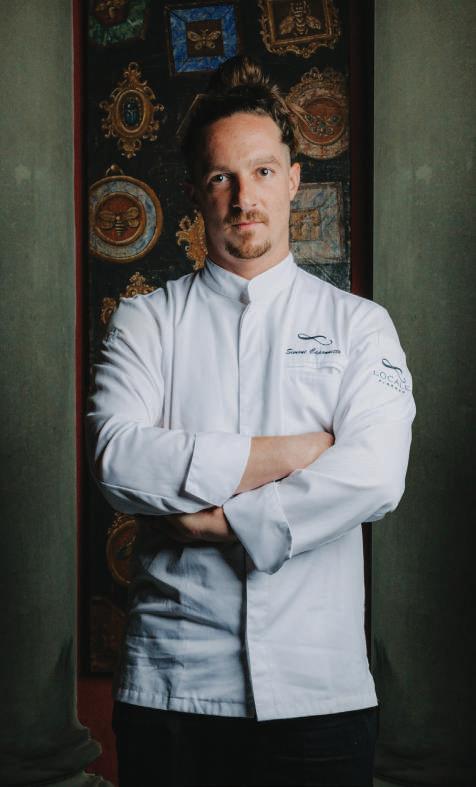
Chef Simone Caponnetto, Executive Chef at Locale Firenze, transforms Tuscany’s bounty into dishes that pulse with authenticity and innovation. Initially captivated by Jack Kerouac’s wanderlust, he left Florence at 18 for the U.S., working in an Italian restaurant in Connecticut, to fund his “On the Road” journey. His travels continued in Sydney at the awardwinning Arras Clarence Street, where a Neapolitan pastry chef’s tales of The Waterside Inn ignited a spark. At Alain Roux’s three-Michelin-starred kitchen in England, Simone embraced the rigor of French cuisine. Stages at Narisawa in Japan, Heinz Beck’s restaurants in Rome, Monte Carlo, and Bologna, and in Spain’s Mugaritz under Andoni Luis Aduriz, deepened his craft and creative. Returning to Florence, he partnered with Nerina Martinelli to open Nugolo in 2019, a Sant’Ambrogio gem built from a garage, celebrating Tuscan produce. Since joining Locale Firenze in 2021, Simone has sourced from a friend’s local farm, co-creating a sustainable garden with chickens and ducks. His ever-evolving menu reflects a 21stcentury Tuscan renaissance, balancing heritage with global insights, inviting diners to feel the joy of his craft.
Ingredients
Filling
100g burrata
Extra virgin olive oil
Salt
Black pepper
Espelette pepper
20g parmesan cheese
Tortellini Dough
160g flour
80g semolina
2 egg yolks
35g tomato paste
1 egg
Salt for seasoning
Confit Cherry Tomatoes
50g yellow cherry tomatoes
50g red cherry tomatoes
Extra virgin olive oil
Salt for seasoning
3g garlic
2g thyme
2g basil
2g marjoram

HEINZ BECK LA PERGOLA, ROME
Method
Eggplants
1 medium size eggplant
8 baby white eggplants
Extra virgin olive oil
Salt and black pepper for seasoning
5 lemon leaves
Capers
20 capers
Garnish
Fresh basil
Salted ricotta cheese
Filling
Drain the burrata, then blend it with all the other ingredients until you obtain a smooth, creamy texture. Adjust the seasoning if needed, then transfer the mixture into a piping bag. Set aside until ready to fill the pasta.
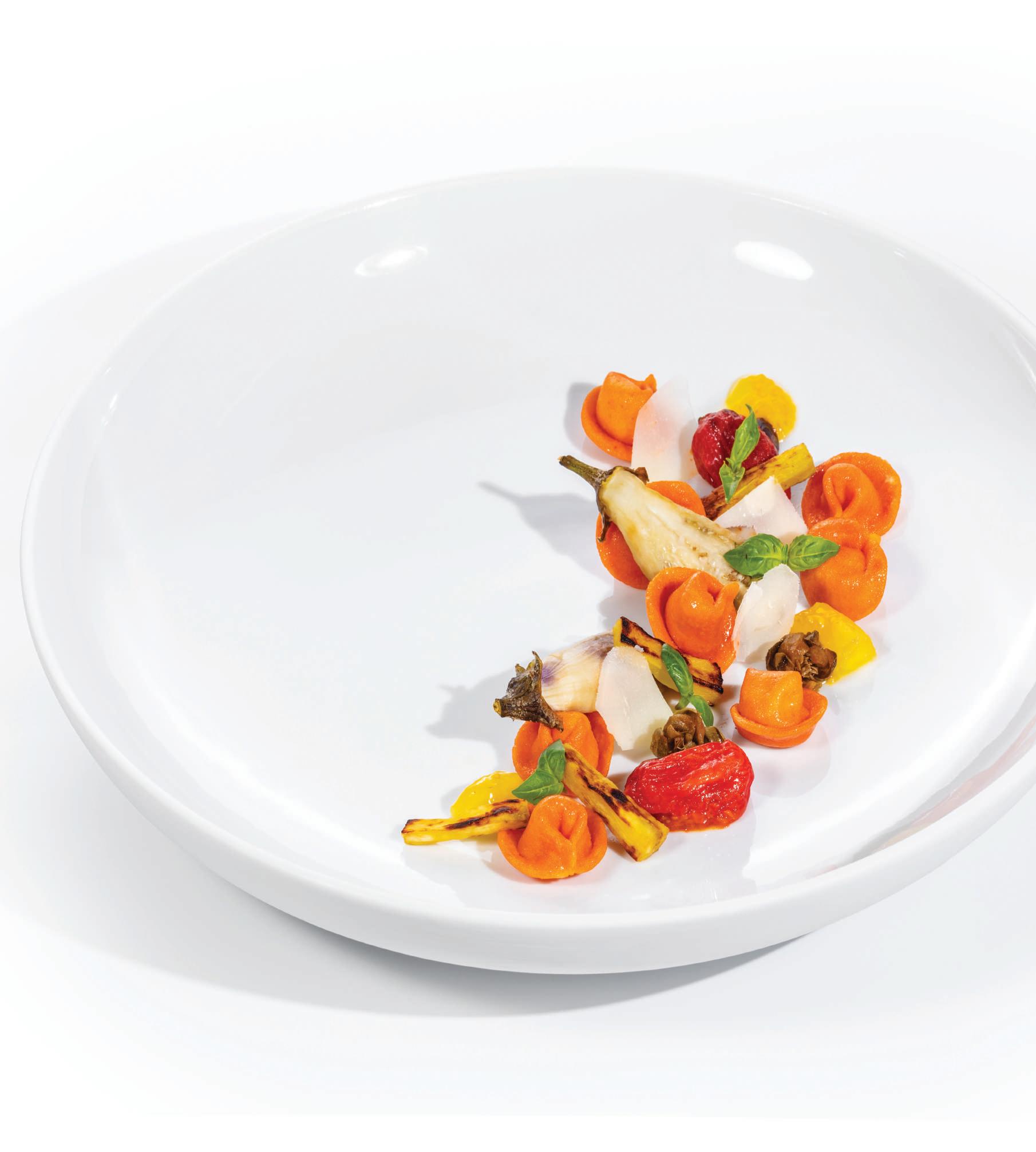
Prepare the dough by mixing flour, semolina, egg yolks, tomato paste, the whole egg, a pinch of salt, and enough water to bring it all together. Knead and let rest for about 1 hour. Roll out the dough finely. Brush one sheet with beaten egg and pipe small amounts of filling on top. Cut out circles with a round cutter, fold each into a half-moon, then pinch the ends together to form tortellini.
Wash the tomatoes and blanch them briefly. Immediately transfer them to ice water, then peel them. Spread them out on a baking tray, season with olive oil, salt, lemon zest, thyme, basil, marjoram, and a few garlic cloves. Bake at 80°C for 3 hours.
Wash, peel, and cut the regular eggplant into batonnet. Sauté in a pan with a drizzle of olive oil, salt, and chili pepper.
Wash the baby white eggplants, season with oil, salt, and pepper, and wrap each in lemon leaves. Roast in a Josper oven at 170°C for 30 minutes.
Desalt the capers and deep-fry them in olive oil at 150°C until crispy.
Place the tortellini in the center of the plate. Add the eggplants, yellow and red confit cherry tomatoes, and top with the fried capers. Finish with shavings of salted ricotta and fresh basil leaves.
Ingredients
100g burrata
5 heirloom tomatoes
5 cherry tomatoes
40g roasted bell peppers red and yellow
30g basil pesto
15g rocket leaves
10g toasted hazelnuts
5g black olive dust
Salt and black pepper for seasoning
Extra virgin olive oil
2g dry rosemary
Smoke gun
Method
Cut the heirloom tomatoes into eighths, setting aside two slices of each variety.
Halve cherry tomatoes and combine with heirloom tomatoes.
Add roasted bell peppers, cut into filets.
Season the tomatoes and bell peppers with salt, black pepper, and extra-virgin olive oil
Plating
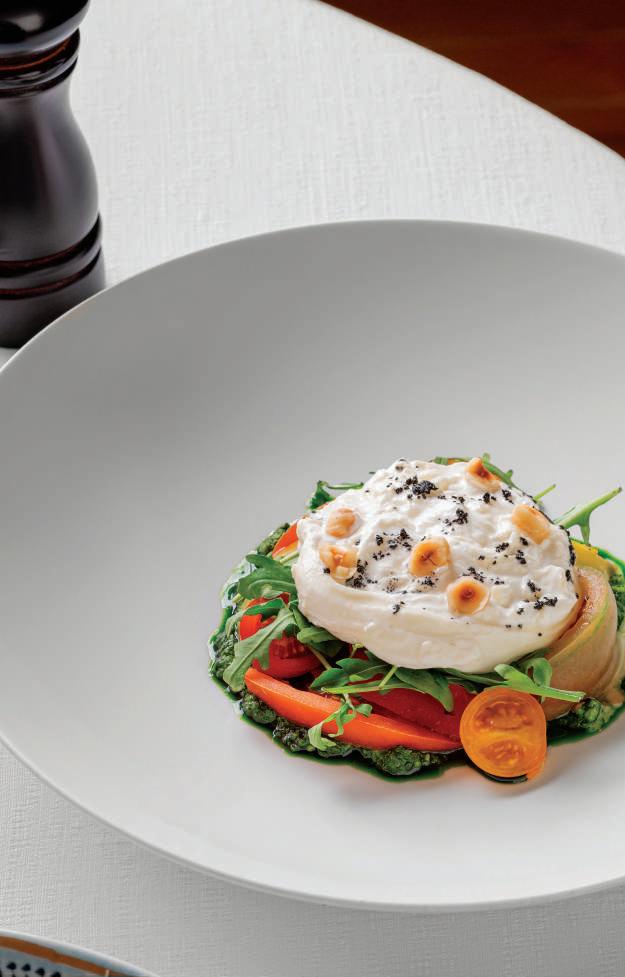
Spread the basil pesto in a circular motion on a coupe plate.
Arrange heirloom tomatoes in a well shape, filling the center with roasted peppers and cherry tomatoes.
Top with rocket leaves, season with salt and extravirgin olive oil
Place the burrata on top.
Finish with olive dust and toasted hazelnut.
Optional Smoky Touch
Cover with a glass cloche.
Use a smoke gun with dry rosemary to smoke for 1 minute before serving.
Ingredients
Salad
2 balls of fresh burrata, room temperature
600g arugula or baby mixed greens
1 orange, peeled and segmented
150g cherry tomatoes, halved
75g fennel, thinly sliced
Fresh basil or mint leaves for garnish
Sea salt and cracked black pepper for seasoning
Chili-Mint Orange Dressing
3tbsp fresh orange juice, from the segmented orange
1tbsp lemon juice
1tsp orange zest
1tsp honey
1 small red chili, finely chopped or ½ tsp chili flakes
1tbsp fresh mint, finely chopped
75g extra virgin olive oil
Salt and black pepper for seasoning
Method
Dressing
In a small bowl, whisk together the orange juice, lemon juice, orange zest, honey, chopped chili and mint.
While whisking, slowly drizzle in the olive oil to emulsify the dressing.
Season with salt and black pepper. Let the dressing sit for 10–15 minutes.
Assemble
On a serving plate or shallow bowl, arrange a bed of greens and orange segments. Scatter the cherry tomatoes and fennel over the greens.
Gently place the burrata balls on top.
Generously drizzle chili-mint orange dressing. Garnish with fresh basil or mint leaves, and finish with a sprinkle of sea salt and cracked black pepper.
Creamy burrata paired with raisin tomatoes and seasonal berries, topped with a zesty chili-mint orange dressing that adds brightness and a hint of spice to every bite.
ABHISHEK SINGH AGUA POOL BAR AND CAFÉ, GOA
Ingredients
Burrata Foam
500g burrata
50g fresh cream
2.5g xanthan gum
1 gelatin sheet
10 ml cold water, to dissolve the gelatin
5g anchovy colatura, to taste
Salt for seasoning
Method
Start by soaking the gelatin sheet in cold water until fully softened, then dissolve it in 10 ml of warm water.
In a blender (preferably a Thermomix), combine the burrata and fresh cream. Blend until the mixture is completely smooth and homogeneous. While blending, gradually incorporate the xanthan gum to stabilize the texture and give it a light, foamy consistency.
Slowly add the dissolved gelatin while continuing to blend, ensuring it is evenly distributed.
Season the mixture with a pinch of salt and a few drops of anchovy colatura to enhance the depth and savoriness.
Strain if necessary for a silky finish, then transfer the mixture into a siphon. Seal it tightly and charge with two gas cartridges.
Refrigerate for at least 2 hours before serving.
Mint & Basil Pea Cream
2 white onions
100g butter
250g peas, preferably fresh or high-quality frozen
1 bunch fresh mint
1 bunch fresh basil
Vegetable stock. as required
Salt and pepper for seasoning
Ice cubes, optional, to preserve vibrant green color
Method
Finely chop the white onions and gently sauté them in a pan with a drizzle of extra virgin olive oil over low heat until soft and translucent. Add enough vegetable stock to cover the onions, and cook until completely tender.
Add the peas and cook for about 5 minutes, just long enough to soften them without losing their bright color.
Transfer everything into a Thermomix or highpowered blender. Add the butter, mint leaves, basil, and a few ice cubes to help maintain the vivid green color while blending.
Blend until perfectly smooth, then season to taste with salt and pepper.
Strain the cream through a fine chinois to achieve a silky, fiber-free consistency. Keep warm or cool quickly, depending on intended use.
Burrata foam / pea cream / caviar / lemon zest cooked peas
Plating
Spoon a small amount of pea cream onto the base of the plate, spreading it gently with the back of a spoon to create an even layer.
Finely grate some fresh lemon zest over the cream to introduce a citrusy, fragrant note.
Carefully place a spoonful of caviar on the cream, distributing it elegantly across the surface. Dispense the burrata foam from the siphon directly into the center of the plate, creating a voluminous and airy presentation.
Garnish with a few previously cooked peas, arranged freely to add texture and a touch of color.
Finish with an extra spoonful of caviar, if desired, to enhance the savory and luxurious profile of the dish.
Ingredients
6 squash blossoms
1 tsp bread crumbs
250g burrata
Salt and pepper for seasoning
5 tbsp extra virgin olive oil
2 ripe tomatoes
1 celery heart
1 tsp tabasco sauce
1/2 glass of vodka
1 garlic clove
2 bunches of basil
Method
Carefully clean, wash and dry the squash blossoms.
Mix the burrata with the breadcrumbs, 2 tablespoons of olive oil and salt and pepper. Fill the flowers with the burrata mixture then place them on a baking tray and drizzle them with olive oil. Add a sprig of marjoram and a pinch of salt. Bake for 5 minutes at 170C degrees.
Cut up and mash the tomatoes to remove the water and the seeds.
Place them in a small blender with the tabasco, the celery and vodka. Add a pinch of salt and the extra virgin olive oil. Blend it and then filter. Pour the thick puree of bloody Mary on the plate and lay the squash blossoms on top with a leaf of celery. Drizzle more olive oil on top to finish.
Ingredients
80g burrata
20g chili crisp
80g arugula
40g grapefruit, slivers
30g Valencia orange, slivers
1 tsp pumpkin seeds
3 tsp granola
Method
Toss the salad in the dressing. Place the burrata in the center.
With a syringe inject the cheese with chili oil. Drop chili crisp on top and season with sea salt.
Lightly place wedges on top of the salad.
Garnish with granola, edible flowers and microgreens.
Dressing
30 ml espresso made with Arabica coffee
60 ml balsamic vinegar
100 ml extra virgin olive oil
5g sugar
2g salt
Emulsify and blend
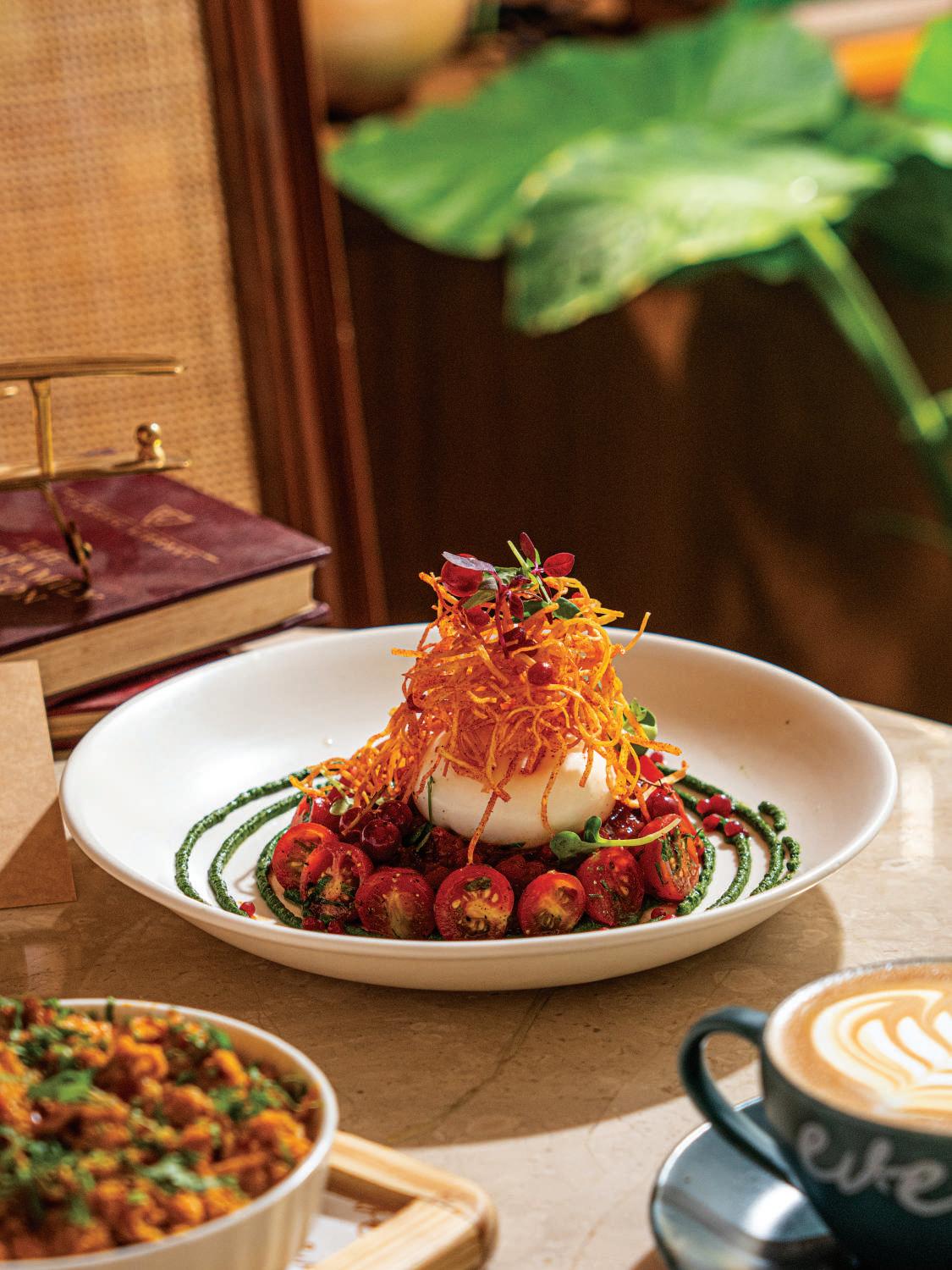
A delicate burrata rests atop a vibrant bed of sofrito, paired with sweet confit cherry tomatoes, crispy sweet potato sticks, and a drizzle of fresh basil pesto. Balanced with a hint of black pepper and extra virgin olive oil, this dish brings together texture, comfort, and contrast-a playful yet elegant ode to Puglia, reimagined through Eve’s lens.
Ingredients
1 x 80g burrata cheese
10g sweet potatoes
30g cherry tomatoes
3g salt
2g whole black pepper
5 ml extra virgin olive oil
3g flat leaf parsley
15g basil pesto sauce, recipe below
55g sofrito sauce, recipe below
Method
Prepare confit cherry tomatoes and the sofrito sauce. Let both cool.
Make fresh basil pesto.
Thinly slice sweet potatoes into matchsticks and fry until crispy and golden brown.
Basil Pesto
2 cups fresh basil leaves
1/3 cup pine nuts, walnuts, or almonds
1/2 cup grated Parmesan cheese
1/2 cup extra virgin olive oil
2 cloves garlic, peeled and minced
Salt for seasoning
Method
Add basil, nuts, and garlic to a food processor and pulse until finely chopped.
Mix in Parmesan and blend again.
With the processor running, slowly drizzle in olive oil.
Season with salt.
Sofrito Sauce
1 cup chopped onions
1 cup chopped bell peppers
4–6 garlic cloves, minced
1 cup chopped fresh cilantro
1–2 red bell peppers
Olive oil
Method
Heat olive oil in a pan over medium flame.
Sauté onions and bell peppers until soft.
Add garlic and cook for 1 minute.
Stir in cilantro.
Cook until fragrant.
Blend to your preferred consistency.
Assemble
Spread the sofrito sauce as the base on one side of the plate.
Arrange the cherry tomatoes on top.
Gently place the baby burrata in the center.
Drizzle pesto around the burrata.
Top with crispy sweet potato sticks.
Garnish with flat parsley, a dusting of togarashi powder, and microgreens.
An innovative dish by that combines the creamy richness of burrata cheese with the vibrant flavors of corn and spinach (palak). It reimagines traditional corn palak paneer by incorporating burrata, resulting in a harmonious blend of Italian and Indian culinary elements
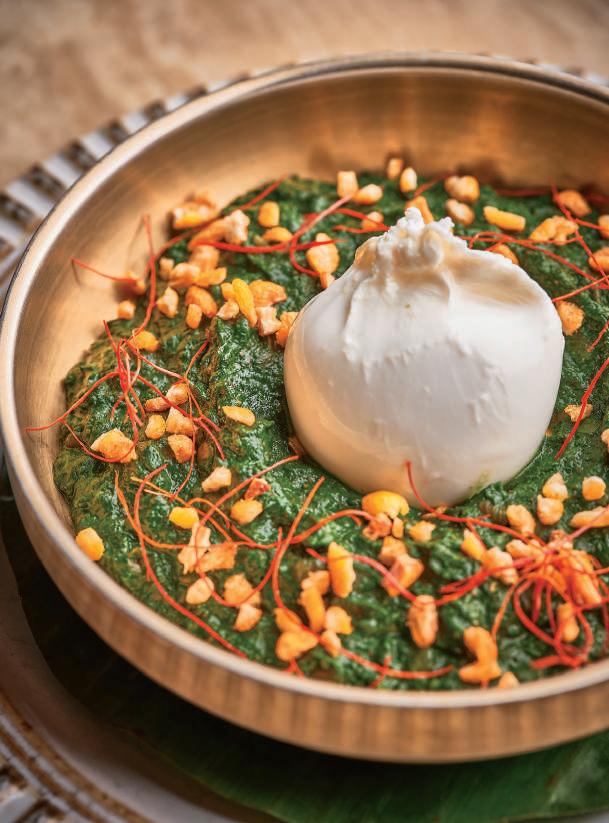
GAURAV KUTHARI CHAAT, HONG KONG
Ingredients
Spinach Purée
500g fresh spinach
17g salt
20g sugar
1ltr water
600g Ice
Onion Masala
25g mustard oil
125g onions, chopped
4g ginger, chopped
6g garlic, chopped
2g green chili paste
1g cumin seeds
3g subji masala
2g salt
Method
Spinach Purée
Plating
113g onion masala mix
130g spinach purée
3g subji masala
5g salt
3g cumin powder
2g sugar
15g cream
20g unsalted butter
2g green chili paste
Garnish
1 x 50g burrata
5g corn, toasted
1g tougarashi
Boil water with salt and sugar. Blanch the spinach for 2 minutes, remove and place in cold d water. Purée and set aside.
Spice Onion Masala
Heat mustard oil in a pan, add cumin seeds, onions, garlic, ginger, and the green chili paste. Sauté, then add the subji masala and salt. Mix well and set aside.
Assemble
In a frying pan, combine the spinach purée and onion masala. Add the remaining ingredients, finishing with butter and cream. Garnish with burrata, crispy corn, and tougarashi chili.
Ingredients
1 large burrata ball / 3 tbsp basil-parsley pesto, recipe below / 200g assorted cherry tomatoes, halved or quartered depending on size / 2 tsp hemp seeds / 150g seasonal fruit, sliced, stone fruit, berries, or melon work well / 20g kritamo leaves, sea fennel / extra virgin olive oil / thinly sliced fresh chili / sea salt and freshly cracked black pepper for seasoning
Method
Base
Place the burrata in the center of a wide, shallow bowl or plate.
Let it come to room temperature for 10–15 minutes; this makes the interior creamier when served.
Quick Basil-Parsley Pesto
Blend 150g basil leaves / 75g parsley leaves / 1 garlic clove / 75g olive oil / 30g toasted pine nuts or walnuts / 75g grated Parmesan / a pinch of salt until smooth. Adjust oil for consistency.
Garnish
In a mixing bowl, gently toss the cherry tomatoes with a splash of olive oil, a pinch of sea salt, and a twist of black pepper. Add the sliced seasonal fruit and toss lightly again. Keep the mix vibrant and not over-seasoned.
Plating
Spoon the basil-parsley pesto over and around the burrata.
Scatter the tomato-fruit mixture evenly around the burrata.
Sprinkle hemp seeds generously over the top for texture and nutty flavor. Add fresh kritamo leaves to bring a bright, briny note that complements the creaminess of the cheese.
If you like a little heat, add a few thin slices of red chili.
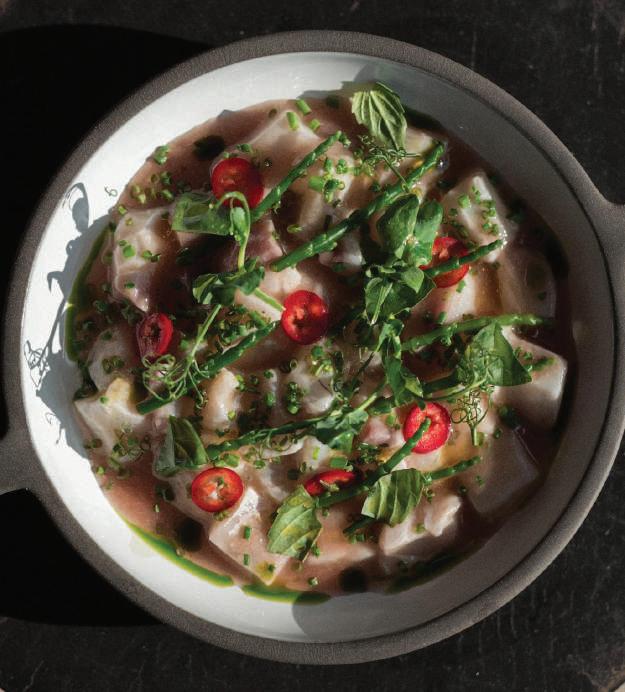
Finish with a fine drizzle of extra virgin olive oil over everything.
Optional: add a few drops of reduced balsamic for sweetness and visual depth.
Serve immediately with warm, crusty bread or grilled flatbread to scoop up the cheese, pesto, and juices.
Ingredients
Fermented tomato and tomato powder
2 weeks fermentation + 1 hour
1kg ripe Italian tomatoes, quartered lengthwise
20g fine sea salt
Confit Tomatoes
200g mixed cherry tomatoes
100 ml extra virgin olive oil
1 sprig fresh thyme
1 clove garlic, unpeeled and lightly crushed salt for seasoning
Greens
50g leaf mix (arugula, baby watercress, microgreens)
1 Sicilian or Tahiti lime, zest
1tbsp native honey
Fleur de sel and extra virgin olive oil for seasoning
Plating
2 x 125g burrata
4 slices naturally leavened artisan bread
1tsp fermented tomato powder, for finishing
Method
Fermentation and tomato powder
Wash the Italian tomatoes thoroughly and cut them lengthwise into quarters. Weigh the tomatoes and add 2% fine sea salt (20g per 1 kg of tomatoes).
Place the tomatoes and salt in a vacuum-seal bag and seal tightly.
Let ferment for 14 days at a stable temperature of 24–28°C, in a dark and dry place.
After fermentation, remove the tomatoes and arrange them on dehydrator trays. Dry in a dehydrator or oven at 60°C for 6 to 8 hours, or until completely dry.
Process the dried tomatoes into a fine powder. Store in an airtight container.
Confit Tomatoes
Place the whole cherry tomatoes in a small baking dish.
Add olive oil, thyme, garlic, and salt.
Roast at 120°C for 35 to 40 minutes, until slightly wilted. Set aside.
Wash and dry the greens thoroughly.
Season with lime zest, native honey, fleur de sel, and a drizzle of olive oil. Mix gently and refrigerate until serving.
Final assembly
Toast the slices of artisan sourdough bread on a grill or skillet until golden on both sides.
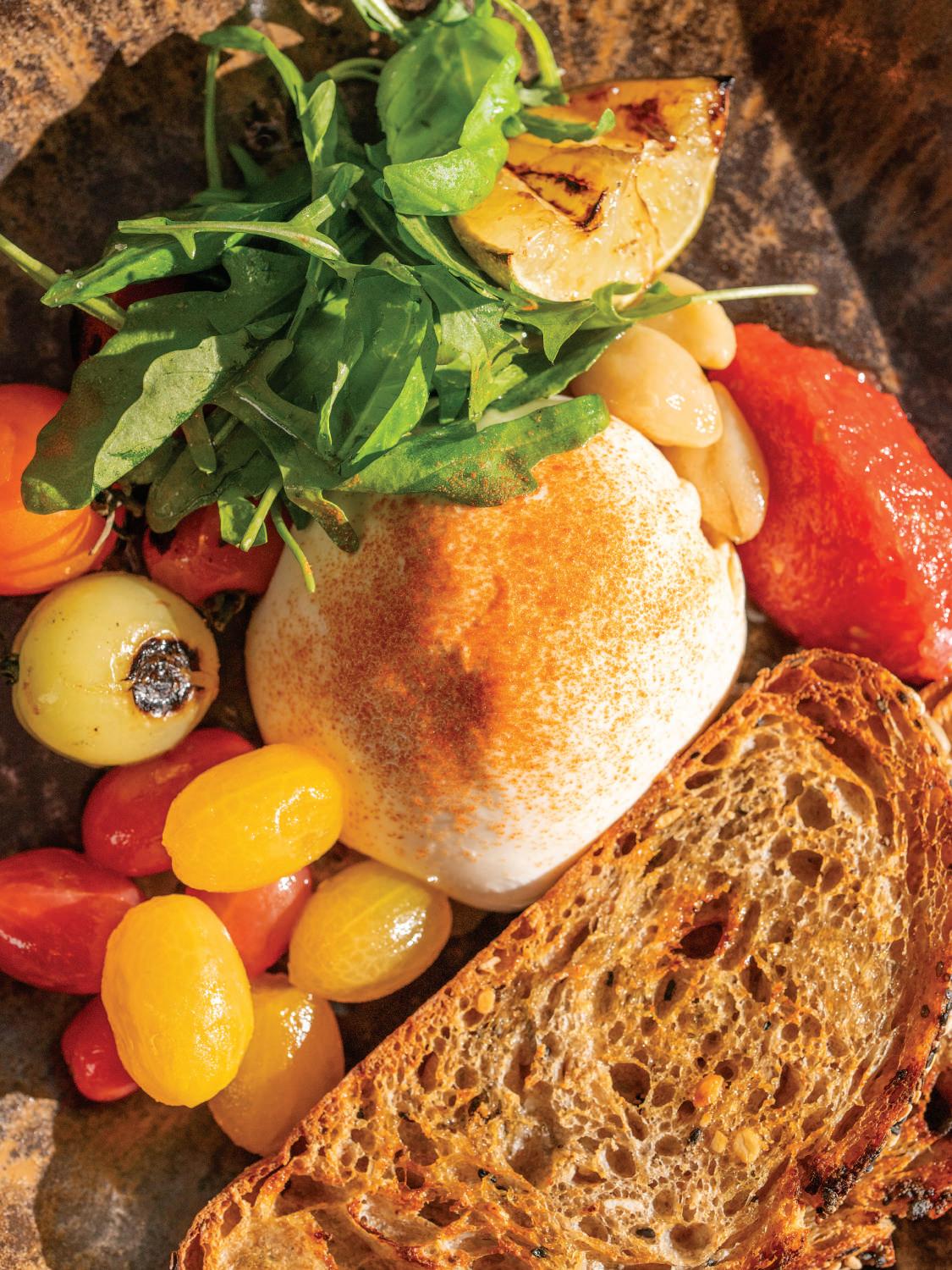
Plate the burrata in the center, surround it with the confit tomatoes, place the seasoned greens to the side, and serve with the grilled bread.
Finish the burrata with a sprinkle of fermented tomato powder. Serve immediately.
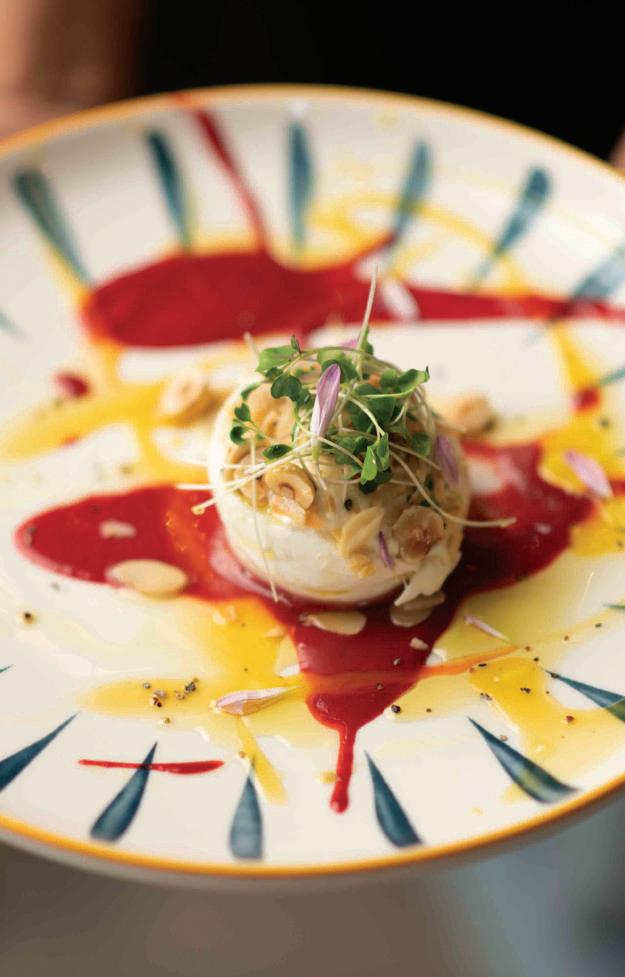
Ingredients
Passion Fruit Emulsion
100g passion fruit purée
100g extra virgin olive oil
2g black pepper
3 ml white wine vinegar
1g xanthan powder
30 ml water
60g sugar
Method
Blend all ingredients in a mixer grinder and create an emulsion.
1 onion, chopped
20g garlic, chopped
500g sour cherries
200g olive oil
2g salt
Method
Sauté the onions and garlic in olive oil, add the sour cherry, salt, and cook.
Once cooked, blend in a mixer grinder to make a puree and strain the purée through a fine strainer.
Add sugar, salt, white wine vinegar and the extra virgin olive oil to the above ingredients and blend.
Garnish
Maldon Salt, toasted almond flakes, hazelnuts and microgreens.
Plating
Drizzle passion fruit and sour cherry dressing on the plate.
Cut the burrata in half and place it in the center of the plate.
Drizzle some extra virgin olive oil and Maldon salt on top of the burrata.
Top burrata with toasted hazelnuts and almond flakes.
Garnish with microgreens.
Burrata originated in the early 1920s in Andria, a rural town in the Murgia region of Puglia (Southern Italy), beneath the iconic Castel del Monte. The name comes from burro, Italian for “butter,” reflecting its rich, creamy center. Originally created as a way to use leftover mozzarella scraps, burrata quickly became a symbol of Italian artisanal cuisine.
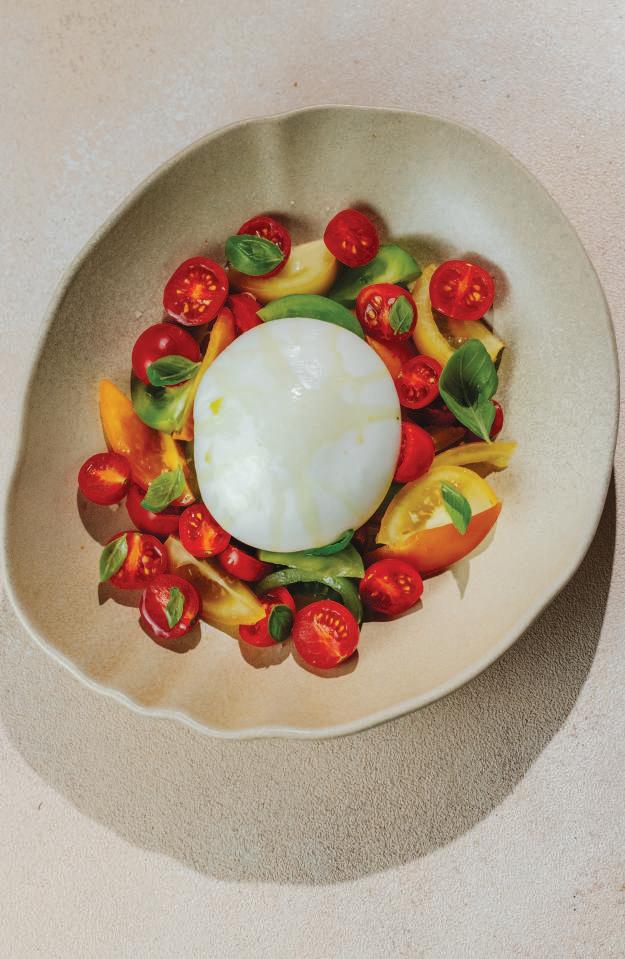
Ingredients
Fresh Burrata
Mixed heirloom tomatoes
Datterini tomatoes
Fresh baby basil
Extra virgin olive oil
Maldon sea salt
Method
Slice the ripe heirloom and datterini tomatoes and arrange them on a plate, leaving space in the center.
Place the burrata gently in the middle without breaking it.
Drizzle with high-quality extra virgin olive oil.
Sprinkle with Maldon Sea salt and garnish with fresh baby basil leaves or microgreens for aroma and color contrast.
Burrata tastes best at room temperature, let it sit out for 15 minutes before serving. Use infused oils like lemon or basil oil to enhance aroma and complexity. Keep the presentation clean, colorful, and balanced, let the quality of the ingredients shine. Complement with grilled bread, focaccia, or seasonal fruit like figs or melon.
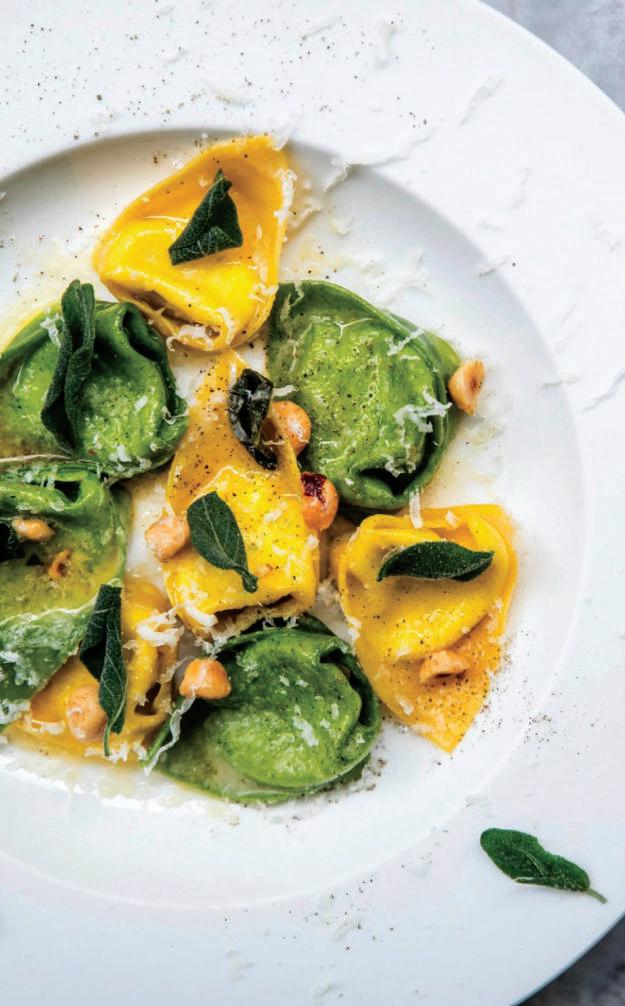
Ingredients
Pasta
100g 00 flour
100g semolina flour
3 medium eggs
Green Pasta
100g 00 flour
100g semolina flour
100g fresh spinach
2 medium eggs
Filling
200g ricotta
250g burrata
30g grated Grana Padano
20g butter
Salt and pepper for seasoning
1g nutmeg
50g butter
70g Grana Padano
1g nutmeg
50g hazelnuts
10 leaves of sage
Method
Pasta Dough
In a bowl put 100gr “00” flour, 100gr semolina flour and 3 medium eggs and start mixing by hand. When it starts to come together, transfer on a table and knead with the palm of the hand to get a smooth dough. Cover with cling film and place in the fridge for at least 2 hours. For the green pasta. Blanche the spinach in salted boiling water and cool down immediately in iced water. Strain and squeeze out as much water as possible.
Transfer into a blender with the eggs and blitz until there are no pieces of spinach. Pour onto the mix of flours and proceed as per the plain pasta dough.
Put the burrata in a bowl and crush it with a fork until there is no more lumps, add the ricotta and grated Grana Padano. Mix well and adjust with salt, freshly ground pepper and nutmeg. Complete adding the melted butter and transfer in piping bags.
Heat the oven at 170°C. Place the hazelnuts in a tray and roast them until they have a light brown colour. Transfer on a table to completely cool down then halve them with the help of a small knife.
Flatten the doughs very thin with a pasta machine, or a rolling pin. Cut in squares of 10cm and place in the middle of each square half a tablespoon of filling. Spray it with water and close the square to form a triangle and bring the two corners on the longest side together, pinching to make sure it sticks.
In a pan put 50gr butter, a pinch of salt, fresh grated nutmeg and sage leaves, let it fry for a minute and pour in couple of spoonsful of vegetable stock, or pasta water while the tortelli are cooking. Cook the tortelli in salted boiling water for about 1 minute (it depends on the thickness of the sheets rolled before), drain and put into the butter, let reduce the sauce and add the grated grana Padano to get a creamy sauce. Place the tortelli in a serving dish, garnish with the sage leaves and finish with a sprinkling of grana Padano and the roasted hazelnuts.
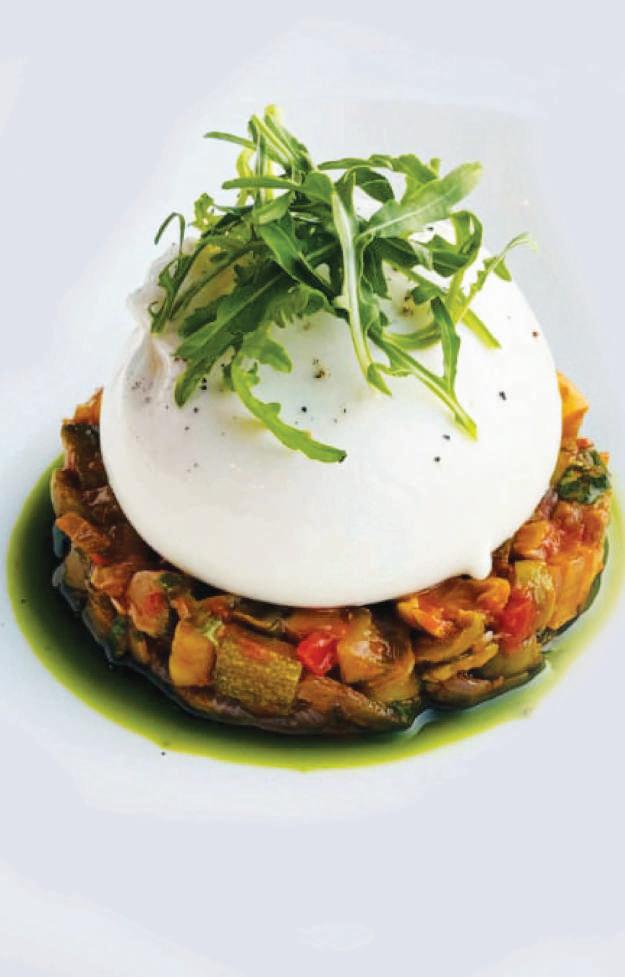
Ingredients
100g burrata cheese
70g eggplant
10g onions
15g bell peppers
15ml zucchini
15ml carrot
10g green olives
5g capers
25g sugar
4g salt
5g black pepper, crushed
10g white wine vinegar
20g tomato paste
15g celery
15g fresh basil leaves
Garnish
Fresh basil and rocket lettuce
Olive oil
Method
In a clean sauce pan sauté the eggplant, celery, zucchini, carrot, onion, bell peppers in olive oil until tender.
Add the garlic, basil, pepper and simmer for 20 minutes.
Add sugar and continue cooking, stirring occasionally, until the mixture caramelizes and develops a rich, sweet-and-sour flavor.
Add white wine vinegar to taste, balancing the sweetness and acidity.
Add the capers, green olives, and tomato paste and season with salt and pepper.
Assemble
Place the cooked caponata on a plate with the help of round cutter to create a round shape.
Place the burrata on top of the caponata.
Garnish with basil leaves and rocket lettuce. Drizzle with extra virgin oil.
Ingredients
2 ripe mangoes, diced
½ bird’s eye chili, chopped
15 ml white wine vinegar
1 burrata
1 avocado
4 cherry tomatoes, halves
5g pea shoots
20g rucola
50g mango purée, for glaze
5 ml balsamic glaze, to drizzle
5g salt
5g pepper
10g mint
Garnish
2g mustard cress
2g mint sprig
Method
Prepare Mango Filling
Cook the mango, bird’s eye chili with white wine vinegar and mint.
Let it sit for 10 minutes to let flavors infuse.
Stuff the burrata by carefully making a slit or gently open its center.
Spoon in the mango mixture. Be gentle, it’s delicate.
Glaze it with mango purée and balsamic.
Create a lush bed using arugula leaves, pea shoots, cherry tomato halves, and slices of avocado.
Place the stuffed burrata at the center.
Drizzle olive oil and season with salt and pepper.
Finish with artistic streaks of balsamic reduction.
Garnish with mustard cress and a mint sprig for a visual high and herbaceous lift.
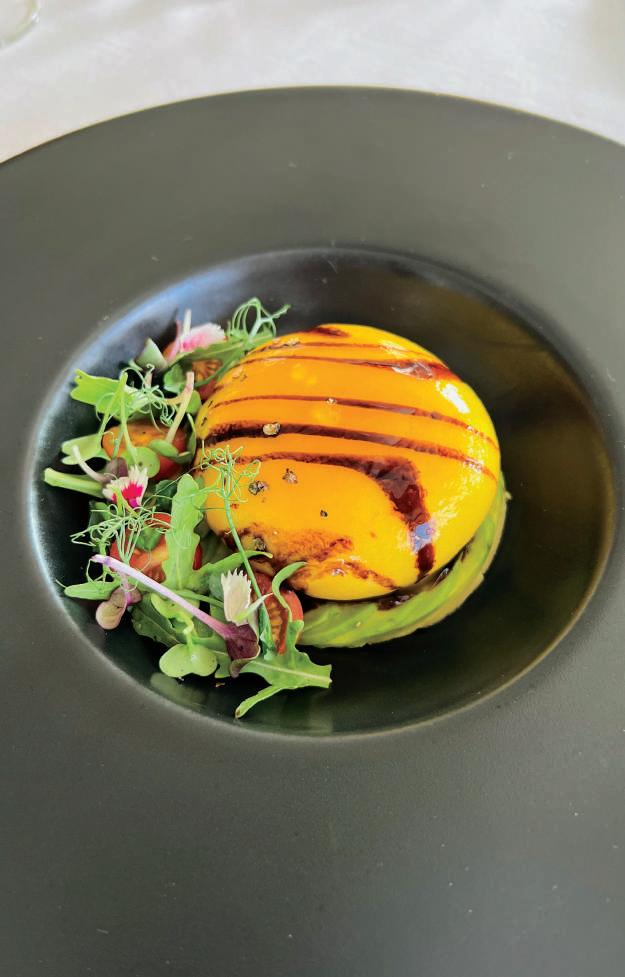
DEEPANSHU GIRDHAR OTTIMO, WEST VIEW ITC MAURYA, NEW DELHI
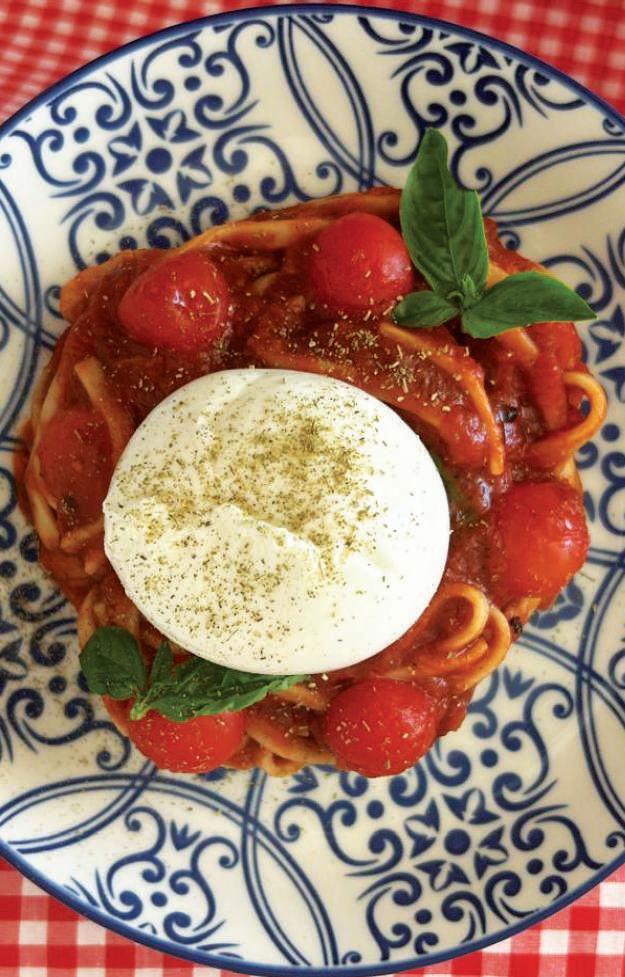
MARIA AQUINO TASTE 2.0, GOA
Ingredients
1 fresh burrata (Spotted Cow Fromagerie)
Ishimaru Udon Noodles
100g Ishimaru Udon Noodles
1ltr water
Method
In a large pot boil 1 liter of water. When the water starts to boil, pour in the udon noodles. Let it cook between 13 to 15 minutes. Stir occasionally to prevent the noodles from sticking. Ensure that the noodles are fully cooked. Remove and strain the noodles under running water.
Set aside and let the noodles cool.
Note: Do not add salt to the noodles while cooking.
Sunday sauce
2 tbsp olive oil
5 garlic cloves, minced
1 large yellow onion, chopped
4 sprigs of fresh basil
1 tbsp dried parsley
1 tbsp dried oregano
300g San Marzano tomatoes, whole peeled
250g tomato purée
1 ltr dashi, see recipe
2 large beef marrow bones
Vegetarian option:
50g mushrooms
20g sun-dried tomatoes
Salt and pepper for seasoning
Method
Heat the olive oil in a large pot over medium-high heat. Add the onions and sauté for 3 to 4 minutes. Once the onions become translucent and start to brown, add the garlic and herbs.
Add the beef marrow or mushrooms and sundried tomatoes and cook for 2 to 3 minutes. Add the tomato purée, dashi, whole peeled tomatoes. Mix well and reduce the heat to medium low and let it simmer for 1 hour.
If beef bones are used, remove the contents and season with salt and pepper. Put the mix into a blender and blend to the desired
consistency. Set aside and let the sauce cool.
10g kombu, dried kelp
10g katsuobushi, dried bonito flakes
1 ltr water
2 tbsp mirin
Method
Heat water in a medium pot over medium low heat and add the kombu, slowly being to a boil for 10 minutes. Remove any foam from the surface. Before the dashi starts to boil, remove the kombu. Add the katsuobushi and bring it to a boil again. Once the dashi is boiling, reduce the heat and simmer for 20 minutes.
Strain the dashi through a fine mesh sieve in a glass jar and set aside.
Store in the refrigerator for 3 to 4 days.
In a large pan over medium heat, add 1 tablespoon of olive oil. Once the pan is hot, add the 100ml of Sunday sauce.
Add the udon noodles and mix well. Ensure that the udon noodles and the sauce in the pan combine.
Place the udon noodles in the center of a shallow dish and place on top the burrata ball. Garnish with fresh basil and dried mixed herbs.
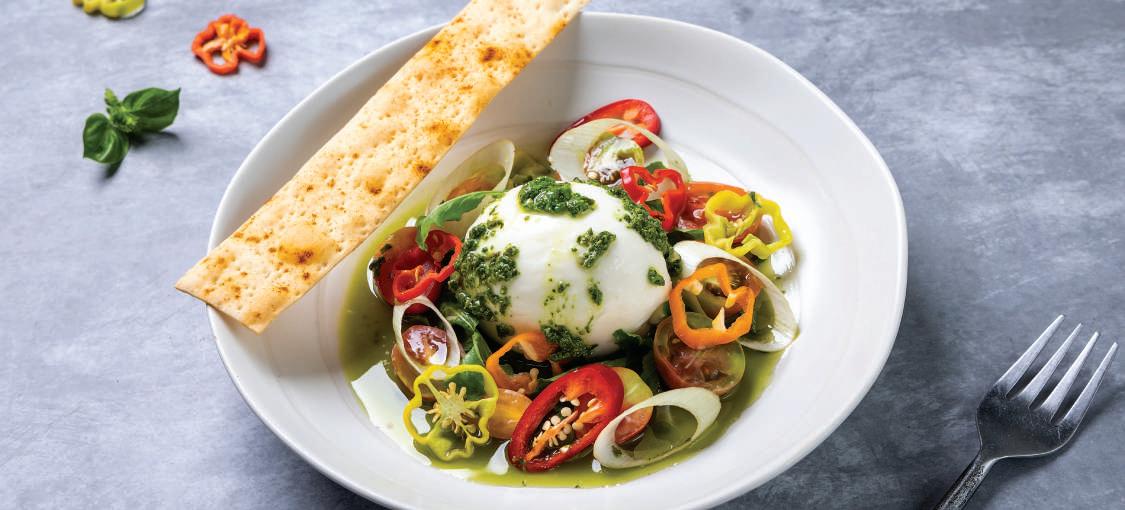
VIVEQ PAWAR ROXIE, BANGALORE
Ingredients
1 burrata
4 heirloom tomatoes, sliced into wedges
Green thecha dressing, recipe below
Pickled shallots and chili rings, recipe below
1 basil sprig or microgreens
1 khakra crisp
Cold-pressed peanut oil
Green Thecha Dressing
3 to 4 fresh green chilies, deseeded
2 cloves garlic
2 tbsp roasted peanuts
2 tbsp fresh coriander leaves
20 ml extra virgin olive oil
1/2 tsp salt
1/2 tsp lime juice
50ml neutral or peanut oil
Method
Blend all ingredients until smooth yet slightly textured. Adjust the quantity of chili to suit the heat preference.
Quick Pickled Shallots and Chili Rings
2 shallots, thinly sliced
1 each red and yellow chilies, thinly sliced
50 ml cane or apple cider vinegar
50 ml water
1 tsp sugar
1/2 tsp salt
Method
In a small pan, bring vinegar, water, sugar, and salt to a boil. Pour the hot liquid over the shallots and chilies. Let cool to room temperature before use.
Plating
On a chilled plate, spread a generous spoonful of green thecha dressing in the center.
Place the burrata over the dressing and spoon a little extra thecha on top.
Arrange heirloom tomato wedges and chili rings around the burrata.
Scatter pickled shallots to add brightness and acidity and garnish with fresh microgreens or basil sprigs. Drizzle cold-pressed peanut oil and serve with a khakra crisp.
Ingredients
Fresh burrata
Dehydrated sundried tomatoes
Dehydrated bread crostini
Dehydrated basil
Fresh basil leaves
Extra virgin olive oil
Flaky sea salt
Parmesan cheese
Micro herbs
Cream whipper, siphon
Nitrous oxide gas cartridge
Blender or food processor
Method
Finely chop the dehydrated sundried tomatoes and set aside.
Create a savory crumbs by pulsing crostini, fresh basil, garlic paste, and grated parmesan in a food processor until coarse and dry.
Blend the fresh burrata until smooth and creamy. Transfer the mixture into a cream whipper, charge with nitrous oxide, and shake vigorously.
Plating
In a shallow bowl, slowly dispense the burrata foam in a circular motion.
Sprinkle with flaky sea salt. Garnish with the basilparmesan crumbs and chopped sundried tomato. Finish with micro herbs for texture and aromatic lift.
The gas-charged burrata foam creates a light, velvety texture with a refined mouthfeel.
Pairs well with both fresh and dried fruits. Add citrus zest like lemon or grapefruit for brightness.
Best with toasted sourdough, crackers, or savory cannoli shells.
The foam can be infused with herbs, truffle, wine, or spices for creative variations.
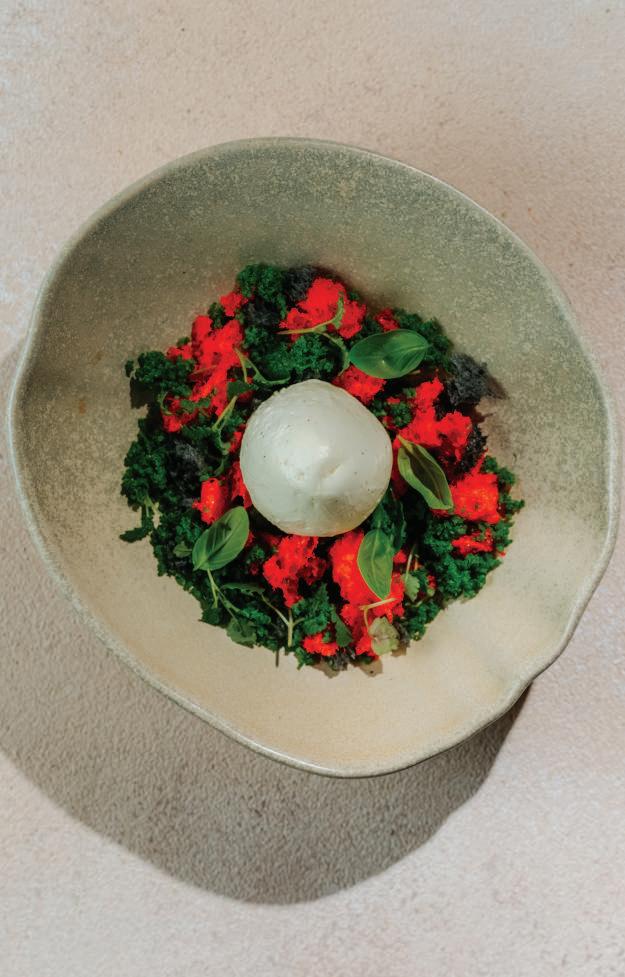
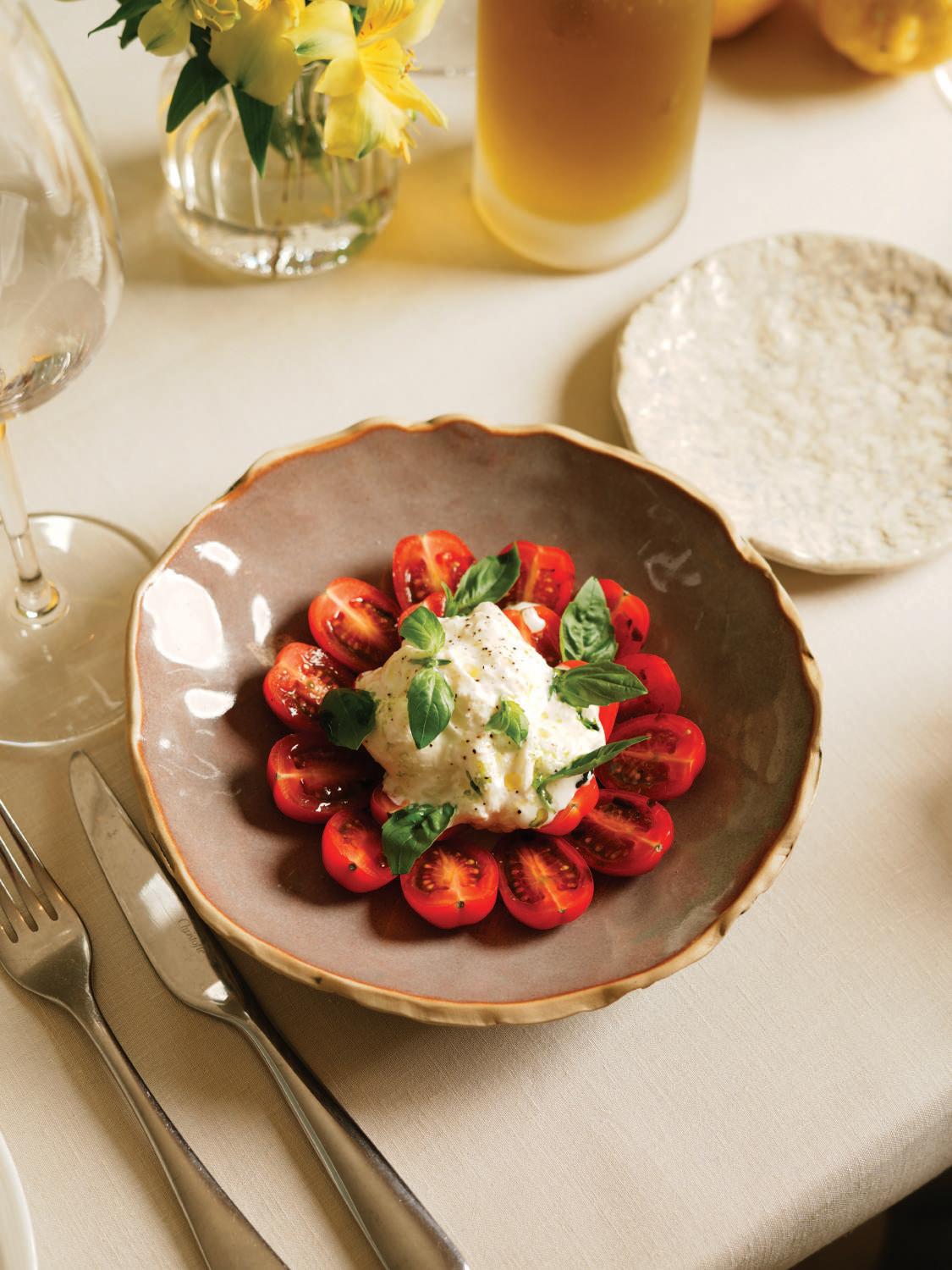
JORDAN HOUSTON MASSO, BAHRAIN
Ingredients
125g burrata
10 cherry tomatoes cut in half
10 basil leaves
20ml olive oil
10ml sherry vinegar
Salt and pepper for seasoning
Method
In a bowl, whisk together the olive oil, sherry vinegar, and basil. Season to taste with salt and pepper.
Add tomatoes and toss to combine. Allow the tomatoes to marinate for 30 minutes at room temperature or overnight in the fridge. Bring to room temperature before serving.
To serve, place the burrata in the venter over a serving bowl. Arrange the tomatoes around the burrata.
Serve with grilled or toasted bread.

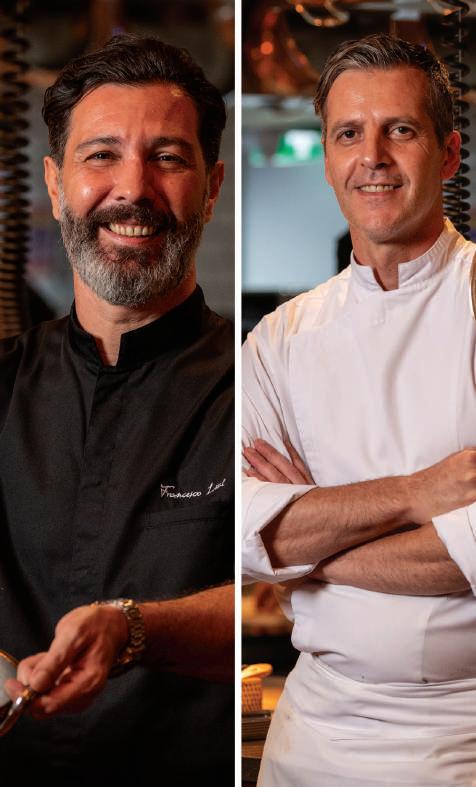
STEFANO MERLO
CASA LENZI, BANGKOK
Hailing from Pisa, Tuscany, Chef Francesco Lenzi brings authentic Italian soul to Bangkok as ChefPatron of Lenzi Tuscan Kitchen, Nonna Nella by Lenzi, and the recently opened Casa Lenzi. A champion of farm-to-table ethos, he sources premium meats, cheeses, and olive oil from his family’s Tuscan farm, infusing dishes like Ravioli Foie Gras in Truffle Emulsion with vibrant, healthful flavors. His open-kitchen venues, both Michelin Plate recipients since 2018, evoke the warmth of family gatherings while honoring regional traditions.
At Casa Lenzi in Thonglor, he partners with Chef Stefano Merlo from Padua, whose storied career spans three-Michelin-starred Le Calandre in Italy and Enoteca Pinchiorri in Tokyo. Since moving to Thailand in 2008, Merlo has elevated Enoteca, Rossini, and JoJo at The St. Regis Bangkok, earning praise for refined Italian dishes alongside Michelinstarred Alfredo Russo. Together, Lenzi and Merlo blend Tuscany’s rustic charm with northern Italy’s sophistication, spotlighting Burrata as a symbol of their shared artistry. Their wood-fired kitchen crafts immersive dining experiences, weaving heritage with innovative flair to captivate Bangkok’s diners with Italy’s timeless, soulful flavors.
Born in Naples in 1986, Giuseppe Molaro’s passion for cooking ignited in his father’s restaurant kitchen at an early age, where simple tasks like peeling vegetables evolved into a lifelong devotion to gastronomic artistry. After earning his diploma from IPSSAR De Gennaro and training in Northern Ireland, he earned acclaim in elite kitchens, including Spain’s three-Michelin-starred Can Fabes under Santi Santamaria and Rome’s La Pergola under Heinz Beck. His global journey to Portugal, Dubai, and Tokyo, where he served as executive chef at Sensi, earning a Michelin star and meeting his wife, Yuki, whose Japanese heritage influenced his fusion style. In 2019, he opened Contaminazioni Restaurant in Somma Vesuviana, blending Japanese techniques like acetifications, waraiaki, and kamobushi with Vesuvian ingredients in surprise tasting menus, earning another Michelin star in 2021. As chefpatron, he innovates, collaborating on events and overseeing ventures like Ziomi Pub and Ziomi Bistrot, fusing Eastern precision with Mediterranean flair. Drawing from his multicultural experiences, Molaro crafts dishes that honor seasonal produce and cultural harmony, captivating diners with bold, balanced flavors.
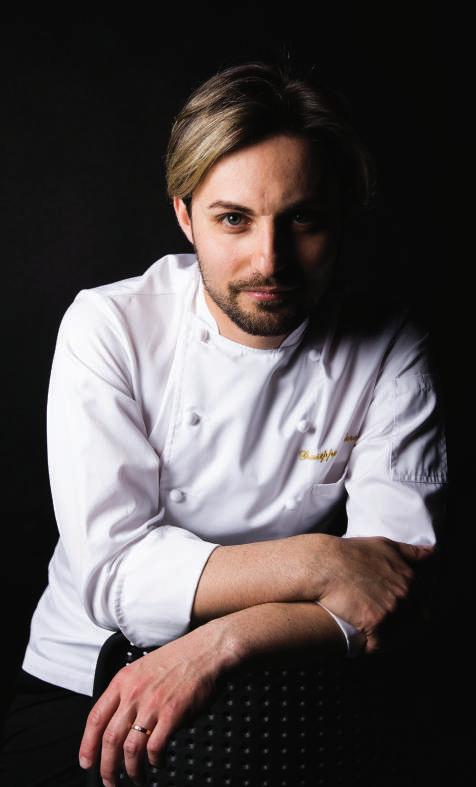
MOLARO CONTAMINAZIONI RESTAURANT, SOMMA VESUVIANA
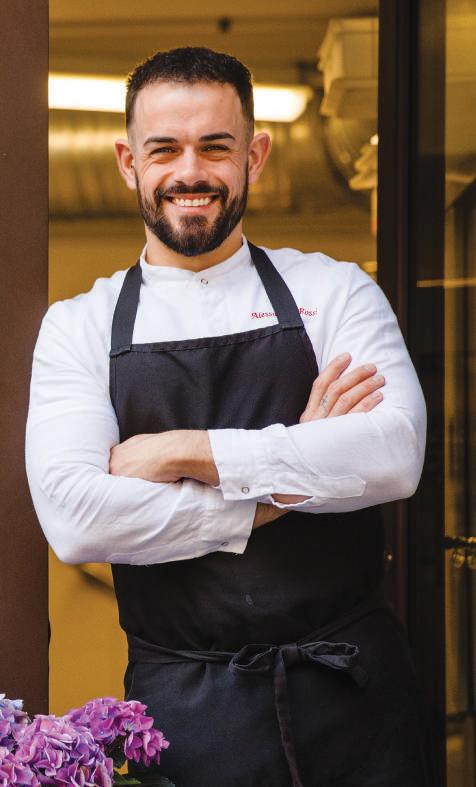
BARBAGIANNI, COLLE DI VAL D’ELSA
In 2016, at the young age of 25, Alessandro Rossi earned a Michelin Star at Villa Selvatico in Roncade, Treviso. Since 2020, he has helmed Ristorante Gabbiano 3.0 in Marina di Grosseto, securing another Michelin Star with his evocative, seafood-driven cuisine.
A graduate of the esteemed Pellegrino Artusi hospitality school in Chianciano Terme, Rossi honed his craft under Filippo Germasi at Ristorante Zafferano in Città della Pieve, immersing himself in Umbrian and Tuscan traditions. He furthered his artistry with seafood expert Stefano Ciavatti and Alessandro Dal Degan in Asiago. Partnering with Filippo Saporito at La Leggenda dei Frati— first in San Giovanni d’Asso, then at Florence’s Villa Bardini from 2014—he transformed local ingredients into dishes brimming with memory and terroir.
In his most recent effort, Rossi channels his culinary brilliance into Ristorante Barbagianni, a beacon of Tuscan innovation in Colle di Val d’Elsa. Launched in 2022, Barbagianni blends Maremma’s heritage with bold creativity, featuring tasting menus like “Visione” and “Radici” that highlight biodynamic produce, inviting diners to savor Tuscany’s essence through soulful, innovative plates.
Chef Giovanni Papi, a 37-year-old Sardinian dynamo, has carved a remarkable path through the global culinary scene. Beginning as a commis at 16 in his native Bosa, he ventured across France’s Côte d’Azur, Luxembourg, Australia, and China, absorbing diverse techniques. His Bronze Medal at the 2014 Luxembourg Culinary World Cup marked a turning point before he landed in Dubai in 2018. At Armani Hotel Dubai’s Armani/Ristorante, Papi rose from speciality sous chef to chef de cuisine, earning a Michelin Star in 2022, three Gault&Millau Toques (2022-2025), and the 2020 Rising Star Chef award.
Since June 2025, as Executive Chef and Caviar Global Ambassador at Beluga Restaurant & Lounge under Gourmet House Caviar, Papi pioneers a bold Italian-caviar fusion, aiming to elevate Dubai’s dining scene and reclaim Michelin and Gault&Millau recognition. His philosophy celebrates seasonal, regional ingredients— from humble tomatoes, to luxurious truffles— transformed with creativity and sustainability. For Papi, cooking is a bridge to culture and community, channeling his grandmother’s simple pasta into dishes that spark connection, respect, and creates and unforgettable experience.
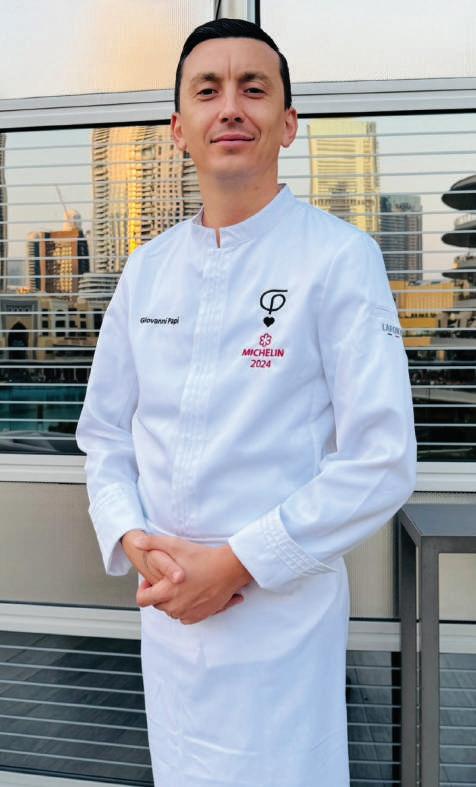

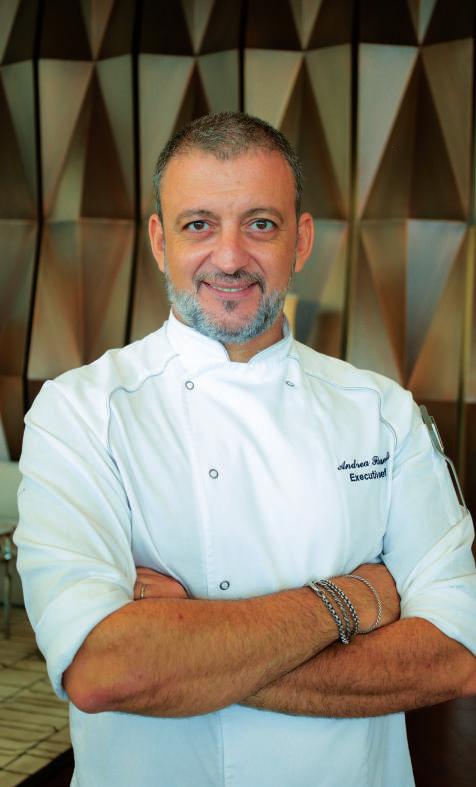
GRAND HYATT ABU DHABI HOTEL & RESIDENCES EMIRATES PEARL
Executive Chef Andrea Fioravanti, with over two decades of global expertise, crafts extraordinary culinary experiences at Grand Hyatt Abu Dhabi Hotel & Residences Emirates Pearl, overseeing five diverse outlets—Italian, Arabic, Mediterranean, allday dining, and banquets for up to 1,000 guests. Previously, he led culinary operations at Waldorf Astoria Dubai Palm Jumeirah, managing seven venues, including the Michelin-recommended Social by Heinz Beck, and at Galaxy Macau’s Michelin-starred Terrazza Restaurant. His journey spans prestigious kitchens in Spain, Qatar, Italy, England, Taiwan, and Dubai, shaping a worldly yet authentic approach.
Fioravanti’s cuisine blends time-honored techniques with modern flair, emphasizing quality, consistency, and seasonal ingredients. His passion for culinary heritage shines through in dishes that respect tradition while embracing innovation, reflecting the cultures of each region he’s called home. For Andrea, cooking transcends the plate—it’s about stirring emotions and creating lasting memories. His dynamic leadership and creative vision transform every dish into a personal, evocative journey, inviting guests to savor not just flavors but moments that linger long after the meal ends.
Dimosthenis Balopoulos, a trailblazing Greek chef, found his culinary spark under the guidance of Christoforos Peskias, igniting a lifelong devotion to Mediterranean flavors. His global journey took him to revered kitchens like Nobu Matsuhisa and Heston Blumenthal’s Michelin-starred Dinner in London, followed by transformative stints at The Fat Duck and Oslo’s three-Michelin-starred Maaemo, where he honed his craft in avant-garde gastronomy. Returning to Greece in 2016, Dimos redefined excellence at Calypso in Elounda Peninsula Hotel, earning the Golden Cap Gastronomy Award, and later secured accolades for Frater and Soror - FBC, cementing his reputation as a culinary innovator. Since 2020, serving as the heart of Kaliya, Dimos has celebrated Greece’s rich terroir, partnering with premier local suppliers to source vibrant, sustainable ingredients—think sun-drenched tomatoes, tangy feta, and wild herbs kissed by the Aegean breeze. His cuisine reimagines Greek classics with daring, modern flair, weaving global influences into dishes that captivate with their artful balance and vivid presentation. At Kaliya, every plate reflects his team’s dedication to warm, authentic hospitality, inviting diners on a sensory voyage that honors Greece’s culinary heritage.
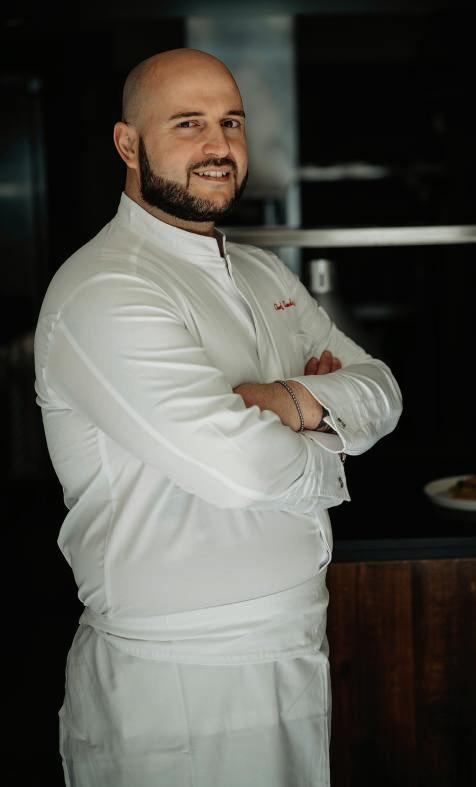
TRATTORIA IL PESCATORE, GARDONE RIVIERA
Claudio Santini, born in 1991 in Civitavecchia, Italy, found his culinary spark in the warmth of his grandmother Elena’s kitchen, where Sunday family feasts unfolded with dishes and desserts crafted alongside his mother and aunt Cinzia. At 15, he dove into the professional world as a dishwasher, fueled by an unwavering drive to cook. By 16, he was a commis, and by 21, a chef, swiftly rising through roles that shaped his craft. A summer leading a kitchen in Sardinia honed his leadership, followed by sous chef stints at Trentino’s Hotel Alpi and Astoria. He took command at Bressanone’s 4-star Hotel Dominik, then ventured to Millau, France, to lead Coise restaurant, mastering banqueting and catering. On the Côte d’Azur, he shaped Hotel Lilou’s culinary identity in Hyères, and in Albania, he launched the 5-star Hotel Vlora Priam, Affiliated by Meliá.
Now, as Executive Chef at 5-star Grand Hotel Fasano in Gardone Riviera since early 2025, Santini oversees Trattoria Il Pescatore and Magnolia bistro. His cuisine, a vibrant reflection of his spirit, reimagines classics with bold, global influences, transforming each dish into a personal story that captivates and delights.
Chef Giorgio Diana, a Sardinian culinary innovator, trained at Munich’s IHK school, mastering German, French, Japanese, and molecular techniques while earning his instructor license. His early career at Sofitel in Sardinia under Giuseppe Diana led to roles with Michelin-Starred chefs Bobby Breuer and Shane McMahon, at Shane and Les Cuisiniers in Munich. With Rixos Premium Hotels in Turkey and Russia, he led Italian restaurants, earning “Cook of the Year” at Rixos Mryia in Crimea (2015-16) and Best Chef Awards nominations. A Maître Rôtisseurs member and WACS judge, Diana joined Egypt’s Pier 88 Group as Corporate Executive Chef, securing “Best Restaurant in Egypt” three consecutive years and “Best Head Chef Africa” in 2019. His Solaya in Amman became Jordan’s top restaurant in 2019. Partnering with Dr. Ahmed el Beltagy, he launched Lucida in Cairo and Sahel. Since July 2023, he’s Executive Chef at Casa Fontana in Taiwan’s Eda Royal Hotel, fusing Mediterranean roots with Asian accents. As CEO of Dinner Incredible, his “Play global, eat local” events champion local farms. In 2022, he ranked #28 in 50 Top Italy’s Best Italian Chefs, crafting bold, sustainable plates.
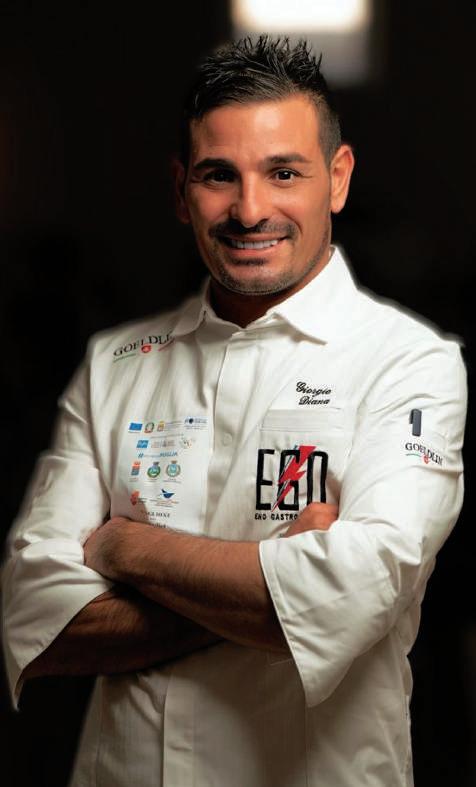
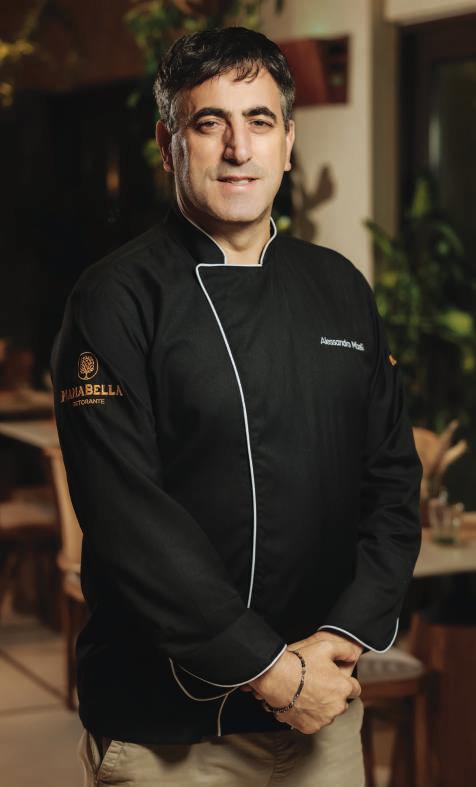
MAMA BELLA RESTAURANT, DUBAI
Alessandro Miceli, a Sicilian-born chef with over three decades of culinary mastery, weaves Italian heritage into every dish, blending global vision with heartfelt tradition. From Northern and Southern Italy to Central Europe and a decade in England, Miceli’s travels have shaped his craft, leading to acclaimed openings of Michelin-starred and independent restaurants, private residences, and exclusive events. For nearly 20 years, he’s called the UAE home, championing authentic Italian cuisine by importing artisanal ingredients that tell Italy’s untold stories.
His latest venture, Mamma Bella in Dubai, transcends dining—it’s a tribute to the women who shaped him: his mother, grandmothers, and aunts. More than a restaurant, it’s a cultural haven where home cooks worldwide share recipes, rituals, and wisdom, preserving heritage for future generations. Miceli’s vision at Mamma Bella celebrates the soul of Italian cooking—authentic ingredients, timeless traditions, and the joy of shared meals. Miceli transforms every plate into a narrative, inviting diners to experience the essence of Italy through flavors, memories, and community. His work doesn’t just feed—it inspires, connecting cultures through the universal language of food.
Andrea Vignali, a trailblazing Italian chef from Milano/Brianza, redefines Italian cuisine in Australia as the founder and executive chef of Melbourne’s Al Dente Enoteca, a standout among the city’s Top 50 Restaurants and Australia’s Top 25 Italian eateries. Trained in Michelin-starred kitchens, Vignali’s passion for handmade pasta and seasonal produce sparked a pasta delivery concept during Melbourne’s lockdowns, evolving into a celebrated restaurant. His culinary ethos fuses classical precision with vibrant, modern flair, earning accolades from The Age Good Food Guide, Broadsheet, and Gourmet Traveller. A culinary influencer with over 200 million social media views, Vignali collaborates with luminaries like MasterChef winners and chefs Adam D’Sylva and Caterina Borsato. As Australian Chef Ambassador for Prosciutto di Carpegna, he champions Italy’s rich gastronomic heritage. His charisma draws global icons like Nigella Lawson and local stars like Carrie Bickmore to Al Dente Enoteca, where industry giants from Vue de Monde and Crown Casino also applaud his craft. With wit and innovation, Vignali isn’t just cooking— he’s igniting a movement, shaping the future of Italian cuisine in Australia with every artful dish.
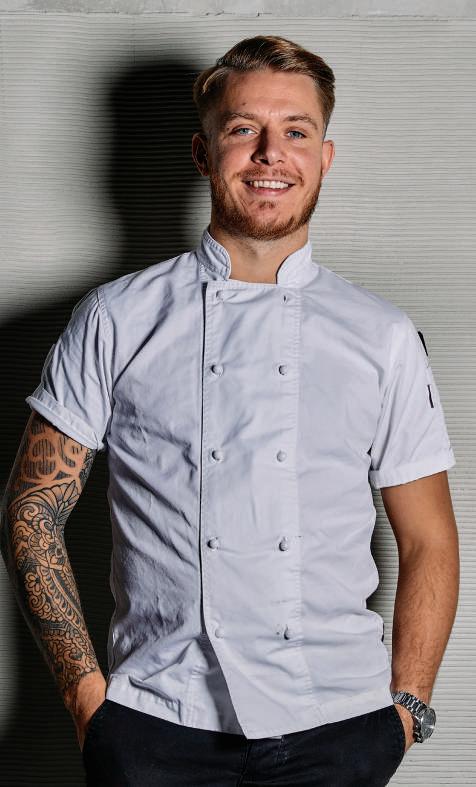
MAURIZIO BUFI
IL FAGIANO RESTAURANT, GARDONE RIVIERA
Ingredients
Lemons
2 lemons
Water, as required
50 g sugar
½ vanilla bean
Method
Wash the lemons thoroughly. Blanch them whole three times from cold water, changing the water each time. After that, leave them in 1 L of water at a controlled and constant temperature of 60°C, for 4 hours, with the sugar and vanilla. While waiting, pierce them with a toothpick so that all the juice comes out. After the indicated time has elapsed, extract the citrus fruits from the liquid and, with the help of a potato peeler, remove 40 g zest. Cut the latter à la julienne. Divide the lemons in half and, with a spoon, scoop out 50 g pulp. Discard the seeds. Reserve the zest and pulp aside.
Risotto
360g Carnaroli rice
1 ltr vegetable broth
1 knob of butter
50g grated Parmigiano Reggiano
2 tbsp Garda extra virgin olive oil
Salt for seasoning
Method
Toast the rice in a pan with the previously processed lemon zest. the vegetable stock a little at a time and cook the risotto for 12 minutes. Two minutes from the end of cooking time, add the lemon pulp kept aside. Remove the risotto from the heat. Cream with a knob of butter, Parmigiano Reggiano, Garda olive oil, and adjust the salt.
Cover and, to allow the rice grains to fatten and draw out the starch they contain, let stand for a minute.
Finish
5g licorice powder
150g burrata
Spread the risotto on the plate. Decorate with licorice powder and burrata quenelles.
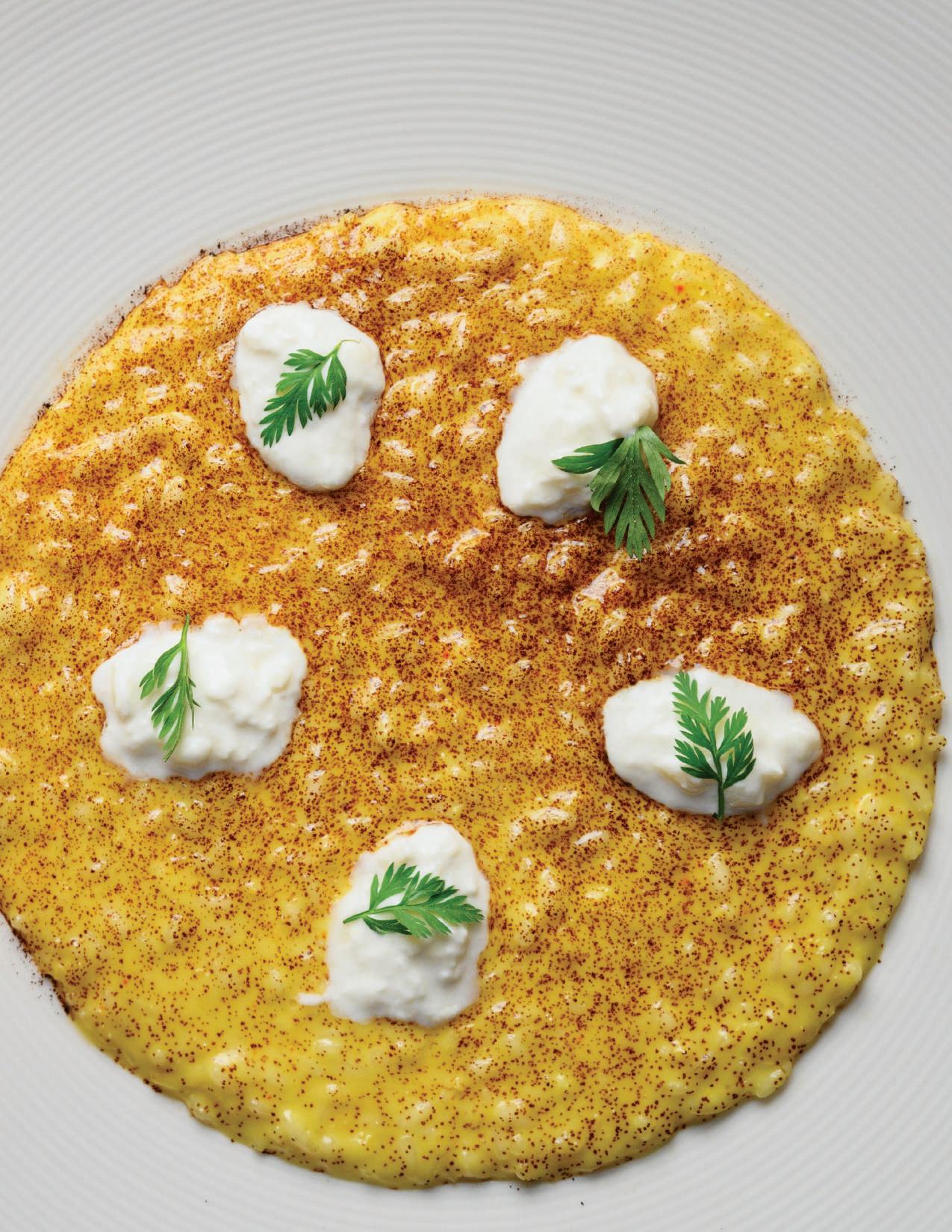
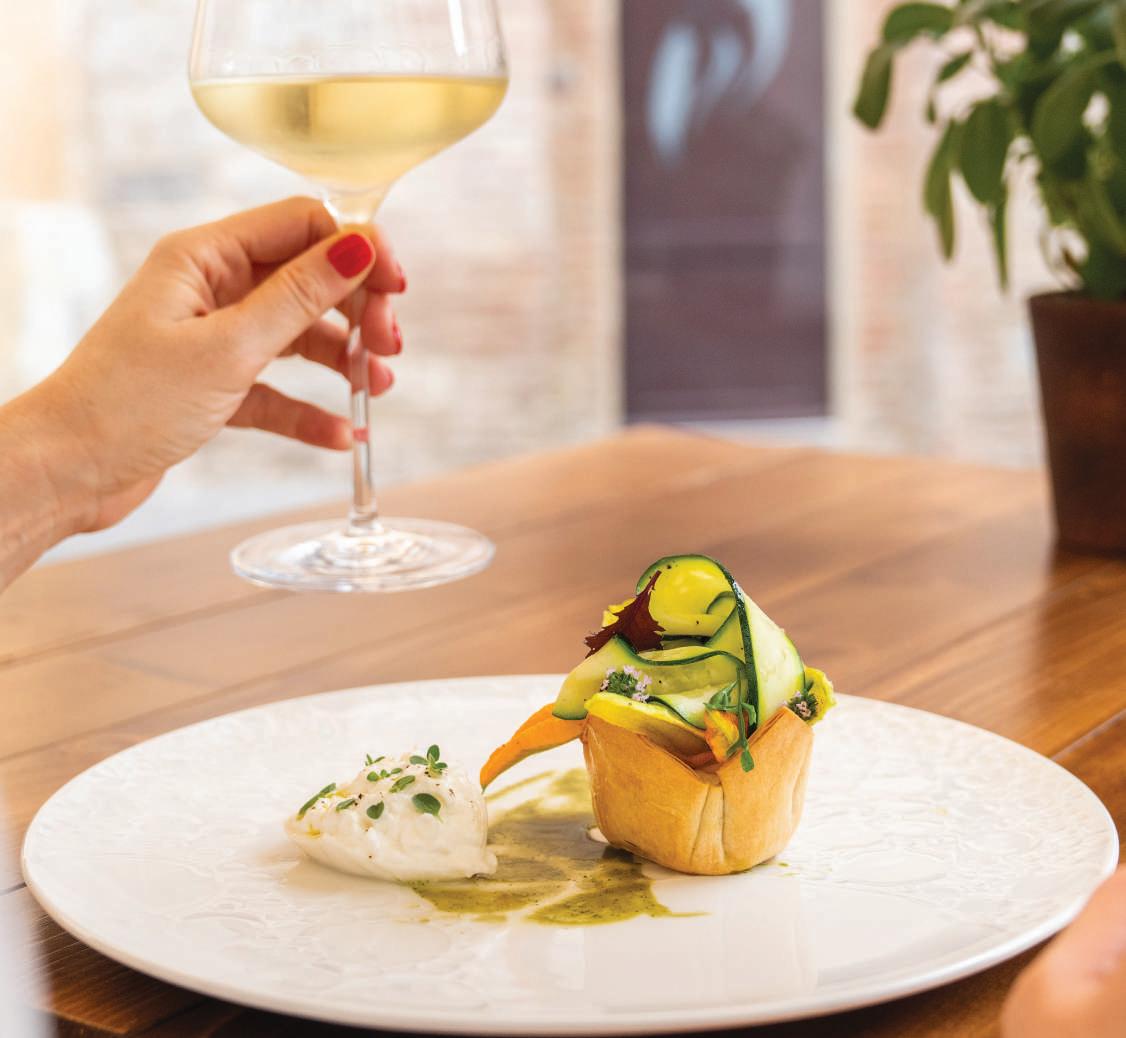
Chef Alessandro Rossi offers a refined reinterpretation of zucchini in a dish that explores the dialogue between texture, aroma, and seasonality. The tartlet, made from lightly crisped filo pastry, features a dual preparation: cooked zucchini blended into a delicate mousse of cheese and whipped egg white, and raw zucchini, thinly sliced, adding a refreshing crunch. The dish is completed with burrata, seasoned with thyme and marjoram, and a light mint pesto. It’s a recipe that reflects both the rhythm of the seasons and chef Rossi’s contemporary culinary vision, elevating every plant-based element sourced from the restaurant’s biodynamic garden.
Ingredients
Tartlet Shell
100g filo pastry
20g butter
Method
Cut the filo into 12 squares, approximately 12 cm per side. Layer them in sets of three, brushing each sheet with melted butter (previously softened in the microwave). Place each set into an aluminum mold and bake at 180 °C for 10 minutes.
Cooked Zucchini Filling
50g egg white
50g sheep’s ricotta
30g grated Grana Padano
2 zucchinis
1 garlic clove
Extra virgin olive oil
Salt and pepper for seasoning
Method
Dice the zucchini and sauté them with a drizzle of olive oil and a clove of garlic. Season with salt and pepper, then let cool. Mix in the ricotta and grated Grana Padano. Fold in the egg white previously whipped to stiff peaks. Fill the pre-baked tartlet shells with the mixture and bake again at 180 °C for 10 minutes.
Burrata
30 marjoram leaves
3 sprigs of thyme
2 burrata balls
Extra virgin olive oil
Salt and pepper for seasoning
Method
Halve the burrata and season with olive oil, salt, pepper, and the herbs.
Mint Pesto
50g fresh mint leaves
Extra virgin olive oil
Method
Wash the mint leaves and blend with a drizzle of olive oil until smooth and light. Refrigerate until ready to use.
Raw Zucchini
2 zucchinis
Extra virgin olive oil
Salt and vinegar for seasoning
Method
Slice the zucchini lengthwise into thin strips. Season with olive oil, salt, and vinegar. Arrange on top of the warm tartlet.
Plating
Spoon the mint pesto onto the center of the plate. Place the seasoned burrata half to one side and the zucchini tartlet alongside it.
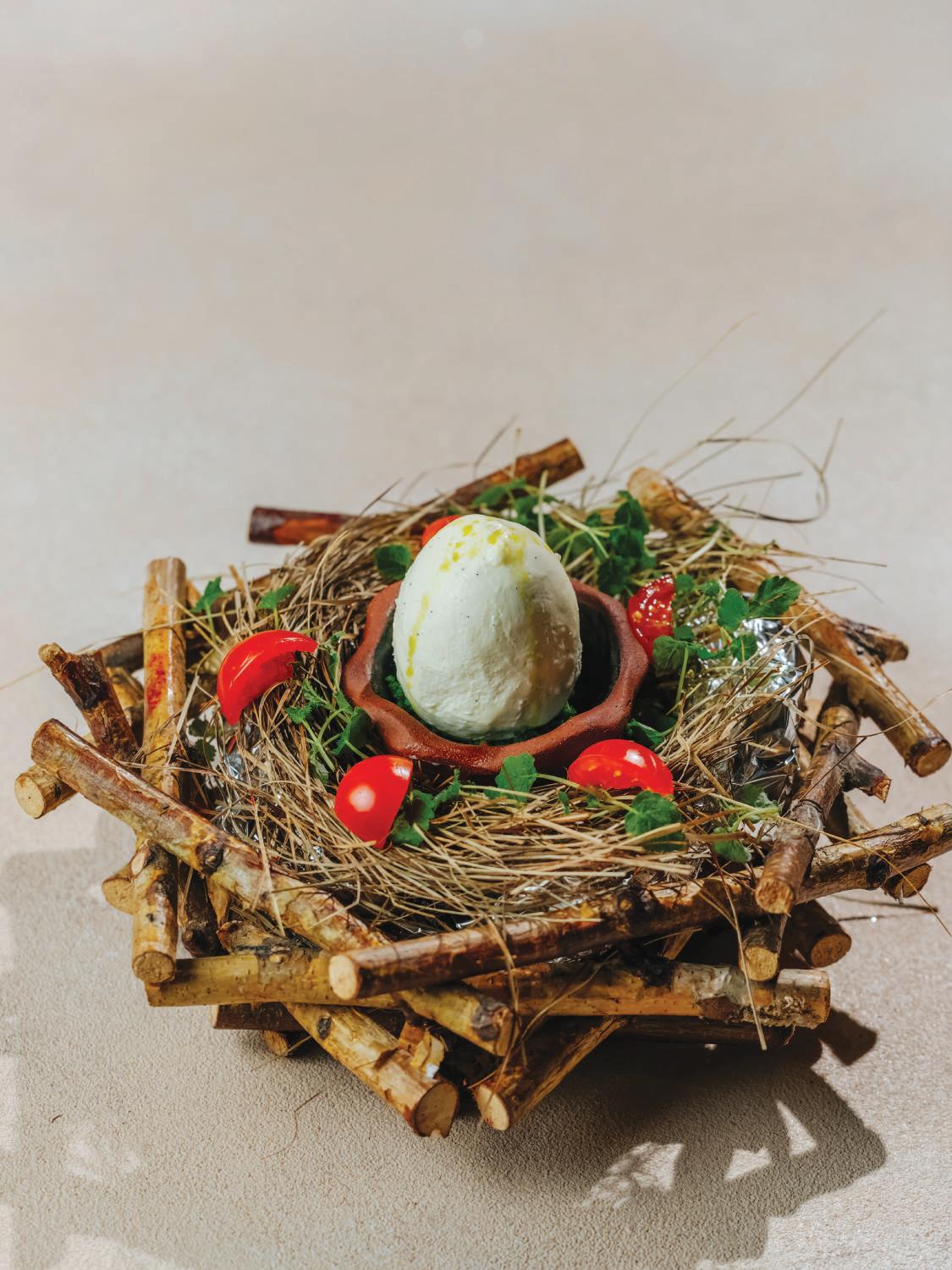
A visual and sensory illusion of an egg: a delicate shell made from burrata mousse encases a liquid heart of roasted tomato. Finished with basil powder, an extra virgin olive oil foam, and served on a bed of freeze-dried arugula. A contemporary reinterpretation of the classic Caprese, playing with textures, aromas, and temperatures.
Ingredients
Caprese Egg Illusion
For the Burrata Mousse (Shell)
200g fresh burrata, creamy center only
50g fresh cream
2g gelatin sheets, pre-ed and squeezed
Fine salt and white pepper for seasoning
Method
Blend the burrata with cream until smooth. Warm a small portion and dissolve the gelatin in it. Mix everything together, adjust seasoning, and pour into silicone egg-shaped molds. Blast chill until fully frozen for later unmolding and filling.
Roasted Tomato “Yolk”
200g datterini tomatoes
Extra virgin olive oil
Salt and a touch of sugar
Fresh thyme
Method
Cut tomatoes in half, season with oil, salt, sugar, and thyme. Roast at 100°C for 1 hour. Blend and strain the mixture. Pour into small half-sphere silicone molds (to form a drop) and freeze.
Basil Powder
Fresh basil leaves
Paper towels
Method
Dehydrator or low fan oven at 60°C
Dry the basil leaves completely, then grind into a fine powder.
EVOO Foam
100g extra virgin olive oil (medium fruity)
100g water
1g soy lecithin
Method
Emulsify oil, water, and lecithin using a hand blender. Use a siphon to create a stable foam. Scoop and serve fresh on top at plating.
Freeze-Dried Arugula Base
Fresh arugula
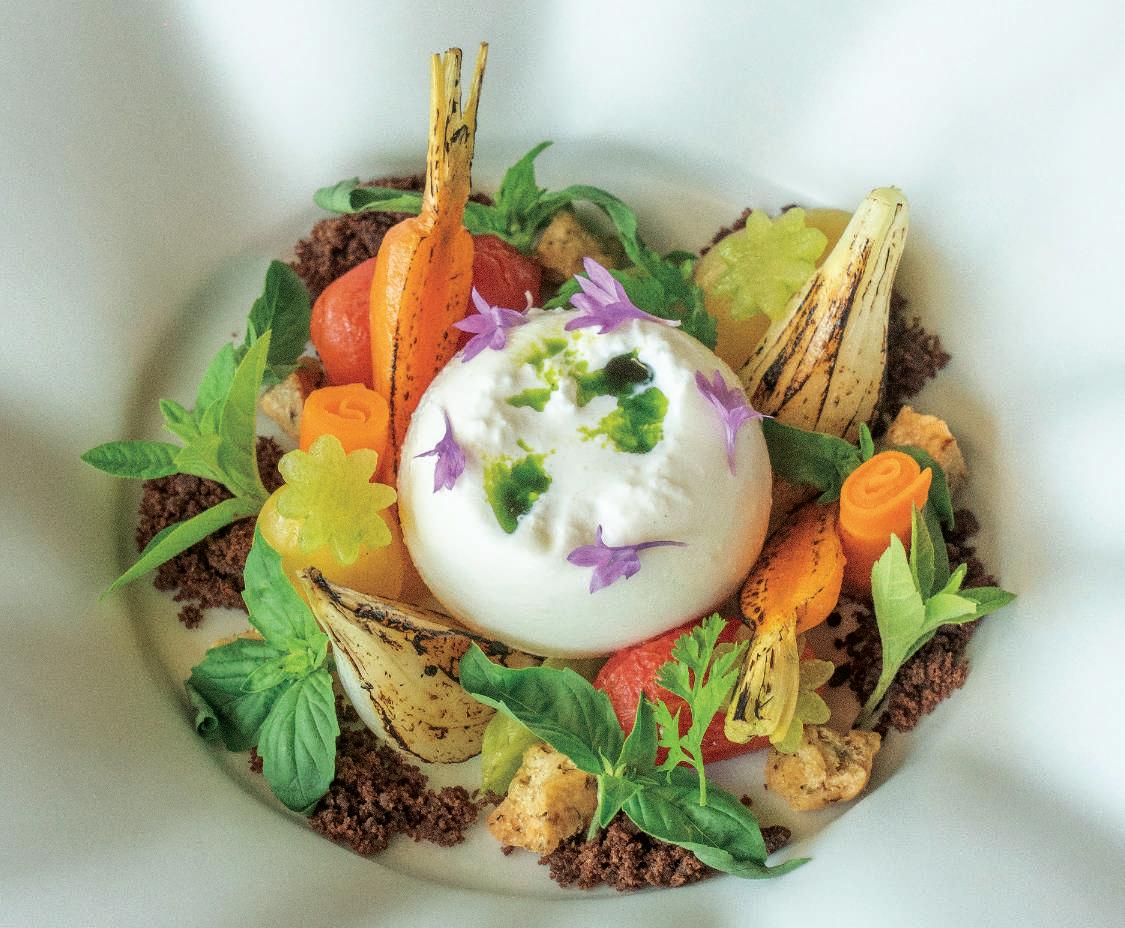
Confit Tomatoes
8 red cherry tomatoes
2g Garlic
2g oregano
Salt for seasoning
2g powdered sugar
5 ml olive oil
Method
Clean and wash the cherry tomatoes. Using a paring knife, score the skin. Blanch them for 30 seconds in boiling water and immediately cool in ice water. Peel the tomatoes and place them in a baking dish with salt, powdered sugar, garlic, oregano, and olive oil. Cook in the oven at 90°C (194°F) for about 3 hours.
Sweet And Sour Tomatoes
500g water
250g sugar
200g vinegar
8 yellow and green cherry tomatoes
Method
In a saucepan, prepare the vinegar mixture by boiling water, sugar, and vinegar. Blanch the cherry tomatoes and immediately transfer them to ice water. Peel and immerse them in the cold vinegar mixture.
Baby Carrots
5 baby carrots
20g butter
Salt for seasoning
1 sprig of oregano
Method
Peel the carrots and trim the greens, leaving about 2 cm. Place them in a vacuum bag with salt, butter, and oregano. Steam for about 7 minutes at 100°C.
Sweet And Sour Carrots
2 carrots
500g water
250g sugar
200g vinegar
Method
Peel the carrots, shape them into squares, and slice them into sheets about 2mm thick. In a saucepan, prepare the vinegar mixture with water, sugar, and vinegar. Vacuum-seal the carrot slices and let them marinate.
Cucumber Osmosis
1 cucumber mint oil
Salt for seasoning
Method
Peel the cucumber, slice it thinly with a mandoline,
cut into rounds using a cookie cutter, and vacuumseal with mint oil.
Lemon Paste
5 Lemons
10g Sugar
Water
Salt for seasoning
Method
Peel the lemons and blanch the peels three times, starting with cold water. Clean the lemon flesh and weigh it.
In a saucepan, prepare a syrup with a 1:1 ratio of lemon flesh weight, and cook for about 30 minutes. Blend the mixture using a blender and adjust salt. Strain through a chinois.
Olive Earth
1 jar Tapenade
Method
Drain the tapenade overnight. Spread it on parchment paper and dehydrate. Blend using a blender.
Taralli Crumble
500g All-purpose flour
175g White wine
150g Extra virgin olive oil
15g Salt
15g Oregano
Method
Combine all ingredients in a bowl and knead until smooth and homogeneous.
Divide into portions, flatten on a baking sheet. Steam for 15 minutes at 100°C, then bake in a static oven at 180°C for 15 minutes, and finally at 160°C for another 15 minutes.
Once all the vegetable elements are composed, place the burrata cheese in the center.
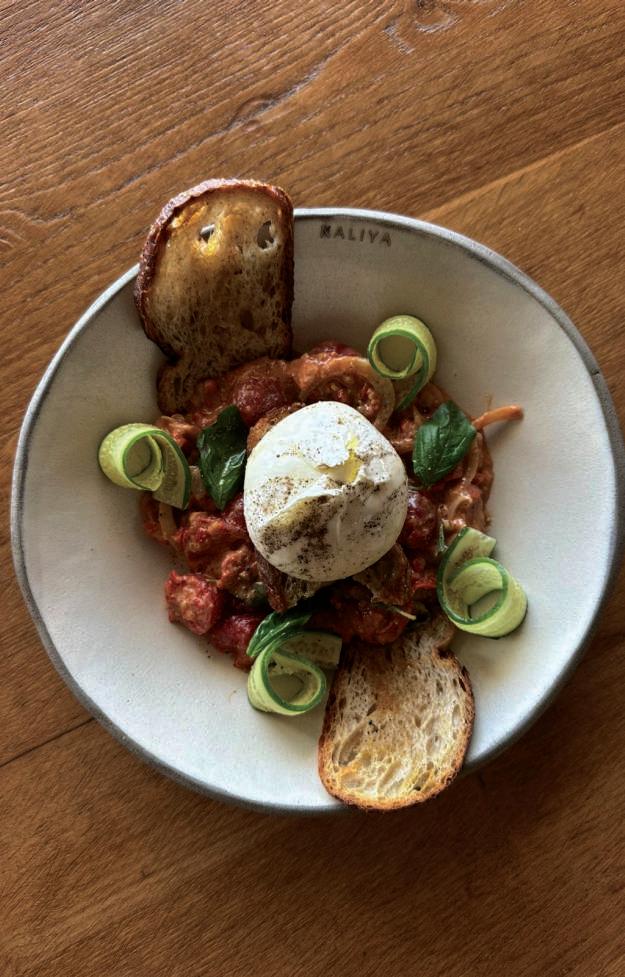
Cherry tomatoes, roasted onions, red peppers, basil, cherry romesco and sourdough breadcrumbs.
Cherry Confit
200g cherry tomatoes, cut in half
380g extra virgin olive oil
800g garlic cloves, peeled, for the garlic confit
25g fresh basil
15g fresh thyme
Method
Preheat the oven to 120°C (fan).
Place the halved cherry tomatoes on a baking tray lined with parchment paper, cut side up.
Add the olive oil so that they are almost completely covered. Add the garlic cloves (800 g), basil, and thyme to the same pan.
Bake for 1.5 to 2 hours at 120°C, until the ingredients have grown and softened, without taking on any color. Leave to cool in the oil.
Separate
150g cherry tomato confit for the romesco
20g of garlic confit for the romesco
12g of basil and 5g of thyme from the same dish for the romesco
Garlic Confit
800g peeled garlic
400g olive oil
2-3 sprigs of thyme and basil
Method
Place all ingredients in a small saucepan. Simmer on very low heat for 1 hour until the garlic softens without browning. Store in oil in the refrigerator for up to 1 week.
Cherry Romesco
30g pomegranate molasses
150g cherry tomato confit, without the skin
3g smoked paprika
75g roasted hazelnuts, without the skin
20g garlic confit, from the above recipe
12g basil and 5g thyme from the confit
Extra virgin olive oil, as required
Method
Place all ingredients in a blender. Blend on high speed until thick and creamy. Add olive oil as needed to achieve a smooth consistency that holds its shape. Store in the refrigerator.
Garlic Sourdough Crackers
150g sourdough starter
1/2 tsp vinegar
1 tsp garlic powder
1 tsp olive oil
1/4 tsp salt
Method
Mix all ingredients until you have a pliable dough. Let it rest for 20 minutes.
Roll out very thinly (2 mm) between sheets of parchment paper.
Cut into triangles or strips. Bake in a preheated oven at 160°C for 20-25 minutes until crisp and golden brown.
Ingredients - Per Serving
150g fresh cherry tomatoes, cut in half
1 whole burrata
1/2 wood-fired onion, peeled and sliced
1 wood-fired Florina pepper, peeled, filleted 1/2 fennel, very thinly sliced
10 fresh basil leaves
4 cucumber slices, cut lengthwise
1.5 tbsp cherry romesco
Olive oil
salt and freshly ground pepper for seasoning
3 garlic sourdough crackers
Assembly
Place the burrata in the center of a shallow plate or bowl. Arrange the chopped cherry tomatoes, onion, pepper, fennel, and cucumber slices in a circle around it. Season with salt and freshly ground pepper.
Drizzle with olive oil, add 1.5 tablespoons of cherry romesco sauce, sprinkle with basil leaves and serve with 2-3 sourdough crackers.
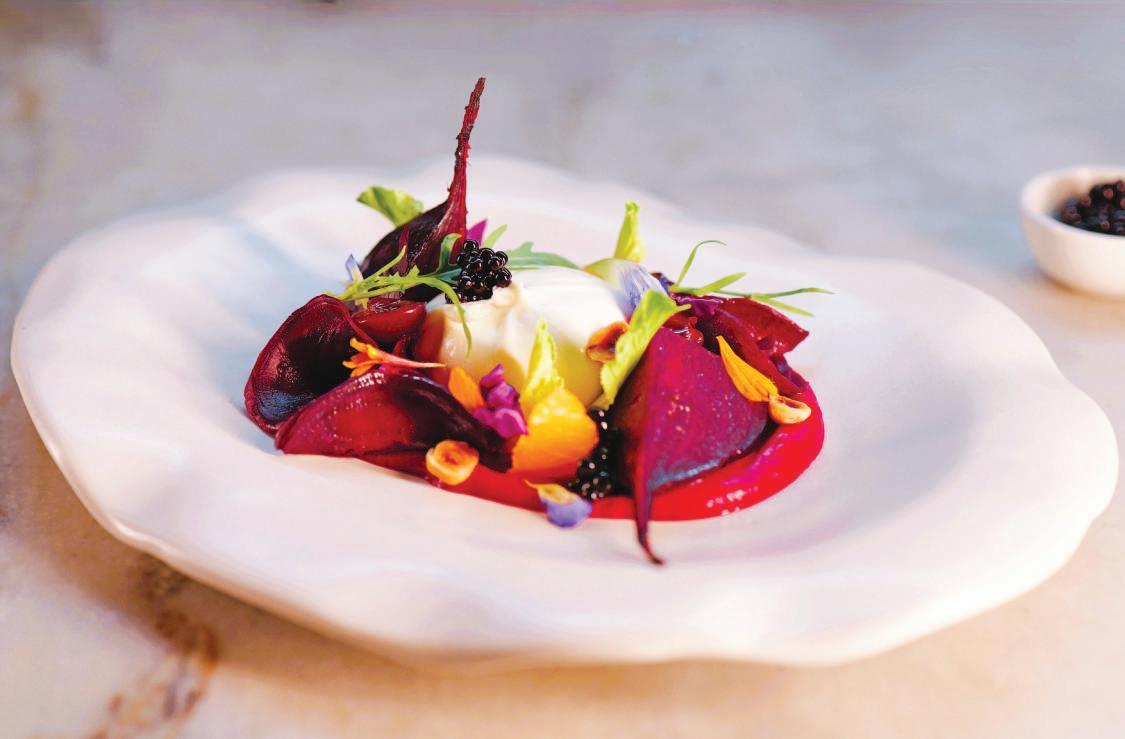
Orange-Raspberry Dressing, Pickled Cherries & Blueberry Caviar. A symphony of textures and vibrant summer flavors, this salad celebrates earthy beets, creamy burrata, citrus brightness, and a touch of modernist flair.
Reduce the orange juice over low heat until it thickens down. Allow to cool.
Ingredients
Main Salad
80g burrata cheese
160g beetroot
60g fresh cherries
20 ml orange juice
30g raspberry purée
2g salt
2g black pepper
90g fresh orange
5g hazelnuts, toasted
2g micro pea shoots, for garnish
Blueberry Caviar
100g blueberry purée
1g agar agar
Neutral oil, chilled for setting
Orange-Raspberry Dressing
250 ml orange juice
25 ml apple cider vinegar
3g Dijon mustard
100g fresh orange, zest and juice
100 ml olive oil
6g togarashi powder
2g saffron strands
In a blender, combine the reduced juice with vinegar and mustard. Slowly drizzle in olive oil to emulsify. Finish with orange zest, juice, togarashi, and saffron. Blend briefly to combine and set aside.
Coat the base of a baking tray with salt. Place the whole beets on the salt bed and roast in a preheated oven at 180C for 30 minutes. Once cooled, peel and cut into wedges. Blend a portion of the beetroot with raspberry purée to a smooth consistency for plating.
Segment the fresh orange and pickle the cherries lightly.
For the caviar, heat blueberry purée with agar agar until dissolved. Use a syringe to drop the mixture into chilled oil, forming small pearls. Rinse pearls gently in cold water and set aside.
On a plate, spread the beet-raspberry purée as a base. Arrange beet wedges, orange segments, and pickled cherries. Gently place the burrata in the center. Drizzle with the citrus dressing, sprinkle toasted hazelnuts and beet dust, and finish with microgreens and blueberry caviar.
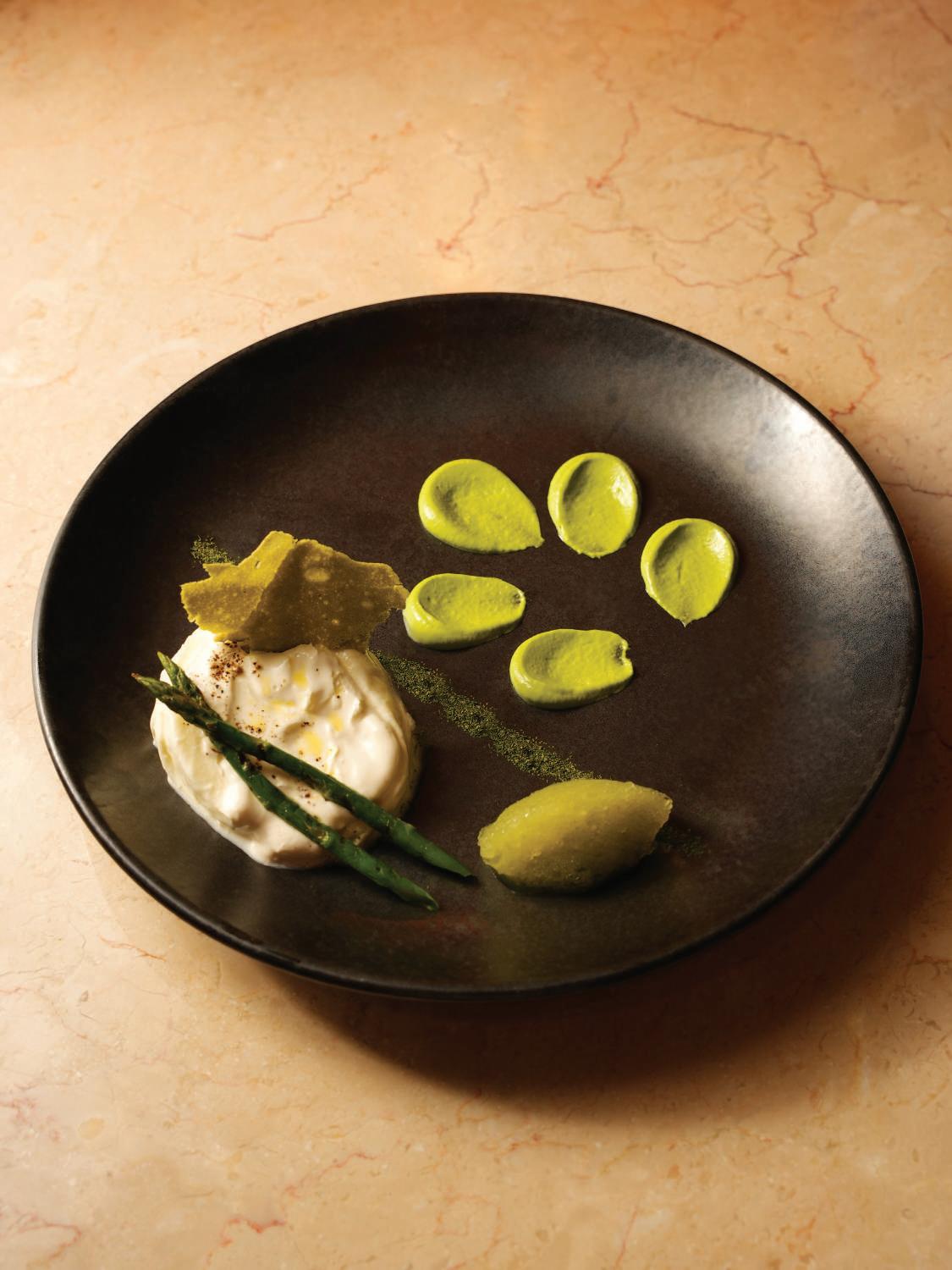
Ingredients
Asparagus Mayonnaise
75 ml soy milk
150 ml refined oil
25g asparagus purée
10g spinach purée
5g mustard
Salt and pepper for seasoning
Method
In a food processor add the soy milk and mustard. Drizzle in the oil slowly to create a thick emulsion.
Fold in the asparagus and spinach puree, the color should be a vibrant green. Keep refrigerated
Asparagus Sorbet
400 ml asparagus juice
80g liquid glucose
5g salt
80g sugar
Method
Put all ingredients in a saucepan and bring to a boil.
Put into the freezer overnight.
Blend in a food processor till ice crystals are removed. Put back into the freezer
Asparagus Meringue
300g chickpea water, aquafaba
10g asparagus powder
5g sugar
Method
Using an electric whisk beat the chickpea water and sugar till stiff peaks.
Gently fold in the spinach powder till evenly incorporated.
Put the mixture onto a tray lined with silicone mat. Using an offset spatula spread it evenly to 2mm thickness.
Bake at 95C for 35 minutes.
Once dry, cut into shards and remove.
Assemble
On a plate pipe the asparagus mayonnaise. Place the burrata, seasoned with salt, pepper and olive oil.
Place 2 shards of the asparagus meringue, and grilled asparagus.
Creamy, indulgent, and fresh — this Burrata Cheese Salad brings together smoky cherry tomatoes, crisp arugula, dots of basil pesto, and edible flowers for a plate that’s as vibrant as it is balanced. The dish is topped with toasted pine nuts and served with a slice of hot garlic bread — the perfect comfort bite with a hint of rustic elegance
Ingredients
1 burrata cheese
100g cherry tomatoes
20g fresh basil
10g fresh oregano
50g basil pesto
20g balsamic reduction
5g pine nuts
2g crushed black pepper
5 edible flowers
80g arugula leaves
1 slice of garlic bread
30g garlic butter
Salt for seasoning
Method
Smoky Tomatoes
Heat a pan until it starts to smoke.
Add a little oil and toss in the cherry tomatoes on high flame to create a smoky char.
Add chopped garlic and sauté until fragrant. Finish with fresh herbs (basil, thyme, oregano), salt, and crushed black pepper. Let the mixture cool.
Assemble
Soak the arugula leaves in ice water to crisp them up.
In a salad bowl, place the smoky tomato mixture, leaving space in the center.
Shape the arugula leaves around the tomatoes to resemble a flower.
Place the Burrata cheese in the center.
Add 4-5 dots of basil pesto in a circular pattern around the cheese.
Garnish with toasted pine nuts, edible flowers, and crushed black pepper.
Drizzle balsamic reduction over the Burrata and leaves.
Serve with a warm slice of garlic bread.
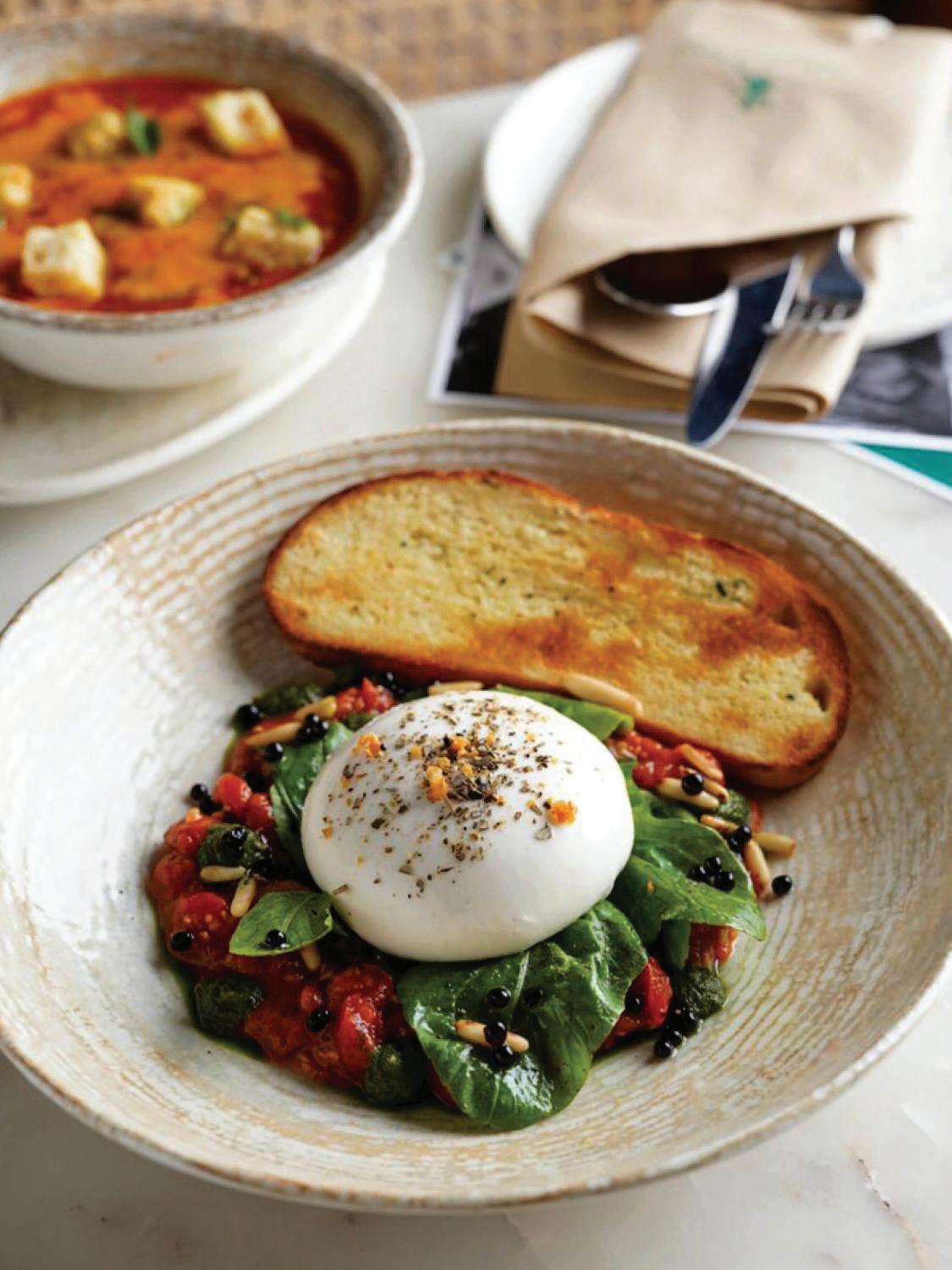
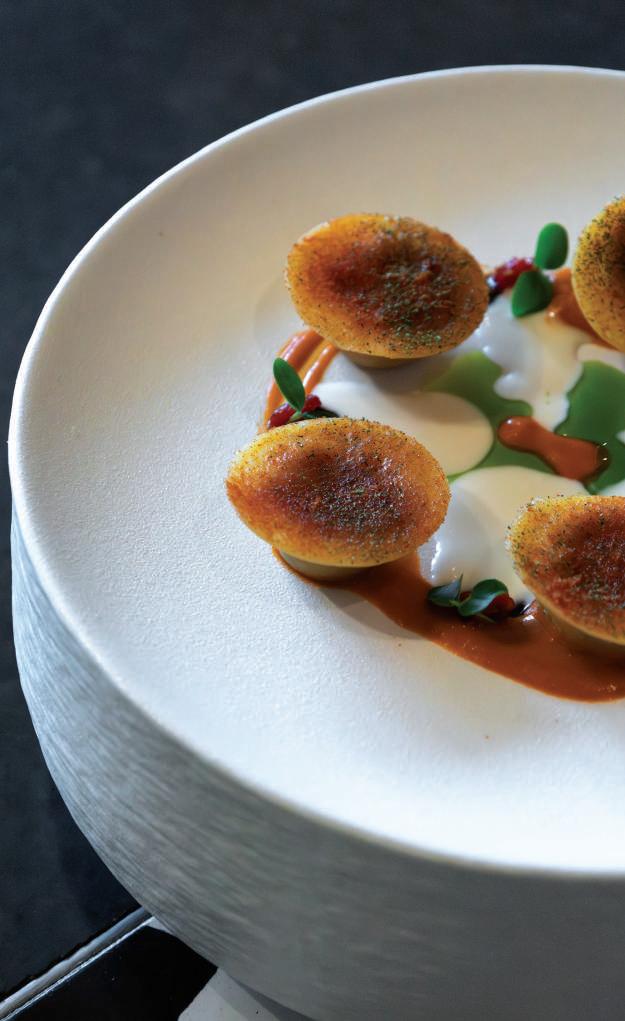
Ingredients
Semi-Dried Tomatoes
1kg datterini tomatoes
40g sugar
50g Maldon salt
20g garlic
100 ml olive oil
5g thyme
Basil & Tomato Powder
30g fresh basil leaves
200g tomatoes, for drying
Basil Oil
100g basil leaves
30g spinach leaves
250 ml corn oil
Filling
700g semi-dried tomatoes, diced
500g burrata cheese
600g béchamel
5g garlic oil
2g pepper
6g fresh basil
Burrata Sauce
400g burrata
200g milk
220g cream
Datterino Sauce
800g datterino tomato
80g white onion
20g garlic
50g olive oil
Pasta Dough
400g egg yolk
500g semolina
5g salt
For 1 portion (5 bottoni)
70g filling
40g burrata sauce
60g datterino sauce
6 ml basil oil, few drops
5g basil and tomato powder
Method
Semi-dry the tomatoes
Peel, marinate, and dehydrate the tomatoes for
10 hours at 50°C.
Powders
Dry basil and tomatoes, grind into fine powder.
Basil oil
Blanch basil, shock, blend with oil, strain.
Filling
Mix the diced semi-dried tomatoes with burrata, béchamel, garlic oil, basil, and pepper.
Sauces
Burrata - blend with hot milk and finish with cream. Datterino - cook the onions and garlic in olive oil, add the tomatoes and cook for 10 minutes. Blend smooth.
Pasta Dough
Mix the egg yolk, semolina into smooth dough and let it rest for 30 minutes. Roll into thin sheets. Pipe filling, cut, and close the bottoni
Assemble
Cook pasta in salted boiling water for 4 minutes.
Plating
Dust with basil and tomato powder. Spoon the datterino sauce as the base. Place 5 bottoni and add the burrata sauce. Add drops of basil oil and garnish with micro basil or fresh basil and pinch of balsamic reduction.
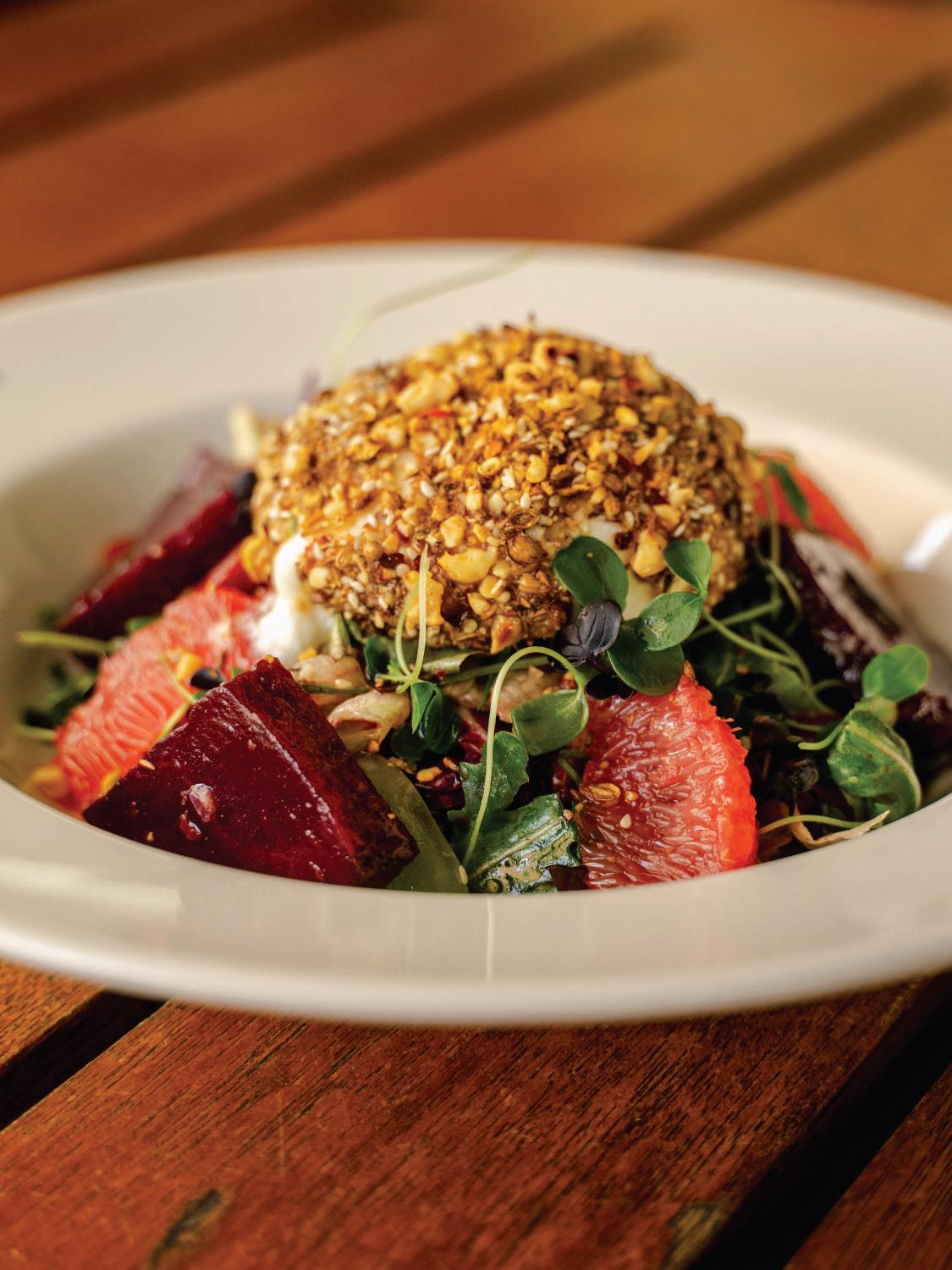
Ingredients
Roasted Beetroot & Dukkha Spice Burrata Salad
150g roasted beetroot
60g mixed salad leaves
6 grapefruit segments
30g candy cherry tomatoes, halved
40g blueberry vinaigrette, recipe below
Salt & pepper to taste
5g microgreens
125g burrata, dusted with dukkha spice and deep-fried
Method
In a bowl, mix roasted beetroot, salad leaves, grapefruit, tomatoes, and blueberry vinaigrette.
Season with salt and pepper to taste.
Transfer to a serving bowl
Top with the fried dukkha burrata.
Garnish with microgreens and serve.
Roasted Beetroot
150g raw beetroot, peeled and halved
1 tsp olive oil
1 small garlic clove, crushed
1 small sprig rosemary
1 small pinch Maldon salt
1/4-star anise
1 clove
1 green cardamom pod
2g cinnamon stick
Method
Preheat oven to 180°C
Toss beetroot with all ingredients.
Place on a baking tray lined with foil or parchment.
Roast for 45–60 minutes, or until tender.
Cool slightly before using in salad.
Blueberry Vinaigrette
10g frozen blueberries
7g orange juice
A pinch of orange zest
12g honey
Pinch of ground cinnamon
25g white balsamic vinegar
120g olive oil
Salt and black pepper to taste
Method
Simmer blueberries, orange juice, zest, honey, and cinnamon in a small saucepan until soft.
Mash and strain through a fine sieve.
Whisk strained juice with vinegar and olive oil.
Season with salt and pepper. Use 30g for one salad.
Dukkah-Spiced Fried Burrata
125g burrata
10g plain flour
1 small egg, beaten
15g dukkah spice mix (see mix below)
Vegetable oil, for deep frying
Dukkah Mix
1 tbsp toasted sesame seeds
1 tbsp crushed toasted hazelnuts
1 tbsp coriander crushed
1/2 tbsp fennel seed crushed
1/2 tbsp ground cumin
Salt and pepper to taste
Method
Drain burrata gently on paper towels to remove excess moisture.
Lightly dust with flour and dip into beaten egg. Mix the dukkha spice, then coat the burrata thoroughly.
Chill in the freezer for 10–15 minutes to help it hold its shape.
Heat vegetable oil in a deep pan to 170–180°C. Carefully deep fry the burrata until golden and crispy. Remove and drain on paper towel.
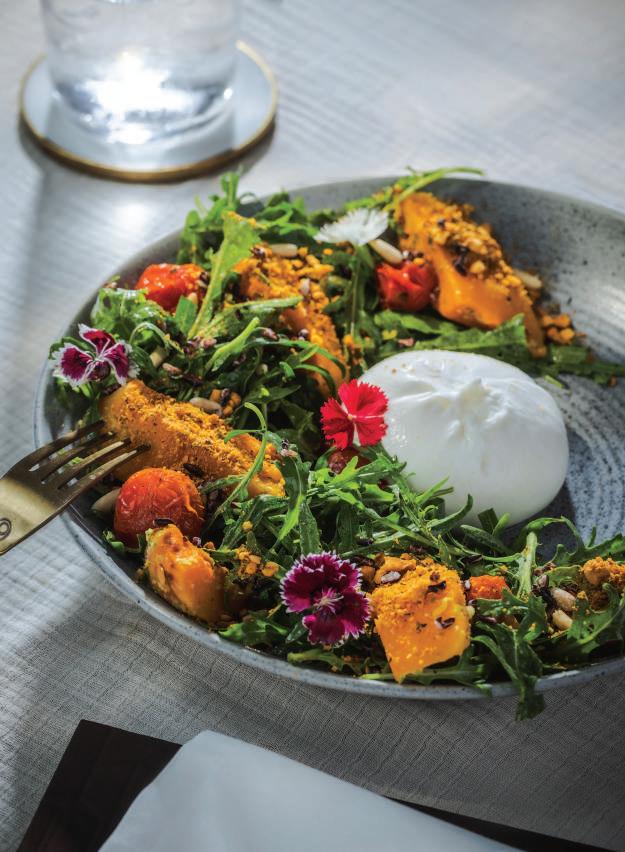
Ingredients
Butternut Squash
200g butternut squash salt for seasoning
2 tbsp olive oil
Method
Coat the butternut squash in olive oil and salt. Cover the squash with aluminum foil and roast in a preheated oven at 180 C for 60 minutes.
Green Chili Thecha
4 green chilis
1 tbsp peanuts
6 garlic cloves
1 tbsp vegetable oil
Method
Dry roast the chilies, peanuts and garlic on a nonstick pan on high heat.
Add the vegetable oil and roast the chilies, garlic and peanuts till you see slight charring on the chilies.
Grind the mix in a mixer grinder until it’s slightly coarse in texture.
Lemon Herb Dressing
1 tsp garlic
1/2 tsp thyme
1.5 tsp Dijon mustard
1 tbsp honey
115 ml olive oil
2g salt
2g black pepper
1 tbsp lemon juice
Method
In a bowl, add all the ingredients except the olive oil and lemon juice.
Slowly stream in the oil while whisking vigorously, until it’s all incorporated and well combined. The mix should be thick and not split. Slowly add the lemon juice while whisking gently. Check and adjust seasoning.
Hazelnut Dukkah
2 tbsp hazelnuts
1 tsp smoked paprika
2 tsp cumin powder
Salt for seasoning
1 tsp thyme
Method
Roast the hazelnuts on a pan or in a preheated oven until they are lightly brown and roasted. Chop the hazelnuts roughly, then add all the elements into a bowl and mix well.
Salad
120g arugula leaves
30g cherry tomatoes, halved
1 ball burrata cheese, from Spotted Cow
Fromagerie
1 tbsp pine nuts, toasted
3 edible flowers
Add the roasted butternut squash, lemon herb dressing, hazelnut dukkah and green chili thecha.
Method
In a large bowl, add the arugula, lemon herb dressing and the cherry tomatoes. Toss well to dress the leaves and tomatoes nicely. Cut the roasted butternut squash into thick slices. Coat the pieces with the thecha and half of the hazelnut dukkah.
In a deep plate, arrange the dressed arugula and tomatoes in a crescent shape. Add the burrata cheese in the middle of the plate Add the remaining dukkah on top of the salad and garnish with the toasted pine nuts and edible flowers.
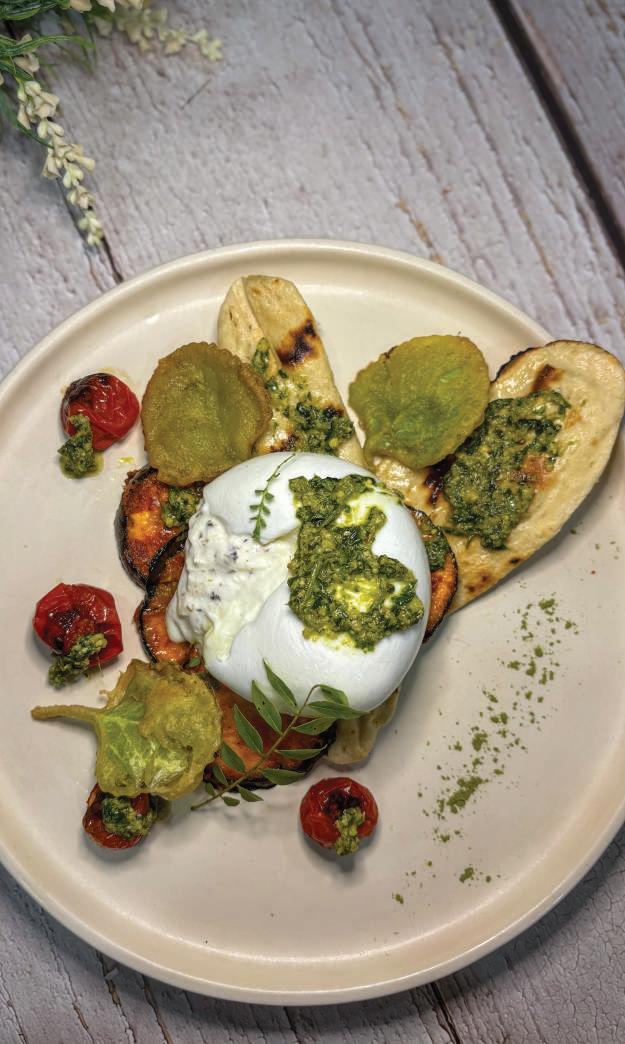
SUDHIR PAI MONARCH LIBERTY HOSPITALITY MUMBAI
Ingredients
Baby Naan (Elongated Oval Shape)
60g refined flour
15g curd
1g soda bi-carb
1g salt
Water, as required for the dough
3g oil
Curry Leaf Thecha Pesto
5g fresh curry leaves
5g fresh coriander leaves
2g green chilies
2g garlic
5g walnuts
10 ml olive oil
Salt and pepper for seasoning
Garlic Tomato Confit
40g cherry tomatoes
10 ml olive oil
2g garlic cloves, sliced
2g salt
Ova Leaf Crisp
1 large fresh ova leaf
5g rice flour
2g corn flour
2g salt
Soda water, enough for thin the batter
2g chili powder
This dish celebrates tradition and reinvention.
The rich, creamy center of fresh burrata meets the bold personality of curry leaf thecha pesto — a blend of fresh curry leaves, coriander, green chili, walnuts, and olive oil. Surrounding it are touches from the Konkan coast: smoky grilled baingan kaap dusted with spiced flour, a crisp tempura ova leaf, and slow-roasted garlic tomato confit. Plated with an elongated baby naan, microgreens, a curry leaf sprig, and a dusting of curry leaf powder, the dish is rooted in Indian identity while carrying a modern, global elegance.
Lightly roast curry leaves, coriander, and green chili for 30 seconds. Blend with garlic, walnuts, salt, pepper, and olive oil into a semi-coarse pesto.
Place tomatoes and garlic in a small baking dish. Drizzle with olive oil and salt.
Roast at 120C for 45 to 50 minutes until sweet and aromatic.
Make a thin batter with rice flour, corn flour, salt, and chili powder using soda water. Dip ova leaf, shake off excess, and fry until golden and crisp.
Grill Baingan Kaap
3 brinjal slices, cut round
3g rice flour
2g gram flour
2g salt
2g turmeric
2g chili powder
Oil, few drops for grilling
Baby Naan
Mix flour, salt, soda bi-carb, and curd.
Add water gradually to form a soft, smooth dough. Apply oil lightly, cover with damp cloth, and rest 30 to 40 minutes.
Roll into an elongated oval and cook on a hot tawa or in oven until light char marks appear.
Grill Baingan Kaap
Coat the brinjal slices in rice flour, gram flour, salt, turmeric, and chili powder.
Drizzle with oil and grill on a hot tawa until tender with light char marks.
Place the elongated naan slightly off-center on plate.
Arrange grilled baingan kaap and ova leaf crisp around it and drizzle the curry leaf thecha pesto on naan and tomatoes.
Place the burrata in center, drizzle pesto on top and scatter the garlic tomato confit.
Garnish with microgreens, curry leaf sprig, and dusting of curry leaf powder.

JAPANESE CUISINE GOODWILL
AMBASSADOR
Harry Hakuei Kosato, FRSA (Fellow of the Royal Society of Arts), a Japanese Cuisine Goodwill Ambassador, weaves his Kobe upbringing into a vibrant culinary narrative, with Kikkoman soy sauce as his cornerstone. His late father was an adventurous eater and they would always have a wide array of interesting sauces and ingredients on hand.
His passion for cooking bloomed in London’s college kitchens, where he experimented with global peers. Over decades, Kosato has crafted a signature “Balsamico, Kikkoman Soy Sauce, Honey & Whole Grain Mustard” dressing—a fusion of East and West that elevates dishes with umami depth. This versatile creation, born from his travels, enhances everything from burrata and tomato salads to sashimi and sushi rice, delighting guests worldwide.
A self-taught chef, Kosato’s approach blends Japanese precision with cross-cultural creativity, transforming simple ingredients into memorable experiences. His philosophy, rooted in the joy of shared meals, reflects a lifelong commitment to culinary exploration and hospitality. As an ambassador, he champions Japanese flavors while embracing global influences, crafting dishes that bridge cultures and spark connection, leaving a lasting impression with every thoughtfully prepared bite.
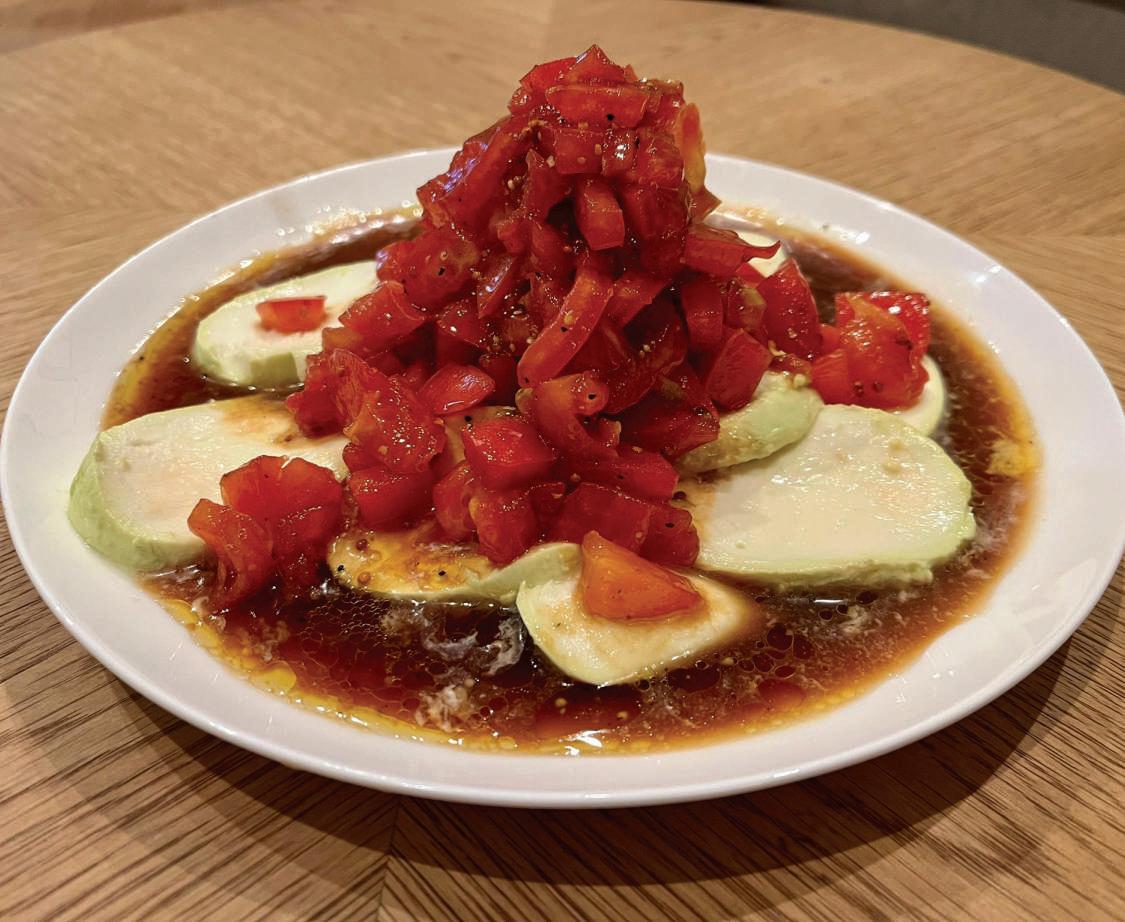
3 tbsp balsamico
3 tbsp Kikkoman soy sauce
5 tbsp olive oil
2 tbsp sesame oil
1 tsp honey or maple syrup
1.5 tbsp whole grain mustard
Salt and pepper to season
If the dressing is too vinegary, adjust with a touch more sugar or mirin to balance the acidity to your taste.
Chilled Burrata and Tomato Salad
Marinate finely diced tomatoes in the dressing, then spoon over creamy burrata slices. Chill before serving to meld the flavors, creating a refreshing, tangy starter or side dish.
Burrata Crostini
Spread the dressed burrata and tomatoes over toasted baguette slices for a sophisticated appetizer, perfect for gatherings or a light snack with a delightful crunch.
Sashimi Pairing
Elevate the dressing by pairing it with sashimigrade salmon, chutoro tuna, or hamachi slices. Drizzle the dressing over the fish or toss lightly for a harmonious blend of umami and creamy textures.
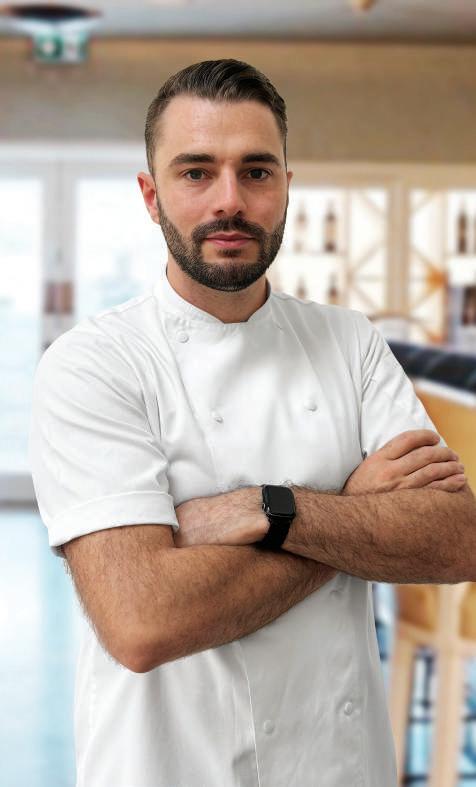
HOUSTON MASSO, BAHRAIN
Chef Jordan Houston, at the helm of Masso in Bahrain, brings a masterful touch to Mediterranean cuisine. From crafting dishes at Buckingham Palace to refining his artistry at London’s La Petite Maison and serving ultra-high-net-worth families as a private chef, Houston’s journey reflects a relentless pursuit of excellence. A New College Stamford graduate, he credits Michelin-starred mentors for instilling a philosophy of precision and innovation. His cuisine—light, fresh, and elegantly refined—transforms simple ingredients into memorable experiences, viewing each dish as a chance to forge deep connections with diners. Leading Masso’s kitchen, Houston inspires his team with a commitment to originality, ensuring every plate resonates with passion and craft.
Masso, inspired by the French Riviera and Amalfi Coast, is a culinary haven voted among the Middle East & North Africa’s top 50 restaurants in 2023. Its soulful fine dining blends contemporary Italian and Mediterranean flavors with farm-fresh ingredients, delivering vibrant, natural charm. Houston’s menus, paired with the restaurant’s captivating ambiance, creates a distinctive experience that celebrates the region’s bounty, inviting guests to savor moments of joy in every bite.
Luca Rosati, a multifaceted chef and photographer from Siena, Italy, now thrives in San Gimignano, Tuscany, where his culinary and visual artistry converge. After high school and army service as a sharpshooter, Luca’s kitchen journey began unexpectedly, sparked by camaraderie and curiosity. His passion for travel—especially in Japan—ignited a love for food photography, captivated by the artistry of cuisine and its creators. A drummer since 16, his relentless creative spirit infuses both his dishes and images.
Fifteen years ago, Luca entered a Florence kitchen under mentor Francesco, followed by a transformative stint at a Michelin-starred restaurant in Certaldo Alto, where owner/chef Sara nurtured his flair for haute cuisine and rare ingredients. Leading a 20-seat Chianti tavern, he honed a minimalist style, using locally sourced ingredients for dishes blending tradition with bold innovation. At his latest venture, Cum Quibus, Luca’s evolved approach—favoring three to four ingredients— creates refined, flavorful plates. His photography mirrors this clarity, capturing pristine compositions. Driven by family and a relentless quest for growth, Luca crafts culinary and visual stories that resonate with authenticity and elegance.
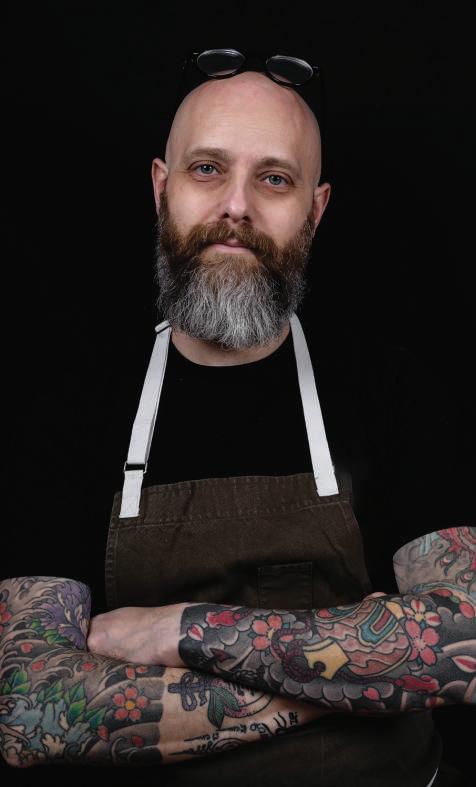
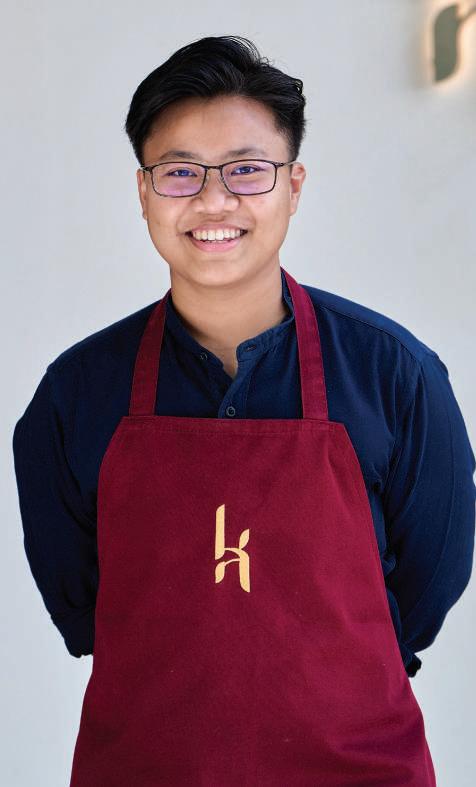
KHAAN, BANGKOK
Chef Sujira “Aom” Pongmorn, a Bangkok native, has emerged as a transformative force in Thai cuisine, blending heritage with cutting-edge creativity. Aom’s passion ignited watching her father and aunt craft Thai omelettes over charcoal. After training at The Oriental Hotel Apprenticeship Program, she began at Mandarin Oriental’s Lord Jim, assisting luminaries like Juan Amador and Thomas Keller. Her journey deepened at Sra Bua by Kiin Kiin, mastering molecular techniques under Henrik Yde Andersen, and as Executive Chef under Ian Kittichai at Issaya Siamese Club.
In 2016, Aom launched Baan Phadthai, earning a Bib Gourmand in Michelin’s inaugural Bangkok Guide (2018). Since opening KHAAN Bangkok in 2023, her fine-dining venture showcasing regional Thai flavors through sustainable, hyper-seasonal tasting menus has captivated diners, earning a spot among Thailand’s Best Restaurants and a 2024 Tatler Asia Gen.T Leaders nod. Collaborating with local farmers and artisans, Aom’s zero-waste approach and French-inspired techniques elevate Thailand’s diverse ingredients. As a mentor, she inspires young chefs, redefining Thai gastronomy with soulful innovation and a commitment to cultural storytelling.
Maria Aquino, a former nurse with no formal culinary background, stumbled into cooking by chance before launching her café in Dubai and later with TASTE in Goa, specializing in PanAsian fusion. Within a year of opening her café, she pursued training at The Association for the Advancement of Japanese Culinary Art and later received mentorship from an acclaimed Peruvian chef, honing her skills in blending diverse traditions. At her earlier venture, Taste, Aquino created comfort food that merged Korean and Filipino elements with Itameshi—Japan’s innovative fusion of Italian and Japanese techniques—delivering a symphony of spice, sweetness, and umami through herbs, artisanal sauces, dashi broth, mirin, and chewy udon noodles. Her creations showcase a masterful interplay of Japanese, Italian, Korean, and Filipino influences, where flavors harmonize to evoke familiarity and surprise. Believing food unites people, Aquino champions comforting yet inventive dishes like her signature Donburi rice bowls, fusing Japanese simplicity with Filipino toppings or Korean bulgogi for a bold, soul-satisfying twist. She crafts experiences that nourish the heart, turning every meal into a bridge of cultures and cherished connections.
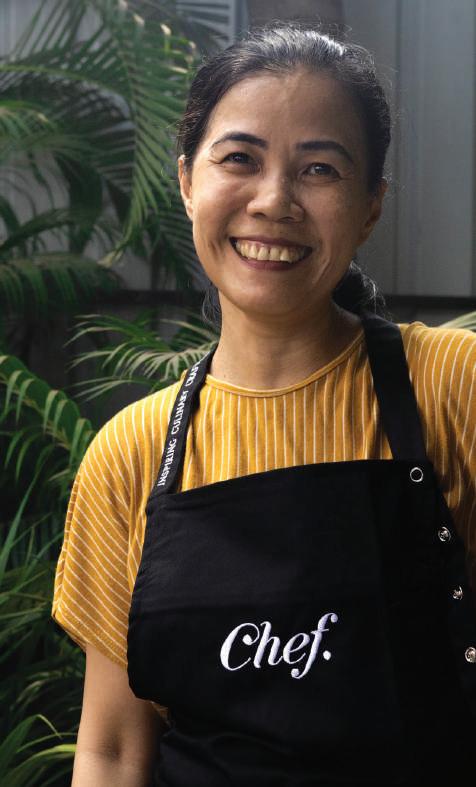
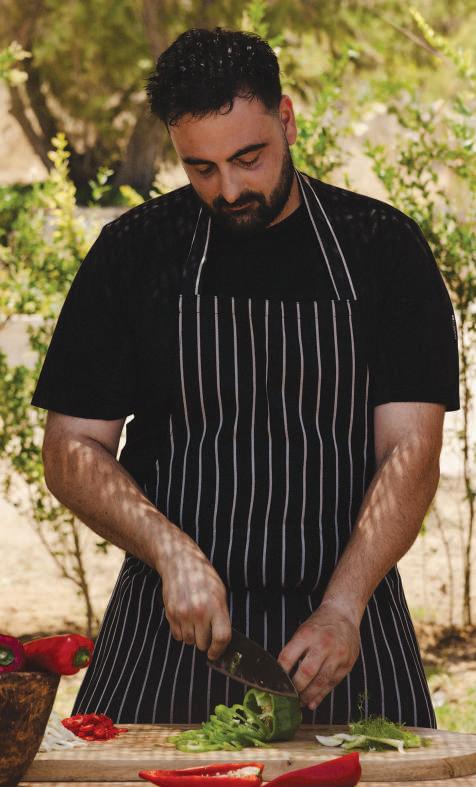
ZAMĀNA, GREECE
Chef Alkis Theocharidis, the vibrant force behind Zamāna, redefines Cretan cuisine with a soulful blend of tradition and bold innovation. Young yet seasoned, he channels Crete’s rugged landscapes—earth, sea, and sun—into dishes that honor his roots while captivating a global palate.
At Zamāna, Alkis’ charcoal-kissed, ingredientdriven menu marries simplicity with sophistication, featuring vibrant raw seafood, tender Iberico pork, handmade Black Angus burgers, and inventive creations like tuna Katsu-Sando. Each plate, infused with Crete’s terroir, weaves nostalgia and discovery into every bite.
Zamāna offers an immersive experience—sunlit lunches, barefoot beach brunches, and leisurely sips in a relaxed lounge. Alkis’ vision extends to a bar showcasing cocktails crafted with wild herbs and native botanicals, paired with a meticulously curated wine list of Greek and global gems. His cuisine, rooted in age-old Cretan techniques yet elevated with modern minimalism, transforms dining into a sensory journey that connects guests to the island’s spirit. With Zamāna, Alkis Theocharidis crafts unforgettable moments, inviting diners to taste Crete’s essence through innovative flavors and heartfelt storytelling.
Hailing from Genoa, Italy’s cultural gem, Chef Alessio Banchero brings his mastery of Genoese cuisine to Mumbai’s Grand Hyatt as the Italian Chef at Celini, the city’s premier Italian dining destination. Trained at the esteemed Culinary Institute Nino Bergese, Alessio’s 20-year career brims with accolades and global experience. From honing his craft at Genoa’s Zeffirino and Ristorante Il Veliero to earning “Best Italian Restaurant in Las Vegas” as Sous Chef at Zeffirino in The Venetian (2004, 2005), his journey reflects a deep commitment to authentic Italian flavors. Joining Hyatt in 2009 as Italian Chef de Cuisine at Hyatt Regency Mumbai, Alessio later excelled at Marriott Hotels, securing Times of India’s Best Italian Restaurant (2014, 2016) and Tripadvisor’s #1 Italian Restaurant (2014-2016) and Top Five in Asia (2018, 2019). His tenure at Anantara Siam Bangkok’s Biscotti earned Michelin Guide Plates (2020, 2021). After a stint at Le Meridien in Mauritius, Alessio returns to Mumbai, eager to infuse Celini with Italy’s soulful traditions. Set against Celini’s glowing gold marble and celestial Yogadakshinamurti installation, his dishes promise a vibrant fusion of heritage and innovation, inviting diners to savor Italy’s essence in every bite.
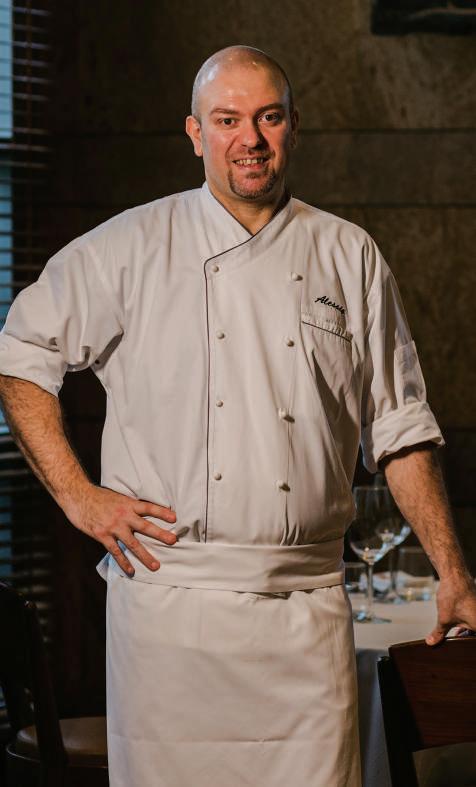
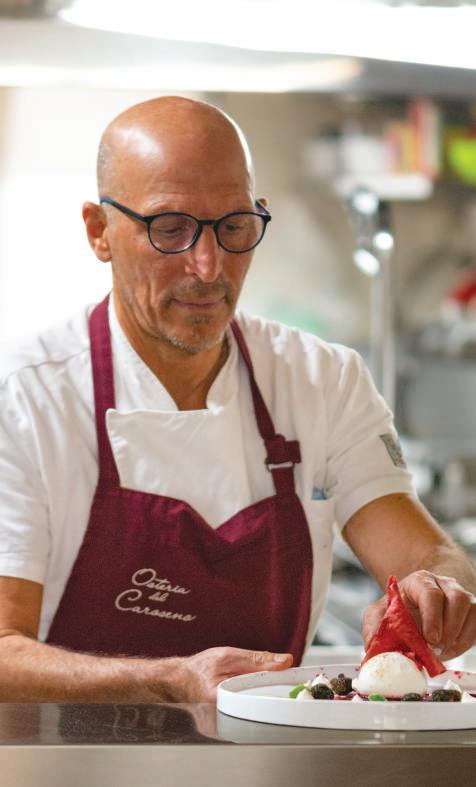
Chef Giovanni Longo transforms L’Osteria del Caroseno, a historic olive oil mill in his childhood Puglia neighborhood, into a vibrant celebration of regional cuisine. Guided by his mother Rosetta’s teachings, Longo’s passion for cooking blossomed early, rooted in the fragrant garden of Casa Caroseno. His dishes weave Puglia’s authentic flavors—fresh, local ingredients like sun-ripened produce and aromatic herbs—with innovative twists, creating a sensory journey that captivates diners.
At Casa Caroseno, Longo’s vision for Osteria Caroseno reimagines Apulian traditions through a modern lens, balancing heritage with bold creativity. Each plate, crafted with meticulous care, reflects his deep connection to Puglia’s culinary soul, harmonizing rustic simplicity with refined techniques. From vibrant vegetables to time-honored recipes, his menu invites guests to experience the region’s essence in every bite. Longo’s dedication to authenticity and innovation transforms the historic mill into a dynamic dining destination, where the aromas of his childhood inspire unforgettable moments at the table.
Chef Sanket More, Corporate Executive Chef at Eve Bombay, transforms dining into a narrative of comfort and creativity. With a Bachelor’s in Culinary Arts from Manipal University and a Diploma in International Cuisine from B.H.M.S, Switzerland, he views food as an emotional journey, blending technique with soulful intent. His career spans prestigious kitchens like Dusit Thani in Dubai, Park Hotel Waldheim in Switzerland, Olive Bar and Kitchen in Delhi, Bombay Canteen, O Pedro in Mumbai, and Red Thread Hotels in Goa, each refining his respect for ingredients and guestcentric innovation.
At Eve, Sanket crafts menus that marry local produce with global influences, ensuring each dish—from seasonal staples to bespoke creations— leaves a lasting impression. His leadership fosters a kitchen culture of curiosity, discipline, and joy, mentoring teams to weave stories through food. With every plate, he balances inventive flair with heartfelt comfort, inviting diners to savor not just flavors but the essence of shared experiences, making Eve a vibrant stage for culinary exploration in Mumbai’s dynamic dining scene.
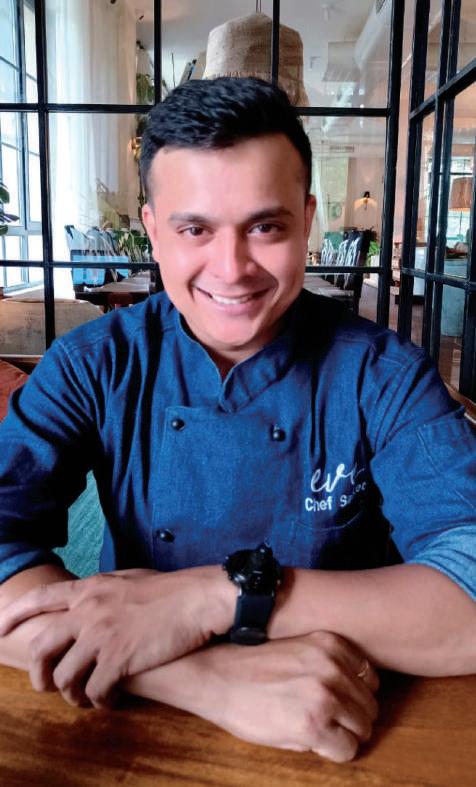
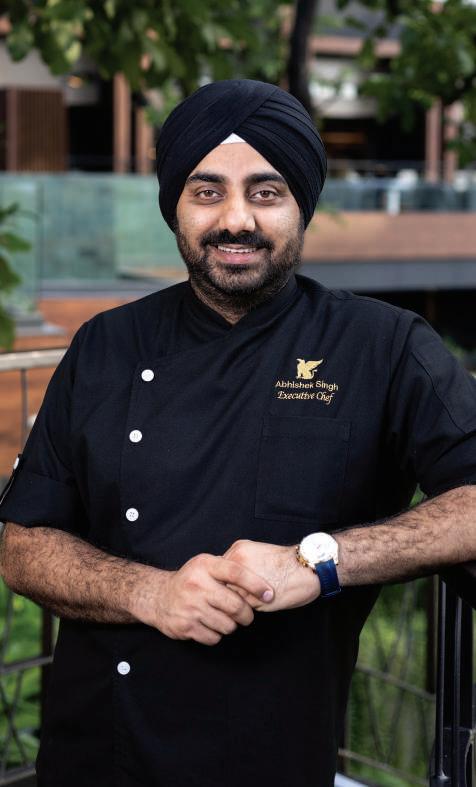
AGUA POOL BAR AND CAFÉ, GOA
Executive Chef Abhishek Singh transforms dining into an art form at JW Marriott Goa, weaving local Goan flavors with global finesse to craft unforgettable culinary experiences. With a career honed at India’s premier hospitality brands, Singh’s innovative vision elevates every plate, blending authenticity with luxurious creativity. His culinary philosophy tells stories through food, evident in Heliconia, where Peruvian Chef Arturo’s artistry meets a globally inspired beverage program. At Agua Pool Bar and Café, vibrant Italian fare reimagined in a chic setting captivates guests, while JW Kitchen’s expansive menu, featuring a signature Goan thali bursting with fresh local produce, remains a cherished favorite.
Singh redefines luxury through training, fostering a culture of service excellence and recognition. Embracing innovation, he integrates molecular gastronomy and 3D-printed in-room amenities, with plans for hydroponically grown ingredients to enhance sustainability. In Goa, where food and culture dance, Singh ensures every meal is a sensory journey, merging heritage, craftsmanship, and impeccable service. Under his leadership, JW Marriott Goa transcends dining, offering a refined destination where guests don’t just taste— they immerse themselves in the essence of Goa’s luxurious spirit.
Chef Gaurav Kuthari, a culinary luminary with over 15 years of experience, leads the kitchen at CHAAT in Rosewood Hong Kong, where his bold reimagination of Indian cuisine earned a Michelin Star and a Black Pearl One Diamond rating. His journey began at New Delhi’s India Habitat Centre, where he honed skills across hospitality disciplines, from front office to food production. In 2008, he joined Lemon Tree Hotels in Ghaziabad, followed by a formative stint at Le Meridien’s Monsoon and Pakwan in Delhi, sharpening his craft as a Chef Trainee from 2008 to 2010. Moving to Mumbai, Gaurav elevated his artistry at The Oberoi Group’s The Trident.
In 2011, he landed in Hong Kong, revitalizing JASHAN as sous chef for Uppal Hospitality Group before taking the helm at SPICE. His global palate expanded at Gordon Ramsay’s Bread Street Kitchen, Dear Lilly, and Swire Group’s MR&MRS Fox. Joining CHAAT’s opening team in 2020 as sous chef, Gaurav’s vision drove its meteoric rise, earning him the Chef de Cuisine role. In 2023, he showcased CHAAT’s vibrant flavors at Rosewood London’s 10th anniversary. Blending India’s vibrant regional spices with touches of his own heritage, Gaurav creates dishes that fuse time-honored traditions with modern flair, drawing diners into a vivid, soulful culinary story.
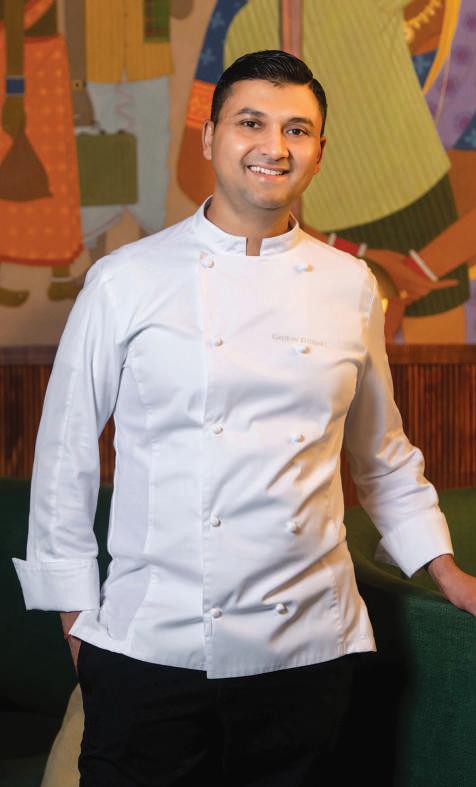
CHAAT, HONG KONG
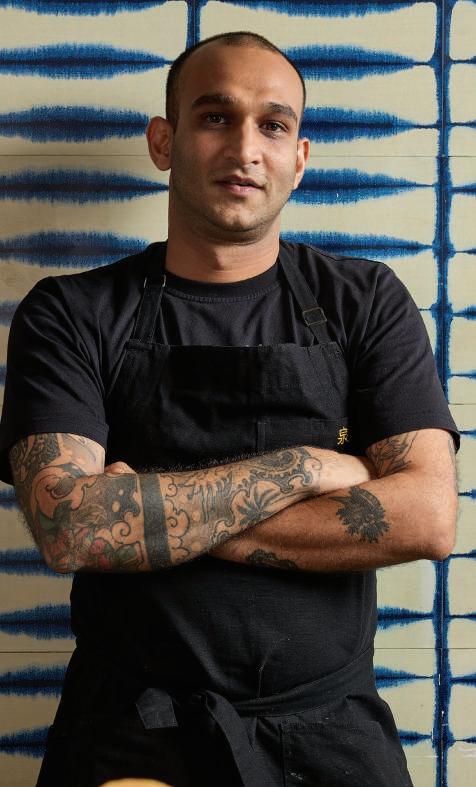
Raffael Kably’s passion for cuisine sparked early, shining in culinary arts assessments during his school years. This zeal, refined at the Academy of Culinary Arts, grew under Chef Alex Sanchez at Americano in Mumbai, where he played a key role in launching Otra, thriving in high-energy, creative kitchens.
Now leading Izumi Assagao in Goa, Raffael brings to life the vision of mentor Chef Nooresha Kably, founder of the celebrated Mumbai original, as it marks its third anniversary in 2025. Inspired by travels across Japan, he reimagines the menu, blending authentic Japanese techniques with vibrant Goan influences, emphasizing seasonal, local ingredients and meticulous execution.
Raffael’s style, rooted in Japanese and Chinese traditions, prioritizes flavor-driven storytelling, weaving personal expression into innovative combinations that defy convention. For him, cuisine is a medium to educate, evoke distant cultures, and forge connections—always using premium ingredients to craft meaningful moments. His relentless curiosity, fueled by global stagings and cultural immersion, transforms Izumi Assagao into a dynamic stage where simple techniques and bold, honest flavors tell compelling stories.
Santosh Keshav Magdum, Head Chef at Que Sera Sera in Mumbai, discovered his culinary calling through his mother’s heartwarming dishes that lit up family gatherings. That early spark—ignited by a simple pancake crafted with her guidance— fueled his passion for food’s ability to connect and uplift. After earning his hotel management degree, Santosh began as a Commis at ChefAir Flight Kitchen, steadily climbing the ranks while soaking up every lesson. His journey led to transformative roles under culinary giants, from mastering molecular gastronomy with Chef Irfan Pabaney at The Chocolate Spoon Company to thriving under pressure with celebrity chef Ranveer Brar at TAG GourmArt Kitchen.
As Sous Chef at 1BHK, he explored a vibrant spectrum of cuisines—Indian, Goan, Parsi, Italian, and European—honing his versatility. Now at Que Sera Sera, Santosh leads with a philosophy of generosity and balance, crafting dishes that resonate emotionally. His signature Exotic Veggie Cannelloni, rich and creamy, embodies his vibrant approach. With every plate, he weaves comfort and creativity, transforming meals into moments of joy and connection in Mumbai’s bustling dining scene.
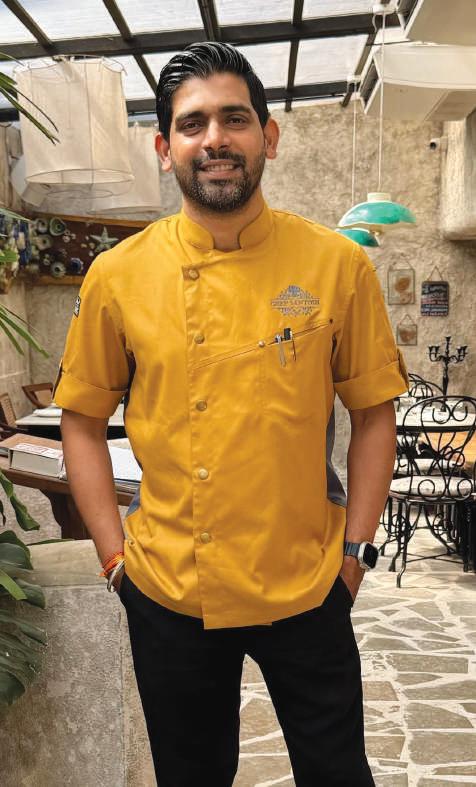
QUE SERA SERA, MUMBAI
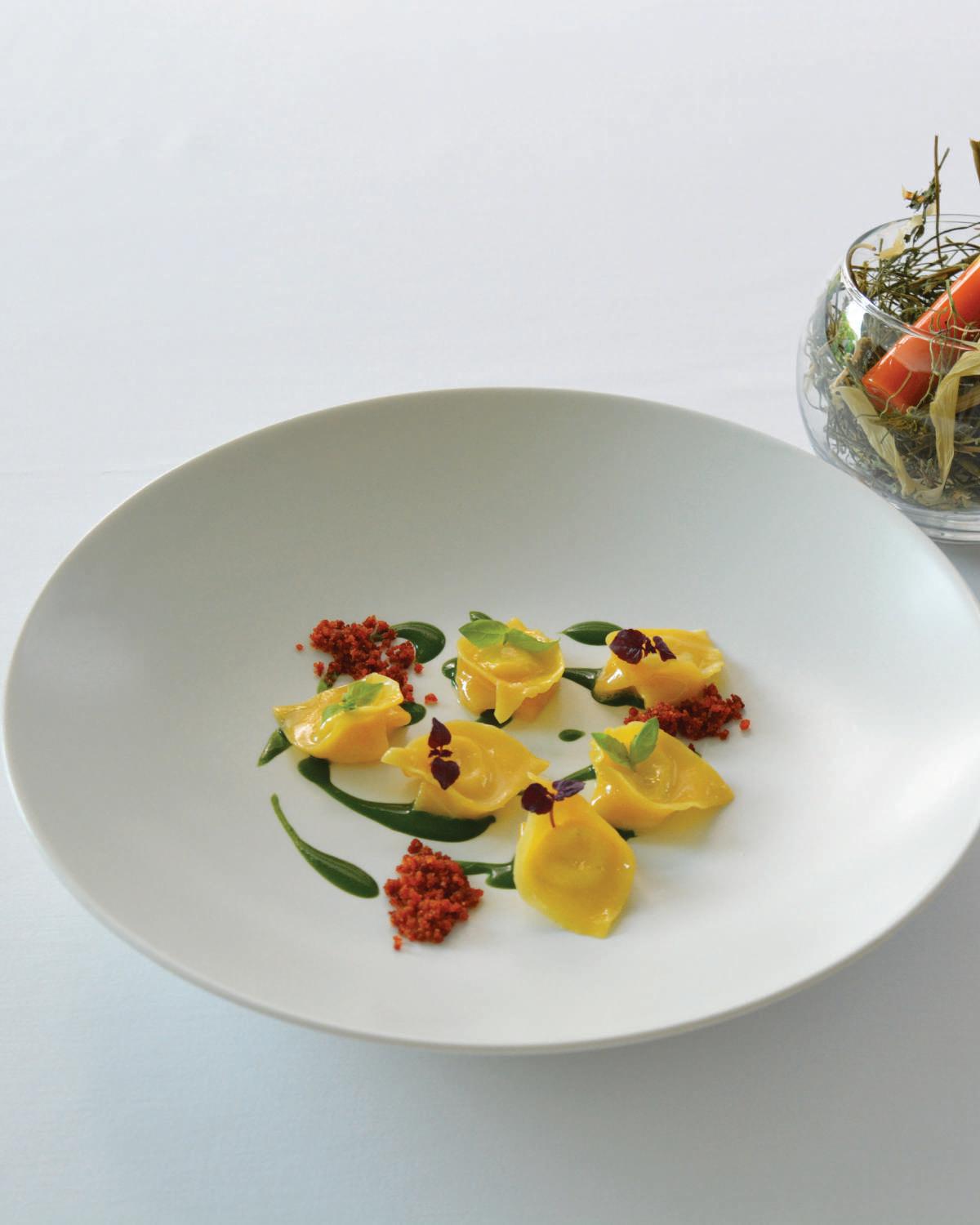
Ingredients Dough
320g flour 00
160g semolina flour
6 egg yolks
2 whole eggs
Mix everything and let rest in a vacuum bag for 12 hours. After 12 hours roll out the dough very thinly using a pasta machine and fill it with the burrata cheese.
Yellow Tomato Sauce
250g yellow tomato juice
20g extra virgin olive oil,
2g salt
6g basil
Vacuum-seal the mixture and cook at 90°C for 20 minutes. Strain through a fine chinois, adjust salt to taste, and thicken with 1.5g of Gelespessa.
Red Tomato Sauce
Follow the yellow tomato sauce recipe using red tomato juice.
Basil Sauce
Blanch the basil in plenty of salted water. Once cooked, cool it down, place it in Pacojet containers, and pacotize. Add some vegetable broth if needed. Thicken with Gelespessa.
Mediterranean Bread
250g onions, chopped
180g bread
6g anchovies
15g capers
180g tomato paste
20 ml white wine
160g broth
In a pan on medium heat, add oil the onions and start cooking. Meanwhile, toast the bread in the oven at 120°C and use a blender to blend the capers and anchovies.
Once the onions are well-cooked, add the previously blended anchovies and capers. Add the tomato paste, let it cook for a few minutes, then deglaze with white wine.
Add the toasted bread and finally the broth. Let everything dry out in the pan.
Once dry, dehydrate in the oven at 70°C. Blend in a Thermomix while adding a bit of oil.
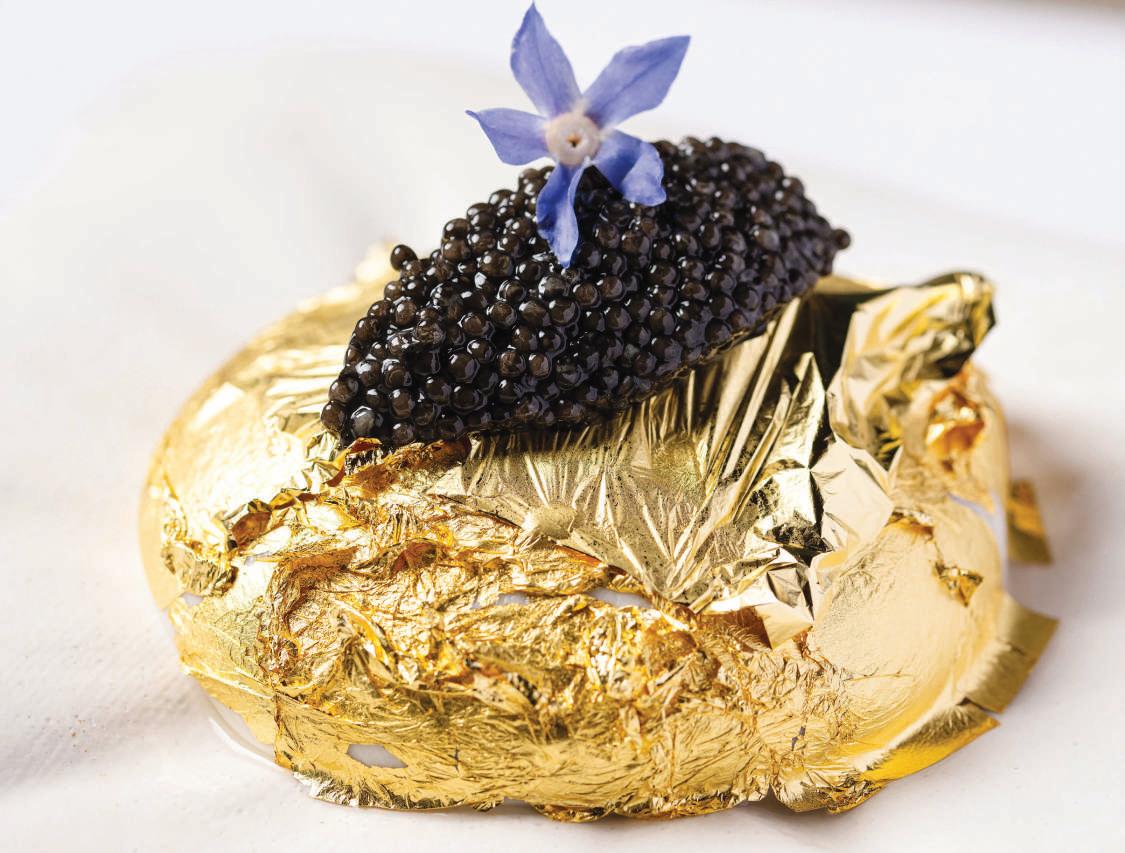
Ingredients
125g burrata (Andria – Puglia)
20g extra virgin olive oil (laudemio frescobaldi)
5g Cyprus black salt
5g Sichuan pepper
2 gold leaves
15g Royal Beluga caviar (gourmet house caviar)
Borage flowers
Method
GIOVANNI PAPI
Start with a good quality burrata (ideally burrata from Andria, Puglia) and season with Sichuan pepper,
Cyprus black salt, extra virgin oil and cover with edible gold leaves.
Finish it with a generous spoon of royal beluga caviar, borage flowers and serve.
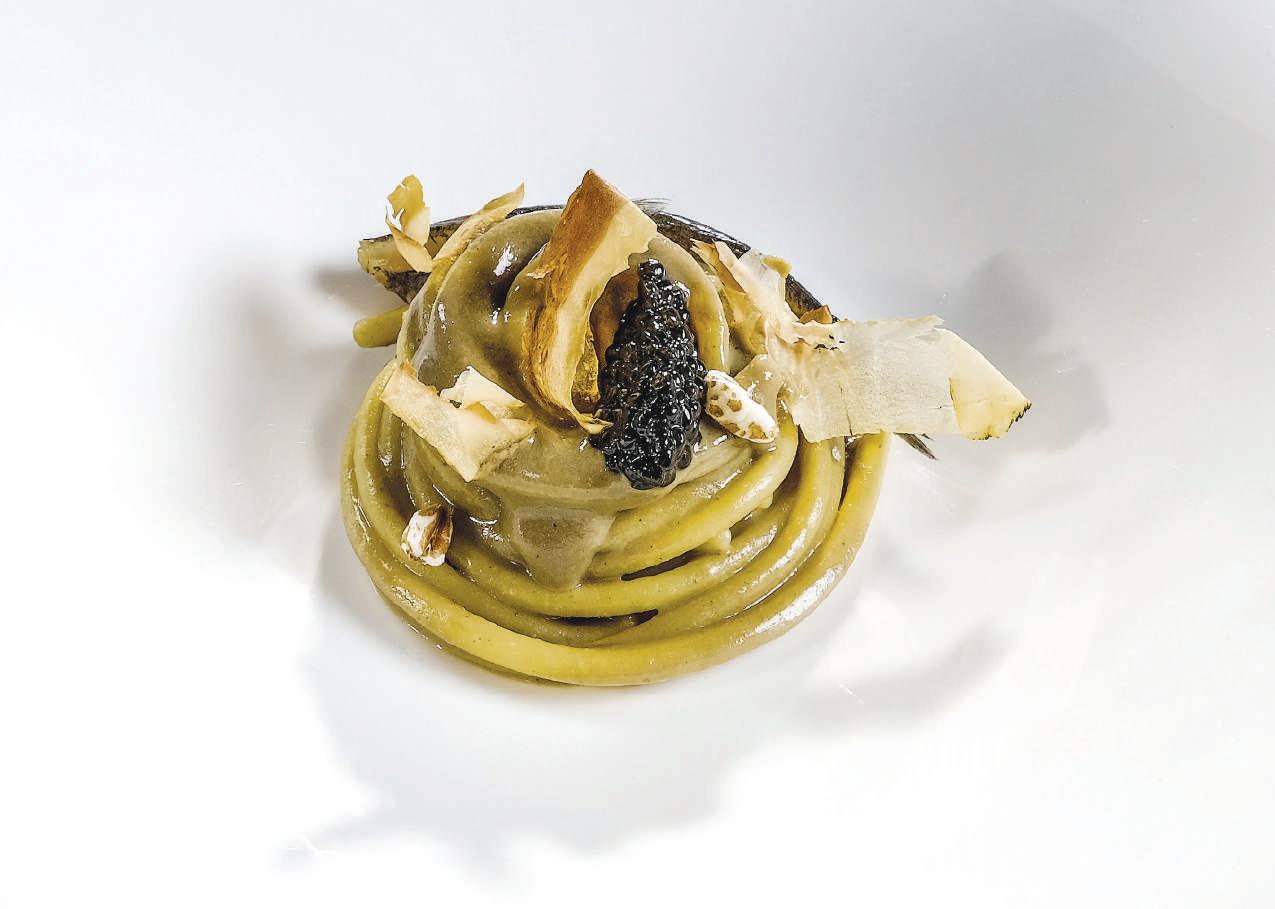
Method
Ingredients
320g spaghettoni
30g extra virgin olive oil
1200g fresh anchovies
1 lemon
2500g water
5g salt
100g white onions
5g sugar
100g celery stalk
6g bonito flakes
240g fennel
8g puffed farro
120g burrata water
15g umeboshi
20g Beluga caviar
Eviscerate the anchovies and toast them in a pot, then add a mirepoix of celery, onion, and fennel. Once everything is well toasted, deglaze with water and ice. Simmer for 30 minutes, then let it rest for 1 hour. Pass it first through a vegetable mill, then through a chinois.
Bone 4 anchovies and marinate them for 20 minutes with salt and sugar. Then rinse them and preserve them with olive oil and lemon zest. Cook the spaghettoni pasta directly in the anchovy broth, ensuring that by the time they are al dente, the sauce has reduced like a risotto. Whisk in butter and umeboshi, previously emulsified with EVO oil and lemon zest. Serve it soft in a soup plate with a marinated anchovy on the side, a few flakes of katsuobushi, puffed farro, and caviar. Separately, serve the burrata water, which should be poured onto the bottom of the plate before consumption.
eggs and set aside. Place the water and salt into a container, then add the horseshoe crab eggs. Allow to brine for 10 minutes, then strain. Place the brined horseshoe crab eggs into another container and cover with the vinegar until covered. Allow the horseshoe eggs to cure for another 10 minutes, then strain. Keep the horseshoe caviar in a airtight container in the cool room.
Jam
2 lemons / 500g sugar syrup / 2 medium size fennel bulbs, finely diced / 30g lemon vinegar
Ingredients
25g Macadamia nuts / fennel flowers / sea blight
1 x 500g live spanner crab
Cook the spanner crab in boiling salted water for 12 minutes, then take out and allow to cool in the fridge. Once cold, pick the meat from the shell and set aside until needed.
Crab Dressing
50g eschalot, finely diced / 25g green tea flower vinegar / 20g fish sauce / 15g macadamia nut oil / 7g olive oil
Gently sweat the eschalots in a small pan until translucent. Add the fish sauce and reduce by half. Add all remaining ingredients and mix to combine. Set dressing aside to cool.
Horseshoe Crab “Caviar”
1 x 400g live horseshoe crab / 10g salt / 400 g water
Green Tea Flower Vinegar
Place the horseshoe crab in a container of ice water for 30 minutes. Steam the horseshoe crab for 1 minute, then cool down in ice water. With scissors, cut around the outside on the belly side of the horseshoe crab. With a spoon, take out all the
Zest and juice the lemons. Combine the lemon juice, sugar, lemon vinegar and fennel in a pot and cook over medium heat until reduced by 1/3. Mix in the lemon zest and cool.
Burrata Cream
1 x 200g burrata / 60g crème fraiche / 1/2 lemon, zested / sea salt for seasoning
Remove all the cream from the inside of the burrata and place into a bowl (keep the burrata skin to use in the jelly). Add the crème fraiche, lemon zest and season with salt. Refrigerate until needed.
Burrata Jelly
1 x 200g burrata, broken into 4 pieces / 1 burrata skin / 500ml full cream milk / 10g fennel seeds / sea salt for seasoning / 5 sheets of bloomed titanium gelatine leaves
In a dry pan, toast the fennel seeds on a medium heat until fragrant. In a pot, add the milk, burrata skin, burrata and the fennel seeds. Bring this up to a gentle simmer and cook until the burrata starts to melt. Take the mix off the heat, add the bloomed gelatine leaves and season with salt. Pass this mix
through a fine sieve and set aside.
Seaweed Jelly
50g sake / 75g seaweed vinegar / 7 sheets of bloomed titanium gelatine leaves / 35g castor sugar / 375g water / 15g white soy / 7g dark soy / 5g bonito flakes / 7g kombu / 1g wakame seaweed
Add all ingredients to a pot and bring up to 90 degrees. Remove the pot from the heat and allow to infuse for 20 minutes. Strain mixture into another pot. Heat the liquid back up to 90 degrees, then add the gelatine. Strain mixture through a fine sieve and set aside until needed.
Apple Dashi Jelly
250ml water / 5g kombu / 250ml granny smith apple juice / 10g bonito flakes / 5 sheets of bloomed titanium gelatine leaves / 65g white soy 5g mirin
In a pot add the water and kombu. Bring this up to 90 degrees, then remove from the heat and allow to infuse for 10 minutes. After 10 minutes, take out the kombu and add the bonito. Allow this to infuse for another 10 minutes. Strain the liquid through a fine sieve. Add all remaining ingredients and mix well. Return mixture back to the heat, then add gelatine. Pass mixture through a fine sieve and set aside until needed.
To make the jelly, melt the apple jelly and place 1ml into the mold, then refrigerate until set. Next, melt the seaweed jelly and place 5ml of the liquid on top of the apple jelly.
Refrigerate until it sets. Finally, melt the burrata jelly and place 20ml on top of the seaweed jelly then refrigerate until it sets.
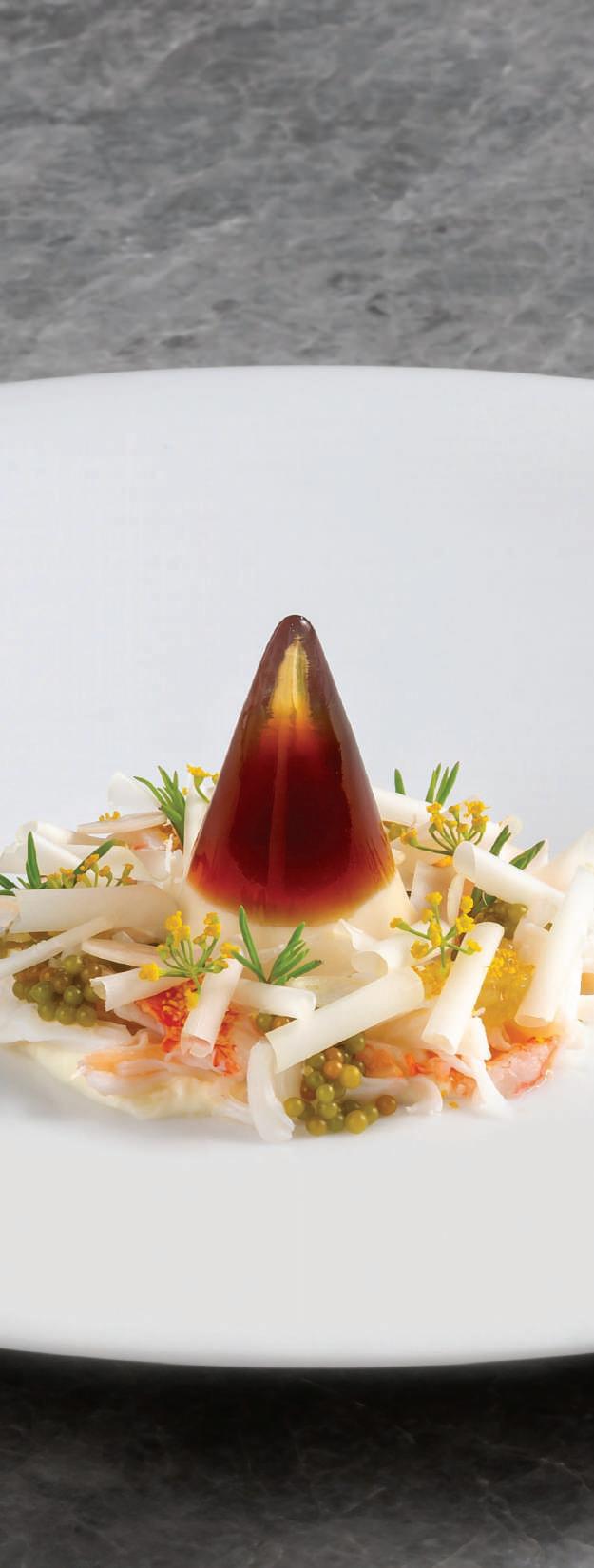
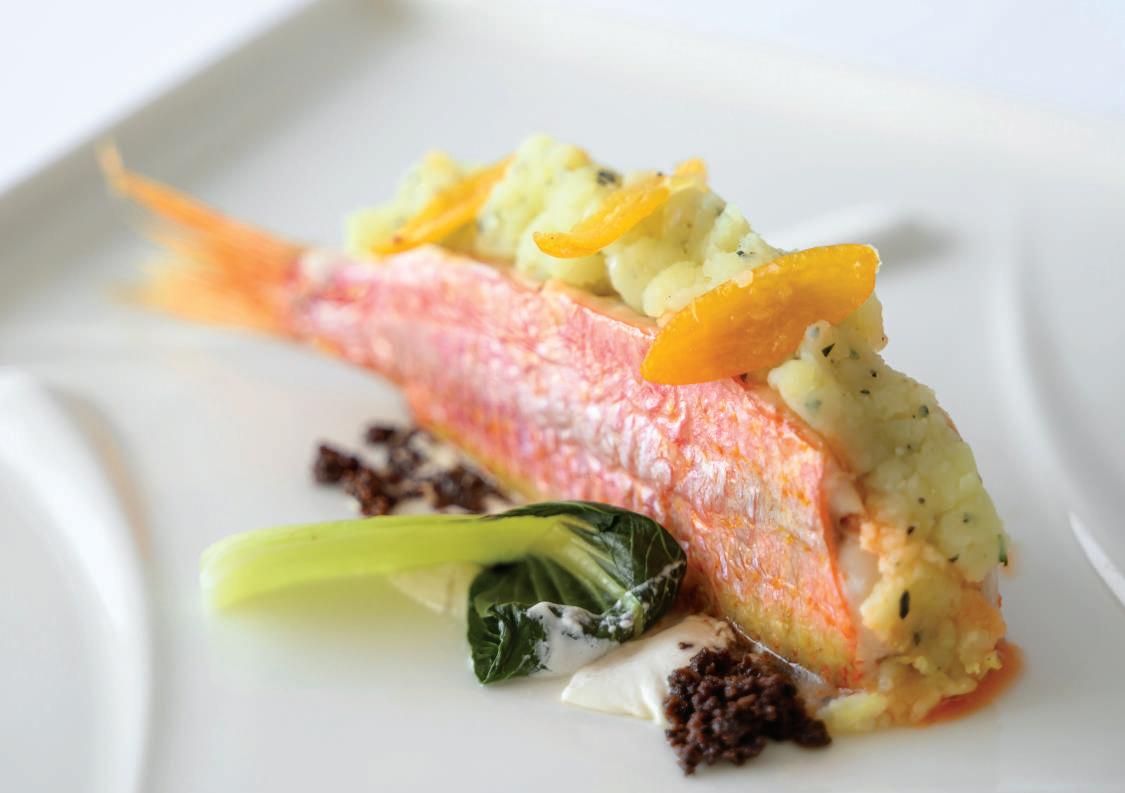
Ingredients
4 x 200g mullets
400g Holland potatoes
2 x 75g burrata
10 kumquats
100g Taggiasche olives
150g chard, herb mix (marjoram, thyme, Cuban oregano), grapefruit, lemon and lime zest
Method
Peel the potatoes and boil them. Meanwhile, wash the chard.
Gut and scale the red mullet, then open them into a booklet.
Smoke the burrata with fir wood. Blend some of them and cut the rest into not too large pieces. Mash the potatoes with a potato masher.
Stuff the mullet with the herb mix, citrus peel, oil, salt and pepper.
Plate the fish and put it in the oven for 5 minutes. Meanwhile, blanch the chard and season with salt and oil. Chop the olives into tartare. Serve, arranging the burrata, olive tartare, chard and mullet on the plate in this order.
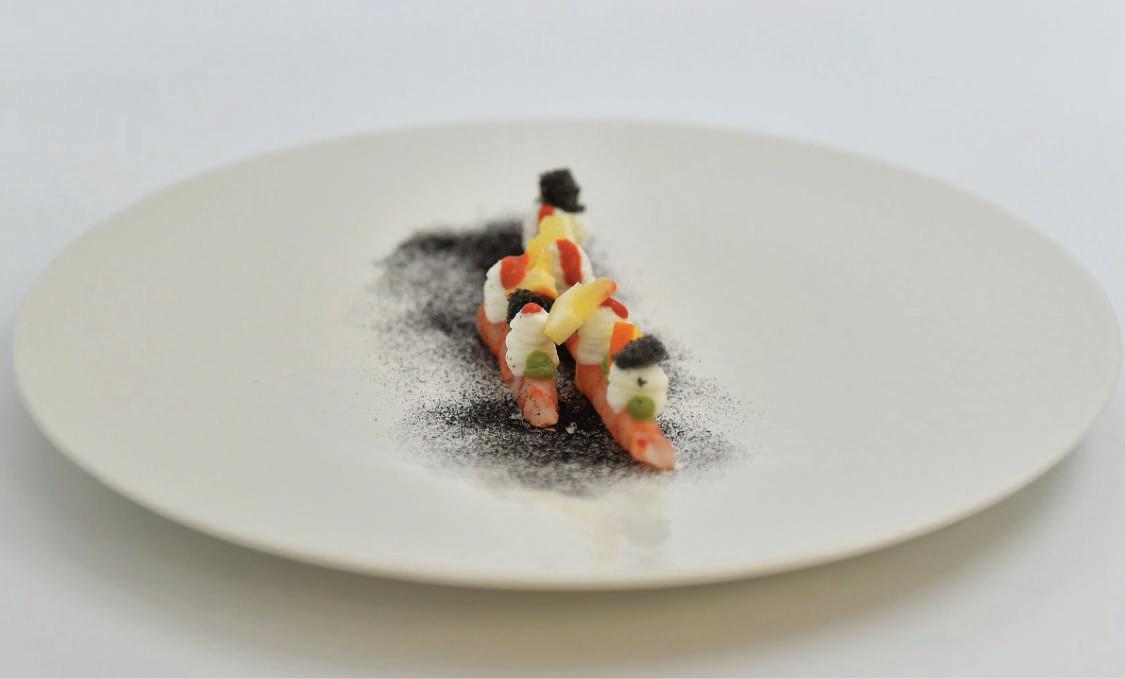
Candied Lemon
Ingredients
Steamed Prawns
12 Mediterranean red prawns, whole and fresh
1 orange
1 lemon
1 bay leaf
Maldon salt for seasoning
Burrata Cream
300g drained burrata
Salt for seasoning
Pistachio Cream
80g unsalted shelled Bronte pistachios
40g water
10g extra virgin olive oil
Salt for seasoning
1 lemon, peeled and cut into slices
100g sugar
100g water
Candied Orange
1 orange, peeled and cut into slices
100g sugar
100g water
Lemon Ash
2 dried lemons, peels
Vegetable charcoal powder, optional
Finishing
Drops of tomato confit extract or datterino reduction.
Extra virgin olive oil infused with lemon ash.
Ingredients
Pasta Dough
300g Italian ‘00’ flour
3 large eggs, about 165g total
Pinch of salt
A few drops of olive oil (optional, for elasticity)
Filling
250g raw shrimp, peeled, deveined, shells reserved for bisque
150g fresh burrata, drained well
1 tbsp extra virgin olive oil
1 small shallot, finely chopped
1/2 lemon, zest
Salt and white pepper, to taste
Bisque Sauce
Reserved shrimp shells & heads
1 tbsp olive oil
20g butter
1 small carrot, diced
1 stick celery, diced
1 small onion, diced
1 garlic clove, crushed
50 ml cognac or brandy
200 ml fish stock or water
200 ml cooking cream or double cream
1 tsp tomato paste
Salt and pepper for seasoning
Method
Pasta Dough
On a clean surface, make a mound of flour and create a well in the center.
Add eggs and salt to the well, beat lightly with a fork, then gradually incorporate flour until a dough forms.
Knead until smooth and elastic. Wrap in cling film and rest at room temperature for 30 minutes.
Filling
Chop shrimp into small pieces (about 5 mm dice).
Heat olive oil in a small pan, add shallot, and sweat for 1–2 min without coloring.
Add shrimp, cook for 30–40 sec until just turning pink, then remove from heat.
Let it cool, then mix with chopped burrata, lemon zest, salt, and white pepper. Refrigerate while rolling the pasta.
Bisque Sauce
In a saucepan, heat olive oil and butter over medium-high heat.
Add shrimp shells/heads, roast until pink and aromatic (3–4 min). Add carrot, celery, onion, garlic, and sauté for 5 min. Stir in tomato paste, cook 1 min, then flambé with cognac.
Add fish stock and bring to a boil, simmer for 15 min. Strain through a fine sieve, pressing shells to
extract all flavor. Return the liquid to pan, add cream, and reduce until slightly thickened. Adjust the seasoning.
Roll pasta dough thin
Cut into discs or squares, about 7 cm.
Place 1 teaspoon of the filling in center, fold and seal edges well.
Tortelli shape: fold into a half-moon, then bring tips together and press.
Keep covered with a lightly floured towel.
Bring the salted water to a boil. Drop tortelli in, cook for 2 to 3 minutes or until they float and pasta is tender. Gently toss tortelli in bisque sauce so they’re coated without breaking.
Plate with extra sauce, drizzle of good olive oil, and optional fresh herbs or microgreens.
Reduce the bisque until glossy. For extra depth, roast the shells in the oven before starting the bisque.
Add a few drops of lemon juice or shellfish oil just before serving for aroma.
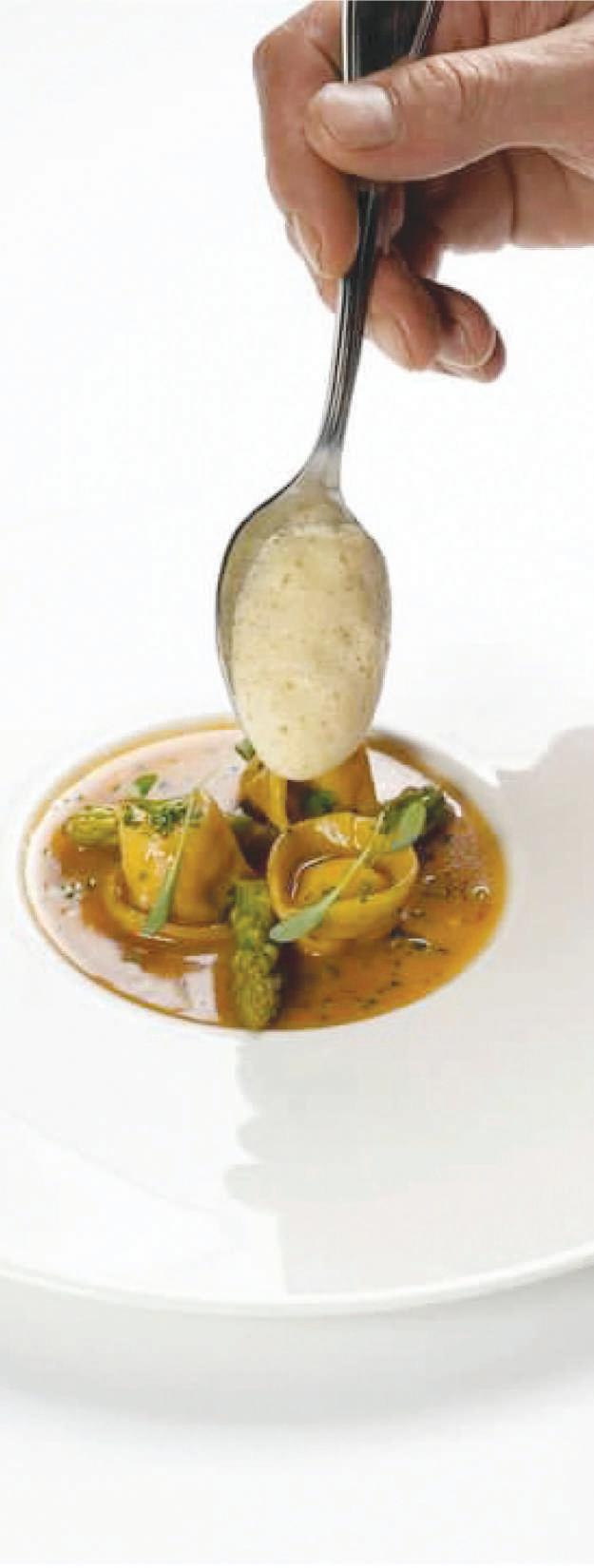
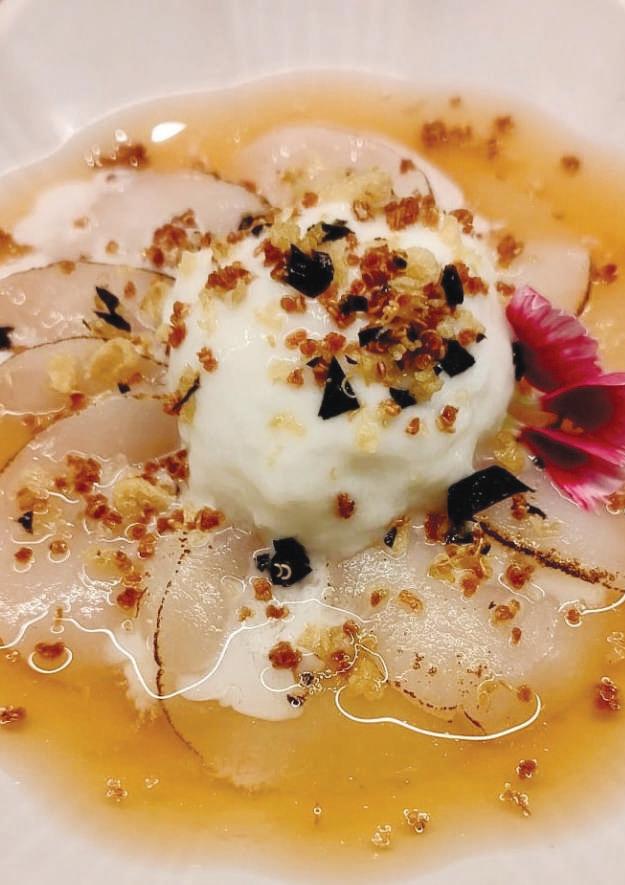
Ingredients
1 large Hokkaido scallop, sashimi-grade
30g burrata
40 ml ume tomato dashi
Garnish
1tsp quinoa nori furikake
Microgreens or edible flower
Method
Using a sharp knife, slice the scallop horizontally into thin carpaccio slices. Arrange the slices on a chilled plate in a rosette pattern, slightly overlapping each piece. Gently spoon or pour chilled ume tomato dashi evenly over the scallop. Lightly sear the surface of the scallop slices using a blowtorch.
Position a small piece or scoop of burrata in the centre of the rosette. Sprinkle quinoa nori furikake over the burrata and scallop. Add microgreens or an edible flower if desired. Serve immediately.
200 ml water / 5g kombu / 100g heirloom tomato, roughly chopped / 5ml mirin / 5g katsuobushi / 10g umeboshi / 5ml light soy sauce
Place water and kombu in a small saucepan. Slowly heat to just below boiling, then remove kombu. Add the katsuobushi, simmer 1 minute, turn off heat. Steep for 3 minutes, strain, return liquid to the pan. Add the chopped tomato, simmer 3 to 4 minutes until softened. Strain, pressing lightly to extract juices.
Mash into the warm tomato dashi until dissolved. Adjust seasoning with soy sauce and mirin. Strain through muslin, cool over ice bath and refrigerate until use.
50g white quinoa / 2 nori sheets, torn / 10g white sesame seeds / 1g salt / 1g sugar
Boil the quinoa in lightly salted water for 8–10 minutes until just cooked. Drain well. Spread the quinoa on a baking tray and dry in a low oven (90°C) for 20–25 minutes, or until fully dry. Use a dry pan to toast quinoa until crisp and lightly golden. Combine toasted quinoa, shredded nori, sesame seeds, salt, and sugar.
Ingredients
50g rucola
10g tomato chutney
1 masala stuffed burrata
50g Ikura
10g mirin
10g soy sauce
5g lemon zest
5g salt
5g pepper
Method
Dressing
In a small bowl, mix the mirin and soy sauce together. Add a pinch of lemon zest, salt, and black pepper. Stir well and set aside. Arrange the rucola evenly on the base of the serving plate to create a fresh, green bed-like crown.
Add the tomato chutney in the middle of the rucola crown it will add sweet and tangy bursts of flavor.
Gently place the masala-stuffed burrata (curated by Spotted Cow) in the center of the plate, allowing it to sit proudly atop the greens and chutney.
Generously spoon the ikura over and around the burrata, allowing the roe to fall naturally for a beautiful visual and textural contrast.
Lightly drizzle the prepared mirin-soy dressing over the entire dish, enhancing the umami and brightness.
Finish with a touch more lemon zest for aroma and a final sprinkle of black pepper if desired.
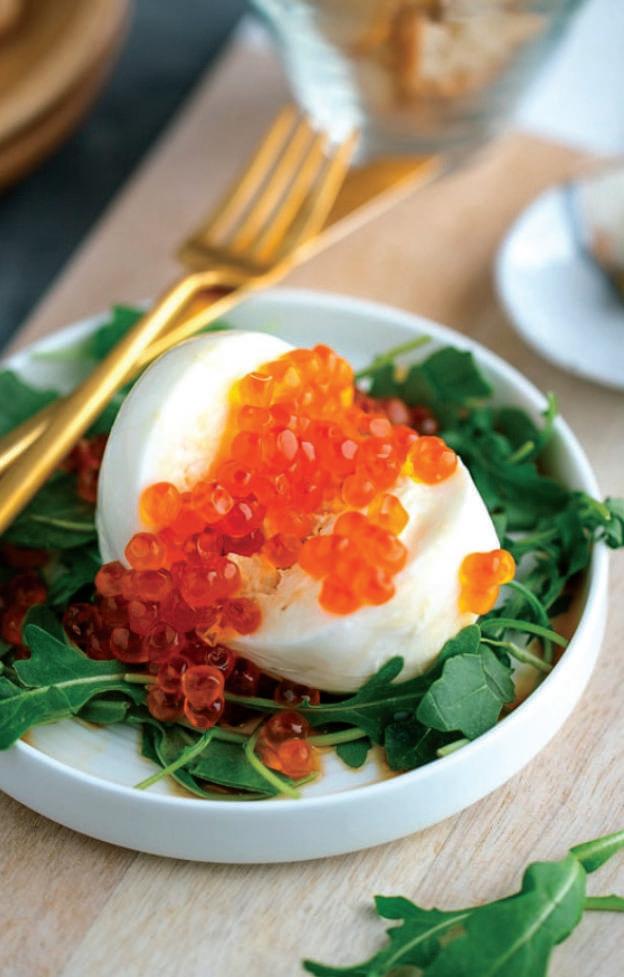
MARLEEN YASHIMA X PIZZA, INDIA
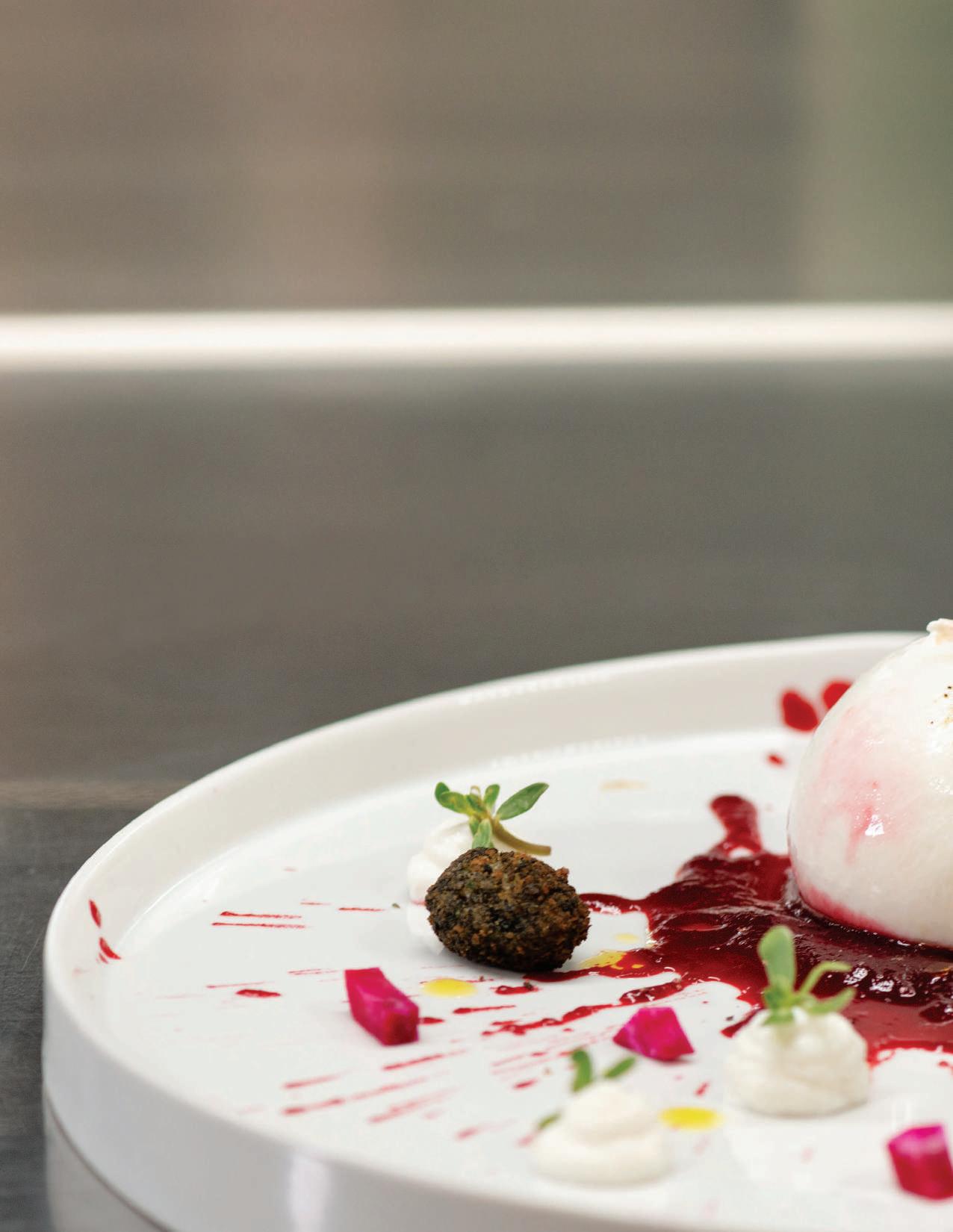
Beetroot cream (beetroot, olive oil, salt, pepper)
Fresh ricotta cream (ricotta, whipped until smooth)
Wild herb sprouts
Garden-fresh beetroot (finely julienned for crunch)
Extra virgin olive oil
Freshly ground black pepper
Dehydrated Beetroot Wafer
Thinly slice the beetroot, dehydrate completely, then fry briefly in hot oil until crisp..
Mussels Breaded with Squid Ink
Fresh mussels
Stale breadcrumbs
Parsley, garlic, and spices
Squid ink breadcrumbs for coating
Shell and lightly boil the mussels.
Combine mussels with breadcrumbs, parsley, garlic, and spices to form small fish balls.
Coat in squid ink breadcrumbs and fry until golden.
Beetroot Cream
Roast or boil beetroot with olive oil, salt, and pepper. Blend into a smooth cream.
Whip fresh ricotta with a whisk until light and airy.
Transfer into a piping bag for plating.
Create a base of beetroot cream on the plate. Place the burratina at the center.
Pipe small dollops of ricotta cream around it.
Add wild herb sprouts and julienned fresh beetroot for texture and freshness.
Position the mussels and place the crispy beetroot wafer atop the burrata.
Finish with a drizzle of extra virgin olive oil and freshly ground black pepper.
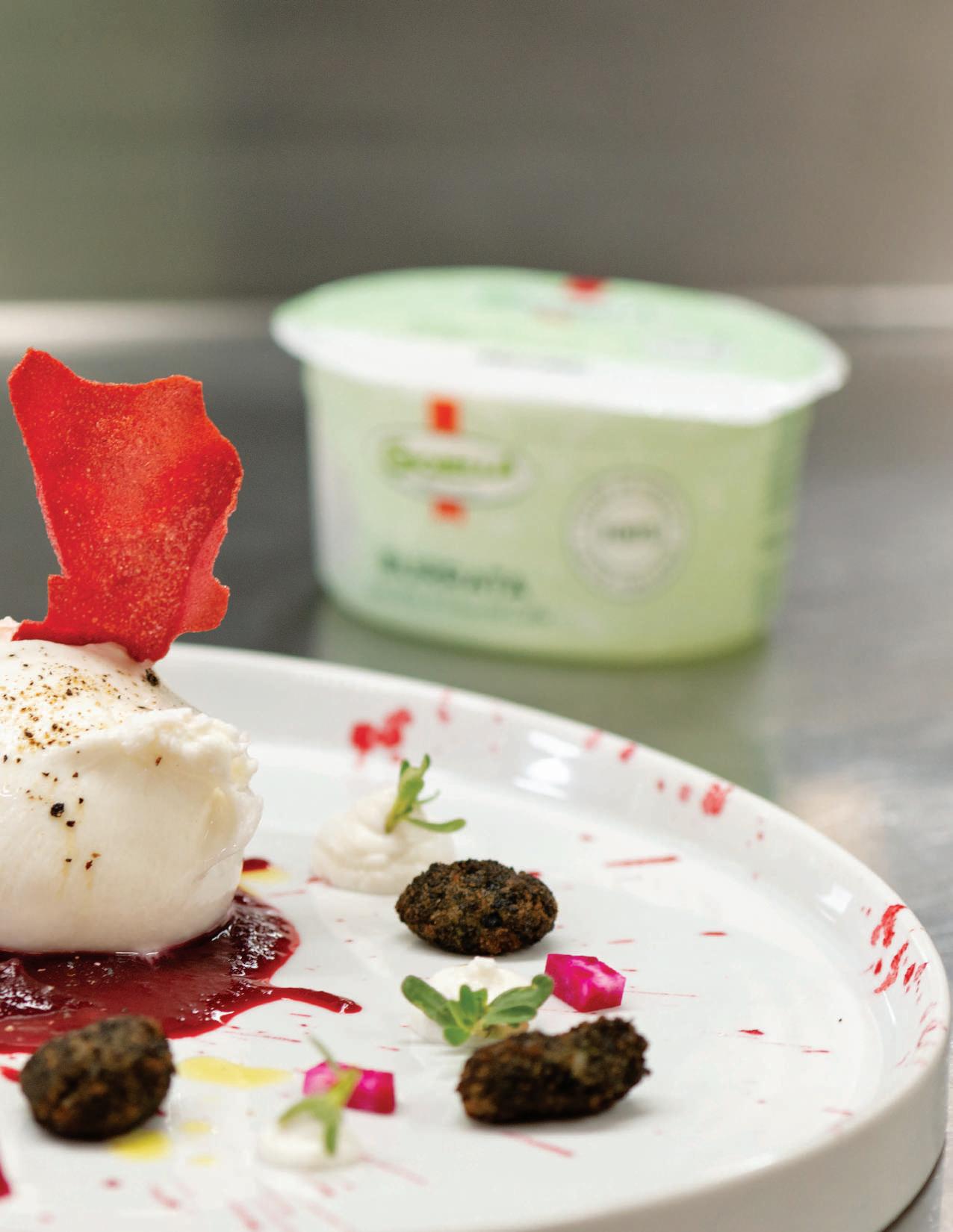
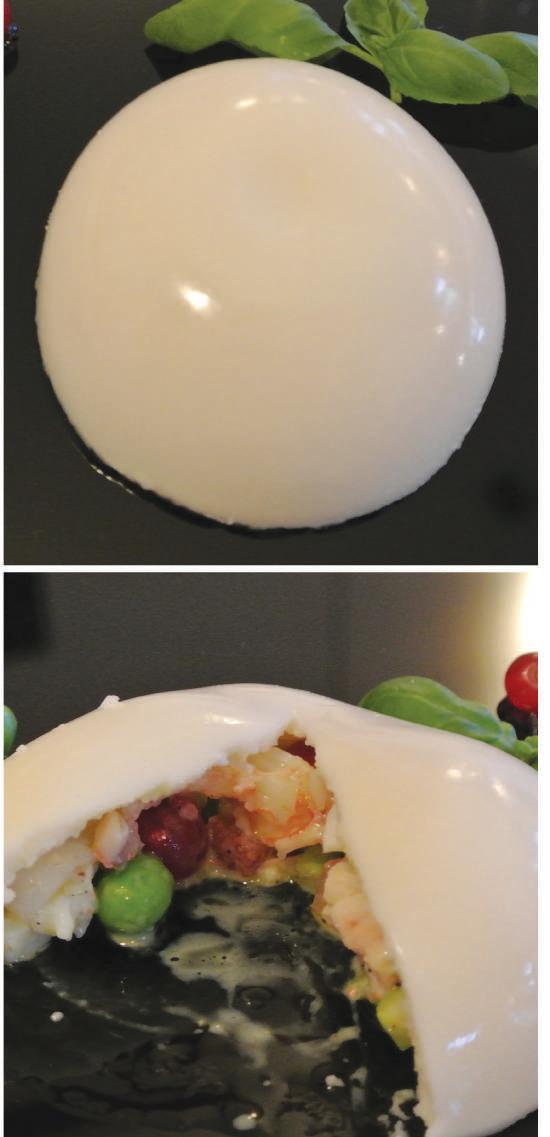
Ingredients
Burrata Ball
300g buffalo burrata
200 ml milk
2 anchovies
Agar agar (7 g per liter)
Red Mullet and Anchovy
4 red mullets
6-8 anchovies
Medium-strength extra virgin olive oil (Sicily, Sardinia, Marche)
Basil, mint
Fruit and Vegetable Salad
2 large asparagus spears
1 potato
2 vine-ripened tomatoes
15 blueberries
1 apple
4 strawberries
Medium-sized extra virgin olive oil
Roughly ground pepper
Cut the burrata into pieces, add the milk and 2 anchovies and place in a cylindrical container and blend with an immersion blender. Prepare over the heat and bring to 95°C, add 3.5 g of agar agar, and blend again with an immersion blender.
Place the mixture in a 7 cm diameter half-sphere Silpat and refrigerate for 2 hours. Once it has solidified, use a pipe cleaner to empty the mozzarella sphere, leaving only about ½ cm.
Clean the red mullet, fillet it, and remove all the bones using the appropriate tongs.
Pound the anchovies very finely with a knife. Blanch the red mullet in extra virgin olive oil and basil for a few minutes.
Pound 6 basil leaves and 2 mint leaves with a knife. Coarsely chop the red mullet. Place the red mullet, anchovy, basil, and mint mixture in a bowl.
Clean the asparagus, blanch in boiling water for 2 minutes. Remove from the heat and immediately place in ice water. Then make a brunoise.
Peel the potato, brunoise it, and blanch in boiling water for about 5-6 minutes.
Set aside a portion of the potato and mash it with a fork.
Wash the tomatoes, blanch in boiling water for 1.5 minutes, remove from the heat and immediately place in ice water and brunoise. Keep all the vegetables separate, on trays lined with paper towels. Wash the strawberries and blueberries and brunoise them.
Peel the apple, brunoise it, and blanch in boiling water with half a squeezed lemon for about 1 minute. Remove from the heat and immediately place in ice water.
Arrange the fruit on separate trays. Add the fruit and vegetables just before serving.
Place the fruit and vegetable salad in the bowl with the red mullet and anchovy, add mediumhigh EVOO to taste, and ground pepper. Fill the burrata half-sphere with the mixture. Place the half-sphere on a black mirror plate, so that it reflects and gives the appearance of a sphere.
Add basil leaves for garnish.
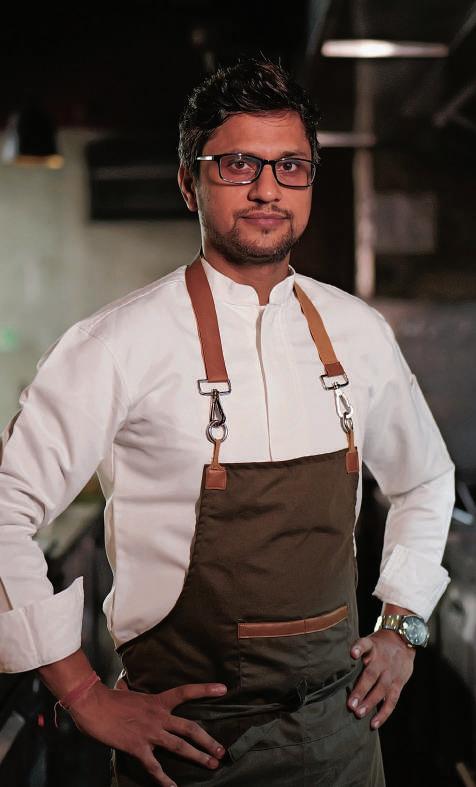
QLA, NEW DELHI
Chef Dipender Tiwari, Director of Culinary & Dining at Qutab Entertainment Pvt. Ltd., steers the elegant European fine-dining haven QLA in Mehrauli with a blend of operational savvy and creative fervor. He shapes not only the menu but the entire guest journey, infusing mindfulness into every aspect. For Dipender, cuisine is a spiritual odyssey, where ingredients are elevated through harmonious presentation and bold flavors. His voyage started at Hyatt Gachibowli in Hyderabad, under French maestro Jean Claude Fugier, mastering classical techniques and Mediterranean nuances. He collaborated with German chef Lars Windfuhr before sailing with Oceania Cruise Lines at “Jacques,” the opulent concept by Jacques Pépin. Back in India since 2017, he revitalized The Olive Kitchen & Bar and joined QLA.
Drawing from Massimo Bottura’s ethos of creativity and purpose, Dipender spotlights under-the-radar gems like fiddlehead ferns, celeriac, moringa, and parsnips to forge distinctive profiles. At QLA, he evolves a dynamic European lineup, from globalinfused revamps like Starfruit + Chevre to his iconic Smoked Duck—a perennial delight that embodies his refined artistry.
Chef Deepanshu Girdhar, the culinary maestro at Ottimo at West View, ITC Maurya, elevates Western cuisine to new heights with his seamless fusion of timeless traditions and cutting-edge innovation. Boasting over 14 years in the hospitality realm, Girdhar’s mastery in Italian, Continental, and European gastronomy turns the rooftop haven into a sanctuary of exquisite, memorable dining. His philosophy is grounded in classical methods, yet invigorated by modern twists, ensuring each creation bursts with authenticity and flair. With an unyielding eye for detail, a steadfast dedication to superior quality, and a relentless pursuit of perfection, Girdhar leads his team to maintain ITC Hotels’ illustrious reputation. He champions responsibly sourced, vibrant fresh ingredients, weaving them into dishes that not only tantalize the palate but also honor sustainable practices. At Ottimo, Girdhar’s artistry transforms every meal into an immersive experience, where flavors dance in harmony, evoking emotions and forging lasting impressions. He doesn’t just prepare food— he crafts symphonies on the plate, inviting guests to indulge in the refined elegance of Western gastronomy through his passionate, visionary touch.
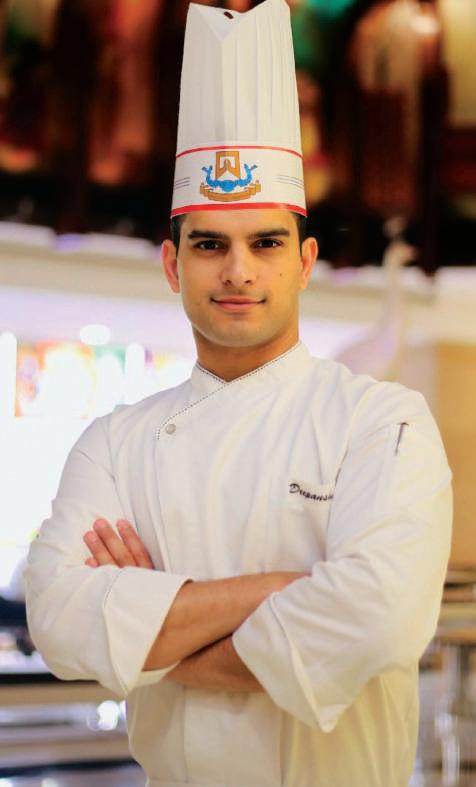
OTTIMO, WEST VIEW ITC MAURYA, NEW DELHI
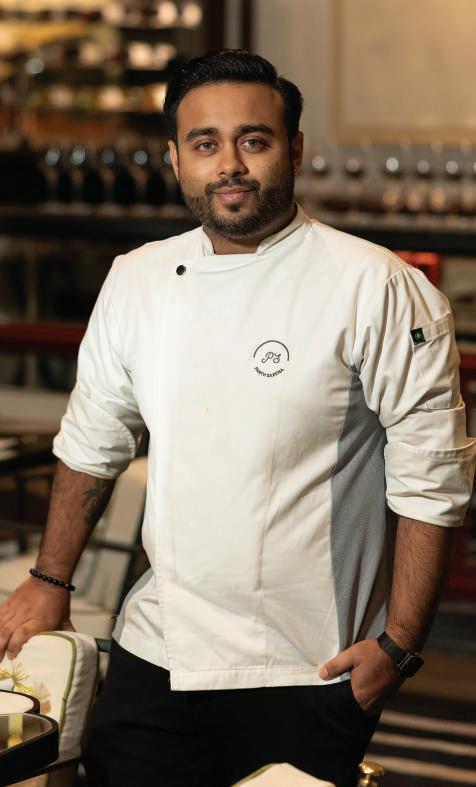
ARTS ROOM, NEW DELHI
Chef Parth Saxena, a visionary talent, shapes the culinary identity of Arts Room in Delhi’s Eldeco Centre, Saket, as Brand Chef, crafting a menu that intertwines global influences with artistic expression. An Oberoi Group alumnus, he spent a decade refining European and Southeast Asian cuisines across their prestigious properties, mastering intricate techniques and vibrant flavors. In 2015, Parth co-founded Gobsmackers Custom Built Burgers, a Delhi chain celebrated for its gourmet patties fusing international zest with Indian flair, earning acclaim for bold creativity. During this time, he guided emerging hospitality entrepreneurs, mentoring startups nationwide in menu innovation and business growth.
Returning to fine dining in 2025 with Arts Room, launched by Ambrosia Hospitality, Parth scoured India and beyond to source premium ingredients from artisans like Manam Chocolate, Eleftheria Cheese, and Ikai Organics, prioritizing sustainability. His 40-dish menu, featuring vegan and gluten-free options, evolves alongside Pristine Contemporary’s art exhibits, reflecting his love for music, travel, and fine art. Parth’s creations transform dining into an immersive experience, blending nostalgia with inventive flair to captivate guests with every soulful bite.
Chef Yugal Kishor, raised in Himachal Pradesh’s Himalayan embrace, found his culinary spark in his grandmother’s and mother’s kitchen, mastering traditional Indian dishes. After earning a threeyear Diploma from the India Tourism Development Corporation, he honed his craft at Ashok Hotel’s Frontier and Durbar, specializing in North-West Frontier kebabs, and trained in continental sauces and roasts. His career spans Indian and global cuisines, from managing state banquets for India’s Prime Minister to catering high-profile events like Bollywood star Shahrukh Khan’s 2015 Palm Jumeirah gathering, Formula-1 in Abu Dhabi (2012), and Rugby 7s in UAE (2009-2013).
As Head Chef at Reform Social & Grill, one of Dubai’s premier British gastropub’s, Yugal drives precision and creativity, refreshing menus with seasonal British classics and health-conscious options like the “lean and mean” section. Reducing food waste by 14% through streamlined prep, he mentors a tight-knit team, ensuring high retention and consistent quality across 1,000-cover events like Christmas and Rugby World Cup. His leadership blends bold Indian roots with global finesse, crafting dishes that spark joy and connection, leaving a lasting mark on Dubai’s vibrant dining scene.
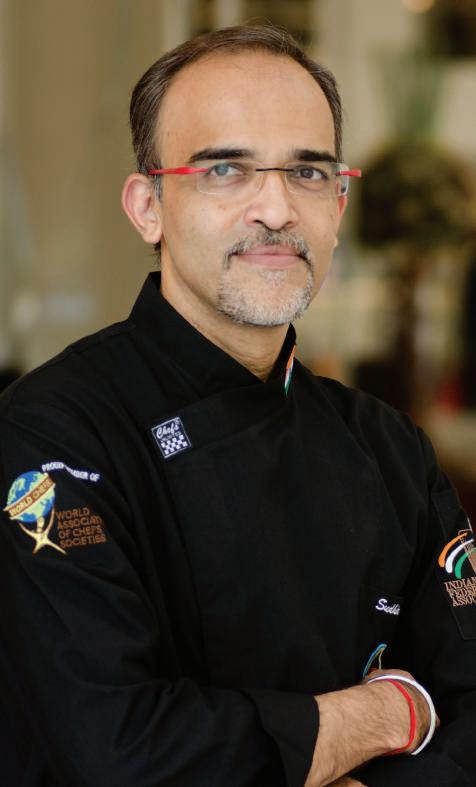
Chef Sudhir M. Pai, with over 20 years of culinary mastery, has shaped menus for global giants like IHG, Oberoi, Leela Kempinski, and Marriott across India, the Middle East, and the USA. His cuisine harmonizes India’s regional traditions with international finesse, using local ingredients to craft dishes that resonate with modern palates. Traveling India’s diverse landscapes, from Konkan’s fishing villages to Kerala’s home kitchens, Punjab’s farms, and Mumbai’s bustling street stalls, Pai absorbs the stories behind each ingredient, transforming them into refined plates that honor their origins. His work spans reimagining coastal curries and spearheading international food festivals, blending authenticity with innovative presentation. Leading new restaurant openings and large-scale menu designs, Pai elevates Indian cuisine to a global stage, showcasing its sophistication and depth. A dedicated mentor, he fosters curiosity and discipline in his teams, nurturing a shared passion for the craft. For Pai, cooking is a bridge between heritage and modernity, delivering soulful, universally appealing experiences that position Indian gastronomy as a cornerstone of fine dining.
Executive Pastry Chef Akshay Batra, with nearly two decades of mastery, transforms desserts into edible art. Trained at The Culinary Institute of America and Welcome Group Graduate School of Hotel Administration, Manipal, Batra’s philosophy celebrates simplicity, letting premium, locally sourced ingredients shine in every creation. From artisan breads to intricate chocolates and plated desserts, his work balances flavor, texture, and visual allure.
Batra’s illustrious career spans luxury venues like MGM Grand and Palms Hotel in Las Vegas, Taj Group in India, and iconic UAE properties, including Intercontinental Dubai Marina and Atlantis The Palm. Now at Sofitel Dubai The Palm, he crafts seasonal menus and bespoke confections for elite events, earning accolades like Pastry Chef of the Year (2021, Hotel & Catering News Middle East) and a spot among Hotelier Middle East’s top 50 chefs (2024). Batra sees baking as a science, demanding precision in proportions and consistency. Each dessert, a symphony of flavors and textures, invites guests to savor unforgettable moments.
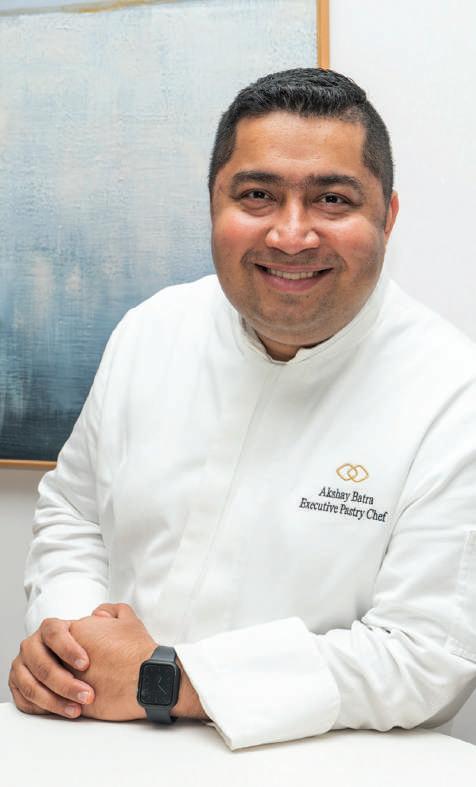
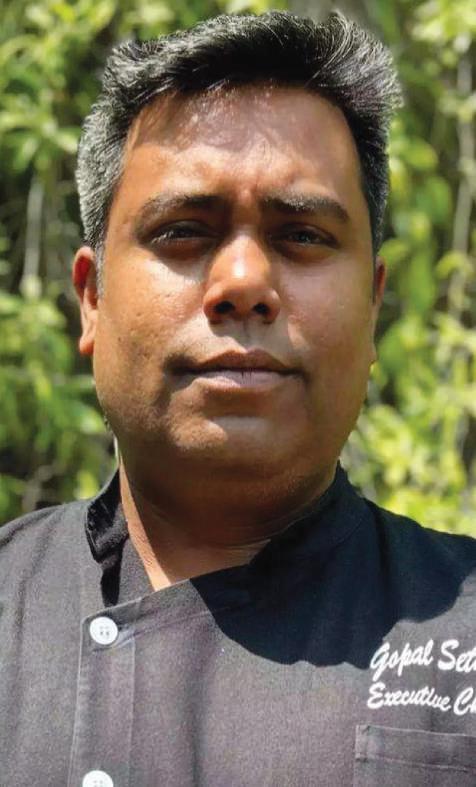
In the heart of Fontainhas, Goa, Chef Gopal Sethi weaves nostalgia into every dish at Casanoni, an Italian trattoria that feels like a warm embrace. With over 20 years in elite kitchens, Sethi has led award-winning restaurants and crafted menus for celebrity weddings, yet at Casanoni, he returns to the soulful simplicity that first inspired him. His wood-fired Napoli-style pizzas—crisp, chewy, and bursting with flavors like spicy seafood or classic Margherita—transport diners to Naples’ bustling streets. Slow-cooked ragù and pillowy handmade pastas reflect his devotion to honest, heartfelt cooking.
Drawing from his tenure in India’s top hotels, Sethi channels precision and global expertise into a space that’s intimate and unpretentious. His philosophy shuns frills, focusing on fresh ingredients and meticulous execution to evoke comfort and joy. A mentor to young chefs, he nurtures talent while ensuring every plate—from vibrant salads to rich sauces—carries his signature care. At Casanoni, Sethi’s cuisine is more than food; it’s a sensory hug, blending Italian tradition with Goan warmth, inviting guests to linger in moments of connection and savor the essence of home.
Chef Marleen Yashima, a global culinary vanguard, has spent over a decade weaving diverse flavors into unforgettable dining experiences. Trained at École Alain Ducasse in the Philippines and Paris, she mastered the precision of French cuisine, blending it with her Filipino roots to win Champion at Chef Wars Philippines. Her journey took her to MichelinStarred SPOON in Paris, where she embraced fine dining’s exacting standards, followed by pivotal roles in luxury hospitality at The Ritz-Carlton in New York and Tokyo.
As part of The Tokyo Edition’s pre-opening team, Yashima helped shape a modern dining legacy in one of the world’s food capitals. Her passion for Italian craft led her to Peppe Napoli Sta’ Ca, a globally acclaimed pizzeria, where she honed traditional techniques before co-launching RistoPizza by Napoli Sta’ Ca, ranked #2 in Asia Pacific and #13 worldwide by 50 Top Pizza. Now, as co-owner of Kabalana Surf Club in Sri Lanka and a growing portfolio in the Philippines and India, Yashima crafts multicultural menus that pulse with local stories and ingredients. Her cuisine bridges continents, creating spaces where every bite fosters connection and lasting memories.
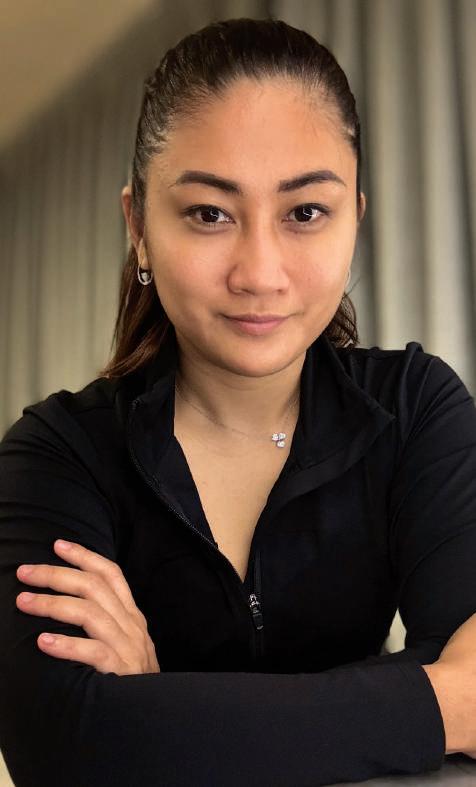
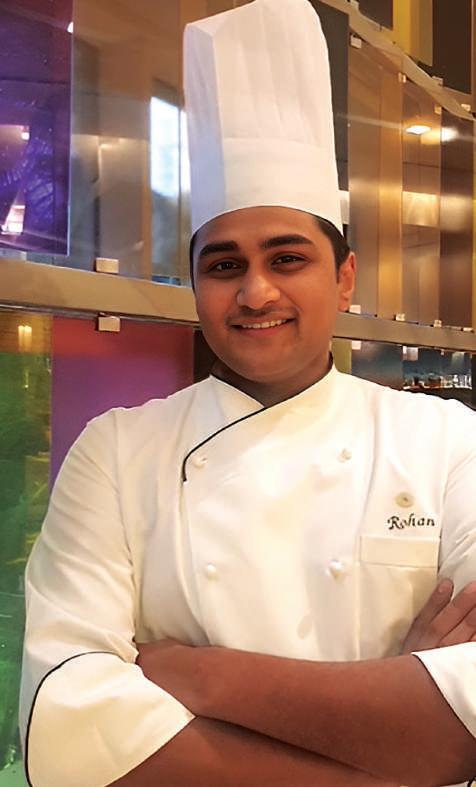
ROHAN NIPPANI VETRO AND ENOTECA, MUMBAI
Chef Rohan Nippani, sous chef at Vetro and Enoteca within The Oberoi, Mumbai, crafts an Italian dining experience that marries clarity with creativity. Raised in a small town, he found solace in his family’s kitchen, where simple ingredients sparked a lifelong passion for transforming the ordinary into the extraordinary. A graduate of the Oberoi Centre of Learning and Development, Rohan refined his artistry across Oberoi properties, from the regal Oberoi Amarvilas in Agra to resorts in New Delhi and Mauritius, while drawing inspiration from collaborations with Michelin-starred chefs at Amadeo.
At Vetro—Italian for “glass”—Rohan infuses every dish with honesty and elegance, offering a modern take on classic Italian cuisine tailored to each guest’s palate. Enoteca, the restaurant’s curated wine library, complements his vision with old- and new-world vintages, enhanced by expert sommelier pairings. For Rohan, Italian cuisine is a balance of reverence for tradition and fearless innovation. In Mumbai’s vibrant heart, he redefines fine dining, creating intimate, memorable moments that elevate flavors and forge connections through every meticulously crafted plate.
Chef ViveQ Pawar, a Maharashtra native, infuses his dishes with the soul of family legacy, drawing from generations of discipline and service inherited from his grandfather. During his childhood, food became a vessel for preserving history and evoking emotion, sparking a curiosity that propelled him from personal passion to professional acclaim. His television journey on MasterChef India, MasterChef Tamil, and MasterChef Telugu honed his ability to weave technical prowess with heartfelt storytelling, turning every plate into a narrative of memory and connection.
At Roxie in Bengaluru, an Italian-themed craft house evoking the Amalfi Coast’s whimsy, ViveQ crafts a menu that dances between bold Indian spices and refined global textures. Opened in 2023, Roxie blends cultural narratives with innovative creations like Korean Garlic Bread stuffed with cream cheese and the Genovese Star Pizza, using premium local ingredients to honor tradition while embracing experimentation. As a mentor and entrepreneur, ViveQ balances fiery authenticity with subtle elegance, creating dining experiences that nourish the spirit and linger like cherished stories, bridging heritage and modernity in every bite.
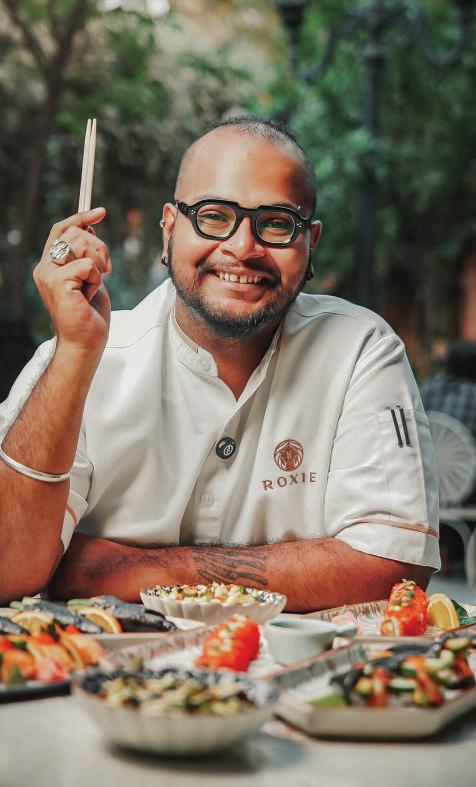
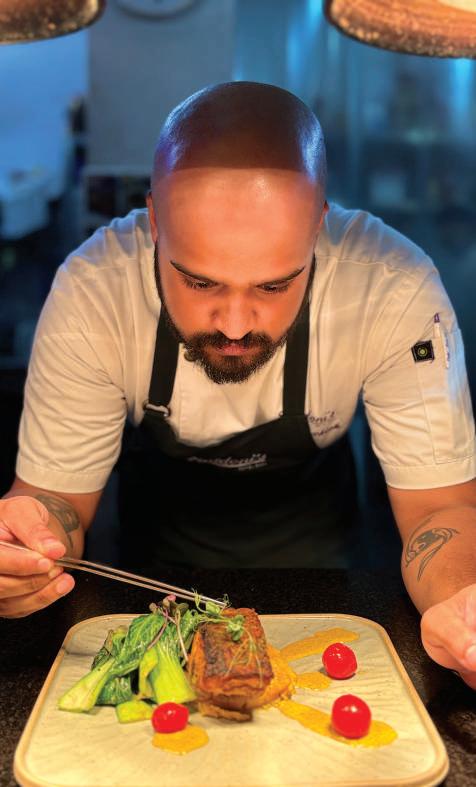
RITHICK SANYAL
ADDONI’S, NEW DELHI
Chef Rithick Sanyal, a rising star in New Delhi’s culinary scene, leads the kitchen at Addoni’s in Green Park, where he blends global techniques with Indian flavors to create dishes that comfort and captivate. A graduate of the Institute of Hotel Management, Pusa, Rithick’s journey began with an internship under Chef Megha Kohli at Lavaash by Saby in Mehrauli, where she became his mentor, guiding his career with wisdom and inspiration. At 21, he ventured to Saudi Arabia, transforming a fledgling coffee shop through a full renovation and a bold new menu.
Returning to India, Rithick joined Chef Megha at Cafe Mez in Gurgaon before heading to Goa, where he became head chef at Mademoiselle Boutique Hotel in Assagao at just 24, later shaping Kaia in Mandrem for Chrome Hospitality. In 2025, Addoni’s became his canvas to craft a rule-breaking menu, fusing Asian, European, and Indian influences into innovative, soulful creations. Inspired by Anthony Bourdain’s belief that shared meals reveal character, Rithick thrives on connecting with diners over food and coffee, weaving stories and flavors into every boundarydefying plate.
Abhishek Gupta relentlessly pursues culinary perfection, crafting elevated dining experiences that captivate and surprise. His insatiable curiosity has led him across 16 countries—France, Denmark, Dubai, Sri Lanka, Spain, Portugal, Japan, Malaysia, Finland, Sweden, and Italy—where vibrant food, culture, and history fuel his creativity. “I cannot sit still; my mind wanders, always seeking to evolve,” he says. For Abhishek, respecting ingredients is paramount, blending timeless techniques with bold innovation to weave unforgettable gastronomic stories, whether in a hotel or restaurant.
As Executive Chef at The Leela Ambience Gurugram Hotel & Residences, Abhishek brings over a decade of expertise, having honed his craft at their iconic properties in Jaipur, Goa, Bangalore, and Chennai. His 20-year journey through India’s premier luxury hotels—including The Taj Palace New Delhi, The Oberoi Grand Kolkata, Hyatt Regency New Delhi, Marriott Jaipur, JW Marriott Juhu, and Hyatt Regency Gurgaon—reflects a meticulously carved path in the culinary world. Abhishek’s philosophy is simple yet profound: evolve with time, embrace diverse flavors, and master techniques to create dining moments.
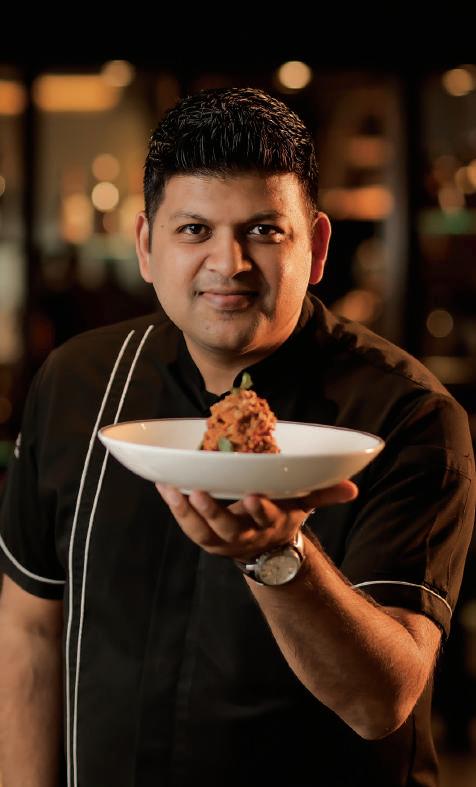
ZANOTTA, GURUGRAM
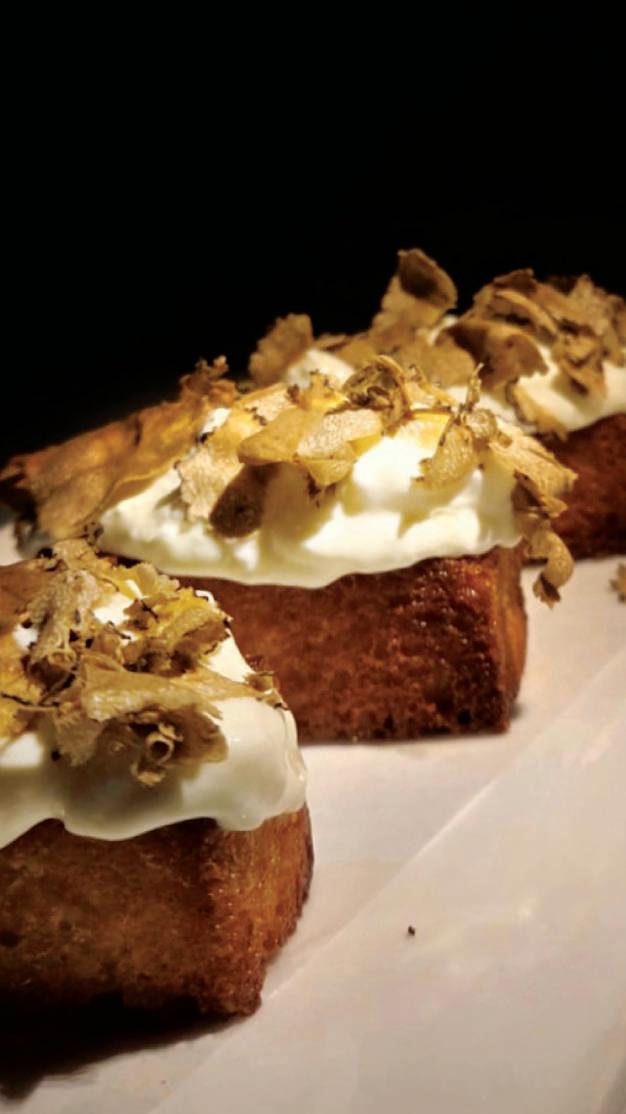
MANAN VASUDEVA CALA, New Delhi
Ingredients
1 burrata
1 brioche loaf
5g truffle paste
10 ml truffle oil
Maldon salt for seasoning
3g fresh truffle
Method
Pre-heat the oven to 400 degrees.
Slice the baguette into 1/4 - 1/2-inch pieces and spread on a baking sheet topped with a rack. Brush truffle olive oil onto the bread and bake for 5-7 minutes.
Break the burrata into pieces and set aside.
Take out the bread from the oven and apply the truffle paste on the brioche and top it with the burrata. Sprinkle with Maldon salt.
Drizzle with the remaining truffle oil or extra virgin olive oil on each piece and top it with freshly shaved truffle.
Chef Manan Vasudeva, a trailblazer in New Delhi’s culinary scene, redefines Italian cuisine with a bold, global perspective. His journey began not in a traditional kitchen but with a self-started pizzeria on a university campus, crafting authentic Neapolitan pies that showcased his innate flair for flavor. After graduating from the Indian School of Hospitality, he honed his craft in Singapore’s Michelin-starred kitchens, mastering classical techniques with disciplined precision. Back in India, he thrived under Aditi and Aditya Dugar, learning to weave storytelling and seasonality into every dish.
As Head Chef at CALA, Manan spent a transformative year shaping an Italian-inspired menu, fostering a kitchen culture rooted in passion and values. Now leading Noctis, Delhi’s intimate speakeasy bar, he crafts ingredient-driven bar bites that blend Italian heritage with global influences, harmonizing with curated cocktails in a moody, elegant setting. His cuisine balances soulful simplicity with meticulous execution, reflecting a relentless curiosity and respect for produce. Manan’s leadership heralds a new era of Indian chefs, creating not just meals but vibrant cultural experiences that resonate deeply with every guest.
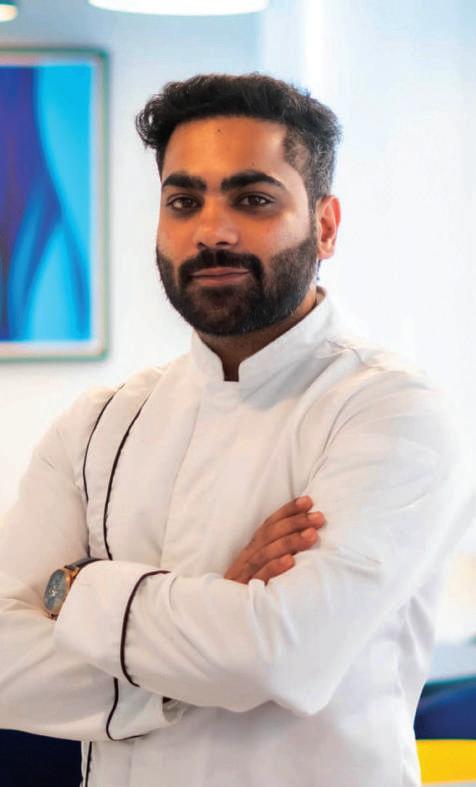
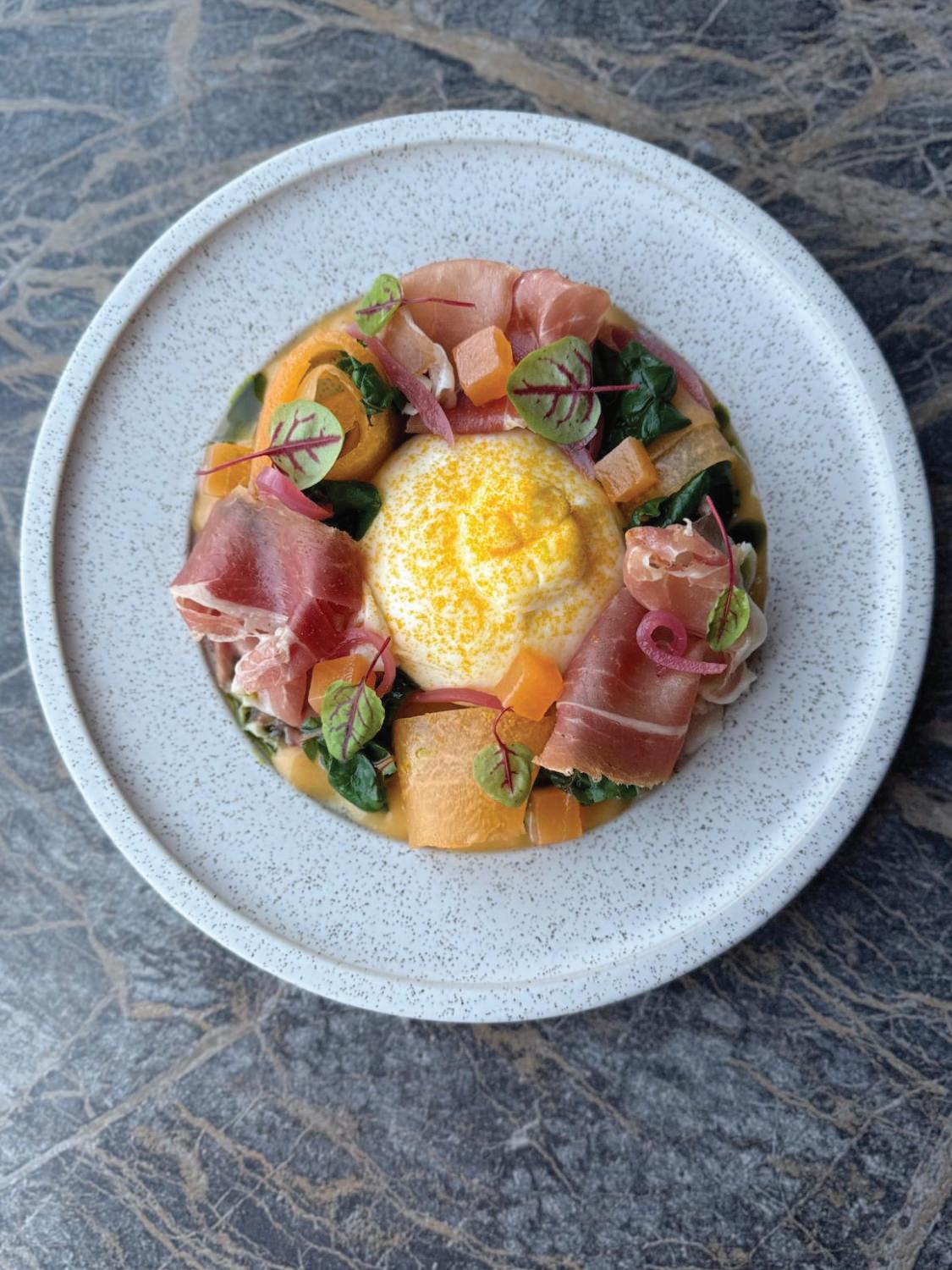
Ingredients
1 burrata, room temperature
8 slices Carpegna prosciutto, freshly sliced
½ ripe cantaloupe melon, thinly sliced
½ ripe cantaloupe melon, cut into cubes
30 ml raw Chardonnay vinegar
4 fresh wood sorrel, Oxalis
½ small red onion
1 tbsp sugar
1 tbsp salt
A splash of vinegar, for pickling - white wine or red
wine vinegar
Extra virgin olive oil, as required
Parsley oil
50g fresh parsley
50g extra virgin olive oil
Method
Take the burrata out of the fridge at least two hours before serving - it should be at room temperature so it becomes soft, creamy, and rich.
Slice the Carpegna prosciutto fresh just before plating. Make sure it has rested out of the fridge for a bit to let the fat relax and bring out the aroma. Use a ripe cantaloupe melon: slice half of it into thin ribbons using a meat slicer or mandolin. The other half should be cut into cubes.
Vacuum seal the melon cubes with raw Chardonnay vinegar to compress them and enhance their sweetness and acidity.
Use the melon trimmings to make a melon cream by blending them with olive oil, a pinch of salt, and a touch more vinegar. Blend until smooth. Spoon the melon cream on the base of the plate. Place the burrata right in the center.
Arrange the compressed melon cubes and the thin melon slices around the burrata in a natural, elegant shape.
Blanch the fresh wood sorrel quickly and vacuum seal it with olive oil and a splash of vinegar, just enough to soften it without losing its brightness. Thinly slice the red onion. In a smoking hot pan, add the sugar and salt, then toss in the onion slices. When it hits the heat, finish with a splash of vinegar to create a fast pickle. Remove quickly. Garnish the plate with a few of the pickled red onion slices and the softened sorrel.
Finish with a few drops of fresh parsley oil. Make it by blitzing 50% fresh parsley and 50% extra virgin olive oil in a Thermomix at high speed until vivid green and smooth. Strain before using. Serve immediately.
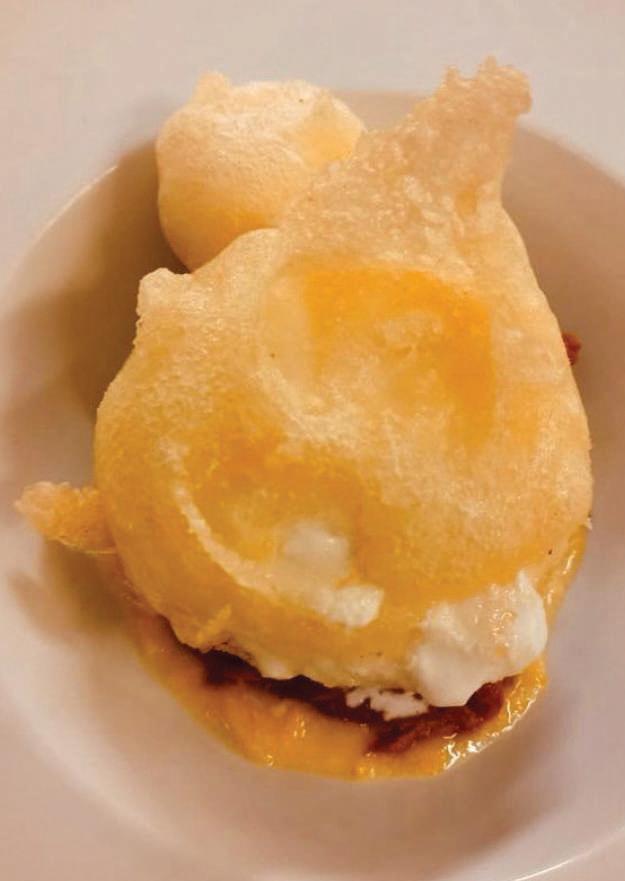
Ingredients
Andria PGI Burrata
Pork neck
Homemade barbecue sauce
Flour to taste
Sparkling water
Salt
Method
Prepare the tempura by combining flour and sparkling water until you reach the desired consistency.
At the same time, heat the pork neck, already cooked at low temperature in a vacuum-sealed bag, in boiling water, then shred it and mix it with the barbecue sauce. Next, dip the burrata into the tempura and fry it in seed oil at 180°C until golden brown. Assemble the dish by placing the pork shoulder on top, then the fried burrata, season with salt and pepper.
Ingredients
4 poached plums, see recipe
1 burrata, torn
6 prosciutto slices
4 tbsp yuzu kosho honey, see recipe
5 fresh shiso leaves
Method
Place burrata in the center of plate.
Arrange poached plum around the burrata.
Drape slices of prosciutto
Drizzle over yuzu kosho honey.
Garnish with torn or finely sliced shiso
Poached Plums
4 plums
500 ml water
150g sugar
1g yuzu, zest
Method
Bring water, sugar, lemon zest, and lemon juice to a simmer.
Poach plums gently in the syrup for 3–5 minutes until skins loosen and flesh softens slightly. Remove the plums, peel skins, and return them to syrup.
Chill in syrup until ready to serve.
Yuzu Kosho Honey
3 tbsp honey
½ tsp yuzu kosho
1 tsp warm water
Method
Whisk honey and yuzu kosho together in a small bowl.
Adjust consistency with a few drops of warm water.
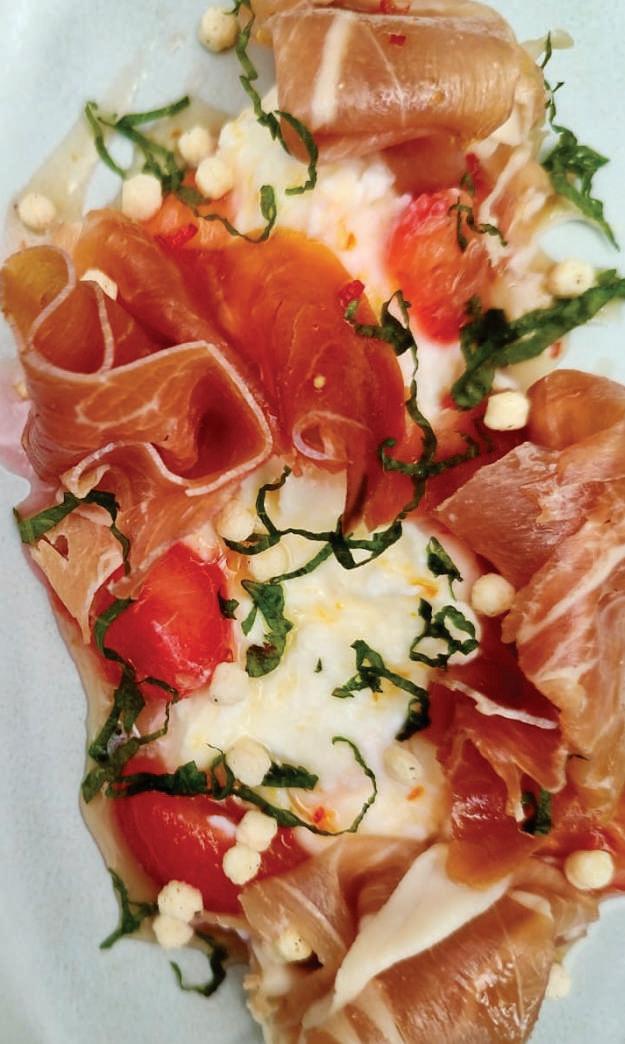
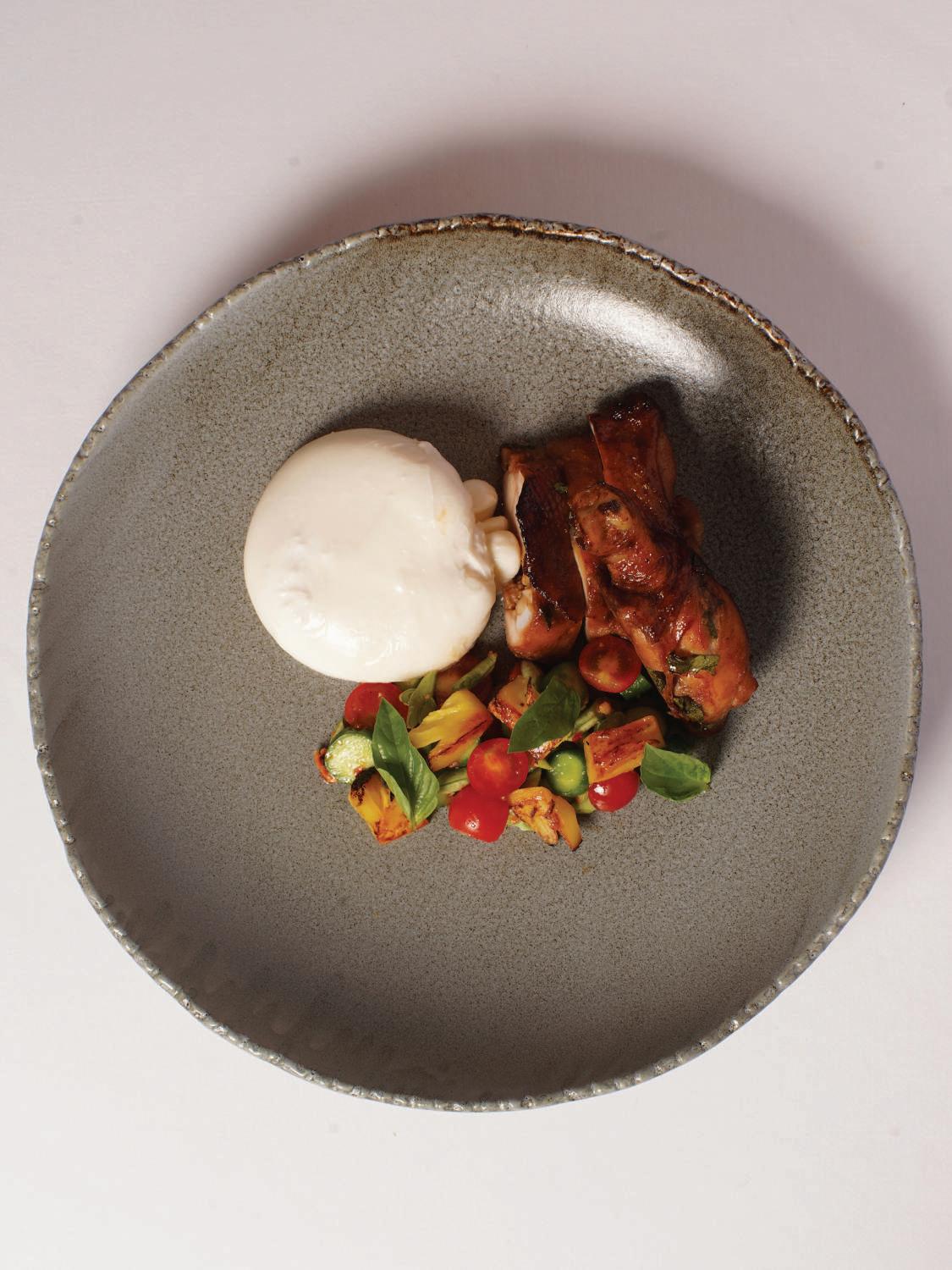
This dish draws inspiration from Thai street food and is one of the chef’s personal favorites. Traditionally, Thai cuisine doesn’t incorporate cheese, but in this creation, the chef elevates the classic Som Tum flavor profile by pairing it with creamy Burrata. The vibrant tanginess of lime, sweetness of palm sugar, and juiciness of tomato harmonize beautifully with the soft, milky texture of the cheese. A crisp salad adds freshness and contrast, while toasted peanuts provide both balance and a satisfying crunch. The result is a playful and modern reinterpretation—where the bold, zesty spirit of Thai cuisine meets the indulgence of Italian Burrata.
Ingredients
180g chicken thigh
25g palm sugar
12g salt
5g fish sauce
25g yogurt
5g Thai sweet basil
Method
Use a knife to score the chicken before marinating. In a mixing bowl, add the salt, fish sauce, yogurt and palm sugar. Mix well until the palm sugar and salt dissolve.
Add the chicken and Thai sweet basil to the mixing bowl and give the chicken a good massage. Let it marinate for 30 minutes to an hour in the fridge. You can either slow grill the chicken on low heat charcoal until the chicken is cooked, or you can further grill it in a pan on medium low heat, or grill in a preheated oven of 150C for 15 minutes. Once the chicken is cooked, let it rest for 3 to 5 minutes before slicing. Slice the chicken to bite size pieces and set aside.
SUJIRA “AOM” PONGMORN KHAAN, BANGKOK
5g Thai garlic, peeled
10g spicy red chili
15g fish sauce
10g fresh lime juice
15g palm sugar
15g toasted peanuts
Method
In a mortar, add the garlic and red chili. Pound until it becomes a fine paste. Add all the liquids to the mortar and use a pestle to gentle mix all the ingredients. Ensure that the palm sugar dissolves.
Gently crush the toasted peanuts into small pieces. Use a spoon to mix all the ingredients in the mortar and pour into a sauce bowl and set aside.
Salad
30g fresh cucumber, sliced to bite size
30g fresh cherry tomatoes, cut in half
20g fresh long beans, sliced to bite size
5g Thai sweet basil leaves
1 burrata cheese
Method
In a salad mixing bowl, add the sliced cucumber, tomatoes and long beans.
Pour the Son Tom dressing and gently mix. Add the Thai sweet basil leaves and mix.
Plating
In a serving plate, place all the mixed salad, burrata and grilled chicken.
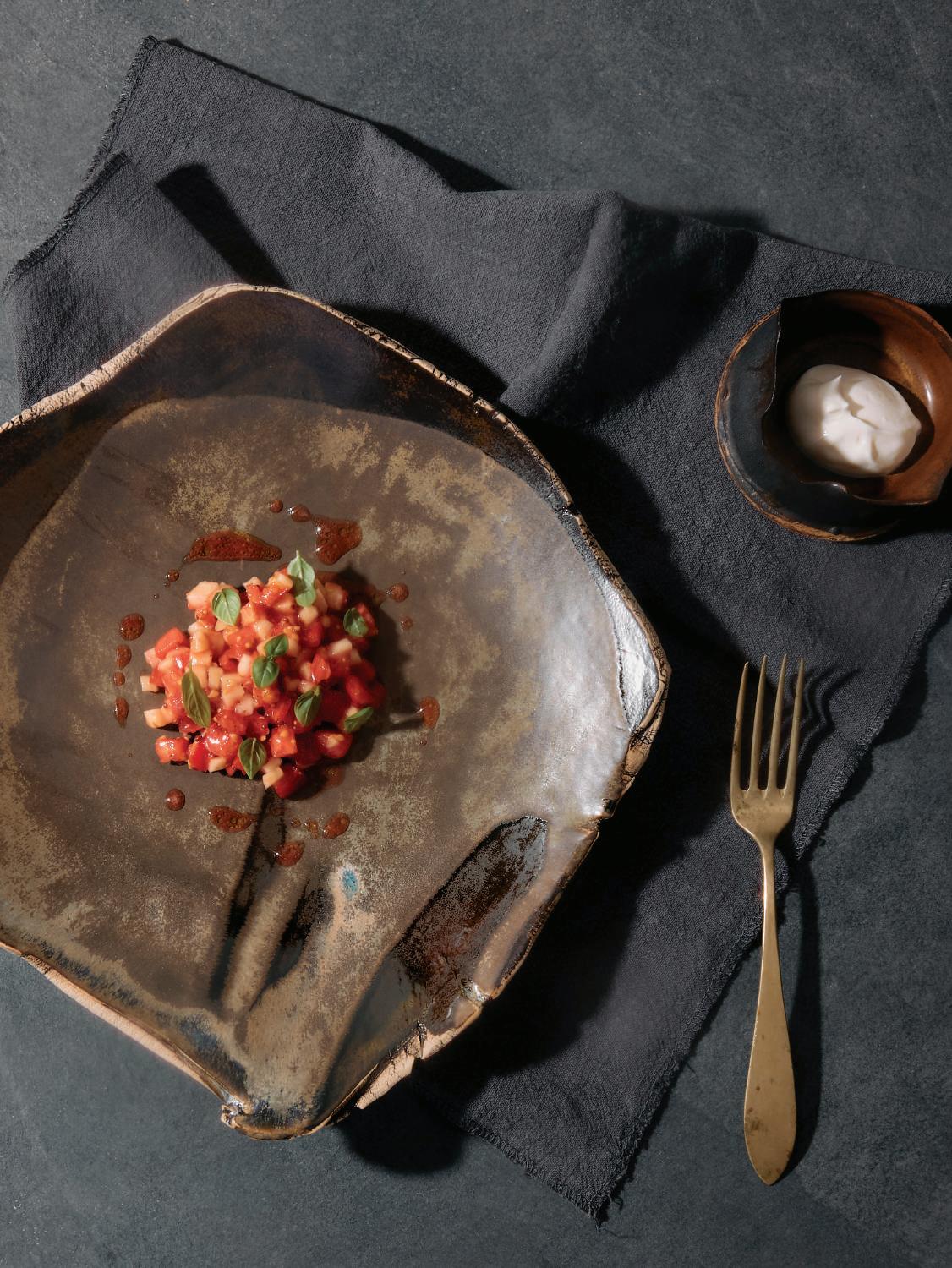
LUCA ROSATI TUSCANY
same process as the tomato.
Place it in a bowl. Prepare the vinaigrette with extra virgin olive oil, soy sauce, Worcestershire sauce, salt, pepper, tomato water, and the juice of half a lime. Mix quickly.
Once this is done, combine the two brunoise (tomato and peach) in a bowl, add a pinch of salt and pepper, mix, and add the vinaigrette. Taste for flavor and let it steep for 15 minutes. Plate, decorate with fresh basil and serve with burrata ice cream.
Gelato di Burrata
Ingredients
Tartare
6 tomatoes
5 white peaches
2 tbsp soy sauce
2 tbsp Worcestershire sauce
Salt and white pepper for seasoning
6 tbsp extra virgin olive oil
1 tbsp lime juice
5g fresh basil
Method
Wash and cut the tomato into brunoise. Place them in a chinois and let the water drain, which we’ll use later. Peel the peach and repeat the
200g burrata, 100g fresh cream
180g sugar
200g whole milk
200g Orange blossom water
Method
For the gelato, blend the milk with 150g of the burrata liquid, the sugar, and the burrata. Heat to 70°C, then blend again and sieve to remove any remaining stretched curd.
Add the chilled cream and 2 tablespoons of orange blossom water, stir, and refrigerate for 1 hour. Finally, pour into the gelato maker and churn for about 40 minutes to 1 hour.
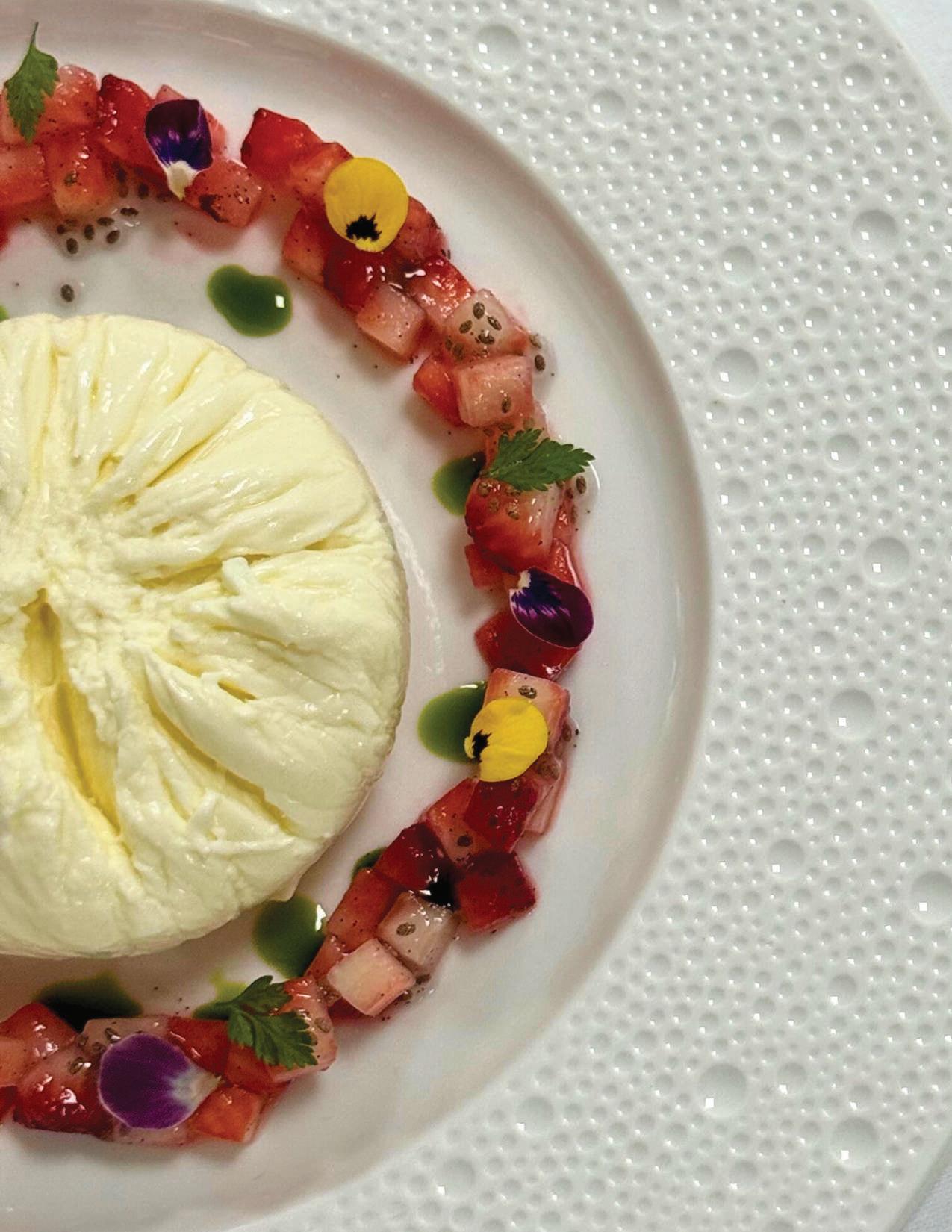
AKSHAY BATRA
SOFITEL DUBAI THE PALM, DUBAI
Ingredients
1000g cream
250g milk
200g burrata cheese
200g castor sugar
22g gelatine
1 vanilla bean
250g strawberry, fresh
40g chia seeds, soaked
Garnish
Herb oil, optional
Edible flowers, viola Basil cress or mint
Method
Soak the gelatin in ice cold water.
In a medium pot boil the cream, milk, sugar and vanilla bean.
Once boiling add the burrata cheese to it and blend.
In this warm mixture, add the gelatin.
Pour this mixture into a semi sphere mold wrapped with a cling wrap.
Now, tie this up into a ball and place in a flat surface to set.
Demold it once it is set to resemble a burrata.
Garnish
Dice the strawberries into small pieces, and add some vanilla bean to it.
Plate the strawberries with the help of a ring uniformly.
Add some soaked chia seeds on top.
Garnish with edible flowers and with basil or mint cress.
Lastly, add herb oil as an option for some color.
Note: Keep the mixture overnight to get cool and then use.
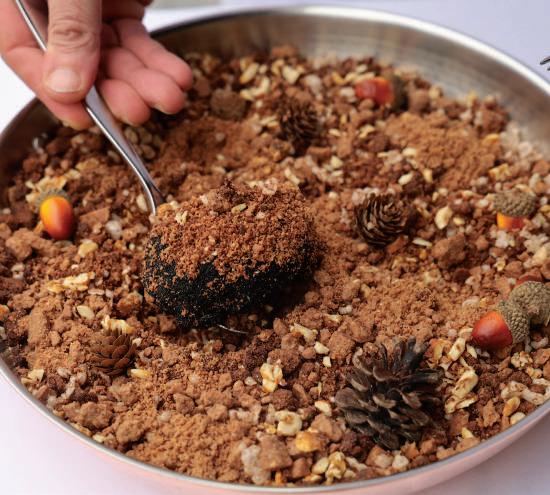
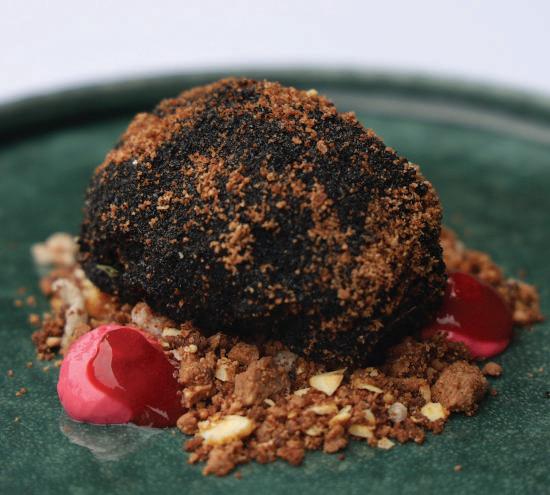
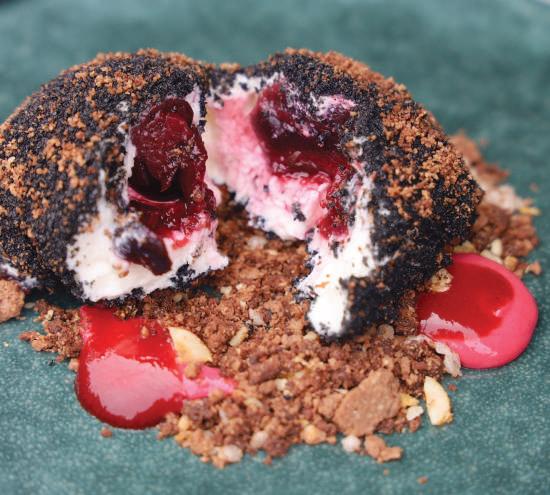
FRANCESCO LENZI STEFANO MERLO CASA LENZI, BANGKOK
Ingredients
Burrata Ganache
3g gelatin / 500g cream / 140g white chocolate / 210g fresh burrata cheese
Method
Boil half the cream, add gelatin and combine with the white chocolate, pour the mix in a blender with the burrata cheese and blend till smooth. Add the cold remaining 250g cream and stir to combine. Cool down in a container covered with film in contact.
Store in the fridge for 12 hours. After 12 hours, whip and place in a piping bag.
Cherry Jelly Insert
450g dark cherries, pitted / 7g olive oil / 50g Kirsch alcohol / 40g corn syrup / 160g tart cherry juice / 25g sugar / 10g corn starch / 5g apple pectin / 3g lime zest
Method
Remove pits from cherries using a cherry pitter.
Cut them into 8 pieces and set aside. Meanwhile combine sugar, pectin and corn starch, set aside.
Sauté half of the cherries (225g) with olive oil for a couple of minutes; on high heat. Then, flambé with Kirsch. Lower the heat and add corn syrup and the sugar-corn starchpectin mixture; cook for 2 minutes. Add the tart cherry juice, remove from heat and add remaining cherries and lime zest. Let cool to room temperature. Fill in a mini demi sphere silicone mold and freeze completely. Un-mold cherry inserts onto a frozen tray and seal them by 2 forming an individual 30g sphere. Freeze immediately.
Charcoal Bread
1 kg bread flour / 10g yeast / 14g powdered charcoal / 680g water / 24g salt
Method
Add all the above ingredients and knead well. Form a loaf and rise at room temperature for 3 hours. Bake the loaf at 220°C for 50 minutes.
Truffle breadcrumbs
500g charcoal bread / 50g fresh truffle grated with microplane
Method
Blend the dried bread in a Thermomix. Sift and add the grated fresh truffle.
Puffed Tapioca Pearls
150g tapioca pearls
Simmer the tapioca pearls for about 25 minutes in lightly salted water (2% of its weight), remove from the heat, and let it swell for another 5 minutes. Drain well and let it dry at 50°C for about 4 hours. Puff the tapioca pearls by quickly frying them in seed oil (200°C).
Dry with paper towel until all the excess oil has been removed.
Create a mixture of cocoa biscuits, hazelnut praline, chocolate biscuits, and puffed tapioca pearls.
Place a square 25cm by 25cm of cling film on a working table, place 30g of whipped burrata ganache in the center, top with one cherry jelly insert and cover with 30 more grams of whipped burrata ganache.
Bring the 4 edges of the cling film together, tight to the center and form an irregular ball. Place the ball in a blast chiller until frozen.
Once frozen remove the cling film and roll it over the charcoal bread ensuring that it adheres well to the mousse.
Store the truffle shaped burrata cheese in the fridge for 4 to 5 hours or until completely defrosted, before serving.
Take the truffle shaped burrata cheese from the fridge and place in a serving container. Cover the truffle burrata with plenty of crunchy earth. Portion and serve table-side.
Burrata, that creamy Puglian treasure with its stracciatella core spilling from a delicate mozzarella shell, has evolved far beyond its Italian roots into a true culinary chameleon. Its mild, buttery flavor and lush, almost liquid texture make it an ideal partner for fusion dishes, effortlessly weaving into the vibrant, aromatic worlds of Indian, Japanese, and African cuisines. What was once a simple cheese from southern Italy’s pastures now blends comfort with bold, unexpected flavors, creating plates that feel both nostalgic and thrillingly innovative. No longer limited to caprese salads or prosciutto boards, burrata is remixing global traditions, drawing in chefs, restaurateurs, and home cooks with its boundless versatility and visual appeal—perfect for those glossy social media close-ups where the cheese dramatically bursts open.
Indian cuisine’s intense spices and intricate flavor profiles might seem poised to overshadow burrata’s gentle creaminess, but the combination reveals a natural synergy. The cheese serves as a soothing, luxurious counterpoint to fiery curries and heady spice blends like garam masala or cumin. Imagine a naan fresh from the tandoor’s blistering heat, its pockets stuffed with burrata that melts into a vibrant pool of spicy mango chutney—a clever twist on the classic paneer-stuffed naan. A Mumbai food blogger recently spotlighted this on X, praising how the cheese’s indulgent softness tempers the chutney’s sharp tang, creating balance in every tear-apart bite. Or envision burrata crowning a butter chicken pizza: tender morsels of chicken simmered
in a spiced tomato sauce, finished with a plump orb of burrata that splits to release its creamy heart. Each slice delivers cozy richness laced with exotic warmth, demonstrating burrata’s talent for harmonizing disparate elements into something greater than the sum of its parts.
Burrata’s global journey extends well beyond India, finding fresh expressions in other far-flung traditions. In Japanese cuisine, where subtlety and precision define the craft, burrata introduces a touch of decadence to minimalist elegance. Picture a sushi roll, meticulously rolled with pristine rice and fish, topped with a quenelle of burrata, a bright whisper of yuzu zest, and a fine drizzle of soy reduction. The cheese’s velvety creaminess amplifies the seafood’s subtle umami, transforming familiar nigiri into a luxurious, almost hedonistic treat that respects tradition while pushing boundaries. African flavors offer their own dynamic contrast, drawing from the continent’s diverse, sun-soaked palette. In an Ethiopian injera house, burrata pairs seamlessly with doro wat, the iconic berbere-spiced chicken stew, where its cooling richness softens the dish’s volcanic heat much like traditional yogurt or ayib cheese. Further west, in markets from Lagos to Dakar, burrata scattered generously over jollof rice—infused with a dash of suya spice—adds a plush, indulgent layer to the smoky, peppery grains, evoking the communal energy of street-side feasts. These pairings underscore burrata’s unique role as a cultural bridge, enhancing time-honored recipes without overshadowing their soul.
This wave of innovation stems largely from diaspora communities and inventive chefs who fuse ancestral techniques with contemporary twists. In London’s
bustling Brick Lane or New York’s Curry Hill, Indian eateries now feature burrata alongside tikka masala, the cheese mimicking yogurt’s creaminess but elevating the smoky, spiced tomato sauce with an extra layer of decadence that lingers on the palate. Home cooks worldwide are equally inspired, turning to TikTok tutorials and X threads for ideas like serving burrata over aloo gobi—spiced cauliflower and potatoes transformed by a velvety, restaurantworthy lift. These accessible experiments turn weeknight dinners into flavorful adventures, blending the comfort of family recipes with the excitement of discovery.
Burrata’s enduring appeal in fusion lies in its adaptability: it absorbs the fiery punch of Indian spices, the refined subtlety of Japanese techniques, or the robust intensity of African seasonings while retaining its signature allure. For adventurous home cooks, it’s an open invitation to play— drizzle it with peri-peri sauce for a fiery and citrusy zing, mound it over fufu paired with nutty egusi stew for grounded earthiness, or serve it simply with pickled mango for a bright, tangy contrast that surprises the senses. These aren’t rigid formulas but flexible sparks to ignite creativity in the kitchen.
From the curry-scented haze of a Mumbai street stall to the hushed focus of a Tokyo sushi counter or the improvisational hum of a family kitchen, burrata quietly revolutionizes the plate. It challenges us to rethink comfort food’s boundaries, illustrating how a single ingredient can connect distant culinary worlds. In our hyper-connected era, burrata embodies fusion at its best—not flashy novelty, but thoughtful harmony that surprises, satisfies, and fosters shared delight through every irresistible bite.
ALL PHOTOGRAPHS ARE COPYRIGHT
COVER ©LUCA ROSATI
END PAGES - 5 ©LUCA ROSATI
6 ©WGMAGAZINES
9 ©ADRIANO TRUSCELLO
10 ©DOUG SINGER
13 ©ALFREDO RUSSO
14 ©SUMIT GOVIND SHARMA
16-18 ©CONSORZIO DELLA BURRATA DI ANDRIA PGI
20-27 ©FAMIGLIA OLANDA
28-31 ©THE SPOTTED COW FROMAGERIE
32 ©FRANCESCO MAZZEI
33 ©ANTONIO SABA
34 ©SILVIA BARACCHI
35 ©GRAZIA ANTONNI
36 ©FABIO GIAMELLO
37 ©ALFREDO RUSSO
38 ©GABRIELE STABILE
39 ©HELENA PEIXOTO
40 ©GATEANO SIMONATO
41 ©MAURIZIO BUFI
42 ©SAM AISBETT / AKUNA
43 ©SIMONE CAPONNETTO / LOCALE FIRENZE
44-45 ©ADRIANO TRUSCELLO
46 ©CELINI
47 ©JW MARRIOTT GOA
48 ©SIMONE CAPONNETTO / LOCALE FIRENZE
50 ©SILVIA BARACCHI
51 ©ARTS ROOM
52 ©EVE
54 ©CHAAT
55 ©ZAMĀNA
56 © RUBENS KATO
58 ©CASANONI TRATTORIA
59 ©ALESSANDRO MICELI
60 ©FRANCESCO MAZZEI
62 ©ZANOTTA
63 ©OTTIMO, WEST VIEW ITC MAURYA
64 ©MARIA AQUINO
66 ©VIVEQ PAWAR
67 ©ALESSANDRO MICELI
68 ©MASSO
70 ©CASA LENZI
71 ©GIUSEPPE MOLARO
72 ©ALESSANDRO ROSSI
73 ©GIOVANNI PAPI
74 ©ANDREA FIORAVANTI
75 ©DIMOS BALOPOULOS
76 ©CLAUDIO SANTINI
77 ©GIORGIO DIANA
78 ©ALESSANDRO MICELI
79 ©ANDREA VIGNALI
80-81 ©MAURIZIO BUFI
82 ©ALESSANDRO ROSSI
84 ©ALESSANDRO MICELI
86 ©FABIO GIAMELLO / GAETANO TROVATO
88 ©DIMOS BALOPOULOS
90 ©QLA
92-164 ©VETRO AND ENOTECA
95 ©QUE SERA SERA
96 ©ANDREA FIORAVANTI
98 ©YUGAL KISHOR
100 ©ADDONI’S
102 ©SUDHIR PAI
104-105 ©HARRY HAKUEI KOSATO
106 ©MASSO
107 ©LUCA ROSATI
108 ©SUJIRA PONGMORN / KHAAN
109 ©MARIA AQUINO
110 ©ZAMĀNA
111 ©CELINI
112 ©GIOVANNI LONGO
112 ©EVE
114 ©JW MARRIOTT GOA
115 ©CHAAT
116 ©RAFFAEL KABLY
117 ©QUE SERA SERA
118-119 ©GIUSEPPE MOLARO
120 ©GIOVANNI PAPI
121 ©LUX LUCIS / VALENTINO CASSANELLI
123 ©SAM AISBETT / AKUNA
124 ©CLAUDIO SANTINI
125 ©ALFREDO RUSSO
127 ©GIORGIO DIANA
128 ©RAFFAEL KABLY
129 ©MARLEEN YASHIMA
130-131 ©GIOVANNI LONGO
132 ©GATEANO SIMONATO
134 ©QLA
135 ©OTTIMO, WEST VIEW ITC MAURYA
136 ©ARTS ROOM
137 ©YUGAL KISHOR
138 ©SUDHIR PAI
139 ©SOFITEL DUBAI THE PALM, DUBAI /AKSHAY BATRA
140 ©CASANONI TRATTORIA
141 ©MARLEEN YASHIMA
142 ©VETRO AND ENOTECA
143 ©VIVEQ PAWAR
144 ©ADDONI’S
145 ©ZANOTTA
146-147 ©MANAN VASUDEVA
148 ©ANDREA VIGNALI
150 ©GRAZIA ANTONNI
151 ©RAFFAEL KABLY
152 ©SUJIRA PONGMORN / KHAAN
154 ©LUCA ROSATI
156-157 ©SOFITEL DUBAI THE PALM, DUBAI /AKSHAY BATRA
158 ©CASA LENZI
BACKCOVER ©WG MAGAZINES / SUMIT GOVIND SHARMA / DOUG SINGER
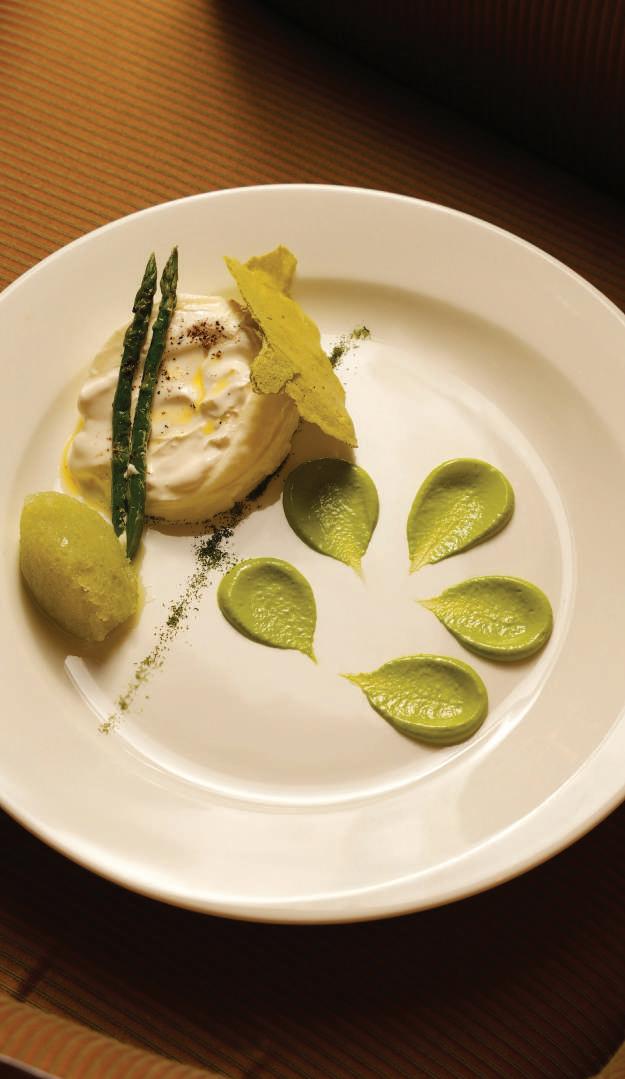
The recipes are presented in a clear and easy-to-follow way, with ingredients, methods, preparations and dish photographs.
All measures are level unless otherwise stated.
Gram - g
Millilitre - ml
Tablespoon - tbsp
Teaspoon - tsp
Conversions
1 teaspoon (tsp) = 5 ml / 5 g
3 teaspoons (tsp) = 1 tbsp / 15 ml / 15 g
1 tablespoon (tbsp) = 15 ml / 15 g
15 tablespoons (tbsp) = 1 cup / 225 ml
1 cup = 8 fluid oz. / 237 ml
1 pint = 2 cups = 473 ml
1 quart = 4 cups = 0.95 litres
1 ounce = 28 grams
1 pound = 454 grams
1 stick butter = 1/4 cup
1 decilitre (dl) = 100ml
1 stick = 1 inch
Weight
1 gram = 0.035 ounces
100 grams = 3.5 ounces
500 grams = 1.1 pounds
1 kilogram = 35 ounces
Volume
5 millilitre = 1 teaspoon
15 millilitre = 1 tablespoon
240 millilitre = 1 cup or 8 fluid ounces
Liquid measures
8 fluid ounces = 1 cup = 1/2 pint = 1/4 quart
16 fluid ounces = 2 cup = 1pint = 1/2 quart
Temperature
Conversion from Fahrenheit to Celsius: C = (F - 32) / 1.8
Conversion from Celsius to Fahrenheit: F = C x 1.8 + 32
150C = 302F
175C = 347F
190C = 374F
200C = 392F
Burrata: A Century of Celebration honors the creamy, soulful cheese born in Andria, Puglia, a century ago by Lorenzo Bianchino, who ingeniously transformed mozzarella scraps and cream into a delicate, stracciatellafilled pouch during a snowstorm-inspired creation. This book, sparked by a memorable dinner and championed by the Consorzio Della Burrata di Andria PGI and Famiglia Olanda, celebrates burrata’s journey from rustic ingenuity to a global culinary icon revered for its rich, buttery heart. World-renowned chefs, including Heinz Beck, Alfredo Russo, and Francesco Mazzei, contribute exquisite recipes, from traditional pairings with Coratina olive oil to bold fusion creations blending global flavors, showcasing burrata’s unmatched versatility.



Award-winning authors Flavel Monteiro and Doug Singer, along with Sumit Govind Sharma craft a vibrant tribute to this Protected Geographical Indication treasure. Supported by a wide array of culinary visionaries from around the world, this book traces burrata’s rise from Puglia’s sundrenched fields to tables worldwide, uniting cultures through its lush texture and timeless charm. Discover the stories of dedicated artisans, innovative chefs, and vibrant communities, and savor burrata’s power to inspire joy, connection, and culinary artistry across borders in this heartfelt ode to Puglia’s gastronomic gem.