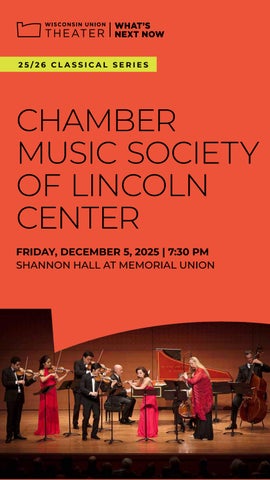
25/26 CLASSICAL SERIES
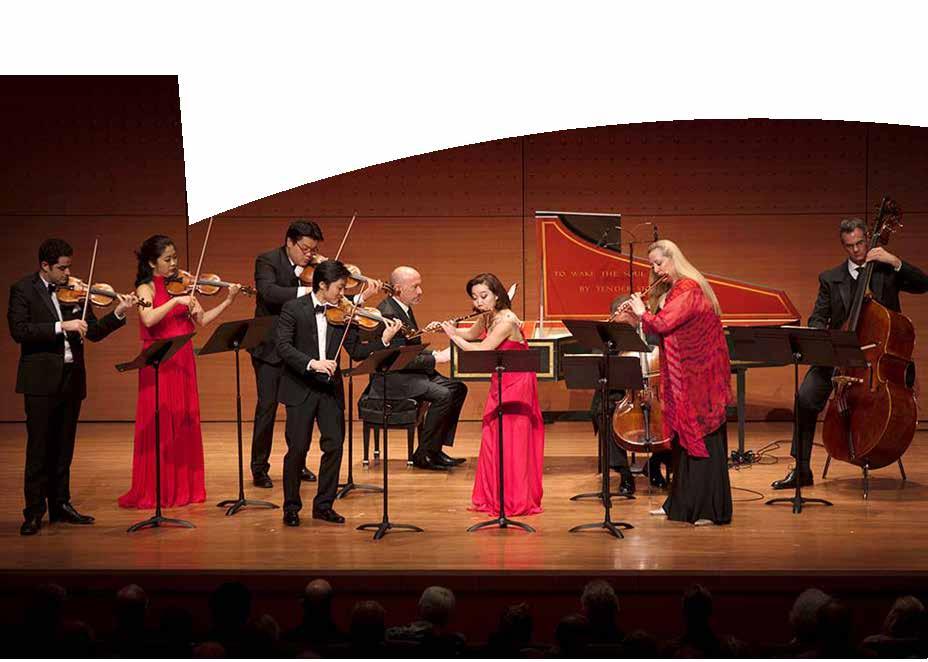
CHAMBER MUSIC SOCIETY OF LINCOLN CENTER
FRIDAY, DECEMBER 5, 2025 | 7:30 PM
SHANNON HALL AT MEMORIAL UNION
Please silence all devices while viewing this program. We also invite you to reduce your screen brightness if you are able.
We appreciate your help in maintaining a quiet hall that is conducive to musicmaking and listening.
In an effort to increase our sustainability efforts, the Wisconsin Union Theater is now utilizing digital programs.
PROGRAMMED BY THE PERFORMING ARTS COMMITTEE
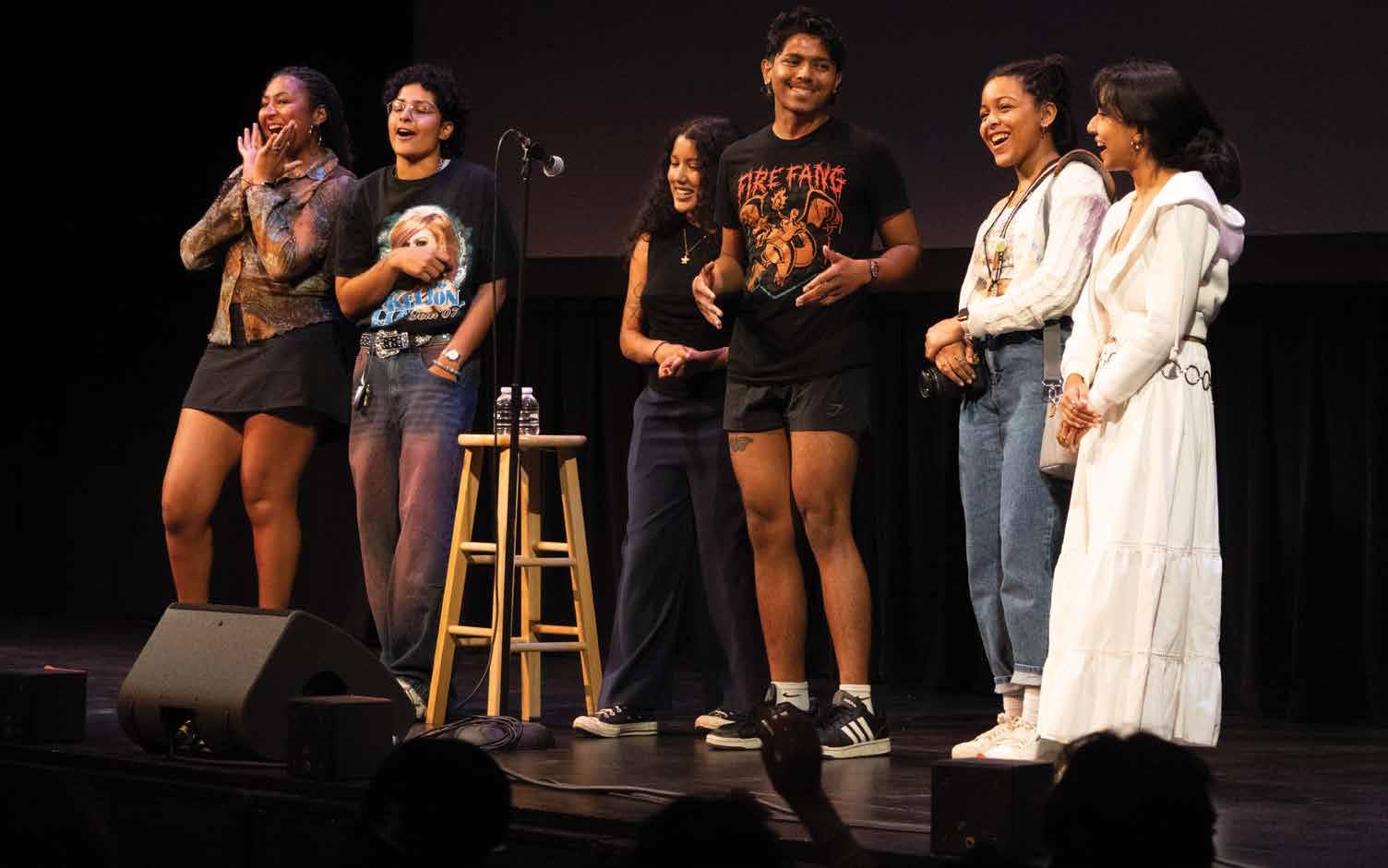
The Wisconsin Union Directorate Performing Arts Committee (WUD PAC) is a student-run organization that brings world-class artists to campus by programming the Wisconsin Union Theater’s annual season of events.
WUD PAC focuses on pushing range and diversity in its programming while connecting to students and the broader Madison community.
In addition to planning the Wisconsin Union Theater’s season, WUD PAC programs and produces studentcentered events that take place in the Wisconsin Union Theater’s Play Circle. WUD PAC makes it a priority to connect students to performing artists through educational engagement activities and more.
WUD PAC is part of the Wisconsin Union Directorate’s Leadership and Engagement Program and is central to the Wisconsin Union’s purpose of developing the leaders of tomorrow and creating community in a place where all belong.
PROGRAM
Johann Sebastian Bach (1685–1750)
Brandenburg Concerto No. 3 in G Major, BWV 1048
[Allegro]
Adagio
Allegro
Brandenburg Concerto No. 1 in F Major, BWV 1046
[Allegro]
Adagio
Allegro
Menuetto—Trio I—Menuetto da capo—Polacca—
Menuetto da capo—Trio II— Menuetto da capo
Brandenburg Concerto No. 2 in F Major, BWV 1047
[Allegro]
Andante
Allegro assai
INTERMISSION
Brandenburg Concerto No. 5 in D Major, BWV 1050
Allegro
Affettuoso
Allegro
Brandenburg Concerto No. 6 in B-flat Major, BWV 1051
[Allegro]
Adagio ma non tanto
Allegro
Brandenburg Concerto No. 4 in G Major, BWV 1049
Allegro
Andante
Presto
PROGRAM NOTES
The six concertos avec plusieurs instruments (“concertos with various instruments”) that Johann Sebastian Bach dedicated to Christian Ludwig, Margrave of Brandenburg, in 1721 rank among the most widely performed works of classical music. The Second could even be called iconic: It has come to act as a stand-in for all that classical music entails, and is often quoted in film and TV to represent elegance, refinement, and learning. Yet the reverence and prestige that the Brandenburg Concertos carry today are extraordinary given that, except for No. 5, there is little concrete evidence they were ever performed in Bach’s lifetime or at the court for which they are now named.
In 1719, Bach had been sent by his employer Leopold, Prince of Anhalt-Köthen, to the court of Christian Ludwig in Berlin to pay for a new harpsichord from the luthier Michael Mietke. In Berlin, Bach performed for Christian Ludwig, who was an admirer of music, and who, according to the manuscript’s dedication, commanded Bach to compose some concertos. Scholars believe it is possible Bach returned to Berlin to deliver the manuscript himself in 1721, although no records document his travel. There is also no record that he was ever compensated for his music, but if he was paid in person, it would not necessarily have been in the account books. While employed in Köthen, Bach composed much secular instrumental music and gave weekly orchestral concerts. It is during and for these concerts, scholars tend to agree, that Bach probably wrote and performed most of the Brandenburg concertos in some version. Manuscript copies of No. 5 survive from the Köthen period, suggesting the concerto was performed there.
As far as performances in Brandenburg, the evidence is sketchier. Scholars used to believe that the variety of instruments for which
Bach composed must have reflected what was available at court. More recent investigations reveal that Christian Ludwig only had six musicians on staff (although he owned some 11 music stands, suggesting the potential for larger concerts, and it would have been typical for him to “borrow” musicians from the other minor courts in Berlin). Given that Bach had visited two years earlier, it remains likely that he composed for a consortium of real, available instruments and not an idealized projection of his own imagination. Still, whether any of his concertos were performed in Christian Ludwig’s court remains unknown.
Bach Back from Oblivion
It is well known that Bach’s music fell into obscurity quickly in the decades following his death in 1750—until 1829 when the Romantic composer and conductor Felix Mendelssohn gave a performance of the St. Matthew Passion that sparked a phenomenon, bringing Bach’s music to the concert stage— but this story has been a bit dramatized. Bach’s keyboard music stayed in circulation in manuscripts (especially The WellTempered Klavier) and was used as important pedagogical material, and we know Mozart heard his music performed on a visit to Leipzig in the 1780s. It is nonetheless true that most of Bach’s music fell silent.
A host of reasons pushed Bach’s music into obscurity. First, he published much less than his contemporaries. (Corelli, Vivaldi, and Telemann all sold printed sheet music of their works.) Second, Bach never wrote opera. (Handel was by far the most famous opera musician of the era.) Third, Bach secured regional employment at smaller institutions, despite always angling for a better job. Finally, he composed in a contrapuntal and ornamented musical style that was criticized as “unnatural” as early as 1737, and was quickly eclipsed by contemporary homophonic styles.
Ultimately, a variety of forces, many beyond his control, left Bach’s music underappreciated and too quickly forgotten.
The Brandenburg Concertos were only rediscovered in 1849, and have since entered the canon. They are held up as exemplars of the Baroque concerto grosso, as well as achievements in orchestration. It is worth bearing in mind, however, that the cultural importance of these works is a modern phenomenon. As much as they are emblems of a foregone musical style and a grand tradition of excellence, they belong just as much, if not more, to our time than the past.
Baroque Concertos in Principle and Practice
The Brandenburg Concertos may be said to embody the widest diversity of styles, textures, and forms of the concerto principle in 1721. Unlike Bach’s famously “encyclopedic” late works—The Musical Offering or the Art of Fugue—they are not a systematic exploration of a concept. A forerunner of the classical solo concerto, which has become the standard, the Baroque concerto grosso gives soloists a starring role. However, the Baroque model could feature one soloist, a small group (which is the most common), or even the entire orchestra (keeping in mind a typical Baroque orchestra was usually only strings, usually one or maybe two players on a part, and rarely amounted to more than about 20 musicians).
The concerto principle refers to the interaction between the different groups of performing forces—the large group (called the ripieno or concerto grosso) and the small group of soloists (called the concertino). In Corelli’s 12 concerti grossi, Op. 6, the small ensemble (a trio sonata) carries the entire work, and the larger instrumental forces merely expand the texture, sound, and volume. Several of Bach’s Brandenburg Concertos demonstrate the Corellian interplay of concerto and sonata; the slow second movements, especially, reduce the instrumentations down to trio sonatas.
Along with Corelli, Bach drew from Vivaldi—specifically his ritornello structure. In this approach, the large ensemble plays a melodic idea (the ritornello) that repeats throughout the
work between episodes by the soloists. The soloists’ episodes are virtuosic and adventurous, with modulations and melodic inventions that propel the work forward. Almost all of Bach’s concertos contain at least one Vivaldian ritornello movement.
Bach’s guiding framework was binary form (named after its division into two roughly equal halves). The first half of the work starts in a home key and modulates to a distant key. Then the first half repeats. In the second half, the work travels from the distant key back to the home key, but the journey involves the most experimental harmonies and melodic invention, including, about three quarters of the way through, what theorists of the time called a “far-out point.” “Far out” referred to harmonic distance between keys, but its inventiveness was often “far out” in the more colloquial sense. In Bach’s hands, binary form offered a loose harmonic roadmap to explore motivic and melodic invention.
Concerto No. 1
The First Brandenburg Concerto immediately makes a statement. It is grand in size and scope, featuring four movements rather than three, and a large and diverse ensemble of soloists: two natural horns, three oboes, bassoon, and violino piccolo (which is higher than the standard violin). The orchestral first movement lets the soloists shine, but the texture is full throughout. In contrast, the aria-like second movement in a dramatic minor key has a reduced sonata instrumentation, reminiscent of Corelli. The third movement contrasts a recognizable ritornello with inventive episodes of the soloists, thus Vivaldian in style. Finally, the fourth movement mashes up two dances—a minuet and a polonaise—interspersed with trios and a march, recalling Bach’s orchestral suites (also written in Köthen). As an opener, the concerto is a compendium that puts on full display Bach’s variety, range, and prowess.
Concerto No. 2
The trumpet is broadly remembered as the star of the Second Brandenburg Concerto, although it is joined by flute, oboe, violin, and harpsichord. The original instrumentation was likely a clarino (a type of natural trumpet with tone holes, resembling a woodwind instrument), recorder (often called flute generically), oboe (in the Baroque period it had fewer keys than the modern instrument), and violin (featuring gut strings and lighter string tension for a sweeter timbre). The very high clarino part—still considered difficult for modern trumpet—suggests it was written for, or at least inspired by, Johann Ludwig Schreiber, the virtuoso clarino player in the Köthen court. The outer movements, both featuring ritornellos, are dominated by the trumpet, which tends to introduce new ideas, gaining allies as the soloists join. The slow movement leaves out the clarino, possibly because the minor key was difficult for the instrument, but the reduced instrumentation also follows sonata style with quieter, more intimate instruments.
Concerto No. 3
Like the Second, the Third Brandenburg Concerto has also become iconic as the one most frequently performed in transcription by large modern orchestras. It features a string ensemble of nine soloists: three violins, violas, and cellos. Within this lush orchestration, each soloist comes in and out of the texture, but the overall approach is integrated. Indeed, the farout point of the first movement features a dense polyphonic texture to create a moment of saturation rather than highlight soloistic invention. The second movement is also famous for its ambiguity; it consists of only two held chords, which create a socalled half cadence in the relative minor (a half cadence is the “question” half of question-and-answer phrases, and musically creates unresolved feelings). Some argue the two chords set (or reset, as it were) the G-major key of the third movement, and play the notes as written. Others argue that this was an invitation to improvise, and often play a cadenza or borrow a movement from one of Bach’s violin sonatas.
Concerto No. 4
The Fourth Brandenburg Concerto shows the most influence from Vivaldi, including the extremely virtuosic part for solo violin that joins the dueting flutes (again, often played on recorder). The outer movements both feature memorable homophonic ritornellos that contrast contrapuntal episodes by independent soloists. The somber minor-key second movement also stands out in many ways: Unlike sonata-style second movements, this one maintains a fuller “concerto” orchestration and features call-and-response interplay between soloists and orchestra. The solo violin, which steals the show in the first movement, remains prominent, but a flute performs the cadenza.
Concerto No. 5
The Fifth Brandenburg Concerto has probably received the most scholarly attention. Bach gives an unprecedented (and largely unimitated) role to the harpsichord across all three movements. The first is the most dramatic: The harpsichord starts in a typical accompaniment role, but over time adds more excitement, leading to the noisy far-out point. From there, it emerges in a grand fantasia for the cadenza. Theodor W. Adorno, one of the founders of the Frankfurt School of sociology, believed the harpsichord’s ascent to soloist mirrored the liberation of the servant, representing social democratization. More recently, Michael Marissen, writing in The New York Times, argued that Bach likely had religious concepts in mind—that “the first shall be last and the last shall be first”—which was often depicted as the world turned upside down. Tia DeNora, adopting a more modern sociological theory of social capital, suggests the harpsichord solos provide the opportunity to demonstrate the instrument itself, noting that the Berlin harpsichords of Michael Mietke were the envy of noble elites. In the end, the Fifth Brandenburg Concerto offers for many a commentary on society at large.
Concerto No. 6
The Sixth Brandenburg Concerto has the smallest orchestra and a gentle mood overall. Its orchestration is also unique, combining violins and violas (still used in the modern orchestra) with viols (an instrument violins and violas would eventually replace). As Marissen explains, “At the time, violas were customarily low-rent, undemanding orchestral instruments, while viols were highend, virtuoso solo instruments. Bach reversed these roles, such that the violas perform virtuosic solo lines while the viols amble along in repeated eighth notes.” The first movement features the solo violas in strict canon (meaning one follows the other’s lead exactly maintaining rhythm and pitch, creating contrapuntal texture). The slow second movement reduces to a trio-sonata texture, but again with violas rather than violins. In the final movement, the solo episodes become increasingly adventurous and resemble Vivaldian solos. Understated throughout and yet wholly enigmatic, the Sixth Brandenburg Concerto may well represent the spirit of the whole set as a perfectly crafted example of the orchestral genre and style that is also unmistakably individual.
—Eric M. Lubarsky
ARTIST BIOS
Cellist Dmitri Atapine has appeared at leading venues worldwide and performs frequently with the Chamber Music Society of Lincoln Center (CMS), where he is an alum of the Bowers Program. He has been featured at festivals including Music@Menlo, La Musica Sarasota, Aldeburgh, and Aix-enProvence. His awards include first prize at the Carlos Prieto Cello Competition and top honors at the Premio Vittorio Gui and Plowman competitions. He holds a doctorate from the Yale School of Music, where he studied with Aldo Parisot. Atapine is cello professor at the University of Nevada, Reno; artistic co-director of Friends of Chamber Music Kansas City; founder of Apex Concerts (Nevada); and co-director of Music@Menlo’s Young Performers Program.
Double bassist Nina Bernat is a recipient of the 2023 Avery Fisher Career Grant and a member of CMS’s Bowers Program. First prizes include the Barbash J.S. Bach String Competition, the Juilliard Double Bass Competition, and the 2019 International Society of Bassists Solo Competition. She has performed as a soloist with the Minnesota Orchestra and as guest principal with the Israel Philharmonic Orchestra and Oslo Philharmonic. Bernat has quickly established herself as a sought-after pedagogue, giving master classes around the country while also serving on the faculty of Stony Brook University. Bernat performs on a beautiful and sonorous early-18th-century bass, attributed to Guadagnini and handed down to her from her father.
Cellist Nicholas Canellakis has been praised in The New Yorker as a “superb young soloist.” Recent highlights include solo debuts with the Virginia, Albany, Bangor, and Delaware symphony orchestras; concerto appearances with the Erie Philharmonic, New Haven Symphony Orchestra, and American Symphony Orchestra; tours of Europe and Asia with CMS; and recitals throughout the US with his longtime
duo collaborator, pianist-composer Michael Stephen Brown. An alum of CMS’s Bowers Program, he is a regular guest artist at many leading music festivals. Canellakis is the artistic director of Chamber Music Sedona in Arizona, and a graduate of the Curtis Institute of Music (where he was recently appointed to the cello faculty) and New England Conservatory.
Cellist Sterling Elliott is a 2021 Avery Fisher Career Grant recipient and winner of the Senior Division 2019 National Sphinx Competition. He has appeared with The Philadelphia Orchestra, New York Philharmonic, Boston Symphony Orchestra, Cleveland Orchestra, and Detroit Symphony Orchestra. He recently returned to the Hollywood Bowl to perform with the Los Angeles Philharmonic. He serves on the faculty at the Sphinx Performance Academy at Juilliard, and performs chamber music at festivals that include La Jolla SummerFest, Edinburgh Festival, Chamberfest Cleveland, and Festival Mozaic. He is a member of CMS’s Bowers Program and performs on a 1741 Gennaro Gagliano cello on loan through the Robert F. Smith Fine String Patron Program, in partnership with the Sphinx Organization.
Randall Ellis served as principal oboist of Lincoln Center’s Mostly Mozart Festival Orchestra from 1988 until 2016. He is principal oboist of the Little Orchestra Society and the Mozart Orchestra of New York, and is solo English horn in The New York Pops. He is a member of the Emmy Award–winning AllStar Orchestra and the Windscape Woodwind Quintet. He has performed with the New York Philharmonic, Seattle Symphony, San Diego Symphony, The Florida Orchestra, and American Symphony Orchestra. Ellis attended the North Carolina School of the Arts and Stony Brook University, where he studied with Ronald Roseman. He teaches oboe and chamber music at Skidmore College.
Violinist Francisco Fullana, winner of the 2018 Avery Fisher Career Grant and the 2023 Khaledi Prize, has collaborated with conducting greats like Sir Colin Davis, Hans Graf, and Gustavo Dudamel. Besides his career as a soloist, which includes recent debuts with the Philadelphia and Saint Paul Chamber orchestras, he is also an innovative educator, having created
the Fortissimo Youth Initiative and co-founded San Antonio’s Classical Music Institute. He is an alum of CMS’s Bowers Program. A graduate of the Juilliard School and the University of Southern California, Fullana performs on the 1735 Mary Portman ex-Kreisler Guarneri “del Gesù” violin, on loan from Clement and Karen Arrison through the Stradivari Society of Chicago.
A member of the St. Luke’s Chamber Ensemble and New York Woodwind Quintet, Marc Goldberg is principal bassoonist of the Festival Orchestra of Lincoln Center, Orchestra of St. Luke’s, American Ballet Theatre, Saito Kinen Orchestra, and the New York City Opera. Previously the associate principal bassoonist of the New York Philharmonic, he has also been a frequent guest of the Boston Symphony Orchestra, Metropolitan Opera, and Orpheus Chamber Orchestra, touring with these ensembles across four continents and joining them on numerous recordings. Goldberg is on the faculty of the Juilliard School PreCollege Division, Mannes College, New England Conservatory, Hartt School, and the Bard College Conservatory of Music.
Violinist Bella Hristova has appeared as a soloist with orchestras across the US, Asia, Europe, Latin America, and New Zealand. She was the featured soloist for an eight-orchestra concerto commission written by her husband, composer David Serkin Ludwig. A champion of new music, her project Lineage features six new solo violin commissions by Dai Wei, Gloria Kravchenko, Nokuthula Ngwenyama, Eunike Tanzil, Joan Tower, and Ellen Taaffe Zwilich. She is a recipient of a 2013 Avery Fisher Career Grant and first-prize winner of the Michael Hill and Young Concert Artists competitions. Hristova studied with Ida Kavafian and Jaime Laredo, is an alum of CMS’s Bowers Program, and plays a 1655 Nicolò Amati violin.
Since her concerto debut with the Seoul Philharmonic Orchestra, flutist Sooyun Kim has enjoyed a flourishing career performing with orchestras, including the Bavarian Radio Symphony Orchestra, Munich Philharmonic, Munich Chamber Orchestra, and Boston Pops. She has appeared in recital in Budapest’s Liszt Hall, Helsinki’s Sibelius Academy, and Kobe’s Bunka Hall. A winner of the Georg Solti Foundation Career Grant and other international awards, and an alum of CMS’s Bowers
Program, she studied at the New England Conservatory under Paula Robison. She is currently on the faculty of the Longy School of Music of Bard College. Kim plays a rare 18-karat gold flute made specially for her by Verne Q. Powell Flutes.
American violist Matthew Lipman has made recent appearances with the Chicago Symphony Orchestra, Chamber Orchestra of Europe, American Symphony Orchestra, Munich Symphony Orchestra, and Minnesota Orchestra. He has performed recitals at Carnegie Hall and the Zürich Tonhalle, and has recorded on the Sony, Deutsche Grammophon, Cedille, and Avie labels. An alum of CMS’s Bowers Program, he performs regularly on tour and at Alice Tully Hall with CMS. An Avery Fisher Career Grant recipient and major prize winner at the Primrose and Tertis international viola competitions, Lipman is on the faculty at Stony Brook University. He performs on a 2021 Samuel Zygmuntowicz viola.
Violist Paul Neubauer has been hailed by The New York Times as a “master musician.” Appointed principal violist of the New York Philharmonic at the age of 21, Neubauer has appeared as soloist with the New York, Los Angeles, and Helsinki philharmonics; Chicago, National, St. Louis, Detroit, Dallas, San Francisco, and Bournemouth symphony orchestras; and the Santa Cecilia, English Chamber, and Beethovenhalle orchestras. He has premiered viola concertos by Bartók (revised version), Friedman, Glière, Jacob, Kernis, Lazarof, Müller-Siemens, Ott, Penderecki, Picker, Suter, and Tower. A two-time Grammy nominee, Neubauer is artistic director of the Mostly Music series in New Jersey and serves on the faculties of the Juilliard School and Mannes College.
Tara Helen O’Connor, recipient of an Avery Fisher Career Grant and a two-time Grammy nominee, was the first wind player to participate in CMS’s Bowers Program. She is the co–artistic director of the Music from Angel Fire Festival in New Mexico, artistic director of the Essex Winter Series, a member of the woodwind quintet Windscape, and a founding member of the Naumburg Award–winning New Millennium Ensemble. She has premiered hundreds of new works and collaborated with the Orion, St. Lawrence, and Emerson string quartets. A Wm. S.
Haynes flute artist, O’Connor is on the faculty at the Yale School of Music and teaches at Bard College and the Manhattan School of Music.
Violinist Daniel Phillips co-founded the Orion String Quartet, which, after an illustrious 37-year career, gave its last concert in April 2024, presented by CMS. He is a graduate of Juilliard, and his major teachers were his father Eugene Phillips, Ivan Galamian, Sally Thomas, Nathan Milstein, Sándor Végh, and George Neikrug. He served as a judge in the 2018 Seoul International Violin Competition, 2022 Leipzig Bach Competition, 2023 World Bartók Competition, and 2024 Prague Spring Competition. Phillips is a professor at the Aaron Copland School of Music at Queens College and is on the faculties of Bard College Conservatory and Juilliard.
Hornist Stewart Rose has performed as a member of the Metropolitan Opera Orchestra and, in recent seasons, was acting principal with the New York City Ballet Orchestra. He has been guest principal with The Philadelphia Orchestra, Metropolitan Opera Orchestra, Saint Paul Chamber Orchestra, and Saito Kinen Orchestra. A native New Yorker, he began playing with Orpheus Chamber Orchestra in the 1980s and has been principal horn with Orchestra of St. Luke’s since its inception. He also served as principal horn with New York City Opera at Lincoln Center for 25 years. Rose’s first solo recording, From the Forest, was released on St. Luke’s Collection to great critical acclaim.
Pianist Mika Sasaki is a soloist, chamber musician, and educator whose performances have taken her around the world. She has appeared as concerto soloist with the Sinfonia of Cambridge, New Jersey Symphony, 92Y Orchestra, and, more recently, with the InterSchool Symphony Orchestra of New York. She is the pianist of Ensemble Mélange and a core member of Decoda, and appears regularly with the Chameleon Arts Ensemble of Boston, Manhattan Chamber Players, Carnegie Hall’s Ensemble Connect, and with her duo partners. She has commissioned works by Max Grafe, Emily Cooley, Andrew Hsu, and Jonathan Dawe. An alum of the Peabody Institute, Ensemble Connect, and the Juilliard School, Sasaki is now a faculty member at Juilliard.
Performer, curator, and on-stage host James Austin Smith “proves that an oboist can have an adventurous solo career” (The New Yorker). Smith appears at leading national and international chamber music festivals as co-principal oboe of the conductor-less Orpheus Chamber Orchestra, and as a member of the International Contemporary Ensemble. He serves as artistic advisor to Coast Live Music in the San Francisco Bay Area and mentors graduate-level musicians as a professor of oboe and chamber music at Stony Brook University and as a regular guest at London’s Guildhall School. A Fulbright scholar and alum of Carnegie Hall’s Ensemble Connect and CMS’s Bowers Program, he holds degrees from Northwestern and Yale universities.
Stephen Taylor is solo oboist with the New York Woodwind Quintet, Orchestra of St. Luke’s, St. Luke’s Chamber Ensemble (for which he has served as co-director of chamber music), American Composers Orchestra, and New England Bach Festival Orchestra, and is co-principal oboist of the Orpheus Chamber Orchestra. Among his recordings are Bach arias with Kathleen Battle and Itzhak Perlman, and Elliott Carter's Oboe Quartet, for which he received a Grammy nomination. He has collaborated with the Vermeer, Shanghai, Orion, American, and Artis string quartets. Trained at the Juilliard School, Taylor is a member of its faculty and the faculties of the Yale and Manhattan schools of music. He plays rare Caldwell-model Lorée oboes.
David Washburn is the principal trumpet of the Los Angeles Chamber Orchestra and associate principal trumpet of the LA Opera Orchestra. Previously, he served as principal trumpet and soloist with the Hong Kong Philharmonic Orchestra and Redlands Symphony Orchestra. He has been a featured soloist with the Los Angeles, St. Louis, Hong Kong, and California philharmonic orchestras; Los Angeles, San Diego, St. Matthew’s, and South Bay chamber orchestras; and Berkeley, Burbank, and Glendale symphonies. He is currently a faculty member at Azusa Pacific University and Biola University. He received his master’s degree with distinction from the New England Conservatory and his bachelor’s degree from the Thornton School of Music at the University of Southern California.
French horn player Hugo Valverde enjoys a prolific career in the United States and abroad as an orchestral player and soloist. He is currently second horn at the Metropolitan Opera Orchestra in New York City. Valverde has played in the National Symphony Orchestra of his native Costa Rica, The Philadelphia Orchestra, Los Angeles Philharmonic, Houston Symphony, and New York City Ballet Orchestra. As a soloist, he has performed with the Lynn Philharmonia, Costa Rican National Symphony Orchestra, and Heredia Symphony Orchestra. A dedicated educator, Valverde participates in pedagogical programs and master classes at prominent music schools in the United States and Latin America. During the pandemic, he created the project “Lockdown Warmups,” which offered 40+ free master classes and professional coaching for young Latin American students. Valverde is a faculty member at the Bard College Conservatory of Music and the Precollege Division at Manhattan School of Music. He studied at the Shepherd School of Music at Rice University in Houston, Texas; Lynn University Conservatory of Music in Boca Raton, Florida; and the National Music Institute in San José, Costa Rica. His main teachers are Daniel León, Luis Murillo, Gregory Miller, and William VerMeulen.
Violinist/violist Tien-Hsin Cindy Wu has collaborated in concerts with renowned artists such as Yefim Bronfman, James Ehnes, Lynn Harrell, Leila Josefowicz, Cho-Liang Lin, Midori, Thomas Quasthoff, Yuja Wang, and members of the Alban Berg, Guarneri, Orion, and Tokyo string quartets at prominent venues such as the Kennedy Center, Carnegie Hall, Lincoln Center, and festivals that include the Bridgehampton Chamber Music Festival, La Jolla Summerfest, Santa Fe Chamber Music Festival, and Marlboro Music Festival. She has taught at the University of Southern California and curated programs for the Da Camera Society in Los Angeles as artistic partner. She is currently the music director of New Asia Chamber Music Society and founded Sunkiss’d Mozart. The Chamber Music Society of Lincoln Center appears by arrangement with David Rowe Artists.
THANK YOU TO OUR GENEROUS DONORS
Anonymous
Margaret Alferi & Eugene Kim
Robin Axel & Jacob Axel
Mohamed Bacchus
Martin Baggott & Jennine Baggott
Robert Bell & Jeanne Bell
Bennett Berson & Rebecca Holmes
James Bigwood & Jay Cha
Diane Bless
Cassandra Book
Michael Brody & Elizabeth Ester
Daniel Burrell Jr & Jenice Burrell
James Carlson
Peggy Chane
Janet Cohen
Charles Cohen & Christine Schindler
Mary Crosby
George Cutlip
Heather Daniels & Alan Hiebert
Kelly Dehaven & David Cooper
André De Shields
Mark Dettmann & Cathleen Dettmann
Jaimie Dockray & Brian Dockray
Elizabeth Douma
Margaret Douma & Wallace Douma
James Doyle Jr & Jessica Doyle
Rae Erdahl
Deborah Fairchild
Hildy Feen
Marlene Fiske
Jeffrey Fritsche & Carol Fritsche
Deirdre Garton
Neil Geminder & Joan Geminder
Jean Gessl & Douglas Gessl
Michelle Gregoire & Tim Gregoire
Mark Guthier & Amy Guthier
Kristine Hallisy
Justin Hein & Paige Hein
Brent Helt
John Hirsh & Lynnette Tenorio
Seth Hoff
Matthew Huston
Carol Hyland
Arnold Jacobson
Kelly Kahl & Kimberly Kahl
Elisabeth Kasdorf
Kate Kingery
Daniel Koehn & Mark Koehn
Diane Kostecke & Nancy Ciezkia
Kathleen Kotnour
Iris Kurman & Seth Dailey
Sandra Lee & Jun Lee
Christopher Louderback
Douglas Mackaman & Margaret O'Hara
Edward Manuel & Marian Holton-Manuel
Shibani Munshi
Eric Nathan
Glenda Noel-Ney & William Ney
Mitchell Nussbaum & Eugenia Ogden
Ann Pehle
David and Kato Perlman
Lisa Pfaff
Nicholas Pjevach
M Thomas Record Jr & Voula Kodoyianni
Sharon Rouse
Ralph Russo & Lauren Cnare
Peter Ryan
Joshua Rybaski
Morgan Sachs
J Gail Meyst Sahney & Vinod Sahney
Steven Schaffer & Beth Schaffer
Carol Schroeder
Daniel Schultz & Patricia Schultz
Sarah Schutt & Donald Schutt Jr
Margaret Shields
Elizabeth Snodgrass
Polly Snodgrass
Monica St Angelo & Mark Levandoski
Mark Stanley & Krista Stanley
Lynn Stathas
Jonathan Stenger
Jason Stephens & Ana Stephens
Andrew Stevens & Erika Stevens
Millard Susman & Barbara Susman
Kimberly Svetin & Todd Svetin
Thompson Investment Management
Elizabeth Van Ness
Daniel Van Note
Rachel Waner
Glenn Watts & Jane Watts
Shane Wealti
Kathleen Williams
Janell Wise
James Wockenfuss & Lena Wockenfuss
Debbie Wong
Donors as of July 31, 2025

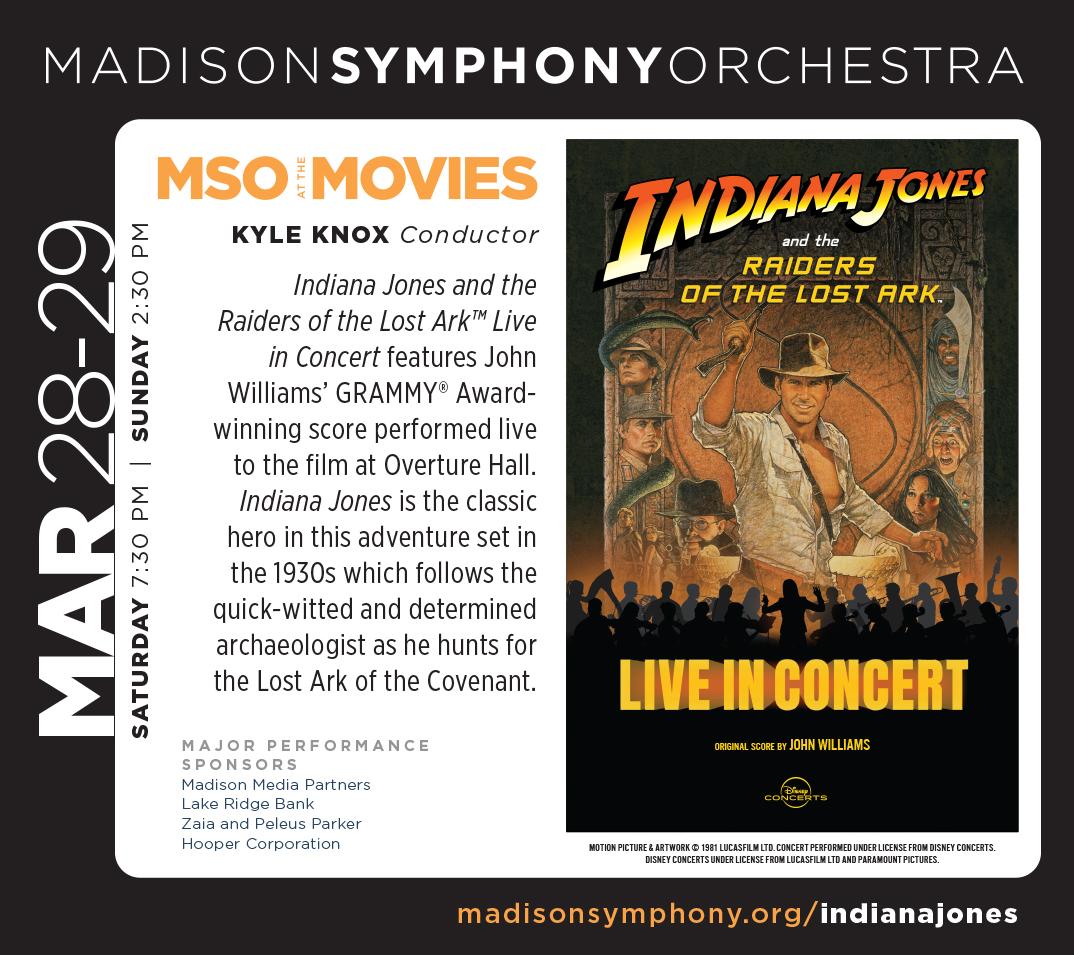
COMING UP
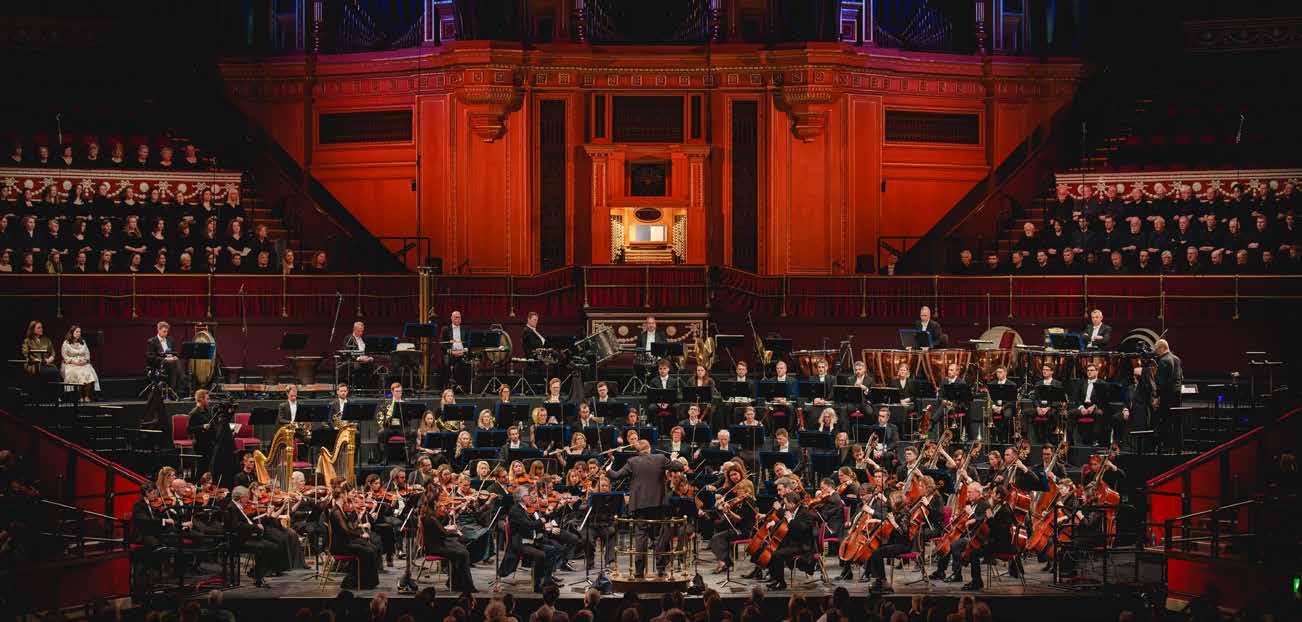
ROYAL PHILHARMONIC ORCHESTRA WITH BORIS GILTBURG, PIANO
Wednesday, January 28
7:30 PM
Mead Witter Foundation Concert Hall at Hamel Music Center
WISCONSIN UNION THEATER
Elizabeth Snodgrass, Director
Kate Schwartz, Artist Services Manager
George Hommowun, Assistant Director of Theater Event Operations
Zane Enloe, Production Manager
Jeff Macheel, Technical Director
Heather Macheel, Technical Director
Sean Danner, Assistant Director of Ticketing and Patron Services
Ted Harks, Arts Ticketing Website Systems Administrator
Eric Henkes, Lead House Manager
Mandy Descorbeth, External Communications Intern
Paige Verbsky, Artist Services Intern
Kelsey Fleckenstein, Special Projects Assistant
WISCONSIN UNION DIRECTORATE PERFORMING ARTS COMMITTEE
Jordan Waters, Director
Thomas Wieland, Programming Associate Director
Lucy Kenavan, Programming Associate Director
Sabrina Ortiz, Production Associate Director
Cosette Wildermuth, External Relations Associate Director
Kalia Gordon, Marketing Associate Director