

![]()


Combining cutting-edge design with superior performance.
– Aligned sashes for a perfectly symmetrical view
– Minimal aesthetic (7 cm central post with NP Ultra handle)
– Load capacity up to 400 kg
– Concealable frame with low threshold
– New generation rollers
– Fully anodized diverters with stainless steel guide
– High performance with central gasket and perimeter closure
– Micro-ventilation available
– Anti-burglar hardware compatible


GIESSE SMART CHIC
The brand new concealed motorised tilt-and-turn system.


I prefer facade materials that deliver a premium
I prefer facade materials that deliver a premium look without demanding constant upkeep. Greenlam Clads stands out with its superior finish, UV-resistant performance, and long-lasting quality. It works exceptionally well for high-end residences and commercial projects, ensuring the building continues to look refined over time.
LIGHT FASTNESS PROPERTY (UV RESISTANT)
WITHSTANDS EXTREME TEMPERATURE -60°C TO 80°C
NO.: 1800 833 0004 To explore visit: www.greenlamclads.com *Mail us the photograph of your project at: designlab@greenlamclads.com or contact our sales representative.
More than 60 years of innovation, development & production of premium hardware for aluminum windows and doors.

Stretto is a high-performance, clampable three-part door hinge engineered for Euronut profiles (14/18 mm and 10/14). Its compact design with a slim knuckle delivers exceptional stability, a wide effective adjustment range, and reduced losses thanks to the knuckle’s optimized position close to the profile. Designed for all open-in and open-out doors, Stretto installs quickly with no profile preparation, requires only one height adjustment per door, and can be mounted using just two tools. Suitable for doors and balcony windows, it combines robust aluminium construction with refined aesthetics, offering extensive finish options to match any project.
Stretto: efficient installation, precise adjustment, and a clean, modern look—engineered to perform.
Sobinco, your reliable partner for high-end, architectural hardware.
in touch: abhishek.kale@sobinco.com - 3rd Floor, Shivana building, Right Bhusari Colony, Chandani Chowk, Pune 411038


GEALAN doesn’t just give windows a frame with our profiles, we’re genuinely trend-setting in uPVC window systems. And on top of that, we develop innovative solutions that offer all our partners and customers real added value.
We form the framework for the world of windows.
GEALAN doesn’t just give windows a frame with our profiles, we’re genuinely trend-setting in uPVC window systems. And on top of that, we develop innovative solutions that offer all our partners and customers real added value.

We form the framework for the world of windows.


Hardware
Head Office cum Application Centre: 28/01/8, Site IV, Sahibabad Industrial Area, Ghaziabad (UP) - 201005
Delhi Office: 4899 Hauz Qazi, Delhi-110006

Coimbatore Office: 2/227 D Erangathu Thottam, Rasipalayam Sulur, Coimbatore-641402
Website: www.pego.in
For Sales: West: 8929070625/9311600436
North: 8929070621/9999697732
East: 9319623434
Karnataka: 9999697660
Tamil Nadu & Kerela: 8929070623
Andhra & Secunderabad: 8929070624
Customer Care: 8929701016


Volume 12 | Issue 1

18
21


Façade – An Architectural Interface to a City’s Culture and Identity
Ar. Vivek V. Shankar, Principal Architect, Vivek Shankar Architects
Façade Performance and Building Energy Optimisation in Tropical Climates
Sneha Murthy, Sustainability Associate, McD BERL
24 The Future of Airport Terminal’s Façades & Fenestration
29
media@wfmmedia.com
+91 98701 44425
Ar. Sapan Gupta, Head of Design, GMR Group
Designing the Future of Façades: Smart Glass, Use of AI, and the Path to Sustainable Architecture
Sandeep Singh, Managing Director, Brawn Globus Turnkey Solutions Pvt Ltd
32 The Role of Sustainability in Façade & Fenestration: Building a Greener Future
Sanjay Chitnis, Retired Senior Vice President – Technical Services, JK Lakshmi Cement Ltd
36 Beyond the Entrance: The Silent Power of the Mall Façade
Rajan Vernekar, M.DES., IDC, IIT BOM., Founder, Rave Design
39 Turn Your Balconies, Façade, and Canopies into a Powerhouse
Rajeev Kumar, Independent Consultant and Advisor
42 Design Efficiency in Façades and Fenestrations: Material Synergy Approach
Ar. Sumit Dhawan, Founder & Principal Architect, Cityspace 82 Architects
46 Modern Window Trends Shaping Today’s Homes
Dinesh Chandra Pandey, Founder, Shankar Fenestrations & Glasses India Pvt. Ltd.
51 One-Part Dry-Fit Stone Wool Lamella Firestops for Practical and Robust Perimeter Void Fire Protection in Curtain Walls
Donel Dippi, Head of Technical & Compliance, Siderise Group
54 Beyond Functionality: Observing How People Shape Hardware Design
Paaul Sandip, Product Designer, Paul Studio
58 The Expert’s Edge
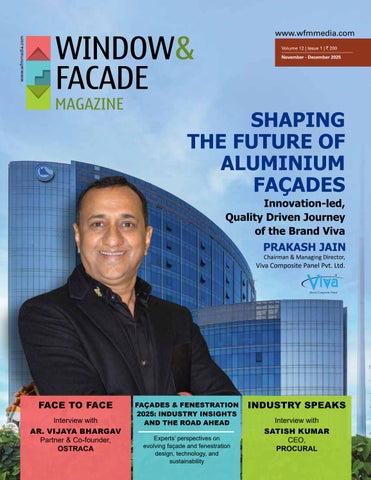
Interview with Prakash Jain, Chairman & Managing Director, Viva Composite Panel Pvt. Ltd.
66 Cover Story
Façades & Fenestration 2025: Industry Insights and the Road Ahead
95 Industry Speaks
Interview with Satish Kumar, CEO, PROCURAL
98 Face to Face
Interview with Ar. Vijaya Bhargav, Partner & Co-founder, OSTRACA
106 Case Study
CGST Bhawan, Ghaziabad: Shaping an Aesthetic and High-Performance Façade Through Fenestration Optimisation – Project by Studio Next
116 Project Watch
A Sustainable Sales Office Built from Shipping Containers - Project by SAGI Architects
118 Project Watch
AVIARA Residence: A Poetic Dialogue of Light, Nature and Timeless DesignProject by WMA
DISCLAIMER: With regret we wish to say that publishers cannot be held responsible or liable for error or omission contained in this publication. The opinions and views contained in this publication are not necessarily those of the publishers. Readers are advised to seek expert advice before acting on any information contained in this publication which are very generic in nature. The Magazine does not accept responsibility for the accuracy of claims made by advertisers. The ownership of trademarks is acknowledged. No part of this publication or any part of the contents thereof may be reproduced in any form or context without the permission of publishers in writing.
WRITE TO THE EDITOR Please address your suggestions to: The Editor, Window & Façade Magazine, C55, Okhla Industrial Area, Phase – 1, New Delhi, 110020 or email renu@wfmmedia.com. Please provide your full name and address, stating clearly if you do not wish us to print them. Alternatively log on to www.wfmmedia.com and air your views. The opinions expressed in this section are of particular individuals and are in no way a reflection of the publisher’s views.
“Printed and Published by Amit Malhotra on behalf of M/s F & F Media and Publications. Printed at Thomson Press India Limited, 18/35, Delhi-Mathura Road, Faridabad - 121007, Haryana, Name of the Editor-Ms. Renu Rajaram”

As we turn the page on 2025 and step confidently into a new year, it is a fitting moment to pause, reflect, and look ahead. The past year has been one of remarkable momentum for India’s built environment. With the Indian real estate and construction industry valued at over USD 300 billion and projected to reach nearly USD 1 trillion by 2030, the scale and ambition of development across housing, commercial, infrastructure, and urban regeneration have been unprecedented. Rapid urbanisation, policy reforms, infrastructure investments, and an increasing focus on sustainability have collectively reshaped how we design, build, and inhabit our cities.
At the heart of this transformation lies a renewed understanding of buildings as living systems—responsive, efficient, and deeply human-centric. This is most evident in the evolution of the façade and fenestration industry, which forms the focus of our cover story. In 2025, façades have decisively moved beyond visual novelty. No longer mere stylistic skins, they have become intelligent interfaces that mediate between climate, comfort, performance, and longevity. Architects today are designing envelopes that respond to orientation, manage heat and daylight, integrate adaptive shading, photovoltaics, and advanced materials such as terracotta, low-carbon concrete, and high-performance glazing. Digital tools, including predictive modelling, AI, and digital twins, are enabling façades that are not only resilient but also restorative—enhancing energy efficiency while improving occupant well-being. Importantly, the industry is witnessing a shift from transactional vendor–client relationships to deep technical partnerships between architects, consultants, and manufacturers. This collaborative approach is essential as façades and fenestration become critical contributors to sustainability goals and ease of living.
Equally significant in 2025 has been the emphasis on architectural honesty and simplicity— designs that age gracefully, are rooted in context, and balance aesthetics with measurable performance. As climate pressures intensify, lifecycle thinking, early integration, rigorous testing, and certification are no longer optional but fundamental to responsible design.
In this spirit of shared learning and dialogue, WFM Media continues to strengthen its knowledge-sharing initiatives through the WFM Podcasts. WFM Studio—our infotainment platform dedicated to the Architecture, Engineering, and Construction fraternity, as well as informed end users, through conversations with experts, case studies, brings insights on innovative materials, emerging technologies, best practices, safety, and certification. We aim to build awareness and foster informed decision-making across the industry through this platform.
As we welcome the New Year, we extend our warmest wishes to our readers, partners, and contributors. May 2026 bring thoughtful design, meaningful collaboration, and buildings that protect both people and the planet. A very happy and inspiring New Year to you all.

Acity’s growth is primarily measured by its economic condition and the opportunities it offers for living. The urban identity of a city is defined by its culture, climate, and social makeup, enabling evolution and sustainable transformation over time.
As we travel across a city, the perception formed stems from both the open and built environment, their interplay, or, in some cases, the segregated model of urban planning. Most Indian cities with rapid growth potential—and those already highly developed—offer a spectacle of building façades that may or may not appropriately relate to their surroundings or internal functions.
This article examines what the façade entails, along with the direct and indirect consequences of its impact.
From an architectural perspective, the façade embodies three intertwined aspirations: Functionality, Aesthetics & Visual Experience, and Social Responsibility.
A high-performance façade serves as a climatic interface. Thermal comfort depends on insulation, glazing ratios, shading devices, and orientation. Poorly calibrated façades can drive indoor temperatures outside the 20–26°C comfort range, increasing reliance on HVAC systems and energy use.
Visual comfort is equally vital. Daylight penetration, glare control, and solar shading influence circadian rhythms, visual fatigue, and productivity.
Acoustic insulation—achieved through double-skin façades, high-performance cladding, or porous materials—ensures that urban noise does not penetrate interiors, while operable elements and natural ventilation strategies maintain indoor air quality, crucial for occupant health. Cognitive–sensory design in façades refers to the light, insulation, and noise infiltration that affect inhabitants on a day-to-day basis.
Adequate daylight has been shown to improve alertness, reaction time, working memory, and overall cognitive performance. A façade is a cognitive and sensory stimulus; careful modulation of rhythm, proportion, and depth is essential for comfort and perception.
Workers in naturally lit offices show 18% higher cognitive performance and up

to a 25% improvement in short-term memory. A 2017 study in Sleep Health demonstrated that employees exposed to greater natural light obtained 46 minutes more sleep per night, enhancing daytime alertness and executive function.
Poorly insulated façades allow heat fluctuations that elevate physiological stress, triggering the hypothalamic–pituitary–adrenal (HPA) axis, subsequently impairing concentration and decisionmaking.
Noise infiltration is governed largely by façade quality. Inadequate acoustic insulation exposes occupants to environmental noise from traffic, aircraft, and urban activity—stimuli known to impair cognitive function. World Health Organization data shows that noise above 50 dB can disrupt attention, concentration, and memory. In educational settings, students near noisy façades have demonstrated up to 20% lower reading comprehension, highlighting the cognitive system’s sensitivity to auditory disturbance. Highperformance façades with proper sound attenuation are therefore essential to maintaining cognitive resilience in noisy urban environments.
Façades are not merely functional— they are psychological instruments.
People respond intuitively to humanscaled modules, proportional openings, materiality, texture, and articulation. Operable shading devices and windows allow personal control, improving satisfaction and productivity.
Empirical studies show that workers with access to outdoor views experience lower stress, higher creativity, and reduced mental fatigue compared to those in windowless spaces. Even small window apertures can reduce stress biomarkers such as cortisol levels and heart rate.
Façades have always been more than architectural boundaries—they are
symbolic carriers of culture, climateresponsive devices, and interfaces shaping human experience. In India, a land of climatic diversity, layered history, and rich material traditions, façades hold particularly deep cultural and environmental significance. Their evolution—from temple exteriors and Mughal jalis to contemporary glass towers—illustrates how architecture communicates values, identity, and a relationship with nature.
Today, as cities expand rapidly and climate pressures intensify, façade design is central not only to aesthetics but also to sustainability, well-being, and cultural continuity.
Rapid “glass-box” architecture risks erasing regional identity and increasing energy consumption. There is a growing need to:
• Reintegrate traditional elements such as jalis, courtyards, verandahs, and chajjas;
• Use local materials and crafts
• Reflect cultural aesthetics that resonate with Indian communities
Façade design becomes a medium to honour cultural memory while addressing contemporary needs. It responds to the site, the urban fabric, and its contextual narrative.
Dynamic façades, such as the Fosun Foundation Theatre in Shanghai, demonstrate how architecture can be


performative, contextual, and culturally resonant. In our cities, façades must do more than perform—they must activate streets, respond to climate, and convey identity. They are instruments of civic responsibility as much as architectural expression.
Examples such as Hawa Mahal (Jaipur), Chettinad mansions (Tamil Nadu), and Kerala’s timber dwellings illustrate traditional façade systems integrating vegetation, natural light, and airflow. These typologies show that biophilic façade design is not a recent import but an extension of indigenous architectural logic.
In our ongoing commercial project for a corporation, we explored a façade strategy balancing performance, sustainability, and human experience. Rather than relying solely on DGU glass to address heat gain, we designed vertical fins optimised through thermal simulations, offering shading while preserving daylight quality. White cement board panels serve both as aesthetic articulation and passive solar control.
An internal street connects indoor and outdoor zones, enhancing crossventilation and promoting informal interaction as a spatial bridge between two building volumes. This façade
demonstrates functional elegance, environmental sensitivity, and humancentred design.
The evidence is unambiguous: façades are active, performative elements shaping human experience, energy use, and urban life. They are visual instruments, climatic regulators, and psychological tools all at once. As cities grow denser and more complex, architects must create façades that go beyond enclosure—those that mediate the environment, respond to climate, enhance well-being, and express cultural identity.
A well-conceived façade is a quiet yet powerful agent of transformation. It can calm or stimulate, invite or repel, engage or exhaust. It is both a building’s voice and its body language. Designing façades with intention involves creating spaces that prioritize human experience, climate responsibility, and urban empathy.
Architecture is not merely shelter; it is a vessel shaping how we feel, move, and exist. And the façade is its most eloquent expression.
The future of architecture lies not in spectacle but in façades that heal, connect, and restore. Shaped with intelligence and empathy, they can become the quiet engines of a more humane urban world.

Principal Architect, Vivek Shankar Architects
Vivek Shankar Architects was established in 2002 by Ar. Vivek V. Shankar, following his return from London, where he completed his M.Arch (Design Research Lab) at the prestigious AA School of Architecture and subsequently worked at the Office of Zaha Hadid. He firmly believes that the intertwined combination of design innovation and software technology creates a profound impact on the approach to an architectural project, in which the process comprises methodologies derived from advanced 3D modelling and computational design. He has consistently pushed the boundaries of innovation by adopting animated graphics and 3D analysis of the site and the land available for the built mass in order to create a new user experience. The firm’s very first project, a commercial building, was nominated for the Aga Khan Award for Architecture in 2004.

Buildings in tropical regions encounter highly demanding environmental conditions, including intense solar radiation and elevated outdoor temperatures. These climatic factors place substantial stress on mechanical cooling systems, which often account for 40–60% of total energy consumption in such buildings. As the primary interface between the external environment and conditioned interior spaces, the façade—especially its glazing and window systems—plays a decisive role in determining heat transfer, daylight penetration, and ventilation behaviour. High-performance façades can substantially reduce cooling loads, improve visual comfort, and enhance indoor environmental quality while maintaining architectural flexibility and without necessarily incurring excessive construction costs.
This article examines the principal components of façade performance in tropical climates, strategies for energy optimisation, the analytical tools that support design decisions, and case studies demonstrating measurable impacts on building performance.
In tropical settings, thermal performance is dominated by the need to limit unwanted heat gain. Achieving this requires careful specification of glazing assemblies, which are often the most significant pathways for heat transfer. Low U-value glazing reduces conductive heat gains, while spectrally selective coatings minimise the admission of infrared radiation without compromising visible light. The
selection of an appropriate window-towall ratio—typically between 30% and 45% for tropical commercial buildings— helps balance daylight availability and thermal performance. Thermal breaks in curtain wall systems further reduce heat bridging, and high-performance insulation in opaque façade elements contributes to a more stable indoor environment. Even marginal reductions in the solar heat gain coefficient (SHGC) can translate into meaningful reductions in cooling demand because glazing typically accounts for the majority of external heat ingress.
Solar control is equally critical in the tropics, where direct solar exposure can create severe overheating. External shading devices, such as vertical fins along east–west façades or horizontal overhangs on north–south orientations,
block sunlight before it strikes the glazing, preventing solar radiation from entering the building envelope. Dynamic shading systems, including automated blinds and electrochromic glazing, respond to real-time variations in sun position and intensity. Architectural solutions such as brise-soleil and vegetated façades also help diffuse or filter harsh sunlight. External shading strategies are generally two to five times more effective than internal shading because they prevent thermal energy from reaching the façade surface. Given that glazing surfaces are among the most thermally vulnerable elements of the building envelope, solar control devices significantly enhance occupant comfort and reduce HVAC energy use.
Daylighting performance is another central aspect of façade design. Although tropical sunlight is intense, well-designed façades can harvest diffuse daylight while preventing glare and excessive heat gain. Light shelves redirect daylight deeper into interior zones, reducing reliance on artificial lighting. Glazing with high visible transmittance but low SHGC improves daylight penetration while maintaining thermal comfort. Reducing east–west exposure through massing and orientation decisions further supports effective daylighting, and the integration of daylight-responsive lighting control systems can achieve lighting energy reductions of 20–40%. Because windows directly mediate the quality and distribution of daylight, their optical and thermal characteristics fundamentally shape both visual comfort and energy consumption.
High-performance glazing is one of the most effective means of reducing cooling energy consumption in tropical commercial buildings. Low-E double glazing designed for humid climates reduces conductive and radiant heat transfer, while spectrally selective glazing allows visible light to enter while filtering out infrared wavelengths. Electrochromic glass introduces additional flexibility
by adjusting tint levels in response to solar exposure, improving both thermal performance and visual comfort. Because window systems represent a critical control point for heat gain and daylighting, improvements in glazing technology often yield disproportionately large energy savings.
Adaptive and responsive façades incorporate sensors, automation, and predictive algorithms to adjust shading, ventilation, and glazing tint based on environmental conditions. Automated louvres and shading screens track the sun and regulate heat gain, while photo-responsive and occupancyresponsive systems optimise daylight availability. More advanced AI-driven controls integrate façade performance with building management systems, predicting solar loads and adjusting cooling strategies accordingly. Such adaptive façades typically reduce cooling energy consumption by 10–20% relative to fixed-shading designs.
Passive design strategies continue to provide some of the most cost-effective means of reducing façade-related heat gain. Orienting the building to minimise direct sunlight, recessing windows, incorporating deep overhangs, and specifying light-coloured façade materials
all reduce the amount of solar radiation absorbed by the building envelope. These strategies underscore the importance of integrating façade considerations early in the design process.
Finally, façade performance must be integrated with broader building systems. HVAC systems must be sized according to realistic façade heat loads, avoiding inefficiencies associated with oversizing. Lighting systems should respond dynamically to the availability of daylight, and building automation systems should monitor shading devices, operable windows, and façade-integrated renewable systems. Building-integrated photovoltaics (BIPV), whether integrated into opaque façades or glazing systems, can further reduce operational energy use and contribute to long-term sustainability objectives.
Advanced simulation tools support rigorous analysis of façade performance in tropical climates. Whole-building energy modelling, daylighting simulations, and parametric modelling enable designers to test numerous façade configurations rapidly and evaluate glazing and shading combinations with respect to energy and daylighting performance.


Across the Indian tropical context, some of our projects demonstrate the significant impact of façade-driven environmental optimisation. At the Maharashtra National Law University in Nagpur, the campus implemented a second-skin façade that completely shielded the primary building envelope from direct solar exposure. Combined with the use of light shelves, the subdivision of windows into dedicated daylight and vision panels, and the precise calibration of shading elements, this strategy produced fully daylit interiors and achieved indoor temperatures up to 12°C lower than outdoor conditions.
In Bangalore, the Umiya Velociti development adopted a façade system integrating low-E glazing with angular vertical fins and horizontal overhangs positioned to block solar heat ingress while preserving daylight availability. Likewise, the Infosys campus in Nagpur employed a climate-responsive façade incorporating deep overhangs, vertical fins, and internal light shelves, resulting in improved daylight distribution and almost 51% overall energy savings.
Collectively, these examples highlight how integrated façade strategies— focused on glazing performance, shading geometry, and daylight management—
can markedly enhance thermal comfort and reduce cooling loads in tropical environments.
Looking ahead, developments in biomimetic façade systems and prefabricated modular façades promise to enhance performance and streamline construction. The increasing adoption of net-zero energy standards across tropical regions will further accelerate the integration of façades with renewable energy generation and advanced control systems.
Façade design, and particularly the performance of glazing and window systems, is one of the most influential factors affecting energy efficiency, comfort, and sustainability in buildings located in tropical climates. With high cooling demands and extended operating hours, these buildings benefit substantially from strategies that reduce solar heat gain, optimise daylighting, and integrate façade performance with mechanical and electrical systems. Through integrated design approaches and advances in façade technology, next-generation tropical buildings will be better equipped to meet energy targets, reduce operational costs, and provide healthier and more comfortable indoor environments.

Sustainability Associate, McD BERL
Sneha Murthy is an architect and sustainability leader with over 16 years of experience in the construction industry and academia. As Sustainability Associate at McD BERL, a pioneering MEP consultancy in Bangalore, she has advanced regenerative design through Net Positive Campuses and highperformance, climate-responsive buildings. She also employs an iterative design approach to develop building façades optimised for superior energy performance. Her work blends indigenous design principles with modern engineering to achieve energy efficiency, water self-sufficiency, and carbon neutrality. With several publications and innovations, her current focus on Sustainable Urban Scale Cooling explores microclimate revival to enhance urban thermal comfort. At industry forums, she offers evidence-based insights that bridge architectural innovation with measurable sustainability.

Airport terminals have evolved far beyond their original role as transit spaces. Today, they function as cultural landmarks, sustainable ecosystems, and high-performance engineering marvels—places that leave lasting impressions on millions of passengers each year. As global air travel accelerates and expectations rise, the spotlight is turning towards one critical element: the façade and fenestration systems that shape how terminals look, feel, and perform.
From climate-responsive skins to intelligent glazing, the next generation of airport building envelopes is redefining aviation architecture. Here is a deep dive into the innovations driving this global evolution.
In modern terminal design, façades serve as the face of a nation. They communicate identity, welcome passengers, and mediate climate.
Architectural Expression & Branding: Airports increasingly reflect regional culture through:
• Sculpted, flowing forms inspired by local topography
• Perforated metal screens echoing traditional motifs
• Iconic glass façades creating distinctive silhouettes
• Composite cladding materials enabling bold, expressive geometry These elements transform terminals into unique cultural ambassadors.
Climate-Responsive Form Finding: With airports located in extreme climates— from deserts to Arctic zones—façades are evolving into intelligent, climate-

adaptive envelopes. Key strategies include:
• External shading louvers and glazing tuned to solar exposure
• Optimised building orientation
• High-performance insulated panels
The result is architecture that works with the environment, not against it.
FENESTRATION: WHERE LIGHT, TRANSPARENCY & PASSENGER EXPERIENCE CONVERGE
Natural light is central to airport design. Fenestration systems regulate daylight, frame views, and influence psychological comfort.
Large-Span Glazing & Curtain Walls: Advances in structural glass now make it possible to design soaring transparent façades that enhance:
• Daylight penetration
• Passenger well-being
• Airside visibility
• A sense of scale and openness
Cable-net systems, steel–glass hybrids, and silicone-sealed façades enable this without compromising safety.
Skylights, Clerestories & Light Wells: Modern terminals are celebrated for their luminous interiors, achieved through:

• Continuous skylight ribbons
• Geometric or domed skylights
• Atrium-based light wells
These systems create dynamic light patterns that evolve throughout the day.
Acoustic & Thermal Comfort: Advanced multi-layer glazing balances transparency with performance, offering:
• Superior aircraft noise reduction
• Controlled solar heat gain

• Enhanced thermal insulation
• Reduced condensation
Comfort is now a fundamental design requirement—not a luxury.
HIGH-PERFORMANCE MATERIALS REINVENTING TERMINAL FAÇADES
Material science is playing a pivotal role in reimagining airport envelopes.
Next-Generation Glazing Technologies: Key innovations include:
• Low-E and selective coatings
• Electrochromic smart glass
• Vacuum-insulated glazing (VIG)
• Bird-safe fritted patterns
Smart glass, in particular, is transforming terminal energy efficiency and interior ambience.
Composite & Engineered Cladding Panels: Airports demand lightweight yet durable materials. Popular choices include:
• Aluminium Composite Panels (ACP)
• Fibre-Reinforced Polymer (FRP)
• High-Pressure Laminates (HPL)
• Perforated metal screens
These materials support rapid construction, lighter structures, and longterm durability.

ETFE & Tensile Membrane Systems:
ETFE is becoming a preferred choice for modern roofs and façades due to its:
• High translucency
• Feather-light weight
• Self-cleaning properties
• Longevity and UV resistance
ETFE cushions create bright, thermally efficient spaces with minimal structural demand.
DIGITAL & INTELLIGENT FAÇADES: USHERING IN SMART AIRPORTS
Digitalisation is transforming building envelopes from static surfaces into intelligent systems.
Sensor-Driven Adaptive Façades: Today’s smart façades integrate:
• Temperature and daylight sensors with automated louvers
• AI-based climate control and predictive maintenance analytics
• IoT-linked façade panels
These systems respond in real time to environmental changes.
Parametric Design & BIM Engineering: Advanced KPIs allow architects to simulate:
• Sun paths and glare
• Material performance
• Wind pressure and energy consumption
Digital Twins for Lifecycle Management: Airports increasingly deploy digital

twins to monitor façade health, analyse performance, and plan maintenance, reducing operational downtime and costs.
SUSTAINABILITY: THE NEW IMPERATIVE FOR TERMINAL ENVELOPES
As aviation moves towards decarbonisation, façades play a central role in sustainability strategies.
Passive Design Approaches: Passive solutions can significantly reduce HVAC loads, including:
• Double-skin ventilated façades
• Thermally broken framing systems and fixed shading devices
• High-insulation opaque panels
Renewable Energy Integration: Façades are evolving into energy generators through:
• Building-integrated photovoltaics (BIPV)
• Solar-active shading fins
• Photovoltaic glazing, reducing


the terminal’s operational carbon footprint
Material & Water Sustainability:
Contemporary façade systems also prioritise:
• Recyclable materials and lowembodied-carbon products
• Rainwater collection surfaces
• Longer-life coatings and laminates
Sustainability is now mainstream, not optional.
SAFETY, SECURITY & RESILIENCE: NONNEGOTIABLES IN AIRPORT DESIGN
Airport façades must comply with stringent safety standards and withstand extreme conditions. Key requirements include:
• Blast-resistant glazing
• Non-combustible, fire-rated cladding
• Systems designed to withstand cyclones, snow loads and seismic events
These measures ensure round-the-clock operational continuity.
THE FUTURE: ADAPTIVE, AUTONOMOUS & CLIMATE-RESPONSIVE FAÇADES
The coming decade will witness transformative developments, including:
• Kinetic façades that adapt to climatic conditions
• Aerogel-based super-insulation for ultra-thin envelopes
• Autonomous drones and robotic BMUs for cleaning and maintenance
• Carbon-absorbing façade materials supporting carbon-neutral ambitions
These innovations promise terminals that are not only efficient but regenerative.
Airport terminal façades and fenestration systems are undergoing a profound transformation. What was once a protective shell is now an intelligent interface—one that adapts, performs, expresses identity, and enhances passenger well-being. The future of terminal design lies at the intersection of technology, sustainability, culture, and human-centric innovation.
As the aviation industry evolves, the façades of tomorrow will not only meet functional demands but elevate airport environments into inspiring, resilient gateways that celebrate both place and progress.

SAPAN GUPTA Head of Design, GMR Group
Sapan Gupta is an accomplished Architect and Urban Planner with over 1.5 decades of experience shaping sustainable, future -ready urban and aviation environments. A specialist in airport design-planning, terminal design, master planning, and integrated urban strategies, he delivers innovative, high-performance solutions for complex urban and aviation ecosystems. His experience spans passenger terminals, cargo and MRO facilities, SEZs, land-use planning, transport systems, and urban renewal, ensuring seamless integration of functionality, sustainability, safety, and aesthetics. He has led major national and international projects, including Hyderabad, Delhi, Goa, Vizag, and Nagpur airports, Dubai, The Netherlands, etc., as well as Smart City initiatives and large-scale city master plans. With strong expertise in development strategy, business growth, annual operating plans, capital expenditure planning, and concept of operations, he drives projects from vision to successful execution. Passionate about sustainable design and resilient urbanism, he brings a strategic, future -mobility-aligned approach to planning and design.

In the evolving narrative of modern architecture, building façades have transformed from mere aesthetic envelopes into highly functional, performance-driven systems. Today, façades are no longer just about how a structure looks; they are about how it breathes, adapts, conserves energy, and interacts with its environment. As urbanisation intensifies and sustainability becomes non-negotiable, the efficient use of glass and advanced fenestration systems has emerged as a defining element of contemporary building design. The building materials and façade technologies have transformed tremendously over the past few decades. The innovations we see today—whether in energy-efficient glass, AI-assisted design tools, or integrated automation— are redefining what buildings can achieve in terms of performance, comfort, and environmental responsibility.
Glass has long symbolised openness and progress in architectural language. From
skyscrapers to institutional campuses, glass façades form the face of modern urban landscapes. Yet, their efficient use is critical. A poorly designed glass façade can contribute to heat gain, glare, and increased energy consumption. On the other hand, advanced glass technologies—such as lowemissivity (Low-E) coatings, double glazing, and spectrally selective coatings—enable architects to strike a balance between aesthetics and thermal comfort, as well as energy efficiency. What we see now is a growing awareness that the “transparency” of glass must come with responsibility. A

façade should invite natural light while filtering excess heat, contributing to occupant well-being without placing an undue burden on HVAC systems. This balance is achievable only when designers embrace performance-driven glass specifications from the conceptual stage.
Traditionally, façade design involved extensive simulations, trial-and-error modelling, and manual interventions. Today, AI-powered tools and advanced parametric design software have fundamentally changed this process. AI algorithms can analyse multiple variables—orientation, climate, wind patterns, and solar angles—within seconds to recommend the most efficient façade and fenestration designs. For example, AI can simulate how a façade will perform over an entire year in terms of daylighting, heat gain, and shading. Designers can use this data to refine glass types, shading devices, and fenestration layouts for optimal efficiency. This is not merely theoretical; it is already in practice. Across the globe, projects are increasingly being designed with AI-led façade optimisation, helping architects minimise energy costs, maximise comfort, and improve sustainability ratings.
The next frontier in façade technology lies in automation. With the integration of IoT and smart sensors, building façades can now adapt in real time to external conditions. Automated shading systems, electrochromic glass (which changes its tint based on sunlight intensity), and responsive ventilation panels are revolutionising building performance. Imagine a façade that automatically darkens its glass panels during peak afternoon sun to reduce cooling loads, then reverts to clear transparency by evening to maximise natural light. Or

louvers that adjust their angle based on wind speed to reduce structural stress. Such intelligent systems not only save energy but also extend the lifespan of the façade itself. For India, where climatic diversity ranges from scorching summers to heavy monsoons, adopting smart façades can be transformative. It can help cities reduce their carbon footprint while enhancing the quality of life for millions of urban residents.
Globally, sustainability goals are driving façade innovation. Green building certifications such as LEED and GRIHA place strong emphasis on energy-efficient fenestration. Governments are also tightening regulations around building energy codes, making it imperative for developers to adopt smarter façade solutions. In India, with its ambitious netzero targets, the building sector will play a critical role. Glass and façade systems are central to this shift, as they determine how much energy a building consumes or conserves. By combining efficient glass, AI-led design, and automation, we can create buildings that are not only visually striking but also environmentally responsible.

By combining efficient glass, AI-led design, and automation, we can create buildings that are not only visually striking but also environmentally responsible

While technology drives innovation, the ultimate goal of any façade system should be human comfort. Studies show that access to natural daylight improves productivity, reduces stress, and enhances overall health. Smart fenestration systems that optimise daylight while minimising glare are essential for creating healthier work and living environments. In this sense, glass façades are not merely about efficiency; they are about empathy. They connect occupants to the outside world while protecting them from its extremes, offering transparency without vulnerability.
The façade industry stands at an inflection point. With climate change pushing us towards sustainable practices, and with AI and automation unlocking unprecedented possibilities, the future of façades lies in integration— where aesthetics, performance, and sustainability coexist seamlessly. The next decade will belong to adaptive, intelligent, and environmentally responsive façades. Glass, as a material, will continue to dominate, but its role will evolve beyond appearance into active performance. The challenge for architects, engineers, and developers is to embrace these innovations early, not as add-ons but as integral elements of design philosophy. By doing so, we can create future-ready buildings— structures that are not only symbols of progress but also stewards of sustainability. In the end, façades are the face we present to the world. It is time we ensure that this face reflects not only beauty but also intelligence, responsibility, and resilience.
Managing Director,
Sandeep Singh is the Managing Director at Brawn Globus Turnkey Solutions Pvt Ltd. He is a seasoned entrepreneur, civil engineer, and business transformation leader with more than 25 years of experience in real estate, construction management, and corporate fitouts. For the past two decades, he has been at the helm of Brawn Globus Turnkey Solutions Pvt Ltd., a 20-year-old design-and-build company headquartered in Noida, where he has played a pivotal role in establishing the firm as a trusted name in India’s corporate interior and infrastructure sector. A hallmark of Brawn Globus under his leadership is the trust and loyalty of its clients. A graduate civil engineer with a master’s in construction management from NICMAR, he continues to pair strategic foresight with meticulous execution, shaping Brawn Globus into a benchmark for quality, reliability, and innovation in India’s evolving workplace landscape.

architectural landscape with strength, safety, and style.
For over 21 years, Alstone has stood as the backbone of modern facades — from airports and metros to high-rises and institutions our legacy is written on skylines across the nation.

THE ROLE OF SUSTAINABILITY IN FAÇADE & FENESTRATION: BUILDING A GREENER FUTURE
As the world confronts the realities of climate change, resource depletion, and
rapid urbanisation, sustainable building design has become a global imperative. Among the many components that shape a building’s environmental performance, the façade and
Façade vs. Fenestration: A Comparative Overview
Feature
Definition The entire exterior face or "skin" of a building, which can be opaque (walls) or transparent (glazing).
Components Includes all structural elements, cladding materials (e.g., composite panels, masonry), insulation, and the fenestration systems themselves.
Primary Role Provides the main barrier against external elements (wind, rain, UV radiation), contributes to structural stability, and defines the building's aesthetic identity.
Performance Assessed for overall thermal efficiency, air/water tightness, fire resistance, and structural load resistance.
Design Focuses on the holistic design of the building envelope, integrating all materials and openings to create a cohesive appearance and meet energy codes.
fenestration system stand out as one of the most influential. These systems not only define a building’s visual identity but also determine how efficiently it consumes energy, manages natural resources, and enhances occupant wellbeing.
The façade is the external envelope or “skin” of a building, comprising opaque and transparent elements that protect the structure from environmental forces. Fenestration refers specifically to the openings within this envelope—windows, doors, skylights, and curtain walls—that enable natural light, ventilation, and visual connectivity.
Together, they form the building envelope, a critical interface between indoor comfort and outdoor climate.
Refers to all transparent or semi-transparent openings within the façade, including their design, construction, and arrangement.
Primarily consists of windows, doors, curtain walls, skylights, and the associated hardware and glazing.
Manages the interaction between interior and exterior spaces, controlling natural light, ventilation, and views, while also impacting thermal performance and acoustics.
Performance is measured by specific metrics like U-factor (heat transfer), solar heat gain coefficient (SHGC), and visible light transmittance (VT), often certified by bodies like the National Fenestration Rating Council (NFRC).
Focuses on specific design choices for the openings themselves, such as the type of glazing (double or triple-glazed), framing materials (thermally broken frames), and shading strategies.
The Asia Pacific region leads the global façade market, accounting for nearly 38% of worldwide demand. The global façade market is projected to reach USD 325 billion by 2025, driven by:
• Rapid urban development
• Government incentives for green buildings
• Growing awareness of energy efficiency
China, India, the United States, Germany, and the UAE are among the top contributors in innovation, volume, and sustainability-focused façade solutions.
A thoughtfully designed façade and fenestration system can dramatically improve a building’s environmental footprint. Key sustainability benefits include
• Enhanced Energy Efficiency: High-performance materials reduce heat gain, heat loss, and air leakage: insulated panels, low-conductivity materials, and advanced glazing systems significantly lower energy consumption.
• Optimised Natural Light & Ventilation: Strategic fenestration design reduces reliance on artificial lighting and mechanical ventilation, improving both energy savings and occupant comfort.
• Water Conservation: Modern façade systems can integrate rainwater harvesting, greywater reuse, and surface runoff management.
• Sustainable Material Choices: Utilising recycled glass, FSC-certified timber, low-VOC coatings, and eco-friendly composites reduces environmental impact throughout the building’s lifecycle.
• Improved Indoor Air Quality: Better ventilation, reduced infiltration of pollutants, and noise control contribute to healthier indoor environments.
The industry is witnessing rapid advancements that blend performance, aesthetics, and sustainability:
• Double Skin Façades: Two layers of glazing create a thermal buffer, improving insulation and reducing HVAC loads.
• Green Roofs & Living Walls: Vegetated surfaces enhance insulation, mitigate heat island effects, and improve air quality.
• Smart Glass Technologies: Electrochromic and thermochromic glass adjust transparency based on environmental conditions, reducing glare and cooling loads.
• Solar and Energy Generating Windows: Photovoltaic glazing enables buildings to produce clean energy without compromising daylight.
• Bio-Based Materials: Innovations include plant-based composites, biopolymers, and mycelium-reinforced panels.
Indian Standards:
• National Building Code of India 2016 (NBC 2016) provides guidelines for

façade and fenestration design, including requirements for energy efficiency, fire safety, and structural integrity.
• IS 875 (Part 3) - Code of practice for design loads (other than earthquake) for buildings and structures, Part 3: Wind loads.
• IS 2553 - Safety glass - specification (Part 1).
• IS 2835 - Specification for flat transparent sheet glass.
• IS 3548 - Figured, rolled and wired glass - specification.
International Standards:
• ISO 15099 - Thermal performance of windows, doors, and shading devices - Detailed calculations.
• ISO 10077-2 - Thermal performance of windows, doors and shading devices - Calculation of thermal transmittance - Part 2: Frames.
• ISO 6612 - Windows and door height windows - Wind resistance tests.
• ASTM E2270 - Standard Practice for Periodic Inspection of Building Façades for Unsafe Conditions.
• ASTM E2128 - Standard Guide for Evaluating Water Leakage of Building Walls.
• ASTM E1186 - Standard Practices for Air Leakage Site Detection in Building Envelopes and Air Barrier Systems.
• EN 12153 - Curtain walling - Air permeability - Test method.
• EN 12155 - Curtain walling - Water tightness - Laboratory test under static pressure.
• EN 12179 - Curtain walling - Resistance to wind load - Test method ¹ ² ³.
These standards provide guidelines for the design, testing, and installation of façade and fenestration systems, ensuring safety, energy efficiency, and durability.
The National Building Code (NBC) 2025 draft is expected to bring significant changes to India’s building construction landscape, focusing on fire safety, sustainability, and accessibility.

Strategic fenestration design reduces reliance on artificial lighting and mechanical ventilation, improving both energy savings and occupant comfort
Sustainable Materials
• Recyclable Materials: Aluminium composite materials (ACM) and Metal Composite Materials (MCM) are popular for their durability and ecofriendliness.
• Bio-based Materials: Mycelium-based composites, bamboo-reinforced panels, and upcycled metal façades are gaining traction.
• Energy-Efficient Materials: Highperformance insulated panels with phase-change materials (PCMs) and aerogels are being used for superior thermal insulation. e.g.
1. Triple-Glazed Windows: Reduce heat loss, minimise noise, and lower energy bills.
2. Low-E Glass: Reflects infrared radiation, keeping homes cool in summer and warm in winter.
3. Thermally Broken Frames: Reduce heat transfer and energy loss
• Electrochromic Glass: Glass that changes tint with electrical voltage, reducing glare and heat gain
• Thermochromic Glass: Glass that adjusts opacity based on temperature changes
• Kinetic Façades: Movable shading elements that optimise shading and ventilation
• Automated Windows: Controlled remotely, these windows optimise energy efficiency and convenience.
• BIM and AI: Building Information Modelling and Artificial Intelligence enable precise designs and efficient project execution.
• 3D Printing: Customised façade elements and complex geometries are possible with 3D printing.
• Dynamic Finishes: Advanced finishes that mimic natural materials like wood or stone.
• Living Façades: Green façades incorporating plants and vegetation for thermal insulation and improved air quality.
• Bold Colours and Textures: Add a pop of colour to your home’s exterior with vibrant door and window finishes.
• Minimalist Frames: Sleek, slim frames maximise glass area and natural light.

• Floor-to-Ceiling Windows: Create a seamless transition between indoors and outdoors
• Multi-Point Locking Systems: Enhance security and peace of mind.
• Impact-Resistant Glass: Withstands extreme weather conditions and break-in attempts.
• Smart Locks: Integrate with home automation systems for seamless control
Sustainable façade and fenestration design is no longer optional—it is central to the future of responsible construction. By embracing innovative materials, smart technologies, and performance-driven design, the industry can create buildings that are energy efficient, environmentally responsible, and deeply comfortable for occupants. As global climate challenges intensify, the façade and fenestration sector will continue to play a pivotal role in shaping greener, healthier, and more resilient built environments.
• Energy-Harvesting Windows: Generate electricity while allowing natural light to enter Disclaimer: The views and information presented in this article are intended solely for general awareness and knowledge enhancement. Certain creative liberties have been taken to simplify complex concepts and present them in an accessible manner. Readers are encouraged to refer to official codes, standards, and professional guidance for project-specific decisions.
Retired Senior Vice President –Technical Services, JK Lakshmi Cement Ltd
Sanjay Chitnis is a retired Senior Vice President – Technical Services at JK Lakshmi Cement Ltd, Delhi, bringing over four decades of rich experience and hands-on expertise across industrial construction, master planning for employee townships, and multidisciplinary project execution. His career spans diverse sectors, including cement and concrete, automobiles, chemicals, and sugar industries, where he has led complex projects with a strong focus on quality, safety, and long-term value creation. He has been closely associated with new product development and R&D initiatives, contributing to innovation and technical advancement within the industry. Known for his practical, field-tested insights, Sandy remains an active and influential voice on LinkedIn. He publishes a technical article every Sunday, sharing real-world learnings and best practices with the professional community. To date, he has authored 146 articles, each reflecting his commitment to knowledge sharing and industry development.


BEYOND THE ENTRANCE: THE SILENT POWER OF THE MALL FAÇADE
Before you step inside, before you smell the cookies or smell the bespoke perfumes, or hear the distant hum of commerce, the mall has already spoken to you. Its first and most powerful
statement is its façade. Far more than just a wall or an entrance, the mall façade is a complex piece of architecture, marketing, and urban storytelling. It is the carefully crafted mask that sets the stage for the experience within, a silent salesman working tirelessly to draw you in.

THE FORTRESS OF PLENTY: THE BIRTH OF THE INWARD-GAZING GIANT (INDIA DID NOT HAVE ANY MALLS YET)
In the post-war boom of the 1950s and 60s, the first-generation enclosed shopping malls arose as sprawling indoor centres which were, in a literal sense, cathedrals of consumption. Their façades, much like medieval fortresses, were designed not to invite scrutiny from the outside but to protect and contain the paradise within. Architects like Victor Gruen, the father of the modern American mall, envisioned these structures as self-contained utopias, insulated from the chaos of the city and the unpredictability of the weather. The exterior was frequently a monotonous expanse of blank concrete or brick, punctuated only by signage and utilitarian entrances. The message was
simple: the magic is inside; the outside is just the protective shell.
The façade of this era was often an exercise in brutalist or modernist minimalism. Vast, unadorned expanses of concrete, brick, or pre-cast stone dominated the exterior. Entrances were functional but not necessarily grand; the real spectacle was reserved for the interior. The message was clear: the outside world is irrelevant. All that matters is the climate-controlled, curated consumer wonderland on the other side of this wall.
As competition intensified, the mute fortress façade was no longer sufficient. The 1980s and 90s ushered in an era of theatricality, where the exterior became a stage set designed to dazzle and attract. This was the age of the “retail theme park”, and the façade was its marquee.
Gone were the blank concrete walls, replaced by soaring glass atriums, neonlit arches, and grandiose entrances. Water features, from fountains to waterfalls, became common, adding a sense of luxury and dynamism. Architects began borrowing historical and cultural references, creating façades that could evoke a vague sense of European grandeur or futuristic fantasy. The mall’s name, often in a custom, flamboyant font, was illuminated in lights, visible from the highway like a Broadway sign.

This shift reflected a new understanding of shopping as entertainment. The façade was no longer a barrier but a preview, a trailer for the sensory experience inside. It promised not just goods but an event. It was loud, confident, and unapologetically commercial, mirroring the exuberant consumerism of the era. The mall was selling a dream, and the façade was its most allusive and extravagant advertisement.
Today, that approach has been radically reimagined. The modern mall façade is the cornerstone of its brand identity. It tells a story about what shoppers can expect.
• The Palace of Luxury: For highend centres, the façade is about opulence. Think imported marble, gleaming glass curtain walls, polished metal accents, and grand, sweeping canopies. The architecture is minimalist yet imposing, communicating exclusivity, quality, and calm. The message is clear: this is a destination for discerning shoppers.

• The Beacon of Entertainment: For family-oriented or entertainmentfocused malls, the façade is dynamic and playful. Large, colourful digital screens, bold geometric shapes, vibrant lighting schemes, and visible attractions like Ferris wheels or climbing walls turn the exterior into a billboard of excitement. It promises an experience that goes beyond shopping.
• The Integrated Community Hub: In newer lifestyle centres, the façade aims to blend with the community. The mall eschews the monolithic look for a streetscape feel, with multiple storefronts, outdoor seating, green walls, and pedestrian-friendly walkways. The materials are often warmer — wood, stone, and textured panels — to feel less commercial and more like a natural part of the town centre.
A successful façade is not just beautiful; it’s highly functional. It is a masterclass in wayfinding, guiding visitors intuitively to the main entrances, basement parking, and valet points. Strategic use of lighting is crucial. By day, the façade must work with natural light, using shadows and reflections to create visual interest. By night, it transforms entirely. Carefully orchestrated LED lighting can highlight architectural features, create moods, and make the mall a landmark visible from miles away.
Materials, too, play a dual role. Beyond aesthetics, they are chosen for durability, energy efficiency, and sustainability. Green façades with living plants can improve insulation and air quality, while smart glass can adjust tinting to control solar heat gain, reducing energy costs.

Ultimately, the power of the mall façade lies in its role as a psychological threshold. Its design directly influences our mood and expectations. The heavy, imposing façade of the past commanded a sense of awe and anticipation for the wonders within. The transparent façade of the present lowers the barrier to entry, reducing anxiety and making the space feel more accessible and less intimidating. It invites casual visitation, not just dedicated shopping trips.
The materials, colours, scale, and lighting all work in concert to tell a story. Warm materials like wood and stone suggest authenticity and quality. Cool, sleek metals and glass imply modernity and luxury. Ample natural light pouring through glass fronts creates a positive, energising environment, while the artificial, controlled lighting of the old malls created a timeless, captive bubble.
It says, “We are not a sealed-off vault of merchandise; we are a part of your town, a place where life happens.” This design also aligns with the “see now, buy now” impulse, allowing the curated interior world to tempt the potential customer from the pavement through its large

digital screens. The fortress walls have been replaced by a friendly, inviting face, acknowledging that to survive, the physical mall must integrate into the urban and social fabric.

VERNEKAR , M.DES., IDC, IIT
Founder, Rave Design
The evolution of the mall façade is moving towards a complete dissolution of the barrier between inside and outside. The rise of open-air, mixed-use developments means the façade is no longer a single wall but a series of interconnected experiences. Furthermore, technology is integrating directly into the architecture. Interactive digital displays, augmented reality features that can be accessed via smartphone, and façades that change appearance based on the time of day or façades that dance to the whims of the wind are becoming the new frontier.
In an era where online shopping offers unparalleled convenience, the physical mall must offer an experience that cannot be replicated through a screen. The façade is the first, and perhaps most critical, part of that experience. It is the handshake, the smile, the promise of something more. It is not just a wall; it is the welcome mat to a world of curated experiences, and its power lies in its ability to make you want to cross the threshold of online shopping and discover the magical experiences of a real mall.
Sounds ironic, but yes, today’s façade is that magical portal which teleports you from the VIRTUAL to the PHYSICAL world of shopping.
Rajan Vernekar is the Founder of Rave Design, TEDx speaker, Ex Design Head, Kshitij Malls, Ex Design Director, Sq.Ft Consulting, India Operations, and an industry veteran with 32 years of work experience. He has experience working with top management in Indian real estate at Strategy and Leadership levels, Design Management, Product Innovation, and Design. He has launched some of the largest worldclass mixed-use developments in India. He is a pioneer in the shopping centre industry in India. He brings a unique blend of international experience in the best design and development processes, combined with a deep understanding of the Indian mindset and the Indian market. He has Middle East work experience and has collaborated with international architects. He has set up and led large teams of architects and designers with Director-level responsibilities in the real estate industry. He has written for trade magazines and has been a panellist at real estate and retail sector conferences. He is associated with IDC, IIT Bombay as an External Jury member for Master-level thesis projects and has been invited to deliver a series of talks at various platforms and design schools.

Gone are the days when rooftops were the only spaces available for installing solar power systems. With the advent of Building-Integrated Photovoltaics (BIPV), architects and engineers now have access to innovative, customised solutions for harnessing clean and sustainable solar energy. Structural glazing has emerged as an attractive façade option, especially for architects seeking a sleek, contemporary aesthetic for modern buildings.
By integrating solar technology into building elements such as façades, balconies, railings, and canopies, BIPV offers immense potential to blend functionality with design. When combined with thoughtful architectural planning, these systems not only generate renewable energy but also enhance the utility and visual harmony of the overall structure.
As global energy demands escalate and environmental challenges grow
more urgent, the pursuit of sustainable energy solutions has become vital to modern design and engineering. BIPV stands at the forefront of this shift— merging architectural elegance with advanced solar technology. Unlike conventional solar panels added as external components, BIPV systems are seamlessly built into the structure itself, serving a dual purpose as both energy generators and integral building materials.
BIPV refers to photovoltaic materials that are directly integrated into the building structure—replacing conventional materials like glass, tiles, or metal sheets—while simultaneously producing electricity
Size: Solar panels for Building-Integrated Photovoltaics (BIPV) are available in a wide range of standard dimensions—
from 300 × 300 mm to 2400 × 1200 mm—to meet diverse architectural needs. Additionally, they can be customised to suit specific design or structural requirements, offering maximum flexibility in application.
Colour and Patterns: BIPV panels come in an extensive colour palette spanning red, yellow, green, blue, grey, black, and white, allowing them to seamlessly blend with any architectural style. To enhance visual appeal, panels can also be designed with textures and finishes resembling mosaic, marble, granite, brick, tile, or wood grains, adding both elegance and character to building exteriors.
Installation: When used as cladding, BIPV panels are typically installed using a rainscreen system, where the photovoltaic panels form the outermost layer fixed to a metal framework, ensuring proper ventilation and moisture management behind the façade. In balcony applications, they can function as parapets or railing systems, serving a dual role as protective barriers and energygenerating surfaces. When integrated into outdoor spaces like sidewalks, plazas, flooring, or terrace designs, the panels are frame-mounted, making them walkable while supporting green spaces or elevated garden structures through intelligent architectural integration. The use of covering material in Pergola, Canopy, Gazebo, Skylights and Atrium can be profiled to suit the shape and geometry of the structure.
• PV Modules: Solar cells embedded into building materials (glass, laminates, etc.)
• Inverters: Convert DC power generated into AC for building use
• Energy Storage Systems (optional): Batteries to store excess energy

• Power Management Systems: Control, monitor, and optimise energy flow.
• Perovskite-based BIPV Glass: Enhances transparency and efficiency.
• Flexible Thin-Film Modules: Enable curved and lightweight architectural designs.
• Smart BIPV Systems: Combine energy generation with sensors, automation, and smart shading control.
Unlike bulky rooftop panels, BIPVs integrate seamlessly into building design and render aesthetic appeal to the structure. It reduces material and labour costs since it replaces conventional cladding or glazing, enabling cost efficiency in the life cycle cost. It is expected to recover additional capex cost within 6-10 years. On-site renewable energy generation also
contributes to Energy Independence. This system provides thermal insulation, thus reducing cooling and heating demands. It contributes to net-zero energy building goals, a standard feature of modern architecture, offering a reduced carbon footprint. Future innovations in transparent solar cells, building energy modelling, and AI-based optimisation will drive even greater uses and benefits. With the rise of smart cities and sustainable design mandates, BIPV is set to become integrated and efficient.
Building-Integrated Photovoltaics mark a paradigm shift in how we think about solar energy. They transform buildings from passive energy consumers into active producers, aligning perfectly with global goals for net-zero carbon emissions. As technology matures and costs decline, BIPV will redefine urban skylines — turning every building into a power plant of the future.

RAJEEV KUMAR Independent Consultant and Advisor
Rajeev Kumar has over three decades of expertise in construction and infrastructure management. He has contributed to strategic project planning, contract management and facility operations across defence and institutional sectors. His recent engagements focus on green initiatives, cost control and stakeholder collaboration to achieve timely and sustainable project delivery. As an Independent Consultant and Advisor, he specialises in infrastructure management, client relationship development and the promotion of sustainable practices. His commitment to operational excellence, along with strict adherence to quality and safety standards, drives his efforts to align projects with client objectives and broader community well-being. He is also empanelled as an ‘Independent Director’ with the Ministry of Corporate Affairs (MCA). Community service for a better tomorrow remains a core personal passion.


Architecture today is in the midst of a fascinating evolution that surpasses form and ornamentation to encompass performance, precision, and purpose. This is nowhere more visible than in façade and fenestration design. What was once seen as the decorative “face” of the building, the façade has now been revolutionised into a highperformance system: an intelligent skin mediating between the indoors and the environment.
In a time when sustainability, resilience, and identity dominate architectural discourse, design efficiency has become the new aesthetic. It is not about how a building looks but about how it works — how it breathes, shields, and responds. Within this context, material synergy is key to allowing architects to achieve optimal thermal comfort, daylight
balance, and structural performance while maintaining expressive design freedom.
The façade is the most powerful medium to share stories — the fusing of material science and architectural narrative.
The façade is no longer an afterthought or a decorative layer. It is an engineered system, one that has to perform along several fronts: climatic, structural, acoustic, and aesthetic.
Everywhere, from the humid coastal belts of Bangladesh and the western Indian coastline to the arid interiors, façades continuously battle it out with solar gain, dust accumulation, and fluctuating humidity levels. Such
diversity demands design sensitivity, not only from the aesthetic point of view but also from an analytical approach rooted in performance data.
The design process begins with an understanding of how these different materials behave in concert. Each material offers its unique strength: glass provides transparency and daylight, stone provides thermal mass, metal ensures precision and lightness, while engineered composites allow flexibility and resistance to weather.
A façade that intelligently combines these materials can modulate heat gain and diffuse daylight, reducing the demand for artificial cooling and lighting. For instance, a combination of

The façades of the future will be adaptive systems that respond to climate, occupancy, and data. Emerging technologies in electrochromic glass, kinetic shading panel

ensures that interiors are well-lit yet shielded from harsh glare, thus creating a visual dialogue between indoors and outdoors.
Fenestrations are not designed in isolation but as an extension of the façade system. Every window, every skylight, or every pivot door is contributing to the environmental performance of the building. They are looked at as part of a holistic envelope rather than as independent fixtures.
By integrating these perspectives, the firm can design homes that are visually cohesive and environmentally responsible, where material selection and detailing are driven by measurable performance goals.
Contemporary façade design is inextricably linked with technology. Computational tools, environmental simulation software, and Building Information Modelling (BIM) have changed the way in which architects analyse performance outcomes.
Façades and fenestrations define far more than the mere exterior of a building: they articulate its environmental conscience, workmanship, and cultural relevance
low-emissivity double-glazed glass with perforated aluminium screens allows dynamic control of light and heat: the metal screen functions as a shading device, while the glazing provides thermal insulation to achieve interior comfort with minimal energy load.
In luxury residences, this balance becomes an extraordinary challenge, as the façade frequently plays the role of an identity marker. “The goal is always to make the façade perform without appearing mechanical,” elaborates. “Every joint, mullion, and junction must be designed for a purpose. Efficiency lies in precision detailing — not in adding more systems, but in
making fewer elements perform more functions.”
While façades define a building’s external persona, fenestrations form the tactile interface between the user and the environment. Efficient fenestration design can substantially affect energy performance, acoustic quality, and indoor comfort.
In residential typologies, usually thermally broken aluminium frames, argon-filled glass units, and strategic placement of openings to optimise cross-ventilation are adopted. This
Technology gives the data, but craftsmanship gives the soul. A façade must be engineered to perfection, but it must also feel human. Humanistic, indeed, which in his projects materialises through multi-layered articulation of materials and fine detailing into living surfaces — dynamic, responsive, and expressive.
Design efficiency also extends to the realm of sustainability: façades and fenestrations are some of the most energy-intensive parts of any building, but can minimise energy use significantly with smart material selection and detailing.
The vocabulary also now includes newer materials such as high-performance glass, recycled metal panels, and solarintegrated façades. Dhawan and his team are keen on exploring hybrid assemblies

is an engineered system, one that has to perform along several fronts: climatic, structural, acoustic, and aesthetic
that combine photovoltaic glazing with ventilated cladding systems to achieve energy generation without sacrificing aesthetics.
They have experimented with locally available materials such as sandstone fins and terracotta jaalis to make shading devices in a number of recent projects. They have both cultural resonance and climatic appropriateness. This contextual sustainability is central to the firm’s design philosophy: modern performance rooted in local sensibility.
EXPRESSIVE MINIMALISM: BALANCING IDENTITY AND EFFICIENCY
Designing efficient façades does not have to mean giving up on visual identity. In fact, the performance and aesthetics can coexist in harmony when materials are orchestrated intelligently. The façades often exhibit a restrained elegance — defined by strong geometries, clear alignments, and contrasting textures.
True efficiency lies in clarity. When each material has a purpose, the façade becomes inherently beautiful.
This is manifested, for instance, in the façades of Yuvraj Singh and Gautam Gambhir’s homes, which use layered planes of glass, stone, and metal to articulate depth and dynamism while

maintaining optimal shading and insulation. These projects reflect the firm’s ethos: design as a synthesis of art and engineering, emotion and efficiency.
The façades of the future will be adaptive systems that respond to climate, occupancy, and data. Emerging technologies in electrochromic glass, kinetic shading panels, and AI-driven environmental controls are the pathways to “living façades” that will self-adjust according to changing conditions. However, he says technology must serve design and not vice versa. “We must design façades that are intelligent, not just smart,” he says. “The future is about integrating innovation seamlessly — so that buildings adapt naturally, efficiently, and beautifully.”
In today’s architectural world, façades and fenestrations define far more than the mere exterior of a building: they articulate its environmental conscience, workmanship, and cultural relevance. Design efficiency is not a limitation but a motivating spark.
Every façade tells a story. The architect’s role is to make that story meaningful — where design serves both the eye and the environment.
AR. SUMIT DHAWAN
Founder & Principal Architect, Cityspace’82 Architects
Ar. Sumit Dhawan started a solitary practice directly after completing his B.Arch in the year 2005 and founded Cityspace’82 Architects. His childhood passion for architecture manifested in the perseverance and belief that led Sumit to practice unconditional hard work. Firmly believing in a perfect balance between functionality and form, Sumit ensures to rationalise both the aesthetics and functional regime of every endeavour he outlines. Having experience of almost two decades, Sumit has singlehandedly nurtured this firm and given it the position where it stands today. Ar. Sumit has established his name extensively in the design industry and has found his way to renowned celebrity homes. He has done projects for politicians, bureaucrats, lawyers, the residences of famous cricketers Yuvraj Singh and Gautam Gambhir, and many more. Also, his work is appreciated by developers with whom he has collaborated, including DLF, Ansal Group, Orchid, and MGF, to name a few. His eclectic façade style has made him a favourite amongst numerous practicing architects.


The role of windows in modern housing continues to grow. Windows now serve far more than just the function of providing light and ventilation. They not only enhance aesthetic appeal and comfort but also provide a way to increase a home’s energy efficiency, thereby improving quality of life. Today’s homeowners can choose from a wide variety of styles and materials when selecting the type of window that suits their preferences and requirements. Currently, the following tens of thousands of window styles and designs are among the many ways in which homeowners are taking advantage of the latest modern home design trends:
NATURAL LIGHT CREATES A MORE INVITING ATMOSPHERE BY PROVIDING DEPTH AND OPENNESS
Today’s home designs are trending towards significant improvements through the use of large windows. Homes that use windows with limited glazing
areas allow considerably less light than those that feature larger glazed surfaces. Larger areas of glass allow significantly more natural light to enter the home, helping to achieve a brighter and more open atmosphere than smaller windows would provide. This also gives guests a more inviting and comfortable sense of entering a space filled with daylight. Studies have shown that exposure to natural sunlight has positive effects on human emotions, while also helping to reduce dependence on electric lighting during the day by providing additional natural light within the dwelling.
Due to the increasing popularity of oversized and floor-to-ceiling window styles for multiple rooms—such as living rooms, bedrooms, and dining rooms— many homes built today feature larger window designs than were previously used.
Another benefit of larger windows is that they offer homeowners the best possible
views of their surroundings, including backyards and streets. Therefore, those wishing to take advantage of expansive panoramic views should seriously consider installing large windows in their homes.
Sliding windows are among the most popular window types in modern homes. They are especially favoured in apartments and homes with limited space due to their horizontal opening mechanism and the lack of need for clearance to swing open. This makes them an excellent choice for compact living environments.
Sliding windows are also easy to operate, provide good ventilation, and allow ample natural light to enter the home.
Casement windows have the unique ability to open outward, providing excellent airflow as they open fully. As a result, large volumes of fresh air can enter and circulate throughout the house.
Casement windows can be installed in virtually any room, including bedrooms,


gourmet kitchens, private offices, and all types of bathroom spaces. When closed, they lock tightly into the frame, minimising air leakage and creating an effective barrier between interior and exterior environments. This style suits both modern homes and more traditional properties.
With tilt-and-turn windows becoming increasingly popular in new construction projects, their versatility as multifunctional window types is highly appealing. These windows allow the top to tilt inward for controlled ventilation or open fully for maximum air circulation throughout the home.
Consumers are drawn to these designs for their convenience and enhanced safety features. In addition, the wide range of available styles ensures they suit various household needs and architectural preferences.
Top-hung windows were originally designed to open outward from the bottom, allowing ventilation while maintaining privacy in bathrooms, kitchens, and laundry rooms. They are widely used in such areas due to their
ease of use, affordability, and suitability for limited spaces. Even during light rainfall, top-hung windows can remain operational.
In many modern residences, simplicity and efficiency go hand in hand. Window designs have become more streamlined, using fewer decorative elements than in the past. Heavy metal grilles and elaborate trims have little place in contemporary homes; instead, slim window frames with expansive glass areas are in high demand. Simplicity promotes cleanliness, sophistication, and modern aesthetics, while also enhancing natural light
and improving both internal and external views. Clean window designs complement contemporary furniture and interior design elements effectively.
Traditional wooden windows require regular care and maintenance. As a result, modern home builders increasingly prefer uPVC and aluminium window frames due to their durability and low maintenance requirements.
uPVC windows offer excellent weather resistance, do not rust, and provide effective insulation, while aluminium windows deliver a sleek, contemporary appearance and superior strength for supporting large openings. Both materials offer exceptional longevity and are ideal for modern homes.
Energy efficiency remains a key consideration for today’s homeowners. Modern windows are designed to help maintain indoor temperatures during extreme summer heat and winter cold by reducing heat transfer in and out of the home.
Double glazing, effective sealing of window sashes, and advanced profile technologies all contribute to reduced energy consumption and lower electricity costs. Energy-efficient window glazing improves temperature control during both cold and hot weather conditions.


Improving indoor air quality plays a crucial role in protecting a family’s health. Modern window systems provide various options for enhancing ventilation while safeguarding against harmful outdoor air. Casement, tilt-and-turn, top-hung, and fixed window types allow greater airflow throughout the home and promote the removal of indoor air pollutants. Proper ventilation helps maintain a healthy and comfortable living environment, particularly in urban areas with high levels of air pollution.
With increasing traffic and urban noise, sound control has become an important factor in window selection. Modern windows with high-quality glass and effective seals significantly reduce external noise intrusion.
Sound-insulating windows are especially beneficial for homes located near busy roads or commercial areas, helping to create a calm indoor environment conducive to relaxation, concentration, and restful sleep.
Alongside traditional white window frames, many new homes now feature
darker or neutral shades such as black, grey, and charcoal.
These colours provide a bold and stylish appearance while creating a strong contrast against wall finishes, enhancing the overall aesthetic of the home. Neutral tones work well across both modern and industrial-style properties.
As homes vary widely in size and architectural style, modern homeowners increasingly seek windows tailored to their individual needs. Custom window solutions offer greater flexibility and creativity while adapting to diverse design requirements.
With new trends delivering brighter, healthier, and more liveable homes, homeowners now have endless possibilities when selecting window applications. Options include casement, sliding, and many other window styles designed to improve natural light, air quality, energy efficiency, and clean architectural lines over the lifespan of a home.
Selecting the right windows not only enhances the visual appeal of a house but also improves everyday living comfort.

Founder, Shankar Fenestrations & Glasses India Pvt. Ltd.
Dinesh Chandra Pandey is the Founder of Shankar Fenestrations & Glasses India Pvt. Ltd, widely known as Shankar Fenestrations Glass, a leading manufacturer and supplier of architectural glass, uPVC and aluminium doors & windows, and façade solutions based in Ghaziabad, Uttar Pradesh, India. Under his visionary leadership, the company has grown from a modest beginning in 1996 into a trusted name across the Indian fenestration and building construction industry. With a deep commitment to quality, innovation, and customer satisfaction, Mr Pandey has guided the company’s expansion into advanced glass processing technologies and comprehensive architectural solutions. His strategic focus emphasises modern manufacturing practices, adoption of international standards, and expansion of product range — including façade glazing, customised fenestration systems, and highperformance glass solutions.


Robust compartmentation, supported by a fit-for-purpose perimeter fire seal solution, is fundamental to effective passive fire protection in glazed façade systems - and is legally mandated in many jurisdictions worldwide.
To prevent vertical fire spread, firestops installed at the slab edge extend the fire resistance of the compartment floor to the rear of the façade. These solutions typically fall into two main types: one-part dry-fit systems and two-part safing-andsealant systems.
• Two-part wet-seal systems: Traditional approaches to firestopping at the façade/floor slab require the installation to be carried out in two separate stages. The first step involves manually rotating and compressing generic mineral wool safing insulation material (in lieu of material tested to ASTM E2307 and EN 1364-4 solutions typically using a 25, 33 and 50% compression factor) before installing it within the movement gap at the perimeter construction joint. The
second step involves applying a wet compound such as mastic, spray ablative, or fire-rated silicone over the top of the insulation to create a weather and smoke-leakage-resistant seal once cured.
• One-part dry-fit systems: These systems feature factory-engineered pre-compressed stone wool lamella insulation with foil facings applied to the cut surfaces of the fibres to firmly retain the ‘built-in pre-compression’ in place. Designed and tested to provide a robust fire and smoke seal in the perimeter void between the façade and compartment floor, without the need for an additional sealant, they are installed in a singlefit with further manual compression of either 10 or 20% for a tight fit
Moreover, unlike the wet seal of twopart systems, one-part dry-fit firestops can be ordered pre-cut to suit the cavity width and can be supplied as part of a complete system package from a single manufacturer with spandrel insulation,
mullion and transom fire protection, plus ancillary components. In addition, these parts are often tested together in multiple test scenarios and third-party certified as an advanced perimeter fire containment system for a more holistic approach to passive fire protection in the spandrel zone.
Each of these approaches results in different characteristics when it comes to fire performance, resilience and durability, application conditions and consistency, installation accuracy and efficiency, repeatability and inspection.
• Firestop Resilience, Durability and Fire Performance
Non-combustible mineral wool safing used for firestopping must be durable enough to accommodate the stresses imposed by façade and floor slab movement from the transfer of live and environmental loads. Otherwise, there is a risk that it will fail in the event of fire.
The safing insulation component of twopart firestop systems typically comprises standard mineral wool insulation with

Unlike two-part pack and spray options, one-part dry-fit solutions do not require a two-part check that involves checking the safing in one step and the smoke seal compound in a separate step

exposed to water during the installation phase of wet-applied smoke
horizontally oriented fibres, which run parallel to the floor slab when installed. A common installation error is the fibres not being rotated (perpendicular to the floor) before being installed. Whilst this 90° or transverse alignment offers stability, continual exposure to building/ façade movement makes the material more susceptible to degradation along its length, resulting in the fibre structure breaking down.
This means that the ability of the safing material to recover from repeated compression cycles in-service is reduced. This can lead to the firestop no longer maintaining the compression fit, increasing the risk of a gap forming between the product and the façade over time. Should this occur, the perimeter seal could fail prematurely, resulting in loss of compartmentation.
Furthermore, to ensure that two-part wet-seal systems comply with the criteria of any third-party approvals or listings published by the sealant manufacturer, the safing insulation product should always be the same as that used which was in the certified, tested system. To use substitution products risks undermining the specified fire resistance performance.
Meanwhile, one-part firestops with a stone wool Lamella composition comprise vertically oriented fibres that run perpendicular to the substrate when installed. Products with a vertical fibre orientation are highly compressible and flexible laterally (across their width), which enables them to overcome challenges presented by curved and inclined façades, and to accommodate the dynamic

Gaps will form between the curtain wall and the firestop if the safing material is unable to withstand stresses and strains from building and facade movement
movement of the curtain wall or floor in service.
Due to the unique structure of lamella firestops, they are able to maintain their ability to recover throughout their design life without disintegrating, provided they are installed in line with manufacturer recommendations. This is demonstrated through extensive age and movement cycling testing. Considering there is no substitution of the tested material at the site, as is prevalent with the two-part wet seal applications, this means that the seal is continuously maintained throughout the lifetime of the building and for the required fire resistance period in the event of a fire.
When exposed to fire, the foil facing is designed to delaminate from the stone wool Lamella core, allowing the builtin pre-compression to be released. This enables the product to expand and maintain its compression fit and integrity, even under the greater thermal stresses caused by the fire load that leads to façade and floor slab deflection.
Both system types can be tested to UL 2079 for air leakage at ambient and elevated temperatures post movement cycling, determined as the L-rating, to simulate smoke movement through compartmentation in buildings. Leakage testing can assist authorities in determining the suitability of firestopping systems for the protection of floor openings and smoke barriers for the purpose of restricting the movement of smoke in accordance with the NFPA (National Fire Protection Association) 101 Life Safety Code. The difference between two-part wet seal systems and
one-part dry-fit systems is that the latter does not rely on a wet seal to provide an adequate L rating.
• Application Conditions, Consistency and Installation Efficiency
The wet seal compound in two-part systems is moisture-sensitive and temperaturedependent during application and curing. It must be applied in dry conditions and controlled environments - which can be a challenge during hot summer months and monsoon season – otherwise adhesion, curing, design life and product integrity may be adversely affected. In most cases, the maximum application temperature is typically limited to 40°C as high heat can cause rapid skinning or premature curing, making tooling difficult and reducing adhesion. Similarly, exposure to rain, running or standing water, or high humidity can lead to washout or uneven curing.
Storage conditions for wet seal firestop compounds are just as important as application conditions because they directly affect product performance and shelf life. Most manufacturers require sealants to be stored between 5 and 25 °C, which in turn requires on-site airconditioned storage facilities in regions prone to inclement weather. Improper storage can reduce workability if the sealant has thickened, shorten open time and curing consistency, and compromise the fire rating performance due to chemical degradation.


Since wet sealants rely on direct contact with the substrate, surfaces must be clean, dry, and free of dust, grease, oil, or other contaminants. Dust or debris creates a barrier that can weaken bonding and lead to gaps or peeling over time, whilst contaminated surfaces can cause voids or uneven curing.
Furthermore, the wet-film thickness must be applied consistently to achieve the required dry-film thickness, as thickness variation due to human error can risk compromising the slab edge fire seal. Wet spray firestop systems require specialist equipment for appropriate application, such as pumps, mixers and nozzles. Transporting and setting up heavy spray rigs on high-rise sites can be time-consuming, while tight slab-edge zones often lack room for bulky equipment, especially when façade works are concurrent.
This installer-driven and weatherdependent approach can make it challenging to achieve a replicable level of quality across whole buildings of multiple storeys, creating bottlenecks.
In contrast, one-part dry-fit firestops are not weather or temperature-sensitive and do not require any specialist application equipment. There are no curing times, wet or dry-film thickness complications, or complex compression calculations.
Their straightforward installation approach, including a standardised compression percentage, can streamline the installation process and help reduce the risk of human error. They also provide greater freedom to the installer in areas where access to the firestop zone is
difficult after the façade is installed. Dry-fit firestops can also be installed before the façade, including from the soffit.
With two-part systems, once the compound is applied, verifying the correct dry-film thickness, adhesion, and safing orientation and compression becomes difficult without destructive testing or a two-stage inspection. Alternatively, when dry-fit, onepart firestops are installed, visual inspections are sufficient. The wrinkling of the foil makes it very easy to confirm if they have been installed correctly without disturbing the installation. Their dry-fit application also makes it easier to judge bracket locations and distances, and tight jointing to ensure a continuation of the fire performance around the perimeter.
This can not only help to ensure a safer building but also reduce additional costs and lost time associated with remedial works.
While traditional two-part systems have long been used, they present challenges in terms of durability, installation complexity, and inspection reliability. Onepart firestops that have been engineered and tested to key standards, such as EN 1364-4, ASTM E2874 and IS 18190, offer a reliable alternative. By delivering uniform compression, accommodating façade and building movement, and enabling straightforward visual inspection, onepart systems support more efficient construction practices and help achieve consistent fire resistance performance on every floor and on every project.

Head of Technical & Compliance, Siderise Group (Middle East, India, and Asia Pacific)
Donel Dippi, Head of Technical and Compliance for Siderise Middle East, India, and Asia Pacific, is an experienced, stakeholder-focused technical engineer who specialises in passive fire protection and acoustic solutions for the façades of buildings. With a deep understanding of testing, certification, compliance, and regulatory codes, he helps architects, façade consultants, contractors, developers, and fire and rescue services navigate the complexities of fire safety in both the new construction and retrofitting of buildings, whilst giving guidance on where there is scope for improving performance levels. He is an advocate of best practices in testing, design, installation, inspection, and auditing and firmly believes that this principle should guide all our actions. He takes great pride in encouraging developing countries to avoid repeating the mistakes of others by adopting standards and practices that promote safer buildings to allow their people to live, work, learn, play, and worship with peace of mind –“doing the right thing today is one step closer to protecting the people of tomorrow.”

Architectural hardware? What is there in it to design… asked a friend of mine.
Handles, locks, hinges, closers, latches and sliding systems are often treated as a category of “necessary” parts: functional, specified and then largely forgotten. Yet hardware is one of the primary touchpoints between people and buildings. When we observe how people actually approach doors and windows—how they glance, grip, hesitate, push or pull—we discover design opportunities that go far beyond mechanical reliability. Observation turns those opportunities into innovations that reshape safety, comfort, aesthetics, accessibility and delight.
A design that starts with observing human behaviour can seamlessly blend into everyday life.
Good hardware design begins with questions you can only answer by watching: Which side of the door do people expect to pull or push? Where do hands naturally land? How do people with bags, children, or mobility aids use the threshold differently? How does light, or the lack of it, change a person’s interaction with a façade?
Observation reveals recurring patterns and small annoyances that neither engineers

nor specifiers notice in a conference room. For example, a handle mounted too close to the door edge forces an awkward wrist angle. A handle finish that is cold to the touch in winter discourages use. A lock whose operation sounds harsh at night feels insecure, even if it is technically safe.
From these small observations come design priorities that redefine success: ergonomics, tactility, intuitive affordance, acoustic character and emotional reassurance.
KEY DESIGN FEATURES INFORMED BY OBSERVATION
• Ergonomic form and affordance: Handles and levers should make the correct action obvious. A slim vertical pull suggests “pull”; a horizontal recessed plate suggests “slide”. When users can tell what to do without thinking, buildings feel smarter.
• Tactile language and materiality: The finish, temperature and texture of a handle communicate value. Brushed metals, warm coated alloys, or subtly textured surfaces give sensory confidence and aid orientation—especially in low light.
• Acoustic and micro-interaction design: A soft, damped close or a gentle click provides reassurance; a loud clang feels cheap and alarming.
Hardware that engineers the sound of its action improves the perceived quality of a space.
• Accessibility-first mechanics: Observation forces us to design for varied bodies and situations—onehanded users, the elderly, or someone carrying a child. Low-force operation, larger surface areas for pushing and clamp-free thresholds matter.
• Maintainability and lifecycle thinking: Observing building managers reveals how maintenance budgets and cleaning routines shape long-term success. Hardware that is easy to clean, adjust, or replace keeps buildings performing and budgets predictable.
The smallest human behaviours often reveal the biggest design opportunities. Let me share a few examples that illustrate how observation has been a designer’s most powerful tool.
People in offices and hospitals slam doors without meaning to—not out of anger, but simple haste. That sharp bang does more than startle; it chips away at a sense of calm. When I first experienced a soft-close system in action, it felt like witnessing good manners embedded in metal. Integrated hydraulic dampers slow the door gracefully in its final few degrees of movement. You do not hear a thud, just a polite whisper as it settles shut. To me, this is design empathy—engineering that listens, quite literally, to the user’s environment. It is not about adding technology; it is about subtracting irritation.
Security is one of those things you should not have to think about. People tug at a door twice, even three times, just to “make sure it is locked. That is a design problem, not a trust issue. Modern multi-point locking systems hide their complexity inside the door frame, while one smooth handle motion engages multiple bolts. The real

magic lies in the feedback—that subtle snap or resistance you feel as the mechanism completes its action. It is almost like the lock saying, “Relax, I have got you covered.” That physical confirmation restores trust without the need for visual checking.
I once spent a morning watching delivery staff, caregivers and parents navigate doors with one hand, the other occupied by a parcel, a stroller, or a toddler. Handles that looked elegant on paper suddenly became obstacles in practice. That is when you realise design does not happen on CAD; it happens in context. The answer came through form—a lever geometry that offered generous grip zones and subtle directional cues. Whether it is a gloved hand, a closed fist, or even an elbow, the user finds a natural way to open the door.
True ergonomics is not about accommodating the average person; it is about respecting the full range of real human behaviour.
During the pandemic, People contort themselves to avoid touching handles— elbows, sleeves and even keys became tools. That awkward dance was an insight waiting to be translated. Designers responded by integrating motion sensors and contactless locks directly into the door’s geometry. The goal was not to showcase technology but to preserve the tactile beauty of architectural design while reducing unnecessary touchpoints. When done well, the system feels almost invisible—a seamless blend of form, function and mindfulness. The door simply knows when to cooperate.
Architects often crave uninterrupted lines, but users crave smooth operation. The two rarely agree—unless you design for both. I recall testing a precision-engineered pocket door where the track was hidden and the closing motion perfectly damped. It felt like sliding silk. Here, hardware does not shout for attention; it performs quietly in the background, allowing architecture to take the stage. The innovation is not in what you see—it is in what you do not feel: friction, vibration, or hesitation.
Minimalist design can sometimes go too far. Sometimes guests pause at a wall of flush panels, unsure where to push. Observation made it clear: visual minimalism must not erase intuitive affordance. The solution? Recessed pulls with soft edges and hidden magnetic catches. They preserve the purity of the surface yet offer a satisfying tactile cue. It is a fine balance—making the hardware visually disappear but emotionally present. That is the kind of quiet elegance I aim for in every detail.
Even before hygiene became a global talking point, cleaning staff struggled to polish intricate hardware profiles. The observation was simple: design should make cleanliness effortless, not laborious. Hardware with smooth radii, low-porosity coatings, and even passive antimicrobial finishes (such as copper alloys or specialised PVD coatings) makes daily upkeep simpler and more sustainable. It is not about adding “features”; it is about subtracting surfaces that attract grime. Cleanliness, like good design, is best when it goes unnoticed.

Architectural hardware that truly belongs to a building is the product of curiosity—an insistence on watching how people actually live in and move through space. When designers treat hardware as a behavioural interface rather than a commodity, the result is architecture that is safer, quieter, more gracious and more humane.
As an innovator, my edge is not just a new mechanism or material; it is the discipline of looking closely and solving the small frictions that add up to profound improvements. Start with observation, and let people show you what good hardware should feel like.
Paul Sandip, aka “The Curious Observer,” is an eminent Industrial Designer known for his unique ability, “Innovation by Observation. He is a four-time TEDx speaker, winner of the prestigious Red Dot Design Award twice, recipient of the “Designpreneur” title from Shri Narendra Modi, an Editorial Cartoonist, and Author of “I Didn’t Say It!” A Book of Humorous Observations. He has designed over 1000+ products for his clients worldwide and is the only Indian designer to be listed amongst the Top 30 Industrial designers globally by Dexigner, New York. He offers specialised design and innovation services rooted in a philosophy he calls Innovation by Observation. With over two decades of experience, he identifies latent needs by studying everyday behaviour and environments. His services include industrial design, product innovation, and user experience enhancement— transforming ordinary objects into iconic, best-selling products.

GEALAN Private Limited, the Indian arm and sister company of
GEALAN Fenster-Systeme GmbH, Germany, brings to India the legacy of one of Europe’s most respected manufacturers of uPVC (unplasticised polyvinyl chloride) profile systems for windows and doors. With roots tracing back over a century, the brand represents a fusion of German precision, system-driven innovation, and performance-led design.
Founded in 1921, GEALAN has remained true to its philosophy of “Innovation Mit System”—innovation by design. Supported by more than five decades of expertise in profile extrusion and system development, the company has established itself as a benchmark for engineering excellence across European markets. Its solutions are defined not merely by aesthetics, but by measurable performance, durability, and reliability. With the establishment of GEALAN Private Limited, this heritage of quality and advanced European technology has been strategically introduced to the Indian construction and fenestration sector.
A defining focus of GEALAN’s India strategy is its response to the country’s diverse and demanding climatic conditions. The company offers high-performance uPVC profile systems specifically engineered to withstand extreme heat, heavy rainfall, and high wind loads. Its product portfolio— including GEALAN-SUPRA, GEALANPRIMA, GEALAN-ALTA, and GEALANSELECTA—addresses a wide range of architectural and functional requirements. These systems provide effective thermal and acoustic insulation, long-term structural stability, and dependable performance during intense monsoon


conditions. High-grade UV resistance and lead-free formulations ensure colour stability, minimal maintenance, and resistance to corrosion and termites.
Design flexibility is another key strength. From large-span sliding systems such as GEALAN-SUPRA to classic casement and villa-style windows, the solutions offer versatility without compromising performance. A wide range of durable colour lamination finishes further supports architectural creativity and aesthetic alignment.
Sustainability and safety are integral to GEALAN’s system-oriented approach. All profiles are lead-free, fire-retardant, and selfextinguishing. Beyond products, GEALAN positions itself as a comprehensive system partner, working closely with window manufacturers, architects, and developers through technical planning support, architectural consultation, and structured training programmes. Quality assurance is aligned with stringent European standards, including BS EN 12608-1:2016 and DIN EN 513.
As 2025 draws to a close, GEALAN continues to build on strong partnerships across India, looking ahead to 2026 with a clear focus on delivering future-ready, high-performance fenestration solutions rooted in German engineering and localised innovation.
For more details on the product, contact:
GEALAN Private Limited
Website: www.gealan.in
Email: contact@gealan.in
Phone: 1800 309 2526


Prakash Jain is the Chairman and Managing Director of Viva Composite Panel Pvt. Ltd., one of India’s leading manufacturers of Metal/Aluminium Composite Panels. A visionary entrepreneur with over two decades of industry experience, he has played a pivotal role in shaping India’s façade and cladding landscape through uncompromised product reliability, manufacturing excellence, and continued technological advancement. Under his leadership, Viva has evolved from a leading domestic brand into a globally trusted name with a strong presence across GCC/MENA and expanding footprints in the USA, Europe, Russia & South Asian markets. Driven by innovation and quality, he has consistently invested in design evolution, state-of-the-art machinery, production processes, sustainability practices, and stringent safety standards. His belief in “progress through responsibility” has enabled Viva to champion initiatives around recyclability, environmentally conscious coatings and customer-centric solutions. Recognised for his strategic vision and strong business ethics, Mr. Prakash Jain continues to lead Viva towards global leadership while contributing significantly to the architectural and infrastructure ecosystem.


• VIVA is a well-known name in the façade industry. Could you please brief our readers about VIVA’s journey to becoming a leader?
VIVA’s journey has been defined by purposeful growth and a commitment to raising façade standards in India. Established over two decades ago, VIVA began by offering dependable, highquality aluminium composite panels at a time when the façade industry was still developing. Early investments in advanced manufacturing, in-house quality control, and globally benchmarked coatings helped build strong credibility with architects, consultants, and developers.
Over the years, VIVA evolved beyond conventional ACPs into specialised finishes, fire-safe systems, and monolithic aluminium solutions, aligning with changing safety norms, design aspirations, and sustainability goals. Today, with large-scale integrated manufacturing, a pan-India and growing international presence, and immersive experience centres, VIVA has emerged as a technology-led, design-driven leader shaping the future of modern façades.
• The industry is highly competitive. What makes you stand out from others?
The façade industry is indeed highly competitive, but VIVA stands apart through a rare combination of speed, scale, innovation, and reliability. One of our key differentiators is lead time— solid shades can be delivered in just 30 minutes, and textured finishes within 24 hours, enabling architects and contractors to meet tight project timelines. With five advanced colour-coating lines capable of coating panels from 0.5 mm to 5 mm thickness, and 14 high-capacity production lines, we offer unmatched flexibility and customisation.
Innovation at VIVA spans both exteriors and interiors, with curated finishes that seamlessly integrate with interior design palettes. Backed by over 100 in-house laboratory tests, FR-rated panels, and a strong sustainability focus, we function as a true one-stop solution for façade contractors—offering both systems and panels under one trusted brand.


• VIVA introduced India’s first pre-coated, ready-to-install Solid Aluminium Panels — a breakthrough moment. What was the story behind this innovation, and how challenging was it to steer the industry towards safer, long-lasting monolithic aluminium façades?
The idea behind introducing India’s first pre-coated, ready-to-install Solid Aluminium Panels emerged from our exposure to international projects in the Middle East and the USA, where stringent
fire and safety certifications are nonnegotiable. These markets highlighted the growing global shift towards monolithic aluminium façades that offer superior fire performance, durability, and long-term value.
At VIVA, safety has always been treated as a hygiene issue, not a differentiator. Every product and process undergo rigorous quality checks to ensure the highest standards for man, machine, and material. Rather than viewing the transition to solid aluminium façades as a challenge, we saw it as a natural extension of our responsibility to the industry. The result was a safer, ready-to-install solution that aligns Indian façades with global best practices and future-ready construction norms.
• You have expanded your product portfolio with aluminium louvers and baffles for façades and interiors. What unmet needs or design opportunities did you aim to address with these additions?
The expansion into Aluminium Louvers and Baffles was a response to a growing design trend where façades and interiors are expected to be both functional and visually engaging. Architects and interior designers increasingly seek solutions that allow air and natural light to pass through while controlling glare, heat, and visual privacy.

Our louvers and baffles address this need by combining performance with aesthetics. They enable designers to play creatively with light and shadow, adding depth, rhythm, and movement to spaces. Available in a wide range of colours, textures, and custom profiles, these systems integrate seamlessly into both exterior façades and interior ceilings or feature elements. By transforming shading and ventilation components into design statements, VIVA’s louvers and baffles unlock new architectural possibilities without compromising durability or precision engineering.
• EPD Certification is a stringent process. What encouraged VIVA to pursue this level of environmental transparency, and how do you see it shaping longterm trust in your brand?
EPD Certification was a conscious step towards reinforcing long-term trust through transparency and accountability. As the industry moves towards databacked sustainability, we felt it was important to go beyond intent and clearly quantify the environmental impact of our products. The rigorous nature of the EPD process aligned well with our internal benchmarks and our broader goal of working towards net-zero operations.


This initiative also reflects our alignment with the Indian government’s vision for sustainable growth, responsible manufacturing, and a reduced carbon footprint. By offering verified environmental data, we empower architects and developers to make informed, future-ready material choices. Over time, this transparency strengthens confidence in the VIVA brand, positioning us as a responsible, globally aligned Indian manufacturer committed to sustainable construction and long-term environmental stewardship.
Do you feel this recognition changes how Indian materials are perceived on the world stage?
Absolutely, such recognition plays a meaningful role in reshaping how Indian materials are perceived globally. It reinforces the fact that Indian manufacturers are no longer just costcompetitive suppliers, but innovationled, quality-driven partners capable of meeting the most stringent international standards. Achievements such as global certifications, advanced manufacturing benchmarks, and sustainability recognitions demonstrate that Indian materials can compete with, and often surpass, international counterparts in performance, safety, and environmental responsibility. For brands like VIVA, this

“From specialised finishes to fire-safe systems and monolithic aluminium solutions, VIVA continues to respond to evolving safety, design, and sustainability expectations.”

recognition builds confidence among global architects, consultants, and developers, helping position India as a serious contributor to future-ready architecture. Over time, it elevates the credibility of Indian materials on the world stage and encourages wider acceptance in international markets.
• VIVA has recently opened an Experience Centre in Surat – now Asia’s largest metal composite panel experience space, which feels like a major milestone. On a personal level, what did it mean to you to see this vision built at such a scale?
On a personal level, the Surat Experience Centre is an extremely meaningful milestone for us. Built across two storeys, every space has been thoughtfully designed with architects and designers in mind, to inspire and showcase the true versatility of new-age ACP solutions. From solid aluminium baffles used across the interiors to the striking exterior fins in pre-rusted Corten steel–finished in solid aluminium, the centre reflects materials that architects truly admire.
These fins are designed to feel welcoming, visually drawing visitors inward and seamlessly extending into the reception area. The ceiling, crafted using our De Madera series, adds an earthy, warm character to the space. Beyond materials, the centre celebrates artistry, with installations dedicated to Surat’s weaving
heritage and immersive interior zones where designers can experience full-sheet displays, textures, and shades first-hand. It is a space built to engage, educate, and inspire.
• The centre’s parametric façade in solid aluminium fins and the 2D mosaic wall using the Lustre series beautifully merge art, engineering, and product innovation. How important is experiential storytelling for you in educating the design community?
Experiential storytelling is extremely important to us because materials are best understood when they are


experienced, not just specified. The parametric façade in solid aluminium fins and the 2D mosaic wall using the Lustre series are designed to demonstrate how engineering precision and artistic expression can coexist within a single


material system. Such installations allow architects and designers to see scale, texture, light interaction, and structural possibilities in a real-world context. This approach helps bridge the gap between concept and execution, making material selection more intuitive and informed. By telling stories through built forms, we can engage the design community on a deeper level—encouraging exploration, innovation, and confidence in using advanced aluminium solutions in contemporary architecture.
• You participated in industry events such as ZAK and ACE Tech 2025. What were your plans for these platforms, and which products did you showcase?
We participated in industry platforms such as ZAK and ACE Tech 2025 to create an immersive and design-led engagement for architects, interior designers, and façade consultants. A key highlight of our showcase was the newly launched Aluminium Louvers and Baffles, where the entire stall was conceptualised as an arresting play of baffles and lighting. Crafted from our Solid Aluminium series, this installation drew strong attention from the design community for its scale, form, and visual impact. In addition, we showcased a wide range of our product innovations, including the Tarnish Metallum, De Madera, Santa Fe, and Aluzinto series, along with 3D product displays that demonstrated

depth, texture, and application versatility. The overall presentation reinforced VIVA’s strength in combining material innovation, aesthetics, and performance across both façade and interior solutions.

• With expansion into the GCC/MENA markets, new international alignments, and an upcoming Experience Centre in Poland, where do you see VIVA standing globally by 2030— especially as you advance your Sustainability Roadmap focusing on recyclability, green coatings, and a reduced carbon footprint?
By 2030, we envision VIVA as a truly global façade solutions brand with a strong and trusted presence across key international markets, including the GCC, MENA, Europe, and beyond. Global expansion remains a clear focus, supported by strategic international alignments and initiatives such as the upcoming Experience Centre in Poland, which will further strengthen our engagement with the global design community.
Having established ourselves as one of Asia’s largest metal composite panel manufacturers and a leading brand in the region, our next aspiration is to be recognised as the number one global brand in this category. This growth will be guided by our Sustainability Roadmap— prioritising recyclability, green coating technologies, and a reduced carbon footprint—ensuring that our global leadership is built not just on scale, but on responsibility, innovation, and long-term value creation.


Cover Story
The year 2025 has marked a definitive shift in architecture, moving away from purely decorative exteriors toward “intelligent envelopes” that prioritise how a building behaves over how it looks. This period of “decisive recalibration” has seen architects reject the trend of heat-intensive, all-glass façades in favour of orientation-specific
strategies that act as environmental moderators. By focusing on “performance-led aesthetics,” the industry is now creating “humane” structures that balance thermal comfort with long-term carbon responsibility.
To explore this evolution, we interviewed a panel of leading architects and industry experts

who shared their insights on the shift toward climate-responsive materials and collaborative design. Their collective perspective reveals a future where façades are no longer static skins, but dynamic, active interfaces that promote occupant well-being. This cover story delves into the innovations and realworld constraints shaping the next generation of building design.


From an architectural perspective, 2025 marked a period of thoughtful recalibration in façade and fenestration design. Rather than chasing visual novelty alone, architects increasingly prioritised performance-led aesthetics, climate responsiveness, and long-term value. Design decisions were shaped by sustainability goals, regulatory pressures, and the need to create façades that are both expressive and resilient.
Ar. Anshu Shukla, Chief Design Officer, Mahindra Lifespaces, notes that 2025 taught the industry that façades are no longer just about how a building looks, but rather how it “behaves”. She opines that the year marked a definitive shift from visual expression to high-performance systems where architects prioritised thermal comfort, daylight control, and whole-life carbon to make buildings more “humane”. According to her, smart technologies like automated shading and sensor-linked ventilation became practical tools, while an increased focus on quality led to the use of more realistic mock-ups to ensure a façade is successfully delivered rather than just designed. Aesthetically, she observes a leaning towards calm, minimalistic façades with slimmer profiles and materials that age well.
Ar. Aayush Arya, Owner and Principal Designer, 6Hues Architecture Studio, points out that 2025 saw a clear realisation
that transparent, Western-influenced glass façades are ill-suited to the intense solar heat and extreme temperature variations of the Indian climate. He says that architects have consequently shifted towards protective, climate-responsive materials—such as screens, shaded systems, and layered façades—that work with sun paths to diffuse heat and shield interiors.
Ar. Bakul Chandra, Founding Partner, Renascent Consultants, describes 2025 as a “decisive recalibration” where the building envelope began acting as an environmental moderator rather than a branding surface. He notes that uniform, all-glass façades lost relevance in favour of orientation-specific strategies responding to solar exposure and glare. Furthermore, he mentions that façade articulation—including depths, screens, and fins—is now increasingly generated by environmental requirements, marking a return to architectural honesty where form emerges from function.
Ar. Tripat Girdhar, Founder and Principal Architect, Arete Design Studio, agrees that there has been a significant change towards performance-led aesthetics. He observes that façades now actively address tenant well-being and climate change by matching transparency with thermal control through multilayer façades and deep fenestration. According to him, the evolution of façades into intelligent coverings reflects a clear shift toward responsible, future-ready architecture.


Ar. Umesh Sharma, Founder, The Design Studio, notes that architecture moved from “expressive skins” to intelligent envelopes that are performance-driven and embedded from the concept stage. He says that orientation-specific façades—responding differently to north, west, or south exposures—became the norm, particularly in high-rise housing where maintenance-conscious detailing is vital. For him, 2025 redefined the

Architects must now “design ideas that anticipate friction,” ensuring that materials are selected based on embodied carbon, local availability, and contractor familiarity rather than aesthetics alone
conversation from mere expression to lifecycle responsibility.
Daulat Dehery, Senior General Manager, ELAN GROUP, says that the defining direction of the year has been the shift toward intelligent, adaptive, and environmentally responsive building envelopes. He points out that performance has taken precedence over appearance, with designers now evaluating systems based on measurable outcomes such as solar gain control, thermal comfort, and daylight harvesting.
Ar. Suraiya Yasmin , Principal Architect & Co-founder, Maven Design Studio LLP, opines that façades have evolved from visual statements into integrated systems that balance aesthetics with energy efficiency. She notes a particular shift toward simpler, rational design expressions where material honesty, precision in detailing, and ease of construction are considered just as important as the overall architectural form.
The year 2025 witnessed a noticeable shift towards materials that strike a balance between performance, sustainability, and visual appeal. Architects showed growing interest in
high-performance glazing, advanced aluminium systems, and hybrid materials that offer durability with reduced environmental impact. This momentum was largely driven by energy-efficiency mandates, lifecycle considerations, and evolving client expectations.
Ar. Shukla notes that high-recycledcontent aluminium and terracotta rainscreens stood out as the prominent materials of 2025. She says that aluminium gained momentum as architects embraced whole-life carbon thinking and better thermal performance. Terracotta resurfaced as a preferred choice for its warmth, durability, and ability to weather the Indian climate gracefully, offering a grounded alternative to metal composites.


1 million+ homes
130+ cities


According to her, this shift was driven by a broader industry awakening regarding carbon awareness, climate pressures, and the desire for materials that balance performance with authenticity.
Ar. Arya opines that the adoption of double-glazed units (DGU) and highperformance architectural glass has become more widespread to reduce heat gain and improve indoor comfort. He also observes a renewed attention towards earthy, time-tested materials like exposed brick, limestone, sandstone, and clay tiles. These materials, he says, offer thermal mass and a strong contextual connection, creating façades that are both sustainable and visually grounded.
Ar. Chandra observes that several materials moved decisively from experimental to mainstream in 2025, driven by performance under real-world constraints. He points out that low-carbon concrete variants, such as LC³, geopolymer concrete, and high flyash mixes, gained strong momentum as sustainability became a risk-management tool. Furthermore, he notes the renewed adoption of engineered vernacular materials like compressed stabilised earth blocks and engineered bamboo has gained traction as climate-responsive, high-performance solutions.
agree that high-performance glass and thermally efficient aluminium systems saw a significant increase in use during 2025. Ar. Girdhar adds that terracotta, ceramic façades, and engineered stone panels became popular due to their durability and climate responsiveness, driven by stricter energy regulations and growing client awareness. Ar. Sharma notes that engineered materials like GRC, GFRC, and UHPC were used more selectively for articulation and shading, while vertical fins and jaalis evolved into integral façade elements. Ar. Yasmin opines that these materials gained prominence because of their ability to meet stricter energy-performance targets while remaining cost-effective over a building’s lifecycle.
Dehery notes that advanced low-E coatings and solar-control glass are being used more widely as energy efficiency standards rise. He also highlights the prominence of high-performance insulation materials like mineral wool and aerogels for their fire safety and thermal efficiency, alongside composite materials like GFRC and honeycomb aluminiumcomposite panels (ACPs), which remain popular for their design freedom. He adds that the increased interest in these
materials is driven by stricter energy codes, sustainability commitments, and the market’s shift towards façades that balance aesthetics with measurable performance.
Ar. Shukla notes that architects will face increasing pressure to balance design intent with stricter performance expectations and tight project constraints. She says that clients now demand façades that are visually refined, energyefficient, and durable, yet often expect them to be cost-neutral. According to her, the challenge lies in managing these “conflicting demands”—such as larger openings versus energy codes—without compromising the architectural vision or long-term maintainability.
Ar. Arya, Ar. Girdhar and Ar. Chandra agree that striking a balance between creative expression and technical performance will be a primary hurdle. Ar. Arya opines that while architectural glass remains aspirational, it poses significant challenges in harsh climates regarding heat gain and glare; the question is no longer just how it looks, but how it performs. Ar. Girdhar notes that material choices will require a much deeper technical
understanding as buildings must satisfy higher requirements for sustainability and user comfort. Ar. Chandra adds that there is a widening gap between conceptual intent and material reality, warning that if a material cannot survive cost scrutiny or site resistance, the design intent will collapse.
Ar. Sharma says that the coming years will test architects less on their imagination and more on their ability to integrate design intent with real-world constraints. He notes that a central challenge is balancing performance with budget, especially as clients demand sustainability while remaining cautious about cost implications. Furthermore, he points out a growing gap between specification and availability, where advanced materials may not be readily accessible for every project.
Ar. Yasmin opines that architects will face significant hurdles in juggling conflicting demands such as thermal efficiency, acoustics, and fire safety, all while working within accelerated schedules and restricted budgets. She says that designers will have to carefully align bold creative visions with rigorous performance standards to ensure the longevity of the building.
Ar. Girdhar and Ar. Chandra both highlight that external factors like supplychain issues and changing regulatory frameworks will increasingly influence decisions. Ar. Girdhar says these factors


often require architects to make wellinformed trade-offs without sacrificing quality. Ar. Chandra concludes that architects must now “design ideas that anticipate friction,” ensuring that materials are selected based on embodied carbon, local availability, and contractor familiarity rather than aesthetics alone.
Ar. Shukla notes that the partnership becomes most powerful when it shifts

from a vendor–client relationship to one of co-creators of performance-led façade design. She opines that façade brands can add significant value by offering validated simulations, EPDbacked materials, and modular systems that balance aesthetics with speed and constructability. According to her, architects should take the opportunity to challenge brands and push design boundaries, ensuring that solutions remain practical, context-responsive, and maintainable. She says that for developers, this collaboration is essential to ensure that performance is embedded into the project’s early carbon goals rather than being retrofitted later.
Ar. Arya says that the future of successful partnerships lies in moving away from standard, off-the-shelf products toward custom-engineered solutions. He notes that when brands act as technical consultants during the design phase, they allow architects greater design freedom while meeting rigorous performance needs. This approach, he opines,

encourages co-creation and drives innovation that responds specifically to climate, context, and contemporary design thinking.
Ar. Chandra, Ar. Girdhar, Ar. Sharma and Ar. Yasmin agree that the key to more effective partnerships is earlystage engagement, where technical expertise is integrated during concept development rather than just at the product specification stage. Ar. Chandra notes that as façade decisions are increasingly guided by early-stage simulations and real performance metrics, brands must provide transparent data to reduce guesswork and elevate accountability. Ar. Girdhar opines that a shift toward “consultative

selling” is necessary, where brands offer technical depth and support that can be easily linked with buildability and performance goals. Ar. Sharma adds that when brands operate as technical partners rather than mere vendors, innovation becomes a natural outcome of the design process, allowing for the creation of systems that respond intelligently to local conditions. Ar. Yasmin says that open technical dialogue and realistic acknowledgement of system limitations help architects make informed decisions, prioritizing collaborative problem-solving over mere product promotion.
Dehery notes that effective future partnerships must be built on technical

collaboration, innovation, and shared responsibility for performance. He says that brands should move beyond being suppliers to becoming “system partners” who provide end-to-end technical support, from parametric modelling to on-site execution. According to him, fostering a culture of co-innovation— where architects and brands work together to develop new materials and integrated systems—will be vital for addressing the complex challenges of sustainability, safety, and architectural expression.
Ar. Shukla opines that the next five years will redefine façades as intelligent, collaborative, and wellness-oriented systems. She is most excited by the rise of adaptive, climate-responsive envelopes that directly improve occupant wellbeing by regulating heat, glare, and air quality. According to her, buildingintegrated photovoltaics (BIPV) will turn structures into active sustainability contributors, while AI and digital twins will drive predictive maintenance and precise fabrication. She further notes that deeper collaboration between architects and brands will enable the cocreation of these intelligent, co-designed ecosystems.


Ar. Arya says that the most exciting shift will be the integration of lighting as a core architectural element, allowing façades to become dynamic surfaces that transform from day to night. He notes that structures will appear calm during the day, while integrated RGB and pixel lighting will redefine their identity after sunset. This approach, already popular in Dubai and China, will gain momentum in major Indian cities, unlocking new possibilities for architectural expression.
Ar. Chandra, Ar. Girdhar, Ar. Sharma and Ar. Yasmin agrees that the greatest potential for transformation lies in the transition of façades from static skins into active, intelligent building interfaces. Ar. Chandra notes that performance-driven aesthetics will restore architectural integrity, with buildings looking the way they do because of how they function. Ar. Girdhar and Ar. Yasmin adds that the convergence of smart glazing, integrated shading, and digital engineering will allow envelopes to respond instantly to light and heat demands. Ar. Sharma opines that this shift will be subtle but deeply impactful, favouring systems that respond and perform over those that simply express form.
Dehery says that the intersection of smart technology and advanced manufacturing

will be the primary driver of excitement. According to him, the future belongs to ultra-low-carbon materials, such as biobased cladding and circular systems that can be dismantled and reused. He also highlights the potential of robotic and parametric fabrication to enable complex, high-performance geometries that were previously too costly to build.
Ar. Yasmin further points out that prefabrication and data-driven design tools will improve precision and reduce construction timelines significantly. She notes that the ultimate transformation will see façades evolve into dynamic elements that actively promote the health and comfort of occupants alongside energy efficiency. Ar. Girdhar agrees, stating that

this shift represents a move toward a more deliberate and robust architectural language that rethinks how buildings interact with their surroundings.
As we look beyond 2025, it is clear that the façade has evolved from a static boundary into a dynamic, living interface. The era of “visual novelty” for its own sake is being replaced by a return to architectural honesty, where the form of a building is dictated by its environmental and functional requirements. By integrating advanced materials like terracotta and low-carbon concrete with predictive digital twins and AI, the industry is creating structures that are not only resilient but also restorative.
The ultimate success of this new direction rests on the continued transition from vendor-client relationships to deep technical partnerships between architects and manufacturers. As buildings become active contributors to sustainability through technologies like integrated photovoltaics and adaptive shading, the focus remains firmly on the human experience. Ultimately, the façades of tomorrow will be judged by their ability to balance bold design ambition with the quiet, measurable responsibility of protecting both the occupant and the planet.


In 2025, façades are being asked to do far more than simply look good. As buildings respond to rising temperatures, changing lifestyles, and growing environmental responsibility, the building envelope has become a quiet but powerful driver of design. It is no longer a decorative outer layer, but an active system that shapes comfort, energy
use, and the everyday experience of the people inside.
Architects are increasingly designing façades that respond to climate and orientation, control heat and daylight, and age gracefully over time. Materials are chosen with care, technology is used with intention, and performance now sits comfortably alongside aesthetics. There
is also a clear shift towards simplicity— towards façades that feel honest, thoughtful, and rooted in their context.
Drawing on insights from leading architects and industry professionals, this cover story explores how intelligent envelopes are redefining architecture, placing people, performance, and long-term value at the heart of design.

M3M Cullinan, Noida
High-performance glazing, perforated metal screens, and hybrid composite windows gained significant traction in 2025


As architecture continues to respond to changing lifestyles, climate concerns, and technological advancements, the building envelope has emerged as a critical design element. In 2025, façades are no longer treated as static skins but as intelligent, expressive systems that balance performance, sustainability, and aesthetics—shaping how buildings look, function, and endure over time.
Ar. Tara Dhal, Founder and Managing Director, The Design Group, notes that safety remains the foremost criterion in façade selection, particularly regarding fire spread. He notes a growing preference for metal façades for durability and aesthetics, despite heat concerns. For fenestration, he says, insulated toughened glass and system aluminium frames remain the standard choice.
Ar. Vishal Sharma, Founder Partner and Principal Architect, Confluence, says that 2025 saw a shift towards performanceled, climate-responsive façades, with greater focus on daylight control, thermal comfort, and dynamic shading. He adds that façades increasingly contributed to spatial experience rather than acting merely as an external skin.
Harshal Patel, Chief Contracts Officer, The BNK Group, opines that 2025 has seen a considerable shift in specification philosophies as a response to climate

change. He highlights the rising priority of biophilic designs and the implementation of smart façades with dynamic orientation to manage sunlight and glare. He also adds that sustainable materials such as recycled wood, bamboo, and low-VOC paints have gained prominence, while biophilic design now holds greater priority. Aesthetically, designers are exploring bold colours and textures—dark hues, natural stone finishes, and dark wenge—alongside clean lines and functional simplicity. Boutique projects, particularly villas, are increasingly defined by custom-built oversized doors designed to make a statement.
According to Mamta Rawat, Founder and CEO, ClimateNama Pvt. Ltd., 2025 marked a decisive shift towards Net Zero and sustainability-led design. She notes that façades and fenestration evolved from aesthetic features into high-performance climate systems, with architects prioritising energy efficiency, thermal comfort, and low embodied carbon. Sustainability, she says, moved from optional to non-negotiable.


Ar. Pranjal Bajpai, Founder and Principal Architect, Acenzo LLP, agrees that 2025 marked a shift where façades moved beyond mere “packaging” to become architecture itself. He notes that performance now works in tandem with design intent, with façades designed directionally maximising controlled daylight from the north and minimising heat and glare elsewhere. Clients, he says, increasingly view façades as identitydriven and performance-led rather than ornamental.
According to Ar. Pankaj Rawat, façade and fenestration design in 2025, shifted towards climate responsiveness, energy efficiency, and constructability over iconic expression. He notes that rising temperatures and stricter energy codes led façades to act as environmental filters, prioritising solar control, daylight optimisation, and thermal comfort through shaded glazing, recessed
openings, and layered systems rooted in passive design principles.
In 2025, conversations around materials have moved beyond trend-led choices to more considered, value-driven decisions. Architects are reassessing how materials perform, age, and respond to climate, while also supporting sustainability goals and design intent. The views that follow capture how environmental responsibility, technology, and a renewed respect for context are collectively shaping the materials gaining prominence this year.
Ar. Patel observes that alongside recycled wood and bamboo, Building Integrated Photovoltaics (BIPV) are increasingly used in façade glazing to generate solar energy and reduce consumption. Double-skin façades, with an air cavity between interior and exterior, help minimise heat gain while improving ventilation. This growing adoption is driven by sustainabilityfocused government policies, demand for durable, low-maintenance solutions, and greater global access to advanced materials and expertise.
Ar. Mamta opines that those materials with low life-cycle impact and credible green certifications gained strong traction in 2025. She suggests that recyclable aluminium systems, low-E glazing, thermally broken frames, and

certified materials stood out, driven by client demand, stricter benchmarks, and increased focus on embodied carbon across the building life cycle.
Ar. Rawat suggests that material selection in 2025 was driven more by performance and practicality than novelty. He notes increased use of terracotta and ceramic façade elements for their thermal efficiency, durability, and cultural relevance. High-performance glazing, refined aluminium systems, GFRC, UHPC, and selectively used engineered timber also gained traction, largely due to climate performance, regulatory demands, and lifecycle value.
Ar. Bajpai suggests that the highperformance DGU glass gained prominence as a practical, lifecycle-driven


choice rather than a premium add-on. He also notes renewed confidence in natural stone and honest materials valued for durability, ageing and maintenance. According to him, material selection has become quieter, with intelligence replacing glamour.
Ar. Dhal observes that material selection in 2025 was increasingly performancedriven. Smart façades and organic, parametric designs are gaining traction, with CNC-cut metal panels setting new trends. However, he cautions against the heat impact of extensive metal use.
Ar. Sharma says that high-performance glazing, perforated metal screens, fibrecement panels, and hybrid composite windows gained traction for their durability and efficiency. He also notes growing interest in glulam systems and natural metals like aluminium and copper, driven by sustainability goals and stricter energy codes.
As façades grow more intelligent and performance-led, architects are navigating a delicate balance between creative intent, technical demands, and real-world constraints. This discussion brings together diverse professional perspectives on how emerging materials, digital tools, sustainability goals, and climate-responsive thinking are reshaping façade design—without losing sight of context, culture, and the human experience.
According to Ar. Patel, an architect, constantly faces multiple challenges in both design and implementation. While global accessibility today enables the sourcing of high-quality materials, greater challenges lie in the costeffectiveness of advanced façade systems and technologies. As design moves towards minimalism while becoming increasingly technology-driven, the future will demand careful optimisation

to balance aesthetics with sustainable resource management.
Mamta says the key challenge will be adapting to performance-based design, which requires early-stage simulations. Architects, she notes, must balance aesthetics with thermal, acoustic, and structural performance, while managing budgets, timelines, and supply constraints. Limited access to technical tools and data may further complicate this balance.
Looking ahead, Ar. Rawat opines that architects will face growing challenges in balancing design intent with performance mandates and cost constraints. He says
fluctuating material prices, execution quality, and supply-chain issues will demand earlier collaboration with consultants and manufacturers. He also cautions against adopting advanced systems without contextual adaptation, stressing the need to balance technology with constructability and passive design logic.
Ar. Bajpai opines that maintenance, not design intent, will be the biggest challenge ahead. He says façades must be detailed to age well in harsh conditions, with maintenance strategies embedded early in design. Another concern, he notes, is ensuring that simulated performance survives construction realities through better detailing and coordination.
Ar. Dhal opines that balancing design intent with sustainability will be a key challenge. While metal façades offer flexibility and low maintenance, he notes concerns around radiant heat in India’s climatic conditions. He suggests alternatives like MCM and anticipates dynamic, climate-responsive façade systems.
Ar. Sharma opines that balancing expressive façade design with stringent energy and safety norms will be a key challenge. He suggests that rising


material costs, technology integration, and ensuring performance does not override design narrative will require deeper coordination.
As façades take on greater responsibility in responding to climate, performance, and aesthetics, collaboration between architects and façade brands is becoming indispensable. Moving beyond transactional relationships, this dialogue highlights how early engagement, shared knowledge, and integrated thinking can transform façades into high-performing, sustainable systems that strengthen both design intent and long-term building value.
Ar. Patel opines that an architect conceives the design and relies on the right team to detail and implement it. A collaborative and synchronised effort among stakeholders consistently delivers the best results. Avoiding the monopolisation of any single brand fosters greater value and innovation, which is why an open-source approach has proven effective, productive, and technocommercially viable.
Ar. Dhal says façade and fenestration will evolve into highly specialised disciplines. According to Ar. Dhal, system-integrator designers can add value by managing design, materials, and technology
cohesively, while architects continue to coordinate with multiple specialists.
According to Ar. Bajpai, collaboration becomes meaningful when it shifts from

transaction to contribution. He suggests early engagement, tested details and execution-level inputs add real value. He also notes that clear architectural intent enables partners to innovate effectively without diluting design authority.
According to Mamta, collaboration must move beyond product selection to performance co-creation. She suggests that early technical support, transparent performance data, and embodied carbon metrics from brands can significantly enhance design outcomes. True innovation, she notes, will come from partnerships focused on shared sustainability goals.
According to Ar. Rawat, meaningful collaboration with façade and fenestration brands must begin early in the design process. He notes that brands should act as knowledge partners, offering climate-specific data, simulations, and tested solutions rather than just products. He suggests that co-development, transparent communication, and postoccupancy feedback are key to driving innovation and delivering betterperforming buildings.
According to Ar. Sharma, early involvement of brands at the concept stage enables integrated, cost-efficient solutions. He suggests that shared research, mock-ups, and post-occupancy feedback can transform the relationship into a collaborative design ecosystem.


As architecture responds to climate urgency, technological advancement, and changing lifestyles, façades and fenestration are taking on a far more decisive role in shaping buildings. No longer limited to aesthetics alone, they are becoming intelligent, responsive, and deeply contextual. Leading architects share their perspectives on how performance, culture, sustainability, and design sensibility will collectively define the future of building envelopes.
Ar. Patel says while the future cannot be predicted, current trends clearly point towards the rise of dynamic façades, smart glazing, and a minimalist design approach. Innovative, out-of-the-box techniques, along with the growing use of robotic and AI technologies, are set to play a key role in shaping what lies ahead.
Looking ahead, Mamta says life-cycledriven design and advanced simulations will be transformative. She highlights LCA adoption, AI-enabled optimisation, dynamic façades, and circular material innovations as key trends. The greatest shift, she suggests, will be façades designed for performance across their entire life cycle.
Ar. Rawat says the future of façade and fenestration design lies in adaptive,
performance-driven systems. He highlights the potential of smart glazing, operable shading, and sensor-based controls, alongside the modern reinterpretation of passive elements like jaalis and deep recesses. He notes that integrating façades with energy generation, modular construction, and lifecycle thinking will define the next phase of transformation.
Looking ahead, Ar. Bajpai says the future lies in simple yet deeply intelligent façades rooted in India’s climate. He notes excitement around shading, layering and landscape-integrated façades that improve microclimate naturally. According to him, longevity, low maintenance and quiet performance will define good façades over visual excess.
Ar. Dhal notes that ECBC implementation will make façades and fenestration critical to building performance. He suggests future designs will be orientation-specific, climate-responsive, and tailored to India’s changing environmental needs.
Ar. Sharma agrees that adaptive façades, smart glazing, lightweight composites, and biophilic envelopes hold the greatest potential. He says the most exciting direction lies where performance and sensory experience come together to shape meaningful architectural spaces.
In conclusion, the evolution of building envelopes in 2025 reflects a decisive shift towards intelligence, responsibility, and context-driven design. Façades and fenestration are no longer superficial layers but integral systems that shape performance, identity, and user experience. As climate pressures intensify, architects are responding with solutions that balance aesthetics with sustainability, technology, and long-term value. Collaboration, early integration, and lifecycle thinking have become essential to meaningful outcomes. Ultimately, the future of façades lies in thoughtful simplicity—where innovation supports comfort, resilience, and a deeper connection between buildings, people, and their environment.


Façade systems
The Indian façade and fenestration industry is undergoing a profound metamorphosis, evolving from a traditional market focused on basic product procurement to a sophisticated landscape defined by high-level solution engineering. This shift is being catalyzed by rapid urbanization, a surge in highend real estate, and a newfound national emphasis on sustainability and energy efficiency. As the sector navigates the 2024–2025 period, it finds itself at a critical crossroads where aesthetic ambition meets technical rigor. This transition is further accelerated by stricter regulatory frameworks, such as the National Building Code (NBC) and Energy Conservation Building Code (ECBC), which are
compelling developers to look beyond the surface level.
While the industry faces significant operational hurdles—including volatile raw material costs and a persistent shortage of skilled labor for precision installations—the overall trajectory remains overwhelmingly positive, with growth projections pointing toward a multi-billion dollar valuation by 2030. Innovation in materials like highperformance aluminum, smart glass, and automated ventilation systems is no longer a luxury but a standard requirement for the modern Indian skyline. To gain a comprehensive understanding of these shifts, we have interviewed several industry leaders for this cover story. Their expert
insights provide a deep dive into the performance, technological advancements, & future projections defining this vital sector.
The Indian façade and fenestration market has entered a transformative phase, shifting from simple product procurement to complex solution engineering. Driven by rapid urbanisation, stricter regulatory frameworks, and a surge in premium real estate, industry leaders are witnessing a period of robust growth. This article compiles expert insights into the sector’s performance, highlighting the factors defining its current trajectory and the challenges that remain.


Theodoros Axouristos, Managing Director, Alumil India, notes that the market witnessed strong and sustained growth during FY 2024–25, particularly in Tier 1 and Tier 2 cities, propelled by rising urbanisation and a renewed momentum in residential, commercial, and mixeduse projects. While he attributes this to a real estate boom where developers are now prioritising energy efficiency and aesthetics, he cautions that the availability of skilled and trained manpower for precision installation remains a significant concern.
Amir Hashmi, Chief Sales & Marketing Officer, profine India Window Technology Pvt. Ltd., agrees that the sector saw strong progress, estimating growth at 7%–12% amid rising development. He suggests that government initiatives like the National Infrastructure Pipeline and the Smart Cities Mission have further accelerated the shift toward performanceled systems. According to Hashmi, while the need for certified products is growing,
the industry still grapples with volatile raw material costs and higher upfront investments for premium systems.
Alok Somvanshi, DGM – Head Sales, Procural Aluminium Systems, opines that the market has demonstrated structural growth, especially in Grade-A commercial real estate. He suggests that the increased enforcement of regulatory frameworks such as ECBC, NBC, and GRIHA has accelerated the transition from price-based procurement to performance-led specifications. The industry is successfully evolving from “product-selling to solution-engineering,” marking a meaningful maturation phase.
Ashwanii Khanna, Chief Customer Officer, Fundermax, observes that construction activity picked up significantly as builders and homeowners sought products that help reduce heat and save electricity. He notes that even with challenges such as rising prices for raw materials and input costs, the market remained stable and continued to move forward due to this growing focus on comfort and efficiency.
Ashok Kumar Bhaiya, Chairman & Managing Director, Aludecor Lamination Pvt. Ltd., says that the market saw steady growth, with developers focusing on precision-engineered materials like aluminium honeycomb panels. He agrees with the sentiment that energy efficiency has become a key decision factor, noting that clients are becoming more thoughtful and looking beyond mere appearance to long-term durability and value.


Manish Bansal, CEO & Director, Window Magic, suggests that the sector recorded moderate and stable growth of approximately 6–8%, reflecting a shift toward performance-based building design. He notes that uPVC and other engineered systems have emerged as preferred solutions due to their recyclability and ability to meet evolving building codes. According to him, market demand remained resilient despite price volatility in raw materials.
Neeraj Agarwal, Managing Director, Duroplast India Pvt. Ltd., notes that growth was driven by demand in residential high-rises and government redevelopment projects. He highlights a major development in the implementation of the IS 17953 standard, which has led to higher quality awareness. However, he points out that the industry faced unique challenges from cheap Chinese imports that disrupted pricing, leading domestic companies to apply for anti-dumping measures.
Shabbir Kanchwala, Principal at Global Network for Zero (US), agrees that the industry saw good growth, particularly due to the high volume of construction in Asia. He notes that existing buildings are increasingly being retrofitted and upgraded to meet new standards. According to Kanchwala, stricter municipality regulations regarding net-zero glazing and building energy
efficiency have been the primary drivers for the increased demand for highperformance façades.
Nikhil ParasuRaman, Managing Director (India & SAARC), SE Controls India, the Indian Façade and Fenestration market is showing continued growth, driven by demand from the Commercial, Residential, and Infrastructure sectors. There has also been expansion in the doors and windows segment, with private homeowners increasingly demanding higher-quality fit-outs. Primary challenges include rising prices of commodities such as aluminium, a lack of locally available supply chains for many materials, as well as a shortage of qualified and skilled personnel within the industry.
Makarand Kendre, Area Sales Manager (Middle East & India), Renson Ventilation - Sunprotection - Outdoor, notes that the market showed steady growth during 2024–2025, driven primarily by urbanisation, infrastructure development, and stricter energy-efficiency regulations. He agrees with Kanchwala that AsiaPacific led global revenue, supported by large-scale commercial and residential projects. Kendre opines that, while challenges such as rising raw material costs for aluminium and glass were present, the market maintained resilience thanks to investments in green building projects and the modernisation of ageing infrastructure.


The following compilation explores the transformative shifts anticipated within the façade and fenestration sector over the next five years. Industry leaders highlight a pivot towards highperformance materials, digital integration, and sustainable engineering. These advancements aim to redefine building envelopes from static skins into intelligent, energy-efficient systems that enhance occupant comfort and environmental responsibility.
Kanchwala notes that low EV glass, including electrochromic glazing for highend projects, will significantly reduce air conditioning power consumption. He further suggests that stricter building codes and net-zero targets from local municipalities will drive the use of building-integrated photovoltaics (BIPV). Axouristos opines that the rapid adoption of green building façades and
high-performance aluminium systems will become standard to improve thermal performance and reduce carbon footprints. He further identifies that innovation will be driven by minimal profiles and larger glass spans, necessitating heavy investment in R&D and precision engineering.
Somvanshi suggests that the next evolutionary phase will be defined by digitisation and performance measurability, utilising technologies like BIM integration, parametric façade optimisation, and performance simulation. Agarwal agrees, noting that digitisation and automation will accelerate through AI-driven project management and BIMintegrated design.
Hashmi notes that smart glass technologies and unitised systems will dominate the market for their faster installation and higher precision. He also suggests a move towards fire-safe solid aluminium cladding and acoustically
superior systems tailored for dense urban environments.
Bhaiya opines that the industry will move strongly towards responsible and safe practices, where fire safety and factory production control (FPC) certificates become essential. He adds that lightweight systems like aluminium honeycomb panels and precisionengineered metal louvers will gain wider acceptance.
Khanna suggests that eco-friendly materials that are recyclable and lowcarbon will be preferred by builders. He further notes that the role of façade consultants will increase to ensure the implementation of correct, energyefficient systems with better insulation and sealing.
Bansal agrees that the industry will play a strategic role in achieving carbon-reduction targets through high-performance glazing and climate-responsive shading.
He also opines that technology-enabled monitoring will reinforce façades as critical contributors to sustainable urban development.
Agarwal suggests that the industry will see next-generation energy-efficient profile systems and thermally broken systems. He also notes that smart window technologies featuring sensors and integrated shading are likely to become mainstream.
Kanchwala, Axouristos, Somvanshi, Hashmi, Bansal, and Agarwal all agree that prefabricated and modular façade systems will be crucial in improving construction efficiency, reducing material waste, and enhancing quality control.
According to ParasuRaman, ventilated façades, solar panels or PV embedded into façades, and automatic smoke ventilation systems are expected to gain prominence. Products that help reduce the carbon footprint of a building will be in leading demand, along with increased use of fire-safe façades. This is particularly relevant as India is set to introduce the new

National Building Code 2025, which will be more demanding in terms of design, engineering, and safety aspects.
Kendre suggests that energy efficiency will remain a central focus, with façades increasingly designed to meet new green building standards and contribute to net-zero energy goals. He notes a major shift toward sustainable

and circular materials, such as recycled aluminium and low-carbon alternatives. Furthermore, Kendre opines that the integration of smart technologies— including automated solar shading, sensor-based ventilation, and IoTenabled building envelopes—will become more prevalent. He agrees with the other leaders that prefabricated and modular façade systems will be crucial in improving construction efficiency and reducing project timelines.
The façade and fenestration industry is anticipating a period of substantial transformation and expansion leading up to 2030. Driven by rapid urbanisation, stringent energy regulations, and a shift towards performance-led engineering, industry leaders foresee a market increasingly defined by technological innovation, sustainable practices, and strategic investment in automated manufacturing and skilled execution.
According to Kanchwala, the global market will experience increased growth over the next five years, with India and China becoming the largest contributors due to rapid urbanisation.

He notes that full robotic automation in manufacturing will reduce delivery times, while banks and financial institutions will continue to invest capital in smart glass and automated window manufacturers that utilise robotics and software. Axouristos opines that the market will remain robust as India continues to attract foreign manufacturers and technology-driven companies. He suggests that companies are increasing domestic investments in R&D, organised manufacturing, and skill development to meet rising quality expectations.
Somvanshi suggests that the long-term outlook remains robust, supported by Smart City projects and rising expectations for comfort and safety. He notes that the ecosystem will migrate towards structured, systemengineering delivery models, with investments prioritising performanceled and sustainable systems. Hashmi agrees that the outlook is strong, particularly for commercial and high-rise developments, noting that investments will increasingly flow into local manufacturing and workforce training to accelerate the shift towards technically advanced industry players.
Bhaiya suggests that market growth will be guided by performance, testing, and compliance, with investment shifting towards advanced testing facilities and certified manufacturing processes. Khanna agrees with the positive outlook, noting that demand will grow as buildings aim for better performance and modern aesthetics, while investments will focus on automation and faster installation methods. Bansal notes that façades are increasingly recognised as integral to reducing operational energy demand, and he expects a significant share of new urban developments to adopt high-performance systems in response to strengthening building norms. Agarwal concludes that the outlook remains strong due to growing urbanisation and a strengthening regulatory environment, with innovation focusing on thermal comfort and acoustic performance. He notes that investments will grow in manufacturing automation, tooling upgrades, and advanced product development as the industry moves towards higher standardisation and technical sophistication.
ParasuRaman believes that the outlook is positive, with technology and regulatory compliance continuing to drive demand
through 2026 and beyond to 2030. Demand is expected to remain steady, with growth anticipated across all parts of the sector. Key drivers include urbanisation, energy and building codes, premium architectural requirements, and sustainability, which will remain at the forefront. Overall, this points towards a maturing market that remains highly price-sensitive.
Kendre notes that the outlook for India’s façade and fenestration industry is quite optimistic, projecting the Indian market to cross USD 19 billion by 2030. He suggests that demand will surge in Tier II and Tier III cities as infrastructure and housing projects scale up. According to Kendre, innovation will focus on smart façades and responsive materials, while India’s position as a global outsourcing hub for design and engineering services will continue to strengthen.
The following overview provides a detailed synthesis of the growth trajectories and market expectations for the global and Indian façade and fenestration industries over the coming five years. Industry leaders offer insights into projected compound annual growth rates, market valuations and the primary socioeconomic drivers—such as urbanisation and sustainability—that are expected to shape the sector through to 2030.
The Indian market is poised for significant expansion, as Somvanshi and Bansal agree that the sector will maintain robust growth, with Somvanshi projecting a CAGR of 8–10% to reach a value of approximately USD 8–10 billion by 2030.
Bansal opines that this growth could even reach 12%, driven by urbanisation and public-private infrastructure investment, ultimately reaching a market value of ₹45,000–50,000 crore by 2030.
The optimistic outlook is shared by Axouristos, who notes that the Indian industry is expected to grow at a CAGR of over 12% between 2025 and 2030 due to a rising preference for premium and smart architecture.
Similarly, Hashmi suggests that the market will reach approximately ₹ 40,000 crore by 2030, with general growth hovering between 7.5% and 9%, while the green building materials segment could accelerate beyond an 11% CAGR.
Agarwal adds that while the Indian façade market is projected to reach USD 5 billion by 2030, the broader fenestration market is expected to grow at a 6–7% CAGR to reach USD 10 billion.
On a global scale, industry experts anticipate steady upward momentum driven by technological innovation and sustainability mandates. Kanchwala suggests that the façade industry will see a CAGR of 7%, reaching a market value of US$300 billion by 2030, while the fenestration sector will grow at 6% to reach US$400 billion.
Bhaiya notes that the global market, currently valued between USD 300–350 billion, is expected to grow at a CAGR of 5–7% to reach USD 600–650 billion by 2035, with emerging markets like India seeing slightly faster growth in the 7–8% range.
According to Khanna, general industry estimates place the global CAGR at around 5–8% over the next five years, with the market reaching a significantly larger value by 2030 as green buildings and smart technologies become increasingly standard.
ParasuRaman is very optimistic about the future growth. He says that the growth over the next five to six years is expected to be in double digits, at

approximately 12–14% for the Indian façade and fenestration market.
Kendre says the global market is projected to reach approximately USD 389.7 billion by 2030, reflecting a CAGR of around 5.5%. He notes that some forecasts indicate even higher growth, with a CAGR between 7% and 7.8% depending on the adoption of advanced technologies such as smart façades. Kendre concludes that these trends reflect a strong global momentum towards more technologically advanced and energygenerating systems.
As we look towards the turn of the decade, it is evident that the Indian façade and fenestration industry is no longer merely a subset of the construction trade but a cornerstone of sustainable urban development. The transition from price-sensitive procurement to performance-led engineering represents a fundamental maturation of the market. While the immediate horizon presents
unavoidable challenges—ranging from the volatility of global raw material costs to the urgent requirement for a more technically proficient workforce— the collective resilience of the sector is undeniable. The integration of intelligent technologies, such as BIM, automated manufacturing, and carbonneutral materials, is set to redefine the very fabric of the Indian skyline, ensuring that building envelopes are as efficient as they are aesthetically striking.
The path to 2030 will be defined by those who prioritise precision, regulatory compliance, and environmental stewardship over short-term gains. As the industry aligns itself with global standards and net-zero aspirations, the collaboration between developers, architects, and solution providers will remain paramount. To provide a definitive perspective on these emerging trends and long-term market forecasts, we have interviewed several industry leaders for this cover story. Their first-hand experiences and strategic visions offer an essential roadmap for navigating the complexities of this rapidly advancing sector.
By partnering with Super Spacer®, you can leverage its energy-efficient capabilities, its Passive House certifications, and its low Psi-value of up to 0.29 W/mK. The Warm edge Super Spacer® reduces energy consumption and lowers heating and air conditioning costs.


MAIN FIELDS OF APPLICATION:


OTHER ADVANTAGES:
• Extremely energy efficient
• Gas- and water vapour-tight
• Outstanding aesthetics
OTHER FIELDS OF APPLICATION:
• Residential
• Refrigeration
• Recreational vehicles
• Boats

SATISH KUMAR CEO, PROCURAL Private Limited

Satish
Kumar is
the CEO of PROCURAL
Private Limited, leading the company’s expansion into the dynamic Indian market. PROCURAL specialises in aluminium profile systems for windows, doors, curtain walls, and façades, delivering high-performance solutions aligned with global standards. With a foundation in façade engineering and doors/windows fenestration, Satish focuses on building and mentoring high-calibre teams to drive regional growth. He strengthens key account management and customer relationships while working closely with architects, façade consultants, and project teams to translate design intent into execution-ready solutions. Known
for his collaborative leadership style and market foresight, he continues to drive innovation and elevate quality benchmarks across India’s aluminium systems and façade ecosystem, reinforcing PROCURAL’s legacy within the Laumann Group.
In an exclusive interaction with WFM Media, Satish Kumar shares the brand’s journey from its European roots to its rapid establishment in the Indian market. He reflects on PROCURAL’s strong focus on high-performance aluminium systems, customisation, and sustainability, while outlining the company’s vision to shape the future of building façades in India.


Could you take us through the journey of PROCURAL in India? How did it begin, and how is it progressing today?
PROCURAL is part of the LAUMANN Group, Germany. Having built a strong legacy in uPVC with established brands such as VEKA, the LAUMANN Group identified aluminium systems as the next phase of growth. In 2023, the Group acquired PONZIO POLSKA, a leading aluminium systems company in Poland with over 40 years of experience supplying highquality aluminium systems to the

European market. In 2024, the company was renamed PROCURAL, and in the same year, PROCURAL India was established.
Operations in India began with a team of three members, which has since grown to 30. The company set up its office and an 80,000 sq ft warehouse in Hyderabad. Within a short span, PROCURAL has developed four window systems and three curtain wall systems for the Indian market and is now strategically exploring the introduction of thermal break systems.


PROCURAL positions itself as a premium, high-performance brand. What truly sets it apart in a crowded market?
In the premium segment, several European players exist; however, they all face a common challenge—competition from low-cost, untested systems. Customers today do not select a brand based on name alone. They evaluate test reports, the range of hardware and systems available, and the level of customisation possible for their projects. Most projects now require some degree of customisation. This is where PROCURAL aims to differentiate itself by offering standard products with a high level of customisation.
Your products aim to enhance comfort—thermal, acoustic and structural. How do you balance these technical requirements with modern design expectations?
Market expectations continue to evolve, & untested products are often introduced by unscrupulous suppliers. During the design of the NEO slider, the interlock was initially developed at 25 mm, taking into account wind pressure and panel size requirements. Early feedback from select customers suggested making it sleeker. In


response, it was reduced to 20 mm, but limited to windows and low-rise buildings with a wind pressure restriction of 1,000 Pa.
Subsequent requests for a 16 mm interlock were structurally and technically unfeasible, as a minimum glass engagement of 14 mm is required. From an acoustic and thermal standpoint, NEO is designed for 24 mm insulated glass units. Appropriate glass combinations help achieve lower heat gain. A specially designed side jamb with a four-layer sealing system provides effective noise reduction.
In the Gemini series, specialised Q-LON gaskets were selected in place of conventional weather strips for the sliding sash, significantly reducing noise levels. In addition, a concealed drainage system has been incorporated to perform reliably during heavy monsoon and windy conditions.
You work closely with architects, fabricators and developers. How do you ensure alignment throughout the project journey?
Each stakeholder plays a distinct role in a project. Architects define
the elevation and specifications, PROCURAL develops systems aligned with their design intent, fabricators convert these systems into finished windows and doors, and developers require timely delivery within budget. To ensure alignment, PROCURAL works with select partners who share its commitment to delivering high-quality products on schedule and installing them correctly. Installation is a critical stage that is often overlooked; even a high-quality window can underperform if it is poorly installed.
PROCURAL offers end-to-end support. Can you share an instance where this approach made a difference?
While most companies focus on technical, design, logistics and marketing support, PROCURAL has taken an additional step with PRISM—PROCURAL Registration, Integrity and Support Mechanism. This is an in-house, QR code-enabled labelling programme developed to extend support to end users.
The PRISM app, available on both iOS and the Play Store, assures customers that they have received a genuine PROCURAL system. It provides details of

“By combining European quality principles with locally developed systems, PROCURAL aims to deliver high-performance aluminium solutions tailored to Indian market realities”
the window supplier and maintenance requirements through a simple interface. Service tickets are logged with both the supplier and PROCURAL, ensuring prompt and accountable resolution.
Sustainability and recycled aluminium are core to your values. How are these implemented in practice?
Evaluating supplier partners is essential to ensuring sustainability initiatives are effective. PROCURAL works with partners who share the same vision of sustainability, not only in the use of recycled billets but also in manufacturing processes. This approach is critical to building a long-term, successful sustainability programme. Some partners can supply green aluminium billets.
Bringing a European brand to India presents unique challenges. What adaptations have been required? European products are widely associated with quality in the Indian market. However, meeting price
expectations while maintaining the same level of quality remains a challenge. Developing systems based

Product Testing
on European quality principles while leveraging local sourcing has been key. All non-thermal break systems have been developed locally, a process that was both time-consuming and demanding. Support from extrusion partners willing to meet strict tolerance requirements played a critical role in this effort.
In a cost-driven industry, how do you help clients recognise the longterm value of high-performance systems?
Today’s customers have developed a strong awareness of quality, while still seeking competitive pricing. PROCURAL’s sales team is being trained to communicate the impact of its products on overall project performance and user experience, rather than focusing solely on features and specifications.
You offer a wide range of systems— from sliding doors to curtain walls. How do you ensure consistent quality across the portfolio?
Consistent quality is achieved through careful supplier selection, adherence to established standards, and rigorous testing. Identifying defects early and refining processes ensures that issues are resolved effectively and do not recur.
How do you see PROCURAL shaping the future of building design and performance in India?
PROCURAL aims to establish itself as a strong player delivering highquality and distinctive products to the Indian market. The company is also exploring the development of stone- and metal-clad pivot doors, which would be a unique offering in India. Looking beyond conventional solutions is essential. With limited focus on skylights in the industry, PROCURAL sees opportunities beyond doors, windows and curtain walls. The sky(light) is the limit.

“Façade is Not an Applied Skin; It is a Response to Place, People, and Purpose”
AR. VIJAYA BHARGAV
Partner & Co-founder, OSTRACA

Vijaya Bhargav is the co-founder of OSTRACA, a niche architecture and interior design firm in Bangalore, established with Arnab Ghosh. With a career spanning 27 years, she has worked with a diverse range of multinational and local clients across India, delivering over 32 million sq. ft. of corporate office spaces for global IT majors and leading corporates.
Her design journey extends to institutional, hospitality, and charitable projects, collaborating with various philanthropic foundations. A founder member of Sankalp Trust, she actively supports Indian handlooms, weaver communities, and cultural heritage, while also pursuing her passions for jewellery design, classical music, and coffee culture.

• Can you briefly share the vision behind founding Ostraca and how the practice has evolved over the years?
Ostraca was founded on a simple yet deeply personal belief—that design has the power to touch lives. In our own humble way, we aspired to create spaces that move beyond function and efficiency, spaces that people can emotionally connect with. Over the years, the practice has grown in scale and complexity; however, the core intent remains intact: to create meaningful architecture rooted in empathy, responsibility, and purpose.
• What core values define Ostraca’s approach to architecture and project delivery?
Innovation, efficiency, and sustainability form the foundation of our design philosophy, supported by exceptional client service, design excellence, and strong ethical practice. These values are not merely aspirational statements— they actively guide every decision, from the first sketch through to final handover.
• How would you describe Ostraca’s design identity in today’s architectural landscape? Our design identity is inherently usercentric. We work closely with corporates to create workspaces that respond to evolving workplace cultures, prioritising employee well-being, collaboration, flexibility, and productivity. We view architecture as an enabler—shaping environments that attract talent, foster innovation, and support long-term organisational growth.
• How do site conditions and surroundings shape your design decisions for façades? Architecture is inseparable from its context. Climate, culture, and surroundings fundamentally influence every façade decision we make. For us, a façade is not an applied skin; it is a thoughtful response to place, environment, and the way a building exists within its setting.

• What are the most common challenges you face during project execution, and how do you overcome them?
Architecture is a collaborative endeavour involving clients, architects, PMCs, contractors, and specialised consultants. The architect’s role is to ensure these moving parts function like well-aligned gears. Our responsibility is to hold the larger vision and guide the process so that the final outcome is one every stakeholder feels proud to be part of.
Challenges do arise—whether related to resource availability across geographies or aligning all stakeholders with the design intent. It is here that belief and passion become vital. Passion for one’s work is contagious; it builds trust, strengthens collaboration, and often becomes the quiet force that carries a project through complexity to a meaningful, well-resolved conclusion.
• Could you please talk about some of your milestone projects and their façade design?
We are currently working on a couple of flagship projects—one in Bangalore
“Architecture, for us, is rooted in empathy— where façades respond to context, spaces serve people, and every decision carries responsibility towards the environment and the future”

Climate, culture, and surroundings fundamentally influence every façade decision
and another in Indore—each employing a distinctly different façade system. The contexts, climates, budgets, and design aspirations vary considerably. One project features a more elaborate façade with rich detailing, while the other adopts a refined, optimised approach. Yet, both are designed to express the essence of the same corporate identity we are building for.
• How do you ensure consistency between conceptual design and executed façades on site?
The key lies in alignment. With every sub-consultant, we invest significant time ensuring clarity of design intent. From labourers on site to engineers and specialised consultants, everyone must believe in the same shared vision—to create a meaningful piece of architecture.
We clearly define which elements are non-negotiable and where flexibility is permissible. This clarity forms the backbone of design development,
allowing the project to evolve without ever losing the soul of the original concept.
• How does your team collaborate with façade consultants, engineers, and contractors during project execution?
Every detail is closely scrutinised. While façade consultants focus on performance and systems, our team continuously evaluates the impact on interior spaces, cost, materiality, and overall visual character. Mock-ups are conducted at multiple stages, and each phase is carefully monitored to ensure the executed façade faithfully reflects the original design intent.
• How do you see the role of architects changing in shaping better, more responsible building envelopes?
Architects are both the beginning and the end of a project. Every building we design is akin to a child we nurture—the way it performs, ages, and sustains itself is shaped by the principles established at the design stage. Today, architects bear a greater responsibility to create envelopes that are environmentally sensitive, culturally relevant, and futureready.
• What advice would you give young architects looking to build a design-driven practice today?
Design must always remain at the heart of any architectural practice. Designing with responsibility and purpose is essential. Set clear design objectives from the outset, pay close attention to detail, and remain true to your intent. When a building is crafted with genuine passion and care, it shows—quietly, yet unmistakably.

The architectural rendering of the multi national IT company campus in Indore is a compelling tribute to the city’s rich cultural legacy, thoughtfully weaving the essence of Rajwada—the iconic 18th-century palace—into a contemporary institutional framework. This design is not merely a visual statement but a narrative that bridges tradition and innovation.
At the heart of this architectural vision lies a symmetrical composition reminiscent of Rajwada’s balanced façade, with two prominent wings flanking a central core. The central section, articulated with intricate latticework and flanked by symmetrically projecting volumes, echoes the elevation of the Rajwada - reinterpreted here through modern materials and geometric precision. The repetition of corporate brand and “INDORE” within the latticework serves as both branding and homage, anchoring the building in its local context.
The protruding cuboid volumes and textured surfaces reflect a modernist approach, yet their rhythm and layering subtly echo the tiered balconies and projecting elements of Rajwada’s upper
storeys. The landscaped foreground, with its orderly greenery, mirrors the palace’s courtyards and gardens,

offering a serene transition from built form to nature.
This design is a masterclass in cultural continuity—where the grandeur of Maratha architecture is distilled into a futuristic corporate campus. It redefines visualisation not just as a technical exercise, but as a cultural dialogue, ensuring that the spirit of Indore’s architectural heritage lives on in its evolving urban landscape.
• Project Name: Multi-national IT company campus
• Location: Indore
• Client: Multi-national IT company
• Architect: Ostraca Architecture & Interiors
• Other Consultants: McdBerl –MEP, Innotech (Structural)
• Materials used for façade: Glass & Concrete
• Commencement Date: April 2024
• Completion Date: Expected April 2026


Government organisations like the CPWD in India have a legacy of creating landmark architectural projects, which, in recent times, seldom get appreciated by the general public or the private sector.
In the past, projects in the national capital, such as Nirman Bhawan, Shastri Bhawan, Vigyan Bhawan, Parliament Annexe, to name a few, have served as examples of excellence in responsible (and fairly sustainable) design. For the time when these buildings were built, they responded to the local climatic context, respected local material choices, while developing an aesthetic that was
distinctly ours. Unlike a lot of architecture these days that attempts to ape the West, these buildings dared to attempt to stand on their own feet.
The recently inaugurated CGST Bhawan in Ghaziabad, Uttar Pradesh, exemplifies this very spirit. This too was a project that was executed under the aegis of the CPWD. Designed by Delhi-based architects Studio Next, assisted by Psi Energy Pvt Ltd as sustainability experts and constructed under EPC mode by the youthful, secondgeneration leadership of Kashyapi Infrastructure Private Limited, the building will serve as the regional headquarters for the Central GST Commissionerate for the state of Uttar Pradesh.
CGST Bhawan is a 30,000 sqm Multistorey office building for the GST (Goods and Services Tax) and its affiliated departments located in Ghaziabad, UP. The building is G+7 of office space (17000 sqm) with an additional double basement for parking.
The U-shape plan of the building provides ample daylight into the office spaces as well as creates a self-shaded courtyard for staff activities. The central courtyard with steps leading to the pre-function space of the Multipurpose Hall allows for a flexible outdoor-indoor space. Acting as an open-air theatre for various teams and cultural events, it creates a welcoming
environment that fosters community interaction and enhances overall wellbeing.
Each of the floors houses the respective departments of GST, with department heads at the ends of each floor. All publicfacing functions are located on the ground floor, with some extending to the first floor for accessibility and controlled movement, such as the reception, waiting area, conference rooms, Cafeteria, and Multipurpose Hall. The upper floors house the various GST divisions and departments, organised based on their hierarchical and operational needs. This vertical zoning reinforces clarity, operational efficiency, and institutional order.
The stone-clad façade of the building is based on the barcode language of “Goods & Services tax” wrapped around the building. The barcode has been converted into proportionate solid and glazing modules to create a language for the whole façade. The design reflects the symbolic digital transformation of the country’s financial system. Overall, this provides a visual rhythm and identity for the building.
The façade further incorporates locally available stone — Dholpur stone and red sandstone — celebrating regional craft and providing a tactile, grounded materiality that resonates with institutional permanence and civic dignity.
Beneath this striking geometry, however, lies another story: one of rigorous environmental analysis, datadriven iteration, and integrated design collaboration. From the earliest concept stage, the architectural design team (Studio Next) and the sustainability consultants (Psi Energy Pvt. Ltd.) worked in close synergy to shape a façade that was not only aesthetically compelling but also visually and thermally efficient.


Every shading device, recess, and glazing proportion was tested, simulated, and refined to ensure the final design balanced form, function, comfort and performance - without compromising architectural intent.
This article simplifies and distils that process for readers in the façade and fenestration industry—illustrating how early collaboration and simulation-driven design can create architecture that both performs and inspires.
Before solving the design challenge, we needed to define it. A seminal publication by Prof. J. K. Nayak and J. A. Prajapati of IIT Mumbai, Handbook on Energy-Conscious Buildings, reveals a simple yet crucial insight: windows are the single largest contributors to heat gain in the building envelope. Which is why national codes like the ECSBC 2024 require compliance with a 40% window-to-wall ratio in their prescriptive approach.
As shown in the Table above, across major Indian cities, fenestration accounts for 52.9–64.7% of the total annual cooling load—far exceeding that of walls and roofs. Walls contribute only 26.5–36.4 %, and roofs less than 10 %. This pattern, consistent across dry-hot (Ahmedabad), warm-humid (Mumbai), composite (Nagpur), and temperate
(Pune) climates, highlights how solar radiation through glazing significantly influences both occupant discomfort and energy demand.
Now, you may notice that these locations fall under latitudes far south of the national capital territory of Delhi, where the peak summer temperatures can reach a high of 50 degrees C, and winter can drop to a low of 5 degrees Celsius.
The CGST Bhawan, located in Ghaziabad, faced an even sharper challenge. The location of the plot/site restricted the design team from playing with the orientation of the building. The main façade of the building, which faces the main road (Rani Jhansi Marg, Sector 11,
Ghaziabad), would likely face high solar radiation intensity during summers, tending to amplify conductive and radiant heat gains and glare conditions. This westfacing façade, as per the National Building Code 2016, is an orientation with the second-highest incident solar radiation in summer.
However, with ample setbacks, the team carefully designed each orientation for maximum performance and minimum energy consumption.
The west-facing façade, as previously noted, happened to be the main road-facing façade—the symbolic “barcode” would become the face of the government institution. This surface


represented both architectural identity and thermal vulnerability: the building’s most celebrated elevation also received substantial solar exposure throughout the day.
Recognising this at the concept design stage was critical. Had the issue been discovered later—during construction or post-occupancy—it would have been costly and complex to retrofit. Solutions at that point would likely have relied on expensive glazing or shading solutions, or worse still, HVAC-based compensation, undermining both energy efficiency and architectural coherence.
By proactively simulating the west façade, the design and simulation teams ensured that the building’s most visible surface also became its most efficient— preventing long-term inefficiencies and reinforcing the government’s public image as modern, data-driven, and environmentally responsible.
Understanding the Sun Path Diagram
Using early-stage building-performance software, a series of parametric models
was developed to simulate the impact of various shading strategies that enhanced the design intent and did not disrupt it. The primary iterations included (as shown in Figure 1):
1. Original Design - Continuous, running-length chajja
2. Original Design + Vertical louvers
3. Original Design + Parallel Shades
4. Original Design + Vertical louvers + Horizontal louvers
Each variation was analysed using sun-path diagrams combined with solar-radiation data. The architectural and simulation teams jointly reviewed outputs—heat-gain charts, fabric and ventilation graphs, and Useful Daylight Illuminance (UDI) simulations for each floor—before finalising the most balanced configuration.
This feedback loop transformed the façade from a static visual composition into a data-responsive envelope. The final design achieved the optimal tradeoff between shading efficiency, daylight penetration, and aesthetic integrity, substantially reducing solar ingress while maintaining the barcode’s distinctive visual rhythm.


Quantifying shading performance was essential to validate design intuition. The graph below, also from the Handbook on ‘Energy conscious buildings’ by J.K. Nayak & J.A. Prajapati, summarises the results of yearly beam-radiation simulations for windows facing north, east, south, and west under different shading conditions. One can clearly see that an unshaded window with regular glass lets in 4 to 6 times the incident solar radiation.
• Unshaded windows (1.2 m × 1.2 m) received up to 650 kWh/m²-year
of solar radiation on west façades in Nagpur and Pune climates, and slightly lower but still significant levels in Ahmedabad and Mumbai.
• Introducing a 0.6 m chajja with a 0.15 m extension reduced the radiation by nearly 45–50 % on average.
• Adding vertical fins in combination with the chajja cuts it further by 70–80 %, particularly for east and west orientations where the sun is lower in the sky.
These findings echoed timeless principles of traditional Indian architecture: the right
shading at the right angle outperforms expensive glazing in most Indian climates.
For Ghaziabad, this meant deep horizontal overhangs to block high summer sun and vertical fins to intercept low-angle rays. The benefits were twofold:
1. Visual: Glare was minimised and daylight diffusion improved, enhancing comfort and productivity for occupants.
2. Thermal: Solar heat gain was dramatically reduced, easing the building’s thermal stress and, resultantly, its cooling load.
The architectural expression of the GST Bhavan is bold yet disciplined. Alternating opaque and glazed bands reinterpret the barcode as an architectural language—translating
From its barcode-inspired façade to the sunlit stepped courtyard and the layered programmatic hierarchy, the architecture reflects the ethos of India’s GST system: organised, inclusive, and forward-thinking. The project sets a new benchmark for institutional buildings in the public realm.


economic identity into built form. Behind this metaphor, every proportion and recess was fine-tuned for environmental performance.
Louvers, chajjas, and glazing widths were precisely aligned to the rhythm. The main façade—facing the arterial road— combined vertical louvers and horizontal overhangs, their spacing derived from the barcode proportions. This system unified aesthetic order with functional performance, ensuring both visual harmony and solar control. Additionally, the exterior wall is a sandwich-insulated wall to reduce thermal heat gain. Importantly, sustainability was not treated as an aesthetic compromise, which is how most designers perceive sustainability inputs today.
Sustainability is not about changing the design in the name of passive design— it’s about making the design perform better while retaining the design intent. The façade thus evolved into a seamless blend of architectural expression and environmental intelligence—an identity that performs as beautifully as it looks.
The NIT, as prepared by CPWD, had already estimated the cooling load of the building, and also suggested U-Values for the external envelope, which complied with the NBC 2016 & ECBC 2017. Their chiller sizing had yielded a capacity of 375 TR for the entire 17000 square meters, which amounted to a
very efficient 487 square feet per TR of air conditioning. (Generally, a building that can climb upwards of 300 square feet per TR begins to break into the ‘high performance’ threshold.)
The façade’s key performance parameters include:
Several Sun path studies assisted the team to arrive at the optimal combination - cutting summer sun as much as possible (while keeping the design intent in mind), allowing winter sun in as much as possible, and creating optimal visual and thermal comfort conditions. A comparison of the iterations is as follows:


Showing the comparison of iterations in all directions

Showing the comparison of cooling loads and design capacity
The combined effect was tangible: the building not only consumed less energy but also maintained a more stable and comfortable internal environment.
The façade’s performance validated its conceptual promise—a system where design itself became the first layer of energy efficiency.


The GST Bhawan’s success offers clear takeaways for façade professionals and architects working in similar climatic contexts:
1. Integrate performance early - Running simulations at the concept stage prevents costly redesigns and aligns aesthetics with science from the outset.
2. Favour passive over technological fixes - Recesses, chajjas, and fins often outperform expensive doubleglazing or films in India’s solar-intense climates.
3. Collaborate across disciplines - When architects & engineers iterate together, the façade evolves as a living system rather than a late-stage correction.

4. Design for context, not templateComposite climates like Ghaziabad require hybrid responses—no single façade type fits all orientations.
5. Think lifecycle - Shading devices protect glazing, reduce maintenance, and extend material longevity, ensuring lower operational costs and embodied impacts.
As India adopts stricter energy codes and ESG benchmarks, such data-driven design will increasingly distinguish façades that merely look sustainable from those that truly perform sustainably.
The GST Bhavan façade now stands as more than an administrative landmark— it is a proof of concept that aesthetics and sustainability can co-evolve. Its barcode pattern is both symbolic and performative, an identity born out of environmental intelligence.
By allowing data and design to speak to each other, the project demonstrates how iterative façade optimisation can transform a government office into a responsive, climate-attuned example. It offers a model for public architecture that

is not only accountable in function but expressive in spirit.
Ultimately, the CGST Bhavan reminds us that architecture need not choose between expression and efficiency. When designers and contractors embrace analysis, the building itself begins to think—and, in doing so, to breathe efficiently, elegantly, and sustainably.
QUICK FACTS:
• Project Name: CGST Bhawan
• Location: Ghaziabad, India
• Client: The Central Excise Commissionerate & Audit-II Commissionerate, Ghaziabad, AND the Central Public Works Department
• Architectural Firm: Studio Next
• Commencement: February 2021
• Completion: March 2025
• Architectural Team: Tarun Kumar, Rajiv Gupta, Ishwarchandra Vidyasagar, Manisha Malani, Ayush Panwar
• MEP Consultant: Prifactor Engineers, New Delhi
• Structural Consultant: Fostertechs, New Delhi
• Landscape Consultant: Bios, New Delhi
• Sustainability Consultant: PSI Energy & Design2Occupancy
• EPC Contractor: Kashyapi Infrastructure Pvt. Ltd, New Delhi
• Photographer: Kuldeep Rohilla Photography

GAURAV SHOREY
Chief Sustainability Advisor, Psi Energy Pvt Ltd

TARUN KUMAR
Principal Architect, Studio Next
Gaurav Shorey is a sustainability expert with 20 years of experience. Through his consultancy, Psi Energy, and non-profit, Swaraj, he works on sustainable buildings, ESG, and cultural preservation. A renowned GRIHA and ECBC trainer, he has educated thousands and served as a visiting faculty member at institutions such as SPA New Delhi, the University of Sydney, and Leuphana University.
Tarun Kumar is an entrepreneurial leader currently leading an independent design practice, with over 25 years of diverse professional experience working with leading architecture firms in the US, Australia, and India. He has held a leadership position during each project phase from concept design to construction management. He has the proven ability to design, manage, and execute awardwinning complex building types throughout the world that include Universities, Schools, Healthcare, Commercial, Residential, & Hospitality projects. He has also been involved in teaching architectural studios, advising thesis students at the Boston Architectural College (BAC) and has been a guest critic at Massachusetts Institute of Technology - Boston, JJ School of Art and Architecture-Mumbai, Ansal University-Gurgaon, and a visiting faculty at School of Planning & Architecture-Delhi.


The sales office for Silverbay by Transcon Developers, designed by SAGI Architects, in Bandra West, Mumbai, is constructed using shipping containers. The office is a sustainable and cost-effective workspace solution that paves the way for new-age temporary structures.
The temporary nature of the sales office made prefabricated shipping containers the ideal choice, offering a sustainable and cost-effective design solution with several environmental benefits. Repurposing containers reduces landfill waste and the need for virgin materials.
Additionally, prefabrication allows for swift construction, minimising resource consumption during the temporary build. Finally, after serving its purpose for approximately one year, the containers can be dismantled and reused on future Transcon projects, promoting a circular economy.

“The sales office serves as one of the initial touchpoints for potential homebuyers,” explains Akash Dudhe, Founder and Principal Architect at SAGI Architects. “We intended to create a positive first impression that reflects the high quality and design aesthetic of Silverbay. Therefore, we designed an


inviting and comfortable experience. We also recognised the need for a sustainable and cost-effective solution. Shipping containers allowed us to exercise creativity and design a unique space while minimising our environmental impact.”
Steering away from the typical sales offices, this design by SAGI Architects uses design innovation and four shipping containers to create a high-end experience in a temporary structure. The façade for the tele-callers area boasts a shimmering silver effect, inspired by

the project’s name, Silverbay, creating a striking visual statement that reflects the surrounding environment.
The climate-responsive design, doubleheight reception lobby and efficient space planning are a testament to creativity and innovation. Furthermore, the office is planned using climate-responsive design principles to minimise heat gain, utilise natural light and reduce energy consumption.
• Project: Sales Offices for Silverbay by Transcon
• Location: Bandra, Mumbai
• Client: Transcon Developers
• Type: Commercial


• Construction Material: Prefabricated shipping containers
• Architect: SAGI Architects
• Project team: Akash Dudhe, Kanishka Malushte, Yashvi Mody, Sahil Sabharanjak
• Materials used for façade: Prefabricated shipping containers
• Photography: Wabi-Sabi Studio by Janvi Thakkar

AR. AKASH DUDHE
Founder & Principal Architect, SAGI Architects
Founded by Akash Dudhe in 2014, SAGI Architects is a multi-disciplinary architecture and interior design practice based in Mumbai. The firm aspires to create spaces that foster meaningful connections between people and their environment. SAGI Architect’s work is research-based, collaborative and process-driven, which responds to people, context, and nature. As a designand-build practice, their approach to each project, irrespective of its type, scale and location, puts the project’s vision at the forefront, striking a balance between aesthetics and technicality.


Nestled in the serene, tree-lined lanes of Lutyens’ Delhi, the AVIARA Residence is a poetic dialogue between classical elegance and contemporary sensibility. Designed by Workshop for Metropolitan Architecture (WMA), the 10,900 sq ft home epitomises quiet luxury, an architectural narrative that transcends trends to achieve timelessness.
Every space within has been envisioned as a reflection of balance between form and function, modernity and tradition, and the built and the natural. Framed by the lush greenery of the Delhi Zoological Forest, the residence feels like an intimate extension of its landscape. From the very beginning, the vision for the home was rooted in connection and effortless interplay between the indoors and the outdoors. WMA’s design philosophy celebrates this dialogue through expansive openings, natural textures, and curated alignments that frame views as if each were a living painting.
The architecture seems to breathe with its surroundings; light and shadow shift through the day, and every door and window opens to a tranquil garden vista. The material palette, much like the spirit
of the house, is minimal yet classical. Soft contrasts, muted pastels, and delicate textures define the interior expression, creating a calm yet inviting atmosphere. This understated sophistication reflects the client’s desire for a home that feels evergreen—calm, elegant, and enduring.
Rather than relying on ornamentation, WMA chose restraint, allowing craftsmanship and materiality to take centre stage. At the heart of this residence lies a narrative of wood, light, and artistry. Every element has been thoughtfully considered and crafted to complement the architectural rhythm and enhance the sense of openness that defines the home.
Each floor of the residence unfolds like a chapter in a larger story, distinct yet harmoniously connected. The ground floor adopts an essentialist approach, characterised by clean lines, muted tones, and subtle detailing. Large windows blur the boundary between inside and out, filling the living spaces with soft, natural light that amplifies the serene ambience. Even functional spaces, such as the kitchen, are designed to feel warm and connected to the landscape, ensuring that natural ventilation and daylighting remain constant companions throughout the day.
Moving upward, the first floor reflects a more eclectic mood, an interplay of traditional and contemporary elements that lends the space a lived-in charm. Classical proportions meet modern finishes, while vibrant accents add personality without overwhelming the calm palette. The bedrooms here overlook lush gardens, transforming them into tranquil sanctuaries where nature remains a quiet presence.
The second floor, designed as an entertainment and gathering space, marks a shift in scale and atmosphere. A dramatic thirty-foot-high ceiling amplifies the grandeur of the volume, while


expansive openings extend out to the terrace, merging architecture with the sky. The result is a space that feels both intimate and open, a seamless continuation of the home’s fluid relationship with its natural surroundings.
Beyond beauty and form, the residence embodies a deep commitment to sustainability. Powered entirely by solar energy, the home integrates energy efficiency into its core design ethos. Natural ventilation, thermal comfort, and daylight optimisation reduce dependence on mechanical systems, ensuring a sustainable way of living that does not compromise on luxury or comfort.
Every detail in this home reflects intention. From the way light filters through its openings to how each space reveals a new

perspective of the surrounding greenery, the architecture evokes a sense of quiet contemplation. It is a home that values proportion over excess, authenticity over showmanship, and permanence over passing trends.
Drawing from new classical, eclectic, and modern classic influences, the design reinterprets tradition through a contemporary lens, creating a residence that feels both timeless and relevant. In essence, the AVIARA Residence is not just a dwelling; it is an experience shaped by light, material, and memory. It stands as a testament to the idea that luxury need not be loud; it can be quiet, enduring, and deeply personal. Here, timeless design meets mindful living, and the dialogue between architecture and nature unfolds with poetic grace.
• Name of the Project: AVIARA
• Location: Sundar Nagar, New Delhi
• Associated Architects: Ar. Bhuvan Kapila, Ar. Gagandeep Dua
• Date of Commencement: November 2022
• Date of Completion: November 2024
• Built-up Area: 10900 sq ft.
• Photography: Jeetin Sharma

AR. BHUVAN KAPILA & AR. GAGANDEEP KAPILA Co-founders & Principal Architects, WMA
Ar. Bhuvan Kapila, a graduate of TVB School of Habitat Studies, combines creativity with a business mindset to craft spaces that prioritise human interaction, sustainability, and contextual relevance. His entrepreneurial journey began with groundbreaking projects that quickly established WMA’s reputation for design excellence, earning accolades like The Construction Times Awards and the Kudos Award.
Ar. Gagandeep Kapila, also a TVB alumna, brings technical expertise and artistic vision to WMA. Her focus on minimalistic modern luxury emphasises natural light, seamless materiality, and a harmonious balance between interior and exterior spaces. Her work has redefined elegance and sophistication, creating timeless designs that resonate with WMA’s highend clientele.

Lingel Windows, a leading German fenestration brand, unveiled a range of innovative products at ACETECH Delhi, reaffirming its commitment to advanced technology, safety, and design excellence. The showcase also marked a significant milestone, as Lingel celebrates 20 years of success in India.
The newly launched products include Architraves in multiple styles, the Compact Portable Living Space—also known as the Crystal Suite—with customisable design options, German luxury brass handles, Venetian blinds, and roller shutters. These offerings are designed to meet the evolving demands of modern architecture, combining enhanced aesthetics with comfort and functionality.
A key highlight of Lingel’s presence at the exhibition was its patented safety solutions—Lingel Panzer Glazing (LPG) and the Lingel Safe Box (LSB). These innovations attracted strong interest from architects, HNI customers, and industry
professionals, reflecting Lingel’s focus on delivering high-security fenestration solutions without compromising on design.


Several influencers and architects were particularly drawn to the Red Car display, which emphasised the importance of selecting the right glazing solutions in accordance with the National Building Code. The demonstration referenced the incident at the Thar Mahindra showroom, illustrating how such a calamity could have been avoided had appropriate glazing solutions and guidelines been followed.
Speaking on the occasion, Dr H. C. Mario Schmidt, Managing Director, Lingel Windows, said, “Completing 20 years in India is a proud milestone for Lingel. It reflects the trust placed in us by our customers, architects, and channel partners. As industry trendsetters, our focus remains on delivering technologically advanced, safe, and customised solutions aligned with German quality standards. We also aim to raise awareness about how technically sound fenestration solutions significantly enhance safety. The live demonstration of LPG and LSB received an encouraging response, and our Crystal Suite emerged as a major attraction.”
With these launches, Lingel Windows continues to strengthen its position as a technology-driven brand, setting new benchmarks in safety, innovation, and design within the Indian fenestration industry.
Website: www.lingelwindows.com
Email: mario@lingel.in
Phone: +91 9870273743

We have entered a new year, and while time continues to flow effortlessly, it is not time itself that changes, but the preferences shaped by evolving lifestyles, design sensibilities, and fashion. In architectural design, every era leaves behind a distinct signature expressed through details, proportions, and materials. Today, that signature is increasingly defined by simplicity, refinement, and visual clarity. When we observe current window trends, the transformation is no longer limited to slimmer profiles alone; it is now clearly reflected in the delicate, elegant, and minimalist design of window handles. The emerging language of window accessories is subtle and understated, yet it communicates confidence and intent.
For many years, the industry anticipated that window handles would follow the broader technological shift towards full automation and electronic integration.
Features such as fingerprint recognition, smart-home connectivity, and touchbased control systems were expected to become the new norm. However, as artificial intelligence and automation advanced at an unprecedented pace, an unexpected yet powerful realisation emerged: users do not always seek more technology. Instead, they seek balance. In many instances, people consciously step away from excessive automation and rediscover traditional, tactile solutions—

reinterpreted through contemporary design.
This shift is not confined to the window industry alone. A similar evolution has been observed in the automotive sector, where leading brands such as Audi and Mercedes recognised that fully screencontrolled interfaces can compromise user comfort and intuitive interaction. In response, they reintroduced physical buttons for everyday functions, prioritising ease of use, safety, and emotional connection. Window handles embody the same philosophy. Rather than complex smart or biometric systems, users increasingly favour traditional handles that feel familiar in the hand, yet appear refined, elegant, and unmistakably modern.
STAC understands this balance better than most. By closely observing user behaviour, architectural trends, and evolving aesthetic preferences, the company continues to invest in research and development aligned with genuine customer expectations. Consistently one step ahead of the market, STAC adapts early to change, beginning with visual harmony and emotional appeal. In contemporary architecture, doors and windows are designed with ultra-slim sections and profiles that appear almost


invisible. Hardware, therefore, must follow the same design language. Window handles are no longer mere accessories; they have become integral components of the overall architectural concept.
Minimalism in window handle design begins with a bold and deliberate decision: the removal of the unnecessary. One of the most striking steps in this evolution is the elimination of the handle base. By introducing baseless handle designs, STAC achieves a cleaner, lighter, and more refined aesthetic, allowing the handle to visually merge with the window profile. Demonstrating its design leadership, STAC has developed an extensive range of minimalist, baseless handle models suitable for both aluminium and PVC systems. These solutions are not limited to windows alone; they extend seamlessly to
doors and lift-and-slide systems, ensuring design continuity across the entire built environment.
With the Gamma, Delta, and Lambda series, STAC showcases not only its aesthetic vision but also its product depth and versatility. Each series is thoughtfully designed to respond to different architectural requirements while maintaining a cohesive minimalist language. This broad portfolio enables architects and system manufacturers to achieve consistency across projects without compromise, regardless of scale or application.
Pushing the boundaries of minimalism even further, STAC has once again positioned itself as an industry pioneer by introducing a world-first innovation: Lambda, the industry’s first truly slim
window handle. Designed to integrate effortlessly with next-generation slim profile systems, the Lambda series delivers a seamless and perfectly balanced appearance. By reducing the visible surface of the handle to an absolute minimum, Lambda creates a quiet yet powerful design statement—one that has already begun to influence architectural preferences on a global scale.
In a remarkably short period, the Lambda series has become a firm favourite among architects and designers, and it is already on course to become the most preferred window handle of 2026. Available in both straight and offset versions, Lambda offers design flexibility without compromising on elegance. Its carefully considered proportions ensure excellent ergonomics while preserving visual lightness and refinement.
With an impressive shaft thickness of just 8 mm, the Lambda series sets a new benchmark in minimalist hardware design. It offers a unique opportunity for architects and system companies seeking to distinguish their projects through subtle yet meaningful details. Particularly in its baseless configuration, Lambda achieves an exclusive and distinctive character, transforming a purely functional component into a defining architectural feature.
In the new era of architecture, true luxury lies in restraint. Clean lines, thoughtful detailing, and purposeful design choices define contemporary spaces. Through its minimalist vision and innovative approach, STAC continues to shape the future of window hardware—where less truly means more, and where every detail carries significance.
For more information, contact:
Website: www.doctorwindow.com
Email: support@doctorwindow.com
Phone: +91 75054 44444


Mr/Ms: ...............................................................................................................................
Designation: ...............................................................................................................................................
Company: ...............................
Address 1: Address 2:


GST Reg. No: ...............................................................................................................................................
City: .............................................. Pin Code: ........................................................ St ate: ...........................
Tel: .................................................................................. Fax: ....................................................................
Mobile: ............................................................ Email: ................................................................................
Cheque / DD No: ........................................................ Dated: ................................Favouring F & F Media and Publications
Drawn on: ............................................................................................................................................................................Bank
How strongly will you recommend this magazine to someone on a scale of 1 to 10: 1 Year (6 issues) `1200/- 2 Years (12 issues) `2299/- 3 Years (18 issues) `3499/-
Please use bold & capital letters only The mode of payment should be a cheque/demand draft favoring F & F Media & Publications, payable in New Delhi, India Please write your name and address on the back of the cheque/demand draft Orders once placed will not be terminated or transferred Please allow a minium of 4 weeks to process the order
Subscribe to Window & Facade Magazine by completing the form and sending it to F & F Media and Publications, C-55, Okhla Industrial Area, Phase - 1, New Delhi 110 020 T: +91-11-40623356 For further queries write to: support@wfmmedia.com


uPVC Windows and Doors
As architecture and interior design evolve, building materials are expected to offer more than basic functionality. Homeowners and professionals now look for solutions that balance aesthetics, durability, and long-lasting performance.
SUDHAKAR GROUP: A LEGACY OF TRUST AND INNOVATION
For over 50 years, the Sudhakar Group has been a cornerstone in India’s infrastructure landscape. Renowned for quality, reliability, and innovation, the group has consistently delivered solutions that form the backbone of homes and commercial spaces across the nation.
INTRODUCING FRAME X BY SUDHAKAR GROUP: PREMIUM UPVC AND ALUMINIUM WINDOWS & DOORS
To meet the demands of contemporary construction, Sudhakar presents Frame X (uPVC and Aluminium Windows and Doors). This advanced range includes uPVC Windows, uPVC Doors, uPVC Windows and Doors, uPVC Profiles, and aluminium windows and doors that combine performance, style, and durability.
Performance that Lasts:
• Frame X uPVC provides excellent thermal insulation, moisture resistance, and energy efficiency, making it ideal for varied climatic conditions.
• Sudhakar’s high-end and supremequality Frame X System Aluminium provides superior durability, enhanced security and structural integrity, better daylight penetration, and excellent corrosion resistance.
AESTHETICS THAT COMPLEMENT ANY SPACE
Modern interiors demand more than functional openings; they require design flexibility and visual appeal. Sudhakar Frame X offers:
• Customisable styles and configurations that align with architectural visions
• A variety of colours and finishes to complement both contemporary and traditional designs
• Solutions suitable for minimalist homes, sprawling residences, or commercial complexes
PREMIUM PRODUCT AND LONG-TERM VALUE
While traditional materials may seem low maintenance, repair costs often accumulate over time.
Sudhakar Frame X systems provide solutions that combine low maintenance requirements, long-lasting durability, and premium aesthetics. Investing in Sudhakar Frame X ensures that stakeholders enjoy
reliable uPVC Windows, uPVC Doors, aluminium windows and doors, and uPVC Profiles that retain performance and elegance over the long term.
Apart from this,
• Frame X uPVC also offers a 15-year warranty on white windows and doors.
• Frame X Aluminium is designed for a 3.2 kPa window load and comes with a 25-year warranty on colours.
Choosing Sudhakar Frame X helps you embrace a solution that balances aesthetics and performance by:
• Premium uPVC and aluminium systems
• Superior thermal, acoustic, and structural performance
• Customisable designs, colours, and finishes
• Durable, low-maintenance, and longlasting value
Thereby providing a holistic solution for modern construction, making it the smart, sustainable, and premium choice for homeowners, architects, and developers.
“For over 50+ years, building trust has been at the heart of everything we do. By delivering consistent quality and creating lasting value, we strive to make a meaningful difference for every customer, every space, and every community we serve.”
— Sanjay Meela, Director, Sudhakar PVC Products Pvt. Ltd.

Every building begins with a choice. Not just of design, but of materials, systems, and methods that must perform long after construction is complete. In a world where projects are shaped by climate, regulations, budgets, timelines, and sustainability goals, making the right material decisions is rarely simple.
This is where intelligent guidance can make a difference.
Modern tools and AI-powered assistants help architects, consultants, fabricators, and project teams navigate complex material decisions with clarity and confidence. Ask practical questions and receive clear, context-aware answers tailored to real projects across residential, commercial, and industrial scales.
These tools help you think through material selection as an experienced
professional would. You can compare materials such as ACP sheets, concrete, steel, tiles, and insulation based on climate conditions, performance expectations, aesthetics, and budget. Beyond materials, they offer insights into construction practices, installation methods, safety standards, and compliance with local and international codes.
From façade systems and cladding to fabrication techniques and application methods, guidance can lead to solutions that are not just technically sound but also practical and buildable. It considers project context – region, environment, site conditions, and scale – so decisions align with real-world constraints, not textbook assumptions.
Typical questions might include:
• Which cladding material works best in high-humidity coastal zones?
• What insulation balances both thermal efficiency and acoustic comfort?
• How do material choices affect structural load and overall design decisions?
Designed for clarity and speed, these tools guide simple, easy-to-understand language, backed by expertise in construction and architecture. Their support adapts as project goals and constraints are shared, helping improve communication across teams, vendors, and consultants.
Material selection is full of trade-offs. Intelligent guidance doesn’t remove them – it helps you understand them faster. Whether evaluating different materials, planning façade systems, or aligning with safety and performance standards, the focus remains on performance, compliance, and long-term value.
Start Smarter. Build Better.
Download MATgenie today and experience how AI-powered material intelligence can simplify your next project.

Scan the QR code or visit the app store to begin a conversation that delivers clearer answers, faster decisions, and stronger outcomes.
For more details on the product, contact:

• How do different materials compare in long-term maintenance? Aludecor Lamination Pvt. Ltd. Email: info@aludecor.com
www.aludecor.com
1800 1020407


KINGSTON PU6021 is a highperformance, two-component polyurethane adhesive engineered for precise corner joining in aluminium, steel-plastic, wood-aluminium, and aluminium-plastic composite window and door frames. Its advanced formulation securely bonds corner brackets within the profile cavity, reinforcing structural integrity while effectively preventing common issues such as cracking, misalignment, and leakage. The adhesive’s thixotropic, non-drip consistency allows for accurate and clean application, while innovative injection technology ensures smooth, uniform results. Featuring rapid curing supported by an integrated curing agent and multiple open-time options, PU6021 enhances production efficiency and adapts seamlessly to varied project requirements. Beyond fenestration, it


offers excellent adhesion to metals and is suitable for aluminium, wood, plastics, and stone components—delivering versatility without compromising strength.
Key Advantages:
• Optimised for aluminium window and door corner joints
• Superior strength and long-term durability
• Excellent multi-material adhesion
Kingston Fenestra Pro 300 represents the pinnacle of professional-grade, polymerbased acrylic paintable sealants for both interior and exterior perimeter sealing applications. Widely trusted by industry professionals, it delivers outstanding performance and reliability, making it ideal for sealing door, window, and connection joints across aluminium,
uPVC, and wood substrates. Formulated for superior adhesion and flexibility, Kingston Fenestra Pro 300 ensures a tight, durable seal that stands the test of time. Its ease of application and consistent results make it a preferred choice for professionals across diverse project environments. It is available in colours like white, black, brown, light grey and dark grey.
Kingston Weather Neutral (WN+) 399 is a premium neutral-grade silicone sealant developed specifically for demanding exterior applications. Nonreactive in nature, it offers exceptional UV resistance, ensuring long-lasting performance even under harsh weather conditions. With superior bonding capabilities, WN+ 399 forms strong and reliable joints across a wide range of applications, including ACP (Aluminium Composite Panel) and glass joints, acrylic boards, and aluminium partitions. A newly introduced dark grey variant is specially designed to complement window profiles, delivering a seamless and aesthetically refined finish. Waterproof, environmentally non-reactive, and engineered for enhanced window protection, WN+ 399 ensures durability, reliability, and premium performance in every project. The available colours are black, white, clear, brown and dark brown.
For more details on the product, contact:
Kingston Multi Products India Pvt Ltd
E mail: info@kingstonindia.in
Website: www.kingstonindia.in
Contact: 011-47047914, 011-27357978/79


