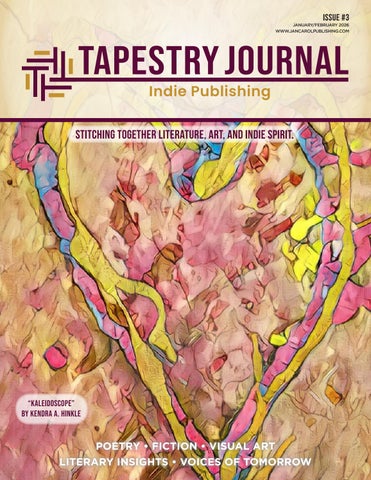
Stitching together literature, art, and indie spirit.
BY KENDRA A. HINKLE
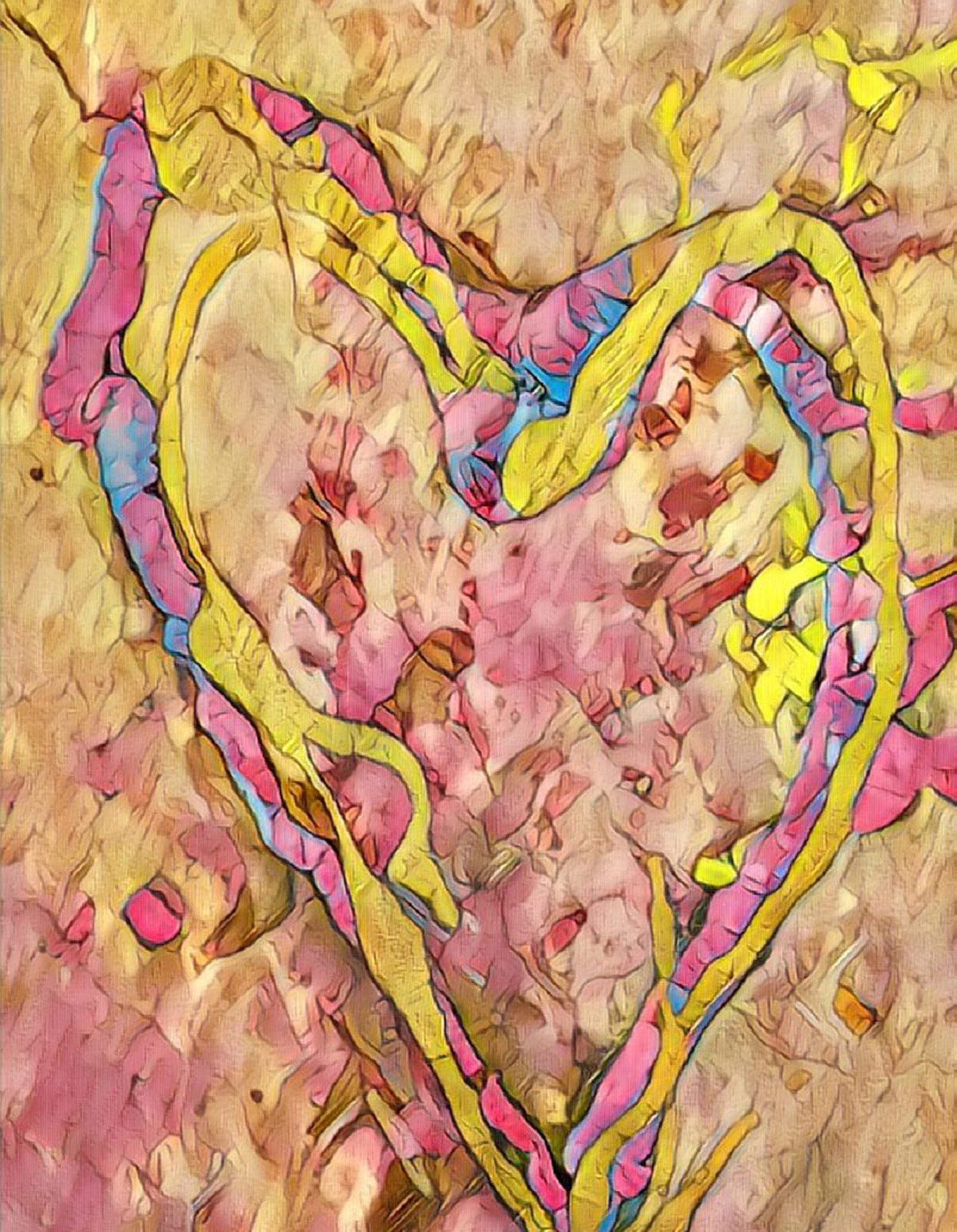
“KALEIDOSCOPE”
Indie Publishin g
Each issue weaves together short stories, poetry, photography, author interviews, book reviews, opinion pieces, and more— highlighting the dynamic world of independent publishing and the artists shaping its future.
Explore the threads. Discover the voices. Celebrate the craft .
TAPESTRY JOURNAL — Stitching together literature, art, and indie spirit.
Dear Reader,
Winter invites us to pause. As the pace of the world slows and days grow shorter, we often find ourselves turning inward—seeking warmth, reflection, and meaning in small, quiet moments. It is a season well suited to reading, to noticing, and to listening more closely to ourselves and one another.
For our January/February issue of Tapestry Journal , we are pleased to share a collection inspired by winter romance. Rather than focusing solely on love stories, however, the works in this issue also explore connection, longing, and the emotional landscapes that winter brings with it. These pieces consider how people find closeness during cold months—with others and within themselves.
The writers, poets, and artists featured in this issue take us into spaces shaped by snow, silence, memory, and transition. You’ll encounter moments of tenderness and introspection, and the subtle ways winter can clarify what matters most. Together, these voices create a tapestry that reflects the season’s complexity: quiet but not empty, restrained yet deeply felt.
As always, Tapestry Journal remains committed to showcasing diverse perspectives and thoughtful writing that lingers beyond the page. We hope this issue offers you a sense of companionship during winter’s long evenings and something worth returning to more than once.
Thank you for reading and supporting Tapestry Journal . We’re grateful to share this season’s work with you.
Tapestry Journal: Indie Publishing is a literary journal dedicated to celebrating the vibrant
We weave together voices from across the creative spectrum—featuring compelling short fiction, insightful author interviews, evocative photography and art, thoughtful book reviews, and more. Our mission is to champion emerging and underrepresented voices, foster creative dialogue, and provide a platform where storytelling in all its forms can flourish. Like its namesake, Tapestry Journal brings together diverse threads to create something rich, textured, and meaningful. While every
PUBLISHER
Jan-Carol Publishing, Inc. PO Box 701 Johnson City, TN 37605
EDITOR-IN-CHIEF
Janie C Jessee, 423.926-9983 publisher@jancarolpublishing.com
Local libraries have a lot to offer. While the chance to borrow a great book free of charge is reason enough to visit a local library, libraries also offer a host of additional resources, some of which might surprise you.
• Museum passes: Some libraries allow residents with library cards to borrow passes for complimentary admission to popular museums and other cultural attractions. Museum entrance fees can be costly, so this benefit can provide ample cost savings, particularly for families with children who might otherwise need to purchase multiple passes for a single visit.
• Park passes: Library cardholders also might be eligible to borrow passes to state or national parks. Parks provide a unique way to experience local culture and the beauty of nature, so this is a benefit worth looking into for those who can’t get enough of the great outdoors.
• Help with forms or registration: Many local libraries offer assistance to local residents looking for help with certain government forms or registrations, including passport applications or renewals. These programs can help residents navigate application processes that can be more complex and confusing than residents may realize.
• Book clubs: Books are arguably the most wellknown offering available at local libraries, so it makes perfect sense that some facilities organize book clubs for local readers. Many host clubs for readers of all ages, and some may even host genre-specific clubs, meaning there might be a club for
anyone, whether they’re avid fantasy fans, mystery devotees or students of sci-fi.
• Streaming content: Print books might be a specialty at local libraries, but many also offer cardholders access to movies or television shows via a streaming service like Kanopy. Audiobooks and e-books also may be available to borrow free of charge.
• Professional resources: Volunteers at local libraries may offer their professional services free of charge. Volunteers may be local residents with extensive experience in business who can help young professionals identify opportunities and how to make the most of them or assist established professionals brush up on their résumé-writing skills.
• Board games: If game night is a popular pastime in your household, then you might want to see if your local library allows cardholders to borrow games. Many provide such services, which can help ensure no two game nights are the same.
Local libraries offer books and much, much more, typically at no cost to cardholders.
OUR BOOKSHELF
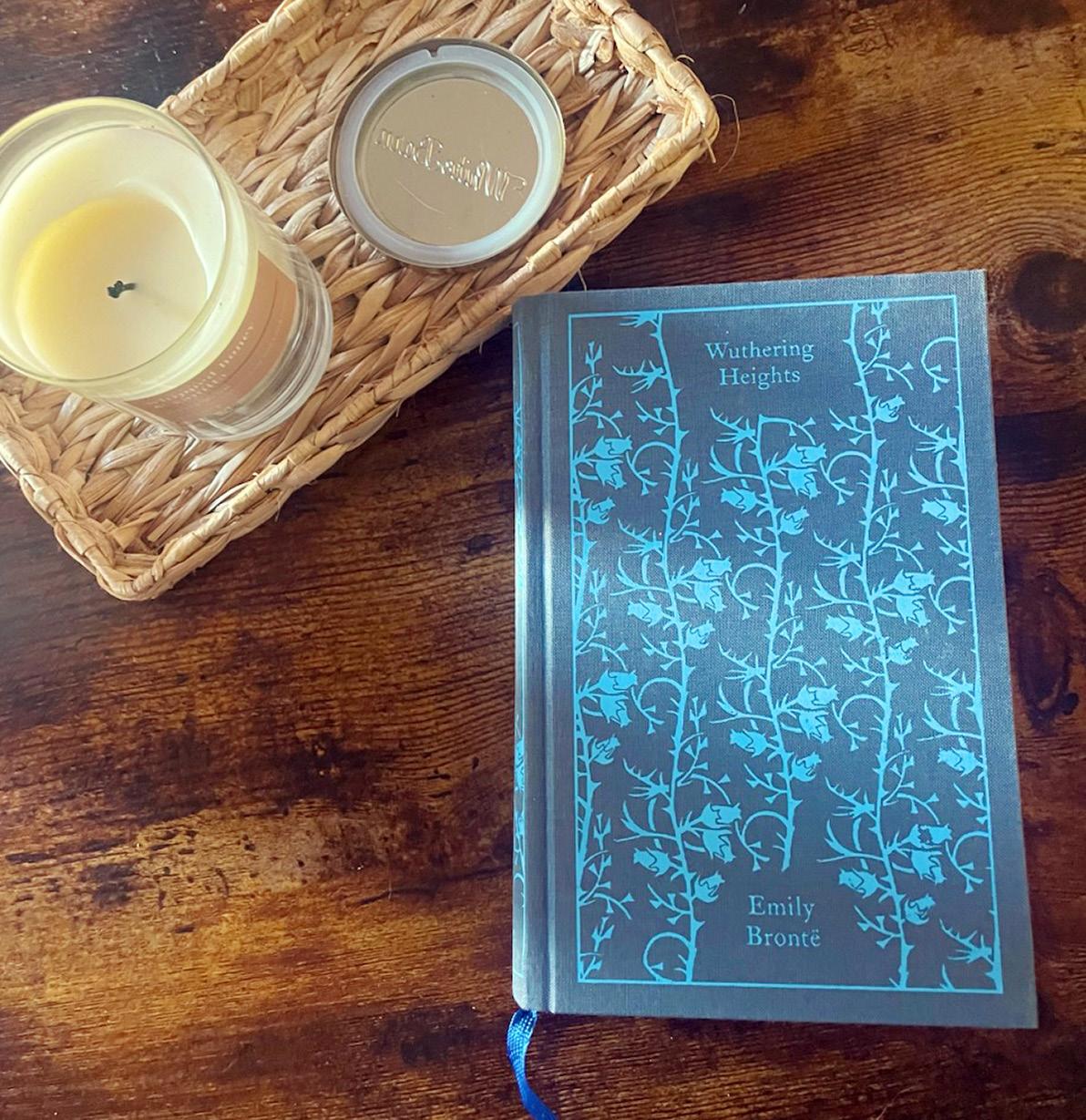
Wuthering Heights by Emily Brontë: A Timeless Anti-Romance
By Allison Lawson
In honor of director Emerald Fennell’s upcoming movie adaptation of Emily Bront ë ’s iconic Wuthering Heights novel, I thought I’d talk a little bit about why the 1847 gothic “romance” may still resonate with modern readers. It’s absolutely one of my favorite classic reads, and while the first time I read it was in college as part of an English course assignment, I still think about it often.
To start with, Brontë’s Wuthering Heights remains one of the most unsettling and enduring novels in the English canon, a work that refuses comfort even as it demands rereading. First published in the early 1800s, the novel still feels startlingly modern in its emotional extremity, its fractured structure, and its refusal to offer moral clarity. Rather than a conventional love story, Wuthering Heights is an examination of obsession—how it warps identity and echoes across generations.
At the center of the novel, of course, is the volatile bond between Catherine Earnshaw and Heathcliff, a relationship often mislabeled as romantic when it is, in fact, profoundly destructive. Their connection is forged in childhood wildness and social exclusion, and it matures into something closer to mutual possession than love. I always find it interesting when people call the novel a love story, and while I haven’t seen Fennell’s film yet, the trailers are certainly marketing the movie as a romance. It even comes out the weekend of Valentine’s Day.
In the novel, Catherine’s famous declaration that Heathcliff is “more myself than I am” is less an affirmation than a warning: neither character can fully exist without consuming the other. Brontë resists the temptation to redeem this intensity. Instead, she shows how passion untethered from empathy becomes cruelty, not only to its participants but to everyone around them.
Place functions almost as its own character. The stark contrast between Wuthering Heights and Thrushcross
Grange reflects the tension between raw, elemental forces and social order. The moors that surround them are neither picturesque nor gentle; they are harsh, expansive, and indifferent, reinforcing the sense that human suffering unfolds within a larger, uncaring landscape. This environmental intensity gives the novel a gothic atmosphere while grounding its emotions in something physical.
In my opinion, what keeps Wuthering Heights relevant today is its refusal to soften its characters or resolve its conflicts neatly. Brontë explores cycles of abuse, inherited trauma, and the long shadow of resentment with a clarity that feels very contemporary. The second generation’s tentative movement toward reconciliation suggests the possibility of change, but it does not erase the damage already done. Brontë implies that healing is partial and hard-won. Ultimately, Wuthering Heights endures because it challenges readers rather than reassuring them. It asks uncomfortable questions about love, power, and identity, and it offers no simple answers. In doing so, it remains a novel that feels alive—restless, abrasive, and deeply human—continuing to unsettle each new generation that wanders onto its windswept pages. I’ll have to see if Fennell’s movie adaptation can capture this feeling, or if it chooses to romanticize the darker elements of the story as past adaptations have done.
PHOTOGRAPH BY ALLISON LAWSON
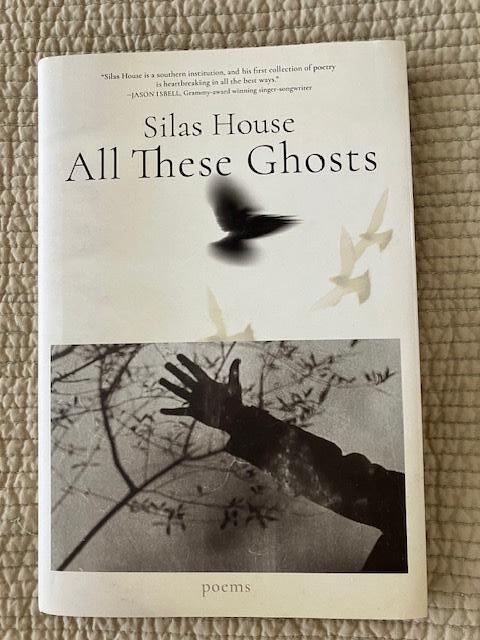
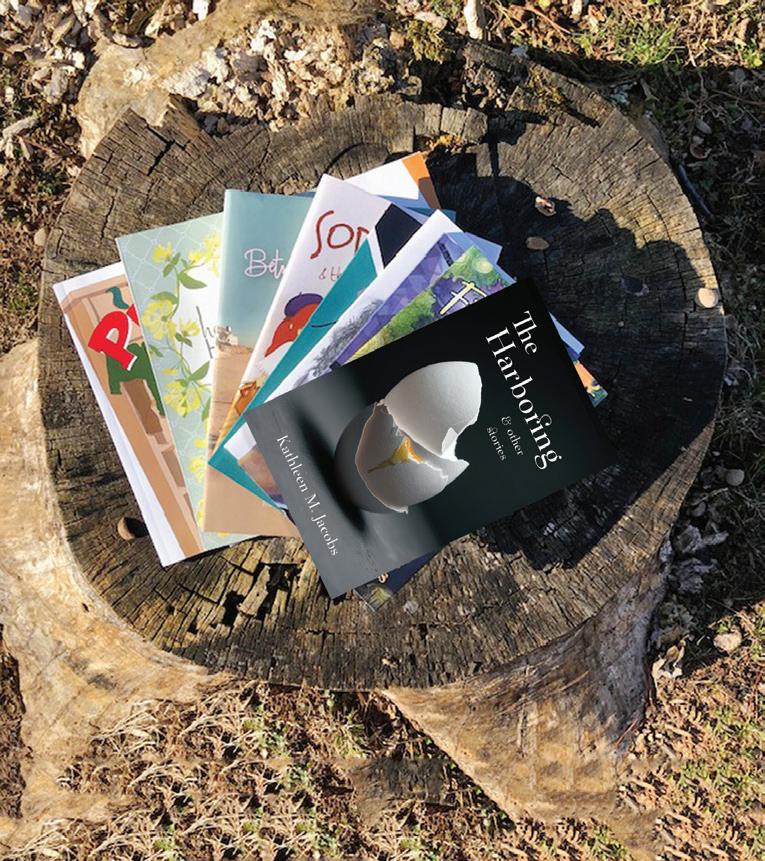
Musings, Miscellany, & Meanderings: A Review of All These Ghosts by Silas House
By Kathleen M. Jacobs
In All These Ghosts , Silas House reminds each of us who calls rural America specifically home and all of us collectively, that while we can’t go back to a time that clearly made more sense, we can make certain that what made those times so relevant can, to a certain degree, bring us back to a center that offers more equilibrium.
Reading the resonant poems in this collection provided the necessary elixir as a West Virginia writer who, for a variety of reasons, now lives primarily in New York City. Still, it is time spent growing up in rural America and living most of my life there that remains at the core of my work. And after Barbara Kingsolver posted on Instagram Silas House’s new work, calling it “a book full of longing, memory, restlessness, belonging and not belonging, conviction, beauty, hope,” that it was certain to be the salve to soothe my spirit. “We need this badly right now,” she added. And after reading this collection, I can assure you that she is, indeed, correct. Each poem satiates a hunger that was thought to be unquenchable.
While each of these poems speaks a universal language, they, together, weave a story that has the potential to if not change the way we think and act, will most assuredly give us pause to at least consider.
House’s clear connection to the natural world is evident in these poems as he explores not only its beauty, but its ravages. Still, the beauty finds a way to not only grow, but to linger. Through his connections with family, friends, and fellow artists, a most unshakeable pride in place and an enduring sense of hope permeates these pages. The senses come alive to the degree that the reader is transported to not only a place—a time that has disappeared—but to the potential of what continues to matter, what can never fully disappear: a longing and a deep respect for a past that has the potential to pick and choose what remains. In “First Home,” these words attest to that potential: “I am a long way gone from that place, yet/marked by it, still . . .” And in “Cornbread,” we read, “This is the curse of who we are/as a people, always eating/our own history, tasting the past.” And perhaps in “Watch Closely,” House is nudging us to pay close attention to what surrounds us: “You/can learn/ all you need/to know about/someone by watching/how they treat small things.”
Included in this collection is “Those Who Carry Us,” the poem House wrote to commemorate the second inauguration of Kentucky Governor Andy Beshear in 2023, where we are reminded emphatically
that we matter: “All those who stand up for what is right.”
House seems to bring it all full circle with “Conversations with My Friend the Morning After the 2024 Election,” with these troubling yet promising words: “Weary times ahead, I say./We’ll make it through this, she sighs,/and have joy along the way.” These words are not only spoken in rural America but are spoken with clear conviction throughout all the lands. And if they are not, we have lost more than House suggests throughout his collection— much, much more.
As I closed this resounding work, the final line from Muriel Miller Dressler’s poem, “Appalachia,” returned to me to both haunt and respond: “Though you’ve studied me, you still/don’t know.”
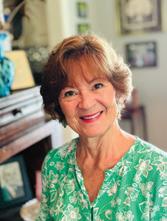
Kathleen M. Jacobs holds an MA in Humanistic Studies. She divides her time between West Virginia and New York City. She can be reached at www.kathleenmjacobs.com.
PHOTOGRAPH BY KATHLEEN M. JACOBS
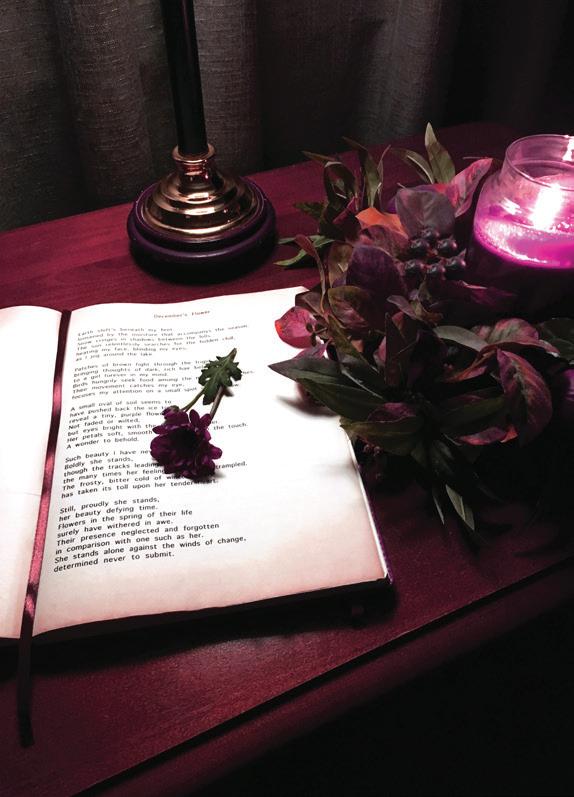
Recognition
By Kendra Hinkle
The winter spirits work toward reconciliation and romance,
Just watch the dance of flickering flame or dancing snow,
Opalescent evening glow, purple in the maze of drifts.
What is incandescence but romance?
The frigid spark of clarion stars,
The burning red of florid Mars.
Shall we waltz to sonnet rhyme
With moldering poets who set the time?
How could there not be amorous white heat
In a world where frost flowers exist?
Stories of Strength, Solitude & Soul
“Everything I have read by JC Gilliam has been excellent and inspirational to me. His writing never fails to touch my heart and o en brings a tear or two to my eyes. I see myself and my life, o en my childhood, in his beautiful words. His writing de nitely warms my heart and leaves a lasting impression.”
— CAROL BRANNIN, author
Forecast
By Kendra Hinkle
A wash of thanks poured over me
Beside the blue-berried cedar tree,
With deep-seated gratitude for winter’s reprieve.
I breathed in the fields wearing a sleeve
Of chimney smoke, Fire stoked from banked embers.
The highlanders always said
That if smoke goes toward the ground,
There’ll be snow.
Give a nod to the evergreens
Whose scent redeems
The freshness of love.
Kendra Hinkle is a native of Greeneville, Tenn. Her love of literature and folklore thrives in the Appalachian region, which she sees as an endless source of inspiration.
A WOMAN’S TEARS
A Collection of Poems
JC Gilliam
Ode to an Appalachian Farmhouse
By Amanda Reed
Winter air rides high and crisp upon the glistening river mists.
Faded memories of days gone by my mind cannot resist.
The water bends to the frigid ways of a glacial, ghostly kiss.
Imprints of love long past, calls out, and to the core it pricks.
Your stories I can feel them there in that drafty space.
Specters of what was and might have been still written in this place.
A comb, some buttons, a magazine from a hundred years ago.
Upon the tides of the past of who you were, persistently I row.
Boards of clapboard siding stands protecting floors of pine.
A silent historian you are, keeping record of love and laughter stamped in time.
So, I write this poem to you, not a person but a thing.
A simple country farmhouse, nestled in the river’s bend, oh what images you invoke and apparitions you bring.
Amanda Reed is a resident of Kingsport, Tenn., a Christian wife, mother, career woman, and small business owner. She graduated from King University with a Bachelor of Business Administration and a minor in Appalachian Studies. She enjoys writing about the Appalachian Mountains and landscapes she calls home.
A Kiss from a Gray-Haired Man
By Rebecca Williams Spindler
He held my hand at a winter festival; We were seventeen.
He says he knew then he wanted to be With me, always. He held my hand at our wedding; We were twenty-three. We shared vows and a kiss. I knew then, I wanted to be With him, always.
He holds my hand at a winter festival; We are fifty-five.
The tip of his nose is cold, His eyes are bright.
A kiss from a gray-haired man Is still a precious kiss from A man who holds my heart And held my hand at a winter festival.
Rebecca Williams Spindler lives in the Midwest with her family and has roots in Scott County, Va. She’s an award-winning author, screenwriter, podcaster, and producer. She enjoys a walk on a snowy day and a cozy seat by the fire.
The Allure of Poetry
By Kathleen M. Jacobs
“A poet is, before anything else, a person who is passionately in love with language.”
— W. H. Auden
I’m often asked to recommend poetry or a particular poet whose work might engage the reader on a level that they will be able to understand and in understanding reveal a nugget of the complexities of the human spirit that will encourage them to read more poetry.
After reading the poetry of Mary Oliver for a number of years and returning often to it for refreshment, her words resound in very loud whispers
with everyone. Including “everyone” is a bold statement, but I have not yet known of anyone who doesn’t return to her words again and again, particularly these: “Tell me, what is it you plan to do with your one wild and precious life?”
Billy Collins is another poet who can turn the ordinary into extraordinary, whether through a tangible or intangible; he makes every single word count in a way that makes an emerging poet want to emulate. In a way, reading his work becomes an invitation to pick up your pen and begin. “The study of poetry should be an immersive and personal experience.”
And with the recent discovery of work by Natasha Trethewey, Amanda Gorman, Silas House, and Callie Siskel, poetry continues to not only ask questions but seek answers to all that moves us, joins us, and changes us in ways that truly matter in order to begin to set right what was once
wrong. And then, explore poetry in all its forms and follow Ezra Pound’s directive: “Make it new.”
Kathleen M. Jacobs holds an MA in Humanistic Studies. She divides her time between West Virginia and New York City. She can be reached at www. kathleenmjacobs.com.
Author
Kathleen M. Jacobs
THE VISUAL THREAD
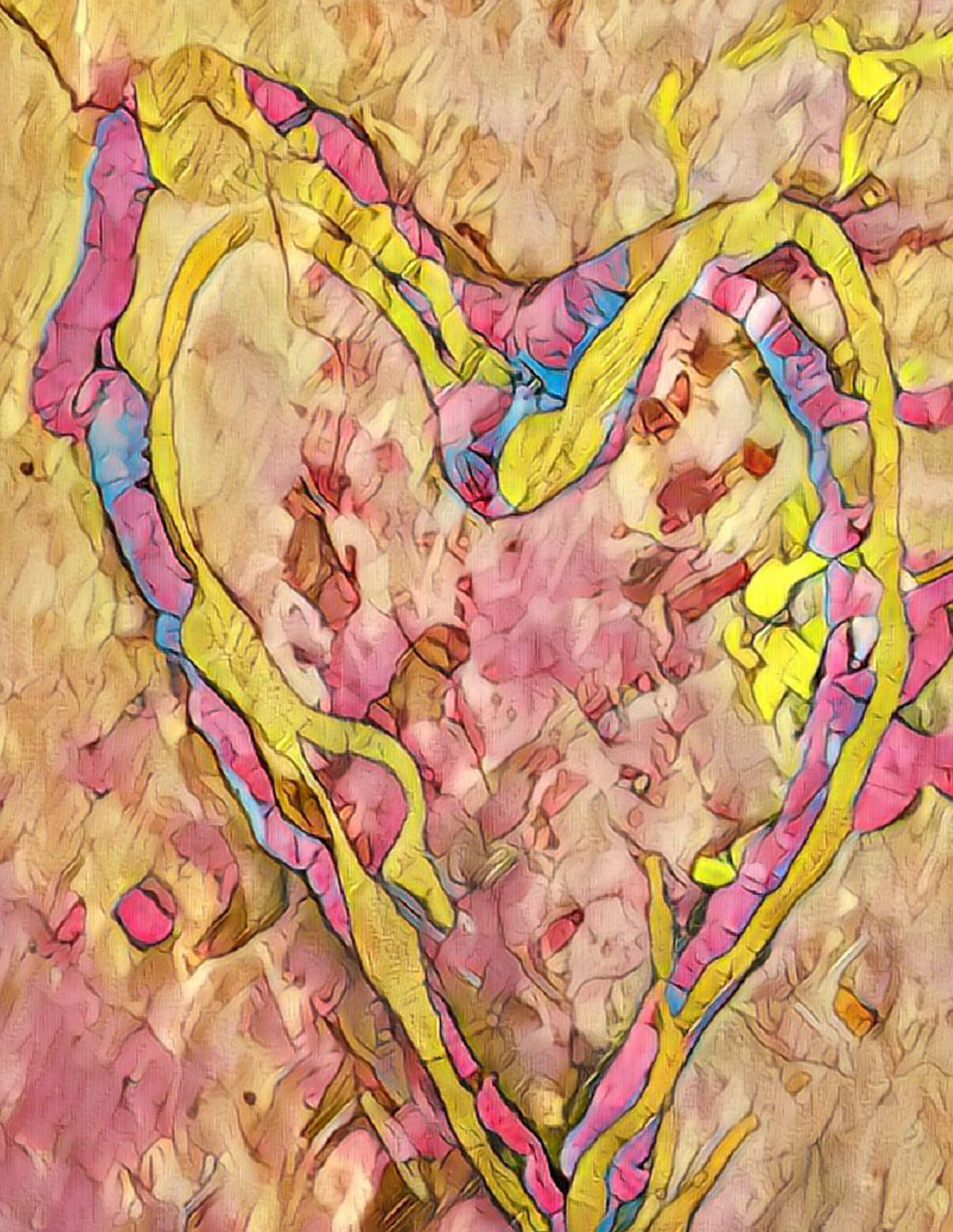
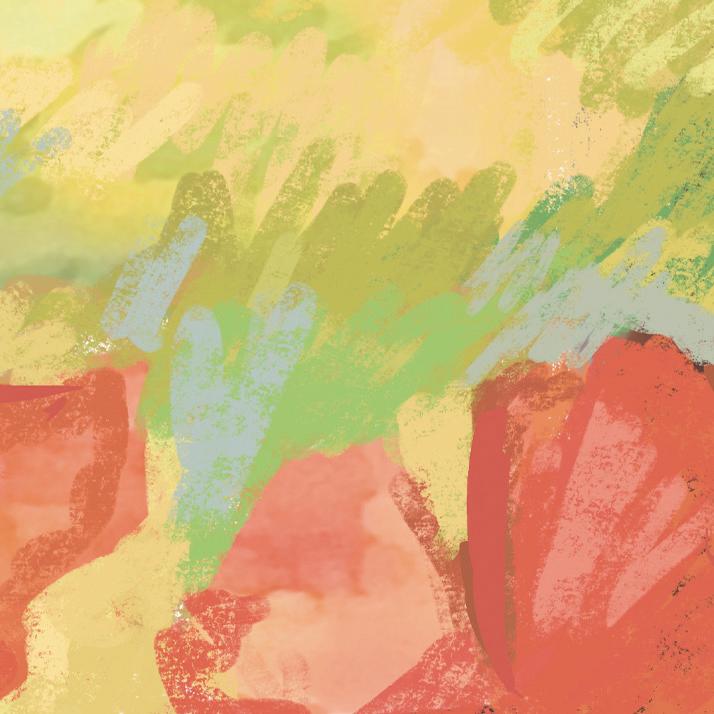
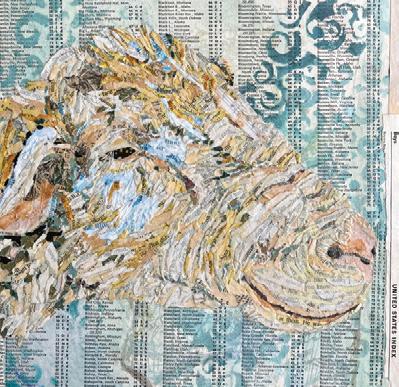
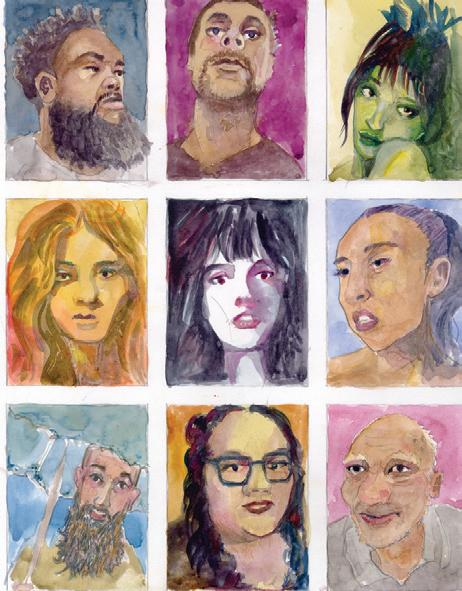
A. Hinkle | “Kaleidoscope”
Enhanced marbleized paper
Prisms reflect fire and ice, hot and cold, you and me.
Kendra A. Hinkle, a native of Greeneville, Tenn., enjoys exploring different media to express concepts and ideas universal to our humanness.
FRONT COVER FEATURED ART
Kendra
Hobbies That Encourage Adults to be Creative
Parentsof young children have undoubtedly read or learned about the benefits of giving children time to engage in creative pursuits. Such activities can help foster cognitive development in youngsters, but the benefits of being creative don’t end in adolescence. In fact, adults also have much to gain from being creative as well.
A 2021 study published in the International Journal of Environmental Research and Public Health noted a positive relationship between creativity and subjective well-being in adults. Such findings are a feather in the cap of creative pursuits and enough to compel some adults to wonder which hobbies they can pursue in an effort to ignite their creative fire. Creativity can be defined in a number of ways, particularly with respect to recreational pursuits, but various activities might be just what adults need to reap the rewards of being more creative.
• Painting: Many adults who paint characterize this recreational activity as a great way to unwind and ease stress. Painting requires creativity, and even avid painters may not recognize that painting is a mental exercise that encourages problem-solving. That can have a profound impact on mental health, as a 2015 study in the journal Neurology found that adults who engaged in creative pursuits like painting were 73 percent less likely to develop cognitive issues that can lead to dementia.
• Writing: Writing is another creative pursuit that can make for a great hobby. Writing in a journal, even if it’s a recap of the day’s events and not writing fiction, can clear up mental clutter, which in turn can open a pathway to more creative thinking. Adults also can utilize a journal to do some creative writing.
• Knitting: Knitting is another hobby that allows adults to indulge their creative side. Adults must design patterns, choose colors and even create items wholly from scratch when knitting, which makes this a great way to be more creative with personal time.
• Playing an instrument: Learning to play a musical instrument affords adults an opportunity to express themselves. Playing a musical instrument also has been linked to a range of cognitive benefits, including sharpened decision-making, improved memory and focus and enhanced mental flexibility.
Various activities encourage adults to be creative and foster a greater sense of creativity in men and women. Such pursuits make invaluable hobbies and pay both short- and long-term dividends.
SHORT STORIES SEVEN SHOALS
an ocean I had never seen. “Delia Mae, come see if this is about right,” he said.
TBy Amanda Reed
he crimson sky faded into hues of roseate, swirling into vanilla wispy clouds overhead. The snow had finally stopped. The morning held a sense of hope, but the trees cracking, popping, and succumbing to the ice’s brutal force quickly brought about the sense of dread and panic the sudden storm had carried with it the evening before. Just as snow had turned to ice, and ice into panic, my thoughts turned to Percy.
Was he alive, was he hurt, and how long would it be before I knew? Would there be a life with him or would those hopes and dreams turn to ghosts that fade into the air like mist over the shoals of the river? When the ice melted and the world began to turn again, would Percy still be drawing breath, waiting for me at Seven Shoals?
It was early fall, when the air sweeping down from the mountain was ripe with the smell of paw paws and spicebush. The shoals played the moving water like a fine instrument and the sun warmed the earth beneath our bare feet. It was my favorite place on earth, a spot on Percy’s father’s farm, located on the seventh shoal of the Holston River where the mountain slowly bent to river’s form and a small pasture lay above the steep banks.
I always had a love of water. I guess it’s only natural, as my mother named me Cordelia—Delia for short— which means daughter of the sea. As the story goes, my mother’s people were ship captains before immigrating to America, but in the mountains of Appalachia, the closest thing I’d ever seen to an ocean were the Clinch and the Holston Rivers. As unpredictable as a river could be, changing from untamed currents to beautiful stillness all within the same body of water, how magnificent the seas must be , I thought. And, too, there must be something to a name indeed, because I tended to be a little impetuous.
My thoughts were interrupted as Percy called out. He had wandered away as I had stared off into the rippling waters as they made their way out of the mountains to
I scurried up to where a thicket of tulip poplars grew, standing tall between the mountain and the river, their leaves turning pale yellow as if they had soaked up the last of the summer sun and were gently spotted with old gold. He was walking in a square between four of the biggest. He said, “If I cut the underbrush here, you would have a view of the river. And I think I could still leave you the trees.”
“What are you talking about?” I asked.
“Well, your house, our house…Will you marry me, Delia Mae?”
What a year 1906 had turned out to be. We had known each other most of our lives. Percy was three years older than me. We attended school together, church together in Mace’s Spring, but it wasn’t until that summer that we had truly seen one another.
What I loved most about Percy was his determination. Once he had made up his mind, he followed through. After I had said yes, he set his attention to starting construction on what would be our home together. He’d already asked his father for the acreage on the shoals and set his sights to earn it from him. They worked out a plan that he would help him log the mountain that winter to earn money for the farm, and secure timber for the building of the house. They decided that ice roads during that time of year would make it easier to slide the ancient trees down the mountain, to be able to get them to the railroad in Mendota.
Autumn was unusually beautiful; the vivid red and oranges faded into tawnies and umber. Warm colored sunsets stretched wide against the blue light still warmed by the autumnal sun. Until winter came, Percy did all he could, prepping the foundation. He hauled dirt from the farm and rocks from the river to build up the house seat to protect it from flooding. I would help as much as I could, too, carrying the smaller stones, clearing brambles, and bringing Percy and his helpers lunch. By the time the cool fall breeze morphed into chilling winter winds, I could see the foundation of a life for us coming together. In our home, in our place, at the foot of a mountain cradled in the river bend.
Christmas flurries soon began. They swirled like little
dancing swans, spiraling down the breeze. I watched from Percy’s parents’ sprawling wraparound porch as they dipped down to Livingston Creek and disappeared on the surface. It’s a different cold by the water, the kind that hangs in the air, seeps into your bones, and settles into the walls of the house. Inside, however, warmth roared from the fireplaces and woodstove, warring against the frigid atmosphere. The smell of ham, cinnamon, and cornbread wafted down the hallway, and the peace of the river hummed its kind of carols just out of sight.
Down the hallway to the right in the large parlor sat Percy by the tall, stout cedar, proudly serving as the Christmas tree, decorated in popcorn strands, holly berries, and salt dough ornaments. Percy was sitting crisscross on the heart pine floor, looking at me with his warm smile. It was then that I saw it glinting in the light of the oil lamps that illuminated the room: a small, gold, filigreed ring, a delicate cushion diamond in the middle, dangling from the lower branch. Just perfect. Another symbol of his promise. That’s what I loved most about Percy—when he made up his mind, he followed through, constant and true as the Holston. It was clear he had been working on more than I had known.
January rolled into the mountains, piercingly bitter. It was so unforgiving that the shoals froze over and hushed their songs. The mountains were still, and all that were settled in their watch were rendered motionless in the cold. Winter had cloaked its frigidness throughout the valleys, and we all lay in wait for what it would bring. With the freezing temperatures at a constant, Percy, his father, and other hired men, including my older brother and admittedly my favorite, Onsby, among them, began wetting the muddy ruts down the mountain. When the ice was thick and solid, they would start the job of moving the cut timber with horse and sled. The thought of it made me cringe, thinking of the danger, but the sale of those logs would bring the beginning of a forever with Percy.
By the last week of January, production for the men was in full swing, and on Wednesday the 31st, the last day of the month, the temperatures began to rise. They were in good spirits because the weather had finally risen above freezing and the conditions were less miserable. Maybe with January taking its leave, the bitterness of those biting winds would accompany it; the two had become inseparable. I was peeling potatoes, looking out the window of my family’s home, nestled in a hollow almost 15 miles from the river. There, the feathery pines looked as if they would take flight. Snow
began to fall gently, and I knew Onsby would be starving by the time he got home. Salt pork and potatoes were one of his favorites, and I aimed to have it ready. The gentle rhythm of the flakes became more hurried. They no longer danced; they assaulted and thwarted everything around them in a shroud of white. It was unmistakable: January was departing with a vengeance. My heart began to sink at the thought of Percy and Onsby high in the bosom of the mountain, and I began to beg God for mercy.
Then, show mercy He did. About that time, Onsby opened the door and fell into the front room, but then I saw the look on his face. “Delia Mae, it’s bad. I came quickly to fetch you. It’s Percy…There’s been an accident. The sled Percy was steering went sideways, threw him from his horse, and we couldn’t get him to come to. He was breathing when I left. Delia Mae, I’m so sorry, but there’s no way we can make it back in this.”
That’s when the snow changed to ice, January’s last aggression. My only weapon was to pray.
I don’t remember much about that night. I woke up in my same clothes, face swollen from tears, in the kitchen floor next to the wood stove. The potatoes still lay in the sink, the room stark and cold, but I felt nothing. I pulled my shawl tight around me and stumbled out into the yard. The snow and ice had stopped. The world was still, and January had gone. It tore out like a roaring lion but had gone just the same. I ran back inside and quickly dressed in Onsby’s overalls and Daddy’s heavy coat. I woke up Onsby to hitch up the mule to the sled, saying that we must go now to see about Percy. He met my request with gentle kindness, and within the hour we were on our way.
The trip that would normally take about an hour took four, and by the time we made it to Percy’s parents’ home, you could feel the morning turning into evening, and darkness looming in the background. I trudged the deep snow, running, but barely made ground. By the time I reached the wraparound porch, I was exhausted. Percy’s mother met me at the door, her blue eyes baggy and face drawn. It seemed like a lifetime that I waited for her to speak.
“He’s alive, dear, but we don’t know how bad it is,” she said. “We can’t get word to the doctor until it thaws.”
Alive…That’s something. Alive. She led me up the stairs to Percy’s room, and I felt sick with every step. What form of Percy would I find when the door opened? What-ifs stripped away into reality.
There he lay, all six-foot-two of him. I’d never seen him
look small before, but laying there, he did. I sat beside him, pulled the covers back from his neck, and gently gave it a kiss. He never turned, but he was warm, and he slightly flinched. “I can’t walk, Delia Mae,” he said as soft as a child, and there it was between us, peeled back to what it was.
His body was broken, but how badly, only time would tell. In the days that followed, I stayed by his side, pleading with him not to give up on himself, on us, on our future. And while he slept, I would hum as the river did, hoping to bring to his dreams the cheerful days of summer and autumn.
The thaw did come, and with that, so did the doctor. Percy’s back had been broken with the fall, but even by the time of the doctor’s arrival, two weeks later, Percy was able to somewhat sit up. His back was braced; the prognosis was doubtful as to whether he would regain his ability to walk. It was even less likely he would be the man he was physically before. It seemed bleak, but there was hope, and I knew Percy. He could work with hope. I came by nearly every day to encourage him, to be the fire to lose the binds that had frozen him immobile. With the help of Onsby and his family, we would work him from the bed, then to his chair, and by March, he was walking with support. That’s what I loved most about Percy—when he made his mind up, he would follow through.
There was beauty from the ashes that January had left behind. God had seen fit for there to be a hope and a
By Raven Howell llustrated By Ann Pilicer
future for Percy and me. Its path was like a river: deep, rocky, steady, yet unpredictable with each passing season. This season had been course, frigid, and brutal, but it was passing.
As Percy, stepped out onto the wraparound porch, his cane tapping in warning, we both looked out at the direction where the mountain bowed down reverently to the river. The land had been built up between my tulip poplars, standing tall with an oath to bloom lovely in the spring, the foundation of our future still bare to the elements. “Delia Mae,” Percy said, “when spring comes, we’ll walk down by the river, barefoot, and I’ll pick you bluebells.”
That’s what I loved most about Percy. When he made his mind up, he would follow through. I could almost smell the musk of the river and the gentle, honied scent of the bluebells, feel the bare earth between our toes, and hear the returning geese beckoning to us there. A dream of a happy life called out, just as the river found its voice again, outside of winter’s grasp, in a place we called Seven Shoals.
Amanda Reed is a resident of Kingsport, Tenn., a Christian wife, mother, career woman, and small business owner. She graduated from King University with a Bachelor of Business Administration and a minor in Appalachian Studies. She enjoys writing about the Appalachian Mountains and landscapes she calls home.
Your Next Romantic Escape Starts Here
Jan-Carol Publishing invites you to fall in love with unforgettable stories of second chances, small-town charm, and happily-ever-afters.
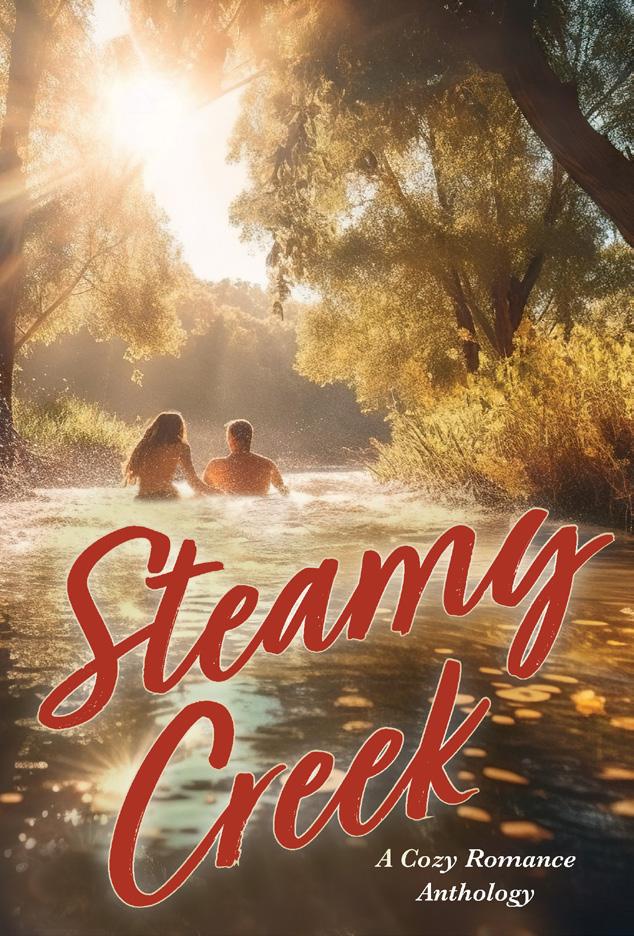
Stories for the hopeless romantic! Take a dip in Steamy Creek where you’ll find flirtatious characters and tender tales of love. Seven talented authors come together to create an irresistible anthology that will leave you feeling smitten with every page.
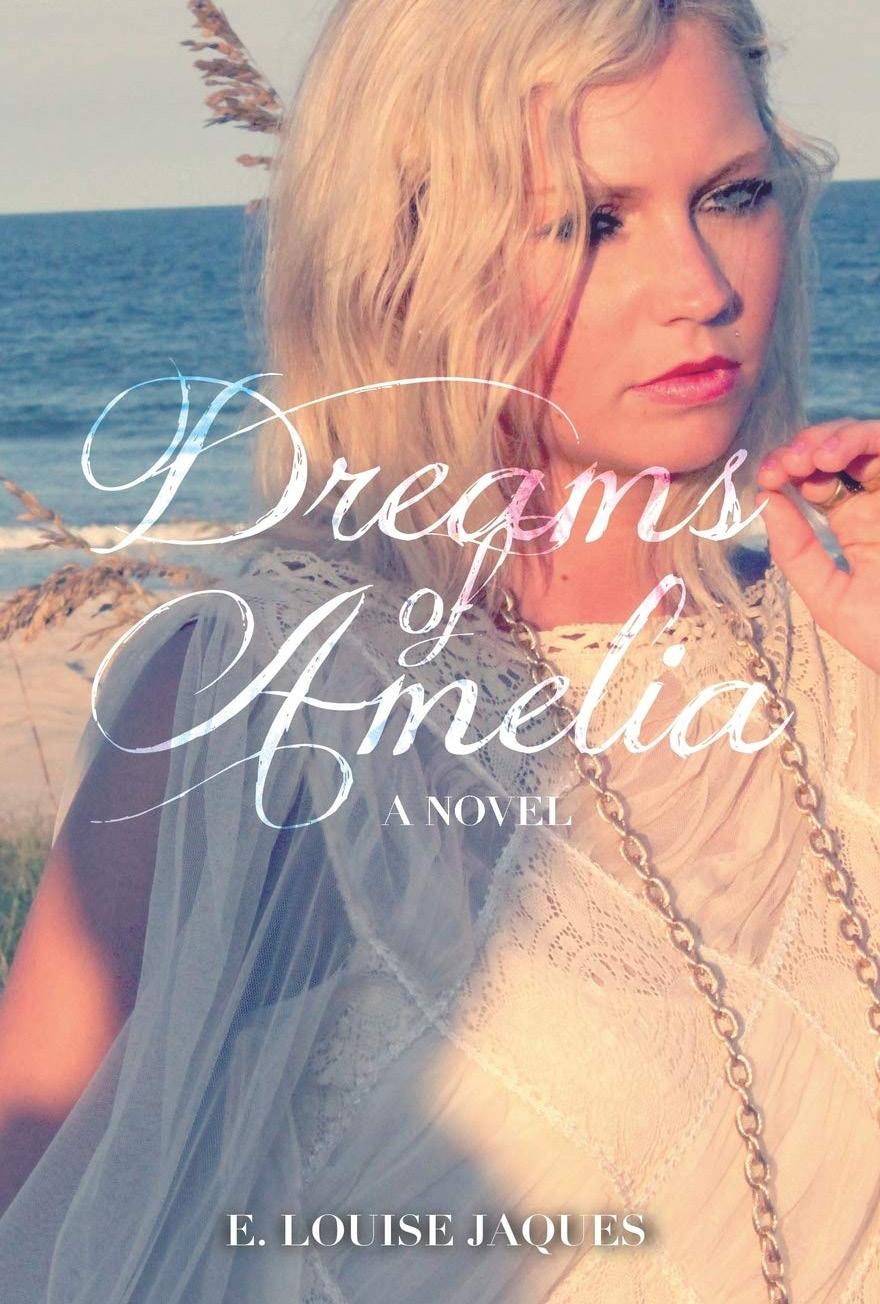
Love-at-first-sight sparks memories of a past love, blindsiding 17-year-old Norah James after her move to Amelia Island, FL from Toronto, Canada. Meeting Ryan Flynn, her rescuer from an ocean riptide—and the boyfriend of her new friend Ashley—unleashes her psychic abilities and prompts memories of a past life on the enchanting Island.
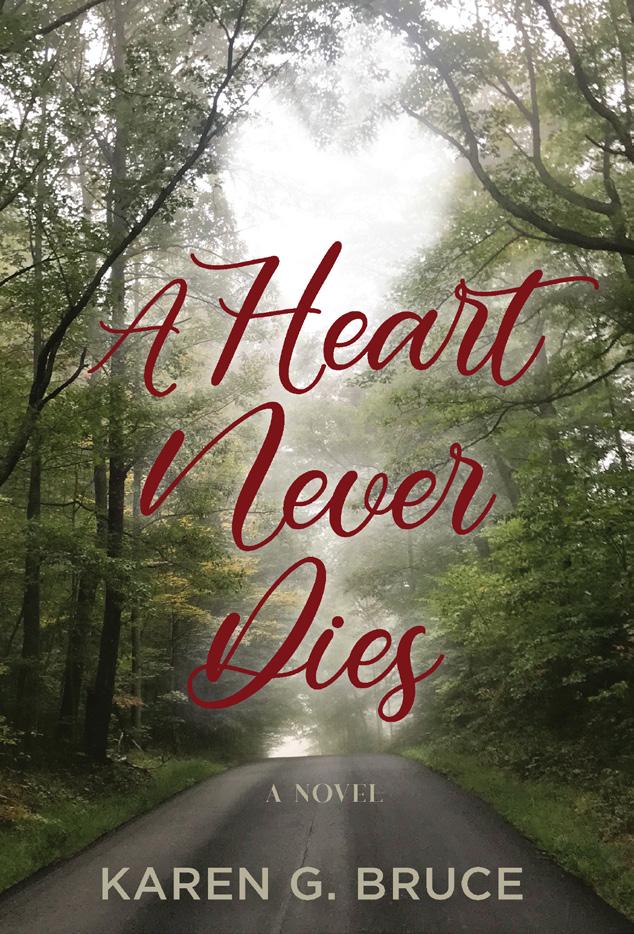
Jenna has just lost her husband to a drunk driver. Her world has turned upside down, and then she meets Ben. Their connection is instant and baffling. When she finds out that Ben may have her husband’s heart, can she stay with the man who lived only because her husband died?
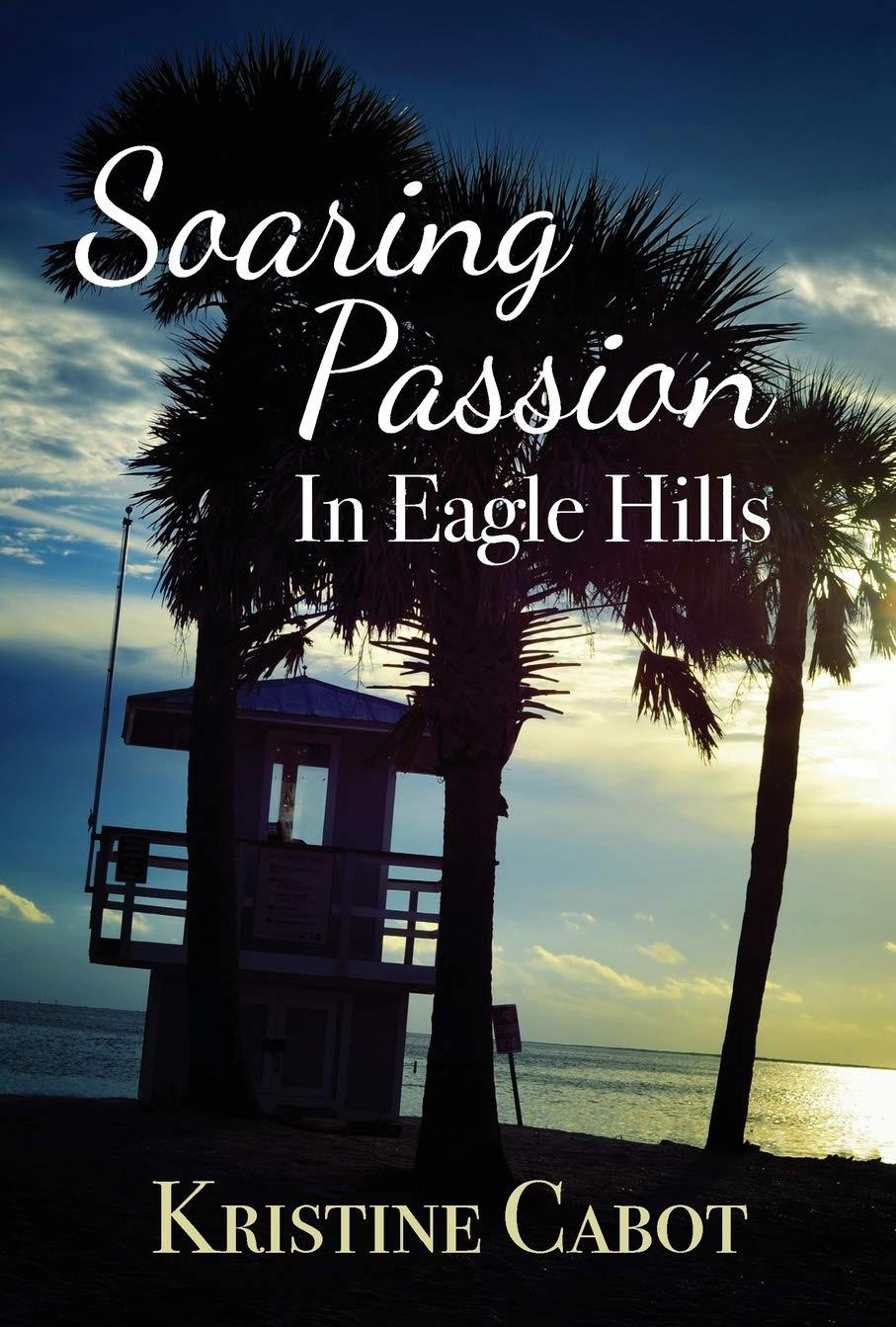
Recently widowed, Lily Roberts leaves her Appalachian hometown seeking serenity in the Carolina coastal town of Eagle Hills. Instead, she stumbles into a world of intrigue, murder, and passion. Lily’s encounter on the beach with a mysterious stranger arouses an unquenchable thirst. Will she satisfy her desires or fall victim to a secret political agenda?
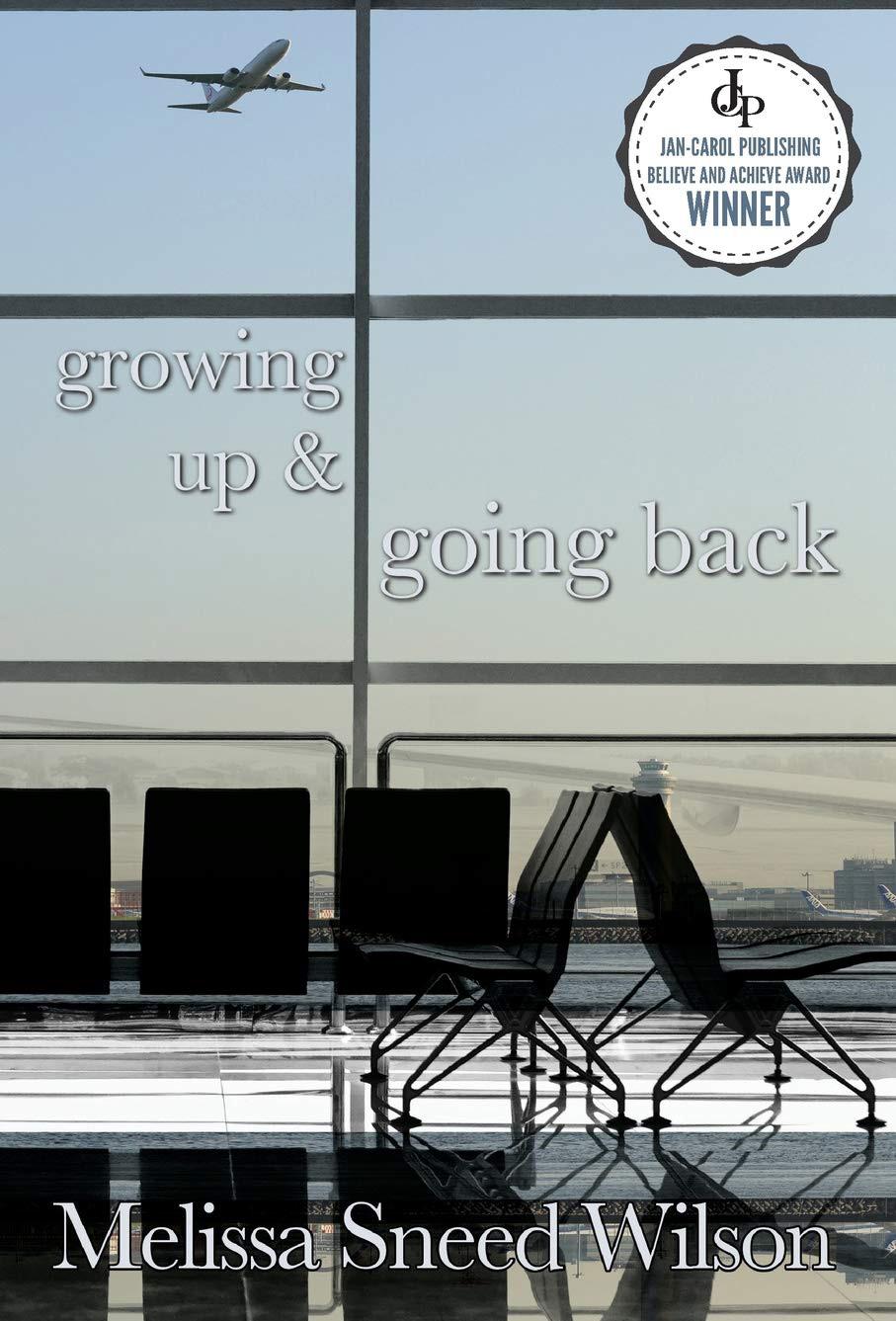
After losing her PR job in New York City, twenty-eight-year-old Jennifer Johnson retreats to her hometown of Edmonds, Virginia for the summer. A chance flight reunion with her high school friend Aaron sparks old feelings—and unexpected possibilities that could change her future.
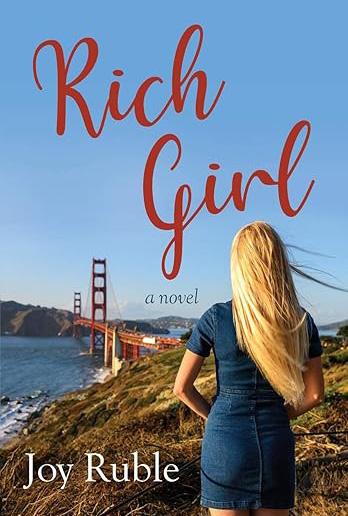
Kathy is a small-town girl in the 1980s who is desperately seeking to escape her dismal life. As she comes of age, she learns that escaping one set of problems only leads to new ones. Her journey to discovering herself takes her down an unlikely path that will keep you laughing and cheering for her along the way.
Let’s Chat with Karen G. Bruce!
By Allison Lawson
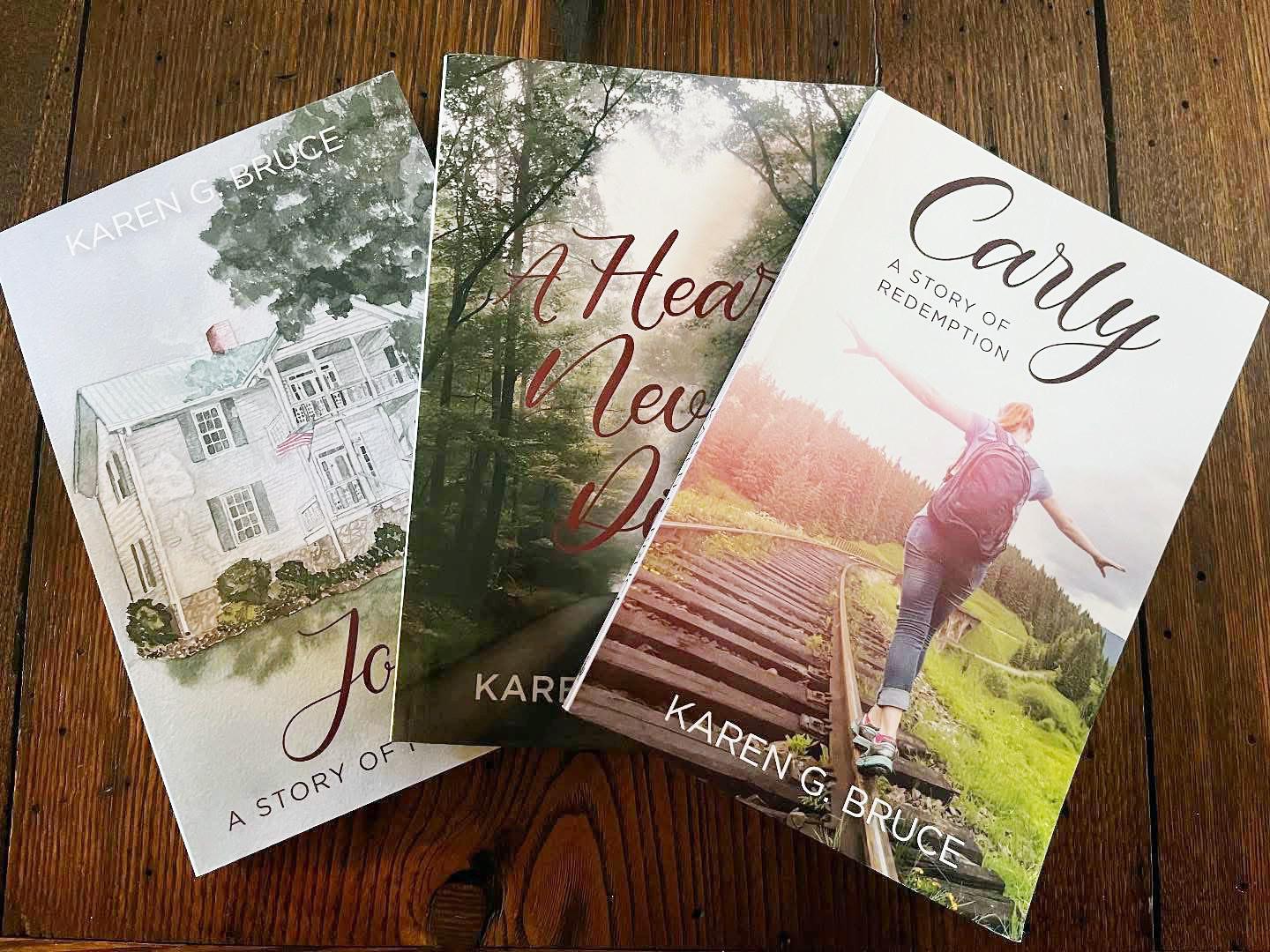
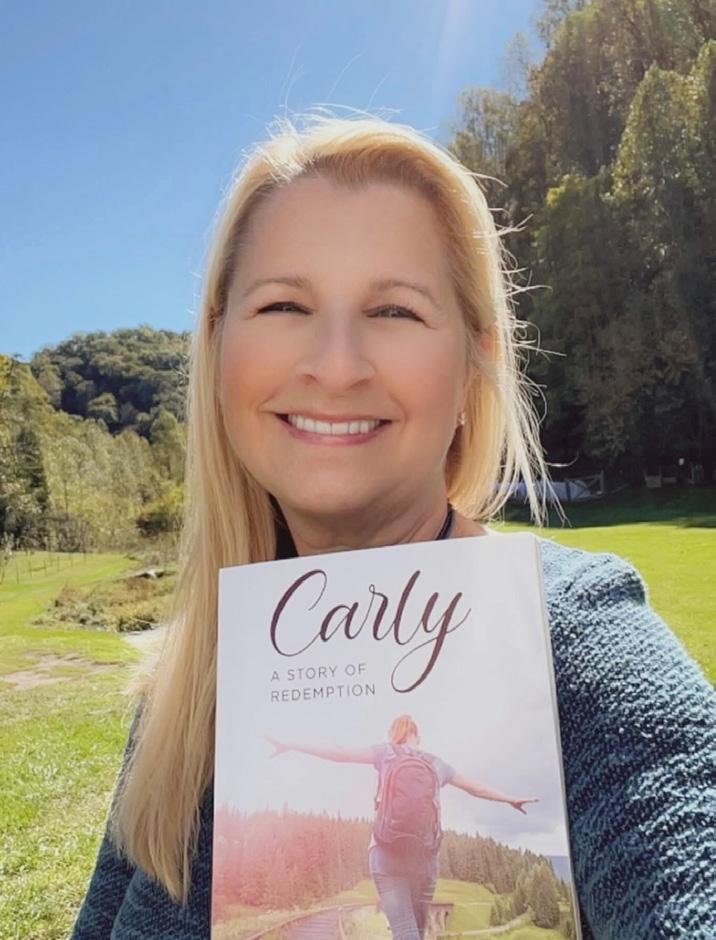
Karen G. Bruce, author of A Heart Never Dies and Josie: A Story of Forgiveness , sat down with us to discuss her novels and the inspiration behind her stories, as well as some advice for aspiring authors.
Q: What would you like potential new readers to know about your romance novel, A Heart Never Dies?
A: This novel deals with the heart-wrenching grief someone feels when they lose the love of their life. How do they continue living? And when they do try to move on, as everyone must do, what happens when they meet someone new?
Jenna meets Ben, and the connection is powerful, but guilt stops her in her tracks. She’s got enough to deal with, including an immature pregnant 16-yearold daughter and a judgmental mother who drives her crazy.
Q: What inspired you to write that book?
A: I have always been interested in stories about people who have donated or received organs, especially the heart. I’ve watched families of donor recipients become extremely emotional after meeting someone for the first time who received their loved one’s heart. To hear the rhythmic beating and know that the heart still lived on must be an incredible feeling. One of my favorite lines in the book is when Abby, Jenna’s daughter, says, “Daddy’s heart is still in love with you, Mama.”
Q: What do you think are some of the key elements to writing a story filled with romance?
A: Meeting someone and falling in love is always a beautiful story, but if you want to write a novel, there must be something that keeps them apart. Grief and guilt are two pretty big reasons. The lovebirds must also have great chemistry. Jenna meets Ben, and their chemistry is baffling until they find out that Jenna’s husband’s heart is beating in Ben’s chest.
I love the scene when Jenna and Ben are in the elevator, which is getting more crowded with each stop, causing them to get closer and closer. Ben reaches for Jenna’s hand as if it’s nothing, shocking Jenna (in a good way). It’s sweet and so unexpected.
Interesting characters, other than the main characters, make a novel more interesting, like Jenna’s overbearing mother, her quirky best friend, and Ben’s mother who likes to talk nonstop. Even if it’s a romance, in my opinion, you still need humor. I love Rachel, Jenna’s best friend, and her funny dating stories.
A romance, in my opinion, must have a happy ending. When you turn that last page and you have a smile and a sigh, that’s what I’m going for!
Q: You also have two other novels, Josie: A Story of Forgiveness and Carly: A Story of Redemption. What would you like readers to know about those books?
A: Josie finds out her husband is cheating with her best friend, Shelly. I love this story because I wrote in both past and present tense. You find out about how Josie and John meet, and it’s a wonderful love story until it’s not. Josie’s mother, who she is extremely close to, dies of breast cancer, and Josie’s grief has overwhelmed her so much that she has almost completely shut down. She must crawl back to civilization while jumping a few hurdles in the process. Sometimes God uses the hard times in our lives to make us better than ever.
Carly is Shelly’s daughter. With Shelly as her mother, Carly’s life has been a little dysfunctional. It comes to a crashing halt when her father kills her mother. I had to write her story because it had so much conflict; I couldn’t pass it up. Carly has been my favorite character so far. She’s weird, funny, and vulnerable, but she finds love and purpose despite it all.
Q: What has it been like to see three of your written works be published so far?
A: Absolutely incredible! I didn’t even start writing until I was in my 40s. My children had flown the coop, and my husband traveled a lot for his work. One day, out of boredom, I sat down and just started writing, and before I knew it, I had a short story, with a beginning, middle, and end. I was so tickled, and I had so much fun that I did it again and again. They weren’t that good, but with practice I got a little better each time. To have three published novels is more than I had hoped for.
Q: Have you had any interesting or heartwarming interactions with fans of your books?
A: Oh, my goodness, yes! It means the world to me when I hear that someone loves my work, especially if they’ve read it multiple times. Wow! Every time I’m approached in public or when I receive messages from someone, I just have to pinch myself. Even if no one else reads my books, I’m so incredibly thankful that I’ve touched many lives already and hopefully brought
them closer to the Lord. That’s my intent. We all go through so many things, but God is always with us.
Q: Do you plan on writing another novel in the future? If so, can you preview anything about it for us?
A: Yes, but I’ve been very slow about it. 2025 was a very, very busy year for me. God helps me, and he also tells me when to rest. I want to continue my next novel with Matthew, Josie’s son. I love what I have so far and hope to complete it in 2026.
Q: Is there any advice you’d offer to aspiring authors?
A: I don’t know if I’m one to give advice, but here’s what I do know: Pray! Pray! Pray!
I find that when your readers can relate to your content or characters, it means more. Sometimes, we feel that we’re alone in what we go through, but we’re not. Write honestly and from your heart—not how someone else thinks you should write. Your story must have purpose and conflict and meaning.
Lastly, you must really like your story, because you’re going to have to read it over and over. Editing is a must. I like the “read aloud” button on my computer. When it reads back what I have written, it’s very helpful.
Q: Final question…What have you learned about yourself through the process of writing your three novels?
A: God has given us all spiritual gifts, and I always thought mine was being a helper, but God has shown me that I have other gifts that I never knew about. The Lord has used me in so many ways, even though I never think I’m capable or worthy.
In Matthew 19:26, Jesus says, “With man, this is impossible, but with God all things are possible.” I’m here to tell you that God has made it possible for me. I’m thankful to be able to write about normal, everyday people, with messages like forgiveness and redemption.
Karen G. Bruce’s novels can be found on Amazon, Barnes & Noble, and through jancarolpublishing.com.
AUTHOR Q&A Meet Susan Dickenson
By Draco Bailey
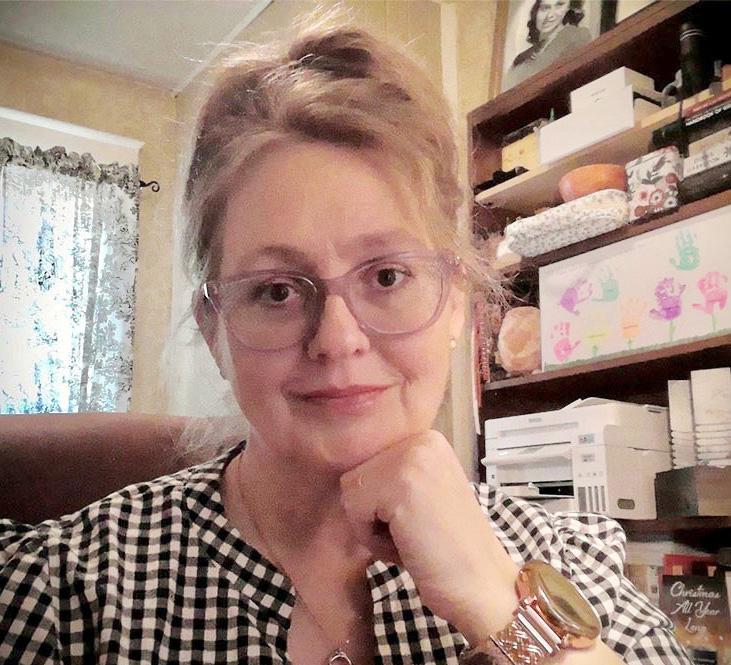
Susan Dickenson is a long-time contributor to Jan-Carol Publishing’s anthologies. Her stories are featured in Daffodil Dreams, Steamy Creek, and the recent Christmas All Year Long. With her first full-length novel in the works, we sat down with Susan to chat about her writing process, her favorite books, and more.
Q: When and how did your interest in writing begin?
I also have somewhat of a fantasy novel in mind, based on a dream that I had, and an idea for a cozy mystery. I wrote a short story about a small-town police chief and a local writer that I’d like to expand as well.
Q: Your work has been featured in the JCP anthologies Daffodil Dreams, Steamy Creek, and Christmas All Year Long. Do you have a favorite of your short stories in those collections? Why?
A: “Wisteria Blooms and a Hint of Cotillion” from Daffodil Dreams. I wrote that one day when I was thinking about my Mammaw’s old homeplace. She loved wisteria and wore Cotillion perfume from Avon. She was such a joy to be around and had so many stories and old wives’ tales that she shared. She was quintessentially Appalachian, and I loved her dearly.
A: My first short story was written in the 6th grade. I lived in Chesterfield County, Virginia, at the time, and attended Salem Church Junior High School. My English teacher was Mrs. Sullivan, and though at that time I thought she was a little hard on us, in retrospect, she was probably one of my favorite teachers.
One of her last assignments for the year was to write a children’s story. Mine was about a little puppy, and though I can’t quite remember the story, that was probably my launching point as a writer. My mother bought a set of stencils that included a puppy for me to use for illustrations. I remember how much I enjoyed imagining the story, designing the layout, and assembling it all into a booklet that I covered with red and white gingham contact paper. That one little assignment sparked my imagination to write poetry and short stories.
Q: Has romance writing always been your go-to? What other genres do you enjoy?
A: I’ve always enjoyed reading historical romance novels. I love their history and pageantry, so I (naively) decided to write one of my own. The research involved to get it “right” is intense.
Q: Your poem, “Lavender Fields,” was awarded second place and published by the Virginia Writers Club in 2024 in their annual Golden Nib contest. Was that your first delve into poetry? How does your poetry differ from your other work?
A: I have written poetry for a long time, but I generally do not share it. I write poems as a personal outlet for whatever emotion I’m feeling at the time. I haven’t always been very expressive externally, which people have mistaken for indifference or even pretentiousness, but I’m just fairly reserved until I get to know someone. Some of that is pure self-preservation from my own emotional pain. Some of it is from living in the shadow of others and feeling inconsequential. And some of it is because I can get quite nervous with public speaking and say the wrong thing without even thinking.
It has taken me reaching my 50s to realize that I am who I am, and I don’t have to worry about the expectations or estimation of others because they haven’t lived my existence. Part of what influenced me to write “Lavender Fields” is how our own trauma can create a shield of indifference against the trauma suffered by others, because acknowledging the plight of others brings our own pain to the surface, and it must be reburied for us to endure. We “travel on,” living life on the surface of our own inner turbulence.
In juxtaposition, my short stories tend to be tender, romantic, or inspirational and are inspired by dreams or conversations. I mostly tap into my creativity and imagination instead of my emotions.
Q: You’re currently working on your first fulllength novel. What have you learned about your writing since starting that journey? How has your writing process changed?
A: I’ve always visualized the scenes I write and imagine how the voices and thoughts of my characters sound for dialogue. My imagination drives that creative process. I have a very creative side, but I also have a technical, mechanical side that needs to be fed, so I made character cards and have a running outline and flowchart for the more structural elements of writing. I guess I’ve learned that my writing process may not work for others, but I have to be authentic to myself and write the way that I write.
I’ve learned that I’m definitely a perfectionist in editing and too often allow that trait to stall my progress. I’ve also learned that I have an intense fear of failure and succeeding, which feeds that over-editing. I’m learning to let go and type on, but it’s a struggle. I also tend to over-research and fall down rabbit holes.
Q: Can you give readers a little sneak peek as to what your upcoming novel is about?
A: My working title is Fires of the Heart I have been tweaking and re-tweaking the book blurb for the back cover. I may not land on this one, but this is the latest concept:
Elizabeth of Averic, the only daughter of Giles Melfort, Earl of Wiltshire, and sister of three older brothers, has always lived a life of duty, tending the great hall her mother loved and learning a daughter’s work, all while carrying a secret gift—visions that offer glimpses of what is to come. All that is set to change when the handsome, dark-eyed man of her visions arrives with the Melfort men upon their return home after a local skirmish. When events threaten to shatter her world, Elizabeth must trust a knight whose very arrival echoes the prophecies that have plagued her.
Sir Aedan MacThorliot is no mere savior. Bound to honor and to his own secret lineage, he keeps a horn and a blade that whisper of a Swan Knight past—legend and legacy that may be the key to Elizabeth’s fate. Courage,
vows, and the scent of roses collide in a race to save Elizabeth, but is he the man he claims to be, and will he be able to kindle the fires of her heart?
Q: What was your favorite book that you read in 2025?
A: As a lifelong fan of anything King Arthur, I have to say The Merlin Deposition by Robert A. Prather and Cyrus Alderwood. It’s a great read. The research and storytelling are amazing. I just love how they wove together myth and legend with real history.
Q: What books are you looking forward to reading in 2026?
A: I picked up a copy of The Pumpkin Spice Café by Laurie Gilmore last fall and plan to sit down with a pumpkin spice latte on the next snowy day we have and just read. In honor of Jane Austen, one of my favorite authors, I’m going take some time throughout the year to reread some of my favorites: Persuasion, Sense and Sensibility, and Pride and Prejudice. And because the whole thing sounds very Dan Brown-ish, I bought a copy of The Voynich Manuscript just for fun.
Q: Do you have any new writing goals for 2026?
A: Persist, persist, persist—and pray in between.
Q: Anything else to add?
A: I’d like to thank everyone at Jan-Carol Publishing for being such a great partner in my writing career. I’d also like to thank all my new friends in the Appalachian Authors Guild for all their support and guidance. Writing is such a joy, but it isn’t necessarily a solitary endeavor. We all need each other, even if it’s just to cheer each other on. Thank you!
Cozy up to These Romantic Films
This Valentine’s Day
A number of people feel that nothing beats a quiet evening in with the one you love on Valentine’s Day. Watching a romantic film together can be a way to cap the night off. There are plenty of films that focus on Valentine’s Day or have a larger romantic theme.
• “Valentine’s Day” (2010): This aptly titled film takes place on—you guessed it—February 14th. It has a who’s who cast of wellknown actors like Jennifer Garner, Shirley MacLaine and Bradley Cooper. Various storylines intersect among the characters as Los Angeles residents work their way through the highs and lows of love on Valentine’s Day.
• “Kate & Leopold” (2001): While rom-com fans are used to seeing Meg Ryan teamed up with Tom Hanks, in this tale she’s paired with Hugh Jackman. Jackman is a duke from 1876 who inadvertently finds himself traveling through time to modern-day New York City, where he meets a plucky advertising executive. The two clash before they discover feelings for each other.
• “The Wedding Singer” (1998): Despite coming out in the 1990s, this film brings on all the campy 1980’s nostalgia, including a hit soundtrack of favorite songs from that decade. Although not everyone
is a fan of Adam Sandler’s comedic antics, this movie is less slapstick and more heartfelt. It’s one of a few where Sandler has paired with Drew Barrymore in the lead roles. Check out “50 First Dates” if you want a fun Sandler-Barrymore double feature.
• “Love, Simon” (2018): In this movie, Simon, a high school student, hasn’t yet come out to his friends and family, but has been exploring a budding romance with an anonymous boy online. The big reveal of that boy’s identity is a moment of anticipation.
• “Pride and Prejudice” (2005): Jane Austen’s classic novel has undergone many interpretations on the silver screen. The 2005 version starring Keira Knightley and Matthew Macfadyen as Elizabeth and Darcy is a fan favorite. With its beautiful tableaus and enchanting soundtrack, viewers can’t help but root for this unlikely couple.
• “Always Be My Maybe” (2019): This Netflix original movie has Ali Wong and Randall Park playing former childhood best friends with some unfinished business. When they are reunited as adults on different paths, will they find a connection? Keanu Reeves has a guest cameo.
• “Chocolat” (2000):
A mysterious French woman and her young daughter open a chocolate shop in a remote place where villagers are afraid of change. Her confections seemingly have magical powers to fix the ills of people, if only the shopkeeper can lure the stubborn to give them a taste. Johnny Depp stars as a love interest.
• “Notting Hill” (1999):
If Meg Ryan is the queen of romcoms, Hugh Grant may be the king. In this movie, an unassuming British book shop owner gets cast into the limelight when a famous American actress played by Julia Roberts hides in the stacks and eventually becomes more than just a customer.
Simple Strategies to Find More Time to Read
Manypeople wish they could read every day but find it hard to make time to crack a book. Reading is an invaluable pastime, but nowadays it’s easier than ever to get distracted.
Reading stimulates the brain and it may slow down the progression or development of cognitive disorders like Alzheimer’s disease and other dementias. Reading can induce calm and help reduce stress. It also helps a person become a better writer and communicator by improving readers’ vocabularies.
The joy of reading is not unknown to the general public. In fact, a 2012 study by the Pew Research Center found that adults read an average of 17 books each year. Here are some strategies to find more time to read.
Set very small goals
People who make any type of resolution—including plans to read more—may find they’re unable to keep their goals if they make things too challenging. Keep your reading goals realistic. Make a tiny tweak in existing habits, like aspiring to read 10 pages of a book during down time in lieu of scrolling social media for 15 minutes. Manageable chunks can add up and are easy to maintain.
Make reading fun
Remember the days of being assigned books in school only to push off reading until the last possible minute? That may have been because the subject matter simply didn’t interest you. Pick books that you’ll enjoy, even if they are not the most intellectual or culturally relevant. If reading about a favorite sports player or the latest beach romance is what gets you turning pages, have at it.
Join a book club
A book club is an opportunity to read as well as socialize. Having firm deadlines to complete a book and then the opportunity to discuss the plot and characters may be the motivation you need to pick up your book on a regular basis. Plus, fellow club members can keep you on target.
Change commuting methods
Switching to public transportation or participating in a carpool can free up more time for reading while going to and from work (or school). Reading a little on lunch breaks, during wait times at medical appointments, or sports practices to let off can help you read more often.
VOICES OF TOMORROW
“Voices of Tomorrow” showcases the creativity and insight of young writers and artists ages 10–18. This section celebrates emerging talent, offering a platform for the next generation to share their unique perspectives through words and visual art.
Where is She?
By Olivia Matras
You miss the sweet girl I was when you met me.
I miss her too and would do anything to bring her back,
To erase the thoughts, words, and actions that changed her.
I can’t see her beautiful bright smile.
I can’t feel her warm embrace or comforting hugs.
I can’t hear her obnoxious laugh,
Although I can see her tired eyes.
I can feel her lack of energy.
I can hear her small and scared voice.
I’ve searched through highs and lows to find her again, But she appears to be nowhere…
ef
When the Sky Listens
By Olivia Matras
Whispering secrets into the wind, Clouds shifting in response.
Stars flickering back like answers, Rain as a cleansing reply.
We look as it holds and reflects what we carry inside, The silence of dawn as the sky’s way of listening deeply.
Olivia Matras is a 13-year-old poet and writer from Kansas who enjoys writing heartfelt and emotional pieces. When Olivia isn’t writing, she plays competitive volleyball and enjoys reading. Her purpose in writing is to make others feel seen and show that every story deserves to be told.
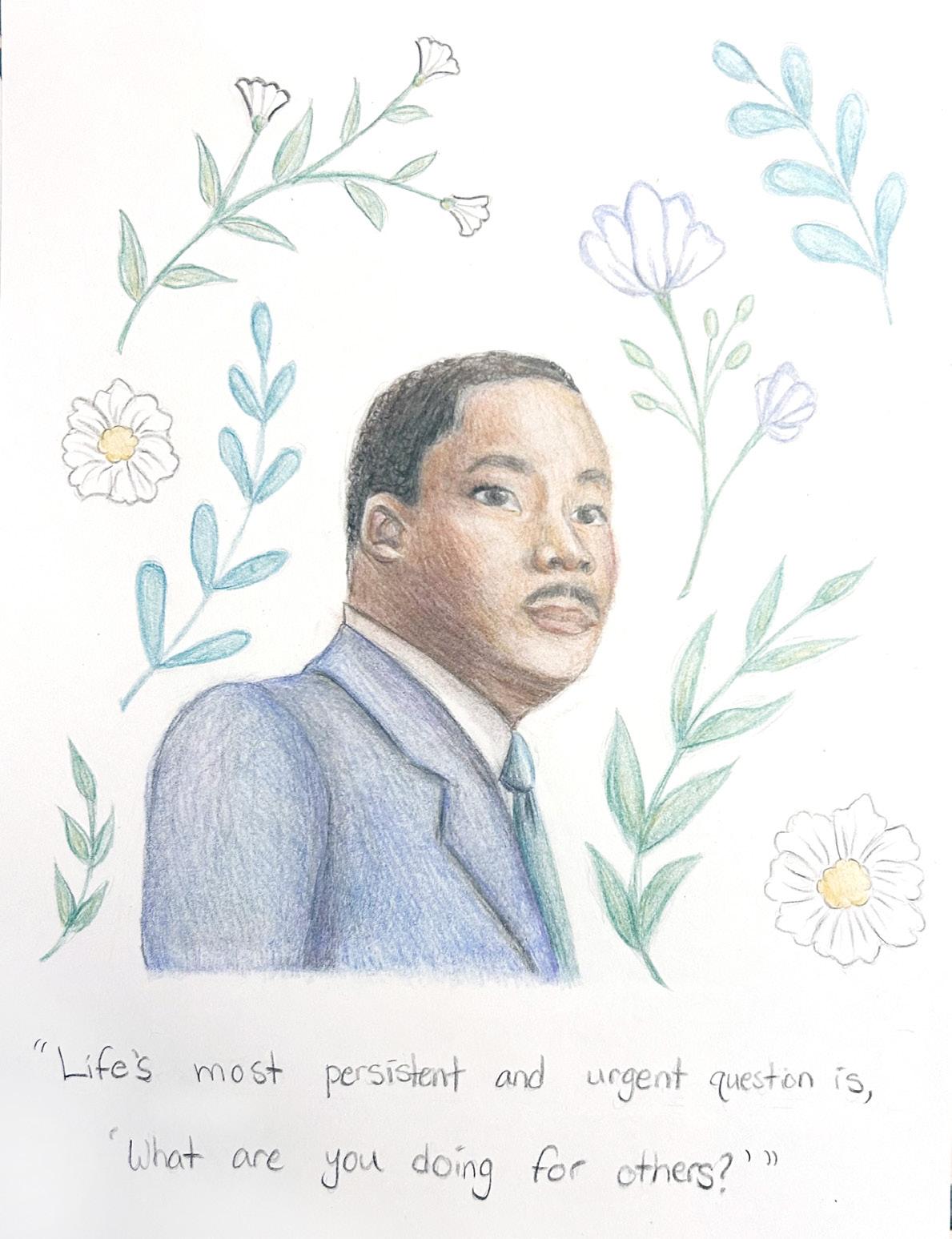
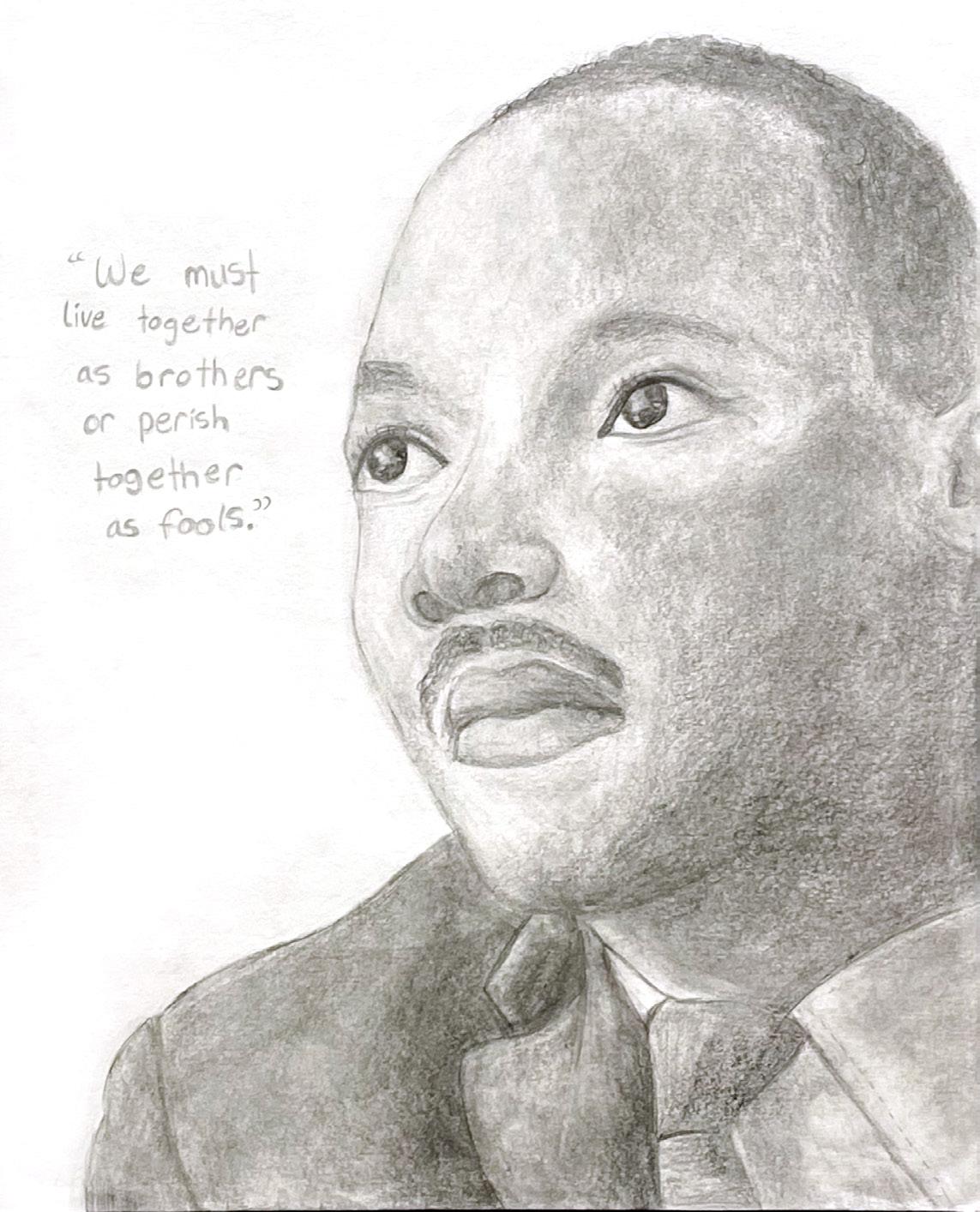
“Leading Through Service”
Colored pencils on paper
Maya Sizemore
“Unity”
Graphite on paper
Maya Sizemore is a 15-year-old freshman from East Tennessee who loves all kinds of art. She enjoys different creative styles, such as drawing, crafting, and graphic design. In addition to visual art, Maya plays the viola in her school’s orchestra and also plays the mandolin and guitar.
Maya Sizemore
ESSAY-WRITING TIPS FOR STUDENTS
At some point in their academic careers, students will be asked to write an essay. University applications typically feature student essay portions, but essays are even incorporated into elementary school curricula. Indeed, students of all ages are periodically asked to write essays, which underscores how useful some basic essay-writing tips can be.
• Identify the assignment. Does the instructor want students to argue a point? Is the idea to examine a meaningful personal experience? Is the essay similar to a book report? Once the ball gets rolling and writing begins, it’s easy to lose track of the assignment. But an effective essay must follow the guidelines set forth in the assignment.
• Identify the point of the essay. Once students gain a firm grasp of what the instructor is looking for, they can then identify what their point of view or argument will be. This can require some research and
should conclude with a thesis statement that will determine the rest of the essay.
• Write an outline. Longer essays typically require ample research, and it’s unlikely that all of that research will make it into the final essay. Writing an outline provides a chance to narrow the scope of the essay and cut it down, which should prove useful when sitting down to begin writing the composition.
• Engage readers early. An engaging question or assertion at the beginning of an essay will entice readers to want to
continue reading. The question should be one writers can answer while an assertion should be supported throughout the rest of the essay. But some engaging prose in the opening paragraphs can draw readers in and set the stage for a well-written essay.
• Begin each paragraph with a topic sentence. Topic sentences are similar to outlines because they establish the structure of a paragraph. Each new paragraph should include its own topic sentence. If a new topic needs to be addressed, then do so in a new paragraph.
• Write a strong conclusion. The thesis statement will help to define the introductory paragraph, and it also can be utilized to establish the conclusion. Revisit the thesis in the conclusion and show how the points made throughout the body of the essay support that thesis. Conclude the essay with a statement that highlights the significance of the point the essay attempted to make.
How
Question of the Month:
do I know
if
a hybrid publishing press
is a good fit for me as an author?
By Janie Jessee
What is Hybrid Publishing?
A hybrid publishing press that is well established is a partnership between the author and a publishing company. It is not a vanity press. You pay to publish, but the company provides professional publishing services and distribution support. It is like hiring a team to work for you.
Key Characteristics:
• Author shares costs with the publisher
• Professional team handles editing, design, and production
• Shared decision-making (less control than self-publishing)
• Lower royalties than self-publishing, but higher than traditional publishing
• Longer timelines than self-publishing
Pros:
• Professional polish with less hands-on work
• Guidance from experienced publishing staff
• Some access to bookstore or library distribution
• Less logistical stress for the author
Cons:
• Can be expensive—costs vary
• Quality varies widely by company
• Risk of “vanity presses” posing as hybrids. (If a “hybrid” publisher promises guaranteed sales or requires large fees without transparency, it may be a vanity press.)
• Less control over rights and decisions
Best For:
• Authors who want support but not full traditional publishing
• Writers with less time to manage the process
• Authors who value guidance and credibility
Choose hybrid publishing if you want:
• Professional support and structure
• Less day-to-day involvement
• Guidance through the publishing process
Janie C. Jessee, Publisher Jan-Carol Publishing, Inc.
Submit your frightful short stories to These Haunted Hills Book 8
Jan-Carol Publishing has produced seven editions of their most beloved anthology series since the debut of These Haunted Hills Book 1 in 2017. Each new short story collection is packed with frightful tales that keep readers on the edge of their seats. The next installment, These Haunted Hills Book 8, is scheduled for publication in autumn 2026. Stories submitted to These Haunted Hills Book 8 should follow the theme of spooky or supernatural stories set in the Appalachian region. Stories must be fiction and should be between 1500 and 3500 words. Please include a short author bio that is written in third person and no more than 50 words.
Authors may submit up to two stories for a fee of $25 per story. You may call the office at 423.926.9983 with a credit card number or mail a check to JCP at P.O. Box 701, Johnson City, TN, 37605.
Authors accepted to the anthology will receive two free books upon publication and can order additional copies at wholesale pricing.
The deadline for submissions to These Haunted Hills Book 8 is May 31, 2026. Send your submissions to submissions@ jancarolpublishing.com.
Celebrate the Holidays by joining
JCP’s Christmas anthology series
JCP is now accepting submissions for our second holiday-themed short story collection, Tinsel & Tales: A Holiday Anthology.
This collection comes after the widespread success of Christmas All Year Long: An Anthology of Holly Jolly Tales, the company’s first holiday anthology, which released in 2025.
Stories submitted to Tinsel & Tales should be themed for the holiday season and must be fiction. Stories should have between 1500 and 3500 words. Please include a short author bio that is written in third person and no more than 50 words.
Authors may submit up to two stories for a fee of $25 per story. You may call the office at 423.926.9983 with a credit card number or mail a check to JCP at P.O. Box 701, Johnson City, TN, 37605.
Accepted authors will receive two free copies of Tinsel & Tales: A Holiday Anthology and can order additional copies at wholesale pricing.
The deadline for submissions is May 31, 2026. Send your submissions to submissions@jancarolpublishing.com.
Submit your true-life stories to JCP’s first non-fiction anthology
Submissions are now open for Jan-Carol Publishing’s first non-fiction anthology, What Happened Next: Stories of Life-Altering Encounters. The collection highlights true stories featuring life-changing events.
We want to hear about your near-death experiences, your medical miracles, your true-life supernatural encounters, and moments that forever altered who you are or how you view the world.
Stories submitted to What Happened Next must be non-fiction and should have between 1500 and 3500 words. Please include a short author bio that is written in third person and no more than 50 words.
Authors may submit up to two stories for a fee of $25 per story. You may call the office at 423.926.9983 with a credit card number or mail a check to JCP at P.O. Box 701, Johnson City, TN, 37605.
Accepted authors will receive two free copies of What Happened Next: Stories of Life-Altering Encounters and can order additional copies at wholesale pricing.
The deadline for submissions is June 30, 2026. Send your submissions to submissions@jancarolpublishing.com.
Tapestry Journal
Indie Publishing
Call for Submissions: Tapestry Journal’s March/April Issue
Theme: SPRINGTIME & RENEWAL
After winter’s long quiet, spring invites motion—growth pushing through frozen ground, light lingering a little longer each day, and the promise of beginnings both tentative and bold. For this issue, we’re seeking work that explores renewal in all its forms: emotional, physical, spiritual, relational, and creative. This may be a season of rebirth, but it can also be one of reckoning, fragile hope, or hard-won change.
We welcome submissions that interpret the theme broadly and thoughtfully. Whether your work is rooted in the natural world, personal transformation, memory, love, grief, or quiet moments of becoming, we’re eager to read writing that captures the feeling of emergence and possibility that springtime brings.
We’re seeking original works in the following categories:
• Short Stories
• Poetry
• Photography
• Art (digital or traditional)
• Book Reviews
• Opinion Pieces related to the literary world
Submissions Deadline: February 27th , 2026
How to Submit: Email us your submissions at: tapestryjournal@jancarolpublishing.com.
Spring is a season of thresholds, where what has been dormant begins to stir and what was once bare hints at color again. Renewal is not always loud or sudden; sometimes it arrives quietly, in small acts of courage, forgiveness, or hope. For this issue, we invite work that lingers in those moments of becoming, capturing the beauty, uncertainty, and promise of starting anew.
Full submission guidelines will be shared soon.
Questions? Reach out to us at: tapestryjournal@jancarolpublishing.com.
We can’t wait to see what you create!
How to Start Your Own Book Club
For those who say they do not love to read, they probably just haven’t found the right book yet. One way to be exposed to different literary styles and authors is to be part of a book club. Readers might actually want to start their own club.
A book club can include your friend group or it can pull relative strangers together. Here are some simple ways to start a book club of your own.
• Start small. If you’re inexperienced, it is best to begin small when setting up the book club. Privately reach out to a few different people you know enjoy books and see if they would be interested. Ask them to invite a few other people to help the club grow.
• Stay organized. Digital tools can help book club organizers stay on top of things and inform the club. Many clubs utilize social media platforms like Facebook Groups. Bookclubs is an application designed especially for book clubs. Make an account to organize your book club, receive book recommendations and view discussion guides.
• Identify your intentions. The motivation behind a book club is to read, but you might want to narrow that even further. Perhaps you want to make new friends? Or maybe you want to explore a certain literary genre exclusively? Create a
book club business plan of sorts where you fully express your intentions for the club.
• Choose the vibe and meeting style. Some book clubs are rigid with a set schedule and firm deadlines. Others are more relaxed with meet ings being shuffled around to accommodate everyone’s lives. Create a game plan of where you will meet, how often you meet and how books and discussion points will be selected.
• Select your first book: Look to Goodreads, Amazon reviews, and other book-related resources to find a popular book. Various celebrities also have their own book club rec ommendations, so that may be a safe place to start.
• Opt for a slow weeknight for meetings. be busy on the weekend with other social engagements, so book clubs may be best hosted on a Monday or Tuesday eve ning. When establishing the book club, poll potential attend ees to see what the majority want. Try to be consistent with the meeting day and time to keep the book club rolling along.
• Prepare discussion ques tions.
meeting to veer away from the book or for there to be a lull in conversation unless it is guided along. A discussion
question list will help keep people chatting about what’s important: the book.
• Be open about costs. Some book clubs are free and others require a fee to join to help pay for meeting spaces or refreshments. Be up front about how costs will be absorbed.
Book clubs are entertaining ways to bring literary lovers together to expand their enjoyment of reading.
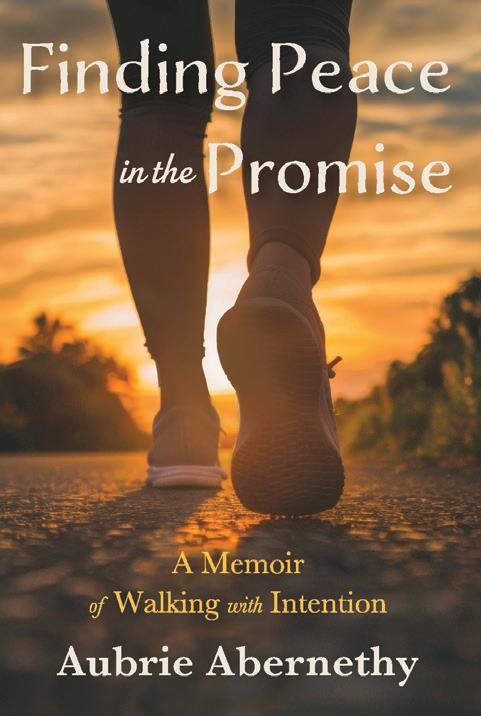
“She believed she could, so she did!”
Aubrie Aber nethy
www.aubrieabernethy.com
aubrieabernethyauthor@gmail.com
Jan-Carol Publishing, Inc.
Jan-Carol Publishing, a small book press, brings book publishing tips, changes in the book publishing industry, introduction to authors, books, and working behind the scenes in the book publishing industry. Listen, learn, and enjoy the interviews with different authors. Join Us for
GET YOUR BOOK PUBLISHED!
Jan-Carol Publishing, known as JCP, is recognized as the largest book publisher in the region with over 400 titles of books and publishing the monthly magazine, Voice Magazine for Women, for over 20 years. We are locally owned and operated.
• How do you get your book published?
• How do you submit your manuscript?
• What steps are needed for editing?
• How do I get an ISBN?
• Will your book be on Amazon, Barnes and Noble, etc?
Let us assist you in navigating through the book publishing process! 423.926.9983