Ayacucho
Practical Guide for Travelers
Location
Central mountain area of Peru
Capital
Ayacucho (9,058 ft / 2,761 m)
Altitude
11,959 ft (3,645 m) (Chalcos)
Weather
1,083 ft (330 m) (Santa Rosa) Min.: Max.: Temperature
Max.: Min.: 49 °F (9 °C)
75 °F (24 °C)
Dec-Mar Jun-Sept Sept-Dec Mar-Jun
How to get here?
By land
Lima-Ayacucho: 351 miles (565 km) / 7 h by car
Cusco-Ayacucho: 318 miles (512 km) / 14 h
Huancayo-Ayacucho (via Ancco): 160 miles (257 km) / 7 h
Huancavelica-Ayacucho (via Rumichaca): 152 miles (245 km) / 7 h
Ica-Ayacucho: 242 miles (389 km) / 5 h
By air
Lima-Ayacucho: 45 min
to Pisco to Lima to Huancayo
Mirador del Cristo Blanco
Mirador del cañon de Huatuscalla
Luricocha
Cueva de Pikimachay
Complejo arqueológico Wari
Huanta
Viracochan San Francisco
Palmapampa
Santuario Histórico de la Pampa de Ayacucho
Tambo
Quinua
San Miguel
Quinua, pueblo de artesanos
Bosque de piedras de Huaraca
Ayacucho
Cascada de Pumapaqcha
Cascada de Batán
Ocros
Complejo arqueológico de Pumacocha o Intihuatana

Huanta (Huanta Province)
Cangallo (Cangallo Province)
Miguel (La Mar Province)
(Vilcashuaman Province)
Huancapi (Víctor Fajardo Province)
Huancasancos (Huancasancos Province)
(202 km) Querobamba (Sucre Province)
Puquio (Lucanas Province)
Cora Cora (Parinacochas Province)
(Paucar del Sara Sara Province)
Tours
4 days (minimum recommended stay)
City tour (Main Square, Cathedral, main mansions, artisan neighborhood of Santa Ana, temples and museums)
Archaeological complex of Wari, Quinua town, historical sanctuary of Pampa de Ayacucho
Pikimachay, cities of Huanta and Luricocha
Archaelogical complex of Pumacocha and archaeological complex of Vilcashuamán
Millpu - aguas turquesas
Forest of Puyas de Raimondi (Titankayocc)
Pumapaqcha, Batán, and Qorimaqma waterfalls, Huahuapuquio carbonated waters, Cangallo city, and Pampas river
(From the city of Puquio) Andamarca, Puzapaccha waterfall, archaeological monument of Caniche, and condor flight watching
Feb-Mar (date may change)
Mar-Apr (date may change)
Apr 25
Jun 24
Jul 28-29
Aug 20-26
Dec 9
Carnaval ayacuchano
Easter Week (Huamanga)
Anniversary of the founding of Huamanga
Chaccu de vicuñas (Reserva Nacional de Pampa Galeras-Bárbara D’Achille)
Vilcas Raymi (Vilcashuamán)
Yaku Raymi (Lucanas)
Anniversary of the Battle of Ayacucho
One of the most emblematic dishes of the regional cuisine is the spicy puca (pork rind and potatoes with roasted peanuts seasoned with panca pepper) as well as the qapchi (starter prepared with cachipa and rocoto pepper, which is served on sandy potatoes). Also noteworthy are the mondongo ayacuchano and cuy chactado. As in other regions, special dishes are prepared during the celebrations; for example, in carnivals, puchero is served (based on cabbage, fruits, chickpeas, sweet potato, and cassava). Other Ayacucho specialties are muyuchi (a type of ice cream) and wawas (a type of bread). Drinks include ponche (made from peanuts, sesame, and spices) and jora, molle, and siete semillas chichas
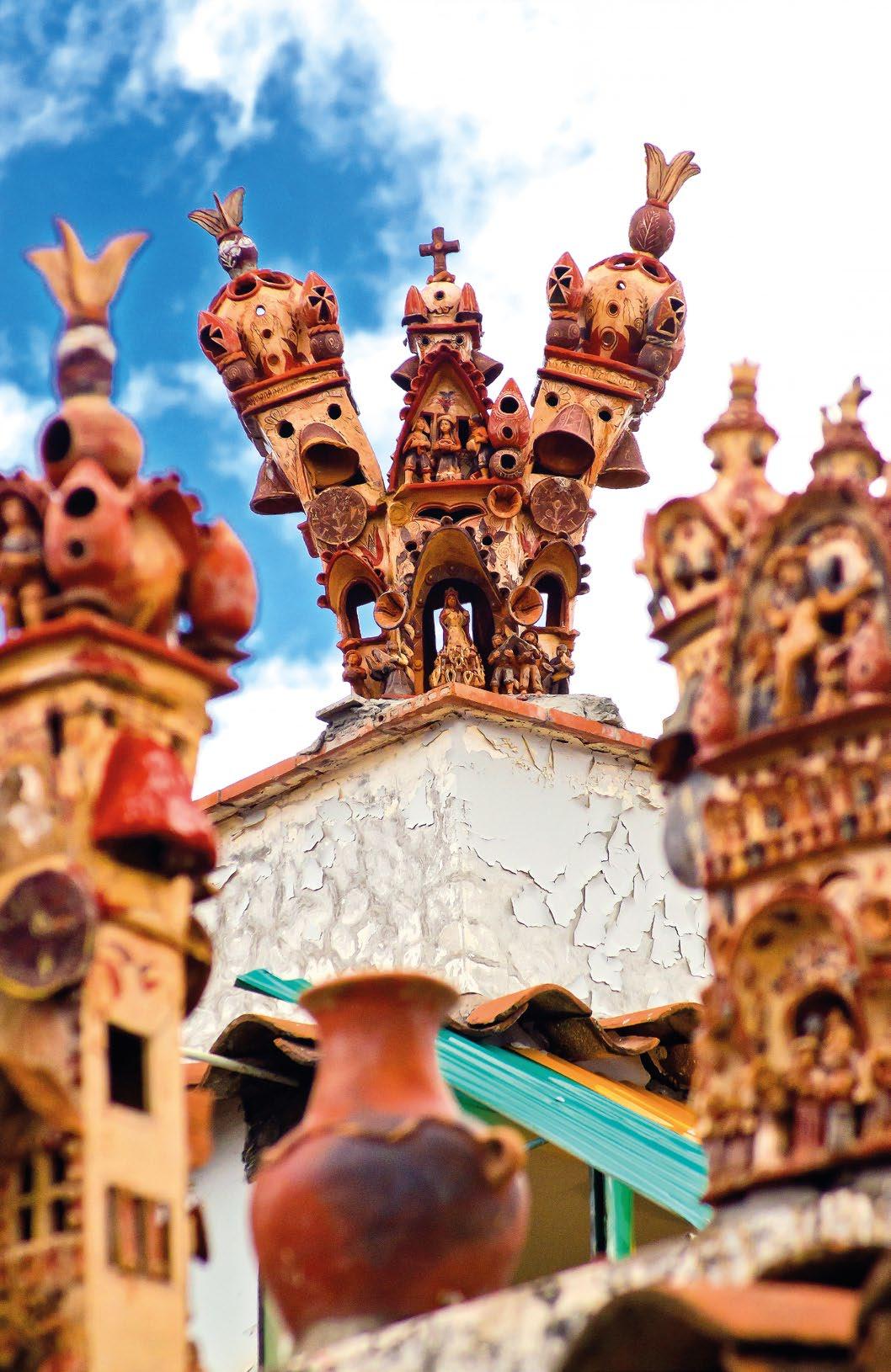
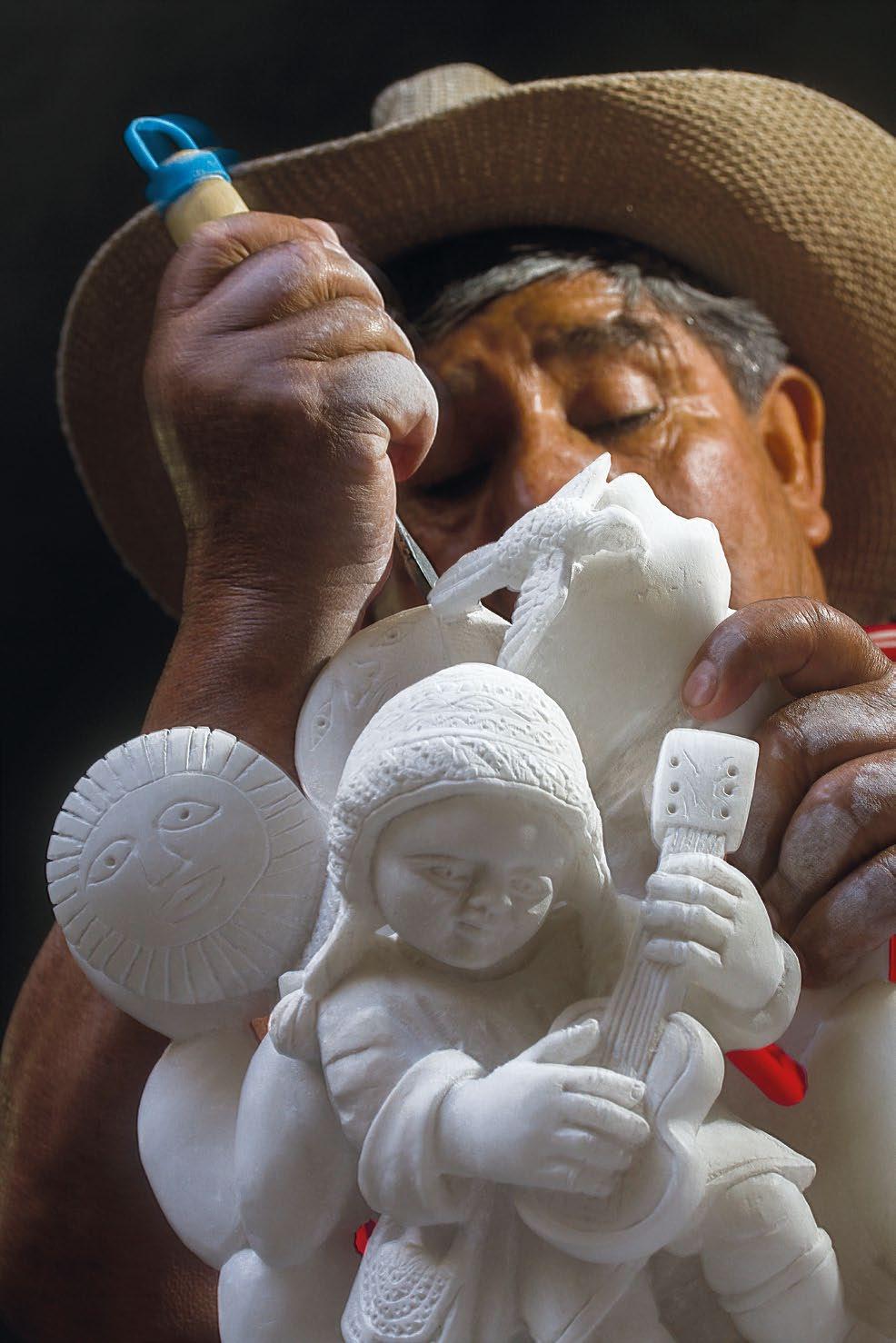
The fusion that occurred in the area between Andean and Hispanic culture has resulted in a rich folk art. Its artisans are known for their loom weavings, ceramics, carvings in Huamanga stone and silver works (embossed, chiseled and filigree). The most representative pieces of Ayacucho art are the altarpieces, reinterpretations of the colonial cajones de San Marcos in which the artisans include Andean motifs. In the city of Ayacucho, in the neighborhoods of Santa Ana, Puca Cruz and Belén, there are the workshops of outstanding masters where, in addition to purchasing their works, their creation process can be seen.
Plaza Mayor
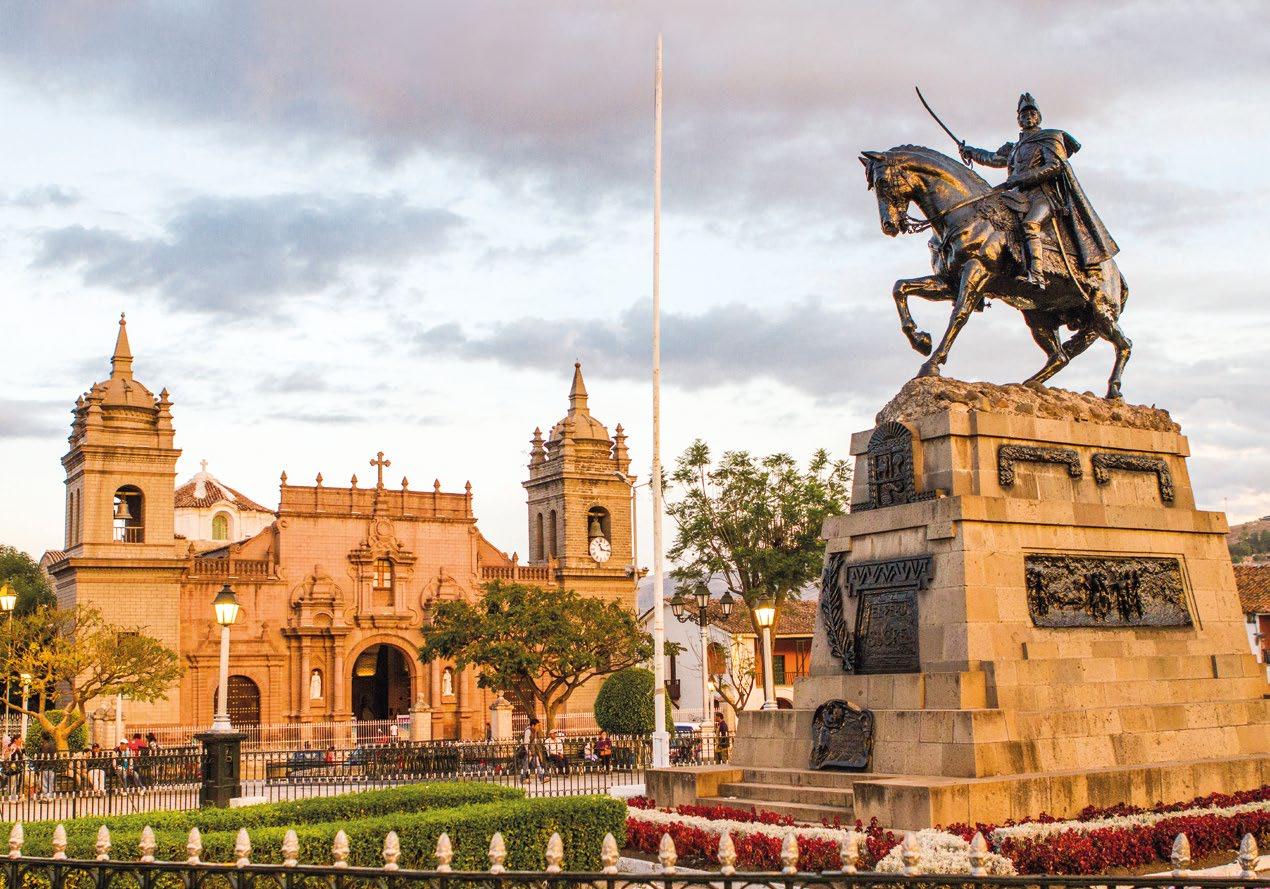
The Main Square is surrounded by stone arches dating back to the 16th and 17th centuries that are characterized by their red-tiled roofs. Around the square, you will find the town hall, the San Cristóbal de Huamanga National University, and other institutions.
Catedral
Plaza Mayor. Pilgrimage (visiting) hours: Mon-Fri, 10:00-12:00 and 16:00-18:00. Mass hours: Mon-Sat, 18:00; Sundays and holidays, 10:00 and 18:00.
The sober and imposing façade of this Cathedral, a 17th-century church, dedicated to the Virgen de las Nieves, stands out in the surroundings of Plaza Mayor. Renaissance and Baroque elements coexist in harmony inside, which houses 10 altarpieces covered in gold leaf.
Temples
• Templo San Francisco de Asís Jr. 28 de Julio, cdra. 3
The temple and convent of San Francisco de Asís are in Greco-Roman style. It is known for having the largest bell in the city, as well as an important collection of canvases from the Cusco and Ayacucho schools.
• Templo Compañía de Jesús Jr. 28 de Julio, cdra. 1
The temple of the Society of Jesus keeps colonial canvases, but its real treasure is its stone façade with two brick towers adorned with friezes of sculpted flowers.
• Templo de Santo Domingo Jr. 9 de Diciembre, cdra. 2
The temple of Santo Domingo was built by the end of the 16th century. Because of the gold leaf covering and the images and canvases that adorn it, the main altar is an exponent of the Churrigueresque Baroque. In the corner of the courtyard, a stone cross commemorates the storm of October 9, 1640.
• Templo La Merced Jr. 2 de Mayo, cdra. 2
Influenced by the Renaissance and built in the 16th century, the temple of La Merced is the second oldest church in the city. Its main altar of wood and gold leaf bears the image of Virgen de las Mercedes.
• Templo y Monasterio Santa Clara Jr. Grau, cdra. 3
The temple and monastery of Santa Clara is a religious complex, whose interior is decorated with Mudejar coffered ceilings and altarpieces, one of which is dedicated to Huamanga’s patron saint, Jesús Nazareno.
• Templo y Monasterio de Santa Teresa Jr. 28 de Julio, cdra. 6
The construction of the temple and monastery of Santa Teresa began in 1683. The main altar with the image of the Virgen del Carmen and the choir, carved in wood and inlaid with mother-of-pearl, are simply beautiful. The monastery of the Discalced Carmelites is also part of the complex.
• Templo Santa Ana
Plazoleta Santa Ana
The Andamarcas built the temple of Santa Ana in 1569 with a lime and stone vault in the nave. It has six altars in addition to the main altar, where the table and the tabernacle are embossed in silver. The wood-carved pulpit displays indigenous motifs.
Arco del Triunfo Jr. 28 de Julio, cdra. 3
Also known as Arco de San Francisco (“Arch of St. Francis”), the Arch of Triumph was built in 1886, in commemoration of the Dos de Mayo battle against Spanish forces trying to reconquer their former colonies. In 1910 it was remodeled on the occasion of the centenary of the Battle of Ayacucho and was given the shape of a semicircular arch with a neoclassical style coronation.
• Casona Boza y Solís (Regional Government of Ayacucho)
Portal Constitución 15, Plaza Mayor
María Parado de Bellido, heroine of Independence, was detained in this mestizo-style house before her execution. Its façade is made of stone, while the stairs to the second floor are lined with Venetian tiles.
• Casona Velarde Álvarez (UNSCH Cultural Center)
Portal Unión 37, Plaza Mayor
One of the oldest manor houses in the city. It was built by indigenous artisans who carved the stone of its walls and capitals with Andean motifs, such as snakes and pumas. During its restoration, Inca walls were discovered.
• Casona Castilla y Zamora
Portal Municipal 50, Plaza Mayor
It was the Archbishop’s Palace until Bishop Cristóbal Castilla y Zamora ceded its facilities to Universidad Nacional San Cristóbal de Huamanga, founded in 1677.
• Casa Museo Joaquín López Antay
Jr. Cusco 424. Mon-Sat, 9:30-13:00 and 15:30-19:00. Entrance fee charged. This space highlights the artistic, social, and cultural legacy of Don Joaquín López Antay, a teacher of Peruvian folk art. This house museum commemorates the life of the master and shows visitors his history, the production process of the altarpiece and the recognitions that were made for his invaluable contribution.
• Museo de la Memoria
Jr. Prolongación Libertad 1229. Mon-Fri, 9:00-13:00 and 15:00-18:00; Sat, 9:00-13:00. Entrance fee charged.
The Museum of Memory addresses the period of violence in Peru, between 1980 and 2000, in particular the political and social situation of Ayacucho. Its halls narrate events and exhibit photographs and testimonies of the disappeared and their families.
• Museo Histórico Andrés Avelino Cáceres
Jr. 28 de Julio 508. Mon-Fri, 9:00-13:00 and 15:00-17:00; Sat, 9:00-13:00.
Entrance fee charged.
The Andrés Avelino Cáceres Historical Museum is located in the Vivanco house, distinguished by its courtyard surrounded by carved stone arches. Its collection comprises uniforms, weapons, and other items of the Pacific War hero. Other rooms exhibit archaeological and colonial pieces.
• Museo Histórico Regional Hipólito Unanue
Av. Independencia 502. Tue-Sun, 9:00-13:00 and 15:00-17:00.
Entrance fee charged.
This museum exhibits pieces of Wari and other pre-Columbian cultures, as well as colonial and republican documents and photographs. There is also a collection of regional folk art (ceramics, Huamanga stone carvings, and imagery).
Bosque de piedras de Huaraca
36 miles (58 km) from the city of Ayacucho: a 34-mile (54 km) route along the Los Libertadores road and 2.4 miles (4 km) from the detour in the Huaraca community (1 h 30 min by car)
In Huaraca, landscape nature is combined with a forest of stones, the Ustunaqocha lagoon where trout are abundant for natural fishing, and a forest of native plants. It is located at an altitude between 13,058 and 14,928 ft (3,980 and 4,550 m). Various shapes and figures of stones carved by the same nature can be seen.
Complejo arqueológico Wari
14 miles (22 km) north of the city of Ayacucho (30 min by car).
Entrance fee charged.
With 2,200 hectares, the Wari archaeological complex is one of the largest urban centers in pre-Columbian Peru. Its stone and mud buildings painted in red and white are divided into sectors, which cover an underground water system. The site museum exhibits pieces found during the excavations.
Quinua
20 miles (32 km) northwest of the city of Ayacucho (50 min by bus)
Traditional Andean village of skilled potters. Its main square houses the site museum, dedicated to the battle of Ayacucho. Its halls display weapons, knighthoods, insignia, and other objects found in the Pampas of Ayacucho, as well as the stone on which the Act of Capitulation was signed, which defined the country’s independence.
Santuario histórico de la Pampa de Ayacucho
21 miles (33 km) northwest of the city of Ayacucho (55 min by bus)
Mon-Sun, 9:00-16:30
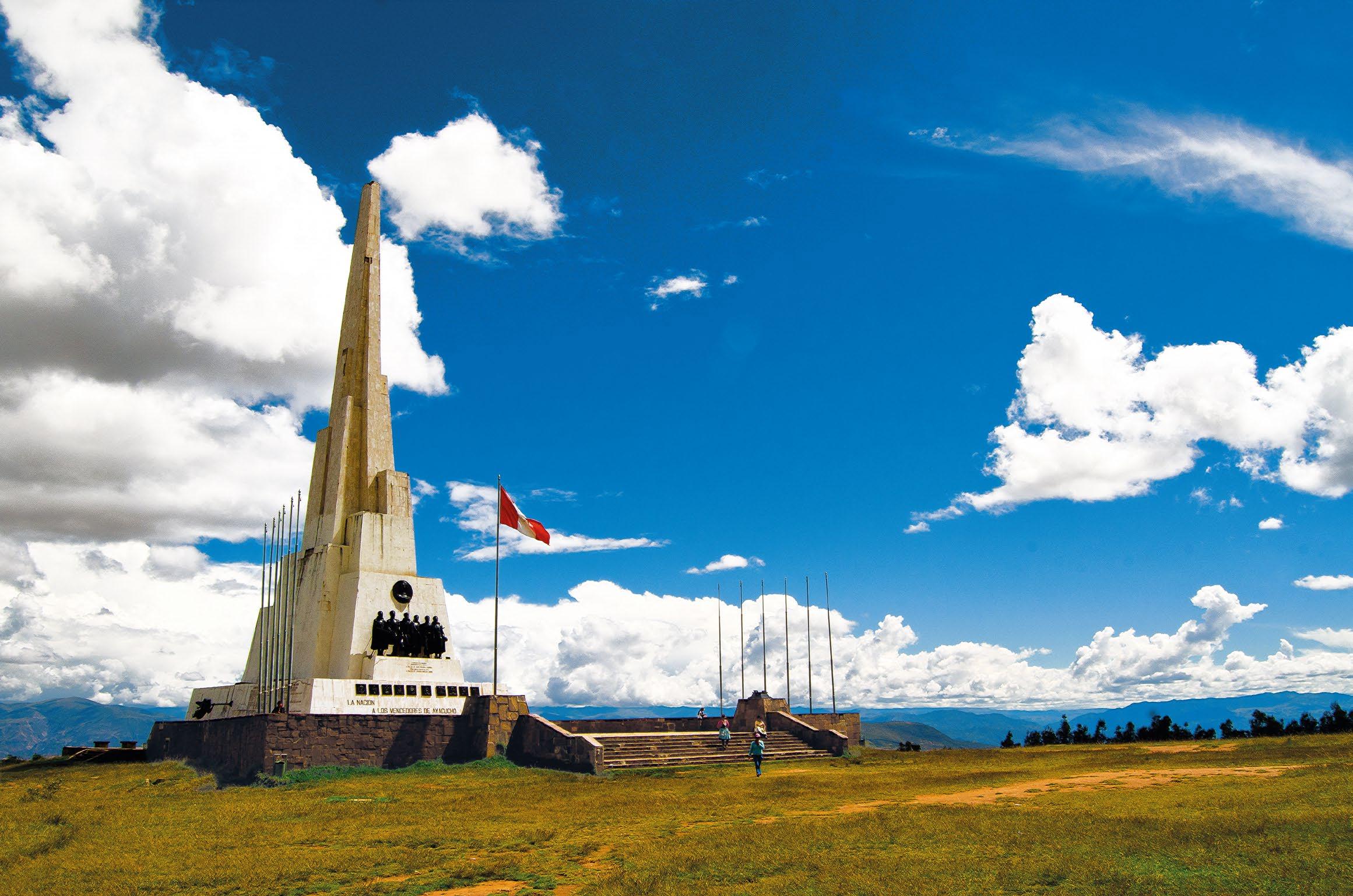
On December 9, 1824, the Pampa de Ayacucho Historical Sanctuary was the scene of the Battle of Ayacucho, which ended the War of Independence. A 144 ft (44 m) obelisk commemorates this historic moment.
Cueva de Pikimachay
15 miles (24 km) north of the city of Ayacucho (25 min by car)
Stone tools from the Andean Paleolithic and skeletal remains of animals dating from 20,000-15,000 BC have been found in the area of the Pikimachay Cave.
Ciudad de Huanta
30 miles (48 km) north of the city of Ayacucho (45 min by car)
The “Emerald of the Andes” is located at 8,530 ft (2,600 m). The valley has different ecological levels, ranging from the jungle to the peaks of the snowy Razuhuillca, so it enjoys a privileged variety of flora and fauna. The church of San Pedro, built in stone and lime, is in the main square and its construction took more than 100 years.
Iglesia y convento Sagrado Corazón de Jesús Jr. Ayacucho, cdra. 3
This religious complex of stone, lime and brick was built between 1905 and 1928. The single tower of the Sagrado Corazón de Jesús church and convent is 89 ft (27 m) high.
Mirador del Cristo Blanco
4 miles (6.5 km) from the main square of the city of Huanta (10 min by car or 45 min on foot)
The viewpoint of the Cristo Blanco is the ideal place to appreciate the city, the beauty and diversity of its surroundings, and perfect to capture landscape photos.
Ciudad de Cangallo
62 miles (100 km) south of the city of Ayacucho (2 h by car)
It is the land of the Morochucos, expert horsemen who dominate its pampas. On the way to the city of Cangallo, you can see the Pumapaqcha, Batán and Qorimaqma falls, where rituals are practiced.
Aguas gasificadas de Huahuapuquio
Near Cangallo, 58 miles (93 km) from the city of Ayacucho (1 h and 45 min by car). Entrance fee charged. The carbonated waters of Huahuapuquio contain carbon dioxide and are highly appreciated for their special flavor and healing properties.
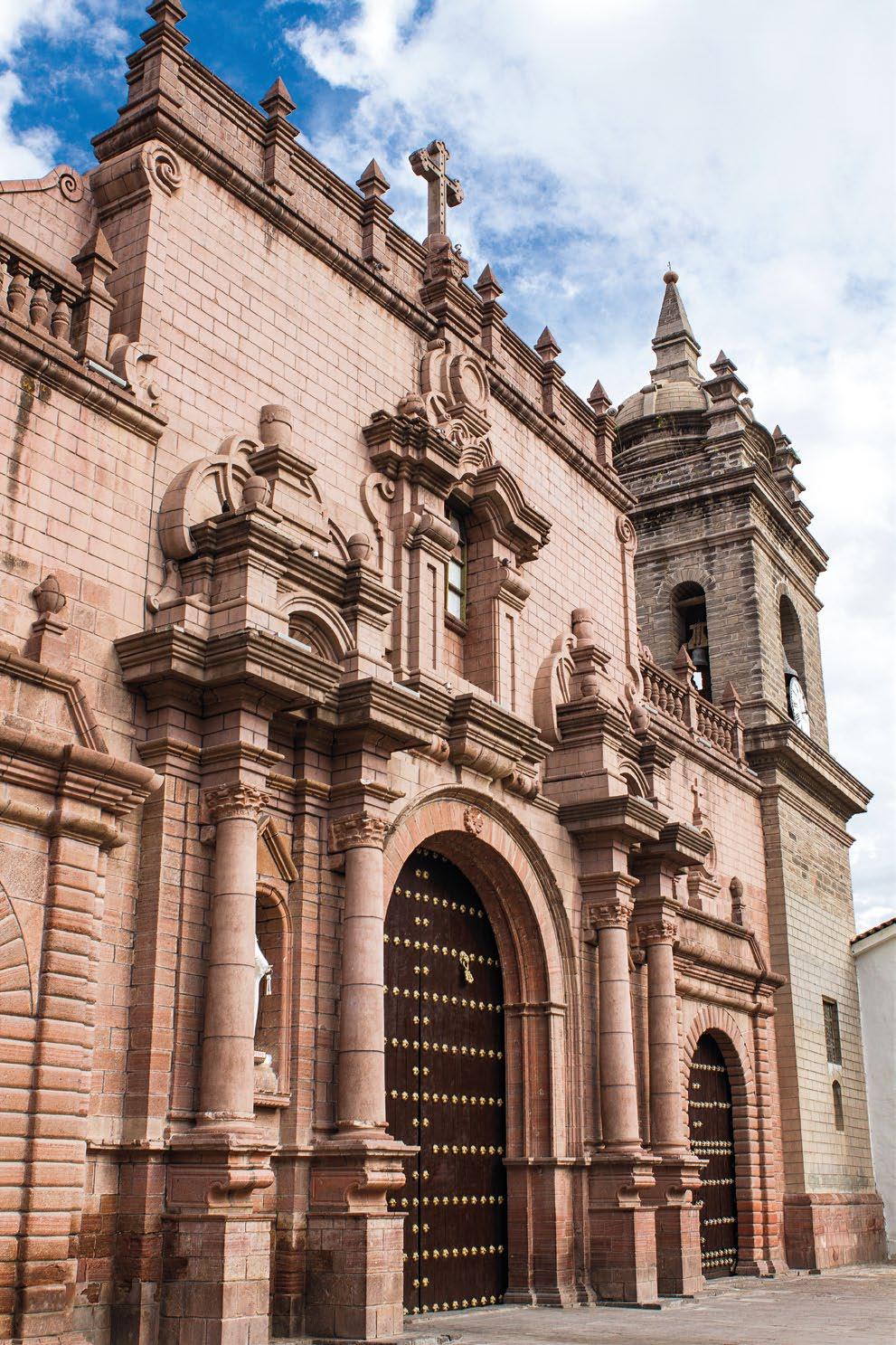
Ayacucho is known as the “City of Churches” because of its 33 colonial churches, due to the strong religious feeling left by the fusion of Spanish and indigenous culture.


Millpu - aguas turquesas
99 miles (159 km) south of the city of Ayacucho (3 h 30 min by car)
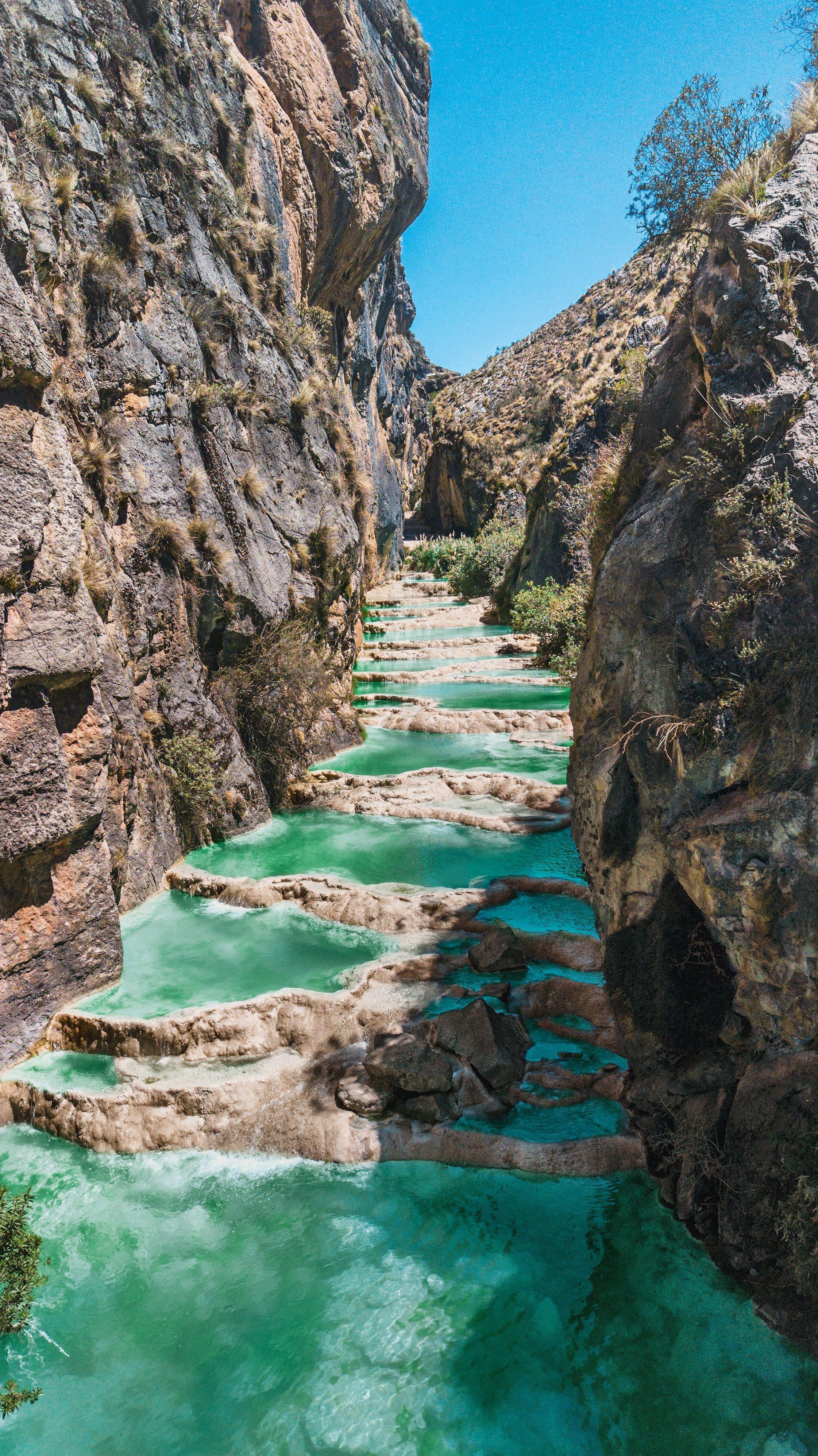
Located in the community of Circamarca, a 20-minute walk takes you to reach this natural wonder of turquoise and crystalline waters. During the journey you can appreciate the flora and fauna of the area. It is recommended to visit between May and November.
Pueblo artesanal de Sarhua
The Artisan Village of Sarhua is located 66 miles (107 km) south of the city of Ayacucho (3 h approx.)
This artisan village respects the historical and cultural legacy of the territory. Three types of handcrafts are worked here: planks, embossed sticks, and textiles. They stand out for the multicolored elaboration of traditional clothing, such as ponchos and hats adorned with flowers, garments worn for everyday use. It also preserves ancestral organizational systems.
Valle de las cascadas de Campanayuq
7 miles (12 km) from Sarhua (50 min drive and another 50 min walk)
The Campanayuq Cascade Valley is a set of continuous waterfalls in various forms that, in the rainy season, have more than a hundred waterfalls of different dimensions, reaching up to 22 ft (7 m) high in the high parts of the gorge. Its wooded terrain is made up of species, such as the Qinwa (queñua) and the endemic fauna of the place (the vizcacha, the condor, the wild pigeon, and others).
Reserva Nacional Pampa Galeras-Bárbara D’Achille
432 miles (696 km) southwest of the city of Ayacucho, on the Panamericana Sur highway, via Nasca (10 h by car)
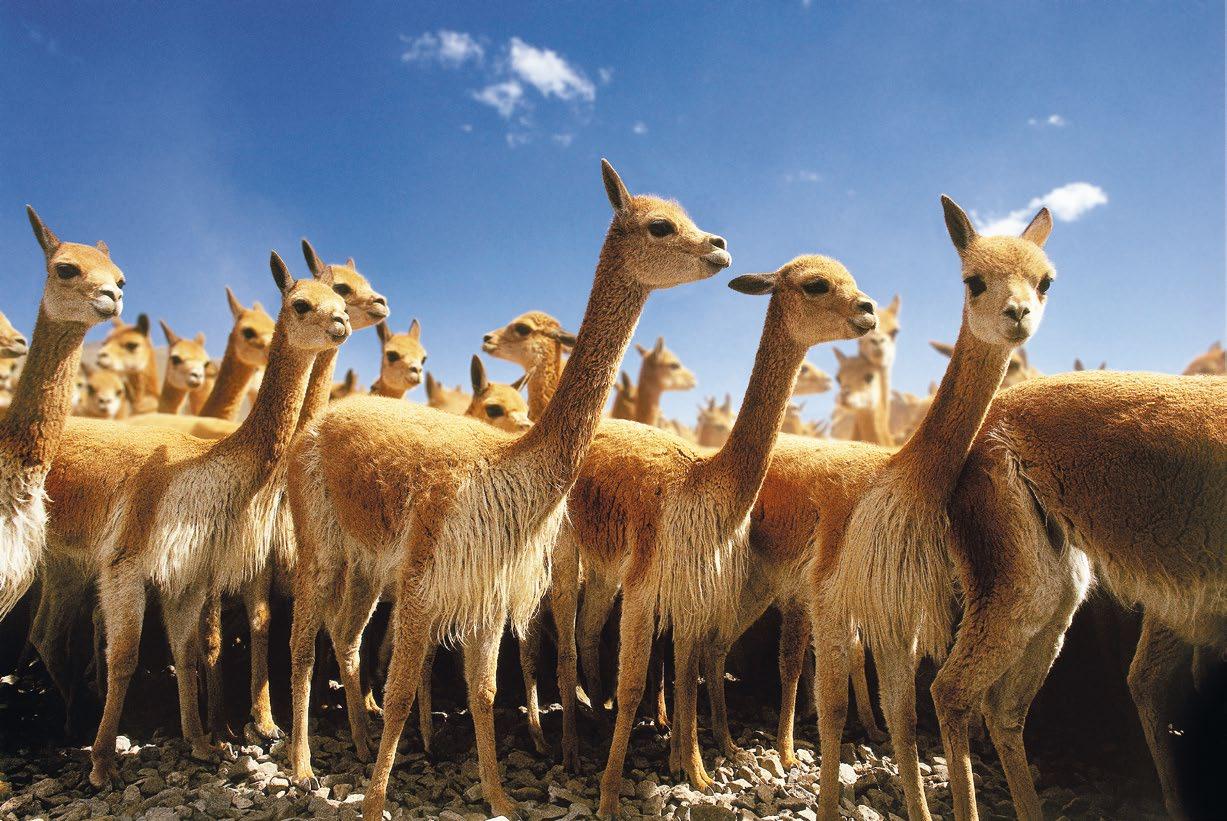
The Pampa Galeras-Bárbara D’Achille National Reserve extends over a plain whose altitude varies between 12,631 and 13,615 ft (3,850 and 4,150 m). It is home to around 6,000 vicuñas, as well as Andean foxes and cats, tarucas, vizcachas, mountain gulls, hummingbirds, and Andean eagles. Its soil is covered by ichu and small forests of queñuales
Andamarca
46 miles (74 km) northwest of the city of Puquio (3 h by car)
Historical capital of the Rucanas (700-1400 AD), a culture that dominated the area until the Incas conquered it. You can still see their andenes (platforms), which worked with an underground hydraulic system.
Monumento arqueológico de Caniche
0.6 miles (1 km) from the city of Andamarca (10 min walk)
The Caniche archaeological monument was a military fortress occupied by the Wari and Chanca cultures and is very well preserved. In the surroundings are the andenes (platforms) that supplied its inhabitants.
Mirador de Cóndores de Mayobamba
8 miles (13 km) from Andamarca (25 min by car)
The Sondondo valley is the best place in Peru to observe the Andean sky god (apu Huamani), the Andean condor, and is the location of the Mayobamba Condor viewpoint. Early in the morning, visitors can observe up to 35 of these large birds
flying a few meters from the visitor, as they leave their roosts in flight to the drinking fountains and feeding places.
Complejo arqueológico de Vilcashuamán
66 miles (107 km) south of the city of Ayacucho (2 h 30 min by car).
Entrance fee charged.
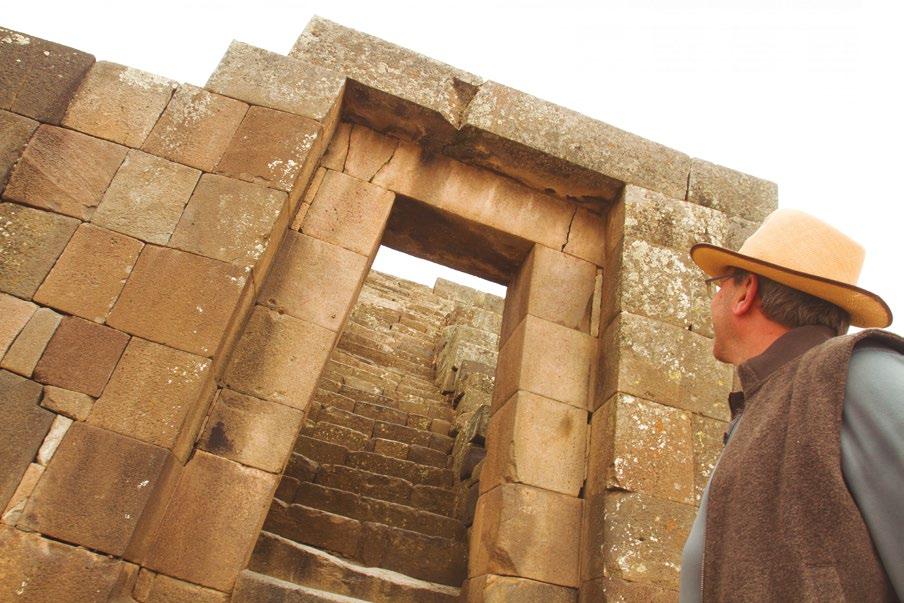
The Vilcashuaman archaeological complex was an important Inca administrative center. Among its buildings, the Temple of the Sun and Moon stands out, with three staggered terraces of polished and carved stone. During the Colony, the church of San Juan Bautista was built on its foundations with stones extracted from Inca walls.
There is also the ushno, a truncated pyramid with five platforms crowned with a carved stone with two seats from where the Inca and the colla witnessed the ceremonies.
Titankayocc, bosque de puyas de Raimondi
60 miles (97 km) south of the city of Ayacucho to Vischongo (2 h drive), then 2 miles (3 km) ascent (2 h walk)
Titankayocc, a Puya Raimondii Forest, is the largest forest of titankas or Puya Raimondii. Around 250,000 specimens of titankas grow here, they have the largest inflorescence (4-6 m) in the plant kingdom. A puya can reach 46 ft (14 m) and blooms only once during its biological cycle.
Complejo arqueológico de Pumacocha o Intihuatana
61 miles (98 km) southeast of the city of Ayacucho (2 h by car).
Entrance fee charged.
The fine finish of the stone walls of the Pumacocha Archaeological Complex, or Intihuatana, indicates that it housed members of the Inca elite. This complex stands on the banks of the Pumacocha lagoon and includes a palace; a tower, where rituals were performed; and the Inca Bath, where a 13-angle stone shows the careful work of assembling its walls.
Aguas termales de Pachapupum
22 miles (35 km) south of the city of Huancasancos, by road (45 minutes by van) Pachapupum means “navel of the earth” and these thermal springs are located at 13,189 ft (4,020 m). Its waters have healing powers against asthma, arthritis, and skin diseases, among ailments. Its temperature is 113 °F (45 °C) and it has a strong sulfur odor.
Urban zone
Center Limits
Pedestrian block River
Basílica catedral
Casona Castilla y Zamora
Casona Velarde Álvarez (Centro Cultural UNSCH)
Casona Boza y Solís (Gobernación Regional de Ayacucho)
Casa Museo Joaquín López Antay
Templo San Agustín
Templo San Francisco de Paula
Templo Compañía de Jesús
Centro Turístico Cultural San Cristóbal
Templo de Santo Domingo
Templo La Merced
Arco del Triunfo
Templo San Francisco de Asís
Templo y monasterio Santa Clara
Casona Vivanco (Museo Andrés A. Cáceres)
Templo y monasterio de Santa Teresa
Templo San Juan Bautista
Mirador Turístico de Acuchimay
Templo y barrio artesanal Santa Ana
Templo Señor de Quinuapata
Templo Belén
Mercado Artesanal Shosaku Nagase
Museo de la Memoria
Parque Zoológico La Totorilla
IPERÚ Town hall Post office
Cl. Túpac Amaru
Cl. Piscotambo
Jr . Huaytará
Cl. Las Américas
Av Simón Bolívar
José de Sucre
Av Mariscal Antonio
Av . Perú
Jr Pucapuca
Cl. Amauta
Ica
Jr José María Arguedas
Jr 7 de Abril
Av . GuamánPomadeAyala
Jr W ari
Cl.Pucará
Cl. 7 Cl. 8
Cl. Libertad
Pje.30deMarzo
Pje.Gregorio
Prlg. Libertad
to the Hipólito Unanue Regional
Jr . SimónBolívar
Archaeological Museum to the Municipal Terminal to the Los Libertadores road to the Tourism Police Station
Av Independencia
Parque María Parado de Bellido
Av. Cumaná
Jr Ciro Alegría
Av.Perú
Av.Quinuapata
Cl.LosÁngeles Jr.SanJoaquín
El Calvario
Jr Garcilaso de la Vega
Jr Manco Cápac
Jr. Asamblea
Jr . A.Figueroa Jr.Casma
Instituto Peruano del Deporte
Jr. P. Pérez
Jr . C. Pérez
Av . SantoSepulcro to the Totora Ground Terminal
Av.JesúsNazareno
Jr.JoséMaríaEguren
Jr.CiroAlegría
Parque Andrés Avelino Cáceres
Jr . Callao Prlg.Callao Jr. Untiveros
Jr 9 de Diciembre
Av.Mariscal AndrésAvelino Cáceres
Cl. Nazareno
Jr . Chorro
Jr.Auqui
12
Mercado de Abasto Andrés F. Vivanco
Jr. 28 de Julio
Plaza
Mayor Plazoleta de San Francisco
Jr . MaríaParadodeBellido
Jr T res Máscaras
Plazoleta de la Merced
Jr . CarlosF . Vivanco
Jr. Cusco
Av.ElmerFaucett
Prlg.Cusco
Jr.LosÁngeles Jr Arica
Pje.Quinua Pje. Centenario
Jr.Ucayali Jr.MiguelAstete
Jr . Santa Elena
Jr . Madrid
Jr. 28 de Julio
Cl. Corcovado
Río Seco
Jr. F rancisco Pizarro Jr Marte
Río Alameda
Jr . Lluchallucha
Alameda Marqués de Valdelirios
Jr. 2 de Mayo Jr . Arequipa Jr . Londres
Jr.Glorieta
Av.Amancaes
Óvalo Puente Nuevo
Jr.La Luna Jr Madrid
Jr. Miraflores
Pje. Amauta
Jr. Paso de los Incas
Jr.Nasca
Jr.JoséOlaya
Jr. 24 de Junio
Av.LuisCarranza
Jr. Quito
Av. Andahuaylas
Av.ElEjército
Jr. Los Jazmines
Jr.Galeras
City Center (+51-66) 318-305
Provincial Municipality of Huamanga Jr. Cusco 108 iperuayacucho@promperu.gob.pe
iperu@promperu.gob.pe
The information contained in this brochure has been updated in September 2023. To prepare it, PROMPERÚ has used official information sources, as well as the Regional Directorate of Foreign Trade and Tourism (DIRCETUR) of Ayacucho. The opening hours and telephone numbers are subject to vary at each tourist attraction. Confirm the hours and telephone numbers with IPERÚ.
Published by PROMPERÚ - Peru for Exports and Tourism Promotion Agency Calle Uno Oeste 50, 14th Floor, Urb. Córpac, San Isidro, Lima, Perú Tel. +511 616-7300 www.promperu.gob.pe © PROMPERÚ. All rights reserved
Legal Deposit at the Biblioteca Nacional del Perú
Printed by WORK UP E. I. R. L. (Calle Albert Einstein 165, Ate, Lima) Lima, October 2023