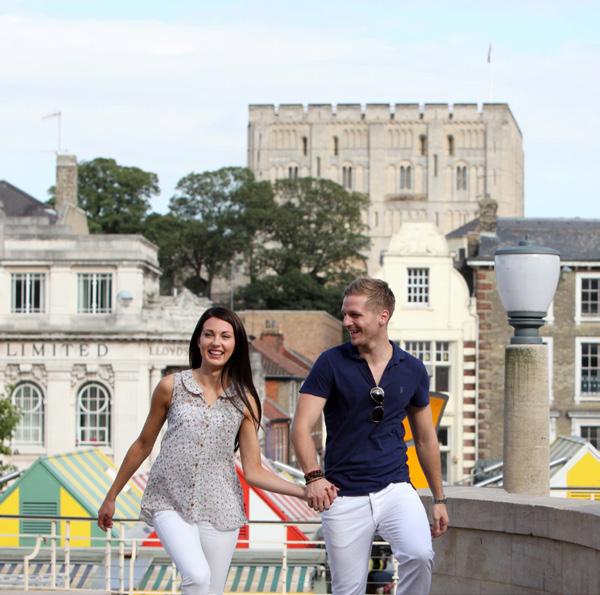
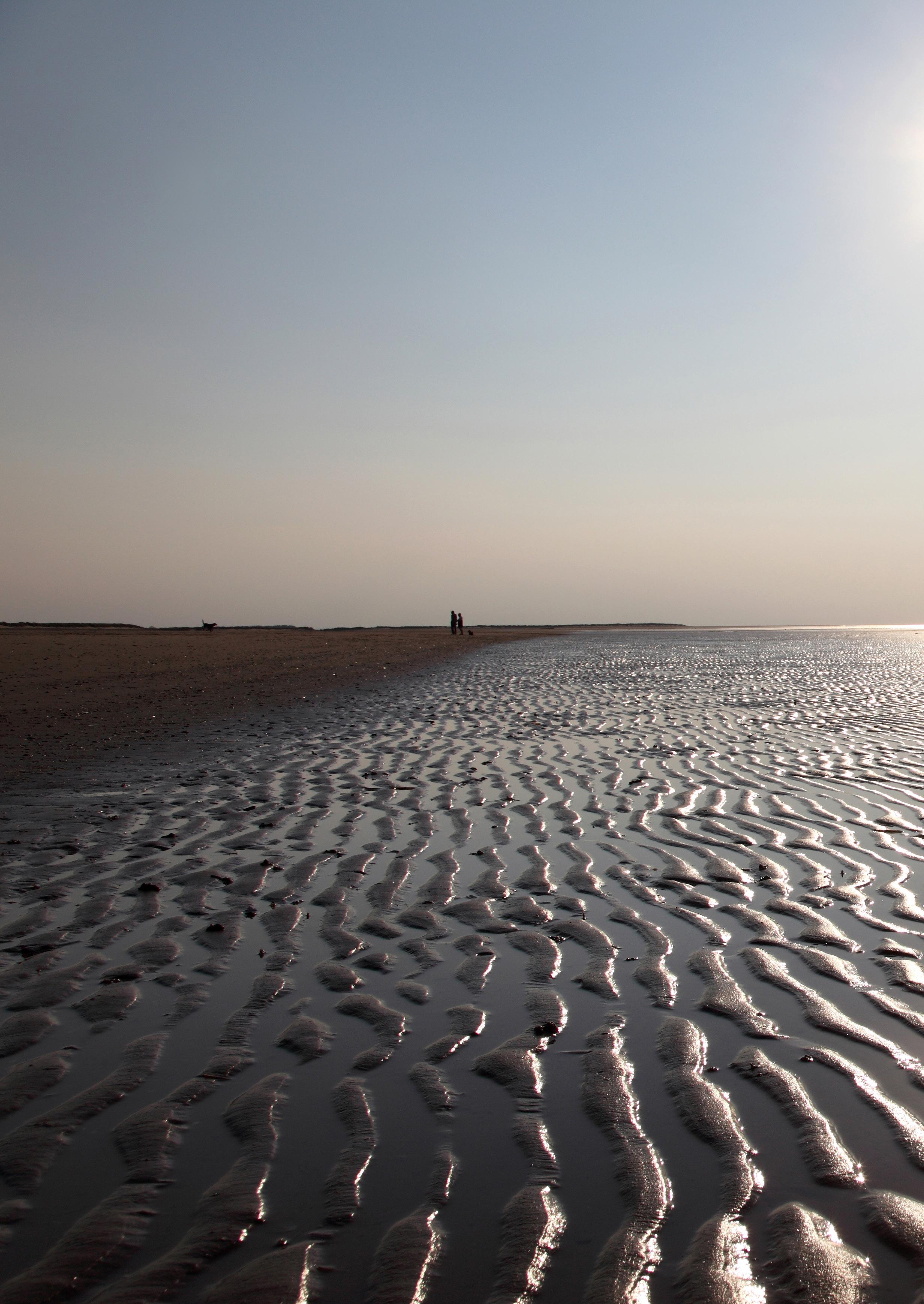
Welcome to our latest edition of There’s Nowhere Like Norfolk, and we very much look forward to welcoming you in person to the county… it’s a great time to be here.
We’ve packed out this e-magazine with inspiration and ideas for things to do, must-see attractions and must-stay accommodation. We’ve also gone slightly quirky with some of the stranger things that happen in Norfolk. World Snail Championships or sliding off a pole into muddy water anyone?
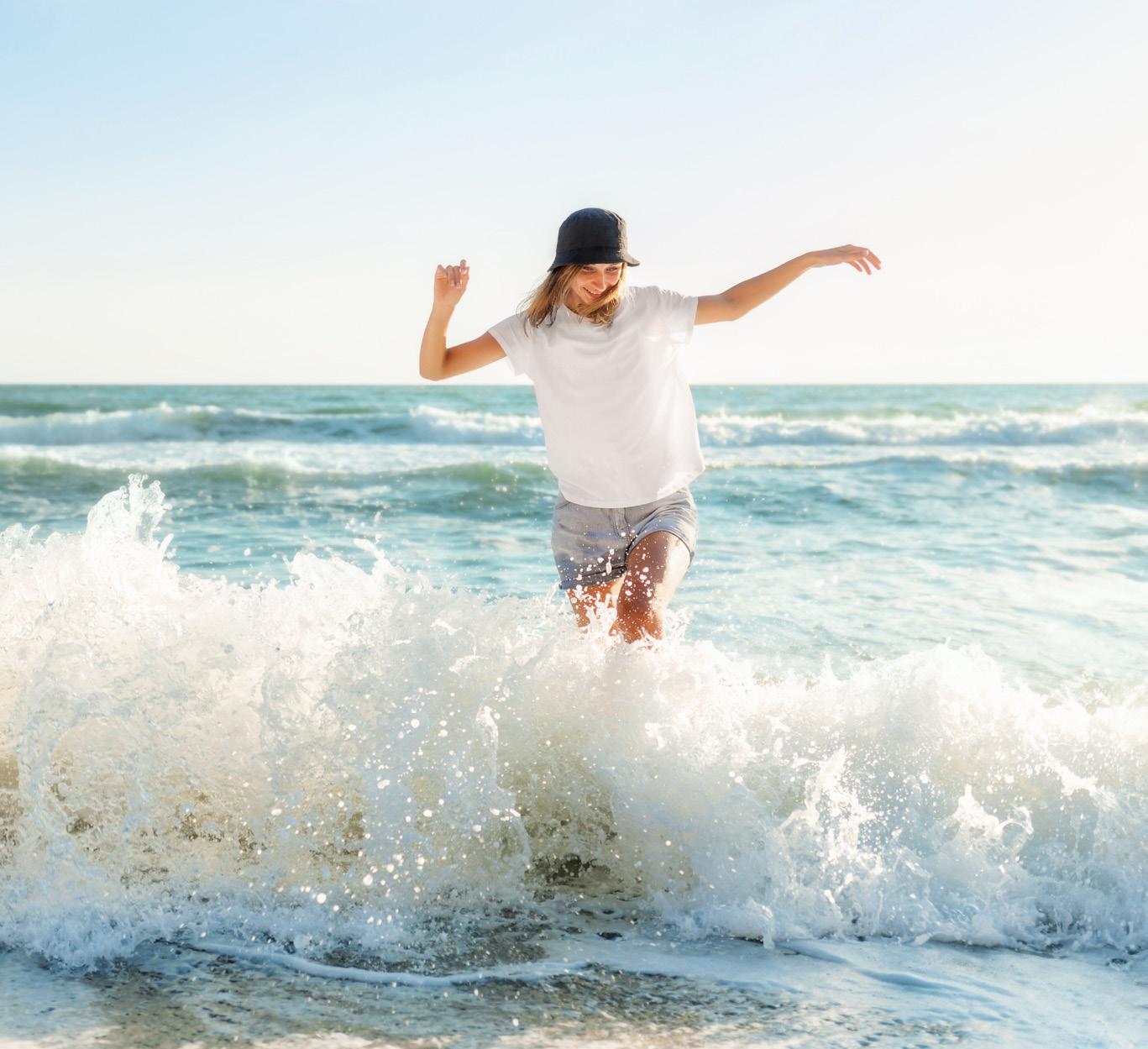
We’re on the coast, of course, with a guide to some of the best beaches to take a swim from and get your Vitamin Sea. On the same subject, don’t miss Norfolk’s Natural Health Service – there’s some great ideas of how to be mindful and find your calm.
In our ‘Things they say about Norfolk’ piece we’ve quoted Noel Coward’s line from Private Lives, ‘Very flat, Norfolk’, so just to prove him wrong we’ve set out ways for you to get high when you’re here.
We’ve not missed out on culture either – you’ll discover lots about the Royal Family’s country dacha at Sandringham and some secrets and top sights at our magnificent Norman cathedral in Norwich.
And we love our lists so we’ve gone all out with the ’20 best things we can’t wait to do in Norfolk this Summer’ and ‘21 reasons to love Norfolk’. Will you be able to tick them all off while you’re here?
If you don’t, don’t despair – just plan another trip!
Walking –Norfolk’s Natural Health Service.
Norfolk’s Natural Health Service is so good for your health and well-being it should be available on prescription!
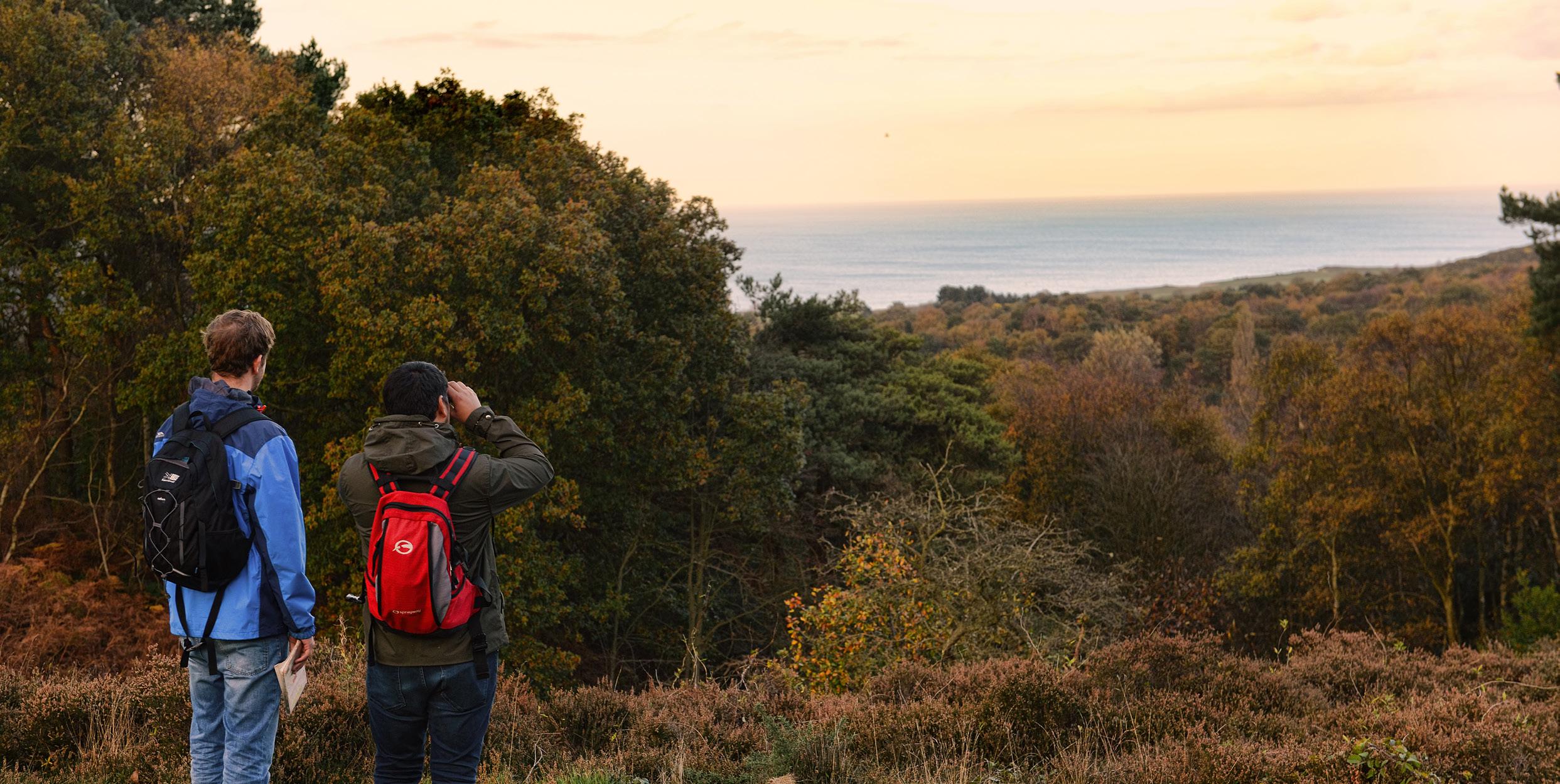
This is the place to be out and about getting your fresh air fix. With over 2,000 square miles of gently undulating countryside and stunning coast, we’ve got fabulous places to relax and unwind in the great outdoors – you’ll soon find yourself on the trail less travelled. Here’s our top ten free picks, with maybe just some car parking to pay for.
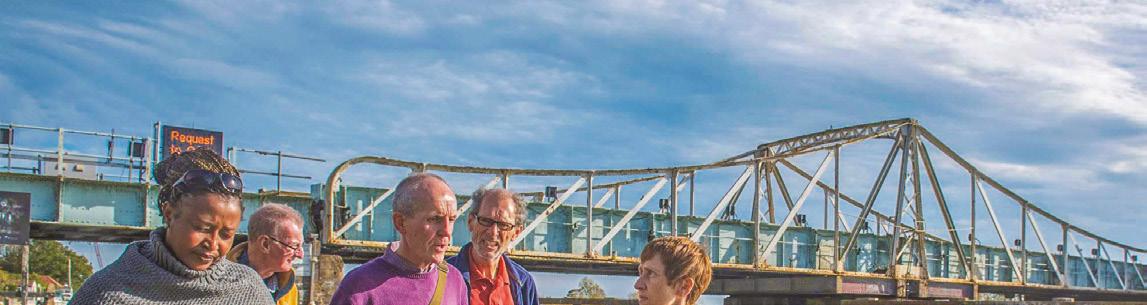
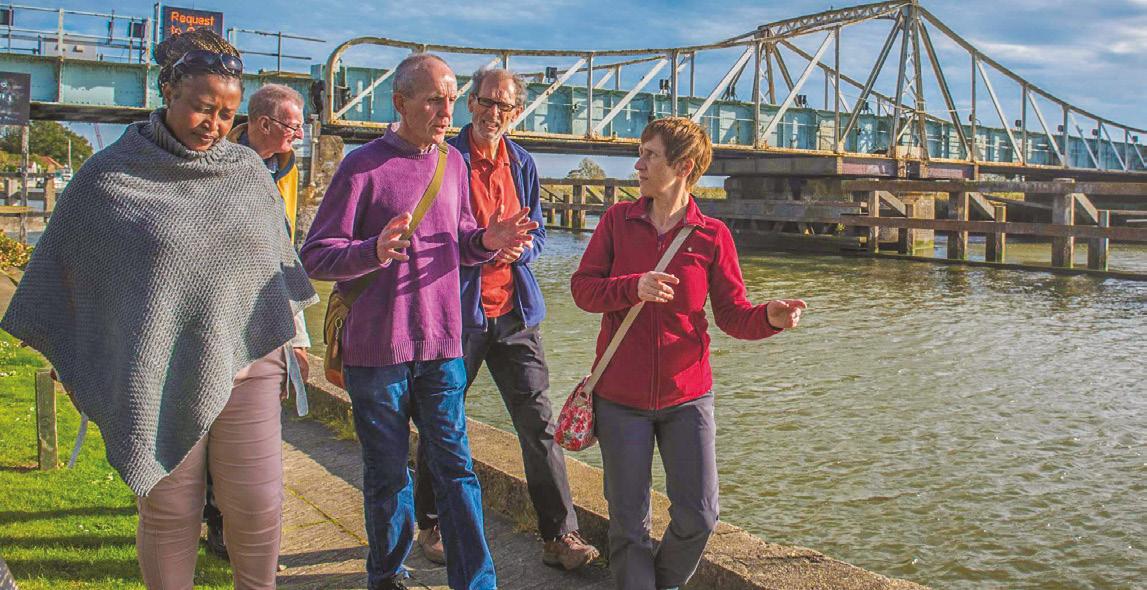
Walking near Breydon Water.
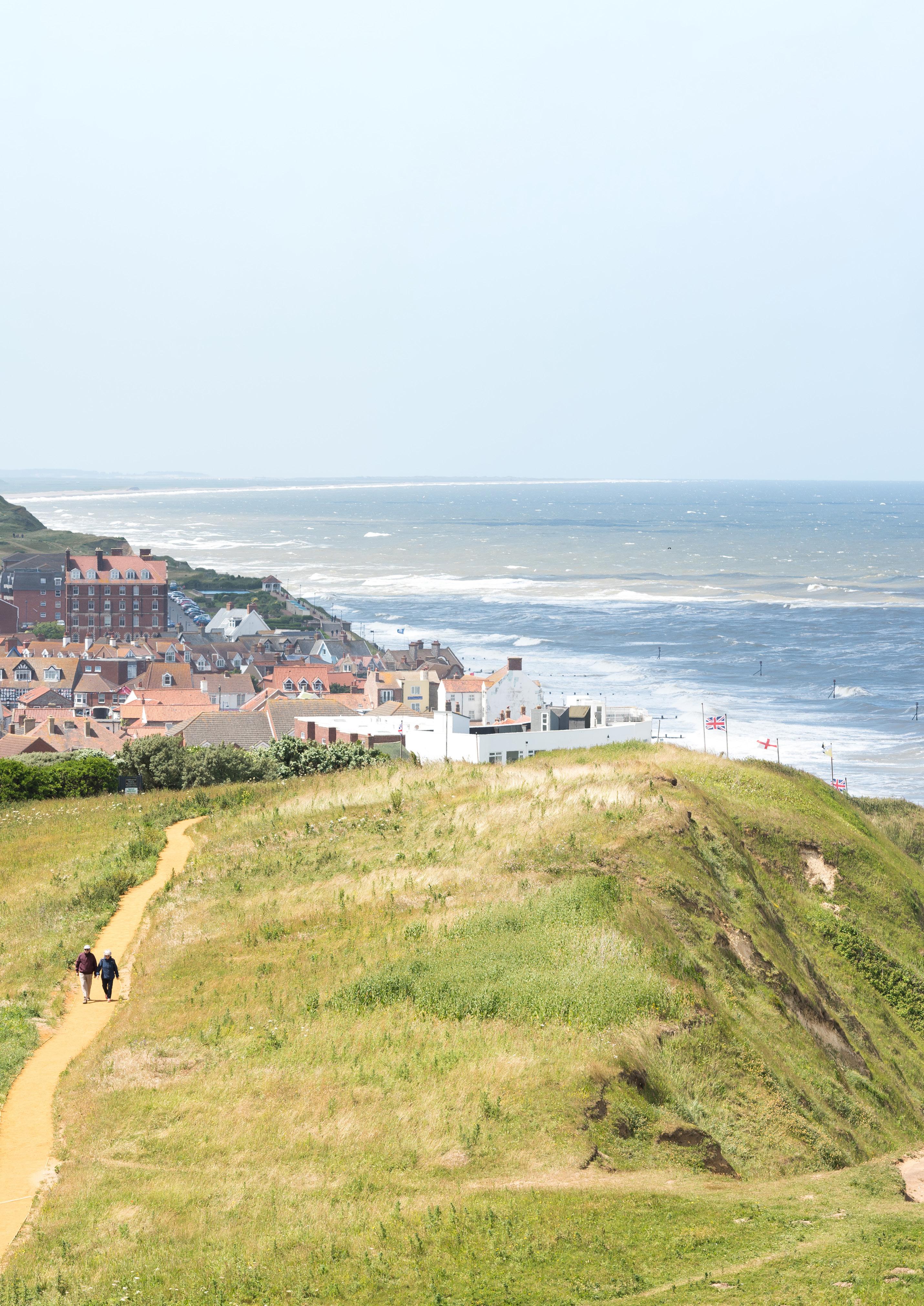
Sheringham and Beeston Bump
This is the highest you’ll get on the coast in the East of England, built at the end of the last Ice Age when a glacier ran out of momentum and deposited everything within it on to the landscape. Most notably here are circular hills known as kames, steep-sided mounds of sand gravel caused by the melting ice sheet, of which Beeston Bump is the highest. On the top, while you admire the views of Sheringham and Cromer,
you’ll realise that this was the perfect place for a wartime secret listening Y station. This chain of stations were the front line of the War Office’s Bletchley Park, which had the code name X.
Walking from here, go along the seafront at Sheringham to the boating lake, and then head up again along the clifftop to the hilltop Coast Guard Station where you’ll realise you’re enjoying one of the best golf course views in the country.
An alternative walk is to go to the National Trust’s Sheringham Park and enjoy the landscape park and gardens designed by Humphry Repton, the wild garden and clifftops. Head to the Gazebo or climb the viewing tower for a fantastic view along the coast to Cley-next-the-Sea and Blakeney Point.
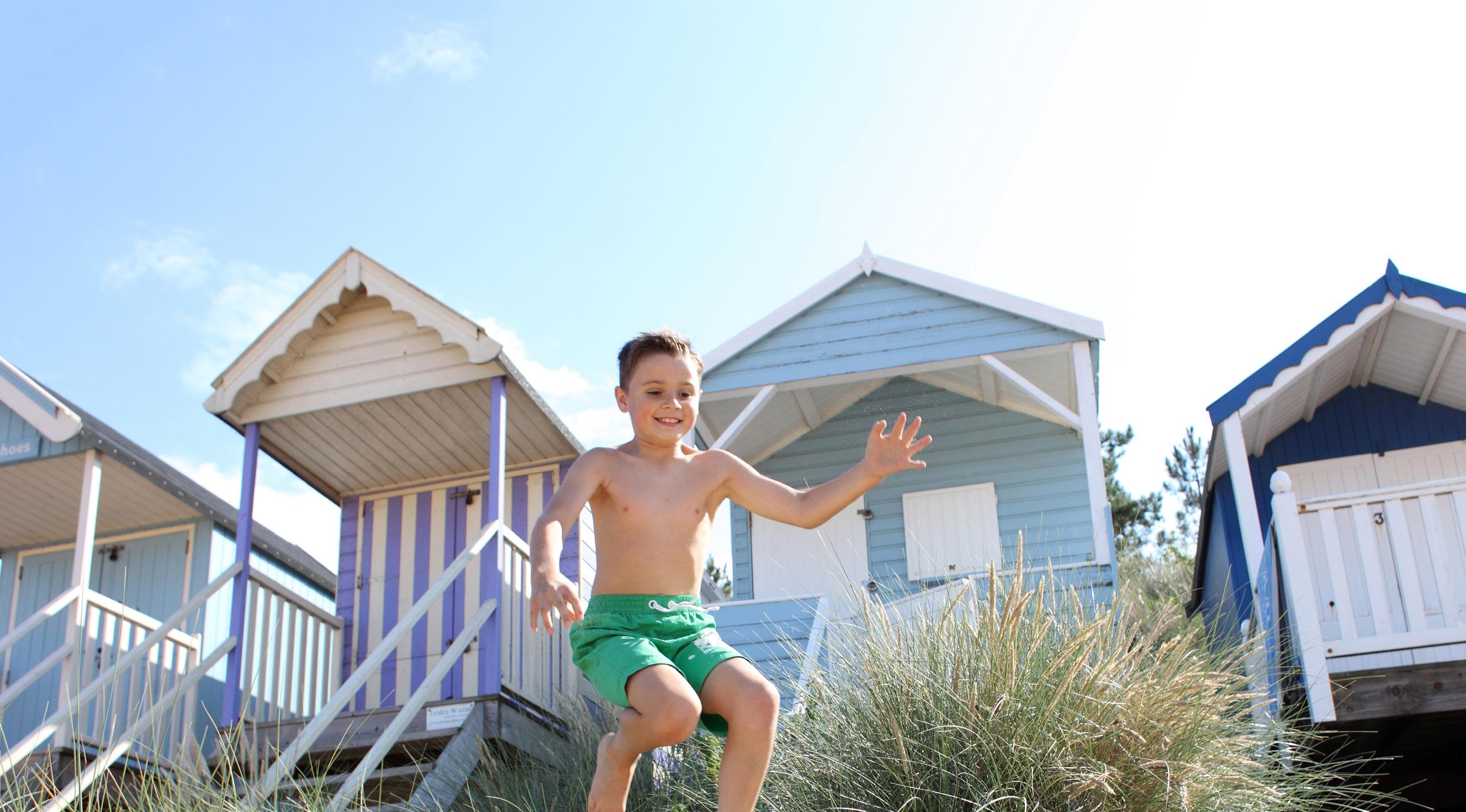
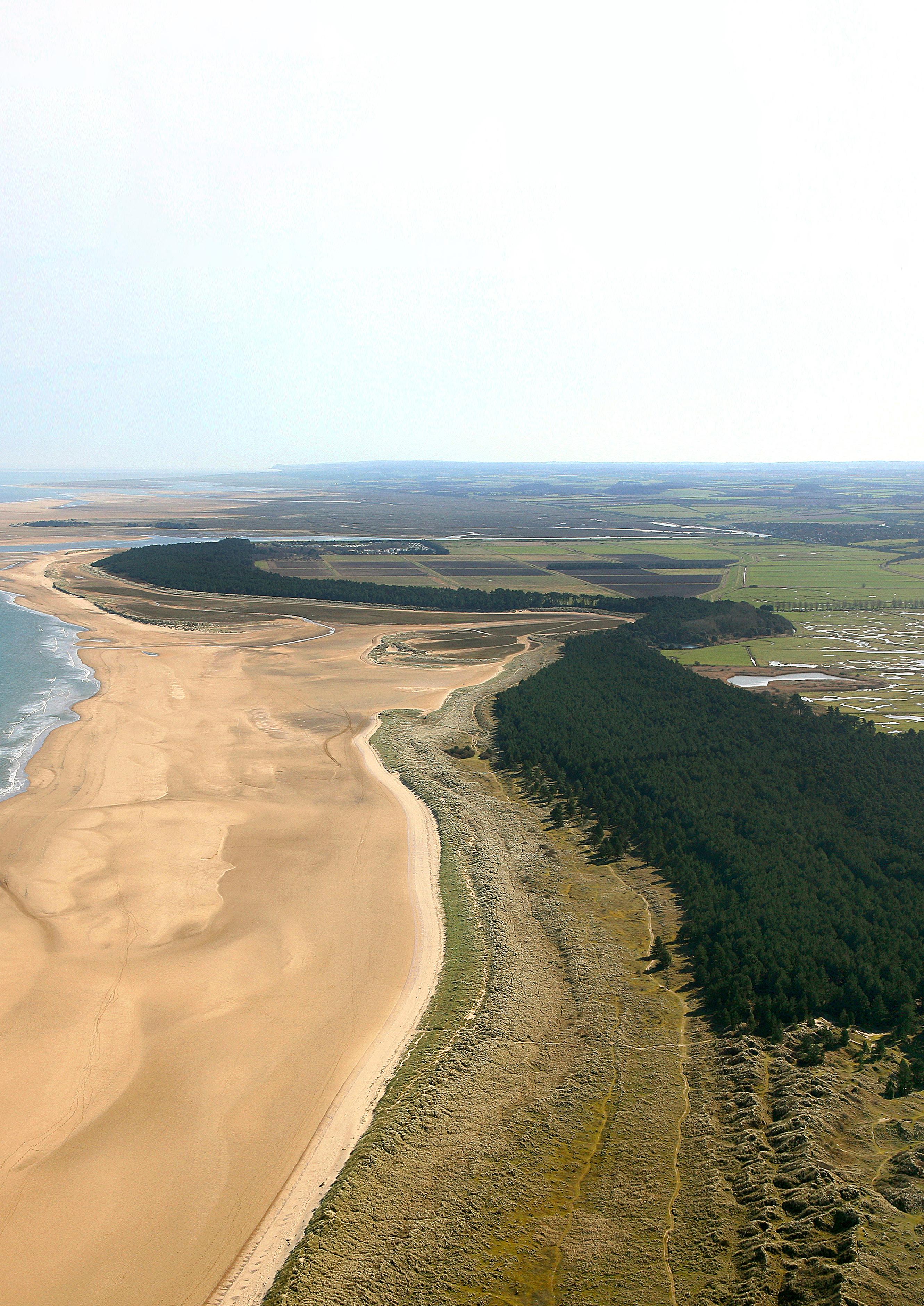
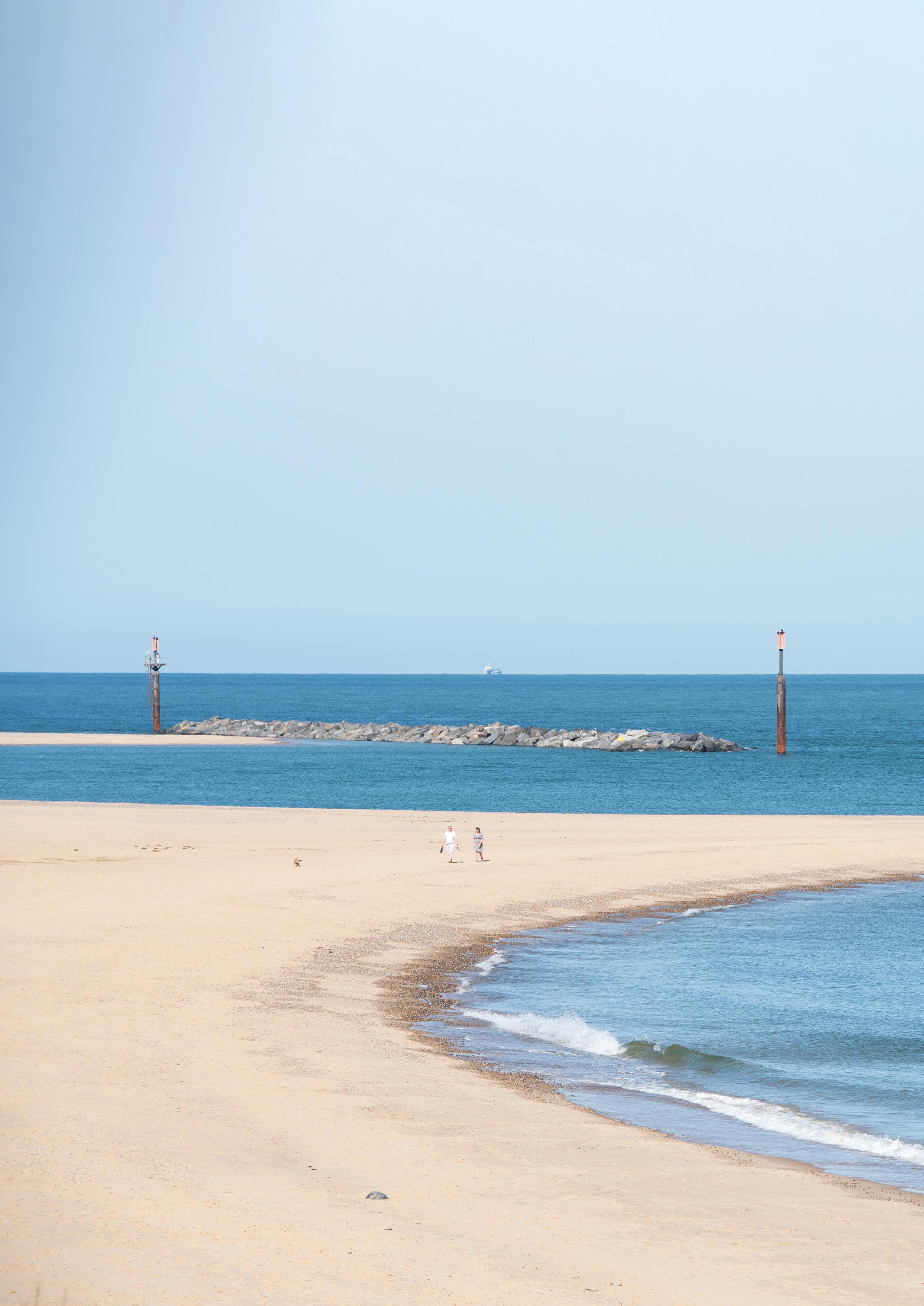
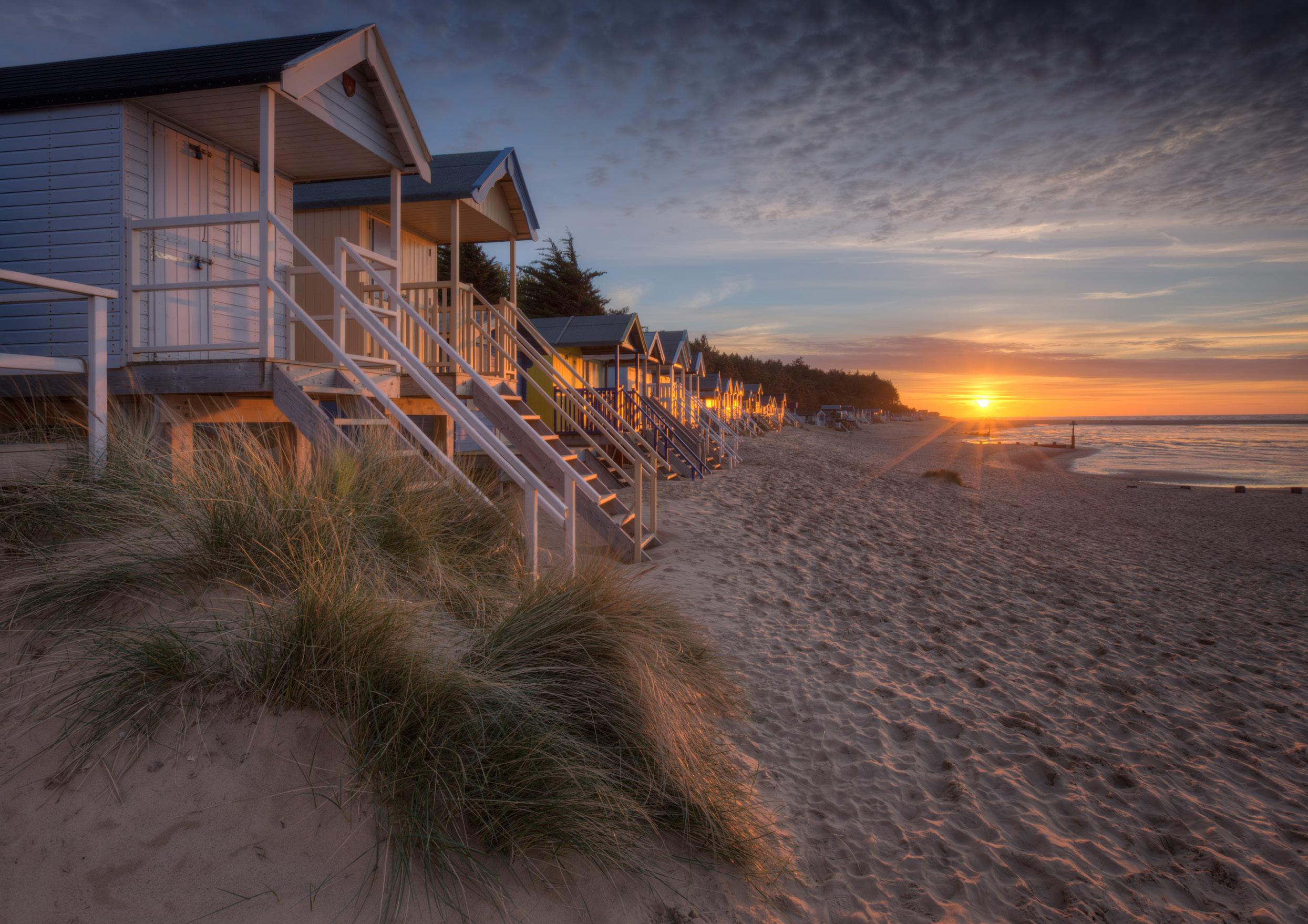
Backed by a striking pine forest and with a long line of 200 quaint and colourful beach huts, Wells-next-the-Sea is as picturesque as they come. Our advice is to come here at low tide, when you can walk about a mile along The Run, the channel that boats take into the port, to what feels like the edge of existence. Here you’ll be a long way from anyone else, with just the breeze and lapping waves for company… and maybe a passing seal or seagull.
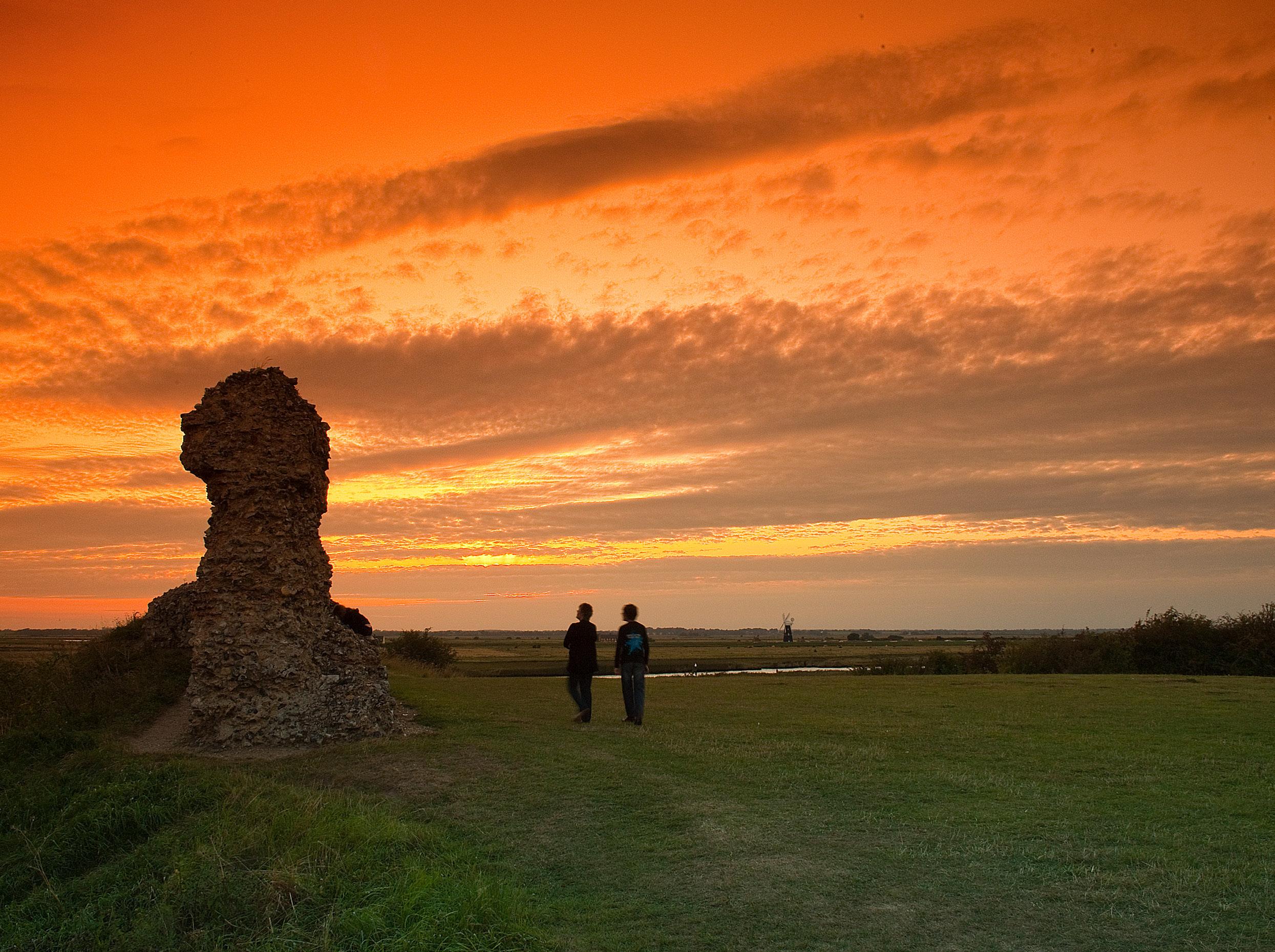
This circular walk around Burgh Castle, starting at the car park, will demonstrate better than anywhere how dynamic Norfolk’s coast is.
A short stroll will take you to one of the best-preserved Roman buildings left in the UK, three towering brick and flint walls that were part of the Romans’ Saxon Shore string of forts to repel Anglo Saxon raiders.
In front of you is the confluence of the Rivers Yare and Waveney, rich agricultural and pasture land. Three miles away to the right you’ll see the Caister-on-Sea water tower. Continue your walk by the waterside boardwalk, through the reedbeds and return via the picturesque St Peter and St Paul Church.
To get the full Natural Health Service impact, visit at sunset when Halvergate Marshes in front of you are suffused in an orange glow.
Norwich
For a city as bustling and vibrant as Norwich there’s still a chance to escape the crowds by the River Wensum, taking a walk through the city’s history.
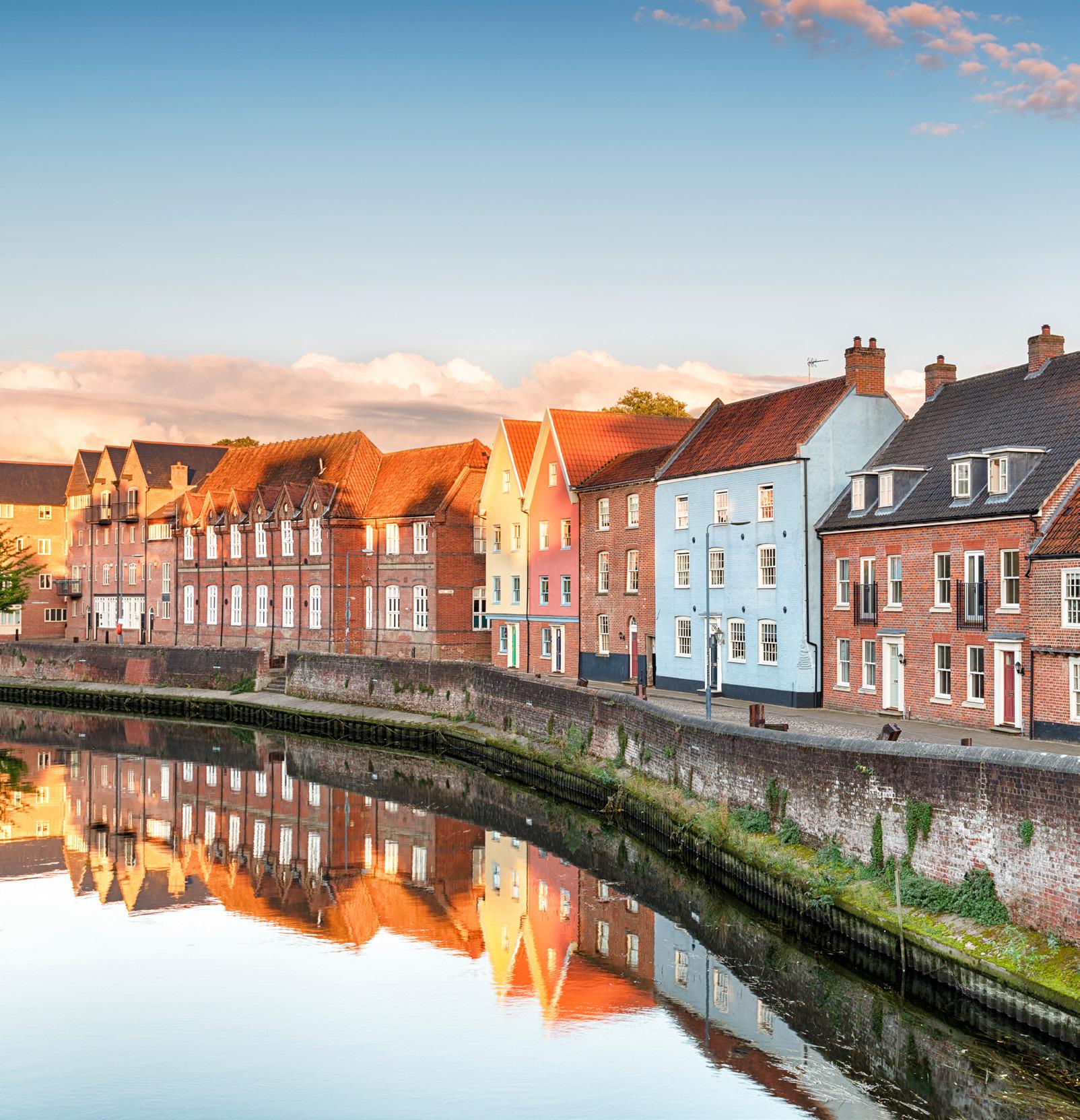
Start at Carrow Road, go past the Novi Sad Friendship Bridge and you’ll come across the Riverside complex of restaurants and shops. Cross the bridge by the Victorian railway station. On the other side you’ll soon come across 15th century flint Pull’s Ferry. Bishop Bridge ahead was built in 1340 and is one of the oldest still-used bridges in the country. Quayside has one of the prettiest rows of former merchant houses you’re likely to see. At Fye Bridge walk head onto Wensum Street and enter the Cathedral precinct through the Thomas Erpingham Gate which will take you back to Pull’s Ferry.
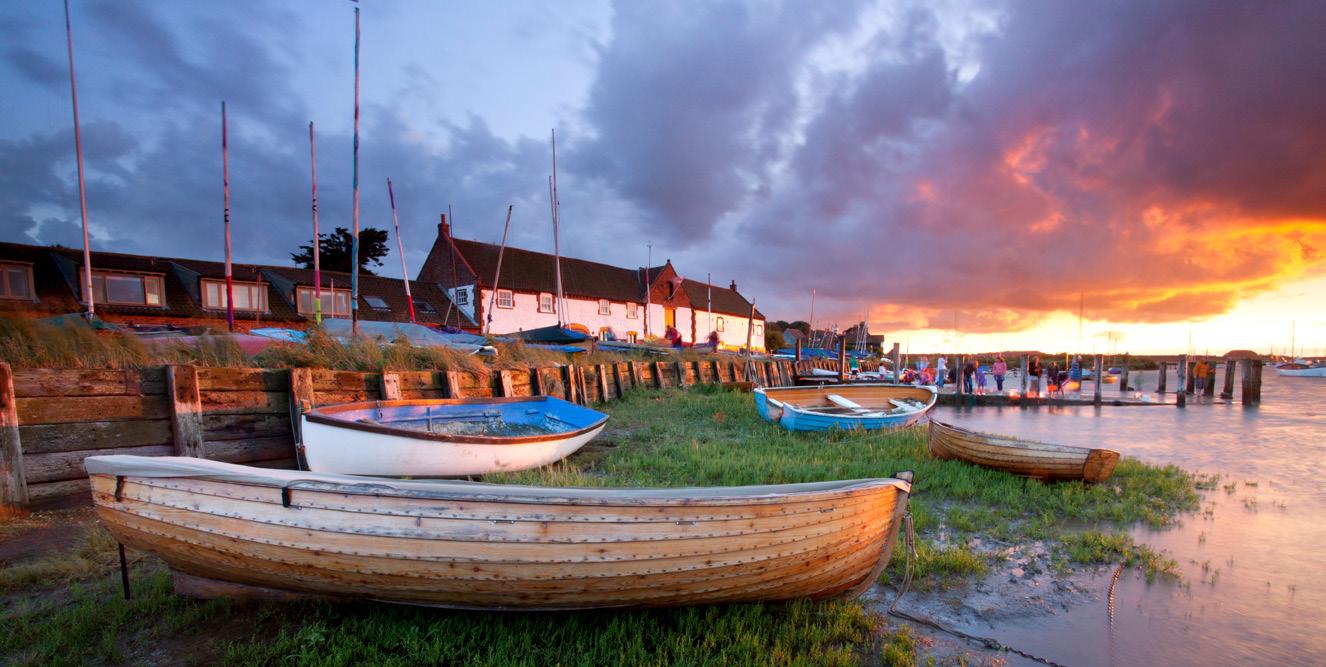
Burnham Overy Staithe
Take the walk beside the River Burn from the little hamlet to the far-off dunes and admire the views of the tidal salt creeks and magnificent Scolt Head Island. At high tide in Summer regattas take place around the island but it’s advisable not to cross over yourselves as it’s a wildlife reserve and home to lots of birdlife that would rather be left to their own devices. The waters by the staithe (what we call a landing stage for unloading cargo boats) are where Horatio Nelson, from nearby Burnham Thorpe, learned to sail. If you’re up for it, you can continue on to Holkham beach and take the Coastal Hopper bus back to where you started.
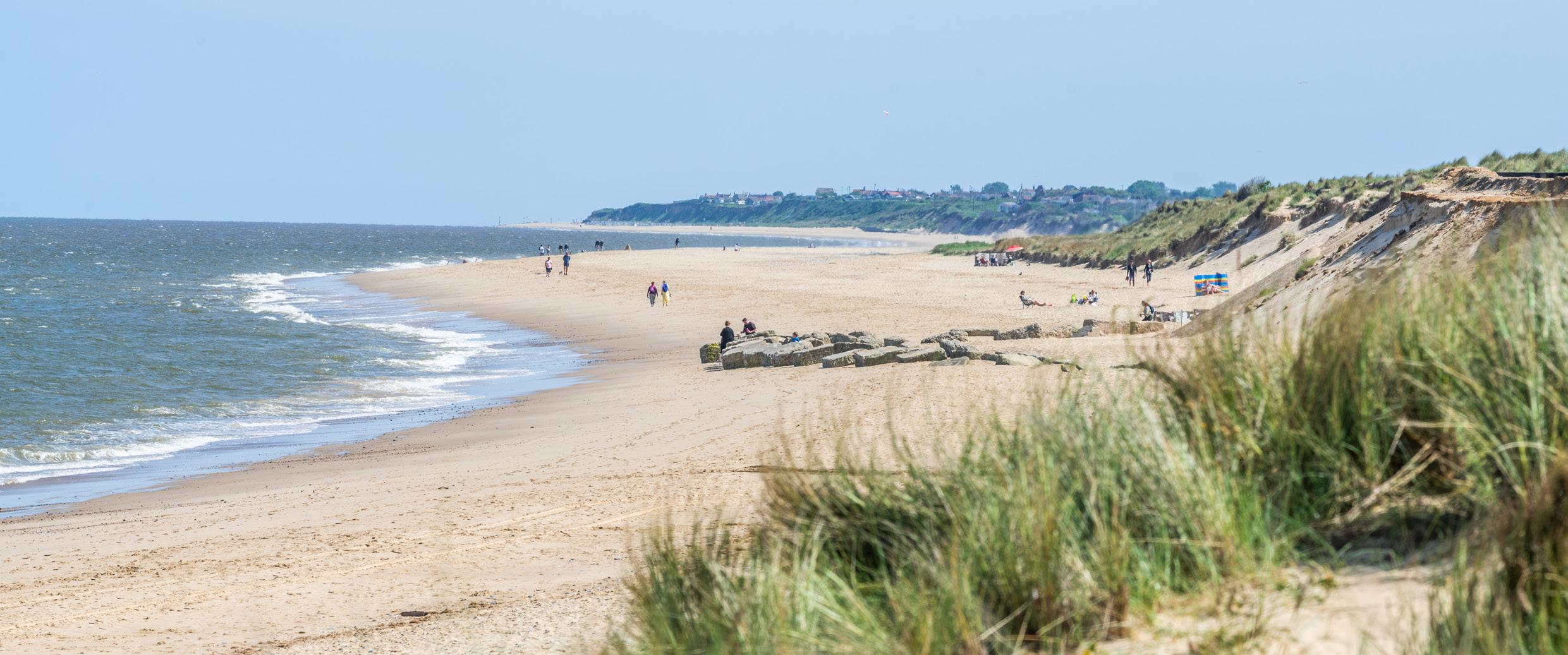
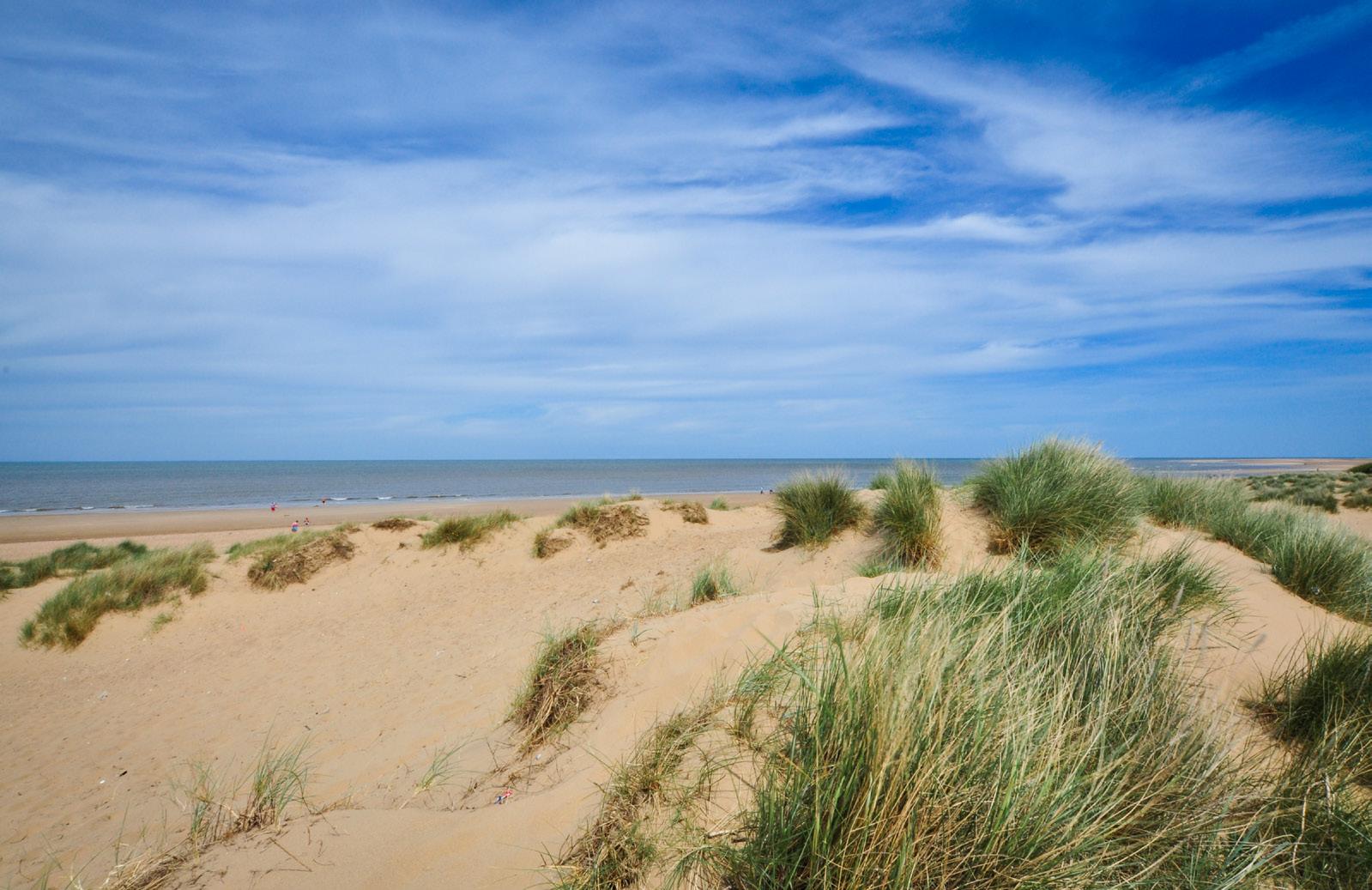
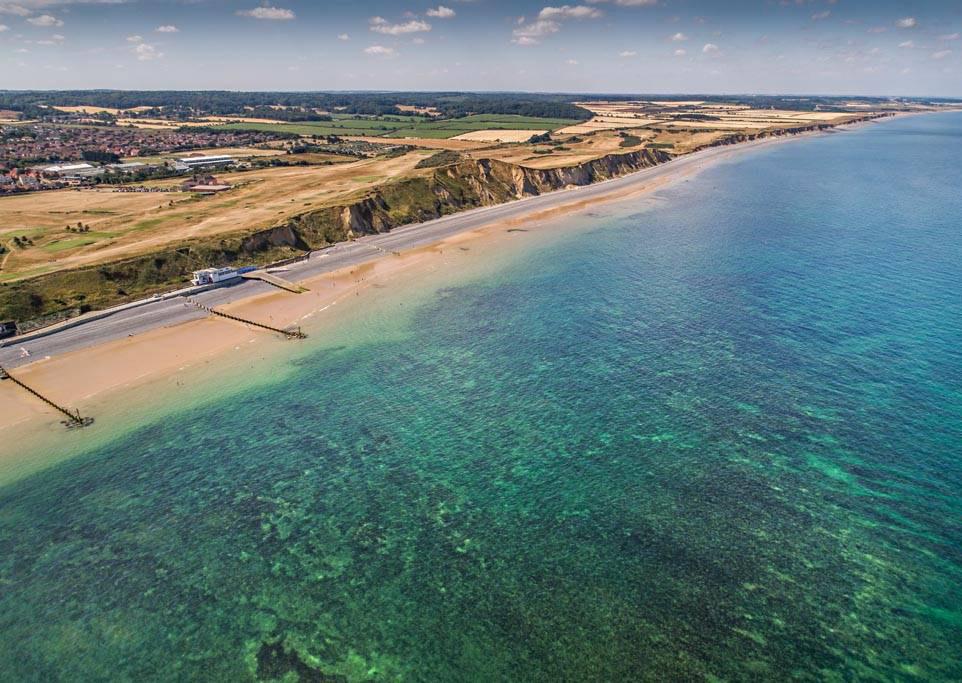
We reckon Norfolk has the most dynamic coast in the UK, and you can see it in action at Winterton, where longshore drift is starting to create a new spit just offshore. The lovely beach is backed with wind-whipped sand dunes topped with marram grass –good because its deep roots fight against erosion, also helping to support a large variety of flowering plants, insects and wildlife. Take a walk north along the beach and return across the grassland with views of the thatched roundhouse accommodation of Hermanus Holidays.
Happisburgh and Sea Palling
Stand on the low-lying cliff at Happisburgh and look east towards Holland and now imagine that until as little as 8,000 years ago what was in front of you was the last land link to the Continent. Amazing to think, eh? Well, how about that on this beach in 2013 were found footprints carbon-dated to 850,000 years ago. The first tourists ever to come to the UK holidayed in Norfolk! This is the Deep History Coast. Walk along the beach, with the stripey lighthouse on your right, and you’ll come across perfect, shallow bays at Sea Palling – a great place for a paddle or a swim before returning along the clifftop.
Winterton-on-Sea
Castle Acre
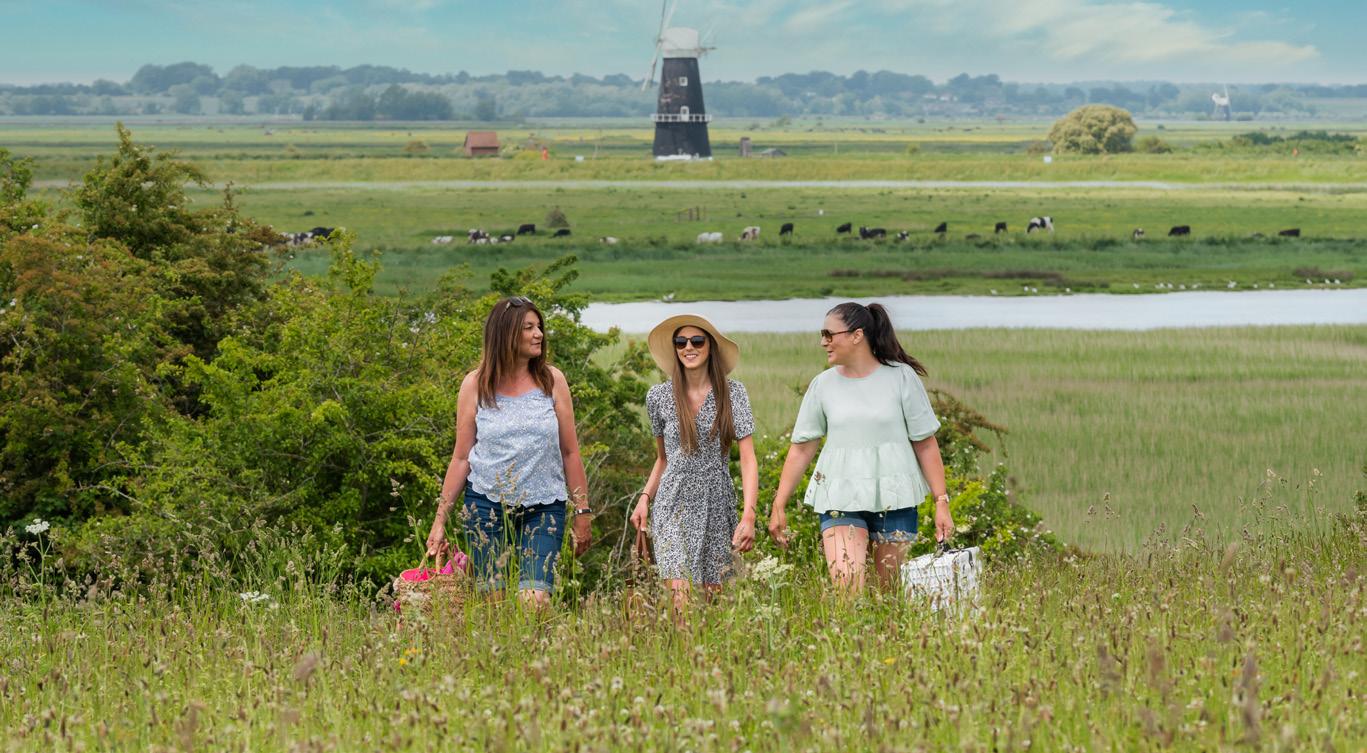
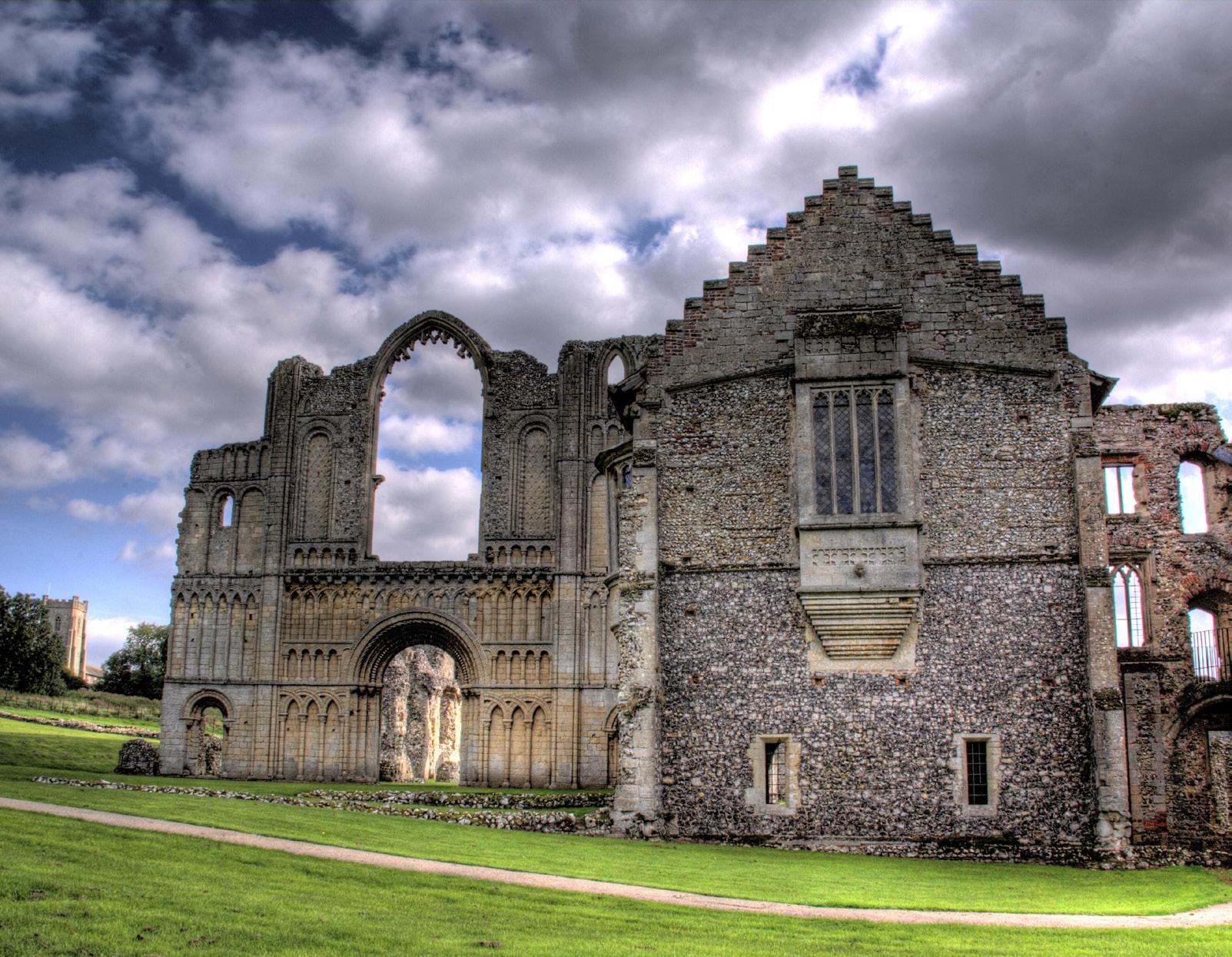
Rising from the pasture and meadow of the River Nar, Castle Acre Castle and Priory are a great place to sit and contemplate, or take a picnic to enjoy the views while the anklebiters run around and let off steam. These are English Heritage free sites, so take your time exploring the Prior’s Lodgings, Bailey Gate and Priory ruins, or take a gentle stroll by the river.
Holme Dunes
One of the most secluded beaches in Norfolk, this is where the Roman Peddar’s Way joins the Norfolk Coastal Path and where the ancient Seahenge, a wooden contemporary of Stonehenge, was found after a tidal surge receded. Walk from Old Hunstanton, past the beach huts and golf course, then enjoy the immaculate beach and nature reserve run by the Norfolk Wildlife Trust.
Thetford Forest
The largest lowland pine forest in the country also has the best climate, a result of it being in a bowl, which makes nights cold but days warm from Spring to Autumn. And there’s not a lot of rainfall.
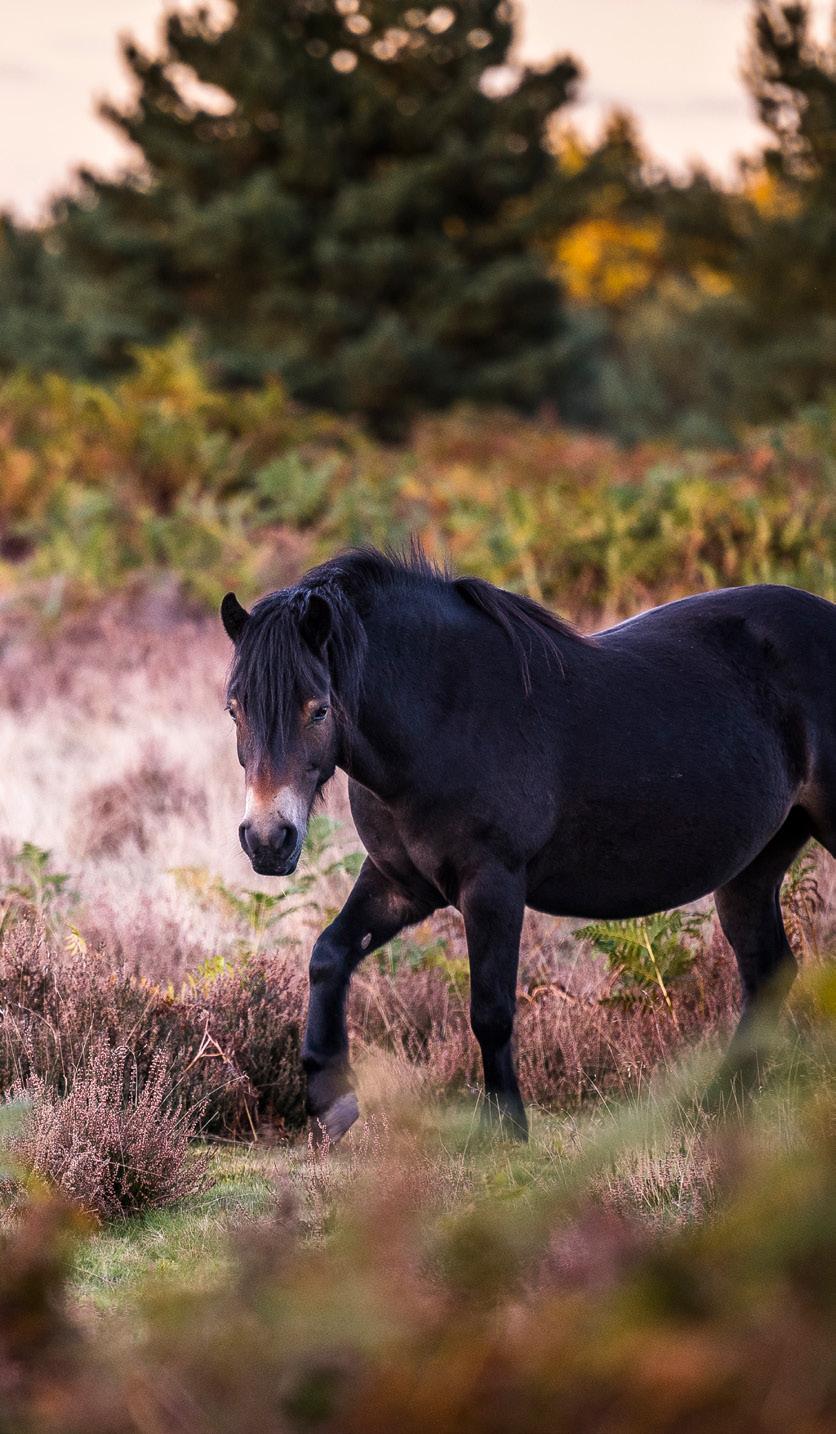
Head for High Lodge and then strike out on one of the many walking, orienteering or cycling trails and lose yourself (figuratively speaking of course) in the immense woodland which was only developed following the first world war which depleted the country’s wood stocks. Make sure you look out for birdlife, wild horses and red deer too.
20 things we can’t wait to do this Summer.
School’s out, sun’s out, Summer’s here… it’s time to do some rites of passage of any Norfolk holiday, from eating ice cream to riding a rollercoaster. How many will you do?
There’s nowhere like Norfolk
1 Ride the wooden rollercoaster
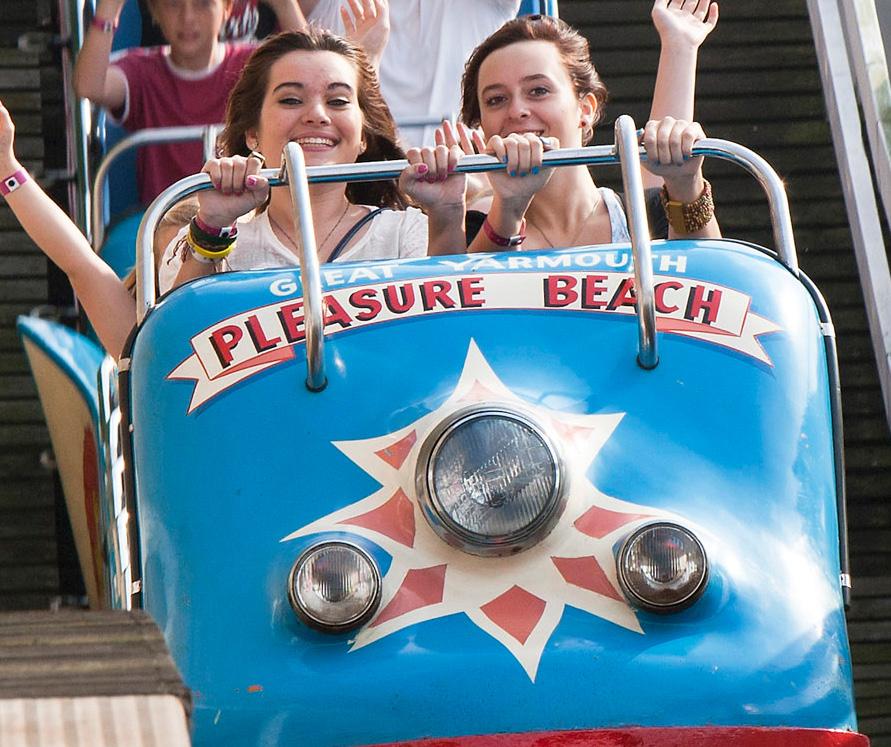
Ride the wooden rollercoaster at Great Yarmouth Pleasure Beach. Okay, it’s not as scary as many others and there’s no loop-the-loop, but then again, this ride doesn’t have automatic brakes… eek!
2 Go to The Hippodrome in Great Yarmouth
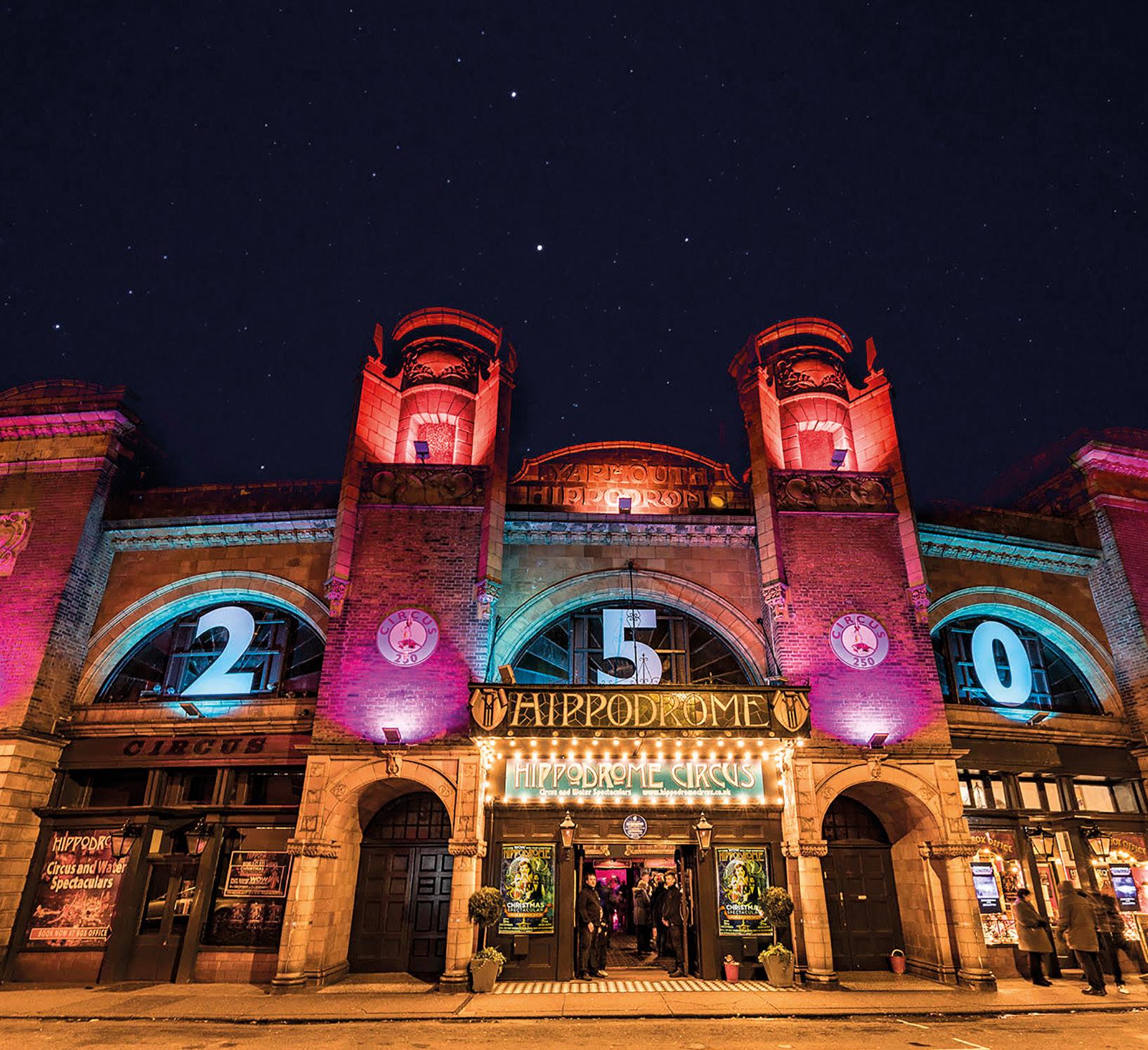
See the Summer Show and Water Spectacular at Great Yarmouth Hippodrome, the country’s last complete circus building. The clue is in the title… Water Spectacular. 177,000 gallons of it.
3 Walk along The Run at Wells-next-the-Sea
Walk along The Run at Wellsnext-the-Sea beach at low tide… you’ll wonder if you’re ever going to reach the sea! When you do, take a swim. Exhilarating. And it’s likely there’ll just be you.
4 Take a day boat on the Broads
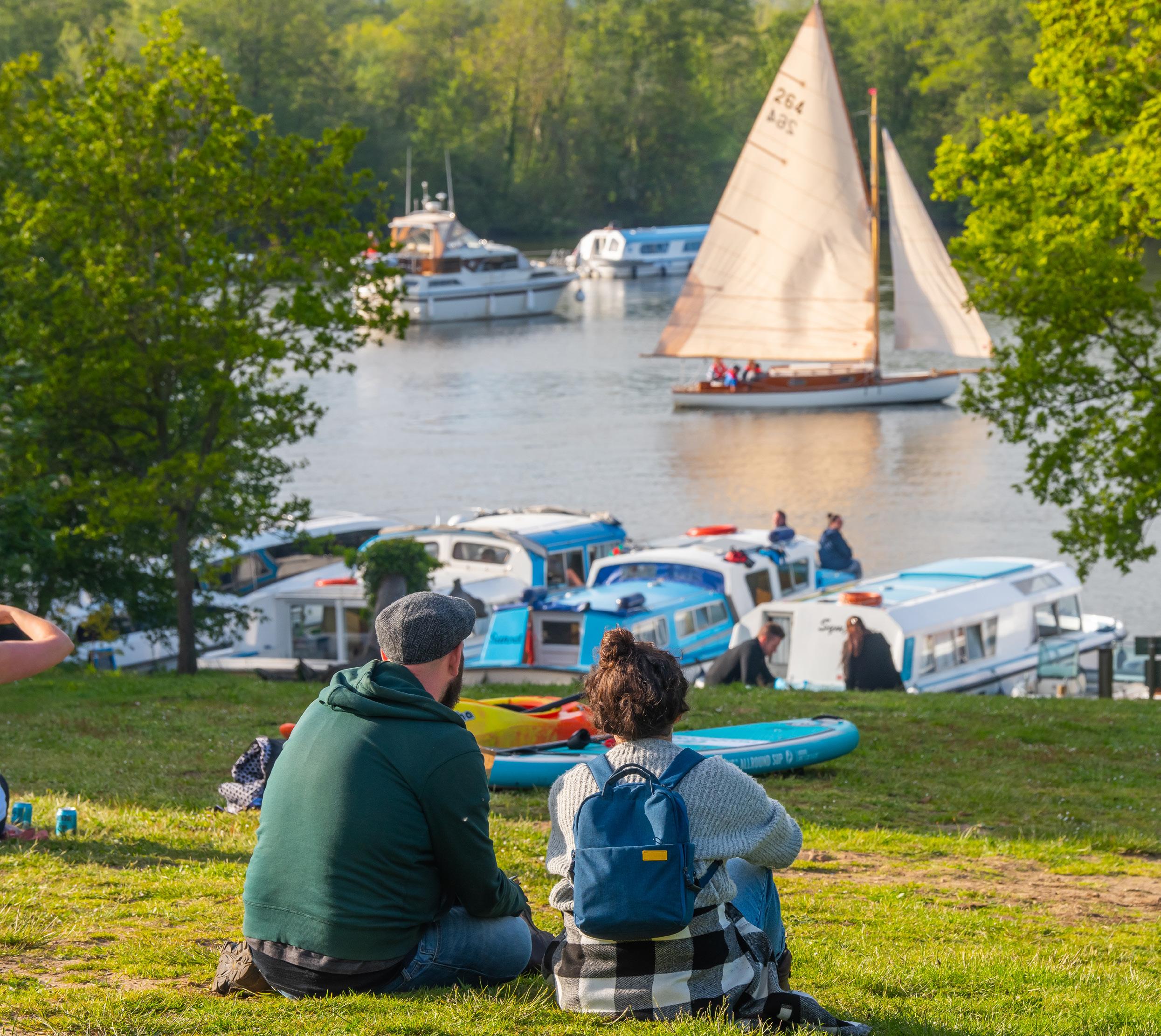
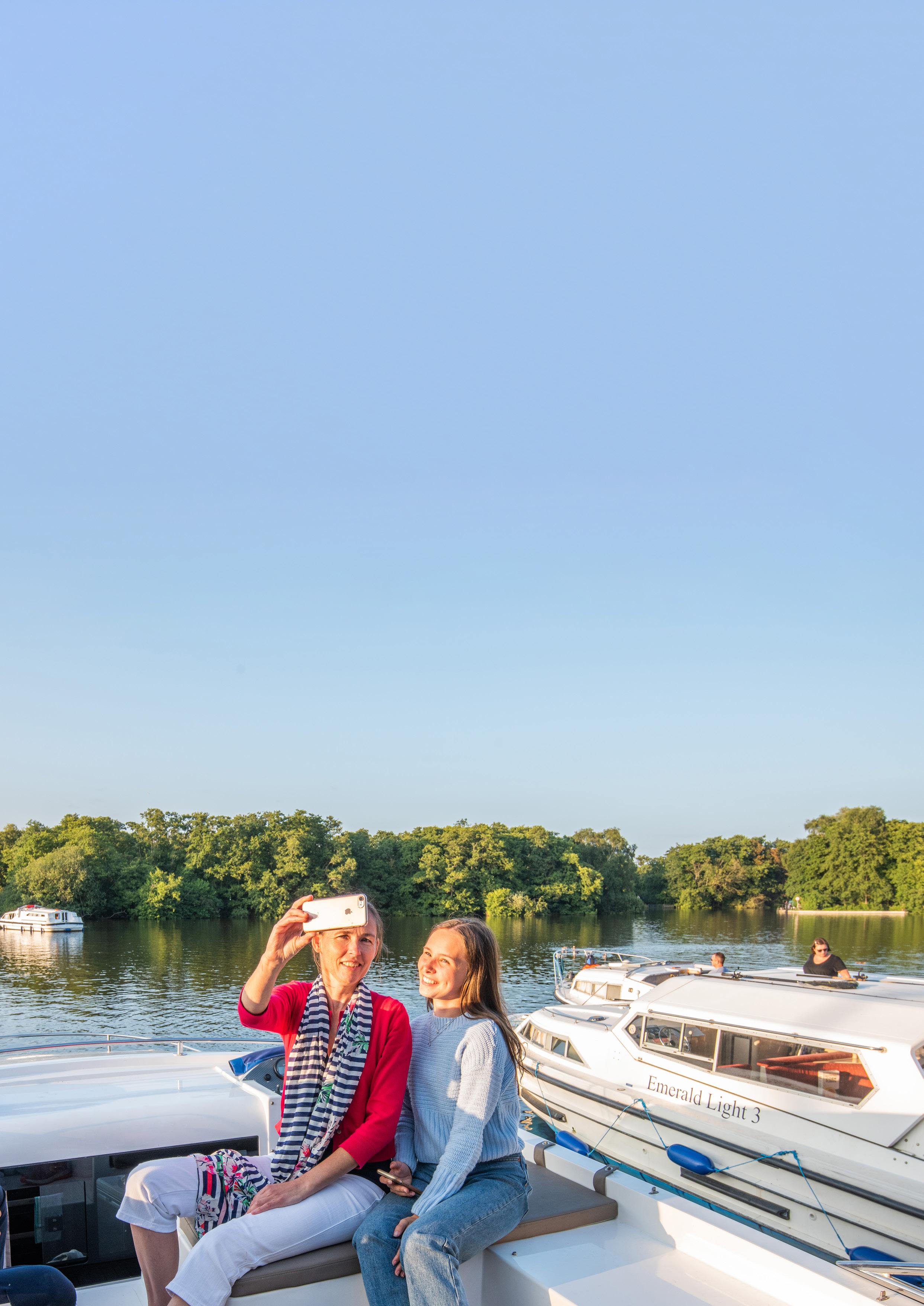
It’s one of the simplest pleasures you can imagine, tootling along at walking pace, enjoying the views and wildlife. Take a picnic or stop off at a pub for lunch. The Southern Broads are quieter. Hire a boat from Waveney River Centre or Hipperson’s and enjoy the journey through Beccles, past The Lido and stop at Geldeston Lock for refreshments.
5 Take a swim at Holkham
At low tide the sea leaves behind shallow lagoons… perfect for a dip. If the weather’s been nice, the water will be warm.
6 Go rockpooling
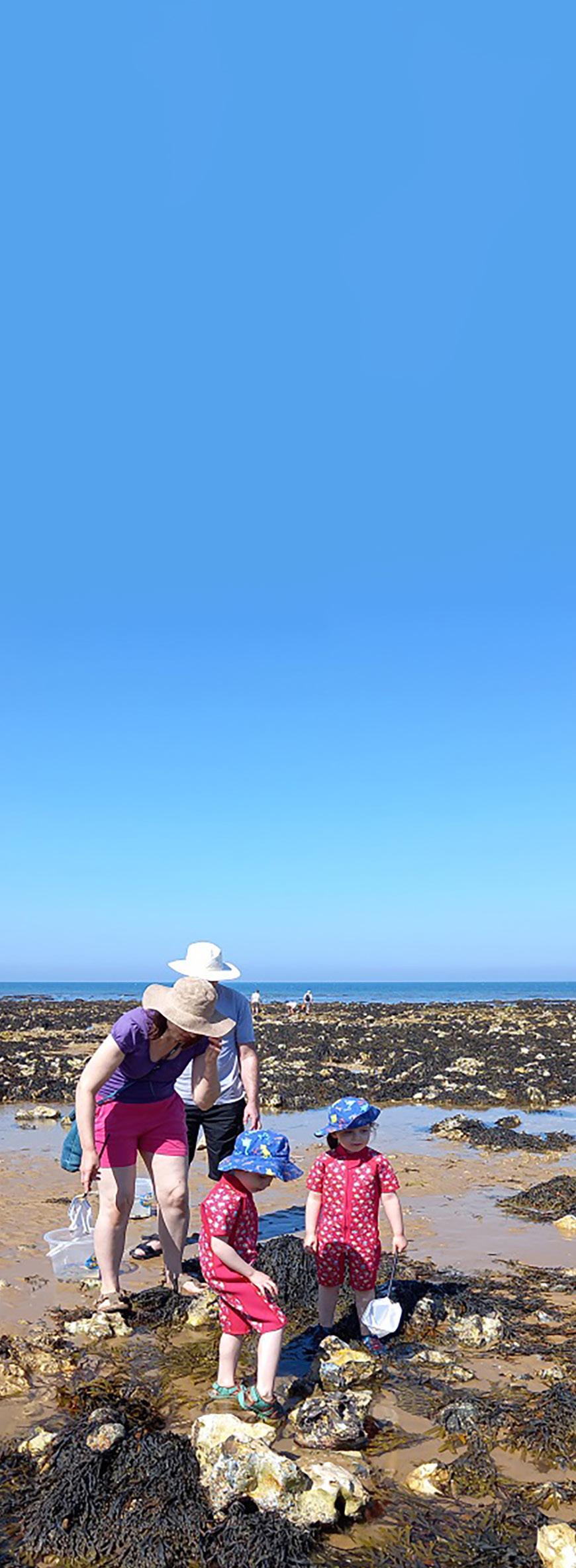
Take a rummage around a rockpool on West Runton beach.
7 Eat ice cream
Buy an ice cream (make it a 99, you know you want to) at the Lower Esplanade at Gorleston-on-Sea and then take a leisurely stroll along the Promenade. Maybe have a paddle? If you’re with anklebiters, perhaps a cheeky jaunt through the Splash Pad?
8 Have lunch looking out to sea
Have a lunch in the sun with the sea in the distance. Wiveton Hall Café is lovely and you can do a PYO while you’re there. Or how about The White Horse at Brancaster, sitting on the deck, with the salt marshes and Scolt Head Island for a view.
9 Eat a Cromer Crab sandwich
Find a hostelry in Cromer that serves a sandwich or salad of the eponymous crab. You will not taste better, more succulent crab anywhere. Guaranteed!
10 Take a ride on the North Norfolk Railway
Take a trip on the North Norfolk Railway, otherwise known as The Poppy Line, from Sheringham. Imagine you’re one of The Railway Children. Wave at the players on the Sheringham Golf Course.
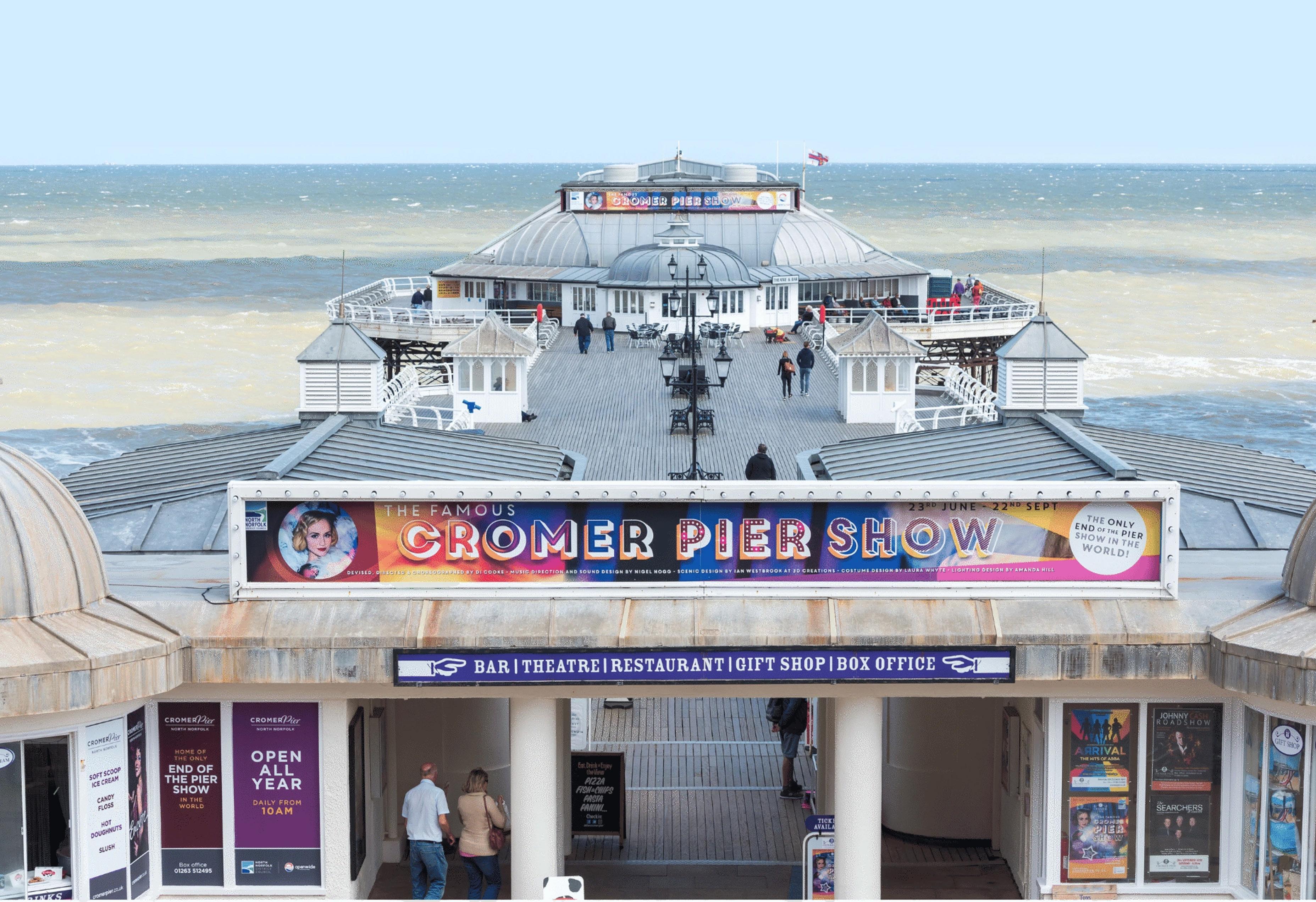
11 Go to the End of the Pier show in Cromer
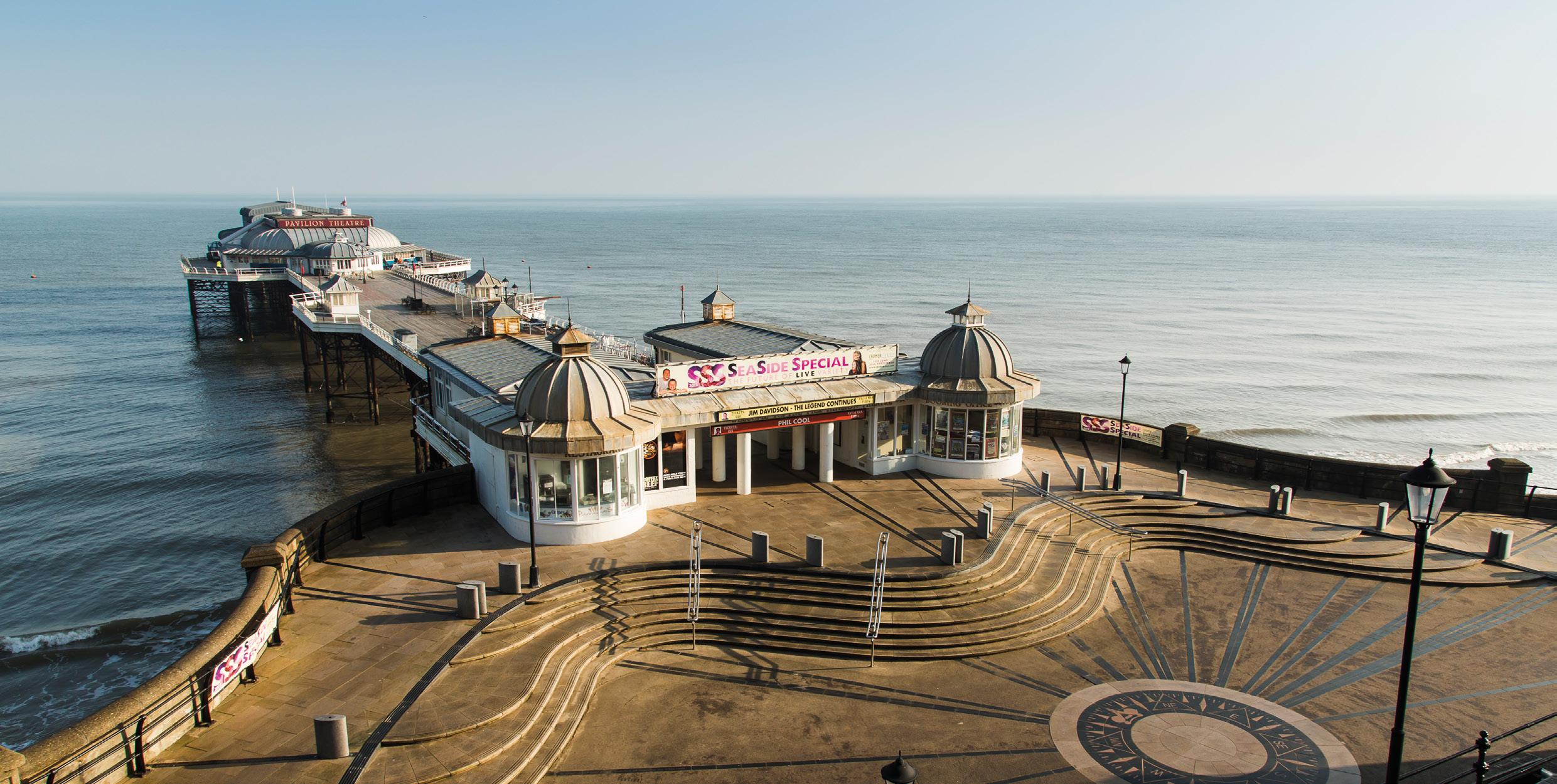
Enjoy the Summer Variety Show at The Pavilion Theatre at the Grade II listed Victoria Pier at Cromer, Europe’s last end-of-pier theatre. It’s what seaside evening entertainment is all about.
12 Check out East Ruston Old Vicarage Gardens
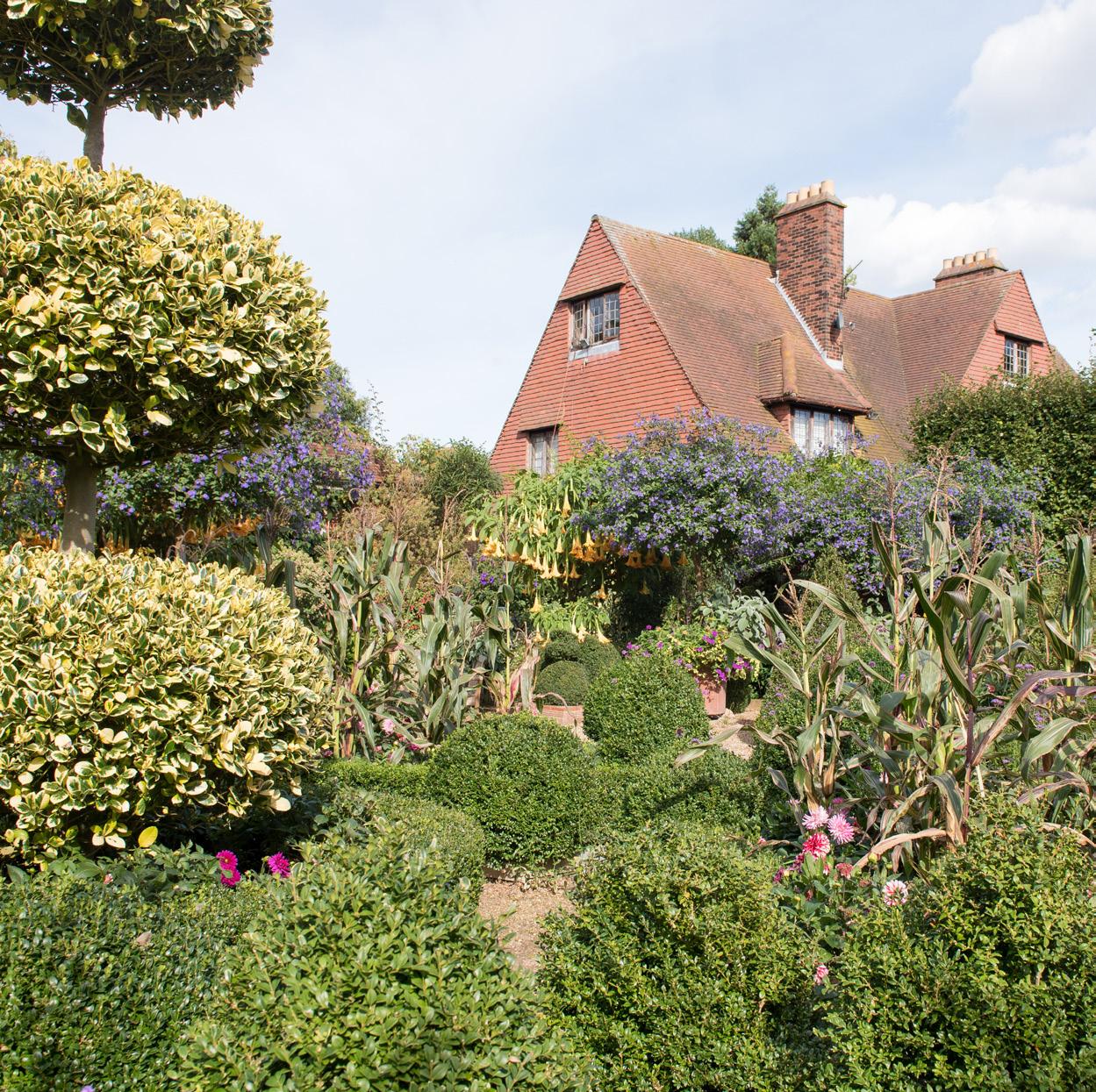
Pay a visit to these 32-acre gardens. Just a mile and a bit from the sea, you’ll be amazed that the delicate plants and succulents can survive! But the really amazing thing is that these 20 or so gardens, all with varying sizes and styles, were the creation of just two men, Alan Gray and Graham Robertson, who did it all on their own!
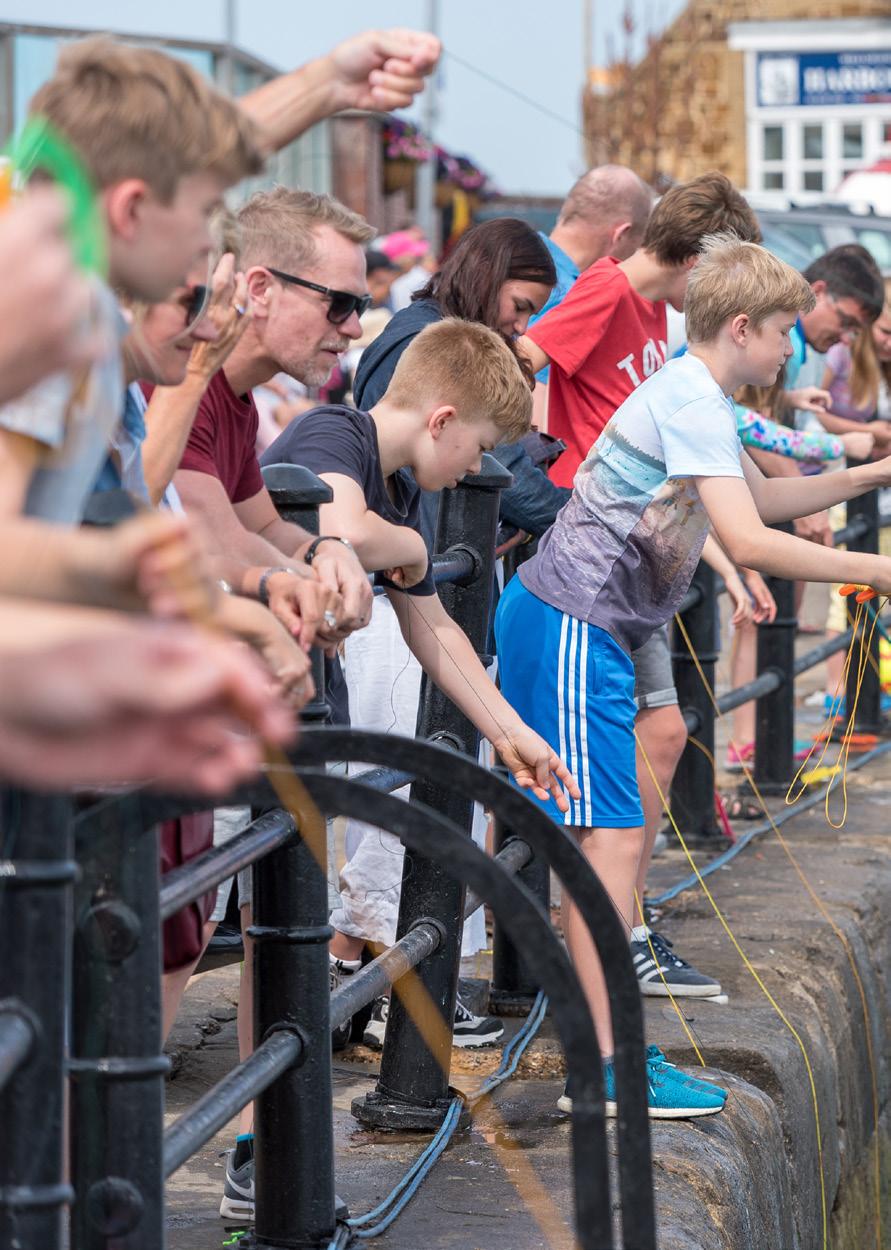
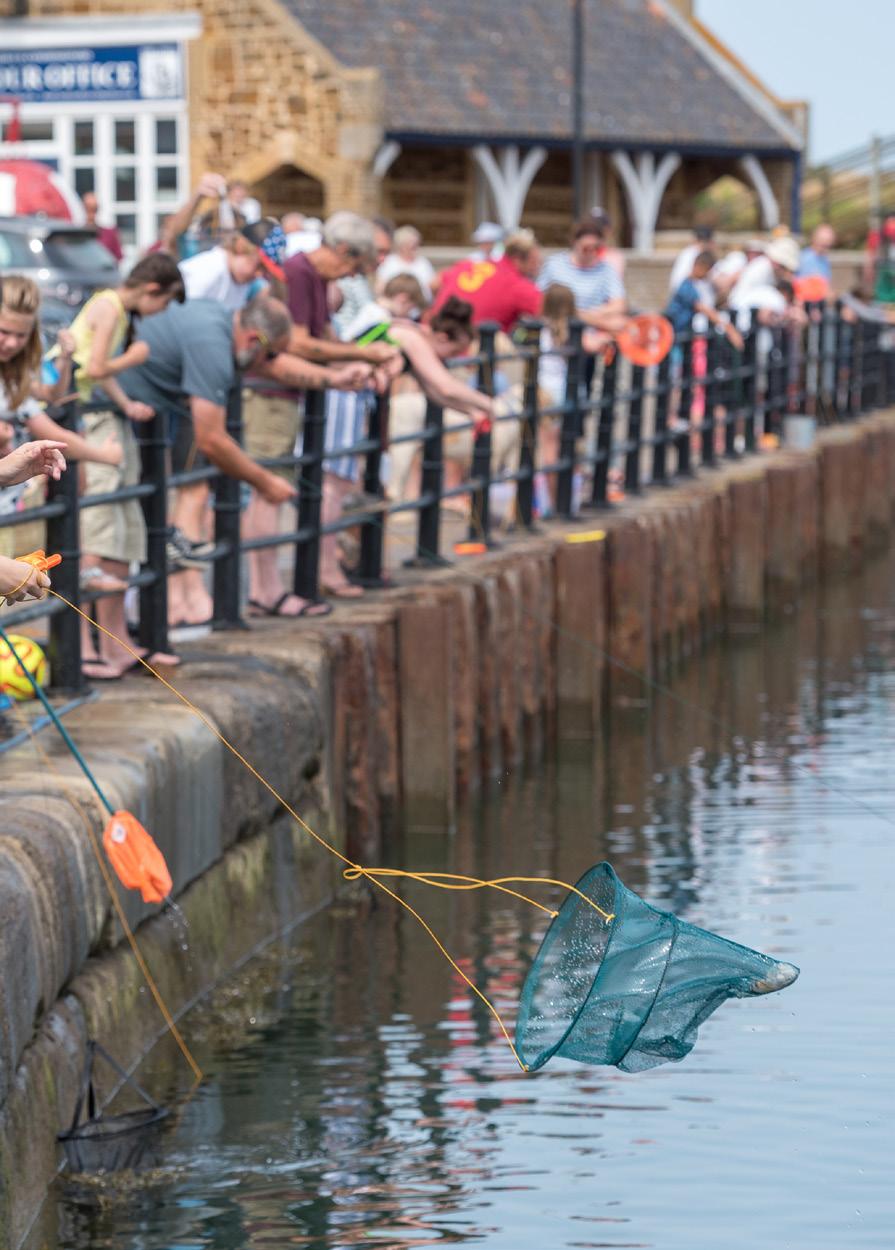
13 Go crabbing!
Go crabbing! The best place is the quayside at Wells-next-the-Sea.
14 Donuts in Great Yarmouth
Eat donuts on Great Yarmouth seafront, freshly cooked while you wait. The last bit, when they get rolled in sugar… uhm. Bet you can’t eat one without licking your lips.
15
Play beach cricket
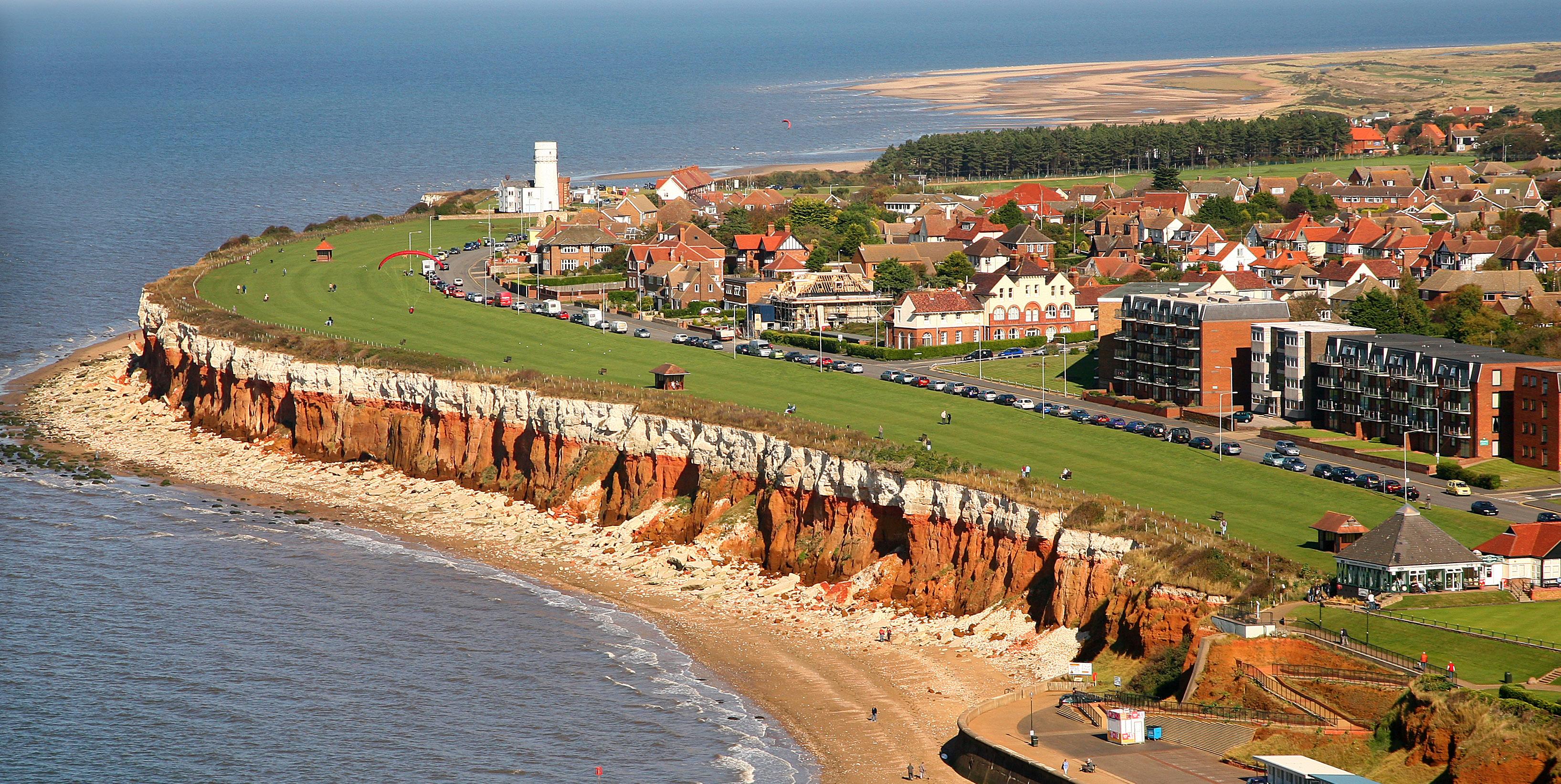
Play beach cricket on the wide expanse of Old Hunstanton beach and marvel at the striking pink and white striped cliffs, formed from a combination of Norfolk carrstone and chalk.
16 See seals from a boat
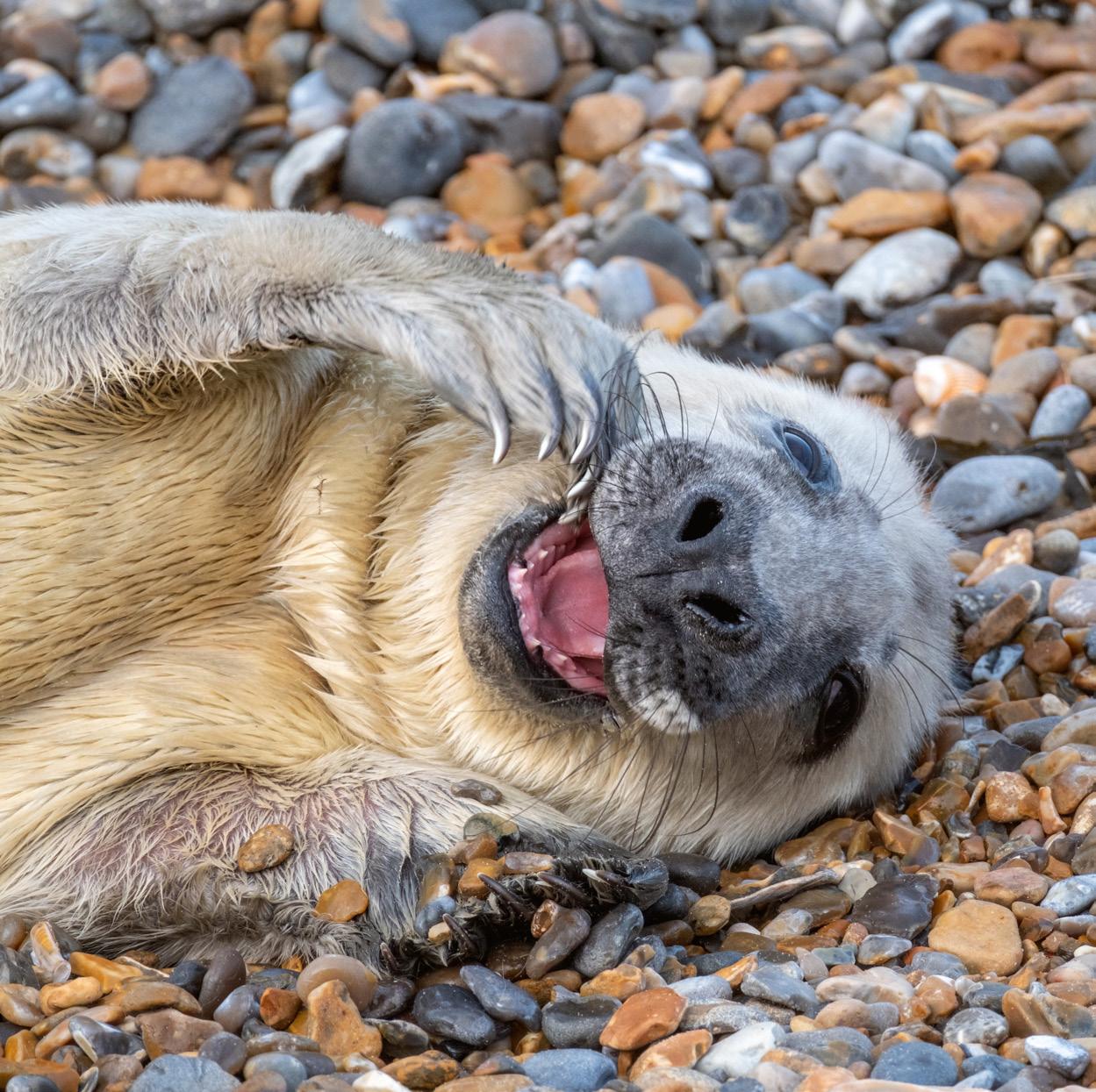
Take a boat trip with Beans to see the seals at Blakeney Point from Morston Quay. They’re just the cutest things, inquisitive and fun. You’ll fall in love with them.
17 Fish and chips in Cromer
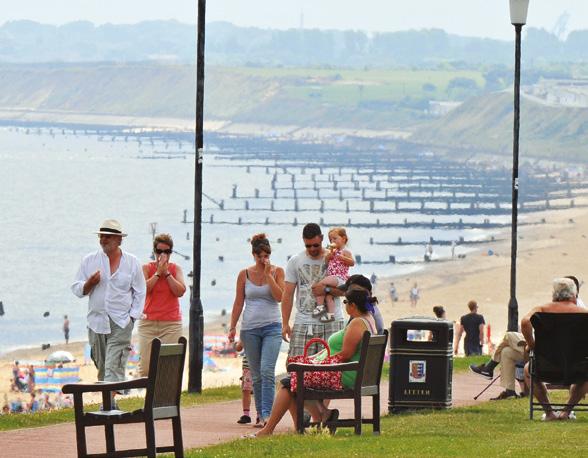
Eat fish and chips on Cromer Promenade, sitting on a bench, looking at holidaymakers enjoying the beach and swimming in the sea. Lashings of salt and vinegar. Go on, you’re on holiday. They’re brilliant at Eric’s at Thornham.
Have a pint of beer in a beer garden in the sun. We recommend a pint of Woodforde’s outside the brewery tap, The Fur and Feather at Woodbastwick. Or sit by the river Bure at The Rising Sun, Coltishall.
19 Walk along Norfolk’s Deep History Coast
Enjoy the beach walk from Happisburgh to the lovely sandy bays at Sea Palling. See if you can find 850,000 year old human prints. Archaeologists from the Natural History Museum did back in 2013. Who knows, you might get lucky on Norfolk’s Deep History Coast.
20 See another country, from Hunstanton ;)
Try to convince someone that the land you can see in the far distance standing on Hunstanton seafront is actually Holland. Someone always falls for it! (It’s actually Lincolnshire. Look out for St Botolph’s Church, otherwise known as The Boston Stump). As Hunstanton is the only east coast resort that faces west, you get spectacular sunsets too.
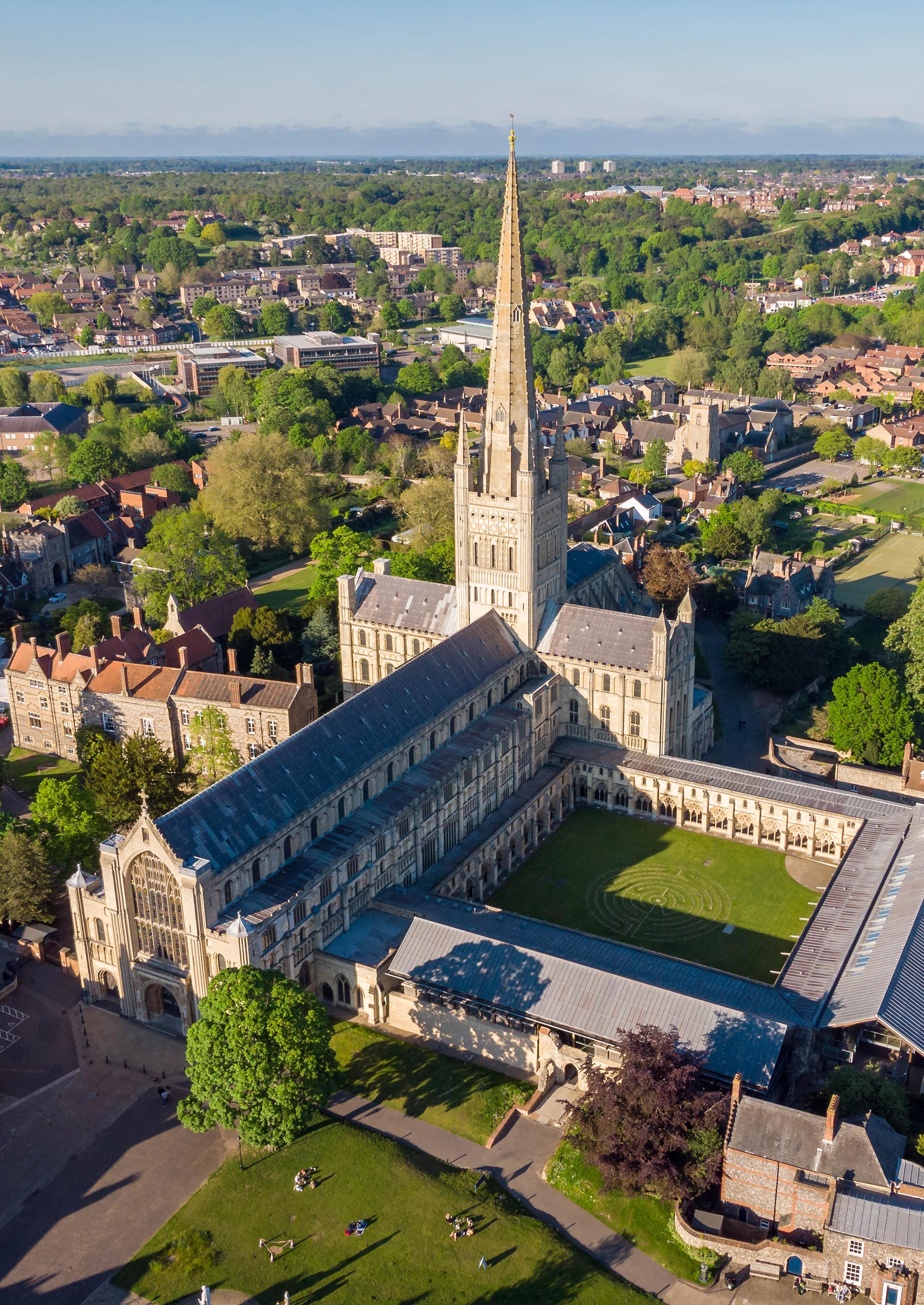
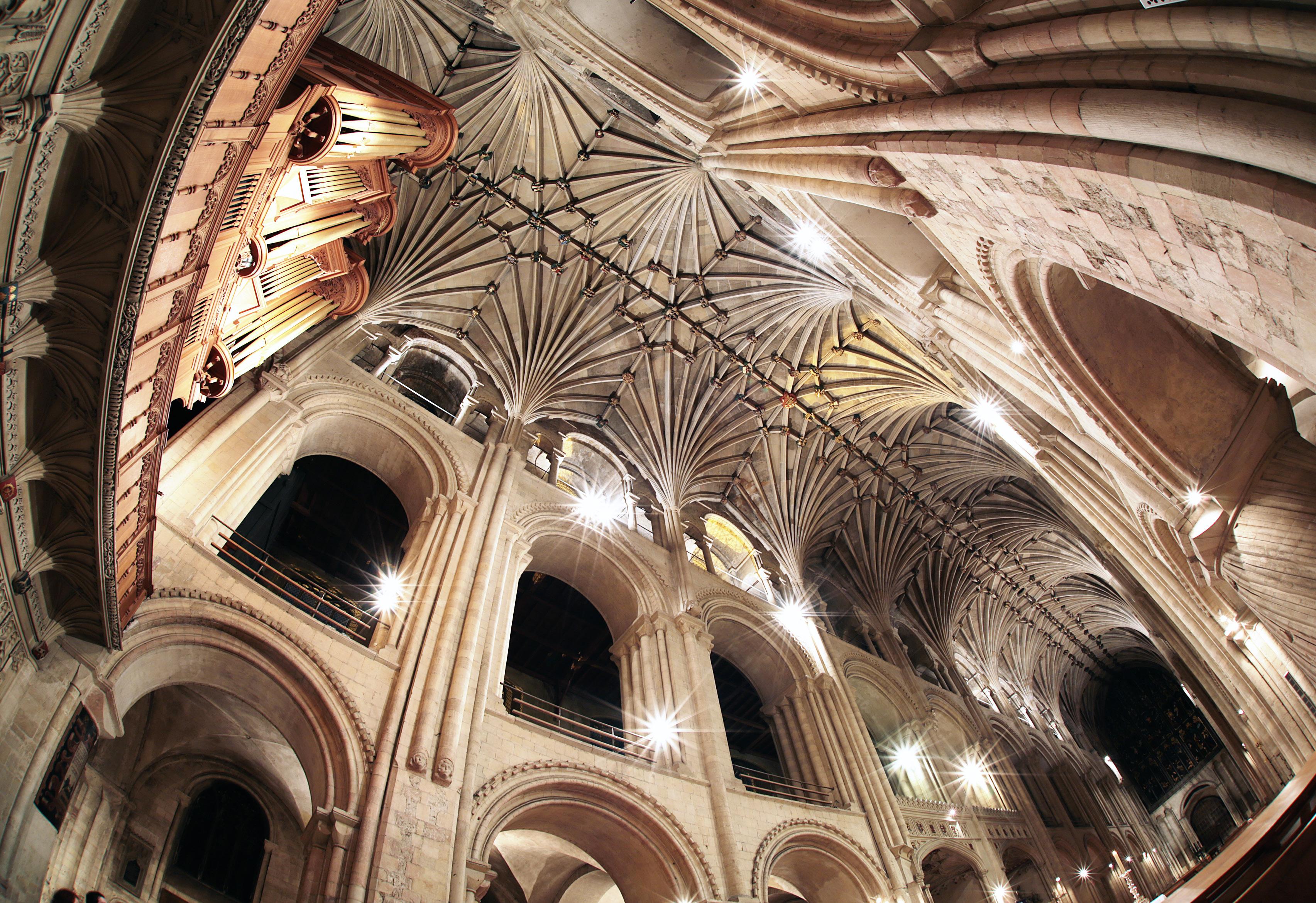
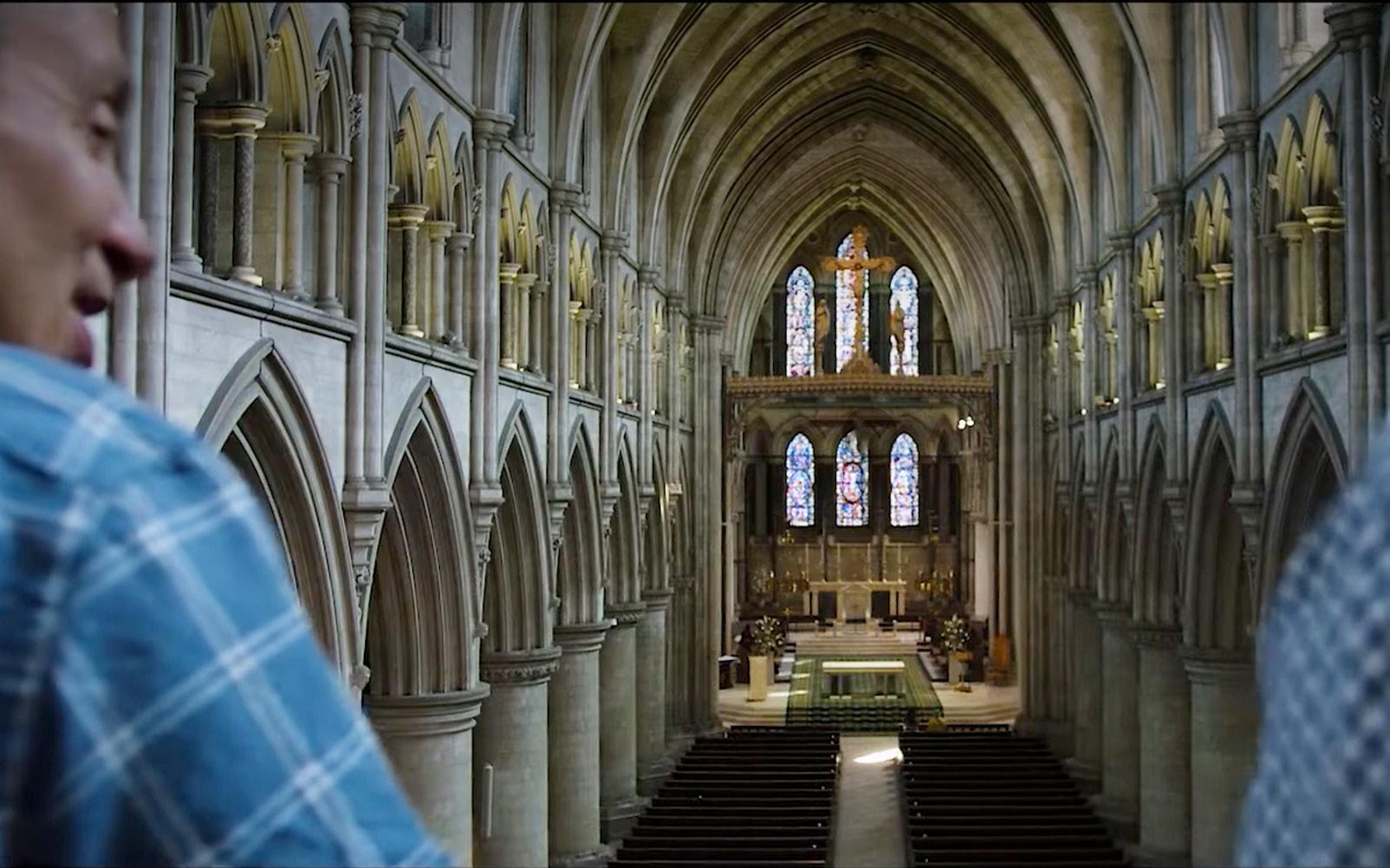
Norwich’s Norman Cathedral is one of the city’s iconic buildings, dominating the skyline with a 315ft spire that is second in height only to Salisbury. Here are 12 things to see and do in one of the Seven Wonders of Norfolk…
1 As you approach the main gate from Tombland you’ll notice the statue of Edith Cavell, a nurse from nearby Swardeston who was shot by the Germans during the first world war for helping Allied prisoners escape from Brussels. She is now buried inside the cathedral precinct.
2 The gate is named after the kneeling figure above the arch, Sir Thomas Erpingham, a local knight who led the Welsh (yes, really!) archers at Agincourt against the French. That’s one back in the eye for the Normans!
3 Going through the gate you might see blue-blazered pupils of the Norwich School, which is just inside the precinct, and a statue of the school’s most famous pupil, Horatio Nelson, which is opposite on the green in the Upper Close. You’ll also notice the cathedral’s majestic sand-coloured Caen stone and flying buttresses.
4 There’s a lot of history attached to the cathedral. After all, it was built more than 900 years ago, and has seen civil unrest, plague, war and fire. So you don’t miss out, take a free guided tour.
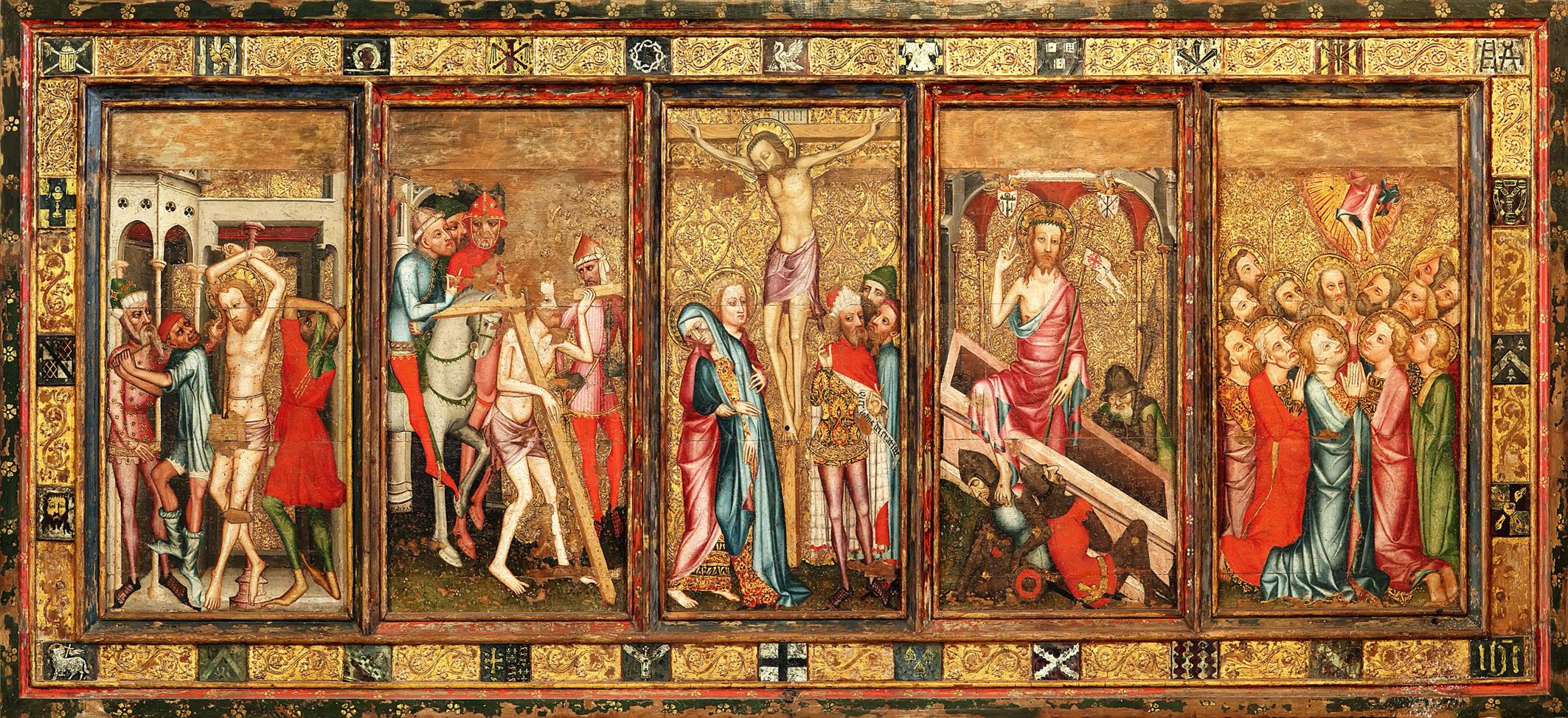
5 Make sure you see the treasured Despenser Retable behind the altar of St Luke’s chapel. It’s a 14th century painting that depicts the death and resurrection of Christ. It went missing during the Puritan days of the 16th century and was only rediscovered in 1847 when someone dropped something on the floor and looked up at the bottom of a table – the painting had been nailed face down to hide it!
6 The Cathedral has the largest collection of medieval roof bosses of any cathedral in the Christian world – more than 1000! It’s also possibly one of the greatest collections of Bible stories in stone.
7 Walk round the largest monastic Cloister in England, with its stunning high arches and roof bosses. Designed to house 100 monks it was rebuilt in 1297 after its destruction during riots 25 years earlier. Shakespeare plays are performed here during the summer.
8 Based on the site of the original monks’ dining hall, the Refectory is a superb restaurant/ coffee shop that combines medieval and modern architecture. It would be rude not to pop in for a cup of tea and piece of cake.
9 Experience the beauty of Evensong sung by Norwich Cathedral Choir every evening except Saturday. It’s not often you can witness a medieval tradition that stretches back to 1096.
10 Don’t miss the peregrine falcons which have made a nest on the spire and hatched chicks the past few years, the first time to happen in Norwich in living memory. Thousands of people every year, from March to June, view the birds from the observation point located in the Cathedral Close.
11 Take in one of the exhibitions at the Hostry Visitor and Education Centre which has a variety of local, national and international events throughout the year.
12 Stroll around the Cathedral Close, the largest to survive of any English cathedral and covering 44 acres, dotted with listed buildings and beautiful, tranquil green spaces. There are few better places to escape the bustle of the modern city.
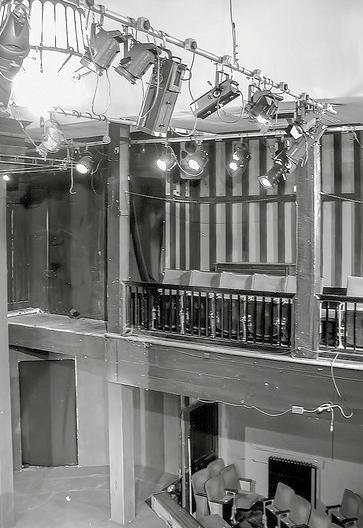
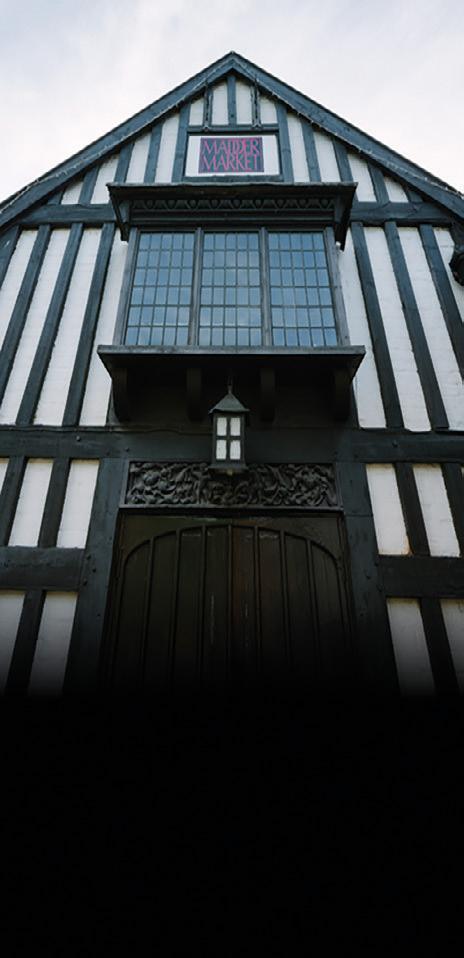
TOUR BEHIND THE SCENES AT THE MADDERMARKET THEATRE
Led by our expert guides, you’ll see parts of a working theatre you wouldn’t normally see. Learn about what stood on the ground before the theatre and how it was transformed. Visit our costume department, step into the wings, sit in the green room and tread the boards.
Come with a group or have a more intimate tour.
ONLY £7.50 PER PERSON BUT WITH THIS ADVERT/ VOUCHER IT’S ONLY £5.
To find out more, book a tour...
Maximum
people per
The best swimming beaches to get your Vitamin Sea.
It was the advent of the railways in the 19th century that brought people here for their health. The Victorians popularised sea bathing, and we’ve been doing it ever since. Excepting the obvious Cromer and Great Yarmouth, here’s our top ten favourite beaches to swim from when you visit Norfolk…
There’s nowhere like Norfolk
…on our north coast
1 Holkham
Neighbouring Wells-next-theSea, Holkham beach is reached by wooden boardwalks through a pine forest. The water is shallow and if you time it right, with the tide going out, you’ll also discover lots of pools of warm water to swim in.
2 Wells-next-the-Sea
There’s no shelf on this beach so the water is quite shallow, but if you really want to get into deep water then head for The Run, the channel that takes boats in and out of the harbour. At low tide, you can walk a mile out to where the sea has receded and take a dip.
3 Brancaster
The tides change this large beach but it’s the low gradient that means it’s a good place to swim at any time.
Oh, and before you head out please check the tides and any warning advice on currents. Swim safely!
You may have noticed that we have a lot of coastline in Norfolk. 90 miles of it… 93 when the tide’s out. It brought invaders like the Romans, Anglo Saxons, Normans and Vikings.
and round to the east…
4 Sea Palling
The detached breakwater of granite blocks here has created lovely shallow bays. If you want to escape the crowds, walk to the northern part. In fact, walk a bit further and you’ll find yourself on just as lovely Eccles-on-Sea beach.
5 Winterton-on-Sea
Perfect for families, the beach here is well worth a visit for excellent sea bathing as the changing sands have created new sheltering sand banks. There’s a few food and ice cream kiosks for refreshments.
6 Mundesley
This quaint little village looks as if it was set in aspic in 1953 – it’s got a lovely traditional seaside vibe, and a huge beach from which to launch yourself into the sea.
7 Caister-on-Sea
It’s no surprise the UK’s first holiday camp was built here – the beach is fabulous to steady your nerves before diving into the North Sea!
10 Gorleston-on-Sea
Shifting sands have also changed Gorleston beach over the past few decades. A permanent large beach leads to gently shelving water and offshore sandbanks. Jay Jay’s café is good for a post-swim cake and coffee.
8 California
Yes, Norfolk has its very own California! The beach here, at the bottom of low sandy cliffs, is peaceful and picturesque.
9
Neighbouring California, this is another quiet, wide sandy beach that leads into shallow water.
Scratby
Sea Palling beach.
Where to get high in Norfolk.
We blame Noel Coward. It was the famous playwright who penned the line ‘Very flat, Norfolk’ in Private Lives and the reputation stuck. Sure, Norfolk isn’t Snowdon and you won’t need crampons and ropes to enjoy its gently rolling countryside and big skies, but there are still ways to get high in Norfolk…
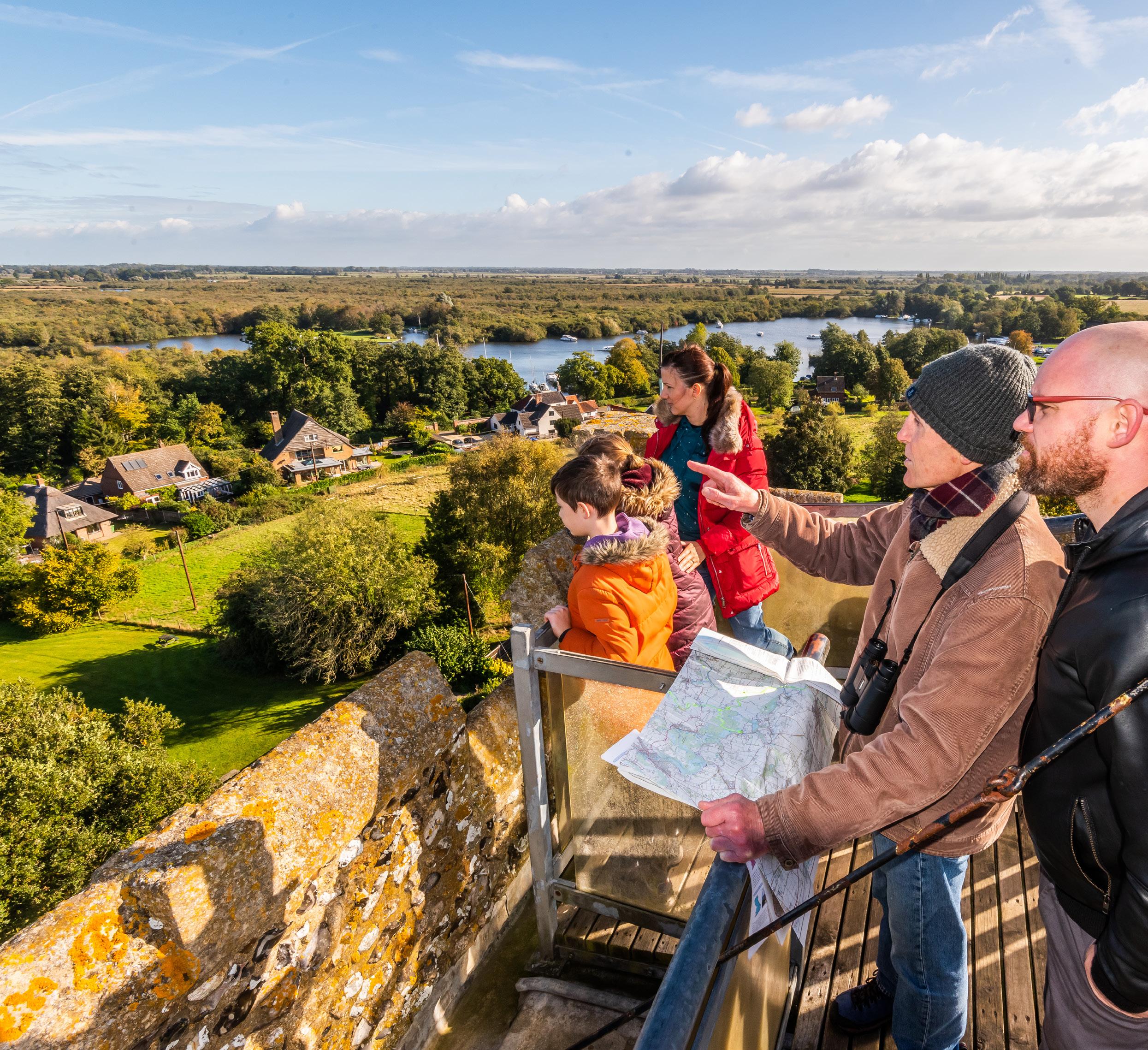
The Broads National Park are probably the flattest part of Norfolk, but you can get high here too… at the top of the church tower of St Helen’s at Ranworth, otherwise known as The Cathedral of the Broads. To reach the top you have to climb 89 steps, go up a pair of ladders and navigate a trap door but, trust us, the view is worth it.
Experience the heady heights inside the Roman Catholic Cathedral of St John in Norwich, and while you’re there take a tower tour and enjoy the beautiful countryside around the city. Bring your binoculars and on a bright day you might see the red and white stripes of Happisburgh lighthouse and also the wind turbine farm off Great Yarmouth.
Also in the city head up to the battlements of Norwich Castle and enjoy the views of the market place. Up here, you’re the king of the castle and everyone else is a dirty old rascal. Or, as this is a Norman castle, you might want to reprise the French soldier from Monty Python’s The Life of Brian, ‘Go and boil your bottoms, you sons of a silly person! I blow my nose at you!’
Walk the Cromer Ridge
Stand at Roman Camp, otherwise known as Beacon Hill, on the Cromer Ridge and you’ll be at the highest point in not just Norfolk but the whole of East Anglia! Cromer Ridge is a terminal moraine, created at the end of the last Ice Age when a glacier, basically, just gave up and left behind everything it has picked up. Nearby Telegraph Hill at Kelling Heath has a spectacular panorama of the coast.
Also nearby is the Humphry Reptondesigned Sheringham Park. There’s a good view from the gazebo but
it’s even better from the viewing tower where you can look all the way along the coast westwards to Blakeney Point, where the seals live.
And our final one on the Cromer Ridge is Beeston Bump at West Runton, a circular hill called a kame, which are steep-sided mounds of sand and gravel deposited by the melting ice sheet. Facing to sea, look left and you’ll see Sheringham and right, you’ll see Cromer.
Left: Up the church tower of St Helen’s at Ranworth.
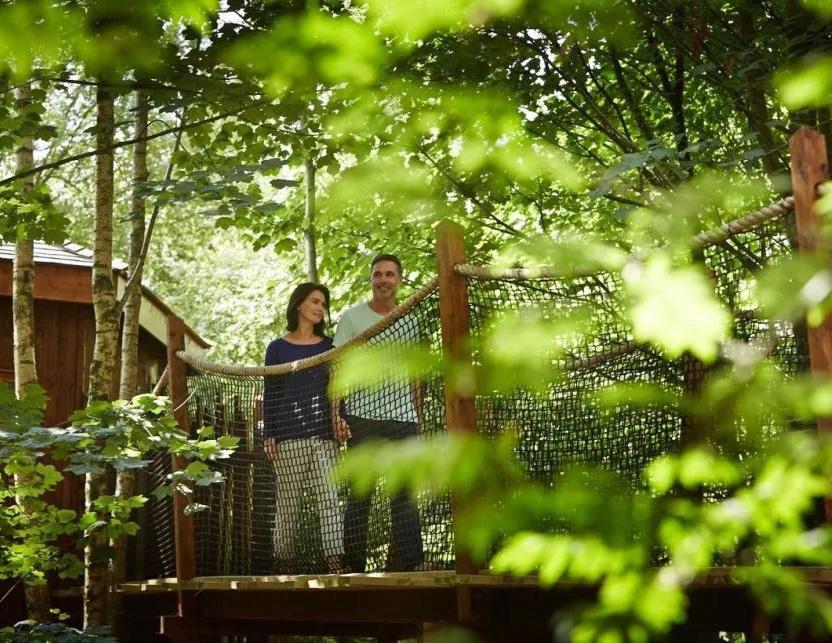
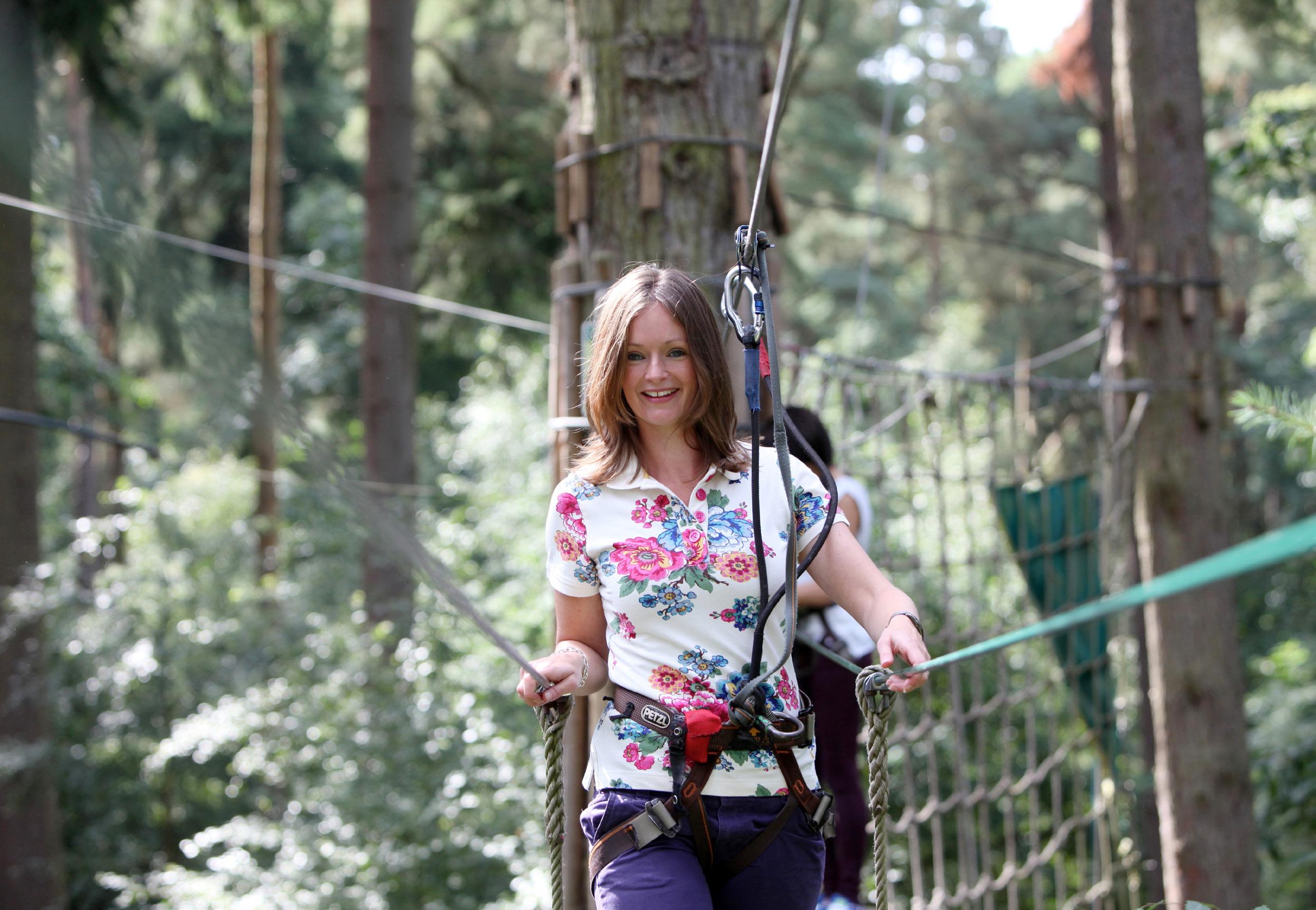
Visit Thetford Forest for Go Ape, a fab series of aerial adventures in the treetops.
Take a spin on the Big Wheel on Great Yarmouth’s Golden Mile of seafront and observe the seals on Scroby Sands and the Broads cruisers on Breydon Water.
Another way to get high in Great Yarmouth is to take a ride on the Pleasure Beach rollercoaster. Wheeeeee!
Your Norfolk questions answered.
We get lots of email queries to info@visitnorfolk.co.uk from around the country, and indeed from abroad as well. They range from ‘what’s the number of the Norwich-Great Yarmouth bus?’ (901 via Acle) to ‘what’s the best way to see the seals in Norfolk?’ (by boat from Morston Quay with Bean Brothers).
So we’ve compiled a list of the top questions we get asked…
Can you take dogs on Norfolk beaches?
Yes! We’ve got 90 miles of coast, much of which is beautiful, unspoilt beach and dogs are very welcome on most of them. Just check where you can take and can’t take them before you hit the sand. For instance, in Great Yarmouth the main beach is restricted, but from the Britannia Pier north it’s doggie delight. Likewise popular beaches at Wells-next-the-Sea, Gorleston-onSea and Cromer. At Holkham, dogs must be on leads as you go through the boardwalks and pine forest because of nesting birds.
Is it true the Broads are man-made?
Yes! The big lakes are actually inundated medieval peat diggings from the days when all the trees were felled to create pastureland to rear sheep for the lucrative wool trade. Unfortunately that meant no firewood to keep warm in the Winter. The answer? Dig up peat as turves (bricks), dry them and… hey presto! By the by, did you know the word field comes from the felling of trees (feld in German).
Is Norwich the only city in Norfolk?
It is but when it’s as good as the City of Stories you don’t need any more. The best-preserved medieval city in the country, Norwich has a fabulous Norman Cathedral and Castle as well as cobbled streets, riverside walks, and Europe’s largest permanent covered market with its flint Guildhall.
Is Norfolk really flat?
No. We blame Noel Coward who wrote it is in his play Private Lives. In fact, Norfolk has gently undulating countryside, with soaring cliffs at Sheringham where the Cromer Ridge rises to the highest point in the East of England with a sea view.
How do you pronounce Happisburgh?
It’s not Happys-berg, put it that way. Norfolk has lots of village and town names that can throw a visitor such as Costessey and Wymondham. Take a look at our blog here and all will be explained. Oh, and it’s Haze-bru.
Is it easy to get to Norfolk?
Since the last section of the A11 at Elveden was fully dualled a decade ago, you’ve got two- and three-lane carriageways from anywhere in the country all the way to Norwich. After that, reset your mind and learn to relax on our lovely country B-roads and lanes.
Is Norwich close to London?
Norwich is 115 miles from central London. It’s easy to get between the two along the A12 or up the M11 and then across to the A11. There are regular trains between the two with Greater Anglia – trains to Norwich leave from London Liverpool Street.
Is Norfolk an island?
It’s not, but it’s not far off. The River Little Ouse starts just behind Thetford and leaves the county for open sea at The Wash. The source of the River Waveney, which reaches the sea at Great Yarmouth, is just a few miles from that of the River Little Ouse. So there’s only about four miles in it.
Why is Yarmouth called Great?
Obvious… it’s the greatest seaside resort on the East Coast! Or is it to differentiate it from Yarmouth on the Isle of Wight? Actually, the town was named Magna (Great) in 1272 to distinguish it from Little Yarmouth across the River Yare, a community now known as Southtown. Interestingly, if you go back to Roman times when they had a huge fort at Burgh Castle (the biggest remaining Roman building in the country), Great Yarmouth didn’t exist… it was only over the next few centuries that longshore drift created a sandbank over the Breydon Water Estuary that became our famous seaside town.
Is it true that the village of Little Snoring used to have a newsagent called Mr Gotobed?
It sounds like something from BBC Radio 4’s Unbelievable Truth, but yes, it is true. What are the chances of that? It’s a sleepy village where drivers are asked to maintain the speed limit but there are no calls yet for Sleeping Policemen.
Quirky events to experience in Norfolk.
If it’s something different you’re looking to enjoy, then Norfolk doesn’t disappoint.
Norfolk has its quirky side, including Greasy Poles, World Snail Racing, Lobster Potties, the Wiggenhall Wave, fairies, the world’s last end of pier theatre, plus the invention of Jack Valentine…
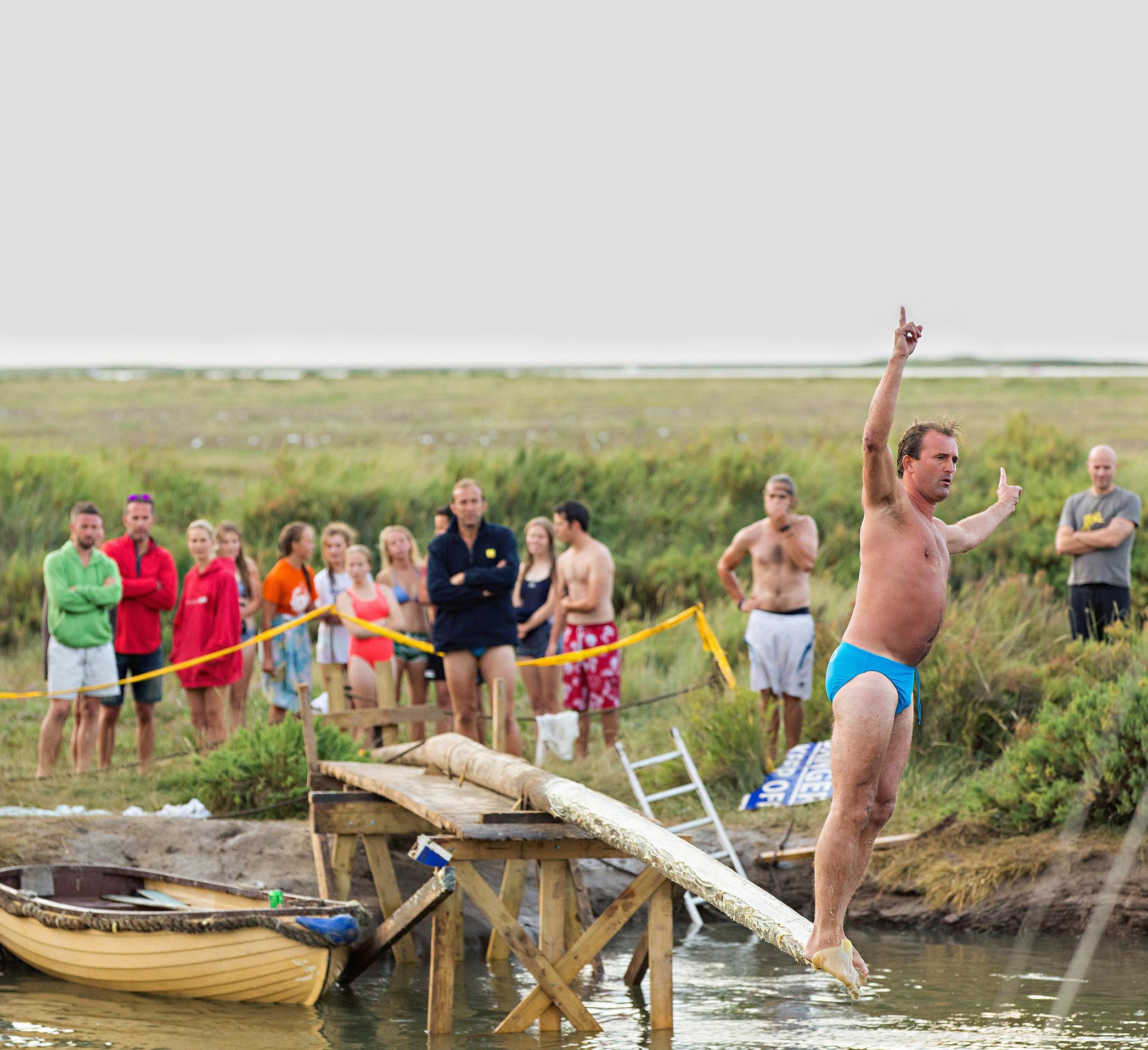
Greasy Pole at Blakeney
If you’re after a muddy weekend in Norfolk, then this competition is for you. Imagine walking a pirate plank before ending up in the water – well, this is walking a greasy pole and ending up in a lot of mud (the lower the tide, the muddier it gets!). The event also includes a Gillie (crab) catching competition, sandcastle building, tug of war and swimming races. Times depend on tides and weather. There’s usually a barbecue on the quay too.
Wiggenhall Wave
If you’ve heard of the Severn Bore, you’ll be interested in Norfolk’s own version, the Wiggenhall Wave. When the moon’s high over the Fens and the biggest tides turn from ebb to flood, a thunderous torrent of white water more than a metre high can drive inland all the way to Denver. Sometimes the Wiggenhall Wave is no more than a gentle rolling wall of water, but if you’re lucky you’ll catch what the fenfolk call Eagres, a wave so big it can be surfed.
World Snail Racing Championships, Congham
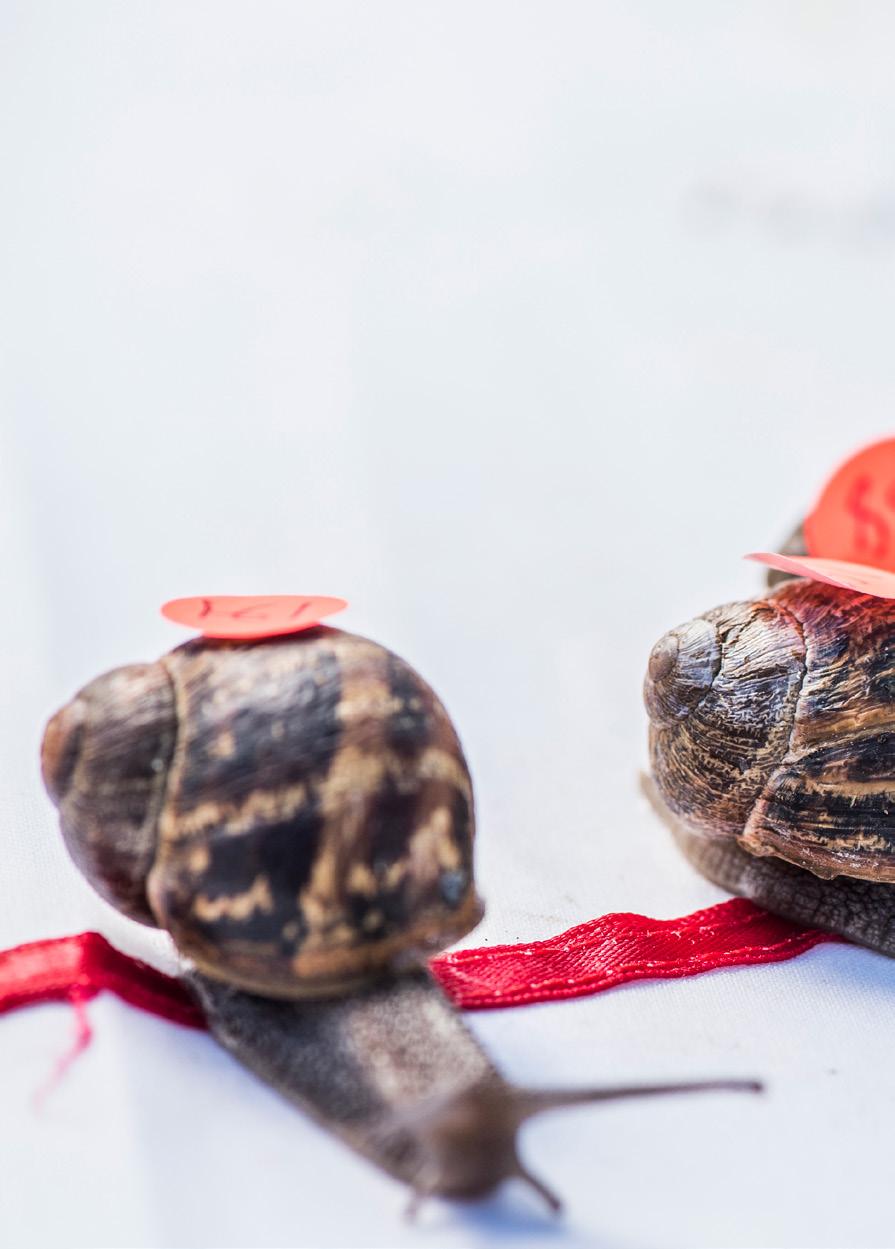
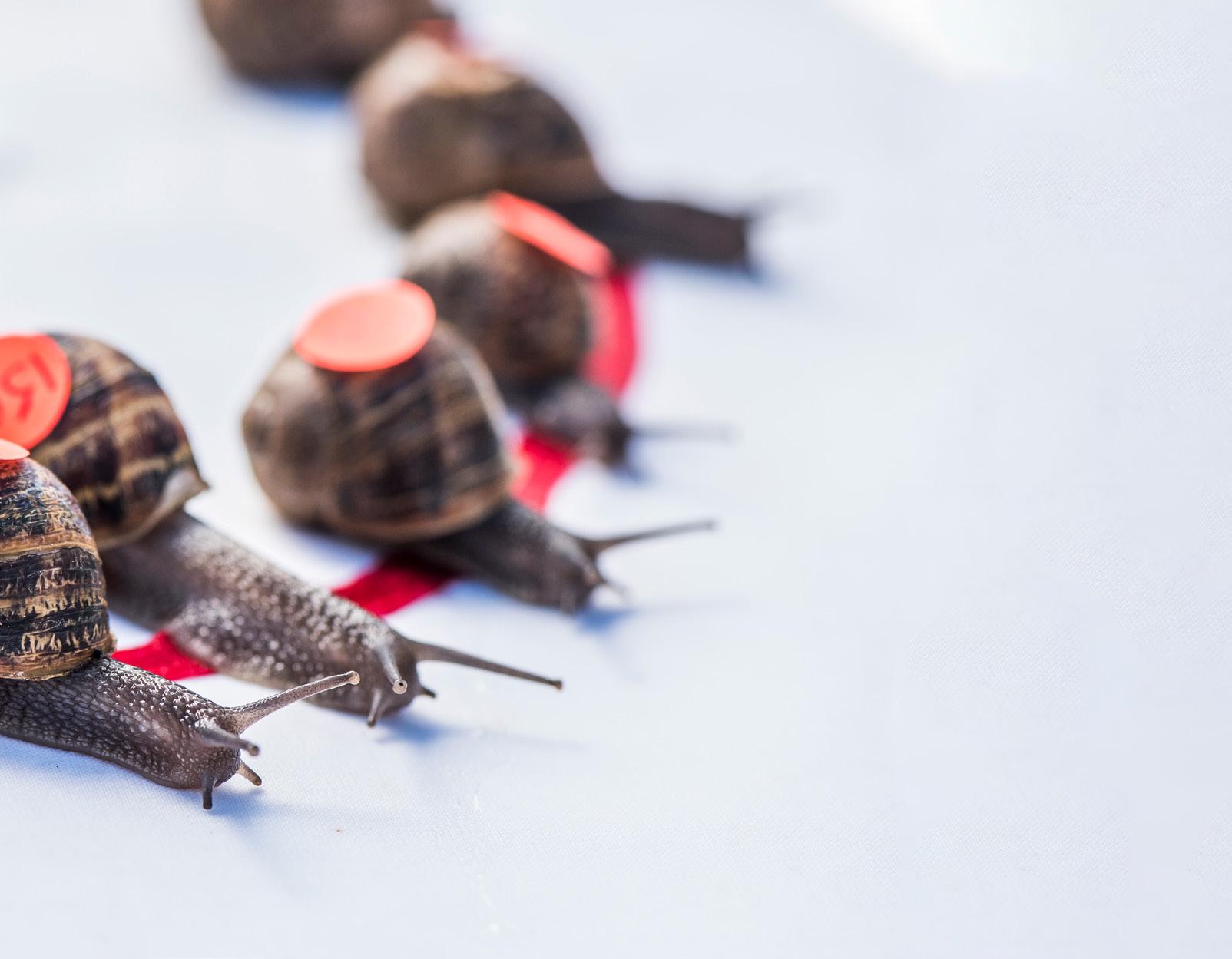
Ready, steady... slow! This annual competition in July started in the 1960s after founder Tom Elwes witnessed an event in France (although at Congham the competitors don’t end up as lunch!). Today it’s said that Congham is to snail racing what Newmarket is to horse racing. Trainers take it seriously, with snails exercising by sliming up 45 degree slopes and pulling Lego bricks.
Sheringham Lobster Potties
The Sheringham ‘Lobster Potties’, dancing the traditional Norfolk Morris style, were formed in 1986 and went on to start the Potty Festival, which now attracts groups from across the UK and Europe. Using the Lobster Public House (of course) as their headquarters, and being considered by some as ‘potty’, the name Lobster Potties was obvious!
Hunstanton Kite Festival
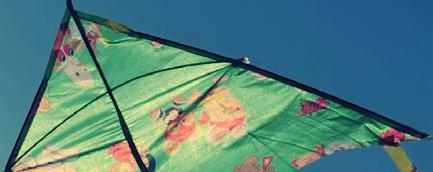
Possibly the most colourful event in East Anglia is the Hunstanton Kite Festival, held annually at Smithdon High School, Downs Road. Of course, you’re saying, ‘Kites? In Norfolk? But Norfolk’s flat!’ Yes, if you believe Noel Coward in True Lives then yes, Norfolk is ‘very flat’. But clearly Coward had never been to north Norfolk, where the cliffs at Sunny Hunny are perfect for kite flying. The festival also has classic cars and a motorcycle rally.
Thursford Christmas Spectacular
Where might you think the biggest Christmas Show in England is held every year? West End maybe? Nope, it’s in Norfolk and it’s the Thursford Christmas Spectacular… reason enough to visit our county in the festive season. Set in the magical surroundings of mechanical organs and fairground carousels, with a cast of 130 professional singers, dancers and musicians, many of whom are West End performers, this three-hour performance is an extravaganza of non-stop singing, dancing, music, humour and variety. It’s a fast-moving celebration of the festive season featuring an eclectic mix of both seasonal and year-round favourites, with famous and much-loved chart toppers being sung alongside traditional carols. It’s the perfect way to put you in the mood for the Christmas celebrations.
Out There Festival, Great Yarmouth
The Out There Festival is fast becoming the UK’s leading event for circus and street arts, featuring some of the world’s finest, funniest, most mindboggling, jaw dropping shows. You’re guaranteed to leave having experienced the very weirdest and most wonderful acts you’ll ever have seen, with madcap mayhem and explosive carnival celebrations. Events take place in St George’s Park, the Golden Mile and around the town – and are mostly free!
Thursford Christmas Spectacular
There’s nowhere like Norfolk
Jack Valentine, countywide
Not only did the tradition of sending cards to sweethearts on February 14 start in Norwich, but Norfolk also has unique Jack Valentine. If you hear a rap on your door late at night on the evening of February 13th and open it to find a present on the doorstep, then it would have been left by Jack Valentine. Some cynics say it’s parents getting their neighbours to leave a present for children, but we think that’s like saying Father Christmas isn’t real. Pish and twaddle… it’s our man Jack. Stay in Norwich for Valentine and you might even get to see him, tiptoeing around the streets with a gift or two!
St Benet’s Abbey ceremony
The Abbey of St Benet’s was the only one in England not officially dissolved during the suppression of the monasteries under Henry VIII so each year an open-air service is held in commemoration and thanksgiving at the ruins. The Bishop of Norwich is the Abbot of St Benet’s and the Vicar of nearby Horning is the Prior of St Benet’s and together they hold an ecumenical service at which all are welcome to attend, arriving by Norfolk Wherry (the site is easiest approached by river) to meet the Brothers of St Benet’s, members of a variety of local churches and the Salvation Army Band who provide the music. It’s held on the first Sunday in August.
The last end-of-pier show, Cromer
At The Pavilion Theatre in Cromer you can enjoy the last end-of-pier theatre of its kind in the world! As well as one-offs, there are superb variety shows during the Summer and at Christmas. The pier has had a chequered history, particularly when you think that Cromer used to be inland, but it was in 1905 that the bandstand was covered to form an enclosed pavilion and the following year the first ‘concert parties’ were performed. And if you’re here at Christmas, then why not join the Cromer Boxing Day Swim! Yes, it’s going to be chilly, if not freezing, and yes, you’ve probably got to be a Grey pup short of a seal colony to do it but just imagine the respect when you’re in the pub afterwards!
Sandringham House and Estate – your questions answered.
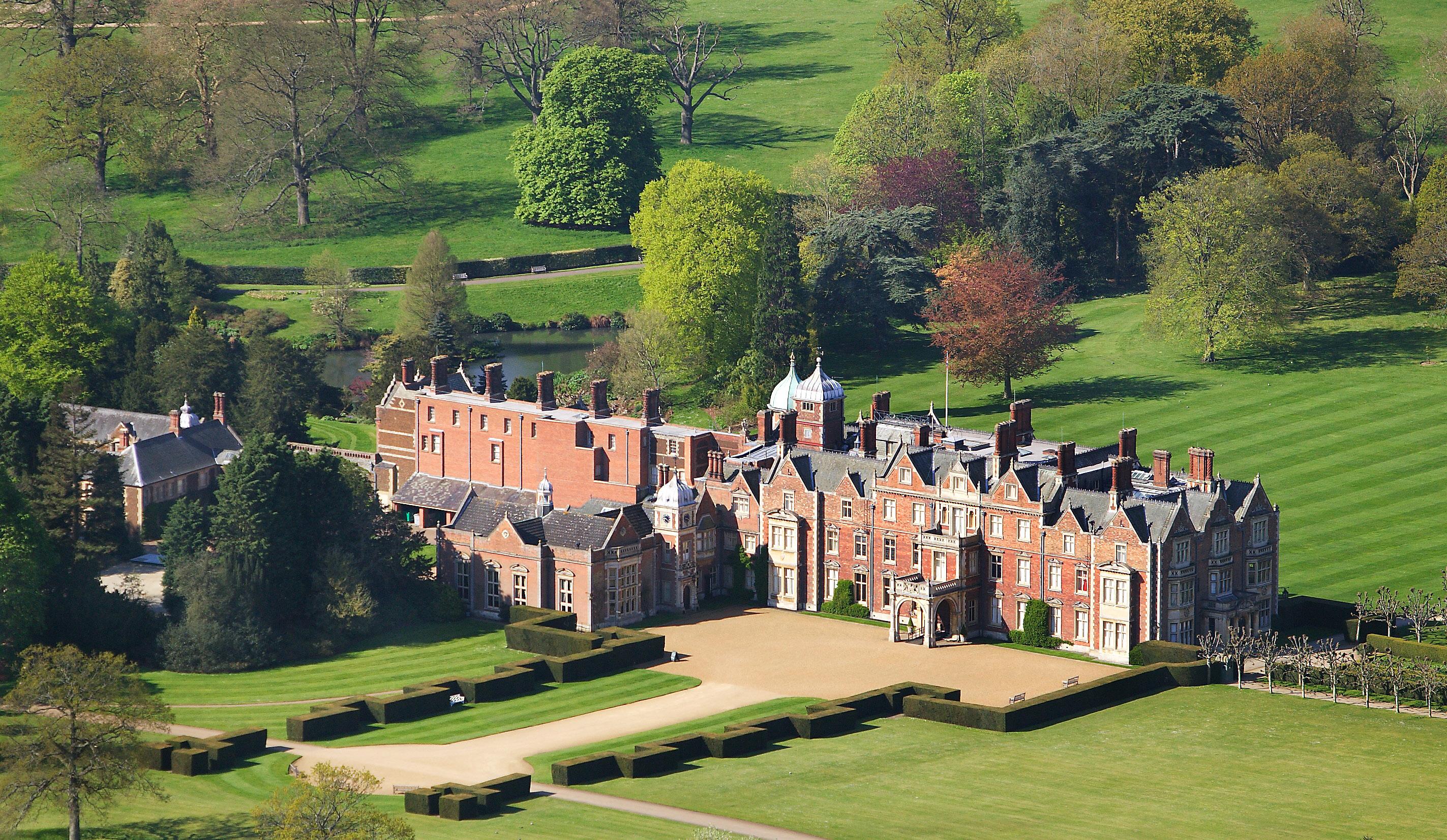
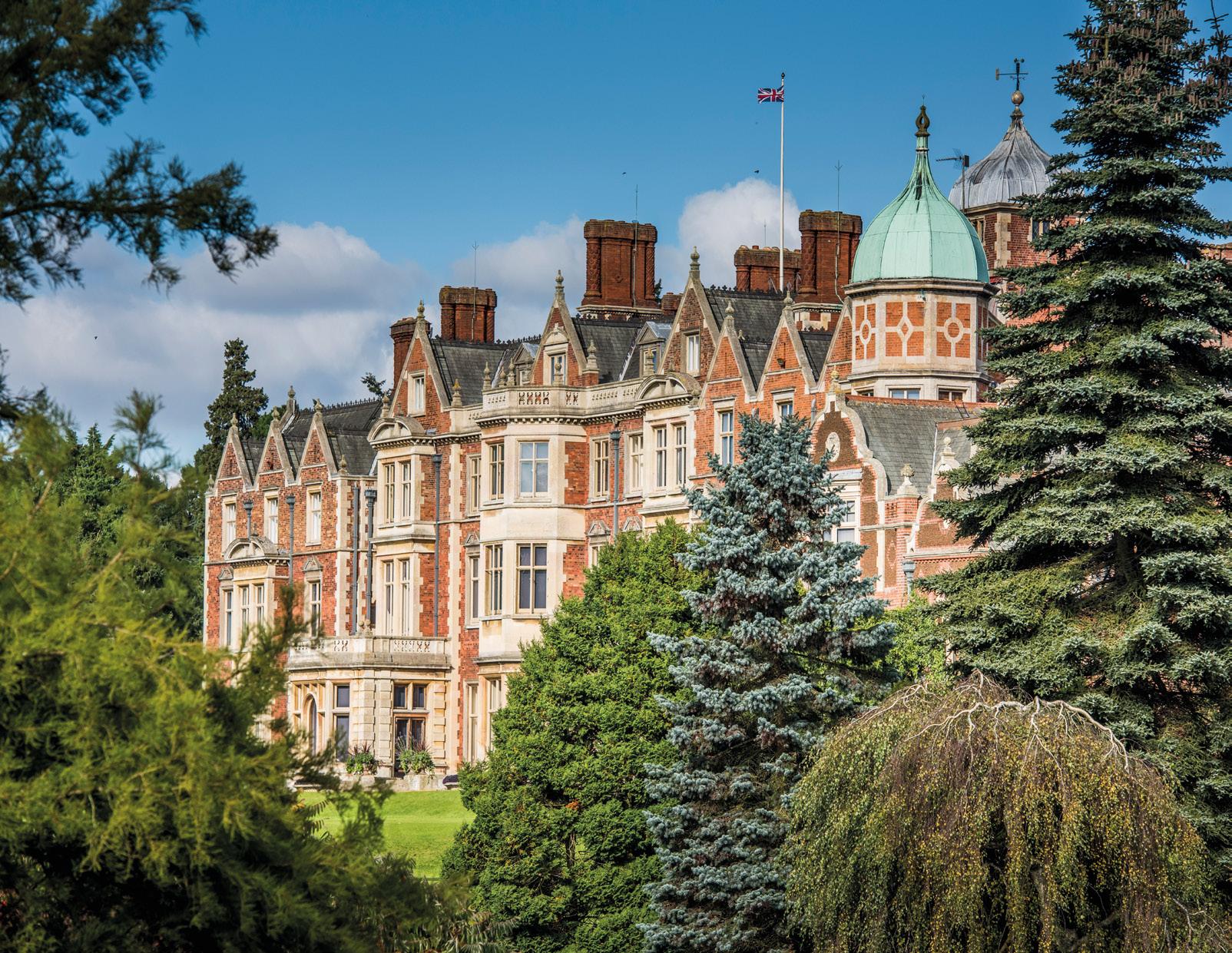
Sandringham House is an iconic English country estate famous for its stunning architecture, beautiful gardens, and rich history. With its connection to the monarchy, it’s a popular tourist attraction, drawing visitors from around the world to Norfolk.
Here, we cover some of the most commonly asked things about Sandringham House.
How many rooms are there in Sandringham House?
It can’t be overstated just quite how large Sandringham House and the estate is. The estate covers around 20,000 acres, and the gardens alone cover around 600. The exact number of rooms in the house itself isn’t publicly known, as many are private and not open to the public. It’s estimated to be 100-200 in total, including several state rooms, the ballroom, offices, and staff quarters.
How long does it take to walk around Sandringham House?
If you want to explore Sandringham House thoroughly and take in all the surrounding gardens and parklands, then you should plan to spend at least half a day there.
If you were to explore every room of the house on your own, it’d take you several hours to walk around. However, it’s not open all year round to the public and when it’s open, there are guided tours of the house that cover the principal rooms. These last around an hour. Look out for the late Queen Elizabeth’s unfinished jigsaw! There are also vast gardens and parklands at Sandringham, which are well worth exploring. Walking these could take a few hours, depending on how much you want to see and whether you stop for refreshments.
Who owns Sandringham House?
Sandringham House is privately owned by the British Royal Family, not the estate or the British government. Specifically, it’s the personal possession of King Charles by right of the Crown. The estate has been owned by the Royal Family since 1862 when it was purchased for Queen Victoria’s eldest son, Prince Albert Edward, who later became King Edward VII. In fact, for four generations it has been the private residence of the British monarchs.
Who lives in Sandringham House?
Sandringham House is primarily used as a country retreat for the Royal Family. Until recently, Queen Elizabeth II spent part of every year at Sandringham, typically from December to February. Prince Philip, before his passing in 2021, was also known to use it as a retreat, as well as the Prince and Princess of Wales and their children who have a home on estate at Anmer.
With the ballroom, dining hall and reception rooms, the estate is a popular location for family gatherings and celebrations. It’s also used for official events and engagements, with the house’s state rooms sometimes being used for hosting visiting dignitaries and other important guests.
The estate itself is managed by the Sandringham Estate Office, which oversees the running of the house, gardens, and parklands, as well as other commercial and agricultural activities on the land.
How old is Sandringham House?
Parts of the house date back to the 18th century. The house we know was built in 1870 for Prince Albert Edward, who later became King Edward VII. It was intended to be a comfortable and modern country home for the prince and his family. Throughout the years, the building has been extended and renovated by subsequent generations of the Royal Family, including King George V and King George VI.
Was part of Sandringham House pulled down?
Sandringham House we now know isn’t the original on the estate. The original house on the site was built in 1771 by Cornish Henley. Part of it was pulled down and replaced by a new building in the late 19th century. When the old house was finally demolished completely a new wing was added to replace it. This new wing was designed by architect W.D. Caroe and built between 1902-1904.
Who built Sandringham House?
The current house was built between 1869 and 1870 in the popular Jacobean style that spanned the 16th and early 17th centuries. It was designed by architect A.J. Humbert and the construction overseen by the estate’s agent, John Turner, who worked closely with Humbert to ensure that the house met the prince’s requirements. This included the modern, and incredibly luxurious, amenities of the time –central heating and hot water.
21 reasons why we think you’ll love Norfolk.
There are so many reasons to love Norfolk, but we’ve chosen our top 21... including 90 miles of coast, Royal connections, Admiral Nelson, unique Norfolk Broads, Deep History Coast, ‘Downton Abbeys’, Queen Boudicca, the world’s last end-of-pier theatre and so much more!
21 Our 90 miles of coast. It offers huge variety, from enormous wide sandy beaches at Brancaster, Holkham and Wells-next-theSea, tidal creeks and salt marshes, superb nature reserves for birdwatching, a 4-mile long spit of sand and shingle at Blakeney that’s home to the largest colony of seals in England, cliffs with stunning views, and traditional seaside resorts. And there’s a coastal path meaning you can walk around it all too!
20 Norfolk has the second, third, fourth and fifth in line to the throne living here! Sandringham is the Queen’s rural retreat, and the Duke and Duchess of Cambridge and their children live on the estate. And if it’s good enough for Royalty… 19 Admiral Horatio Lord Nelson, England’s greatest ever naval commander, was born at Burnham Thorpe in north Norfolk on September 29, 1758. Indeed, he once said, ‘I am a Norfolk man and glory in being so’. Catch up with him at the Nelson Monument in Great Yarmouth (built before Trafalgar Square’s Nelson’s Column) or see where he learnt to sail with a trip to Burnham Overy Staithe. At Burnham Thorpe pop into the Lord Nelson where he drank – it was called The Plough in his time.
Shopping in Norwich.
Crab fishing at Wells-next-the-Sea harbour.
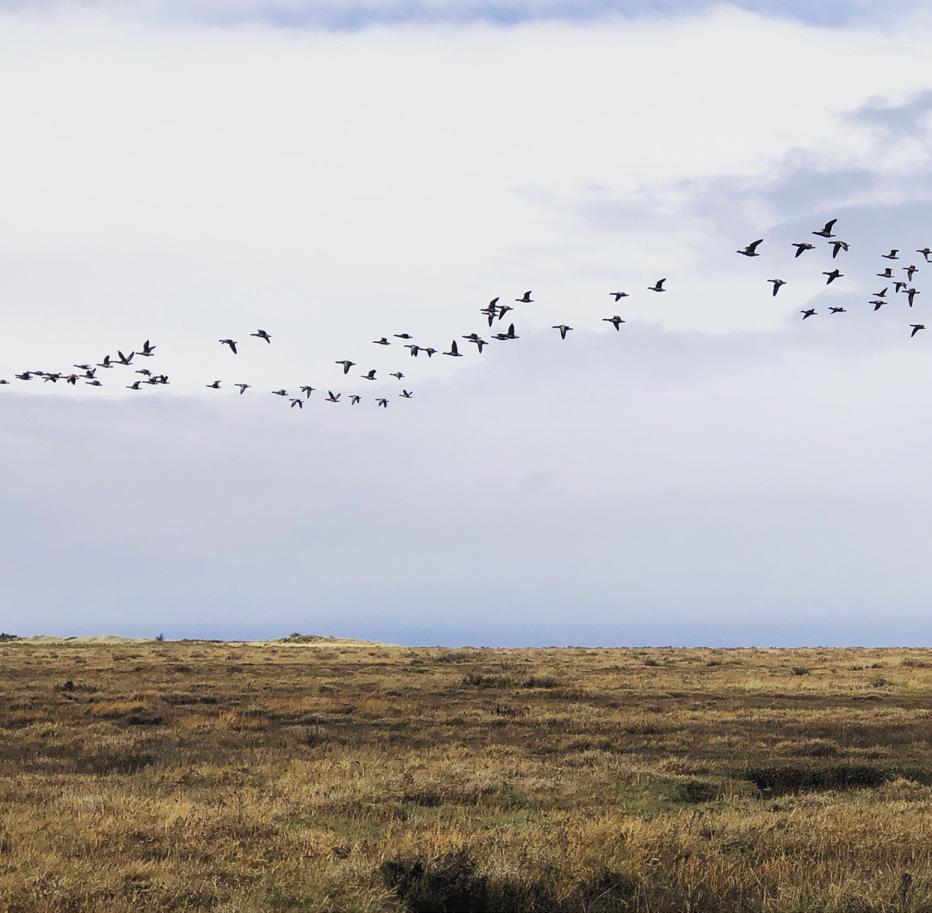
18 We reckon we have the best birdwatching in the UK. There are internationally-renowned nature reserves across the county, particularly in the unique Norfolk Broads and along the west and north Norfolk coast.
17 Norfolk is the perfect place to catch crabs! The ones found in the sea – we don’t suggest you try catching them in a fishmongers. That would be shoplifting. Cromer is the king of crabbing! With nearby Sheringham it has a Crab and Lobster Festival every year and every August bank holiday hosts the World Pier Cabbing Championships. Crabbing is also good at Well-nextthe-Sea.
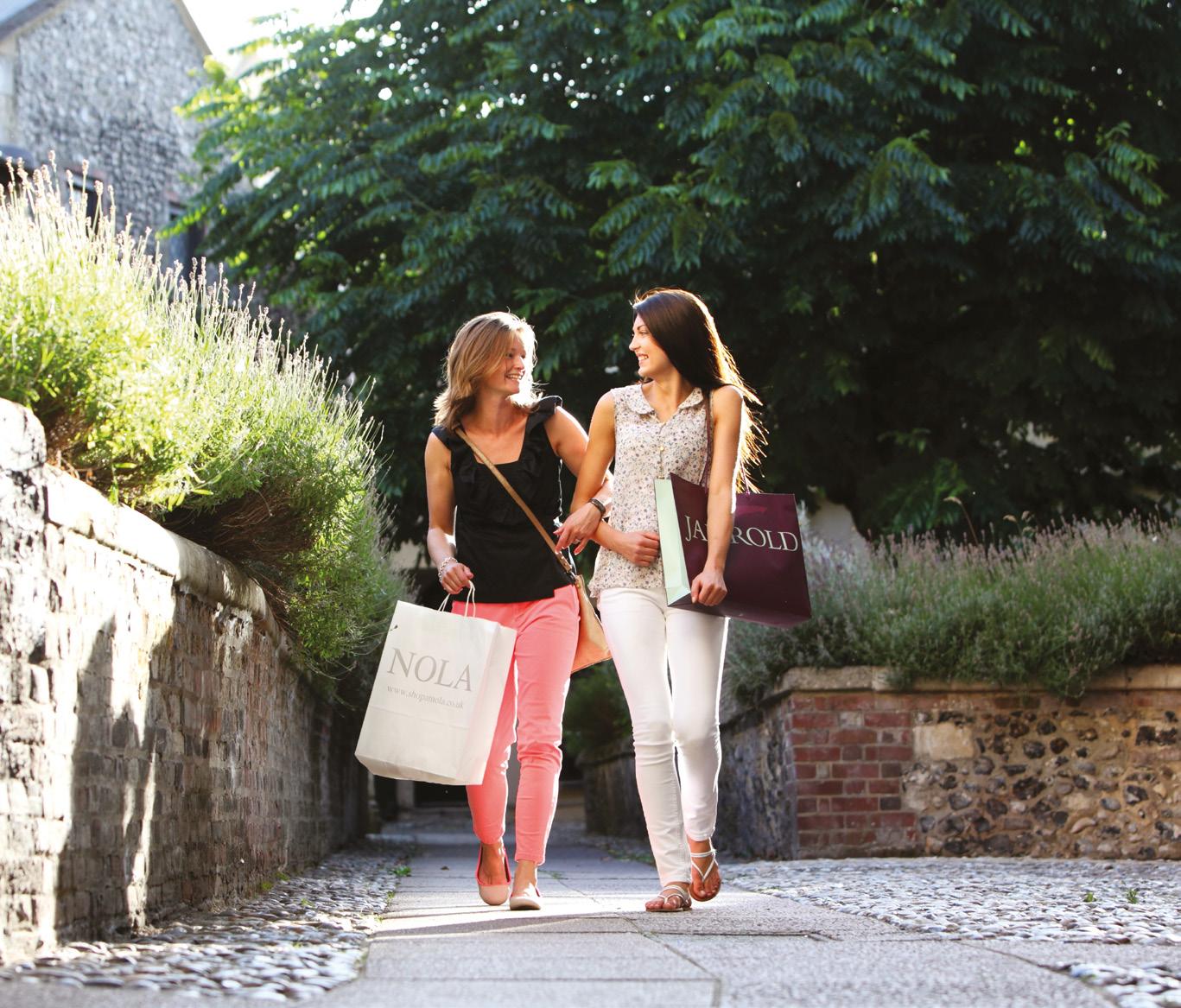
16 We have Norwich city! Not only is Norwich England’s first UNESCO City of Literature and the best-preserved medieval city in Britain (no fast-running water so the Industrial Revolution passed it by), but it’s also the only English city to be excommunicated by the Pope, following a riot in 1274 between monks and citizens which irked the Supreme Pontiff. Norwich has five department stores, two shopping malls, superb indie shopping in The Lanes, and a Norman castle and cathedral.
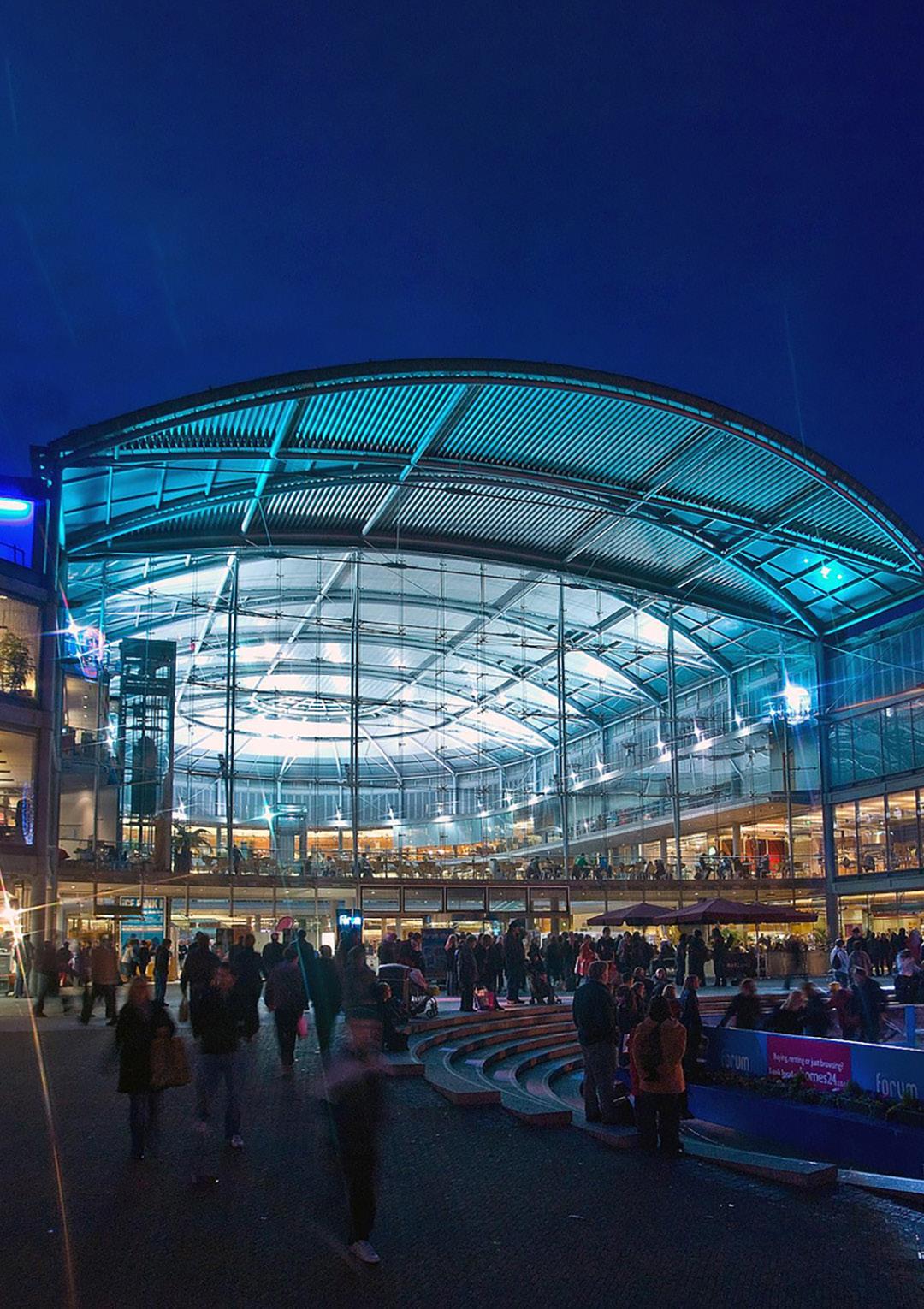
There’s always lots going on at The Forum, Norwich.
Sandringham House.
15 The Norfolk Broads is not a disrespectful term for women, but instead a 125mile navigable and lock-free network of unique waterways, to best be enjoyed by boat. A National Park, we call them the Venice of the West. The Broads are not only mentioned in a David Bowie song (Life on Mars), but are the only National Park in England with a city in it, and are unique because, amongst other reasons, they’re man-made… yes, really!
At Wroxham, you’ll find Roy’s, the largest village store in the world!
14
Thetford Forest is the largest lowland forest in Britain, covering 80 square miles, and is perfect for walking, cycling, orienteering, spotting red deer or just maybe having a picnic in a clearing. Or you could hunt Pingos! No, no, nothing sinister – Pingos are circular lakes that were formed after the last Ice Age. There’s an 8-mile trail of them you can walk and they’re unique to this area.
Thetford Forest.
Salhouse Broad.
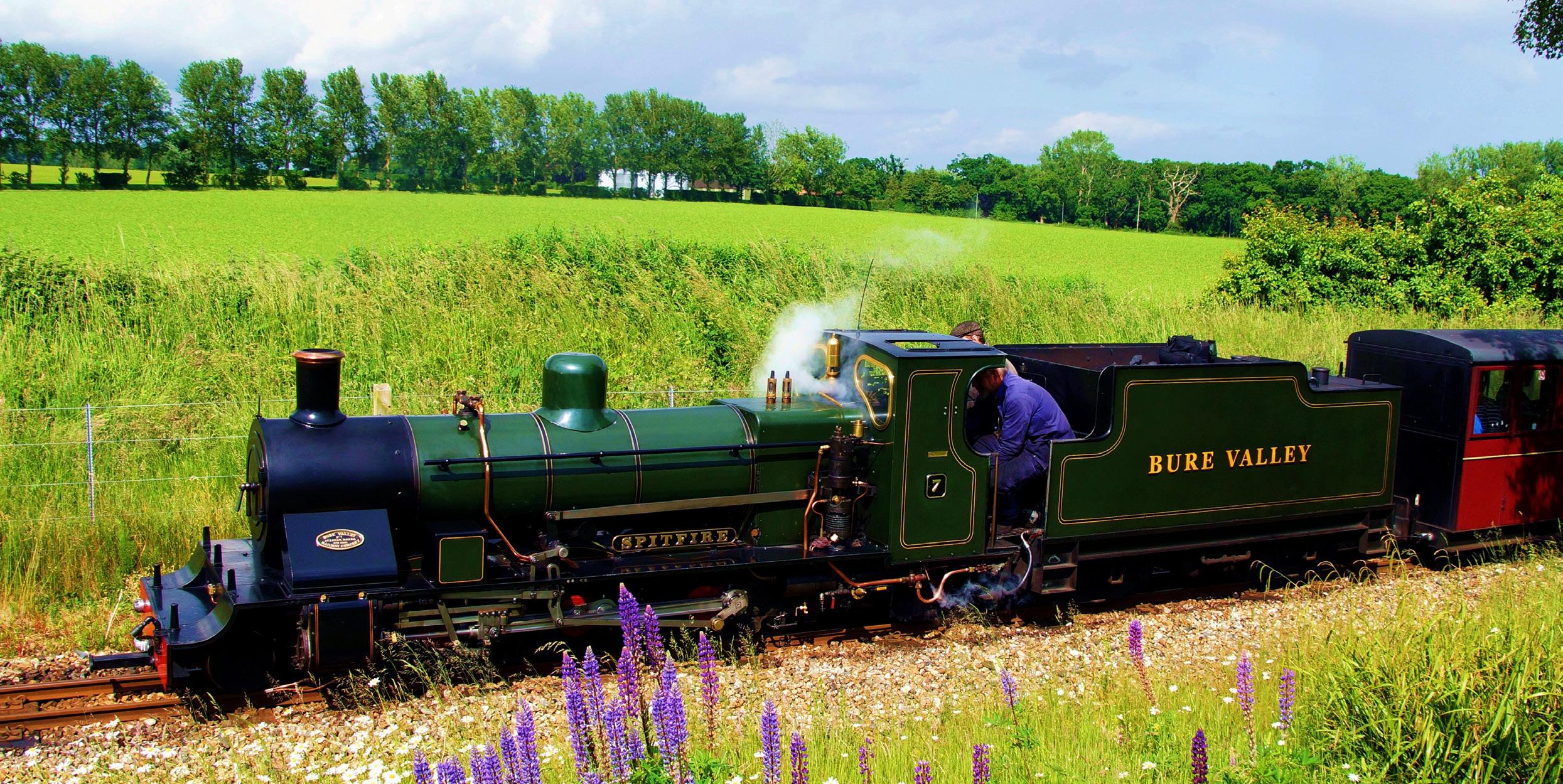
13 We have steam railways! Choo choo! Try the Bure Valley Railway between Aylsham and Wroxham inland or the North Norfolk Railway, otherwise known as The Poppy Line, between coastal Sheringham and pretty Georgian Holt. Other steam railways are available.
12 Norfolk has more ‘Downton Abbeys’ than you can shake a stick at, including Blickling Hall near Aylsham, which doubled as Bono’s abode in an episode of Alan Partridge. Take a walk around the estate gardens and then have a pint at the Buckinghamshire Arms. It’s unlikely you’ll see the headless ghost of Anne Boleyn, who was born here, but you never know!
11 Great Yarmouth’s Pleasure Beach rollercoaster is the only remaining wooden one of its kind in the UK (one of only eight in the world) and one of only two remaining where a brakeman is required to ride with the train, to control its speed - as there are NO BRAKES on the track! Gulp!
10 Norfolk has the last end-ofpier theatre in the world at Cromer! The Pavilion on the Grade II listed Victoria pier hosts variety shows in the summer and at Christmas. Cromer Pier was judged Pier of the Year in 2015 by the National Piers Society. Nice when you get an award from your peers.
9 You can step back in time to the Georgian period with a visit to the wonderfully handsome market town of Holt, poke around the wide range of shops, boutiques and delis and don’t miss Bakers & Larners, which has incredible wine and food departments.
The reason Holt is such a perfect little Georgian town? The town burnt down in 1708 and was completely rebuilt! You can also take a steam railway ride from here to the coastal town of Sheringham on The Poppy Line.
8 Norfolk has the world’s largest chalk reef! It’s around 20 miles long and is just 200 metres off the north Norfolk coast. The marine haven has so many species, including sponges, burrowing piddocks, sea squirts, anemones, starfish, brittlestars, sea slugs and fish including shoaling horse mackerel and bass, that experts are describing it as ‘Britain’s Great Barrier Reef’. Our famous Cromer crabs get to feed on it, and that’s why they are so sweet, succulent and meaty.
Exploring the pretty market town of Holt.
7 Our higgledy-piggledy multi-coloured beach huts at Wells-next-the-Sea are guaranteed to put a smile on your face. We think there are 200 beach huts, but we always lose count before we get to the end. The beach here has been voted the best in Britain on more than one occasion!
6 You can walk in the footsteps of the first tourists ever to visit the United Kingdom! We’re serious! After a tidal surge in December 2014 at Happisburgh, archaeologists from the British Museum found footprints that tests revealed were 850,000 years old - the earliest evidence of man found outside the Great Rift Valley in Africa. In Norfolk! At the time Britain was linked by land to the Continent and would have looked like African savannah, complete with bison, hyenas, rhinos, lions and mammoths. We call this area Norfolk’s Deep History Coast.
5 Talking of mammoths, the biggest and best-preserved mammoth skeleton ever found was discovered in Norfolk! The only bones missing were eaten by hyenas. How do we know? Dissected fossilised hyena poo was found to contain mammoth bone! If you know what you’re looking for, you can still find mammoth teeth on the beach at West Runton.
4 Norfolk has the highest sea view in the East of England! There is a myth that Norfolk is as flat as a week-old pint of beer, perpetrated by Noel Coward in his play Private Lives: ‘Very flat, Norfolk’. The Cromer Ridge at Beacon Hill, also known as Roman Camp, is 338 feet above sea level, almost exactly the height of two Nelson’s Columns and only slightly shorter than St Paul’s Cathedral! Try walking and cycling around here and you’ll never call Norfolk flat again.
3 Norfolk has the highest concentration of medieval churches in Europe. At one time there were over 1000, of which 659 still survive. Of these, 125 have round towers – more than any other county in Britain. At 23,000 square feet, St Nicholas Minster at Great Yarmouth is the largest parish church in the country.
2 The famous Queen Boudicca of Norfolk’s Iceni tribe started Girl Power in this country by refusing to kowtow to the occupying Romans after they ignored her late husband Prasutagus’s will, took his land and raped their daughters. Instead she took her warriors on a rampage, destroying Camulodunum (Colchester), Londinium (London) and Verulamium (St Albans), before being defeated by the Romans at the Battle of Watling Street. Nonetheless, she’d struck a significant blow for feminism. Of course, today, while Nelson stands proud at one end of Whitehall in London, Boudicca is on her chariot at the opposite end, by Westminster Bridge. Today you can walk The Boudicca Way between Diss and Norwich.
1 Norfolk is the combined sunniest/driest county in the UK! So that alone should be reason enough to visit Norfolk!
What they say about Norfolk.
There are some (uninformed) people who think ‘Norfolk is flat, dull and boring and at the end of the world’s longest cul-de-sac’. Then there are the rest of us who think it’s the best county in the UK and long for the day when we can make it an island and issue visas for entry (don’t worry, they’ll be free and we’ll be as welcoming as ever).
So what do literary giants, and some pop stars and others, have to say about Norfolk? Read on…
“You either get Norfolk, with its wild roughness and uncultivated oddities, or you don’t. It’s not all soft and lovely. It doesn’t ask to be loved.”
Stephen Fry
“I am a Norfolk man and Glory in being so.”
Horatio Nelson
“You can always tell a Norfolk man, but you can’t tell him much.”
Sidney Grapes
“Once you get to know Norfolk, there is no better place to live.”
“The charm of Norfolk is not so readily definable as that of some other counties. It has the ungrudging roominess of a kingdom. It is littered with villages but uncluttered by towns.”
Reginald Pound
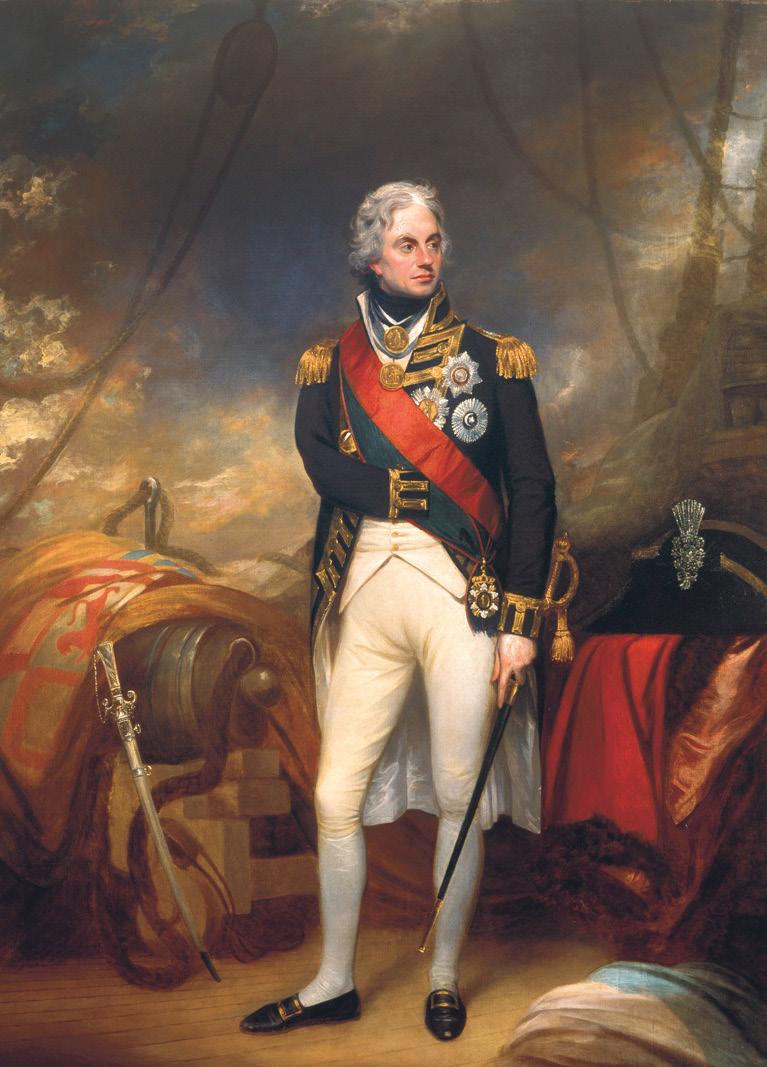
Horatio Nelson (1758-1805), by William Beechey.
“What a coast this is, with its salt marshes and lavender, its channels, dunes, bays and crumbling Ice Age cliffs, lonelier and wilder than its Suffolk neighbour, Arctic, melancholic, beautiful, treacherous, with sandbanks and quicksands, storms and floods, and neverending erosion.”
Peter Sager
“For the traveller in search of the English Heritage, the county is a paradise. It has great cliffs and chalk downs, a history far older than any written documents, delightful rivers, unique still waters, low-lying fens, captivating towns, a historic roll of famous folk and a group of Saxon, Norman, and medieval churches crammed with beauty that makes England the matchless country in the world.”
Arthur Mee
“Norfolk would not be Norfolk without a church tower on the horizon or round a corner up a lane. We cannot spare a single Norfolk church. When a church has been pulled down the country seems empty or is like a necklace with a jewel missing.”
John Betjeman
“See the mice in their million hordes. From Ibiza to the Norfolk Broads.”
David Bowie
“If the rest of Britain sank beneath the waves, and Norfolk was left alone, islanded in the turmoil of the seas, it would, I think, survive without too much trouble... Norfolk has always stood alone and aloof from the rest of England.”
James Wentworth Day
“I have lived in Norfolk all my life. It inspires me, the sea, the limitless skies, the mud and the burning sunsets and the freedom of a place where more than 50% of the neighbours are fish.”
Raffaella Barker
“I am not a man of Llydaw” said I, in English, “but of Norfolk where the people eat the best dumplings in the world and speak the purest English.”
George Borrow (Wild Wales)
Very flat, Norfolk.
Noel Coward (Private Lives)
“Norfolk is not simply a word that describes a county. “Norfolk” describes also a language, a humour and a way of life. Spoken Norfolk has a stout and uniquely resistant quality and only people born in the county are able properly to penetrate it and repeat it with their own tongues. Just as their language, so also the people of Norfolk are tough, resistant and impenetrable.”
Dick Bagnall-Oakeley
“I am still reeling with delight at the soaring majesty of Norfolk.”
John Betjeman
“This corner of England which once it holds your heart is more lovely than any place on earth. Beautiful with a hint of secrecy which haunts it, as the memory of a dark and tender sadness clouds the brilliance of a summer day.”
Lilias Rider Haggard (Norfolk Notebook)
“The prevailing wind in Norfolk is onshore; this explains why Norfolkmen invariably speak with their mouths closed.”
Old Norfolk saying
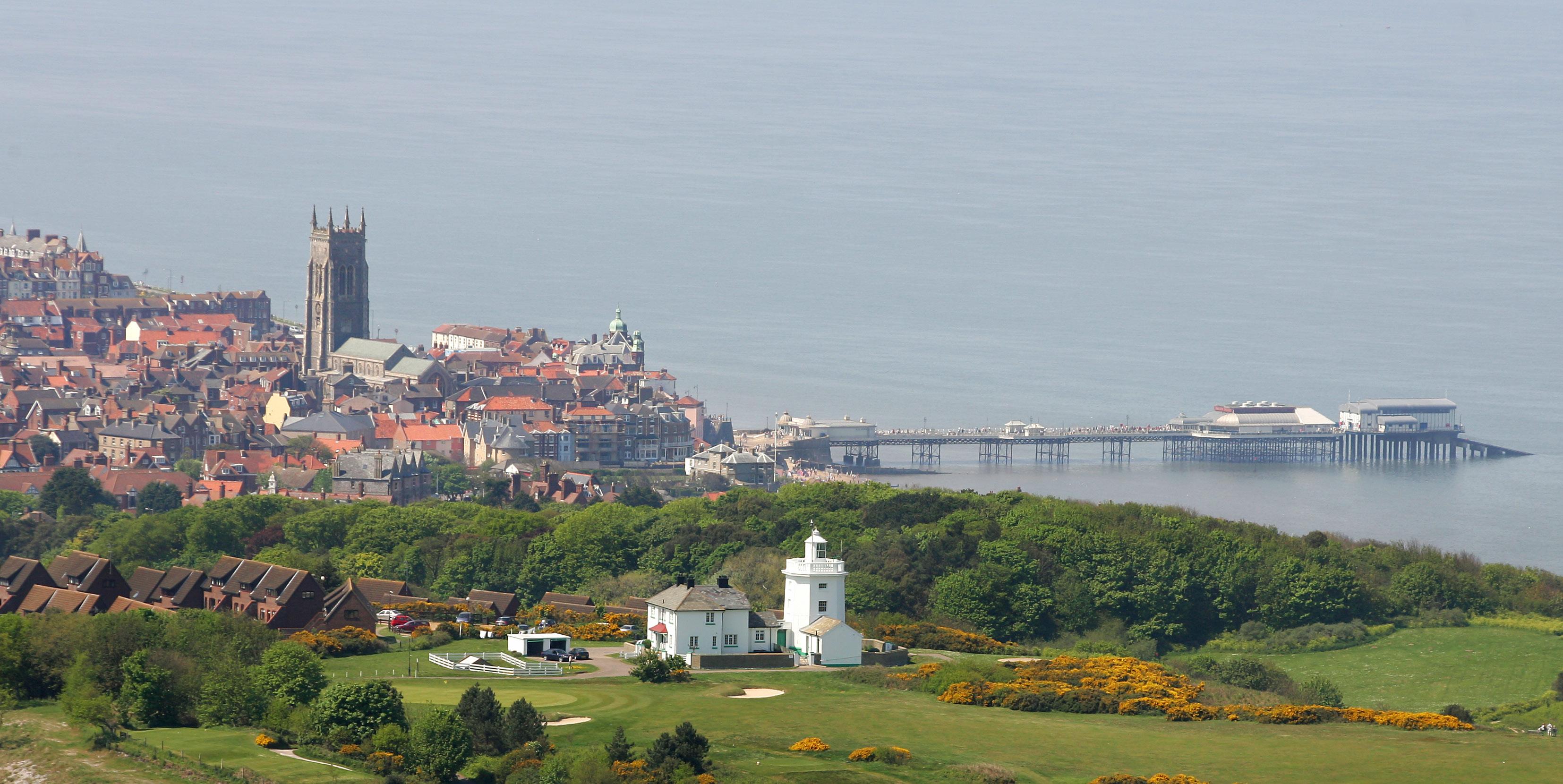
Cromer.
“In Norfolk the obduracy of water has been the saving grace for the wildly beautiful north coast, the Broads and the river valleys.”
Mark Cocker
“All England may be carved out of Norfolk.”
Thomas Fuller, 1662
“Some counties vaunt themselves in pies and some in meat excel; For turnips of enormous size Fair Norfolk bears the belle.”
Old rhyme
“The space and light up there in Norfolk is wonderfully peaceful.”
Jeremy Northam
“Lovers of Norfolk churches can never agree which is the best and I think one is either a Salle or a Cawston man.”
John Betjeman
“You see, because [Norfolk is] stuck out here in the east, on this hump jutting into the sea, it’s not on the way to anywhere. People going north and south, they bypass it altogether. For that reason, it’s a peaceful corner of England.”
Kazuo Ishiguro
“If this were the time or the place to uphold a paradox, I am half inclined to state that Norfolk is one of the most beautiful of counties.”
Virginia Woolf
“Norfolk is not on the way to anywhere, you don’t stop off on the way somewhere else - it’s an end in itself. You have to want to go there.”
Beth Orton
Norfolk is cut off on three sides by the sea and on the fourth by British Rail.”
Local saying
“Norfolk has been a favourite county since childhood. It provides the “still centre” when all around is turmoil.
Edward Storey
“In that country of luminous landscapes and wide horizons where the wind runs in the reeds and the slow rivers flow to our cold sea, a man may still sense and live something of the life of the older England which was uninhibited, free and natural.”
Alan Savory, Norfolk Fowler
“My wife’s old dumplings are Norfolk and good.”
The Kipper Family
“In the Middle Ages and well on into the eighteenth century, when roads were bad, it was easier to travel by sea from Norfolk to the continent of Europe than to penetrate the Midlands or to visit London. The result of this isolation has been that Norfolk people have become self-reliant, selfsupporting and inclined to treat strangers with caution.”
Bernard E. Dorman
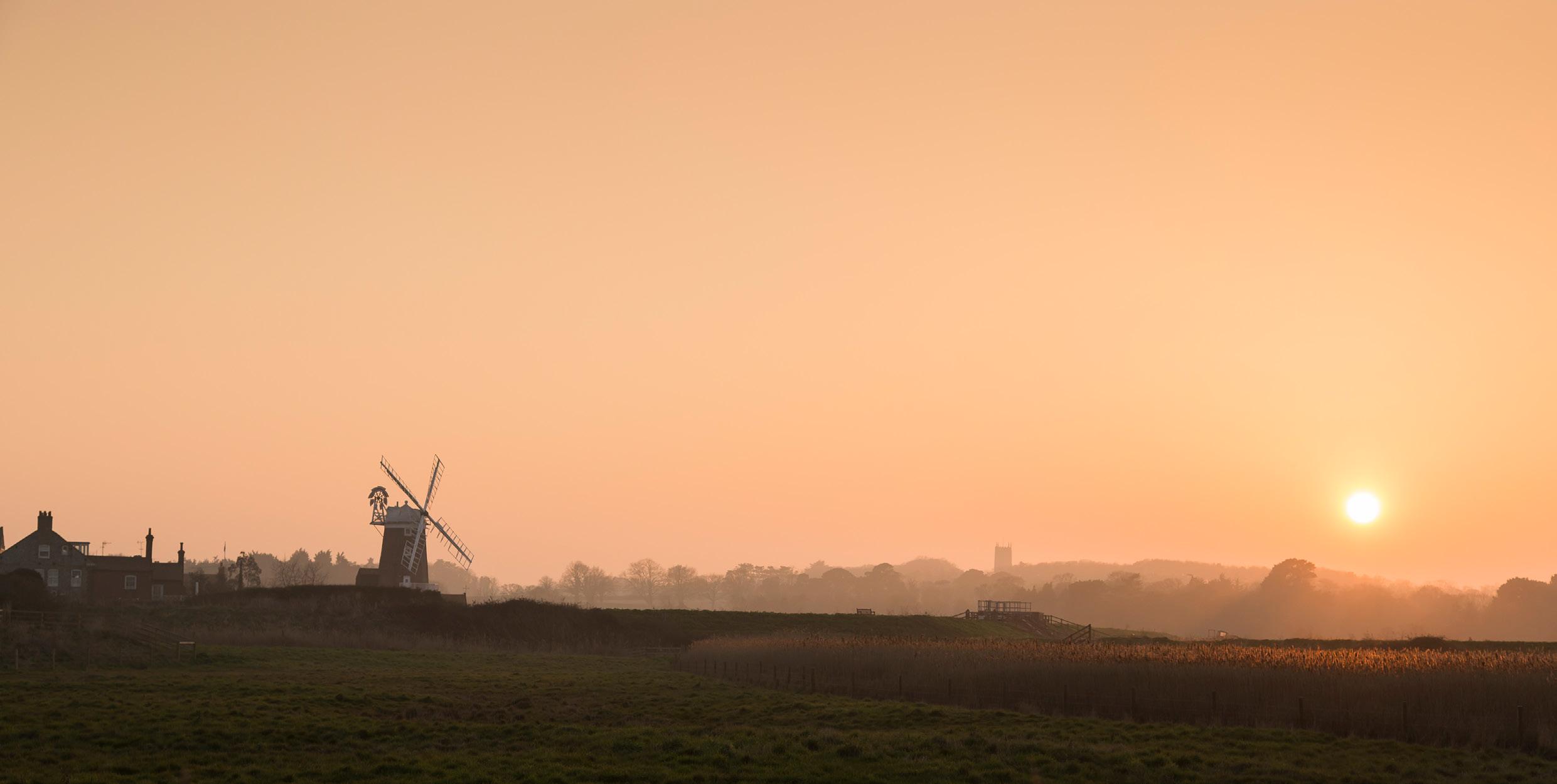
Cley Marshes and windmill at sunset.
Norwich is a fine city. None finer. If there is another city in the United Kingdom with a school of painters named after it, a matchless modern art gallery, a university with a reputation for literary excellence which can boast Booker Prize-winning alumni, one of the grandest Romanesque cathedrals in the world, and an extraordinary new state-of-the-art library then I have yet to hear of it.