Severe blood shortage: Red Cross blood supply drops 35%
The American Red Cross is experiencing a severe blood shortage as hospital requests continue to outpace available supplies, resulting in an approximately 35% drawdown of blood products over the past month. Donors are being urged to give as soon as possible to help prevent delays in lifesaving medical care.
Menifee Valley students honored in December
Diane A. Rhodes
Special to Valley News
The Perris Valley Chamber of Commerce and the Menifee Valley Chamber of Commerce held their December Student of the Month breakfast at the Perris Sizzler, 91 West Nuevo Road on Dec.10.
Adriana Ochoa, Executive Director of the Perris Valley Chamber of Commerce served as emcee for Sally Myers of BMW Management/Sizzler Restaurants who founded the program that started including the Perris Union High School District schools in 1998.
Camino de Santiago. Valley News/Courtesy photo
Fuel break project advances in Pine Cove area
IDYLLWILD-PINE COVE –
Firefighters are making steady progress on a fuel break project in the Pine Cove area aimed at reducing wildfire risk for the Idyllwild-Pine Cove communities. The project is designed to give crews a strategic area to slow or stop a fire moving uphill before it reaches homes and infrastructure.
The fuel break targets light underbrush, pine needles and small branches, with the goal of reducing fuels by 30 to 80%. Fire officials say history has shown that many fires threatening the area begin west of town at lower elevations and quickly spread uphill toward the community.
The project begins on the north side of Pine Cove near the west end of McGovern Road and Forest Roads 5S09 and 5S10. From there, it extends west and south before looping back east toward Overlook Road. The overall project covers 215 acres.
Crews completed approximately 30 acres on Monday, Jan. 17 and another 30 acres the following day, with plans to treat an additional 30 to 50 acres. While cooler temperatures and higher
humidity, along with light precipitation expected later in the week, limited burning through Saturday, Jan. 24, officials planned to resume operations Monday through Wednesday, Jan. 26 through Jan. 28.
Although several fuel reduction projects are scheduled throughout the winter, officials say the Pine Cove fuel break is one of the highest priorities for the Idyllwild area this season. Additional work is also planned, including pile burning in the Mountain Center and Bonita Vista areas and improvements to the Strawberry Ridge Fuelbreak, which runs from the west end of Marion Ridge in Pine Cove down toward the Idyllwild School of Arts.
Residents of Pine Cove and travelers along Highway 242 North may have noticed smoke over the past several days as work continues. Fire officials thanked the community for its patience, noting that temporary smoke is a worthwhile tradeoff for lowering the risk of destructive wildfires during peak fire season. Updates on the project are being shared regularly through the San Ber-
Prescribed burns in the Idyllwild-Pine Cove area are done to
weather.
nardino National Forest’s Facebook page at https://www.facebook.com/SanBernardinoNF and online at https://inciweb.wildfire.gov
Historical society to host talk on Black American history in Lake Elsinore
The Lake Elsinore Historical Society will host a special presentation titled A Walk Through Time: Black American History in Lake Elsinore on Tuesday, Feb. 3, at 1 p.m. The event will take place at the Lake Elsinore History Museum’s Cultural Building, located at 183 North Main Street.
The program will be presented by Lynda Fujino, first vice president of the Lake Elsinore Historical Society, who will guide attendees through the history and
contributions of Black Americans in the Lake Elsinore community. The talk is part of the society’s ongoing efforts to preserve and share the city’s diverse local history.
Guests are asked to use the Heald Street entrance on the right side of the building. Additional information about the event and the Lake Elsinore Historical Society is available on its website at lakeelsinorehistoricalsociety.org
Kathleen Louise Harmon was born on Oct. 21, 1958, in Torrance, California, and passed away peacefully on Dec. 29, 2025, in Hemet, California. She was a cherished sister, mother, grandmother, and friend whose love and kindness will be deeply missed.
Kathleen was a hard worker throughout her life and proudly retired as a meat wrapper for Lucky Supermarkets. While she valued her career, nothing mattered more to her than her family. Her children and grandchildren were her greatest joy, and she
showed her love through endless generosity and care.
Kathleen truly had a giving heart and would give you the shirt off her back if she thought you needed it. She loved hosting family get-togethers, filling her home with laughter, food, and togetherness. She also had a deep love for animals and rescued dogs, offering them the same compassion she gave so freely to others.
Kathleen is survived by her children, Ricky and Stephanie; her grandchildren, Ashley and Emilyanna; and her brothers and sisters, Sandy, Judy, Robert, Debbie, Ralph, Karl, Vanessa, and Julie, along with many aunts, nieces, nephews, cousins, and dear friends. She is reunited in heaven with her parents, Robert and Linda, her brother Bill, and her sisters Katharine and Barbara, and many beloved grandparents, aunts, uncles, cousins, and friends.
A celebration of Kathleen’s life will be held this spring in Spokane, Washington. Her loving spirit will live on forever in the hearts of her family.
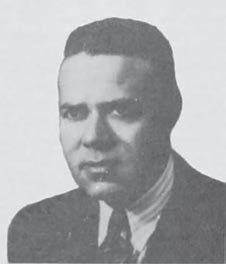
Thomas R. Yarborough was the first African American elected to a city council in California, and became the first African American mayor of Lake Elsinore. Valley News/Courtesy photo
“Way of St. James,” is one of the world’s most famous pilgrimage routes, dating back more than a thousand years. Pilgrims from around the world walk its many routes toward the cathedral in Santiago, believed to house the remains of St. James the Apostle.
Lipka and six other men began their journey in Porto, Portugal, walking north into Spain. Their group covered an average of 12 to 15 miles per day, staying in hostels, small inns, and albergues — communal lodgings designed for pilgrims.
“You carry everything with you,” he said. “Your pack, your clothes, your gear — it’s all on your back. You learn pretty fast what you really need and what you don’t.”
The landscape shifted constantly — from coastal boardwalks to forests , farmland, cobblestone paths, and centuries-old villages. At times, the trail passed Roman bridges and stone paths worn smooth by travelers long before modern maps existed.
“You’re literally walking on history,” Lipka said. “In the U.S., something 200 years old feels ancient. Over there, it’s normal.”
At the beginning of the journey, Wayne bought a Credential.
The Credential is for stamps of the albergos, restaurants, cafes, and places he visited along the way. It is presented at the end of the journey to receive a certificate for completing the Camino de Santiago.
Along the route, pilgrims followed yellow arrows and scallop-shell symbols, the universal signs of the Camino. At churches and small waystations, travelers stamped their pilgrim passports, documenting each day’s progress.
“There are little chapels everywhere,” Lipka said. “Somebody might be s itting there with a stamp. Sometimes you stamp it yourself. It’s all part of the experience.”
The shell itself holds deep meaning.
“It represents that there are many ways to get to Santiago,” he explained. “All the lines come together in one place.”
Although the group traveled together, the Camino has a way of bringing strangers into each other’s lives — sometimes repeatedly, forming a kind of community of its own.
“You meet people from all over the world,” Lipka said. “Australia. Greenland. Switzerland. You’ll see the same people over and over, even if you part ways during the day.”
One evening, the group shared dinner with fellow pilgrims from Greenland and Australia, celebrating a birthday together. It was Lipka’s friend’s birthday, so the group sang Happy Birthday to him. Then the new friends from Greenland sang. “They sang ‘Happy Birthday’ in their own language,” Lipka said. “It was one of those moments you never forget.”
Another encounter left a lasting impression: a woman from Switzerland who had been walking the Camino for a decade, completing one s egment each year around her birthday.
“She started when she turned 40,” Lipka said. “Every year, she’d walk another section. By 50, she finished the entire route — over 1,200 miles.”
Though not an overtly religious journey for everyone, Lipka said
the pilgrimage deepened his own faith in unexpected ways.
“I thought I’d listen to the Bible while walking,” he said. “But I didn’t. You’re talking, thinking, reflecting. It’s quieter than you expect, even when you’re not alone.”
The most emotional moment came at the end, when he arrived at the Cathedral of Santiago de Compostela.
After completing the walk,
The start of the route in Porto, Portugal. Fallbrook resident Wayne Lipka is standing next to the trail marker with the scallop-shell symbol and the gold arrow, guiding pilgrims along the route.
Lipka’s group enjoys a stop along the trail. Valley News/Courtesy photos
The journey concluded at the Cathedral of Santiago de Compostela, the revered pilgrimage site believed to house the remains of St. James the Apostle.
One of the albergues where Lipka slept for 5 euros.
A bridge leads into a small picturesque town.
The shell symbol, seen here, is associated with St. James the Apostle. Pilgrims originally traveled to Santiago de Compostela to honor his remains.
A stone path is worn smooth by travelers over hundreds of years.
pilgrims receive a certificate verifying their journey — but only if they’ve walked at least 100 kilometers and collected stamps along the way.
“When I went to get my certificate, I just started tearing up,” Lipka said. “I don’t know why. It just hit me. It was the end of something big – larger than life itself.”
The next day, he attended Mass inside the cathedral. “It was very moving,” he said. “I’m not Catholic, but being there, after all that walking, it meant something to me very deeply.”
The journey wasn’t easy. Blisters were common. One member of the group battled shin splints and had to meet them by car on each leg of the trip. “He was our scout along the way. He would find where we would eat before we got to each stop.” Others dealt with sore knees, fatigue, and muscle strain.
Lipka trained for months beforehand, walking with a weighted backpack through Fallbrook’s hills and hiking in Orange County at Crystal Cove.
“My pack was about 17 pounds,” he said. “That’s about 10 percent of your body weight. You feel every ounce after a while.” Still, the pace was intentionally relaxed. “This isn’t a race,” he said. “We’d stop for coffee, take breaks, enjoy the scenery. That’s part of the beauty.”
The group arrived in Santiago on a rainy afternoon — the only rain they experienced the entire trip. Bagpipes echoed through the streets as pilgrims entered the city’s main square.
“That moment when you walk into the square… it’s emotional,” Lipka said. “You realize what you’ve done.”
Now home, he says the Camino still lingers with him — in memories, photos, and the quiet sense of accomplishment that comes from walking with purpose. “I’d do it again,” he said. “Maybe in a couple of years.”
For those considering it, his advice is simple: “Prepare your body, pack light, and don’t rush it.”
The group stands in front of the sign showing they made it to Spain. Valley News/Courtesy photos
Wayne Lipka was given a shell, which is a symbol of the Camino de Santiago. The design of the shell is used as a practical marker at landmarks along the path. The shell’s many radiating lines are often said to represent the different paths pilgrims take, all ultimately leading to Santiago.
Wayne Lipka’s group enjoys an afternoon on the trail.
The Cathedral of Santiago de Compostela in Galacia, Spain, is believed to house the remains of the Apostle James.
Many churches and chapels can be found along the Camino de Santiago.
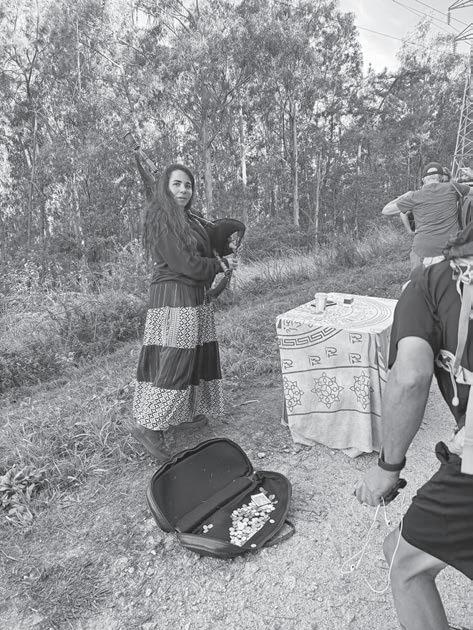
A woman plays a Galician gaita, which is a type of bagpipe that is a traditional instrument of Galicia and northern Portugal.
Riverside Transit Agency to assist with 2026 FIFA World Cup transportation services
Connecting the Inland Empire Communities to the World Cup Games
RIVERSIDE — The Riverside Transit Agency (RTA) Board of Directors has unanimously approved bus support to LA Metro for the 2026 FIFA World Cup Games at its regular Board of Directors Meeting in December 2025. The World Cup Games are being jointly hosted by Canada, Mexico, and the USA from June 11 to July 19, 2026.
“Supporting our regional partners is part of our culture and at the core of what RTA does for
our residents and customers,” said RTA CEO Kristin Warsinski.
“The FIFA World Cup is not just a Los Angeles County event; it is a major global event. It is important for all of us to support each other when these regional economic events come our way.”
Los Angeles is expecting around 179,000 visitors from all over the world to attend the World Cup in 2026. These visitors will not just stay in LA County; events like this will bring economic op-
portunities to the entire region. Visitors may take tours of the wineries in Temecula, attend an event in the Coachella Valley, stay in Riverside County hotels and support local restaurants and retail shopping.
“We are proud to support the World Cup by ensuring fans have a safe, reliable and convenient way to get from the Inland Empire and Orange County to Los Angeles County,” said RTA Board Chair Jim Steiner. “Provid-
ing buses for this event reflects our commitment to connecting communities and enhancing the experience for everyone attending.”
Currently, RTA’s Route 200 provides reliable regional express service connection between major transit hubs in San Bernardino and Riverside to Orange County. During the World Cup, RTA will be part of a temporary transportation system to assist fans traveling from Orange County to
NATIONAL NEWS
Trump reshapes Davos as globalism takes a back seat
SoFi Stadium. Annually, RTA supports and partners with several regional and local organizations to provide service and access to transit connections throughout the region. RTA partners with Metrolink when there is a disruption in service or in times of emergencies. To learn more about RTA, visit: www.riversidetransit.com.
Trump attended this year’s gathering in the Swiss Alps with a large delegation, and his Cabinet members used the forum to promote his policies.
Emel Akan Reporter, The Epoch Times
WASHINGTON—The World Economic Forum (WEF) in Davos, Switzerland, long known for supporting globalism, environmental sustainability, and social equity, struck a markedly different tone this year with President Donald Trump’s return to the global stage.
Topics that used to be central at the WEF’s annual meeting appeared to be sidelined, replaced by more urgent issues such as trans-Atlantic tensions over Greenland, tariff disputes, and growing unilateralism.
This year, Klaus Schwab did not attend for the first time since he founded the WEF in 1971.
With Schwab’s absence came a noticeable decline in focus on the forum’s usual themes, such as multilateral cooperation on net-zero transitions and initiatives such as environmental, social, and governance policies and diversity, equity, and inclusion.
Swedish activist Greta Thunberg was also absent from this year’s gathering in the Alpine village. In some prior years, she had been one of Davos’s visible figures, delivering lines such as “our house is on fire” in speeches and calling for an immediate turn
away from fossil fuels.
This year, the forum welcomed Elon Musk as a new guest. The Tesla and SpaceX founder attended Davos for the first time after years of publicly criticizing the WEF as “boring” and calling its participants an “unelected world government.” He joined Larry Fink, CEO of BlackRock and WEF interim cochair, on stage to discuss how technological progress will create an “abundance of goods and services” for humanity and expressed optimism about the future.
Observers also noted a significant decline in climate discussions at Davos. The 2026 official program featured only four sessions referencing “climate change,” down from 16 in 2022. In speeches by world leaders—including French President Emmanuel Macron and Canadian Prime Minister Mark Carney—terms such as “climate change” and “net zero” were absent.
U.S. Secretary of Energy Chris Wright, a fossil fuel industry veteran, attended the WEF for the first time and spoke at a session called “Conversation on How to Fuel Our Lives,” where he argued that the world requires significantly more oil, natural gas, coal, and nuclear energy.
WEF membership is by invitation only, and companies pay annual fees ranging from $75,000 to $758,000, depending on the membership type, according to Fortune Magazine. Companies also pay a fee for each participant attending the Davos meeting; elite badges cost up to $35,000 each.
Trump attended this year’s summit with a large delegation, and his Cabinet members used the forum to promote his America First agenda.
On Jan. 21, Trump delivered a speech lasting for more than an hour, setting the tone for the week. He criticized efforts to promote renewable energy in European countries, referring to them as the “Green New Scam” and the “greatest hoax in history.” He stated that countries that have invested most heavily in windmills have experienced greater losses over the years.
Wright told The Epoch Times that Trump was right to highlight his economic and energy policies in his speech.
“He rightfully celebrated American economic growth, the stopping of the price rise, increasing of wages of American workers, getting a commonsense energy policy so we can drive our economic growth and help
support our neighbors and allies in Europe,” Wright said. Interest in Trump was evident well before his speech. Participants began lining up more than 90 minutes in advance. The conference room was full, and some attendees stood in the aisles. Among them was California Gov. Gavin Newsom, who is widely seen as a potential 2028 presidential contender.
Trump called out Newsom during his speech, telling the audience that “Gavin is a good guy” and that they used to get along well. Newsom was seen smiling, laughing, and shaking his head.
On Jan. 22, Newsom participated in a discussion during which he accused the Davos crowd of not standing up to Trump. He criticized law firms, universities, and corporations for “selling out” to the Trump administration. Newsom was not the only Democratic governor in Davos.
Kentucky Gov. Andy Beshear, a moderate Democrat who has won two terms in a deep-red state, and Michigan Gov. Gretchen Whitmer, another frequently mentioned 2028 contender, were also present.
Trump also used his time in Davos to spotlight the United States’ military and economic might. He touted sweeping dereg-
ulation, booming stock markets, surging energy production, and robust economic growth in the United States.
His remarks on Greenland drew significant attention. Trump said that the United States should acquire what he described as “a big piece of ice” for national security, while assuring the crowd that there would be no military takeover.
Trump announced on Jan. 22 that he had reached a framework agreement with NATO regarding Greenland’s future, but he offered few details.
Many European leaders and media criticized Trump’s remarks, but NATO Secretary-General Mark Rutte defended his position.
On Jan. 26, speaking to the European Parliament in Brussels, Rutte cited increased activity by China and Russia in the Arctic and warned that Europe cannot defend itself without U.S. support.
“I think [Trump is] right. There is an issue with the Arctic region,” Rutte said. “And if anyone thinks here, again, that the European Union, or Europe as a whole, can defend itself without the U.S., keep on dreaming.”
IRS opens 2026 Filing as White House expects largest tax refund season
Average refunds issued to taxpayers are projected to jump by $1,000 or more, the White House said.
Naveen
Athrappully
Reporter, The Epoch Times
The IRS announced on Jan. 26 the opening of the 2026 tax filing season.
“The IRS expects about 164 million individual tax returns for tax year 2025 to be filed ahead of the Wednesday, April 15, federal deadline. Taxpayers can find a range of tools and filing options on IRS.gov to help them prepare and file their returns,” the agency said in a news release.
The IRS has various online tools and resources that taxpayers can use before, during, and after filing their federal tax returns, the agency said in a Jan. 8 statement. The One Big Beautiful Bill Act, signed into law by President Donald Trump in July, carries provisions that can help taxpayers lower their tax bills and raise their refund amounts.
“The Internal Revenue Service is ready to help taxpayers meet their tax filing and payment obligations during the 2026 filing season,” IRS Chief Executive Officer Frank Bisignano said.
“As always, the IRS workforce remains vigilant and dedicated to their mission to serve the Ameri-
can taxpaying public. At the same time, IRS information systems have been updated to incorporate the new tax laws and are ready to efficiently and effectively process taxpayer returns during the filing season.”
The White House said in a Jan. 26 statement that millions of Americans are poised to receive “significantly larger tax refunds” this filing season due to the One Big Beautiful Bill Act.
The legislation is set to deliver the “largest tax refund season in U.S. history,” the White House said, projecting average refunds to jump by $1,000 or more, citing various analyses. Some of the key provisions of the bill contributing to higher refunds are no taxes on tips or overtime up to certain income thresholds, an additional deduction for seniors, and a deduction in auto loan interest payments.
An analysis made by the Tax Foundation cited by the White House expects tax refunds in 2026 to average $3,800 per taxpayer due to the legislation. Comparatively, the refund amount was $3,052 in tax year 2024 and $3,004 in 2023. In its latest statement, the IRS
said that most refunds are issued within 21 days. However, refunds that require additional review from the agency may take longer.
Direct deposit is the fastest way for taxpayers to receive a refund, according to the agency. The IRS began phasing out paper refund checks beginning Sept. 30, in line with a March 25 executive order signed by Trump.
The order, “Modernizing Payments To and From America’s Bank Account,” stated that the use of paper-based payment systems by the federal government was imposing “unnecessary costs; delays; and risks of fraud, lost payments, theft, and inefficiencies.”
It asked all departments and agencies to comply with the directive by transitioning to an electronic funds transfer system. Paper checks were allowed for certain exceptions, such as individuals who do not have access to banking services, and emergency situations where electronic payments would cause “undue hardship” for the recipient.
Taxpayers are urged to provide their bank account and routing numbers for their refunds to be electronically deposited.
The IRS estimates most refund payments for the Earned Income Tax Credit (EITC) and the Additional Child Tax Credit (ACTC) to be reflected in the bank accounts or debit cards of taxpayers by March 2. This is only applicable for taxpayers who have chosen the direct deposit option, and whose returns do not face any issues with processing.
Taxpayers can track their refund status by using the IRS Individual Online Account, IRS2Go app, or the Where’s My Refund? tool, the agency said. Where’s My Refund? is expected to offer projected deposit dates for most of the early EITC and ACTC refund filers by Feb. 21.
“As America celebrates its 250th anniversary, the IRS and its employees are excited to once again serve American taxpayers in meeting their tax filing obligations during the 2026 filing season,” Bisignano said. “The IRS encourages taxpayers to speed the processing of their returns by using e-file, instead of paper.”
IRS Readiness
Meanwhile, a Sept. 29 audit report issued by the Treasury Inspector General for Tax Administration had raised concerns
about the IRS’s ability to handle the 2026 filing season.
“Several initiatives reduced the IRS workforce since January 2025,” the report said. “Key IRS functions responsible for managing the filing season have lost 17 to 19 percent of their workforce.” In addition, the IRS’s Information Technology function has faced staffing losses as well, it said.
“We expect workforce reductions to impact key processing programs and customer service going forward. We are concerned about how this will impact the 2026 Filing Season.”
However, in the Jan. 8 IRS statement, Acting IRS Commissioner Scott Bessent said that the agency had prepared for the 2026 filing season.
Even before the passage of the One Big Beautiful Bill Act, “Treasury and IRS were diligently preparing to update forms and processes for the benefit of hardworking Americans,” Bessent said.
“President Trump is committed to the taxpayers of this country and improving upon the successful tax filing season in 2025.”
Treasury Secretary says new tax cuts ‘starting to kick in now’
The IRS announced the 2026 filing season started this week.
Jack Phillips Breaking News Reporter, The Epoch Times
Treasury Secretary Scott Bessent said Monday that tax policies passed in legislation last year are going into effect now, at the start of the 2026 tax filing season.
“President Trump’s policies that we put in place last year are really starting to kick in now,” he said on Fox News’s “Hannity.”
“We’re [going to] see substantial refunds for working Americans,” Bessent told host Sean Hannity. “They’re [going to] change their withholding and have bigger take-home pay every two weeks, every month. So, it’s really an exciting time.”
He later forecast that there will be lower gas prices, lower
rents, and rising wages across the United States that will trigger a “non-inflationary boom” that may “extend for several years.”
The IRS said that multiple new tax law provisions under the One Big Beautiful Bill Act will take effect this year, according to a January news release. The tax revenue agency anticipates that about 164 million individual returns will be submitted for the 2026 season.
Over the past several weeks, President Donald Trump, Bessent, and other White House officials have sought to highlight tax provisions under the One Big Beautiful Bill Act, saying they would benefit American families.
Earlier in January, Trump announced several executive actions targeting the U.S. housing
market, including an order that could bar institutional investing companies from purchasing more single-family homes, as he framed the decision as a means for younger people to gain a better chance at purchasing a home.
On Monday, the Internal Revenue Service (IRS) said it anticipates that around 164 million individual tax returns for the 2025 tax year will be filed ahead of the April 15 deadline. The tax season started on Jan. 26, meaning that Americans can now file their taxes from the previous year.
The average refund amount last year was $3,167, according to IRS data. Bessent has said on several occasions that the administration is expecting bigger refunds in 2026.
After the 2025 tax changes
under the One Big Beautiful Bill Act were signed, the IRS did not update withholding tables for employers, and many workers will see the impact of the law when filing their returns this year, it said.
Bessent has served as acting commissioner of the IRS, although the agency’s chief executive is Frank Bisignano, also the head of the Social Security Administration. Bisignano was named to the IRS position in October.
Democrats in Congress have been largely critical of Trump’s policies, including his tariffs, and have said he has triggered what they’ve called an “affordability crisis” in the United States.
In a statement on Jan. 15, Senate Minority Leader Chuck
Schumer (D-N.Y.) said the party will focus heavily on economic issues, namely housing prices, ahead of the midterm elections in November.
“Housing costs have been skyrocketing. Rent is too high and eating away at the ability for people to save money to own a home. The average age of a first-time homebuyer just hit a record high of over 40 years old,” Schumer said in his statement before pivoting to criticism of the Trump administration’s policies.
The Democratic Party will be “making housing affordability a national priority,” he added as he announced the party’s “Opportunity Starts at Home” Agenda.
The Associated Press contributed to this report.
BOOST YOUR BUSINESS
First rivalry match ends in 3-3 draw as Temecula Valley and Great Oak gear up for rematch
JP Raineri Sports Editor
TEMECULA – In their first matchup earlier this month, local rivals in Temecula Valley and Great Oak ended in a 3-3 draw, halting the Golden Bears’ recent string of victories. The intense match saw both teams trade blows, ultimately sharing the points in a hard-fought battle.
The draw was the second one of the season for the Temecula Valley boys’ soccer team, which adjusted its season record to 7-4-2. The Great Oak Wolfpack moved to 3-1-4 on the year. Both Southwestern League teams left the field with something to build on as they headed into a packed season of competition.
Both squads went into the rivalry match with momentum from strong performances earlier in the week. Prior to their match, Temecula Valley had delivered a commanding 7-1 victory over Murrieta Mesa. That win marked their sixth consecutive victory against the Rams and continued an impressive offensive trend for the Golden Bears, who have increased their goal output in each of their last three contests.
Great Oak also entered that first rivalry match on a high note, having secured a clean-sheet 2-0 victory against the Chaparral Pumas. The win was a solid performance for the Wolfpack, with goals from Mason Pina and Ryder Hadley. Their combined effort brought their season total to 12 goals. The result was consistent with the teams’ state rankings, where Great Oak holds a considerable advantage.
With only a few games left in the season, the stage is set for a dramatic rematch between these two crosstown rivals this week, when Great Oak travels to face the Golden Bears at Temecula Valley High School. With league standings on the line, the game promises to be another chapter in their competitive history. Send local sports tips and info to sports@reedermedia.com.
Editorial
FEIN
League, building a legacy that still echoes in the Wolfpack’s den at Great Oak. Now, he heads to Washington as their No. 5-ranked prospect, bringing serious upside and a powerful bat that scouts believe will make an impact at the next level.
Baseball runs deep in the Fien family. Gavin is following his older brother, Dylan Fien, who’s making a name as a catching prospect in the Oakland Athletics system. Local fans watched the brothers sharpen their skills on Temecula’s fields, building the grit and determination that now define their professional futures. While Dylan set the stage, Gavin carved out his own path with thunderous authority. The 6-foot-3, 200-pound infielder developed a reputation for his physical strength and advanced plate approach. He wasn’t just a standout among his peers—he was elite on a national scale.
Fien’s journey to this moment is paved with high-profile achievements. His senior year was a masterclass in hitting, culminated by MVP honors at the 2024 MLB High School All-American Game, a stage reserved for the nation’s best young players. He didn’t stop there, batting .400 for Team USA during an international qualifier. That combination of power and poise convinced the Rangers to offer him a $4.8 million signing bonus, cementing his status as one of the top prep bats in his class.
The trade that landed him in Washington, which sent estab-
here during his standout career at Great
to the Washington Nationals as a key piece of a major blockbuster
lished starter MacKenzie Gore to Texas, underscores just how highly the Nationals value Fien. He’s currently a shortstop, but the consensus among scouts points to a future at third base thanks to his arm strength and power that projects well at the hot corner. His professional debut with Single-A Hickory in 2026 was a brief learning curve—he hit .220—but the underlying tools are undeniable. Fien possesses the rare combination of patience and power that big league clubs dream of developing.
By acquiring Fien, the Nationals have essentially cornered the market on the best high school hitters from the 2025 class. He now joins a system that includes 2025’s No. 1 overall pick Eli Willits, giving the organization a pair of talented young bats to lead them into the next era. Nationals President of Baseball Operations Paul Toboni said the trade was about building a foundation for long-term success. “We see high-end talent in this return,” Toboni said of the package highlighted by Fien.
For Temecula, it’s about watching one of their own chase greatness. From the fields of Great Oak to the Nationals’ farm system, Gavin Fien represents the talent and drive of his hometown. As he dons a new uniform and takes the next step toward the major leagues, his community will be cheering every swing and every dazzling play. Washington just got stronger. Temecula’s baseball story just added a new chapter. Send local sports tips and info to sports@reedermedia.com.
AnzA VAlley OUTLOOK
AnzA VAlley OUTLOOK
Senior Lucas Carrillo (18) scored to give Great Oak the lead in the first half of their match-up earlier this year. Valley News/Rob Davis Photography
Great Oak Senior Nicholas Powell (10) tries to out-hustle opponents while attempting to score. Valley News/Rob Davis Photography
Temecula native Gavin Fien, shown
Oak High School, has been traded
deal. Valley News/Time Stood Still Photography
Culture and sport mesh at SCR Event Center
Soboba Band of Luiseño Indians Special to Valley News
The War in the Empire boxing event drew a sold-out crowd to the Soboba Casino Resort Event Center, Jan. 17 for the first of many in the annual fight event series streamed nationally on BASH TV. House of Pain So Cal (HOPSC) Boxing Promotions and Robert Garcia Boxing Academy of Moreno Valley attracted a standing room only audience of enthusiastic sports fans.
HOPSC’s Chief Executive Officer is Dave Trujillo, bringing 35 years of entrepreneurial experience in the boxing world. As a Native American regional boxing promoter, he said this is his seventh sold-out event at SCR.
“Soboba’s trust in us is well-received and we always try to bring quality fights to this venue,” he said. “Partnering with Garcia has allowed us to work side-by-side with a living legend.”
And while boxing was the primary focus of the evening, it was important in other ways as well. Soboba Tribal Member and Deputy Executive Director of HOPSC, Wade Abbas, has found a way to harness House of Pain’s already Indigenous passion for boxing that Trujillo brings, being a Chiricahua Apache native, and incorporate Native American culture into this event. This was the first step. All round cards included the Luiseño language translation for the numbers, a presentation was made to Soboba Tribal Council Members Chairman Isaiah Vivanco and Vice Chairwoman Geneva Mojado, and bout six saw the return to the ring of Soboba’s own Jimmie Nunez.
“We want to create more opportunities to have the fights tied to the community here, and we want to send the message that the house you are in is courtesy of the Soboba Band of Luiseño Indians,” Abbas said. “Seeking sponsorships from local businesses by showing how these fighters bring in fans, families, and friends who will most likely utilize services and merchants while they are in the area is paramount.”
With the help of the data he collects, it will be easy to show the impact these events have and thus recruit more Cultural Partners. He is currently allocating a portion of all sponsorship proceeds from this year’s fight series to support the $ovóova Po’$wáamay (Daughter of Soboba) Committee. Su’la Arviso was crowned in October and has been representing her Tribe at various cultural events since then. Funds raised will offset her travel expenses to make the most of these opportunities. Su’la was introduced at the War in the Empire event to rousing applause. Abbas plans to add more cultural aspects to future events that will assist the committee. To learn more about becoming a Cultural Partner, please contact Abbas at wadeabbas@gmail.com or info@ thenamelessones.org.
Another important aspect of the evening was the inclusion of youth from Trujillo’s youth mentorship program, which was launched in 2020 and is being met with much success. The youth signed a pair of boxing gloves, which were given to the Tribal Council.
Trujillo prefaced the presentation by saying that House of Pain was honored to be at the venue. “We are grateful for your continued support for young people from Soboba and the surrounding Riverside County communities, providing opportunities to train, grow and finally compete in places like the amazing Soboba Casino Resort. Thank you for standing
with us,” he said.
Chairman Vivanco addressed the crowd, “On behalf of the Soboba Band, welcome you to our homeland. We really appreciate House of Pain putting on such a great event. Please enjoy yourselves.”
The mentorship program youth were assigned different duties throughout the evening, from greeting and checking in guests to escorting them to their seats, and many behind-the-scenes duties. They are receiving great experience and learning much about the professional world of boxing and the many pathways they can take to work in this industry
Kenny Finister is Nunez’s head coach and is accompanied by assistant coach Justin Tate. Finister has been involved with the sport since 2006 and had his last fight as a middleweight in 2020. He said Nunez is very responsible and knows what he wants. He added that HOPSC is “everybody’s gym” as it takes many participants from all walks of life, such as Native Americans within regional
reservations and participants from surrounding communities who are seeking a better quality of life through the disciplined sport of boxing. Consisting of participants as young as five learning balance and how to follow instructions, and a gentleman in his late 60s who wants to keep his motor skills strong, membership is diverse.
Nunez was forced to take a break from boxing after tearing a hamstring last April. Although most of his fitness regime has become a lifestyle for him that he has continued to foster every day, he returned to full-time training in August. He also supports the mentorship program which includes San Jacinto’s Malikah Salazar, an up-and-coming boxer who is scheduled to make his pro debut this year.
Returning to the ring was an effort for Nunez to show everyone how far discipline will take you and show what is possible. Being in his first eight-round fight, Nunez said he had to learn how to pace himself. Training six days a week that includes running three
At the War in the Empire boxing event at the Soboba Casino Resort Event Center are, back row from left, Soboba Tribal Chairman Isaiah Vivanco, Vice Chairwoman Geneva Mojado, $ovóova Po’$wáamay (Daughter of Soboba) Su’la Arviso, Wade Abbas and Dave Trujillo. Front row, from left, are members of the HOPSC Youth Mentorship Program Malikah Salazar, Lillian Deisher and Amaya Abbas. Valley News/Jesse Platas/Puro Golpe photo
Referee John McCarthy watches closely as Luis Coria, left, faces Marcelino Rangel in bout 5 of the War in the Empire at the SCR Event Center, Jan. 17. Valley News/Jesse Platas/Puro Golpe photo
Soboba’s Jimmie Nunez during his bout at War in the Empire, Jan. 17 at SCR. Valley News/Jesse Platas/Puro Golpe photo
Round card from the Main Event shows the Luiseño language word for 10, which was included on all round cards for each bout. Valley News/Soboba Band of Luiseño Indians photo
California State Athletic Commission athletic inspector Chi Montgomery tapes and signs the boxing gloves of Jimmie Nunez prior to his War in the Empire bout as his HOPSC coaches stand by. Valley News/Soboba Band of Luiseño Indians photo
House of Pain So Cal Youth Mentorship Program members Lillian Deisher, left, and Amaya Abbas with a pair of boxing gloves signed by other youth participants and presented to Soboba Tribal Council during the War in the Empire event. Valley News/Jesse Platas/Puro Golpe photo
CALENDAR OF EVENTS
To submit an upcoming community event, email it to valleyeditor@reedermedia.com, and put “attention events” in the subject line.
EVENTS
CHILDREN’S
ONGOING – MilVet Jr. is a MilVet program for our youngest heroes in training. Meetings take place on the first Tuesday of the month. Locations will vary between the MilVet office and local venues. Activities that focus on learning teamwork, leadership, and community are geared for ages 5-11, but all children are welcome to join. Limited spots available, so sign up at milvet. org/milvetjr.
COMMUNITY EVENTS
Jan. 31 – 6-8 p.m. Arts Council
Menifee 16th Year Celebration of Creativity and Community at Kay Ceniceros Senior Center, 29995 Evans Rd., Menifee. Enjoy a lively reception showcasing local artists, talented entertainers, a Carol South silent auction, and complimentary dishes from our wonderful local restaurants. Admission is free.
Feb. 2, 9 & 23 – 10-11 a.m.
Monday Morning Flow at Ronald H. Roberts Temecula Public Library, 30600 Pauba Rd., Temecula. Start your week off with a gentle yoga session. Class is slow-paced and blends supportive chair poses with mat work for ages 50+. Register at the library reception desk or call 951-6938900.
Feb. 3 – 11 a.m.-12 p.m. BiblioBabble Book Club at the Ronald H. Roberts Temecula Public Library, 30600 Pauba Rd., Temecula. Make new friends and chat about our next adult book club selection for ages 18+, “The Personal Librarian” by Marie Benedict and Victoria Christopher Murray. Register at the library reference desk or call 951-693-8940.
Feb. 6 – 6-10 p.m. Arts Council Menifee Spring Music & Art Showcase at MSJC Menifee, 27587 La Piedra Rd., Menifee. Santa Rosa Academy Middle & High School choirs will perform surrounded by student art dis-
plays. Admission is free. Feb. 12 – 4:30-6 p.m. Beginning Crochet for Teens at the Ronald H. Roberts Temecula Public Library, 30600 Pauba Rd., Temecula. Learn to crochet or build upon your current skills. This workshop is perfect for beginners for grades 7-12. Register online at https://rivlib.libcal.com/ event/15959320.
Feb. 13 – 9 a.m. Hans Christensen Academy Ribbon Cutting Ceremony, 27625 Sherman Rd., Menifee. Join us for the ceremony and learn about the exciting future of teaching and learning at Menifee’s newest TK-8 campus. Morning refreshments and site tours will be available after the ceremony. Please RSVP at https:// business.menifeevalleychamber. com/events/details/hans-christensen-academy-grand-openingtk-8-6972.
Feb. 21 – 8 a.m.-12 p.m. Free Bulky Item Drop-Off Event for Menifee residents, at MSJC Menifee Campus, 28237 La Piedra Blvd., Menifee. Must show proof of residency. Open until the bins are full. Accepted items include appliances (limit 3 per vehicle), air conditioners, barbecue grills, bundled branches, bagged green waste, chairs, couches, furniture, mattresses (limit 3 per vehicle), microwaves, patio furniture, used tires (no rims, 4 ft. diameter ONLY, limit 9 per vehicle), and e-waste. Please be prepared to off-load your own items. For more information, visit www.cityofmenifee.us/ menifeerecycles.
ONGOING – Wednesdays, 7 a.m. Grandfathers for Golf is holding weekly fundraiser golf outings at Golden Era Golf Course in San Jacinto (19871 Gilman Springs Road). Cost to play is $25, which includes 18 holes of golf and a golf cart, and supports the Grandfathers for Golf nonprofit that teaches area children golf for free. NOTE: Golden Era will be closed the month of October for reseeding, but Wednesday golf outings will resume in November and run indefinitely.) Book a tee time at 951-604-1312. ONGOING – Saturdays, 8
Crossword Puzzle
eme: Love’s in the Air
a.m. to noon. The Sun City Farmers Market meets every Saturday at the Sun City Civic Association at 26850 Sun City Blvd., in Sun City, with local vendors and crafts.
ONGOING – Riverside Transportation Commission is offering Park and Ride lots to connect with carpools, vanpools, and transit systems in Beaumont at 600 E. Sixth Street; in San Jacinto at 501 S. San Jacinto Avenue, and in Temecula at Grace Presbyterian Church, 31143 Nicolas Road, open from 5 a.m. to 10 p.m. but not on weekends.
ONGOING – Line dancing classes are held on Wednesdays from 3:30 to 5 p.m. at Lake Elsinore/Wildomar Elks Lodge, 33700 Mission Trail, in Wildomar, across from the Animal Friends of the Valleys. Classes have a DJ with learning levels beginning to intermediate. $5 per lesson. Contact Joyce Hohenadl at 951-674-2159.
ONGOING – Sun City Civic Association Monthly Square Dance sessions are held on Sundays from 1:30-5 p.m. at 26850 Sun City Boulevard.
ONGOING – If you know a homebound older adult, resources in Menifee are available, including grab-and-go, cooked, and frozen food for pickup. Courtesy pantry items and meals delivered with no contact. Three days of emergency food can be delivered immediately, or restaurant meal delivery for those who don’t qualify for food assistance programs. Call the California Department of Aging at 800-510-2020 for help.
ONGOING – Saturdays and Sundays only, 7 a.m. to 3:30 p.m. The Winchester Swap Meet continues at 33280 Newport Road in Winchester. The small local swap meet is only 50 cents for entry, and anyone under the age of 10 has free admission. No dogs allowed.
ONGOING – 9 a.m. to 1 p.m. Every Sunday, the Murrieta Village Walk Farmers Market is at Village Walk Place in Murrieta. The Sunday morning farmers’ market at Village Walk Plaza is a place to buy fruits and veggies, gourmet food, and crafts. Come
to the center in the northwest corner of Kalmia/Cal Oaks at the Interstate 215 exit in Murrieta.
ONGOING – Temecula’s Farmers Markets are offered in Old Town Temecula on Saturdays from 8:30 a.m. to noon, 4100 Main Street in Temecula; at Promenade Temecula, 40640 Winchester Road, outside JCPenney every Wednesday from 9 a.m. to 1 p.m., and at Vail Headquarters, 32115 Temecula Parkway, every Tuesday from 9 a.m. to 1 p.m. In compliance with the Centers for Disease Control and Prevention and Riverside County Public Health orders, the farmers’ markets will be restricted to agricultural products only. Follow the Old Town Temecula Farmers Market on Facebook to stay updated. No pets allowed.
WORKSHOPS & MEETINGS
Jan. 30 – 10-11:30 a.m. Grant Writing Webinar, presented by Assemblywoman Natasha Johnson. To register, visit https://business.menifeevalleychamber.com/ events/details/grant-writing-webinar-presented-by-assemblywoman-natasha-johnson-6970. Feb. 17 – 8:30-10 a.m. Menifee Valley Chamber of Commerce presents 2026 Policy Outlook presentation at Fairfield Inn, 30140 Town Center Dr., Menifee. Learn about the chamber’s advocacy efforts and explore key state and federal policy updates shaping our region this year. $10 for members/$20 for nonmembers. Register at https:// bit.ly/3YFBCYI Feb. 28 – 8 a.m.-1 p.m. Master Composter Training Program at Wildomar City Hall, 23873 Clinton Keith Rd., Wildomar. Trainees will explore various home composting methods and acquire the skills to troubleshoot issues and effectively utilize finished compost. Students must attend all 4 Saturday class sessions (Feb. 28, March 14, 21, and 28), read the course material, and submit online quizzes. Students who successfully complete the program will receive a certificate of completion. Register at https:// rcwaste.org/MCT.
ONGOING – 10 a.m. The Temecula Valley Republican Women meet each month at the Wilson Creek Winery, 33960 Rancho California Road, Temecula. For questions, please contact info@ tvrwomen.org
ONGOING – Temecula Valley Genealogical Society hosts the Family History Research Assistance Program for those interested in learning more about their family roots. The society offers free research assistance through this volunteer program. Appointments are available in person or via Zoom. Contact the TVGS Family Research Coordinator at tvgs.research.assist@gmail.com
ONGOING – Temecula’s Path of Honor at the Temecula Duck Pond, 28250 Ynez Road. A program to give a place to remember and honor veterans from the U.S. Army, Navy, Marines, Air Force, Coast Guard, and the World War II Merchant Marines with a permanent paver. The pavers cost $185. Orders may be placed year-round and are consolidated, engraved, and placed on the path annually each November. For more information, visit http:// TemeculaCA.gov/Veterans or contact the Temecula Community Services Department at 951-6946480.
ONGOING – Want to help deployed American troops remotely? Help shop for the most needed items without leaving home, as an easy way to help support deployed men and women by purchasing items remotely and having them delivered to MilVet at designated drop-off locations
for packing. All items on the list are special requests from deployed military men and women. MilVet is a nonprofit organization that holds monthly packaging events at different community locations in the area. For dropoff locations and packaging locations, visit www.milvet.org/ military-care-packages.
ONGOING – Assistance League of Temecula Valley hosts a meeting for its member volunteers and guests every first Tuesday of the month (dark in July) at their facility at 28720 Via Montezuma, Temecula at 9:30 a.m. social and 10 a.m. meeting. The meeting room is adjacent to the thrift shop. Anyone interested in exploring volunteering or learning more about the organization is welcome to attend. Email altemecula@yahoo.com for more information.
ONGOING – Multiple Sclerosis Support Group meets on the third Monday of each month at the Mary Phillips Senior Center, 41845 Sixth Street, in Temecula from 10 a.m. to noon. For more information, email gaugustin206@gmail.com or join the meeting.
ONGOING – Sons of Norway/Scandinavia meets at noon the first Saturday of every month, September to June, at the Heritage Mobile Park Clubhouse, 31130 S. General Kearny Road, in Temecula.
ONGOING – 10-11:30 a.m. Michelle’s Place Cancer Resource Center and The Elizabeth Hospice host a virtual support meeting for caregivers every second and fourth week of the month via Zoom. Get helpful tips and learn from others who are also dealing with similar challenges. For more information and to register, contact The Elizabeth Hospice Grief Support Services at 833-349-2054.
ONGOING – Food Addicts in Recovery Anonymous, a free 12step recovery program for anyone suffering from food obsession, overeating, undereating or bulimia, has meetings throughout the U.S. and the world. Contact 781932-6300, or for local meetings, call 925-321-0170 or visit www. foodaddicts.org.
ONGOING – The Murrieta Garden Club meets each month at the Murrieta Community Center, 41810 Juniper St. Anyone who likes to garden or is interested in plants is welcome. Membership is $10 per year. Find more information about the monthly event or project on Facebook.
ONGOING – Temecula Valley Rose Society meets each month. For more information and new meeting dates and places, visit www.temeculavalleyrosesociety. org
ONGOING – Menifee Toastmasters meets every Thursday at noon for one hour at a designated place to have fun, enhance speaking capabilities, gain self-confidence, and improve social skills. For new dates, call 760-807-1323 or visit www.MenifeeToastmasters.org for more information.
ONGOING – Homeless veterans can receive free help by dialing 877-424-3838 for 24/7 access to the VA’s services for homeless, at-risk veterans. Chat is confidential for veterans and friends. Visit www.va.gov/homeless.
ONGOING – The Dorland Scribblers meet on the second Sunday of each month from 1-3 p.m. at 36701 Highway 79 South, Temecula. We welcome fiction, non-fiction, poets, memoirs, and screenwriters. We host writing-craft discussions; attendees may read up to a five-minute excerpt from their work for feedback/critique. RSVP at www.dorlandartscolony.com/ sunday-scribblers.html.
Movie review: ‘Mercy’
Bob Garver Contributor
“Mercy” was the #1 movie at the box office on a weekend where the weather showed little in the way of mercy to much of the country. Hope you’re all safe out there. As if the weather weren’t enough of a disadvantage, “Mercy” is saddled with one of the stupidest cinematic premises I’ve ever seen. It takes place in a dystopian future where murder trials take the form of “Mercy trials,” suspects being strapped unsupervised to a chair in a tech-filled, but otherwise empty room and given 90 minutes to prove their innocence to an A.I. judge. If they can’t establish a reasonable doubt within the time limit, they’re executed on the spot.
To give the suspects a fighting chance, tech is at their disposal to examine the crime scene, check security cameras, call witnesses, look at evidence like strangers’ personal financial records, and so on, all in the name of making the system think that they are less than 92% guilty. But emotional pleas do no good, the way they might with a human jury. Also, there are no lawyers to navigate (some would say “manipulate”) the justice system. No suspect given this kind of trial has ever been found not guilty.
Detective Chris Raven (Chris Pratt), a major proponent of the
Mercy system, awakens one day to find himself strapped to a chair for a Mercy trial. On a screen, Judge Maddox (Rebecca Ferguson) informs him that he’s the prime suspect in the murder of his wife (Annabelle Wallis). His probability of guilt is deemed to be 96.7%. If he wants to avoid being… the movie never says, but I’m guessing electrocuted, he’d better get cracking on getting that number down below 92%. Oh, and he suffered a brain injury when he was arrested, so he doesn’t remember anything about the morning of the murder –including whether or not he did it.
Chris goes about uncovering the truth. He knows that he wasn’t always the best husband, struggling with anger and alcoholism, but he couldn’t have done it… in the emotional sense. In the literal sense, maybe. He doesn’t get much help from friends and family, like his less-angelic-than-he-thought daughter (Kylie Rogers), his sponsor (Chris Sullivan), or his partner (Kali Reis), who are seemingly of the attitude that they want to help him, but the evidence isn’t looking good.
He uncovers layers upon layers of secrets: his wife may have been having an affair with a chef (Jeff Pierre), she may have been involved with illegal drug manufacturing with her co-worker (Rafi Gavron), and there may be a
ENTERTAINMENT
conspiracy to unleash untold terror. And he may have to come to the conclusion that the Mercy system itself may not be as perfect as he previously thought. Who would have thought that putting a murder trial in the hands of a judge that can simply be unplugged might have flaws?
“Mercy” is one of those movies that wants to warn us about the dangers of A.I., that this is where society is headed if we entrust it too much. Except no, we’re not. A.I. is indeed creeping its way into all facets of life, including the justice system, and there are dangers that come along with it, but we’re a million miles from this strapped-to-a-chair-with-nohumans-around nonsense. The whole thing is ridiculous. It’s so ridiculous, in fact, that it warrants being seen by people who like ridiculous movies. This movie gets my rare “B-minus-minus” rating, reserved for movies that I would never recommend in the traditional sense, but do make me shake my head and chucklingly say, “You gotta see this.”
Grade: B- -
“Mercy” is rated PG-13 for violence, bloody images, some strong language, drug content and teen smoking. Its running time is 100 minutes.
Contact Bob Garver at rrg251@ nyu.edu.
photo
Courtesy
Severe blood shortage: Red Cross blood supply drops 35%
Donors urged to make an appointment to give blood and platelets amid growing flu, winter weather impact
The American Red Cross is experiencing a severe blood shortage as hospital requests continue to outpace available supplies, resulting in an approximately 35% drawdown of blood products over the past month. The organization reports that the shortage is particularly critical for platelets and for blood types O, A negative, and B negative. Donors are being urged to give as soon as possible to help prevent delays in lifesaving medical care.
High flu activity in nearly every state is believed to be sidelining many potential donors, slowing efforts to rebuild the national blood supply. At
to puzzle on page A-10.
the same time, hospitals already strained by what is shaping up to be the worst flu season in nearly two decades are being forced to carefully triage limited blood products. Without immediate donor support, patients who rely on transfusions—including trauma victims, mothers in childbirth, and individuals with sickle cell disease or cancer—could face serious risks.
The Red Cross is encouraging eligible donors to schedule appointments to give blood or platelets through the Blood Donor App, by visiting RedCrossBlood. org , or by calling 1-800-RED CROSS (1-800-733-2767).
Donors who give between Jan. 26 and Feb. 28, 2026, will receive a $20 e-gift card to a merchant of their choice, with details at RedCrossBlood.org/Heart.
Extreme winter weather has further complicated donation efforts. Approximately 400 blood drives were impacted last month alone due to severe conditions, more than three times the number affected during the same period
last year. As a result, thousands of potential blood donations were not collected. With continued winter storms and freezing temperatures expected across much of the country, additional drives could be delayed or canceled at a time when every unit of blood is critical.
“Winter always puts pressure on the blood supply, and this year widespread flu and rough weather are making it even tougher,” said Paul Sullivan, senior vice president of Red Cross donor services. “If you’re able, now is a great time to make and keep blood donation appointments during National Blood Donor Month. Every donation can be a lifeline for a patient who cannot wait for critical care.”
WellQuest of Murrieta - 24271 Jackson Ave., Murrieta
Wednesday, Feb. 18. 9 a.m.-3 p.m.
Temecula City Hall - 41000 Main St., Temecula
Friday, Feb. 20. 10 a.m.-4 p.m.
Temecula Valley Hospital - 31700 Temecula Pkwy., Temecula
Friday, Feb. 20. 11 a.m.-5 p.m.
Rancho Springs Medical - 25520 Medical Dr., Murrieta
Donors are urged to give as soon as possible to help prevent delays in lifesaving medical care.
Valley News/Courtesy photo
Answers
Painted skies: Anza resident captures storm-kissed valley views
tions and lunar glow to stand out in vivid detail. Dolan shares the images with friends, neighbors and relatives on social media,
California State Parks invites visitors to enjoy spring wildflower blooms
wildflower bloom across desert state parks this spring, thanks to widespread rainfall during the fall and winter. The desert landscape is beginning to burst with color in parks such as Anza-Borrego Desert and Red Rock Canyon State Parks, with additional parks expected to dis-
vibrant blooms in the weeks and months ahead. California State Parks reminds visitors to enjoy these seasonal displays responsibly and safely and that it is against the law to pick wildflowers in state parks. Where Blooms May Appear: Some parks that may potentially see good wildflower blooms this year are Anza-Borrego Desert SP,
Antelope Valley California Poppy Reserve State Natural Reserve, Red Rock Canyon SP, Chino Hills SP, Eastern Kern County Onyx Ranch State Vehicular Recreation Area (SVRA), Hungry Valley SVRA, Saddleback Butte SP and Arthur B. Ripley Desert Woodland SP. Many of these parks experienced notable blooms in 2017, 2019 and 2023, attracting hundreds of thousands of visitors from around the world to view this natural phenomenon. What Visitors May See: Depending on the park and timing, visitors may see sand verbena, desert poppies, primroses, desert sunflowers and apricot mallow, among others. The Antelope Valley Poppy Reserve, from midMarch to May, expects a variety of wildflowers to bloom from poppies, fiddleneck and redstem
see BLOOMS, page B-3 see SKIES, page B-2
Fading daylight casts gentle color across
Anza Valley as clouds drift
Anza Valley Outlook/Courtesy photo
Diane Sieker Staff Writer
California State Parks invites Californians and visitors from around the world to experience moderate-to-strong wildflower blooms this spring in desert state parks.
Anza Valley Outlook/Diane Sieker photo
offering a quiet reminder of the beauty found right outside the residents’ doors.
Dolan and her husband, Dave share a deep appreciation for nature and the ever-changing scenery the Anza Valley provides. Together, they find inspiration in the land, skies and seasons that define life in the rural community. As winter weather continues to move through the region, Dolan’s photographs serve as a reminder that even unsettled days can produce moments of calm and wonder - if you’re willing to pause and look up. Diane Sieker can be reached by email at dsieker@reedermedia.com.
ANZA LOCAL NEWS
Manager
Editorial
J.P. RAINERI, Sports Editor
SHANE GIBSON, Staff Photographer
DIANE
JOE NAIMAN, Ind. Contractor
ROGER BODDAERT, Ind. Contractor
JOSEPHINE MACKENZIE
ANNA MULLEN
CINDY DAVIS
ANDREW REEDER
Production
KARINA YOUNG, Art Director
FOREST RHODES, Production Assistant, IT
SAMANTHA GORMAN, Graphic Artist
A full moon rises above a towering bank of storm clouds as evening settles over the Anza Valley. Anza Valley Outlook/Courtesy photos
Wispy clouds flow above the valley during a calm moment between storms, creating texture and depth across the evening sky in Anza.
Storm clouds reflect the setting sun as darkness creeps over the valley.
The full moon glows against a soft pastel sky as it lifts above the surrounding hills near Anza, framed by trees and rugged terrain.
Wispy cloud formations stretch across a bright blue sky above the Anza Valley following recent storm activity that washed the air clean and sharpened long-distance views.
Cottonwood School PTO to host inaugural rummage sale in Aguanga
Donations currently being accepted
Diane Sieker Staff Writer
The Cottonwood School Parent-Teacher Organization will host its first-ever rummage sale Saturday, Feb. 28, offering community members a chance to shop, donate and support local students all at once.
The sale will run from 8 a.m. to noon in the school’s parking lot at 44260 Sage Rd. in Aguanga. Proceeds from the event will directly benefit Cottonwood School students, helping fund field trips, activities and other enrichment opportunities.
“Every dime that is raised goes to the children to help fund trips and activities,” said organizer
Trina Ziegler de Cardona.
Donations are welcome
The PTO is currently accepting donations at the school’s front office through the day of the sale. Most gently used items are welcome, though clothing donations are discouraged.
Community members with questions or those interested in donating items can contact the school at (951) 767-3870.
The rummage sale marks one of the PTO’s first fundraisers for 2026 and reflects an ongoing effort to bring families and neighbors together in support of local education.
Diane Sieker can be reached by email at dsieker@reedermedia.com.
Treasures galore will be available at Cottonwood School’s inaugural rummage sale Saturday, Feb. 28.
Anza Valley Outlook/Diane Sieker photo
Sheriff’s Blotter
Diane Sieker Staff Writer
The Anza Valley Outlook Sheriff’s Blotter is a list of calls that allows residents to see what law enforcement activity is occurring in their communities.
The Sheriff’s Blotter data is obtained from the official calls for service records kept by the Riverside County Sheriff’s Department. However, calls where the release of the information could cause harm to an individual or jeopardize the investigation of a criminal case are excluded.
All calls listed are for service within the Sheriff’s Department jurisdiction in the unincorporated areas of Anza, Lake Riverside Estates, Cahuilla and Aguanga from Jan. 18 through Jan. 24.
Public assist - 09:35 a.m., 4200 block Rolling Hills Dr., Lake Riverside
Vehicle code violation - 09:32
a.m., address undefined, Anza Assist other department - 08:36
a.m., 4100 block Terwilliger Rd., Anza
Jan. 19
Public assist - 09:11 p.m., address undefined, Aguanga Assault w/deadly weapon05:56 p.m., 3800 block Fisher Rd., Anza, arrest made
Vehicle theft - 12:56 p.m., address undefined, Anza, report taken
BLOOMS from page B-1
filaree in dense quantities. The reserve also offers a PoppyCam live feed, allowing visitors to check bloom conditions before making the trip.
When To Visit : Wildflower growth depends on a delicate mix of weather factors, including rain and its timing, amount of sunlight, seasonal temperature patterns, and wind. Early blooms are already appearing in some areas, with Anza-Borrego Desert SP’s Henderson Canyon Road currently offering the most vibrant displays. Visitors are spotting desert sand verbena, primroses, desert sunflowers, apricot mallow and even desert lilies. Other areas, including Borrego Palm Canyon and Coyote Canyon, are also starting to show early color. The blooms may continue
Noise complaint - 04:53 p.m., 3800 block Howard Rd., Anza
Suspicious circumstance -
through mid- to late- February, weather permitting. Depending on the region and weather, the peak bloom season typically begins in mid-February onward.
Detailed information and updates, in Spanish and English, on this year’s potential wildflower blooms, park rules and media resources can be found at parks. ca.gov/WildflowerBloom.
Recreate Responsibly: Tips for Visiting Wildflower Areas California State Parks encourage visitors to plan ahead and explore safely and responsibly, particularly in desert state parks where landscapes can change after storms, cell service may be limited, and temperatures can vary widely.
• While planning your trip, check weather conditions. Be prepared and plan for all types of weather in the forecast.
03:54 p.m., 4900 block Forest Springs Rd., Lake Riverside, report taken
Miscellaneous criminal - 03:56 p.m., 4200 block Indian Hill Trl., Lake Riverside
Jan. 23
Assist other department - 09:46 p.m., 5900 block Burnt Valley Rd., Anza
Public disturbance - 08:35 p.m., 3800 block Bailiff Rd., Anza
Vicious dog - 04:35 p.m., 5900 block Wellman Rd., Anza
• Download OuterSpatial, the official app of State Parks, for updated maps and information about the park.
• Each park has unique landscapes. Stay on designated trails whenever possible. Tread lightly in the desert. Do not trample flowers.
• When viewing the blooms, take only pictures. Flower picking is prohibited.
• Drink plenty of water prior to your visit to remain hydrated and avoid heat-related emergencies. Visitors are encouraged to safely enjoy this natural phenomenon and are reminded to keep the Beauty in the Bloom by staying on designated trails and taking only photos, not flowers.
Diane Sieker can be reached by email at dsieker@reedermedia.com.
Public disturbance - 04:23 p.m., 4100 block Terwilliger Rd., Anza
Battery - 12:05 a.m., 3700 block Polliwog Rd., Anza, report taken No assumption of criminal guilt or affiliation should be drawn from the content provided in the Sheriff’s Blotter. Residents with information regarding any crimes are encouraged to contact the Hemet Sheriff’s Station at (951) 791-3400. Criminal activity can also be reported through the We-Tip Crime Reporting Hotline, (909) 987-5005 or https://wetip.com. Diane Sieker can be reached by email at dsieker@reedermedia.com.
The Sheriff’s Blotter enables residents to know what criminal activity is occurring in their communities.
Anza Valley Outlook/Diane Sieker photo
HOME & GARDEN
Rose Care FUNdamentals February 2026
Frank Brines ARS Master Rosarian
For roses, winter is a time of dormancy, resetting the clock, and getting resources ready for a burst of growth in the spring. However, winter in Southern California is usually short and often warm, and that can short circuit the natural dormancy process.
There are a few things you can do to help the process along and get your roses ready for a great year of blooms. For example, in the fall you can refrain from deadheading and allow the hips to form; you can also cut back on feeding.
The next thing you can do –once the danger of frost is passed – is give your roses a major annual pruning. If you haven’t began pruning by now, don’t fear: There is still plenty of time to have blooms for rose shows or special spring events!
According to experienced rosarians, the proper time for the major annual pruning is “late winter.”
This has many meanings in an area like SoCal which has many weather zones. Bottom line: You should prune late enough to avoid risking frost damage to the tender growth that will emerge after pruning.
In most of the Temecula Valley region, the last average frost date is mid-March, so that means you’re probably safe pruning in mid- to late-February. It is always a gamble, and the best advice is to watch the weather. If there is winter rain during January/February, pruning can be held off a while since these rains make the ground colder and wetter than usual.
After this pruning, you can usually expect a flush of blooms 8 to 12 weeks later, depending on the temperatures during that period; the warmer it is, the shorter the time to bloom. But all things being equal, if you prune in the latter half of February, you will likely have blooms in mid- to late-April.
If you want blooms for a specific date, count backward approximately 10 weeks from that date. Pruning should be complete on that calculated date.
Classes of roses
Different classes of roses benefit from different styles of pruning. This month’s column presents pruning techniques that work well for the first five classes listed below. The rest have their own specific pruning needs but won’t be harmed by the methods described in this month’s column.
1. Hybrid Tea Roses (HT):
You can think of these as “florist roses.” They are typically medium to tall (4-8 feet), with large buds
borne on long stems with elegant high centers before opening, and 30-50 petals. If the blooms are consistently removed, most hybrid teas will produce a new “flush” of blooms every six to eight weeks. The ideal shape for a hybrid tea bush is an urn or vase shape.
2. Floribunda Roses (Fl):
These are typically short to medium height (3-5 feet tall), bearing large clusters of flowers in a loose, open style with 25-35 petals. They tend to bloom continuously through the growing season. The ideal shape for a floribunda bush is similar to a hybrid tea. They require less care and are ideal for those new to growing roses.
3. Grandiflora Roses (Gr): These are a subclass of hybrid teas but with floribunda features. They have elegant, showy clusters of three to five blooms with a nearly hybrid tea form and a constant bloom cycle like floribundas. They tend to be larger and taller than hybrid teas.
4. Miniature Roses (Min): These most often have hybrid tea or Grandiflora flower form, but are typically shorter and a bit more compact. True miniature roses grow between 15”-30” tall, whereas “miniflora” tend to be closer to the size of a floribunda.
5. Polyantha Roses (Pol): These are like floribundas but much shorter, with smaller, prolific blooms. They work well for edgings and hedges, and they can be easily grown in pots. They are generally low-maintenance and relatively disease-resistant.
6. Shrub Roses: These tend to sprawl from 5’ to 15’ in every direction, producing abundant clusters of blossoms. There are many subcategories, including the “David Austin English Roses” and the “Iceberg” varieties. Pruning is relatively simple: First, inspect and clean out dead and diseased material from the center, then cut the shrub back to conform to the space you want them to fill by shortening canes and removing about one-third of the growth.
7. Ground-cover Roses: Also called “landscape” roses, these are low-maintenance and well-suited as space fillers. They sprawl outward but reach no more than three feet tall, are generally disease- and pest-resistant, and bloom continuously.
8. Climbing Roses: These are not a class, but more of a description – that is, there are climbing roses that are hybrid teas, Grandiflora, or floribunda They can’t actually “climb” like vines, but they produce long, sturdy, upright and sometimes arching canes which can grow up to 15 feet, go-
A saw, bypass pruner, and lopper are commonly used tools for cutting. Don’t overtax your loppers; the bigger the cane, the bigger your loppers need to be.
ing beyond a trellis, fences, arbors or pergolas. They tend to produce more flowers on canes that have been tied to horizontal support.
Getting your pruning tools
ready
Before you prune, get your equipment in good order. Ideally, you will have these protective items:
· Gloves with arm protectors
· Hat
· Water
· Kneeling pad
· Band-Aids
Also, assemble these cleaning supplies for your cutting tools:
· Steel wool (0000)
· Rubbing alcohol (70+%)
· Solvent (e.g., WD-40)
· Cotton balls, paper towels, or clean rags
· Fine diamond file
And these cutting tools:
· “Bypass” hand pruners
· Long-handled loppers
· Hand-held pruning saw
What does “bypass” mean?
Compare your pruners to the image above: Bypass pruners have a sharp cutting blade with a curved outline (which slices through the cane) and a dull, curved non-cutting bar (which holds the cane in place during the cut). The sharp blade “bypasses” the non-cutting bar. This is in contrast to an “anvil” pruner, which has a straight blade that comes down on a straight bar. Tools as thoroughly as you can with WD-40 and/or rubbing alcohol. During your pruning, cleaning
with alcohol between plants can help prevent the transmission of diseases. (Alcohol is also helpful as first aid for punctures and scratches to your skin.)
2. Lubricate the moving parts with a little light oil (e.g., 3-in-1 oil), and make sure they work smoothly.
3. Sharpen each blade with a small diamond file (available at garden centers), trying as much as possible to match the original bevel of the blade. Every 100 cuts or so, swipe the file over the blade a few times to keep it sharp. If you notice that your pruners are crushing the stems and/or leaving a “tail” (a small strip of tissue sticking up from the cut), then it’s past time to sharpen them!
Gross pruning
For all cuts, orient your pruners or loppers so that the non-cutting bar is in contact with the portion of the cane that will be removed, and the cutting blade is on the side of the cut that will remain on the plant. This will make more sense when you are actually holding the pruners and getting ready to cut!
orientation
A word of caution when gross pruning: Look for the small nests of hummingbirds, as this is the nesting period for two varieties in our area. Also, if you discover praying mantis egg cases on any branches you remove, find a place to put the cutting where it will be undisturbed, and the eggs can hatch, so you benefit from the offspring! Also watch for Lacewing eggs on the underside of leaves.
1. In Southern California, our rose bushes can grow quite large, so start with some gross pruning to bring the project down to size. I use loppers to cut every shrub down by 1/3 to ½ (that is, leaving them ½ to 2/3 their original height).
2. Next, remove all the leaves from the plant and discard them into your green waste bin. This removes diseased material and helps you see the plant’s structure clearly.
3. Use your hand pruners or loppers to remove canes that are twiggy, dead, passing through the center of the plant, or crossing (and in physical contact with) other canes—for those, remove the older of the two canes.
Fine pruning
After removing all that stuff from the interior of the bush, you’re ready to do your fine pruning:
1. Prune each cane to a height
that you feel comfortable with, likely between 12” and 24” tall. When pruning a cane, make the cut above an outward-facing bud; this ensures that the stem grows away from the center of the plant. The cut should be at an angle, with the “back” edge of the angle at least the diameter of the cane; this allows enough space for a new cane of the same size to emerge. Look at your pruners, the bar has an angle on it. Use this as a guide for the angle to be cut.
Outward-facing buds
Note: There are always one to three buds wherever there is a leaf. “Outward-facing buds” tend to be from 3” to 6” apart. If you prune lightly to moderately, if you keep your canes a little longer rather than shorter – and then frost damages the tender young growth, you’ll still have some outward-facing buds to prune down to.
2. Attempt to end up with a domed top to the degree possible so the plant will bush out in a pleasing, balanced manner.
Clean and feed
1. Clean the ground thoroughly of all rose debris and dispose of all materials in your green waste bin: Do not compost it!
2. Assess your irrigation system and make repairs while there is no new growth and before spreading mulch.
3. Apply a dormant spray to the plants and the soil surface to ward off diseases/pests. Adding a horticultural oil can be beneficial as a surfactant. Read the directions for both carefully!
4. Apply 2”- 4” of composted mulch to cover the entire garden area but leave about 6” clear around where the rose emerges from the soil.
5. Do your first feeding after about 2” – 3” of new growth has emerged. I recommend lower values of the three elements (e.g., Nitrogen [3], Phosphate [4], K Potassium [3]); note the slightly higher value for Phosphate which nourishes the roots.
6. Two weeks later, begin with heavier feeding every 2 to 4 weeks for great blooms. (We’ll cover feeding in future columns!)
Be sure to visit Rose Haven, located at 30592 Jedediah Smith Road (the cross street is Cabrillo Avenue) in Temecula. as well as the web site, www. TemeculaValleyRoseSociety.org Spread the word and spread the joy of roses!
Protective equipment
Tool cleaning supplies
Blade
Pruning styles
Courtesy images
OPINION
California’s driving away billionaires who fund 50% of our state budget
Julie Reeder Publisher
California is facing a budget deficit. That much is no longer in dispute. Did you know that 50% of our state revenue is generated by 1% of our state’s population? Those rich people who are derided as evil by some are the ones funding half our state budget and our state is driving them away as fast as it can, while inviting record numbers of low-income earners and incentivizing them with free benefits.
The governor’s own proposed budget puts the shortfall at roughly $2.9 to $3 billion, while the state’s nonpartisan Legislative Analyst’s Office estimates the true structural deficit is closer
to $18 billion if revenues soften. Different methodologies, same conclusion: California is operating in the red — even during what is still considered a strong economic period.
Nearly half of California’s income tax revenue comes from its top entrepreneurs, investors, business owners, and executives, whose incomes are heavily tied to capital gains and business performance. In other words, California’s budget depends disproportionately on a small, mobile group of people who can choose where to live and work.
And yet, those are precisely the people the state appears most eager to punish.
This is not theoretical. California has already lost some of its most prominent wealth creators.
Elon Musk moved both himself and his gigafactory headquarters to Texas, taking with him not only personal tax revenue but major industrial investment. Google and Alphabet co-founder Larry Page also left the state, and in the years since his departure, his net worth has ballooned — from roughly $50 billion to an estimated $260 billion. That wealth, while people may hate him for it, had tax revenue attached to it, and is no longer
part of California’s economy.
These departures matter not because of celebrity, but because of scale. Billionaires and high-earning executives aren’t just rich individuals. They are employers, investors, and anchors of entire economic ecosystems. When they leave, the losses ripple outward — fewer jobs, less investment, and shrinking local tax bases.
Yet rather than addressing that reality, California continues down a path that makes the problem worse.
Last year, a proposed ballot initiative threatened a one-time 5 percent wealth tax on billionaires. What alarmed many taxpayers wasn’t just the size of the tax, but its structure: it would have applied retroactively. In other words, individuals could have been taxed on wealth accumulated before voters ever approved the measure.
That sent a clear message — that success in California could be penalized after the fact. For tens of thousands of high-networth residents, the rational response wasn’t to wait and see. It was to leave.
Meanwhile, the broader fiscal picture continues to deteriorate. In early 2023, budget officials
projected a $22.5 billion shortfall.
The Legislative Analyst’s Office confirmed what many already suspected: California had exited the era of easy money. When revenue is concentrated among a small group of taxpayers, it doesn’t take a recession to cause trouble — just a slowdown.
The problem is compounded by how rigid the state budget has become. Large portions are locked in by voter initiatives and constitutional mandates. Education funding, pensions, and health care costs can’t easily be adjusted when revenue falls. That leaves lawmakers with few options beyond borrowing, delaying projects, or cutting services.
To everyday Californians, this feels like a slow-motion decline. Costs rise. Services strain. Uncertainty grows. Confidence erodes.
I remember Reagan saying that the state would be better off if the legislature were full of housewives who knew how to keep a budget. I think it’s true.
Labor policy adds another layer of pressure. California’s minimum wage continues to rise, now approaching $17 an hour statewide, with higher mandates in certain industries. While higher wages are meant to help
workers, they also increase operating costs for employers at the very moment the state depends on them most. Layer on the threat of new or retroactive taxes, and the message becomes unmistakable: California is willing to change the rules midstream. That perception alone is enough to drive decisions long before policies ever take effect.
This is how fiscal death spirals begin — not with a dramatic collapse, but with incremental choices that shrink the tax base while expanding permanent obligations. Each new mandate pushes a few more people out, leaving fewer to shoulder the burden.
California still has time to change course. But it will require restraint — using boom years to build reserves instead of expanding commitments, simplifying the tax code, and being honest with voters about what government can and cannot afford.
The state doesn’t need panic. It needs realism. Because no matter how large or dynamic the economy, arithmetic still applies — and a system built on volatile revenue will always remain vulnerable to the next downturn.
Joe Naiman
Special to Valley News
In September 2016, I participated in a radio talk show discussion marking the 15th anniversary of the Sept. 11 terrorist attacks. One panelist — a political independent who strongly opposed Donald Trump — asked why the anniversary seemed to receive less attention than in previous years. My response at the time was that heightened remembrance of 9/11 carried political implications that benefited Trump, and that the mainstream media appeared reluctant to emphasize it during a heated election season. Today, a different narrative has emerged. Some commentators now argue that New York City
itself has “forgotten” Sept. 11 by electing Mayor Zohran Mamdani. Whether or not that claim is fair, the broader concern deserves examination: if New York becomes less welcoming or less accessible to visitors, the emotional and cultural connection the rest of the country feels toward the city — and its tragedies — may erode. Certain events become nationally significant not only because of their magnitude, but because people feel personally connected to the place where they occurred. Sept. 11 holds a unique place in American memory largely because so many Americans have lived in, worked in, or visited New York City. The city is woven into the national consciousness. The same cannot be said, to the same degree, of other tragedies.
April 19 carries deep meaning in Oklahoma City, where the Murrah Federal Building bombing occurred. February 3 — the day the music died — resonates in Clear Lake, Iowa, where Buddy Holly, Ritchie Valens and the Big Bopper perished in a plane crash. I have visited both places. I’ve walked through the Oklahoma City National Memorial and the Surf Ballroom museum in Clear Lake. Those experiences were powerful and deeply moving.
Yet nationally, those dates do not carry the same weight as Sept. 11. The reason is not severity or sorrow — it is familiarity. More Americans have been to New York City than to Oklahoma City or Clear Lake. They have walked its streets, eaten in its restaurants, taken its subways, and formed
Catch up with Ken Calvert
Ken Calvert U.S. Representative for CA 41st Congressional District
The House of Representatives passed a funding package this week that included $67 million for Riverside County infrastructure projects at my request to help communities throughout our region. I’m proud to work together with our local leaders to identify and fund projects that will make an impact in reducing traffic congestion, improving water quality,
CLASSIFIEDS
and enhancing our local airports.
As a senior member of the House Appropriations Committee, I will continue to fight to return the tax dollars my constituents send to Washington, D.C., back here to make a difference in my district.
Funding was included for the following 41st Congressional District infrastructure projects:
- $5.6 million for the Cook Street Bridge Project in Palm Desert
- $1.7 million for the Corona Trails Improvement Project
- $5 million for the French Valley Airport Contract Control Tower Project
- $5 million for the Indian Canyon Drive Project in Palm Springs
- $5 million for the I-10 Singleton Road Interchange Project in Calimesa
- $5 million for the I-15 Express Lanes Southern Extension Project
- $8 million for the Lake Elsinore Water Quality Project
- $4 million for the Magnolia Avenue Widening Project in Corona
- $2.4 million for the Norco Recycled Water Distribution and Transmission Mainline Project
- $3 million for the Inline Baggage Handling System Improve-
personal memories there. That connection magnifies tragedy.
If New York City becomes a place people increasingly avoid — whether due to cost, safety concerns, or policy decisions — that connection weakens.
If wage mandates dramatically raise the price of dining or lodging, visitors may choose other destinations. If criminal justice reforms lead to perceptions of disorder or insecurity, tourists may feel less inclined to visit. Over time, fewer Americans will have personal experience with the city. And without that connection, even something as historically profound as Sept. 11 risks fading into abstraction for future generations.
This is not about politics or personalities. It is about human
ment Project at Palm Springs International Airport
- $5 million for the Quail Valley Septic to Sewer Conversion Project
- $2.5 million for the Scott Road/Bundy Canyon Road Widening in Menifee
- $5 million for the Via Vail Roadway Improvement Project in Rancho Mirage
- $5 million for the Washington Street Pavement Resurfacing Project in La Quinta
- $5 million for the Whitewater Channel Lining in Indian Wells Nothing we do in Congress is more important than funding the men and women who keep America safe. I am proud to serve as the Chairman of the Defense Appropriations Subcommittee and, together with my colleagues, oversee the crafting of our annual defense appropriations bill. The Fiscal Year 2026 Defense Appropriations bill was approved by the House this week and reflects my national security priorities as Chairman. Our servicemembers are the most essential component of our national security strategy and this bill invests in these heroes with a 3.8% pay raise and continues pay increases for junior enlisted servicemembers. We also continue to target international
psychology.
We grieve most deeply for places we know.
New York’s unique position in American life has long ensured that its triumphs and tragedies mattered to people far beyond its borders. But that bond is not guaranteed. It depends on the city remaining open, accessible, and welcoming — not just to residents, but to the nation.
If New York becomes merely another expensive or unsafe place people avoid, then Sept. 11 risks becoming just another tragic date on the calendar rather than a defining moment of shared national memory. And that would be a loss far greater than political advantage or ideological satisfaction.
drug cartels and narco-terrorists – who are responsible for the deaths of hundreds of thousands of Americans – by investing in National Guard counter-drug programs.
Read more about the bill online at https://calvert.house. gov/media/press-releases/ fy26-defense-bill-advancespresident-trump-and-chairmancalverts-national.
Earlier this month, the House of Representatives passed H.R. 1663, the Veterans Scam and Fraud Evasion (VSAFE) Act, which I introduced last year to establish a Veterans Scam and Fraud Evasion Officer at the Department of Veterans Affairs (VA). We owe it to our veterans to protect them from scams and fraud that could cause serious financial and personal hardship. The VSAFE Act will make sure the VA has the tools it needs to prioritize the coordination of its scam and fraud prevention activities.
To learn more about H.R. 1663, visit https://calvert.house.gov/ media/press-releases/house-passes-calvert-bill-protect-veteransscams-and-fraud.
Ken Calvert (R-Corona) is the representative of the 41st Congressional District.
a classified ad at www.villagenews.com/
EDUCATION
Menifee Valley students honored in December
Diane A. Rhodes Special to Valley News
The Perris Valley Chamber of Commerce and the Menifee Valley Chamber of Commerce held their December Student of the Month breakfast at the Perris Sizzler, 91 West Nuevo Road on Dec.10.
Adriana Ochoa, Executive Director of the Perris Valley Chamber of Commerce served as emcee for Sally Myers of BMW Management/Sizzler Restaurants who founded the program that started including the Perris Union High School District schools in 1998.
Ochoa welcomed all guests and shared the mission of the nonprofit organization that partners with the local Chambers. The program acknowledges and honors college or trade school-bound seniors for their character, love of learning and commitment to academics, in addition to participation in athletics, school activities and community service. It also commends those who have persevered through challenging life circumstances, all in a setting that honors God, country, family, community, and free enterprise.
Large tote bags filled with gifts, certificates of recognition, and more were donated by the program’s sponsors to the award recipients. Each student was invited to the podium to share their personal story, past challenges and future goals with a room full of supporters that included principals, teachers, peers and family members, as well as community and school district dignitaries.
De cember’s students of the month are Heritage High School’s Estrella Maya, Liberty High’s Kiara Monterrey, Paloma Valley’s Sophia Brown, Perris High’s Jacob Cortez and Perris Lake High School’s Isaiah Bewley.
Heritage High School Assistant Principal Brandon Jones said Estrella Maya is an exceptional student who has shown remarkable determination and resilience. Her goal is to attend Mt. San Jacinto College and become an ultrasound technician and Jones said she is already demonstrating the focus and discipline needed to achieve that dream. “One of the biggest life lessons she’s learned is to fight for what she wants,” he said. “After coming to the United States from Mexico, she faced the challenge of learning a new language and struggling to communicate with her teachers. Despite these obstacles, Estrella
never gave up.” After Estrella, who enrolled at Heritage in the second half of her sophomore year, gave her acceptance speech in Spanish, teacher Natalia Orndoff read it in English. Estrella said that one of the biggest obstacles of her life was coming to a new country and having to start from zero. She has faced challenges but has worked hard to overcome them. She said her goal is to continue to learn English and master it one day. She is thankful for everyone who motivated and encouraged her to do well.
Kiara Monterrey is Liberty High School’s December Student of the Month and Principal Erika Rojas said she truly embodies the spirit and values of the Liberty community.“She challenged herself academically, pursued opportunities that stretched her potential and balanced her commitments with the grace and discipline of a true scholar athlete,” Rojas said. Kiara thanked all those who supported her throughout all the issues she had while balancing school, extracurriculars and sports and helped her get to where she is in life.
Counselor Javier Padilla met Kiara in 2022 and said she has gone from a shy girl who was curious about school to taking college-level classes at MSJC and AP classes at Liberty while maintaining a GPA above 4.0.
“Then she entered sports, but she didn’t stop there,” he said, adding that she began volunteering in the community. He told Kiara, “You don’t ask for praise or accolades, you just do what you do because you know it’s right and I think that’s the most beautiful characteristic about you and why you are here today.”
Paloma Valley High School’s Sophia Brown was singled out for recognition this month. Assistant Principal Joseph Willliams said she is taking AP classes, is a peer tutor in psychology, a member of the National Honor Society, and part of the NJROTC program where she serves as company commander overseeing 130 student cadets.
Master Sergeant Frank Puebla has been a Naval Science instructor for NJROTC for 14 years. “I am a lover of leadership and a hunter in human excellence,” he said. “Today I get to show you the spoils of my hunt. Today it is my professional privilege to introduce my company commander.”
Sophia is president of the Healthy Students Club, which she helped
found last year. In addition to others, she thanked her father who is currently deployed overseas. “Throughout my 17 years, I’ve learned a lot, but one lesson stands out and it’s something I will carry with me forever,” Sophia said. “Challenges don’t define you; it’s how you respond to them that does. I’ve learned that true growth comes from facing challenges head-on.” Sophia plans to major in psychology because she has always been interested in the way people think and why people make the decisions they do.
Jacob Cortez is Perris High School’s choice for Student of the Month for December. Principal Ricardo Garcia described him as being very active on campus as part of the choir and drama programs. He is currently ranked in the top 10 of his senior class. Jacob said that over time he realized that he does deserve recognition for the things that he has done. “I feel extraordinarily honored to be here,” he said. “I couldn’t be happier.” Computer Science teacher
Princess Choi-Carlson, who nominated him this month, said, “Jacob keeps to himself and doesn’t share a lot, and I thought of him as a typical top 10 high-performing student.” When he approached her this year for a letter of recommendation for college, she learned that his parents work really hard and Jacob’s grandmother was always there taking care of him and his siblings. Now she is ill and no longer living in the home. Being the oldest, Jacob has taken on the responsibilities of taking care of his autistic brother and other siblings. “Not only is he great in school but he’s great at home,” she said.
Perris Lake High School Administrative Designee Heather Avila, on behalf of Director Pauline Garcia, said Isaiah Bewley has persevered through personal challenges, like many of the students there. “He transferred to Perris Lake from an online learning academy in his junior year, seeking connections and belonging,” Garcia wrote. “He
definitely connects and definitely belongs at our school. Eager to embrace new experiences, Isaiah has taken advantage of many opportunities on and off campus. He is constantly demonstrating strong leadership qualities. He is an outstanding student who not only strives to do his best but also helps others be their best.” Isaiah said, “I’ve dealt with many obstacles, but the greatest one was when I lost my nana back in 2023; she was like a second mother to me,” he said. When she passed away, Isaiah found it difficult to do things he would regularly do with his grandmother or things that reminded him of her. “If there was one life lesson that she taught me, it was to always keep pushing no matter what,” Isaiah said. His career goal is to become a plumber because he has always enjoyed doing hands-on work.
To learn more about the Student of the Month Program, please contact founder Sally Myers at 951-506-8024.
Mt. San Jacinto College hosts annual MLK Breakfast honoring legacy of service, compassion, and justice
MENIFEE – Mt. San Jacinto College (MSJC) welcomed students, faculty, and staff to its annual Dr. Martin Luther King Jr. breakfast on January 22 at the Menifee Valley Campus, continuing a longstanding tradition of reflection, dialogue, and community, honoring the enduring legacy of Martin Luther King Jr. Dr. Citlali Gonzalez, Dean of Student Services, welcomed attendees and shared a land acknowledgment recognizing the Indigenous peoples of the region. Dr. Pamela Wright, MSJC Sociology Instructor and Umoja Club advisor, then offered a labor acknowledgment, honoring the labor and contributions that
sustain the college community. The event opened with remarks from Dr. Tolulope Babalola, MSJC Political Science Instructor and advisor to the A2Amend student club, who framed the morning around Dr. King’s moral courage and commitment to justice. In his remarks, Dr. Babalola reflected on the relevance of Dr. King’s message today. “From Dr. King, we learn empathy with care for those in our community who live at the intersection of diversity,” he said. “A great nation is a nation of compassion and care. His message was not always popular in his time, yet he continued to speak. As Dr. King reminded us, injustice anywhere is injustice
everywhere. We are called to challenge acts of injustice in our own communities to carry his legacy forward.”
Two student voices were central to the program. Cara Ayitey, secretary of the Umoja Club and president of Qwueens, shared a personal reflection on first learning about Dr. King in elementary school while watching Selma. She spoke about the philosophy of love that anchors Umoja practices, noting, “We owe each other our authentic selves, and collectively, we owe that to society.”
German King, representing A2Amend, highlighted the Umoja principle of power and Dr. King’s use of freedom of speech
Photo: The Menifee Valley and Perris Valley Chambers of Commerce Students of the Month for December are, from left Jacob Cortez, Isaiah Bewley, Kiara Monterrey, Estrella Maya, and Sophia Brown.
Valley News/Courtesy photo
Students gather at the Menifee Valley Campus to attend Mt. San Jacinto College’s annual Dr. Martin Luther King Jr. Breakfast, a tradition that brings the campus community together to reflect on Dr. King’s legacy of justice, compassion, and service. Valley News/MSJC photo
MSJC Superintendent/President Dr. Roger Schultz speaks with students ahead of the College’s annual Dr. Martin Luther King Jr. Breakfast at the Menifee Valley Campus, including Student Trustee Claudia Walukouw.
Dr. Tolulope Babalola, MSJC Political Science instructor and A2Amend club advisor, delivers opening remarks during Mt. San Jacinto College’s annual Dr. Martin Luther King Jr. Breakfast at the Menifee Valley Campus.
Student Cara Ayitey, Umoja Club secretary and Qwueens president, shares student reflections during Mt. San Jacinto College’s annual Dr. Martin Luther King Jr. Breakfast at the Menifee Valley Campus.
RealSource Group arranges record sale of new construction McDonald’s in Wildomar for $3.23 million
This transaction represents the lowest cap rate achieved nationwide for a single-tenant McDonald’s ground lease in the past two years, according to CoStar
WILDOMAR - RealSource Group, a national commercial real estate brokerage company specializing in investment sales, sale-leasebacks, and tenant representation, announced the sale of a single-tenant McDonald’s drive-thru in Wildomar. The transaction represents the lowest cap rate recorded for a McDonald’s ground lease nationwide in the past two years, according to CoStar. The purchase price was $3,230,000.
RealSource Group’s Jonathan Schiffer, CCIM, Senior Associate, and Austin Blodgett, Senior Vice President of Investment Sales, represented the seller, a private Southern California-based developer. The buyer, a private international investor, was represented by Dustin Lee of J&C Investment Group, Inc.
“We generated numerous qualified offers through a blend of RealSource’s proprietary marketing outreach and targeted inbound demand and secured a buyer during the final stages of the project’s construction,” Schiffer said. “The property closed at list price shortly after McDonald’s opened for business. The 3.49% cap rate represents the lowest reported for a McDonald’s ground lease nationally in the past two years, per CoStar, and establishes a new benchmark for McDonald’s netlease pricing.”
Blodgett added, “The buyer was specifically seeking long - term, investment - grade credit in an A+ Southern California location. The McDonald’s in Wildomar fit his criteria perfectly and offered the passive, absolute triple-net structure he was targeting.”
Located at the intersection of Interstate 15 and Bundy Canyon Road, the McDonald’s at 22193 Bundy Canyon Road sits on a 0.83 - acre parcel and features a newly constructed 4,000-square-foot restaurant with the company’s latest dual-lane prototype design. Built in 2025, the property benefits from multiple points of ingress and egress, strong visibility and more than 23,000 cars per day along Bundy Canyon Road. The site offers direct access to Interstate 15, one of Southern California’s primary transportation corridors, with more than 125,000 cars per day.
The McDonald’s also benefits from highway pylon signage and a high- barrier-to-entry trade area along Interstate 15.
The McDonald’s is positioned within Canyon Plaza, a multiphase development with significant retail synergy. Nearby uses include a brand-new Starbucks (currently listed for sale by RealSource Group), a 7-Eleven gas station and convenience store, and additional retail planned for
rendering depicts the new
development. The surrounding trade area features affluent and dense demographics, with an average household income exceeding $140,000 and a population of more than 130,000 within a five-mile radius.
The property is leased to McDonald’s Corporation (NYSE: MCD) on a brand-new 20year absolute triple-net ground lease. McDonald’s is an investment-grade tenant (BBB+ S&P, Baa1 Moody’s) with more than 40,000 locations across 100plus countries, over 85 years of operating history and approximately $26.27 billion in trailing
EMWD commissions cost-of-service studies to set future rates
Joe Naiman Special to Valley News
The Eastern Municipal Water District has approved a series of cost-of-service studies that will guide future water, sewer, recycled water and infrastructure-related rates.
The EMWD board voted 5–0 on Jan. 21 to approve a $464,440 contract with NewGen Strategies & Solutions, LLC, and a $95,000 contract with Colantuono, Highsmith & Whatley, PC. NewGen will conduct the technical studies, while Colantuono, Highsmith & Whatley will provide legal review to ensure compliance with state law.
The studies will analyze costs and rate structures for potable water, sewer service, recycled water, capacity fees, and the Phase I Facilities Agreement related to
BREAKFAST from page B-7
delivered by Aaron Evans, a mathematics and computer science major from California State University, San Bernardino, and an accessibility expert. Evans received a standing ovation for an original poem inspired by Dr. King’s belief in living a complete life.
He then reflected on nonviolence not as a tactic, but as the foundation of Dr. King’s philosophy. “He confronted evil without adding to it,” Evans said. “His message was not only
groundwater recharge. The work is intended to ensure rates are legally compliant, equitable among customer classes, and sufficient to maintain long-term financial stability.
Under Proposition 218, water and sewer rates do not require voter approval if a cost-of-service study demonstrates that rates reflect the actual cost of providing service. Rate increases tied to higher wholesale water costs are also exempt from voter approval.
EMWD has not updated its capacity fee study or recycled water cost analysis since 2021.
Potable water and sewer rates were last reviewed in 2022. The new studies will also examine fees charged to developers for infrastructure needed to support growth.
The Phase I Facilities Agreement involves EMWD, the Lake
for his time, but for ours. What is a person’s worth? There is something in human beings that can’t be estimated in dollars and pennies. Today, we see the fruits of his labor—I can see them in this room.”
MSJC Superintendent/Presi -
dent Dr. Roger Schultz reflected on the importance of gathering as a college community, based on Dr. King’s words: “I have decided to stick with love. Hate is too great a burden to bear.”
“Coming together for moments like this reminds us that education is not only about knowledge, but
Hemet Municipal Water District, the cities of Hemet and San Jacinto, and the Soboba Band of Luiseño Indians. It governs groundwater recharge and distribution, including the delivery of imported water and operation of groundwater facilities. Rates tied to this agreement were last studied in 2018.
The capacity fee study is expected to be completed by September 2026, with new fees potentially taking effect in January 2027. The potable water and sewer rate study is scheduled for completion in April 2027, with new rates possibly implemented in January 2028. The recycled water study will run through September 2027, and the Phase I facilities fee study will conclude in late 2028.
about humanity,” Dr. Schultz said. “When we gather as a college community, we recommit ourselves to leading with love, listening with intention, and caring for one another. These values strengthen our campuses and prepare our students to lead with compassion in a complex world.”
MSJC’s annual MLK Breakfast serves as a meaningful opportunity for reflection, learning, and unity—reinforcing the College’s commitment to equity, inclusion, and the shared responsibility to advance justice through education.
12-month revenue as of September 2025.
“Essential-use, drive-thru assets leased to investment-grade tenants continue to attract strong investor demand,” Blodgett said.
“In today’s market, long-term leases, high-traffic locations and best-in-class credit remain the defining characteristics of stable, income-producing net-lease investments.”
RealSource Group, founded in 1991, is a national commercial real estate brokerage company specializing in tenant representation, investment sales, and sale-leaseback transactions. Le-
City
veraging its sales and leasing experience, extensive broker network, technology, unique processes, and national reach, RealSource delivers consistent production, exceptional service and measurable results for clients across the country. Having completed more than 1,000 commercial real estate deals nationwide, RealSource has perfected its platform through proven execution over the past 34 years. For more information, visit: realsource.com.
Submitted by RealSource Group.
of Hemet launches
grant program for entrepreneurs and small businesses
Applications for the City of Hemet’s new Entrepreneur and Small Business Community Development Block Grant Program will be accepted now through 5:30 p.m. on Feb. 5, 2026, offering financial support to help launch and grow small businesses within the city.
The program is administered by the City of Hemet Economic Development Department and is funded through federal Community Development Block Grant dollars allocated by the U.S. Department of Housing and Urban Development. The initiative is designed to strengthen the local economy, improve community services, and create long-term job opportunities for low- to moderate-income residents, in alignment with federal CDBG objectives.
Funding is available through three distinct grant tracks, and applicants may apply to only one. The Kitchen Start-up Grant is aimed at new culinary entrepreneurs and restaurateurs, including restaurants, cafes, bakeries, and catering operations. Eligible expenses include commercial kitchen build-outs, equipment purchases, initial inventory within city-defined limits, and required permitting
B USINESS D IRECTORY
The Southern California Corvette Club (SCCC) would like to invite Corvette car owners to our monthly lunch runs.
We are looking for new members all the time.
Text (619) 665-3999 for more information or email magerkurths@yahoo.com
and licensing fees.
The Tech Start-up Grant targets early-stage technology, manufacturing, aerospace, semiconductor, and other high-growth businesses with innovative products or concepts. Allowable uses of funds include specialized machinery or testing equipment, manufacturing or research-related tenant improvements, development of proprietary software or intellectual property, and limited working capital for specialized components.
The third track supports new professional services firms that provide expertise-based services, such as business consulting, legal or paralegal services, specialized IT support, and other highly skilled professional offerings. City officials say the program is intended to foster entrepreneurship while supporting sustainable economic growth throughout Hemet. Additional eligibility requirements and application details are available through the City of Hemet Economic Development Department website. Visit https://ca-hemet.civicplus.com/1356/Entrepreneur-Small-Business-Grant to access program guidelines, the application, and a program checklist.
A
McDonald’s in Canyon Plaza, located at 22193 Bundy Canyon Road in Wildomar.