Sixth Form Curriculum Guide
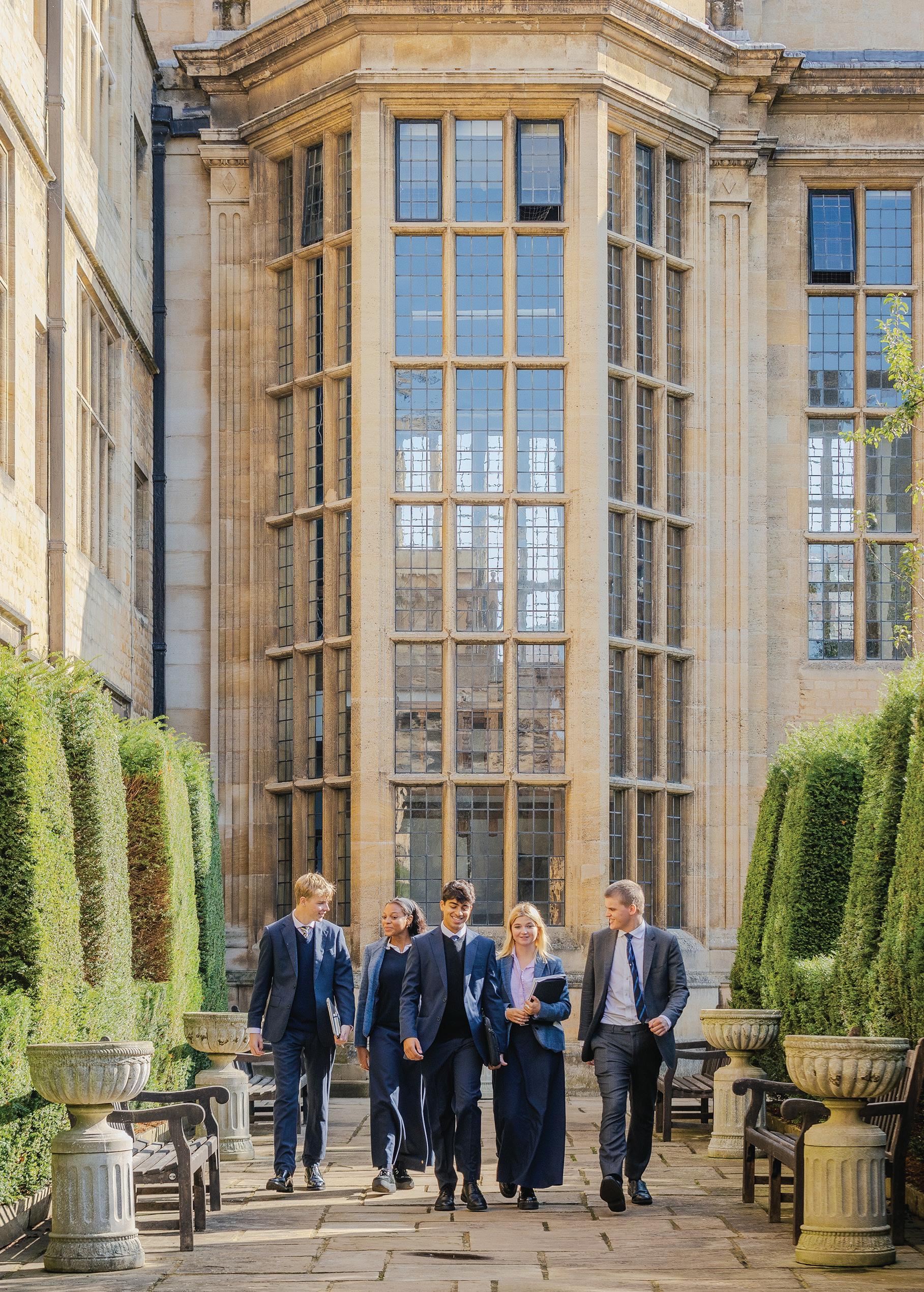
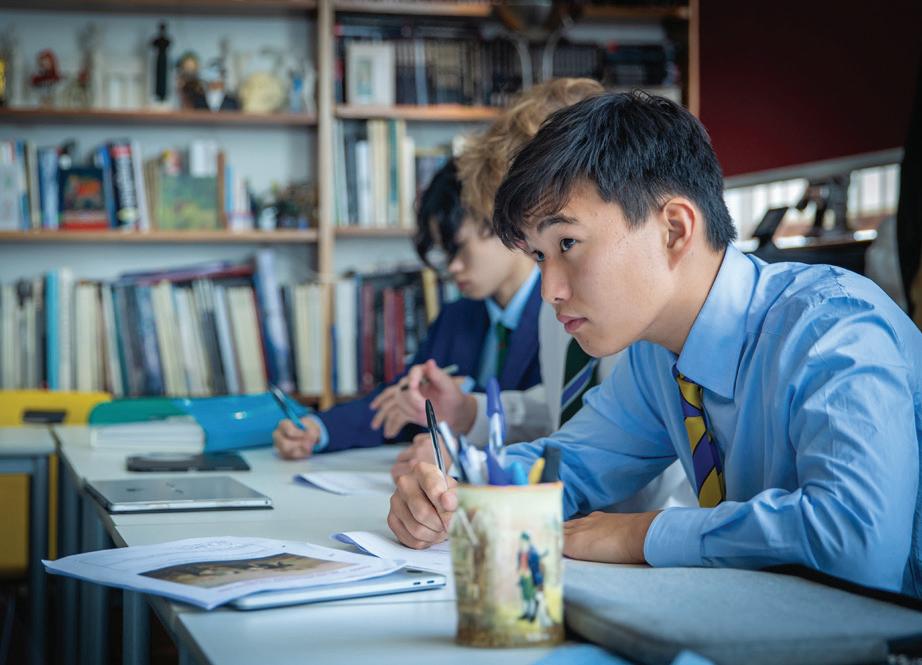

Here, pupils shape their own journeys through a broad and balanced curriculum, supported by expert guidance and enriched by the Futures Curriculum. Independence is encouraged, and support is always close at hand.
This is your chance to explore, discover, and prepare for a bright future – and it all begins with the choices you make today.
Welcome to Uppingham Sixth Form – a place of growth, choice, and opportunity
Uppingham Sixth Form Subject Options
Sport (Extended Certificate)
– Equivalent to one A level (Note 2)
Sport (National Diploma) BTEC – Equivalent to two A levels (Note 2)
Textile Design
The School may need to:
• Limit numbers if some courses are oversubscribed.
• Withdraw courses that attract insufficient interest.
Note 1: Mathematics and Further Mathematics represents a choice of two A levels.
Note 2: Sport is offered as either the BTEC Extended Certificate (one A level equivalent) or the BTEC National Diploma (two A level equivalent).
To join the Sixth Form, pupils must achieve at least three Grade 7s and three Grade 6s at GCSE. To continue a subject from GCSE to A level, a minimum of Grade 6 is required, though Grade 7 or higher is recommended. For those pupils whose results place them below tariff, re-entry to the Sixth Form may be possible, subject to an agreed curriculum.
Subject-specific requirements include:
• Mathematics: Grade 8-9
• Further Mathematics: Grade 9
• Biology, Chemistry: Grade 8-9, and at least Grade 7 in Maths
• Physics: Grade 8-9, and at least Grade 8 in Maths (A level Maths strongly advised)
• Psychology: Grade 7 in both Maths and English, and either a grade 7 in one of the sciences or an A* in Combined Science.
No exceptions are made for these requirements.
Pupils typically choose three A level subjects or combination of A level and BTECs. An EPQ (Extended Project Qualification) may also be selected.
A Level Options Timeline: Upper Fifth
Autumn Term
A Level Video Subject Guides
A Level Presentations
6.45pm - 8.30pm on Thursday 11 December
Christmas Holidays
January
Spring Term
Summer Term
Summer Holiday
Pupils begin by reflecting on their academic journey so far, considering subjects they have enjoyed at GCSE and areas where they have shown strength, aptitude or interest.
Pupils and parents should consider Review feedback and previous attainment in subjects they are interested in.
Pupils and parents can access these video presentations on UppNet to find out more about subjects of interest.
Tutors should encourage their tutees to discuss relevant subject guides with them, focusing on their tutee’s interest, aptitude and suitability for the subject. They should also take careful note of any subject tariffs.
For those subjects not offered at GCSE, pupils are able to attend an in-person introduction delivered by the Head of Department.
Tutors should encourage their tutees to attend where appropriate and subsequently discuss their tutee’s interest, aptitude and suitability for the subject.
Pupils use the break to revise for their Mock GCSE examinations.
Publication of the Sixth Form Options Guide.
Pupils confirm final choices with parents/guardians, taking careful note of any subject tariffs. These choices are completed via Microsoft Forms by Tuesday 27 January.
Pupils sit their Mock GCSE examinations in the first two weeks of the term.
Heads of Department and Tutors consider subject choices.
Mock examination results data is used to provide further feedback on A level choices. The Sixth Form Team also review A level subject combinations.
Any concerns are flagged to HsMs for conversations with pupils, parents and Tutors.
New Lower Sixth pupils attend a subject fair on Sunday 8 March to assist with choices. Current pupils are welcome to attend.
Pupils sit their GCSE examinations.
Following the conclusion of the GCSE examinations, pupils attend A level taster courses in subjects of their choosing.
GCSE results are published on Thursday 20 August.
The School reviews results and where possible assists in agreeing an onward A level curriculum for pupils who may have missed tariffs.
Higher Education
Uppingham School has an outstanding programme of preparation for Higher Education:
UPPINGHAM SCHOOL UNIVERSITY DESTINATIONS 2025
Six
at
In 2025, 81% of our Upper Sixth pupils gained places at their first-choice university. Our top ten most popular destinations in 2025 were:
Extended Project Qualification
In the Sixth Form, pupils may opt to take the Extended Project Qualification (EPQ). This stand-alone qualification carries the value of half an A level and gives the opportunity for pupils to extend their studies beyond the confines of their individual subjects. The course is designed to develop both research and analytical skills, and requires a great deal of self-motivated, independent work, all of which are attributes that will be crucial for university level studies. Pupils can choose to take one of two paths, either a 5,000 word academically structured dissertation, or the more practical artefact option with accompanying report. Both pathways also include a presentation and question and answer session.
Universities have welcomed the EPQ positively, and it provides focus for both personal statements and entrance interviews, enabling pupils to demonstrate their ability to tackle university style work to a high level.
Contact Miss Stevens JS1@uppingham.co.uk
Subject Combinations and UCAS Course Choice
Some degree programmes require certain subjects; many have no specific requirements. Students should check the UCAS website for current, institution-specific degree requirements.

The Informed Choices website offers advice on specific degree courses and subject requirements.
Unifrog and UCAS also offer valuable support in helping to choose a degree course. Pupil access only.*


* Pupils joining Uppingham in September 2026, who do not already have access to Unifrog through their current school, should contact our Head of UCAS, Mrs Anna Gadd (ag2@uppingham.co.uk).
UCAS – Choosing a Course
Informed Choices
Unifrog
Applications Timeline
At Uppingham, we closely support our pupils in navigating their choices post-A Level. The majority of our pupils go on to undergraduate study either in the UK, via a UCAS application, or overseas in the US, Europe or Asia, via our support for global applications. Some pupils also apply for Degree Apprenticeships for which we run a bespoke session in the Autumn Term of Year 12, and who receive ongoing support from our Head of Careers.
Month Pupils
October - December (Y12) Attend Futures Curriculum; begin exploring courses on Unifrog.
January - April
Research universities and entry requirements; begin shortlisting on Unifrog.
May Attend Higher Education Day; register on UCAS and complete data entry; begin personal statement.
June
July
August
September (Y13)
Lower Sixth examinations; draft personal statement; visit open days.
Refine personal statement; Collections materials prepared.
Refine personal statement; Collections materials prepared.
Collections Tests; finalise personal statement and application.
October Submit early applications by 15 October; prepare for interviews and tests.
November Submit remaining applications.
December Ensure final UCAS submission.
January Track offers/interviews on UCAS Hub.
February - May Choose firm/insurance; apply for finance and accommodation.
June - August Prepare for results day and Clearing.
Parents / Carers School Support
Discuss interests and possible subjects.
Attend Sixth Form Team Q&A [Zoom]
Discuss course options, type, and location.
Futures Curriculum; explain the yearly UCAS process.
Guide pupils using Futures Curriculum, UCAS Hub and Unifrog.
Higher Education launch; UCAS data entry completed; UCAS Guides issued to pupils.
Support with attending open days. University Application Grades (UAGs) generated; Tutors support with choices.
Discuss UAGs and Choices; support preparation of Collections revision.
Discuss UAGs and Choices; support preparation of Collections revision.
Collections materials set.
Offer summer email guidance if needed.
Review draft applications. Provide one-to-one guidance and accuracy checks.
Help meet deadlines and prep for tests.
Approve and submit early applications.
Encourage early completion. Submit all applications and references.
Encourage completion. Perform final checks and confirmations.
Discuss offers and interview preparation.
Provide interview support and guidance.
Support finance planning. Futures Curriculum provides finance, budgeting, and transition advice.
Support decisions on results day.
Results Day guide; full in person and remote Results Day support service.
Results Day Support
Results Day is an important milestone for our pupils, and we recognise that it can bring a mixture of excitement, pride and uncertainty. To ensure every pupil feels fully supported, a wide network of staff will be available – both in person and remotely – to provide clear guidance, reassurance and care.
Alongside the Sixth Form Team, Heads of Department will be in contact with pupils individually and proactively on the morning results are published. They will offer subject-specific advice on the status of grade boundaries, help pupils interpret their results in context, and provide informed guidance on whether a remark or review of marking may be appropriate. This timely, personalised academic support ensures pupils can make well-judged decisions with confidence.
Whether your child requires advice on confirming university offers, navigating Clearing, or understanding the detail of their A level results, the Sixth Form Team will be on hand throughout the day to offer calm, practical and informed support as pupils consider their next steps.
Equally important is the pastoral care available on Results Day. Tutors and House Masters will be checking in with pupils to offer an additional layer of emotional support, reassurance and encouragement. For many pupils, results can prompt strong emotions, and familiar adults who know them well will be available to listen, steady nerves and help pupils maintain perspective.
Our collective aim is to ensure that every pupil feels cared for, confident and well-prepared—both academically and emotionally—as they move on to the next stage of their journey. Please feel free to contact us on the day. We are fully committed to supporting your child and family throughout this significant moment.
Contact Details:
Dr John Roberts Assistant Head: Sixth Form jlr@uppingham.co.uk
Mr Nick Fletcher Deputy Head of Sixth Form ngf@uppingham.co.uk
Mrs Anna Gadd Head of UCAS ag2@uppingham.co.uk
Mr Magnus Whittle Head of Oxbridge hmw@uppingham.co.uk
Mr Sam Dewhurst Head of Careers sgd@uppingham.co.uk
School for Life
Once you leave Uppingham, you will be an Old Uppinghamian, and become part of a network of thousands of OUs, based all around the world.
The School for Life programme is run by the Old Uppinghamian Association and focuses on helping OUs (young or older) make the most of our unique OU community.
School for Life offers unlimited career and networking support through the OU community. It facilitates connections and conversations between OUs - those looking for support connecting with those able to help, and in turn helping others as they become more experienced.
In today’s highly competitive employment market, a word of advice or some practical support can go a long way to helping a fellow OU on their way to a successful internship or career.
The 8,000 strong OU network includes an incredible variety of industries and sectors, ensuring there is someone who can offer a helping hand, whether it be skill, industry or sector related.
How much or how little you get out of the School for Life programme is very much up to you. The more you engage, the more self-motivated and prepared you are, the more you will benefit.
Although you may not need to access the School for Life programme as you embark on your Sixth Form career, it is good to know that you will have access to a wealth of connections after your time at the School.
BIOLOGY
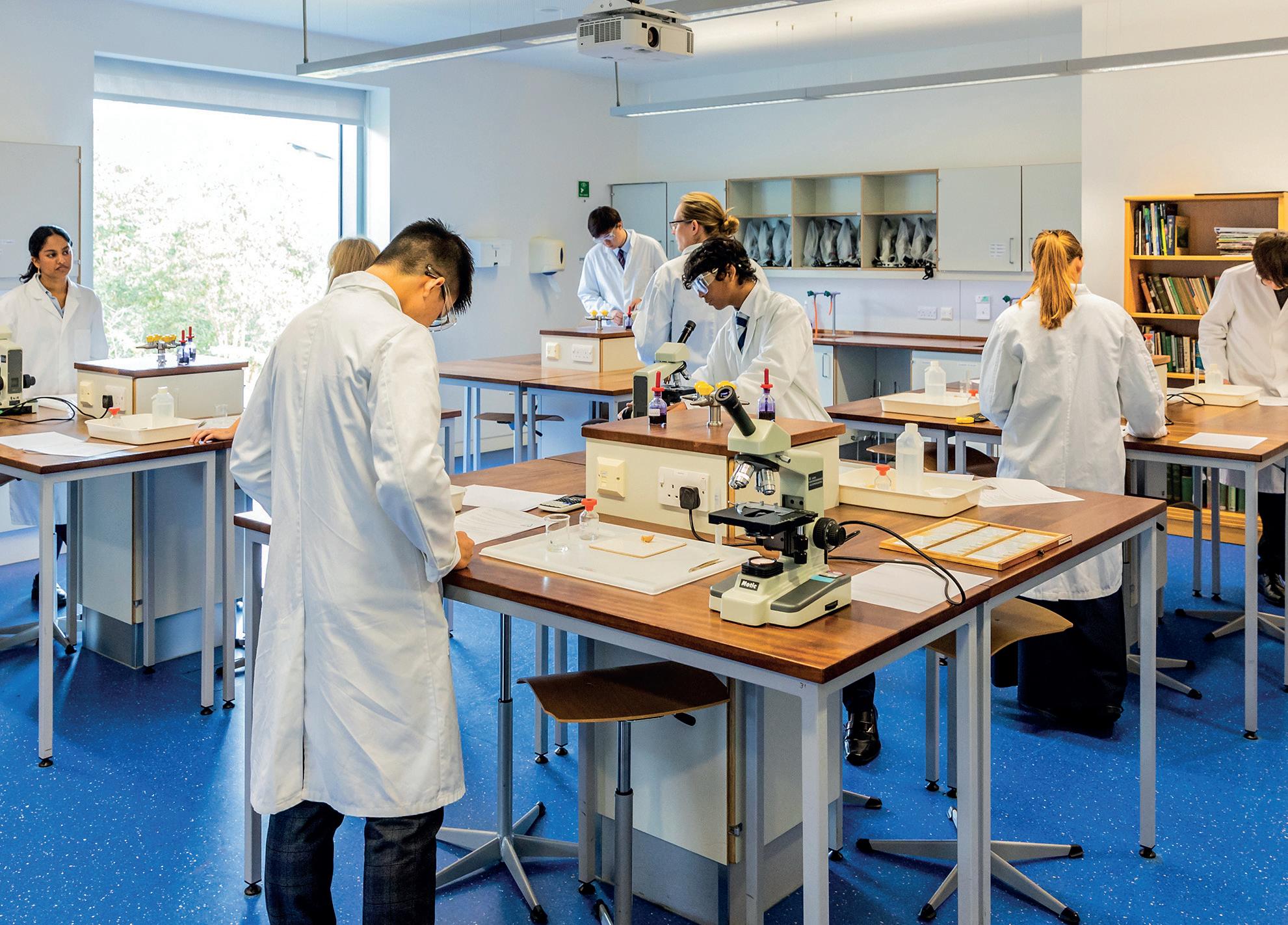
Discover the science of life, from molecules to ecosystems. This course blends theory with hands-on experiments and fieldwork, developing analytical skills and scientific curiosity. Perfect for aspiring medics, researchers, and environmentalists who want to understand and shape the living world.
Qualification
Examination overview
AQA 7402
Paper One: Two hours, worth 35%
Made up of short, long and extended answer questions. Topics assessed include:
• Biological molecules
• Cells
• Exchange
• Genetics
Paper Two: Two hours, worth 35%.
Made up of short, long and extended answer questions. Topics assessed include:
• Energy transfers
• Response
• Genetics, populations, evolution and ecosystems
• Gene expression
Paper Three: Two hours, worth 30%
Assesses all topics from across the course and includes an essay.
Coursework
Trips
Subject combinations
Career and University prospects
This qualification does not include a coursework element; however, it does have a practical endorsement. Pupils are required to complete a minimum of twelve practical activities, which are assessed by their teachers against the Common Practical Assessment Criteria.
There is a compulsory three-day field trip to the Norfolk coast included in the course. Optional enrichment opportunities include Anatomy Club, Journal Club and Medical Society. There is also an option to participate in the Biology Olympiad.
Maths, Chemistry, Physics or Geography work well with A level Biology.
A level Biology opens doors to a wide range of university courses, including medicine, veterinary science, dentistry, biomedical sciences, biochemistry, psychology, and environmental science. It also leads to careers in healthcare, research, conservation, biotechnology, and education.
Resource provided
Costs
Contact
A digital textbook is provided via the Kerboodle platform.
There are no compulsory costs, however, optional revision materials may be suggested. The cost of the field trip is covered as part of the course.
Mrs Cowling ALC@uppingham.co.uk
BUSINESS
Learn how organisations thrive in a competitive world. Explore marketing, finance, strategy, and global business trends through real-world case studies. Ideal for future entrepreneurs and leaders, this course builds decisionmaking, problem-solving, and commercial awareness for careers in business and beyond.
Qualification
Examination overview
Coursework
Trips
Subject combinations
Career and University prospects
Resource provided
Costs
Contact
Pearson Edexcel 9BS0
Paper One: Two hours, worth 100 marks
• Made up of a range of questions which secure 4 to 20 marks.
• Paper focuses on marketing, people and global business.
Paper Two: Two hours, worth 100 marks.
• Made up of a range of questions which secure 4 to 20 marks.
• Paper focuses on business activities, decisions and strategies.
Paper Three: Two hours, worth 100 marks.
• Made up of a range of questions which secure 8 to 20 marks.
• Paper focuses on investigating business in a competitive environment.
This qualification does not include a coursework element.
There are no compulsory trips.
Business is a general subject and so goes well with other subjects. It is usually taken alongside subjects such as: Geography, DT, Sport, Maths, and History.
Many universities offer business-related courses, and the transferable, as well as specialised skills, developed through critical analysis make business students highly employable.
A digital textbook is provided.
There are no compulsory costs.
Mr Hook GDH@uppingham.co.uk
CHEMISTRY
Unlock the secrets of matter and reactions that power our world. Through practical experiments and advanced theory, you’ll develop problem-solving skills and scientific precision. A gateway to medicine, engineering, and research, Chemistry equips you to tackle global challenges with confidence.
Qualification
Examination overview
Coursework
Trips
Subject combinations
Career and University prospects
Resource provided
Costs
Contact
Pearson Edexcel 9CH0
Paper One: 1 hour 45 minutes, worth 30% Focuses on inorganic and physical chemistry.
Paper Two: 1 hour 45 minutes, worth 30% Focuses on organic and physical chemistry.
Paper Three: 2 hours 30 minutes, worth 40% Focuses on practical principles in chemistry.
In addition, a Pass/Fail grade is included for the Practical Endorsement. Pupils are required to complete a range of practical activities to demonstrate competence across the two-year period.
This qualification does not include a coursework element; however, pupils must complete the Practical Endorsement (see above).
There are no compulsory trips.
Biology, Physics and Maths work well with A level Chemistry.
A level Chemistry opens doors to a wide range of university courses with either a scientific or non-science focus.
Pearson Edexcel A level Chemistry textbook.
There are no compulsory costs, however, optional revision materials may be recommended.
Mr King RAK@uppingham.co.uk

CLASSICAL CIVILISATION
Discover what it means to be human by exploring the timeless myths, literature, and philosophy of ancient Greece and Rome. This course develops interpretive and essay-writing skills through study of epic poetry, drama, and historical thought. Ideal for humanities degrees and a wide range of careers.
Qualification
Examination overview
Coursework
Trips
Subject combinations
Career and University prospects
Resource provided
Costs
Contact
OCR H408
Paper One: 2 hours 30 minutes
World of the Hero paper.
A combination of short analysis questions and longer essays.
Paper Two: 1 hour 45 minutes
Greek Art paper looking at sculpture/vase painting. A combination of analysis and essays.
Paper Three: 1 hour 45 minutes
Love and Relationships paper. A combination of passage analysis and essays.
This qualification does not include a coursework element.
There are annual trips to the British Museum and the Cambridge Cast Gallery. There is also an optional overseas trip to Rome or Greece.
History, Religious Studies, Art, History of Art, English, Business, and Latin work well with Classical Civilisation A level.
Excellent opportunities across a wide range of disciplines, with numerous outstanding courses available at all Russell Group universities.
All texts are provided, and the course is further supported with a breadth of materials on OneNote.
There is an annual Classics Declamation Award Dinner, which is recharged.
Mr Addis DWJA@uppingham.co.uk
DESIGN AND TECHNOLOGY
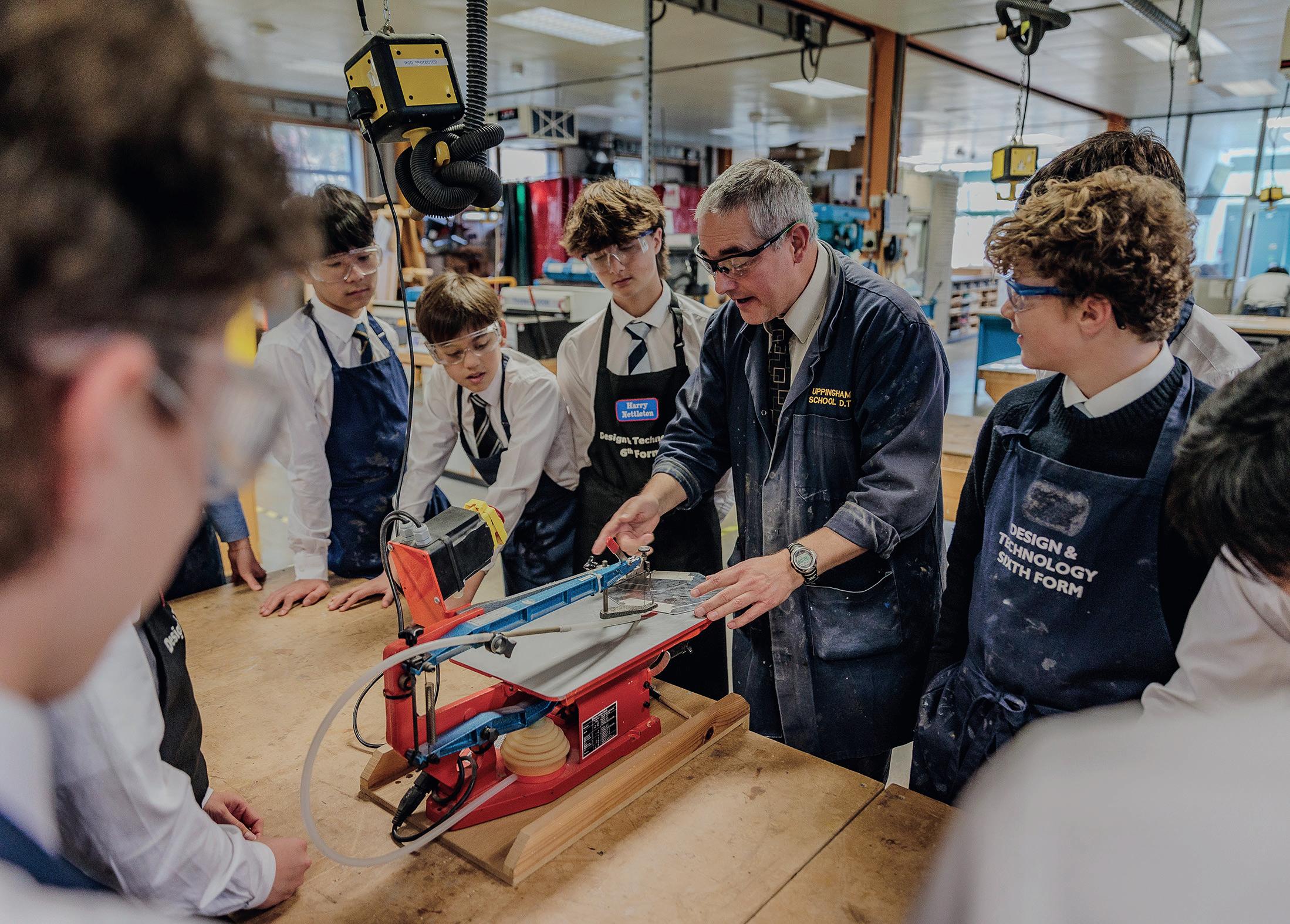
Turn ideas into reality through an iterative design process. Learn to combine creativity with technical principles, using modern technology, CAD and traditional methods to prototype and solve real-world problems. Ideal for careers including architecture, engineering, and product design.
Qualification
Examination overview
Coursework
Trips
Subject combinations
Career and University prospects
Resource provided
Costs
Contact
Pearson Edexcel 9TD0
The course is broken down into two main components.
Component One (60%) – Extensive portfolio and final outcome.
Supporting studies and practical work
This comprises of a portfolio of development work and outcomes based on themes and ideas developed from personal starting points.
Personal study
This is evidenced through a critical written communication showing contextual research and understanding in a minimum 1000 words of continuous prose.
Component Two (40%) – Portfolio (including preparatory studies) and 15-hour practical exam.
Preparatory studies:
A portfolio with various measures of development that lead up to the exam based on the Externally Set Assignment.
15–hour practical exam:
Under examination conditions, students will produce a final physical outcome extending from their preparatory studies in response to the theme.
The majority of this A level subject is coursework based.
In the Upper Sixth, there is a trip to London in February.
The Creative Faculty puts on trips to locations like Venice and New York. Although these are not annual, they are usually offered once during the course of the A level.
Maths, Physics and Art work well with A level Design & Technology.
A level Design and Technology opens up opportunities in Architecture, Engineering, Design Engineering, Product Design, Industrial Design, and Interior Design.
There are no textbook requirements. Majority of materials supplied, however some pupils may source their own parts when they are working on a specialist project.
A £25 materials contribution is required to support the provision of key course resources.
Mr Harrison
HJH@uppingham.co.uk
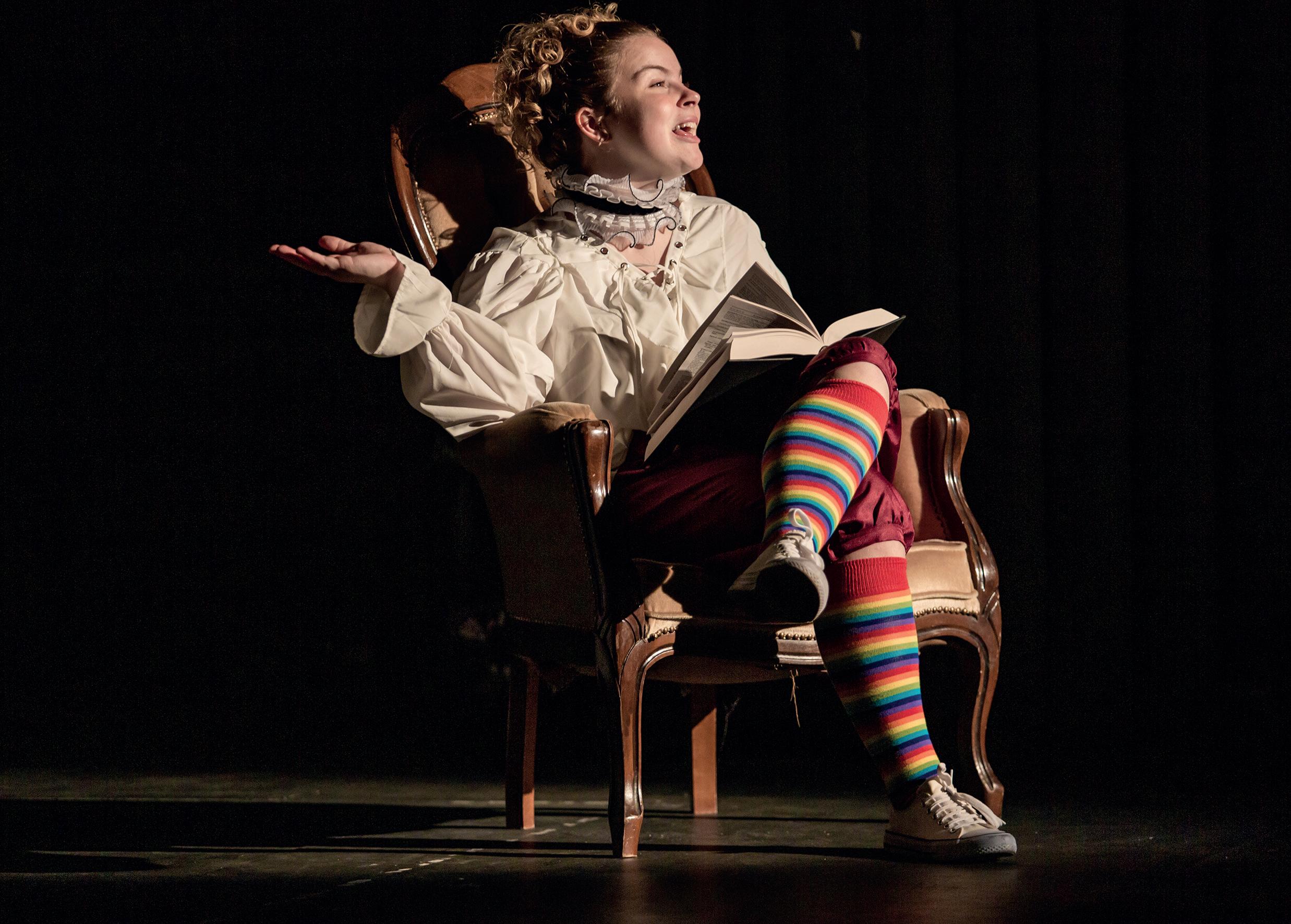
DRAMA AND THEATRE
Bring stories to life through performance and production. This course builds confidence, creativity, and collaboration while exploring classic and contemporary theatre. Perfect for aspiring actors, directors, designers, and anyone seeking strong communication and presentation skills.
Qualification
Examination overview
Eduqas A690QS
Component One: worth 20%
Practical work
Component Two: worth 40%.
Practical work
Component Three: worth 40%
Written examination
Coursework
Trips
Subject combinations
Career and University prospects
Resource provided
Costs
Contact
This qualification includes a coursework element.
Trips to watch live theatre are a required part of the course.
Any humanity-based subjects (especially English) or creative subjects complement Drama and Theatre A level.
This qualification can provide pupils with the opportunity to apply to drama school or to study any number of prestigious university courses.
Through subscriptions to Drama Online and National Theatre at Home there is access to online theatre productions. For practical exam performances there is access to resources within the Department (set, costume, props etc).
There will be some recharges for theatre trips and course resources.
Mr Holroyd JH2@uppingham.co.uk
ECONOMICS
Discover how markets, governments, and global trends impact everyday life. This course blends theory with real-world application, building analytical and decision-making skills. Ideal for future economists, financiers, and entrepreneurs who want to understand and shape economic policy and business strategy.
Qualification
Examination overview
Coursework
Trips
Subject combinations
Career and University prospects
Pearson Edexcel A 9EC0
Paper One:
Markets and business behaviour (an assessment based on microeconomics).
Paper Two:
The national and global economy (an assessment based on macroeconomics).
Both of these papers include a range of questions from multiple choice to 25-mark extended open response questions.
Paper Three:
Micro and Macroeconomics.
This paper assesses both sides of the course with a range of shorter and longer open response questions.
This qualification does not include a coursework element.
There are no compulsory trips.
Economics at University is usually studied as either a Bachelor of Arts (BA) or a Bachelor of Science (BSc). This is because as a social science it can sit across both fields.
The BSc will almost always require Maths to be studied at A level and the subject also goes well with the traditional sciences.
More holistically, however, Economics goes well with Religious Studies, Politics, Geography and History.
Apart from medicine, economics graduates enjoy some of the highest earnings of any degree course and deliver the greatest return on investment. Thanks to its analytical nature, economics is highly valued by both universities and employers.
Resource provided
Costs
Contact
A digital textbook is provided.
There are no compulsory costs.
Mr Hook GDH@uppingham.co.uk
ENGLISH LITERATURE
Immerse yourself in the world’s greatest writing, from Shakespeare to modern poetry. This course sharpens analytical thinking and expressive skills through drama, prose, and critical essays. Perfect for creative minds aiming for careers in law, media, publishing, or any field that values clear, persuasive communication.
Qualification
Examination overview
Coursework
Trips
Subject combinations
Career and University prospects
Pearson Edexcel 9ET0
Paper One: Drama
The study of one Shakespeare text and one other drama text.
Paper Two: Prose
The study of two prose texts, including one pre-1900 text.
Paper Three: Poetry
The study of Romantic poetry and a selection of modern poetry from the ‘Poems of the Decade’ anthology.
Pupils study a pre-1900 text, which they compare with a text of their own choosing. This is worth 20% of their final grade.
Where possible, pupils are given the opportunity to watch a live production of the drama texts they are studying.
Pupils are given the opportunity to attend the annual Poems of the Decade conference to hear lectures from the modern poets they are studying. There is also an exciting series of lectures from visiting writers and speakers, in recent years speakers have included: Ian Duhig, Simon Armitage, Jason Allen-Paisant and Dr Nick Groom.
English Literature A level combines well with Drama and Theatre, Latin, History, Religious Studies and Modern Languages.
English Literature is a strong and versatile qualification which is well-regarded by universities. It develops critical thinking, writing, analysis and communication skills.
Pupils who take English Literature A level often go on to read English Literature at university and it can also lead to other university courses such as History, Politics, Philosophy, Law, Media, Journalism & Communications, Business & Marketing, Modern Languages and Creative Writing.
English Literature A level demonstrates the ability to write persuasively and clearly, analyse and interpret texts, think critically and argue logically, communicate ideas effectively as well as being creative and culturally aware. These are all transferable skills which are valued by a wide range of employers.
Resource provided
Costs Contact
There is access to valuable resources such as JSTOR and Massolit, and the Department subscribes to a variety of literary publications such as Emag.
The studied texts are recharged, along with costs for optional trips
Mrs Kinmond
VLK@uppingham.co.uk
FINE ART
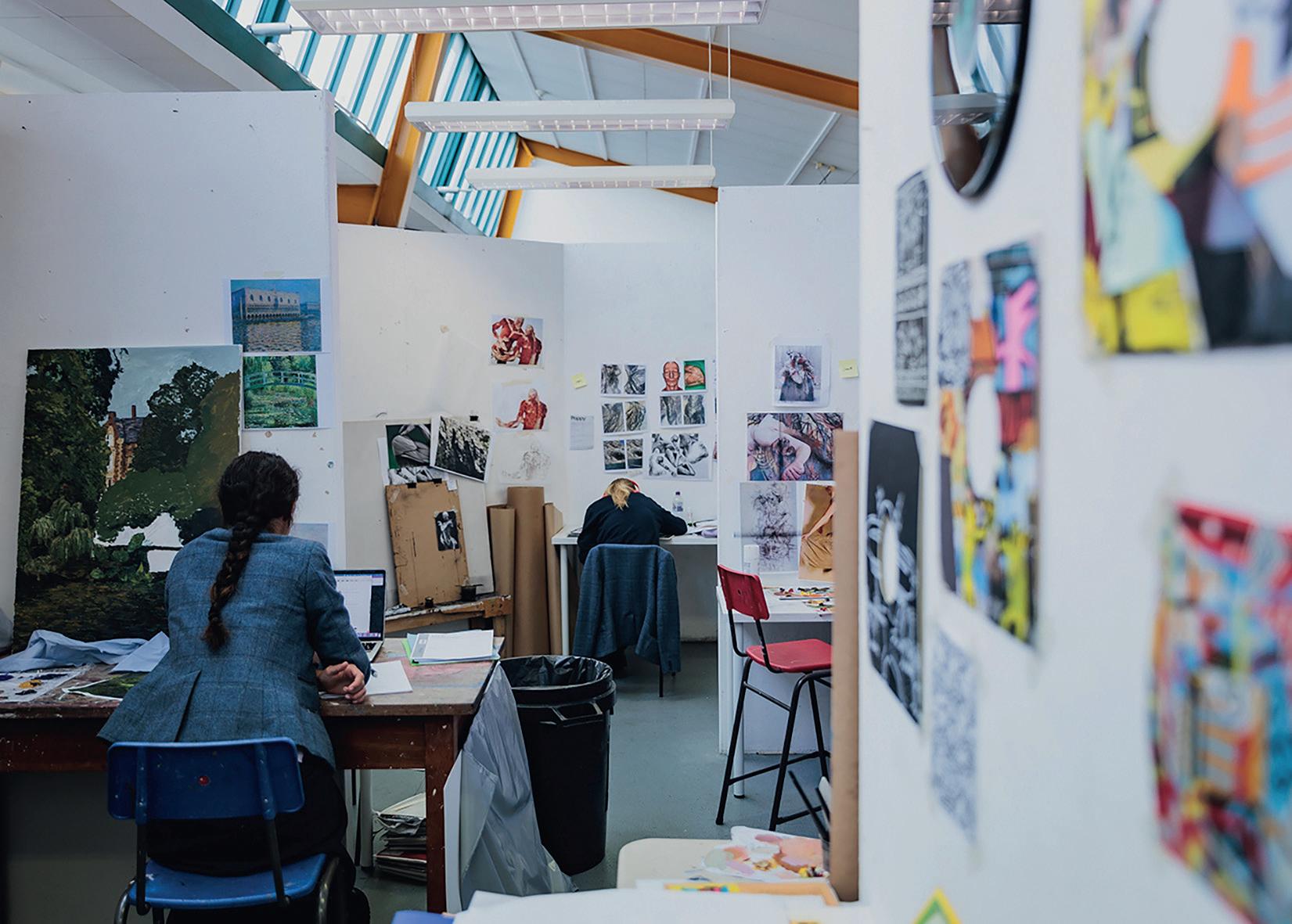
Express ideas visually and creatively. Explore diverse media and techniques while building a personal portfolio. Ideal for students interested in careers within the creative industries, such as fine art, design, and illustration, or for anyone wishing to develop originality and artistic confidence.
Qualification
Examination overview
Coursework
Trips
Subject combinations
Career and University prospects
Pearson Edexcel 9FA0
Component One: Personal Investigation, worth 60%
A practical investigation supported by a written personal study (1,000–3,000 words). Pupils explore an individual theme, producing a portfolio of work informed by contextual research.
Component Two: Externally Set Assignment (40%)
Shared in February of the Upper Sixth, with a choice of themes. Pupils create preparatory work leading to a final 15-hour controlled assessment under exam conditions.
Both components are internally assessed and externally moderated.
This course is portfolio-based. Coursework makes up:
• 60% through Component 1 (Personal Investigation)
• 40% through Component 2 (Externally Set Assignment).
Pupils are given the opportunity to visit galleries, museums, and exhibitions in the UK. Overseas or residential trips may also be organised, depending on availability and demand each year.
Fine Art A level works well with English, History, History of Art, Classics, Drama, Music, Design Technology, Textiles and other creative subjects that support critical and visual thinking.
Fine Art also combines well with Maths, Sciences, or Computer Science for pupils interested in architecture, product design, or digital/creative technologies.
Fine Art offers a wide range of university courses including Fine Art, Illustration, Graphic Design, Animation, Architecture, Fashion and Textiles, Art History and Curating. Graduates can pursue careers as professional artists, gallery curators, illustrators, designers, animators, set or prop designers, art therapists, teachers or creative entrepreneurs.
Transferable skills gained from studying this subject include research and analysis, critical thinking, creativity, project management, presentation and communication skills, which are skills valued in a wide range of fields beyond creative industries.
Costs Contact
A contribution to specialist studio materials (e.g. paints, sketchbooks, canvases/ boards, printmaking equipment, ceramic equipment, mixed media resources). Additional costs may apply for gallery trips or optional overseas residential visits.
Mrs Reid
ARR@uppingham.co.uk
FRENCH
Qualification
Examination overview
Coursework
Trips
Subject combinations
Career and University prospects
AQA 7652
Paper One:
• Listening
• Reading
• Translation
Paper Two:
Essays on literature and film analysis
Paper Three:
Speaking exam on cultural topics and an Individual Research Topic
There is an Individual Research Project for the speaking exam.
There is a pen-pal exchange with the Maison d’Éducation de la Légion d’Honneur, with Uppingham hosting an exchange in October and our pupils visiting France in March. This exchange has been running for more than two decades and is very popular. There is also a trip to London to the British Film Institute for a study day on the set film.
Resource provided Costs
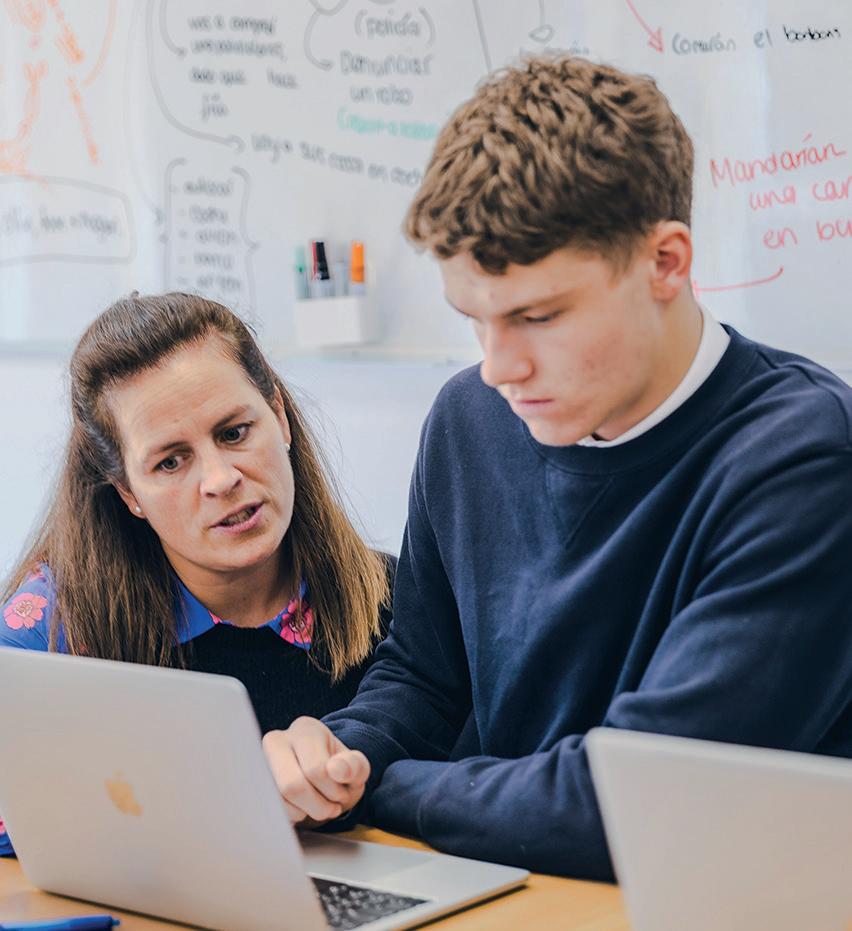
Contact Achieve fluency and cultural understanding in French. Study current affairs, literature, film, and while building communication skills for a globalised world. Ideal for careers in diplomacy, business, and media, and for those seeking international opportunities.
Languages can be learned alongside any subject. Subjects that best complement French at A level are English, French, Politics, History, Economics, Business and History of Art. Scientists also benefit from language study in terms of opening up their options at university where they will have greater access to research and study-abroad options.
Knowing a language is a life skill that enhances both personal and professional opportunities across all career paths. It helps you:
• Work globally in medicine, business, diplomacy, media, and the military.
• Stand out in sectors like finance, law, consultancy, and international development.
Beyond university, professions include interpreter, translator, or teacher. Language proficiency benefits careers in Government and International Organisations, Business and Finance, International Aid and Development, Political Risk Analysis, Media, and the Military.
Languages are highly regarded by universities. French can be combined with disciplines such as Law, Business, International Relations, Economics, Management, and even Mathematics.
A digital textbook is provided via the Kerboodle platform. Access to e-Revision.
The recommended revision guides (one per year, plus a grammar and translation workbook), Schaum’s Grammar and the A level set text.
Mrs Hunter
ZJRH@uppingham.co.uk
GEOGRAPHY
Explore the natural and human forces shaping our world, from glaciated landscapes and climate change to migration, borders, and shifting geopolitics. You’ll develop strong analytical skills through data interpretation, GIS, and independent enquiry, gaining insight into sustainability challenges and global interconnections. A versatile, future focused subject, Geography leads to pathways in environmental consultancy, urban planning, hazard management, international development, and any career centred on understanding people and places.
Qualification
Examination overview
Coursework
Trips
Subject combinations
OCR H481 (01/02/03/05)
Paper One: Physical Systems, worth 22%
• Landscape System: at Uppingham we study glaciated landscapes.
• Earth’s Life Support Systems: a study of the major support systems of the earth (the carbon and water cycles). The inter-relationships between the land, oceans and atmosphere help pupils to understand the processes, characteristics and impacts on these landscapes and cycles, which shape them over time and create several global issues and contestation.
Paper Two: Human Interactions, worth 22%.
• Changing Spaces, Making Places: this involves starting from the local place and moving outwards to the regional, national and global scale to understand the interconnections and dynamics of place. Pupils investigate how shifting flows of people, money and resources are shaping places, whilst economic changes are contributing to a landscape of haves and have nots.
• Global Connections: this comprises of options such as global migration and power and borders. Pupils also learn a range of geographical skills associated with human geography.
Paper Three: Geographical Debates, worth 36%
• This unit takes some of the most dynamic issues the planet faces and encourages pupils to engage with, reflect on and think critically about them. The two chosen topics (Climate Change and Hazardous Earth) explore the interactions between people and the environment.
Independent Investigation (Non-Examined Assessment, worth 20% overall)
20% of the A level is made up of a Non-Examined Assessment, which takes the form of an independent investigation build on fieldwork. Pupils design their own title and investigation (based on any component of the syllabus), collect data, analyse and conclude their findings.
In the Lower Sixth, there is a residential trip to the Lake District to kick start the NEA (coursework) process. Other local, single day trips occur throughout the course.
A level Geography combines well with Biology, Economics, History, Business, Maths, and Politics, making it a versatile subject that bridges the gap between arts and sciences. As well as this the exam skills covered in Politics, Business and
GEOGRAPHY (continued)
Career and University prospects
Resource provided Costs Contact
Economics overlap significantly with those covered in Geography
At university, Geography can be studied as a BA, focusing on human geography such as society, culture and politics, or as a BSc, emphasising physical geography, environmental systems, GIS and technical skills. It is consistently rated as a highly employable degree in the UK. Career prospects are strong and varied across public, private and third sectors, with roles in computing, urban planning, retail, advertising, architecture and the forces. Geography graduates develop valuable skills including literacy, numeracy, reporting, data collection, problem-solving and advanced computing.
Course textbook (and some topic specific textbooks), revision guide (if needed).
The fieldtrip to the Lake District in the Lower Sixth costs approximately £300 for transport, food, accommodation and additional tutoring.
Mr Davies TPD@uppingham.co.uk
GREEK
Explore the language, literature, and thought of ancient Greece in the original words of its greatest writers. This course develops precision in translation, analytical skill, and a deep understanding of classical culture. You’ll study unseen prose and verse, alongside set texts from authors such as Homer, Herodotus, Euripides, and Plato, gaining insight into epic, drama, history, and philosophy. Ideal for students who enjoy linguistic challenge, close reading, and big ideas, Classical Greek opens pathways to Classics, law, philosophy, languages, and any field that values clarity, logic, and intellectual depth.
Qualification
Examination overview
Coursework
Trips
Subject combinations
Career and University prospects
Resource provided
Costs Contact
OCR H444
Paper One: 1 hour 45 minutes
• Unseen translations - translating passages
Paper Two: 1 hour 15 minutes
• Prose Composition – writing from English to Latin
Paper Three: 2 hours
• Prose Literature - passage analysis and essay
Paper Four: 2 hours
• Verse Literature - passage analysis and Essay
This qualification does not include a coursework element.
There is an overseas trip to Rome or Greece.
History, Religious Studies, Art, History of Art, English, Business, Latin, French, Spanish, and Economics work well with A level Greek.
Excellent opportunities across a wide range of disciplines, with numerous outstanding courses available at all Russell Group universities.
All texts are provided, and all other materials are available on the Department OneNote.
There is an annual Classics Declamation Award Dinner, which is recharged.
Mr Addis
DWJA@uppingham.co.uk





Step into the past to understand the present. Investigate pivotal events and ideas that shaped societies, honing skills in research, argument, and critical thinking. Perfect for aspiring lawyers, journalists, and historians who want to interpret evidence and influence the future.
Qualification
Examination overview
Coursework
Trips
Subject combinations
Career and University prospects
Pearson Edexcel (9H10-1C, 9H10-2C and 9H10-37)
Paper One: 2 hours 15 minutes, worth 30%
Focuses on content from the Britain 1625-1701: Conflict, Revolution and Settlement module.
Paper Two: 1 hour 30 minutes, worth 20%. Focuses on content from the France in Revolution 1774-99 module.
Paper Three: 2 hours 15 minutes, worth 30%
Focuses on content from the Germany 1871-1990: United, Divided and Reunited module.
A 4,000-word essay (worth 30%) forms the coursework element of this course, worth 30%. Pupils have considerable autonomy in choosing their area of research.
One or two day trips (17th century London / Oliver Cromwell Museum and Cambridge) are made over the course of the two years.
Politics, English Literature, Religious Studies and Economics work well with A level History.
History graduates have strong analytical and communication skills which can be put to good use in careers in law, politics, journalism, business and finance. This qualification is also well-respected by universities and is an excellent preparation for degrees in Law, History, Politics and International Relations.
Resource provided
Costs
Contact
Textbooks, exercise books and access to online platforms like JSTOR and MASSOLIT are provided.
Small recharges for any day trips (no more than £60-£70 for the two years of the course) are passed on.
Mr Kirkby BMK@uppingham.co.uk
HISTORY OF ART
Discover how art and architecture reflect ideas and societies. This course builds visual literacy and analytical skills through study of major movements and particular works. Perfect for anyone passionate about cultural history, creativity and the world around us.
Qualification
Examination overview
Coursework
Trips
Subject combinations
Career and University prospects
Pearson Edexcel 9/HTO/01 and 9/HTO/02
Paper One: Three hours.
Questions are worth 12 and 25 marks.
This explores the themes of War and Nature, drawing on works from varied time periods to encourage deeper insight and comparison of meanings and messages in imagery.
Additionally, there is an ‘unseen’ part of the exam which requires analysis of named but obscure works of art, sculpture and architecture for analysis. After two years of study, pupils are expected to write with confidence and perceptiveness.
Paper Two: Three hours.
Questions are worth 5, 15 and 30 marks.
Pupils develop analytical skills by studying major works of art, architecture and sculpture, alongside expanding historical knowledge through two key periods:
• the Italian Renaissance (1420–1520), featuring artists such as Masaccio, Botticelli, Michelangelo and Donatello
• the 19th Century in England and France, including the Pre-Raphaelites, Monet, Rodin and Leighton.
This qualification does not include a coursework element.
A trip to see galleries in London happens termly. There is also an optional trip to Rome, Florence and Venice in October of the second year.
Any combination will work with History of Art. An interest in English or History is helpful, and the subject also informs pupils doing practical Art. At a higher level, a language would be an advantage to widen the scope of research.
Many top universities, including Oxford, Edinburgh, Exeter and Manchester, offer History of Art, often with the chance of spending a year abroad. Currently there are more Uppinghamians at the specialist Courtauld Institute for Art History than from any other school in the country. History of Art can lead to careers including writing and publishing, film design, museums and galleries, auctioneering, architecture, interior design, and advertising.
Resource provided
Costs
Contact
Pupils have access to the resources and sheets on individual works of art which are available on Sharepoint. There is also an extensive Art History library.
No, apart from the trips, where we try to keep costs to a minimum.
Mr Kirk
DSRK@uppingham.co.uk
LATIN
Unlock the language and literature of ancient Rome. This course develops precision in translation, analytical thinking, and a deep appreciation of classical texts. Through studying original prose and verse by authors such as Cicero, Tacitus, Virgil, and Ovid, you’ll explore language, history, and culture at their source. Ideal for students who enjoy problem-solving, close reading, and big ideas, Latin opens pathways to Classics, law, languages, history, and any career that values clarity, logic, and intellectual rigour.
Qualification
Examination overview
Coursework
Trips
Subject combinations
Career and University prospects
Resource provided
Costs
Contact
OCR H443
Paper One: 1 hour 45 minutes
• Translating passages
Paper Two: 1 hour 15 minutes
• Prose Composition – writing from English to Latin
Paper Three: 2 hours
• Prose Literature - passage analysis and essay
Paper Four: 2 hours
• Verse Literature - passage analysis and Essay
This qualification does not include a coursework element.
There is also an overseas trip to Rome or Greece.
History, Religious Studies, Art, History of Art, English, Business, Latin, French, Spanish, Economics work well with A level Latin.
Excellent opportunities across a wide range of disciplines, with numerous outstanding courses available at all Russell Group universities.
All texts are provided, and all other materials are available on the Department OneNote.
There is an annual Classics Declamation Award Dinner, which is recharged.
Mr Addis
DWJA@uppingham.co.uk
MATHEMATICS AND FURTHER MATHEMATICS
MATHS
Extend your understanding of advanced mathematical thinking. This course develops problem-solving, reasoning, and analytical skills through pure mathematics, statistics, and mechanics. Essential for STEMM pathways, finance, and any career demanding precision and critical thinking.
FURTHER MATHS
Deepen your mastery of advanced mathematical thinking. This course extends beyond A Level Mathematics through challenging topics such as complex numbers, matrices, differential equations, and advanced mechanics. It sharpens high level problem solving, abstraction, and logical reasoning, making it an exceptional choice for pupils who enjoy mathematical challenge. Highly valued for degrees in mathematics, physics, engineering, computer science, and finance, Further Mathematics equips you with the rigorous analytical skills needed for the most demanding STEMM pathways.
Qualification
Examination overview
Coursework
Trips
Subject combinations
Career and University prospects
Pearson Edexcel 9MA0 and 9FM0
In Maths there are three two-hour papers, each worth 100 marks.
Two of the papers test Pure content, one tests Applied content covering Statistics and Mechanics.
In Further Maths there are four 90-minute papers.
Two of the papers cover Core Pure Mathematics, one tests Further Pure Mathematics, and the last one tests Further Mechanics.
This qualification does not include a coursework element.
There are no compulsory trips.
Maths goes with anything. It is the most popular A level choice in the country. It often is picked alongside Physics, Chemistry or Economics, but in a typical maths set there will be pupils studying a far wider variety of other subjects.
Further Maths is for those who enjoy detail, precision, and problem-solving. Further Mathematicians must love the subject as they spend a lot of time on it and will typically be considering STEMM pathways after A levels.
A Mathematics degree offers excellent prospects, with graduates highly sought after for their analytical, problem-solving and data skills. University pathways include pure and applied maths, data science, financial mathematics and teaching, with options for postgraduate study or research. Career opportunities span finance, banking, IT, data science, actuarial work, engineering, education and emerging fields such as AI and climate modelling.
Resource provided
Costs
Contact
Pupils are provided with access to Pearson Active Learn which enables use of digital course textbooks. Other platforms familiar from GCSE, such as Dr Frost Maths, are also used.
There are no compulsory costs.
Mr Partridge
JWP@uppingham.co.uk
MUSIC
Develop a richer understanding of music through performance, composition, and analytical study. Creativity and technical skills are strengthened across diverse genres, from the classical symphony to Jazz. Suited to musicians seeking an integrated and detailed understanding of the discipline, this qualification provides a strong foundation for further study and music related careers.
Qualification
Examination overview
Coursework
Trips
Subject combinations
Career and University prospects
Eduqas A660
Performance: 25/35% of the overall course, dependent on specialism chosen. Pupils deliver a recital on their chosen instrument to a visiting examiner. This takes place towards the end of their second year of study, and the difficulty level of the pieces must be approximately grade 7 standard.
Composition: 25/35% of the overall course, dependent on specialism chosen. Pupils compose a minimum of two pieces of music, using the music publishing software Sibelius. One of the compositions will be a free choice and the other/s will be required to respond to an exam board set brief, reflecting the musical conventions of the Western Classical Tradition.
Appraising: 40% Pupils demonstrate their understanding of three areas of study; The Western Classical Tradition (Development of the Symphony); Into the 20th Century and Jazz. The examination assesses a pupil’s aural and analytical understanding of familiar and unfamiliar music.
The coursework requirement includes a performance recital and a composition portfolio which are marked by an external examiner.
There are no compulsory trips. There may be occasional opportunities to attend concerts when repertoire is pertinent to the course.
Music is deemed a highly academic subject and works well in combination with creative, science and humanities subjects.
Universities recognise the dedication and versatility required to succeed in A level Music, making it a respected and rewarding subject choice. Further education may include university or conservatoire study. Music based careers include, but are not limited to, performance, composition, teaching, therapy, music technology, arts administration, and journalism.
Resource provided
Costs
Contact
Focus on Sound, an online platform to support understanding of the musical elements and historical context, with interactive revision lessons and quizzes. Sibelius, an industry standard music publishing software. Study scores are provided for musical works studied in lessons, including set work scores where possible.
As the performance equates to 25-35% of the overall course, pupils are expected to take instrumental lessons on their examined instrument for the duration of this course; the lessons are recharged. When specific editions of set work scores are required by the exam board, pupils will be recharged for them. These are used throughout the course for annotating and serve as a valuable revision resource in preparation for the final examination.
Mr Moore
TM3@uppingham.co.uk
MUSIC TECHNOLOGY
Develop a practical and theoretical understanding of how music is created in a studio environment through recording, editing, and creative production. Skills in sound capture, digital audio manipulation and creative composition are enhanced across a wide range of musical styles and genres. Ideal for students who want to explore the creative and technical processes behind analogue and digital production, this qualification offers a strong platform for further study and careers in audio engineering, sound engineering, music production and more.
Qualification
Examination overview
Coursework
Trips
Subject combinations
Career and University prospects
Pearson Edexcel 9MT0
Component Three: Listening and Analysing (25% of qualification)
• Analysing and comparing unfamiliar commercial recordings
• Applying knowledge relating to recording and production techniques
• Principles of sound and audio technology
• Development of recording and production technology
Component Four: Producing and Analysing (35% of qualification). This paper requires knowledge and practical understanding of editing, mixing and production techniques, that must be applied to materials provided by the board.
Component One: Recording (20% of qualification). Pupils must demonstrate their practical and theoretical understanding of production tools and techniques to capture, edit, process and mix an audio recording. Pupils select, record and produce a song from a list of artists provided.
Component Two: Technology-based composition (20% of qualification) In response to an exam board set brief, pupils must create, edit, manipulate and structure sounds to produce a technology-based composition.
There are no compulsory trips. There can be occasional opportunities to attend concerts/gigs where the repertoire is relevant to the course.
Music Technology is versatile, combining well with other creative and technical subjects, including Music, Drama, Art, Design Technology, Physics and Maths.
Studying this course leads to university and conservatoire courses such as Music Production, Audio Engineering, Sound engineering and Creative Music Technology. With the global recorded music industry approaching 30 billion dollars alone, there are many careers in Music Technology including: Sound or Recording Engineer/Technician, Music Producer and Broadcast Engineer.
Resource provided Costs
Contact
Focus on Sound, an online platform to support understanding of the theory behind music technology, with interactive revision lessons and quizzes. Logic, an industry standard production software. ProTools, an industry standard audio recording and editing software.
There are no compulsory costs, however, pupils benefit from having access to a Digital Audio Workstation (Logic, GarageBand, Ableton, FL Studio) on their personal device. Additionally, taking Creative Music Production lessons can complement A level Music Technology, especially if a pupil is considering furthering their studies at university.
Mr Moore
TM3@uppingham.co.uk
PHOTOGRAPHY
Capture and create compelling visual stories. Learn technical skills in composition, lighting, and editing while developing a unique artistic style. Ideal for careers in media, advertising, and fashion, or for those passionate about visual communication.
Qualification
Examination overview
Coursework
Trips
Subject combinations
Career and University prospects
Pearson Edexcel 9PY0
Component One: Personal Investigation, worth 60%
A practical investigation supported by a written personal study (1,000–3,000 words). Pupils explore an individual theme, producing a portfolio of work informed by contextual research.
Component Two: Externally Set Assignment (40%)
Shared in February of the Upper Sixth, with a choice of themes. Pupils create preparatory work leading to a final 15-hour controlled assessment under exam conditions.
Both components are internally assessed and externally moderated.
This course is portfolio-based. Coursework makes up:
• 60% through Component 1 (Personal Investigation)
• 40% through Component 2 (Externally Set Assignment).
Pupils are given the opportunity to visit galleries, museums, and exhibitions in the UK. Overseas or residential trips may also be organised, depending on availability and demand each year.
Photography A level works well with Art, Textiles, DT, English, History of Art, Computer Science which complement analysis, narrative, and cultural exploration.
Photography A level also combines well with Maths, Sciences, or Computer Science for pupils interested in architecture, product design, or digital/creative technologies.
Photography offers diverse university courses such as Photography, Documentary Photography, Photojournalism, Media and Film Production, Graphic Design, Visual Communications and Fashion Photography. Career paths include professional photographer, editorial or photojournalist, commercial or fashion photographer, photographic retoucher, studio manager, creative director and roles in multimedia or film production.
Transferable skills gained from this subject include research and analysis, critical thinking, creativity, project management, presentation and communication skills, which are skills valued in a wide range of fields beyond creative industries.
Costs Contact
A contribution to specialist studio materials. Additional costs may apply for gallery trips or optional overseas residential visits.
Mrs Reid
ARR@uppingham.co.uk
PHYSICS
Uncover the principles that govern the universe, from quantum mechanics to cosmology. Through challenging concepts and practical experiments, you’ll develop problem-solving and mathematical skills. A foundation for careers in engineering, technology, and scientific research.
Qualification
Examination overview
OCR A, H556
Paper One: 2 hours 15 minutes, worth 100 marks Assesses material covering the ‘Forces and Motion’ and ‘Newtonian World and Astrophysics’ modules.
Paper Two: 2 hours 15 minutes, worth 100 marks Assesses material covering the ‘Electrons, Waves and Photons’ and ‘Particles and Medical Physics’ modules.
Paper Three: 1 hour 30 minutes, worth 70 marks Assesses material from all modules.
The grade awarded is based on a total score from these three papers, with a maximum score of 270.
In addition, a Pass/Fail grade is awarded for the Practical Endorsement. Pupils are required to complete a range of practical activities to demonstrate competence across the two-year period.
Coursework
Trips
Subject combinations
Career and University prospects
Resource provided
Costs
Contact
This qualification does not include a coursework element; however, pupils must complete the Practical Endorsement (see above).
There are no compulsory trips. Where possible we provide opportunities for extending pupils learning outside the classroom.
Common combinations with Physics A level include Maths, Further Maths, Chemistry, Biology, Economics or DT.
Physics is a ‘facilitating subject’ for a wide range of future university and career choices. It is almost always a required subject if you want to study Physics or Engineering at university, but it is also highly regarded to support Maths, Economics, other Sciences, Architecture or Law.
A digital textbook is provided via the Kerboodle platform, and access is given to A level Physics Online
There are no compulsory costs, however, optional revision materials may be recommended.
Mrs Ellis ELE@uppingham.co.uk


POLITICS
Understand how power and policy shape society. Explore UK and US political systems, ideologies, and current affairs through debate and analysis. Ideal for those interested in law, journalism, public service, or international relations, with skills valued in leadership and advocacy.
Qualification
Examination overview
Coursework
Trips
Subject combinations
Career and University prospects
AQA 7152
Paper One: Two hours
UK Politics
Paper Two: Two hours
US and Comparative Politics
Paper Three: Two hours
Political Ideologies
This qualification does not include a coursework element.
In the Lower Sixth, there is a trip to Parliament in London. There is an optional biennial trip to the US.
Economics/Business, History, English, Religious Studies, Classics and Geography work well with A level Politics.
A level Politics is an ideal qualification for pupils who want to study any of the humanities at university. A Politics degree opens doors to a wide range of careers. Graduates often work in government, public policy, and diplomacy, or join international organisations and NGOs focused on development and human rights. Many move into business, consultancy, and public affairs, while others pursue roles in media, journalism, or political communications. Opportunities also exist in research, academia, law, and advocacy, making Politics a versatile foundation for careers that shape policy and influence change.
Resource provided
Costs
Contact
US/UK and Ideologies textbooks.
The costs of the London tip are recharged (train fare and travel to the station).
Mr Barnes
HJB2@uppingham.co.uk
PSYCHOLOGY
Psychology explores how the mind works and why people behave the way they do. You’ll study real-world questions about memory, social influence, mental health and relationships, using scientific ideas and research to test explanations of human behaviour. The course combines essay writing with data analysis and develops strong skills in critical thinking, evaluation and independent study. Psychology is ideal for students who are curious about people, enjoy debate, and are willing to engage with both scientific and written work.
Qualification
Examination overview
Coursework
Trips
Subject combinations
Career and University prospects
AQA 7182
Each of the following papers are two hour written examinations, consisting of multiple choice, short answer and extended writing.
Paper One: 96 marks, worth 33.3% Introductory topics in Psychology:
• Social influence
• Memory
• Attachment
• Clinical Psychology and Mental Health
Paper Two: 96 marks, worth 33.3% Psychology in context:
• Approaches in Psychology
• Biopsychology
• Research methods
Paper Three: 96 marks, worth 33.3% Issues and options in Psychology:
• Issues and debates in Psychology
• Three optional modules
This qualification does not include a coursework element; however, pupils will be required to design and carry out investigations.
Trips include visiting Psychology in Action, which gives pupils an insight into psychology beyond the classroom and a trip to London to visit the Wellcome Collection and Freud Museum.
Psychology works well with many subjects as it bridges the sciences and arts. Popular combinations include Biology, Maths, English, History, Business and Economics.
A level Psychology develops analytical, research, and communication skills valued across many fields. It leads to degrees in psychology, criminology, marketing and business. Careers include clinical, forensic, or occupational psychology, plus roles in HR and law.
Resource provided
Costs
Contact
A digital textbook is provided.
There are no compulsory costs anticipated, however, optional revision materials may be suggested.
Mrs Cowling ALC@uppingham.co.uk
RELIGIOUS STUDIES
Explore life’s big questions - morality, existence, and belief. This course develops critical thinking and logical reasoning through the study of classical and contemporary scholarship. Perfect for students interested in honing their ethical insights and persuasive arguments.
Qualification
Examination overview
Coursework
Trips
Subject combinations
Career and University prospects
OCR H573
Paper One: Philosophy of Religion, two hours Topics assessed are:
• Philosophy of mind, language and reality
Paper Two: Religion and Ethics, two hours Topic assessed is:
• Ethical Theory and its Application
Paper Three: Developments in Christian Thought (Theology), two hours Topics assessed are:
• Religion and Modernity: Gender, Pluralism, Secularism
• Religion and Revelation: afterlife, knowledge of God and human nature.
This qualification does not include a coursework element.
There are no compulsory trips.
The course pairs particularly well with subjects that encourage critical thinking and analysis of complex ideas, such as History, Politics, Classics, Geography, History of Art, English. Other complementary combinations, however, might include STEMM subjects such as Physics, Maths, Economics because the qualification develops skills which are essential for scientific and mathematical analysis.
This A level equips pupils to build arguments, understand diverse perspectives, debate effectively, and show empathy - skills essential for navigating modern life and thriving in a global workforce. These transferable skills are highly valued by universities and relevant to careers in Law, Philosophy, Politics, Teaching, Journalism, Medicine, and International Relations.
Resource provided
Costs
Contact
Pupils are given access to both Year 1 and 2 textbooks. We also provide a range of additional resources such as Massolit and Philosophy Now, and there are further free online resources like podcasts and videos which are listed on the pupils’ OneNote. An annual A Level Masterclass Day is organised and hosted at Uppingham.
There are no compulsory costs, however, optional revision materials may be suggested.
Mrs Bonin SLB@uppingham.co.uk
SPANISH
Achieve fluency and cultural understanding in Spanish. Study current affairs, literature, film, and while building communication skills for a globalised world. Ideal for careers in diplomacy, business, and media, and for those seeking international opportunities.
Qualification
Examination overview
Coursework
Trips
Subject combinations
Career and University prospects
AQA 7692
Paper One
Topics assessed:
• Listening
• Reading
• Translation
Paper Two
• Essays on literature and film analysis.
Paper Three
Speaking exam on cultural topics and an individual research topic.
An Individual Research Project for the speaking exam.
There is a trip to Burgos, which is a combination of a cultural visit with a hotel stay and a language exchange (pupils shadow their partners in a Spanish school for two mornings). Plus, a trip to the British Film Institute for a day on the set film.
Languages can be learned alongside any subject. Subjects that best complement Spanish are English, French, Politics, History, Economics, Business and History of Art. Scientists also benefit from language study in terms of opening up their options at university where they will have greater access to research and study-abroad options.
Knowing a language is a life skill that enhances both personal and professional opportunities across all career paths. It helps you:
• Work globally in medicine, business, diplomacy, media, and the military.
• Stand out in sectors like finance, law, consultancy, and international development.
Beyond university, professions include interpreter, translator, or teacher. Language proficiency benefits careers in Government and International Organisations, Business and Finance, International Aid and Development, Political Risk Analysis, Media, and the Military.
Languages are highly regarded by universities. Spanish can be combined with disciplines such as Law, Business, International Relations, Economics, Management, and even Mathematics. .
Resource provided
Costs
Contact
A digital textbook is provided via the Kerboodle platform; study guides for the set film and novel, and a digital subscription to e-Revision
The costs of Schaum Grammar, A level set texts and revision workbooks are recharged.
Mrs Gadd
AG2@uppingham.co.uk
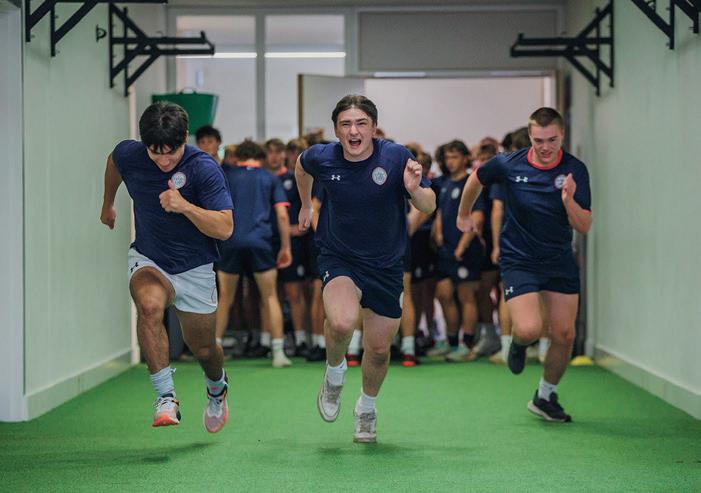
Blend theory and practice in anatomy, fitness, and coaching. This vocational course develops Skills in performance analysis, critical thinking, leadership and communication for careers in sports science, physiotherapy, teaching and leisure management. Ideal for students passionate about health and performance.
Qualification
Examination overview
Coursework
Trips
Subject combinations
Pearson BTEC Level 3 National Extended Certificate in Sport
Pearson BTEC Level 3 National Extended Certificate in Sport is the equivalent to one A level. There is an option to progress to the Diploma in Sport, which is worth two A levels.
This qualification focuses less on exams and more on a mix of assignments, tasks, and written assessments.
Externally Assessed Units:
Unit 1: Anatomy and Physiology, 90-minute exam (80 marks).
Covers skeletal, muscular, respiratory, cardiovascular, and energy systems.
Unit 2: Fitness Training and Programming for Health, Sport and Well-being, written exam under supervised conditions (60 marks).
Time-pressured case study requiring analysis of lifestyle and recommendations for improvement.
Each unit has specific grading criteria, explained in the introductory section of this brochure.
In addition to the two examinations above, pupils who take the Diploma sit an additional paper.
Assessment
All additional coursework units (see below) are internally assessed through written assignments, class tasks and practical activities.
There are two coursework units for the Extended Certificate.
Unit 3: Professional Development in the Sports Industry - Internal Assessment (16.5%) – exploring careers in the sport industry, researching required qualifications, taking part in a mock interview, and creating recruitment materials before evaluating performance and skills.
Unit 5: Application of Fitness Testing – Internal Assessment (16.5%) – using critical thinking to evaluate the purpose of fitness testing, conducting sportspecific tests as adjudicators, analysing the results, and discussing their impact on performance, suggesting improvements for future practice.
The BTEC Diploma course has the two coursework elements above, plus an additional four units.
There are no compulsory trips.
Biology works well with this qualification.
Career and University prospects
Resource provided
Costs Contact
This qualification is ideal for pupils seeking to study or have a career in Sport Sciences, Sports coaching, Physiotherapy, Physical Education, Teaching, Nutrition, Sport Analysis, or Sport Psychology.
Pupils are provided with Everleaner, revision booklets, and revision resources populated on OneNote and Teams
The costs of access to the Everlearner platform.
Mrs Sunderland NLS2@uppingham.co.uk
TEXTILE DESIGN
Combine artistry and technical skill to create original textiles. Experiment with materials and processes while building a professional portfolio. Perfect for those aiming for careers in fashion, interiors, and creative industries.
Qualification
Examination overview
Coursework
Trips
Subject combinations
Career and University prospects
Pearson Edexcel 9TEO
Component Two: Externally Set Assignment (40%)
This component incorporates two major elements:
• preparatory studies - a broad-based thematic starting point to which pupils respond by developing a portfolio of practical work.
• a 15–hour period of sustained focus – where final outcome(s) of the study are produced.
Component One: Personal Investigation (60%)
This component incorporates three major elements:
• supporting studies – investigative and experimental sketchbook work based on a personally chosen theme.
• practical work.
• a personal study of a chosen Component One theme (minimum 1000 words).
Pupils are given the opportunity to visit museums and exhibitions in the UK. Optional overseas or residential trips may also be organised, depending on availability and demand.
Art, Photography, English, Humanities, or Business Studies complement Textiles A level.
Pupils who study Textile Design develop valuable transferable skills such as creative thinking, visual research, technical making skills, and independent project management. Studying this A Level provides a solid foundation for a wide range of creative careers within the fashion and textiles industries including fashion designer, textile designer, garment technologist, fashion illustrator, pattern cutter, stylist, fashion buyer, costume designer, and roles within sustainable fashion.
Resource provided
Costs
Contact
Basic textiles consumables are provided.
A contribution towards specialist Textile Design studio materials (for example: fabrics, threads, dyes, printing materials, sketchbooks, mixed-media resources, embellishments). Additional costs may apply for museum/exhibition visits or optional overseas residential trips.
Miss Heaton ALH@uppingham.co.uk