EDUCATION AT LARNER
UNIVERSITY OF VERMONT LARNER COLLEGE OF MEDICINE MEDICAL EDUCATION REPORT
UNIVERSITY OF VERMONT LARNER COLLEGE OF MEDICINE MEDICAL EDUCATION REPORT
We are excited to bring you the 2024-2025 Annual Medical Education Report, highlighting our commitment to excellence in medical education at the Larner College of Medicine. This report reflects the extraordinary dedication of our faculty, staff, and students to advancing medical education, fostering innovation, and serving our communities with compassion.
From welcoming one of the most accomplished classes in our history, to celebrating the 10th anniversary of our Teaching Academy, to expanding simulation-based learning across campuses, the Larner College of Medicine continues to lead with purpose.
The appointment of Dr. Toshiko Uchida as our inaugural associate dean for curriculum marks a significant milestone in our efforts to continuously enhance the educational experience, deliver an innovative and evidencebased curriculum, and establish Larner as a national leader in medical education. Our curriculum remains dynamic and responsive, guided by our commitment to professionalism and to ensuring a supportive learning environment. Our curriculum is further strengthened by our partnership with Nuvance Health, now joining Northwell Health. Through this collaboration, 35 students complete their clinical M3 and M4 years in western Connecticut and New York’s Hudson Valley.
We are especially proud of our students’ achievements. These include 1,000 hours of community service over the last year, successful matches at top residency programs nationwide, and meaningful contributions to interprofessional education and research. Their curiosity and passion inspire us daily.
This report also highlights the collaborative spirit that defines our institution. Whether through the Area Health Education Center’s Scholars Program, the Frymoyer Scholars Program, or our Community Engagement projects, we are expanding opportunities for learners and strengthening our impact across the region.
Thank you for your continued support and partnership. Together, we continue to shape the future of medicine.
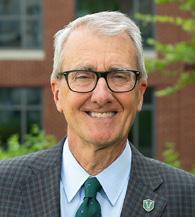
L. Page, M.D. Dean and UVM Chief Medical Affairs Officer
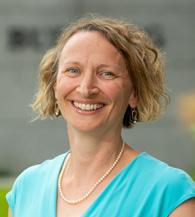
Christa Zehle, M.D. Senior Associate Dean for Medical Education and Professor of Pediatrics
The Danbury Hospital Harold A. Spratt Center for Simulation and Clinical Learning is the first facility within Nuvance/Northwell Health to earn accreditation from the American College of Surgeons. This achievement aligns it with the Larner College of Medicine Clinical Simulation Lab, ensuring consistent, high-quality simulation experiences for students across both campuses.
Between September 2024 and March 2025, the Prayer and Meditation space recorded 653 total visits from 56 unique visitors. This thoughtfully designed area provides the Larner community a serene environment for prayer, meditation, and quiet reflection, supporting individual wellness and spiritual needs.
Since opening in May 2024, the Larner Fitness Center has become a dedicated, accessible space for medical students to prioritize health and well-being during the rigors of their education—offering free weights, treadmills, and yoga classes to support both body and mind.
The Class of 2029 was chosen from an unprecedented applicant pool of 10,377 candidates, marking a new milestone in admissions.
The Teaching Academy at the UVM Larner College of Medicine celebrated 10 years of supporting educators, fostering innovation in medical education, and advancing teaching and learning at the college.

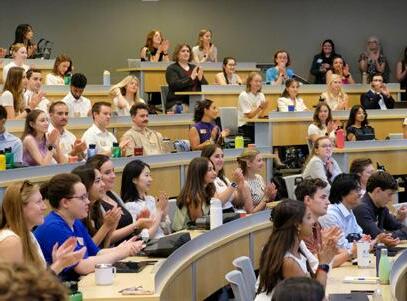
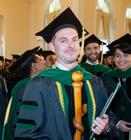
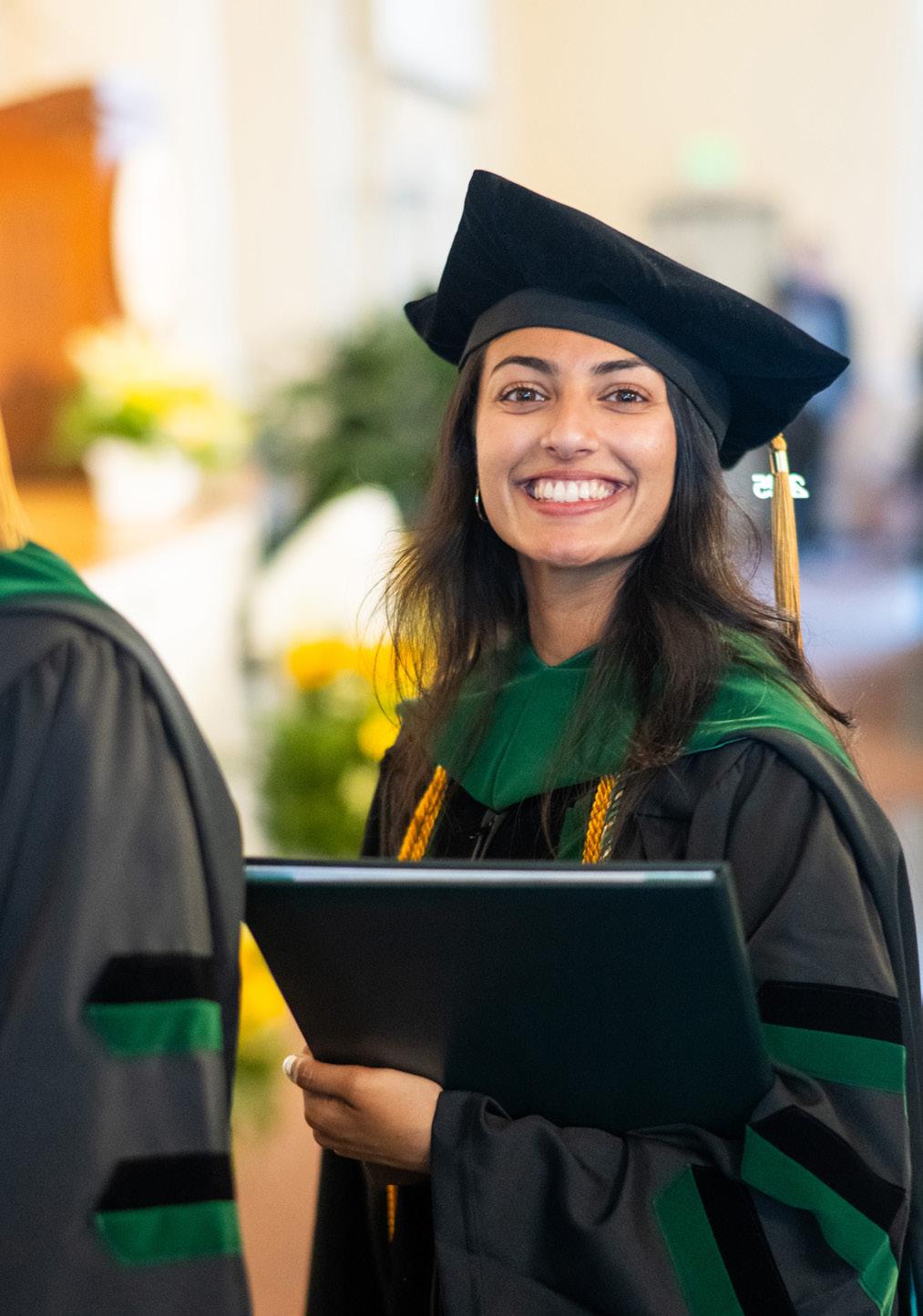
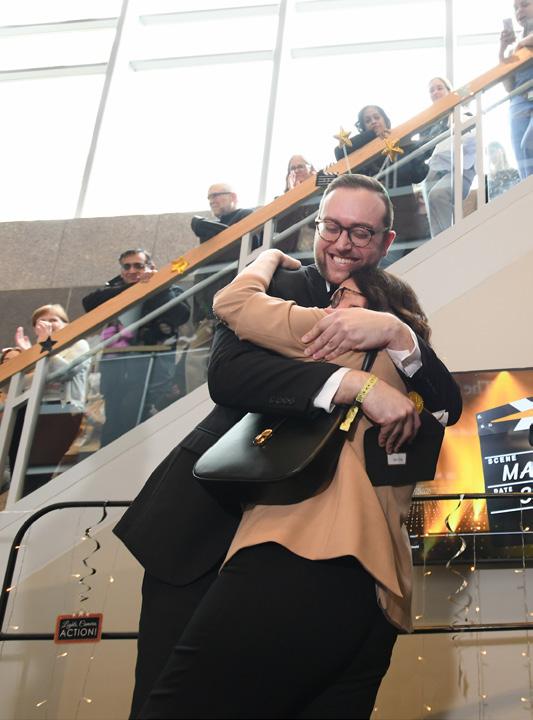
2025 saw the Larner College of Medicine proudly graduate its 202nd class, continuing a legacy of excellence in medical education.
Toshi Uchida, M.D., was appointed the inaugural associate dean for curriculum at the college. In this role, Dr. Uchida oversees curriculum development and assessment across all four years of the program, working closely with colleagues in the Office of Medical Education and the UVM Health Network.
Jennifer Clementi, M.D., clinical assistant professor of pediatrics, was appointed assistant dean for students at the Larner College of Medicine’s Connecticut campus.
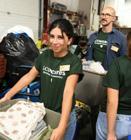
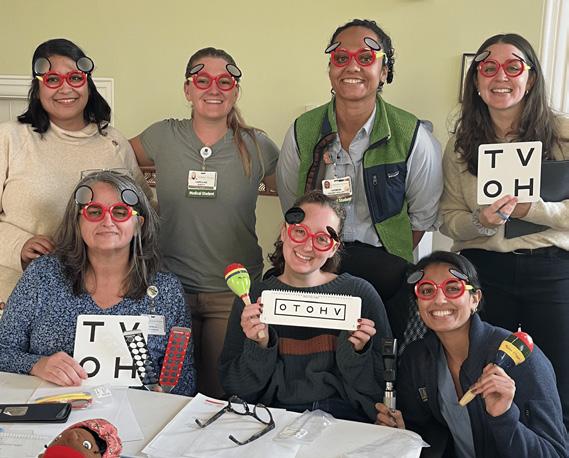
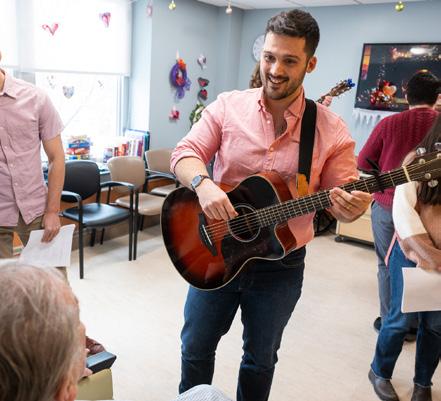
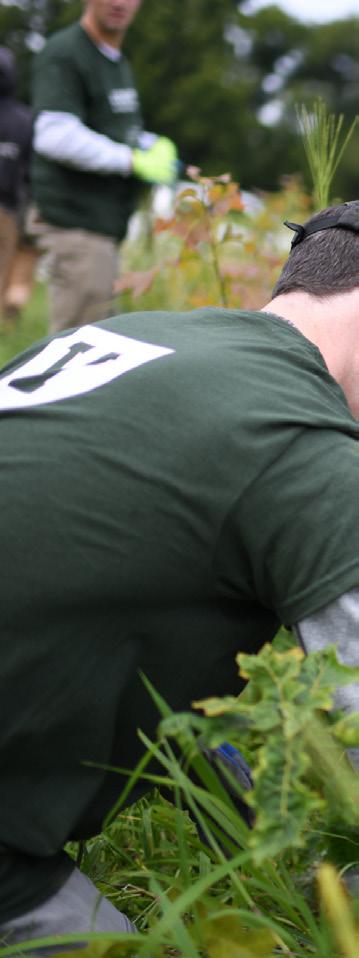
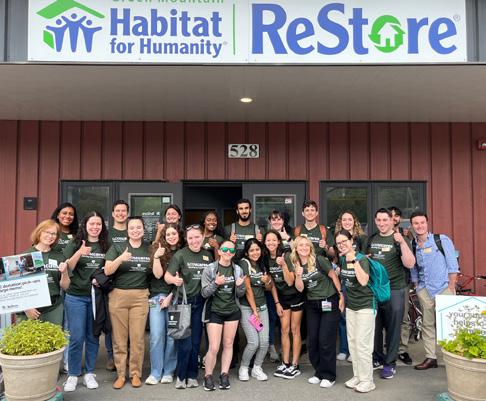
Larner students donated almost 1,000 hours of community service at multiple locations, including projects with children, high school students, and seniors.

“The medical education I received at UVM Larner College of Medicine was excellent. The value system embedded in UVM’s medical culture of patient-centeredness, prioritizing the doctor-patient relationship, understanding perspectives that are different from my own, understanding community-needs assessment as a tool of public health, connecting basic science to clinical applications, and recognizing that everything is connected to everything—all of this is central to what I do today.”
— MELISSA HOUSER, M.D.’12, FAMILY PHYSICIAN AT ALL BRAINS BELONG
“I did Doctoring in Vermont as a medical student at a pediatrics practice in the community, so it was nice to be able to give back by precepting a current student. …It was fun watching her make clinical connections to the content she’s learned in pre-clinical courses.”
— HANNA JOHNSON, M.D.’20, PEDIATRICIAN AT ESSEX PEDIATRICS
“The education that I received at Larner truly prepared me well for the clinical and administrative roles that I manage.” — PHIL LE, M.D.’90, SITE DIRECTOR OF THE FAMILY MEDICINE RESIDENCY PROGRAM AT VETERANS AFFAIRS COATSVILLE HEALTHCARE IN PENNSYLVANIA AND DEPUTY ASSOCIATE CHIEF OF STAFF FOR RESEARCH AND EDUCATION
“Larner’s focus on community was something that was super important to me when choosing a medical school.” — ALAYNA WESTCOM, M.D.’24, PATHOLOGY RESIDENT AT UNIVERSITY OF VERMONT MEDICAL CENTER
“Being graduates of the Larner College of Medicine means so much to us, we wouldn’t trade that for anything else.” — GEOFFREY SMITH, M.D.’67, RETIRED STATE EPIDEMIOLOGIST FOR VERMONT AND NEW HAMPSHIRE
“Out of all medical school interviews, Larner College of Medicine left a lasting impression when they intentionally and directly asked applicants for feedback. … Orientation and the months that followed reinforced that this was exactly where I wanted to be and spend my time. My first year of medical school flew by so fast and the connections with faculty, staff, graduate students, and undergraduates have been priceless. — BRIAN NGUYEN, CLASS OF 2028
The Medical Student Services team champions medical students through four pillars of support: academic success, career advising, and professional identity formation—while fostering health and well-being. The team supports Student Council, the Wellness Committee, three student honors societies, as well as a wide range of activities and events. The team helps students thrive as future physicians, guiding them through course work, the national competency exam, and residency applications. Complementing these efforts, wellness initiatives such as counseling, cognitive behavioral groups, and community activities ensure students maintain balance during the rigors of medical education.
This fall, the brand-new career advising website rolled out, a one-stop shop where students and faculty advisors can get a month-by-month guide to the process of selecting a career and applying to residency, complete with materials to help students navigate each step of the process.
The Prep for Practice Course, designed to launch new 4th-year students into the next phase of their career, has been reimagined as B4M4. Enrollment has shot up in this elective course that kicks off the start of the Advanced Integration phase of the curriculum. For the last two years, more than 80 percent of the class have taken this course. This course is offered remotely, allowing students on both the Vermont and Connecticut campuses to participate.
Residencies for the Larner Class of 2025 graduates include:
BETH ISRAEL DEACONESS
MEDICAL CENTER
BROWN UNIVERSITY/RHODE
ISLAND HOSPITAL
DARTMOUTH-HITCHCOCK
MEDICAL CENTER
DUKE UNIVERSITY MEDICAL CENTER
JOHNS HOPKINS HOSPITAL
MASSACHUSETTS GENERAL HOSPITAL
TEMPLE UNIVERSITY HOSPITAL
TUFTS MEDICAL CENTER
UCLA MEDICAL CENTER
UVM MEDICAL CENTER
YALE/NEW HAVEN HOSPITAL
The Longitudinal Advising Curriculum (LAC) has also been codified in the past two years. Running in parallel with the final 18 months of the curriculum, this series of sessions covers topics ranging from specialty decision making, to 4th year planning, to residency interviewing, to couples matching. Prior to each major step in the residency application progression, the LAC provides students and specialty advisors with quality information needed to successfully navigate the process. These sessions are virtual, recorded, and provided to students across both campuses, allowing for equitable delivery of the content regardless of a student’s physical location.
The continued generosity of UVM alumni through the Fund for Educational and Scholarly Opportunities enabled more than 50 students to travel this year to present their research and form professional connections that can drive future opportunities.
Divided into three levels of increasing complexity and breadth of study, the Vermont Integrated Curriculum (VIC) connects foundational basic sciences with clinical sciences in an intentional, developmental approach. Alongside a strong grounding in science, students hone clinical skills and develop competencies in leadership, research, and teaching.
The VIC comprises: Level 1 (Foundations), Level Two (Clinical Clerkships), and Level 3 (Advanced Integration). The curriculum is consistently assessed and updated based on new developments and trends in medical care, and evaluation by students and faculty members.
The foundation of the educational program features the development of fundamental science knowledge and clinical skills in a clinically relevant context. Initial courses in the fundamentals of medical science are followed by a series of organ system-based courses.
Clinical clerkships are hands-on training that occur during the middle years of medical school. During this level, students build on competencies acquired in Foundations and move out of the classroom into a clinical setting and begin treating patients under the supervision of physicians.
The Advanced Integration level provides students with additional responsibilities for patient care, including two acting internships, a surgical subspecialty rotation, and clinical and/or nonclinical electives that allow students to shape their professional development and expertise. Students also fulfill a requirement for scholarly work in teaching or research.
From the beginning of medical school, the VIC includes Doctoring in Vermont, a program that allows students to join a community preceptor’s office and practice examination and interviewing skills, while public health projects enable students to apply the principles and science of public health directly to identified community needs.
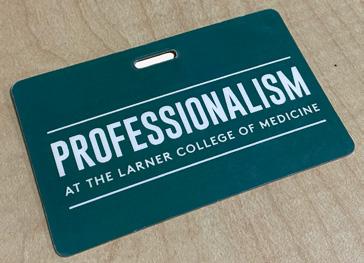
This human side of medicine is emphasized throughout Professionalism, Communication, and Reflection (PCR), a longitudinal course that takes place each year of medical school. The Foundations PCR curriculum includes opportunities for students to participate in hospital interviews to experience patients’ stories and then create narrative medicine projects, such as poems, illustrations, or essays. In subsequent years, students discuss topics including moral distress, gratitude practice, and finding meaning in medicine.
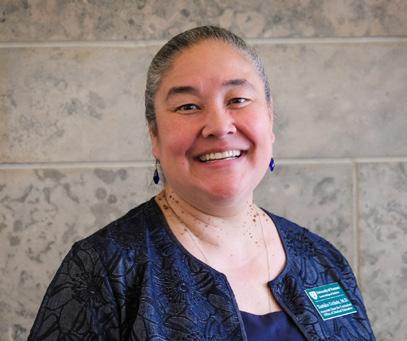
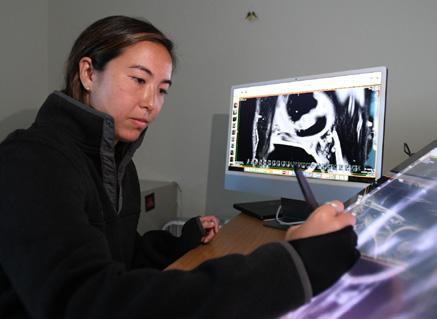
The curriculum team was strengthened with the appointment of Toshiko (Toshi) L. Uchida, M.D. (pictured) effective July 1, 2025, as the inaugural associate dean for curriculum at the college.
In her new role, Dr. Uchida will work closely with medical educators and colleagues in the Office of Medical Education at Larner and UVM Health. She will oversee the ongoing development of the curriculum, mentor both students and faculty, and help further establish Larner as a national leader in medical research and education.
Over more than two decades, Uchida has been involved in nearly every aspect of medical education, from teaching to curriculum development, assessment, program evaluation, and the LCME accreditation process. Her experience includes leadership in the Directors of Clinical Skills Education (DOCS) and Association of American Medical Colleges (AAMC) Central Group on Educational Affairs; she recently completed her term as chair of the Undergraduate Medical Education (UME) Section of the Group on Educational Affairs (GEA) at the AAMC.
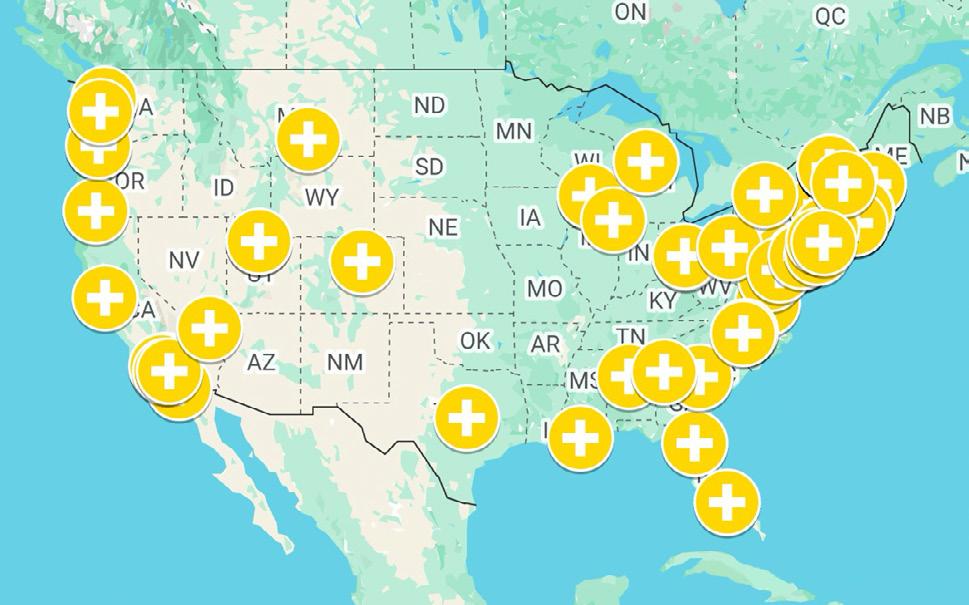
The Larner College of Medicine has an important medical education partnership with Nuvance/Northwell Health in western Connecticut, and has created a clinical branch campus at which approximately 35 Larner students complete their required clinical activities during the Clerkship and Advanced Integrations years. Students select either the Vermont Campus or Connecticut Campus as their home base for Level 2: Clerkship and Level 3: Advanced Integration.
Danbury Hospital (456 beds) and Norwalk Hospital (366 beds) are the main teaching hospitals. These hospitals serve a population of approximately one million people who represent a remarkable cross-section of economic, geographic, ethnic, racial, and linguistic backgrounds. This diversity creates a particularly rich setting in which students participate in the care of patients, as they learn about how care is delivered in the complex U.S. health care system.
Jonathan M. Rosen, M.D., associate professor of medicine, serves as associate dean of the Connecticut branch campus, with Jennifer Clementi, M.D., clinical assistant professor of pediatrics, recently appointed as assistant dean for students. Students benefit from the same educational structure and learning goals as the Vermont campus and have successfully matched into their desired specialties over the length of this partnership.
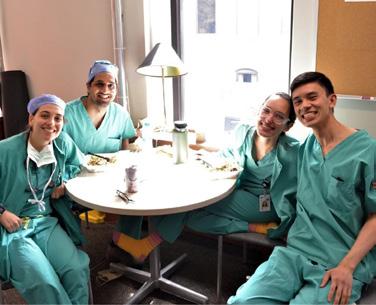
The college welcomed its 203rd entering class of 124 new medical students from across the United States on Monday, August 11, 2025. The new medical school students are beginning their journey to become physicians amidst a physician and health care shortage in the United States. According to a recent report published by the Association of American Medical Schools, the nation will face a physician shortage of up to 86,000 physicians by 2036.
Leila Amiri, Ph.D., associate dean for admissions, described the Larner Class of 2029 as one of the most selective classes in the college’s history. “From a record-breaking pool of 10,377 applicants, just 124 remarkable individuals have joined us—not only as future physicians, but as scholars, leaders, and changemakers. Representing 22 states, fluent in 16 languages beyond English, and arriving from 72 universities with 42 different majors, this class embodies excellence across every dimension. With 89 percent engaged in undergraduate research and more than 350,000 hours of medical experience, they bring not only academic strength but a deep, lived commitment to service, healing, and humanity.”
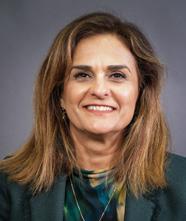
“From a record-breaking pool of 10,377 applicants, just 124 remarkable individuals have joined us—not only as future physicians, but as scholars, leaders, and changemakers.”
—
LEILA AMIRI, PH.D., ASSOCIATE DEAN FOR ADMISSIONS, UVM LARNER COLLEGE OF MEDICINE
124 students
89% engaged in undergraduate research
352,828 medical experience hours earned
51,237 service hours
22 states Representing
16 Fluent in languages besides English
42 From universities with different majors CLASS OF 2029 SNAPSHOT
72
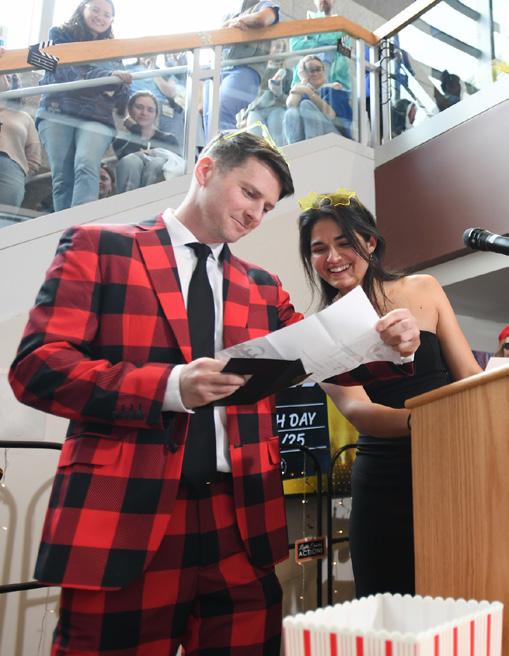
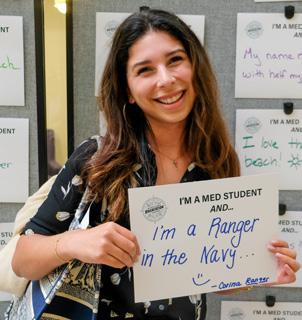
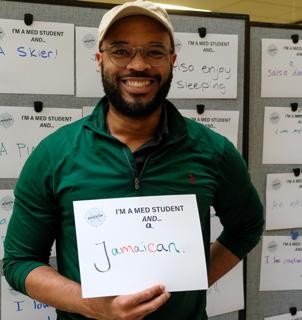
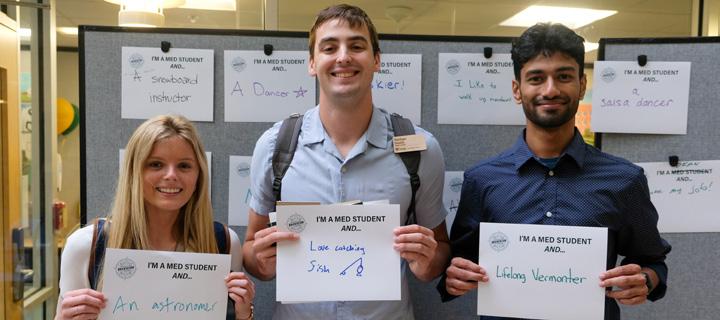
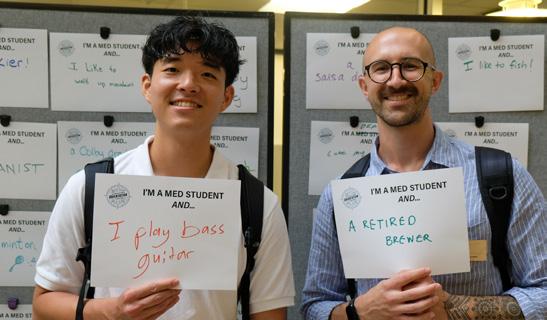
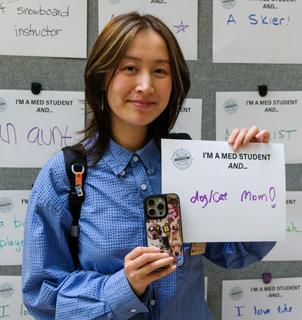
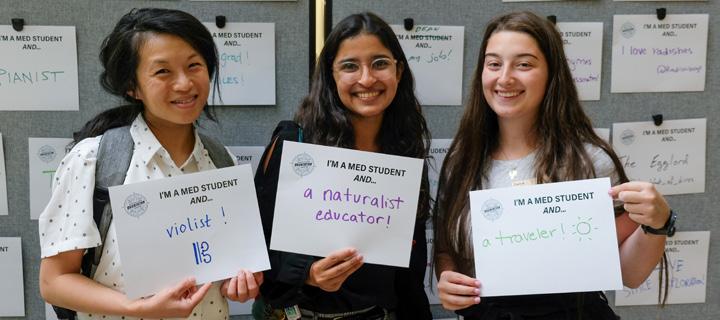
DURING ORIENTATION, INCOMING STUDENTS PARTICIPATE IN THE EXERCISE “I’M A MED STUDENT AND...”
Larner students practice their clinical skills in safe settings, at state-of-the-art clinical simulation laboratories on both the Vermont and Connecticut campuses. Via interactive simulations, based on real-world scenarios, Larner students work closely with Standardized Patients (SPs), individuals highly trained in assessment and feedback, who portray patients with varying conditions. These simulated patient encounters allow students to hone their history-taking, physical exam, and communication skills, so that they can ultimately provide excellent, patient-centered care.
Larner students further enhance their clinical skills via a longitudinal point-of-care ultrasound (POCUS) curriculum that is integrated with their foundations-level anatomy and physiology courses. Practicing POCUS skills from the beginning of their medical training provides Larner students with a solid foundation for their clinical clerkships and beyond.
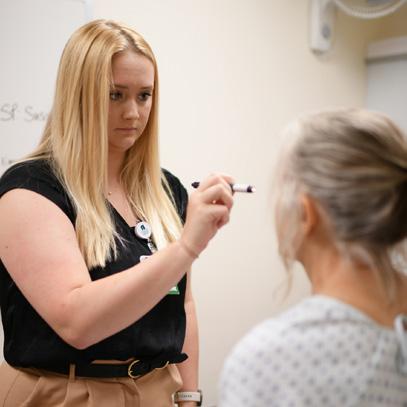
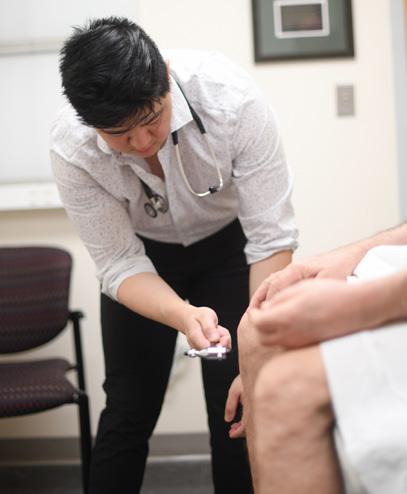
Danbury Hospital’s Harold A. Spratt Center for Simulation and Clinical Learning recently achieved accreditation from the American College of Surgeons (ACS) as an Accredited Education Institute (AEI), a national recognition of excellence in simulation-based education. The surveyors noted the center is particularly strong in its governance and assessment practices and is well positioned for continued growth and leadership in simulation-based education.
Danbury Hospital’s integration with the University of Vermont’s Clinical Simulation Laboratory, which is also ACS/AEI accredited, allows for continued innovation in simulationbased medical education.
We were delighted to get the accreditation recognizing our robust surgical services education curriculum. This gives us a platform to collaborate with other leading centers and further our goal of being a national leader in patient safety, team-based care and improving the patient experience.”
— RAMANTHAN SESHADRI. M.D., CLINICAL ASSISTANT PROFESSOR OF SURGERY FOR UVM LARNER COLLEGE OF MEDICINE AND DIRECTOR OF SIMULATION AT THE SPRATT CENTER
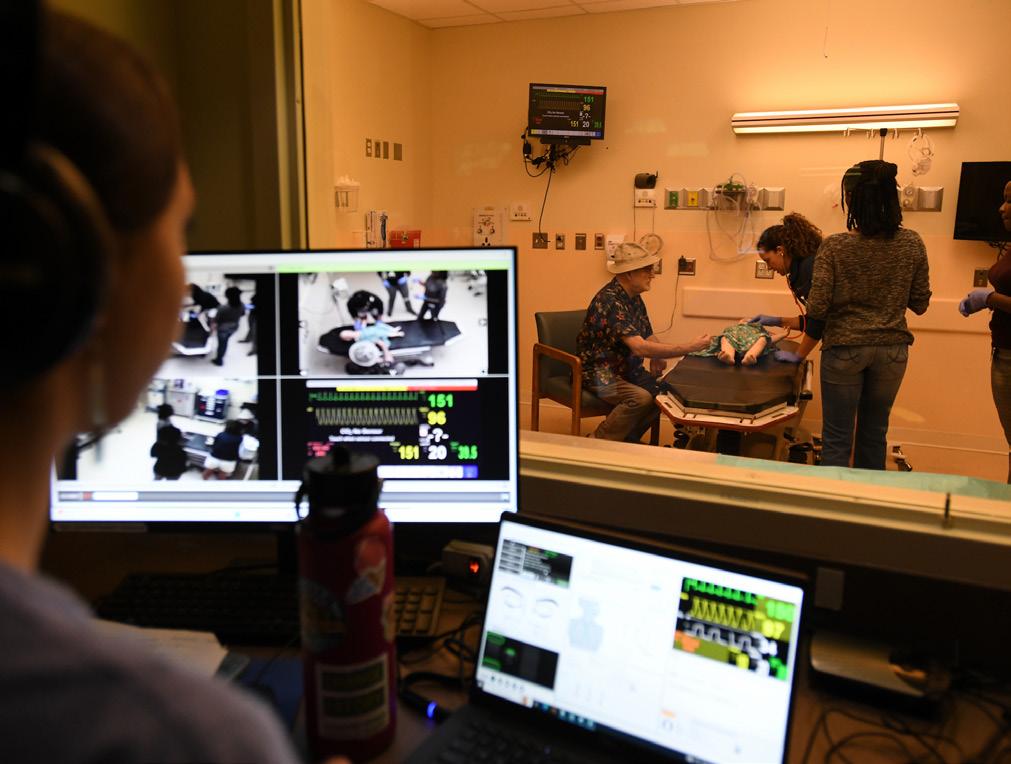
The hands-on skills that we learned in the suturing and phlebotomy clinics are worth a lot. I liked to learn these things before going into clinicals.” — EM
BATTLE, CLASS OF 2025
Surgical education has changed dramatically ... with more innovation and options than ever before. Surgical simulation is a top way to teach students in a safe space to learn before a real operation.”
— KRISHAN PATEL, M.D., CLINICAL ASSISTANT PROFESSOR OF SURGERY, UVM LARNER COLLEGE OF MEDICINE, AND SURGICAL DIRECTOR FOR THE SPRATT CENTER
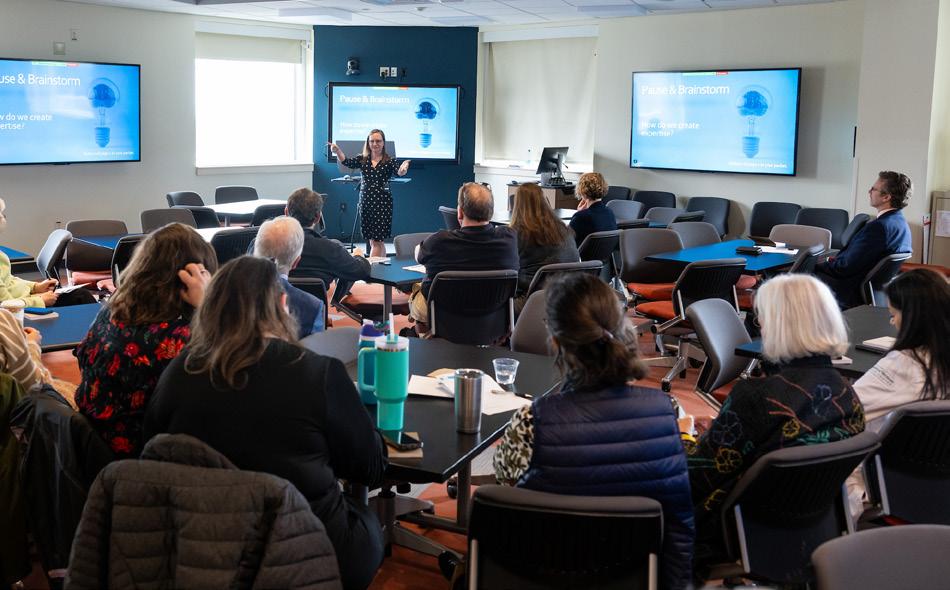
Recognized nationally for its impact, the Teaching Academy sustains and supports an interdisciplinary community of educators who value the scholarship of teaching and learning. They offer resources for faculty development, addressing topics such as teaching skills, curriculum design, assessment, course evaluation, and educational research.
Teaching Academy By the Numbers
239 TOTAL CURRENT MEMBERS
27 DISTINGUISHED EDUCATORS
25 ASSOCIATE MEMBERS
786 PROGRAM ATTENDEES
61 EXPERT TEACHERS
2024–2025 Highlights
The Annual Essentials of Teaching and Assessment course provides teaching strategies, practical tips and resources for new medical educators to build skills and confidence in the classroom and clinic.
The Snow Season Education Retreat is a flagship event which brings students, faculty, and staff together for posters, oral abstract presentations, a national plenary speaker, workshops and networking.
Teaching Academy 10th Anniversary Educational Scholarship award recipients: Katherine Dolbec, M.D., Ashley Weisman, M.D., Adam Bloom, D.O., and Victoria Zhou, M.D.
A Teaching Academy Curriculum Development award supports a project by Abigail Hielscher, Ph.D., associate professor of neurological sciences, on Building Lasting Relationships: What Can the Arts Teach Us About Mentorship.
Members meet monthly for a Writers Workshop to review and discuss their scholarly works on education topics.
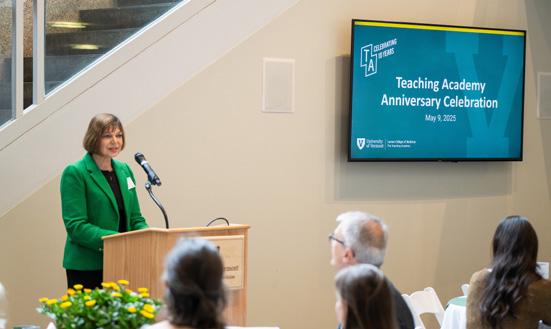
The Teaching Academy celebrated a decade of dedication to educational excellence with a special celebratory day in May. This milestone marked 10 years of supporting educators, fostering innovation in medical education, and advancing teaching and learning at the college.
To commemorate the occasion, the Teaching Academy hosted a series of special events, including a photography exhibit, a plenary session featuring expert insights on knowledge transfer in health professions education, and a 10th anniversary luncheon, where inaugural and current members gathered with Larner leadership to honor the academy’s achievements and look ahead.
In only our first decade, we have accomplished the goal to become a community of educators committed to improving health professionals’ education through faculty development and scholarly activity.”
— KATHRYN N. HUGGETT, PH.D., DIRECTOR, THE TEACHING ACADEMY
The Frymoyer Scholars Program promotes teaching that emphasizes the art of interprofessional collaborative patient care. Administered by the Teaching Academy and supported by a philanthropic fund, the program recognizes outstanding medical education and elevates teaching that emphasizes the art of patient care.
Individuals selected as Frymoyer Scholars are awarded up to $25,000 a year for two years to develop innovative educational programs and improve their teaching skills. Activities may include developing a new curriculum, improving clinical teaching skills, and creating programs that demonstrate to students or faculty how to teach outstanding patient care.
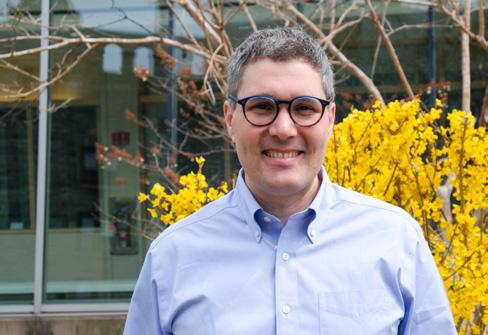
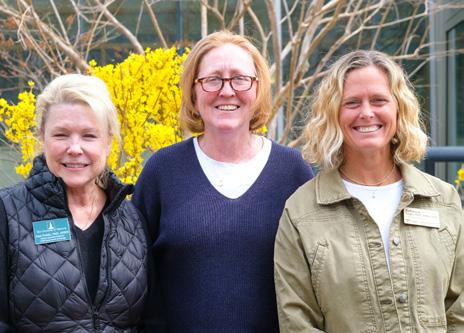
RYAN MASON, M.D., FAAEM (NOT SHOWN) ANASTASIA ARVINDIBLASO. M.S.-III, EMT-A; DANIEL FREDERICK. B.A., RN, CEN, TCRN, PCCN; MAURICE PAQUETTE, PA-C; VICTORIA ZHOU, M.D.
Interfacility Transfer Curriculum
JEAN PELSKI, PH.D., APRN, NNP-BC; REBECCA NAGLE, D.N.P., PNP-BC; RACHEL GARFIELD PH.D., M.H.S.; BREENA HOLMES, M.D.
Transforming Nursing Education Through the Touchpoints Approach: Strengthening Family-Centered Care
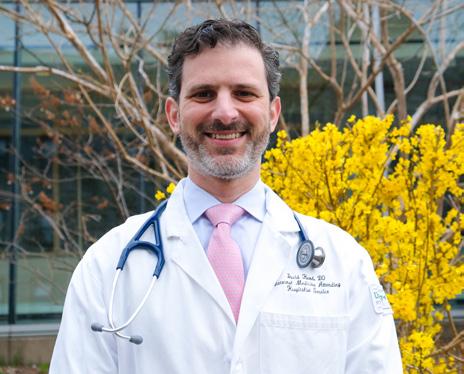
DAVID RAND, D.O., M.P.H., FACP (NOT SHOWN) CHRISTINE VATOVEC, PH.D.; ROBERT INGLIS, M.D.; MARK PASANEN, M.D., FACP
Developing a Planetary Health Curriculum for Residents
Medical Education Grand Rounds
Faculty and residents interested in enhancing their teaching are invited to grand rounds workshops showcasing speakers from across the nation who bring fresh ideas and thoughtprovoking insight to clinical and basic sciences teaching. Some topics during the 2024-25 academic year included:
• Unscripting Yourself – The Role of Improv in Medical Education
Jeremiah Dickerson, M.D., assistant professor of psychiatry and director of medical student education in psychiatry, Larner College of Medicine, and Zeina Salame, Ph.D., assistant professor of theatre, University of Vermont
• Professionalism and Professional Identity Formation in Medical Education
James F. Smith Jr., M.D., professor of medical education and medical humanities, Creighton University School of Medicine
• Gen Z in Medical Education – Critical Areas for Reflection on Professionalism, Teaching, and Learning in Health Professions Training
Stefanie Attardi, Ph.D., associate anatomy professor at Oakland University William Beaumont School of Medicine, and Kara Sawarynski, Ph.D., assistant dean for accreditation and continuous quality improvement at Oakland University William Beaumont School of Medicine
• Burnout to Belonging – Addressing Psychological Disabilities and Creating Inclusive Learning Environments
Lisa Meeks, Ph.D., M.A., professor of medical education, University of Illinois College of Medicine
Continuing Medical and Interprofessional Education
Continuing Medical and Interprofessional Education at the Larner College of Medicine offers a spectrum of high-quality accredited educational activities for physicians, nurses, pharmacists, social workers, and other health care professionals. The annual Essentials of Teaching and Assessment course provides intensive training for new educators. Medical education grand rounds, a winter medical education retreat, a medical education fellowship program, and the peer observation of teaching program inspire learning and networking.
516 SOCIAL WORKER LEARNERS
6,250 NURSE LEARNERS
840 PHYSICIAN ASSISTANT LEARNERS
16,446 PHYSICIAN LEARNERS BY THE NUMBERS
23 REGISTERED DIETITIAN LEARNERS
149 PHARMACIST LEARNERS

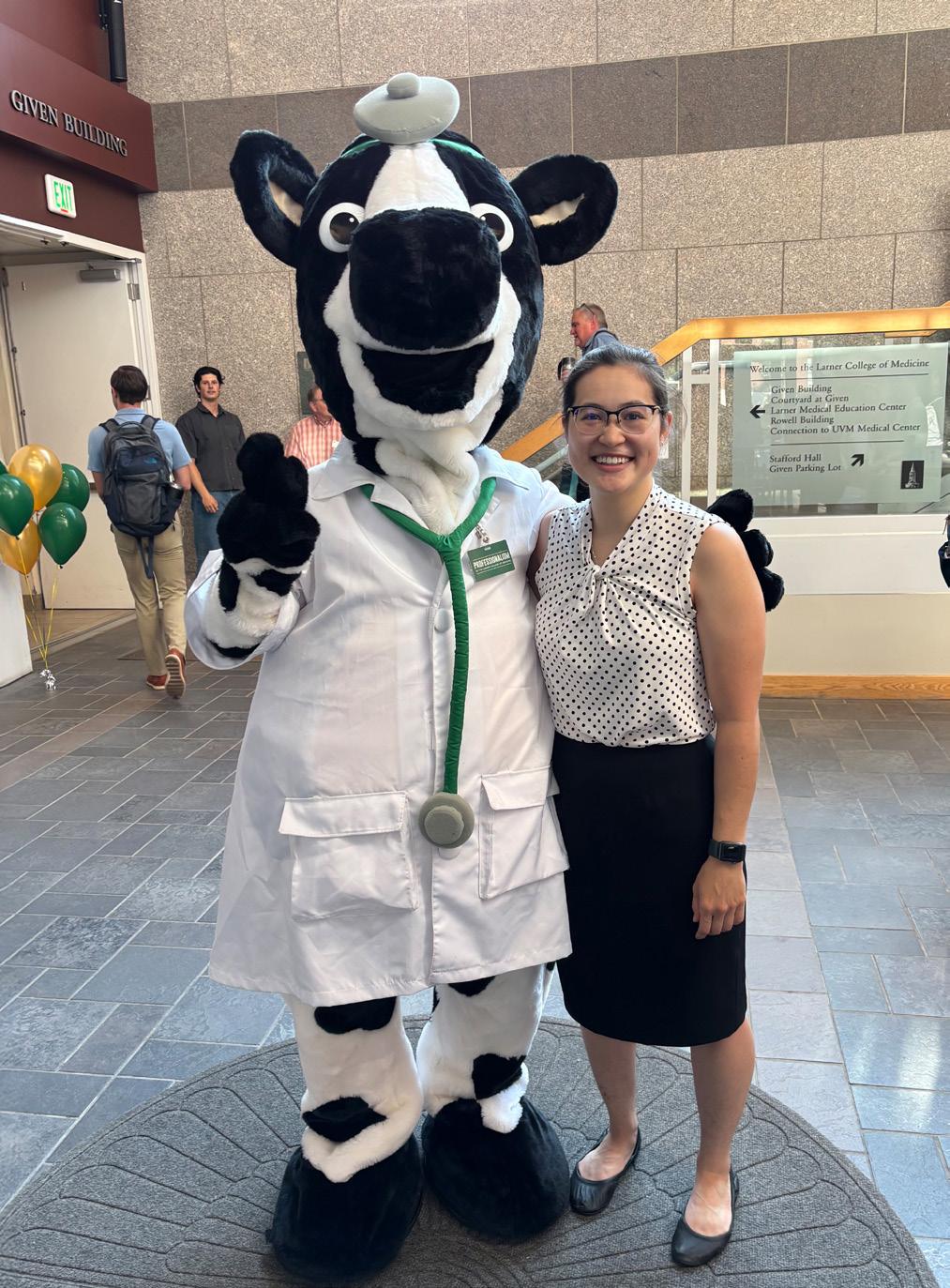
LARNER MASCOT DR. MOO IS ALWAYS AROUND TO GIVE STUDENTS ENCOURAGEMENT AND SUPPORT
In conjunction with the Larner Office of Medical Education (OME), the Office of the Learning Environment (OLE) works to ensure that the Larner learning environment supports and encourages respect for all individuals and promotes the development of professionalism in medical students, residents, fellows, faculty and staff across all instructional sites.
The OLE team works toward this goal through several initiatives. One is a private reporting system that allows Larner community members to report concerns about the learning environment or professionalism. These reports are addressed through non-punitive means when possible. When patterns of concerns are identified, systemic issues can be addressed. The OLE team is working to make the system more transparent for students, staff and faculty.
There is a similar reporting system to recognize exemplars of professionalism. Professionalism accolades are distributed twice a year and are shared with recipients and direct supervisors.
The OME and OLE encourage medical students, staff and faculty to report both incidents of witnessed or experienced unprofessional behaviors or mistreatment, and professionalism exemplars. The private reporting system is available from the OLE website, a QR code on student badges and a link from course evaluations.
“The OLE receives approximately 40-60 accolades each quarter, with the majority of accolades coming from students about residents, fellows and faculty. The ratio of accolades to concern is at about 4:1, said Liz Hunt, M.D., assistant professor of nephrology and director of the learning environment.
“In the midst of challenging times in medical school and clinical practice, it’s helpful to pause and reflect about people who serve as inspiration and to be reminded that people are looking up to you,” said Hunt.
“Reading about the ways that the Larner community exemplifies the college’s professionalism statement is inspiring and one of the best parts of working on the OLE team.”
“Reading about the ways that the Larner community exemplifies the college’s professionalism statement is inspiring and one of the best parts of working on the OLE team.”
LEARNING ENVIRONMENT
INITIAVES INCLUDE CUP OF COFFEE CONVERSATIONS, AND BADGE BUDDIES

“Coming from a first-generation immigrant household, I’ve had to rely heavily on mentors on my path to medicine. I am deeply grateful for their guidance and support, and when the AHEC opportunity arose, applying was a clear and easy decision.”
— JESUS MENDOZA,
The Vermont Area Health Education Center’s (AHEC) Scholars Program is a nationally recognized initiative for health professions students, offering enriched learning in eight core areas. Open to medical students of all specialties, it emphasizes primary care workforce development while delivering broad benefits across disciplines.
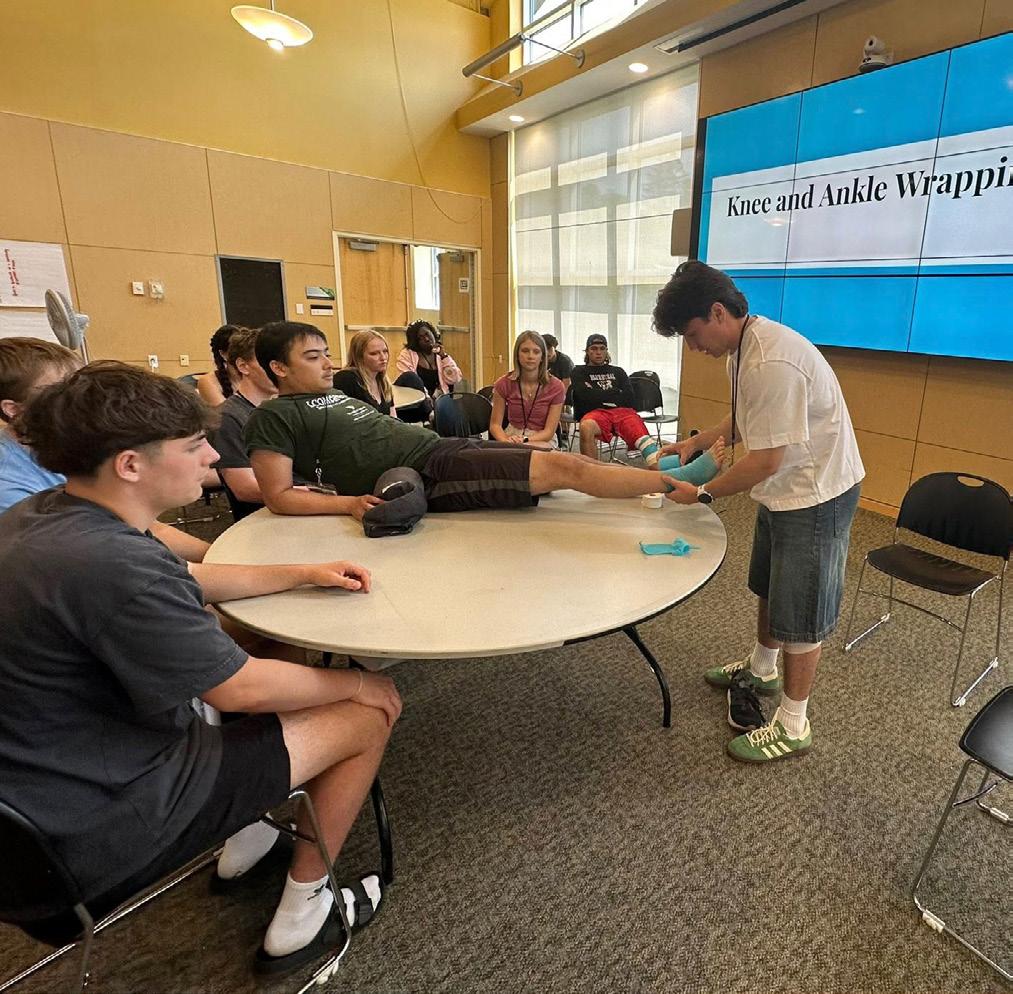
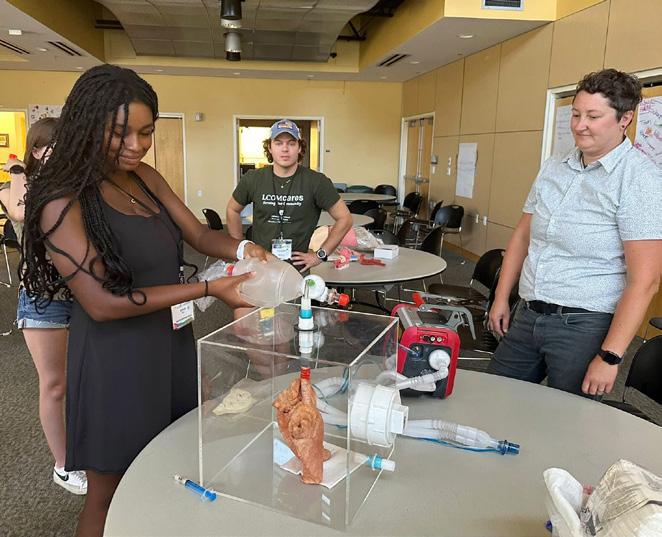
This summer, 11 second-year students from the Larner College of Medicine served as AHEC Scholars at the Governor’s Institutes of Vermont (GIV) Summer Health & Medicine Institute. In partnership with Vermont State University (VTSU) and Southern/Northern AHEC centers, they led immersive health care experiences for high schoolers at VTSU’s Lyndon and Castleton campuses.
From July 2024 to June 2025, Vermont AHEC:
Provided continuing education to 2,134 participants.
Generated more than 6,564 middle school, high school and undergraduate student connections and involved all Larner medical students, including 332 enrolled in the AHEC Scholars Program.
Supported 71 primary care family medicine medical student clinical rotations.
Worked with 157 primary care practice sites in the state, many of which precepted Larner students.
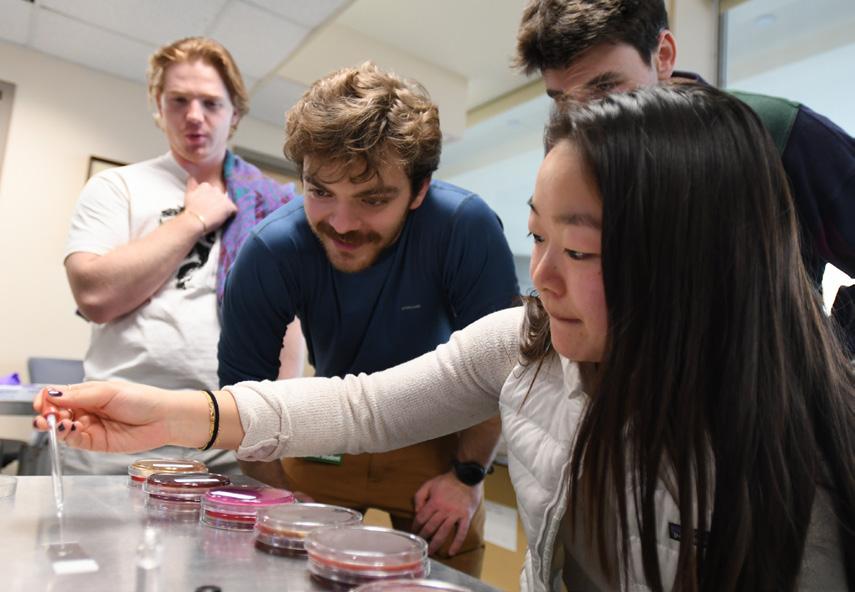
Over the course of a week-long summer session, the AHEC Scholars led an exciting approach to medicine that empowered high schoolers to lead their own lab work, participate in crisis simulations, and sample a huge array of health care occupations.
“Mentorship has always been incredibly important to me,” said AHEC Scholar Jesus Mendoza ’28. “Coming from a first-generation immigrant household, I’ve had to rely heavily on mentors on my path to medicine. I am deeply grateful for their guidance and support, and when the AHEC opportunity arose, applying was a clear and easy decision.”
Serving our world is a vitally important mission of the college and Larner is a key partner with state leaders and organizations in finding solutions for issues that affect patients, populations and policy. Faculty, staff, students, and alumni all participate in community projects, and students are integral community members right from the start of their education.
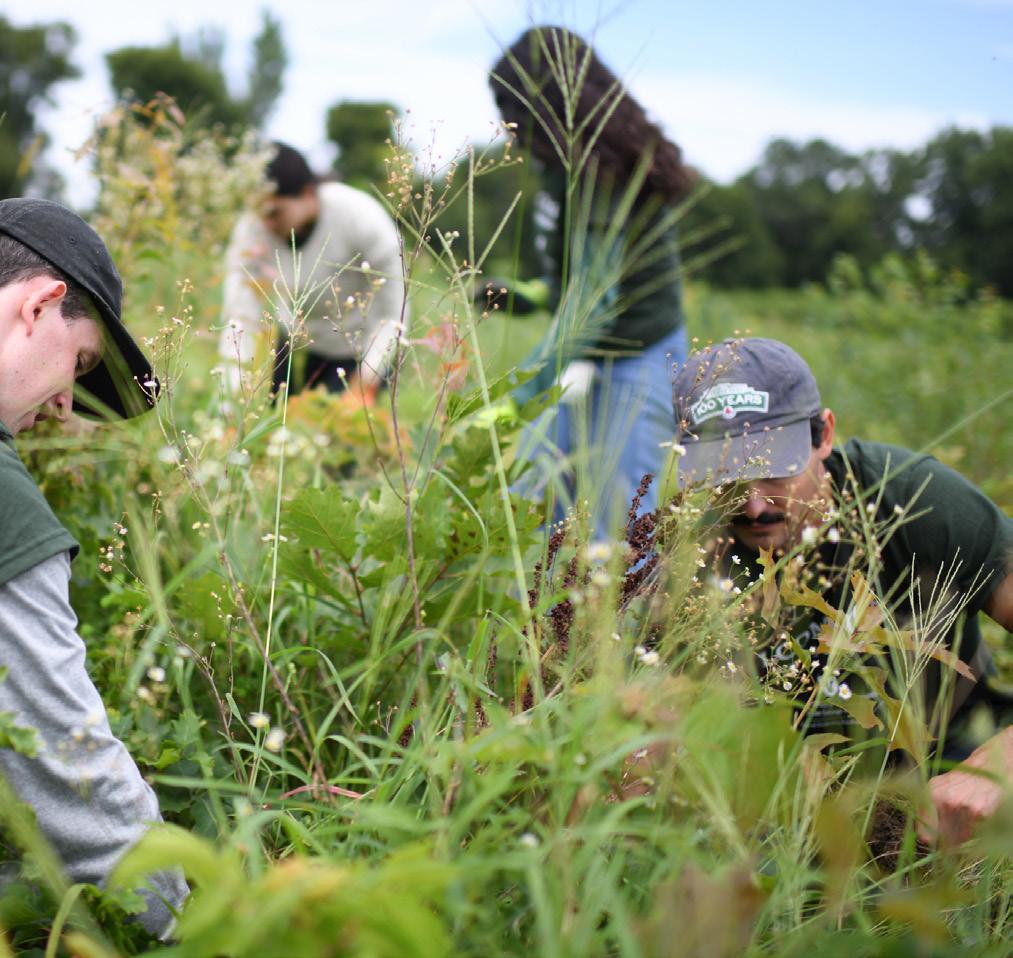
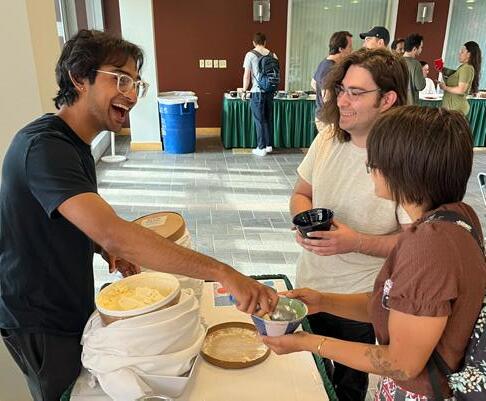
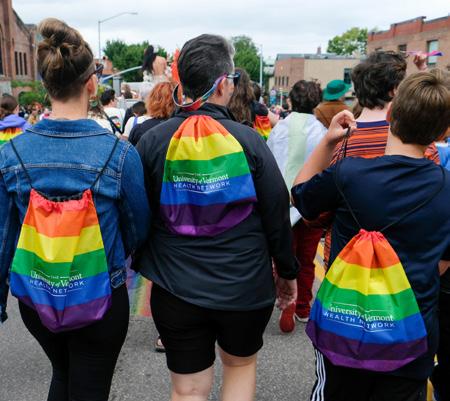
Students’ community engagement projects range from assisting with children’s programs, mental health initiatives, volunteering at community centers and parks, providing medical expertise at local marathons and serving as mentors to high schoolers.
Last year Larner students donated almost 1,000 hours to community service projects.
— JARED STONE, CLASS OF 2025
uvm.edu/larnermed/mededucation