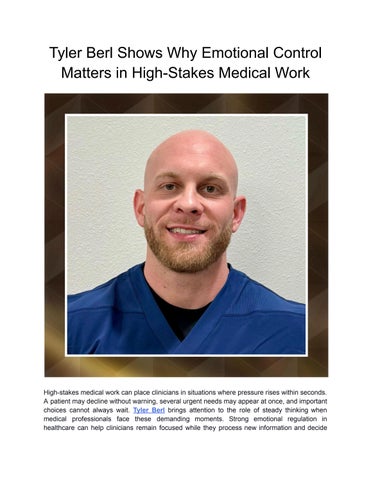
Tyler Berl Shows Why Emotional Control Matters in High-Stakes Medical Work
High-stakes medical work can place clinicians in situations where pressure rises within seconds. A patient may decline without warning, several urgent needs may appear at once, and important choices cannot always wait. Tyler Berl brings attention to the role of steady thinking when medical professionals face these demanding moments. Strong emotional regulation in healthcare can help clinicians remain focused while they process new information and decide
what requires immediate attention. Emotional control does not mean ignoring stress. Instead, it means recognizing pressure without allowing it to take control of clinical judgment. Medical professionals often work around pain, uncertainty, fear, and difficult outcomes. These experiences can create strong emotional reactions, even among people with years of clinical experience. A calm response helps clinicians separate personal feelings from the immediate needs of the patient. This can make it easier to review symptoms, communicate clearly, and follow established care processes when the environment becomes intense. Emotional control also affects how medical teams work together. Stress can change a person's tone, attention, and ability to listen. In a critical situation, unclear communication may lead to confusion or missed information. Clinicians who stay composed can give direct instructions, receive updates, and respond to concerns without adding unnecessary tension. This creates a more stable environment for the entire care team. Preparation can strengthen this ability. Medical knowledge, repeated training, and experience with difficult situations can make unfamiliar events easier to manage. Structured routines can also reduce mental overload. When clinicians know how to organize urgent information, they can focus on the next useful action instead of reacting to every source of pressure at once. Self-awareness is another important part of emotional control. Clinicians need to recognize when frustration, fear, fatigue, or stress may be affecting their thinking. Awareness creates an opportunity to refocus before those emotions influence an important choice. It can also encourage professionals to seek input from colleagues when another perspective could improve the decision. Maintaining composure does not require clinicians to become emotionally distant. Empathy remains important, especially when patients and families are frightened or uncertain. The challenge is to show compassion while preserving the mental clarity needed to provide effective care. Effective clinical composure under pressure supports clear thinking when medical situations become uncertain or emotionally demanding. Clinicians still experience stress, but they can develop ways to manage their response to it. Through preparation, self-awareness, communication, and disciplined focus, medical professionals can protect the quality of their decisions while remaining present for patients during some of the most difficult moments in care.