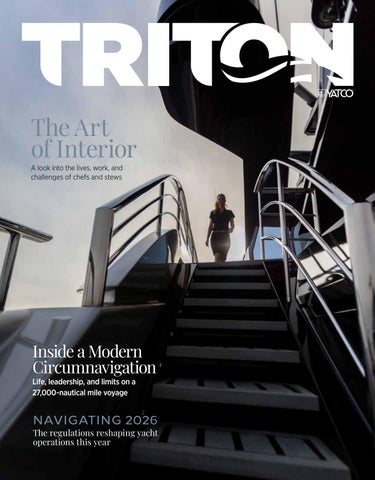
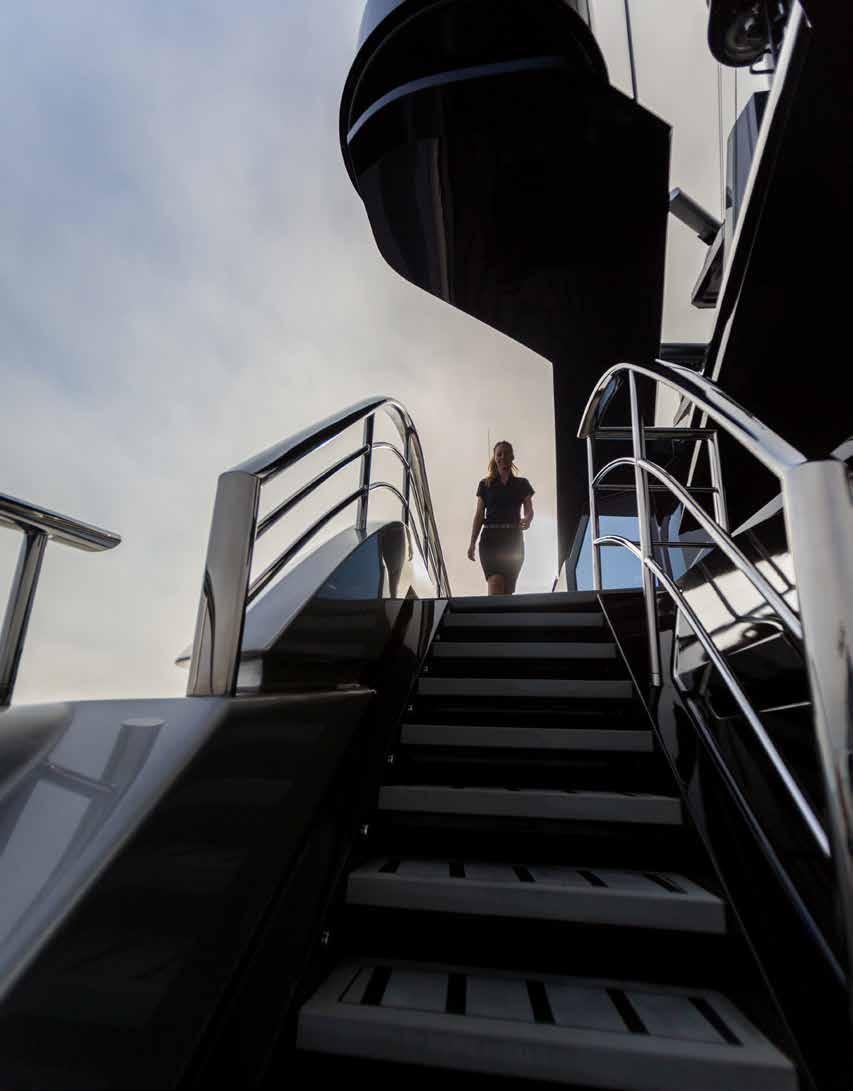
The Art of Interior

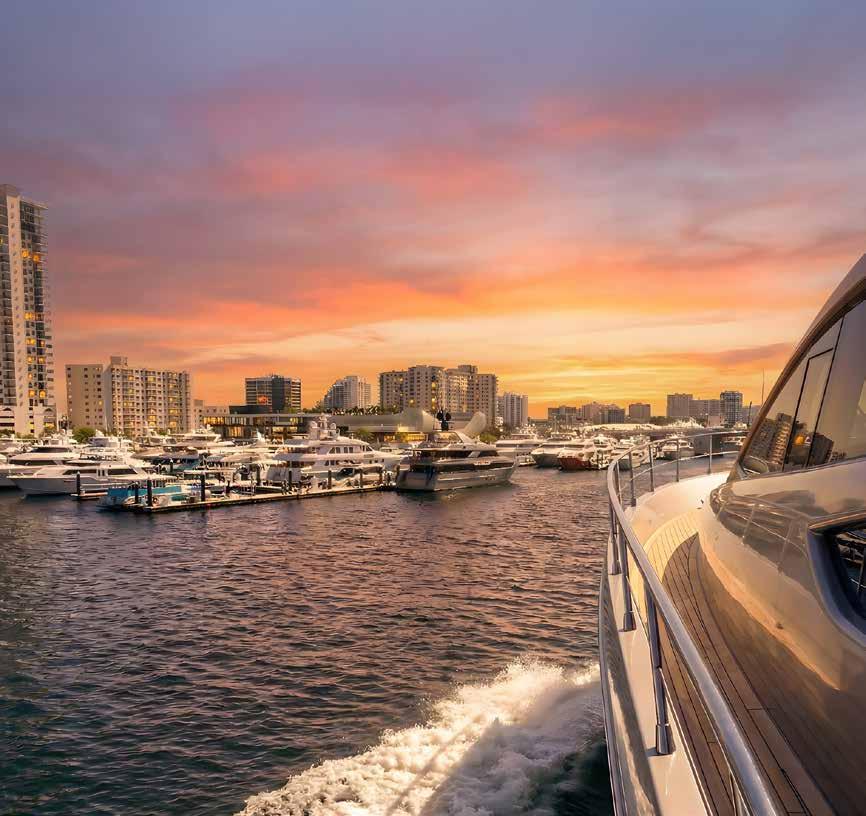





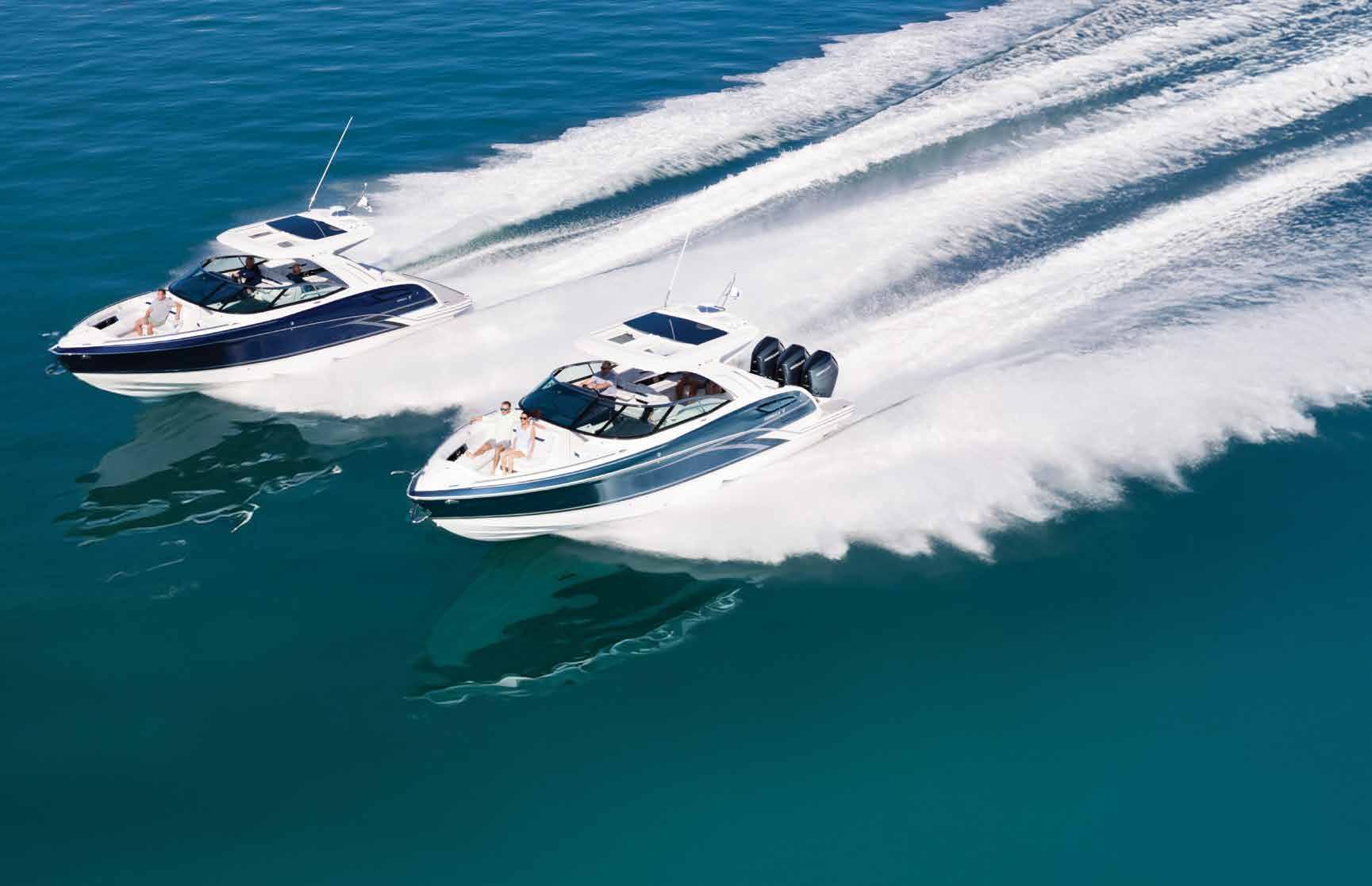


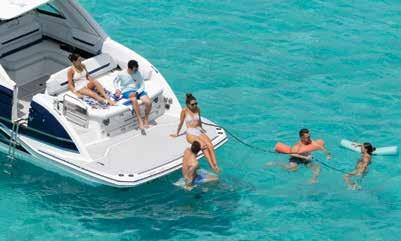
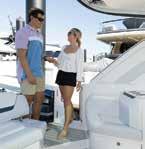
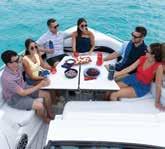
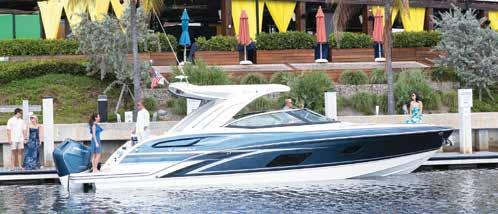

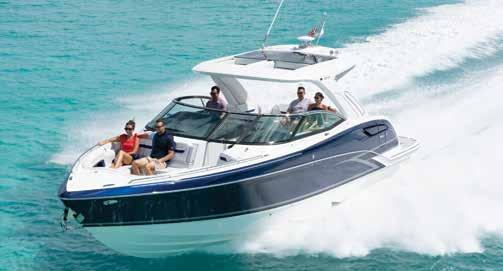
With the All-New Formula 360 Crossover Bowrider, your best days are finally here! Now celebrating 70 years, an exciting new generation of Formula dayboats has arrived with the 360 CBR. From the stepped FAS3Tech hull to the stylish hardtop with glass sunroof, this leap in day venture offerings is a refreshing, innovative choice for dayboaters. 36' in length with a generous 11' 3" beam, the 360 CBR heralds the arrival of the new generation of open-bow dayboats, the first driven by Formula Designer Michael Young, a John Adams-mentored new creative force in luxury-boating architecture. Young states, “The 360 CBR is a true blend of entertainment-ready comfort and the exhilarating agility that is rooted in our performance heritage.” True to its Formula CBR lineage, the 360 boasts an open bow with a single-level, flush cockpit and a true stand-up cabin with overnight accommodations. With twin and triple outboard or twin sterndrive power, this perfectly balanced combination will take the experience farther than ever before!
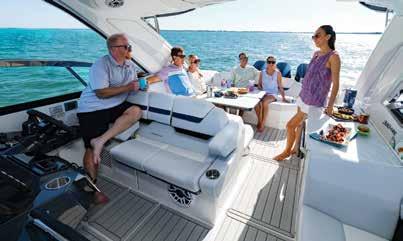
The 360’s Crossover SmartZone™ concept creates separate areas for a variety of activities while encouraging connections among guests, from the expansive bow to triple helm seating,
a roomy portside lounge, outdoor kitchen, aft companion seat and wraparound seating aft. The aft-facing sun lounge with multi-position backrests cleverly converts to an extended layout, perfect to oversee on-water activities at anchor. The available Extended Water Sport swim platform for sterndrive with motorized undermount swim seat gives plenty of space to lounge, play and interact.
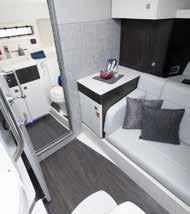
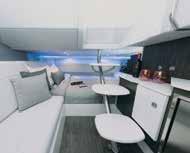
The cabin is perfect for overnight trips or taking a break from the sun with stand-up headroom, high-end private aircraft galley styling, double settee, permanent, full-size memory foam bed aft and a reimagined transverse head compartment for full, stand-up capability, expansive countertop and cleverly integrated storage.
The Formula 360 CBR is the next-generation Crossover Bowrider choice for the discerning boater desiring upscale dayboating with overnight accommodations!
The New Formula 360 CBR –70 Years of Delivering the Best!


FROM THE PUBLISHERS
New Year, New Resolution: Don’t make them on New Year’s
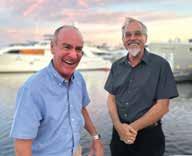
Every Jan. 1, everyone around the world wakes up with the same bold thought: “This year will be different.” New Year’s resolutions are made with confidence and optimism. “I will be better, I will not give in.” Gym memberships are planned. Dry January is a commitment. Saving money will happen. And for a brief, shining moment, we all believe that we will prevail in the new year and we are excited.
But since we are away on holiday, or on charter, or want to get through the playoff season, we decide to boldly start on Jan. 15. We try to justify the delay.
By the time you read this, reality gently but firmly throws us overboard. Nearly 90% of people fail on their New Year’s resolutions. The problem is that we set them all at the wrong time of year. This is the time of year we are busier than ever. We are at more parties, traveling more, spending more, etc. You may have resolved to “drink less,” but then a guest charter ends, the tip is decent, and suddenly it’s crew appreciation night. And what do you talk about that night? Your resolutions, which are already behind schedule!
Fitness goals suffer first. Dry January was simply a fleeting thought when you woke up hungover. And saving money? What’s the plan? Adorable.
Professional resolutions don’t fare much better. “I’ll be more organized this year,” we say. Then, we find ourselves behind on that one too (because we weren’t organized in the first place to make that happen) so we go back to our disorganized ways.
But making and then not keeping New Year’s resolutions is practically a tradition around the world. Life is unpredictable and the fact that we try to improve at all deserves a round of applause.
So, here’s an idea — forget the New Year resolution. Just make one simple resolution. Make yours on April 1! A quieter time of year for many and that way, if it doesn’t work, you can simply write it off as an April fool’s day joke!
Have a great 2026!


KEVIN QUIRK Co-publisher
When January inspiration strikes twice: reflections on resolutions from both the publishers and editor.
Publishers
Jim Bronstien | JimB@TritonNews.com
Kevin Quirk | KQ@TritonNews.com
Editor-in-Chief
Kevin Maher | Kevin@TritonNews.com
Art Director
Debbie Reznik | Production@TritonNews.com
Senior Editor
Lauren Beck | Lauren@TritonNews.com
Sales Director
Edward Ibarra | Sales@TritonNews.com
Marketing & Sponsorship Sales Manager
Flavia Patino-Paul | Flavia@TritonNews.com
Business Controller
Katherine Urdaneta | Kat@usmarinagroup.com
Contributors
Danny Davies, Jake DesVergers, Julie Emmons, Lisa Gould, Gemma Harris, David Kilmer, Carrie Lee, Sam Moen, Dayami Rivera, Kendall Shafer, Laura Shaughnessy
Contact us
Triton Magazine +01 954-525-0029 1881 SE 17th Street, 17th Street Yacht Basin Fort Lauderdale, FL 33316
Follow us thetritonnews | tritonnews tritonnews | tritonnews
Vol. 5, No. 2
Triton is a free bimonthly magazine owned by YATCO, LLC
Copyright ©2021 Triton News Network. All rights reserved.
Reproduction in whole or in part without written permission is prohibited.
Contributor Guidelines
Triton welcomes content from captains, crew, and industry professionals to be considered for publication. Please email queries to Editor@TritonNews.com.





























INDUSTRY UPDATES
12–16 News from around the industry
NEW YEAR, NEW REGULATIONS
18 What regulations have been introduced in 2026 FROM COUPLE TO CARPET EMPIRE
20 A captain and his wife’s story to owning a business
A CREW’S GUIDE TO SURVIVING AN ATLANTIC CROSSING
22 Rituals, games, and more on the open ocean
MARITIME MADNESS
24 Wacky news from the nautical world
THE CAPTAIN MINDSET
26 Capt. David Kilmer’s new book explores the essence of command
INSIDE A MODERN CIRCUMNAVIGATION
28–30 How to prepare to sail around the world
DISCOVER PUERTO RICO
44 Exploring La Isla del Encanto as yacht crew CALENDAR
82 Triton and industry events in February and March DECKHAND DAN
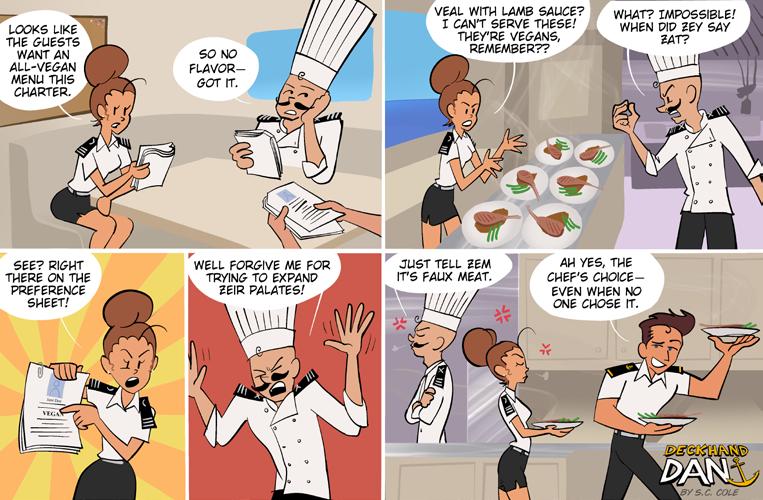
46 Dan gets stuck between a chef and stew feud
TRITON DOUBLE TAKE
84 Test your powers of observation!
ON THE COVER
Chefs and Stews Feature Section
A NEW INTERIOR PLAYBOOK
34 How today’s stew career pathway has changed STEW MISTAKES YOU DON’T KNOW YOU’RE MAKING
36 Invisible mistakes green crew make and how to avoid them ROLE CHANGE
38 Transition tips to move from sole stew to chief stew “FRESH” LAUNDRY’S DIRTY TRUTH
40 How popular laundry utilities are hurting you and the yacht
THE RIPPLE EFFECT OF INTERIOR STRUCTURE
42 A feeling of disconnect on board? Here might be why
TOP 5 ECO SWAPS ON BOARD
44 How to make your yacht greener
FROM YACHTING TO THE BUSH
48 A chief stew’s letter to yachting after six years
THE YACHT CHEF’S REALITY
50 What it really takes to perform at sea NEW TECH FOR STEWS AND CHEFS
52 The best time-saving solutions for interior crew
THE LIVEABOARD LIFESTYLE
56 How one chef navigates life aboard
A GUIDE TO BOAT SHOW COMPETITIONS
58 How to succeed when the pressure is on
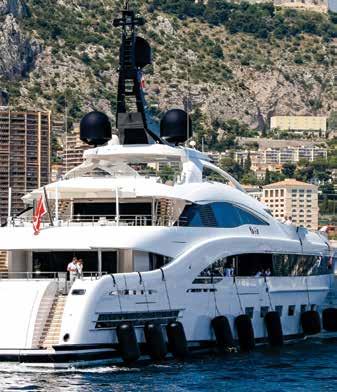
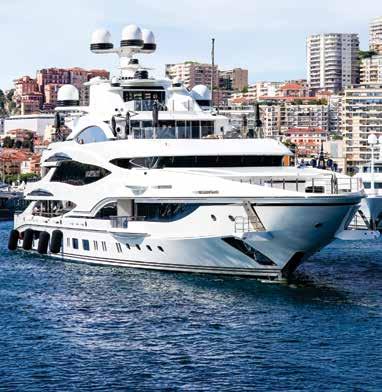
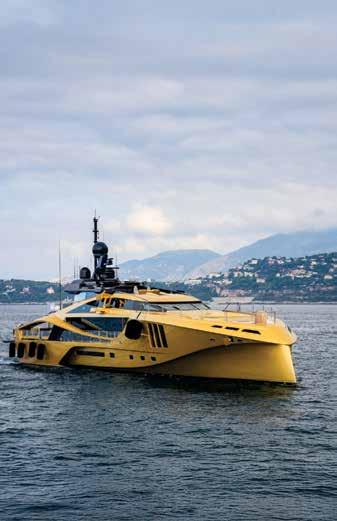
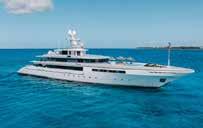
ISA’s 66-meter M/Y Okto, photographed in Ancona, Italy, during the winter. By Quin Bisset, StudioILLUME.
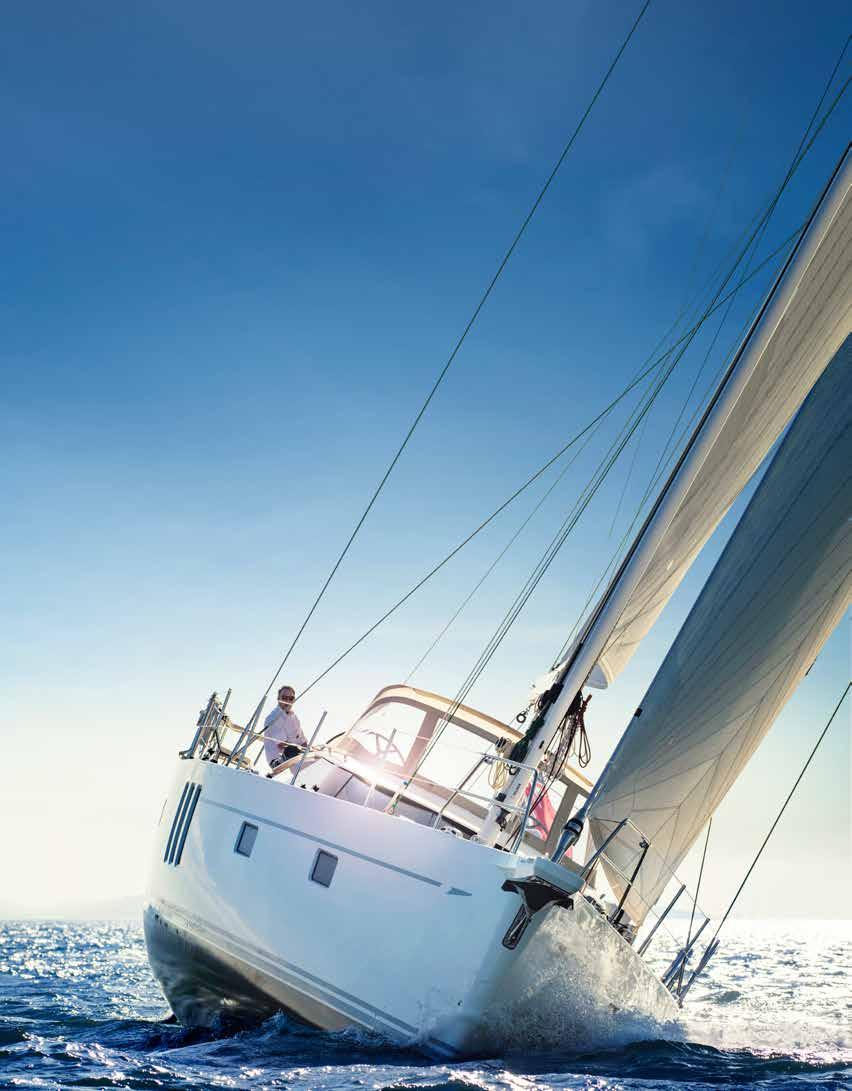
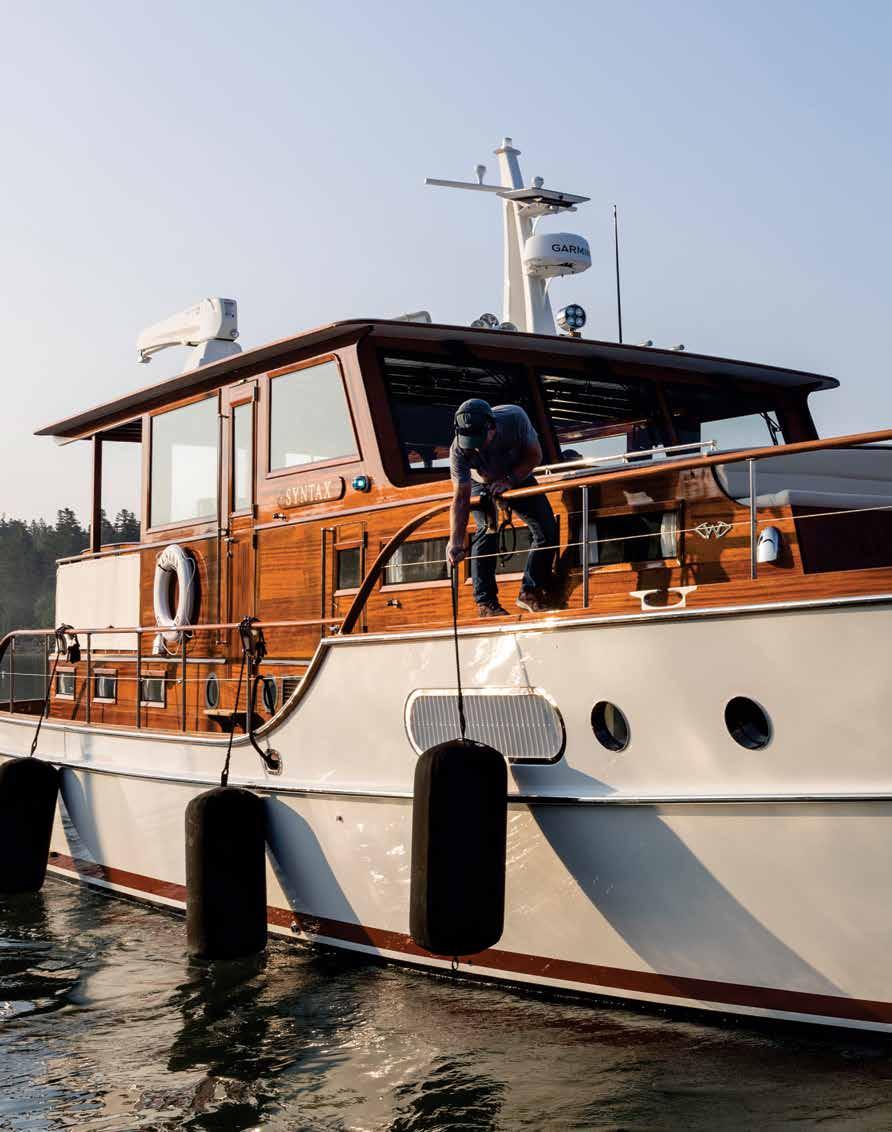
An Oyster 595 60-foot luxury bluewater sailboat glides through the waves, by Oyster Yachts.

EDITOR’S LETTER



Rethinking Resolutions
Each year offers opportunities to make change. For your work life, that might mean deepening your craft or using the new year to add more energy into your service. For your life outside of work, the changes often start with resolutions.
Resolutions are interesting. Some treat them like binding contracts, while others break them before they even begin. A gym friend told me he doesn’t even think about making them anymore. “Why wait until the beginning of the year to make a change if every day I wake up is an opportunity for that?” It’s an interesting question that made me rethink how I approach resolutions.
Working out has taught me several things, but the two most important are consistency and building on what you’ve already accomplished. The best gym results are created through consistent effort and progressive overload. When you pair this with a New Year’s resolution, it suddenly feels much more manageable.
Declaring that in 2026 you’ll buy your dream car, get a six-pack, or run a marathon is great. Writing down your goals is important, and I do believe in the power of manifestation, but you still have to put in the work. Just like a gym goer moves up in their lifts by adding one more rep a day to ultimately reach their goal, completing a New Year’s resolution should be viewed as something slowly chipped away at throughout the year — instead of something that magically completes itself.
So, if your work-related resolution includes adding new flair to your onboard menu or an impressive skill to your CV, the small steps you take each day accumulate into something significant, if you take them consistently.

KEVIN MAHER Kevin@TritonNews.com




Andaman
Islands Undergoes Key Regulation Changes
Asia Pacific Superyachts hosted a captains’ meeting in Phuket to announce several regulatory changes for the Andaman Islands. The changes are intended to help the Andaman Islands transform into a high-end tourism destination.
Since the Andaman and Nicobar Islands are restricted areas, foreigners used to be issued a Restricted Area Permit that allowed them to visit for a maximum of 30 days, with the option of a 15-day emergency extension. Foreigners can now visit the islands for tourism purposes without the permit and are allowed to stay for the duration of their visa’s validity.
Obtaining a visa used to require visiting the Indian embassy in person. The entire process is now online, and each person can apply for a visa for a period of one month, one year, or five years. Visa approval is now emailed to the applicant within three to five days.
It was previously unclear whether scuba diving and game fishing were allowed, but it has now been announced both are allowed. Inward clearances used to have no set completion timeline, but it is now stated that if you arrive in the morning, you will be cleared in the evening of the same day. LSLFHSD fuel has been added in the Andaman Islands as well.
“Those attending were surprised to learn the 30 days restriction has been removed,” said R. Rathnam, owner-agent of Asia Pacific Superyachts Andaman Islands and India. “The visa process is hugely simplified and now can be done online. The process no longer requires an in-person/home country visa application.” asia-pacific-superyachts.com
Texas A&M University Developing a Smarter Anti-Collision System
Ocean engineering researchers at Texas A&M University have created SMART-SEA, a system that provides seafarers real-time guidance on how and when to maneuver their vessel amid increasing collisions between marine vessels and stationary structures. Researchers from the university collaborated with industry experts, the U.S. Navy, and the U.S. Coast Guard to better understand practical decision-making skills, like when to yield and how far to turn.
SMART-SEA processes raw radar images to identify stationary objects near the vessel. Once identified, SMART-SEA considers the vessel’s maneuverability and seafarers’ experience to recommend the safest action for the vessel. Stationary objects can be detected in all weather conditions and relayed to seafarers visually, audibly, or both. stories.tamu.edu
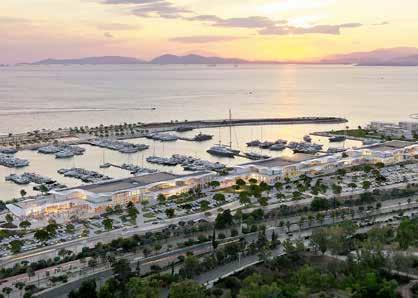
Athens Full-Service Superyacht Hub Announced
A new, multidimensional urban redevelopment project plans to bring a modern, full-service marina to Athens. The Ellinikon, located on the grounds of the former Ellinikon International Airport, will include residences, a business district, a mall, two parks, and a marina yacht club. The Ellinikon Marina will offer more than 400 berths for yachts up to 262 feet, a 0.62-mile free-access beach, and direct connections to Athens.
The marina will be a part of LAMDA’s three-marina portfolio, which also includes Flisvos Marina and the Mega Yacht Marina in Corfu, currently under development. More than 3,000 workers are active across 40-plus construction sites, with full operation expected by 2028–29.
theellinikon.com

Bluewater Opens Registration for Chef Competition
Chefs, take note — want to raise your profile and add to your resume? On April 2, 2026, the Yacht Club de Monaco will host the seventh Bluewater & YCM Chef Competition as part of its training center, La Belle Classe Academy. The contest will bring together nine chefs to compete.
Held in partnership with Bluewater, the competition showcases creativity, technical precision, and flawless execution, with a panel of culinary experts judging. The chefs compete using a set basket of ingredients, and judges evaluate dishes on creativity, efficient use of ingredients, presentation, and flavor.
The contest takes place under real-life conditions — the basket is revealed moments before the contest, and chefs have five minutes to create a recipe. All basket ingredients must be used, and there is a penalty for waste. To keep the chefs on their toes, spectators can also add a surprise ingredient.
The contest is part of the Monaco, Capital of Advanced Yachting initiative. It aims to both honor chefs at sea as ambassadors of the yachting industry and inspire people to pursue careers in the sector.
As Bluewater shared, “This is your opportunity to showcase your culinary talent in front of industry leaders, peers, and an internationally respected judging panel and to battle it out for the title in one of the most iconic yachting venues in the world.”
Registration is open. Click below:

Upgrade from the Inside
In yachting, excellent service is expected, but it can be challenging. Lisa Gould, an experienced crewmember, former captain, and founder of On Deck Yachting, is working to make the process easier by strengthening interior operations from the inside out.
For Gould, elevated service starts with communication, leadership, and support for every crewmember on board. “We create a clear separation between the operational process and the personal experience on board,” she said. Too often, she added, the interior lacks the structure felt elsewhere on board. “There’s really no training, accountability, or leadership for the interior,” she said. It is a “free-for-all” that results in high turnover.
On Deck Yachting provides tailored interior support designed to bring clarity and consistency to onboard operations. Services span everything from purchasing and setup — whether for a new build, refit, or refresh — to inventory systems and budget management. Gould also offers crew training, ongoing mentorship, and regular check-ins aimed at long-term retention. In addition, On Deck works closely with captains and brokers, relieving them of day-to-day interior details, while collaborating one-on-one with owners to ensure their standards and vision are consistently met.
Gould positions On Deck as a specialized operational partner focused on creating structure behind the scenes. The Boot or Reboot Program builds an interior operation from the ground up or overhauls an existing one, while the On-Demand Program allows yachts to address specific problem areas. For vessels with an established setup, the Advanced Development Program refines and elevates existing systems to improve overall functionality.
A key part of Gould’s approach is acting as a buffer between owners, management companies, and crew — an area where communication can often become fragmented. “[On Deck is] the punching bag,” she said. “If an owner is upset about something, they can be upset with me — not the captain and not the chief stew.” That separation, she explains, ultimately sets the captain and crew up for success.
At its core, Gould’s mission is about restoring what she believes has been lost in yachting. “The most important part for me is bringing luxury back,” she said. For her, true luxury is about precision and consistency. “If your crew turnover is high, that isn’t luxury,” she added. “Real luxury is delivering service exactly the way the owner expects — every single time.” ondeck-yachting.com


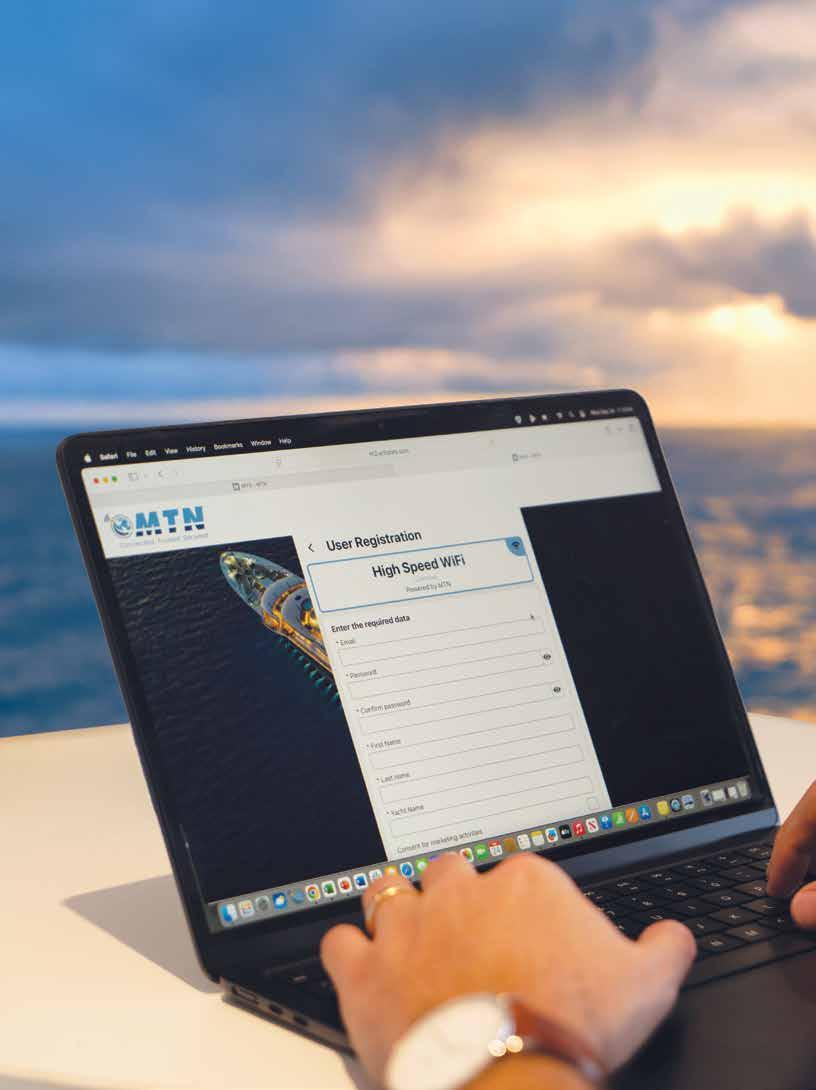
Marine Data Solutions Releases MDS Crew
Sim
Marine Data Solutions (MDS) launched the MDS Crew SIM, a prepaid plan tailored for yacht professionals that offers unlimited talk, text, and priority T-Mobile data in the United States for $49.99 per month.
“The crew lifestyle is unique and it deserves solutions that reflect it,” said Michael Robilio, a spokesperson for MDS. “This SIM was designed with their day-to-day reality in mind, not a consumer’s checklist. It keeps communication simple and reliable so they can focus on their work and still stay connected with family and friends.”
The plan operates on a month-to-month basis, with calls to U.S. numbers from abroad costing $0.25 per minute. The plan also includes Peplink 5G with Starlink satellite service to create continuous, high-speed connectivity through MDS’ Blender.
“Crewmembers spend weeks and months away from home, often under demanding schedules,” Robilio said. “They need to know that their phones will simply work, whether they are in Fort Lauderdale, provisioning in Miami, or taking personal time inland.” marinedatasolutions.com
Marina Port Vell Fundraises for Local Families
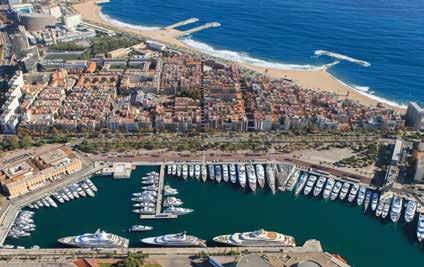
Barcelona’s Marina Port Vell helped raise funds for 100 local families to receive gifts for their children. Organized with the Festival Committee, the AFA (Parents’ Association), and other local organizations, the initiative aims to ensure that all neighborhood children receive a gift on Three Wise Men’s Day.
Marina Port Vell, which can accommodate yachts up to 190 meters, has strong ties to the local community and plays a significant role in neighborhood life. In addition
to this endeavor, the marina has sponsored the Port Vell Christmas Fair each year and supports other charitable initiatives that seek to strengthen local community ties.
“From Marina Port Vell, we would like to thank the entire community for their involvement and reaffirm our commitment to Barceloneta, working year after year to ensure that hope and solidarity reach every household in the neighborhood,” said Ignacio Erroz, CEO of Marina Port Vell. marinaportvell.com
Sailing Conference Added in Long Beach
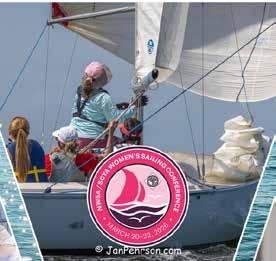
The National Women’s Sailing Association (NWSA) and the Southern California Yachting Association (SCYA) are partnering to bring the Women’s Sailing Conference to Long Beach, California. The Long Beach Yacht Club will host the conference from March 20-22, 2026.
The conference brings together women instructors and students of all skill levels for on-water and classroom courses and networking
events. Programming includes a day of classroom, dockside, and on-thewater workshops led by best-in-class female instructors and captains from across the country.
This year introduces new events, including an awards ceremony honoring leaders who have made significant contributions to the growth of the Southern California women’s sailing community. womensailing.org


NEW REGULATIONS

BY CAPT. JAKE DESVERGERS
AS WE MOVE INTO 2026, REGULATORY EMPHASIS AFFECTING YACHTS HAS SHIFTED DECISIVELY FROM FUTURE PLANNING TO ACTIVE ENFORCEMENT. SEVERAL AMENDMENTS ADOPTED BY THE INTERNATIONAL MARITIME ORGANIZATION (IMO) NOW ENTER INTO FORCE THIS YEAR, WITH DIRECT IMPLICATIONS FOR LARGE PRIVATE AND COMMERCIAL YACHTS OPERATING INTERNATIONALLY.
WHAT DISTINGUISHES 2026 IS NOT AN INCREASE IN THE NUMBER OF RULES, BUT THE WAY VARIOUS FLAG STATES ARE APPLYING EXISTING CONVENTIONS WITH GREATER CONSISTENCY, LEAVING LESS ROOM FOR INFORMAL OR EXPERIENCE-BASED COMPLIANCE.
POLAR CODE EXPANSION – VOYAGE PLANNING AND NAVIGATION
A consequential development for large yachts is the expansion of the Polar Code to include pleasure vessels of 300 GT and above not engaged in trade.
From Jan. 1, 2026, newly constructed yachts operating in polar waters must demonstrate documented, risk-based voyage planning that addresses ice conditions, environmental protection measures, communications capability, and the availability of search-and-rescue resources. Existing yachts are subject to a phased implementation period, but inspection expectations are already shifting.
This represents a practical extension of voyage-planning principles rooted in SOLAS Chapter V, Regulation 34, now applied more formally to yachts operating in high-latitude and remote regions. Experience alone is no longer sufficient without supporting documentation.
ENERGY EFFICIENCY AND OPERATIONAL TRANSPARENCY
While yachts remain partially outside formal commercial efficiency rating schemes, requirements under MARPOL Annex VI continue to evolve through the Ship Energy Efficiency Management Plan (SEEMP) and IMO fuel-data collection provisions. In 2026, inspections focus on whether SEEMP documentation reflects vessel-specific operational measures rather than generic templates.
FIRE SAFETY – PFOS FIREFIGHTING FOAM PROHIBITION
Environmental and health concerns are driving a global prohibition on firefighting foams containing perfluoro octane sulfonic acid (PFOS). Amendments to SOLAS Chapter II-2 prohibit the installation and use of PFOS from Jan. 1, 2026.
This applies to both fixed firefighting systems and portable extinguishers. Yachts are expected to identify the type of foam carried on board and demonstrate that non-compliant media has been replaced or properly scheduled for disposal.
FUEL SAFETY – FLASHPOINT CERTIFICATION AND BUNKERING CONTROLS
With the expansion of alternative fuel use, safety requirements tighten further through amendments to SOLAS Regulation II-2/4, strengthening controls on the probability of ignition. From Jan. 1, 2026, fuel suppliers are required to certify that delivered fuel meets minimum flashpoint requirements.
For yachts, this means bunker delivery notes are expected to reflect certified compliance, and crew must understand the properties and safe handling of fuels carried on board. Inspectors are crosschecking fuel documentation against onboard procedures, particularly where blended or alternative fuels are used.
ANCHOR HANDLING AND LIFTING APPLIANCES
New safety requirements effective Jan. 1, 2026, introduce clearer standards for the design, certification, testing, and maintenance of lifting appliances and anchor-handling equipment under SOLAS Chapter II-1. Although developed with commercial shipping in mind, these requirements are being applied by various flag states to yachts fitted with high-load anchoring systems, cranes, and tender-handling equipment. New installations must comply immediately, while existing equipment will be assessed at the first applicable survey after entry into force.
EMISSION CONTROL AREAS – NORWEGIAN SEA AND CANADIAN ARCTIC
Amendments to MARPOL Annex VI designate new NOx and SOx Emission Control Areas (ECAs) covering the Norwegian Sea and Canadian Arctic, with enforcement beginning March 1, 2026.
Yachts operating seasonally in these regions must plan fuel selection, engine compliance, and fuel changeover procedures carefully. Even vessels not permanently based in ECAs may be subject to inspection during transits, where fuel sulfur content and engine certification remain frequent areas of scrutiny.
STCW – PREVENTION OF VIOLENCE AND SEXUAL HARASSMENT
One of the most operationally significant changes for yacht crew in 2026 is the entry into force of amendments to the STCW Code, specifically to the Personal Safety and Social Responsibilities (PSSR) competencies. From Jan. 1, 2026, mandatory training must include prevention of violence, bullying, and sexual harassment, as well as awareness of reporting mechanisms and support pathways.
Enforcement is practical rather than procedural. Inspectors are speaking directly with crew, particularly junior crew, to confirm that reporting procedures are understood and accessible without fear of retaliation.
The regulatory message for 2026 is clear: compliance must be demonstrable, operational, and understood by the crew. For yacht owners and managers, proactive engagement remains the most effective way to operate confidently in an increasingly scrutinized maritime environment. ‹
CAPT. JAKE DESVERGERS ENTERS HIS 20TH YEAR AS CHIEF SURVEYOR FOR THE INTERNATIONAL YACHT BUREAU (IYB), A RECOGNIZED ORGANIZATION THAT PROVIDES FLAG-STATE INSPECTION SERVICES TO PRIVATE AND COMMERCIAL YACHTS ON BEHALF OF SEVERAL FLAG-STATE ADMINISTRATIONS. A DECK OFFICER GRADUATE OF THE U.S. MERCHANT MARINE ACADEMY AT KINGS POINT, HE PREVIOUSLY SAILED AS MASTER ON MERCHANT SHIPS, ACTED AS DESIGNATED PERSON FOR A SHIPPING COMPANY, AND SERVED AS REGIONAL MANAGER FOR AN INTERNATIONAL CLASSIFICATION SOCIETY. CONTACT HIM AT 954-596-2728 OR WWW.YACHTBUREAU.ORG
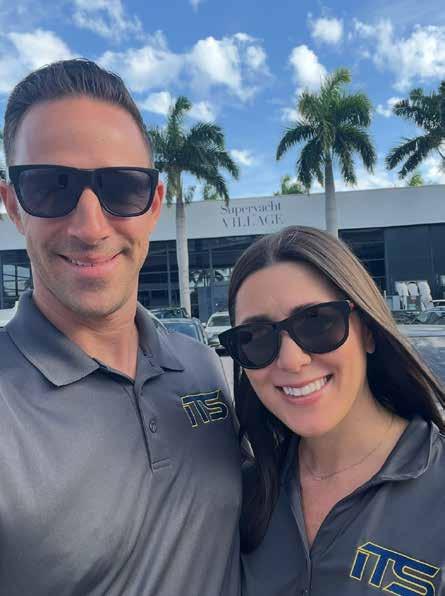
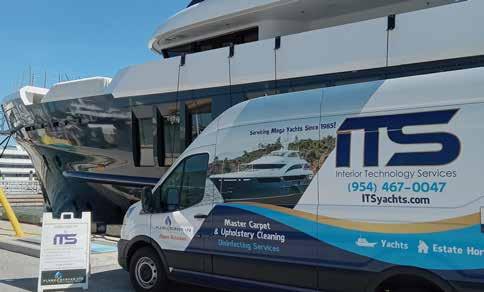
Capt. Jeremy Nollet and Victoria Pellegrino took the leap into business ownership when they acquired Interior Technology Services (ITS) at the beginning of 2025. The husband-and-wife duo purchased the company, founded by Rick Perkins in 1985, with hopes of breathing new life into it while maintaining the company’s reputation and simultaneously raising a baby. From carpets and drapes to furniture and exterior cushions, ITS serves captains and crew from Fort Pierce to the Keys.

Cleaning Up in Yachting A
Captain, a Couple, and a Carpet Empire
By Kevin Maher
How did you get into yachting?
Jeremy: I originally did five years in the Coast Guard and then got a degree from Rutgers University. I became a broker up in New Jersey, selling sailboats. I went to the Annapolis Boat Show and met somebody that was looking for a captain down in Miami. He liked my résumé, so he said he would pay for my captain’s license. I moved to Miami Beach to run a 62-foot motor yacht and worked my way up from there — that was about 12 years ago now.
Victoria: Admittedly, my exposure to yachting is through meeting Jeremy, who is obviously a captain here in Fort Lauderdale. I personally have never worked on a yacht before, but now I am part-owner in ITS that serves the yachting industry.
What is Interior Technology Services?
Jeremy: We are the leader in carpet and upholstery cleaning on superyachts in South Florida. I like to say we’re the OGs of yacht carpet cleaning. The gentleman who launched the company was a steward
on a lot of larger superyachts and he decided to launch a company that was tailored to dealing with carpet care and upholstery cleaning on superyachts.
Can you tell me a bit about how you acquired it?
Jeremy: I had been looking at purchasing a company for two or three years and I took a class with a company called Acquire, which trains entrepreneurs to source and learn how to fund deals to take over businesses. The baby boomer generation is looking to retire, so there are a lot of home services businesses for sale. I was specifically looking for home services because it’s kind of recession-proof. We’re looking at HVAC, roofing, and electrical companies, but the only problem with those companies is that I’m not an HVAC technician or an electrician, so I’d be relying on somebody that has a license to operate the business. This business came up for sale and I have a lot of connections — I know the standards, the turnaround times that are involved in the yachting industry, so I felt like it was a good business for us to acquire.
What is it like balancing your captain and sales positions while also running ITS?
Jeremy: It’s been a lot, but the reason I’m still a captain is because of the job security I have with this job right now. The boat does not travel much, so it allows me to do both jobs at once. Obviously, my primary job is the boat, so I’ve had to learn to manage effectively, to delegate correctly to my team — not only at ITS but also on the boat — to be successful at both.
Victoria: I think it’s just really about time management. I try to set goals for myself to spend a certain number of hours a week on the business and then figure out where I can insert those hours across the week in between being a mom and having a full-time job. Admittedly, Jeremy and I are sitting at our kitchen table at 9 p.m., strategizing an event that we want to plan for ITS or what we’re going to print for a Triton event, so there’s times that we are staying up at night after we put our baby to sleep and we’re back working.
What are some of the biggest challenges of owning a business?
Victoria: It’s hard to figure out outreach, in terms of setting up emails or trying to attend the Triton events and figure out who is a stew on a yacht and making sure that you’re meeting the right people. It’s hard to generate leads.
Because of the industry that we serve, there are certain standards of technicians that we want walking onto these yachts and providing these services, so we’re very particular about who we hire. That is a little bit of a harder skill to hire for because there’s not a plethora of carpet cleaners that are specific to the yachting industry.
Jeremy: A lot of marinas don’t allow dockwalking, and even when you can dock walk, you’re talking to a deckhand on the back of a boat that’s washing a boat. You give them a flyer; the flyer ends up in the trash can. I can say, “I’m a yacht captain,” but I’m just some guy giving out flyers on the dock and it’s just not very proficient to get to the decision makers.
What are some of the biggest success stories you have had?
Jeremy: I think a good example is going to Tampa to do a job on a 270-foot yacht — they wanted us to come. I’m sure they could have found somebody over there at a much cheaper price to do the work, but they insisted that they wanted us to come, so we traveled the four hours and did the job. That’s just really rewarding to know that the customer was going to pay extra and cover travel fees just to have us on board.
interiortechnologyservices.com @its.yachts
@Interior-Technology-Services

What’s your piece of advice for a crewmember looking to start a business or acquire one?
Jeremy: Talk to people who have been through it and get their input on it. Don’t just jump into it. Take a class online about entrepreneurship, about acquisition, and make connections. I know a lot of yachties are saying, “Oh, I’m good at X, at doing Y, maybe I’ll just open a business and work on my own,” but there’s a lot more to it.
What does the future of ITS look like?
Jeremy: Bright! We have about 15% growth this year. I would like to be the largest yacht carpet cleaning company in South Florida. We would like to get as many boats as possible, maintaining and growing relationships. I think one key thing is, I’m not looking to get rich overnight or make millions. I’m looking to have a company focused on customer service, timeliness, attention to detail, and doing the best we can to serve the yachting community. ‹
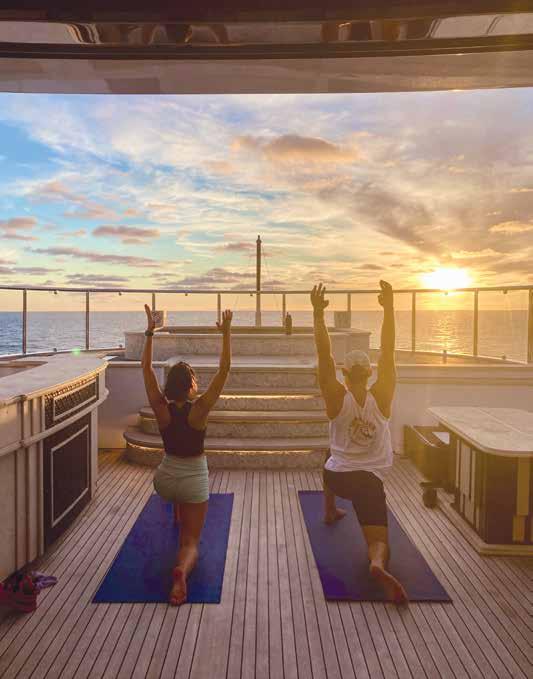
Setting sail across the Atlantic Ocean is no ordinary voyage. For yacht crew embarking on this legendary crossing, it’s a blend of adventure, camaraderie, and quite a few quirky superstitions and traditions.
RITUALS, REVELRY, AND THE OPEN OCEAN
A Yacht Crew’s Guide to Surviving the Atlantic
By Wesley Walton
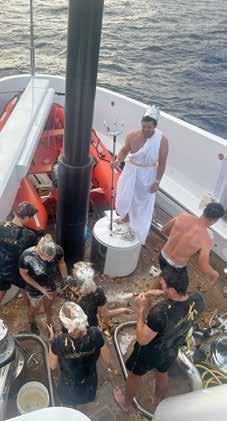
NEPTUNE’S BLESSING: THE HALFWAY INITIATION
Halfway across the Atlantic, a momentous event unfolds: the initiation ceremony conducted by none other than Neptune, the Roman god of the sea. Traditionally, this ceremony is for crossing the equator; however, as that route is not popular in yachting, we use the Atlantic. First-timers, affectionately dubbed “pollywogs,” are ceremoniously introduced to the maritime world. The ritual begins with crewmembers dressing up in pirate costumes while leading, singing, and dancing as the “pollywogs” sit in front of Neptune to ask for his blessing and safe passage. The main event of the ceremony is the tossing of “slops,” a delightful concoction of food scraps (often saved from the galley over a couple of days) over the first-time crossers to invoke Neptune’s favor. It’s a messy affair, but it’s said to bring good luck for safe passage.
DEEP BLUE SWIM
Most crossings include a refreshing dip in the deepest part of the Atlantic Ocean, a moment designed to reaffirm the crew's bond with the sea. Stripped down to swimsuits, the team dives into the depths. It’s thrilling and a bit surreal, taking in the vastness of the ocean all around. Floating there, surrounded by blue, you can truly soak in the sense of freedom and adventure.
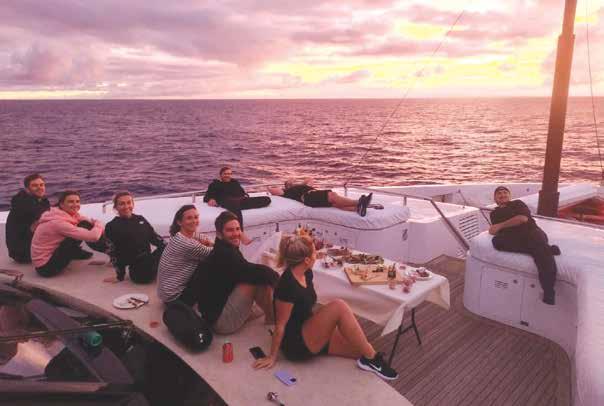
SUNDECK BARBECUES AND CHEESE BOARDS AT SUNSET
As the sun begins to set, there is no better way to take in the uninterrupted views of the Atlantic than by having a barbecue on the sundeck, or braai, for all the South African yacht crew. Grilling juicy burgers and marinated fish has become a cherished tradition. It’s a great way to appreciate how far you have come and to unwind after a busy season.
FITNESS CHALLENGES
To keep spirits high and bodies energized, crewmembers engage in fitness challenges. For every nautical mile sailed, they perform a push-up — a hefty commitment! Some even cycle the same distance on stationary bikes, raising funds for charitable causes. There is a belief that getting the body moving and breaking the routine of eat-work-sleep cycles creates much more positive crewmembers, which is beneficial when stuck at sea for three weeks with no escape.
RELAXATION AND ENGAGEMENT: READING AND SUNTANNING
Amid the activities, there’s time for muchneeded relaxation. Crewmembers find comfort in reading, lounging on the deck, and soaking up the sun. Whether diving into thrillers or romance, books transform the ocean into a vast canvas of imagination.
CREW FUN GAMES
To keep morale high, crewmembers indulge in various games. Picture a
Murder Mystery at Sea, where everyone becomes a detective in a thrilling game where no one can be trusted. Or the whimsical Fish and Ships game, in which everyone guesses how many flying fish will land on the boat and tallies the number of other vessels spotted.
Movie projector nights on the sundeck allow everyone to snuggle up and enjoy cinematic classics while stargazing. Lying back under the blanket of stars above, crew can swap stories and appreciate the beauty of open waters. Let’s not forget the open ocean barbershop, where the freshest air meets the art of grooming, creating a unique onboard experience.
SUPERSTITIONS OF THE SEA
Superstitions are an integral part of daily life at sea. One belief holds that serving fish and chips on a Friday brings misfortune. To ward off bad luck, sailors might indulge in this dish just before embarking on their journey. Another quirky tradition involves writing one’s name on the dock wall in the Azores, a symbolic gesture ensuring that your boat won’t sink. It’s a light-hearted yet heartfelt way of manifesting good fortune on the unpredictable waves.
Crossing the Atlantic from the Mediterranean to the Caribbean is a unique voyage peppered with traditions and superstitions. Each ritual brings the crew closer as they share the remarkable experience. The next time you chart your course across the Atlantic, remember to make the trip memorable by indulging in these traditions and creating moments that break the routine and foster a memorable adventure. ‹
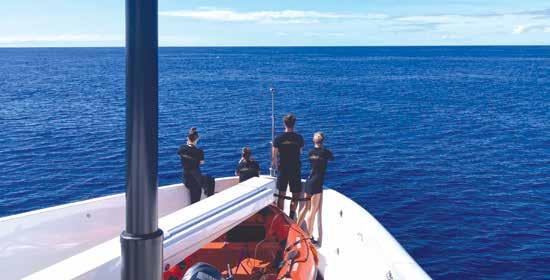
By Kevin Maher
Nutty Nautical News
Check out some of the strangest stories in the maritime world!
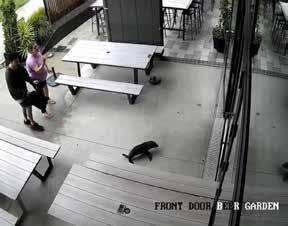
A Seal Walked into a Bar
A baby seal found itself under the Sprig + Fern The Meadows’ dishwasher in Richmond, New Zealand, after waddling into the pet-friendly establishment. Patrons and the bar’s owners quickly devised a plan to lure the seal out from underneath the dishwasher with salmon, but it was not tempted by the fishy snack. Luckily, conservation rangers were already tracking the seal after receiving numerous calls about it. The rangers successfully lured the seal out and released it on nearby Rabbit Island, according to AP News. While the seal did walk into a bar, it wisely avoided becoming part of the club scene.

Sea Turtle Saved by Atlantic Crossing Rowers
Stacey Rivers, John Hammond, and Emma Wolstenholme saved a sea turtle entangled in a fishing net during their Atlantic Ocean crossing row. The team sprang into action as soon as they saw the turtle, grabbing a knife and cutting it free.
Rivers, Hammond, and Wolstenholme are participating in the World’s Toughest Row, a 3,000-mile unsupported rowing race across the Atlantic from La Gomera in the Canary Islands to English Harbour in Antigua. The “Call to Earth” team is rowing to support the Blue Marine Foundation and The Ocean Cleanup to protect the world’s oceans.
“This is more than a race; it’s a reminder that the ocean needs us,” the team said in an Instagram post. “An incredible effort from the team. And an accomplishment they will carry with them through the entire journey.”
Crab, Oysters, and $400,000 Worth of Lobster Meat Stolen
Forty thousand oysters, a supply of crab meat, and $400,000 worth of lobster meat were stolen in separate incidents within weeks of each other in New England, according to AP reports. At the end of November in Falmouth, Maine, 14 cages of full-grown oysters and around $20,000 worth of seafood and cages were stolen.
The next two thefts occurred in Taunton, Massachusetts. A load of crab disappeared on Dec. 2 after leaving a warehouse. Lobster meat en route to Costco was then stolen on Dec. 12 by a fraudulent trucking company that spoofed emails, changed the name on the side of a truck, and created a fake certified driver’s license.
Shivering French Bulldog Saved from Island
In December, Jacksonville Sheriff’s Office District Six Officers Moran and Duggar responded to a call about a dog in distress along the Ribault River. They spotted the French Bulldog stranded on an island in the river, unable to return to the mainland on its own. The officers waved down two fishermen, who used their boat to reach the pup and bring it to shore. The officers took the Frenchie to Animal Care and Protective Services, where no microchip was found. It was given a new name: Porky. Porky is now living his best life with a loving family waiting for him, according to the Jacksonville Sheriff’s Office.
THE CAPTAIN MINDSET
A
NEW
BOOK EXPLORES THE ESSENCE OF COMMAND
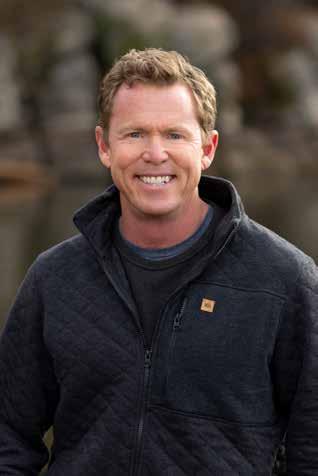
BY CAPT. DAVID KILMER
What are the qualities of a great captain?
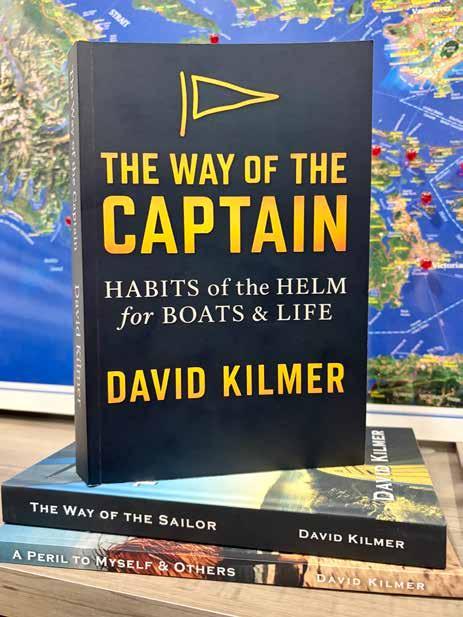
That’s the question I set out to answer in my latest book, “The Way of the Captain.”
I went straight to the source, interviewing 25 accomplished captains from across the maritime world: private yachts, working vessels, cruise ships, tall ships, and everything in between. I asked each one to distill their most important “Habits of the Helm” — the daily practices that make for a strong, safe, and respected program.
Alongside these interviews, I share my own path to command: the hard lessons, the mistakes, and the victories. While the book begins with boats, its reach extends far beyond them. At heart, it’s about stewardship — how we manage responsibility, people, risk, and ourselves, whether at sea or ashore.
The profiles include well-known mariners such as Ken Read, Chris Harris, Herb Magney, Kelly Gordon, and Andrew Burton, along with others less famous but equally wise. Though each captain has a distinct voice and style, a shared philosophy begins to emerge — principles that transcend vessel type or rank.
Presented here exclusively for Triton readers are the book’s core themes — the distilled essence of command.
PROTECT THE SHIP & THE PEOPLE
A captain’s first duty is to ensure the safety of the vessel, the crew, and the guests. That means preparation, vigilance, and safe margins. Rehearse the crisis before it comes. Give yourself every chance to succeed. As Capt. Mike Craig says, “Never relax till you know things are done right.”
BY
KNOW THE BOAT, KNOW YOURSELF
Understand your vessel completely — its strengths, weaknesses, and quirks. Apply that same care inward. A worn-down captain is a liability. “Listen to your boat, and listen to the ocean,” Capt. John Kretschmer said.
BUILD TRUST THROUGH COMMUNICATION
Great captains communicate openly and without ego. They explain decisions, invite dissent, and acknowledge mistakes. Trust grows where information flows freely. As Capt. Dan Bolton says, “A quiet bridge is a dangerous bridge.”
LEAD WITH CHARACTER
Composure, respect, and professionalism set the tone. People take their cues from the captain — especially under pressure. Capt. Tommy Pickard says, “The best skippers respect their crew, their vessel, and the sea.”
BE SHIPSHAPE, INSIDE AND OUT
Clean decks and tidy lockers reflect discipline. Small problems ignored become big ones later. Fix the loose screw and then check the rest. As Capt. Cub Jansen says, “You should be able to eat off the bait chopper.”
ADAPT CONSTANTLY, IMPROVE
CONTINUOUSLY
Plan carefully, then pivot when conditions change. Learn from every passage, mistake, and near miss. “Making mistakes is the biggest teacher on the planet,” Capt. Ken Read said.
SERVE WITH HEART
Create the best kind of memories and connections. A great captain doesn’t simply command a boat — they make a difference in the lives they touch along the way. “The greatest motivator is love,” Capt. Nikki Henderson said. ‹
“The Way of the Captain: Habits of the Helm for Boats & Life” is available on Amazon. Other books by David Kilmer include “A Peril to Myself and Others: My Quest to Become a Captain” and “The Way of the Sailor.” He runs a private sailing yacht in the Pacific Northwest in the summers, and lives in coastal Mexico in the winters.
PHOTO
NORRIS COMER
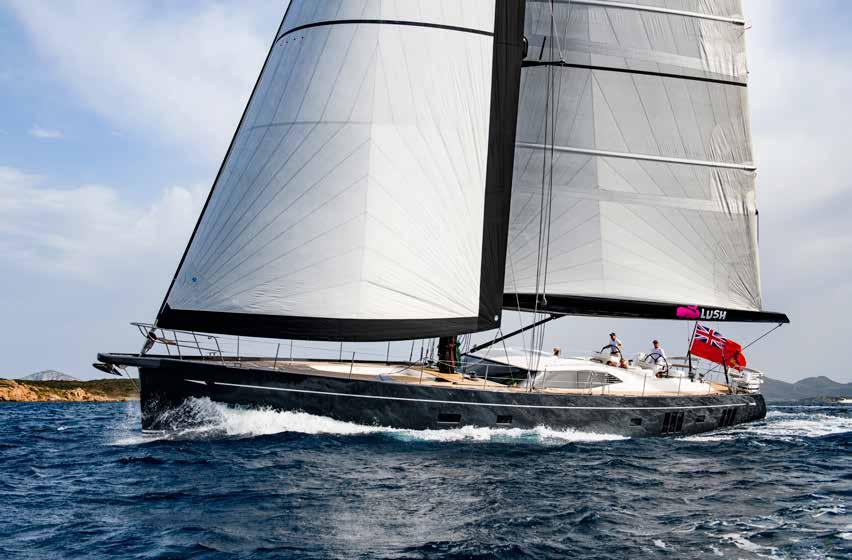
INSIDE A MODERN CIRCUMNAVIGATION: LIFE ABOARD OYSTER YACHT
BY KEVIN MAHER
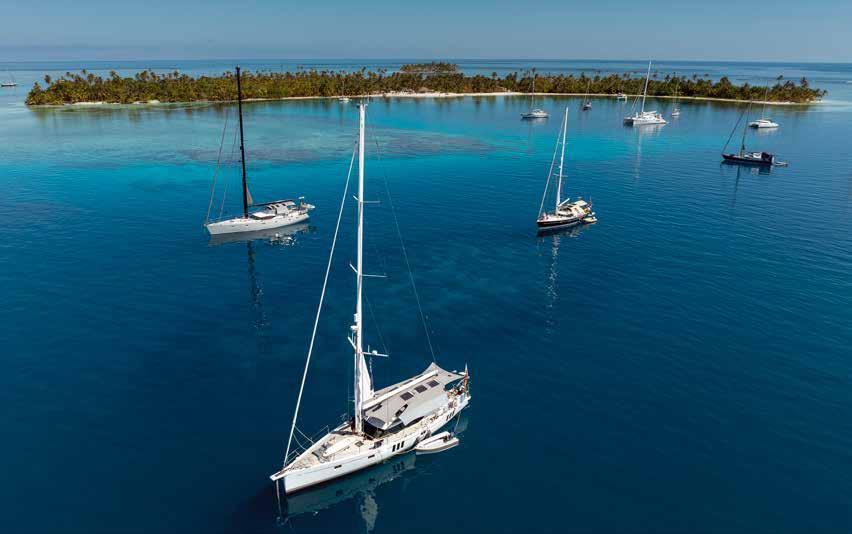
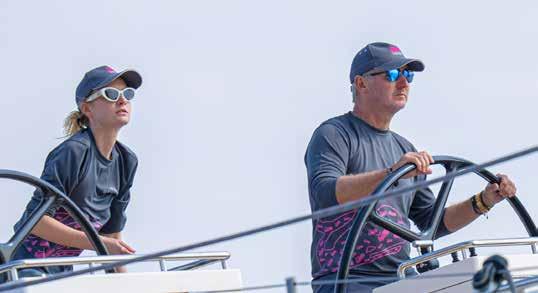

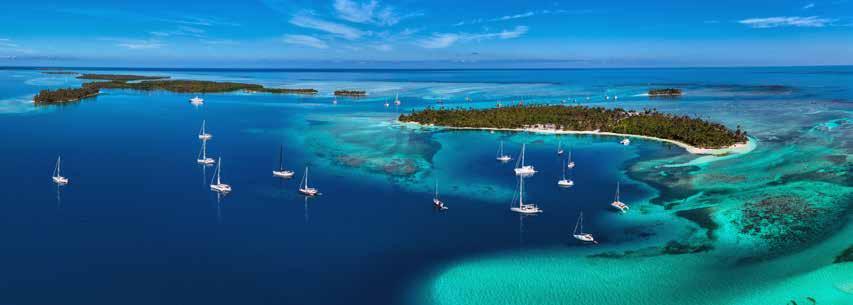
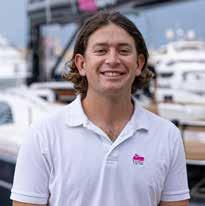
Circumnavigating the world is every spirited traveler’s dream. Braving harrowing weather and days on the open ocean deter many, but the chance to see remote places and embrace the thrill of adventure continues to make circumnavigation an impressive feat. After nine years in the yachting industry, 27-year-old Capt. Hugh White is joining the Oyster World Rally over 27,000 nautical miles and 16 months of sailing to go around the world.
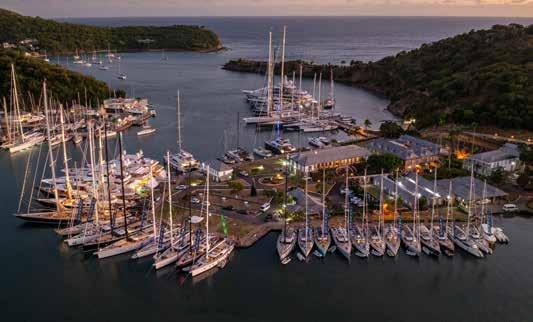
The Oyster World Rally is a fully supported circumnavigation that takes Oyster Yachts owners to some of the world’s most remote cruising grounds. White will be on board S/Y Lush, joined by the owner and chairman of Oyster Yachts, Richard Hadida, his wife Ali, and their two-year-old son, Harry. The 90-foot yacht set off Jan. 18 from Nelson’s Dockyard in Antigua, but White prepared for months to complete a feat as rare as circumnavigation.
Before taking off, White made sure Lush was set up for long-distance sailing, placed a net on the guardrail for Harry, handled customs and immigration, and prepared his crew mentally through training and coursework. Lush carries a crew of four, including White’s girlfriend, Max, who serves as the chef on board. With two years of experience working on Lush, White believes the time spent with his crew and the family on board will make the circumnavigation much easier.
“We all live in a small space together, we don’t fight, and we get along really well,” White said. “When you join a boat, if you and the owner aren’t going to get
ALI AND RICHARD HADIDA
along, it’s pretty apparent that it will work or won’t work, and it’s been working for us for two years.”
White also plans to have everyone on board, not just the crew, pull watches during the circumnavigation. At the beginning, White plans to pair an experienced crewmember with Ali to build her confidence and prepare her for long passages. Another challenge White had to account for was preparing for a toddler on board.
“Richard bought 10 different life jackets and put them on him one by one, threw him in his pool to make sure they work, and chose the best one,” White said.
White also bought an AIS transponder to attach to Harry’s life jacket as a beacon in case he falls overboard. He also implemented a system so that whenever Harry is outside, someone will be wearing a bangle that indicates they are responsible for Harry at that time.
“It’s about keeping eyes on him the whole time, but that’s with any toddler, whether you’re on a boat or not,” White said.
Circumnavigating the world involves several multi-day crossings, making eating on board much more restricted.
“We don’t have enough room on board for it to be a free-for-all for everyone to grab and eat whatever they see,” White said. “Max needs to say we can eat X amount a day, and it needs to be well planned out.”
Multi-day crossings on a sailing yacht also carry the possibility of becoming becalmed in the middle of the sea. While speaking with multiple captains beforehand to find the optimal way to balance engine use and reliance on wind, White has found that a sail plan is largely a matter of opinion.
“Different people will swear by different things, and we had to really do a lot of research and choose what would work best for us and the type of sailing we want to do,” White said. “We went with an A3, which is going to be really nice for downward sailing, but at the same time it’s furling, so it’ll be really easy for us to manage with a smaller crew.”
With a chosen sail plan, White’s trust in Lush for a successful circumnavigation is high. Lush has already completed more than 20 Atlantic crossings on the vessel’s own bottom, and White thinks there is still much more left in her.
“There’s a lot of boats that fall apart after two or three crossings, and Lush just keeps powering through them,” White said. “Once you go on an Oyster, you just feel so safe compared to any other boat that I’ve ever been on.”
As the group of seven sets sail to circle the world and include their names in the short list of humans in history to accomplish such a feat, White understands the challenge ahead.
“Fewer people have sailed around the world than have climbed Mount Everest,” White said. “I know it’ll be hard work — it’s not always just going to be fun and easy sailing — but it’s the good and the bad that make it what it is.” ‹
CAPT. HUGH WHITE

Maximize large yacht water production with the Explorer LX, our advanced commercial-grade watermaker with capacities ranging from 2,100 to 3,400 gallons per day.

The Art of Interior
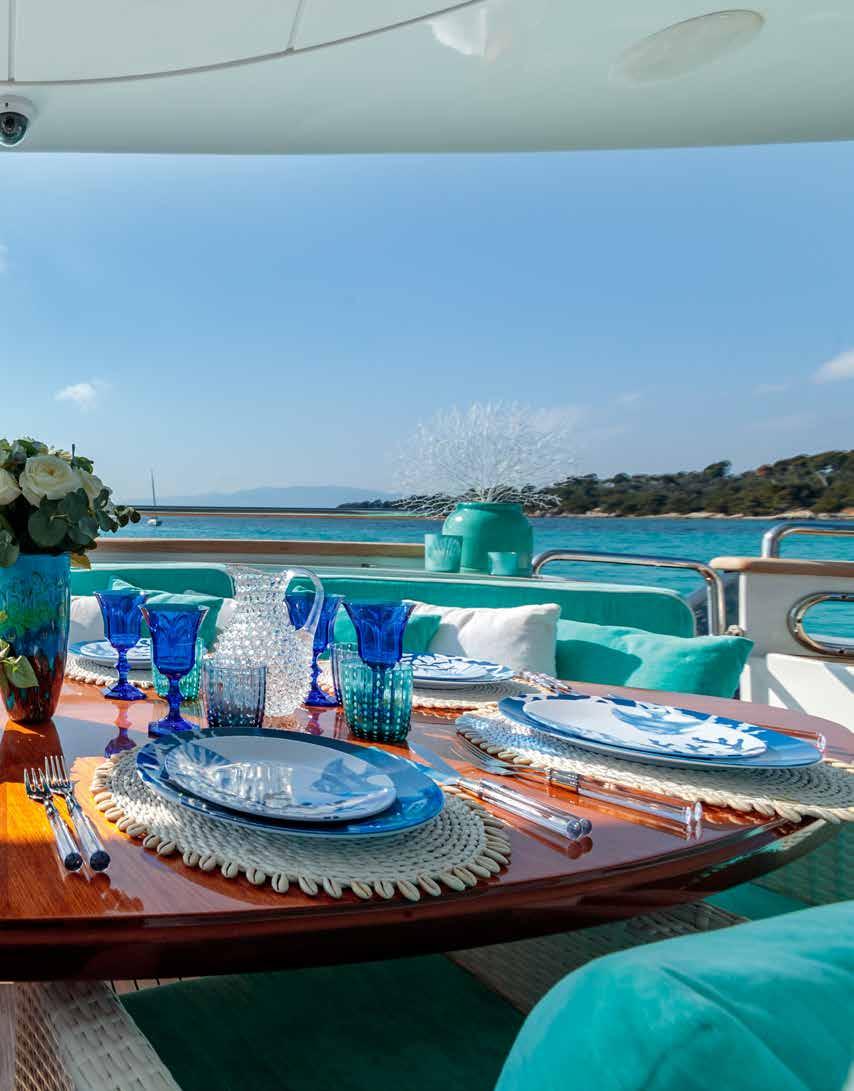
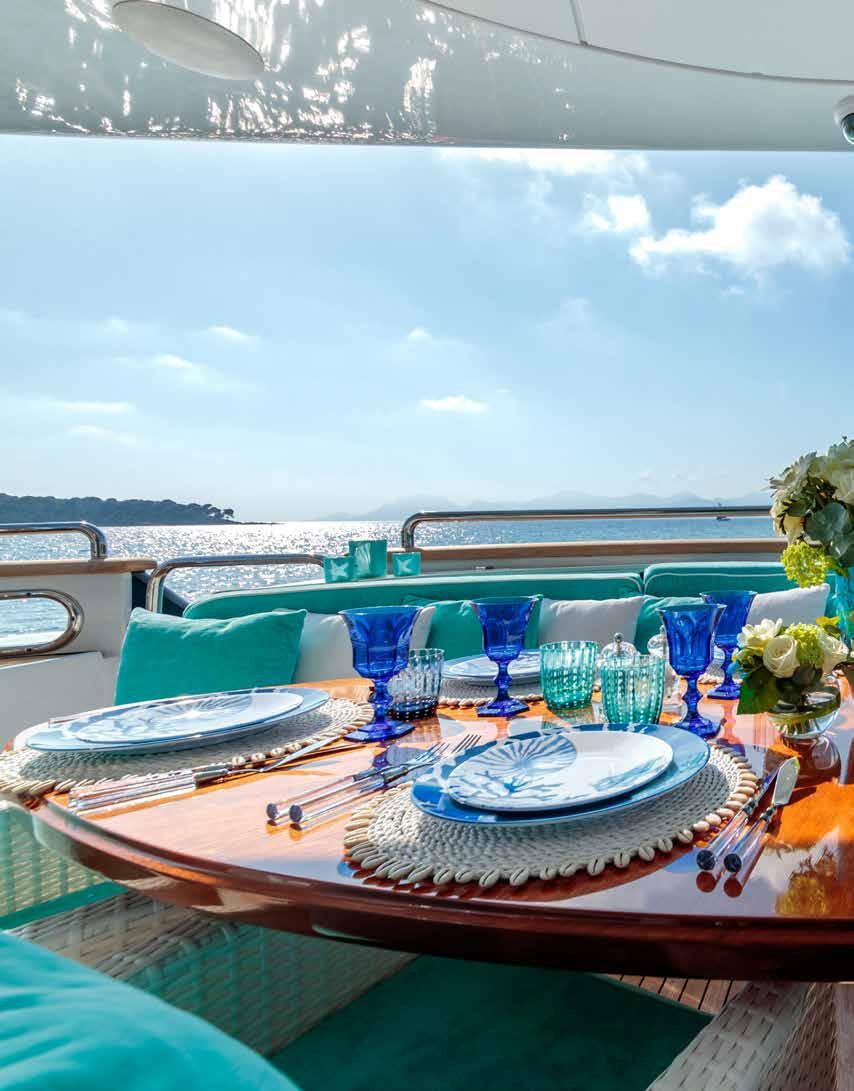
An inside look at the evolving craft of yacht service, where career growth, unseen challenges, sustainability, technology, and life below deck collide.
A New Interior Playbook: Today’s Career Pathway
By Gemma Harris

For years, an interior career followed a familiar path. You joined as a junior stew, learned the ropes, and worked your way up. This progression came largely from time on board, mentorship, and understanding the tricks of the trade. Formalized training programs were sparse, specialization limited, and seasonal jumps paved the way to gain more skills.
Today, that traditional pathway is shifting. Yachting is becoming more professionalized, technologically advanced, and focused on delivering unique guest experiences. Yachts are bigger, programs are more complex, and expectations are developing. As a result, interior careers are evolving. Training opportunities have become more structured and diverse, and skill sets beyond the norm are now required.
Upskilling Early
With the rise of training schools, certifications, and industry-recognized qualifications, there are now clearer routes to advancement.
“Progression for interior crew is usually more yacht specific and less standardized, although now there are many more opportunities for formal learning and professional development,” said Nicola Morgan, director at Wilson Halligan.
Formal and additional qualifications can make a real difference, helping you progress and stand out to recruiters and owners.
“Interior crew should be upskilling from earlier in their career and taking on extra responsibility on board where they can,” said Tim Clarke, director of Quay Crew “It’s very easy to develop strong Excel or accounting skills via YouTube or online courses. Whilst this might not be exciting, building these skills will make you a lot more efficient at your job when you rise in the ranks.”
A New Guest Standard
In the changing charter landscape, guests are demanding more, and bespoken experiences are increasingly essential. Interior crewmembers are expected to anticipate these changing needs and specialize in various areas, from sommelier and mixology skills to childcare, fitness, and wellness services.
“Most yachts and all charter yachts want at least one crewmember with masseuse and/or beautician backgrounds,” Clarke said. “Some of our clients in the 100-meterplus range have as many as six interior crewmembers with secondary skills.”
Recruitment companies like Inspired Crew, founded by Former Chief Stew Charlotte Saunders, are responding to this trend, matching crew with yachts looking for secondary skills ranging from watersports instructors and nannies to DJs, content creators, hairstylists, and personal trainers.
Crew are responding by pursuing interests for professional development.
“We see an increasing number of interior crew turning an interest into something more professional by completing intensive courses to give them additional experience,” Clarke said.
Morgan agrees with this trend.
“Owners will continue to strive for more and I think we will see this in crew demands as well — we’ve already seen a huge increase in requests for secondary skills over the past years, I think this will be set to continue and as we see owners using their yachts in different ways (such as research or humanitarian aid), there could be a real desire to find crew whose values align with such programs,” Morgan said.
Soft Skills Still Matter
Communication, leadership, and adaptability remain equally crucial.
“The most important soft skill in the interior is the ability to read the room and adapt to the level of service to suit the owner/guests. This interpersonal skill is invaluable across all areas of life,” said Max Lee, head of recruitment at The Crew Hunter/Yacht Crew Recruitment and Training.
A Digital Interior
Alongside the increased demand for multifaceted crew, technology is also changing the interior landscape. Digital management tools are becoming part of daily life on board.
Being tech-savvy and using these tools has become increasingly essential, enabling crew to work more efficiently and maintain high standards, especially on larger yachts and across complex teams. This proficiency with technology is a core skill for career progression today, and aside from logistics, it is also used for training, scheduling, and communication.
Passion Projects
Mentorship, on-the-job coaching, and continuous professional development further career growth.
“We have seen interior crew build passion projects alongside roles, and it is fantastic to see — these often then become their route out of yachting and into something different,” Morgan said.
There are many former crew (many spotlighted in Triton’s Offboarding series) who have transferred their skills to new ventures ashore, proving that skills gained on board can open doors beyond the yacht.
Interior In Motion
Despite changing opportunities for the interior crew, there are still hurdles to overcome. Competition for senior roles and industry retention pressures continue to impact career decisions across all departments.
“As yachts continue to increase in size, so do the teams, so there will only be further managerial positions available,” Lee said.
Today, it isn’t just a simple ladder to head up the inside, but a range of possibilities offering various pathways to growth and fulfilment. The old rules no longer apply, and it’s up to today’s interior crew to embrace it. For those prepared to adapt, they will be rewarded with a career pathway offering greater choice, skills, and rewards. ‹

“The most important soft skill in the interior is the ability to read the room and adapt to the level of service to suit the owner/guests. This interpersonal skill is invaluable across all areas of life.”
—Max Lee
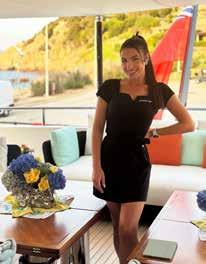
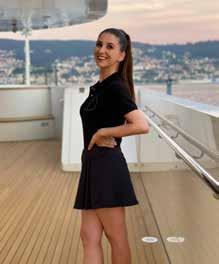
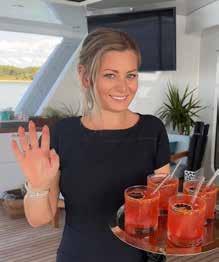
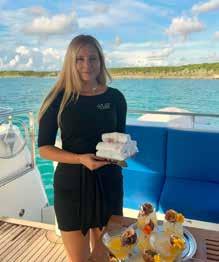
The Invisible Stew Mistakes Green Crew Make — And How to Avoid Them
By Laura Shaughnessy
Luxury service works best when it feels invisible. Four chief stewardesses break down subtle mistakes that can quietly undermine service — and how green crew can elevate their professionalism faster. They agree most early missteps aren’t about obvious mistakes, but cues guests and senior crew notice first.
MAKING THE SERVICE AUDIBLE
“One of the biggest tells is overannouncing themselves,” said Chief Stewardess Magdalena Nenadovic, currently aboard the 49-meter M/Y Rocket. Apologizing unnecessarily or narrating every action, she explains, draws attention to the mechanics instead of letting service feel seamless.
“Experienced crew move with quiet confidence — they anticipate, act, and step back without narrating the moment. Guests don’t want to feel serviced; they want to feel effortlessly looked after,” Nenadovic said, who has been in the yachting industry for seven years, four as a chief stew.
OVERLOOKING COMPOSURE AND BODY LANGUAGE
Former Chief Stewardess Jamila García, who spent 11 years in the industry before founding Starfish Super Yachts, says composure is as important as execution. “Never let the guests see you running or looking in a rush.”
“Before every single breakfast, lunch, and dinner service I ever performed, I would take 10 minutes to ensure my uniform was clean, my hair and makeup looked fresh, and I composed myself,” García said.
Body language also communicates volumes. “Guests read energy before they register actions,” Nenadovic said. “Standing with crossed arms, hovering too close, rushing movements, or avoiding eye contact can make service feel tense or intrusive, even if everything is done perfectly.”
Chief Stewardess Nicole Rouse agrees that small non-verbal cues help put guests at ease. “When doing my walkarounds, I crack a slight smile with my eyes, just so I don’t look miserable, and I can be approached if anyone needs to,” she said.
SERVING THE CHECKLIST INSTEAD OF THE GUEST
There’s an overreliance on checklists as a common signal of inexperience.
“One of the most common things I see with junior stews is that they tend to be very task-driven rather than guestdriven,” García said. Service may be technically correct, but there’s often hesitation in anticipating what’s needed next — waiting to be asked for refills or clearing plates without considering the pace of the meal.
“Checklists are a starting point,” said Chief Stewardess Kendall Shafer, who has been in the industry eight years, four as a chief stew. “As stews, we love our lists, but they aren’t always plug and play for every scenario.” In yachting, crew must think critically and adapt in real time.
For Rouse, observing how quickly guests eat, spacing courses appropriately, and maintaining constant communication with the chef helps avoid awkward pauses. “There’s nothing worse than sitting around a table in between courses that feels like forever,” she said.
HOLDING BACK
García says holding back was her biggest early mistake. She recalls waiting to be asked before taking initiative, worried she might appear overconfident. “I wish I had had the confidence to take initiative and just perform the task without being asked,” she said — something she later realized was exactly what her manager valued most.
No matter how polished your service looks, burnout undermines it fast. “Early on, I thought being indispensable meant saying ‘yes’ to everything and pushing myself constantly,” Nenadovic said. Over time, she realized true professionalism isn’t about doing more — it’s about managing energy, setting standards, and trusting the team. ‹
starfishsuperyachts.com
Magdalena Nenadovic
Jamila García
Nicole Rouse Kendall Shafer



Role Change: Transition Tips from Sole Stew to Chief Stew
By Chief Stew Julie Emmons
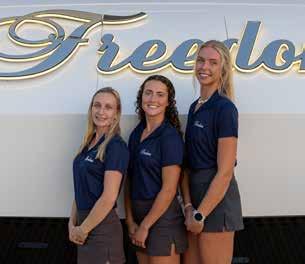
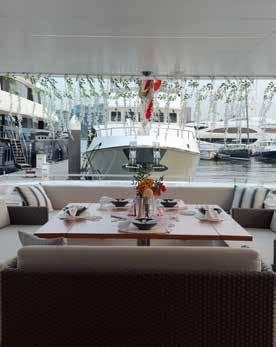
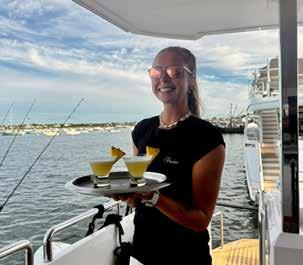
Being a stew is a challenging role, but it’s also very rewarding. Whether you are a green stew, a sole stew, or a chief stew, there are always tips and tricks to make life easier while on and off board. Moving from sole stew to chief stew is very doable in this industry, but good management skills, letting go of some control, and teamwork make the transition easier.
Moving from sole stew to chief stew can feel overwhelming because you are used to doing everything alone as a sole stew. Now you have helping and willing hands. The main tip to remember is that you are now managing other people. Strong management skills are key to being a good chief stew. Some of the skills to be mastered include good communication, emotional empathy, and organizational skills. A good way to demonstrate leadership is to be just the right amount of friendly, but also letting the team know that you are in charge. If the team is happy and works together well, the charter or owner trip will go more smoothly.
The most challenging part of moving from sole stew to a chief stew is letting go of some control.
The most challenging part of moving from sole stew to a chief stew is letting go of some control. As a sole stew, you are used to doing everything yourself. Letting go of some control on the vessel can be challenging, but you have to trust your team. One tip to building trust is showing other stews exactly how you want things done. If they have an idea,
don’t just shut them down. Be open to their opinion and consider it if it works for the vessel. Stews who have input help achieve success and have pride in their work. Ultimately, as a chief stew, you can’t do everything alone and you have the helping hands for a reason, so learn how to use them effectively!
The next thing to be aware of is the importance of teamwork. If your team can work together efficiently and effectively, the whole operation will go according to plan. A good tip for working together is to be as fair as possible when it comes to who does what. Does your vessel have fixed roles for service versus laundry, or can these roles be interchangeable depending on the circumstances? Does one stew always get to go on excursions, or can this be a shared role so everyone gets a chance to gain that type of experience? A great team can work together in good times and stressful times. All in all, the transition from sole stew to chief stew can be made easier with these simple tips. ‹

The Dirty Truth About “Fresh” Laundry at Sea
By Kendall Shafer

Laundry on board yachts is a bit different from household laundry. High-value linens and expensive designer garments require specialized care and product knowledge. Despite their popularity, fabric softeners, dryer sheets, and scent beads don’t belong in a yacht’s laundry room. In fact, they actively work against the standards we aim to maintain.
These three products function the same way: coating fabrics with a waxy film of toxic petrochemicals. It creates a short-term illusion of softness, but over time causes very real problems for the textiles, machines, and people wearing or using them.
The biggest issues softener, dryer sheets, and scent beads cause for textiles are loss of breathability and absorbency. Once buildup forms on the surface, synthetic performance materials can’t work like they’re supposed to. Natural fibers like cotton and linen lose their breathability, which is the last thing you want in the tropics. Towels push water around instead of absorbing it and eventually lose their fluffiness.
The problem goes beyond absorbency and breathability, though. Yacht laundry sees some of the toughest soil: grease, salt, sunscreen, sweat, and engine room grime all make regular appearances, so a thorough clean is essential. When fibers are coated with waxy residue, detergent can’t fully penetrate. The result? Lingering odors, dingy whites, and items that never quite feel clean.
Washer and dryer performance also pay the price of these products. Not only do they build up on the clothing, they also build up in appliances. In the washer, they accumulate into a sticky gunk that
slows drain time and becomes a breeding ground for mold and bacteria. In the dryer, they coat the sensors which causes the cycle to end early. No one wants to have the Miele repair guy on speed dial!
Health and guest experience must also be considered. Petrochemicals found in these products are known endocrine disruptors with harmful effects on the hormones and reproductive health for both men and women. They’ve been linked to cancer and can be irritating to the skin and the respiratory system. Besides, many guests are sensitive to artificial fragrances or dislike common synthetic scents. Scented clothing and linens can feel cheap and may clash with high-end perfumes, especially on a yacht where understated luxury is key. Let’s be honest — most billionaires don’t want to
Thankfully, the solution is simple: distilled white vinegar.
smell like the Publix laundry aisle.
Thankfully, the solution is simple: distilled white vinegar. Adding vinegar to the softener compartment of the washing machine allows it to dispense during the rinse cycle where it’s most effective. A vinegar rinse naturally breaks down excess detergent, salt, and mineral buildup, helping fabrics to truly rinse clean. It neutralizes odors at the source rather than masking them and kills bacteria without leaving a vinegar scent behind. It softens fibers, restores absorbency, reduces static, and helps release pet hair. It also supports machine health by preventing buildup inside the machines, extending equipment life, and improving performance.
Nothing smells cleaner than nothing, but if someone insists on fragrance, a few drops of essential oils on wool dryer balls will add a subtle, natural scent — risk-free.
A professional yacht laundry program isn’t about artificial softness or overpowering synthetic scents. It’s about truly clean and naturally soft, high-performing garments and linens that meet the expectations of owners, guests, and crew alike. By eliminating fabric softeners, dryer sheets, and scent beads and replacing them with vinegar, you protect your valuable fabrics, machines, the health of those on board, and the standard of luxury that yachting represents. ‹

The RIPPLE EFFECT of Interior Structure
and Why It Matters More Than We Think

From the outside, many yachts appear to deliver a flawless experience. Tables are beautifully set, cabins are immaculate, and service looks seamless. Yet owners and guests often sense a subtle disconnect. Not because something is overtly wrong, but because consistency is missing. Small details vary, communication feels uneven, and the crew appears to function in parallel rather than feeling genuinely connected to one another.
That disconnect almost always traces back to the same underlying problems: a lack of clear interior leadership, defined roles, and supporting structure.
Interior structure isn’t about hierarchy or rigidity. It’s about the systems that allow crew to operate with consistency through shared knowledge, training standards, and cross-department communication. When those foundations are missing, crew fall back on memory and assumptions rather than alignment, and guests feel the difference.
This is where the ripple effect begins.
Inconsistencies become apparent when everyday questions, from Wi-Fi and lighting to onboard technology or documented preferences, depend on tracking down the “right” crewmember, or when supplies run out because inventories weren’t clearly assigned or maintained. Individually these moments appear minor; collectively, they disrupt the sense of ease on board.
What’s often overlooked is how quickly these gaps place the burden on the guest. Guests subtly recalibrate their behavior, responding to the atmosphere on board rather than relaxing into it. At that point, the yacht feels conditional rather than intuitively supportive. This is where luxury quietly exits the equation.
Interior structure is what makes personalization possible. Without it, guests are managed as a group rather than cared for as individuals. Remembering the exact coffee they drink or how they prefer their space arranged — it’s in these small, personal details that guests feel seen and when preferences are overridden in favor of assumed etiquette, that feeling quietly disappears. Rather than addressing it, guests adapt, and the atmosphere on board changes in subtle but lasting ways.
In other cases, the consequences are more serious. There was a situation where a guest became trapped in a shower due to a faulty handle. An issue that should
By Lisa Gould
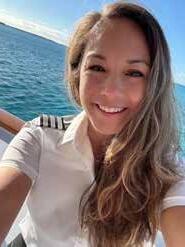
have been identified and addressed before the trip. With departments operating in silos, it took hours before anyone realized the guest was missing. These moments aren’t failures of care; they’re failures of structure, communication, and preventative oversight.
On yachts under 150 feet especially, where teams are lean, structure matters even more. Short staffing doesn’t mean standards must drop; it means priorities must be communicated. Understanding what matters most to guests allows service to unfold with intention rather than improvisation.
Dissatisfaction at this level is rarely voiced. Owners and guests don’t complain. They disengage, redirect their loyalty, and move on. Luxury isn’t defined by how something looks, but by how it’s felt. Precision, presence, and understanding linger long after the moment passes. Creating the peace of mind people invest in. ‹



• 24/7/365 in-house customer service
• Dedicated private yacht team
• Local experts worldwide
• Marine airfares – refundable & changeable
• Published & low-cost airfares
• Extra baggage allowance
• Hotel, car and air charter reservations worldwide
• Customized billing
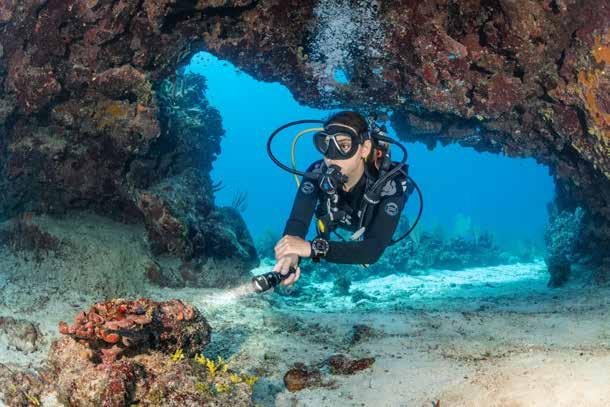
• Floating electric dive systems (Nomad, Sealion)
• Scuba gear sales & service
• Scuba training
• Tankfill systems (Nitrox & Helium)
• Water toys (Seabob, Fliteboard eFoil & more)
• Spearguns
• Freediving gear
• Medical kits & service
Brownie’s Southport Divers. 1530 Cordova Road. Fort Lauderdale, FL. 954-524-2112 Brownie’s Yacht Toys. 2301 S. Federal Highway. Fort Lauderdale, FL. 954-463-9446 Brownie’s Palm Beach Diver. 3619 Broadway (US1). Riviera Beach, FL. 561-844-3483
TOP 5 Eco Swaps to Green Your Yacht
By Carrie Lee

Most people hear “plant-based” and think about food, but what about your undergarments, shampoo, and laundry soap? Every product you use on board ends up in the ocean or on your skin. Petroleum-based synthetics and chemical-laced formulas don’t just harm you, they poison marine life, reefs, and drinking water.
After years of working on yachts, I kept running into the same problem: most of the “trusted” onboard products were petroleum-based and chemical-heavy, in plastic containers. Plant-based options were surprisingly hard to find. Outfitting yachts with things like Tide, conventional dish soap, and plastic-packed toiletries never sat right with me, so in 2023 I started digging into ingredients, materials, and packaging on my own.
That research eventually led to the creation of Hippiekit Green Products, now a growing database of more than 450 plant-based, chemical-free product swaps with direct links to established brands on Amazon. We are also launching a Microplastic Scanner App early 2026. Now I can feel good about the products I outfit yachts with. Here are some of the brands I use.
These five sustainable swaps are just a start, once you learn the truth, you will start swapping out everything!
Undergarments
Switch to organic cotton or linen. Synthetic fabrics like polyester and nylon are made from petroleum and chemicals that leach microplastics and PFAS into your most sensitive areas. I recommend the Pact and Nads brands.
Dish Soap
Ditch conventional brands which poison marine life as it goes down your drain and into the oceans. Plant-based soaps are gentler and come in plastic-free and refillable packaging. My recommendations are Clean Cult plant-based soap, which comes in an aluminum bottle and with cardboard refills.
Laundry Soap
Liquid detergent jugs = toxic chemicals + single-use plastic. Cardboard-packaged, plant-based options are better for your body, the planet, and for space saving organizing. I like the ECOS Free and Clear sheets, or the Aspen Clean brand.
Linens and Bedding
Choose natural fibers like organic cotton, linen, or hemp. Most mainstream sheets and towels are polyester blends that shed microplastics in every wash. When you sleep on synthetics, your skin and lungs are in constant contact with plastic fibers and chemical residues for hours at a time. Your mattress may be toxic too, often made with foams and flame retardants that off-gas while you sleep. I like Bell & Branch’s organic cotton linens.
Shampoo and Conditioner
Mainstream hair products are packed with synthetics, SLS, and petrochemicals. Go for plant-based formulas in powders, bars, and liquids in cardboard or aluminum. I recommend Babe Botanicals plant-based shampoo in cardboard.
Every product you use on board goes down the drain and ends up in the water. These small swaps protect the ocean, your crew, and your health, without sacrificing luxury. ‹

Explore my full Yacht Shopping Lists, mainly sustainable, organized by Yacht Rooms, with direct links to established brands on Amazon!
PLANET NINE



•
•
•
•
•
• On-site customs clearance
• Fuel dock
• Dockside pumpout
• Superyacht docking up to 280’
A SIX-YEAR JOURNEY: FROM YACHTING TO THE BUSH
By Dayami Rivera
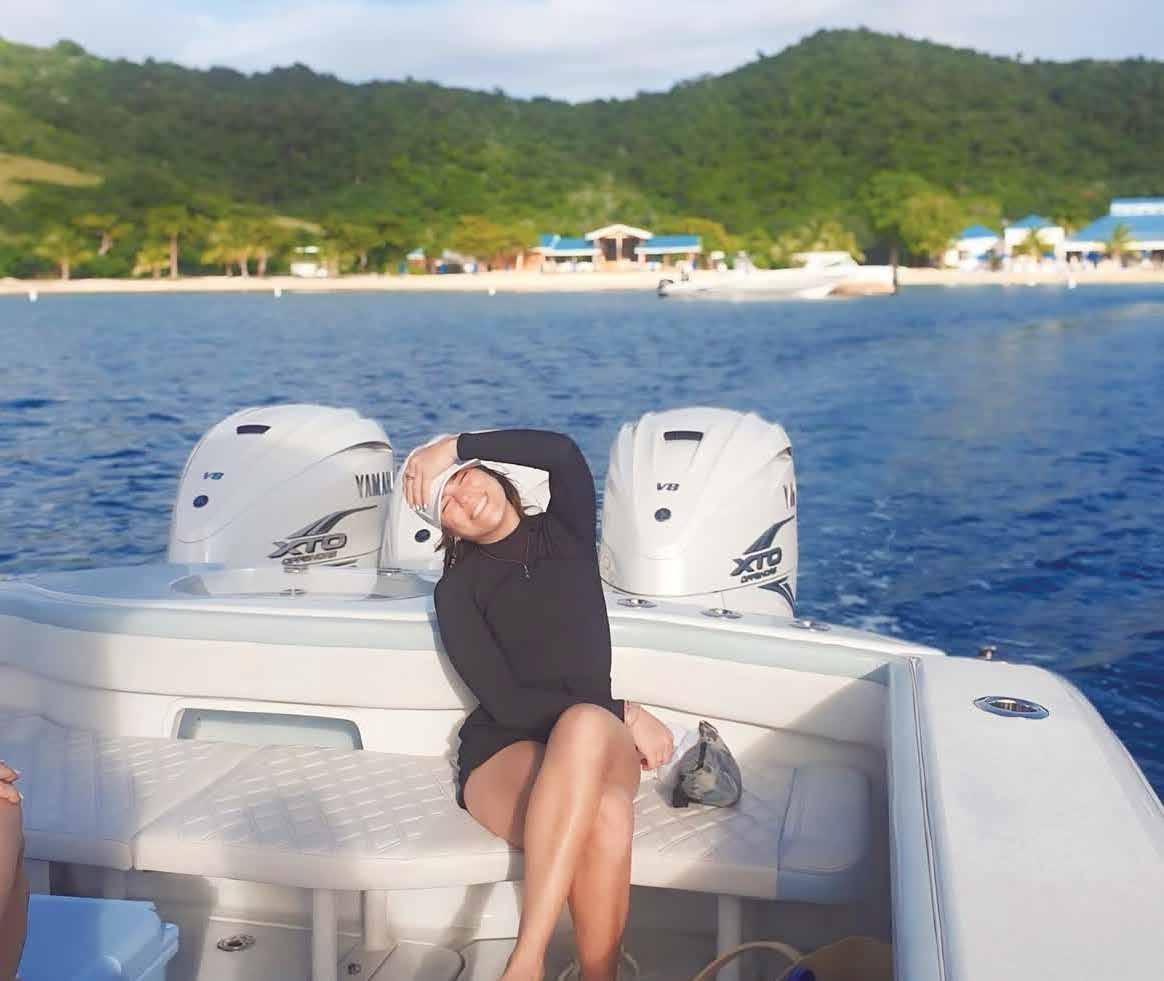
I didn’t enter yachting blindly, saltwater was already in my blood. My father has been a captain in New York for years, running day charters out of the Bronx. I grew up watching him create magic for guests on the water, but the season up there is short, and I couldn’t let him have all the fun. Eventually, I packed my bags and stepped into the world of yachting full-time, ready to build something of my own. Six years later, that decision has shaped me in ways I never expected.
I started as a sole stew, moved up to chief stew on busy charter programs, transitioned to charter broker, then yacht broker. Each step a new layer of responsibility, pressure, pride, and purpose. But the real story isn’t the titles; it’s what happened in between.
I’ve been sexually harassed. I’ve been screamed at for getting an order wrong. I’ve been pushed past the limits of exhaustion, told to “figure it
“ THERE’S SOMETHING SACRED ABOUT THE BUSH. IT ASKS NOTHING OF YOU BUT PRESENCE. IT DOESN’T DEMAND PERFECTION OR POLISHED SERVICE. IT SIMPLY INVITES YOU TO EXIST, TO WITNESS, TO REMEMBER WHAT IT FEELS LIKE TO BE STILL.”
out,” and made to feel replaceable, as if the next stew could appear tomorrow and no one would blink.
But I’ve also been taken in by families who treated me like their own.
I’ve worked with crew who became my family. The kind of bonds forged at 2 a.m. while resetting a cabin for the fourth time. I’ve served incredible owners and guests who opened my eyes to new opportunities I never knew existed. I’ve witnessed moments of beauty on deck, in quiet conversations, in the middle of chaotic turnarounds that reminded me why so many people fall in love with this industry.
Yachting is incredible. A devil in disguise, if you will, breathtaking and brutal all at once, but every experience counts. Every moment, good and bad, shapes us. We grow because of the pressure, not in spite of it. Now, after six intense, transformative years on the water, I’m stepping into a new chapter.
I’m continuing as a charter and yacht broker, but I’m choosing to take space from the industry and relocate to South Africa. A move rooted in peace, clarity, and a call toward something deeper. The
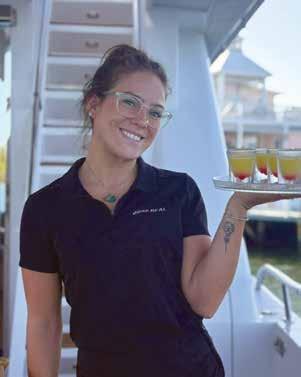
bush has a way of softening you, grounding you, and reminding you that there’s a life beyond the uniform and the radio calls. The quiet, the animals, the endless land — it’s a different kind of magic.
I want to connect people with that side of the world. The serenity, the beauty, the stillness that resets your heartbeat. I’m not leaving yachting; I’m expanding what my life can look like within it. And to anyone in the industry: captains, stews, deckhands, engineers, brokers. I want you to hear this clearly:
You are important. Your health matters. Your peace matters. Your dreams are valid and reachable from anywhere in the world.
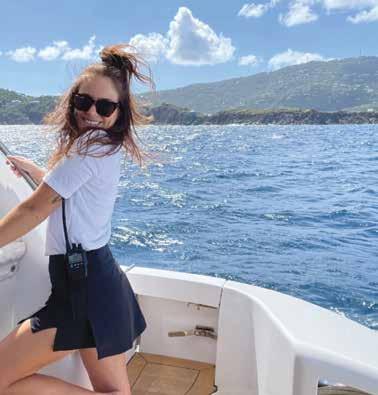
Yachting is extraordinary, but it can make you forget your own worth. It teaches you to prioritize guests, schedules, and vessel needs, often at the expense of your own. But you are more than your role on board, and you deserve a life that supports your well-being. This industry builds grit, resilience, global networks, lifelong friendships, and the kind of stories that stay with you forever. But you’re allowed to choose yourself, too.
I’ve watched too many of us burn out in silence. I’ve seen brilliant, resilient people leave this industry feeling hollowed out, wondering if the years they gave meant anything at all. I felt that weight myself. And I realized that if I didn’t speak up, if I didn’t share this truth, then maybe someone else would keep suffering alone, thinking they were the only ones struggling to stay afloat. You’re not alone, and choosing yourself, rest, peace, and a different path doesn’t mean you’ve failed.
I’ll be working with Savanna Stalkers in South Africa, planning safaris, coordinating lodge experiences, guiding hunting and fishing expeditions through landscapes that stretch beyond what the eye can hold. I’m trading the rhythm of tides for the rhythm of the wild, designing journeys for others while finally taking a deep breath myself. There’s something sacred about the bush. It asks nothing of you but presence. It doesn’t demand perfection or polished service. It simply invites you to exist, to witness, to remember what it feels like to be still.
You can love yachting and still need distance from it. You can be grateful for everything it gave you and still walk toward something new. Whether your path keeps you at sea, carries you into the bush, or anywhere in the world, please remember: Your journey is yours to design, and every chapter is just the beginning of the next adventure. ‹
THE YACHT CHEF ’ S REALITY
Precision, Pressure, and Performance at Sea
By Sam Moen
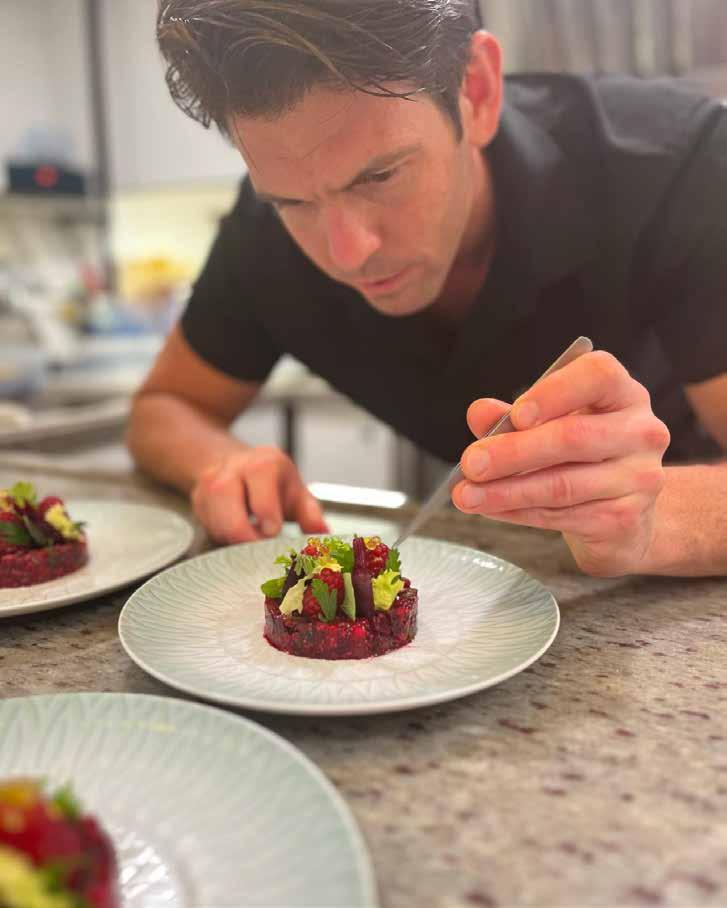
At first glance, the role of a yacht chef carries unmistakable allure. Private galleys, foreign destinations, and guests accustomed to the highest standards suggest a culinary ideal. Yet, behind the polished plates and sun-drenched decks is one of the most demanding environments in professional cooking. Here, meticulousness is mandatory, pressure is constant, and performance leaves no room for error.
Unlike land-based fine dining, yacht chefs operate without a safety net. There is no brigade to lean on, no trusted purveyor a phone call away, and no margin for delay. As veteran Yacht Chef Danny Davies, whose career spans military service, royal appointments, and some of the world’s largest yachts, puts it: “You’re only as good as your last meal. And even if everything’s going well, your job is never truly secure.”
That instability is a reality few outside the industry see. Contracts can end overnight for reasons unrelated to performance. Budgets shift, programs change, and onboard circumstances shift. For many chefs, adaptability matters more than pedigree.
“People assume you need a Michelin résumé,” Davies said. “But what you really need is the ability to cook anything, anywhere, with whatever you can get your hands on.”
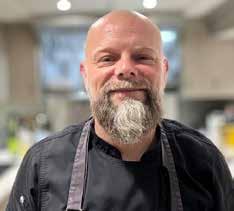
Chef Christoph Siebentritt
A Career Built Under Pressure
Executive Yacht Chef Christoph Siebentritt did not pursue yachting for its glamour. Previously, he was executive chef for Crystal Cruises in the six-star market. When COVID-19 halted the cruise industry, he transitioned to yachting.
“A former colleague suggested yachting,” he said. “After roughly 150 applications, I landed a position on a 125-meter megayacht. It wasn’t glamorous. It was a conscious decision to perform under extreme conditions.”
He performed, sometimes for up to 19 hours a day. “Our world is heat, pressure, and constant time constraints,” Siebentritt said. “If you’re not cooking, you’re planning orders, calculating menus, or cleaning fridges. Anyone who thinks this job is about sunsets and leisure has never run a yacht galley alone.”
Provisioning Under Pressure
Provisioning is the harshest test. For Davies, remote ports and inconsistent deliveries mean menus must stay flexible. “You can promise a beautiful menu and then arrive somewhere without basic ingredients,” he said.
Once at sea, mistakes cannot be corrected. Siebentritt approaches provisioning with discipline. “Ordering too much blows the budget. Ordering too little jeopardizes the operation,” he said. “In remote locations, there are no second chances. Either you’re prepared or you pay 20 times the market price.”
His solution is efficient mise-en-place and solid menu foundations. “Highly concentrated sauces and bases mean I can pivot dishes quickly. On a yacht, time is the most limited resource. Every second counts.”
H olding the Line
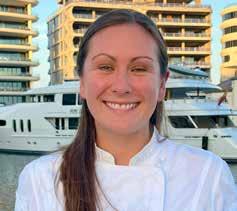
For Chef Marissa Gallagher, who transitioned into the galley after years in yacht service, success comes down to composure. “If you’re not freaking out, the guests aren’t freaking out,” she said. “Everything changes at the last minute, preference sheets, dietary restrictions, and guest counts, and you still have to deliver calm, confident service.”
She calls it culinary misdirection. “You elevate what you have, describe it well, and keep the energy steady. The guests don’t need to know what didn’t go according to plan.”
Unlike restaurant kitchens, yacht galleys never fully shut down. “You don’t really turn your brain off,” Gallagher said. “You’re always thinking ahead, what needs prep, what might change, what could go wrong.”
The Moments That Matter
Despite the unwavering tempo, there are moments of reward. Gallagher recalls the quiet satisfaction of guests appreciating a dish they would never know was improvised. “When they love the food,
it feels like proof,” she said.
For Davies, meaning is simple. “It’s about creating connections. Sometimes it’s a birthday cake made in secret. Sometimes it’s service executed beautifully.”
Siebentritt remembers a provisioning run aboard a Saudi royal yacht, traveling by tender at night beneath a sky full of stars. “In an industry defined by pressure, that moment of calm is something I’ll never forget,” he said.
W hat it Takes to Last
All three chefs agree: longevity demands more than skill. “You must already be technically strong before you arrive,” Siebentritt said. “On a yacht, you’re not trained. You’re measured. If you don’t deliver, you’re replaced.”
Gallagher adds, “You have to check your ego. It’s not your boat. It’s the guests’ boat.”
And Davies sums it up: “Cook anything. Stay humble. Stay ready.”
Yacht chefs perform at an elite level under relentless constraints, amid surroundings where superior performance is required, and invisibility is part of the job. It is not glamorous work, but for those who thrive under pressure, the yacht galley remains one of the most demanding and rewarding culinary stages in the world. ‹
Chef Marissa Gallagher
Chef Danny Davies
A Smarter Interior
THE BEST TIME-SAVING DIGITAL SOLUTIONS EVERY STEW AND CHEF NEEDS
By Gemma Harris
Yachting has always embraced technology, but crew-facing tools have seemingly lagged behind. While captains, brokers, and managers increasingly rely on apps and software to simplify operations, interior teams have often been left to juggle manual and mental notes.
Today, a new era of systems- and crew-focused apps has been introduced to help interior teams reduce mistakes, improve service, and reclaim calm amid the chaotic demands of life in the galley and pantries. Here are some of the best solutions for interior teams.
For the Stews

Streamlining preferences with Sevenstar
The preferences platform Sevenstar is a game-changer; it turns piles of notes, folders, and outdated Word documents into an easy-to-use digital system. Sevenstar makes it easy for stews to manage preferences from any device, including custom forms for owners, guests, charterers, and crew. Profiles are automatically created in the app, where recipes, setup photos, and other updates can be added.
The password-protected digital directory makes it easy to search for and access preferences, trip histories, and personalized notes. Sevenstar eliminates the headaches of manually entering preferences, streamlines operations, and frees up time to focus on exceptional guest experiences. This tool is also ideal for handovers and rotational crews, resulting in greater consistency and less stress during busy trips. Chefs also benefit from access to dietary requirements and menu preferences.

Airtable makes inventory easier
Although not a yachtingtailored app, Airtable can be highly customized to manage yacht interiors. The database and work management tool is perfect for inventory tracking and worklists. Stews can manage inventories, from owner goods to crew uniforms, track items throughout the yacht, and maintain up-to-date supply records.
The app lets you take photos and easily sort and filter the data when you are looking for something. In addition to tracking, the app can also create daily, weekly, and monthly work lists. To ease the transition, current Excel spreadsheets can be imported. Airtable helps stews run a smoother housekeeping and interior provisioning flow, with bettermanaged storage and stock — not only saving time during turnaround but also reducing the need for those endless days manually updating inventories.
For the Chefs

Managing recipes with Paprika
A long-standing, functional favorite for yacht chefs is Paprika Recipe Manager. The app helps chefs import and organize recipes, plan menus, and create shopping lists. It is an excellent solution for keeping all dishes and menu plan inspiration in one searchable place. The app also includes a pantry system to track on-hand ingredients, helping manage onboard stock more efficiently.
Paprika helps chefs save time by reducing the need to search for endless recipes across multiple devices and apps. It also helps with provisioning and stock control. In turn, this allows chefs to focus on the task at hand and the galley demands.

Be inspired and unlimited with Gronda
Initially launched as a chefrecruiting app, Gronda, evolved into an app hub for culinary inspiration. It’s a professional chef platform, ideal for yacht chefs seeking high-quality recipes. The app also offers video masterclasses and serves as the world’s largest community of chefs.
Not limited to yachting, Gronda connects culinary talents across high-end hospitality, providing professional growth and inspiration from chef peers worldwide. For yacht chefs, it is a go-to reference for inspiration and an excellent tool for exploring new techniques, plating styles, and flavor combinations, as well as for building a professional presence in the global chef community.
These smarter systems and tools are making life easier for the interior team by reducing administrative tasks, improving organization, and freeing up energy for the job at hand.
Over 800’ of refit face dock for superyachts
Dredged to 5 meters and adjacent to Port Everglades
Brand new floating docks for boats up to 70’ in the protected back basin
Access to Olive & Sea, a Mediterranean-style rooftop restaurant overlooking the Intracoastal
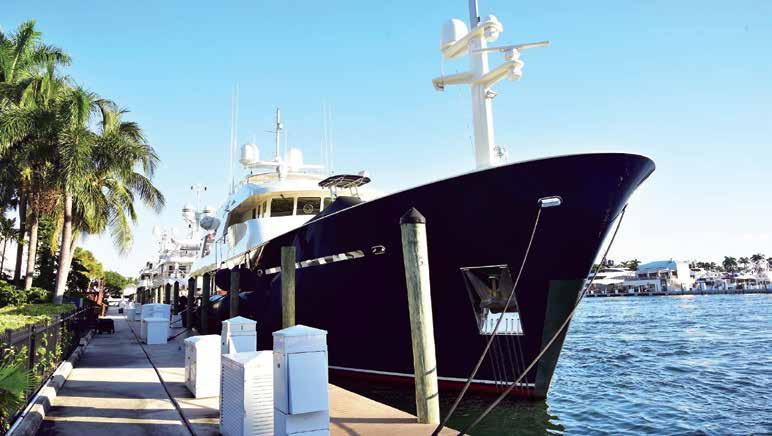












Life as a Liveaboard Chef
Navigating creativity, routine, and professional boundaries
By Lauren Beck
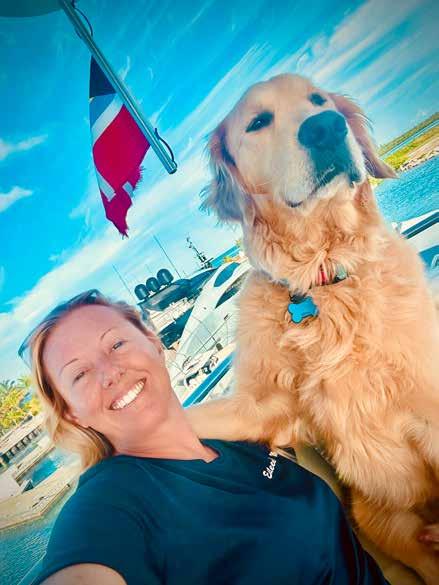
Building your chef career can look very different — some chefs enjoy the pace of a busy charter yacht, while others prefer working with a small team aboard a private yacht, and still others prefer building a freelance career.
Chef Brittany Adkison has been a yacht chef for the past eight years and, for most of that time, has worked as a liveaboard chef for the same owners aboard their 36-meter yacht. She spends about eight months on board with the
owners each year, alternating with time at their estate. On a smaller boat, she emphasizes that her role is “90% galley and 10% deck, dog walker, window cleaner,” and more. “Other chefs should know the job isn’t isolated to the galley — and all the other things make the job more fun,” she said.
She shares her experiences working as a chef with liveaboard owners, offering her insight and tips for others considering the same route.
How does your job schedule work through the year?
We typically do four-month seasons, whether it’s the Caribbean or up the East Coast to Canada and back, with a boatyard period in between. During that boatyard period, I work at the boss’s estate as their in-house chef.
Do you have set hours?
I do have set hours, and our stewardesses are phenomenal. Once dinner is done, that’s when I call it quits. If they want a sandwich or snack later, I usually have everything set up.
How much time off do you get?
I get one month a year off. They understand the job is a bit unusual, and they accommodate me when I need a break. I’m also training one of our stewardesses to cook in my place so I can get a little bit more of a breather.
How do you plan menus?
It’s predominantly daily, as much as you try and plan ahead. I don’t have the refrigeration space for a lot of prepped food, but I try for a 48-hour plan. We have the basics on board, and I can pull from those to develop the menu. Honestly, with every boat, things always change. You can always count on it — you’ll have a plan, and that plan will absolutely change later that day.
Do the owners eat out much, or do you cook all meals?
The owner has extreme dietary restrictions, so it can be challenging to eat out. They’ll go out hoping to have a meal, then wind up coming back and asking me to cook dinner. I cook the majority of their meals — everything has to be done from scratch. There’s no trusting any product from a bottle.
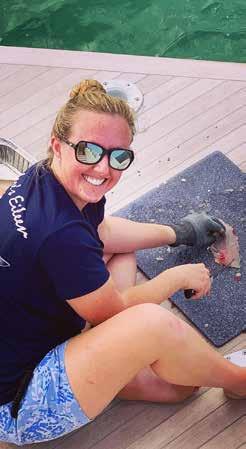
What is the biggest challenge in the liveaboard role?
The main difference is staying creative every day. Charter chefs can rely on their strongest dishes because guests are only on board for a short time, and the chef can really knock it out of the park — they can repeat recipes in their repertoire. The boss doesn’t have a chance to be bored. In a liveaboard role, you’re cooking three meals a day, every day, for the same people. You’re feeding six crew and the boss and trying to keep everyone happy when every day can start to feel like Groundhog Day.
How do you stay inspired with the menu?
I’ve got a gigantic library of cookbooks from my travels around the world, plus cooking magazines. I follow chefs on Instagram who have been more than willing to share recipes. AI is also great
because you can add your ingredients, and it’ll give you a recipe, and then I’ll take creative freedom with it. My boss is on board with different types of cuisines so I can switch it up.
Is rotation an option for you?
Rotation is very popular for the liveaboard concept, but it’s not something my boss has ever been keen on, and I don’t blame them because we haven’t had the best luck finding crew that will accommodate the dietary restrictions they have.
In the liveaboard role, how do you maintain professionalism?
After eight years, I’ve migrated from galley to house, and I’ve been in just about every situation with them, but we always keep a professional divide. You don’t want to be friends — there’s a fine line you just don’t cross. I always act professionally, even though we have a very good working relationship — it’s comfortable, but not that comfortable.
What do you enjoy about the role?
The challenge is probably why I enjoy it so much. We talk through the protein, the menu, and whether guests are coming over. We have a good relationship where I can discuss what they’re feeling that day. Then they’ll throw something at me they saw on TV or online, and the challenge of trying to recreate the recipe while catering to their restrictions is fun.
Any advice for future liveaboard chefs?
Always remember you are an employee. You are at the beck and call of the boss — they can fire you at any minute. No matter how sweet and how giving they are, you are still an employee to them. And that can change on a dime. Keep that professional divide and always be respectful. ‹
Raising the Bar: A Guide to Boat Show Competitions
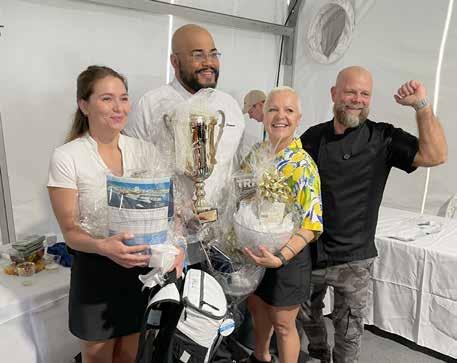
Show Competitions exist because yachting is a performance industry. Skill matters, but so does timing, teamwork, and the ability to deliver under pressure. Competition compresses charter life into minutes and asks one question: Can this crew execute with intention when they’re under the spotlight?
Not all competitions are testing the same skill, but here’s my view of what judges look for.
At the Monaco show, the pressure is immense. Chefs face a mystery box, a clock, an audience, TV cameras, and Michelin-starred chefs judging every move. This is about decision making under stress. Make a clear plan fast and execute it cleanly. A simple, confident dish beats an overcomplicated idea that runs out of time.
At FLIBS, the energy changes completely. This is fast, loud, and fun,
with crew watching. It is less about fine dining and more about personality, flavor, and the wow factor. Judges and spectators want to be entertained and be part of that charter theme fun. Keep it bold and approachable. Big flavors, clean execution, and good energy matter more than finesse. Stews, a table display with a wow factor will always be a crowd pleaser.
Antigua comes closest to real charter service. Competitions take place on each yacht and expert judges are stepping into the guest experience. Food matters, but flow, service, atmosphere, and teamwork are just as important. Think like a charter guest. Would this work on day three of a trip? Is service smooth? Does the crew feel connected? If it feels forced, it usually scores lower.
No matter the show, judges tend to look for the same fundamentals. Rio Alexander, lead judge at the Antigua Charter Yacht Show, offered these tips to win with style and finesse.

Flow
By Danny Davies
Judges are watching service flow, timing, choreography, and human interaction. Plates arrive together, drinks are poured without breaking conversation, white gloves appear at the right moment, and the team moves with quiet confidence. No hesitation, no over-explaining, just trust in the plan and in each other. When flow is right, the experience feels effortless.
Intentionality
Every choice should have a reason. Menu, order of service, garnish, who speaks, and when. Judges can feel when something has been thought through.
Crew Participation
The strongest entries feel like a team performance. When interior, galley, and deck work together seamlessly, the presentation lifts immediately.
The Human Moment
A calm explanation, a smile, or a bit of light humor can change the energy completely. I have seen simple dishes outperform complex ones because the timing was right and the crew clearly rehearsed. I have also seen great food lose impact because service felt disjointed or rushed.
Competition matters because it pressure tests your systems. It exposes weak communication and forces collaboration. What you learn on the competition floor shows up later on charter, in smoother service, problem solving, and trust between crew. At its best, competition is not about winning. It is about walking away sharper, more confident, and more connected as a team. ‹


OWNER
“I really enjoy the affordability, availability, and safety that having my boat at IMC provides.”
MANAGEMENT EXECS
“We had our client’s refit completed on time and under budget at IMC.”
Indiantown Marine Center is a secure gated facility with competitive rates and available for Contractor entry, 7 days a week with easy access and a friendly clean environment.

CAPTAINS
“Contractor flexibility and availability right now made a big difference for me during our maintenance cycle at IMC.”
CONTRACTORS
“The work experience is always great for me at IMC.”
Indiantown Marine Center welcomes contractors with a flexible environment & no gate fees or markups, making it the perfect, cost-effective place for both contractors and their clients.














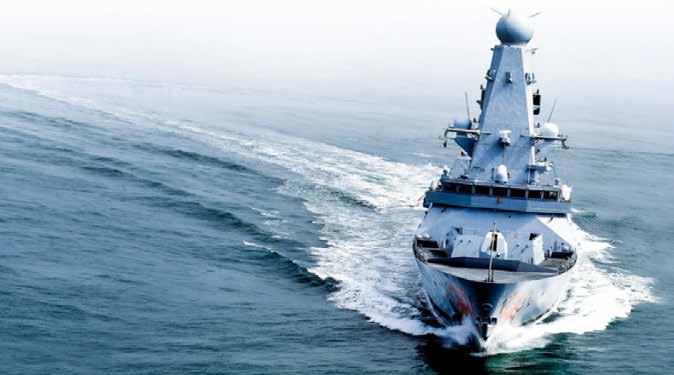


PUERTO RICO Discover



La Isla del Encanto
Puerto Rico wears its mantle as La Isla del Encanto — the Island of Enchantment — well. From beautiful beaches and mountains to vivid blue waters that frame nearly 375 miles of coastline, the island offers plenty of reasons to linger. Culebra and Vieques, often referred to as the Spanish Virgin Islands, lie just east of the main island, offering a quieter, more lowkey vibe alongside stunning natural scenery.
For yacht crew and captains, however, Puerto Rico delivers far more than scenery. With strong infrastructure, logistics, and an expanding superyacht presence, its appeal is only growing as a yachting hub. The island can serve as an excellent jumping-off point for the Caribbean season. San Juan’s Luis Muñoz Marín International Airport hub makes travel to and from the country straightforward.
As a U.S. territory, Puerto Rico does not require a passport for U.S. citizens to enter. English is widely spoken (alongside Spanish), and the official currency is the U.S. dollar.
By Lauren Beck
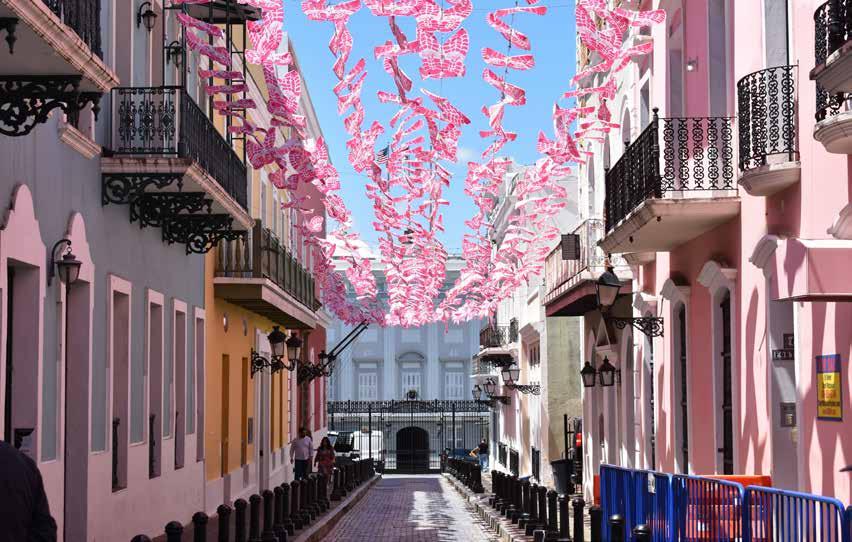
Founded in 1521, Old San Juan is one of the oldest cities in the Americas and a UNESCO World Heritage Site.

See the Sights
Whether crew are looking for adventure, relaxation, or culture, Puerto Rico delivers a wide range of experiences.
For an easy beach day close to the city, El Escambrón Beach in San Juan offers calm waters and snorkeling within the green space of Tercer Milenio Park. Mar Chiquita, around 45 minutes west of San Juan, is a sheltered cove popular with locals, while Jobos Beach on the northwest coast is known for surfing and paddleboarding — a solid option when you need to get the blood pumping. If you’re able to explore off the main island, don’t miss Flamenco Beach on the island of Culebra; it’s regularly ranked among the best beaches in the Caribbean for its white sand and crystal-clear water.
Puerto Rico’s west coast offers some of the island’s best diving, alongside sites around Culebra and Vieques. At La Parguera, sites such as The Wall feature a drop from 60 to 130 feet along the continental shelf, with warm waters and abundant marine life. Conditions are generally favorable year-round. When you need to get the heart rate up (aside from the job), check out ToroVerde Adventure Park for its ziplining, climbing, and ATV experiences.

Get back to nature by exploring El Yunque National Forest — the only tropical rainforest in the U.S. National Forest System — known for its trails, waterfalls, and panoramic views. Puerto Rico is also home to three of the five year-round bioluminescent bays in the world, making it a not-to-be-missed treat for guests and crew alike. Highlights include Laguna Grande in Fajardo on the island’s east side, Mosquito Bay on Vieques, and La Parguera on the island’s west coast. La Parguera is the only bay where swimming is permitted, though conditions should always be checked locally.

Provisioning & Supplies
Provisioning in Puerto Rico is straightforward. The island has a wide selection of large supermarkets, including a Costco in San Juan, specialty food stores and gourmet markets near Old San Juan, local farmers and fish markets, plus international brands. If you need additional assistance, National Marine Suppliers now has a location at Safe Harbor San Juan. For other supplies, there are also West Marine and Budget Marine in San Juan.
Another standout natural attraction is Cueva Ventana — the window cave — in Arecibo. The limestone cave offers panoramic views through the natural opening overlooking the Río Grande de Arecibo valley and is accessible only via guided tour.
For a dash of history and culture, don’t miss Old San Juan. Founded in 1521, Old San Juan is one of the oldest cities in the Americas and a UNESCO World Heritage Site. Its blue cobblestone streets, pastel colonial buildings, and wrought-iron balconies are striking. The San Juan National Historic Site includes two major Spanish fortifications: Castillo San Felipe del Morro, 140 feet above sea level, and Castillo de San Cristóbal, the largest Spanish fortification in the New World at 27 acres.
If you’re looking for nightlife and have your dancing shoes handy, consider taking in some salsa or bachata clubs, like La Factoria in Old San Juan or Santurce Salsa Club. Take the opportunity to learn new skills or polish old ones. There’s plenty of good food to try, too — it’s worth checking out the numerous dining options from historic Old Town restaurants to casual beachfront spots, with Puerto Rican cuisine offering a blend of Spanish, African, and Caribbean influences.
DESTINATIONS
Marinas
Club Náutico de San Juan
Located in the heart of San Juan Bay, Club Náutico de San Juan offers 117 slips for vessels from 30 to 250 feet, including seven dedicated megayacht berths. Shore power is available up to 480V/200A three-phase alongside in-slip ultra-lowsulfur diesel. The marina provides a well-protected anchorage, 24-hour on-site security, and secure dock access. Its location puts crew close to supermarkets, pharmacies, banks, restaurants, and other local amenities.
clubnauticodesanjuan.com
Safe Harbor Puerto del Rey
Set in Fajardo on Puerto Rico’s northeast coast, Safe Harbor Puerto del Rey is one of the Caribbean’s largest marinas. Set within a naturally protected bay, it offers more than 1,200 wet slips for vessels up to 180 feet, along with dry stacks, high-speed fuel pumps, a ship’s store, and a range of technical services.
shmarinas.com
Ponce Yacht and Fishing Club
The largest marina on Puerto Rico’s south coast, Ponce Yacht and Fishing Club features 168 slips across seven docks for vessels up to 75 feet, all with water and up to 50-amp electrical service. The marina’s front T-docks can accommodate vessels up to 200 feet, with water connections and 100-amp power available. Located on the east side of the Port of Ponce, it’s set within a protected bay offering depths of up to 25 feet and excellent anchoring.
ponceyachtclub.com
San Juan Bay Marina
San Juan Bay Marina has 125 slips accommodating vessels up to 80 feet LOA, as well as slips for megayachts. It is the only marina in San Juan with dedicated catamaran dockage. Amenities include a 24-hour laundry room, complimentary Wi-Fi, gated access, car parking, and an on-site restaurant. The marina also offers on-site rentals and activities, including inshore and offshore fishing, a dive center, and paddleboard rentals. sanjuanbaymarina.com
Safe Harbor San Juan
Located on Piers 9 and 10 in San Juan Harbor, Safe Harbor San Juan offers 1,200 linear feet of dockage and accommodates vessels up to 450 feet in length. Deep-water slips can accommodate vessels with drafts up to 30 feet, and the full-service marina features a duty-free fuel dock, maintenance and repair services, slip-side parking, and 24-hour gated security.
shmarinas.com
The Yacht Club Marina & Shipyard
Located within the Palmas del Mar resort community in Humacao, The Yacht Club Marina offers 162 slips for vessels up to approximately 175 feet, with superyacht-capable berths. Facilities include in-dock fuel, pump-out, and Wi-Fi, and with dry-stack and shipyard services available at the adjacent shipyard facility. theyachtclubmarina.com
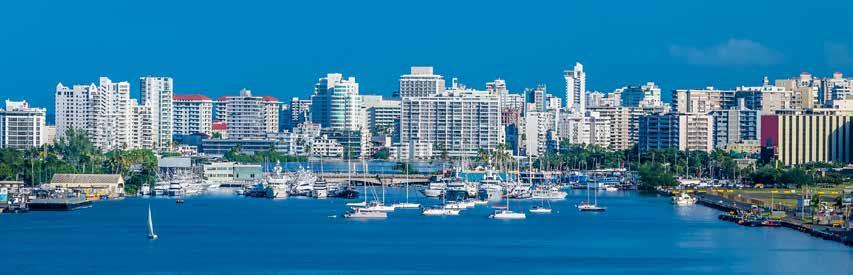
For routine service, refit, and repair, Island Marine in Puerto del Ray Marina can haul boats up to 165 tons with a maximum LOA of 125 feet. islandmarineinc.com
International Marine Management (IMM) is working with Gravity Marine to open a full-service European-style refit center on Piers 15 and 16 in San Juan. Plans include a 200-meter dry dock, a 2,000-ton floating dock, and alongside berthing. imm-yachting.com From








Anita Warwick Tel: +1 954 763 9787
M/WhatsApp: +1 954 294 2078
Skype: ozanita
Anita@SevenSeasHealth.com SevenSeasHealth.com



APPLICABLE WITH GAS/WATER SEPARATOR MUFFLERS
Process: Clean-Exhaust’s dosing pump injects the specifically formulated ecoBrew into the generator/engine raw water cooling system before the spray ring. The ecoBrew emulsifies the diesel particulate matter and soot as it passes through the piping and muffler, much like the agitation action in a washing machine. No back pressure is created in the process. Result: The exhaust gas is expelled with little or no particulate, facilitating cleaner air, cleaner harbors, cleaner oceans, cleaner hulls and boot stripes with no floating sheen or sludge.
One Captain, One Engineer, One Great Idea!... clean-exhaust
Captain Ted Sputh
Tel: +1 317-445-3873
Email: info@clean-exhaust.com
Rodger Stone
Tel: +1 518-378-6546
Email: res2itrmarine@gmail.com
www.clean-exhaust.com
Email: sales@yachtmate.com















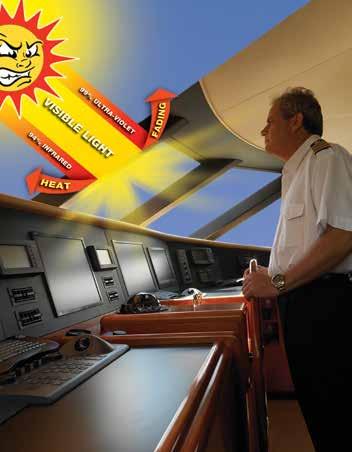

FEB
Feb. 1 – March 30
Louisiana Tuna and Wahoo Classic LOUISIANA
Participants can declare any three days in the timeframe as their fishing days, competing for top honors in blackfin tuna, yellowfin tuna, wahoo, and king mackerel. classicfishingevents.com
Feb. 3–15
Back to the Future, the Musical
FORT LAUDERDALE, FLORIDA
At Broward Center for the Performing Arts at 7:30 p.m. browardcenter.org
Feb. 7
Fort Lauderdale United FC vs. Dallas Trinity FC women’s soccer
FORT LAUDERDALE, FLORIDA
At FTL UTD stadium at 7:30 p.m. ftlutd.com
Feb. 7 – March 9
Florida Renaissance Festival
DEERFIELD BEACH, FLORIDA
Spend your weekends strolling through a 16th-century Renaissance village, celebrating the age of chivalry with knights, damsels, minstrels, and more. ren-fest.com


Feb. 8
Super Bowl LX SAN FRANCISCO BAY AREA, CALIFORNIA
The 2026 Super Bowl returns to Levi’s Stadium for the second time, with the halftime show by headliner Bad Bunny. nfl.com

Feb. 11–15
Discover Boating Miami International Boat Show
MIAMI, FLORIDA
For the 85th year, the show returns with three locations, including a return to Collins Avenue with the Miami Beach Yacht Collection and, alongside SuperYacht Miami, a new Sailor’s Cove at IGY Yacht Haven Grande, a dedicated area for sailboats, catamarans, and the sailing lifestyle. The Miami Beach Convention Center and the Progressive Experience at Pride Park round out the locations.
Show Schedule:
Wednesday: Noon – 6 p.m.
Thursday: 10 a.m. – 6 p.m. Friday: 10 a.m. – 7 p.m. Saturday: 10 a.m. – 7 p.m. Sunday: 10 a.m. – 5 p.m.
miamiboatshow.com
Feb. 12–15
Monaco Sportsboat Winter Series, Act III MONACO
Hosted by the Yacht Club de Monaco, this event is part of a monthly regatta and training program for one-design boats, such as J/70s.
yacht-club-monaco.mc
Feb. 14
Kathy Griffin FORT LAUDERDALE, FLORIDA
At the Parker Playhouse at 7 p.m. browardcenter.org
Feb. 14–15
A1A Marathon
FORT LAUDERDALE, FLORIDA
Runners can register for five races over two days: a 5K, a 6K, a marathon, a half-marathon, and a Kids of Love fun run. a1amarathon.com
Feb. 14 – March 1
Beautiful: The Carole King Musical
FORT LAUDERDALE, FLORIDA
At Broward Center for the Performing Arts at 7:30 p.m. browardcenter.org
Feb. 19–22
South Beach Wine and Food Fest
MIAMI BEACH, FLORIDA
This four-day national event showcases the world’s top wine and spirits producers, along with renowned chefs and culinary icons through more than 100 events. sobewff.org
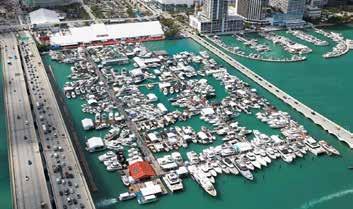
Feb. 20–22 & Feb. 25–March 1
Indianapolis Boat, Sport, & Travel Show
INDIANA STATE FAIRGROUNDS, INDIANAPOLIS
Indiana’s biggest indoor event features a wide range of products, including fishing tackle, sports gear, and boats. indianapolisboatsportand travelshow.com
Feb. 21
Boating and Beach Bash
BOCA RATON, FLORIDA
America’s largest free fun-day for people with disabilities, their families, and caregivers, celebrating diversity with a joyful boating and beach experience at Spanish River Park. americandisabilitiesfoundation.org

Feb. 22–23
Sydney Charter Show
SYDNEY, AUSTRALIA
This inaugural invitation-only event will be hosted at Jones Bay Superyacht Marina to showcase the superyacht charter industry in Australia and the South Pacific. superyacht-australia.com
Feb. 24
Australian Superyacht Conference
SYDNEY, AUSTRALIA
The annual conference has been moved from May and is now being held in Sydney, with a refreshed format, following the new Sydney Charter Show. superyacht-australia.com
Feb. 26–27
5th Panhellenic Yachting Conference
GLYFADA, GREECE
A conference for the Greek yachting community, focusing on industry dialogue, development, and networking. gryachtingcongress.com

March 3–6
Jimmy Johnson’s Quest for the Ring Championship SOUTH FLORIDA
A premier sportfishing tournament bringing together top anglers for a week of competitive fishing, social events, and the chance to earn the coveted championship ring. questfortheringfl.com
March 3–8
Superyacht Challenge Antigua NELSON’S DOCKYARD, ANTIGUA & BARBUDA
A high-profile superyacht regatta event combining competitive racing with social networking among superyacht owners, captains, and crew. superyachtchallengeantigua.com
MAR
March 5–8 & 12–15
Stockholm International Boat Show
STOCKHOLM, SWEDEN
Sweden’s largest and longest-running indoor boat and marine lifestyle fair, featuring sailboats, motorboats, gear, accessories, and more. alltforsjon.se
March 7–8
Rolling Loud Melbourne
MELBOURNE, VICTORIA, AUSTRALIA
One of the world’s largest hiphop festivals hits Australia with performances by major rap artists and local talent on a packed festival stage. rollingloud.com

March 8
St. Patrick’s Parade and Festival
FORT LAUDERDALE, FLORIDA
A festive celebration of Irish culture featuring a downtown parade, live music, food, family activities, and traditional entertainment along Las Olas Boulevard. visitlauderdale.com
March 10–11
Superyacht Technology Show
BARCELONA, SPAIN
A focused trade show and conference dedicated to superyacht technology, innovation, and networking with industry professionals including captains, engineers, and technical officers. superyachttechnologyshow.com
March 12
Crew, Captains, & Cocktails
BRADFORD MARINE
FORT LAUDERDALE, FLORIDA
Celebrate St. Patrick’s Day with fellow crew and captains for an evening of festive cocktails, great company, and lucky vibes at Bradford Marine. tritonnews.com
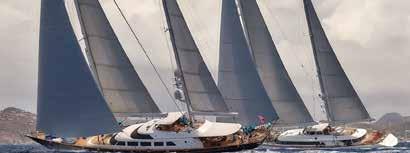
March 12–15
St. Barths Bucket Regatta SAINT BARTHÉLEMY, CARIBBEAN
An annual invitation-only sailing regatta showcasing yacht racing through the Caribbean waters around St. Barths. bucketregatta.com
March 15–29
Miami Open
MIAMI GARDENS, FLORIDA, USA
One of the most prestigious professional tennis tournaments outside the Grand Slams brings the world’s top ATP and WTA players to compete at Hard Rock Stadium. miamiopen.com
March 15 – April 6
March Madness
VARIOUS U.S. LOCATIONS
The annual NCAA Division I men’s basketball championship tournament, featuring 68 teams with the First Four, Sweet 16, Elite Eight, and culminating in the Final Four and national championship. ncaa.com/march-madness
March 16
12th Annual Fort Lauderdale Shamrock Run FORT LAUDERDALE, FLORIDA
The Shamrock Run is a festive fourmile run through downtown, ending with a Huizenga Plaza celebration featuring food, live music, and St. Patrick’s Day fun. visitlauderdale.com
March 16
Formula 1 Australian Grand Prix
MELBOURNE, AUSTRALIA
The Formula 1 season kicks off at Albert Park with high-speed racing on the iconic street circuit, drawing global fans for a weekend of motorsport excitement and entertainment. formula1.com
March 19–22
Nice Boating Tomorrow 2026
NICE, FRANCE
An emerging international boat show focused on sustainable boating and eco-navigation, featuring forums, workshops, and industry discussions relevant to professionals navigating future maritime trends. nice-boating-tomorrow.com
March 23
Formula 1 Chinese Grand Prix
SHANGHAI, CHINA
Formula 1 continues in Shanghai with intense competition at the Shanghai International Circuit, known for its long straights, technical corners, and passionate international crowd. formula1.com

March 25–29
Palm Beach International Boat Show
PALM BEACH, FLORIDA
Owned by the Marine Industries Association of Palm Beach County and produced by Informa Markets, the 44th annual show builds on last year’s attendance of 55,000, more than 200 superyachts, and an estimated $1.05 billion economic impact.
Show Schedule:
Wednesday | Noon
p.m.
|
pbboatshow.com
Test your powers of observation! There are five things different in the second photo — can you find them?
Look for answers on Instagram @thetritonnews