Empowering students to think critically and creatively since 1913
VOLUME 112, ISSUE 5
JANUARY 29, 2026
IN THIS ISSUE
OPINION
Tiger examines Trump’s departure from his “America First” policy in the aftermath of the U.S. invasion of Venezuela.
SPORTS
SPHS is home to many original musicians and bands, three of which are highlighted by Tiger
11
The Middle School Families Night returns to SPHS
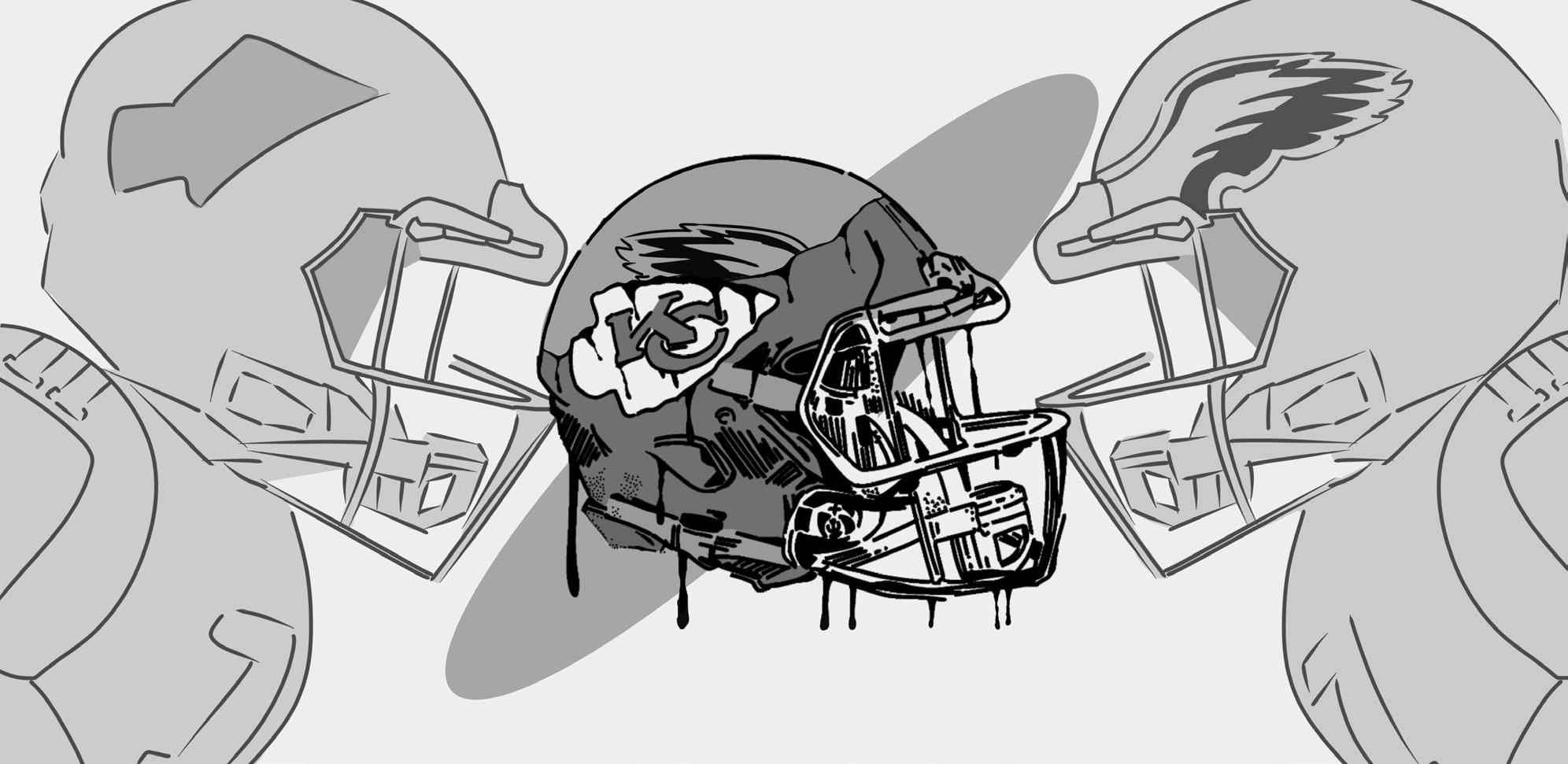
Tiger examines how the NFL’s erratic year has delivered a fresh change of pace that SPHS students seem to love.
Page 15 Page 6
OPINION
Dangers of peptide use
SPHS invited
STORY JULIA GILDERSLEEVE & KHLOE YUEN
PHOTO MAC SHROPSHIRE
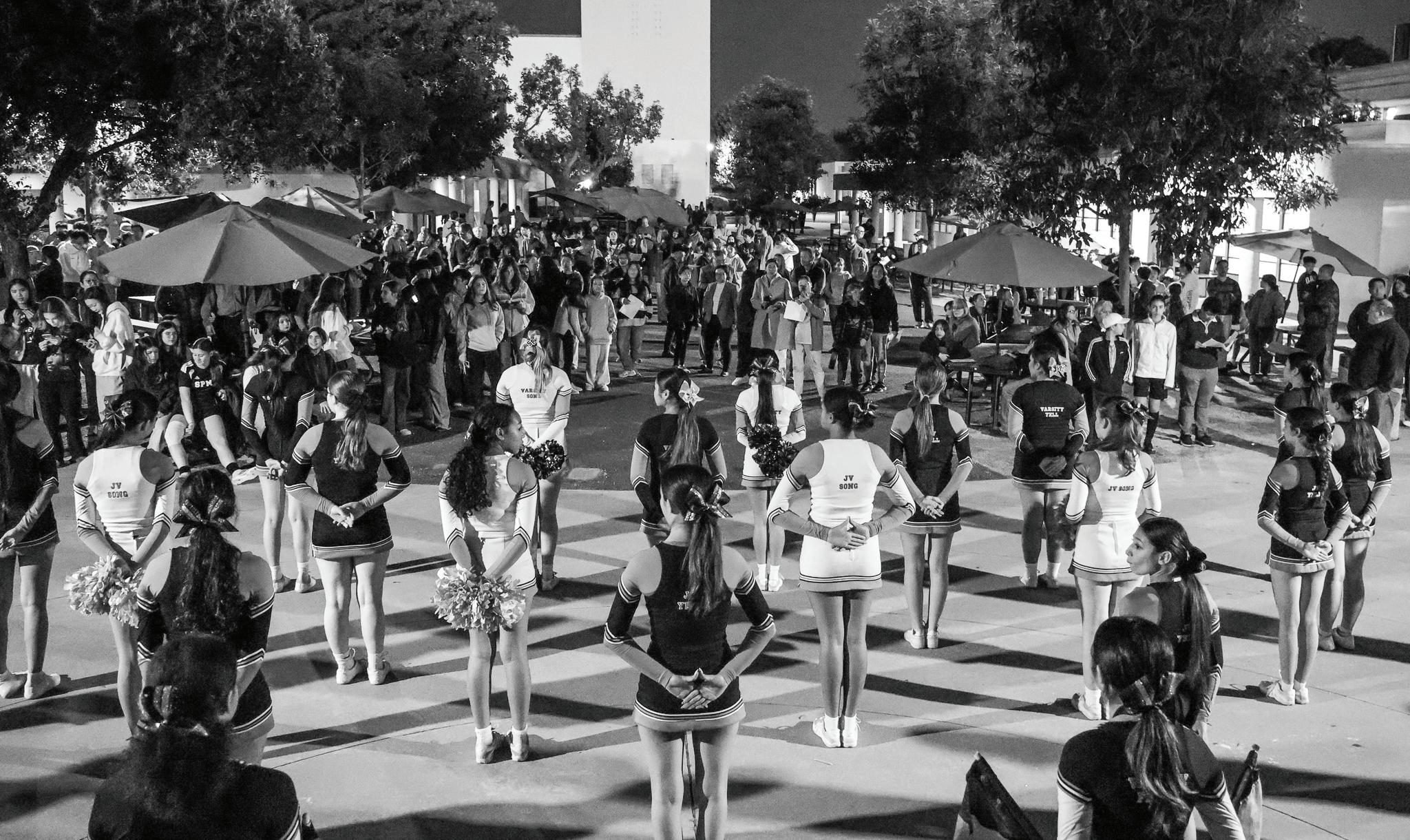
South Pasadena High School hosted the annual Middle School Families Night on Thursday, Jan. 22 for future high schoolers to explore the campus and classes. From 6:30 p.m. to 8:10 p.m., parents and students had the opportunity to visit classrooms and learn about the classes offered at SPHS. Parents and students hurried around campus, searching for the right room numbers.
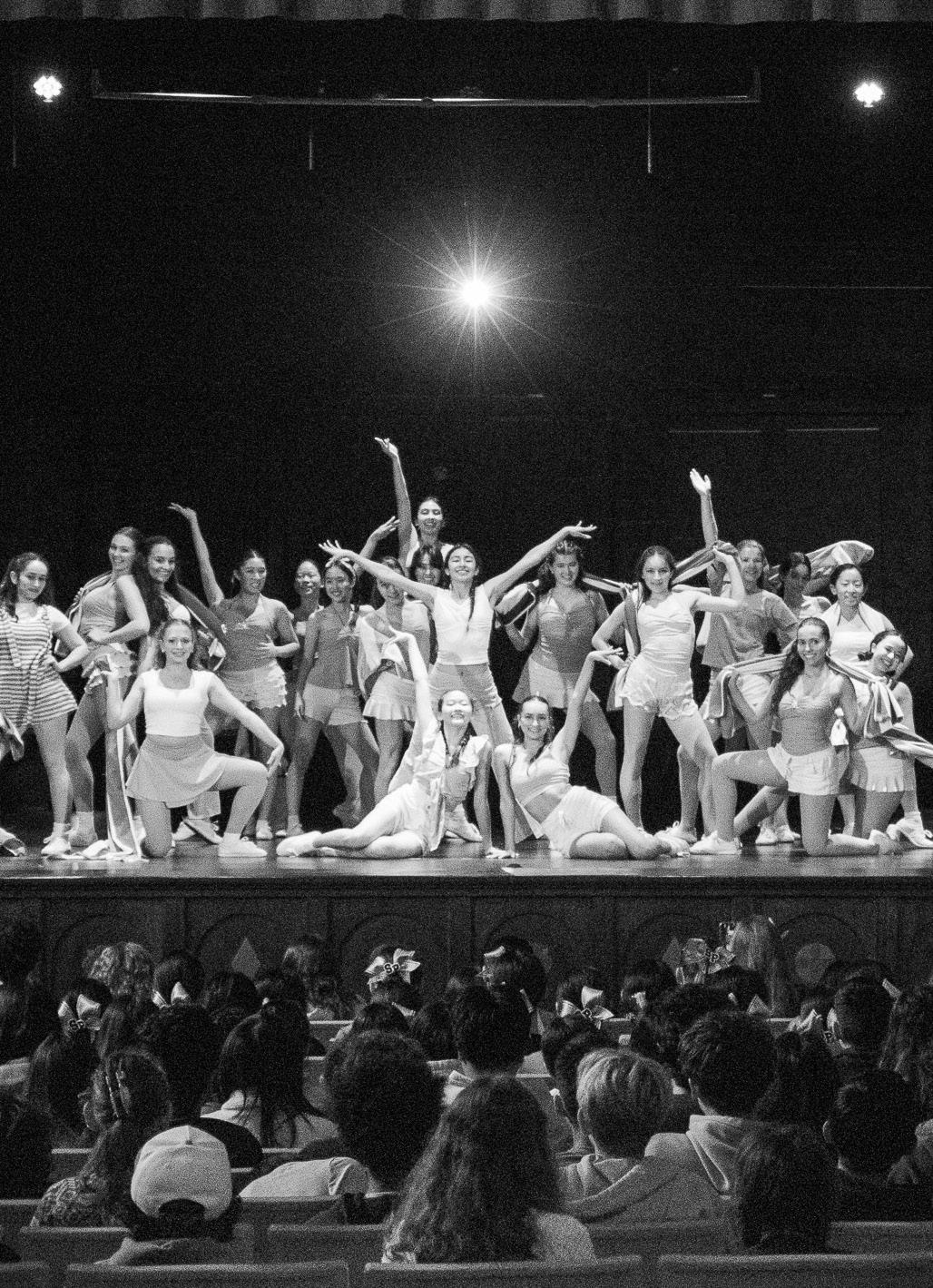
The night began with a performance from the SPHS Pep squad, gathering a large crowd of onlookers and setting an enthusiastic tone for the evening. A snack stand administered by SkillsUSA sold hot chocolate, donuts, and fresh popcorn as students and families passed by on their way to classes.
“What I really want [students] to get out of [the event] is an excitement for high school, to understand that when they start registering with our counselors for their classes, they have an understanding of what we offer here,” SPHS principal John Eldred said. “I want them to be able to make an informed choice, and choose things that they really want to do, or maybe even experience something they hadn’t thought of before, so there’s a lot of opportunity for them to do all of those things.”
The goal is supported by the planning and organization that go into Families Night
graders to the campus to explore their future school.
each year, ensuring incoming freshmen are well-prepared and exposed to a wide range of opportunities.
Eldred sets up the event by communicating with teachers ahead of time by asking them whether or not they are planning to participate in Families Night. The teachers participating then send him an informational paragraph about their course curriculum, so that when kids and parents read it at the middle school, they have an idea of what the classes offer.
“The most rewarding thing for me is to see the excitement that parents have because I think they kind of hear about stuff, but they don’t really understand until they’re sitting in a classroom,” Eldred said.
School curriculums have changed from what most parents experienced during their years at high school.
“Everybody has an idea of what they think high school is, and what they [parents] went through, but times have changed a lot, so I really like the excitement that the kids and the parents get out of it, and I like the fact that it builds community with the middle school and with the parents,” Eldred said.
Several eighth graders said that the evening was beneficial in preparing for the transition to high school and its increased rigor. They noted that this event helped them familiarize themselves with the campus and provided them with a better
WINTER FORMAL
The 2026 Winter Formal, Under the Northern Lights, will be at the University Club of Pasadena on Saturday, Jan. 31 from 8 to 11 p.m.
ANNUAL CABARET
understanding of the classes they want to take.
“It’s helpful to learn about the place and the campus, so it’s easier to travel,” Ryan Sung, an SPMS eighth grader, said.
Sung’s mother mentioned the shift toward greater independence during high school and the increase in responsibility since teachers stop monitoring their students as much.
The event also highlighted the major shift from middle school to high school for the students.
“I think high school is going to be a lot more hands-off than middle school because, in middle school, you’re still kids that are out of elementary school, so you have the teachers hover over you more, but I feel like with high school it’s more up to you to do your work,” SPMS eighth grader Ava Nguyen said.
The incoming freshmen look forward to new experiences at a new school, even with the decrease of teacher handholding.
“I’m excited about the time that I’m going to spend with my friends, and to develop the skill set for college and my future job,” Nguyen said.
Middle School Families Night allowed the incoming freshmen to meet teachers and explore their future campus.
FREE AMERICA WALKOUT
In the United States of America, the Food and Drug Administration (FDA) is the primary body for the regulation of drugs. Notably, the FDA oversees the process of approval for commercial use. Drug companies must first conduct laboratory tests on the drugs and submit evidence to the Center of Drug Evaluation and Research (CDER). The evidence is then reviewed by a team of physicians, chemists, pharmacologists, and statisticians. The drug can then be tested on humans. Once it has been determined that the drug’s benefits outweigh the risks of use, the drug is approved for commercial use. This process can range from months to years. Recently, there has been a concerning uptick in the marketing, and subsequent use, of non-FDA approved drugs called “peptides” on social media.
FEATURE
The freshman and sophomore Drama Cabaret will take place on Thursday, Feb. 5 in the Little Theater from 7 to 9 p.m.
Aligning with Free America walkouts across the country, students are walking out of class on Friday, Jan. 30 from 1 to 3 p.m.
See full story on Page 5
Revisiting the LA fires
STORY SONYA SHIMPOCK ILLUSTRATION OWEN HOU
In January 2025, a series of large-scale, incredibly destructive fires swept through the greater Los Angeles area. The Palisades and Eaton fires destroyed areas of the Pacific Palisades, Topanga, Malibu, and foothill communities such as Altadena before they were contained in the tail end of January by teams of firefighters from counties across California.
“I live almost up in Altadena, so the fire burned almost a block from my house, which was really scary. I’m definitely still dealing with that in my neighborhood. I remember just tracking the fire maps and thinking, ‘Oh my god, I could have left my house for the last time,’” senior Juliana Brown said.
See full story on Page 10
SPHS Cheer performs at the beginning of Middle School Families Night on the Tiger Patio.
STAFF EDITORIAL
current eighth
NEWS
STORY JAYDEN ZUMBA
PHOTO HELENA EASTERBY
T
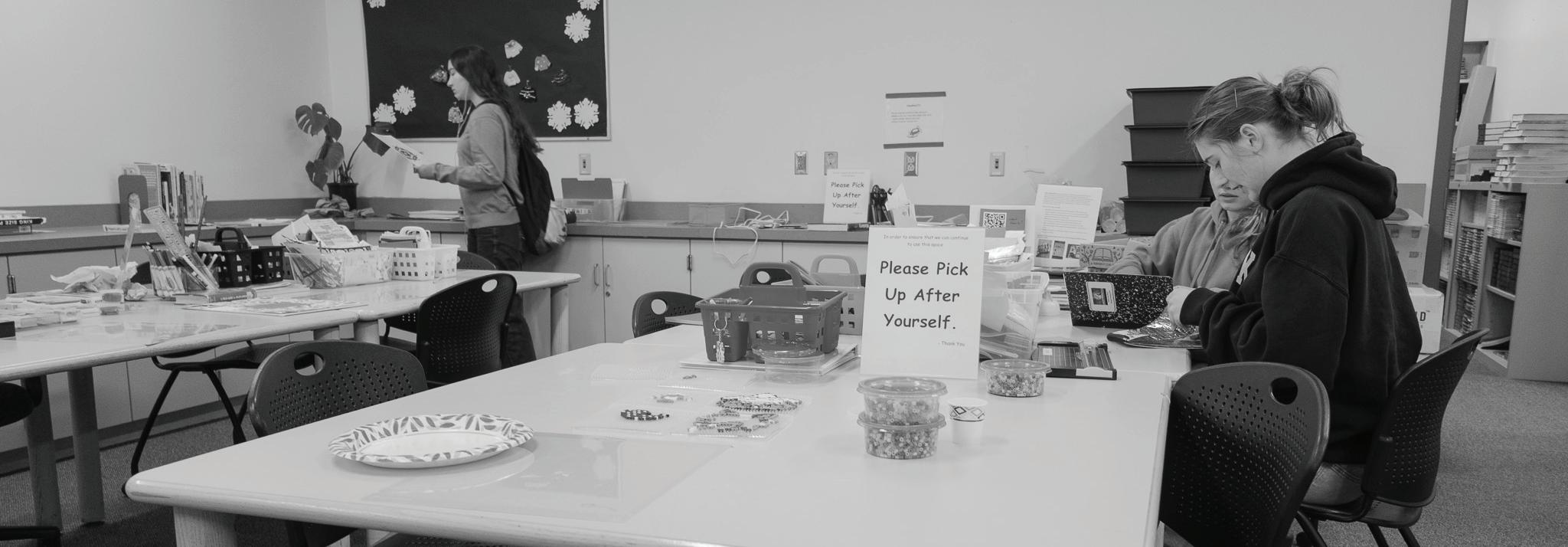
he SPHS library Makerspace opened this year, giving students a new place to engage in hands-on projects, explore personal interest, and collaborate with peers. The Makerspace’s soft launch allowed staff to test the space and refine what the Makerspace offers before announcing it to the broader school community.
The Makerspace has become a resource for students seeking creative, structured opportunities beyond the classroom. Open during lunch, brunch, and before and after school, the Makerspace provides materials, instructions, and guidance for a variety of arts and crafts projects.
The space is open to all students and does not require prior experience, registration, or class affiliation. Students can use the space during designated hours to participate in a range of crafts, including bracelet making, fuse beads, and other craft-based projects, working independently or alongside peers who share similar interests. As an additional shared area within the library, the Makerspace expands how students use the facilities beyond studying and computer-based work.
SPHS librarian Shelee Luna oversees the space, emphasizing that the Makerspace reflects a broad shift in the role of school libraries.
“Libraries have changed drastically since I was in school,” Luna said. “Students need spaces to decompress and explore creativity. The Makerspace gives them the opportunity while complementing their learning … We want to offer spaces that allow students to develop skills and explore ideas in ways that weren’t impossible before.”
Creating while studying: The new Library Makerspace
The
Makerspace offers students a place to decompress and craft.
The impact of the Makerspace is already visible on campus. Senior Catalina Zhang explained that it “brought in more activity and possibility into school life,” noting the variety of crafts and projects available.
The Makerspace aligns with SPHS’s mission to support students’ social life and emotional well-being alongside academics.
“Students need time and space to decompress, and creativity offers that in a way that studying alone cannot,” Luna said.
The space offers structured projects that foster problemsolving, skilled development, and room for collaboration.
“[The Makerspace] helps students figure out what they
are interested in crafting-wise and you get to make stuff with friends,” Zhang said.
The library has used student feedback to refine and expand what it offers since its launch. Funding from the South Pasadena Education Foundation (SPEF), along with the Parent Teacher Student Association’s (PTSA) support, provided the resources needed to create a fully functional and welcoming space. By integrating creativity and hands-on learning into the library environment, SPHS incorporates structured activities alongside academic resources for students.
“We want to be flexible to meet the needs of our students,” Luna said. “Spaces like this give students opportunities to learn, unwind, and explore their interest in ways that a textbook or computer alone cannot offer.”
SPHS Speedcubing Club hosts cubing competition
STORY MAXINE MESSINEO
PHOTO HELENA EASTERBY
The SPHS Speedcubing Club hosted a speedcubing competition from Tuesday, Jan. 13 to Thursday, Jan. 15. The contest took place during lunch in front of the Tiger Patio and was free to enter, with Rubik’s Cubes being provided for competitors.
The competition featured three categories: 3x3, 2x2, and Pyraminx. Participants were ranked based on the sum of their scores across the three categories. The winners were sophomore Spencer Ashton, senior Roman WhitmoreVossler, freshman Ryan Chow, and junior Atlas Montebrant.
Speedcubing emerged with the invention of the Rubik’s Cube and has grown and developed across the globe since its creation. As competitive speedcubing gained popularity, competitions began to include different categories — such as solving a cube blindfolded or in the fewest amount of moves — and new world records emerged.
Speedcubing Club founder freshman Nancy Liu has earned 10 gold medals and has 1188 complete solves of a speedcube under her belt. Inspired by her brother and his cubing world champion classmate, Liu’s passion for speedcubing started in first grade.
Liu continued to learn more about speedcubing and practiced the sport, now possessing eight years of experience in speedcubing and having competed in 42 competitions.
“The most important thing [cubing competitions] gave me was not awards, recognition, et cetera. It’s really those friendships that are most important, because a hobby has to make you happy and confident,” Liu says.
The accomplishment that Liu is most proud of is breaking the world record female average time for the 2x2 cube in 2024. While a 2x2 is smaller than the traditional 3x3
cube, it is still difficult to solve as it requires more skill in executing strategies.
Liu’s motivation in speedcubing is the sense of achievement when a solve, or returning a scrambled cube to its original state, is completed. It is an incredibly satisfying feeling.
“The harder it seems at first, the better you feel after you achieve it,” Liu said.
Speedcubing is not just a sport but also a tool to improve concentration. The activity is often used with Attentiondeficit/hyperactivity disorder (ADHD) and patients. It can also improve motor skills and is often used with stroke patients or those recovering from hand surgeries.
Members of the Speedcubing Club share tips and tricks for improving their cubing speeds as well as plan upcoming events, such as the speedcubing competition, during their meetings. They also analyze solves from top cubers in the speedcubing community and often have opportunities to practice speedcubing against one another.
The club meets every other Monday during lunch in room 916. Their next meeting is on Feb. 9.
Liu’s advice to anyone who is interested in or wants to start speedcubing is to look for friends in the cubing circuit so that one can continuously feel inspired and motivated. She recommends finding a video on speedcubing and watching with friends so that everyone can improve and have fun.
South Pasadena’s sudden increase of speed limits
STORY JULIA GILDERSLEEVE
A recent post from the organization South Pas Active raised awareness about a new speed limit increase around South Pasadena schools. Originally, Marengo and Arroyo Vista Elementary Schools both had a speed limit of 15 miles per hour in the school zone when children were present. Now, the speed limits in both of the school zones are 25 miles per hour. South Pas Active believes that these changes are safety issues, so the group created The Twenty is Plenty Campaign that focuses on setting safer speed limits in South Pasadena. Yellow yard signs have been spotted around the community, petitioning to bring down the local speed limit. A QR code found on the sign leads to a Google Form informing the reader that the city is working on a once-a-decade review of citywide speed limits. The minimum speed limit in South Pasadena is 25 miles per hour, but legally, school zone limits can be set at 15 or 20 miles per hour.
Assembly Bill No. 43, published on Oct. 11, 2021, grants local jurisdictions the ability to set safer speed limits in areas such as school zones without traffic studies. Streets near schools, senior centers, and areas with high pedestrian activity are eligible for speed limit reductions by five miles per hour below the existing standard.
“South Pasadena has a growing number of students who choose to walk or bike to school. This activity promotes health, independence, and socialization, which are all goals of our education system,” the Google Form reads.
Many families drive their students to school because they feel the streets are unsafe due to the speed limit. Speeding is one of the leading causes of car accidents; every time the mean speed increases by 1 percent, the amount of possible car crashes increases by 4 percent.
South Pasadena’s “Slow Streets” program tries to enforce traffic safety by reminding drivers to watch their speed and be aware of their surroundings. Current street sections
being monitored by the program include Oak Street from Meridian Avenue to Garfield Avenue, Hermosa Street from Grand Avenue to Columbia Street, and Grand Avenue from Mission Street to Columbia Street. The streets were selected by residents, the South Pasadena Mobility and Transportation Infrastructure Commission (MTIC), and the Department of Public Works.
Speed limits are traditionally set through engineering and traffic surveys based on the 85th percentile speed, the speed at or below which 85 percent of drivers travel on a road. South Pasadena implements this into the city’s speed limits, as California law allows jurisdictions to implement and enforce lower speed limits where slower speeds are desired. Drivers who travel above the 85th percentile speed exceed the safe and reasonable speed for road and traffic conditions.
The city is currently reviewing the school speed limits, and through the actions of California’s AB 43 and South Pas Active, changes to speed limits remain a possibility.
The Makerspace is transforming campus life through creativity, providing students with resources to step away from academic pressures.
Freshman Nancy Liu holds 10 gold medals for speedcubing.
Under the Northern Lights: SPHS Winter Formal Tiger
previews
the aurora borealis-themed night that will include dancing, lounging, and more.
STORY ANNA MCDONNELL
PHOTO HELENA EASTERBY
The South Pasadena High School 2026 Winter Formal, “Under the Northern Lights,” is taking place on Saturday, Jan. 31. The dance is hosted at the University Club of Pasadena on 175 N Oakland Ave. in Pasadena from 8 p.m. to 11 p.m. The venue includes a dance room, lounge room, and outdoor fire pits.
“Winter Formal is a good time for everyone to come together and enjoy themselves at the dance,” ASB Commissioner of Activities and head of this year’s Winter Formal committee Zoe Rusch said.
Winter Formal tickets were sold during week one for $80 SAC, $90 non-SAC, and $100 OOTER. Prices rose during week two of ticket sales, but in week three of sales, ASB dropped prices back to those of week one. Students who bought tickets during week two will be refunded the difference. The mid-year dance is designed as a way for underclassmen to experience a formal dance since they cannot attend prom.
“It’s the only formal dance that all grades can participate in, so I think it’s a great opportunity for underclassmen to participate in more school events,” Rusch said.
The Winter Formal is planned by ASB’s Winter Formal committee, which partners with PD Special Events. Preparation for the formal started almost immediately after the Homecoming Dance. The first thing the team did was scout multiple potential venues for the formal, and after consideration of the price, size, and location, they decided on the University Club of Pasadena.
ASB plans everything for the formal, from decorations and food to advertisements and music. Last year’s winter formal was hosted at the Petersen Automotive Museum in Los Angeles, but ASB made the executive decision to switch to a closer, more accessible location.
The 2026 Winter Formal will be the first dance that a school band, Sound Squad, will be performing live at the event. The band includes seniors Andrés Urzua and Riley Yoshimura, sophomores Bono Stevens, Caden Ahn, and Adrian Molina, and freshmen Lara Yassine, Indy Dickey and Isadora Carmen Cua.
The group plans on performing Can’t Help Falling in Love by Elvis Presley, Fly Me to the Moon by Bart Howard, and Every Breath You Take by The Police at the formal. Along with the live music, there will also be a DJ.
dance that a student band will perform live
Waiters from the club will be walking around with food including Thai Chicken skewers, watermelon-mint feta skewers, and mini desserts.
“There’s not that many dances at this school; [attending] is a really good way to bond with the rest of the student body,” Rusch said.
ASB will begin planning its final event of the school year, prom, which upperclassmen can look forward to attending in May soon after the formal concludes.
The 2026 Winter Formal will be held at the University Club of Pasadena. It is the first
at.
SPMS Roadshow showcases SPHS programs
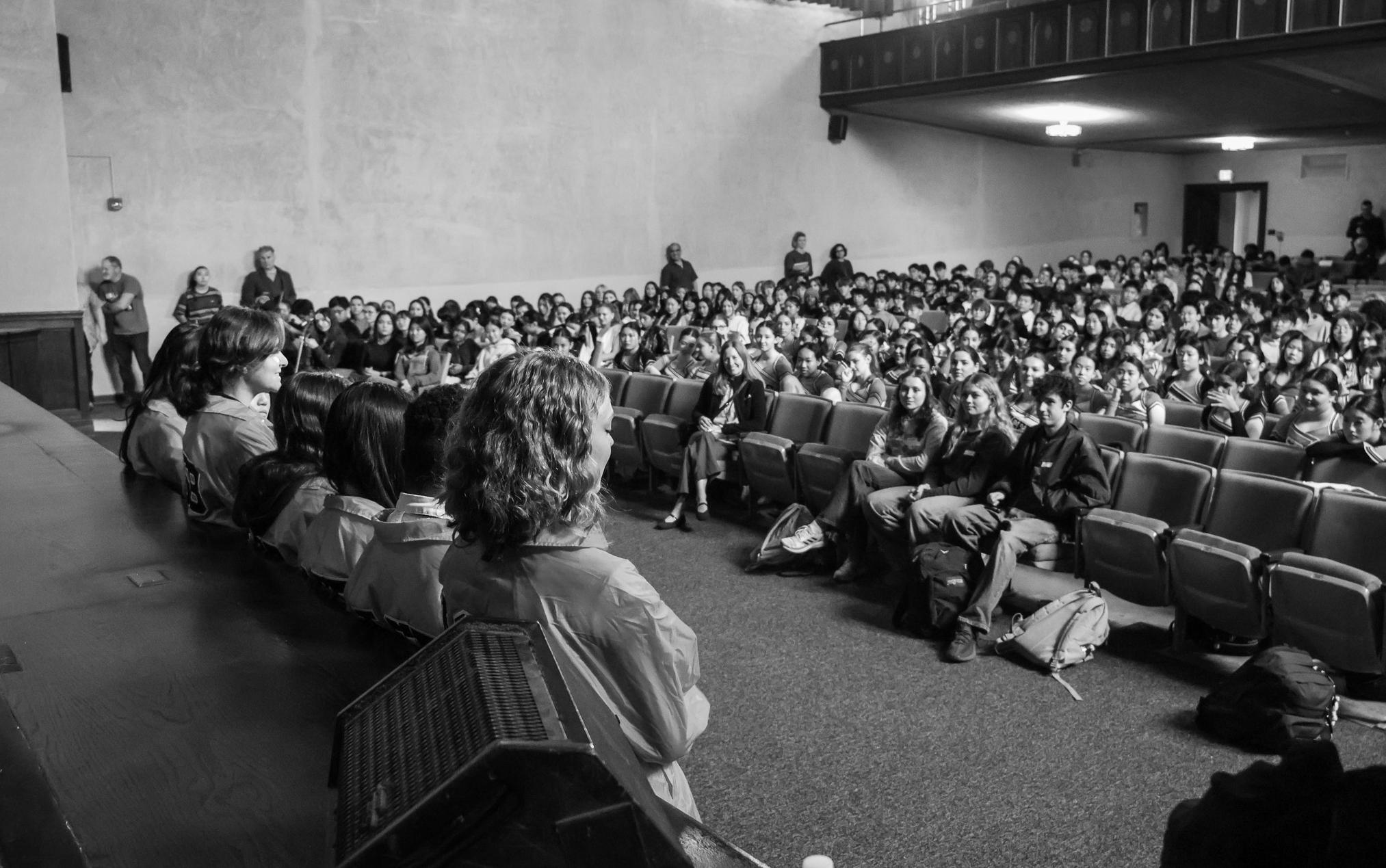
High school students discussed programs that eighth graders can look forward to in their freshman year.
STORY UMA CHAKRABORTY & ELLIE SONG
PHOTOS MAC SHROPSHIRE
The annual SPMS Roadshow, which has been around since the 2018–19 school year, occurred on Wednesday, Jan. 21 in the SPMS auditorium. The Roadshow is an assembly for incoming freshmen where students from SPHS to introduce some of the clubs and electives that SPHS has to offer.
“What we want to build is excitement for the eighth graders coming to high school, and expose them to a lot of the programs that we have here on campus,” SPHS Principal John Eldred said.
Eldred established the SPMS Roadshow during his first year at SPHS, hoping the roadshow would send a friendly message to incoming freshmen, creating a comfortable transition to high school life. Eldred prepares for the event by first contacting the SPHS programs that normally attend the roadshow and
STORY ELLIE SONG
Drama class and program advisor Nick Hoffa was determined to show the incoming freshmen the exciting world of drama.
“We want to show the middle school students how drama can be a home for them in high school,” Hoffa said.
Drama displayed a video at the Roadshow, highlighting the current drama students at SPHS, giving a brief explanation of what makes the class so different, and showcasing the fun activities they conduct to ensure fun, exciting memories.
Hoffa explained how he hopes the video will send the message that the drama program, as well as the Little Theater, can be the freshmen’s home and safe place for the next four years.
Sports Medicine
STORY SONYA SHIMPOCK
Senior class officers of the Sports Medicine Club — President Will Girvigiann, Vice President Zachary Millar, and Secretary Brylee Woo — stepped up to the mic to discuss their experiences within the Sports Medicine Pathway. They followed a short video that explained the ins and outs of the Sports Medicine class.
Sports Medicine is a two-year pathway; students begin with Sports Medicine 1-2 and can graduate to Advanced Sports Medicine. Completing both classes fulfills the Californiarecognized Patient Care Pathway.
Sports Medicine advisor Andre Zumaeta designed the course to expose students to skills and careers in Sports medicine. Over the course of Advanced Sports Medicine, students complete 30 hours of clinical work, most of which is conducted with SPHS Athletic Trainer Mike Lee.
“It’s a great experience, especially if you want to go into the field,” Millar said.
confirming they are still able to attend. For the 2026 roadshow, the presenters at the roadshow were ASB, Pep, Drama, Choir, SkillsUSA, Sports Medicine, the athletics director, the counseling department, Band, Orchestra, Speech and Debate, Tiger Newspaper, Dance, and Copa de Oro.
Eldred takes upon the efforts of organizing the Roadshow by himself, asking various clubs and programs if they would like to showcase themselves.
The Roadshow attempts to give eighth graders a taste of high school. The teachers who are the advisors of school programs send their students, rather than attending themselves, to give the eighth graders a glimpse of what high school life has treated them with.
“While [the adults] can go, it’s really about the kids talking more than anything else. Eighth graders want to hear from [other students]. They don’t want to hear from me,” Eldred said.
STORY UMA CHAKRABORTY
Pep took the stage while Ellis Kim, a senior in varsity yell, gave a quick rundown of what Pep is to the incoming freshman.
Kim explained the various sections Pep includes, such as varsity and junior varsity flag, pom, yell, and song. Pep not only attends football and basketball games, but six other sports as well.
“Pep is a really big part of my life,” Kim said when talking about the impact Pep had for her high school years. Kim then stepped aside to allow those on stage to perform for the eighth graders.
Eighth grader Jeanelle Tayco said after the roadshow, “I was really interested in Pep … it seemed really fun.”
Band, Color Guard, & Orchestra
STORY ZOE CHEN
Five members of the SPHS Band and Color Guard spoke at the roadshow. Senior drum major Jesse Li introduced the community and team-based aspect of Band, while sophomore Lucia Lois added that eighth graders do not need to be in the SPMS band or play an instrument.
Lois then highlighted past Band trips to Hawaii, San Diego, and Chicago.
Senior Ramonda Choi, who represented Color Guard, pitched Guard to the eighth graders. Choi emphasized that Guard is only offered at the high school, not at the middle school.
Select members of the SPHS Orchestra then gave a stringed performance of Golden from KPop Demon Hunters
“I’m really excited for high school now,” eighth grader Hannah Huh said.
“
The Roadshow was very exciting. It was cool to see how enthusiastic the middle schoolers were about high school. ”
Zachary Millar, Sports Medicine Club Vice President
“ I’m really excited for high school now. ”
Hannah Huh, SPMS eighth grader
“
I was going to go to another high school, but now I’m feeling more like going to this one. I just think it looked really fun. Everyone looked really happy. ”
Stella Nemetz, SPMS eighth grader
“ ”
I
love meeting the incoming freshmen because I know — even more than they do — that they will be the face of the program and I know how many incredible experiences are going to be in their future.
Nick Hoffa, Drama class and program advisor
Members of the SPHS ASB spoke about various high school opportunities to the SPMS eighth grade class in the middle school auditorium.
THE TIGER
ESTABLISHED 1913
NSPA FIRST CLASS 2025
NSPA FIRST CLASS 2024
CSPA GOLD MEDALIST 2023
CSPA SILVER CROWN 2022
CSPA SILVER CROWN 2021
CSPA GOLD MEDALIST 2019
CSPA SILVER CROWN 2018
CSPA GOLD MEDALIST 2017
CSPA CROWN AWARD 2016
CSPA GOLD MEDALIST 2015
EDITOR-IN-CHIEF
SONYA SHIMPOCK
MANAGING EDITORS ZOE CHEN, Print
EMIKO ESSMILLER, Online
NEWS
CLAIRE MAO, Editor
OPINION
RAFA ESTOLANO-SRIDHARAN, Editor
FEATURE
RUBY FOUDY, Editor
SPORTS GAVIN BARTOLOME, Editor
DESIGN
OLIVIA CHIN, Editor LANAH KIM, Editor
PHOTOGRAPHY
HELENA EASTERBY, Editor
COPY
OWEN HOU, Editor
SOLANA SINGER, Editor
STAFF WRITERS
UMA CHAKRABORTY EVELYN DIAZ
MIRIAM ELGHEFARI
JULIA GILDERSLEEVE
HARRIET GODSON
LEIGHTON KWOK
ANNA MCDONNELL
MAXINE MESSINEO ELLIE SONG KHLOE YUEN
STAFF PHOTOGRAPHERS
LUCINDA ERNST
SEBASTIAN GUTIERREZ MAC SHROPSHIRE
STAFF ILLUSTRATORS
KRISTEL HOUNG DIANA LOPEZ
JAYDEN ZUMBA
PAGE DESIGNERS GABBY FERRI PAISLEY PARK ALISON SCHRADER
VIDEOGRAPHER THEO THOMPSON
BUSINESS AND ADS MANAGER PASCALE WILLIAMS
SOCIAL MEDIA SPECIALIST ISABELLA JONASEN
FACULTY ADVISOR KAREN HAMES
VOL. 112 NO. 5 DISTRIBUTED ON JANUARY 29, 2026
DISTRIBUTION: 1460 STUDENTS; 70 COMMUNITY. 1200
COPIES PRINTED. DISTRIBUTED BY TIGER STAFF FREE OF CHARGE.
TIGER IS PRODUCED BY THE ADVANCED JOURNALISM
NEWSPAPER CLASS AT SOUTH PASADENA HIGH SCHOOL, 1401 FREMONT AVE, SOUTH PASADENA, CA 91030. LAYOUT AND PHOTO IMAGING ARE COMPLETED ON-SITE.
SIGNED ARTICLES APPEARING IN TIGER REPRESENT THE WRITER’S OPINIONS AND DO NOT NECESSARILY REFLECT THE VIEWS OF THE STAFF, STUDENT BODY, FACULTY OR ADMINISTRATION OF SPHS. ORIGINAL STORIES WILL CARRY BYLINES, ALTHOUGH STORIES REWRITTEN BY ANYONE OTHER THAN THE ORIGINAL WRITER WILL NOT RECEIVE ONE. CONTRIBUTING WRITERS WILL ALSO RECEIVE ONE. CONTACT THE PUBLICATIONS OFFICE AT (626) 441-5820 EXT. 2615 BETWEEN 8:00 A.M. AND 4:00 P.M. FOR ADVERTISING RATES AND SUBSCRIPTIONS. TIGER WELCOMES ARTICLES, REBUTTALS FOR PUBLICATION IN THE PRINT AND ONLINE EDITIONS. ALL LETTERS MUST BE SIGNED AND VERIFIABLE, BUT NAMES WILL BE WITHHELD UPON REQUEST.
TIGER’S MISSION IS TO PROVIDE A RELIABLE NEWS OUTLET FOR SPHS AND THE LOCAL COMMUNITY. THROUGH A VARIETY OF COVERAGE, TIGER EMPOWERS/ENABLES STUDENTS TO THINK CRITICALLY AND CREATIVELY, COMMUNICATE EFFECTIVELY, SOLVE PROBLEMS, SET AND REACH GOALS, AND WORK AND INDEPENDENTLY AS RESPONSIBLE CITIZENS. TIGER IS A FORUM FOR STUDENT FREE SPEECH, IN ACCORDANCE WITH CALIFORNIA ED CODE 48907. ALL REMAINING CURRENT TIGER NEWSPAPER POLICIES ARE ONLINE AT TIGERNEWSPAPER.COM INCLUDING: CONFLICT OF INTEREST, LETTERS TO THE EDITOR, CORRECTIONS, AND SOCIAL MEDIA.
STAFF EDITORIAL
The danger of peptide use
The widespread use of
non-FDA approved drugs endangers users.
In the United States of America, the Food and Drug Administration (FDA) is the primary body for the regulation of drugs. Notably, the FDA oversees the process of approval for commercial use. Drug companies must first conduct laboratory tests on the drugs and submit evidence to the Center of Drug Evaluation and Research (CDER). The evidence is then reviewed by a team of physicians, chemists, pharmacologists, and statisticians. The drug can then be tested on humans. Once it has been determined that the drug’s benefits outweigh the risks of use, the drug is approved for commercial use. This process can range from months to years. Recently, there has been a concerning uptick in the marketing, and subsequent use, of nonFDA approved drugs called “peptides” on social media.
Peptides are small chains of amino acids that regulate bodily functions. GLP-1, for example, is a well-known peptide injection used for weight loss. It is typically prescribed to diabetics, but has recently become more readily available following a broaduse FDA approval. Unlike GLP-1, non-FDA approved peptides carry the risk of harmful side effects. The existence of potential side effects has not stopped these peptides from becoming widely available. Notable peptides include GHK-Cu, a naturallyoccurring peptide found within the human body that, when injected, boosts collagen production and skin elasticity, and Retatrutide, a peptide that mimics gut hormones to induce weight loss. Both of these peptides, alongside many others, are experimental and have not received FDA approval.
Many social media users have documented their experience using these drugs. For example, TikTok user @ravyn.autumn has documented her “progress” using peptides for months. She has countless videos on her page regarding the subject. In the comment sections of her videos, several other users claim to sell peptides “directly from the source” and encourage those seeking peptides to purchase from them. She is one of thousands of content creators who advertise peptides. Some use the messaging app Telegram to communicate with buyers, posting their contact information in the comments of social media posts. These people are individuals with no
pharmaceutical or medical experience and could be selling peptides that are contaminated or are simply not peptides at all. As with anything one consumes, it is important to know the benefits and drawbacks of putting something into your body. Although it is seemingly effective, the use of non-FDA approved drugs comes with the risk of poor quality, contamination, and deadly side effects.
Historical examples shine a light on these dangers. In the 1930s, the S.E. Massengill Company, a drug manufacturer, was faced with demand for a liquidized drug. The company found a compound the drug would dissolve into and tested it. They deemed it “satisfactory” and began commercial sale. The formula was not tested for toxicity as safety tests were not required for drugs at the time. The drug was commercially distributed. More than 100 people across several states died after taking the drug. It was later discovered that the compound the drug had been mixed into was poisonous. As a result, the Federal Food, Drug, and Cosmetic Act was passed. Today, that act serves as the foundation of the FDA’s authority to regulate drugs.
Similarly, in the late 1900s and early 2000s, several deaths were reported associated with the misuse of quinine sulfate. It was approved by the FDA as a malaria treatment, but several quinine sulfate drugs were marketed as relief for leg cramps. It was later discovered that quinine sulfate could cause cardiac rhythm disorders.
The (notably preventable) loss of life as a result of the misuse of a non-approved drug was devastating. Despite the torrent of social media posts claiming to see healthy results from injecting peptides, it is important to remember why the FDA’s approval process is so detailed and why it exists today. Retatrutide, GHKCu, and countless other drugs are not FDA approved for a reason. History can and will repeat itself. Considering the frequent use of social media among youth, the lack of accurate information and transparency surrounding peptides makes them all the more dangerous. It is up to the individual to decide whether their future is worth their actions in the present.
Boos & Bravos
Tiger’s cheers and jeers for the month of January
BOO to whimsy. Mischief is in.
BOO to the nonchalant shuffle. Please speed up I’m not detached enough for this.
BOO to 2026. YES we’re 3 weeks in YES I’m giving up.
BOO to math. We’re all victims.
BOO to TikTok pomegranate poetry. Shakespeare did not die for this.
BRAVO to men. You do… some things… adequately BRAVO to Zara Larsson. Yes, it’s the middle of January. No, summer ISN’T over yet.
BRAVO to dad jokes. Really makes me feel like he’s still around.
BRAVO to Byler writers on AO3. The Duffer brothers work hard but Byler stans work harder.
BRAVO to DEI. I love POC baddies
BOOS BRAVOS
Trump strays from “America First”
Trump deviates from the isolationist rhetoric that won him
STORY SONYA SHIMPOCK ILLUSTRATION KRISTEL HOUNG
President Donald Trump, who at this point was running for his second term in office, thunders while holding court at a rally: “No more American boots on the ground!” The crowd gathered at his rally responds with a deafening cheer.
In 2024, Trump ran his reelection campaign on an “America First” platform — an isolationist rhetoric that casts American economics, freedoms, and citizens as the most essential deciding factors in governmental policy. While it is arguable whether or not Trump adhered to this in the beginning of his second term, it is undeniable that the United States’ involvement in Venezuela is a sharp departure from any possible interpretation of “America First.”
On Jan. 3, the Trump administration launched Operation Absolute Resolve, a U.S. military action to capture Venezuelan president Nicolás Maduro and his wife. While Maduro is awaiting trial in the United States, Trump is supporting a transitional government headed by Delcy Rodríguez, Maduro’s vice president. When asked directly whether the United States would support elections in Venezuela in the short term, Trump immediately obfuscated: “Well, it depends, you know, when you’re talking, we have to do one thing in Venezuela, bring it back. It’s a dead country right now.”
Under the authoritarian crush of Maduro, the named successor of socialist dictator Hugo Chávez, Venezuela has suffered under a long-term political and economic crisis. Maduro’s administration has presided over hyperinflation, poverty, and food shortages while perpetuating numerous human rights abuses. However, Trump has made it pointedly clear in several interviews that the United States is not particularly interested in ending Venezuela’s authoritarian
reelection with recent U.S. actions in Venezuela.
rule — instead, Trump is interested in Venezuela’s oil. Before launching Operation Absolute Resolve, Trump commented that he spoke to “all [of the oil companies], basically.” Notably, he did not consult Congress, on account of the legislative branch being too “leaky.” This does not qualify as a constitutional exception, and signals a disturbing repetition of Trump’s actions committed in flagrant disregard of the Constitution. Furthermore, while Trump’s invasion of Venezuela is an internationally startling move, it also signals dangerous repercussions abroad. In attacking Venezuela, the United States operated under a warped version of the Monroe Doctrine, which Trump dubbed the “Donroe” Doctrine (a portmanteau of Donald and Monroe), misinterpreting the document as an authorization to exert complete dominance in the Western Hemisphere. In reality, the Monroe Doctrine warned directly against this — when founding father James Madison penned it in 1823, he was primarily concerned about authoritarian puppet governments established by
European countries in the Western Hemisphere. Instead, with Trump’s refusal to hold elections, the United States seems to be drifting in the very direction the Monroe Doctrine sought to prevent. This is not solely an issue for the Western Hemisphere, either. Trump’s interpretation of the Monroe Doctrine can be applied similarly to foreign powers; operating under identical logic to what Trump used to justify Venezuela, China would be empowered to take Taiwan. Russia would be empowered to take Ukraine.
As Trump drifts further from an isolationist agenda and approaches an imperialist one, it is essential that students continue to show resistance. As high schoolers move into a world polarized by government-sanctioned violence and aggression, they must use the voice and power given to them to protest, vote, and organize. The United States is not yet under authoritarian rule, but there must be action to ensure the survival of democracy — both abroad and domestically.
First Amendment auditors seek attention, not education
STORY LEIGHTON KWOK ILLUSTRATION JAYDEN
ZUMBA
The main goal of the Bill of Rights was to provide citizens protection from the federal government overstepping its power. This ranges from the right to freedom of speech to the assurance of due process. But as the United States continues to progress and grow, what may have started as rules all in good faith has been abused and used to harass individuals.
The First Amendment protects the freedom of speech, religion, the press, petition, and peaceful assembly. Although not as commonly remembered, the First Amendment also covers the right to film or take photographs on public property and the right to all speech, unless it incites violence or promotes an unlawful act. Channels on YouTube and other platforms have started filming videos to raise awareness of police officers and other government officials abusing their power against citizens. They film in public spaces, assert their right to record, and document responses. In theory, this could legitimately expose government overreach and truly educate people. But as views started racking up and the need to stay relevant grew, these types of YouTube channels started taking a different approach.
“Freedom of the Press,” a YouTube channel that has amassed more than 35,000 subscribers, has taken these parameters and played jump rope with them. They operate mainly in the South Pasadena area and claim to educate the public about constitutional rights. Filming unsuspecting shoppers outside of Trader Joe’s and South
Sonya’s Speils SONYA SHIMPOCK
Dear Scott
To anyone who’s ever spent more than 15 minutes in a room with me, it’s no surprise that I’m watching Heated Rivalry, a gay hockey romance adapted from Rachel Reid’s Game Changers series. I’m a sucker for any love story that involves a rivalry (my friend Maya and I eat up Maxton Hall and each Culpa Mia movie every single time), and Heated Rivalry has the trope in the name. The second not-surprise: it made me cry. I cry at a lot of things. I once cried watching a video of a dog hobbling around on Ms. Gill’s projector screen at 8:45 a.m., and Emi had to grab me a tissue. That wasn’t my lamest moment, either; I’ve been reduced to tears by a Chevrolet commercial.
Pasadena residents bringing mail to the post office, the self-proclaimed “enforcers” deliberately provoke a reaction from people who simply want to be left alone. While they frame their actions as civic education, it is obvious that their behavior is crossing the line. The videos depict regular citizens going about their day until they notice cameras filming them. Some ask what the auditors are doing, but most mind their own business. Masked videographers proceed to zoom in on the individual, no matter the circumstance, follow the person to their car, and run up to the door window to film the individual. They purposely bring attention to the individual’s license plate and continue to film them as they drive off.
Recording in a public area is one thing, but when these First Amendment auditors refuse to stop when asked, their content ceases to qualify as educational. It is exploitation, and it uses the Constitution as a shield for bullying behavior. These “enforcers” know what they are doing — while filming, they cover their faces, indicating that they do not want to be associated with what they know to be indefensible content. The behaviors of following someone persistently, refusing to maintain a reasonable distance, and filming with the intent to profit from an individual’s reaction not only cross the legal line between education and harassment, but are morally inexcusable. While genuine civic education is valuable, there are countless ways to teach these concepts without targeting unwilling participants, such as promoting genuine transparency in governmental offices and attending protests. Minneapolis nurse Alex Pretti was fatally shot by an ICE agent after defending a woman being taken by the officers. Without members of the public exercising their First Amendment
When I finished watching episode five of Heated Rivalry, I set my phone down and put my head in my hands. My ears hurt slightly from wearing my AirPods for the full 45-minute-long episode, and when I reached up to take them out, my hands brushed my cheeks and came away wet. I hadn’t even realized that I was crying. It was almost involuntary — I had been in a mute haze for the last 15 minutes of the episode.
Episode five ended like this: Scott Hunter, the captain of the New York Admirals, has finally won the Stanley Cup. For the past few years, he’s kept a secret boyfriend named Kip, who has been hidden away from the public eye to prevent the inevitable backlash of exposing a queer relationship to the seemingly less accepting hockey audience. However, after an emotional beat, Scott invites Kip down to the ice to celebrate, where the two embrace and share a kiss. Playing over the reveal was Wolf Parade’s I’ll Believe in Anything: “If I could take the fire out from the wire / I’d share a life and you’d share a life.”
For any readers who don’t know me personally, I’m a lesbian. I came out in eighth grade, and I have been incredibly lucky to have family and friends who have accepted me wholeheartedly. I have never experienced a
rights and filming the encounter, we would only have the federal government’s version of events, which does not correspond with the released video footage. Another example is when late-night talk show host Jimmy Kimmel was taken off the air for making political jokes; many people publicly spoke out and defended him, even if they did not support him. This allowed him to return to his show and exemplified how the First Amendment should be used. The distinction between this and the behavior of auditors is clear: education informs willing learners, while harassment targets unwilling victims.
lack of love. Still, this brings us to the crux of this column: despite all of my luck in life, I was thrown completely off guard by Heated Rivalry.
There’s a certain residual internalized homophobia I’m worried I’ll always carry. I struggled deeply processing my identity, especially growing up in a country that did not even acknowledge gay marriage until 2015. Watching a show that dealt unabashedly and unashamedly with themes of queer joy was both liberating and comforting in an inexplicable way; I was rooting for the characters just as much as I was rooting for the message it represented — that queer love stories can be happy, and passionate, and not always end in the tragic endings the media commonly pushes.
Because of this, I’m upset when discussions of Heated Rivalry revolve entirely around the sexuality of the show (which is no more graphic than every third TV-MA crime drama on HBO Max) and completely ignore the incredibly complicated and brave love story it follows. I want to live in a world where one does not need to be quite as brave to be in love. I will work for a world where this is the case. Until then, for the Scotts and the Kips of the world: I wish you nothing but the best.
When friendship and politics meet Tiger examines
whether one can be friends with someone they fundamentally disagree with.
Where there is no respect, there is also no friendship
STORY LEIGHTON KWOK
“We can disagree and still be friends,” is a mature ideal that creates open conversation and the type of empathy that humans use in daily life. In many different situations, it is true. One can be friends with someone who likes different music, has a different favorite TV show, prefers salty over sweet, or attends a rival school. These contrasts can even make a friendship better and push one to consider other perspectives that are otherwise ignored. However, there is a line that is not often mentioned. This limit is not about the beliefs themselves, but about the effects those beliefs have in the world.
While most disagreements end with the conversation, some have real-world implications that remain long after. These disagreements can turn into actions and realworld consequences that can put people into real danger, and when this happens, the nature of the disagreement drastically changes. When positions strip away someone’s existence or make them less safe in their daily life, that person is not advocating for a belief or a moral, but rather promoting harm and disrespect.
Talking to make a perspective heard is one thing, but taking actions to impede on someone else’s safety and humanity is another. While the individual holding the beliefs may be kind on a personal level, the message that they may share is not just a “differing opinion,” but rather an advocacy for harm.
Admittedly, ending relationships, both platonically and romantically, is difficult and requires making a judgment about individual personal comfort. But the alternative, pretending that all beliefs are equally harmless, creates a dishonest relationship that is troubling for both parties.
People can disagree and still be friends, but only when those disagreements do not translate into active threats to safety, dignity, and existence. When a relationship like that is broken, it is not by an inability to handle different perspectives, but by the recognition that some beliefs, once acted upon, make a meaningful relationship impossible.
ILLUSTRATION OWEN HOU
Disagreements make more meaningful friendships
STORY SEBASTIAN GUTIERREZ
When politics and identity overlap, a disagreement can quickly become personal. Respect is often interpreted as agreeing, but that is not true. Respect is not approval; it is the minimum standard for how to treat one another, including those who disagree with that exact statement. Respect does not mean agreeing or platforming someone’s radical or inhumane beliefs. It is possible to condemn someone’s belief and still treat them with respect, even if that disagreement is on something as important as human rights. Without respectful disagreement, cutting people off becomes easier than talking through the differences. Especially on social media, outrage is rewarded and pushes people more towards radical thinking. What people mean by “human rights” as two different definitions will often directly contradict each other. For some, rights are legally protected by courts and the constitution. Others feel rights are a moral claim about safety and equality. While others may base rights off their human rights on religious beliefs. Everyone agrees these rights are important though they often disagree on key aspects like immigration, trans rights, and women’s rights.
Dehumanization is contagious, once someone is labeled as “less than” due to their beliefs, it opens them up to threats, harassment or worse. This logic now continues to spread dehumanization and goes directly against the concept of human rights. If human rights are the goal, respect should be attempted alongside it for all people. Respect is also strategic. Nobody rethinks their views due to threats, harassment or humiliation. People change through respectful questioning or challenging of beliefs, which is heavily lacking in the political climate. Being afraid to normalize inhumane ideologies is a genuine concern but a lack of respect hardens both parties’ beliefs and makes conversation impossible. Being respectful doesn’t mean one must ignore their harmful words or actions. Being respectful does not mean tolerating everything. One can keep their mind open to civil conversation and set firm boundaries against real harm.
Elitist literature and outdated views on reading
STORY RUBY FOUDY ILLUSTRATION LANAH KIM
It is often assumed that to be “respected,” books must meet a certain standard in terms of complexity or sophistication. Both online and in educational spaces, there is an air of pretentiousness surrounding what one reads — classics, usually written well over a century ago, are worshiped, and Young Adult or fantasy novels are condemned.
This elitist view of literature, the belief that only certain books deserve recognition and study, is an outdated stance and only makes reading less accessible.
Classics, like The Great Gatsby or Crime and Punishment, are highly esteemed for a reason — they are well-written and explore deep, complex themes.
However, many other books share these very same traits, the only difference being when they were written and their accessibility. Accessibility in literature can be defined as relatability to a wide audience of readers and the comprehensibility of the text.
Many revered books written in the 19th century, though valuable, can be difficult to comprehend and may hold little relevance to modern-day readers or issues.
Some say that reading books from a different time period can be educational in itself, as they offer a glimpse into the past. However, classics taught in school are historically dominated by white authors, which offers a very narrow view of the past, as these stories are being told from a limited perspective.
This is a systemic issue; the predominantly white, male founders of many educational standards set the expectations of what literature should be taught in class, standards that have yet to change.
Systems created by the elite, in this instance, the original College Board, were only meant to benefit those like them. Of course, with time comes change, and education has become much more accessible. Still, many curricula, particularly college courses and APs, have yet to adapt to this change and continue to uphold the rigid views of over a hundred years ago.
When only certain novels are revered in educational settings, it gives the false impression that those are the only books with real value. This perception of literature is extremely limiting and asserts the belief that books are only valuable when others recognize them as such. Operating under this mindset can deter many from reading for leisure or engaging in a wider variety of content.
The assumption that books must meet a certain standard to be considered respectable completely discredits the value of lighter or more casual reads. Young adult, or YA, novels are often bashed in educational spaces; the same happens with other genres like fantasy or romance. These are often thought of as embarrassing to read or referred to as “guilty pleasures.” There is a very real stigma around these books, and a dangerous assumption that those who read them are at a lower intellectual level than those who exclusively read genres deemed superior to the rest, like classics or literary fiction.
Claiming a higher intellectual status because of the books one reads, or even the perception of what value means in literature, is ultimately based on an outdated, elitist system.
The restrictive stance that “valuable” novels must be difficult to comprehend or written during a certain time period is founded upon the beliefs of a very elitist group that created the standards for higher learning.
This may have made sense a century ago, when books considered “classics” today were recently published and held more relevance, or when those who could access education were all white and male, but it is clearly not the case now. Education has changed; the gender, race, and background of students have expanded, but many parts of the system have not changed with it. The recognized benefits of reading have expanded far beyond what was traditionally seen as valuable and can apply to any type of book.
Even reading romance novels provides exposure to language and how it is structured, and though undoubtedly easier to read than A Clockwork Orange, still strengthens vocabulary. Following a narrative, especially in fiction, builds empathy and understanding of different perspectives. Furthermore, any kind of book can hold thought-provoking themes; reflection is not limited to books from a certain time period.
There are undeniable benefits from reading across all genres, yet some are belittled by those who believe that books are meant to act as marks of intelligence. The system of higher education is founded on elitist principles, and must change to accommodate the growth of education.
By expanding the narrow view of accepted literature and including diverse authors and more current publications, hopefully, reading can become more accessible to all.
Tips for the college application
Tiger interviewed some of this year’s seniors for their best advice regarding the college application process, and in has a unique application experience. This Center spread is a guideline put together from what seniors said, but it is
LETTERS OF REC APPLICATIONS
Understand SPHS graduation and A-G requirements
SPHS student use of private consultants
There are three main types of private assistance during the college application process: all-around college consultants, essay readers, and standardized test tutors. Consultants work across the spectrum and can help applicants build college lists, develop application strategies, and craft compelling essays. Tutors and essay readers are, as their names suggest, more specialized in the help they provide.
“From the people I’ve talked to, it seems like most people do have college counselors at South Pas,” senior Sarah Kano, who did not have a private consultant, said. “I think it helps, because at first you think you know what you’re doing, but then you learn you don’t. But that’s part of the process too, learning to navigate things.”
Essay readers offer narrower ranges of assistance. Some are former admissions officers at top colleges and have a strong sense of what current admissions officers at colleges around the country are looking for, and how students can hone their essays to meet that.
“I didn’t hire a college counselor or college reader person, but I do think, from talking to other people, that a lot of people did have some sort of college counselor or reader. I think it is a pretty normalized thing,” senior Eva
Seek extracurriculars you are interested in, not that you think sound impressive
Learn basics of how college applications are evaluated
Seniors’ best pieces of advice
Applying to college is stressful, and it is easy to lose direction during the process and feel unsure of the next steps. For this spread, Tiger has collected a series of tips and advice that helped some of this year’s seniors through the college application process.
Seniors’ advice to upcoming college applicants is to find schools that fit the individual rather than trying to mold oneself to match a specific school. Seniors stressed the need to understand what kind of school one is looking for without weighing in big names as a factor and emphasized the importance of research.
Applying to college is a process of self-exploration, and it is vital for students to understand themselves before they try to have colleges understand them.
Tying into that, some seniors recommend ignoring all content on social media claiming to hold college admissions secrets.
“If you are on social media and someone is asking you to put something in the comments so they’ll send you something, do not do that. Don’t listen to them,” senior Sarah Kano said. “They’ll tell you something that’ll make you sound like every other applicant ever. They’re not helpful; it’s just bait. Don’t get hooked.”
“So many of the posts about college online — on Reddit, on TikTok, on Instagram, on YouTube — are all toxic. They’re fearmongering, and they don’t do you any good. Ignore those,” senior Elleina Caine added.
Seniors offered other tools in place of social media for information gathering. FastWeb, recommended by senior Audrey Berkobien, is a site in which students can find scholarships starting in junior year. Caine recommended keeping a journal as a sophomore or junior as writing practice. Timing is another key factor in the application process. Seniors stressed the importance of staying proactive on essay writing and starting early, but not too early.
Stephenson said. “The majority of the people that I know did have one.”
Similarly, some juniors and seniors seek out help specifically for standardized testing. Senior Audrey Berkobien, after taking a practice ACT, took an ACT prep course. Berkobien believed the tutoring to be helpful.
“I did a practice ACT, and I did really bad, and so I was like ‘okay, I think I need some extra help,’” Berkobien said. “I did do the Revolution Prep ACT prep; I think it was a sixweek prep course, so I did that last year [junior year].”
Hired help, however helpful, is often expensive. It is worth emphasizing that private assistance is in no way an integral part of the college application process.
There are free resources, practice tests, study tips, and planning guides available online. Seniors emphasized that even if a student does not use a private counselor, they are not going through the college application process alone.
“If you have any friends who are older and in college, talk to them. Getting genuine help does really help your process. It doesn’t need to be an expensive paid counselor, but talk to as many people as you can,” senior Elleina Caine said.
College application
Take standardized tests
“The biggest advice I have for incoming seniors is to reflect on yourself during the summer — in my opinion, your thoughts and ways of thinking are much stronger than how well written your prose is … some of my favorite essays stemmed from random outbursts of the mundane, like movies I’ve watched, my childhood shoes … Spotify playlists, and Pokemon cards,” senior Mason Asakura wrote. “Reflecting on my four years of high school, I wish I hadn’t put so much emphasis on doing things that are impressive or would look good on a resume. All the activities that I thought would be impressive ended up either at the bottom of my activities list or not on there at all!”
Kano added her advice that students tour college campuses, when possible, of schools they have researched and are interested in.
“I think going to colleges, if you can, really, really helps,” Kano said. “For me, there were schools that, on paper and online, I thought that I would enjoy, but the second I was on the campus, I was like ‘I would not be happy here.’”
“Pretty early on in the application process, you should start putting all of your classes and grades into the Common App,” Kano added. “It is so tedious; it takes literally forever, and so when you’re procrastinating on your essays, you can be putting your grades in, and you’re still getting stuff done.”
Everyone has a different application process and experience, and it is important for every prospective applicant to take the time to find what works for them.
“Relax. It’s gonna be okay. Take care of yourself, because that’s the most important part,” Berkobien said.
Decide what of college before create a
Have a rough four-year sure you have a necessary for graduation including health, and VPA.
Do not try to research too early. Focus on
Begin to get a college application research to understand arts schools, large colleges within them, testing, the Common applications are evaluated, action, letters of of extracurriculars,
• Take the PSAT in October your scores to decide try the ACT.
• Stay off college posts and other platforms. unrealistic.
Practice narrative
• Find and apply to, programs, internships,
process, from the Class of 2026
in particular, the elements of the process specific to SPHS and its students. However, keep in mind that everyone is by no means a definitive timeline or a list that fits everyone. Use it as a guide, but not as an instruction set.
STORY ZOE CHEN & ANNA MCDONNELL
application timeline
what you want out before trying to college list
Demystifying Letters of Recommendation
Letters of recommendation (LORs) are a key component of college applications. Most colleges and universities require LORs, but the exact requirements for each institution vary. At SPHS, receiving a letter of recommendation can be difficult but not cutthroat.
The counselor LOR is fairly straightforward. At the beginning of senior year, the counseling department will announce a mandatory senior class meeting, along with updates posted to the Google Classroom. A questionnaire will be sent out, along with a packet of information to fill out. It is paramount that students and parents fill out the questionnaire to the best of their ability as counselors will use the provided information to contextualize the college application.
The teacher LOR is where planning and proactiveness pays off. Most students ask teachers about LORs towards the end of the second semester of junior year (but not during finals period). This is a great time to ask because teachers are likely to appreciate students’ proactiveness. It is recommended to ask a teacher inperson and to be direct.
AP Biology teacher Elizabeth Pierson issues a guide to asking for letters of recommendation to her junior students at the tail end of second semester. She
Practice first-person writing to hone your ability
LIST:
Ask for letters of recommendation
recommends asking recommenders in person “at least a month in advance of the deadline” in a “formal manner [that is not] casually in passing or an informal email.”
Some teachers will add you to future communications or ask you to follow up in the fall. Most teachers will release official information at the beginning of senior year.
Some teachers utilize a lottery system in which student names are randomly selected, and write anywhere from 10 to 45 recommendations. Other teachers select students they believe they can write the strongest recommendations for and write around 10 to 12.
Many teachers who write higher volumes of recommendations issue questionnaires to supplement the letters of recommendation. Others operate solely based on observations of behavior in class, so students should ensure that they request recommendations from the teachers who know them best.
One common myth is that “more is better.” In reality, having more than the recommended number of recommendations can clutter a student’s application and potentially introduce conflicting narratives. It is best for students to stick with the teachers who know them best.
Familiarize yourself with Naviance and the Common App website
Draft your personal statement, then supplementals
research colleges or pick a major; it is on finding genuine interests. YEAR
four-year high school plan idea. Make means of getting all the credits graduation and A-G requirements, civics, economics, volunteer hours,
SOPHOMORE YEAR
basic understanding of how the application process works. Do some online understand the basics of small liberal large research universities and the them, financial aid, standardized Common App, the UC application, how evaluated, early decision and early recommendation, the importance extracurriculars, and the different types of essays.
October offered through SPHS. Use decide if you will stick with the SAT or
posts on Reddit, Instagram, TikTok, platforms. They are clickbait, toxic, and
narrative writing in general.
to, if necessary, compelling summer internships, volunteer work, or jobs.
JUNIOR YEAR
• Decide what you want out of college and what type of school you are looking for before tying names into your college list. Consider size, cost, location, school culture, academic offerings, party culture, and diversity before associating names with your criteria.
• Take the SAT or ACT. Check the median score ranges at colleges you may be interested in and compare your scores to those. You can also compare your scores against SPHS admits on Naviance. Study and retake, if desired.
• Begin thinking about what you might major in.
• Build a college list no earlier than second semester. Include reach, target, and safety schools. The SPHS counselors recommend applying to 10 to 15 colleges. Determine which tier a school fits into primarily through your standardized test scores and GPA.
• If you plan to tour any college campuses, do so sometime between junior year and August of senior year.
Ask for letters of recommendation at the end of the year if your desired teachers are accepting requests. If not, wait until the start of senior year to ask.
JUNIOR/SENIOR SUMMER
Create a Google Sheet or similar organizational tool to keep track of schools you are interested in, their application deadlines, and other important information.
Start brainstorming and drafting a Common App personal statement. Practice first-person narrative writing in general.
SENIOR YEAR
Create a Common App account and input your classes and grades early on.
• Ensure all necessary letters of recommendation are secured.
Finalize your college list and decide what schools, if any, you will apply early to.
• Work on supplemental essays for schools you plan to apply early to and letter of recommendation questionnaires, if applicable.
• Work on the UC application, which takes a considerable amount of time.
Work on all other regular decision applications. Start essays early, get feedback, and redraft. Your first draft will not be your strongest. AP Literature classes have allocated time in their curriculum to source peer and teacher feedback on essays. The counselors and teachers will also provide support on a more individual level through after-school sessions.
• Do not compare progress with your peers. Every student has different needs when finding a suitable college and applying. You are on your own journey.
PAGE DESIGN & VISUALS
LANAH KIM
FEATURE
The legacy of the LA fires
STORY SONYA SHIMPOCK ILLUSTRATION OWEN HOU
I
n January 2025, a series of large-scale, incredibly destructive fires swept through the greater Los Angeles area. The Palisades and Eaton fires destroyed areas of the Pacific Palisades, Topanga, Malibu, and foothill communities such as Altadena before they were contained in the tail end of January by teams of firefighters from counties across California.
“I live almost up in Altadena, so the fire burned almost a block from my house, which was really scary. I’m definitely still dealing with that in my neighborhood. I remember just tracking the fire maps and thinking, ‘Oh my god, I could have left my house for the last time,’” senior Juliana Brown said.
The fires burned down nearly 13,000 structures and resulted in the deaths of 31 people. This sweeping impact was exacerbated by the intense Santa Ana winds across Southern California during this period, which enabled the fires to spread rapidly. The winds also swept ash across Los Angeles, dropping the air quality index to a dangerous level. At SPHS, school was postponed from Jan. 8 to 10 due to these unsafe air conditions.
Now, nearly a full year following the fires, Los Angeles is still rebuilding. Across Altadena, posters proclaiming “Altadena Strong” and “We Will Rebuild” dot lawns, and events providing aid and supplies are organized through social media platforms like Instagram — people across the county have come together to support their neighbors in recovery.
“I have a lot of friends and family that live near Altadena. The most scary thing was seeing the reactions — I couldn’t imagine what I would do in their place. So I was learning how to be there for them, in a time where I hadn’t experienced anything of that sort,” junior Daphne Solorzano Juarez said.
Rebuilding efforts, especially for private residential homes destroyed during the fires, are moving slowly. Despite the
thousands of homes burned, only about 900 homes are under reconstruction. Complete reconstruction is a costly endeavor that often requires previously registered homeowner’s insurance in order to be financially feasible.
However, even those with insurance have reported dissatisfaction: by December 2025, less than 20 percent of those who had experienced total home loss had closed out their insurance claims.
Over one-third of the population filing insurance claims are registered with State Farm, California’s largest insurance provider, or are covered under the California FAIR (Fair Access to Insurance Requirements) plan. Citizens have reported burdensome requirements and lowball estimates that make it difficult to cash out their insurance claim and gain the money to rebuild.
In response, Los Angeles County opened a civil investigation into State Farm’s potential violations, which spurred a “flurry of substantial payouts,” according to Joy Chen, the executive director of the Eaton Fires Network.
Chen also notes that there are “huge gaps between the money insurance is paying out, to the extent that [citizens] have insurance, and what it will actually cost to rebuild or remediate [their] homes.”
Because of this, a mass migration out of Los Angeles is occurring for those who suffered extensive property loss during the fires instead. Real estate data tracker Cotality estimates that around 600 single-home properties destroyed by the fires have been sold, avoiding reconstruction efforts that could easily exceed $1 million.
The devastating legacy of the LA fires is still felt in communities today, through efforts to encourage, support, and supplement reconstruction. While the fires were an undoubtedly tragic event, LA’s collective effort to support its neighbors is a testament to solidarity and kindness in a world that increasingly finds itself lacking these principles.
Riddle Me
RUBY FOUDY
Kat from Teen Line
Iworkatacrisishotline.Well,Ican’treallysaywork, becauseIdon’tgetpaid.It’safunnythingtodoinyour free time, talk to people who intend for you to be the lastpersontheyspeakto.Ofcourse,noteveryonewho calls is suicidal. Sometimes I’ll say “suicide hotline,” which is, I admit, a bit misleading. “Peer-to-peer mental health support hotline” is a mouthful, and everyone always ends up asking if I get suicidal calls, whichIdo.
I drive half an hour a few times a month to the Didi Hirsch Suicide Prevention Center (fun name, I know) and answer calls for up to five hours. Volunteering at Teen Line is one of the best decisions I’ve ever made. I’m aware that saying I enjoy talking to struggling teenagers over the phone for five hours sounds very concerning, but when I’m answering calls, I am not the same person that I was when I walked into the receptioncenter.
I like working at the hotline because it takes me out of the usual cycle of self-centered thoughts and emotions. On calls, I’m not Ruby, I’m Kat from Teen Line. Kat is the alias I use on calls, but I’ve found that the name switch symbolizes more than just privacy. Ruby worries about her upcomingmathtest,orwhather plans are for next weekend. Kat worries about whether the stranger she just spoke to will keep their promise and survive the night. Kat listens; she’s empathetic, patient,understanding,andsoft-spoken.It’snotthat I don’t usually possess those traits or that I don’t express them, but that Kat is the embodiment of them
Kat and Ruby are two different people. I separate the Teen Line version of myself from the entirety of myself, who I am, out of necessity. Ruby exists outside of the call center and doesn’t have the capacitytocarrytheemotionalburdenofeverysingle call,butKat,whois confined to the call center, does. Sometimes I can feel myself getting mixed up. On a call,I’llswearoruseterms reserved for my friends, or when my friends vent to me, I find myself instinctively reflecting their emotions.
It’s not terrible to mix Kat with Ruby, but it can get messy. Sometimes, what Kat symbolizes — everything I hear on calls; what I said, or better yet, should have said — worms its way into my thoughts. It’s the danger of the shoulds that gets me. Everyone’s guilty of it; you should have studied more for that test, you should have tried harder for your game. It’s not an uncommon experience. What is uncommon is quite literally being someone’s last resort, feeling like the power of their decision is in yourhands.
I’m usually able to shut this spiral down I try to confine Kat to being just a voice on the phone, but I know it has evolved into much more than that. I find it hard to talk about the separation between Kat and Ruby, or even articulate it. This column might be the closest I’ll ever get. Working at Teen Line is one of the hardest and most rewarding experiences of my life. Even though it’s difficult to do (and talk about), I’m grateful for Teen Line and everything it’s given me, includingKat.
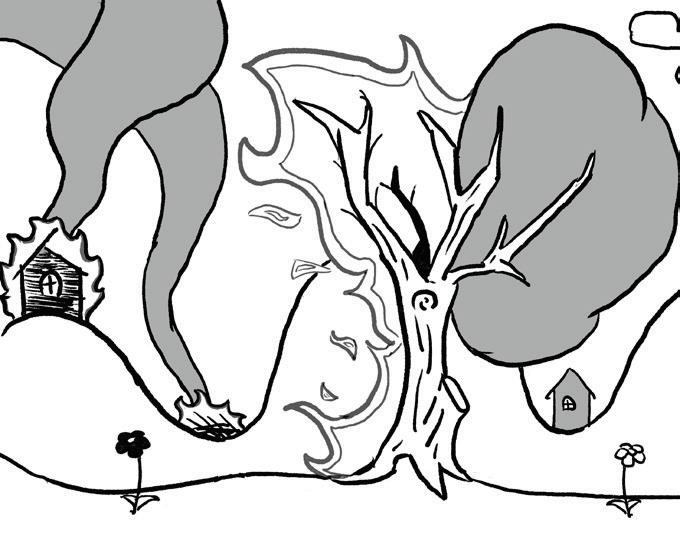
Editorial Cartoon Reconstruction efforts following the Los Angeles fires have been slowed.
SPHS musicians are finding their tune
Lorenzo Jones and Ishan Trachtenberg, Rover
STORY TIGER STAFF
PHOTO JUDAH SILVER, Contributor
R over, a multi-influenced band, began with SPHS junior Lorenzo Jones and California School of Arts junior Roman Camarda, who have played acoustic guitar together since the seventh grade. The group
later expanded in 2024, and is now comprised of six members: Jones on lead guitar, Camarda on vocals, SPHS senior Ishan Trachtenberg on bass guitar, Crescenta Valley High School student Willie Rhodes on drums, and California School of Arts student Aiden Chong on keyboard. Rover draws their influences from multiple genres, experimenting with sounds from both
rock and folk. Artists such as Led Zeppelin, Bob Dylan, and Lou Reed heavily impacted their unique sound. The band originally gravitated toward a classic rock feel, but has recently shifted to more experimental sounds, with influences stretching back to an 80s post-punk vibe.
Rover has performed at small venues all around the Los Angeles area, making an effort to play original songs in their performances.
While they have recorded covers of several popular songs, the majority of their setlist is original. The band’s main songwriter, Camarda, draws his inspiration from historical events — one of the band’s acoustic songs, Madrid, features themes from the Spanish Civil War.
“Some [songs] are cool because they’re kind of historical. Roman’s a huge history nerd, and he has a very storytelling style for a lot of songs,” Jones said. Jones describes the process of writing songs as a collaboration: Camarda typically drafts the lyrics, crafting a basic melody or chord progression, then works with Jones to create a guitar accompaniment.
After devising the different elements, Camarda and Jones will “structure the song out” and then introduce it to the other members during Rover’s practice session.
“And a lot of times we kind of just jam, and it kind of just comes together on its own,” Jones said.
Rover is currently working on producing their first single for Spotify, as well as planning to perform sometime in February at The Smell in downtown Los Angeles. As they continue with their music journey, they will remain avid members of the LA underground music scene.
Mav Swallow, drummer for Bone-or-Shark
STORY ISABELLA JONASEN
PHOTO HELENA EASTERBY
SPHS freshman Mav Swallow, the drummer of the straight edge hardcore band Bone-or-Shark, was a fan turned band member this past year. His interest in the drums began two years ago, and since then, it has become one of his greatest passions.
His interest in the genre as a whole began with his intrigue in rock. He was inspired by artists like the Clash and the Jam, and later discovered the Dead Kennedys, which then slowly drove him under the hardcore umbrella. From then on, this admiration for the genre solidified his newfound moral beliefs in the adoption of the straight edge lifestyle.
The handbook entails guidelines for steering clear of alcohol, tobacco, and recreational drugs for a lifetime, while also promoting a life of self-control. While some may find this to be a far-fetched ideal, Swallow says it is not very hard to follow through with these notions, and that it comes easier than it may sound.
In his relatively new side project, a band called X til the end X, in which he plays drums and does vocals, he spoke about the importance of their track, True til done. The song explores the irritation felt by devoted members
of the straight edge community when others who do not follow the central ideologies of the subculture coin themselves to be among the circle. Along with how it was saddening to witness their uncommittedness and weakwilled nature, Swallow reveals, “It’s a really important thing to me and many others, and then seeing people not care about it is disheartening.”
His self-proclaimed highlight while participating in the band took place at a show at Highland Park’s Oblivion, covering a well-known straight edge anthem called Straight Edge Revenge, which led to a major storm onto the stage courtesy of fellow attendees.
“It was really fun, it was beautiful to see my friends up there singing along, dancing, [and] having some fun,” Swallow said.
As of now, Bone-or-Shark has a total of three records released on Spotify, and soon another will be released. Despite its title and context continuing to remain a mystery, the final results sound rewarding due to the astonishing amount of time spent recording and producing the instrumentals and vocals for 23 tracks.
“If I’m being real, all the time that I’m here [at school], all I want to do is just go to my drum set and play some songs,” Swallow said.
Kian Mannal, pop-rap artist known as Lil k
STORY LEIGHTON KWOK
PHOTO THEO THOMPSON
Lil k, also known as Kian Mannal, is a sophomore musician dedicated to his craft of creating original songs and to being inspired by his experiences.
His dream of writing and producing his own music has always been a part of him since he was young. His first inspiration for creating music was his passion and respect for the art.
Mannal’s motivation, coming from artists like Stevie Wonder and Sombr, allowed him to release singles across many platforms including Spotify, Apple Music, and Boomplay.
“When I was making my first song, my friend who controlled my music and was in the process of uploading it, asked me what my name should be. I kind of went through the options in my head, and I was like, ‘Oh Lil k,’” Mannal said.
Even though the name originally felt generic to Mannal and was not chosen with intention, it ended up being exactly what he needed to push him toward releasing more music. Working with Kiki Studios, Mannal has released a wide range of singles since early 2024 and one album, Believe in Me , that same year.
Believe in Me features his first-ever creations in music, taking a pop-rap approach.
The premise of the album is to show his true emotions towards the people surrounding him. This includes the title track, in which Mannal uses his music to tell his listeners to keep going with their dreams and prove the haters wrong, as he has. It is a message to keep going, no matter what others say.
In 2025, Mannal released six singles. The most recent were HEAVENLY, TOO FADED, and PARTY IN FRANCE (though Mannal has not, in fact, attended a party anywhere in France).
“I don’t really write a full song [when initially creating]. I kind of write a piece of it, like a chorus or a verse, and then I build the song [as he continues],” Mannal said.
This method allows him to create and produce at a looser schedule, noting something down when he gets an idea and seeing where he can take it later on. As of now, Mannal does not have exact plans for releasing music in the future. Especially since he is still in high school, Mannal hopes to get sessions in and release them whenever he can. Still, Mannal’s dedication to his craft remains strong, and he hopes to continue to produce music and follow his passion.
(From left) Senior Ishan Trachtenberg, junior Roman Camarda, and junior Lorenzo Jones perform at Griffins of Kinsale.
Freshman Mav Swallow is on drums for Bone-or-Shark.
Sophomore Kian Mannal is an aspiring musician.
Food policies in different classrooms
At SPHS, food rules in the classroom are a debated topic among both students and teachers.
STORY UMA CHAKRABORTY & ELLIE SONG ILLUSTRATION KRISTEL HOUNG
The eighth rule on the SPHS Class Conduct Standard’s states that “no food or drink will be brought into the classroom without the teacher’s permission.” Due to the inherent flexibility of the policy — “without the teacher’s permission” implies a situation in which food and drink are permitted — teachers and students across SPHS have expressed varying interpretations: Does gum count as food? What if a student missed breakfast? Does the rule still apply?
The debate surrounding food in classrooms is a well-known one, hashed out in Teachers Advice blogs and PTA forums across the internet.
Teachers note that it can distract students from their coursework; New York math teacher Michael Pershan notes that “there is no such thing as silent eating,” which can distract both the student eating and their peers. On the other hand, concerned parents fret that, between grueling academic and athletic schedules, their children won’t be able to find time to eat anywhere but the classroom.
Freshman Aliya Apraku echoed this concern. “Yes, I think students should be allowed to eat and drink in classrooms,” Apraku said. “Some students don’t have time to eat at lunch due to a club, so they should be able to eat and drink in class if they need to.”
Biomedical Sciences teacher Ryan Long, who allows food and drink in his classroom, agreed with Apraku but notes a caveat in the situation that Pershan indicated: in some situations, eating can distract students and their peers. “I find that eating itself in class does not distract often,” Long agreed. “It depends, though; if it’s a loud package or the food smells, that can be distracting, but the most distracting thing is when kids are sharing food in class.”
Senior Lauren Roach added, “I think [eating] is fine if they’re being quiet about it. If someone’s opening a party-sized bag of chips in class and chomping away, that’s different. It depends on the situation, and it’s a problem of respect.”
Long also noted that “hungry kids don’t learn as well,” and encouraged students to take advantage of the free food SPHS provides during brunch and lunch.
Junior Sam Allen noted, “Honestly, if you’re hungry during class, then you’re going to be a lot more distracted than you are if you’re eating. It’s better to eat something and be focused.”
Long also voiced opinions on allowing students to chew gum, which tends to be the most frequently contested exception and violation of food and drink policies. Research has shown that it is beneficial for enhancing focus and attention, but it can also create a mess. Often, teachers or cleaning staff are left to resolve issues of gum discarded on classroom carpets or stuck under desks.
“I’ve seen a lot of kids chewing gum, but I have very few problems with it showing up. If I do find gum on the carpet, then I make at least a temporary ban, because it can be a problem, but it hasn’t been a problem for me here at SPHS,” Long said.
Long also has the rule of “no food during lab work,” which is similar to a rule Biology teacher Diana Yang has. Yang does not allow any food or drink in her classroom.
Beyond the debate about whether food is helpful to students’ learning, Yang talks about the dangers of mixing lab supplies with snacks.“We are a lab class, so we don’t want to get lab stuff mixed with regular food. It’s mostly [an issue] dealing with safety and contamination,” Yang said.
Even with Yang’s strict no food or drink policy, she still understands that there are circumstances in which it should be allowed, such as missing lunch or brunch. She makes these exceptions if students explicitly ask. Similar to Yang, Long recognizes both sides of the argument and agrees that the food policy in classrooms is up to the individual teacher’s discretion. English teacher Denise Gill tends to allow food until it becomes a problem, saying, “If they’re making a mess, and … I’m finding Starbucks cups on my bookshelves … it becomes a distraction … It should be a case by case basis.”
While the concerns of crumbs and spills still linger, a majority of students and staff understand that eating food in class is something that cannot always be avoided.
Netflix’s Stranger Things comes to an end
STORY UMA CHAKRABORTY
DIANA LOPEZ
ILLUSTRATION
The long-awaited fifth season of Stranger Things, written and directed by the Duffer Brothers, concluded its final episode on the last day of 2025. The series followed a group of kids living in Hawkins, Indiana, searching for their friend Will Byers after his mysterious disappearance. They meet a girl with telekinesis abilities, Eleven, and soon realize that the whole situation is tied to a parallel dimension — a warped, sinister version of Hawkins called the “Upside Down.” Season five was released in three parts: two volumes with four episodes each, and the two-hour finale. Before its broadcast, the finale was obsessively theorized and fantasized by fans, many of whom were let down by the final result.
In volume one of season five, fans were excited to see Will gain powers and get a spotlight. The hive mind storyline, which involved Will being able to tap into Vecna’s mind when close enough, started to drop as the season progressed; one of many plot holes overlooked by the writers.
In episode four, while the demogorgons were being burned by flamethrowers, Will felt the same pain as them. However, in the finale, when Will was in the same dimension as Vecna, he did not feel any pain from Vecna’s death nor the Mind Flayer’s.
While there were groups of people who found the finale to be the perfect ending, others felt it lacked the nostalgic feeling of the earlier seasons. There were certain plot holes left unanswered, including the briefcase young Henry Creel opened and Max being able to graduate high school despite being in a coma for two years and failing the year prior.
In many interviews where the Duffers were questioned about these plotholes, they replied with, “We aren’t sure” or “We left it up to the fans.” This upset fans as they felt these responses were weak excuses.
Freshman Indy Dickey shared this sentiment, saying, “A lot of things didn’t feel like they were planned out. It felt like [the Duffers] just wrote it for the [sake of the]
fifth season, and not for the whole show.” There was also controversy around the fight scene in which the party faced the Mind Flayer and Vecna. Throughout the four previous seasons, the Mind Flayer had been depicted as a large, shadowy entity, but in the finale, it was a physical, much less-intimidating monster.
The fight scene had a run time of around seven minutes, which fans believed ended too easily and quickly for a monster that had been tormenting the party since season one. There were not even any appearances of creatures, like demogorgons, demobats, and demodogs, to aid Vecna in his fight.
Along with the fans’ issues with the final battle, a majority of the characters seemed to have plot armor that prevented their death even in the most hopeless situations, upsetting fans even more. A noticeable instance was Nancy and Jonathan’s heart-to-heart when they believed they would die in the lab facility in the Upside Down, only to miraculously survive. Fans have gone so far as to accuse the Duffer brothers of being too scared to kill off characters.
The character they did end up sacrificing, Eleven, did not have a confirmed ending, leaving fans to decide whether it was simply a coping mechanism or a reality. This had mixed reviews overall, with
sidelined, while other minor characters were spotlighted, like Holly and Robin. The show was originally centered around the main party: Will, Mike, Lucas, and Dustin; it shifted towards other characters that were later added on.
While fans were split between shipping Mileven (Eleven and Mike) and Byler (Will and Mike), neither side got the ending they wished for. Mileven shippers felt less chemistry on screen this season, while Byler shippers felt more, though Eleven and Mike were endgame. Almost all of the popular ships, besides Lumax (Lucas and Max) and Jopper (Joyce and Jim), fell out. Jonathan and Nancy’s breakup scene was especially surprising for fans, but it had been planned by the Duffer brothers for a long time.
Due to the many inconsistencies within the finale, fans started theorizing that a secret ninth episode, dubbed “conformity gate,” was going to be released on Jan. 7, 2026. Videos across the internet started popping up claiming that the “real ending” of Stranger Things was yet to come out, and the finale had just been a simulation plotted by Vecna. Netflix even played into this rumor, releasing videos that contained statements hinting at something being released on that day, fueling the theories even more. Fans had gathered around their TVs in hopes of another episode being released, even crashing Netflix, but there was no episode. Netflix announced release dates for some of its new movies and shows shortly after.
In the end, across all five seasons, Stranger Things has consistently received high ratings and recognition. It was a very successful show, and much of the fandom that grew up watching the show is sad to see it end. While the finale was not the ending many fans hoped for, the Duffer brothers, along with the rest of the cast, still delivered a lasting, memorable performance.
TAAGLAA: Thrifting in LA
TIGER’S AWESOME ADVENTURES IN THE GREATER LOS ANGELES AREA
The volume of thrift, consignment, and vintage shops in Los Angeles creates amazing thrifting opportunities. Tiger explored a few of these secondhand shops this winter, including DeeLux, Bridge Thrift, and the Goodwill bins.
T
he first place Anna and I headed was our local Goodwill in Pasadena, which turned out to be an unfulfilling trip. Among a dozen nylon, rainbow-colored shirts, we found countless Shein items and other clothes that had us questioning when they were ever in style.
The store was organized by gender, style, and size. The prices were reasonable, ranging from $5 to $15 for most items. After searching through racks mainly consisting of fast fashion pieces, Anna found a pair of light-washed jeans and a simple red top. However, after realizing that they had removed the changing rooms post-pandemic, she decided to leave both items behind. While we felt disappointed by the selection, we had fun joking around and pointing out strange finds.
The next day, we ventured to Figueroa Street in Highland Park, lined by shops, cafes, and restaurants. Our first stop of the day was a personal favorite of mine, DeeLux. The family-owned consignment shop is thoughtfully organized and nicely decorated with vibrant walls and dozens of racks of clothes. We sifted through the clothing, impressed by the combination of vintage and more modern, trendy pieces. After almost an hour of looking through the racks, we went to the fitting rooms, both of us with several items in hand.
I was heartbroken when a beautiful, vintage leather jacket’s sleeves barely came past my elbow and slightly jealous when it fit Anna like a glove. My disappointment quickly disappeared after trying on the rest of my selection. After going back and forth many times on what to buy, we each decided on one item: Anna, the red leather jacket, and I, a blue polo (that I later came to realize was a little boy’s shirt, but fit perfectly nonetheless). Their prices ranged from $12 to $30 for tops, roughly $30 for pants, and anywhere between $20 to $60 for jackets, sweaters, and hoodies. They also had a special rack that consisted of designer brands and unique, high-quality pieces with much higher price tags. In addition, they have their own brand of
jewelry and other accessories. Bags in hand, we went next door to Wasteland, which carries many designer brands and vintage pieces. After looking at a couple of price tags, we realized that they did not sell much in our price range and did not stay long. The store stocks hundreds of unique and fascinating items. With the money and the time, it would be an interesting place to spend a couple of hours wandering about.
We crossed the street and entered Bridge Thrift, which is nearly identical to a Goodwill or Salvation Army in terms of price and selection. Similar to our Goodwill trip the day before, we left empty-handed.
The following Sunday, we headed out again, this time joined by our track teammate Sophia on our way to the Goodwill Outlet, more commonly known as “the bins.” The bins are notorious for two things: seeing (or touching) things you wish you could forget and having surprisingly amazing finds. The location on San Fernando Road was huge and had dozens of large blue bins lined up in rows across the room. Thats where the Goodwill bin’s organization ended.
Clothes of all styles, sizes, and quality were mixed in each bin, forcing shoppers to sift through dozens of bins. We grabbed an oversized cart near the entrance and dove in, immediately wishing we had brought gloves. Fortunately, the weirdest thing we found was a neon teal bra adorned with large coral tassels, bright yellow embroidery, and multicolored sequins.
After looking through a row of bins for about 30 minutes, we made our way to a large group of people, curious to see what they were gathered around. A yellow barricade had been propped up around an empty space that workers were pushing new bins into. The crowd was restless, elbowing others out of the way and grabbing items as the bin was pushed into position. Once the barricades were removed, people began rapidly digging through the clothing. They moved around the row of bins like it was musical chairs, scanning each one quickly before moving on to the next.
Anna, Sophia, and I tried to keep up but decided that we preferred looking through the older bins and waiting until
the crowd cleared out. After spending a few hours at the bins, each of us had secured a hefty pile. We parked our cart in a quiet corner and held up our items, pulling them over our clothes and using our phones as mirrors.
A generous stranger saw the items in our cart and offered us her discarded Brandy Melville finds, which we enthusiastically accepted. To Anna’s and my dismay, Sophia snatched an adorable yellow baby tee from the woman’s pile of stylish rejects. After briefly debating who should keep said shirt, Anna and I gave in and headed to checkout. The bins charge $1.50 per pound of clothing, and each of us spent about $10 for a small haul of tops, jeans, and sweaters. We left feeling very accomplished as well as eager to wash our hands.
After exploring five thrift stores around Los Angeles, my favorite was by far DeeLux. The store is well-organized, which made it much easier to navigate compared to the bins, and well-stocked with a combination of vintage and trendy pieces that perfectly matched my Pinterest boards. Their prices were reasonable, and the staff was helpful and very sweet (and very well-dressed, of course). Those looking for carefully curated clothing and the promise of high-quality finds without a desire to search through dozens of unorganized racks or bins should definitely check out Wasteland or DeeLux. Those who are patient and willing to spend serious time digging through bins and racks should take a trip to any nearby bins.
Though I preferred some over others, I ended my thrifting adventures impressed by the variety of stores and selections, and grateful to see so many people interested in buying secondhand.
STORY HARRIET GODSON
PHOTOS ZOE CHEN
1) A curved mirror on DeeLux’s ceiling reflects the store’s simple, spacious interior. 2) DeeLux, located on Figueroa Street in Highland Park, is cozy and uncluttered. 3) DeeLux features an impressive shoe collection. 4) DeeLux lies next store to Wasteland, another, more upscale, thrift store. 5) Shoppers can
Thirteen years later, Eric Shiroishi is ready to be done
After over a decade of
gymnastics, senior Eric Shiroishi is nearing the end of his athletic career.
STORY SONYA SHIMPOCK
PHOTO LUCINDA ERNST
When he was in kindergarten, gymnastics was hardly on senior Eric Shiroishi’s radar. He played baseball and soccer, and his only exposure to the sport that would govern the next 13 years of his life was tangential: he would typically tag along in the car while his sister was dropped off at the gymnastics gym she practiced at.
“We’d always have to drop her off before going to another practice thing, and I saw it, and wanted to give it a try. So I gave it a try, and then I just didn’t stop,” Shiroishi said.
Now, at 17 years old, Shiroishi is a Level 10 gymnast — the highest level most high school athletes compete at. He practices year-round at a club gym in Alhambra, and routinely flies to meets across the country to join other peers in his sport during the competition season. This year, Shiroishi has found himself in Las Vegas, in Manhattan Beach, and at the Stanford Open.
At these events, Shiroishi cycles through a custom routine consisting of both compulsory and optional skills judged on form and difficulty, which makes him eligible to qualify for National Championships. There are six different events — floor exercise, pommel horse, still rings, vault, parallel bars, and horizontal bar — which Shiroishi describes as almost “six different sports.”
“Some of the basics transfer, but all the skills on the events are still very different,” Shiroishi said. “[There’s] a chase — there’s always something new you can work on, on any different event. You can always get stronger, you can always get more flexible, and you can always improve your technique.”
Senior Eric Shiroishi is a Level 10 gymnast. He has qualified for the National Championships twice.
Shiroishi’s efforts at these meets have led him to qualify for National Championships two separate times. Along with the opportunity to compete at the top of their division, athletes who qualify for Nationals — many of whom proceed onto Division I athletics — all receive a custom competition jersey from the organization.
“[The jersey] was something I’d always visualize. And then once I had it, I remember right before the meet, I was looking at myself in the mirror with that jersey. I really made it, but it took a long time and a lot of
work,” Shiroishi said. “It was the most gratifying achievement of my life. I can say I really worked for it, and there were no shortcuts to be taken.”
Shiroishi does not take shortcuts in his academics either. While many student athletes struggle to find a way to split their time between academics and athletics, Shiroishi has found that the two disciplines balance each other out.
“I find that doing gymnastics is a great way to escape from school, to relieve some of the pressure and some of the stress, and vice versa. So if I’m really stuck on a gymnastics skill, I come to school and I’m like, okay, I can work on something else here,” Shiroishi said.
Lately, as the most senior athlete in his gym, Shiroishi has been helping others improve their technique, too. Because differences in form and execution can be minute, coaches are only able to focus on one athlete at a time, so Shiroishi will give younger members of the gym critiques on their form when coaches are not available.
“I see [the other athletes] as little brothers, and it’s really cool to see them get new skills or learn new things, or push past the difficult barriers that I myself had to push past. When I see that, I can see a younger version of myself there making that skill for the first time or doing something that I was scared of,” Shiroishi said.
Shiroishi hopes to return to Nationals this year, but either way, this will be his last season as a gymnast. He does not plan to continue in college.
“It’s kind of bittersweet, but at the same time, I’ve been going at this for a really long time, and I’ve done pretty much everything I wanted to do. I’m ready to be done,” he said.
The 2026 baseball season commences with high hopes
STORY ELLIE SONG
PHOTO MAC SHROPSHIRE
The 2026 SPHS baseball season has officially begun, and Head Coach Jaime Garcia, who has coached varsity baseball since the 2017–18 school year, is under a lot of pressure to create a practically new varsity team, due to the graduation of the 16 seniors who made up almost half of the team last year.
The baseball teams, including junior varsity and frosh, have been training since the middle of the 2025 summer, honing all parts of their performance, including pitching, batting, and more. However, while the team may work to improve overall performance, their offense appears to be at the forefront of their focus, based on their previous 2024–2025 season. Last year, the team had a base batting average of only .182, an on-base percentage of .280, and zero home runs. This apparent gap signified that the team struggled to make consistent contact with the ball and get on base, leading to few scoring opportunities.
Overall, the team’s offensive weakness last year likely resulted in them going 2-10 in the Rio Hondo League standings and 8-20 in the California Rankings. With an abundance of new players, the team can iron out its performance before the season kicks into gear, starting with preseason training.
“This past off-season was the first time we actually ran a summer league,” Garcia said. “We graduated 16 guys, so we felt as if we had to put in a little more work than what we normally do to prepare for this upcoming season.”
Due to the graduation of half of the players on varsity baseball last year, the freshmen and incoming players have stepped up to give their all into the game which they adore and respect.
“The freshman class is filled with talent,” senior Aaron Kawaski stated, who has been on the varsity team at SPHS throughout his four years of high school. “Last year we had a lot of seniors and that was supposed to be our strong suit, but this year we have mostly younger guys who are hungry for some varsity action.”
Freshman Jonah Bangar, who has played baseball since he was three years old, joined the SPHS frosh baseball team, ecstatic to be a part of the welcoming baseball community.
“I have always heard good things about the baseball team at the high school, and I love baseball so much so I decided to try out and I made the team,” Bangar said.
This year in particular, Bangar noted how the baseball environment has been known to be an extremely kind and embracing atmosphere.
“We are just one big community and [baseball] really brings us together,” Bangar said. “Our coaches help create a big community and bring everybody together.”
This year stands out compared to past years due to the team’s camaraderie and the relationship the group has together. This bond formed years ago, as a majority of the incoming players were first exposed to baseball in their earlier years through South Pasadena’s Little League. Paired with South Pasadena being a small town, players ended up forming bonds that lasted throughout their time playing baseball, all the way to the team formed this year. Now, after training together since the beginning of the summer, they have created unforgettable memories in and outside of baseball, whether that be going to the gym together, or grabbing a snack from Hi-Life.
“I would say I’m very close with my teammates that are [in my grade] due to almost all of us playing Little League or travel ball together,” Bangar said. “[While] I only know the [upperclassmen], like the sophomores, juniors, and seniors, a little bit because I have just met them.”
Practices typically begin as soon as fifth or sixth period concludes, and the team makes their way to the baseball field where they prepare for practice to begin. Practices typically start off with warm-ups, which consist of stretching and throwing. The team then splits into smaller groups to do drills that aid in developing basic skills.
“The team covers all aspects of the game. We got really good pitching, we got guys that can hit and run. [I feel as if our group of players] don’t lack any part of the game, so I feel like we’re pretty strong this year,” Garcia said.
With the team’s apparent potential, Garcia is gunning for a league title this year, alongside a chance at competing for a CIF championship. The coaches have been working equally hard with all three teams, making sure they build off their performance from last year.
“Unfortunately, we had a rough last year. The ball just didn’t roll our way, and we did not make the playoffs,” Garcia stated. “[Nevertheless], I think we’ve done a really good job, and I think we’re ready to roll out next month.”
Senior Jesse Li throws a pitch during baseball pre-season practice. Baseball season is set to start in March.
The NFL’s “amazing” chaos excites SPHS football fans
The NFL’s inconsistency, contrasting with past seasons, might make the 2025–26 season one to remember.
STORY GAVIN BARTOLOME & MAC SHROPSHIRE ILLUSTRATION JAYDEN ZUMBA
T he NFL has been through an upturn these past couple of years, but this season might be its chance to restore fans’ interest in the sport while introducing many new aspects to the league. Viewership readings seem to agree as well, as football has climbed the charts, averaging 18.7 million views for every game, a 10 percent increase from the 2024–2025 season. Between Patrick Mahomes’s torn ACL, the Patriots flipping their winloss record from last season, and Netflix taking a piece of the NFL’s broadcasting pie with their new streaming services, fans have continued to be shocked by the changes in the league.
“I like it. I think most people like it when not just one team is dominating a sport,” sophomore Mateo Phippard said. “You get to see new faces and new teams compete for a title, which in my opinion is more exciting than seeing Patrick Maholmes and the Chiefs go for the Super Bowl again.”
Many people agree that this NFL season has defied previous predictions. The Patriots are in the AFC playoff picture for the first time since 2018. The Broncos and Bears have seen astronomical success with their 2024 draft quarterbacks. Meanwhile, dynasties like the Chiefs and Eagles have been snuffed out, leaving fans on the edge of their seats.
While many unexpected teams have willed their way further into the playoffs, some teams have faced a disappointing end to their season. Alongside the Colts and Falcons, who put up a strong push this year, both going 8-9, the Chiefs, Ravens, and Browns made a
UPCOMING GAMES
lackluster performance. In particular, the Chiefs ended up going down in flames, ending the season 6-11 with many people fatigued by their supposed dynasty plan. Especially in contrast with their run during the 2023–2025 seasons, distaste towards the team may become exacerbated due to this.
“I would say this is probably one of the better NFL seasons I’ve seen … The games have been entertaining us, for sure, but it’s also been really different,” senior Danny Butler said. “The teams we are seeing that are doing well, our new teams … it’s not following ... no Chiefs, Eagles aren’t really good anymore. No Borough, no Jackson, right?... It’s
really refreshing to see some new teams and new faces really start to take the spotlight.”
Such major upsets have induced ten coaches to either be fired or depart from their teams during the annual Black Monday mass firings. This has caught the Bills, Giants, Dolphins, and other coaches as teams poise themselves to make a better attempt next season.
“Last year’s playoffs weren’t nearly as good as this year’s playoffs,” freshman Liam Painter said. “We kind of knew how it was going to go. Everyone kind of saw it was going to be the Eagles that won. And this year, you kind of don’t know who’s going to be able to make it. Anyone could do it.”
FRIDAY, JAN. 30TH @ 5:30 PM, GIRLS’ SOCCER VS. TEMPLE CITY AT HOME
Girls’ basketball head coach changes after 10 years
After 10 years of coaching the South Pasadena girls’ basketball team, head coach Cody Masden left for Sacramento to pursue a job opportunity following the Tigers’ home game against La Cañada. Masden had grown up playing for South Pasadena on the same team as former and current assistant coaches Kevin Kohler and Nicholas Rico creating a bond that led to the trio’s success in coaching the team. Now, the current head coach is Kevin Kohler, who has picked up where Masden left off as the season carries on.
“Coach Cody Masden was a very offensive-minded coach who believed in star power and finding advantages in mismatches. His overall record speaks for itself, as I believe he is the winningest coach in the program’s history,” Kohler said. “Although I have my own style I’m trying to imprint onto the team, his style will still live on in the players that played under him.”
Backed by a decade’s worth of experience, Masden left a lasting legacy on the team, with an overall record of 73-11
for league games, or an 87 percent win rate. During his time leading the team, the Tigers never finished below second place in the Rio Hondo League, and even went so far as to go 26-3 overall in their 2021–22 season and 10-0 in their 2023–24 season within the Rio Hondo League.
Last year, the team finished first in the Rio Hondo League, going 9-1, while overall, they went 19-8. The Tigers earned a spot in the CIF-Southern Section Division 2AA playoffs and advanced to the CIF-SS quarterfinals, where they lost by a hair to Mark Keppel, falling 49-45.
As a 2010 SPHS graduate, Kohler shares a connection to South Pasadena just as Masden did; he played on the boys’ varsity basketball and volleyball teams. Kohler has been coaching for South Pasadena for six years, creating a close bond within the team that has made him a natural pick to succeed Masden in leading the team.
“I am thrilled to remain a part of the South Pasadena community. South Pasadena athletics have a very special homegrown feel that builds lasting roots to the city and forever friendships,” Kohler said.
So far this year, the girls’ basketball team has a record of 10-8 overall and a score of 2-0 in the Rio Hondo League, showcasing the team’s capability under Kohler. While Kohler still intends to honor Masden’s coaching from past years, he hopes to leave his own mark on their playing style.
“I am almost the polar opposite in style [from Masden], as I would categorize myself as a defensive-minded coach who believes in ball movement and team scoring on offense,” Kohler said. “However, we are most similar in our focus on player development and growth, as we are both very much player coaches.”
As the season continues, Kohler is looking to build on the team’s performance during games while maintaining consistency and teamwork throughout the remainder of the season.
“My goal as a coach is to teach and empower the players so that they can be self-sufficient,” Kohler said. “I love seeing players execute reads and tactics on the court on their own accord. The growth aspect of coaching is undeniably the most satisfying aspect, seeing players come into their own and transition from students who play basketball into basketball players. Ultimately, I just want them to embrace the joy of the sport and to let it put a smile on their face.”
Senior varsity team co-captain Emma Jay Johnson says the team transitioned easily under Kohler and hopes that the team will continue to improve their performance on the court.
“We miss Coach Cody, who was great, but the team gets along so well that it was a smooth transition,” Johnson said. “Coach Kev started filling the head coach role really over [the] summer. He’s been part of the program for so long already, so the team was well-adjusted before the season even started. A lot of players have also stepped up as leaders, which made the transition seamless.”
The basketball team adapted quickly and stayed determined to achieve their season goals even with the change in leadership.
“We’ve always had and will always have a mindset of winning and giving maximum effort. A new coach doesn’t change that,” Johnson said.
STORY KHLOE YUEN
PHOTO MAC SHROPSHIRE
New girls’ basketball Head Coach Kevin Kohler, who was formerly an assistant coach, has taken over for Cody Masden.
Sidewalk Chalk
ZOE CHEN
Girls’ basketball beats Blair 55–11 on Senior Night
STORY UMA CHAKRABORTY
PHOTO MAC SHROPSHIRE
Girls’ basketball crushed the Blair Vikings in a home game on Friday, Jan. 23, winning the game with an impressive 55–11. While celebrating senior night for the girls’ basketball team, the Tigers displayed excellent offense and teamwork throughout the game, which culminated in a strong finish.
“I thought our game was really fun. We got everyone to score, [and I’m] super proud of all my other seniors,” senior point guard Maddie Park said.
The Tigers started off strong and scored two points within the first two minutes of the game. With many fouls from the Vikings’ side, the Tigers gained two more points from free throws. The Tigers’ defense kept the Vikings from scoring more than three points, and their offense allowed them to end the quarter with a strong lead.
The second quarter started with the Tigers in a heavy lead. The Tigers’ offense was strong, stealing many of the Vikings’ rebounds to score their own. Feeling the pressure, the Vikings started to fumble passes and dribbles, allowing senior small forward Brylee Woo to steal and score another two points for Tigers.
With two minutes left in the quarter, junior shooting guard Kara Wang scored a three point shot bringing the score to 22–3. Less than 30 seconds later, the Tigers scored another layup. When the crowd started to shout the countdown of the last five seconds of the quarter, a Blair player threw the ball from halfcourt in a last minute attempt to score but missed right as the clock hit zero, ending the quarter at a whopping 27–3.
Pep then took the court along with some Tigers-intraining, a group of young children from the community, to perform a routine to the song Cake by the Ocean by DNCE in celebration of both community spirit night and the girls’ basketball senior night.
As the match resumed, senior point guard Audrey Estanislao ran the ball down the court and scored the Tigers two points, furthering their high lead of 29–3. The Tigers’ defense dominated the court throughout the night, shutting down every attempt by the Vikings to steal and shoot the ball.
While the Vikings were to slip past defense to score two points once, junior small forward Emi Nakamura quickly shot back to match the Vikings with another two points for the Tigers, expanding the astronomical gap to 35–5. Spurred by their definitive lead, the Tigers managed to return every hoop the Vikings made within 30 seconds for the continuation of the quarter. The Vikings faltered, unable to muster up the energy to play, while the Tigers continued to have a blast, scoring point after point, and ended the fourth quarter with a score of 48–8.
Tiger spirits were especially high when the fourth quarter started. Three minutes into the quarter, the Tigers were awarded two free throws, making both, bringing the score to 50–8. Senior shooting guard Emma Jay Johnson followed up with a three point shot with just under two and a half minutes left.
Towards the end, even when the Tigers had secured a win, they kept giving their full energy in every pass and play which the crowd matched, cheering with every point scored. The Tigers ended the game with a great lead of 55–11.
“It was a really fun game, and I’m glad we got to celebrate our seniors. This is my last season, so it was just great to be with all my teammates and have a lot of fun, and of course get a win,” Johnson agreed.
The girls’ basketball team later faced the San Marino Titans in an away game on Monday, Jan. 26. South Pasadena won 55–35.
I
lost the game
I played the board game Othello for the first time over break. Othello is a strategy game for two players; players take turns placing black and white tiles onto a grid-like board with the intent to have the majority color on the board. As I tore off the thin plastic film from the brand new box, the kind that’s got to be terrible for the environment, I told myself this game would be a quick and easy win. I didn’t bother to read the directions; I set up the pieces as I was somewhat sure they were supposed to be and launched into the game against my dad on our worn living room sofa.
It’s not like I was completely clueless. I’d played eOthello online before, and I am, or at least used to be, an avid board game player. I had a general understanding of the game and assumed playing on the physical board would be nothing if not the same as eOthello. Nope.
I realize I often underestimate my reliance on a lot of things. I don’t mean to be overly philosophical or introspective; I’ll leave that for future Tiger columns. I mean that when I played the board game Othello, I was caught completely off guard by how little I understood the game’s rules. I am embarrassed to say that when I played eOthello, my only job was to click a square that was giving lucky vibes, zone out while the computer did everything else, and wait for the computer to call my next turn two seconds later.
In eOthello, the computer prevents the player from making illegal moves, and as a result, I didn’t actually understand the rules of the game. Also, the computer makes moves that are kind of dumb, and it’s quite possible to win eOthello in under a minute with zero thought, concentration, or strategy.
That’s how I played eOthello: mindlessly. I was a zombie. I played eOthello to kill time, or to put off another task, or to look busy when I had nothing to do. I won the majority of the time without thinking very hard about any of my moves, and at some point, I stopped seeing eOthello as a game of strategy. I lost sight of the strategy in a game that is fundamentally built on strategy; I lost the purpose of the game.
The cling-wrapped board game Othello box was the perfect way to slap me out of my self-induced haze.
The physical Othello board game comes with the marvelous clunk each smooth plastic tile makes as it drops onto the green velvet board; the weight of each tile feels so much more meaningful than the click of a cursor. In playing board game Othello, I learned the rules to a game I had played for years digitally. I had to be fully present, criss-cross applesauce on the sofa, head hung over the board in concentration. I had to think about the moves I was making and plot how I could stay three steps ahead.
When I saw the opening for a move that would seal my win on the physical Othello board, I was hit with a joyous, golden feeling that I value more than a thousand mindless computer wins, because I actually did it myself. It wasn’t luck or a computer’s guidance. Realizing that, I found why I was playing. I found the game.
Senior Maddie Park (center) jumps to shoot in girls’ basketball’s Senior Night game. Basketball won 55-11 over Blair.