
Mogwai – Ether
Soggy Bottom Boys – I Am a Man of Constant Sorrow
Carly Simon – Let The River Run
Jessie Buckley – Glasgow (No Place Like Home)
Prince – Let's Go Crazy
Goblin – Tenebre
Daft Punk – Derezzed
LCD Soundsystem – new body rhumba
Anna Meredith – Nautilus
Trent Reznor & Atticus Ross – Challengers: Match Point
Beyoncé – Listen
Howard Shore – Concerning Hobbits
Seal – Kiss from a Rose
Dolly Parton – 9 to 5
True Blood soundtrack
Paramore – Decode
Liza Minnelli – Maybe This Time
Frankie Valli – Grease
John Barry's soundtrack from Midnight Cowboy – it has to be enjoyed as one!
Listen to this playlist on Spotify — search for 'The Skinny Office Playlist' or scan the below code

Issue 241, February 2026 © Radge Media C.I.C.
Get in touch:
E: hello@theskinny.co.uk
The Skinny is Scotland's largest independent entertainment & listings magazine, and offers a wide range of advertising packages and affordable ways to promote your business. Get in touch to find out more.
E: sales@theskinny.co.uk
All rights reserved. No part of this publication may be reproduced in whole or in part without the explicit permission of the publisher. The views and opinions expressed within this publication do not necessarily represent the views or opinions of the printer or the publisher.
Printed by DC Thomson & Co. Ltd, Dundee



Meet the team
We asked: What is a film that gives you a modicum of hope for the future? Senior

Rosamund West Editor-in-Chief "Triangle of Sadness."

Peter Simpson Deputy Editor, Food & Drink Editor
"Wall-E. OK, so they wrecked everything, but they dared to start again! And the little binman robot fell in love and made friends!"
Myrtle Boot Clubs Editor "Rocky Balboa (the sixth one). If Rocky can put up a good fight against the heavyweight world champion in his late-50s, then there's hope for us all."

Laurie Presswood General Manager
"It's Complicated. There's so much time left for messy love triangles and not being married to Alec Baldwin."

Sandy Park Commercial Director "The Truman Show."

Eilidh Akilade Intersections Editor "Bridesmaids, I love weddings and everything working out in the end."

Anahit Behrooz Events Editor, Books Editor "My Cousin Vinny."
Rachel Ashenden Art Editor
"Kristen Stewart's remake of Twilight. She says she's up for directing it. Someone give her the money."

Phoebe Willison Designer "Thelma & Louise." Production
Dalila D'Amico Art Director, Production Manager "The Road. End times, no joy, no future, but at least we agree on not eating people."

Joanna Hare Business Development Executive
"Die, My Love – let's be a bit more brutally honest about the difficulties of motherhood shall we."

Jamie Dunn Film Editor, Online Journalist "Planet of the Apes. Humans haven’t been doing too hot recently, so I’m looking forward to the apes’ take on civilisation. Plus, who doesn’t like bananas?"

Polly Glynn Comedy Editor "I saw Zootropolis 2 on my own in the middle of the day quite recently and thought if we could all just be a bit more Gary D’Snake (not Judy Hopps, cos acab), the world would be a much better place."
Ellie Robertson Editorial Assistant "I love the crew in Alien for being blue collar and gender blind and caring more about their cat than their employer. Shame about everything else."
Ema Smekalova Media Sales Executive
"Mad Max: Fury Road. You know some crazy shit is gonna go down but at least the music scene is thriving."

Emilie Roberts
Media Sales Executive
"K-Pop Demon Hunters harks back to an era of girl power that I find very hopeful indeed. No more 'I'm Just A Girl!' nonsense going forwards plz."

Tallah Brash Music Editor "Stranger Than Fiction. If there's hope for Harold Crick, there's hope for all of us... maybe?"

Mika Morava Theatre Editor
"Nomadland. First film I saw in the cinema after lockdown times. And per current discourse, Chloé Zhao can emotionally manipulate me whenever she wants x"
Words: Rosamund West
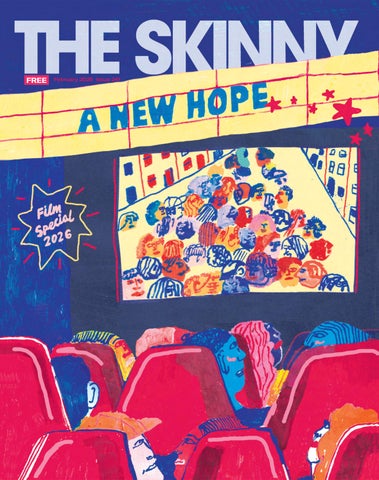
As we limp to the end of a seemingly endless January, February looks like it holds some cause for (measured) optimism. This issue is a film special and also a bit of a love letter to Glasgow.
The city’s beloved Film Festival returns with a new Head of Programme, longtime GFT programmer Paul Gallagher, who shares a little on his long-term vision for GFF as a festival for everyone in Glasgow.
Our lead feature is an interview with Felipe Bustos Sierra, the director of GFF opening gala Everybody to Kenmure Street
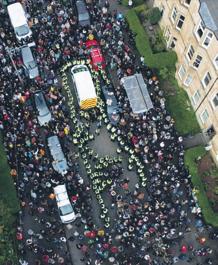
The film tells the story of the day in 2021 when the local community of Pollokshields came together to prevent their neighbours from being deported, a key moment in Glasgow’s long and proud history of direct action, and also an extremely pertinent study against the backdrop of worsening anti-immigration rhetoric at home and abroad. The screening swiftly sold out, which perhaps reflects the pride Glaswegians feel at this demonstration of the power of community and solidarity.
The Film Special continues with interviews with a trio of directors whose award-nominated films have a wider release this month. Brazilian writer-director Kleber Mendonça Filho takes a break from presidential phone calls to introduce The Secret Agent, while Iraqi filmmaker Hasan Hadi discusses his directorial debut, The President’s Cake, and Oliver Laxe offers some insight into the development of survivalist road movie Sirāt.
Scotland on Screen talks to Edinburgh-born New Yorkbased film director Seán Dunn, whose entertaining feature The Fall of Sir Douglas Weatherford was inspired by Dunn finding himself absorbed by a Harry Potter grift tour in the heart of Greyfriars Kirkyard.
Books sticks with the theme and meets poet Sophie Robinson, whose debut novel, Prairie Oyster, tells the story of a young, successful filmmaker as she navigates sobriety. Theatre, meanwhile, looks forward to this year’s Manipulate Festival, the annual celebration of animated film, puppetry and visual theatre, by looking at two productions that explore the absurdity of empire.
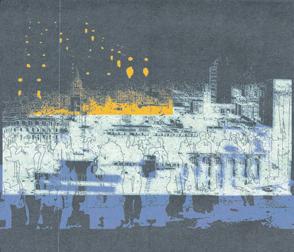
Our centre spread is a poster by Olivia Priya Foster, documentation of her work Black Sheep, which received The Skinny Award at RSA New Contemporaries last year. The second half of the magazine begins with Intersections, which looks at supper clubs as a space for community and identity, talking to some of the groups who’ve sprung up in Glasgow. We also explore the weight of capitalism on perimenopause and how our bodies are sacrificed to the economic systems which constrain them.
Returning to Glasgow, one writer reflects on The Blue Nile’s A Walk Across the Rooftops and its evocation of a city’s built environment and psyche 42 years on from the album’s release. The physical city has changed dramatically, but the spirit and struggle continue – it’s a moving piece of writing, particularly if you have any connection to the city.
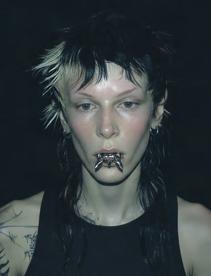
Music meets Highland-born siblings Brèagha and Onnagh Cuinn of Bratakus to talk DIY punk up north as they prepare to release their second album, Hagridden. Clubs meets Glasgowbased producer KAVARI to discuss the state of EDM as she prepares to release her new EP PLAGUE MUSIC. Comedy talks to Irish stand-up Roger O’Sullivan about Metallica for some reason, and Art takes a walk through Michael Fullerton’s exhibition at City Arts Centre, intimate portraits of asylum seekers giving voice to migrant stories.
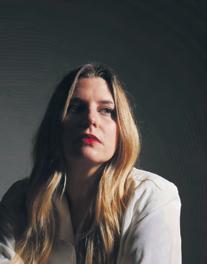
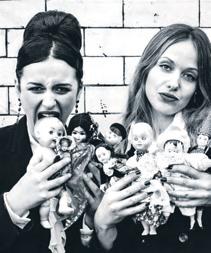
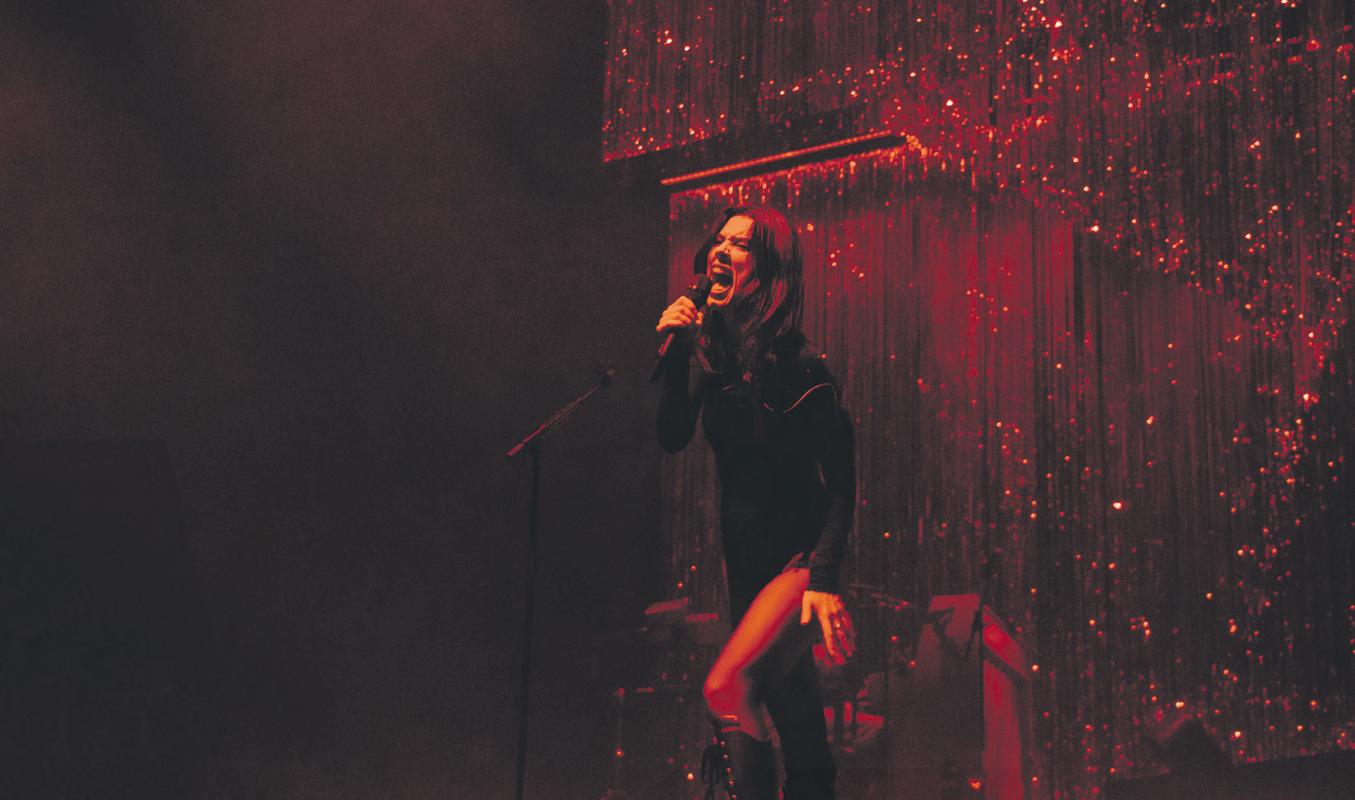
We close with The Skinny on… Juanita Stein of Howling Bells, who dreams of life as an albatross. Don’t we all.
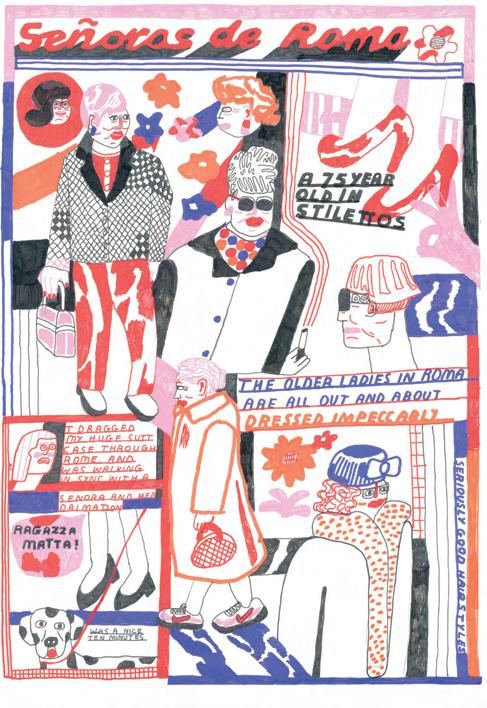
Cover Artist
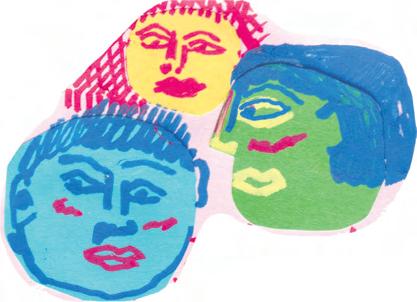
Jesse Warby is a multi-disciplinary illustrator specialising in storytelling about everyday culture, food and behaviours. Her artwork consists of bold, vibrant drawings and hand drawn typography that incorporate a variety of mediums, including illustration, fabric, thread, and ceramics.
@messewarby jessewarby.com
This month’s columnist reflects on leaving flowers for our loved ones, with loved ones
Words: Carlin Braun
Ialmost forget to buy flowers. Bringing flowers seems like the kind of thing you do when you visit a grave. It’s what adults are meant to do. I don’t think my grandfather would’ve really cared what kind of flowers I buy. Still, I hover. It matters to my grandmother. Red star-shaped petals flash against dark green leaves as I stand in line. The cashier smiles politely as she rings up my total.
My grandmother’s eyes – cornflower blue like my father’s – light up when she sees me, like they always do. I lay out breakfast for her: porridge, a ripe mandarin I take care to peel, and coffee with a touch of milk. She asks me what it is we’re doing; I tell her we’re visiting my grandfather. I make no mention of the fact that we’ve already had this conversation.
She tries to leave the house without a jacket; with a bit of convincing she puts one on. For a moment the only sound in the taxi is the low hum of the engine. “This is my granddaughter, she’s visiting from out of town.” The taxi driver smiles, mildly amused. My grandmother always makes sure to introduce me to anyone we meet.
Wet grass squelches under worn boots as I help her steady herself in front of my grandfather’s grave. I lay the flowers down on the damp dirt, taking care to place them according to her exact specifications. I wish I’d gotten a card, or something. Anything nice.
Her face breaks out into a smile. “Thank you for taking me, the flowers are perfect.” It catches me off guard. I disappoint myself all the time, yet I never seem to disappoint her.
“Of course.”
Glasgow Film Festival
Glasgow Film Theatre, Glasgow, 25 Feb-8 Mar
Glasgow Film Festival has a new director at its helm and he has put together a doozy of a programme. The festival this year kicks off with Everybody to Kenmure Street, a stunning documentary about a 2021 Home Office raid in Pollokshields by the director of Nae Pasaran, and ends with James McAvoy’s directorial debut California Schemin’, with films starring Josh O’Connor, Adam Driver and Charli xcx in between.
Magdalena Bay
O2 Academy, Glasgow, 7 Feb, 7pm
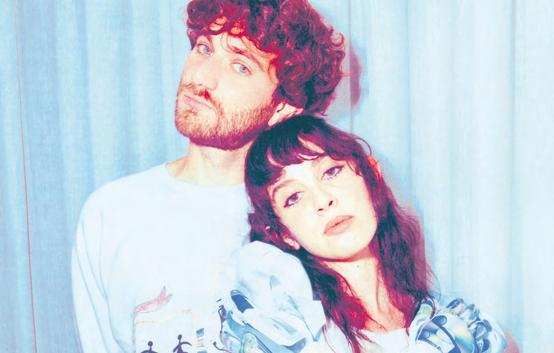
Pop doesn’t have to be upbeat. Miami duo Magdalena Bay may have bonded over their love of Charli xcx and Chairlift but their own offering in the decade they have been making music is slightly edgier, playing with speculative and dystopian themes to weave together paranoid dreamworlds. Their latest album Imaginal Disk is a masterpiece of eerie synthpop experiments.
The shortest month of the year is stubbornly chockablock with festivals, gigs, exhibitions and club nights.
Compiled by Anahit Behrooz
Bahar Noorizadeh: The Debtor’s Portal Cooper Gallery, Dundee, 13 Feb-11 Apr
The largest solo UK exhibition to date by IranianCanadian artist Bahar Noorizadeh, The Debtor’s Portal brings together science fiction, political theory and experimental artistic practices to explore new imaginaries of post-collective futures. Comprised of two installations by Noorizadeh, as well as a work created in collaboration with Scottish artists entitled Reuter in Tehran, this exhibition is a provocative and timely investigation into the illusory infrastructures of economics and power.
The Garage, Glasgow, 4 Feb, 7pm Ho99o9 (pronounced Horror, in case you want to orally procure tickets) are a New York punk-rap outfit whose music centres on anti-authoritarian ideas: think anti-military industrial complex, anti-police, anti-racism, pro-revolution. Now on their third fulllength album filled with their signature blend of hardcore rap with glitchy electronic sounds, their music is provocative both thematically and melodically.
Various venues, Edinburgh, 4-10 Feb
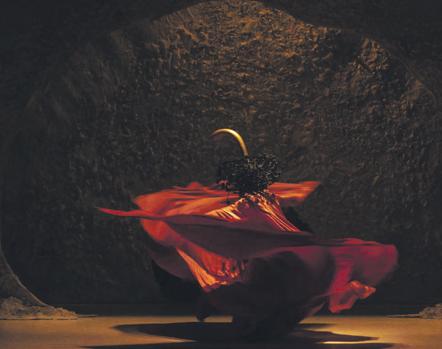
It’s been five months since the Fringe finished, which means it is high time for some weird and wonderful theatre in Edinburgh. Manipulate Festival, Scotland’s festival dedicated to all things puppetry and visual and physical theatre is answering the call: highlights from the programme include Tell Me, a new circus piece from Sadiq Ali exploring HIV narratives, and a bold new staging of Stravinsky’s The Rite of Spring
People’s
The Cords Beat Generator Live!, Dundee, 27 Feb, 7pm
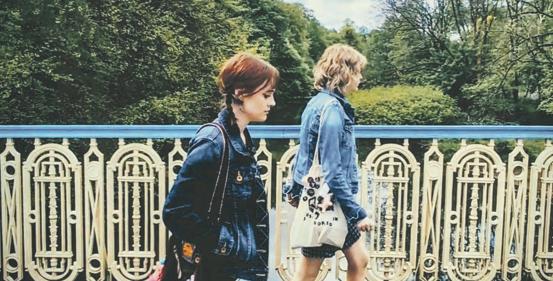
Homegrown Scottish indie-pop heads to Dundee in the guise of Glaswegian sister act The Cords, whose debut album was released last year. This is their second UK tour – if you’re in the mood for some nostalgic jangly pop in the vein of Belle and Sebastian and The Vaselines – both of whom they have opened for –this is the show for you.
Saint Joan
Citizen’s Theatre, Glasgow, 14-28 Feb, various times
An urgent reimagining of George Bernard Shaw’s 1923 play about the life of Joan of Arc, this staging of Saint Joan is a much more raw and stripped back version than Shaw’s original, offering an unflinching look at the play’s core themes of gender, power, and youthled revolution. Directed by Stewart Laing, there’s also a film sequence directed by rising Scottish director Adura Onashile.
AMPLIFI: Angeline Morrison + Djana Gabrielle + Miwa Nagato-Apthorp
The Queen’s Hall, Edinburgh, 4 Feb, 8pm There’s a new AMPLIFI in town. This month’s show in the gig series dedicated to amplifying unheard voices is headlined by Angeline Morrison, whose album The Sorrow Songs: Folk Songs of Black British Experience was The Guardian’s Folk Album of the year in 2022. Also on the programme are Edinburgh indie folk singer Djana Gabrielle and rising star Hawick singersongwriter Miwa Nagato-Apthorp.
TOTAL RECALL: Proc Fiskal
The Flying Duck, Glasgow, 21 Feb, 10pm
We absolutely adored Canticle Hardposte, last year’s EP by Edinburgh-based producer Proc Fiskal and, if you like your dance music complete with medievalesque lutes, you will too. He’s playing TOTAL RECALL at The Flying Duck this month alongside Handle, Psychic Laughter, Flesh World and others for a night of experimental and industrial sounds.
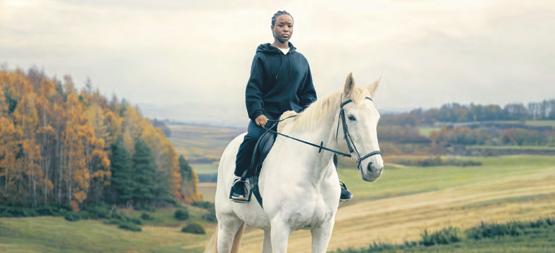
One Day: The Musical Royal Lyceum Theatre, Edinburgh, 27 Feb-19 Apr, various times

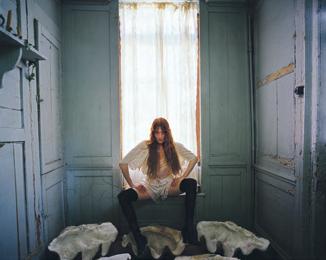
Florence + the Machine
The OVO Hydro, Glasgow, 9 Feb, 6:30pm
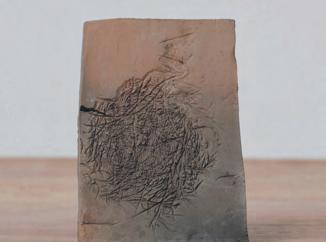
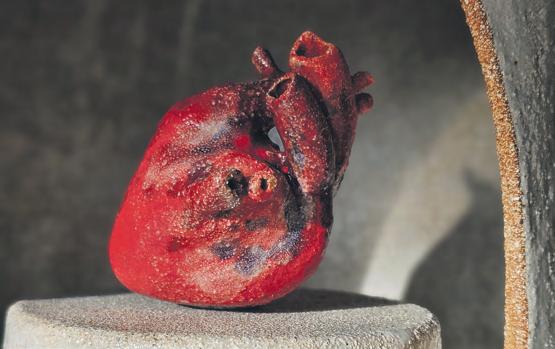
Taraneh Dana: A Heart in Exile Summerhall, Edinburgh, until 29 Mar
This exhibition by Iranian visual artist Taraneh Dana examines inner landscapes of migration, looking at the tension between possibility and loss that displacement and arrival encapsulate. Through intimate sculptures, her work foregrounds the emotional rhythms of migration, and returning experiences of loss and hope.
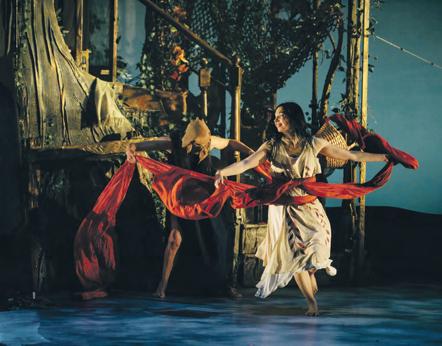
Ballet LORENT: Snow White Dundee Rep, Dundee, 27-28 Feb, various times
This dance theatre production of Snow White is an exercise in beauty, with opulent costumes designed by Libby ElAlfy and Nasir Mazhar and stage design by Phil Eddolls forming a backdrop to a retelling by beloved Scottish poet Carol Ann Duffy and choreography directed by Liv Lorent.
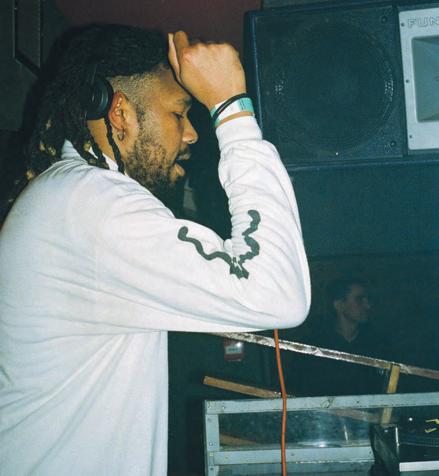
RAVE4GOOD
Wee Red Bar, Edinburgh, 21 Feb, 11pm
It’s the second iteration of RAVE4GOOD, a new club night set up to raise funds for emerging Scottish artists. This time they’re taking over the Wee Red Bar for a night of Baile funk, reggae, Afrobeats and SWANA pop. Headlining is Junglehussi, with support from Hiba and Hu-Sane alongside drag performances by Saffron Cherry icons BUTCH CA$HIDY and Saphique.
of
The Rum Shack, Glasgow, 7 Feb, 2pm
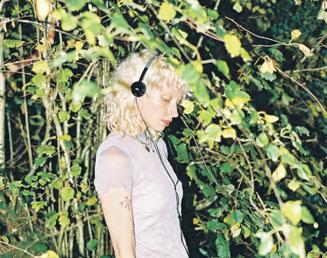

Into Light ft Jamz Supernova & El
Portobello Town Hall, Edinburgh, 28 Feb, 5pm
All details correct at the time of writing
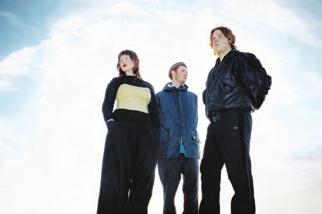
Some pretty big names in Scottish music are stepping out this month, albeit in some lesser frequented spots: Mogwai play Paisley Town Hall (12 Feb) and Aberdeen Music Hall (13 Feb), Belle & Sebastian play Troon Concert Hall (19 & 20 Feb) and Franz Ferdinand play Dundee’s latest spot Livehouse (24 Feb). Liam Shortall’s award-winning and Mercury Prize-nominated corto.alto are also hitting the road this month, with a few shows in some slightly more leftfield locations across the country including Dumfries (The Venue, 7 Feb), Galashiels (MacArts, 8 Feb), Dundee (CANVAS, 11 Feb), Aberdeen (The Lemon Tree, 12 Feb), Inverness (An Seomar, 13 Feb) and the Isle of Skye (Las Port Righ, 14 Feb). The Cords bring their sunshine pop to Glasgow (Mono, 12 Feb), Aberdeen (Cafe Drummonds, 26 Feb), Dundee (Beat Generator Live!, 27 Feb) and Inverness (Upstairs, 28 Feb), while grunge-pop outfit Plasticine play Dundee (Beat Generator Live!, 19 Feb), Aberdeen (The Tunnels, 20 Feb) and Edinburgh (Sneaky Pete’s, 21 Feb).
Back at the top of the month in Edinburgh, AMPLIFI kick off their latest gig series at The Queen’s Hall with Angeline Morrison, Djana Gabrielle and Miwa Nagato-Apthorp (4 Feb). On 6 February, expect a raucous night at The Mash House courtesy of homegrown outfit The Second World War, while those seeking a gentler night of music should head for singer-songwriter Rosie H Sullivan at Cabaret Voltaire. Rock and metal fans have VUKOVI at La Belle Angele to look forward to on the 10th, while soul-jazz outfit ROSEYE (featuring Edinburgh singer Tallulah Rose) play the People’s Leisure Club (18 Feb). On the 20th, indie-pop artist Lou Mclean celebrates the release of her debut album, Outline of a Girl, kicking off her songwriting and performance tour with a show at Duncan Place Community Hub in Leith. And rounding out the month, playing as part of BRITs Week 26 for War Child, catch BRITs Critics’ Choice Award winner Jacob Alon in Assembly Rooms’ Music Hall (27 Feb).
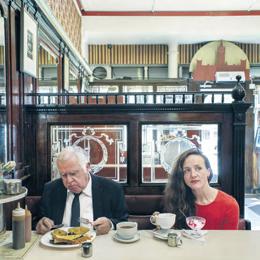
In Glasgow, start your month enveloped in the gorgeous sounds of Theo Bleak as the Dundee artist brings her stunning 14-track mixtape Bargaining to The Glad Cafe, with mokusla on support (5 Feb). On 7 February, pick between a MAP fundraiser at MESH in the Gorbals featuring Megalichen or the Hounds of Love all-dayer at The Rum Shack featuring Bikini Body, Julia’s Bureau, Hound, Peach Crumb and more. On 8 February, two iconic artists, Tony Morris and Isa Gordon, launch their collaborative Wake Up Baby record with a show at The Doublet – seriously not to be missed. At the end of the month, catch both Swim School and Sister Madds at King Tut’s on 25 and 27 February respectively; Faith Eliott plays the Stirling Tolbooth (25 Feb), Constant Follower play shows in Glasgow (Cottiers, 27 Feb) and Stirling (Tolbooth, 28 Feb) and punk duo Bratakus launch their latest full-length with a headline show at McChuills (28 Feb).
Tours start picking up again this month too, with Glasgow set to welcome the likes of Magdalena Bay (O2 Academy, 7 Feb), They Are Gutting a Body of Water (Classic Grand, 9 Feb), Deftones (OVO Hydro, 13 Feb), Maria Somerville (The Flying Duck, 14 Feb), Danny L Harle (The Art School, 15 Feb), Dream Nails (The Hug & Pint, 18 Feb), Whitelands (The Hug & Pint, 19 Feb), Adult DVD (McChuills, 19 Feb), NoSo (King Tut’s, 20 Feb), PVA (Stereo, 20 Feb), Stealing Sheep (Mono, 20 Feb), congratulations (Nice N Sleazy, 26 Feb) and Bill Callahan (27 Feb). In Edinburgh, catch HotWax (The Caves, 8 Feb), caroline (La Belle Angele, 11 Feb) and Man/Woman/Chainsaw (Cabaret Voltaire, 19 Feb). [Tallah Brash]
Film
Scotland’s biggest film celebration, Glasgow Film Festival, kicks off on 25 February with Felipe Bustos Sierra’s Everybody to Kenmure Street. You can read more about that film on pages 22-23, and you’ll find ten highlights from that 12-day festival, including the new films from Jim Jarmusch, Mark Jenkin and Gus Van Sant, on page 26.
Many of GFF’s screenings take place at Glasgow Film Theatre, but before the festival takeover, that cinema will be hosting two unmissable queer movies. First, seek out an extremely rare screening of Stephen Winter’s Chocolate Babies, a hidden gem of the New Queer Cinema movement. It’s a smart, exuberant and confrontational portrait of a group of AIDS activists, all queer people of colour, who are causing a ruckus and calling out hypocrisy in 90s New York. And second, Tzeli Hadjidimitriou’s doc Lesvia, which takes audiences to the Greek island of Lesvos, which for 40 years has been home to a flourishing queer community that’s often been in conflict with the local residents. Hadjidimitriou, who is both a lesbian and a native of Lesvos, finds herself in the middle of these tensions.
You’ve all heard of Valentine’s Day, but what about Galentine’s Day?
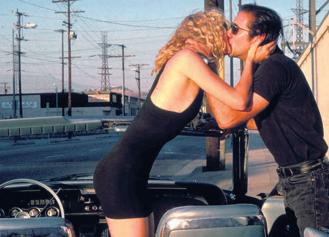
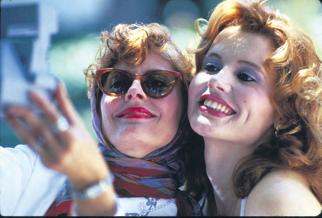
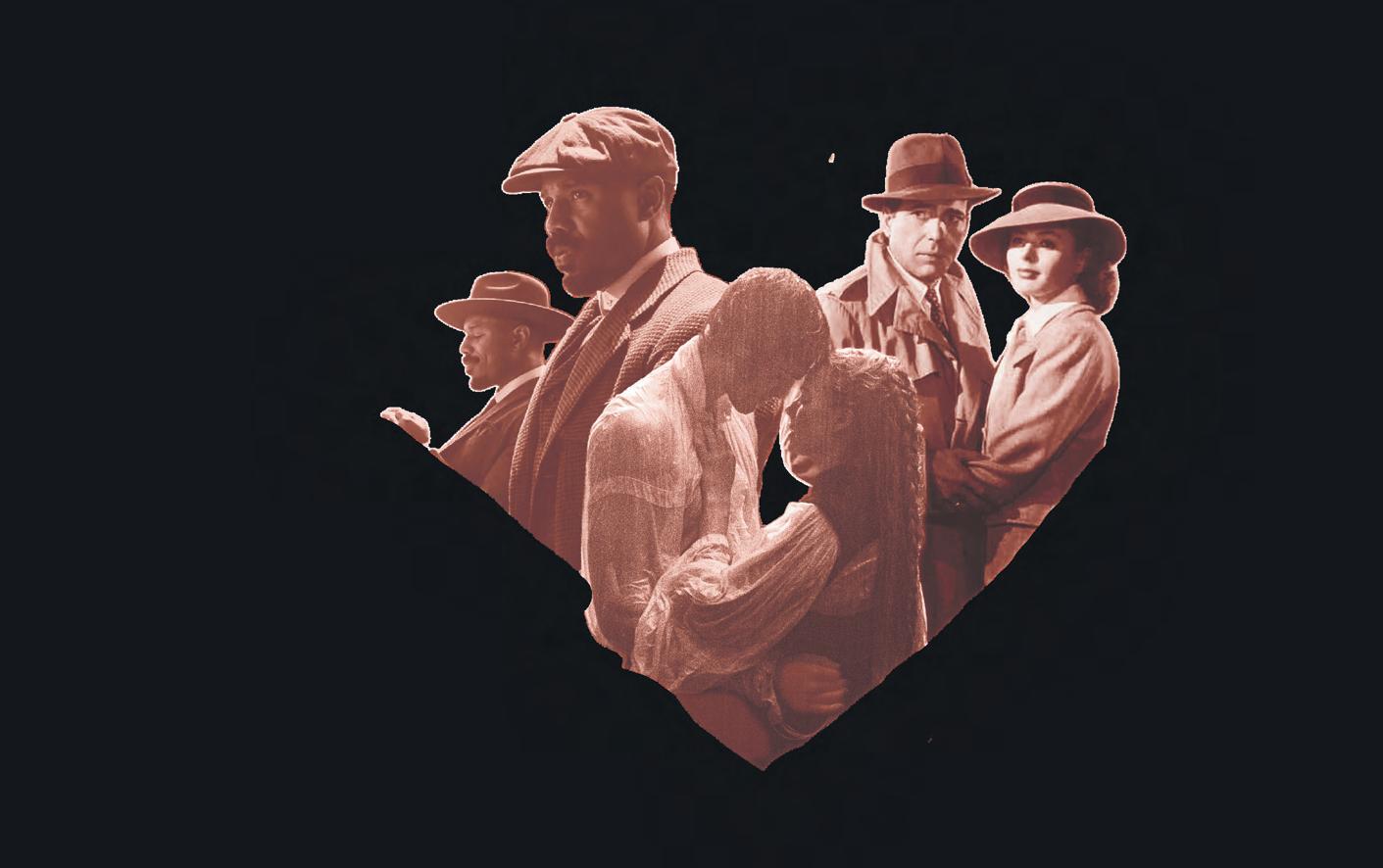
For those uninitiated, it’s a day celebrating female friendship that was invented by Leslie Knope, Amy Poehler’s character on beloved US sitcom Parks and Recreation. Filmhouse will be celebrating both holidays this month with three heart-soaring romance films (Casablanca, Ninotchka and Wild at Heart) and three ride-or-die female friendship flicks (Thelma & Louise, Steel Magnolias and The First Wives Club).
Filmhouse will also be paying tribute to the late, great Béla Tarr, who died earlier this year. The Hungarian filmmaker visited the Edinburgh cinema several times over the years, most recently for the 2011 Edinburgh Film Festival with his final film, The Turin Horse. That desolate masterpiece screens in Filmhouse’s programme alongside Damnation, Werckmeister Harmonies, The Man from London and Sátántangó; throw away your watch before entering the latter, which has a runtime of seven hours and twelve minutes. See filmhouse.co.uk for dates for this and the Valentine’s/ Galentine’s seasons.
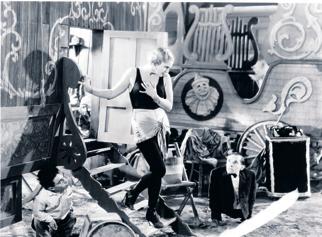
After a New Year hiatus, the crackerjack film collective Leith Kino returns to Leith Depot with an eclectic trio of screenings. First up, Jeanne Moreau plays a widowed bride on the hunt for five men who wronged her in François Truffaut’s lyrical revenge movie The Bride Wore Black (8 Feb). They have an alternative Valentine’s Day screening in mind with Tod Browning’s tale of betrayal and revenge, Freaks (14 Feb), although those of a romantic inclination can still root for Hans and Frieda. Their final screening of the month is a wild slice of so-bad-it’s-good B-movie madness, Miami Connection (22 Feb). [Jamie Dunn]
On Wednesday 4 February, Andromeda hosts Borne Fruits label head Amaliah at Sneaky Pete’s, Edinburgh – expect acid house, rhythmic techno and percussive tracks. Bakey takes to Glasgow’s Berkeley Suite on Thursday 5 February for 23 Degrees – tickets likely to sell out. Edinburgh is spoiled for choice on Friday 6 February, with DJ Paulette bringing the sound of the Haçienda to the People’s Leisure Club, while Shleekit Doss gets weird at Leith Cricket Club with Ship Sket, Proc Fiskal and friends. Over in Glasgow, Stereo celebrates 15 Years of Teklife, honouring the legacy of DJ Rashad with a night of Chicago Footwork (6 Feb).
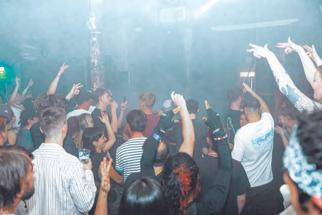
Love is in the air in the leadup to Valentine’s Day, with Noise Complaint! kicking off this year’s proceedings on Saturday 7 February at The Flying Duck, Glasgow – fast-paced, high-energy sets from Rahul.mp3 and Plantainchipps are sure to get your heart aflutter. No bad luck on Friday 13th February with Edinburgh party mantle bringing Lola So and Wheelman to Sneaky Pete’s for all things bassy, bouncy and beautiful. Get romantic in the capital with Nightvision Valentine’s, hosting Miss Bashful and Luca Eck at The Liquid Room (14 Feb). Leave your man behind for Chromatic x Polka Dot Disco Club: G@lentine’s, with DJ MELL G taking to The Bongo Club, Edinburgh (14 Feb).
On Friday 20 February, Cherrie B is set to make her hyperpop-fueled Glasgow debut at Scandal – dresscode is rhinestones and glam. RAVE4GOOD
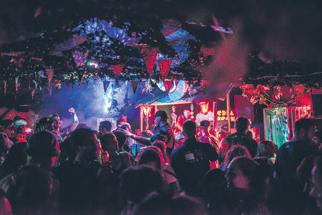
brings a stacked lineup to the Wee Red Bar in Edinburgh, with money raised for emerging artist grants (21 Feb). FUSE marks ten years of parties with a return to Glasgow’s Stereo – Grime legends Oblig, Tailor Jae and Manga Saint Hilare are not ones to miss. On Saturday 28 February, day parties are the move with Samedia x Oi Musica bringing BBC 6 Music DJ Jamz Supernova to Portobello Town Hall from 5pm onwards. In Dundee, Day Moves with Gav Will hosts NTS resident Bill Brewster for underground house at Nola (28 Feb).
[Myrtle Boot]
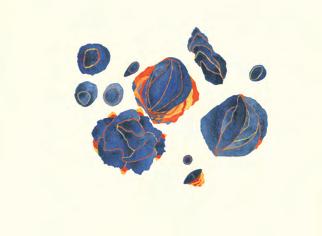
Art
A trip to Glasgow Women’s Library just might make the ideal queer date this Valentine’s Day, as artist Chloe Austin responds to the organisation’s Lesbian Archive (the UK’s largest of its kind!) in her exhibition, Darling Diaphanous. Expect textiles, archival trinkets and a whole load of yearning until 28 March.
Elsewhere in Glasgow, Street Level Photoworks showcases Scotland’s brutalist architecture through photography, illuminating the concrete expression of post-war sociopolitical ambition. The exhibition draws from photographer Simon Phillips’ documentation of 160 brutalist buildings across the country, from Inverness to Galashiels. Brutal Scotland: Scotland’s post-war modernist architecture runs from 21 February until 16 May. Four artists – including Turner Prize winner Nnena Kalu – challenge ableism in the arts sector through a new group exhibition at Dundee Contemporary Arts. From 7 February until 26 April, We Contain Multitudes brings together the work of Kalu, Andrew Gannon, Daisy Lafarage and Jo Longhurst – interdisciplinary artists who create from a position of disability.
Also in Dundee, writer and filmmaker Bahar Noorizadeh presents The Debtor’s Portal at Cooper Gallery. Interrogating the relationship between art and capitalism, Noorizadeh stages two experimental moving image installations, one of which is a racing game starring an anxious Elon Musk and his self-driving car/lover. The exhibition opens on 13 February and continues until 11 April.
Over to Edinburgh, where Michael Fullerton’s portraits of people seeking asylum hang at the City Art Centre. The works developed through relationships formed while Fullerton was working at the Hilltop Hotel in Carlisle, which previously served as accommodation for people seeking asylum. This solo exhibition is underpinned by Fullerton’s interest in portraiture as a means to challenge misrepresentation and bringing overlooked narratives into view. Continues until 12 April.
Towards the end of the month, at the Fruitmarket, land artist Ilana Halperin digs into the ‘incomprehensible vastness of geological time’ by connecting it to the familiarity of human experience through sculpture, drawing and photography. Ilana Halperin: What is Us and What is Earth runs from 27 February until 17 May. [Rachel Ashenden]
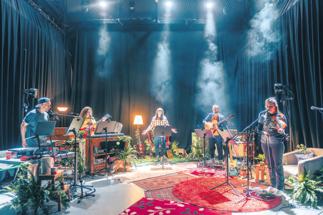
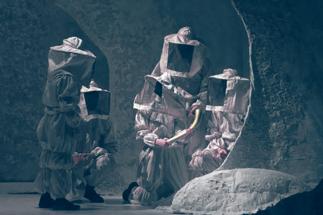
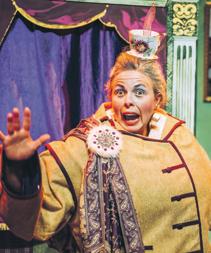
The month opens in Edinburgh with Manipulate Festival (4-10 Feb), which returns with its most ambitious programme to date. Spreading across eight city venues – including the Studio Theatre, Traverse, Summerhall and, for the first time, Filmhouse – the festival showcases world and Scottish premieres alongside international visual theatre, puppetry and animation from over 25 countries. Theatre highlights include Kar, a mischievous cabaret inspired by Anna Karenina; The Raft of the Crab, a circus-inflected exploration of illness and recovery; Dewey Dell’s visceral reimagining of The Rite of Spring; and The Wood Paths, a meditation on the human urge to create.
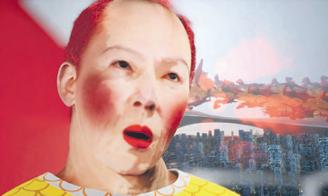
At Glasgow’s Theatre Royal, Scottish Opera premieres The Great Wave (12-14 Feb), a new work inspired by Hokusai’s iconic print. Imagining the story behind the image, this world premiere prioritises an inviting, contemporary operatic style.
Dance takes centre stage mid-month as the Varna International Ballet and Orchestra arrives at the Edinburgh Playhouse with Cinderella (19 Feb), Swan Lake (20 Feb) and The Nutcracker (21 Feb).
Back in Glasgow, Wonder Fools bring David Greig’s The Events to the Tron Theatre (19-21 Feb). Set in a choir rehearsal hall, the play follows a priest grappling with trauma after surviving a mass shooting, with a newly formed
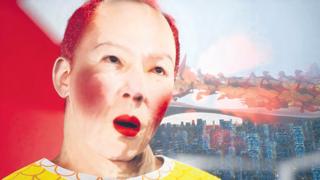
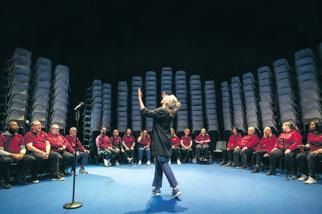
local community choir for each performance (!) making each showing immediate and rooted in place. The show follows at Dundee Rep (25 Feb) and Traverse Theatre (27-28 Feb).
Later in the month, A Giant on the Bridge lands at Cottiers Theatre (25-26 Feb) in Glasgow. Co-devised by Jo Mango and Liam Hurley, the show fuses hip-hop, songwriting and storytelling to explore prison homecoming, drawing on lived experience from across Scotland’s justice system.
Classic texts round out the month. At the Citz, Saint Joan (14-28 Feb) reimagines Shaw for the present day, while Waiting for Godot (from 20 Feb) reminds us that waiting, together, remains a weirdly durable act of theatre. [Mika Morava]
For the first week of February, keep your eyes on Monkey Barrel. Three super hits of festival season are here to brighten your days. Pound-for-pound the most aggressive comic on the scene, Dan Tiernan’s All In (3 Feb, 7.30pm / also at Blackfriars, Glasgow, 5 Feb, 7.30pm) is here for a cathartic release, as is Ian Smith’s latest and most stressful hour (7 Feb, 8pm). We also thought Bebe Cave’s medieval menace CHRISTBRIDE (6 Feb, 8pm) was ace so we’re pleased to see Bathilda Bigbum ride again.
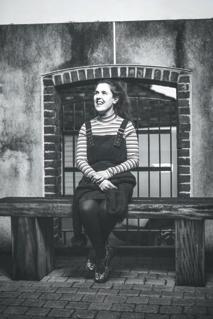
Besties Winner Rosa Garland brings the engrossing and grossout Primal Bog to Edinburgh’s Summerhall the following week (12 Feb, 8pm). Imagine Gwyneth Paltrow, canoeing and gunge and you’re nearly there (probs not one for your mum). Same week, Brass Tacks present All Access Comedy with a cracking line-up of disabled comedians at The Stand’s now fully accessible new Glasgow venue (18 Feb, 8pm). And to top it off, it’s headlined by the fantastic Rosie Jones
Total delight and shameless gossip John Tothill airs his grievances with cruise clientele and his love of a 19th century oyster thief in This Must Be Heaven (Monkey Barrel, 21 Feb, 8pm; Òran Mór, 20 Mar, 9.30pm). For those who haven’t seen Tothill before, the comedian is at the very top of his game and it really is a must-see.
It’s also great to see hidden gem of the Fringe Saaniya Abbas touring (The Stand, Glasgow, 28 Feb, 4pm / The Stand, Edinburgh, 1 Mar, 4pm). The Indianborn, Dubai-based comic won another of our Besties Awards this summer and is making waves with her super subversive, wickedly funny stand-up.
And finally, if you missed out on the Best Show in a Skirt Suit at the Fringe™ and Edinburgh Comedy Award 2025 winner, Sam Nicoresti’s Baby Doomer, book ahead for her tour dates in Edinburgh and Glasgow (Monkey Barrel, 12 Mar, 7.30pm / Old Hairdresser's, 13 Mar, 7.30pm). [Polly Glynn]
Something outside of Edinburgh and Glasgow: Fife Queer Zine Fest is a new celebration of queer creativity in Fife, produced and curated by poet and writer Harry Josephine Giles (21 Feb). There’s a zine market, a zine making workshop with Darcy Leigh and a comic workshop with Ollie Hicks.
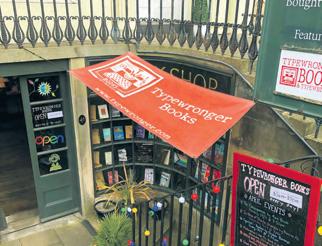
Over in the capital, there’s a bunch of book launches. Anya Bergman launches her novel The Tarot Reader of Versailles along with a live tarot reading at Lighthouse Bookshop (19 Feb). At The Portobello Bookshop, Saleem Haddad launches Floodlines on 16 February and Gutter launch their 33rd issue on 17 February. There’s also an evening with bestselling author Jennette McCurdy in conversation with Monica Heisey on 4 February, hosted by The Portobello Bookshop and held in the Assembly Rooms – tickets are currently sold out but keep an eye on returns. At Toppings, one of their own booksellers, Zain Rishi, launches his debut poetry pamphlet Noon (19 Feb). And across the road, Typewronger are holding an all-night book sale (and they mean all-night) on 21 February – head over for a rare 3am book browse if you’re still awake.
In Glasgow, our own Katalina Watt launches her book Saltswept in conversation with L.R. Lam at Waterstones Argyle Street (24 Feb). At Glasgow Zine Library there’s a Heated Rivalry fanzine making event on 4 February and a collage workshop on 26 February. And there’s some hands-on action too at Lighthouse Bookshop, with the second iteration of Postcards for Palestine on 15 February. [Anahit Behrooz]

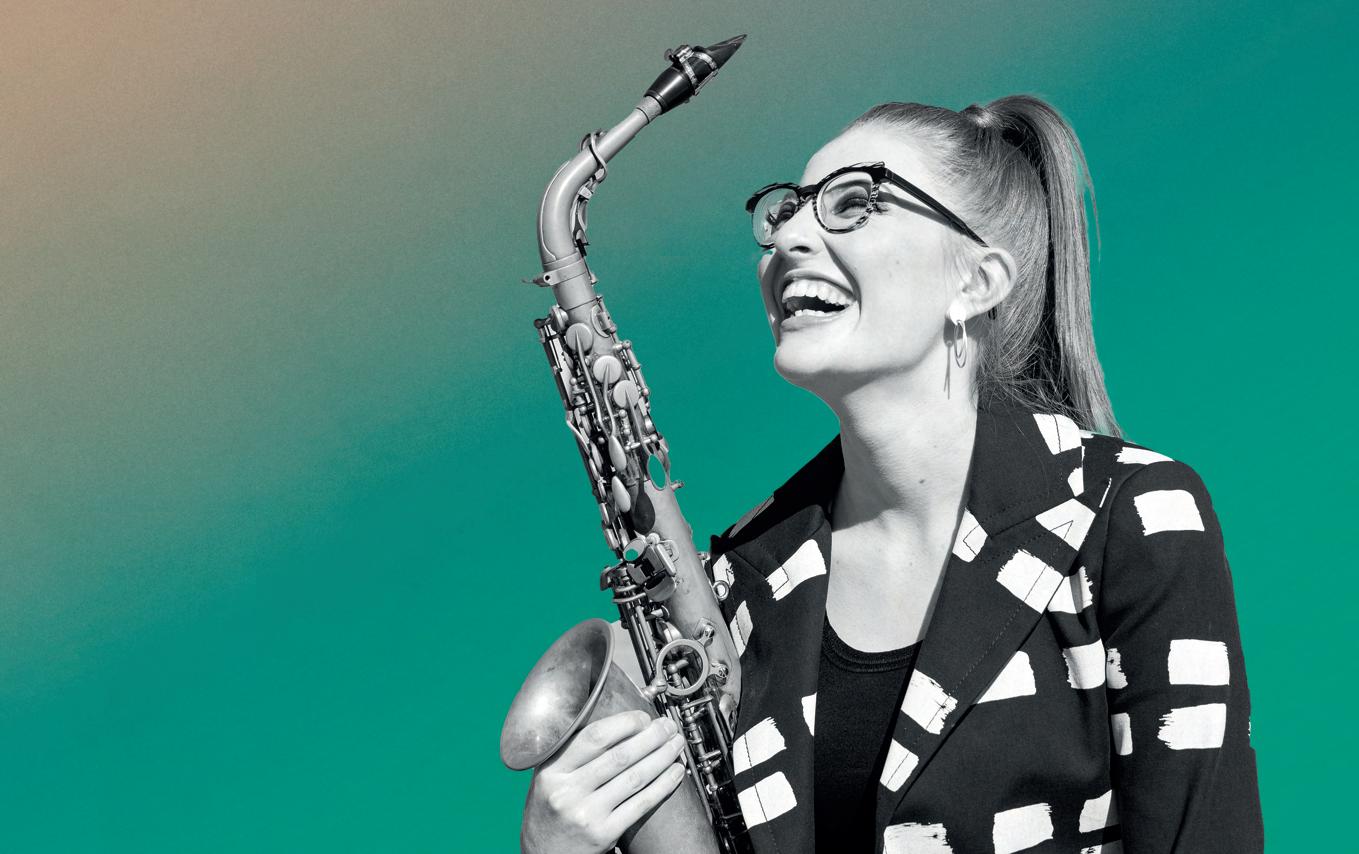
12-13 March, 7.30pm Edinburgh | Glasgow sco.org.uk


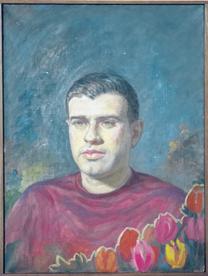
Features
22 Opening our Film Special, we meet Felipe Bustos Sierra whose Everybody to Kenmure Street immortalises a day in Glasgow’s activist history.
25 We talk to Glasgow Film Festival’s new Head of Programme Paul Gallagher and look forward to some of this year’s highlights.
27 We meet Kleber Mendonça Filho, the Brazilian filmmaker behind multi-award-nominated The Secret Agent.
29 Iraqi filmmaker Hasan Hadi introduces his directorial debut The President’s Cake
30 Oliver Laxe discusses his survivalist road movie Sirāt.
33 Acclaimed poet Sophie Robinson on her debut novel Prairie Oyster
34 Manipulate Festival returns to explore the absurdity of empire.
40 One writer reflects on The Blue Nile’s A Walk Across the Rooftops and its relationship to the city that made it, 42 years on from its release.
42 We meet Scottish siblings Brèagha and Onnagh Cuinn aka Bratakus ahead of the release of their sophomore album, Hagridden
45 Irish stand-up Roger O’Sullivan talks tone, tension and Metallica.
46 Glasgow-based producer KAVARI talks health, horror and the state of EDM.
47 We explore Michael Fullerton’s intimate portraits of asylum seekers at City Art Centre.
On the website...
Our film podcast The Cineskinny, our music interview podcast Music Now, our weekly-updated New Scottish Music playlist also called Music Now, and our weekly new music Spotlight On interviews. Reviews from Glasgow Film Festival, Sundance and Celtic Connections, and a very good piece on that weird AI mural hoo-ha from a few weeks ago.
Wooer (6) 9. Suggestive remark (8)
10. Hugged (8) 11. Draw out (6) 12. Pro set (anag) – voilà! (6) 13. Trapped (8)
14. Modesty – spare deflection (anag) (4-11)
18. Put up with (8) 21. Unimportant person – o, nbd yo (anag) (6)
23. As one pleases (2,4) 24. Wedding (8) 25. Mouth cosmetic (3,5) 26. Government – system (6)
1. Immerse (8) 2. Womb (6)
3. Fruit sugar (8)
4. Benevolence – tender skinheads (anag) (4-11)
5. Except (6)
6. Unsure (8)
7. Look up to (6)
15. You might catch these for someone (8)
16. Collude (8)
17. Former lover (3,5)
19. Get (6)
20. Florid – moo lab (anag) (6)
22. Viaduct – prechorus (6)
In this month’s advice column, one reader is uncertain about how to tackle a long distance relationship
How do you deal with entering a long distance relationship while also secretly thinking you’ll be really bad at it?
I was in a long distance relationship once and everyone told me it wouldn’t work and I – with the kind of stupidity only a 22-year-old can stick fast to – was like, no my love is different you will see and then I spent two years listening to Transatlanticism and crying and then we broke up. That is not to say that long distance relationships cannot work but just that it is now my role to say they do not work and yours to be like, 'no you don’t understand'.
So those formalities out of the way, I want to begin by querying your use of the word secretly. Why is it a secret? Who are you afraid of spooking: your partner, or yourself? Long distance relationships are really hard and the reason they are really hard is they lose all the good parts of a relationship (everyday intimacy, shared domesticity, sex) and keep all the difficult ones (having to be really, really good at communication). It’s not a good idea to go into something that can only work if you say exactly how you feel by not saying exactly how you feel. What exactly are you worried you will be bad at? Is there any way of dealing with it without bottling it up?
I don’t know if anyone is ‘good’ at long distance relationships, in the same way that I don’t think anyone is ‘good’ at relationships. I think some people have better skills that will help them, but saying you are inherently bad at a particular kind of relationship, like it’s long division, or badminton, is just an easy way out of confronting a lack of skills you will need in life, relationship or no. You could be single the rest of your days and still need to be able to say how you feel. The good news right now is you have someone who likes you enough, and who you like enough, to begin honing these skills in a safe environment. Talk to your partner and invest in a good Zoom plan. Good luck <33
Eva Jack, the artist behind Fragment Found – an online archive of found pottery sherds – traces her steps and memories to a treasure trove of discarded relics
Fragment Found is an online archive of pottery sherds, where people can upload their own finds and the personal and historical stories attached to them. Beyond the objects themselves, the project is about the act of finding – through deliberate searches or chance encounters – in sometimes strange and unexpected landscapes where old and broken things are uncovered.
Modern waste gathers in a lay-by at the side of the road. Just behind it lies a far older accumulation of rubbish – a vast Edwardian midden. I tracked this place down, patchworking old maps and YouTube clips, using the hawthorns and slag heaps to orientate myself. From a distance it is unremarkable, until the earth falls away at your feet.
There are holes in the ground (some deep enough to require a ladder as an escape route) where mudlarkers excavate objects buried over a century ago. Within them, domestic life lies gathered in mud. The contents of medicine cabinets, mantle pieces and dining tables have all ended up here. Few pieces have held together, most are broken.
Do you have a problem Anahit could help with?
Get in touch by email on pettyshit@theskinny.co.uk, send us your quandaries with an almost-unhelpful level of anonymity via NGL, or look out for Ask Anahit callouts on our Instagram stories
I collect fragments: of objects, words, thoughts and images. I don’t know what I am looking for, only that the ground offers things when I move slowly enough. A teapot spout. Bottles of every kind – beer, sauce, whisky, water, boot polish – I think about the liquids they held and the hands that held them. A ceramic hot water bottle – personalised, with a name and address. I think of their bed and its warmth. That home is now gone, in its place an Indian restaurant. Stoppers, clay pipes, a spitoon. A strange vase encrusted with little white pebbles like the harling that covered my old house: I think of the secret rush of excitement when it cascaded off our wall shattering down onto the neighbour’s car. A rusted spoon. A figurine, beheaded. The edge of a plate: I think about when my brother ran towards me as I cleared the table, the sudden meeting of flesh and crockery, the skin surrounding his eye opening and that if I was to slip now my blood would mix with the white powders, pink pastes and purple inks that remain in the glass beneath my feet. I think about fragility.
Memories – my own and others, real and imagined – resurface and convene in this haunted place.

Olivia Priya Foster graduated from painting and printmaking at the Glasgow School of Art in 2024. This poster is a documentation of her work Black Sheep, which was initiated by a performance displaying Foster shearing sheep on her family farm in Argyll. Foster’s work is intrinsically autobiographical, discussing and understanding her experience of queer rurality through a POC lens. Her practice endeavours to explore her dual cultural identity and responds to the politics of land and resources. Foster’s practice heavily considers material and medium in reference to subject, regularly considering the impact of material on the environment. Her practice endeavours to explore her dual cultural identity and responds to the politics of land and resources. Foster was awarded the Chair Medal by the GSA School of Fine Art for outstanding work at her degree show. She was also a Visual Arts Scotland selected artist.
Hope sometimes feels in short supply at the moment, but Felipe Bustos Sierra’s Everybody to Kenmure Street reminds us it’s still very much possible. Opening Glasgow Film Festival, his documentary is a thrilling account of how a community in Glasgow’s Southside made a collective stand against the UK Home Office to prevent two of their neighbours from being deported in a shameful dawn raid. In our opening feature, Bustos Sierra explains that the extraordinary events that happened on Kenmure Street on 13 May 2021 lifted him from a despondent state and reminded him of the true strength of solidarity.
The power of community and civil rebellion is also explored in three more titles featured in this
Film special: The Secret Agent, The President’s Cake and Sirāt. Books, meanwhile, speaks to poet Sophie Robinson, who finds a new beginning with prose and her first novel, Prairie Oyster, about a 30-something filmmaker balanced precariously on the edge of an addiction-fuelled breakdown. Hope is in plentiful supply at Manipulate, Edinburgh’s annual festival of animated film, puppetry and visual theatre. Community and hope – as well as sustenance – is also on the menu in intersections this month, with Glasgow-based supper clubs discussing the solidarity that forms through sharing food with friends and strangers alike.
The Kenmure Street protest of 2021 saw a community save two of their neighbours from deportation through solidarity and collective action. Felipe Bustos Sierra’s film Everybody to Kenmure Street immortalises this special day in Glasgow’s history
With two feature films now under his belt, Felipe Bustos Sierra has emerged as one of Scotland’s finest documentarians. The Edinburgh-based Chilean-Belgian filmmaker’s 2018 debut, Nae Pasaran, told the rousing story of how, in 1974, a group of factory workers at East Kilbride’s Rolls-Royce plant refused to do vital repairs on the Hawker Hunter jets that were key to General Pinochet’s bloody military coup in Chile the year prior. Little did they know that their act of solidarity would significantly hamper Pinochet’s air force and that news of their protest would spread to Chilean political prisoners, giving them much-needed solace that people halfway around the world were in their corner. Eight years later, we get his similarly powerful second feature, Everybody to Kenmure Street, and it’s another deeply moving look at ordinary people taking a stand against injustice.
the unthinkable happened: the police backed down, the Home Office gave in to the protestors’ demands, and the two men were released and free to go.
Bustos Sierra was living in Glasgow at the time, and was at home in nearby Govanhill during the protest. “I heard about it really, really early on,” he tells me. “I got a text from a friend; they were reaching out to try to get people to come.” Nae Pasaran had recently screened on terrestrial television, so he was also receiving lots of DMs from strangers, asking him to spread the word on social media. He did, but despite being only ten minutes away from Kenmure Street, he didn’t venture down there. “I think I had the sense of, not despair, but a sort of hopelessness,” he recalls, “that nothing was going to come out of this.”
He puts this despondency down to a succession of recent setbacks on the left. “This was
Words: Jamie Dunn
Illustrations: Jesse Warby
I’ve been involved in solidarity movements and student protests throughout my youth. We’d had some victories in the Chile solidarity campaign, but nothing really so immediate, nothing so visceral.”
Bustos Sierra was elated by the protest’s success, but he was also kicking himself he didn’t witness it firsthand. “I realised that this was something that I needed to experience,” he tells me, “but I hadn’t taken the chance to, despite solidarity really equating to survival for people in Chile. I felt like I’d let down the people who’d given me their solidarity in the past.”
As a filmmaker, there was, of course, one way he could relive that day: make a film about it. Within a few days, he’d made contact with producer Ciara Barry, who also lived around the corner from Kenmure Street, and within the week, the ball was rolling on development. “I wanted to use, I suppose, my skills and those of the people I know around me who would connect with this as well, to see what we could do to really document this event properly, so it goes beyond the headlines and beyond a few soundbites and beyond a few tweets.” His starting point was Facebook, Twitter and Instagram. “Going through social media gave us an idea of, Oh, that person was filming, they’re getting that angle, it might be interesting to find their footage,” he explains. “Or what’s this person doing over there? Who are they talking to? What kind of conversation are they having?” From these clips, the spine of the film began to emerge.
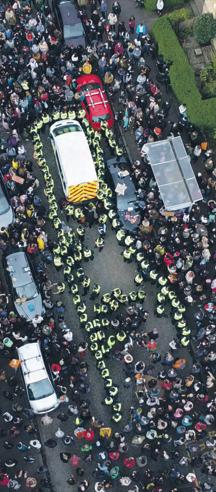
The film chronicles the events of 13 May 2021, when the Home Office attempted a dawn raid on Kenmure Street in Pollokshields, Glasgow. Two of the street’s residents were to be detained and potentially deported, but the raid didn’t go to plan. A headstrong cyclist threw himself under the deportation van, preventing it from speeding off, giving other members of the neighbourhood, one of the most ethnically diverse in Scotland, time to block in the van and send out the eponymous call to arms on WhatsApp groups and social media posts for more people to join the protest. Soon, around 2500 people were lining the street, peacefully holding riot police at bay and chanting for the men’s release. After a tense eight-hour standoff,
happening on the back of Black Lives Matter, which had been so big and so global, but it had sort of fizzled out, and no concrete policies came out of it. And then there was the murder of Sarah Everard, where we found out the killer was a police officer, and the vigils in her name were also violently repressed. So I had this sense there was no conscience at work on the other side when it came to these events. I felt, ‘What is this protest gonna achieve?’ That was very much my headspace.”
Despite his scepticism, he kept one eye on the developments on Kenmure Street via social media. To say he was blown away by the direction the protest took would be an understatement. “I felt like, ‘I’ve never experienced that’, you know?
He also wanted to meet those people who attended the protest directly. The UK was still under COVID lockdowns during his initial research, so Bustos Sierra started taking participants on long walks around Queen's Park to get their perspectives on the day. “I wanted to know, why did they go? What was the hope? Where was the hope? And most people said, ‘You know, we had no hope.’”
One of those people was the man who threw himself under the van, who’s known in the film simply as ‘Van Man’. “Van Man told me he was ‘maybe useful for about 15 minutes,’” recalls Bustos Sierra, “literally just taking up space and buying time for somebody else to get a better idea.” Much of Bustos Sierra’s focus is on the mechanics of the protest, which he describes as a “baton
relay.” “I felt like the whole day was like that, ordinary people who did the best they could. I felt like collecting all these little pockets of storytelling from the witnesses on the street, and putting it together would kind of give a sense that it was something bigger.”
This is roughly the form that Everybody to Kenmure Street takes visually. Working with editor Colin Monie, Bustos Sierra has spliced together the array of amateur footage he’s collected from eyewitnesses to shape a picture of the protest from myriad vantage points. He also filmed a multitude of talking head interviews, allowing the protesters the opportunity to give their thoughtful insights, although several key witnesses were reluctant to deliver their testimony on camera, including Van Man, and the nurse who checked in on Van Man throughout the eight hours he was under the vehicle. Bustos Sierra’s ingenious workaround was to hire well-known actors to be their proxy on screen – we’ll leave the identities of these famous stand-ins as a delightful surprise.
Bustos Sierra’s film gets into granular detail of how events transpired on 13 May, but his film also zooms out to look at Glasgow in terms of its residents’ long history of public rebellion, from Red Clydeside activism of the 1910s and 20s to the Govanhill Baths’ sit-in in 2001 via the historic rent strikes of 1915 and various battles against Thatcher’s government in the 1980s. The idea to lay out Glasgow’s credentials as a city of dissent
came to the director during those early conversations in Queen’s Park. “I remember younger people telling me they went down to Kenmure Street because they were furious that nobody had ever done anything like this before,” he recalls. “And, I thought, ‘Well that’s great, because that anger brought you onto the street. But also, people have been doing this in Glasgow, and in the Southside in particular, for centuries.’”
I’m speaking to Bustos Sierra a few days out from him heading to the Sundance Film Festival, where Everybody to Kenmure Street will have its world premiere. He tells me he hopes it will be received as a sort of microcosm of what’s currently happening in US cities like Minneapolis and St Paul. Judging from the rapturous early reviews from critics at Sundance, the film seems to have been embraced in the way he had hoped.
He should have fewer worries about its reception at its UK premiere, as the opening film of Glasgow Film Festival – not least because he thinks half the audience will be people who attended the protest. For those who were part of the throng on Kenmure Street, the experience of watching the film should still prove quite revealing. “Many of the people experienced the protests from
“Protesting and going to the cinema, there’s something that’s emotionally quite similar”
Felipe Bustos Sierra
their close or their side of the streets,” says Bustos Sierra. “I think the film will maybe helpfully show what was happening all over the streets; they’ll discover new things.” For everyone else, they’re sure to spot some faces they know on screen. “I think there might be some audience member playing Where’s Waldo with some of our footage.”
Near the end of Everybody to Kenmure Street, one of the participants says that experiencing the collective emotions within a protest ‘changes your brain chemistry.’ Bustos Sierra reckons watching a movie communally does something similar. “That feeling [of changes to your brain chemistry] is exactly what going to the cinema has done for me from a really early age,” he says. “I love to see films in a full cinema, because you just get such a rush from the crowd. So yeah, protesting and going to the cinema, there’s something that’s emotionally quite similar. I hope the audience will get to feel some of that.”
to
has its UK
Glasgow
Festival on 25 Feb, with an additional screening on 26 Feb, and is released in the UK on 13 Mar by CONIC

Paul Gallagher, the long-time programmer at Glasgow Film Theatre, recently took over as Head of Programme for all of Glasgow Film’s operations, which include the annual festival. We chat to him about his hopes for GFF ahead of his first edition in charge
The Skinny: You’re a few days away from launching your first Glasgow Film Festival programme. How are you feeling?
Paul Gallagher: At this point, I’m just really excited to get this programme out and for people to start getting excited about coming to see all of these great films we’ve pulled together. I just started in this role as Head of Programme in September, and it has been like jumping on a train that’s already moving, but I’m stepping into a team that has been delivering this festival for a few years now, and I’m stepping into a festival that’s going into its 22nd edition. So I’m like, ‘OK, this is in a good place’. I want to deliver an edition that lives up to that, and I feel like that’s what we’ve done. We have a programme here that prioritises audiences, which is what Glasgow Film Festival has always been about, and brings a great spread of new films.
Let’s talk about the opening and closing films, Everybody to Kenmure Street and California Schemin’. Was it important for you to lead with Scottish work, or is that just a coincidence that both came along at the perfect time for GFF?
For two galas like this to happen at GFF, a lot of stars do have to align; there’s no getting around that. But it is a huge priority for us to support Scottish talent, and it’s really exciting to see the
huge spread of Scottish talent in front of and behind the camera across the programme. I think we have 13 films this year, which are all genuine Scottish productions, whether that’s made by Scottish filmmakers or with Scottish production companies. To me, one of the things Glasgow Film Festival is here for is to be a cheerleader for the Scottish film industry; to be a place where great new Scottish films have their first big moment and are presented to the world. I love that that’s what we’re doing in my first edition: we’re giving our highest honour to two excellent new Scottish films.
Setting GFF aside for a moment, what, to you, makes a great film festival?
The headline is, the film programme has to be something that captures people’s attention and
Words: Jamie Dunn
makes filmgoers think, ‘I want to go there. I want to get the opportunity to see all those films in that focused space of time.’ That’s where it starts from. And then it’s the experience of actually being there, the granular detail of, what is it like to step into a film screening at this festival? Do I feel welcome? Do I feel like these people love cinema? That, to me, is one of the real joys and privileges of attending film festivals, that feeling of, ‘Oh, wow, I’m with a bunch of people who hold cinema in the highest regard.’
“We have a programme here that prioritises audiences, which is what Glasgow Film Festival has always been about”
Paul Gallagher
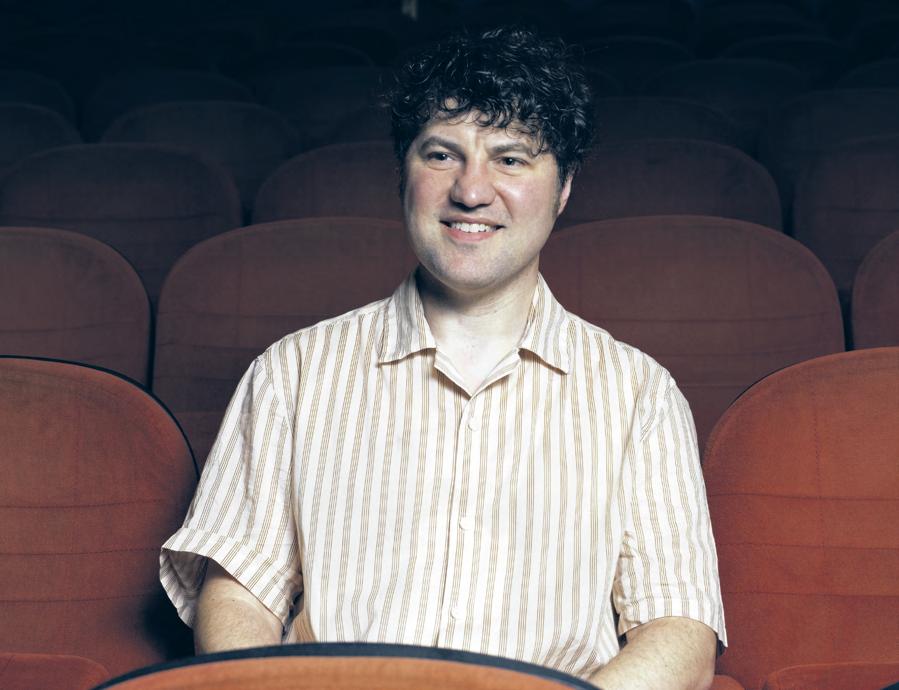
What about future editions? How do you see the festival evolving under your stewardship? I’ve been asked this question already, and will continue to be asked it, I’m sure. So I have a little bit of a holding answer: that’s something on my to-do list from the moment that GFF 26 is finished. And believe me, I do have big ideas and big hopes, and I see the potential for growth at Glasgow Film Festival to be huge. One way I can talk about that briefly, though not in specifics, would be my ambition to expand the footprint of the festival across Glasgow. Glasgow is a cinema-loving city, and it’s a big city, and I want Glasgow Film Festival to feel accessible to everyone in Glasgow. I would love for these 12 days for anyone in Glasgow to feel they can connect with GFF. They can go and experience it, even if they aren’t able to come into GFT. Now obviously GFT is always going to remain the heart of GFF, but I’m thinking about how it can be for everyone in Glasgow. That’s something I’m keen to look at in the future.
What are three film screenings that have shaped you as a film fan and a film programmer?
Two of them are not so much about specific screenings, more about first-time experiences: the first (and currently, only) time I went to Il Cinema Ritravato in Bologna, ten years ago, really blew open my mind about how wide the world of film history is, and how alive and present it can be. Then the first time I went to Cannes; just that sense of absolute adoration of cinema and filmmakers. I’ve never seen filmmakers held in such high esteem, and it is infectious and inspiring. And the third, seeing The Matrix the weekend it was released in 1999, at the UCI in East Kilbride. I came reeling out of that film with a whole new understanding of what a cinema experience can be.
Glasgow Film Festival runs 25 Feb-8 Mar; more info at glasgowfilmfest.org
Read a longer version of this Q&A at theskinny.co.uk
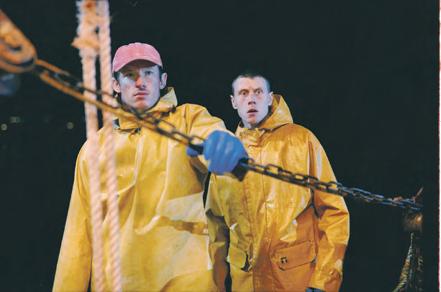
Rose of Nevada
The latest from one man cinema machine Mark Jenkin (he’s director, writer, cinematographer, editor, sound designer and composer here) is an uncanny time-travel drama that sees two fishermen (played by George MacKay and Callum Turner) slip back in time from modern day Cornwall, where their village is in deep economic decline, to the relative salad days of the early 90s. As ever with Jenkin, expect an evocative use of 16mm photography and cutting post-Brexit political discourse. 26 & 27 Feb
Father Mother Sister Brother Indie legend Jim Jarmusch is back in the anthology mode he used on films like Mystery Train and Night on Earth for this triptych exploring tensions within three families. Expect lots of pregnant pauses and a decidedly bittersweet flavour as each family unit (Tom Waits, Adam Driver and Mayim Bialik in the first story; Charlotte Rampling, Cate Blanchett and Vicky Krieps in the second; Indya Moore, and Luka Sabbat in the third) awkwardly unearths long-buried memories and resentments. 27 & 28 Feb
The Good Boy
A teenage hoodlum (Anson Boon) receives an unconventional form of rehabilitation when he’s kidnapped and imprisoned by a mildmannered couple (played by powerhouse actors Stephen Graham and Andrea Riseborough) who claim they want to put the lad back on the straight and narrow. The resulting battle of wills thriller from Polish director Jan Komasa is reportedly strange and deeply compelling, with shades of Stanley Kubrick and Yorgos Lanthimos. 1 & 2 Mar
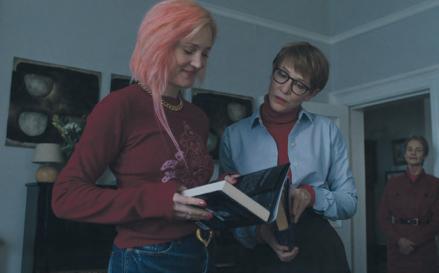

Kokuho
This operatic epic has been a runaway hit in Japan. It follows Kikuo, the son of a yakuza leader, who trades crime for the delicate art of kabuki, although he finds that both worlds are built on brutal traditions and hierarchies. Spanning five decades, Kokuho isn’t just a deep dive into a fascinating artform, but also a look at Japan’s changing cultural attitudes across a lifetime. 1 & 2 Mar
Our Hero Balthazar
This zeitgeist-tapping black comedy got great reviews out of the Tribeca Film Festival. It follows a New York rich kid (Jaeden Martell) with a talent for crying on demand, which he uses to create social media posts in the wake of a school shooting, bringing him into the orbit of a redneck incel (Asa Butterfield) who claims to be the shooter. This directorial debut from frequent Safdie Brothers collaborator Oscar Boyson is reportedly as brutally funny as it is deeply disturbing. 27 & 28 Feb
Nino
Young Québécois actor Théodore Pellerin has been on the precipice of stardom for a while now, thanks to promising lead performances in films like Solo, Lurker and Genesis. Nino should push him over the edge. Pellerin plays the title character, who discovers he has throat cancer on the eve of turning 29. Pauline Loques’ devastating debut follows him over his birthday weekend as he absorbs the news. The premise suggests a downer, but this is a film celebrating the precious gifts of life. 27 & 28 Feb
Nirvanna the Band the Show the Movie
Created by Matt Johnson and Jay McCarrol, Nirvanna the Band the Show was a mockumentary
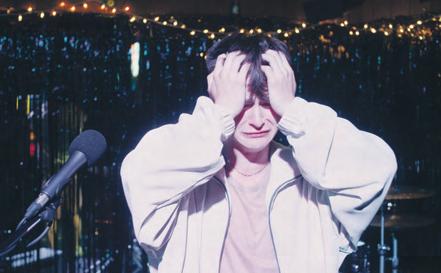
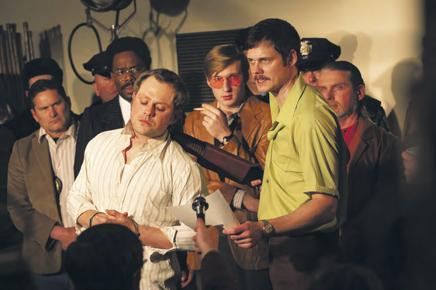
web series turned TV sitcom about two struggling Toronto musicians (played by Johnson and McCarrol) who, over several seasons, got involved in all sorts of ridiculous publicity stunts in an attempt to achieve their big break. This movie version is reportedly just as hilarious as those small-screen adventures, and they throw in a riff on Back to the Future for good measure. 28 Feb & 1 Mar
Dead Man’s Wire
This is reportedly Gus Van Sant’s best film in years. A dark, high-wire comedy set in 1970s Indianapolis, it follows Bill Skarsgård as Tony, a disgruntled mortgage firm employee who loses it when his boss (Al Pacino) promotes his useless son (Dacre Montgomery) for a job that should rightfully be his. Tony’s solution: kidnap the son at gunpoint. What makes Dead Man’s Wire sing is its aesthetic, with sound and visuals that evoke so many 70s masterpieces (from Dog Day Afternoon to Badlands). 3 & 4 Mar
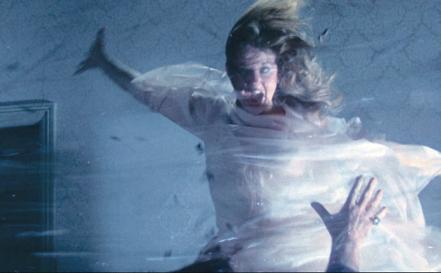
Boorman and the Devil / Megadoc
Do you like docs about genius filmmakers whose wild visions go down disastrously with audiences and critics? If the answer is yes, then you’re in luck, because GFF has two. Boorman and the Devil tells how the great John Boorman’s experimental approach to Exorcist II: The Heretic made it one of the most despised sequels in cinema history; David Kittredge’s doc makes a case that Boorman’s film deserves a reappraisal. In Megadoc, meanwhile, Mike Figgis goes behind the scenes on the set of Francis Ford Coppola’s Megalopolis for a film that shows that the making of that self-financed retrofuturistic folly was just as wacky as what ended up on screen. 6 Mar / 2 & 3 Mar
Glasgow Film Festival 2026, 25 Feb-8 Mar
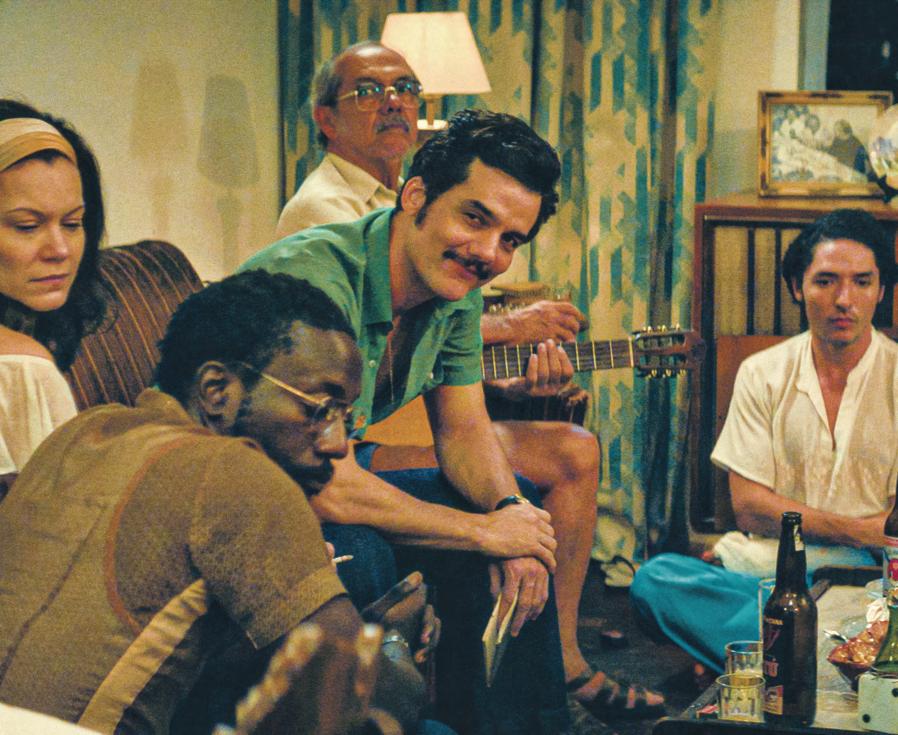
Nominated for three Academy Awards, including Best Picture, The Secret Agent has been a huge success for its talented director, Kleber Mendonça Filho. Even world leaders are taking notice of it! The Brazilian filmmaker tells us more
Considering we’re to talk about his political thriller that has many tense scenes involving characters on the phone, it’s funny that my conversation with The Secret Agent writer-director Kleber Mendonça Filho is postponed an hour due to what can actually be described as a political phone call. A few days after the Brazilian film’s two Golden Globe wins (including Best Performance by a Male Actor in a Motion Picture – Drama), Mendonça and star Wagner Moura – who I’m not speaking to, but is also doing press the same afternoon – apparently have to make room in their schedule for a chat with the president of Brazil.
Presumably, President Lula’s call was congratulatory. Maybe it was recorded, with or without permission, and we can hear it one day. A key element of The Secret Agent is how recorded conversations are presented and maybe even recontextualised after the fact, whether it’s days or decades later; the struggles of individuals becoming understood through people listening to tapes and going through reports years later, getting to know them in very different ways to the loved ones they had to keep at arm’s length for their own safety. The subject of one’s thoughts and feelings being recorded for posterity has very much been on Mendonça’s mind while promoting his latest film, ever since it premiered at Cannes, winning Best Director and Best Actor awards in competition.
“I’m the son of a historian,” Mendonça Filho tells me. “I grew up with my mother discussing her work. She used oral history as a tool. She recorded hundreds of tapes in her time, and I remember her coming home one day, when I was ten, and telling me about this wonderful series of interviews she’d done with the surviving early filmmakers of the silent era. In the last five years, I got to listen to those as I was preparing Pictures of Ghosts, my previous film [a documentary exploring social changes in the city of Recife through its history of moviegoing]. And I thought it was so moving to listen to my mother 40 years prior, talking to voices from the past. They’re all dead now, including my mother. I really feel that it’s probably the closest you can get to time travel.”
He tries to evoke something similar with The Secret Agent. “When I was editing the film with [editors] Eduardo Serrano and Matheus Farias,” he continues, “we used to say that every time we showed the cassette in a big closeup, it should almost feel like [a] time machine; that’s when we’re going forward or backwards in time. Recorded conversations like the one we’re having now might become a piece of history if this recording survives. I love the idea that somebody might be listening to us in the future.”
The onscreen cassette tapes Mendonça refers to connect the film’s two, arguably three
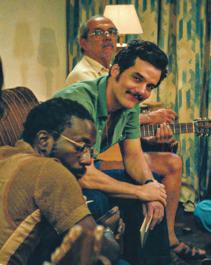
timelines, though the majority of the film is set in 1977, during the political turmoil of the Brazilian military dictatorship. Using the alias Marcelo, Armando (Moura) is lying low back in his hometown of Recife. A recently widowed professor with a young son, Armando/Marcelo is put up in a safe-house refuge for fellow political dissidents, who are all awaiting a safe path out of the country via the help of an underground network. What exactly Armando is supposed to have done and who’s after him are gradually revealed across the novelistic, frequently genre-bending feature, which encourages viewers to piece the plot together, in keeping with the alluded-to theme of reconstructing history from snippets of context.
When it comes to reconstructing history visually, the period film’s production design is as worthy of praise as its direction, screenplay and deep bench of captivating performers (including the late Udo Kier). Some of the details are informed by records, others through memories of 1977 Recife from when the director was a child. “Part of what we write comes from the real texture, the truthful elements of life,” Mendonça Filho says. The obsession that Armando’s son has with the advertising for a returning run of Jaws seems like an especially autobiographical touch.
Words: Josh Slater-Williams
Newspaper research for Pictures of Ghosts also informed period reconstruction beyond the art direction and costuming teams’ designs: “Words that have been retired from modern Portuguese just because society has moved on, maybe because some words were racist or misogynistic. I had a long conversation with the cast, explaining that some of those words were really harsh but were truthful to the period. And little details like [characters] saying, ‘Can I make a phone call?’ And the reply, ‘As long as it’s not long distance.’ Little things like that come from the period and they establish behaviour connected to the past.”
The Secret Agent is a hugely satisfying political thriller brimming with horror, tragedy and humour, but much of its pleasures come from its small period details. “I’m delighted to see so many great reactions, not only in Brazil but internationally, to the texture of time in the film. Many contemporary films and television series, they follow some rule book on how to do period and a lot of that is superficial. It’s not about having the right sofa. It’s about having the couch in the right place because it’s closer to the ashtray.”
The Secret Agent is released 20 Feb by MUBI





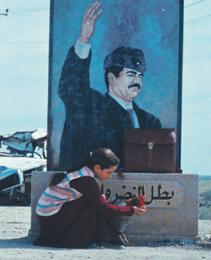
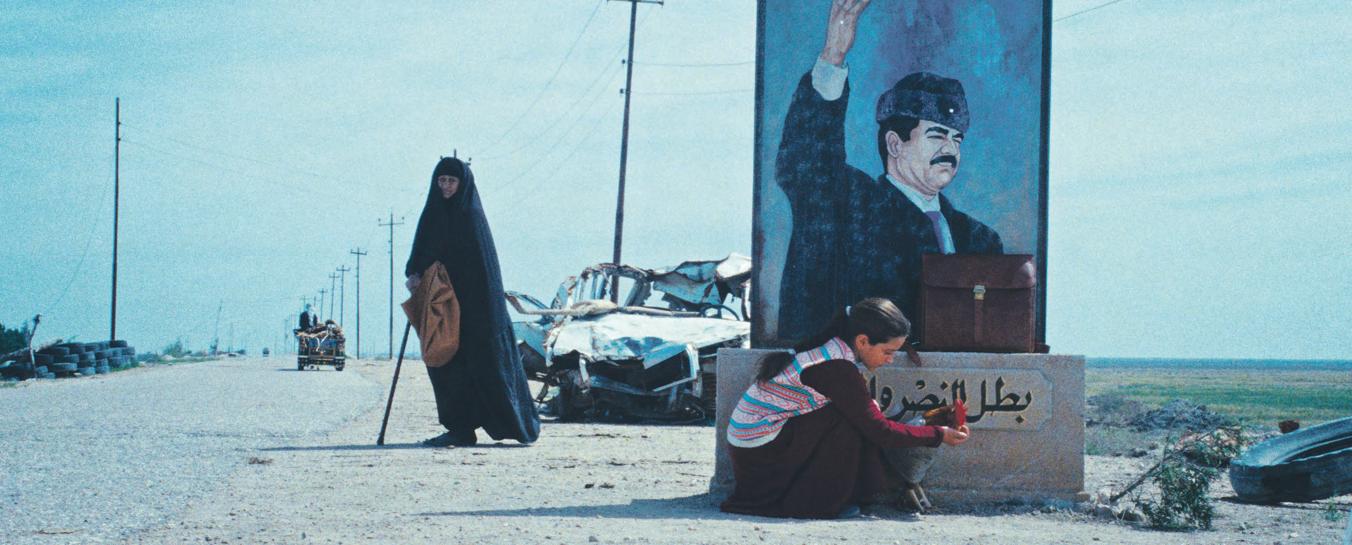
Hasan Hadi’s directorial debut, The President’s Cake, sees a young girl go on an odyssey to bake Saddam Hussein a cake. Hadi explains why it was imperative that the film be shot in Iraq and his ambitions for it to encourage more filmmaking in the country
When asking early-career filmmakers about how their interest in moviemaking was first ignited, you’ll sometimes hear fond memories of sneakily watching revelatory but age-inappropriate films at the cinema as a kid. But for Hasan Hadi, the Iraqi writer-director of The President’s Cake, watching even family films was essentially off limits.
“When I was growing up, cinemas were closed in Iraq,” Hadi tells me at the London Film Festival, “even though Baghdad had actually been one of the earliest places in Arab countries to have cinemas. But because of sanctions, films, film photography, even pens were forbidden from being imported to the country because they had chemical substances that could be used in weapons. So, my love for cinema was actually born on an 18-inch TV with a VHS [player]. I had some family friends and relatives who were particularly interested in films or had connections, and they would send me to a regular house to be like, ‘Hey, can I get something. Can you bring it out?’ Smuggling of VHSs, basically.”
Despite all the restrictions, it sounds like the underground VHS network had a little bit of something for everyone. “From Japanese Godzilla to, I don’t know, Baby’s Day Out, to Tarkovsky. I felt transported by all these films, though sometimes they didn’t have any subtitles.”
The magic of 1994’s Baby’s Day Out may not have had a direct influence on The President’s Cake, beyond Hadi proving himself to be an excellent director of child performers. Set in the 1990s, the film sees nine-year-old Lamia (remarkable first-time actor Baneen Ahmad Nayyef) get assigned a dreaded task. It’s ‘draw day’ across Iraq, when schools randomly select students to
bring items to mandatory local celebrations of President Saddam Hussein’s birthday. Lamia’s name is called for the most challenging task: making a birthday cake. And ingredients aren’t easy to obtain for a little girl who lives with her grandmother, Bibi (Waheed Thabet Khreibat), out in the marshes. She has no choice but to accept, going on a pilgrimage with her pet rooster and Bibi. Refusing to bake the president’s cake could mean imprisonment or even death. But completing the task could also be a trap. “My friend had to make the cake,” Hadi tells me. “And my friend failed miserably. His fate changed completely because of that, because then he got recruited to Saddam’s child army.”
Hadi’s own fate was changed by leaving Iraq as an adult. “I grew up in a society where filmmaking was just a hobby,” he says. “My parents never allowed me to be just a filmmaker. They asked me to study something else [as a safety net], so I did for my undergrad. For my graduate studies, I applied to New York University and got a full scholarship there. When I went to New York, it was like a candy store. You see all these theatres that show just old films, and you start experiencing films from a different perspective. You just hope that you, too, can tell some stories that can move people.”
Premiering in Directors’ Fortnight at the 2025 Cannes Film Festival, The President’s Cake won both that section’s Audience Award and the Camera d’Or prize for debut features from any competition strand of the festival. The film’s journey to Cannes was helped, in part, by the prestige of Hadi’s experience with the Sundance Institute Directing and Screenwriting Labs, and the support of mentors [director] Marielle Heller
Words: Josh Slater-Williams
and [screenwriter] Eric Roth. “We got offers to be fully financed under the condition we do not shoot the film in Iraq,” Hadi says. “But I would rather risk not shooting the film at all over shooting anywhere outside Iraq, because stories really have DNA and have rules. And sometimes, you cannot fake that.”
The film’s success at various festivals and awards ceremonies has been thrilling for Hadi, but also intimidating for what comes next: “All I hope for is that this [encourages] artists in my country to make more films. There’s no way we can make a cinematic industry in Iraq without both proper governmental support and [additional] private institution support that doesn’t interfere with creative freedom. Without that, cinema in Iraq will remain as individual attempts and trials. [The Camera d’Or] actually has had an impact inside the country, sparking new conversations about how cinema [in Iraq] is actually important. I’ve had so many people come up to us and say, ‘I never knew Iraq looked like this.’ Shooting this film outside Iraq with non-Iraqi actors would have produced something that couldn’t really survive even a few months later, let alone years.”
For audiences experiencing heightened political turmoil in their own countries, the film may be resonating for its exploration of how the actions of tyrannical politicians can lead to ordinary people embracing morally dubious behaviour just to survive. “Sanctions are a very violent tool,” Hadi says. “God forbid if a rocket falls on a building, we can rebuild that building in a few years. But when you destroy the ethical fabric of a society, the spirit of the nation, it really takes a lot of time to rebuild it.”
The President’s Cake is released 13 Feb by Curzon
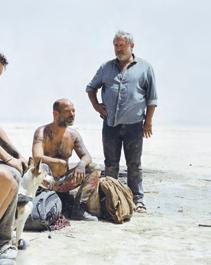
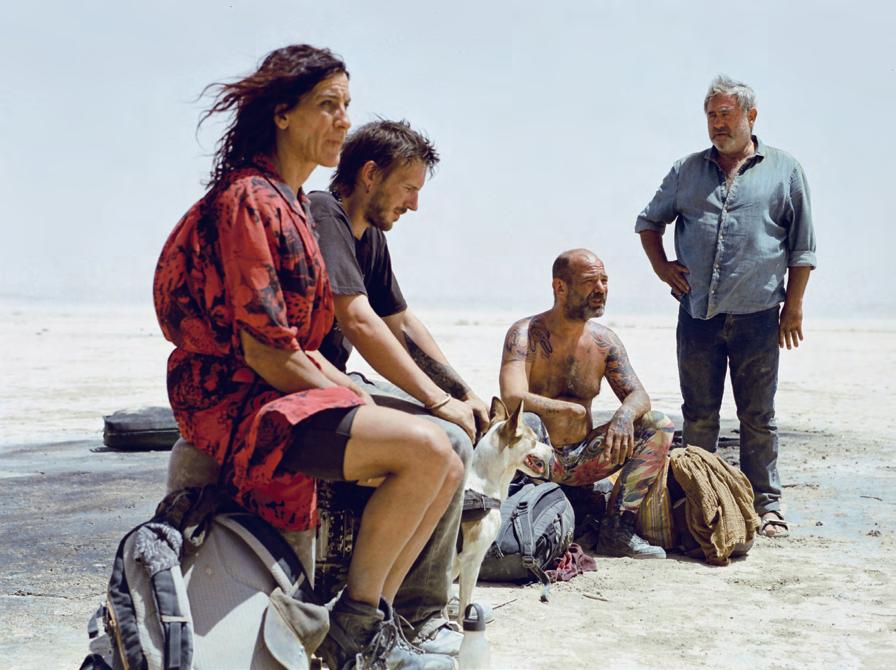
Sirāt takes audiences on a wild, nerve-jangling journey through the Moroccan desert. Its director, Oliver Laxe, tells us that it was important that his survivalist road movie provided an existential trip as well as an intensely physical one
“The first step for me is always an image.” So explains French-Spanish director Oliver Laxe as we discuss his visually and sonically striking new film, Sirāt, which is fresh from receiving two nominations for this year’s Oscars. And that first image was of trucks crossing a lonely desert. “I’ve had these images since 2011, when I moved to the south of Morocco after living in Tangier since 2003 or 2004.” His new home and the party scene there also helped inform the film. “I started to go to raves and through that, developed the script,” he explains. “Dancing on dancefloors, I developed these images further. I think I also had this intention of meditating on death. It’s something I learned in Morocco, you know, to be more connected with death, to experiment with death. That’s what I wanted to achieve.”
Sirāt is, undeniably, an impressive melding of all these elements: it’s a desert-crossing road movie, a film about rave culture, and an unblinking face-off with mortality. The results reach for something almost mythic. “I’m really interested in mythology, universal archetypes, these heroic books – from all civilisations,” Laxe explains. “Here in the UK, you have the Arthurian tales, you know? The grail quest. And these mythological books have these two dimensions: you have the physical path and, at the same time, a metaphysical one. The knight is being forced by external obstacles to look inside. So, that
was the idea with Sirāt, to start on a physical journey that slowly becomes more spiritual.”
The knight, in the case of Sirāt, is Luis (played by Sergi López, the only professional actor in the cast). He, along with his young son, is searching Morocco for his missing daughter. He believes she is part of the local rave culture and so falls in with a group travelling to the next festival. “I was living on a palm grove, and [a travelling rave community] came there to organise a New Year’s Eve rave. I met some of these people, and that was the moment when I realised that while I had these trucks in my imagination, this imagery found a place to land right in front of me.
“It was perfect,” he continues. “These communities, they live in these trucks. Rave culture is not just about partying for them; it’s also about travelling, it’s about being disconnected from this world, in a way. So, this idea of movement, this idea of dissolving yourself, going through your limits, it was like a sort of spirituality. Rave culture is about transcending your limits. It’s kind of like a really antique ceremony that we’ve been doing as human beings for thousands and thousands of years. Ravers almost hold a memory of this ceremony, this ritual, praying with our bodies on a dancefloor. When you are on a dance floor, you connect with your wounds. It’s really healthy.”
In reviews, critics have cited many films as an influence on Sirāt, from William Friedkin’s Sorcerer
Words: Ben Nicholson
“When you are on a dance floor, you connect with your wounds”
and Henri-Georges Clouzot’s The Wages of Fear to George Miller’s Mad Max films, but Laxe’s mining of this sacred understanding he describes above also evokes Trances, Ahmed El Maanouni’s 1981 documentary film about the Moroccan avant-pop band Nass El Ghiwane, not least because of Sirāt’s astonishing soundtrack. A blend of both enveloping rhythmic music and a more abstract soundscape, it was created in collaboration with David Letellier, A.K.A. Kangding Ray. “I had a clear sense that at some point we had to go from techno to something more ambient,” explains Laxe. “On previous projects, I’ve bought the rights to existing tracks, you know, like I did with [2019 film] Fire Will Come. This time, I really wanted to work with someone and to build more unity, to build a sonic landscape with the same textures and grain [as the film].“
Working with Letellier, the aim was for the music to reach for something close to transcendence. “When you analyse sacred music, you understand that it is when music transcends melody,” Laxe explains. “We often think of sacred music as being related to classical, but I don’t agree. I think [it’s closer to] electronic music. Electronic music’s vibration is electromagnetic; it’s like the sound of the universe. Another thing that electronic music has is that you don’t know the source of the music. There is an abstraction, the same abstraction that you have on a dance floor. You are just in front of the sound. Experiencing the sound. It’s transcendental.”
To that point, Laxe clarified some of his influences. He confesses that critics have been correct, the likes of Sorcerer and The Wages of Fear were absolutely in his mind when making Sirāt, but their chief influence was in the evocation of the film’s physical journey. In terms of Sirāt’s existential journey, he had a whole other set of works as touchstones. “For that, we were more inspired by American cinema from the 70s that’s existentialist – you know, Two-Lane Blacktop, Easy Rider, Apocalypse Now, Vanishing Point. These films were talking about a specific time. Some of them I don’t even understand, but I feel them; they are organic, they are inhabited. They talk about the dreams and fears of the people from this time. That’s what we wanted. Let’s see in 20 years if we can claim the same thing about Sirāt.”
Sirāt is released 27 Feb by Altitude


Acclaimed poet Sophie Robinson chats to us about her debut novel Prairie Oyster, and why poetry wasn’t enough to tell this particular story
Acclaimed poet Sophie Robinson was coming up against the limits of her medium. She wanted to write about her sobriety journey – from years of drug and alcohol addiction to her first few moments of adult life with “most of her brain cells” awake. But poetry wasn’t going to cut it for this project, and neither was experimental non-fiction. “Anyone who’s been an addict knows that getting sober… there is a weird kind of trauma; a compulsion to have a narrative that you repeat,” she explains. Developing a narrative was something fiction could support, and her novel places its protagonist in this at-times hopelessly cyclical narrative of addiction and sobriety, inspired by 1940s film actress Veronica Lake.
Prairie Oyster follows a young, successful filmmaker, Pearl, as she navigates sobriety while pursuing a passion project about Lake and an entanglement with a cult filmmaker named Mitch, 30 years her senior. The name Prairie Oyster refers to a 19th-century cocktail used as a hangover cure, containing a raw egg yolk that, unbroken, is said to go down like an oyster.
While developing Pearl’s narrative from her own experiences, Robinson was also determined to rewrite the cultural narrative surrounding Lake. Lake wasn’t the “lovable, white straight guy” making ground-breaking art from her addiction, she says. Instead, she stopped acting, lived the rest of
her life drinking and faded into obscurity – to the extent that her ashes were discovered in an antique store in 2004. This disappearing plagues Pearl, trying to uphold her career as a revered filmmaker while slipping into a series of relapses.
Paradoxically, what brings this underland to life, for Pearl and for Robinson, is cinema.
“The experience of addiction is like being outside of time – blackouts, losing memory. The experience of withdrawal as well is very visceral, so I felt a real affinity to images and cinema,” Robinson says. “I also had an interest in cinema as fakeness. Veronica Lake was a famous film star, but she only made films for a few years… [Pearl] is horrified by Veronica’s story because she’s like, that is meant to be the whole point of making a film. It’s making this indelible stamp on the world – I’m visible, I’m real. And then this person just disappears.”
Through her exploration of cinema in the book – particularly in Pearl’s affinity for the form, and Lake’s recounting of her career via interludes of interviews – Robinson plays with surface and depth, leveraging a sense of mirage to point to deep disillusionment in a brutal, unlivable world.
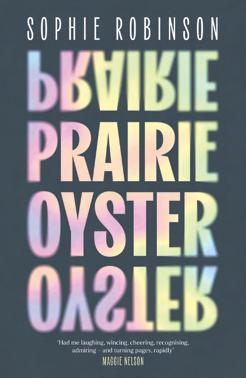
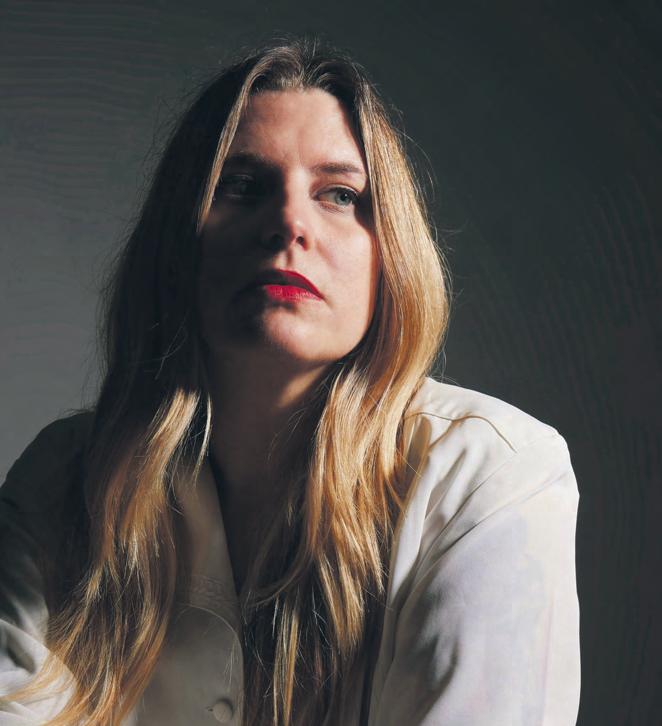
“It’s all intertwined,” she says. “Cinema, alcoholism, a romantic obsession with childhood – it’s all about: ‘I feel invisible, I don’t feel loved, I don’t feel important.’”
While Pearl’s search for herself tends to revolt against her, there is some comfort to be found in Prairie Oyster’s steady cast of characters which, by Robinson’s intention, occupy different intersections of normative relating. There is Bunny, Pearl’s best friend and occasional lover, Björn, an Icelandic film producer with a breezy fatherliness and, of course, Mitch, simultaneously the object of Pearl’s affection and her steely, Boomer/Gen X mentor. No character in the book fits into a neat role, and Robinson likes it that way.
Words: Mika Morava
“Anyone who’s been an addict knows that getting sober…there is a weird kind of trauma; a compulsion to have a narrative that you repeat”
Sophie Robinson
“I’m queer because my life is not defined by traditional heteronormative ideas of the nuclear family,” she says. “I wanted to represent relationships that defy easy explanation or don’t fit into conventional forms of kinship.”
Robinson says she feels far from a sapphic literary tradition that leans on these conventional ideals. Instead, she is interested in creative elders who found their place in queer, radical art-making. Finding her lineage in the likes of Barbara Hammer, Kathy Acker, Marguerite Duras and Eileen Myles, Robinson gave her Pearl a Mitch – the embodiment of an unbearably cool elder who has already done the visionary work that feels impossible as a 30-something year old in the year of 2026.
Robinson is 40 and got sober in her early 30s. In Prairie Oyster, Pearl is in her 30s and trying to get sober. Veronica Lake stopped making films on the cusp of her 30s, and to the best of public knowledge (Robinson has trawled every niche internet forum on Lake to exist) never had a period of sobriety in her adult life. Through the reverence of Robinson and her lead character, however, Lake is offered dignity and an interiority rarely afforded to alcoholics of that time who weren’t straight men – an aspect of that being her choice to drink, and keep drinking.
“I hope that by staying with Pearl and demonstrating someone who is, from the outside, living an exciting creative life, [it shows] how much of a struggle it can be to stay alive every day… I wanted to leave the book with this sense of beauty and newness and hope, but also, with knowing the terrifying indifference of the world.”
Prairie Oyster was undergoing edits until the very last minute, she adds. This faithful representation of addiction and sobriety, weaving fiction and personal experience, took seven years of thought and discernment to produce. There was one thing Robinson says she was certain about from the very beginning, though: Lake would have the last word.
This month, Manipulate Festival returns to Edinburgh with a fresh perspective on visual theatre, puppetry and animation. Our writer explores the intersection of absurdity and political satire at the festival
Thousands of coffee beans flying in the air, a tartanclad dying relative, candyfloss puppets – these are not the usual images conjured when we think of European empires and their extraction of resources. This year at Manipulate Festival, though, two shows – Auntie Empire and Coffee with Sugar? – bring the dregs of empire back to our contemporary consciousness using humour and absurdity.
KMZ KOLLEKTIV, a Berlinbased performance group founded by Laia RiCa, Antonio Cerezo, Yahima Piedra Cordova and Daniela del Pomar, presents a multi-sensory, emotional and yet funny exploration of colonial coffee plantations by Western Europe in Central America through Coffee with Sugar? Auntie Empire, Julia Taudevin’s bouffon theatre performance directed by Tim Licata, brings grotesque anarchic hilarity to the stage. Through the persona of ‘Auntie’, as Britannia herself, she gathers her family on her deathbed to witness her last will and testament – and make sure her legacy continues.
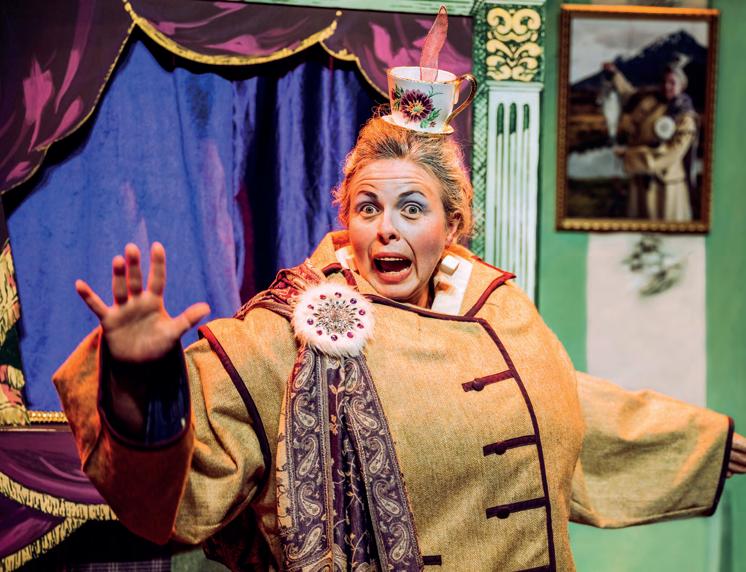
Manipulate Festival’s focus on innovation in form is on display here as these shows revel in using a plethora of mediums to inform their visual theatre, especially to draw attention to the links between contemporary capital and coloniality.
KMZ KOLLEKTIV uses material theatre as an avenue to interrogate pantry essentials we might not give a second thought to.
“Coffee with Sugar? started with just coffee as the starting point, developing it as a character alongside [RiCa] on stage,” Cerezo, co-director tells us.
“The work with the materials helped a lot in order to address this violence,” RiCa says, “What happens when we perform one of these German [plantation owners], but wearing a mask made of candy floss?” The combination of humour with sensorial elements like documentary visuals (produced by del Pomar) and live music (performed by Cordova), becomes a powerful tool to guide the performance away from condescension, and allows its complexities to be treated with gentleness.
Auntie Empire, by contrast, draws from its many previous iterations of itself to achieve the balance of mockery and provocation that it does. The show has existed purely as live-gore, a short film, a stand-up comedy show and a three-act play, and has evolved into bouffon theatre to hold up a mirror to society through subversive and intelligent satire.
Julia Taudevin shares that the experience of being at a screening of the short film and seeing the live reaction from the audience made her want to
pursue an interactive version of Auntie Empire in theatre. Now, through puppeteering and bouffonery, Taudevin is able to manipulate bodies and ideas in a way that couldn’t necessarily be done with live actors. Taudevin explains, “I liked the idea of [puppets] being a construct, because the empire was also a construct… [both are] constructed by people.” While these ideas on contemporary culture signal a sophisticated aesthetic and form, the emotional notes are equally nuanced.
‘I liked the idea of [puppets] being a construct, because the empire was also a construct… [both are] constructed by people’
Julia Taudevin
For RiCa and Cerezo, who have been working on this piece for over five years, the process has entailed constant confrontation of the parallels between the colonial interactions witnessed in the piece and their experience as Latinx performers in Berlin – a place where their particular history has been largely erased. Including vulnerable biographical fragments in the show makes this connection even more poignant. Through this explicit vulnerability, RiCa extends an invitation to the audience to engage
Words: Lakshmi Ajay
with the piece on an emotional level, rather than just a rational one. The structural violence of colonial continualities cannot be solved by preaching the right kind of coffee to buy, but by addressing the deeper wounds – for example, the emotional ramifications of a racist commercial from a German coffee brand in the 90s. Coffee with Sugar? responds with absurdity to these queries, but urges us to feel their weight.
Auntie Empire sees a similarly complex emotional tenor. “‘Auntie’ is portrayed by a charismatic performer,” Licata, the director of Auntie Empire states, “[and] she’s also a person that people were starting to both be disgusted by and feel pity for.”
After almost six years of being ‘Auntie’, Taudevin adds emphatically: “She is exhausting. I like saying goodbye to her... I like the last time I put the teeth back in the bag and seal it up.” To the team, while what ‘Auntie’ represents can be disgusting, being able to laugh at her also illuminates the discomfort of being implicated in any way with the history of Britain.
Costumed in what Taudevin calls a ‘tartansafari’ of Balmoral Scotland smattered with paisley prints signifying the spoils of empire, Auntie Empire does not shy away from calling out the nuances of Scotland being a subject of Britain, but also being complicit in the wealth accrued from colonial exploitation even today.
“I don’t think that Scotland has a huge relationship with parodying the British Empire, because we have this flawed notion that we’re somehow pure,” says Taudevin, but adds that this show is certainly not an essay either. “It’s a visceral experience that is presenting a question to the audience about who we are and how we live in the world, but not really attempting to answer it.”
RiCa, when asked about what she wants to convey to a Scottish audience, said she wants to offer them a moment to reflect with their morning coffee; to create some discomfort in their lives, so that they continue to ask these questions of other things in their everyday life.
With these two shows sharing space in Manipulate’s programme, audiences should be in for an interesting exercise balancing complex emotions. Being confronted with the absurdity of empire through theatre – its impact immediate – should stir people, should make them uncomfortable. But one might argue that an absence of feeling this in our everyday, while living in a modern empire, might be the most absurd thing of all.

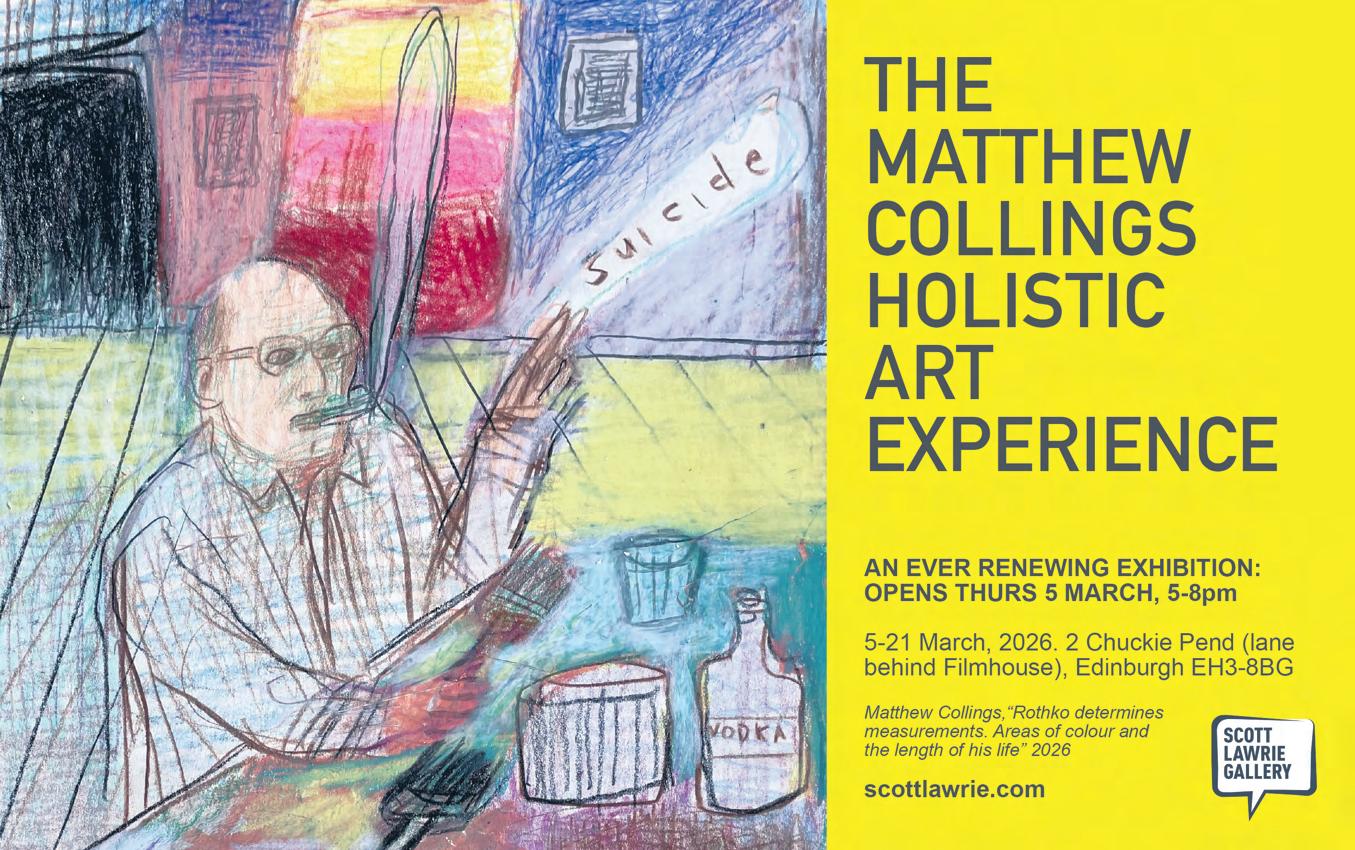
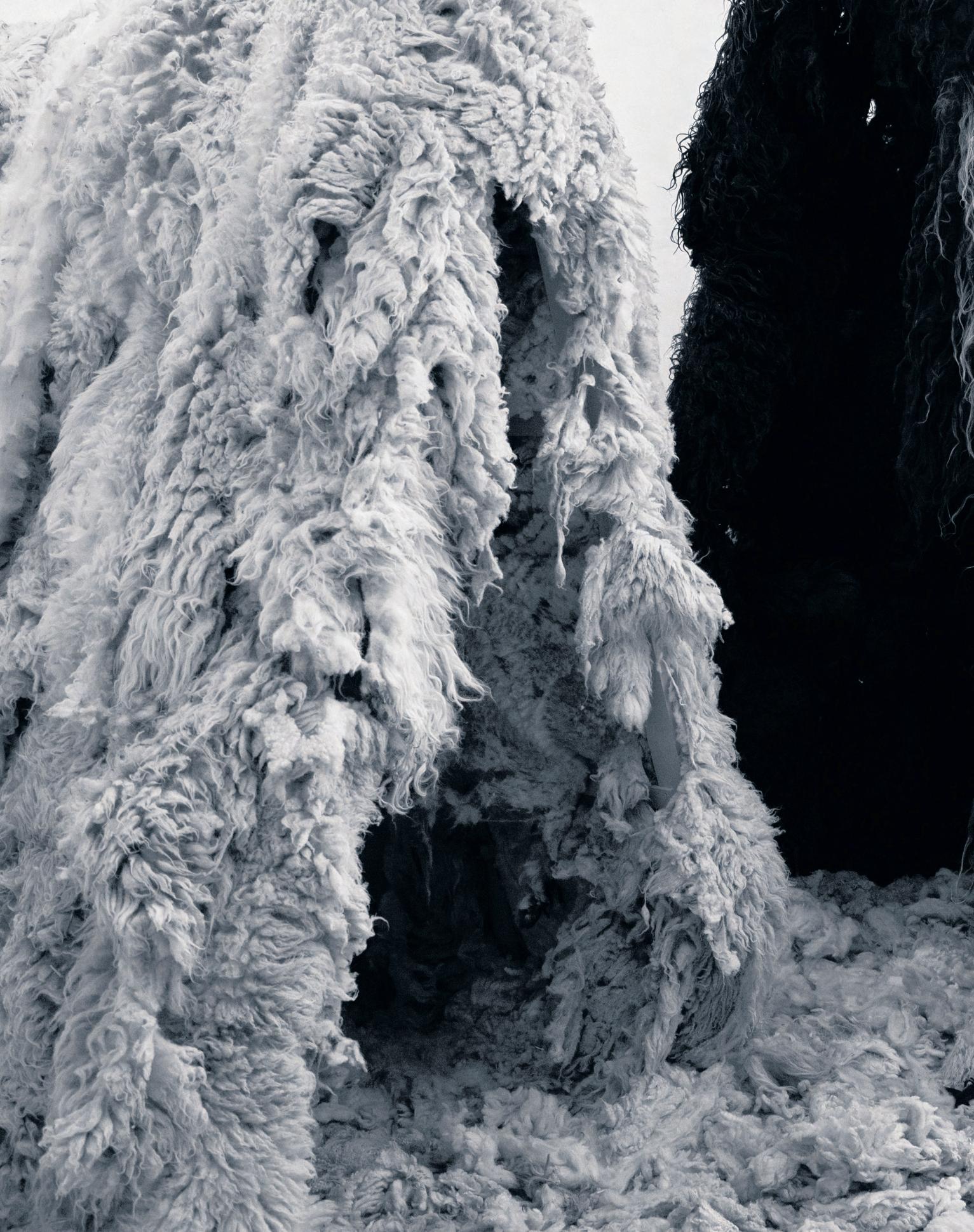
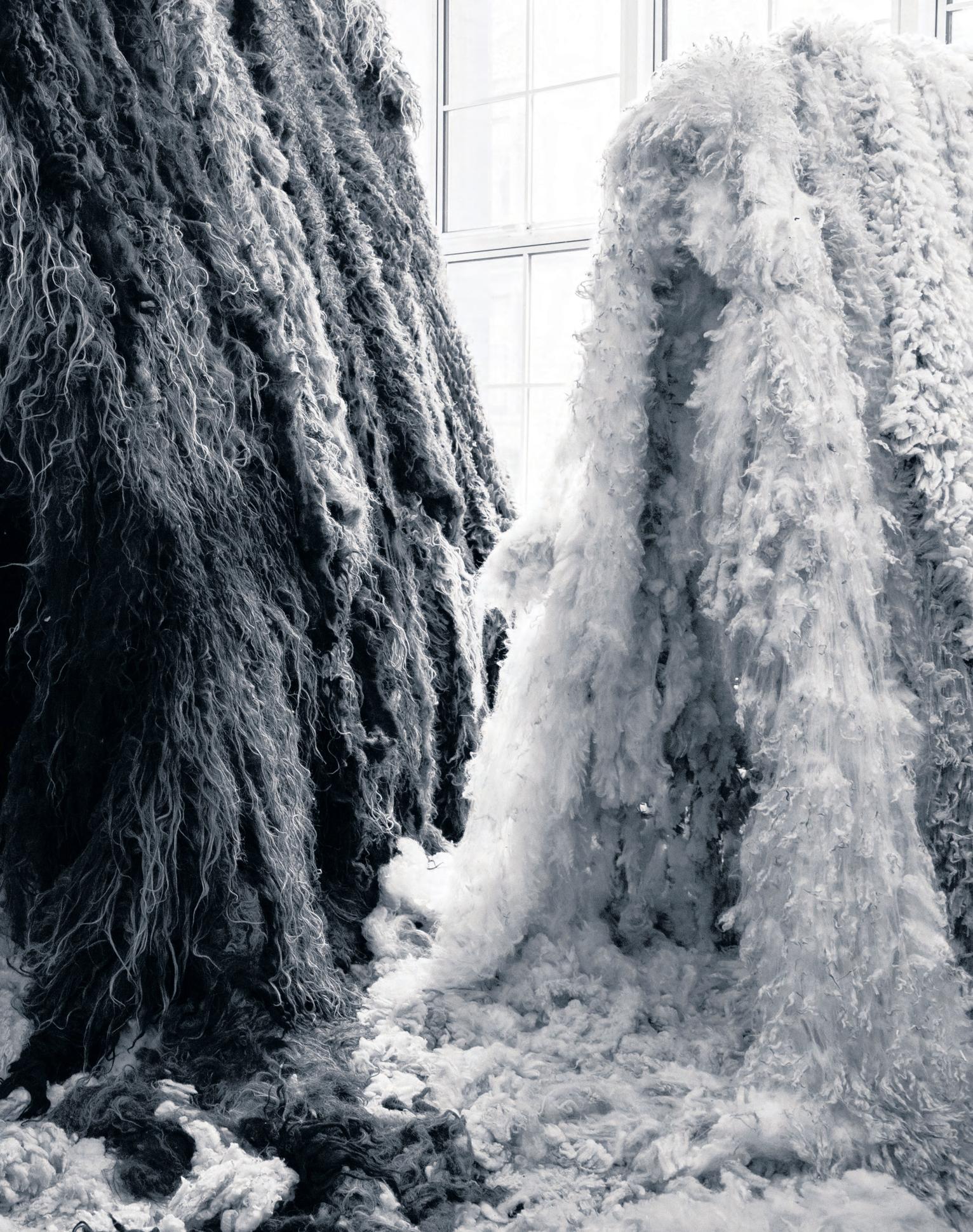
Dinner’s ready and we’re keen to fill our plates. We speak to Glasgowbased supper clubs and community meals about bonding through a meal shared with friends and strangers alike
Dinner, it seems, isn’t enough to satiate us.
Restaurants across Glasgow are struggling to attract clients, and the city’s hospitality scene has changed rapidly. Amongst this landscape of diminishing offerings, new forms of communal eating are rising.
Supper clubs of the early 1900s started as underground clubs offering food and music to a select clientele with specific knowledge of their existence. Their newest guise rarely includes live music, but they still invite guests to share a cultural, conceptual and social experience alongside the food.
“I found myself loving the country but missing familiar home flavours,” explains Marlon Gonzalez, who moved to Scotland from Cuba six years ago. “Attempts to create a Cuban eatery by either locals or immigrants tends to be a pastiche of real Cuban cuisine and more marketing than actual quality.” From this, Cuban Scran was formed. Gonzalez’s supper clubs offer the chance to try the cuisine he grew up with, which is so rarely represented in traditional UK restaurants.
Flavours, enthusiasm and stories offer portals through history and time. Gonzalez’s food is the focus – but this is food cloaked in cultural exploration and knowledge. “People generally love my food, feedback is positive and the main realisation is how much education I need to do to explain to people what the food is,” he reflects. Through authentic plates of Frijoles Blancos and Flan, Gonzalez is something of an ambassador and teacher of a culinary world. And, like the meals of Gonzalez’s childhood, they are consumed in tandem with other people.
During supper clubs, curiosity and sociability are nourished alongside the body. “The dinners are intimate and creatively stimulating to the level that nobody is a stranger when we close for the night,” explain Seán Talbot and Sophia Archontis from Opn Tble, a supper club for creatives in Glasgow. Alongside the food, each participant is invited to share a piece of work. Creative practice is unpredictable and lonely – fitted in around other schedules, in stolen moments and repurposed
‘The food is the main appeal, but these meals also situate guests within their locality, and introduce them to other diners who could easily become friends’
surfaces. These suppers offer a space for creative community and conversation.
“We frequently have people coming in with questions to ask to the table, or thoughts they want to develop... Often when given the chance to talk things through with other artists and creative folk you might get given an answer to a problem you never thought you could solve,” say Talbot and Archontis. The food is important but the main value in Opn Tble is the spark generated between guests. The art world isn’t the most forthcoming, so these dinners offer participants the chance to sit as artists on equal footing with other artists, all self-proclaimed, and adding validity to their desire to create.
These same issues of access and means extend beyond the halls of artistic expression, and into the very purchase of food that makes dinner possible. Because, of course, not everyone looks at meals as a way to gain mental nourishment. Everyday essentials need to be budgeted for by people across Scotland, and access to hot food is not a given. Community meals fulfil an increasingly urgent role within their geographical communities. Unlike supper clubs, these have no theme beyond the shared food.
Words: Olivia Juett
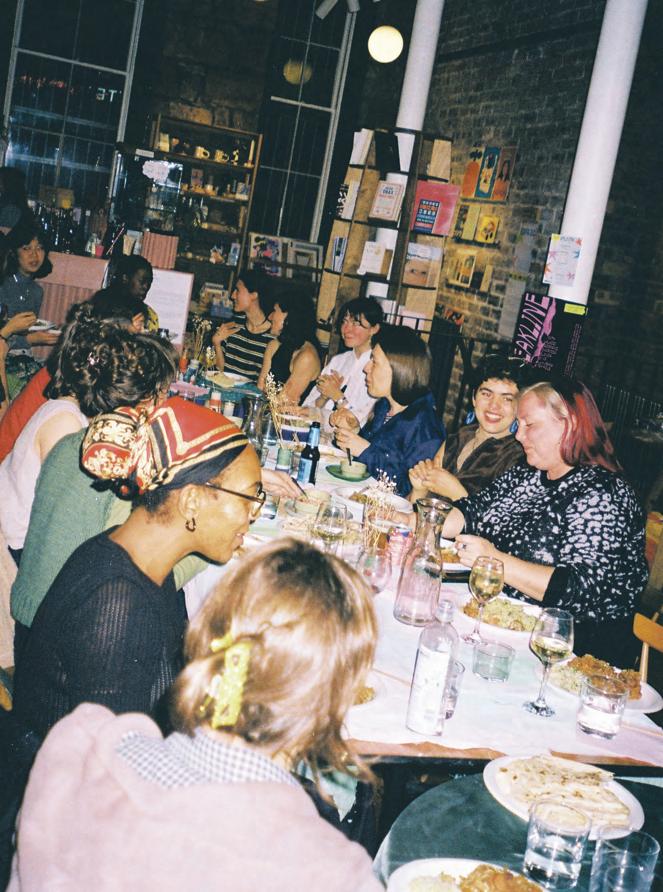
When Glasgow Autonomous Space (GAS) opened their new location in 2024, the community dinner was one of the first events they solidified. In the early days, the 15 or so diners could easily gather around a few tables. Now, each free, weekly dinner welcomes more than 60 people to the Govanhill space. A volunteer at GAS explains: “We have 60-plus people now and that’s made up of migrants, refugees, anyone in the asylum system; we get quite a few people who have experienced homelessness; local people from the neighbourhood. I’d say that pretty much everyone walks to the meal.”
GAS, with its welcoming and permanent space, has filled in an essential local service
where other systems have fallen short. “We’re a mutual aid network based on solidarity, community care and trust… I think it’s such a precious and important third space that you don’t see elsewhere,” they say. Through consistency, these meals offer a fertile ground from which community can grow. They ensure connections are repeatedly nourished, especially through times of social or economic precarity. The food is the main appeal, but these meals also situate guests within their locality, and introduce them to other diners who could easily become friends.
Supper clubs and community meals speak to a desire to eat in communion with others; or, just feel like our community is there to help our need to eat. They fill the gaps of that which is missing – not by plugging a commercial hole in the market, but through satiating the needs and desires of people. The plate is just one part.
Follow @cubanscran, @opntble and @glasgow.autonomous.space on Instagram
Poor sleep, mood swings, and an unforgiving work-life balance. One writer explores the unacknowledged weight of capitalism upon perimenopause and menopause
There is a question I keep returning to lately, usually somewhere between a work meeting I can’t quite follow and the sudden urge to cry, scream, or lie on the floor: is this perimenopause, or is it capitalism? The answer, I’m starting to think, is both. But we are taught – socially, culturally, medically, politically – to pretend these things can be separated.
Perimenopause is not brief. It can last for years. Hormones fluctuate. Bodies behave unpredictably. Sleep fractures. Desire comes and goes. Anger arrives without warning. And yet this transition happens at precisely the point in life when we are expected to be most stable, most productive, most capable: productive workers, reliable carers, emotionally literate adults, astute peers, people who can ‘manage’ themselves. A recent study from Cardiff University suggests that around 70% of people who menstruate experience neurological or psychiatric symptoms during perimenopause. One long-term study published in the São Paulo Medical Journal found that over a quarter of people with no prior history of depression developed major depressive disorder during this time. These aren’t marginal numbers. This is a structural experience, and yet it is framed almost entirely as an individual problem.
I’m 38. When I went to the NHS, I was told I was “too young” to be perimenopausal, even though perimenopause commonly begins a decade before menopause itself. What I feel I was actually
being told was something else: “This disruption doesn’t fit the story we have about your body, so we’d rather not hear about it.”
Within a single day, I have felt utterly repelled by touch (and sound – please may chewing gum be universally banned) and then overwhelmingly, unmanageably sexual (imagine Greta from Gremlins 2 – let this be a warning to anyone who gives me even the hint of flirtation). This isn’t just personal chaos. It’s a collision between a body in transition and a system that demands consistency. I have bled for eight weeks straight. Eight weeks of exhaustion, of cramps that double me over, that leave me lying on the bathroom floor; brain fog so thick it feels physical, like a thick treacle beneath my skull. Eight weeks of holding myself together in professional (and personal) spaces while feeling that I am completely falling apart emotionally and physically. Capitalism has no language for this. Many of us have worked for decades with little to show in terms of security. As found by the Resolution Foundation in 2023, my generation is half as likely to own their own homes as their parents were 30 years ago. And yet, pressure to be grateful is constant. The pressure to keep going is relentless. The pressure to reproduce (potentially from within your body, but always from society and the economy) still hangs heavily over my generation, but especially those of us who read as women. Those most likely to experience perimenopause are also the people most likely to be holding up the unpaid labour that capitalism quietly depends on: caring for children, partners, and ageing parents; maintaining households; smoothing emotional lives; absorbing crises. This labour is not recognised as work, yet the economy could not function without it.
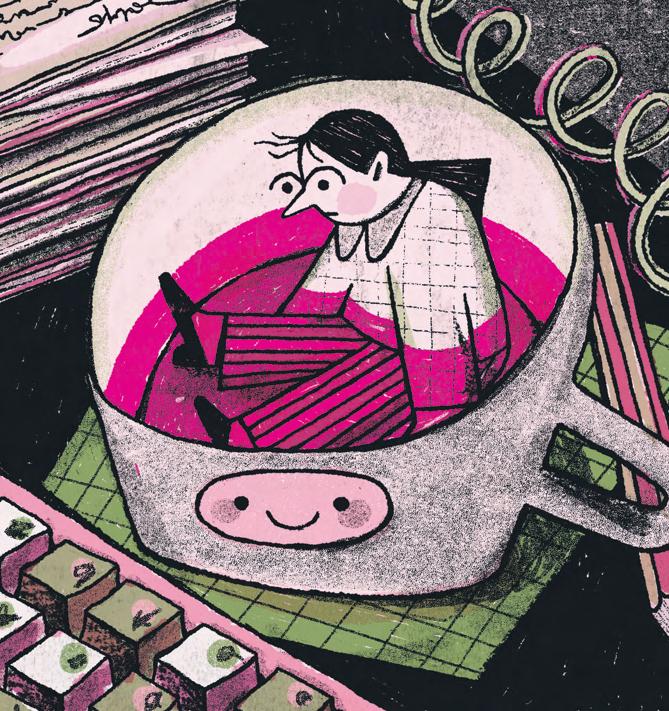
Since COVID, burnout has entered our everyday vocabulary. People talk about ‘being burned out’ as though it were a personal malfunction rather than the predictable result of an economic system organised around extraction, speed, and constant growth. Burnout is capitalism’s trick: the collective consequences of structural violence reframed as individual weakness.
Words: Rosie Priest
Illustration: Vaso Michailidou
‘We need to understand that our bodies are not separate from the socio-economic systems we live under: they are shaped by them, strained by them, and often sacrificed to them’
Perimenopause sits uncomfortably close to this logic. The symptoms are at times indistinguishable from the effects of long-term precarity and overwork. But instead of questioning the conditions that make this transition unbearable, we are encouraged to optimise ourselves: to seek resilience, productivity hacks, mindfulness, medication – anything that allows the system to continue uninterrupted.
Capitalism celebrates bodies that appear limitless and unchanging. The myth of the hypermasculine, endlessly productive figure (see Elon Musk, Jeff Bezos, Donald Trump) depends on the denial of vulnerability, dependency, and fluctuation. Bodies that leak, rage, rest, or refuse are treated as problems to be managed, not truths to be learned from. So, when a nurse says, flippantly, “Oh, women and our hormones, what are we like?” to me while taking my blood for tests, it isn’t just ignorance. It’s ideology. It’s the dismissal of bodies that refuse to conform to capitalist fantasies of control. There are darker realities here that these remarks dismiss. As research published in Women’s Health (Lond) reports, suicide rates are notably higher for those aged 45 to 55. Meanwhile, UK charity Mind highlights that menopause can bring about a number of mental health difficulties. Perimenopause isn’t just about discomfort or inconvenience; it’s about survival.
What we need is not only better medical support – though that matters. We need shared knowledge, collective care, and a refusal to keep treating bodily collapse as a personal failure. We need to understand that our bodies are not separate from the socio-economic systems we live under: they are shaped by them, strained by them, and often sacrificed to them.
Is it perimenopause, or is it capitalism? It’s both. And until we are willing to talk about them together, people will continue to endure this transition alone, quietly, and at great cost.
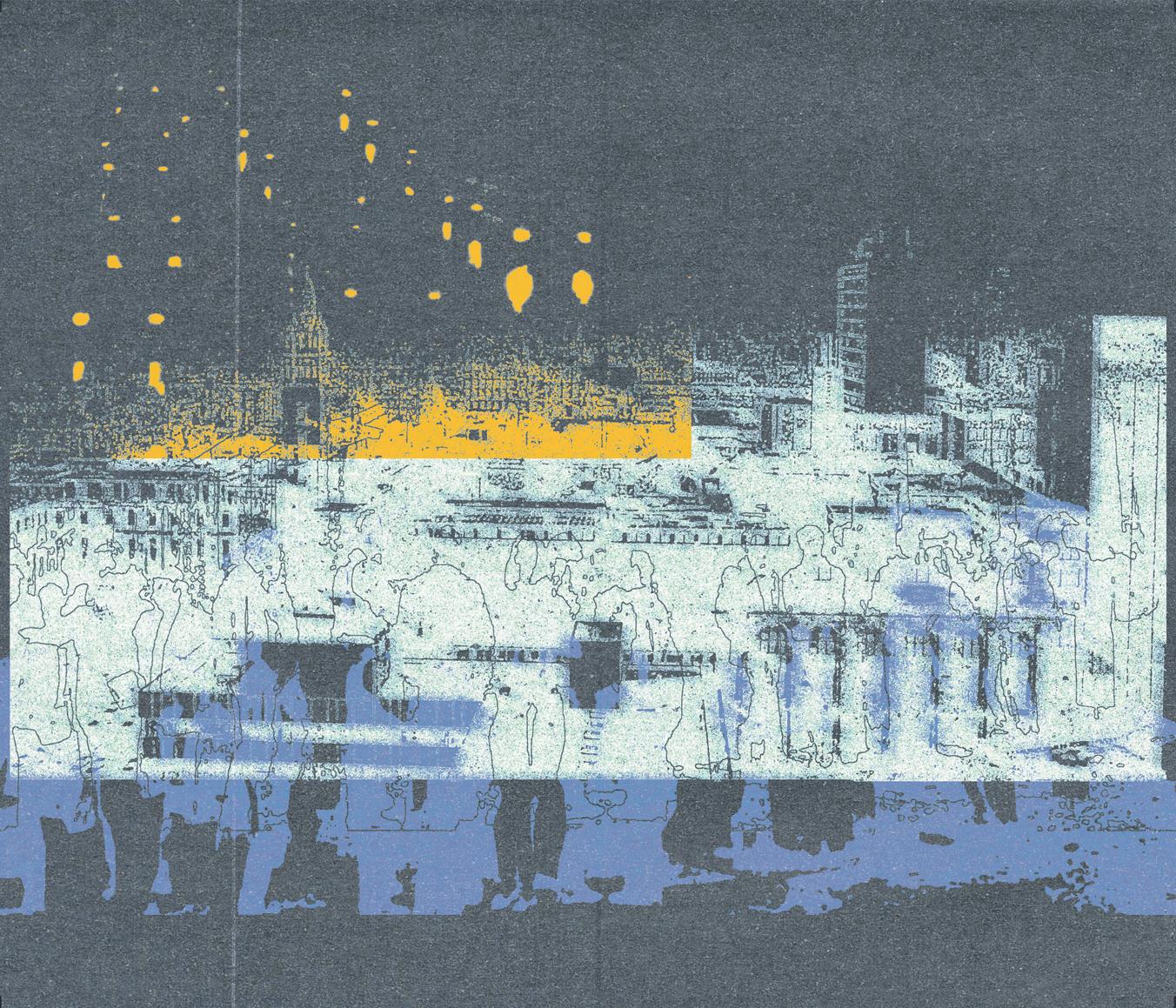
Forty-two years on from its release, we explore why Glasgow needs The Blue Nile’s A Walk Across the Rooftops more than ever for reimagination and reinterpretation
Words: Alexander Ralston
Illustration: Joe Munsey
On a quiet Sunday brunch shift a few months ago, the name ‘James Kelman’ came up on the bookings. The Glaswegian writer is a hero of mine, and it seemed I was going to be serving him in a matter of minutes. I sprinted out for a cigarette to compose myself and imagine what I’d say to him. But nothing focused or concise was forthcoming. Instead, I thought about Glasgow and how it feels to live in a city that’s big, but not really a metropolis. Not a place where it feels history is allowed to happen anymore, because no decisions are made here, yet a place so burdened by its former prominence that its inability to produce the future paralyses its imagination. We’ve been here before. Think of the Glasgow Kelman was writing about in the mid-eighties. Empty shipyards, shuttered shops, and crowded but silent pubs. Glasgow’s painful transition to post-industrialism was approaching its climax. Post-industrial and post-imperial, the city’s sense of self was disintegrating, its old glamour dead and vacant.
Margaret Thatcher’s repeat victory in the 1983 election seemed to have doomed the municipal and industrial socialism that had been pioneered on the Red Clydeside. The Clyde was possibly the quietest it had been since the Industrial Revolution. Amidst such brutal upheaval, a band going by the name of another great river were reimagining the city’s foundering as a state of grace.
Midway through 1984, A Walk Across the Rooftops, the first album from The Blue Nile, arrived. It’s different from everything else. It doesn’t really exist in time as we’d know it; instead the past is simply a part of a collage that transforms the present.
The Nile imagine a noirist city, shadow and light shifting endlessly across its contours. Ruination is recast as glamour, the rain trickling down the face of an empty tenement appearing as the tears of some great dame. Grand narratives, stories and plots co-exist within an electrified everyday. The new architecture of decay and absence is a canvas to be projected upon and played within, a gateway to possibilities generated by the interaction between the social dreamings and the daily lives of its inhabitants.
Tinseltown in the Rain, the first half’s centrepiece, sweeps between the immediacy of its Cadillac-engined bass, racing close to the ground, before the strings fly us out above town. We’re seeing and hearing both from within and from above, ‘Caught up in this big rhythm’ of the great machine of the city, as it endlessly huffs and whirs.
The same thing happens on the title track, with its melodrama unfolding along the city’s untraversed exteriors; its rooftops, the bridge between the ground and the stars. It evokes the loneliness and isolation forced upon the residents of any city simply through proximity to so many people that can sometimes feel desperately untraversable. The song’s character is transported from the everyday of the street to the grand vision of the sky, seen from the rooftops. Stair-case strings, twinkling keys and mournful horns turn this desperation into something grandiose, a desire to embrace a world more dramatic: ‘The lights are always changing / The black and white horizon / I leave the redstone building / And walk across the rooftops’.
This record perfectly evokes how it feels to live in a city. It captures the joy of the mingling smells of asphalt and greenery after a downpour on a grey summer evening; the loneliness of a winter’s night, high up in a tenement with only the wind for company. Without ever mentioning the city, The Blue Nile manage to burn an image of Glasgow into the mind’s eye. The space, the silent
‘Without ever mentioning the city, The Blue Nile manage to burn an image of Glasgow into the mind’s eye’
melancholy held in the interstices between sounds and words, becomes more than a canvas – it transforms into a character in itself. This is where we hear the city, in what’s left unsaid, unplayed.
Their investigation of space leads the band to find cracks in the city’s material façade, exploring them so as to find dreams of different worlds, like a film you haven’t seen yet. Doing so reconstructs the emotional mass of the city, glimpsed on damp, near-empty streets, through the scraps of light emanating from its windows and street lamps, drawing a white blur on the horizon. What if the rain on Renfrew Street really is the backdrop to a noir thriller, or some grand, doomed romance?
The Nile’s Glasgow becomes a place small enough to have a distinct feeling and sense of self, and yet huge, large enough to contain a near infinity of miniature vignettes and dramas: Stay’s dreams of love rekindled by summer’s freedom; Easter Parade’s capturing of a singular moment perfectly in perpetuity: ‘In the bureau typewriter’s quiet / Confetti falls from every window / Throwing hats up in the air / A city perfect in every detail’. The city shelters its populace from the rain and in turn, the people cover its decrepit buildings in flowers and paintings.
Glasgow is a city of ruins, filled with sites of absence. The M8 is a knife through the heart of the old Victorian town; the city smothered in would-be monuments to faded imperial glory. The now-empty plots and decaying, uninhabited structures seem to exist adrift from the present, crumbling evidence of what-once-was.
The city’s current reality is bleak. Amidst an interminable housing emergency and the near-cyclical destruction of beloved institutions, it seems to be getting bleaker. The tattered banner plastered on the Met Tower claiming ‘People Make Glasgow’ takes on an ironic truth. Draped in the decay of a better past, it’s left entirely to Glasgow’s populace to maintain a sense of cultural self that persists outside its ruins. The city faces a similar moment as it did in the mid-80s; untethered from its former identity, yet still covered in its detritus.
Glasgow is not a metropolis, and this feeling of being lesser, this apartness, comes from the sense of marginalisation that attends being ‘regional’. The metropolis is content to obsess over itself, and so each regional centre mirrors this, vaunting a cultural autarky of its own to create a bulwark against Londonism. “This is Manchester,” so I’m told. “We do things differently here.”
Like Manchester, Glasgow is one of several ‘Second Cities of Empire’, and it seems terrified of letting go of its former role as a protagonist of history. It appears stuck in a miasmic pastiche of its own past, whereby the humour of the 2000s is endlessly recycled alongside the canonisation of the 80s and 90s music and art scenes; a whole city flattened into Billy Connolly and Still Game, Simple Minds and Franz Ferdinand. These airy references to the ethos of earlier times are endlessly repeated, but never with much reverence, because to revere the past would admit that it is something better than now, something with distance enough from us to become an object of reverence.
There’s a famous exchange in Alasdair Gray’s Lanark where the novel’s half-protagonist, Duncan Thaw, is asked why Glasgow’s magnificence goes
‘A Walk Across the Rooftops remains vital in demonstrating that [Glasgow] can become the canvas for another dreaming, a new interpretation’
unnoticed. Thaw responds abruptly: “because nobody ever imagines living here.” For Thaw, Glasgow is never an artist’s muse and “if a city hasn’t been used by an artist, not even the inhabitants live there imaginatively.”
But Glasgow is just as much the world as the places where we imagine history to happen, and the world does not have to validate us for us to have worth, feel meaning. We don’t need to quote Diego Maradona or Anthony Bourdain talking about how much they love Glaswegians for us to fruitfully utilise our own cultural space, to give the city its breath back. Because even as the material world crumbles, the cultural one can flourish. The cracks in materiality give root to new ideas, allow connections to be made where once there were just walls with their backs to one another. Glasgow can converse with its ghosts because the spectre of our industrial past is still visible and present, is right here with us. But too often we’re mistaking these ghosts for living things, desperately willing their fading imprint back to life. At its root, this is a fear that the future has left this place.
“What is Glasgow to most of us?” asks Thaw. “A house, the place we work, a football park or a golf course, some pubs and connecting streets.” For PJ Moore, the Nile’s keyboardist, “the Glasgow you see now, it isn’t the Glasgow that was there when we were writing the songs. It never existed. It was part Chicago, part New York, part Brigadoon.” Every city ultimately imagines itself into being; The Blue Nile tried to imagine Glasgow in decay as the most glamorous place they could think of: something like an American metropolis during Hollywood’s Golden Age. A Walk Across the Rooftops remains vital in demonstrating that, even in a desperate moment, then as now, the city can become the canvas for another dreaming, a new interpretation.
Anyway, ‘James Kelman’ arrived, but he wasn’t the Glaswegian writer. He was just a guy with the same name, in for brunch with his family. The shift finished and, energised by this non-encounter, I put A Walk Across the Rooftops on and walked up to Garnethill. Towards the album’s close, as the M8 fell away beneath my feet, Heatwave came on. Vocalist Paul Buchanan croons like Sinatra over a synthscape that seemingly reassembles the Fordist production process. The chorus rises and envelops the ears, like having a sunset-crested vista greet your eyes upon escaping the clustered, loud grey of the production line’s innards. ‘Are we rich or are we poor?’ he sings, ‘Does it matter anymore?’
With their sophomore release, Scottish siblings Brèagha and Onnagh Cuinn of Bratakus reflect on imposter syndrome, recording with The Hives, and a decade of DIY punk
Brèagha and Onnagh Cuinn knew all about ‘Brat Summer’ long before Charli xcx. The Scottish-born sisters have been writing and performing as Bratakus for over a decade now. Surprisingly for the pair, who grew up in a small whisky village on the northern edge of the Cairngorms, the punk spirit ran deep in their Highlands haven. “Our dad has played in bands his whole life,” explains Brèagha from the comfort of her gran’s living room, remembering that he practised in the family dining room a lot when they were growing up. But it wasn’t just the bandmates descending on the family home, as sister Onnagh recalls. “People would read our address on the back of our dad’s records, and come to our house. We had punks from all over the world staying.”
Gran’s living room is a significant talking point for Brèagha, who made use of her ample TV channels and stumbled upon a certain LA punk catalyst. “When I was seven, I was sitting on the couch watching Kerrang! TV when The Distillers’ Drain the Blood music video came on.”
Frontwoman Brody Dalle’s guttural growl would unleash something in the elder Cuinn sister, who channels a similarly low, full-throttle snarl. “The way she sings, still to this day, inspires me. But also the way that she writes chord progressions, adding notes that are a bit unexpected, gives a
melancholy feel to the riff.” The same could be said for Bratakus’ recent blood-soaked, prom song single Tokened, which eases in with a stop-start, bass-driven swagger to descend into a relentless, three-minute thrash out.
For Onnagh, it was the riot grrrl scene that presented music-making as something accessible and achievable for anyone. “There was a strong DIY mindset. You didn’t have to be an expert guitar player. Just pick up instruments and form a band.”
But the Scottish music scene was a long way from Olympia’s progressive, political movement of the 90s, where lightning rods like Kathleen Hanna were calling for ‘Girls to the Front’. “We were both teenagers when we started the band, but we used to get people coming up saying, ‘Oh, have you ever thought about doing this to improve your guitar playing?’
That’s something I internalised. But as I get older and look back, I’m like, ‘Oh my god, fuck that!’”
The pair threw the middle finger up to traditional music distribution too, booking their own tours and setting up their own label, Screaming Babies Records, to release 2017 debut, Target Grrrl. “We wanted to have control over putting out our music. We didn’t want that outside input. We didn’t want our message to be compromised.” Sophomore release Hagridden may see Bratakus team up with Venn Records (previously
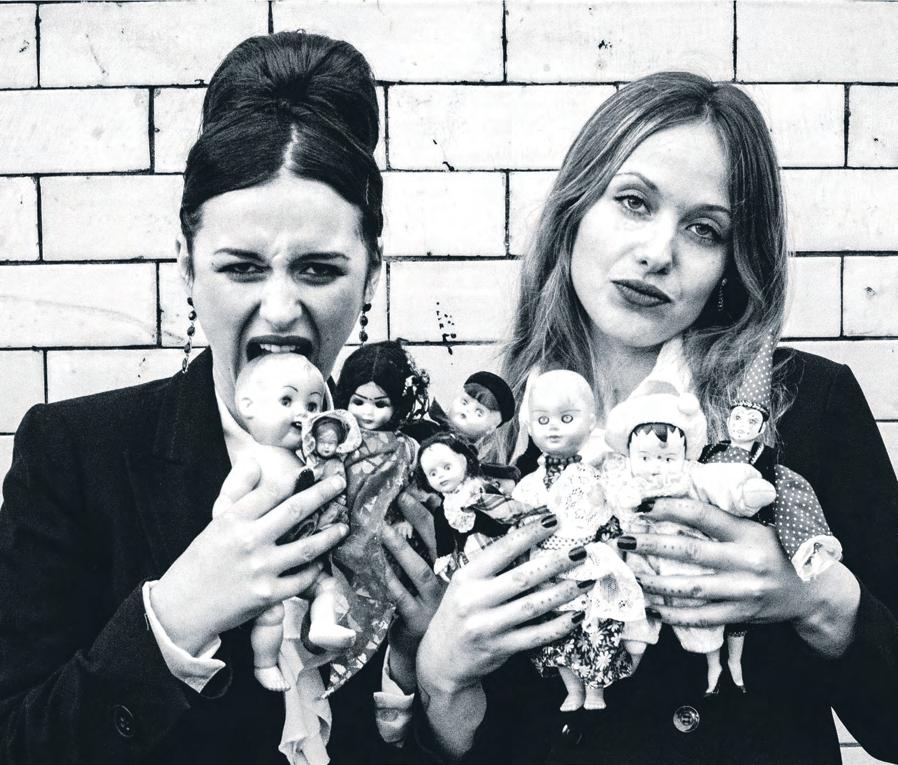
Words: Cheri Amour
“To have done it by ourselves for ten years is amazing, but it’s hard work”
Brèagha Cuinn, Bratakus
home to Bob Vylan and Witch Fever), but the band’s feminist leanings are still front and centre, much like Hanna’s hopes for women in the pit. As Brèagha chides on album track, Behave, ‘Just because I’m standing at the front / Doesn’t mean I want your boot in my face / We should be in this together / Let me have my space.’
A place that gave the Cuinn sisters a lot of room to roam was Sweden. The pair recorded Hagridden alongside The Hives’ bassist Johan Gustafsson, after touring with the fashion-forward fivesome last year. Surely there were some similarities between the spruces of Scandinavia and home? “Sweden as a whole does remind us of Scotland a lot,” reasons Brèagha. “But, and this offends people when I say it, a lot of Sweden is flatter than Scotland.” There was also another stark contrast between the countries when it came to single-handedly booking those tours again, as Onnagh chips in. “I could drive from one end of Scotland to the other in a day. But when we were trying to plan tours in Sweden, we were thinking, ‘Oh, we’ll go from this city to that city.’ Then we started looking at the distances, and we were like, ‘Okay, that’s ten hours between shows!’”
The country didn’t just make its mark in roads travelled, but also thanks to the addition of Gustafsson’s bandmate Chris Dangerous on drums, who appears on single Turnstile. “Having someone add things that, when I was programming drums, I would never think to have done.” Like the fill between the first chorus and the second verse, I was like, ‘Oh my god, the song needed that!’” exclaims Brèagha. Onnagh, too, acknowledges the shift. “The band has always been us in our bedroom, so it was fun to do this collaborative thing and see what another person could bring to it as well.” For Brèagha, she’s just happy to be back on stage with her sister and a guitar in her hand. “To have done it by ourselves for ten years is amazing, but it’s hard work. Sometimes when you tour with bigger bands, and you see their whole team, you’re like, ‘Wow, I’m doing 15 people’s jobs, right?’” If Charli xcx’s Brat Summer was a whirlwind of attitude, Bratakus have spent a decade proving it’s about endurance.
Hagridden is released 13 Feb via Venn Records; Bratakus play McChuills, Glasgow, on 28 Feb; Core. festival, Glasgow, 13-15 Nov
instagram.com/bratakusband

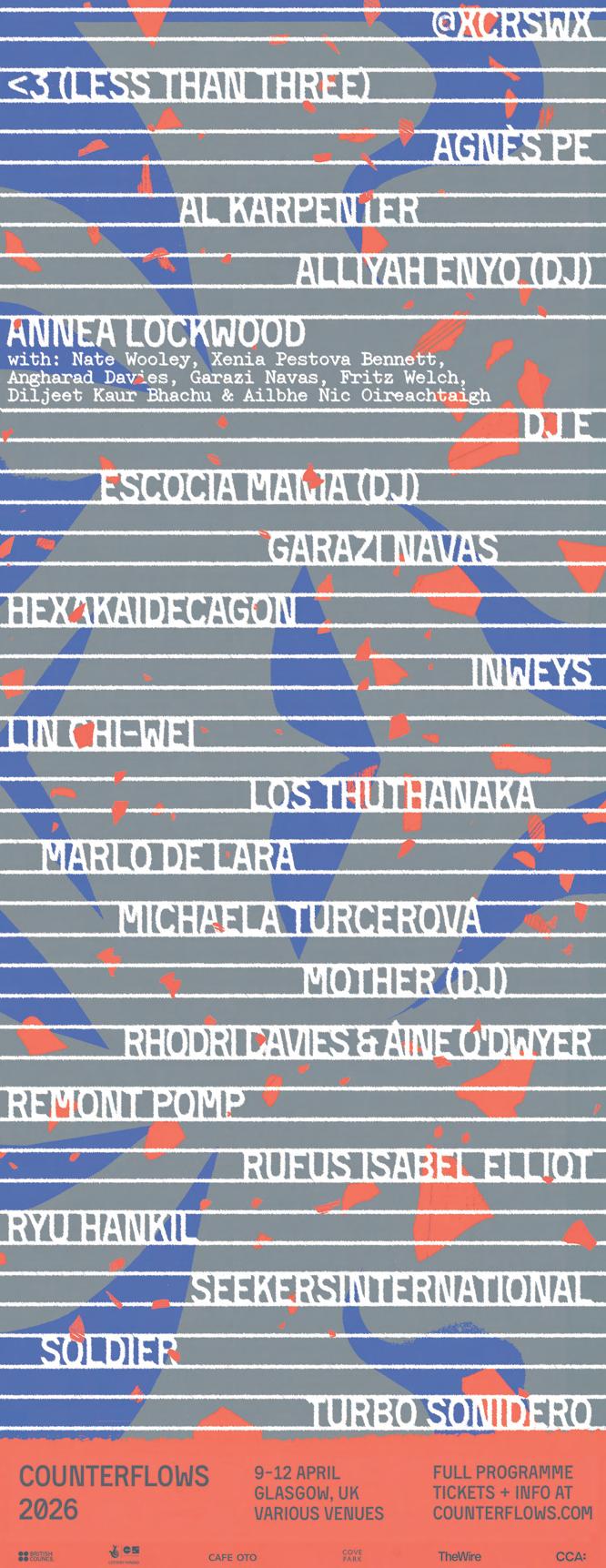

Irish stand-up Roger O’Sullivan talks tone, tension and Metallica as he brings his award-winning debut back to Edinburgh
It’s been quite the year for Roger O’Sullivan. One of the breakout stars of the 2025 Fringe, the Irish comic landed a surprise nomination for Best Newcomer at the Edinburgh Comedy Awards, won the Comedian’s Choice Award at the festival and has just sold out his debut run at Soho Theatre. Now, he brings the show back to Scotland.
O’Sullivan is introspective towards his craft. With a gentle, musing nature, he reflects on his Fringe time with a giggle. “It almost didn’t happen,” he confesses. “The venue dropped out a month beforehand, so I was ready to call it a night, until my friend Alison Spittle pushed me and started calling venues, and eventually PBH [and Hoots] had a spare room that I was bunged into.”
From a rocky beginning, O’Sullivan’s Fringe journey only got better. “There was a shift when word got out; I’m still not used to people deliberately buying my tickets. It’s one thing to grab a show on a whim, but anytime someone tells me they’re a fan and wants to see me, I still have that instinct to say THANK YOU SO MUCH, IT’S ON THE HOUSE!
“It’s a funny thing. The first fan I had of the show was a guy called Jonathan Masters. He said he loved it and despite having never directed a show, he saw something in it and wanted to direct. Then a few days later he went into brain surgery. It’s a strange vote of confidence, but he did end up being the director!”
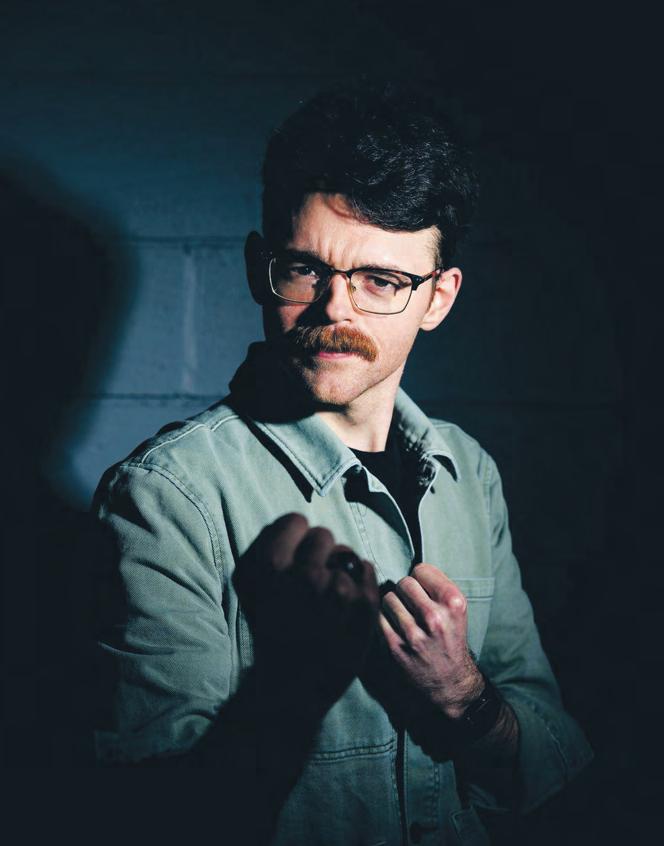
There’s also something contemplative about O’Sullivan; he seems to purr out his anecdotes and observations with the softest touch. It’s this tone, in tandem with Fekken’s content, which set his debut show apart from the crowd. In it, O’Sullivan imaginatively combines tales of coming-of-age in rural Ireland with an affinity for 90s video games.
Although the combination of gaming and the bucolic Irish lifestyle might sound inaccessible, O’Sullivan has enjoyed contorting his niche into a commonality. “The approach had to change a few times, but I think that’s improved the show! All power to comedians who revel in creating a tension in the room, but I don’t want to waste anyone’s time, I want everyone to get something from it!
“You can feel the room split as English people laugh thinking it’s the most absurd thing, and the Irish people know it’s the most normal sentence going, but it’s been fun incorporating that split into the show,” O’Sullivan explains, as he talks about paring back on universal Irish observations.
Digging deeper into the thought behind his choices, O’Sullivan reflects on his various influences citing Dylan Moran, Mitch Hedberg and Fern Brady. “[Some] comics get lost in things like word economy, and try rushing to the punchline, but the comics I love, you want them to tell you the joke, in their way. It’s not the quickest way to say a joke, but it’s the best way.”
But his final influence is perhaps the most remarkable. He cites Metallica, one of his favourite bands, as having an impact on his comedy. “If you ask a fan, they’d probably say they love either Master of Puppets or The Black Album, and in between those, there was an experimental ...And Justice for All. There’s a reason they don’t play it live. Nobody wants shifting time signatures, they want the hits. I think it’s the same in comedy, a
“I’m still not used to people deliberately buying my tickets”
Roger O’Sullivan
good joke is often better than a smart joke.”
Fekken is also a tale of family, in particular the comic’s relationship with his father and the constant grappling to find common ground with a man from a bygone era. It sees the comic pitting the mentality of a father raised on a farm and through the Troubles, with a son invested in video games and the arts, in a show that O’Sullivan says ended up far more confessional than he intended.
“We set aside three themes of the show, and any material that didn’t tick two of those boxes had to be binned. It forced me to remove some of the safety net I’d built over the years. I prefer that. Instead of it being a compilation of jokes, you can use the time to prime the audience, so they follow you deeper down your rabbit hole. It made me a better writer.”
And despite the press praise, the review which hit the hardest came from an uncharacteristic phone call with his father. He simply said: “I’ve made you a lot of money.”
Roger O’Sullivan: Fekken, Monkey Barrel, Edinburgh, 1 Mar, 8pm, £12 @rogerocomedy on Instagram
In anticipation of KAVARI’s upcoming release, we catch up with the Glasgow-based producer to talk health, horror and the state of EDM
“It’s been going crazy,” KAVARI says about the reaction to IRON VEINS, the lead single from her upcoming EP – released an hour before our call. The enthusiasm comes as no surprise with the Glasgow-based producer amassing an avid following, counting Aphex Twin, Ninajirachi and Ethel Cain among her supporters. KAVARI’s debut release on XL Recordings, PLAGUE MUSIC, marks a departure from her recent stretch as an independent artist. With XL’s backing, her horror-drenched, razor-sharp vision has been able to expand both sonically and visually.
Each track on PLAGUE MUSIC plummets the listener into a different facet of KAVARI’s imagination. PULSE opens the EP with a sample of Salad Fingers’ faltering voice, before building momentum through the punctuated bleeps of a heart monitor; IRON VEINS fuses rapid breakbeats with guttural cries; SERPENT CHAMBER distorts dubstep with layers of noise and texture; and SCYTHE culminates in a feverish nightmare of muted voices and fits of coughing. While the four tracks are entirely distinct, the project is a cohesive response to a period of KAVARI’s life. “[It was a] year-long process of scrapping the demos and redoing them,
I think SERPENT CHAMBER had five different versions,” she says, “I couldn’t decide which one would hit the hardest, so I stayed awake for three days straight and sat in Ableton and just went crazy.” The end result responds to themes ranging from personal health and paranoia, to the state of EDM and the occult.
While creating the EP at the beginning of 2025, an incident occurred which brought matters of health to the fore. “I had this really bad experience where I got spiked at an after-party. It sent me absolutely loopy for about a month. I was in and out of hospital and was really struggling to distinguish reality from what was in my head.” KAVARI used her art as a means to process the attack: “As much as I don’t like discomfort and pain, I feel like it was a bit of creative inspiration that helped shape the music into what it [is].” The intensity of this experience is felt throughout the EP, with KAVARI’s production remaining menacing and uncompromising – a deliberate contrast with most contemporary dance music. “This EP specifically was my take on how EDM is this genre of happiness, peace and love,” KAVARI says, ”I wanted to keep the energy of that while bringing in
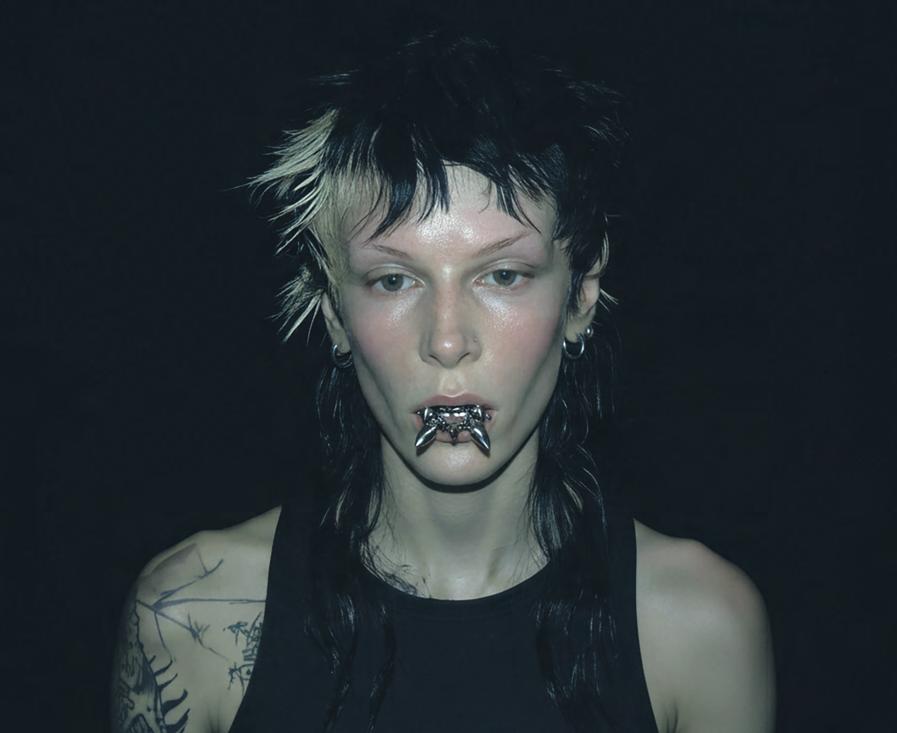
Words: Myrtle Boot
this more guttural [feeling]. Instead of hearing this nice, cute melody, you’re hearing a heartbeat monitor that you’re hooked up to.”
As the title suggests, PLAGUE MUSIC never strays far from motifs of disease and disorder. I ask why this might be: “I’ve always had really bad health anxiety,” KAVARI explains, “growing up I was quite a sick kid so I was constantly in and out of doctors and getting different medications, tubes in me [and] checkups. I think that’s informed a lot of my work because it’s very body horror-based.” A glance at the artwork for KAVARI’s previous music confirms this – even XL’s signature cover has the addition of blood red lacerations. She explains her relationship with the macabre: “It’s a comfort thing. My mum was really into horror, she used to take me to haunted houses and séances and all this different creepy stuff. [I was] surrounded by it [so] it became part of my environment.” Almost on cue, KAVARI’s shadowy cat leaps into the call. Behind the pair, a TV appears to flicker a montage of found footage – KAVARI’s appreciation for the eerie is consistent through her music, art and online image.
Through these precise aesthetic interests, KAVARI formed a friendship with visual artist, Game Nova: “We found each other online and all our visual interests and general artistic tastes matched perfectly.” When XL proposed a music video for IRON VEINS, KAVARI gave Game Nova complete creative freedom: “We didn’t really have to discuss the music video, I just said, ‘I trust you completely’ and after seeing it, I couldn’t have been happier.” The result is a twisted interpretation of Alice in Wonderland, shot in stark monochrome on an infrared camera. With no constraints placed on their collaborative vision, the music video makes a perfect complement to the visceral production on the track.
With a spot accompanying Ninajirachi on her tour in March, how does KAVARI feel about playing PLAGUE MUSIC to the world? “When I’m making my music it’s so personal, [so] playing it in front of crowds sometimes cringes me out a little.” Despite the awkwardness of laying her art bare, the response lessens the blow, “It’s also a nice feeling because I’m exposed but people are receptive to it.” By the time we end our call, the announcement for IRON VEINS has clocked up hundreds of likes and comments from zealous fans. If the reaction over the last two hours is anything to go by, then KAVARI’s vulnerability will be met with an outpouring of warmth.
PLAGUE MUSIC is out on 6 Feb via XL Recordings; KAVARI plays SWG3 Warehouse, Glasgow, 21 Mar
IG: @kavarikavarikavari
At City Art Centre, Michael Fullerton’s intimate portraits of asylum seekers give voice to migrant stories while far-right anti-migration protests take place in Scotland
Joma Ahmadi’s story began in the dry grasslands of Afghanistan. In 2021, his government was forcibly overthrown by the violent Taliban, triggering mass evacuations, and fleeing families. In his lifetime, his country has been afflicted by civil war, terrorism, and international interventions, leaving little room for comfort of the working man. Formerly making his way as a stone carver, he left his life behind for the uncertain path of migration. We meet Ahmad in the historic English border town of Carlisle, where he is seeking refuge. He resides at Hilltop Hotel, affectionately named to inspire ideas of a utopic destination, wrestling with a fate hung on opaque bureaucratic processes of the UK asylum system, 3,500 miles away from home.
Ahmad is one subject of many in a series of portraits completed by Michael Fullerton in his newest exhibition, held at City Art Centre in Edinburgh until 1 March. The Glasgow-born artist worked and lived at Carlisle’s Hilltop Hotel in 2023 for five months as an assistant manager, and later worked in the kitchen, while the hotel engaged in a Home Office contract to house asylum seekers. During his time at the hotel, Fullerton formed relationships with the migrant residents, many of whom agreed to sit for the portraits now on display in Scotland’s capital city. Lining the walls of the City Art Centre are Fullerton’s intimate oil paintings of men hailing from Iraq, Georgia, Eritrea, Sudan and Syria, altogether a community in the modest Cumberland city.
In this space, the individuals and personalities of asylum seekers are given rare, vivid focus and through it, their stories are demystified. Eleven portraits spaced across an entire floor gives you time to linger with each distinctive painting. Fullerton, known for his portraiture, does not simply paint the subject, but captures what you come to feel is the person’s nature, whether it be his ease or his severity. Ayeman Al Rasheed, one of around 4,000 UK asylum applicants from Syria in 2023, is painted looking pensively towards the viewer with his hand to his face, grey speckling his hair and beard.
Altogether, Fullerton presents 11 profoundly personal paintings. Yet, outside this room, rumblings of an averse agenda are mounting across Scottish society, and men like these are vilified in its debris.
“Send them home!” chanted a group of 1,000 anti-immigration protesters in Falkirk this summer, targeting Hotel Cladhan, which is involved in a similar contract to that of Fullerton’s workplace, housing asylum seekers. Following a resident’s conviction for sexual crimes against a minor in the town centre, the hotel became a target for a Facebook group who organised a series of protests and eventually attracted racist, Islamophobic and violent abuse towards all hotel residents.
Anti-migration protests on smaller scales have emerged in Aberdeen, Perth and a
well-reported ‘Unity Rally’ on Glasgow’s Buchanan Street, organised by right-wing online influencers.
The origins of this volatile hatred can’t be tracked to one source, but one can follow a trail of inflammatory news cycles, bubbling conspiracy and a society plagued by financial insecurity, leading to one supposed enemy – the monolith of the asylum seeker.
While migration figures are primarily accounted for by international students, economic migrants and health and care workers, outrage ensues over the public budget spent housing those fleeing hardship. With the first successful Reform candidate in Scotland elected in West Lothian this winter, it’s clear there is growing sympathy for a far-right movement once seen as fringe in Scottish society. Sweeping changes to asylum policy introduced by Westminster, including a 20-year path to settlement, forces Scotland into a harsher migration system for those seeking asylum. This is a moment the nation is forced to look inward, as it reckons with how it treats those seeking refuge within its borders. In a landscape crowded by voices claiming to speak for migrants, Fullerton’s simple portraits stand as radical, political art.
The third floor of the City Art Centre holds a curated archive of the Glasgow artist’s prints. 20 years of Fullerton’s screen printing work cements his legacy as a political artist, while the Hilltop Hotel series adds to his collection of work used to challenge power, and provide alternative perspectives to the collective memory.
Hilltop Hotel underwent its own period of division, with anti-asylum protesters waving signs outside the hotel painted with the same scripted claims of asylum seekers abusing handouts and prompting violence against women. By 2024, Hilltop Hotel halted its public service and closed to asylum seekers. In this small town tale, Fullerton’s work is documentary, and places a compassionate lens severely missing in the public eye on an overlooked population: its cultures, its quiet resilience and distinctive
Words: Lucy Mills
'This is a moment the nation is forced to look inward, as it reckons with how it treats those seeking refuge within its borders'
individual stories. With his careful brush, the artist subverts the mediated asylum seeker, too often reduced to a caricature, and instead places them in the gallery space.
Michael Fullerton, City Art Centre, Edinburgh, until 12 Apr, open daily 10am-5pm cultureedinburgh.com
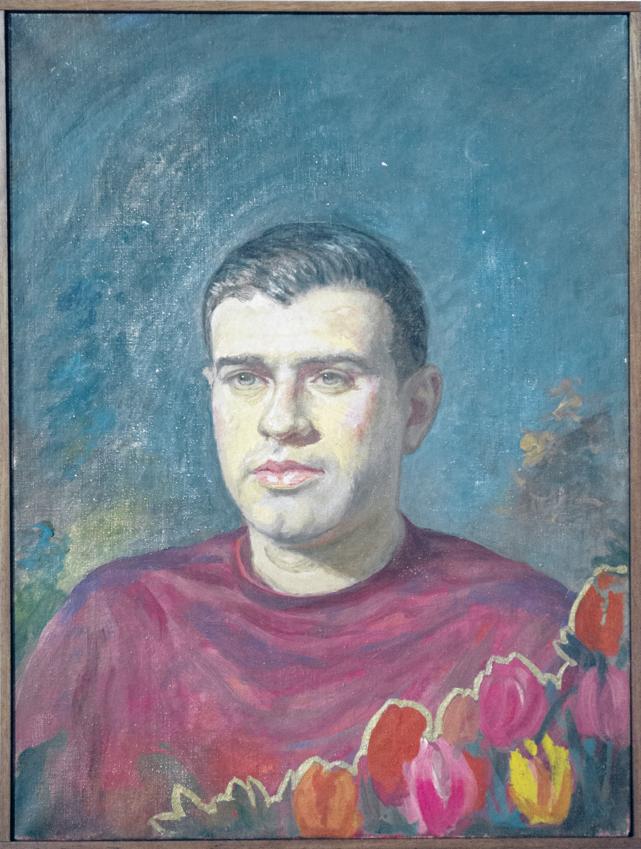
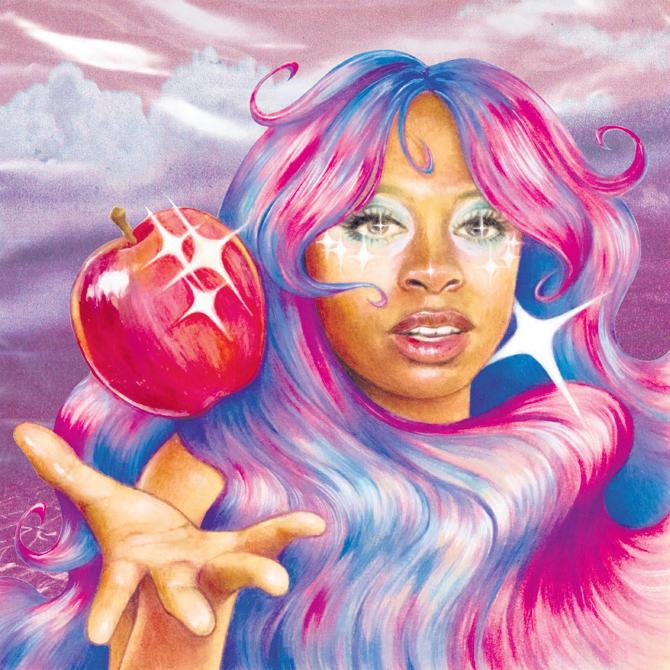
hListen to: the beginning of the end, sense (is), be the
emlocke springs’ first full-length album, the apple tree under the sea, is a spectacular debut, in which each track is a deep cut bearing springs’ cerebral thumbprint. Known for her ethereal, bedroom pop style, springs branches further into experimental sounds on this project. Her distinctive vocals, synths, harpsichords, hooves on cobblestones, and energetic drums come together on banger after banger; a sonic time traveller, she weaves in threads from medieval music, 80s pop, R’n’B, and experimental sounds. The album evokes a vast array of emotional responses; I want to do jazzercise, or maybe kill a man.
The album’s first six tracks loosely chronicle the intricate process of severing yourself from an upbringing at odds with who you are. The concept album opens with the titular apple, a short prologue grown out of springs’ religious upbringing. Culminating with sever the blight, an already popular single, the album’s first act hits a sweet spot between goth and pop. The project takes a hopeful turn at the midpoint with sense is (prelude). After biting into the aforementioned apple, springs embarks on a musical bildungsroman. The
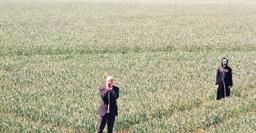
back half of the album delves into the complex, grief-laden process of awakening to life’s uncertainties – and its possibilities.
The emotional thesis statement of the album is held in its final track, be the girl! The song’s upbeat tempo and title overlay a heartfelt core. As a musician, springs’ prowess is on full display here, though the technicality of the composition and production in no way occlude the song’s raw, gut punch quality. In her writing about the song, springs mentions a kind of ‘euphoria’ associated with releasing yourself from the person you expected to become. I don’t know if she meant to write a trans masc anthem, but here we are. It’s on repeat in my headphones already; be the girl! really speaks to me, and I think the album will resonate for many. Who among us hasn’t set themselves adrift in an act of self-preservation?
hemlocke springs is a master of self-mythology. Beyond its musical execution, the apple tree under the sea is an immense literary accomplishment. The poetry of it is woven into the musicality; the longer I listen, the more deeply I fall into it. The album is delicious; it’s a nourishing meal for this cold and dark season. [Rho Chung]

Listen to: The Man I’m Supposed To Be, Pathol O.G., Stepping Out For Air
It would be difficult to overstate the workmanlike consistency of Bill Callahan, whose folk-influenced Americana has been a fixture in four different decades. On latest LP My Days of 58 his inquisitive nature remains, where each thought sounds like it served as a convenient excuse to pick up a guitar and find a melody to match his rumination. However, it’s also the most forthright his music has sounded in some time, thanks in no small part to the tight-knit ensemble that has been joining him both on stage and in the studio in recent years.
With the familiar tone of an old friend, Callahan considers the world and his place within it, offering one serenely narrated anecdote after another. It’s when musing on his career during Pathol O.G. that we hear Callahan remark on just how much he has benefited from this creative outlet; ‘I don’t want to say that it saved my life / But it gave me a life’. Like much of Callahan’s finest work, this is an incredibly contemplative yet focused collection of songs from one of the most talented raconteurs of his generation.
[Liam Casci]
Since 2023’s Doom Loop, Dream Nails have changed. After slimming down to a three-piece, they’ve lost a bandmate but gained a new lead vocalist with bassist Mimi Jasson stepping into the role. Consequently, their third album, You Wish, feels different. On The Only Way Is Through, the opening guitar stabs and intensifying drums give way to a laid-back bassline and soothing vocals, rather than bursting into fury, while This Is Water presents an infectious stream of dreamy alternative rock. Organoid brings back that familiar anarchic intensity, with lyrics reflecting on the merciless march of technology, and the delivery flipping between detached acceptance and vicious emotional turmoil.
Modified vocals, notably on the thumping The Spirit Does Not Burn and the brooding Pack My Wax, add more variety, alongside angry, scattergun, melodic punk (House of Bones), the perfect cool driving song (The Information), and an album closer (A Sign) that, time travel permitting, could have been a mainstream hit on 90s radio. You Wish is an album that proves change can be a good thing. Yes, it’s different and experimental, but those risks mostly pay off, and the DNA of Dream Nails, the thing that makes them so special, remains at their core. [Christopher Sneddon]
Beverly Glenn-Copeland Laughter in Summer Transgressive , 6 Feb rrrrr
Listen to: Laughter in Summer, Let Us Dance (Movement Two), Middle Island Lament
Sometimes biographical detail can ultimately distract when writing about new records, but for Beverly Glenn-Copeland’s latest it feels unavoidable. In 2024 he was diagnosed with dementia, but, against doctor’s suggestions and along with romantic and creative partner Elizabeth, it was decided the best course of action was a world tour. Laughter in Summer is a record born of that tour; new songs and old refracted through their live incarnations, and what that amounts to is striking emotional immediacy. Take Harbour, already a naked declaration of love, but duetted with Elizabeth in this context it’s devastating. The whole record contains this sense of purity, songs sitting somewhere between hymns and nursery rhymes, not just in their simplicity but in the sense they seem to have always existed.
Tonally though they are optimistic, Glenn-Copeland looking toward a life beyond himself and into a hopeful future, trying to give everything he can before it’s too late. It’s never more clear than on the gorgeous Let Us Dance (Movement Two), a looser, more communal take on the album’s opener. This more than anything communicates the album’s joys; a kind of unencumbered appreciation of life and love. [Joe Creely]
Listen to: The Shadowy Light, Orange County
It’s hard to believe that 25 years have passed since Gorillaz released their debut album. Damon Albarn and visual artist Jamie Hewlett’s pioneering project sang of having sunshine in a bag back then, amidst a dystopian future which now eerily feels like ‘it’s comin’ on’. Their ninth record sees the group’s cartoon characters travel to India to tackle life, death, and what comes next. Learning that Albarn and Hewlett recently lost their fathers just ten days apart from one another makes this all the more poignant, and while The Mountain’s expansive palette is inextricably Gorillaz, its messages offer something that we can all learn from.
The Shadowy Light, featuring 91-year-old Bollywood queen Asha Bhosle, talks of embracing life after death, rather than fearing it.
Posthumous features from Tony Allen (The Hardest Thing) and Mark E Smith (Delirium) bolster this Hindu ethos further. The Sad God and The Empty Dream Machine fuse world problems with personal loss, while Orange County and Damascus (featuring Yasiin Bey, fka Mos Def) offer the album’s catchiest hooks. There’s collaborations and musical fusions galore here, but this only scratches the surface. Ultimately, The Mountain blends darkness with light to explore the thrills of existence in Gorillaz’ own idiosyncratic way. [Jamie Wilde]
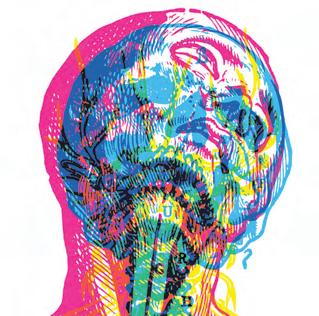
Mandy, Indiana URGH
Sacred Bones, 6 Feb rrrrr
Listen to: Magazine, I’ll Ask Her
From the first serrated riff on Sevastopol it’s clear that Mandy, Indiana aren’t softening up. Written in an “eerie” studio house outside Leeds doesn’t give the same enigmatic appeal as the crypts and caves of their 2023 debut, but the results are just as frenetic and punishing. Simon Catling’s synths are used to constant disconcerting effect, even when conjuring something resembling a club beat as on Cursive and Magazine. But don’t get too comfortable as the electronics are generally subsumed into a vortex of noise or choked-off cries. Most songs strike with intensity from the off, but even in quieter moments the band know how to put you on edge. All songs are sung, rapped or screamed in French so you might not always know exactly what’s going on, but the pervasive mood of pain and suffering makes it perfectly clear. The exception is the closing I’ll Ask Her, which features a frantic spokenword takedown of misogynistic culture over gripping noise (reminiscent of aya). Whether shouting over martial drums, whispering behind thick, smoky synths or rapping against a razorwire guitar, URGH is an exercise in harrowing noise; unapologetically visceral and all the better for it. [Lewis Wade]
Marika Takeuchi Iridescence
Bigo & Twigetti, 20 Feb rrrrr
Listen to: Nowhere, Returning
Inspired by the landscape of the Dolomites, Marika Takeuchi’s Iridescence is a compact yet sonically varied EP that explores subtle shifts in texture and atmosphere. Composed and performed by Takeuchi herself, it also features Daniel Adams and Desiree Hazley on violins, Margaux Whitney on viola, and Emmanuel Ventura Cruise on cello. All of the tracks are very intimately recorded, especially with the pedal sounds being clearly audible in the piano, adding tactility and a live feel to the EP. At times, the touch of the piano can seem a little too wooden, occasionally counteracting the rubato and the poignancy, but also adding a refreshing matter-of-factness.
The record seems to especially find its footing in the latter half, with Nowhere standing out as the EP’s strongest track. The piece features an expanded palette, with muted piano and deft percussion, adding a welcome range of sonic and textural interest. The momentum softens slightly in Returning, a track that leans more heavily into lyricism and peaks in emotional intensity. With wavering strings that gradually fill out the space, the piano tends towards an almost defiant touch towards the end. The final piece, Hope Again, gravitates towards the whimsy while being somewhat tentative, providing a subtle narrative arc. [Rhea Hagiwara]
Hen Ogledd DISCOMBOBULATED
Domino, 20 Feb rrrrr
Listen to: Scales will fall, End of the rhythm
Both life cycles and natural cycles – and how the two intersect – are key themes on Hen Ogledd’s latest album, DISCOMBOBULATED. It makes sense, then, that a sprawling exploration of life and humanity would begin with the voice of a child reciting a poem about the natural world. Calls of ‘Children rise up’ and ‘Youth lead the change’ and pointings to the influence of Eastern philosophy follow on Scales will fall, with mentions of Samsāra – a Sanskrit word used in Buddhism and Hinduism referring to the cycle of life – and references to ‘karmic weight’. The Eastern influence continues on the near-20-minute-long epic Clear pools, with the sound of a sitar just after the halfway mark while lyrics spiral back to that sense of cyclicity (‘Flow, letting go / Of everything that held you down / Through, start anew’). It’s unsurprising that on an album so focused on life, death and rebirth many of its tracks allude to some sort of ending, simply in the track titles alone. However, the album sways more into the meandering rather than the conclusive – perhaps an observation on the unpredictability of life itself, but nevertheless leaving things feeling somewhat stunted. [Nadia Younes]
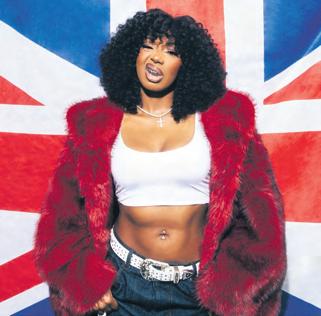
Ms Banks
SOUTH LDN LOVER GIRL
Ms Banks/Believe, 13 Feb rrrrr
Listen to: CATCH YOU LACKIN’, THE ONE
Opening on arpeggiated piano and sweeping strings, Banks speaks plainly about the psychic abrasion of moving through London as a secondgeneration Black African immigrant and woman: the mirror, the stare, the reflexive self-audit. Across the record, she stitches in broadcast soundbites on the political, societal, cultural and medical neglect of Black women; these reverberate as public record as well as album thesis, and can land with a grim, clarifying force. This device loses momentum, though, when those thesis statements give way to Banks’ own diaristic asides, where the message can feel spelled out rather than dramatised. That directness is the album’s strength and also its limitation. NO LOVE and WHY? articulate the ‘Black tax’ and the imperative to remain composed under scrutiny with palpable, lived frustration, while WORK HARDER restates the old arithmetic of ‘twice as hard’ with weary clarity. Sonically, the palette can lack surprise. Even when afrobeat-inflected grooves arrive on THE ONE and IDK, they colour inside the lines – though the drum programming tightens and the low-end properly hits, lending the back half a physicality and weight the opening run doesn’t quite reach – and not always with the elegance to match its necessary urgency. [Rhys Morgan]
Februrary is loaded with piano beauty from Drexler, indie-pop from Lou Mclean, raging punk from Bratakus and a 12” dance record from Isa Gordon and Tony Morris, plus loads more
Words: Tallah Brash
January was made all the better with new music from The Twilight Sad, KuleeAngee, comfort, Sonotto, Post Coal Prom Queen, Wave of the Flood, Joe Hearty and more helping us get through a month that felt like it might never end. In February, the variety of new music coming out of Scotland has us excited for the year ahead.
To ease you in, we’ll start with Olympia-5 (Sonder House, 20 Feb) from Edinburgh-based pianist Adrian Leung, aka Drexler. As a way to process the possibility of loss, Olympia-5 is deeply personal to Leung and the memories of, and relationship he continues to have with, his father. Song titles give the album a feeling akin to flicking through an old family photo album with snapshots of his dad’s favourite ties, his childhood growing up in a busy house in Hong Kong, the life he’s made for himself in Sydney, holidays in Prague, interspersed with tracks that explore his experiences of lymphoma, from the clinical trial he was meant to undertake (Olympia-5), to recovery and a doctor’s report buried low in the mix of album closer Quarry Bay. A gorgeous ode to his dad, providing a way to connect with him while living so far apart, Olympia-5 is a beautifully intimate album of improvisational piano pieces, given warmth and hopefulness via subtle ambient electronics.
On 13 February, Lou Mclean releases her debut album, Outline of a Girl. Produced by Carla J. Easton, the album reflects the lived experiences of women and girls across history, finding a lot of inspiration from the working lives and culture of the Newhaven fishwives. Based on Mclean’s Masters project (‘Women’s Work: using songwriting to explore gender, labour and community in contemporary Scotland’), she explores the tradition of work songs across ten tracks that mine influences from traditional waulking songs, 1960s girl bands, Jefferson Airplane, No Doubt and Chappell Roan. With some supremely catchy moments on tracks like Newhaven, Peace and Good Content, Outline of a Girl is a pop record at its core, and although personal to Mclean, it will be relatable to many.
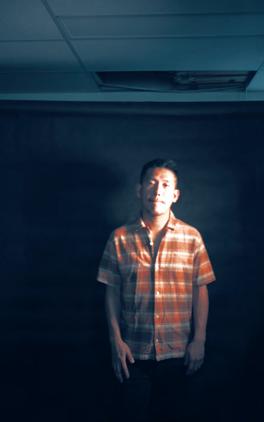
released alongside electronic musician Alistair MacDonald, Ecstatic Visions sees the pair stitch together the works of five different composers like a complex patchwork quilt. Adorned with the poetry of 17th century Spanish writer Juana Inés de la Cruz, Glasgow Cathedral’s bell, the writing of Hildegard von Bingen, ancient traditions of lunar mythology, the poetry of Anne Sexton and even texts generated by AI, this is an experimental record at its core. A challenging listen at points, there are beautiful moments to be found, and if nothing else you’ll be stunned by the sheer malleability and expressiveness of Lamprea’s voice.
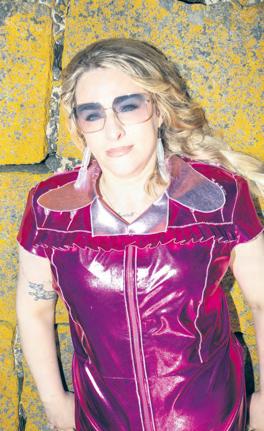
On the same day, Highland sisters Brèagha and Onnagh Cuinn, aka Bratakus, release their latest record Hagridden via Venn Records, their first to favour live drums over a drum machine. While most were recorded by producer Tommy Duffin, Turnstile’s drums are courtesy of The Hives’ Chris Dangerous. The resulting record’s 27-minute runtime is raw, snarling and unfiltered as they tackle feminism, animal rights, media brainwashing and more over thrashing instrumentation. To find out more, read our full interview on p42.
A rich glut of influences form the backbone of Glasgowbased coloratura soprano Stephanie Lamprea’s latest body of work, Ecstatic Visions (Neuma Records, 20 Feb). An album
Back at the start of the month, Glasgowbased artist and DJ KAVARI releases PLAGUE MUSIC (6 Feb), her debut EP for XL Recordings. Across its four tracks, KAVARI pulls together facets of D'n'B, dubstep and noise making for a dark record that is both unnerving and uncompromising. Turn to p46 where our Clubs editor Myrtle Boot chats in more depth with KAVARI. On 8 February, two unique talents – Isa Gordon and Tony Morris – come together on Wake Up Baby, a 12” dance record coming via Huntleys + Palmers. Featuring two collaborative songs – Wake Up Baby and Syringe Moustache – the record also features Auntie Flo and 100% Positive Feedback on remix duty, with the latter’s take on Syringe Moustache particularly joyful as Morris’s cabaret delivery is cut up… ‘like a moustache’...
On 14 February, self-professed ‘Mayor of Glasgow’ Stephen McLeod releases Pick and Dry, his debut album as Allmyfriendsaresynths Twelve tracks of tripped-out electronica, it combines electro with jungle, D'n'B, breakbeat and more, studded throughout with robotic vocal motifs that give it bags full of character. On the 20th, Anna Realta (who you might know better as DJ Anna Gram), the founder of a free music programme called The Right Track, celebrates last summer’s cohorts with a VA release. Following the course that taught them how to produce their own music using Ableton, its 11 tracks were created by 16-25 year olds and the results are fantastic, with a whole glut of genres explored, from mx burnout’s dystopian drone and Marie Dipnarine’s fizzy, gurgling electronica to a dark techno chugger from Shedcat and bouncing ghettotech from work coach.
Also this month, check out albums from Helicon (ft. AI Lover) and Microwave 60, with singles due from Pippa Blundell, heavyskint, Brontës, Megan Black, Megalichen, wojtek the bear, Moody Moody and The Foot & Leg Clinic (fka The Wife Guys of Reddit). Happy listening!

Scan the QR code to follow and like our Music Now: New Scottish Music playlist on Spotify, updated on Fridays

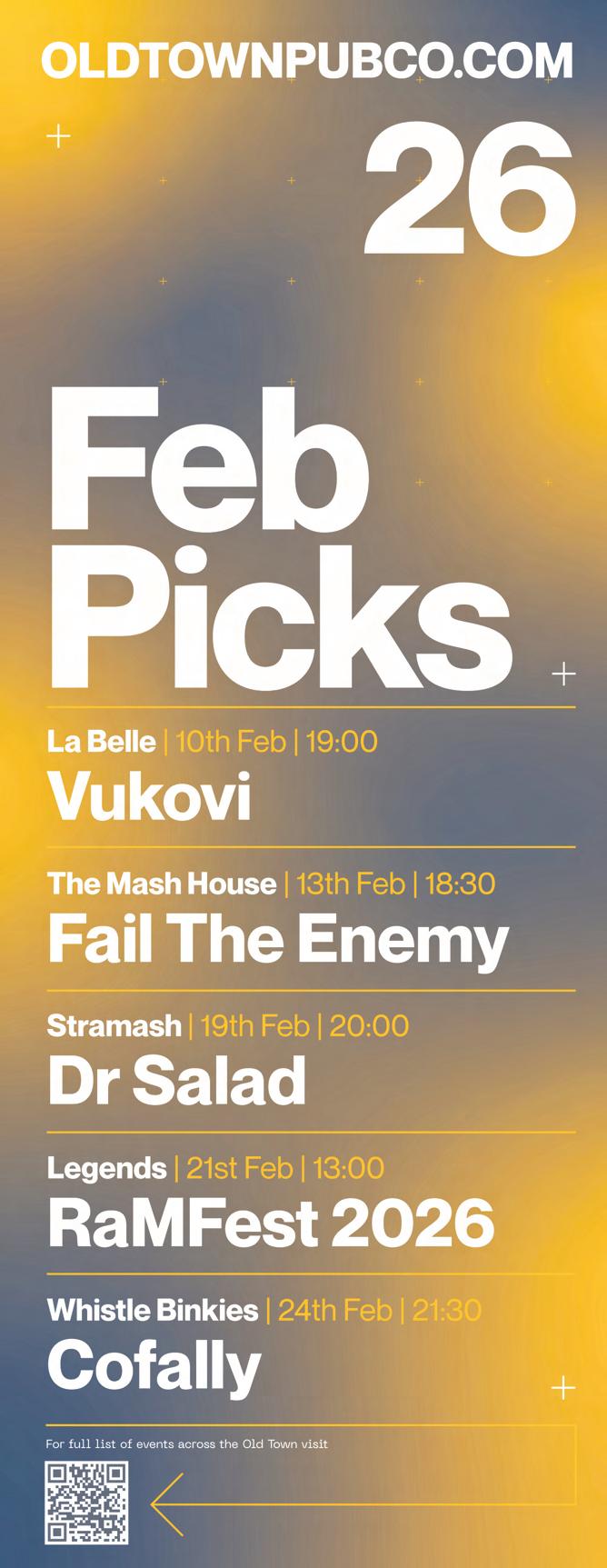
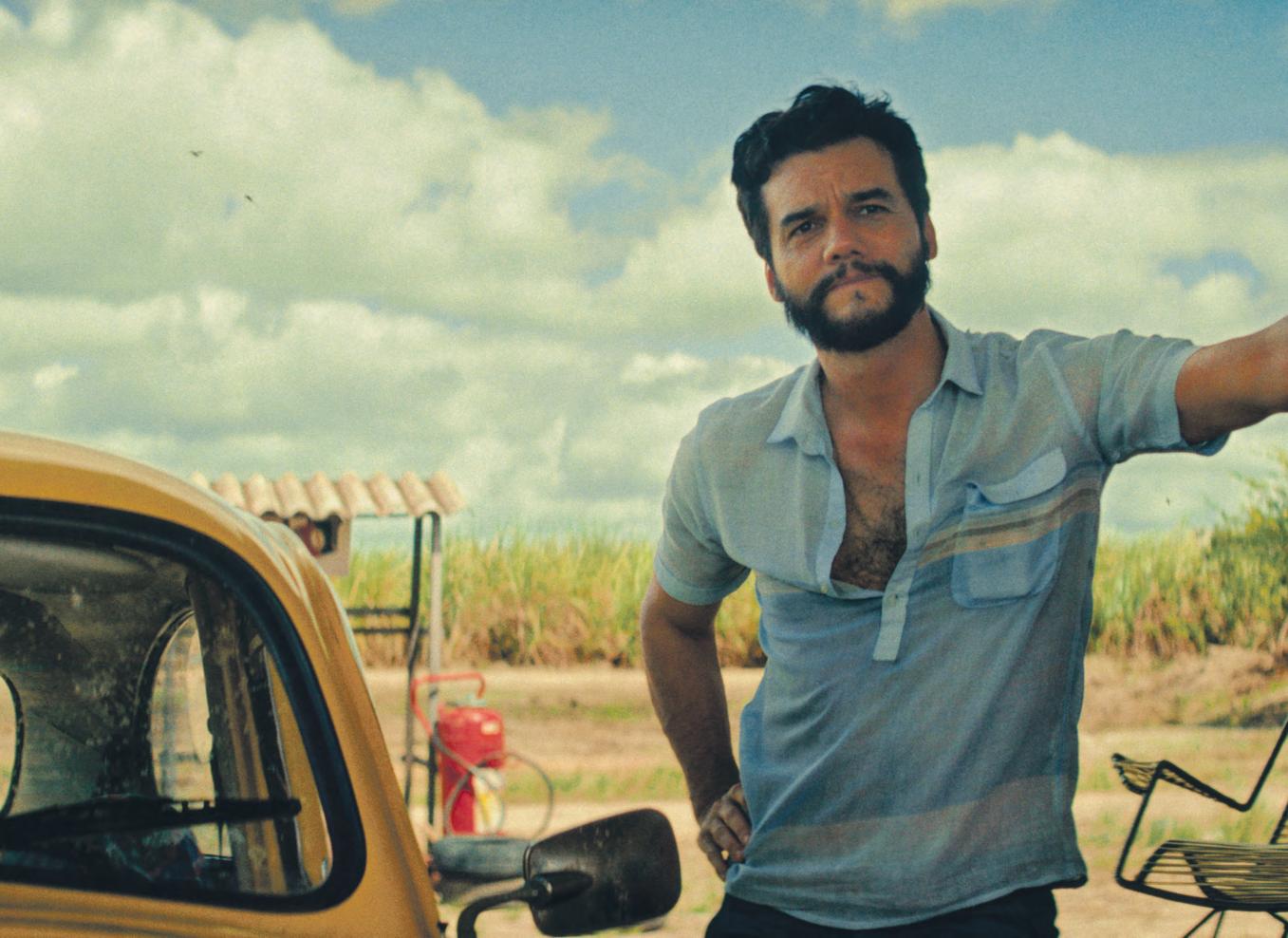
Director: Kleber
Mendonça Filho
Starring: Wagner Moura, Maria Fernanda Cândido, Gabriel Leone, Carlos Francisco, Alice Carvalho, Robério Diógenes, Hermila Guedes, Igor de Araújo, Italo Martins, Laura Lufési, Udo Kier, Roney Villela, Isabél Zuaa
RRRRR
Released 20 February by
Threat feels ever-present in The Secret Agent, Kleber
Mendonça Filho’s sprawling, dexterous and enthralling slow-burn thriller. Films are often labelled as ‘novelistic’, but this one truly earns the descriptor in its richly detailed and ranging portrait of Recife, the capital of the state of Pernambuco in eastern Brazil, during the country’s military dictatorship. Set in 1977, about halfway through the regime’s tenure, it follows Marcelo (played wonderfully by Wagner Moura), who arrives in the city while attempting to avoid the iron hand of an unwelcoming administration. Moura has made history by becoming the first Brazilian to be nominated for Best Actor at the Oscars, and his exceptional turn anchors a film that has also bagged nominations for Best Picture and Best International Feature Film.
Marcelo is not the character’s real name. He has arrived in Recife under an alias. He’s actually Armando, an academic on the run from a powerful politician and businessman, and he’s still mourning the loss of his wife, Fatima (played in flashback by Alice Carvalho). ‘Marcelo’ is put up in a commune run by the steely Dona Sebastiana (Tânia Maria) and provided with a job in a local records bureau, where he is surreptitiously trying to locate extant proof that his mother ever existed while also arranging to spirit his young son, Fernando (Enzo Nunes), away from Brazil.
Fatima’s tragic death is just one of many injustices meted out by those in charge, and Mendonça Filho’s screenplay adroitly weaves in a whole host of stories and asides that form
an elaborate and evocative tapestry of Brazilian society at the time. While such a range of narrative threads might serve to diffuse The Secret Agent’s genre and tone, in fact, these varied stories forge their own cumulative, gripping force.
One such subplot involves a dismembered leg that is found in the stomach of a shark early in the film, only to go missing from the morgue, sparking rumours that it is loping around the city at night, preying on unsuspecting lovers in the local park. Here, the paranoia is clearly flavoured by Spielberg’s Jaws, which comes up several times with Fernando itching to see it, while the cinema that Marcelo’s father-in-law works in is showing The Omen to fainting cinemagoers. One scene even presents a low-rent monster-movie-style attack by the hopping appendage.
In reality, the leg wound up in the shark courtesy of the police, led by Chief Euclides (Robério Diógenes), who are using Carnival as cover for offing more than a hundred undesirables. Meanwhile, there is a mysterious activist, Elza (Maria Fernanda Cândido), who arranges for Marcelo’s fake identity, and three hitmen (Roney Villela, Gabriel Leone and Kaiony Venâncio) are in town and on the hunt.
There is a lot going on across The Secret Agent’s 161-minute runtime, which at once means it never lags and characters and stories never overwhelm or lose their individual flavour and impact. Mendonça Filho balances them all perfectly to tell both Marcelo’s story and the stories of so many others whose lives were shaped and shattered by the regime. [Ben Nicholson]
Edinburgh-born, New York-based filmmaker Seán Dunn discusses his new comedy, The Fall of Sir Douglas Weatherford, the use of Scotland as a Hollywood backdrop and finding inspiration on a Harry Potter tour
When Seán Dunn was seven, growing up in Craigentinny in Edinburgh, his aunt gave him a journal filled with questions. One question he remembers quite clearly was: ‘What do you want to be when you’re older?’ He wrote three answers: ninja, basketball player and film director.
Filmography: Kingdom Come (2019), By the Grace
Like many millennials who grew up on the cinema of the 80s and 90s, he had one film director in mind: Steven Spielberg. “I would watch all these amazing films when I was a kid,” recalls Dunn, “like Jurassic Park and the Back to the Future and Indiana Jones films, and I remember being blown away when I realised that there was this one guy who was involved in some way in making all of them. That attracted me much more than, like, being an actor.”
Dunn made good on that ambition. After completing an undergraduate degree at Dundee, he won a place at Columbia University’s film programme. That was in 2013, and he’s lived in New York ever since. He now teaches film at Columbia as an adjunct professor, has several acclaimed shorts in his filmography, and has just released his debut feature, The Fall of Sir Douglas Weatherford, which made its bow last month at the Rotterdam International Film Festival and will have its UK premiere at the upcoming Glasgow Film Festival.
It’s a darkly comic study of ageing and identity set in the fictional village of Arberloch. Our ostensible hero, Kenneth (played by Peter Mullan), works as a tour guide at a crummy visitors’ centre dedicated to the eponymous Douglas Weatherford, an 18th-century renaissance man who’s described as David Hume, Adam Smith, David Livingstone and Walter Scott rolled into one.
Kenneth, a distant relation to Weatherford, tries to keep the (heavily exaggerated) achievements of Arberloch’s most famous son alive by proudly recounting them to indifferent tourists. These tales of valour are completely overshadowed
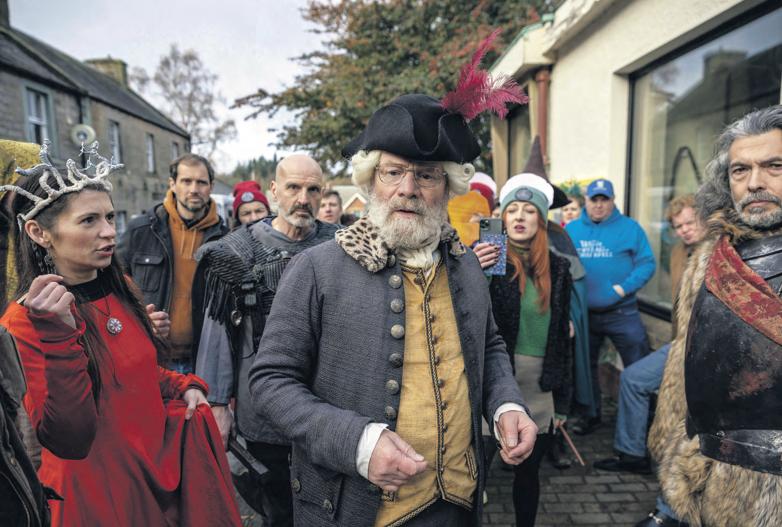
when the production crew for a new series of The White Stag of Emberfell, a blockbuster fantasy show featuring dragons and warring gentry (any resemblance to Game of Thrones is entirely intentional), rolls into town.
Dunn’s inspiration for the film came while on a trip back to his hometown. “I was showing my wife around Edinburgh for the first time,” he recalls, “and basically we ended up in Greyfriars Kirkyard, and there was this tour with people wearing cloaks and waving wands.” Who among us hasn’t found themselves among a throng of Harry Potter nuts while wandering the Old Town? “Basically, we ended up at Tom Riddle’s grave. I don’t know much about Harry Potter, but my wife explained, ‘That’s Voldemort!’ Then this tour guy did a wee magic trick in front of this grave and then all the people started doing an incantation.”
While the crowd were waving their wands, Dunn was thinking about the real person whose bones they were trampling. “I was reading the gravestone, and it said he was in the British Army and died in Trinidad in, like, 1803. I thought, that’s weird.” Dunn did some digging and figured out that was around the time Britain seized control of that Caribbean nation. “I was just so interested in how history can be whitewashed in that way, or simply replaced. Literally, this guy is now just Voldemort forever.”
Scotland is particularly guilty of this kind of historical erasure, he reckons. “The Scottish Enlightenment is a source of pride for us, and we love to list off all the inventions that were made here, but that’s about as deep as we get. It’s like, the English are the bad guys, and we don’t really take any accountability for our role [in the Empire].” There’s a similar obfuscation of reality in the sort of fantasy TV he’s satirising in the film. “I don’t want to be mean-spirited. There are great things that come from the fact that these shows employ and train so many people in our industry. But culturally, yeah, I feel like we can often be a backdrop to somebody else’s story.”
The Fall of Sir Douglas Weatherford explores these ideas of cultural erosion with much style and wit. A sardonic narration, seemingly provided by Weatherford’s doleful spirit, recalls Barry Lyndon, while the film’s comic tone morphs to something darker and more experimental as Kenneth falls deeper into fantasy. In moments, it’s practically Lynchian. That reference came quite naturally, says Dunn. “Exploring the duality of Scotland, what’s been hidden... obviously with Lynch, that’s the root of all his films – the darkness underneath the wholesome surface.”
Dunn’s film’s trump card, however, is Peter Mullan, who’s both hilarious and poignant as the exasperated tour guide. Even more importantly, the Glasgow actor had an intimate understanding of what the film is satirising. “Peter still lives here, so he knows the whole Outlander thing. And being pretty anti-establishment, those big production companies coming into Scotland, I think they do rub him the wrong way. But also ironically, he’s the Dwarf King in that Lord of the Rings show. So I think he just got it.”
And despite a career of playing various shades of hard men and psychopaths, Mullan clearly has a sharp sense of comedy. “Absolutely,” says Dunn. “Peter, he’s so funny and very big on improvisation. He would always go for it, play with the dialogue. And to be honest, he always came up with better ideas than what was written.”
The Testament of Ann Lee
Director: Mona Fastvold
Starring: Amanda Seyfried, Lewis Pullman, Thomasin McKenzie rrrrr
The team behind The Brutalist present a true companion piece in The Testament of Ann Lee. Part fable, part biopic, part musical, Mona Fastvold’s film traces the life of ‘Mother’ Ann Lee (an extraordinary Amanda Seyfried), the 18th-century founder of the Shaker movement. Born in Manchester in 1736, Lee grew into a woman plagued by visions, grief and sexual harm. She also proclaimed herself the female Christ and led a persecuted religious community from England to America.
It’s a story that courts mockery, but Fastvold treats it with respect and a bright humour. She paints Lee as disarmingly coherent, transforming her pain into a way of being so extreme, so resolute, it is convincing as a proportionate response to trauma. Seyfried plays Lee as wistful,
100 Nights of Hero
Director: Julia Jackman
Starring: Emma Corrin, Maika Monroe, Nicholas Galitzine, Amir El-Masry rrrrr
Adapted from the graphic novel of the same name, Julia Jackman’s blisteringly fun feminist fairytale features some of the richest worldbuilding you’ll see on such a small scale. She crafts a fantasy world divorced from space and time, vaguely medieval but populated with three candy-coloured moons in the sky and a god above named Birdman (Richard E. Grant).
The film centres on Cherry (Maika Monroe), a young woman whose only role is to produce an heir. But unfortunately she’s stuck with husband Jerome (Amir El-Masry), who refuses to consummate their marriage despite the death sentence Cherry faces if she doesn’t provide a child. When Jerome departs on business, he leaves his wife in the
dogged and even, yes, sexy, her eyes flashing with a chiding certainty as she sings in the face of ridiculing seamen. It is little wonder people followed her.
Oscar-winning composer Daniel Blumberg (The Brutalist) draws from traditional Shaker hymns to undergird Celia Rowlson-Hall’s (Aftersun) percussive choreography. These two great artists’ contributions layer and blend, particularly in one transatlantic ship sequence where staccato and sway interchange as divine partners. This coalescing of ecstasy, however, comes at the expense of the narrative, leaving a thin plot that cannot fully bear the complexity from which Lee’s beliefs emerge.
Fervent, visceral and even a bit funny, The Testament of Ann Lee explores what it means to exorcise one’s filthiest grief, and what kind of world might be built in the aftermath.
[Mika Morava]
Out now, released by MUBI; certificate 15
care of his arrogant friend Manfred (Nicholas Galitzine) – but not before the pair wager that if Manfred can seduce Cherry, they’ll both delight in watching her hang.
Cherry’s one solace is her maid and best friend Hero (Emma Corrin), who weaves a nightly story that inspires its enraptured audience to imagine a life freed from oppression. There’s a sharp sense of humour honed in Jackman’s precise framing as well as the endlessly quotable dialogue, delivered by a uniformly strong cast. Corrin and Monroe have searing chemistry, but it’s Galitzine who steals every scene as a conniving himbo.
100 Nights of Hero has all the makings of a cult classic. If the film’s sheer earnestness verges on the saccharine, it’s Jackman’s distinctive style and infectious playfulness that make this a story you just can’t put down. [Iana Murray]
Released 6 Feb by Vue Lumière; certificate 12A
If I Had Legs I’d Kick You
Director: Mary Bronstein
Starring: Rose Byrne, Delaney Quinn, Conan O’Brien, A$AP Rocky, Ivy Wolk, Mark Stolzenberg, Mary Bronstein, Manu Narayan, Danielle Macdonald, Eva Kornet rrrrr
Mary Bronstein’s portrait of a mother pushed to her limits would be almost comedic in extremity were it not for the brutal, brilliant construction of its cyclone of horrors. If I Had Legs I’d Kick You is a relentless assault on the senses, at times almost unwatchable. However, the committed performances (notably a harrowing turn from Rose Byrne as Linda, the mother in question) and the skill of the design team make for compelling, if often repellent, viewing.
Linda’s daughter – her face never seen, her voice and limbs omnipresent – suffers from a feeding disorder that requires a tube and daily hospital visits. With her husband away at sea and her apartment ceiling collapsing
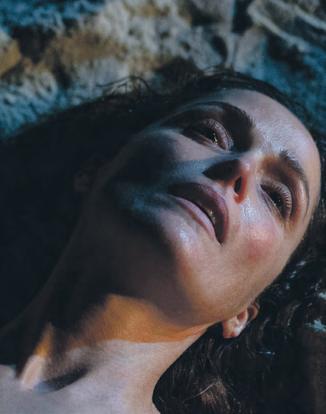
Sirāt
Director: Óliver Laxe
Starring: Sergi López, Brúno Nuñez, Stefania Gadda rrrrr
Sensory maximalism is the name of the game in Óliver Laxe’s latest. Luis (Sergi López) and his son Esteban (Bruno Núñez) journey into the Moroccan desert in search of Marina, their daughter and sister respectively, who they suspect has joined the rave scene there. As they follow the path towards the Mauritanian border, the pair find companionship among these itinerant revellers.
Laxe and cinematographer Mauro Herce capture bodies in an unfeeling space, utterly insignificant against blurring desert sands and skies, just as close-ups on speakers and prosthetics highlight tangible, often brutal lives. The sound design is similarly overwhelming, veering between rave tracks, loud diegetic noises, and complete silence. Movement and music are dual forms
in a flood, she has to manage her daughter’s health regimen from a noisy motel room. Beyond caring, her work as a therapist puts her as the main support for vulnerable adults – most prominently young mother Caroline (Danielle Macdonald). With her own support network limited to an exasperated colleague (Conan O’Brien) and the motel superintendent (A$AP Rocky), Linda’s ability to hold her life and self together – fragile from the opening scene – careens into uncharted chaos.
Lucian Johnston’s editing and Christopher Messina’s cinematography, in conjunction with the sound team, create a hellscape whose only relief is bleak humour. If I Had Legs I’d Kick You suffers only from a formulaic reveal of past trauma and a somewhat contrived ending; in other ways, the film is impeccable. Few will want to watch this more than once.
[Carmen Paddock]
20 Feb by Picturehouse; certificate 15
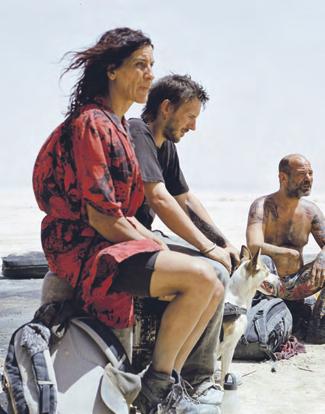
of survival, or sinister forms of escape. Sirāt’s commitment to exteriority, however, does not give human relationships time to unfold and reveal depths. One extreme and random tragedy that should be unbearably bleak comes across as a farce in its reliance on frenetic expository dialogue. Another horrifying turn of events reaches towards symbolism but falls into moralising and self-parody – worse, turning a legacy of violence (the world’s largest minefield and Western Sahara’s status as Africa’s last colonised state) into cheap shocks. Interestingly, Sirāt never brings up the fact that Mauritania and Morocco do not share a border, unless one considers Western Sahara to have been subsumed by its colonising power.
Ultimately, Sirāt impresses more than it moves, and its political sloppiness makes its cynical denouement all the more uneasy. [Carmen Paddock]
Released 27 Feb by Altitude; certificate 15
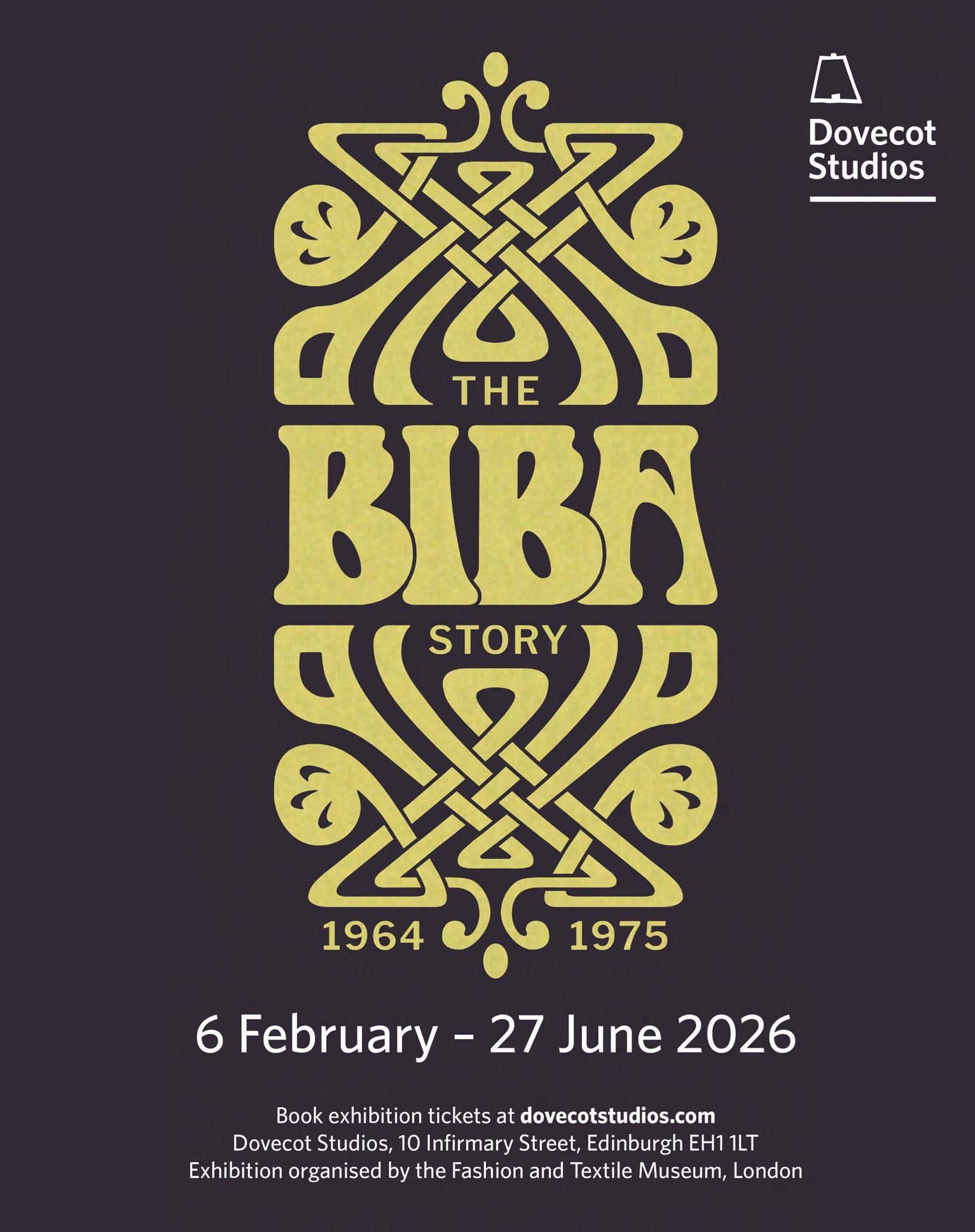
A new collaboration from the folk behind Timberyard, Shrimpwreck and Civerino’s has real potential, but feels in need of some definition
4-6
Thu-Sun, 8am-8pm
@browns.leith
When it comes to ‘big spaces with lots of food in ’em’, Edinburgh has two canonical examples. At one end, The Pitt – a grassroots space that feels like an ever-changing community project trying to go in various directions at once. At the other, Edinburgh Street Food – a meticulously planned, rammed-to-the-rafters and frighteningly efficient distillation of the street food concept. They’re both great but neither’s perfect, and in any case there’s definitely room for more of this. Jump to The Shore, and to Brown’s of Leith.
The interior is a light but sympathetic reuse of the former George Brown & Sons Engineering Works by Gunnar Groves-Raines and GRAS architecture studio. It’s a mix of metal, wood and concrete; lots of simple lines, and plenty of those seats that are inherently coded as ‘school chairs’ even if they haven’t seen a classroom in about six decades. The food’s round the outside, the seating plan is such that you can get from one end to the other without standing on anyone’s coat, and every so often you catch sight of a big hook or interesting bit of the floor that links back to the industrial origins of the space. The flipside is that it’s
fairly dark, quite muted in terms of colour, and very much not-muted in terms of sound.
On bar duty is Haze, the latest idea from the folk behind Timberyard and Montrose. They’re on a wellstocked stainless steel island with a row of bar taps, toasters, wine boxes and assorted prep machinery flanking their zone. The Sicilian house wine is excellent – additional ‘I’m a little fancy lad’ points for a by-theglass orange – and the strippeddown food menu is a classic example of not trying to do too much. Nduja on toast (£8.80) is two bumper slices of golden toast loaded with a jammy, spicy spreadable sausage that runs a deep, deep red. It’s hot, it’s punchy, it’s got a little dish of pickles on the side, it’s great. The soft goat’s cheese with honey (£9) is… well, you can imagine. A lightly funky but brilliantly creamy cheese, some very light and floral honey with one of those lovely wooden honey drippers, and more very deliberately toasted bread. These are bar snacks turned up three or four notches; pick a good cheese and you’re most of the way there, and these guys are most of the way there. That light sense of swag has rubbed off on the other two kitchens in Brown’s. Shrimp Wreck are going
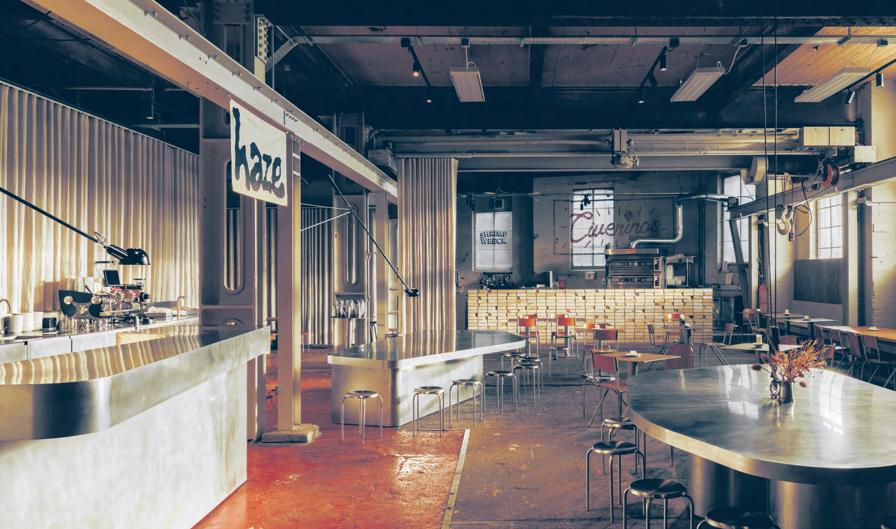
Words: Peter Simpson
big on lobster rolls and fresh oysters, while Civerino’s are taking the opportunity to go for some fairly ambitious takes on the pizza. It’s New Havenstyle – a wafer-thin crust, cut in a grid so everyone can dig in and get a little bit. The vodka sauce, Italian sausage and truffle whipped ricotta pizza (£15) is light on the toppings but in a very measured way; each slice gets its own nubbin of sausage, and its own blob of that light, earthy ricotta. The vodka sauce brings a nice sweetness and smoothness to proceedings, and balances against the crispiness and light char of the base. It’s both refined and fun, and the exact sort of thing you’d want to plonk in the middle of a table full of pals.
And yet at times, it feels like the constituent parts of Brown’s are working at cross-purposes. As the crew from Haze glide through the room with their plates of high-end nibbles, the pizzaiolas at Civerino’s are literally yelling at the top of their lungs about a ‘pizza for Hannah’. Shrimpwreck are serving their dishes in compostable dishes, but Haze have actual plates. The Shrimpwreck guys are also shouting, but they’ve gone with numbers rather than names. We ordered Civerino’s most expensive pizza; there are three tins of fish on the Haze menu that are pricier. Is this a high-end wine and coffee spot with pizza and fish restaurants as close neighbours, or a post-industrial food hall where the bar just happens to have a love of Mediterranean small plates?
Brown’s feels ambitious, but slightly ill-defined. If it was all chaos, more noise, more jostling, that would be… well it would be a lot to deal with, but it would create a febrile, energised atmosphere. If we replaced the shouting with one member of floor staff and gave everyone some crockery, it might make for a more laidback, refined vibe. As it is, we’re slightly caught in the middle. The food is good, the bar is nice, the location is great and the space has potential. Brown’s has lots of shades of grey – maybe in time, some of them will take on a more distinctive tone.
Enter The Woom Room, whether in one of their physical or online spaces, and you’ll find yourself tumbling, Alice in Wonderland-style, into Nänni-pää’s beautifully curated graphic utopia.
Words: Phoebe Willison
Bright shapes and characters adorn prints, clothing and homeware across colourful shelves and murals. The creative hub, shop and gallery – now in its sixth year – showcases work from a wide range of Scotland-based artists, many of whom are less often represented in traditional gallery settings. Nänni-pää’s passion for advocating for Scottish artists is abundant. “I know personally how hard it is to have a career in the art world,” she explains.
“I love finding artists that don’t necessarily like promoting themselves. If they don’t have their business hat on, I’ll happily put my business hat on for them,” she explains, adding: “Although I’ve never really taken a wage from the shop. It’s a passion project, but I am so happy to do it because I get to create the projects that I want to, with the people that I admire and love,” she enthuses. “I love talking about the artists – I love telling people stories about their designs, or even who they are as people. Just spreading the love of their work around.”
While the Woom Room is an inclusive space, showcasing a diverse range of artists, all of them are Scotland-based – an intentional decision. “There’s lots of opportunities in other places already, but I don’t want people to move to other places. I want people to stay here.” Her commitment to the city is clear. “I love Glasgow, and I want it to grow. And I feel like Glasgow has a lot of healing to do in a lot of ways, and if I can be a part of that, I’ll help the community get there in whatever way I can.”
Alongside her own established practice as an artist – ranging from printmaking to large-scale, immersive installations and murals such as those at Kelburn Garden Party – The Woom Room gives her a whole extra world to explore. “I get to create the branding, make the posters, produce the events I want to go to. I get to do all the projects that I want to do,” she confesses.
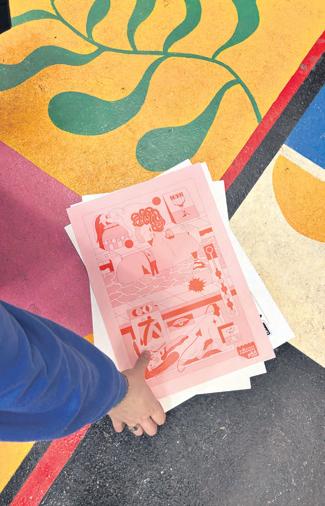
Given that her own work centres around utopia and community, the parallels are obvious. “It’s the perfect brand for me,” she laughs, “the dream project!”
And with plans for collaboration across Glasgow’s cultural network – including Grateful Gallery – emphasis remains firmly on collective growth. “We don’t want to have a culture of competition. We want to have a culture of collaboration.”
The Woom Room, Stall A7, The Barras Market, 244 Gallowgate, Glasgow, Sat-Sun 11am-4pm ig: @thewoomroom

Nationhood: Memory and Hope brings together Ethiopian artist Aïda Muluneh, making work in Europe for the first time, with seven emerging UK photographers across England, Northern Ireland, Wales and Scotland. On tour as part of Bradford 2025 UK City of Culture, the exhibition asks what nationhood might mean when felt through what people carry.
Across two rooms, photographs accumulate. Bodies painted in saturated primaries, faces in soft black and white, landscapes reread through symbol and what lingers. The works weave in and out, creating rhythms between, documenting a way of feeling community through pulse.
Artists Roz Doherty, Shaun Connell, Chad Alexander, Grace Springer, Robin Chaddah-Duke, Miriam Ali and Haneen Hadiy each work in their own register, creating portraits that refuse singular readings of place or belonging. Muluneh’s The Necessity of Seeing makes colour carry what language can’t. Figures adorned in
geometric primaries stand against architecture and terrain that carry their own histories, the paint transforms surface, body into a carrier of memory. Colour insists against built environments with layered pasts, making visible the overlooked. Her black and white portraits, A Portrait of Us, work differently. Grassroots workers, organisers, faces holding generations of knowledge. The portraits let you sit with each person, with what their presence holds. These are people who shape their worlds quietly, whose work resonates beyond headlines.
Roz Doherty’s youth portraits hold Bradford’s young people in bold colour, faces carrying futures not yet fixed. Shaun Connell photographs Bradford’s Jamaican and Christian communities, faith as thread connecting generations. Chad Alexander documents the Tropicana Club in Dungannon, where an Irish Foresters hall became a multicultural gathering space. The work traces how spaces transform, how walls absorb decades of use and
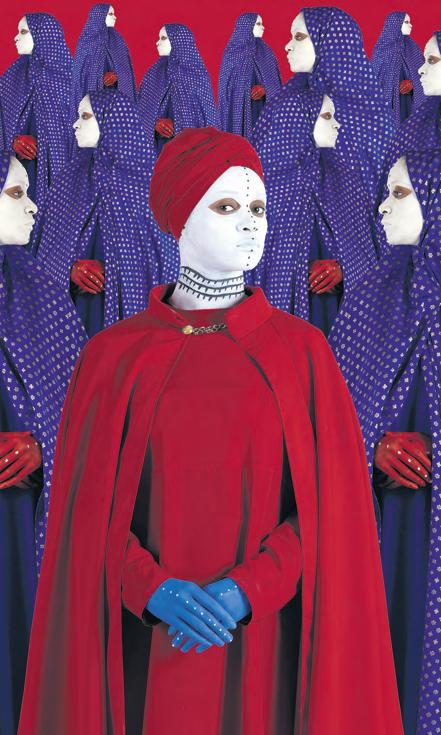
reinvention. Grace Springer’s portraits from Cardiff surge with energy, the people actively reshaping their neighborhoods. Robin Chaddah-Duke recreates a late 1970s group portrait from The Parade community centre, reuniting original members decades later. Time collapses in the frame, then becomes now, continuity made visible. Miriam Ali turns her lens to Glasgow’s grassroots workers, the hands that tend and connect, that make the city breathe. Haneen Hadiy finds Islamic symbolism in Scottish landscapes, rolling hills reread through faith, through ways of knowing place that aren’t written in stone or soil.
Moving through the rooms, resonances emerge. A painted figure beside a documentary portrait. Doherty’s vibrant youth meeting Chaddah-Duke’s elders, who’ve been working for decades. Alexander’s transformed spaces alongside Muluneh’s bodies reshaping place through colour. Hadiy’s symbolic landscapes in conversation with Connell’s photography of devotion and
lineage.
The exhibition operates through weaving, threads that have tangled and emerge, each one leading deeper into what’s been held. Memory is something you wear, reshape and use to claim what comes next – all insisting that how we see place, how we understand belonging, remains ongoing, unfinished.
What stays with you isn’t a single idea but the vibrations between photographs, the way they breathe together across different time(s) and stories. The work doesn’t resolve. It layers, creating constellations that shift depending on where you stand, what you bring to the seeing. Nationhood: Memory and Hope offers no singular reading, but openings, spaces where multiple pasts, multiple futures can exist without collapsing the multiplicity that hums beneath.
Nationhood: Memory and Hope, Street Level Photoworks, Glasgow, until 8 Feb streetlevelphotoworks.org
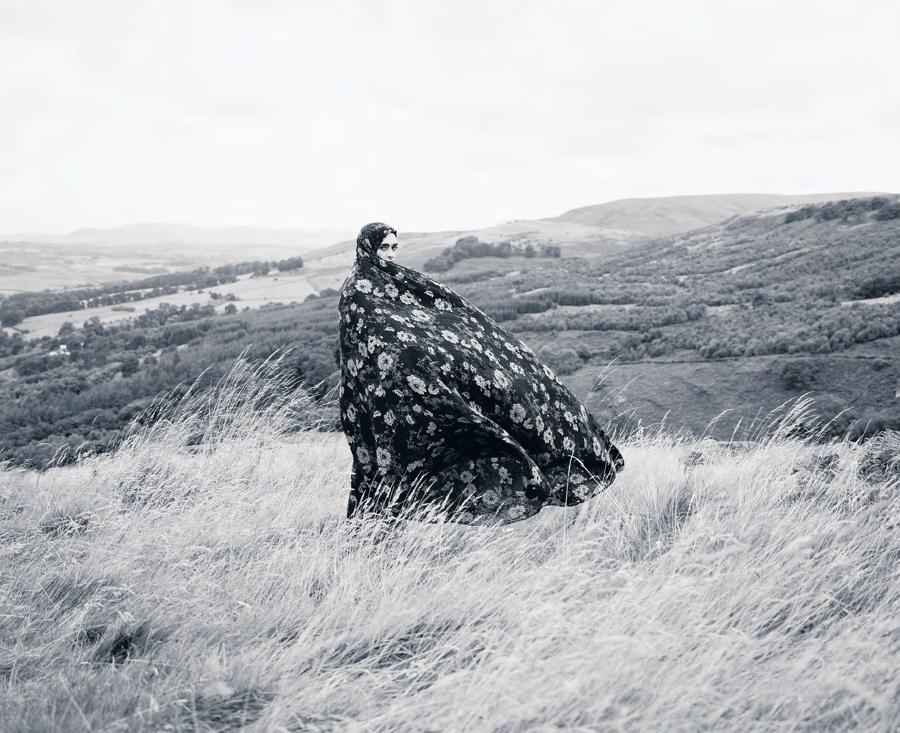
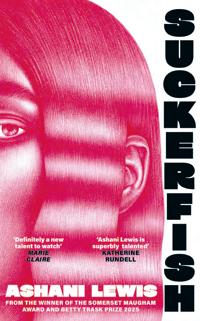
By Ashani Lewis rrrrr
In Suckerfish, Ashani Lewis sketches out a stunning and heartbreaking mother-daughter relationship, turning over its many dark and light shades. As Kolia navigates her twenties in London, managing responsibilities to both people and places, seeking purpose and meditating on family attachments, her vulnerable and fierce mother Lalita tries desperately to claw her estranged daughter back into her orbit. We weave in and out of Kolia and Lalita’s pasts and presents as Lewis skilfully lays bare some of the emotional complexities which percolate between people who love one another but which can be so hard to put into words.
In London, Kolia spends time with her best friend, Mia, and love interest, Gabriel. Each of Kolia’s relationships are in their own ways complicated, brilliant and achingly real. Suckerfish also picks at the experience of racial mixedness in the UK, exposing the simultaneous distance and closeness, visibility and opacity produced when one seeks to relate to a distant homeland. Briefly, readers follow Kolia in a visit to this (unnamed) homeland, although this part of the book feels a little rushed: more space in which Lewis’ many complex characters could breathe would have been welcome. Nevertheless, it is an exceedingly clever novel about love, inheritance and what we owe one another. Suckerfish will quietly rip at your heart and then gently stitch it back up again. [Parisa Hashempour]
By Lauren J. Joseph rrrrr
As Lauren J. Joseph’s novel Lean Cat, Savage Cat opens we meet artist Charli who has just graduated from St Martins College of Art, but faces an uncertain future – her laddered tights a small but significant indicator as to what follows. She has an idea for a PhD based on the story of an early relationship of David Bowie’s, but before she can formalise these thoughts there is a night at the notorious Groucho Club to negotiate where she suffers mistaken identity. Confused and disoriented, a story unfolds which may never have been Charli’s in the first place, taking her to Berlin with the charismatic Alex, who some, including Charli, consider the new Bowie.
Their life in the city is one of hedonistic and decadent glamour – more sex and drugs than rock'n'roll, at least to begin with. As Alex’s star begins to burn bright, Charli’s existence becomes one of subordinance, unable to see what everyone else appears to, that Alex is a detrimental and harmful influence. If Alex is a ‘Bowie’ (surely the case study in identity malleability and the divided self) it’s John Blaylock in the film The Hunger, a bewitching vampire who sucks the life from Charli.
Lean Cat, Savage Cat is a complex, compelling and wildly entertaining novel which examines obsession, the notion of doppelgängers, ambition, identity, and how the individual can come to define themselves through others. It’s a wonderfully amorphous read – just when you think it’s one thing it becomes another. [Alistair Braidwood]


By Rebecca Novak rrrrr
Thea Lenarduzzi’s The Tower follows T the protagonist, who is not the narrator, on a search for Annie, a young girl confined to a tower built by her father; and later follows the narrator, who may be the protagonist, on a hunt for the truth into her own experiences.
As T journeys further into Annie’s story and the hunt for answers, both she and the narrator come up against the slipperiness of stories and the ultimate precarity of women’s histories; confronting disappearance and erasure as the trail runs and Red Riding Hood’s wolf lurks. Lenarduzzi explores the domination of girls and women through illness and patriarchy in a narrative which at times confuses its speakers; swapping between first and third person in an embodied exploration of the many selves contained by personhood.
The complexity of the medical industry mingles with folklore and herbal remedies of old as female illness falls between the cracks of history. T doggedly pursues answers even when there are none, lives and narratives are layered over one another as the trauma of illness fosters a deep desire to find understanding in stories and histories, using them as a surrogate to explore our own pain. Weaving together investigation and story, adding memoir in a deeply personal, if abrupt, narrative turn, The Tower runs a complex course and questions the stories we tell ourselves.
[Marguerite Carson]
For all the true crime aficionados, Murder Bimbo is ready and waiting. None of the characters are ever named, giving the novel a redacted or leaked verisimilitude. We follow Murder Bimbo, a 32-year-old sex worker on the run after having killed extremist political hopeful Meat Neck. She emails popular feminist investigative podcast Justice for Bimbos and explains how she was supposedly recruited and trained by US government agents to take him down. Told in wildly differing sections, the novel plays with an unreliable narrator whose agency, complicity, and volition shift with each version of events.
The most effective strand is the first, where Murder Bimbo is crafting a folk-hero feminist story of righteous justice. The pacing is rip-roaring and it is impossible to tell where the narrative will go next in this thrilling ride. The novel touches on so many fascinating themes in the zeitgeist: political radicalism, true crime culture, perceptions of women and sex work, and malleability of ‘truth’. However, there is an ultimate feeling of wanting more: the surfacelevel commentary and multiple iterations are sometimes a detriment to the impact of each sensational episode. Murder Bimbo as a protagonist is simultaneously compelling and enigmatic. She is complex, flawed, and ultimately self-interested driving an uneven but entertaining ride. [Katalina Watt]
We chat to Glasgow Improv Theatre’s founder Martin James ahead of its tenth birthday celebrations
Words: Polly Glynn
Tell me about Glasgow Improv Theatre...
The Glasgow Improv Theatre is the home of improv in Scotland and one of the largest improv theatres in the UK. We run a packed schedule of shows and teach improv classes, all the way from beginners to advanced courses. Last year we had a record-breaking number of shows and students. Our mission is to bring the artform of improv into the Scottish mainstream!
How did it come about?
It started when I studied improv at the legendary Upright Citizens Brigade Theatre (UCB) in Los Angeles at the end of 2015. I returned to Glasgow to discover there wasn’t much of an improv scene here, or many other teams or performers to do shows with. I started a Harold Night – essentially an improvised sketch show – and ran that monthly in Glasgow pub The Griffin, then Blackfriars, and now finally in The Old Hairdresser’s. Eventually we started running jams and teaching classes, then opened auditions to put our own house teams together.
What was the first GIT night like?
The first Harold Night was in The Griffin in April 2016. It had two teams performing, the Improv Ninjas and Improv Killed My Dog. I remember being surprised that there were people in the audience! We were enthusiastic but it’s fair to say we didn’t know what we were doing yet! I had only studied UCB 101, and I would then make an annual pilgrimage to LA to complete their curriculum – learning The Harold format in full. My notes from those classes formed what Glasgow Improv Theatre teaches today.
Who would be your dream GIT guest?
We would LOVE to have Limmy on. He is Scotland’s comedy genius in my opinion and a masterful natural improviser. I think he could walk right in and ‘get it’ and do amazing in any of our shows. Improv has the feeling of joking around with your friends – everyone trying to pitch a funnier joke: “What if THIS happened,” “What if THIS GUY came back” etc. And if you’ve watched Limmy before, you’ll know his style of comedy would fit perfectly into longform improv.
What’s been your best takeaway from running GIT?
That it’s more fun to work with people than trying to do everything yourself! Improv builds such a wonderful and supportive community. Other comedy artforms, like standup, though I love it, can feel quite lonely and competitive. Improv has a much more ‘team sports’ mentality. So my advice would be: find your people. Seek out people who you connect with and speak your language, and work with them.
Who on the comedy scene do you think we should look out for? Our hidden gem team at the moment is probably Bounce House. They are doing incredible work at their monthly show. They look up Reddit posts from the Am I The Asshole subreddit, and then
‘I’d love to see more cross-pollination. Standup, improv, and sketch are all very siloed at the moment’
Martin James, Glasgow Improv Theatre
do improvised sketches based off that. It’s a great show for audience interaction, and their team is stacked with some of the sharpest improvisers at the GIT.
What’s the funniest improv gig you’ve seen and why?
I feel incredibly lucky to have seen so many improv legends perform in LA, including Jason Mantzoukas, Ben Schwartz, and Amy Poehler. The funniest improv show I’ve seen, and one of my favourite teams, is called Convoy (Alex Fernie, Alex Berg and Todd Fasen) – who broke my brain. They made a ‘meta’ move, almost breaking the 4th wall, but would commit extremely hard to the bit, and keep heightening and exploring it til it reached its breaking point. I love watching very smart people put all their brainpower into very stupid comedy!
How do we make the Scottish comedy scene better?
I’d love to see more cross-pollination. Standup, improv, and sketch are all very siloed at the moment. I think these groups tend to look down on each other or treat each other with suspicion. I think all three artforms are great fun, and it would be cool to see them mix more!
What’s next for GIT?
April 2026 marks our ten year anniversary! Much like that annoying friend that has a ‘birthday week’, we’re having a ‘birthday year’! We have the first ever Glasgow Improv Marathon in May, ten hours of non-stop improv at The Old Hairdresser’s, then in April, we have Harold month, where we will have teams performing the Harold every week, to celebrate ten years of that show.
Glasgow Improv Theatre, The Old Hairdresser’s, every Tuesday
Perfect Improv, The Old Hairdresser’s, 17 Feb, 7pm
Glasgow Improv Marathon 2026, The Old Hairdresser’s, 30 May, 1-11pm
Full list of Glasgow Improv Theatre workshops and shows can be found at improvglasgow.co.uk
@improvglasgow on Instagram and Tiktok



Looking for something to do? Well you’re in the right place! Find listings below for the month ahead across Music, Clubs, Theatre, Comedy and Art in Glasgow, Edinburgh and Dundee. To find out how to submit listings, head to theskinny.co.uk/listings
Mon 2 Feb
VNV NATION
THE GARAGE Electronica from London.
WESTSIDE COWBOY (HOLLY HEAD)
KING TUT'S Indie from Manchester.
NOAH SCOTT STEREO Trad and folk.
Tue 3 Feb
RUM JUNGLE STEREO Indie from Newcastle.
Wed 4 Feb
SCENIC ROUTE (DEER
PARK + THREDD + MY KNIGHT + BLACK FONDU)
THE FLYING DUCK Eclectic lineup.
HO99O9
THE GARAGE Punk rap from New Jersey.
VIANOVA THE GARAGE Metalcore from Berlin.
JAMES ARTHUR
THE OVO HYDRO
Singer-songwriter from the UK.
THE BLUE STONES
ORAN MOR Blues rock from Ontario.
ROBBIE WILLIAMS BARROWLANDS Pop from the UK.
EZRA FEINBERG THE GLAD CAFE Indie from the US.
Thu 5 Feb
MOTIONLESS IN WHITE (DAYSEEKER + MAKE THEM SUFFER)
THE OVO HYDRO Metalcore from Scranton.
LILY KERBEY ORAN MOR Alternative from the UK.
CAMMY BARNES KING TUT'S Singer-songwriter from Fife. SUDS (SOOT SPRITE) THE HUG AND PINT Indie from Norwich.
DALLAS LOVE FIELD
THE OLD HAIRDRESSERS Dream pop from Glasgow. MUMFORD & SONS SWG3 Folk pop from the UK.
THEO BLEAK
THE GLAD CAFE Alt rock from Scotland.
Fri 6 Feb
IN VERTIGO THE GARAGE Nu-metal from Scotland.
CAMMY BARNES KING TUT'S Singer-songwriter from Fife.
MAXIMO PARK O2 ACADEMY Alt rock from Newcastle. SLEAFORD MODS BARROWLANDS Post-punk from the UK. KAVUS TOBARI
THE HUG AND PINT Psych from the UK.
GLAIVE ST LUKE'S Hyperpop from Florida.
ECKA MORDECAI (A HAPPY RETURN + EMPTY BUCKET METHOD)
THE OLD HAIRDRESSERS Experimental from London. THE COVASETTES THE GARAGE Indie from Manchester. THE WEEKENDER SWG3 Local lineup.
HAYDEN CALNIN THE GLAD CAFE Singer-songwriter.
Sat 7 Feb
SAME DEEP WATER THE FLYING DUCK Screamo from Glasgow. COURTNEY HADWIN CATHOUSE Singer-songwriter from the UK.
TRASH BOAT THE GARAGE Punk rock from St Albans. SHIFTER (THE SUN DAY)
KING TUT'S Alt rock from Edinburgh. MAGDALENA BAY O2 ACADEMY Alt pop from Miami. HOUNDS OF LOVE ALL DAYER THE RUM SHACK Eclectic lineup. HOT WAX (JEANIE AND THE WHITE BOYS)
ROOM 2 Alt rock from Hastings. HOTEL MIRA SWG3 Alt rock from Canada. BELL WITCH + AERIAL RUIN (STYGIAN BOUGH + 40 WATT SUN)
STEREO Doom metal.
Sun 8 Feb
JEMIMA THE FLYING DUCK Indie from London. SICK JOY THE HUG AND PINT Alt rock from Newcastle.
SLEEP THEORY SWG3 Rock from the US.
Mon 9 Feb
ARM'S LENGTH THE GARAGE Emo from Ontario. FLORENCE + THE MACHINE THE OVO HYDRO Indie from London.
Tue 10 Feb
TWIN TRIBES ORAN MOR Darkwave from Texas. KONTRAVOID (NUXX)
STEREO Industrial from Toronto. Wed 11 Feb
ASHNIKKO O2 ACADEMY Rap from the US.
MATT STORM THE HUG AND PINT Jazz from Vancouver. KULA SHAKER THE OLD FRUITMARKET Psych rock from London.
CALEB NICHOLS THE GLAD CAFE Indie pop from the US. CON’TYLIA + SCYLLA STEREO Greek folk from Glasgow.
Thu 12 Feb THE CORDS (BMX BANDITS + SUPERSUN) MONO Indie pop from Scotland. THE SOUTHERN RIVER BAND ORAN MOR Rock from Perth.
ROCKET KING TUT'S Indie from LA. THE ACADEMIC BARROWLANDS Indie rock from Ireland. MAJKE VOSS THE HUG AND PINT Indie from Copenhagen.
FLYNN BUTLER + STILLPOINTS + CHARLOTTE DEVLIN + MOLLY SELLORS + MISREAD + SISTER MAPS THE OLD HAIRDRESSERS Eclectic lineup. OMAR PERRY + ERM THE RUM SHACK Reggae from Jamaica. GOOD NEIGHBOURS SWG3 Pop from the UK. SUSANNA ORR HOLLAND THE GLAD CAFE Folk from Scotland. Fri 13 Feb
BEAUX THE GARAGE Indie from London. THE CAVEMEN THE GARAGE Soul from Nigeria.
DEFTONES
THE OVO HYDRO Alt metal from the US.
MARTIN AND ELIZA CARTHY
ORAN MOR Folk from the UK. THE GOODTRIPS (PROBABLY STELLA)
KING TUT'S Psych rock from Glasgow. PAIGE KENNEDY THE HUG AND PINT Alt pop from London. TASTE OF CINDY (LOST IN TRANSLATION) SWG3
Post-punk from Scotland.
STELLA ROSE THE GLAD CAFE Dark pop from New York.
CUPID'S CABARET BY AGORA
STEREO Feminist cabaret.
Sat 14 Feb
MARIA SOMERVILLE
THE FLYING DUCK Dream pop from Ireland. THE COST THE GARAGE Rock from Valencia. FAIL THE ENEMY THE GARAGE Alt rock from West Yorkshire.
AMBER RUN ORAN MOR Indie rock from Nottingham.
MYSTERY SKULLS
KING TUT'S Electronica from LA. OF MONSTERS AND MEN
O2 ACADEMY Indie folk from Iceland. SOUNDKARD THE OLD HAIRDRESSERS Experimental from the UK. FOZZY SWG3
Heavy metal from Atlanta. THORN WYCH (GREET + ANCIENT HOSTILITY + BELL LUNGS) THE GLAD CAFE Alt-folk.
Sun 15 Feb
SIMEON WALKER THE GLAD CAFE Contemporary classical. CHASING ABBEY
KING TUT'S Electronica from Ireland. EBI SODA THE RUM SHACK Jazz from the UK. COACH PARTY ROOM 2 Alt rock from the Isle of Wight.
SMITH/KOTZEN SWG3 Hard-rock.
FINE THE GLAD CAFE
Dream pop from Denmark. MILITARIE GUN (THE TUBS)
STEREO Punk from LA.
Mon 16 Feb
CROWBAR THE GARAGE
Sludge metal from New Orleans.
DMA'S
O2 ACADEMY Rock from Australia. AVATAR
BARROWLANDS
Heavy metal from Sweden. TOUCAN THE HUG AND PINT
Funk from Ireland.
COUNTERPARTS
SWG3
Hardcore from Canada. BEARS IN TREES
STEREO
Indie pop from London.
Tue 17 Feb
DMA'S
O2 ACADEMY Rock from Australia. THE BEACHES
BARROWLANDS
Rock from Toronto. THE BESNARD LAKES (THE THORN) THE RUM SHACK Indie rock from Canada.
CAM THE OLD FRUITMARKET Country from the US.
THUNDERSMACK
STEREO
Hip-hop from New York.
Wed 18 Feb
DEATHBYROMY (KING
MALA + JAYDEN HAMMER)
KING TUT'S Rock from the US.
KAISER CHIEFS
BARROWLANDS
Indie rock from Leeds.
DREAM NAILS
THE HUG AND PINT Punk from London.
KEZIA GILL
ST LUKE'S
Singer-songwriter from Nottingham.
LA DISPUTE
SWG3
Post-hardcore from the US.
ONDARA
THE GLAD CAFE
Singer-songwriter from the US.
WAVVES
STEREO
Noise pop from San Diego.
Thu 19 Feb
BEN OTTEWELL + IAN
BALL ORAN MOR
Singer-songwriters from the UK.
DIE SPITZ (AERIAL SALAD)
KING TUT'S
Rock from Texas. THE STREETS BARROWLANDS Garage from Birmingham.
WHITELANDS (OUTLANDER)
THE HUG AND PINT Shoegaze from London.
MICHAEL MARCAGI
QMU
Singer-songwriter from Ohio.
BIG SPECIAL SWG3 Indie from the Black Country. THE PAPER KITES
SWG3 Indie folk from Australia.
MAX BRACKENRIDGE + CALEB PATRICK DUFFY
SWG3
Local lineup.
Fri 20 Feb
STEALING SHEEP
MONO
Avant pop from Liverpool.
RAYE
THE OVO HYDRO Jazz soul from London.
WREST
ORAN MOR Folk rock from Scotland.
NOSO
KING TUT'S Indie from the US. PVA STEREO
Synth pop from London. Sat 21 Feb
BLACK HONEY
THE GARAGE Indie rock from London.
RAYE THE OVO HYDRO Jazz soul from London.
MIXED SIGNALS
KING TUT'S Indie from Ayr. THE DEARS
THE HUG AND PINT Indie rock from London.
NORDIC RESONANCE (RENZO SPITERI + RICHARD CRAIG)
THE OLD HAIRDRESSERS Experimental. RUBY ROBERTS SWG3 Pop from Glastonbury. POOL KIDS
STEREO Emo from Florida.
BOKO YOUT THE GLAD CAFE Afro-grunge from Sweden. Swedish.
Sun 22 Feb
BJ BARHAM THE GLAD CAFE Country.
SOMEWHERE PRESS: UGNĖ UMA + MATT
ROBIN THE FLYING DUCK Experimental from Lithuania.
HEAVEN SHALL BURN (THE BLACK DAHLIA MURDER + FROZEN SOUL) THE GARAGE Extreme metal from Germany.
FLY BY MIDNIGHT KING TUT'S Indie pop from LA.
TOURIST SWG3 Dance from London. MARTI PERRAMON SWG3 Pop from Spain.
MARK WILLIAM LEWIS STEREO Dream pop from London.
Mon 23 Feb
COURTNEY MARIE ANDREWS ST LUKE'S Folk from the US.
Tue 24 Feb
MONSTER FLORENCE KING TUT'S Hip-hop from Essex. THE CALLOUS DAOBOYS THE GARAGE Mathcore from Atlanta.
MAUDE LATOUR ORAN MOR Indie from the US.
DRAKE WHITE ST LUKE'S Country from the US. PORTUGAL. THE MAN SWG3 Rock from Alaska.
Wed 25 Feb
ROBIN RICHARDS THE HUG AND PINT Experimental from Manchester.
JARROD DICKENSON THE RUM SHACK Folk from Texas.
PSYCHEDELIC PORN CRUMPETS SWG3 Psych rock from Australia. LUUMA COLLECTIVE STEREO Experimental.
Thu 26 Feb
RON SEXSMITH ORAN MOR Singer-songwriter from Canada.
BILLY REEKIE
KING TUT'S Pop rock from Fife. THE FRATELLIS O2 ACADEMY Rock from Glasgow. FATBOY SLIM BARROWLANDS Dance from the UK.
JUNK DRAWER THE HUG AND PINT Indie.
BIG BAND OF BOOM THE RUM SHACK Rock from Birmingham. WILLOW AVALON SWG3 Country from the US.
CHINCHILLA SWG3 Heavy metal from Germany. MINT FIELD THE GLAD CAFE Shoegaze from Mexico.
Fri 27 Feb
SISTER MADDS KING TUT'S Punk rock from Scotland. THE FRATELLIS O2 ACADEMY Rock from Glasgow.
FATBOY SLIM BARROWLANDS Dance from the UK. MALENA ZAVALA THE HUG AND PINT Indie from Argentina. KB & THE RASKALS THE OLD HAIRDRESSERS Indie from Glasgow. SHOLTO THE RUM SHACK Experimental jazz from London.
DISCOVERY SWG3 Indie from Scotland.
QUITTER THE GLAD CAFE Lo-fi from Glasgow. THE WAVE PICTURES STEREO Alt rock from the UK. ENERGY DOME (CANNONBALL + WITS END + GRAND SLAM + SHOT DOWN IN MAY) THE FLYING DUCK Hardcore lineup.
Sat 28 Feb
BAD SUNS KING TUT'S Indie rock from LA. THE VACCINES O2 ACADEMY Indie rock from the UK. FATBOY SLIM BARROWLANDS Dance from the UK. KEELEY THE HUG AND PINT Indie rock from Ireland. BOY & BEAR
ST LUKE'S Indie folk from Australia. RADIO HITO (GUESTS + GIUSEPPE MISTRETTA) THE OLD HAIRDRESSERS Indie from Italy.
DELTAMANIC (SOVIREZ + SALT RIVER SHAKEDOWN) ROOM 2 Groove from Alloa.
Cabaret Voltaire
TUESDAYS
MIDNIGHT BASS, 23:00
Big basslines and small prices form the ethos behind this weekly Tuesday night, with drum’n’bass, jungle, bassline, grime and garage aplenty.
FRIDAYS
FLY CLUB, 23:00
Edinburgh and Glasgowstraddling night, with a powerhouse of local residents joined by a selection of guest talent.
SATURDAYS
PLEASURE, 23:00
Regular Saturday night at Cab Vol, with residents and occasional special guests.
Sneaky Pete’s
MONDAYS
RIDE N BOUNCE, 23:00
R‘n’B, pop, rap and hip-hop bangers every Monday.
TUESDAYS
RARE, 23:00
House, UKG and occasional techno from special guest DJs and rising locals.
FRIDAYS (FIRST OF THE MONTH)
HOT MESS, 23:00
A night for queer people and their friends.
SATURDAYS (LAST OF THE MONTH)
SOUL JAM, 23:00
Monthly no-holds-barred, down-and-dirty disco.
SUNDAYS
POSTAL, 23:00
Bass, breaks, grime and more from a selection of Cowgate all stars.
The Bongo Club
FRIDAYS (SECOND OF THE MONTH)
FRIDAYS (MONTHLY, WEEK CHANGES)
SOUND SYSTEM LEGA-
CIES,23:00
Exploring the legacy of dub, reggae and roots music and sound system culture in the contemporary club landscape.
FRIDAYS (EVERY OTHER MONTH)
DISCO MAKOSSA, 23:00
Disco Makossa takes the dancefloor on a funk-filled trip through the sounds of African disco, boogie and house – strictly for the dancers.
FRIDAYS (EVERY OTHER MONTH)
OVERGROUND, 23:00
A safe space to appreciate all things rave, jungle, breakbeat and techno.
SATURDAYS (FIRST OR SECOND OF THE MONTH)
MESSENGER, 23:00
Roots reggae rocking since 1987 – foundation tune, fresh dubs, vibes alive, rockers, steppers, rub-a-dub.
SATURDAYS (MONTHLY)
CHROMATIC, 23:00
Championing all things UKG, grime, dubstep, bass and more, with disco, funk and soul from Mumbo Jumbo upstairs.
SATURDAYS (EVERY OTHER MONTH)
PULSE, 23:00
Techno night started in 2009 hosting regular special guests from the international scene.
SATURDAYS (MONTHLY)
HOBBES MUSIC X CLUB
NACHT, 23:00
The Liquid Room
SATURDAYS (FIRST OF THE MONTH)
REWIND, 22:30
Monthly party night celebrating the best in soul, disco, rock and pop with music from the 70s, 80s, 90s and current bangers.
The Hive
MONDAYS POPTASTIC, 22:00 Pop, requests and throwbacks to get your week off to an energetic start.
TUESDAYS
TRASH TUESDAY, 22:00
Alternative Tuesday anthems cherry picked from genres of rock, indie, punk, retro and more.
WEDNESDAYS COOKIE WEDNESDAY, 22:00 90s and 00s cheesy pop and modern chart anthems.
THURSDAYS HI-SOCIETY THURSDAY, 22:00 Student anthems and bangerz.
FRIDAYS
FLIP FRIDAY, 22:00
Yer all-new Friday at Hive. Cheap entry, inevitably danceable, and noveltystuffed. Perrrfect.
SATURDAYS BUBBLEGUM, 22:00 Saturday mix of chart and dance, with retro 80s classics thrown in for good measure.
SUNDAYS
SECRET SUNDAY, 22:00
Two rooms of all the chart, cheese and indie-pop you can think of/handle on a Sunday.
MONDAYS
TRACKS, 21:00
Blow the cobwebs off the week with a weekly Monday night party with some of Scotland’s biggest and best drag queens.
TUESDAYS
TAMAGOTCHI, 22:00
Throwback Tuesdays with non-stop 80s, 90s, 00s tunes.
WEDNESDAYS
TWISTA, 22:00
Banger after banger all night long.
THURSDAYS
FLIRTY, 22:00
Pop, cheese and chart.
FRIDAYS
FIT FRIDAYS, 22:00
Chart-topping tunes perfect for an irresistible sing and dance-along.
SATURDAYS
SLICE SATURDAY, 22:00
The drinks are easy and the pop is heavy.
SUNDAYS
SUNDAY SERVICE, 22:00
Atone for the week before and the week ahead with non-stop dancing.
The Mash House
MONDAYS
MASH MONDAYS, 23:00
Edinburgh’s new Monday night.
SATURDAYS (FIRST OF THE MONTH)
SAMEDIA SHEBEEN, 23:00
Joyous global club sounds: think Afrobeat, Latin and Arabic dancehall on repeat.
SATURDAYS (LAST OF THE MONTH)
PULSE, 23:00
The best techno DJs sit alongside The Mash House resident Darrell Pulse. Regular
IST IST THE CAVES Post-punk from Manchester.
SPANISH HORSES
SNEAKY PETE'S Rock from London.
NEW TOWN CONCERTS: NOVO QUARTET
THE QUEEN'S HALL Classical from Scotland.
Tue 10 Feb
RECKLESS & BLUE BANNERMANS Blues and jazz.
MATT STORM
SNEAKY PETE'S Soul from Vancouver.
VUKOVI
LA BELLE ANGELE Metalcore from Scotland. Wed 11 Feb
THE GODFATHERS (THE PRIMEVALS)
THE VOODOO ROOMS Punk from the UK. 96 BITTER BEINGS (HYPERSTASIS)
BANNERMANS Alt metal from LA.
CAROLINE
LA BELLE ANGELE Post-rock from the UK.
Thu 12 Feb
IRIS CALTWAIT
SNEAKY PETE'S Alt pop from Norway. Fri 13 Feb
STRUCK A NERVE (DEVASTATOR + BLOODSAW)
BANNERMANS Thrash metal from the UK.
SHAMPAIN
SNEAKY PETE'S Electronic from Galway. FAIL THE ENEMY THE MASH HOUSE Alt rock from West Yorkshire.
Sat 14 Feb
SUBVERSIVE
Sun 22 Feb
MARK WILLIAM LEWIS THE MASH HOUSE Experimental indie from London.
Mon 23 Feb
BEN OTTEWELL + IAN BALL THE CAVES Indie rock from the UK. KATHRYN WILLIAMS THE QUEEN'S HALL Folk and roots from the UK.
Tue 24 Feb
BILLY REEKIE THE CAVES Singer-songwriter from Fife. THUMPER
SNEAKY PETE'S Psych from Dublin.
Thu 26 Feb
MAN THE LIFEBOATS THE VOODOO ROOMS Folk punk from the UK.
MOTHER VULTURE BANNERMANS Blues punk from Bristol.
FERGUSON SNEAKY PETE'S Indie from Edinburgh.
REID SCHOOL WEE RED BAR Acoustic and folk.
Fri 27 Feb
BIG BAND OF BOOM THE VOODOO ROOMS Brass and rock from the UK. THE DARKER MY HORIZON (POOLE VIGILANTIES)
BANNERMANS Hard rock from the UK.
JUNK DRAWER
SNEAKY PETE'S Art-rock from Belfast. LUCY ROSE THE QUEEN'S HALL Rock and pop from the UK.
Sat 28 Feb
Thu 19 Feb
PLASTICINE
BEAT GENERATOR LIVE! Indie rock from Scotland.
Tue 24 Feb
FRANZ FERDINAND LIVEHOUSE Indie rock from Scotland.
Fri 27 Feb
THE CORDS (FATALE)
BEAT GENERATOR LIVE! Indie from Scotland.
Sun 1 Feb
FRANKY WAH SUB CLUB House.
Wed 4 Feb
DUBTENDO ALL STARS THE ART SCHOOL Bass.
Thu 5 Feb
23 DEGREES: BAKEY AT BERKELEY THE BERKELEY SUITE Breakbeat and garage. "HERD / EPILOGUE (SINNAH + HONEY + SONNY FLEXEN)" STEREO Techno and bass.
Fri 6 Feb
MIDNIGHT BASS: DJ STORM SUB CLUB Drum 'n' bass.
MISSING PERSONS CLUB THE BERKELEY SUITE Techno.
LA CHEETAH X LEZURE 11TH BIRTHDAY: MELLA DEE + SLOAN & WARDY LA CHEETAH CLUB House.
Sun 8 Feb
KEEP ON WITH SPECIAL GUEST F.AYE-I LA CHEETAH CLUB House.
Thu 12 Feb
FLY: EFFY SUB CLUB Tech house.
BITE: DEVOTE MAGAZINE LAUNCH NIGHT (GLORYB + NORTH STAR + ALADJI + P11NKLADY)
STEREO Jersey club and jungle. Fri 13 Feb
HEALTHY & POLYTERROR'S VALENTINE'S DAY THE BERKELEY SUITE Bass. LA CHEETAH X INR PRESENTS: 20 YEARS OF ONEMAN + DIJA & REYKA LA CHEETAH CLUB House and techno. EXIT: LIL MOFO + OJOO + MARIA CHAVEZ + HAN EXIT Techno. SERVE! X STEREO VALENTINES TRAFFIC LIGHT PARTY (KINZ LUIZ B2B TEKHOLE, LUCKYBABE B2B SOYFAG, SAPARILLA B2B PLANTAINCHIPPS) STEREO Club, ballroom and bass.
Sat 14 Feb
ELECTRIKAL, 23.00
Sound system and crew, part of a music and art collective specialising in BASS music.
A collaboration between longrunning club night and Edinburgh record label ft. house, techno, electro, UKG and bass.
Regular Glasgow club nights
The Rum Shack
SATURDAYS (LAST OF EVERY OTHER MONTH)
VOCAL OR VERSION, 21:00
Vintage Jamaican music on original vinyl by resident DJs and guests. Sub Club
ELEPHANT KIND
SWG3 Alt pop from Indonesia. EDDIE PRÉVOST (SILVAN SCHMID + TOM WHEATLEY) THE GLAD CAFE Improv from London. MACKENZIES THE GLAD CAFE Indie from Glasgow. THE BRACKNALL STEREO Indie from the UK.
Sun 1 Mar
EILEEN ALISTER
KING TUT'S Singer-songwriter from Zurich. EAST WEST BLUES FEST
DRYGATE BREWING CO. Blues lineup.
FRIDAYS (SECOND OF THE MONTH) RETURN TO MONO SLAM’s monthly Subbie residency sees them joined by some of the biggest names in international techno.
Mon 2 Feb
LUCIE SUE (FACEPALM)
BANNERMANS Rock from France. INSECURE MEN
SNEAKY PETE'S Avant-pop from London.
Tue 3 Feb
PREACHER STONE (REVENANT + SILENT THIEVES)
BANNERMANS Rock from North Carolina. CAST THE LIQUID ROOM Indie rock from Liverpool.
Wed 4 Feb
MOON LANDING
SNEAKY PETE'S Indie from Belfast.
SATURDAYS SUBCULTURE, 23:00 Long-running house night with residents Harri & Domenic, oft’ joined by a carousel of super fresh guests.
AMPLIFI: ANGELINE
MORRISON - DJANA GABRIELLE - MIWA
NAGATO-APTHORP THE QUEEN'S HALL Folk and roots from the UK.
Thu 5 Feb
HANA PIRANHA (CATHERINE ELMS + EMBERHONEY) BANNERMANS Rock from London. SUEDE USHER HALL Rock from the UK. ĠENN
SNEAKY PETE'S Post-punk from Brighton.
Fri 6 Feb
GERRY JABLONSKI BAND (LYNSEY DOLAN BAND)
THE VOODOO ROOMS Blues rock from Aberdeen. LAURENCE JONES (AMY EFTEKHARI) BANNERMANS Blues rock from the UK. THE DEMOGRAPHIC SNEAKY PETE'S Indie rock from Inverness.
THE SECOND WORLD WAR THE MASH HOUSE Punk from Edinburgh. LOVE MUSIC HATE RACISM: LUKE MARSHALL + ZIGGY + QUEEN VEE WEE RED BAR Indie.
Sat 7 Feb
HELICON (KAVUS TORABI)
THE VOODOO ROOMS Electro psych from East Kilbride.
SKYCLAD (TROLD) BANNERMANS Folk metal from Newcastle.
CLOVER + THE BORDERLINE + LEWIS WILSON
SNEAKY PETE'S Indie from Scotland.
EDINBURGH
UNIVERSITY JAZZ
ORCHESTRA PRESENTS: THE JAZZ
BALL THE QUEEN'S HALL Jazz from Edinburgh. CAMMY BARNES THE MASH HOUSE Country from Fife.
Sun 8 Feb
HOTWAX THE CAVES Rock from Hastings. THE MACKS
SNEAKY PETE'S Garage rock from Oregon.
Mon 9 Feb
DREADNOUGHT BANNERMANS Metal from Melbourne.
BANNERMANS Metal.
ALEX SPENCER
SNEAKY PETE'S Indie pop from Manchester
LUCKY BRIAR + CHRIS BAINBRIDGE + THINNERS
WEE RED BAR Indie.
Sun 15 Feb
BLACKBEARD'S TEA PARTY
SNEAKY PETE'S Folk-rock from York.
Mon 16 Feb
FOREIGN VOICES (PASTEL MOON + VRA + DARK HEARTS)
BANNERMANS Rock from Devon.
Wed 18 Feb
THE STREETS
EDINBURGH CORN EXCHANGE Garage from Birmingham. Thu 19 Feb
PLANTOID + PUPPY TEETH
SNEAKY PETE'S Pysch from Brighton. CORPUS DELICITI
LA BELLE ANGELE Post-punk from France. Fri 20 Feb
SOULACOASTER (THE AFTERNOONISTS)
THE VOODOO ROOMS Soul from Edinburgh. BLACK SPIDERS (SKAM)
BANNERMANS Rock from Sheffield.
Sat 21 Feb
PLASTICINE
SNEAKY PETE'S Pop rock from Glasgow. MARK WILLIAMS LEWIS
THE MASH HOUSE Dream pop from London. BLISS WEE RED BAR Indie.
THE NIGHTINGALES THE VOODOO ROOMS Pop rock. THE SCARAMANGA SIX (THE GREAT LEAP FORWARD) BANNERMANS Rock from the UK. BOYZLIFE
USHER HALL Pop from UK and Ireland. KASIA KOWALSKA THE LIQUID ROOM Singer-songwriter from Poland.
ARIENAS SNEAKY PETE'S Indie rock from Fife. RARE BREED THE MASH HOUSE Blues rock from Manchester.
SAMBROSO ALL STARS LA BELLE ANGELE Latin from Cuba.
Sun 1 Mar
FABIANO DO NASCIMENTO (SIMON HODGE) THE VOODOO ROOMS Jazz from Brazil.
TONY MOORE'S AWAKE BANNERMANS Rock.
Wed 4 Feb
MUMFORD & SONS LIVEHOUSE Folk pop from the UK.
Wed 11 Feb
CORTO.ALTO CANVAS Jazz from Scotland. Thu 12 Feb
CORTO.ALTO CANVAS Jazz from Scotland.
Tue 17 Feb
KAISER CHIEFS LIVEHOUSE Indie rock from Leeds.
RAPTURE PRESENTS: RAGETRAIN & 5VRGN ROOM 2 Techno.
RAW CUTS SWG3 House.
DAVID RUST: REDLINE SWG3 Techno.
STEREO: 15 YEARS OF TEKLIFE WITH DJ SPINN, TRAXMAN, DJ PAYPAL + BIG DOPE P STEREO Chicago footwork.
Sat 7 Feb
NOISE COMPLAINT! 003: BE MY LOVER THE FLYING DUCK Techno and club. THE BERKELEY SUITE PRESENTS OK WILLIAMS THE BERKELEY SUITE House.
ELISCO WITH CRAIG MOOG & FOURTH PRECINCT LA CHEETAH CLUB Disco.
HAVOX PRESENTS DROS & NØVAR ROOM 2 Gabber.
MORGAN SEATREE SWG3 House.
EXIT CLUB: STANISLAV TOLKACHEV + BRANDON LEE VEAR + TRSSX EXIT Techno.
PHIL KIERAN PRESENTS LEATHERETTE MCCHUILLS House. PRAY TO GOOD: TC + BASS INJECTION TAKEOVER THE ART SCHOOL
Drum 'n' bass.
SERVE! X NASSTYCITY PRESENTS THE NIGHT OUT OF TIME KIKI BALL AFTERPARTY STEREO Ballroom.
DRIP VII THE FLYING DUCK Techno and electro. OPTIMO (ESPACIO) AN INVITATION TO LOVE THE BERKELEY SUITE Acid and house. WORLD OF TWIST: GLOBAL GROOVES ALL NIGHT LONG THE RUM SHACK Disco and Afrobeat. KEEP ON: SONGS OF LOVE & LUST VALENTINES GET DOWN LA CHEETAH CLUB Deep house. ABRUPT X HAVOX PRESENTS VINO ROOM 2 Techno. SOSA SWG3 House. G-SPOT VALENTINES EXIT House. SUBCITY RADIO: THE FEAST OF SAINT VALENTINE STEREO House and jungle. Sun 15 Feb RIO TASHAN PRESENTS EXPRESSIONS THE BERKELEY SUITE Dancehall. Thu 19 Feb THROUGH THE ROOF: JOSS DEAN + RANGER TRUCCO SUB CLUB House and minimal. BPM: TOUCHDOWN THE BERKELEY SUITE Hip-hop.
SIDECHAIN VOL. II ( JOS.HEAT + CADET + EAZY COMPANY + D4N) STEREO House and garage. Fri 20 Feb
SCANDAL.GLA PRESENTS: CHERRIE B THE FLYING DUCK Electro and pop. CANDLE: DMC THE BERKELEY SUITE Techno and house. EZUP: ALL NIGHT LONG LA CHEETAH CLUB House and techno.

NØXX PRESENTS:
ANOLUXX X TLØ ROOM 2
Techno and gabber.
BASS JAMZ: GASKIN + ELLIA JAYA + CAM STOCKMAN SWG3 Bass. SWIFTOGEDDON SWG3
Pop. XTALK BY HOMMAGES
EXIT
Techno.
STEREO X UNKNOWN:
UNTITLED FEAT.
IKONIKA + DOUBT
STEREO Bass, club and funk.
Sat 21 Feb
TOTAL RECALL: PROC FISKAL
THE FLYING DUCK
Experimental. SHOOT YOUR SHOT: FRANZ SCALA + BONZAI BONNER
THE BERKELEY SUITE House.
LA CHEETAH CLUB & BREATHE PRESENT: DEKMANTEL SOUNDSYSTEM
LA CHEETAH CLUB House and techno.
BOUNCE: UEBERREST ROOM 2
Techno. EXIT CLUB EXIT
Industrial.
LIVID3 X STEREO:
ΛΥΣΕ (UNLEASH) - AJA IRELAND (POLYTERROR + ACIDO CIELO + CRAGGYLAND)
STEREO Club and experimental.
Sun 22 Feb
KEEP ON: OOFT! + DAVID BARBAROSSA
LA CHEETAH CLUB Deep house.
Thu 26 Feb
FLY: OMAR+
SUB CLUB House.
DANCE NO EVIL 006: MARIIIN
THE BERKELEY SUITE
Electro. CLUBCASUALTIESCORP STEREO Techno and bass. Fri 27 Feb
CURATED WAX WITH ELK AND PATCH FD THE FLYING DUCK Tech house.
ANIMAL FARM: TEMUDO + QUAIL + LAZLO SUB CLUB Techno.
A.D.S.R: TAUCETI EXIT Breakbeat.
FUSE GLA IS 10 PT.1: OBLIG + TAILOR JAE & MANGA ST HILARE + LOOSE E + ZOLF STEREO Grime and bass.
Sat 28 Feb
LUNA ROJA: CO-ACCUSED + NIGHTWAVE + ÁNGEL NEGRÍN + LET'S GO BACK DJS THE FLYING DUCK Techno and electro.
I LOVE YOUR ENERGY: 3RD BIRTHDAY WITH AUSTIN ATO THE BERKELEY SUITE Techno and house.
EVENTS RESEARCH PROGRAMME EXIT
Experimental.
GULLYGULLY X STEREO: BLACK RAVE CULTURE STEREO Juke, techno and club.
Sun 1 Mar
Mon 2 Feb
BACHATA BLUES THE MASH HOUSE Latin.
Wed 4 Feb
ANDROMEDA: AMALIAH SNEAKY PETE'S House.
Thu 5 Feb
ELEMENTS: CHAPTER 1 - WATER PEOPLE'S LEISURE CLUB House and disco.
IMPORT: ANOP, ELFZ, SICKBOY, BUCKFAST BARBIE
SNEAKY PETE'S US Club
Fri 6 Feb
PEOPLE'S DISCO CLUB W. DJ PAULETTE (HACIENDA) + TONI MCVEY
PEOPLE'S LEISURE CLUB House and disco. FERAL THE MASH HOUSE Queer club.
REGGAETON PARTY LA BELLE ANGELE Reggae.
Sat 7 Feb
EZSTREET / 3RD BIRTHDAY BASH
CABARET VOLTAIRE House and garage. WILL ATKINSON CHOOSE LIFE SCOTTISH TOUR THE LIQUID ROOM Trance and techno.
NIGHTVISION: CLOUDS & BELLA CLAXTON THE LIQUID ROOM Techno.
FEEL THE REAL: CRAIG SMITH + FREDERICK PEOPLE'S LEISURE CLUB Deep house.
EHFM: NEB, T-TOTAL, TOTALLY PLEASURED
SNEAKY PETE'S Club.
SWIFTOGEDDON LA BELLE ANGELE Pop.
Mon 9 Feb
BACHATA BLUES THE MASH HOUSE Latin.
Wed 11 Feb
REDEMPTION SNEAKY PETE'S House. APPLE THE MASH HOUSE Pop.
Thu 12 Feb
BPM - ROUGE CABARET VOLTAIRE House and hip-hop. VOLTAGE THE MASH HOUSE Techno.
Fri 13 Feb
FLY: EFFY THE LIQUID ROOM Techno and tech house.
MANTLE: LOLA SO & WHEELMAN
SNEAKY PETE'S Dubstep. COSMIC THE MASH HOUSE Psych. BRAT FOREVER LA BELLE ANGELE Pop.
Sat 14 Feb
NIGHTVISION
VALENTINE'S: MISS BASHFUL, LUCA ECK THE LIQUID ROOM Techno and ghetto tech.
FANGS: MANUEL
DARQUART
PEOPLE'S LEISURE CLUB House and electro.
ASCENSION WEE RED BAR Goth and EBM.
Mon 16 Feb
BACHATA BLUES THE MASH HOUSE Latin.
Wed 18 Feb
BORLEY ROOM: KARA
OKAY
SNEAKY PETE'S House.
Thu 19 Feb
AGORA: REGER & LWS
SNEAKY PETE'S Techno.
Fri 20 Feb
DISCOTIA
SNEAKY PETE'S Disco.
KPOP PARTY LA BELLE ANGELE K-Pop.
Sat 21 Feb
AVIATE PRESENTS:
HAYLEY ZALASSI
CABARET VOLTAIRE Deep house.
ACID KANTINA
PEOPLE'S LEISURE CLUB House and acid. LIKE THIS #21
PEOPLE'S LEISURE CLUB Techno and house. POPULAR MUSIC
SNEAKY PETE'S Indie.
DECADE VS NU METAL
LA BELLE ANGELE Metal and emo.
RAVE4GOOD
WEE RED BAR Rave and disco.
Sun 22 Feb
FREE TIME: SPECIAL REQUEST [DAY PARTY]
SNEAKY PETE'S Rave.
DIRE AFTER DARK THE MASH HOUSE Psych.
Mon 23 Feb
BACHATA BLUES THE MASH HOUSE Latin.
Wed 25 Feb
ARCHIE HOLMES & FRIENDS
SNEAKY PETE'S House. APPLE THE MASH HOUSE Pop.
Thu 26 Feb
HAPTIC
SNEAKY PETE'S House
HEATED RIVALRY CLUB
LA BELLE ANGELE Pop.
Fri 27 Feb
OFF WORLD DREAMS: NATASHA KITTY KATT + MAIRI 'B' POTS
PEOPLE'S LEISURE CLUB Italo disco.
HEYDAY
SNEAKY PETE'S House. JUST LIKE HEAVEN LA BELLE ANGELE Goth and post-punk.
Sat 28 Feb SO FETCH LA BELLE ANGELE Pop.
Sun 1 Mar
FREE TIME: AXEL
BOMAN [FREE TIME]
SNEAKY PETE'S Bass.
Sat 7 Feb
INTIMO PRESENTS:
EVIE NOLA BAR House.
Sat 14 Feb
FELT VALENTINES
SPECIAL CANVAS Pop.
Sat 21 Feb
WILL ATKINSON FAT SAM'S Trance.
The Glee Club
BASKETMOUTH: LORD OF THE RIBS SUN 8 FEB
One of Nigeria’s most renowned comedians, Basketmouth has built an exceptional career with his distinctive humour.
DANIEL FOXX: HOW
LOVELY
TUE 24 FEB
Join Daniel Foxx as he navigates dating in your thirtues, Le Creuset addiction and 12-step skincare routines, all while trying very hard to emanate love and light.
The King's Theatre
JOANNE MCNALLY:
PINOTPHILE
SUN 8 FEB
Hilarious stories about the woes of dating from the Taskmaster star.
CHRIS RAMSEY: HERE
MAN
MON 9 FEB
New stand up special from the Taskmaster and Shagged Married Annoyed podcast star.
The Old Hairdressers
HAROLD NIGHT
TUE 3 FEB
Two Glasgow Improv Theatre house teams performing The Harold. Featuring Saved By The Beep and With Bits.
HAMISH NIGHT
TUE 3 FEB
Two Glasgow Improv Theatre house teams performing The Harold. Featuring tubducky and Smoking Cat.
BOUNCE HOUSE:
SOLVES EVERYTHING
TUE 10 FEB
Solving all of the petty squabbles they come across with improv comedy.
SPREAD: UNDER THE COVERS
TUE 10 FEB
Improvised comedy inspired by print media.
PERFECT IMPROVFEATURING GUEST
MONOLOGIST
TUE 17 FEB
Glasgow Improv Theatre's flagship improv show with a special guest monologist and an all-star improv cast.
IMPROV FUCKTOWN
TUE 17 FEB
Welcome to Improv Fucktown, population: YOU! Different teams, trying different things.
COUCH SURFS THE
WEB
TUE 24 FEB
A night of improv comedy where Couch looks up bad reviews of places the audience have been to.
GIT IMPROV CAGE
MATCH
TUE 24 FEB
Two improv teams battle to be crowned champions of the Glasgow Improv Theatre this month. Audience decide who wins!
RIA LINA: RIABELLION
Monkey Barrel Comedy Club
AMANDA HURSY:
CARTED - SPECIAL
LIVE RECORDING!
SUN 1 FEB
A hilarious show that navigates the funny side of failure and the chaos of a Netflix worthy series of ‘cannot make this up madness’.
DAN TIERNAN: ALL IN
TUE 3 FEB
Following a sell-out, awardnominated run at the Edinburgh Fringe, Tiernan is back and he’s giving you everything he’s got.
ROAST BATTLE
TUE 3 FEB
The show that turns smack talk into an art form! Roast Battle Edinburgh puts comedians head-to-head in a battle of verbal onslaughts.
MICKY BARTLETT: ROCKET
WED 4 FEB
Sharing his thoughts on the modern world and secrets that most people wouldn’t tell their therapist, this is a show not to be missed.
JAMIE HUTCHINSON: CAN MY MATE COME?
HE’S SOUND.
THU 5 FEB
A brand-new hour of unfiltered mayhem, questionable logic and emotional chaos.
BEBE CAVE:
CHRISTBRIDE
FRI 6 FEB
Join Batilda Bigbum, a female mystic in a world of male dullards, as she escapes from a life of monotony to a life of devotion.
KATIE BOYLE: WORK IN PROGRESS
SAT 7 FEB
Katie Boyle is an Irish comedian living in New York and journeying through American culture, dating, therapy and shame.
IAN SMITH: FOOT SPA
HALF EMPTY
SAT 7 FEB
Edinburgh Comedy Award nominee Ian Smith (co-host of the Northern News podcast) heads back out on tour with a new show about stress, love and buying a magic spell off Amazon.
GARY MEIKLE: YER
MAW
SUN 8 FEB
Gary Meikle returns to the stage with another new show which has quickly become the yearly norm for him now.
SOFIE HAGEN IS WRITING A NEW SHOW (AND NEEDS YOU THERE)
MON 9 FEB-WED 11 FEB
Sofie Hagen is writing a new show and she needs you.
ALI WOODS: BASHER
THU 12 FEB
Join Ali Woods, viral comedy sensation and star of Comedy Central and Stand Up Sketch Show for his brand-new stand-up comedy show.
ELEANOR MORTON: THE MERMAID (WIP)
SAT 14 FEB
Eleanor Morton presents a brand-new work in progress show all about her fascination with mermaids and their allure to men over the centuries.
MC HAMMERSMITH AND FRIENDS
SUN 15 FEB
THU 19 FEB
Following her killer debut tour, Riawakening, the wickedly funny Ria Lina realised she wasn’t just awake, she was ready to rebel.
SAM LAKE: YOU’RE JOKING!? NOT ANOTHER ONE!
SAT 21 FEB
A new stand-up hour from a comic gem.
JOHN TOTHILL: THIS MUST BE HEAVEN
SAT 21 FEB
John Tothill's criticallyacclaimed, Edinburgh Comedy Award nominated show comes to Monkey Barrel for one night only.
PHIL ELLIS: BATH MAT
SUN 22 FEB-MON 23 FEB
Multi-award winning comic and the new star of Taskmaster, Phil Ellis is going on his first full national stand-up tour.
THOR STENHAUG: ONE NIGHT STAND BABY THU 26 FEB
Straight from a sold out run at the Edinburgh Fringe, Thor Stenhaug brings his critically acclaimed hour on tour across the UK.
AMY MATTHEWS: WORK IN PROGRESS
SAT 28 FEB
Following a 5 star tour of her show that is now a full special on ITVX, Amy Matthews is scratching about in the dirt for new jokes and new ideas.
ERIC RUSHTON: INNKEEPER
SAT 28 FEB
Eric Rushton brings his 2025 Fringe show back to Edinburgh.
The Gilded Saloon TARTAN TABLETOP: A DUNGEONS & DRAGONS COMEDY
THU 5 FEB
Improv tabletop comedy show.
MIGHTY SIPS
SUN 15 FEB
Bringing together musical comedy and wine tasting.
The Queen's Hall
MYRA DUBOIS: COSMIC EMPATH
WED 11 FEB-WED 11 FEB
Cosmic Empath sees Myra DuBois questioning where her great gift for compassion comes from. Her upbringing? Her ancestors?
The COSMOS?
RANDY FELTFACE –GIMMICK
THU 26 FEB-THU 26 FEB
Randy Feltface has spent his career denying the accusation that he is nothing more than a gimmick. Now it's time to own it.
Òran Mór
SOMEONE’S KNOCKIN’ AT THE DOOR MON 23 FEB-SAT 28 FEB
A nostalgia-filled comedydrama about a bickering couple on a mission to meet their idol, Paul McCartney.
Citizen's
Theatre
MISTERO BUFFO
THU 5 FEB-SAT 7 FEB
A storyteller exposes the injustices of society in this Scots retelling of Dario Fo and Francesca Rame’s blazing play.
SHOWSTOPPER! THE IMPROVISED MUSICAL
FRI 6 FEB-SAT 7 FEB
Audience suggestions are transformed on the spot into an all-singing alldancing production.
THE SHOWSTOPPERS’
KIDS SHOW SAT 7 FEB-SUN 8 FEB
Kids can create their very own musical in this completely improvised show.
SAINT JOAN
SAT 14 FEB-SAT 28 FEB
George Bernard Shaw's classic play is reimagined for the 2020s, featuring a film sequence directed by Adura Onashile.
WAITING FOR GODOT
FRI 20 FEB-SAT 14 MAR
Play the waiting game at this staging of the seminal existentialist Beckett play.
The King's
Theatre
TOP HAT
TUE 3 FEB-SAT 7 FEB
Irving Berlin's magical score sets the scene for a lavish Old Hollywood romance.
GIRLS' NIGHT OOT! 2
HEARTBREAKS AND PROMISES
SAT 14 FEB
The perfect Galentine's treat, featuring songs from the 60s and beyond.
CHRISTMAS CAROL GOES WRONG
TUE 17 FEB-SUN 22 FEB
From the professionally hapless team behind The Play Goes Wrong comes another theatre production disaster.
PMOS PRESENTS COME FROM AWAY
TUE 24 FEB-SAT 28 FEB
The joyous West End sensation about stranded passengers welcomed into a Newfoundland community.
Theatre Royal SCOTTISH OPERA: THE GREAT WAVE
THU 12 FEB-SAT 14 FEB
The world premiere of an enchanting new opera imagining the story behind Katsushika Hokusai's The Great Wave.
MIDSOMER MURDERS: THE KILLINGS AT BADGER'S DRIFT
TUE 17 FEB-SAT 21 FEB
Signature quaint violence takes place in a sleepy English village in this staged version of the beloved television series.
AGATHA CHRISTIE’S DEATH ON THE NILE
TUE 24 FEB-SAT 28 FEB
On a luxury cruise down the nile, a murder takes place under the watchful eye of Hercule Poirot.
Tramway (WE INDULGE IN) A BIT OF ROLL PLAY
THU 19 FEB-SUN 22 FEB
A funny and honest exploration of sex and disability told by Birds of Paradise Theatre Company.
Tron Theatre
OPERA ON YOUR DOORSTEP: THE OFFICE PARTY
TUE 3 FEB
Bringing opera out of the opera house, this programme of highlights stages hilarious workplace dynamics from across a range of beloved operas.
BURNOUT: A VERBATIM PLAY
FRI 6 FEB-SAT 7 FEB
THE EVENTS THU 19 FEB-SAT 21 FEB
When Claire, a priest and choir leader, survives a mass shooting in her church, she searches for answers that brings her towards the attacker.
NUTCRACKER IN
HAVANA
TUE 3 FEB-WED 4 FEB
What better for that awkward period between Christmas and Spring than a sun-kissed take on the classic festive ballet.
CHRISTMAS CAROL GOES WRONG
TUE 10 FEB-SUN 15 FEB
From the professionally hapless team behind The Play Goes Wrong comes another theatre production disaster.
SCOTTISH OPERA: THE GREAT WAVE THU 19 FEB-SAT 21 FEB
The world premiere of an enchanting new opera imagining the story behind Katsushika Hokusai's The Great Wave.
WE WILL ROCK YOU WED 25 FEB-SAT 28 FEB
Packed full of Queen songs, this classic musical is one of the most jubilant times you can spend at the theatre.
Royal
PRIMA FACIE
TUE 3 FEB-SAT 7 FEB Jodie Comer's gripping performance returns to UK stages in a limited tour.
ONE DAY: THE MUSICAL FRI 27 FEB-SUN 5 APR
The world premiere of a new musical version of the bestselling romance novel.
Studio Theatre
MANIPULATE FESTIVAL: KAR WED 4 FEB-THU 5 FEB
In this imaginative cabaret inspired by Anna Karenina, waiters become storytellers and objects come alive through puppetry and dance.
MANIPULATE FESTIVAL: THE RAFT OF THE CRAB FRI 6 FEB
A bold and surprisingly funny puppetry and circus journey into illness and healing.
MANIPULATE FESTIVAL: SNAPSHOTS SUN 8 FEB
Manipulate's annual preview of works-in-progress by five emerging Scottish theatremakers.
MANIPULATE FESTIVAL: TELL ME MON 9 FEB-TUE 10 FEB
This stunning fusion of aerial circus and dance is a journey into the aftermath of an HIV diagnosis.
HOMO(SAPIEN) FRI 13 FEB-SAT 14 FEB
A joyful, queer comingof-age story from a debut playwright.
THE GAZE - YOU, ME, US AND THEM SAT 28 FEB
NEURONS: E.LINA + NOODLE
FLY: ALISHA ANL SUB CLUB Techno.
SNEAKY PETE'S Tech house.
Multi-award winning freestyle rap comedian MC Hammersmith presents an evening of improvised comedy raps based entirely on audience suggestions.
Exploring the effects of burnout in the education system through the testimonials of 27 people.
AUNTIE EMPIRE
THU 12 FEB-SAT 14 FEB
A hilarious dark take on imperialist self-regard.
Half-installation, halfperformance, this piece inspired by classical Indian dance examines society's critical gaze on women's bodies.
Summerhall
MANIPULATE
FESTIVAL: AUNTIE
EMPIRE
SUN 8 FEB
A hilarious dark take on imperialist self-regard.
ROSA GARLAND: PRIMAL BOG
THU 12 FEB
Feral clowning and plenty of slime come together in this psychosexual feverdream.
The Edinburgh Playhouse
FRIENDS! THE MUSICAL PARODY
THU 5 FEB-SAT 7 FEB
Satiric takes of the best moments of pop culture's most famous friendship group.
SHEN YUN
TUE 10 FEB-WED 11 FEB
Lavish choreography exploring 5000 years of China's rich history.
DITA VON TEESE:
NOCTURNELLE
FRI 13 FEB-SAT 14 FEB
Inspired by 19th-century magic, this new burlesque piece by one of the art form's most famous dancers blends new choreography with old fashioned glamour.
VARNA INTERNATIONAL
BALLET: CINDERELLA
THU 19 FEB
Prokofiev's enchanting ballet is brought to life by this cutting edge company.
VARNA INTERNATIONAL BALLET: SWAN LAKE
FRI 20 FEB
Enter an eerie, magical world of transformation and doubles in the most famous ballet of all time.
VARNA INTERNATIONAL BALLET: THE NUTCRACKER
SAT 21 FEB
It's never too early in the year for this warm and magical ballet.
HERE & NOW: THE STEPS MUSICAL
TUE 24 FEB-SUN 1 MAR
Re-enter the 90s in this fun jukebox musical produced by the band themselves.
Traverse
Theatre
MANIPULATE FESTIVAL: COFFEE WITH SUGAR?
WED 4 FEB-THU 5 FEB
Thousands of coffee beans, biographical fragments and projected art unpick the ongoing legacies of colonialism.
MANIPULATE FESTIVAL: SIZE
MATTERS
THU 5 FEB-FRI 6 FEB
From Mamoru Iriguchi, one of Scotland's most innovative theatremakers, this surrealist piece examines how perceptions of time shift with size.
MANIPULATE FESTIVAL: DON
QUIXOTE (IS A VERY BIG BOOK)
SAT 7 FEB-SUN 8 FEB
A new one-man show weaving together the anarchic adventures of Don Quixote with the theatremaker's own struggles with reality.
MANIPULATE FESTIVAL: THE RITE OF SPRING
SAT 7 FEB-SUN 8 FEB
A revolutionary new take on Stravinsky's beautiful score.
MANIPULATE FESTIVAL: THE WOOD
PATHS
MON 9 FEB-TUE 10 FEB
A playful exploration of the human urge to create.
THE FLAMES
SAT 14 FEB
The Flames will reignite in a striking, innovative mix of film, music and performance presenting a fresh look at how we age.
HEAD. HEART. HAND.
THU 19 FEB-SAT 21 FEB
A new play marking the 150th anniversary of Queen Margaret University.
THE EVENTS
FRI 27 FEB-SAT 28 FEB
When Claire, a priest and choir leader, survives a mass shooting in her church, she searches for answers that brings her towards the attacker.
Dundee Rep
AUNTIE EMPIRE
FRI 6 FEB
A hilarious dark take on imperialist self-regard.
MACBETH
THU 19 FEB-SAT 21 FEB
Shakespeare's original words are set against a bold soundscape for a radical yet faithful reimagining of The Scottish Play.
BALLET LORENT:
SNOW WHITE
FRI 27 FEB-SAT 28 FEB
A balletic imagining of the fairytale told by Carol Ann Duffy and directed by Liv Lorent.
16 Collective
KATE HOLFORD + PIPPA THOMAS:
DEATH BY LANDSCAPE
SAT 31 JAN
MON 23 FEB
A new body of work exploring relationships between gender and ecological collapse, using installation to examine the oppression of vulnerable bodies both human and nonhuman.
Glasgow School of Art
DANIELE SAMBO: T.(- –– – – – – -) ‘PRESSURE, LIGHT, FIRE’
SAT 17 JAN-SAT 14 FEB
Embossings, photograms and terracotta sculptures pulled from tidewrack explore the mirroring between coastal and bodily fragility.
MARTHA ORBACH: TO BUILD A HOME
THU 30 OCT-SAT 28 MAR
An exhibition about homemaking amidst the climate crisis, using domestic waste and debris as building material.
CHLOE AUSTIN: DARLING
DIAPHANOUS
SAT 6 DEC-SAT 28 MAR
Poetic meditations on queer feminist archives, intimacy, and the act of writing as touch act as a love letter to the library's lesbian archive.
GoMA
JOHN AKOMFRAH: MIMESIS: AFRICAN
SOLDIER
SAT 26 OCT-MON 20 APR
A film installation from acclaimed artist exploring the significant contribution of over six million African, Caribbean and South Asian people from across former colonies who fought and died in World War I.
STILL GLASGOW
SAT 29 NOV-SUN 13 JUN
An extensive exhibition using photography to look at Glasgow's past and present.
Lillie Art Gallery
ROYAL GLASGOW
INSTITUTE OF THE FINE ARTS:
CELEBRATING 130 YEARS OF ROYAL
STATUS
SAT 17 JAN-FRI 20 FEB
A group exhibition looking back at over a century of the Royal Glasgow Institute of Fine Arts.
Street Level
Photoworks
NATIONHOOD: MEMORY AND HOPE
SAT 1 NOV-SUN 8 FEB
A group exhibition celebrating the diversity of the UK.
Tramway
LEAP THEN LOOK: PLAY INTERACT
EXPLORE
SAT 27 SEP-MON 11 MAY
An exhibition of interactive artworks created by artists
Lucy Cran and Bill Leslie.
RAE-YEN SONG
WED 15 OCT-MON 24 AUG
Glasgow artist transforms Tramway’s vast gallery space into a sub-aquatic world, which serves simultaneously as a spectacle, a memorial and a refuge.
City Art Centre
MICHAEL FULLERTON
SAT 22 NOV-SUN 1 MAR
A new body of paintings by Glasgow-born artist, as well as prints and works selected from the City Art Centre Collections.
Dovecot
Studios
PICKING UP THE THREAD: THE PAST, PRESENT AND FUTURE OF TAPESTRY
MON 20 OCT-FRI 14 FEB
68 artists from nine countries present over 90 tapestries in The British Tapestry Group’s celebration of its 20th anniversary.
DRAWING ON STYLE: ORIGINAL FASHION
ILLUSTRATION
SAT 10 JAN-SAT 11 APR
Original fashion illustratons from the 1960s and 1970s. THE BIBA STORY: 1964–1975
FRI 6 FEB
SAT 27 JUN Journey into 60s and 70s fashion through the world of Biba, a fashion phenomenon who became the world's first lifestyle label.
DAVID REMFRY: IN RESIDENCE
SAT 21 FEB
SAT 13 JUN
Paintings and drawings of neighbours and friends by Royal Academician.
Ingleby Gallery
WINSTON ROETH
SAT 31 JAN-SAT 28 MAR
Abstract paintings by American artist making incredible use of colour, shape and texture.
Jupiter Artland
GEORG WILSON: THE EARTH EXHALES
SAT 11 OCT-SUN 1 MAR
Folkloric, eerie paintings imagining a wild natural landscape untouched by humanity, and the inherent autonomy of the nonhuman.
TAI SHANI: THE SPELL OR THE DREAM
SAT 11 OCT-TUE 1 SEP
A new sculpture by Turner-prize winning artist, in which a luminous giant figures lies and breathes gently in Jupiter Artland's orchard space.
Out of the Blue
Drill Hall
CAT GORDON:
SCAREDY CAT
FRI 30 JAN-TUE 31 MAR
A brand new riso comic and exhibition from Out of the Blueprint artist-in-residence Cat Gordon about self-doubt, queer identity / acceptance and learning to love, and live, out loud.
RSA: Royal Scottish Academy
ORIGIN STORIES
SAT 24 JAN-SUN 8 MAR
Exploring the web of artistic relationships that have manifested through the evolution of art teaching in Scotland.
GENERATION
SAT 24 JAN-SUN 8 MAR
Curated by Richard Murphy
RSA OBE, this exhibition explores the idea of the architectural family tree and creative legacies.
MODERN MINIATURES
SAT 17 JAN
SUN 8 MAR
A wide series of artworks limited only by size, exploring the discipline of working on a restricted scale.
Scottish Portrait Gallery
ALFRED BUCKHAM: DAREDEVIL
PHOTOGRAPHER
SAT 18 OCT-SUN 19 APR
Take to the skies in this extraordinary exhibition looking at the life and work of the pioneering 20th-century aerial photographer.
Stills Gallery
FELICITY HAMMOND: VARIATIONS V4: REPOSITORY
FRI 7 NOV-SAT 7 FEB
Staged in four venues across the UK, this exhibition is an evolving installation exploring the relationship between geological mining and data mining, image-making and machine learning.
Summerhall
TARANEH DANA: A HEART IN EXILE
SAT 31 JAN-SUN 29 MAR
Three bodies of work that trace the inner landscape of migration; its fractures, its expansions, and its quiet, unresolvable tensions.
EILIDH APPLETREE:
NET WORTHY
SAT 31 JAN-SUN 29 MAR
Immersive installation exploring how capitalism drives biodiversity loss.
KASIA OLESKIEWICZ: ANY BODY HOME
SAT 31 JAN-SUN 29 MAR
Drawing on entanglements between environmental and feminist thought, this exhibition examines the precarity of bodies.
Talbot Rice
Gallery
THE CHILDREN ARE NOW
SAT 25 OCT-SAT 7 FEB
Examining the relationship between children and the structural global challenges we face, this group exhibition draws on imaginative practice to articulate patterns in history.
Cooper Gallery
BAHAR NOORIZADEH: THE DEBTOR’S
PORTAL
FRI 13 FEB-SAT 11 APR
Science fiction, performance and experimental film meld to open new imaginaries for collective and post-capitalist futures.
DCA: Dundee
Contemporary Arts WE CONTAIN MULTITUDES
SAT 7 FEB-SUN 26 APR
A group show across textiles, photography, sculpture and drawing, drawing on ideas of envelopment, enclosure and support.
V&A Dundee
DESIGN HOPES: FROM HOPE TO HEALTH
THU 2 OCT-SUN 8 FEB
Exploring how healthcare systems can build towards a healthier planet.
Regular Glasgow comedy nights
Glasgow
FIRST MONDAY OF THE MONTH
MONDAY NIGHT IMPROV, 20:30
Host Billy Kirkwood & guests act entirely on your suggestions.
TUESDAYS RED RAW, 20:30
Legendary new material night with up to 8 acts.
FRIDAYS THE FRIDAY SHOW, 20:30
The big weekend show with four comedians.
SATURDAYS THE SATURDAY SHOW, 20:30
The big weekend show with four comedians.
The Glee Club
FRIDAYS FRIDAY NIGHT COMEDY, 19:00
The perfect way to end the working week, with four superb stand-up comedians.
SATURDAYS SATURDAY NIGHT COMEDY, 19:00
An evening of awardwinning comedy, with four superb stand-up comedians that will keep you laughing until Monday.
Regular Edinburgh comedy nights
Edinburgh
MONDAYS RED RAW, 20:30
Legendary new material night with up to 8 acts.
TUESDAYS (FIRST OF THE MONTH)
STU & GARRY’S IMPROV SHOW, 20:30
The Stand’s very own Stu & Garry’s make comedy cold from suggestions.
THURSDAYS THE THURSDAY SHOW, 20:00
Simply the best comics on the contemporary Scottish circuit.
FRIDAYS THE FRIDAY SHOW, 21:00
The big weekend show with four comedians.
SATURDAYS THE SATURDAY SHOW (THE EARLY SHOW), 17:00
A slightly earlier performance of the big weekend show with four comedians.
SATURDAYS THE SATURDAY SHOW, 20:30
The big weekend show with four comedians.
SECOND AND THIRD
TUESDAY OF EVERY MONTH
THE EDINBURGH REVUE, 19:00
The University of Edinburgh’s Comedy Society, who put on sketch and stand-up comedy shows every two weeks.
WEDNESDAYS TOP BANANA, 19:00
Catch the stars of tomorrow today in Monkey Barrel’s new act night every Wednesday.
THURSDAYS
BEST OF THE FRINGE, 19:00 + 21:00
Four acts every Thursday take to the stage to try out new material.
FRIDAYS MONKEY BARREL COMEDY’S BIG FRIDAY SHOW, 19:00/21:00
Monkey Barrel’s flagship night of premier stand-up comedy.
SATURDAYS
MONKEY BARREL COMEDY’S BIG SATURDAY SHOW, 17:00/19:00/21:00 Monkey Barrel’s flagship night of premier stand-up comedy.
SUNDAYS
MONKEY BARREL COMEDY’S BIG SUNDAY SHOW, 19:00/21:00 Monkey Barrel’s flagship night of premier stand-up comedy.
The Gilded Saloon FRIDAYS (EXCEPT LAST) THE COMEDY SHOW, 20:00 Mixed bill comedy lineup. LAST FRIDAY OF THE MONTH STORY PLATFORM, 19:30 + 21:00 Comedy sketch show with local comedians.
SUNDAYS (FIRST AND THIRD) HOT COMEDY, 19:00 Mixed-bill of stand-up comedy with a focus on inclusivity.
SECOND THURSDAY OF THE MONTH ROBIN GRAINGER'S SPECIALIST SUBJECT, 20:00 Mixed-bill of stand-up comedy and live podcast. LAST THURSDAY OF THE MONTH GARETH MUTCH, 20:00 Mixed bill comedy lineup.
Ahead of releasing their first record in over a decade, Howling Bells frontwoman Juanita Stein takes on this month’s Q&A
What’s your favourite place to visit?
Byron Bay in Northern NSW, specifically Belongil Beach. It’s where my family and I spent our summer holidays growing up [...] whenever I go back, it feels as close to pure joy and warmth as I can get from any one place.
What’s your favourite food?
Broadly speaking, Italian and Japanese cuisine, equally. More specifically, I’m sat in a small Tuscan village, in a courtyard surrounded by rustic walls and swaying trees, weathering the sweltering heat. I’m drinking a good bottle of red with my loved ones, there’s bruschetta on the table, along with green olives, I’ve just ordered tagliatelle with fresh truffle and olive oil, a side of white beans and rosemary. I’m happy!
What’s your favourite colour?
Burgundy, it used to be purple, burgundy is like purple grown up. It’s rich and deep and sexy and mysterious.
Who was your hero growing up?
As a young girl, I was very taken with Amelia Earhart, I thought it was unbelievable that she consistently defied social norms... In high school I became taken with Germaine Greer and Gloria Steinem. They wrote about things I considered important and powerful, they changed my mindset and I felt quietly motivated by their wisdom.
Whose work inspires you now?
Musicians releasing music right now? I find Mitski, Radiohead, Rosalía, Solange, Angel Olsen, Tame Impala, Kali Uchis all incredibly inspiring. I think they’re bending genres and writing really beautiful music while doing so.
What three people would you invite to your dinner party?
I initially go for really depressing, introverted artists, but that’s no fun! I’d rather be in a room full of funny, warm, humans. So Julia LouisDreyfus, Maya Rudolph and Kristen Wiig. Yeah, that’s who I’m hanging with.
What’s your all time favourite album?
Abbey Road and Revolver. Impossible to choose. Something, I Want You, Because, Sun King, Here Comes the Sun… But also, Revolver has For No One and Tomorrow Never Knows.
What’s the worst film you’ve ever seen?
Most recently, I suffered through the whole of a Netflix film called Champagne Problems... I continued watching mostly out of sheer fascination that it was so bad. The characters were mind numbingly predictable and I really, actually think there was an AI bunny rabbit which appears towards the end,
supposedly running through the snow. Also, it’s set in Paris… bc of course it is and he introduces her to macarons... bc of course he does. There’s a German man who is cold and humourless and a gay man who is obsessed with champagne and parties bc of course he is. Know what I’m saying?
What film gives you a modicum of hope for the future?
John Hughes films give me hope, he taps into the teenage psyche like no one ever has. Uncle Buck, The Breakfast Club, Pretty in Pink, Ferris Bueller are magnificent portrayals of youthful spirit and all the anxieties that come with it. I mean, it was the 80s, so there are many things that would be different if filmed now, but, actually, the pre-tech era is what feels so optimistic when watching them now. Also, is there anything more uplifting than seeing John Candy bust through the doors of public school smoking a cigar while Tone Loc’s Wild Thing is playing?
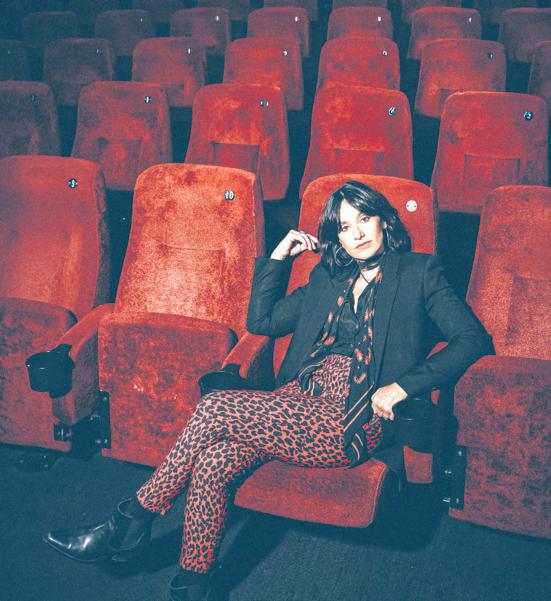
What’s a song you love from an original film soundtrack?
The Midnight Cowboy theme composed by John Barry. Also, the original soundtrack for Betty Blue, composed by Gabriel Yared, the opening track Betty et Zorg was on repeat throughout my awkward, introverted teenage years.
What book would you take to a desert island? I’ve started reading One Hundred Years of Solitude by Gabriel García Márquez. It’s hefty, so I imagine it would take me a while, also, it’s very on brand for this scenario. And maybe Just Kids by Patti Smith, a joy to read.
Who’s the worst?
HA. Unfortunately, there’s far too many. But at this very moment in time, I wanna say the leader of Iran, Ali Khamenei is the worst. What he is doing to his people is beyond comprehension. People are being assassinated on the streets of Iran for protesting their freedom. The lack of rights and free will for women and girls especially, in the last few decades, is a fate beyond cruelty. I really, really hope they find the light.
When did you last cry?
When looking at images of piles of bodies in the streets of Iran.
What are you most scared of? Lack of freedom.
When did you last vomit?
I have a bizarre thing where I cannot vomit. It’s crazy, I can be drunk as a skunk or super nauseous and nothing will come out.
Tell us a secret?
I don’t like Geese.
If you could be reincarnated as an animal, which animal would it be?
Maybe some kind of bird, I wouldn’t wanna be trapped on the ground as an animal, merciless at the hands of humanity. Albatross are very cool, they soar through the skies beautifully and swim in the oceans and live for a long time!
Why should people check out this month’s new Howling Bells record?
Every great debut album is a collection of experiences up until that point, our fifth album, Strange Life, feels like a rebirth of sorts, having been over ten years since the last.
What are you most looking forward to about playing Glasgow in March?
The Glaswegian spirit – funny, tough and loyal! Also, returning to legendary King Tut’s once again!
Howling Bells release Strange Life on 13 Feb via Nude Records; Howling Bells play King Tut’s, Glasgow, 13 Mar instagram.com/howlingbells