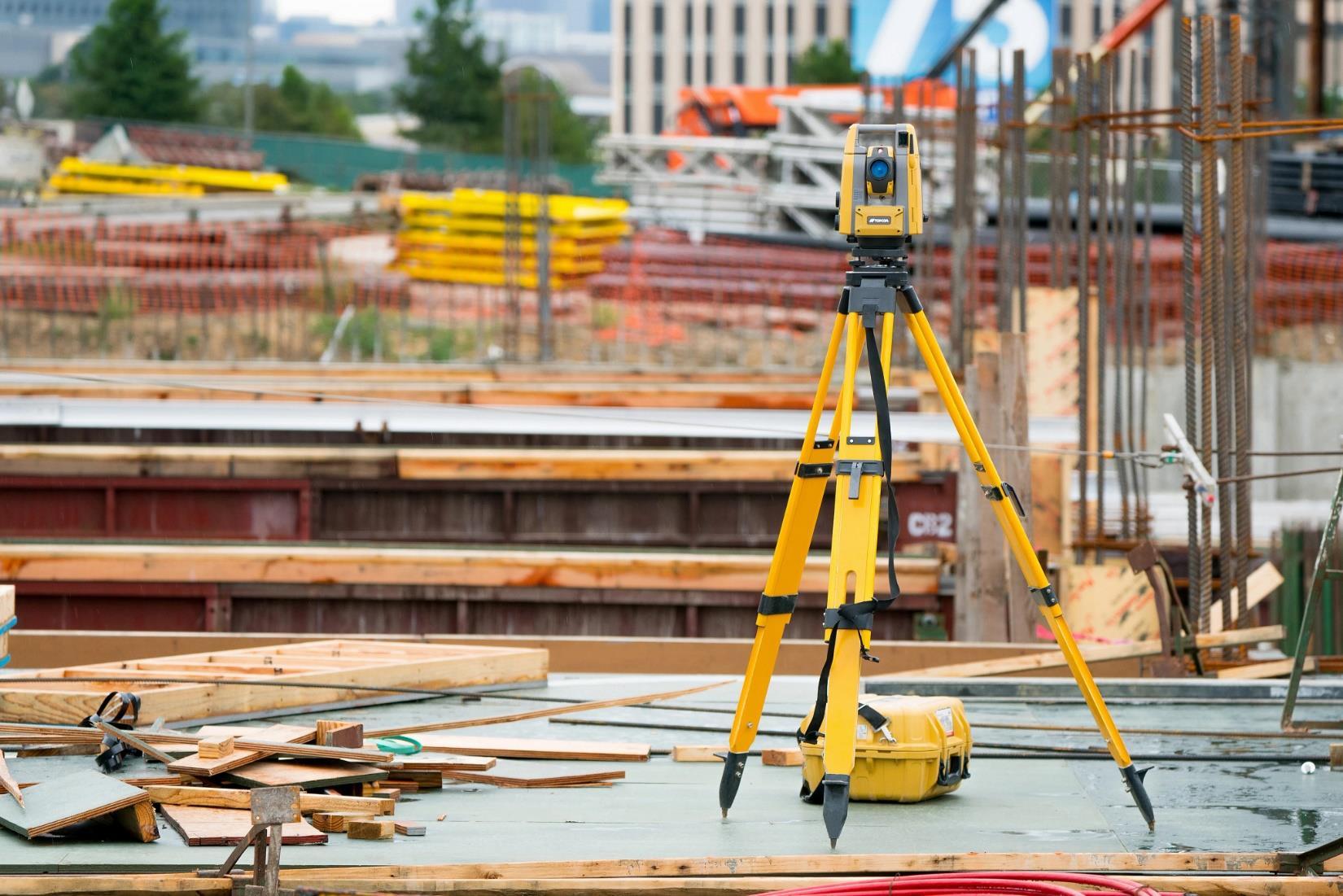
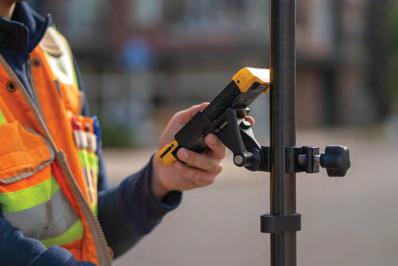
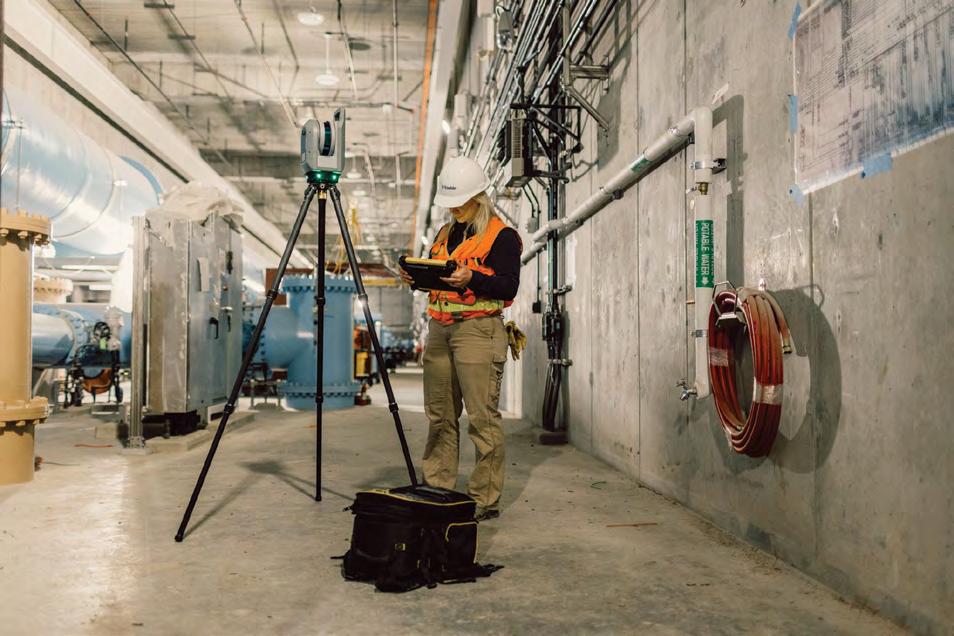
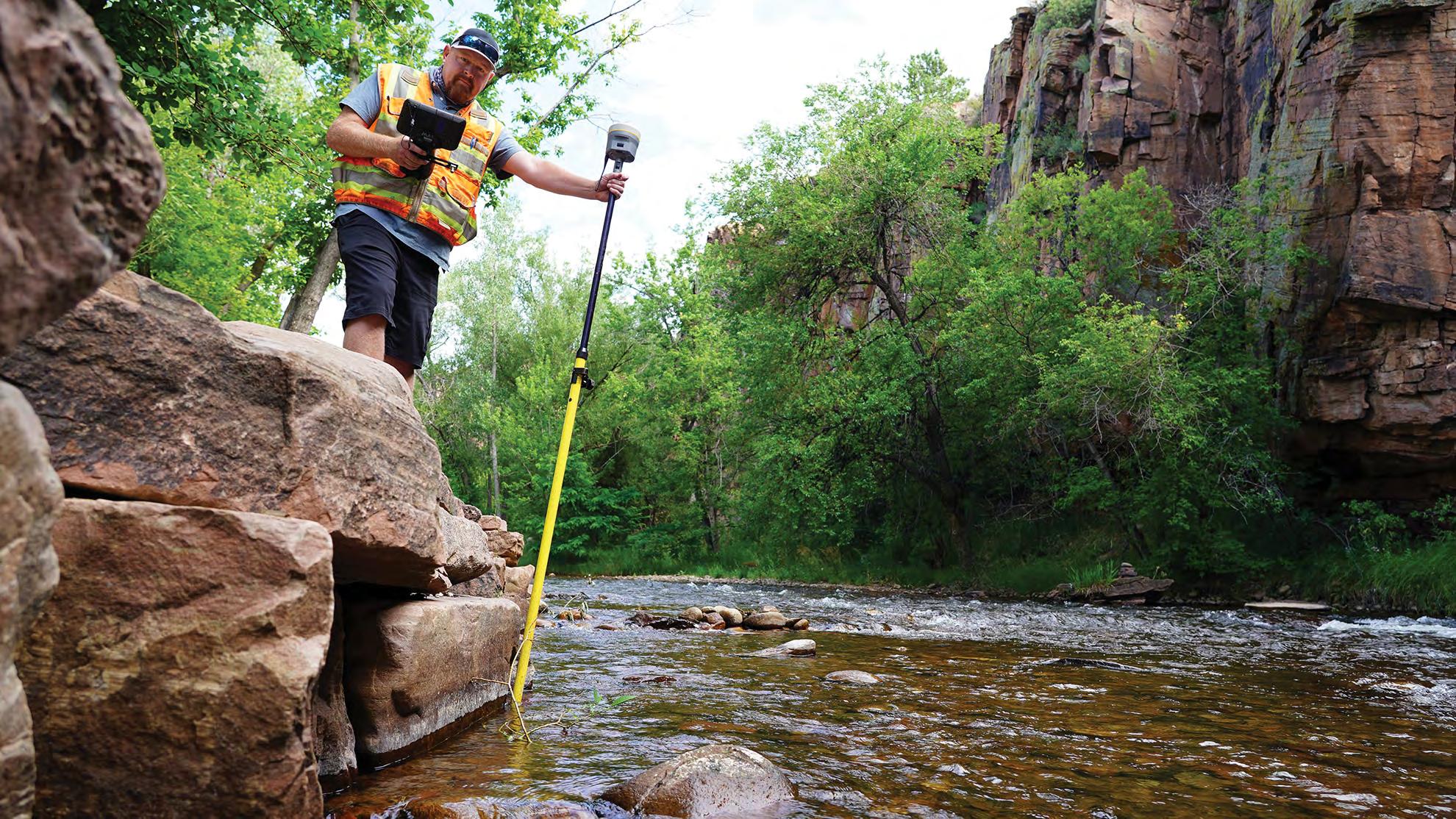
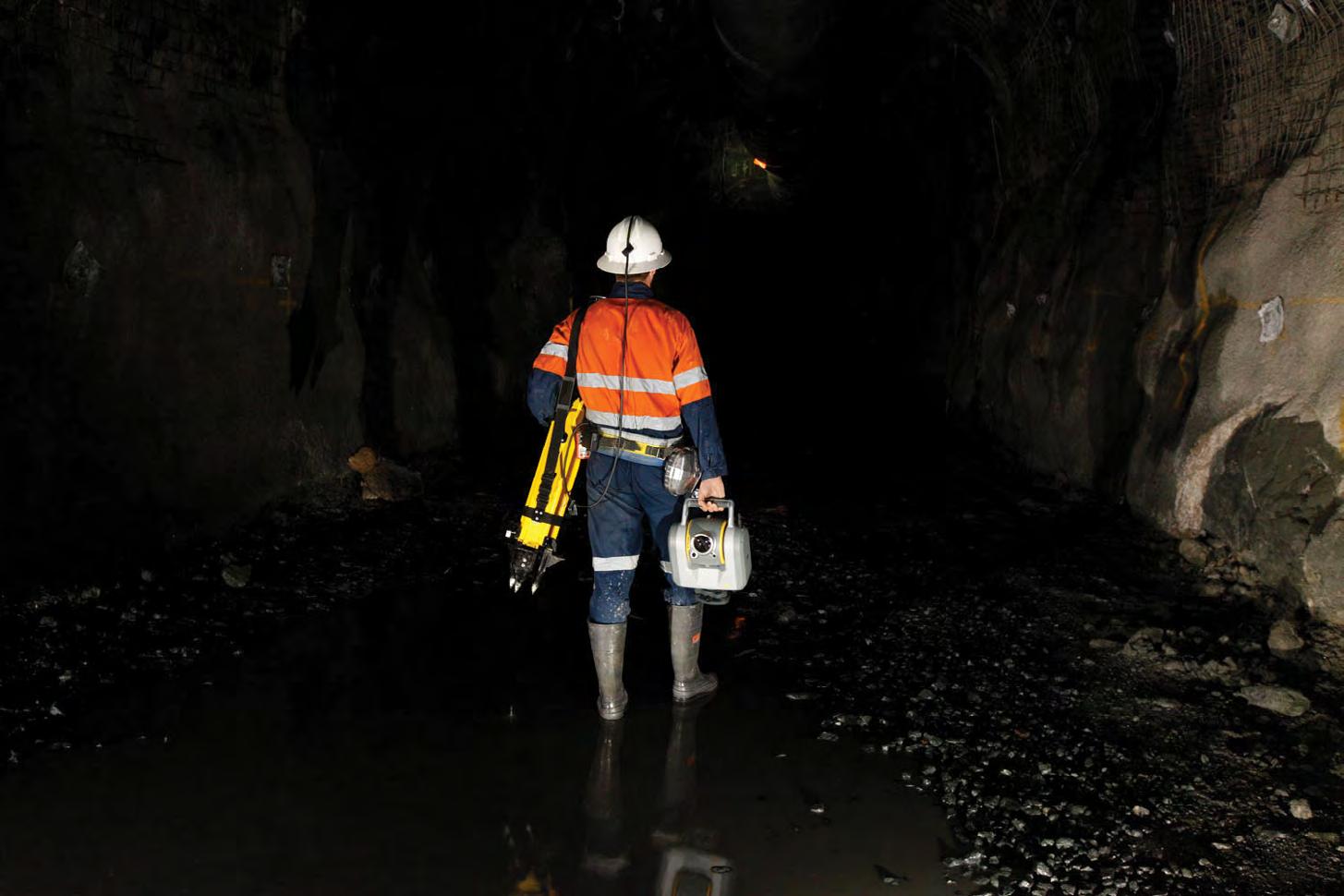
Call us t o g et your complete work flow s olution today ! Efficiency and versatility that will accelerate productivity comes part of a workflow solution that includes the FC-6000 field controller, Magnet software, a HiPer VR receiver and the GT-1200/GT-600 single-operator robotic system. The power of longrange reflectorless measurements comes in your choice of 1”, 2” or 3” GT-1200 models or 2”, 3” or 5” GT -600 models.
The F lorida Surveyor is the official publication of the Florida Surveying and Mapping Society, also known as FSMS. It is published monthly for the purpose of communicating with the professional surveying community and related professions who are members of FSMS. Our award winning publication informs members eleven months out of the year about national, state, and district events and accomplishments, as well as articles relevant to the surveying profession. In addition, continuing educational courses are also available.
PRESIDENT’S Message
January 2026
Members,
I want to wish everyone a happy and healthy new year and hope that everyone enjoyed a great holiday season. This is the time of year to reconnect with friends and family, and to be thankful for all that we have. A new year brings new year’s resolutions. I resolve (again) to lose some weight. We’ll see if I do any better this year than I did last.
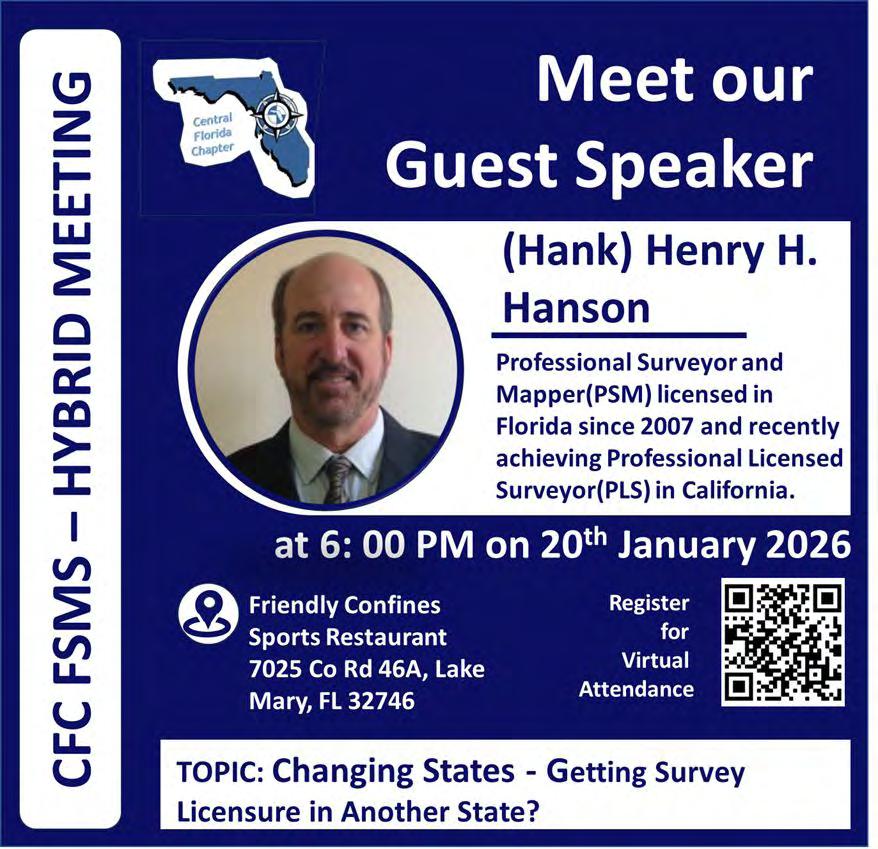
The American Land Title association in conjunction with the National Society of Professional Surveyors has produced a new ALTA/ NSPS format - 2026 minimum standard detail requirements. These standards will go into effect February 23, 2026. Replacing the 2021 version. A webinar prepared by Gary Kent is available on our website. The dates will be January 22nd and February 2nd. Registration for the February 2nd seminar is available on the FSMS website ; It will certainly be an informative course.
Our next Board meeting will be Friday, February 6th, in our Tal lahassee office. The New legislative session is upon us, and it appears that it will be an active one for surveyors and mappers. We are faced with another challenge to our great profession. As expected, and as you may have heard, Florida House bill 879 and Senate bill 874 have been filed in our state legislature . This bill is intended to revise the requirements for applicants from outside the state who meet certain requirements.
Florida House bill 607 and Senate bill 1666 have also been filed in our state legislature. This bill is intended to eliminate continuing education for surveyors in the state as well as eliminating our regulatory board. Our
PRESIDENT’S Message
Legislative Committee is gathering all the pertinent information on this and will be presenting an action plan for us very soon. I encourage everyone to please contribute to the FSMPAC fund as the defense of our profession is not free.
Your thoughts are important, and I would like to hear from you regarding any comments or suggestions you may have. Please email me at president.fsms@ gmail.com .
Respectfully submitted
Robert N. “Bob” Johnson, PSM,CFM
2025-26 Districts and
Directors
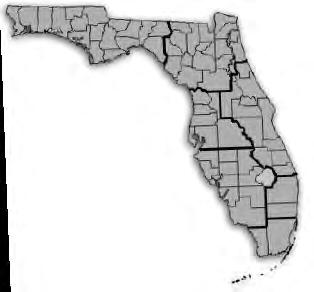
District 1 - Northwest
Bay, Calhoun, Escambia, Franklin, Gadsden, Gulf, Holmes, Jackson, Jefferson, Leon, Liberty, Madison, Okaloosa, Santa Rosa, Taylor, Wakulla, Walton, Washington
Chad Thurner (850) 200-2441 chad.thurner@sam.biz
Angela Bailey (850) 559-5039 bailey.angelakay@gmail. com
District 2 - Northeast
Alachua, Baker, Bradford, Clay, Columbia, Dixie, Duval, Gilchrist, Hamilton, Lafayette, Levy, Marion, Nassau, Putnam, Suwannee, St. Johns, Union
Pablo Ferrari (904) 219-4054 pferrari@drmp.com
Nick Digruttolo (352) 374-2249 ndigrutt@gmail. com
District 3 - East Central
Brevard, Flagler, Indian River, Lake, Okeechobee, Orange, Osceola, Seminole, Martin, St. Lucie, Volusia
Howard Ehmke (772) 206-4650 hehmke@carterassoc.com
Constitution & Resolution Advisory Committee Pablo Ferrari
Annual Meeting Committee Allen Nobles
Legal & Legislative Committee Jack Breed
Surveying & Mapping Council Randy Tompkins
Strategic Planning Committee Brion Yancy
Executive Committee Bob Johnson
Special Committees
Equipment Theft Rick Pryce
Awards Committee Rick Pryce
UF Alumni Recruiting Committee Russell Hyatt
Professional Practice Committee Lou Campanile, Jr.
Workforce Development Committee Lou Campanile, Jr.
Liaisons
CST Program Alex Jenkins
FDACS BPSM Don Elder
Surveyors in Government Richard Allen
Academic Advisory Justin Thomas UF / Earl Soeder FAU
FES Lou Campanile, Jr.
Practice Sections
Geospatial Users Group
Richard Allen
Young Surveyors Network Mary Voor
round the State A
Central Florida Chapter
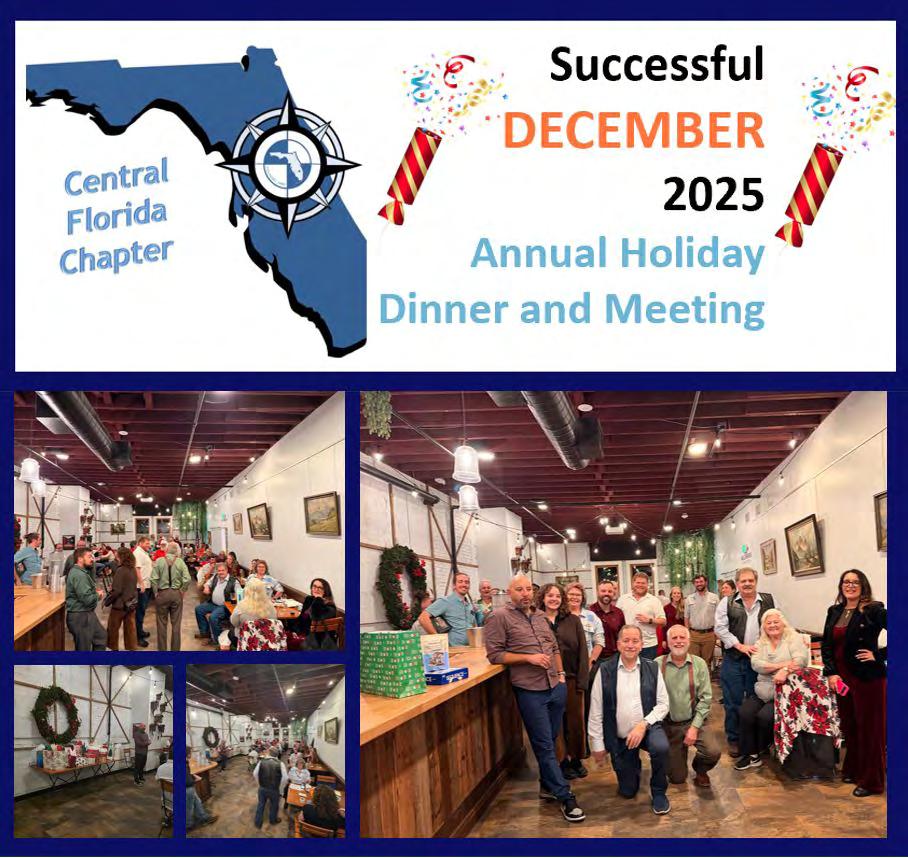
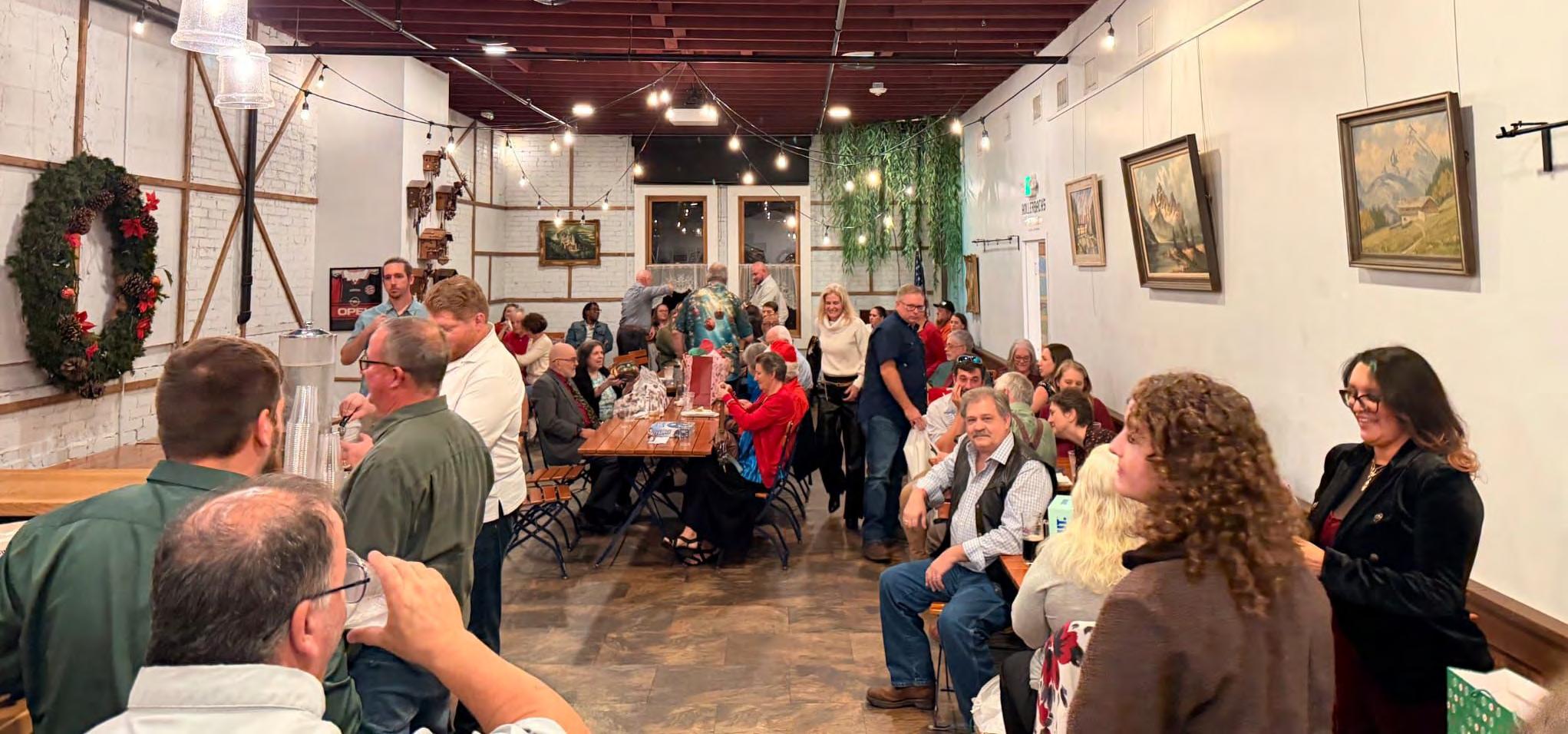
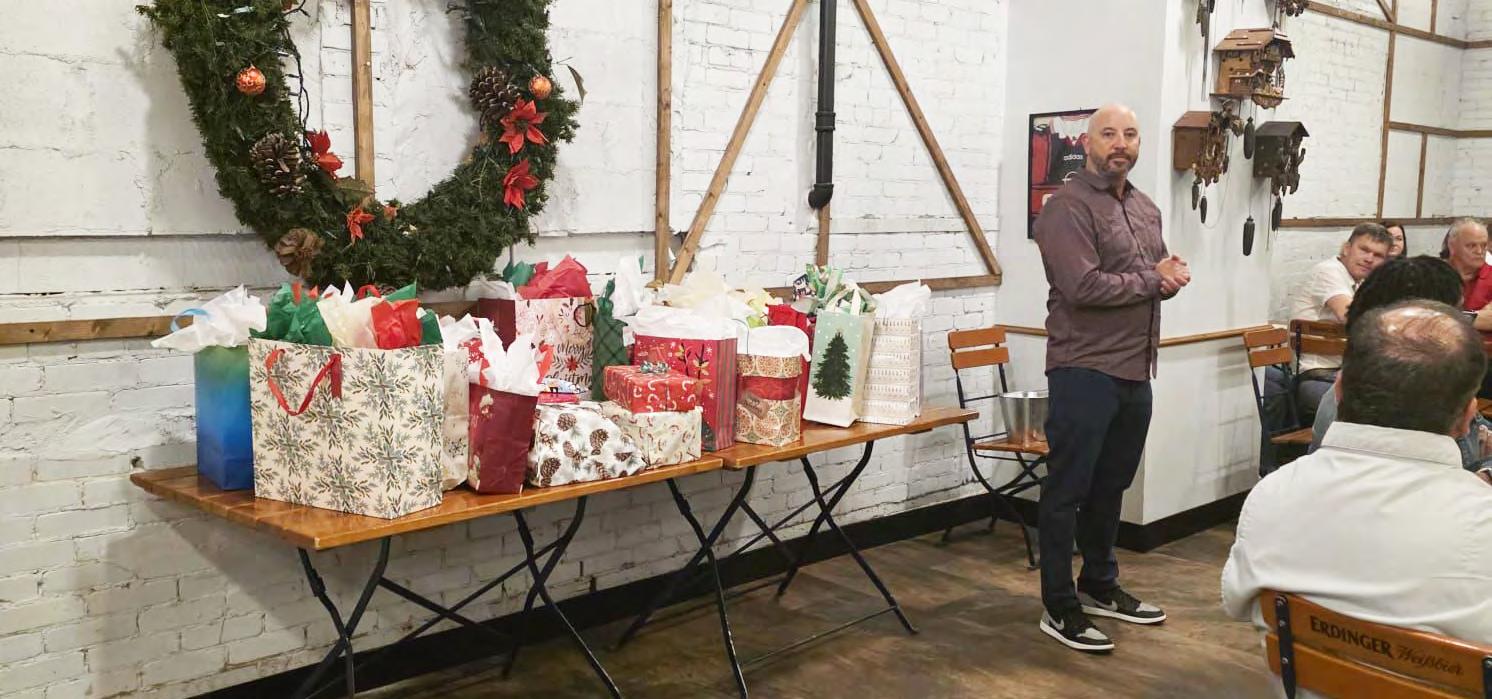
Thank you to everyone who joined us for an incredible Florida Surveying and Mapping Society (FSMS) Central Florida Chapter FSMS Annual Holiday Dinner and Meeting!
We had a fantastic evening at the cozy upstairs of Hollerbach's German Restaurant Biergarten & Dining Room, filled with great conversations, netwo rking, and holiday fun. Your participation made this event truly special, and we appreciate your continued support of the FSMS community.
Looking forward to seeing you all at our upcoming events in 2026!
Organized by Central Florida Chapter FSMS Officers:
Edwin Munoz, PSM - President, Ralph A. Nieto - Vice President, Tim JaskiewiczPresident Elect, Marco Krieger - Secretary, Betty Morris, GISP - Treasurer, Allen (Al) Quickel, PSM - District 3 Director, Bill Rowe - Director, Chris LaBerge, PSM - Director, Christy Graves - Director, John Gray - Associate Director, Dr. Youssef Omar Kaddoura - Associate Director, Colton Locklin - Associate Director, Kenneth Dell SIT - Associate Director, Richard Allen, PSM, CFM - Scholarship/Recruiting/Valencia, Dolly Carwile, PSM - Webmaster.
Northwest Surveying, Inc. 813-889-9236 O On The Mark Surveying, LLC. 321-626-6376
PEC Surveying & Mapping
407-542-4967
Pennoni Associates, Inc.
863-594-2007
Perret and Associates, Inc
904-805-0030
Pickett & Associates, Inc.
863-533-9095
Plan Right Surveying, Inc.
239-276-2861
Platinum Surveying & Mapping, LLC.
863-904-4699
Polaris Associates, Inc.
727-461-6113
Porter Geographical Positioning & Surveying, Inc.
863-853-1496
Southeast Geospatial 877-653-6544
Stoner Inc. 954-585-0997
Suarez Surveying & Mapping, Inc. 305-596-1799
Survey Data Solutions, LLC 352-816-4084
Survey Pros, Inc. 305-767-6802
SurvTech Solutions, Inc. 813-621-4929 T
T2 UES Inc. 407-587-0603
F irm S Directory
Thurman Roddenberry & Associates
850-962-2538
TopoDOT
407-248-0160
TranSystems
727-822-4151
UF/IFAS
352-846-0850
Upham, Inc.
386-672-9515
Wade Surveying, Inc.
352-753-6511
561-687-2220
SOCIAL MEDIA LINKS
LinkedIn = 2,442 Followers
Facebook = 1.1K Followers
X = 384 Followers
Instagram = 587 Followers
YouTube = 75 Subscribers • 28 Videos
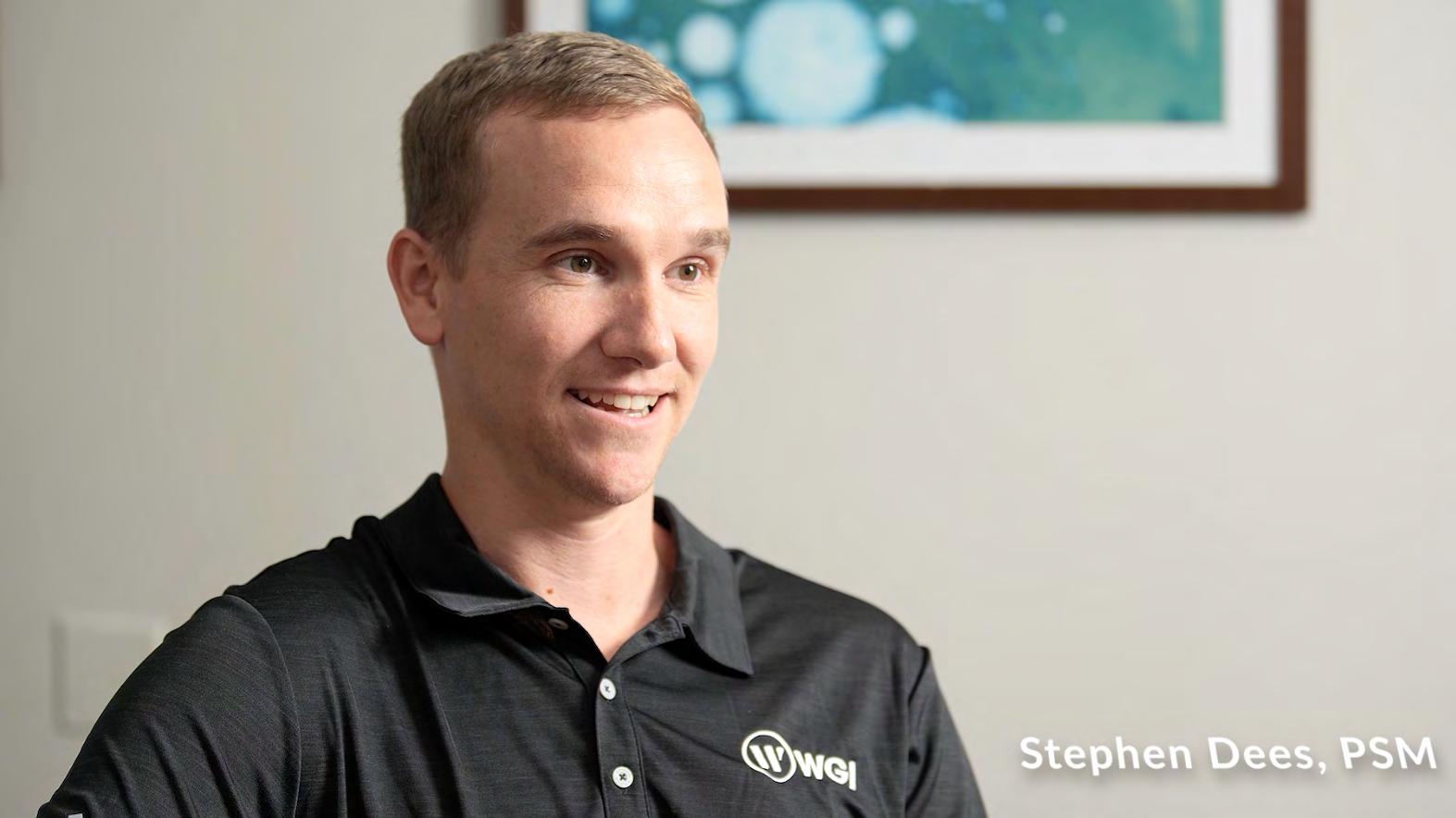
Stephen Dees, PSM with WGI
Gunter’s Chain: A Means of Making Private Property
The library of the Royal Institution of Chartered Surveyors in London sits in a spot with deep historical meaning. From its tall windows, you can look one way toward Whitehall—the street where Tudor and Stuart kings ruled England in the 1500s and 1600s. In the other direction, the windows face Parliament Square and the House of Commons, the center of power for the growing class of wealthy landowners. During those same centuries, these landowners challenged the kings' authority. That dramatic struggle might feel distant now, but in the small, leatherbound books stored in this library, the real reasons behind those conflicts still come alive clearly.
In the earliest books on the topic, like John Fitzherbert’s The Art of Husbandry from 1523, a surveyor still had his original role from the feudal era. He worked as a manager for a wealthy landowner (a nobleman). His main job was to supervise or “oversee” the estate. (The word “surveyor” comes from the French words meaning “over” and “see.”) He would walk across the land, check and record the exact boundaries (called “buttes and bounds”) of each tenant’s plot, and help create the official records. These records listed what rents or duties the tenants owed to the lord.
In land surveying, the old term “to butt upon” something meant to border or meet it directly—an idea similar to the word “mete,” which meant to measure or encounter. This traditional way of mapping land defined a property’s boundaries by describing the exact points where it touched neighboring lands or natural features, like trees or rivers. That’s why the method came to be called “metes and bounds.” As early as 1523, English landowners were taking part in a practice that would quietly change the entire feudal system. Feudalism varied a lot across places and times, but its core idea was simple: all land ultimately belonged to the king (the head of state), who was the only one with full ownership. Dukes and barons—the king’s top tenants—held vast estates from the Crown in exchange for payments or military service. Their own subordinates (vassals) held smaller farms from these lords in return for rent or labor, and this chain continued down to the lowest level: villeins (serfs), who often owned no land at all but paid with goods, work, or rent for the privilege of farming it.
In the old feudal system, farmers (known as tenants) worked long, narrow strips of land called “rigs.” These strips were often scattered across different parts of the village fields, so that everyone got a fair mix of good and poor soil. For hundreds of years, people who used the land had tried to combine these scattered strips into larger, compact fields. They wanted to “enclose” these fields with fences or hedges to keep animals from trampling crops or wandering off, but the old scattered pattern mostly stayed the same. In the early 1500s, however, a period of sharp inflation hit that made prices rise quickly, and money lost value fast. As a result, every landowner and tenant tried to get as much profit as possible from their land. In his writings, the author Fitzherbert repeatedly pointed out to surveyors that enclosed land was worth more than the old open strips and shared pastures. That’s because enclosed fields could be farmed more efficiently and produce more crops. The push for change was clear and urgent, but deep down, the traditional ways of thinking about land still held strong.
In 1531, Sir Thomas Elyot published a book called The Boke Named the Governour , which offered advice on how to educate future rulers and landowners. One key skill Elyot recommended was learning to draw, so that these men could create maps or “figures” of their own estates. This hands-on mapping would give them a clear, visual understanding of exactly what land they owned. Throughout the 1500s, it became common for English landowners to hire surveyors to measure their estates and the nearby countryside, then produce detailed maps of it all. There was deeper meaning in making mapping a standard part of the surveyor’s job: at that time, only kings, princes, and city governments made maps. A map wasn’t just a practical tool, it was a political statement. It didn’t only describe a piece of territory; it boldly claimed ownership over it.
As a result, when 16th-century English landowners commissioned a map of their estate, they were quietly declaring full ownership of the land in a powerful way that, until then, only kings and rulers of entire countries had done. For a long time, England was unique in this practice. Surveying guides were published in the German states, but almost no one there created detailed estate maps until the late 1600s. Sweden made its first national map in the 1500s, but Swedish nobles didn’t start surveying and mapping their own lands until about a century later. In France during the same period, Jesuit priests taught mathematics and all the skills needed for surveying, yet no maps of noble estates were produced until after 1650. Spain had some of the earliest modern maps (as far back as 1508), but it took another 200 years before Spanish landowners regularly measured and mapped their properties.
The only other place where some land measuring and mapping happened early on was the Netherlands—a country with an advanced economy. There, in 1533, the mathematician Gemma Frisius wrote the first guide to mapmaking, called A Method of Delineating Places . Farms near cities were often surveyed and mapped, but even in the Netherlands, the large aristocratic estates stayed under the old feudal system.
If there's one key date when the modern idea of land as private property really took root, it’s 1538. That year, a small book with a very long title starting with “ This boke sheweth the maner of measurynge of all maner of lande …” was published. Its author, Sir Richard Benese, was the first person to explain in English how to accurately calculate the area of a field or an entire estate. He likely drew ideas from the Dutch mathematician Gemma Frisius, but Benese focused on practical English needs. He pointed out that sellers often overstated how big a property was, while buyers tried to downplay its size. To get a fair and honest measurement, he urged surveyors to be careful and systematic. His advice was straightforward: “When you measure any piece of land, walk around its boundaries once or twice first. Look it over carefully and decide if you can measure it as one single piece or if you need to break it into two or more sections.” He explained that irregular, oddly shaped fields were best divided into simpler shapes like squares, rectangles, and triangles because their areas are easy to calculate and add up. Distances were to be measured precisely using a rod or pole exactly 16½ feet long (known as a perch) or a measuring cord. Finally, the surveyor had to write a clear description of the land’s area and draw a “plat”—a simple map showing its exact shape and boundaries.
The fascination with precise land measurement was also something new in this era. Before then, people cared more about how much a piece of land could produce its yield in crops or livestock than its exact size in acres or square feet. When William the Conqueror ordered a massive survey of England in 1086, called the Domesday Book, his officials recorded estates using units like virgates and hides. These weren’t fixed sizes; they changed based on how fertile the soil was. A virgate was roughly the amount of land needed to support one person, and a hide could feed an entire family. So, on rich, productive farmland, these units covered smaller areas, while on poor, hilly ground, they stretched over much larger spaces. Other units, like the acre or carrucate, were just as flexible. As long as land was granted in exchange for services (like military duty or labor), what really mattered was how many people it could feed—and therefore how many workers or soldiers it could provide.
Exact measurement only became crucial starting in 1538, when a huge amount
of land—nearly half a million acres—suddenly went up for sale in exchange for cash. This was the biggest real estate transaction in English history. It happened after King Henry VIII shut down nearly 400 monasteries that had been collecting land for centuries. He claimed he was doing it because the monks and nuns had become corrupt and immoral (stories of drunkenness and scandal were spread to support this), but the real reason was simpler: Henry desperately needed money to build up England’s defenses. When the monasteries were dissolved, all their property including some of the country’s most fertile farmland legally returned to the king, their feudal overlord. Henry then sold these valuable acres to rich merchants and nobles. The money raised helped pay for a stronger navy to protect England’s coast from threats, especially from France.
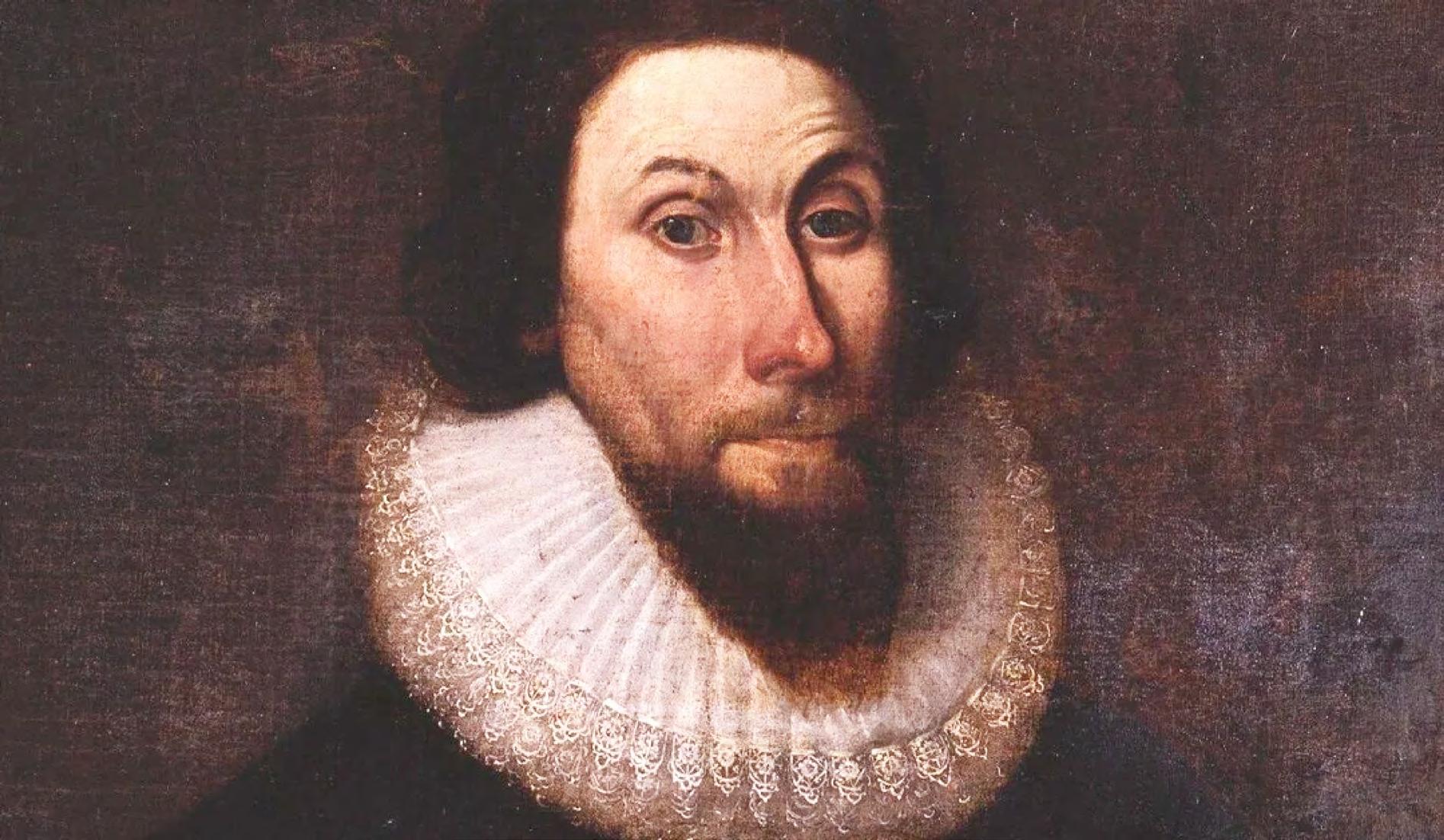
The massive sale of land for cash during the Dissolution of the Monasteries marked a major turning point in English history. Up until that time, even though some changes were already happening (like feudal obligations being replaced with money rents, or lords mortgaging and selling estates), the main value of land was still measured by how many people it could support—peasants, tenants, and laborers who worked it. After the monasteries were sold off in the 1530s–1540s, that mindset began to shift. Land increasingly came to be seen as an investment that could generate cash profit. Many of the buyers were wealthy landowners hungry for more property. Some, like the Duke of Northumberland, had already been enclosing (fencing off) common pastures to create private land for themselves. But the more typical buyers were successful landlords who had grown rich from the booming prices of wool and grain (corn). They used that money to snap up former monastery estates. In Norfolk, for example, Sir Robert Southwell became well-known for turning huge areas of common land into private pastures for his fourteen flocks of sheep—each flock containing about 1,000 animals. Others did the same thing on a smaller scale and mostly flew under the radar. In the next county, Suffolk, the Winthrop family quietly bought and enclosed hundreds of acres of former monastic land plus common land. They probably would have remained obscure local gentry— except that John Winthrop, the grandson, sailed to America in 1630 as the first governor of the Massachusetts Bay Company, helping found one of the key early English settlements in New England.
The new owners of the former monastery lands and the surveyors they hired quickly realized something important: the old medieval system of farming, with its scattered strips of land (called “rigs”) and shared use of common pastures, was inefficient. Once they could consolidate all those scattered pieces into solid, fenced-
off fields under single ownership, the land would become much more valuable and profitable. The previous owners, the abbots and priors of the monasteries, had seen landownership as part of the old feudal system: lords granted land to peasants in exchange for labor, military service, and other obligations. But the new buyers had paid cash for the estates. To them, land was an investment, and the only way to get the best return was to modernize it, starting with enclosures (fencing off land for private use) and raising rents. As these changes spread, thousands of villeins (serfs tied to the land) and farm laborers were pushed off the manors that had once provided them with a living. Resentment boiled over into popular revolts across England, including major uprisings like Kett’s Rebellion in 1549. These disturbances were serious enough that Henry VIII and later monarchs felt pressured to introduce laws in Parliament to limit or stop enclosures. But the growing power of the wealthy landowners meant very few of those bills actually passed. The real driving force behind this massive social and economic shift was something seemingly simple: the survey and plat that carefully measured and recorded the new owner’s property.
Books like the one by surveyor Richard Benese emphasized exact measurement—using reliable tools and standard units. This was a huge change in thinking. Once land was bought with money, its value no longer depended mainly on how many people it could feed and support. Instead, the key question became: How much rent could it generate? To answer that, owners needed accurate knowledge of exactly how big each estate was. Old, inconsistent medieval measurements wouldn’t do. Surveyors stopped being mere servants carrying out traditional tasks;
they became key agents of change, helping shift England from a medieval, peoplecentered system to a modern, money-driven economy. In short, the sale of church lands didn’t just transfer property, it accelerated a revolution in how English society thought about land, ownership, and profit.
The new class of wealthy landowners had one big demand from their surveyors: absolute precision and exact measurements. In the late 1500s, there was a sudden explosion of surveying manuals and guidebooks being published. This boom showed just how urgently these owners needed reliable ways to measure and value their land accurately. It was against this backdrop of growing demand for precision that mathematician Edmund Gunter invented his famous Gunter’s chain—a simple but revolutionary tool that became the standard for land surveying for centuries. Born in 1581 to a Welsh family, Gunter was sent to Oxford University in 1599 to train as a priest in the Church of England. But he quickly realized that mathematics excited him far more than religion. He stayed at Oxford until 1615—supposedly studying divinity—but he only ever preached one sermon in his life. What truly captured his passion was how numbers connected to the real world. He spent most of his time designing and building mathematical instruments. His favorite topics were ratios, proportions, and making calculations easier and more accurate.
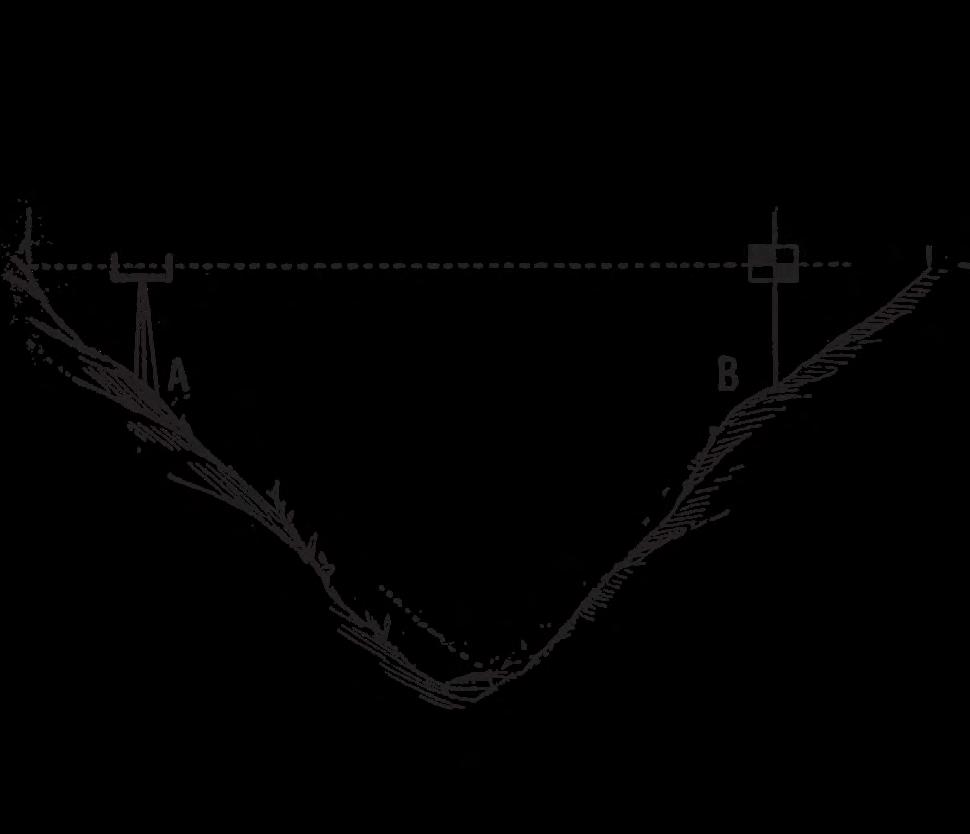
Gunter worked out logarithms (to seven decimal places!) for sine and cosine functions—huge advances that made complex math much faster. But the real-world breakthrough came through trigonometry: the math of triangles. Trigonometry lets you figure out the length of unknown sides of a triangle if you know just one side and two angles. For surveyors, this was game-changing. It meant they could calculate the distance between two distant points (like hilltops or landmarks) without having to physically walk the entire path.
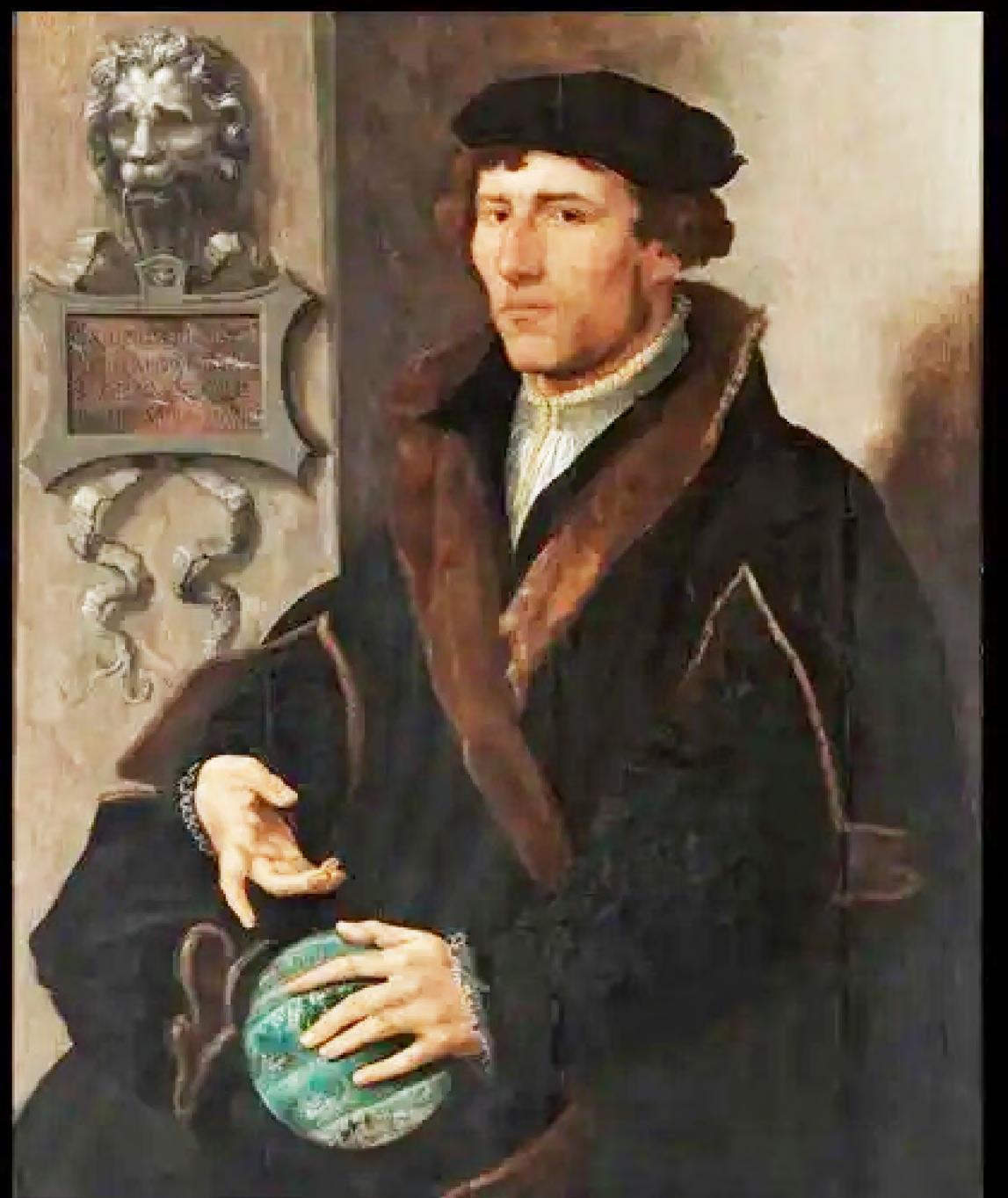
The breakthrough that made this kind of precise, long-distance measurement practical for everyday surveyors came from the Dutch mathematician Gemma Frisius in 1533. He showed land measurers how to use invisible triangles—a technique called triangulation—to figure out distances without walking the whole way. Imagine you want to know the exact distance between a tall tower and a distant church. Frisius taught surveyors to do this in a few smart steps: First, measure a short, known distance on the ground—say, from the tower to a nearby tree (this becomes your baseline). Stand at the tree and use a tool like a cross-staff (a simple sighting device) or a compass to measure the angle between the line to the tower and the line to the church. Then move to the tower and repeat the process: measure the angle between
the tree and the church from that new spot. The third angle (at the church) is easy math—just subtract the sum of the two measured angles from 180 degrees (since the angles in any triangle add up to 180°). With all three angles known and the length of one side (the baseline) measured, trigonometry does the rest. You can calculate the lengths of the other two sides, including the direct distance between the tower and the church without ever stepping foot on most of the ground in between.
The calculations could still be slow and tedious, even when using helpful tools like Gunter’s scale. Most surveyors in the early days found it challenging until logarithm tables became widely available later in the 1600s, which made the math much faster. Despite the effort, triangulation quickly became the goto method for measuring long distances accurately. It revolutionized land surveying and also laid the foundation for geodesy, the more advanced science of measuring the size and shape of the Earth itself.
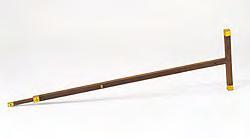
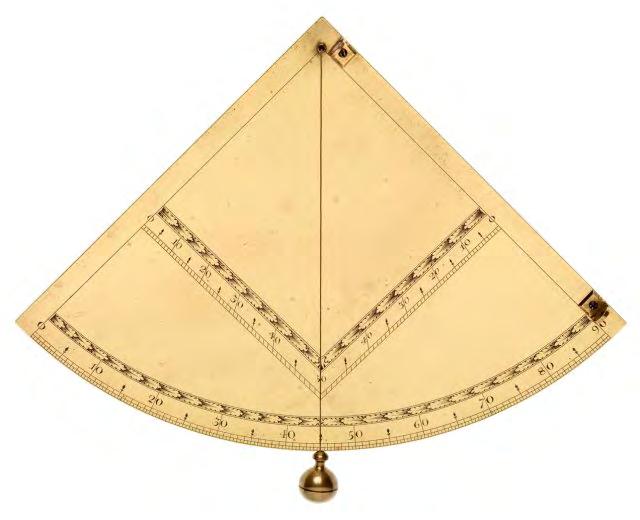
In Edmund Gunter's time (early 1600s), only the most basic scientific tools existed, so mathematicians, astronomers, and surveyors often had to invent or improve their own instruments. Gunter was especially good at adapting nautical instruments—tools originally designed for sailors—to solve problems in geometry and land measurement. He constantly tweaked devices like the quadrant (used to measure vertical angles, such as the height of the sun above the horizon) and the cross-staff (also called Jacob’s staff, great for measuring horizontal angles between distant objects like towers, trees, or churches). Gunter had strong support from powerful people, including the Earl of Bridgewater. Bridwater’s family had inherited massive estates along the Welsh border and gained valuable land north of London, so it’s very likely that Gunter first developed his famous surveyor’s chain (around 1607) to measure these huge properties accurately.
Thanks to his aristocratic connections, Gunter was appointed rector (head
priest) of the wealthy St. George’s parish in Southwark, London, and in 1619 became professor of astronomy at Gresham College in London, one of the most prestigious early scientific institutions. Unfortunately, both his church congregation and his students got very little attention from him. He was far more interested in designing and building his mathematical instruments. These tools were sold with instruction manuals that were famously hard to understand, much like the confusing user guides that come with high-tech gadgets today. In addition, almost no one could read them easily because they were written in Latin, the scholarly language of the time. By 1623, so many complaints piled up that he finally gave in and produced an English translation to make his work more accessible.
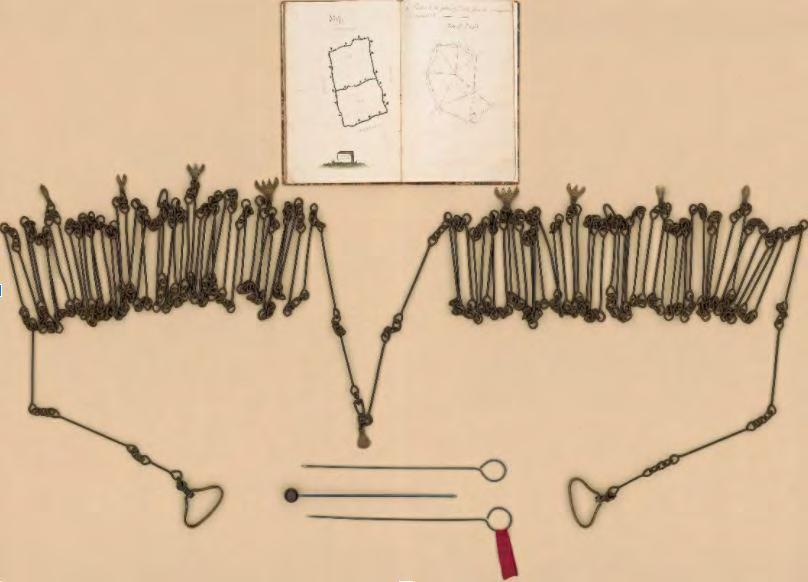
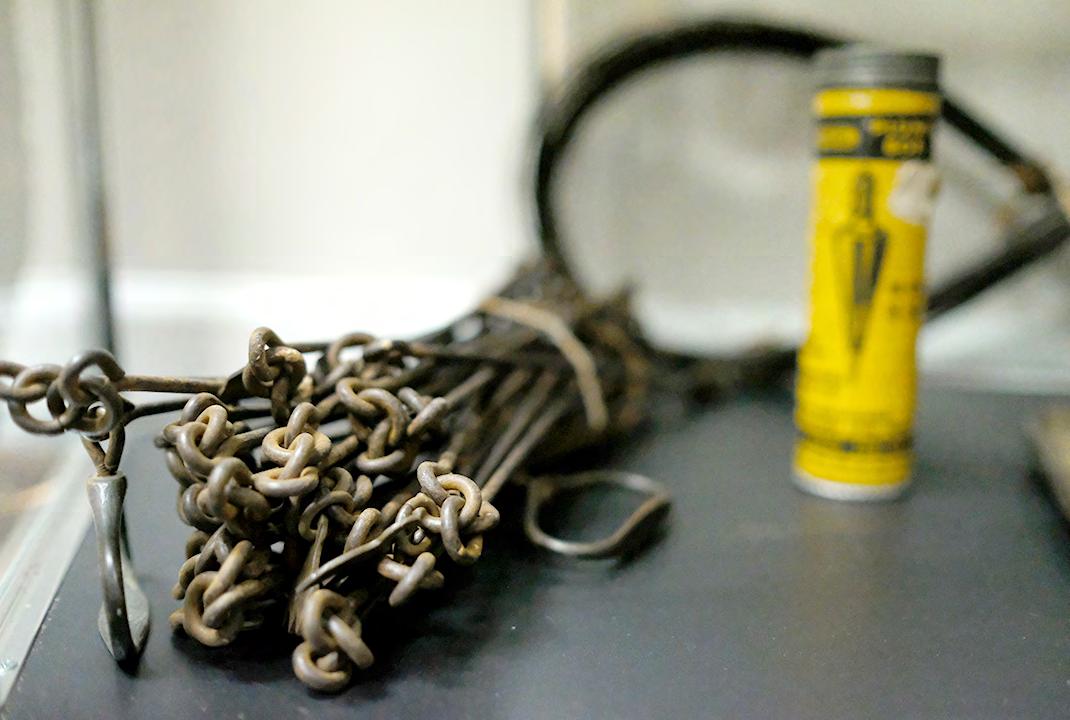
In 1624, Edmund Gunter published his complete collection of writings under the lengthy title: The Description and Use of the Sector, the Cross-Staffe, and Other Instruments for Such as Are Studious of Mathematical Practise . By this point, he probably realized the last part of that title was a bit misleading. The book had to be written in English (not the usual scholarly Latin) because his inventions weren’t mainly for university math students, they were being used by practical people: surveyors measuring land and sailors navigating at sea. Even though the book was aimed at everyday practitioners, it packed in cutting-edge information on logarithms, trigonometry, and geometry—making advanced math more accessible. The book also introduced Gunter’s most famous invention: the surveyor’s chain. He described it like this: “For plotting of ground, I hold it fit to use a chaine of foure perches in length, divided into an hundred links.” Why a chain instead of a rigid rod? It was practical and flexible enough to loop over a shoulder for easy carrying, and it was made of metal so it didn’t stretch or shrink like ropes or cords always did. Other chains existed, but Gunter’s became the standard because of his obsession with ratios and numerical relationships. He designed it to incorporate the most advanced
math of the era—almost like a primitive handheld calculator. The chain’s length: four perches, or 22 yards (66 feet) seems odd today, but it fit perfectly into England’s traditional system of land measurement. A perch (also called a rod or pole) was an old unit that originally varied depending on soil quality (longer for poor land, shorter for fertile). By the 1500s, it had been standardized at 16½ feet. This strange length came from medieval ideas about labor: a perch was linked to the area one person could work in a day (about 33 feet by 33 feet, or 4 square perches = one “daywork”). There were 40 dayworks in an acre (the area a team of oxen could plow in a day), and 640 acres in a square mile. Notice how everything was built around multiples of 4? That made it much easier to calculate the area of rectangular or four-sided fields, exactly what surveyors needed in a world shifting toward precise, money-based land ownership.
Edmund Gunter designed his famous surveyor’s chain with incredible cleverness. He divided the entire 66-foot chain into exactly 100 links, and marked every group of 10 links with special brass rings (or tags) for easy counting. At first glance, the measurements seem strange: each link is just under 8 inches long, 10 links add up to a bit less than 6 feet 8 inches, and the whole chain stretches to 66
SURVEYOR ULTRA
Versatile and lightweight. Penetrates dense canopy and captures accurate ground models for forestry, mining, and infrastructure.
VOYAGER
Precision redefined: ultra-dense, long-range LiDAR delivering unmatched accuracy from UAV or helicopter.
NAVIGATOR
Shallow-water bathymetric LiDAR for rivers, wetlands, and coastal mapping.
PRECISION MAPPING. ANY INDUSTRY. ANY MISSION.
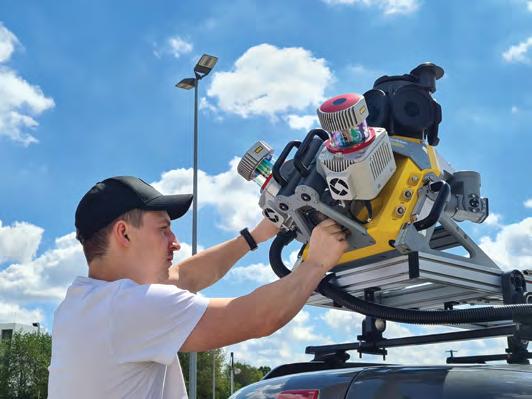
Frontier Precision Unmanned + YellowScan LiDAR
From shallow-water bathymetry to large-area forestry, mining, and infrastructure, Frontier Precision Unmanned delivers the unmatched accuracy of YellowScan LiDAR — integrated on drones or helicopters for any application.
As America’s largest and most trusted YellowScan dealer, Frontier combines the industry’s top LiDAR sensors with decades of geospatial expertise and full-service support. Whether you’re surveying corridors, monitoring coastlines, modeling terrain, or inspecting utilities, Frontier Precision Unmanned provides the tools, training, and experience to ensure your LiDAR investment delivers real results.
With Frontier’s broad lineup of drones, sensors, and software, you’ll find the right system — at the right scale — for your industry.
Partner with Frontier Precision Unmanned — your trusted U.S. YellowScan dealer.
feet. Why those odd numbers? The genius is that Gunter brilliantly combined two completely different measurement systems that didn’t normally work together: The old traditional English land units, built around the number 4 (like perches, acres, and multiples of 4 for easy halving/quartering), and the brand-new decimal system (based on 10), which was just starting to catch on in Europe.
Decimals make arithmetic super simple because our whole number system is based on 10: you just shift the decimal point to multiply or divide by 10, 100, etc. Gunter used decimals in his logarithm tables to speed up calculations. But for real-world fieldwork like surveying, it’s often quicker to halve, quarter, double, or redouble distances—something you can do by eye almost instantly and check easily. The old 4-based system was perfect for that. Gunter’s chain let surveyors use both methods whenever it was convenient. The best part? An acre in traditional units equals 4,840 square yards, but in Gunter’s system, it’s exactly 10 square chains. So, surveyors could measure everything in decimal chains and links, then quickly convert to acres by dividing the total by 10. This huge time-saver, plus the chain’s accuracy and ease of use, is why it became so popular even among surveyors who were still working with the old 4-based measurements. Even someone who wasn’t great at math could now produce results close to the precise standards.
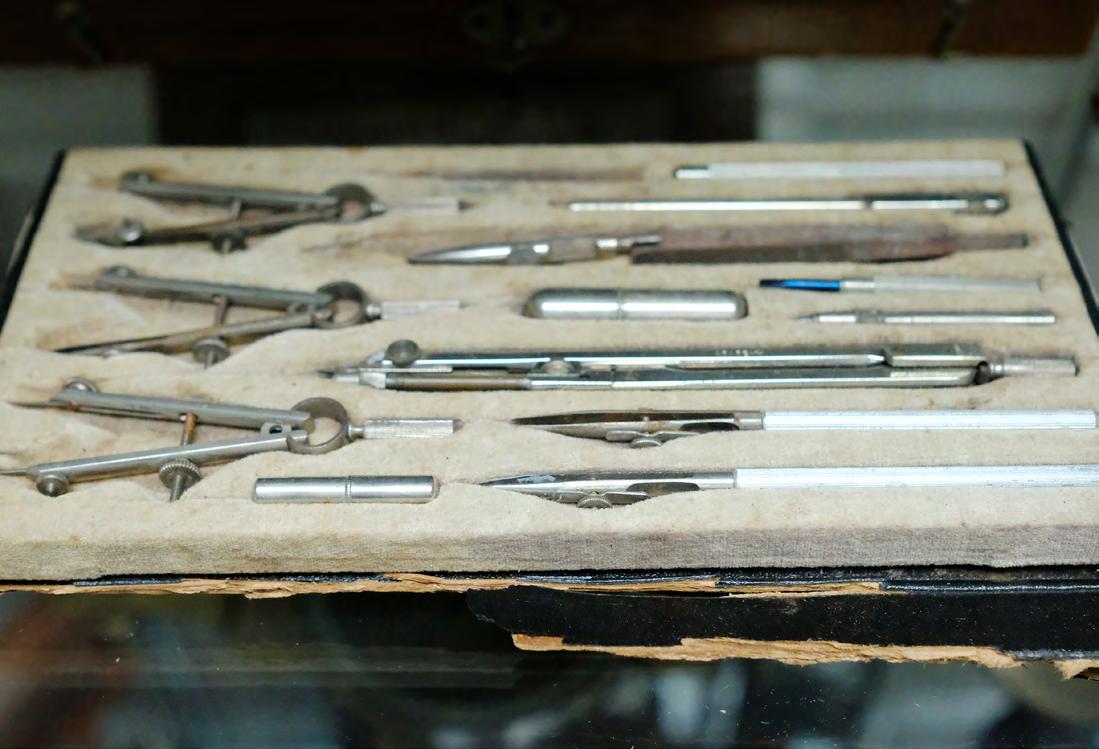
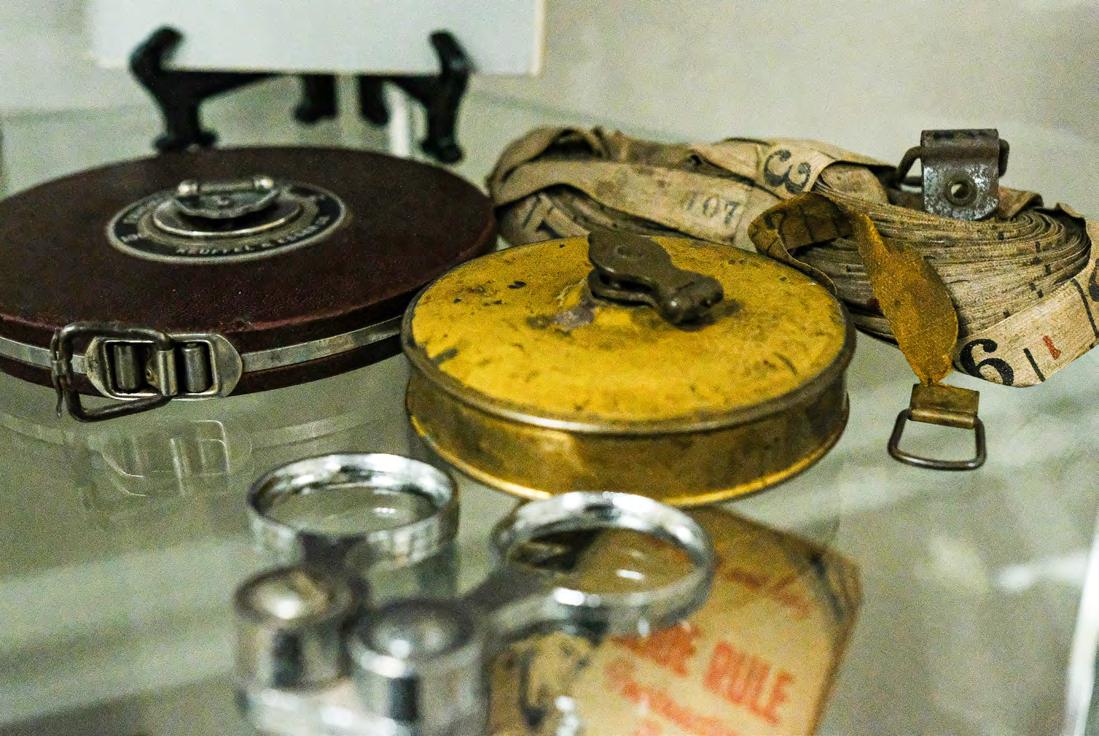
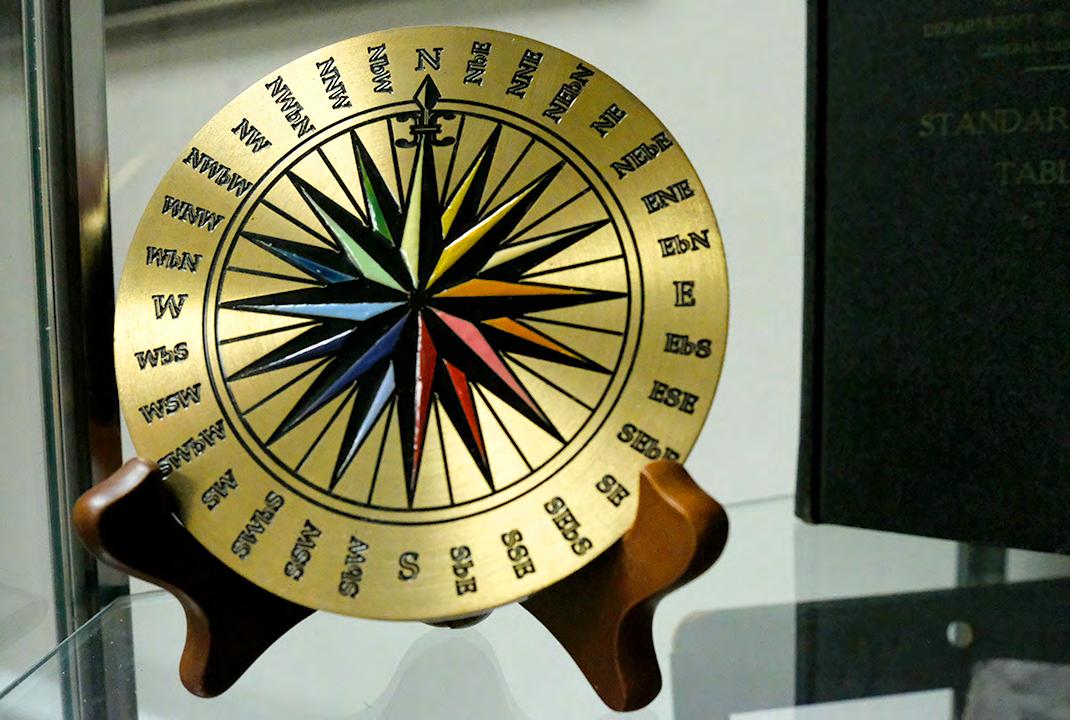
The demand for accurate land surveying exploded in the 17th century as more and more surveyors were needed to map the newly enclosed estates, former monastery lands, and expanding properties of wealthy owners. It’s hard to overstate how much these surveyors relied on the right tools and math to get the job done right. When boundaries followed winding rivers, jagged coastlines, or included hills, valleys, and other irregular features, things got much more complicated. Surveyors had to use advanced calculations and better instruments to achieve the precision that landowners now expected. The basic toolkit in the field was actually pretty simple but effective: A compass to keep track of direction (which way the boundary line was running). In the 1600s, surveyors added a telescope to the compass so they could spot distant markers more clearly. This upgraded tool became known as a circumferentor. And of course, Gunter’s chain to measure the actual distance along each line. At the end of a long day trudging across fields, the surveyor had to turn all those real-world measurements into an accurate plat. This was done back at a desk or table using tools like dividers (for transferring measurements) and a calibrated rule (a precise straightedge marked with scales).
The royal estates in England—once vast lands that generated enough income
to cover much of the king’s government expenses—had been poorly managed and gradually sold off or given away over the years. By the early 17th century, these lands produced so little money that the monarch could no longer run the kingdom without asking Parliament to approve taxes. Slowly but surely, real power was shifting away from the cash-strapped Crown to the land-rich gentry—the wealthy class of landowners who had been buying up estates. A few years later, when England began planning to establish colonies in the newly discovered lands of America, it was these same gentry and wealthy merchants—not the king—who had the money to invest. They were the ones who could precisely measure their properties, calculate their value, and afford to risk capital on ventures like the Virginia Company.
The real hidden power behind this shift lay in something as simple as Gunter’s chain. It provided a reliable way to create private property that could be exactly measured and valued. In the old days, land was often described in terms of acres that could “expand” or “shrink” depending on local customs, soil quality, or rough estimates, while the price stayed roughly the same. That made it impossible to have a true market in land. But once surveyors could measure the earth using a fixed, unchanging unit like Gunter’s chain (with its standard 66-foot length and decimal links), the size of a piece of land became consistent and reliable.
With accurate, standardized measurements, the price of land could finally be set by supply and demand, just like any other commodity. This wasn’t what Edmund Gunter set out to do (he was focused on better math and tools), but it was a direct consequence of the precision he built into his chain. In summary, Gunter’s invention helped transform land from a traditional, somewhat vague resource tied to feudal customs into a measurable, marketable asset. This change strengthened the power of private owners and investors, weakened the monarchy’s control, and helped pave the way for England’s colonial expansion in America.
S E M I N A R S E M I N A R
A L T A / N S P S L a n d T i t l e S u r v e y s –
N e w R e q u i r e m e n t s f o r 2 0 2 6 ( 2 C E C s )
“ L e a r n w h a t P r o f e s s i o n a l S u r v e y o r s n e e d t o k n o w a b o u t t h e
n e w r e q u i r e m e n t s g o i n g i n t o e f f e c t F e b r u a r y 2 3 , 2 0 2 6 . ”
G u e s t s p e a k e r :
G a r y K e n t , P S
Monday February 2, 2026 10 am - 12 pm EST via Zoom Registration: $80 for FSMS Members $100 for Non-Members
Course #11233
Provider #CE11 Time:
G a r y K e n t , P S i s a P r o f e s s i o n a l S u r v e y o r w i t h S c h n e i d e r G e o m a t i c s i n I n d i a n a p o l i s . A f t e r
3 7 y e a r s , h e t r a n s i t i o n e d t o p a r t - t i m e i n 2 0 2 0 a n d f o r m e d M e r i d i a n L a n d C o n s u l t i n g , L L C
t h r o u g h w h i c h h e p r o v i d e s t r a i n i n g , c o n s u l t i n g a n d e x p e r t w i t n e s s s e r v i c e s . G a r y w a s
C h a i r o f t h e J o i n t A L T A / N S P S W o r k g r o u p r e s p o n s i b l e f o r t h e A L T A / N S P S S t a n d a r d s f r o m 1 9 9 5 t o 2 0 2 1 a n d c o n t i n u e s t o b e a c t i v e l y i n v o l v e d w i t h t h e s t a n d a r d s . H e h a s
p r e s e n t e d p r o g r a m s o n b o u n d a r i e s , s t a n d a r d s , r i s k m a n a g e m e n t , e a s e m e n t s , l e a d e r s h i p ,
s a f e t y a n d o t h e r t o p i c s m u l t i p l e t i m e s i n a l l 5 0 s t a t e s . G a r y s e r v e d o n t h e I n d i a n a S t
Seminars at Sea 2026 Seminars at Sea 2026
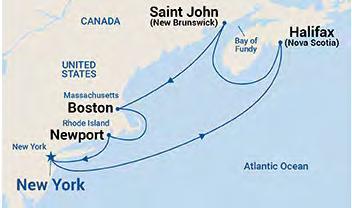
The Cruise
• Princess Cruise Line - Majestic Princess
• 7 Nights
• Leaving out of New York Harbor 10/3/26
• Newport, Rhode Island
• Boston, Massachusetts
• A morning of “Learning” at Sea
• Saint John (for the Bay of Fundy), Canada
• Halifax (Nova Scotia), Canada
• A morning of “Learning” at Sea
• Return to New York Harbor 10/10/26
The Learning
• Two - 6 hour live morning classes while onboard during two days at sea from 7 am to Noon.
• History of Swamp and Overflowed Lands and Island Surveys in Florida (6 CECs) Course# 11097
• The Great Halifax Explosion of 1917: The Roles of the Surveyors & Planners (6 CECs) Course# 11096
• 12 hours CE Credit via your choice of Correspondence Courses.
• Registering for the Learning will be at an additional cost of $500 per seminar attendee above the cost of the Cruise. Click Here to Register for The Learning Provider No. CE11.
The Instructor
Dr. Joe Knetsch will be our live onboard instructor for the 2026 Seminars at Sea. Dr. Knetsch received his Ph. D. in history from Florida State University (1990), an MA in history from Florida Atlantic University (1974) and a B.S. from Western Michigan University with a major in History and Economics. He was the historian for the Florida Department of Environmental Protection (formerly Department of Natural Resources), Division of State Lands from 1987 to August of 2014.
The Details
• Book early to secure your cabin - FSMS currently has Deluxe Mini-Suites and Deluxe Balconies on hold until May 2026 at the below rates. Click Here to Check out the Cabins and their Availability
• Category MB - Mini-Suite $2066 per person based on double occupancy.
• Category DB - Balcony $1846 per person based on double occupancy.
• Please note at the time of booking with Princess any promotions which could include reduced fares or deposits will be applied to your booking. If there is another category of cabin you would like to book, our Travel Advisor Gail Oliver will work with you on finding the best cabin for the best rate to suit your needs. It is important to book with Gail to be considered a part of the FSMS group to receive the group benefits. Contact Gail Oliver at Tesoro Travel via email at gail@tesorotravel.com or phone at 904-687-5655.
The Sponsorship
$3000
• Verbal Recognition during Event
• T-shirts with your company logo
• “Thank You” on FSMS website and social media posts
• Listed in all Seminars at Sea Communication
• Featured Full-page ad in The Florida Surveyor Magazine
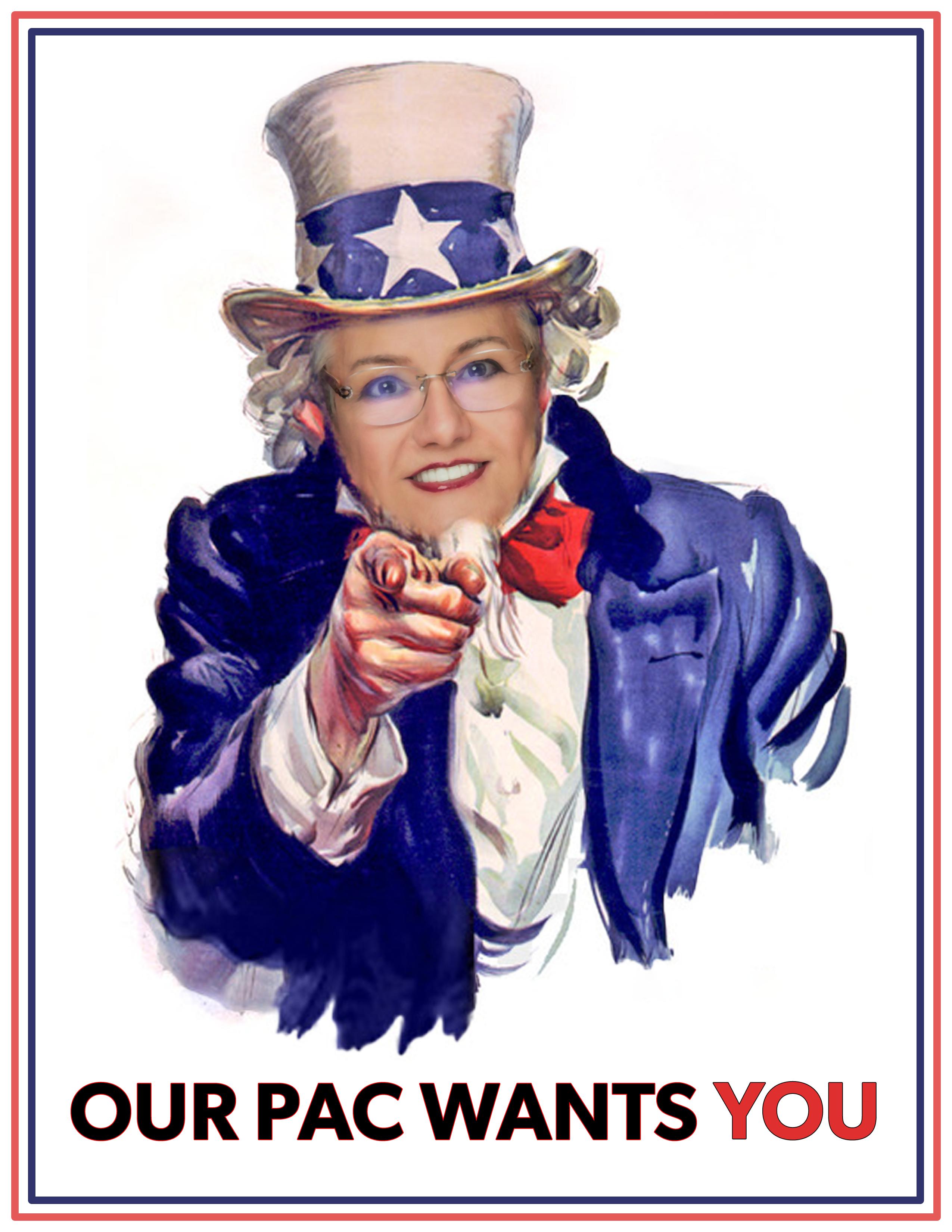
SUPPORT FSMPAC TODAY!
Your contribution can make a monumental difference in ensuring that our profession thrives and our voices are heard where it matters most.
Join FSMPAC and become a driving force for the future of Surveying & Mapping in Florida.
FSMPAC, the Florida Surveying & Mapping Political Action Committee, is your ticket to shaping the future of our profession. Our mission thrives on the generosity of dedicated Surveyors and Mappers who want to champion and safeguard our profession.
Your contributions go toward researching, identifying,and supporting candidates who champion our concerns.
Le arn More & Donate Here
and
Forts, Ports, Canals, Wars
An Uncommon History of Tallahassee & Surrounding Areas by
Dr. Joe Knetsch
(State Library and Archives of Florida)
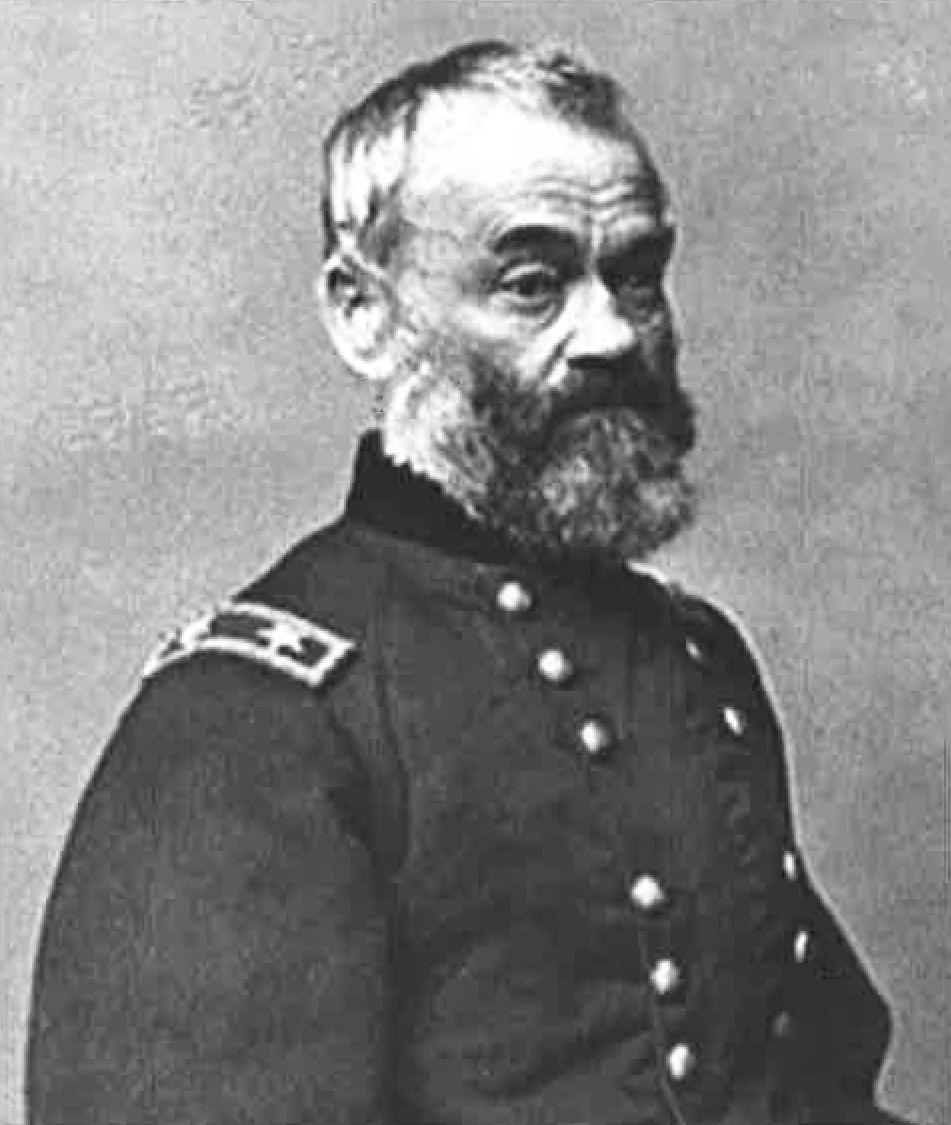
Samuel P. Heintzelman
CHAPTER 7
Tallahassee in the 2nd Seminole War as Seen Through the Eyes of Captain Samuel P. Heintzelman
In the eyes of history, as often recorded in the United States, Samuel P. Heintzelman is known only as a Major General of Volunteers during the War Between the States. His service to the country at Bull Run (where he was wounded), the defenses of Washington, the battles of the Peninsula Campaign, the Battle of Fair Oaks, Malvern Hill, and the Second Manassas are all well known and documented. However, like most of the over three hundred generals who served in that war (on both sides), he also had a turn of service in the wars against the Seminoles in the swamps of Florida. The Manheim, Pennsylvania, native, born in 1805, graduated from West Point in time to serve as a ranking officer in the Second Seminole War. Most of his time was spent on Quartermaster duty in Tallahassee and St. Marks/ Port Leon. His observations about this area are hitherto unreported in the historical writings of that war and add a sharp contrast to the currently accepted view of some of the era’s key events.
The outbreak of the Second Seminole War came with the slaughter of the command of Major Francis L. Dade near the modern city of Bushnell, Florida. On the same day, Indian Agent General Wiley Thompson and Lieutenant Constantine Smith were assassinated about six hundred yards from the gate of Fort King, near modern Ocala. At that time, Lieutenant Sam Heintzelman was serving in St. Augustine and had a first hand view of the results of the Battle of Dunlawton, fought by Florida Militia under the Command of Major Benjamin A. Putnam. The results favored the Seminoles and their allies and left the entire eastern coast of Florida open to depredations. He was on hand to hear from participants about the inconclusive Battle of the Withlacoochee and the frustrations of the army campaigning under General Winfield Scott. In early 1836, the young Lieutenant was shipped off to Columbus, Georgia, to act as base Quartermaster for the Creek campaign under General Thomas Jesup.
Forts, Ports, Canals, and Wars
Heintzelman left Columbus on November 13, 1838, and arrived in Tallahassee on the 21st of the same month. In hand were letters of introduction to Colonel Austin Allston and Colonel Sam Reid, the former’s son-in-law. Upon arrival he took a room in Brown’s Hotel that he described as “rather indifferent.” He quickly made a connection with Captain John Rogers Vinton, then temporarily stationed in Tallahassee before heading north. On the very first night they took a ride around the town. “We rook a ride on horseback towards evening by the Racetrack & graveyard. We passed through the principal part of the town. It does not make much show.” The impressionable Lieutenant then described the large amount of Spanish moss hanging from the trees which he noted “indicates an unhealthy climate. If other evidence were wanted, the number of new made graves would be sufficient.” He also had complaints about his lodgings, that he claimed had bad coffee with no milk. The beds were uncomfortable and, “The rooms are small & poor attendance from the servants — prices enormous.” It was not an auspicious beginning for a general in the making.
On the 22nd of November, Heintzelman took the railroad to St. Marks, the major supply depot for the Army in Middle Florida. His description of this trip bears repeating: “The distance to St. Marks is 22 miles & a wretched rail road. We had a horse to pull us along. We were nearly three hours in getting there, including the detention in getting past some farther cars. The road is so much out of repair they cannot run the Locomotive.” St. Marks did not fair better in his estimation. “St. Marks is a miserable, small town, coming up to my idea of a mean fishing town. We rambled all over Old Fort St. Marks. It is an irregular work, apparently two sections connected by a curtain & all falling to ruin.” The first impression of the old village probably lay behind his ultimate moving of the depot to the new town of Port Leon in 1840.
Tallahassee was not without its redeeming values and interesting people. Captain Vinton was not the only military man in town and some were old acquaintances from previous duties, like Captain John Graham, twice wounded at the Battle of the Wichlacoochee, and now residing in Tallahassee with his bride, the former Mrs. Black, the sister-in-law of Lieutenant Francis L. Dancy of St. Augustine. Both Graham and Dancy were the sons-in-law of Judge (later governor) Robert Raymond Reid. One of the first women he had the pleasure of meeting was Mrs. Thomas Eppes, whom he considered and called a lady.
He was soon calling on Colonel Richard Green, who was living in Governor Call’s house while he was on campaign. Not long after he widened his circle of acquaintances to include Governor Richard K. Call and his aide, David Walker. Another way to make acquaintances was to take your meals at the loca1 restaurant, “LeBeaus,” where nearly everybody showed up at one time or another. As his circle widened so did his experiences and prejudices.
Another means of meeting the local population was to attend the churches of the town. On November 25th he attended his first meeting at the Presbyterian Church. There he heard an indifferent sermon delivered to a small congregation. The building was small and neat inside and relatively plain on the outside. His impressions of the Episcopal church were somewhat better. “Went to the Episcopal church in the morning with Col. Green. Heard the new minister, Mr. Lee, preach. The former Mr. Wirt was lost in the Pulaski. This is a good preacher.” He noted with contentment, “The church was not very full & no singers. They have a good organ & gave us music on that. The church is very neat on the exterior though not so good inside.” The natural born critic was never totally pleased with anything he found in the territorial capital.
His circle of acquaintances soon grew to include both Drs. Randolph, the Eppes family, the Gambles, and Bradens, the Allstons, Mrs. Achille Murat, and numerous others of all classes. He also became enthralled with Mrs. Veitch, the sister of Mrs. Eppes. Throughout the diary young Heintzelman noted his growing feelings toward this fair lass, recently widowed. Although he was very interested and constantly decried his bachelorhood, he never made the big leap and proposed to her. Yet, at nearly every opportu nity, he walked her home from church, took her to picnics at San Luis, rode in the country with her, and spent many evenings listening to her singing. He was always on the brink, but never over the edge.
His duties as Quartermaster for the Army in Middle Florida gave him many inroads into the community. Often, the results seemed to have surprised him. On his fifth day in town, Mr. Eppes called upon him to see about some accounts left over from his predecessor and invited the Lieutenant to dinner with the family. Heintzelman noted that he was in Columbus nearly six months on similar duty before anyone called upon him for business or social
Forts, Ports, Canals, and Wars
reasons. Invitations to dine were frequent occurrences in town and he seldom lacked for company. His first meeting with Dr. James Randolph came over a dinner and a game of cards. Chess games with the master of the house were always noted in the diaries. The Gambles were good enough to invite him for Christmas dinner, after which he noted that he had gained fifteen pounds since coming to Tallahassee and then weighed a whopping one hundred and forty seven and a half pounds. The dinners were obviously well attended by the young man.
The round of parties thrown in the small, indifferent town is surprising and the young Lieutenant was a constant attendee. On the 19th of December 1838 Heintzelman noted that he had been invited to Gambles and that there would be a “cotillion party” that evening. He at first doubted whether he would go to this event. However, he soon relented and became one of the guests. “The party commenced about 8 P.M.,” he notes, “with nine ladies, all told, two of them married. I succeeded in dancing twice during the whole evening. There was not a single lady could be styled handsome. It did not break up until one in the morning.” The 25th of January 1839 found the adventurer at a dancing party hosted by the Randolph brothers James and Arthur: The party was thrown in honor of their cousin, William who had recently gotten married. “The room was crowded & quite a number of ladies considering the bad weather.” He also observed that it was very warm in the early evening. “We had an excellent supper,” he continued, “& it did not break up until one A.M. I danced but once. There were too many gentlemen & I did not care much about it.” When there wasn’t a major party to attend, the evenings were often passed playing cards, chess or some other game with other borders at the hotel or in his private room. Sam Heintzelman was always very social and ready to mix with anyone willing to have a fun time.
This all sounds like the Army was here to party and grow fat, but it was war time and many of the diary entries concern the war news. Much of this news came from the local area and records the numerous killings of men, women and children by the hostile foe. It notes the nearly constant flow of troops into and out of the area attempting to suppress the impeccable enemy. Sometimes he made note of the local militia, such as when he wrote, “Saw the Tallahassee Guards parade about, 18 dressed in gray frock coats.” Or the time when he observed their drills at San Luis and picnicked with them
afterward. As his job was to supply these troops and that of the regular army, he was constantly trying to balance his accounts, order supplies and forage, as well as take care of the needs of the nearby fortifications.
In supplying the surrounding “fortifications” with forage, food, and other supplies, Heintzelman had to travel over the entire area of Middle Florida. His descriptions of the places he visited in the line of duty make for very interesting reading. One of his many visits took him to Camp Wacissa. Unlike the typical picture many have of these frontier installations, Camp Wacissa was simply described as, “a cluster of houses, not arranged for defense & no pickets.” Fort Lawson, as yet unnamed at the time [29 Match 1839], was described as a camp six miles from St. Marks with “four fine log buildings” and no pickets. Fort Robert Gamble was noted as being a fortified residence and no picketification. Other posts were more in the traditions of the frontier and had pickets with blockhouses. There are few mentions of artillery pieces at any of these stations. One telling visit to Middle Florida made the lieutenant declare that almost all of the plantations passed were abandoned by their owners because of the Indian threat. Also, like all regular army officers, he held the militia in contempt and invariably described their posts as “rowdy” or “filthy”.
The reality of frontier warfare often hit the Tallahassee area and made the people impatient with the Army. The constant reporting of deaths among the neighbors made everyone feel uneasy. Entries in the diaries note “Indians had killed a man & his wife & two children & burned his house near the headof the Waculla & 10 or a dozen miles from town.” On December 20, 1839, he recorded that an express rider informed the town that, “a train of wagons from Camp Gamble four miles beyond the Ocilla [sic] was attacked by the Indians & one teamster killed & another wounded. This occurred on the road troops travelled but a day or two ago.” Reports of murders and mutilations were common fodder for the diarist and the local newspapers. Such treatments went both ways however, and Heintzelman did describe one such scene. He noted: “…an Indian had been killed by a man named Estler about five miles from town near Dr. Tradewell’s … Mr. White saw him & thinks it is a Uchee creek Indian … His whole scalp was taken off & his right hand & otherwise mutilated.” The war had its brutalities on both sides of the ledger.
YOUR FLORIDA GEOSPATIAL PARTNER
Duncan-Parnell, along with our valued partners, including Trimble and other top brands, are proud supporters of the Florida Surveying & Mapping Society. From solutions including GNSS, scanning, GPR, drones, and more to services including support, rentals, training, and repair, we are pleased to be your one-stop shop for geospatial professionals throughout the Sunshine State.
Jacksonville, FL (904) 620 - 0500
Orlando, FL (407) 601 - 5816
www.duncan-parnell.com
In the midst of the carnage and gore of war, the townspeople of the area combined with their country cousins and participated in a number of activities. The most frequent combining of these people was in the best of the southern tradition, the camp meeting. September 23, 1839, found the newly anointed Captain Heintzelman ready to attend such an affair. After crossing numerous streams and indifferent roads, he arrived at a field of about eighteen acres near the village of Miccosukee. “There were near 2000 persons at the encampment.” He observed, “It is a beautiful situation; about 18 acres in a pine grove with a good shed and fine tents. Many of them consisting of several rooms & chimneys. Much better than any I saw in Georgia.” He then continues, “There were a great many young men from Tallahassee & not very well behaved. I felt quite unwell the night I got there & all day & yesterday. The preaching was quite indifferent (the best was Smith, the presiding Elder),” … Finally, he notes, “Several of the tents were well supplied with liquor & made very little secret of it.” He concluded his discussion of this meeting by saying he got well acquainted with the Allston and Parrish families and observing that Mrs. & Miss Wirt were also there.
Mention of the Allstons brings to the fore the famous duel and murder. According to the story given by the diaries kept by Sam Heintzelman, General Leigh Read wrote a very vicious letter in the newspapers concerning Col. Allston’s actions while on frontier duty under his command. The Colonel did not take this lying down. Not only did Allston make threatening gestures in public towards Read, but he also insulted his kinsman and friend, James Branch. By December of 1839, the situation had traveled well beyond the point of no return. Heintzelman noted in his diary for the 17th of December that Read had killed the old Colonel in a duel. By January 6th of 1840, Willis Allston had arrived back in Tallahassee from Texas. No one was under any illusions as to his intent. Heintzelman personally tried to entice Willis to return to Texas through the offices of his friend Dr. Waddel, but the offer was refused. Read was in a panic and feared greatly for his life. He had Dr. James Randolph and Mr. Gilliard brought up on charges of aiding in the threats against his life, but these were proven groundless. Willis did shoot and wound Read while the latter was sitting in Brown’s Hotel. Read resumed the fire wounding Allston in the arm. Allston also cut him with a Bowie knife across the chest as he was escaping from the scene. The General then went into hiding and his supporters tried to get the troops involved. This was Dr. Joe
Forts, Ports, Canals, and Wars
refused by Captain Bullock. Read then left town and stayed in the resi dence of his brother-in-law. For nearly eight months the drama continued until Willis stepped from the shadows of Michael Ledwith’s house on Park Street and put an end to Read’s life with both barrels of his shotgun.
What has not been reported before is that Leigh Read tried to hire someone to assassinate Willis Allston after the affair at Brown’s. To quote Heintzelman: “Gen. Read has been reported to have been lately at Gov. Branches near Tallahassee. They say he is afraid to show himself after the attempt he made to hire an assassin, to poison or make away with Willis Allston. A fine man he is to command troops in the U. States Service, to be a Brig. Gen’l. The Vols ought to compel him to resign.” Allston gave himself up to the authorities and was put in charge of a guard. Heintzelman declared that this was the result he had long anticipated and he hoped it would now quiet the community. As for Read, “His course has been such he can only blame himself for his violent end.” Governor John Branch accused many others for their role in this affair, including Governor Call and Major Hayward. Allston later made bail on the charge and was soon back in Texas. In Texas he met a violent end when, after stabbing another man, he was taken by the mob and executed.
Sam Heintzelman, as the Quartermaster in charge, was also responsible for the moving of the Army depot from St. Marks to the new town of Port Leon. Port Leon, across the St. Marks River and about three miles further south, was founded in 1839 by Sam Reid and others. By 1840, the town was taking shape and lots had been sold, warehouses and wharves built and shipping beginning to stop on a regular basis. St. Marks had never impressed Heintzelman, and it was prone to periodic flooding. This hampered military operations and made life very difficult for those trying to supply the Army. When he was approached on the subject, Heintzelman almost jumped at the chance to relocate. The principles in the deal were Governor Call, David Walker, and Sam Reid. It took some gentle persuading by Captain Heintzelman to get the Quartermaster General to approve the move, but when given the pluses and minuses the deal was done. Also, the railroad had been extended to the new town and this appeared to make it the best location for all concerned.
Dr. Joe Knetsch
Another reason for Heintzelman’s moving was the inability to find suitable help to man the stores. The lack of labor or an educated work force hampered the operations of the Quartermaster corps throughout the nation. Wages were higher in a remote area such as St. Marks, and the Congress kept a close eye on profiteering in the supplying of the military. Storage fees were also higher because of the lack of suitable buildings and other capital improvements. Shipping costs to the southern ports on the Gulf were very high because of insurance rates and the lack of usable vessels for the shallow waters of the region. Heintzelman’s labor problems began almost from his first day on the job. His first hire was an alcoholic who could not be kept on the job. The second person proved to be a minor embezzler who made off with a small amount of funds that the Captain had to make good. The attraction of a new town with its possibilities made Port Leon an unlikely place to find qualified and trustworthy help.
Samuel Heintzelman’s gossipy diary makes for an interesting and entertaining read. It contains over five hundred pages of hand written material that burst forth with all the vigor expected of a man of action. He left Tallahassee in late 1840 but returned to settle the militia claims in late 1841-42. After his sojourn in the southern climes, Captain Heintzelman headed northward to Buffalo, New York, for a two year stint. He served with distinction in the Mexican War and then was shipped to the West, serving in southern California and Arizona against the Yuma Indians. While there, he invested in and was the President of the Sonora Exploring and Mining Company. He later was with the Defiance Mining Company in New York. We have already noted his distinguished Civil War career and should note that he was retired from the Army in 1869 with the rank of Major General. He served on the Board of the Mutual Guarantee Life Insurance Company and with the Emigration Company of Washington, D. C. He passed from this life on May 1, 1880, still living in the city he so gallantly defended during the early days of the Civil War.
Dr. Joe Knetsch is the author of over two hundred articles and sixteen books, most of them concerning the state of Florida’s historty. Three of these books
Forts, Ports, Canals, and Wars
involve the Seminole Wars and their impact on Florida’s development. He is also a frequent reviewer of books on military history for the Journal of America's Military Past and authored regular articles for Professional Surveyor Magazine for over a decade. For twenty-eight years he served as the historian for the Division of State Lands in the Florida Department of Environmental Protection. Dr. Knetsch lives in Tallahassee with his wife Linda and is now retired.
2026 MEMBERSHIP
Membership for 2026 is open and available for those needing to renew or for those wanting to join The Florida Surveying and Mapping Society. You can Renew your current membership by Clicking Here and logging-in to your FSMS account.
For those New Members wishing to join or rejoin if they were not a member in 2025, Click Here to read about our Membership types and click on the “Join FSMS Today” button at the top of the page to begin your membership with The Florida Surveying and Mapping Society.
ARCHIVES FROM THE
BOUNDARIES AND LANDMARKS
A PRACTICAL MANUAL
BY A. C. MULFORD
Boundaries and Landmarks
Chapter VI.
LANDMARKS. (concluded).
FENCES AND WALLS.
It is needless to say that walls and fences are of great importance as landmarks; nevertheless they do not prove to be such definite ones as would appear at first sight. It is very easy to say, “The fence is the line,” but the question immediately rises — “Whereabouts in the fence is the line?” — and the same question may be asked concerning walls. This is a case where every effort should be made to find out the local usage, and the surveyor should not hesitate to consult the proper authorities — the carpenters who build the fences and the masons who lay the walls. These people are in the habit of doing their work from surveyors’ stakes and they should be able to give one exact information in regard to how the fence was built, though they often fail.
The following rules, though they should be confirmed by consulting local usage, may be regarded as of very general application.
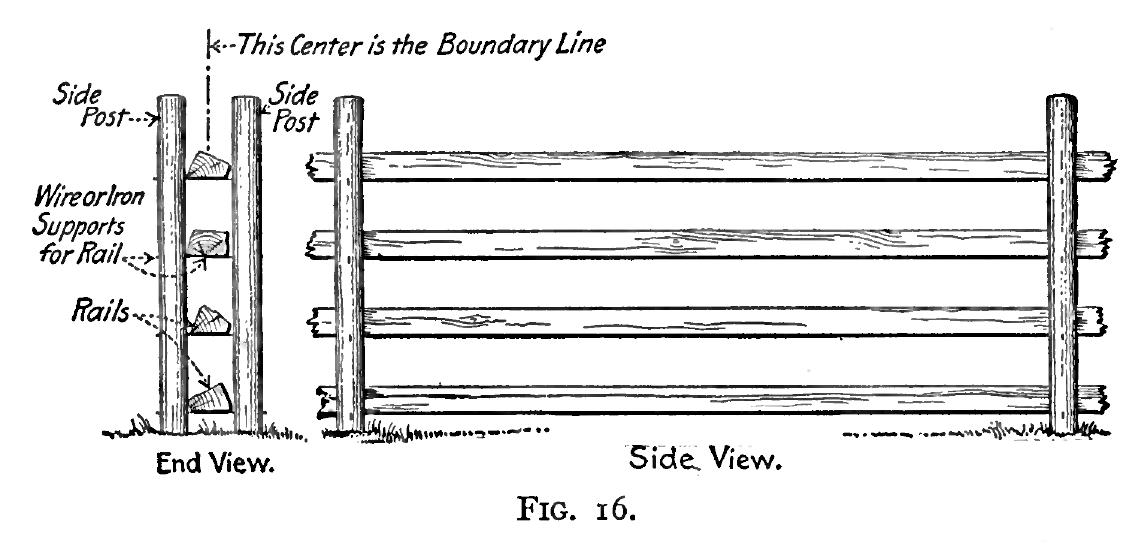
Fences and walls between adjoiners . — In rail fences of all kinds the line runs down the middle, half of the fence being on the land of one party and half on that of the other (see Fig. 16).
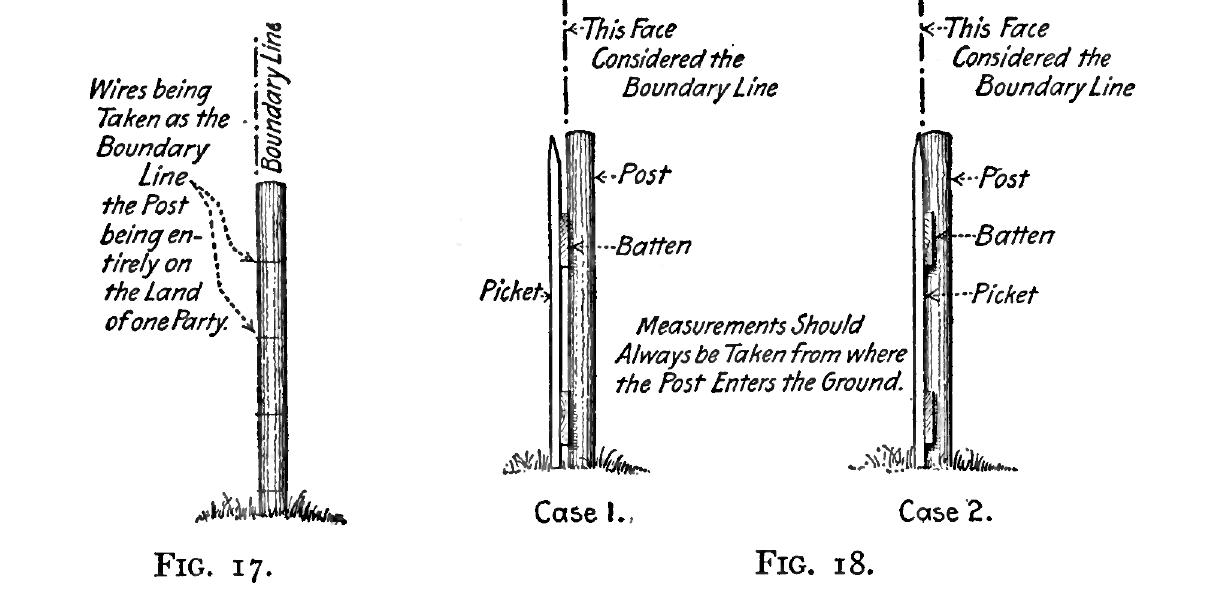
In wire fences the wires themselves are on line, the posts being entirely on the land of one party (see Fig. 17).
In picket fences and board fences two kinds of construction are found. In the first kind (see first case, Fig. 18), the battens or flat strips to which the pickets or boards are nailed and fastened to the front of the posts; in the second (see second case, Fig. 18), the battens are sunk to their full depth in the face of the posts. In the former class the line where the posts and battens join is commonly considered the line, or in other words the front of the posts is the line, the posts being on the land of one party and the battens and pickets (or boards) on that of the other. In the latter class the front of the posts (or the back of the pickets) is still the line, but in this case both the posts and battens are on the land of one party and only the pickets on the other.
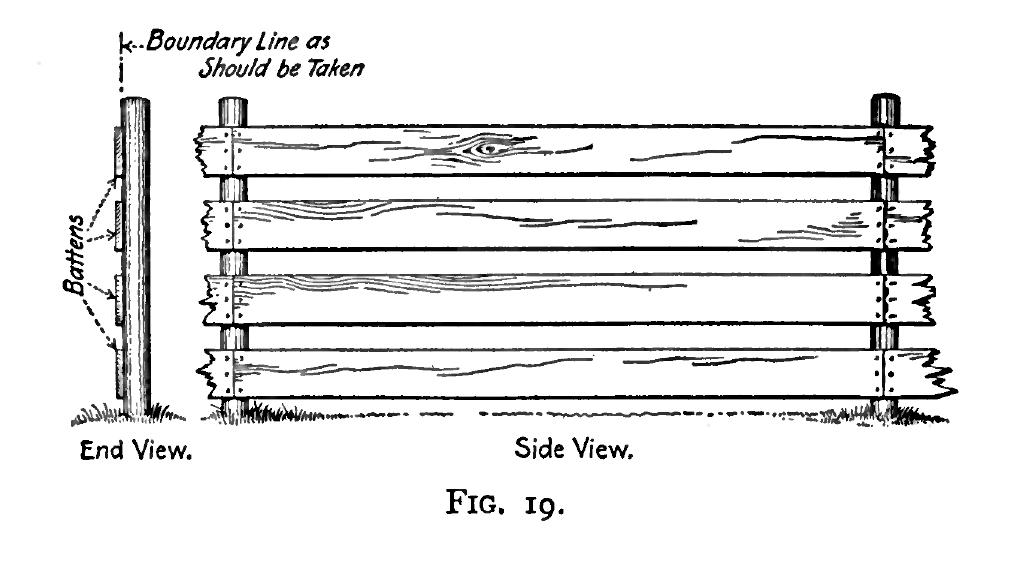
In fences composed only of a series of rows of battens nailed to
the front of posts, the front of the posts or the back of the battens is the line, as shown by Fig. 19.
In all cases the measurements should be taken, not from the upper part of the post but from the point where it enters the ground. In case the post leans, the measure ments should be taken from the point where the face of the post would enter the ground if the post were straight ened up. As a general rule the posts at the ends of a fence are more nearly correct, since almost all fences are originally placed on line at their ends, though they frequently depart far from the course of rectitude before they reach the middle. Sometimes, however, in cases where the posts have sagged a good deal an average of the bot toms of the faces of a number of posts will be more nearly the true line than anything else.
In stone walls the line may be regarded as running down the center, except in the case of bank walls. In these the exposed face will generally be found to be on or a little back from the line.
Fences and walls on highways . — Here, as in the case of division boundaries, the line may be considered as run ning down the
center of all rail fences.
In wire fences the wires themselves are on the line while the posts are on private land.
In the case of picket and board fences there seems to be great uncertainty, different builders following different methods, each according to his own judgment rather than by fixed rule. The majority, as far as I have been able to find out, bring the outer edge of the trimming strip or “ribbon” to the street line, though I am confident that others place the face of the posts to the line: Those following the former practice claim that the fence should be entirely on private land, and some extend this practice even to fences between adjoiners — a serious departure from the best practice. Probably, if the truth were known, you would find that the builder seldom inquires into the matter, for the reason that most fences which are built in the country simply replace old fences. In such cases every effort is made to line the new posts exactly with the old, so that the ancient intention, whatever it may have been, shall still be carried out (see Figs. 16, 17, 18 and 19).
Much valuable information for a locality can be ob tained by consulting men who have for many years han dled real estate in the section in question. In any case the surveyor should make every effort to determine local usage or lack of usage, and he should then be governed by common sense.
The outer surfaces of a square unboxed post standing at a street corner may be regarded as agreeing with the street lines.
A bank wall is to be considered as on private property, its face being placed on the street line or a little back of it.
In case of ordinary stone walls local usage should be carefully ascertained.
The above rules are by no means to be considered as unvarying, but any surveyor will agree that they fall in closely with the lines of common practice everywhere. As said before, the surveyor should in all cases make cer tain of the practices which prevail in the section where he is working.
It is to be borne in mind that where walls and fences have been removed for any purpose, frequently sufficient fragments are left below ground to determine accurately the position of the original line. Careful search will fre quently reveal these fragments, and the surveyor should so far familiarize himself with the various methods of construction that he can immediately determine what position these crumbling fragments actually bear to the original line. Quite frequently on the removal of an old fence the principal posts are cut off at or just below the ground and the stumps left standing for this very purpose. This is a practice which cannot be too much encouraged. The find ing of these buried “marks on the ground” will frequently end controversies, prevent law suits and avert expensive errors in construction. It is one of the duties of the sur veyor to see that such landmarks are preserved as far as possible, and when it becomes necessary that they should be removed he should take such measurements and “ties” as may certainly identify their original location.•
FSMS is Awarding a Recruitment Bonus for Current Members
Bringing in New Memberships
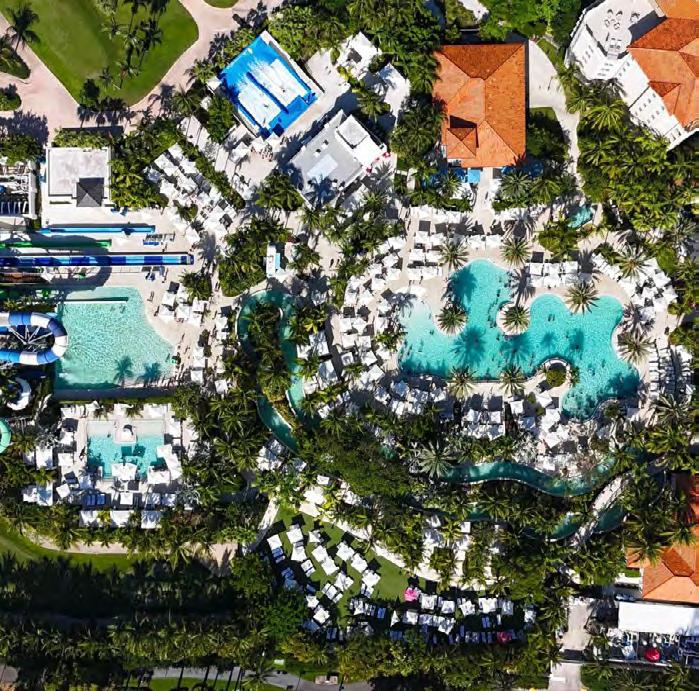
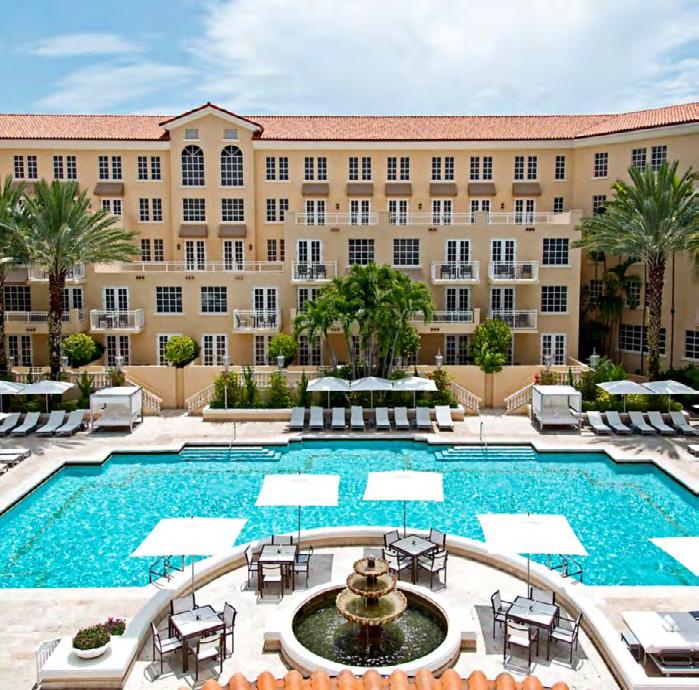
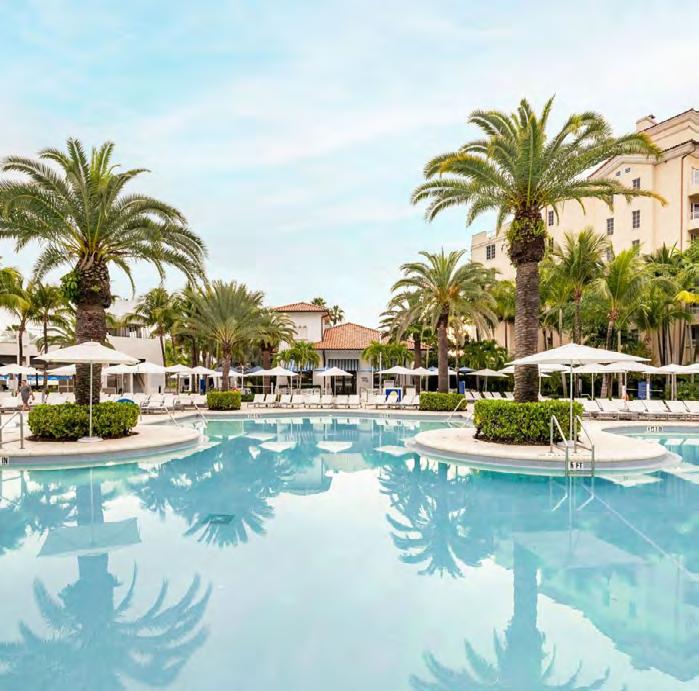
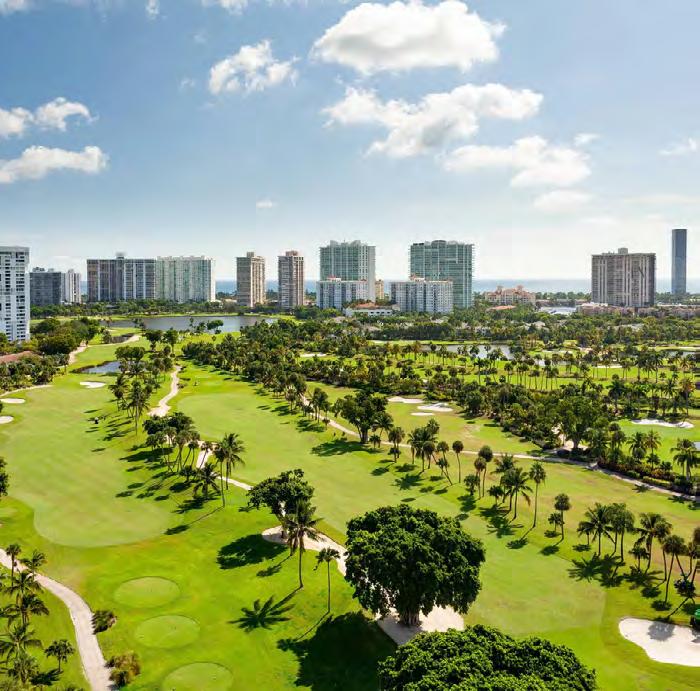
The Bonus will be a Conference Packet One Registration (includes One Wed. BBQ Ticket, One Fri. Exhibitor's Luncheon Ticket, One Fri. Recognition Banquet Ticket, and Six Sat. Seminar CECs) along with a Two Night Stay at JW Marriott Miami Turnberry Resort & Spa.
• The Recruitment Bonus will be Awarded based on a Point System.
• 6 Points for each New Full Member, Gov. Surveyor, & Sustaining Firm.
• 1 Point for each New Associate, Affiliate, & Student Member.
• Whenever a New Member fills out their membership form they must provide referred current member's name when asked, “Were you referred by a Current Member of FSMS?”
*Points will be awarded during Open Enrollment between now and March 31, 2026. The Member with the most points will be deemed the Winner and be announced in April's edition of The Florida Surveyor!
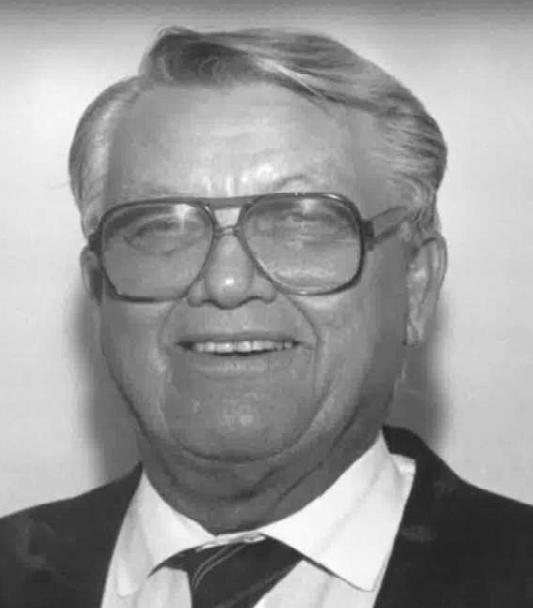
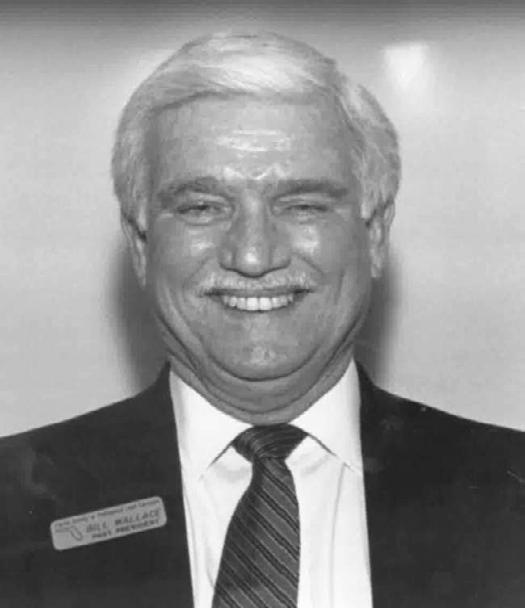
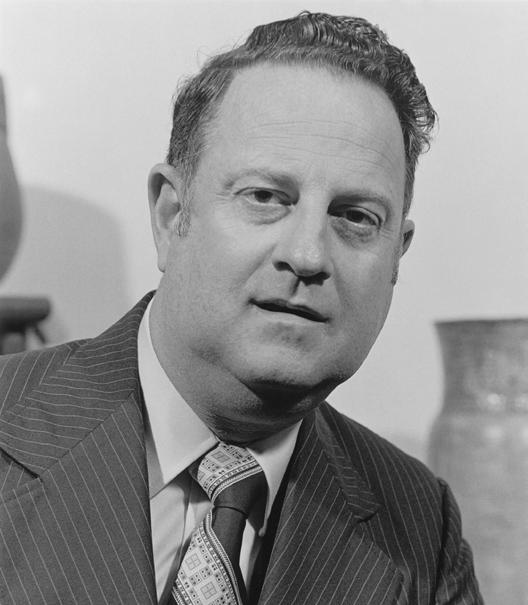
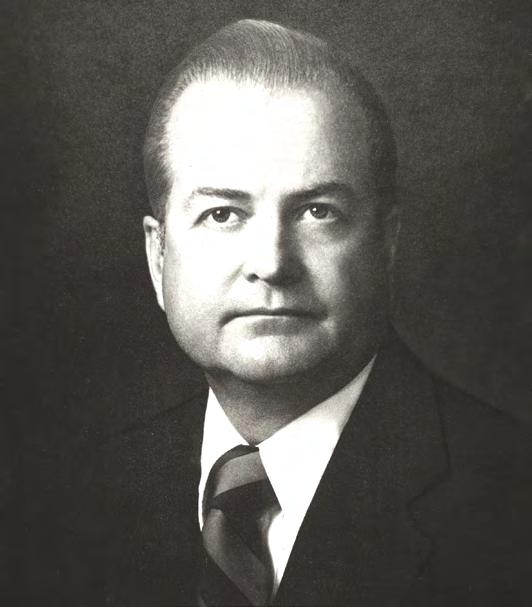
Past Presidents
1956 - 1957
H.O. Peters
1960 - 1961
Hugh A. Binyon
1964 - 1965
James A. Thigpenn, III
1957 - 1958
C.
1961 - 1962
Russell H. DeGrove
1965 - 1966
Harold A. Schuler, Jr.
1958 - 1959
P. Goggin
1962 - 1963
Perry C. McGriff
1966 - 1967
Shields E. Clark
1959 - 1960
1963 - 1964
Carl E. Johnson
1967 - 1968
Maurice E. Berry
Harry
Schwebke
John
R.H. Jones
Past Presidents
1968 - 1969
C. Hart
1972 - 1973
Broward P. Davis
1976 - 1977
Robert S. Harris
1969 - 1970
1973 - 1974
E.R. (Ed) Brownell
1970 - 1971
1974 - 1975
E.W. (Gene) Stoner
1971 - 1972
1975 -1976
Lewis H. Kent
Robert W. Wigglesworth
William
Frank R. Shilling, Jr.
William V. Keith
James M. King
Past Presidents
1980 - 1981
Ben P. Blackburn
1984 - 1985
Buell H. Harper
1988 - 1989
Stephen G. Vrabel
1981 - 1982
William B. Thompson, III
1985 - 1986
H. Bruce Durden
1989 - 1990
W. Lamar Evers
1982 - 1983
John R. Gargis
1986 - 1987
Jan L. Skipper
1990 - 1991
Joseph S. Boggs
1983 - 1984
Robert A. Bannerman
1987 - 1988
Stephen M. Woods
1991 - 1992
Robert L. Graham
Past Presidents
1992 - 1993
1995 - 1996
Thomas L.
1999 - 2000 Jack Breed
1993 - 1994
1996 - 1997
R.
- 1995
1997 - 1998
E.
1998 - 1999
Nicholas D. Miller
Loren E. Mercer 1994 -
Robert D. Cross
Kent Green
Gordon
Niles, Jr.
Dennis
Blankenship
W. Lanier Mathews, II
Conner
Past Presidents
Stephen M. Gordon
Richard G. Powell
Michael J. Whitling 2007
Robert W. Jackson, Jr. 2008 -
Pablo Ferrari
Steve Stinson
Dan Ferrans 2011
Jeremiah Slaymaker
Ken Glass
Russell Hyatt
William Rowe 2003 -
David W. Schryver
Past Presidents
2015 - 2016
2019 - 2020
2024 - 2025
2016 - 2017
2020 - 2021
2017 - 2018
2021 - 2022
2018 - 2019
2022 - 2024
Lou Campanile, Jr.
Robert Strayer, Jr.
Dianne Collins
Don Elder
Richard Pryce
Hal Peters
Lou Campanile, Jr.
Howard Ehmke
Dale Bradshaw
The Florida Surveying and Mapping Society has an eLearning Platform that is linked to your FSMS membership account .
When accessing the eLearning platform, use your FSMS membership username and password to log in. (Not Available for Sustaining Firm Memberships)
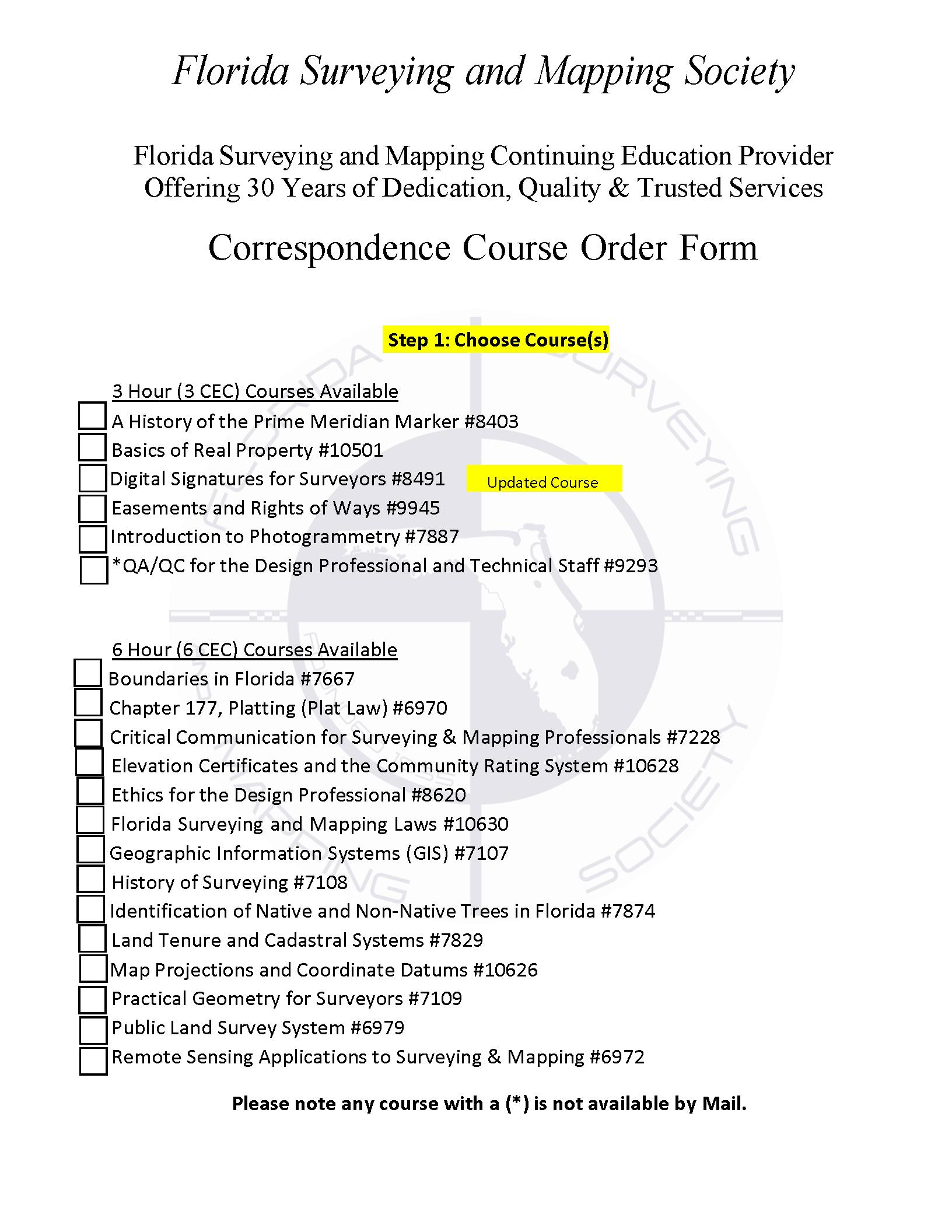
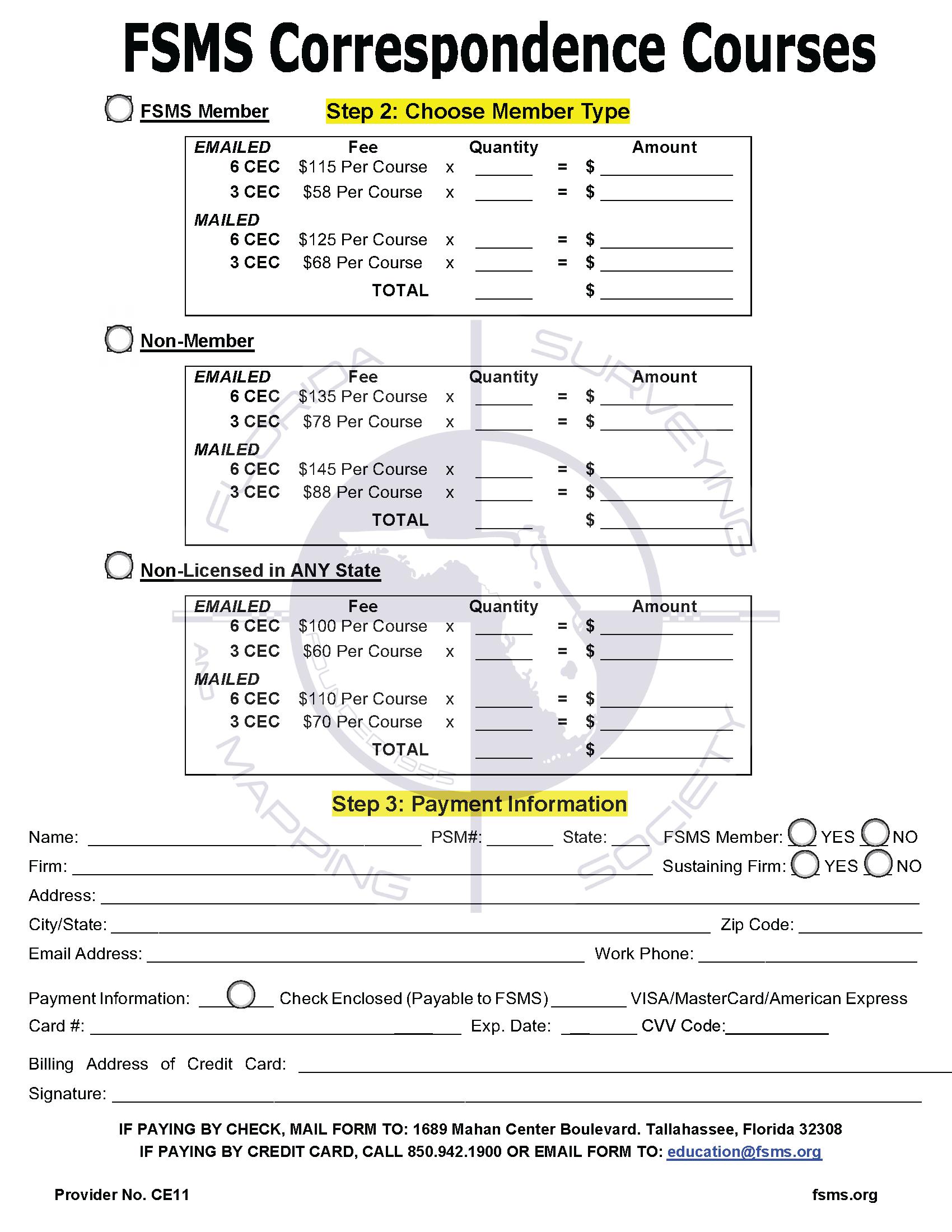
As always, Correspondence Courses are available by mail or email.
Updated Correspondence & eLearning Courses:
• Writing Boundary Descriptions
• Basics of Real Property
• Map Projections and Coordinate Datums
• Elevation Certificates and the Community Rating System
• Datums (eLearning Video Course)
• FL Surveying and Mapping Laws
Please email communications@fsms.org to notify us of
Advertise With Us!
All advertisements contained within the publication are published as a service to readers. Publication of the advertisements does not imply or express any endorsement or recommendation by FSMS.
Benefits: Full color; hyperlinks added to your webpages as well as email addresses.
Requirements: Contracts for one year (11 issues) receive 10% discount if paid in advance; 15% for Sustaining Firms. (Ads should be in jpeg, pdf, or png format)
New ads and/or changes are due by the 25th of each month.
Questions? Call our office at (850) 942-1900 or email at communications@fsms.org