

NEWS
KANM seeks $25,000 for launch of new FM signal to bring student voices and music to local community A3







KANM seeks $25,000 for launch of new FM signal to bring student voices and music to local community A3
Transportation Services adds new transit options, infastructure upgrades across campus
By Hilani Quinones Associate News Editor
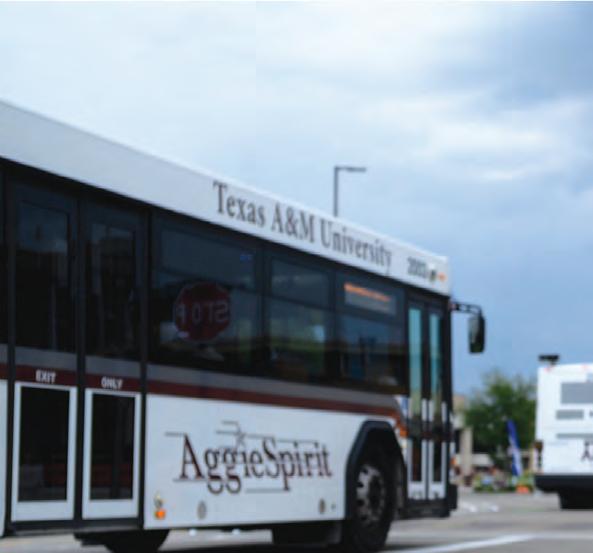
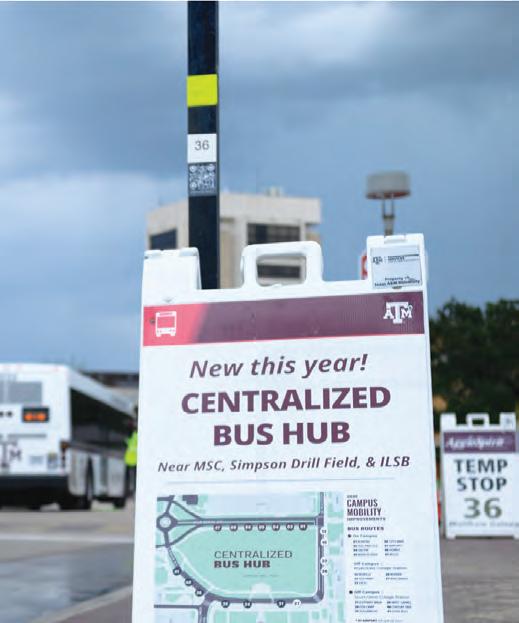
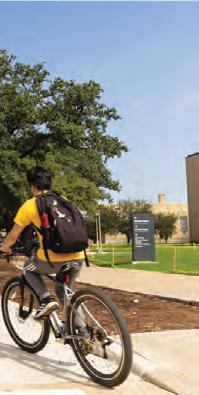
Aggies returning to campus this fall may have already noticed significant changes in the ways they travel around campus. As Texas A&M continues to implement a major mobility project this fall, adding a centralized bus hub, expanded pedestrian walkways and new designated passenger dropoff zones across campus. A&M’s Transportation Services aim to ease congestion and improve safety with these new modifications. This effort incorporated recommendations from students, faculty and staff along with key stakeholders and was guided by inputs including the Campus Master Plan of 2017 to the President’s Student Experience Study of 2024.
Transportation Services Associate Director Clint Willis said support from A&M President Mark A. Welsh III, Chief Operating Officer and campus architect was given to proceed with the project in such a way that it addressed the needs of the students.
“We have heavily congested areas where we really need to create that separation,” Willis said. “… We want to create that separation so somebody doesn’t have to worry about if I’m driving a wheel device, I don’t have to worry about a pedestrian stepping in
portation Institute, all involved in this planning process.”
Fifer added that feedback from students on the student experience survey — in which they were given the opportunity to identify areas where they would like to see improvement — gave Transportation Services the chance to incorporate their feedback into the planning process.
They also conducted a rider survey as the project primarily involved adapting their plan to accommodate what students had requested they do.
Transportation Services Associate Director “
The community’s safety always goes into every discussion that we have when we’re planning this project.
Clint Willis
front of me.”
Transportation Services Communications Manager Tad Fifer said this series of planning initiatives and studies is what made this construction project unique.
“Those surveys outlined some challenges and some opportunities that the campus has, and it kind of identified some issues like student enrollment being so big over the past several years,” Fifer said.






The new white and green lines on campus aid in ensuring pedestrians do not clash with wheeled devices, setting a standard across campus.
Welsh’s emphasis is on working together to solve challenges and plan for the future which adds to the uniqueness of this project, Fifer said.
“We have a lot of different stakeholders and groups that come together, including the City of College Station and Bryan,” Fifer said. “We’ve got areas like the Texas Trans-





To navigate possible confusion from updated transit methods, people can look on the bus route website and use the trip planning feature, which provides multiple options for where they can go, what stops to get on and different routes available.
“One of the big changes we made, which kind of came out of the surveys, was increasing the service to the engineering corridor area,” Kelm said. “Before this change, you could really only get from the [Memorial Student Center] to that area of campus via one route, and now there’s five.”
Kelm added that in the beginning of the semester, especially the first couple of weeks, they see a drastic increase in traffic and bus usage.

SPORTS Logan Lednicky and A&M volleyball hit the road for back-to-back matchups in the Beehive State B1
A&M


Following Texas state law requiring faculty senates to end by Sept. 1, A&M will initiate a Faculty Advisory Council
By Hilani Quinones Associate News Editor
In their last special meeting on Aug. 29, Texas A&M’s Faculty Senate announced it will officially dissolve on Sept. 1, after more than 40 years of governance. This change comes as part of new Texas law, Senate Bill 37, passed this year by the Texas Legislature which requires the elimination of all faculty senates at public universities unless authorized by their boards of regents.
In its place, the faculty senate announced that the body will evolve into the Faculty Advisory Council moving forward, beginning Nov. 1, to continue serving as a platform for faculty input and representation.
A&M is the latest to join the University of Texas System and the Texas State University System in abolishing their faculty senates to make way for faculty advisory groups.
Members of the Faculty Advisory Council will remain faculty members, but the change limits the number of members to no more than 60 with at least two representatives from each college or school, including one member appointed by the president or chief executive officer of the institution.
At A&M, 10 colleges will be represented by two representatives each — one appointed and one elected.
The remaining members would be elected by a vote of the faculty of the member’s respective college. This would cut the faculty member body roughly in half from its current 122 members, and the bill shifts oversight over curriculum and hiring to governor-appointed university system regents.
Alongside changes to the composition of the new council, the president will also appoint a presiding officer, associate presiding officer and secretary from the members of the Faculty Advisory Council. Members appointed by university administrators will serve longer terms than elected members.
In the meeting, Speaker of the Faculty Senate Andrew Klein said Senate Bill 37 does not fundamentally change the role of the future faculty advisory board body.
“The role of the faculty senates in the Texas A&M system has always been advisory,” Klein said. “It will be what we make of it.”
Member David Bapst said he is unsure if the advisory group will provide a replacement for the Senate.
Klein said this would mark a transition period where the faculty voice would look different, but it is still needed and important.
“While the future of the Senate may not look exactly as we would like it, we find ourselves in a better place than many other university systems across the state,” Klein said.








VetDogs turns to Aggie students to help expand its puppy-raising program
By Julia Helsel Life & Arts Writer
Standing proudly in the George H.W. Bush Presidential Library and Museum is a life-sized statue of Sully, a labrador that served the president in his last years of life. While this might seem like an insubstantial tribute, it symbolizes the partnership between veterans and America’s VetDogs — a historic nonpro t organization that provided Bush, as well as over 1,000 veterans and rst responders, with service dogs.
This semester, America’s VetDogs is launching a new branch of its College Puppy Raising Program at Texas A&M and is looking for college students to volunteer to help raise a service dog. After witnessing the success of college puppy-raising programs closer to the organization’s headquarters in New York,VetDogs was encouraged by University President Mark A. Welsh III to expand its operations to Aggieland.
Valerie Cramer,VetDogs’ director of strategic relationships, explained the history that makes the partnership with a military college so important. The organization was founded to assist veterans, and many service dogs have been awarded to Aggies who fought in combat.
“When we started out as the Guide Dog Foundation for the Blind, we were serving veterans who returned from World War II,” Cramer said. “As time went on, we served civilians and veterans … then came the war [in Afghanistan] and we were serving amputees and those with traumatic injuries, so we broke o into the sister organization, America’s VetDogs.”
As the organization saw di erent kinds of a ictions in veterans and rst responders, VetDogs continued diversifying the assistance its dogs could o er, initially introducing them to help amputees and later to assist with psychological conditions.
“We started focusing on the injuries
people don’t see,” Cramer said. “Many veterans have hearing de cits because of their military service, so we started training hearing dogs. Now we train dogs to assist with PTSD, military sexual trauma and seizure-response dogs … we started to see all the areas we could train dogs to help mitigate people’s disabilities.”
To promote the new program, VetDogs hosted two informationals to showcase puppy raising to A&M students, drawing in over 170 interested students within two days. Biomedical sciences freshman Riley Hellenguard was one of the students who attended the event.
“My dad is a police o cer in Dallas,”
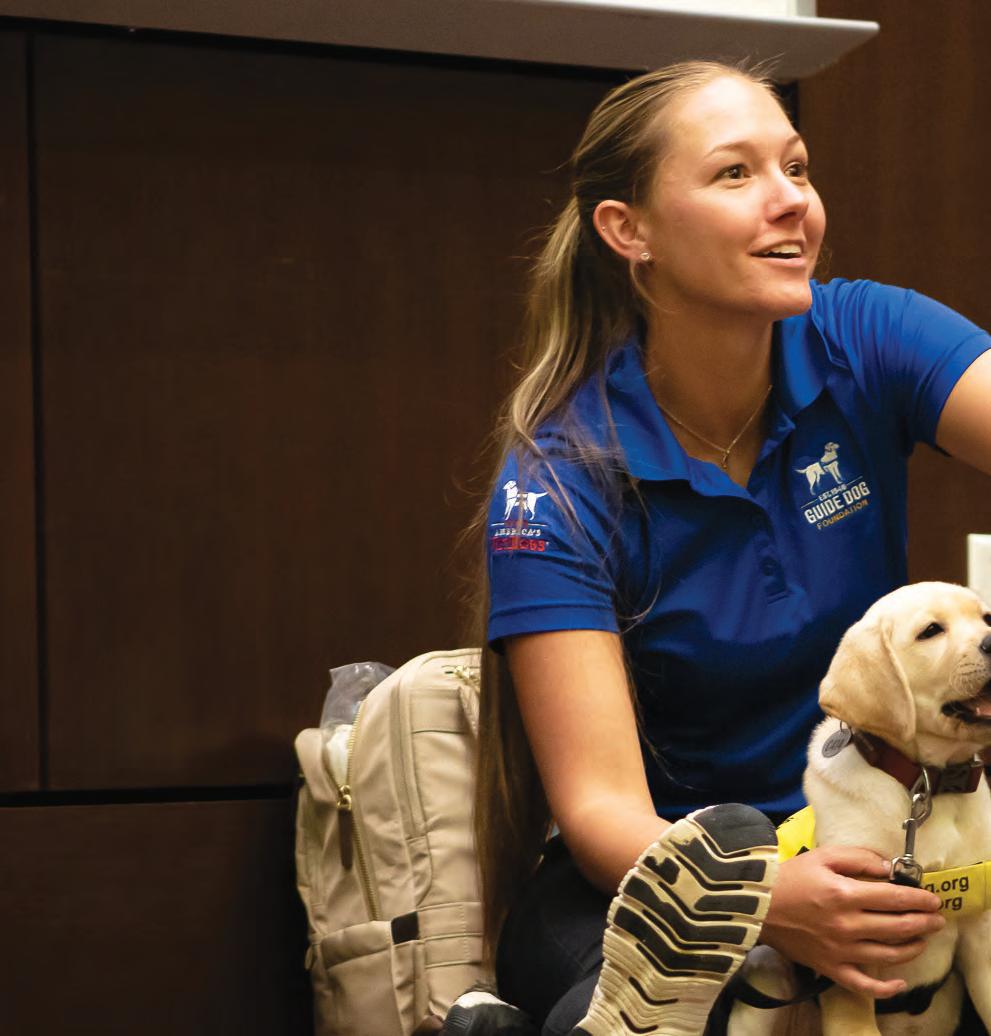
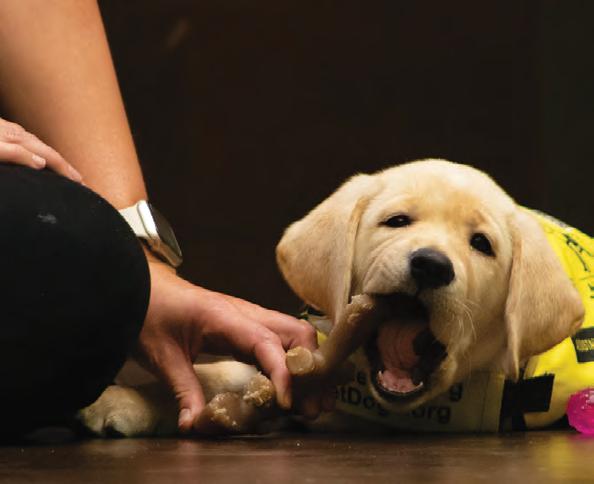
entertaining the rambunctious pup, she shared the bene ts of becoming a puppy raiser for college students.
“I think that it really helps students nd an outlet for the stress that college brings,” Gaylor said. “It gives them something to do outside of class and school and then it also gives them a community. … That alone is so impactful for their mental health and just overall lifting their spirits while in college.”
Unlike many other organizations, VetDogs train and supply service dogs at no charge to the handlers, while covering everything but the food for raisers. In addition, any housing accommodations and concerns can be assuaged since the dogs are protected
VetDogs Director of Strategic Relationships “
We have people say, ‘I never knew I had the capacity to love again due to war and distrust’ and it opens their heart up again.
Valerie Cramer
Hellenguard said. “It’s great knowing that a program like this exists, that is not just for veterans, but rst responders that go through traumatic events. It’s even better knowing the cost is completely o of them, so you don’t have to pay thousands to get a service dog.”
After attending the informational, Hellenguard said she was highly interested in becoming a full-time puppy raiser as a way to serve others, and she felt called by her faith to undertake this commitment.
“It’s something enjoyable for the raiser, but it’s incredibly helpful for somebody else,” Hellenguard said. “As a Christian, I want to embody the act of Sel ess Service, and I hope that someone else who may not have a relationship with God can experience hope and relief.”
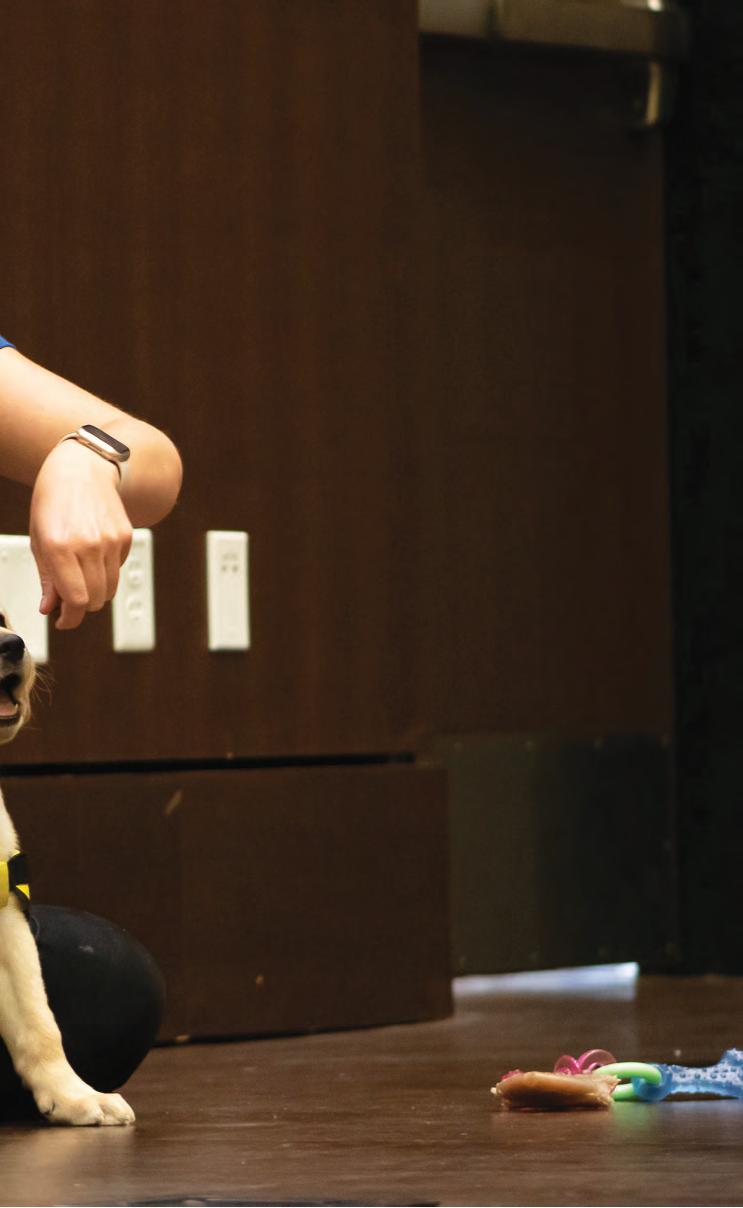
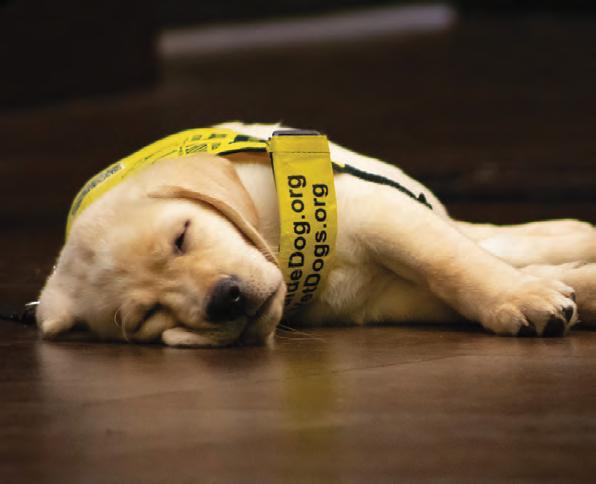
Georgia Gaylor, a former college raiser turned full-time sta er, showcased a puppy just beginning its training journey. While
under the Americans with Disabilities Act.
For students with busy schedules, there is also an option to co-raise a dog with a roommate or friend, or be a part-time “Puppy Camper.”
“So typically, our pups are going to be placed with one primary handler,” Gaylor said. “ … Our puppy raisers are committing to raising one puppy for the full year. They have the dog, essentially, every day, every hour of those days. Our puppy campers, on the other hand, are committing to short term opportunities … So I kind of compare them to a puppy sitter.”
Many students have no previous experience training a service dog or may not have raised one. This isn’t cause for concern, as there are few basic training tenets that VetDogs expect their puppy raisers to uphold.
“We ask our puppy raisers to focus on three key things,” Gaylor said. “The rst one being socialization, the second one being
busying or a relieving routine and then the third one being really reliable house manners. Those three things are really key pillars and what is gonna make an incredible assistance dog.”
After the puppy has been with the student for about 12-14 months, they are given back to VetDogs headquarters where they receive more specialized and technical training. There, VetDogs determines what kind of service dog they will be.
“Our guide dogs are going to be assisting those who are blind and visually impaired,” Gaylor said. “Our service dogs are going to be assisting veterans and rst responders with a wide range of disabilities. … We place hearing dogs, we place dogs who help mitigate the symptoms of PTSD, mobility dogs as well as seizure response dogs.”
Since the beginning of its College Puppy Raising Program, VetDogs has seen how college students and their lifestyle often make the ideal raisers for excellent service and guide dogs. Thanks to the often crowded and fast-paced college environment, these dogs quickly become accustomed to handle many distractions.
“The pups are exposed to big crowds, scooters, buses, cars and they’re able to attend their puppy raiser’s college classes, which provides an opportunity for them to learn how to settle,” Gaylor said. “And then outside of that, the events that puppy raisers are going to … all provide really incredible socialization … the structure that the lifestyle brings and all the unique socialization opportunities make raising on a college campus a perfect setting to raise a puppy in.”
The impact these dogs have on their handler’s lives make every part of the process worth it.Throughout the dog’s working life, they not only serve to assist with someone’s disability but also act as companions that they can rely on.
“People who have received dogs from us have their entire family unit changed,” Cramer said. “We have people say, ‘I never knew I had the capacity to love again due to war and distrust’ and it opens their heart up again. … Many people live in the
and they feel more con dent and want to go places again because of the
al love from an animal.”
After 50 years, station leaders aim to raise $25,000 to bring student voices and local music to cars, homes and businesses across Bryan-College Station
By Hilani Quinones Associate News Editor
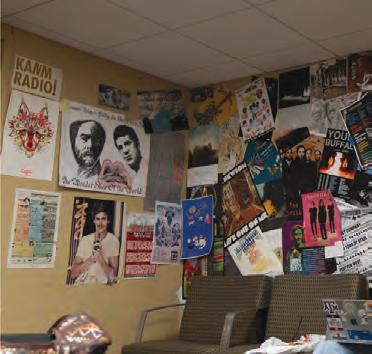
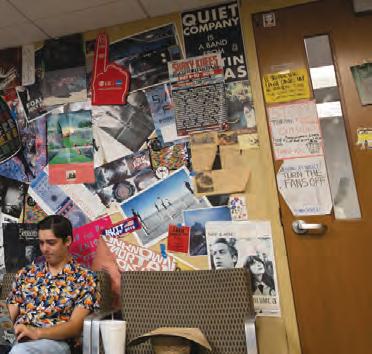
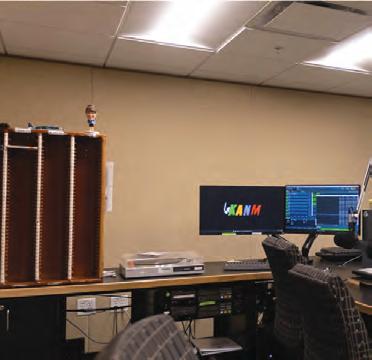
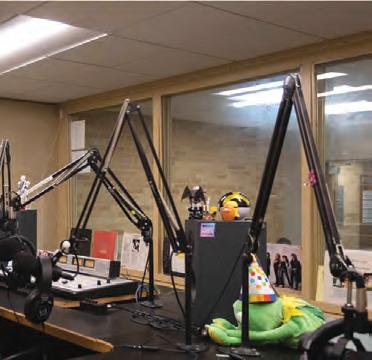
Texas A&M’s student radio station, KANM, is preparing to extend its reach to the Bryan-College Station airwaves with the launch of their FM signal, KAGZ-LP.
The station, which has operated since 1973, has secured a Federal Communications Commission, or FCC, permit and has developed a fully-engineered plan to launch its signal. It is now seeking community support to raise $25,000 to cover costs to go on air, including broadcast equipment, a certied tower climber, engineering consultants and electrical contract work.
Currently, their operations remain self-funded. KANM’s station manager and electronic systems engineering technology senior Nayab Warach said the station receives no funding from A&M unlike most other student organizations.
“Particularly the challenge is just nding donors,”Warach said. “We need to nd people who want to donate to the project, and everything else has been kind of handled since 2024. We’ve been very grateful that the university has worked with us on that front. We’re just kind of aiming for this nal push to get everything on air.”
KANM is a 24/7 radio station, operating every single hour of the day and is usually sta ed live by a student, with occasional computer programming during the overnight hours, Warach said.
“These are people who are in the community as opposed to other radio stations, which have very few or no local DJs,” Warach said. “At other stations, everything is run by a central o ce and it’s all computer controlled, there’s no personality, there’s no connection with the community.”
Warach said KANM aims to highlight student artists and community artists through its concert series, and the station regularly videotapes and posts videos of bands on their YouTube channel.
Although KANM’s concerts and recorded sessions are crucial, Warach said KANM also functions as an essential part of the A&M community. It’s important for musicians, artists and people who feel like they may not t in.
“Continuing that legacy has been our goal for the past 50 years and sort of the ultimate next step in that is getting on the FM airwaves to reach the masses,” Warach said.
According to Warach, the money KANM is attempting to raise will go toward purchasing FM transmission equipment.


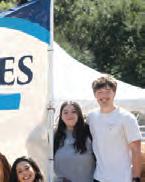



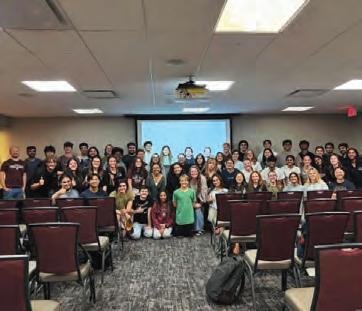
This initiative will expand its reach beyond people who have had to look the station up online and intentionally tune in, Warach said. It is also there for anyone who is looking for a break from commercial radio.
Warach said funding is also crucial, as currently the music and radio industries tend to be dominated by corporate interests, AI and industry plants, highlighting the lack of creativity that Warach says is prevalent in society.
“You have Spotify, who is rolling out all these features that are like, an AI will be your DJ and pick your music and it’s all a computer,” Warach said. “You’re losing the touch of having someone in your community who’s sharing their music interest with you, who’s right there, who goes to school with you, who lives in the same town as you, knows what’s going on, knows genres of music that may not get picked up by these corporate stations or these AI controlled apps.”
Warach also noted that the Department of Communication and Journalism has been instrumental in helping KANM obtain its license.
“The Department had, especially [Department Head Hart] Blanton, helped us cut through a lot of the red tape and sort of push our initial application forward,” Warach said. “The College of Performance Visualization and Fine Arts, especially our advisors in the music technologies program and KAMU have been super helpful.”
Warach said that, despite facing recent budget cuts, KAMU has also provided a lot of advice.
“They’re letting us set up on their radio tower, and they also, like us, are independent local media,” Warach said. “They’re only three independent local radio stations. There is KEOS community radio, which is all volunteer based, KAMU and then us. Everything else is owned by IHeartMedia, or they’re owned by a local company called Bryan Broadcasting, and they’re not bad stations, but they are still commercial stations, and it’s a very commercial format.”
Warach said KANM wants to show music to the community that they may have not been exposed to.
“When people think of Texas A&M, when they think of College Station, they think of country music, and we want to show them that there’s so much more in our communities,” Warach said.
In a viral moment, a listener on the app Radio Garden, which shows what stations around the world are playing at the moment, landed on KANM, Warach said.
“It went viral and all of the comments were like, ‘I had no idea they didn’t just play country in College Station,’” Warach said. “I thought these were just a bunch of country kids and rural rednecked people. I didn’t know that they played cool music, and so we want to give that experience to everyone.”





Aggies for Limbs raises over $15,000 for 12-year-old MasterChef Junior contestant and prosthesis recipient
By Avery Kracmer Associate Life & Arts Editor
Just days before 12-year-old Miles Platt launched his annual birthday fundraiser, he received the heartbreaking news that his insurance company had denied his appeal for a long-overdue prosthetic arm — meaning his family would have to pay $24,000 outof-pocket.
With a servant’s heart, it was only natural that Miles refused to ask for donations. Instead, he sold pies and crème brûlées in an attempt to raise money for the prosthesis. However, the Platt family found themselves at a standstill with $17,000 left to go.
That was until they received a call — Aggies for Limbs, a student organization at Texas A&M, would raise the remaining costs of the prosthesis. Angela Platt, Miles’ mom, surprised her son with the life-changing news just in time for his birthday.
“It was on my birthday, and I got a letter,” Miles said. “It said I was going to get the arm, and I had to reread it several times. I was like, ‘Wait? What? Really?’”
Though Miles was born missing part of his arm, he never let that stop him. He dreamed bigger than most kids and, with a knack for cooking, landed a spot on MasterChef Junior, proving to the world that he was just as capable as anyone else.
“In his interview [for MasterChef Junior], he was asked, ‘Isn’t it so cool you get to represent people with limb di erences?’” Angela said. “And his response was, ‘Yes, it actually matters more for everyone else who doesn’t. It’s for everyone else who tries to put those doubts on you’… He lives boldly. He made cross country this week, plays tuba, does ninja warrior and basketball.”
Miles’ busy lifestyle often puts a strain on the right side of his body, increasing
the likelihood of him getting overuse syndrome, a common condition in people with limb di erences.
With the support of his parents, he applied for a Hero prosthetic arm that would allow him to continue achieving his goals. However, his insurance company viewed the prosthesis as “experimental”; that’s where Aggies for Limbs stepped in, raising the di erence not covered by insurance so that Miles could receive his prosthesis.
“You’re never too young to make a difference,” Angela said. “We’re thankful that a bunch of college kids got together and made a huge di erence for us.”
Miles is one of the “angels” Aggies for Limbs has fundraised for. Founded in 2016 by Ashton Marsh ‘16 to support her nonpro t organization, Ashton’s Angels, Marsh aimed to make a di erence in the lives of those with limb di erences.
“All of my friends were on board with it, ran with it and started it, leading to what it is today,” Marsh said. “There’s been di erent leaders throughout the years. It changes, but it has been the neatest thing to watch grow. We have so many people who join our organization and just seeing their hearts and their drive and their love for other people is just so inspiring.”
At four years old, Marsh was involved in a lawn mower accident that resulted in her losing part of her left foot. Throughout her life, she often encountered people who were in need of prosthesis but couldn’t afford it. In her senior year at A&M, Marsh knew Ashton’s Angels could use more support and A&M, a service-centered university, was a perfect place to raise that support.
“I knew they [students] would be interested from a service aspect,” Marsh said. “But then to see all of these students come together with each of their gifts and pour that into the organization has been really cool.”
Today, Aggies for Limbs has given nine angels a prosthesis. Every angel has a unique story, like Miles, and the organization thrives through the relationships they develop with their angels. For chemical engineering senior and president Emma Nixon, watching
Miles receive his arm was an awe-inspiring and rewarding experience.
“It’s just so inspiring how a kid can go through something that other kids and even adults never experience and he still wants to give back to other people,” Nixon said.
“He still is very faithful in humanity and just wanting to help other people.”
Every year, Aggies for Limbs adopts a new angel and organizes fundraisers and events to raise their goal of $5,000 each semester.
They host a 5K in the fall and organize events ranging from carnivals to bingo bashes in the spring — all with a uni ed goal of raising more money and growing the organization.
“We just want it to grow more so that the cause spreads more and just to help as many people as we can,” biomedical sciences senior and vice president Sherihan Jaouhari said.
”We’ve raised the most amount of money that we can with the small org. We can’t even imagine what it could be with twice the size.”
With ve committees focused on various fundraising, service and social events, Aggies for Limbs welcomes all students to support their cause and spread awareness of the substantial cost and vital need for prosthetic limbs.
“We’re all having a lot of fun,” Nixon said. “At the core of it, we’re trying to help these people, and we are giving people their second rst steps.”
As the organization approaches its 10year anniversary, Marsh couldn’t be more proud with how far the group has come. The momentum isn’t stopping anytime soon, and Aggies for Limbs is going to continue changing lives, Marsh said.
“Every single dollar is such a blessing, because every single dollar is just impacting the life of one of our angels to be able to receive the prosthesis,” Marsh said. “All of these students have busy lives they’re trying to focus on, but then for them to pour their heart and everything into the organization to help other people just makes me really happy.”
Bienvenidos a Aggieland brings together over 30 affiliate organizations to showcase Hispanic community and pride
By Lillian Haynes Life & Arts Writer
Bringing together more than 30 a liate organizations, Bienvenidos a Aggieland came to life with lively music, rich food and unforgettable cultural performances. Serving as a way to connect Aggies to the Hispanic community, the two-hour event was hosted on Aug. 28 by the Hispanic Presidents’ Council, otherwise known as HPC, at the Bethancourt Ballroom in the Memorial Student Center.
As an organization dedicated to amplifying the voices of the Hispanic and Latinx community, HPC advocates for support of the Hispanic community on the Texas A&M campus.




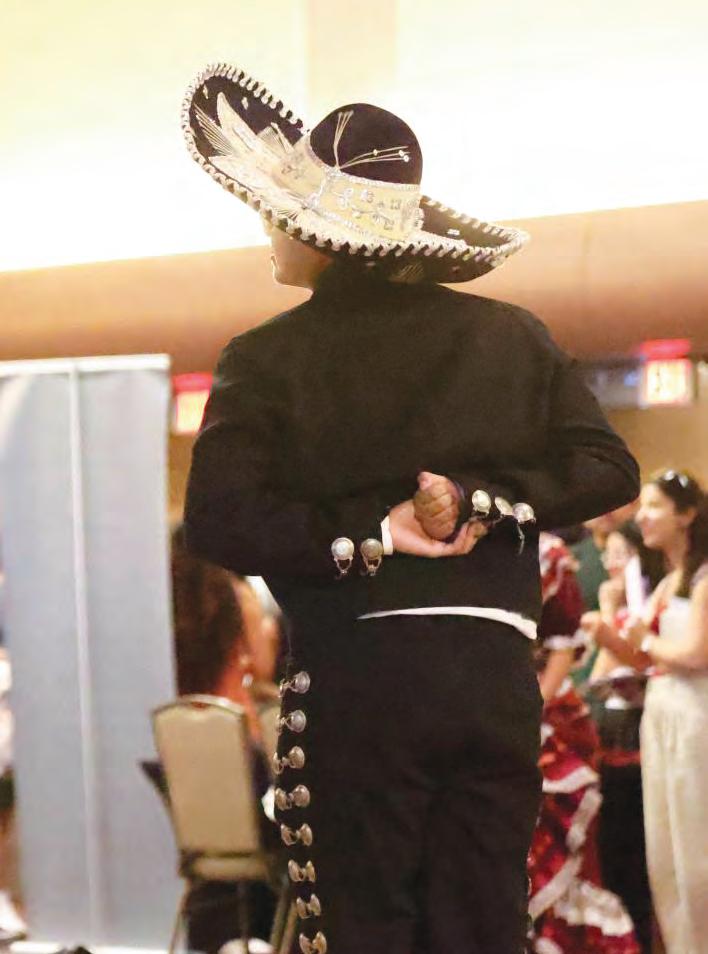
Visualization junior and HPC committee member Kaylee Duran explained how the event makes freshmen feel welcomed on campus and nd their place in the wider tapestry of Aggieland.
“It’s a big festivity to share a lot of information with the Hispanic community,” Duran said. “To get that out there through … food, music, performance. … We just really want to make sure that these incoming freshmen just get a lot of the information and … feel more at home, more at ease with being a part of A&M.”
She noted how the event serves as a networking opportunity for students, as there are a variety of professional and social organizations tabling, each one tailored to a speci c major or mission.
Through their involvement, students form long-lasting connections in the elds necessary for success.
“You meet so many di erent people,” Duran said. “You make … new connections and friends, and you … all come together as a big group and just support one another.”
Ari Granda, a nursing junior and the
director of external a airs for the Hispanic Presidents’ Council, explained how the event not only provides new students with opportunities, but also a liate organizations a chance to recruit members from a variety of backgrounds.
“It really can help you nd your home away from home,” Granda said. “The reason I joined HPC … is because I came to Bienvenidos a Aggieland my freshman year and I was able to nd an organization that really resonated with me. … It’s a really good opportunity for new Aggies or even returning Aggies who want to nd a place to be able to explore and look at di erent organizations and … to form a community here.”
General engineering sophomore Emily Lopez explained how attending Bienvenidos a Aggieland led her to join the a liate organization Society of Hispanic Professional Engineers: one of the many organizations focused on providing students with the skills and knowledge needed in their chosen eld of study.
“Last year, I [went] to … Bienvenidos a Aggieland, and it was really interesting
seeing the council organize the events and host other Hispanic boards,” Lopez said. “I joined the Society of Hispanic Professional Engineers, and … I thought it was really cool that they just have all these orgs come together ... bring awareness to all these Hispanic orgs and make this community where everyone’s just so welcomed.”
Lopez now serves as the marketing associate for HPC and has seen many students nd their ‘home away from home’ through Bienvenidos a Aggieland which she now helps advertise.
Beyond the organizations that table, she emphasized the importance of the dance routines, music performances and rich food as a means of bringing people together and promoting a sense of loyalty amongst attendees.
“As a Hispanic or Latino student … I just had a hard time nding my community here because it’s so big,” Lopez said. “Bienvenidos a Aggieland has so many things, so many orgs there, anyone can nd anything if they’re looking for something. It just goes back to nding your place in A&M.”




Grocery stores serve homesick students across Aggieland with flavors from around the world






















By Lola Shmeis Life & Arts Writer
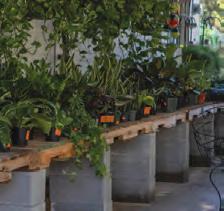
Three grocery stores — Spice World Market, Aggieland African Store and The Farm Patch — allow homesick students to shop for the avors of home.
A ve-minute drive from campus, Mini Mart has been serving Aggies since 1996. General engineering freshman and store social media manager Ahyaan Dhuka said that Mini Mart primarily caters to Indian students.
His parents, who rst came to College Station in the early 2000s, bought the store years ago and have expanded their o erings by opening Spice World Market in 2021. The sister store is nine times larger than the Mini Mart and sells Mediterranean staples in addition to Indian food. The store o ers a wide selection of produce, dried goods, frozen meals, Halal meats and snacks.
“It’s enjoyable to watch all the new students that come into town, meet them, get to know them,” Dhuka said. “They always tell us what’s happening in their life, so it’s nice to hear from them.”
Aggieland African Grocery Store, another cultural grocery store, serves the community’s African population. Previously known as JS International African Foods, owner Jacob Walls changed the name to Aggieland African Grocery Store with his recent acquisition of Aggieland Taxis, the oldest taxicab service in the Bryan-College Station area. Walls hopes to continue providing rides ranging from as close as the Easterwood airport to as far as the Houston area.
Walls rst came to the United States from Nigeria 22 years ago to attend school in Houston. When his job as a petroleum technician brought him to College Station in 2010, Walls and his wife fell in love with the then-quiet town. However, there was one predominant issue with their new area.
“There’s no way to get food here,” Walls said. “We moved out here, and then later on … I just opened a grocery store. I’ve been here since.”
Before opening the store, Walls would have to drive as far as Houston or Dallas to purchase staple items such as ofada rice, yams and bitter kola. Now all sorts of Af-
rican products can be found on the store’s shelves, including spices, canned goods, beverages, toiletries and clothes.
“Africa is a big continent,” Walls said. “They have people from di erent places — from Ghana, Nigeria and Ethiopia — all of them come over here to get food.”
His regulars include both students and professors, and he has even had parents from as far as England purchase groceries for their kids to pick up. Walls receives these payments on a monthly basis, and will sometimes go as far as to drop o their purchases to students in the area.
In 1974, the Scarmardo family decided to open The Farm Patch out of a need for fresh produce in the Bryan-College Station area.
Next in line to own the store, Mark Scarmardo Jr. said that when they rst started, the store wasn’t as large as it is today, nor did it o er as much.
“We opened in 1974,” Scarmardo said.
“My dad tells stories; he would go to San Antonio with a horse trailer in the middle of the night and pick up produce o the market there and bring it back and sell it that next day.”
Since then, The Farm Patch has expanded to include a garden center and an import room. The import room houses the store’s imported products — food from all over the world can be found there, including many Southwest Asian and North African staples.
It also houses ingredients necessary to make Scarmardo’s favorite dish: his mother’s spaghetti. With the family originally hailing from Italy, the spaghetti is made with pasta from their import room and includes hardboiled eggs as part of a Sicilian culinary tradition.
“With A&M being so close and all the people that come from around the world to A&M — Middle East, Asia — we bring in stu ,” Scarmardo said. “There’s a market for it here, and there’s not many places that sell that stu .” The store has regulars, with many shopping at the store since its doors rst opened. Student organizations at A&M have even held social events introducing the store to their members, including the Muslim Student Association.
Scarmardo said they also love seeing new faces, a common occurrence every year with new students coming in.
“If the customer’s happy,” Scarmardo said. “That’s what it’s all about.”





By Wyatt Pickering Opinion Writer
Have I got a story for you, Ags!
Ever wondered what the de nitive guide to having an amazing freshman year is? Well, I’ve got the list for you.
I can guarantee that following the advice listed below will not only give you the true Aggie experience but also impress us upperclassmen with your impeccable knowledge of Texas A&M and its many traditions.
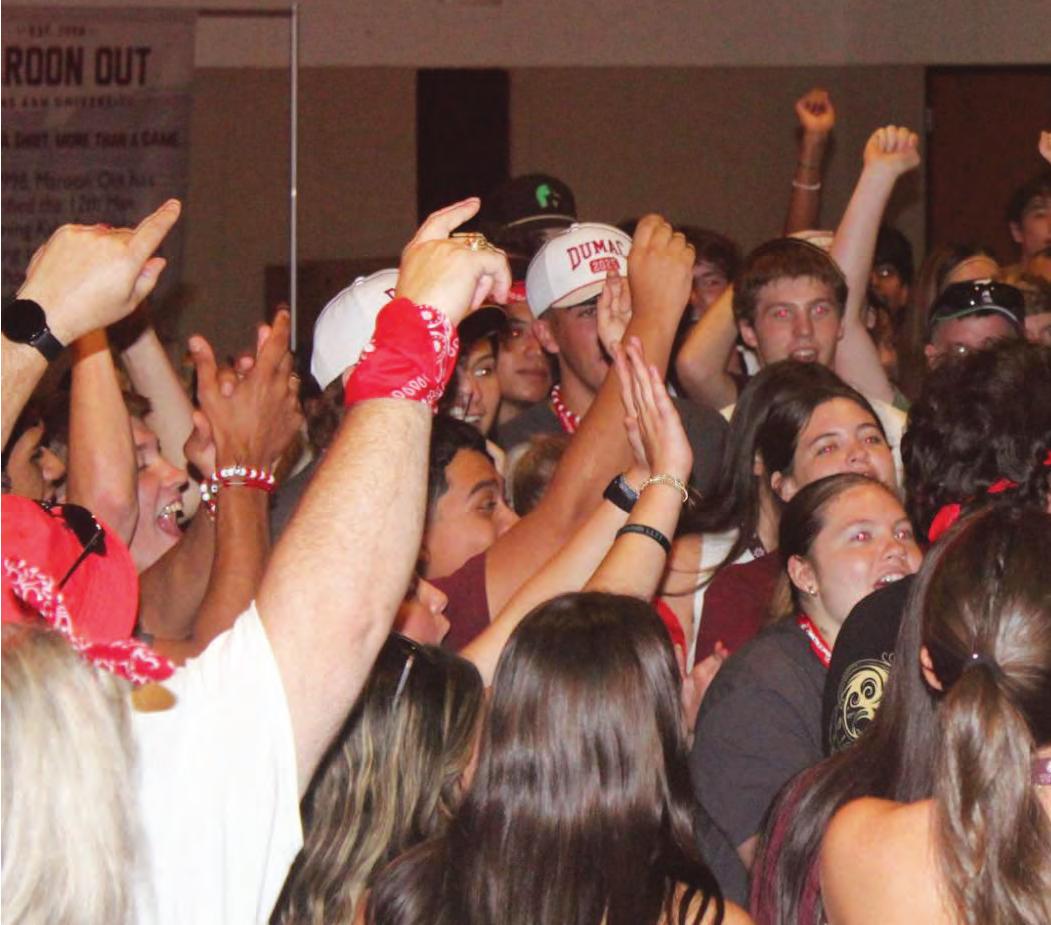
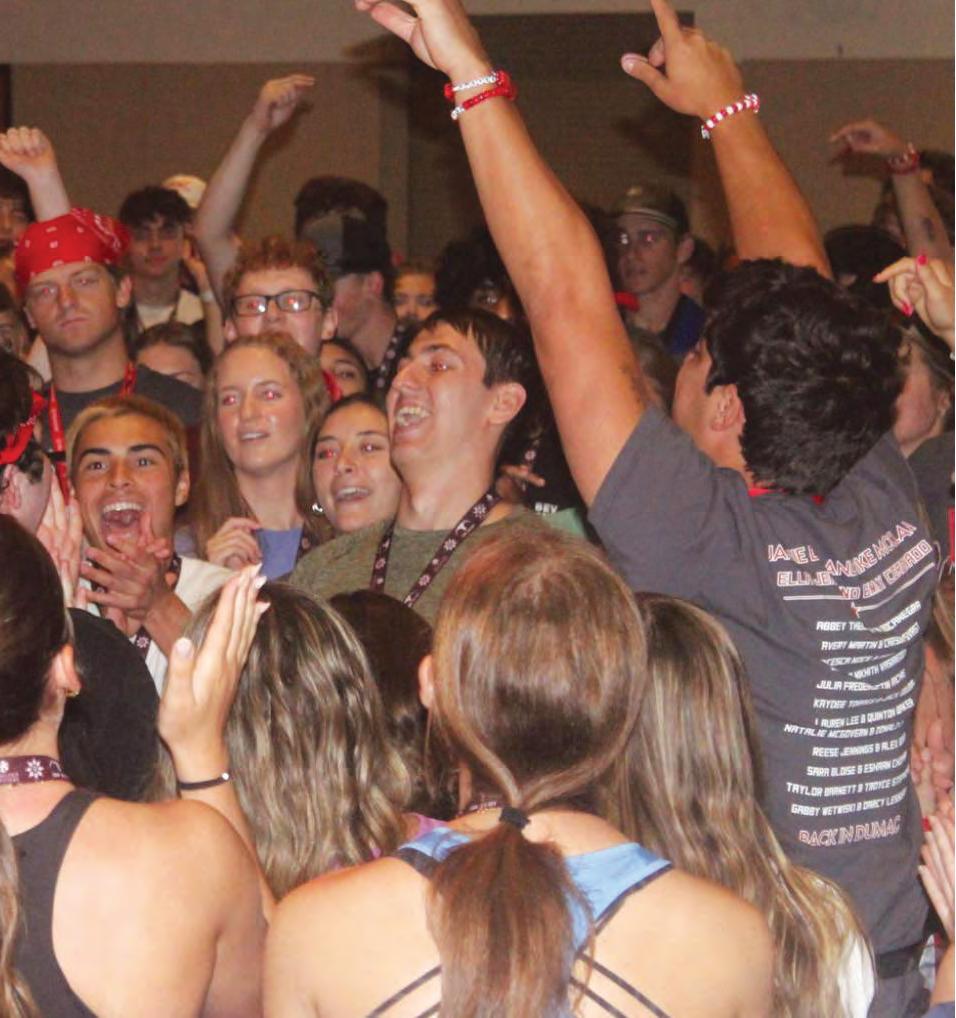
Throwing ts: Aggie edition
To be the best, you have to dress the best. Fashion is everything at A&M, and you need to make sure your out ts slay to make a good impression.
Maroon and white are cool, but there is an even better color if you want to catch an Aggie’s eye: Burnt orange is in and is a great conversation starter at Midnight Yell or a home football game.
You might get called a blue-haired liberal hippie, but that is actually a compliment here at A&M.
You should also be thinking about accessories. A hip and cool backpack should be your go-to look at Northgate and the “crazy” frat parties that we have. You never know when a physics textbook is needed while playing beer pong or throwing dice.
Save a horse, ride the bus
Getting around A&M can be a struggle for our beloved freshmen; however, there are some important rules to know when riding the bus. When you need to get o at a stop, don’t press the stop button because the bus driver can read your mind. Also, you shouldn’t wear deodorant on a hot summer day because the smell is really distracting and can give other bus riders a headache.
12th Man, take the wheel
Now, public transportation is cool and all, but most Aggies have a car. Driving in College Station is actually really di cult, and you should be on guard at all times.
When turning right onto Texas Avenue from University Drive, always remember to stop. Ignore the fact that this turn is a protected lane and hold your dominance for at least 30 seconds to make sure it is totally safe to turn.
When I do this myself, I am always comforted by the symphony of honking horns, which shows that the rest of my fellow Aggies have my back and all support my decision.
Mugging down 101
Dating at A&M can be a struggle for many of our freshmen, but it’s easy once you follow these guidelines. I’m here to make sure you do it right, so be sure to adhere to all of them.
Now, I know most of you have seen those oddly dressed, bald boys walking around our campus. They are called the Corps of Cadets, and they are in desperate need of a woman’s attention.
This is some advice for the lady Aggies! Make sure the Corps boy you pick to date isn’t one of those gross humanities majors. You can’t be dating someone bald and broke, so make sure he has the earnings po-
tential to make you a rich military wife.
Secured a date with your Corps boy?
There are some essential Aggie date spots you’ll want to go to before they become trendy with the rest of your class.
My personal favorite is having a romantic picnic on the Memorial Student Center lawn. This gives you a good chance to people-watch as you eat MSC Chick- l-A.
Small talk is also really important for Corps boys. Make sure to impress him by mentioning that you are technically a sophomore by hours, so it is apparent that you were way better than him in high school. If things get a little steamy, think about going up to the third oor of Evans. It is very quiet up there except for the occasional wail of a stressed-out engineering student.
Being a freshman means learning all of the amazing traditions that A&M has to offer.
Stand out by being the same as everyone else, and follow these tips if you want to have the best time in college!
Wyatt Pickering is a business honors andnance junior and opinion writer for The Battalion.


No student consent was obtained before Student Body President backed new proposal supporting transcript changes
By Sidney Uy Opinion Writer
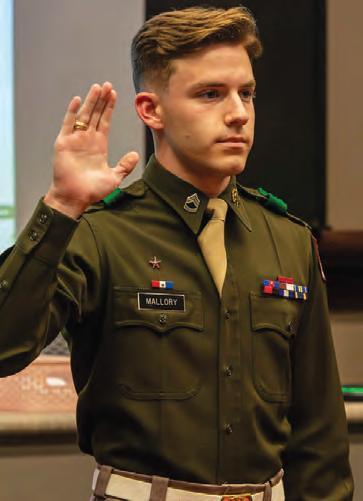
In July, Student Body President Carter Mallory teamed up with ve other universities’ student body presidents and sent a letter addressed to President Donald Trump.
In the letter, they requested that the president sign an executive order requiring Title IV universities — institutions that o er federal student aid programs — to report the median grade of each class on transcripts. They assumed that providing this information on transcripts will help employers better understand how students perform and, in turn, will positively impact employment. Mallory’s signature appears at the bottom of the letter, demonstrating his full stamp of approval.
However, President Mallory’s actions are far from appropriate — they are irresponsible and an abuse of power. Why? Because President Mallory essentially asked for a national executive order when students weren’t paying attention.
Not only did he release this information in the summer on the Student Government Association’s Instagram page, garnering around 800 likes since Aug. 12, but he also opted to tackle the issue of student transcripts without seeking the approval of A&M students.
Armed with a poorly-written letter and no support from current students, President Mallory chose to advocate for a policy that would worsen the lives of students without them even knowing it.
SGA did not poll students or ascertain the opinion of the student body before President Mallory’s signing.Therefore, President Mallory was unaware of whether his statement would garner enough support when he signed it. Because of his lack of transparency, he lost sight of some crucial factors. If this letter were developed into an executive order, it would only increase competition and
worsen mental health for students. It would not directly improve A&M’s standard of education, but instead would worsen it.
If the goal of this proposal is to make higher-performing students look more competitive, then it consequentially makes other students look less competitive. As a result, it actively punishes students for collaborating and studying together. It punishes students for teamwork and rewards competition for competition’s sake — not the students’ sake. In e ect, it pushes students to be contestants, not leaders striving for everyone to earn an “A.”
Furthermore, according to the National Institute of Health, around 32% of university students report mental health issues. Researchers nd that academic burnout contributes to mental health issues. From compulsory studying to competitiveness to cynicism regarding grades — students are already burdened with enough.
These examples show how awed President Mallory’s reasoning is. The visible lack of any research cited in the letter to back up his and other student body presidents’ claims supports this. On top of the statement not citing any support from current students, the statement is illogical and harmful.
The statement claims that reporting the median grade is necessary to provide “much-needed” context to employers. It states that adding class medians can help employers di erentiate between an A in a class where “everyone earns an A” versus an A earned in a class with a “typical grade of C.” They attempt to di erentiate between hard classes and easy “remedial” classes, but this plan misinterprets statistics.
For instance, information on median scores does not necessarily re ect the diculty level of a course. If a student is given an A in a course and the median is an A, that median does not necessarily equate to the course being easy. For all we know, every student in the course could have been hardworking and smart.
On Aug. 12, I emailed the SGA executive to clarify whether a legislative process had occurred to approve the letter. On Aug. 26, President Mallory and Vice President Kathleen Parks responded, “As student leaders, we are proud to stand by a coalition of our peers across the country to address concerns about grade in ation and transcript
standards.” Why stand by a coalition of other student body presidents and other students, but not A&M students?
Furthermore, they asserted that, “grade in ation is a growing concern in higher education, and when transcripts don’t accurately re ect student performance, it diminishes the value of hard work and achievement.”
With no legitimate oversight for these plans, it is unclear how this policy would look in practice. In reality, this letter is concerned with de ating grades under the assumption that it will protect, “the longterm credibility of a Texas A&M degree”
When asked about a recent news article on the transcript statement, Brendan Hurt, A&M Legislative Relations Chairman, stated that he “has not received communication from President Mallory or executive side about legislative matters.”
These poor decisions are fundamentally undemocratic. President Mallory did not engage in a legislative process. This statement was not crafted by the A&M Student Senate nor is it a tangible bill.
This sets a dangerous precedent for a student body president that does not act with or under the auspices of their own student body. Intentional or not, the statement is about manufacturing hierarchies.
At the end of the day, employers may not even care whether an applicant gets a B when the median for his class was a C. Policy should not be based on risky speculations about the job market, but rather on discernable facts. We need research to ground policy changes, not love letters. The university doesn’t need to cook up more ways to rank students.We should be questioning the existing rigid grading system students are subjected to. We would be lying to ourselves if we assumed that numerical grades were precise in re ecting students’ abilities.
We need transparency; it is the only safeguard A&M has against far-reaching, baseless policy. In the future, if President Mallory receives a response from the federal government, he should not sweep it under the rug. If you feel particularly moved, contact your SGA o cials.
We do not deserve to be left in the dark.
Sidney Uy is a philosophy junior and opinion writer for The Battalion.

































‘You have to be a little bit insane’
Former A&M tennis player
Austin Krajicek’s rise from the college ranks all the way to Paris’ Stade Roland Garros
By Ian Curtis Editor-in-Chief
The red clay courts of Paris’ Stade Roland Garros are one of the holiest sites in tennis. As host of the French Open — and other events, including the tennis portion of the 2024 Summer Olympics — the nearcentury-old stadium has seen the sport’s stars rise and fall.
It’s also seen an Aggie reach the top of the tennis world and slay the sports’ giants; Austin Krajicek wants to be clear that it’s grit that got him there.
“I’ve never been the guy that’s the most talented guy, the guy that’s a clear cut, ‘Hey, he’s going to make it,’ or ‘He’s going to break through,’” Krajicek said. “There’s no doubt about that. … I work really hard, and you never know what can happen when you work hard and put yourself in a position.”
The former Texas A&M star has had plenty of highlights over the course of his lengthy tennis career, including a French Open doubles title in 2023 and a 2011 NCAA doubles national title for the Aggies.
But nothing stands out to Krajicek quite like knocking the Spanish duo of Rafeal Nadal — whose footprint now graces the Roland Garros court — and Grand Slam winner Carlos Alcaraz out of the Olympics in 2024 on that same hallowed ground.
“It was Rafa’s last match on a court
that he dominated for literally 20 years,” Krajicek said. “It was pretty surreal being out there playing in front of a stadium with, you know, 15,000 people that maybe three of them were cheering for us. … There’s not many times you get to play for a team in tennis, it’s a pretty individual sport. So all of my favorite moments have been when I’m either playing for [a team] like Texas A&M. I mean, my whole four years in college was really special.”
The career of one of A&M’s most successful tennis products has seen just as much uncertainty and di culty as success over the years. For every trophy won, there’s been moments of doubt and pain and times where Krajicek questioned his future in the sport. None more so then when he made the transition from singles to full-time doubles play near the end of 2018.
“At that period, I was really struggling in singles, and nancials weren’t really adding up,” Krajicek said. “And at that moment it was very, very dicey, of like, if I was going to stop, and I was kind of accepting of stopping tennis, and I already had some other stu lined up as well outside of the court. So, you know, that moment sticks out of my mind where it’s like, ‘Hey, I was really willing to stop, and really accepted stopping.’”
For A&M men’s tennis coach Steve Denton, it’s Krajicek’s ability to persevere that has been the di erence maker, from his time playing at Mitchell Tennis Center in College Station to winning titles on the ATP Tour.
“He’s just had a storybook career,” Denton said. “But, you know, it wasn’t always easy, and he did it the blue-collar way. [I’m] just proud of him, you know, being able to face adversity and continuing
to have a good, positive attitude and trying to get better, and that’s what he has done basically his whole life.”
Given how close Denton and Krajicek are now — they call often, the latter says — it’s hard to believe that Krajicek almost never played for A&M in the rst place.
Originally committed to Florida, Krajicek took a recruiting trip to Aggieland on a whim and was quickly hooked.
“He really embraced the Aggie network and the Aggie way of life,” Denton said. “He got cowboy boots. He started listening to country music. He liked to go hunting and shing … [he] embraced all the other Aggie sports.”
Luckily for the 12th Man, Denton was able to sway Krajicek. And he became the backbone of a team that would make several deep NCAA Tournament runs during the Florida native’s time at A&M.
“[Krajicek] really set the tone for us on the work ethic,” Denton said. “And the fact that we got a top American player to come play for us really helped us in our recruiting and kind of validated our program. And, from there, he just got better and better every year.”
Once Krajicek turned professional in 2012, he was hit with the stark reality that all college-turned-pro players have to face: You may be living the dream, and you may be extremely grateful, but it can still suck.
Every week a new city — but no time to see any sights, and no money to a ord it even if the time was there. Just an endless array of di erent courts until a player can nally scrape and claw their way up the rankings before running out of opportunities.
“I always joke that to play tennis as long as I have, and as long as a lot of the guys
on the tour have, you have to be a little bit insane,” Krajicek said. “ … I mean, you really have to have a unique mindset and just a weird sense of perseverance and just there’s no option to quit, and you just kind of push through all the crap.”
Playing a mix of singles and doubles, Krajicek earned a top-100 singles ranking in 2015. But a series of setbacks had him questioning his future when he made the switch to focus solely on doubles three years later.
But he’s reached plenty of highs since overcoming that low point.
“At that moment, I’m glad that I was able to stick through it for sure,” Krajicek said.
Krajicek says it’s how you lose, more so than how you win, that sets a player apart from the rest and keeps a career going.
“Tennis is a weird sport, because, you know, you could literally have the best year of your career, like I did in 2023 and nished the year No. 1,” Krajicek said. “ … 80% of the time, you’re losing every week. ... Everybody can win and be positive and do the right stu , but it’s when you lose and how you kind of handle that and respond from that is what separates the guys that ultimately make it or don’t.”
For Denton, who’s supported Krajicek for practically his whole career, seeing the life Krajiceks built for himself in and outside of tennis has been ful lling.
“He has an incredibly positive outlook on things,” Denton said. “He continues to believe — no matter what the circumstances are — [that] he has the ability to bounce back when adversity or setbacks come his way … I think he’s been the best ambassador for our Texas A&M tennis program
I’ve been here.”



Aggies hope to continue winning streak during nonconference road trip
By Ava Loth Sports Writer
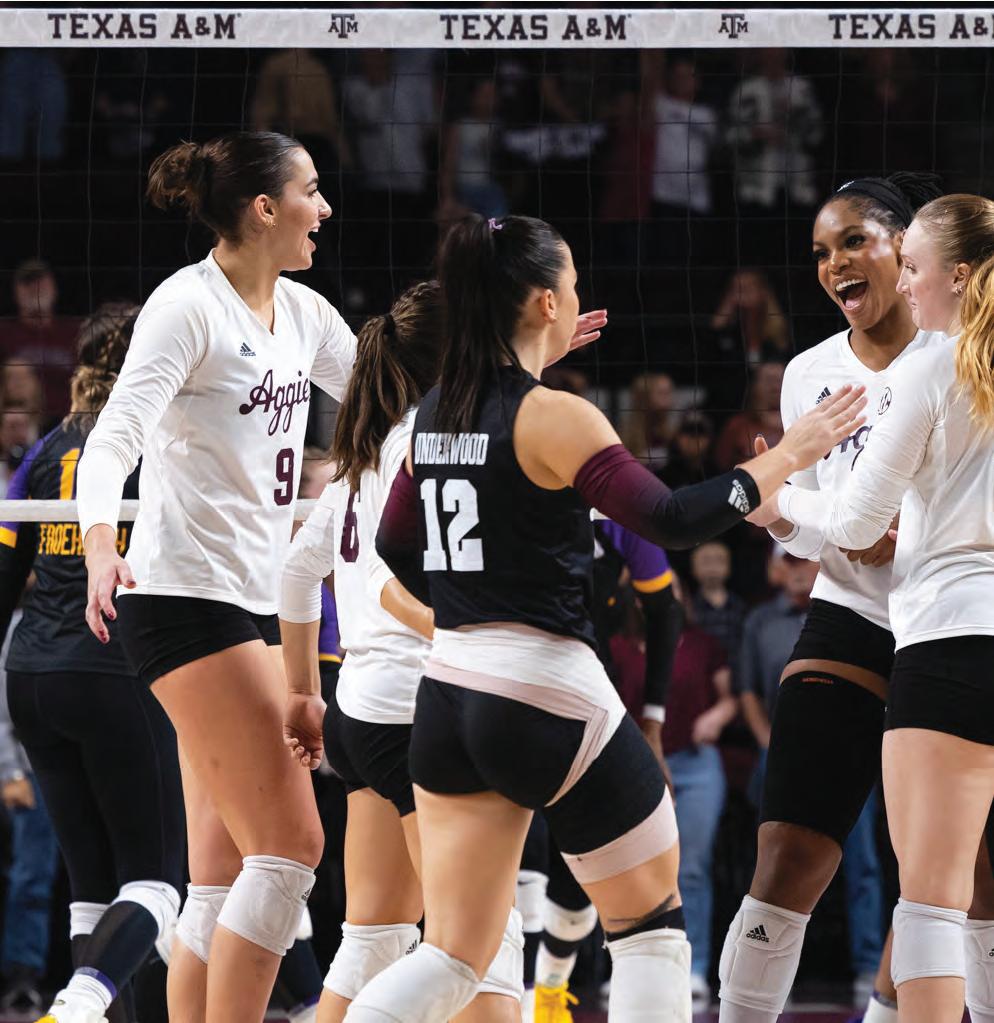
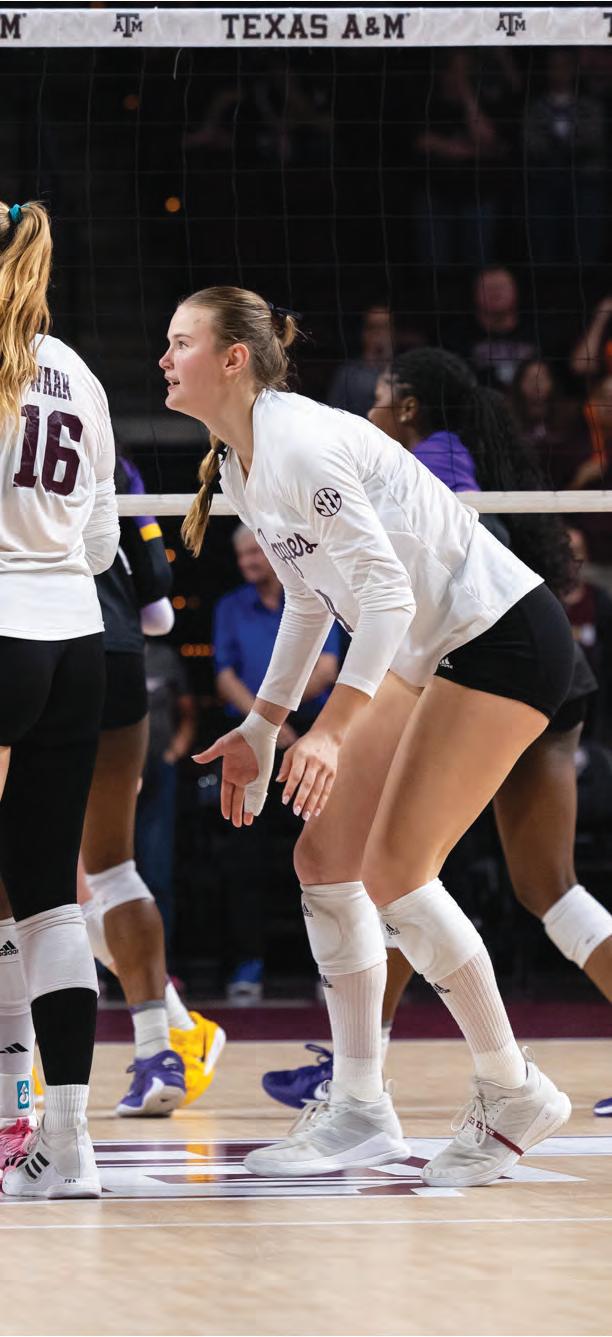
No. 9 Texas A&M volleyball is eagerly looking to continue its three-game winning streak this week in Utah. Facing two teams in two days is nothing out of the ordinary for the undefeated Fightin’ Farmers. During its previous matches, A&M swept Rice 3-0 on Aug. 29, and defeated Central Arkansas 3-2 the next day.
The Aggies set their sights on both No. 21 Utah and Utah State as non-conference play is in full swing. Playing its second ranked team of the season later this week, A&M is looking to gain more con dence against erce competition.
“We want to be pushed so that we’re ready for what I think is the best conference in the country in the SEC,” coach Jamie Morrison said in Tuesday’s press conference.
“But we’re ready for the challenge.”
Utah has been on a victory streak of its own, going undefeated in its rst three matches of the season. Each win has been the result of the Utes’ overpowering kill di erential. Junior outside hitter Kamryn Gibadlo is currently leading the team in kills with a total of 53 so far this season, making her one of Utah’s key weapons to keep an eye on.
The Aggies can draw some insights from this, as they had only seven blocks in their previous match and need to tighten their defense if they want to control the net.
Senior opposite hitter Logan Lednicky has a career-high 492 kills and was a powerhouse for the Fightin’ Farmers in 2024. She struck 22 kills in her rst match of the season, making it her season high
thus far and proving the Maroon and White capable of taking control of matches.
With both teams feeding o of earlyseason momentum, this matchup will determine who holds the drive to keep that momentum steady.
The Aggies are set to take on the Utes at 7 p.m. on Thursday, Sept. 4 in Salt Lake City at the Jon M. Huntsman Center.
Traveling not too far to Logan, Utah, A&M is slated to compete the following day against Utah State, which also carries the Aggie name.
Utah State has a 1-2 record through its rst three matches of the season, with a tricky loss against Marquette in its most recent ve-set matchup. Losing by 11 points in its rst set of the match, Utah State never gained its focus. However, the Blue and White made it a close match and lost in the last set, barely taking a 3-2 loss.
Utah State’s success has been due to key high-scoring players. Sophomore OPP
Loryn Helgesen is leading the team with 50.5 points so far this season. Not far behind is senior middle back Tierney Barlow with 49 points and sophomore OH Mara Stiglic with 42.5 points. Nothing that A&M hasn’t seen before. The squad of 17 is led by a large coalition of seniors. That experience from previous seasons sets the expectations of recovery in order to have that depth not only at the beginning of the season but throughout.
“I think we have a lot of depth, and I think a lot of people can contribute in a variety of ways,” senior opposite hitter Taylor Humprey said in Tuesday’s press conference. “Especially when the season gets long and bodies get a little more beat up. I think that depth is going to be one of our strengths.”
The Aggies-on-Aggies matchup is set to take place on Friday, Sept. 5 at 8 p.m. on Utah State’s home court, Wayne Estes Center in Logan.


No. 19 A&M hopes to continue winning streak as it hosts Utah State at Kyle Field in Week 2
By Olivia Sims Senior Sports Writer
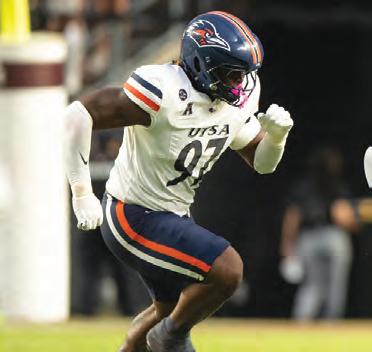
As No. 19 Texas A&M football heads into Week 2 of its college football season with a 1-0 record, it is set to host Utah State on Saturday, Sept. 6. After a 42-24 win over UTSA in the Aggies’ season opener, A&M returns to Kyle Field for a second-straight weekend, hoping to improve to a 2-0 record.
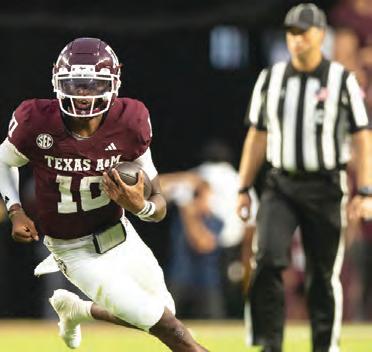
There were a couple of aspects of the game that A&M needed to improve on from last season, including its defense and redshirt sophomore quarterback Marcel Reed’s ability to pass more precisely and accurately.
Reed certainly looked like he improved his craft over the course of the o season and fall camp, as he went 22 for 34, throwing for 289 yards with a career-high four touchdown passes against UTSA.
If he can keep up his passing game and the Aggies simultaneously improve their running game, A&M can showcase a dominant o ense against Utah State.
The Maroon and White will host the Blue and White to kick o Week 2 of their season. Utah State began its season with a win over UTEP, defeating the Miners 28-16 in front of its home crowd.
“In terms of, you know, trying to put it all together, it’s a little challenging,” coach Mike Elko said in Monday’s press conference. “... They’re 1-0, but hard to get a full feel for what we’re kind of getting into.”
The biggest change for the Blue and White is their new man as quarterback,
graduate student Bryson Barnes, who was the backup last season. While he threw for 856 yards in 2024, the o ense still has to adjust to having a new face behind the ball.
“They are led by quarterback Bryson Barnes, who we think is a really, really talented player,” Elko said. “... [He] had a big week last week throwing and running the football.”
The Utah State o ense relied heavily on senior running back Miles Davis, who had 149 all-purpose yards, which will keep A&M’s defense on its toes.
The good news for the Maroon and White’s defense is the lack of players the visiting Aggies use on o ense, as they only had seven ballcarriers, while A&M split up the action and used a total of 15.
Defensively, Utah State was sharp against UTEP and recorded 79 total tackles. Senior cornerback Noah Avinger led the pack with 11, including eight solo takedowns that resulted in the Miners being held to 16 points.
A struggle that A&M faced against UTSA in its season opener was the defense. The group gave up 177 rushing yards to senior RB Robert Henry Jr., and junior captain and linebacker Taurean York said that they still gave him too many yards.
The defense certainly cleaned things up after the rst play of the second half, when a 75-yard rushing touchdown from Henry cut the Aggie lead down to just four points.
After that, the Aggies forced the Roadrunners to punt in the remaining drives, besides a late touchdown in garbage time.
If A&M can continue to improve its defense and spread the o ense around the eld, it will be di cult for Utah State to keep up enough for the visitors to remain undefeated pull o the upset.





By Mathias Cubillan Associate Sports Editor
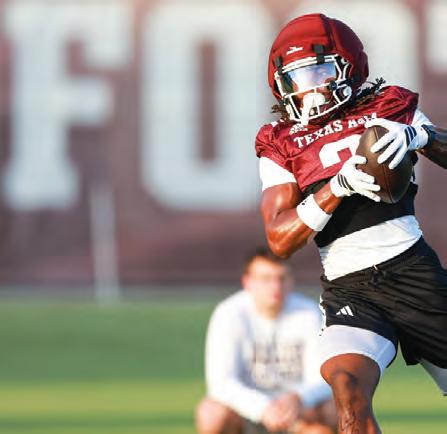
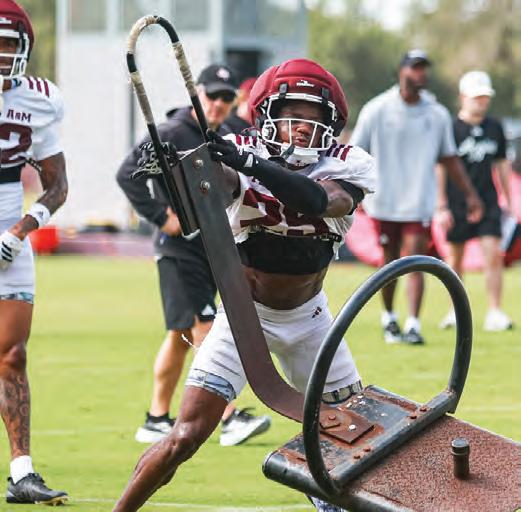
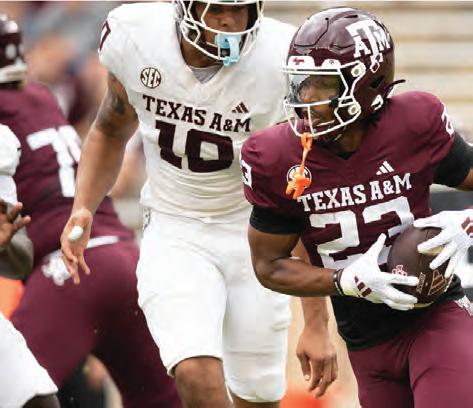
As a golden battle with No. 9 Notre Dame looms in Week 3, No. 19 Texas A&M football will welcome a rival group of Aggies into town as it hosts Utah State on Saturday, Sept. 6.
In a game expected to be a baptism by re for the Mountain West squad, a handful of X-factors remain poised to make an impact as A&M looks to quickly dispose of Utah State and stay unbeaten.
Terry Bussey, sophomore wide receiver, Texas A&M
Transfer wide receivers junior KC Concepcion and sophomore Mario Craver captured both headlines and the hearts of the A&M faithful with a pair of breakout two-touchdown performances in Week 1, but sophomore WR Terry Bussey still proved his value.
The former ve-star recruit only nished with one catch, but was praised by coach Mike Elko for his blocking and return prowess. Bussey’s run-after-the-catch skillset ts in perfectly with the bubble screen-heavy approach A&M used against UTSA, making this week’s tussle an ideal opportunity to get him some con dence and touches ahead of the trip to South Bend, Indiana.
Cashius Howell, redshirt senior edge rusher, Texas A&M
A&M’s pass rushers didn’t have many opportunities to pin their ears back and get after redshirt junior quarterback Owen McCown with the Roadrunners using so many RPOs. The Maroon and White recorded one sack, and redshirt senior edge rusher Cashius Howell was largely invisible.
Utah State’s o ensive coordinator Kevin McGiven runs a pro-style o ense that asks his quarterbacks to drop back in the pocket, exposing them to the tornadic Howell. The former Bowling Green transfer will look to open his account after registering four sacks in 2024.
Jamarion Morrow, freshman running back, Texas A&M
For an o ense expected to lean on a formidable rushing attack, it was tough sledding for A&M in Week 1 with only 108 rushing yards on 22 attempts.
Freshman running back Jamarion Morrow got his rst taste of collegiate action with a lone reception, but his zzy running style seemed an archetypal complement to the more physical backs in the stable. Morrow should get a more extended look if the Maroon and White build an early lead and rotate in some backups.
Landon Rink, freshman defensive tackle, Texas A&M
At 6-foot-6, 280 pounds and built like a sentient pile of bricks, freshman defensive tackle Landon Rink already looks like a rotational piece along the defensive line. While A&M’s run defense struggled against UTSA, Rink racked up four tackles in relief


reps. With Utah State looking to get downhill with their running game, A&M will need Rink and the rest of the hog mollies up front to hold their ground and shed blocks. After the Aggies slimmed down on the edges this season, the added beef inside that Rink provides will be necessary against the run.
Dalton Brooks, junior safety, Texas A&M
A&M’s second-leading tackler with 59, junior safety Dalton Brooks was one of A&M’s most invaluable defenders in 2024. In the opener, Brooks watched from the sidelines without pads on. While Elko did not disclose whether Brooks’ absence had to do with his August arrest, he did say that Brooks is available against Utah State.
For an A&M defense that majors in getting creative with its safeties, Brooks is an essential piece to the puzzle. Utah State’s dependence on its running game smells like the perfect opportunity for Brooks to knock some rust o and go lay the wood in his season debut.
Bryson Barnes, redshirt senior quarterback, Utah State
Since transferring from the Utah Utes in 2024, redshirt senior quarterback Bryson Barnes has appeared in 10 games and made four starts, accounting for 19 total touchdowns. Barnes was soaked in praise after a four-touchdown performance against San Diego State last season which earned him Mountain West O ensive Player of the Week honors.
Elko said he does not consider Barnes to be a “dual threat”, although he did note his athleticism as a strength. Much like the talented Group of Five quarterback A&M played in Week 1, Barnes needs to be contained with a disciplined pass rush from the front seven.
Miles Davis, redshirt senior running back, Utah State
As a date with Notre Dame junior running back Jeremiyah Love looms on the horizon, the Maroon and White must prove that they are sturdier against the run than the 203 yards allowed against the Roadrunners would suggest.
Redshirt senior RB Miles Davis’ rst game in Logan, Utah, ingratiated himself to the Utah State crowd with his 149-allpurpose-yard performance. The compact runner broke away for a 58-yard touchdown, striking an all-too-familiar chord for an A&M team that is not looking to repeat the 75-yard tote it gave up in Week 1.
Bronson Olevao Jr., redshirt junior linebacker, Utah State Redshirt junior linebacker Bronson Olevao Jr. was a man possessed against UTEP, blowing up the box score with ve tackles, one tackle for loss, one sack and one pass defended.
After spending two seasons as a modest contributor, the Salt Lake City native might be emerging as a key cog in the Utah State machine.
Given defensive coordinator Nick Howell’s Southeastern Conference experience at Vanderbilt, the 12th Man can expect Olevao to be moved around and maximized as a disruptor on Saturday.