
SILVER TAPS
Ava Lawson White, Brianna Marie Aguilera, Andwele ‘Andy’ L. Nash, Brandon Tate
Black, Kyle David Cox A2-3


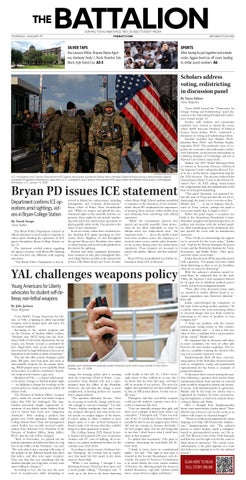
Ava Lawson White, Brianna Marie Aguilera, Andwele ‘Andy’ L. Nash, Brandon Tate
Black, Kyle David Cox A2-3
Department confirms ICE operations amid sightings, videos in Bryan-College Station
By David Swope News Editor
The Bryan Police Department released an official statement to local media in response to online posts detailing the operations of ICE agents throughout Bryan-College Station on Jan. 27.
The statement verified rumors regarding the agency’s activity, with Bryan PD claiming it does not have any affiliation with ongoing operations.
“The Bryan Police Department is not in-
volved in federal law enforcement, including Immigration and Customs Enforcement,” Bryan Chief of Police Dean Swartzlander said. “While we respect and uphold the constitutional rights to free assembly and free expression, those rights do not include interfering with active law enforcement operations or placing public safety at risk. Our priority is the safety of our community.”
In recent weeks, videos have circulated online showing ICE agents operating on University Drive, Highway 21 and throughout the greater Bryan area. Residents have taken to online forums and social media platforms to document the sightings.
Protests and other organized demonstrations continue to take place throughout Bryan-College Station, notably at the intersection of East Villa Maria Road and Texas Avenue,
where Bryan High School students assembled in response to the detention of two students’ father. Bryan PD emphasized the importance of keeping these protests within lawful areas and refraining from interfering with official operations.
“While the Constitution protects free speech and peaceful assembly, those protections do not allow individuals to enter or disrupt active law enforcement areas,” the statement reads. “ … Just as the public is kept back from accident scenes, fire responses, or secured crime scenes, similar safety boundaries are in place during active law enforcement operations. These measures are necessary to protect the public, officers, and first responders.”
Bryan PD has not published any further information about ICE at this time.
By Jolie Jackson News Reporter
Texas A&M’s Young Americans for Liberty, or YAL, is fighting to allow non-lethal weapons, such as pepper spray and tasers, for on-campus residents.
According to the current weapons rule on the Division of Student Affairs website, “Students may NOT bring into the Residence Halls or University Apartments, for any reason, any firearm (except as permitted by law), illegal knife, club, or any other weapon (not restricted to legal definitions) that may be hazardous to the health or safety of residents.”
The rule lists rifles, pistols, shotguns, pellet guns, BB guns, taser/stun guns and more as unacceptable weapons for on-campus housing. While pepper spray is not explicitly listed in the policy, it could be considered a hazardous weapon and remains a gray area.
Members of YAL — a chapter which pushes for policy changes to defend student rights — are fighting to change the wording on the current policy to clearly permit non-lethal self defense tools.
The Division of Student Affairs’ weapons policy marks the second non-lethal weapon policy that YAL has challenged. The organization previously fought campuswide restrictions of non-lethals under Student Rule 24.4.14 which bans tasers and “dangerous chemicals.” After creating a petition that gained over 2,000 signatures, Houston and College Station State Chair and management senior Audrey Lee recently received confirmation from Associate Vice President of the Division of Student Affairs, Justin Jeffery, Ph.D., that the rule will be changed.
“Back in November, we printed out the petition signatures and delivered them in a big box to the Office of the President,” Lee said. “We were able to get a meeting with some of the people on the different boards that affect that policy, and they were super receptive. They saw that this was something that the students thought was a big issue, so they were super willing to change it.”
According to Lee, she has seen the same level of receptiveness while attempting to
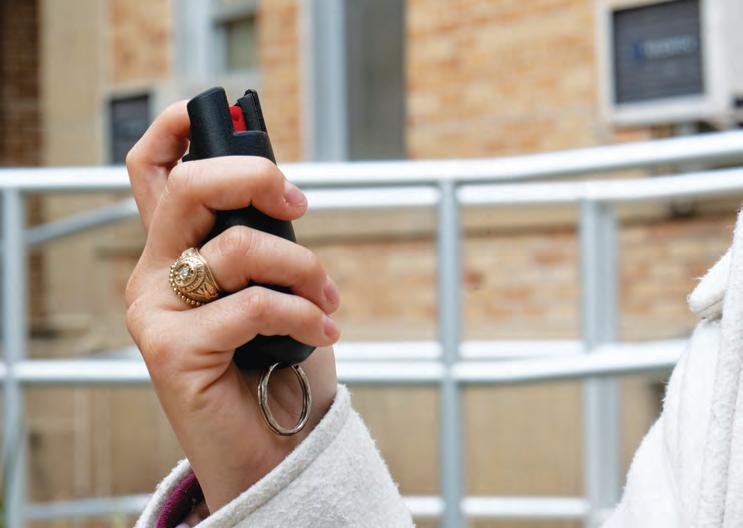
change the housing policy after a meeting with the University Chief of Police, a representative from Student Life and a representative from the Office of the President. However, she said that this change is more complicated, as housing policies are separate from campus policies.
“The question ultimately became, ‘How are we going to word the change and be specific enough to convince housing?’” Lee said.
“From a liability standpoint, they don’t want any weapons. But given that most of the sexual assaults on campus happen in the dorms, if you’re going to allow a student to have pepper spray or a taser in their backpack, it doesn’t make a lot of sense that they couldn’t bring it to their apartment or dorm.”
The College Station 2025 Annual Security Report documented 239 cases of domestic violence and 257 cases of stalking, all occurring at on-campus residential facilities for the calendar years 2022-2024.
According to dance science freshman Sandra Thompson, she recently had an experience that made her feel unsafe in her dorm room in Aston Hall.
“While I was sleeping, I thought I was dreaming, because I heard my door open, and I heard people talking,” Thompson said. “I woke up to the door in the dorm slamming
SPORTS
After having to put together last-minute roster, Aggies bond on, off court, leading to stellar assist numbers A6
By Taryn Stilson News Reporter
Texas A&M hosted the “Democracy by Design: Voting and Redistricting” panel discussion at the Annenberg Presidential Conference Center on Jan. 21.
Faculty, staff, students and community members were invited to attend the event, where A&M Associate Professor of Political Science Soren Jordan, Ph.D., moderated a discussion on voting and redistricting reform.
Panelists included Eric Maskin, Ph.D., Jonathan Katz, Ph.D. and Nicholas Stephanopoulos, Ph.D. The professors’ areas of expertise are economics and mathematics at Harvard University, social sciences and statistics at California Institute of Technology and law at Harvard Law School, respectively.
Maskin, the 2007 Nobel Memorial Prize co-winner in Economic Sciences, referenced the Supreme Court’s ruling that allowed Texas to use a newly drawn congressional map for the 2026 elections. This decision followed the United States District Court in the El Paso Division’s Nov. 18, 2025, ruling, which found the congressional map unconstitutional on the basis of racial gerrymandering.
“This panel discussion was proposed before the state of Texas got into the act [of redistricting]; the panel is not a reaction to that,” Maskin said. “ … It just so happens that because of Texas’ actions, perhaps the panel is even more timely than it might’ve been.”
Before the panel began, a reception was held at the Annenberg Presidential Center. Attendees mingled and shared perspectives on politics and elections with the invited speakers. After transitioning to the auditorium, Jordan opened the event with an introductory statement.
“First, I’d like to acknowledge the support we’ve received for the event today,” Jordan said. “And for the Private Enterprise Research Center and the Mosbacher Institute for Trade, Economics, and Public Policy. They sponsored the entire event today.”
Jordan then kicked off the panel discussion with a question: “For people who don’t think about districting as often as we do, Jonathan, what do we mean by districting?”
With the audience’s attention turned toward Katz, he explained that in the mid1960s, the Supreme Court mandated districts be of equal size to distribute political power evenly and prevent malapportionment.
“Now, after every decennial census, states are required to redraw [district lines] to reequate population sizes [between districts],” Katz said.
Jordan acknowledged the complexity of this topic before posing another question: “As a scholar, what is the most interesting reform to electoral designs that you think would be interesting to see states or localities or even Congress try?”
“I think one problem with the current, predominant voting system in this country, which is plurality rule … is that it fails very often to elect a candidate who is representative [of the voters],” Maskin said. He explained that in elections with three or more candidates, the votes are often split between the most similar candidates. This results in a candidate winning the election who may not accurately represent voters.
Stephanopoulos built off these concerns, using aspects of the Australian electoral system such as compulsory voting and proportional representation for the Senate as examples of proposed solutions.
really loudly as they left. So, I don’t necessarily know if they walked in or not, but I do know that my door did open, and that’s still an invasion of my privacy. The next few nights, they pounded on my door really loudly, like an FBI pound almost. So that was really scary.”
Thompson said that non-lethal weapons could provide students a greater sense of security in situations like hers.
“Guys are naturally stronger than girls, and there were multiple of them from what I can remember,” Thompson said. “There was only one of me. It would have been important to actually be able to use my pepper spray if they did end up coming in, because obviously I do have pepper spray, but me not being able to use that, I don’t know what I could have done in that situation.”
To address that uncertainty, YAL plans to continue advocating for non-lethal self defense tools.
“I think it comes down to constitutional rights,” Lee said. “The right to bear arms is ensured in the Second Amendment, and obviously, the point of America’s Constitution is to ensure liberty for every citizen resident of America. So, allowing people the means to defend themselves, especially without lethal force, comes down to rights and liberty.”
A discussion then ensued among the panelists following a question from Jordan about institutional reform. Katz said that an external push would be required to reform our electoral system, with Stephanopoulos in agreement. Maskin said he has hope for reform that is supported by evidence of voters circumventing the legislature, as shown by ranked-choice voting in Maine and Alaska.
After a thought from Stephanopoulos about court intervention, Jordan asked: “How effective has it been to rely on the courts as an arbiter with respect to electoral designs?”
“There is a really good argument for courts stepping in to help with Democratic malfunction,” Stephanopoulos said. “The political process is what’s broken, [and] a malapportioned or gerrymandered system can’t fix itself. The Warren Court of the 1960s famously said that this was the right way for the court to think about its operations. The current court, unfortunately, is the polar opposite of a court that believes in stepping in to fix the political process.”

March 17, 2004 - October 16, 2025
Ava Lawson White — a woman of extreme faith and character — radiated a passion for helping others and a deep devotion to her faith as a Christian. A proud Highland Park High School graduate, Ava served as a captain of the varsity volleyball team and played trumpet in the varsity band.
From a young age, Ava was a determined individual whose heart and bright blue eyes glowed with the light of servant leadership. Her values and love for community eventually brought her to Texas A&M, where she found her place among the Aggie family, according to her parents, Christopher Lawson White and Joann Lauren Chatfield.
“She was determined to be an Aggie,” Christopher said. “She turned down other scholarships just to go to A&M. She shared the Core Values of the Aggies, and she wanted to be close to home.”
Integrity and Selfless Service were pillars of Ava’s life even before her time at A&M. While in high school, Ava set up a GoFundMe page for a softball coach’s family, who was undergoing cancer treatment. In that not-so-small act of kindness, Ava was paramount in raising over $90,000 for someone who had touched her heart.
But even in doing something so selfless, Ava remained true to herself — a humble woman of God.
“She never needed the spotlight; she was confident, caring and loving,” Christopher said. “Anytime I would bring it up to others, she would just say, ‘Stop it, Dad, you’re embarrassing me.’”
Ava was ferociously smart and incredibly hardworking. She managed internships and jobs while in college, always looking for ways to better herself. Her mother remembers her as a young woman who had very big plans.
“She was always so creative and would go through phases,” Joann said. “She had her own online store where she would sell the things she made and was very projectoriented, and she had been that way since she was a little girl.”
In kindergarten, Christopher recalled a moment when he knew his daughter was bound to be a competitive young woman who would always go all-in with her passions.
“There was this one time I was taking her to school one day, and I had asked her what she wanted to be when she grew up, and she said she wanted to be a fireman,” Christopher said. “And I had told her something like, ‘That’s great, you want to be a fireman,’ and she said, ‘No, Dad, I want to be the fireman boss.’”
It was moments like these that led Ava to A&M, where she loved to be part of a school that was far more than just a university, but a community that rallies around shared Core Values.
“She loved being able to call herself an Aggie,” Christopher said. “It’s those same values that she grew up with and had in her heart, so to have that at her school was very special to her. She made friends who shared her same faith and cared for everyone in the same way.”
While at A&M, Ava pursued a Bachelor of Science in Agricultural Leadership, a venture she dove into with the same determination that had touched the lives of so many in Highland Park, College Station and everywhere else that saw the light of her warm smile.
“Ava loved her work and had already accepted a full-time position in sales with AT&T after college,” Joann said. “They loved the job she did so much and so did so many other places. She was already interning with Provalus while still in classes, and it just showed how hardworking she was.”
Her faith and trust in God’s plan were indicative of how she will be remembered in the hearts of everyone who knew her and shared her same love.
Her favorite verse was Proverbs 3:56 which reads, “Trust in the Lord with all your heart and lean not on your own understanding. Seek his will in all you do, and he will show you which path to take,” was what she lived by. As Joann put it, “She was never afraid to share her faith with others.”
Ava received her degree posthumously in December 2025 and will be remembered as a beacon of joy and warmth, and her spirit will live on in the happiness she brought to all she encountered.
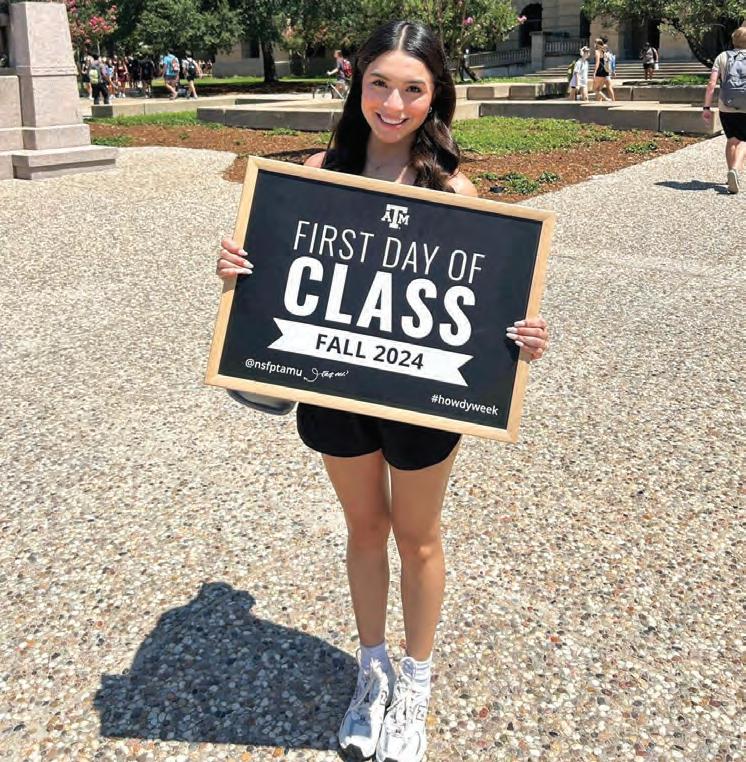

Ceremony: Tuesday, Feb. 3, at 10:30 p.m. at Academic Plaza.
Warning: There will be gun sounds at the ceremony. Please remember to remain quiet upon arrival.
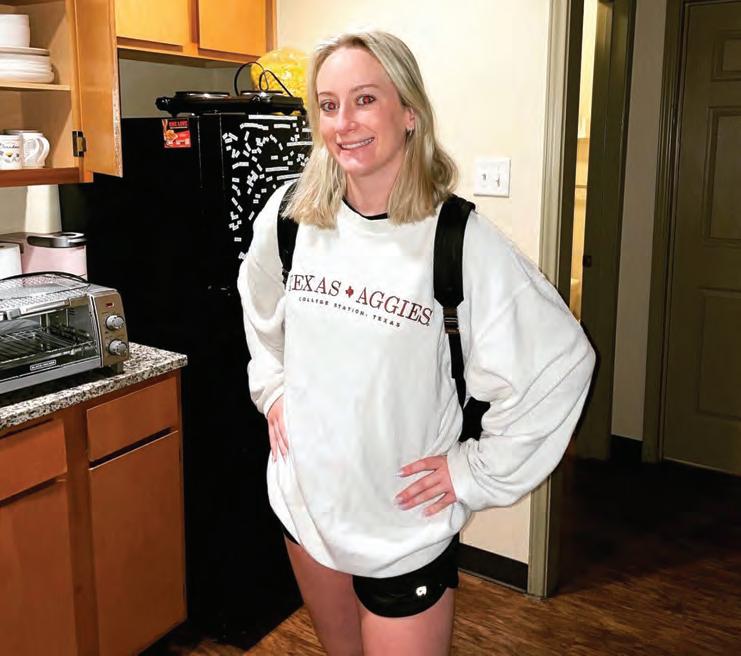

January 25, 2006 - November 29, 2025
“Anywhere she would go … she was the one that always got everybody going, and she was the one that kept the party alive,” her father said.
Brianna Marie Aguilera was the life of the party. Her father, Manuel Aguilera Jr., couldn’t recall a time when Brianna wasn’t radiating happiness. Whether she was on the sidelines cheering at United High School or headed to watch her little brother’s games, Brianna always had a smile plastered on her face.
“She always made the best out of everything,” Manuel said. “Even if it was small, she would always make the best out of it. I never saw her as somebody that didn’t take advantage of the whole second that she was in.”
But Brianna didn’t just take advantage of the moments she was given. She filled those moments with herself and all the things she loved. Most notably, according to Manuel, she filled it with cheer.
“She made it known, you know, that she was a cheerleader,” Manuel said. “ … Wherever she was, she made that spirit known. ‘I got the school. I got the school’s back.’ … She was always very, very, very passionate about that.”
That passion from the sideline of her high school’s football field followed her deep into the heart of Aggieland, where she quickly found herself at home.
Despite scholarships from other institutions — and her father’s initial wishes for her to stay close to Laredo — the second she was accepted to Texas A&M, Brianna knew that College Station was in her near future.
“In her opinion, going to [A&M], that was a very prestigious school and a very hard school to get into,” Manuel said. “So once she got accepted, you know, that, for her, it was a big hype. … And since she was seeking to be an attorney, she said that was one of the best schools to go to.”
Despite dreaming of becoming a nurse growing up — most likely to follow in her mother’s footsteps, as her father noted — in high school, her vision for her future shifted. She no longer envisioned scrubs and needles, but instead pantsuits and law books.
“She would always make fun, ‘Well, my brother’s going to need an attorney,’” Manuel said. “He’s not a troublemaker or anything like that, but she would always make fun of him, ‘Well, you know, eventually he’s going to need an attorney.’”
Despite the many jokes shared between Brianna and her brother, her mother, Stephanie Rodriguez, confirmed that her future aspirations stemmed from a long family line of careers in law enforcement. Growing up around extended family members who worked in criminal justice, Brianna knew she wanted to follow in their footsteps by becoming a defense attorney. She quickly began chasing this passion when she joined the A&M Pre-Law Society and started studying political science in preparation for a future in law.
“Her schooling was very important to her,” Manuel said. “She would always mention she was always stressing about, ‘Here comes a test. I got to study, got to stay up. I got to make this A, I got to make this happen.’”
Brianna’s passion for school was evident to her parents — as was her passion for others. Both Manuel and Stephanie stated that Brianna was someone who always put others before herself.
“Brianna was the type of person that liked to make everyone else feel better,” Stephanie said. “ … She was always one to be an advocate for anyone else or just be a friend, you know? She was never biased. She hung out with everybody.”
While Brianna cherished school, social events and — most notably — her yorkie, she cherished her friends and family most of all.
Her mom recalled that Brianna was always the first to extend a helping hand, even offering to help peers from her hometown get back and forth if they didn’t have a ride of their own.
“I want people to remember her as someone that was always there for everyone else,” Stephanie said. “ … Even when people needed a ride back home, she was the goto person. When people needed a ride back to school, she was the go-to person. … She was just very generous.”
From taking care of others to lighting up a room with her smile, at the end of the day, Stephanie said that she was simply proud of the woman Brianna was becoming.
“She always lit up my world,” Stephanie said. “She never disappointed me. … She was into the church.
… She was so determined to become a lawyer. She was a great friend and a great daughter and a great sister, granddaughter. I don’t think there was anything that life couldn’t throw at her. … I was so proud of her.”
Ceremony: Tuesday, Feb. 3, at 10:30 p.m. at Academic Plaza.
Warning: There will be gun sounds at the ceremony. Please remember to remain quiet upon arrival.
February 12, 1979 - December 17, 2025
A management information systems graduate student from Katy, Andwele “Andy” L. Nash had a fervent passion for Texas A&M and everything that its community stands for. A talented student, chef and man of strong religion, Andy truly touched every person he came across.
After being a fan of LSU for the better part of his life, Andy made a sharp turn to Aggieland once he began his master’s degree. Because of how proudly he spoke of the Aggie traditions, everyone close to him recognized the authenticity of his passion.
“He always wanted to put A&M first and let people know that he was an Aggie after years of being a fan of another school,” Andy’s friend, Matthew Johnson, said. “So it was always funny to me that all his other friends are LSU fans, and he flipped on them. And he was always proud to be an Aggie because he saw Aggies at his workplace. He saw Aggies everywhere, and he always wanted to be a part of the tradition.”
More specifically, Andy was known for two distinct catchphrases in support of the Maroon and White, which were picked up from a department head speaking to new students.
“One of the funniest things and the
diehard things about him is … two quotes that he had,” Johnson said. “And I know [Andy’s wife] Lily knows it more than me, but when he first got to A&M, one of his department heads said that they make the new recruits drink the ‘Kool-Aid,’ as in telling them how good A&M is and how good the school is. … So he used to say, ‘I drank the Kool-Aid,’ and also he used to say, ‘I bleed maroon,’ so those are the two quotes that I always remember him by.”
More than this, Andy carried an infectious joy and passionate way of living that impacted all of those around him.
“Andy was stern, family-oriented, and he was passionate about his religious belief in a sense,” Johnson said. “He was very passionate about that, but stern in a good way. He would just kind of, once he had his heart set in on something and he dug his heels on it, that’s the way it was.”
One of Andy’s many passions was agriculture. He enjoyed gardening and cooking, and he had even expressed that he would have liked to be a farmer if he was able to make enough money.
“He loved cooking,” Lily said. “He loved making his favorite two dishes, which was gumbo and crawfish etouffee. So he was
very well known for those two dishes. He even taught me how to cook those, like trial and error. I basically made the perfect dish for him. So he loved those two dishes, and that’s really what he balanced between the country side of himself and the city side of him, so he had two sides that he loved, he enjoyed.”
Andy’s passion for learning did not halt in the realm of cooking. Throughout his life, he constantly strove to learn all that he could. From the kitchen to the classroom, Andy was an individual who sought constant intellectual stimulation.
“He is a lifelong learner,” Lily said. “He loved education, so that comes from his family upbringings. So I felt like the more he learned, the more intellectual he became, and I think that helped him navigate through a lot of his personal and professional experiences.”
Andy held many important titles. He was a husband, father, best friend, chef and man of faith. However, it is the integrity and passion he performed all of these roles with that shaped him into a thing bigger than himself: an Aggie.
“He loved his family,” Johnson said. “He loved the school, and he just loved people in
September 20, 2002 - December 17, 2025



The crunch of gravel accompanied by the steady cadence of a jog fills the air. The sun beams down, peeking through the trees as a slight breeze ripples across the leaves — this is a scene that Brandon Tate Black knew all too well.
Brandon loved adventure. Whether he was running a marathon, an ultramarathon, mountain biking, rock climbing or finding himself in the water, Brandon loved the outdoors. His mother, Rebecca Black, said that he was “always pushing the limits,” looking to find where his next adventure would take him.
Adventure was an integral part of Brandon’s life, as it landed him all across the country growing up. Brandon lived in seven states before settling in College Station to pursue a degree in electrical engineering.
Despite graduating from high school in California, he decided to take after his father, Dustin Black ‘98, and attend Texas A&M.
While his father had an impact on his decision, Rebecca said it was ultimately the traditions and the engineering program that drew Brandon to A&M.
Once in Aggieland, Brandon immersed himself in the culture and traditions of the university. He joined professional organizations such as the Texas A&M National Scholar Ambassadors, Engineers for a Sustainable World and became an Electrical Engineering Ambassador. He also became involved in a service organization
December 8, 1995 - January 5, 2026
— BUILD — and a recreational team through the unicycle club.
He delved into the Aggieland atmosphere alongside his girlfriend, Aisling Gilmore ‘24, and his younger sister, business administration freshman Allison Black, with hopes that one day his 12-year-old sister, Claire, would follow in his footsteps.
Rebecca explained that she was most proud of Brandon for being a great son, big brother and friend. He was someone who cherished the relationships he had with friends and family, always looking to make others happy.
Brandon was someone who was always concerned about others and put them first. He lit up a room with his smile and laughter, and, according to his mother, he was always filling a room with his great laugh.
A laughter that followed him and his father on their camping trip to Wyoming, and even when they rebuilt an old Chevy truck engine together — both of which Rebecca marked as some of her favorite memories of Brandon.
Rebecca described her son as brilliant and someone who was always ready to face any and all challenges thrown his way. She wants him to be remembered as someone who loved adventure and the outdoors, loved people and was truly fearless.
Brandon touched the lives of many and will be remembered by those he loved as a vibrant and caring young man who aspired to be a light for those around him.
‘W here others see disability, he only sees ability’
Diagnosed with Duchenne Muscular Dystrophy just before the age of 7, Kyle David Cox faced a substantial number of challenges, but he did not let any of these challenges discourage him.
Although his time here was short, he accomplished more than most people could in a century. An avid Texas A&M sports fan, an amazing musician, a loving son and friend and a person of great faith, Kyle embodied his mantra: “It’s not the disability, it’s the ability.”
From an early age, Kyle knew that he wanted to attend A&M, and that’s exactly what he did. After receiving a Bachelor of Arts in Political Science and a minor in agricultural leadership, he went on to attend the Bush School of Government & Public Service, where he earned a Master of Public Administration in 2020 with a focus on public policy and healthcare. At the time of his passing, he was a doctoral candidate in the A&M College of Agriculture, working toward a Ph.D. in agricultural leadership, education and communications.
“He got involved in things,” Kristen Cox, Kyle’s mother, said. “He ran for Senator; he made Senator twice. He resumed a dormant athletics, adaptive sports. And he got that reinstated, and he got a vendor to donate like 18 wheelchairs, so that it could be integrated. So people without disabilities played in a wheelchair, which was their
disability, and then people with disabilities played in a wheelchair, which they knew how to use.”
This accomplishment is one of many that Kyle made in order to better the lives of students with disabilities. Instead of choosing to focus on himself, he did everything for the benefit of others, no matter how tedious.
“He started this project on campus called Open Doors because he would find that buildings either didn’t have a door-opener, or maybe they had one door-opener at one door, but when it rained, he had to get to the closest door possible,” Kristen said. “And so he went and asked, ‘Who puts dooropeners? How do we get a door-opener in?’
They told him what company does it. He talked to them about, ‘What does it cost?
Who’s my contact?’ And then he put the word out, ‘If anybody needs a door-opener anywhere, contact me, and I’ll get it done for you.’ So he got door-openers.”
Beyond his work breaking boundaries for students at A&M, Kyle was known for his faith and his eagerness to share it.
“He led a lot of people to the Lord,” Kristen said. “I heard so many stories of people that he gave them their first Bible. I didn’t even know he did that, and some of them told me he gave them his Bible that he was using.”
Within his faith-centered community,
Kyle made friends that loved him and everything he represented. So much so, his friends from the Impact Retreat planned a trip around the country for Kyle, involving hot springs, rafting and his love for barbeque.
“They had decided to take him on this road trip across the country,” Kristen said.
“And he loved barbecue, so they had lined up, they’ve gone and raised money all over town like Sonic and all different places. And they rented this huge RV, and they had lined up all these barbecue restaurants going toward the East Coast, and it was a surprise.”
Just like this group of friends, everyone who met Kyle seemed to love him and be permanently touched by him. Even his high school band director drove two days both ways for Kyle’s service because of the mark he left on his heart.
“He loved his sisters,” Kristen said. “He has seven nieces and nephews, and he loves them fiercely. He gave them rides on his wheelchair all the time, and one would be on the back, one would be in the front between his legs, and they’d be fighting over who’s next. And he’d turn in circles, and when he drove, he’d help me drive them around with their activities. He loved to just give them rides to their activities.”
Kyle was a sports fan, traveler, coin collector, musician and much more. Most importantly, Kyle was a person who left a mark on the world around him and all

of the people in it through his faith and genuine care for others.
“I think people just gravitated to him because his word was — and it’s on his challenge coin — I have a challenge coin for him,” Kristen said. “ It says, ‘It’s the ability.’ Where others see disability, he only sees ability, and it attracted people.”















Aggies cruise through year despite whirlwind offseason
By Noah Ruiz Associate Sports Editor
When former head coach Buzz Williams departed to Maryland following the 20242025 season, Texas A&M men’s basketball was plunged into a sea of uncertainty.
Thanks to the transfer portal and exhausted eligibility, the Aggies had all but one player — sophomore forward Chris McDermott — leave College Station, not to mention their entire coaching staff fleeing the coop.
Stuck on the latter end of the coaching carousel and needing a roster fast, the Aggies made their pick on April 5, 2025: Samford head coach Bucky McMillan. A three-time Southern Conference Coach of the Year, McMillan’s up-tempo offense and aggressive play style are polar opposites to what A&M fans had grown accustomed to with Williams’ board-crashing identity.
But the vision was there.
In just a few months, McMillan put together a coaching staff and a ragtag collection of mercenaries set to don the Maroon and White through 2026. There were growing pains, as expected, with back-to-back losses to Oklahoma State and UCF, dropping the Aggies to a 2-2 start, prompting some folks to write the season off as a lost cause — but not McMillan.
“What I can say to all Aggie fans is that this is not what you are going to expect of our program,” McMillan said following the 87-63 loss in Stillwater, Oklahoma. “I know we’re going to get this thing right and hang with us because when we do, it will be that much better.”
And lo and behold, halfway through the season, A&M has done just that.
After losing two straight, the Aggies have won 14 of their last 16 matchups, including two winning streaks of at least five games. Three school records were broken in the process, two of which were in the same contest. A&M’s 18 3-pointers against Manhattan were the most in program history, as was sophomore guard Rubén Dominguez’s individual performance as he drained 10 from beyond the arc.
A&M, which hadn’t scored 100 points in a game in five years, has eclipsed the century mark six times this season — the most in program history. Three of those occasions occurred in consecutive games, with the Aggies gaining more confidence with each performance.
McMillan has transformed A&M into an offensive machine, scoring below 74 points just once this season. While perhaps not the most glaring benchmark on paper, and a seemingly cherry-picked statistic, the shock value comes from the fact that the Aggies
averaged 74.3 points per game in Williams’ final year; under McMillan, they are averaging 91.8 points per game.
The Maroon and White’s scoring average is the seventh best in the entire country and third in the Southeastern Conference. League play has brought out the very best in McMillan’s squad, as its scoring average has remained steady at 83.43 points per game, and it has fought its way to the top of the conference standings with a 6-1 record.
Such a drastic improvement in scoring from a season ago can be credited in part to the Aggies’ efficiency from long range, with Dominguez leading the way with his 66 made threes. As a unit, A&M ranks sixth in the country with an average of 11.5 makes per game from behind the arc, which, halfway through the season, is almost a 25% increase from last year.
Additionally, McMillan’s seven-game start to SEC play is tied for the best start to a first-year A&M coaching run in program history, having a chance to have the standalone record with a victory over Georgia on Saturday, Jan. 31.
Individually, graduate student F Rashaun Agee is making the most of his final year of eligibility at the collegiate level. After being awarded a waiver following months in court, the USC transfer has been McMillan’s do-it-all, No. 1 enforcer under the basket, as his nine double-doubles rank second most in the SEC.
Even with the loss of NBA Draft prospect F Mackenzie Mgbako for the remainder of the season, A&M has five different players averaging double figures every game, and its bench has been among the most productive in the nation. McMillan’s 15-man-deep approach in his brand of basketball has equated to 38.6 points per game off the bench, the third-best average in the country.
While Agee and Dominguez have been neck and neck in points per game, eight different players have led the Aggies in scoring, including a true masterclass from graduate student F Zach Clemence against South Carolina on Jan. 24.
After scoring more than 12 just once during his three-year collegiate career, the San Antonio native fired off seven three-pointers against the Gamecocks and helped the Aggies turn a seven-point deficit into a 23-point margin of victory.
Twenty games down and at least 11 more to go, the Aggies have a treacherous journey ahead if they are to make it to the NCAA Tournament. From three AP-ranked opponents on the road to rematches with bitter rivals, A&M will need its best foot forward to steady its trajectory to the “Big Dance.”
Luckily, for fans and players alike, it seems the Aggies have found just the right man to lead them to the promised land. A&M will have a break from midweek action, but will return to court against Georgia at noon on Saturday.





A&M boasts impressive assist-to-turnover ratio after bonding on, off court
By Ian Curtis Senior Enterprise Reporter
The last time Texas A&M men’s basketball was trailing at the end of regulation, it lost to UCF on Nov. 14, 2025, 86-74. In that game, the Aggies posted 14 turnovers and 15 assists.
“Too many turnovers in that game from our point guards,” head coach Bucky McMillan said after the loss. “We’ve got to cut those turnovers down.”
Just over two months later, A&M ranks 15th in the country and third in the Southeastern Conference in assist-to-turnover ratio as a team, with 1.73 assists for every turnover. The Aggies also lead the conference in total assists and turnover margin.

But what’s behind such a drastic shift?
For McMillan, the answer is simple. After being hired by A&M on April 5, 2025 — late in the coaching carousel cycle, after most of the nation’s top transfer portal targets had already committed to programs — and pulling together a team from the transfer portal after having just a single player on the Aggies’ roster, McMillan said that the Maroon and White have simply gotten used to playing with each other after not having much time together.
“Everybody’s playing better knowing how the other players play,” McMillan said after the win over Prairie View on Dec. 29, 2025. “Like, ‘How can I do what I do well to help the team?’ and then, ‘How can I help the others do what they do well to help the team?’ Early in the season, I don’t think a lot of guys knew what they could do well to help the team. They didn’t even know half of their teammates’ names.”
Against Mississippi State on Jan. 21, A&M committed a season-low three turnovers while gathering 18 assists as a team.
“Three turnovers in a 40-minute SEC basketball game, that’s unheard of,” McMillan said. “You may watch the SEC play all year and not see that happen again with any team.”
As for where those assists are coming from, it’s been a plethora of contributors. Senior guard Jacari Lane led the Aggies with six assists against the Bulldogs and is the team leader in total assists this season with 78. But five Aggies have recorded 40plus assists so far this year.
When asked, Lane credited A&M’s impressive assist-to-turnover ratio to the fact that the Aggies have grown closer over the past few months.
“We got put together last-minute, kind of,” Lane said at a media availability before the game against South Carolina. “We’ve been together these past six, seven months, and we’ve just been gelling, connecting throughout these months. And obviously, it shows on the court. We’re not just close on the court, but off the court as well.”
It hasn’t just been the Aggies’ backcourt that’s been racking up assists. Graduate student forward Rashaun Agee — who already leads A&M in scoring, blocks and rebounds — has collected 41 assists so far this season, including five against Mississippi State.
Senior G Rylan Griffen said that Agee plays a major role in facilitating the Aggies’ offense.
“Mr. All-SEC over here, he set two good screens and got me open,” Griffen said after the win over the Bulldogs. “And that’s another reason he’s All-SEC. … You see the night he had, 23 and 10, which is normal. We’re not even surprised by that no more. But he really runs the offense, too.” Agee, for his part, said that the chemistry he’s been able to develop with sophomore G Rubén Dominguez — who leads A&M in 3-pointers made with 66 — has been part of that success.
“If we draw something up or if me and Rubén see something, we make eye contact, it’s going to happen,” Agee said after the win over Oklahoma on Jan. 10. “Like, it’s just natural.”
When the Aggies take the court against the Georgia Bulldogs at Stegeman Coliseum in Athens, Georgia, on Saturday, Jan. 31, A&M will be facing its polar opposite. The Bulldogs are 11th in the conference in assist-to-turnover ratio. The Aggies will need to rely on their chemistry as they look to improve to 6-1 in SEC play and extend their lead in the conference standings.







Aggies attempt to bounce back against Gamecocks, pick up second conference victory
By Brody Vaughn Sports Writer
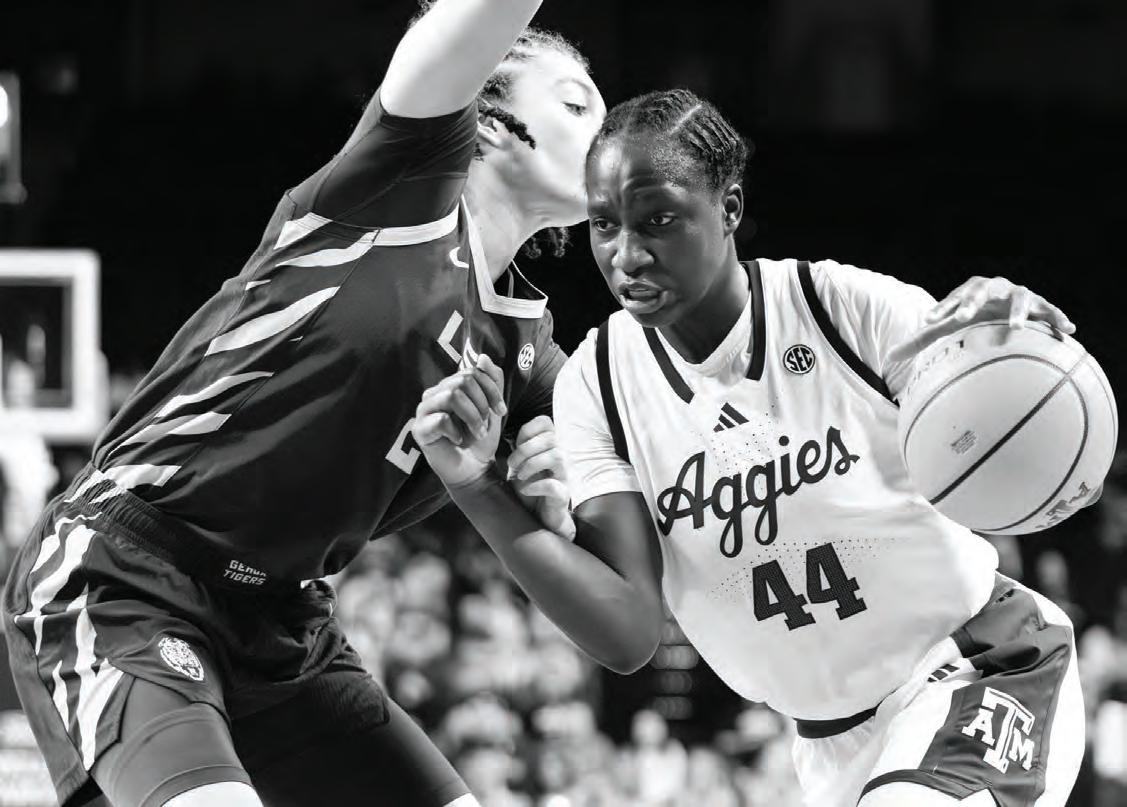
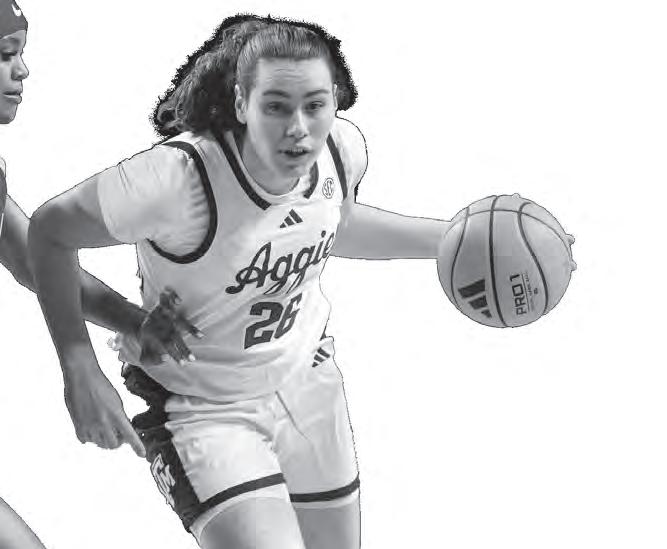
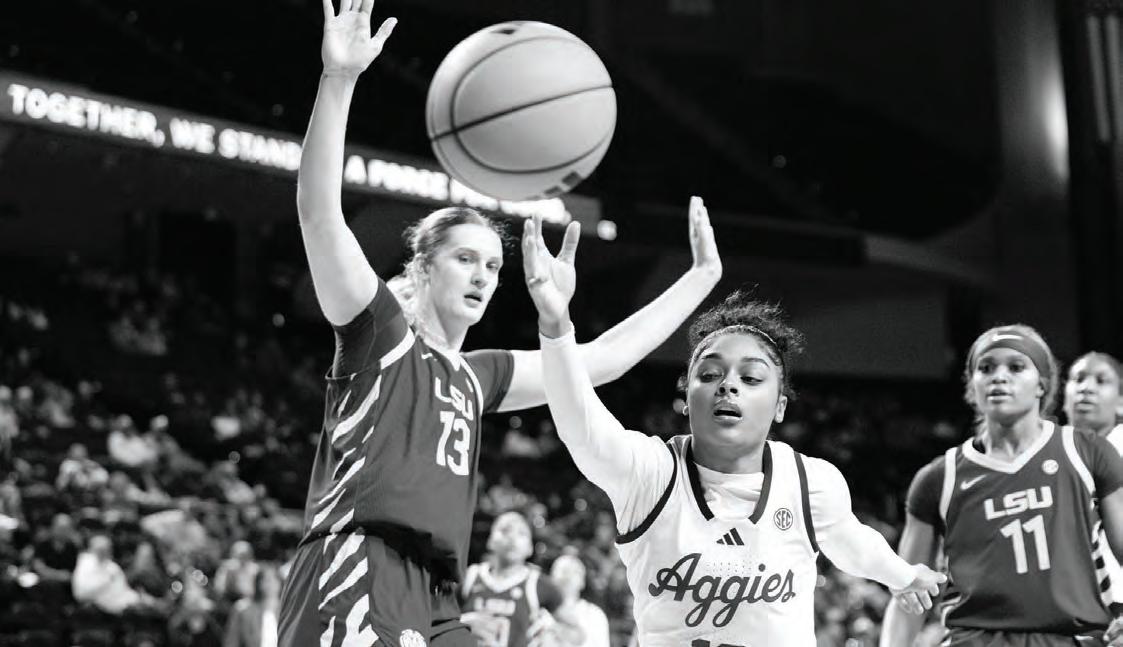
Approaching the midway point of Southeastern Conference play, Texas A&M women’s basketball will continue its run against one of the most difficult schedules in the country when it faces No. 10 Oklahoma on Thursday, Jan. 29, before taking on No. 3 South Carolina at Reed Arena on Monday, Feb. 2.
The Aggies look to right their ship as they come off of a brutal four-game losing streak. After dropping three straight showdowns by 40-plus points, A&M kept things relatively close in a 81-70 loss to Missouri on Jan. 25.
“I think for us it’s continuing to come in and have the right mindset when we get into practice, understanding that from game to game,” head coach Joni Taylor said after the loss to LSU. “There’s going to be things that are similar. There’s going to be things that are different.”
Despite recent outcomes, one small bright spot over the past few games has been senior guard Ny’Ceara Pryor. The Baltimore, Maryland native has led the team with 15.5 points per game and 60 steals, her
domination on the court proving indispensable for a team lacking a focal point on the offensive side of the ball.
The SEC has never been better than it is right now, and unfortunately for the Aggies, they are catching the short end of the stick. With nine teams in the AP Top 25, the SEC leads all conferences in ranked teams, including five squads in the top 10.
“This league is hard, every day is going to be a dogfight,” Pryor said. “We just got to get better, and that’s the only way we are going to grow is if we do the right things, the little things.”
Those dogfights will continue for A&M as the Aggies prepare for a trip to Norman, Oklahoma, to take on the Sooners. Oklahoma enters the matchup 16-4, recently notching a massive overtime win over thenNo. 2 South Carolina, 94-82.
The Aggies will need to keep tabs on a duo of stars for the Sooners. Freshman G Aaliyah Chavez’s 19.1 points per game rank 31st in the country, and her 85 assists lead Oklahoma. A&M will need to limit her offensive depth if it wants to stay in the fight.
On top of that, the Maroon and White will need to find an answer for the nation’s ninth-ranked rebounder, senior center Raegan Beers. Her 11.1 boards per game make her a threat on both sides of the ball.
Oklahoma will have plenty of work cut out for the A&M defense. Its 89.1 points per game ranks third in the NCAA, falling just behind a familiar opponent: LSU. The Sooners’ ability to distribute the ball has
been their strongest point. Their 21 assists per game currently rank fifth in the nation, and the Aggies will need to capitalize on live-ball turnovers to limit the Sooners’ offensive reach.
Things won’t get any easier when A&M welcomes South Carolina to Reed Arena. The Gamecocks sit with a 20-2 record, fresh off a blowout win over the No. 5 Vanderbilt Commodores.
Sophomore forward Joyce Edwards will be a name to keep tabs on for the Gamecocks. The 2025 All-SEC First Team honoree holds a team-leading 20.1 points per game. Her impressive 58.7 field goal percentage will need to be suppressed for the Aggies to come away with a win.
Junior G Tessa Johnson will be a threat behind the arc in Monday’s contest. Her 46.6% in 3-pointers leads the SEC by over a 3% margin.
South Carolina isn’t far behind Oklahoma in offensive dominance this season, being ranked fourth in the nation with 89 points per game. The Aggies will certainly have their hands full defensively over the next few days.
“The SEC is hard,” graduate student G Jordan Webster said. “It’s a hard league to play in, but you have to turn the page and grow from it and actually learn from the mistakes that we’re making.”
With time running out to boost its standing in the SEC, A&M will need to fix its mistakes and steal a few wins from these top opponents.














Opinion staff drops their favorites from this year’s award nominations
By The Battalion Opinion Staff
With millions of musicophiles expected to tune into the 68th Annual GRAMMY Awards on Sunday, Feb. 1, the typical flurry of speculation regarding who will be walking away with a coveted golden gramophone is sure to have hit the headlines by now.
Well, there’s no need to wonder anymore, because the opinion staff has donned our virtuoso thinking caps and put our musically inclined heads together to help you fill out your GRAMMY Awards bingo card. From rock royalty to K-Pop virality, these are our picks for who will win at this year’s awards show.

Associate Opinion Editor Maeva Elizabé Record of the Year: ‘Manchild’ by Sabrina Carpenter
This girl has officially met the world, and she sure is leaving her mark on it.
A synthpop composition tastefully imbued with a generous helping of country flare, “Manchild” is as golden an example of a singer boldly staking their claim to a sound as Sabrina Carpenter’s own signature blonde locks. It’s catchy; it’s relatable; it’s witty, satirical and oh-so-cheeky. Seriously, what’s not to love about this No. 1 Billboard Hot 100 megahit? Carpenter has consistently proven her duality as a bubble gum
pop princess fit to inherit the crown from the queen Dolly Parton herself, and that’s all I need to cast my vote for this charismatic bombshell femme. Her discography has set the stage for excellence — a stage she’s proceeding to perform on. Anyone who refuses to acknowledge her star quality is just plain stupid … or is it slow?

Associate Opinion Editor
Joshua Abraham Album of the Year: ‘Let God Sort Them Out’ by Clipse
After 15 years, hip-hop fans questioned if we even needed a Clipse reunion. That question was quickly answered with a resounding yes.
Brothers and rappers Pusha-T and Malice bring back authenticity in “Let God Sort Them Out,” a dynamic project exploring the impact of grief and the power art possesses to heal. Produced by the iconic Pharrell Williams, the album has resonated with a wide range of music appreciators, a feat that played a significant role in its commercial success. Even though the GRAMMYS seem to be biased against hip-hop in this category, I hope the Recording Academy comes to its senses and rewards this exemplary representation of immaculate storytelling.
Associate Opinion Editor Joshua Abraham Song of the Year: ‘Golden’ by Huntrix
Was this the most overplayed song of 2025? Probably. But should that equate it being the most overhated song of last year? Not a chance.
It’s already difficult to create music for a movie; to not only do so, but on top of that make it one of the biggest songs in the world, one that unites every child, is a testament to the power of “Golden.” As a 22-year-old man, I felt truly empowered as I listened to this masterpiece during “KPop Demon Hunters” — and long after the credits rolled. This song has the goods, and I’m so glad it’s getting the recognition it deserves. Let’s hope the Recording Academy agrees.
Opinion Columnist Wyatt Pickering Best New Artist: Addison Rae
“Why is a TikToker being nominated for Best New Artist?”
This is a question I often hear about Addison Rae, one of the most talented upand-coming pop stars in recent memory. People severely underestimate the art of a successful rebrand, dismissing it as “inauthentic” in the case of this Diet Pepsi-loving nominee — whatever that means. Rae has as compelling a story for this award as we have seen in past winners such as Chappel Roan, and her fantastic debut album “Addison” backs it up.
Guess you’ve got to accept the pain and recognize the talent that is Ms. Addison Rae.
Opinion Columnist Sidney Uy Best Compilation Soundtrack For Visual Media: ‘Sinners’
The Southern-gothic epic “Sinners”
made film junkies fall in love with director Ryan Coogler all over again. The warm, yellow hues of a juke joint became the backdrop for a rich, energetic soundtrack. The mix of bloodcurdling screams on top of the infectious fusions of gospel, hip-hop and rock immersed viewers in an all-over body experience — especially in the oneshot scene of the iconic seance of the spirituals.
Giving us the trembling, soul-soaked feeling of spiritual awe, “Sinners” lets us appreciate the enriching history of the Mississippi Delta and its cultural renaissance that has long been overshadowed. It remains the most memorable soundtrack in GRAMMY history, if not transcending the entire competition altogether.
Senior Opinion Columnist
Isabella Garcia
Best Rock Album: ‘private music’ by Deftones
It’s rare I find an album without feeling the need to skip any tracks. And ever since I was caught up in the new generation of Deftones groupies through the despondent lust of “Sextape” and “Cherry Waves,” I became addicted to their signature sound of beauty and brutality.
“private music” threads a tone of melancholy with each track; it can only be described as the pain of nostalgia that drowns you in angst and romance. From the opening guitar chords of “my mind is a mountain” that hit you like a crashing wave to the haunting melody of “departing the body,” Deftones is unabashedly loud and evokes something intangible yet infinite — existing only in the flowing space between each note.

The sartorial iceberg: Fashion is temporary, style is forever
By Aidan Zamany Opinion Writer
If you crush a cockroach beneath your boot, you are celebrated as the hero of the room. However, if you kill a butterfly before the same crowd, you will be harshly condemned. Therefore, aesthetics have moral criteria. Philosophers continue to debate the nature of beauty and whether there is a connection between aesthetics and ethics, but modern science may have already provided a conclusive answer: Contemporary neurology evidences that moral and aesthetic judgements are not entirely isolated. Inherent to human biology, we subconsciously make rapid appraisals of external stimuli within milliseconds of exposure, with even infants being instinctually programmed to react differently to ugly and beautiful faces. The harsh truth is that attractiveness is a largely objective concept, and one that is only reinforced by our social constructs. Regardless of our conscious efforts, we will always be biased by the analyses our brains automatically conduct. So, whether that’s a whiff of an offensive scent, the first glimpse of a pleasing painting or the initial introduction of two people, first impressions are of paramount importance.
For these reasons, your outward appearance and the way you carry yourself become two major variables in determining whether the first impressions others have of
you will be positive or negative. The proportions of your body, your physique and your facial structure are largely defined by genetics, so while some enhancement can be achieved through persistent development, many of your physical features are determined at conception. Conversely, what you wear over your body is within your power to change — and instantaneously.
That modification is not wholly superficial. What you wear can alter your fundamental identity — if you adopt an archetype — or at least others’ perceptions of your identity. However, it’s important to note that if you want to truly transform yourself, you must supplement dress with consistent behavioral changes.
It is on account of this ethos that the beloved quarter-zip emerged from obscurity and was thrust into the public eye. By merely amending their choice of sweater — such as donning a quarter-zip rather than a hoodie — participants in the trend are able to instantly begin their transformation from unserious mediocrities into distinguished individuals.
Remember, however, that their choice of knitwear should merely be a complement to more significant changes in behavior — in this case, perhaps partaking in the Japanese tea tradition of matcha and implementing a more professional vocabulary.
But quarter-zips are just the tip of the iceberg. The opportunity to ascend to an even greater plane of sartorial proficiency, one involving darts and dashes or stripes and checks, is waiting for you.
Rule number one: It is always better to be overdressed than underdressed. Respect your environment and dress accordingly. At
a minimum, match the expected standards of the room or, preferably, marginally exceed them to raise the bar and uplift your fellow man.
When others show up in a t-shirt, don a polo; when they wear polos, upgrade to a button-down — and so forth.
Let your aesthetic excellence serve as an outward mirror that reflects the beautiful aspects of nature and society. Idealize, romanticize but, most importantly, comply with the dress code and an appropriate level of formality.
Now, don’t be discouraged by the strict rules established by the aristocracies and authorities of old. One must dress to impress, but also to express — they are not mutually exclusive, and it’s entirely possible to demonstrate conformity and creativity simultaneously. In fact, among sartorialists, there’s a widely celebrated Italian principle called “Sprezzatura,” the art of carefully measured nonchalance.
In practice, it achieves an air of elegance through subtle yet intentional imperfections that imply effortlessness. In a way, it even justifies a degree of experimentation and allows room for error: Rolling up your sleeves, popping your collar or putting your wristwatch over your cuffs are all examples of this Italian flair.
When it comes to elevating your presence, there is a variety of mediums through which you can achieve your desired effect. I will simplify them into three major categories: cut, cloth and combination.
Firstly, cut refers to how the piece is constructed, the shape it holds and the silhouette it produces. The cut of your clothing is vital to creating a balanced look that match-
es your body type. Avoid the extremes — excessively baggy or skinny clothing — and instead opt for classical proportions.
Next, choose your cloth. Opt for natural, organic materials that last longer, look better and are more sustainable for the environment. These include wool, cotton, linen, cashmere and silk, but steer clear of synthetics like polyester or nylon. You can also select from a variety of patterns, colors and textures; what suits you largely depends on your complexion, build and personal preference.
Finally, know how to combine all the aforementioned cuts, cloths and colors to complete a harmonious and tasteful ensemble. Unique combinations also enable you to produce entirely new outfits using the same essential pieces, offering virtually unlimited options for your weekly wardrobe.
Applying the basic formula of classic cut plus proper fit and ensuring quality over quantity is guaranteed to yield a timeless, polished look for anyone.
If necessary, start small with minor upgrades and buy just a few staple pieces that you can rotate through. Those looking for inspiration or brands to shop should familiarize themselves with figures like Ralph Lauren, Tom Chamberlin and Brunello Cucinelli.
We shall isolate style from fashion, the integral from the superficial and culture from commercialization. Our attire is just a means to an end. We will have transcended above the rest. Cheers to all the future gentlemen.
Aidan Zamany is a political science sophomore and opinion writer for The Battalion.