Head Office, Te Puna Manaaki
320 Factory Road, Te Awamutu 3840
Te Wānanga o Aotearoa
Te Wānanga o Aotearoa

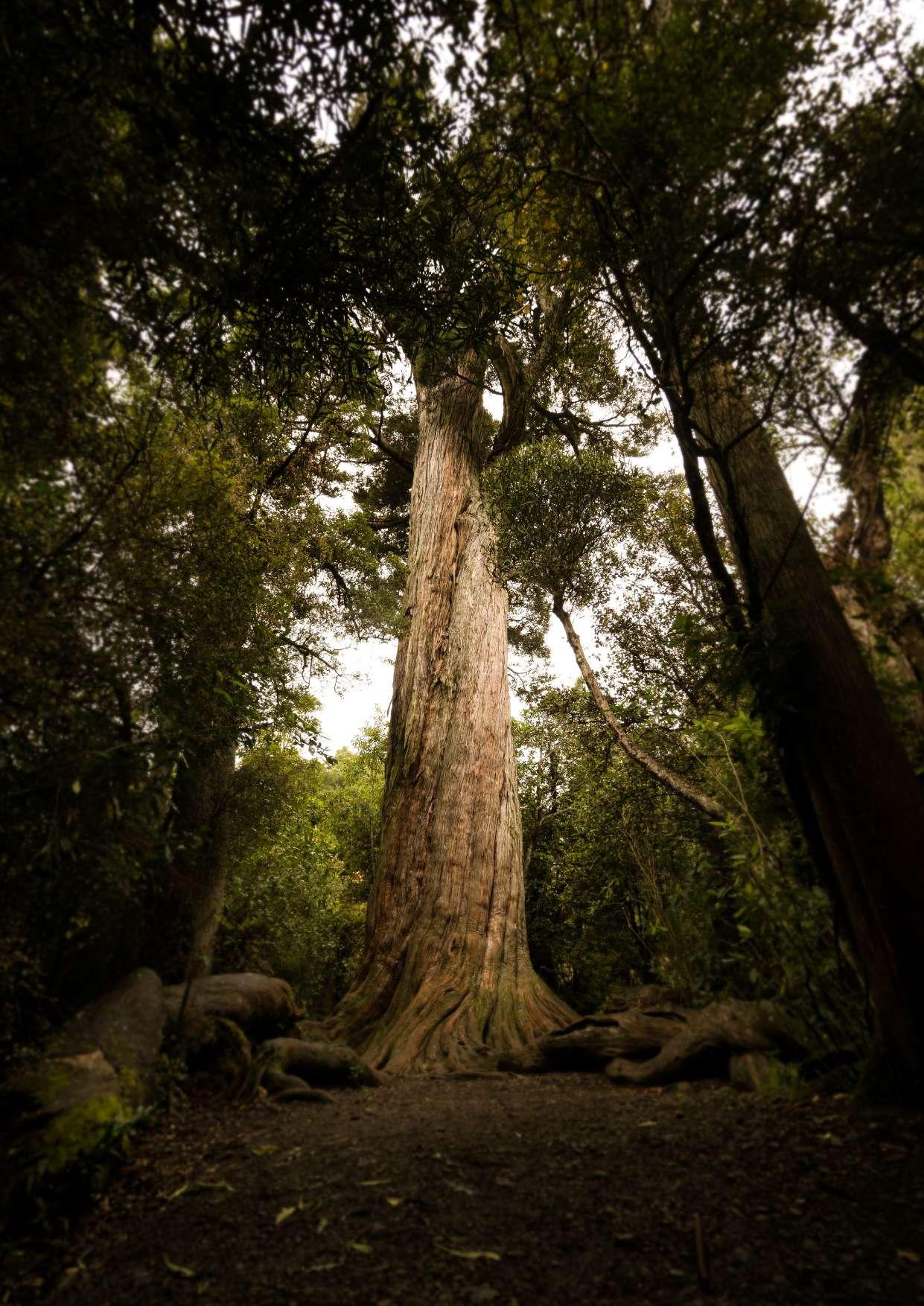
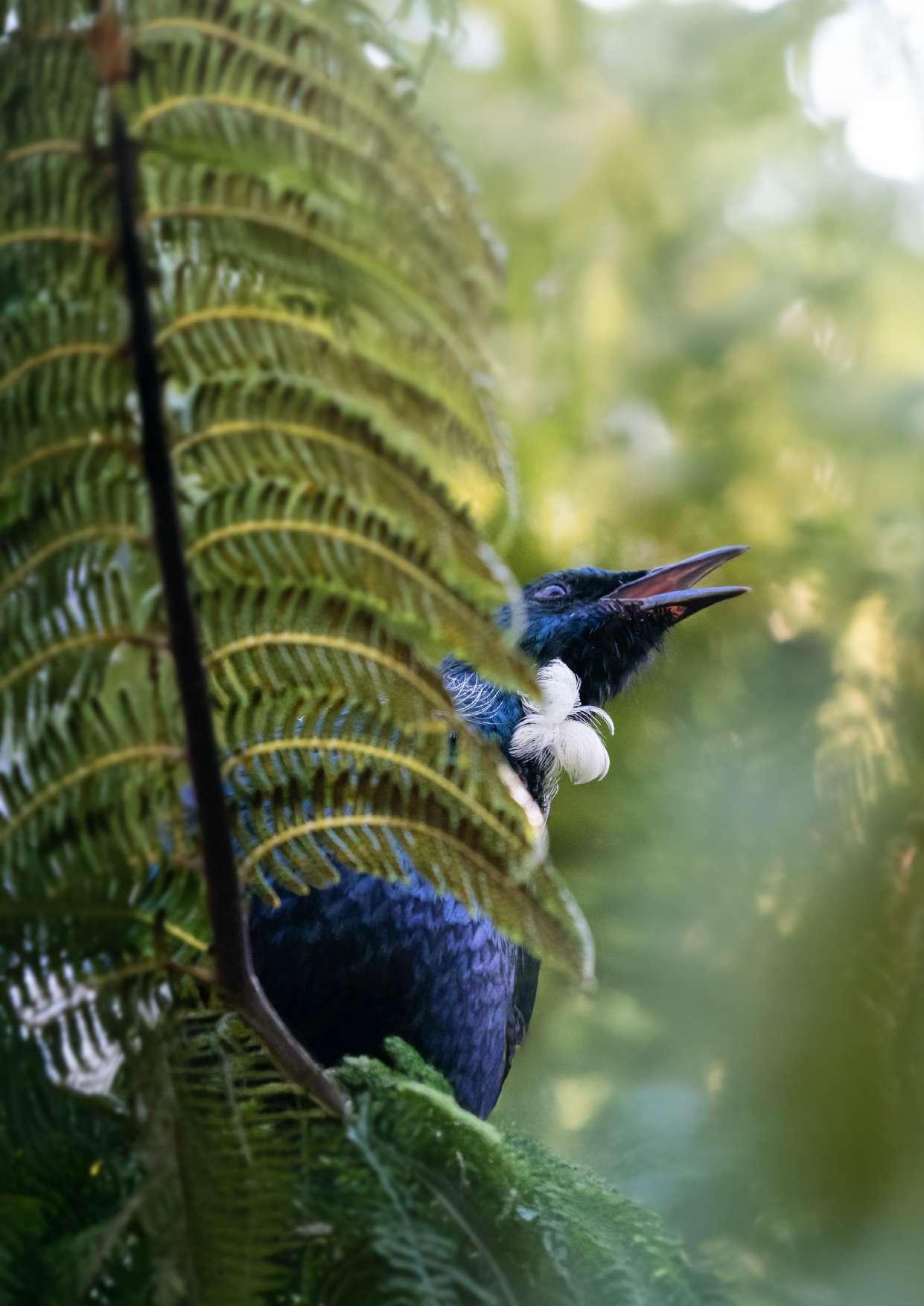
He tōtara tū wao
A mature tōtara standing in the forest
Head Office, Te Puna Manaaki
320 Factory Road, Te Awamutu 3840
He tōtara tū wao
A mature tōtara standing in the forest
Our Vision

Ko te whakakitenga
Our Vision
He takapau mātauranga, he whānau huarewa
Whānau transformation through education

Our Mission

Ko te koromakinga
Our Mission
Kia angitu te tauira Tauira Success

The knowledge that our actions are morally and ethically right and that we are acting in an honourable manner.
Having regard for one another and those for whom we are responsible and to whom we are accountable.
The basis of our beliefs and the confidence that what we are doing is right.
Unity amongst iwi and other ethnicities; standing as one.

82 % of tauira reporting their use of te reo Māori had increased
4,644 registered participants in Mahuru Māori
27,108 tauira studied with Te Wānanga o Aotearoa in 2024
4.1 million
Total downloads for Taringa
67 % increase of participants in Mahuru Māori
14,788 tauira studied te reo Māori
88 % 1,397 of tauira reported sharing their new skills and knowledge with whānau, hapū, iwi, or community full and part-time kaimahi

30 343 tauira completed He Waka Hiringa Master of Applied Indigenous Knowledge programme average days of cultural leave provided each year to kaimahi
16,544 EFTS for 2024
9 % 61% 48% 75% of tauira have a disability of tauira are Māori of tauira over 40 years of tauira are female


Kei aku amokapua e kāhaki tonutia nei e te ringa o Aituā-Kaiponu-Kino. Ko te ao tēnei e noho nei i te mokemoke, i te anumātao, ko te roimata hei kai i te ao, i te pō. Kua takahi nei koutou i te ara i takahia ai e Nunui, e Roroa mā, arā, i te ara o hokinga kore ki muri. Anei, ko te tatau o te pō ki a koutou, tītokona te ao mārama.
Tīhei mauri ora!
Vanessa Eparaima Te Heamana | Chairperson
Chairperson's report
Kei ngā ringaringa me ngā waewae o Te Wānanga o Aotearoa, e whakakiri nei i ngā awhero i puta ai tā tātou kaupapa ki te whaiao, ki te ao mārama, tēnā rā koutou katoa!
I am honoured to present the Chairperson’s Report for Te Pūrongo 2024. This year has been one of significant transition, reflection, and progress, underpinned by our unwavering commitment to tauira success and whānau transformation through education.
This year, we acknowledge the passing of Kiingi Tuheitia, whose enduring commitment to unity and prosperity for all people has left an indelible mark on Aotearoa. As we mourn his passing, we also welcome the new Māori Monarch, Te Arikinui Kuini Nga wai hono i te po, who brings with her a new era of leadership and vision for our people.
Reflecting on this past year, important discussions and decisions have helped to establish a solid foundation for the future, particularly as we refine and implement the new iteration of Te Pae Tawhiti – our long-term strategy that will guide us through to 2030.
Throughout 2024, management worked closely with Te Mana Whakahaere to explore the future direction of Te Wānanga o Aotearoa, assessing both the challenges and opportunities that lie ahead. This collaborative effort culminated in a comprehensive review of Te Pae Tawhiti, resulting in a refined strategic framework extending to 2030.
At the end of 2024, Te Mana Whakahaere approved six key recommendations, which will serve as the foundation for our transformation in the years ahead. The focus for 2025 will be on implementing these recommendations to ensure that we realise the refined Te Pae Tawhiti strategic objectives, which are:
› Offering transformational educational opportunities and learning experiences, underpinned by ako wānanga, that enable our tauira, whānau, and wider communities to meet their needs and achieve their aspirations.
› Providing transformational professional opportunities and experiences, grounded in our kaupapa, that enable our kaiako and kaimahi to be successful and thrive.
› Partnering with iwi and hapū for the ongoing advancement of mātauranga Māori, for the achievement of Māori aspirations, and in the pursuit of tino rangatiratanga.
› Achieving financial sustainability through maximising operational efficiencies as well as optimising existing and diversifying revenue streams.
This strategy is more than a roadmap; it is a reaffirmation of our commitment to reimagining what we do, ensuring our education system remains relevant, impactful, and sustainable.
While we anticipated a financial deficit in 2024, we have instead ended the year in surplus of $17.9m or 9.4% of total revenue. However, this outcome is largely due to exceptional investment returns, higher interest rates and a one-off government grant addressing Rangahau funding shortfalls. Without these factors, we would have faced a deficit, underscoring financial sustainability as a key objective as we move ahead.
For too long, we have absorbed costs by deferring critical investment in our people, infrastructure, digital transformation, and innovation. This approach is not sustainable in the long term. Moving forward, we must take a strategic and measured approach to ensure our financial sustainability while continuing to uphold our mission of tauira success and whānau transformation.
Te Mana Whakahaere remains committed to overseeing this transition with care and integrity, ensuring that we navigate these financial realities while making the necessary investments to strengthen the future of our wānanga.
One of the most significant milestones this year has been completing the establishment of Te Manawahoukura at the end of 2024. This marks a defining moment in the journey of
our wānanga, positioning us as a leading force in Māori research excellence. Our success in securing $3.8 million in research funding and receiving prestigious Te Apārangi Royal Society awards, as well as a Mana Tūānuku Research Leader Fellowship, highlights the growing influence and credibility of our research efforts.
In addition, we have continued to evolve our educational offerings with the introduction of two new programmes: Te Tohu Tiaki Taonga and Te Tohu Reo Rumaki. These qualifications reflect our commitment to ensuring that our learners have access to high-quality, culturally grounded pathways that equip them for future success.
This year also saw the launch of Piharoa, our corporate professional development programme, which has been met with overwhelming success. This initiative signals a pivotal step forward in expanding our impact beyond traditional tertiary education and enabling lifelong learning opportunities in new and emerging sectors.
Throughout 2024, Te Mana Whakahaere has remained steadfast in providing the leadership and guidance required to navigate these times of transition. The extension of Stephen Ruru’s term brings valuable continuity, ensuring stability as we move forward.
I deeply appreciate the collective knowledge and experience that my fellow Te Mana Whakahaere members contribute to the organisation and the kaupapa of Te Wānanga o Aotearoa. It remains a privilege to be part of this journey as we continue to uphold educational quality and relevance.
I also take this moment to acknowledge Nepia Winiata, whose leadership has been instrumental in shaping Te Wānanga o Aotearoa. His deep understanding of the unique and vital role of our wānanga has left a lasting imprint on this organisation. His unwavering commitment through significant challenges, including COVID-19, has ensured that our wānanga remains strong and future-focused. As he steps into retirement, we offer him our deepest gratitude and best wishes.
As we farewell one leader, we welcome another. Following an extensive recruitment process, we are proud to announce Evie O’Brien as our new Chief Executive. Evie’s deep passion for whānau transformation through education, coupled with her extensive experience in the tertiary education sector, positions her as an exceptional leader for the next phase of our journey. Her leadership will be invaluable as we celebrate our 40th year of operation, reflecting on how far we have come and setting the stage for our future aspirations.
As we embrace the next phase of our journey, our focus remains on innovation, adaptability, and resilience. The evolving educational landscape presents both challenges and opportunities, and our ability to navigate them will define our success.
At the heart of our strength is the unwavering dedication of our kaimahi. Every day, their passion, resilience, and mana breathe life into our kaupapa. Through their mahi, the transformation of whānau through education is made possible.
Together, we will continue to strengthen partnerships, champion tauira success, and uphold the values that define us: Ngā Ture, Te Whakapono, Kotahitanga, Te Aroha. These principles will guide us as we honour our past, navigate our present, and shape our future.
I extend my deepest gratitude to our kaimahi, tauira, and all those who support our kaupapa. It is a privilege to stand alongside you all as we continue this journey together.
Tēnā rawa atu koutou katoa.

Vanessa Eparaima Chair, Te Mana Whakahaere



Vanessa Eparaima MNZM
Te Heamana
Chairperson
Raukawa, Ngāti Tūwharetoa
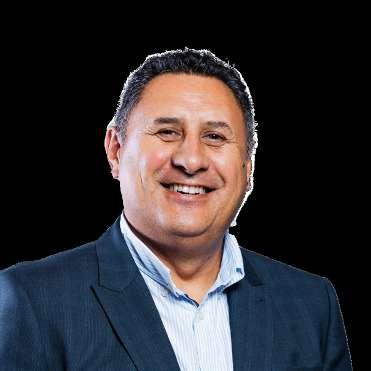
Bryan Hemi
Te Heamana Tuarua
Deputy Chairperson
MBA, BE
Ngāti Kahungunu, Ngāti Koata, Samoan
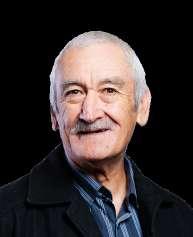
Robert Gabel
Mema | Member
BA, BCom, CA
Ngāti Kahu, Te Rarawa, Te Paatu


Katie Bhreatnach
Mema | Member LLB (Hons), BA (Hons), LLM, wMInstD
Ngāti Mahuta, Ngāti Whakaue

Jacinta Ruru MNZM
Mema | Member
BA, LLB, LLM, PhD, Hon LLD, CMInstD, FRSNZ
Raukawa, Ngāti Ranginui, Ngāti Maniapoto

Jon Stokes
Mema Whakatūria
Ministerial Appointment
DipJour
Raukawa, Ngāti Maniapoto
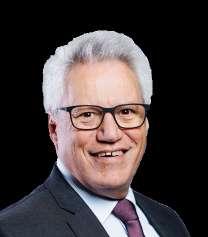
Steve Ruru
Mema Whakatūria Ministerial Appointment
BMS, FCA
Raukawa, Ngāti Ranginui
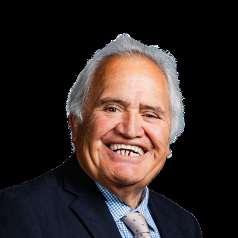
Turi Ngatai
Mema Whakatūria
Ministerial Appointment
Ngāi Te Rangi, Ngāti Ranginui
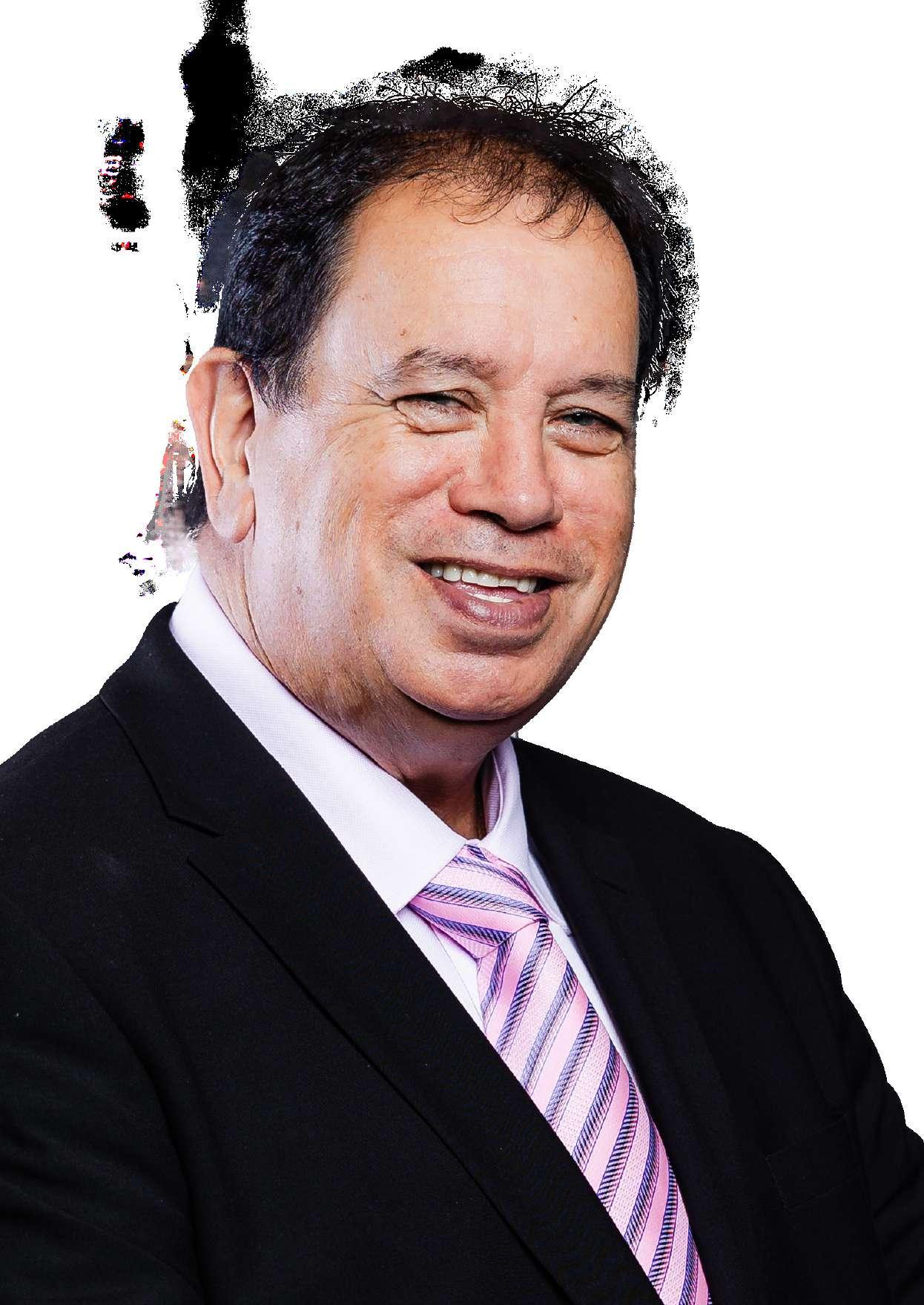
He tau ruru te tau, he tau ariki te tau, he tau tuku whakahere te tau... Auē, te mamae e kihakiha ake nei i roto i te whatumanawa!
Ka aroha kē hoki te tini o ngā mate o tēnā moka o te motu whānui, me te aha, ka noho mai ko te kaipaoe e rapu nei, e kimi nei i ara e puta ai ia ki te ao mārama.
Ko te āki nui pea kei roto i ēnei parekura nui o te wā, kia mānawatia e tātou ērā e arohaina ana i te wā o te ora, inā hoki, ko tō te wā mana, ko tā te wā whakahau, e kore e taea e tāua, e te tangata te aha. Ā kāti, ko te aunga o te moe ki a koutou, tēnā ko te hunga ora ki a mātou.
Tīhei mauri ora!
Nepia Winiata Kaiwhakatere | Chief Executive
For my final time as Te Kaiwhakatere, it is my great pleasure to present our annual report, Te Pūrongo.
2024 was a year of perseverance and discovery, both for Te Wānanga o Aotearoa and for Aotearoa as a whole, particularly with the passing of Kiingi Tuheitia Pootatau Te Wherowhero VII. This moment of deep significance reinforced the importance of our collective resilience, unity, and commitment to our kaupapa.
At the beginning of 2024, I announced that I would not be extending my tenure as Te Kaiwhakatere. In February 2025, I will step down, passing the leadership to Evie O’Brien, who was appointed after a comprehensive and rigorous selection process. I am confident that Evie will continue to uphold our vision and strategic direction as outlined in Te Pae Tawhiti.
A major focus of 2024 was the review of Te Pae Tawhiti, setting our course for 2030 and beyond. This strategic review explored how best to align our organisational goals with tauira needs, drive innovation, and enhance our capabilities to meet future challenges. The process included Rangahau, kaimahi engagement, workshops, and a thorough analysis of our past, present, and future, culminating in six key recommendations approved by Te Mana Whakahaere in December. In 2025, under Evie’s leadership, we will focus on bringing these recommendations to life.
While this mahi provided a strong foundation, 2024 was also a year of significant achievements.
We successfully piloted our Te Aō Māori Foundation programme, receiving outstanding support from tauira and the wider community. Additionally, we expanded our cultural corporate offerings with the launch of Piharoa, a programme designed to highlight the value
of Māori culture, language, and practices for individuals, organisations, and stakeholder engagement. Testimonials have reinforced the immense impact of this kaupapa across diverse industries. Moreover, in collaboration with iwi and stakeholders, we developed new programmes tailored to meet the specific needs of our communities.
I am pleased to report that our academic performance continued to improve in 2024.
Our number of tauira representatives grew by 62%, amplifying the tauira voice and ensuring their perspectives are heard. Furthermore, with 67,000 tauira support engagements recorded by Te Ata Hāpara, we have demonstrated our unwavering commitment to tauira success – listening to and learning from them while providing the necessary tools and information for their educational journeys.
Our scholarship programme, a longstanding initiative that provides financial support to tauira, was rebranded in 2024 as Te Kōpuretanga Scholarships. We honoured two more of our founders with new scholarships and, in partnership with Te Pou, extended support to even more tauira pursuing their educational aspirations. Additionally, we introduced Te Matatini Community Kapa Haka Grants, a one-
off initiative to further strengthen and grow kapa haka in our communities.
Te Wānanga o Aotearoa remains steadfast in championing Māori kaupapa, both within our organisation and beyond. We had a strong presence at key events such as Waka Ama Sprint Nationals, Manu Kōrero, Toitū te Reo, MWDI Māori Businesswomen’s Awards, and the Māori Sports Awards.
A significant milestone was securing funding to develop our first-ever Wānanga Reo Rumaki, set to launch in early 2025. These immersive threeday sessions will provide tauira with a dynamic and engaging environment to strengthen their reo Māori skills, preparing them for full immersion programmes.
Throughout the year, I had the privilege of travelling across the motu, connecting with kaimahi ā-kanohi. A highlight was attending the opening of Kīwai, our new fit-for-purpose campus in Wellington, a thoughtfully designed space that will better support the needs of our tauira and kaimahi.
Our success is driven by our kaimahi – the heart of our organisation. Their dedication and passion change lives not only for those we educate but for the wider community. I remain deeply grateful to be a part of such hardworking kaimahi.
Kaimahi wellbeing remains a top priority. In 2024, Tau Ora, our award-winning hauora programme, celebrated 15 years. I was honoured to attend the awards ceremony recognising
kaimahi who made positive changes to their hauora. Additionally, we implemented an extra Matariki leave day for kaimahi, a meaningful step in prioritising work-life balance.
Ngā Pouwhakahaere continue to provide strong leadership and commitment to our kaupapa. 2024 saw leadership changes in two uepū, with Peter Fletcher-Dobson joining as Pouwhakahaere Taupārongo in February, and Jason Hungerford stepping in as Pouwhakahaere Tahua in August, following the resignation of Joe Valenti. While Joe’s departure left a significant gap, the opportunity to return home to Australia was one he could not pass up. We thank him for his years of wisdom and dedication. Both Peter and Jason bring fresh energy to Ngā Pouwhakahaere, eager to drive our objectives forward.
I extend my deep appreciation to Te Mana Whakahaere for their guidance and unwavering support. Leading Te Wānanga o Aotearoa, an organisation that has become whānau to me, has been an immense privilege.
As I step into retirement, I do so with gratitude and confidence in the bright future of Te Wānanga o Aotearoa for many years to come.
Ngā manaakitanga,

Nepia Winiata Kaiwhakatere | Chief Executive
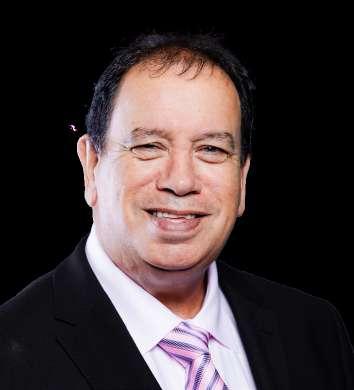
Nepia Winiata
Kaiwhakatere Chief Executive
GradDipBA, MALP (Dist)
Raukawa

Jason Hungerford
Pouwhakahaere Tahua
Deputy Chief Executive Finance & Operations
CA, BCA, GradDipPA

Shireen Maged
Pouwhakahaere Ako
Deputy Chief Executive Teaching & Learning
PhD, MEd, BEd, BA, HDE

Peter Fletcher-Dobson
Pouwhakahaere Taupārongo
Deputy Chief Executive Digital & Information
Te Wānanga o Raukawa Poupou Huia te Reo Māori Protocol and Language Use, University of York BA (Hons) Politics, Te Herenga Waka Victoria University Diploma Journalism


Leon Takimoana
Pouwhakahaere Whanake
Deputy Chief Executive People & Culture
GradDipPsyc. BSocSci (Hons)
Professional Member of HRINZ
Ngāpuhi, Ngāti Kawa, Ngāti Hine, Ngāti Rāhiri
Glenn McKay
Pouwhakahaere Whakatairanga
Deputy Chief Executive Purpose & Relationships
MBA (Dist)
Te Arawa

Lindsay Baxter
Pouwhakahaere Taumatua
Deputy Chief Executive Wānanga Services
DipCPM, BIT, PMP, MEd (Dist)
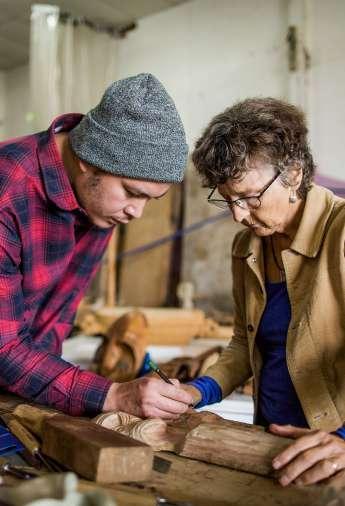
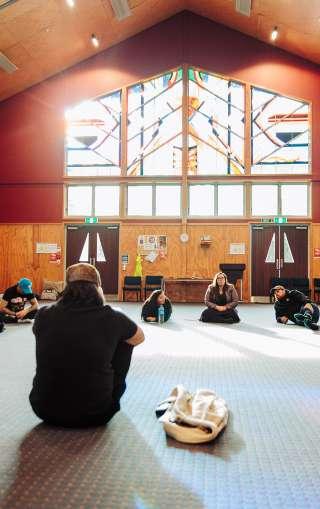
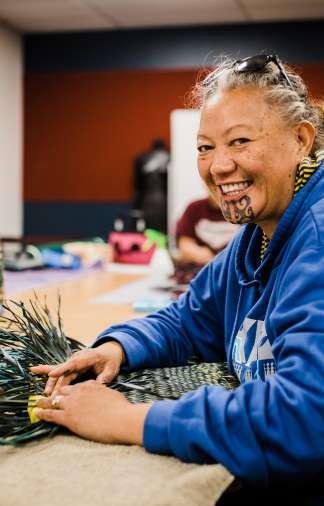


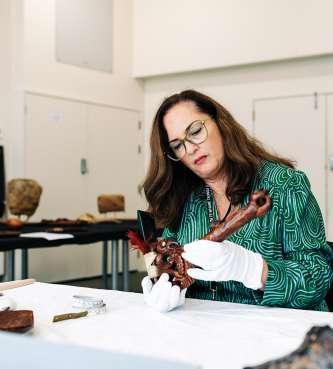

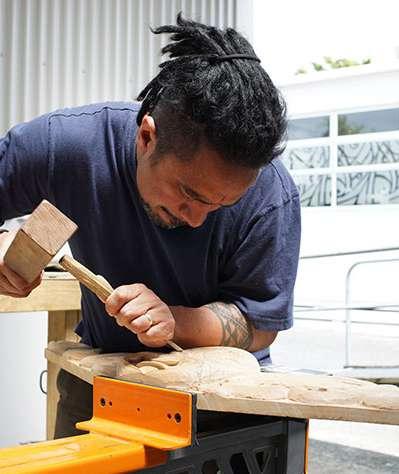
Whangārei local, Tom Brooker, joined Te Wānanga o Aotearoa in February this year as a kaiako, but also as a tauira.
Tom teaches Kāwai Raupapa Level 4 and last semester he completed He Puāwai, Certificate in Adult and Tertiary Teaching.
“While I was studying, I was learning strategies and getting tools that I was able to take straight back to my classroom. I learnt strategies on how to bring the classroom back to a vibrant state and make it more learner-friendly,” he says.
Not only was Tom able to use his learning in his classroom, but he was surprised to discover that a lot of the programme content could also be implemented into his day-to-day life.
“You can use what you learn in everyday life. You gain skills that you can apply to your family life, your home life as a parent, as a coworker. It's a multi-faceted programme that you can draw skills from and apply to multiple levels in your own personal life.”
Studying locally was a benefit of the programme that appealed to Tom, saying, “There was nothing else around quite like this and no other institute delivering. It was cool not having to go away to study.”
Tom spoke highly of his kaiako, Terese Moriarty, and her ability to teach in such an engaging way, demonstrating just how highly skilled and knowledgeable she is.
Tom found that the kaupapa Māori intertwined into the programme content and learning environment made the learning process much easier and more engaging for him.
“As a new kaiako it was nice meeting other kaiako while studying the same programme.
Even though a few were from different areas, it’s still been good to make those connections outside of Whangārei.”
Building connections with other tauira, some of which are also kaiako at Te Wānanga o Aotearoa, was another highlight for Tom and he is hopeful that those relationships will continue to grow.
“As a new kaiako it was nice meeting other kaiako while studying the same programme. Even though a few were from different areas, it’s still been good to make those connections outside of Whangārei.”
Tongan-born Tangi Katoa grew up watching her mum, Lineni Paea, teach, instilling in her a love of education and a passion for teaching.
In 1996, Lineni received a scholarship to further her studies at the University of Auckland, which led to Tangi coming to New Zealand and witnessing her mum teach in a new environment.
Throughout her life, Tangi held onto her dream of becoming a teacher despite setbacks and challenges that arose during her He Korowai Ākonga, Bachelor of Education (Primary Teaching) degree.
Her journey toward becoming a teacher began at the Māngere campus of Te Wānanga o Aotearoa in 2007. After falling pregnant in 2008 and becoming a single mother, Tangi put her studies on hold to raise her young whānau with the support of her grandmother.
“When my grandma passed away in 2018, I felt like I failed her. I couldn't give back to her after all the sacrifices she made, helping me raise my 3 kids. So, in 2019, towards the end of the year, I re-enrolled,” she says.
Due to the COVID-19 pandemic, Tangi took a break in her second year but returned in 2022, completing her degree in 2023.
"Getting my degree was a long journey, but I did it. The cherry on top is that I’m now working with my mum at the same school, and she's my biggest support. My kids are able to see that anything is possible.”
The support that Tangi received from her kaiako after returning to study helped make all the difference. She spoke highly of the kaimahi at Te Wānanga o Aotearoa and explained how they weren’t just focused on how her

“If you want to study at a place where your values are accepted and it's family orientated, Te Wānanga Aotearoa is the place to be.”
learning was tracking; they took the time to learn about her story and her whānau background.
As a single mum of 3, Tangi valued the whānaufriendly environment at Te Wānanga o Aotearoa and is grateful her current career path allows her to continue having a good work-life balance.
“In this career, you still get time to spend with your family, and family is very important. That's the beauty of this job; I get to be a mum, and I get to be a teacher.”
Tangi’s advice to others considering a career in teaching is clear, “It's never too late to go back and study. If I can do it twice, then anything is possible. Find your why and just keep going.”
For 12 years, Cher Knight has worked for the Department of Conservation (DOC) with a key part of her role being to work alongside tangata whenua to uphold the principles of Te Tiriti o Waitangi.
Although Cher loves her mahi and has always been in full support of working with iwi and tangata whenua, this aspect of her job often made her feel nervous and uneasy.
“Interactions with mana whenua filled me with dread – I didn’t know what I was doing. I was always concerned about offending or overstepping when working with Māori. So, I signed up for a tikanga programme with Te Wānanga o Aotearoa in Ōtepoti,” she says.
In 2022, shortly after completing Te Whāinga o te Ao Tikanga Level 3, she put her newly found knowledge to the test by taking over a project to develop and implement a sustainable management plan for the Tongariro Alpine Crossing.
This large on-going project is a partnership between DOC and Ngāti Hikairo ki Tongariro, a hapū of Ngāti Tūwharetoa, to address the degradation of the maunga due to over-tourism.
“I was now able to understand the kaupapa and engage with mana whenua in a much more meaningful way than I had previously been able to achieve. I understood what to listen for, how to have the conversations; and importantly, how to deliver their vision in a way that supported tikanga.”
The mahi that Cher and the project team implemented earned them a DOC Matariki Award (Ururangi), which recognised their exceptional partnership with Ngāti Hikairo and the innovative work they have so far delivered.
After completing the tikanga programme, Cher was inspired to make several additions to the project that were welcomed by Ngāti Hikairo.

“Alex was incredible! He made me feel at ease and provided a safe space for me to learn and grow. And finally, I want more! Now that Te Wānanga o Aotearoa Ōtepoti is running level 4 tīkanga, I will be signing up for 2025!”
“We included Manaaki Rangers on the ground 7 days per week, a compulsory annual wānanga to teach tīkanga to our concessionaires, and installation of the cultural footprint at the start and end of the track – pou whenua, wāhi tapu basin.”
Cher speaks highly of her kaiako, Alex Whitaker and the programme content, saying,
“Noho marae learning really worked for me and I began to feel comfortable being on the marae and participating in the pōwhiri, mihi whakatau and even the hongi. I began to recognise the links between pūrākau, tikanga and te reo and this knowledge filled me with confidence within my work".
Outcomes Framework

Te Huanganui is the Outcomes Framework for Te Wānanga o Aotearoa. The title refers to the significant benefits and advantages that result from our work, in essence, the fruits of our labour.
Te Huanganui weaves a relationship between the strategic objectives of Te Wānanga o Aotearoa and the unique contribution we make to Aotearoa New Zealand and the nation as a whole. It includes our outputs, the impacts of those outputs, and the ultimate outcomes of our mahi.
For our 2024-2026 Investment Plan we have grounded Te Huanganui in the context of our relationship with the Crown.
This is the first year of reporting against Te Wānanga o Aotearoa Investment Plan 2024-2026 which has been approved by the Tertiary Education Commission for two years.
The following diagram provides a high-level representation of Te Huanganui as approved in the Investment Plan.
Our Outcomes
Our Strategy
Our
Whakamarumarutia
The principle of Active Protection
Wānanga and mātauranga Māori are advanced
Offering a relevant and sustainable programme mix 1
1.1 We have a strong footprint in the education and training system
1.2 We are the driving force in a bicultural New Zealand
1.3 We are building a tradition of Rangahau that advances mātauranga Māori
Rangatiratanga
The principle of Recognition and Protection of Tino Rangatiratanga
Everyone has access to āhuatanga Māori educational opportunities
Putting our tauira at the centre 2
2.1 Tauira have a holistic transformative āhuatanga Māori educational experience
2.2 We break down barriers to provide accessible educational opportunities for all
Pātuitanga
The principle of Equity and Partnership
We work together to achieve outcomes in a bicultural Aotearoa New Zealand
Ensuring sustainability through educational excellence 3
3.1 Tauira achieve valued outcomes with us
3.2 We are continuously enhancing Ako teaching and learning
3.3 We are sustainable
The principle of Active Protection Wānanga and mātauranga Māori are advanced
Offering a relevant and sustainable programme mix
› We have a strong footprint in the education and training system
› We are the driving force in bicultural NZ
› We are building a tradition of Rangahau that advances mātauranga Māori

1.1.2
Over the last two years we have laid the foundation for a programme development pipeline with enhanced programme development processes and procedures and increased capability in programme development from ideation to delivery.
In 2024 we developed 13 new programmes and educational initiatives including:
› Expanding our mātauranga Māori offerings with Te Tohu Tātai Whetū – New Zealand Certificate in Māori Astronomy (Level 4);
› Partnering with Ngāti Mahuta ki Te Hauāuru to deliver Adult Community Education (ACE) funded short courses - Te Reo Opaki and Te Reo Okawa;
› Gaining a foothold in professional cultural development with Piharoa, Te Atatū and Tū Māia short courses;
› Governance and leadership programmes– Leadership in an Aotearoa New Zealand Context (Microcredential) and Manu Taiko Māori Governance Fundamentals (Level 4);
› Increasing vocational qualifications with New Zealand Certificates in Study & Employment Skills (Level 4), Digital Media and Design (Level 4), Building Construction & Allied Trade Skills (Level 2 and Level 3) and Forest Industry Foundation Skills (Level 2).
In addition to the programme development pipeline, there have been a number of other improvements to the programme development processes and procedures including robust engagement with key industry stakeholders.
A review of 2024 programme development documentation revealed the breadth and depth of engagement with 48 stakeholders or stakeholder groups spanning iwi, hapū and other Māori organisations, practitioners, schools, industry and government representatives.
We are the driving force in a bicultural New Zealand
1.2.1 We forego tauira fee income to provide accessible language and cultural programmes
Fees foregone is calculated by a base fee for tauira studying fee-free language and cultural programmes with an annual adjustment in accordance with the Annual Maximum Fee Movement (AMFM) published in the New Zealand Gazette.
Te Wānanga o Aotearoa drives bi-culturalism in New Zealand by providing accessible, fee-free language and cultural programmes, and by using our capability and resources to support an ecosystem of events and activities nationwide.
In 2024 9,148 tauira (6,140 EFTS) studied in fee-free te reo and tikanga Māori programmes at Te Wānanga o Aotearoa. While tauira and EFTS levels were similar to 2023, an increase in the AMFM saw the target exceeded with $11.5 million in fees income forgone.
1.2.2
Te Wānanga o Aotearoa continues to support cultural initiatives that bring life to te Ao Māori. In 2024 we supported nine major cultural initiatives, including:
› Continuing our longstanding association with the Waka Ama Sprint Nationals at Lake Karāpiro.
› The build up to Te Matatini in 2025 saw many kaimahi and tauira taking to the stage or working behind the scenes to make the regional qualifying events a success. In partnership with Te Matatini Inc, we also provided the kapa haka community with a unique opportunity to apply for one of three community grants.
› Also in conjunction with Te Matatini, we provide two $5,000 Te Matatini Scholarships to tauira enrolled in our He Waka Hiringa programme studying kapa haka.
› We continued to grow knowledge of the customs and practices surrounding Matariki, including distributing 2,000 printed copies of ‘Nā Hina’ - our maramataka. In 2024, over 13,000 free digital resources were downloaded from our Matariki micro-site.
› We celebrated 10 years of Mahuru Māori, which has become a key event on our annual calendar. In 2024 there were 4,644 registered participants who committed to speaking te reo Māori as much as possible throughout the lunar month of Mahuru (which typically falls in September). This was a 67% increase from the previous year.
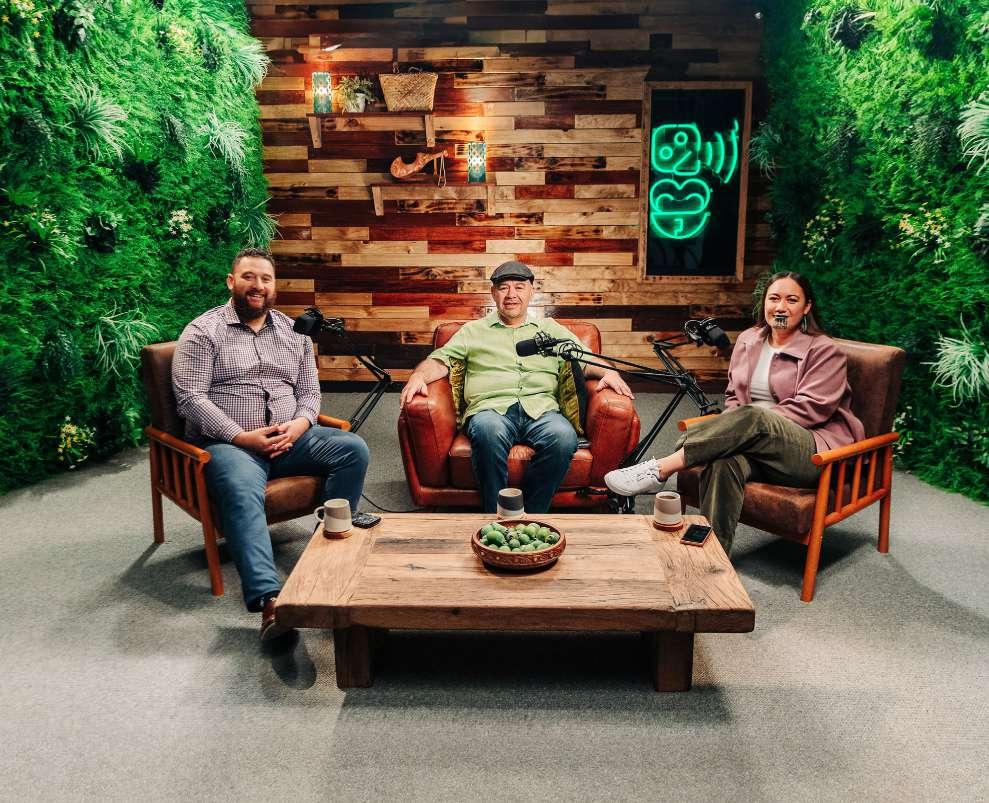
› Since its inception in 2017, our bilingual Taringa podcast continues to be popular with 4.1M downloads, both from New Zealand and abroad. In 2024 Taringa began producing more video content to expand its global reach.
› We created an engaging Waitangi Day educational quiz on social media which reached over 8,000 people.
› We sponsored the Toitū Te Reo symposium in Heretaunga and hosted a live Taringa episode from the event.
› We were a key sponsor for the national Manu Kōrero competition held in Tāmaki Makaurau.
› In partnership with Te Kiingitanga, we provided official multimedia support for the tangihanga of Kiingi Tuheitia Pootatau Te Wherowhero VII, which included producing live Taringa episodes from Tūrangawaewae Marae.
1.3
We are building a tradition of Rangahau that advances Mātauranga Māori
1.3.3
1.3.4
1.3.4.1
The 2023 results for 1.3.1-1.3.3 are not available as Te Manawahoukura Rangahau Centre was only established in 2023. The result for research degree completions is interim as it is subject to validation by the TEC following submission of the final single data return in April 2025.
Te Wānanga o Aotearoa is continuing to build a tradition of Rangahau that contributes to the advancement of mātauranga Māori.
In 2023 Te Manawahoukura was established as a new Centre of Rangahau tasked with developing Rangahau capability, overseeing and undertaking Rangahau and building a vital and flourishing Rangahau culture across Te Wānanga o Aotearoa.
Momentum is building as Te Manawahoukura now provides a central coordination point for Rangahau, resulting in the targets for peer reviewed publications, non-traditional Rangahau outputs (NTOs) and external Rangahau collaborations being exceeded. To support the showcasing of NTOs a business case was approved in 2024 to develop an online repository to hold these alongside kaiRangahau (researcher) profiles to highlight the expertise and experience held within Te Wānanga o Aotearoa.
The target for external research income was also exceeded with project funding from the Health Research Council, Nga Pae o te Maramatanga, Te Apārangi – Royal Society, BRANZ and Te Runanga o Toa Rangatira Inc. In 2024 Te Manawahoukura secured external competitive Rangahau funding worth $3.8million with the projects spanning 1 – 4 years.
Our flagship masters programme – He Waka Hiringa (Master of Applied Indigenous Knowledge) has a small annual intake of approximately 40 tauira. The result for research degree completions, 30, fell short of the target largely due to more tauira prioritising work and family commitments.
The principle of Recognition and Protection of Tino Rangatiratanga
Everyone has access to āhuatanga Māori educational opportunities
Putting our tauira at the centre
› Tauira have a holistic transformative āhuatanga Māori educational experience
› We break down barriers to provide accessible educational opportunities for all

2.1
Tauira have a holistic, transformative āhuatanga Māori educational experience
2.1.1 Tauira report that the skills and knowledge gained helped improve their cultural identity
2.1.2 Tauira report that the skills and knowledge gained helped improve their health and wellbeing
2.1.3 Tauira report the skills and knowledge gained helped improve their career prospects
This result is taken from the annual Graduate Survey that is used to track graduate outcomes and the broader holistic impact of studying with Te Wānanga o Aotearoa. The 2024 survey was sent via the SurveyMonkey platform to a cohort of 12,294 recent graduates with 22% (2,759) of them taking the opportunity to respond. The survey had a margin of error of 5%.
Te Wānanga o Aotearoa seeks to positively impact tauira through a holistic approach to teaching and learning. Regardless of what they study, our intention is that tauira leave us confident in who they are, where they have come from and with the skills and knowledge they need to succeed in the future.
Every year we use the Graduate Survey to track graduate outcomes and the broader holistic impact of studying with us. The target for tauira reporting a positive impact on their cultural identity (75%) was achieved, however, the results for improvement in health and wellbeing (70%) and improvement in career prospects (67%) fell short of the target.
In order to keep improving our holistic graduate outcomes we will continue to innovate our āhuatanga Māori educational experience throughout the plan period. This will include significant work on our programme offering along with continuing to adapt as we seek to put tauira at the centre of all we do.
2.2
We break down barriers to provide accessible educational opportunities for all
2.2.1 Expected graduates at Level 1-3
Non-Māori, non-Pasifika graduates Māori
2.2.2 Proportion of total SAC-eligible EFTS enrolled at Level 1-3
Non-Māori, non-Pasifika EFTS
2.2.3 Proportion of total SAC-eligible EFTS enrolled at Level 4-7 (non-degree)
Non-Māori, non-Pasifika EFTS
2.2.4 Proportion of total SAC-eligible EFTS enrolled at Level 7 (degree)
Non-Māori, non-Pasifika EFTS
Māori
2.2.5 Proportion of total SAC-eligible EFTS enrolled at Level 8-10
Non-Māori, non-Pasifika EFTS
This section provides the results for performance commitments negotiated with TEC for 2024-2026. Please note, the 2024 results are interim as they are subject to validation by the TEC following submission of the final single data return in April 2025. The 2023 results have now been updated as final.
It is important to note that since the COVID-19 pandemic there has been a shift in the tauira population, which has seen a significant increase in the number and proportion of tauira Māori studying with us.
In 2024 there was a significant increase in Level 1-3 graduate numbers across all ethnicity groupings in line with an increase in enrolments and completions in our new fully online te reo programme – Papa Reo.
The increase in tauira Māori saw the target for Māori graduates achieved. However the other targets for graduates at Level 1-3 were not met.
The increase in the number and proportion of tauira Māori also impacted the participation targets for each level grouping.
As the majority of Te Wānanga o Aotearoa provision is at sub-degree level, the results for Level 1-3 and Level 4-7 (non-degree) followed the same pattern with the targets for tauira Māori and Pasifika tauira exceeded and the target for non-Māori, non-Pasifika experiencing a two-year decline.
For the proportion of EFTS enrolled in degrees, the results for non-Māori and non-Pasifika tauira and Pasifika tauira exceeded the targets. While the result for tauira Māori missed the target, it did achieve a 2% improvement on 2023.
Te Wānanga o Aotearoa has only three programmes at Level 8-10: He Waka Hiringa (Master of Applied Indigenous Knowledge), Kaitiakitanga – Postgraduate Diploma in Bicultural Professional Supervision and Te Tohu Paerua o te Reo Kairangi – Master of Māori Language Excellence. These programmes only have small cohorts of tauira and therefore the ethnicity of one tauira has a disproportionate impact on the overall results for that level grouping.
The principle of Equity and Partnership
We work together to achieve outcomes in a bicultural Aotearoa New Zealand
Ensuring sustainability through educational excellence
› Tauira achieve valued outcomes with us
› We are continuously enhancing Ako teaching and learning
› We are sustainable

3.1 Tauira achieve valued outcomes with us
3.1.1 First year retention rate for tauira at Level 4-7 (non-degree)
Non-Māori, non-Pasifika graduates Māori
3.1.2 First year retention rate for tauira at Level 7 degree
Non-Māori, non-Pasifika EFTS
3.1.3 Course completion rate for tauira at Level 1-10
Non-Māori, non-Pasifika EFTS Māori
3.1.4 Progression rate for tauira at Level 1-3
Non-Māori, non-Pasifika EFTS
This section provides the results for performance commitments negotiated with TEC for 2024-2026. Please note, the 2024 results are interim as they are subject to validation by the TEC following submission of the final single data return in April 2025. The 2023 results have now been updated as final.
The targets and results for first year retention at Level 4-7 are zero as Te Wānanga o Aotearoa has no multi-year programmes at these levels.
After two years back in the classroom post-COVID, and a number of other initiatives to improve tauira engagement and achievement, education performance results turned a corner in 2024 with significant improvements across all indicators.
The first year retention targets for Level 7 (degree) were exceeded for every ethnicity grouping with Pasifika tauira having the highest retention rate at 86%, a 15% improvement on 2023.
Course completion rates bounced back with a 7-9% improvement on 2023 results across all ethnicity groupings. The completion rates for Pasifika and tauira Māori are heading in the right direction towards the 78% completion rate target for all tauira.
Progression rates for Māori and Pasifika tauira exceeded the target and improved on 2023 as more tauira pathway into higher level programmes.
The results for this measure include students who have progressed to a higher-level qualification both internally at the wānanga and externally at another tertiary education provider. We rely on data from the Tertiary Education Commission in relation to students progressing externally to another provider.
Over the next three years we will continue to focus on developing new engaging and accessible programmes and supporting kaiako to deliver transformational learning that underpins tauira success.
3.2
We are continuously enhancing Ako teaching and learning
2026
3.2.1 NZQA is confident in education performance and assessment practices Confident Confident Confident Confident Confident
The New Zealand Qualification Authority is responsible for monitoring educational quality through the External Evaluation and Review system that is normally completed every three years. As the review was last completed in March 2022 the result for 2023 and 2024 is the 2022 result restated.
The previous External Evaluation and Review was completed in March 2022 resulted in a rating of ‘confident’ in our educational performance and ‘confident’ in our capability in self-assessment.
The report confirmed that tauira are realising their potential to the fullest by not only gaining skills, knowledge and qualifications but also (re)connecting to their identity as Māori; and reconnecting to education in a safe and empowering way. The report went on to say that our approach also resonates with non-Māori, who also achieve well with us.
The New Zealand Qualifications Authority is currently developing the Integrated Quality Assurance Framework (iQAF) that will replace the External Evaluation and Review (EER).
Whilst the iQAF is under development we continue to remain focussed on quality assurance, self-assessment and review to ensure that we are offering the highest quality programmes to support tauira success.
3.2.2 Kaiako have the minimum quality requirements (subject and teaching qualifications)
Indicator 3.2.2 measures the proportion of kaiako that meet the minimum qualification requirements for their role. Minimum role requirements include teaching and subject matter qualifications.
Te Ara Kounga - the Kaiako Capability Strategy - was developed to provide common goals and objectives that support, promote, and enhance quality ako practice. A core focus for Te Ara Kounga is ensuring that we work towards 100% of kaiako having the minimum requirements for their role. A target of 75% of kaiako holding both subject matter and teaching qualifications was established to measure progress towards this goal.
In 2023 the proportion of kaiako with the minimum quality requirements (subject and teaching qualifications) dropped significantly; this was attributed to high demand for te reo Māori programmes coupled with difficulty in recruiting kaiako holding the required qualifications and high competition in the employment market.
Throughout 2024 a range of actions were taken to progress towards qualification target rates including data reconciliation, revision of reporting to better demonstrate required qualifications, increased communications and development of an attestation process to recognise proficiency in te reo Māori in the absence of formal qualifications.
Although the 2024 target was not met, very positive progress was made towards achieving the target in 2025.
3.3 We are sustainable
3.3.1
Overall enrolment numbers remained steady in 2024 at 16,502 funded EFTS (16,209 funded EFTS in 2023). However, despite strong demand for DQ 1-2 level programmes, shortfalls at DQ 3-7 saw us the result of 98.8% fall just short of the investment plan funding target.
In 2024 Te Wānanga o Aotearoa returned a considerable surplus of $17.9 million or 9.4% of total revenue. This result is primarily due to highly favourable investment returns and receipt of a one-off government grant in recognition of a historical shortfall in Rangahau funding.
It is important to note that without the investment returns and grant income, the operating result reflects a much more challenging and dynamic landscape that we face. To ensure Te Wānanga o Aotearoa continues to support tauira and whānau transformation for generations to come, Te Mana Whakahaere initiated a strategic review that provides a pathway to the future of learning based on Ako excellence, and financial sustainability.
Our commitment to Te Pae Tawhiti strategic initiatives – including a multi-million dollar investment to replace legacy IT systems and transform how we support tauira success and deliver Ako excellence –makes it likely we will report financial deficits in the short to medium term.
The 2024 Stakeholder Survey was sent via the SurveyMonkey platform in January 2025.
After a two year hiatus, the Stakeholder Survey was re-introduced to provide insights into stakeholders’ perceptions, expectations and experiences with Te Wānanga o Aotearoa tauira and kaimahi.
Whilst the survey itself has remained consistent since 2016, for the 2024 survey the database was refined to include 86 active stakeholders with 15% (13) of them taking the opportunity to respond.
Although the result of 64% of stakeholders satisfied did not meet the target, it was pleasing to reestablish this important feedback loop and set a baseline from which we can improve engagement and satisfaction with Te Wānanga o Aotearoa in the years ahead.
3.3.4 Tauira satisfaction
This result is taken from the annual Graduate Survey that is used to track graduate outcomes and the broader holistic impact of studying with Te Wānanga o Aotearoa. The 2024 survey was sent via the SurveyMonkey platform to a cohort of 12,294 recent graduates with 22% (2,759) of them taking the opportunity to respond. The survey had a margin of error of 5%.
Our goal is for every tauira to have a holistic, transformative āhuatanga Māori educational experience and achieve valued outcomes with us. In 2024 we continued to achieve high rates of tauira satisfaction and exceeded the target at 90%.
We attribute this result to our kaiako. Every year our Graduate Survey is full of praise for our kaiako – we know they are making a big a difference in the lives of our tauira. In the words of one tauira: ‘kaiako are the taonga!’
We also know there are things we can do to improve and over the next three years our new longterm strategy – Te Pae Tawhiti – will have a specific focus on offering transformational educational opportunities and learning experiences for our tauira.
EFTS 2024-2026
At the time of publishing this report the SDR was showing total EFTS as 16,544, however the total EFTS numbers in the following tables may differ due to rounding and the inclusion of a small number of non-DQ funded EFTS.
By Level
By Whare
For the year ending 31 December 2024
The Cost of Service for 2024-2026 has been calculated in accordance with the three outcomes of Whakamarumarutia, Rangatiratanga and Pātuitanga.
Whakamarumarutia covers all programmes and activity to protect and advance wānanga and mātauranga Māori.
Rangatiratanga covers all programmes and activity that provide tauira with the opportunity to participate in tertiary education regardless of age, ethnicity or academic ability.
Pātuitanga covers all other programmes and activity where we partner with others to achieve specific educational outcomes.
The Cost of Service statements include budget figures from the 2024-2026 Investment Plan that was approved on 2 August 2023, and the annual budget that was approved on 6 December 2023. These budgets differ as actual Investment Plan funding is approved on an annual basis and is subject to change.
The 2024 Cost of Service reflects the highly favourable investment returns and receipt of a one-off government grant in recognition of a historical short-fall in Rangahau funding.
Profile
The following tables provide a five year overview of tauira demographics.
Please note that these figures may add up to more than 100% as tauira may identify with more than one ethnicity.
Te Wānanga o Aotearoa is committed to providing open, accessible and inclusive study and employment opportunities for all. This commitment is embedded in Ngā Uara, our values that are considered as part of our policies and practices and everything we do as an organisation.
Equal Educational Opportunities
Te Wānanga o Aotearoa has a diverse tauira population unlike any other New Zealand tertiary education organisation. Of 27,108 tauira:
› 61% are Māori, 39% European, 10% Pasifika, 12% Asian;
› 75% are female and 25% male;
› 48% are over 40 years of age;
› 13% had no secondary qualifications and 37% had no prior tertiary qualification; and
› 9% have a disability.
Despite the challenges posed by such a diverse student body, we are determined to eliminate barriers to tauira success.
Our fees free policy for the majority of sub-degree qualifications is the key component of maintaining accessibility for tauira who would not normally have the financial means to undertake tertiary studies.
Part-time, home-based and online learning options provide tauira with the ability to upskill without interrupting employment or other responsibilities.
We also take pride in a values-based educational experience that connects all tauira with their identity so they can succeed in cultural, social and economic contexts.
Equal Employment Opportunities
Te Wānanga o Aotearoa is also committed to equal opportunities for our kaimahi.
In 2024 there were 1,397 full and part-time kaimahi, including a high proportion of female (70%) and Māori (68%) kaimahi.
Whānau-friendly working environments and cultural leave are just some of the initiatives that we provide as we seek to ‘walk the talk’ through values-based employment policies and practices.
Reporting entity
Te Wānanga o Aotearoa is a Tertiary Education Institution domiciled in New Zealand and is governed by the Education and Training Act 2020 and the Crown Entities Act 2004.
The primary purpose of Te Wānanga o Aotearoa is to provide tertiary education and it has designated itself as a public sector public benefit entity for the purposes of financial reporting.
The Statement of Service Performance of Te Wānanga o Aotearoa is for the year ended 31 December 2024. The Statement was authorised for issue by Te Mana Whakahaere on 24 April 2025.
Basis of preparation
Statement of compliance
The Statement of Service Performance of Te Wānanga o Aotearoa has been prepared in accordance with the requirements of the Education and Training Act 2020 and the Crown Entities Act 2004, which include the requirements to comply with New Zealand generally accepted accounting practice (NZ GAAP).
The Statement of Service Performance has been prepared in accordance with Tier 1 PBE financial reporting standards, which have been applied consistently throughout the period, and complies with PBE financial reporting standards.
Critical reporting judgements, estimates and assumptions
In preparing the Statement of Service Performance, Te Wānanga o Aotearoa has made judgements on the application of reporting standards and has made estimates and assumptions concerning the future. The estimates and assumptions may differ from subsequent actual results. The main judgements, estimates and assumptions are discussed below:
Enrolment measures
Measures based on enrolments are extracted from internal systems based on finalised year-end figures. These are reconciled to the Single Data Return (SDR) submitted to the Tertiary Education Commission in January, which is the final year-end enrolments report to be submitted and is used for funding and statistical purposes by government.
In certain circumstances, tables based on enrolment percentages do not add to 100%. This is because a Māori or Pasifika student can identify as both. As a result, these students appear in both statistics.
Certain reported results for the year are based on raw data that has yet to be refined by and reconciled with the Tertiary Education Commission, and which will not be finalised until after the statutory deadline for the preparation and audit of the Statement of Service Performance.
These results are in relation to successful course completion rates, first year retention rates and number of research degree completions.
These measures are explained in the EPI Guideline Methodology (www.tec.govt.nz/assets/Forms-templatesand-guides/EPI-Guidelines-Methodology-Update-Sep-2021.pdf).
The Statement of Service Performance is included in pages 32 to 52 of Te Pūrongo.
For the 2024-2026 Investment Plan Te Wānanga o Aotearoa revised Te Huanganui outcomes framework within the context of a relationship with the Crown, with three new outcomes that are based on Te Tiriti o Waitangi principles of protection, participation and partnership.
The Statement of Service Performance now includes eight output measures that are intended to provide a coherent pathway towards achievement of the impacts and outcomes of Te Huanganui.
In addition to this, the Tertiary Education Commission Investment Plan Education Performance Indicators now sit within the Statement of Service Performance.
Te Wānanga o Aotearoa
Financials
Tauaki Haepapa
Statement of Responsibility 62
Te Pūrongo a te kaitātari kaute motuhake Independent Auditor's Report
Tauaki whiwhingā moni me te utu matawhānui
Statement of comprehensive revenue and expense 72
Tauaki nekehangā rawa Statement of changes in net assets/equity
Tauaki tūngā pūtea Statement of financial position
Tauaki kapewhiti Statements of cash flows
Ngā whakamārama ki ngā tauaki pūtea
Notes to the financial statements
Te Wānanga o Aotearoa

In the financial year ended 31 December 2024, Te Mana Whakahaere (the Council) and the management of Te Wānanga o Aotearoa were responsible for:
› preparation of the annual financial statements and statement of service performance and the judgements used in them; and
› establishing and maintaining a system of internal control designed to provide reasonable assurance as to the integrity and reliability of financial reporting and non financial reporting.
In the opinion of Te Mana Whakahaere and management of Te Wānanga o Aotearoa, the financial statements and statement of service performance fairly reflect the financial position and operations of Te Wānanga o Aotearoa for the year ended 31 December 2024.
Vanessa Eparaima
Te Heamana | Chairperson 24 | 04 | 25

Evie O'Brien
Kaiwhakatere | Chief Executive 24 | 04 | 25
Independent Auditor's Report
Ki te hungā pānui i ngā tauākī pūtea me te tauākī ratongā whakatutuki a Te Wānanga o Aotearoa mō te tau i mutu ai i te 31 o Hakihea 2024
Ko Te Mana Arotake te kaitātari kaute o Te Whare Wānanga o Aotearoa (te Wānanga). Nā Te Mana Arotake ahau, a Leon Pieterse, i kopou ki te whakahaere mā te whakamahi i ngā kaimahi me ngā rawa a Mana Arotake Aotearoa, i te tātari kaute o ngā tauākī pūtea me te tauākī ratonga whakatutuki a te Wānanga mōna.
Tō mātou whakaaro
Nā mātou i tātari:
› ngā tauākī pūtea a te Wānanga i ngā whārangi 72 ki te 81, me te 83 ki te 130, kei roto ko te pūrongo o te tūnga pūtea i te 31 o Hakihea 2024, te tauākī o ngā whiwhinga moni whānui, te tauākī o ngā panoni tūtanga me te tauākī kapewhiti mō te mutunga o te tau i taua rā me ngā tuhipoka o ngā tauākī pūtea tae atu ki ngā kaupapa here mahi kaute me ētahi atu kōrero whakamārama; me
› te tauākī ratonga whakatutuki a te Wānanga kei ngā whārangi 30, 33 ki te 34, 36 ki te 40, 42 ki te 44, 46, 48 ki te 52, 54 ki te 55 me te 57 ki te 58:
Ko tā mātou whakatau:
› e whakaatu tika ana ngā tauākī pūtea a Te Wānanga:
› i ngā āhuatangā kikokiko katoa:
› te āhua o te pūtea i te 31 o Hakihea 2024; me
› āna mahi whakahaere pūtea me ngā kapewhiti mō te tau i mutu i taua rā; ā,
› e ū ana ki ngā tikanga mahi kaute whānui i Aotearoa e ai ki Ngā Paerewa Pūrongo Hinonga Painga Tūmatanui; ā
› te tauākī ratongā whakatutuki a Te Wānanga:
› e whakaatu tika ana, i ngā āhuatanga kikokiko katoa, i ngā mōhiohio ratonga whakatutuki e hāngai ana, e whai tikanga ana, e ai ki ngā pūtake ine, aromātai rānei a te Wānanga, ina whakaitairitea ki ngā putanga matapae i whakaurua ki te mahere haumi mō te tau i mutu ai i te 31 o Hakihea 2024; ā,
› e ū ana ki ngā tikanga mahi kaute whānui i Aotearoa e ai ki Ngā Paerewa Pūrongo Hinonga Painga Tūmatanui.
I tutuki tā mātou tātari kaute i te 24 o Paengawhāwhā, 2025. Koia nei hoki te rā i whakaputaina ai tā mātou whakatau.
Kei raro nei ngā whakamārama mō te pūtakenga mai o te whakatau nei. Hei tāpiri atu, e rārangi ana ngā kawenga a Te Mana Whakahaere me ā mātou kawenga e pā ana ki ngā tauākī pūtea me te tauākī ratonga whakatutuki, ka tuku kōrero mō ētahi atu mōhiohio, ā, ka whakamārama i tō mātou motuhaketanga.
Te pūtake o tā mātou whakatau
He mea whakahaere te arotakenga i runga anō i ngā Paerewa Arotake a te Kaitātari Matua, kei roto nei e mau mai ana ngā Paerewa Ngaio me te Matatika, me ngā Paerewa Arotake o te Ao (ki Aotearoa) i tukuna e Te Kāwai Ārahi Pūrongo Mōwaho. He whānui ake te whakamārama o ā mātou kawenga i raro i aua paerewa i te wāhanga Ngā Kawenga kei roto i te wāhanga kaitātari kaute o tā mātou pūrongo.
Kua tutuki i a mātou ā mātou kawenga i raro i Ngā Paerewa Arotake a Te Mana Arotake.
E whakapono ana mātou kua riro mai ngā taunakitanga arotake e rawaka ana, e tōtika ana hei tūāpapa mō tā mātou whakatau arotake.
Ngā kawengā a Te Mana Whakahaere e pā ana ki ngā tauākī pūtea me te tauākī ratongā whakatutuki
Kei Te Mana Whakahaere te kawenga mō te Wānanga ki te whakarite i ngā tauākī pūtea e whakaatu tikahia ana, ā, e ū ana hoki ki ngā tikanga mahi kaute whānui i Aotearoa.
Kei Te Mana Whakahaere te kawenga anō hoki mō te Wānanga ki te whakarite i te tauākī ratonga whakatutuki kua whakaatu tikahia e ū ana ki ngā tikanga kaute e whakaaetia whānuitia ana i Aotearoa. Me mātua whakaahua te tauākī ratonga whakatutuki i ngā whakatutukinga a te Wānanga ina whakaitairitea ki ngā putanga matapae he mea whakaahua i tana mahere haumi. Kua whakaritea te mahere haumi i runga anō i ngā whakaritenga o te Ture Mātauranga me te Whakangungu 2020 me ngā whakaritenga ā-kiko o te Pānui 2024, he mea tuku e Te Amorangi Mātauranga Matua. Kei roto rā ngā putanga e marohitia ana e pā ana ki ngā hōtaka mātauranga matua me ngā mahi i whiwhi pūtea ai, me ngā tohu whakatutukitanga ka whakamahia hei ine mēnā kua tutuki aua putanga.
Kei Te Mana Whakahaere te kawenga mō aua whakahaere o roto e āhei ai ia ki te whakarite tauākī pūtea me te tauākī ratonga whakatutuki kāore rawa he hapa whaikiko i roto, ahakoa takea mai i te mahi māminga, he hapa pokerehū rānei.
Ina whakaritea ana ngā tauākī pūtea kei Te Mana Whakahaere te kawenga mō te Wānanga ki te aromatawai mēnā he rawaka ngā rawa a te Wānanga kia haere tonu hei pakihi. Kei Te Mana Whakahaere anō te kawenga mō te whāki, ina hāngai ana, i ngā take e pā ana ki te pakihi me te whakamahi tonu i ana mahi kaute pakihi, engari rawa ki te hiahia Te Mana Whakahaere ki te whakakore i te Wānanga, te whakamutu rānei i ngā whakahaere, kāore rānei he huarahi anō i tua atu i ēnei.
Ka hua ake ngā kawenga kei Te Mana Whakahaere i te Ture Mātauranga me te Whakangungu 2020 me te Crown Entities Act 2004.
Ngā kawengā a te kaitātari kaute e pā ana ki te tātari kaute i ngā tauākī pūtea me te tauākī ratongā whakatutuki
Ko ā mātou whāinga he rapu i runga i te tūturutanga mēnā e wātea ana ngā tauākī pūtea me te tauākī ratonga whakatutuki i ngā kōrero hapa, ahakoa tinihanga, hē rānei, me te tuku i te pūrongo a te kaitātari kaute e takoto ai tā mātou whakatau.
Ko tēnei mea te whakatūturu whaitake he whakatūturu taumata teitei, engari ehara i te kī taurangi mā te whakahaere i te tātari e ai ki Ngā Paerewa Arotake a Te Mana Arotake ka kitea i ngā wā katoa he hapa whaikiko mēnā kei reira tētahi.
Ko te hapa whaikiko, he rahinga, he whākinga rānei e rerekē ana, e ngaro ana rānei, ā, ka hua mai pea i te mahi māminga, i te hapa pokerehū rānei.
E whakaarohia ana te hapa whaikiko hei mea whaikiko mēnā, ahakoa takitahi, ahakoa tōpū, ko te tūmanako whaitake tērā tonu pea ka awea ngā whakatau a ngā kaipānui i muri i te pānui i aua tauākī pūtea me te tauākī ratonga whakatutuki.
Mō ngā mōhiohio tohatoha pūtea i pūrongotia i ngā tauākī pūtea me te ratonga whakatutuki, i herea ā mātou manatūnga ki te whakarite i whakaaetia e ngā mōhiohio te mahere haumi a te Wānanga:
Kāore i aromātaihia te haumaru me ngā whakahaere o ngā whakaputanga tāhiko o ngā tauākī pūtea me te tauākī ratonga whakatutuki.
Hei wāhanga o te tātari e ai ki Ngā Paerewa Arotake a Te Mana Arotake, ka whakamahi mātou i te whakawā ngaio me te mau tonu ki te hokirua ngaio puta noa i te tātari. I tua atu:
› Ka tautuhi mātou me te aromatawai i ngā mōrea o ngā kōrero hapa o ngā tauākī pūtea me te tauākī ratonga whakatutuki, ahakoa nā te tinihanga, nā te hē rānei, ka waihanga me te whakatinana i ngā tukanga tātari kaute e urupare ana ki aua mōrea, me te whai taunakitanga tātari kaute e rawaka ana, e tōtika ana hoki ki te tuku i tētahi pūtake mō tā mātou whakatau. He teitei ake te tūponotanga kāore e kitea he hapa whaikiko e ahu mai ana i te mahi māminga, i tērā e ahu mai ana i te hapa pokerehū, nā te mea ka whai wāhi pea ki te mahi māminga te mahi kūpapa, te tāwhai, ngā hapa mārire, ngā aweketanga, me te takahi i ngā whakahaerenga o roto.
› Ka whai mōhiotanga mātou ki ngā whakahaerenga o roto e hāngai ana ki te tātari hei hoahoa tukanga arotake e hāngai ana ki ngā āhuatanga. Heoi anō, kāore e hoahoaina aua tikanga hei whakapuaki whakaaro ki te whaihua o ngā whakahaerenga o roto a Te Mana Whakahaere.
› Ka arotake mātou i te tōtikatanga o ngā kaupapa here mahi kaute me te whai take o ngā whakatau tata mahi kaute me ngā puakanga hāngai a Te Mana Whakahaere.
› Ka arotake mātou i te tōtikatanga o ngā mōhiohio whakatutuki kua pūrongotia, me ngā pūtake ine, tikanga aromātai rānei, e ai ki te
mahere haumi a te Wānanga, i runga anō i ngā ritenga tātari kaute ko te tikanga e whakaae whānuitia ana i Aotearoa.
› Ka whakatau mātou i runga i te tōtikatanga o tā Te Mana Whakahaere whakamahi i tōna kaupapa mahi tātari, ā, i runga anō i ngā taunakitanga tātari kua riro, mēnā kei reira he kumukumu whaikiko e pā ana ki ngā mahi me ngā āhuatanga ka whakaatu kāore pea e taea e te Wānanga te noho tuwhera tonu mō muri atu. Mēnā ka whakatau mātou kei reira he kumukumu whaikiko, me miramira i ngā whākinga hāngai i ngā tauākī pūtea i tā mātou pūrongo tātari, tērā rānei, mēnā he takarepa aua whākinga, me whakarerekē i tā mātou whakatau. E ahu mai ana ā mātou whakatau i ngā taunakitanga tātari kua riro tae noa ki te rā o tā mātou pūrongo kaitātari. Heoi anō, ka noho ngā takahanga, āhuatanga rānei ā muri atu he pūtake pea mō te kati, te hanumi rānei i te Wānanga.
› Ka arotakehia e mātou ngā whakaaturanga whānui, hanganga me ngā mea katoa kei roto i ngā tauākī pūtea me te tauākī ratonga whakatutuki, tae atu ki ngā puakanga, ā, mēnā e tika ana te whakaatu a ngā tauākī pūtea me te tauākī ratonga whakatutuki i ngā tino tauwhitinga me ngā putanga ake.
Ka kōrero atu mātou ki Te Mana Whakahaere mō te whānuitanga me te wā o te tātari kaute, i tua atu i ētahi atu take, me ngā kitenga nui o te tātari kaute, tae atu ki ngā hapa nui o ngā whakahaere o roto ka kitea i roto i tā mātou tātari kaute.
I takea mai ā mātou kawenga i te Public Audit Act 2001.
Ētahi atu mōhiohio
Kei Te Mana Whakahaere te kawenga mō ērā atu o ngā mōhiohio. Ko ērā atu o ngā kōrero ko ngā kōrero ērā kei ngā whārangi 1 ki te 29, 31 ki te 32, 35, 41, 45, 47, 53, 55 ki te 56, 59, 61, 71, 82 me te 131 ki te 136 engari ehara ko ngā tauākī pūtea me te tauākī ratonga whakatutuki, me te pūrongo a tā mātou kaitātari kaute.
Kāore e kapi i tā mātou whakatau mō ngā tauākī pūtea me te tauākī ratonga whakatutuki ērā atu mōhiohio, ka mutu kāore ā mātou whakatau ā-tātari kaute, whakaūtanga rānei mō ērā.
Mō te āhuatanga ki tā mātou tātari kaute i ngā tauākī pūtea me te tauākī ratonga whakatutuki, ko tā mātou kawenga he pānui noa i ērā atu kōrero. Nā tēnei, ka whiriwhiri mātou mēnā kāore i te tika ērā atu kōrero ki ngā tauākī pūtea me te tauākī taonga whakatutuki, ki ngā mōhiohio rānei i riro mai i te tātari kaute, i tētahi atu tikanga rānei kei te hapa te takoto. Mēnā, whai mai ana i ā mātou mahi, ko te whakatau he hapa whaikiko i roto i ērā atu mōhiohio, me pūrongo tēnā e mātou. Kāore i a mātou he mea hei pūrongo atu e pā ana ki tēnei.
Tūhake
E noho motuhake ana mātou i te Wānanga e ai ki ngā whakaritenga tū motuhake a Ngā Paerewa Arotake a te Kaitātari Matua, kei roto ko te Paerewa Ngaio me te Matatika 1: Te Tikanga Matatika Aowhānui mā Ngā Tohunga Whakatūturu (tae atu ki Ngā Paerewa Motuhake Aowhānui) (Aotearoa) (PES 1) i tukua e Te Kāwai Ārahi Pūrongo Mōwaho.
I tua atu i te arotakenga, karekau ō mātou hononga, ō mātou pānga ki te Wānanga.

Leon Pieterse
Mana Arotake Aotearoa
Mō Te Mana Arotake Kirikiriroa, Aotearoa
To the readers of the financial statements and the statement of service performance of Te Wānanga o Aotearoa for the year ended 31 December 2024
The Auditor-General is the auditor of Te Wānanga o Aotearoa (the Wānanga). The Auditor-General has appointed me, Leon Pieterse, using the staff and resources of Audit New Zealand, to carry out the audit of the financial statements and statement of service performance of the Wānanga on his behalf.
Opinion
We have audited:
› the financial statements of the Wānanga on pages 72 to 81 and 83 to 130, that comprise the statement of financial position as at 31 December 2024, the statement of comprehensive income, statement of changes in equity and statement of cash flows for the year ended on that date and the notes to the financial statements that include accounting policies and other explanatory information; and
› the statement of service performance of the Wānanga on pages 30, 33 to 34, 36 to 40, 42 to 44, 46, 48 to 52, 54 to 55 and 57 to 58.
In our opinion:
› the financial statements of the Wānangā:
› present fairly, in all material respects:
› its financial position as at 31 December 2024; and
› its financial performance and cash flows for the year then ended; and
› comply with generally accepted accounting practice in New Zealand in accordance with Public Benefit Entity Reporting Standards; and
› the statement of service performance of the Wānangā:
› presents fairly, in all material respects, appropriate and meaningful service performance information in accordance with the measurement bases or evaluation methods of the Wānanga, compared with the forecast outcomes included in the investment plan for the year ended 31 December 2024; and
› complies with generally accepted accounting practice in New Zealand in accordance with Public Benefit Entity Reporting Standards.
Our audit was completed on 24 April 2025. This is the date at which our opinion is expressed.
The basis for our opinion is explained below. In addition, we outline the responsibilities of Te Mana Whakahaere and our responsibilities relating to the financial statements and the statement of service performance, we comment on other information, and we explain our independence.
We carried out our audit in accordance with the Auditor-General’s Auditing Standards, which incorporate the Professional and Ethical Standards, and the International Standards on Auditing (New Zealand) issued by the New Zealand Auditing and Assurance Standards Board. Our responsibilities under those standards are further described in the Responsibilities of the auditor section of our report. We have fulfilled our responsibilities in accordance with the Auditor-General’s Auditing Standards. We believe that the audit evidence we have obtained is sufficient and appropriate to provide a basis for our opinion.
Responsibilities of Te Mana Whakahaere for the financial statements and the statement of service performance
Te Mana Whakahaere is responsible on behalf of the Wānanga for preparing financial statements that are fairly presented and that comply with generally accepted accounting practice in New Zealand.
Te Mana Whakahaere is also responsible on behalf of the Wānanga for preparing a statement of service performance that is fairly presented and that complies with generally accepted accounting practice in New Zealand. The statement of service performance must describe the performance of the Wānanga as compared with the proposed outcomes described in its investment plan. The investment plan is prepared in terms of the requirements of the Education and Training Act 2020 and the contents requirements of Notice 2024, issued by the Tertiary Education Commission. The contents include proposed outcomes in relation to the tertiary education programmes and activities for which funding has been received, and the performance indicators that will be used to measure whether those outcomes have been achieved.
Te Mana Whakahaere is responsible for such internal control as it determines is necessary to enable it to prepare financial statements and a statement of service performance that are free from
material misstatement, whether due to fraud or error. In preparing the financial statements, Te Mana Whakahaere is responsible on behalf of the Wānanga for assessing the ability of the Wānanga to continue as a going concern. Te Mana Whakahaere is also responsible for disclosing, as applicable, matters related to going concern and using the going concern basis of accounting, unless Te Mana Whakahaere intends to liquidate the Wānanga or to cease operations, or has no realistic alternative but to do so.
The responsibilities of Te Mana Whakahaere arise from the Education and Training Act 2020 and the Crown Entities Act 2004.
Responsibilities of the auditor for the audit of the financial statements and the statement of service performance
Our objectives are to obtain reasonable assurance about whether the financial statements and the statement of service performance, as a whole, are free from material misstatement, whether due to fraud or error, and to issue an auditor’s report that includes our opinion.
Reasonable assurance is a high level of assurance, but is not a guarantee that an audit carried out in accordance with the Auditor-General’s Auditing Standards will always detect a material misstatement when it exists. Misstatements are differences or omissions of amounts or disclosures, and can arise from fraud or error. Misstatements are considered material if, individually or in the aggregate, they could reasonably be expected to influence the decisions of readers taken on the basis of these financial statements and statement of service performance.
For the budget information reported in the financial statements and the statement of service performance, our procedures were limited to checking that the information agreed to the investment plan of the Wānanga. We did not evaluate the security and controls over the electronic publication of the financial
statements and the statement of service performance.
As part of an audit in accordance with the AuditorGeneral’s Auditing Standards, we exercise professional judgement and maintain professional scepticism throughout the audit. Also:
› We identify and assess the risks of material misstatement of the financial statements and the statement of service performance, whether due to fraud or error, design and perform audit procedures responsive to those risks, and obtain audit evidence that is sufficient and appropriate to provide a basis for our opinion. The risk of not detecting a material misstatement resulting from fraud is higher than for one resulting from error, as fraud may involve collusion, forgery, intentional omissions, misrepresentations, or the override of internal control.
› We obtain an understanding of internal control relevant to the audit in order to design audit procedures that are appropriate in the circumstances, but not for the purpose of expressing an opinion on the effectiveness of the internal controls implemented by Te Mana Whakahaere.
› We evaluate the appropriateness of accounting policies used and the reasonableness of accounting estimates and related disclosures made by Te Mana Whakahaere.
› We evaluate the appropriateness and meaningfulness of the reported performance information, and the measurement bases or evaluation methods, in accordance with the investment plan of the Wānanga and in accordance with generally accepted accounting practice in New Zealand.
› We conclude on the appropriateness of the use of the going concern basis of accounting by Te Mana Whakahaere and, based on the
audit evidence obtained, whether a material uncertainty exists related to events or conditions that may cast significant doubt on the ability of the Wānanga to continue as a going concern. If we conclude that a material uncertainty exists, we are required to draw attention in our auditor’s report to the related disclosures in the financial statements or, if such disclosures are inadequate, to modify our opinion. Our conclusions are based on the audit evidence obtained up to the date of our auditor’s report. However, future events or conditions may cause the Wānanga to cease to continue as a going concern.
› We evaluate the overall presentation, structure and content of the financial statements and the statement of service performance, including the disclosures, and whether the financial statements and the statement of service performance represent the underlying transactions and events in a manner that achieves fair presentation.
We communicate with Te Mana Whakahaere regarding, among other matters, the planned scope and timing of the audit and significant audit findings, including any significant deficiencies in internal control that we identify during our audit.
Our responsibilities arise from the Public Audit Act 2001.
Te Mana Whakahaere is responsible for the other information. The other information comprises the information included on pages 1 to 29, 31 to 32, 35, 41, 45, 47, 53, 55 to 56, 59, 61, 71, 82 and 131 to 136 but does not include the financial statements and the statement of service performance, and our auditor’s report thereon.
Our opinion on the financial statements and the statement of service performance does not cover the other information and we do not express any form of audit opinion or assurance conclusion thereon.
In connection with our audit of the financial statements and the statement of service performance, our responsibility is to read the other information. In doing so, we consider whether the other information is materially inconsistent with the financial statements and the statement of service performance, or our knowledge obtained in the audit, or otherwise appears to be materially misstated. If, based on our work, we conclude that there is a material misstatement of this other information, we are required to report that fact. We have nothing to report in this regard.
We are independent of the Wānanga in accordance with the independence requirements of the AuditorGeneral’s Auditing Standards, which incorporate the independence requirements of Professional and Ethical Standard 1 International Code of Ethics for Assurance Practitioners (including International Independence Standards) (New Zealand) (PES 1) issued by the New Zealand Auditing and Assurance Standards Board.
Other than the audit, we have no relationship with or interests in the Wānanga.
Leon Pieterse
Audit New Zealand
On behalf of the Auditor-General Hamilton, New Zealand
For the year ended 31 December 2024
Explanations of major variances against budget are provided in note 25. The accompanying notes form an integrated part of these financial statements.
For the year ended 31 December 2024
The accompanying notes form an integrated part of these financial statements.
As at 31 December 2024
Explanations of major variances against budget are provided in note 25. The accompanying notes form an integrated part of these financial statements. For and on behalf of Te Mana Whakahaere:

Evie O'Brien Kaiwhakatere
Chief Executive
For the year ended 31 December 2024
Explanations of major variances against budget are provided in note 25. The accompanying notes form an integrated part of these financial statements.
For the year ended 31 December 2024
Reconciliation of net surplus/(deficit) after tax to net cash flow from operating activities
For the year ended 31 December 2024
1. Statement of accounting policies for the year ended 31 December 2024
1.1 Reporting entity
Te Wānanga o Aotearoa is a Tertiary Education Institution, domiciled and operates in New Zealand. Relevant legislation governing Te Wānanga o Aoteaora includes the Crown Entities Act 2004 and the Education and Training Act 2020.
The primary purpose of Te Wānanga o Aotearoa is to provide tertiary education and it has designated itself as a public sector public benefit entity for the purposes of financial reporting.
The financial statements cover all of the activities pertaining to an educational and research institution including but not limited to:
› The provision of student services and the facilitating of student activities, including scholarships;
› The activities of a researcher, programme developer, publisher, property owner, occupier including tenant or landlord, provider of accommodation, early childhood service provider, conference holder, exhibitions, recreation facilities, sponsorship and hireage; and
› Any other activity or occupation incidental to an educational and research institution.
The financial statements of Te Wānanga o Aotearoa are for the year ended 31 December 2024. The financial statements were authorised for issue on 24 April 2025 by Te Mana Whakahaere.
2. Summary of significant accounting policies
The principal accounting policies applied in the preparation of these consolidated financial statements are set out below.
These policies have been consistently applied to the opening statements of financial position and reporting period to 31 December 2024, unless otherwise stated.
2.1 Basis of preparation
The financial statements have been prepared on the going concern basis, and the accounting policies have been applied consistently throughout the period.
Statement of compliance
The financial statements and service performance information comply with Public Benefit Entity International Public Sector Accounting Standards ("PBE IPSAS") for Tier 1 entities.
The financial statements of Te Wānanga o Aotearoa have been prepared in accordance with the requirements of the Crown Entities Act 2004 and the Education and Training Act 2020, which includes the requirement to comply with New Zealand Generally Accepted Accounting Practice ("NZ GAAP"). They comply with PBE IPSAS and other applicable Financial Reporting Standards, as appropriate for Tier 1 public sector public benefit entities.
For the year ended 31 December 2024
Measurement base
The financial statements have been prepared on a historical cost basis except where modified by the revaluation of artwork, land and buildings.
Functional and presentation currency
The financial statements are presented in New Zealand dollars and all values are rounded to the nearest thousand dollars ($'000).
The functional currency of Te Wānanga o Aotearoa is New Zealand dollars.
There has been no change in the functional currency of Te Wānanga o Aotearoa during the year.
There have been no changes to the cost allocation methodology since the date of the last audited financial statements.
New amendment applied
Disclosure of Fees for Audit Firms’ Services (Amendments to PBE IPSAS 1)
Amendments change the required disclosures for fees relating to services provided by the audit or review provider, including a requirement to disaggregate the fees into specified categories. The amendments to PBE IPSAS 1 aim to address concerns about the quality and consistency of disclosures an entity provides about fees paid to its audit or review firm for different types of services. The enhanced disclosures are expected to improve the transparency and consistency of disclosures about fees paid to an entity’s audit or review firm. This is effective for the year ended 31 December 2024.
Standards, amendments, and interpretations issued that are not yet effective and have not been early adopted
There are no standards issued and not yet effective that are relevant to Te Wānanga o Aotearoa.
All items in the financial statements are stated exclusive of GST, except for receivables and payables, which are presented on a GST inclusive basis.
Where GST is not recoverable as input tax, it is recognised as part of the related asset or expense.
The net amount of GST recoverable from or payable to the Inland Revenue (IRD) is included as part of receivables or payables in the statement of financial position.
The net GST paid to or received from the IRD, including the GST relating to investing and financing activities, is classified as an operating cash flow in the statement of cash flows.
Commitments and contingencies are disclosed exclusive of GST.
For the year ended 31 December 2024
2. Summary of significant accounting policies (continued)
2.3 Cost allocation
The cost of service for each significant activity of Te Wānanga o Aotearoa has been derived using the cost allocation outlined below. Direct costs are those costs directly attributable to a significant activity. Indirect costs are those costs that cannot be identified in an economically feasible manner with a specific activity. Direct costs are charged directly to the significant activity. Indirect costs are charged to significant activities using the appropriate cost drivers.
2.4 Key judgements, estimates and assumptions
The preparation of the financial statements requires management to make judgements, estimates and assumptions that affect the application of accounting policies and the reported amounts of assets, liabilities, revenue and expenses. Actual results may differ from those estimates. Estimates and underlying assumptions are reviewed on an ongoing basis. Revisions to accounting estimates are recognised in the period in which the estimates are revised and in any future periods affected.
The following items have been included in the financial statements as a result of key judgements or estimates:
Distinction between revenue and capital contribution:
Most Crown funding received is operational in nature. Thus, it is provided by the Crown under the authority of an expense appropriation and is recognised as revenue. Where funding is received from the Crown under the authority of a capital appropriation, Te Wānanga o Aotearoa accounts for the funding as a capital contribution directly in accumulated funds.
Estimation of useful lives of assets:
The estimation of the useful lives of assets has been based on historical experience as well as the manufacturers' warranties (for plant and equipment), lease terms (for leased equipment) and turnover policies (for motor vehicles). In addition, the condition of each asset is assessed at least once per year and considered against the remaining useful life. Adjustments to useful lives are made when considered necessary and information is provided in notes 14 and 15.
Property revaluations:
Note 14 provides information about the estimates and assumptions exercised in the measurement of revalued land and buildings.
For the year ended 31 December 2024
3. Revenue
Accounting policy
Revenue is measured at fair value. The specific accounting policies for significant revenue items are explained below:
Delivery on the New Zealand Qualifications and Credentials Framework (NZQCF) based funding (previously SAC funding)
Delivery on the NZQCF based funding is Te Wānanga o Aotearoa's main source of operational funding from the Tertiary Education Commission (TEC). Te Wānanga o Aotearoa considers this funding to be non-exchange and recognises it as revenue when the course withdrawal date has passed, based on the number of eligible students enrolled in the course at the date and the value of the course.
Rental revenue
Rental revenue is recognised in the surplus/(deficit) on an accrual basis.
Interest revenue
Interest revenue is recognised by applying the effective interest rate to the gross carrying amount of the financial asset. Interest revenue on financial assets classified as amortised cost or fair value through other comprehensive revenue and expense is accrued using the effective interest method.
The effective interest rate exactly discounts estimated future cash receipts through the expected life of the financial asset to that asset’s net carrying amount. The method applies this rate to the principal outstanding to determine interest revenue each period. This means interest is allocated at a constant rate of return over the expected life of the financial instrument based on the estimated cash flows. Interest revenue on financial assets classified as fair value through surplus/(deficit) is recognised as it accrues.
Dividend revenue
Dividends are recognised when the right to receive payment has been established.
Contract revenue
Certain contract revenue is accounted for as an exchange transaction and is recognised on percentage of completion basis.
Other government grants
Funding is received from the TEC in relation to costs expected to be incurred by Te Wānanga o Aotearoa to complete specific projects agreed between the TEC and Te Wānanga o Aotearoa. Other grants are recognised as revenue when they become receivable unless there is an obligation in substance to return the funds if conditions of the grant are not met. If there is such an obligation, the grants are initially recorded as grants received in advance and then recognised as revenue when the conditions of the grant are satisfied.
For the year ended 31 December 2024
3. Revenue (continued)
Tauira tuition fees
Domestic tauira tuition fees are subsidised by government funding and are considered non-exchange. Revenue is recognised when the course withdrawal date has passed, which is when a student is no longer entitled to a refund for withdrawing from the course.
Fees-free revenue
Te Wānanga o Aotearoa considers fees-free revenue to be non-exchange revenue and recognises revenue when the course withdrawal date for an eligible student has passed. Te Wānanga o Aotearoa has presented funding received for fees-free as part of tuition fees. This is on the basis that receipts from the TEC are for payment on behalf of the student as specified in the relevant funding mechanism.
Performance Based Research Fund (PBRF)
Te Wānanga o Aotearoa considers PBRF funding to be non-exchange in nature. PBRF funding is specifically identified by the TEC as being for a funding period as required by section 425 of the Education and Training Act 2020. Te Wānanga o Aotearoa recognises its confirmed allocation of PBRF funding at the commencement of the specified funding period, which is the same as Te Wānanga o Aotearoa's financial year. PBRF revenue is measured based on Te Wānanga o Aotearoa's funding entitlement adjusted for any expected adjustments as part of the final wash-up process. Indicative funding for future periods is not recognised until confirmed for that future period.
For a non-exchange research contract, the total funding receivable under the contract is recognised as revenue immediately, unless there are substantive conditions in the contract. If there are substantive conditions, revenue is recognised when the conditions are satisfied. A condition could include the requirement to complete research to the satisfaction of the funder to retain funding or return unspent funds. Revenue for future periods is not recognised where the contract contains substantive termination provisions for failure to comply with the requirements of the contract. Conditions and termination provisions need to be substantive, which is assessed by considering factors such as contract monitoring mechanisms of the funder and the past practice of the funder.
Certain contract revenue is accounted for as a non-exchange transaction and is recognised as revenue immediately based on hours of delivery each month, unless there are substantive conditions in the contract. If there are substantive conditions, revenue is recognised when the conditions are satisfied.

For the year ended 31 December 2024
3. Revenue (continued)
*Contract revenue relates to licences and subcontracting arrangements. ** Miscellaneous revenue includes insurance proceeds, childcare grants and fees and lease income.
For the year ended 31 December 2024
4. Kaimahi costs
Accounting policy
Superannuation schemes
Employer contributions to KiwiSaver are accounted for as defined contribution schemes and are recognised as an expense in the surplus/(deficit) when incurred.
For the year ended 31 December 2024
4. Kaimahi costs (continued)
As per Crowns Entities Act 2004 Section 152(c):
Employee remuneration
Total remuneration received that is or exceeds $100,000:
As per Crown's Entities Act 2004 Section 152(d):
During the year end 31 December 2024, 18 employees received compensation and other benefits totalling $244,883 in relation to cessation (2023: 22 employees amounting to $402,259).
There have been no additional payments made to committee members appointed by the Board who are not Board members and no Board members received compensation or other benefits in relation to cessation during the year ending 31 December 2024. (2023: nil)
For the year ended 31 December 2024
5. Other expenses
Accounting policy
Scholarships
Scholarships awarded by Te Wānanga o Aotearoa that reduce the amount of tuition fees payable by the student are accounted for as an expense and not offset against student tuition fees revenue.
Operating leases
An operating lease is a lease that does not transfer substantially all the risks and rewards incidental to ownership of an asset to the lessee. Lease payments under an operating lease are recognised as an expense on a straight-line basis over the lease term. Lease incentives received are recognised in the surplus/(deficit) as a reduction of rental expense over the lease term.
Audit Fees
Te Wānanga o Aotearoa financial statements and service performance for the year ended 31 December 2024 are audited by Audit New Zealand on behalf of the Auditor-General.
Fees paid to other audit firms were for planning and undertaking internal audits.
Audit
amounts are disclosed below.
For the year ended 31 December 2024
6. Cash and cash equivalents
Accounting policy
Cash and cash equivalents include cash at bank and in hand, deposits held at call and short-term deposits with an original maturity of three months or less.
While cash and cash equivalents at 31 December 2024 are subject to the expected credit loss requirement of PBE IPSAS 41, no loss allowance has been recognised because the estimated loss allowance for credit loss is trivial.
There are no restrictions over any of the cash and cash equivalent balances held by Te Wānanga o Aotearoa at 31 December 2024 (2023: nil).
Te Wānanga o Aotearoa
For the year ended 31 December 2024
7. Tauira and other receivables
Accounting policy
Tauira fees and other receivables are recorded at the amount due, less an allowance for expected credit losses. Te Wānanga o Aotearoa applies the simplified expected credit loss model of recognising lifetime expected credit losses for receivables.
In measuring expected credit losses, tauira fees and other receivables have been assessed on a collective basis as they possess shared credit risk characteristics. They have been grouped based on the days past due.
Tauira fees and other receivables are written-off when there is no reasonable expectation of recovery. Indicators that there is no reasonable expectation of recovery include the debtor being in liquidation.
The expected credit loss rates for receivables at 31 December 2024 are based on the following:
› Debt is over $150
› Age of debt is over 365 days
› Automatic Payment's stopped and minimal or no contact with Te Wānanga o Aotearoa or collection regarding the debt
There have been no changes in the estimation technique or significant assumptions used in measuring the loss allowance.
For the year ended 31 December 2024
7. Tauira and other receivables (continued)
(a)
Other receivables are non-interest bearing and receipt is normally on short-term of 30-day terms. Therefore the carrying value of other receivables approximates their fair value.
Tauira receivables are non-interest bearing and receipt is normally on enrolment and no later than graduation. Therefore the carrying value of tauira receivables approximates their fair value.
(b)
The carrying amount of receivables that would otherwise be past due or impaired and whose terms have been renegotiated is nil (2023: nil).
All receivables greater than 30 days in age are considered to be past due.
The impairment provision has been calculated based on expected losses for Te Wānanga o Aotearoa and the pool of receivables.
Expected losses have been determined based on an analysis of losses for Te Wānanga o Aotearoa in previous periods and a review of specific receivables.
Other impaired receivables have been determined to be impaired because of the significant financial difficulties being experienced by the debtor.
Movements in the allowance for credit losses are as follows:
Te Wānanga o Aotearoa holds no collateral as security as other credit enhancements over receivables that are either past due or impaired.
Te Wānanga o Aotearoa
For the year ended 31 December 2024
8. Inventory
Accounting policy
Inventories held for distribution or consumption in the provision of services that are not issued on a commercial basis are measured at the cost, adjusted for any loss of service potential.
› Inventories acquired through non-exchange transactions are measured at fair value at the date of acquisition.
› Inventories held for use in the provision of goods and services on a commercial basis are valued at the lower of cost and net realisable value.
The cost of purchased inventory is determined as follows:
› inventories held for resale – purchase cost is on a weighted average cost
› materials and consumables to be utilised for rendering of services – purchase cost is on a first in, first out basis.
The amount of any write-down for the loss of service potential or from cost to net realisable value is recognised in the surplus/(deficit) in the period of the write-down.
Inventories are made up of consumables and inventories held for distribution to takiwā. Consumables are materials or supplies which will be consumed in conjunction with the delivery of services and predominantly comprise of books and resources used in the teaching of courses to tauira.
Inventory consumed for Te Wānanga o Aotearoa in 2024 is $3.2m (2023: $3.4m). These figures form part of tauira resources which is disclosed in note 5, other expenses.
No inventories held for distribution were written down during 2024 (2023: $0.07m). There have been no reversals of write-downs in 2024 (2023: nil).
A provision made for the inventories held for distribution due to tauira resources being revised and redeveloped amounted to $0.02m (2023: nil)
No inventories are pledged as security for liabilities (2023: nil).
For the year ended 31 December 2024
9. Assets held for sale
Accounting policy
A non-current asset is classified as held for sale if its carrying amount will be recovered principally through sale rather than through continuing use. The asset is measured at the lower of its carrying amount and fair value less costs to sell.
Write-downs of the asset are recognised in the surplus/(deficit). Any increases in fair value less costs to sell are recognised in the surplus/(deficit) up to the level of any impairment losses that have previously been recognised.
Non-current assets classified as held for sale are not depreciated or amortised while they are classified as held for sale. Interest and other expenses attributable to the liabilities of a disposal group classified as held for sale continue to be recognised.
Te Wānanga o Aotearoa owns land and buildings at 71 and 75 Ashworth Street in Tokoroa. Te Mana Whakahaere has agreed to sell the property, as this site is currently underutilised and there are more suitable options for future delivery in Tokoroa.
71 and 75 Ashworth Street, Tokoroa has been on the open market since mid-2024 and remains on the open market at the date of this report. The sale may take longer than 12 months from the initial classification to asset held for sale as the current market conditions are slower than expected. These conditions are outside the control of Te Wānanga o Aotearoa, and therefore conclude the classification is appropriate.
The revaluation reserve held in other comprehensive income for 71 Ashworth Street, Tokoroa is $3.4m and for 75 Ashworth Street, Tokoroa is $0.8m as at 31 December 2024.
For the year ended 31 December 2024
10. Other financial assets
Accounting policy
Financial assets are initially recognised at fair value plus transaction costs unless they are carried at fair value through the surplus/(deficit) in which case the transaction costs are recognised in the surplus/(deficit).
Purchases and sales of financial assets are recognised on trade-date, the date on which Te Wānanga o Aotearoa commits to purchase or sell the asset. Financial assets are derecognised when the rights to receive cash flows from the financial assets have expired or have been transferred and Te Wānanga o Aotearoa has transferred substantially all the risks and rewards of ownership.
Term deposits
Term deposits are initially measured at the amount invested. Where applicable, interest is subsequently accrued and added to the investment balance. A loss allowance for expected credit losses is recognised if the estimated loss allowance is not trivial.
At year end, term deposits are assessed for indicators of impairment. If they are impaired, the amount not expected to be collected is recognised in the surplus/(deficit).
Managed fund
The managed fund is a portfolio of financial assets that are actively traded with the intention of making profits. Therefore, the managed fund is measured at fair value through the surplus/(deficit).
After initial recognition, the managed fund is measured at fair value, with gains and losses recognised in the surplus/(deficit).
Financial assets are classified into the following categories for the purpose of measurement:
› fair value through the surplus/(deficit);
› amortised cost;
› fair value through other comprehensive income.
The classification of a financial asset depends on the purpose for which the instrument was acquired.
Financial assets at fair value through the surplus/(deficit)
Financial assets at fair value through the surplus/(deficit) include financial assets held for trading. A financial asset is classified in this category if acquired principally for the purpose of selling in the shortterm or is part of a portfolio that are managed together and for which there is evidence of short-term profittaking. Derivatives are also categorised as held for trading.
Financial assets acquired principally for the purpose of selling in the short-term or part of a portfolio classified as held for trading are classified as a current asset.
After initial recognition, financial assets in this category are measured at their fair values with gains or losses on remeasurement recognised in the surplus/(deficit).
For the year ended 31 December 2024
10. Other financial assets (continued)
Amortised cost
Assets that are held for collection of contractual cash flows where those cash flows represent solely payments of principal and interest are measured at amortised cost. A gain or loss on a debt investment is subsequently measured at amortised cost and is not part of a hedging relationship is recognised in the surplus/(deficit) when the asset is derecognised or impaired.
Fair value through other comprehensive revenue and expense
Financial assets at fair value through other comprehensive revenue and expense are those that are designated into the category at initial recognition or are not classified in any of the other categories above. They are included in non-current assets unless management intends to dispose of, or realise, the investment within 12 months of balance date. Te Wānanga o Aotearoa includes in this category:
› Investments that it intends to hold long-term but which may be realised before maturity; and
› Shareholdings that it holds for strategic purposes.
After initial recognition, these investments are measured at their fair value, with gains and losses recognised in other comprehensive revenue and expense, except for impairment losses, which are recognised in the surplus/(deficit).
On derecognition, the cumulative gain or loss previously recognised in other comprehensive revenue and expense is reclassified from equity to the surplus/(deficit).
Impairment of financial assets
At each balance date, Te Wānanga o Aotearoa assesses whether there is any objective evidence that a financial asset or group of financial assets is impaired. Any impairment losses are recognised in the surplus/(deficit).
Te Wānanga o Aotearoa
For the year ended 31 December 2024
10. Other financial assets (continued)
Fair value
Term deposits
Te Wānanga o Aotearoa considers there has not been a significant increase in credit risk for investments in term deposits because the issuer of the investment continues to have low credit risk at balance date. Term deposits are held with banks that have a long-term AA- investment grade credit rating, which indicates the bank has a very strong ability to meet its financial commitments.
No loss allowance for expected credit losses has been recognised because the estimated 12-month expected loss allowance for credit losses is trivial.
The carrying amount of term deposits approximates their fair value.
The weighted average effective interest rate for term deposits is 5.68% (2023: 6.13%).
Managed funds
The managed fund is measured at fair value and consists of listed shares and listed bonds. The fair value of the managed fund investments is determined using quoted market bid prices from independently sourced market information. Therefore, the carrying value of managed funds approximates their fair value.
For the year ended 31 December 2024
10. Other financial assets (continued)
There
Te Wānanga o Aotearoa
For the year ended 31 December 2024
Accounting policy
Short-term creditors and other payables are recorded at their face value.
Creditors and other payables are non-interest bearing and are normally settled on terms varying between 7 days and 20th of the month following invoice date. Therefore, the carrying value of trade and other payables approximates their fair value.
Deferred non-exchange revenue relates to grants and donations received to which there are stipulated conditions attached.
Non-exchange revenue in relation to this balance is recognised at the point-in-time as each stipulated condition is met.
For terms and conditions relating to related parties payables, refer to note 20.
For the year ended 31 December 2024
12. Kaimahi entitlements
Accounting policy
Short-term kaimahi entitlements
Kaimahi entitlements that Te Wānanga o Aotearoa expects to be settled within 12 months of balance date are measured at nominal values based on accrued entitlements at current rates of pay. These include salaries and wages accrued up to balance date, annual leave earned, but not yet taken at balance date and sick leave.
Te Wānanga o Aotearoa recognises a liability for sick leave to the extent that compensated absences in the coming year are expected to be greater than the sick leave entitlements earned in the coming year. The amount is calculated based on the unused sick leave entitlement that can be carried forward at balance date to the extent Te Wānanga o Aotearoa anticipates it will be used by staff to cover those future absences.
Superannuation schemes
Obligations for contributions to KiwiSaver are accounted for as defined contribution superannuation schemes and are recognised as an expense in the surplus/(deficit) when incurred.
For the year ended 31 December 2024
13. Provisions
Accounting policy
A provision is recognised for future expenditure of uncertain amount or timing when there is a present obligation (either legal or constructive) as a result of a past event; it is probable that an outflow of future economic benefits will be required to settle the obligation, and a reliable estimate of the amount can be made.
Lease make-good
The lease make-good provision is based on an estimate of future costs to restore leased premises back to the condition when the lease period commenced.
In respect of a number of leased premises, Te Wānanga o Aotearoa is required at the expiry of the lease term to make-good any fixtures or fittings installed in the premises. In many cases, Te Wānanga o Aotearoa has the option to renew these leases, which impacts on the timing of expected cash outflows to make-good the premises.
The cash flows associated with the non-current portion of the lease make-good provision are expected to occur in April 2026, November-December 2026, February 2027, February 2028, May 2028, December 2028, November-December 2030 and January 2031. Information about Te Wānanga o Aotearoa leasing arrangements is disclosed in note 23.
For the year ended 31 December 2024
14. Property, plant and equipment
Accounting policy
Property, plant and equipment asset classes consist of land and buildings, leasehold improvements, furniture and equipment, computers, motor vehicles, waka, library books and artwork. Items of property, plant and equipment are initially measured at cost, except those acquired through non-exchange transactions which are instead measured at fair value as their deemed cost at initial recognition.
Items of property, plant and equipment are subsequently measured under the following:
› Buildings are measured at cost or valuation less subsequent accumulated depreciation.
› Land and artwork are stated at cost or valuation and are not depreciated.
› All other asset classes are stated at cost less accumulated depreciation and impairment losses.
› Items of property, plant and equipment that have been acquired through non-exchange transactions are measured at fair value.
(a) Revaluations
Land, buildings and artwork are revalued with sufficient regularity to ensure that the carrying amount does not differ materially from fair value and at least every three years for land and buildings and at least every five years for artwork.
The carrying values of revalued classes are assessed annually to ensure that they do not differ materially from fair value. If there is evidence supporting a material difference, then the off-cycle asset classes are revalued.
Property, plant and equipment revaluation movements are accounted for on a class of asset basis.
The net revaluation results are credited or debited to other comprehensive revenue and expense and are accumulated to an asset revaluation reserve in equity for that class of asset. Where this would result in a debit balance in the asset revaluation reserve this balance is not recognised in other comprehensive revenue and expense but is recognised in the surplus/(deficit). Any subsequent increase on revaluation that reverses a previous decrease in value recognised in the surplus/(deficit) will be recognised first in the surplus/(deficit) up to the amount previously expensed, and then recognised in other comprehensive revenue and expense.
(b) Additions
The cost of an item of property, plant and equipment is recognised as an asset if, and only if, it is probable that future economic benefits or service potential associated with the item will flow to Te Wānanga o Aotearoa and the cost of the item can be measured reliably.
Work in progress is recognised at cost less impairment and is not depreciated.
In most instances, an item of property, plant and equipment is initially recognised at its cost. Where an asset is acquired through a non-exchange transaction, it is recognised at its fair value and as at the date of acquisition.
(c) Disposals
Gains and losses on disposals are determined by comparing the proceeds with the carrying value of the asset. Gains and losses on disposals are recognised in the surplus/(deficit).
When revalued assets are sold, the amounts included in the revaluation reserve in respect of those assets are transferred to accumulated surplus/(deficit) within equity.
For the year ended 31 December 2024
14. Property, plant and equipment (continued)
(d) Subsequent costs
Costs incurred subsequent to initial acquisition are capitalised only when it is probable that future economic benefits or service potential associated with the item will flow to Te Wānanga o Aotearoa and the cost of the item can be measured reliably.
The costs of day-to-day servicing of property, plant and equipment are recognised in the surplus/(deficit) as they are incurred.
(e) Depreciation
Depreciation is provided on a straight-line basis on all property, plant and equipment (excluding land and artwork) at rates that will write-off the cost (or valuation) of the assets to their estimated residual values over their useful lives.
The useful lives and associated depreciation rates of major classes of assets have been estimated as follows:
of asset depreciated
Leasehold improvements Expiry of lease including renewal periods
Leasehold improvements are depreciated over the non-cancellable period for which Te Wānanga o Aotearoa has contracted to lease the asset together with any further terms for which Te Wānanga o Aotearoa has the option to continue to lease the asset.
Change in accounting estimates – useful lives
An assessment was undertaken to review the remaining useful lives of assets held by Te Wānanga o Aotearoa, including those assets that were considered to be held at zero net book value (in that accumulated depreciation was/is equal to cost) as at 1 January 2024.
Based on the review performed, management of Te Wānanga o Aotearoa concluded changes to useful lives are necessary, to better reflect the expected economic benefit to be received from the relevant assets. The following changes will be recognised in the statement of comprehensive revenue and expense for 2024 and for future periods:
› $0.3m decrease in depreciation for 2024 from 1 Jan 2024; and
› $0.3m increase for future periods subsequent to 2024.
For the year ended 31 December 2024
14. Property, plant and equipment (continued)
Te Wānanga o Aotearoa also retrospectively reviewed the overstatement of depreciation in prior years and concluded that no material difference existed between the change in estimated useful lives applied in 2024 versus the retrospective application of the prior estimated useful lives.
Te Wānanga o Aotearoa does not hold any cash-generating assets. Assets are considered cash-generating where their primary objective is to generate a commercial return.
Property, plant, and equipment are reviewed for impairment at each balance date and whenever events or changes in circumstances indicate that the carrying amount may not be recoverable. An impairment loss is recognised for the amount by which the asset’s carrying amount exceeds its recoverable service amount. The recoverable service amount is the higher of an asset’s fair value less costs to sell and value in use.
Value in use is the present value of an asset's remaining service potential. It is determined using an approach based on either a depreciated replacement cost approach, a restoration cost approach, or a service units approach. The most appropriate approach used to measure value in use depends on the nature of the impairment and availability of information.
If an asset’s carrying amount exceeds its recoverable service amount, the asset is considered to be impaired and the carrying amount is written-down to the recoverable service amount. For revalued assets, the impairment loss is recognised against the revaluation reserve for that class of asset. Where that results in a debit balance in the revaluation reserve, the balance is recognised in the surplus/(deficit).
For assets not carried at a revalued amount, the total impairment loss is recognised in the surplus/(deficit).
The reversal of an impairment loss on a revalued asset is credited to other comprehensive revenue and expense and increases the asset revaluation reserve for that class of asset. However, to the extent that an impairment loss for that class of asset was previously recognised in the surplus/(deficit), a reversal of the impairment loss is also recognised in the surplus/(deficit).
For assets not carried at a revalued amount, the reversal of an impairment loss is recognised in the surplus/(deficit).
Value in use for non-cash-generating assets
Non-cash-generating assets are those assets that are not held with the primary objective of generating a commercial return.
For non-cash-generating assets, value in use is determined using an approach based on either a depreciated replacement cost approach, a restoration cost approach, or a service units approach. The most appropriate approach used to measure value in use depends on the nature of the impairment and availability of information.
Value in use for cash-generating assets
Cash-generating assets are those assets that are held with the primary objective of generating a commercial return.
The value in use for cash-generating assets and cash-generating units is the present value of expected future cash flows.
Te Wānanga o Aotearoa
For the year ended 31 December 2024
14. Property, plant and equipment (continued)
For the year ended 31 December 2024
14. Property, plant and equipment (continued)
For the year ended 31 December 2024
14. Property, plant and equipment (continued)
For the year ended 31 December 2024
14. Property, plant and equipment (continued)
For the year ended 31 December 2024
14. Property, plant and equipment (continued)
Valuation
The most recent valuation of land and buildings were performed by independent valuers, Carl Waalkens and David Stewart of Bayleys Valuation Services as at 31 December 2023.
Land and buildings using market-based evidence
Land and non-specialised buildings are valued at fair value using market-based evidence. The main marketbased valuation methods applied were capitalised income and discounted cash flow methods. The capitalised income method considers both sales and leasing evidence by using market rents and capitalisation rates to determine the current fair value. The discounted cash flow method has been calculated on a 10-year investment period with a discount rate of 8.5% to provide the net present fair value.
Market rents range from $0.035m to $2.0m per annum. An increase/(decrease) in market rents would increase/ (decrease) the fair value of non-specialised buildings.
Capitalisation rates are market-based rates of return and range from 5.2% to 10.0%. An increase/(decrease) in the capitalisation rate would decrease/(increase) the fair value of non-specialised buildings.
Specialised buildings
Where applicable, the depreciated replacement cost method was considered for specialised buildings (for example, campuses) to determine the fair value.
Depreciated replacement cost is determined using a number of significant assumptions. Significant assumptions include:
› The replacement asset is based on the replacement with modern equivalent assets, with adjustments where appropriate, for obsolescence due to over design or surplus capacity.
› The replacement cost is derived from QV costbuilder data and where relevant, recent construction contracts of similar assets. Construction costs range from $1,450 to $5,000 per square metre, depending on the nature of the specific asset valued. This range reflects the different components of buildings, ranging from ground service areas to accommodation blocks.
Artwork
The most recent valuation of artwork was performed by an independent valuer, Erika Chamberlain of Antique and Art. The valuation was undertaken in accordance with PBE IPSAS 17 using fair value and is effective as at 31 December 2021.
Determination of fair value has been made by:
› Reference to observable prices in an active market. Where the market exists for the same or similar asset the market prices are deemed to be a fair value. The values ascribed in the valuation are primarily based on observable prices both in the primary retail market and secondary auction market.
› If there is no active market, fair value is determined by other market-based evidence adjudged by active and knowledgeable participants in the market.
For the year ended 31 December 2024
A fair value assessment was performed for land and building asset classes as at 31 December 2024. The fair value assessment was prepared by Bayleys Valuation Services, applying available price indices.
Management considered each asset class against the assessments provided, to acceptable ranges where market movements are calculated to be immaterial. Movement of less than 10% is considered to be immaterial for this purpose.
When applying the assessment of fair value to all these asset classes, the increase in value was not considered material, and accordingly management has concluded these asset classes did not require a full revaluation for 31 December 2024.
No impairment losses (2023: nil) have been recognised for leasehold improvements due to no longer being in our current property portfolio or the improvement no longer exists. Impairment losses of $0.0m (2023: $0.0m) have been recognised for library books due to no longer being in our current library collection.
The impairment loss has been recognised in the statement of comprehensive revenue and expense in the line item “Other expenses” See note 5.
Work in progress
The value of work in progress is disclosed at cost by class of asset as follows:
Restrictions on title
Under the Education and Training Act 2020, Te Wānanga o Aotearoa is required to obtain consent from the Ministry of Education to dispose of land and buildings.
Te Wānanga o Aotearoa does not have any:
› Restrictions on title on property, plant and equipment.
› Property, plant and equipment pledged as security for liabilities.
› Compensation for items of property, plant and equipment that were impaired, lost or given up.
Finance leases
The net carrying amount of property, plant and equipment held under finance leases is nil (2023: nil).
Te Wānanga o Aotearoa
For the year ended 31 December 2024
Accounting policy
Intangible assets are initially recorded at cost except for intangible assets acquired through non-exchange transactions (measured at fair value).
All of Te Wānanga o Aotearoa's intangible assets are subsequently measured in accordance with the cost model, being cost (or fair value for items acquired through non-exchange transactions) less accumulated amortisation and impairment.
Computer software
Computer software is separately acquired and capitalised at its cost as at the date of acquisition. After initial recognition, separately acquired intangible assets are carried at cost less accumulated amortisation and accumulated impairment losses.
Costs associated with maintaining computer software programmes are recognised as an expense when incurred.
Costs that are directly associated with the development of software for internal use are recognised as an intangible asset.
Direct costs include software development employee costs and an appropriate portion of relevant overheads.
Staff training costs are recognised as an expense when incurred.
Programme development costs
Programme development costs relate to development of educational courses and are capitalised once accreditation has been received and when it is probable that future economic benefit arising from use of the intangible asset will flow to Te Wānanga o Aotearoa.
Following initial recognition of programme development costs, the cost model is applied and the asset is carried at cost less accumulated amortisation and accumulated impairment losses.
Amortisation
A summary of policies applied to Te Wānanga o Aotearoa's intangible assets is as follows:
Class of intangible asset
Change in accounting estimates – useful lives
An assessment was undertaken to review the remaining useful lives of assets held by Te Wānanga o Aotearoa, including those assets that were considered to be held at zero net book value (in that accumulated amortisation was/is equal to cost) as at 1 January 2024.
For the year ended 31 December 2024
15. Intangible assets (continued)
Based on the review performed management of Te Wānanga o Aotearoa concluded changes to useful lives are necessary, to better reflect the expected economic benefit to be received from the relevant assets. The following changes will be recognised in the statement of comprehensive revenue and expense for 2024 and for future periods:
› $0.08m decrease in amortisation for 2024 from 1 Jan 2024; and
› $0.08m increase for future periods subsequent to 2024.
Te Wānanga o Aotearoa also retrospectively reviewed the overstatement of amortisation in prior years and concluded that no material difference existed between the change in estimated useful lives applied in 2024 versus the retrospective application of the prior estimated useful lives.
The carrying value of an intangible asset with a finite life is amortised on a straight-line basis over its useful life. The amortisation period starts when the asset is available for use and ceases at the date that the asset is derecognised. The amortisation method for each class of intangible asset having a finite life is reviewed at the end of each financial year. If the expected useful life or expected pattern of consumption is different from the previous assessment, changes are made accordingly. The amortisation for each period is recognised in the surplus/(deficit).
The carrying value of each class of intangible asset is reviewed annually for indicators of impairment. Intangible assets are tested for impairment where an indicator of impairment exists.
Gains or losses arising from derecognition of an intangible asset are measured as the difference between the net disposal proceeds and the carrying amount of the asset and are recognised in the surplus/(deficit) when the asset is derecognised.
All other research and development costs are recognised as expenses in the surplus/(deficit) in the year in which they are incurred.
Impairment of intangible assets
Intangible assets that have an indefinite useful life or are not yet available for use are not subject to amortisation and are tested annually for impairment. Assets that have a finite useful life are reviewed for indicators of impairment at each balance date. When an asset is found to be impaired, a recoverable amount is estimated. An impairment loss is recognised for the amount by which the asset's carrying amount exceeds its recoverable amount. The recoverable amount is the higher of an asset's fair value less costs to sell and value in use.
The value in use for cash-generating assets is the present value of expected future cash flows.
If an asset's carrying amount exceeds its recoverable amount, the asset is impaired and the carrying amount is written down to the recoverable amount.
The total impairment loss is recognised in the surplus/(deficit).
For the year ended 31 December 2024
15. Intangible assets (continued)
Value in use for non-cash-generating assets
Non-cash-generating assets are those assets that are not held with the primary objective of generating a commercial return.
For non-cash-generating assets, value in use is determined using an approach based on either a depreciated replacement cost approach, restoration cost approach, or a service units approach. The most appropriate approach used to measure value in use depends on the nature of the impairment and availability of information.
Value in use for cash-generating assets
Cash-generating assets are those assets that are held with the primary objective of generating a commercial return.
Movements in the carrying value for each class of intangible asset are as follows:
ended 31 December 2024
For the year ended 31 December 2024
15. Intangible assets (continued)
Year ended 31 December 2023
There are no restrictions over the title of Te Wānanga o Aotearoa intangible assets, nor are any intangible assets pledged as security for liabilities.
No intangible assets have been impaired in 2024 (2023: $0.1m).
There were no contractual commitments for the acquisitions of intangible assets for Te Wānanga o Aotearoa (2023: nil).
For the year ended 31 December 2024
Accounting policy
Net assets/equity is measured as the difference between total assets and total liabilities. Net assets/equity is disaggregated and classified into a number of reserves. The components of net assets/equity are:
› Accumulated funds
› Property revaluation reserves
Property revaluation reserves
This reserve relates to the revaluation of property, plant, and equipment to fair value.
For the year ended 31 December 2024
Equity (continued)
Capital management
The capital of Te Wānanga o Aotearoa is its net assets/equity, which comprises accumulated funds and the property revaluation reserve. Equity is represented by net assets.
Te Wānanga o Aotearoa is subject to the financial management and accountability provisions of the Education and Training Act 2020, which includes restrictions in relation to disposing of assets or interests in assets, ability to mortgage or otherwise charge assets or interests in assets, granting leases of land or buildings or parts of buildings and borrowings. Te Wānanga o Aotearoa acknowledges it has complied with the financial management and accountability provisions of the Education and Training Act 2020 for the year ended 31 December 2024.
Te Wānanga o Aotearoa manages its revenues, expenses, assets, liabilities, investments, and general financial dealings prudently and in a manner that promotes the current and future interests of the community. The equity of Te Wānanga o Aotearoa is largely managed as a by-product of managing revenues, expenses, assets, liabilities and general financial dealings.
The objective of managing the equity of Te Wānanga o Aotearoa is to ensure that it effectively and efficiently achieves the goals and objectives for which it has been established, while remaining a going concern.
Te Wānanga o Aotearoa
For the year ended 31 December 2024
17. Investment property
Accounting policy
Properties leased to third parties under operating leases are classified as an investment property unless the property is held to meet service delivery objectives, rather than to earn rentals or for capital appreciation. Property held to meet service delivery objectives is classified as property, plant and equipment.
Investment property is measured initially at its cost, including transaction costs. After initial recognition, investment property is measured at fair value as determined annually by an independent valuer. Gains or losses arising from a change in the fair value of investment property are recognised in the surplus/(deficit).
Breakdown of investment property and further information
Balance at 1 January – –
Investment properties - at fair value - Net gain/(loss) from fair value adjustment 77 –Investment properties - at fair value - transfer from owner occupied property 1,600 –
properties - at fair value - other changes
at 31 December
The valuation of investment property as at 31 December 2024 was performed by Carl Waalkens, an independent registered valuer from Bayleys Valuations Limited. Bayleys Valuations Limited are experienced valuers with extensive market knowledge in the types and location of investment property owned by Te Wānanga o Aotearoa.
The fair value of investment property has been determined using the capitalisation of net revenue and discounted cash flow methods. These methods are based on market evidence and use assumptions including future rental revenue, competition, location and appropriate capitalisation or discount rates:
› Net revenue, which considers future rental revenue and anticipated maintenance costs is $110 per square metre. An increase/(decrease) in net revenue would increase/(decrease) the fair value of investment property.
› Capitalisation rates range from 7.75% to 8.25%. An increase/(decrease) in the capitalisation rate would decrease/(increase) the fair value of investment property.
For the year ended 31 December 2024
17. Investment property (continued)
Te Wānanga o Aotearoa
For the year ended 31 December 2024
During 2024, Te Wānanga o Aotearoa received total grants of $2.5m from the Ministry of Education for early learning purposes (2023: $2.3m). These grants have been classified as non-exchange revenue.
For the year ended 31 December 2024
18. Early learning centres (continued)
For the year ended 31 December 2024
18. Early learning centres (continued)
Due to the flood occurred on 27 January 2023, Ngā Kākano o te Manukau was damaged and temporarily closed for repairs. Te Mana Whakahaere decided to close Ngā Kākano o te Manukau permanently and Ministry of Education cancelled the licence granted to Ngā Kākano o te Manukau with effect from 2 June 2023.
*In 2023, the Ministry of Education overpaid $18,359, which was recovered from Te Wānanga o Aotearoa in 2024.
For the year ended 31 December 2024
19. Financial instruments
Te Wānanga o Aotearoa's activities expose it to a variety of financial risks (market risk, liquidity risk and credit risk). Te Wānanga o Aotearoa's risk management programme focuses on the unpredictability of financial markets and seeks to minimise potential adverse effects on the financial performance of Te Wānanga o Aotearoa. Te Wānanga o Aotearoa uses derivative financial instruments such as interest rate swaps and forward foreign exchange contracts to hedge certain risk exposures.
(a) Financial instrument categories
The estimated carrying amount and fair values of Te Wānanga o Aotearoa's financial assets and liabilities are presented as follows:
(b) Fair value hierarchy
For those instruments recognised at fair value in the statement of financial position, fair values are determined according to the following hierarchy:
› Quoted market price (level 1) – Financial instruments with quoted prices for identical instruments in active markets.
› Valuation technique using observable inputs (level 2) – Financial instruments with quoted prices for similar instruments in active markets or quoted prices for identical or similar instruments in inactive markets and financial instruments valued using models where all significant inputs are observable.
› Valuation techniques with significant non-observable inputs (level 3) – Financial instruments valued using models where one or more significant inputs are not observable.
Te Wānanga o Aotearoa
For the year ended 31 December 2024
19. Financial instruments (continued)
The following table analyses the basis of the valuation of classes of financial instruments measured at fair value in the statement of financial position:
31 December 2024 Financial assets
31 December 2023
There were no transfers between the different levels of the fair value hierarchy.
(c) Financial instrument risk
Te Wānanga o Aotearoa has policies to manage risks associated with financial instruments. Te Wānanga o Aotearoa is risk averse and seeks to minimise exposure from its treasury activities. The policies do not allow any transactions that are speculative in nature to be entered into.
Market risk
Currency risk
Currency risk is the risk that the fair value or future cash flows of a financial instrument will fluctuate due to changes in foreign exchange rates.
Te Wānanga o Aotearoa has only limited exposure to foreign currency risk. Te Wānanga o Aotearoa purchases library items and software licences from overseas which exposes it to currency risk.
Fair value interest rate risk
Fair value interest rate risk is the risk that the value of a financial instrument will fluctuate due to changes in market interest rates.
Investments issued at fixed rates of interest create exposure to fair value interest rate risk. Te Wānanga o Aotearoa does not actively manage its exposure to fair value interest rate risk.
Cash flow interest rate risk
Cash flow interest rate risk is the risk that the cash flows from a financial instrument will fluctuate because of changes in market interest rates. Investments issued at variable interest rates create exposure to cash flow interest rate risk.
For the year ended 31 December 2024
19. Financial instruments (continued)
Credit risk
Credit risk is the risk that a third party will default on its obligation to Te Wānanga o Aotearoa causing Te Wānanga o Aotearoa to incur a loss. Due to the timing of its cash inflows and outflows, Te Wānanga o Aotearoa invests surplus cash into term deposits which gives rise to credit risk.
In the normal course of business, Te Wānanga o Aotearoa is exposed to credit risk from cash and term deposits with banks, debtors and other receivables. For each of these, the maximum credit exposure is best represented by the carrying amount in the statement of financial position.
Te Wānanga o Aotearoa manages cash flow interest rate risk by ensuring that no more than 35% of total liquid funds are held with any one approved counter party.
With the exception of tauira fees, Te Wānanga o Aotearoa trades only with recognised and creditworthy third parties.
Receivable balances are monitored on an on-going basis with the result that Te Wānanga o Aotearoa exposure to bad debts is not significant as a result of the ability to withhold graduation from tauira who do not pay their fees.
Receivables arise mainly from tauira fees. There are procedures in place to monitor or report the credit quality of receivables. Te Wānanga o Aotearoa has no significant concentrations of risk in relation to receivables as it has a large number of credit customers.
Te Wānanga o Aotearoa holds no collateral or other credit enhancements for financial instruments that give rise to credit risk.
Credit quality of financial assets
The credit quality of financial assets that are neither past due nor impaired can be assessed by reference to Standard and Poor’s credit ratings (if available) or to historical information about counterparty default rates. All instruments in this table have a loss allowance based on lifetime expected credit losses.
Te Wānanga o Aotearoa
For the year ended 31 December 2024
19. Financial instruments (continued)
Liquidity risk
Management of liquidity risk
Liquidity risk is the risk that Te Wānanga o Aotearoa will encounter difficulty raising liquid funds to meet commitments as they fall due. Prudent liquidity risk management implies maintaining sufficient cash, the availability of funding through an adequate amount of committed credit facilities and the ability to close out market positions. Te Wānanga o Aotearoa aims to maintain flexibility in funding by keeping committed credit lines available. Te Wānanga o Aotearoa manages liquidity risk by continuously monitoring forecast and actual cash flow requirements.
Contractual maturity analysis of financial liabilities
The table below shows an analysis of Te Wānanga o Aotearoa financial liabilities grouped according to maturity, based on the remaining period at the balance date to the contractual maturity date. The amounts disclosed are the contractual undiscounted cash flows.
Contractual maturity analysis of financial assets
The table below shows an analysis of Te Wānanga o Aotearoa financial assets grouped according to maturity, based on the remaining period at the balance date to the contractual maturity date.
For the year ended 31 December 2024
19. Financial instruments (continued)
2023
Sensitivity analysis
The tables below illustrate the potential impact to the surplus/(deficit) and equity (excluding retained earnings) for reasonably possible market movements with all variables held constant based on the financial instrument exposures of Te Wānanga o Aotearoa at balance date
For the year ended 31 December 2024
19. Financial instruments (continued)
Explanation of interest rate risk sensitivity
The interest rate sensitivity is based on a reasonable possible movement in interest rates, with all other variables held constant, measured as a basis points (bps) movement. For example, a decrease in 100 bps is equivalent to a decrease in interest rates of 1.0%.
(d) Reconciliation of movements in liabilities arising from financing activities
at 1 January 2024
20. Related party disclosure
Related party disclosures have not been made for transactions with related parties that are within a normal supplier or client/recipient relationship on terms and conditions no more or less favourable than those that it is reasonable to expect Te Wānanga o Aotearoa would have adopted in dealing with the party at arm's length in the same circumstances.
There are no related party transactions to disclose in 2024 (2023: nil).
For the year ended 31 December 2024
21. Key kaimahi remuneration
Mana Whakahaere (Current)
Te Wānanga o Aotearoa
For the year ended 31 December 2024
21. Key kaimahi remuneration (continued)
Short-term and kaimahi welfare benefits includes salary and wages and any non-financial benefits provided to kaimahi, including motor vehicle, medical insurance, life insurance and income protection insurance.
To determine management kaimahi numbers for Ngā Pouwhakahaere/Senior leadership, full-time equivalents (FTE) is used. An FTE is based on kaimahi working a 37.5 hour week.
To determine the number of governance members with respect to Te Mana Whakahaere and sub-committees, a member is recognised only once if they hold more than one position. The FTE concept is not practical to apply to governance roles.
For the year ended 31 December 2024
Contingent liabilities
Litigation
Te Wānanga o Aotearoa has 2 possible legal claims outstanding as at the balance date (2023: 2). The claims relate to disputes with internal parties. Te Wānanga o Aotearoa has not disclosed the details of these claims as it may seriously prejudice the position of Te Wānanga o Aotearoa with respect to disputes with the other internal parties. The potential value of the possible litigation is not reliably quantifiable at this time.
Financial guarantee
Te Wānanga o Aotearoa has no financial guarantees in place as at balance date (2023: nil).
Contingent assets
Te Wānanga o Aotearoa has no contingent assets as at balance date (2023: nil).
For the year ended 31 December 2024
23. Capital commitments and operating leases
Accounting policy
Operating leases
Leases where the lessor retains substantially all the risks and benefits of ownership of the asset are classified as operating leases. Initial direct costs incurred in negotiating an operating lease are added to the carrying amount of the leased asset and recognised over the lease term on the same basis as the lease revenue.
Operating lease payments are recognised as an expense in the surplus/(deficit) on a straight-line basis over the lease term.
Lease incentives received are recognised in the surplus/(deficit) as a reduction of rental expense over the lease term.
Capital commitments
Capital commitments represent capital expenditure contracted for at balance date, but not recognised in the financial statements are as follows;
For the year ended 31 December 2024
23. Capital commitments and operating leases (continued)
Operating leases as lessee
Te Wānanga o Aotearoa has entered commercial leases on certain buildings where it is not in the best interest of Te Wānanga o Aotearoa to purchase these assets.
These leases have a life of between 1 and 12 years with renewal terms included in the contracts. Renewals are at the option of Te Wānanga o Aotearoa. There are no restrictions placed upon the lessee by entering into these leases.
Future
under
Operating leases as lessor
Te Wānanga o Aotearoa owns a number of buildings and has entered commercial leases where it is not in the best interest of Te Wānanga o Aotearoa to use these buildings for their operations.
These leases have an average life of between 1 and 3 years with renewal terms included in the contracts. Renewals are at the option of the lessee. There are no restrictions placed upon the lessee by entering into these leases.
Future minimum rentals receivable under non-cancellable operating leases as at 31 December are as follows:
No contingent rents have been recognised in the statement of comprehensive revenue and expense during the period.
Te Wānanga o Aotearoa
For the year ended 31 December 2024
24. Events after the balance date
There was 1 event after balance date (2023: 2).
In January 2025 the new Kaiwhakatere commenced her contract with Te Wānanga o Aotearoa. As disclosed last year, the outgoing Kaiwhakatere left the organisation in February 2025.
25. Explanation of major variances against budget
Accounting policy
It should be noted Te Wānanga o Aotearoa budget figures have been approved by Te Mana Whakahaere at the beginning of the year. Budget figures are prepared in accordance with NZ GAAP and are consistent with the accounting policies adopted by Te Mana Whakahaere for the preparation of the financial statements. However, some items presented in the budget have been reclassified in the annual report to be consistent with the presentation of actuals.
Explanations for major variations from Te Wānanga o Aotearoa budget figures are as follows:
Statement of comprehensive revenue and expense
Te Wānanga o Aotearoa result was a surplus of $17.9m (9.4% of total revenue) which was $20.5m above budget.
Interest income was $0.9m higher than budget due to higher than planned interest rates and higher than planned cash available for investment.
Other revenue was $11.1m higher than budget, mainly attributed to higher than planned returns on managed funds $8.1m and from unplanned insurance proceeds received for flood damages to the Māngere Campus in 2023 $0.7m.
Kaimahi costs were $6.3m favourable to budget mainly due to unfilled vacancies.
Depreciation and amortisation were $1.7m favourable to budget mainly due to lower than planned capital expenditure.
Other expenses were $1.1m favourable to budget with savings across most cost categories, particularly marketing, software licences, stationary & printing, legal fees and hospitality.
For the year ended 31 December 2024
25. Explanation of major variances against budget (continued)
Statement of financial position
Cash and cash equivalents are $3.0m lower than budget due to different timing of term deposit maturity and investment.
Tauira and other receivables were $11.7m higher than budget mainly due to budget not assuming the reclassification of NZQCF funding recognised based on when the course withdrawal date has passed, and the number of eligible students who have enrolled at that time.
Other financial assets were $20m higher than budget due to more cash being available to invest due to lower operational and capital expenditure. The budget also assumed different timing of maturity and investment than actual.
Prepayments were $2.6m higher than budget. The budget assumed different timing of renewals than actual.
Managed funds were $32.0m higher than budget due to higher than expected returns on investments and lower than planned operational and capital expenditure not requiring the planned drawdown to fund these activities.
Inventories were $1.2m lower than budget with the budget assuming different purchasing requirements and timing than occurred.
Assets held for sale $3.8m were not planned. Te Mana Whakahaere agreed to sell underutilised land and buildings at 71 and 75 Ashworth Street in Tokoroa. The properties have been on the open market since mid-2024 and remain on the open market at the date of this report.
Property, plant and equipment were $6.0m lower than budget from lower than planned capital expenditure due to priority changes.
Intangible assets were $17.8m lower than budget from lower than planned capital expenditure due to priority changes and some resourcing availability.
Payables were $7.6m higher than budget as the budget assumed higher accrued expenses $3.0m and a normal payment cycle which was delayed at year-end $3.4m. The budget also did not accurately reflect the timing of year-end tax payments $1.2m.
Kaimahi entitlements were $5.9m higher than budget because the budget assumed more annual leave would be taken by year end than was actually taken.
Investment property $1.7m was not planned. Property at 55 Rickit Rd, Te Awamutu was intended for sale but when vacant, tenants were secured. Consequently, the property was recognised as an investment property under PBE IPSAS 16 – Investment Property.
For the year ended 31 December 2024
25. Explanation of major variances against budget (continued)
Statement of cash flows
Government funding receipts were $11.5m lower than budget because the budget over-estimated the anticipated receipts from government funding.
Tauira fees receipts were $2.4m higher than budget because the budget assumed a lower receipt profile than actual.
Interest revenue received was $1.3m above budget due to higher than plan interest rates and more cash from operations being available to invest.
Other cash receipts from operating activities were $3.0m lower than budget because the budget assumed lower days of income outstanding during the year than actual.
Payments to kaimahi were $16.7m below budget due largely to unfilled vacancies, salary increases being lower than planned and the budget assuming less days payable at the end of the year than actual.
Payments to suppliers were $3.4m lower than budget mainly due cost savings across most categories and the budget assuming less days payable at the end of the year than actual.
GST was $1.7m higher than budget due to unplanned deferment of year-end IRD payments.
Purchases of PPE were $6.4m below budget due to planned capital expenditure not proceeding due to priority changes.
Purchases of software were $4.5m below budget due to planned capital expenditure not proceeding due to priority changes and deferment pending Te Pae Tawhiti outcomes.
Purchases of programme development were $7.5m below budget due to planned capital expenditure not proceeding or being deferred due to resourcing availability or changing priorities.
Purchases of managed funds were $20.5m higher than budget because operational and capital expenditure were much lower than planned and did not require the planned draw down of cash to fund these activities.
Purchases of cash investments (net) were $30m higher than budget because of more cash being available from operations.
Te Wānanga o Aotearoa
In remembrance
E te iwi nui tonu tēnei ka tangi mō koutou kua ngāro ki te Hono-i-wairua.
Mahue mai ko mātou te hungā ora ki muri nei auē atu ai, mōteatea atu ai, mapu atu ai.
Nō reira moe mai rā kei aku rau kahurangi, kei aku kuru tongārerewa.
Waiho mai ko mātou hei pīkau ī ā koutou ōhākī hei orangā mō ngā whakatupurangā.
E moe, okioki atu.
To the multitudes who have departed this world, we mourn for you as you take your place where the spirits gather.
In the world of the living – those of us who have been left behind – we wail in sorrow, we weep as we think of you, we heave a sigh of grief.
But, sleep cherished ones, treasured ones. Leave for us your works that we may continue to fulfil your aspiration to help our future generations.
Forever be at rest.