4TH YEAR BACHELORS OF ARCHITECTURE CANDIDATE
Tate Brock
tbrock22@vols.utk.edu
865.567.8420

My name is Tate Brock, and I am a fourth-year bachelors of architecture candidate at the University of Tennessee, Knoxville. My anticipated graduation date is December 2026.
My work is driven by research, iteration, and experimentation. I am interested in how architecture can engage climate, landscape, and technology to create adaptable and socially relevant environments. I also currently hold the position of President of the Beta Alpha Chapter of Tau Sigma Delta National Honor Society at the University of Tennessee.
tbrock22@vols.utk.edu | 865.567.8420
3+ Years of Experience
Adobe Creative Suite | Illustrator, InDesign, Photoshop, Lightroom, Premier Pro, Media Encoder, etc.
Rhinoceros | Grasshopper, Plugins, VRay
Physical Modeling
3D Printing + Laser Cutting
Microsoft + Google Suites
Windows + Mac OS
1+ Years of Experience
Revit | Modeling + Details
Hansjörg Göritz
Professor, University of Tennessee College of Architecture
e:goeritz@utk.edu
c:865.974.1316
Matt Alexander
President, Blackberry Farm
e:matt@blackberryfarm.com
c:865.548.0869
Steve Garner
President, Blount Excavating e:sgarner@blountexcavating. com
c:865.740.2539
Stock & Barrel | Knoxville, TN
Waitstaff
Oct 2022 - Present (3 Years, 3 Months)
Maintained high sales and a positive guest experience in a time-sensitive, high-occupancy environment by anticipating guest needs, coordinating across teams, sustaining background operations, and training new staff to ensure consistency at scale.
Blackberry Farm | Walland, TN
Waitstaff | The Barn
Sept 2021 - May 2022 (8 Months)
Developed a disciplined, process-oriented approach to work, emphasizing consistency, sequencing, and attention to detail within a tightly coordinated service environment.
Guest Services | Lodging
Jul 2020 - Sept 2021 (1 Year, 2 Months)
Connected guests and internal departments by translating guest needs into actionable requests, maintained long-term guest relationships, prioritized diverse tasks at once to sustain a high standard of service, and assisted in frequent on-site events.
Olive Garden | Alcoa, TN
Host
Oct 2019 - Jul 2020 (10 Months)
Demonstrated excellent customer service and time management regarding front of house operations and waitlist management.
University of Tennessee | Knoxville, TN
Bachelor’s of Architecture Candidate Anticipated Graduation - Dec 2026
Cumulative GPA: 3.92/4.0; summa cum laude
Aalto University | Helsinki, Finland
Finland Summer Architecture Institute Jun 2025 - Aug 2025
Tau Sigma Delta National Honor Society
President, Beta Alpha Chapter
August 2025 - Present
ROOFSCAPE ANCHORAGE FIRE STATION
03 04 05
FICKLE PATH URDSGJALLAR SIGHTLINE CHAIR
Renovation + Expansion Proposal
Location:
Course: Instructor:
Semester:
Knoxville, Tennessee
ARCH 471 - Integrations Studio
Hansjörg Göritz
Fall 2025
Typology: Campus Planning, Mixed Use - Institutional, Housing
Selected Work
Project Description:
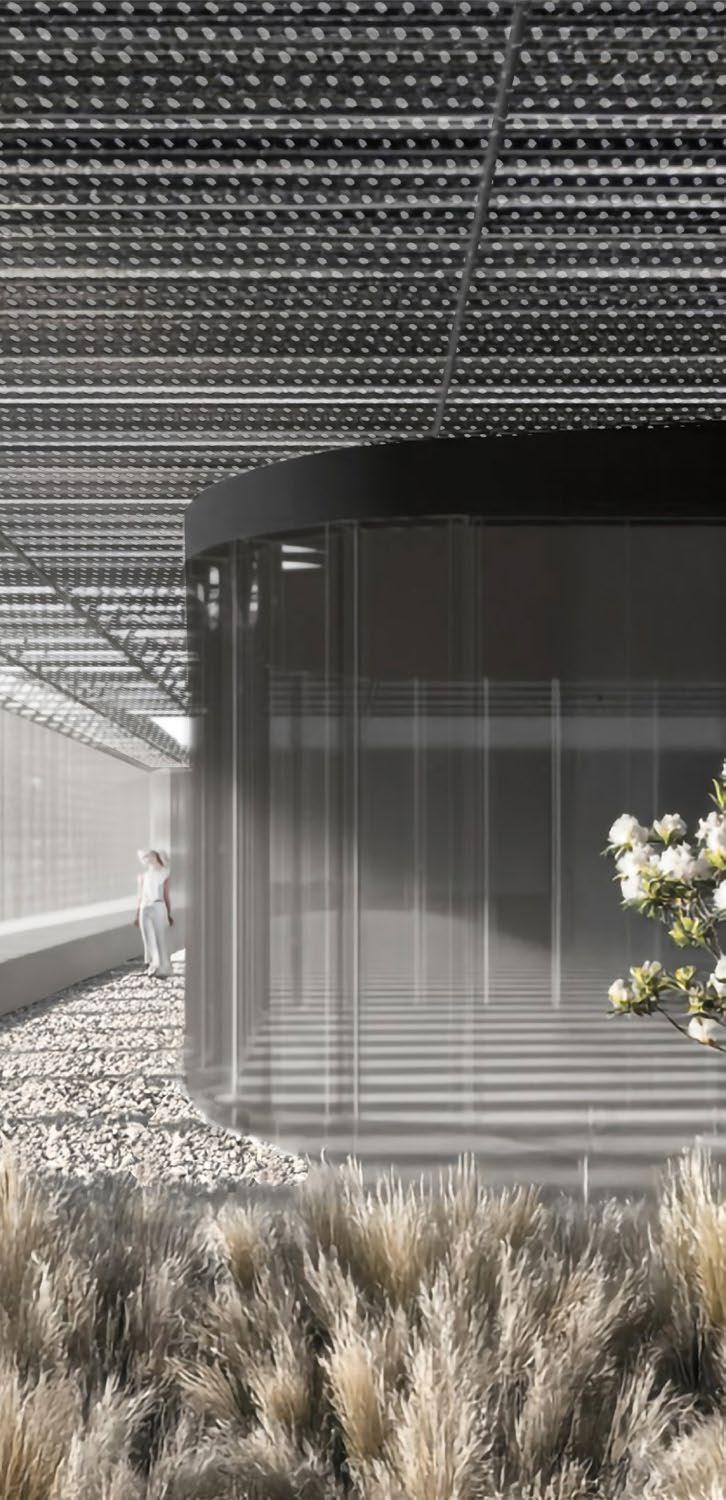
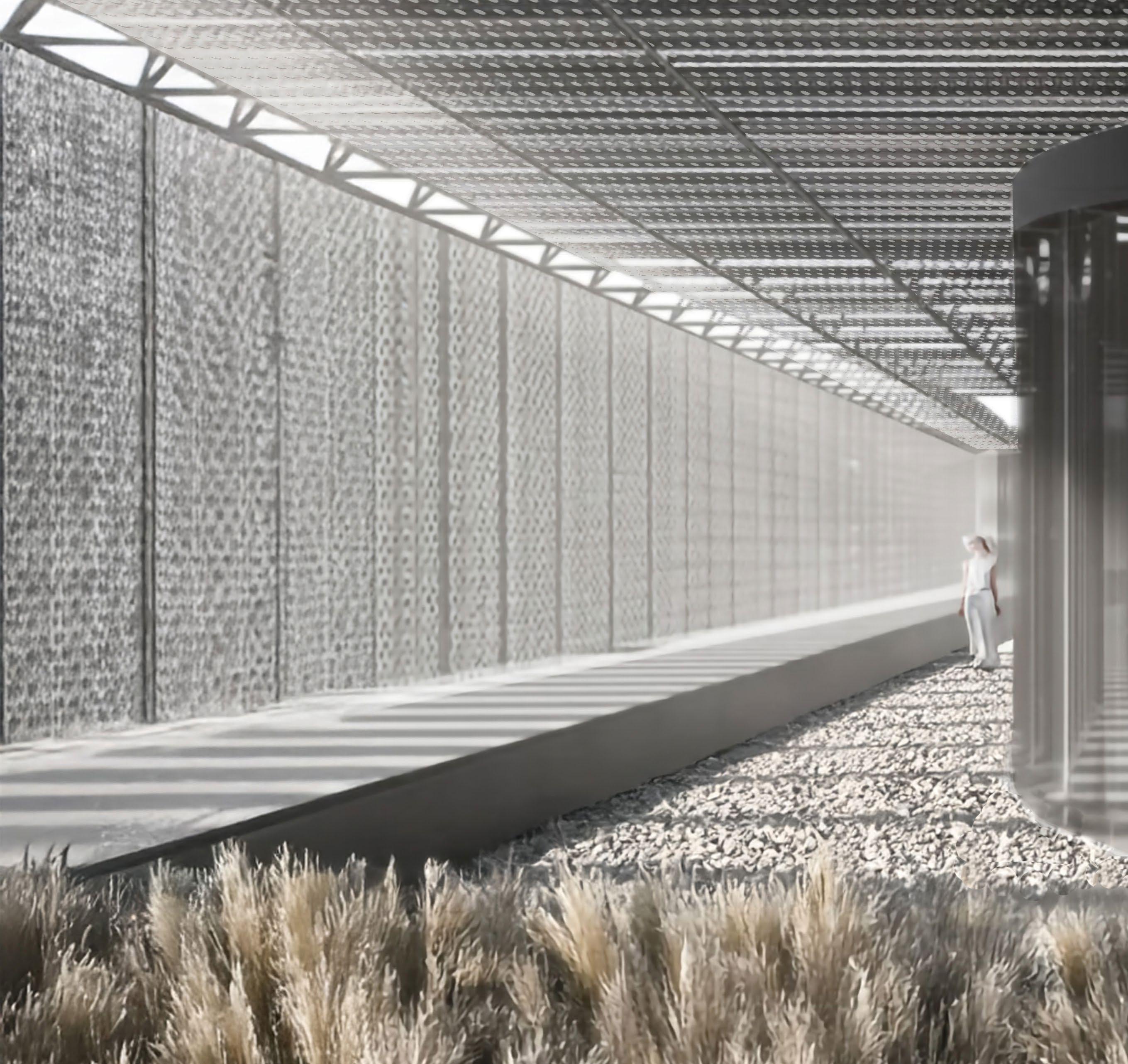
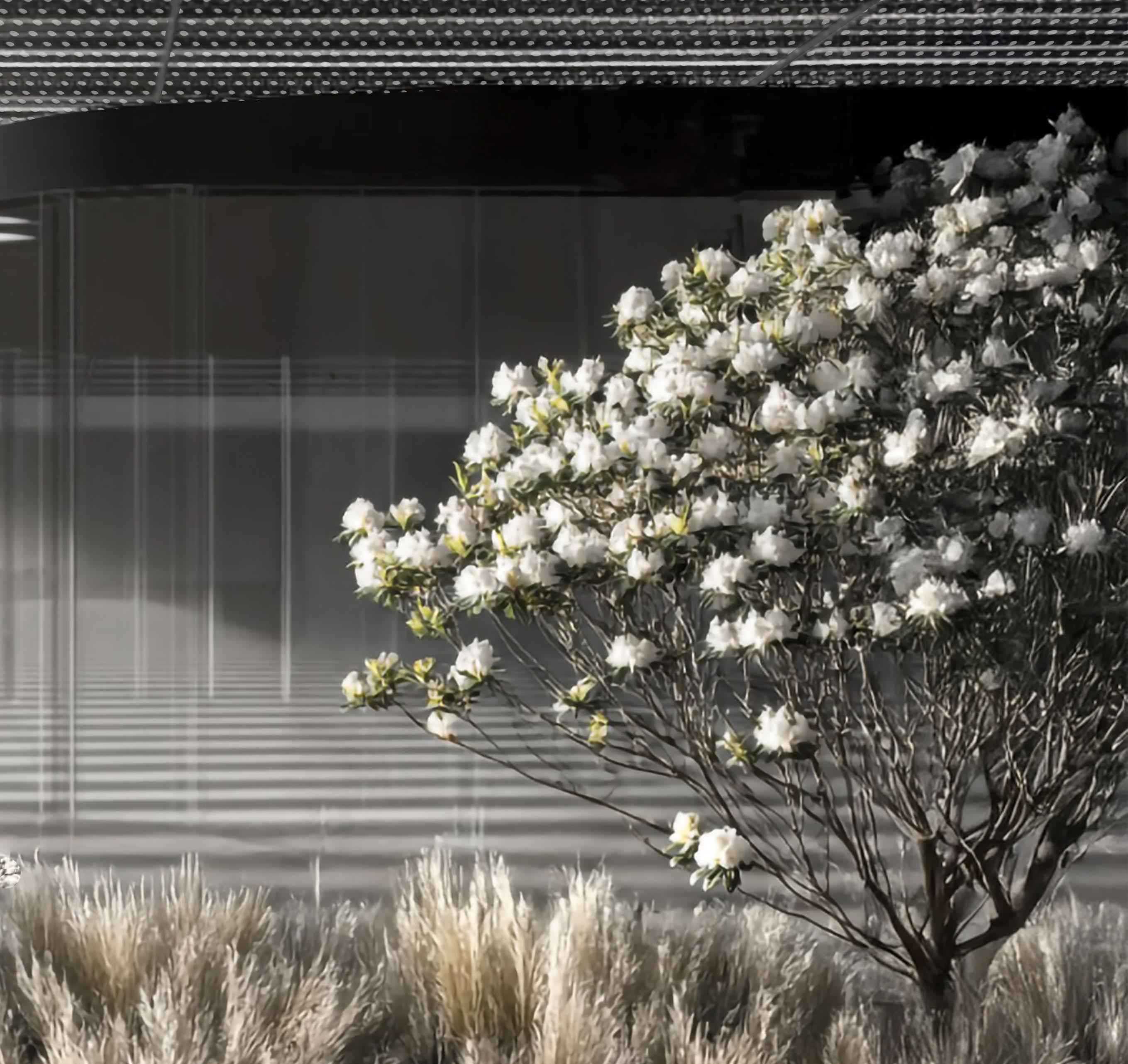
Roofscape is a renovation and expansion proposal for the Art and Architecture Building at the University of Tennessee. The project reclaims underutilized areas of the existing building to accommodate a growing academic community through new faculty offices, exhibition and meeting spaces, visiting scholar residences, garden rooms, and expanded parking. Beyond accommodating programmatic growth, the proposal prioritizes a climate-responsive agenda towards updating and expanding the existing building.
Collaborators: Ofmia Gobran, Grant Petschauer
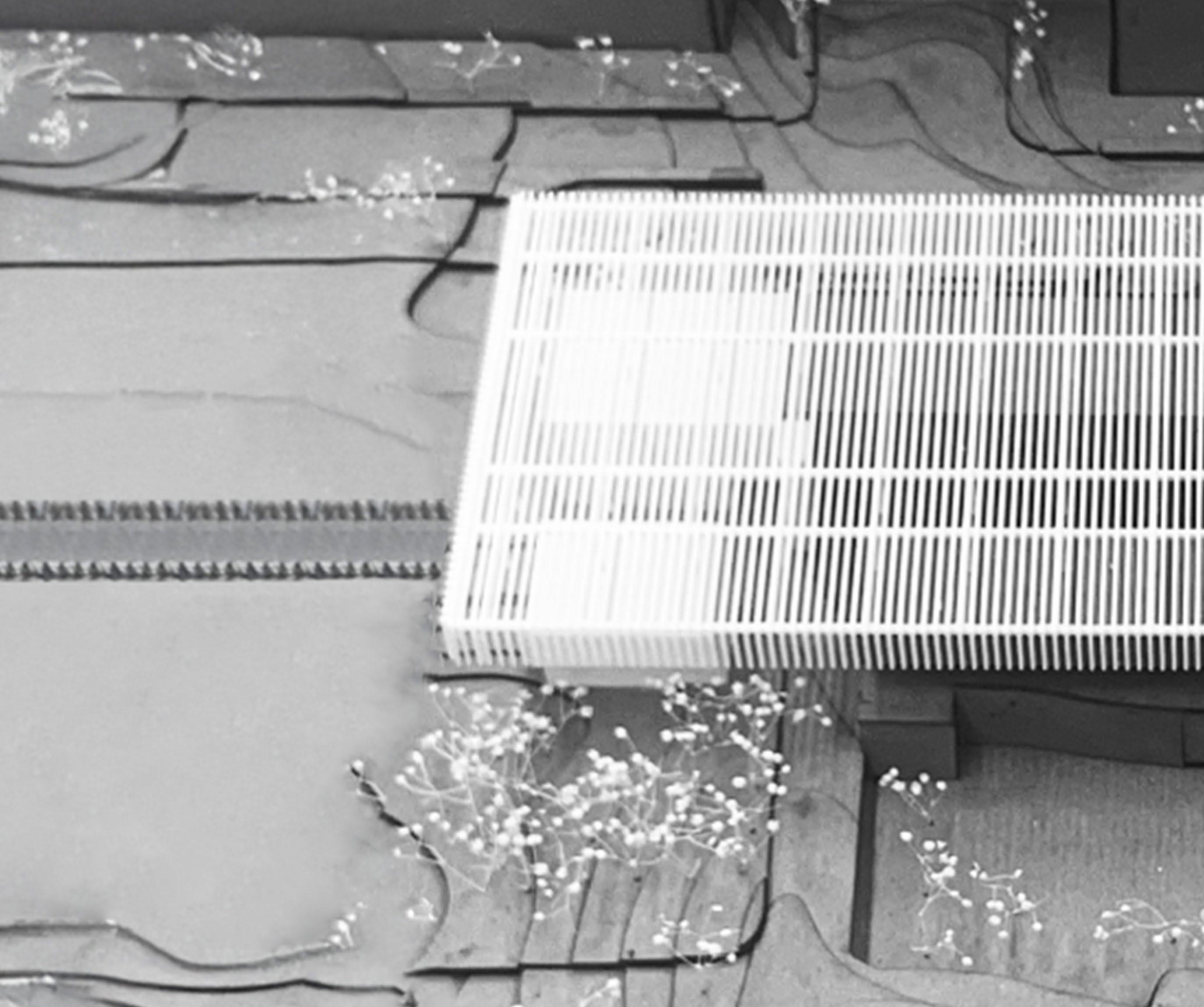
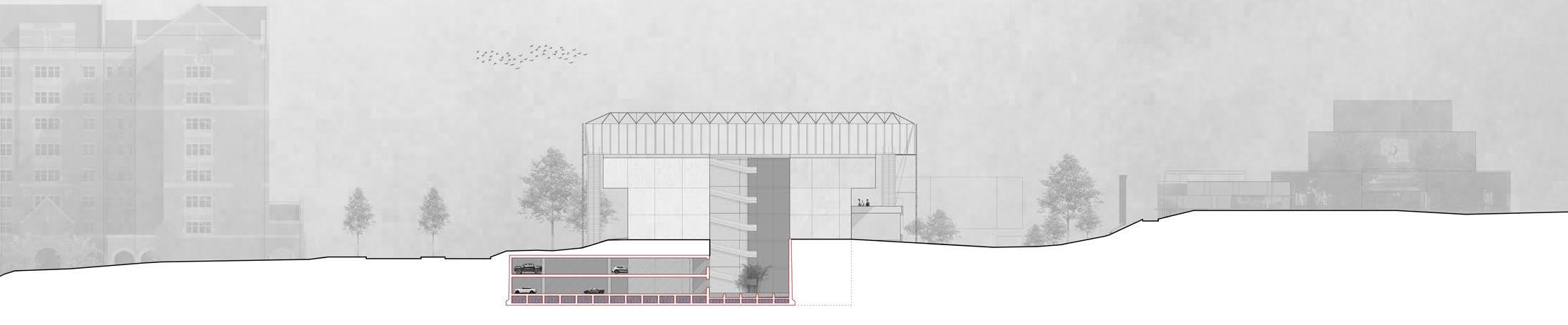


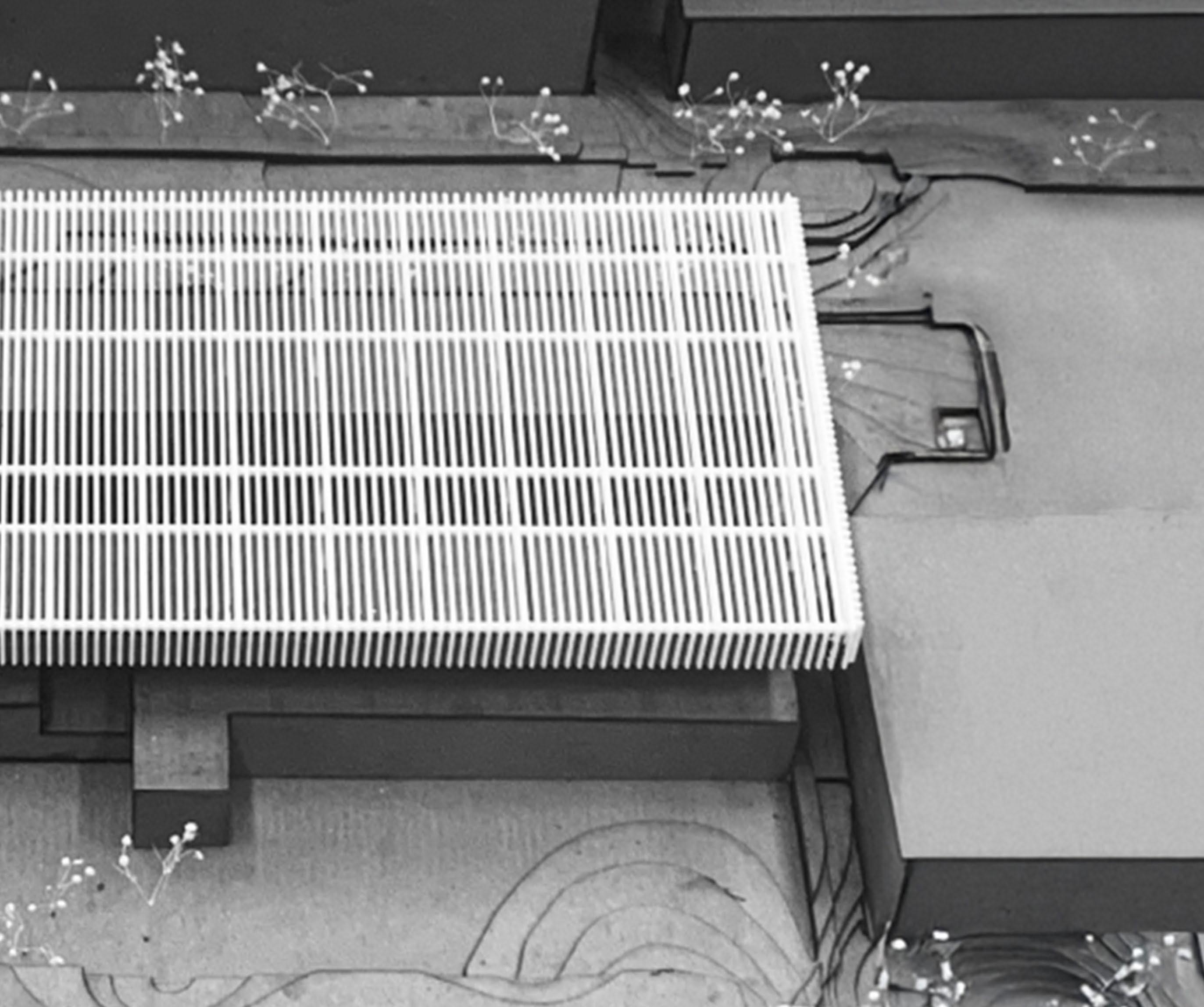
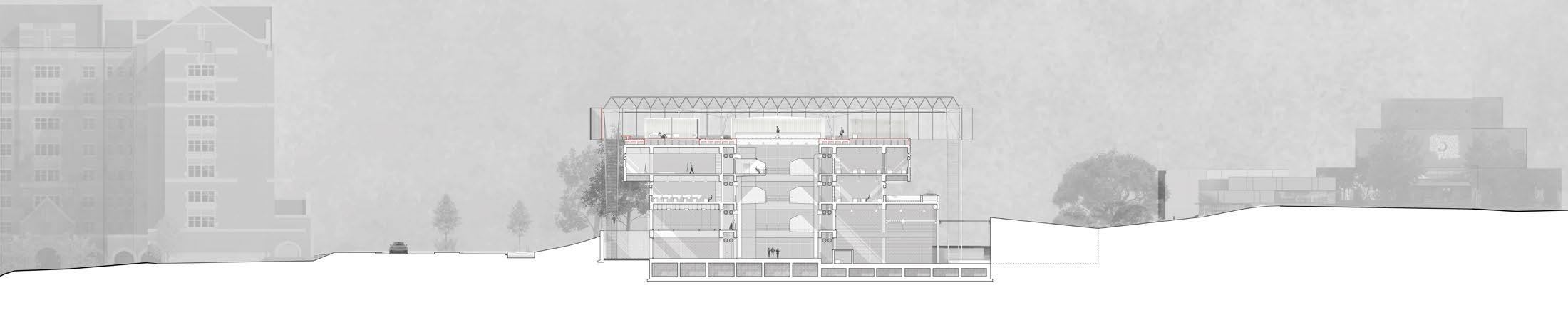

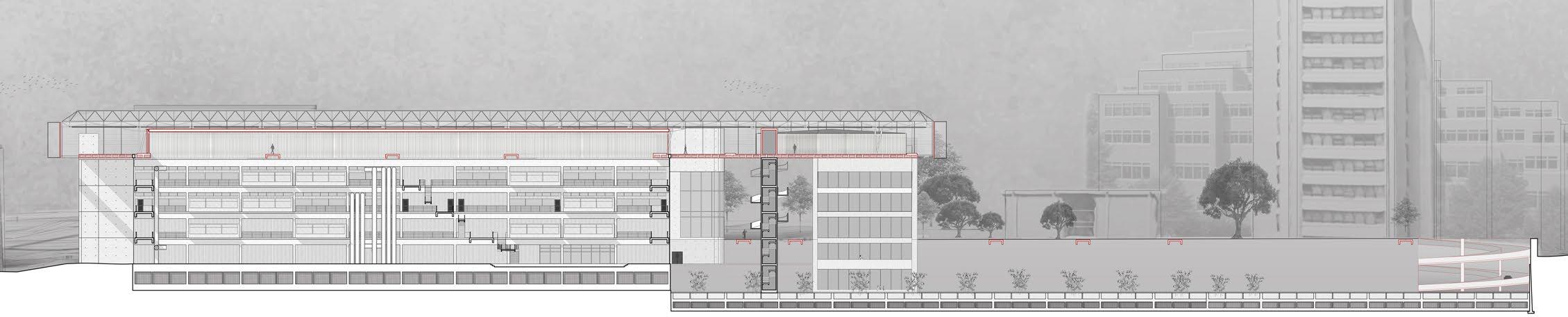
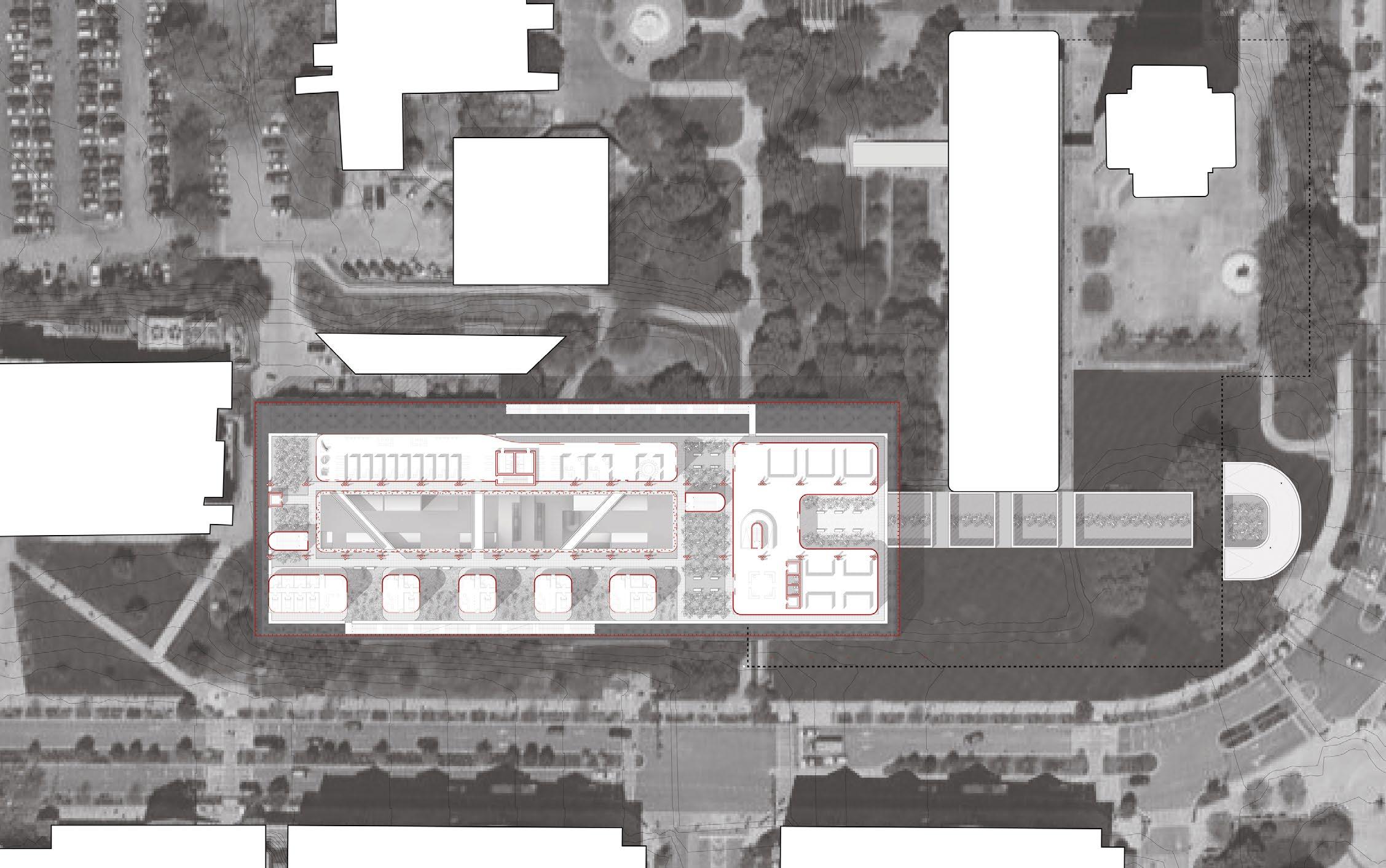
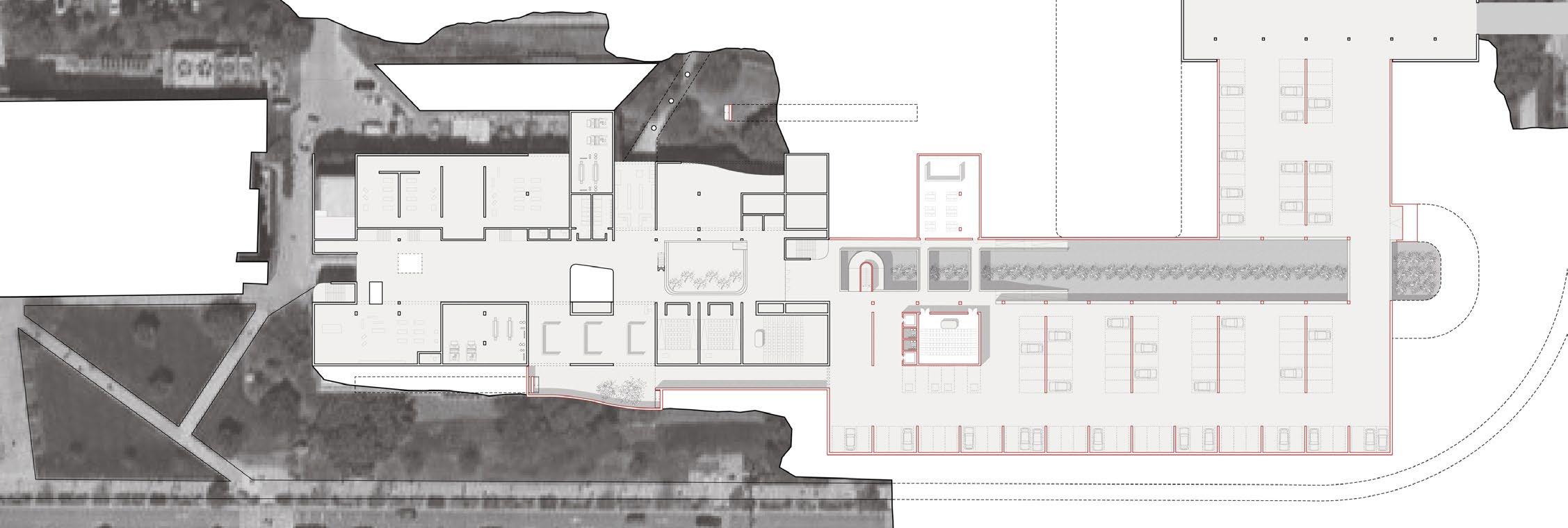
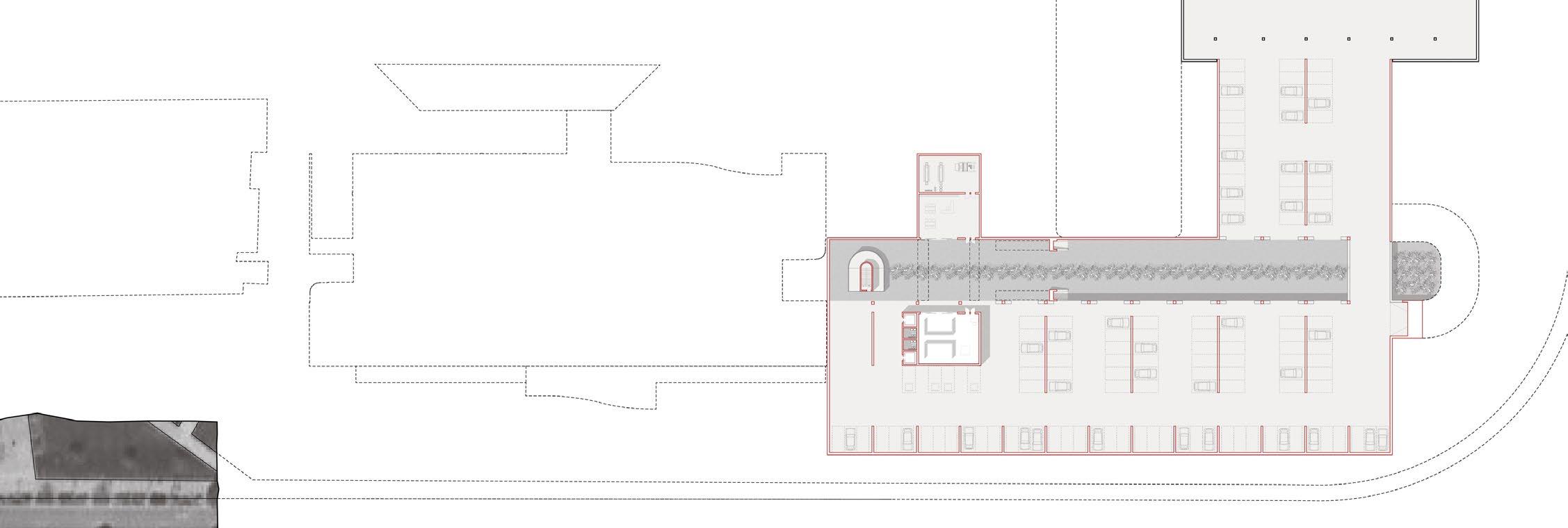
At the campus scale, a speculative volume east of the A+A is introduced for a future School of Art, housing academic, exhibition, dining, and childcare programs while unifying existing and new buildings through rooftop connections and a consolidated parking system. The parking structure connects to McClung Plaza Garage, sharing ventilation, daylight, and green space.
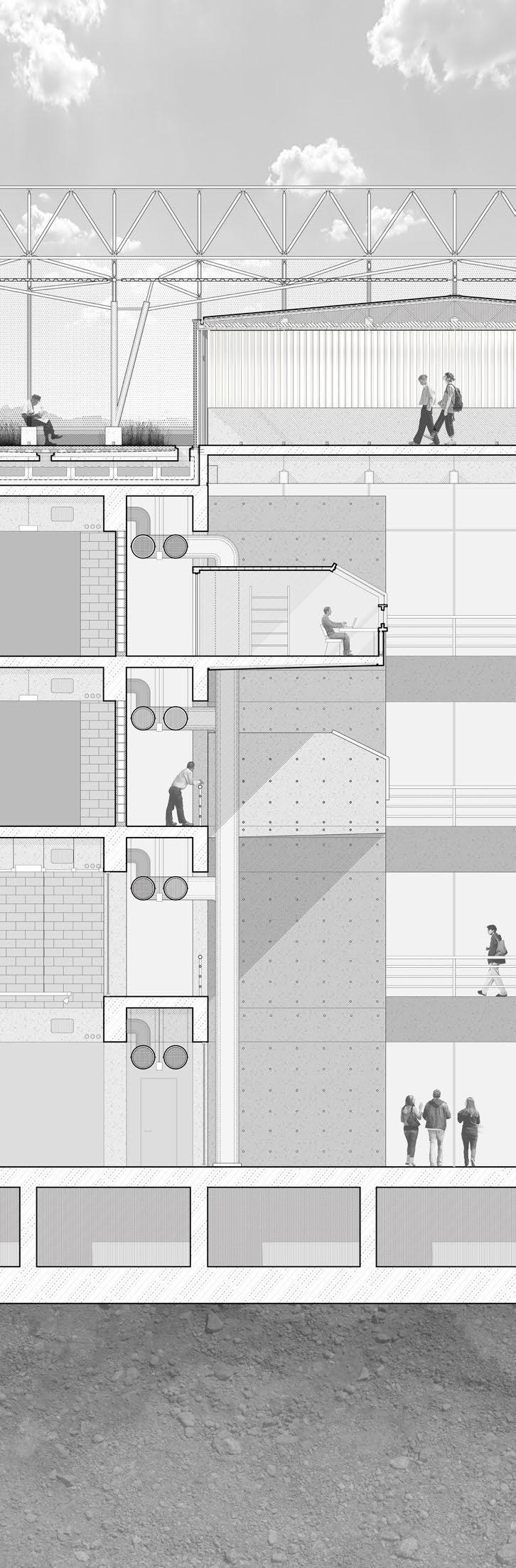
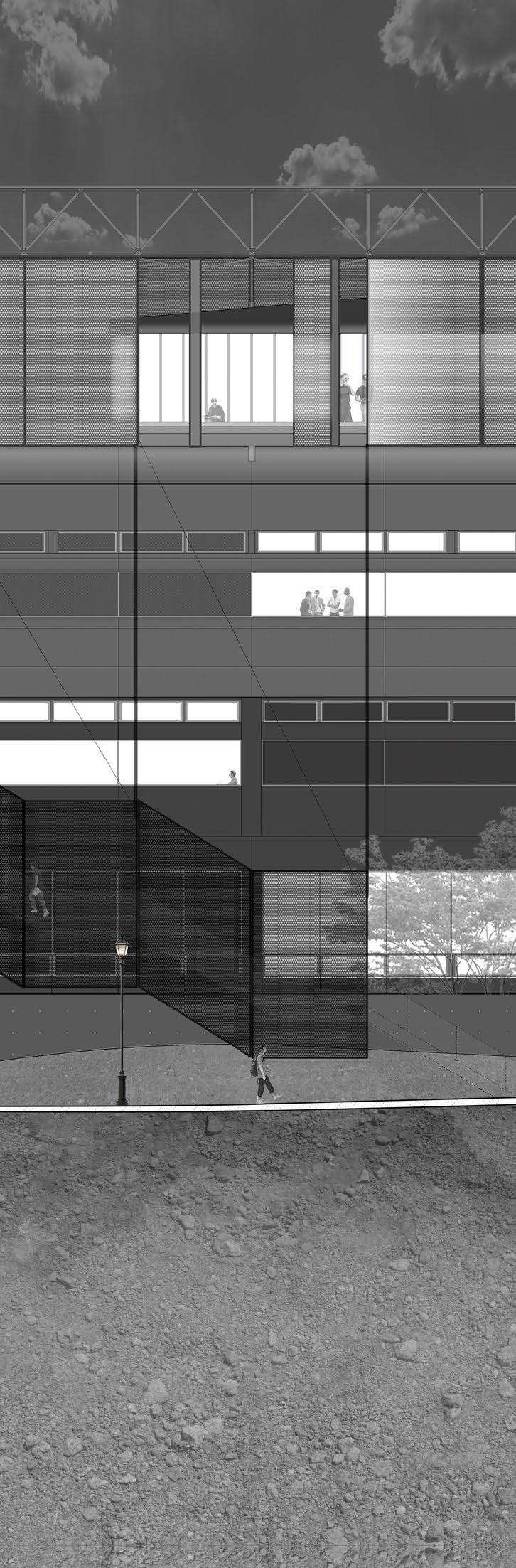
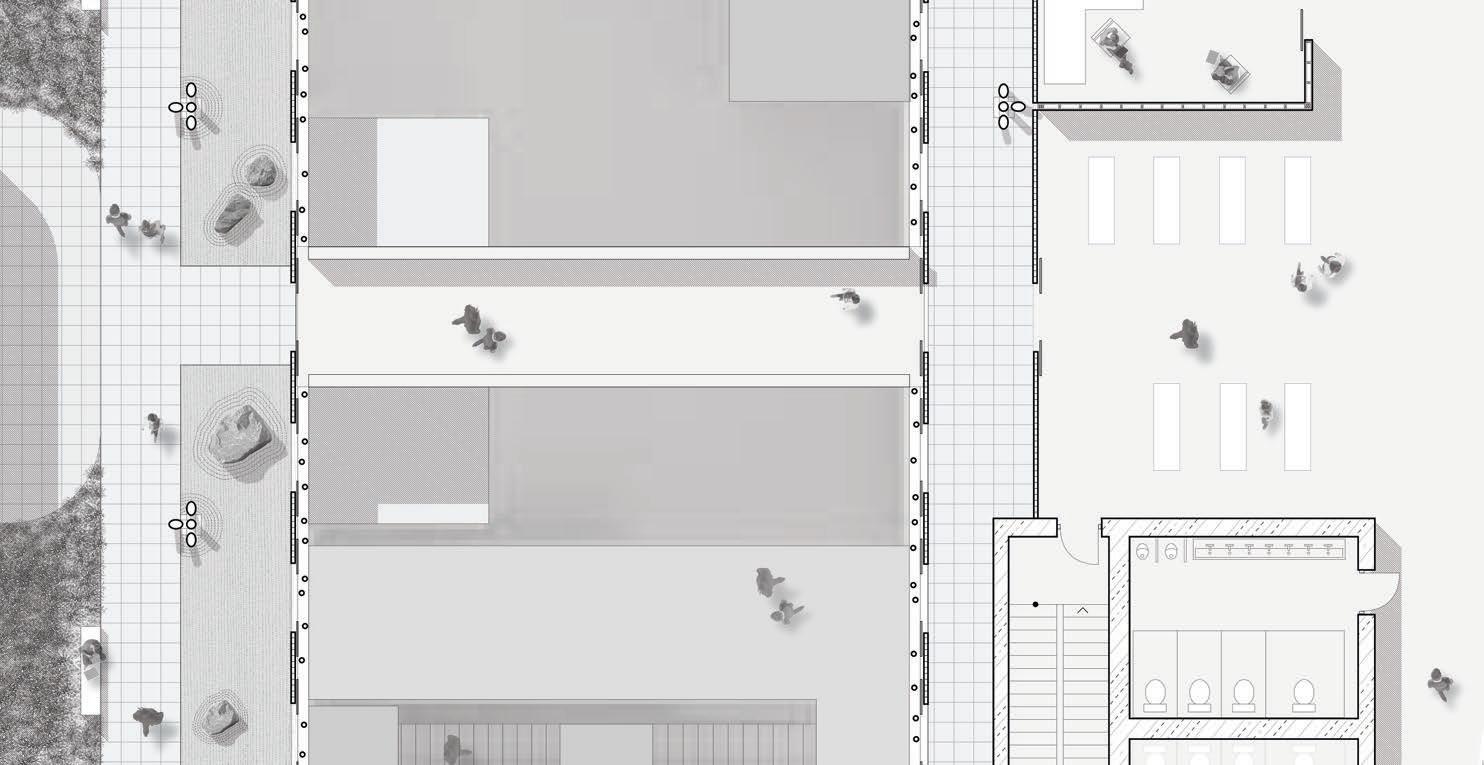
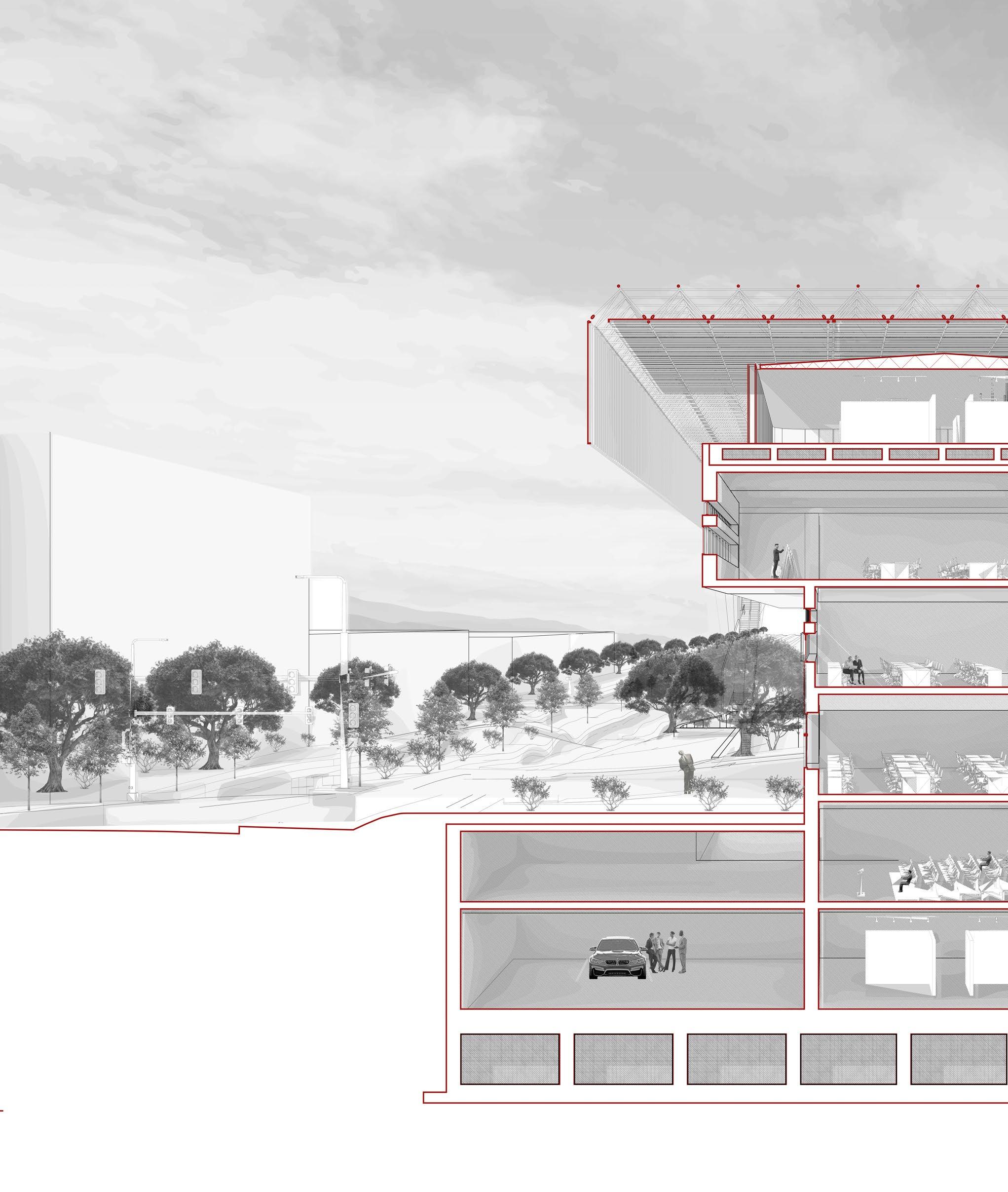
Together, the canopy, glass pavilions, and gardens form a lightweight roof system that allows the building to better adapt to daylight, ventilation, and storm water management needs.
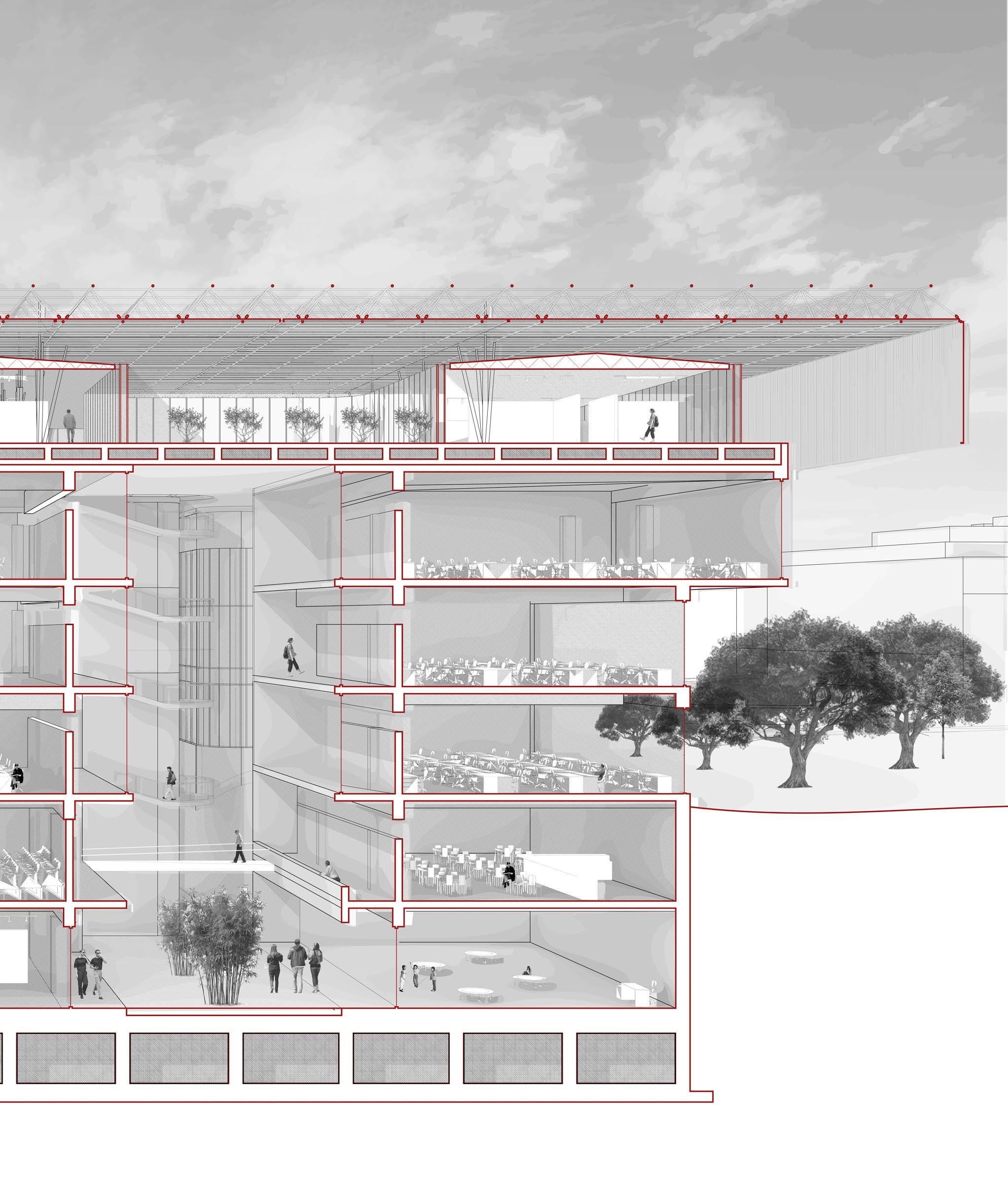
The new A+A Hall could be conceived as an open, flexible system capable of responding to East Tennessee’s variable climate and ongoing campus growth.
2025 ASCA CMU Competition
Location: Course: Instructor: Semester: Anchorage, Alaska Competition
Hansjörg Göritz
Spring 2025
Typology: Civic
Selected Work
Project Description:
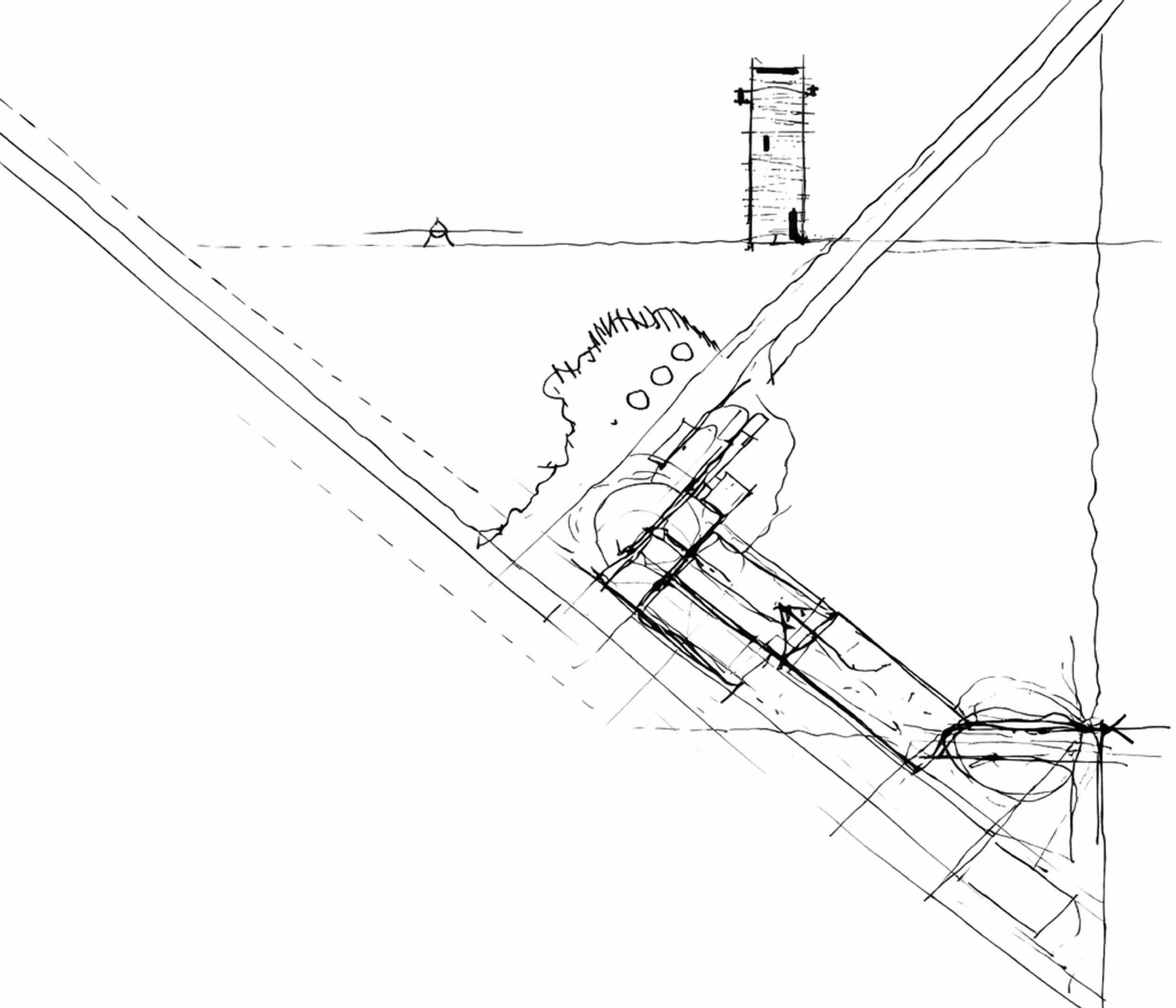
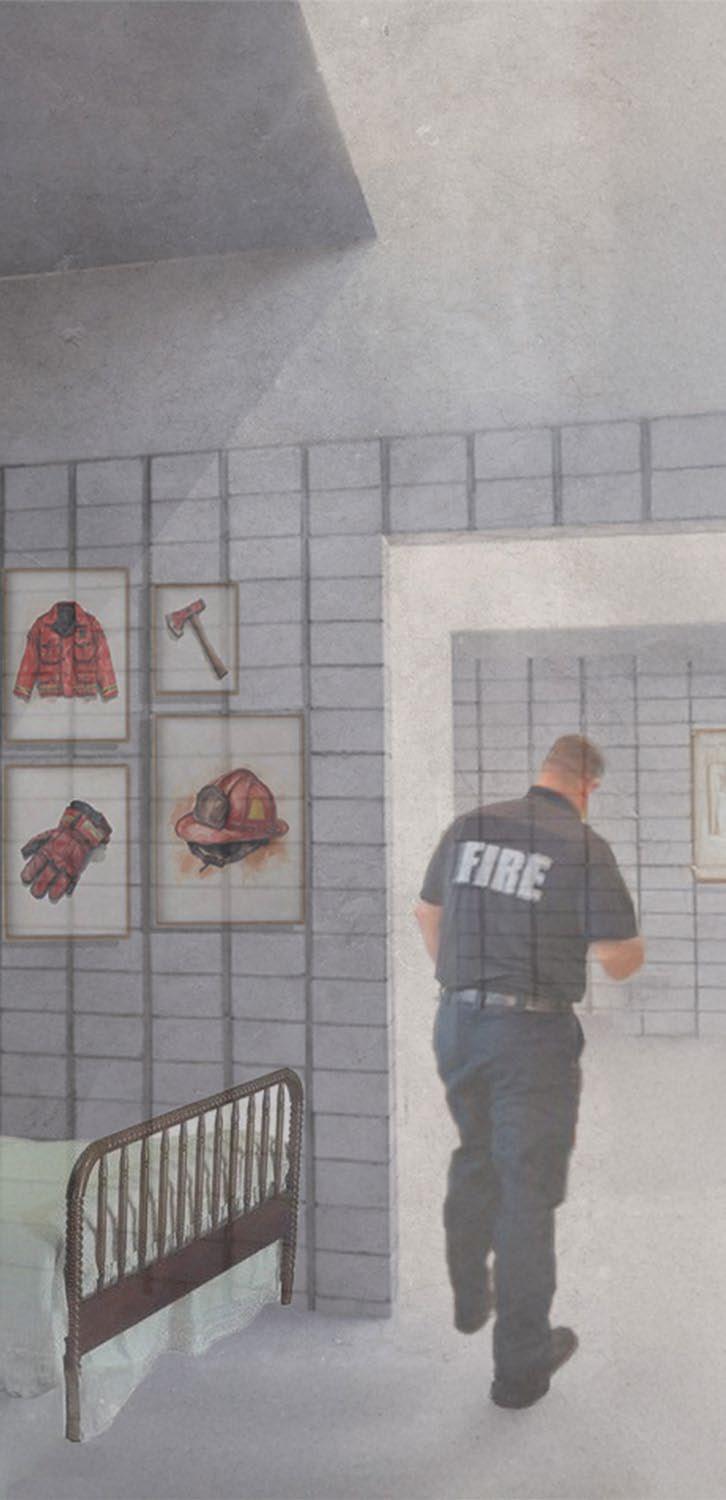
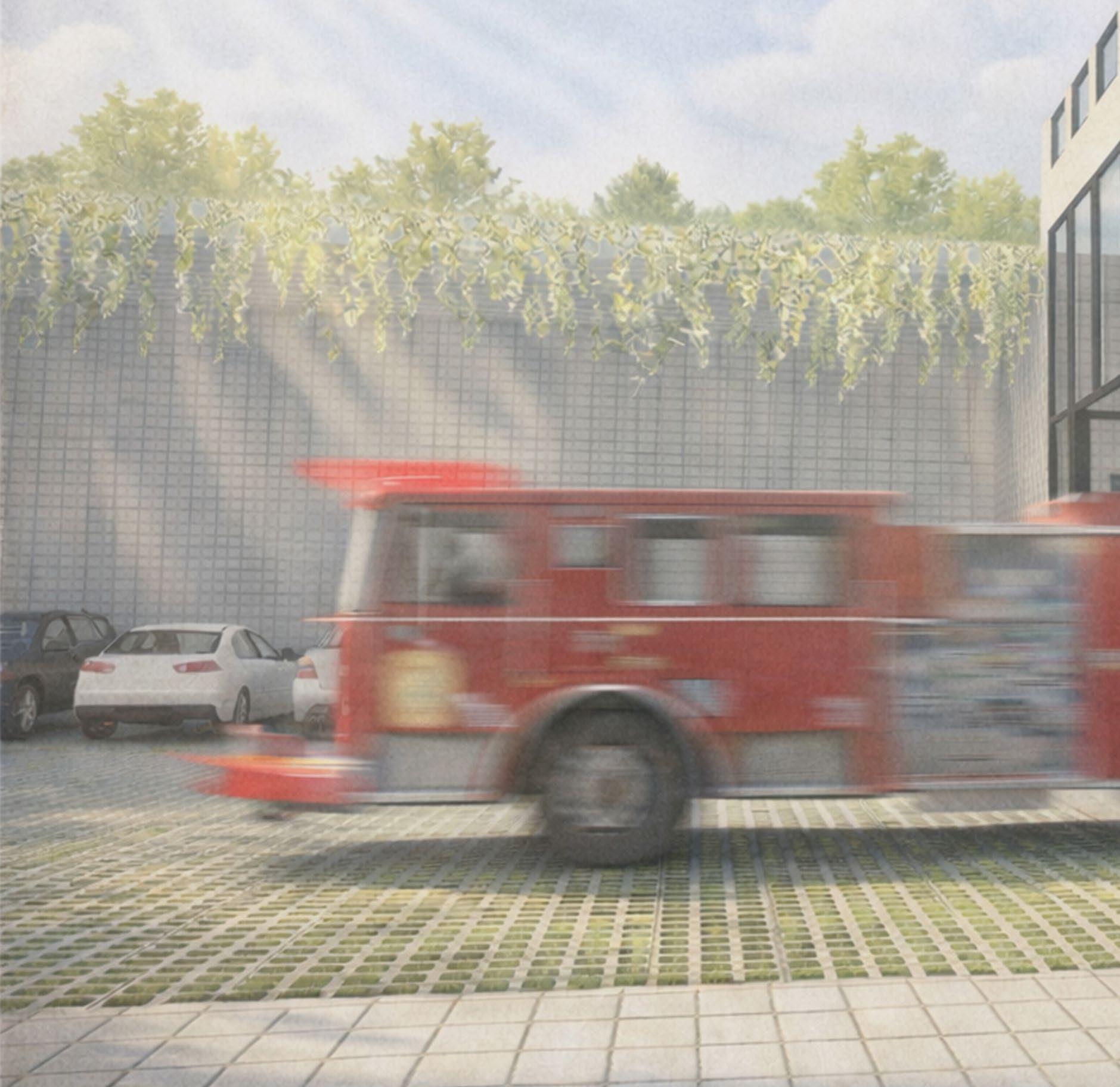
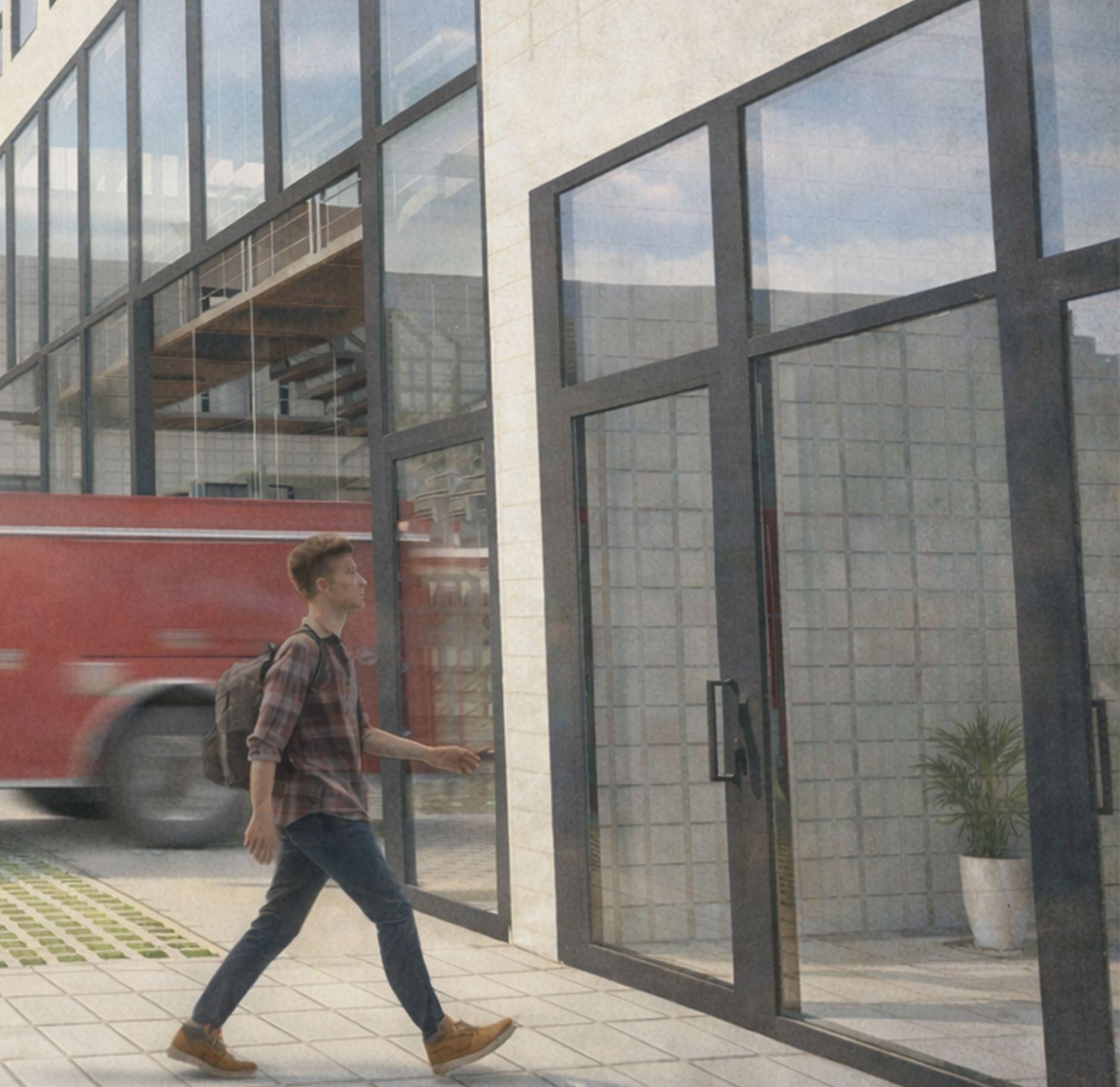
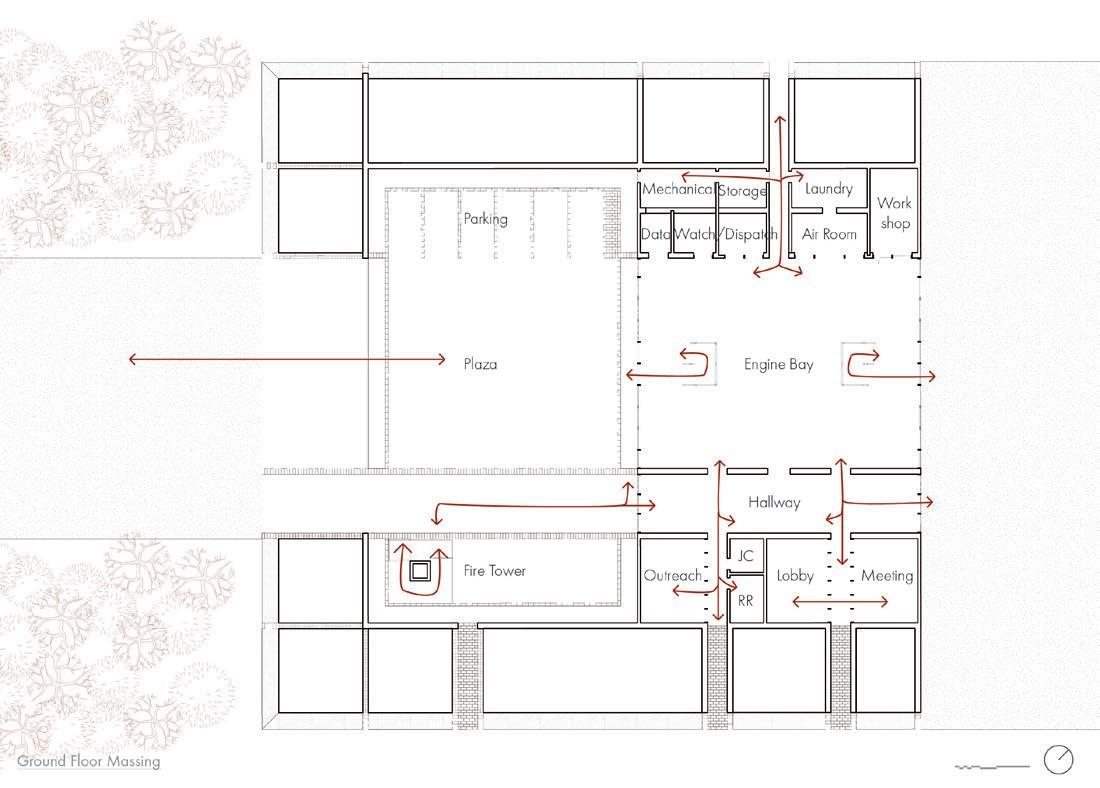
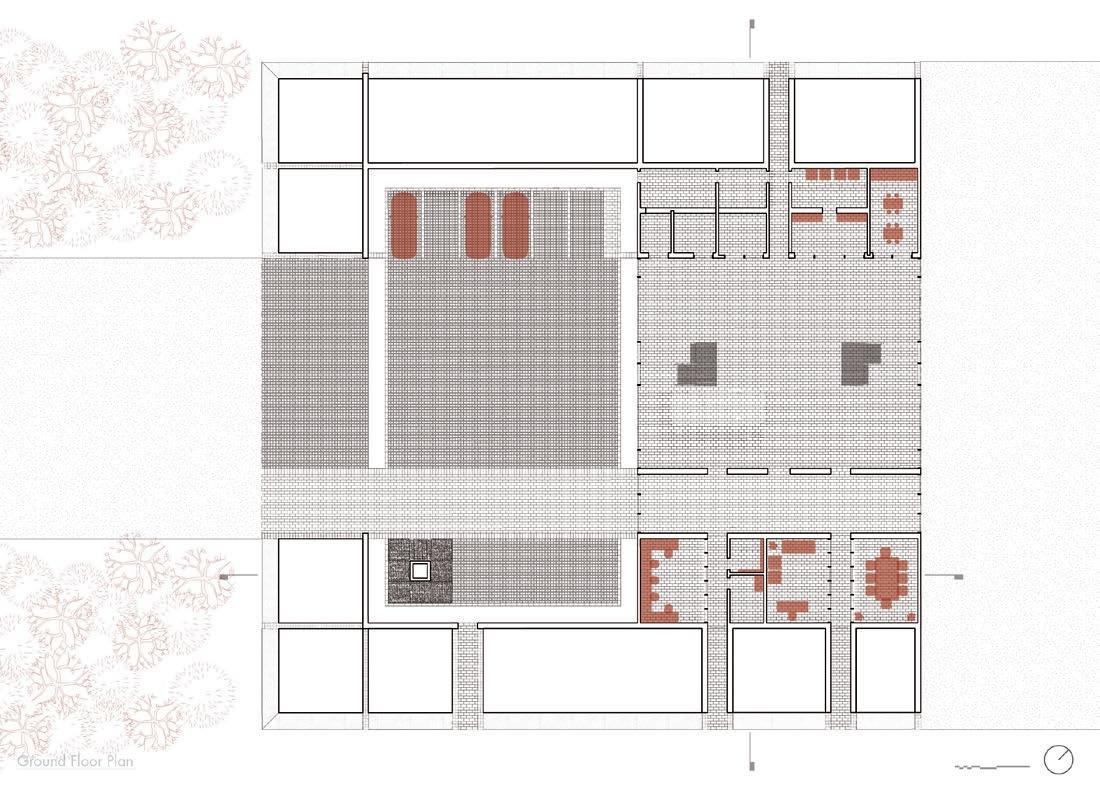
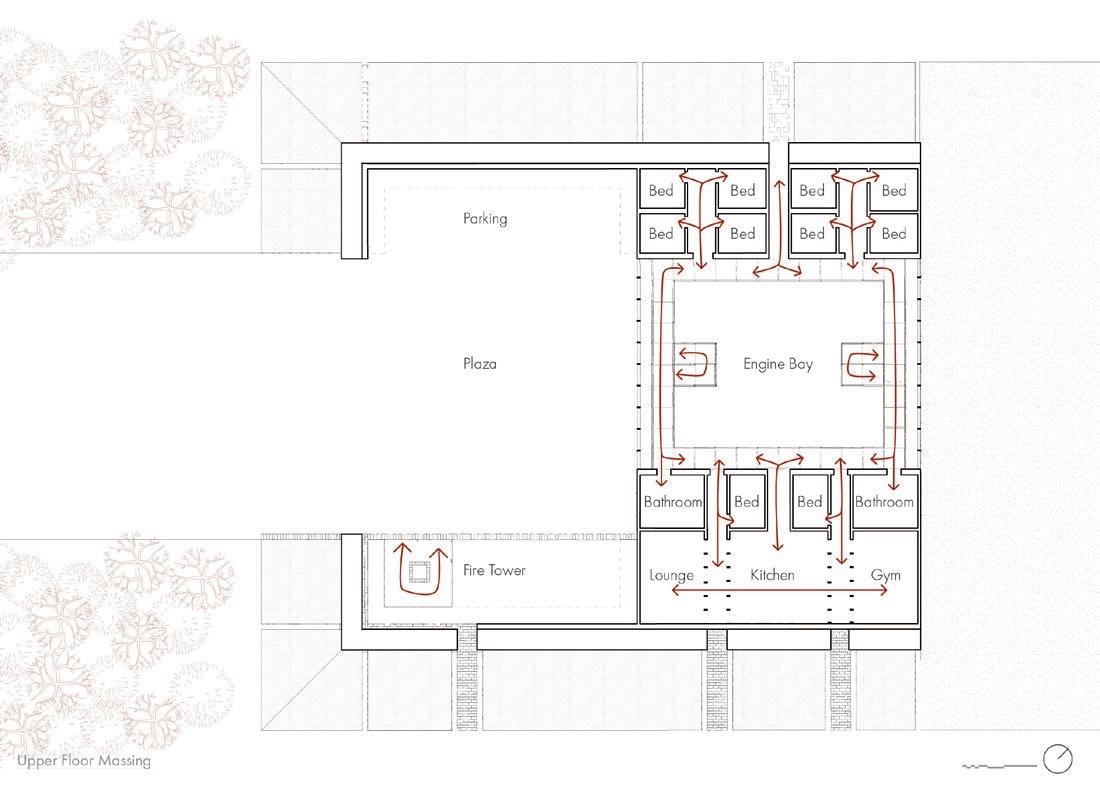
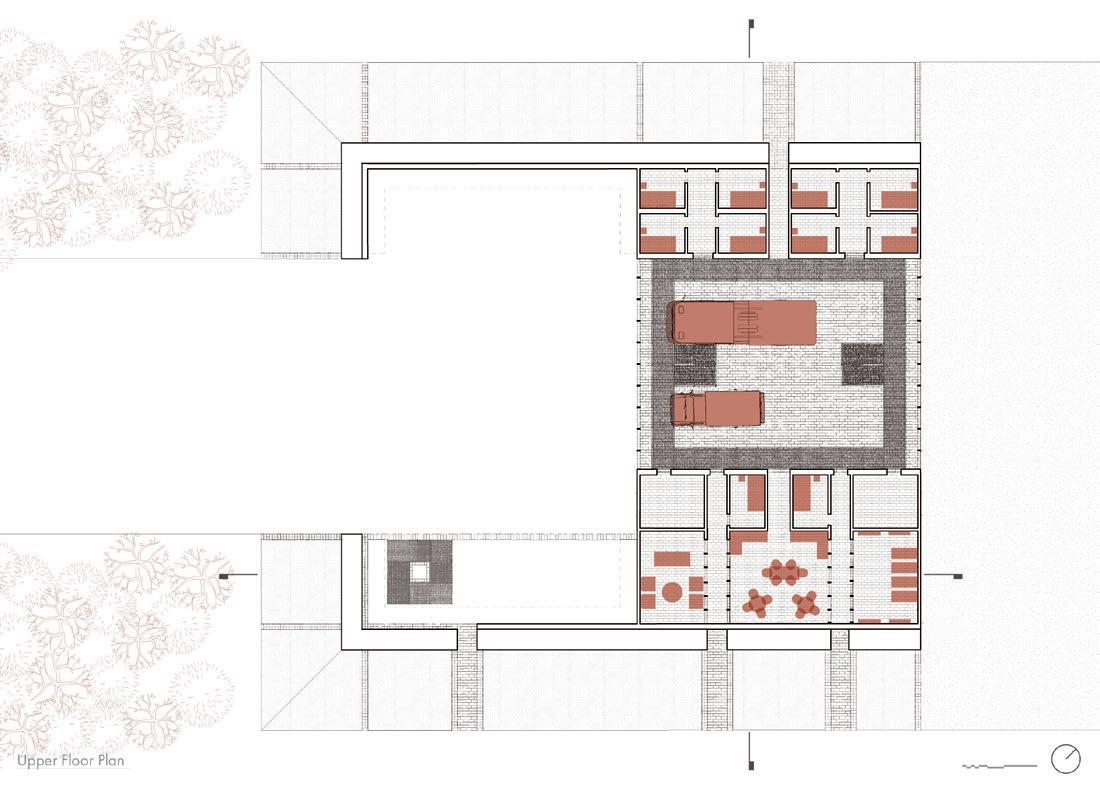
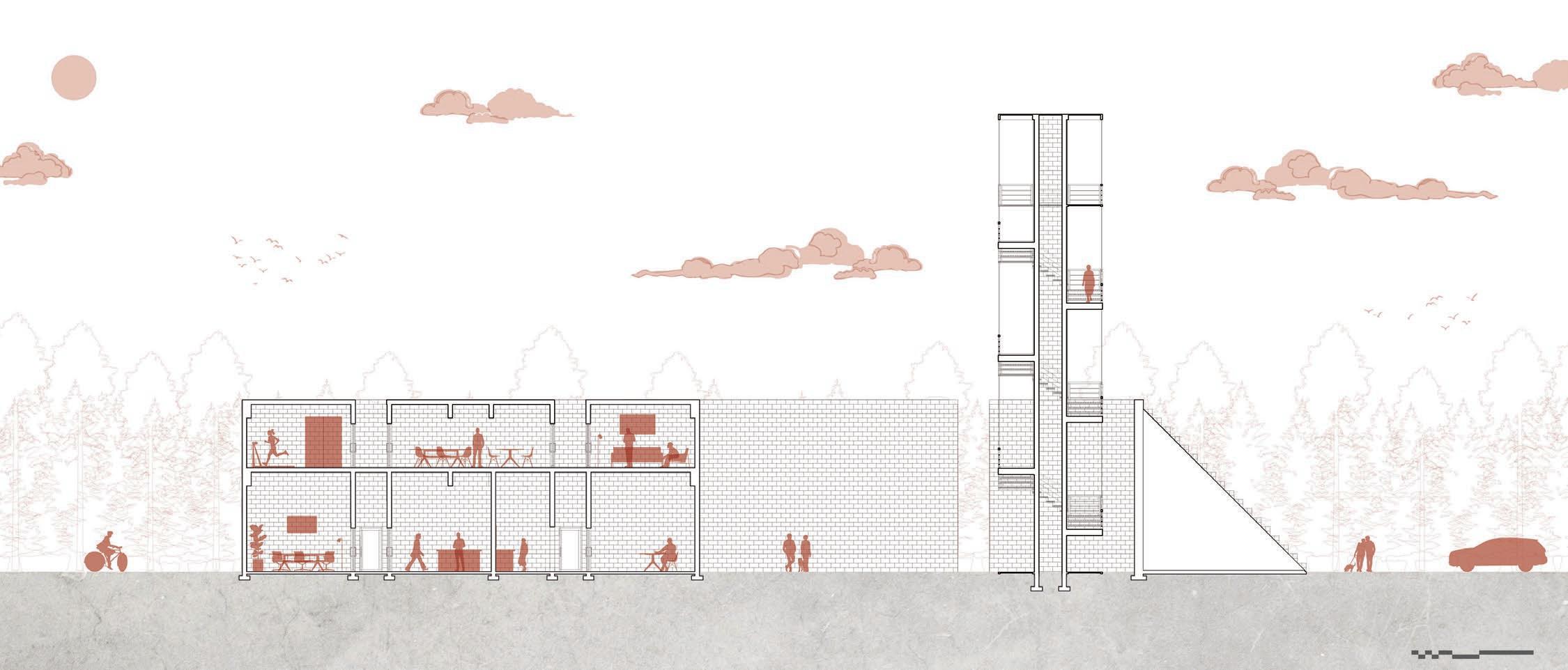
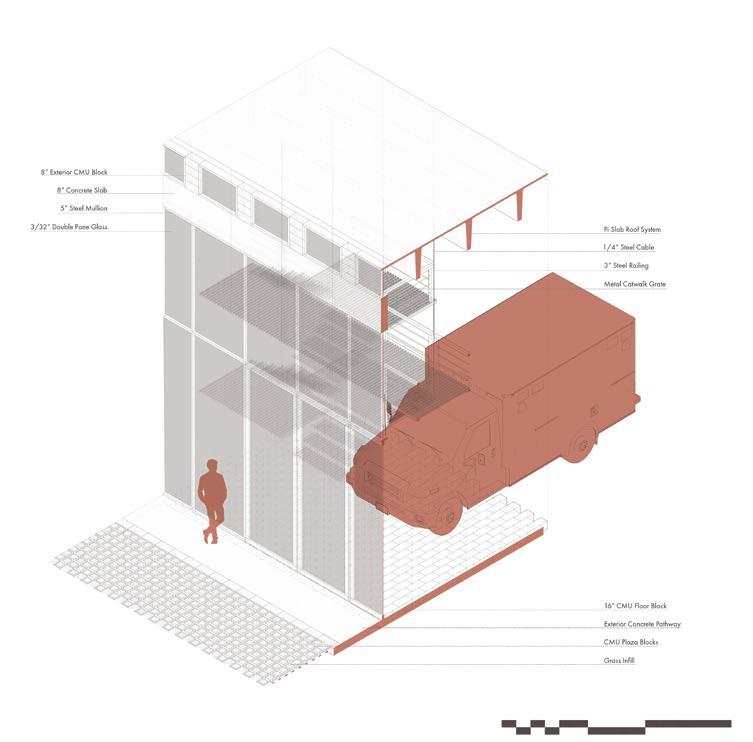
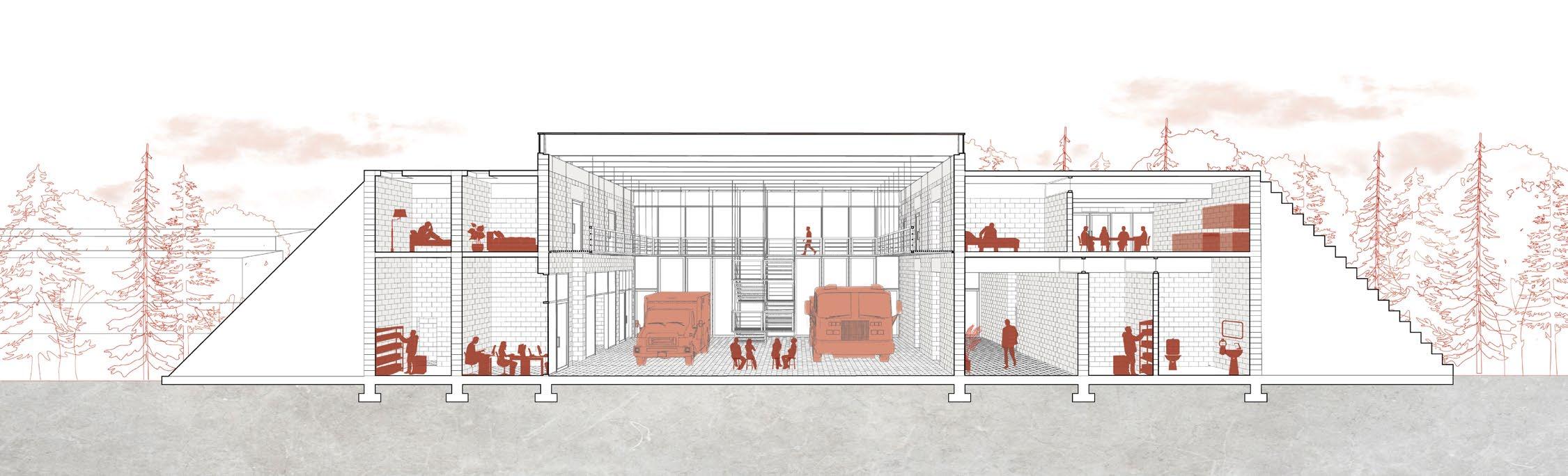
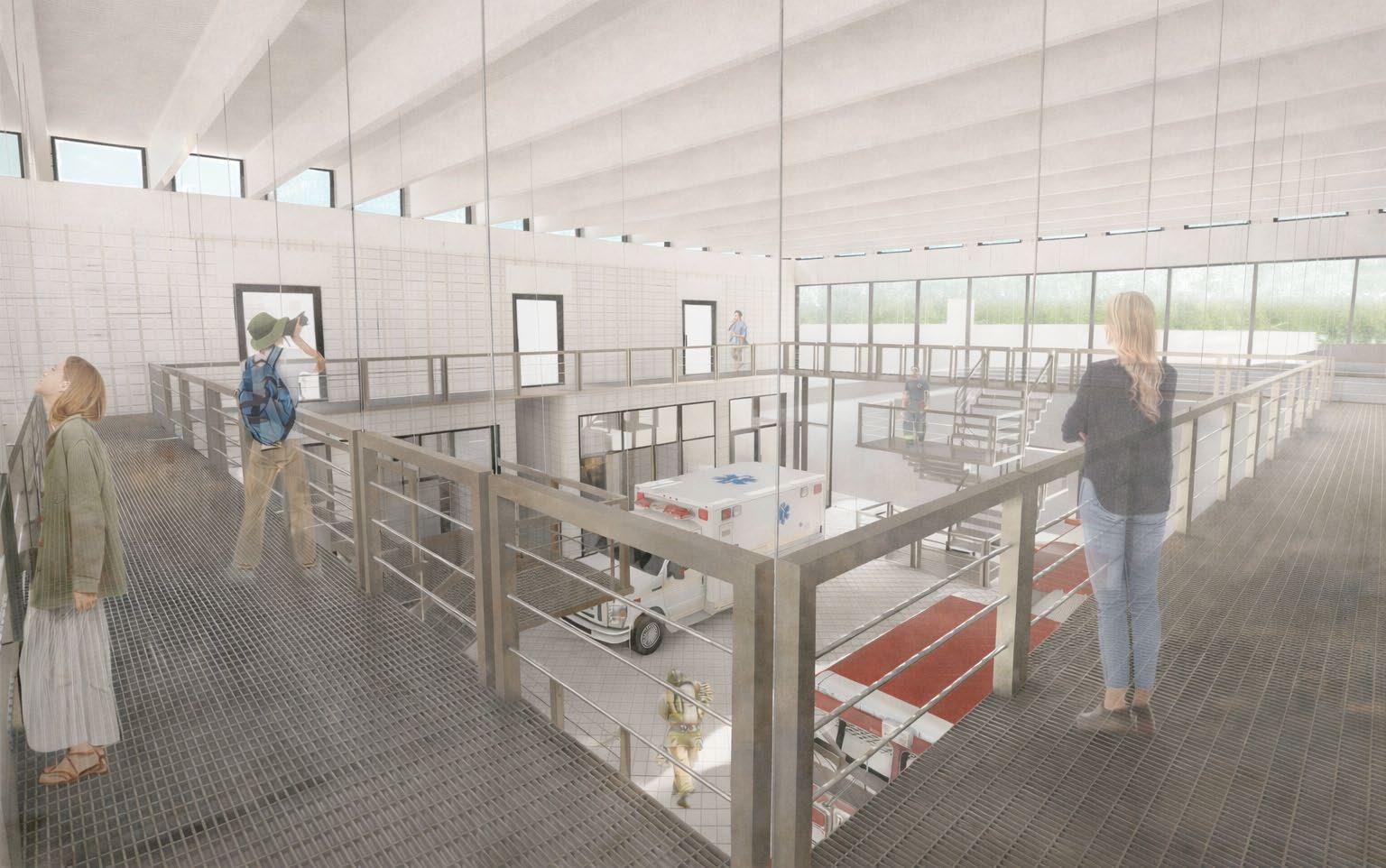
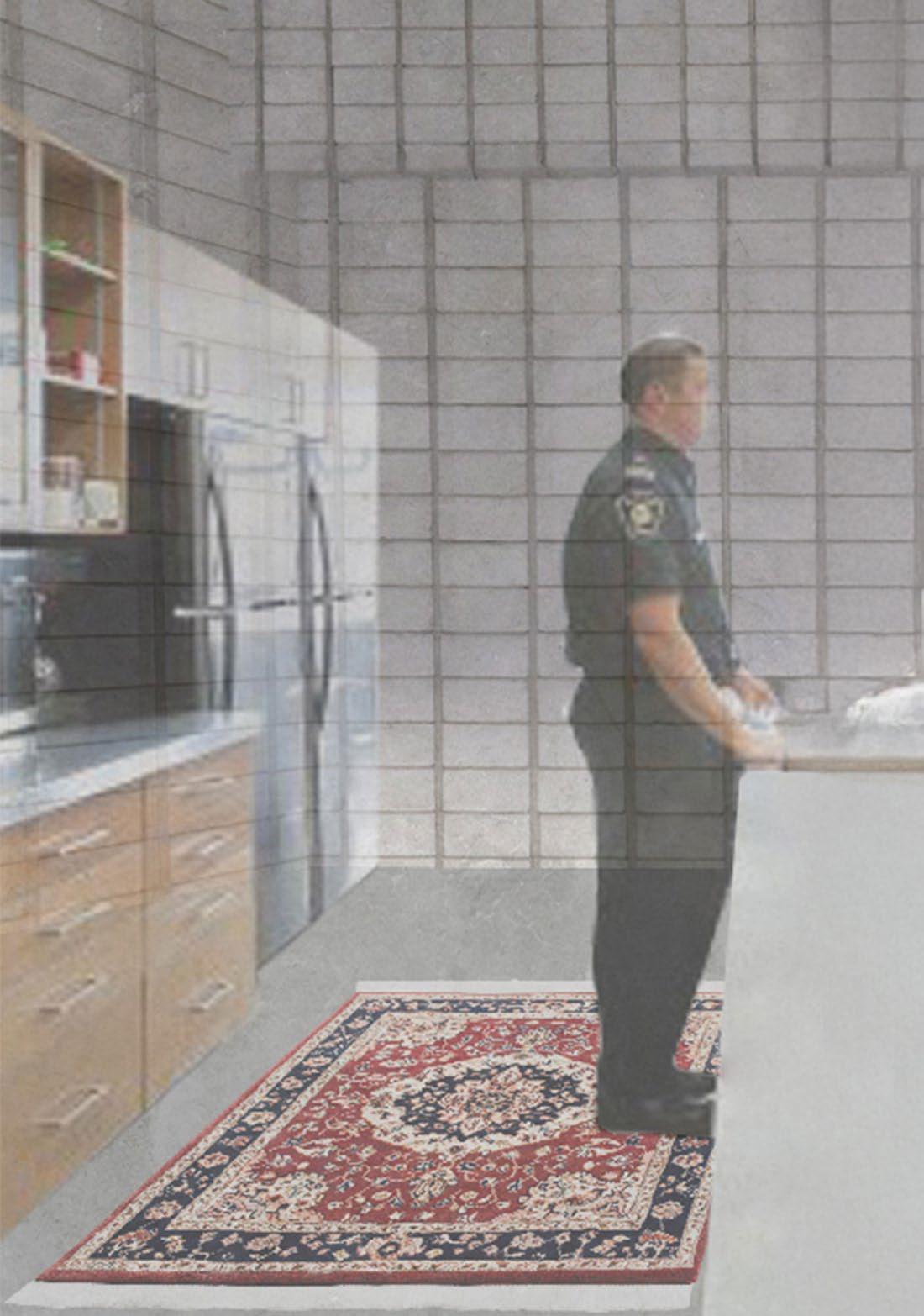
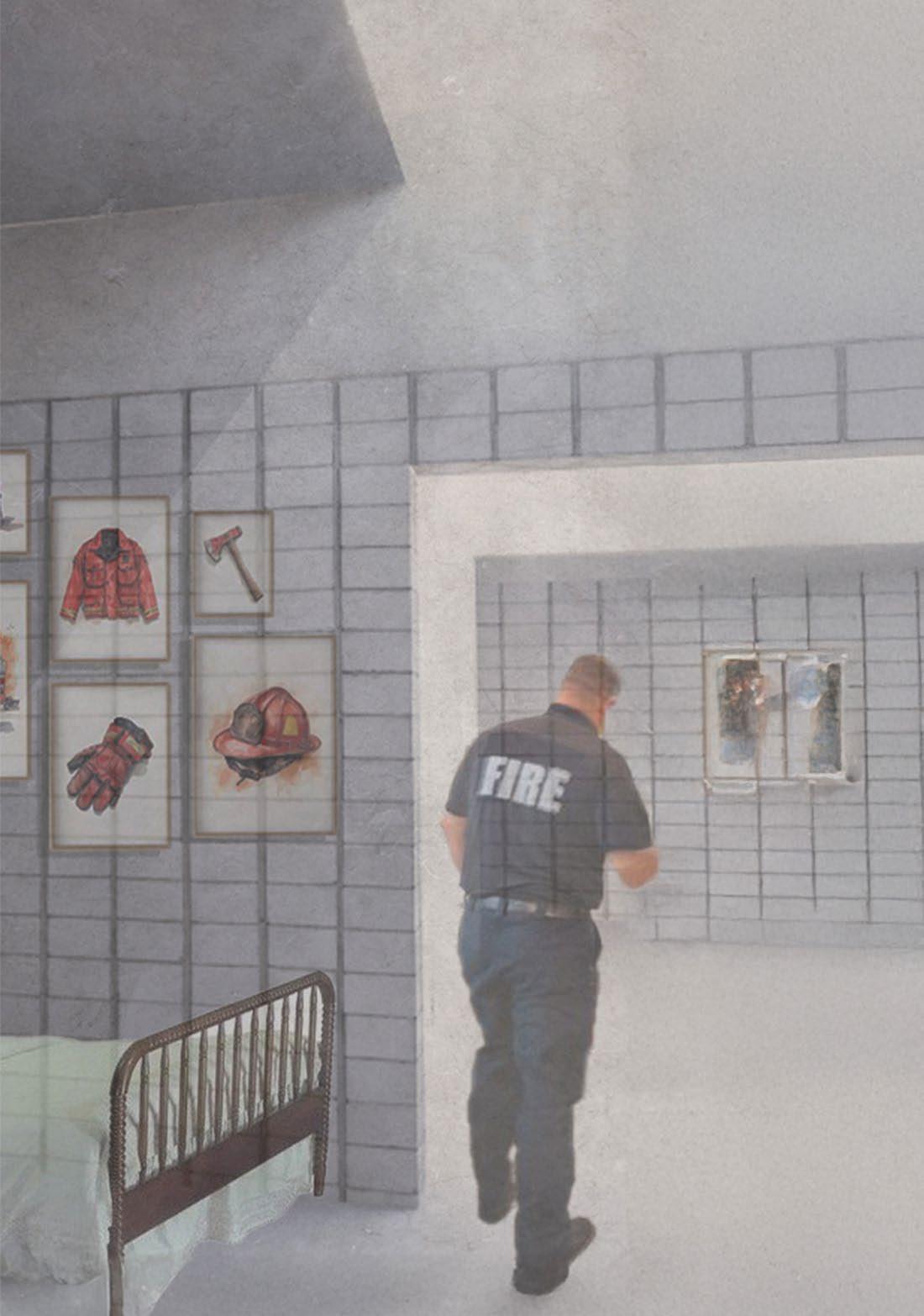
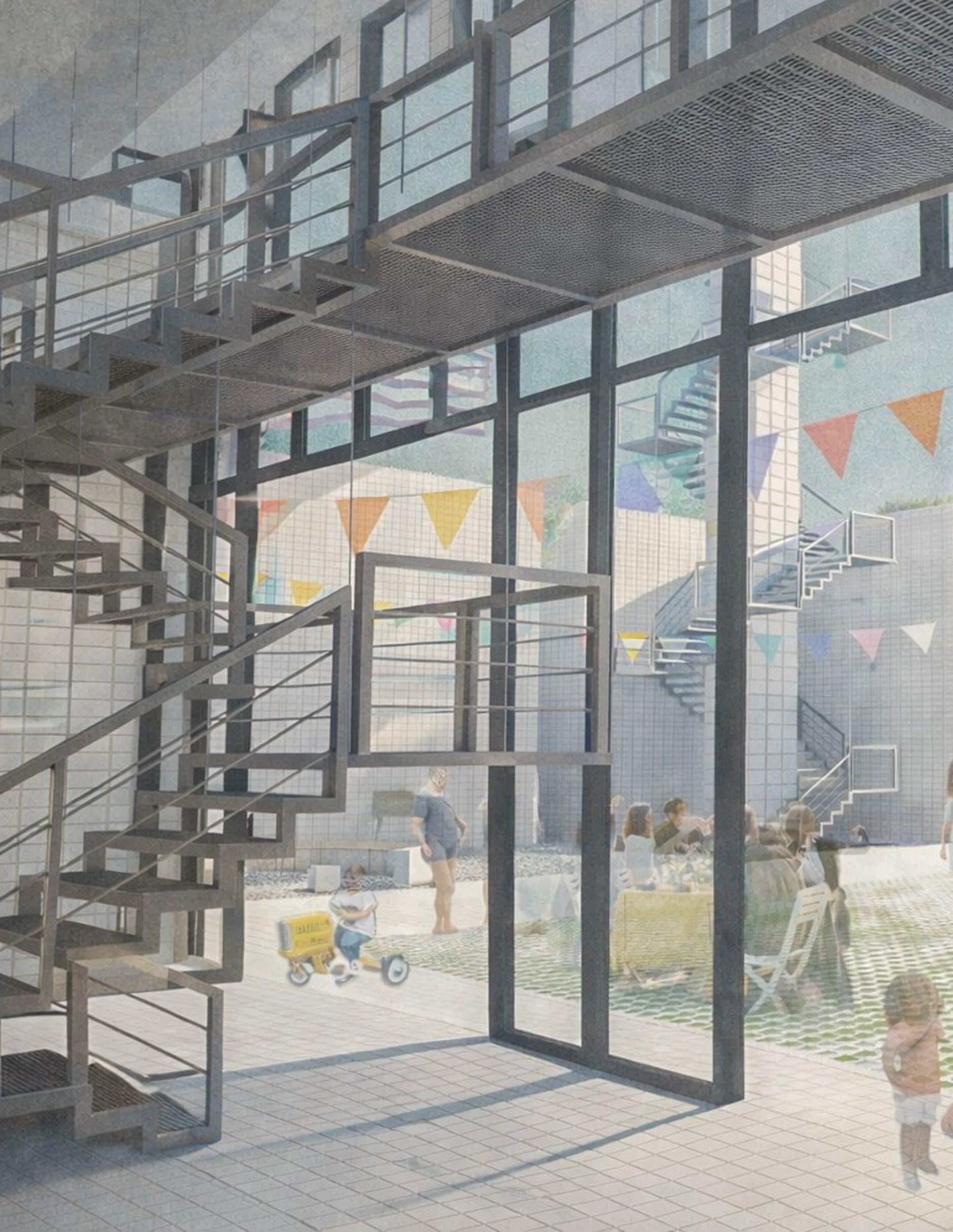
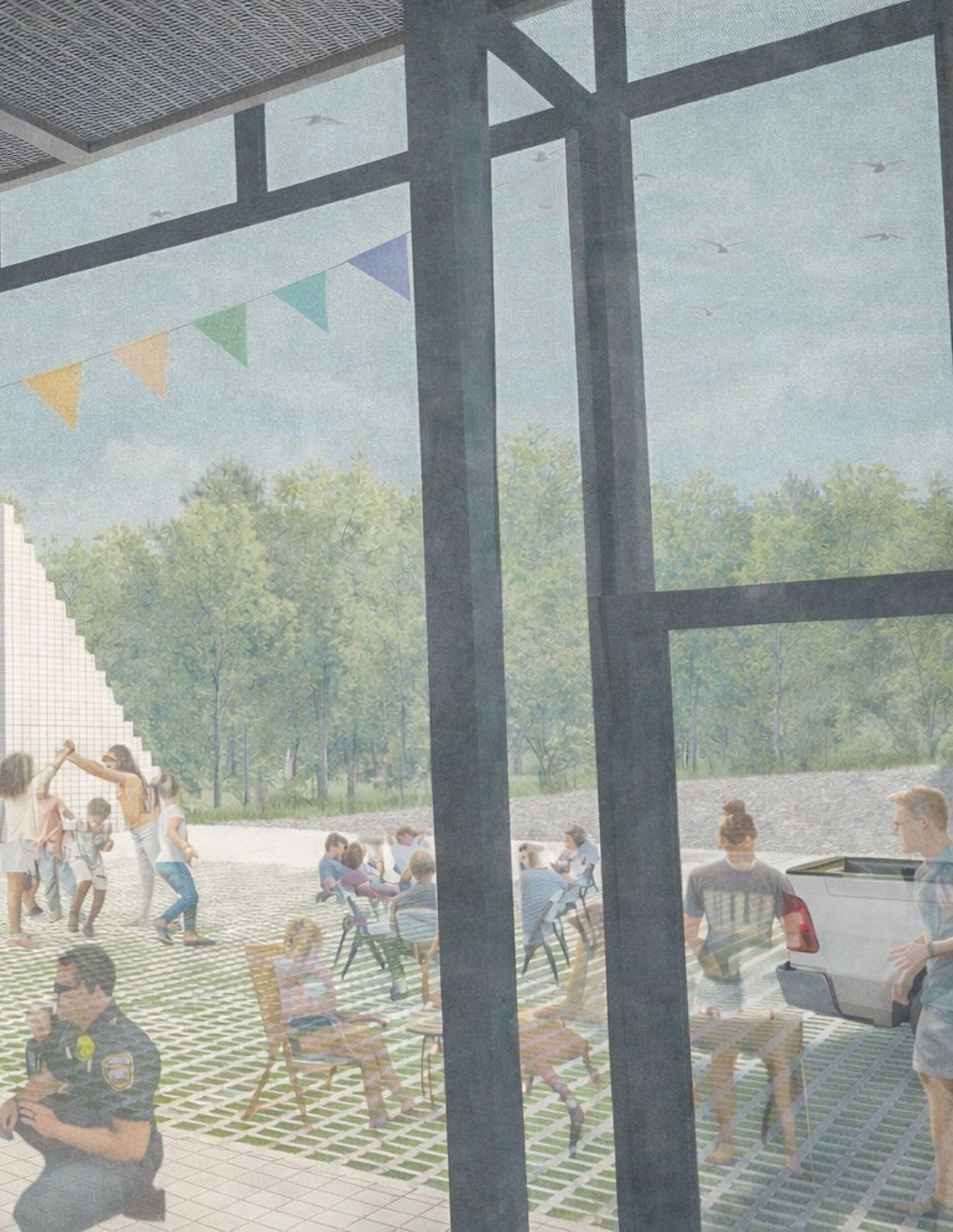
“Embedded to Serve: Anchorage Fire Station” is an emergency response center designed for rural Alaska that combines regional identity with contemporary structural solutions to meet the unique needs of its environment. Located near an airstrip and set against a mountainous landscape, the project addresses the challenges of emergency response, community resilience, and place-making.
Collaborators: Melani Jimenez, Kenzie Jantz, Morgan Tencza
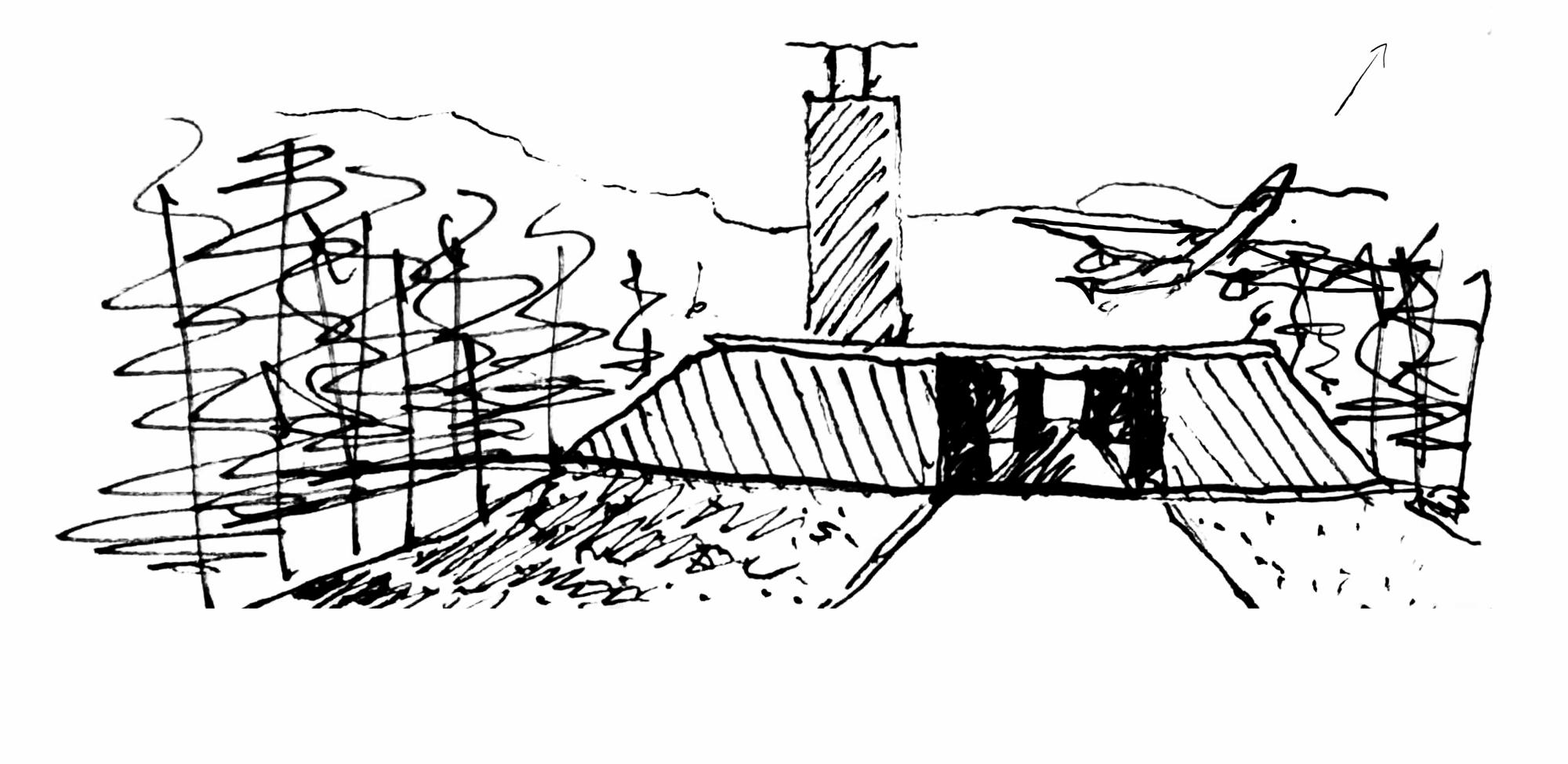
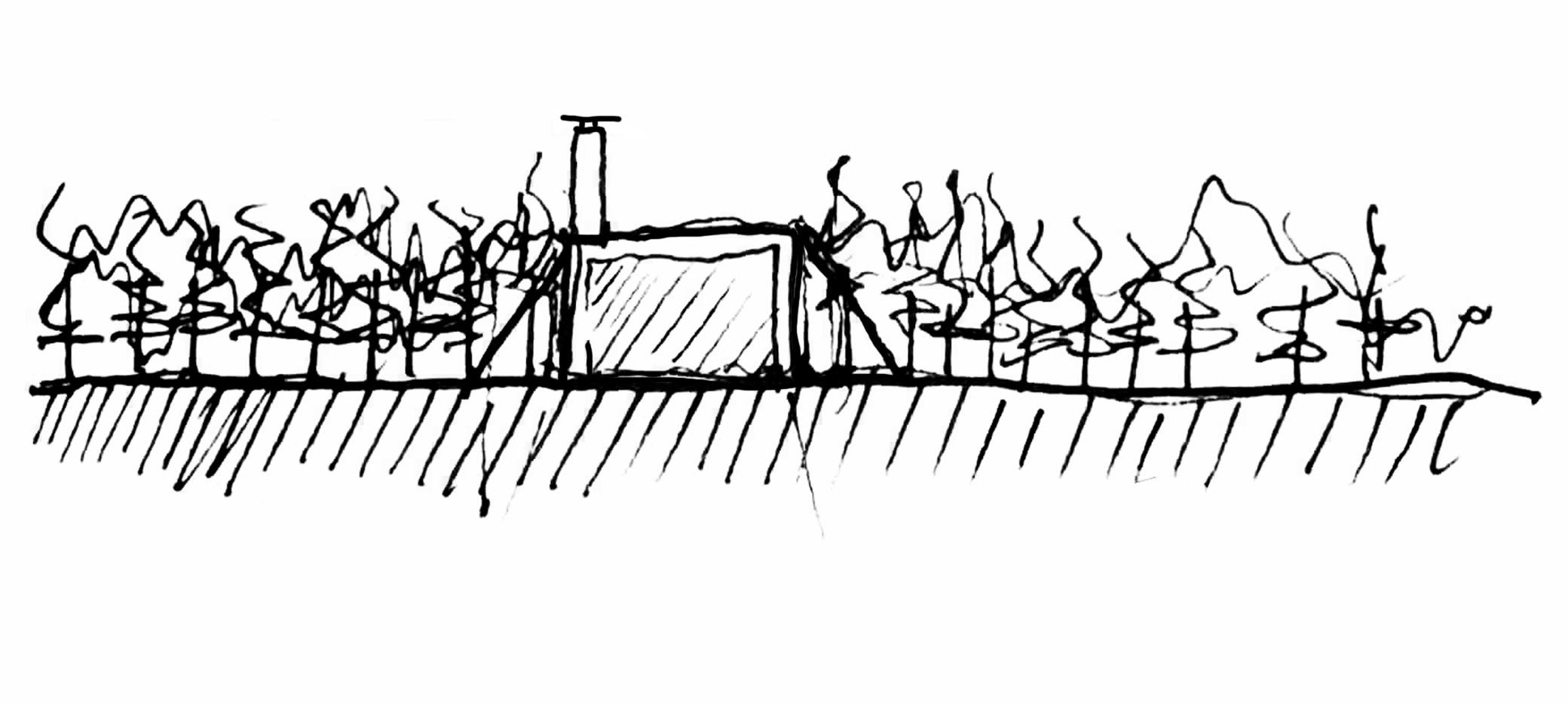
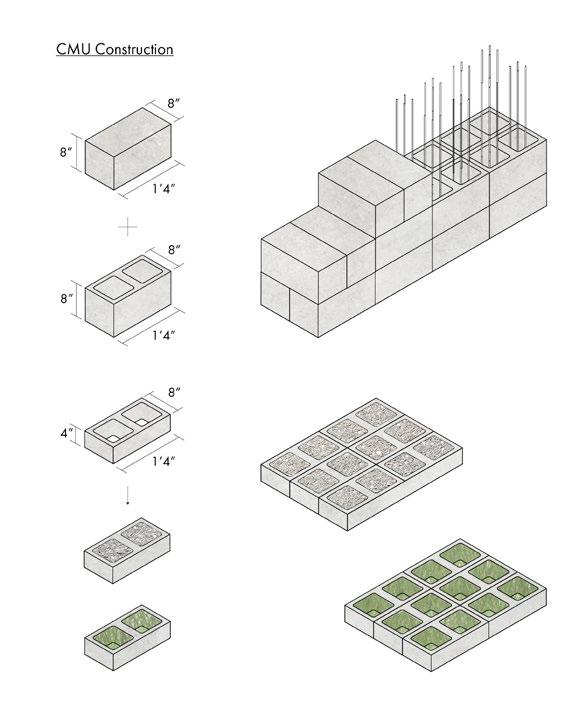
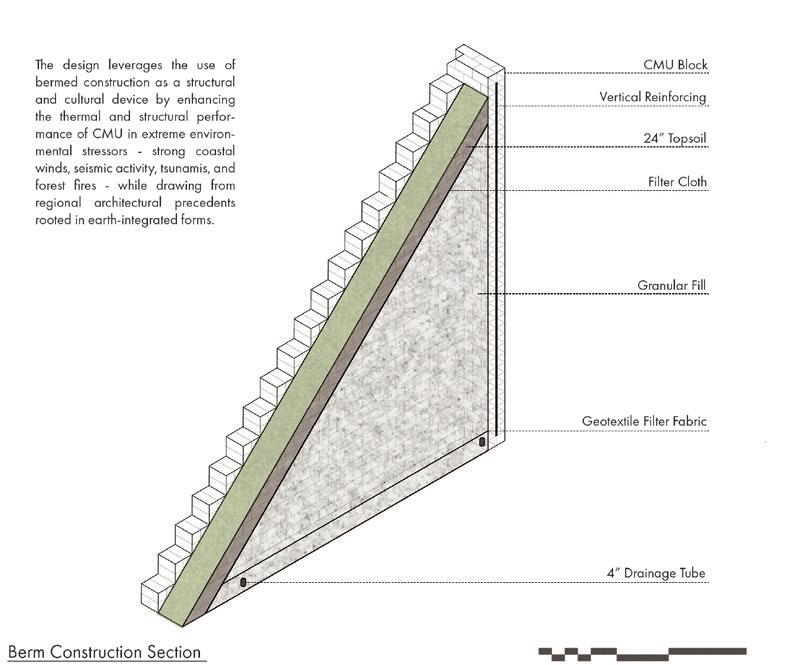
A key design strategy is the use of bermed construction, which adds thermal mass and protection to the concrete masonry unit (CMU) structure under extreme environmental conditions. The project’s identity stems from local architectural traditions of using earthwork for the durability, protection, and efficient operation of buildings.
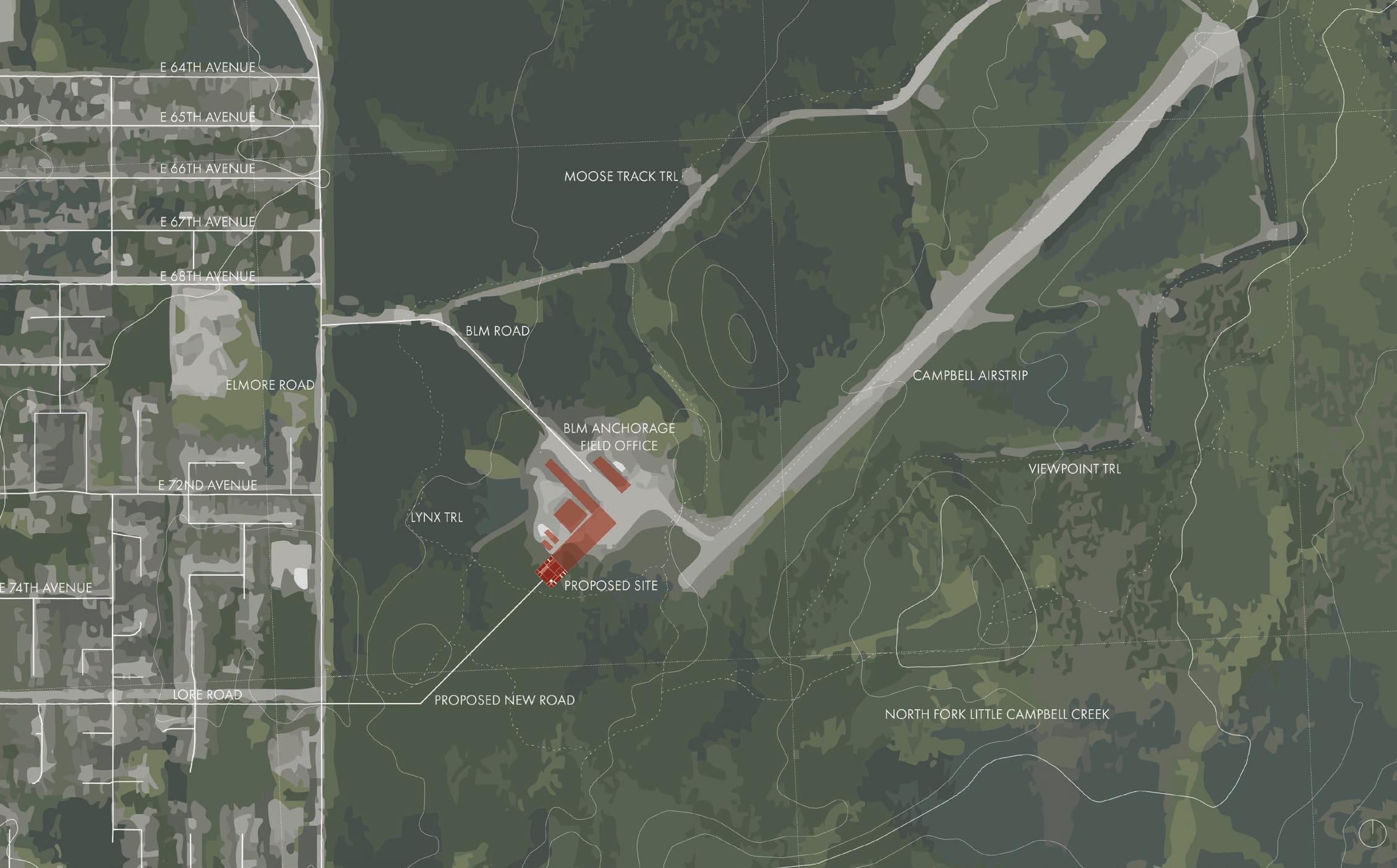
The station is strategically located near the Campbell airstrip - an outdoor recreational park directly adjacent to the city - to provide optimized operational efficiency for ground crews and airborne fire brigades as well as ample space for community gatherings, education, outreach, and events. The location gives the station direct access to the airstrip and major roads/trailheads, enabling rapid response to a diverse range of emergencies like trail search and rescue, urban medical response, and house and forest fires. A tower rises in contrast to the embedded station, acting as a training tool, lookout point, and civic landmark. The design integrates functional resilience and cultural expression to create a beacon for first responders serving the communities they protect.
Ijams Nature Center Trail Link
Location:
Course:
Instructor: Semester:
Knoxville, TN
ARCH 272 - Territory II Studio
Tracy Moir-McClean
Fall 2023
Typology: Landscape Infrastructure
Selected Work
Project Description:
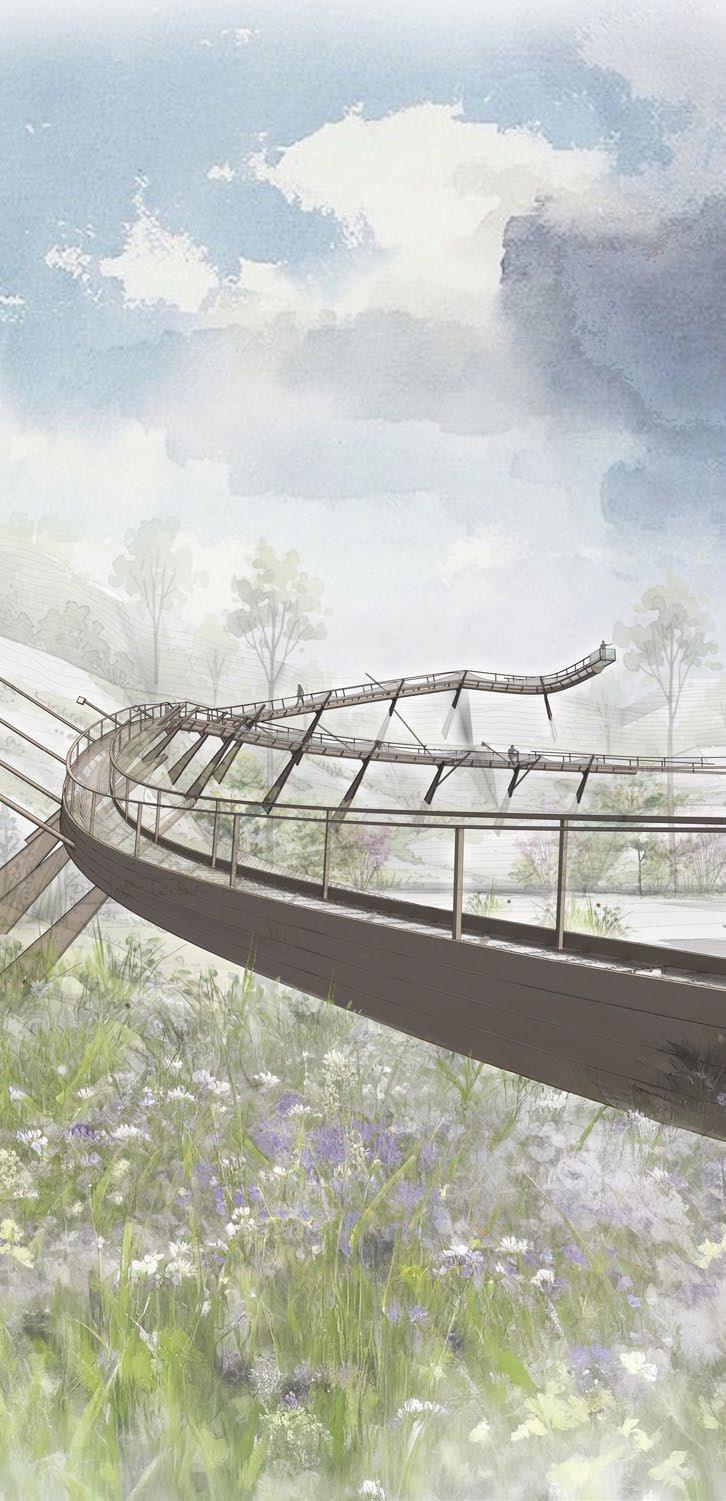
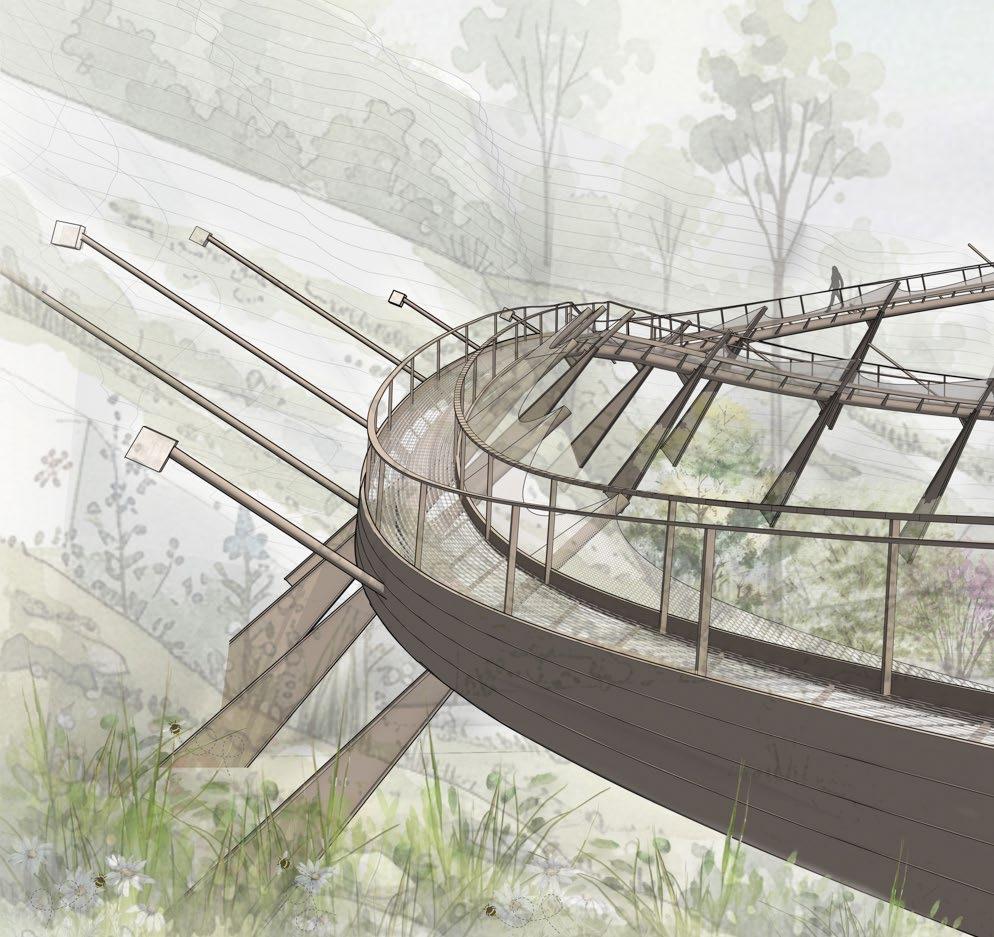
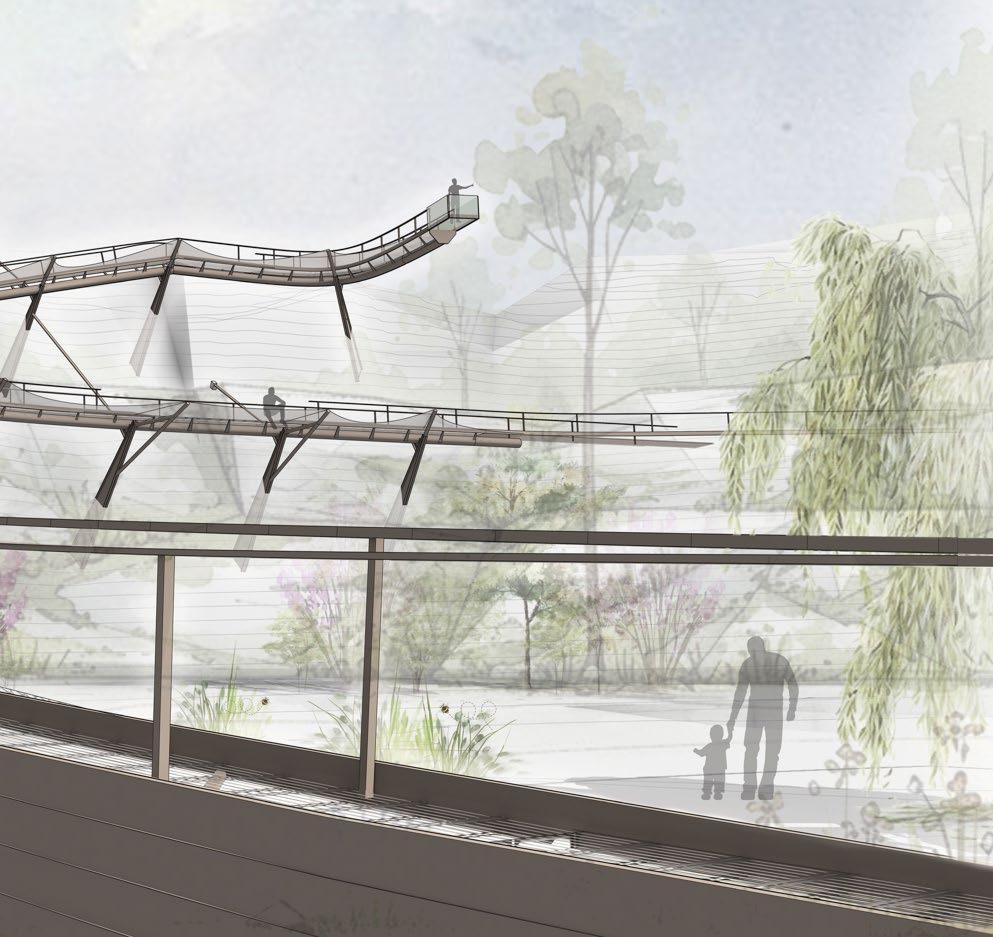
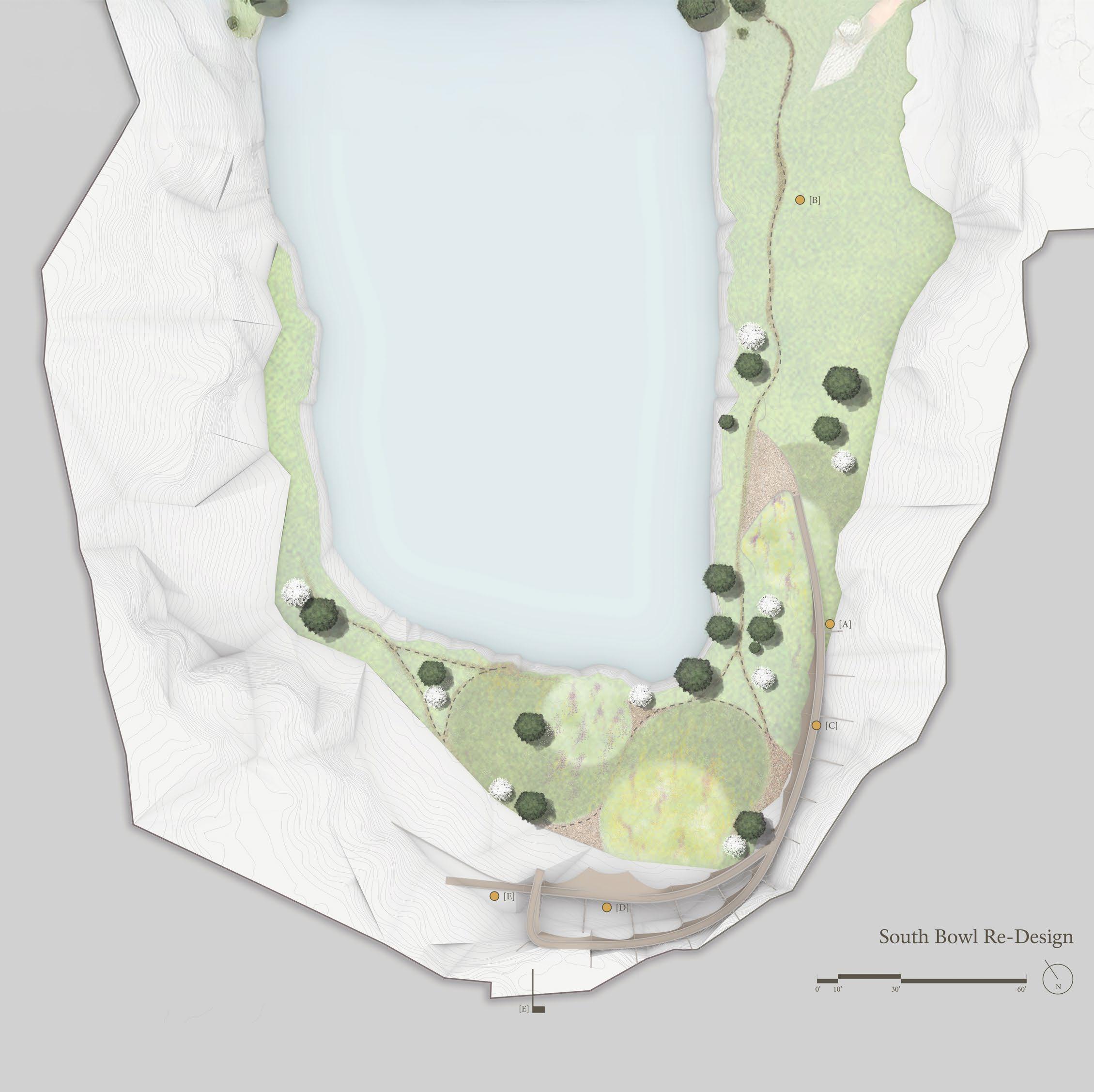
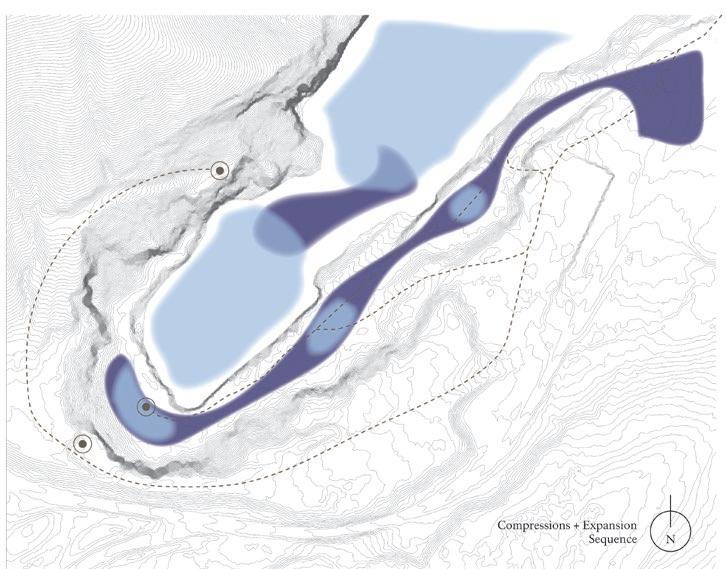
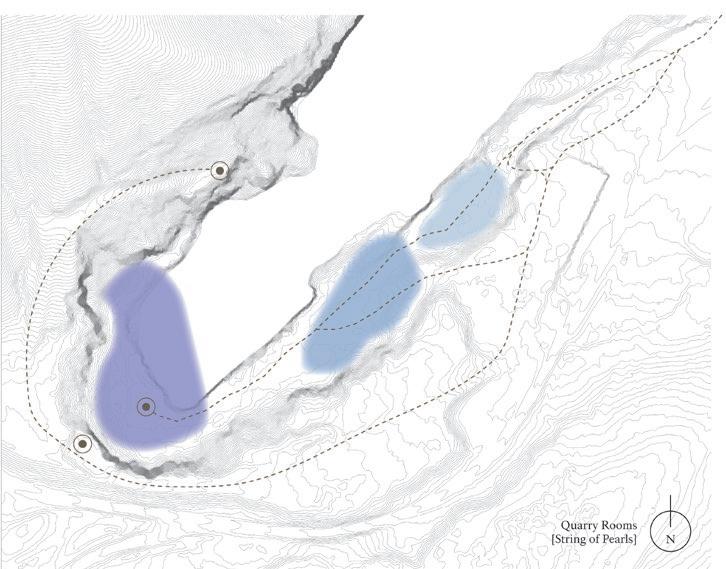
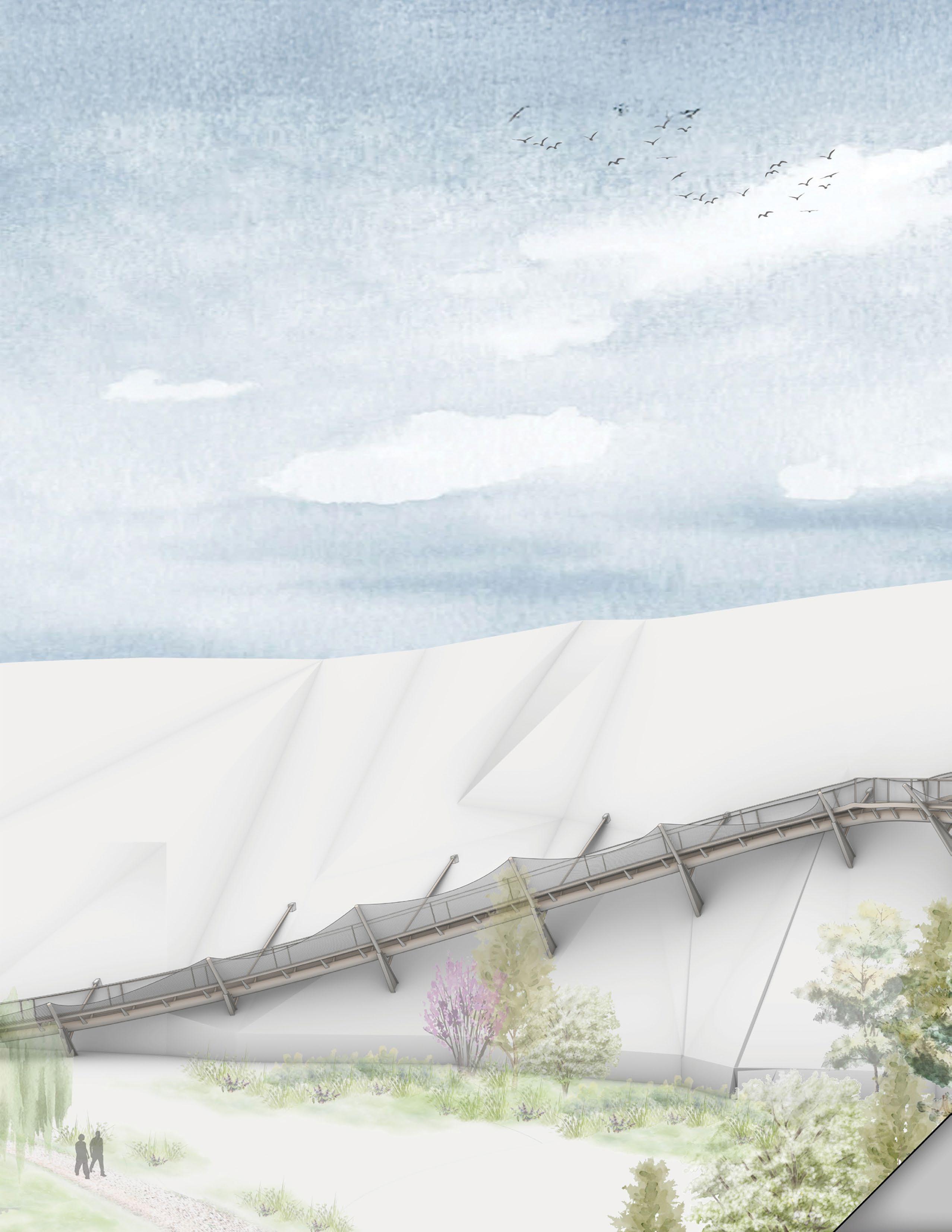
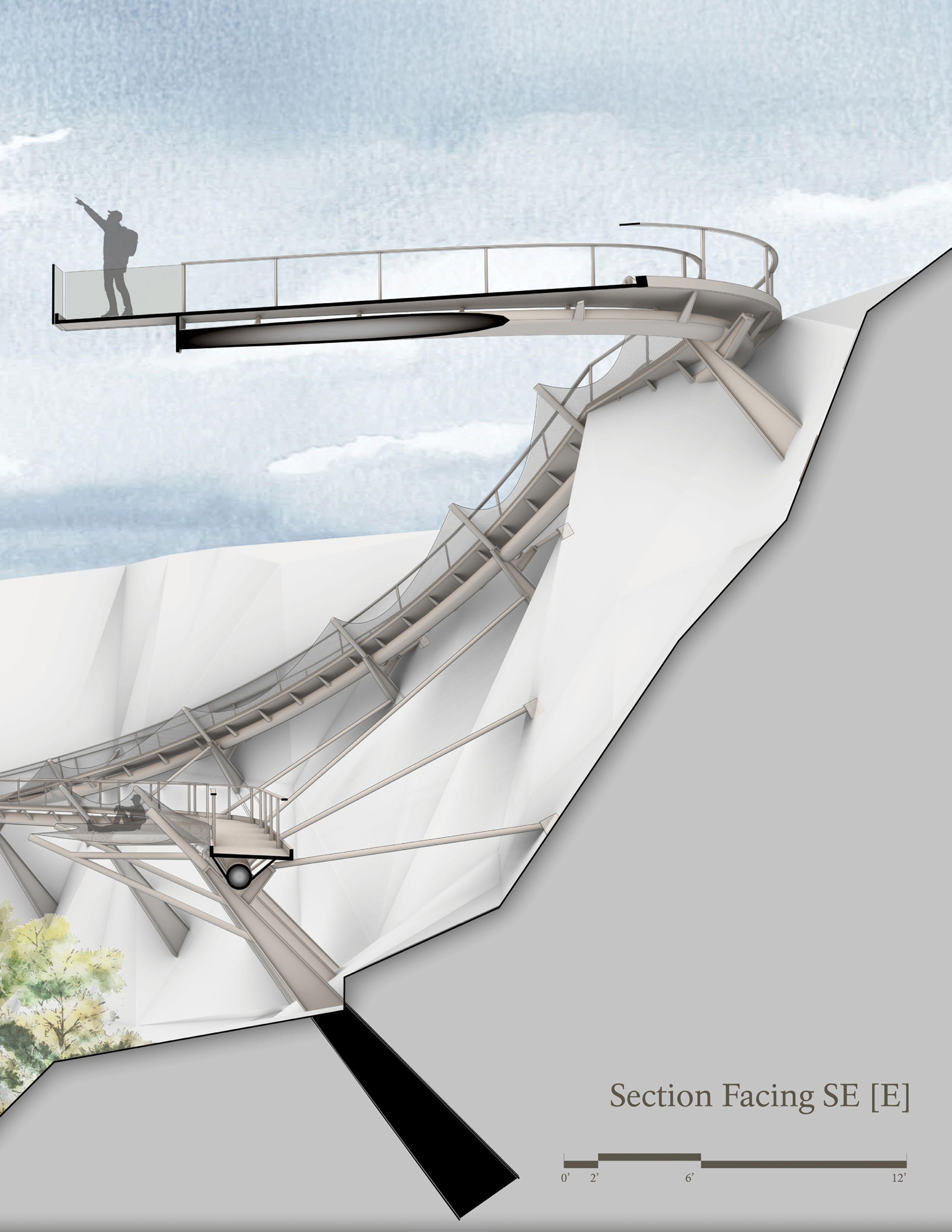
Fickle Path adds a connecting piece to the high foot traffic park trails of Mead’s Quarry, at Ijams Nature Center near Knoxville’s urban core. The current park trails are segmented by steep shifts in terrain and require trekking through sensitive meadows dispersed throughout the park. The trail bridge carefully considers the territorial boundaries between pollinators and park visitors by reclaiming scarred post-industrial space to preserve critical zones above and below the rock face.
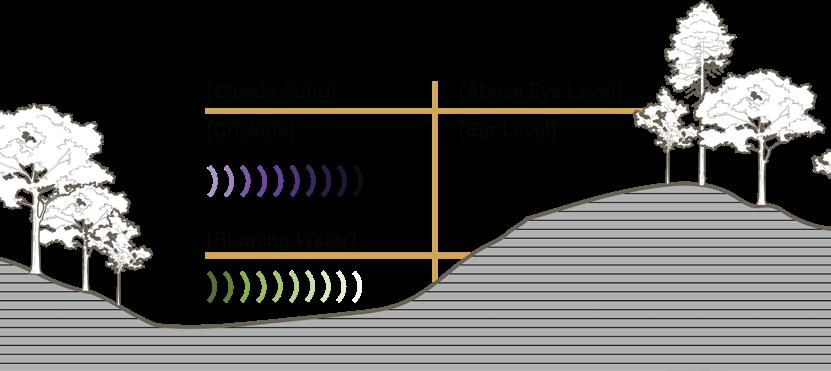
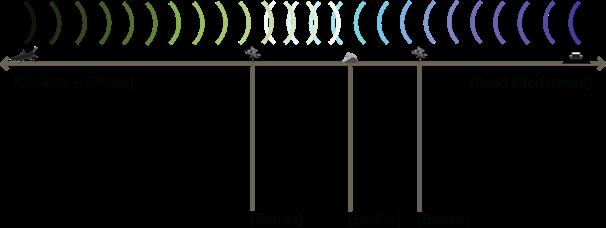
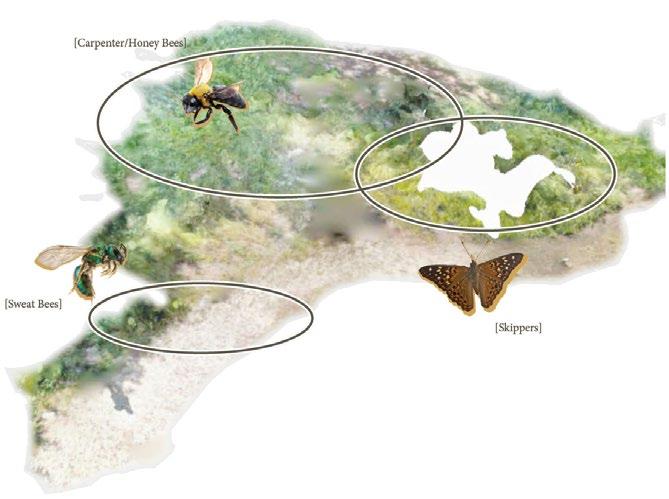
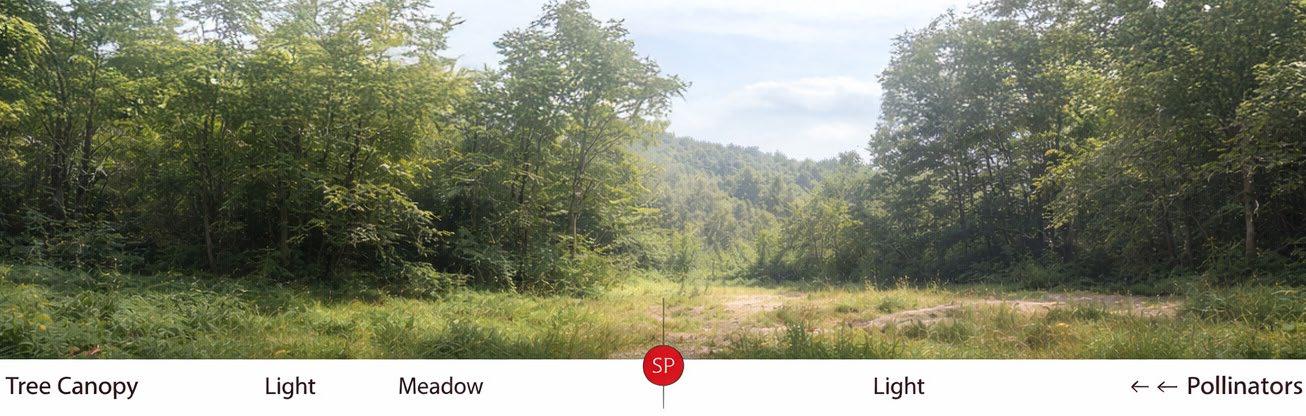
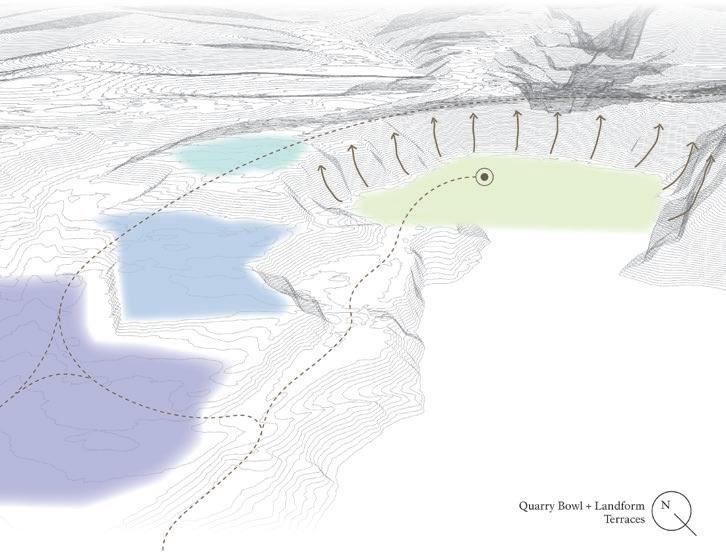
Through the study of native vegetation zones and pollinator movement patterns, areas of sensitive ecological activity were identified and prioritized for preservation. These findings informed the redesign of a key connector within the park’s trail network. To reduce human impact within critical zones while maintaining familiar circulation paths and highlighting the quarry’s distinctive viewpoints, the project proposes a tensile bridge that clings to the quarry bowl’s rock face, linking lower and upper trail systems.
The site is currently characterized by dense kudzu growth along steep, terraced quarry walls formed by industrial extraction. The bridge’s structural logic draws inspiration from the taproots of these invasive vines, which aggressively anchor themselves into inhospitable terrain. By reinterpreting this strategy, the bridge acts as a deliberate parasitic intervention - one that replaces an ecologically harmful presence with an architectural element designed to facilitate mindful movement, protect sensitive habitats, and encourage more responsible engagement with this unique urban landscape.
Building Documentation + Representation
Location:
Course: Instructor: Semester: Helsinki, Finland
Cultural Immersion Studio
Scott Wall, Tuomas Klaus
Summer 2025
Typology: Institutional
Selected Work
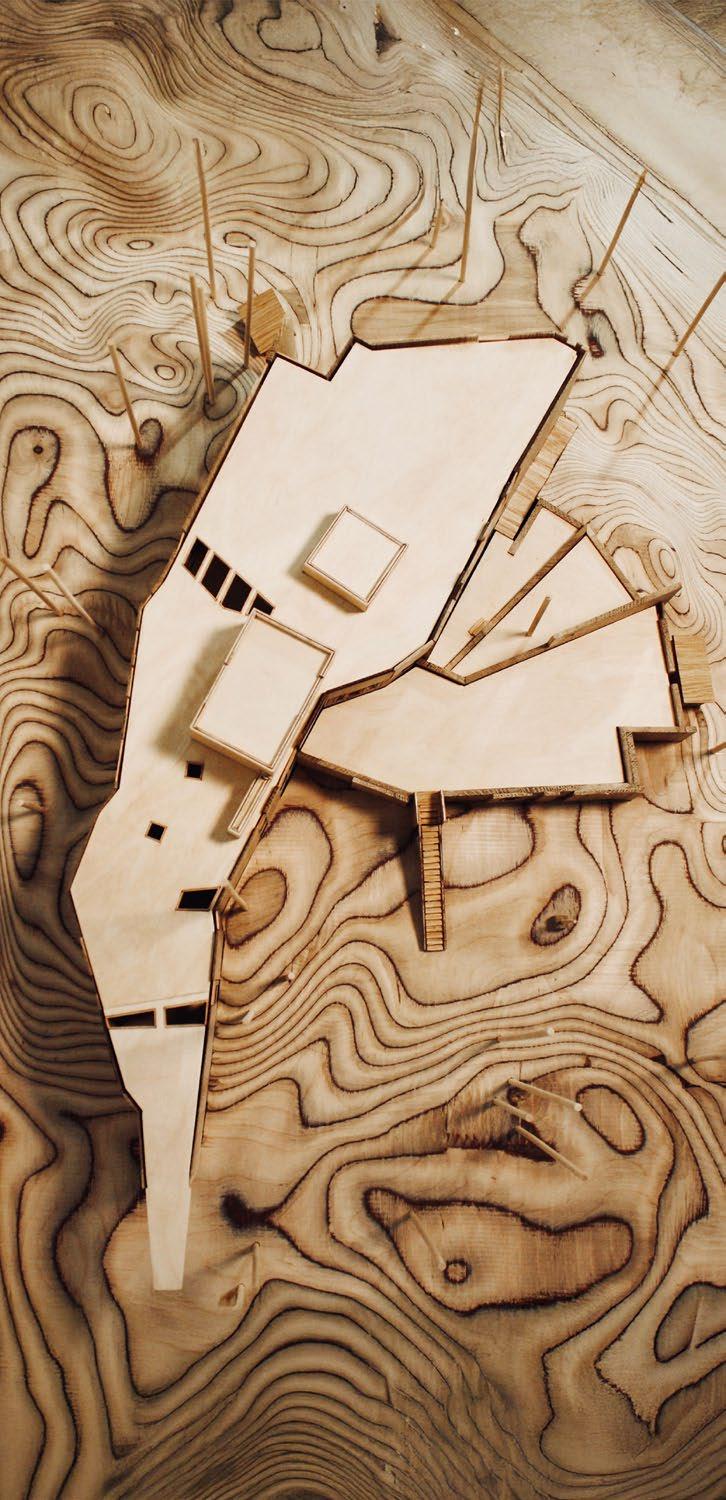
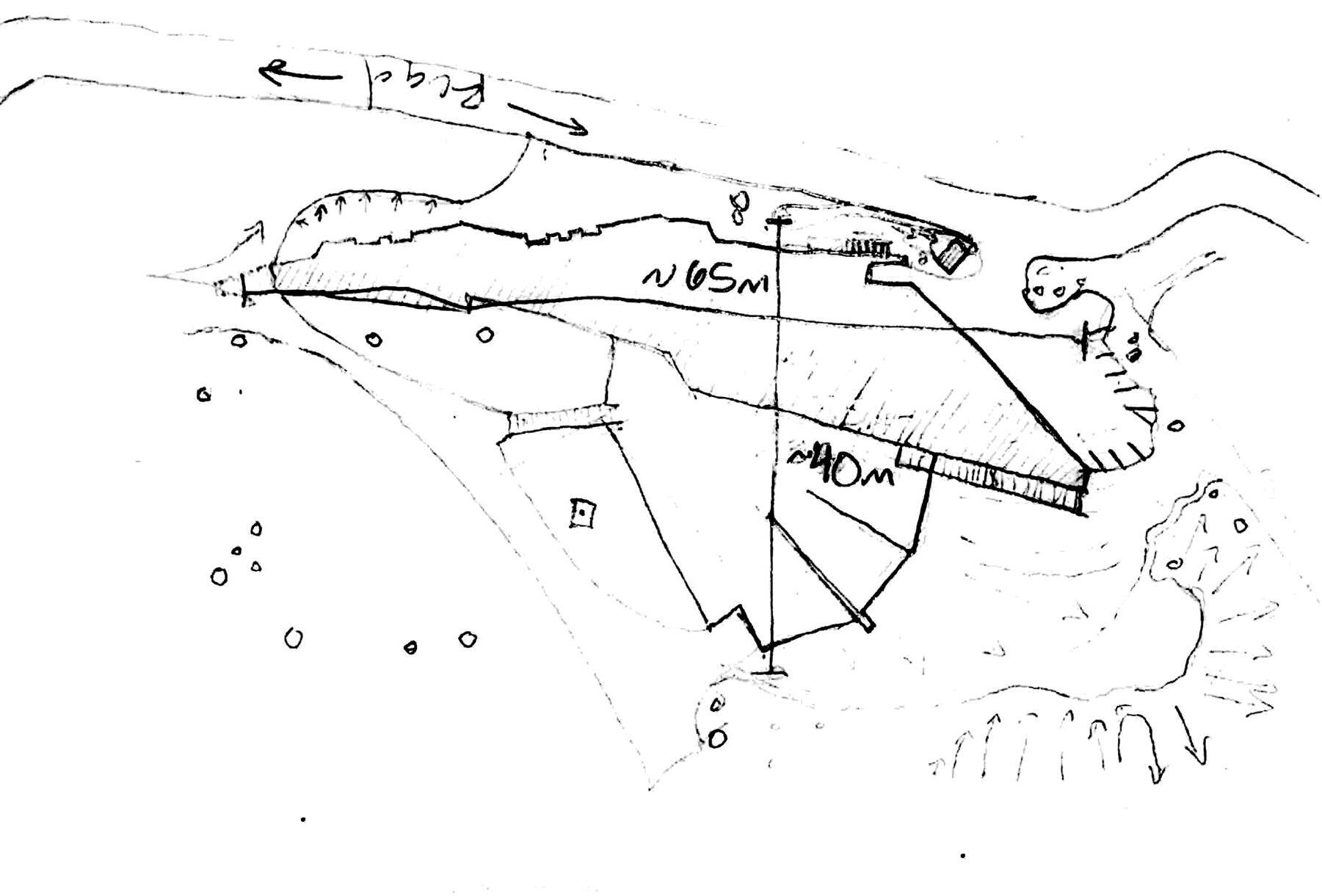
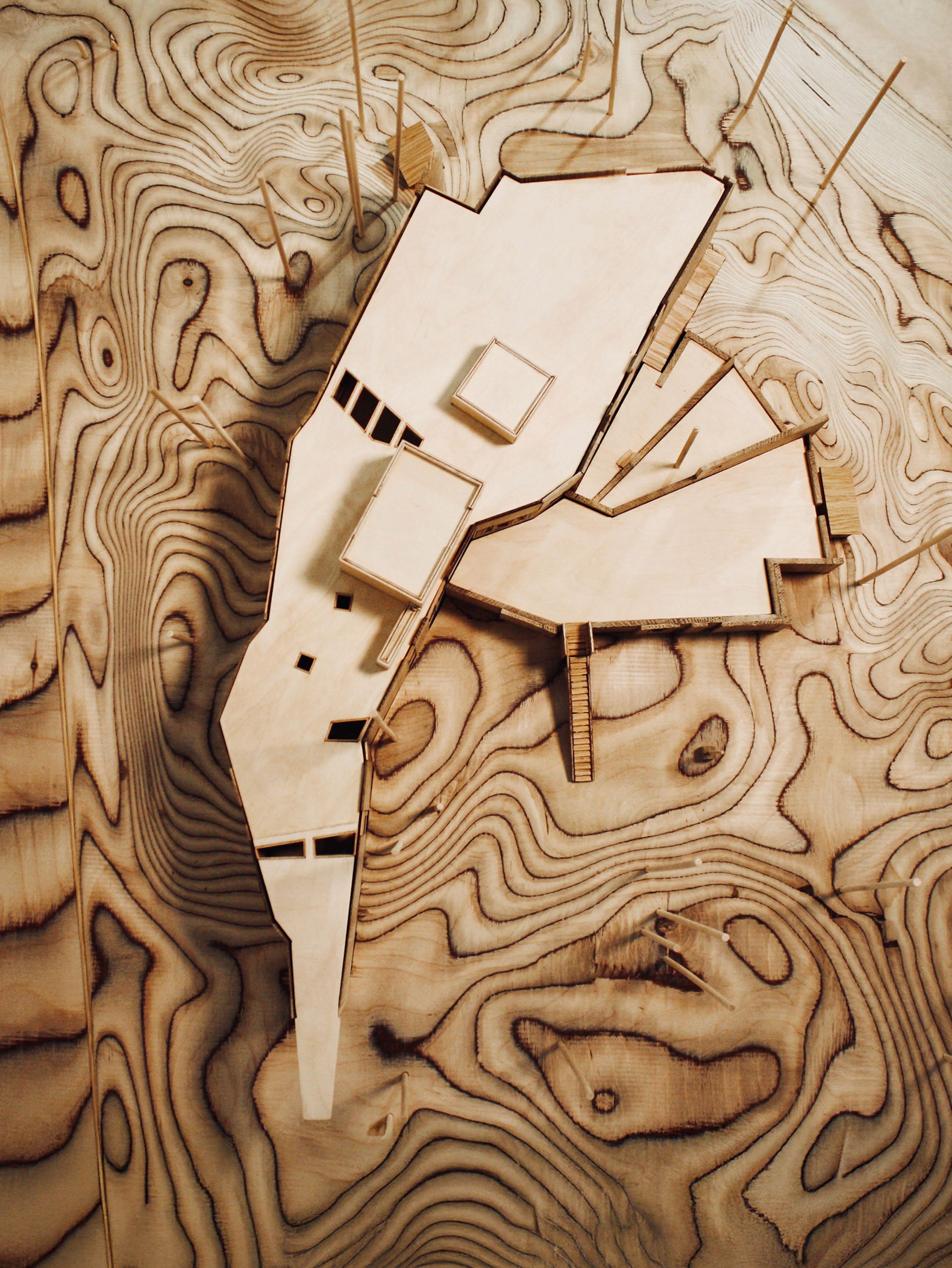
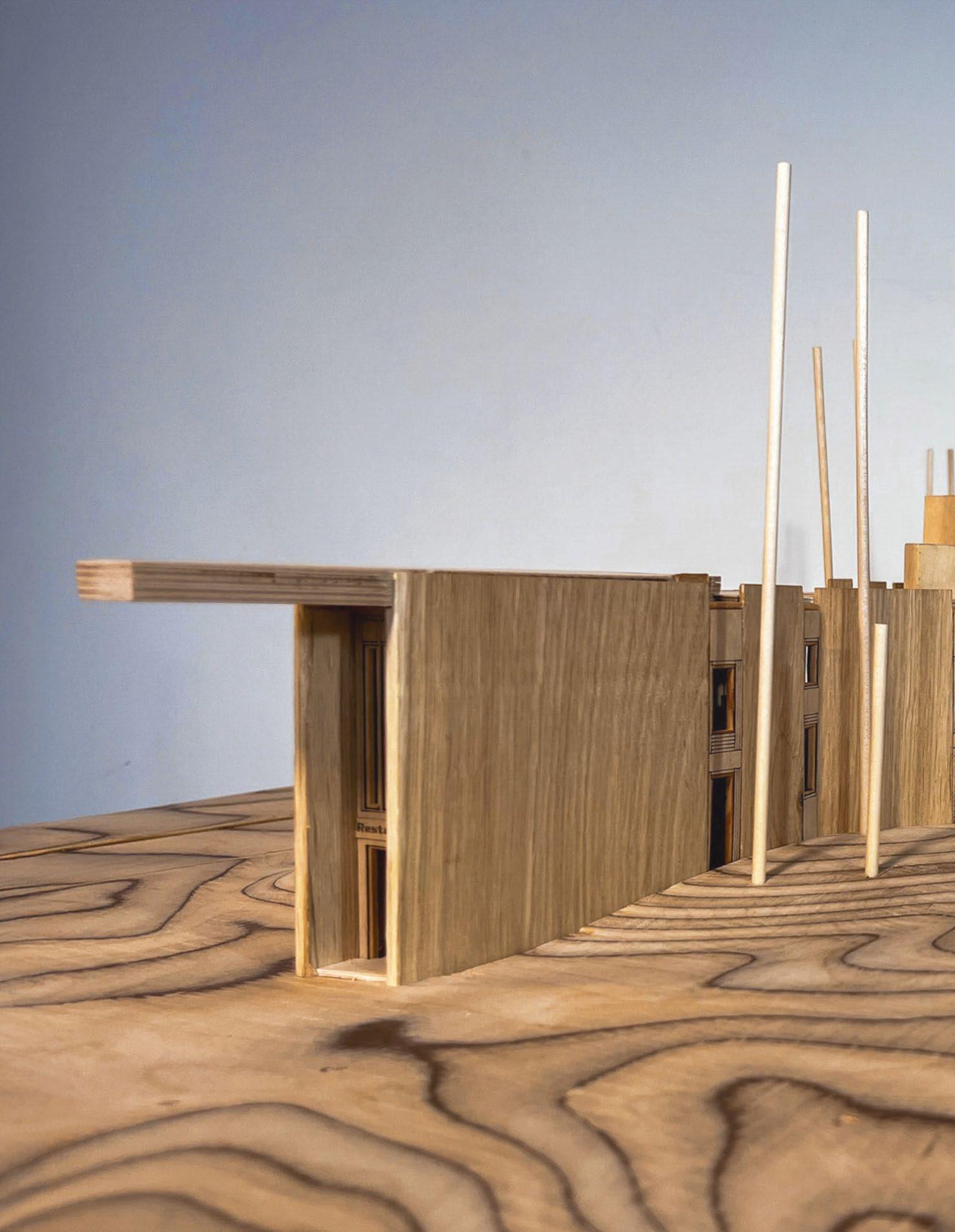
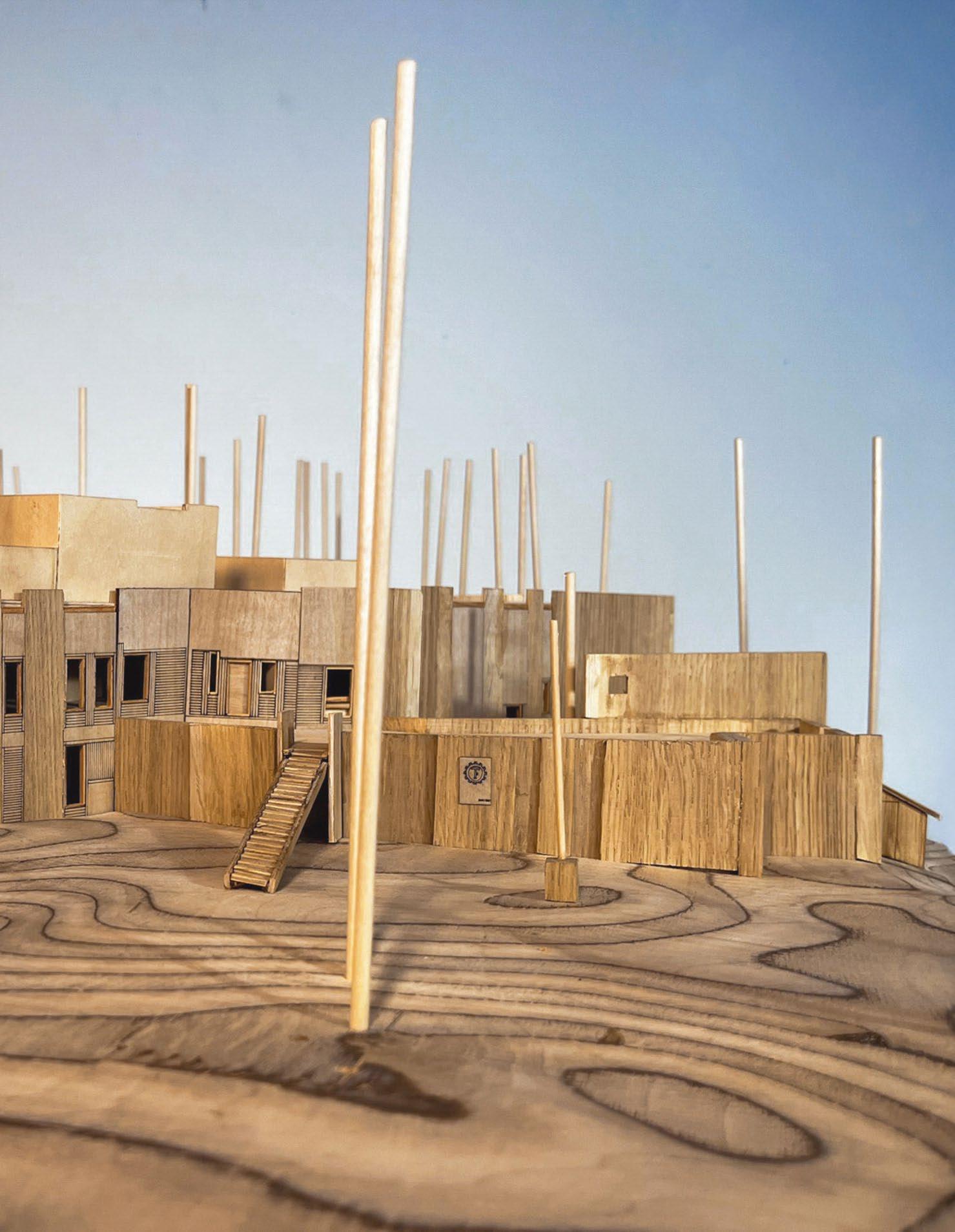
Project Description: This building documentation project was completed during an international study program hosted by Aalto University in Helsinki, Finland, and focused on the rigorous documentation of a significant yet under-documented building on the university’s campus. The primary goal of the project was to record Urdsgjallar’s existing condition prior to redevelopment through precise architectural drafting and modeling.
Collaborators: Benjamin Cook, Whitman Lancaster, Micah Kincaid
Precedent Study
Collective Process
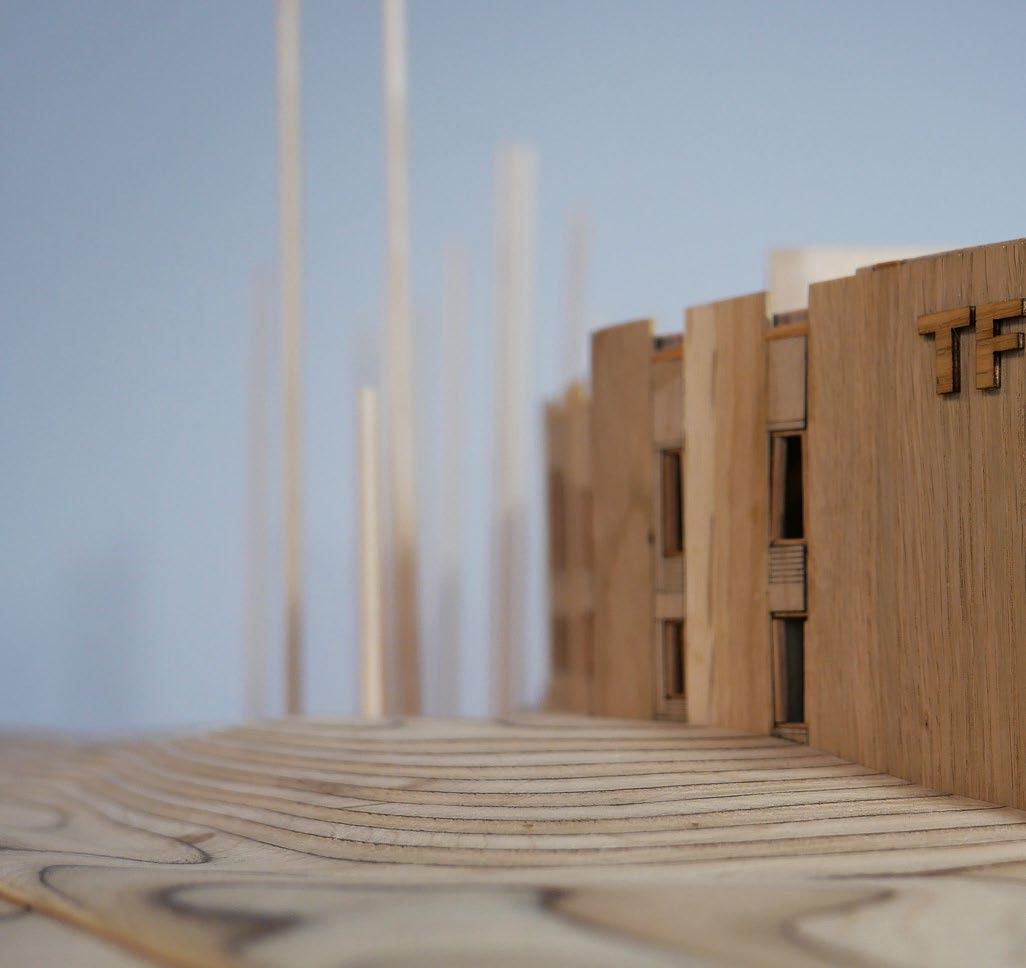
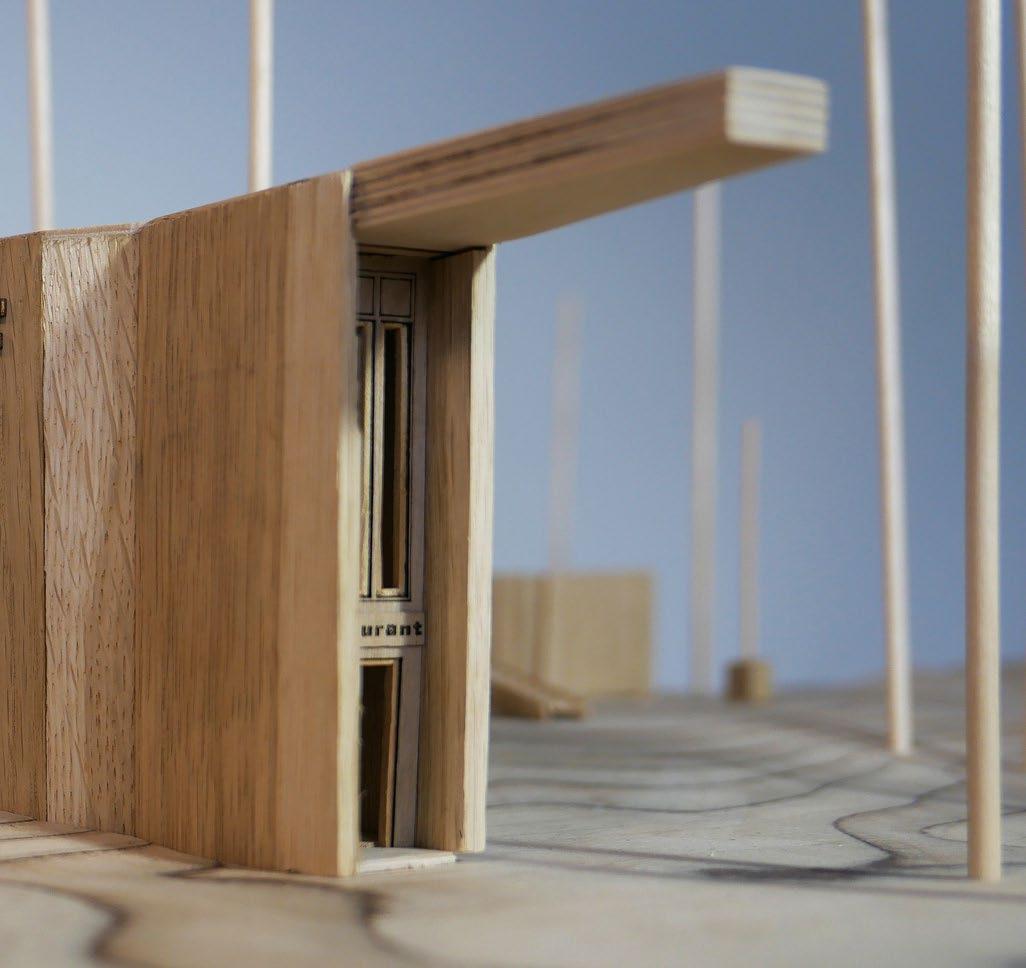
Urdsgjallar is the student union building of Teknologföreningen (TF), the Swedish-speaking student society at Aalto University. Completed in 1966 and designed by architect Kurt Moberg, Urdsgjallar is an iconic gathering space for Swedish-speaking engineering students. Inspired by the form of a traditional drinking horn, the building is unique for its unconventional geometry (containing no 90-degree corners), and continues to serve as a bustling gathering space for student life today.
Working collaboratively, the team employed hand measurement, field sketching, digital scanning, and archival research to reconstruct the building with a high degree of accuracy. Original construction documents were sourced from the campus architect, student organizations, and the firm leading the renovations, requiring careful coordination, information management, and cross-cultural collaboration across languages, metric systems, and professional standards.
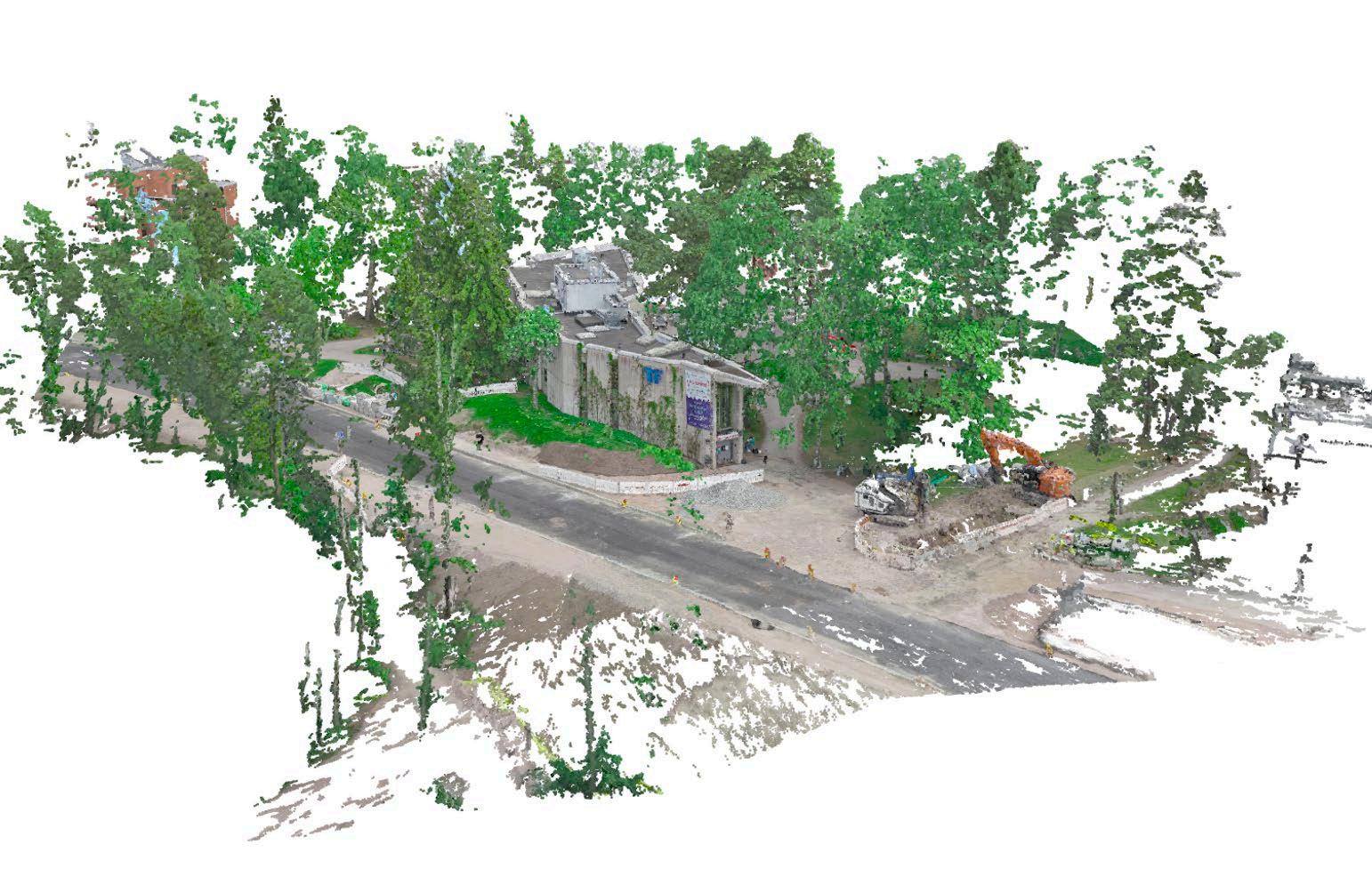
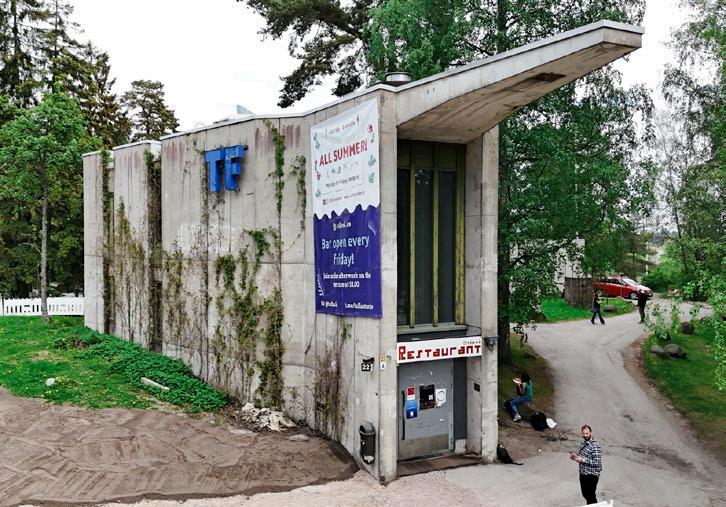
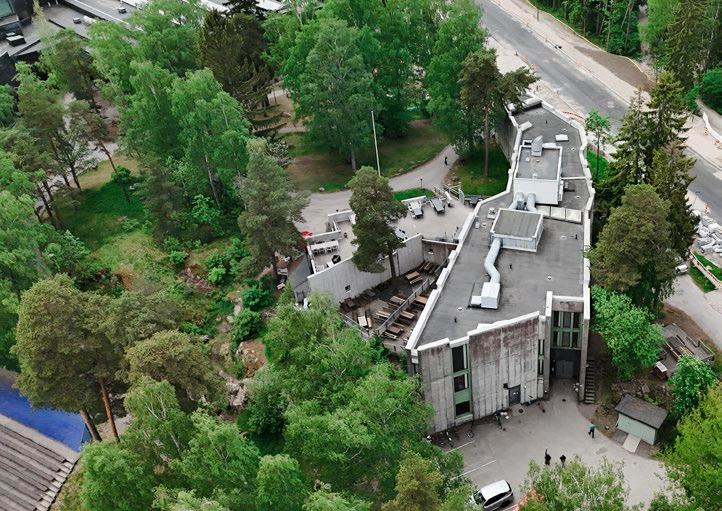
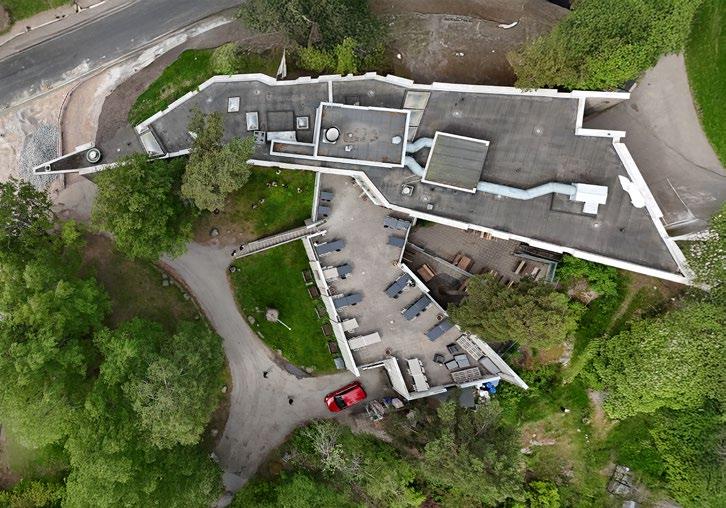
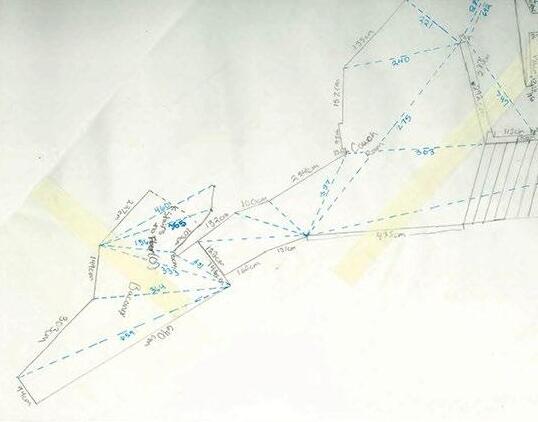
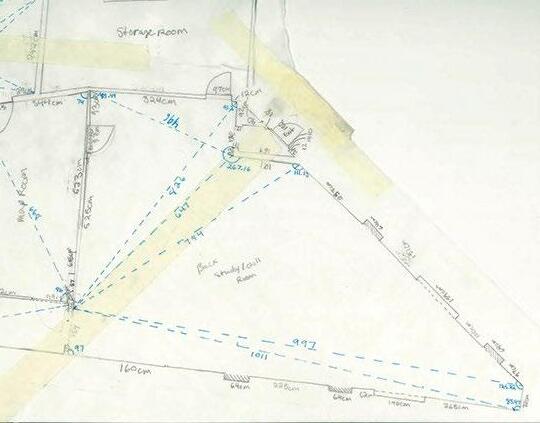
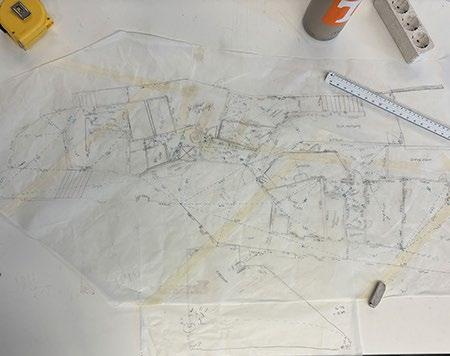
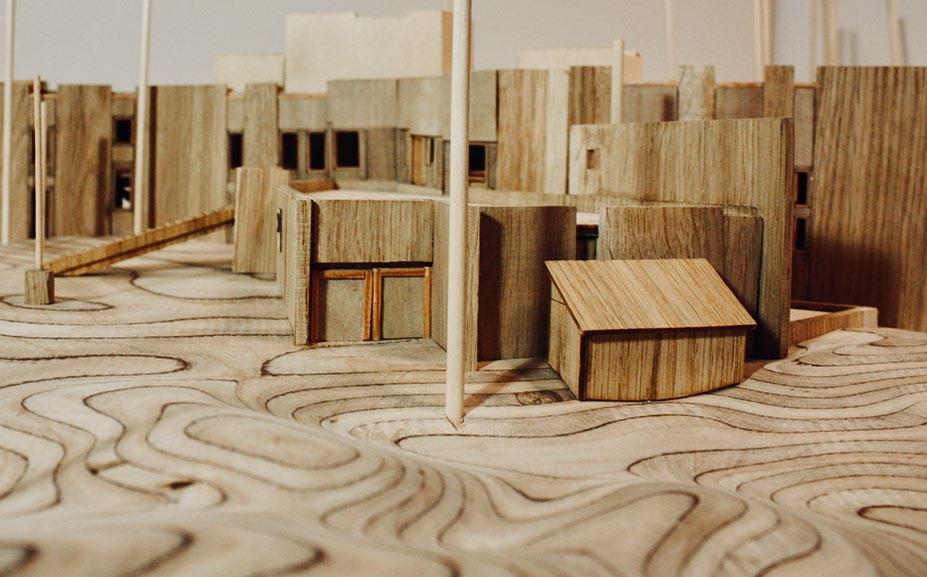
The production of a museum-quality, large-scale model was supported by digital workflows, with drone point cloud mapping, Rhinoceros, the Adobe Creative Suite, and CNC software serving as primary tools for fabrication. Through hand drafting and model-making, the project examined Finnish design thinking, materiality, and craft embedded in the building’s form and construction. The work strengthened technical skills and the value of architecture as a cultural artifact. The project is as much of a celebration of Urdsgjallar as it is a professional-level record intended for exhibition and long-term academic use.
Design-Build Prototype
Location:
Course: Instructor: Semester:
Knoxville, TN
ARCH 172 - Spatial Order II Studio
James Rose
Spring 2023
Typology: Contemporary Furniture Design
Selected Work
Project Description:
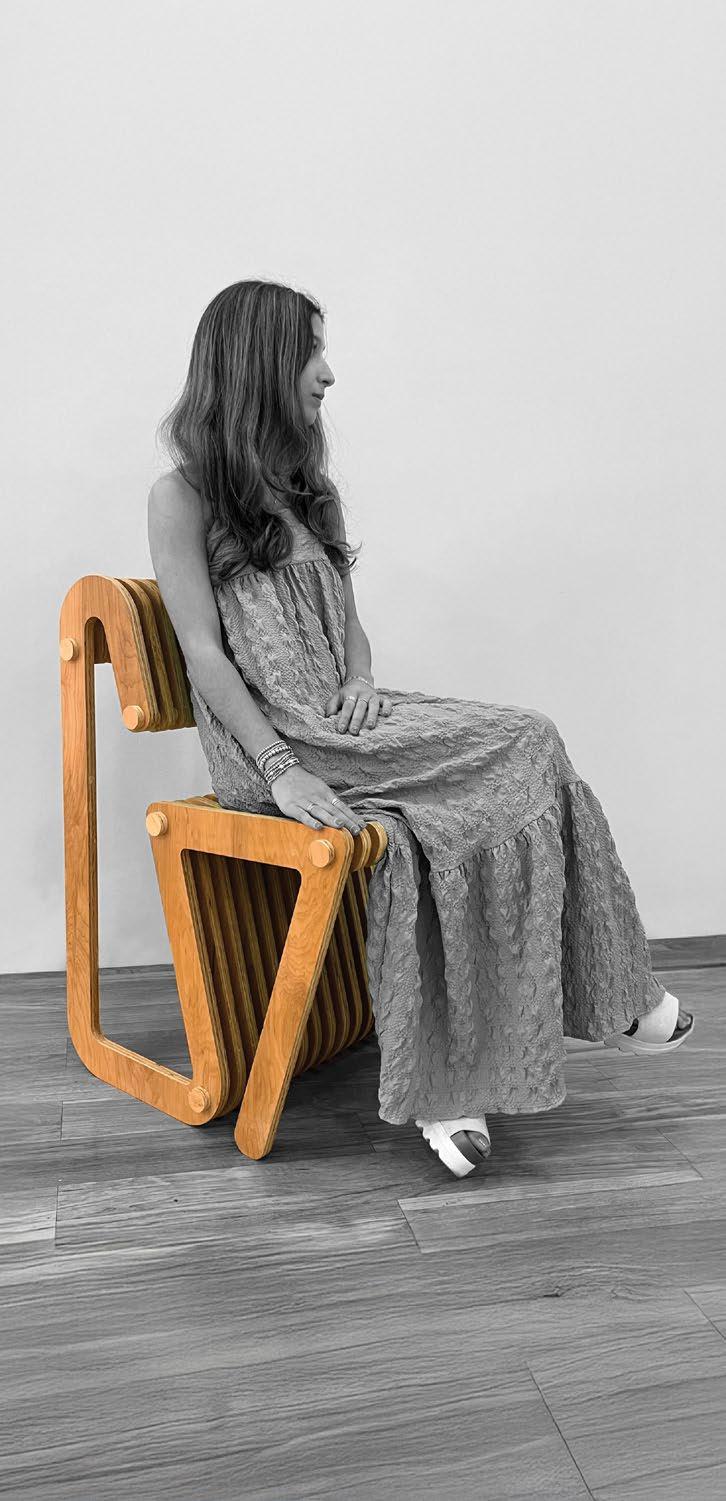
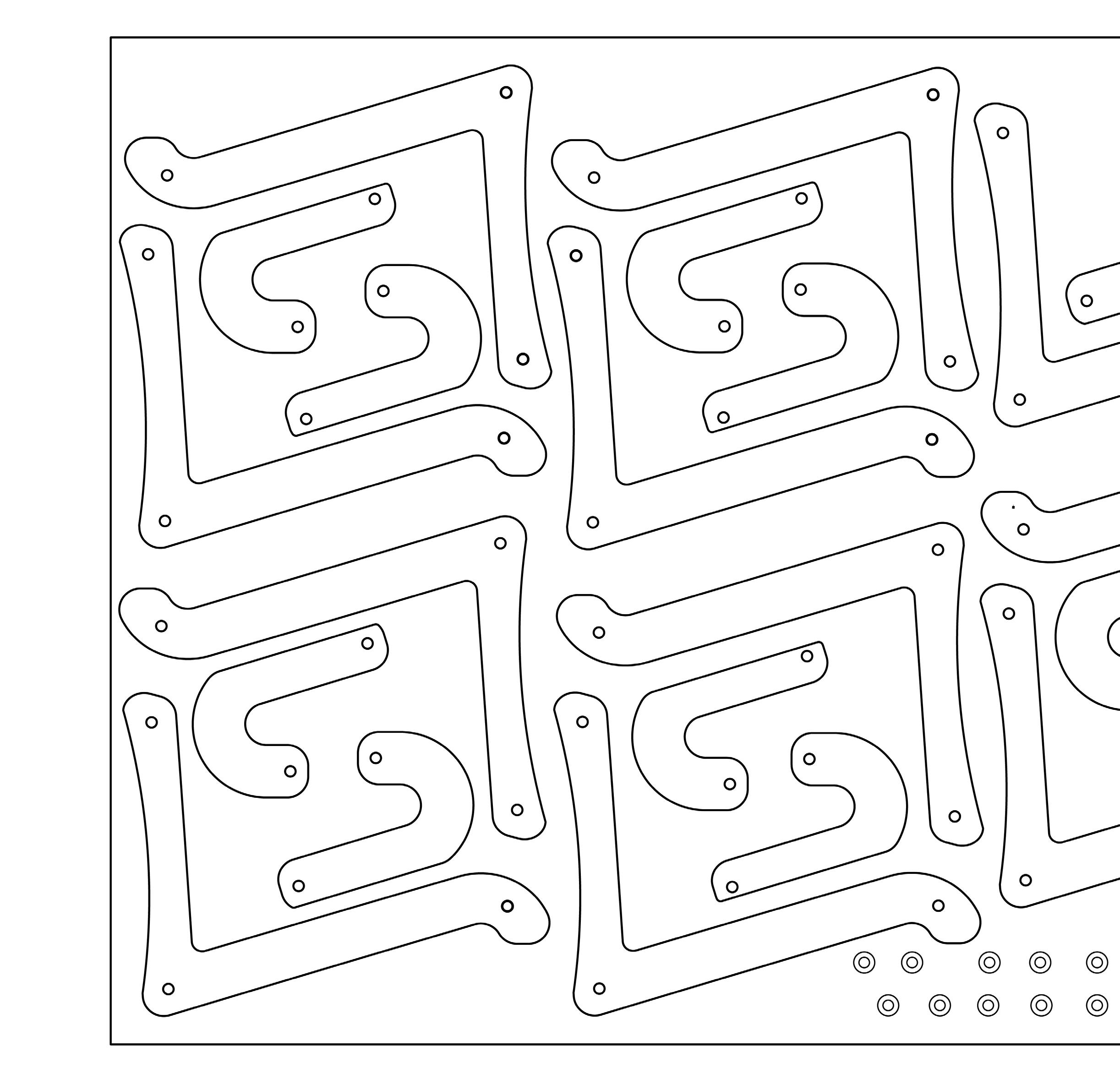
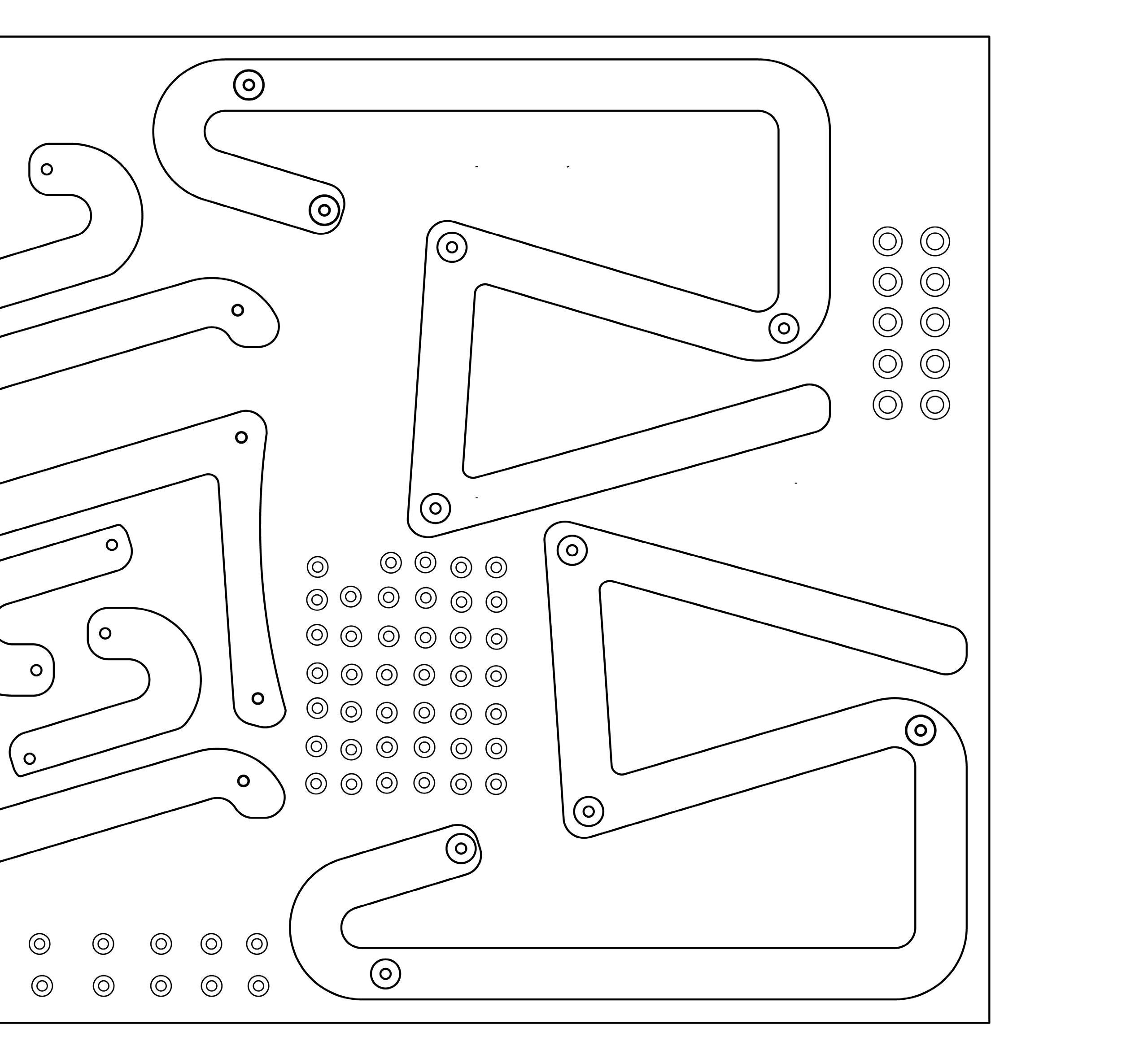
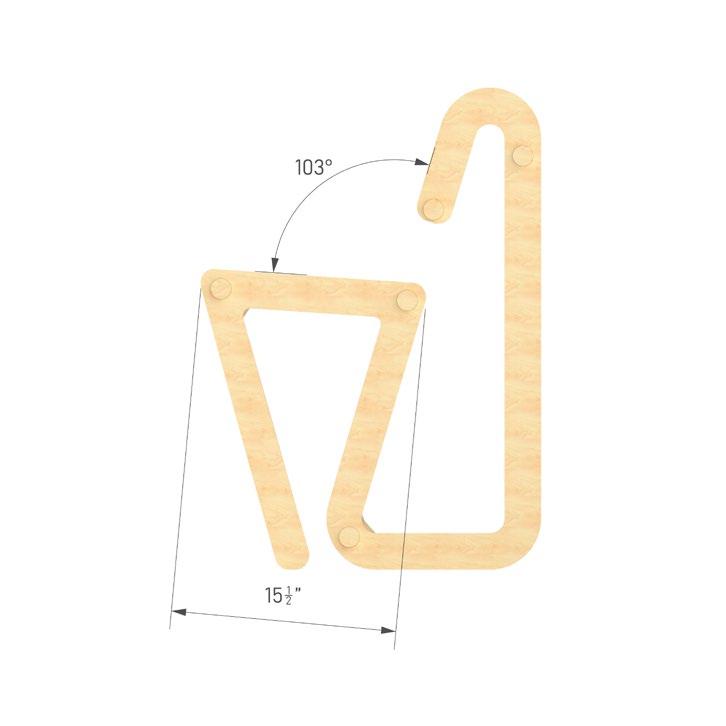
Sightline Chair emerged from a design challenge to use a single sheet of standard 4’x8’ plywood to craft a piece of furniture befitting for use in a gallery. The chair was created through iterative physical and digital model making, with comfort, assembly, and material efficiency shaping the design throughout the process.
Collaborators: Addison Cate, Morgan Tencza
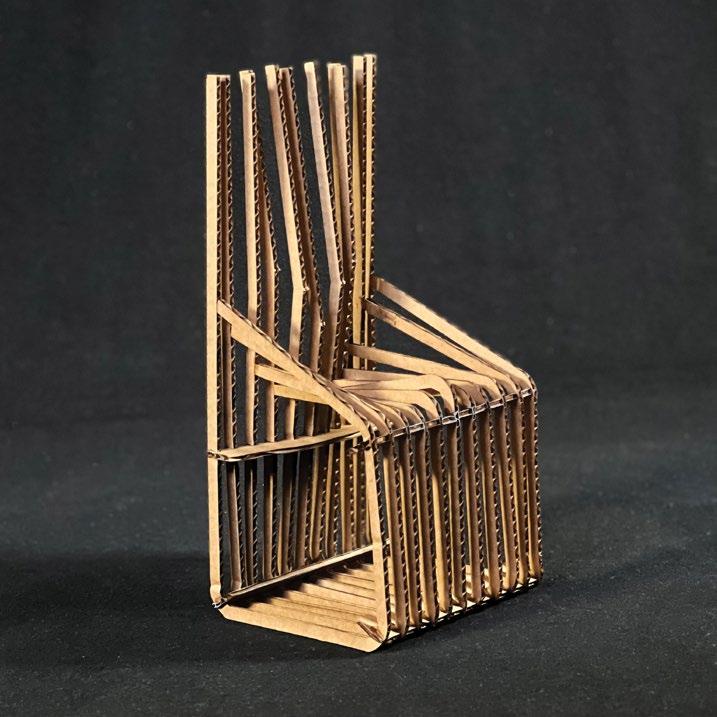
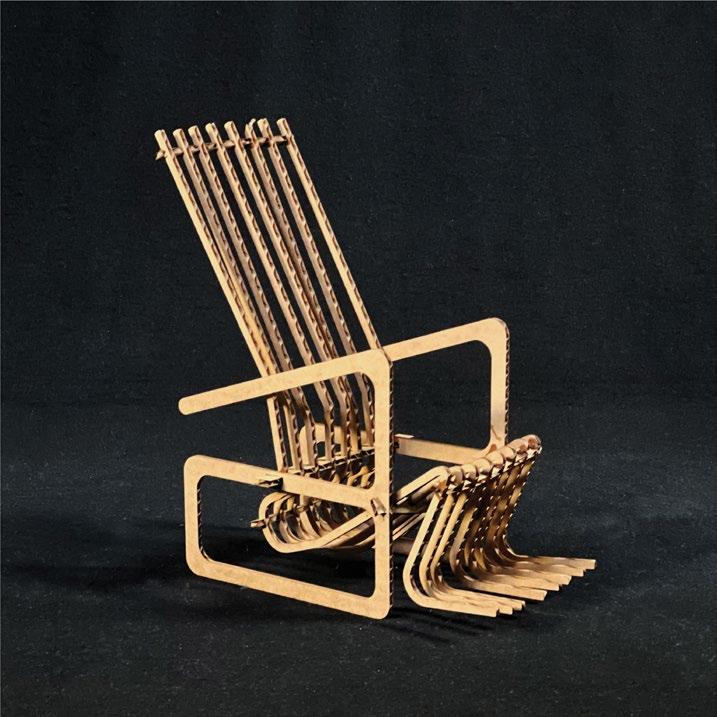
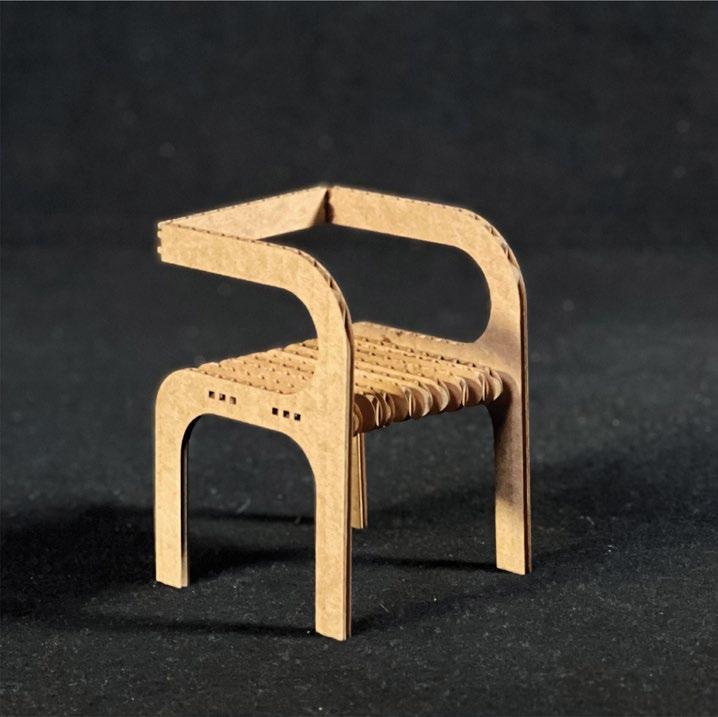
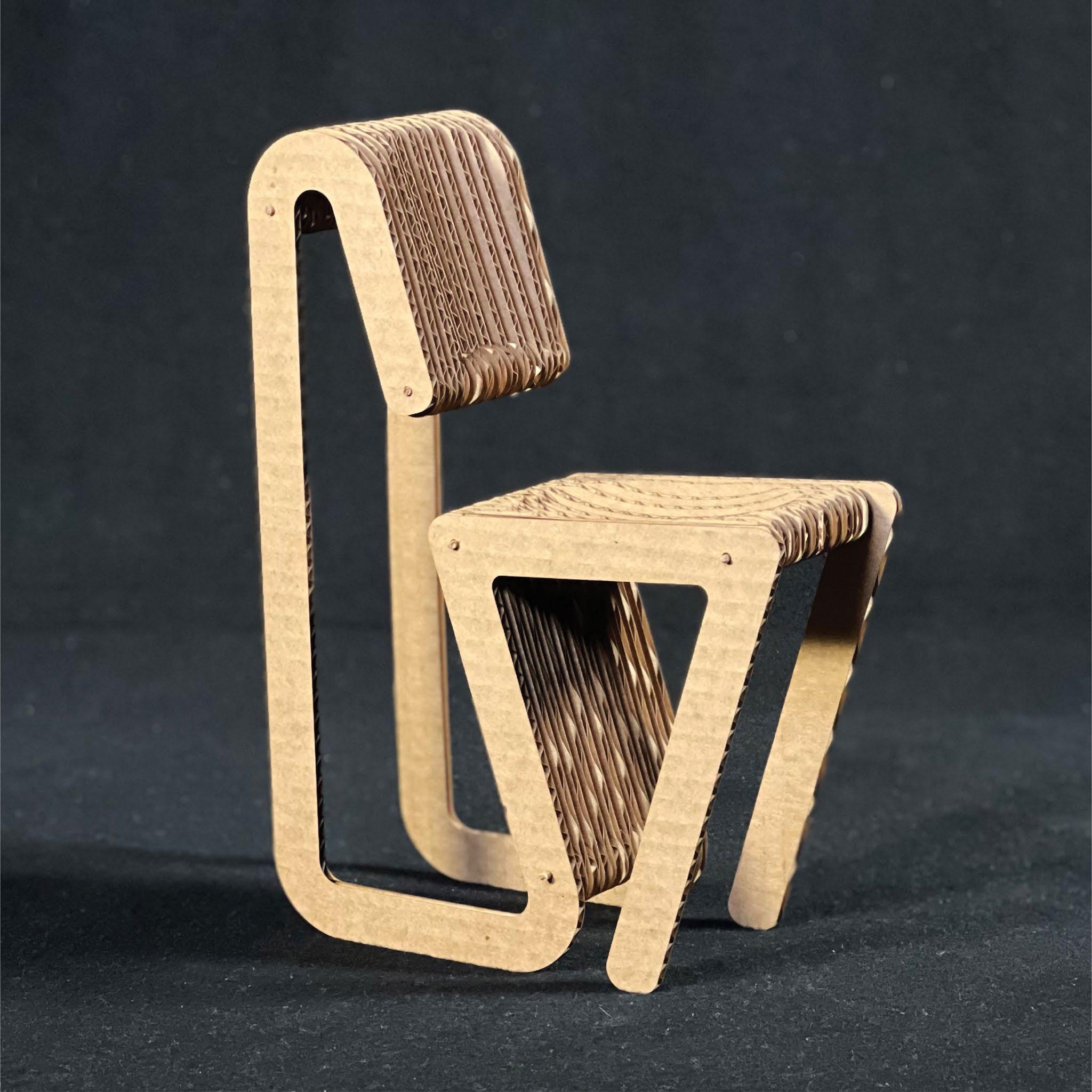
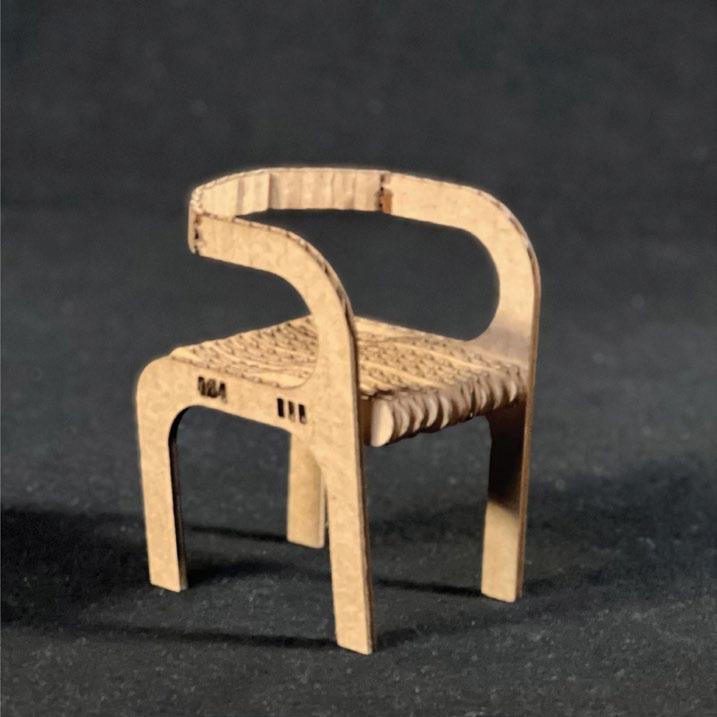
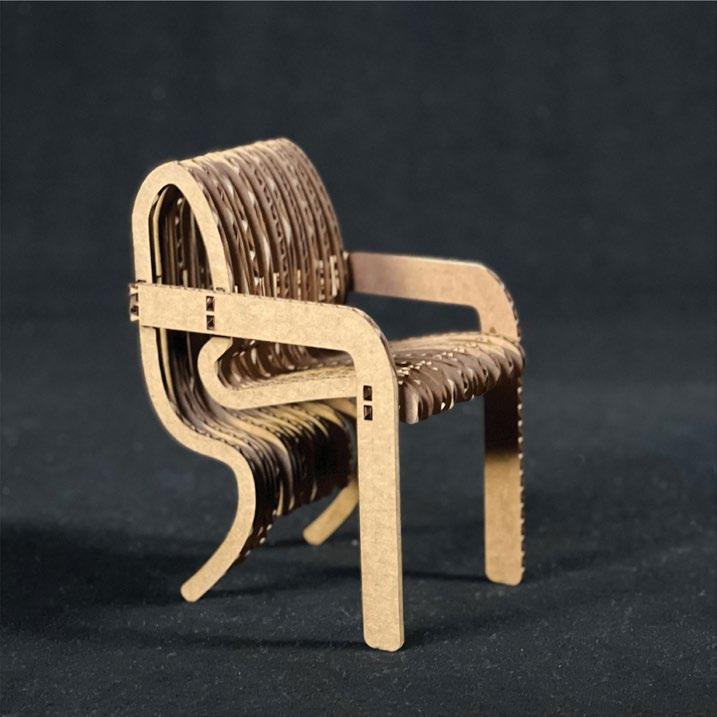
Through study models, the team tested form, structural strength, ergonomics, angle of recline, joints, material usage, and milling layouts. The final prototype consolidates design faults found in earlier iterative stages, and proved to be a valuable reference throughout the milling and assembly stages of the design process.
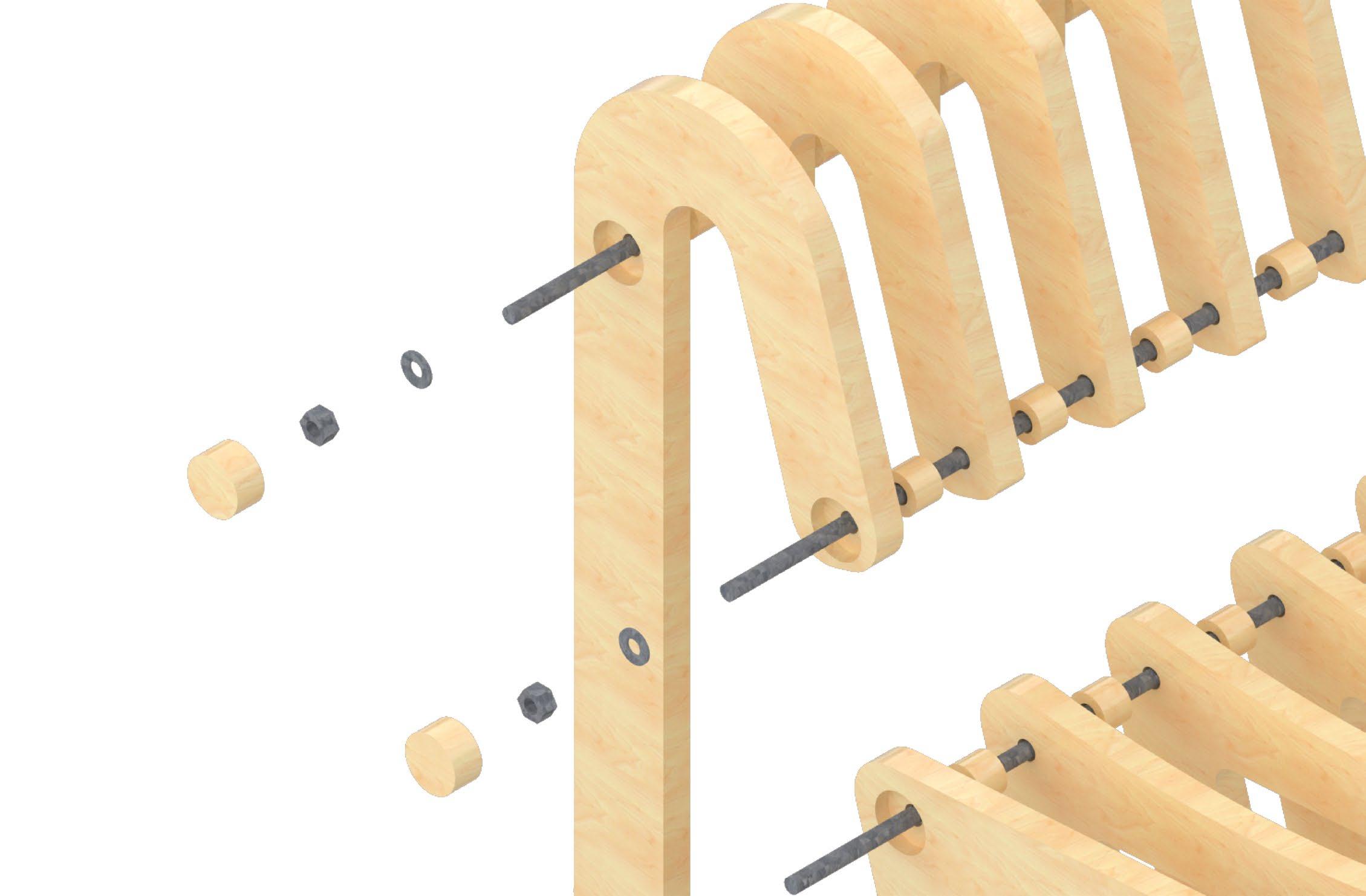
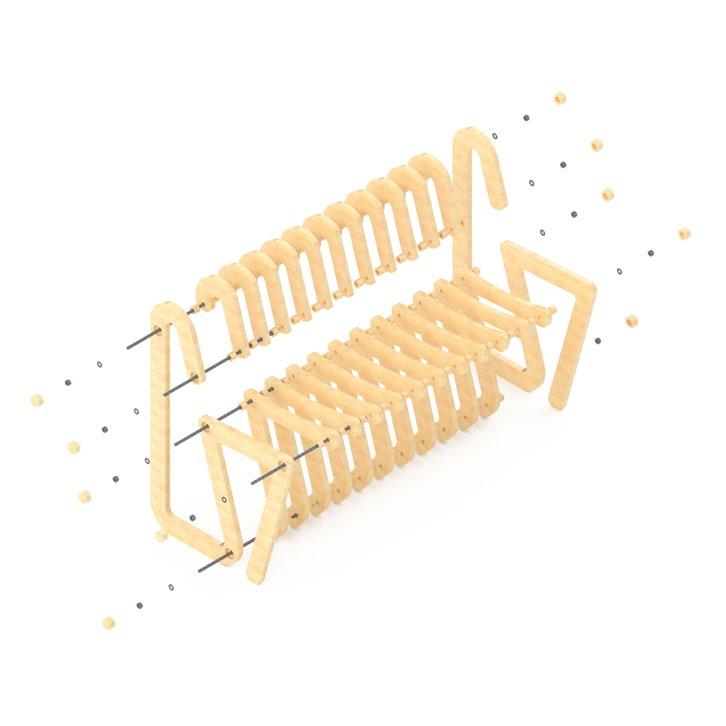
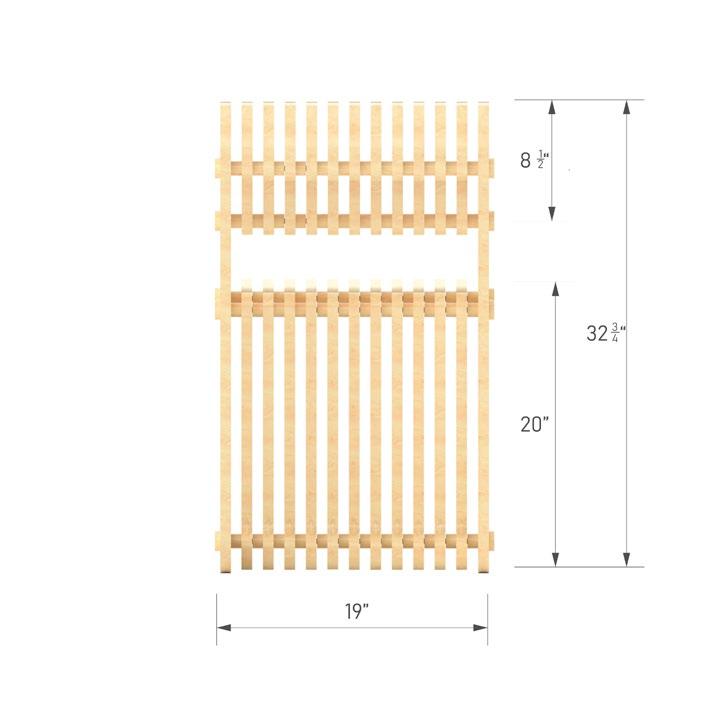
An assembly consisting of slatted wooden ribs allows for efficient interlocking layouts on the 4’x8’ sheet for milling and a sturdy material configuration. This assembly system celebrates the possibilities of using standardized parts and efficient fabrication techniques. The slats are separated by spacers and secured along threaded rods.
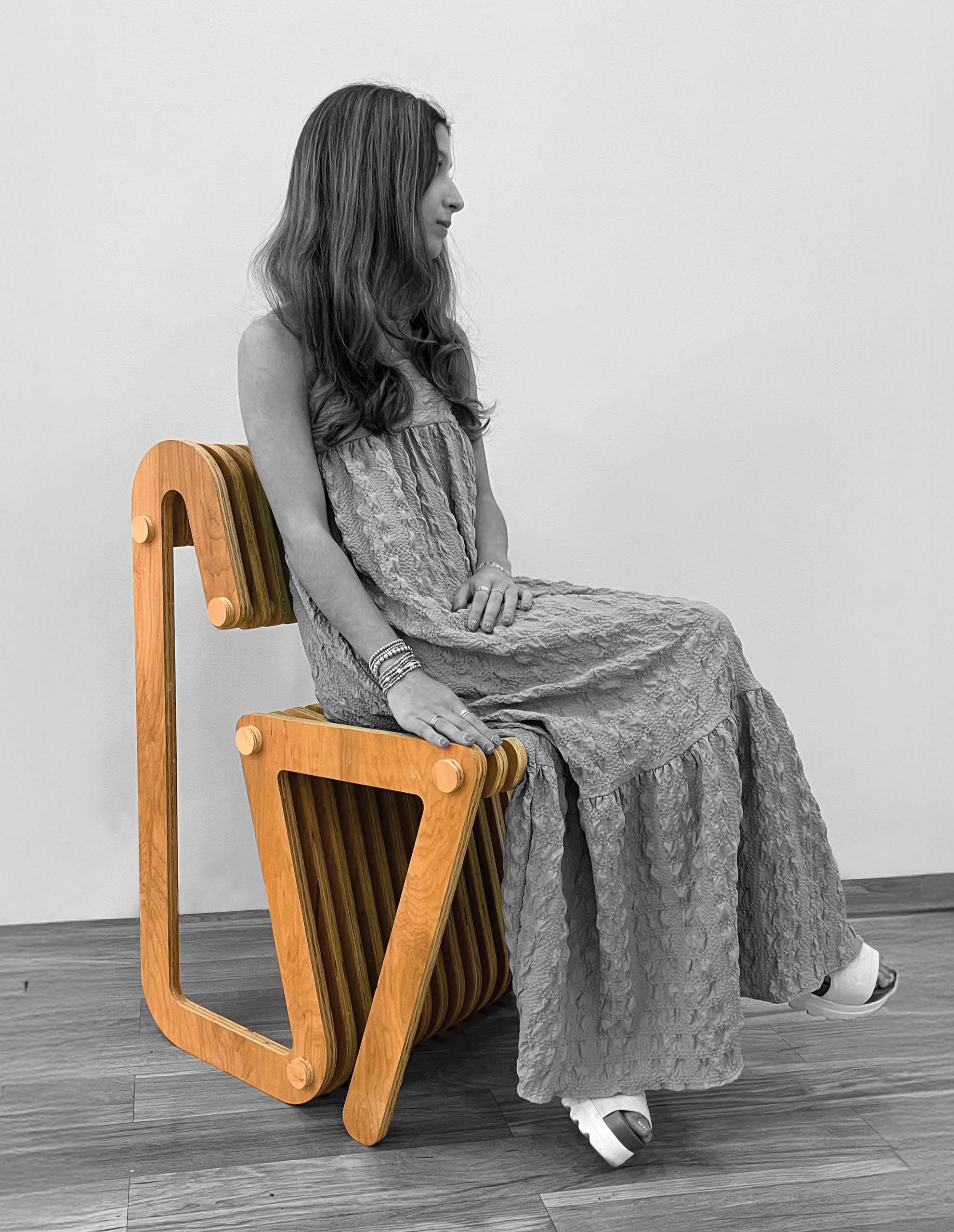
Gaps between the slats create moments of partial transparency, allowing the chair to visually recede at certain angles and sit quietly within the gallery environment. The design and fabrication process served as a platform for developing proficiency in digital tools including Rhino, the Adobe suite, and CNC milling.