As we begin 2026, market conditions across several food categories remain volatile. Supply disruption, weather impacts, and disease continue to affect availability, while inflation in labour, logistics, and input costs continues to put upward pressure on prices.
Protein markets remain under particular pressure. Beef and lamb supplies are structurally tight, poultry and eggs continue to suffer the consequences of avian influenza controls, and pork pricing remains sensitive to trade policy, disease risk and input costs. The seafood landscape is hardly more encouraging, with reduced quotas and biological constraints driving sustained price pressure. For their part, cooked meats continue to reflect upstream volatility in poultry and operational costs.
In the dry goods category, weather-related factors such as water scarcity and drought are withering availability across fruit and nuts. Harvests have been thinned across several growing regions, leaving stocks already drawn down and prices increasingly sensitive in markets such as almonds, hazelnuts and coconuts. While a small number of categories are finding better balance, these remain isolated pockets of relief within an otherwise parched landscape.
This report sets out the current position across categories, highlighting the key drivers influencing supply, pricing and risk as we move through the early months of the year. Our aim is to provide a clear, factual snapshot to support planning and decisionmaking in what remains a challenging trading environment.
The global food market can be unpredictable, but your supply doesn’t have to be. Our specialist team is here to help you stay stocked with quality options that fit your budget. Whether it’s discovering new products, exploring different price tiers, or finding the best value, we’ve got solutions for you. Talk to your ASM to arrange a meeting.
Centre of Plate
MICHAEL JOYCE
Mick has been in the industry for over 30 years. He is a qualified master butcher and provides his customers with expert information to add value to their business.
Centre of Plate
NEIL BRISLANE
Neil has been part of the Sysco team for over 20 years, with the last decade dedicated to Centre of Plate. His deep knowledge helps customers make informed decisions, adding real value to their business.
Centre of Plate
PHILL WARING
Phill joined the business in 2023 after 18 years working as a Chef. His roles were primarily in Fine Dining establishments throughout Northern Ireland, but he also spent time in Australia.
Produce
NOEL RYAN
Noel joined Sysco in 2022, however with 35 years in the produce business he brings a wealth of experience to his role. Noel’s belief in Sysco’s customer centric values plays an important role in how he does his job.
Produce
ALASDAIR MacINNES
Alasdair joined the business over 20 years ago, following 25 years as a chef working in busy restaurants. He began his career with Sysco in purchasing before moving to a produce specialist role.
Produce
RUTH POLLOCK
Ruth joined Sysco in 2024 and has over 20 years’ experience within fresh produce. Ruth enjoys working in partnership with her customers to come up with the best solution for their business.
Centre of Plate
KELAN McMICHAEL
Kelan has worked in the industry as a chef for over 25 years, in some of the finest kitchens in the UK and Ireland. He was honoured to be part of a team that cooked in the Hague, representing Ireland and Irish produce.
Produce
SIMON DOHERTY
Simon has over 35 years’ experience in the industry and is an expert in the industry and the produce category. Simon is always willing to go above and beyond to ensure the highest quality service.
Produce
ALISON KIDD
Since joining Sysco in 2022, Alison has cultivated strong relationships with many of our key customers. With a deep understanding of the fresh produce market, Alison provides solutions that drive growth and success for her customers.
Bakery & Dessert
ELAINE MEADE
Elaine joined the business in 2024 and brings over 15 years experience in the industry to her role. After training as a chef, Elaine worked in restaurants, hotels and cafes across Ireland and London, later opening her own café In Clare.
Bakery & Dessert
BRONAGH BEATTIE
Bronagh joined Sysco in 2023 and has over 20 years’ experience as a chef, working in fine dining restaurants, cafes and hotels worldwide. She enjoys supporting her customers with new ideas and innovation.
Bakery & Dessert
BRENDAN SEWELL
More than 32 years’ experience in the food industry in Ireland gives Brendan a deep understanding of the sector. Previously working as a Chef and a pastry chef in 5* Hotels, Brendan has a wealth of knowledge to share with his customers.
Produce
PATRICK KEOHANE
Patrick joined Sysco over 6 years ago. He has a wide range of experience in the sector from growing potatoes on his family farm to the early days of his career prepping veg in a hotel and working as a kitchen porter. Patrick enjoys meeting new people as part of his role, supporting his customers to improve their business.
Catering Supplies & Beverage
JONATHAN O’SHEA
Jonathan joined Sysco in 2022 with over 18 years experience as a chef. Jonathan has vast knowledge and experience in the hospitality industry having worked in restaurants across all levels – from Gastro pubs to Michelin Star.
Catering Supplies & Beverage
DEBBIE BLACKBURN
Debbie joined Sysco in 2022 following 15 years in the coffee industry. She is passionate about customer service, always going the extra mile for her customers.
Catering Supplies & Beverage
JOANNE McCUSKER
Joanne joined Sysco in 2024 and brings over 30 years’ experience to her role. She began her career in the licensed trade and has owned two coffee shops before progressing into sales.
PROTEIN
BEEF
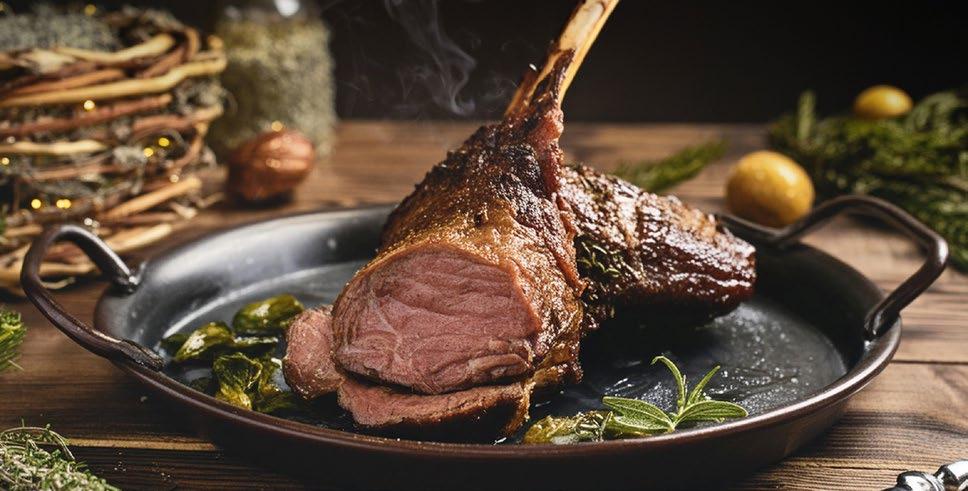
The beef market is showing signs of softening as we move into 2026, following an extended period of tight supply and elevated prices. Year-to-date slaughter volumes are down by approximately 170,000 head, and no meaningful recovery in supply is expected before year-end. While cattle numbers remain structurally low, recent weeks have seen some easing in prices, with November already signalling downward pressure that is likely to extend into December and January across a broad range of cuts, including striploins, roasts, mince, burgers and fillets.
Looking ahead, Bord Bia’s 2026 outlook suggests cattle slaughter numbers will remain broadly in line with 2025, but prices are unlikely to return to 2024 levels. For context, average cattle prices stood at around €5.30/kg in 2024, compared with current levels of €7.30–€7.50/kg. While reduced cattle availability across Ireland, the UK and wider EU continues to underpin the market, this structural tightness is being partially offset by evolving demand patterns and increased competition in export markets.
Beef kill: Factories down nearly 170,000 head on last year's supply
The trend of dwindling cattle supplies remains evident as beef kill is down by nearly 170, 000 head in comparison to last year.
Mart report: Sales slightly back as Bluetongue knocks confidence.
With factories pulling prices back slightly, and suspected cases of Bluetongue in Northern Ireland, how are cattle sales looking in the marts?
KEY POINTS
Supply
• Reduced cattle numbers and lower prime slaughter are providing underlying support, with herd recovery expected to remain slow into 2026.
Disease Risk
• The potential impact of Bluetongue remains uncertain.
Demand Mix
• Growing consumer preference for mince and alternative cuts is influencing carcase balance.
Number of sucker calves registered this year down 23,000 head.
According to the latest figures from ICBF, calf registrations are still down by over 54,000 head in comparison to last year.
Exports
• Demand from key markets including the UK, France and the Netherlands remains firm.
Global Dynamics:
• Tight global beef supply supports pricing, but increased imports from Brazil and Australia into the UK could add competitive pressure post-Brexit.
PORK
The pork market was volatile through 2025, with prices fluctuating and softening slightly toward year-end. While production prospects for 2026 are broadly positive, pricing is likely to remain sensitive to costs, trade policy and disease risk rather than supply alone.
KEY POINTS
Input Costs
• Energy, feed and transport remain elevated, pressuring margins.
Trade Volatility
• Chinese anti-dumping measures and policy shifts continue to weaken export competitiveness, particularly for offaly.
Disease Risk
• New African Swine Fever outbreaks in key exporting countries, including Spain, could disrupt trade and pricing
Source: Pigment Dashboard
Irish Average Grade E Pig Prices per 100kgs
LAMB
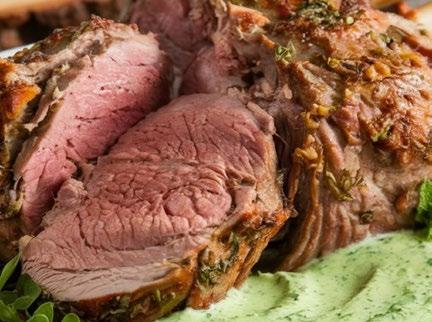
Irish lamb prices remained very high through 2025, underpinned by tight EU supply, strong UK demand and pronounced seasonal peaks around Easter, Eid and Ramadan. Sheep kills were down 20% year-on-year, and there is little evidence to suggest a meaningful recovery in 2026. With Easter, Eid and Ramadan falling around two weeks earlier than in 2025, first-quarter demand is likely to coincide with an even tighter sourcing window, increasing the risk of renewed price pressure.
While a post-seasonal dip might normally be expected, 2025 demonstrated that strong demand can sustain elevated prices. A similar pattern could emerge in 2026 if supply remains constrained.
2025's sheep kill: Down one fifth of last year
The latest CSO figures on factory throughout put the deadline in 2025's sheep kill equating to 480,000 a head.
KEY POINTS
Supply
• Reduced breeding numbers continue to threaten flock sustainability.
Seasonality
• Earlier religious festivals may intensify Q1 price pressure.
Market Dynamics
• Weather conditions and global trade flows will influence price stability through the year.
POULTRY
Poultry markets enter early 2026 under tightening supply conditions as elevated avian influenza activity and precautionary disease controls continue to disrupt production across Europe. While some late-2025 price softness reflected temporary overcapacity, reduced bird numbers and movement restrictions are now reasserting upward pressure as post-Christmas demand returns. Biosecurity measures remain a central feature of the operating environment, shaping availability, costs and market confidence.
Highly Pathogenic Avian Influenza (HPAI) outbreaks recorded across north-west and central Europe during November 2025 have resulted in strict 3 km and 10 km movement zones in affected areas, limiting bird movements and increasing production costs. In Ireland, mandatory biosecurity measures and a compulsory housing order were introduced to protect flocks and support continuity of supply.
CHICKEN
European chicken supply is constrained by active disease controls and reduced bird numbers in several regions. Availability is expected to tighten further in early Q1 as seasonal demand returns, requiring careful allocation management to minimise disruption.
In Ireland, new biosecurity regulations took effect on 1 November 2025, applying to all flock sizes, with enhanced measures for larger operations. A compulsory housing order followed on 10 November 2025, reinforcing supply protection measures. Regulatory changes are also feeding through to costs, following the removal of the Flat Rate VAT Addition (FRA) for broiler growers.
KEY POINTS
Supply
• Tightening in early Q1 due to HPAI controls and reduced bird numbers.
Ireland – Regulation
• Mandatory biosecurity measures (from 1 Nov 2025) and housing order (from 10 Nov 2025).
Cost Impact
• Removal of FRA for broiler growers effective 1 Sept 2025, requiring processors to offset reduced farm income.
Pricing
• Regulatory cost pass-through equates to approximately +5%, with Sysco-linked adjustments timed for February 2026.
TURKEY
Turkey markets remain under pressure as HPAI activity intensified across Europe in late 2025. Outbreaks have reduced availability and increased farming and production costs, with limited scope for short-term recovery while disease controls remain in place.
Susceptible, killed, disposed animals by poultry species in Europe Season 2025/26
KEY POINTS
EU
• Significant HPAI activity in November 2025, with Germany reporting notable herd impacts; the Netherlands, UK and France also affected.
Ireland
• Confirmed commercial outbreak with protection and surveillance zones in place.
DUCK
Market Impact
• Reduced availability and higher production costs continuing into early 2026.
Food Safety
• Authorities confirm no risk from properly cooked poultry and eggs.
Duck markets are experiencing sustained cost and supply pressure across both domestic and imported lines. Structural cost inflation is driving price adjustments in Ireland, while reduced availability and changes to vaccination support are tightening supply across Europe.
KEY POINTS
Ireland
• +7% price adjustment across duck SKUs from week commencing 2 February 2026, reflecting higher labour, packaging and welfare-related costs.
France (frozen duck)
• Vaccination programme support reduced from 100% to 40%, with some batches requiring a third dose.
Supply
• Lower bird availability across France and Europe continues to push prices higher
COOKED MEATS
COOKED MEATS
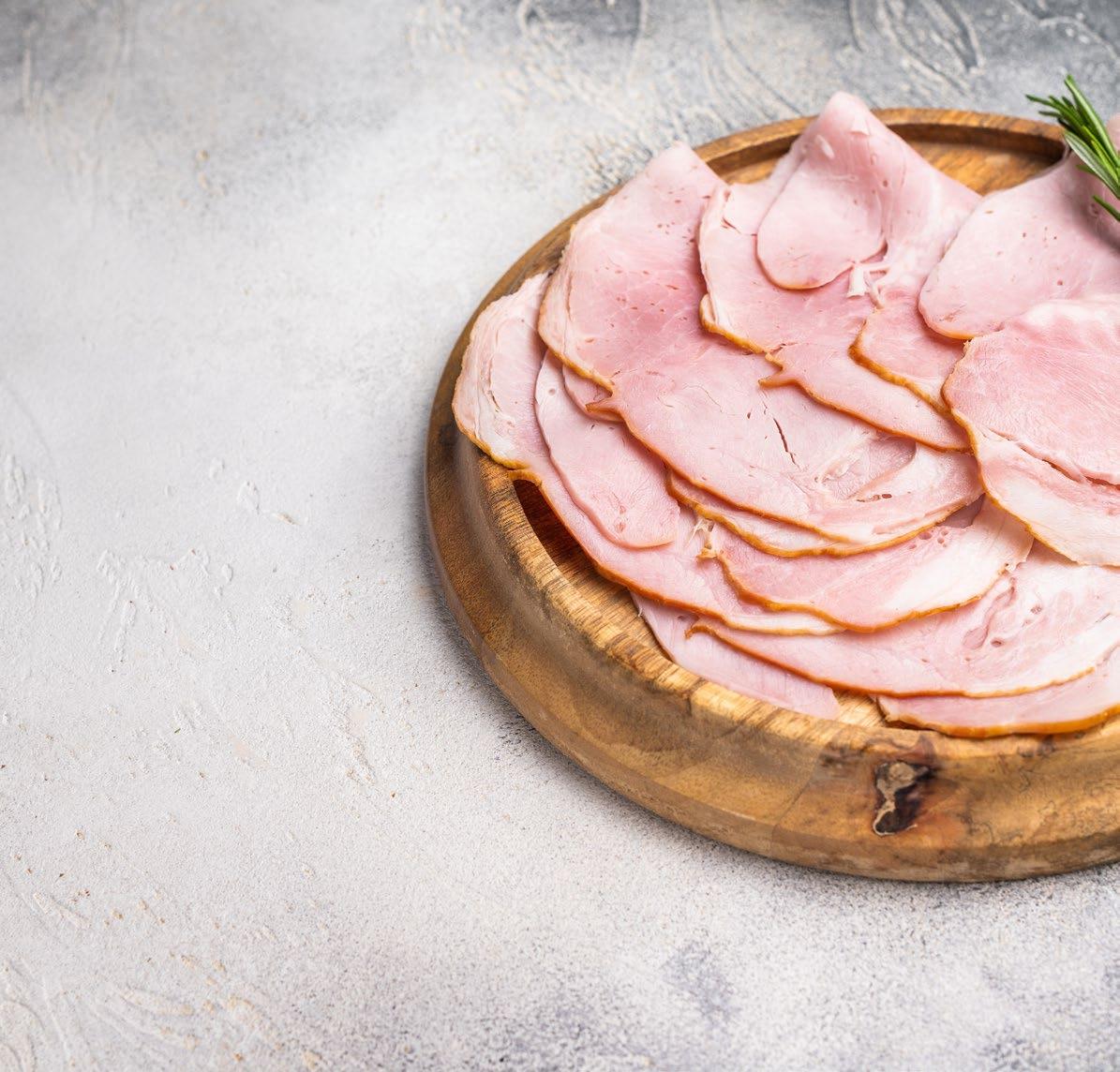
Cooked meats market enter early 2026 under continued pressure from elevated input costs and tight upstream poultry supply. Pricing and availability across cooked chicken and turkey products remain closely linked to broader poultry market conditions, with disease controls and regional supply constraints continuing to influence production and lead times.
Supply conditions are expected to remain tight through January, with any stabilisation dependent on avian influenza trends and the easing of regional movement controls. While some improvement may emerge later in Q1, visibility remains limited, and market conditions are likely to vary by product and origin.
KEY POINTS
Supply
• Tight through January; stabilisation contingent on disease developments and regional controls.
Pricing
• Cooked chicken influenced by firmer fillet and live bird prices versus late 2025.
• Duck prices adjusted from early February 2026.
• Cooked turkey availability remains under pressure.
Operational Impact
• Lead times and allocations may vary by product and origin.
SEAFOOD
SEAFOOD
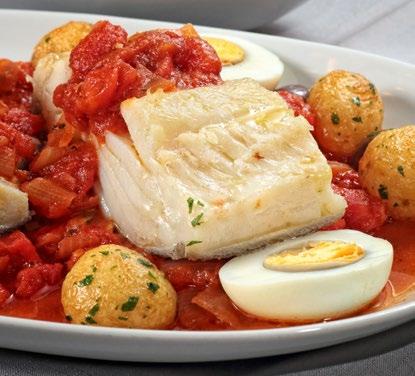
Seafood markets remain volatile as reduced quotas, biological constraints and rising mortality rates continue to limit supply. Salmon has seen increased movement ahead of the festive period, while whitefish species face sustained price pressure driven by tightening quotas. Availability rather than demand remains the dominant theme as we move into 2026.
Strong demand and declining sea biomass kept the salmon market firm through 2025, with pricing momentum carrying into late Q4.
KEY POINTS
• Prices: Mintec average weekly prices +6.2% MoM in November.
• Supply: declining biomass limiting production
• Outlook: prices expected to remain firm through April–May 2026
COD & HADDOCK
Quota reductions have pushed whitefish prices to historic highs, with limited relief expected in the year ahead.
KEY POINTS
• Prices: cod and haddock +~10% since week 42.
• Supply: global wild whitefish harvest forecast at 6.564m tonnes (2026) vs 6.709m (2025).
• Cod: –11% expected in 2026, –50% since 2017
• Haddock: –11% expected in 2026, –50% since 2017.
• Risk: Barents Sea TAC cut of –21% under scientific advice (lowest since 1991).
PRAWNS
Prawn markets remain tight and unpredictable, with supply well below seasonal norms.
KEY POINTS
• Second crop (Jul–Oct): –10–15% vs 2024,
• Third crop inflows: 5,000–7,000 MT/ week vs 20,000+ MT peak.
• Stocks: critically low at processor level.
• Market impact: good quality but smaller sizes dominating, keeping prices elevated.
HAKE
Hake availability remains constrained, continuing the price growth seen across 2024 and 2025.
KEY POINTS
• Namibia: TAC –14,000 tonnes YoY.
• South Africa: TAC +4%, partially offsetting reductions
• Strong from Europe and North America.
• Pricing: upward pressure expected to persist.
DAIRY
EGGS
Egg markets across the EU entered late 2025 under renewed pressure, with tightening supply and rising costs feeding through to wholesale prices. Biosecurity restrictions linked to new avian influenza cases have been a key driver, disrupting production flows and constraining availability across several regions. As a result, prices moved sharply higher through October, reinforcing an already firm market heading into 2026. 3,000 2,750 2,500 2,250 2,000 1,750 1,500 1,250
UW96 - Egg medium/ large whs EU
KEY POINTS
Eu Wholesale Price (Medium/Large Eggs)
• €2,834.80/mt as of 20 October 2025
• +7.84% month-on-month
• +29.48% year-on-year
Supply Conditions
• Continued to tighten throughout October.
Key Driver
• New avian influenza cases and the establishment of biosecurity zones.
• Restrictions on inter-farm movements.
• Limitations on egg distribution, exacerbating existing supply constraints.
Logistics & Distribution
• Logistics remain a significant structural challenge for the egg sector. Ongoing disruption to global shipping routes continues to affect transit times and costs, while inland transport, storage, and labour constraints are adding further pressure to distribution networks.
Freight & Shipping
• Continued avoidance of the Suez Canal due to Red Sea security risks.
• Extended transit times to Europe by 10–14 days security risks.
Transport Costs
• Road transport tariffs in 2025 trending 3–5% higher year-on-year.
• Rising operator costs (wages, insurance, regulatory requirements), despite some easing in fuel prices.
Cold Storage
• Persistently high energy costs.
• Reliance on refrigerated capacity limits operational flexibility.
Workforce Constraints
• Ongoing shortages of logistics personnel (drivers, warehouse operators).
• Adds cost pressure and reduces service reliability.
Labour Cost Environment
• Labour costs continue to trend upward, adding to the overall cost base across production, packing, and logistics.
Industry Labour Costs
• +2.9% increase in hourly labour costs between Q12024 and Q1 2025 (INSEE).
Wider Market Sectors
• Hourly wages +2.3% YoY in Q1 2025.
• Hourly labour costs +2.4% YoY.
Minimum Wage Pressure
• Increases to SMIC and sectoral minimums impacting labour-intensive operations.
• Retention of skilled workers increasingly dependent on higher compensation.
DRIED FRUITS & NUTS
ALMONDS
The almond harvest is now complete, and the market picture has become clearer, and notably tighter, than earlier forecasts suggested. Final receipts have confirmed that the objective estimate significantly overstated supply, with volumes tracking well below last year and pointing to a smaller overall crop. While periods of rain during harvest created some isolated quality concerns, overall kernel quality is expected to be an improvement on last season. As we move into 2026, tightening supply and steady demand from key export markets are leaving the sector with limited cover and increased sensitivity to shifts in buying activity.
KEY POINTS
Key Crop and Supply Indicators
• Harvest complete, with receipts approximately 8% below last year.
• Expected final crop: 2.60–2.70 billion pounds.
• Down from 2.73 billion pounds last season.
• Well below the 3 billion-pound objective estimate.
• Year-on-year production decline reinforces a tighter supply outlook.
• Despite the smaller crop yield, shipment performance has remained broadly balanced. Movement is tracking in line with receipts rather than running ahead of available supply, helping to prevent any early imbalance in the market.
Shipments and Demand
• Current period shipments: 249.2 million pounds (–3.6% YoY)
• Domestic USA market: –28.5%
• Export market: +5.2%
• Spain: +65% (+52% YTD)
• Western Europe: +43% (+31% YTD)
• Shipments YTD: 604 million pounds (–5.62% YoY)
• From a sales perspective, buyer behaviour remains cautious. Commitments are lighter than last year,
reflecting ongoing uncertainty around supply size and pricing direction. As a result, most markets are operating very much hand to mouth, with limited forward cover in place.
Sales position
• Commitments: –16% year-on-year.
• Net new sales: 261 million pounds, versus 264 million pounds last year (effectively flat)
• Stocks continue to signal underlying tightness. Receipts are already well below last year’s levels, and while expectations centre around a final crop close to 2.7 billion pounds, downside risk remains, particularly given recent processing delays in California and residual quality considerations.
Stocks and Risk of Tightness
• Stock receipts: 1.698 billion pounds as of 31 October 2025 (–8% YoY).
• Final crop receipts expected near 2.7 billion pounds, with uncertainty skewed to the downside.
• If demand remains firm, especially from India, the market could move into a tighter spot position, particularly during peak buying periods.
Global pecan markets are entering 2026 with supply clearly under strain. While early-season US receipts initially appeared strong on a year-on-year basis, underlying inventory levels tell a less encouraging story. Lower production across key growing regions, coupled with weather- and water-related challenges, is limiting global availability. At the same time, demand remains firm, particularly from export markets, adding further pressure to already constrained supplies.
KEY POINTS
US receipts
• 12.923 million pounds in September 2025 (+81% vs September 2024)
Inventories
• 141.451 million pounds (–7% YoY); ACP reports in-shell inventories at a six-year low
Production Outlook
• US crop estimated at 125,000 tonnes (–6% YoY), with low yields in Texas and Georgia.
• Mexico production expected –15%, impacted by water scarcity; hurricane season in Georgia remains a key risk.
• South Africa and other origins expected to add only limited volumes, keeping global supply tight.
Demand & Trade Flows
• Strong demand and low cold-storage stocks continue to support the market.
• China recently active in South Africa and may turn to Mexico and the USA in Q4 or early 2026.
• US kernel prices well above average export prices from Mexico and South Africa in 2024/25, enabling those origins to gain EU market share.
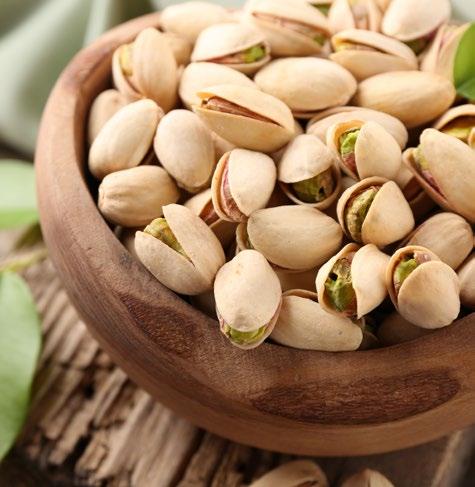
PISTACHIO
The pistachio market is entering the new season with a notably different dynamic than many had expected. While crop prospects in California and Iran are highly encouraging, the market is being shaped less by forward-looking supply and more by the very low level of carry-over stocks and exceptionally strong demand. Early indications suggest that availability, rather than production potential, is setting the tone for pricing as the season gets underway.
KEY POINTS
US Exports
• Declined by 25% in 2024/25
US Carry-Over Stocks
• Estimated marketable inventory at 119.581 million pounds, according to the Administrative Committee for Pistachios (ACP).
• Down 35% from last year’s already low carry-over of 184.606 million pounds.
Crop Outlook
• Crop estimates described as highly encouraging in California and Iran.
Market Dynamics
• Demand has overwhelmed available supply, contributing to unexpectedly high prices at the start of the season.
• Despite expectations of lower prices due to strong crops in the USA, Iran and Spain, the market remains extremely tight, with limited availability keeping prices elevated.
APRICOTS
The Turkish apricot market enters 2026 against the backdrop of an exceptionally challenging season. The 2025 crop was effectively lost following severe agricultural frost, and while near-term trading in the old crop has now largely concluded, the more important consideration for buyers is the potential impact on supply over the next one to two seasons. Market attention has shifted away from short-term availability and towards the health of orchards and the outlook for the next harvest cycle.
In Malatya, Turkey’s main producing region, extreme weather has raised concerns that the impact may extend beyond a single season. Alongside frost damage, prolonged heat and drought have stressed trees, increasing the risk of weaker yields in future crops. Although support payments offered some relief to growers, industry bodies continue to warn that orchard health and productivity may take time to normalise.
Market visibility remains limited. Old-crop stocks were expected to clear by the end of 2025, farmers hold no remaining volumes, and inventories are now concentrated with traders and exporters. Prices remain elevated but thinly traded, providing little clarity for forward planning. Given that Turkey typically exports around 85% of its apricot production, any delay in supply recovery would have a direct impact on global availability and pricing through 2026.
CURRANTS
KEY POINTS
• 2025 Turkish apricot crop: effectively lost due to widespread frost damage.
• Production risk: concerns extend beyond one season due to heat, drought and tree stress.
• Supply structure: farmer stocks exhausted; remaining volumes held by traders/exporters.
• Market visibility: low trading activity, with prices largely indicative rather than transactional.
• Outlook focus: February–April 2026 will be a critical development period for the next crop.
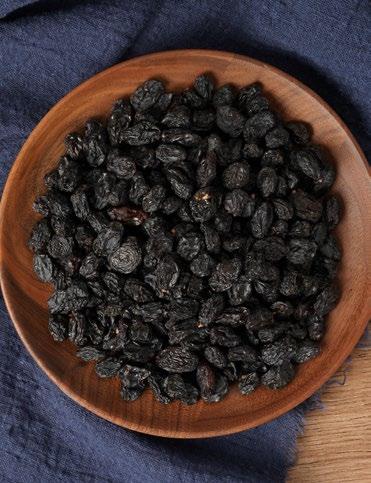
Greek currant production remains under pressure following another summer of extreme heat. Latest estimates for the new crop have been revised down sharply, reinforcing concerns about the sector’s ability to regain scale and competitiveness in global vine fruit markets. Continued supply shortfalls are limiting Greece’s capacity to rebuild market presence and pursue longer-term export development strategies.
KEY POINTS
Greek Crop Estimate
• Downgraded to 13,000 tonnes, from earlier expectations of 15,000–16,000 tonnes.
Structural Challenge
• Production remains well below the 20,000+ tonne level needed to reposition currants back into the mainstream vine fruit category.
Market Share Pressure
• Greece has lost ground in recent years to buyers switching from currants to midget raisins and increased sourcing from South Africa
Outlook Risk
• Another short crop and elevated prices would further undermine the long-term competitiveness of this key Greek export.
HAZELNUTS
The Turkish hazelnut market has entered the new season in a state of shock, with prices rapidly pushing into record territory and trading activity grinding to a halt. Crop losses and harvesting delays have fundamentally tightened availability, leaving buyers and sellers struggling to establish workable price levels. While enquiries remain high, confidence is low, and the market is characterised more by observation than execution as stakeholders attempt to absorb the scale of the shift.
Prices for quality hazelnuts have surged to levels not seen since the frost-driven highs of 2014/15. Some traders are now offering up to TRY 310/kg, more than 50% above the TMO base price, yet this has not unlocked meaningful supply. Despite an estimated 40–50% of the crop technically being in the market, most farmers and suppliers are choosing to hold stock, wary of selling too early in what is clearly a supply-constrained season. Exporters, meanwhile, face growing risk: forward contracts agreed before the season are already loss-making, raw material sourcing is difficult even for existing orders, and appetite for new business remains extremely limited.
KEY POINTS
• Pricing: offers reported up to TRY 310/kg for quality nuts, >50% above TMO base price.
• Supply constraints: frost and drought have pushed production to its lowest level in recent years.
• Market liquidity: limited trading despite 40–50% of the crop being nominally available.
• Quality concerns: uneven quality and a shortage of small kernels adding further complexity.
• Outlook: no meaningful supply relief expected this season; buyers likely to need time to adjust to the new price reality.
COCONUT
The global coconut market enters 2026 under severe strain, with supply disruption now spreading across all major producing regions. The most significant development has been the temporary shutdown of all three Franklin Baker factories in the Philippines. As one of the world’s largest and longest-established coconut processors, Franklin Baker’s withdrawal represents a major structural shock to an already tight market. While the company has been seeking buyers or investors for some time, progress has been limited, and the industry is operating on the assumption that production will remain offline until a viable solution emerges.
Broader regional pressures are compounding the situation. In the Philippines, last year’s abnormal La Niña-driven rainfall and flooding continue to weigh on raw material availability and processing capacity. At the same time, aggressive buying of fresh coconuts by China across Southeast Asia has distorted local markets, prompting Philippine producers to pause selling as they assess pricing and supply conditions. Similar dynamics are unfolding elsewhere: Indonesian processors are facing raw coconut shortages, with some advancing maintenance shutdowns and others operating at just a fraction of capacity, while Sri Lankan mills have been forced to cut production sharply due to extreme scarcity and elevated costs.
Seasonal factory closures around Christmas, typically manageable, have further tightened availability this year. In the current context, this customary downtime adds pressure to a market that is already stretched thin, leaving supply highly constrained as 2026 begins.
KEY POINTS
• Philippines: Franklin Baker has temporarily ceased operations at all three factories, removing significant capacity from the market
• Weather impact: La Niña-related rainfall and flooding continue to disrupt Philippine production.
• China demand: heavy buying of fresh coconuts from Indonesia, Vietnam, Malaysia and the Philippines is tightening regional supply.
• Indonesia: raw material shortages; some factories shut early for maintenance, others operating at ~25% capacity.
• Sri Lanka: production sharply reduced due to scarcity of raw coconuts and high prices.
Extreme weather has significantly reduced red fruit output in Eastern Europe. Spring frost followed by a prolonged drought has driven sharp production losses, tightening availability and adding cost pressure, particularly when combined with rapidly rising labour costs across the region.
KEY POINTS
Red Fruit impact
• Serbia’s raspberry crop fell from 55,000T (2024) to 15,000T (2025)
• Poland: strawberries –50%, sour cherries –70%
Cost Pressure
• Wages in Eastern Europe have risen sharply over the past three years, with Poland nearly doubling.
• Elsewhere, strong demand continues to support coconut and pineapple markets, driven by China and the US respectively. In contrast, improved mango crops have eased supply constraints, allowing for price reductions on this key fruit line.
BAKERY
WHEAT
European winter wheat planting has broadly met expectations, and crop development is generally favourable, limiting upside pressure on prices. Conditions across key regions remain mixed but manageable: parts of western and central Italy experienced some water deficit without a material impact on output, while excess moisture in Romania and Bulgaria has improved soil conditions but could weigh on yields if it persists. In France, a mild autumn supported timely sowing, and the crop is widely reported to be in good condition.
Wheat Futures
COCOA
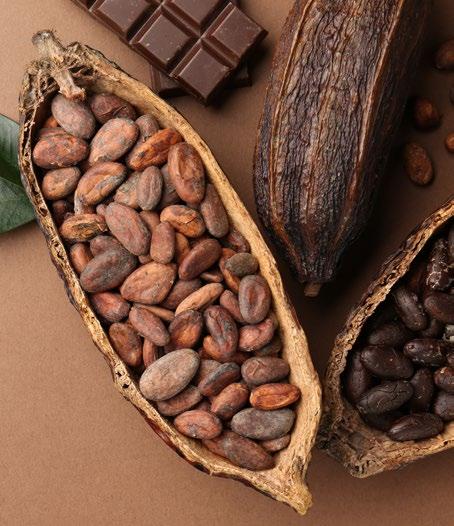
Cocoa prices have continued to decline due to weakening demand and heavy rainfall across key growing regions.