
Gi Grieco
Gi Grieco
Welcome to The Harrier. We again have a nice selection of articles; for the previous edition I had to hold some back as that was a bumper edition and as I’m prepping the current one it looks like this one is going to be too. I had mentioned the anniversary social gathering in a previous editorial so thanks to Val Lockwood for writing up about this lovely, if somewhat exciting and wet, get together last year!
SBG has recently started having daily records of notable species on the website, visit https://www.suffolkbirdgroup.org/latestbird-sightings. The bird review within was previously gleaned from the Suffolk BINS website and going forward will come direct from the SBG website.
It’s brilliant that we’ve had new members join Council and that they have been so proactive. This greatly assists with new ideas and impetus and inside, one such new council member, Sally Nelson, has detailed a new project SBG project, BOSS. Future editions will also cover some other projects the group are working on and setting up. We’ve an update on one of our main current projects, SoSS, and we have request for volunteers for surveying including, once again, teaming up with SWT. At the recent AGM, David Walsh was awarded the Denis Ockelton trophy for his activities in Suffolk birding and in this edition he covers some of that work with a request for record details of some of our rare breeding birds
in the county. In the next Harrier we’ll have more information on that recent AGM. Talking of bird records, I’m a section writer for the Suffolk Bird Report, covering Geese and Swans, and I’ve read with interest the article by David Tomlinson on one of those goose species. From the records I receive I always see a late August influx of Barnacle Goose. In a previous article we had information on a ringing project within the UK and movement has been noted between sites; hopefully further ringing will show continental movement too.
For those of us who have been birding for many years we have seen a lot of changes in the birds we encounter and at times we have anecdotal remembrances of these changes but it’s fascinating to have a continuous record, over such an extended period, of a walk and to compare those differences. It’s impressive Stephen Bueno de Mesquita has done this walk, and recorded the species seen for 44 years.
Within are a nice selection of trip reports – as we have the odd one away from Suffolk I do like to include them; thanks to Adam Faiers for leading to Sandwich Bay and doing the write up (the latter with a bit of gentle pressing even though I know how busy you are!).
NOTE April 27th Pound Farm field trip: Due to limited parking spaces please organise to car share if you are planning to attend the meeting.
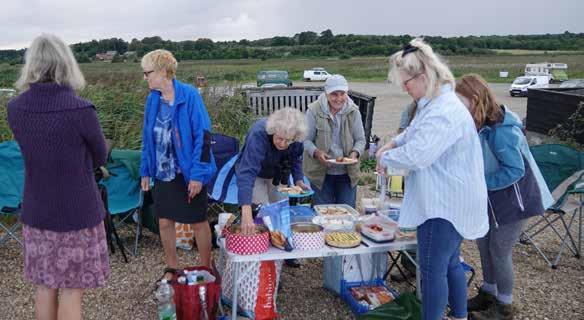
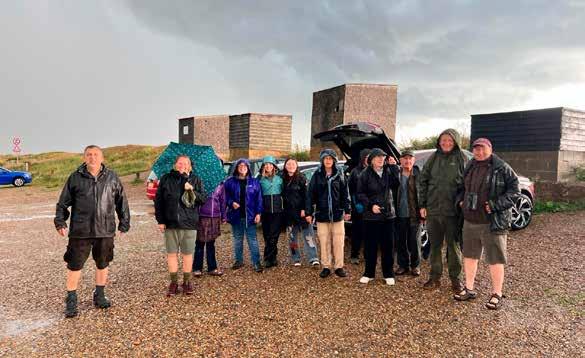
Discussions were held as to the possibilities of holding an informal social event to combine a picnic followed by a birdwatch on Dunwich beach to celebrate the 50th anniversary of SBG. In the hope of having a chance of a mild summer evening, the picnic was arranged for Saturday 26th August from 5pm. In hindsight we should have known better than to choose a Bank Holiday weekend, which are notorious for inclement weather.
Having nervously checked the weather forecast on numerous occasions throughout the week we arrived equipped with waterproof gear and umbrellas and fingers crossed as the forecast was for it to stay dry until about 8pm. The sky was full of dark, rather threatening looking clouds and one of the members mentioned that a football match at Lowestoft had to be postponed because of heavy rain. Undaunted, tables were assembled on the beach and lots of marvellous food was laid out, much of it was
home-made and there was lots of friendly banter. As the skies darkened we decided to start eating straight away, rather than hold on as we normally would have done. Within 20 minutes or so there were a few heavy spots of rain so lids were put over food boxes and we sat chatting and eating under umbrellas, all very stiff upper lip, we were not going to let a few drops of rain spoil our event…..
Then the rain stopped for a while and it was whilst we were helping ourselves to more goodies that the first clap of thunder was heard. The wind started to get up and the thunder and lightning increased as did the rain. By then we decided it was time to try to get the food covered and back to the cars. The rain poured down in torrents and in the end the boxes of food and tables and chairs were left abandoned on the beach as we ran to our cars for shelter. By then most people had very wet clothing and, after trying to sit it out for a while in cars, sadly decided
to call it a day. It was definitely one of the occasions when the term “You had to laugh, or if not you would cry” was appropriate! One member had made a lovely quiche the afternoon of the picnic and because it was still warm and hadn’t quite set it had been left out without a cover to cool, after the heavy rain it had managed to spread itself all over the table. As the storm passed over us we had a hailstorm.
Sally sent me a short video clip of her car windscreen being bombarded with the hail which was so heavy that the wipers couldn’t deal with it quickly enough, while the back end of the car park was flooded. Other members had the sense to turn around having encountered the bad conditions on the way to Dunwich.
Reading the above you logically might think that this is where the evening ended. However, by about 6:45 the storm had
passed over and Anne, Gi, Ivan and myself went to sort out the tables and chairs that were still on the beach and decided that we would go for a walk and see what birds we could find. Along the grass covered shingle area beside the marshes we saw Stonechats and Skylarks. There were also three Red Deer in the reedbed areas at the back of the pools. Further along birds of note we picked up were a Great White Egret in flight and a Spotted Redshank.
As we had been walking along towards the pools a mist had been forming over the marshes and when we turned to make our way back to the car park we all marvelled at the spectacular scene in view all around us. In addition to the marshes being shrouded in mist, with trees peeping through in the background there was also a mist close to shore over the sea. It was a great conclusion to our evening’s birdwatching and a most enjoyable walk.
Sally Nelson
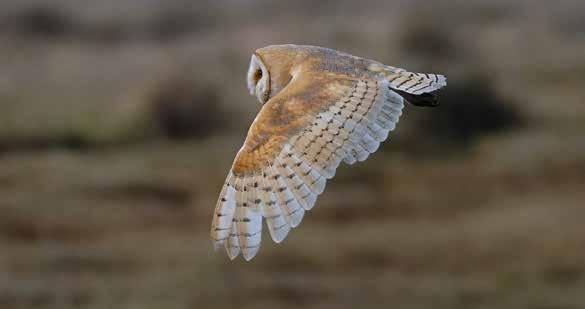
BOSS represents a new phase in helping Barn Owls thrive in Suffolk.
Under the Suffolk Community Barn Owl Project (SCBOP), which was set up by Steve Piotrowski, with others and under the auspices of SBG, in 2005, the county achieved a terrific tenfold increase in its Barn Owl population.
Over its 15-year lifespan, SCBOP helped put up nearly 2,000 Barn Owl nest boxes on nature reserves, farmland and on community spaces.
Today, Suffolk’s Barn Owl population is by and large hosted in man-made nest boxes, which typically have a lifespan of between 10 to 15 years. In order to ensure Suffolk remains a stronghold for Barn Owls we now need to shift our focus from installing nest boxes to ensuring that the existing nest boxes are kept in good order with regular cleaning and repairs carried out, as well as monitoring and ringing visits.
BOSS aims to build on the inspirational legacy of SCBOP, and protect our Barn Owls numbers by:
• Continuing to raise awareness of Barn Owl conservation and care, in particular the dangers of decrepit boxes, and the importance of timely box cleaning and repair.
• Encouraging the installation of new nest boxes in existing Barn Owl home ranges for fledglings to disperse to.
• Creating a database of local nest box makers, repairers and installers.
• Helping to recruit new volunteer Barn Owl monitors to carry on the invaluable work of providing expert advice to box owners and keeping tabs on nest sites and chicks.
None of the work to protect Suffolk’s Barn Owls would be possible without the passion of nest box owners and the energy and dedication of the amazing volunteer monitors. Thank you!
Contact BOSS on:
Email: barnowls@suffolkbirdgroup.org Or follow us on Instagram:

Barn_owl_support_suffolk
Eddie Bathgate
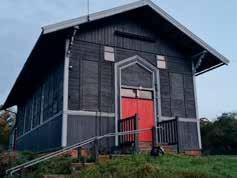
SOSSwifts were contacted in the summer from the Trustees of Peasenhall Assembly Hall. They had plans to repair the front and rear elevations of the building but thought that Swifts might be nesting and wanted advice.
We are always happy to help and a morning survey revealed that at least a couple of pairs of Swifts were indeed nesting on the front elevation. The Trustees were very keen to protect their Swifts and agreed to postpone their works until all the Swifts had fledged. We agreed to take a closer look in September when access could be arranged without any risk of disturbance to see how the colony could be protected and whether it could be expanded.
Once the scaffolding was erected and access was available up to the roof, it became clear the building housed a major Swift colony. Nine pairs had nested on a tiny ledge tucked above the cladding beneath the up-roll of the corrugated roof on the front elevation.
The Trustees were excellent and their carpenter very helpful. On the front, the Swifts’ nest accesses were left completely untouched by the works to avoid putting off the returning birds next May.
On the rear façade we found that nesting was not possible because the down-roll of the corrugated roof meant the gap was much narrower than on the front where the birds could squeeze in. The carpenter took a nibble off the top of the cladding which enabled a gap to be created that matched the one on the front elevation, providing a possible space for the colony to expand into.
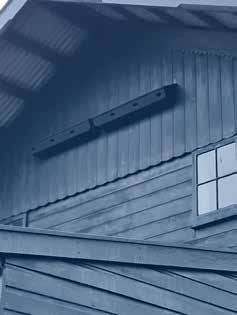
The Trustees also instructed the carpenter to install Swift nest boxes, cladded to match the building’s fabric. He created racks of six boxes on both the front and rear elevations, situating them below the natural nest ledge, where they won’t hinder the access of the Swifts to the nests above.
Not only has the future of this colony been secured, but a huge amount of additional nesting space has been created for the Swift colony to expand into. We firmly believe that the Swift population is limited by nest site availability. It will be great to learn of the uptake of these nest boxes over the coming years.
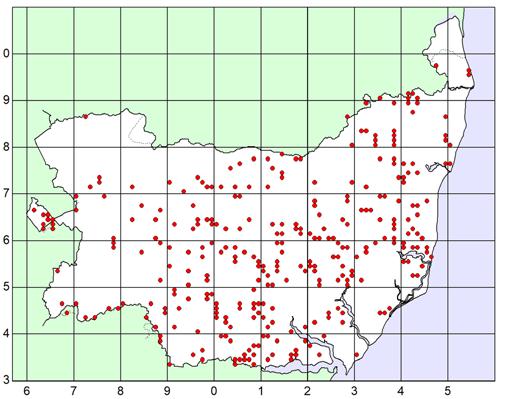
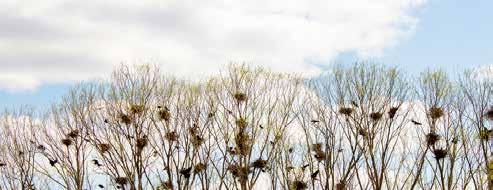
With a review of records received to date is has been decided to do one final year in order to cover as much of the county as possible – please check the map for areas with gaps to see if any rookeries are present in those areas. As previously mentioned we do have funds to pay for fuel – details will be on the SBG web site.
The survey page to enter records is here – https://www.suffolkbis.org.uk/rookerysurvey
Jenny Rawson (BSc, BETA)
Suffolk Wildlife Trust (SWT) Farm Advice Team are looking for SBG volunteers who are confident at identifying farmland birds, to undertake farm bird surveys at host farms to help chart changes in farmland bird populations in Suffolk. These farms have been advised by SWT on wildlife friendly farming and changes in management such as wild bird seed provision, supplementary feeding and sympathetic hedgerow management. Records will be shared with Suffolk Bird Group and Suffolk Biodiversity Information Service. SWT will then provide advice and recommendations to landowners on farmland birds and wider wildlife enhancements.
If you are interested in helping out or would like to find out more, please contact Jenny Rawson – farm.advice@suffolkwildlifetrust. org
This will be similar to BBS methodology, involve two visits during the breeding season (April-July). Farm visits will be repeated every 3 years, to track changes in populations and enable SWT to inform on management recommendations.
Stephen Bueno de Mesquita
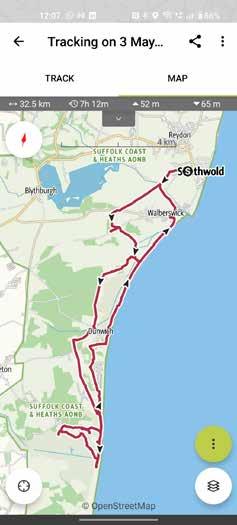
In late April 1980, on my first trip to Southwold, I walked from Southwold to Minsmere and back. It was a cold and cloudy day. Minsmere was closed and the 20 miles was a slog. I saw around 70 species of birds, including a Ring Ouzel.
This was the start of my annual Big Bird Walk. Every year since, I’ve done the same walk. The plan is to see as many species of birds in the day as possible. On May 17th 1984, I made my Big Bird Walk a sponsored event. I was sponsored per species. I told my sponsors that I expected to see 80 species in the day. The final total was 103. With small variations, my route has been the same each year (mainly inland to Minsmere, mainly along the coast coming back).
This year, on May 3rd, I set off just before 5am to do the 40th Big Bird Walk since the record-breaker in 1984. This year wasn’t to be a record breaker – 90 species. This led me to look back at the list for 1984. Was there anything to be learnt by comparing the 1984 list with that of 2023?
Before I reveal the findings, I need to manage your expectations. This is a very unscientific survey and here are three reasons why:
I am a birdwatcher of modest ability
Walking 20 miles in a day means that the best that the species list can create is a snapshot. It is not a survey
There are factors which may influence the results (for example, the weather and the date) – and most of all, luck!
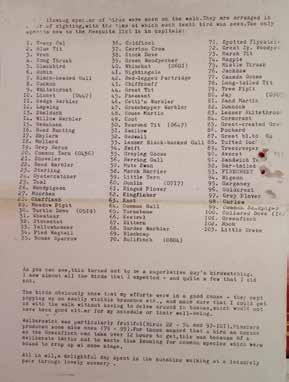
But what you really want to see are the lists. So here are the two lists: birds seen in 1984 and not 2023 and birds seen in 2023 and not 1984:
Birds seen in 1984 and not 2023
Bar-tailed Godwit
Bullfinch
Collared Dove
Birds seen in 2023 and not 1984
Barnacle Goose
Black-tailed Godwit
Buzzard
Cuckoo Coal Tit
Firecrest Dartford Warbler
Garganey Hobby
Grasshopper Warbler
Grey Plover
Kittiwake
Little Egret
House Martin Mediterranean Gull
Kingfisher
Pintail
Knot Ruff
Lesser Whitethroat
Little Tern
Sparrowhawk
Stone Curlew
Mistle Thrush Woodlark
Pochard
Red-legged Partridge
Spotted Flycatcher
Stock Dove
Swift
Tawny Owl
Tree Pipit
Turnstone
Turtle Dove
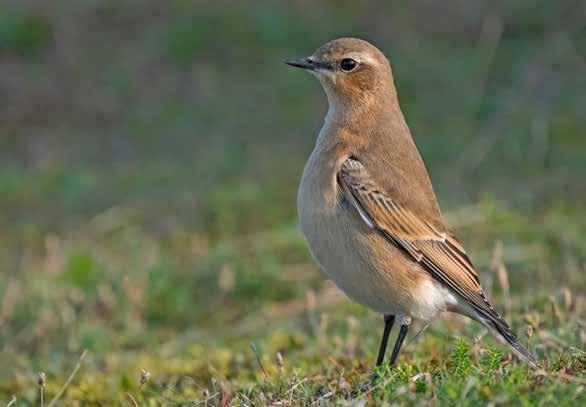
Wheatear
Whinchat
Wigeon
Willow Warbler
The first thing you’ll notice is that the 1984 list contains 27 species not seen in 2023. The 2023 list has 14 species not seen in 1984.
Many of the 1984 species come under the ‘factors that may influence the results’ category. In 2023, it was too early for Swift, Cuckoo and House Martin (they were around the following week). Not to see a Bullfinch, a Collared Dove or a Stock Dove in 2023 was simply down to carelessness. Lesser Whitethroat was a shame (not many around this year)
But then there are the species that we mourn as lost or almost lost between 1984 and 2023. To hear a Willow Warbler on this walk is now rare. It’s years since I heard a Grasshopper Warbler at Walberswick. I would not expect to see Spotted Flycatchers (although a pair nested in my daughter’s garden near Halesworth last year). Regular spring Whinchats and Tree Pipits have gone from our coast. I think I did see a Turtle Dove in 2023 but ‘I think’ isn’t good enough to go on the list.
But there have been some gains in 2023. Stone-curlews are back on our coast. Egrets abound (up to three species if you’re lucky). Kittiwakes are regular at Minsmere. Dartford Warbler is a certainty. And the highlight of the 2023 was to hear Song Thrush, Nightingale and Woodlark competing for air time on Dunwich Heath. The Buzzard invasion excites me less.
Of course, the list has varied from year to year. 2022 was the year of the rarity (Cranes, Glossy Ibis and Lesser Yellowlegs). 2021 was the year when I got nearest to 1984, with 95 species. For many years, the Big Bird Walk took place in July or August – generally, the totals were lower (one year a disgraceful 65) but the bonus was a refreshing swim.
You’d might expect me to say that in 1984 the air was full of birds which have all now disappeared. But the truth is, it was forty years ago and I don’t really remember it that way. What I can say is that, even on this managed and protected coast, it has become harder to see many common species.
The birdwatching is a delight, of course. But just as delightful is the walking – the sharp scent of the spring dawn, the growing light as dark turns to dawn and then to sunrise, the intensity of the spring colours at their brightest, the sweet air of the heaths, heavy with gorse; and the sounds of the woods, the reed beds and the shoreline.
It has been my privilege to enjoy our special coast in this way. To walk this way each year has been an important recurring milestone of my year for almost half a century. If you have a day to spare in May, I recommend it. I hope you can join me.
Don’t Ignore the
Serious birders may have an obsessive interest in birds, but as we all know one thing they don’t like are birds which, they believe, aren’t properly wild. It’s taken a long time for the purists to get used to Red Kites, all descended from birds that
were released initially over 30 years ago. Pheasants, released in great numbers for shooting, are regarded with disdain, while nobody has a good word to say about the flocks of Ring-necked Parakeets that now squawk noisily in all the London parks.
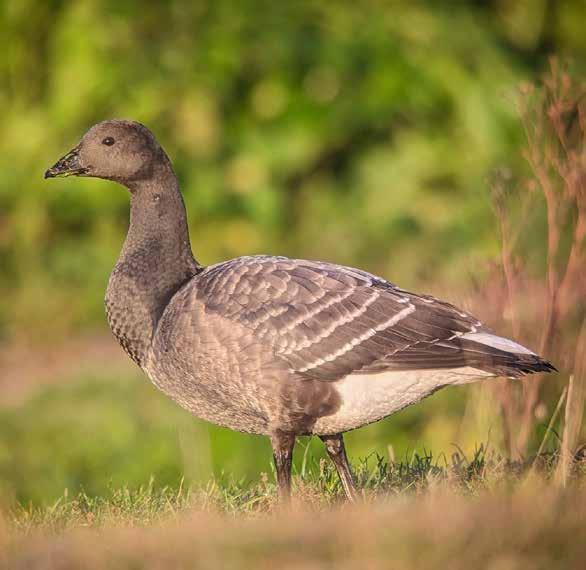
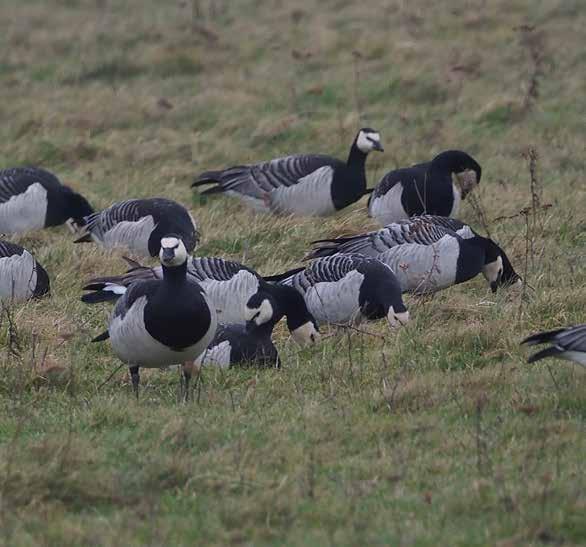
There’s one problem with this approach, as it can lead to birds being ignored. Here in Suffolk we now have impressive wintering flocks of Barnacle Geese, often numbering 1000 birds or more. Purist birders may take little interest in them, regarding them as no more interesting, or exciting, than Canada Geese, but are they missing something? According to Suffolk Birds 2022 “the birds in the county are part of a naturalised population”, but are they? Feral Barnacle Geese may have nested in Suffolk for many years, but the number of pairs remain small, and certainly not sufficient to account for flocks of the size now seen every winter.
So where do these geese come from? My guess is that they are birds that move across from the Netherlands for the winter. The European Breeding Bird Atlas 2 makes interesting reading. “Originally confined to the Arctic, breeding [of Barnacle Geese] is now confirmed throughout much of the Baltic coast S North Sea. This change is evident for instance in the Netherlands, where the growing resident Dutch population is considered to be drawn from birds breeding around the Barents Sea and wintering in the Netherlands.” It goes on to say that the Dutch population is estimated at 16,000-22,00 pairs. The Atlas was published in 2020, so these numbers may have been grown since then, though I gather that the Dutch Barnacles have suffered badly from bird flu.
The Atlas attributes “the rapid increase of Barnacle Geese to several factors”, of which the most important seems to be improved protection of the Svalbard and Russian populations. As these geese spread naturally as nesting birds through the Baltic, then into Denmark and Holland, it’s hardly surprising that they should appear in Eastern England. It’s less than 200 miles from the Suffolk coast to that of the Netherlands, an easy
flight for a powerful migratory bird such as this goose.
According to the Atlas, the combined population for the Russian, Baltic, Netherlands population is around 770,000 individuals, which is an awful lot of geese. I’ve watched migrating flocks of Barnacles streaming past the Baltic island of Öland in the autumn. The numbers heading south are huge, so much so that you think that the next day the flocks will be smaller, as there can’t be many more to come. You are wrong, for the next day, and the next, the flocks keep flying past in undiminished numbers. It’s spectacular stuff.
Intriguingly, the population of Darkbellied Brent Geese has also increased hugely during the same period, but the birds show no signs of colonising Europe, and there are hardly any records of them nesting away from the arctic tundra. (A pair did lay infertile eggs in Iceland in 2018, but that’s about the only record I can find). Significantly Brent have never bred prolifically in captivity, unlike Barnacles.
There’s a certain magic in the migratory geese that fly to us every year from the arctic. Birds that have bred in Holland and simply flown across the North Sea may lack the same appeal, but it does seem most likely that they are descendants of pure wild birds, not from captive stock. Barnacles are lively, entertaining geese, attractively marked and with neat proportions. I for one really enjoy seeing the flocks that now winter on the Suffolk coast, and feel that it’s high time that we took more interest in them and their movements. Despite trying, I’ve failed to see rings on any of the birds in the Suffolk flocks. Dismissing them as “naturalised” doesn’t do them justice.
David Walsh
In Suffolk we are privileged to have a wide range of special breeding birds which are scarce enough to be monitored annually by the Rare Breeding Birds Panel. I co-ordinate Suffolk’s data submission to the panel. Many of the species considered by RBBP are not rarities as such, but are rare or scarce as breeding birds, so it is well worth being aware of which species are on the RBBP list.
I’ve divided the list of RBBP species into two simply to separate those which have bred or attempted to breed annually in Suffolk in the past few years from those where data has been sent to RBBP in some years but not others.
Those in the former category are Avocet, Bearded Tit, Bittern, Black Redstart, Crane,
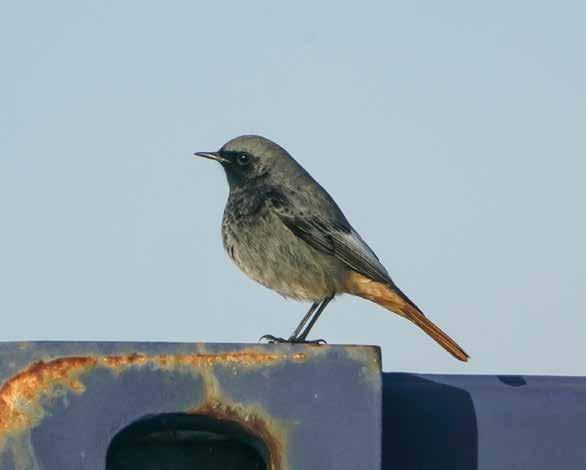
Dartford Warbler, Garganey, Goshawk, Hobby, Lesser Spotted Woodpecker, Little Egret, Little Ringed Plover, Little Tern, Longeared Owl, Marsh Harrier, Mediterranean Gull, Peregrine, Pochard, Shoveler, Spoonbill, Stone-curlew, Turtle Dove and Woodlark.
Those where records have been sent to RBBP less than annually are Black-necked Grebe, Black-winged Stilt, Cattle Egret, Golden Oriole, Golden Pheasant, Great Reed Warbler, Great White Egret, Hawfinch, Honey Buzzard, Iberian Chiffchaff, Marsh Warbler, Pintail, Quail, Red-backed Shrike, Redcrested Pochard, Savi’s Warbler and Shorteared Owl. In some cases the records have simply been lone singing males or isolated pairs present during the breeding season. Being on this list does not necessarily imply they have been confirmed to breed.
Sightings from SBG members form an absolutely vital part of the county’s submission, particularly sightings made away from the larger reserves. Please make sure you submit your records, via BirdTrack or eBird or direct to the county recorders, to ensure that important data doesn’t get lost. Email addresses for the area recorders are on the inside back cover of The Harrier. There are well-established systems in place to ensure confidentiality, so there is no reason to hold back records due to concerns about news entering the public domain.
I am currently working on our 2023 submission, and the following pointers are designed to help make your data submission even more useful. This isn’t an exhaustive list, and the notes on one species are likely to apply to others too.
Shoveler and Pochard
RBBP is interested in all May-June records as well as relevant ones later in the summer. Breeding is hard to confirm unless a brood is seen, so counts of adults are invaluable too. Where possible, please try to note how
many drakes/ducks are seen: a record of ‘5 drakes, 2 ducks’ is much more useful than simply ‘7 birds’.
It’s really helpful to know whether birds appear to be holding territory, are displaying, present over an extended period, etc, or simply thought to be on passage;
For records of juveniles, please indicate if they are thought to have been raised locally or have come from elsewhere.
If submitting ‘2 birds’ please indicate where possible whether that refers to 2 singing males or a pair;
If you hear or see the same bird more than a week apart please submit both records as that upgrades the record to ‘holding territory’.
Records and counts of singing males from Thetford Forest, including the King’s Forest, will be of vital importance in 2024 and beyond because annual surveys are no longer being carried out. Please don’t assume the records will be submitted by someone else, and include as much detail as possible about the location.
Finally, it is worth emphasising that records of single birds or pairs simply present in suitable habitat during the breeding season are valuable, not just those where there is additional evidence that breeding has actually occurred.
I hope these notes are helpful. Many thanks in advance for your records and enjoy your spring birding!
Adam Faiers
Leader: Adam Faiers
For the third year now, we once again had an out of county trip down to Kent, staying at the superb Sandwich Bay Bird Observatory. Our two previous trips had been late Summer and then early Autumn but this year was more of an Autumnal visit with us meeting at the Observatory at lunchtime on Friday 29th September. After deciding on rooms and leaving our belongings at the excellent accommodation at the Observatory, we soon set off for a walk around the Sandwich Bay Estate. Most of us then got brief views of a Firecrest, which was with Goldcrests and Chiffchaffs in an area called the Elms before we headed to Restharrow Scrape. After settling down in one of the hides we were treated to good views of a Wood Sandpiper along with the
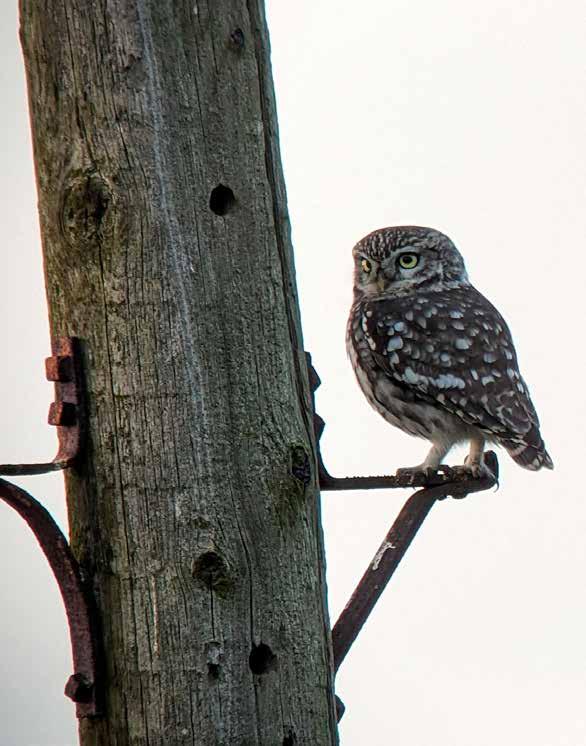
many Snipe feeding around the edges of the islands. One of our first raptors of the trip was a smart male Sparrowhawk which paused to rest on a post at the back of the scrape. After a brief discussion whether to head for an early tea and then out again or if to stay out, the lure of possible Owls was too much. So, we headed up towards the beach to get a vantage point over the golf course and marshes. Jamie quickly picked up a very high Short-eared Owl being mobbed by Crows above us, this was the first of three that we then able to watch hunting over the golf course. As darkness descended and the thought of an Italian takeaway became too much, we left the Shorties to head back to the Obs. But we were soon all stopped again, a calling Little Owl flew up
from a hedgerow and sat on a pole above the dunes, undisturbed by our presence. Once it was too dark for photos we finally made our way back. After we had enjoyed our pizza and pasta we headed back out as a few of the group had brought along thermal imagers; this allowed the group to see a number of mammals in the pitch black including Wood Mice, Rabbits, Grey Squirrels, a Hedgehog and a Hare as well as a few roosting birds.
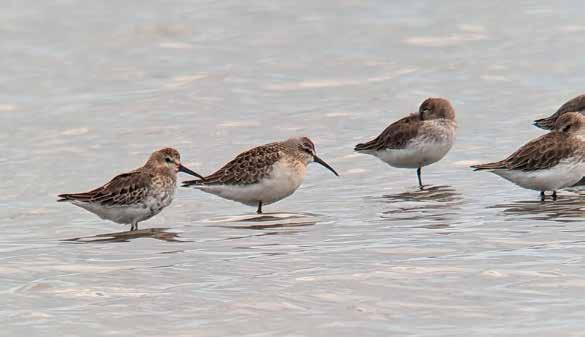
The next day first thing, we saw a huge number of Blackcaps and Chiffchaffs, a Firecrest and two Siskin near the Obs. We then headed off to New Downs and Backsand Point, an area of the SBBOT recording area we hadn’t visited on our previous trips. We drove part of the way to make the long walk slightly shorter and as soon as we got out of the cars a pair of Ring-necked Parakeets noisily flew over. We hoped to pick up some waders on the scrapes alongside the river, and we were not disappointed. We saw Greenshank, Redshank, Lapwing, Ringed Plover, Ruff, Dunlin, Little Stint and Gi picked out a very smart Red-necked Pharalope spinning in one of the pools. Other highlights of the walk were some showy Stonechats and a Lesser Whitethroat. A brief stop at Pegwell Bay added Mediterranean Gull to our list and a couple of Spoonbill were roosting at the Point along with some Curlew and a huge number of Oystercatcher
After a late pub lunch, we headed over to Grove Ferry, a quick look on the reserve was fairly quiet, bar a Kingfisher seen by a few of the group and a male Marsh Harrier quartering the reedbed. We then set off on a river tour organized by Grove Ferry River Trips, the tide was very high, so this year we set off down river to start with and had excellent views of Kingfisher and a Buzzard on the riverbank. As the darkness descended, we turned around and headed
back up river. With the help of thermal imagers and some good torches, we were treated to a few great views of the European Beavers that are now happily living there in the wild, swimming along beside us and in front of the boat (but not quite the excellent views we had of them sat on the bank eating like we had the previous year, possibly because of the higher water level). This was again a highlight of the weekend for many of us.
For our third and final day we started with a walk around the Sandwich Bay Estate, although Blackcap numbers were down on the previous day, every bush seemed to be full of Chiffchaffs busily feeding. While hundreds of House Martins were moving south overhead and a couple of Lesser Redpolls flew over. Up on the beach a group of Ringed Plovers had a Sanderling hiding amongst them. We then heading back to the Obs to check out and pillage the shop of Sandwich Bay Bird Observatory coasters and other memorabilia.
To break up the journey home we decided to stop off at KWT Oare Marshes, which would coincide with high tide, so we could see what waders had been pushed off the mud and onto East Flood. This proved to be a good idea as along with the hundreds of Black-tailed Godwits, there some Curlew Sandpipers to pick out amongst the Dunlin, a roosting Knot, a Turnstone, Bar-tailed Godwit, along with Avocets, Redshank and two roosting Spoonbill. A distant Peregrine was picked up heading towards us up the Swale and two Sandwich Terns heading down river were our final two bird species of the trip. This brought our collective list to over 100 and rounded off a brilliant few days for us all before we headed for home, and endured the delight of getting back through the Dartford Tunnel on a Sunday evening - and finally making it back to Suffolk.
Dave Pearsons
Saturday 7th January 2024
I always look forward to the first SBG outdoor meeting of the year, 2024 being no exception. 23 members turned up on what was a rain free start to the day. Heading for Trimley Retreat we passed through the wood by Levington Marina where a flock of tits were picked up that included Longtailed Tit and a Coal Tit. The good ears of those younger than me picked up the sound of Siskin high up in the trees. These being the highlight of the walk through the wood.
Next stop was by Loompit Lake. The lake had a nice variety of duck on it with good numbers of one of my favourites, the male Pochard. Tufted Duck, Gadwall, Teal and Wigeon made up the numbers. A Grey Heron was in the shallows with a keen eye on what its next meal was going be and Common Buzzard circled overhead. Out on the river good views of Red-breasted Merganser, Great Crested Grebe and Brent Goose were had. On the foreshore Ringed Plover, Redshank and Turnstone were seen. The next stop was a high point looking over the river. Similar birds were seen with the addition of a pair of distant Goldeneye and Little Grebe
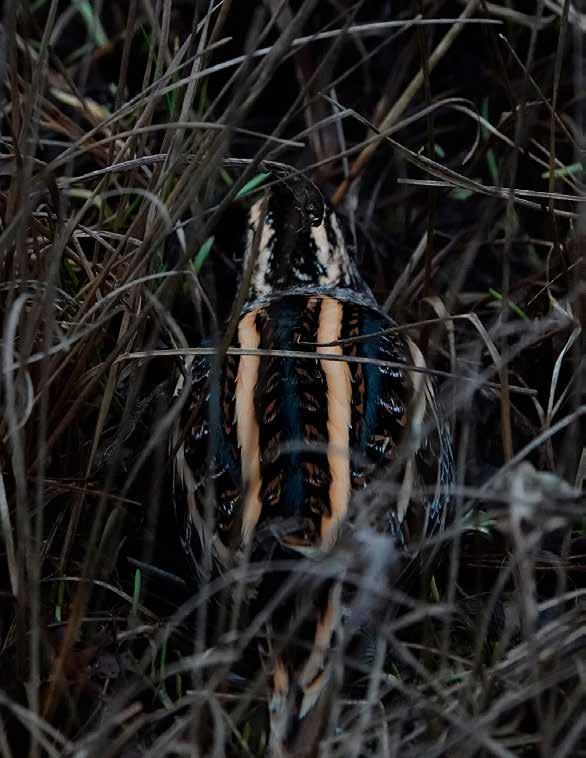
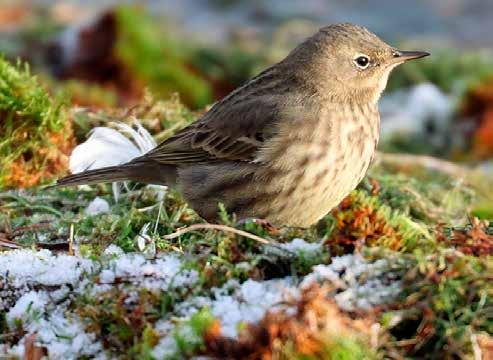
We moved on to Trimley Retreat where Jack Snipe was our target. Adam F (using Anne’s equipment), Eddie and Gi set off with their thermal imaging equipment. Soon all three were focussing on just one spot. They got good close views as a result with those of us watching nearby getting excellent views. A further Jack Snipe flew up nearby together with a Common Snipe and Rock Pipit.
We returned to our cars for lunch and then moved to the river west of Levington
Marina. On our way Adam and Gi tried to find Woodcock with the thermal imaging equipment but their only return was Pheasant and Fallow Deer Mistle Thrush and Green Woodpecker were nice additions to the day’s list during that stop.
At the river, a good selection of waders were seen including a large flock of Knot together with Bar-tailed Godwit, Grey Plover, Ringed Plover and Curlew. A Shag sitting on a buoy was a nice addition to our river count, as was a Little Egret over the reedbed. Amongst the many Wigeon we found a Pintail in typical pose (head down/tail up). Further Goldeneye and Redbreasted Mergansers were seen.
On the way back to the cars the local all white Fallow Deer was peering out of the wood seemingly wondering what we were up to.
The weather had turned drizzly and cold, so while the main group went their separate ways some of us went to Levington Creek. A quick look at the sewage works revealed very little although a flock of Lapwing and Golden Plover were seen nearby. We then walked down to the river patiently waiting for a Hen Harrier to appear. Both male and female Marsh Harrier were seen but no Hen, then suddenly Gi spotted a Harrier coming over the river from Shotley. There it was with its ringtail showing beautifully. It flew around for a few minutes and then dropped into the reeds to roost. A great way to finish a very enjoyable outdoor meeting.
All together the total number of species for the day was around 60.
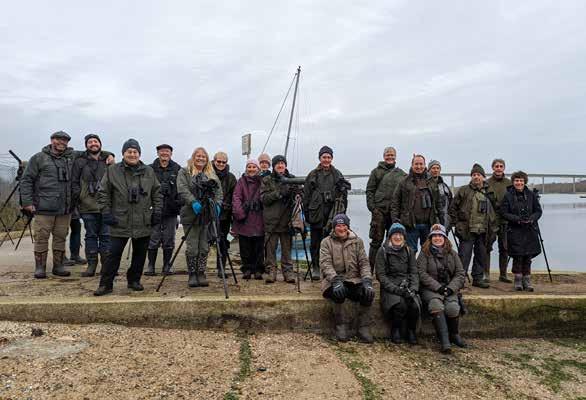
Leader: Gi Grieco
I choose Freston for one of the SBG short walks as there was suitable parking (or so I thought), it’s just a short walk to view the birds on the river and it was the site where I used to do a monthly BTO WeBS count (previously known as BOEE – Birds of Estuary Enquiry) back in the 1980s and always enjoy a walk along the river there. As it transpired, with the turn out in members, we only just fitted in to the parking area! The assembled group walked down to Stoke Sailing Club and scanned the river from by the slipway. There had been two species of Diver along that stretch of river during the early part of the month so these were definite target
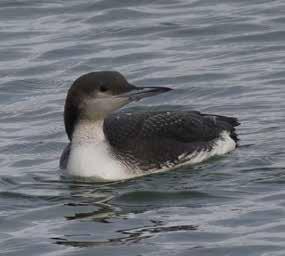
species. Scopes pointed out to mid-channel with Red-breasted Mergansers initially found including both male and female. The call went up that a Diver was found and this one was Great Northern Diver. It regularly dove, for quite a period at times and would disappear behind the moored boats but all eventually got onto it. Then a shout that the Black-throated Diver was also present. Over time, both species came close together to allow a nice comparison in size and shape. Both a number of Goldeneye and a few Great Crested Grebes were also spotted out on the river.
We then took the footpath along Freston shore where there was a good selection of waders seen with several reasonably close due to the tide being fairly high and the birds busy feeding. These included Dunlin, Redshank, Turnstone with a few Grey Plover and Curlew. Further along there was a flock of Dark-bellied Brent Geese and we counted nearly 50. There were also Teal, Wigeon, Shelduck along with a male Red-breasted Merganser that came onto the sandy shore. As we carried along we had a Kestrel above the grassland near Freston Tower, of which I gave a bit of a history lesson to those who were unfamiliar with it. We also had Jay and Mistle Thrush in the area. As we moved to view the shore line again we carefully hid behind some Gorse and shrub as we didn’t want to disturb an
impressive flock of Oystercatchers – we counter over 120 birds.
On walking back, we found some Knot in amongst the other waders and we did manage to find four Pintail and saw a handful of Little Grebes on the water. One species we didn’t encounter was Black-tailed Godwit which can often be found at Freston but they do flock at other sites, such as on the Stour estuary, before moving onto new feeding sites. Back at the slipway we scanned for the Divers again, managed to find a Peregrine sitting on one of the Orwell Bridge supports and had a quick group photo before the weather started to drizzle and we made our way back to the cars. It was lovely to visit the site again and show some members, who had never visited before, to see the range of birds on offer.

Ashley Gooding
The prolonged cold spell could not have come at a worse time for the meeting at Abberton, with much of the western side almost completely frozen it had pushed most of the duck species into deeper water and a lot further out which would make viewing difficult. The temperature was hovering around 0 degrees with a stiff breeze as we gathered on the causeway. This was one of the largest meetings I had led with 27 members in attendance, and after a quick health and safety briefing we started viewing the bodies of water on either side of the road.
A Buzzard was the first bird of note which landed in some nearby trees, there were many gulls on the ice to the west, mainly
Black-headed, Common and Herring Gulls and in an unfrozen patch were many Teal and a dead Mute Swan on the ice, although it was hard to see whether it had been trapped in the ice or succumbed to the cold. The water levels were very high after all the recent rain and in previous years I had noted that in similar conditions Goosander had taken advantage of this, and would feed close in to where the water was coming in picking up the disorientated fish. We had nine in front of us all busy diving, the males looking superb with their peachy breasts and bottle green heads. A lone Rock Pipit was very obliging, picking through the accumulated weed on the sloping concrete bank as was a single Redshank. Many of
the male Goldeneye were displaying to the females throwing their heads back and calling, pairing up before the long flight to their breeding grounds in Scandinavia. The edges of the reservoir hosted many Wigeon and Teal and a very distant Marsh Harrier was spotted as well as a single Stonechat.
We then walked up to the Billets Farm viewing screen where the water was ice free. In front of us, but very distant, were hundreds of Pochard and no doubt in amongst them would be the male Canvasback that had been present for some time. There were also hundreds of Coot and sharp-eyed Matt Whitcombe also picked up 3 Red-crested Pochards in amongst the throng. Male and female Kestrel were also seen as well as Great White Egret. We then walked back towards the visitor centre over the causeway and spotted a beautiful Kingfisher diving into the ice free water under some willows and a Blackthroated Diver. This was the closest I and many others had seen one, a lifer for some, just yards from the bank fishing where the Goosander had previously been.
At the visitor centre several members got a hot drink before rejoining the group.
We then visited the three hides, although it was difficult with a large group but eventually most species of note were seen by everybody. These included a Peregrine Falcon perched on the pumping station building - it’s usual vantage point, a female Smew was constantly diving and was tricky to pick up and we also had another Great White Egret. A large gull sparked much debate with its dark upper parts and clean white head and we were all in agreement that it was an adult Yellow-legged Gull.
After lunch we drove to the Layer Breton causeway where there was a lot of ice with one or two open areas, in amongst the many gulls on the ice we found a very handsome adult Yellow-legged Gull, no
doubt about this one, it stood pristine in the late afternoon light and there were several Shoveler feeding in the open water. The Cormorant breeding colony is very large here and there were already a few birds in breeding plumage staking claim to a nest. I was thinking how cold it was but in another month the now empty Heronry would be buzzing with activity.
Most people left the group at this point and so a handful of us went on to Abberton church. A flock of sixty or so Linnet were seen from the car park. From the very muddy view point there were many Great Crested Grebes riding the waves and after much searching the target species were located, two juvenile/female Velvet Scoter. These had been present for a couple of months and I had had my fingers crossed that they would be here for the group to see. The other species I was hoping for but as yet remained elusive was Scaup. But in the dying minutes 10 were picked so far away that I commented to someone ‘that they were on the cusp of reality’
In spite of the cold and somewhat distant viewing we had a great time with most of the target species seen.
Steve Fryett
Saturday 17th February 2024
Another large turnout of 27 members met for our meeting around a very muddy south side of Martlesham Creek and the Wilds. Starting from the church we headed off back along the road and down through the woodland to Martlesham sluice noting singing Song Thrush and a Nuthatch that called just a couple of times which was a noteworthy record for this site. At the start of the Creek, a few Black-tailed Godwits were noted in the lagoon with Teal, a Little Egret and a couple of Little Grebe. Around the horse paddock, the lower half quite wet and muddy, were a flock of Wigeon, two Oystercatcher, Meadow Pipit, Rock Pipit, Greenfinch and Reed Bunting although unfortunately not seen by all the group. Looking up the Creek the group had good views of a Ruff with a prominent white head and neck along with a distant Spotted Redshank which proved difficult to see very well. Common Redshank, Grey Plover and Lapwing made up the rest of the wader species here. There were plenty of Wigeon and Teal to see with a 50 plus flock of Black-tailed Godwits noted further up the creek, with some now showing signs of summer plumage.
A few Chaffinch, Kestrel and a lone Linnet were also noted before we reached the River Deben. Here more wader species were noted with Dunlin, Curlew, Avocet and a single Turnstone. Strangely a mist suddenly rolled in making viewing difficult but with telescopes a distant flock of 18 Golden Plover on the mud flats was a good find. Heading back across the marsh towards the woods we noted a newish small pond that was clearly taking shape amongst a small stand of alders and one also noted that the fields has ceased agricultural use and taking on an early set aside appearance - clearly the several Skylarks liked it. The reservoir held a single Tufted Duck and 12 Greylag Geese noted in a nearby field. A few Long-tailed Tits flitted amongst the branches together with good views of a perched female Kestrel but quite a few of us missed the only Common Buzzard of the day. Although it was a challenging walk on the day Martlesham Wilds and the Creek continues to hold a lot interest for the members attending.
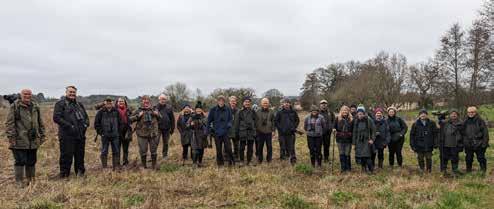
John Kornjaca
The quarterly review section gives a snapshot of birds seen within the county during the period, predominantly from data received by Suffolk BINS. All scarce and rare birds are subject to submission and acceptance by either SORC or BBRC. Updated lists of Accepted and Outstanding Records for previous years can be found on the SBG websitehttp://www.suffolkbirdgroup.org/bird-recording.
The weather over the UK from the 1st to the 13th was characterised by a series of depressions from the Atlantic, producing wet and windy conditions for all parts. Conditions eventually settled down from the 14th to 18th when high pressure developed over the UK. This led to some sunny but cool days and rather chilly nights, with frosts gripping most parts but particularly northern England and southern Scotland where temperatures fell to almost -5°C at times. Storm Babet arrived on the 18th battering the South with heavy winds (70 mph) and heavy and persistent rainfall. Thereafter, the weather settled down to typical patterns.
October 2023 was the 8th warmest October on record with average temperature + 1.8c. It was also the wettest for 23 years (190% of average) with near average sunshine (102%).
Pink-footed Goose – A single bird flew over Bawdsey Quay (15th). A flock of 60+ were feeding in fields at Gedgrave (24th). A flock of c.100 flew north over RSPB North Warren and later RSPB Minsmere (28th).
Tundra Bean Goose - There were six at RSPB Boyton (19th – 21st).
Greater White-fronted Goose – The first arrivals were observed at Aldeburgh Marshes (18th) with a group of nine birds. Numbers continued to build throughout the month with 25 at RSPB Boyton (21st), 40+ at RSPB North Warren and 30+ at Orford on the following day (22nd).
Garganey – Carlton Marshes held a bird (8th – 11th) while RSPB Minsmere attracted a late migrant bird (22nd).
Greater Scaup – There were two birds found on the Island Mere, RSPB Minsmere (19th –27th).
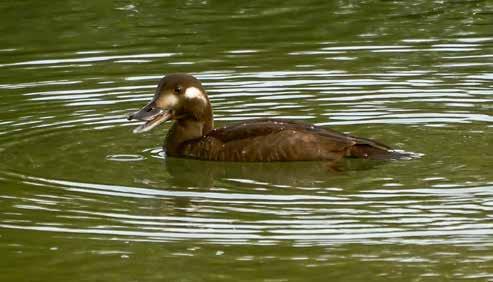
Velvet Scoter – There were five birds seen to fly off from the sea at Slaughden (12th) - the highlight of the month. Several others were seen on the sea along the coast throughout the month. A single first-winter/ female was at Mutford Lock basin (31st).
Long-tailed Duck – A bird was observed flying south off Thorpeness (19th).
Red-breasted Merganser – A bird was spotted heading south off Slaughden (13th).
There were a pair on Benacre Broad (22nd) and a single bird off Benacre on the sea (31st).
Common Crane – There were two birds on the South Levels at RSPB Minsmere (3rd).
Curlew Sandpiper – Single birds were seen, with a juvenile on Aldeburgh Marshes (1st and 14th), RSPB Boyton (9th) and SWT Hazlewood Marshes (10th).
Purple Sandpiper – A single bird was found at the sluice outfall/beach at RSPB Minsmere (8th) with another seen at Southwold (21st). There were two north of the pier at Southwold (26th).
Little Stint – Aldeburgh Marshes held two birds until 14th and a single bird was recorded at SWT Lackford Lakes (5th).
Jack Snipe – A single bird at Slaughden (10th) with others at Kessingland (16th), Thorpeness (21st) and (again) Kessingland (24th).
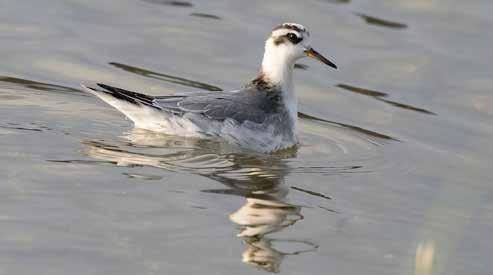
Grey Phalarope – A single bird was found at Kessingland (22nd – 27th).
Caspian Gull – A bird was seen in Walberswick Harbour (1st). Another was at the Sizewell outfall (15th). An immature bird was seen at Thorpeness (19th) and another off Southwold Pier (21st).
Arctic Tern – A single juvenile was seen at the Sizewell Power Station outfall (11th) until the end of the month.
Black Tern – There were two juvenile birds regularly seen throughout the month in the RSPB Minsmere, South Levels and Sizewell outfall area.
Great Skua – There were eight birds observed off the coast with three birds off Thorpeness (16th) the highlight.
Pomarine Skua – This rare passage migrant was observed out at sea on several occasions – predominantly off Thorpeness and Southwold (nine records in total).
Arctic Skua – Just four birds observed this month with two together from Benacre (17th).
Long-tailed Skua – One was reported off RSPB Minsmere (1st), with three off Southwold (13th), two more (18th). Single birds observed off RSPB Minsmere (18th), Thorpeness (20th), RSPB Minsmere (21st).
Little Auk – There were two records both at sea off Thorpeness (8th and 16th).
Great Northern Diver – A single bird was seen off Thorpeness (16th) with another the following day. A bird was seen off Southwold (29th).
Sooty Shearwater – A bird was observed off Ness Point (8th) and several others observed out at sea through the month. There were two off Slaughden (9th) and three were watched flying north off Southwold (17th).
Manx Shearwater – One was seen heading north offshore from East Lane, Bawdsey (6th).
Shag – A bird was observed at the Sizewell Power Station outfall/rigs (25th), another was at the Walberswick harbour (27th) and a first-winter was seen at Lake Lothing, Lowestoft (28th and 31st).
Glossy Ibis – There were two birds on Aldeburgh Marshes (1st) rising to three (8th - 11th) at which point there were also three seen at RSPB Minsmere (8th). Other birds were observed at Kessingland (22nd and 24th) and Walberswick shore pools (24th).
Spoonbill – Regularly observed along the coast there were groups of birds seen throughout the month with highlights being: seven over Covehithe (2nd), nine at RSPB Hollesley Marshes (6th), 10 from Landguard Observatory (7th) and nine over RSPB Minsmere (8th).
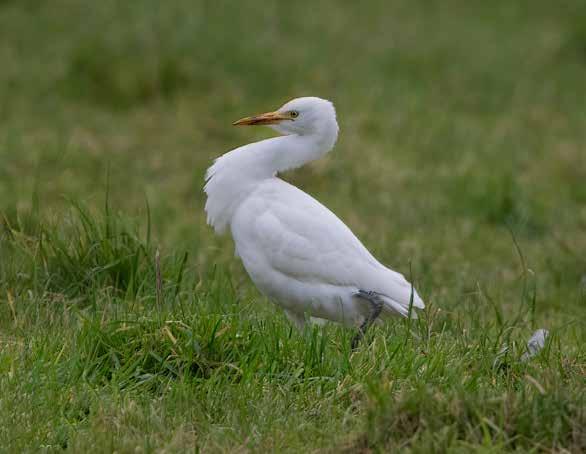
Cattle Egret – There were many single birds seen around the county once again. RSPB Minsmere (South Levels) had two birds present in fields with a large group of cattle in the first week of the month. There were four at RSPB Boyton (5th) rising to six (6th), four birds flew South past Landguard Observatory on the 8th, there were eleven at Livermere Lake (10th). SWT Trimley Marshes had four4 birds on the 11th, five on 14th rising to thirteen by the month end.
Great Egret – Frequently seen around our coastal margins. There were four observed in off at Pakefield (8th) and a group of twelve were observed at RSPB Boyton (9th).
Osprey – The first bird of the month was seen flying south over RSPB Minsmere (1st). Another bird was regularly seen at Aldeburgh Marshes (2nd – 7th). A juvenile was seen at RSPB Cattawade (8th).
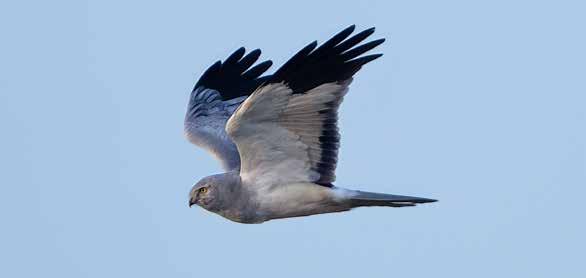
Hen Harrier – Regularly seen throughout the month. There were fourteen records mainly of single ‘Ringtails’ seen along the coastal fringes.
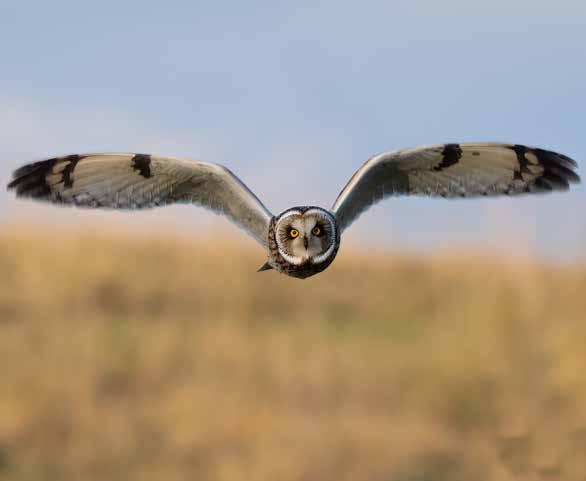
Short-eared Owl – The winter influx of this spectacular bird continued with many sightings around the coastal fringes throughout the month. There were four observed both at Ness Point (8th) and also at RSPB Boyton (30th).
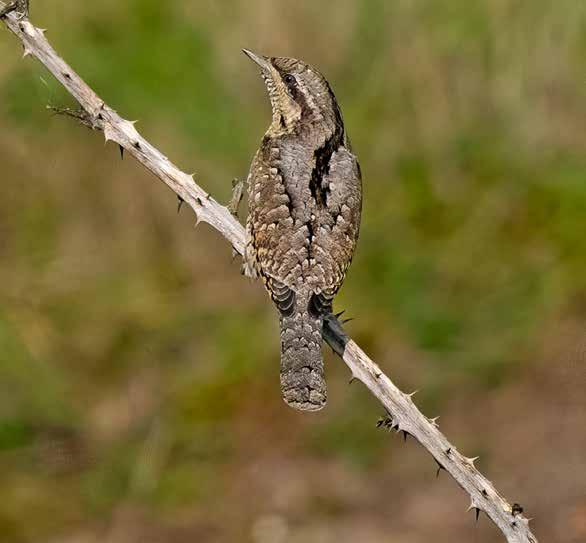
Wryneck – The long staying bird seen at Benacre Sluice stayed until 3rd
Merlin – There were just three sightings of our smallest falcon: Landguard Common (4th), Shingle Street (8th) and a bird flying north at Sizewell (22nd).
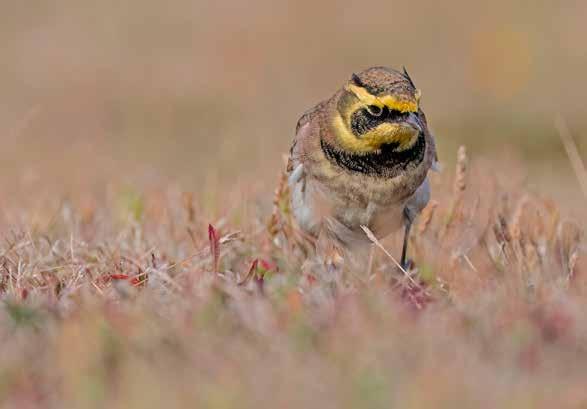
Shorelark – A single bird was observed regularly on the beach at RSPB Minsmere (9th to 19th).
Yellow-browed Warbler – The first individuals were found at Burgh Castle (trapped and ringed), Corton, Gunton and Southwold (8th). Others were found at Thorpeness and Orford (9th). A bird at Landguard Bird Observatory (13th – 14th) was trapped and ringed. Several others observed toward the end of the month.
Firecrest – There were several sightings with five birds around Southwold (19th), two birds in Greyfriars Wood, Dunwich (28th) and others at Landguard Bird Observatory, Corton, Kessingland and Banters Barn, RSPB Boyton.
Ring Ouzel – Carlton Marshes, Orford, Boyton Hall (two) and Landguard Common held birds (8th). There were five at Kessingland (23rd) and four (28th). A bird remained at Thorpeness from 22nd to end of month.
Brambling – A single bird was found at Bawdsey Quay (15th) with another at Beach Farm, Benacre (23rd).
Hawfinch – A single bird was found near
Surf Scoter – A female was seen off Pakefield Beach (19th) and tracked at a few sites as it flew south to Slaughden.
Pallid Swift – A single bird was observed low over the RSPB Minsmere visitor centre (22nd). Another bird was seen at Corton (27th-28th) with others at Kessingland and Benacre (31st).
Pectoral Sandpiper – There were three juvenile birds observed on Aldeburgh Marshes (1st) with 2 birds remaining (10th).
Great Snipe – A bird was discovered at Gunton near the tennis club (20th).
Sabine’s Gull – A bird was seen offshore at Benacre and Southwold (17th).
Storm Petrel – There were two records in the month, with one off Thorpeness (8th) and another off RSPB Minsmere (17th).
Leach’s Petrel – A single bird was reported on several occasions between East Lane, Bawdsey and RSPB Minsmere (17th).
Pallid Harrier – A possible was seen at Kessingland (23rd).
Roselea Nursery at Kirton (8th) and a second sighting was of a bird over Bawdsey Quay (15th).
Mealy Redpoll – A bird was observed at Walberswick (25th) and another seen at Kessingland (28th).
Lapland Bunting – A single bird was at Slaughden (10th) and another flew over Felixstowe Ferry (25th).
Snow Bunting – There were four birds found at Kessingland beach (14th – 23rd) and a single bird at RSPB Minsmere was seen flying south (15th).
White-tailed Eagle – The reintroduction of this species allows for more frequent sightings. A bird was seen on the 5th/6th in the Dunwich - RSPB Minsmere area and was tracked along the coast with regular sightings. Another was observed heading south over Eastbridge (14th). A further sighting at Long Thurlow (21st) was of an immature Dutch-ringed bird. A further sighting was at Parham (23rd and again 29th).
Hooded Crow – A single bird seen flying south at Thorpeness (8th).
Dusky Warbler – A bird was located at Lowestoft Denes Oval and was viewed over a period of five days (24th – 28th).
Siberian Chiffchaff – A single observation of a bird at Sizewell Hall (17th).
Arctic Warbler – A bird was trapped and ringed at Burgh Castle (12th).
(Central Asian) Lesser Whitethroat (halimodendri) – A putative specimen was found on Landguard Common (30th & 31st).
Rose-coloured Starling – A single juvenile at Landguard Bird Observatory (8th).
Siberian Stonechat – One was discovered at Corton Sewage Works (24th – 25th).
November began as October had finished, on a wet and windy note. With the UK already under the influence of a deep depression off the west coast of Scotland, Storm Ciaran barrelled its way off the Atlantic and through the Channel overnight on the 2nd, producing winds gusting in excess of 70mph along the south coast. The unsettled theme was prevalent from the 1st to the 20th of the month with high pressure conspicuous by its absence. North-easterlies brought in snow showers towards the end of the month.
The month had a near average temperature and was slightly wetter than average. It was the eighth sunniest November on record.
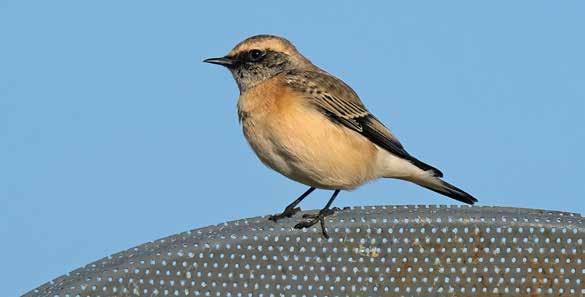
Pied Wheatear – A male was located at Lowestoft North Denes, between the Birds Eye site and the caravans (22nd).
Twite – A single bird on Kessingland beach (23rd – 24th).
Pale-bellied Brent Goose – A single bird was found at Felixstowe Ferry (22nd) and seen again in the area (30th).
Tundra Bean Goose – A group of eight were seen offshore at Benacre (9th).
Greater White-fronted Goose – A single bird was found at Southwold Marsh (8th). A small flock of 30+ birds at RSPB North Warren (23rd) expanded to 60+ (28th). There were seven birds at Carlton Marsh (30th).
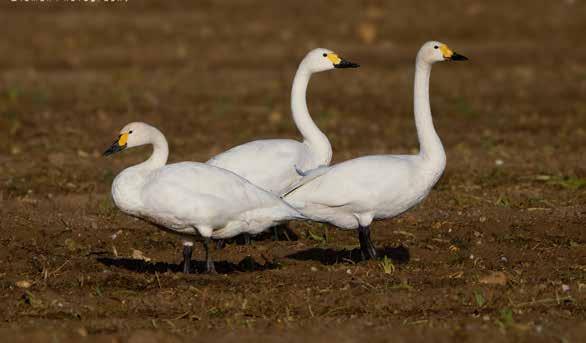
Bewick’s Swan – There were four at RSPB Minsmere (16th) joined by two others (17th). The group of four remained in the area although mobile for most of the month. There were eleven seen flying inland over Southwold (25th).
Whooper Swan – Notably, a large group of c.800 were seen along Farthing Drove/ Sedge Fen, Lakenheath (7th). There were c.300 present later in month (17th).
Garganey – One record, the late staying bird remained at RSPB Minsmere (until 3rd).
Red-crested Pochard – There was a drake on Peto’s Marsh, SWT Carlton Marshes (19th).
Velvet Scoter – Seen regularly along the coast. A lone female on Mutford Lock remained and other long stayers were seen on Benacre Broad and in Hamilton Dock, Lowestoft. There were five birds (at least) among a raft of 250+ Common Scoters at Slaughden (12th) and a group of six in Dunwich Bay (21st and 22nd).
Common Scoter – A ‘raft’ of over 500 birds was observed off Aldeburgh (26th).
Long-tailed Duck – A first-winter drake was spotted at RSPB Minsmere in the early afternoon (24th) and remained on East Scrape (until 29th). An adult was found on the sea off East Lane, Bawdsey (25th).
Goosander – Regularly seen on Thorpeness Meare, there were up to 13 birds present toward the month end (28th). A female was often seen on the scrape at RSPB Hollesley.
Red-breasted Merganser – A group of five were seen flying south off Thorpeness (1st), while a pair were on the Meare (3rd). A lone female was at Benacre Broad (10th –17th) with another found at RSPB Hollesley Marshes (10th).
Slavonian Grebe – A single bird on River Orwell off Freston (20th) and another offshore from Walberswick (22nd).
Purple Sandpiper – A pair were observed at Southwold yacht pond (2nd), with three nearby on the beach groynes (16th) and again (29th). There were eight at Ness Point, Lowestoft (26th).
Little Stint – A single bird was flushed from cover on Aldeburgh Marshes (29th).
Jack Snipe – A bird was seen in the area of the shore pools at Kessingland (15th and 22nd).
Grey Phalarope – A bird flying south was seen from the beach at RSPB Minsmere (4th) and possibly the same bird was seen to land on the sea at Slaughden. Another was spotted from North Denes, Lowestoft flying south (12th) with another reported on the sea off Landguard Point (19th).
Little Gull – A flock of c.110 were seen sheltering in the yacht pond at Southwold (2nd).
Iceland Gull – A single bird was observed flying south off Landguard Point (21st) while a probable was found at the Sizewell Power Station outfalls (5th).
Caspian Gull – There were five in the yacht pond at Southwold (2nd) and five in the area again (18th). Another was found at Aldeburgh Marshes (21st).
Yellow-legged Gull – An adult at Southwold (18th) was the only record.
Arctic Tern – A single bird was observed feeding at the Sizewell Power Station outfall (5th to 9th).
Black Tern – The pair of juveniles were seen regularly around RSPB Minsmere and Sizewell Power Station outfall (until 10th).
Great Skua – A single bird seen off Southwold (2nd), two were seen heading south (21st) and another off Walberswick (22nd).
Pomarine Skua – Just two records with birds seen flying south off Southwold (2nd) and another at Slaughden (12th).
Long-tailed Skua – There were two birds seen off Southwold (2nd) and another seen heading north (4th).
Black-throated Diver – A single bird observed from Dunwich beach at sea, flying south (23rd).
Little Auk – Single birds and pairs, were frequently observed along the coast throughout the month. There were three seen heading north from East Lane, Bawdsey (26th) and possibly the same three were seen off Lowestoft on that day.
Great Northern Diver – Several sightings of birds heading south along the coast through the month. A single bird was at Lake Lothing, Lowestoft (11th) and seen regularly until the month end. There were at least two birds seen in the River Orwell near to the bridge and Freston (19th to 30th). Another was on Benacre Broad (21st and 22nd).
Shag – There were two in Mutford Lock basin (1st) and single birds observed off Landguard Point (10th and 21st).
Glossy Ibis – There were three birds at RSPB Hollesley Marshes (5th & 7th) – possibly the same group were at Sudbourne Marshes (5th). RSPB North Warren held two birds (21st). Additionally, a handful of reports of single birds was received.
Spoonbill – A bird was found in Butley Creek (1st) and three were seen over Landguard Bird Observatory (25th).
Cattle Egret – Frequently observed through the month; there were seven at Iken (19th).
Osprey – A single record noted with a bird found by the river at Iken (1st).
Hen Harrier – Seen regularly (27 records) throughout the month along coastal margins. Often seen at RSPB Minsmere and RSPB Boyton Marshes.
Short-eared Owl – In what appears to have been a promising month for this iconic bird, there were eleven sightings along the coastal stretch, with birds continuing to arrive from continental Europe. The first was a solitary individual at Kessingland (3rd).
Merlin – A bird was observed hunting in the Starling roost at RSPB Minsmere (14th) and another was spotted at Freston (19th).
Raven – A bird was reported to be flying south over RSPB Boyton Marshes (29th).
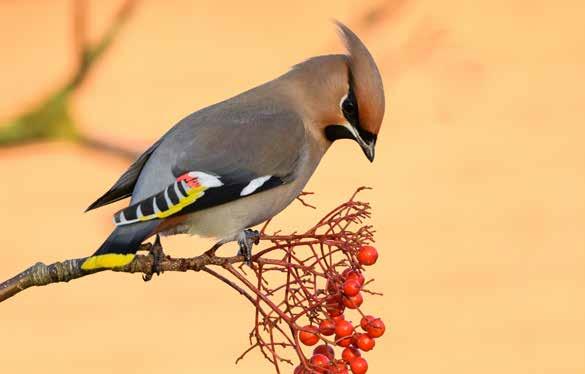
Waxwing – The first sighting was of six birds at Kessingland Heath (3rd). Indicative of a good Waxwing winter, birds were seen on most days – a notable group of 52 birds were found at Crestview Drive in Lowestoft (22nd).
Shorelark – A group of five were seen at Kessingland and Pakefield beach (2nd). They remained for much of the month and there were seven in the group (26th).
Barn Swallow – There were three birds seen at Benacre along the cliff edge (29th).
Firecrest – Birds were seen at RSPB Boyton Marshes/Banters Barn (8th), Landguard Bird Observatory (10th), Bawdsey picnic area (21st) and three birds were at seen at Landguard (22nd).
Lapland Bunting – A bird at Slaughden flew into the Aldeburgh Marshes (11th), another was seen at RSPB Minsmere (13th) and a bird at Kessingland beach was regularly seen (22nd until 30th).
Snow Bunting – A group that were first spotted on the 5th at Pakefield/Kessingland beach gradually built up to 60 birds on the 22nd. Smaller groups and single birds were seen occasionally along the coast through the month.
Ferruginous Duck – A female was spotted flying south off Landguard Point (1st).
Ring-necked Duck – A moulting drake was located on Thorpeness Meare (26th-29th).
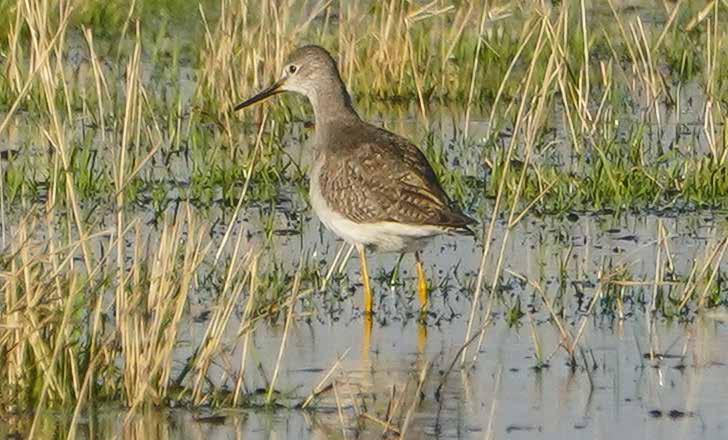
Lesser Yellowlegs – A single bird was found at Southwold Marshes (7th until 28th).
Leach’s Petrel – There were five sightings (4th). Single birds noted north off Bawdsey, Orfordness (a bird lingered offshore feeding for over 20 minutes on a SBG trip) and Slaughden with two off Southwold.
Sooty Shearwater – There were four sightings of birds recorded in the month – all offshore (13th, 22nd, 23rd & 26th).
White Stork – A probable was seen in fields by the River Stour near Wormingford (10th).
White-tailed Eagle – The Dutch-ringed immature male seen in the Woolpit area was regularly observed throughout the month.
Hoopoe – A single bird was seen to fly south over the A14 at Beyton (J46) /Bury St Edmunds. Another was found at Butley (21st).
Pallas’s Warbler – A single bird discovered in the sluice bushes at RSPB Minsmere (14th).
Siberian Chiffchaff – An individual was located at Landguard Bird Observatory (22nd).
(Central Asian) Lesser Whitethroat (halimodendri) – The putative specimen found on Landguard Common remained for the whole of the month.
Eastern Yellow Wagtail – A single bird was located on Peto’s Marsh, SWT Carlton Marshes (26th) – the bird was seen again (30th). A second individual was feeding among flotsam at Benacre beach (26th).
Twite – Kessingland beach hosted five birds (3rd) and two were seen on the beach (23rd).
December 2023 closed the year how meteorological autumn left it – largely warm and wet. The UK’s mean temperature in the month of 5.8°C was 1.6°C above average, though not high enough to trouble the record. A cold start to December was swept away early in the month by storms Elin and Fergus, after which December was generally mild and unsettled. Storms Elin, Fergus and Gerrit all brought significant impactful weather in the month. The UK had 48% more rainfall than average with 188.6mm falling, though it was chiefly counties in the north and northeast which were responsible for this.
The month was a notably wet and was the fourth warmest on record, being over 2C above average.
Pale-bellied Brent Goose – A bird at The Strand, River Orwell (4th), another with Greater White-fronted Geese at RSPB North Warren (6th), two at Walton
Marshes, Felixstowe (7th) and yet another at Aldeburgh Marshes (17th).
Pink-footed Goose – There were two flying (with Greylags) east along the Gipping Valley at Pipps Ford (1st).
Tundra Bean Goose – There were eight birds seen flying inland from South Levels at RSPB Minsmere (6th).
Greater White-fronted Goose – The numbers continued to increase in the county throughout the month. Notably, RSPB Hollesley Marshes/RSPB Boyton Marshes held 35 birds (1st) rising to 90+ (31st), while RSPB North Warren held 123 (6th) and 186 birds (18th).
Bewick’s Swan – There were six (then eight) feeding in a sugar beet field at Sizewell (1st until 4th) and possibly the same eight also at RSPB Minsmere. A group of 23 were seen and heard passing over SWT Carlton Marshes (6th). There were four birds regularly seen between RSPB Hollesley Marshes, RSPB Boyton Marshes and the Chillesford area toward the month end.
Whooper Swan – There were two birds seen to arrive at RSPB Minsmere (8th) and they stayed until the month-end.
Velvet Scoter – Occasionally seen moving along the coast throughout the month. There were six viewed from Dunwich cliffs (6th) and seven seen off Southwold (9th).
Long-tailed Duck – The first-winter drake remained on East Scrape at RSPB Minsmere until (6th). There were two birds on the sea at Walberswick (12th) and the same birds seen on the sea at Dunwich (15th).
Goosander – There were twelve on Thorpeness Meare including two drakes (2nd) and still eleven later in month (29th). There were four at RSPB Minsmere (2nd) and a solitary female at RSPB Hollesley Marshes for much of the month. Another female arrived at Alton Water (31st).
Grey Partridge – A group of nine were seen feeding in fields at Ellough over the first two weeks of the month.
Common Crane – A group of four birds were seen in the Westleton – RSPB Minsmere area (15th). There were two seen at Iken later that day having been tracked moving south. Another sighting was of two birds flying west over Snape (17th).
Red-necked Grebe – A single bird was spotted on the River Alde near Aldeburgh (8th). The bird remained until (20th).
Purple Sandpiper – There were at least eight on the sea wall at Lowestoft (26th). Others were seen at East Lane, Bawdsey (2nd) and Southwold – on several occasions.
Little Stint – A bird was seen on the flood at SWT Trimley Marshes (8th)
Glaucous Gull – An immature bird was on the beach at Landguard Common before flying out to sea (16th). Another was at RSPB Hollesley Marshes (21st) and a third sighting was of a first-winter bird following a ship into the River Orwell at Landguard Point (24th).
Caspian Gull – RSPB Hollesley Marshes held two third-winter birds (7th), an adult and second-winter bird (13th) and just a single adult (31st). There were six birds seen at the Sizewell Power Station outfall (21st).
Yellow-legged Gull – There were five at RSPB Hollesley Marshes (7th) with two birds present late in the month (31st).
Great Skua – A bird was seen from Kessingland (13th).
Pomarine Skua – One was seen offshore at Southwold (9th) and a second sighting was of a bird off Landguard Point (21st).
Little Auk – Sea watching at Southwold produced three (7th).
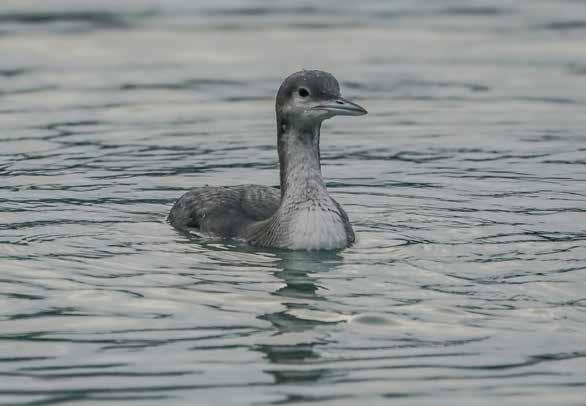
Razorbill – There were 55 seen heading north off Southwold (7th), a single bird at sea off Landguard Point (7th) and a solitary bird was seen in the River Orwell near Stoke Bridge, Ipswich (22nd).
Puffin – A single bird off Southwold (7th).
Red-throated Diver – A sea watch from Southwold produced over 600 birds (8th).
Black-throated Diver – A single bird was seen at Lake Lothing, Lowestoft (1st until 17th). Another was regularly seen on the River Orwell at Freston (between 4th and 26th).
Great Northern Diver – Birds at Lake Lothing, Lowestoft and on the River Orwell from Freston stayed for most of the month. At the latter site, four birds on the River Orwell between there and off The Strand, Ipswich (29th). Another sighting was a bird entering the Stour estuary (13th).
Shag – A bird stayed on the River Orwell near Freston (17th until 22nd) and another was found in the mouth of the River Blyth at Southwold (22nd).
Glossy Ibis – There was a bird at RSPB Hollesley Marshes (16th until 26th).
Spoonbill – A single first-winter bird was at RSPB Hollesley Marshes (13th).
Cattle Egret – There were up to four at Iken for most of the month. Others were seen on the southern side of Breydon (16th) and at Wenhaston (21st).
Hen Harrier – A male was sighted at SWT Carlton Marshes (2nd) and again (10th). Ringtails seen frequently around the coastal fringes throughout the month with one often seen at RSPB Minsmere around the Christmas holiday period.
Short-eared Owl – On Boxing Day (26th) four birds were seen together at Worlingham. Otherwise, several/regular sightings along the coastal margins throughout the month.
Merlin – A solitary sighting of a bird at RSPB Boyton Marshes (7th).
Raven – There were a pair at RSPB Hollesley Marshes (6th), a single bird at Hadleigh (11th), Benacre (13th) and the sighting of a pair in flight over Somersham (17th).
Waxwing – A flock of c.30 birds flew over RSPB Minsmere (7th). Described as a ‘Waxwing winter’ by BTO, there were 38 sightings of small groups of birds, at several
locations around the county, recorded on BINS in the month.
Firecrest – A solitary bird was at the Bawdsey quay picnic site (23rd). A pair were observed at RSPB Boyton Marshes / Banters Barn (27th and 28th).
Water Pipit – A bird was found on SWT Trimley Marshes (19th) and another was discovered in Southwold Town Marshes (21st).
Lapland Bunting – The Kessingland bird remained (2nd). There was a second sighting of a bird at Slaughden (3rd).
Snow Bunting – The coastal beaches held two groups of birds. In the DunwichWalberswick area a flock that gradually built up to 80+ birds were observed regularly. The second group in the Kessingland – Pakefield area numbered c.60 birds.
Ring-necked Duck – The moulting drake remained at Thorpeness Meare although increasingly elusive (2nd).
Surf Scoter – A female was sighted at sea from Southwold (7th).
Lesser Yellowlegs – Spotted on the Southwold Town Marshes (11th) the bird was still present at the end of the month (31st).
Hoopoe – A bird was spotted in a garden at Willisham (6th).
Siberian Chiffchaff – A single bird was seen and heard singing at Long Melford sewage works (from 7th until 12th).
Eastern Yellow Wagtail – The bird at Peto’s Marsh, SWT Carlton Marshes was briefly joined by a second (1st). A single bird (firstwinter) remained the following day (2nd).
Council for 2024
Officers
Chair: Eddie Bathgate
Vice Chair: Chris Keeling
Secretary: Katya Bathgate
Treasurer: Anne Wright
Communications Officer: Adam Faiers
Projects Officer: Chris Keeling
SoSS Project Officer: Eddie Bathgate
Suffolk Bird Report Editor and SORC/SNS Link: Nick Mason
Harrier Editor and Outdoor Events Coordinator: Gi Grieco
Indoor Events Coordinator: Adam Gretton
President John Grant
Members
Sarah Glyde
John Kornjaca
Peter Merchant
Ben Moyes
Sally Nelson
Jenny Rawson
Alex Rafinski
Honorary Vice-Presidents
Andrew Green
Adam Gretton
Robin Hopper
Colin Jakes
Mike Jeanes
Mike Marsh
Roy Marsh
Philip Murphy
Reg Snook
Steve Piotrowski
Bird Recorders
North-east Area Recorder: Richard Walden Email: bird-ne@sns.org.uk
South-east Area Recorders: Gi Grieco Tel: 07951 482547 and Steve Fryett Tel: 07593 382082 4, The Street, Melton, Woodbridge, IP12 1PW. Email: bird-se@sns.org.uk
West Area Recorder: Chris Gregory Email: bird-w@sns.org.uk
Memberships
c/o SNS, The Hold, 131 Fore Street, Ipswich, Suffolk, IP4 1LR
Founded in 1973 by a group of Suffolk birdwatchers
Associated with the Suffolk Naturalists’ Society
SBG remains an independent birding group and is a registered charity
A voice for Suffolk birdwatchers
With established links to many naturalist and conservation organisations
Media
Actively lobbies to protect key Suffolk habitats
Provides a county-wide field force of bird surveyors
Promotes BTO bird surveys and organises special SBG surveys

Strong web presence - www.suffolkbirdgroup.org
Active Twitter feed - @SuffolkBirdGrp
Quarterly magazine - The Harrier
Annual review - Suffolk Birds report
Annually (20+) field trips - ideal for novices or experts and young or old alike
Opportunities to visit hot spots and receive practical ID tips in the field
Programme of talks and presentations - variety of topics (county, national, or international) with quality speakers
Assists with conservation projects to improve breeding success
- Swifts
- Barn Owls
- Peregrines
- Waders
Partners with Suffolk Wildlife Trust and other bird groups
Assists with funding for bird hides and other birding amenities
Contributes to community events, including dawn chorus walks
Provides bursaries for special projects