
Community mobilizes


SNAP benefits disrupted due to government shutdown

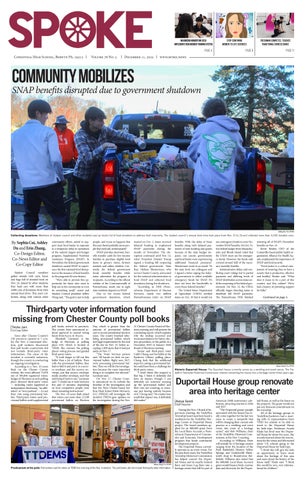
Collecting donations: Members of student council and other students
By Sophia Cui, Ashley Du and Erin Zhang, Co-Design Editor, Co-News Editor and Co-Copy Editor
cars with more than 4,000 cans of donations from their annual food drive. This year’s collection, along with various other
community efforts, aimed to support local food banks in response to a temporary delay in operations of the nation’s largest anti-hunger program, Supplemental Nutrition Assistance Program (SNAP). In November, the federal government shutdown caused SNAP to experience the first national-level disruption to the issuance of food benefits in the program’s 60-year history.
“We’re able to provide this opportunity for those who want to help out in the community to even do something small,” senior and Student Council president Jeffrey Wang said. “The goal is just to help
people, and it just so happens that this year there’s probably more people that need aid, unfortunately.”
SNAP provides electronic benefits transfer cards for low-income families to purchase eligible food items at grocery stores, farmers markets and online retailers. Currently, the federal government funds monthly benefits while states administer the program to recipients. According to the official website of the Commonwealth of Pennsylvania, nearly one in eight state residents depend on SNAP.
Due to the recent federal government shutdown, which
started on Oct. 1, states received delayed funding to implement SNAP payments during the month of November. The disruption continued until Nov. 12, when President Donald Trump signed a funding bill reopening the federal government. State Rep. Melissa Shusterman, who serves Chester County, advocated for the national administration to fund SNAP and collected food donations during the shutdown.
“According to DHS (Pennsylvania Department of Human Services), nearly two million Pennsylvanians (rely) on SNAP
Third-party voter information found missing from Chester County poll books
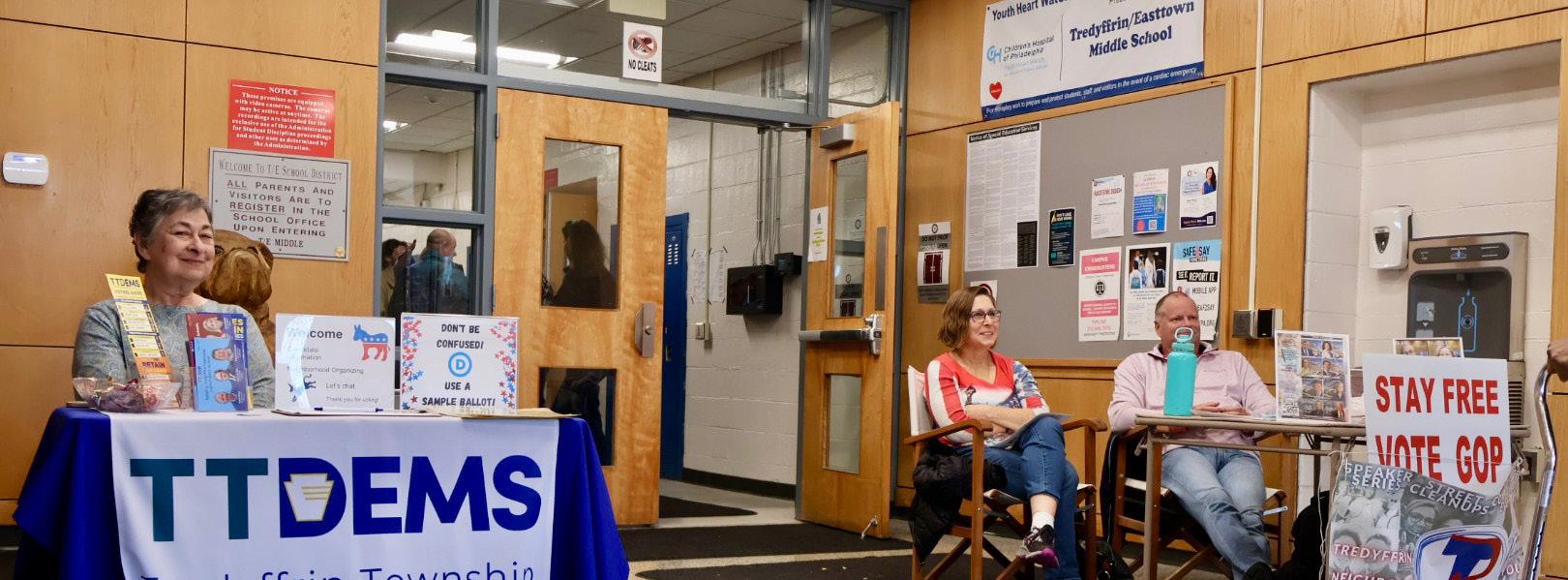
poll books arrived to precincts. The county then announced judicial approval to extend voting hours from 8 p.m. to 10 p.m. Elizabeth Luminais is the Judge of Elections at polling place 618, which is located at TEMS. She oversaw the polling place’s voting process and guided third-party voters.
Day, which is greater than the amount of provisional ballots cast in recent presidential election years. The county finished tabulating provisional ballots which met legal requirements by the end of the day on Nov. 13, before accepting 1,400 more that it had put aside on Nov. 17.
21 Chester County Board of Elections meeting and will present the concluding report, which explains why the mishap occurred and recommendations for future election procedures, to the public in a December 2025 or January 2026 Board of Elections meeting.
benefits. With the delay of these benefits along with delayed payments of state funding and grants because of the state budget impasse, our county governments and food banks were experiencing additional financial pressures,” Shusterman wrote in an email. “At the state level, my colleagues and I signed a letter urging the federal government to utilize available emergency funds for SNAP. PA does not have the bandwidth to cover these federal benefits.”
The United States Department of Agriculture (USDA) notified states on Oct. 10 that it would not
use contingency funds to cover November SNAP benefits. On Oct. 31, two federal judges from Massachusetts and Rhode Island ruled that the USDA must use the emergency funds. However, the funds only covered around half of the necessary monthly benefits.
Administrative delays and conflicting court rulings led to partial payments and differing levels of SNAP distribution across states until the reopening of the federal government. On Nov. 12, the USDA officially began directing states to distribute full SNAP payments.
The Pennsylvania DHS finished
restoring all of SNAP’s November benefits on Nov. 14. Kevin Ressler, CEO of the Coatesville-based public health organization Alliance for Health Equity, emphasized the importance of SNAP and food security.
“Food justice is a critical component of ensuring that we have a society that is productive, effective and healthy,” Ressler said. “What does it mean to be a part of this country and this culture? We’ve had a history of providing support for folks.”
Continued on page 3.
investigation. According to a Nov. 10 news flash on the Chester County website, the event affected 75,076 out of 385,856 registered voters. Judges of Elections at each polling place directed third-party voters — including voters registered as independent, libertarian, “no affiliation” or “non-partisan” — to cast their vote using provisional ballots. Third-party voters used provisional ballots until supplemental
“It took longer to fill out this ballot than a lot of ballots. Then with the provisional ballots, they had to fold it and put it in a secrecy envelope, seal the secrecy envelope, put that secrecy envelope inside another envelope, seal that and bring it back to me,” Luminais said. “I would say it took between five and 15 minutes, depending on how compulsive people were about rereading instructions.”
The Nov. 10 news flash stated that voters cast more than 12,100 provisional ballots on Election
“The Voter Services person said, ‘All hands on deck on provisional ballots. Right now, 24/7, we’re processing provisional ballots. Then we will do the investigation because the most important thing is to complete the election,’” Luminais said.
On Nov. 17, Chester County announced on its website the timeline of the investigation and that the West Chester-based law firm Fleck Eckert Klein McGarry, LLC (FEKM) will investigate the incident. FEKM gave updates on the investigation during the Nov.
Senior and third-party voter Caleb Chong cast his ballot at the Easttown Library polling place. Chong feels that the additional steps for casting a provisional ballot could have been a challenge for third-party voters.
“I don’t think (the impact) is that big. I think it definitely did have an impact, though. I can definitely see someone messing up the (provisional ballot) and their vote not counting, or someone just leaving entirely because of it,” Chong said. “No matter how small that impact was, it definitely did matter.”
Duportail House group renovate area into heritage center
Aanya Gandi Staff Reporter America’s 250th anniversary celebration, attracting tourists in 2026 and 2027.
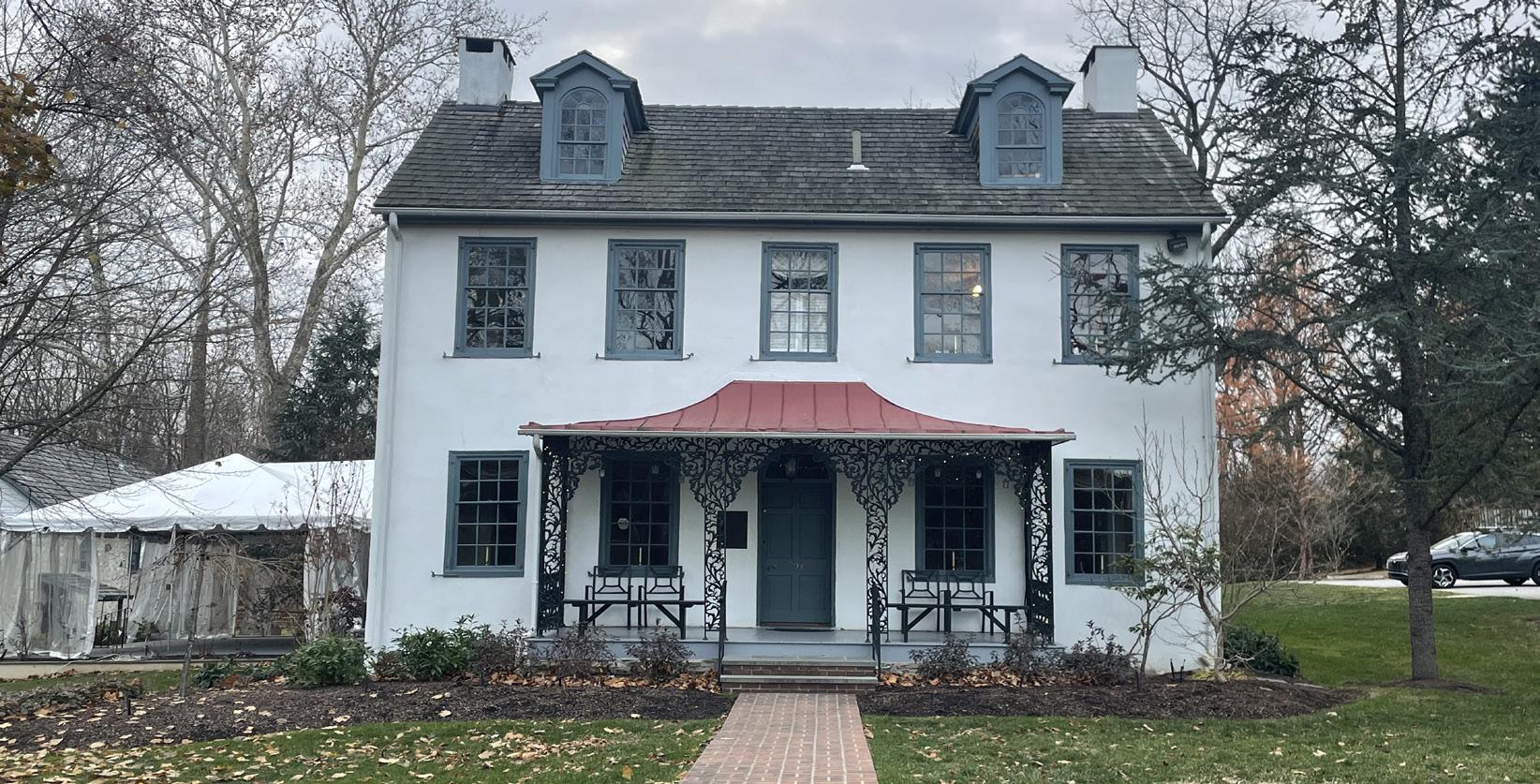
During the Nov. 5 Board of Supervisors meeting, the Tredyffrin Township board members heard a resolution for the Tredyffrin Heritage Center at Duportail House project. The board members applied for an $80,000 grant from the Local Share Account, a Pennsylvania Department of Community and Economic Development program that funds community development projects. The Duportail House currently operates as an event venue. For the past three years, the Tredyffrin Township Historical Commission has helped convert the Duportail House and its nearby Federal Barn and Jones Log Barn into a heritage center that will be part of
“The Duportail group (people associated with the house) has really come together for the last two years to create
the location of the Paoli Battlefield, Historic Yellow Springs and Goshenville Blacksmith shop to Brandywine Battlefield. Williams also stated that the $80,000 Local Share Account grant would finance brick, mortar, data and electricity for the Duportail House, as well
Tvisha Jani Co-Copy Editor
Historic Duportail House: The Duportail house currently serves as a wedding and event venue. The Tredyffrin Township Historical Commission started converting the house into a heritage center three years ago.
Maximizing momentum: DECA
Freshman competes, teaches
2
Mini-THOn raises
$6,000 in evenT
On Nov. 9, the Conestoga Mini-THON Planning Committee held its first 5k run and 1 mile walk, raising around $6,000. Students and community members could register for $30 prior to the increase to $35 after Nov. 2. The first 250 registrants received a Mini-THON Gold Out T-shirt, and participants could have refreshments after the event.
CHesTer COunT y appOinTs new COMMuniCaTiOns direCTOr
In a Nov. 20 Chester County news flash release, the commissioners named Andrew Kreider to be the new communications director starting on Dec. 1. Rebecca Brain served as the previous director for 19 years. In his role, Kreider reports to the county CEO and manages public information and communication topics.
sepTa TO reCeive arOund $220 MilliOn
On Nov. 24, Gov. Josh Shapiro announced that SEPTA would receive around $220 million in capital funds for safety and infrastructure improvements. The decision follows a series of service cuts due to cost issues within the transportation company and a court order mandating that SEPTA restore full service.
l O nges T g Overn M en T s H u T d Own in us ends af T er 43 days
President Donald Trump signed a bill on Nov. 12, reopening the federal government after the 43 day government shutdown. The legislation passed the U.S. Senate 60-40 and the House 22220. Previously closed public programs and federal agencies have resumed activity.

District adapts to Keystone literature changes
Recently, Conestoga has adopted changes to the process of administering and taking Keystone literature exams, with a shift to online testing and usage of other supporting assesments. Conestoga’s Keystone literature scores decreased from last year’s 88.7% proficiency and above to this year’s 82.2%. According to the Pennsylvania Department of Education, the average Keystone literature scores for the state decreased from 63.2% proficiency and above to 62.1%.
Dr. Patrick Gately, TESD curriculum supervisor for language arts, oversees reading and English class material and helps ensure students the necessary skills to score well on the Keystone literature exam. He emphasized that the district’s scores remain strong compared to Pennsylvania’s overall average.
“In spring 2025, CHS scored 31.2% higher than the state proficiency rate in literature,” Gately said. “This reflects the excellent work of our students and teachers when it comes to literacy and learning.”
Gately said that English teachers in the district focus on
strategies like identifying the main idea, making inferences and analyzing language patterns. In addition, the district continues to believe in pursuing new ways to help students take
standardized tests, with changes to the test administration.
Starting in the 2024–2025 school year, the PSSA and Keystone exams shifted to online formats, with all tests to be fully
online by spring 2026. The district also used the Firefly Student Progress Indicators in the 2024–25 school year for grades 3 to 8 and grade 10. The computer-adaptive assessments helped
teachers track students’ reading and writing growth early and identify areas needing extra support before the state tests.
Gately emphasized that despite these updates, standardized

Township stops plans to redevelop Exton Square Mall
The West Whiteland township board unanimously voted to disapprove Abrams Realty’s plans to redevelop the Exton Square Mall into a residential area during its monthly meeting on Oct. 22. The board cited traffic and overwhelming sewage as its major concerns with the developer’s plans. Abrams Realty planned to replace the mall with 718 residential homes as well as space reserved for the additional development of commercial areas, green spaces and offices.
Peter Abrams, the CEO of Abrams Realty and Development, plans to sue the board to begin development quickly. According to Philadelphia Inquirer and Phillyvoice articles, before the board of supervisors stopped the plan, Abrams Realty and Development aimed to begin part of construction next spring and start demolition of the mall after 2027. The township’s planning commission unanimously recommended the developer’s plans to the board of supervisors in August.
Abrams said in an article published by The Philadelphia Inquirer on Nov. 1 that he believes his plans have adequately met zoning requirements and are beneficial to the community.
“We have bent over backward for six to eight months, addressing concerns and making changes and modifications,” Abrams said. “It is really an amazing plan and a one-of a-kind project for the area.”
According to the Philadelphia Inquirer, the remaining two members of West Whiteland’s board of supervisors, chair Rajesh Kumbhardare and vice chair Brian Dunn, agreed to reject Abrams’ plans because they believe the congestion of the area would be overwhelming and received hundreds of emails from constituents requesting them to reject the plan.
The third member of the board of supervisors, Jo Ann Kelton, resigned before the vote at the beginning of the meeting.
Traffic was the constituents’ main concern, but the board also determined that overflowing sewage would be an issue.
The board believes that the developer’s plans do not incorporate an adequate strategy to handle the influx.
“No one wants to see the mall in the condition it is in right now,” Kumbhardare said in an article by Philadelphia Inquirer published on Nov. 10, “But at the same time, we don’t want to create a monster.”
Beyond direct constituents, TESD community members such as sophomore Srinikkesh Senthilkumar have travelled to the Exton Square Mall. Senthilkumar is a member of a robotics program called Sa-BOT-age whose members meet regularly at the Exton Square Mall. Although the mall is closing, he has grown accustomed to traveling long distances to attend robotics competitions, and while he does not think Sa-BOT-age will be affected greatly from the move, he understands that Sa-BOT-age must adapt.
“They (Sa-BOT-age) didn’t start off in Exton Mall,” Senthilkumar said. “They’ll have to find another spot because they do have quite a lot of people there.”
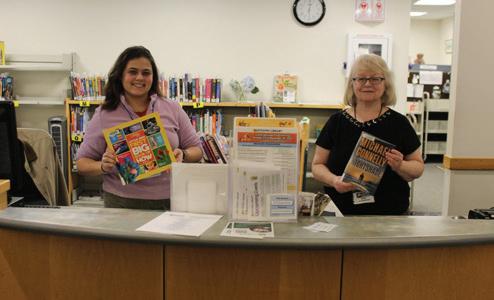
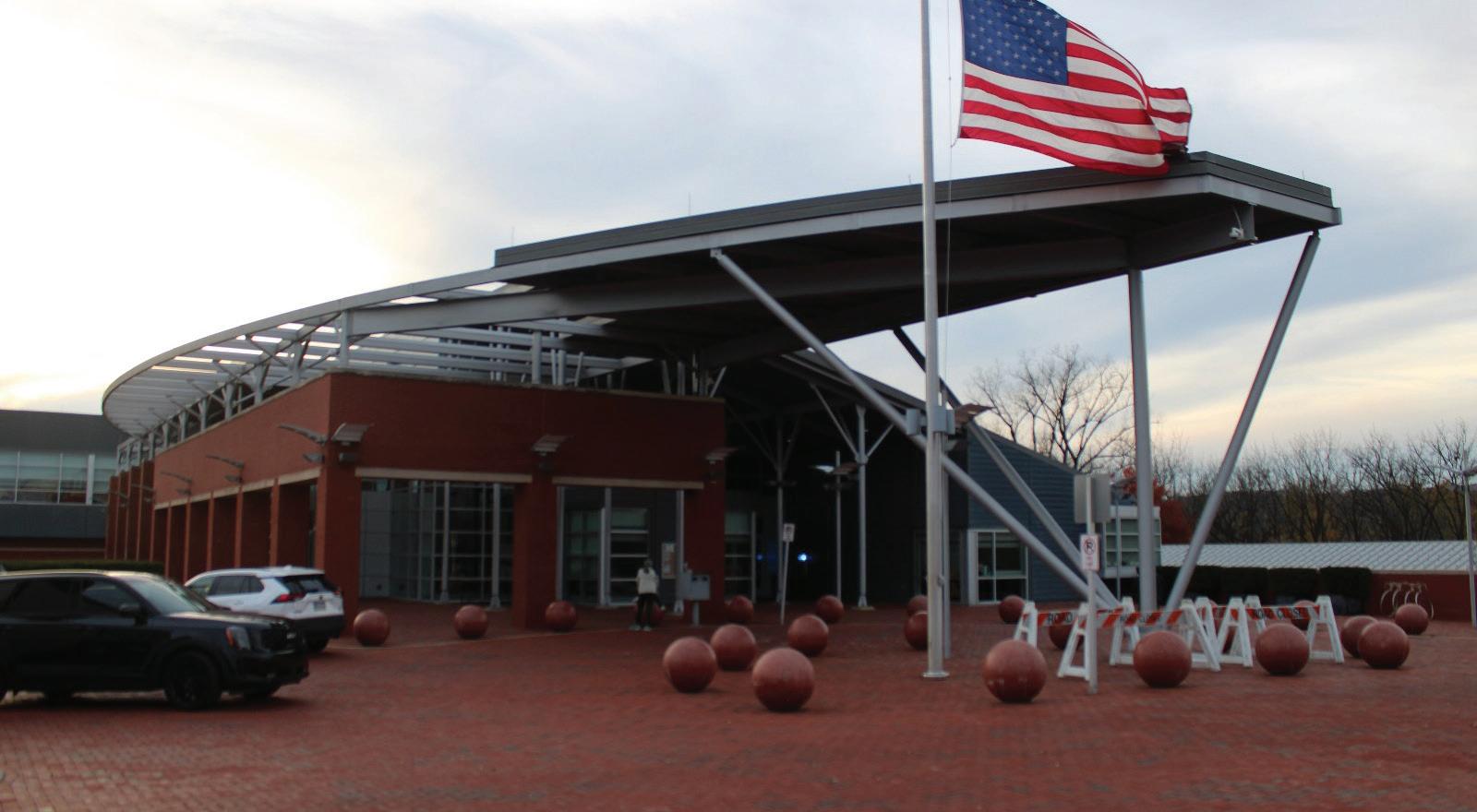

tests are just one part of how the district evaluates student learning.
“We combine the use of many other measures of students’ growth and progress across the district and grade levels with outstanding teaching to make sure we have an accurate picture of our students as learners in the classroom,” Gately said.
Junior Montse Gonzalez-Rivas completed the Keystone literature exam last year and felt ready before the test.
“I felt that it wasn’t too hard. While it was still difficult, I felt prepared, and no part of the exam was especially confusing, though some questions took a little longer to finish,” Gonzalez-Rivas said. “I also think most students take the test seriously, maybe because of parent and teacher influence or personal goals. I don’t think many students try to rush it.”
Gately said the district stays focused on supporting students’ literacy over time.
“Literacy has a direct impact on student learning throughout a child’s entire education,” Gately said. “Our teachers accommodate individual learning needs while providing a strong, consistent level of reading instruction across the district.”
Cornucopia full-day schedule transitions to half day
This year, Peer Mediation staff and advisers adjusted the schedule for Cornucopia, which took place during the second half of the school day.
Students went about their usual eight period schedule with shortened 22-minute classes followed by a Lunch and Learn period. After Lunch and Learn ended, students were free to explore and partake in the activities and events that Cornucopia had to offer. Previously, Cornucopia took place after first period and homeroom and extended through the rest of the school day.
“We changed our schedule this year, and it really was us considering the needs of the teachers as well as the students,” Peer Mediation adviser Jillian Harris said. “Sometimes the level of activity was too long.”
When Peer Mediation advisers and board members plan Cornucopia, they consider both student and staff perspectives and opinions on certain aspects of the event. This year, Peer Mediation found that student attendance was a primary focus when modifying the schedule as school administration noticed low attendance on the day of Cornucopia in recent years.
“Sometimes we do have a bulk of students that go home
(after) half (of the) day, and if they want to stay for activities this year, then (the second half of the day is) when we have our activities,” Harris said. “But if students just wanted to come and learn, then that’s mainly for the first half of the day.”

Group pursues new park to be built in King of Prussia
As part of a new project, construction on a park in King of Prussia (KOP) has been underway since mid-October. Named Recharge Park, it will be located between Top Golf and the Valley Forge Casino, at 680 Freedom Business Center Drive. The project spans one and a half acres and has a $640,000 budget. The park will open in spring 2026.

A Montco 2040 implementation grant that the district applied for and the KOP District capital improvement funds fund the park. Towns and cities receive the grant to achieve the Montco 2040 Comprehensive Plan, which focuses on the future of Montgomery County until the year 2040.
“The King of Prussia District wanted to create a place where we could host events and bring people together,” said Kaitlyn Dibble, the public landscapes manager of the KOP District.
The park’s facilities will include a space for food trucks, solar-powered outdoor workstations, a zen garden, an open lawn for yoga and mov -
ie nights, repurposed wind turbines, and various native grasses and perennials. The park will serve as a connection point for current and

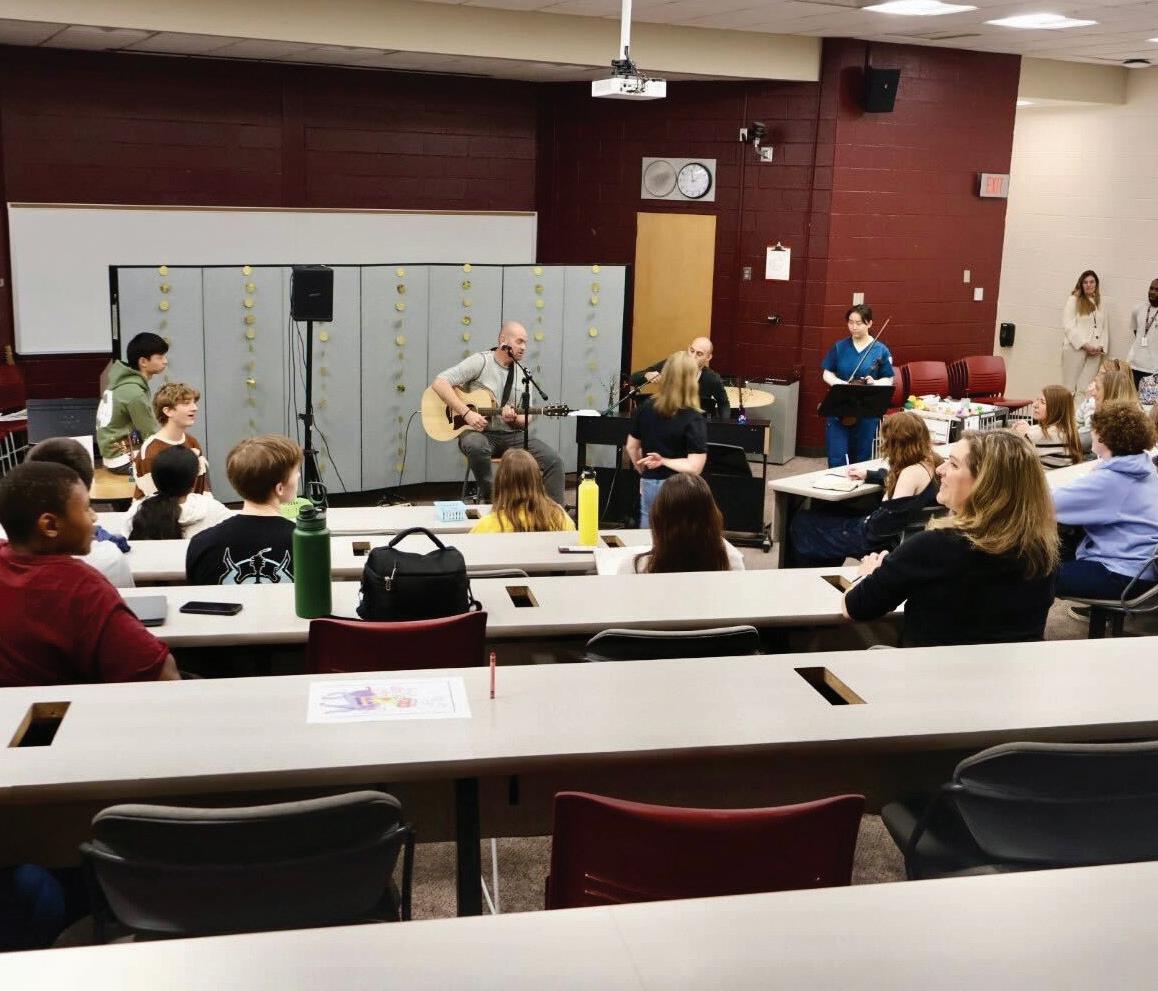
Celebrating community: Students gather in a large group room during Cornucopia, listening to teachers and students perform in an open-mic event. This year, the school-wide event followed an adjusted half-day schedule.
Community, students organize to address food insecurity
State lawmakers respond to SNAP delays, cuts
Continued from page 1. passed on July 4, extends the work requirement for receiving regular monthly benefits to individuals aged 55-64 and parents of children 14 years and older. People who were previously exempt, including veterans, those experiencing homelessness and former foster youth, also have to comply with the requirements. Some refugees who are not U.S. citizens are no longer eligible to receive SNAP benefits. The USDA gave states a 120-day grace period to implement the altered requirements, ending on Nov. 1.
In response to the USDA’s initial announcement of SNAP delays, Pennsylvania Gov. Josh Shapiro joined a coalition of 24 other states on Oct. 28 to file a lawsuit against the agency requiring the release of the emergency funding toward SNAP benefits. Shapiro also directed $5 million in state funding toward Feeding Pennsylvania, a nonprofit that partners with food banks across the state, and the Pennsylvania government launched a private fundraising campaign, raising $2 million for the “SNAP Emergency Relief Fund.”
At a local level, Shusterman has aimed to address food insecurity in light of recent disruptions.
“As a State Representative, my office and I have worked closely with the Chester County food bank to collect food donations at my district office,” Shusterman wrote. “I have also advocated alongside my colleagues calling for the federal government to fully fund SNAP benefits and pushed for the state budget negotiations to end so that our food banks can receive state funding.”
The Pennsylvania budget delay ended with the reopening of the federal government on Nov. 12. The 2025-26 state budget includes an $11 million increase in funding to combat food insecurity, with a total of more than $40 million. The changes include $3 million for the State Food Purchase Program, $1 million for the Pennsylvania Agricultural Surplus System, $2 million for a new State Food Bucks program to supplement SNAP and $5 million in new funding to Pennsylvania food banks.
Recent legislative action has also altered aspects of SNAP’s funding and eligibility requirements, which depend on residents’ assets, standards of income, household size, immigration status and proof of employment. The One Big Beautiful Bill (OBBB) Act, a budget reconciliation bill
Additionally, starting Fiscal Year 2027, the OBBB shifts a larger portion of SNAP administrative and benefit costs from the federal government to the states. Congressional Budget Office’s Estimated Budgetary Effects of Public Law 119-21 expects federal spending on SNAP to decrease by $186 billion over the next decade. Nicholas Imbesi, Director of Community Relations at the Chester County Food Bank, highlighted the impact of the bill’s effects on local food pantries.
“It (OBBB) put a lot more restrictions in place for food stamps. It makes people renew more frequently on food stamps. It puts additional working requirements in place. It pretty much makes it harder for people to get SNAP, get food stamps,” Imbesi said. “It’s going to have a big impact. There’ll be a lot of individuals who are no longer able to receive food stamps, and ultimately they’re going to be turning to us and our community partners in order to get their food needs met.”

Local efforts, organizations seek to support food banks
In response to the SNAP changes, various community members and organizations have worked to
munity Assistance Request Form,”
which aims to direct families in need to support. First introduced through an email blast to parents, the mental health specialists connect those who complete the form with a suitable community organization helping with food insecurity and other economic hardships.
We were hopeful that (the $100,000 matching fund) would be a number that would help individuals be motivated to give and to just really demonstrate that when we work together, we are able to accomplish some pretty big things.
Amanda Blevins
Chester County United Way Director of Community Impact
promote food security. On Oct. 31, the TESD Mental Health Specialists launched an online “Com-
Jana Golboro serves as a mental health specialist for Hillside, New Eagle and Valley Forge Elementary.
“The online form was developed this school year to help families streamline the process of re-
questing support,” Golboro wrote in an email. “In the past, families contacted a variety of school individuals for need: a teacher, a school counselor, a mental health specialist. Our hope is that with one centralized location, families can access this tool at any time, not solely during school hours.”
Imbesi said that more county residents turned to local food resources during SNAP benefit disruptions and that the Chester County Food Bank is on track to distribute more than 8 million pounds of food this fiscal year. According to its 2024 and 2025 annual impact reports, the organization distributed 4.6 million pounds of food in 2024 and 6.1 million pounds of food in 2025.
“We definitely saw an uptick in people facing food insecurity solely because they weren’t receiving their SNAP benefits,” Imbesi said. “We were out on state funding because the state didn’t have a budget for the longest time. Therefore, we were out every quarter.”
Torres retires, Morris becomes new Director of Equity and Public Programs
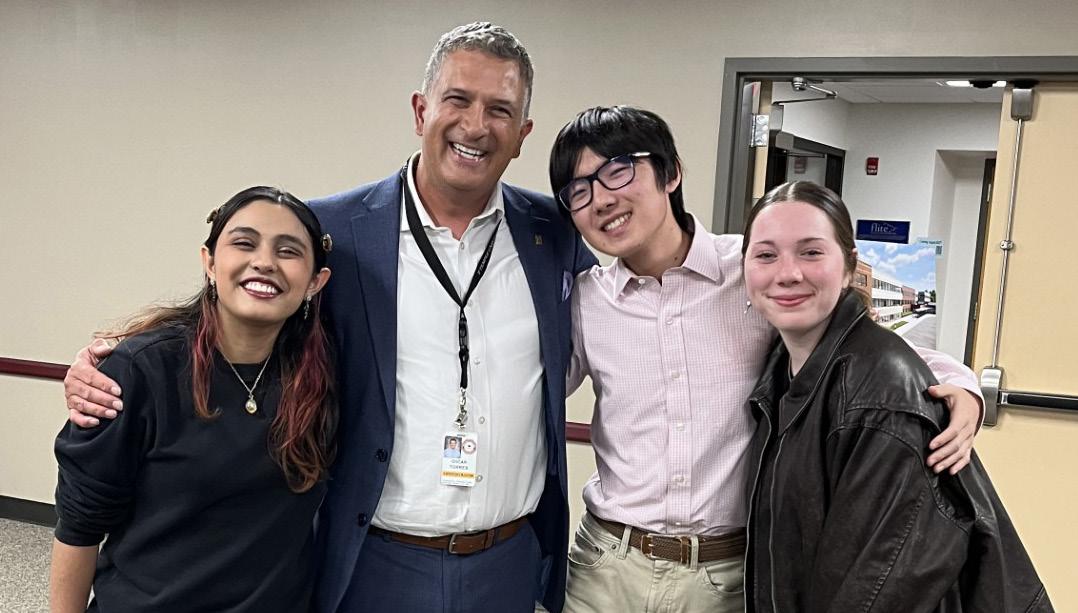
On Oct. 15, former TESD Director of Equity and Public Programs Dr. Oscar Torres attended his final district diversity committee meeting, marking 27 years of service in the district. In his closing remarks, Torres welcomed Dr. Kim Morris as his successor. Torres’ role in the district began as a Spanish teacher at Conestoga. He later served as an assistant principal and curriculum supervisor at VFMS. Superintendent Dr. Richard Gusick created the role of Director of Equity and Public Programs with Torres in mind to aid struggling families with financial concerns during COVID-19.
“The position of Director of Equity and Public Programs was designed to ensure that all students and staff felt a sense of belonging in our school district, that teachers had the tools and the resources to ensure that students would be seen,” Torres said. “Whether it’s a Title I grant, grant to support English learners or grant to support staff development for teachers, I made sure that whenever we used federal dollars, we did it in a responsible and impactful way.”
Students and teachers partnered with Torres in his work to combat discrimination in the district and to ensure students of all backgrounds obtain the resources they need. Junior Sukanya Menon has worked closely with Dr. Torres over the years.
To help meet the increasing demand, local organizations Chester County United Way, Chester County Community Foundation, Alliance for Health Equity and United Way of Southern Chester County formed the “Help Feed Chesco” campaign starting on Oct. 31. For every dollar donated to the Chester County Food Bank, the organizations reciprocated the amount using a matching fund. Each group contributed $25,000 for a combined $100,000 available in the fund, and the campaign raised $219,238 throughout November.
Director of Community Impact at Chester County United Way Amanda Blevins emphasizes the importance behind launching the campaign.
“We really just had heard about the increasing need that was coming across the county with what was potentially going on with the SNAP benefits and what’s going away,” Blevins said. “We were hopeful that (the $100,000 matching fund) would
be a number that would help individuals be motivated to give and to just really demonstrate that when we work together, we are able to accomplish some pretty big things.” In addition to the $200,000 donation goal, “Help Feed Chesco” aimed to collect 50,000 pounds of non-perishable food items to be donated to Chester County Food Bank. Blevins feels that such efforts by Chester County residents showcase the importance of food security and overall influence of SNAP benefits on those in need.
“There was food insecurity in our community before. Maybe there was a spotlight shined on it because of the SNAP benefits and the SNAP situation,” Blevins said. “We continue to see individuals, unfortunately, have to reach out for assistance. But we’re just glad that that assistance is really there. Food security can be a complicated issue, but we’re glad to be able to help to mobilize some resources to help support our neighbors.”
NHS implements new hours rule
“Even if we had tough conversations about the world around us, he always met them with a smile and a willingness to seek change.”
James Boukalik, an English teacher and the adviser of the Student Leaders Anti-Racist
“I started working with Dr. Torres when I was in sixth grade because I joined the district diversity committee meetings around that time. The committee has been a really safe space for me, and he has been such a source of comfort through the ever-changing political climate,” Menon said.
Movement (SLAM) at TEMS, also worked closely with Torres. He worked with Morris when she previously served as assistant principal at TEMS.
“He (Torres) would make sure that we had workshop time to talk with other educators, to work with kids from across the two middle schools. He also promoted an atmosphere in which everyone felt safe to share their perspectives,”
Boukalik said. “I don’t necessarily expect any drastic changes (with Morris), but I’m sure we’ll look at ways to continue to grow (SLAM) and see if there are other ways to have an impact on the kids.”
In retirement, Torres looks forward to spending time with his family and embracing his culture in Puerto Rico. Morris plans to continue Torres’ work with organizations such as SLAM and to enhance the existing culture of belonging and inclusion within TESD. Morris feels that her cultural background as an African American will play a role in her passion to help those of various backgrounds and circumstances.
“No matter where you come from, I believe there are some common denominators that cut through differences and bring us together, like genuine care, love and support for people, while not discounting differences but valuing those differences and what it adds to the rich and beautiful culture of this district,” Morris said. “I’m sure some things will change as I am a completely different person than Dr. Torres. However, my plan is to learn as much as I can from his example while making this position and its goals my own.”
Charlotte Liao Staff Reporter and we really love to support different clubs around the school, we do recognize that it could become an avenue for people to miss out on the genuine intimate role of service when it comes to one-on-one service roles and participating in our community projects.”
Senior and NHS board member Jake Tsang feels that this regulation is beneficial and could motivate people to actually do more physical volunteering and work.
“You don’t want to get all your hours just from buying, you want to get it from doing hands-on work. I think that’s what this policy is pushing, and I think that’s a great thing,” Tsang said. Abhulimen feels that the new policy is meant to create equal opportunities for volunteer service while staying true to NHS values.
service,” Abhulimen said. “Although donations are greatly appreciated
“We just wanted to make sure that every student had an opportunity to serve, but also within the financial and economic realm, we weren’t putting anyone at a disadvantage.” Abhulimen said. “And at the end of the day, we just want to benefit the community in every way we can.”
TESD signs contract for Orton-Gillingham training for 13 teachers
Fryashti Mishra Staff Reporter
On Sept. 30,
at the district office and two more days virtually to learn about the approach. Patrick Gately, the TESD curriculum supervisor, helped set up the program and is supervising the training.
“To make sure the approach is taught correctly is really important to the folks who founded it but also to an organization like IMSE,”
Gately said. “It (the OG training) is to teach the very, very beginning stages of reading, but then also how to move children to the highest levels of comprehension as well.”
IMSE has provided OG training and teaching material for teachers at TESD since 2019. Right now, about 30 teachers in the district are OG-certified. The 13 new teachers for the current training include reading specialists, special education teachers and English Second Language teachers.
IMSE describes the OG approach as a technique for teachers to help young students who may struggle with reading. The approach’s focus is on multisensory teaching, a method that allows students to mentally
connect what they see, hear, say and write.
“You might practice writing the letter ‘R’ on a whiteboard with a marker, but you might also practice it with just your finger on, sometimes we use a material like sand or shaving cream,” Gately said. “That helps with the learning process: connecting those sounds that you know with the symbol that it represents. Sometimes (learning to read) is just hard work, but we want everything we do to be engaging for students.”
In August, the district hired Christie Keown as a reading specialist at Devon Elementary School and Beaumont Elementary School and later selected her for the upcoming OG training. While Keown uses the district’s current curriculum for her reading sup-
port groups, the OG training will provide methods for working with individual students.
“Out of the OG training, I really just want to refine my practice,” Keown said. “I think it’ll show us helpful tools that we can utilize. I love that the district is giving us an opportunity to take our time with learning how the OG will be done, as well as how we can implement it and take the time to practice it.”
According to Gately, the TESD administration hopes to continue working with IMSE. It also aims to keep teachers up to date with changes with OG.
“We want to continue this professional development so that we’re continuing to meet the needs as we see they are needed,” Keown said. “We always want to help as many kids as we can.”
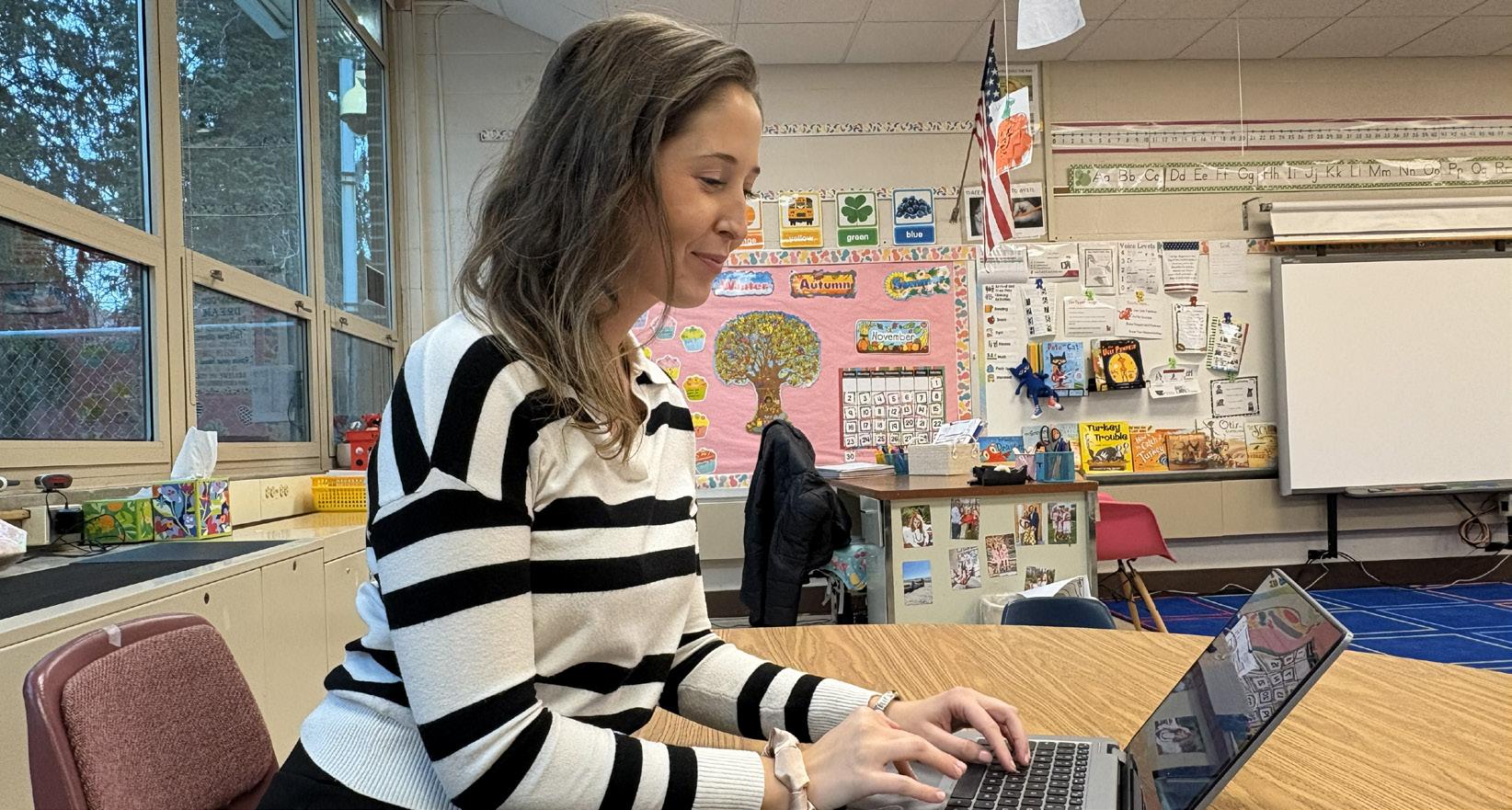
Leisure learning: Reading specialist Christie Keown learns about the Orton-Gillingham (OG) approach before her training in December. She spent
Sophia Seyedian Staff Reporter
Courtesy Damika Harris
Children sit at tables, meticulously folding origami cranes as their parents wander the gallery, admiring the mix of sculptures, paintings and mosaics. The John James Audubon Center recently hosted a limited time exhibit from Sept. 21 to Nov. 16 featuring three birds: the wood thrush, scarlet tanager and cerulean warbler.
The Centro de Cultura, Arte, Trabajo, y Educación (CCATE) collaborated with the John James Audubon Center to create this exhibit. CCATE, a nonprofit based in Norristown, works to uplift the Latinx community by fostering creativity, educational opportunities and career growth. John James Audubon Center employee Isabel Rivera values the symbolic meaning of the exhibit’s theme.
“I really like the knit project that says ‘migration is beautiful.’ It shows that migration is natural in nature and affects people as well,” Rivera said. The exhibit focused on the three birds because these species depend on Pennsylvania forests for nesting and breed -
John James Audubon Center hosts special art exhibit
ing before journeying to South and Central America for the winter. Caitlin Brady, manager of Outreach and After School Education at CCATE, explains an artwork that represents the migration of the birds.
“In the north, (the birds) have their English names and scientific names, and as they migrate south, their name changes into the Spanish name for them,” Brady said. “We represent that in the poster from north to south. That’s my favorite piece because it was a piece that was designed by our students, and I think it turned out really cool: this reflection on color, migration and language changing.”
The array of artwork featured a variety of mediums including sculptures, poetry, original music, paintings, linen fabric panels and papier mâché sculptures. A unique component of the showcase was the collaborative aspect, where visitors could color individual squares of paper using the color palettes of the featured birds, which were then joined together into a collective artwork.
Valerie Peckham, the Public Programs Manager at the
John James Audubon Center, helped to organize the collaborative project opportunity.
“The participatory element helps people have
ownership and investment in what the subject of the art is,” Peckham said. “We’re in the process of trying to figure out how we’re going to
utilize the collective art once it’s finished. I’m sure that we’ll hang them, we’ll feature them and we’ll start developing some programming. We
might do some retail items and different things to use (the collective art) to reflect on and engage people around those connections with the
community. That aspect of the exhibition is important to keep a lot of the sentiments of the exhibit going even after it ends.”

Maximizing momentum: DECA implements new member training system
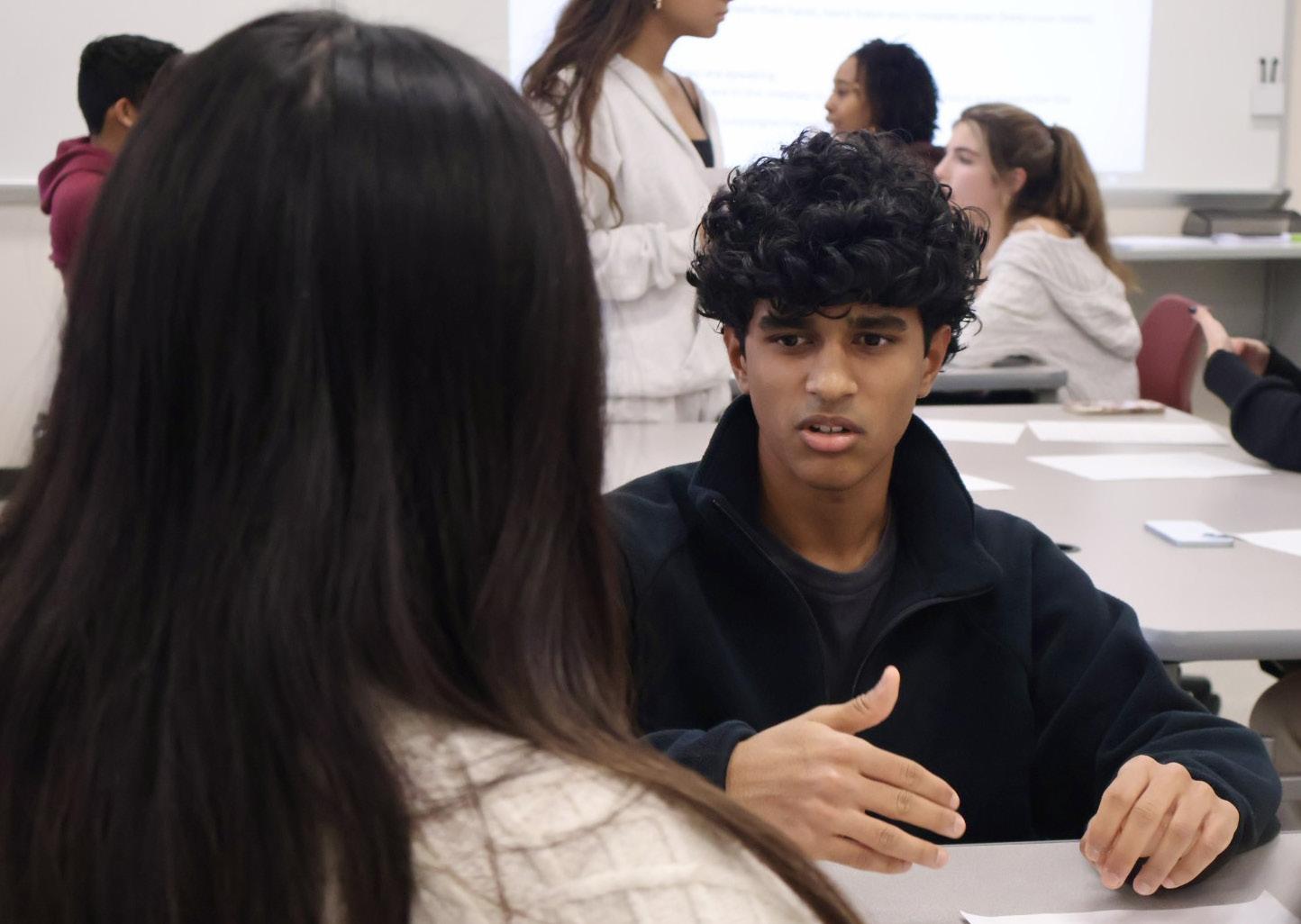

Sudoku
Constructed by Will Scheidt, Contributing Game Designer
Answers at spoke.news/games
Instructions: Normal sudoku rules apply. Numbers may not repeat in a cage, and sum to the number indicated in their top left corner. Lavender lines are entropy lines: each subset of 3 consecutive digits on an entropy line must contain 1 low digit (1 2 3), 1 medium digit (4 5 6), and 1 high digit (7 8 9). Cells a knight’s move away from each other (as in chess) may not be the same.
Miya Cao
Co-Managing Editor
As the largest student organization at Conestoga, DECA, an international organization that prepares students for careers in entrepreneurship and business, holds approximately 440 club members — more than 200 of which are new members who joined this year. To ensure academic preparation among its large membership, DECA’s leadership board introduced a required Career Development Program for first-year members. Nearly every week during Lunch and Learns and after school, the club hosts meetings to help members train for competitions. Experienced DECA members can judge new members in practice roleplay sessions and offer advice for improvement.
“We sent a survey to the DECA group at the end of last year, and we were asking them what aspects they liked and what they wanted to see more of,” said junior and DECA Vice President of Communication Olivia Ji. “A lot of the responses we got was like, ‘I think we need more resources to prepare us for the competition,’ because last year most of our meetings were just informational meetings: like, ‘here are the district logistics, here’s what you need to do.’ But we

Matines Cafe :
Co-Sports Editor
In 2024, French couple Arthur and Amanda de Bruc opened the second location of Matines Cafe in Wayne after seeing great success with their first venture, Cafe M in Savannah, Georgia. Matines Cafe also has a location in Chestnut Hill and recently opened Petite Matines Cafe in October, a children-centered cafe, also in Chestnut Hill. Entering the Wayne location at around 10:30 a.m. on a Sunday, the cafe was almost full, to the point where the chatter made it hard to hear the hostess. The interior offered a charming and curated look, with classic rattan bistro chairs, couches with cozy throw pillows, and the brand’s signature forest green accents throughout the space. Patrons gathered here for a quick catch-up over coffee to brunch with their families. The wooden floors and plentiful natural lighting from the windows looking onto Route 30 added to the brightness and warmth of the space. The food side of the menu featured a diverse assortment of options from breakfast to lunch, including sandwiches, tartines, quiches and boards for sharing. It also had ample options
for vegan, vegetarian and gluten-free customers. It even had a section that thoughtfully catered to kids, complete with unicorn hot chocolate. To start, I ordered drinks. The hot caramel apple chai was a seasonal fall special, but the flavor was artificial and the drink slightly watery. The iced matcha latte exceeded exceptions with its green color and strong flavor, especially since it came unsweetened.
never really taught people how to prepare and we didn’t give them chances to really practice role plays other than Cornucopia.”
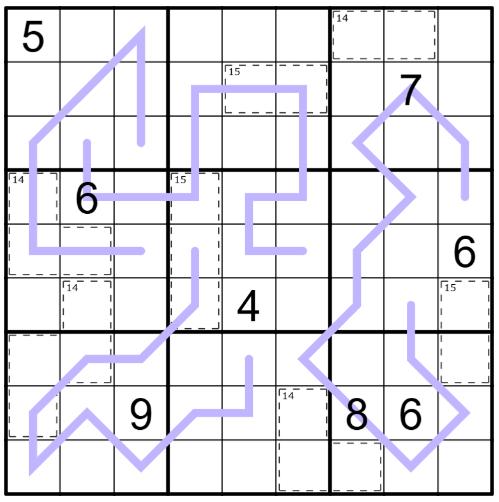
Prior to the program’s introduction, club members would primarily self-study for competitions. But with the addition of training meetings in the program, new members such as sophomore Amogh Puorhit have the opportunity to seek mentorship and guidance from experienced members.
“I think the program is really helpful as it helps participants, especially first years, to prepare better for their event and have more confidence,” Puorhit said. “I’ve done the practice roleplay during Lunch and Learn, and I’ve taken the practice tests that are there on the DECA website. The practice roleplay helped me gain a sense of how to prepare during the 10 minutes you’re given and how to present yourself.”
In addition, senior and DECA Director of Career Development Zayan Malik felt that competition in the region has increased recently. He attributes the rise in competition as motivation for creating the new training program’s creation.
“I think overall the reason that we made this career development program was to catch up to some of the other schools,” Malik said. “For example, Downing-
town STEM is a very competitive school when it comes to DECA, and they have a whole class for DECA. So for us — meeting after school or during lunch and learn meetings — we have to make sure we can catch up to other schools who do have entire courses. There’s a competitive nature when it comes to DECA, so we want to make sure we’re adequately prepared for that.” In addition to meetings, the program offers opportunities for members to record videos of themselves practicing roleplays and email them to the board for feedback. With a formal training process, DECA adviser Jeffrey Conner hopes that future waves of DECA members can learn from the expertise and experiences of the club’s current leadership.
“I’m very impressed with what they’ve (DECA leadership) done so far, more than what I would have thought was possible. When we were interviewing at the end of last school year, we were really looking for students that not only had good DECA experience, but were passionate about it,” Conner said. “They have so much DECA knowledge, more than probably I have. And so being able to pass that on to the next generation of DECA members is kind of what we were looking for, and they’ve exceeded those expectations.”

After about 30 minutes, my food arrived. The Atlantic sandwich, priced at $15, was a flaky croissant filled with smoked salmon, tzatziki, avocado, cucumber and arugula. It also came with a simple side salad of arugula and sweet balsamic glaze. The smooth smoked salmon paired well with the soft and buttery croissant. Meanwhile, the $17 Lafayette sandwich featured slices of brie, pears, turkey, walnuts and arugula on a baguette, with the same side salad. While the baguette’s thick crust looked like it would be tough to bite through, the inside was soft and fresh. The combination of these ingredients was new to me, but the flavors complimented each other to create a comforting, mild sandwich. I did ask for it to be warmed, but it came out at room temperature. The presentation of both sandwiches leaned heavily on greens, creating the sense that I’d ordered mostly arugula, which is a green I don’t particularly enjoy and one that didn’t appear on the menu description. The atmosphere of the cafe is lively and conversational, but its standout quality is its family-friendliness. Behind the hostess stand, I saw children’s books that sat ready for young patrons to borrow and enjoy and many families
with young children dining. The service was friendly and warm, even when the cafe was crowded on a weekend morning. I did not feel rushed in the slightest. Matines Cafe offers an inviting setting to catch up with friends and enjoy a light, balanced meal.
Feathered Focus: Mosaics, sculptures and collaborative artworks fill the gallery at the John James Audubon Center’s exhibit. The exhibit was on display
Isabelle Emmanuel Staff Reporter
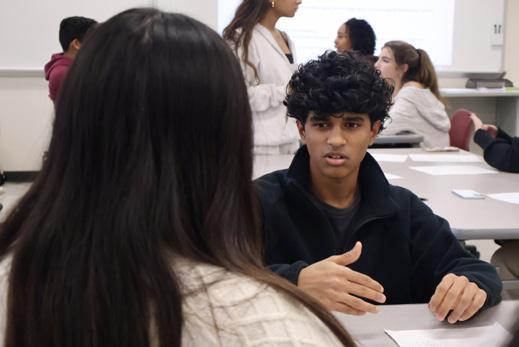
Ready, set, roleplay!: Sophomore Amogh Puorhit (right) presents his roleplay to junior and DECA Vice President of Communication Olivia Ji (left). DECA’s leadership board introduced a Career Development Program to provide new club members opportunities to practice their roleplaying skills in preparation for competitions.
Jeffrey Heng/The SPOKE
Jeffrey Heng
Students view ‘Wicked: For Good’ in theatres before official release
Students from Broadway Musical Theatre, Film Screen Writing and Production, Advanced Theatre Arts and Television classes
stepped into a world of green and pink on Nov. 19 as they viewed the recent box-office success “Wicked: For Good.”
The field trip featured a special screening at the Regal UA theatre in King of Prussia before the movie’s theatrical release on Nov. 21.
Nathan Shughart and Alison Ferriola, teachers of the theater, film and television classes, decided to take their classes on the trip to enhance their curriculum. While the theater classes have gone on many trips throughout the history of the course at Conestoga, for the film classes it was a new experience.
“This was a first time for (film classes) and we just felt that seeing an advanced screening of a major block-buster hit was a cool opportunity for the students as well as it was curricular,” Ferriola said. “As Mr. Shughart is doing a comparison stage to screen and screen to stage, I am doing that (sequel) proj -
ect with my film classes and with the television classes we always talk about promotion of entertainment, as it was an advanced screening and we got to see how they promoted it in the theaters.”
The teachers picked the movie themselves after reaching out to the theater in hopes of finding a film for the classes. They received the opportunity to have an early viewing if enough students were interested. The day consisted of the movie at the theater and a pre-ordered Panera lunch. Students left after homeroom and returned back to Conestoga after the conclusion of the movie.
“We called the theater and were able to set (a movie screening) up. They said we needed a certain number of people and there was a lunch option that we could order so the kids didn’t have to order their own lunches and that’s how it happened,” Ferriola said.
The movie itself consists of many special effects and unique shots. The movie’s estimated $165 million budget accounts for all the 3D scenes and effects director Jon M. Chu implemented in the movie. Freshman Anja Decapia, a student in a film
class, watched the movie with a deeper understanding of the crew’s technical choices.
“It can make a huge difference in the music, the setting, the angles and the

Alumnus pursues career in concert tour management

Blue Scrubs
A crowd listened attentively as two dentists shared their experience owning a dental practice together. The visiting professionals shared career insights with a PowerPoint presentation about a day in the life of a healthcare professional. This guest presentation was one of many opportunities that the Blue Scrubs club provided.
Blue Scrubs is a student-led group that focuses on providing members with healthcare career options.
Seniors and presidents Alyssa Chung and Alyssa Lee founded Blue Scrubs last year. They hold club meetings in room 163 and provide students with medical volunteer opportunities. The club also hosts guest speakers from various healthcare professions who share their experience with members. Chung and Lee were inspired to create Blue Scrubs when researching medical careers.
“We were looking into medical fields and recognized that there wasn’t (a club) with direct connections to (some)
medical fields,” Chung said. “Students at Conestoga didn’t have an outlet to connect to guest speakers.”
This school year, Blue Scrubs recorded over 200 members that attended its first meeting, an increase from the around 60 members by the end of last school year.
According to the presidents, the guest speakers were a main component of the club’s recent success. Chung also attributed the increase in members to the wide range of club-provided opportunities.
“Blue Scrubs brings in guest speakers for them to meet people all along the medical fields,” Chung said. “Not just doctors, nurses, but also people like dermatologists and surgeons.”
The club posts an interest form and the topics covered in guest meetings are selected from the responses and ideas shared by attendees.
“We have provided a ton of healthcare professions. Once we receive that feedback we tie it back to what people want,” Lee said. “It (Blue Scrubs) is really geared toward what people in the club want.”
Raymond
Staff Reporter
In his sophomore year of high school, 2024 alumnus Justin Chow attended his first pop concert. He loved the experience of singing along with the artist right in front of him and adored the connection that the artist could create with fans through music.
Having played the violin as a kid, he was constantly surrounded by music, and a job in the music industry seemed very possible. After researching the field, Chow discovered that he wanted to pursue a career in tour management, accompanying artists and singers during concerts.
“When you’re at the concert and you’re there and (the artist) is right in front of your face singing to you, it’s such a magical experience, and I really wanted to curate that myself,” Chow said.
Chow is currently a sophomore at New York University (NYU) studying media, culture and communications. As a prospective tour manager, he has assisted with several concerts, managed equipment, communicated with the
artist, ran the merch stands and filmed for social media.
“The one thing that I love most about (tour management) is the connection (such as) meeting up with the fans and talking about music and why they enjoy the artist so much,” Chow said. “When I was manning that merch table after the concert, it was amazing. Just seeing familiar faces talking to me and having a vibe is great.”
Chow has collaborated with several singers, such as FIG — who opened a concert for Lyn Lapid — and MICO.
Additionally, since August, he has served as an artist manager for singer and songwriter Jade Evergreen, a sophomore at NYU. As an artist manager, he helps organize her schedule, handles social media marketing, oversees concerts, books rehearsals and assists with communication.
“One thing that I’ve definitely learned is to not be afraid to chase what you want because no one’s going to do it for you,” Chow said. “If you stay scared, then you’re never going to reach the potential that you’re supposed to break.”
club provides medical opportunities
In the future, Chung and Lee hope to include more guest speakers in Blue Scrubs meetings and widen the club’s impact. Contacting more guest speakers and rais-
ing money for research and health-related initiatives are some of their goals.
“We’re planning to get money from the school through bake sales (and)
fundraisers and donate that to cancer research,” Chung said.
Both Chung and Lee hope to pursue careers in the medical field. Lee feels that curiosity and sustained interest are
some of the most important factors when considering a medical career.
“I’d say genuinely just be passionate because if you’re not willing to learn from these
At Conestoga, Chow was involved in various clubs and activities, including choir, and served as a board member of the Asian American Culture Club. According to Chow, being a board member and creating events gave him experience with aspects of management such as marketing and communication that inspired his choice of major.
“I remember I wasn’t that great at STEM, but the teachers and staff at ’Stoga never put me down because I wasn’t as good at those subjects,” Chow said. “Instead, they really helped me chase the other things that I really liked.”
After graduating from NYU, Chow plans to become a freelancer and go into a tour managing position working with artists and singers. He aspires to meet and interact with a diverse range of people.
“He’s such a go-getter,” said Justin Chow’s sister, 2023 Conestoga alumna Jacqueline Chow. “He has so much drive to complete the things he wants to do. I think that just really goes to show how mature he is and how dedicated he is to his profession.”
professions, if you’re not
sionate, it’s going
be
cult,” Lee said. “Do something that you’re passionate about because if you put time and effort, you should want to do it.”
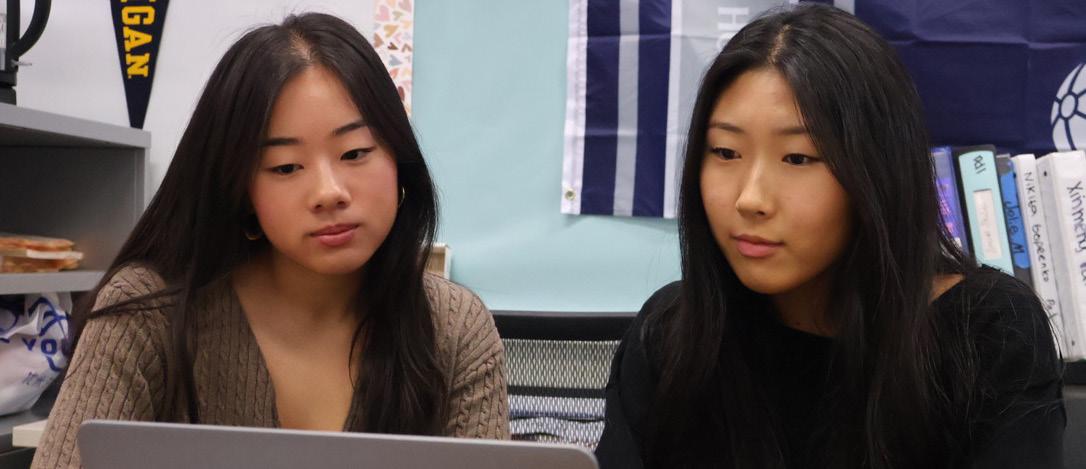

Opening to Oz: Conestoga students enter the Regal UA theatre for an early screening of “Wicked: For Good.” Teachers organized the movie experience to enhance the students’ education. Alivia Woo/The SPOKE
Rishika Bhattacharya Staff Reporter
Viktor Wang Staff Reporter
Serving science to students: Seniors Alyssa Lee (left) and Alyssa Chung (right) work together for their medical career club, Blue Scrubs. They founded the club last year and provide professional guest speaker opportunities for members. Chung and Lee both hope to pursue medicine
Jeffrey Heng/The SPOKE
Concert connections: 2024 Conestoga alumnus Justin Chow (left) poses in a picture with singer-songwriter Jade Evergreen (right) while attending a show. Chow has served as Evergreen’s artist manager since August 2025 and has assisted with overseeing concerts, booking rehearsals and handling social media marketing.
Courtesy Justin Chow
Wu
On Nov. 20, 21 and 22, ’Stoga Theatre performed the play “Clue.” A comedy adapted from the 1985 film by Jonathan Lynn and based on the popular board game, “Clue” is centered around Miss Scarlett, Professor Plum, Mrs. White, Mr. Green, Mrs. Peacock and Colonel Mustard.

The six main characters are invited to a dinner party at Boddy Manor by their host, Mr. Boddy. Welcomed in by a maid, butler and cook, things quickly go wrong when it’s revealed why they were gathered together. Mr. Boddy reveals that he’s blackmailing all of them and will go to jail unless they kill his butler, Wadsworth.
Sophomore Andrew Rongner-Cook played Professor Plum, a lead character. An egotistical man with a large presence, Plum works for the United Nations Organization, World Health Organization as a researcher. Rongner-Cook watched the movie “Clue” before the performance to help him get in character and have an idea of how he should act.
“There’s been a lot more lines to memorize, but Mr. Shughart, my director, is wonderful and he’s helped me rise to the occasion,” Rongner-Cook said.
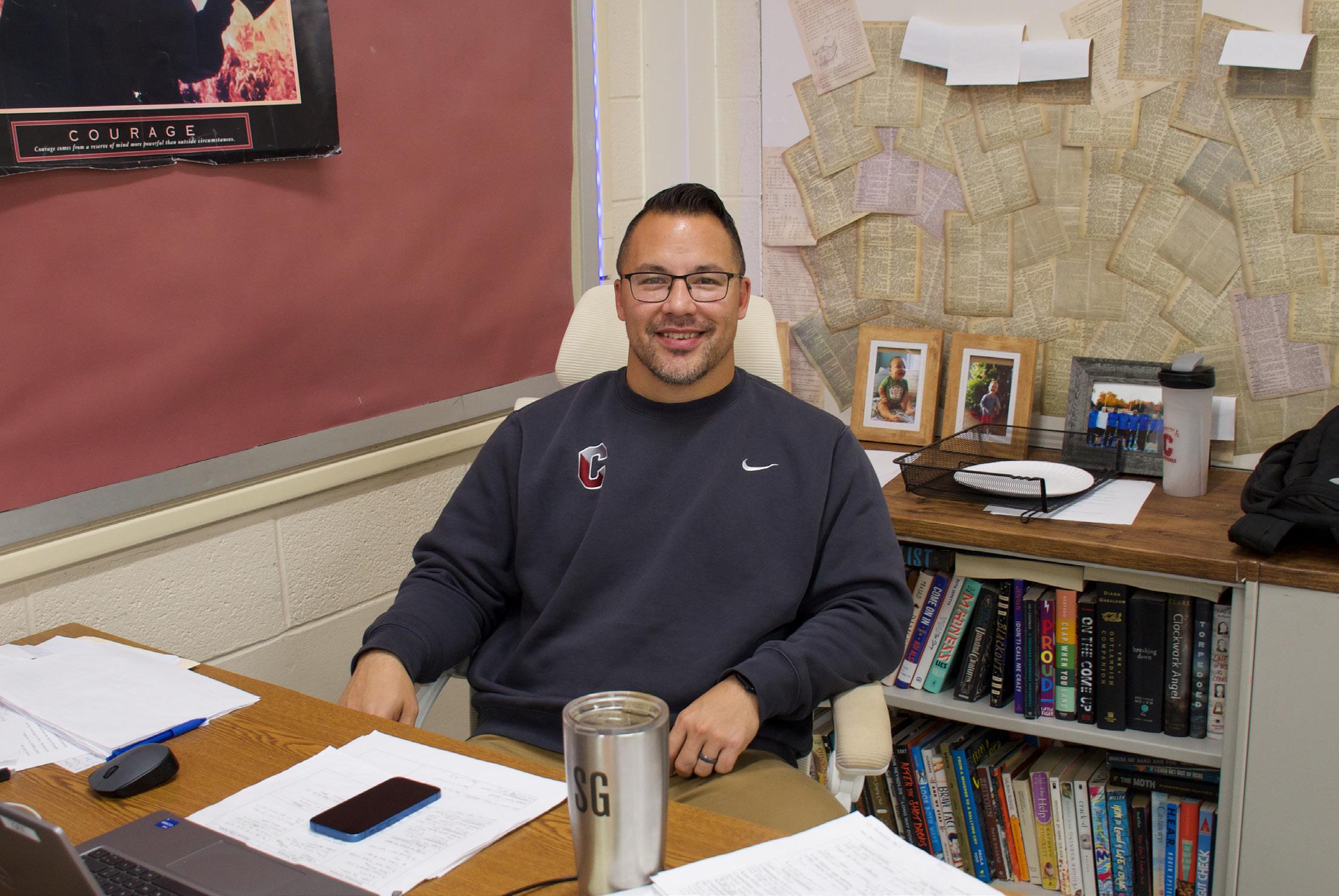
After studying English and secondary education at Susquehanna University in 2007, English teacher Scott Gee pursued a career in teaching. He earned a Master’s in Education at Wilkes University in 2010 and a Master’s in Exercise Science at California University of Pennsylvania in 2014. Gee has been teaching for 19 years and started teaching at Conestoga at the start of the 2024-25 school year. He played Division III football at Susquehanna University, served as a Defensive Coordinator at Kennett High School for five years, and became head coach of the Conestoga Football team in March 2024. Currently, he teaches American Voices, Comparative Literature: Mayhem and Language of Film.
Q: Why did you choose to teach English?
A: It’s (English) something that I’ve always been good at. I’ve always been good at writing, and reading comprehension has always come pretty easily to me. My parents are both highly educated individuals, so they taught me how to speak well.
’StogaTheatre presents...
Written by Elizabeth Lu and Talia

Each performance, ’Stoga crew builds new sets to match each production. Different crews have different jobs to complete, such as painting or building. The play “Clue,” similar to the board game, had different rooms and passageways that needed to be constructed.
“It’s very interesting because each door has the name of the room on it so you know what room it’s in, but it’s just a door instead of building a room. It was very cleverly done,” Rongner-Cook said.
Hair & Makeup
Social studies teacher Emily McGready has been the adviser to the hair and makeup crew for eleven years. This year, the crew focused on ensuring their work lasts well throughout the play.
“There are certain characters that don’t survive and then they have to play dead bodies. They are sometimes thrown around the stage a little bit so we had to plan for that,” McGready said.
The characters in “Clue” are prim and proper, and the hair and makeup varied from shows with a more modern setting. Fake moustaches and plenty of hair gel helped bring this production to life.
“It’s (the) 1950s, so everyone needs to look very put-together. It’s not a show that’s set in the current day where you can just use modern hairstyles,” McGready said. “We need to make sure that everyone looks very polished. That can be challenging with a very physical show, which ‘Clue’ is.”
McGready believed that the show would receive positive feedback from its audience. The crew and cast enjoyed performing this show for the community.
“It’s a really fun show,” McGready said. “It's a good whodunit mystery, there’s comedy, there’s drama, there’s a little bit of everything you want.”

Q: Why is American Voices important for students today?
A: American literature is interesting to study from a historical perspective, in the sense that the literature is a reflection of what society needs and observes during that period. It’s valuable to learn from those things because history is cyclical. The technology is different and the world around us is different, but the themes that go on historically return. So it’s good to know what’s going on.
Q: If you had to teach in a different department at Conestoga, which department would you choose?
A: I have an interest in training. I have degrees in training. One thing that I would be interested in is if I got to teach a weightlifting class or something like that. But also, I’m a history buff. I love history documentaries, and I like teaching literature from a historical perspective. I like debating people about things. So I think social studies would probably lend itself to my interests.
Q: Why did you choose to coach football at Conestoga?
A: It’s (football) a love of mine and part of my professional career. I knew it was something I wanted to get
back into, and then this opportunity came up at Conestoga that was close by. It was something I would have been able to do even had I not gotten the teaching job inside the building. Also, this was my first time being a head coach. Those opportunities don’t come around all the time.
Q: What do you enjoy outside of school?
A: I enjoy working out, running and lifting. I like being with my kids, chasing them around and being outside. I enjoy working out in my yard and making my property look nice. I like watching football. I’m a big Eagles fan and have season tickets, so I go to a lot of games.
Q: What are you reading right now?
A: I’m reading “Embrace the Suck” by Steve Gleason, a former Navy SEAL. He discusses strategies to deal with and overcome adversity, based on his experiences and observations as a SEAL. I don’t read a lot of fiction, even though I teach it, because as a parent and coach, I don’t have as much time to read as I’d like. I prefer nonfiction that teaches lessons and informs my coaching, teaching or leadership skills, so I get immediate value from it.
Roth, Staff Reporters
Designed by Emily S. Wang, Co-Design Editor
Je rey Heng / The SPOKE
Je rey Heng / The SPOKE
Nolan Talley / The SPOKE
Bold reveal: Sophomore Andrew Rongner-Cook who played Professor Plum, dramatically points a gun up in the air. In the play, Plum unveiled himself as one of the killers in front of the rest of the surviving cast.
Suspicions rise: Junior Freddie Rains (le ), who played Colonel Mustard, and senior Lilly Duska (right), who played Mrs. White, speak tensely as they try to piece together the killer’s identity. In the play, they found the corpse of the cook alongside other characters.
Dramatic reenactment: Senior Daniel Bletsch (le ), who played Wadsworth, acts out an earlier moment in the story with junior Declan MacDonald, who played Mr. Green (right). In the play, the guests continued pressing one another in hopes of unmasking the true murderer.
Rajan Saha
Co-T/E Life Editor
Step into your favorite shows: Netflix House opens in King of Prussia
The Netflix House, which opened on Nov. 12, offers fans an interactive way to step into the worlds of their favorite shows. It is one of three planned to open across the country. The venue offers free admission, but any attractions require a separate paid ticket for visitors to experience. Weeks before the venue officially opened at the King of Prussia Mall, sophomore Sav -
io Sandeep got early access to the new attraction through his father’s job. He walked in excited to experience something completely new and found several detailed recreations of Netflix shows throughout the attractions.
show. He participated in both experiences with his family.
“I thought it was really cool to see (the rooms) in person and just to be there— it gave it the feel of being in the show,” Sandeep said. “It was definitely very interactive and very fun to be there.”
Sandeep tried two of the experiences: “One Piece: Quest for the Devil Fruit,” a team-oriented puzzle challenge, and “Wednesday: Eve of the Outcasts,” a self-paced experience featuring recreated rooms and games from the On-site

The Netflix House also features several additional attractions, including the Top 9 Mini Golf course with nine themed holes inspired by Netflix series and events; the Tudum Theater, where guests can watch Netflix shows, movies and special event screenings; the Netflix Bites restaurant, which serves iconic food and drinks from nearly 20 Netflix shows; and a VR experience called Netflix Virtuals, where fans can immerse themselves in the worlds of shows like “Stranger Things,” “Rebel Moon” and “Squid Game.”
Despite the space still being finalized during his visit, Sandeep said it already felt immersive and true to each show’s plot and setting. Additionally, he felt that the added in-person aspect of the experience was key to the feeling of immersion.
“My first impressions were that (the scenery) was really cool,” Sandeep said. “I felt like it wasn’t finished, I guess because it was early (admission). It was also really fun to see because it was the shows I watched on Netflix, but kind of interactive.”

Visitor Logan Cho went to the Netflix House shortly after it opened. He found the environments closely mirrored the ones depicted in the show, making the visit feel legitimate and authentic.
“I’d never heard of Netflix House. So there’s definitely a
concern of like, maybe this is just like a sham or something, they just built it in a weekend kind of thing,” Cho said. “But after going through it, all the employees especially were super enthusiastic — that was one thing. They were like theme park workers, all act -
ing like they were from the show and guiding people to this or that or getting them to do fun things.”
Sandeep thinks that the Netflix House is a good addition to the King of Prussia Mall and that visitors will enjoy it.
Band on broadcast: Marching band wraps up season with a performance on 6abc news
“If I got the chance, I would definitely go again,” Sandeep said. “For the ‘Stranger Things’ and the VR stuff, I would go again. I think it was overall a good experience and that everyone should go if they get a chance. It is bringing the (shows) to life.”
When Philadelphia area residents switched on their televisions to watch 6abc Philadelphia on Nov. 21, they were not met with the usual morning news. Instead, an ensemble of horns, drums and flags paraded across the 6abc yard as Conestoga’s marching band performed live.
This show served as the finale of the “School Spirit Friday” series hosted by 6abc. The series showcases high school marching bands from across the Greater Philadelphia area.
This performance also marked the final show of Conestoga’s 2025 marching band season. The band performed their “Wicked” medley, composed of snippets of various songs from “The Wizard of Oz,” and classic stand tunes, such as “Rocky” and “Seven Nation Army.”
“We already knew all the songs we were performing on the news since we played them
throughout the season, but we had a quick rehearsal the day before from three to five that just went over what was gonna happen,” senior and drum major Jake Tsang said. “We ran through the songs a couple times and figured out who (which drum major) was going to be conducting what.” After arriving at the 6abc news station, the marching band settled into the yard where they would perform. The students explored the area and had an hour to rehearse before they were live.
“We were performing in the 6abc yard, which was right outside their headquarters. There was an outside area with a ton of satellite dishes and a circular wall behind us. So we were performing right outside the studio essentially,” sophomore and trombone section leader James Spina said. “There were some interviews that were live and taped. Our last performance was really great in general, and I think we all sounded amazing.”
This is the first time Conestoga’s marching band was featured in the “School Spirit Friday” series. Senior and flute section leader Joanna Harris looked forward to the opportunity to broaden her musical experience and perform before the cameras.
“I really liked the unique opportunity it gave us to be in a different performance setting because typically, even in the trips we’ve taken in the past, it hasn’t really been in a livestreamed setting. It’s usually just for whoever shows up. I personally thought it was really cool because I hadn’t really seen a reporter in person. For me, it was kind of inspiring. It was cool to see it from the perspective behind the scenes from the reporters themselves. Once the cameras came up close to us, it was admittedly a little scary because it was really close and very personal,” Harris said. “Overall, it was really just a cool opportunity to see how the processes were carried out.”
Students join Vote16PA to expand teen voting rights
Sonja Dziegielewska Staff Reporter
T/E Residents line up to vote in the 2025 school board elections. However, 16- and 17-year-olds are nowhere to be found, as they are unable to vote in the election.
Local advocacy initiative Vote16PA, a youth program at the nonprofit The Fund for Women and Girls, looks to expand voting rights for 16- and 17-year-olds for school board elections across Pennsylvania. Volunteers hold weekly virtual meetings and complete work on their own in efforts to pass legislation. The initiative is comprised of three different teams for social media, documentation and research, with each respective group focusing on a unique part of the legislative process.
mission so that they would want to represent the bill.”
Vote16PA works to spread media awareness, contact local lawmakers and propose legislation. After they draft a bill, the initiative will try to find a Pennsylvania lawmaker to sponsor it. Eventually, the bill would go through the House of Representatives before being passed to the Senate. Junior Delfina Almuina
There is a ton of data that shows the younger somebody starts voting, the more likely they are to consistently engage in the civic process.
Blake Emmanuel Director of Advocacy and Policy at The Fund for Women
“We have meetings with the representative so we can talk to them and get to know them,” said senior Melissa Guillen, a two year member at Vote16PA and a part of the documentation team. “They can get to know us and our
Martinelli, a first-year member of Vote16PA and part of the research team, feels that if voting rights are expanded, high school students in Pennsylvania will have more opportunities to have an impact in their communities by choosing which politicians represent their beliefs.
“If (students) have something to say, they’ll be able to vote on it and they’ll be able to make sure that their voice is heard,” Almuina Martinelli said.
and Girls
have a voice.”
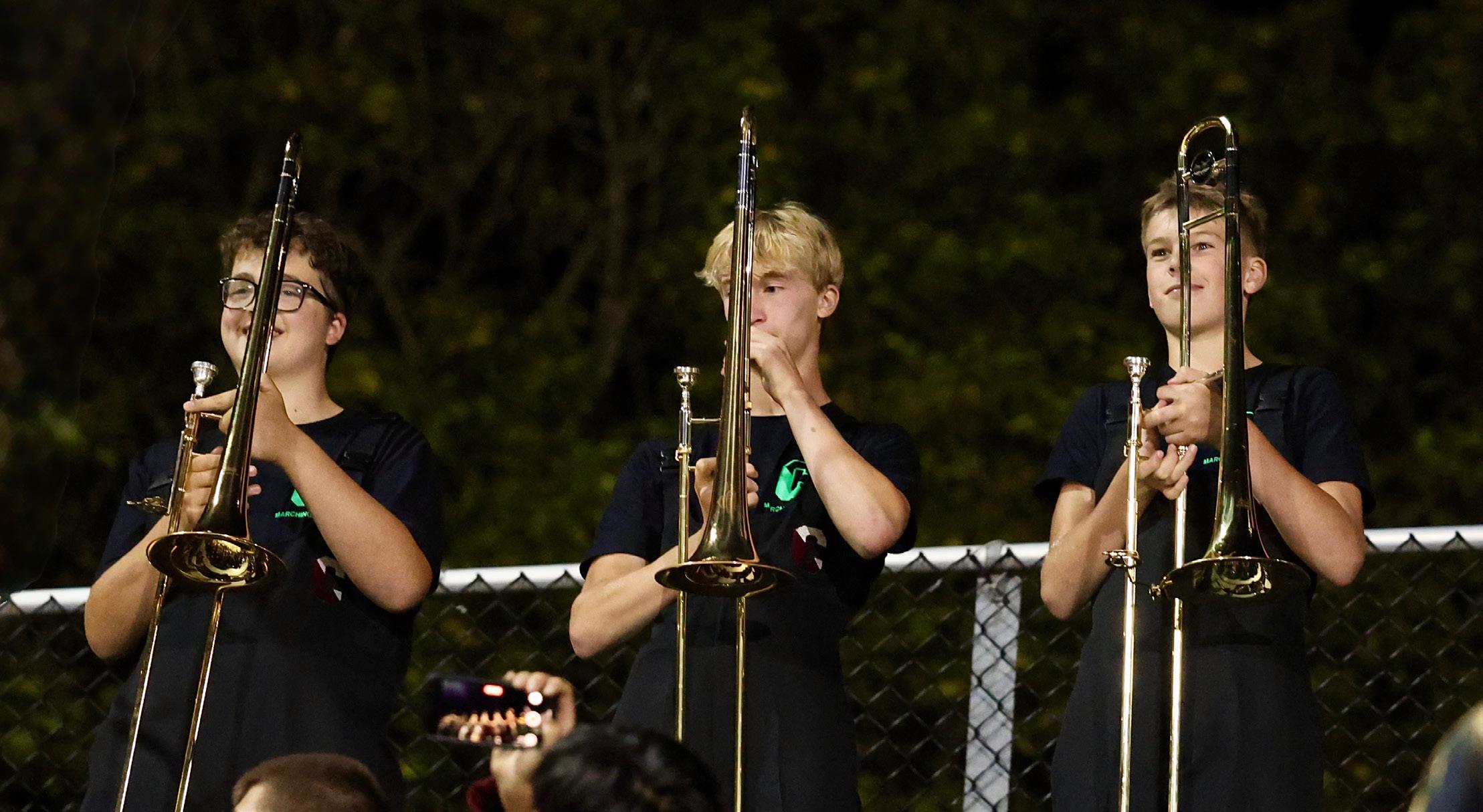
Terrific trombones: Sophomores James Spina (left), Patrick Malone (middle) and freshman Duncan Phipps (right) stand with their instruments at the bleachers on Teamer Field. On Nov. 21, the marching band performed on 6abc news as a part of their “School Spirit Friday” series.
Courtesy Mallory Wollick
Grace Lu Staff Reporter
Eye-catching entrance: The Netflix House showcases vibrant wall art inspired by various Netflix series throughout its interior. Guests stopped to admire the artwork when the venue officially opened at the King of Prussia Mall on Nov. 12.
Let’s stop ‘falling back’

“Wow, it’s really dark out,” you think to yourself, wondering where the time has gone. You check the clock to see how close it is to dinner, but you’re shocked by what you see — it’s not even 5 p.m. Then you remember: Daylight saving time has ended. Daylight saving time begins every year on the second Sunday in March, when clocks across most of the U.S. “spring forward” by skipping an hour in order to maximize the number of waking day -
light hours during months when the sun is out for longer.
“spring forward.” Skipping an hour at night results in sleep

deprivation and disrupts circadian rhythms. According to a 2020 study by the Journal of
Review: ‘Wicked: For Good’
doesn’t quite defy
Audrey Kim Co-Opinion Editor
The world of Oz returns in “Wicked: For Good,” the highly anticipated follow-up to the 2024 film adaptation of Act I of the hit Broadway musical “Wicked.” Starring Cynthia Erivo as Elphaba and Ariana Grande as Glinda, the movie picks up where the first one left off, following the two witches as their lives diverge and the consequences of their actions play out. With the premise already established, the second movie takes on the far more challenging task of developing the story. Like many sequels, it struggles under the weight of high expectations. While the film is still a spectacle, it doesn’t quite reach the same heights as the first movie.
Rating:
musical, namely its forced exposition of the Oz characters’ origins. The film almost force-feeds the origins of various Oz characters, and its frequent callbacks from “The Wizard of Oz” can make the story feel constrained by its source material, limiting the space for “Wicked” to develop its own narrative and character arcs. Short flashes of Dorothy and her companions appear throughout the movie, and while
gravity
times, frustrating. While certain plot points move quickly, other parts drag on, particularly during the two new songs that weren’t in the Broadway musical, Erivo’s “No Place Like Home” and Grande’s “The Girl in the Bubble.” These additions mostly fall flat rather than enhance the characters’ emotions.
Combined with the fast-moving plot, the songs create a polarizing flow that makes it difficult to stay engaged.

“For Good” suffers from many of the same weaknesses found in Act II of the original
these can feel slightly jarring, focusing on Elphaba and Glinda ultimately feels refreshing, even if it asks viewers to make sense of the film’s connections to the broader Oz universe. Additionally, the movie’s pacing is uneven, and, at
One of the biggest strengths of “For Good” is the acting performances. Erivo and Jonathan Bailey deliver strong continuations of Elphaba and Fiyero, but Grande stands out so much that Vulture stated that “‘Wicked: For Good’ is Ariana Grande’s movie.” As Glinda, Grande explores a fully fleshed-out character full of contradictions, holding her own alongside established actors like Erivo and Bailey, and delivering a remarkably complex Glinda.
“For Good” makes a polished second installment, with striking visuals and convincing performances from the cast. It’s a fun watch, even if it leaves you wishing for a bit more enchantment.
ple forget to do so, there could be even more confusion. The U.S. should make daylight saving rather than standard time permanent because of the societal benefits of an extra hour of sunlight in the evening. It’s better for after-school activities to happen in the light, and according to an article by CBC News, consum-
ers are more likely to spend when there’s more daylight after work, which boosts the economy. Importantly, an extra hour before darkness falls can discourage crime: A 2012 study by the Stanford Institute for Economic Policy Research found that robbery drops 51%, murder drops 48% and rape drops 56% during the additional hour of daylight that daylight saving time provides. Opponents of permanent daylight saving time argue that standard time is preferable so that kids don’t go to school in the dark. While this is a valid concern, there is also danger for kids during dark evenings. As time has passed, the government has slowly increased the length of daylight saving time, and now, there is momentum toward finally stopping switching clocks twice a year. Hopefully, it’ll only be a matter of time.
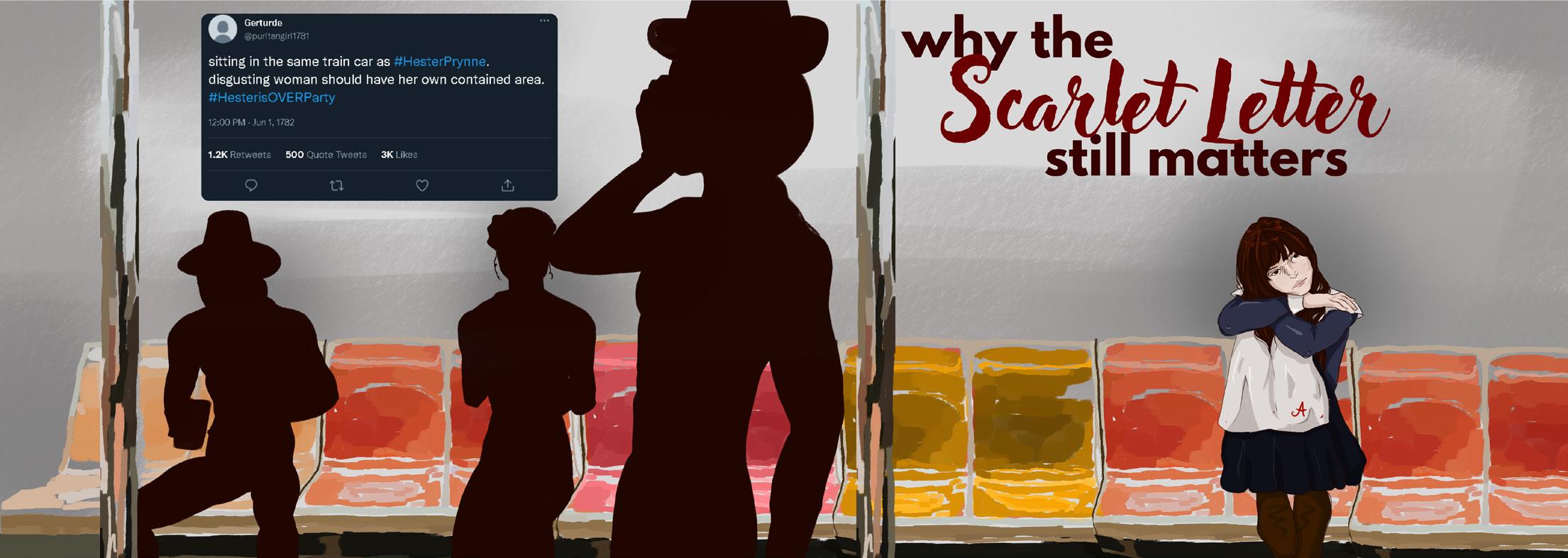
Why ‘The Scarlet Letter’ still matters

Paige Vachris Staff Reporter
Editor’s note: An extended version of this story is available on spoke.news.
Picture this: A young woman, cloaked in Puritan garments and shame, stands in view of a 17th century town. She clutches an infant to her chest, upon which a red letter “A” is emblazoned. The crowd watches as this woman endures its judgmental gaze.
Stop confining women to life sciences

In my freshman year, I decided to try out for the school robotics team. However, I was dismayed to find that only about 10% of the members of the final teams were girls. According to educator Franz Santos of the Megaworld Foundation, women accounted for just 28% of the STEM workforce in 2023, despite the fact that some of the field’s first pioneers were women. One of these trailblazers

was Ada Lovelace, who was the first person to write a computer algorithm while wearing a tiara. According to an article from NPR News called “When Women Stopped Coding,” for years the number of women in computer science was growing faster than men. But this rate suddenly plunged during the 1980s, around the time that personal computers gained popularity; though the number of women in other technical fields was rising. An interview of computer science students at Carnegie Mellon University in the 1990s found that “families were much more likely to buy computers for boys than for girls — even when their girls were really interested in computers.”
This begs the question — why are women forced toward life sciences such as biology and medicine? Girls have great potential
and should be encouraged to pursue all STEM fields. While pop culture can sometimes portray a glamorized or romanticized version of women in STEM, they are still stereotyped in these fields and are a minority. A study by the University of Washington found that biology and chemistry undergraduate degrees have the highest proportions of females compared to computer science and engineering. Women often gravitate toward more “nurturing” sciences, such as medicine, because these fields have more female mentors and fewer stereotypes or cliches.
A 2011 study at Penn State indicated that women prefer a more hands-on learning style while men appreciate an analytical approach. STEM classes often use the style preferred by men, which causes women to
lose interest. It is essential to have different ways of teaching to be inclusive of everyone.
Additionally, author Eileen Pollack said that “Many women are simply raised to believe that they’re supposed to be caretakers, supposed to prefer biology.” She argues that life sciences are seen as “helping” professions, which is why women are pushed toward it.
Although people may think that women face less harassment in “caring” professions and enjoy them more, that is not the case. Women have not been given an equal chance as their male peers in STEM fields, which is why they are pushed into others with the hopes of having a better experience. It is crucial that all women are supported in an occupation of their choosing to ensure that the faces of STEM are diverse — no matter the field.
When some readers are first introduced to Hester Prynne, a woman ostracized for adultery, and the world of “The Scarlet Letter,” they view it with scorn and superiority. They marvel at the progress that we’ve made as a society. This could never happen in today’s world, they say. Yet every day, people young and old don masks of anonymity and take down others with a keystroke. Strangers behind a screen relentlessly pick apart public figures and ordinary people alike. I’ve seen a lot of negativity directed toward “The Scarlet Letter” at Conestoga. Many students bemoan the winding prose and dialogue. Some state its lack of relevance due to its far-removed setting. On a certain level, I agree, but I think Nathaniel Hawthorne deserves another chance.
While 21st century America looks very different from the colonies of Hester Prynne’s day, the
message in “The Scarlet Letter” rings true, even more so than before the invention of the internet. The themes of perception (both internal and external), shame and alienation are universal; its commentary on human nature remains poignant. Hawthorne illustrates human cruelty and hypocrisy, the need to demonstrate or perform morality by selectively bringing down others. The invention of the internet has transformed the way we do this. Long gone are the scaffolds and embroidered symbols of shame; the mark of being “canceled” takes their place.
A 2021 poll from The Hill, an American publication focused on politics and business, found that 71% of registered voters believe that cancel culture has “gone too far.” What initially started as a way of holding celebrities accountable for their actions has stretched into an-
other form of public shame, often for past mistakes. The anonymous nature of the internet allows for users to curate a persona with the credibility to attack someone they’ve never met. Forget their own personal shortcomings — in the words of Hawthorne, “If truth were everywhere to be shown, a scarlet letter would blaze forth on many a bosom.”
While generations of students have read and analyzed Hawthorne’s novel, none have experienced it quite like the high schoolers of today. We live in a time when anyone can post anything with the world as an audience. Though the world has shifted irrevocably, the dark tendencies of human nature persist. How do we stop ourselves from reliving and repeating the same mistakes of the past? Try Hawthorne. He has some thoughts on the matter.

SORRY, WE MISSPOKE
Eshan Singh Co-Opinion Editor
Tvisha Jani/The SPOKE
Jaelynn Pikalyuk/The SPOKE
Nishta Subramanian Staff Reporter
Zahra Hassan/The SPOKE
45 seconds, showing a clear sign of a recession in today’s “attention economy.” In fact, a 2018 study using data from Google Trends estimated that the median news story’s lifespan of relevance was just seven days, with stories like midterm election results and Supreme Court nominations quickly falling out of interest. This decline in attention has shifted the way media companies share news and how we choose
Unsigned: Our overconsumption of media seriously threatens media literacy
to consume it. Shorter-form new sources, often found on social media platforms like YouTube, TikTok and Instagram, are an increasingly popular means of receiving news. According to the 2025 Reuters Institute Digital News Report, 63% of those aged 18-34 rely on social media as their main news source. While social media provides a larger platform for accessing news compared to traditional newspapers, it makes finding credible sources more challenging. Thanks to the internet, news from traditional outlets is also more accessible, and media companies are capitalizing on this by producing more stories. However, increasing cover-
do matter. A 2009
from the University of Cyprus found that participants

who were repeatedly exposed to media violence felt less sympathy for victims compared to participants without repeated exposure.
In addition, many media companies prey on our laziness to delve into stories deeply by making headlines that don’t fully reflect a story’s meaning. An analysis of 40 million headlines by researchers at the Max Planck Institute for Human Development found that over the last two decades, there has been an increase in headlines used to clickbait readers and generate online engagement. Using a headline that has shock value over one that is true to the story sacrifices a key principle of journalism: sharing the truth. While the prevalence of short-form media is likely not fading in the near future, the way we approach our under-
standing of it needs to. As student journalists, we understand the fragility of public knowledge and the media’s role in shaping it, which is why one of The Spoke’s key values is prioritizing objective and ethical reporting over eye-catching headlines. We encourage other media organizations to follow suit in focusing on the pursuit of truth.
However, the reality is that media companies are unlikely to change if it risks hurting their bottom line. Instead, readers must shift their mindset. By understanding the pitfalls of the fast-paced news cycle and how disinformation and overconsumption of media can cloud our judgment of reality, we become more aware of what’s truly accurate and important in the news. Ultimately, it falls on both journalists to produce ethical work and readers to pay thoughtful attention to the media they consume to ensure society does not plummet into a state of mass disinformation.
STUDENTS SPEAK OUT

Talk about it

It
the hallway while passing by, a text message asking about the day, a conversation that seems to hint at wanting something more. Navigating friendships within the stress of academic and personal life can be difficult, especially when someone you see only as a friend seems to have romantic feelings for you. Deemed encountering “The Friend Zone,” a term Merriam-Webster defines as “a state of friendship in which one’s romantic interest in someone is not reciprocated,” it’s hard to decide how to approach that friend. But, even if it may seem tempting, it is ultimately better for you and the friend with romantic feelings to have a conversation about their thoughts rather than waiting it out. As someone who’s been in the dilemma of approaching the friend with romantic feelings, trust me. It is awkward. However,
it was beneficial when my friend spoke about their feelings rather than avoid the conversation.
Although they told me after their romantic feelings became platonic, I was able to express that I knew of their intentions. We were able to clearly move forward in our friendship without my lingering fear of accidentally leading them on — a result that would’ve been even more constructive if the conversation had occurred earlier.
Communicating in a respectful manner ultimately leads to a better relationship between the two involved. In an article by University of Washington researchers Malcolm R. Parks and Mara B.



The Friend Zone
lationships with open communication helped relieve stress, especially among high-achieving high school students. The findings show how talking it out is necessary and support the benefits of continuing to prioritize the health of the relationship despite a lack of romantic reciprocity.

Mary Wolters/The SPOKE
Adelman, they found that active communication reduced uncertainty and helped predict romantic relationship stability. The same importance of transparency applies to friendships as well. Also, having a conversation about the friend’s feelings can aid mental health. University of South Florida researchers Shannon M. Suldo, Elizabeth Shaunessy and Robin Hardesty found that re-
There are potential negative consequences of talking it out, from someone rudely rejecting the other to the end of the friendship entirely. However, both involved can treat the discussion as an opportunity to learn how to better navigate future relationships. Research by Ann Meier and Gina Allen from the University of Minnesota found that progression in relationship experience can be more prevalent on a national level after high school students discontinue their romantic relationships. Similarly, the end or shift in friendships can lead to improved knowledge on the best way to converse in future romantic and platonic relationships.
Talking about one’s thoughts is not the be-all and end-all. It is perfectly normal for someone to become interested later, and someone may even grow closer to the friend they have romantic feelings for in a more authentic manner. Romance and friendship deserve an equal amount of respect, starting with the scary, awkward and rewarding talk.

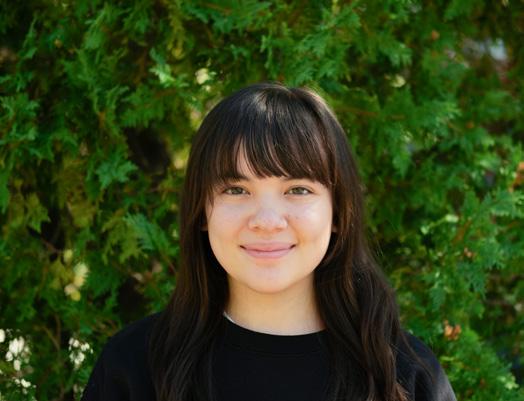
I never imagined love was a possibility for me. Beyond personal physical and emotional insecurities, I simply did not desire the experience. However, as the saying goes, “love comes when you least expect it,” especially when these hints of romance come from a friend.
Despite my reserved nature, I have found myself on both sides of “The Friend Zone,” which is when someone has romantic feelings for a friend who doesn’t reciprocate. Unlike depictions in modern entertainment, with fast-paced confessions resulting in instant happiness or heartbreak, my experiences with The Friend Zone have been rather drawn out. This slow nature is due to the waiting period between the beginning of feelings and the moment of confession. Depending on the subtlety of the initiator’s actions, the other may become aware of this new development in weeks or
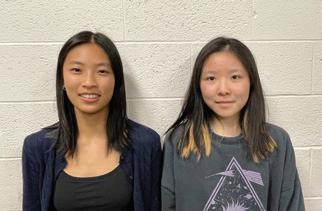
Wait and
see
months. In this scenario, both individuals should take the time to process their feelings and consider the other’s perspective. First, the recipient needs space to organize their thoughts. While friendships and romantic relationships can appear similar, the expectations of each are drastically different. Asking a friend to completely reevaluate their responsibilities and relay that information immediately can lead to poor decision-making in the heat of the moment.
Additionally, this new attraction could be a short-lived fixation and fade away without confrontation. According to a 2022 study

Faith Zantua/The SPOKE
by the University of California, Davis, college students reported having five crushes on average during a period of seven months.
Although it is highly dependent on each individual for the frequency of their romantic pursuits, love can come and go naturally.
Lastly, it could be that the initiator was reading perceived signals incorrectly. As journalist Amber Pariona puts it, “Every single
person in the world understands love and expresses it in a different way.” Healthy friendships include aspects like gift giving and words of affirmation that can be easily confused for flirtatious moves, and jumping to conclusions and breaking the ice on an assumption may be embarrassing or received poorly by the other individual. It’s true that avoiding the conversation for too long can result in additional stress, mixed signals and emotional turmoil. While I wholeheartedly advocate for both parties to express their emotions freely instead of holding them in for too long, it is crucial for each to have enough space. With various background factors, from family life to academics, romantic signals that come too fast may be an additional burden. Feeling the need to address the situation immediately can psychologically drain the recipient and worsen already stressful circumstances. Ultimately, love is a constantly evolving journey that comes at different times for everyone. There’s nothing wrong with how or when an individual experiences romantic interest in another, but that interest should come in a way that prioritizes the mental health of both. In the end, while changing or ending relationships may hurt in the moment, both parties are free to find happier futures.

study by psychologists
Faith Zantua Co-News Editor
Mary Wolters Co-T/E Life Editor
Charlotte Liao/The SPOKE
From June 19 to 22, US Squash held its first Super Junior Championship Tournament (Super JCT) for the top 64 junior squash players in each age group nationally. Competing for their national ranking spots and their US Squash rating, players battled each other in elimination matches until a clear winner emerged. For the Boys Under 17 age group, that winner was junior Neil Srivastava. Neil Srivastava began playing squash at 8 years old, inspired by his older brother Rishi Srivastava, a 2024 Conestoga alumnus, who currently plays squash at Yale University. After quitting baseball to focus on squash, Neil Srivastava dedicated himself to training, competing, and improving in the sport. Over the years, he spent hours traveling to tournaments and working with coaches. By the time he turned 11, Neil Srivastava had climbed into the national top ten in his age group. This year, by winning multiple major tournaments such as the Super JCT, Neil Srivastava is ranked the highest in his age group by US Squash.
According to his coach, Josh Simon, Neil Srivastava’s success is due to consistent improvement and dedication to the sport.
Squash sensation: Junior ranked first in U17 squash
“He is meticulous. He works in a very structured way, and it works really well for him. Each year, we’re attacking what we didn’t do well last year, and we’re trying to improve it,” Simon said.
“He’s got a high IQ and he’s not afraid of hard work. He’s got heart, he’s got grit, and he’s willing to put in work to achieve his goals.”
Neil Srivastava trains six days a week for an average of 90 minutes per day. To maintain and improve his play, he participates in clinics, fitness, skill sessions and matchplay, including one or more major tournaments a month. Immediately after a tournament, Neil Srivastava and his coaches plan a day-by-day schedule building up to the next major competition to incorporate adequate rest and training for his preparation in order to improve. His busy lifestyle requires him to make efficient use of time, dedicating it to both school and squash, balancing assignments while traveling for competitions or practicing after school.
“It’s a lot of time management outside and inside of school. Whenever I have (a) free (period), I try to get work done, but I also try to be focused outside of school because I know a lot of my time is committed to squash,” Neil Srivastava said. “I’m not trying to spend all the time that
I’m not playing squash doing schoolwork, so I try to be as efficient as I can so I can still do other stuff that I find fun.”
Currently, Neil Srivastava is training for the U.S. Junior Open, the largest individual junior squash tournament in the world. The tournament will be held from Dec. 20 to 23, at the Arlen Specter US Squash Cnter in Philadelphia, and he anticipates a tougher challenge due to the participation of international players. The event gets competitors from several countries and wide range of playing styles and strategies. Neil Srivastava will also turn 17 before the tournament and play in a higher age group, Boys Under 19, in which he will face older and more experienced opponents.
“We have a training plan laid out for the next month to get prepared for the U.S. (Junior) Open, laid out from his fitness to his technical work to his match play work to his drill work, to be focused on what we need to hone in on,” Simon said. “His preparation allows him to be confident. When we go into the match, if we focus on the game plan and execute it on the day, then we should have a good outcome. We’ve studied players, we’ve done match analysis, we’ve prepared a game plan, let’s try to execute that to the best of our ability.”
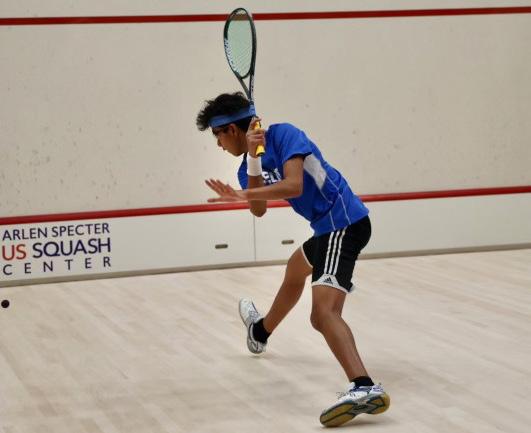
Students create girls wrestling team

In past years, boys have predominantly made up the Conestoga wrestling team. While a handful of girls join the team each season, some students have set out to form their own team this year. With the help of Physical Education teacher James Moran, some girls who wrestled in previous years are trying to make a separate team. While there is no minimum number of players required to create a team in Pennsylvania, the students hope to recruit about 10 wrestlers. Currently, the number of girls on the team is around five. The girls have put messages on the morning announcements and held meetings to advertise the new team. Sophomore Kaelyn Cole has been wrestling for over two years, and joined the Conestoga team for the first time. She learned how to wrestle at Precision Jujitsu in
King of Prussia, where she started doing martial arts. Cole was curious about the school team so she decided to focus more on wrestling, which is what made her want to join a girls’ wrestling team.
While she is hoping to have more engagement, Cole believes there are reasons why many are hesitant.
“I think just the stigma around girls doing wrestling is still pretty prevalent,” Cole said.
“But half of the struggle is just showing up. So once you join, it’s not as bad as it seems.”
Freshman Grace Stumpf played on the Valley Forge Middle School wrestling team when she was in eighth grade and now hopes for a girls team to form soon at Conestoga. Stumpf was one of the only girls on her previous wrestling team and is excited to be able to compete against other female players.
“It’s not as intimidating of a sport as you would think it
is,” Stumpf said. “When you’re surrounded by the right people it’s a great experience.”
According to both Cole and Stumpf, this year’s team has a lot of potential with their strong team bond. Both players agree that the team values hardworking members, and with help from teammates, the Pioneers can get even better. Cole believes that if you are willing to put in the effort then you will get the results you are hoping for. Cole finds that if s omeone has an interest in a sport, they should try it out.
“I think everyone is super experienced, and there’s tons of great people we can learn from,” Cole said. “Even though it’s my first year doing school wrestling, I think that doesn’t mean you can’t join. It’s just how willing you are to commit to it, and I think if you put in the work, it will turn out good.”
Girls XC places fourth at states, sets team record
Hundreds of Pennsylvania’s most talented high school runners line up at the startline. As soon as the gunshot rang, they began the five kilometers of hills and gravel.









On Nov. 1, seven girls from the varsity cross-country team competed at the PIAA Cross Country Championship at the Hershey Parkview course in Hershey. After the girls’ varsity team placed third at the PIAA District 1 Cross Country Championship, they qualified to compete in the state championship as the top five teams from District 1 qualified. At states, the team took fourth place, which is the highest the girls’ team has ever placed.
“It was definitely a really hard course, but I think we did really well,” freshman Quinn Kelly said. “Now that I know the course and I know what to expect, I’m hoping we can go again next year.”
The girls’ team finished the regular season 10-1. After qualifying for states last year, the girls started their regular season undefeated at their first two meets.
This year, the varsity girls’ team placed first overall at Central League Championships and second at the Paul Short Invitational.
Cross-country training started back in May, where runners trained two to three times a week at Wilson Farm Park.
The official season began in August, with practices consisting of distance, speed and recovery workouts. In the summer, runners focused on mileage and building leg strength through hill workouts. As the season approached, head coach Richard Hawkins started to focus on speed workouts in preparation for meets.
“After (the district championship), I cut down their mileage significantly,” Hawkins said. “We focused on the speed portion of training. Preparing for a hilly course is almost impossible right


The team will face many changes as half the members who competed at states will graduate this year, including senior and four-time state championship qualifier Alexia Tubbs.
“I’m very optimistic for (next year),” Tubbs said. “I think

Deep in focus: Junior and squash player Neil Srivastava rallies with an opponent at the Arlen Specter Squash Center in Philadelphia. He has competed in squash for
Courtesy Neil Srivastava
Anvita Mohile Staff Reporter
Ready to go: The female members of the Conestoga wrestling team pose for a group picture. This year, they have been working to create a team and have been advertising by holding meetings and posting flyers. In the future, they hope to grow the team to wrestle against female wrestlers from other schools.
Courtesy Kaelyn Cole
Ella Peng Staff Reporter
Race ready: The Conestoga girls cross country team poses for a photo after their race at the PIAA District 1 Cross Country Championship. They placed fourth in the state, and look to continue their success next season. before a championship race because I want them rested and ready to roll. I just hoped that we had practiced
Written by Kimberly Wang and Sophia Wu, Staff Reporters
Conestoga athletes continue in college
Conestoga Spor
Designed by Sophia Cui, Co-Design Editor
Conestoga students continue to play sports in college and advance their skills to new heights. Many of these students reach excellence and earn various awards that demonstrate the growth of their abilities. Along with their accomplishments, athletes learned many lessons through participating in a sport that they hope to carry beyond their athletic careers.

Eva Ong, Class of 2025
Women’s Lightweight Rowing at the University of Pennsylvania
Eva Ong is a freshman at the University of Pennsylvania who rows for the women’s lightweight rowing team. On her team, she is a coxswain, a person who does not row, but calls out steering commands in the boat. Previously, Ong was on the Conestoga girls’ varsity crew team for four years and was a bow, a rower who calls out steering commands for everyone in the boat. In her junior year, the team finished sixth at the USRowing Youth National Championships. In addition to rowing, Ong is pursuing a major in bioengineering.
Q: What is different about crew in college versus crew in high school?
A: Crew in college is much more intense. You have people who came to college (for) crew specifically, so people are very motivated, (and) kind of already know what they’re doing with the sport and want to improve themselves and do well. But in high school, it was much more relaxed. In college there's a lot of emphasis on how much work you have to do individually. When you're in high school, you just do what your coach tells you and you feel a little less motivated (than in college). I would also say in college the hours are definitely more intense. The time is really hard, but a lot of people do actually like getting up in the morning and doing the workouts.
Galvin Daly, Class of 2023
Men’s Lacrosse at Embry-Riddle Aeronautical University
Gavin Daly is a junior at Embry-Riddle Aeronautical University. He is a defender for the
the same position he played for four years on the Conestoga
In 2021, while Daly was on the Conestoga team, the team
the
tournament. Outside of playing lacrosse, Daly is majoring in aeronautical science and is a commercial multi-engine pilot.
Q: What has been your favorite moment playing college lacrosse so far?

A: Last year, we beat St. Leo (University), which is a (Sunshine State) Conference team, in the first round of our conference tournament. (It) not only was our first time ever making the conference tournament, but it was our first conference win ever in the tournament and it was our first hosted game for the (2020s). There's just a lot of firsts for the program and it was really, really awesome to be a part of the history that we made. Winning our first conference tournament game at home was something that I'll never forget.
Naomi Furman, Class of 2023
Women’s Swimming and Diving at Air Force Academy
Furman is a junior at the Air Force Academy and swims for the swim team. She swims breaststroke, which is also what she did during her four years at Conestoga, where she set the school record for 100-yard breaststroke. Additionally, she swims the individual medley. During Furman’s time in high school, the team won the Central League every year, and in her junior year, the team placed third at states. Outside of swimming, Furman is pursuing a degree in data science.
Q: How was your experience swimming at Conestoga?

teacher of the studio, selected Zhu as an assistant for each of the age-group-based teams: the 6- to 8-year-old team, the 9- to 12-year-old team and the 12 and older team.
“I love to call Angelina to help me. She’s a leader in both small and big groups. All the girls listen to her because she’s one of the best and her flexibility is top, and her dance moves are beautiful,” Lin said. “All the girls love to follow her.”
Despite the 90-minute one-way commute, Zhu chose to dance at Vivian’s Dance Studio because of its tightknit community and individualized instruction. She believes both the fellowship and cultural connection make her feel at home at the studio.
“The teacher is Chinese, and I’m Chinese, so we have a cultural similarity there. But I feel like the studio also cared about me and wanted to make sure
Lin, the founder and
I was improving,” Zhu said.
“They care about you personally, since it’s a smaller studio.”
At Vivian’s Dance Studio, Lin instructs in modeling as well as dance, although Zhu only participates in dance.
Lin teaches elements of contemporary dance, ballet, hip hop and jazz, and incorporates them into traditional Chinese dance. She believes that learning this style of dance helps students get in touch with their culture, since the majority of the studio's dancers are American-born Chinese people.
“I keep telling (the students), even if you were born here, you are Chinese. You have to know about Chinese culture,” Lin said. “And (the students) are proud to be Chinese.”
Lin feels that Zhu has a focused work ethic and will continue to improve in dance because of her passion and talent for the sport.
“She is a hardworking student, and she loves dance so very much,” Lin said. “She does a very good job every year, and spends a lot of time on it. You can tell how much she loves dance.” In the coming year, Zhu strives to strengthen her dance skills and become a more constructive mentor to other dancers. She understands that with age comes increased responsibility.
“The expectations for me have gone higher up because I’m getting older. My teacher wants me to be more of a role model, and I’m doing the best I can. I have to make sure that I am helping (the groups) instead of just telling them to do things. I want to make sure that they're actually learning stuff and doing well,” Zhu said. “For myself, I want to make sure that I am actually making improvement and am actively absorbing the teacher’s corrections.”
A: I miss our high school rivalries every year with Radnor, going to Centrals, (and) I miss the little competition. I feel like it's definitely worth it to do a sport both in high school and college, even if it's just in high school and you decide to do something else in college. I feel like I learned a lot through swimming with the team in high school, and I'm learning even more here, so I feel like it really does develop you as a person.
Clearing new heights
When I decided I wanted to partake in the Tryoneer Pioneer challenge, I immediately thought about track and field. Growing up watching legends like Sydney McLaughlin-Levrone and Brianna Rollins dominate in so many events, including hurdles, inspired me to give track and field a go. One of my good friends, senior Rheeya Sudhagar, came to mind as someone who competes in a relatively niche high school sport for the track and field team, and with nearly four years of experience, I knew I’d be able to learn the ropes of hurdling from her.
Early on a chilly Saturday morning, I met up with Sudhagar at the Conestoga track, where she warned me about the lengthy warm-up ahead. We started with a lap around the track before diving straight into dynamic stretches. I was already nervous about how my body would react as I’m not used to repeated, full-body jumping motions, but I pushed through the basics: lunges,
leg swings, high knees and hamstring scoops. Then she introduced me to track-specific movements like A-skips and straight-leg bounds. After warming up, it was time for the real challenge: learning the proper form.
Sudhagar set up a series of overlapping hurdles in a tight line to help me practice the basic stepping motion. Right away, she began critiquing my form. I had to learn how to flex the dorsal muscles in my foot to get my lead leg over the hurdle while keeping it straight.
I moved on to my trail leg, or my non-dominant left leg, which needed to sweep inward and behind me rather than hop over the hurdle like a ballerina, which was especially frustrating. She taught me to lean into my jump and naturally pump my arms with each step so the motion would feel smoother.
When I practiced getting my lead leg over the side of the hurdle, I finally started to feel more confident.
Once I had the basics down, Sudhagar encouraged me to attempt a 30-inch hurdle. First, I tried it slowly, focusing on
form, and then with a light jogging start. It took me dozens of tries to remember the proper form: flexing my foot, leaning forward, timing my final step just right before takeoff. But eventually, I cleared the hurdle. At first, I didn’t even realize I’d done it because I was so concentrated on the individual pieces of the motion, but Sudhagar excitedly cheered right away. She even filmed my next attempts in slow motion, helping me recognize habits I needed to fix, like my arms flying up like a bird mid-jump and my lack of forward lean. By the end of the session, I was honestly shocked I had managed to get over a hurdle at all. Given my lack of jumping experience, I went into the day expecting to fail. The entire process took nearly two hours, and the sheer number of repetitions needed to train each leg’s movement was humbling, but the payoff was worth it. Although most of my muscles in my legs and back were sore after, I gained a new skill and a better appreciation for the patience, technique and determination hurdlers put into every race.

Grace Hu Staff Reporter
Able assistance: Freshman Angelina Zhu helps a younger dancer adjust her legs and point her feet at a weekend dance rehearsal at Vivian’s Dance Studio. Zhu began dancing competitively with the studio when she was 10 years old.
Courtesy Angelina Zhu
men’s lacrosse team,
boys’ lacrosse team.
finished fourth at
state
Courtesy Galvin Daly
Courtesy Naomi Furman
Courtesy Eva Ong
Lauren Pinheiro Web Managing Editor
Squash sensation: Junior ranked first in U17 Squash Page 10
Girls XC places fourth at states, sets team record Page 10
Freshman competes, teaches traditional Chinese dance Page 11
Tryoneer Pioneer: Clearing new heights Page 11

Running it back: Boys basketball gears up for season
Coming off a record-breaking season, in which the boys’ basketball team won the PIAA District 1 6A Championship for the first time since 1987 and finished third in the league with a record of 17-5-0, the team looks to repeat success this season, with efforts beginning in the preseason. Over the summer, players worked on their fitness and skills at Wilson Farm Park. On Sept. 6, the team played in the Rome Runs Never Forget Classic in King of Prussia. The boys defeated Cumberland Valley High School, which placed first in the PIAA 6A conference last year, with a score of 62-46, and lost 62-57 to
Springside Chestnut Hill Academy, which placed second in its inter-academic conference, resulting in a 1-1 finish for the Pioneers.
“The Never Forget Classic was a great experience for me and my teammates,” senior and point guard Rowan Miller said. “It was good to showcase our talent and hard work over the past months (and play) against great competition.”
During the rest of September, the team played in the Coatesville Elite Showcase, the City of Basketball Love Interstate Shootout and the Big 64 at West Chester University. A 49-46 loss against Methacton High School in the Fall Delco Shootout ended the preseason in late October.
Last year, point guard Ben Robinson and wing Sam Gibbs
graduated, leaving two open spots on the starting lineup.
The remaining core players are Miller, senior Cory Hogan and senior Shane O’Brien, who averaged 13, 11 and 11 points per game, respectively, last season.
The senior trio will also serve as the team’s co-captains this year.
The roster gained senior Tygee Clark, who transferred to Conestoga from Cardinal O’Hara High School this year. Clark plays both point and shooting guard and averaged 10.3 points per game during his junior year season, finishing with 141 total points.
Many of the senior varsity players have also centered their focus on college recruitment, with Hogan recently committing to Messiah University.
“Conestoga’s basketball program has taken a more focused approach on college recruitment in the past years — a hundred percent,” Miller said. “The preseason and summer league games helped prepare myself and the team by getting us in shape, acclimating to our offense and getting comfortable with playing basketball together.”
The team had the opportunity to watch Swarthmore College’s men’s basketball team practice and observed the benefit of Swarthmore’s cohesive and connected environment.
“Watching the Swarthmore College team was really eye-opening for me. They’re more advanced, they work harder, and they’re way more organized than
most Division III teams,” Clark said. “I learned a lot just from seeing how they practice.”
Other opportunities included meeting with Class of 2009 alumnus Jake Cohen on Oct. 23, who recently retired from 12 years of international professional basketball. The team also gained professional insights from NBA referee and Phoenixville resident Mark Lindsay, who has officiated over 1,000 games in his career.
Overall, the team hopes to make a deep run to win the Central League championship for the first time since 2008.
“I’m going to be the main leader and give my 100% effort this year,” Miller said. “And, (I’ll) be as vocal as possible for my teammates to be as comfortable as possible while on the court.”
to F1, NASCAR is a stock car series. In NASCAR, the rules require teams to use a standardized vehicle frame and aerodynamics that restrict teams from designing their own cars. Without the aspect of car design and upgrades, NASCAR lacks depth compared to F1, where teams’ abilities to change their cars keeps fans tuning in each week to see if a team can make a surprise charge to the top of the grid.
For example, in 2023, McLaren introduced a major upgrade package at the Austrian and British Grands Prix that transformed its car and propelled drivers Lando Norris and Oscar Piastri to their best results of the season. The team jumped from sixth in the standings before the Austrian Grand Prix to fourth by the season’s end.
F1 races span five continents, with venues such as the Netherlands, Singapore, Brazil and the Las Vegas strip. By contrast, NASCAR’s top-level Cup Series is held exclusively in North America, which limits racing at more exciting and historic race venues around the world. The tracks themselves differ, as NASCAR mostly runs on ovals, but F1 features complex circuits with rapid speed changes and dozens of turns. The global venues and dynamic racing style make F1 more engaging and allow for more creative overtaking.
The difficulty of overtaking is largely track-dependent. At some races, such as the Sāo Paulo Grand Prix, drivers like Max Verstappen can charge from the back of the grid to place on the podium, showing that F1 still features exciting overtakes. Despite this, many people believe that overtaking is too hard and too infrequent in F1. In the current set of regulations, set to expire at the end of this season, cars have trouble navigating “dirty air,” a phenomenon

Teagan Penny and Sosi Sengal Staff Reporter and Co-Sports Editor
Nolan Talley Webmaster