by the Society of Wetland Scientists Vol. 44, No. 1 January 2026 ISSN: 1943-6254
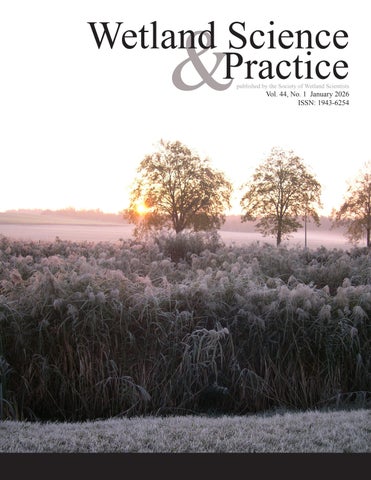
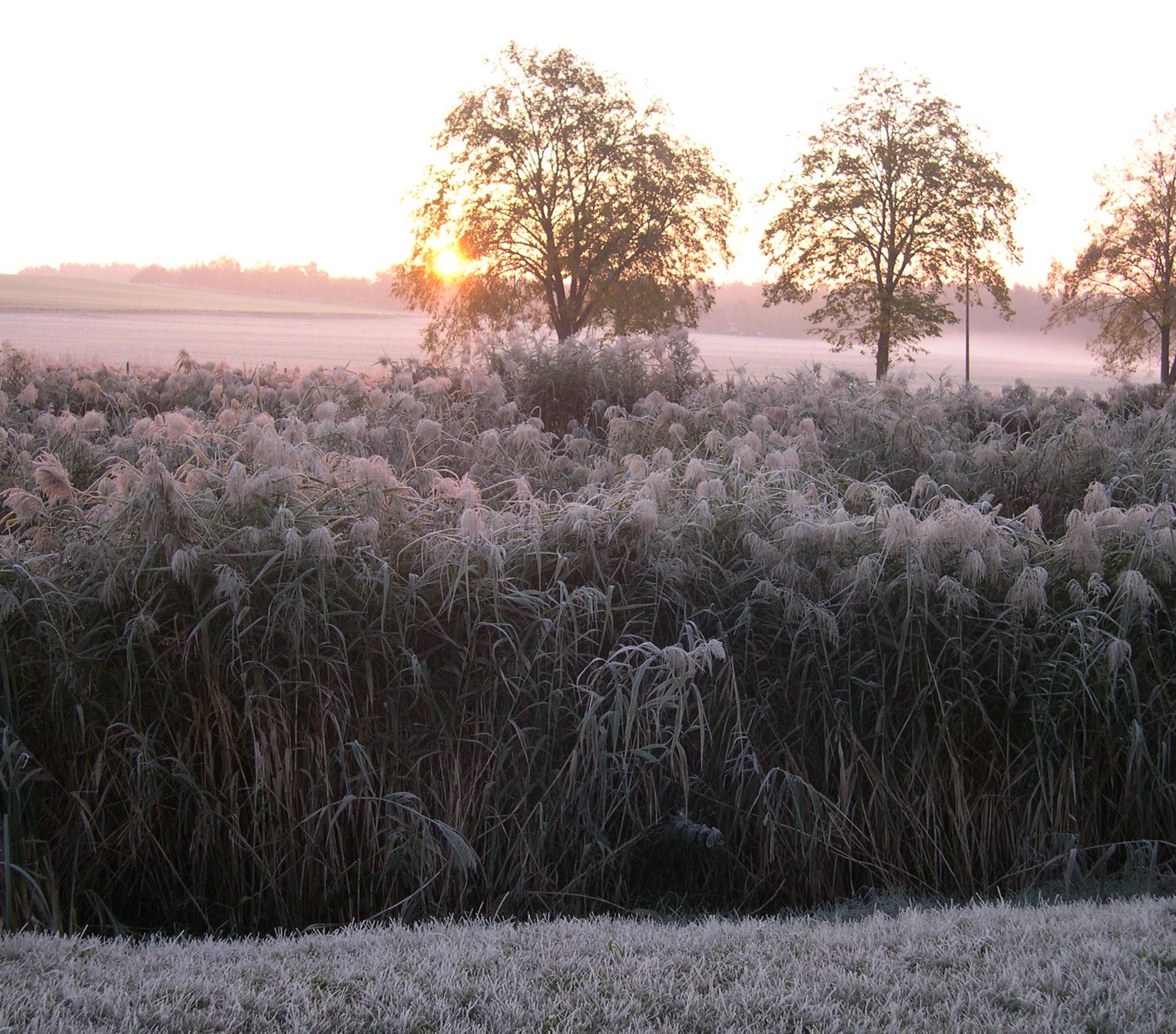
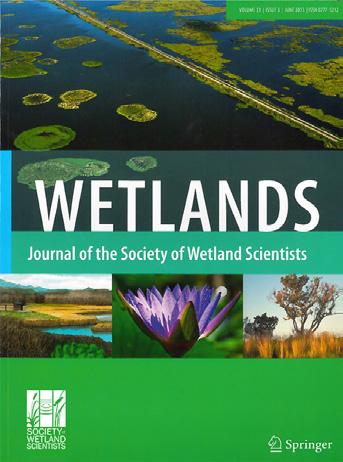
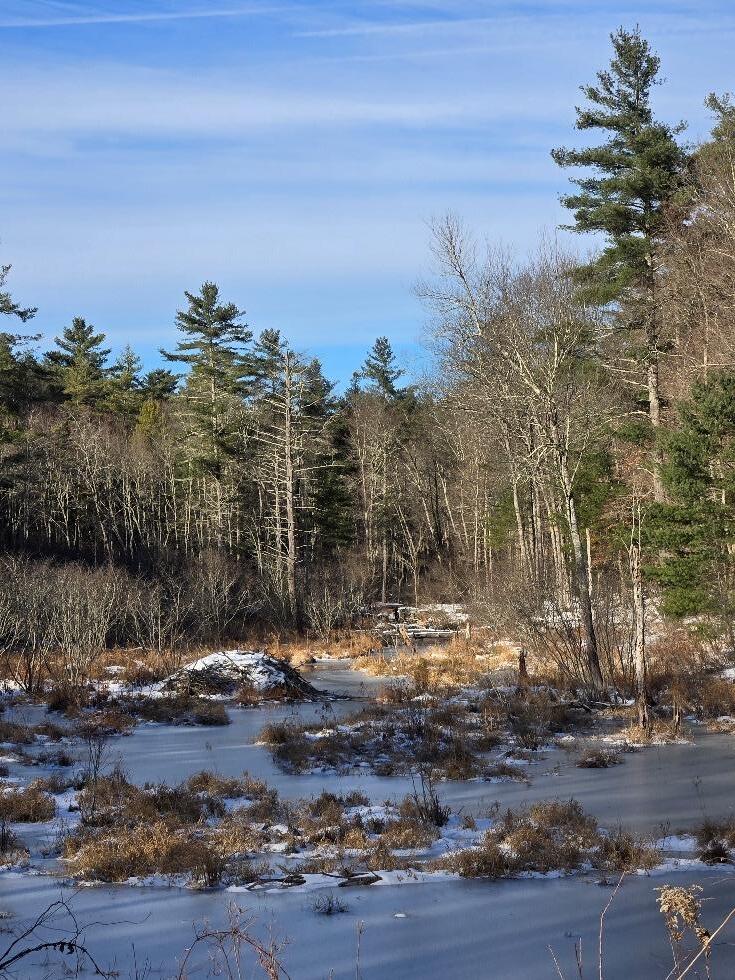
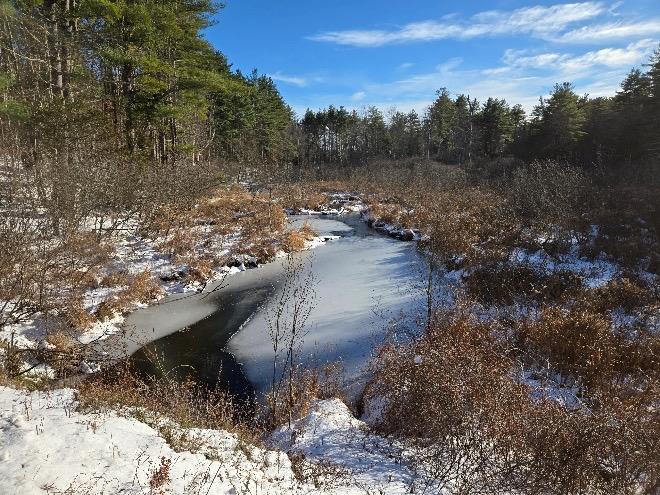
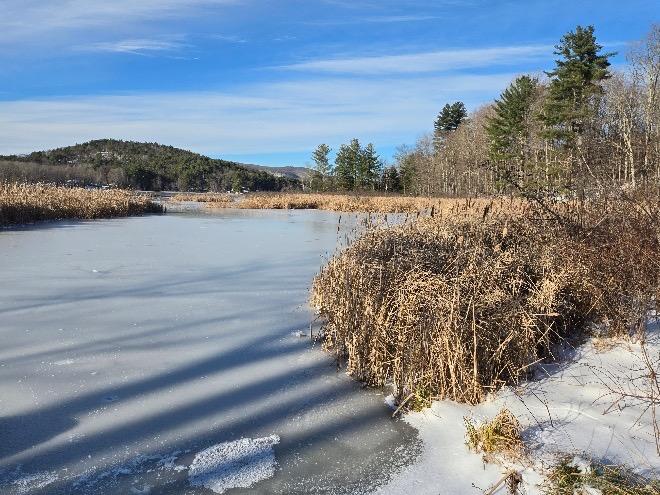
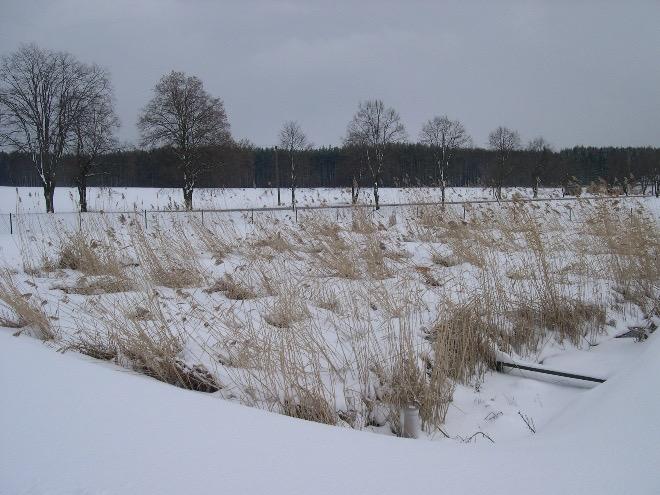
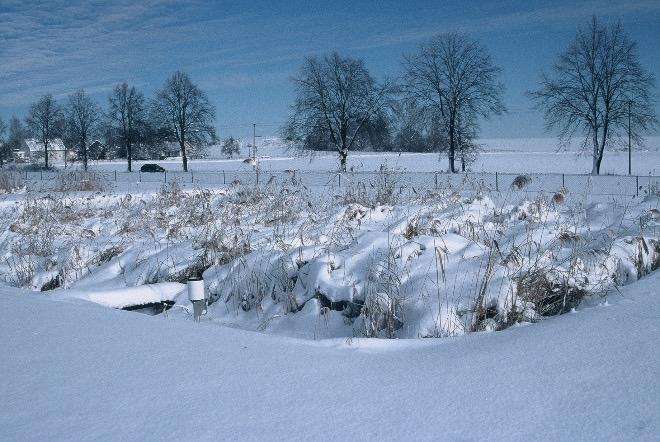
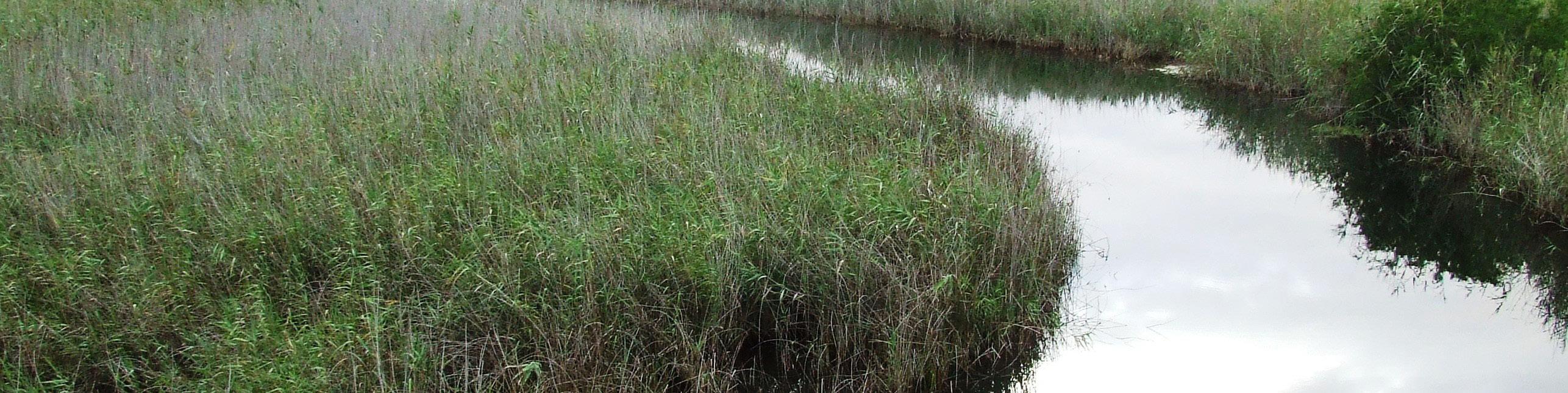
Even as the days lengthen, winter chill pervades the land. Wetlands are not immune to the chill. In more northern climates, aboveground vegetation has senesced and no green is to be seen. However, beneath the snow-covered landscape, there is activity. The constructed wetland, Slavošovice, Czech Republic, on the cover of this issue, continues its tasks during the winter chill, filtering suspended solids, breaking down organic wastes, and denitrifying nitrogen. The senesced vegetation, thick detrital layer, and even the snow cover serve to insulate the microorganisms below as they continue to purify and cleanse the water before releasing it into cold but healthy waters downstream. Before long, as the days continue to lengthen and temperatures warm, green shoots of Phragmites, Typha and other species will emerge from the constructed wetland. But let’s save that for the spring issue of WSP.
In this season’s issue, articles describing methods for evaluating wetland seedbanks—relevant for establishing desirable (and unfortunately undesirable) species—is especially appropriate with spring on the horizon. Another article, Art Meets Wetland Conservation in Chakchiuma Swamp, Grenada, MS, introduces the first-ever Artist-in-Residence at the fall 2024 meeting of the South Central Chapter in Baton Rouge, Louisiana. Emeritus Professor Arnold van der Valk is back with another piece on the evolution of
wetland science, describing the antecedent wetland scientists, limnologists Edward Birge and Chancey Juday.
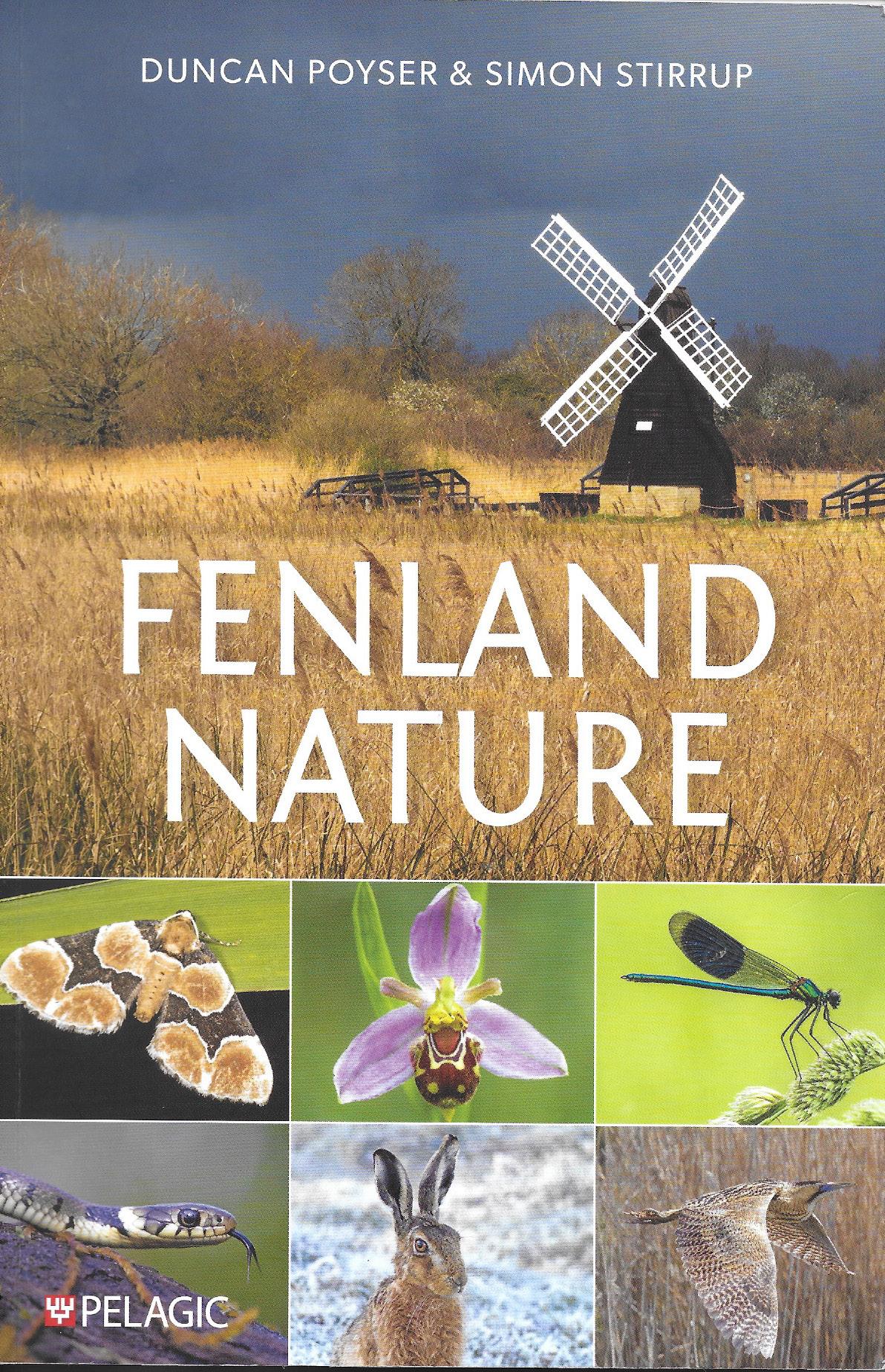
Also in this issue is a review of Fenland Nature. The book describes the natural and anthropogenic history of these UK wetlands, including their degradation through the years, and their hopes and opportunities for restoration. The Pacific Northwest chapter kindly submitted a summary of their very successful miniconference. I encourage other chapters to submit material to WSP regarding their activities to let our membership know what is afoot in the world of wetlands.
Last but not least, I encourage you to follow this link, “New WOTUS, Per SCOTUS,” (https://www.wetlands. com/wotus-epa-nov2025/), which is a well-articulated explanation of the consequences of the 2023 Supreme Court Sackett decision and how it removes federal protection for many wetlands but creates complications (and likely more fieldwork for wetland professionals) with delineating many other wetlands, especially in regions with seasonal flow. Enjoy.
Chris
Emeritus Professor and PWS
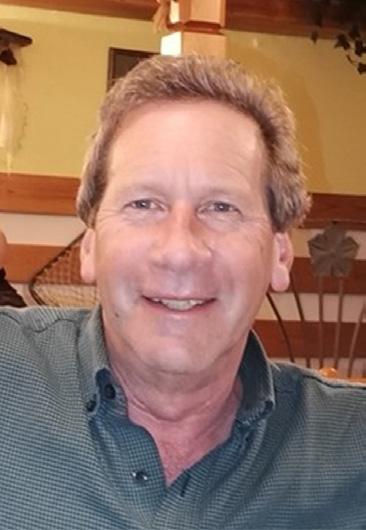
Chris Craft WSP Editor
CONTENTS
Vol. 44, No. 1 JANUARY 2026
ISSN: 1943-6254
2 / From the Editor’s Desk
4 / President’s Address
3 / SWS Governance List
6 / Webinars
6 / Webinar Sponsors
6 / What’s New in the SWS Journal - Wetlands
7 / SWS News
8 /Summary of the Pacific Northwest Chapter Mini-Conference
12 / Book Review: Fenland Nature by Duncan Poyser and Stirrup. Reviewed by R.C. Smardon.
ARTICLES
14 / Art Meets Wetland Conservation in Chakchiuma Swamp, Grenada, MS. Gary Ervin et al
20 / Using Soil Seedbanks for Wetland Mitigation Planning: Comparison of Seedbank Estimation Methods. Samuel M. Dutilly and Douglas A. DeBerry
30 / Were Edward A. Birge and Chancey Juday Antecedent Wetland Scientists? Arnold G. van der Valk
40 / Notes from the Field
43 / Wetlands in the News
44 / Wetlands Bookshelf
45 / WSP Submission Guidelines
46 / Advertising Prospectus
COVER PHOTO:
Constructed wetland in winter. Slavošovice, Czech Republic. (Photo by Jan Vymazal)
SOCIETY OF WETLAND SCIENTISTS 1818 PARMENTER ST., STE 300, MIDDLETON, WI 53562 (608) 310-7855
WWW.SWS.ORG
Note to Readers: All State-of-the-Science reports are peer reviewed, with anonymity to reviewers.
Wetland&Science Practice
PRESIDENT / Rebecca Pierce
IMMEDIATE PAST-PRESIDENT / Eric Stein, Ph.D.
SECRETARY GENERAL / Kai Rains, Ph.D.
TREASURER / Yvonne Vallette, SPWS, SWSPCP
PRESIDENT-ELECT / Andy Baldwin, Ph.D.
SECRETARY GENERAL-ELECT / Lorae Simpson
EXECUTIVE DIRECTOR / Erin Berggren, CAE
MARKETING MANAGER / Claire Barten
WETLAND SCIENCE & PRACTICE EDITOR / Chris Craft
CHAPTERS
ASIA / Wei-Ta Fang, Ph.D.
CANADA / Susan Glasauer, Ph.D.
CENTRAL / Darren Mitchell
CHINA / Ming Jiang
EUROPE / Columba Martinez-Espinosa
INTERNATIONAL / Alanna Rebelo, Ph.D. and Roman A. Canul Turriza
MID-ATLANTIC / Michael Gaul
NEW ENGLAND / April Doroski
NORTH CENTRAL / Matt Van Grinsven
OCEANIA / Maria Vandergragt
PACIFIC NORTHWEST / Shelby Petro
ROCKY MOUNTAIN / Jeremy Sueltenfuss
SOUTH ATLANTIC / Katie Bowes
SOUTH CENTRAL / Jessica Brumley
WESTERN / Richard Beck, PWS, CPESC, CEP
SECTIONS
BIOGEOCHEMISTRY / Songjie He
EDUCATION / Lynn Corliss
GLOBAL CHANGE ECOLOGY / Beth Middleton
PEATLANDS / Bin Xu, Ph.D.
PUBLIC POLICY AND REGULATION / John Lowenthal, PWS
RAMSAR / Nicholas Davidson, Ph.D.
RIGHTS OF WETLANDS / Gillian Davies
STUDENT / Jacob Doty
WETLAND RESTORATION / Daniel Kroes
WILDLIFE / Rachel Fern
WOMEN IN WETLANDS / Mo Wise
COMMITTEES
AWARDS / Amanda Nahlik, Ph.D.
EDUCATION AND OUTREACH / Jeffrey Matthews, Ph.D.
FUTURE MEETINGS / Yvonne Vallette, SPWS
GLOBAL REACH / Rebecca Woodward
HUMAN DIVERSITY / Christina Omran
MEETINGS / Yvonne Vallette, SPWS
MEMBERSHIP / Kai Rains, Ph.D.
PUBLICATIONS / Keith Edwards
WAYS & MEANS / Yvonne Vallette, SPWS
WETLAND CONCERNS / Max Finlayson
WETLANDS OF DISTINCTION / Roy Messaros, Ph.D., Steffanie Munguia, Jason Smith, PWS and Colin MacLaren
REPRESENTATIVES
PCP / Ellen Hartig
WETLANDS / Marinus Otte, Ph.D.
WETLAND SCIENCE & PRACTICE / Chris Craft
NAWM / Mark Biddle
Hello SWS community,
I hope this edition of WSP finds you welcoming in the New Year with renewed passion for wetlands and all the life that depends on them. Although I am writing this on the first day of winter in the northern hemisphere, the warm temperature outside deceives the senses. We desperately need snow!
My first order of presidential business in 2026 is to announce the selection of our organization’s first Executive Director (ED). After our dedicated search committee interviewed several qualified candidates, they recommended one who was unanimously approved by the Executive Board. With great pleasure, I welcome Marla Stelk as the Society’s first ED. Many of you in the United States already know Marla as a fierce leader in the wetland community at the helm of the National Association of Wetland Managers (NAWM). After eight years as NAWM’s ED, Marla comes to us with many successes under her belt bolstering membership, engagement, revenue, and communication. At NAWM, she advocated for wetland habitats and their proponents in the U.S., and we are excited to bring her energetic leadership into our international SWS wetland community. Marla’s first day as the SWS ED is February 1. Please give her a warm welcome if you interact with her in the coming months.
SWS leadership and staff have been working on several impactful activities during the last months of 2025. Notably, we switched to a new association management system called Your Membership, which significantly improves many aspects of our membership database and communication. The new SWS website has features for chapters, sections, and committees to share documents, discuss topics in a forum, and more easily update membership information. I encourage you to explore these new tools and provide feedback.
In December, the SWS Board of Directors approved the 2026 budget, which was no small feat. A significant part of the budget is devoted to the annual meeting that our committees are busy planning. Taking place in New Orleans from June 16-19, the annual meeting theme is
Bogs to Bayous: Wetland Science, Policy, and People. The event is gearing up to be an excellent week in an exciting city. I hope many of you have the opportunity to attend the annual meeting.
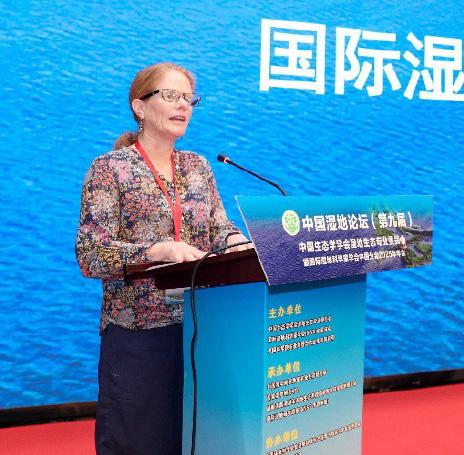
In November, I was honored to deliver one of the opening remarks at the 9th China Wetland Forum in Changsha, China. While I could not understand the conference presentations, building relationships with the SWS China Chapter leaders, researchers, and students was a huge benefit of traveling to the event. It is impossible to put a value on face-to-face connections, especially when they are with people of different cultures. My hope is that 2026 brings new connections for members, whether at a chapter social event, at our annual meeting, or in a section’s discussion forum.
In my last WSP message, I asked how SWS leadership can ensure our organization remains relevant and strong. We are finalizing our 2026–2030 strategic plan, which builds on several themes regarding organization relevancy and member, financial, and structural strength. Our new ED will greatly help implement the goals. Regardless of the details, the strength of SWS is in its people. We would not have an organization without you. I am enthusiastic about our future.
Warm regards,
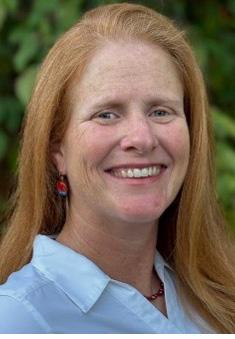
Becky Pierce President, SWS piercer303@gmail.com
Becky Pierce President
NATURE-BASED SOLUTIONS
As one of the world’s leading planning, engineering and consulting firms, Michael Baker International believes in the power of naturebased solutions to reduce risk and improve infrastructure for a more resilient and sustainable future.
SOLUTIONS
For more information, contact Richard Beck, PWS, Michael Baker Practice Executive P: 949-855-3687 E: rbeck@mbakerintl.com
Constructed Wetlands
Dune Rehabilitation & Restoration
Ecosystem Restoration
Green Roofs & Rooftop Gardens
Habitat Preservation & Restoration
Hybrid Green-Gray Solutions
Living Shorelines
Mitigation Offsets & Banking
Phytoremediation
Recreational Resources
Regulatory Processing
Riparian Habitat
Creation & Restoration
Shoreline Restoration
Stream & Floodplain Restoration
Watershed Restoration
Wetland Delineation
PROUD SUPPORTER OF THE SOCIETY OF WETLAND SCIENTISTS
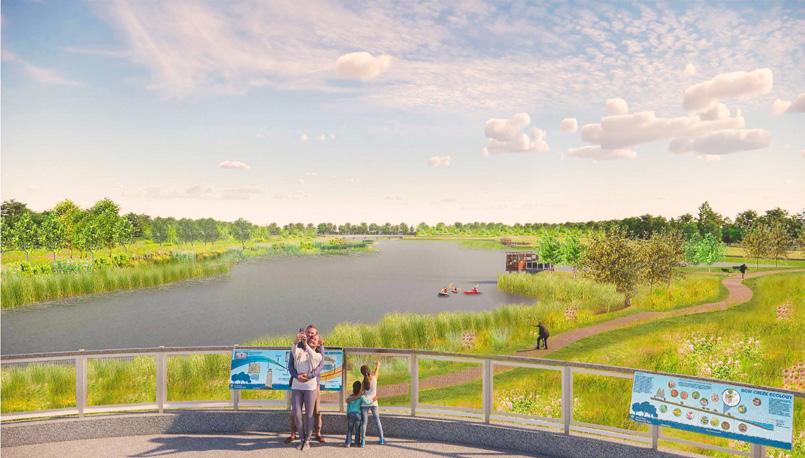
Bow Creek Stormwater Park Flood Mitigation Improvements / City of Virginia Beach, Virginia
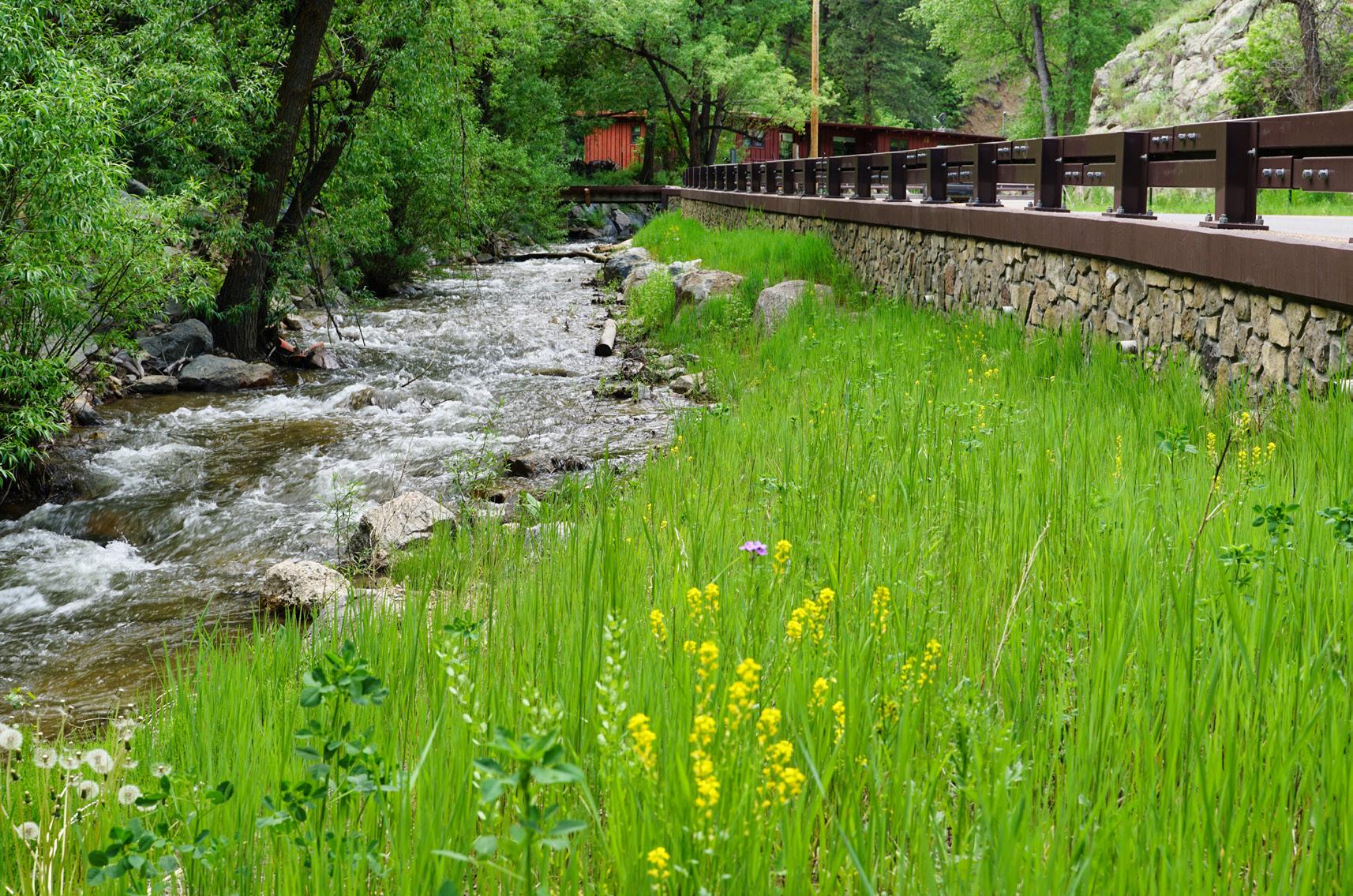
Boulder County Flood Recovery and Ecosystem Restoration / Boulder, Colorado
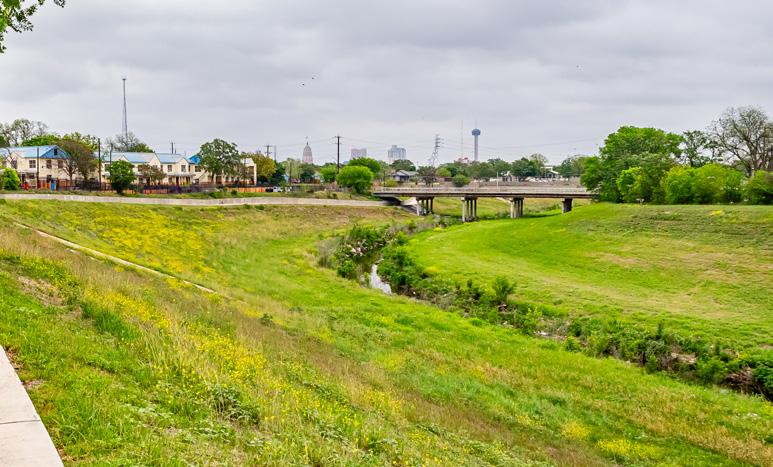
Westside Creeks Restoration / San Antonio, Texas
Online registration is available until: 2/19/2026
Topic: SWS February 2026 Webinar: Regulated Wetlands Beyond the WOTUS (link)
The presenter: Shaun McCoshum
Shaun McCoshum is a Professional Wetland Scientist, certified Senior Ecologist and Wildlife Biologist, and currently works for Westwood Professional Services. He has nearly a decade of experience working in energy development and over 20 years working in restoration and conservation.
Academically, he has earned a bachelor’s degree in biology, master’s degree in botany, and PhD in zoology. His professional career has included pollinator research and habitat conservation across the country. In the past decade he has helped energy development companies understand regulations, avoid regulated wetlands, and obtain appropriate permits when avoidance was not feasible.
In addition to Shaun's professional career, he has also published two books on creating habitat, authored scientific papers in a multitude of disciplines, and uploaded more than 51,000 observations to iNaturalist.
Description
Wetlands fall under a wide range of agencies’ jurisdiction across the United States. Federally, wetlands and waterways are regulated by the USACE. However, when federally-protected species are present in wetlands, the USFWS also has oversight. State level agencies also exist that may have oversight on waters, wetlands, and state-protected organisms that might be present.
For developers and consultants, identifying which agencies may have jurisdiction and coordinating projects can be confusing. This presentation will walk through some of the different definitions for wetlands and similar regulations in multiple states that provide jurisdiction over wetlands. Real world cases will also be reviewed where different agencies had regulatory oversight on wetlands deemed non-jurisdictional by the USACE.
More information here: https://www.sws.org/webinars/
Latest from the Journal Wetlands
To find the latest technical articles on wetlands from our companion journal Wetlands, go to https://link.springer.com/journal/13157.
Bogs to Bayous: Wetland Science, Policy, and People
Save the Date for the 2026 Annual Meeting in New Orleans!
The Society of Wetland Scientists is excited to announce the next annual meeting will be held in New Orleans, Louisiana, from June 16-19, 2026. Registration will open soon. Learn more at https://sws.org/page/ annualmeetings.
Executive Board Nominations Due February 23, 2026
Nominations for President-Elect and Treasurer-Elect are due before the end of the day on Monday, February 23, 2026. You can nominate a fellow SWS member in good standing or even self-nominate!
Election outcomes will be announced at the 2026 Annual Business Meeting. As standard, the new President-Elect will immediately join the Executive Board. The Treasurer-Elect will shadow the current Treasurer for one year and then join the Executive Board in 2027. The President-Elect will become President in 2027, and Past-President in 2028.
If you would like to nominate someone, please contact Nominations Committee Chair Eric Stein at erics@ sccwrp.org.
Society of Wetland Scientists,
Pacific Northwest Chapter Conference
Woodinville, WA
October 16-17, 2025
SUMMARY
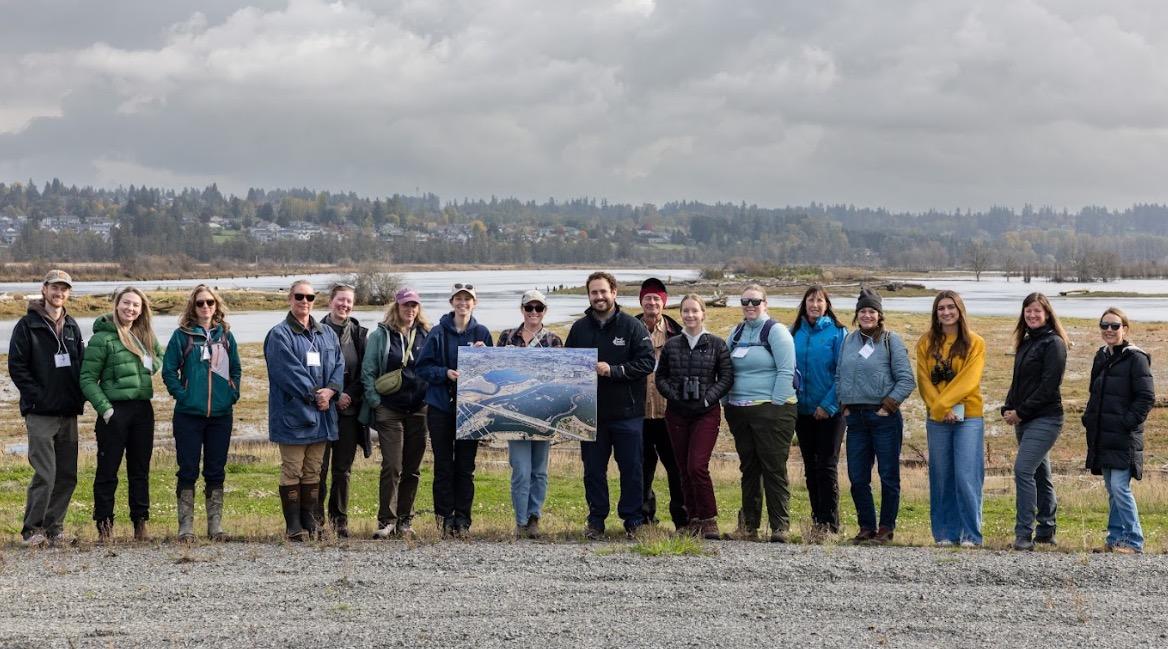
The 2025 Pacific Northwest (PNW) Chapter Miniconference was held in Woodinville, Washington, on October 16-17, 2025, and it was a huge success! More than 150 registered guests, a full docket of speakers and posters, and generous sponsorship came together for an unforgettable day of discussing and celebrating the science and future of wetlands in the Puget Sound region.
Speakers from the Lummi Nation, Tulalip Tribes, King County, Beavers Northwest, and the Washington Department of Ecology and consultants from Northwest Ecological Services shared new research, cutting-edge methods, and developing trends with SWS members gathered at the beautiful Brightwater Center in Woodinville.
This year’s sponsors included GOLD: Jacobs, SILVER: ESA, Herrera, and Parametrix, and BRONZE: Atlan Stormwater, Atlas, Psomas, and Wolf Water Resources. Their generous support allowed us to provide 21 students with free registrations and 16 early career professionals with reduced registration fees; refreshments and lunch catered by Design Perfect Catering; and a swanky happy hour reception with appetizers from Green Apple Events & Catering. We were happy to support two local WMBE catering companies and the food was delicious!
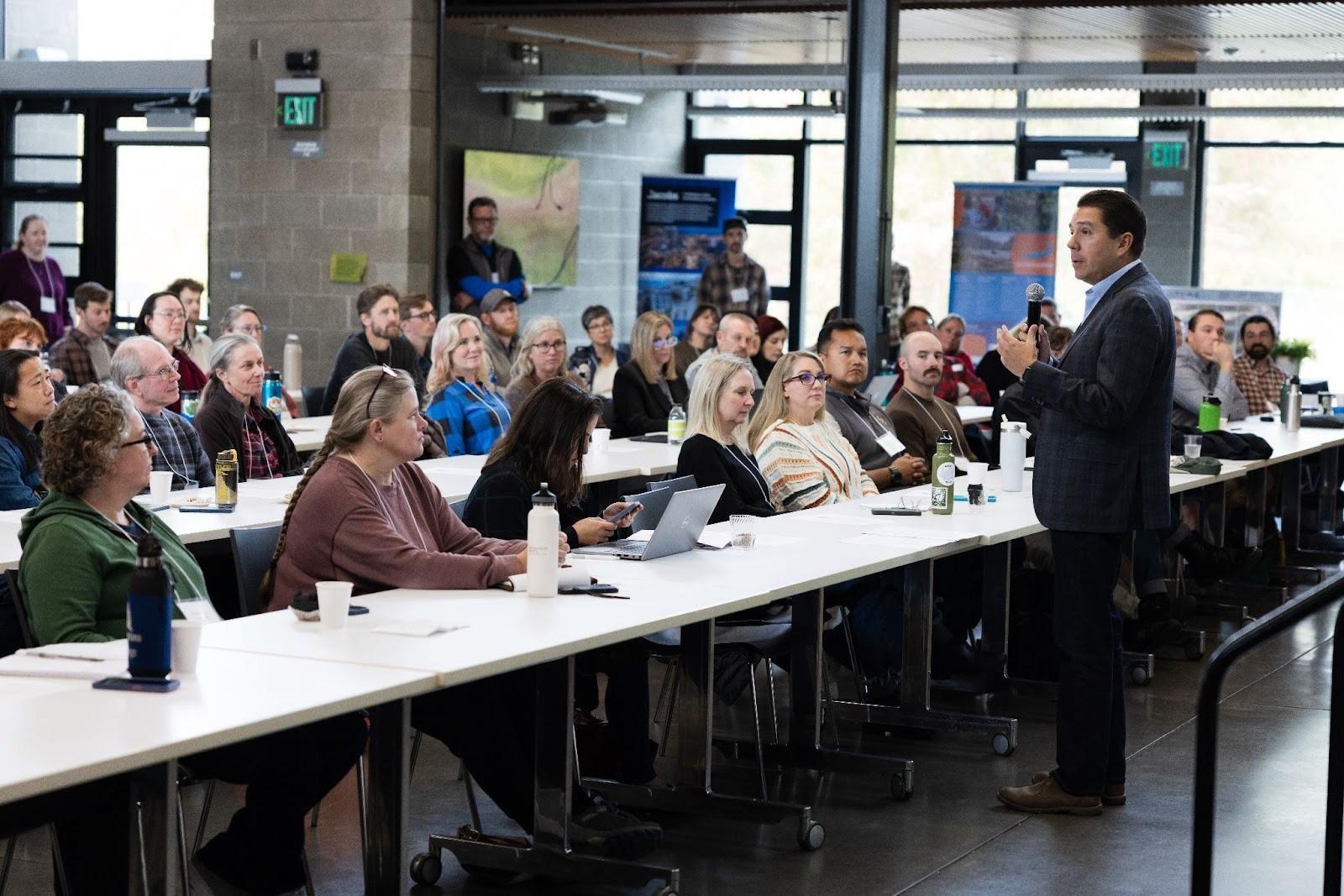
Director Casey Sixkiller of the Washington State Department of Ecology delivered the keynote speech. (Photo: @TannerScholten, Tanner Scholten Photography)
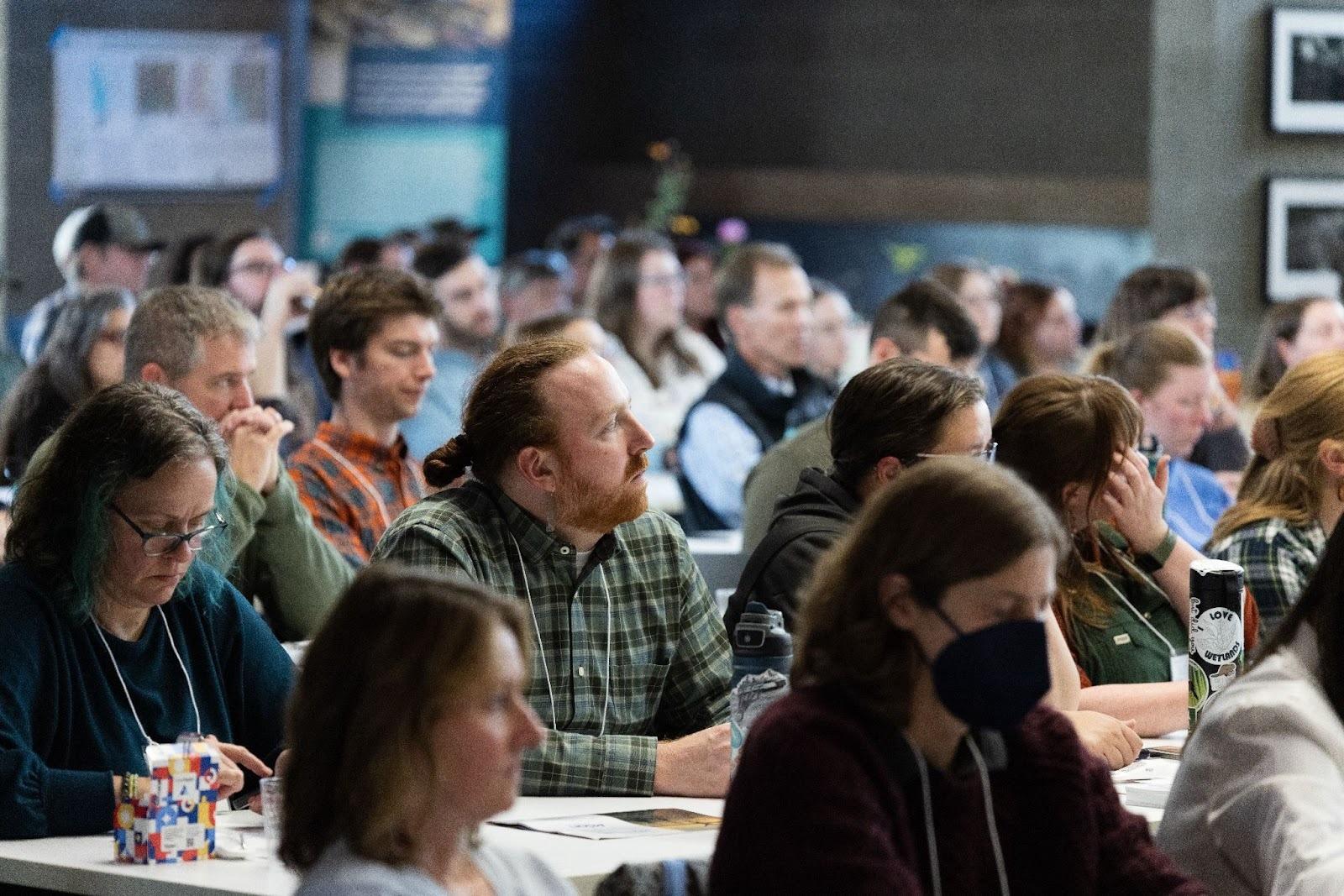
SWS-PNW Chapter members listening to a presentation. (Photo: @TannerScholten, Tanner Scholten Photography)
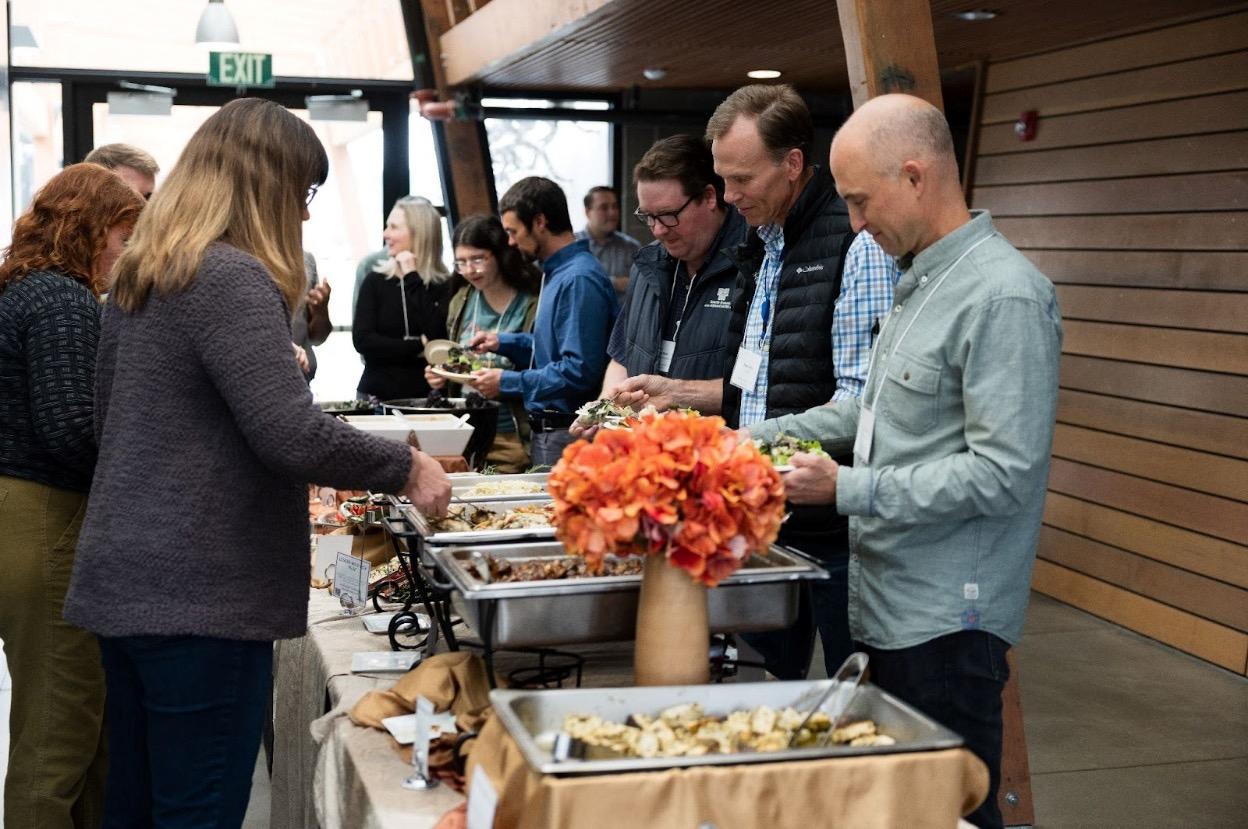
PNW Chapter members enjoying a delicious catered lunch from Design Perfect Catering. (Photo: @TannerScholten, Tanner Scholten Photography)
The day of presentations and networking at the Brightwater Center was followed by a day of five concurrent field trips in the north Puget Sound. Attendees visited mitigation banks, estuary restoration projects at the mouth of the Snohomish River, and a diverse wetland complex at the University of Washington-Bothell. We were treated to a beautiful, sunny, and dry PNW autumn day! Field trips included:
• Little Bear Creek Advanced Mitigation Site, Snohomish County, Zan Roman, Zan.Roman@ co.snohomish.wa.us
• Breach to Bloom: Qwuloolt 10-year Milestone, Tulalip Tribes of Washington, Michelle Bahnick, mbahnick@tulaliptribes-nsn.gov
• North Creek Wetland at the University of Washington-Bothell, Dash Paulson, dashpaulson@gmail.com
• Snohomish Basin Mitigation Bank, Habitat Bank, Zach Woodward, zachary.woodward@ habitatbank.com
• Blue Heron Slough, Port of Everett, Jacob Kirschner, jacobk@portofeverett.com
The board is planning several events in 2026 to support our membership, including a gathering in early February to celebrate World Wetlands Day; events in May to celebrate American Wetlands Month; and the next chapter conference in October. Questions and inquiries can be directed to the SWS-PNW Chapter board at pnwchapter.sws@gmail.com.
Field trip to Blue Heron Slough with Port of Everett host, Jacob Kirschner. (Photo: @TannerScholten, Tanner Scholten Photography)
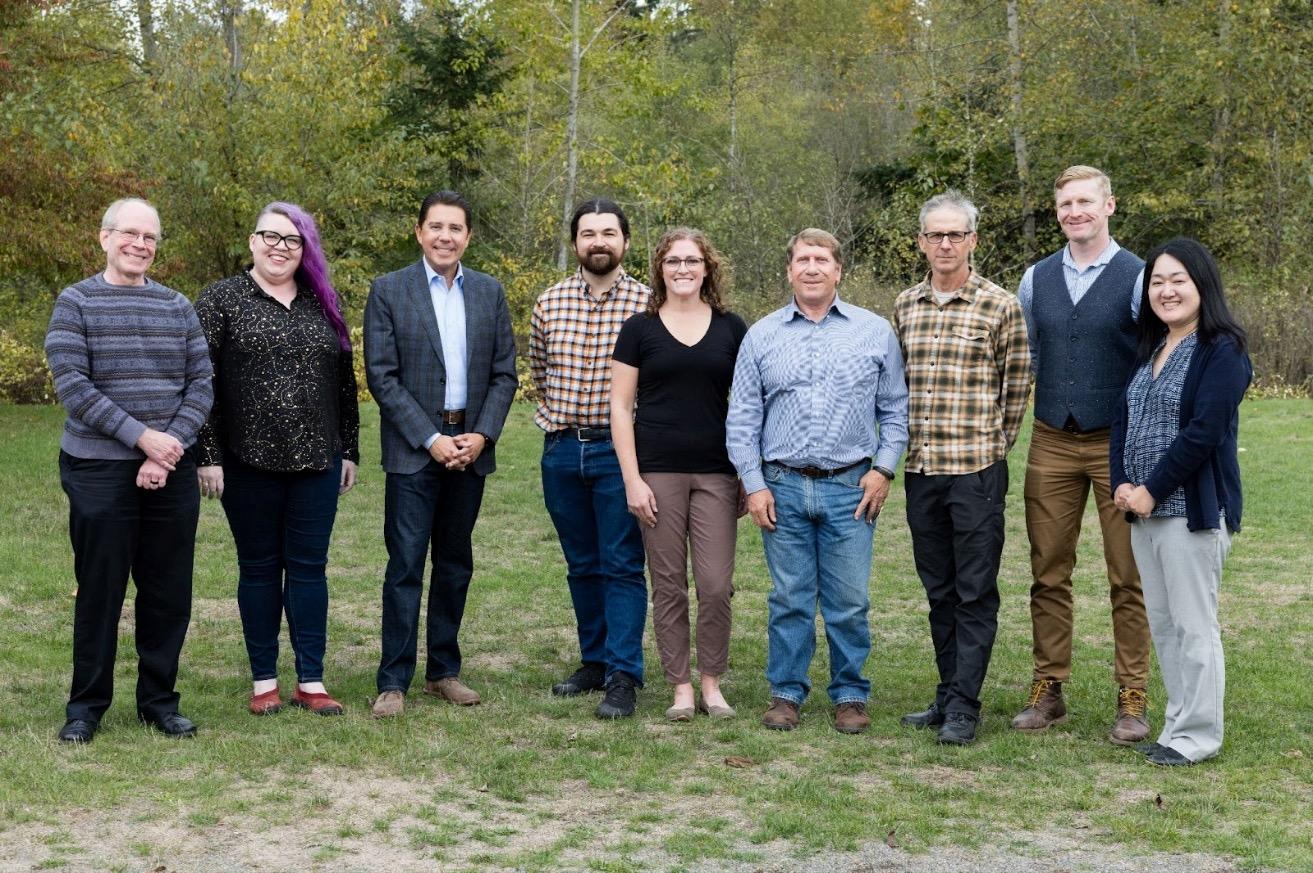
The SWS-PNW Chapter Board with keynote speaker. From left to right: Pat Togher (Psomas/Board member-at-large), Bri Hines (Parametrix/Program Vice President), Casey Sixkiller (keynote speaker and Director of Washington Department of Ecology), Dash Paulson (Compass Ecospatial/Board member-at-large), Shelby Petro (Parametrix/President), Doug Gresham (Department of Ecology/Co-secretary), Josh Wolzniak (Parametrix/Immediate Past President), Nate Hough-Snee (Meadow Run Environmental/Executive Vice President), and Maki Dalzell (HNTB/Co-secretary). (Photo: @TannerScholten, Tanner Scholten Photography)
Many of the best moments at this year’s conference were captured by Tanner Scholten, who has generously provided high resolution images of the event at his website https://www.tannereli.com/sws25-thursday
Visit his page to see more moments from the conference! Feel free to use his photos but please give photo credits to @TannerScholten or Tanner Scholten Photography.
PRESENTATION ABSTRACTS
Ellie Aosyed and Collin Van Slyke, Northwest Ecological Services ellie@nwecological.com, collin@nwecological.com
2025 Remote Sensing of Wetlands within the Lummi Nation: Results and Application for Ecosystem Services Assessments.
Northwest Ecological Services, LLC remotely mapped potential wetlands throughout the Lummi Reservation in order to evaluate wetland Ecosystem Services on a watershed scale to provide the Lummi Nation a tool for
land use planning and identifying wetland protection/ restoration priorities.
Joe Mouser, Beavers Northwest joe@beaversnw.org
Beaver Coexistence
Beavers are our ecosystems' natural engineers and possess the ability to create their own habitat by building dams that slow down and spread out water. In doing so, they build and expand wetland habitats, which improve biodiversity, water quality, and water storage.
Adam Crispin, PWS adam.t.crispin@gmail.com
Using Frog Embryo Teratogenesis Assay-Xenopus laevis (FETAX) to Study Metals and Temperature as Multiple Stressors in Cascades Frog (Rana cascadae)
To explore the relationship between Cascades frog (Rana cascadae) survival, metals, and climate, a twophase study was conducted to evaluate metals and temperature as multiple factors, and how they may
affect aquatic environments (such as high alpine wetlands) with breeding populations of Cascades frog. In Phase I, the goal was to identify and select aqueous metals present in mountain wetlands and ponds during the Cascades frog breeding season to understand potential exposure levels. During this phase, surface water grab samples were collected, and stabilized liquid membrane devices (SLMDs) deployed. The metals found in the surface water samples and the SLMDs were used to inform and select metals to test in Phase II, where laboratory toxicity testing of copper (Cu), nickel (Ni), and zinc (Zn) was conducted at 20.0°C and 22.5°C. Toxicological endpoints included: time to hatch, time to mortality, length, percent malformed, and percentage survival. The test organism was the locally abundant species, the northern red-legged frog (Rana aurora), which was used as a surrogate for Cascades frog.
Teresa Opolka, Washington State Department of Ecology topo461@ECY.WA.GOV
Ecology’s New Proposed State Waters Alteration Permit
The Department of Ecology is beginning the rulemaking process for a new rule to establish a formal permitting program for projects that could alter or impact wetlands, streams, and other state waters.
Michelle Bahnick, PWS, Tulalip Tribe of Washington mbahnick@tulaliptribes-nsn.gov
Breach to Bloom: Qwuloolt 10-year Milestone
The Qwuloolt, meaning "marsh" in the Lushootseed language, is an approximately 400-acre estuary restoration project in the Snohomish River Estuary. Historically, the Qwuloolt area was characterized by tidal channels, mudflats, tidal marshes, scrub-shrub wetlands, and swamp forests. However, the Qwuloolt project area had been cut off from the natural influences of the Snohomish River and Salish Sea tides for over a hundred years by levees, drained by ditches instead of stream channels, and characterized by a monoculture of invasive reed canary grass instead of native shrubs and grasses. Through the cooperation of many partners, the levee was breached on August 28, 2015, returning the historical and natural influences of the river and tides to the Qwuloolt and today provides much-needed
rearing habitat for young salmon species as they grow and prepare for their journey to the sea. This talk will discuss how the Qwuloolt project came to be and what we've learned 10 years post-breach.
Jared Busen, Tulalip Tribe of Washington jbusen@tulaliptribes-nsn.gov
Wetland Ecosystem Services Protocol - Tulalip Tribe development
The Tulalip Tribe is adapting the Wetland Ecosystem Services Protocol specifically for use in on reservation and in Western WA. Currently no WA version exists; we are adapting the Idaho, Alaskan, BC and Nez Perce program.
Sarah Spear Cooke, SPWS, Cooke Scientific cookess@comcast.net
Global Climate Change and Restoration in the PNWAdapting to a Warmer Drier Climate When Choosing Plants for Restorations in Washington State. 2025 project update.
The 2025 project update on the impacts of global climate change in the Puget Sound region’s native forests and plant communities and proposed species for restoration plans to prepare for a changing climate.
Shelby Petro, PWS, Parametrix and SWS-PNW Chapter President shelby.petro@gmail.com
Exploring Estonia: Cycle Tour through Estonia’s bogs and the INTECOL Wetlands & SWS-Europe Chapter Conference, June 29-July 4, 2025
Brief overview of the INTECOL Wetlands & SWSEurope Chapter Conference, June 29-July 4, 2025, and cycle tour around the country exploring coastlines, forests, islands, and bogs. More details of the adventure in the PNW Chapter Fall 2025 Ooze Newsletter.
FenlandNature
By Duncan Poyser & Simon Stirrup, published by Pelagic Publishing, 2025
Review by R. C. Smardon
In North America, we usually distinguish wetland fens as being more nutrient rich than bogs and further distinguish rich versus poor fens in this way. In the UK, there are many areas of historical fen landscapes underlain by calcareous deposits. In the book Fenland Nature, authors Poyser and Stirrup present a natural history account of an important UK landscape. The book focuses on the fens landscape within the UK counties of Cambridgeshire, Lincolnshire, Norfolk, and Suffolk.
It is hard to categorize this book. It is part natural history, cultural history, wetland ecology, and natural science history. There are other recent books that focus on the development history of the fens landscape (Ash 2022, Boyce 2020, Rotherham 2013), but none of these books have the range of content as Fenland Nature. The book is richly illustrated by Stirrup’s photographs plus the artful writing style of the authors in general. Both Poyser and Stirrup have long personal histories of living near and working within the fens landscape. The book contains three sections: 1) an overview of the fens landscape creation and status, 2) a season-by-season accounting of the fens landscape ecology, and 3) the current status and uncertain future of the fens landscape.
In the first part of the book, the authors summarize the natural and human ecology history of the fens. The first chapter traces the fens history from early Paleolithic and Mesolithic to current times. It ends with a narrated journey across the fens landscape to illustrate its current ecological health status. The second chapter includes the history of fens and the authors’ description of the current state as “an ecological catastrophe” as human encroachment led to hydrologic alteration and conversion to agriculture with loss of wetland habitat and wetland dependent species. In the third chapter, the authors describe in detail the fens ecology with subsections addressing wetland flora, fungi, birds, mammals, fish, reptiles, amphibians, invertebrates, crustaceans and mollusks. The authors describe what remains of the agricultural dominant pre-drained fens
and include detailed descriptions of several fens in the fourth chapter. In the fifth chapter, the authors describe several large-scale habitat creation projects for four of the fens.
The middle part of the book is entitled “Seasonal Study” and is the largest descriptive portion. It is really a phenological accounting of periodic events in biological lifecycles and how these are influenced by seasons. The authors present this personal experiential accounting starting with winter and then progressing through spring, summer, and fall. The in-depth and experiential-based narrative provides the reader with an appreciation of seasonal variation of fens ecology as well as the seasonal usage patterns of the wildlife populations.
The last section of the book contains two chapters: “Now and Next” and “the Fens: An Uncertain Future.” These chapters summarize the current ecological health of the fens as well as the innovations in wetland restoration occurring within some fen landscape areas. The end of the book contains a bibliography of fen books, films, journal articles, and reports as well as lists of all the wetland species mentioned in the book plus the book’s index.
What is striking to this reviewer is the detailed accounting of agricultural development and hydrological alteration of the fens over time. The amount of wetland ecological science of the fens is impressive as well as the richness of species utilizing the fens seasonally, even given the altered condition. In North America, many wetland ecologists are skeptical of the habitat value of Phragmites Communis, but these species seem to fill an important habitat function within the fens landscape.
The other review commentary that needs highlighting is that the quality of the authors’ writing is scientifically accurate but almost waxes poetic where the authors are relating their fens landscape experiences. This prose, augmented by the excellent color photography, provides the reader with a rich appreciation for the fens
landscape. This book is an excellent source for those interested in UK fens ecology and wetland science.
References
Ash, E. H. 2022. The Draining of the Fens: Projectors, Popular Politics, and State Building in Early Modern England. Baltimore, MD: Johns Hopkins Press.
Boyce, J. 2020. Imperial Mud: The Fight for the Fens. Dublin, Ireland: Icon Press.
Poyser, D. and Stirrup S. 2025. Fenland Nature. London, UK: Pelagic Publishing. https://doi. org/10.2307/jj.29126461
Rotherham, I. 2013. The Lost Fens: England’s Greatest Ecological Disaster. Gloucestershire, UK: The History Press.
Art Meets Wetland Conservation in Chakchiuma Swamp, Grenada, MS
Gary Ervin,1 with Jacob F. Berkowitz,2 and Laura Duffie3
“I’ve found my people!”
This was Robin Whitfield’s reaction to the enthusiasm for wetlands that she encountered at her first SWS meeting in October 2024. Robin was invited as our firstever Artist-in-Residence at the fall 2024 meeting of the South Central Chapter in Baton Rouge, Louisiana.
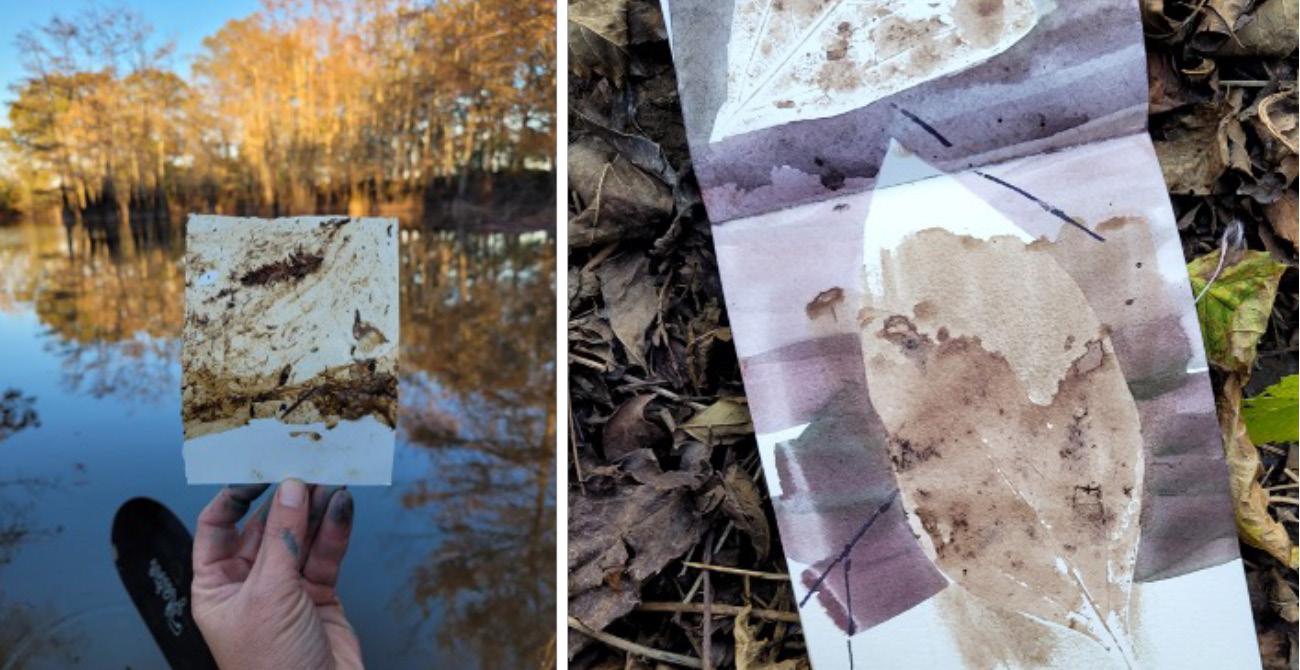
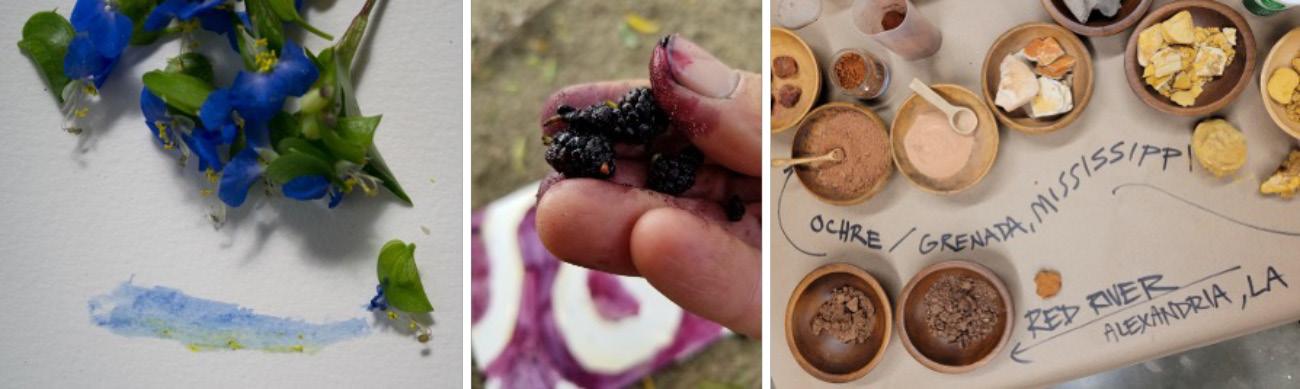
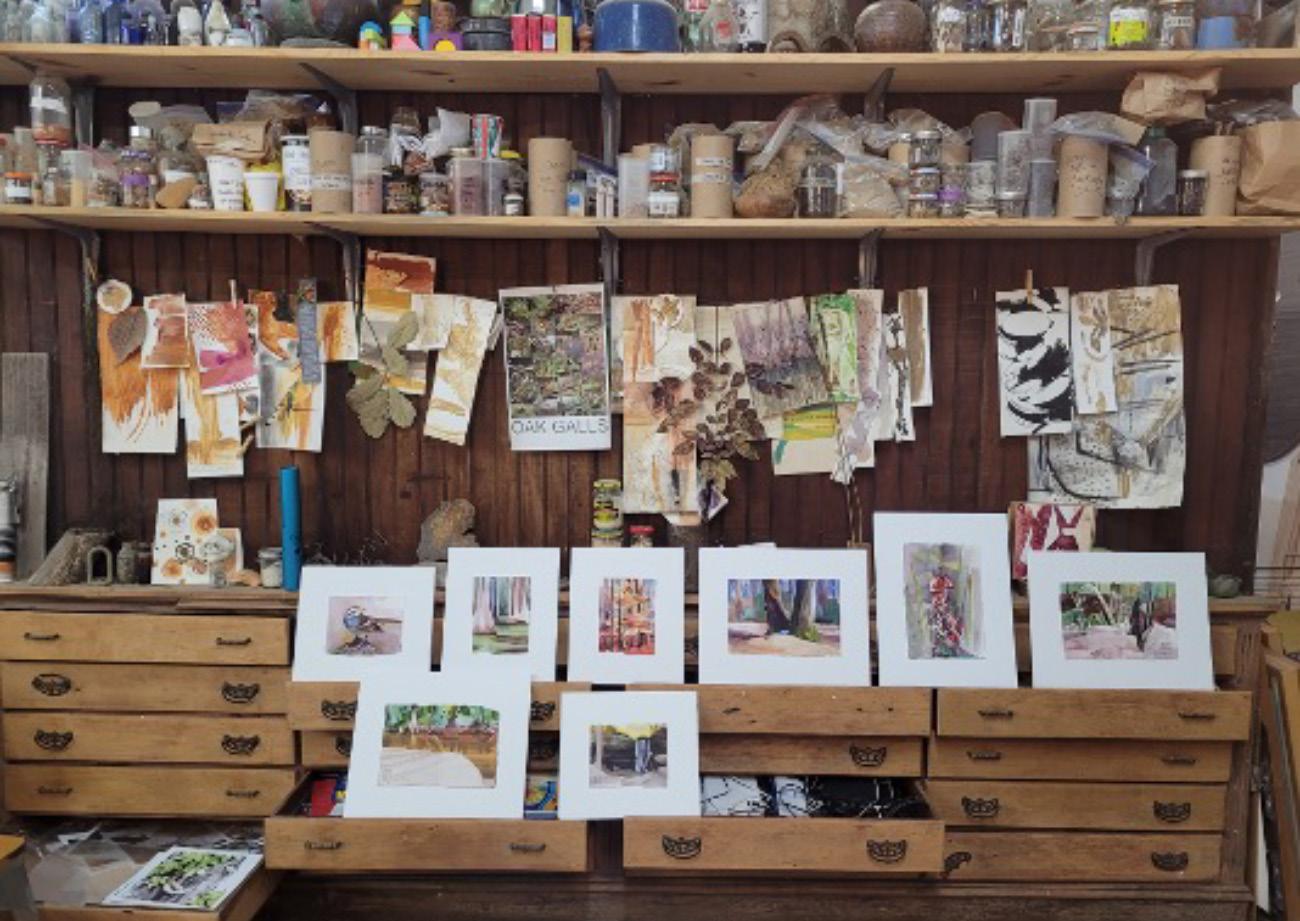
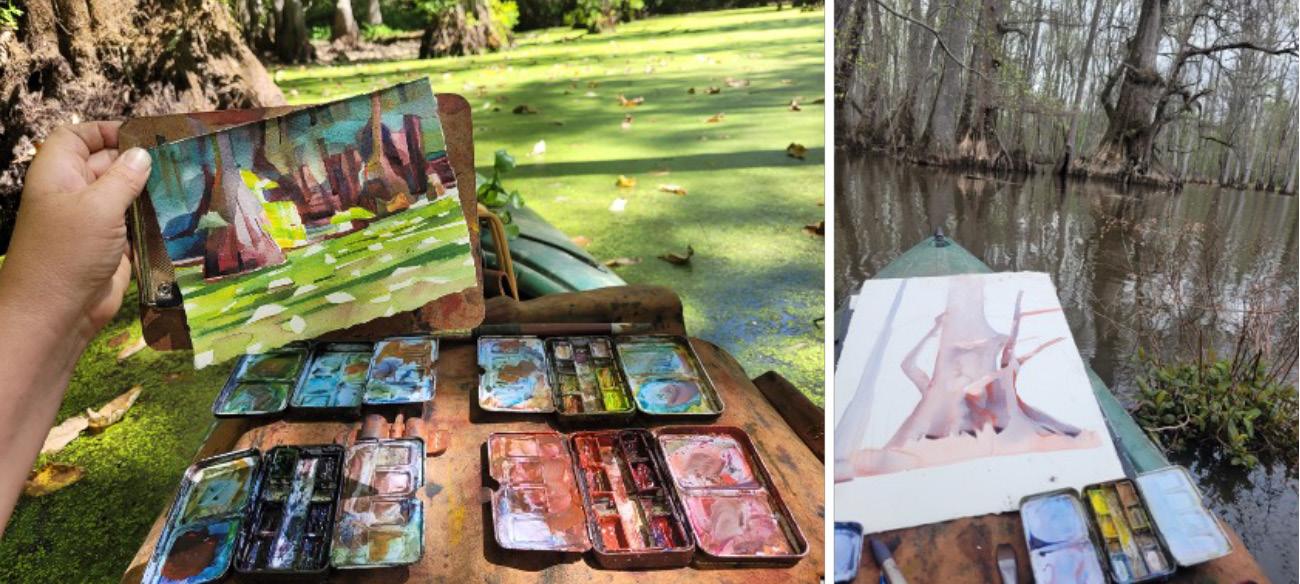
Robin earned her bachelor of fine arts degree in 1996 from Delta State University in Cleveland, MS, and right away set up shop in Grenada, MS, where she still maintains a private art studio. Robin draws inspiration for her watercolor paintings of wetland scenes from an approximately 300-acre wetland that lies a short walk north of her studio in downtown Grenada. In fact, Robin does much more than receive inspiration from this wetland; her paintings are created with natural pigments taken directly from the wetland. For example, she might use iron oxides for browns and reds, fruit of pokeweed or elderberry for purples, goldenrod flowers for yellows, or leaves of pokeweed for greens.
Robin developed such an attachment for this wetland that she organized a group of local volunteers, Friends of Chakchiuma Swamp, in 2009 to promote conservation of the wetland. The name “Chakchiuma” is meant to honor the native peoples of the Yalobusha River watershed, where Grenada and the wetland are located. An early result of Robin’s actions was the swamp’s designation as an Outstanding Natural Area by the Mississippi Natural Heritage Program in 2009. In 2018, Robin formally established the Friends of Chakchiuma Swamp as a nonprofit organization.
The following year, the Friends group and the Chakchiuma Swamp faced a major challenge: the City of Grenada listed the trees of the Chakchiuma Swamp for sale to raise funds for the City budget. Robin and the Friends undertook an effort to raise funds to adopt
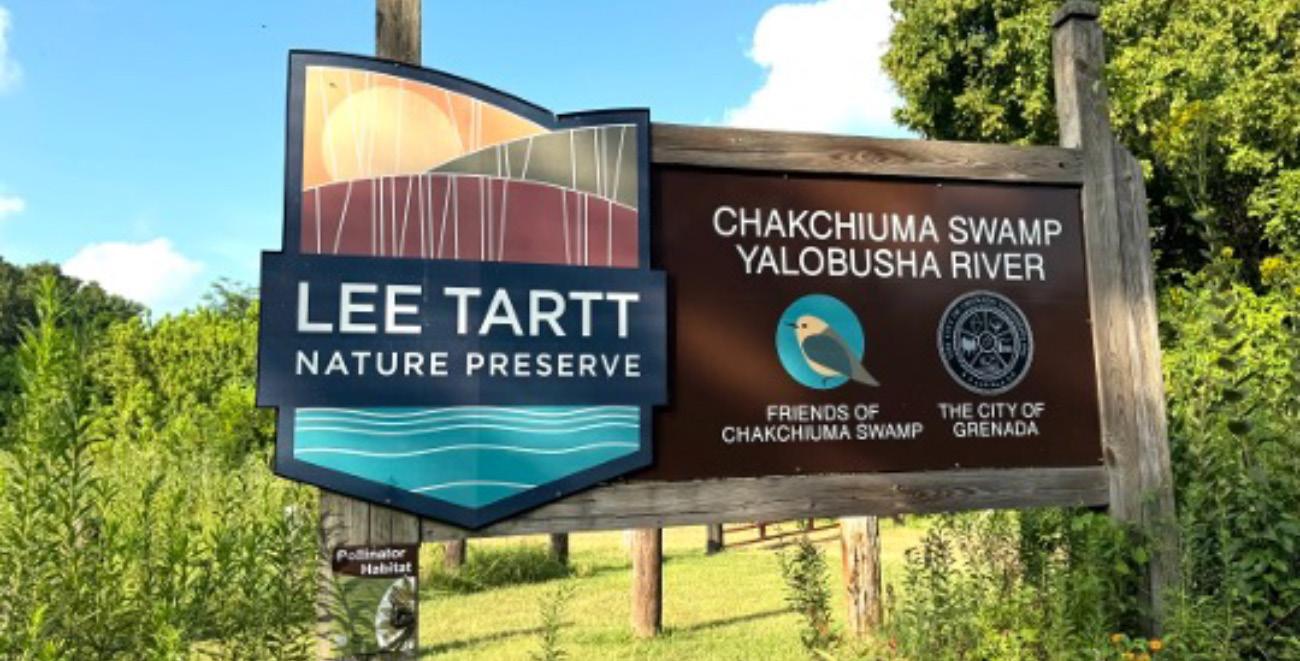
the trees. Their work eventually attracted a donor whose matching funds allowed the Friends of Chakchiuma Swamp to enter into a 60-year lease with the City to protect the Chakchiuma Swamp. This effort also resulted in the area taking the name of Lee Tartt Nature Preserve, in honor of a local law enforcement officer killed in the line of duty.
The conservation and education work by Robin and the Friends of Chakchiuma Swamp caught the attention of the SWS South Central Chapter Board of Directors when the conservation efforts were featured on a local television news program. Chapter Special Issues chair and former board member Chuck Walker brought this work to the attention of the executive board and suggested formally recognizing Robin’s wetland conservation work. When board members discovered Robin was not only actively working to save wetlands but also was a professional artist, we extended an invitation for her to attend the fall 2024 conference as Artist-in-Residence, which included delivery of the meeting’s opening plenary address.
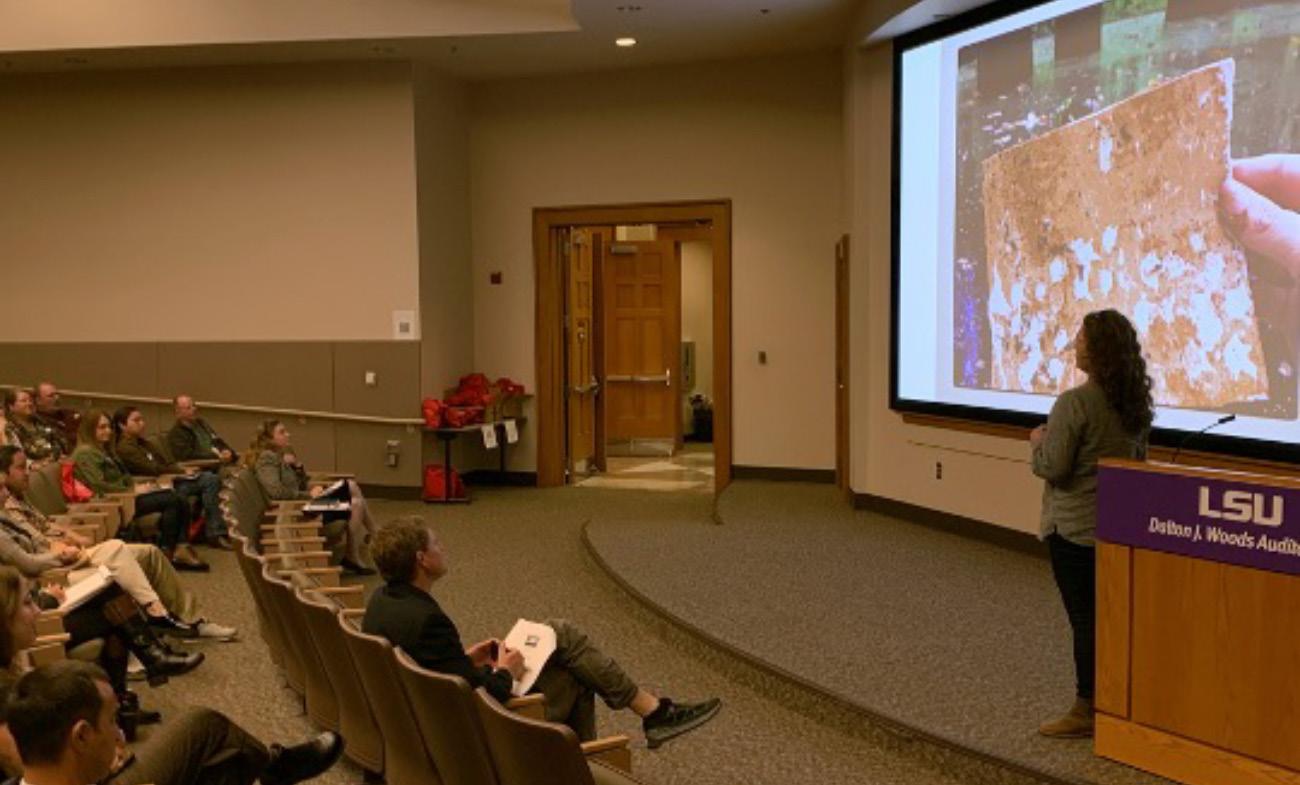
Robin gave a moving plenary, detailing her emotional and artistic connections with the Chakchiuma Swamp and describing the artistic process of selecting (sometimes accidentally) natural materials for her work. One of the early examples came when her watercolor paper canvases were blown onto the water by a gust of wind. The wetland’s oily sheen surface “contaminated” the face of all her papers, but she quickly found that she could use this material as part of her art. This led to Robin exploring other natural materials provided by the wetland, which deepend her connection with the ecosystem.
At the conference, Robin reported that she had “found her people,” and conference attendees found another way to be excited about our love for wetlands.
The South Central Chapter Board of Directors seeks to identify future Artist-in-Residence opportunities and urges other SWS regional and national meetings to pursue this. We encourage SWS members to suggest
artists or other creative folks to enhance our meetings and our membership.
You can find more information about the Chakchiuma Swamp and Robin’s art at these URLs: Friends of Chakchiuma Swamp: https://www.friends-of-cs.org/ Robin Whitfield Studio: https://www.robinwhitfield.com/
Declaration of Originality
This is an original work that has not been published before. Images, figures, and quotations included in the article have been properly cited and permission has been granted for any that are not those of the author.
Figure 1. Robin’s use of natural materials in her watercolor paintings was inspired when some of her canvases fell into the wetland and picked up a coating of “oily sheen,” which she has since incorporated as an element of some of her work. (Photo: Robin Whitfield)
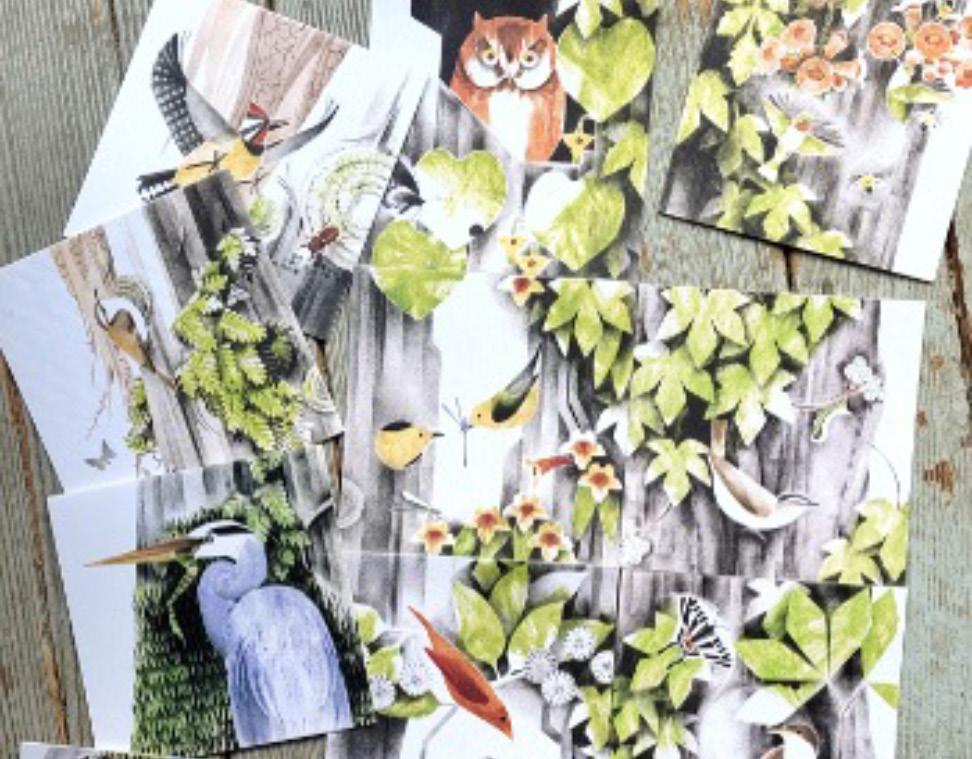
Figure 2. Since discovering natural wetland pigments, Robin has incorporated many materials, such as leaves, flowers, berries, and soil, into her art. (Photo: Robin Whitfield)
Figure 3. Robin maintains a library of natural materials, many from the Chakchiuma Swamp wetland, for use in her art and in workshops where she teaches others how to make use of these resources. (Photo: Robin Whitfield)
Figure 4. The efforts of Robin and the Friends of Chakchiuma Swamp led to a long-term lease agreement with the City of Grenada, MS, the founding of the Lee Tartt Nature Preserve, and naming of the preserve as a Mississippi Outstanding Natural Area. (Photo: Gary Ervin)
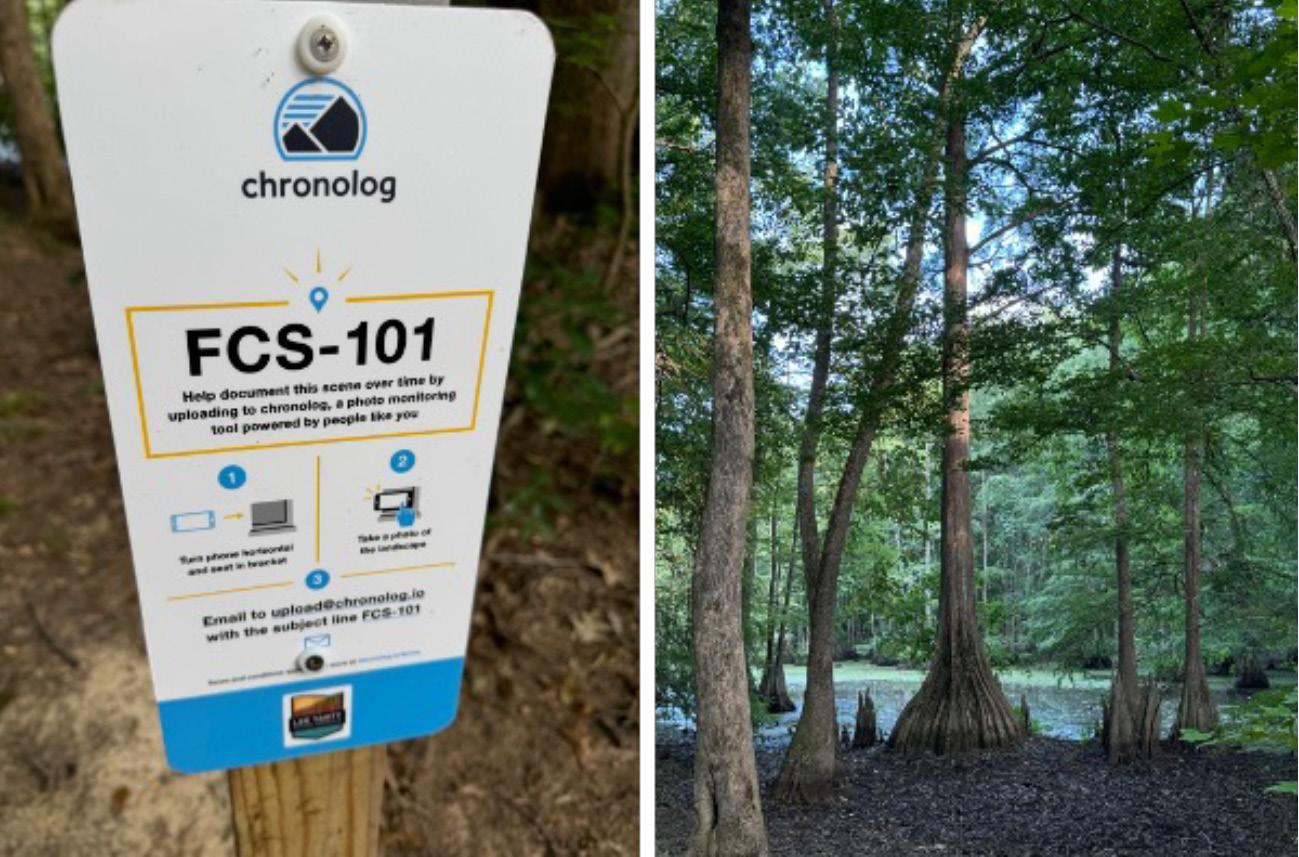
5. The nature preserve includes numerous trails, observation platforms, kayaking opportunities, and long-term photographic monitoring stations, such as FCS-101 here. See photos from this station at https://www.chronolog.io/site/FCS101. (Photo: Gary Ervin)
to the use of natural materials and to educate the
Figure
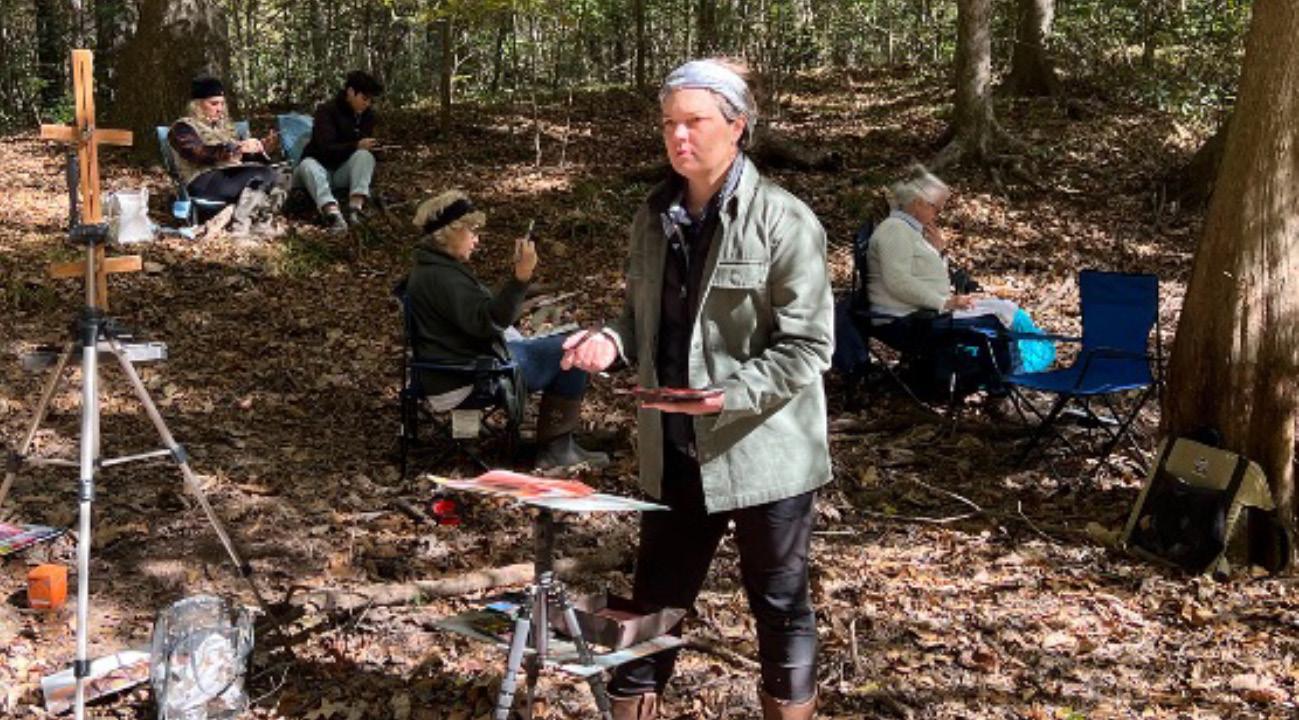
Figure 6. Robin, pictured above, conducts watercolor workshops in the Chakchiuma Swamp wetland to introduce other artists
public on the importance of this and other wetlands. (Photo: Robin Whitfield)
Figure 7. Through her art, Robin has documented years of change in the Chakchiuma Swamp. (Photo: Robin Whitfield)
Figure 8. One of Robin’s largest pieces is the “Seasons of the Cypress” mural, which records a year of change in the Chakchiuma Swamp, using natural materials from the wetland. (Photo: Robin Whitfield)
Figure 9. The SWS South Central Chapter invited Robin as opening plenary speaker at their 2024 meeting in Baton Rouge, LA, to recognize her efforts at protecting the Chakchiuma Swamp and educating the public on the many values of wetlands. (Photo: Jacob Berkowitz)
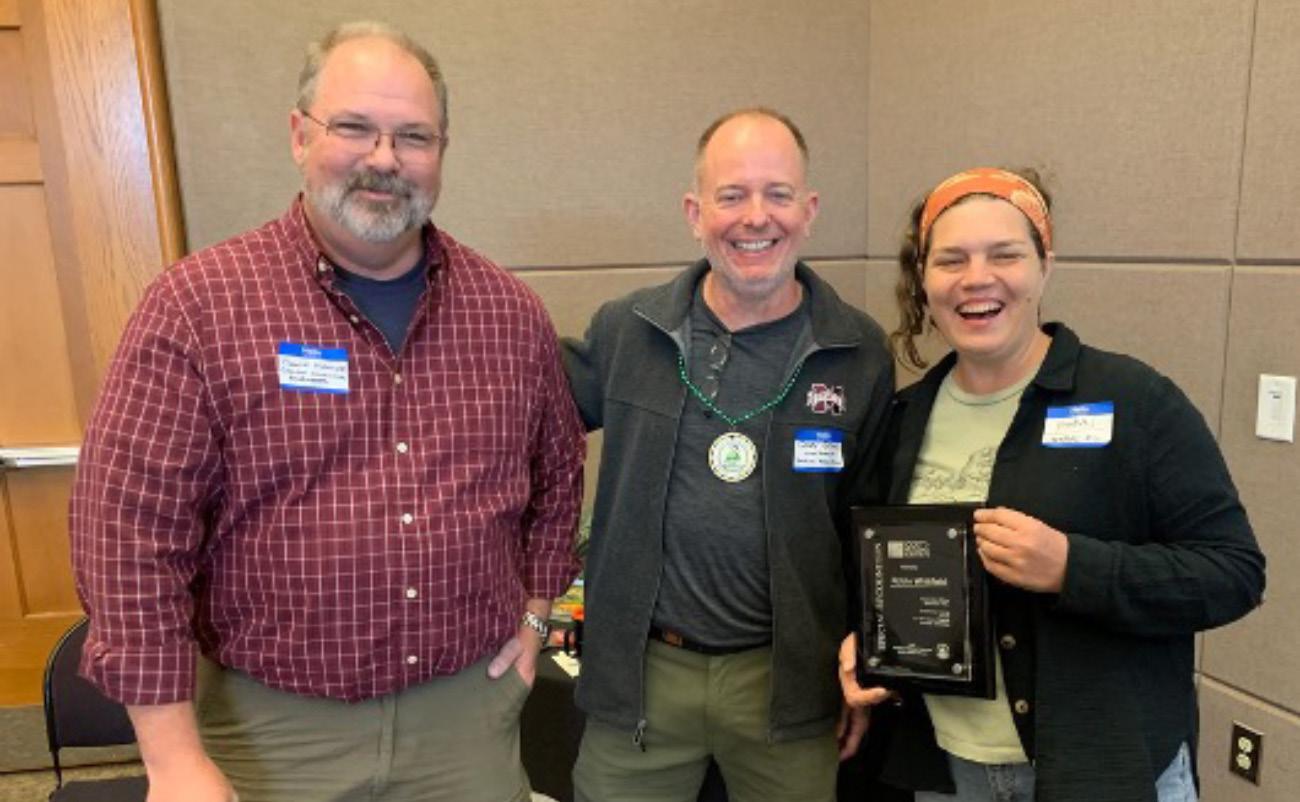
Figure 10. The South Central Chapter presented Robin with a plaque in special recognition of her preservation efforts associated with the Chakchiuma Swamp and Lee Tartt Nature Preserve. Pictured with Robin (at right) are Special Issues Chair Chuck Walker (left) and Executive Board Member Gary Ervin (center). (Photo: Eric Fuselier)
Using Soil Seed Banks for Wetland Mitigation Planning: Comparison of Seed Bank Estimation Methods
Samuel M. Dutilly1 and Douglas A. DeBerry2
Abstract
We evaluated seedbank estimation methods for use in wetland mitigation planning. Both greenhouse emergence and off-site laboratory seed extraction techniques were tested against artificially created soil seed bank controls that were pre-mixed from sterile soil and a known quantity and species composition of seeds. Results revealed significant trade-offs in the efficacy of the methods used. Greenhouse emergence was found to underestimate seed diversity but provided more reliable species identification. The off-site laboratory extraction method yielded a higher number of seeds but was prone to identification inaccuracies. Individual samples in both approaches (greenhouse and off-site lab) were very different when compared to the true composition of the artificial seed mix based on Jaccard’s dissimilarity index, but the overall seed bank composition across all samples was estimated reasonably well by greenhouse trials. We conclude that performed individually, emergence and extraction lack the precision required for detailed vegetation forecasting in wetland mitigation planning. However, targeted seed identification for large-seeded invasive species may be a feasible application for extraction studies, and combining sample units into larger composite samples by site area or community could streamline greenhouse emergence studies. A more prudent approach would be to combine both techniques with a complete floristic inventory of the proposed mitigation area, with an emphasis on marginal habitats (e.g., ditches, pond fringes) that could serve as sources of seeds and for the types of species that could colonize a wetland mitigation project once constructed.
Introduction
Soil seed banks serve as reservoirs of plant diversity, influencing vegetation composition over time. They contribute to plant community resilience by allowing species to regenerate following disturbances such as flooding, fire, or habitat alteration (Leck 1989; Parker et al. 1989). However, the composition of a seed bank is not always reflective of the aboveground vegetation due to differences in seed persistence, dormancy, and dispersal mechanisms (Naumann and Young 2007; Bossuyt and Honnay 2008). Therefore, it can be beneficial to analyze the seed bank of a site before causing disturbance or soil alterations, which would help to identify potential future invaders and understand risk of undesirable plant species.
Seed Banks and Wetland Mitigation
In the field of wetland mitigation, soil seed banks can play a major role in determining the success of a project (DeBerry and Perry 2000b). Wetland mitigation— the process of compensating for wetland losses by replacing wetlands on the landscape—is typically implemented by either creating a new wetland in an area where it previously did not exist (wetland creation) or restoring a wetland that was previously disturbed or drained (wetland restoration) (Brooks and Gebo 2013). Wetland creation projects frequently depend on the reuse of topsoil to restore native vegetation. This often involves removing the topsoil, stockpiling on-site, and respreading the topsoil to increase organic matter in the surface soils once the site has been constructed (DeBerry et al. 2004). This practice may also increase the opportunity for any seeds that are in the topsoil to germinate once the material has been reincorporated onsite. However, this could also increase the potential for invasive or undesirable plants to become established, the management efforts for which can take five to seven years to remove (van der Valk and Pederson 1989). These species often emerge in the years following initial planting, further complicating restoration efforts.
Invasion risk may be even higher for wetland restoration projects, which focus on reestablishing wetland hydrology on sites that have been previously drained (e.g., low-lying farm fields previously established on drained wetlands) (Brooks and Gebo 2013). A common practice is to simply dam or plug drainage ditches, an approach that could be used to restore wetland hydrology without changing existing elevations within the site (Biebighauser 2007). In such circumstances, the topsoil could be left in place, and the existing seed bank could be used to help reestablish desirable wetland species; however, the number of wetland species that return has been shown to decrease with time since the original wetland was drained or disturbed (van der Valk and Pederson 1989). Accurately estimating the soil seed bank composition before project implementation could significantly enhance restoration outcomes by allowing practitioners to decide whether to retain or replace topsoil based on level of risk.
Seed Bank Estimation Methods3
Among available seed bank estimation methods, the emergence method is the most widely used in seed bank assays. This approach relies on germinating seeds directly from a soil sample in a greenhouse (or similar controlled setting) and identifying the plants to species level from the seedlings that emerge (DeBerry and Perry 2000a). Specific techniques vary, but most emergence trials involve subjecting a soil seed bank sample to a cold stratification treatment, then spreading the sample over a seedless growing medium (e.g., greenhouse grade potting soil) and allowing the seeds to germinate (Gross 1990; Mahé et al. 2021). This process can take up to three years, and the controlled setting of a greenhouse may not be the ideal germination conditions for many of the plants in the seed bank (Price et al. 2010; Mahé et al. 2021). Despite these drawbacks, the emergence method has been implemented in planning wetland restoration projects in the U.S. (Minnesota Board of Water and Soil Resources 2008).
Another commonly used method is seed extraction from soil samples (DeBerry and Perry 2000a; Price et al. 2010). This technique uses some filtering mechanism to remove the seeds from a sample (sieve, cloth bag, flotation, etc.) and then relies on identifying seeds to species using the morphological features of the seeds themselves (Gonzalez and Ghermandi 2012). Seed extraction has been shown to increase the number of different species found within a sample compared to greenhouse emergence, but seed identification can be difficult, time consuming, and inaccurate (DeBerry and Perry 2000a; Price et al. 2010; Gonzalez and Ghermandi 2012). Additionally, the extraction method can be biased toward larger seeds with well-documented morphology (Mahé et al. 2021).
Notwithstanding these issues, there are professional laboratories that offer fee-based seed identification services using seed bank extraction as the primary seed identification protocol.
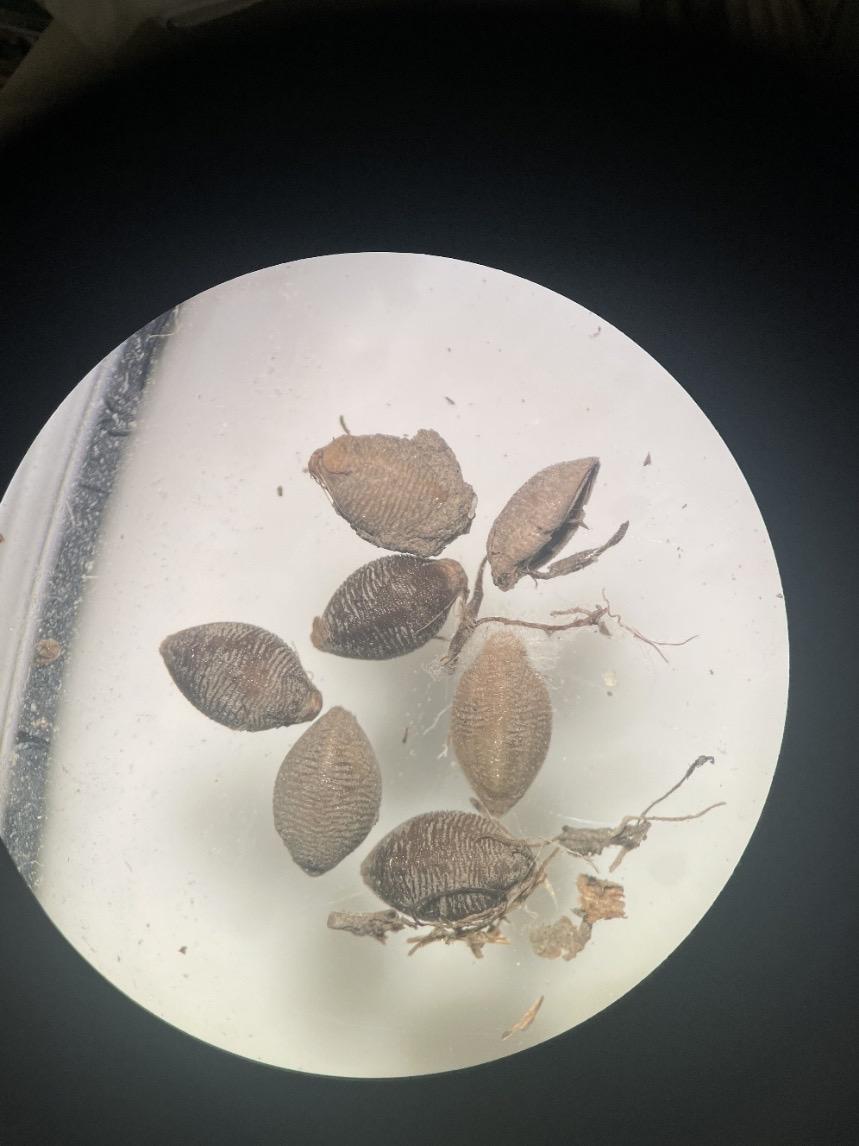
A previous project ran a pilot study for greenhouse emergence, off-site lab testing, and in-house seed extraction methods (Figure 1; see Dutilly and DeBerry 2025). The results of the pilot study were used to narrow down the methods to greenhouse emergence and off-site laboratory extraction.3 Both methods were considered practical and feasible for a wetland practitioner (e.g., consultant, mitigation banker, agency scientist).
3 The results of the pilot study and more information on the rationale behind the removal of in-house extraction from full scale trials can be found in Dutilly and DeBerry (2025).
Figure 1. Achenes from a species in the sedge family (Cyperaceae) viewed at 10x magnification during the in-house seed extraction pilot study. Given the crossreticulations on the achene surfaces, this could be a species in either Rhynchospora or Eleocharis, but positive identification could not be verified for this sample based on available seed ID protocols. The in-house extraction procedure was not carried forward for reasons outlined in Dutilly and DeBerry (2025).
Study Purpose
Despite the value of seed bank assessments, there is currently no rapid, cost-effective method for estimating soil seed banks in the context of wetland mitigation. This study aims to evaluate existing methods and determine their efficiency and accuracy in predicting soil seed bank composition. We did this by replicating two approaches that could be used most readily by a wetland mitigation practitioner: 1) greenhouse emergence and 2) off-site laboratory extraction.
methods
Seed Bank Estimation Methods
From the initial results of the pilot study (Dutilly and DeBerry 2025), we narrowed the options for seed bank estimation to the greenhouse emergence and off-site laboratory extraction methods, a phase of the project we refer to as the “full-scale” study hereafter. To test the accuracy of both approaches, we created an artificial seed bank in a set of controlled soil samples containing a known seed quantity and species composition. This
approach has been successfully used by others to test seed bank estimation methods (Leon and Owen 2004).
For the full-scale study, our artificial seed bank was formulated to mimic field conditions. This seed mix featured a greater proportion of small seeds and fewer large seeds, which would be representative of a natural seed bank (Shipley and Dion 1992; Turnbull et al. 1999; Jakobsson and Eriksson 2000; Moles et al. 2004). We also used a known quantity of native seeds provided by a seed supplier (Ernst Conservation Seeds), as well as the seeds of three invasive species hand-harvested by the authors (Arthraxon hispidus, Lespedeza cuneata, and Microstegium vimineum). The intent here was to create an artificial “invasion risk” with our controlled seed bank and determine how effective these methods would be at identifying the risk. The full artificial seed mix comprised 23 species and a total of 53 seeds per sample, the composition of which is provided in Table 1.
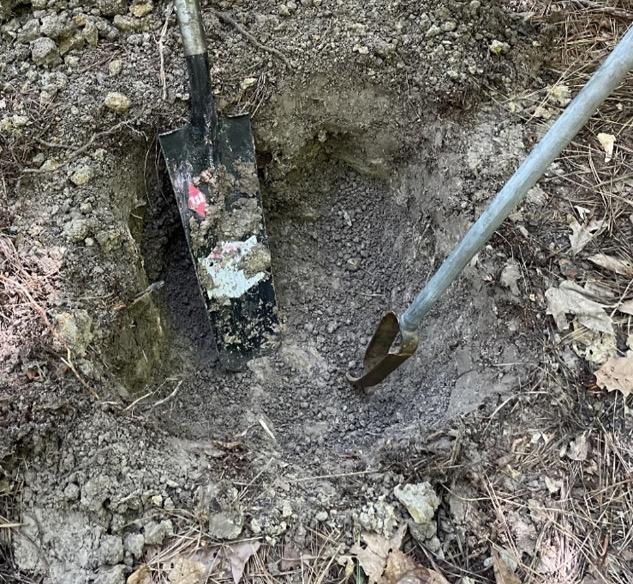
The soil medium for the artificial seed bank was collected from a natural silty clay loam subsoil below a seasonally saturated pine forest in James City County, Virginia. The surface soil layers were removed to a depth of 40 cm with a tile spade, then the subsoil material was collected with a 7 cm diameter Dutch auger to an additional 10 cm depth (i.e., the soil used to create the artificial seed bank was collected between 40 cm and 50 cm in the profile) (Figure 2). This process ensured that no preexisting seed bank from the forest was included in the samples. Ten identical seed bank replicates were created for each full-scale trial.
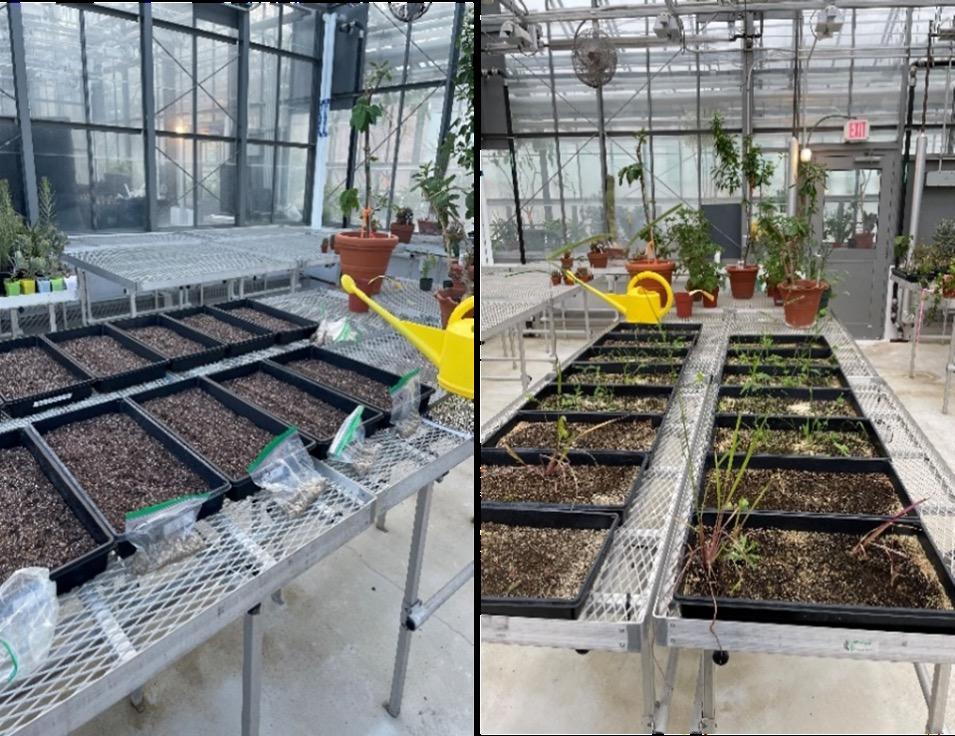
Greenhouse Emergence Trials: For the greenhouse emergence method, we cold stratified the artificial seed samples at around four degrees Celsius for three weeks prior to initiating the trials—a technique that is used to encourage cessation of dormancy for many species (Gross 1990; DeBerry and Perry 2000a). Emergence trials were carried out in the College of William & Mary Greenhouse beginning on August 30, 2022, and ending on May 23, 2023. Soil samples were spread in grow trays over sterile Promix flexible purpose potting mix as a seedless germination base (Figure 3). Ten separate germination trays of the artificial seedbank were set up in the greenhouse. Trays were watered regularly and monitored for new species germination. Plants were left in the trays until large enough to identify to species, then removed.
Off-site Laboratory Extraction Trials: We researched laboratories that provide seed bank estimation services using the extraction method and selected a reputable lab based on web-available information and reviews. The pilot study had revealed that the off-site testing could be completed and results provided in less than two weeks at a cost of $251 per sample (Dutilly and DeBerry 2025). We sent a set of 10 artificial seed bank samples to the same seed identification laboratory used in the pilot study, requesting the same species identification protocol.
Laboratory extraction methods involve thoroughly washing each sample through a series of standard soil texturing sieves to remove as much non-seed matter as possible (Gonzalez and Ghermandi 2012). The residual material is examined and further separated under a dissecting microscope until all seeds are removed. Seeds are then identified using seed ID references and counted by the experts working at the lab. The information on each sample is then mailed back from the lab with the results for each sample.
Data Analysis
To test for accuracy of seed estimation methods, we calculated Jaccard’s Dissimilarity Index between the species composition of the artificial seed bank samples and the results acquired from both the full-scale greenhouse emergence and off-site lab studies. We also used the index to compare composition of the standing
Figure 2: Harvesting seed-free soil from natural subsoil for artificial seed banks used in the full-scale trials. The blade of the tile spade in the image is approximately 40 cm long.
Figure 3: Full-scale greenhouse emergence study shown at trial initiation (left), and with seedlings after one month (right).
vegetation to the results of all three pilot studies to see if the methods could be used to detect seed bank species that were not in the extant flora. Jaccard’s Dissimilarity is an ecological distance measure of the form:
J(i,j)=sim(i,j)=1- a (a+b+c)
where i and j represent separate species groups, a = species in common, b = species unique to i, and c = species unique to j. This index gives a number between 0 and 1, with values closer to 0 representing small differences between species groups and values closer to 1 representing larger differences.
Results
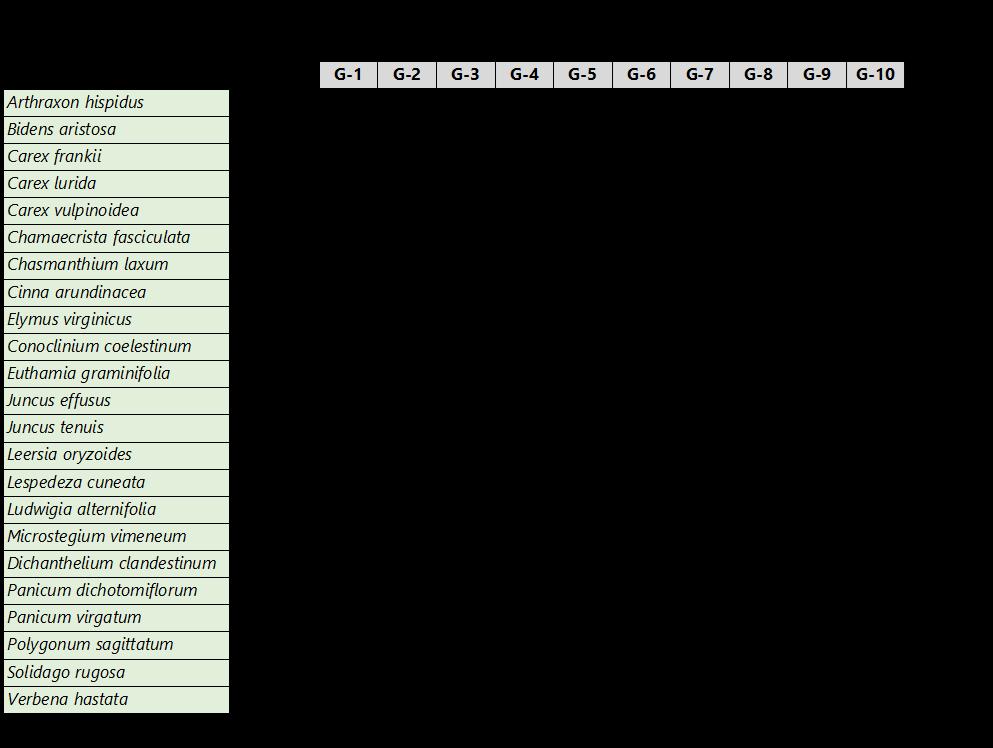
Greenhouse Emergence Full-Scale Results: Of the original 23 species included in the artificial seed bank samples, 12 emerged as seedlings during the full-scale greenhouse emergence study across all 10 trials (Table 1). Species richness in individual seed bank samples ranged from 5 to 10, with an average of 6.9 per sample. There were 101 positively identified seedlings in total with an average of 10.1 per sample, and only four seedlings across all samples that could not be identified due to early mortality. The most prevalent species were mistflower (Conoclinium coelestinum), switch grass (Panicum virgatum), spreading panic grass (Panicum dichotomiflorum), deer tongue (Dichanthelium clandestinum), and joint-head grass (Arthraxon hispidus).
Jaccard’s dissimilarity per sample averaged 0.70 (i.e., comparing original artificial seed bank with germination results), but the index across trials was 0.48 (Dutilly and DeBerry 2025). The entire study took 39 weeks (August 30, 2022 to May 23, 2023) to complete before seedlings were no longer emerging from germination trays. The germination trials were successfully able to identify two of the three invasive species that were included in the seed bank samples—joint-head grass and sericea lespedeza (Lespedeza cuneata)—but failed to identify Japanese stiltgrass (Microstegium vimineum).
Off-site Extraction Full-Scale Results: The off-site seed identification lab provided 24 separate taxa from the 234 (out of 530) seeds they found in the 10 artificial seed bank samples we submitted. Of these, 13 were listed to species level, 9 were listed to genus level, and 2 were listed to family level. Jaccard’s dissimilarity averaged 0.93 per sample (i.e., lab list compared to true list from artificial seed bank samples). Considering only the taxa that the lab reported to species level, Jaccard’s dissimilarity across all samples was 0.83. Making some allowances for congeners (e.g., if the lab listed only genus, counting that as “correct” in the index, as in “Carex spp.”), Jaccard’s index was 0.70.
Of the 13 taxa that the lab provided to species level, seven were not in the original artificial seed bank samples. Likewise, of the lab’s 24 total taxa listed (species, genus, family), 10 were not in the original samples. Finally, the lab was consistently able to identify the invasive sericea lespedeza in samples, but did not locate any of the invasive joint-head grass or Japanese stiltgrass seeds.
Table 1. Full-scale greenhouse emergence results (seedlings per sample). Left two columns include full species list from the artificial seed bank samples and initial seed density per sample (n=10). Rows with no values in sample columns indicate that the species did not emerge.
Discussion
This study evaluated the efficacy of using soil seed bank estimation methods to predict future colonizers in a wetland mitigation scenario. Our research goals were motivated in part by the tacit belief that the seed bank is critical to vegetation community outcomes in wetland creation and restoration—a mantra that has been around even since the “early years” when wetland mitigation emerged as a separate discipline in the U.S. (e.g., 1980s and early 1990s; Kusler and Kentula 1989; Hammer 1992). Since that time, studies investigating this topic have produced variable results with varying degrees of reliability (van der Valk et al. 1992; ter Heerdt and Drost 1994; Brown 1998; DeBerry and Perry 2000b; Middleton 2003; Mahé et al. 2021); thus, we were interested in determining if there had been any advancements made in seed bank estimation techniques and then testing available approaches in the applied scenario of a wetland mitigation feasibility study.
The questions we were pursuing could be restated as follows: 1) What techniques are currently available for
soil seed bank estimation? 2) Which technique is most effective and efficient? 3) Is a seed bank study worth it? We will discuss each question individually below.
What techniques are currently available for soil seed bank estimation?
One commonality among nearly all the studies cited in this report is that the methods available for seed bank estimation have not changed over the years. Seed bank assays generally involve sampling soils and either 1) germinating the seeds in emergence trials or 2) extracting the seeds directly from the soil and identifying the seeds. Therefore, these are the methods that were evaluated in this study.
There are also available methods for determining seed viability in a sample (e.g., elutriation, a process that recognizes fine root production from seeds in the soil [Gross 1990]); however, since the focus of a seed bank assay in wetland mitigation is primarily to determine species composition, isolating seed viability is perhaps an unnecessary complication and of course
would already be addressed in a germination trial. One advancement that was apparent during this study is that seed identification resources are much more available via web databases and online identification tools than in the previous decades of seed bank research, and the likelihood that these resources will only improve with time should make extraction a more effective technique in future years.
Which technique is most effective and efficient?
Effectiveness: The real value of a seed bank assay in wetland mitigation feasibility is that it gives wetland practitioners the opportunity to determine the identity of the plants in the species pool (sensu Taylor et al. 1990) that cannot be observed by studying the standing vegetation alone. Given the high Jaccard’s dissimilarity between the aboveground vegetation and the techniques tested (see Dutilly and DeBerry 2025), studying the seedbank at the site can reveal a broader swath of plants likely to grow in the following years. However, the same study revealed that dissimilarity was also high among the tested techniques, suggesting very little overlap in the species found by each approach and casting doubt on the prospect of determining a single superior technique. 4
An effective seed bank estimation procedure also needs to be accurate. Accuracy was assessed directly in this study for the greenhouse emergence and offsite laboratory extraction protocols because we used an artificially created seed bank and therefore had full knowledge of the complete seed composition and abundance in each sample. The results of these trials showed striking differences between the two approaches. Notably, over half (12 out of 23) of the original seed bank species were positively identified in the greenhouse emergence trials, and this resulted in the lowest Jaccard’s dissimilarity recorded in the study (0.48) (i.e., emergence-derived species composition was closest to the true seed bank). By contrast, over
half (7 out of 13) of the species reported by the offsite lab were incorrect, resulting in one of the highest dissimilarity values in comparison with the original seed bank (0.83). Further, the greenhouse trials successfully identified two of the three invasive species in the seed bank, whereas the off-site lab only found one. These results clearly indicate that, at least for a scenario like the one used in this study, a self-directed greenhouse emergence assay would produce more reliable species composition results.
Finally, effectiveness can also be evaluated by looking at the total number of seeds identified in the soil; on this score, seed extraction is the clear front-runner. The off-site lab extraction found 234 seeds, which is over twice the number confirmed in the greenhouse emergence trials (101). The underestimation of the seed bank via the emergence method is consistent with previous experimental results in the literature (Price et al. 2010; Mahé et al. 2021) and highlights one of the most significant drawbacks to the approach.
Efficiency: From an effort standpoint, a greenhouse emergence study is much less labor intensive than self-directed extraction work (see Dutilly and DeBerry 2025), requiring only periodic watering, as well as plant identification and removal once seedlings are old enough to be verified. The obvious downside to a greenhouse emergence assay is the total amount of time required to complete the study (Price et al. 2010; Mahé et al. 2021), which for our trials took up to a year. Of course, another important consideration is that such a study requires unlimited access to a greenhouse, and this is likely to be the more important limiting factor for most professionals. However, if a greenhouse is available, the length of time needed to complete an emergence study may not be an issue for practitioners who have the benefit of several months’ lead time to plan and execute the study.
In terms of labor efficiency, the off-site laboratory extraction was by far the superior approach. In both
4 Because we did not carry the in-house extraction procedure forward from the pilot study, accuracy for this procedure could not be assessed in the same manner as the other two approaches (Dutilly and DeBerry 2025). Although there were several dozen taxa in the samples that could not be identified, nearly half (45.3%) of the total seeds were able to be positively identified to species, and over two-thirds (71.9%) were identified to at least the genus level. Given that the identifications were verified by a senior botanist, this result suggests that a self-directed extraction study could produce meaningful composition data for use in mitigation planning. Furthermore, since most invasive taxa can be differentiated at the genus level (e.g., Arthraxon, Microstegium), an in-house extraction study would increase the predictive power of an invasive species risk assessment based on our results. However, as noted in Dutilly and DeBerry (2025), the labor intensiveness and attendant costs of an in-house extraction would make it impractical for most mitigation planning scenarios.
the pilot (Dutilly and DeBerry 2025) and the full-scale trials, the lab results were available within a few weeks of sample submission. As noted above, this approach also produced the least reliable data, but there were some taxa correctly identified, so there may be some cost-benefit decisions to weigh when considering use of this approach.
Efficiency should consider overall cost, and this is easiest to judge for the off-site laboratory analysis since each sample was analyzed at a lump sum cost (for our study, ca. $251/sample). For larger sites that might require dozens of samples or more to adequately estimate the seed bank, this expense could prove costprohibitive, especially if the results are only marginally reliable. Assuming that most wetland professionals have access to a dissecting microscope and a set of soil sieves (or could acquire them inexpensively), the cost for an in-house extraction would simply be the labor required to execute the study. However, this process is extremely labor-intensive and, in our estimation, would be costprohibitive for most professionals based on the required labor (see Dutilly and DeBerry 2025). Finally, the cost for the materials needed to conduct a greenhouse emergence trial is minimal and amounts to some germination trays, potting soil, and the time required to attend to the trays. Assuming that greenhouse access is available, at face value an emergence study would be the least expensive; however, practitioners should consider the overall time required to complete the study (up to a year based on our results), which could cause labor expenses to compound, especially if the greenhouse is off-site and requires travel for periodic maintenance and seedling identification.
Is a seed bank study worth it?
Given the discussion above, there is no clear “winner” among the methods currently available for seed bank estimation in wetland mitigation feasibility studies. Tradeoffs to consider include which method produces the most accurate list of species (emergence), which finds the greatest number of seeds (in-house extraction; see Dutilly and DeBerry 2025), which one can identify species not found in the standing vegetation (presumably all; see Dutilly and DeBerry 2025), and which is most efficient in terms of time commitment (off-site extraction) and overall cost
(emergence). For this reason, studies focused on a comprehensive understanding of the seed bank have recommended using a combination of both emergence and extraction protocols (e.g., Gonzalez and Ghermandi 2012), although some suggest that time is better spent conducting a thorough floristic inventory of the study area and focusing on marginal habitats that could serve as refugia for future wetland colonizers (e.g., ditches, pond fringes; Brown 1998).
From our results, we feel reasonably confident that a full in-house extraction study would not easily scale up to the level of a typical wetland mitigation project and therefore is probably not worth the time investment (see Dutilly and DeBerry 2025). However, we do believe that the process could be streamlined if the goal was to target specific invasive species in the seed bank. In this case, invasives with larger or morphologically unique seeds would be easy to target in the extraction process (Mahé et al. 2021). This may be a viable way to estimate the future impact of invasive species at a site and, perhaps more importantly, determine whether the in situ topsoil could be used in the wetland project without invasion risk. For many, this could be the most important piece of information to gain from a seed bank study.
The off-site laboratory results suggest that outsourcing seed identification to a lab carries some inherent inaccuracy risks. However, if the goal is to target invasive species, it may be plausible to identify which invasives are most likely to be present in a given region and then communicate species information to the lab ahead of processing. With that knowledge, the laboratory could run targeted extraction trials, which would likely improve accuracy and reduce the cost per sample.
Finally, assuming that a mitigation professional has access to a greenhouse and can easily work sample maintenance and surveillance into a schedule that can be maintained for several months, an emergence study could be worth the effort under many wetland mitigation feasibility scenarios. The results will underestimate seed density, but species composition data will be reasonably reliable and can provide valuable information on future colonizers. To improve efficiency and conserve space in the greenhouse,
van der Valk et al. (1992) recommend conducting a stratified-random sample for each study area, but instead of keeping the soil samples in separate trays, they suggest combining all samples into one tray per study area or stratum. This would streamline the sampling process and reduce the amount of time and effort required in the greenhouse with fewer containers to oversee.
Ideally, a scenario that combines a simplified greenhouse emergence approach with some targeted extraction trials (e.g., invasive-focused trials) would have the potential to produce valuable information and also minimize the inaccuracies and inefficiencies inherent in these techniques. We believe that such an approach could be profitably combined with a detailed floristic inventory of the proposed mitigation area, with an emphasis on marginal habitats (ditches, pond fringes, etc.) that could serve as sources of seeds for the types of species that could colonize a wetland mitigation project after construction. Once mitigation professionals have had time to standardize this type of three-pronged approach to the point where it could be executed efficiently and effectively, it would be hard to imagine a more comprehensive set of analyses for seed bank estimation in wetland mitigation.
Acknowledgments
The authors would like to extend our gratitude to Patty White-Jackson (Greenhouse Manager) and the W&M greenhouse staff for help and support throughout the project; to the Resource Protection Group for funding this research; to Mark Fiely and Ernst Conservation Seeds for the native seed supply; and to Mike Rolband for facilitating access to the field site used in the pilot study. Thanks also to Matt Whalen and Dr. Christopher Craft for reviewing earlier versions of the manuscript.
Statement of Originality
This paper is the authors’ own work and represents original research conducted for the purposes of this study. All sources of information, data, and ideas that are not those of the authors have been properly cited and acknowledged.
References Cited
Biebighauser, T.R. 2007. Wetland Drainage, Restoration, and Repair. University Press of Kentucky.
Bossuyt, B. and O. Honnay. 2008. Can the seed bank be used for ecological restoration? An overview of seed bank characteristics in European communities. Journal of Vegetation Science, 19(6), 875–884. https://doi.org/10.3170/2008-8-18462
Brooks R.P., and N.A. Gebo. 2013. Wetlands restoration and mitigation. Mid-Atlantic Freshwater Wetlands: Advances in Wetlands Science, Management, Policy, and Practice, pp. 421-440. Springer New York.
Brown, S.C. 1998. Remnant seed banks and vegetation as predictors of restored marsh vegetation. Canadian Journal of Botany, 76(4), 620–629. https://doi.org/10.1139/b98-038
DeBerry, D.A. and J.E. Perry. 2000a. An Introduction to Wetland Seed Banks (Technical Report 00–2; pp. 1–6). Virginia Institute of Marine Science. https://scholarworks.wm.edu/cgi/viewcontent.cgi?article=1634 &context=reports
DeBerry, D. A. and J.E. Perry. 2000b. Wetland Seed Banks: Research in Natural and Created Wetlands (Technical Report 00–4; pp. 1–6). Virginia Institute of Marine Science. https://scholarworks.wm.edu/cgi/ viewcontent.cgi?article=1659&context=reports
DeBerry, D. A. W.D. Beisch, and T.W. Crayosky. 2004. Integrated wetland design: sustainability within the landscape. Geo-Strata 5(2): 23-25.
Dutilly, S.M. and D.A. DeBerry. 2025. Using Soil Seed Banks for Wetland Mitigation Planning: Comparisons of Seed Bank Estimation Methods. Environment & Sustainability Program, College of William & Mary. https://resourceprotectiongroup.org/invasivespecies/ Gonzalez, S.L., and L. Ghermandi. 2012. Comparison of methods to estimate soil seed banks: The role of seed size and mass. Community Ecology, 13(2), 238–242. https://doi.org/10.1556/ComEc.13.2012.2.14
Gross, K.L. 1990. A comparison of methods for estimating seed numbers in the soil. Journal of Ecology, 78(4), 1079–1093. https://doi. org/10.2307/2260953
Jakobsson, A., and O. Eriksson. 2000. A Comparative Study of Seed Number, Seed Size, Seedling Size and Recruitment in Grassland Plants. Oikos, 88(3): 494–502. https://www.jstor.org/stable/3546938
Kusler, J.A. and M.E. Kentula. 1989 Wetland Creation and Restoration: the Status of the Science. U.S. Environmental Protection Agency, EPA/600/3-89/038.
Leck, M.A. 1989. Wetland seed banks. In Leck, M.A., V.T. Parker, and R.L. Simpson, eds. Ecology of Soil Seed Banks. Academic Press. pp. 283-305.
Leon, R.G., and M.D.K. Owen. 2004. Artificial and natural seed banks differ in seedling emergence patterns. Weed Science, 52(4): 531–537. https://doi.org/10.1614/WS-03-048R2
Mahé, I., S. Cordeau, D.A. Bohan, D. Derrouch, F. Dessaint, D. Millot, and B. Chauvel. 2021. Soil seedbank: Old methods for new challenges in agroecology? Annals of Applied Biology 178(1), 23–38. https://doi. org/10.1111/aab.12619
Middleton, B.A. 2003. Soil seed banks and the potential restoration of forested wetlands after farming. Journal of Applied Ecology, 40(6), 1025-1034.
Minnesota Board of Water and Soil Resources. 2008. Minnesota Wetland Restoration Guide. https://bwsr.state.mn.us/mn-wetlandrestoration-guide
Moles, A.T., D.S. Falster, M.R. Leishman, and M. Westoby. 2004. Smallseeded species produce more seeds per square metre of canopy per year, but not per individual per lifetime. Journal of Ecology, 92(3), 384–396. https://doi.org/10.1111/j.0022-0477.2004.00880.x
Naumann, J. C. and D.R. Young. 2007. Relationship between community structure and seed bank to describe successional dynamics of an Atlantic Coast maritime forest1. The Journal of the Torrey Botanical Society, 134(1), 89–98. https://doi.org/10.3159/1095-5674(2007)134[89:RBCSA S]2.0.CO;2
Parker, V.T., R.L. Simpson, and M.A. Leck. 1989. Pattern and process in the dynamics of seed banks. In M.A. Leck, V.T. Parker, and R.L. Simpson, eds. Ecology of Soil Seed Banks. Academic Press. pp. 367384.
Price, J.N., B.R. Wright, C.L. Gross, and W.R.D.B. Whalley. 2010. Comparison of seedling emergence and seed extraction techniques for estimating the composition of soil seed banks. Methods in Ecology and Evolution: 1(2), 151–157. https://doi.org/10.1111/j.2041210X.2010.00011.x
Shipley, B., and J. Dion. 1992. The Allometry of Seed Production in Herbaceous Angiosperms. The American Naturalist, 139(3), 467–483. https://www.jstor.org/stable/2462493
Taylor, D.R., L.W. Aarssen, and C. Loehle. 1990. On the relationship between r/K selection and environmental carrying capacity: a new habitat templet for plant life history strategies. Oikos: 58(2) 239-250.
ter Heerdt, G.N.J. and H.J. Drost. 1994. Potential for the development of marsh vegetation from the seed bank after a drawdown. Biological Conservation: 67:1-11.
Turnbull, L.A., M. Rees, and M.J. Crawley. 1999. Seed Mass and the Competition/Colonization Trade-Off: A Sowing Experiment. Journal of Ecology: 87(5) 899–912. https://www.jstor.org/stable/2648645
van der Valk, A.G. and R.L. Pederson. 1989. Seed banks and the management and restoration of natural vegetation. In M.A. Leck, V.T. Parker, and R.L. Simpson, eds. Ecology of soil seed banks. Academic Press. pp. 329-346.
van der Valk, A.G., R.L. Pederson, and C.B. Davis. 1992. Restoration and creation of freshwater wetlands using seed banks. Wetlands Ecology and Management: 1:191-197.
WERE EDWARD A. BIRGE AND CHANCEY JUDAY
ANTECEDENT WETLAND SCIENTISTS?
Arnold G. van der Valk1
ABSTRACT
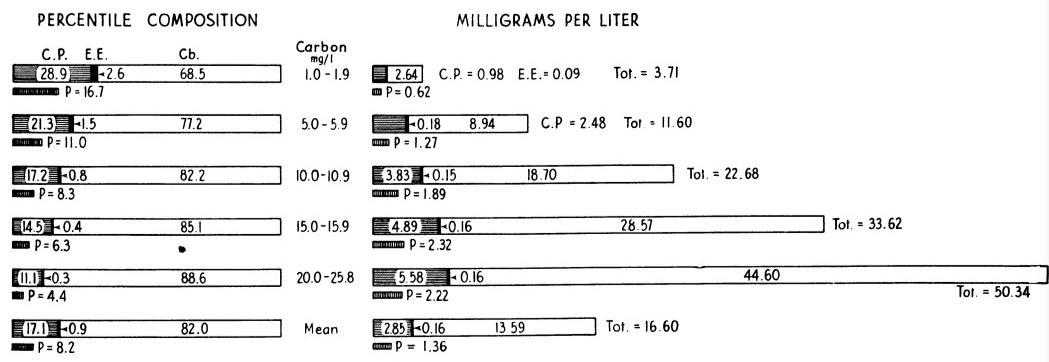
Edward A. Birge (1851-1950) and Chancey Juday (1871-1944) were among the most influential limnologists in the late nineteenth and early twentieth centuries in the United States. They primarily studied the physics and chemistry of Wisconsin lakes and how these environmental factors affected the distribution and composition of their plankton communities. Birge and Juday published several survey papers that summarized data on the concentration of gases and the water chemistry of many lakes that varied in size and depth. Because they assumed higher plants contributed little or nothing to the dissolved and particulate organic carbon in lake water, they consciously ignored higher plants in their lake surveys. However, an examination of the data in these surveys suggests that some of the lakes sampled today would be classified as palustrine wetlands or lakes with significant lacustrine wetland areas. Like most early limnologists, Birge and Juday saw themselves as freshwater oceanographers, believing that plankton was the only important direct and indirect source of dissolved and particulate carbon in water. Because of their biases, Birge and Juday’s research did not increase wetland visibility or advance wetland science.
INTRODUCTION
For my M.Sc. research at the University of Alberta, I studied the primary production of oxbow lakes of different ages (van der Valk and Bliss 1971). I aimed to test Raymond Lindeman's (1942) theory about how lake primary production changed as lakes aged. When I first designed this study, I believed I would be measuring the primary production of phytoplankton. When I scouted the oxbow lakes in September 1968, they were free of aquatic plants except for a fringe of emergents. When I went to sample them in the spring of 1969, they were full of submerged aquatic plants. I immediately
had to change my sampling protocols from those of a limnologist (i.e., plankton nets) to those of a plant ecologist (i.e., quadrats and clippers). I initially failed to recognize that what I would be studying was the primary production of wetlands, not lakes. However, I was not, of course, the first to fail to distinguish wetlands from lakes.
Unknowingly, I had become an antecedent wetland scientist who studied wetlands but did not know it (van der Valk 2017, 2020). Many people in many disciplines were antecedent wetland scientists—that is, people whose research or other activities contributed to making wetlands more visible and to developing wetland science before it became a distinct discipline in the 1970s.
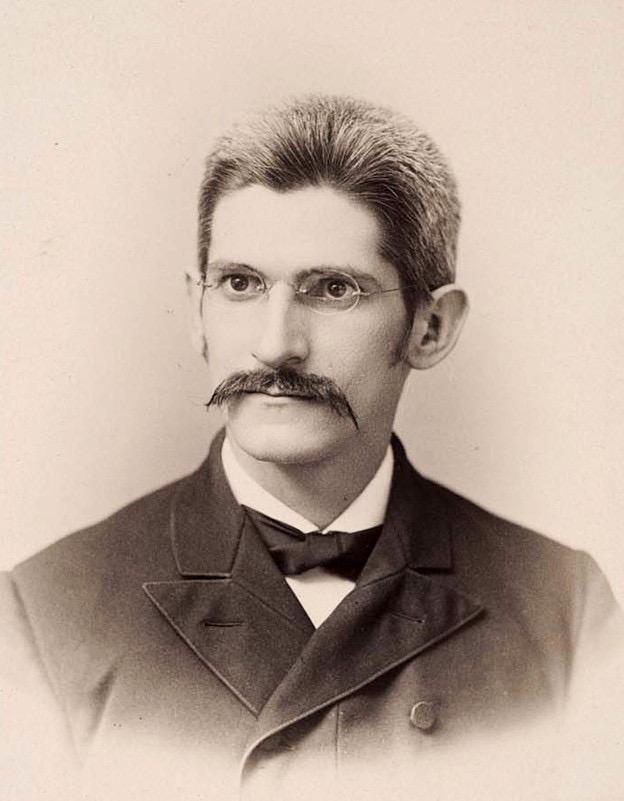
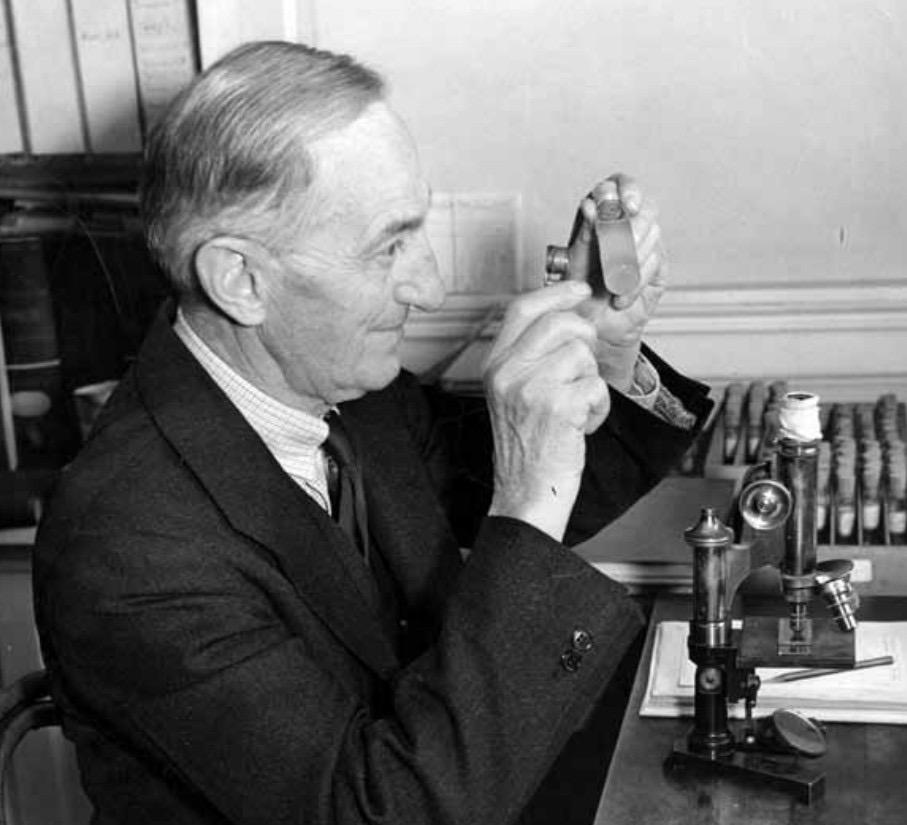
Along with Stephen Forbes (van der Valk 2018a), Edward A. Birge (Figure 1) and Chancey Juday (Figure 2) are among North America's most important and influential early limnologists (Elster 1974; Egerton 1987, 2014). Forbes studied shallow lakes in Illinois that were mostly palustrine wetlands; thus, he was an antecedent wetland scientist (van der Valk 2018a).
In this paper, I will examine some of Birge and Juday’s surveys of Wisconsin lakes to determine if they included any wetlands. If Birge and Juday’s research on lakes contributed to raising the visibility of wetlands or to our understanding of their ecology, they would be both pioneering limnologists and antecedent wetland scientists.
However, before examining their lake survey papers, I will briefly explore the relationship between limnology and wetland science.
LIMNOLOGY VERSUS WETLAND SCIENCE
François Alphonse Forel (1841-1912) is universally considered the founder of limnology (Egerton 1962, 2014; Vincent and Bertola 2012). Although trained as a medical doctor, he devoted his adult life to studying Lake Geneva (also known as Lac Léman [Forel 1892]) in Switzerland. Forel studied lakes as a branch of geography: "Geography is the science of the Earth in
its threefold composition of lithosphere, hydrosphere, and aerosphere. The special study of the hydrosphere is hydrography. Liquid water appears in three ways upon the Earth -- in the sea, in lakes, and in rivers; and hydrography is correspondingly divided into the three departments -- Oceanography, which is occupied with the unlimited, united, and all-embracing ocean. Limnology, which is concerned with the scattered and isolated portions of the hydrosphere occurring upon the land as lakes. Rheology, which studies the running water of the land in springs, brooks, streams, and rivers” (from Forel’s [1901] Handbuch der Seenkunde as translated by Mill [1901]). For Forel, limnology was oceanography in miniature (Mill 1901; Vincent and Bertola 2012).
Initially, limnology was concerned with geology (lake formation, siltation), chemistry (water and substrate), and physics (seiches, waves, energy budgets). However, the view that limnology was a branch of geography gradually changed as biological studies of lakes became more common (Strom 1929). Limnologists by the late 1920s were studying the geology, physics, chemistry, and biology of freshwater aquatic systems. In other words, what had previously been called hydrobiology or freshwater biology, i.e., the study of organisms living in fresh water, was now an integral part of limnology. By this time, limnology had also become the study of all freshwater systems, not just lakes. Although rarely mentioned in the 1920s and 1930s, this presumably included freshwater wetlands. In effect, limnology had become a branch of ecology, which is still the case. According to the Association for the Sciences of Limnology and Oceanography (ASLO) Website (in August 2022), “Limnology is the study of inland waters - lakes (both freshwater and saline), reservoirs, rivers, streams, wetlands, and groundwater - as ecological systems interacting with their drainage basins and the atmosphere.” The first American limnological society, ASLO, was founded in 1948 as the American Society for Limnology and Oceanography.
Unlike limnology, there is no founder of wetland science. A wetland scientist studies the geology, hydrology, chemistry, and biology of wetlands. Although there have been many words in English and other languages for various kinds of wetlands (marsh,
swamp, slough, bog, mire, fen, etc.), wetland as a generic term encompassing all types of shallow aquatic systems dominated by submerged, floating-leaved, or emergent higher plants, also called hydrophytes or macrophytes, entered the scientific literature only in the 1940s and 1950s. One of the earliest American antecedent wetland scientists to begin using the term in his publications was William T. Penfound (van der Valk 2022). Both limnologists and wetland scientists study aquatic ecosystems. However, wetland scientists study aquatic ecosystems dominated by wetland plants, also called hydrophytes or macrophytes. Is wetland science just a subdiscipline or branch of limnology? Answering this question requires a closer look at the definition of a wetland.
The US Fish and Wildlife Service developed a national wetland classification in 1953 (Martin et al. 1953) and used it for a national wetland inventory (Shaw and Fredine 1956). According to Shaw and Fredine, “Wetlands are lowlands covered with shallow and sometimes temporary or intermittent waters. Shallow lakes and ponds, usually with emergent vegetation as a conspicuous feature, are included in the definition, but the permanent waters of streams, reservoirs, and deep lakes are not included. Neither are water areas that are so temporary as to have little or no effect on the development of moist-soil vegetation." For Shaw and Fredine, a wetland has two defining characteristics, “moist-soil vegetation” and "shallow water," the latter, at least, temporarily or intermittently. Although water chemistry plays a role in this classification, it is of secondary importance. There are freshwater and saline wetlands in both the interior of the U.S. and along its coasts.
The current wetland definition and classification system in the U.S. is found in Cowardin et al. (1979). Wetlands are now defined as “lands transitional between terrestrial and aquatic systems where the water table is usually at or near the surface or the land is covered by shallow water. For the purposes of this classification wetlands must have one or more of the following three attributes: (1) at least periodically, the land supports predominantly hydrophytes; (2) the substrate is predominantly undrained hydric soil; and (3) the substrate is nonsoil and is saturated with water
or covered by shallow water at some time during the growing season of each year.” Five wetland systems are recognized in Cowardin et al. (1979): marine, estuarine, riverine, lacustrine, and palustrine. However, all wetlands have three interrelated attributes: shallow water or saturated soils, hydric vegetation, and hydric soils. Again, water chemistry is only of secondary importance.
Thus, wetland science is both broader and narrower in scope than limnology. It is broader because it includes the study of inland and coastal freshwater, brackish, and saltwater wetlands. Limnology, at least in the USA, deals only with inland aquatic systems. In another sense, wetland science is narrower in scope than limnology because it deals with freshwater and marine systems normally dominated by hydrophytes or wetland plants. Although the two disciplines overlap, they have become different sciences. Wetland science’s development has been shaped by several unique concerns, including the importance of wetlands as waterfowl and wading bird habitats (van der Valk 2018b), aquatic weed management and control (van der Valk 2022, 2024), and human health problems (Finlayson et al. 2015; van der Valk 2022). Some wetlands do not have, or have only limited areas, of standing water, most notably peatlands. Wetlands with saturated soils have never been of interest to limnologists. Because angiosperms and bryophytes dominate wetlands, as they do most terrestrial ecosystems, sampling techniques and theories from terrestrial ecology have played a larger role in the development of wetland science than limnology. Finally, some wetlands are legally protected ecosystems in parts of the world. As a result, many wetland scientists are involved in delineating and regulating wetlands. In short, these two aquatic sciences have developed along separate lines and today have separate professional societies, journals, textbooks, career opportunities, and academic programs. The first American wetland society, the Society of Wetland Scientists, was founded in 1980, more than 30 years after ASLO.
EDWARD A. BIRGE (1851-1950) AND CHANCEY JUDAY (1871-1944)
Edward A. Birge was born in Troy, NY, where he went to grade school and high school. From 1869 to 1874,
he attended Williams College. From 1876 to 1878, he was an instructor at the University of Wisconsin. Birge did his postgraduate studies with Louis Agassiz in Cambridge, MA, and received a Ph.D. in zoology from Harvard in 1878. Birge became a professor at Wisconsin in 1879 but soon left for a postdoctoral year at the University of Leipzig. He spent the rest of his academic career at Wisconsin: professor and chair of zoology (1879-1911), dean of the College of Letters and Sciences (1891-1918), acting president (19001903), president (1918-1925), and president emeritus till his death in 1950. Birge was also the director of the Wisconsin Geological and Natural History Survey.
Chancey Juday was born in Millersburg, Indiana, and attended Indiana University (A.B. 1896 and A.M. 1897). He joined the Wisconsin Geological and Natural History Survey in 1900 but left after only a year. Juday then held positions for the next few years at universities in Colorado and California. In 1905, he rejoined the Wisconsin Geological and Natural History Survey as a biologist and remained with the Survey until 1931. In 1908, he was appointed a lecturer in limnology in the Department of Zoology at Wisconsin. He remained in the Zoology Department till his death, rising to the rank of professor. Juday taught the first limnology course and was the major professor of Wisconsin's first generation of limnology graduate students.
At Wisconsin, Birge initially studied the effects of depth, light, temperature, and water currents on the distribution of planktonic crustaceans in Lake Mendota. However, Birge’s later research focused primarily on the physics of lakes, i.e., heat budgets, wind-generated currents, and light penetration, while Juday’s focused on lake chemistry and productivity. They collaborated throughout their careers and mostly published their research jointly. When Birge retired as president of the University of Wisconsin, Birge and Juday established the Trout Lake Limnological Laboratory in northeastern Wisconsin, a region with numerous lakes. Juday was the director of the Trout Lake Station from 1925 to 1941. For more detailed accounts of the lives and the numerous contributions to limnology of Birge and Juday, see Brooks et al. (1951), Mortimer (1956), Sellery (1956), Frey (1966), Beckel (1987), Magnuson (2002), and Frey (2012).
For Birge and Juday to be antecedent wetland scientists, it is necessary to show that they studied wetlands as currently defined by Cowardin et al. (1979). Birge and Juday did not define what they meant by “lake.” According to David Frey, one of Juday’s graduate students in the 1930s, Juday, in his limnology course at Wisconsin, also did not define "lake." "They [lakes] were the kind of waterbody that Birge & Juday were studying in Wisconsin" (Frey 1990). The lakes Birge and Juday studied, like all lakes, had two common wetland attributes: standing water and hydric soils. However, for any lakes to be classified as wetlands, they also had to have wetland plants or hydrophytes. Thus, it is direct and indirect evidence of the presence of hydrophytes, for which I looked in Birge and Juday’s lake survey papers. If some of their “lakes” were, in reality, wetlands, how did their research contribute to our understanding of wetlands and the development of wetland science?
LAKE SURVEYS
In 1911, Birge and Juday published a monograph on the dissolved gases in lakes and their biological significance. They sampled 156 lakes, 151 of them in Wisconsin. These lakes ranged from 0.05 to 39 km2 in area and 3 to 72 m in depth. Birge and Juday (1911) do not provide any quantitative information on the area of each lake covered with wetland plants. However, they note (p. 48) that in shallow lakes and larger lakes with sizeable areas of shallow water, wetland plants are abundant and a significant source of organic matter for these lakes. Birge and Juday were primarily interested in the plankton communities of the lakes and how they affected oxygen and carbon dioxide concentrations. They were mainly oblivious to the presence of wetland plants and their potential significance for dissolved gases. In the final chapter that discusses unknowns and future research directions, wetland plants are not mentioned. Nevertheless, it is clear that some of their small lakes were palustrine wetlands and that many larger lakes had considerable areas of lacustrine wetlands.
In 1927 and, in an expanded version, in 1934, Birge and Juday published papers on particulate and dissolved organic carbon in the lakes of the Highland Lake District (Figure 3) of northeastern Wisconsin. Most of
the carbon in all these small lakes is dissolved organic carbon, and phytoplankton contribute only a small percentage of their total organic matter (Figure 4). “The seven lakes with the smallest amount of organic carbon are those with no inlet or outlet and with little or no marsh adjacent to them. … At the other extreme are 10 lakes whose organic carbon exceeds 10 mg. per liter of water” (Birge and Juday 1927). The latter included lakes that receive large amounts of dissolved carbon from surrounding wetlands. These lakes were either in the bog's center or received water from marshes. Birge and Juday (1934) note that the amount of dissolved organic matter from wetland sources (bogs or marshes) in a lake is evident from the color of its water. They also note that many small lakes in northeastern Wisconsin had “shallow waters [that] pass almost insensibly into boggy margins” (Birge and Juday 1934).
Birge and Juday (1927, 1934) did not sample wetland plants. Nevertheless, they concluded that higher plants, as they called them, do not contribute significantly to the organic carbon in small lakes (Birge and Juday 1934): “In the series of diagrams representing the composition of various elements of the organic content of these lakes [Figure 4], none is found for the higher plants, those growing from the bottom of the lake. The omission is intentional since additions from this source to the organic content of the water may be neglected [emphasis added]. These plants contain only a small amount of organic matter, relatively to the total volume of water in the lake. This is especially the case in northern lakes, few of which have large weed beds. Moreover, such plants, as they die, fall to the bottom, where they accumulate and their organic matter returns to the water, in small part by direct solution from the lake mud, but chiefly in the form of lower products of decomposition.” However, Birge and Juday (1934) contradict themselves in the summary: "Total organic matter has two sources, external and internal to the lake. Internal sources are plankton (the main source), mud on the bottom, higher plants [emphasis added], etc.” In short, Birge and Juday never bothered to determine if wetland plants growing in small lakes contributed dissolved or particulate organic carbon to them, even though they suspected this might be the case.
Beckel (1987) described Birge and Juday’s science thus: "If enough data are gathered, the data will speak for themselves." Unfortunately, Birge and Juday did not collect relevant data on the distribution and abundance of wetland plants in Wisconsin lakes. They did acknowledge that wetland plants occurred and sometimes significantly impacted a lake's water chemistry. However, because they were so focused on plankton, they failed to appreciate the importance of wetland plants in small, shallow lakes, i.e., wetlands.
CONCLUSIONS
Were Birge and Juday antecedent wetland scientists? Although they were familiar with bogs and marshes, they avoided sampling them in their lake surveys because they did not consider them lakes (Frey 1990). Nevertheless, their lake survey data show that some of the lakes they sampled would now be classified by Cowardin et al. (1979) as palustrine wetlands, and others had large lacustrine wetland zones. Despite their strong bias towards plankton, they did acknowledge, when it was apparent, that wetland plants were important organisms in some lakes and that these plants affected lake water chemistry, e.g., the amount of dissolved organic carbon. Thus, they recognized that some lakes differed because they had abundant wetland plants, mostly submerged aquatics.
As previously noted, Birge and Juday (1911, 1927, 1934) never defined a lake. The distinction between wetlands and other kinds of aquatic systems, like deepwater lakes, was not formalized until 1953 (Martin et al. 1953), after both Birge and Juday had died. Reading Birge and Juday's papers, I found it striking to me that they consistently minimized the presence and role of wetland plants in lakes. They never identified which species were present or quantified how abundant or widespread these species were. Like other early limnologists, Birge and Juday saw themselves as freshwater oceanographers. Consequently, their research focused on planktonic communities in open water and the physical and chemical factors controlling their composition and distribution. Only the deeper parts of lakes were important to them, and wetland plants were not commonly found there.
Both Birge and Juday were trained as zoologists and worked in a zoology department. Being zoologists may be the ultimate reason for their lack of interest in higher plants in lakes. Their research contrasts sharply with their contemporary in England, W.H. Pearsall (van der Valk 2023). Pearsall, a botanist, studied in detail the composition and distribution of wetland plants in the lakes of the English Lake District (Pearsall 1920, 1921).
The different biases implanted in students trained in zoology and botany were made evident when I was a graduate student at the University of Alberta. I simultaneously took two introductory ecology courses in plant ecology and animal ecology. Both courses held labs on Saturdays, the plant ecology course in the morning and the animal ecology course in the afternoon. Both labs one Saturday visited the same site. In the plant ecology lab, the site was used to illustrate the importance of a moisture gradient on the distribution of plant species. In the animal ecology lab that afternoon, the site was used to illustrate the impacts of winter grazing by rabbits and deer on the distribution of plant species. The instructor never mentioned grazing in the plant ecology lab, nor did the students notice it. The zoology instructor did not mention the obvious moisture gradient in the animal ecology lab, nor did the students notice it, except for me. It is often said that we see what we want to see. In science, however, we often only see what we are trained to see.
Birge and Juday’s lake research did little to increase the visibility of wetlands or stimulate wetland research. Consequently, they were not antecedent wetland scientists. They were anti-antecedent wetland scientists because they viewed only deepwater lakes as worthy of study. This anti-wetland bias would persist in American limnology until the work of Robert G. Wetzel, a renowned American limnologist, in the 1970s and 1980s (e.g., Wetzel 1979). Wetzel’s studies of the importance of littoral zones in lakes stimulated numerous studies on the significant role of wetland plants in lakes (Carpenter and Lodge 1986, Schindler and Scheuerell 2002). In 1978, Wetzel contributed a paper on the products of litter decomposition of a wetland plant to a major symposium on freshwater wetlands (Good et al. 1978). When Wetzel became president of ASLO in 1980, he invited wetland
scientists to join the Society and to publish in its journal, Limnology and Oceanography. He had few takers. Like most wetland scientists at the time, I chose to join the newly formed Society of Wetland Scientists, not ASLO. Nevertheless, his studies of the littoral zone of lakes (lacustrine wetlands) marked a significant shift in the attitude of limnologists toward wetlands and their significance.
DECLARATION OF ORIGINALITY
This is an original work that has not been previously published. Images, figures, and quotations included in the article are either in the public domain or, when not, have been properly cited and permission has been granted for any that are not those of the author.
REFERENCES
Beckel, A. L., 1987. Breaking New Waters, a Century of Limnology at the University of Wisconsin - Special issue of the Transactions of the Wisconsin Academy of Sciences, Arts and Letters, Madison, Wisconsin. https://digital.library.wisc.edu/1711.dl/44N2KX6ER3XFM9A
Birge, E.A. and C. Juday. 1911. The inland lakes of Wisconsin: the dissolved gases of the water and their biological significance. Wisconsin Geological and Natural History Survey, Madison, WI. https://www.loc. gov/item/f11000157/.
Birge, E. A. and C. Juday. 1927. The organic content of the water of small lakes. Proceedings of the American Philosophical Society 66:357372. jstor.org/stable/3301073
Birge, E. A. and C. Juday. 1934. Particulate and dissolved organic matter in inland lakes. Ecological Monographs 4:440-474. doi. org/10.2307/1961650
Brooks, J. L., G. L. Clarke, A. D. Hasler, and L. Noland. 1951. Edward Asahel Birge (1851-1950). Archiv für Hydrobiologie 45: 235-243. Available through Google Books.
Carpenter, S.R. and D. M. Lodge. 1986. Effects of submersed macrophytes on ecosystem processes. Aquatic Botany 26:341-370. doi. org/10.1016/0304-3770(86)90031-8
Cowardin, L. M., Virginia Carter, F. C. Golet, and E. T. LaRoe. 1979. Classification of wetlands and deepwater habitats of the United States. Fish and Wildlife Service, US Department of the Interior, Washington, DC. http://www.openarchives.org/OAI/2.0/oai_dc/ http://www.openarchives.org/OAI/2.0/oai_dc.xsdBeckel
Egerton, F. N. 1962. The scientific contributions of François Alphonse Forel, the founder of Limnology. Schweizerische Zeitschrift für Hydrologie 24:181–199. doi.org/10.1007/BF02503034
Egerton, F.N., 1987. The Wisconsin Limnological Community. pp. 85122. In A. L. Beckel (ed.) Breaking New Waters, a Century of Limnology at the University of Wisconsin, Special issue of the Transactions of the Wisconsin Academy of Sciences, Arts and Letters. digital.library. wisc.edu/1711.dl/44N2KX6ER3XFM9A
Egerton, F.N. 2014. History of Ecological Sciences, Part 50: Formalizing Limnology, 1870s to 1920s. Bulletin of the Ecological Society of America 95:131- 153. https://api.semanticscholar.org/CorpusID:84937896
Elster, H-J. 1974. History of Limnology. Internationale Vereinigung für
Theoretische und Angewandte Limnologie: Mitteilungen 20: 7-30. doi.or g/10.1080/05384680.1974.11923880
Finlayson, C. M., P. Horwitz, and P. Weinstein, eds. 2015. Wetlands and Human Health. Springer, Dordrecht, The Netherlands. doi. org/10.1007/978-94-017-9609-5
Forel, F.A. 1892. Le Leman, Monographie Limnologique - Tome Premier. Librarie de l'Université, Lausanne, Switzerland
Forel, F.A. 1901. Handbuch der Seenkunde. Allgemeine Limnologie von Dr. F. A. Forel. (Bibliothek geographischer Handbücher herausgegeben von Prof. Dr. Friedrich Ratzel.). J. Engelhorn, Stuttgart, Germany. Available through Google Books.
Frey, D.G. (ed.). 1966. Limnology in North America. The University of Wisconsin Press, Madison, WI. Available through Google Books.
Frey, D.G. 1990. What is a lake? Internationale Vereinigung für theoretische und angewandte Limnologie: Verhandlungen,24:1-5. doi.org/10. 1080/03680770.1989.11898686
Frey, D. G. 2012. The Birge-Juday era. LAKELINE, Winter 2012, 31-33. www.nalms.org/wp-content/uploads/2018/09/32-4-8.pdf
Good, R. E., D. F. Whigham, and R. L. Simpson, eds. 1978. Freshwater wetlands: Ecological Processes and management potential. Academic Press, New York, NY. Available through the HathiTrust.
Lindeman, R. L. 1942.The trophic-dynamic aspect of ecology. Ecology 23:399-417. doi.org/10.2307/1930126
Magnuson, J. J. 2002. Three generations of limnology at the University of Wisconsin-Madison. Internationale Vereinigung für theoretische und angewandte Limnologie: Verhandlungen 28:856-860. doi.org/10.1080/03 680770.2001.11901835
Martin, A. C., N. Hotchkiss, F. M. Uhler, and W. S. Bourn. 1953. Classification of wetlands of the United States. U.S. Fish and Wildlife Service, Special Science Report--Wildlife 20. Washington DC. www. openarchives.org/OAI/2.0/oai_dc/ http://www.openarchives.org/OAI/2.0/ oai_dc.xsd"
Mill, H. R. 1901. Prof. Forel on Limnology. Geographical Journal 17: 296-298. https://archive.org/download/crossref-pre-1909-scholarlyworks/10.2307%252F1775
Mortimer, C. H. 1956: An explorer of lakes. In G. C. Sellery (ed.): E. A. Birge, a Memoir. University of Wisconsin Press, Madison, Wisconsin. doi: 10.1126/science.124.3225.728.
Pearsall, W.H. 1920. The aquatic vegetation of the English Lakes. Journal of Ecology 8:163-201. doi.org/10.2307/2255612
Pearsall, W.H. 1921. The development of vegetation in the English Lakes, considered in relation to the general evolution of glacial lakes and rock basins. Proceedings of the Royal Society, B 92:259-284. doi. org/10.1098/rspb.1921.0024
Schindler, D. E. and M. D. Scheuerell. 2002. Habitat coupling in lake ecosystems. Oikos 98177-189. doi.org/10.1034/j.16000706.2002.980201.x
Sellery, G. C. 1956. E. A. Birge, a Memoir. The University of Wisconsin Press, Madison, Wisconsin. Available through the INTERNET ARCHIVE.
Shaw, S. and G. Fredine. 1956. Wetlands of the United States, their Extent and their Value to Waterfowl and other Wildlife. Circular 39, Washington, DC. Available through Google Books.
Strom, K.M. 1929. The Study of Limnology. Journal of Ecology 17:10611. doi.org/10.2307/2255915
van der Valk, A.G. 2017. Antecedent wetland ecologists – German and Austrian in the nineteenth Century. Wetland Science and Practice 34:112-117. doi.org/10.1672/UCRT083-259
van der Valk, A.G. 2018a. Stephen A. Forbes, Antecedent wetland ecologist. Wetland Science and Practice 35:18-24. doi.org/10.1672/UCRT083256
van der Valk, A.G. 2018b. Assisting nature: Ducks, "Ding" and D.U. Wetland Science and Practice 35:60-67. doi.org/10.1672/UCRT083-253
van der Valk, A.G. 2020. How I became a wetland ecologist. In Douglas A. Wilcox (editor), History of Wetland Science: A Perspective from Wetland Leaders. Amazon Print-on-Demand.
van der Valk, A.G. 2022. Naturalistic control: W. T. Penfound, T. F. Hall, and A. D. Hess and malaria control in Tennessee Valley Authority Reservoirs. Wetland Science and Practice 40:12-18. doi.org/10.1672/ UCRT083-61.
van der Valk, A.G. 2023. Beginnings of wetland science in Britain: Agnes Arber and William H. Pearsall. Wetland Science and Practice 41:10-18. doi.org/10.1672/UCRT083-55
van der Valk, A.G. 2024. The world’s most troublesome weed: Water Hyacinth and the development of wetland science. Wetland Science and Practice 42:177-184. doi.org/10.1672/ucrt083-602
van der Valk, A.G. and L.C. Bliss. 1971. Hydrarch succession and net primary production of oxbow lakes in central Alberta. Canadian Journal of Botany 49:1177-99. doi.org/10.1139/b71-167.
Vincent, W.F. and C. Bertola. 2012. François Alphonse Forel and the oceanography of lakes. Archives des Sciences 65:51-64. https://science. cen.ulaval.ca/warwickvincent/PDFfiles/295a.pdf
Wetzel, R.G. 1979. Role of the littoral zone and detritus in lake metabolism. Archiv für Hydrobiologie, Ergebnisse der Limnologie 13:145-161. Available through Google Books.
Figure 1. Edward A. Birge. (Photo: Wikimedia Commons)
Figure 2. Chancey Juday. (Photo: University of Wisconsin Digital Collections Center)
Figure 3. Sketch map of the Highland Lake District of northeastern Wisconsin. Many lakes were too small to be shown at this scale. (Photo: Birge and Juday 1934)
Figure 4. Mean organic content (mg/l) of five types of lakes and the weighted overall mean of all lakes in the Highland Lake District of Wisconsin. C = carbon, Cb = carbohydrates, C. P. = crude protein, E. E. = ether extract of fats, and P = plankton. (Photo: Birge and Juday 1934)
In this issue, we highlight wetlands in winter. Ralph Timer (emeritus editor of WSP) brings us wetlands after the first snowfall of the year in western Massachusetts. Chris (current editor of WSP) shows us wetlands from the southeastern U.S., including a rare snowfall on Sapelo Island in January 2025. And Jan Vymazal contributes winter photos of wetlands in the Czech Republic. Enjoy.
Beaver lodge (in background). (Photo: Ralph Tiner)
Doolittle Brook. (Photo: Ralph Tiner)
Leverett Lake. (Photo: Ralph Tiner)
A rare snowfall on the beach. (Photo: Gabby Ziegler)
Sapelo Island salt marsh in winter is teeming with birds. (Photos: Chris Craft)
Snow and ice on the marsh. (Photo: Gabby Ziegler)
A couple more photos of the Slavošovice constructed wetland. (Photo: Jan Vymazal)
Listed below are some links to news articles that may be of interest. Links from past issues can be accessed on the SWS website news page (Wetlands in the News - Society of Wetland Scientists). This section includes links to mostly newspaper, magazine, and news articles. Members are encouraged to send links to articles about wetlands in their local area. Please send the links to the WSP Editor at chrstphrcrft@gmail.com and reference “Wetlands in the News” in the subject box. Thanks for your support.
• Ditches on peatland oil palm plantations are an overlooked source of methane: Study
• Road to recovery: Five stories of species staging a comeback
• Wildlife Cam Captures Norfolk’s First Wild Beaver In Over 500 Years
• Experts enlist unexpected helpers in fight against harmful creatures: 'We must try new approaches'
• Blending Science and Indigenous Knowledge to Tell an Estuary’s Story
• Smithsonian Researchers Believe that the Panama-Costa Rica Corridor Would Protect Endangered Manatees
• Degraded peatlands emit nearly twice as much greenhouse gas as previously thought, study finds
• When the world’s largest battery power plant caught fire, toxic metals rained down – wetlands captured the fallout
• Researchers uncover stunning impact of structures built by wild animals: 'Trade-offs and benefits'
• Cranberry Country, Wisconsin
• Senyar Swamps Sumatra
• What Salty Water Means for Wild Horses
• Understanding Flux, from the Wettest Ecosystems to the Driest
• Struggles of the world’s ‘second lung’ put one of the most beloved crops at risk
• Reservoirs Dwindle in South Texas
• A guerrilla gardener installed a pop-up wetland in the LA River. Here's how — and why
• Researchers make stunning discoveries inside ancient man-made ponds: 'It's exciting'
• Guest commentary: When the water doesn’t go away
• Beavers create habitats for bats and support endangered species
• Researchers uncover disturbing culprit behind concerning 'ghost forest' phenomenon: 'Canary in the coal mine'
• Seashells from centuries ago show that seagrass meadows on Florida’s Nature Coast are thriving
• Racing rising tides, volunteers work to save a bird on the brink
• Leave it to the beavers: beaver transplant program promises to engineer new solutions for stream restoration projects
• India names its 94th Wetland of International Importance
• Researchers make alarming discovery after studying animals' 'antifreeze' superpower: 'Could be catastrophic'
• Galápagos had no native amphibians - then it was invaded by hundreds of thousands of frogs
• Multifunctional landscapes could address interconnected global crises
• Officials issue urgent warning after discovering harmful creatures in US lake: 'We don't want them in our waterways'
• Experts celebrate recovery of unique creature from brink of extinction: 'Proved to be quite successful'
• Rainfall buries a mega-airport in Mexico
• Researchers raise red flags after observing concerning shift in crocodile behavior—here's what's happening
• First ever fossil of a living, endangered tropical tree discovered
• The humble plant that could save the world—or destroy it
• They're showing up in gardens, these little pink eggs are a warning sign, and you need to act fast
• As seas rise, corals can't keep up
• Republicans try to weaken 50-year-old law credited with saving rare whales
• Creature hunted nearly to extinction makes stunning comeback: 'It's thriving'
• Tree frogs freeze themselves for winter weather that now never comes
• Rare crayfish back in wild after drought rescue
• Scientists make disturbing discovery in crucial US waterways: 'Could reduce the overall productivity'
• Ranch owner highlights surprising benefits of so-called 'pest' on his property: 'They're doing me a favor'
• Thousand-duck days have arrived as fall waterbird migration picks up
• We finally know how the Venus fly trap turns touch into traps
Please help us add new books and government wetland reports to this listing. If your agency, organization, or institution has published new publications on wetlands, please send the information to the Editor of Wetland Science & Practice. Your cooperation is appreciated.
BOOKS
• The Atchafalaya River Basin: History and Ecology of an American Wetland
• Bayou D’Arbonne Swamp: A Naturalist’s Memoir of Place
• Bayou-Diversity: Nature and People in the Louisiana Bayou Country
• Black Swan Lake – Life of a Wetland
• Coastal Wetlands of the World: Geology, Ecology, Distribution and Applications
• Constructed Wetlands and Sustainable Development
• Creating and Restoring Wetlands: From Theory to Practice
• Eager: The Surprising Secret Life of Beavers and Why They Matter
• Fenland Nature
• Florida’s Wetlands
• Ghosts of Iraqi Marshes, A Conflict of History, Tragedy and Restoration
• History of Wetland Science: A Perspective from Wetland Leaders
• An Introduction to the Aquatic Insects of North America (5th Edition)
• Mid-Atlantic Freshwater Wetlands: Science, Management, Policy, and Practice
• Remote Sensing of Wetlands: Applications and Advances
• Salt Marsh Secrets. Who uncovered them and how?
• Sedges of Maine
• Sedges and Rushes of Minnesota
• Tidal Wetlands Primer: An Introduction to their Ecology, Natural History, Status and Conservation
• Tussock Sedge: A Wetland Superplant
• Wading Right In: Discovering the Nature of Wetlands
• Waubesa Wetlands: New Look at an Old Gem
• Wetland Ecosystems
• Wetland Indicators – A Guide to Wetland Formation, Identification, Delineation, Classification, and Mapping
• Wetland Landscape Characterization: Practical Tools, Methods, and Approaches for Landscape Ecology
• Wetlands (5th Edition)
• Wetland Restoration: A Handbook for New Zealand Freshwater Systems
• Wetland Soils: Genesis, Hydrology, Landscapes, and Classification
• Wetland & Stream Rapid Assessments: Development, Validation, and Application
• Wetland Techniques (3 volumes)
• Wildflowers and Other Plants of Iowa Wetlands
About WETLAND SCIENCE & PRACTICE (WSP)
Wetland Science & Practice (WSP) is the SWS quarterly publication aimed at providing information on select SWS activities (technical committee summaries, chapter workshop overview/abstracts, and SWS-funded student activities), articles on ongoing or recently completed wetland research, restoration, or management projects, freelance articles on the general ecology and natural history of wetlands, and highlights of current events. The July issue is typically dedicated to publishing the proceedings of our annual conference. WSP also serves as an outlet for commentaries, perspectives, and opinions on important developments in wetland science, theory, management and policy. Both invited and unsolicited manuscripts are reviewed by the WSP editor for suitability for publication. When deemed necessary or upon request, some articles are subject to scientific peer review. Student papers are welcomed. Please see publication guidelines herein. Electronic access to WSP is included in your SWS membership. All issues published, except the current issue, are available via the internet to the general public. The current issue is only available to SWS members; it will be available to the public four months after its publication when the next issue is released (e.g., the January 2025 issue will be an open access issue in April 2025). WSP is an excellent choice to convey the results of your projects or interest in wetlands to others. Also note that WSP will publish advertisements; contact info@sws.org for details.
HOW YOU CAN HELP
If you read something you like in WSP, or that you think someone else would find interesting, be sure to share. Share links to your Facebook, X, Instagram, and LinkedIn accounts. Make sure that all your SWS colleagues are checking out our recent issues, and help spread the word about SWS to non-members! Questions? Contact editor Christopher Craft (chrstphrcrft@gmail.com).
WSP MANUSCRIPT – GENERAL GUIDELINES FOR AUTHOR AND ARTICLES
AUTHOR ETHICS AND DECLARATION:
The work is original and has not been published elsewhere. Data reported in submission must be author’s own and/or data that the author has permission to use. Inclusion of results from previously published studies must be appropriately credited. It is vital that all contributing authors review the initial submission and subsequent versions. Upon submission of the final manuscript, the lead author must submit a declaration stating that all contributing authors have reviewed and approve the final manuscript. Failure to do this will lead to rejection of the manuscript. Also please include a statement of originality in the article after the Acknowledgements and before the References section. Such statement should be something like this:
Declaration of Originality
This is an original work that has not been published before. Images, figures, and quotations included in the article have been properly cited and permission has been granted for any that are not those of the author.
LENGTH:
Approximately 5,000 words; can be longer if necessary.
STYLE:
See existing articles from 2014 to more recent years available online at: https://members.sws.org/wetland-science-and-practice. Standard format/outline for articles: Title, authors (include affiliations and correspondence author email in footnotes), followed by Abstract, then Text (e.g., Introduction, Methods, Results, Discussion, and Conclusion), and ending with References. All articles must have an abstract. Keywords are optional.
TEXT:
Word document, 12 font, Times New Roman, single-spaced; keep tables and figures separate, although captions can be included in text. For reference citations in text use this format: (Smith 2016; Jones and Whithead 2014; Peterson et al. 2010). Do not perform formatting (e.g., capitalization of headings and subheadings). For example, do not indent paragraphs… just separate paragraphs by lines.
FIGURES:
Please include color images and photos of subject wetland(s) as WSP is a full-color e-publication. Image size should be less than 1MB; 500KB may work best for this e-publication. Figures should be original (not published elsewhere) or in the public domain. If the figure was published elsewhere (copyrighted), it is the responsibility of the author to secure permission for use. Be sure to provide proper credit in the caption.
Reference Citation Examples:
• Clements, F.E. 1916. Plant Succession: An Analysis of the Development of Vegetation. Carnegie Institution of Washington. Washington D.C. Publication 242.
• Colburn, E.A. 2004. Vernal Pools: Natural History and Conservation. McDonald & Woodward Publishing Company, Blacksburg, VA.
• Cole, C.A. and R.P. Brooks. 2000. Patterns of wetland hydrology in the Ridge and Valley Province, Pennsylvania, USA. Wetlands 20: 438-447. https://doi.org/10.1672/02775212(2000)020<0438:POWHIT>2.0.CO;2
• Cook, E.R., R. Seager, M.A. Cane, and D.W. Stahle. 2007. North American drought: reconstructions, causes, and consequences. Earth-Science Reviews 81: 93-134.
• Cooper, D.J. and D.M. Merritt. 2012. Assessing the water needs of riparian and wetland vegetation in the western United States. U.S.D.A., Forest Service, Rocky Mountain Research Station, Ft. Collins, CO. Gen. Tech. Rep. RMRSGTR-282.
• van der Valk, A. 2023. The beginnings of wetland science in Britain: Agnes Arber and William H. Pearsall. Wetland Science & Practice 41(1): 10-18. https://doi.org/10.1672/ ucrt083-01
Please be sure to add the DOI link to citations where possible. If you have questions, please contact the editor, Christopher Craft, at chrstphrcrft@gmail.com.
2026 Advertising Prospectus
Monthly Newsletter
The SWS monthly newsletter is sent to approximately 3,000 members around the world, and enjoys an open rate between 40-50%, which is well above industry average. Place your organization in front of leading environmental scientists monthly with an ad that links to your website.
Price (per ad)
• Ad Format: .jpeg or .png
• Ad Due Date: Artwork and link URL due on the first of the month in which the ad is to run.
• Distribution Date: On or around the 15th of each month
The SWS website boasts nearly 200 daily visitors annually and is a user-friendly, engaging, and SEO optimized format. By purchasing ad space on sws.org, you will increase the visibility of your product or service directly to our audience of wetland professionals, academics, and other science-based fields that will benefit the most from what your company has to offer.
Quarter 1 Quarter 2
Quarter 3
Quarter 4
Ad Due Date January 2 March 27 June 24 Sept 25 Ad Begins January 9
• Ad Due Date: Artwork and link URL due one week prior to beginning run date
• Ad Begin Date: Ad uploaded the first day of the first month of the quarter
WSP is the SWS quarterly publication aimed at providing information on select SWS activities (technical committee summaries, chapter and section workshop overview/abstracts, and SWS-funded student activities); brief summary articles on current or recently completed wetland research, restoration, or management projects; information on the general ecology and natural history of wetlands; and highlights of current events. It is distributed digitally, with over 2,000 impressions and more than 300 reads in the first six months after release.
• Ad Format: Press quality .pdf with images rendered at 300 or higher dpi
• Ad Due Date: Artwork is due on the 15th of the month prior to the month of publication
• Distribution Date: WSP is published on or around the middle of the month of publication
Coastal Wetlands of the Wilderness Lakes System, South Africa, Photographed by Douglas Macfarlane.