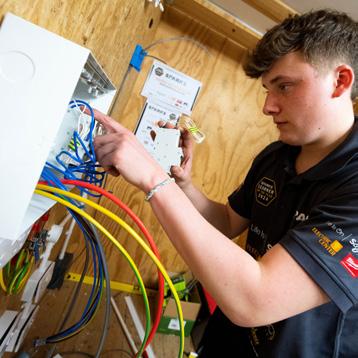
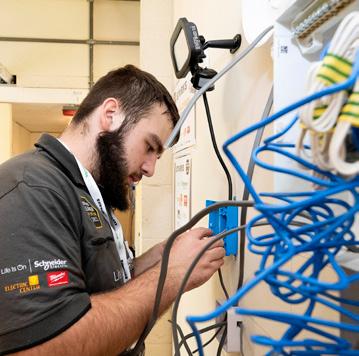
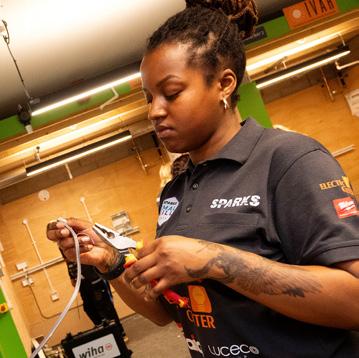
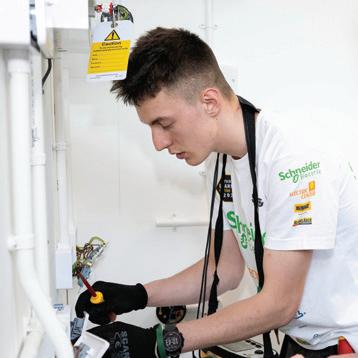

REACHING THE NEXT GENERATION OF INSTALLERS
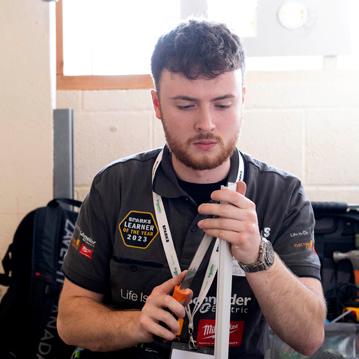

EDITOR: CELIA MATTHEWS celia.matthews@sng-group.co.uk
SENIOR GRAPHIC DESIGNER: LEE OWEN design@sng-group.co.uk
DIGITAL MANAGER: PHOEBE MANSFIELD phoebe.mansfield@sng-group.co.uk
PARTNERSHIP DEVELOPMENT MANAGER: PATRICK BLORE patrick.blore@sng-group.co.uk
PARTNERSHIP DEVELOPMENT MANAGER: SARAH HERNE sarah.herne@sng-group.co.uk
EVENT MANAGER: REISS BASSETT reiss.bassett@sng-group.co.uk
MARKETING MANAGER: SAMANTHA COLE samantha.cole@sng-group.co.uk
MANAGING DIRECTOR: ZOË TANNER zoe.tanner@sng-group.co.uk
PRINTERS: Stephens & George, Wales
To subscribe to SPARKS Magazine call 0121 779 0888 or subscribe online at www.sparks-magazine.co.uk
This publication is produced by SNG Publishing Ltd, trading as The SNG Group (SNG).
All content and artwork are © SNG or its contributors.
All brands, logos and titles published under The SNG Group, including associated magazine and digital titles, are trademarks of SNG unless otherwise stated.
No part of this publication may be copied, reproduced, transmitted or published in any form or by any means without prior written permission. While every effort has been made to ensure the accuracy of the information contained within this publication, SNG does not verify any claims or other information appearing in advertisements or sponsored content and accepts no responsibility for any loss or damage arising from reliance on the content, artwork, opinions or advice contained herein. This publication does not constitute professional advice.
Advertisements are accepted for publication subject to SNG’s standard terms and conditions of advertising.


Congratulations on completing your first term at college – you’ve already made a fantastic start to your journey in the electrical industry! The effort you’re putting in now is laying the foundations for a bright and successful future.
This handbook is here to guide you along the way, packed with practical tips, industry insights, and an intro to some of the leading brands and services you’ll come across in training and on site.
Want to test your knowledge? Head to the glossary at the back and see how many electrical terms you’ve already mastered!
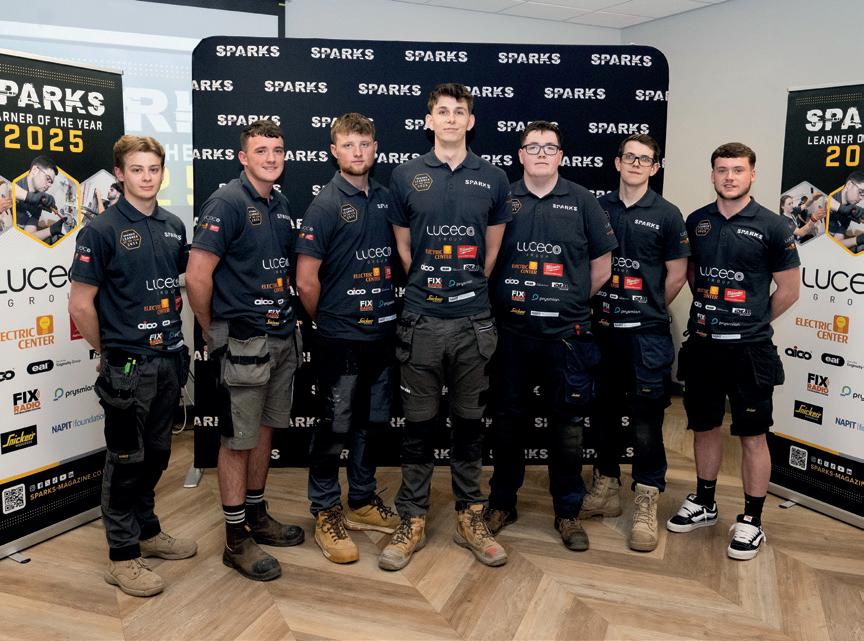
At SPARKS, we’re proud to be celebrating 20 years of supporting the next generation of electrical professionals. Through our magazines, digital resources, and national skills competitions, we’re here to help you gain confidence, build skills and connect with the industry.
Stay connected with us on social media for top tips, epic fails, and some amazing competitions and giveaways coming your way in 2026.
Here’s to a bright year ahead!
Celia Matthews
Editor
© SNG Publishing Ltd (trading as The SNG Group), 2026


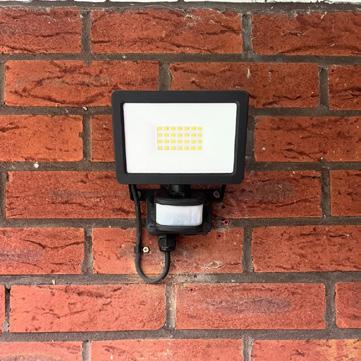
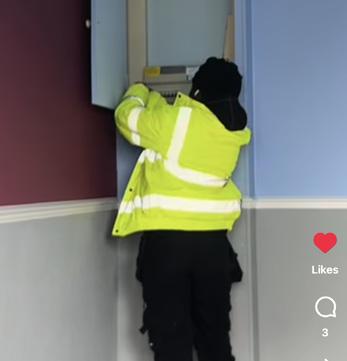
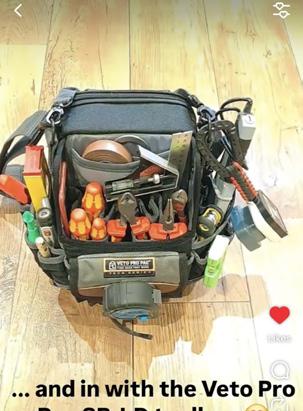
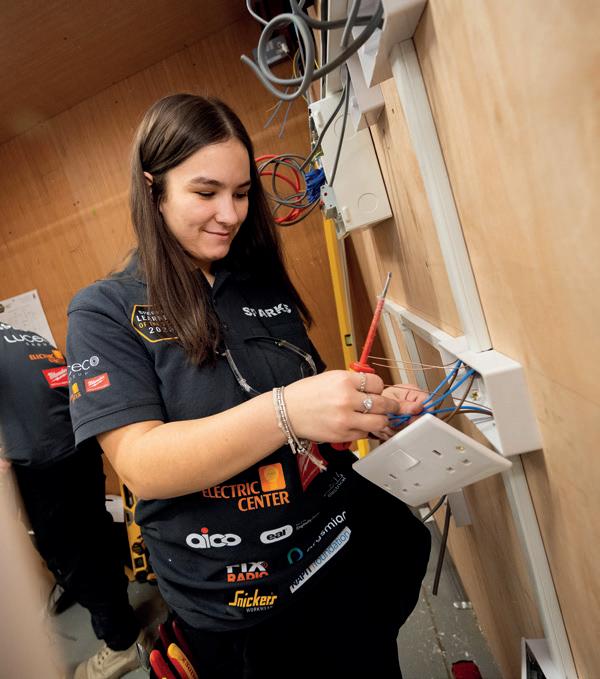
You don’t need to be an influencer to use social media well. For apprentices and students, having a solid social media presence can help you get noticed, document your progress, and open doors to future employment opportunities.
Used well, it can help you:
■ Demonstrate your work ethic and skill progression to employers
■ Start building a portfolio before you’re fully qualified
■ Learn tips from experienced tradespeople
■ Attract future customers if you go self-employed
■ Stand out from other apprentices
Content ideas:
■ Your first time using a new tool
■ Learning at college vs on-site
■ “What I learned this week”
■ Before-and-after photos (with permission)
■ Mistakes you learned from
■ Tool reviews on a budget
■ Exam or assessment prep tips

Here are some top tips for filming content with your phone:
■ Film vertically (9:16) for TikTok, Reels and Shorts
■ Clean your camera lens
■ Use natural light where possible
■ Keep clips short (5–20 seconds)
■ Film more than you think you need











>
>
>


>
>
>
>










GET YOUR MATES IN OTHER
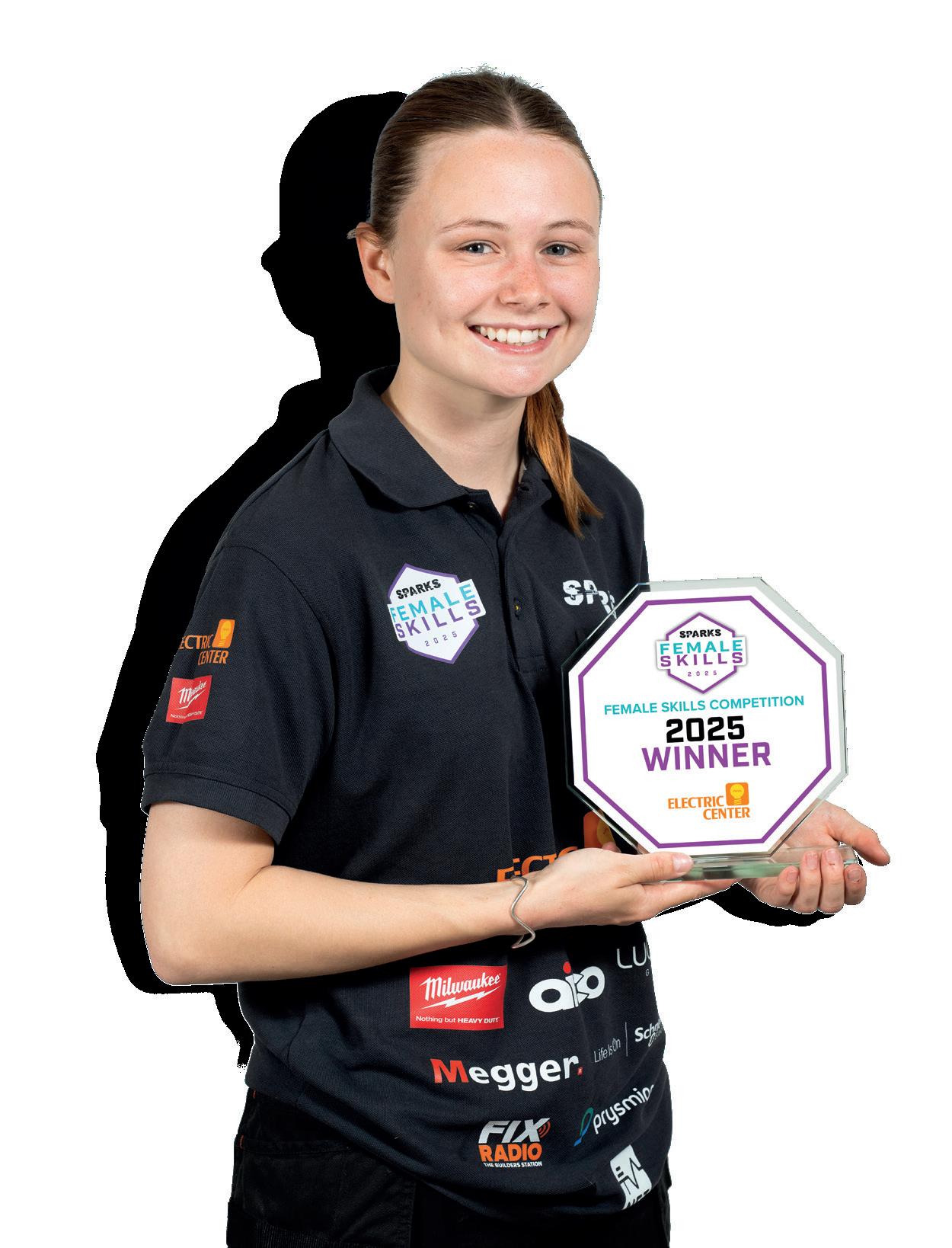
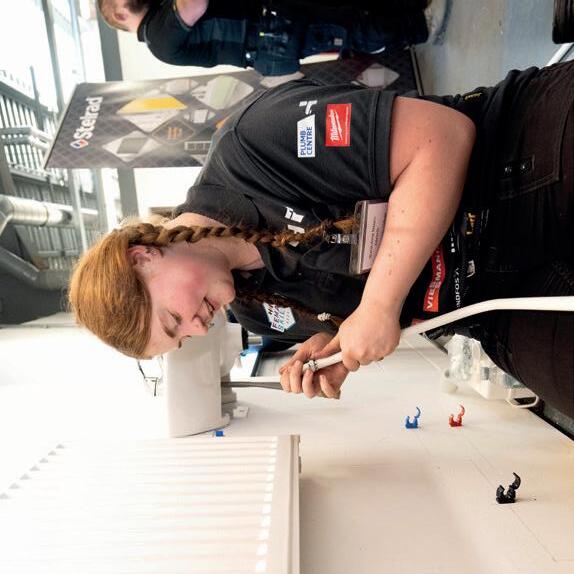
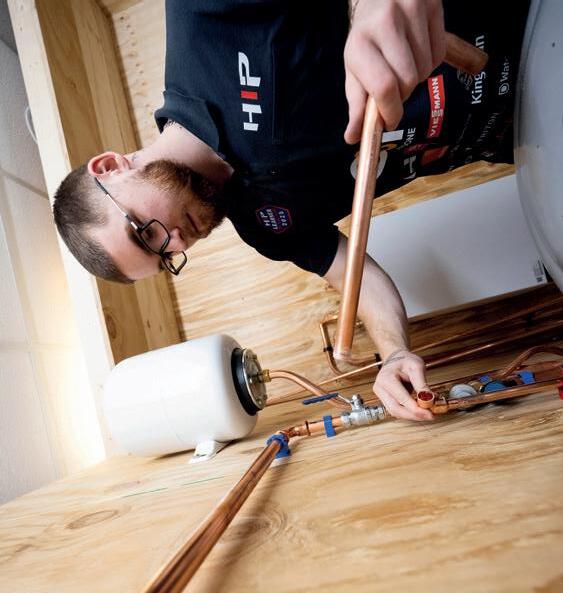
We don’t just do electrical! We run hands-on, skills-based competitions across multiple tradesgiving learners the chance to show what they’re made of!
WE ALSO RUN COMPETITIONS




At the end of your apprenticeship you’ll need to take the AM2 assessment test before you can become fully qualified.
WHAT’S THIS?
Think of it as similar to a driving test –you spend weeks or months learning how to drive, then the test is where you put everything into practice and you are marked against strict criteria.
The AM2 is just like this - it’s an in-depth assessment where you have to carry out specific tasks to show what you have learned during your apprenticeship. The whole test is either 16 hours long (AM2S), or 19 hours (AM2D).
WHICH ASSESSMENT WILL YOU BE DOING?
The assessment you’ll be doing will depend on the apprenticeship route you’re on:
● AM2S – For those on the Installation & Maintenance Electrician apprenticeship
● AM2D – For those on the Domestic Electrician apprenticeship
Each assessment is broken down into sections such as:
● INSTALLATION
● INSPECTION, TESTING & CERTIFICATION
● SAFE ISOLATION OF CIRCUITS
● FAULT DIAGNOSIS


Strict exam conditions are in place during the assessment, so this means no electronic devices or getting help from anyone else. You’ll be monitored by an assessor who will be marking your work as the day progresses.
Once you pass the assessment, it’s one of the final pieces of the puzzle to completing your apprenticeship and becoming a fully qualified electrician.
Check out the next few pages for some top advice and tips on how to prepare for your AM2.
SCAN HERE for more information.
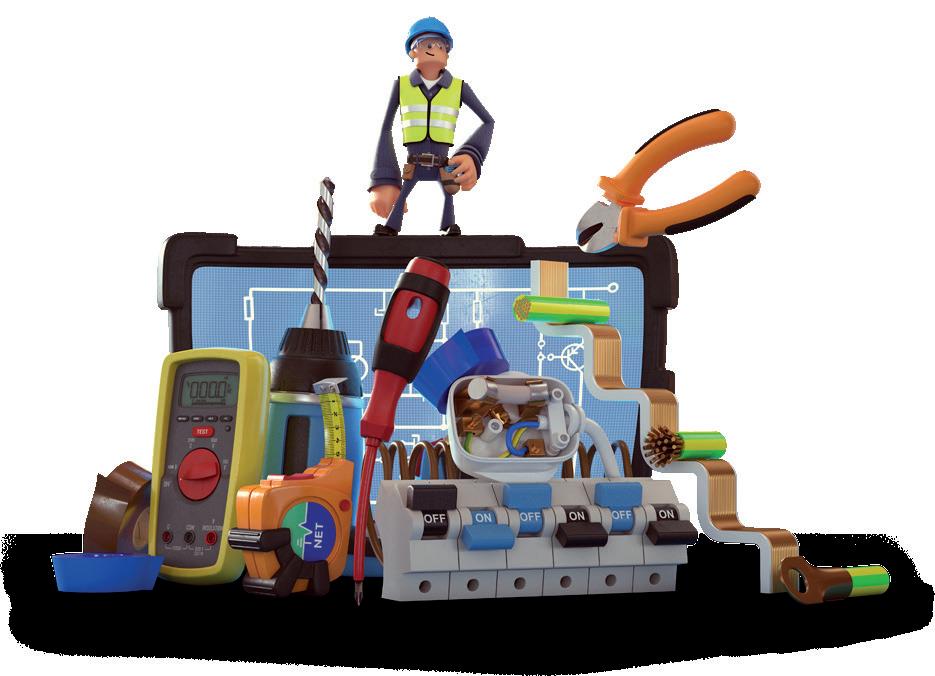
At the end of your apprenticeship you’ll need to complete the AM2S or AM2D Assessment before you can become fully qualified.
If you’re on the Installation Electrician apprenticeship you’ll be doing the AM2S, if you’re a Domestic Electrician apprentice, you’ll be doing the AM2D.
It’s an in-depth assessment where you have to carry out specific tasks to show what you have learned during your apprenticeship.
BE PREPARED!
The AM2S and AM2D Checklists help you to look exactly what you need to do and make sure you’ve gained the right knowledge and practical experience. This assessment is the pinnacle of everything you’ve learnt during your apprenticeship. So why not be proud of your skills and training and make it your mission to pass first time?
Ask your training provider about the Checklists or find out more at:
The
‘Readiness for Assessment Checklist’ from National Electrotechnical Training
(NET) helps you to look carefully and decide if you have the skills and knowledge needed for the assessment.
HOW CAN YOU BEST PREPARE FOR YOUR AM2?
Everything you need is in the checklist. Go through each section and ask yourself how confident you feel with the tasks and where you might need more practice.
YOUR EMPLOYER AND TUTOR WILL SUPPORT YOU
Near the end of your apprenticeship, your training provider should review your skills with you and your employer to spot any gaps – for example, whether you need more experience in Inspection & Testing.
If you’re not feeling confident in certain areas, they should create an action plan to help you build the knowledge and practical skills you need. If that happens, don’t let yourself be put forward for the assessment too early.
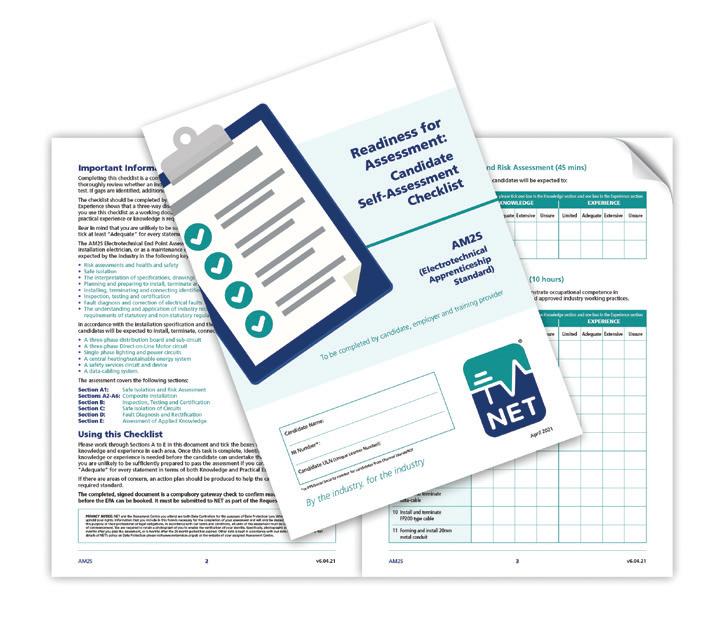
ONLY SIGN THE CHECKLIST WHEN YOU’RE READY
Before you’re allowed to book your assessment, the checklist must be signed by you, your employer and training provider to confirm you’re ready. Make sure you only sign the checklist when you feel you’re 100% confident to take the assessment.
“Make sure you’re prepared for your AM2!”
SCAN HERE to find out which checklist is relevant to you.
In the days and weeks before your assessment, look carefully at NET’s Pre-Assessment Manual. This goes into detail and lists Common Errors that people make, so you can avoid making the same mistakes!
HERE ARE JUST A FEW TIPS TO GET YOU STARTED:
FOLLOW THE SPECIFICATION!

● You must follow the specification that is given to you for the assessment. Many fail simply because they did what they thought was best rather than following the written instructions.
SAFE ISOLATION – GET IT RIGHT
● People also fail because they did not correctly safely isolate before starting the installation task. Make sure you practice the 10-point safe isolation test before your assessment!
INSPECTION & TESTING
● Remember to verify your test results against BS7671 requirements and record on the documents supplied.
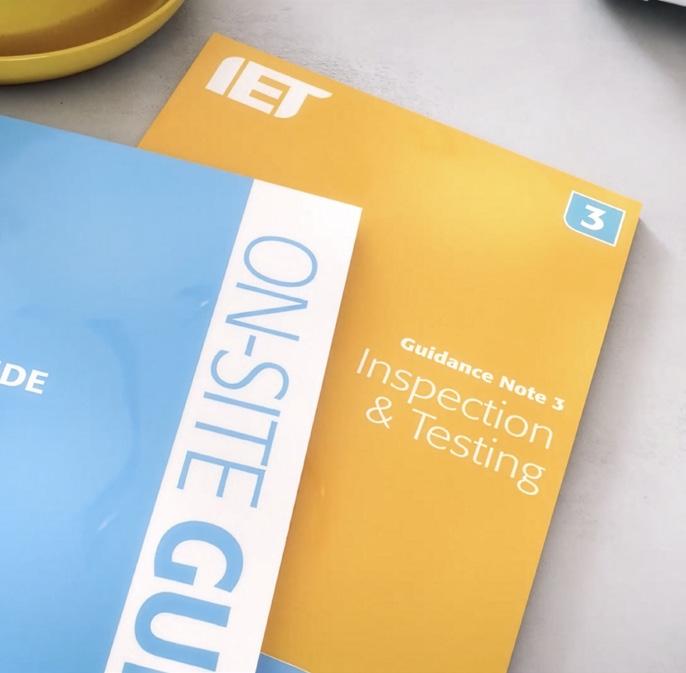
● Don’t take shortcuts that you might have learnt on site! Follow the technique shown by your college or training provider. If you’re unsure how to carry out a test, check the On-Site Guide and Guidance Note 3 which you’ll have during the assessment.
● As you carry out each test, record your results straight away on the test sheets provided. Blank forms are on the NET website to look at before your assessment.
The NET website has a Top Tips video for each section of the assessment –watch all of these to give yourself the best chance!
www.netservices.org.uk/videos
SCAN HERE for guidance from the NET website.
Download two great apps from NET to help you practice
INSPECTION & TESTING WITH SPARKY NINJA
1 2

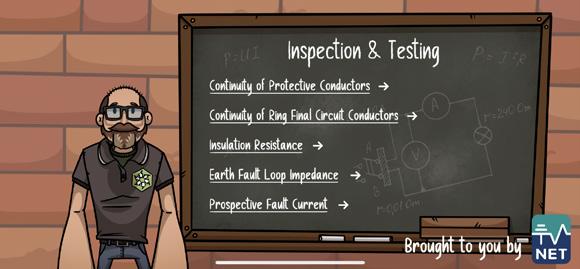
THIS APP PRESENTS FIVE KEY TESTS:
■ Continuity of Protective Conductors
■ Insulation Resistance
■ Earth Fault Loop Impedance
■ Prospective Fault Current
■ Continuity of Ring Final Circuit Conductors
For each test you can watch an instructional video with Sparky Ninja showing you how to carry out the test. Then try things out with the interactive tasks where you can drag, drop and tap to carry out the test yourself!

The Amped Up game allows you to have some fun with some of the key areas you’ll need to master during your apprenticeship.
In addition to areas such as protective devices knowledge, Ohm’s law and R1 + R2 testing, importantly it’ll help you to practice the safe isolation process, which is a critical part of your AM2 assessment.

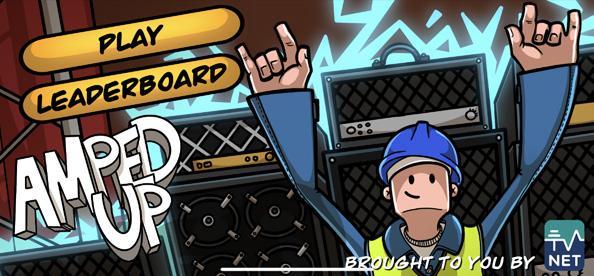
www.netservices.org.uk/amped-up
is no substitution for proper hands-on experience in real life! These apps are just revision tools to provide some guidance and interactive help. Talk to your training provider and employer to make sure you are getting sufficient practical experience in these areas.
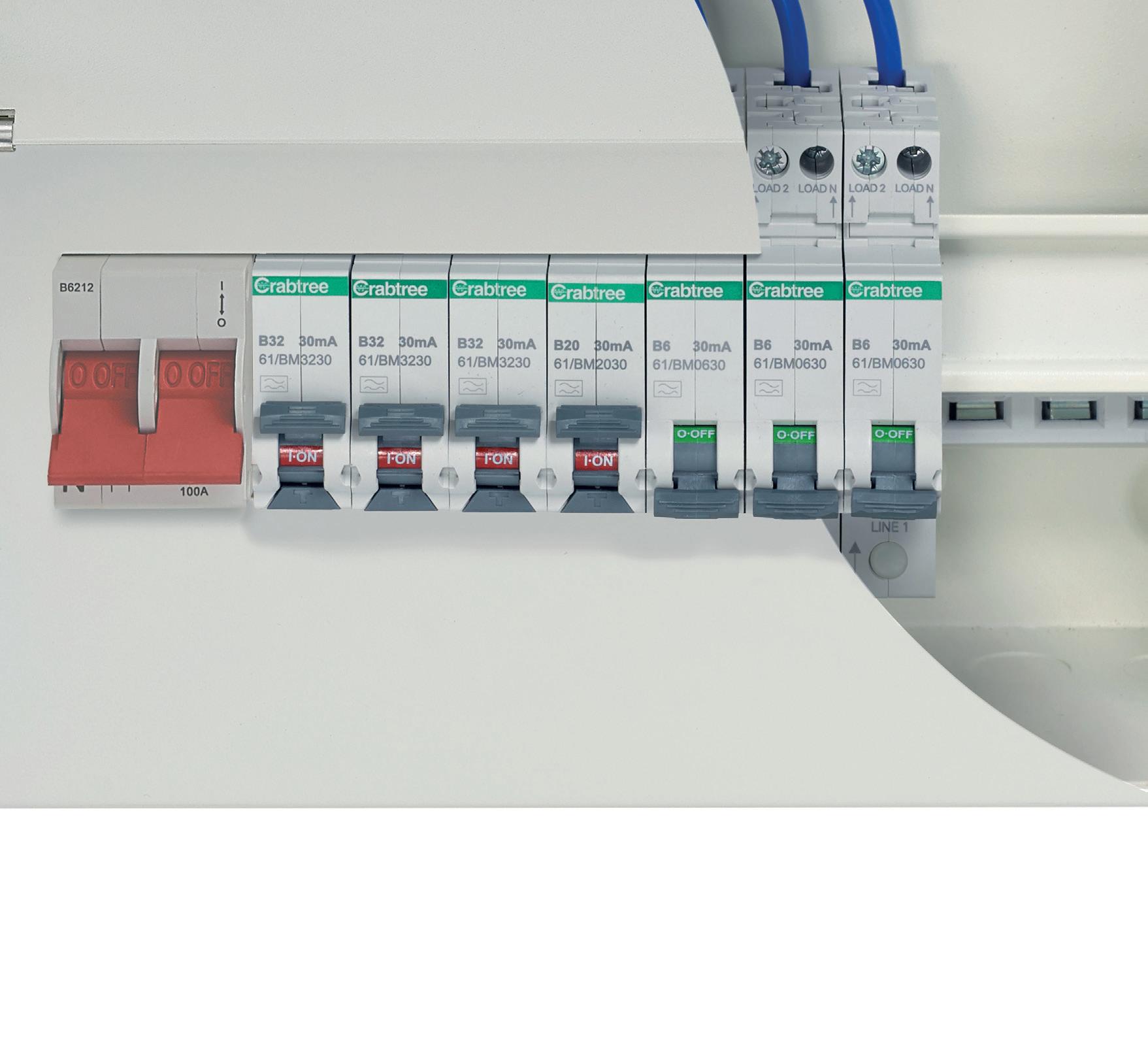
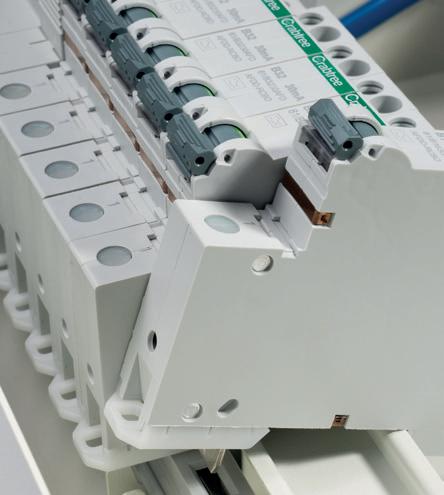
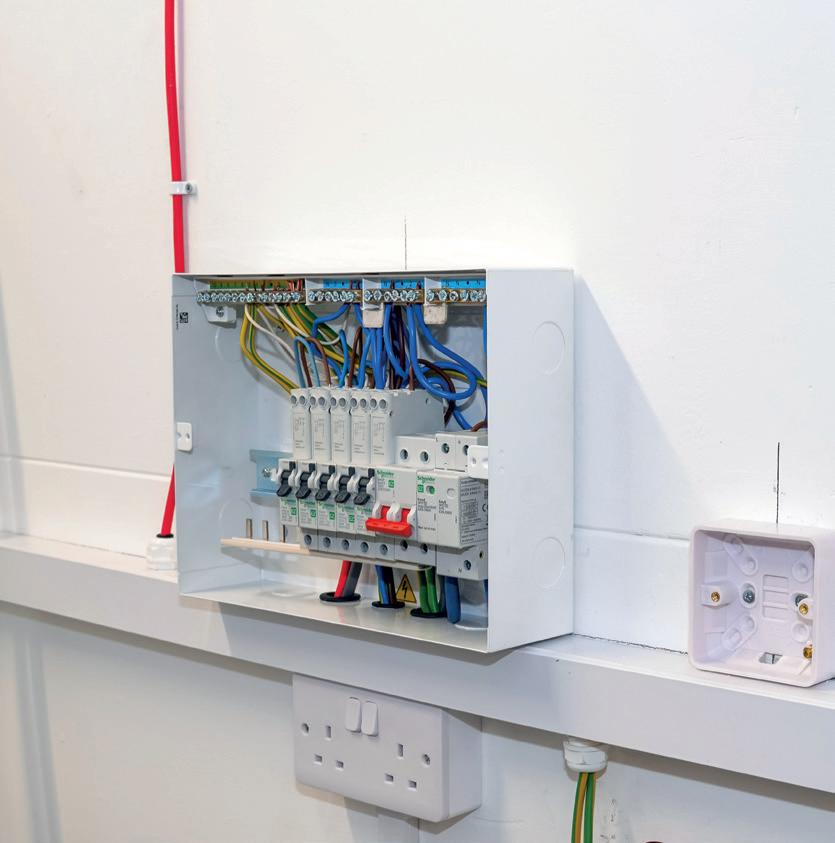
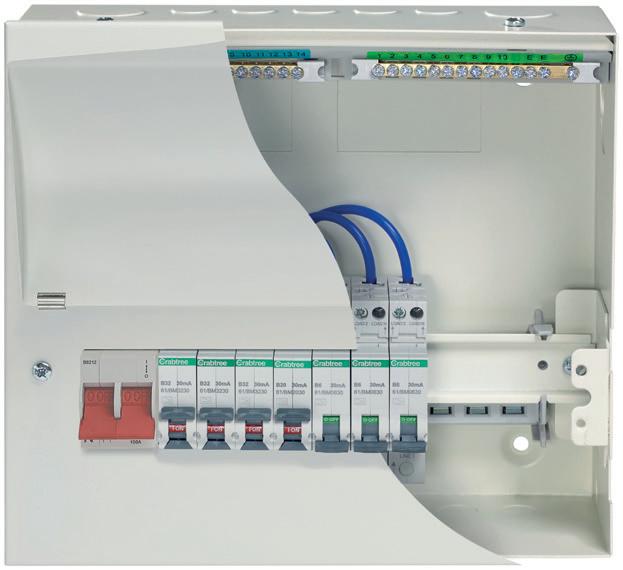
Consumer units, often referred to as fuse boxes or distribution boards, are the central hub of an electrical installation in any domestic property, distributing electricity safely and efficiently to various circuits throughout the home.
Their importance extends well beyond power distribution – they are a critical safety component designed to protect people, property, and equipment from electrical hazards.
Electricity is essential in modern homes, powering everything from lighting and heating to appliances and smart technology. Yet, it also poses significant risks if not properly controlled. Faults such as short circuits, arc faults, overloads, earth leakage, and transient over voltages can lead to electric shock, fires, or damage to expensive equipment. The consumer unit acts as the first line of defence against these dangers.
By housing protective devices, the consumer unit ensures that any abnormal conditions are detected and isolated before they can cause harm. This automatic disconnection of supply is a fundamental principle of electrical safety and is mandated by the BS 7671 Wiring Regulations.
Choosing a recognised brand such as Crabtree Starbreaker is crucial for reliability and compliance, as installers can be assured that the product is manufactured to the highest standards. This really matters because consumer units and protective devices are safety-critical components. Poorly made or uncertified products can fail under fault conditions, leading to electric shock or fire. By selecting reputable brands, installers can have confidence that the equipment is robust, compliant, and supported by a manufacturer with technical expertise and after-sales service.

“Use a reputable brand with proven quality”
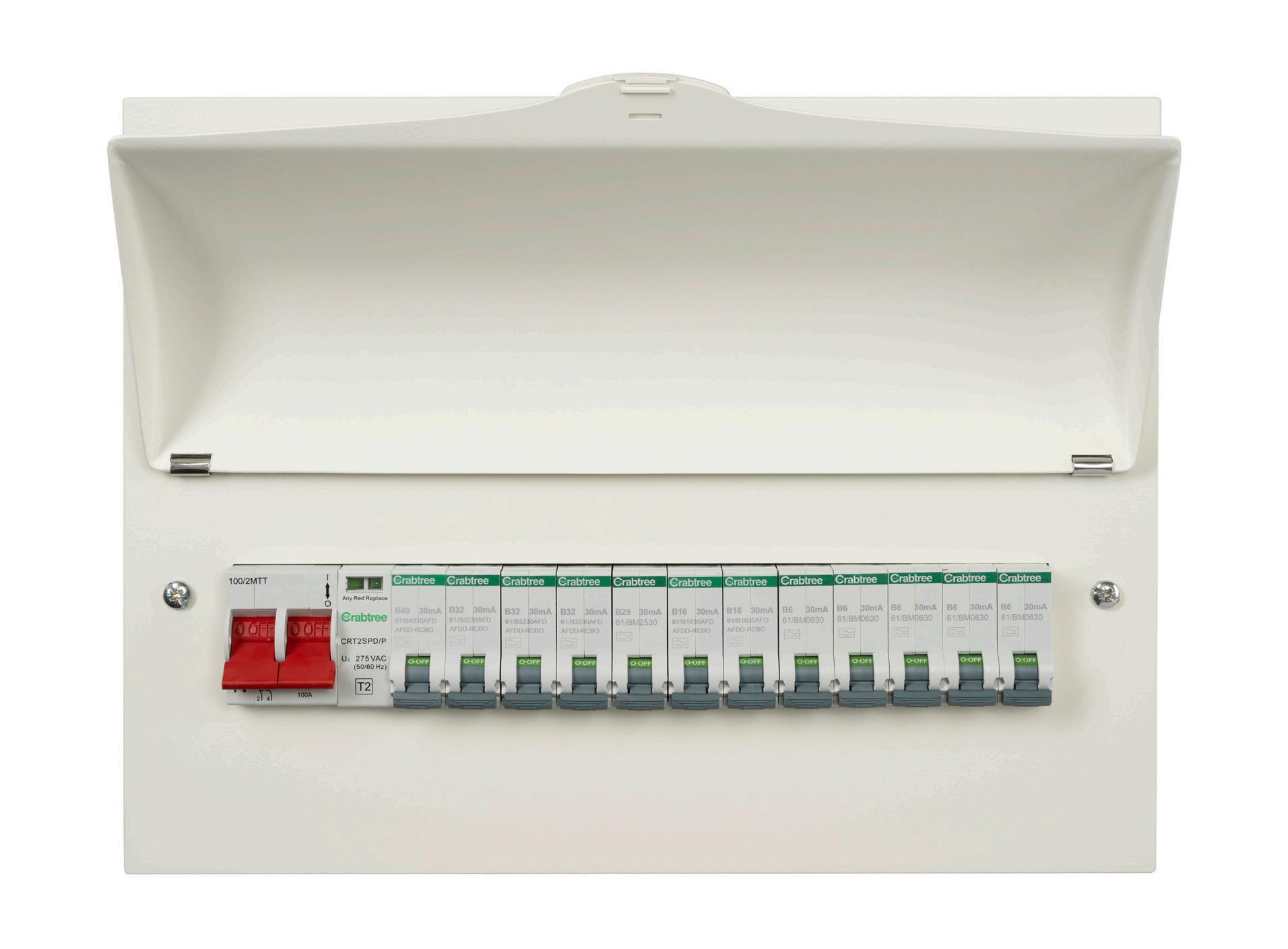
• Reduced installation time
• Assured busbar connections
• 2 way to 37 way units available
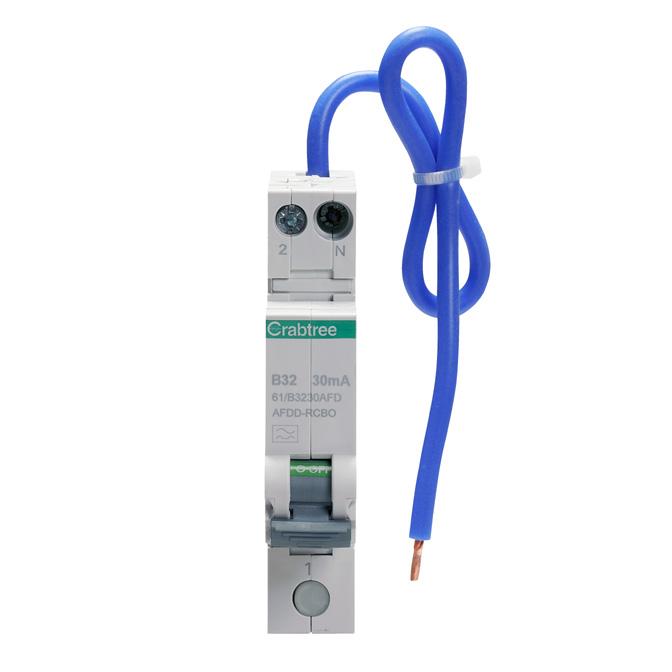
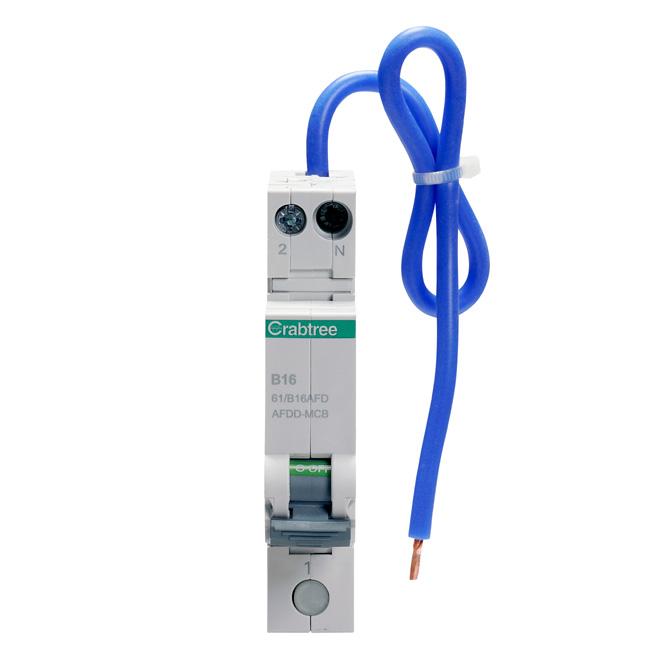
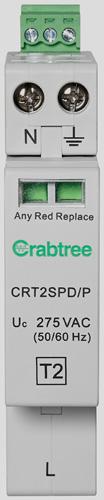
Modern consumer units incorporate several types of protective devices, each designed to address specific risks:
1
MCBs protect circuits against overcurrent, which includes overloads and short circuits. If a circuit draws more current than its design rating or experiences a fault, the MCB trips, disconnecting the supply and preventing overheating or fire.
2
RCDs protect against earth leakage faults, which can occur when current flows unintentionally to earth, posing a risk of electric shock. They monitor the balance of current between Line (live) and Neutral conductors and disconnect the circuit if an imbalance is detected.
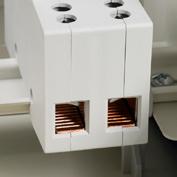
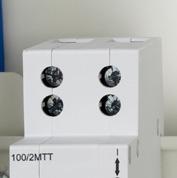
3
RCBOs combine the functions of an MCB and an RCD in one device, offering both overcurrent and earth leakage protection. Modern RCBOs with switched neutral ensure full isolation, which is vital for safe maintenance and accurate insulation resistance testing. The use of RCBOs is considered best practice, as they provide both short-circuit and earth-leakage protection on individual circuits, offering greater protection and reduced nuisance tripping.
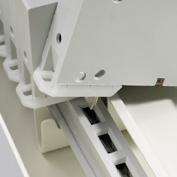
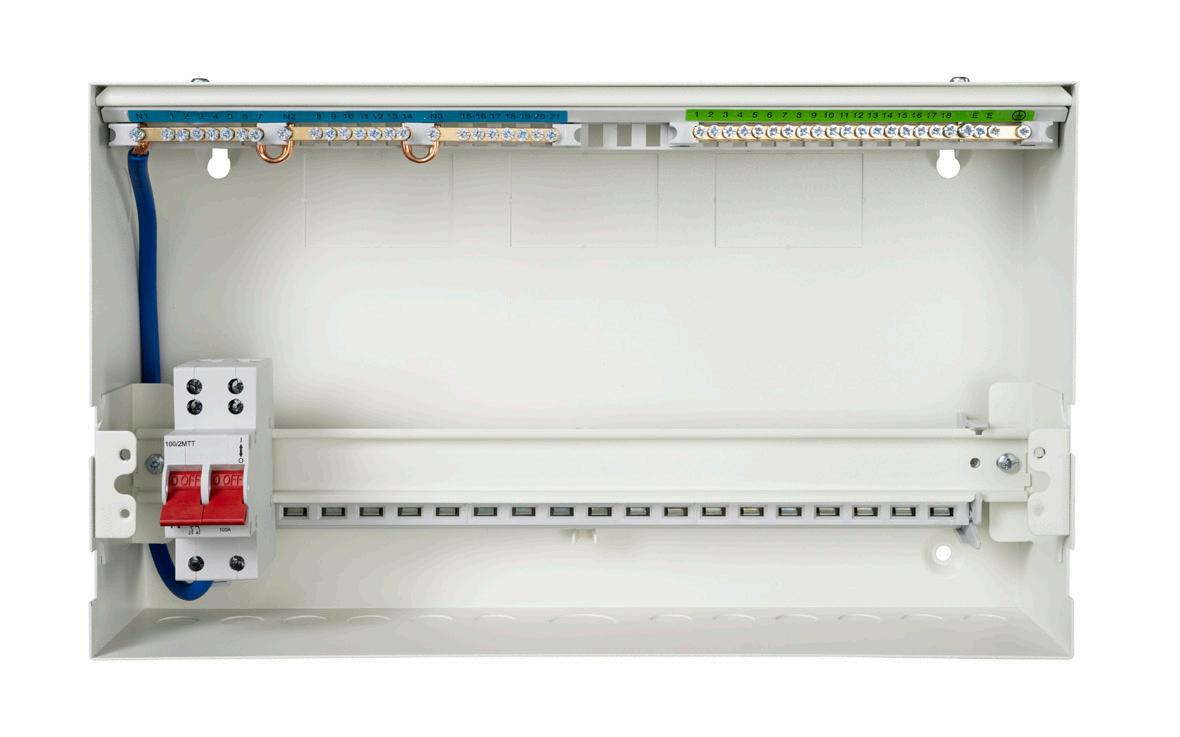
“Make sure you pick a unit with enough ways for present and future needs”

4
ARC FAULT DETECTION DEVICES (AFDDS)
AFDDs prevent electrical fires caused by arc faults, which can occur due to damaged cables or loose connections. They detect the signature patterns of arcing and disconnect the supply before a fire can start. AFDDs can also incorporate RCBOs and MCBs.
5
SURGE PROTECTION DEVICES (SPDS)
SPDs protect sensitive electronics from transient overvoltage caused by lightning strikes or switching events. They divert excess voltage safely to earth, preventing damage to appliances and smart home systems.
“poorly made or uncertified products can fail under fault conditions, leading to electric shock or fire”
KEY CONSIDERATIONS WHEN CHOOSING A DOMESTIC CONSUMER UNIT
■ Safety & Compliance: Ensure it meets current wiring regulations (BS 7671).
■ Circuit Capacity: Choose a unit with enough ways for present and future needs.
■ Protection Devices: Ensure you use the right protective devices.
■ Quality & Reliability: Use a reputable brand with proven quality.
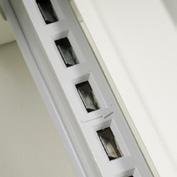
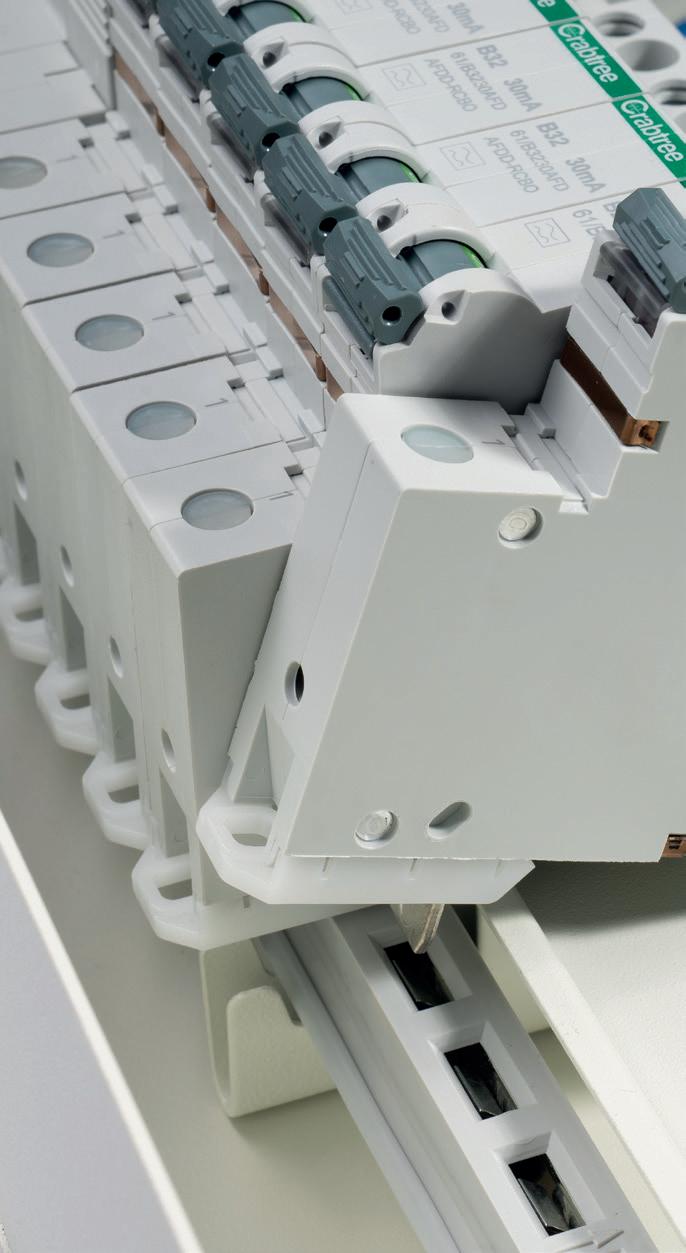
■ Ease of Installation: Check that the consumer unit provides ample wiring space, multiple cable entry points, and that devices fit securely and easily onto the busbar and DIN rail.
When it comes to domestic electrical installations, the consumer unit is the backbone of safety and reliability. Crabtree Starbreaker delivers on three promises: easier installation, safer operation, and faster completion.
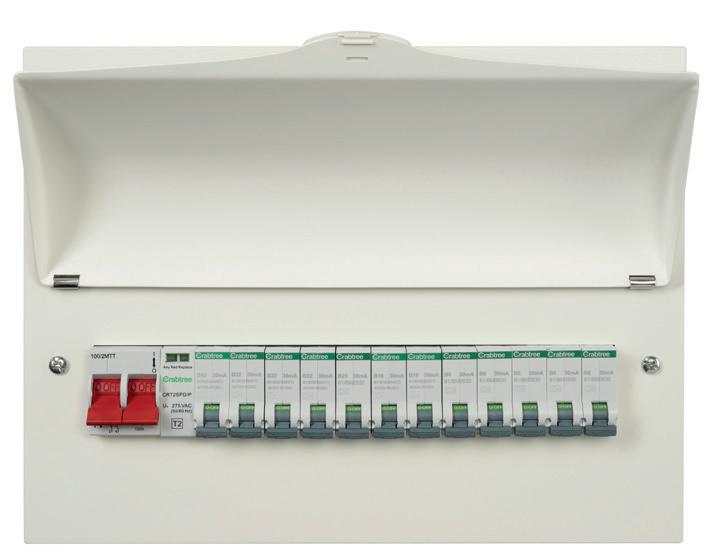
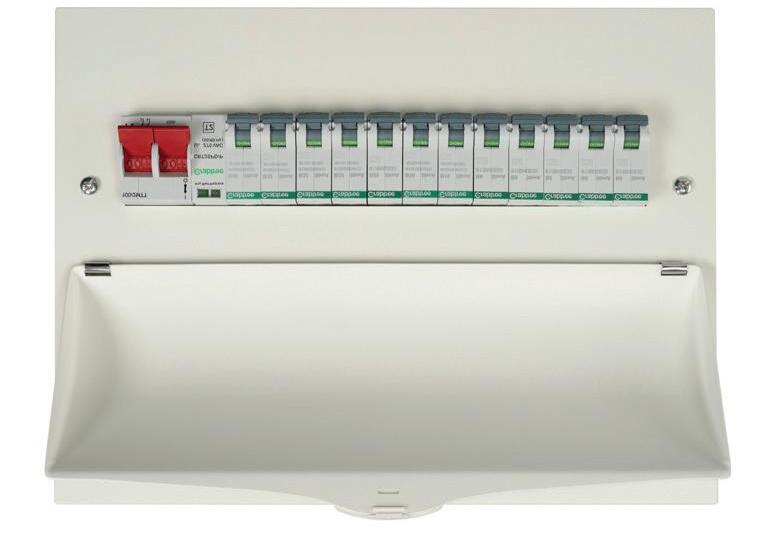
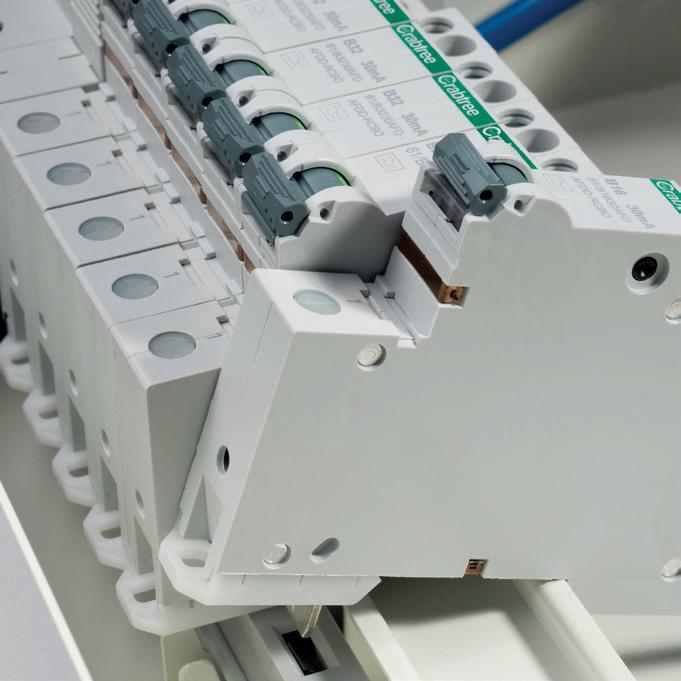
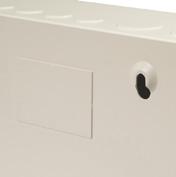
Starbreaker’s unique plug-in busbar system eliminates loose terminations and speeds up installation. Devices such as RCBOs, AFDDs, and SPDs clip directly into place without removing the busbar, making upgrades and maintenance simple. With generous wiring space, multiple knockouts, and a neat self-closing door, Starbreaker fits every installation perfectly.
Safety is non-negotiable. Starbreaker supports AFDDs to prevent electrical fires, RCBOs with switched neutral for full isolation and accurate testing, and SPDs for surge protection. Only Starbreaker devices fit its dedicated units, ensuring compliance with BS EN 61439-3 and the 18th Edition Wiring Regulations. Every component is engineered for reliability and peace of mind.
FASTER
Time is money. The modular design means devices can be added or replaced in seconds without removing and disconnecting the busbar. Fault indicators and easy access simplify maintenance, while future compatibility avoids costly board replacements.
“Crabtree
Starbreaker delivers on three promises: easier installation, safer operation, and faster completion”
Starbreaker isn’t just another consumer unit - it’s a complete solution. Easier, safer, faster - backed by Siemens manufacturing quality.
for further information about Electruim.
With the UK aiming for net zero, electric heating is set to play a big part. Students and apprentices will be key to driving this change through smart, sustainable technologies.
Heating is one of the largest contributors to carbon emissions in the UK, with most homes still relying on fossil fuels. For this reason, the government is working on initiatives to phase out gas heating in favour of cleaner, electric alternatives. This transition is already visible in new-build regulations and retrofit projects across the country.
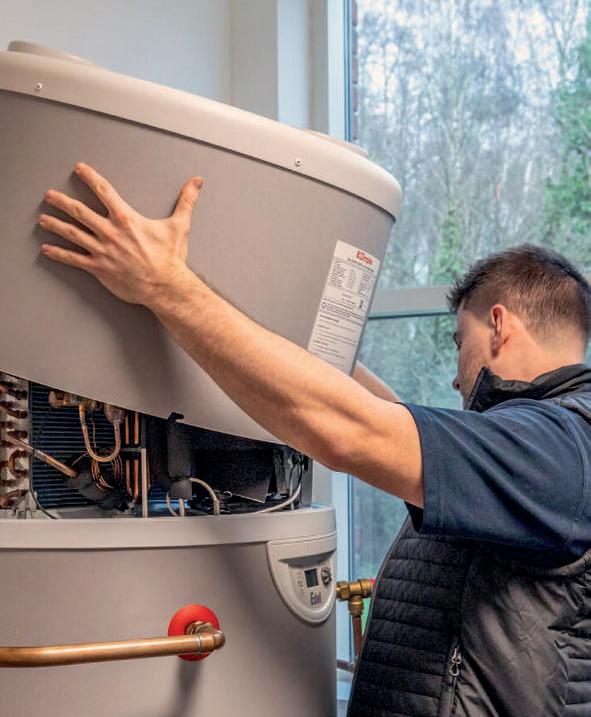
Electric heating systems such as panel heaters, high heat retention storage heaters, and air source heat pumps offer a low-carbon solution when powered by renewable electricity. They are also more adaptable to modern building designs and energy efficiency standards.
For students and apprentices, this means learning to install and maintain systems that are not only technically advanced but also environmentally responsible.
“Smart technology is revolutionising how we heat our homes - and Dimplex is at the forefront”
Win a Dimplex PRO kit
Dimplex delivers whole-home heating solutions, from heat pumps to smart electric heaters. Trusted by electricians across the UK for reliable, easy-to-install products.




Scan the QR to enter our Apprentice Prize Draw and win a Dimplex PRO Kit worth over £100!
The rise of smart technology is revolutionising how we heat our homes – and Dimplex is at the forefront of this transformation.
Smart thermostats, app-controlled heating panels, and zoned systems are becoming increasingly common. These innovations allow users to:
■ Control heating remotely
■ Optimise energy use
■ Reduce costs
■ Lower their carbon footprint

“Electric heating isn’t just the future - it’s happening now”
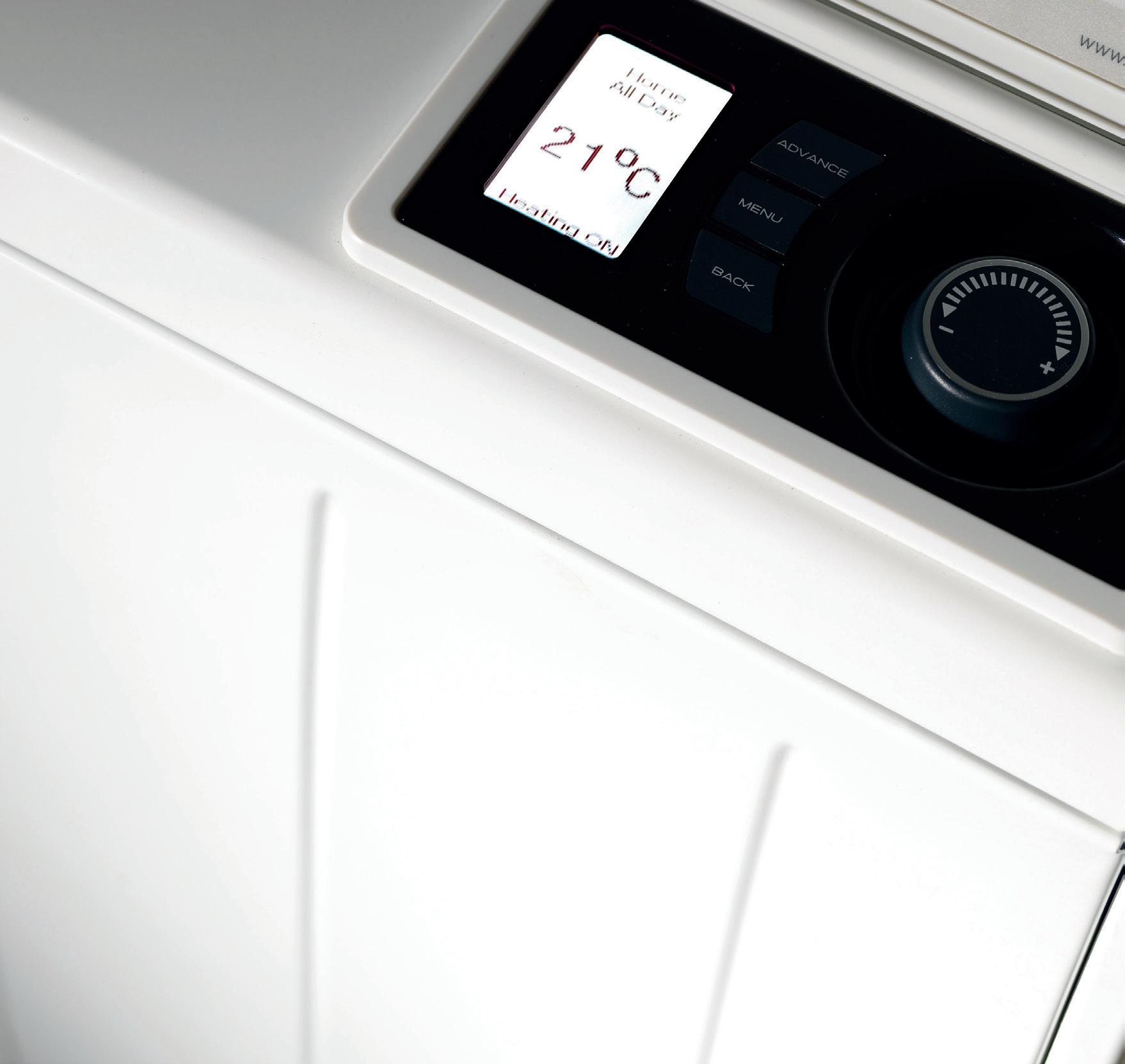
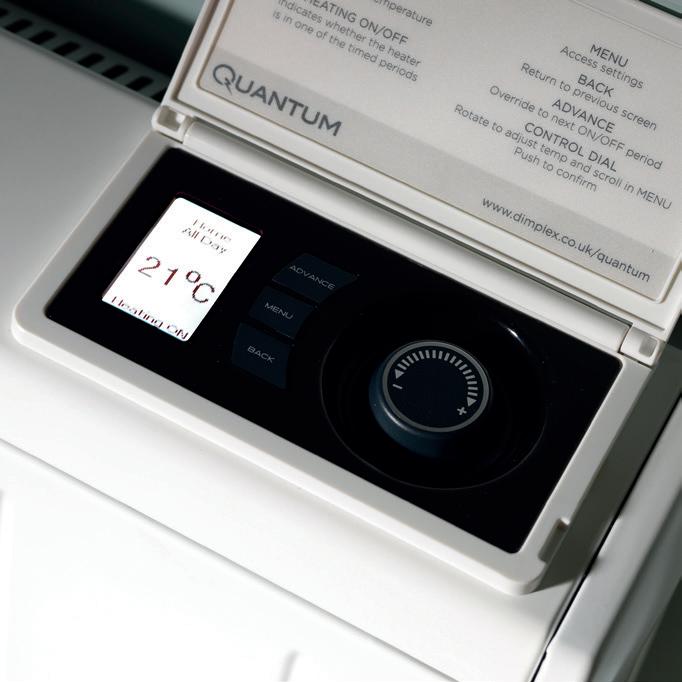
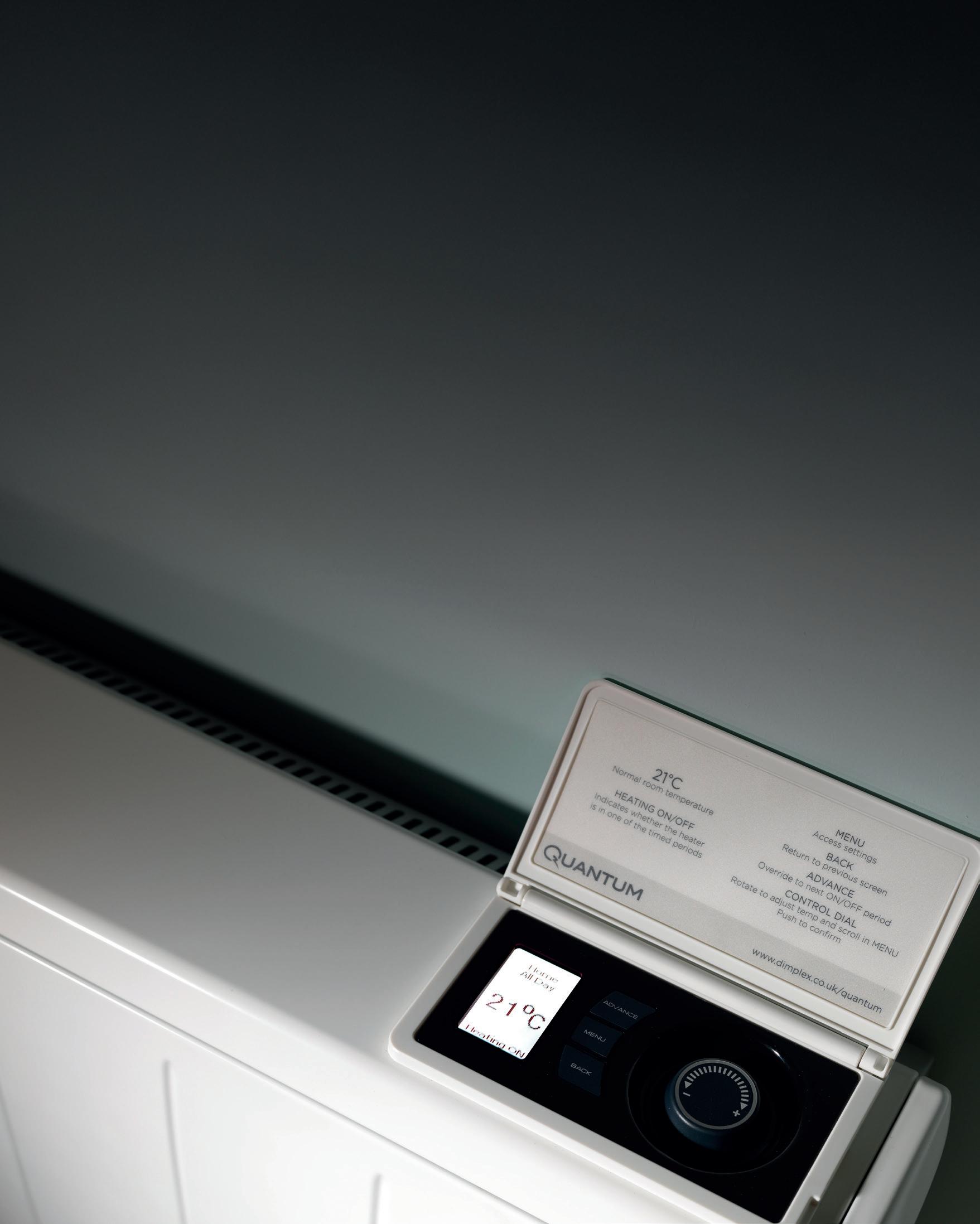
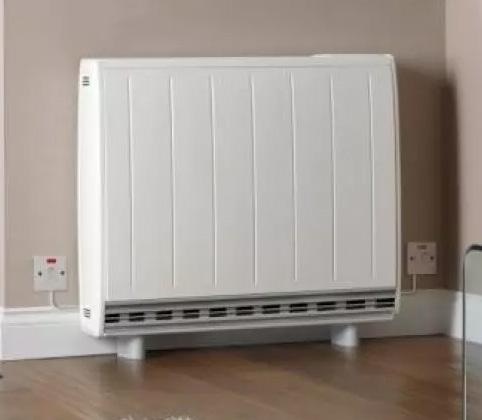
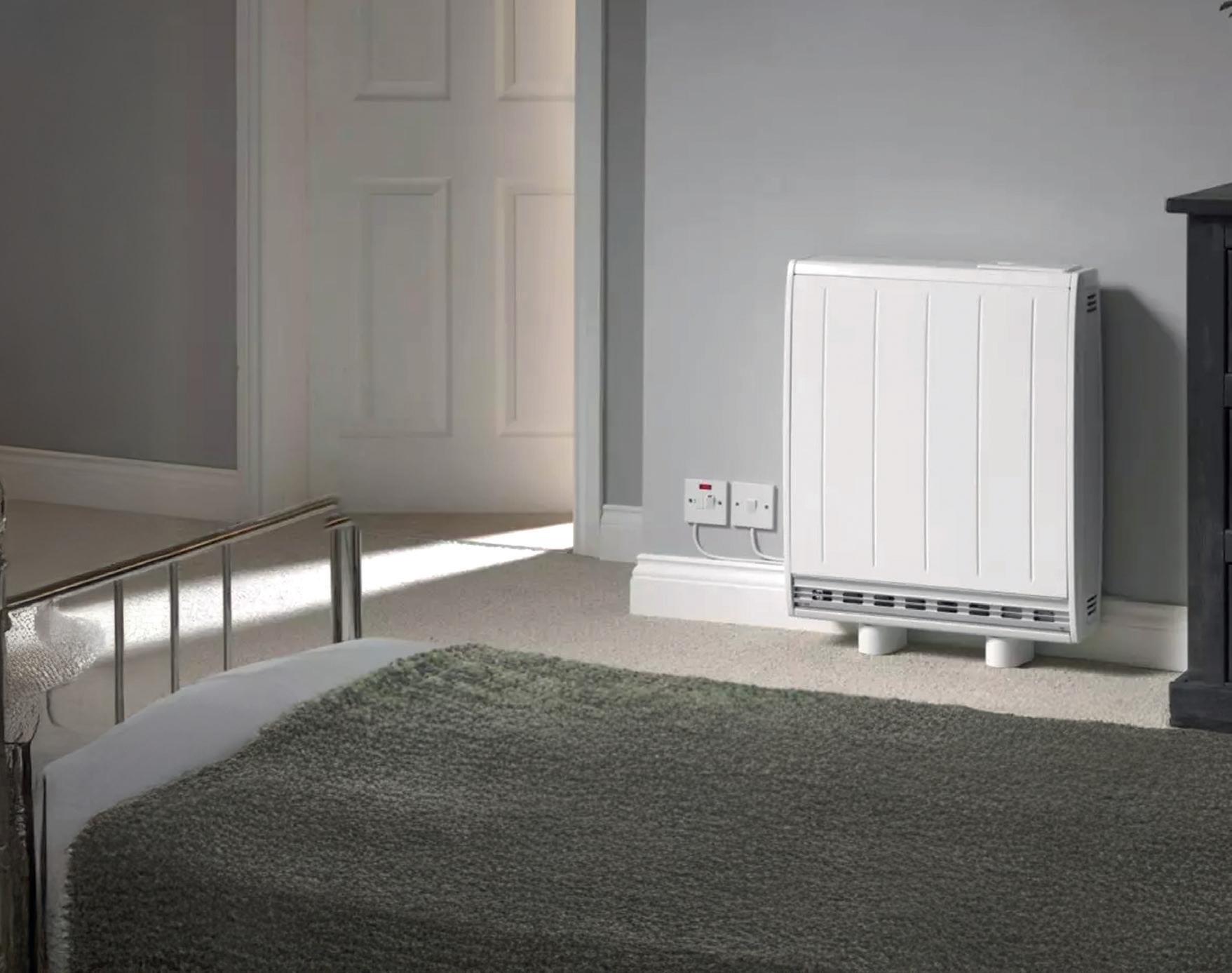
Dimplex offers a wide range of products designed to meet the demands of modern living and sustainability. The Quantum storage heater is a good example. It offers excellent comfort through high heat retention, programmable settings, and compatibility with time-of-use tariffs.
For students and apprentices, it means developing a broader skill set. Understanding connectivity, user interfaces, and smart home integration is becoming just as important as traditional wiring and installation skills.
The shift to electric heating is not just about new products – it’s about a new way of thinking. Students and apprentices today are entering a trade that is rapidly evolving. Staying ahead means embracing continuous learning and being open to new technologies.
At Dimplex, we’re proud to support this journey by offering high-quality training on our full range of electric heating solutions. From smart panel heaters to advanced storage heating systems, our training programmes give learners handson experience with the products shaping the future of sustainable heating.
By investing in education today, we’re building trusted partnerships for tomorrow. As students and apprentices progress in their careers, they’ll have a reliable and innovative partner in Dimplex.
As a proud sponsor of the SPARKS Learner of the Year competition, we recognise the importance of supporting the next generation of electricians. The rise of electric heating and sustainable technologies is more than a trend – it’s a critical part of the UK’s climate strategy.
For apprentices, this is an exciting time to join the industry. You’re not just learning a trade – you’re helping to shape a more sustainable future. And with the right skills and mindset, you’ll be at the forefront of one of the most important transitions of our time.
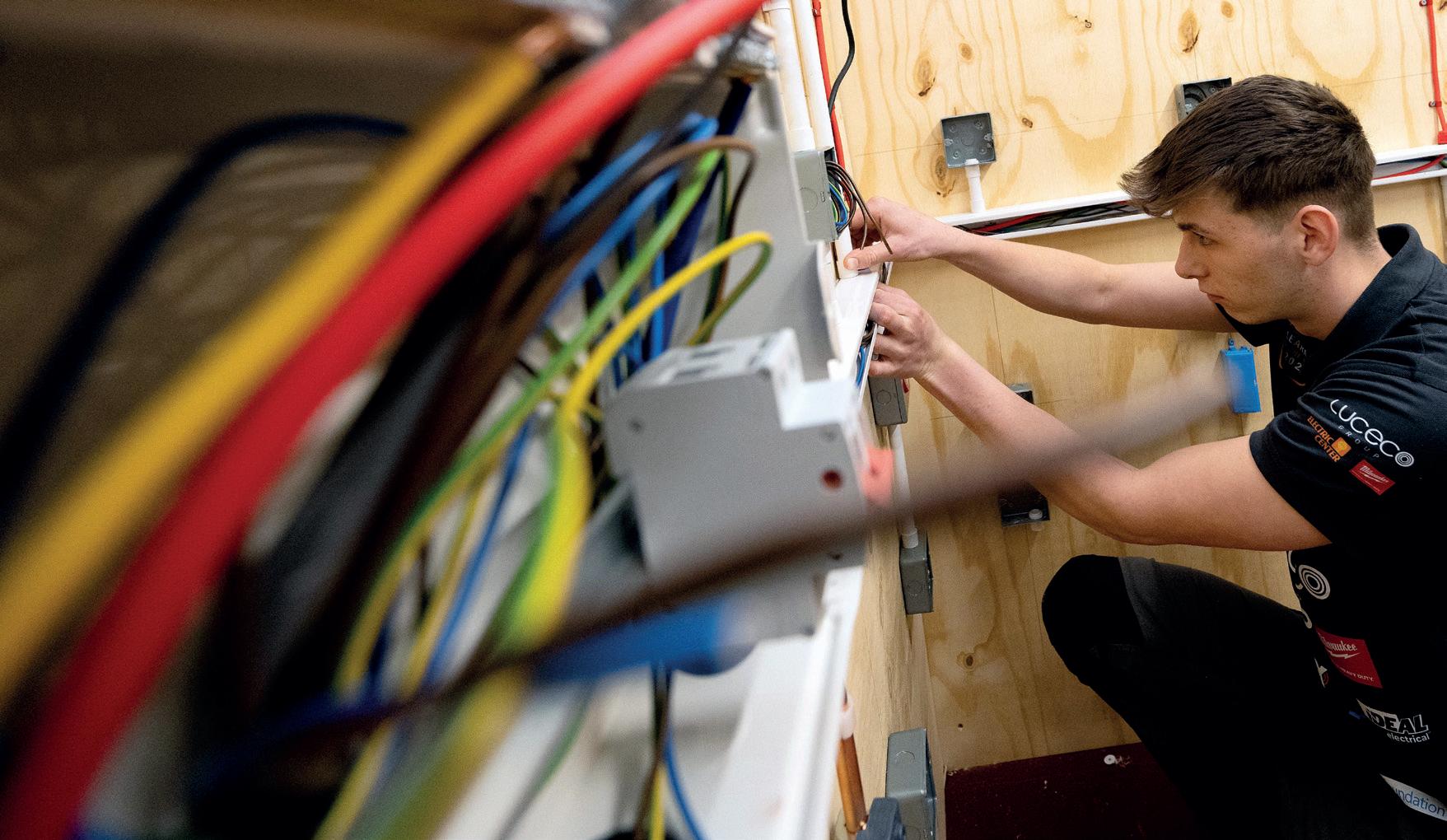
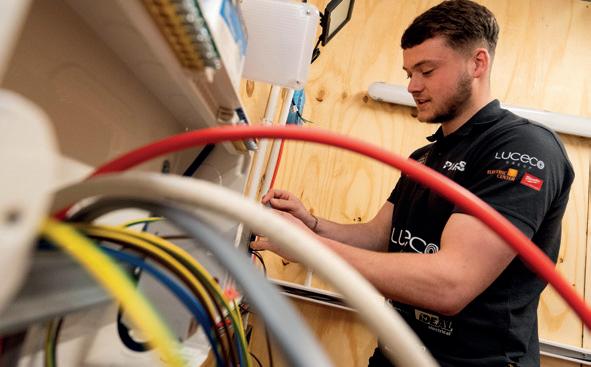
“You’re not just learning a trade - you’re helping to shape a more sustainable future”
learner of the year 2026
Dimplex is proud to back the next generation of electricians as they enter a fast-changing industry.
With over 75 years of experience in electric heating, we’re known for delivering smart, sustainable solutions that are trusted by professionals across the UK.
From high-performance panel heaters to advanced heat pumps, our products are designed to meet the demands of modern homes and buildings while making installation straightforward for those on the tools. Whether you’re working on new builds or retrofits, Dimplex gives you the confidence to deliver comfort, efficiency, and reliability.
We’re passionate about supporting learners and apprentices as they build their skills. That’s why we’re proud sponsors of the SPARKS Learner of the Year competition - celebrating the talent and ambition driving the future of the trade.
To give one lucky apprentice a head start, we’re giving away a Dimplex PRO Kit worth over £100.


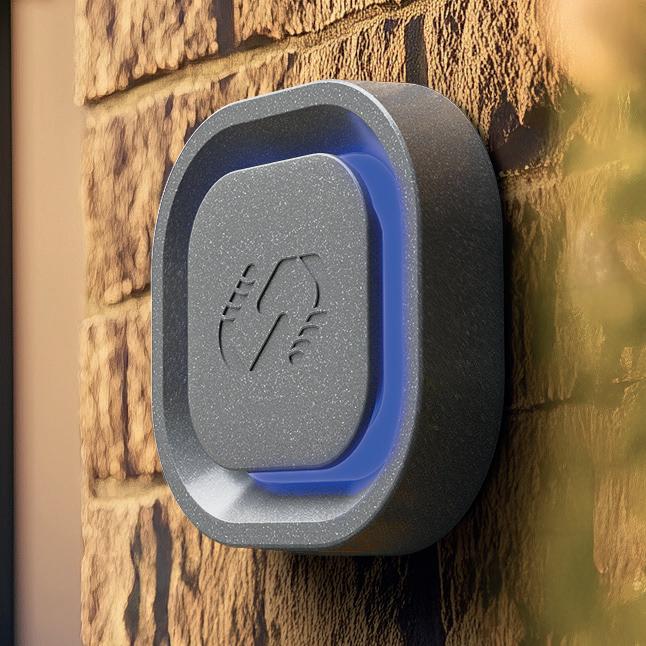
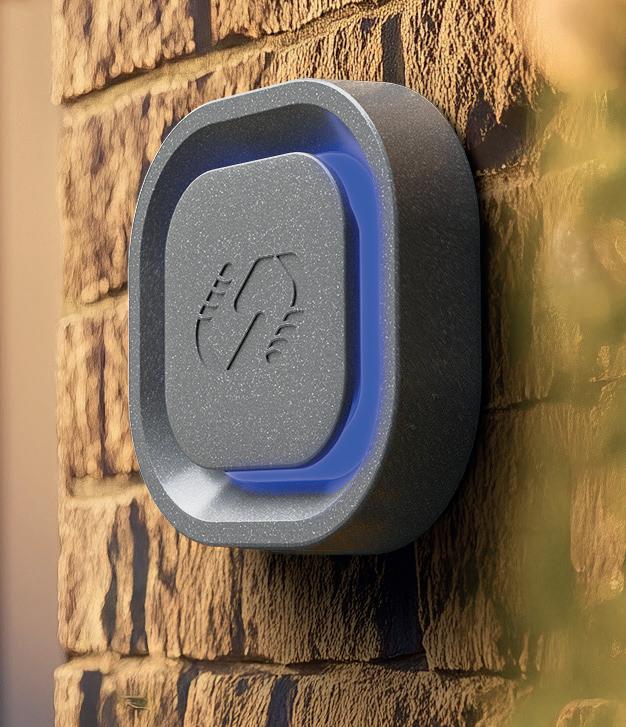
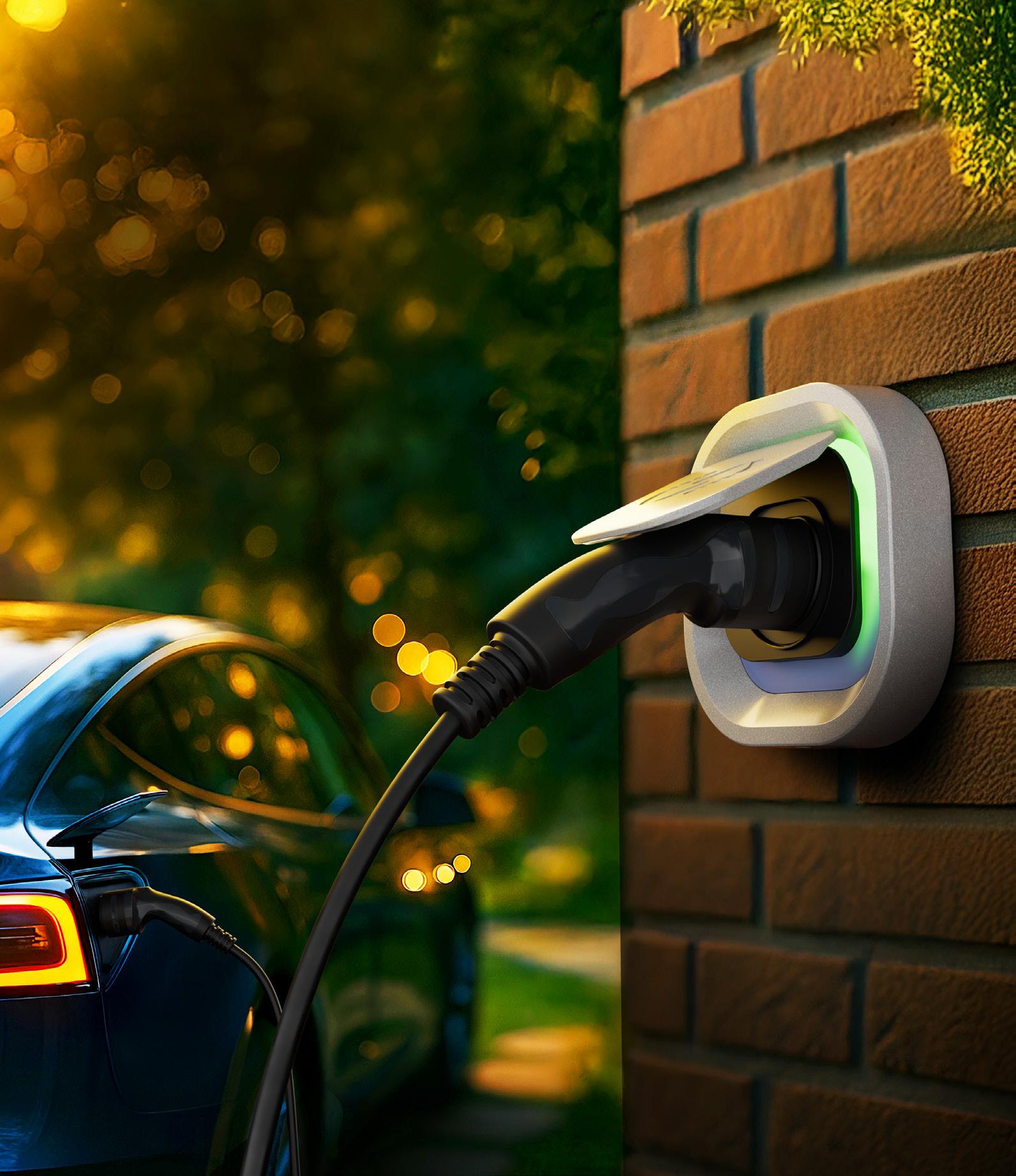
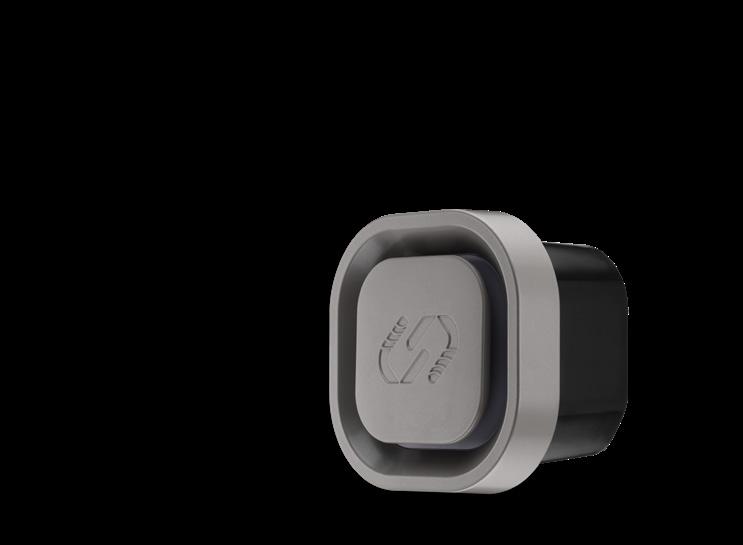
When you think of EV chargers, chances are you picture something big, boxy, and not always easy on the eye. The Sync Energy Link flips that idea on its head!
HERE ARE THREE REASONS IT STANDS OUT
SUPER SMALL PROFILE
At just 37mm deep when recessed, Link is one of the smallest and slimmest EV chargers you’ll see.
That means a flush, modern finish that blends in with the property rather than taking it over.
For customers who care about how their home looks, that’s a big win.
TO FIT, YOUR WAY
Even retrofit recessed installs are straightforward, with no specialist tools required.
Not every job allows for recessing – and that’s fine too. Sync Energy offers a surface-mounted version that’s just as easy to install.
Whichever option you go for, the design makes installation straightforward and installer-friendly.
CLEVER TWO-PART DESIGN
he Sync Energy Link is small, neat, and designed with both electricians and homeowners in mind. T 1 2 3
The socket outlet is the slim, visible part that goes outside.
The control unit can then be tucked neatly away in a garage, utility room, or even outside, out of sight.

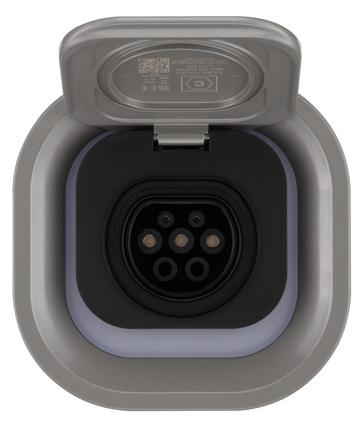
“At just 37mm deep when recessed, Link is one of the smallest and slimmest EV chargers you’ll see”

They work together with a range of up to 50 metres between them, giving you plenty of flexibility on site.
4
Supplied as a kit, you get everything you need for the installation – a neat Type 2 socket outlet and the metal control box with built-in SPD, 40A MCB, and Type A RCD protection.
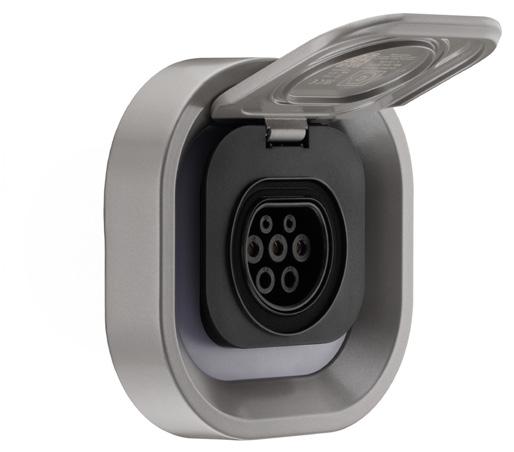


This eliminates the need for extra upstream devices, making installs easier and quicker.
5
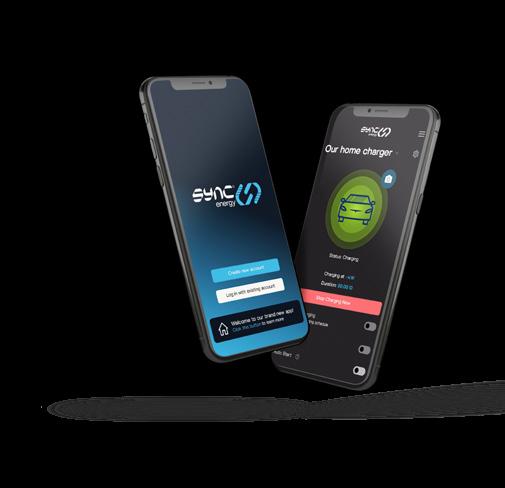
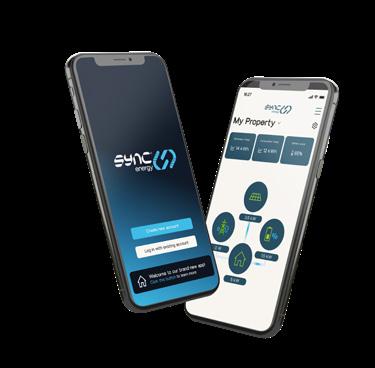
Commissioning and handover are really easy through the Sync Energy App. A quick scan of a QR code hands control over to the homeowner and completes the installation.
Link isn’t just about looking good – it’s smart too. Through the Sync Energy App, users can get real control over their charging.
■ Auto Solar: prioritises using surplus solar power to charge, keeping costs down and boosting sustainability.
■ Tariff Sense: connects to any UK tariff, giving real-time insights and control over charging costs.
■ Smart Stop/Start: lets users pause or start charging sessions easily from their phone, giving them full flexibility.
■ Scheduling: set charging times in advance, so the car is ready exactly when it’s needed.
Because modern EV installs don’t stop at the hardware, smart software is just as important. The one Sync Energy App works across the full Sync Energy range, including EV chargers and Home Energy Management systems.


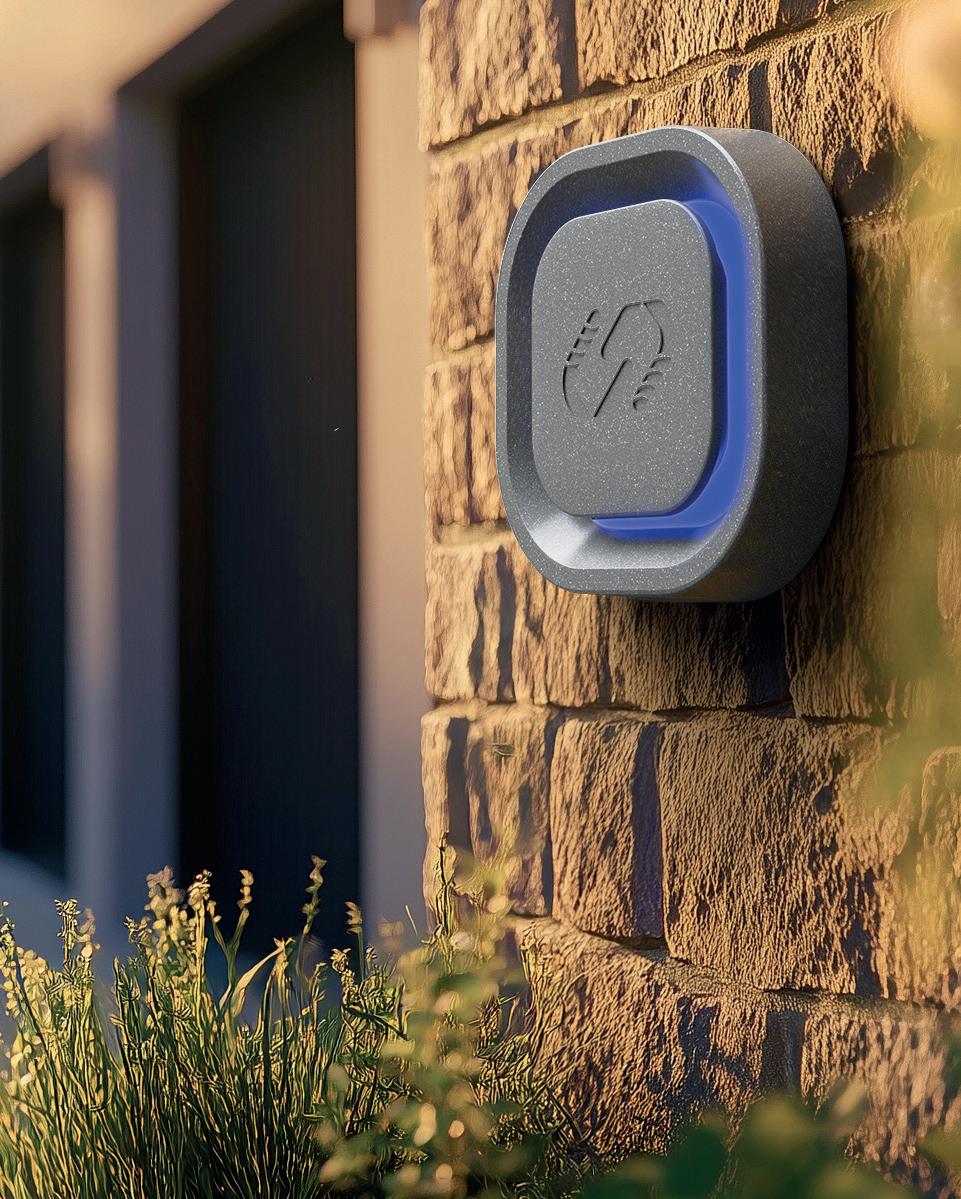
■ It’s design-led: customers notice when a product looks good and fits the space.
■ It’s practical: quick, straightforward installation helps you get the job done with confidence.
■ It’s future-ready: more homes will need EV chargers, and being comfortable with innovative kit like this can help you stand out.
The Sync Energy Link shows how EV chargers are changing – it’s not just about power, but also about how they fit into homes. It’s a great example of modern kit that combines good looks, easy installation, and smart design.
So next time you’re thinking about EV charging, remember: sometimes the smartest solutions are also the smallest.
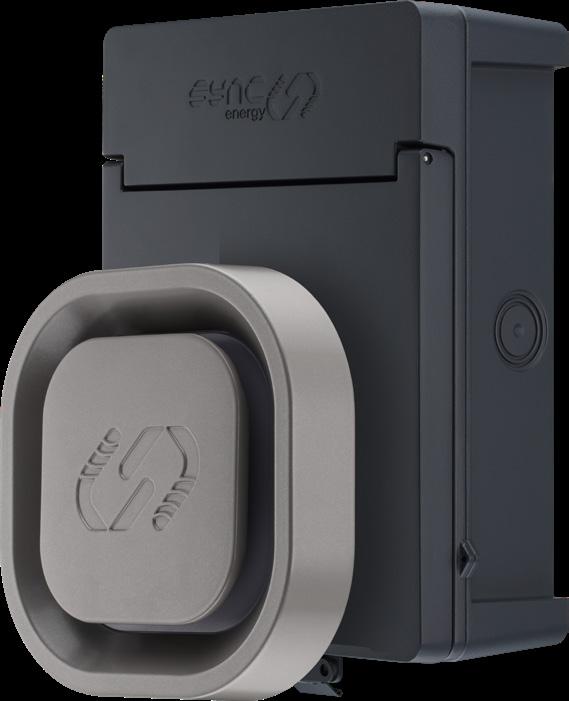
Say goodbye to bulky, unsightly EV chargers with our latest in-wall EV charging solution which combines a slim, aesthetically pleasing design with robust and reliable functionality.
• Only 37mm deep when recessed
• Retrofittable & Easy to install
• Integrated circuit protection, no need for extra upstream devices
• Available recessed or surface-mounted
The Sync Energy App
Designed for effortless commissioning, smooth handover, and easy everyday use
Scan the QR code to view the complete range
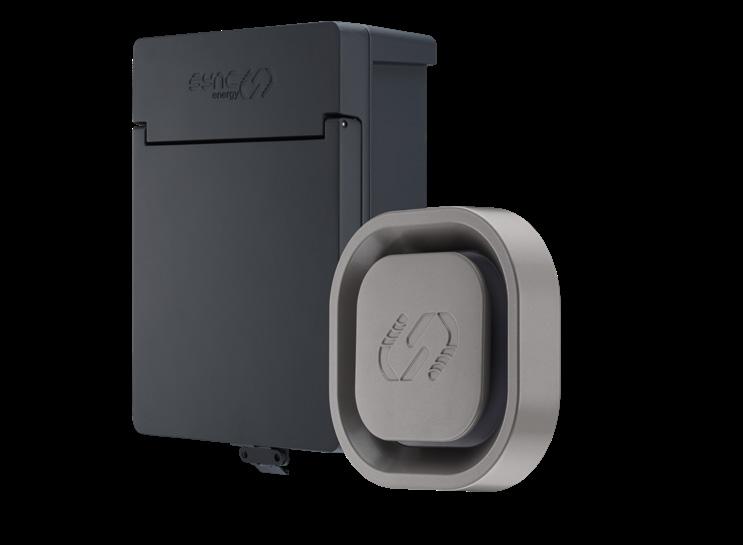

With renewable energy fast becoming mainstream, homes need smarter ways to manage it. Sync Energy Flow brings everything together in one simple to use connected setup.
SO, WHAT IS SYNC ENERGY FLOW?
Sync Energy Flow is a home energy management system that links solar panels, hybrid inverters, modular batteries, solar power diverters and EV chargers into one solution, all controlled through the Sync Energy App. For installers, that means fast commissioning. For homeowners, it’s everyday control at their fingertips.

KEY FEATURES:
■ Plug-and-Play batteries: stack and connect in seconds, no messy or visible wiring.
■ Scalable storage: start with a single 5.12kWh battery module, expand up to 35.84kWh.
■ Hybrid inverter: works with or without solar, ready for the future.
■ A single app: live intuitive dashboard, charging schedules, tariff savings.
WHY IT MATTERS:
■ Installer-friendly: simple setup, quick handover.
■ Safe & reliable: LiFePO4 batteries, fire suppression, IP65 rating, 10-year warranty.
■ EV ready: integrates directly with Sync Energy chargers for joined-up energy management.
EASY TO USE APP
Sync Energy Flow offers a connected approach to energy that combines solar, storage, and EV charging into one easy to use app.


When you’re starting out in a trade, you might ask, “What tools will I need?” The most important one could be your safety footwear.
You’ll be on your feet all day, working on construction sites with uneven ground and potential hazards around you. Comfortable footwear with the right safety features is essential for any professional tradesperson.
> SAFETY FIRST
Not all safety footwear is the same. It’s not only about having a built-in safety toe cap. There are many protective design features to consider when choosing your boots. To help you, we’ve outlined a few things to look out for.
The safety footwear certification standard is EN ISO 20345:2022. Within this, different protection classes specify which features are included as standard.

“Comfortable footwear with the right safety features is essential for any professional ELECTRICIAN”
> SAFETY TOE CAPS
These can be either metal or a lighter-weight composite material.
> OUTSOLE SLIP RESISTANCE
■ SB has been tested on a wet surface on ceramic tile.
■ SR has been more robustly tested on a glycerine solution on a ceramic tile or steel.
> ELECTRICAL RESISTANCE
There are four types of protective footwear designed to either minimise the effect of static charge within the worker’s body or protect against live electrical circuits: conductive, antistatic, electrically insulating, and electrostatic discharge (ESD).
> ENERGY ABSORPTION HEEL
A shock-absorbing feature to reduce the impact on your lower limbs from walking, standing, and accidental impacts – minimising fatigue and preventing injuries.
> PUNCTURE RESISTANCE
A plate of steel or composite material embedded in the sole prevents sharp objects from penetrating the sole and injuring the wearer.
■ P indicates a steel plate.
■ PL and PS are non-metal plates. PL has been tested against nails with a 4.5mm diameter; PS has been tested with a nail of 3mm in diameter.

> WATER PENETRATION AND WATERPROOFING
■ WPA indicates the boot upper can resist water but may allow some penetration and absorption, which helps with breathability.
■ WR indicates the boot is fully waterproof.
> OTHER COMMON CODED SAFETY FEATURES
■ HRO: Outsole resistant to high heat up to 300°C
■ CI: Insulation against cold
■ FO: Outsole resistant to fuel and oils to prevent slips
■ CR: Cut-resistant upper
■ HI: Heat insulation of sole
■ AN: Ankle protection
■ LG: Ladder grip – outsole has a specific design to grip a ladder rung
■ SC: Scuff cap, abrasion tested to prove the cap is effective and not just a design feature
■ M: Metatarsal protection against items being dropped or rolled onto the foot

> WHEN CHOOSING YOUR SAFETY FOOTWEAR, ASK YOURSELF:
■ Working outdoors? → Choose waterproof.
■ Slippery surfaces like mud or oils?
→ Choose SR, not SB.
■ Walking a lot? → Look for the energy absorption heel code (E).
■ Feel the cold? → Look for the CI cold insulation code.
■ Taking boots on and off frequently?
→ Consider a side zip for quick on/off.
■ Going up and down ladders?
→ Look for the LG ladder grip code.

“When trying boots on, take thicker work socks so you can get a better idea of the fit”
> TOP TIPS WHEN TRYING ON BOOTS
■ Always try a few different sizes – remember there’s a toe cap inside, and you need to give your toes room, so you may want to go up a size.
■ When trying boots on, take thicker work socks so you can get a better idea of the fit.
■ Walk around in the boots. Do they flex well? Are they comfortable?
■ Are they easy to get on and off quickly if needed?
Good luck taking your first step towards becoming a professional electrician with comfortable and protective footwear!

These safety trainers from CAT show that you can have all the protection you need, combined with sneaker-style comfort.
> CHARGE S3 HRO FO SR
■ Flexible and lightweight non-metallic
■ Water resistant, ESD
■ Mesh lining for breathability and comfort
■ Composite fibreglass toe
■ Removable PU foam footbed
■ CAT™ SRX best-in-class SR slip-resistant rubber outsole
■ Fuel- and oil-resistant outsole
■ Heat resistant outsole to 300°C



> CHARGE HIKER S3 HRO FO SR
All the same great features as the Charge trainer, but in a higher-ankle hiker style boot.
> ACCELERATE S3 HRO FO SR
■ Flexible and lightweight nonmetallic
■ Water resistant, ESD
■ Composite fibreglass toe
■ Mesh lining for breathability and comfort
■ Removable PU foam footbed
■ CAT™ SRX best-in-class SR slip-resistant rubber outsole
■ Energy absorption heel
■ Fuel- and oil-resistant outsole

■ Antistatic to prevent the build-up of static electricity
■ Heat resistant outsole to 300°C

“CAT safety shoes – tough, reliable and built for all-day comfort at work” SCAN HERE to claim your 20% off code

> ELMORE LOW S1P HRO SR
■ Lightweight, non-leather
■ Anti-scuff toe and heel protection
■ Cushioned collar and tongue for comfort
■ 200 Joules steel toe cap
■ Contoured, removable PU footbed
■ Anti-penetration non-metallic midsole – min. 1100N
■ Energy absorption heel

■ Durable, excellent slipresistant cemented EVA/ rubber outsole
■ Fuel- and oil-resistant outsole
■ Antistatic

> ELMORE LADIES S1P HRO SR
With all the same features as the men’s version.
> ELMORE MID S1P HRO SR
All the same features as the trainer version, but in a safety hiker style.


Fire safety terms can be quite technical, with different phrases used to describe alarms, systems, and installation requirements.
Fire alarms are defined in two ways: by grade, which describes the specification of the alarm unit itself, and by category, which outlines the level of coverage in the property.
Grades focus on the alarm’s primary and secondary power supply:
■ Grade D1: mains-powered with a tamper-proof back-up battery.
■ Grade D2: mains-powered with a replaceable back-up battery.
■ Grade F1: powered by sealed, longlife batteries only.
Other grades exist, such as A, C, and F2, though less common in domestic premises. Carbon monoxide (CO) alarms do not come under this grading system.
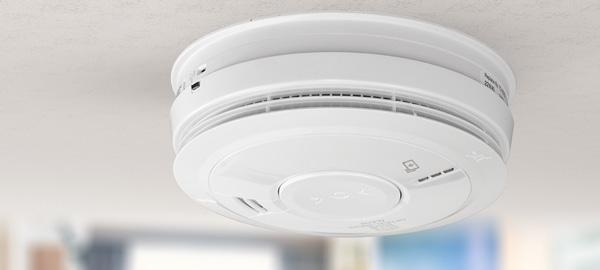
SYSTEM CATEGORIES
Categories define the level of coverage across a property:
■ LD1: maximum protection – alarms in all rooms and circulation areas.
■ LD2: medium protection – alarms in escape routes, kitchens, and main living areas.
■ LD3: minimum standard – smoke alarms in escape routes only.
Alarms are not installed in bathrooms or wet rooms due to moisture.
GRADES VS CATEGORIES
Grades specify the type of alarm; categories define the level of coverage. An installation will combine both, such as Grade D1 alarms arranged in an LD2 system.
Set out in British Standards, this framework ensures flexibility across property types while maintaining the same ultimate goal: early warning and life safety.

“Alarms are not installed in bathrooms or wet rooms due to moisture”

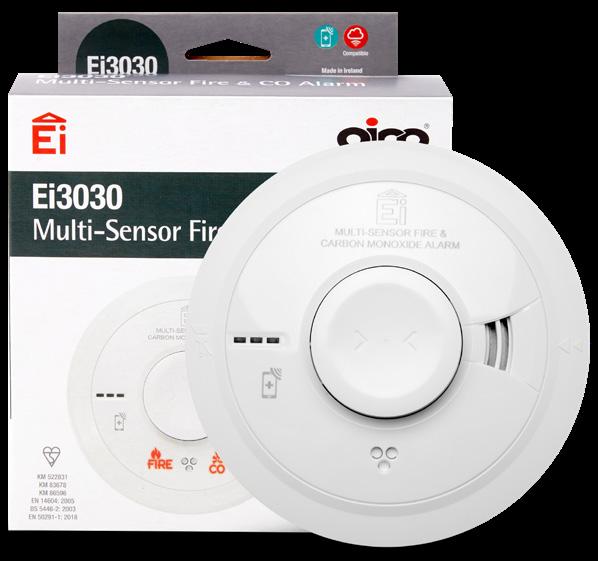
Scan to learn more about the Ei3024

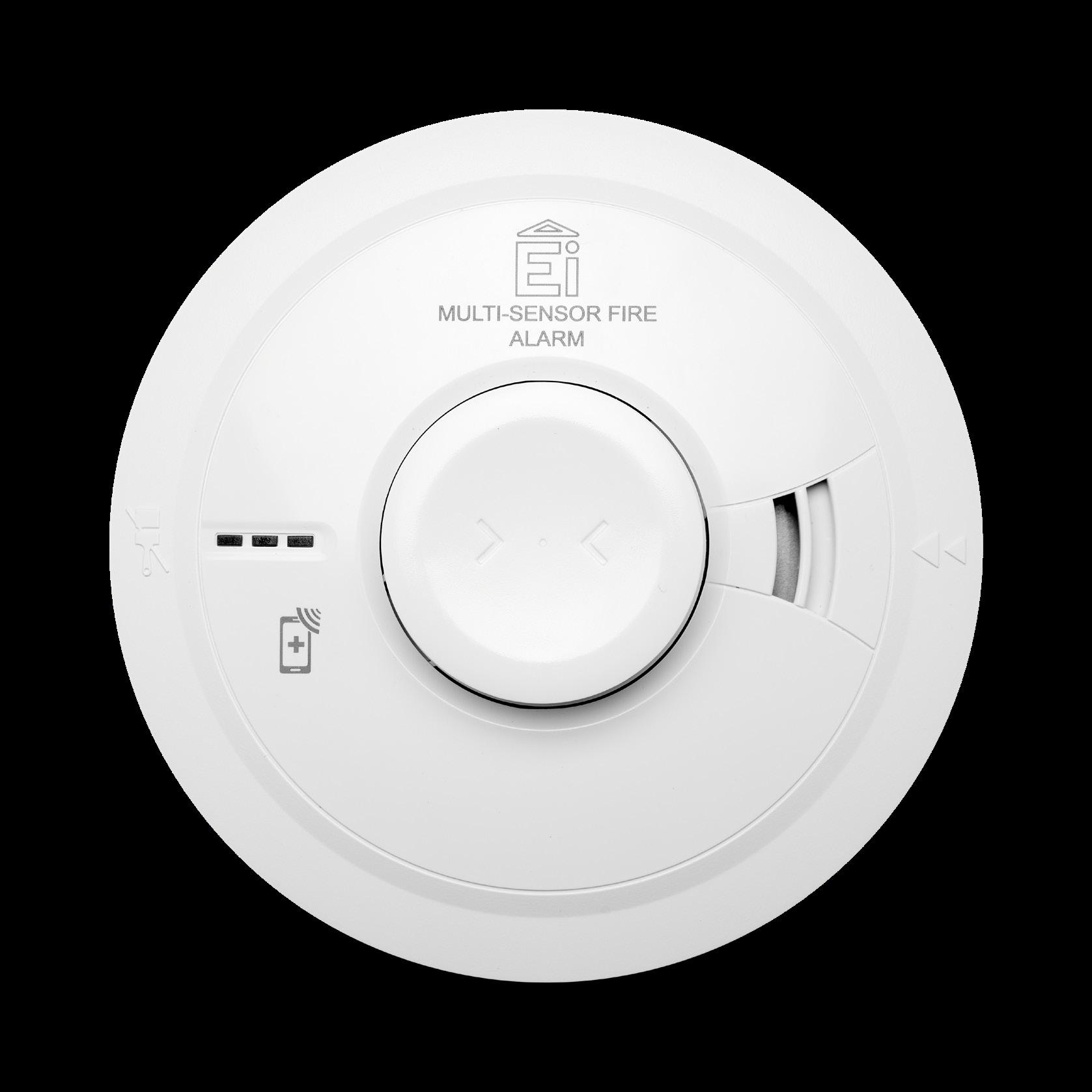
Mains powered with lithium cell back-up
10-year rechargeable
Built-in AudioLINK+ technology data extraction
Dust Compensation mechanism with self monitoring
Add an Ei3000MRF interconnection module for wireless


Fire and carbon monoxide (CO) safety requirements vary across
the UK, creating a patchwork of rules.
“Overall, regulation differs by nation, with Scotland the most stringent and England the least”
In owner-occupied homes, alarms are not legally required unless installed by choice. For rented properties, landlords must fit a smoke alarm on each floor and a CO alarm where there’s a fuel-burning appliance (except cookers).
Rented properties must have mainspowered, interlinked alarms on every floor. Extra alarms, such as heat detectors, may be added and are not required to be interconnected. CO alarms are required wherever new or replacement fuel-burning appliances are fitted, including cookers.
Rules apply equally to owned and rented homes. Properties must have a smoke alarm in the main living area, in circulation spaces, and a heat alarm in the kitchen – all interlinked. CO alarms must be fitted wherever fuel-burning appliances or flues are present. These alarms can be sealed long-life battery or mains powered.
Privately rented homes must have smoke alarms in circulation spaces and the main living area, a heat alarm in kitchens, and CO alarms in any room containing a fuelburning appliance or a flue.
Overall, regulation differs by nation, with Scotland the most stringent and England the least. What all share is recognition that fire and CO alarms save lives.
Alarms don’t last forever. Over time, sensors degrade, components wear out, and environmental factors reduce effectiveness. That’s why most manufacturers recommend replacing units every 10 years.

“Following BS 5839-6 ensures the right coverage in the right rooms”
Smoke, dust, and steam gradually coat sensors, reducing sensitivity and increasing false alarms. Internal parts also corrode, meaning a device may fail in an actual fire scenario.
MAINTENANCE DURING USE
To extend performance, alarms should be tested monthly and cleaned regularly by vacuuming vents or wiping the casing. Even so, reliability drops with age, making replacement essential.
REGULATION AND GUIDANCE
UK law doesn’t specify replacement every 10 years, but fire services and manufacturers strongly recommend it. Many alarms are marked with a “replace by” date to guide homeowners.
OF OLD ALARMS
Delaying replacement risks slower detection, nuisance alarms, or complete failure in an emergency. Batteries also weaken over time, further reducing reliability.
Modern alarms are easier to fit, often using existing bases, and multi-sensor models provide stronger protection. Following BS 5839-6 ensures the right coverage in the right rooms. Replacing alarms on schedule is one of the simplest, most effective steps to keep households safe.
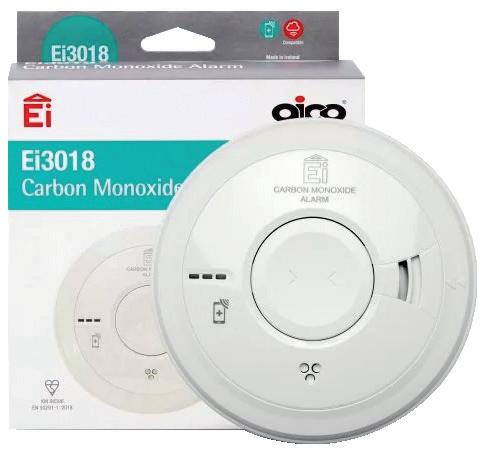
Aico, the European market leader in home life safety, offers high-quality fire and carbon monoxide (CO) alarms which meet British Standards and relevant kitemarks.
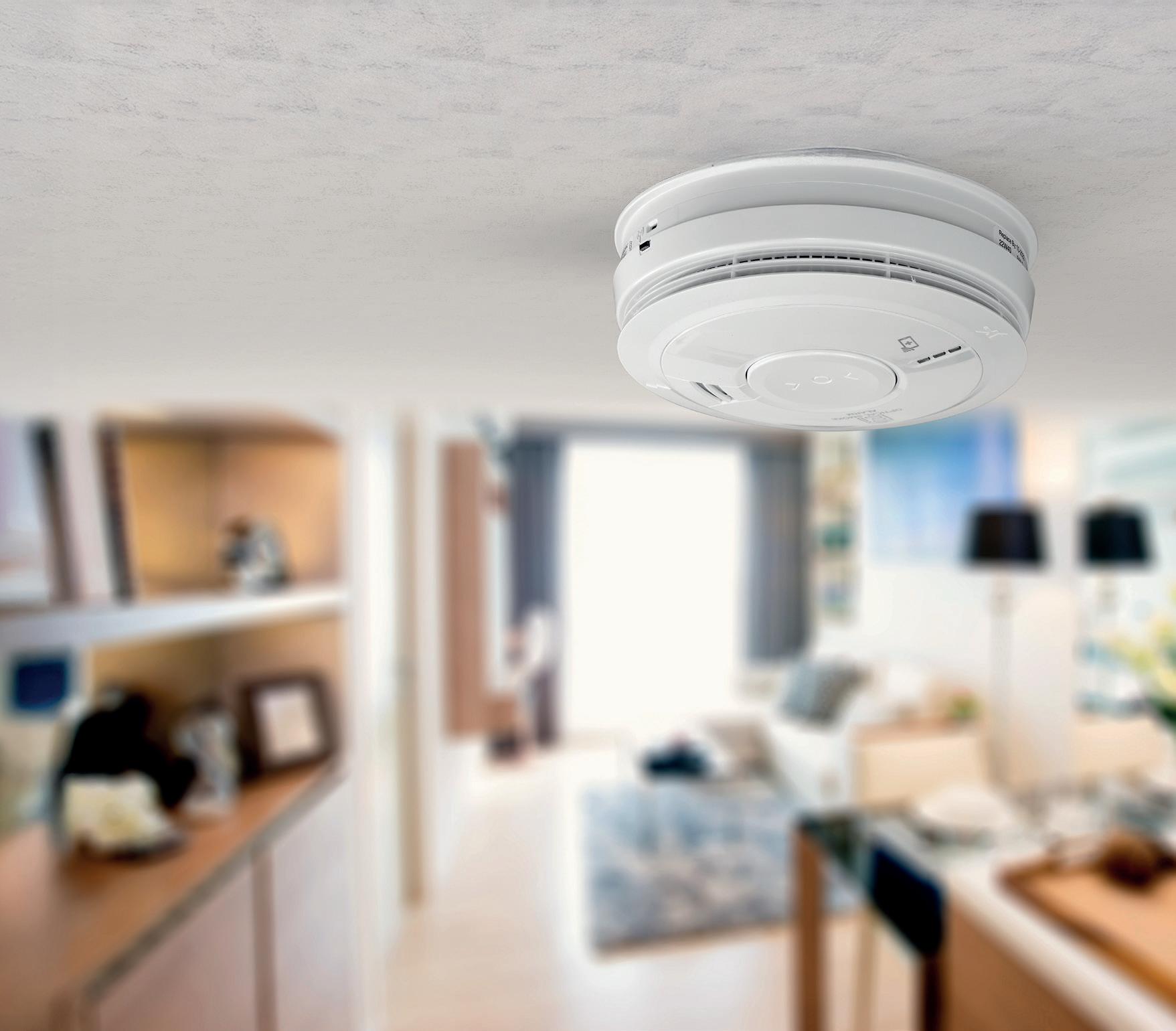
In 2020, Aico expanded its offering with HomeLINK technology, using smart integration and analytics to monitor and report on common issues in social housing, including damp and mould.
Aico’s mains-powered 3000 Series alarms provide single- and multi-sensor detection, combined with a 10-year lithium battery back-up. With the Ei3000MRF SmartLINK Module, alarms can be interconnected wirelessly for easier installation and monitoring.
Aico ensures installers are fully equipped through its free Expert Installer training – an FIA CPDaccredited course delivered by 32 Relationship Managers nationwide. The session covers domestic fire and CO installation essentials and awards 60 minutes of CPD time on completion.
Graduates are invited to Aico’s Installer Community, where they can take part in challenges, earn rewards, share knowledge, and access City & Guildsassured training opportunities.
“Aico ensures installers are fully equipped through its free Expert Installer training”
to find out more.

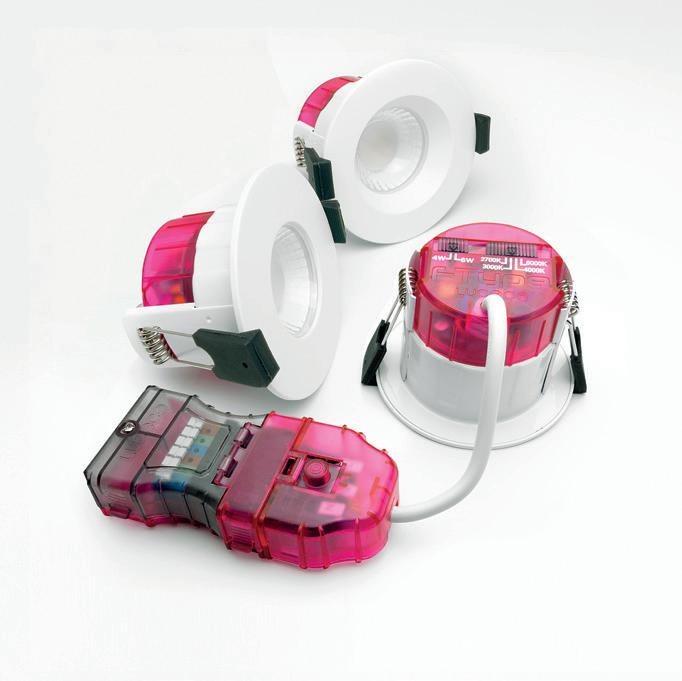
Whether you’re wiring in a new build, testing a consumer unit, or faultfinding in a dark loft, good lighting is essential.
INSPECTION & WORK LIGHTS
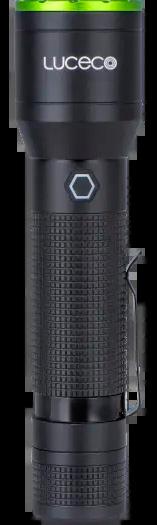
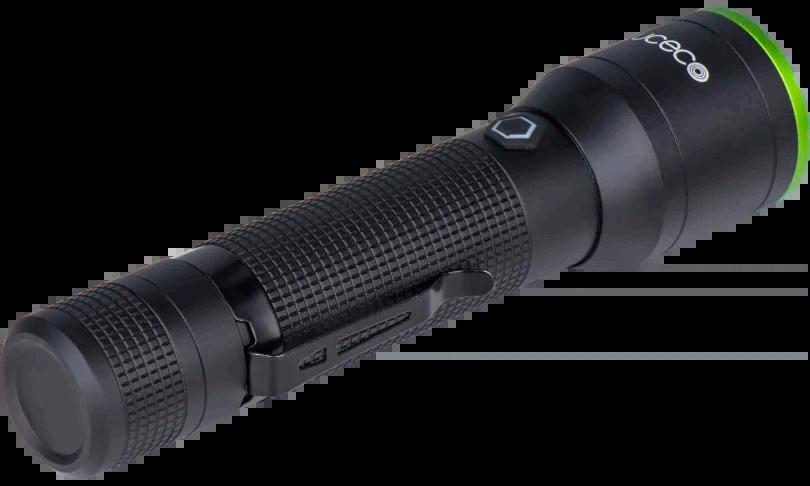
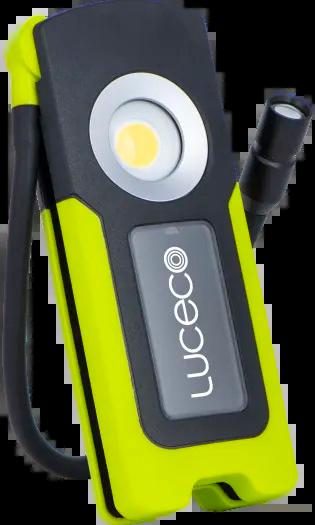
Lighting is one of those tools that often gets overlooked, but without it, even the simplest task becomes harder, slower, and riskier. That’s why inspection and work lights have become a staple for electricians at all stages of their career. Luceco, a manufacturer you’ll see regularly in wholesalers and on site, has developed a wide range of inspection torches and site work lights designed to support the trade.
WHY LIGHTING MATTERS
■ Clearer visibility reduces mistakes, whether you’re wiring terminals or reading test results.
■ Good lighting improves safety, cutting the risk of slips, trips, and poor connections.
■ Hands-free options let you focus on the task without balancing a torch under your chin.
■ Proper illumination helps you work faster, especially in awkward or confined spaces.


“ Investing in a simple torch or hands-free inspection light is a smart start ”
One of the main things to understand is that no single torch or work light suits every situation. You will quickly find yourself reaching for different types of lighting depending on the task:
■ Compact torches are useful for quick checks and tight spaces. Small enough to slip in a pocket, they’re ideal for inspecting consumer units or looking into back boxes.
■ Swivel or tilt head torches give you more flexibility. By adjusting the angle of the beam, you can reduce shadows and light up the area you’re working on.
■ Tripod-mounted or panel lights give adjustable height and spread, making them useful for open areas or when several people are working together.
Luceco offer a wide range of hands-free solutions including head torches and inspection lights with magnetic bases, hooks, or clips. These are especially useful when you need both hands on your tools. And they don’t stop there with a range of bigger Work Lights designed for wider coverage, they provide general illumination for whole rooms or larger spaces.

As you start using different types of inspection lights, a few features stand out:
■ Durability - Site conditions are tough. A good light should handle drops, dust, and occasional knocks, you want high IP and IK ratings.
■ Portability - Lightweight, foldable designs make it easier to carry lights between jobs.
■ Battery life - Always check run-time. A light that dies or dwindles halfway through a task quickly becomes frustrating; Luceco’s inspection and work lights are designed to last the task with steady lumen output to the end.
■ Mounting options – Hands-free solutions, magnets, clamps, and tripods can make a big difference in awkward situations.
Once you’re on site, the right inspection light can help you:
■ Work faster and with more confidence.
■ Show attention to detail, something employers and mentors notice.
■ Improve your own safety and that of others around you.
“ Luceco offer a wide range of hands-free solutions including head torches and inspection lights ”
Investing in a simple torch or hands-free inspection light is a smart start. As you move into more complex work, you’ll likely use larger work lights too, being prepared with your own compact light means you’re never caught out.
Remember: a well-lit job isn’t just easier, it’s more professional. Whether you’re wiring a socket during training or working on a real project, having the right light shows you take the work seriously.
Inspection and work lights might not be the most glamorous tools in an electrician’s kit, but they are some of the most important. From compact torches to powerful site work lights, the range on offer today is wide, durable, and designed for real-world conditions.
“Whether you’re wiring a socket during training or working on a real project , having the right light shows you take the work seriously ”

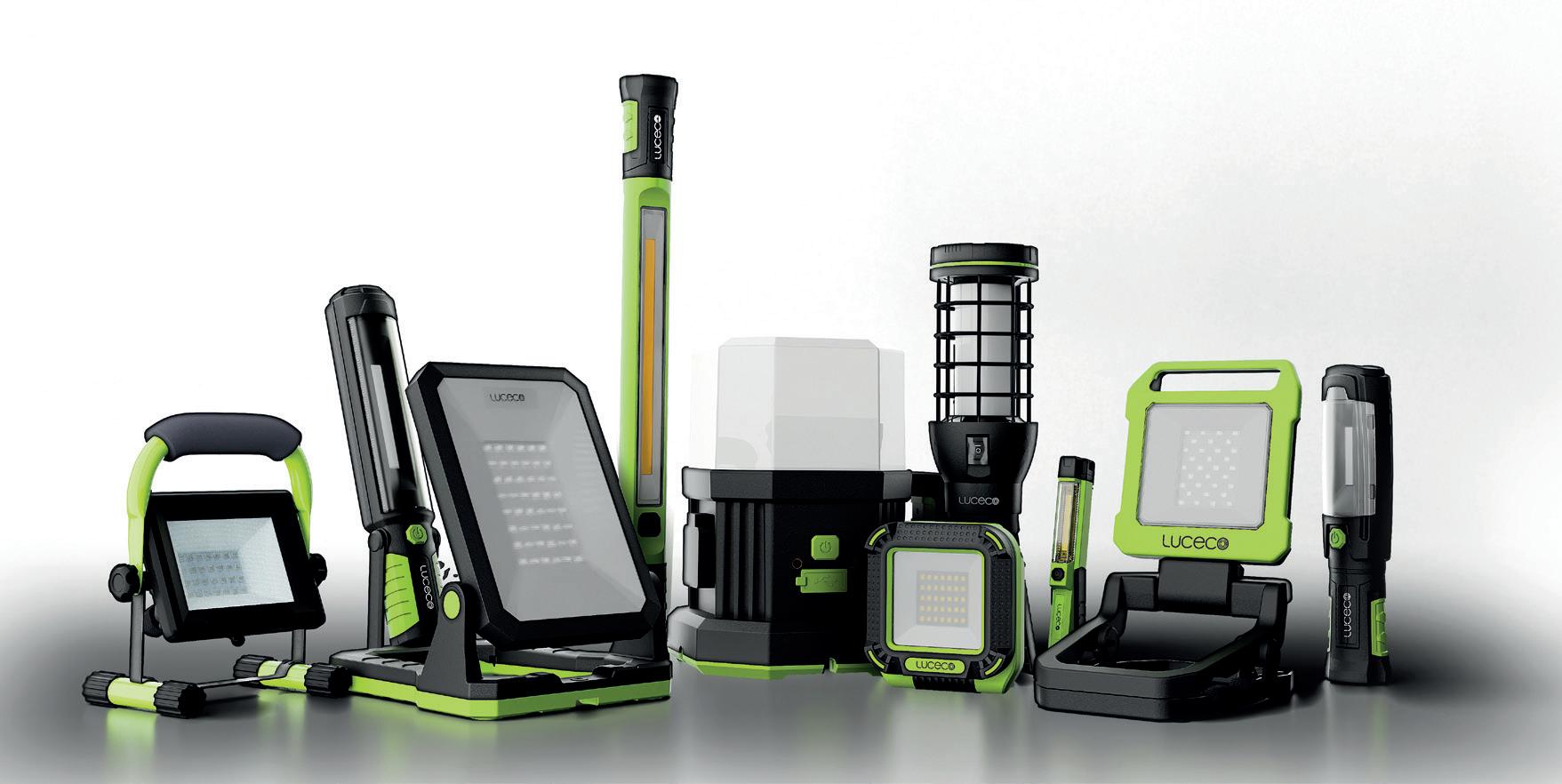
“A well-lit job isn’t just easier, it’s more professional ”


Luceco Academy provides free, fully accredited CPD training courses for apprentices, with each course providing one credit towards annual CPD requirements.
*Free gift is subject to availability

The FType downlight range from Luceco has built its reputation on style, value, and reliability with hassle-free installation.
With the launch of the FType Elite, the range moves forward again – this time shaped directly by contractor input.
End users want sleek, efficient lighting with the right ambience. Installers need fittings that are quick to wire, fully compliant, and built to last. The FType family strikes this balance, delivering performance for both.
The line-up includes Ultra, Mk2, Essence, Spot (non fire-rated) and now Elite. Across the range, Dim2Warm technology replicates the warmth of halogen while offering LED efficiency, with regressed, flat, and adjustable fittings plus interchangeable bezels to suit any project.
Every feature of Elite has been designed to save time on site and support safer installs:
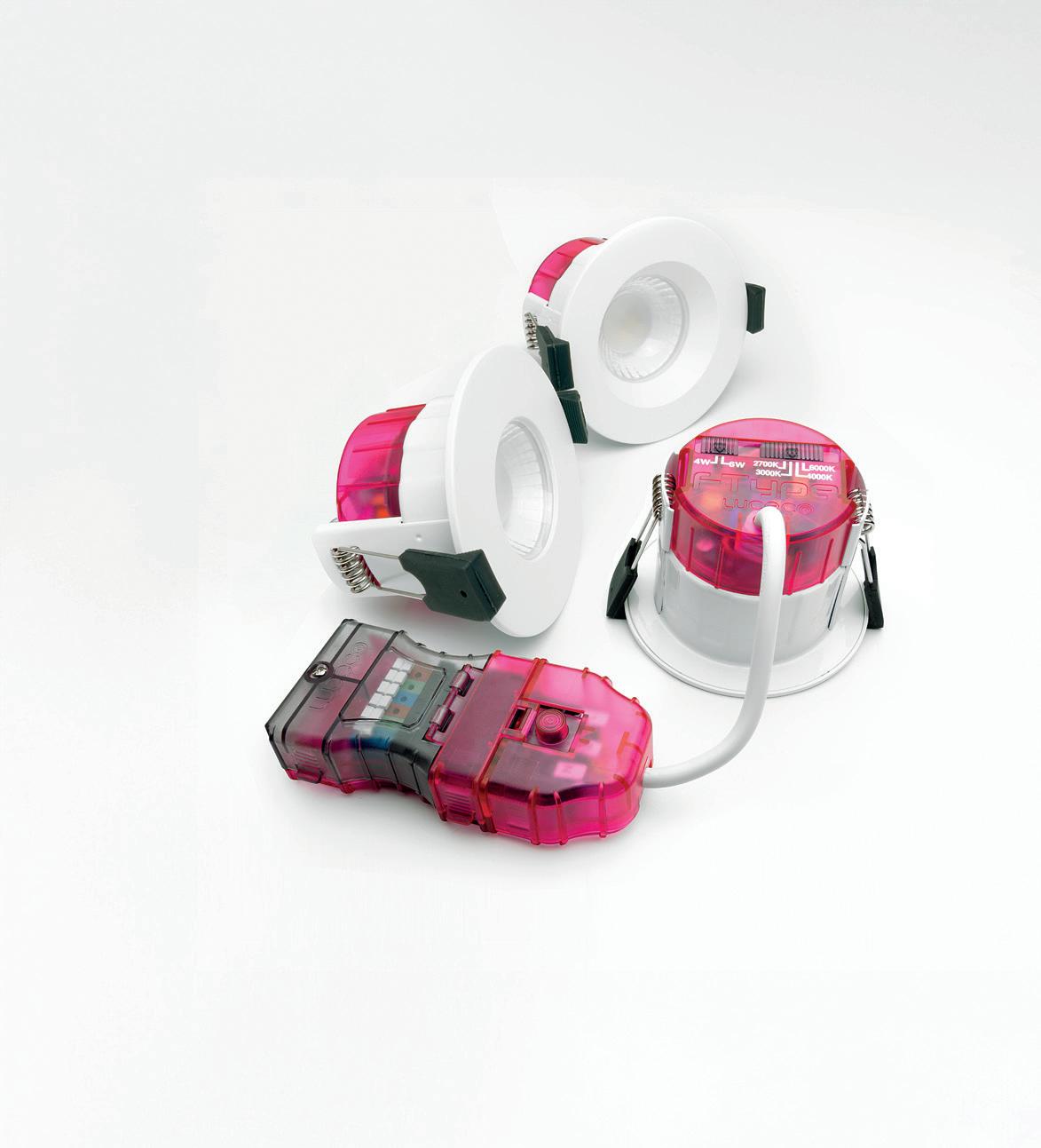
■ NEL/NEL piano key terminals - no more crossed wiring
■ ClipFit System - unrestricted access for wiring
■ QuickView Cable Window - check cable placement at a glance
■ 500V insulation resistance testing built in
Elite is tested to exceed standards for fire, acoustics, and air tightness, backed with warranties of up to seven years.
For emergency lighting, the FType Emergency Pack offers an easy add-on solution.
The FType Elite is the next step in contractorled innovation: reliable, regulation-ready, and built to last.
to find out more.


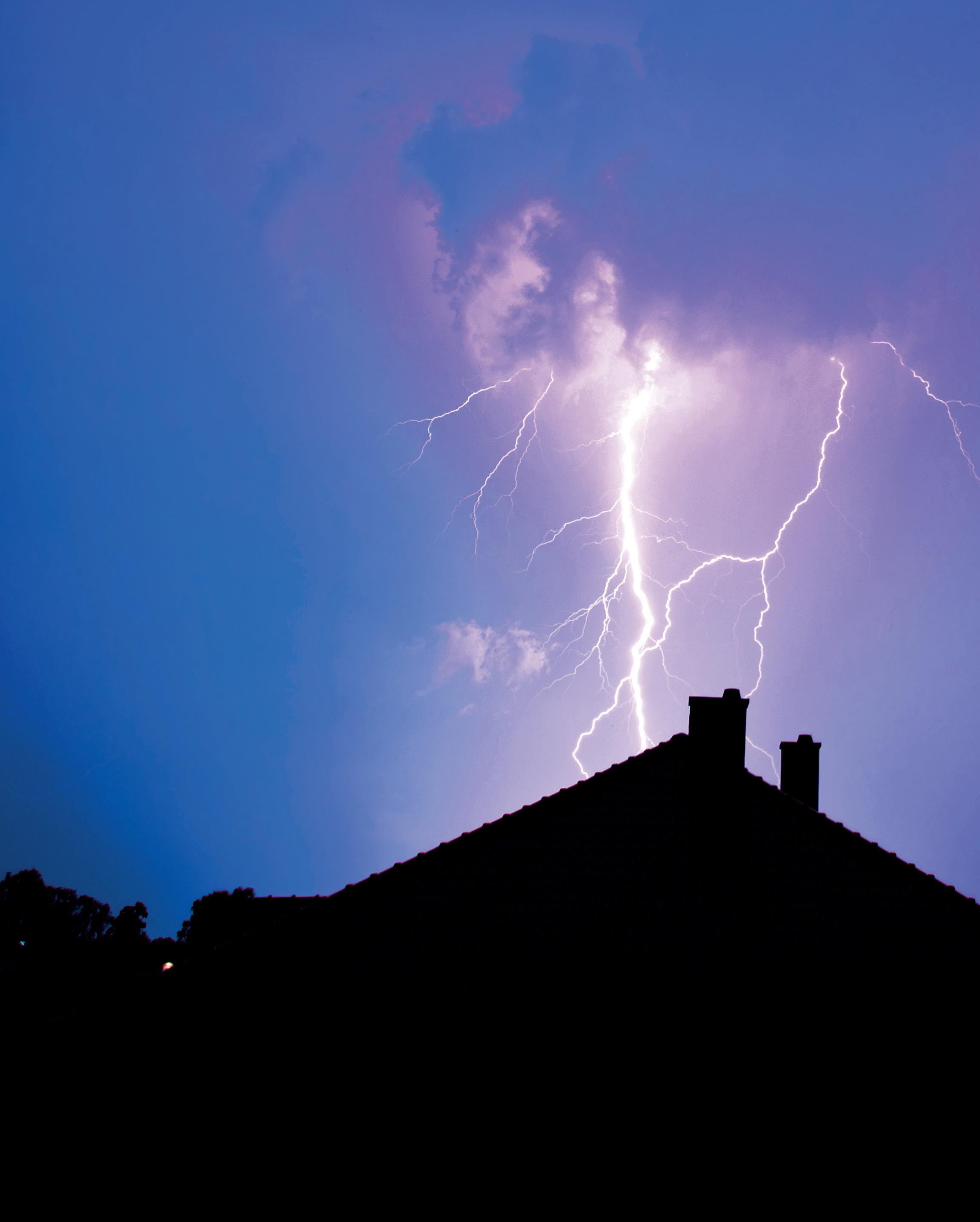
If you’re starting out in the electrical trade, chances are you’ve already heard about surge protection.
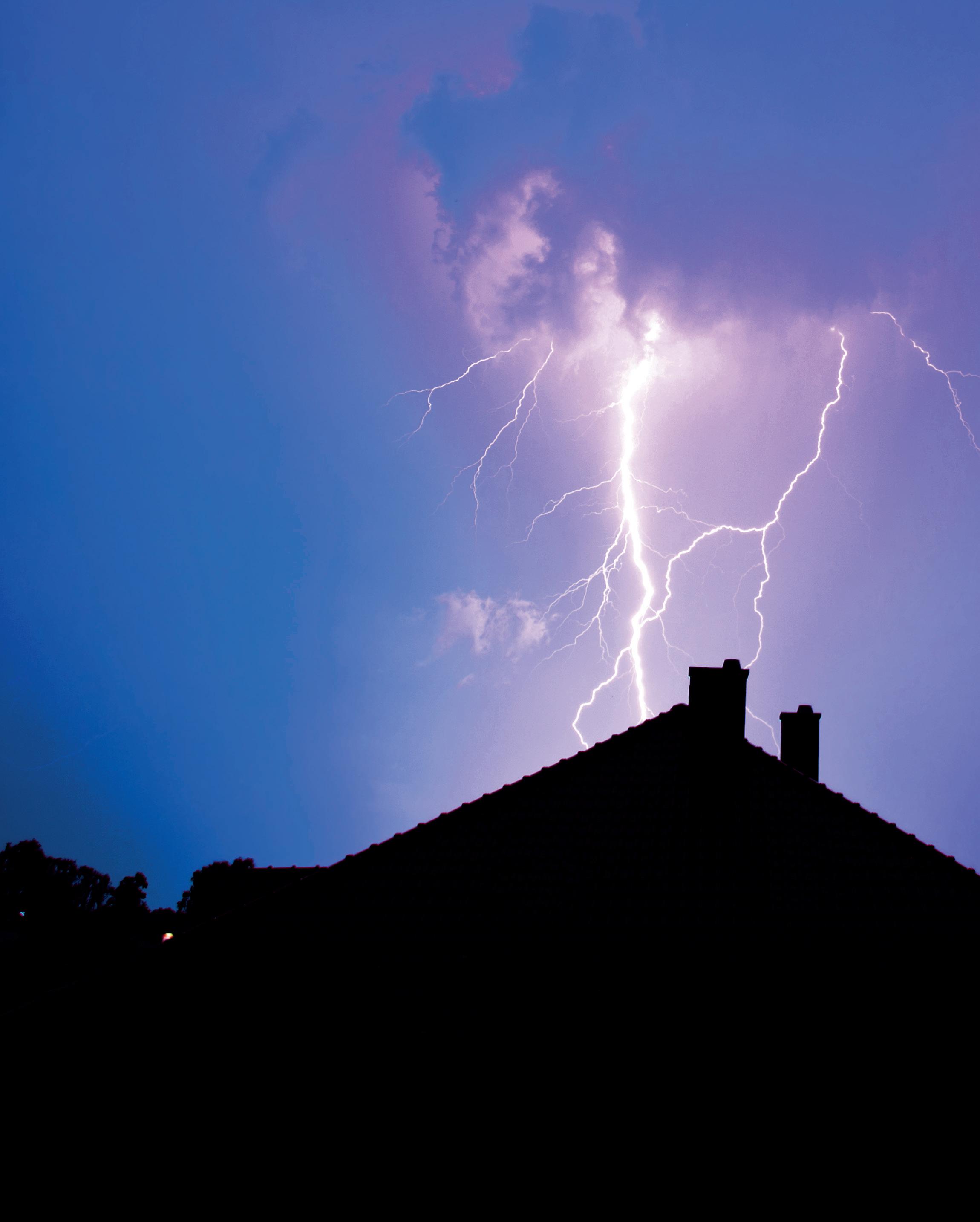
It might sound like one of those technical add-ons you can overlook, but in reality, it’s a vital part of any safe and reliable installation. Surges aren’t rare - they’re guaranteed. Whether caused by lightning strikes or everyday switching operations, power surges can damage sensitive equipment over time. The result? Breakdowns, downtime, and costly repairs for your customers.
For apprentices and trainees, getting to grips with surge protection early on is essential. It’s not just about ticking a box in the regs - it’s about protecting equipment, safeguarding reputations, and making installs as future-proof as possible. That’s where Schneider Electric’s latest innovation comes in.
“Without the right protection in place, even small surges can chip away at performance until equipment fails”
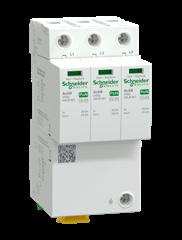
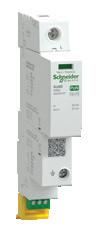
Isobar P Distribution Board
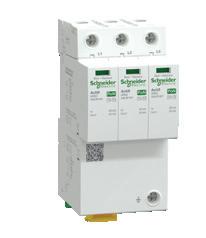
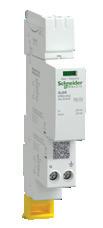

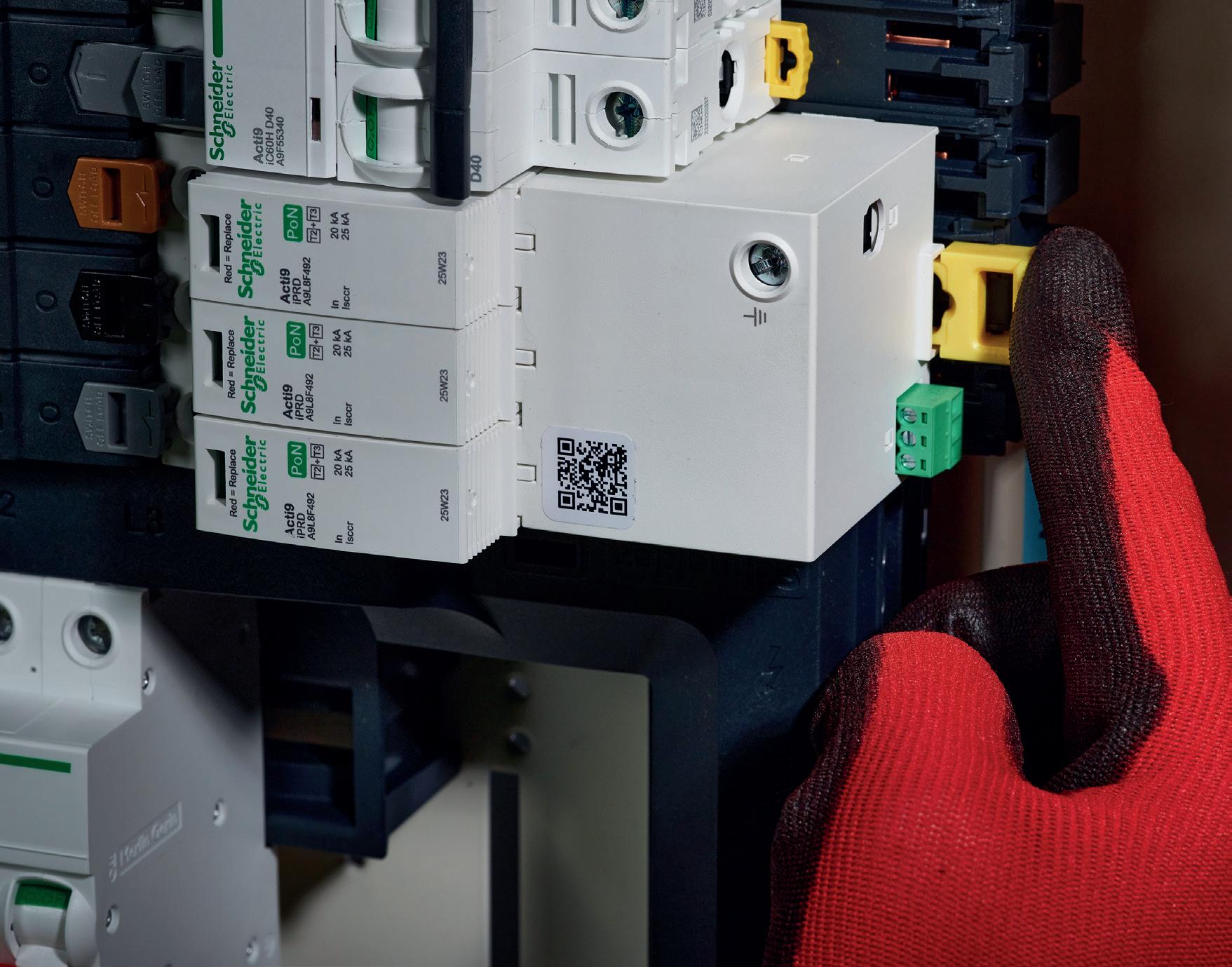
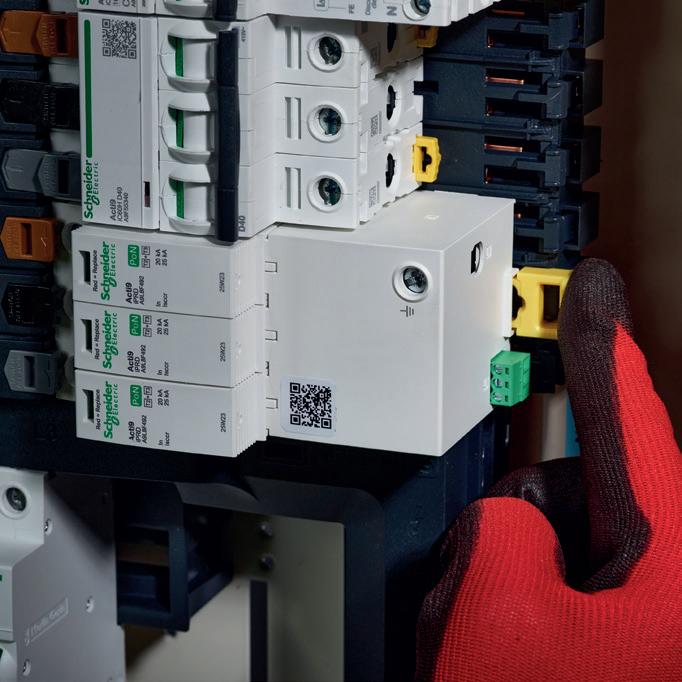
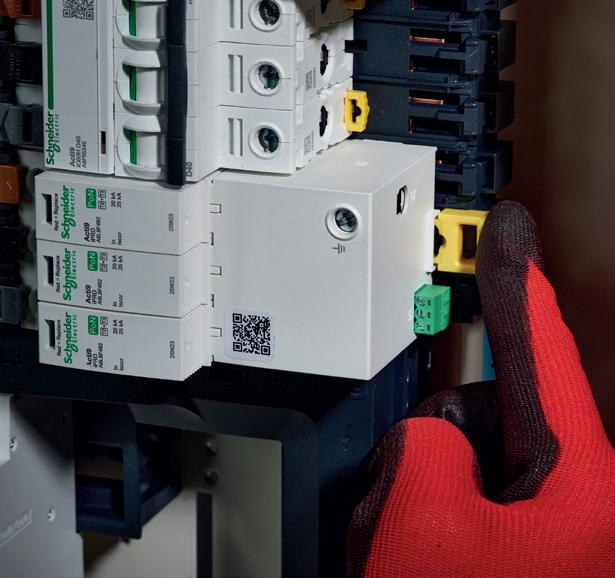
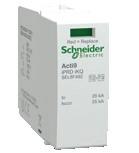
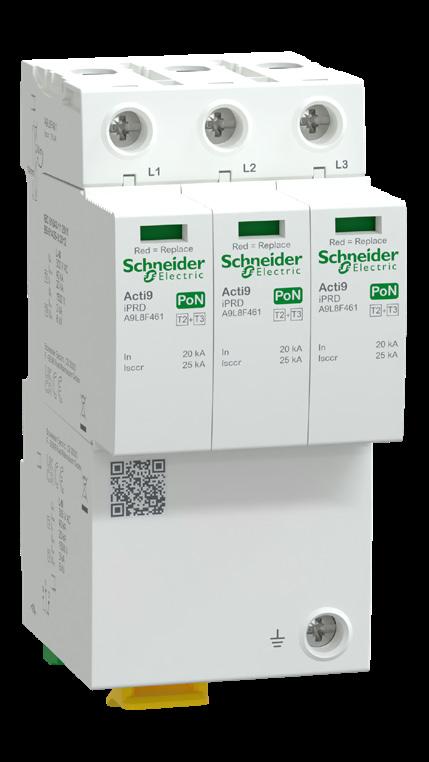
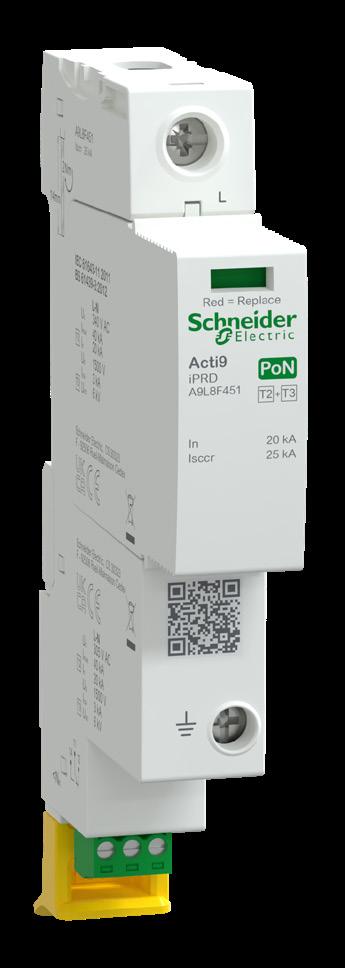
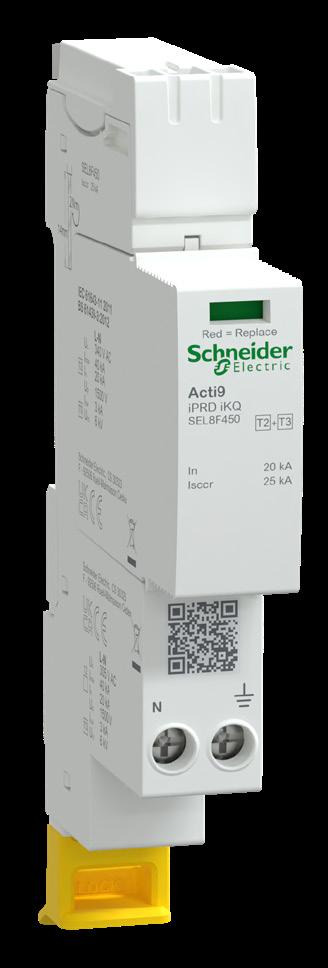
A complement to the Acti9 system, Acti9 iPRD Type 2+3 Surge Protection Devices are simple, compact and cost-effective with embedded protection which can be plugged directly into the distribution board.
Acti9 SPDs protect your electrical installation and equipment against induced or conducted surges caused by direct and indirect lightning strikes, so gain peace of mind that your installation is 100% protected, even in the most demanding environments.
Ease of installation
• Self protected with embedded backup fuse
• No need for any kits; an all-in-one solution
• Direct installation on Fishbone
• No need for external disconnecter
• Compact design
Service continuity
• End-of-life remote signaling
• Easily replaceable cartridges
• High nominal discharge capacity
Enhanced performance
• Efficient protection for sensitive loads
• High discharge capacity in case of direct and indirect lightning strikes

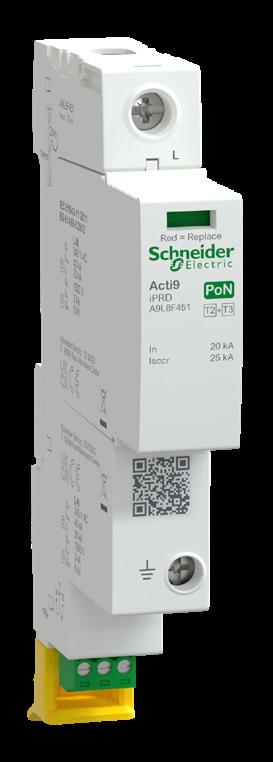
Launched in October 2025, the Acti9 iPRD Type 2+3 is a new surge protection device (SPD) designed to make life easier for contractors and apprentices alike.
This is the first all-in-one SPD that fits directly into Schneider’s Acti9 Isobar P and KQ Loadcentre distribution boards - with no extra kits, no complicated wiring, and no hassle.
For anyone learning the trade, that means faster installs, a tidier board, and fewer mistakes. It’s designed with real-world jobs in mind, where time, space, and simplicity are always at a premium.
“this
new all-in-one solution makes surge protection simple , smart, and effective”
Buildings depend on sensitive electronics that can be easily damaged with a surge, for example IT networks and security systems. Keeping more industrial equipment protected is just as important to prevent damage and downtime. Without the right protection in place, even small surges can chip away at performance until equipment fails.
By fitting a reliable SPD, you’re not only meeting industry standards, you’re also protecting your clients’ investments. That’s something customers really value - and it’s something that can set you apart as a professional installer who thinks ahead.
The Acti9 iPRD Type 2+3 comes with a host of features designed to make installs simpler, safer, and more reliable:
■ Plug-and-play simplicity: No external disconnectors, no tricky wiring.
■ Perfect fit: Designed for seamless integration into Acti9 distribution boards.
■ Built-in protective fuse: Thanks to embedded fuses, no upstream protective devices are required.
■ Compact design: Saves space and keeps boards neat.
■ Remote end-of-life signalling (Acti9 version only): Helps you react to ensure continuity of service.
■ Replaceable cartridges: Easy to service without swapping the whole unit.
■ High discharge capacity: Built tough to handle surges from indirect lightning strikes.
For apprentices, the message is simple: this device makes your job easier. It reduces the chance of errors, speeds up installs, and gives you the confidence that your work is providing robust protection.
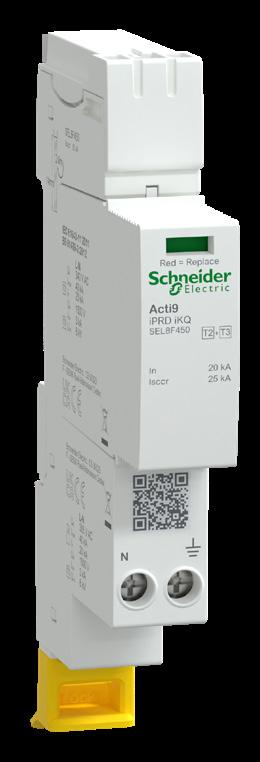
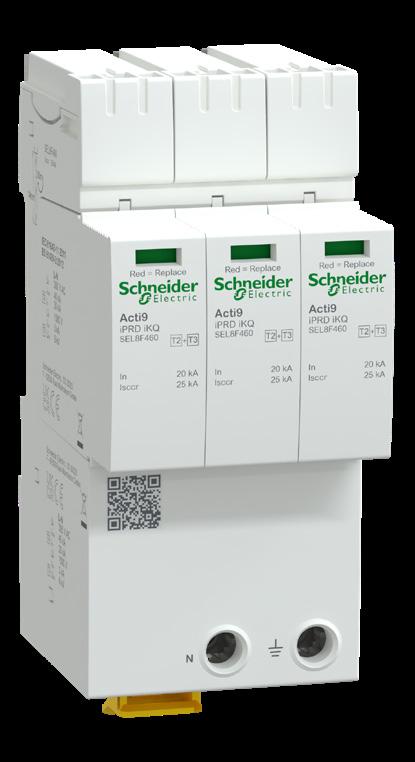
One of the biggest frustrations in the trade is callbacks. Nobody wants to return to site to fix a problem that could have been avoided. With the Acti9 iPRD Type 2+3, service continuity is built in. The remote signalling option lets you know when a cartridge needs replacing, while the easy-change design keeps maintenance straightforward. That means fewer headaches for you and more trust from your customers.
Modern electrical systems face growing demands. Renewable energy sources, smart technologies, and increasingly sensitive electronics all add complexity to installations. Surge protection is no longer an afterthought - it’s central to keeping systems running smoothly.
The Acti9 iPRD Type 2+3 isn’t just about meeting regulations. It’s about providing the kind of long-term reliability that today’s buildings and businesses require. Whether you’re working on a new build or upgrading an existing installation, it’s a smart choice for future-ready protection.
Imagine you’re fitting out an office space with LED lighting, data cabling, and HVAC controls. Without surge protection, a single lightning strike miles away could send a surge through the system, knocking out key equipment. That means downtime for the client, expensive replacements, and plenty of stress for everyone involved. With the Acti9 iPRD Type 2+3 in place, that same surge is safely discharged — protecting the installation and keeping everything running.
It’s a small piece of kit that makes a massive difference!
As you progress in your career, building a reputation for quality and reliability will be just as important as mastering technical skills. Choosing the right protection devices is part of that. When you specify Schneider Electric’s Acti9 iPRD Type 2+3, you’re showing clients and employers that you understand the bigger picture — safeguarding not just today’s installation, but its long-term performance.
The Acti9 iPRD Type 2+3 SPD launched in October 2025. Whether you’re an apprentice learning the ropes or a contractor with years on the tools, this new all-in-one solution makes surge protection simple, smart, and effective.
“For anyone learning the trade, that means faster installs , a tidier board, and fewer mistakes”
“unleash reliable protection”
If you’re an apprentice or trainee electrician, you’ll already know one thing: the trade keeps you on your toes!
There’s plenty to learn, deadlines to meet, and the need to work safely and accurately every day. Research shows that UK tradespeople typically work between 41 and 50 hours a week, with many going beyond that – a sign of just how busy and in-demand the industry is.
With that in mind, it makes sense to find ways of working smarter, not just harder. That’s where the right tools and techniques can make a huge difference. Something as simple as switching from traditional terminal blocks to lever wire connectors can save you valuable minutes on every task – time that really adds up across a full installation.
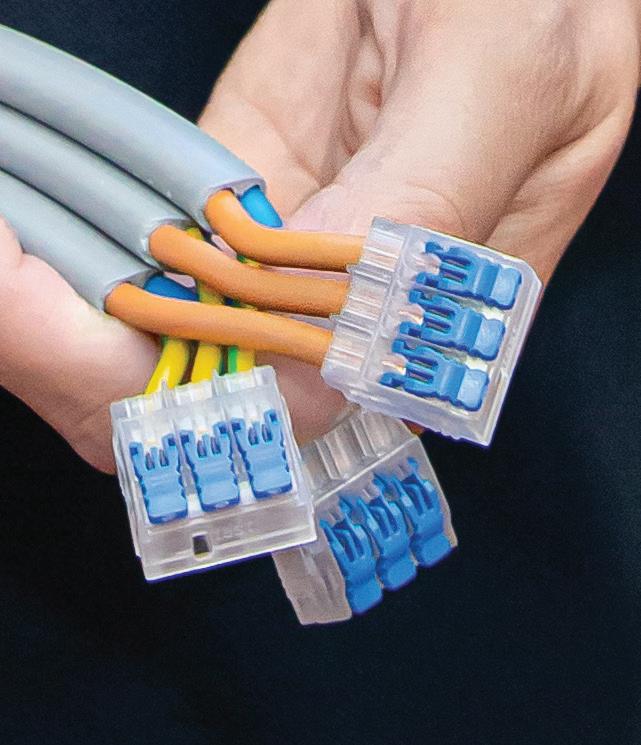
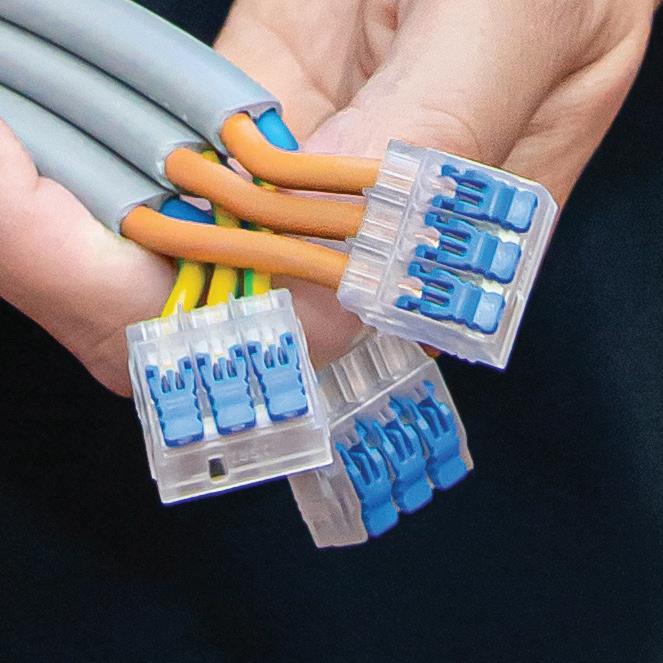
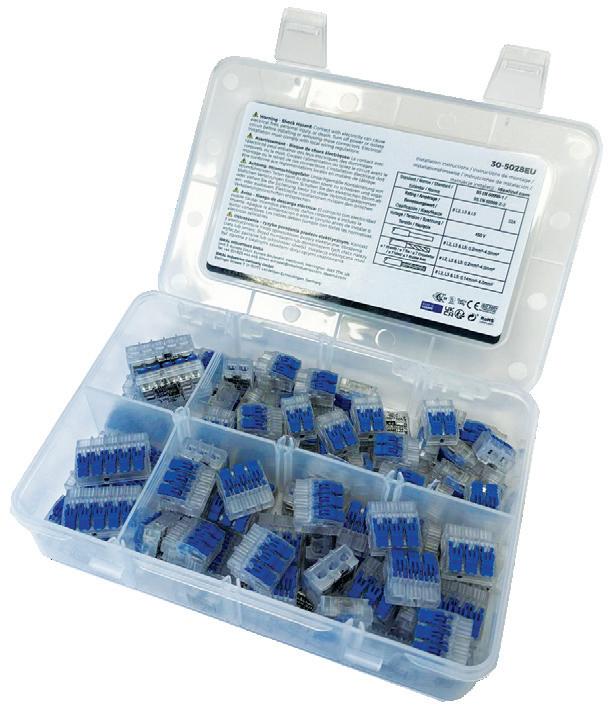
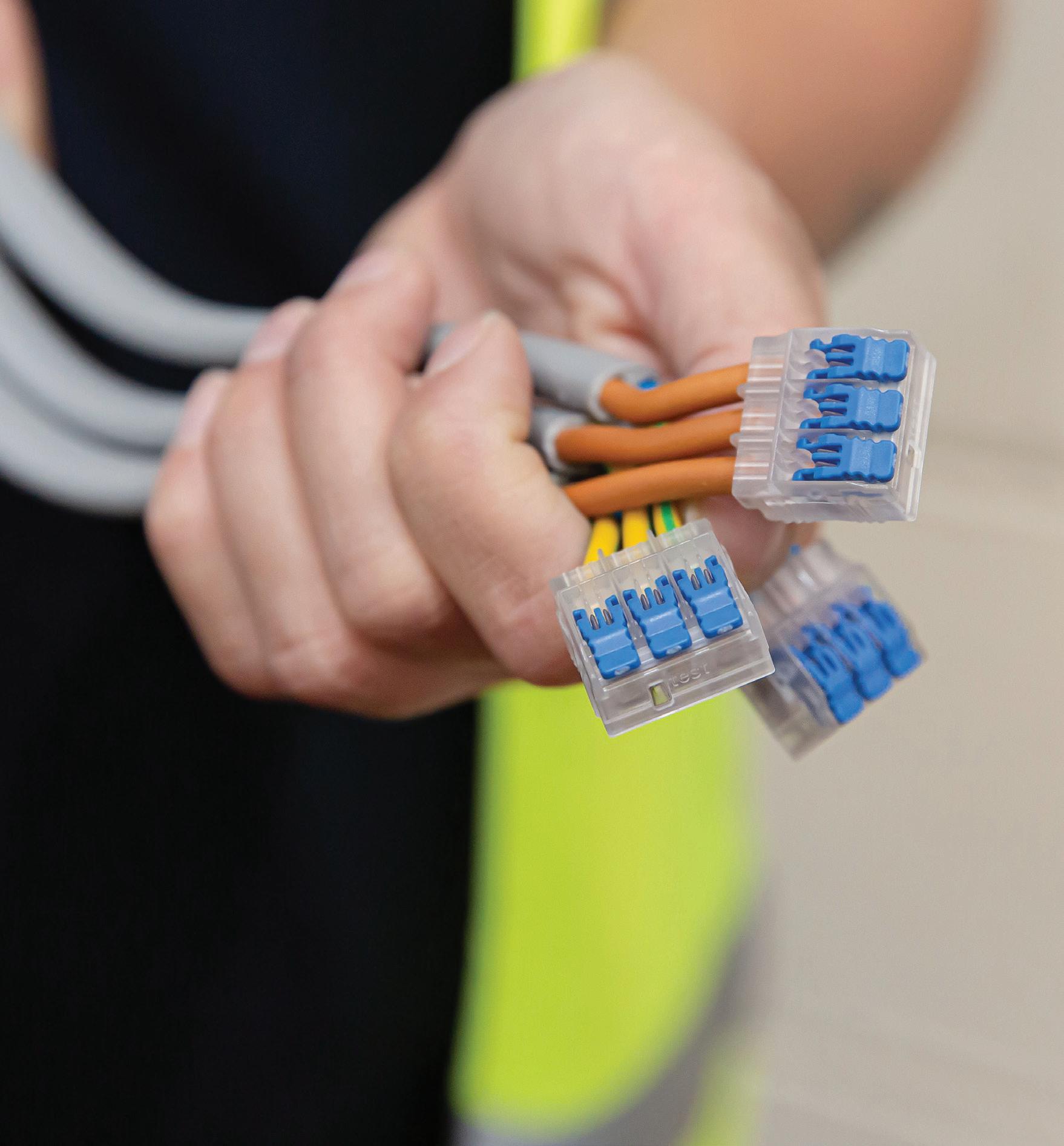
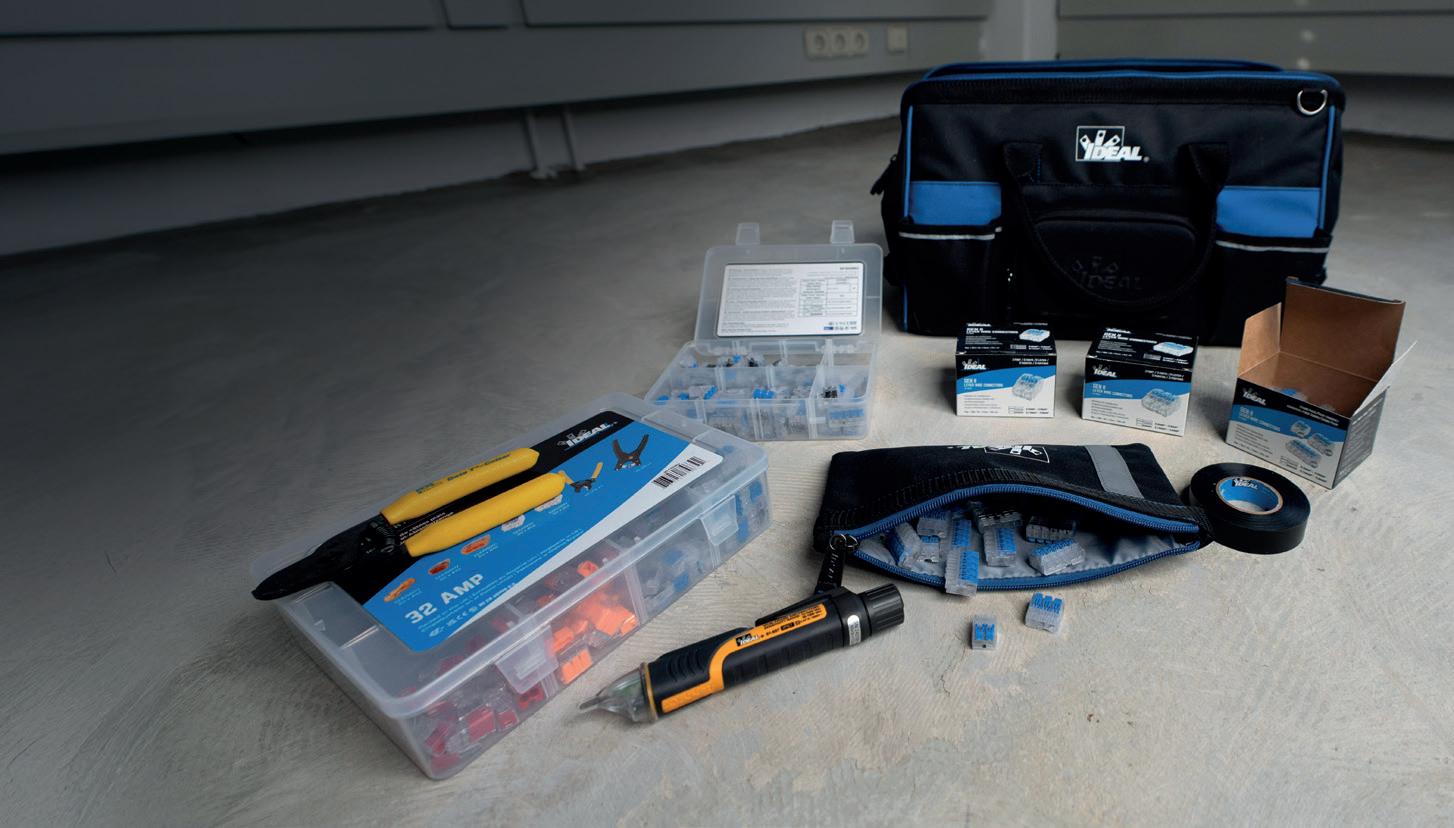
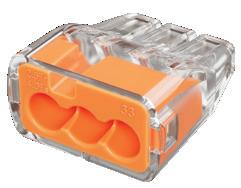
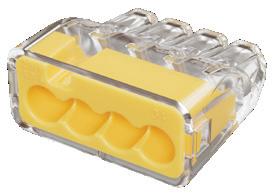
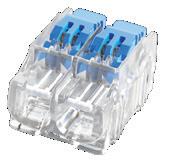
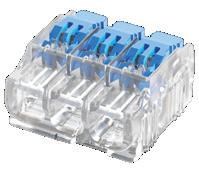
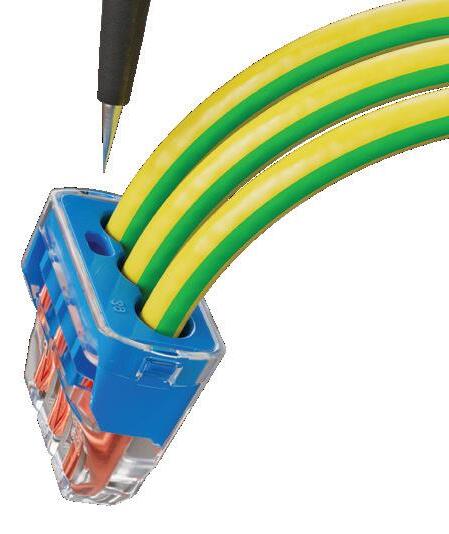
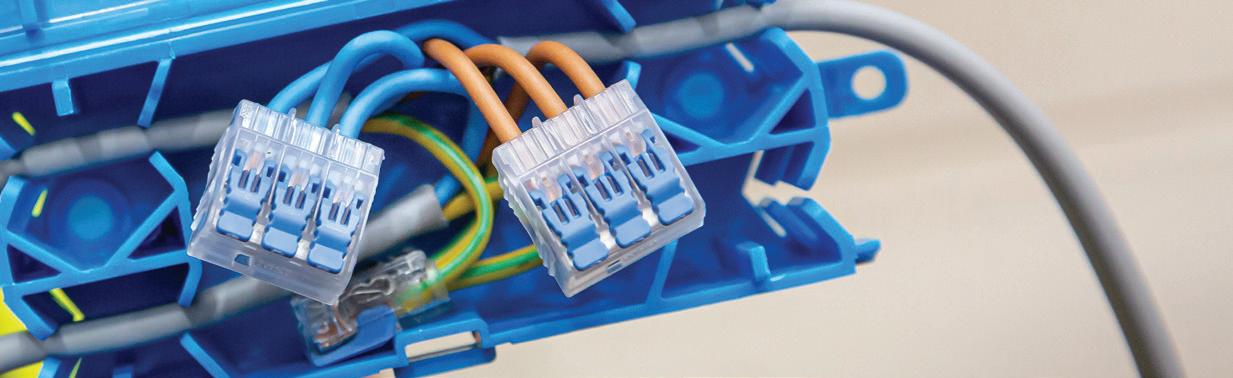
One of the first things you’ll notice about IDEAL lever and push-in connectors is just how simple they are to use. Instead of fiddling around with screwdrivers or crimping tools, it’s simply a strip, push, connect action. The cables are locked securely in place within seconds, reducing both effort and stress.
Here’s what makes them so versatile:
■ Works with multiple conductor types –solid, stranded, or flexible.
■ Re-usable 32A lever connectors – accept wires of different sizes and types, from 0.14mm² to 4mm².
■ Push-in connectors – available in 32A versions (0.75mm² to 4mm²) and a 41A 3-port model (2mm² to 6mm²), ideal for highdemand circuits such as cookers or showers.
■ Compatible with In-Sure® Enclosure Box – certified to BS 5733 for maintenancefree connections in inaccessible locations.
That combination of speed and reliability is exactly what every trainee needs when building confidence on-site.

“Strip, Push, ConnectDone in Seconds”
It’s often the small design details that make life easier, and IDEAL connectors are full of them:
■ Clear inspection window so you can double-check wire placement.
■ Built-in test port for quick, accurate testing.
■ Handy strip guide to get the perfect length every time.
■ No need to lift the lever first when working with solid or rigid stranded conductors – just push the wire straight in.
These features reduce the chance of mistakes, help you work more efficiently, and give peace of mind that each termination is done correctly.
“ IDEAL’s connectors are designed to speed up installations without sacrificing quality ” “ Switching from traditional terminal blocks to lever wire connectors can save you valuable minutes on every task ”
“ For trainee electricians, learning how to balance speed with accuracy is crucial ”
Every installation is different, but there’s a connector for practically any scenario:
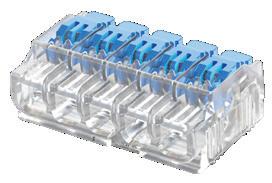
■ Lever connectors come in two-, three- and five-wire models.
■ Push-in connectors range from two- up to eight-wire versions, perfect for larger terminations.
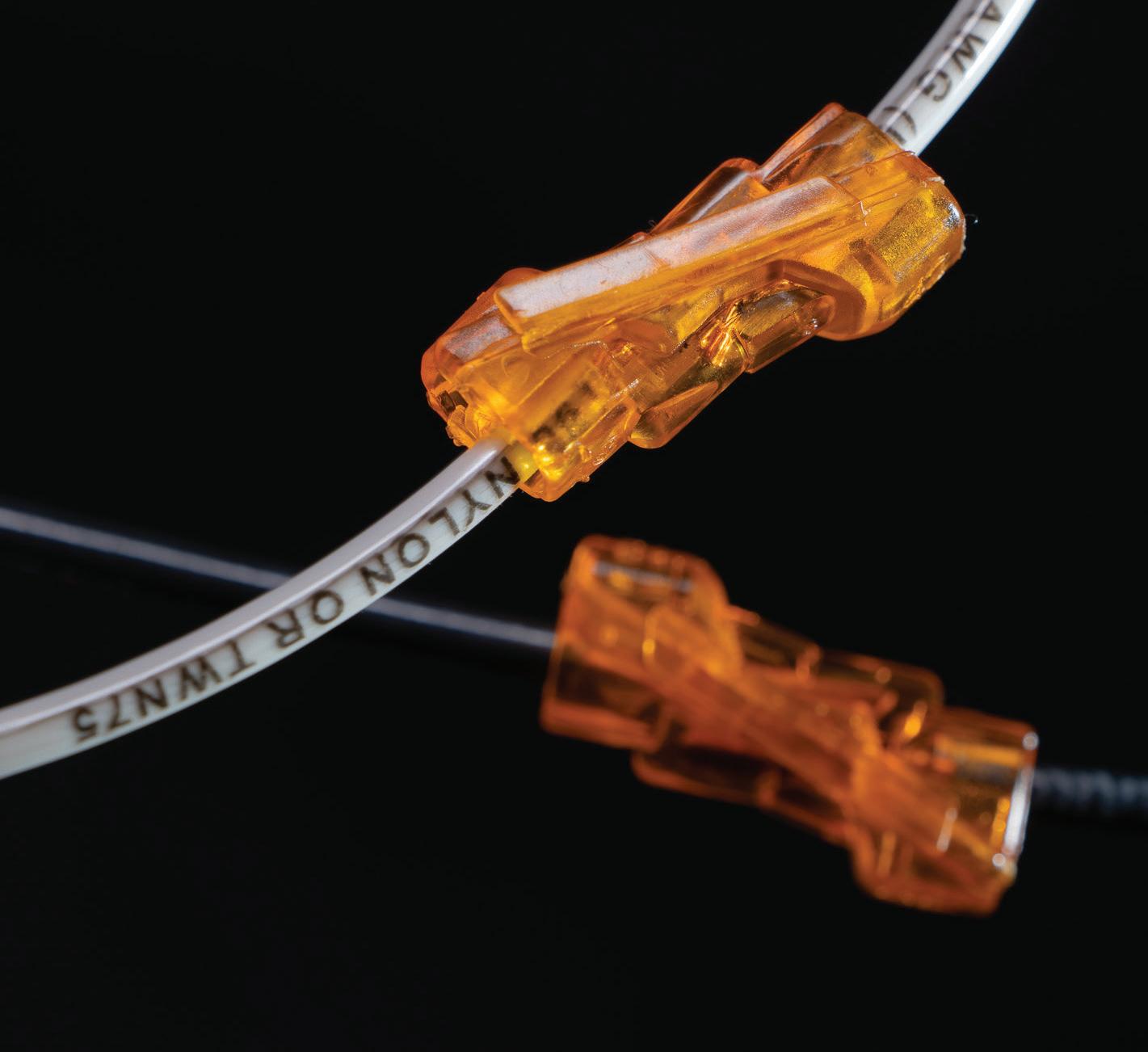
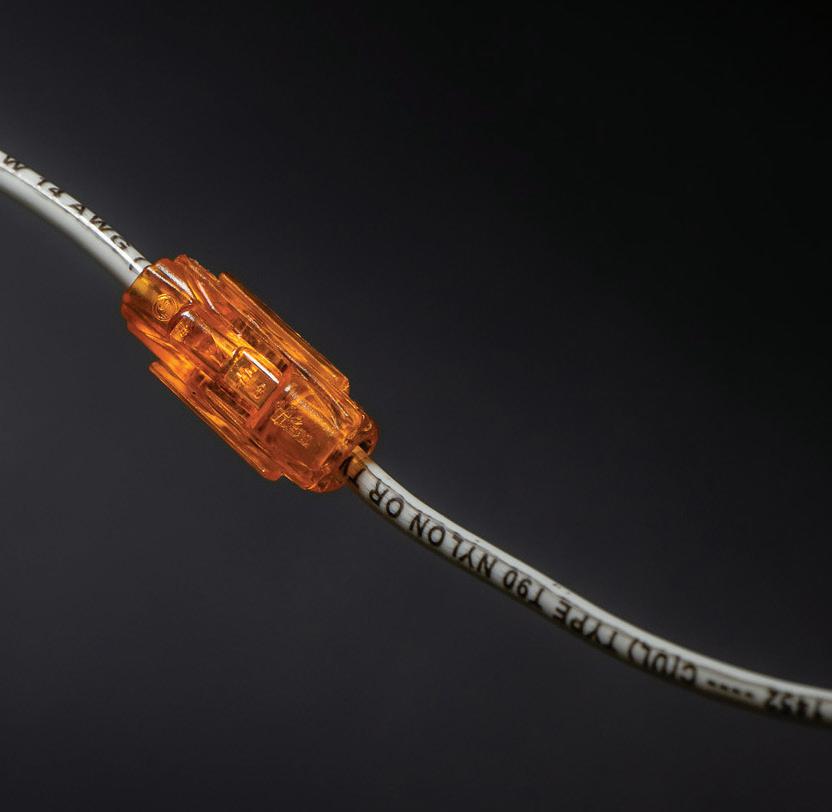
■ Spliceline® in-line connectors provide a modern alternative to traditional butt splices. Using push-in technology, they create a crimp-free, solderless connection in half the time – and a single connector covers the same range as three conventional splices.
All IDEAL connectors carry CE, UKCA and UL listings, and are fully compliant with the 18th Edition Wiring Regulations, so you can use them with complete confidence.
For trainee electricians, learning how to balance speed with accuracy is crucial. The more jobs you take on, the more you’ll see that saving even a few minutes per termination can mean finishing earlier, taking on more work, or simply reducing stress.
IDEAL’s connectors are designed to speed up installations without sacrificing quality. By preventing common wiring errors and making connections more consistent, they help you focus on the bigger picture of the job – whether that’s completing a domestic rewire, tackling a commercial site, or passing assessments with your supervisor.
to find out more.
The IDEAL Electrical range of wire connectors gives installers a faster, safer and more modern alternative to outdated screw-down terminal strips.
32A LEVER CONNECTORS
■ Join solid, stranded or flexible conductors with ease
■ Compact design saves space in junction boxes and enclosures
■ Reliable, reusable and tool-free – no need to lift the lever first
■ Wire range: 0.2–4.0mm² (solid/rigid stranded), 0.14–4.0mm² (flexible)
■ Extend or connect wires three times faster than crimped butt splices
■ Crimp-free, solderless and tool-free push-in design
■ Wire range: 0.5–4.0mm² (solid), 1.0–2.5mm² (stranded)
“ Versatile designs for fast, safe and consistent wire connections ”
2–8 PORT PUSH-IN
■ Cut installation time by up to 50%
■ Smooth glide-in action with low insertion force
■ Available in 32A versions (0.75–4.0mm² solid, 1.5–2.5mm² stranded) and a 41A 3-port 6mm² model
ALL IDEAL CONNECTORS FEATURE:
■ Clear shell for visual inspection
■ Integrated check port for quick testing
Tested to BS 7671:2018 (18th Edition) and IEC standards, and CE, UKCA, UL and ENEC approved, IDEAL connectors combine innovation, safety and value – helping electricians work smarter every day.
to discover the full range and find your nearest stockist.
Do
you know your electrical terminology? In this feature, you will find a selection of commonly used terms you are likely to come across during your studies and on-site.
A.C. is the flow of an electric current, first in one direction and then in the reverse direction in a conductor or circuit.
AMMETER
An instrument used for the measurement of electric current.
AMPERE
A unit of electrical current: Symbol A, Unit symbol: I
ANODE
The anode is a positive electrode or terminal, e.g. the + terminal of a battery.
This is the power of an a.c. circuit based on the formula P = V x A x pf If the a.c. circuit supplies a purely resistive load, such as a heating element, the Apparent Power and the True Power will be the same. This is called ‘Unity’.
ARC
A very low resistance between two points of different potential can result in an electrical discharge in the form of a spark or flash between the two points.
The term is used to describe the rotating part of a d.c. electric motor or generator, and an a.c. universal motor.
This term is used to describe the rotor speed of a.c. motors in which the rotating magnetic field created by the stator windings is at synchronous speed i.e. being dependent on the supply frequency and number of sets of stator windings; compared to the actual rotor speed that is turning at a speed less than synchronous, called asynchronous speed.
The minute parts of a substance consist of a nucleus, protons and electrons; a number of atoms make up a molecule.
A static device consisting of a laminated steel core and one winding to which a single-phase a.c. supply is connected, this is the primary connection. The secondary output is made by tapping – off the same winding at a point that gives either an increase or decreased output voltage. Three-phase autotransformers are also available.
Back e.m.f is a voltage that is produced in opposition to the supply voltage when an alternating current passes through a coil of wire such as a motor winding, choke or relay coil.
This is another term for the choke found in discharge lighting circuits.
This is a component found in certain types of thermostat, e.g. room thermostats used to control central heating systems. The strip consists of two dissimilar metals bonded together. When the surrounding temperature increases one metal will expand faster than the other and because the other metal is not expanding at the same rate the strip will bend. This can be incorporated with a switching device designed to switch on or off the central heating boiler.
The insulation or marker colour associated with Line – 2 (L2) of a 3-phase AC supply system.
The practice of intentionally connecting all exposed metal items not designed to carry electricity in a room or building, to prevent electric shock in case they inadvertently become live.
The insulation or marker colour associated with Line – 1 (L1) of a 3-phase AC supply system.
A capacitor is a component capable of storing electric charge. It consists of two or more conductive plates, or metallic foils, insulated from each other and the container housing them. The outer plates have terminals enabling the device to be connected into a circuit. This device can be found in a.c. single-phase motor circuits, discharge lighting installations, power factor correction units and electronic circuits.
Carbon is a good conductor of electricity as well as being a good lubricant. This makes the carbon brush a suitable method of passing electrical energy into or out of the rotating part of an electric motor or generator.
This is the negative electrode or terminal of a d.c. power source such as a battery.
A device capable of producing electric current through chemical action between an electrolyte and conductive plates.
Electric charge is a quantity of electricity measured in Coulombs: Symbol Q
This is a coil of wire wound on a laminated steel core. The coil has a low resistance and high inductance making it particularly useful in a.c. circuits to (a) provide a high voltage when starting certain types of discharge lamps and (b) to control the flow of current in low resistance circuits such as the discharge current through a fluorescent lamp when fully on.
The circuit-breaker is designed to protect circuits from over-current that can be caused by short-circuit or overload in the circuit. The circuit-breaker incorporates both magnetic and bimetallic components that react to each type of overcurrent fault in the circuit.
A conductor that simultaneously serves the functions of both the neutral and the earth in electrical systems.
This is a device found in d.c. motors or generators and some a.c. machines. It consists of segments of copper insulated from each other and from the armature shaft around which they are mounted. Carbon brushes make contact with the copper segments and provide a ‘sliding electrical contact’ such that electrical energy can be supplied or taken from the armature.
A material, usually copper, but can be aluminium that has a low resistance to the flow of electric current.
Conventional current refers to the assumed flow of electric current in a circuit i.e. current flowing from positive to negative of the supply source through a load. Electron current flow is the actual current flow in a circuit.
The flow of electric charge through a conductor, measured in Amperes (A) Current symbol: I
A method of electrical circuit connection used in three – phase supply systems where the load is balanced and does not require a neutral connection.
A solid-state device that is designed to be connected, with other types of solid state devices to produce a pulsed waveform.
A dielectric is a material or space that has high resistance and is therefore a poor conductor of electricity. The dielectric provides the insulating layer between the conducting plates of a capacitor. Dry air is a poor conductor so is plastic, glass, porcelain and certain metal oxides.
A solid-state device that allows current flow through it in one direction but blocks the flow when the current is reversed, thus providing direct-current.
This is a term associated with the starting of single or three-phase electric motors. The full supply voltage is connected to the stator windings of the motor on the closing of the D-O-L contactor. This method of starting can be used for machines up to approximately 5kW.
The term ‘discharge’ is normally associated with the passage of electric current through a gas. However the term can also be used to describe the reduction to zero of a capacitors stored electric charge via a resistor connected across its terminals.
Unwanted current in the neutral conductor that flows through alternative, often unintended, paths in an electrical system.
The flow of an electric current in a circuit in one direction only rather than alternating.
Any property used as a residence, such as a house or an apartment.
The practice of connecting specific parts of an electrical power system with the ground, for safety and functional purposes.
A circulating current that has been induced by an alternating current; in a transformer eddy currents occur in the steel core that supports the windings. To reduce eddy currents to a minimum the steel core is laminated.
The general term used to describe the effect of electric charge whether static or in motion.
The rate of doing work, measured in Watts (W). Power (P) is measured in watts and is the product of potential difference in volts and the current in amperes, so in formula:-
P = V x I or P = U x I
This term can be used in a number of ways:
i) A conductor that can allow electric current to enter or leave a medium such as an electrolyte. A lead-acid battery is such an example.
ii) An element that collects or emits electrons as in semiconductor devices such as diodes and transistors.
Generally, the term is used to describe the positive or negative terminal of a power source such as a battery. The positive electrode can also be referred to as the Anode and the negative electrode as the Cathode.
When a current flows through a conductor or coil an electromagnetic field is produced around it. The magnetic field is proportional to the current
and so as the current increases or decreases in value the magnetic field will also increase or decrease in strength. When the magnetic field rises or falls a voltage will be induced in the conductor or coil, this is called the back-e.m.f.
This is the source of electrical energy required to produce an electric current in a circuit. The source of e.m.f can be an alternator, battery, generator, solar panel or thermocouple.
To have the same electric potential at every point.
A conductive part of equipment that can be touched and isn’t normally live, but can become so if insulation fails.
A conductive part which might introduce potential, usually Earth potential, not forming part of the electrical installation.
An electrical fault can occur in the distribution network, electrical installation or in electrical equipment. A fault can be short-circuit, opencircuit or component failure.
This is the current caused by a fault in the electric circuit. The fault can be electrical such as short-circuit or an overload caused by a mechanical problem.
Two rules developed by Sir John Fleming. The rules are designed to assist in the understanding of the relationship between motion, e.m.f. and magnetic flux in electric machines.
The Hand rules use the first and second fingers and thumb of each hand to represent magnetic flux, electric current and the resulting movement.
The Left Hand Rule relates to electric motors and the Right hand Rule to electric generators.
FLUX
i) A substance that can be added in order to assist fusion as in soldering.
ii) A generic term used to express the ‘rate of flow’ or ‘movement’ of a property such as ‘magnetic flux’, ‘luminous flux’ or ‘electric flux’.
FREQUENCY
This is the number of cycles per second at which an alternating current voltage is supplied from the distributor; frequency is measured in Hertz (Hz).
FUSE
An overcurrent protective device designed to open circuit in the event of an abnormally large current flowing in an electrical circuit or apparatus. The abnormally large current can be as a result of an electrical fault or overload.
GGENERATOR
A machine designed to convert mechanical to electrical energy; equipment capable of converting non-electrical energy into electrical energy.
GREY
The insulation or marker colour associated with Line – 3 (L3) of a 3-phase AC supply system.
The general mass of earth in reference to earthing systems.
HHEATER (ELECTRIC)
A device, consisting of high - resistance wire, that converts electrical energy to heat energy.
HYGROSCOPIC
A compound with the ability to absorb moisture; a term often associated with the insulating material ‘magnesium oxide’ used in mineral insulated cable. When exposed to the air magnesium oxide will absorb moisture thereby lowering its insulating property.
The Institution of Engineering and Technology; providing the requirements for electrical installations.
ILLUMINATION
The light level on a surface created by natural or artificial means; raising of the light level is usually achieved by the use of electric lamps.
IMPEDANCE
The total opposition to current flow in an a.c. circuits where resistance, inductance and capacitance can contribute to opposing current flow. Inductance is measured in Ohms.
Symbol: Z
INDUCTANCE
The opposition to current flowing in a coil when a changing current causes a changing magnetic field to induce an opposing voltage; inductance is measured in henrys (H). The device is used to control current flowing in a circuit.
INDUCTOR
A static device consisting of a coil mounted on a laminated steel core; used to provide an amount of inductance in a circuit. The choke in a fluorescent luminaire circuit is one example.
INSULATOR
A material in which the flow of electric current is generally not possible, p.v.c. is one example.
ISOLATOR
The isolator is a mechanical device used to isolate all live conductors from a circuit or specific item of equipment by breaking the circuit using a mechanical switching device.
JJUNCTION RECTIFIER
A solid-state device, with no moving parts, that uses a semiconductor junction to rectify an alternating current to a direct current.
KKILOWATT
A measurement of power; one kW = 1000Watts
KILOWATT – HOUR
An expression used to state a unit of electrical energy consumed over a period of 1 – hour: (kWh).
A solid-state device with a p-n junction; the device is capable of producing light when a small current is passed through it.
LIGHTNING
An atmospheric electric discharge in the form of a spark or flash; if a danger to property exists then the building can be fitted with lightning conductors that safely allow the atmospheric discharge to dissipate to earth.
A complete lighting unit, including all the essential components required for fixing, housing, connecting and distributing a light source, such as a bulb or lamp.
A ferromagnetic substance that is capable of maintaining a magnetic field about it. Loadstone is a naturally occurring rock that has magnetic properties that can be transferred to iron or steel. However commercial magnets are made by inserting a suitable metal inside a coil of wire through which a direct current is passed.
A thin copper tube containing one or more bare copper conductors separated from each other and the tube containing them by compressed magnesium oxide, a white powder that is capable of withstanding temperatures of 10000C and provides excellent insulating properties when dry.
The smallest part of a substance that can exist without changing shape or form; all matter is made-up of molecules be it solid, liquid or gas.
An electro-mechanical machine that is designed to convert electrical energy into mechanical energy; a motor is usually designed to provide rotational mechanical energy to drive some load.
When two coils are in close proximity to each other and an alternating current is passed through one coil, the alternating magnetic field produced by this coil will induce an alternating voltage into the second coil. This effect can be enhanced by mounting the coils on a laminated steel core.
A terminal opposite a Positive terminal on a battery or other direct current supply system, to which conventional current will flow when a circuit is made between the Positive and Negative terminals of the battery or other source. Note: Electron current flow, the actual current flow in a circuit, is from negative to positive.
A zero value or ground as the term is applied in electrical distribution systems. A common point connected to earth by a conductor.
A term used to describe the centre of an atom.
The SI unit of resistance, (symbol Ω), of an electrical circuit or electrical component; Ohms Law identifies that at a constant temperature, when a potential difference of 1 – volt is applied across a resistance of 1 – Ohm, a current of 1 – ampere will flow.
An electric current greater than expected in a circuit; an overcurrent can be caused by an overload, low resistance or short-circuit.
Overcurrent protective devices are designed to protect circuits, components and equipment from overload and / or electrical faults such as short-circuits.
Running side by side; in the case of an electrical earth fault the current may flow from the fault to the supply transformer via two or more routes. The earth connection of the supply system may provide one path and other metallic parts connected to earth, can provide other paths.
The term used to describe any live conductor in an alternating current system. Single – phase or three – phase being common use of the term.
This is an earthing arrangement in which the neutral of the supply system is used as the main earth point, thereby ensuring a return path to the distribution supply transformer for any fault current that flows to earth in the installation being supplied.
The designation of terminals, for example a battery or specific conductors in a circuit such as the requirement that single-pole switching devices must only be located in the line conductor of a single – phase lighting circuit.
POWER
The rate of doing work expressed in Watts or kilowatts kW. In a resistive circuit such as an electric heater, the Power rating of the heater is proportional to the applied voltage and the current flowing through the heater, so P = V x I
POWER FACTOR (PF)
In alternating current (ac) inductive or capacitive circuits the power factor is the ratio of True Power to Apparent Power.
pf = W or pf = kW VA kVA
PROTECTIVE MULTIPLE EARTH (PME)
An earthing system where multiple earth points are connected directly to the main neutral point.
PROTECTIVE NEUTRAL BONDING (PNB)
The deliberate connection made between the protective earth conductor and the neutral conductor in an installation.
PROTON
In atomic theory this is a positively charged particle in the nucleus of an atom.
PVC
Polyvinyl chloride is a thermoplastic used widely in the insulation of electrical cables.
The amount of electrical energy flowing in a circuit and is the product of current and time for which it flows.
A term associated with a circuit that originates from a source but does not return to that source. A typical example is the (A2) radial socket circuit in which the conductors terminate at the last socket-outlet.
A device designed to convert a.c. to d.c. The device consists of one or more diodes connected to provide half or full-wave rectification.
This is a circuit protective device that combines the function of a miniature circuit-breaker and a residual current circuit breaker into one compact unit. RCCB’s are usually located in a distribution board or consumers control unit.
This is a circuit breaker that is designed to detect earth-leakage by constantly monitoring the flow of current into and out-of a circuit via the line and neutral. If an in-balance of current occurs due, either to an earth fault developing, or a person making contact with a live conductor of the circuit, an in-balance occurs and the RCD will open-circuit.
Resistance is the opposition to current flow measured in Ohms (Ω) In a circuit, resistance may consist of a purpose built unit such as a heating element, or may be the result of a fault such as a loose termination or cable that is underrated for the current that is flowing.
This term is generally associated with electric motors and refers to the rotating part of the machine. The rotor can be a ‘cage’ design called a ‘cage rotor’, or wound with conductors in which case it is known as a ‘wound rotor’.
When an alternating current is passed through a coil an alternating magnetic field is produced in the coil. The alternating magnetic field causes an opposing voltage, called a back –emf to be generated in the coil, this is self – induction.
A semiconductor consists of a material such as silicon that is neither a good conductor, nor a good insulator. When suitably prepared with an extra electron, the material will become negative or n-type. If the material is prepared in such a way as an electron is removed from it the material will become positive or p-type. Junctions formed with a combination of ‘p’ and ‘n’ type semiconductor can be made into components such as diodes and transistors.
This term is used to describe the way in which a number of circuit components may be arranged, for example a single-pole light switch is connected in series with the lamp it is to control. The term can also be used to describe the connection of a d.c. machine whereby the field windings are connected in series with the armature.
A short – circuit fault occurs when two or more live conductors touch each other or are connected to each other by external intervention, e.g. such as drilling through a cable accidently.
This term is normally associated with the method of connecting the field windings of a direct current motor. In this method the field windings are connected in parallel with the armature.
This is an energy regulator that can be manually set to a desired level and then automatically maintained at that level. One typical application is the temperature control on a cooker- hob once a setting is selected the heating element will be automatically switched on and off thereby maintaining the setting.
The sine wave is a specific waveform representing current, voltage or power over a period of time. In a single-phase a.c. supply of 50Hz one complete waveform represents a time period of 20mS.
If a coil of wire is wound uniformly round a cylinder and a current passed through the coil, a magnetic field will be established around and through the coil. The solenoid forms the bases of the simple electric door-bell, relay and contactor.
In three-phase a.c. distribution circuits or three-phase electric motors the term ‘star’ is used to describe the way in which the supply transformer, (secondary) windings are arranged, or in the case of the motor, in the way the stator windings may be connected.
This is a term associated with the starting of three-phase electric motors. The basic principle being that first the motor stator windings are connected in star, thus receiving a reduced voltage allowing the rotor to start turning, then after a pre-set time, usually a few seconds depending on how quickly the rotor approaches full speed, the stator windings are re-connected automatically to a delta connection that now connects the full threephase supply voltage across them; the rotor is now at its full speed.
Various electric motor starters are available depending upon the particular application required. In the case of a.c. motors the Direct-On-Line or (D-O-L), Star-Delta or AutoTransformer starter may be specified. For d.c. motors a three or four terminal ‘Face-plate’ starter would be used.
The term ‘starter’ may also refer to the device required by low pressure mercury fluorescent luminaires to establish the electrical discharge through the tube on start-up.
The stator of a three-phase electric motor is the fixed part of the machine. The stator carries or holds the stator windings that are arranged around the inside of the stator cylinder. The three-phase power supply is connected to these windings via a suitable starter.
This term is used to describe the speed at which a rotating magnetic field is moving inside the stator of an a.c. motor. The speed is dependent upon the frequency of the power supply, (in the UK this is 50Hz) together with the number of pairs of magnetic poles that are created when an alternating current circulates through the stator windings.
Note: One set of three-phase windings will generate one pair of magnetic poles, i.e. a North and a South polarity inside the stator. The more sets of windings the more pairs of magnetic poles. The purpose of increasing the number of pairs of poles is to increase the torque on the drive shaft of the motor so it can provide more work.
The connection of a conductor to an accessory or piece of equipment is made via a terminal. A terminal may be a screw, clamp, push-on, soldered or crimped lug connection.
Testing is a procedure usually using specific instruments to establish the condition of a circuit, a termination or component in a circuit. On completion of an electrical installation a sequence of tests are performed to check that the installation conforms to the parameters set-out in the initial design and meets current Regulations. A record of the test results are kept for proof of conformity and for future inspection and testing of the installation.
This is a temperature sensitive resistor that can be of positive or negative design; the resistance increasing or decreasing as temperature changes.
The positive temperature coefficient (PTC) thermistor is often found embedded in motor windings so if the windings become too hot during use the resistance of the thermistor increases causing a voltage drop to occur. This in turn will open circuit the motor starter control circuit thus isolating the supply to the motor and preventing damage to the windings.
The negative temperature coefficient (NTC) thermistor is used in refrigeration and air conditioning where a cool or cold condition is to be maintained. If the temperature increases the NTC resistance drops and allows the compressor to be switched on thereby lowering the temperature.
THERMOCOUPLE
When two different metals in the form of conductors are bonded together at one end and heat is applied to the junction, a voltage will be produced between the two metal conductors. The thermocouple can be used in gas fire ignition systems, or to measure the temperature of a furnace.
THERMOSTAT
The thermostat is a device that consists of two dissimilar metals, e.g. Invar and brass, bonded together in the form of a strip. When heated the brass expands faster than the invar and because the two metals are bonded together the resulting expansion of the brass causes the strip to bend. When the strip is incorporated with a set of contacts the contacts can be made to open or close as required.
The room thermostat used in domestic central heating systems is designed to maintain the ambient temperature by automatically switching the heating system on or off in response to temperature changes.
THYRISTOR
The thyristor is also known as the Silicon Controlled Rectifier (SCR). It is a solid-state device that is a controlled rectifier. Unlike the solid-state rectifier or diode that, when energised continually converts a.c. to d.c. the SCR will only operate when it is switched on by triggering the ‘gate’ connection of the device.
TERRA
The term Terra, meaning ‘earth’ or ‘general mass of earth’ is used to identify different UK supply systems; for example TN-S, TN-C-S or TT.
TORQUE
The turning force created in an electric motor.
TRANSFORMER
A static piece of electrical equipment that contains windings mounted on laminated steel limbs that in turn are part of a core frame. The function of a transformer is to increase or
decrease voltages and can be large in volume as used in a supply distribution system or small as found inside individual items of electrical equipment.
Note: Electronic transformers are more frequently found today inside individual electrical equipment.
A solid-state device used to provide amplification of current or voltage in electronic circuits.
In the case of an a.c. circuit supplying a motor or other type of inductive load where current is used to produce a magnetic field, the power is called ‘apparent power’.
TUNGSTEN
In the form of a wire, tungsten provides a high resistance element that, in a vacuum can incandesce when current is passed through it and produce light. The tungsten filament lamp is a typical example.
This is a battery supply that can automatically take over some of the connected electrical load in a building should the mains supply fail. The d.c. battery supply is converted electronically into a.c. to ensure continuity of the supply to computers and other essential equipment that requires a constant supply.
VOLT
The volt is the unit of electro - motive - force or e.m.f. that can be produced by chemical means as in a battery, magnetic means as in a generator or alternator, or by heat on dissimilar metals, e.g. a thermocouple. Symbol: V or U
VOLTMETER
A voltmeter is a measuring instrument that can be connected between two points of different potential in a circuit in order to determine the voltage between those points, e.g. between a line and neutral of a single-phase a.c. supply or between the positive and negative of a battery source. A voltmeter can be electro-mechanical e.g. moving-iron, (for a.c. or d.c. voltages), moving-coil, (for d.c. voltages only), or digital in design.
WWATT
The Watt is the unit measurement of Power. Symbol: W
WATTMETER
This is a measuring instrument that shows the true power of a circuit. The instrument usually has three connections allowing it to be connected in series, for current measurement and parallel, for voltage measurement. The combined effect of the magnetic fields produced in the current and voltage coils of the instrument indicates the power of the circuit or load.
WIRING DIAGRAM
This is a clear line drawing showing every conductor in a circuit including the protective conductor and the components, accessories and equipment incorporated in the circuit.
This is an inert gas used for filling certain types of fluorescent tubes and light bulbs.
Electro-magnetic radiation with a shorter wavelength than light that is able to pass through some objects but not others thereby giving some objects a transparent appearance.
YYOKE
The yoke is the laminated steel horizontal members of a power transformer that mechanically connects the laminated steel upright limbs together to form a metallic magnetic circuit through which alternating magnetic flux can pass.
Note: The limbs support the transformer windings or coils.
This is a solid – state device that is designed to be connected in parallel across a load in order to act as a voltage regulating or limiting device. The zenor diode is shunt connected in such a way that it is reversed biased, i.e. it cannot conduct but will shortcircuit and conduct if the voltage rises above a specific level.
The device is named after its inventor: C M Zenor.


T: 01691 664100 I E: enquiries@aico.co.uk
Aico, an Ei Company, is the European market leader in home life safety. With integrated fire, CO, and environmental sensors, their UK-standard alarms and sensors are manufactured in Ireland, while their advanced software, developed in Bristol, provides real-time insights.
@AicoLimited @aicouk @aicoltd @Aico_Limited
@aico-smoke-&-gas-protection @aicoalarms
T: +44 (0) 1452 886 225 I E: info@shopcaterpillar.co.uk
CAT Footwear is born out of our heritage in heavy duty equipment - masterfully engineered to challenge the impossible. Our boots are built with that same level of detail. When you wear CAT Footwear you can step confidently onwards into whatever the job.
@shopcaterpillaruk
@shopcatuk
T: 01543 455000
Crabtree manufactures circuit protection and power distribution solutions from 100A consumer units to 630A panelboards. With innovative ranges like Starbreaker, Loadstar, Powerstar, and Fusestar, Crabtree is synonymous with safety, reliability, and performance across residential, commercial, and industrial application.
@ElectriumSalesLtd @electriumuk @ElectriumNews
@ElectriumSales @electriumuk
@electrium-sales-limited
Dimplex is a global leader in electric heating solutions, renowned for its innovative and sustainable products. Established in 1949, Dimplex has since grown into a trusted brand, offering a wide range of heating solutions for residential, commercial, and industrial applications.
@dimplex-uk
T: 01925 444 446 I E: eur.sales@idealindustries.com
IDEAL Electrical is a global leader in electrical tools and supplies, trusted by professionals for over 100 years. Known for innovation, reliability and quality, IDEAL delivers smarter solutions that help electricians work faster, safer, and more efficiently.
@idealindustries_emea
@ideal_electrical
@idealindustriesemea
@IDEALElectricalGlobal
https://www.linkedin.com/showcase/ideal-electric

Luceco Group is a leading manufacturer of electrical, lighting, EV charging, and energy solutions. With trusted brands including BG, Luceco Lighting, Masterplug and Sync Energy, we deliver innovative, reliable products designed with contractors in mind for residential, commercial, and industrial applications.
@lucecogroup @luceco_lighting
@luceco-group @lucecogroup
bg_luceco @Lucecogroup
W: www.netservices.org.uk I E: info@netservices.org.uk
National Electrotechnical Training (NET) is the industry charity responsible for the Installation Electrician and Domestic Electrician apprenticeship End Point Assessments, and the industry assessment of competence (the ‘AM2’). NET’s website provides full guidance on how to prepare for your assessment.
net_am2_assessment
net_am2_assessment

NationalElectrotechnicalTraining
@national-electrotechnical-training-net-
T: 0330 587 8030
Schneider Electric is a global energy technology leader, driving efficiency and sustainability by electrifying, automating, and digitalizing industries, businesses, and homes. Its technologies enable buildings, datacentres, factories, infrastructure, and grids to operate as open, interconnected ecosystems, enhancing performance, resilience, and sustainability.
@schneiderelec_electricians_uki
@SchneiderUKI @ facebook.com/groups/TheElectricianGroup
Sync Energy, part of Luceco Group, is a manufacturer and distributor of EV chargers for the residential and commercial sectors. Sync Energy is investing heavily in new product development and technical support, to meet the needs of the rapidly growing EV market.
@lucecogroup @sync.energy.uk
@luceco-group @lucecogroup
@bg_luceco @syncev_uk