This is only a brief summary of important information about BIKTARVY® and does not replace talking to your healthcare provider about your condition and your treatment.
MOST IMPORTANT INFORMATION ABOUT BIKTARVY
BIKTARVY may cause serious side e ects, including:
` Worsening of hepatitis B (HBV) infection. Your healthcare provider will test you for HBV. If you have both HIV-1 and HBV, your HBV may suddenly get worse if you stop taking BIKTARVY. Do not stop taking BIKTARVY without fi rst talking to your healthcare provider, as they will need to check your health regularly for several months, and may give you HBV medicine.
ABOUT BIKTARVY
BIKTARVY is a complete, 1-pill, once-a-day prescription medicine used to treat HIV-1 in adults and children who weigh at least 55 pounds. It can either be used in people who have never taken HIV-1 medicines before, or people who are replacing their current HIV-1 medicines and whose healthcare provider determines they meet certain requirements.
BIKTARVY does not cure HIV-1 or AIDS. HIV-1 is the virus that causes AIDS.
Do NOT take BIKTARVY if you also take a medicine that contains:
` dofetilide
` rifampin
` any other medicines to treat HIV-1
BEFORE TAKING BIKTARVY
Tell your healthcare provider if you:
` Have or have had any kidney or liver problems, including hepatitis infection.
` Have any other health problems.
` Are pregnant or plan to become pregnant. Tell your healthcare provider if you become pregnant while taking BIKTARVY.
` Are breastfeeding (nursing) or plan to breastfeed. Talk to your healthcare provider about the risks of breastfeeding during treatment with BIKTARVY. Tell your healthcare provider about all the medicines you take:
` Keep a list that includes all prescription and over-thecounter medicines, antacids, laxatives, vitamins, and herbal supplements, and show it to your healthcare provider and pharmacist.
` BIKTARVY and other medicines may a ect each other. Ask your healthcare provider and pharmacist about medicines that interact with BIKTARVY, and ask if it is safe to take BIKTARVY with all your other medicines.
POSSIBLE SIDE EFFECTS OF BIKTARVY
BIKTARVY may cause serious side e ects, including:
` Those in the “Most Important Information About BIKTARVY” section.
` Changes in your immune system. Your immune system may get stronger and begin to fight infections that may have been hidden in your body. Tell your healthcare provider if you have any new symptoms after you start taking BIKTARVY.
` Kidney problems, including kidney failure. Your healthcare provider should do blood and urine tests to check your kidneys. If you develop new or worse kidney problems, they may tell you to stop taking BIKTARVY.
` Too much lactic acid in your blood (lactic acidosis), which is a serious but rare medical emergency that can lead to death. Tell your healthcare provider right away if you get these symptoms: weakness or being more tired than usual, unusual muscle pain, being short of breath or fast breathing, stomach pain with nausea and vomiting, cold or blue hands and feet, feel dizzy or lightheaded, or a fast or abnormal heartbeat.
` Severe liver problems , which in rare cases can lead to death. Tell your healthcare provider right away if you get these symptoms: skin or the white part of your eyes turns yellow, dark “tea-colored” urine, light-colored stools, loss of appetite for several days or longer, nausea, or stomach-area pain.
` The most common side e ects of BIKTARVY in clinical studies were diarrhea (6%), nausea (6%), and headache (5%).
These are not all the possible side e ects of BIKTARVY. Tell your healthcare provider right away if you have any new symptoms while taking BIKTARVY.
You are encouraged to report negative side e ects of prescription drugs to the FDA. Visit www.FDA.gov/medwatch or call 1-800-FDA-1088. Your healthcare provider will need to do tests to monitor your health before and during treatment with BIKTARVY.
HOW TO TAKE BIKTARVY
Take BIKTARVY 1 time each day with or without food.
GET MORE INFORMATION
` This is only a brief summary of important information about BIKTARVY. Talk to your healthcare provider or pharmacist to learn more.
` Go to BIKTARVY.com or call 1-800-GILEAD-5.
` If you need help paying for your medicine, visit BIKTARVY.com for program information.
#HIV
HIV affects the Black community disproportionately. If you’re living with the virus or seeking to prevent HIV, go to realhealthmag.com/tag/hiv for all the latest updates.
Health Basics A–Z
Want to lose weight, exercise smart, eat right, find good health care, sleep better or just get healthy?
For tips, click on “Health Basics A–Z” on the realhealthmag.com home page.
Eat Healthy, Eat Well
Find healthier recipes for your favorite foods. Go to realhealthmag.com/ tag/recipe for delicious alternatives.
Digital Real Health
Read Real Health magazine online exactly as it appears in print. Go to realhealthmag.com/digital to view the entire Smart + Strong digital library.
3 BUZZ
NMAC appoints Harold Phillips as CEO; Medicaid cuts; R.I.P. Jewel Thais-Williams; Tamar Braxton talks HIV; HIV prison lawsuit settlement
6 CARE & TREATMENT
Cancer rates in people living with HIV; protecting against Alzheimer’s; liver disease; addressing smoking
REACH OUT & CLICK!
8 BASICS
Exercise and HIV
9 NUTRITION
Homemade granola
10
FEATURE
NMAC program connects advocacy veterans and newbies in a just-for-us sexual health network.
At realhealthmag.com, you can read more articles and access exclusive, online-only special reports. Plus, sign up for the Real Health email newsletter to get the latest news on issues relating to Black health!
Published by Smart + Strong, publishers of Real Health and RealHealthMag.com.
Send feedback to website@realhealthmag.com or Real Health Focus
c/o Smart + Strong, 157 Columbus Avenue, Suite 525, New York, NY 10023. Tel: 212-242-2163.
EDITORIAL
Managing Editor: Jennifer Morton
Deputy Editor: Trent Straube
Science Editor: Liz Highleyman
Copy Chief: Joe Mejía
Art Director: Mark Robinson
Production Manager: Michael Halliday
SMART + STRONG
President: Ian E. Anderson
Editorial Director: Oriol R. Gutierrez Jr.
Vice President, Integrated Sales: Diane Anderson
Integrated Advertising Manager: Jonathan Gaskell
Real Health Focus is an educational series on specific health topics.
The editorial content is independently produced by Smart + Strong.
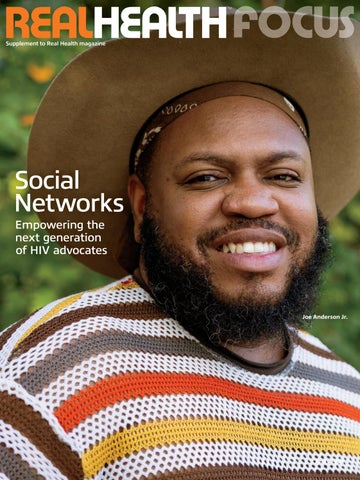
Joe Anderson Jr.
NMAC Appoints Harold Phillips as CEO
NMAC executive director Paul Kawata has retired.
NMAC (FORMERLY THE NATIONAL MINORITY AIDS COUNCIL) HAS APPOINTED
Harold Phillips as its chief executive o cer. Phillips, who previously served as the director of the White House O ce of National AIDS Policy, co-led NMAC with former executive director Paul Kawata through a period of leadership transition. Kawata retired October 7 after nearly four decades of service to the organization and to the HIV movement.
Over the past year, Phillips has guided NMAC’s center, coalition, communications, policy and treatment divisions while co-leading the conferences and development divisions. His leadership arrives at a critical moment for both public health and NMAC’s strategic direction. With deep federal experience shaping domestic and global HIV initiatives— and as someone living with HIV—Phillips brings both professional expertise and personal insight to the role. Having started his career in HIV at NMAC in the 1990s, his return to the organization marks a homecoming.
Lance Toma, chair of the NMAC board of directors and CEO of San Francisco Community Health Center, said, “The board has exuberantly elected Harold Phillips as our new CEO. In this unprecedented moment, there is no one more strategically positioned and experienced to lead our movement through what we know will be some of the most tumultuous and complicated times ahead. The board absolutely adores, admires and applauds Paul Kawata; he is a force of nature and over the past 36 years has set up NMAC to fiercely and boldly confront the challenges ahead.”
Phillips said, “It will be an extraordinary honor to lead NMAC at such a critical point in the HIV epidemic and in public health overall. Under Paul Kawata’s visionary leadership, NMAC has championed the needs of communities most impacted by HIV—those often furthest from health care and biomedical advances. As we move into our strategic implementation phase, I’m excited to strengthen our dedicated team and expand the partnerships that recognize NMAC’s unique value in ending the HIV epidemic.” —NMAC
The Cost of Medicaid Cuts
Major job losses and reduced economic output are expected.
As the federal government and states move to cut about $1 trillion from Medicaid over the next decade, researchers estimate that by 2034, hundreds of thousands of jobs and billions of dollars in state and local tax revenue will be lost.
The research, published in the peer-reviewed journal JAMA Health Forum, looked at the long-term economic e ects of the Medicaid provisions in President Donald Trump’s signature tax and spending bill, which cuts the joint state-federal health insurance program for people with lower incomes or with disabilities and provides tax cuts that disproportionately benefit wealthier Americans. By 2034, the researchers estimated the annual economic impact to reach 302,000 jobs lost and $135.3 billion in reduced economic output, leading to $11.1 billion in annual state and local tax revenue reductions.
Coverage losses could generate $7.6 billion in medical debt, triggering a further $3.8 billion reduction in economic activity, according to the study.
As the single largest source of health coverage in the nation covering 72 million people, or a fifth of the U.S. population, Medicaid is a key source of revenue to health care providers as well as a significant funding stream for health facilities. Hospitals are major employers and drivers of local economies.
In New York, for example, Democratic Governor Kathy Hochul’s o ce estimates that 65,000 jobs and $14.4 billion could be lost due to cuts to hospitals and community health centers and hospital-related economic activity.
—Stateline
R.I.P. Jewel Thais-Williams
The AIDS activist and nightlife legend was 86.
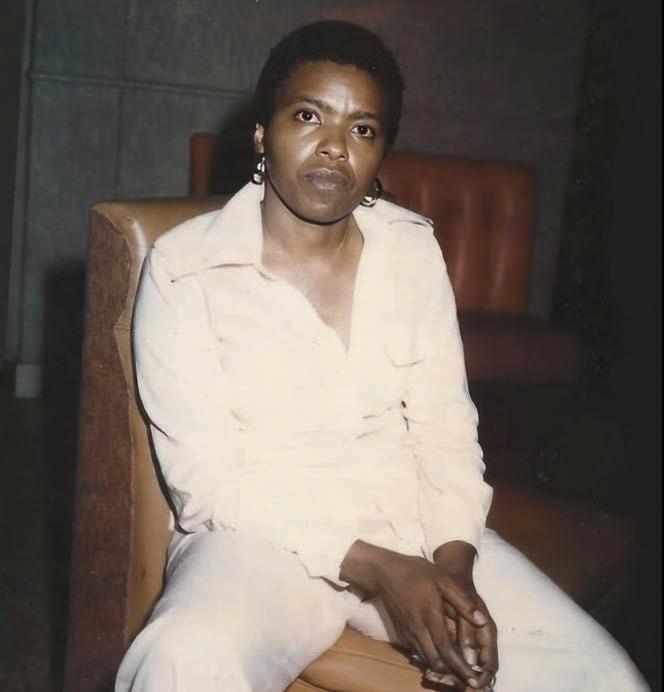
JEWEL THAIS-WILLIAMS, A TRAILblazing AIDS activist and Los Angeles nightlife legend, died this past summer at age 86. She founded Jewel’s Catch One, the first Black-owned LGBTQ nightclub in Los Angeles, and launched Rue’s House, a shelter for women living with HIV and their children, as well as Village Health Foundation.
Thais-Williams was a “visionary, activist, healer and mother to many,” read an Instagram tribute by Catch One LA. “Her legacy transcends nightlife, reverberating through community health, advocacy and the fight for acceptance and safety. She welcomed everyone under her roof and transformed our city. Today we honor her spirit and aim to carry forward her message of love, resilience and unity at Catch One.”
“Jewel Thais-Williams was more than an icon; she was a guiding force for genera-
tions of Black LGBTQ+ people who longed to be seen, celebrated and safe. She was a tireless advocate, a revolutionary and the matriarch of a movement that has always depended on our ability to dance, love and survive,” said David Johns, MA, CEO and executive director of the National Black Justice Collective, in a statement.
Thais-Williams was born in Indiana in 1939 and moved to San Diego as a child. She relocated to Los Angeles shortly after high school and became a fierce and dedicated advocate for LGBTQ folks and people living with HIV and AIDS.
In 1973, in the face of widespread LGBTQ and racial discrimination, Thais-Williams opened Jewel’s Catch One, becoming the first Black woman to own a disco in the United States, according to Windy City Times. For several decades, the inclusive nightclub was one of the most iconic venues in Los Angeles.
Known as “The Catch” and “Studio 54 of the West,” the club was a safe space for Black, queer and other marginalized people during a time of discrimination and hostility. The name, Thais-Williams explained, stemmed from her queer male friends who would say they were going out on the prowl to “catch one,” as in a hookup or boyfriend.
“[Jewel’s] Catch One became a welcoming spot for the LGBTQ community and for many Hollywood stars and entertainers,” wrote California Congresswoman Maxine Waters on Facebook. “It became a safe haven for those who were not wanted in many places in our community. Not only did she provide a very hip and well-attended nightclub, but she also worked and created funding and resources to deal with HIV/AIDS when our country was in denial.”
Donna Summer, Whitney Houston, Ella Fitzgerald and Bette Midler all patronized Jewel’s Catch One. In 2000, Madonna hosted a release party there for her album Music
In 1989, after witnessing the devastating impact of the AIDS epidemic, ThaisWilliams and her wife, Rue, opened Rue’s House, the first shelter for women living with HIV and their children in South Los Angeles. She also founded Village Health Foundation, a nonprofit dedicated to educating lower-income communities on nutrition and healthy living. The nonprofit also o ered alternative treatments for HIV.
The club was sold in 2015 and renamed simply Catch One. In 2019, LA City Council President Herb Wesson named the intersection outside the club Jewel Thais-Williams Square in honor of her contributions. The 2016 documentary Jewel’s Catch One by filmmaker C. Fitz chronicled Thais-Williams’s life and that of the nightclub. —Laura Schmidt
Jewel Thais-Williams owned Catch One, a disco known as the “Studio 54 of the West.”
Tamar Braxton Talks About HIV
The singer spoke at a Black journalists conference.
SINGER AND REALITY TV STAR
Tamar Braxton has a gift for grabbing national headlines, often about her shenanigans and health issues. But in August, the “All the Way Home” singer used her voice and celebrity wattage to raise awareness in the African American community about the intersection of mental health, sexual wellness and HIV.
Braxton was on the keynote panel at the National Association for Black Journalists (NABJ) convention and career fair in Cleveland. Titled “Breaking the Silence: The Intersection of Mental Health, Sexual Wellness and HIV in the Black Community,” the panel was presented by the HIV pharmaceutical company ViiV Healthcare.
In addition to educating about the disproportionate impact of HIV in the Black community and the ability of pre-exposure prophylaxis (PrEP) to prevent HIV, panelists stressed the impact of authentic storytelling— which can be amplified by journalists— and community-based initiatives.
“We often hear statistics about HIV in Black communities—but behind every number is a family, a story and a history
often left untold,” said panelist Alftan Dyson, PharmD, of ViiV. “These are the lived realities that demand our attention and action—and journalists can play a lifesaving role by telling these stories.”
Indeed, both everyday people and headline-grabbing celebrities can raise awareness by sharing their stories.
Earlier this year, Braxton drew national attention to PrEP when she posted a video on her social channels telling the world that, after a year of not dating, she is taking PrEP because “outside is crazy.” The Braxton Family Values star added: “I’d tell everyone to get on PrEP… prepare yourself.”
The video sparked a conversation online, with one fan writing: “You’re the first celebrity Black woman I’ve heard mention PrEP. I support you queen.” —Trent Straube
Settlement in HIV Prison Lawsuit
Honesty Bishop spent six years in solitary confinement.
A settlement in an HIV discrimination lawsuit against the Missouri Department of Corrections will result in updates to the prison system’s policy regarding solitary confinement. The case was brought on behalf of Honesty Bishop, a Black transgender woman living with HIV who was held in solitary confinement from 2015 to 2021 after she was allegedly attacked by a cellmate.
According to the lawsuit and reporting by The Marshall Project and the Midwest Newsroom, Bishop was sexually assaulted by a cellmate while at the Je erson City Correctional Center, a men’s prison. She took HIV medication regularly and therefore maintained an undetectable viral load, making it impossible for her to transmit HIV (a fact referred to as Undetectable Equals Untransmittable, or U=U).
Nonetheless, as a matter of policy, the Missouri prison system categorized her as a sexually active person with HIV and required that she be kept in solitary confinement.
The lawsuit was filed in 2023 while Bishop was released on parole. Unfortunately, she took her own life in 2024. She was 34.
“My sister, Honesty, was a fighter who never gave up,” said Latasha Monroe, Bishop’s sister and personal representative for the Estate of Honesty Jade Bishop, in a statement by Lambda Legal, the MacArthur Justice Center and law firm Shook, Hardy & Bacon, which filed the case on Bishop’s behalf.
Monroe added that her sister “endured years of cruel treatment because of her HIV status, but she never stopped believing that things could change. This settlement honors her memory and ensures that others won’t have to su er what Honesty went through. Her courage in speaking out has created lasting changes.” —TS
Tamar Braxton
CARE & TREATMENT
How Exercise Can Protect Against Alzheimer’s
Researchers used a mouse model to gain insights.
Exercise has well-known protective e ects in Alzheimer’s disease (AD). More exercise is associated with a lower risk for AD, better cognitive function and less cognitive decline in people with AD. How exercise leads to these e ects at the cellular level remains unclear. Figuring this out could lead to novel ways to treat AD and other neurodegenerative diseases.
A research team led by Christiane Wrann, DVM, PhD, of Massachusetts General Hospital, looked for exerciseinduced changes in gene activity in a mouse model of AD using a technique called single-nucleus RNA sequencing. This allows for analysis of gene activity at the single cell level.
They focused on the dentate gyrus region of the hippocampus. The hippocampus is essential for memory and learning, and the dentate gyrus is where new hippocampal neurons form. Past studies have found it to be particularly susceptible to changes during both exercise and AD. Results of the study,
Are Cancer Rates Declining Among People Living With HIV?
Certain malignancies remain a concern.
Rates of most types of cancer are falling or stable among people living with HIV, according to findings from a large cohort study reported in JAMA Oncology. Cancers related to immune suppression continue to decline, but HIV-positive people remain at substantially higher risk for anal and liver cancer compared with the population at large. Rates of some common malignancies, such as breast, prostate and colon cancers, declined or stayed about the same among both HIV-positive and HIV-negative people, so comparative rates (known as standardized incidence ratios) did not change, “suggesting that incidence trends in people with HIV reflected those in the general population,” wrote study authors Meredith Shiels, PhD, of the National Cancer Institute, and colleagues.
Studies have shown that people living with HIV are not at greater risk for these malignancies, and HIV-positive men may actually be less likely to develop prostate cancer.
“In this cohort study, significant declines in the
which was funded in part by the National Institutes of Health (NIH), appeared in Nature Neuroscience on June 12.
For exercise, mice were allowed to run freely on a wheel over a 60-day period. As expected, the AD mice who exercised had better cognitive function than the ones that were kept sedentary. Exercise led to changes in gene activity in both healthy mice and in the AD mice. The genes a ected, however, di ered between healthy and AD mice.
Certain gene activity changes were specific to AD mice across various cell types. Exercise restored some of these genes’ activities to levels like those of healthy mice. Many of these recovered genes, the team noted, were found in immature neurons. This suggested that exercise has an impact on new neuron formation in the hippocampus. Further experiments showed that one exerciserecovered gene, Atpif1, was particularly important for neuron development and survival. —NIH
incidence and relative risk for cancers among people with HIV demonstrate continued progress in HIV treatment and cancer prevention,” the researchers concluded. “These estimates may provide insight into the priorities for prevention and early detection of cancer as the population of people with HIV enters ages with greater risk for cancer.”
Thanks to e ective antiretroviral treatment, people with HIV are living longer and are less likely to die of AIDS-related illnesses. But the aging population is increasingly prone to chronic conditions such as cancer and cardiovascular disease. Even with e ective treatment, persistent HIV infection can lead to chronic inflammation that raises the risk for a multitude of health problems. What’s more, people with HIV are more likely to smoke compared with the general population and to have hepatitis B or hepatitis C, which can cause liver cancer. —Liz Highleyman
Addressing Smoking and Other Addictions
Research supports smoking cessation during substance use treatment.
Adults who smoke cigarettes and are addicted to alcohol or other drugs were more likely to achieve sustained remission of their substance use disorder symptoms if they also quit smoking, according to scientists at the National Institutes of Health (NIH). Based on their analysis of data from a large U.S. study of smoking and health, researchers believe the results clearly show the benefit of pairing smoking cessation with addiction recovery e orts.
“We now have strong evidence from a national sample that quitting cigarette smoking predicts improved recovery from other substance use disorders,” explained Nora Volkow, MD, director of NIH’s National Institute on Drug Abuse, which partly funds the research, known as the Population Assessment of Tobacco and Health (PATH) Study. “It underscores the importance of addressing di erent addictions together, rather than in isolation.”
Participants in the PATH Study are asked annually about their smoking status and other substance use. In this analysis,
a change in smoking status from “current” to “former” use of cigarettes was associated with 42% greater odds of the individual being in recovery from their non-tobacco substance use disorder.
People with addiction to alcohol or other substances have a higher likelihood of being addicted to nicotine as well. Previous research has suggested an association between smoking cessation and improved outcomes from other substance use disorders. However, the authors note that most prior studies used data from treatment centers focusing on addiction to a single substance or from smoking cessation trials, and those that used nationally representative samples could not adequately test for an association with recovery.
Researchers believe the new finding is generalizable to the millions of adults with substance use disorders and accounts for numerous confounding factors, thus increasing confidence in the results. —NIH
Flagging Liver Disease Risk
Waist-to-height ratio is a strong predictor.
A newly validated waist-to-height ratio fat mass measure is a stronger predictor of liver steatosis and fibrosis than body mass index (BMI), according to a study published in the Journal of the Endocrine Society. These findings support a growing clinical shift in screening for obesity-related health risks. Unlike ultrasound, elastography and DEXA scans, waist-to-height ratio is a cheap and universally accessible tool for detecting the risk for fatty liver disease.
Metabolic dysfunction-associated fatty liver disease (MASLD) and its more severe form, metabolic dysfunction-associated steatohepatitis (MASH), are responsible for a growing proportion of advanced liver disease worldwide. Over time, steatosis—the buildup of fat in the liver—can lead to fibrosis, cirrhosis and liver cancer. Fatty liver disease is associated with obesity, type 2 diabetes and other metabolic conditions. With only two approved medications, management largely depends on lifestyle changes such as weight loss and exercise.
Body mass index, calculated using weight and height, is the traditional method for diagnosing obesity, but clinical guidelines have lately recommended verification with other measures, such as waist circumference, waist-to-hip ratio and waist-toheight ratio. Recent research suggests that waist-to-height ratio is a better indicator of total body fat mass and abdominal fat mass.
While studies have shown that obesity diagnosed using BMI is a risk factor for fatty liver disease, Andrew Agbaje, MD, MPH, PhD, of the University of Eastern Finland, sought to establish how well waist-toheight ratio categories could predict liver fat and fibrosis.
They calculated that high fat mass according to waist-to-height ratio was nearly twofold better at predicting liver steatosis than BMI-diagnosed overweight, while excess fat mass was a sixfold better predictor than BMI-diagnosed obesity.
—Sukanya Charuchandra
Exercise and HIV
Getting enough physical activity is an important part of a healthy lifestyle.
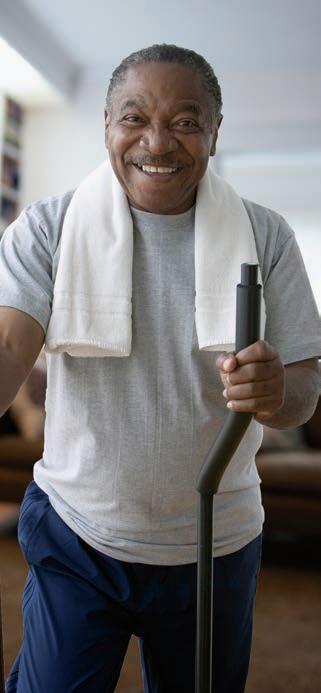
FOR HIV-POSITIVE AND HIV-NEGATIVE people alike, exercise is one of the keys to good health. A growing body of research shows that physical activity not only helps maintain a healthy weight and reduces cardiovascular disease risk but also lowers inflammation and can help prevent cancer, diabetes, dementia, fatty liver disease (which can lead to cirrhosis and liver cancer) and other chronic health conditions. This is especially important for people aging with HIV, as they are more prone to these conditions than their HIV-negative peers.
Beyond disease prevention, exercise can improve overall quality of life by increasing bone and muscle strength— which reduces the risk of disabling falls—energy levels and endurance and improving mental health, sleep and even sexual desire and function.
Experts recommend at least 150 minutes of moderate-intensity aerobic activity or 75 minutes of vigorous activity per week as well as strength training
activities at least two days per week. Making time to get some exercise most days is an important part of a healthy lifestyle. The overall goal is to move more and sit less throughout the day. People who do any amount of moderate to vigorous activity gain health benefits. If exercising is di cult due to physical limitations, even a small amount of activity is better than none.
Generally speaking, there are two types of exercise. Aerobic exercise gets your heart pumping and your breathing rate up, burning fat and improving cardiovascular function. Examples include walking, running, bicycling, swimming and dancing. Strength training exercise tones and builds muscles. Examples include weight lifting and other exercises, such as push-ups, crunches and leg squats.
GETTING STARTED
You don’t need to buy special clothes or fancy equipment to exercise. Find exercises you enjoy and activities that
fit into your daily life so you’re motivated to do them regularly. Vary your activities to prevent boredom, taking advantage of the weather and seasons.
Many people enjoy participating in team sports, while others prefer solo activities. Yoga and tai chi—which promote strength, balance and flexibility—can be good options for people who are older or have physical limitations.
Remember that everyday activities, such as walking the dog and gardening, contribute to your total weekly physical activity. You can add more activity to your day by taking the stairs instead of the elevator or parking farther away from your destination and walking part of the way.
Joining a gym or taking a class o ers access to equipment you don’t have at home and can motivate you to exercise regularly. Community gyms, such as the YMCA, may o er free or low-cost memberships. Many classes are available online. A personal trainer or fitness coach can help design an exercise program that’s right for you.
If you’re just starting out, build up slowly—for example, by bicycling several more minutes each day or lifting a bit more weight each time you work out. Be sure to stretch and warm up at the beginning of each exercise session. Get enough sleep, eat a healthy diet and drink plenty of water before, during and after exercising.
While exercise is generally safe, it’s important to know your limits. Overtraining can lead to muscle soreness and fatigue, and pushing yourself too hard can increase the risk of injury. If you’re not feeling well, skip a day.
Before starting a new exercise regimen, check in with your health care provider, especially if you are older or have underlying health conditions. Almost everyone can find a type and level of activity that’s safe and beneficial. Listen to your body: It will tell you when you can step up the pace or need to slow down or take a break. —Liz Highleyman
Homemade Granola
Store-bought granola is more like candy.
Making granola at home is easy. The ingredients in a lot of store-bought granola are more like those of a candy bar than breakfast. Granola from the store is often loaded with sugar and contains oil and preservatives with long names. Homemade granola is more nutritious and can include your choice of dried fruits and nuts.
SERVINGS: 12 / INGREDIENTS: 10 / PREP: 15 minutes
2 cups rolled oats
1⁄3 cup whole wheat pastry flour
¼ cup almonds, sliced
¼ cup walnuts, chopped
¼ cup unsweetened coconut flakes
Pinch of salt
1 teaspoon cinnamon (optional)
1⁄3 cup maple syrup (optional)
¼ cup vegetable oil or melted butter
½ cup unsweetened dried cherries, raisins and chopped apricot or any combination of dried fruit
DIRECTIONS
1. Preheat the oven to 375°F. Line a baking sheet with parchment paper or lightly butter it. Set aside.
2. In a medium bowl, stir together oats, flour, almonds, walnuts, coconut flakes, salt and cinnamon, if using. Stir in maple syrup and melted butter until the oats are completely coated. Transfer to the prepared baking sheet.
3. Bake for 30 minutes, turning the oats often for even browning. Granola can burn quickly, so keep a close eye on it! Once golden, allow to cool completely, then stir in dried fruit. Eat with milk or over yogurt. Store in an airtight container for up to two weeks.
What if you could lower your cholesterol, reduce your risk for heart disease and cancer and improve your state of mind with food? Turns out, you can! Superfoods contain a high level of nutrients and are a great way to boost your health.
Toss these miscellaneous items into your grocery cart:
Q Basil
Q Dark chocolate
Q Eggs
Q Flax
Q Ginseng
Q Greek yogurt
Q Green tea
Q Lemons
Q Oats
Q Quinoa
Q Reishi mushrooms
Q Spirulina
Q Turmeric
Q Walnuts
Q Wild-caught salmon.
Craig Ramsay is a fitness expert, an author and the winner of season 8 of The Amazing Race Canada . Follow him on Instagram at @craigramsayfit
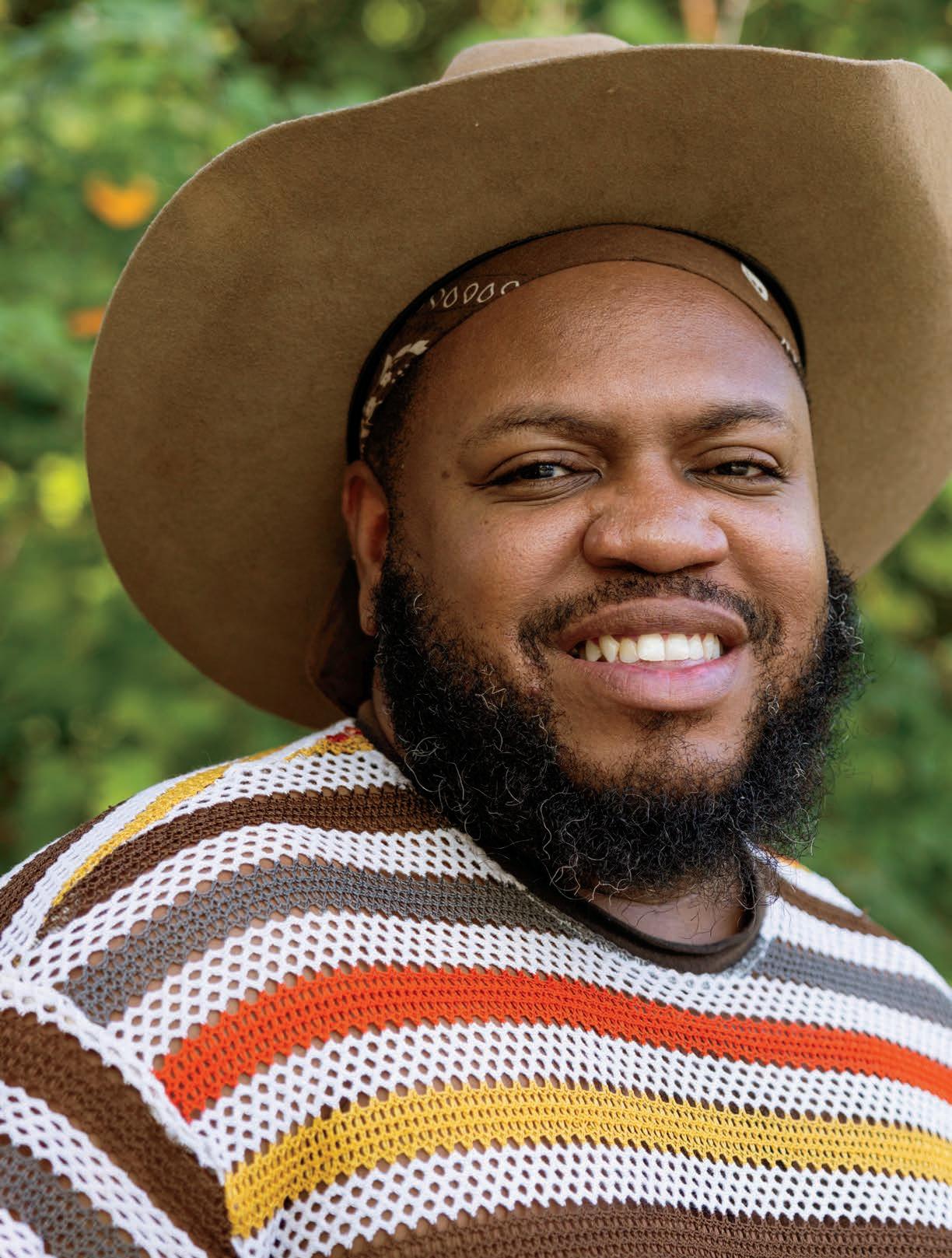
Joe Anderson Jr.
A NETWORK OF ONE’S OWN
NMAC’s Gay Men of Color Fellowship connects advocacy veterans and newbies in a just-for-us sexual health network.
By Tim Murphy
Photography by Jessice Attie
Joe Anderson Jr., 38, always combines health and wellness information and advocacy for his community of gay Black men with fun. “Just doing tabling at health fairs is boring,” he says, so he peppers his outreach e orts with elements of pop culture. For example, in the early 2010s, he organized a regular meetup for Black queer folks in central Texas called Sweet Tea. Not only would they address serious concerns, like what to do if a sex partner disclosed that they were HIV positive, but they’d also discuss, in his words, “who was the best diva for Black gays.”
“And when someone said Celine Dion,” he continues, “we all got silent and just looked at him.” Then he laughs.
After that, Anderson worked for two years for Austin’s health department, where he created the HOPE (HIV Outreach, Prevention and Education) program within the department’s health equity unit, but he didn’t love the job. “I was trying to be innovative, but the department was so rigid.”
A much better fit for him came in 2019, when he arrived at his current workplace, the LGBTQ-specializing Kind Clinic, where he is now the director of community engagement. There, he finds ways to connect folks to HIV testing, treatment and the HIV-prevention regimen PrEP (pre-exposure prophylaxis)
in ways that aren’t just “eat your vegetables” but are also spicy, shady and fun. For example, a few years ago, Anderson, who is a huge fan of the Black gay 2000s TV series Noah’s Arc, organized a Juneteenth showing of Noah’s Arc: The Movie at Austin’s landmark Paramount Theatre that turned out to be the centerpiece for an entire Black queer art weekend, including a ball and an after-party.
“I raised $17,000 for this event in a matter of a week,” Anderson says proudly, “and we o ered HIV testing in exchange for free tickets.”
So given his love of sexual health advocacy for the gay Black community, Anderson realized he’d be a perfect fit for a program at NMAC (formerly the National Minority AIDS Coalition), a longtime national HIV advocacy group for people of color—especially Black and Latino folks—who have been disproportionately a ected by the AIDS epidemic. He was excited when NMAC announced the launch of its Gay Men of Color (GMoC) Fellowship, which seeks to equip motivated same-gender-loving men of color nationwide with the tools needed for impactful community outreach and advocacy on both the national and local level. The group’s purpose,
according to its mission statement, “is to make sure the HIV movement is led by the people most a ected.”
Although HIV rates among gay white men have plunged in the past decade thanks to high uptake of PrEP, new HIV cases among Black and Latino men have stubbornly flatlined or even ticked up slightly. That, experts say, is due largely to insucient adoption of PrEP among those groups for various reasons, including unequal access to the regimen, the di culty of prioritizing it amid cultural stigma, health care provider mistrust, an underinformed sense of personal risk and more pressing burdens, like underemployment and lack of a ordable care. Many experts believe that the HIV epidemic in the United States will not end until rates drop dramatically in those groups.
NMAC’s GMoC Fellowship is led by Damián Cabrera, NMAC’s program manager for the treatment division, which includes another group Cabrera oversees, HIV 50+ Strong and Healthy, aimed at older folks living with HIV, many of whom are long-term survivors. Cabrera says his NMAC boss, Moisés Agosto-Rosario, a longtime treatment advocate living with HIV, started the fellowship in 2020, just before COVID-19 hit.
Together, says Cabrera, “we looked at the HIV field and saw there was a lack of spaces specifically for and by GMoC.” COVID upended an array of in-person events that GMoC fellows had planned for its launch, such as having
“WE HAVE TO
ness about it,” he says, “and those who did know were concerned about safety and e cacy.” Cabrera says the report gave rise to virtual sessions to get more information out to gay male communities of color, because, says Cabrera, “we have to do better to make sure that people have all the information they need to make their own best choice.”
Direct advocacy, or, put more bluntly, lobbying—is also a skill the GMoC program aims to pass from seasoned vets to newcomers. At this year’s AIDSWatch summit in Washington, DC, where people living with HIV nationwide gather to make Capitol Hill visits to lobby for continued or increased funding for HIV programs, the GMoC program provided attending fellows with a policy training workshop, including skills such as how to deliver an e ective message on Capitol Hill. “In fact, by the time they got to the Hill, they’d already practiced their elevator pitches,” says Cabrera.
Of course, under the current White House and Congress, which have severely cut U.S. health programs and funding streams both globally and domestically, the folks in GMoC know they are not operating in an ideal political climate for either LGBTQ or minority health.
At AIDSWatch, those in GMoC “discussed our grief at seeing all this work that generations before us have done just vanishing before our eyes,” says Cabrera. “A lot of our fellows
CREATE SPACES WHERE PEOPLE FEEL COMFORTABLE.”
the inaugural fellows make visits to clinical settings, so the program shifted largely to online social media campaigns that were, in Cabrera’s words, “super sex-positive and pleasurecentered and not very clinical.” The campaigns particularly focused on helping people find access to free or low-cost PrEP in their own communities.
In its first year, the program took on 20 fellows, who convened in a series of workshops and webinars and were encouraged to apply for $3,000 mini-grants that could be used to fund fun sexual health events in their own areas. Some fellows tied their work to preexisting food banks in their localities.
After a few years, Agosto-Rosario and Cabrera decided to pair more seasoned advocate mentors of color with newbies to provide one-on-one support and wisdom. One mentor, for example, helped a newbie set up a telework network to help people with HIV connect to services. Other mentees who display an interest in policy—both analyzing best health practices and urging local, state and federal o cials to adopt them—are paired with mentors with extensive experience in that field.
Cabrera says he’s also proud of a report that GMoC fellows produced that identified a lack of knowledge about long-term injectable PrEP (which eliminates the need for a once-daily pill) in Black and Latino communities.
“We found there just wasn’t a lot of knowledge or aware-
have day jobs with community-based health organizations that have been directly impacted by these federal funding cuts, with some folks even losing their jobs.”
Which helps explain why, according to Cabrera, some of GMoC’s work has shifted to “maximizing the resources we still have at this moment.” He says GMoC fellows are of special value right now because gay men of color in their respective communities “are asking them questions and looking to them to rea rm that even if we are not in the best scenario at the moment, things are going to work out.”
As for Anderson, he says he’s glad to have a national network of gay health advocates of color to tap into because it expands and enhances the work he does locally in his job for the Kind Clinic. Although he thinks that the GMoC program could benefit from a bit more sta ng and funding, he says, “I’ve still formed lifelong friendships through it.”
It’s also given him opportunities to, for example, present at the United States Conference on HIV/AIDS special workshops on doxyPEP, the relatively new, study-confirmed practice of taking the antibiotic doxycycline after sex to dramatically decrease one’s risk of chlamydia and syphilis and modestly reduce one’s gonorrhea risk.
Also, he says, he and another member of GMoC’s advocacy