
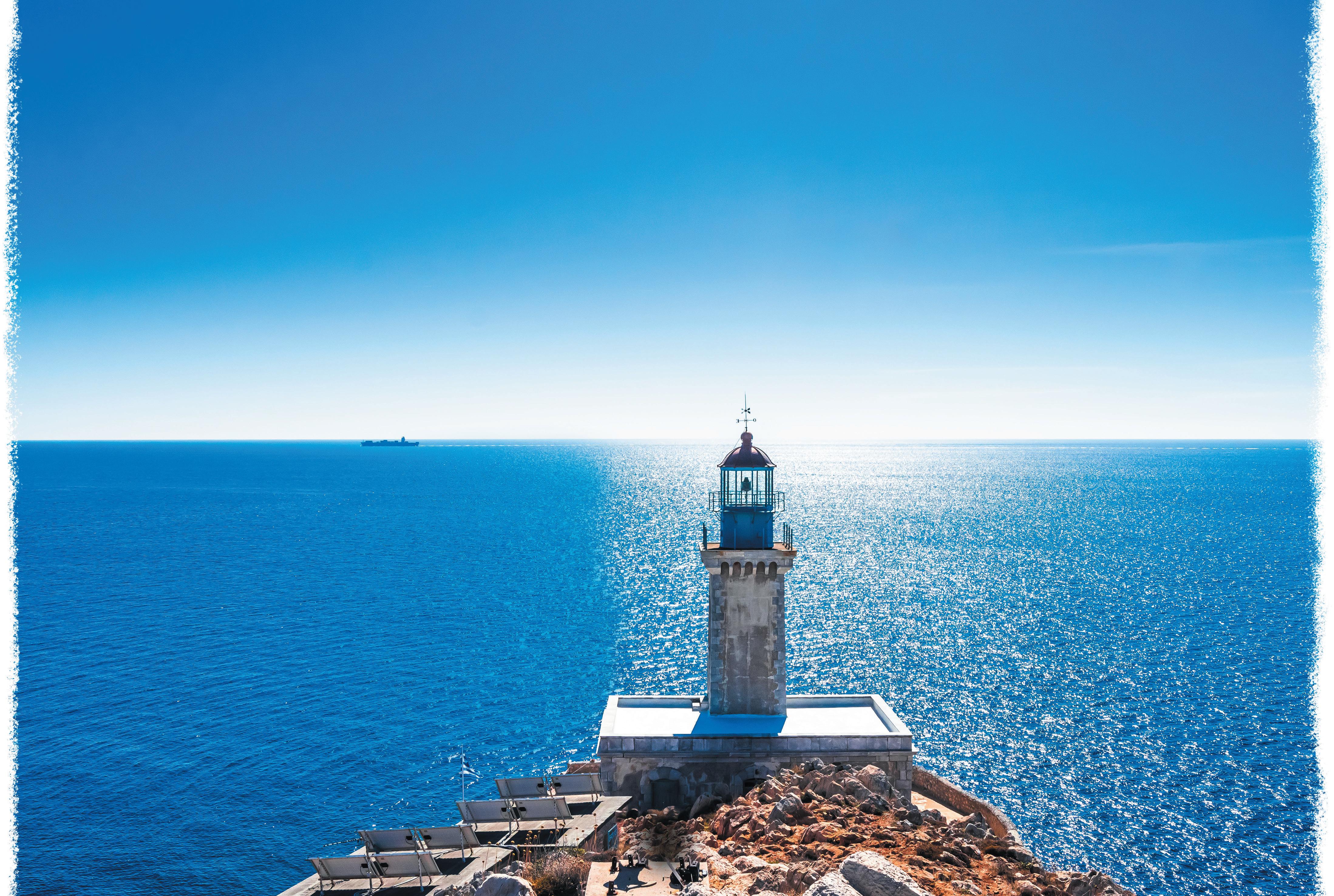
THE EDGES OF THE WORLD
AT THE MARGINS OF LIFE, LANDS AND HISTORY
CHARLES FOSTER
THE EDGES OF THE WORLD
Also by Charles Foster
Being a Beast
Being a Human
The Screaming Sky Cry of the Wild
THE EDGES OF THE WORLD
At the Margins of Life, Lands and History
Charles Foster
TRANSWORLD PUBLISHERS
UK | USA | Canada | Ireland | Australia India | New Zealand | South Africa
Transworld is part of the Penguin Random House group of companies whose addresses can be found at global.penguinrandomhouse.com.
Penguin Random House UK , One Embassy Gardens, 8 Viaduct Gardens, London SW11 7BW penguin.co.uk
First published in Great Britain in 2026 by Doubleday an imprint of Transworld Publishers 001
Copyright © Charles Foster 2026
The moral right of the author has been asserted.
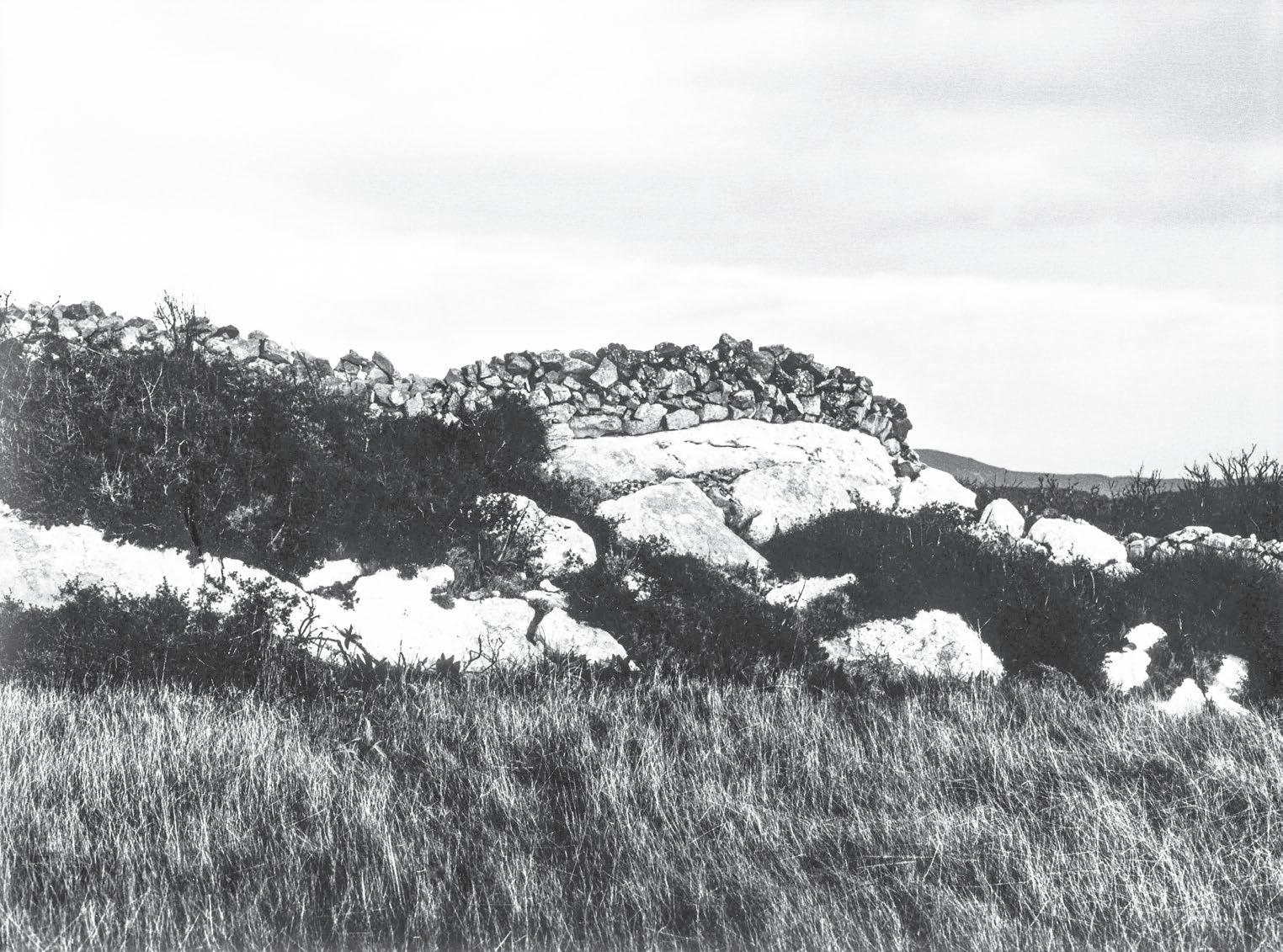
Photographs on pp. xx, 72, 140 and 210, Walls I, 1992, Walls II, 1992, Walls III, 1992 and Walls IV, 1992 copyright © John Stathatos
Every effort has been made to obtain the necessary permissions with reference to copyright material, both illustrative and quoted. We apologize for any omissions in this respect and will be pleased to make the appropriate acknowledgements in any future edition.
Penguin Random House values and supports copyright. Copyright fuels creativity, encourages diverse voices, promotes freedom of expression and supports a vibrant culture. Thank you for purchasing an authorized edition of this book and for respecting intellectual property laws by not reproducing, scanning or distributing any part of it by any means without permission. You are supporting authors and enabling Penguin Random House to continue to publish books for everyone. No part of this book may be used or reproduced in any manner for the purpose of training artificial intelligence technologies or systems. In accordance with Article 4(3) of the DSM Directive 2019/790, Penguin Random House expressly reserves this work from the text and data mining exception.
Typeset in 11/15.25 pt Sabon Next LT Pro by Six Red Marbles UK , Thetford, Norfolk Printed and bound in Great Britain by Clays Ltd, Elcograf S.p.A.
The authorized representative in the EEA is Penguin Random House Ireland, Morrison Chambers, 32 Nassau Street, Dublin D02 YH68.
A CIP catalogue record for this book is available from the British Library.
ISBN: 9780857529398
Penguin Random House is committed to a sustainable future for our business, our readers and our planet. This book is made from Forest Stewardship Council® certified paper.
For Sotiria Tzortzaki, Pavlos Gletzakos, Foteini Bechraki and Panagiotis Gletzakos, teetering companionably with me on the edge of Europe, and great experts in the art of being alive
All my life I have loved edges; and the boundary-line that brings one thing sharply against another. All my life I have loved frames and limits; and I will maintain that the largest wilderness looks larger seen through a window.
G. K. CHESTERTON
Autobiography1
The world is a very narrow bridge, and the main thing is not to make yourself afraid.
The quest of the Inner Ring will break your hearts unless you break it. But if you break it, a surprising result will follow.
C. S. lEwiS, The Inner Ring2
REbbE NaCHmaN Of bRESlOv
Epilogue: First Man, Edge Man, Everyman 239
Acknowledgements 243
References 247
Index 269
A Word Before We Set Off
ONCE, iN a CHuRCH, someone seemed to be saying that it was good to be wretched: to be on the edge of life, comfort and financial viability. It was the opposite of everything my education and my sybaritic instincts had taught me.
I wondered about this. As I did, I noticed that I was attracted to geographical, sociological and intellectual edges. This wasn’t – or wasn’t just – a reaction against my own centrism, and wasn’t – or wasn’t just – a form of Orientalism. It wasn’t a morbid fascination with the exotic. As I looked (the look took years), it increasingly seemed that there was a general principle in play: a really, really general principle, spanning ethics, biology, politics, philosophy, cookery and just about every other domain.
The principle began with two observations: first, that edges were where everything significant happened; and second, that extreme goodness was to be found at the extreme edges, and the goodness was increasingly diluted as you retreated back towards the centre. I knew that correlation was not causation, but tentatively concluded that perhaps edginess was goodness, and goodness was edginess. Then I wandered away from the idea for decades and let it stew.
Over the years, I returned to it, and worried away at it for a bit, and then got distracted. I wrote bits and pieces in notebooks. I read commentaries on the Sermon on the Mount. I did many journeys in places I didn’t want to be. I watched my children grow and asked, like every parent, ‘How did this happen?’ and ‘Who are these people?’ I became part of the ecosystem in a taverna where old Greek sailors went to die. I knew I had to honour them by writing something, but other things got in the way. And then, in Kenya, a long way from cosy
The Edges of the World
Oxford, watching destitute people walking at dawn along the edge of the main road into Nairobi, laughing, smiling and singing hymns, I felt compelled to pick the idea up again and take a proper look.
This book is the result. It tries not to degenerate into a rant against neoliberalism or homogenization – though I can’t disguise my loathing of the metastasis of bloody mobile phone shops and corporate sandwich joints into every street in the world. It’s not a systematic treatise. It is not a systematic anything. Still less is it a history of ideas or events viewed through the prism of edginess. Both those books could be written, but they should not be written by me. It is several other things. No doubt too many other things. It would have been easier, and very possibly prudent, simply to describe the view from various edges, compare those views with the (non) view from the centre, and draw some general moral and political conclusions from the comparison. But that didn’t begin to do justice to what I was seeing.
The book is a patchwork of splashed impressions; a series of approximate cross-bearings which, taken together, identify the rough location of an idea. For every one of my examples, you can no doubt think of a counter- example. Good! For that shows the messiness of things: the inadequacy of received categories; the redundancy of topdown planning; the failure of edicts issued by central office to deal with the way things really are. Please humour me for a while, and stand back. There are plenty of dissonances, but you might find that they resolve into a chord that you recognize from a long time ago. They do for me.
No doubt I often overstate. I don’t worry too much about that, for two reasons. First, if there’s anything to this edge thesis, it’s less dangerous to overstate than understate. And second, I’m sure I’ve often understated too. Sometimes what I have to say seems to me to be trite – the retelling of old proverbs. Where that’s so, I’m more reassured than embarrassed, because there’s comfort in company. Sometimes what I say sounds outlandish. Then I worry for a moment that I’ve taken a wrong turn, but when I look again at absolutely any
A Word Before We Set Off
human (or tree, or mouse, or wave) I feel that even my most baroque statements fall far short of the intoxicating polyphony of the real cosmos.
The book’s chapters are arranged by theme, but every theme found its way into every chapter. Religion spills into biology, biology into death, death into perspective, and so on. That might look untidy, but it’s unavoidable, and the very untidiness tends to support (doesn’t it?) the notion that everything, everyone and everywhere is a mesh of edges; that edges are the stuff from which the cosmos is made. When we’re thinking as proper humans should, we think in metaphor, which means that when we think about anything, we should always be thinking about (potentially) everything. Everything illuminates everything else.
The book is in four parts. The first is a chronological journey, starting with the time before there was time, and moving from the evolution of species to the evolution and decay of cities and states. The second part looks at how we spend our time in this edgy cosmos: we worship, we paint pictures, we write poems, we eat, we starve, we travel, we are altruistic and brutal. We are dissatisfied with our day-today modes of consciousness and try to transcend them. Thinking of ourselves as edge-people in an edgy place might shed some light on what we do, why we do it, and perhaps even what we should do. The third part is more philosophical – though you’ll find plenty of real journeys there too. It asks why we see what we have seen at the wild frontiers visited in Parts 1 and 2. It’s about the general characteristics of edginess. The fourth part is about the fictions and strategies of the centre.
Of course I hope you read the book, but if anyone puts it away and goes off to be edgy instead of reading yet more about edginess, I’ll be happier.
This is a book about actual and metaphorical edges, and about the significance of metaphor and the importance of the actual. The real interconnection of everything means that it would be wrong to distinguish neatly between the metaphorical and the actual, and
xiii
The Edges of the World
I don’t. There is, I think, no difference in substance between the edge of a continent and the edge of an idea, or between the edge of life and the edge of an artistic movement, or between the centre of London and the centre of a particular mode of consciousness. I unashamedly conflate centres of political power, centres of all kinds of orthodoxy, centres of cities and citadels of the Self. This conflation, I imagine, will be the main bone of contention. Many readers will start off thinking that the book is a compendium of category errors; that it is a schoolboy error to deal with the edge of a cliff in the same paragraph and with the same cognitive tools as the edge of a state of mind. Many readers will no doubt still think that at the end. But bear with me for a bit.
This is a book against thought, generalization and theory, and a celebration of embodiment and specificity. Proper thought, I’m sure, is what you do with the whole of your body, not just the thin neuronal rind covering the brain. Yet this is a book, and therefore full of thoughts rather than living. It would be far better to take soup to a homeless shelter or watch foxes with your kids than to read this (or any) book. It is also a short book, and so hooching with generalization. It is also, I’m troubled to see, an attack on theories of everything that itself turns out to be a theory of just about everything.
It is a celebration of individuation (because the more individuals there are, the more edges there are) and an assault on uniformity. It is an assertion that individuation can only be expressed properly in relationship – where the edges of one individual meet the edges of another.
It is a series of random but hopeful shots in a war against polarities, and in the service of holism. It is an expression of distrust in top- down pronouncements, and therefore an appeal for the courage to live with uncertainty. It contends that we get the best views from the edges, and so there have been many uncomfortable hours when I’ve thought that this is really an epistemological tract.
I’m always applauding (good) edges, even when I’m talking about transcending them, crossing them or moving on to the next
xiv
A Word Before We Set Off
one. I write a lot about the joy and the fundamental nature of movement, and the imperative of restlessness, but my reasons for doing so are not – or not only – Bruce Chatwin’s.1 They spring from the nature of the cosmos itself (and there’s a grandiose statement if ever there was one), which, following Bergson and McGilchrist and many others, I take to be process : an unrolling, an unfolding; a constant revelation of new edges. The universe, I’ve already suggested, is woven from edges: it is a whole composed of abutting individuals. We can feel this texture under our feet as we walk. It is pleasurable. It is also vital for movement, for we could get no traction on a completely smooth universe.
Movement – so essential to thriving – can’t be measured in miles. In fact there’s often an inverse relationship between the number of physical miles travelled and the amount of true travelling: the amount of real movement. Someone who stays rooted in one place and knows it intimately – seeing the turning of the seasons, the journeys of the snails, the passage of the birds, the springing of the leaves – has a relationship with movement and process unknown to the Frequent Traveller in the airport lounge, or even to the missionfocused hiker, striding from point to point, staring at his GPS rather than at the dew on the cobwebs. The main danger with doing all your travelling metaphorically – as we’ll see when we discuss the idea of pilgrimage – is that metaphorical travel isn’t embodied travel, and since we have bodies, unless our bodies go with us on our trips, the trips won’t do the work they might do and need to do. But the village naturalist – who’s never taken a flight, never passed her driving test and hates to be anywhere she can’t hear her church bells marking the hour – is sure to take her body with her when she goes to see what her beloved beetles are doing. She’s a proper traveller.
The book is not (or not consistently) an argument – though when it is, I hope it is consistent. I am tired of arguing, and argument as we usually know and use it is a device of the centrists.
Sometimes you might think I’m contending for anarchy. I’m not. Read on, if you can, and you’ll find that I have some tweedy and
xv
The Edges of the World mitred allies, and many who know who they are because they know where to put their feet in an atavistic dance. A world without Chartres is dangerous and desolate.
I espouse literal eccentricity. And literal eccentricity joyously seeds all sorts of other eccentricities, many of which are benign, and which in any event are a lot more interesting than what goes on in the centre. Which biography would you rather read: A Life on the Edge, or A Life at the Centre ? More revealingly, perhaps: which one do you think would be the biography of the kinder person?
More than anything else, this book is a self-help manual for those with ontological vertigo: the sickness we feel when we look over an edge into an abyss. And that, I take it, is everyone. Or everyone thoughtful.
We tend to think of vertigo as horrible. It can be. But think of a fairground. There, people (usually children, significantly) pay good money for vertigo. They go up and down on big wheels and Waltzers, and plunge into the dark on the ghost train. They look down at the fast-approaching ground, their stomachs in their throats, and scream with fear that is also pleasurable excitement. There is comfort in the fact that they all scream together.
I would like to convince myself and others that we can live with that kind of ontological vertigo.
The book has a lot of me in it. I’m sorry for that, but I can’t help it, because the edge on which I stand is the only place I can be, and the edge I am is the only thing I can be. And though there is plenty of hubris here, at least I don’t have the hubris of pretended objectivity.
The whole is a story of surpassing strangeness: the strangeness of the everyday; an ancient and explosive story; grave and puckish; farting at our presumptions and finally judging them with terrible implacability.
If the thesis doesn’t convince, be gracious, and think of the book as an extended thought experiment. How would the world look if we abandoned the illusion and conviction of stasis? If what we perceived ourselves to be was pushing always into unknown territory?
A Word Before We Set Off
If what we had been told by the centre about what is important and true turned out to be wrong? If individuals weren’t more themselves the more they defined themselves in terms of their relationships? And then perhaps wonder if that’s all that different from the way things really are?
Perhaps ask too how things would be if we shed our centres, and organized ourselves and our societies like slime moulds or mycelial networks?
If all else fails, and the book doesn’t even work as a thought experiment, perhaps see it as a series of dots on a canvas. Depending on where you stand, and what the light’s like, and how much you screw up your eyes, you might see some forms emerge. Or (and this is my last go at a pre- emptive apologia), perhaps it’s a meditation, for meditation is all about attending, and that’s always worthwhile. There is quite a lot in the book about death. I didn’t plan it that way. But as I wrote, it seemed impossible to ignore one of the great edges – an edge that conditions our view of all other edges. To think about your own death isn’t morbid. Think of it as simple ecology – as all about recycling. Think of writing that’s about death as travel writing.
I would have very much preferred to write a book that simply examined and applauded edge-people, edge-places and edge-notions. I am not by nature a controversialist. I am the least political person I know. I have a visceral distaste for political discourse. Quite literally. It makes me feel ill. But this is often a political book, because politics is what happens whenever edges meet (which is always), and what happens badly whenever the centre tries to control the edges (which is always). There is, for instance, a psychopathic war on the non-human world – a war I’ve documented from other angles in much of my previous writing. I’ve tried to frame my criticisms as corollaries of my celebration of the edges. But even when being implicitly rebuked, the centre elbowed its way back towards the centre of the argument. It would far rather be criticized than ignored. And since it was there, blustering and pontificating, it had to be answered squarely.
xvii
The Edges of the World
I hope I’m not bitter or violent. But as I lived with the edges, and learned to love them all the more, I found that I could not merely praise and honour them without naming and denouncing their enemy – the centre. And so I find I have written a book that is as much about the badness of the centre as the goodness of the edges. I’m sorry for that. I’m sorry if my words are rancorous – not least because rancour is at odds with that most distinctive of edge- characteristics: unconditional kindness and generosity towards strangers, whoever they are. And not least, too, because all the centre people caught up in my rancour are, precisely because they are people, edge- creatures too, poised on the cusp of the same darkness, uncertainty and despair as I am: fellows in the vertigo that is a sign of being alive.
Edging Through Time
Beginnings
If you are born at intersecting margins and . . . are at liberty to remain there, it seems to me a decidedly advantageous perch.
TONy JudT, ‘Edge People,’ The New York Review of Books1
Strange Hallamshire, County Of dearth and of bounty Of brown tumbling water, And furnace and mill
AbOvEJOHN
BETjEmaN, ‘An Edwardian Sunday: Broomhill, Sheffield’2
a blaCK iCElaNdiC beach there is a dark house. It looks out over nothing – if the sea is nothing. But most of all it looks up. It feels tilted towards the sky. The sea snarls at the door, which is white and rough with salt.
I used to go there in the winter. Only in the winter. I do not know how a house like this could survive in the summer. The summer is not its time. I imagine that the house would wither in the sun.
In the daytime, such as it was, I threw stones into the sea, watched for the sail-fins of hunting orcas, read the Sagas at the kitchen table, and helped to feed the sheep. In the night, which was most of the time, they fed me on puffins, razorbills, sheep offal and shark. Then I’d put on my down jacket, grab a blanket and go outside for the real business.
Edging Through Time
The farmer had dumped an old sofa on the clifftop, and there I’d sit for as long as I could bear the cold – or as long (which was generally shorter) as my nerve held – looking at the sky. I had none of the comfort of a medieval stargazer who thought he was in an ornately decorated cathedral. I was looking out into an expanding universe. Most of what I could see was hurtling away from me: hurtling into nothing, into no place and no time – for neither space nor time had been created where it was going. Earth was getting lonelier and lonelier; all the time further away from most of what there was. Most of the light that reached me was old, dusty light: light born long before I was, which would continue travelling long after I had stopped being. I was a Copernican animal, quivering in the cold at the far end of all the worlds.
No one can take this sort of thing for long. I don’t know why I did it at all, let alone why I came back year after year for more. It always ended the same way. I’d go back into the house, chastened and subdued, to watch game shows on TV with the farmer and his wife, and hope they’d reach for the bottle of brennevin.
As we watched and drank, everything rolled on outwards. I was on a part of the everything, riding the uncoiling wave, and so were you, and so we are.
Creation exploded outwards. It’s not right to say creation started at a centre, for space and time were both forged in the explosion. Even if it did start from a centre, everything came to be by way of edgeformation. Creation billowed out. It unrolled; it unfolded. If there was a centre, it legislated by way of devolution to the edges.
Once time existed, things could happen in time, and the way everything happens in time is by process (not – absolutely not – by progress ). Process happens at the edges, whether they are the actual edges of an expanding universe, the edges of genetic orthodoxy, the edges of an idea, or the edges of life itself.
In the medieval conception of the cosmos, beyond Saturn is the stellatum, the abode of the stars, whose far edge marks the limit of what we can see. Beyond that is the Primum Mobile – the ‘first movable’.
Beginnings
Beyond this, at least according to Aristotle, there is no place, void or time. The Primum Mobile, thought by the medieval West to be powered by God (in Aristotle, by its love of God), rotates, and its motion powers in turn the motion of everything beneath it. In this scheme, therefore, the ultimate edge – as far away from the perceived centre of the cosmos as can be – is the engine driving earthly action.3
Edges were there at the beginning. First there was nothing; then there was something. There was an edge between something and nothing. The things proliferated, and so did the edges. The things differentiated, so spawning new generations of edges of different kinds. Or, if you prefer, there was chaos, and out of it came order: there were boundaries between things.
God, in the Judaeo- Christian and many other traditions, used edges as the governing motif in creation. Light and dark were separated, creating day and night. The waters were separated from the sky, and the sea from the land. In Jewish tradition, God embedded in everyday life reminders of the importance of edges, for garments are to have long, unmissable fringes: Tell the Israelites, God told Moses, that ‘[t]hroughout the generations to come you are to make tassels on the corners of your garments . . . ’4 The custom is preserved in the tzitzit – the tassels worn by Orthodox Jews.
It’s probably a good idea to maintain the difference between the night and the day, for if you don’t, moths get disoriented, bats starve, crops go unpollinated, corals die, clownfish eggs never hatch, baby turtles flounder onto the promenade rather than into the sea, humans get fat, depressed and irritable, and hormone-related cancers skyrocket.5 And it’s probably a good idea to maintain the difference between the sea and the dry land, because humans find it easier to live on the land.
When we first became us, in the Upper Palaeolithic, we were on the edge of a wholly new way of being, clutching our radical new alchemical wisdom and our dramatic new cognitive tools. Now everything could be anything else!
Edging
Very early on a grim, drizzling November morning, somewhere near a service station on the M5, my mother – I expect rather quietly, not wanting to make a fuss – pushed me out of her. It was my first journey, and perhaps my most consequential – though I don’t know yet about my death.
I travelled over the edge of my mother’s insides, through noman’s land, still umbilically attached to her, though by the end of the journey I had started to breathe air. When the cord was cut, I was catapulted over the border into the true outside. This trip was the start of me as a discrete entity. Or discrete in a few limited ways. I – or something biologically continuous with me – had existed for the previous nine months, but my biological boundaries were blurred. In some ways I had been one with my mother. Now, though – and whatever your convictions about the ensoulment of the foetus – I was, though I couldn’t crawl or walk, up and running in the human race; running immediately towards death. I was unarguably an object of ethical and metaphysical interest. If you believe the Judaeo- Christian tradition, and if I wasn’t made in God’s image in utero, I was suddenly made in His image as a result of that journey through the cervix and along the birth canal. If I wasn’t a human before, I was a human from the moment of that first gasp of foul but medicated Cheshire air. By suckling, urinating, loving, fighting, and eventually writing sentences, I was being sacramental. I couldn’t help it. No one can.
We’re beings in process – but, if we’re wise, we repudiate progress – a clunking, mechanical word, and the favourite of those who would unmake us and put spreadsheets in our place. We are defined by our journeying – by journeys which start in and trek through liminal places. Half of me struggled up a fallopian tube to meet the other half which was coming down it, and the adventure began. That journey down the birth canal near the M5 was of a piece with my beginnings.
It’s a good idea to be what you are – a traveller – rather than trying (as most of us moderns do) to be the sedentary creature you’re
Beginnings
not. Not only will trying to be sedentary kill you, it’ll fill you with well- deserved neuroses while you’re being swept along against your will. Swim with the stream of process and your coronary arteries and your psyche will thank you.
My family weren’t at the centre of anything. My forbears came from Sicily and Ireland and Somerset and Lancashire and Wales, and from the old certainties of language, penury and community. They eked out a living doing what they could: a bit of cleaning here, a bit of soldiering and sailoring there; selling insurance door to door; working in paper mills and waiting to join the ranks of the respectable by dying properly and being buried in the same municipal cemetery as the boss.
My mother and father left their own backgrounds behind and set up together on the edge of everything other than basic decency. They were on the edge of ruin, the edge of acceptance and, most importantly for me, the edge of Sheffield.
Our suburban road ran uphill from our house to the wilderness. There, by the bus stop, the city twinkling on one side and the moors black on the other, the streetlights stopped and the howling and the killing began. I slept always with the window open, because I wanted the wild in my bedroom. It always came. There was I, tucked up, my mother playing Scott Joplin on the piano downstairs and my dad grouting the kitchen tiles, and I was breathing fox-breath and the last gasps of Bronze Age sacrifices. There was nothing more normal in the world.
I was a passionate naturalist, and every day my dad and the local kids brought me dead things to stuff and pickle and pull apart. These creatures had obviously gone over a pretty significant kind of edge.
I wasn’t much good at schoolwork, but I was contrary, and interested in the inadequacies of the explanations we were given – interested, that is, in what happened at the edge of orthodoxies. I must have been hell to teach.
Edging
As a kid, it was always the edges for me. I didn’t even like the middle of the day much. There were far more animals to see in the very early mornings and in the evenings – at the seams of day and night. Everyone said the day was my time, and the night was not, but I preferred the night. The day and the night were different: I liked to watch them meet. Edges gave more. You got interesting effects when things seeped into one another – from sunsets to new ideas. You got exciting sounds when things crashed into one another – when edges came together. And crashes changed things fast.
My allegiance was to the edges. So it was for a while.
For all small children of any age, everything is new, and so every moment and every place are edges of experience, peered over with dizzying excitement. Their only tribe is the tribe of everything and everyone.
There are some edges children don’t see, though: they are blind to race, class and badges of status. Not until the snake offers them the fruit of the tree of tribal knowledge are their eyes opened to such things. Until then, just about everything is one, and everything is an edge. It’s not a contradiction; it’s one of the most basic facts.
Since every component of everything was a new vantage point, the universe was vast and pulsating with possibility and the inevitability of discovery. Everything was new when I saw it from an edge, and I didn’t see anything from anywhere other than an edge. The newness itself had edges – was edges. What an astonishing place this is, says the edge- child about the edge-world, and ecstasy shudders through him.
Then, suddenly or gradually, edges begin to mean something very, very different. They begin to be important because they define a stockade; mark out a boundary; say to you that you’re inside. Or outside.
We struggled to get outside our mother at the moment of our birth. We revel in our outside-ness in the early years of childhood, and then, weirdly, we struggle to get inside somewhere again, and to
Beginnings
stay there. We’re no longer content to belong to the whole cosmos; we need to belong to a tiny subset of it. We build walls around ourselves, perhaps invite a few others in, and call it security or sociation or even, if we’re pompous, a society or a nation. We build gated communities, or wheedle our way into existing ones, and they become our metropolises: our centres. We are fundamentally edge-people, happy and productive only when we’re on the edge, and yet we turn the edge – the glittering source of perspective and innovation and iconoclasm – into a constraining wall which prevents us from having perspective, or being innovative or iconoclastic.
It’s a piece of diabolical inverse alchemy. Edges were everything before this Fall. Now, darkly reconfigured, they confine, restrict and define us. They tell us that we behind the wall are the centre – and ultimately that I, at the centre of the centre, am what’s really important.
Tribes march into a child’s life. Gangs at school, which teach the lessons later to be applied in the boardroom. Teams. The cohort with those trainers or that phone. The cool and the uncool. Groups whose only purpose and joy is the exclusion of non-members.
I have been totally successful in only one thing in life: resisting coolness. It’s never been able to touch me. I have been relentlessly uncool. I’ve never had or wanted the trainers, the phone or the music of the moment. I’ve always been shambling, shabby and out of touch. But this, of course, is tribe-membership of a sort too. Hear the boast? Hear my contempt? My sanctimonious belief that there are things more important than phones, and my pride in my membership of the tribe with its sights set higher?
It was about the age of ten, I think, that I began to recognize and rejoice in my membership of the It’s- Cool-To-Be-Uncool club. That’s when I began to define myself by reference to what I was not. And when I did, the edge of me and the edges of others loomed so gigantic in my vision that I began to lose sight of the other, subtler edges which until then had been my whole experience and delight.
I remember the first hissings of the tribal snake as it slithered