Chris McCarter Ackland cackland@shawmedia.com 815-632-2537
Chris Grimm cgrimm@shawmedia.com 815-632-2504
PUBLISHER Jennifer Heintzelman
GRAPHIC DESIGNER Kris Sands
Articles and advertisements in this publication are the property of Sauk Valley Media. No portion of this magazine may be reproduced without the written consent of the publisher. Ad content is not the responsibility of Sauk Valley Media. The information in this magazine is believed to be accurate; however, Sauk Valley Media cannot and does not guarantee its accuracy. Sauk Valley Media cannot and will not be held liable for the quality or performance of goods and services provided by advertisers listed in any portion of this magazine.
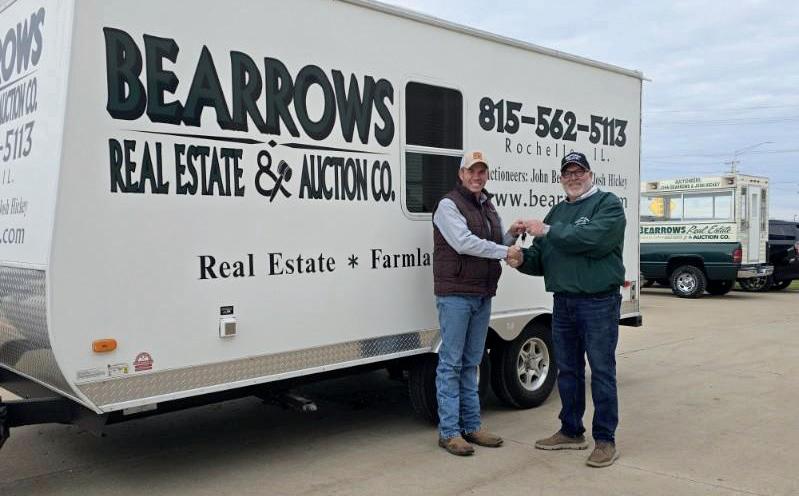
Photo provided by John Bearrows John Bearrows (right) hands
SOLD TO THE NEXT GENERATION: Bearrows Auction changes hands to longtime partner Hickey
Bearrows has worked in auctions for 50 years: ‘I’ve had so many people help me’
By Jeff Helfrich jhelfrich@shawmedia .com
Bearrows Real Estate & Auction Co Owners John and Dina Bearrows of Rochelle recently announced the sale of the auction side of their business to Josh and Kristen Hickey of Steward
John Bearrows has worked in the auction business in the area for over 50 years Josh Hickey will be taking over the business as Hickey Auctioneering effective Jan 1, 2026 after working with Bearrows for the past 21 years . Bearrows said he will continue to help Hickey if needed, but will be focusing more on the real estate portion of his business and his responsibilities as Rochelle’s mayor .
“Dina and I have made the decision to slow down on the auction side,” John Bearrows said . “Josh and Kristen are taking over and that was always my hope and I’m very proud of that . I might still help some . I’ve met fellow auctioneers
Local service & great rates
Huber, Agent 221 E Il Route 38 Rochelle, IL 61068-2303
Bus: 815-562-7011 shane@shanehuber.com Huber Ins and Fin Svcs Inc
over my 50 years that may call and need an extra auctioneer someday I hope to still do some work with them, but it’s time ”
Bearrows started working in auctions in the area 1972 for Howard McAnly He finished auction school in 1975 and later purchased the business from McAnly in 1991 John Bearrows estimates he’s done about 75 auctions per year in the area in his time in the business, including farm, land and household sales .
John Bearrows thanked the community for its support over his 50 years in the auction industry and said he’s grateful the Hickeys will carry on the work .
“Josh has been a great addition to our group,” John Bearrows said . “He’s very good at what he does and he’s an Illinois state champion auctioneer . He’s very dedicated to the auction
profession . In my 50 years in the business, I think I’ve only missed one or two auctions . I remember Josh was working with me when I missed one, and I never had to worry about a thing . I know we’re making the right decision . ”
Hickey is a part of over 300 auctions per year . He said the local auction business will remain as it has been for years . The Hickeys said they’re excited to take the reins, along with their two sons .
When he graduated from auction school in 2004, Hickey’s father called John Bearrows and asked if Josh could help him .
“I was so mad he did that and thought I didn’t need the help,” Josh Hickey said . “John called me and told me to come over to a sale and I showed up and worked . And he’s been helping me ever since . I’ll always be grateful for that . We’re looking forward to the next step and seeing where it goes from here . ”
Josh Hickey said he’s always enjoyed selling items and he and his wife enjoy meeting people at auctions . John Bearrows said he’s always enjoyed the auction business because no two sales are ever alike . He and Dina called the decision to sell the business “tough” but said they’re looking forward to more free time .
“In our last 10 years we started doing auctions for third generations after I did sales for their grandparents when I first started,” John Bearrows said . “That’s when I felt it was time to start slowing down and enjoy life a little more and
what Dina and I have worked hard for I’m looking forward to the day when I can just go and help Josh sell and not have to worry about all the preliminary work before the day of the sale and work after the sale ”
The Bearrows’ auction business has served the local area from DeKalb to Dixon and Mendota to Rockford over the years John recalled working to grow the business and find clients in his early years . The first house he sold at auction was in Rochelle .
“I remember being nervous about it,” Bearrows said “As an auctioneer, people are going to bid and you just keep score . It wasn’t as hard as I thought it would be . The local support has been pretty amazing . That all goes with how you service your customers and help them . We had household sales for years and there’s times when someone buys an appliance and it doesn’t work . How you take care of them determines whether or not you’re going to have a future in this business . ”
Since the COVID-19 pandemic much of the auction industry has shifted to online, which has been a change for the Bearrows and Hickeys . Josh Hickey said he hopes to do more live auctions in coming years .
“I enjoy the live auctions,” Josh Hickey said . “There’s a certain kind of auction for every kind of item and certain things work better online or live or with a combination of the two . I’m hoping to do more live auctions again as time goes on . ”
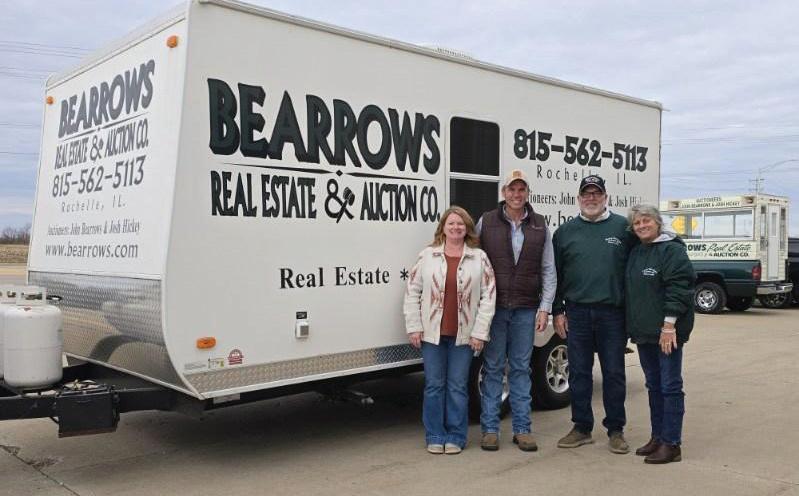
Photo provided by John Bearrows
From left to right: Kristen Hickey, Josh Hickey, John Bearrows and Dina Bearrows.
Ogle County farmers wrapping up harvest ahead of schedule after dry conditions
Kern: Soybean yields slightly below average, corn average to above average
By Jeff Helfrich jhelfrich@shawmedia .com
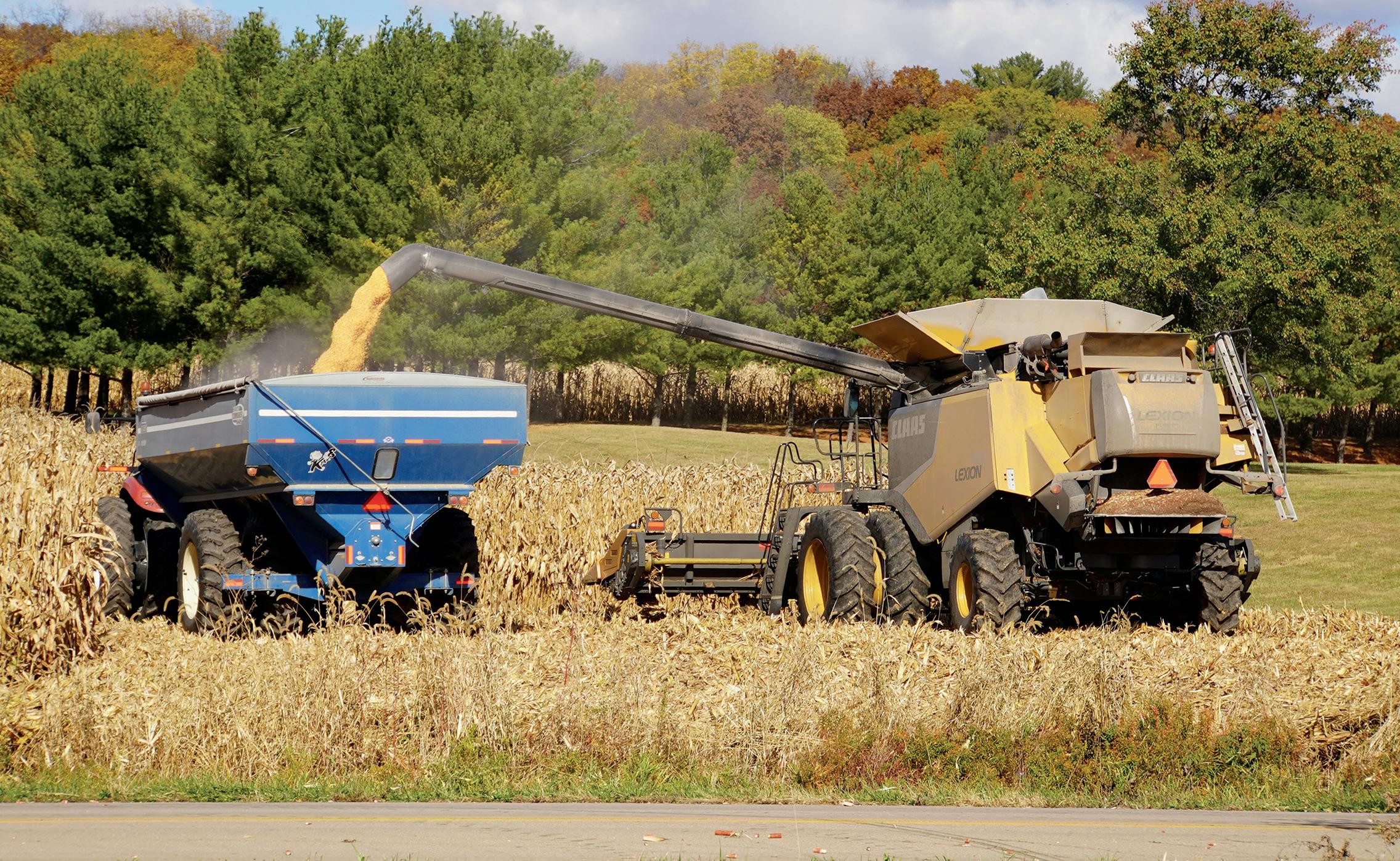
Ogle County farmers are 80-85% done with harvest and are ahead of schedule due to recent dry conditions, Ogle County Farm Bureau Manager Ron Kern said Nov . 12 . With the exception of a possible field or two, all soybeans in the county have been harvested and “a few hundred acres” of corn remains for farmers with larger acreage, Kern said . Dry weather has seen farmers be able to be in the fields nearly each day since harvest’s start .
Harvest in the county will be wrapped up by Thanksgiving, and farmers will have the chance to do additional fall work, such as anhydrous ammonia application and fall tillage, Kern said .
“They’ve been pretty lucky with the pace they’ve been
able to move at,” Kern said . “With yields, some farmers will say they had a great year with the corn or bean crops . Others will say it wasn’t what they were expecting or disappointing . Overall, the bean crop was just a little below average and the corn crop was average to just above average . In the spring we were so dry that we had germination issues with soybeans . The fields didn’t have the population that they should have had . They were good enough to not replant, but they’re not what farmers planted . ”
Heading into the winter after another dry year, Kern said he’s hoping for moisture in the next five months to recharge soil before spring planting in April . Forecasters
•
•
•
•
•
•
•
•
•
•
•
•
•
Amanda
Photo Credit: Shaw Local News Network File Photo Corn is harvested in a field off Oregon Trail road in Oregon.
are calling for weather that’s warmer and wetter than normal with some excessive cold spells, Kern said . Ogle County saw a number of field fires this fall with dry and windy conditions, which can allow fires to get out hand in “the blink of an eye,” Kern said . “Hopefully in most instances farmers are carrying fire extinguishers with them and can get the fire suppressed before it gets out of control,” Kern said . “There are things you can do to prevent fires, like keeping shafts clear and keeping engine compartments clean . But if something like a bearing inside the combine starts going out and heats up and sparks ignite something around it, there’s only so much you can do . ”
Amid the White House’s tariffs, Ogle County farmers have seen the impacts of Argentina and Brazil selling more soybeans to China, which previously imported more beans from the U .S . South America has overtaken the U .S . as the top global exporter of soybeans, leaving American farmers with lower prices and uncertainty where soybeans will end up .
The U .S . has started to sell more soybeans to other countries that previously imported from Argentina and Brazil, but the China gap hasn’t been made up, Kern said . “China is a huge market and a market we can’t afford to lose, and unfortunately we seem to be losing it quite well these days,” Kern said . “Once you lose a market, it’s
NorthPro Builders LLC
extraordinarily hard to get it back later on . Once China finds they can get soybeans cheaper in Argentina and Brazil, suddenly the U .S . doesn’t become the preferred exporter . The good thing is that the U .S . is still king in the world’s corn export market . We at least have that . Our farmers are seeing the impact of the soybean trade . If China placed a 12 million bushel soybean order tomorrow, it would impact prices for U .S . farmers significantly, probably enough that it might turn a loss into a profit . ”
There has been talk of federal subsidies for U .S . soybean farmers due to the tariff impacts, but that isn’t the solution farmers prefer, Kern said .
“That would help farmers to at least keep from tanking . But we don’t want subsidies,” Kern said . “We’ve spent a lot of decades building up our market . We want to market, export and use the grain we produce . We don’t want somebody to cut us a check just because the grain is piled up sitting around somewhere because it can’t go anywhere . If Uncle Sam wants to send farmers a check to help keep farms operating, they’re not going to complain . But in the long run, I’d much rather have that market than that check . ”
The wait is still ongoing for a new federal Farm Bill . The current Farm Bill, passed in 2018, has been extended for a year twice, most recently in December . The federal Farm Bill allocates funding for crop insurance, disaster
assistance and conservation programs for farmers .
Kern said he expects the new Farm Bill delay to drag on for “at least another couple years .” He hopes it’s resolved soon with measures in place that reflect modern agriculture to help farmers .
Due to issues of tariffs, markets, input costs and weather, Kern called the 2025 agricultural year in Ogle County a “rollercoaster .” He has his wishlist in place for 2026 .
“Give me some decent moisture to recharge soil coming into the spring,” Kern said . “Solve this tariff issue and get serious about writing a new Farm Bill, and I will go to sleep at night and rest very well . ”
Photo Credit: Shaw Local News Network File Photo
A farmer works on fall tillage in a field off East Kyte Road west of Rochelle.
PERSISTENCE, PERSEVERANCE, ENDURANCE
farmed on the same land for more than 150 years. The
the sixth generation to
Photo by Cody Cutter, ccutter@shawmedia.com
The Chapman Family of Ashton has
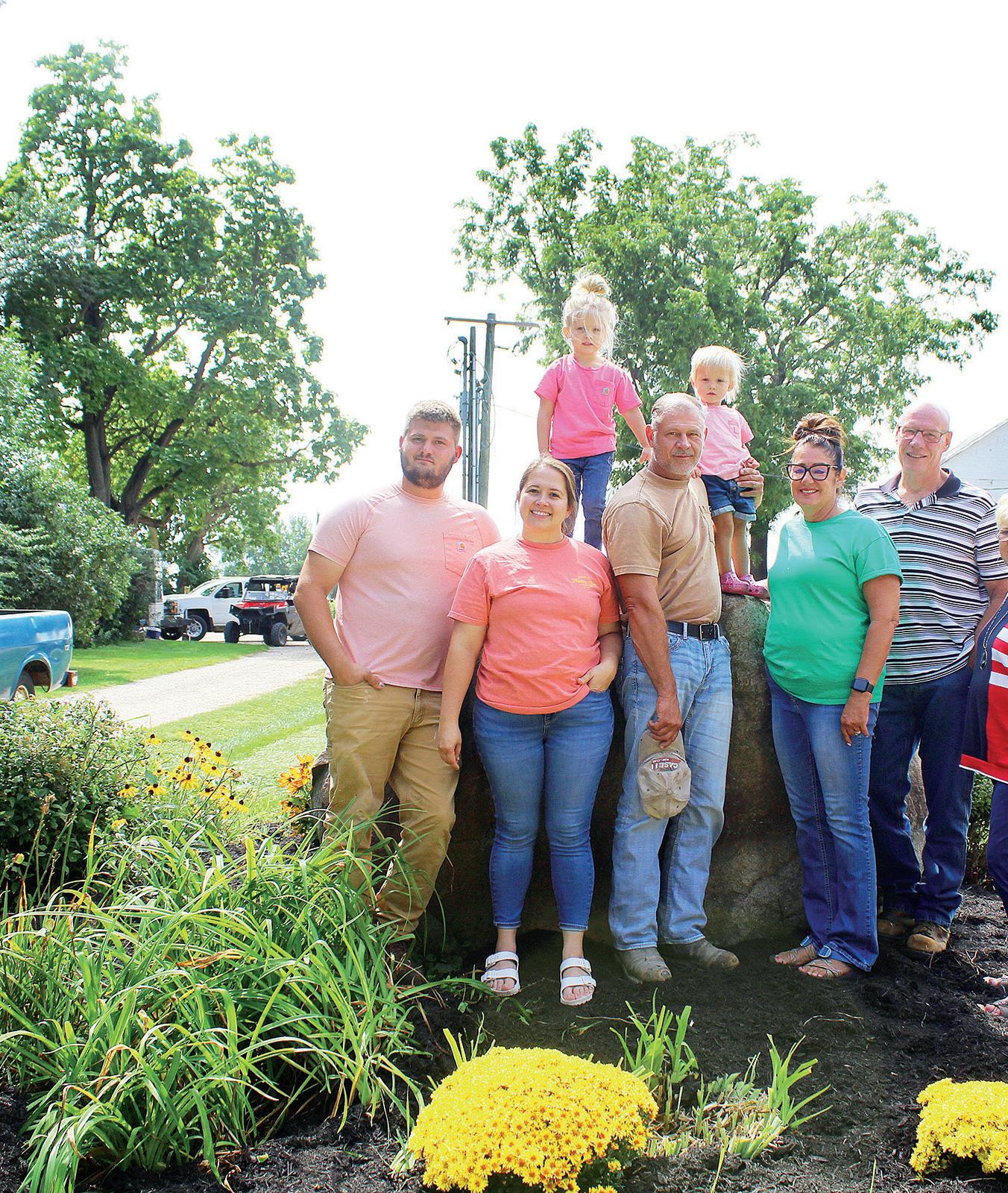
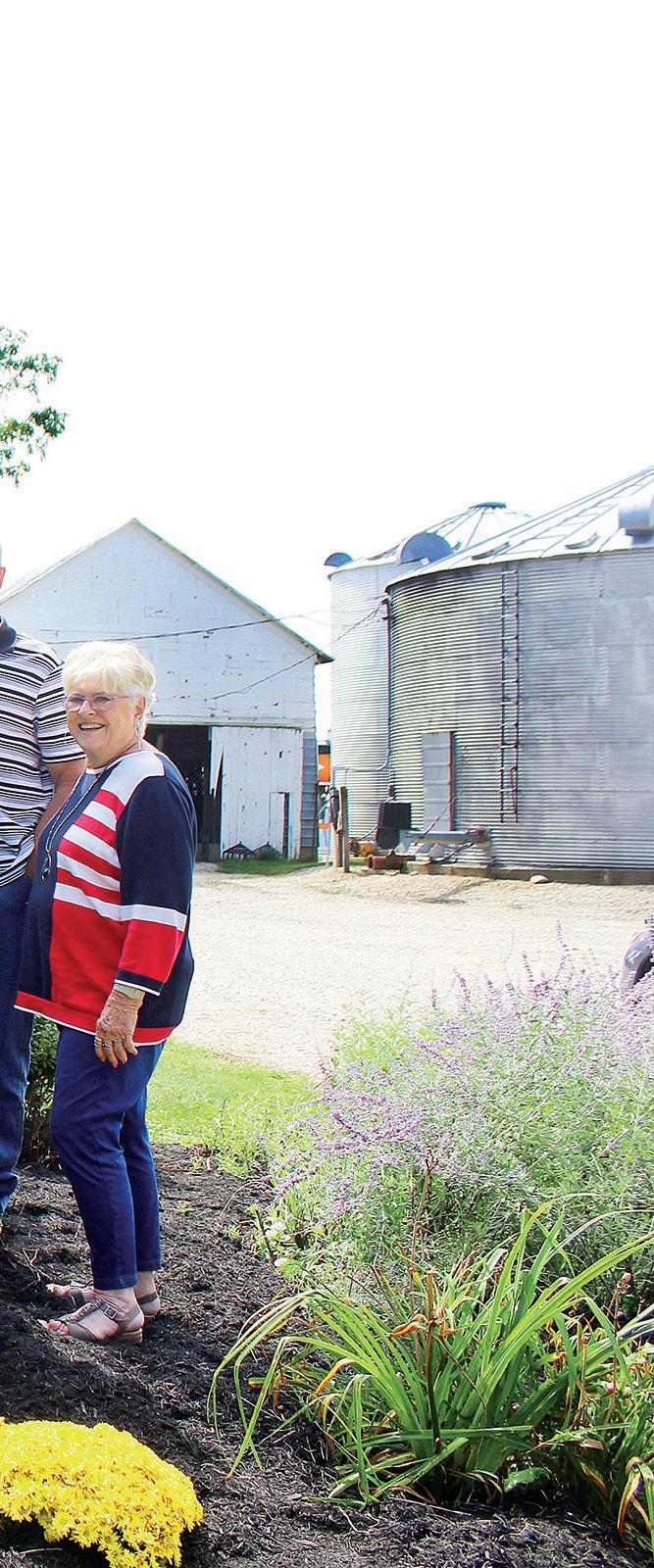
family currently consists of (from left): Stephen and Amanda Chapman –
operate the farm – Stephen’s father David Chapman, aunt Teresa Davidson, uncle Brad Chapman and grandma Brenda Kay Chapman. In the back row are Madison and Emmerson Chapman, Stephen and Amanda’s children.
By Cody Cutter ccutter@shawmedia .com
From Civil War roots to seventh-generation hands, the Chapman family’s Ashton
ASHTON — Life on a family farm has always been filled with hard work and long hours, but it’s also a life filled with memories made in fields and farmhouses alike, by families forged from a shared dedication and devotion to living off the land — and if they were fortunate enough, turning the land into a livelihood .
In Ashton, the family behind a farm there has been one of the ones fortunate enough to do just that . For more than 150 years, the land has been a way of life for the Chapman Family, who are carrying on a legacy that began with John R . Chapman in the 1860s — but like the industry they’re in, they’ve had to learn to grow to do it . These days, time and toil alone isn’t enough .
“It’s become different,” said Stephen Chapman, who represents the sixth generation of Chapmans on the family farm . “It used to be that you could work hard and then work your way out of most situations, but that’s really not the way it is anymore . You got to be on top with it and sharp with your pencil and your plans . ”
Stephen — named after his grandfather, who died in 2015 — does much of the farming these days, having taken over from his father David and uncle Brad . His grandma Brenda continues to live on the farm, as does Brad . The
elder Stephen’s father, Phillips, farmed up until the mid1900s and his father Emmerson operated it around the turn of the 20th century . Today, the family raises grain, cattle and chickens, and some apple trees remain from when the fruit was an important part of the operation many decades ago .
Being more aware and strategic in planning to sustain the multi-generational farm’s success weighs heavy on Stephen’s mind, and he sometimes wonders how his ancestors kept the farm — once called Willow Farm — going more than a century ago . “You’d love to talk with your ancestors to ask them what drove them and what kept them going,” he said .
Emmerson was the nephew of John, who had two girls who died at an early age . Emmerson’s father, Madison, served in the Civil War and died two years after its conclusion from injuries he sustained in it .
Stephen’s young daughters with his wife Amanda carry on their ancestors’ legacies through their names, Madison and Emmerson, representing the seventh generation and performing small tasks such as filling the farm’s sweet corn and egg stands .
“They love to help,” their father said . “They love
CONTINUED TO PAGE 17
Photo by Cody Cutter, ccutter@shawmedia.com
Photo
riding in the tractors and love checking cows . They’ll be involved, but you just never know . ”
The Chapmans attribute much of their success to their commitment to hard work — but that doesn’t mean they haven’t been able to carve out time to unwind, like playing sports or games like Cowboys and Indians, which is what Brad and David did a lot when they were young, just a few of the fond memories the family shares .
“It’s work, but it’s fun,” said Brenda, who continues to perform light errands on the farm . “It’s a team effort to make this place work . The kids had a lot of fun on the farm . Their friends always wanted to come to the farm . ”
The free-roaming nature of growing up on a farm sometimes made it challenge to get used to hanging out with friends in town, Brad said, where businesses and buildings weren’t as much fun as barns in the back forty .
Even with all the joy and freedom the farm gave them, the Chapmans never lost sight of the challenges that came with it, each year a test of their patience and grit .
“There’s a lot of great times and there’s a lot of challenging times,” Brad said . “The perseverance that you have to have year in and year out, whether you’re successful or having a bad year, you just got to persevere . If you raise a cow and see one of its calves die as soon as it’s born, you keep going . You just endure and keep going . You have dry years, you have good years . It’s just a way of
www.histoneandsons.com
life . A lot of people would probably give up, but it’s just not in our blood to give up . ”
It’s also not in their blood to dwell on the downsides; farmers can’t afford it, David said .
“As kids, you complain about having to work harder than anybody else, like the town kids, but eventually as an adult, that’s instilled in you,” David said . “Only until you reflect on all of the time that’s passed, and how quickly it’s passed, do you realize what it is that you are accomplishing . You don’t think of each individual task, and if you did, you’d go crazy . You’re taught your morals and your ethics to just work hard and push through it . ”
These days, Brad and David have pulled back somewhat from their farm duties as they’ve gotten older, but they still enjoy watching how the current crop of Chapmans are keeping the farm healthy . David says he’s proud of the way Stephen is handling the farm’s finances, admitting his son’s doing a lot better than him . When Stephen took over, he reduced the farm’s debt and sought help from other growers to help keep the farm going .
That steady work ethic has carried through each generation, shaping how the Chapmans approach both their labor and their legacy .
“It’s a unique thing that a lot of people don’t have the privilege to experience,” Stephen said . “You have to like it, and it can be very fulfilling and rewarding . There’s not
many lifestyles that are also a career . There’s not many careers where you can start something, finish something, and see the fruits of your labor . Most people have jobs with one specific workflow, or one specific part of an entire process, but when you’re farming, you get to do the whole thing, literally from seed to harvest . ”
Brad and David’s sister Teresa Davidson no longer lives on the farm and is a nurse for the University of Wisconsin healthcare system in the Rockford area, but her time on the farm helped her understand the value of teamwork and looking out for others .
“Humanity is the biggest thing, helping each other,” Teresa said . “I think it’s different in the city versus growing up in the country — there’s more of a camaraderie . ”
The family and farm’s history are documented not only on paper, but the stories passed down through generations, helping today’s generation learn from those who came before them .
Brad recalls his aunt Hollis’s ability to control horses: “She had a grip, even when she was old, just from holding the reins all of the time,” he said . “When Hollis was working the fields, the reason she said that there was a big tree at the end of the field was because it was there they could take the horses to rest . ”
Another of Brad’s memories: his dad’s homemade barbecue sauce . The recipe wasn’t written down, so each time it would taste a little different, he said .
David recalls a story about Phillips having a very young Stephen help him on the International Harvester tractor out on the field .
“Dad would ride on the back of the disc to add weight when the corn was too thick, so the disc could cut into the ground . He was also tied to the seat of an M when he was little because the tractors that had a hand clutch … were more expensive than the ones [with a foot pedal] . If you couldn’t reach the clutch you tie it to the seat and if you had to stop, he said that you could put it at a higher gear and go uphill and it’ll quit .
“With those kinds of stories, I don’t care if you’re 5 or 10, you’re going to get your work done, and just because you can’t reach the clutch isn’t an excuse . ”
Brad and David never got to know great-grandpa Emmerson, but David recalls a story told to him about how he was able to control his horses: “They would tell me stories about how he couldn’t get the horses to stand still long enough to get them haltered up,” he said, so “he’d come out with his stick and would holler and pound the stick on the wood floor, and all of the horses would stand to attention and they could get the halters on . ”
Sports have been a big part of the Chapman’s lives growing up, and even then, farming played a role .
The elder Stephen was a star player for the Ashton Aces high school football team, but turned down a scholarship to play football at the University of Colorado in 1960 to tend to the farm . He would also become Brad and David’s
Photo provided by Brenda Chapman
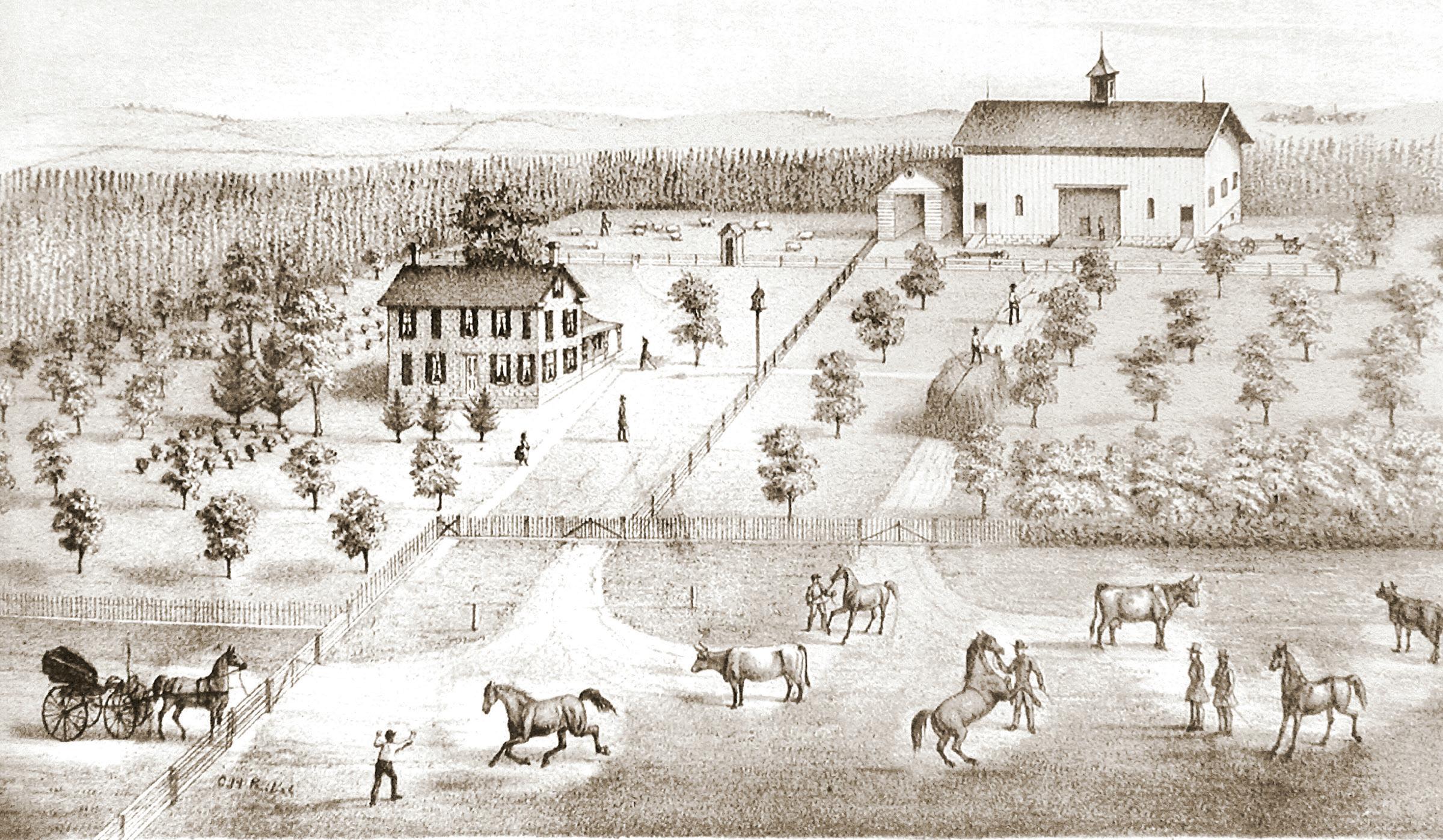
Picture of the original Chapman Farms homestead in Ashton during John R. Chapman’s farming days in the 1800s.
little league baseball coach, and incorporated the farm into keeping them in shape for the game, giving them exercises on the farm, and workouts with rocks, tires and hay bales .
When Brad and David got into football, their time on the farm paid off then, too, giving them an edge over the city kids .
“We had three hours of blood pumping through us by that time,” Brad said . “When two-a-days started in football in the fall, the only ones not throwing their guts up from all of the running and calisthenics were the farm boys who were active . The town boys would be puking and just beat . ”
While the farm’s history is a point of pride and priceless memories for the family, it hasn’t always necessarily been a cause for a celebration . The Chapmans even declined to seek recognition as a state centennial farm in 1975, as the family long held that they weren’t ones for attention .
“We’d all agree that we’re not people who want the notoriety or spotlight,” Brad said . “We just like to lay low and do our work and make it to the next year . We’re just not attention grabbers . We’re very privileged to have kept it in the family for this long .
Even if they had sought that centennial designation, they would have been several years late to the party — not they would have wanted to have one . “Papa was more
is always on
& kept at an affordable
concerned about not jinxing it,” added Brad .
This year was originally believed to be the farm’s sesquicentennial, with 1875 long thought to be when the farm was established, but a little digging recently revealed there were actually a few more candles on the farm’s birthday cake . During research in late August, the Chapmans discovered that the farm was actually purchased nine years previously, in 1866 . The discovery was made due to the property’s tax liens being released much later; it took John five years to pay off the purchase of the property (with 7 percent interest), but no records were officially filed until 1875 .
Today, Stephen doesn’t mind a little recognition — the family worked hard for it, after all — so the family has filed paperwork to seek recognition as a sesquicentennial farm, even though, technically, 2025 would mark the farm’s 159th anniversary .
“Papa thought it was bad luck and didn’t want to do it,” he said . “We kind of talked [Grandma] into it . We made it this far, and we’ll sign up for it . Why not?”
For the Chapmans, the legacy of their farm isn’t measured in acres or awards, but in the endurance of a family bound to the land and to one another . Each generation has faced its share of long days and lean years, yet the farm remains — not only as a livelihood, but as a living record of perseverance, humility and quiet pride .
UNDERSTANDING SMART FARM AUTOMATION
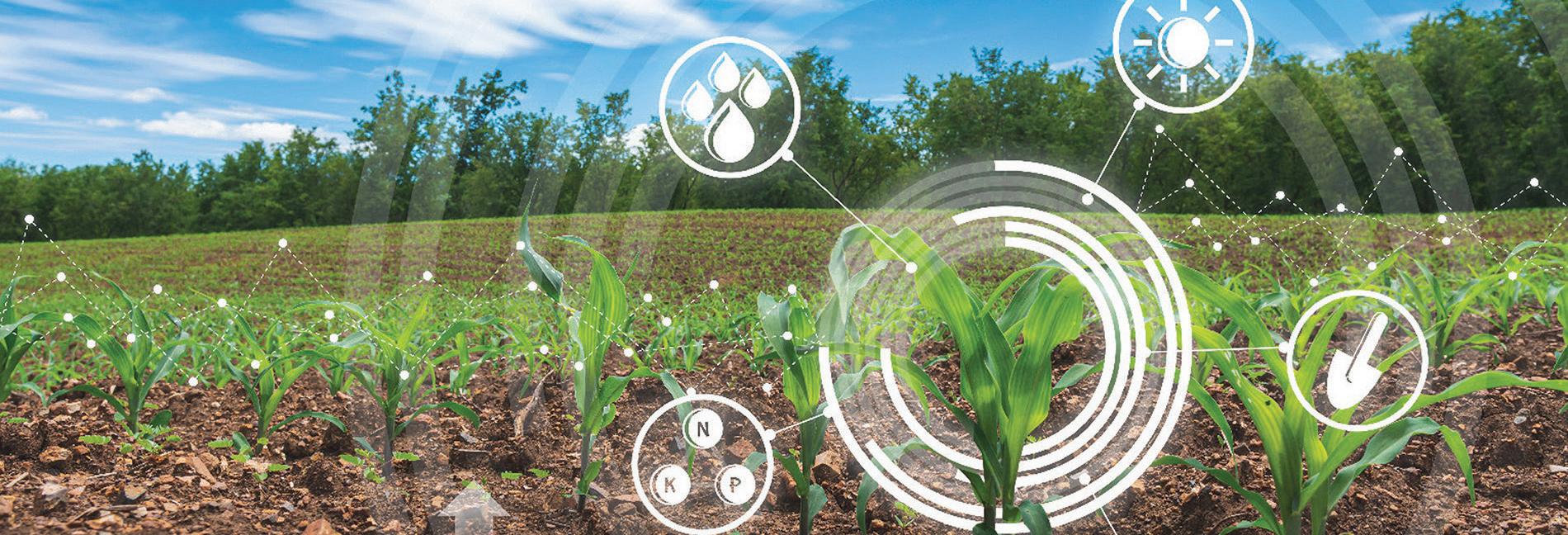
Modern agriculture looks little like the early days of farming . All aspects of farming have been modified by the access farmers now have to technologies to meet the demands of their work and the pressure a growing population places on farmers to produce quality food . Farm automation, precision farming and smart farming are strategies utilized by today’s farmers . These technologies have become important ways for farmers to optimize the production of food and improve its quality . According to the Food and Agriculture Organization of the United Nations, agricultural production must increase by 70 percent in order to meet global food demand by 2050, by which time the population could be 9 .7 billion persons
Smart farming can make raising livestock more accurate and controlled . While farm automation is a broad term, precision smart farming zeroes in on exact measurements between variations in land
Metro
conditions and livestock, according to Techie Loops, a technology information website Examples of farming automation technology include:
• autonomous vehicles and machines
• drones
• robotics
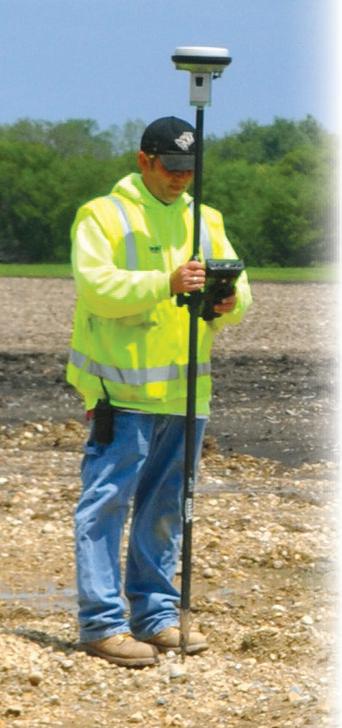
• GPS guidance
• micro-forecasting and weather forecasting
• soil sampling
• yield mapping
• use of artificial intelligence
• geomatics
• statistical processes, and more
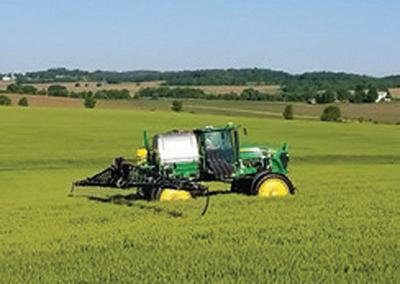
Farmers can employ these technologies to save time and also manage labor shortages Robot-assisted irrigation systems, for example, can maximize efficiency of water distribution where it is needed the most . Weeding robots can use artificial intelligence and computer vision to target field areas and reduce use of pesticides . Driverless tractors can make labor cheaper for farmers by plotting the machine’s route and letting it run the course automatically . Harvest robots also exist to grab crops gently (some with vacuum technology) and reduce reliance on field workers . Some harvesters can determine ripeness of fruit via AI technology, according to Eastern Peak, a provider of custom hardware and software solutions for businesses
Technology is changing farming in many ways . Innovations in automation can make operations more efficient and less costly
2025 Ogle County
4-H Achievement Celebration winners named
Shaw Local News Network
Ogle County’s top 4-H members and clubs were honored for outstanding achievement at a special program held Sunday, Oct . 19, 2025, in the Pinecrest Grove Theatre .
Top county honors went to 4-H teens Shelby Harbaugh, Chana, and David Wehler, Leaf River . Harbaugh, Hub Hickory Nuts 4-H Club, and Wehler, Leaf River Soaring Eagles 4-H Club, were the recipients of the Co-op Watch Awards sponsored by Ogle County Farm Bureau and its affiliates . Watches are awarded each year to the two 4-Hers with the most impressive records of long-term leadership and service at the club level and beyond .
Colton Gehrke, Byron, was the recipient of a $50 cash award sponsored by the Ogle County 4-H Foundation . The Foundation Award is presented annually to a single 4-H member who has demonstrated leadership skills and
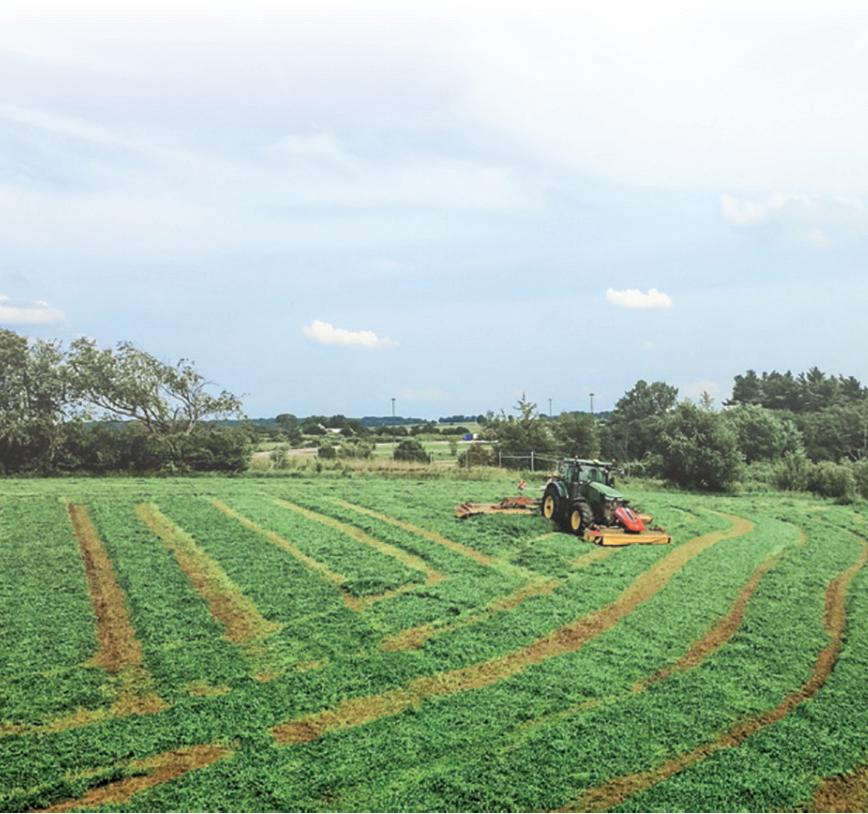
OF HAY FOR SALE
a willingness to assist with 4-H activities, serving as a positive example to younger members .
Other special award winners included:
Outstanding Club President: Allissa Martin, Carefree . Outstanding Club Vice President: Katelyn Rockwood, Pine Creek Valley . Outstanding Club Secretary: Skyler Holmes, Pine Creek Valley . Outstanding Club Treasurer: Isabelle Blumhoff, Pine Creek Valley . Outstanding Club Historian: Kaden Lingbeck, Leaf River Soaring Eagles . Outstanding Club Reporter: Lydia Sherburne, Leaf River Soaring Eagles . Ogle County Club Recreation Chairperson: Kodi Hubbard, Carefree . Outstanding Club Junior Leader: Lydia Sherburne, Leaf River Soaring Eagles . Electricity Achievement Award: Julia Herring, Hub Hickory Nuts . Illinois Holstein-Friesian Association Award: Anna Marquardt, Carefree .
Several awards were distributed to community clubs throughout the county in recognition of outstanding community service, educational programming, and promotional efforts . Additionally, one club’s leadership team was recognized for their outstanding efforts to work together effectively and meet the needs of their club, as well as coordinate their work . Congratulations go to all the following club winners:
Window Display Promotion Award: First place – Leaf River Soaring Eagles 4-H Club (Leaf River); Second place – Pine Creek Valley 4-H Club (Polo); Third place – Mighty Clovers 4-H Club (Monroe Center) .
Ogle County 4-H Club-of-the-Year: First place – Carefree 4-H Club (Oregon) . Second place – Leaf River Soaring Eagles 4-H Club (Leaf River) . Third place – Mighty Clovers 4-H Club (Stillman Valley) .
Top Leader Team Award: Mighty Clovers 4-H Club (Stillman Valley): Stephanie King & Julie Beckman .