
INSIDE THIS ISSUE
Honor 45 Years of Moments That Matter
When and where to celebrate
Learn about Dementia
Why goggles, headsets, and gloves make a difference
Remember a Life Well-Lived
How a physician found peace through hospice care
2024 A NEWSLETTER FOR DONORS AND FRIENDS OF HOSPICE OF THE CHESAPEAKE FOUNDATION
SPRING
4 5 6
WHAT OUR CEO WANTS YOU TO KNOW
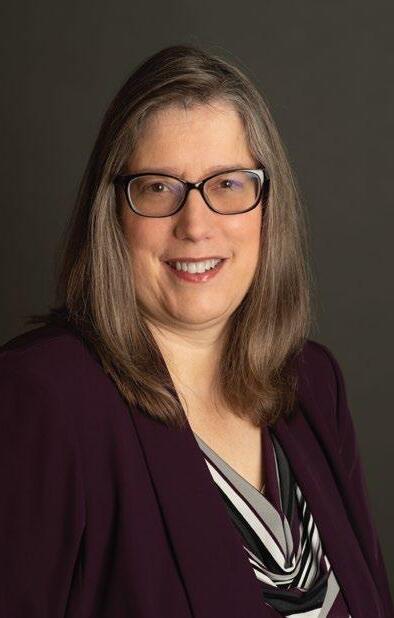 Rebecca Miller, MSW Chief Executive Officer
Dear Friends,
Welcome to 2024! This year Hospice of the Chesapeake celebrates 45 years of caring for those living with illness and loss. We will have many opportunities to celebrate together, share exciting news and recognize our milestones while honoring our history.
I am excited to begin 2024 serving as the Chief Executive Officer. I am happy to follow a long line of executive leaders who each have acknowledged we are only stewards of this incredible legacy organization that has flourished and thrived over the last 45 years. I am honored to do my part in ensuring the future of the care we provide for generations to come.
While leadership is an element of our enduring legacy, I am confident you recognize that the most critically important are our frontline care team members who focus every day on moments that matter for patients and their families in all the communities we have the honor of serving.
Throughout our 45th year, we will share their stories and the stories of the generous community of donors who have supported them since 1979—when our first four original trailblazing volunteers decided to change how our community experienced death. That innovative thinking and those bold actions live on today in those who choose to care for others living with progressive, serious illness and loss. Many things have changed since 1979, but what has remained constant is our commitment to caring for those who need us most and working together to create meaningful experiences for all. Thank you for your commitment to supporting us every step of the way.
I look forward to seeing each of you at one of our many events this year, meeting you out in the community, and hearing from you about what is important to you and your loved ones.
Gratefully,
Rebecca Miller, MSW Chief Executive Officer
hospicechesapeake.org/news
PRIMER: Hospice Business
Not all hospices are the same. Hospice of the Chesapeake is the region’s largest, not-for-profit, independent hospice. Some other hospices in this region are for-profit companies or are tucked into a large health system.
Hospice isn’t just for people with cancer. Teams address illnesses such as end-stage heart, lung, or renal disease; dementia; ALS; stroke; and neurological disorders. While hospice patients have a prognosis of six months or less, supportive care (often called palliative care) patients may receive help at the time of diagnosis.
Most patients receive care in their home, or the place they call home, surrounded by people and things they love, allowing them to create meaningful experiences at the end of life. The care team comes to them—along with equipment, medications, and supplies.
Scan to read about not-for-profit and for-profit hospices.
2
ON THE COVER: Hospice is with you at every stage, helping you create moments that matter.
YOUR IMPACT
Addressing Access to Hospice Care
With a goal of demystifying hospice and supportive care in Prince George’s County, medical experts and elected officials spoke at “Hospice and Palliative Care in Prince George’s County,” a community roundtable sponsored by Hospice of the Chesapeake and supported by the John & Cathy Belcher Institute for Complex Illness Care.
Director of Nursing and Clinical Advocacy Rachel Sherman, DNP, APRN, FNP-BC, ACHPN®, moderated the November session at Bowie State University. Also on the panel were community professionals and leaders, including Dr. Alvin Reaves III with U.S. Acute Care Solutions; Jacqueline Hill, PhD, RN, CNE, of Bowie State University; Prince George’s County District 9 Council Member Sydney Harrison; Maryland State Senator Michael Jackson; and Chaplain Robin Walker, MDiv., BCC, of the University of Maryland Capital Region Medical Center. Hospice of the Chesapeake team members speaking on the panel included Chief Medical Officer Marny Fetzer, MD, CPE, HMDC, ABIM-HPM, FACEP; Nurse Practitioner Ashley Kinnally, CRNP, ACHPN; Vice President of Hospice Operations Kristin Williams, BSN, RN, CHPN; Manager of Community Partnerships Miriam Rendon-Ponce; and Bereavement Counselor Jennifer Ward, LMSW.

Noting Prince George’s County residents’ use of hospice services is one of the lowest in the state, Sherman said, “I left Bowie State University with an overwhelming sense of pride knowing I work for an organization that truly wants to make a difference in Prince George’s County. The vision is clear. Together, we are ready and willing to do the work.”
Research-based, patient-focused education begins with donors like you. Make a difference at hospicechesapeake.org/giving or 443-837-3385.
Learning for Life
While aging is worth celebrating, it’s also important for healthcare professionals to have current research about people who are older. That’s the reason for evidence-based education called Nurses Improving Care for Healthsystem Elders, or NICHE, a program of New York University Rory Meyers College of Nursing.
Hospice of the Chesapeake is one of the first community-based, independent hospices in the country to roll out the program. First, three clinical leaders completed year-long leadership training to implement the NICHE practice model and resources organizationally. Then, staff began the elder-focused training. As of December, seven nurses and 46 certified nursing assistants (CNAs) have completed NICHE learning pathways, earning designations of Geriatric Resource Nurse or Geriatric Patient Care Associate, respectively.

Education gives frontline clinicians deeper knowledge to implement research-validated practices, from reducing fall risk to addressing specific nutritional needs. “Focused on providing ever-higher standards of care, our goal is to meet older adults’ physical, emotional, and social needs,” says Elisabeth Smith, MS, BSN, RN, CHPN, Director of Education and Emergency Management.
With extraordinary donor support, the program continues into 2024 across the organization’s clinical teams. Smith expects the majority of the organization’s CNAs to complete the program this year.
In Calvert County, nurses and certified nursing assistants display their newly earned NICHE certificates.
3
Celebrate & Honor
Join anniversary festivities in spring, summer, and fall
Culinary Event
Friday, March 22 | 6:00 p.m.
The Hall at Huntingtown, Huntingtown
Inaugural Golf Tournament at The Cannon Club
Thursday, April 18 | 9:00 a.m.
The Cannon Club Golf Course, Lothian
Caring for Life: 45th Anniversary Celebration
Saturday, May 11 | 5:30 p.m.
The Fluegel Alumni Center, Annapolis
Fashion for a Cause
Friday, June 7 | 6:00 p.m.
The Fluegel Alumni Center, Annapolis
Annual Golf Tournament
Thursday, September 26 | 9:00 a.m. Queenstown Harbor Golf Course, Queenstown Blue Crab Fun Run
Saturday, October 5 | 8:00 a.m.
Regency Furniture Stadium, Waldorf
You make a difference
45 YEARS STRONG
Make every moment ma er
In 1979, hospice was a relatively unknown and often misunderstood concept. But, thanks to the unwavering vision of Hospice of the Chesapeake’s founders Martha O’Herlihy, Dr. James Benjamin, Mary Ellen Blondell, Norman Lambert and Fran Grauch, the concept caught on in Anne Arundel County.

(our original name) admitted its first four patients, we’ve expanded into Calvert, Charles, and Prince George’s counties. Care teams support 600 patients in hospice and another 800 patients in supportive care each day.
With his wife Rose, volunteers for almost 25 years, they support continuing education of clinical staff through the Lovelace Education and Training Center in Pasadena.
Lovelace brings years of experience as an Honor Salute volunteer for veterans. “One of the most rewarding things I do is stand before these heroes and hear their stories, thank them, and salute them as they approach the end of their lives.”
During these years, board members Cathy and John Belcher have played an integral role, especially at the John & Cathy Belcher Campus in Pasadena and through the John & Cathy Belcher Institute for Complex Illness Care, focused on educating the community about caring for advanced illness.


Scan the code for details, tickets, and sponsorships:
Questions?
events@hospicechesapeake.org
had hospice care. “Hospice nurses and caregivers care for the patient and support the family,” says Lovelace.
PHOTOS (top left to lower right):
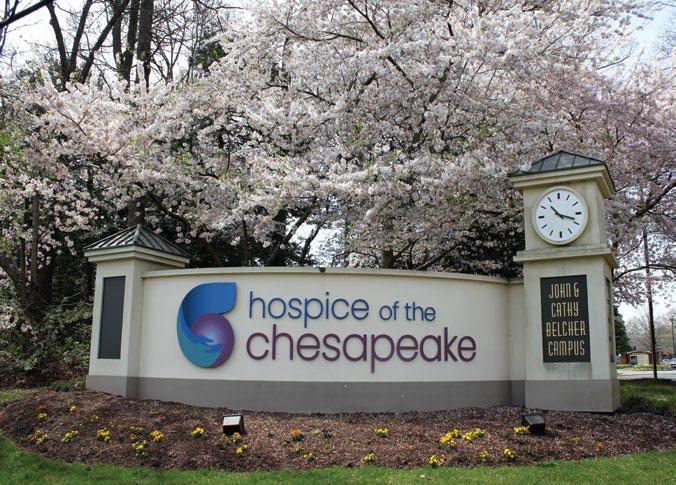
John & Cathy Belcher Campus
Rebecca Fortney Inpatient Care Center
Charles County Inpatient Care Center
Burnett Center for Hope & Healing
“We believe in giving back to healthcare leaders like Hospice of the Chesapeake,” says John Belcher. “Cathy and I are proud to be part of an organization devoted to fulfilling its mission, committed to community, and eager to incorporate innovative learning approaches.”
Whether you’ve just discovered Hospice of the Chesapeake, or have been an advocate for decades, this is your year to increase your involvement and expand your knowledge, ensuring patients and families can make every moment matter.
4
Your support made this possible
LEARNING TO HELP

Nurturing and caring for patients with dementia
A former EMT and hospital volunteer, Cathie Nottingham understands healthcare. Still, when she wore goggles, gloves, and a headset for a Dementia Live training, Nottingham, a patient care volunteer, was surprised. “The simulation exercise dulled my senses so much I wasn't aware of things going on around me," she says. “I didn't know there was a person talking.”
Disorientation underscores Dementia Live, a multisensory experience about the disease’s symptoms. Dark glasses simulate vision issues, such as macular degeneration. A headset blares background noise, making it hard to hear. Heavy gloves affect dexterity and coordination.
Training gives Nottingham confidence to comfort patients with the diagnosis. "While visiting my patient with Parkinson's disease, I find it important to make sure she sees me before I start talking.” That comfort includes touch: “I hold my patient's hands when speech is not an option."
Services like these are not covered by insurance. Fortunately, thanks to generous donor support, Hospice of the Chesapeake can provide Dementia Live trainings across its four-county region—ensuring staff and volunteers, as well as employees at senior care facilities, and caregivers in the community have firsthand knowledge. The goal is to give people skills to understand and navigate the needs of patients with dementia, helping patients live every moment as fully as possible.
A volunteer since Feb. 2023, Nottingham, who works full-time for a government agency, appreciates the opportunity to help. She’s also learned to provide compassionate touch massage and volunteered last summer at Camp Nabi for grieving children. “Volunteering gives me purpose,” she says. “I’m here to bring comfort and reassure people they are not alone on their journey.”
When patients and families face uncertainty and worry, your support offers hope. Make a gift at hospicechesapeake.org/giving or 443-837-3385. Want to do more? Learn about volunteering at hospicechesapeake.org/join-us
Healing Hands in Calvert County
Calvert County volunteers explored the first Reiki training session at the recently opened Burnett Center for Hope & Healing. The technique uses gentle hand movements to guide the flow of healthy energy in a client's body. There’s evidence Reiki reduces daily stress and manages some chronic diseases. Reiki joins a growing list of Burnett Center integrative arts programs such as meditation, art, sound baths, and journaling. Workshops are open for patients, loved ones, and community members, whether or not one has had a family member in hospice. These non-medical interventions are rarely covered by insurances. Programs like these are possible thanks to donor support.
410-535-0892
 the disease.
& Healing.
Participants gather after their Reiki session at the Burnett Center for Hope
5
Remembering loved ones
ACTS OF SERVICE

There’s no telling how many thousands of babies beloved Anne Arundel County obstetrician E. Joseph “Dr. Joe” Morris, M.D., brought into the world. What is certain, his family believes, is every newborn felt his tender loving care in the first moments of life. It’s only fitting, then, that Dr. Morris’ farewell was as soft and gentle as he was, says his daughter Bridget Stockdale.
“He gave so generously to others,” she says. “It was a beautiful gift for him to have a peaceful transition while in hospice.” That journey to hospice began nearly two years earlier.
At first, says his wife Jeanne Morris, the stomach discomfort was a nuisance. When the diagnosis came back cancer, the family turned to Chesapeake Supportive Care to navigate his medical care. “Everyone needs to know about supportive care,” says Morris, a nurse. “It’s not about giving up. It’s about support.” She points to the multidisciplinary team as a “thing of beauty.”
About a year later, there was nothing more to do—it was time for hospice. “They told me to take off my nursing cap, and remember my role as wife,” she said. “They took on Joe’s care so we could be together as family as long as possible.”
A story about Dr. Morris wouldn’t be complete without mention of his children and grandchildren who surrounded him at every stage. When the severity of his symptoms required care at the Rebecca Fortney Inpatient Care Center in Pasadena, his five children, their spouses, and grandchildren came right over. The family was grateful for the warm welcome, no matter how many people visited.
“Those wonderful people made us not only feel comfortable, but embraced us with love,” says daughter Colleen Freestate. Adds her brother Joseph Morris: “They were an incredibly thoughtful, kind staff.”
It was a beautiful gift for him to have a peaceful transition while in hospice.
His family especially appreciated walking in the Michael Stanley Children’s Garden. They remember it as a place where the family found comfort and peace.
As days passed, it was clear Dr. Morris was nearing the end. “They were so good to him,” says his wife, thinking of daily kindnesses. “One CNA went to great lengths to personalize his care. She gave him a shampoo, shave, and massage.” It was, she says, unlike anything she imagined at the time.
The family credits nurses, certified nursing assistants, doctors, social workers, and chaplains for easing the way from arranging for a priest to perform last rites to discussing what happens next.
“People showed compassion and great respect to Dad in his most vulnerable state,” says daughter Meg Hale. “And they did the same for us.”
Months after his September passing, Dr. Morris’ family cherishes stories, memories, and photographs of a life well-lived for his loved ones, for his patients, for his community. The ending, while far too soon, was as special and tender as he was.
Dr. Morris welcomed Jane Gray Hale, his first of eight grandchildren, to the family in 2014.
6

What mattered most to Ethel Groh Webster Williams was community. The Pasadena, Md. native built an admirable life of service in her hometown, passing away at age 97. She learned the value of giving back from her father, Joseph Groh, a founder of the Bank of Glen Burnie and Johnson Lumber, and a community leader.
Longtime friend Lois Simpson remembers Williams’ generosity. “She wanted to help people. She was a wonderful, lively lady,” says Simpson. Williams volunteered with and contributed to organizations dedicated to local history, animals, and healthcare, including Hospice of the Chesapeake. In fact, long before her husband entered hospice in the early 2000s, she donated to Hospice of the Chesapeake. She marked 25 years of giving just prior to her passing.
So, it was no surprise when Simpson learned Williams remembered Hospice of the Chesapeake in her will. The generous bequest will support services to help patients and their families in hospice care. “Ethel had no children and no siblings,” she says. “This gift is her way of helping people at a difficult time, when they need it most.”
With a nod to her family’s deep history in Anne Arundel County, Williams’ thoughtfulness also honors her family legacy of strengthening community for years to come, one generous act at a time.
Without You, There’s Less Help
If you wonder why your gift matters, you’ve come to the right place. While Medicare and private insurances cover hospice basics—think nursing, medicine, and social work—donors like you make so much more possible. That includes dementia care and integrative arts to comfort (see page 5). Your generosity provides veterans services, too. It means grief camps and support groups. Gifts like yours even turn into top-rated continuing education for our care team members (see page 3).
There’s evidence helping others is good for the soul, too. As you help someone, your brain secretes feel-good chemicals to regulate mood, create bliss, and build a sense of connection. Need inspiration? Here’s what Gary said after his wife of 60 years passed. “It was hard for me to function,” he said. “I was overcome with losing Iris—first to Alzheimer’s and then to her actual passing. Counseling helped me find my footing, my new normal.” The takeaway? Your gift makes a difference for people when they need it most. Thank you.
Join our Circle of Care Legacy Society by including Hospice of the Chesapeake in your will. Learn more at hospicechesapeake.planmygift.org/wills-and-living-trusts or call 443-837-3385.
7
Grow Your Generosity
Monthly giving is an easy, automatic way to do good for people in need. Choose how much and when you want to give. Thank you!

A Way to Remember
Celebrate the life of someone dear to you with a commemorative, inscribed brick along one of our campus walkways. Your gift provides needed support for patients and families in our care.
443-837-1528
You are part of the work that happens at Hospice of the Chesapeake.
To learn more about the impact of your philanthropy, please visit hospicechesapeake.org
