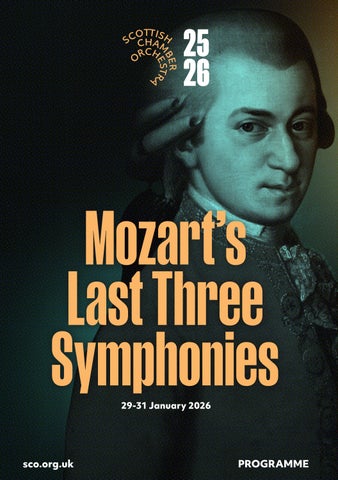
Mozart’s
Three Symphonies
29-31 January 2026

Mozart’s Last Three Symphonies
Kindly supported by Anne, Tom and Natalie Usher.
Thursday 29 January, 7.30pm Usher Hall, Edinburgh
Friday 30 January, 7.30pm City Halls, Glasgow
Saturday 31 January, 7.30pm Aberdeen Music Hall
MOZART Symphony No.39
MOZART Symphony No.40
Interval of 20 minutes
MOZART Symphony No.41
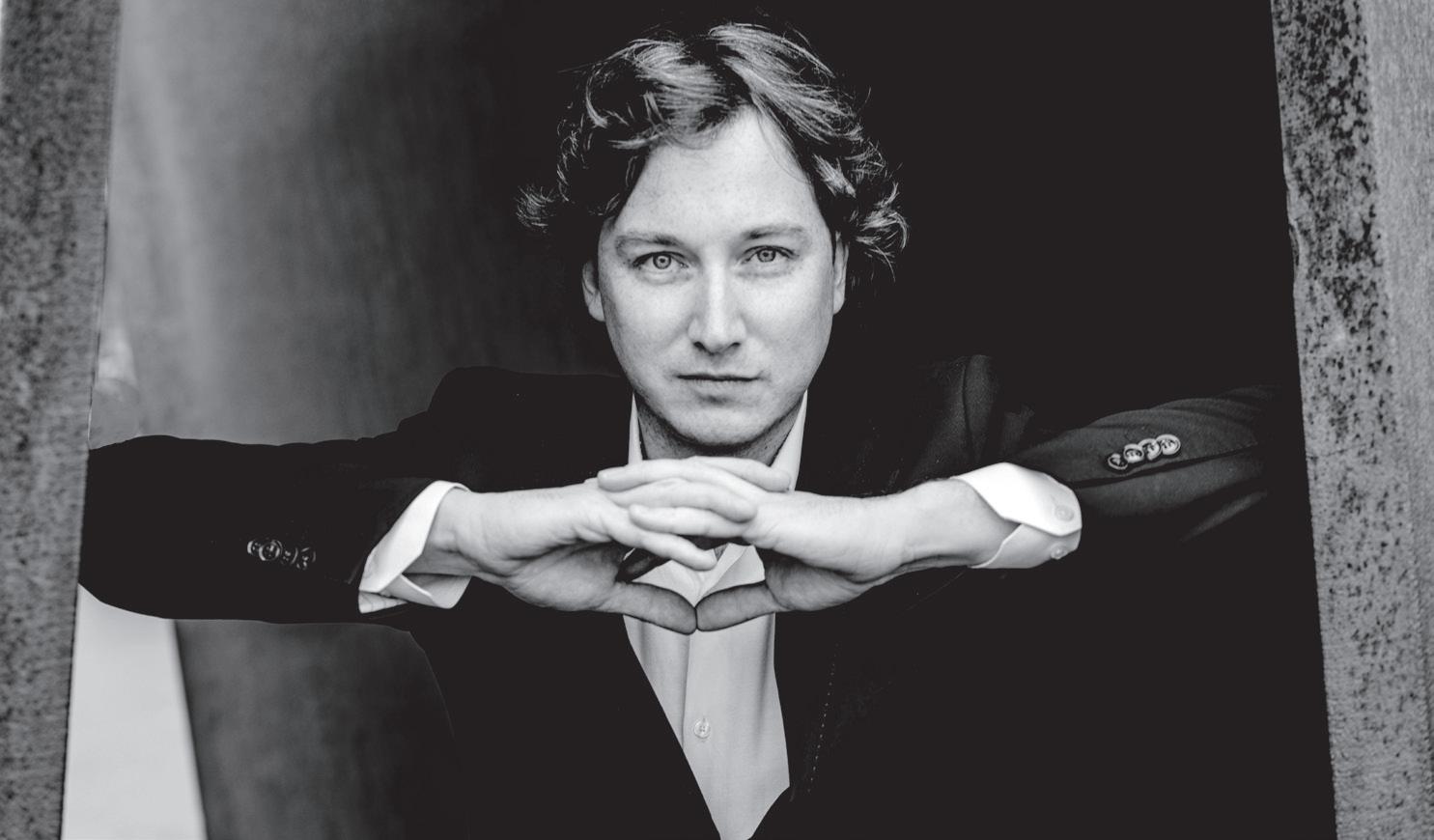
Maxim Emelyanychev conductor
4 Royal Terrace, Edinburgh EH7 5AB +44 (0)131 557 6800 | info@sco.org.uk | sco.org.uk
Maxim Emelyanychev
© Andrej Grilc
THANK YOU
Principal Conductor's Circle
Our Principal Conductor’s Circle are a special part of our musical family. Their commitment and generosity benefit us all – musicians, audiences and creative learning participants alike.
Annual Fund
James and Patricia Cook
Visiting Artists Fund
Harry and Carol Nimmo
Anne and Matthew Richards
International Touring Fund
Gavin and Kate Gemmell
Creative Learning Fund
Sabine and Brian Thomson
CHAIR SPONSORS
Conductor Emeritus Joseph Swensen
Donald and Louise MacDonald
Chorus Director Gregory Batsleer
Anne McFarlane
Principal Second Violin
Marcus Barcham Stevens
Jo and Alison Elliot
Second Violin Rachel Smith
J Douglas Home
Principal Viola Max Mandel
Ken Barker and Martha Vail Barker
Viola Brian Schiele
Christine Lessels
Viola Steve King
Sir Ewan and Lady Brown
Principal Cello Philip Higham
The Thomas Family
Sub-Principal Cello Su-a Lee
Ronald and Stella Bowie
Cello Donald Gillan
Professor Sue Lightman
American Development Fund
Erik Lars Hansen and Vanessa C L Chang
Productions Fund
Geoff and Mary Ball
Bill and Celia Carman
Anne, Tom and Natalie Usher
Scottish Touring Fund
Eriadne and George Mackintosh
Claire and Anthony Tait
Cello Eric de Wit
Jasmine Macquaker Charitable Fund
Principal Flute André Cebrián
Claire and Mark Urquhart
Sub-Principal Flute Marta Gómez
Judith and David Halkerston
Principal Oboe
The Hedley Gordon Wright Charitable Trust
Sub-Principal Oboe Katherine Bryer
Ulrike and Mark Wilson
Principal Clarinet Maximiliano Martín
Stuart and Alison Paul
Principal Bassoon Cerys Ambrose-Evans
Claire and Anthony Tait
Sub-Principal Bassoon Alison Green
George Rubienski
Principal Horn Kenneth Henderson
Caroline Hahn and Richard Neville-Towle
Funding Partners



SCO Donors
Diamond
The Cockaigne Fund
Malcolm and Avril Gourlay
John and Jane Griffiths
James and Felicity Ivory
George Ritchie
Tom and Natalie Usher
Platinum
E.C. Benton
Michael and Simone Bird
Silvia and Andrew Brown
David Caldwell in memory of Ann
Dr Peter Williamson and Ms Margaret Duffy
David and Elizabeth Hudson
Helen B Jackson
Dr and Mrs Peter Jackson
Dr Daniel Lamont
Graham and Elma Leisk
Professor and Mrs Ludlam
Chris and Gill Masters
Duncan and Una McGhie
Anne-Marie McQueen
James F Muirhead
Robin and Catherine Parbrook
Patrick and Susan Prenter
Mr and Mrs J Reid
The Walter and Janet Reid Charitable Trust
Martin and Mairi Ritchie
Hilary E Ross
Elaine Ross
Sir Muir and Lady Russell
Jill and Brian Sandford
Michael and Elizabeth Sudlow
Robert and Elizabeth Turcan
Alan and Sue Warner
Anny and Bobby White
Robert Mackay and Philip Whitley
Finlay and Lynn Williamson
Ruth Woodburn
Gold
Peter Armit
Adam Gaines and Joanna Baker
John and Maggie Bolton
Elizabeth Brittin
Kate Calder
James Wastle and Glenn Craig
Jo and Christine Danbolt
James and Caroline Denison-Pender
Andrew and Kirsty Desson
David and Sheila Ferrier
Chris and Claire Fletcher
James Friend
Iain Gow
Margaret Green
Christopher and Kathleen Haddow
Catherine Johnstone
Julie and Julian Keanie
Gordon Kirk
Janey and Barrie Lambie
Mike and Karen Mair
Roy and Svend McEwan-Brown
John and Liz Murphy
Tom Pate
Maggie Peatfield
Sarah and Spiro Phanos
Charles Platt and Jennifer Bidwell
Alison and Stephen Rawles
Andrew Robinson
Olivia Robinson
Anne McAlister and Philip Sawyer
Irene Smith
Dr Jonathan Smithers
Ian S Swanson
Ian and Janet Szymanski
John-Paul and Joanna Temperley
Douglas and Sandra Tweddl
Bill Welsh
Catherine Wilson
Neil and Philippa Woodcock
Silver
Roy Alexander
Fiona and Neil Ballantyne
The Batsleer Family
Jack Bogle
Jane Borland
Alan Borthwick
Dinah Bourne
Michael and Jane Boyle
Mary Brady
John Brownlie
Laura Buist
Robert Burns
Sheila Colvin
Lorn and Camilla Cowie
Adam and Lesley Cumming
Dr Wilma Dickson
Seona Reid and Cordelia Ditton
Sylvia Dow
Colin Duncan in memory of Norma Moore
Raymond Ellis
Dr and Mrs Alan Falconer
Sheila Ferguson
Dr William Irvine Fortescue
Dr David Grant
Anne Grindley
Andrew Hadden
J Martin Haldane
Ronnie and Ann Hanna
Roderick Hart
Norman Hazelton
Ron and Evelynne Hill
Philip Holman
Clephane Hume
Tim and Anna Ingold
David and Pamela Jenkins
Margaret Mortimer and Ken Jobling
Ross D. Johnstone
Professor Christopher and Mrs Alison Kelnar
Dr Ian Laing
Geoff Lewis
Dorothy A Lunt
Vincent Macaulay
James McClure in memory of Robert Duncan
Ben McCorkell
Lucy McCorkell
Gavin McCrone
Michael McGarvie
Brian Miller
Alistair Montgomerie
Andrew Murchison
Pamela Andrews and Alan Norton
Gilly Ogilvy-Wedderburn
Mairi & Ken Paterson
John Peutherer in memory of Audrey Peutherer
James S Potter
Timothy Barnes and Janet Sidaway
Catherine Steel
John and Angela Swales
Takashi and Mikako Taji
C S Weir
Susannah Johnston and Jamie Weir
David and Lucy Wren
We are indebted to everyone acknowledged here who gives philanthropic gifts to the SCO of £300 or greater each year, as well as those who prefer to remain anonymous.
We are also incredibly thankful to the many individuals not listed who are kind enough to support the Orchestra financially on a regular or ad hoc basis. Every single donation makes a difference.
Become a regular donor, from as little as £5 a month, by contacting Hannah Wilkinson on 0131 478 8364 or hannah.wilkinson@sco.org.uk.
“…an orchestral sound that seemed to gleam from within.”
THE SCOTSMAN
HM The King Patron
Donald MacDonald CBE
Life President
Joanna Baker CBE Chair
Gavin Reid LVO
Chief Executive
Maxim Emelyanychev
Principal Conductor
Andrew Manze
Principal Guest Conductor
Joseph Swensen
Conductor Emeritus
Gregory Batsleer
Chorus Director
Jay Capperauld
Associate Composer
© Chris Christodoulou
Our Musicians
Your Orchestra Tonight
Information correct at the time of going to print
First Violin
Stephanie Gonley
Afonso Fesch
Agata Daraškaitė
Amira Bedrush-McDonald
Aisling O’Dea
Fiona Alexander
Sarah Bevan Baker
Wen Wang
Second Violin
Marcus Barcham Stevens
Hatty Haynes
Michelle Dierx
Rachel Smith
Tom Hankey
Kristin Deeken
Elvira van Groningen
Catherine James
Viola
Max Mandel
Francesca Gilbert
Brian Schiele
Steve King
Rebecca Wexler
Kathryn Jourdan
Cello
Philip Higham
George Ross
Donald Gillan
Eric de Wit
Kim Vaughan
Bass
Jamie Kenny
Ben Havinden-Williams
Yehor Podkolzin
Flute
Marta Gómez
Oboe
Clara Schweinberger
Katherine Bryer
Clarinet
Cristina Mateo Sáez
William Stafford
Bassoon
Cerys Ambrose-Evans
Alison Green
William Stafford
Sub-Principal Clarinet
Horn
Kenneth Henderson
Daniel Lőffler
Trumpet
Peter Franks
Shaun Harrold
Timpani
Louise Lewis Goodwin
What You Are About To Hear
MOZART (1756-1791)
Symphony No.39 in E-flat major, K.543 (1788)
Adagio – Allegro
Andante con moto
Menuetto (Allegretto)
Allegro
MOZART (1756-1791)
Symphony No.40 in G minor, K.550 (1788, revised 1788-91)
Molto allegro
Andante
Menuetto (Allegretto)
Allegro assai
MOZART (1756-1791)
Symphony No.41 in C major, K.551 (1788)
Allegro vivace
Andante cantabile
Menuetto (Allegretto)
Molto allegro
Amadeus – whether Peter Schaffer’s 1979 play or Miloš Forman’s 1984 movie adaptation – has got a lot to answer for. Yes, we’re probably all aware that the play/film’s speculation about the genius Wolfgang Amadeus Mozart being poisoned by his less talented rival Antonio Salieri is more dramatic invention than historical truth. Indeed, that kind of speculation goes right back at least to Alexander Pushkin, whose 1830 drama Mozart and Salieri – written just four decades after Mozart’s actual demise – suggested pretty much the same thing, and was turned into an opera by Rimsky-Korsakov in 1897 (Schaffer acknowledged Pushkin’s play as a direct inspiration for his own work).
But even if we might not take Amadeus’ (or Mozart and Salieri’s) plotline as the undisputed truth, it’s the way that those fictionalised accounts serve to mythologise Mozart, to foreground his apparently Godgiven genius and the tragedy of his early death, that has cast quite a deep shadow over broad perceptions of his life and music.
Just take the composer’s final three symphonies – Nos 39, 40 and 41 – which we’ll hear in tonight’s concert (and which, interestingly, don’t get a mention in either version of Amadeus). They’re pieces that raise significant questions. We know they weren’t commissioned, so why did Mozart even write them? Was the composer aware of his impending demise, and did he therefore intend them as his legacy, his musical offering to posterity? He wrote them pretty much concurrently across eight busy weeks in the summer of 1788: does that unusual way of working support the posterity hypothesis? Did Mozart even get to hear them before he died?
There’s long been an aura of mystery and almost spiritual profundity attached to
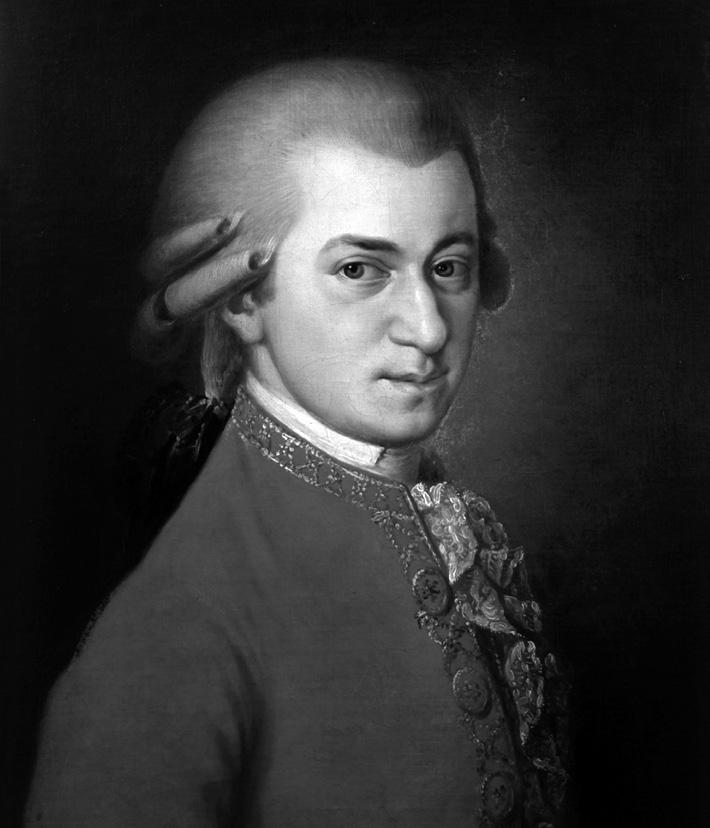
There’s long been an aura of mystery and almost spiritual profundity attached to Mozart’s final three symphonies.
Mozart’s final three symphonies. It’s summed up nicely by eminent music historian Alfred Einstein, who, in his 1945 book Mozart: His Character, His Work, asserted that the symphonies’ mystery ‘is perhaps symbolic of their position in the history of music and of human endeavour, representing no occasion, no immediate purpose, but an appeal to eternity’.
That’s certainly one way of looking at things. Another, perhaps, is to point out that in 1788, Mozart still had three years to live: with no indications of his untimely demise, would he himself really have considered these three works his final symphonies? They’re the last works he composed in that particular form, but he was still producing music at a rate of knots: between 1788 and his death in December 1791, he’d go on to compose several chamber and keyboard works; the three ‘Prussian’ string quartets; the operas
Così fan tutte, The Magic Flute and La clemenza di Tito; the Clarinet Concerto; the choral miniature Ave verum corpus; and of course the unfinished Requiem.
But claims about the final three symphonies don’t stop there. Many musicians – most prominently the eminent conductor Nikolaus Harnoncourt, who died in 2016 – have felt that they form a stand-alone mini-cycle, even a single entity, conceived and intended to be experienced as a grand, overarching megapiece, with No.39 forming a kind of expansive overture to the drama of No.40 and the lavish celebration of No.41. It’s a perspective that this evening’s concert – alongside many performances by other orchestras across the world – seems to support, even tacitly. And there’s no denying that the three symphonies fill a conventional evening’s programme very well, providing a satisfying and diverse arc of music across their 12 combined movements.
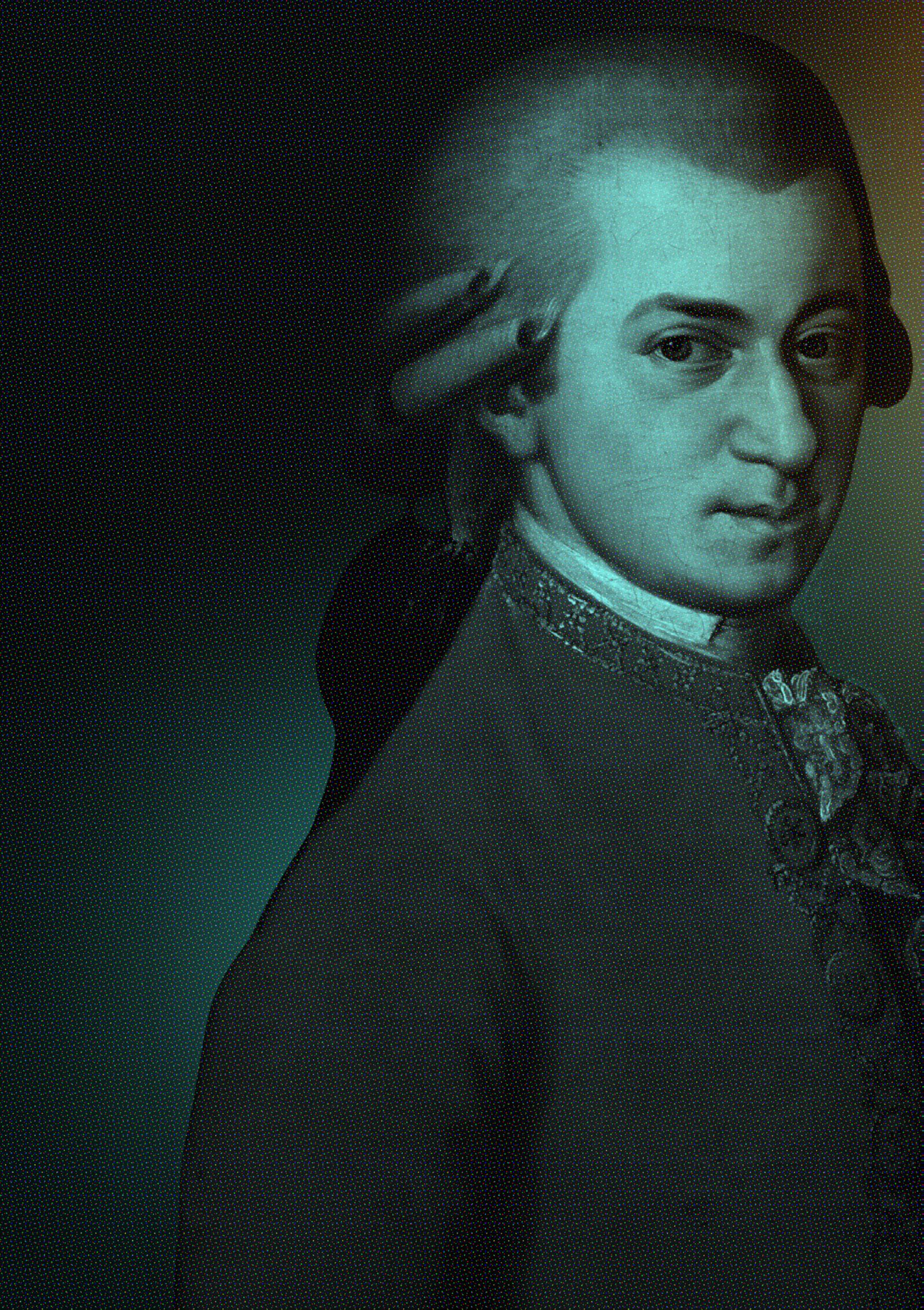
Wolfgang Amadeus Mozart
Harnoncourt described them as an ‘instrumental oratorio’ with an inner dramatic unity, highlighting specific aspects of the music to support this view. Symphony No.39 has a long, slow introduction but no closing coda, for example, suggesting it might run straight into No.40, whereas No.41 has the longest, grandest finale of them all, perhaps indicating that that movement is intended as the summation of the entire trilogy.
It wouldn’t have been unprecedented to conceive a trilogy of symphonies in this way. Haydn had done something similar in 1761 in his trio of symphonies (Nos 6, 7 and 8) inspired by times of the day, ‘Le matin’, ‘Le midi’ and ‘Le soir’. But despite the pleasing, three-part, light-dark-light, major-minor-major arch-like form in Mozart’s final symphonies, he created no specific connections between their respective musics – certainly no recurring melodies or shared ideas – and even used a slightly different combination of instruments for each symphony’s orchestra. It’s hard to assert with confidence, then, that he really intended them to be experienced together as a 12-movement whole – which is not, of course, the same as saying we shouldn’t.
Perhaps the real mystery behind Mozart’s final three symphonies, though, is why we seem so intent on discovering a deeper, hidden meaning behind the works, and why we seem to want to tie that meaning to a mythologised version of Mozart the boy genius whose life was so mysteriously cut short. Perhaps what actually makes these symphonies special, rather than any mysterious speculation about their purpose or connections, is quite simply their music, which shows the composer not only at the height of his powers, but also straining against the bounds and very definition of
what a symphony could and should be, at least in late 18th-century Vienna.
Viennese audiences in Mozart’s time would have expected something concise, tuneful, immediate and fairly lightweight from a symphony. What Mozart increasingly offered them were symphonies that were longer, more ambitious, more dramatic, and more challenging for players and listeners alike. No wonder, perhaps, that by 1788, the city’s notoriously fickle cultural tastes that had once adored the mischievous but pioneering young musician were increasingly turning away from him. While they’d once lapped up anything he produced, their tastes had moved on. On top of that, after the Hapsburg monarchy declared war on the Ottoman Empire in February 1788, wealthy Viennese patrons found they had far less disposable income to fritter on such luxuries as concerts and commissions. Once the darling of Viennese society, Mozart was quickly reduced to begging friends for loans.
That said, the popular perception of a penniless Mozart struggling to make ends meet during the final years of his life isn’t quite right either. He was still receiving a relatively comfortable income. It’s just that he also managed to spend substantially more than he earned – and, of course, he was supporting his wife Constanze and their two young children. The family moved from central Vienna to the then suburb of Alsergrund in the summer of 1788, ostensibly to save money, though Mozart later admitted that he was paying the same rent away from the city centre, just for a larger property.
It's perhaps an unlikely context in which to create three pioneering works devoted solely to posterity, but one in which Mozart may nevertheless have felt compelled to continue
Perhaps the real mystery behind Mozart’s final three symphonies, though, is why we seem so intent on discovering a deeper, hidden meaning behind the works, and why we seem to want to tie that meaning to a mythologised version of Mozart the boy genius whose life was so mysteriously cut short.
his development of the symphonic form itself. The three symphonies that resulted are undeniably a leap forward from Mozart’s earlier symphonies – something we can only really appreciate by imagining ourselves as listeners at the end of the 18th century, rather than two decades into the 21st. Today, we might consider a symphony to be a glimpse into a composer’s innermost, profoundest thoughts, a deeply personal drama melding together abstract logic, confrontation and resolution. That, however, is essentially a model that would be laid down by Beethoven a few decades later. In Mozart’s time, conceiving and creating a symphony in this way was something of a radical departure – and goes some way, perhaps, towards explaining these three symphonies’ enduring power, fascination and relevance.
If the Symphony No.39 does function as the trilogy’s overture, then it’s a grand,
expansive introduction that has more than enough to capture the imagination in its own terms. Mozart builds up a sense of expectation in the slow introduction to his first movement, complete with majestic fanfares and drum strokes. And though the grand opening melts seamlessly into the movement’s faster main section, in a lilting three-beat time, the movement’s ceremonial grandeur remains until its sonorous conclusion.
An elegant violin melody kicks off the delicate second movement, though Mozart holds his woodwind back until the stormier central episode, where flutes and clarinets emphasise a distinctively rich, mellow sound world. His bumptious third movement sounds more like an Austrian Ländler dance than an elegant court minuet, and his finale plays endless witty games with its mischievous, dashing opening melody, which he puts
through all manner of transformations before it even makes one last, cheeky appearance amid the movement’s otherwise assertive conclusion.
From ceremonial grandeur to drama and tragedy: Mozart’s Symphony No.40 – one of only two by the composer in a darker minor key – occupies a very different emotional world from that of its predecessor. Indeed, its apparently intense emotions made the Symphony particularly popular with audiences and performers who came directly after Mozart, almost as an early herald of the stormy, individualistic, heroic Romantic style that Beethoven would usher in. It’s known, in fact, that Beethoven was a particular admirer of the Symphony No.40. He painstakingly copied out a section of it among the sketches for his own Fifth Symphony, suggesting that it may have exerted a direct influence on that later work.
After a moment or two of mood-setting accompaniment only – hardly usual practice in Mozart’s time – the first movement’s sighing main theme arrives quietly, but it’s quickly interrupted by fanfares and rushing scales. The movement’s second main theme, however, is far slinkier, even coquettish –though it sounds more resigned and listless when it returns in the darker minor towards the end of the movement.
The slower second movement feels far brighter and calmer, though he would no doubt have perplexed Viennese listeners by dragging the music through unfamiliar, strange and distant harmonies as the music develops. His third movement minuet would pose serious problems for dancers with its angry, forceful theme and its rhythmic tricksiness, though its central trio section pits choirs of stringed and woodwind instruments against each other in a brighter major key.
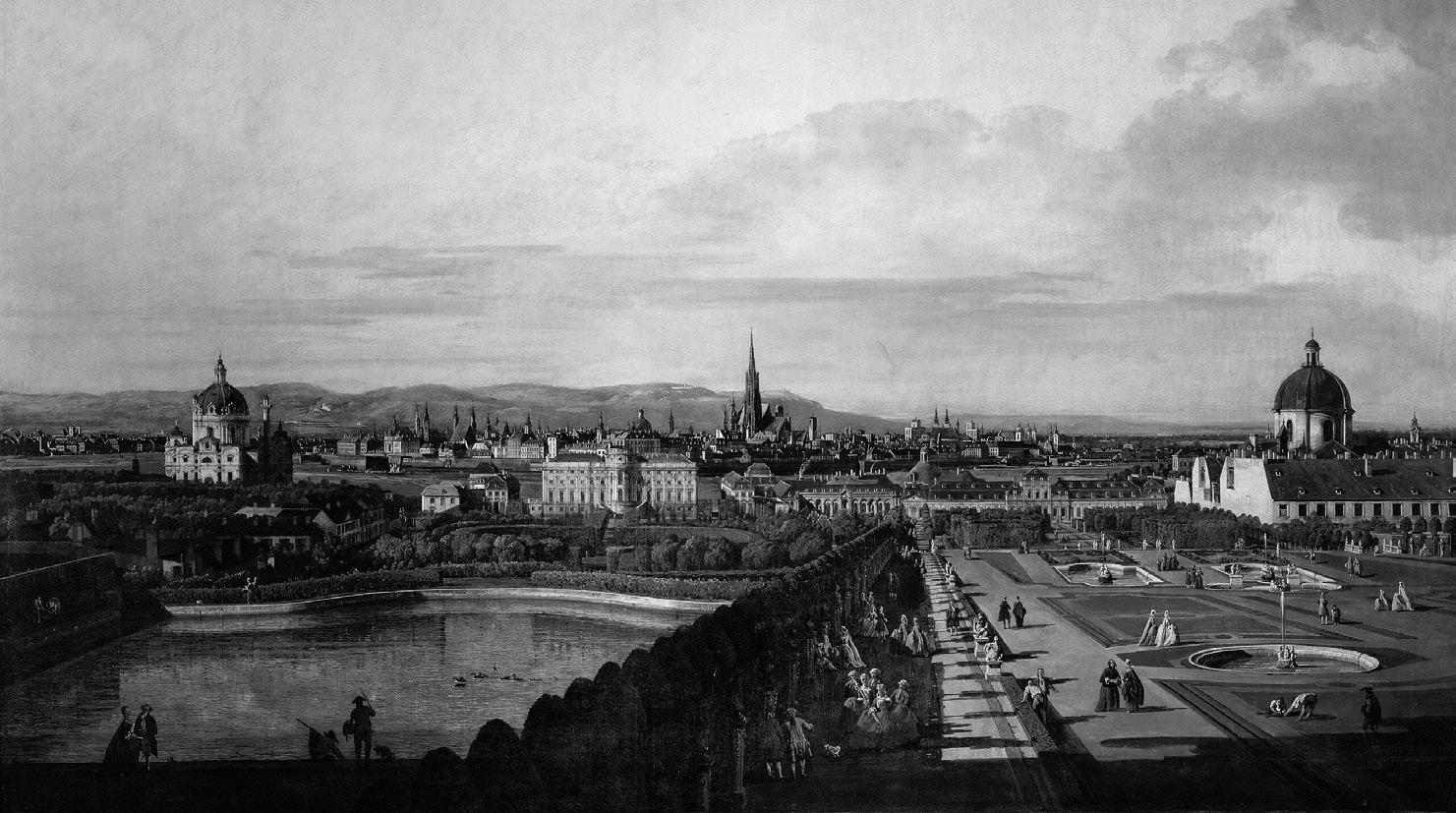
View of Vienna during the Baroque era, by Bernardo Bellotto
Mozart’s finale takes us back to the darker minor, but there’s a sense of determination and resistance to its explosive main theme. Again, Viennese listeners might have raised an eyebrow at the opening to his central development section, which sends the movement’s melody through all manner of angular, jagged figures and all but destroys any sense of a home key. The movement ends not with an uplifting slide into the brighter major, but doggedly in the Symphony’s original minor key.
Mozart’s final Symphony, No.41, is also his longest and grandest. Its ‘Jupiter’ nickname, however, is nothing to do with the composer: it was probably coined by London impresario Johann Peter Salomon or possibly the English music publisher Johann Baptist Cramer. And though it was essentially a marketing tag, there’s no denying that its reference to the mightiest of the Roman deities is an appropriate one in music of such grandeur and power.
It’s not known when the ‘Jupiter’ Symphony was first played, though the first documented performance was under Salomon in London in March 1798. The piece quickly gained an almost mythic status, however, as much for its scope and ambition as for the immediacy and vibrancy of its music. Robert Schumann wrote in 1835: ‘about many things in this world there is simply nothing to be said – for example, about Mozart’s C major Symphony with the fugue, much of Shakespeare, and some of Beethoven.’
It’s significant that Schumann should mention Beethoven. Mozart’s Symphony No.41 is probably the closest he came to his later colleague’s innovations, in terms of shifting the symphony as a musical form away from being a lightweight diversion and towards
an intense, compelling form of personal expression, a profound but also abstract musical utterance.
There’s a definite military character to the first movement’s assertive opening theme, a ceremonial exclamation from the full orchestra (no doubt intended to capture the audience’s attention), followed by a somewhat restrained response from the violins. The movement’s tripping second theme is songlike and heavily decorated, and Mozart even squeezes in – unusually – a third main theme, a coy and courtly folksong-like tune that seems to start in mid-flow. This is actually a self-quotation from Mozart’s concert aria ‘Un bacio di mano’ (‘A kiss on the hand’), which seems quite at odds with the military splendour of the movement’s opening.
The second movement begins serenely on veiled, muted strings, but the arrival of a far more troubled second theme, full of dissonances and syncopations, threatens to destabilise the movement entirely. After a good-natured, bouncing minuet, Mozart launches into the complexities and splendours of his lavish, expansive finale, whose opening theme begins with four distinctive, slowmoving notes. It’s a simple musical idea that many composers – including Mozart himself – had already used in their music, and it also featured as one of the exercises in Johann Joseph Fux’s counterpoint textbook Gradus ad Parnassum, known to all musicians in Mozart’s time. It’s almost as if Mozart is self-consciously drawing attention to what splendours he can achieve using such simple material, and the movement reaches its climax with a grand fugue that brings together all of its themes, and brings his final trilogy of symphonies to a deservedly triumphant conclusion.
© David Kettle
Conductor Maxim
Emelyanychev
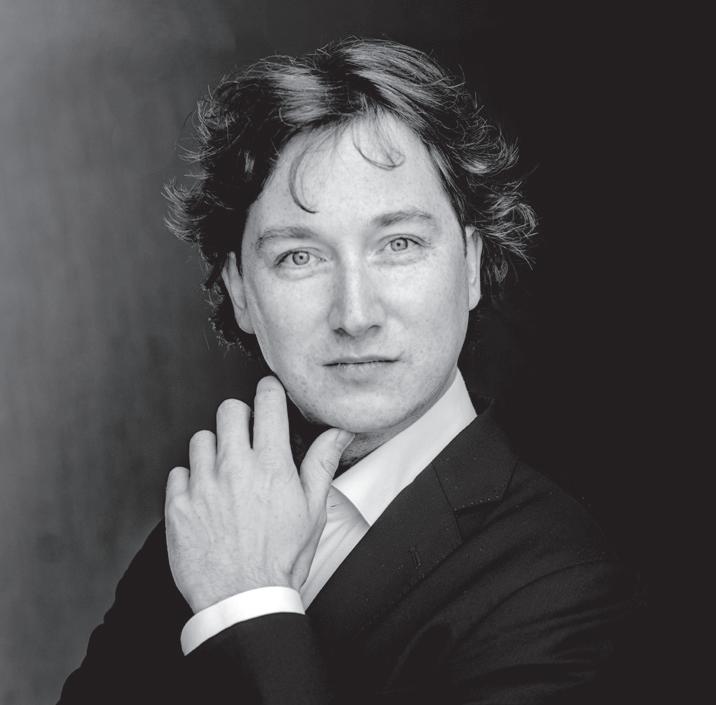
Maxim Emelyanychev has been Principal Conductor of the Scottish Chamber Orchestra since 2019. He is also Chief Conductor of period-instrument orchestra Il Pomo d’Oro, and became Principal Guest Conductor of the Swedish Radio Symphony Orchestra from the 2025/26 Season.
Born in Nizhny Novgorod, Emelyanychev made his conducting debut at the age of 12, and later joined the class of eminent conductor Gennady Rozhdestvensky at the Moscow Conservatoire.
Emelyanychev was initially appointed as the SCO’s Principal Conductor until 2022, and the relationship was later extended until 2025 and then until 2028. He has conducted the SCO at the Edinburgh International Festival and the BBC Proms, as well as on several European tours and in concerts right across Scotland. He has also made three recordings with the SCO, of symphonies by Schubert and Mendelssohn (Linn Records).
Emelyanychev has also conducted many international ensembles including the Berlin Philharmonic, Royal Concertgebouw Orchestra, Orchestra dell'Accademia Nazionale di Santa Cecilia, Deutsches Symphonie-Orchester Berlin, Rotterdam Philharmonic Orchestra, Finnish Radio Symphony Orchestra, Seattle Symphony and Orchestra of the Age of Enlightenment. In the opera house, Emelyanychev has conducted Handel’s Rinaldo at Glyndebourne, the same composer’s Agrippina as well as Mozart’s The Magic Flute at the Royal Opera House, Covent Garden, and Mozart’s Die Entführing aus dem Serail at the Opernhaus Zürich. He has also conducted Mozart’s Die Zauberflöte and Così fan tutte with the SCO at the Edinburgh International Festival. He has collaborated closely with US soprano Joyce DiDonato, including international touring and several recordings.
Among his other recordings are keyboard sonatas by Mozart, and violin sonatas by Brahms with violinist Aylen Pritchin. He has also launched a project to record Mozart’s complete symphonies with Il Pomo d’Oro. In 2019, he won the Critics’ Circle Young Talent Award and an International Opera Award in the newcomer category. He received the 2025 Herbert von Karajan Award at the Salzburg Easter Festival.
For full biography please visit sco.org.uk
©
Andrej
Grilc
19-21 March, 7.30pm
Edinburgh | Glasgow | Aberdeen sco.org.uk
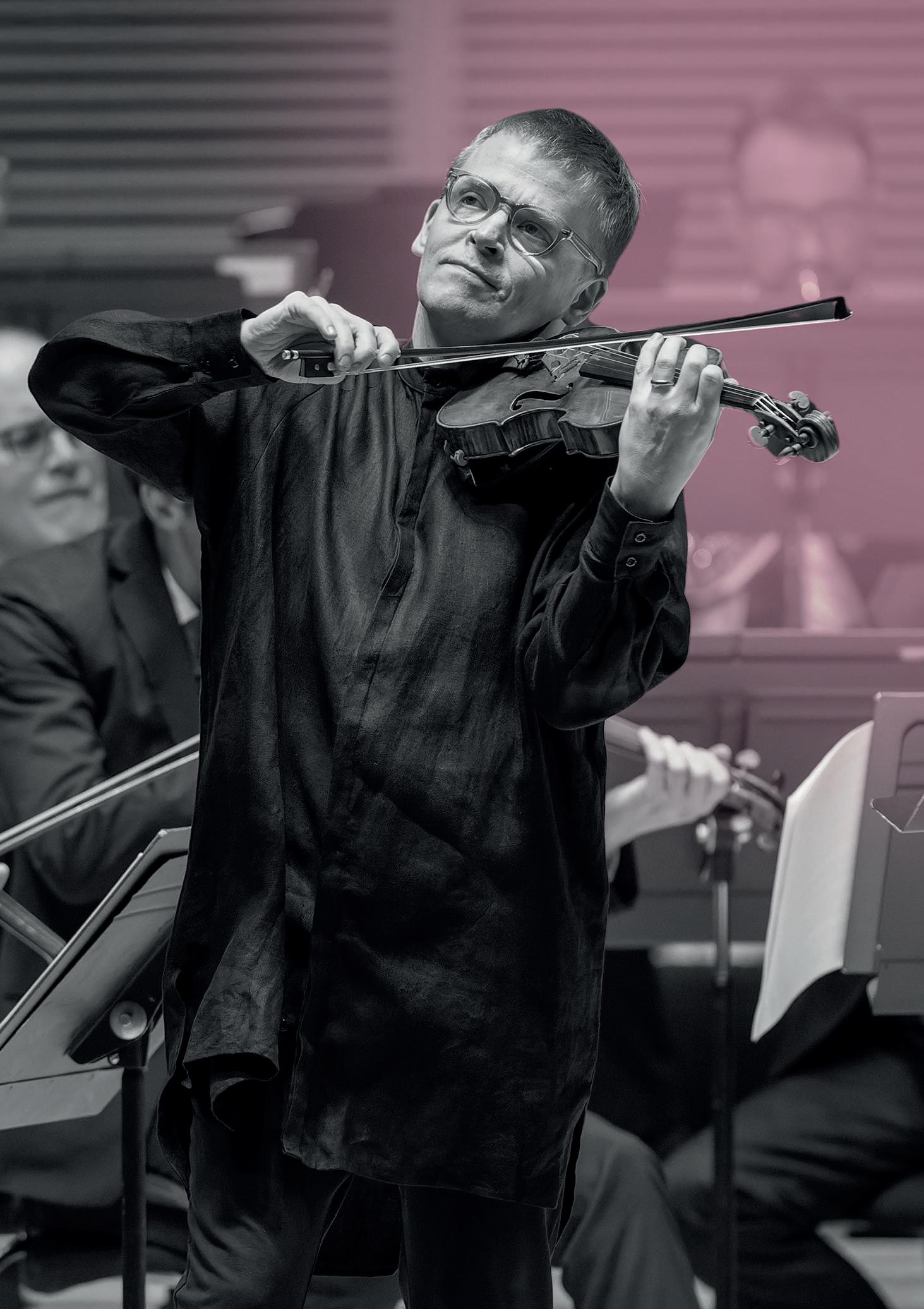
Beethoven, Pekka & Dreamers’ Circus
Pekka Kuusisto director/violin
Dreamers’ Circus:
Ale Carr cittern
Nikolaj Busk piano/accordion
Rune Tonsgaard Sørensen violin
Kindly supported by LEARN MORE
Beethoven’s Seventh Symphony interspersed with Nordic folk tunes
Scottish Chamber Orchestra
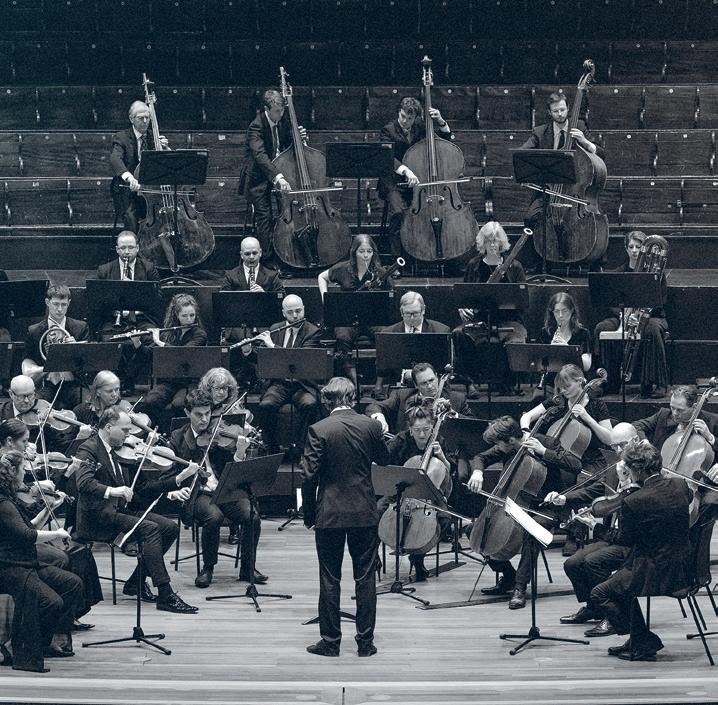
The Scottish Chamber Orchestra (SCO) is one of Scotland’s five National Performing Companies and has been a galvanizing force in Scotland’s music scene since its inception in 1974. The SCO believes that access to world-class music is not a luxury but something that everyone should have the opportunity to participate in, helping individuals and communities everywhere to thrive. Funded by the Scottish Government, City of Edinburgh Council and a community of philanthropic supporters, the SCO has an international reputation for exceptional, idiomatic performances: from mainstream classical music to newly commissioned works, each year its wide-ranging programme of work is presented across the length and breadth of Scotland, overseas and increasingly online.
Equally at home on and off the concert stage, each one of the SCO’s highly talented and creative musicians and staff is passionate about transforming and enhancing lives through the power of music. The SCO’s Creative Learning programme engages people of all ages and backgrounds with a diverse range of projects, concerts, participatory workshops and resources. The SCO’s current five-year Residency in Edinburgh’s Craigmillar builds on the area’s extraordinary history of Community Arts, connecting the local community with a national cultural resource.
An exciting new chapter for the SCO began in September 2019 with the arrival of dynamic young conductor Maxim Emelyanychev as the Orchestra’s Principal Conductor. His tenure has recently been extended until 2028. The SCO and Emelyanychev released their first album together (Linn Records) in 2019 to widespread critical acclaim. Their second recording together, of Mendelssohn symphonies, was released in 2023, with Schubert Symphonies Nos 5 and 8 following in 2024.
The SCO also has long-standing associations with many eminent guest conductors and directors including Principal Guest Conductor Andrew Manze, Pekka Kuusisto, François Leleux, Nicola Benedetti, Isabelle van Keulen, Anthony Marwood, Richard Egarr, Mark Wigglesworth, Lorenza Borrani and Conductor Emeritus Joseph Swensen.
The Orchestra’s current Associate Composer is Jay Capperauld. The SCO enjoys close relationships with numerous leading composers and has commissioned around 200 new works, including pieces by Sir James MacMillan, Anna Clyne, Sally Beamish, Martin Suckling, Einojuhani Rautavaara, Karin Rehnqvist, Mark-Anthony Turnage, Nico Muhly and the late Peter Maxwell Davies.
© Christopher Bowen

Support Us
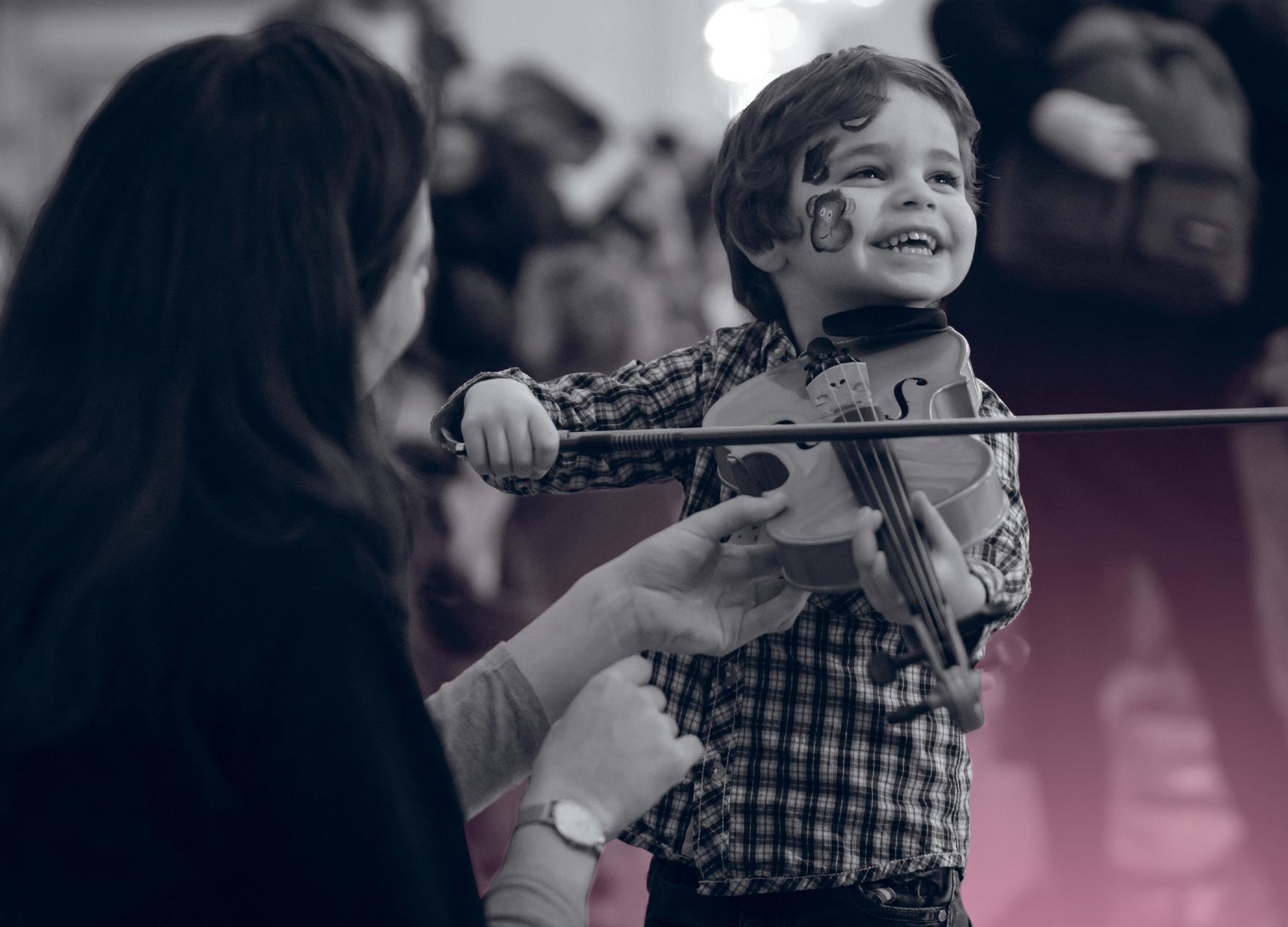
Each year, the SCO must fundraise around £1.2 million to bring extraordinary musical performances to the stage and support groundbreaking education and community initiatives beyond it.
If you share our passion for transforming lives through the power of music and want to be part of our ongoing success, we invite you to join our community of regular donors. Your support, no matter the size, has a profound impact on our work – and as a donor, you’ll enjoy an even closer connection to the Orchestra.
To learn more and support the SCO from as little as £5 per month, please contact Hannah at hannah.wilkinson@sco.org.uk or call 0131 478 8364.
SCO is a charity registered in Scotland No SC015039.
Photo: Stuart Armitt
The