








Slovenia is planning a remarkable step in European drug policy. As the first country in Southeastern and Eastern Europe, the republic intends to legalize the private consumption of cannabis under certain conditions.
The political initiative originates from the governing Left Party and the social-liberal Freedom Movement. Natasa Sukic, a member of parliament for the Left Party, explained in parliament that the proposal is primarily intended to implement the will of the people. It is also about "destigmatizing" cannabis use. Cannabis is no more dangerous than legally available substances such as tobacco and alcohol.
The reform was prompted by referendums held last year in parallel with the European elections. A narrow majority of 51.57 percent of Slovenian voters supported the legalization of the cultivation and possession of cannabis for personal use. 66.71 percent voted in favor of legalizing cannabis for therapeutic purposes.
Accordingly, Parliament passed a law in June of this year permitting the cultivation of cannabis for medical purposes under a license. Now, another bill is addressing
private consumption.
The planned regulations stipulate that adults will be allowed to grow up to four cannabis plants per person, but no more than six per household. At the same time, there is a restriction for public spaces: consumers are allowed to carry a maximum of seven grams. However, the permitted storage limit for private households is strikingly generous: up to 150 grams per person or 300 grams per household may be stored there. This puts Slovenia well above the limits in Germany and Malta, for example, where a maximum of 50 grams is permitted.
However, smoking cannabis in the presence of minors will be strictly prohibited. The sale of home-grown cannabis will also remain prohibited. However, those who give small amounts to friends as gifts will be considered legal under the planned regulations.
The legislature is paying particular attention to road safety. Similar to the blood alcohol limits for road traffic, clear limits are to be introduced for cannabis. These limits have even already been defined: Drivers who demonstrate demonstrable impairment will face heavy fines in the future, depen-
ding on the THC level in their blood. If the concentration is up to three nanograms per milligram of blood, a fine of 300 euros will be imposed. For three to five nanograms, this increases to 600 euros, and anyone with more than five nanograms faces a fine of 1,200 euros. Slovenia is thus sending a clear message that the legalization of cannabis does not equate to complete freedom, but that regulations remain necessary to protect the public.
When it comes to cannabis in the workplace, the country pursues a more liberal approach than many other countries. Employers are prohibited from conducting THC tests on employees. The justification for this is "consumer protection." As long as employees are not obviously impaired in their work, they may not be monitored or sanctioned for their private consumption.
If the law is passed as planned, it could serve as a signal for other countries in Southeastern and Eastern Europe that have so far maintained a restrictive stance. For Slovenia itself, it marks a political milestone on the path to a more liberal social policy. (MB)
Sources: www.sn.at; www.tageblatt.lu







Page 9
Fermented Plant Juices What They Are and How to Make Them
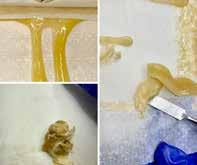
Page 12 The Art of Rosin The Soft Secrets of the Champions

Page 16
All You Need To Know About Hydroponics An Interview with Bill Sutherland


Page 19 The Origins of Haze The Chronicle of a Sativa That Became Legend Page 26
Aardachtig Dutch legal grower that just loves soil!










The new filter is based on the same principle, half cellulose, h alf activated carbon, and measures 30mm in length - just like the classic 6.4mm SLIM filte r. With a diameter of 8.2mm, it offers even more draught and filter capacity. Ideal for thicker joints, larger chiller rounds and moments when size does matter. In addition, the flat tip is now fully organic and biodegradable.
Available to start with in the classic box with 44 pieces and 200 pieces in a bag - easily recognisable by the new packaging colour. www.hybrid-filter.com

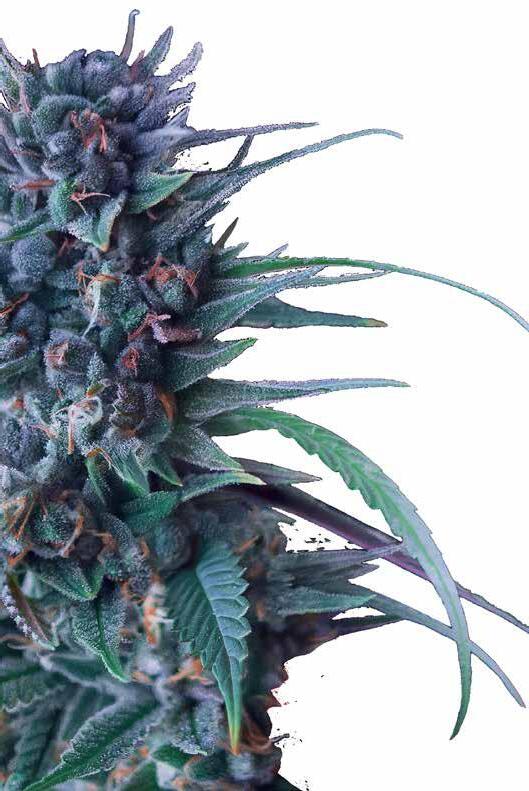
King Louie XIII - Heavy is the head that wears the crown. Indeed, this monarch carries the traditional OG impact concentrated in a pleasantly cranial direction. This profile is just straight gas. If you want to get loud, look no further. The King is here.
The only botanical terps that actually smell and taste like cannabis derived terpenes. www.mrterpeenes.com




Shop review
By Michiel Panhuysen
The Hague, the Dutch city of Peace & Justice, is becoming increasingly known as the place to be for European cannabis enthusiasts. Two beautiful local shops are at the very centre of that. Both are melting pots of cultural diversity and clean, high-quality weed and hash. We are talking of course about Dizzy Duck and Dizzy Duck Downtown, famous winners of numerous HighLife and other international cannabis cups. Soft Secrets heard so much about them that we decided to pay a visit.

We are in coffeeshop Dizzy Duck Downtown on Fluwelen Burgwal. The brightly lit ground floor has a number of cash registers and a high ceiling. It is spacious and exudes art, underground culture, and joie de vivre. It is also an inspiring and cozy place, pleasantly cluttered with a touch of adventure. A steep staircase leads to a floor where people smoke joints together in an attic-like space. It resembles a meeting place for creative and free spirits. Customers stand in front of the cash registers and face a candy cabinet full of unique hash and cannabis strains. The Dizzy Duck crew is young, contemporary and knowledgable.
The coffeeshop has its own Dizzy community where people share their joys and sorrows. There are also THC dinners, puff and paint sessions, and every year they host a grand, elaborate 420 celebration. But just as important of course is the unique cannabis experience that Dizzy Duck represents. In June, Dizzy Duck won the overall 2025 Highlife Cup for hash. The Dizzy Duck team also won awards in many of the hash and weed subcategories. They are rightly proud of this achievement. Stunningly, Dizzy Duck won so many cannabis cups in the past 20 years, that one has difficulty to track them all down.
What is the reason for this succes? The team behind Dizzy Duck has a special interest in aroma's and flavors. This is reflected in the unique varieties of hash and weed the shops sell. The
products come from small-time growers who produce purely organic cannabis with great love and care. This allows the coffeeshop to surprise enthusiasts with truly special strains and flavors, a rich pallet of terpenes. It's no wonder then Dizzy Duck won the Highlife Cup for hash this year.
A Dizzy Duck crew member: "The arrival of
modern hash varieties is inevitable. That's why we started delving into this topic. It led us across the path of many enthusiasts and underground breeders and hash makers." Anticipating the future of modern hash, the Dizzy Duck team set out on a quest for the highest quality. This
JUST AS MICHELIN
FOOD, SO DO THE DIZZY
WITH HASH AND WEED.
journey took them to Canada, the United States, Spain, and Thailand. The Hague coffeeshop has embraced modern hash varieties and is incredibly proud of all the top-notch products from the best hash makers: "Dry Sift, Static, Plasma Static,

Fresh Frozen Water Hash, Ice-o-Lator, Rosin, and of course, traditional hash. We've seen all the methods and tasted all the differences. Dizzy Duck has become a specialist in assessing all types of hash." The only development Dizzy Duck doesn't support is the production methods that use solvents. These are not included in the shop.
New types of hash and production methods are constantly being developed. New strains are being crossed and selected specifically for producing hash. The number of ways to make new hash is also changing. Just as Michelin chefs experiment with food, so do the Dizzy Duck staff with hash and weed.
The primary goal of all this experimentation is to preserve the terpenes (flavor, aroma). "By processing a fresh plant, you achieve wonderful flavors and effects that were previously almost impossible with traditional processing. It is now even more important than ever to guide customers in the shop in their product selection. The new hash has a huge variety of terpenes, meaning the effect varies enormously from strain to strain, especially compared to traditional hash." The THC and CBD percentages of many varieties are now very similar. The terpenes in the strains make the real difference.
Dizzy Duck only sells products that the crew would smoke themselves. Everything is extensively tested without tobacco by an experienced test panel and inspected under a microscope. After thorough testing, it's sent to a laboratory for double-checking. "After all the testing, only 2% of the products we receive pass the inspection."
And that speaks volumes about the dedication and love Dizzy Duck has for it's products. If you are ever in the beautiful Netherlands, hop in a bus, train or car and find your way to The Hague, not only the capital of the country but increasingly becoming the capital for cannabis lovers too!
Fruit Joy, Overall Winner Hash, HighLife Cup 2025
"We won the overall hash cup with Fruit Joy FFWP Ice Cream, lovingly handcrafted by some of the best hash makers in Europe: Lakalada from Barcelona. Fruit Joy is a cross of Papaya x Barbara Bud and is a wonderful collaboration. Barbara Bud is an Afghani strain selected by Growers With Attitude (GWA). This selection goes back thousands of years and smells like candy/peach.
Grateful Seeds crossed Barbara Bud with Calikosher Papaya (which they gave to Lakalada). The result is a strain Europe can be proud of!
FFWP stands for Fresh Frozen Whole Plant. This is the freshest and purest hash made from fresh plants, frozen immediately after harvest and kept at a constant freezing point to preserve the terpenes.
Dizzy Duck Trompstraat 210 2518 BR The Hague
Opening hours: Daily 10AM-22.30PM Website: dizzyduck.nl
Dizzy Duck Downtown Fluwelen Burgwal 1c 2511 CH The Hague
Opening hours: Daily 10AM-24.00PM Website: dizzyduckdowntown.nl

Stoney Tark
Strain: Candy Bubatz XL
Genetics: Bubble Gum x Critical Orange Punch
Pot Size: 30 L
Grow Medium: Atami Buffered Coco, Atami Jane Co Light Mix and Atami Worm Delight
Nutrients: VGN Grow (5-2-2), VGN Grow (2-4-4), VGN Cal Mag and ATAzyme.
Location: Outdoor in Spain
Vegetation: 8 weeks
Flowering: 9weeks
Plant Height: 172 cm
Candy Bubatz XL is a new XXL-yielding feminised strain from Dutch Passion. It’s a cross between the classic Bubble Gum and Critical Orange Punch (which itself combines Grandaddy Purple, Critical, and Orange Bud). This strain thrives with low-stress training (LST) and can deliver massive yields in just 9 weeks of flowering.
I grew six Candy Bubatz XL plants from feminised seeds. They were germinated in tissue paper, then transplanted into 30L fabric pots outdoors in early June. Here's how the grow went, from veg through to harvest.
Once out of the seedling phase, the plants took well to the summer sun, developing thick, waxy leaves. I fed them: By the end of week 3, they had reached their 4th internode and were topped. I have been giving the plants 3ml per litre of VGN Grow fertiliser (5-2-2), VGN Grow fertiliser (2-4-4), VGN Cal Mag, and 3ml per litre of ATAzyme every day when the pots are feeling dry.
With greenhouse temperatures at 28°C and high humidity, growth accelerated. Roots began emerging at the base of the pots by day 28. Plants were topped again and tied down for LST. By week 4, they stood 56 cm tall and 57 cm wide with thick stems. Feeding continued as before. Plants were also pruned, keeping just the top internodes.
By early July, the plants were thriving and are all bushy, deep green, and full of new shoots thanks to LST. They reached 82 cm in height. Temperatures exceeded 30°C daily, and the humidity remained high. Side branches were tied down again and lower growth was removed to improve airflow.

I continue to feed every 24 hours, giving the pots and increased the nutrient solution to 5ml per litre of VGN Grow fertiliser (5-2-2), VGN Grow fertiliser (2-4-4), VGN Cal Mag, and 3ml per litre of ATAzyme.
In late July, growth exploded. The roots had filled the pots. Feeding remained unchanged, and plants were now 98.5 cm tall, wide, and very dense. The greenhouse was full. By the end of week 8, the first pistils appeared—flowering had begun.
Flowering Stage: August–October
By August, the plants filled every inch of the greenhouse. I removed them to stake with bamboo and tie with garden wire. Humidity remained high, making greenhouse work challenging. Plants reached 153 cm, and pistils appeared between internodes.
The Candy Bubatz XL plants were growing quickly and the stems on each plant were becoming thicker along with the side branches. I am feeding them all with 5ml per litre of VGN Grow fertiliser (2-4-4), VGN Boost (1-4-4), VGN Cal Mag, and 3ml per litre of ATAzyme.
By week 4, bracts were forming rapidly. The smell was already intense. Resin production started early, and the buds had a strong, earthy and sweet aroma. Temps stayed above 35°C, and plants continued thriving. Height reached 165 cm. Considering how hot it was, the plants were thriving inside the plastic-coated greenhouse, and were not bothered by the heat and humidity.
As September began, I kept the nutrient solution at 5ml per litre of VGN Grow fertiliser, VGN Boost, VGN Cal Mag, and 3ml per litre of ATAzyme. The buds grew dense and heavy, with a rich, complex scent that I describe as meaty, earthy, fruity with a touch of sweet candy. The resin glands covered leaves and buds alike.
During the last 14 days, I stopped all nutrients and began to flush the Candy Bubatz XL. This means cutting off all nutrients and only using

Cannazyme. There were no signs of mould or mildew, despite the humidity and the dip in nighttime temperature.
By the first week of October, the greenhouse was bursting with aroma and smelled incredible. The pistils were mostly brown, and the bracts were rock solid. Final enzyme feeds continued until October 7, when I decided to give the Candy Bubbatz plants a chop. They were harvested at 172 cm tall and took me 3 days to wet trim.
My Final Thoughts on Candy Bubatz XL
Candy Bubatz XL is a vigorous, tall, and high-yielding strain that rewards growers with massive resinous buds and a rich, complex terpene profile. With proper LST and care, she delivers on both quality and quantity. If you are a fan of the old school fruity strains, then I recommend this strain. She grows huge, so be ready to anticipate large-sized girls and enormous harvest potential.




All over the world, growers share a single goal: to get the very best out of their plants. Whether it’s the perfect flower, the largest fruit, or the highest yield, the key to success lies in using balanced and reliable nutrition. For decades, CANNA has been the leading specialist in professional plant nutrients and additives. And that expertise hasn’t gone unnoticed: CANNA nutrients are used worldwide by professionals, champion growers, and record holders who are literally making history.
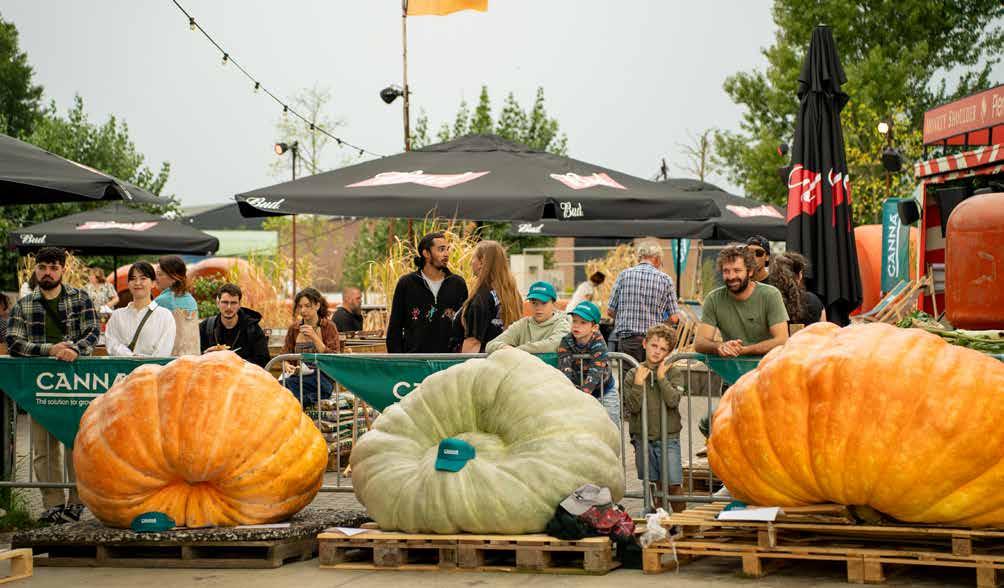
World records fueled by CANNA
In the world of giant vegetables, precision is everything. The right nutrition, the right substrate and a perfect balance of water, oxygen and nutrients determine whether a plant grows big or record breaking big!
All over the world, champion growers rely on CANNA to reach that level. Each product is designed to enhance a plant’s natural growth potential and deliver the best possible results, regardless of the growing method. With pure ingredients and perfectly balanced formulations, growers achieve unmatched vitality, yield and size.
A great example is Peter Glazebrook, a legendary British grower and an icon in the “giant vegetable” scene. He holds numerous Guin-
ness World Records, including the heaviest potato, cauliflower and pumpkin, as well as the longest leek and largest sunflower head.
Glazebrook has been using CANNA products for years, praising their quality, consistency and performance. His remarkable achievements officially recognized by Guinness World Records demonstrate the power of dedication and superior nutrition.
Whether it’s gigantic pumpkins, towering sunflowers, or top-quality blooming orchids, CANNA products consistently appear in the greenhouses, gardens and competitions of the most successful growers worldwide.
CANNA: Science, passion and perfection
CANNA has been a pioneer in plant science
for over 30 years. Every product is thoroughly tested in CANNA’s own laboratories, R&D-facilities across the globe and in real-world conditions alongside professional growers striving for record-breaking results. CANNA nutrients and additives are designed for maximum uptake, healthy root development and optimal flowering, helping growers push the limits of size and yield.
Cultivating in soil, coco, or hydroponics, CANNA provides a complete, balanced nutrition system that supports strong, healthy plants and exceptional results. Perfect for growers aiming for maximum size, potency and vibrant, high-quality yields.
Thé choice of champions
From local growers to world record holders,
the passion for growth unites them all. Time and again, CANNA proves to be the difference between good and extraordinary.
What makes CANNA truly stand out is the unmatched quality of its nutrients. While many feeds provide the basics, CANNA’s formulations use the purest, most readily available ingredients, giving plants exactly what they need when they need it. The difference is clear: stronger roots, fuller flowers, and fruits and vegetables that reach sizes others can only aspire to. For growers chasing extraordinary results, there is simply no comparison.
CANNA – Turning ambition into colossal results.

The number of marijuana growers embracing organic growing techniques is constantly increasing, and there are many reasons for this trend. Both cannabis consumers and growers are undoubtedly becoming more aware of health and environmental issues, but a growing demand for increasingly high-quality products such as buds and extracts is also contributing.
Marijuana grown using methods similar to organic farming has far superior organoleptic qualities compared to buds grown using traditional synthetic fertilizers.
One of the most popular organic growing methods currently is Korean Natural Farming, or KNF, a set of agricultural practices based on soil care, the proliferation of beneficial native

microorganisms, and the use of recycled agricultural waste. Two important allies of KNF are Fermented Plant or Fruit Juices, called FPJ and FFJ respectively.
Fermented juices are liquid extracts rich in nutrients, enzymes, microorganisms, and numerous beneficial phytocompounds. Extraction occurs through a fermentation process of various plants and fruits combined with cane sugar.
Fermented juices are considered soil improvers rather than fertilizers due to their low content of micro and macronutrients. Although they provide significant nutritional value, the true benefits come from the work of microorganisms. Some studies have highlighted the presence of fungi and bacteria capable of solubilizing and mineralizing various elements such as phosphorus, nitrogen, potassium, and zinc, making them available to plants.
Furthermore, these beneficial microorganisms can accelerate the decomposition of organic matter, inhibit the activity of pathogens, increase photosynthesis, and stimulate plant growth, resulting in increased yield and the quality of the final product.
FPJs are fermented plant extracts, rich in enzymes and growth hormones such as auxins, and are especially suitable for the vegetative phase. They are an excellent growth stimu-
plants considered rich in nutrients. The use of local plants is also encouraged because the extracts must be made with fresh plant parts.
FFJs are fermented extracts derived from various types of fruit. They are best suited for the flowering stage. They contain large amounts of potassium, a vital nutrient for plants, which they require in large quantities, especially in the final weeks of this phase. FFJs are also rich in microorganisms capable of solubilizing phosphorus, which is also a vital element throughout the entire flowering phase. FFJs can be made with any sweet fruit, such as bananas, papaya, mango, melon, avocado, and apple.
To make a fermented plant or fruit juice, you'll need the following materials:
• 1 kg fresh fruit/plant
• 1 kg organic cane sugar
• cutting board
• knife
• 5-liter clay or glass container
• 2-liter glass container
• ladle
• gauze
• strainer/sieve
lator. They are very effective at solubilizing phosphorus and potassium, two elements that must be converted into soluble forms before they can be absorbed by plants.
Plants require large amounts of these elements, which are often present in the substrate but remain locked in insoluble forms.
To make FPJ, a wide variety of plants can be used, such as mugwort, water spinach, nettle, bamboo shoots, amaranth, and any other
First, cut the vegetables into small cubes and sprinkle them with about half the amount of brown sugar you specified at the beginning of the process. Mix the ingredients thoroughly and pour them into the 5-liter container. Add the remaining brown sugar to the prepared mixture and stir with a ladle. Cover the container with cheesecloth to protect the contents from possible contamination while allowing air to circulate. The fermentation process lasts 4 to 7 days and varies depending on the ambient temperature where the extraction is performed.

At the end of this process, a liquid is obtained that must be filtered from the plant matter. Then, place the strainer over the mouth of the 2-liter container and pour the liquid from the larger container into it. The resulting extract is a fully fermented juice. This process yields approximately 1 liter of fermented extract.
FPJ and FFJ can be applied to plants by simply adding them to irrigation water or as a foliar spray. The recommended dose for fertigation is 1:10, meaning 100 milliliters of fermented juice are added to each liter of water. For foliar applications, it is recommended to use 2 to 5 milliliters of FFJ or FPJ per liter of water.
Fermented extracts can be stored for up to 12 months if stored in a cool, dark place.
KNF was founded by Master Cho Han-kyu in the 1960s. After living in Japan for three years as an agricultural research student and learning local natural farming methods, he returned to Korea, where he combined his country's traditional practices with the knowledge he learned during his travels. The KNF draws on ancient agricultural knowledge typical of rural areas of Japan, China, and Korea.
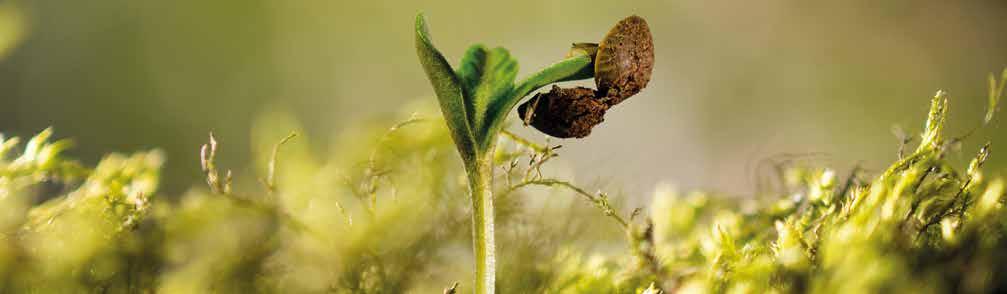
Words & Pics: Green Born Identity – G.B.I.
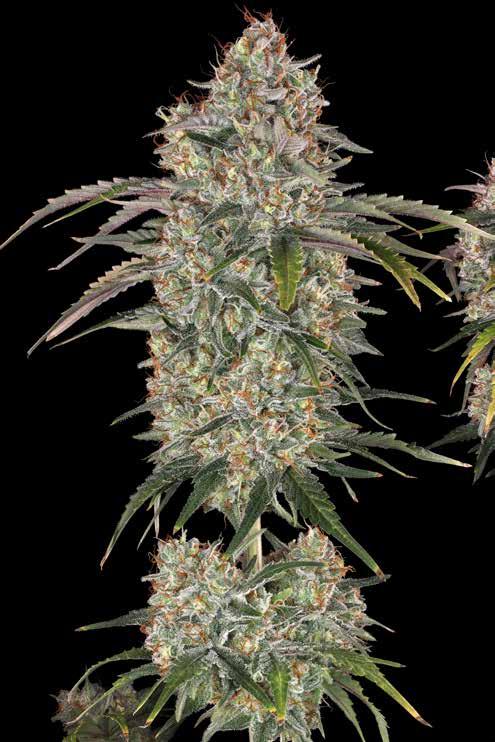
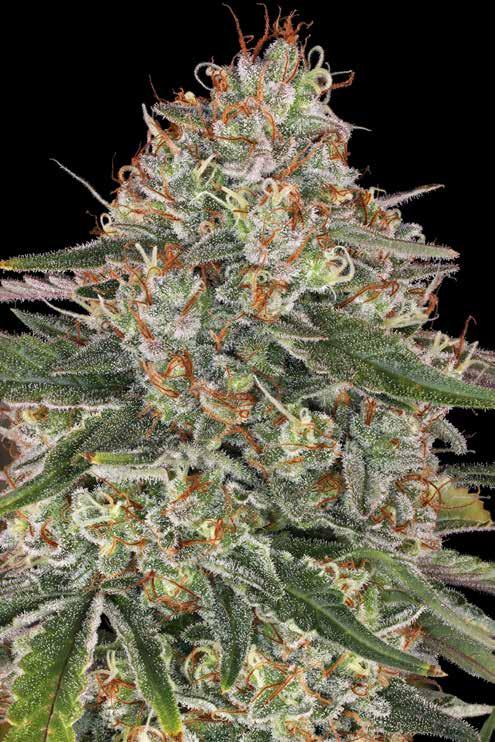
For years Barney’s Farm has been performing a kind of all-star strain parade, with one mega-hybrid lining up next to the other. One of the more recent strains that joined the row in 2023 is Sour Strawberry, for the creation of which two real strain legends came together - Strawberry Kush and Sour Diesel. The BF breeders’ plan to give rise to a new super strain based on this fusion worked perfectly well – Sour Strawberry has it all what it takes to be a champion: Fat indoor yields of 500-600g/m2, a very high THC ranging between 22-24% THC, thick gorgeous resin-dripping buds and a gourmet bouquet that reminds of a well-filled fruit basked mainly containing strawberries and lemons, undercut by earthy and diesel-like notes which results in a complex, highly aromatic potpourri. The medium-sized, slightly sativa dominant (60%) Sour Straw -
berry plants need 65-70 days of flowering.
Another plus this strain has got is the fact it turns ripe in the first to second week of October under natural light, being able to deliver sensational yields of 1.5 to 2.5 kg a plant although not growing taller than 1.5-2 metres. The slight genetic sativa dominance makes itself pleasantly noticeable in the way of effect, with Sour Strawberry providing an energising, uplifting and creativity-boosting effect to the user.
THE VEG STAGE: A TYPICAL BARNEY’S FARM UNIFORMITY
No one less than the German grand old man of indoor growing put Sour Strawberry to the test: For this purpose, The Doc sowed two feminised seeds which performed a germination as perfect as expected, after about
three days the seedlings had pushed their heads above the ground. They grew up quickly, with an early onset of lateral branching. Very unusual for a sativa dominant variety, one of the plants had grown side shoots almost as long as the main shoot at the end of the three-week veg stage. The height of the two Sour Strawberry plants, covered with fairly slender shade leaves, was almost identical (28 and 29 cm) when The Doc triggered them into flowering, he was, once again, very impressed by the uniformity of a Barney’s Farm strain.
During the first 4.5 weeks of flowering, both plants showed quite some stretching temper which had them ascend to about 2.5 times their previous height. In doing so, their internodes widened significantly which led to an open and thus well-aerated anti-mould plant stature. Soon a large number
of highly auspicious flower clusters appeared, early revealing that their structure was characterised by many calyxes, a low leaf count and enormous density, and that they were about to pump out resin glands in vast amounts - the buds’ high-gloss trichome coat was getting richer and richer which The Doc joyfully commented “really amazing, all the Barney’s Farm varieties come with a built-in resin richness guarantee!” At the end of flowering, he yet again enjoyed an absolutely opulent vision typical of Barney’s Farm: trichome-soaked thick hard flower nuggets in abundance - “once again a stunning case of BF bloomage grandeur, you see these buds and think ‘it ain’t get better than this’”! That was also true for the bewitching flower fragrance that lived up very much to the strain name Sour Strawberry, matching Barney’s Farm’s description by intensely smelling fruity sweet ‘n sour, slightly underlaid with an appealingly contrasting tart diesel note. The Doc was happy to see both plants completing maturity at the beginning of the harvest window stated by Barney’s,
with one of them finishing even ahead of time, after 63 days already. The other one needed precisely 65 flowering days to ripen. Final heights came out at 70 and 75 cm.
„There’s something in the air, a very special flair“, cited The Doc an old German advertising slogan when he opened one of his big storage jars stuffed with Sour Strawberry buds some weeks later after curing had been completed, deeply inhaling through his nose the scent released. The now entirely masterfully composed bouquet sent him into raptures, and much to his delight, that sweet fruit note had a strong touch of strawberry, indeed, after drying and curing! “That slight acidity and subtle diesel tone are still there as well, which brings a sophisticated complexity of aromas about”, The Doc feastfully described the Sour Strawberry flavour. This Barney’s Farm variety tipped the scales at very pleasing 98 and 111 grams.
When The Doc put his Venty vaporizer, containing half a gram of Sour Strawberry, to his lips and in happy anticipation inhaled the first toke, that luxurious complex scent
was turned into a taste of the same kind: On the inhale of the vapour, a sweet ‘n sour fruitiness voluminously unfolded in his mouth, while after exhaling an additional earthy-spicy undertone became noticeable in the aftertaste – “Yum yum! That’s a truly delish full-flavoured taste”, praised The Doc the Barney’s weed. As the sunny, exhilarating and activating effect of Sour Strawberry announced itself after two tokes, his heart leapt for joy, waves of positive vibes flowed through the old cannabis afficionado and made him lively and merry, even putting him in a sporting mood after two more vapour clouds – he spontaneously invited one of his pals to play outdoor table tennis with him. His previously tired eyes now were wide open and awake, Sour Strawberry had acted as a sort of wiper sponging off his eye fatigue. That revitalising effect lasted for more than two hours.
„What Barney’s Farm has delivered with Sour Strawberry, is nothing less than premium cannabis on a superb up-to-date level, also this BF strain offers outstanding quality across all departments with nothing left to wish for!”, The Doc enthusiastically summed up his experience with this variety.
Green Born Identity – G.B.I.
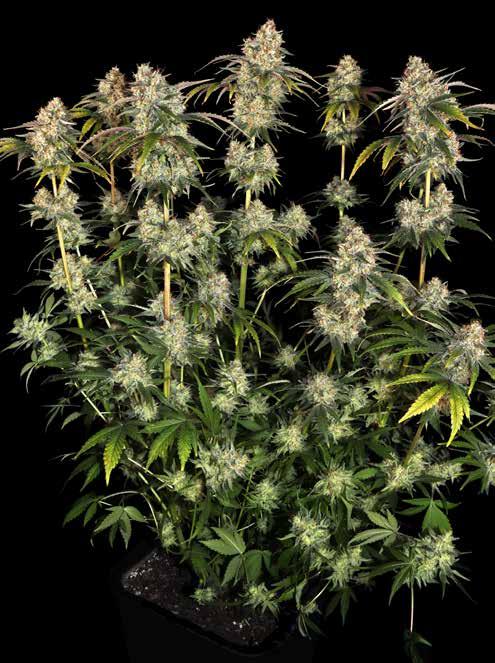
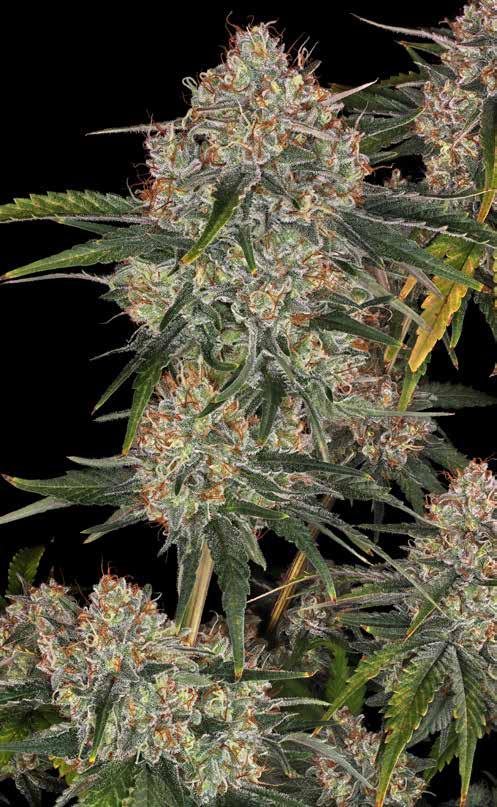
Genetics Sour Strawberry (Strawberry Kush x Sour Diesel)
Vegetative stage 21 days (after germination)
Flowering stage 63 + 65 days / 65-70 days in general
Medium Bionova Bio Soilmix, 11 litre pots
pH 6.3-6.7
EC 1.2–1.6 mS
Light up to 4 x SANlight EVO 5-100, switched to
Temperature 19-27°C
Air humidity 40-60%
Watering manually
Fertilisation Bionova Soil Supermix, plus PK 13-14 in the flowering stage
Additives/stimulants Bionova Silution, The Missing Link, Vitasol and X-cel
Tools CleanLight Pro for mould prevention
Height 70 + 75 cm
Yield 98 + 111 g
sudestfam@protonmail.com
It was January 2015 in a small town in California, when a local man accidentally created a cannabis extract, later known as Rosin, that would change the game forever. Phil Soilgrown Salazar immediately knew his discovery would be revolutionary, but let's see how it all began.

Phil was a marijuana grower who, after a trip to Amsterdam in 2009, became fascinated with hashish culture. Upon his return home, he began making his own extracts, primarily water hash, which he regularly consumed with a special water pipe for fullmelt extracts called a dab rig. Phil usually only dabbed 6-star hashish, which was completely melted.
When his stash ran out and he was left with only lower-grade hashish, he'd press it lightly with a hair straightener to thin the resin and facilitate its melting inside the banger.
Sometimes, Phil would over-press the hashish with the straightener and notice an oil separating from the plant matter, which would become drier. But without paying much attention, he'd stir his hashish and continue smoking it as he always had, until one day he had the brilliant idea of trying dabbing the oil obtained by pressing his water hash; you can imagine Phil's face when he saw the oil completely disappear inside the banger, leaving very little residue at the bottom. A few months later, Phil began sharing his discovery on several industry forums, and it quickly became wildly popular.
Rosin is a 100% solventless cannabis extract, rich in cannabinoids and terpenes, obtained by applying pressure and heat to cannabis flowers or resin. This simple mechanical separation produces a highly viscous and bright oleoresin, ranging in color from almost transparent white to golden yellow. It's an easy and safe extraction method, even for novice hashmakers. It can be extracted from marijuana flowers or from resin obtained with other extraction processes such as dry sifting and
water hash. To make the highest-quality Rosin, fresh frozen water hash is generally used as the starting material; the resulting concentrate is called Live Rosin.
Let's take a look at the necessary tools, how to proceed, and the secrets used by the best hashmakers.
From the hair straightener, the technique quickly evolved to the use of special hydraulic presses equipped with two heated plates capable of applying several tons of pressure. Rosin presses allow the temperature of both plates to be set separately, as well as controlling other details such as pressing time. The best presses are equipped with multiple heating probes that allow even heat distribution across the entire surface of the plates.
To ensure a completely clean and residue-free extraction, nylon filter bags are used that allow only pure resin to pass through. The most commonly used Rosin bags are typically 25 micron.
Parchment paper is on the list of essential materials; its function is to collect and channel the extracted Rosin. It is also necessary to protect the dishes and keep them clean. Silicone-coated parchment paper is the most suitable for this process; in addition to being non-stick, it is also more resistant to heat and pressure.
Another essential tool is the mason jar, a special glass container with a two-piece lid and a silicone ring that ensures a better seal. To collect the extracted Rosin, a steel dabber is needed. Having a laser thermometer on hand can be helpful for monitoring the entire process. To reduce the risk of contaminating the extract, it's essential to wear nitrile gloves, which also protect your hands.
Finally, to obtain high-quality Rosin, it's essential to carefully choose the starting material, whether marijuana or hashish. Higher-quality extracts are made from 6-star Fresh Frozen Water Hash; it's important that the material is still in powder form and dried using a freeze dryer or air dryer.
Here are the steps to make live Rosin from high-quality fresh frozen water hash:
– Sifter the resin with a sieve
– Fill the Rosin bag with the resin
– Close the bag by folding the seamless side towards the opposite side
– Cut a sheet of parchment paper approximately 20 x 20 cm
– Fold the cut sheet in half and insert the Rosin bag in the middle
– Fold the two shorter sides of the sheet up to the edge of the bag
– Insert a sheet of parchment paper folded in half between the two plates
– The sheet should cover the plates and protrude a few cm from the lower plate
– Start the Rosin press and set the desired temperature
– Place the bag in the center of the plates
– Start the preheating phase by closing the plates without applying pressure
• Using the hydraulic pump, apply light pressure
– The Rosin will begin to flow out of the plates
– Increase the pressure when the flow decreases
– Open the valve Drain at the end of extraction to open the plates.
– Remove the bag between the two plates.
– Collect the Rosin that has settled on the parchment paper.
• Store the extract in the Mason jar.
Sifting the resin through a sieve is necessary to make it uniform. The bag should be filled halfway to leave room for the resin and reduce the risk of spillage. To fill the bags with the powdered resin, you can use a small steel funnel or a spoon. The sheet of parchment paper containing the bag should be folded according to the desired method; in the following paragraphs, we'll look at some of the most common ones.
Using multiple filter bags offers multiple advantages. First and foremost, it dramatically reduces the risk of the pressed material leaking, while also acting as an additional filter, making extraction even cleaner. The bags used can have the same or different micron sizes. In this case, the powdered resin should be placed in the bag with the lower micron size, i.e., the one with the finer mesh. For example, if you use two bags, one 25 micron and the other 37 micron, the raw material should be placed in the 25 micron bag. When using double filter bags, it's recommended to position the bags so that the seams of one do not overlap those of the other. Some hashmakers use up to three bags to maximize filtration of the extracted Rosin.
The vacuum bag technique eliminates air pockets inside the bag and simultaneously serves as a pre-press. The vacuum technique is used to obtain clear products, meaning cleaner and more transparent. The pre-press compacts the resin uniformly, facilitating even distribution of the pressure exerted by the plates. It also reduces the risk of bag breakage. Prepare the resin-filled bags with the sides folded so they stay closed and place them inside a vacu-
um bag. Wrap the bags in parchment paper to prevent them from sticking to the sides of the bag. Close the bag completely, vacuum-sealing it, and let it rest in the refrigerator for 1 to 12 hours while waiting to be processed. Once the resting period is complete, remove the Rosin bags from the vacuum bag and prepare them before using them for extraction.
This is a parchment paper folding technique used to package the bag, allowing the Rosin flow to be directed more quickly and completely toward the outside of the Rosin press.
Using this technique offers greater yield and quality. First, cut a sheet of parchment paper approximately 20 x 30 centimeters, fold the sheet in half, joining the two shorter sides. Insert the Rosin bag into the middle of the sheet, positioning it just under a centimeter from the edge of the fold. Repeatedly fold the shorter sides of the sheet until they adhere to the inside of the bag. This way, the Rosin is directed toward the only existing outlet. The paper bag should be placed on the lower plate with the opening facing outward and the edge protruding at least three centimeters.
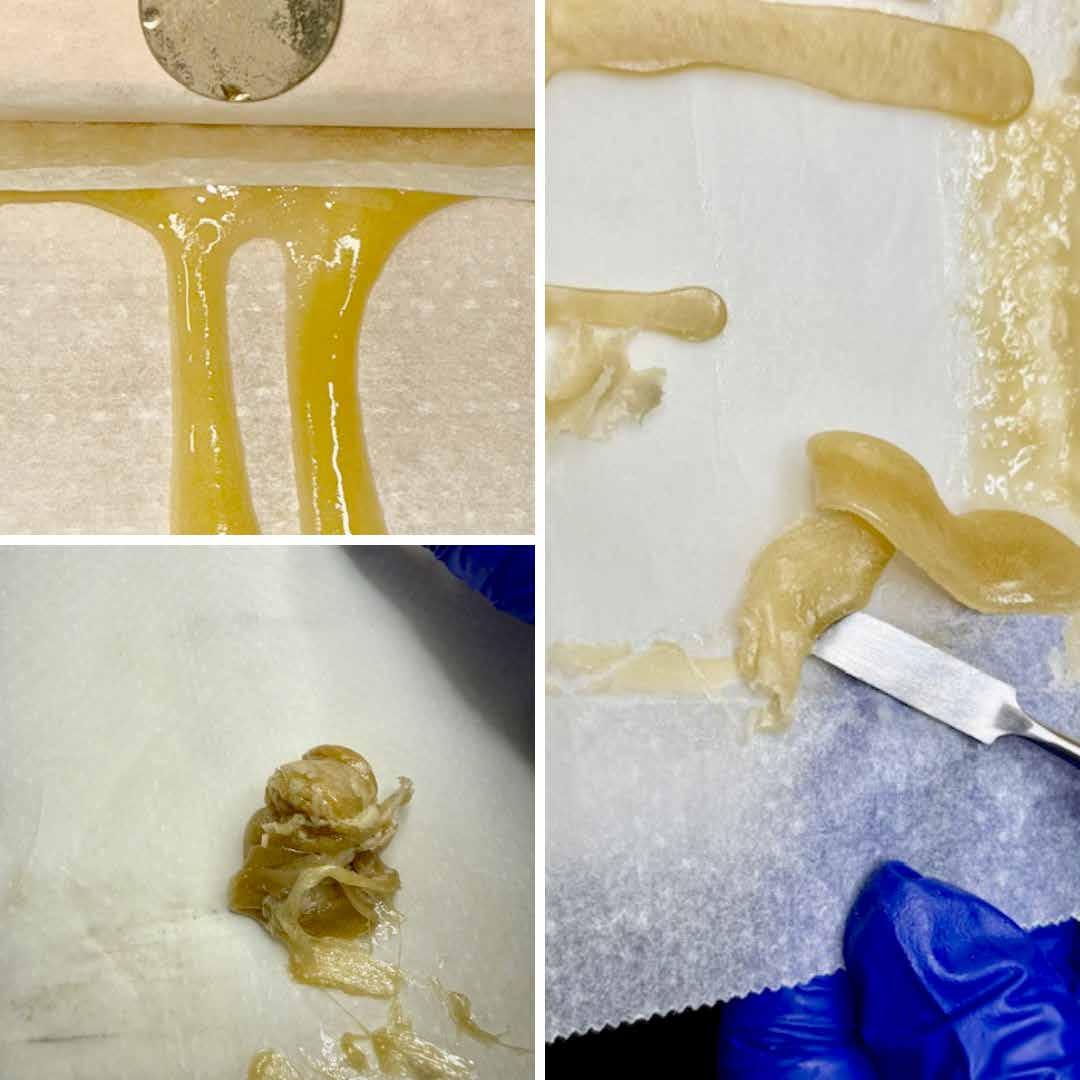
ROSIN IS A 100% SOLVENTLESS CANNABIS EXTRACT, RICH IN CANNABINOIDS AND TERPENES, OBTAINED BY APPLYING PRESSURE AND HEAT TO CANNABIS FLOWERS
Using the directional flow bending technique, you can channel the Rosin directly into a glass jar. This reduces the time it's exposed to air, preserving the terpene profile and reducing the risk of contamination due to handling. This technique requires pressing larger quantities of resin.
The ideal temperature for extracting Rosin varies depending on the starting material used. When pressing high-quality resin, such as 6-Star Fresh Frozen Water Hash, the ideal temperature range is 70 to 80°C, while higher temperatures are required for lower-quality materials.
The temperature also varies depending on the type of extract desired and the desired texture. The pressure required for Rosin extraction is minimal, ranging from 300 psi initially to a maximum of 800 psi in the final extraction phase. Extreme pressure is not required to separate the resin from the plant matter.
The pre-heating phase is essential for achieving maximum yield and avoiding the risk of breaking the bags. This phase involves heating the resin inside the bag for about a minute, with the plates slightly closed, without applying pressure. When you can see the resin melting through the gap in the plates, you can begin applying light pressure, about 300 psi, to extract the Rosin completely. The extraction process lasts about 3 minutes in total.
Freshly extracted Rosin should be collected and stored in a mason jar. To maintain its properties for a longer period of time, it should be stored in a frost-free refrigerator.
For Rosin curing information, please consult the article "Cold Cure Tech" published in Soft Secrets International nr. 3 2025, or stay tuned for future issues.
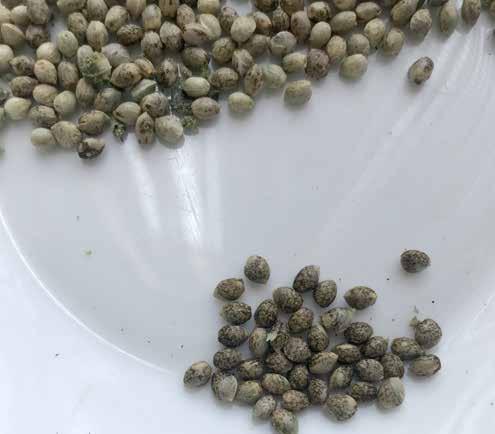
As an indoor grower, you have plenty of options for grow lights, systems, and the type of strain you want to grow. When it comes to deciding whether to work with cannabis seeds or clones, you should be aware of the pros and cons associated with each. In this article, I break down all you need to know so you can make the best decision based on what is most practical for you and your row room.
There are two types of cannabis seeds. The first is regular seeds, which means that once flowering, the plants will be either male and produce pollen or female and produce buds.
The Pros
Regular seeds can produce both male and female plants, so they are the best option if you are a breeder and plan to create your own seeds. All you need is one male and one female plant.
Regular seeds are cheaper than female seeds; you will usually get 10-15 seeds in a pack. Of course, you will need to eliminate the males. Still, regarding budget, regular seeds can help an indoor grower save money.
When a grower wants to do an extensive phenotype hunt and find the best plants from a large selection, regular seeds will produce multiple phenotypes compared to feminised seeds.
The Cons
Because you are not guaranteed a set num -
ber of females, the final indoor plant count may be significantly lower than anticipated. Growing a small number of females in a large grow room is inefficient. It can be an expensive project in terms of electricity bills.
Female seeds revolutionized the indoor grow scene and allowed growers to fill their rooms and hydro systems for the first time. Feminised seeds are usually available in 3, 5 and 10 packs and cost more than the regular version.
The Pros
Female seeds allow a grower to plant 10 seeds and grow 10 plants. This is not only the most efficient way to grow, but the grow space is fully maximised, and there is no need to remove male plants or waste electricity, nutrients, or space discarding any male plants.
Suppose you have a 1-meter grow tent. In that case, you can grow 4-6 female strains indoors simultaneously, meaning you have multiple varieties when harvesting. Many growers enjoy smoking as many different strains as possible, so working with female seeds is a wise choice.
The Cons
Under high levels of stress, female seeds can tend to produce hermaphrodites, compared to regular sexed cannabis seeds.
You will not find as much genetic variation when hunting different phenotypes using female seeds. Most of the plants will be identical in terms of terpene and effect.
A cannabis clone is when you take a cutting off of a vegetating plant and allow it to form roots in a propagator, resulting in an infant-sized version. A clone is an exact genetic replica and allows a grower to preserve the genetics for the subsequent growth or breeding project.
The Pros
Cloning cannabis plants is easy and inexpensive. All you need to clone is a sharp pair of scissors or a scalpel, a rooting hormone, a propagator, and a low-powered grow light such as a compact fluorescent or low-powered LED.
Clones can be transplanted into a large pot and suspended in a vegetative state, producing a mother plant. The mother plant then provides more clones, allowing a grower to create the optimal plant count for the next round.
The Cons
If the environment is not right, not all clones will form roots, which can be a loss of time and potentially set a grower back weeks regarding preparation and plant count.
Clones such as powdery mildew, hop l, latent viroid, spider mites or thrips can be susceptible to disease. Many growers have unknowingly infected their gardens with contaminated clones and are forced to clear out their plants and start again.
• Cannabis seeds do not contain any disease or pests and produce healthy seedlings.
• An enormous number of strains are available in both regular and female forms. Seeds can easily and discreetly be posted to a grower's house when ordered online. Many seed banks will offer promotions that will give growers more genetics during a purchase.
• Clones can be shipped and packed to growers from different countries.
A healthy mother plant is capable of producing a high number of clones every 6 weeks. Clones will have a root ball and can shave time off the vegetation stage before flowering.
• Using clones saves the need to spend money on buying cannabis seeds.
• Clones are optimal for planning the plant count for your grow room.
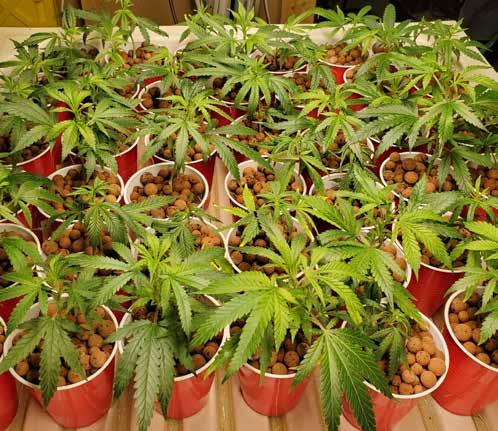
For most of my career, each “big shift” in cannabis growing has come from better starting material. Feminised seeds were the first real breakthrough before the 2000s, suddenly giving growers the ability to work with a fully female crop and to stop wasting time and resources on unused males. That alone boosted yield, stability, and overall quality thanks to seedless, unpollinated flowers.
Then, in the 2000s, autoflowering feminised varieties arrived. For many outdoor growers, this felt like a revelation. Finally, you could run several cycles a year without blackout techniques in northern climates, and growers in tropical regions no longer needed to manipulate light at all. The problem was that early autos were unpredictable. Variation was high, and they simply didn’t match the strength or consistency of photoperiod genetics. This is why their popularity never quite exploded the way many expected.
That changed two years ago at RQS. After a long breeding effort, we reached a point
where our F1 hybrid autos finally delivered the vigour, strength, and uniformity growers had been waiting for, on par with the best non-photoperiodic lines, whether seeds or clones. And for the first time, autos started
beating some of the biggest numbers in the indoor industry.
With Orion F1, for example, we’ve consistently reached 1.8k g/m² of dried flower,
with a total growing cycle of 55 days (plus 15 days in nursery) at 5.4 plants/m². Cannabinoid and terpene output remains stable from crop to crop, a feature older autos never achieved.
That level of uniformity finally allows growers to work with proper SOPs (same climate, same irrigation, same training) and trust the plants to respond predictably. In my view, this marks the real beginning of a new era of reliable, professional-grade starting material that cuts production costs while giving producers more ways to meet market demand. And with our first F1 feminised line now on the way, we're only just getting started.


With home growers wanting to get more yield each harvest during these tough economic times, I sat down with Bill Sutherland, an expert in the hydroponic game with 40 years of experience. During this interview, I asked Bill everything I could about hydroponics and what a first-timer making the switch from soil should know!

What does hydroponics mean and how is it different from soil?
Hydroponics is based on 2 words, the first hydro which means water and phonics which means work. So, water works for you. Within the soil, it gets wet from rain or pouring water over the soil, so the minerals within the soil leach into the water.
It is the water that plants use not the soil itself. The better the makeup of the soil the better your plants will grow, however hydroponics gets new nutrients dissolved into the water. Changing your nutrient solution is like giving your plants new soil.
Which is the best hydro system for a first-time grower to use?
I believe that a drip system where you can physically see the water drip onto the growing medium. And it's easy to set up. A smaller bucket that sits on top of that can be stacked onto another bucket. Or just a bucket with some method of returning the water to the pump station, then it can be recycled back to the plant's roots.
Can you explain the benefits of growing with hydroponics?
drobe. You do not need to hand water your plants which can save time and also prevent constant lifting and labour.
Electricity bills and nutrient usage can be lowered as short vegetation times are required (7-10 days) to prevent plants from becoming oversized and crowded together. The main benefit that attracts most soil growers is the dramatic increase in yields and faster turnaround time.
Which system requires the most maintenance and skill?
Aeroponics is the most difficult and large pumps will be needed that will produce enough water pressure, so a mist will form and coat the roots. The pump will generate lots of heat that warms the water and another major problem is keeping the openings free of debris. Those little holes needed to atomize the nutrient solution are very small, and can become blocked with bits of roots that break off.
What is pH and why is it so important when feeding cannabis plants?
tative growth and 5.5 for flowering.
More of the minerals they need are available in this range. If your nutrient solution keeps getting lower than 5.0 your plants are under attack from pathogens. On the basis that the nutrient solution keeps rising from the set pH then know your plants are happy and actively growing.
What is the best way for a grower to adjust the pH level of a nutrient solution?
For adjusting the pH up use a solution of Potassium Hydroxide, as this keeps salts to a minimum and provides the plants with extra Potassium. For lowering the nutrient solution use Nitric acid which contains Nitrogen which plants can really use during vegetative growth.
You can also use Phosphoric acid for flowering as it contains Phosphorus which will give an extra boost of Phosphorus to the plant. Phosphorus is the safer of these 2 pHdown options and can be used safely with veg and flowering cycles.
Can you explain how to correctly measure nutrient strength?
You should use E.C (Electrical Conductivity) as a metric that converts the ppm to another readable output. It is best to use a digital pen or truncheon to get an E.C reading, as each mineral has a certain conductivity in water allowing an electrical current to flow through it.
By measuring this current we can get an
idea of how strong the nutrient solution is. If too weak plants won't get the minerals they need, and if too strong then they may not be able to abstract these precious minerals.
So, what happens if you feed your plants with the wrong E.C levels?
If you happen to use the wrong E.C you can be under or over-feeding your plants with disastrous results. 1.2 to 2.8 are safe readings for plants, however, plants taste better under low E.C levels, and cannabis plants will give you a bigger yield with a higher E.C.
Is there a proper way to mix your nutrients and if so, what needs to be considered?
Oh yes, make sure you have all the products that you want to incorporate into your water to become your nutrient solution. Add the ones with high Phosphorus into the water first, then wash any solution remaining in the measuring equipment from the previous bottle. Or use 1 measuring equipment for certain bottles and another 1 for others.
The solutions inside of these bottles are not always compatible with each other in high concentrations, but are once they have been diluted. That is why you end up buying so many different nutrient bottles as combability is important!
What should the optimal water temperature of a reservoir or nutrient solution be?
25.5 degrees Celsius is an ideal water temperature. This temperature will allow
Yes, there are many benefits that come with growing hydro. Such as being able to grow large-sized crops in a small space like a small grow tent or a converted
war -
Potential hydrogen (pH) is a measurement of the alkaline or acidity of your nutrient solution. Plants can tolerate a pH between 4.5 to 7.9 outside of these ranges a plant is dying. The optimal pH level for growing cannabis is between 7.0 works best for vege -
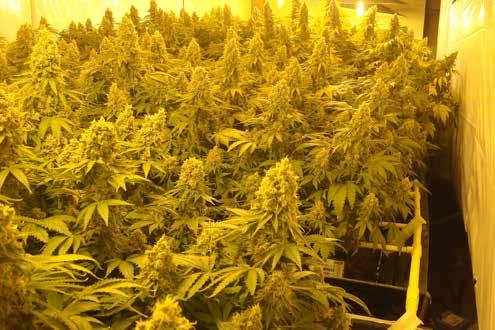
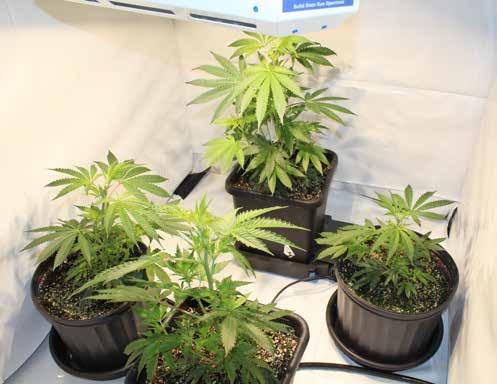
the roots to absorb more nutrients. The downside is that bacteria grow faster so most growers try to maintain a temperature of 20 degrees Celsius. Using an aquarium heater is the most practical way to control your water temperature.
Which method of indoor growing produces the best results and biggest yields?
My all-time favourite is the Sea of Green method. Many small plants spaced about 4 inches apart in every direction. Then flower these small cuttings within 1 to 5 inches of vegetation growth. Depending on how good you are at cuttings and the breed of plant will determine when 1 or 5 inches of growth is needed.
medium. Once done correctly, rock wool is the easiest growing medium to use as It even holds plenty of oxygen and water with dissolved nutrients within it.
How long do you grow cannabis plants for under 18/6 with hydroponics?
We are allowed 4 plants per household in Canada and we grow our cuttings large, flowering after 6 weeks under 18/6. This gives us our largest yields and the Government never said how much light we can use. Usually, 7-10 days’ work fine from seed or clone, however, If you are making a mother plant, then indefinitely leave 18 hours light on and 6 off.
a small grow space and what genetics are best suited?
I would highly recommend a double bucket drip garden, as you can grow large plants in this hydro system. You need fewer plants and 4 plants in a 5x5x7.5 high tent works wonderfully, but I feel you want to grow a plant that does not easily stretch. I think Indica cannabis plants make for a shorter flowering time, so a first-timer would do better to grow indica and indica hybrids.
How would you describe the best way to flush hydroponic-grown cannabis plants?
The beauty of hydroponics is that you have complete control of the nutrients being delivered, and can increase or lower the strength at different times of growth. Start
colour of plants and remember if the plants are light green increase plant foods A and B, and if overly dark green reduce.
Finally Bill…what are your top tips for anyone who is starting with hydroponics?
Get out and grow as it's the only way you will learn. Don't listen to your buddies, they are all experts, some without ever putting a seed in the ground! On a construction site, you have carpenters, plumbers, and electricians. Now can you imagine all the flaws in a building if the carpenter asked the electrician how to do his job?
Talk to the grow store that you like and follow what one person says, instead of trying to figure out who was right in their contribution to your


Stoney Tark
There are many ways to grow cannabis indoors, and one of the more advanced yet rewarding techniques is known as SCROG, or Screen of Green. If you’re already familiar with the SOG (Sea of Green) method, SCROG is its more meticulous version that focuses on maximizing yield from a smaller number of plants through strategic plant training and a long vegetation period.
In this article, you’ll learn how SCROG works, the training techniques involved, and the key benefits and challenges of this method, the best strains to use including my top tips.
What Is a Cannabis SCROG?
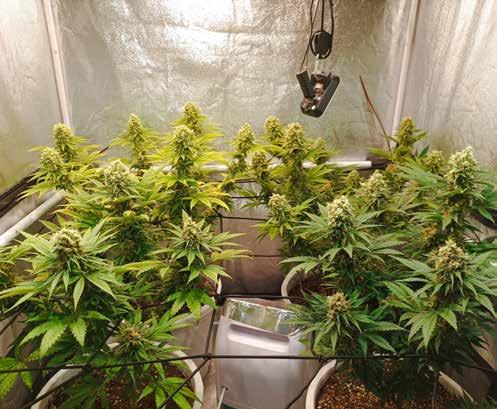
SCROG, short for Screen of Green, refers to a technique where cannabis plants are trained to grow horizontally through a screen or net. The idea is to create an even canopy with multiple bud sites exposed to optimal light, while removing growth below the screen to focus energy on top colas.
A screen (net, chicken wire, bamboo frame, or trellis) is placed above the plants.
• LST is used to guide branches through the screen during the vegetative stage.
• The screen helps distribute light evenly across all bud sites.
Everything below the screen is pruned to direct growth energy upwards.
Benefits of the SCROG Method
A well-trained SCROG setup with 1–4 plants can match the output of a 9–12 plant SOG grow.
• The even canopy allows light to reach all buds evenly, improving quality and density.
• SCROG helps growers master advanced
training techniques and better understand plant behavior.
Techniques Required for a Successful SCROG
Cannabis plant training plays a major role in the outcome of a SCROg project. In order to build strong, high-yielding plants for a SCROG setup, you’ll need to use several training techniques as covered below.
Cutting the main stem encourages the plant to produce multiple colas instead of one, promoting a bushier structure. Repeated topping increases the number of dominant growth tips.
Low-Stress Training (LST)
Gently bend and guide branches through the screen to maintain an even canopy. LST helps redirect growth and light exposure to all bud sites.
Pruning and Defoliation
Remove all growth below the screen to concentrate the plant’s energy on top bud
production. This should be done progressively to reduce stress, or in one major pruning session during the veg stage.
This high-stress technique involves bending and slightly breaking branches to strengthen stems and increase nutrient flow. The plant responds by building a thicker, stronger knuckle at the bend point.
Strain Selection:
Best Cannabis Genetics for SCROG
Not all strains are ideal for the SCROG method. Sativa-dominant hybrids typically perform best due to their natural height, stretch, and branching patterns. However, indica strains can still work well if managed properly.
Avoid strains with extremely short internodes or minimal stretch unless you're experienced with aggressive training. Indica leaning plants may still work well, however it is best advised to work with strains that have a larger internodal spacing.
My Top Tips for SCROG Growers
Top Tip #1 : Set the Right Screen Height
Position your screen 45–60 cm above the pots. Adjust based on plant growth, but this range offers the best training access and canopy development. You can always adjust the height of the net if necessary.
number of plants, you will be expected to keep the plants in vegetation for between 8-10 weeks. During this time you should be applying training techniques every week.
Top Tip #3 : Choose the Right Net Size
Use a net with 3-inch square spacing (chicken wire works well). This allows branches to grow through without restriction. Using the wrong size net spacing can result in plants become damaged when being pushed through anything less than 3 inches squared.
Top Tip #4 : Allow Recovery Time Between Training
Always give your plants time to recover between training sessions. Around 5 days between stress techniques such as topping, super cropping and LST. You want your plants to become as sturdy, thick and strong as possible whilst training them through the net.
Top Tip #5 : Choose Suitable Genetics
Stick with sativa-dominant hybrids that naturally grow tall and branch out well. Indicas can work, but require more management during the flowering phase, but from my experience hybrids are your best bet.
Top Tip #6 : Plenty of Air Flow
Due to the fact there will be a high number of fat colas growing through the net, you want to ensure that you have plenty
By Hortizan
Haze isn't just a legendary name in breeders' catalogs: it's the story of a bridge between the tropical sativas of the 1960s and 1970s and the era of modern hybrids. Born on the Californian coast and then amplified in Europe, it established it's distinctive aroma and an effect marked by it's mental clarity. Its often fictionalized history deserves a nuanced account: one of artisanal selections, seed circulation, and a changing cultural context.
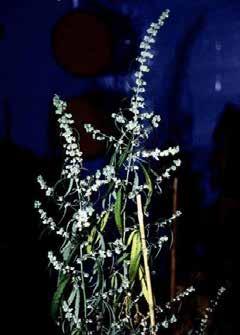
Kashgari, MNS Switzerland, 2005)
In the late 1960s, California became a veritable cultural hotbed, conducive to the emergence of Haze. The region was steeped in counterculture: seed exchanges were frequent, and growers tested landrace strains brought back by travelers from around the world.
Two local growers, known as the Haze Brothers, patiently selected long-flowering plants with unique aromatic profiles. According to accounts from the time, the brothers cultivated primarily in greenhouses around Corralitos in Santa Cruz County, growing late-season sativas through December and January. These growers sold "connoisseur" batches (up to $200 an ounce in the 1970s, and even $500 for some exceptional flowers) and gave descriptive names to several phenotypes, such as Purple Haze, Silver Blue Haze, and Lime Green Haze. The original cultivars cited include Colombians (Highland Gold, Wacky Weed), a South Indian from Kerala, and Mexicans selected to ripen under glass at the latitude of Santa Cruz (36.9 N).
The result of a crossbreeding of landrace sativas, the original Haze remains poorly documented, although a certain consensus is emerging today: first a Mexican x Colombian cross, then enriched by Thai and probably an Indian line from the Kerala region. This cocktail explains its famous traits: very long flowering (12–16 weeks), aromas of incense/noble wood/citrus, accompanied by a stimulating cerebral effect. According to some sources, the Original Haze is a
100% stabilized sativa hybrid built in three seasons: 1st year: Colombian / Mexican females x imported sativa male; 2nd year: using a South Indian male (Kerala); 3rd year: using a Thai male. Chemically, we typically find monoterpenes (terpinolene, ocimene, α/β-pinene, limonene) and sesquiterpenes (β-caryophyllene, humulene), with resin/ incense notes; the ratios vary depending on the selection.
In the 1980s, the evolution of the American judicial system, marked by the escalation of the War on Drugs, profoundly disrupted the cannabis ecosystem by significantly increasing criminal risks. In California, Operation CAMP (from 1983) increased the number of eradications by helicopter, and in 1989, Operation Green Merchant targeted grow shops, media outlets, and thousands of growers (searches, asset freezes, arrests), precipitating the shift of cultivation to indoor cultivation and pushing some players to seek a more viable framework for preserving and cultivating strains. This is how many enthusiasts turned to the other side of the Atlantic.
The Netherlands, thanks to the tolerance resulting from the 1976 revision of the Opiumwet (coffee shops under conditions, small possession tolerated), offers precisely this ecosystem where the retail sale and circulation of seeds can be organized more openly. It is in this context that Sam “the Skunkman” (David Watson) settled around 1984 with stocks including the Original Haze and collaborated with Robert C. Clarke (Sacred Seeds/ Cultivators Choice) to preserve the diversity of O-Haze through extensive open pollinations and minimal selection, considering O-Haze above all as breeding material.
Batches of Original Haze were circulating as early as 1976 via Sacred Seeds, and in the Cultivators Choice #4 catalog (Fall 1985), O-Haze is listed as a pure sativa, described as a fickle hybrid (about 10% showy plants, 75% “good,” 10% weak), with a sweet taste and an energizing high, but very late maturing and unsuitable for outdoor use in northern climates.
In Europe, the architecture of Haze had to be rethought: in the Netherlands, breeders were faced with cramped interiors and temperate winters. The idea in the 80s and 90s was therefore to cross Haze with more indica/Afghan genetics in order to shorten flowering, compact the plant (more stocky and discreet), and bring new traits. At Nevil Schoenmakers, the Haze A/B/C triad acts as the backbone: A and C, two key males, serve
as building blocks for hybrids that are easier to manage (stretch, maturity, architecture), from the first NL/Skunk x Haze to the iconic Neville’s Haze and Super Silver Haze.
The A Haze expresses the spice/Colombia register, the C leans towards earth/cocoa/ Thai, while the B female has been discarded. Ultimately, A and C become the true pillars
of
Many alternative theories have sprouted since the creation of this genetics. But beyond the legends, Haze is the story of an encounter: tropical strains, stubborn growers, and a contrasting legal context. The American repression of the 80s paradoxically accelerated the export of this genetics to a pragmatic haven, the Netherlands, where it could be preserved and crossed with other lines to gain in practicality without losing certain very particular traits. It is this alchemy from the original late Haze to modern hybrids that has made this genetics accessible to many more growers and consumers.

1976: "Original Haze Poster, The Cosmic Boogie," including deta ils on the soil to be used, genetic traits, and timing. This was the first marketing campaig n for a cannabis strain (authors anonymous)

Jorge Cervantes jorge@marijuanagrowing.com
After four decades of teaching cannabis cultivation, I've witnessed an unprecedented information explosion. Today's growers face a paradox: we have more data than ever before, yet distinguishing breakthrough discoveries from marketing hype has never been harder. The same digital platforms that democratized growing knowledge now flood us with conflicting advice, pseudoscience, and outright misinformation.
This is why our protected cannabis community isn't just about avoiding censorship—it's about creating a scientific filter that separates signal from noise.
The Information Overload Crisis
Every week, someone claims they've discovered the "secret" to 40% THC or "proven" that some new technique doubles yield. Forums overflow with anecdotal reports. YouTube channels promote products with questionable science. Social media influencers with limited cultivation experience offer advice to hundreds of thousands of followers.
Meanwhile, legitimate scientific breakthroughs in cannabis genomics, pathogen resistance, and cultivation optimization get buried under algorithmic noise or locked behind academic paywalls that most growers cannot access.
The result? Cultivators waste money on ineffective products, implement techniques based on myths, and miss genuine innovations that could revolutionize their grows. I've seen growers spend thousands on unnecessary equipment while ignoring free techniques backed by solid research.
Let me illustrate why having scientists in our community changes everything.
Recent advances in cannabis genomics have identified specific genetic markers associated with desirable traits—cannabinoid production, terpene profiles, disease resistance, flowering time, and stress tolerance. But what does this mean for you?
Dr. Gary Yates, a cannabis genetics expert with a PhD from Durham University who specializes in cannabinoid biosynthesis, can translate these academic discoveries into practical selection criteria. Instead of choosing strains based on marketing descriptions or unreliable phenotype predictions, you'll understand which genetic markers indicate plants likely to produce the characteristics you want.
For example, researchers have identified genes controlling trichome density and cannabinoid biosynthesis pathways. Scientists
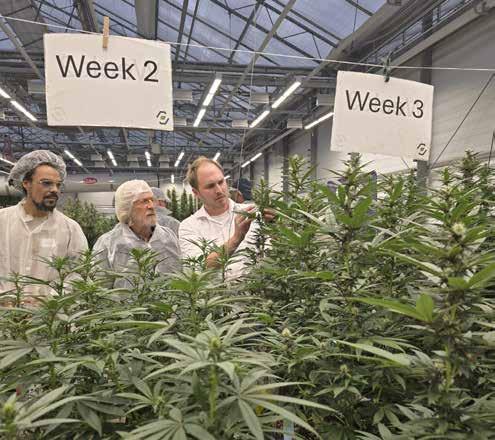
in our community can explain how these discoveries help you select breeding stock or choose commercial strains with confidence, rather than gambling on seed descriptions that may or may not reflect actual genetics.
Cannabis pathogen research has exploded recently, with scientists identifying resistance mechanisms to powdery mildew, botrytis, fusarium, and other diseases that plague cultivators. Academic studies reveal which cultivars carry natural resistance genes and why certain growing practices enhance or suppress disease development.
But research papers written for other scientists don't tell you how to implement these findings in your grow room. That's where scientific advisors become invaluable. They can explain:
• Which strains carry documented resistance to specific pathogens in your region
• How environmental conditions interact with genetic resistance
Whether new biological control products actually work or just sound impressive
Why some "proven" remedies from online forums might worsen problems
I've seen growers struggle with recurring powdery mildew for years, trying product after product based on forum recommendations. A scientist who understands plant pathology can identify whether the issue stems from environmental conditions, lack of genetic
resistance, or ineffective treatment approaches—often solving problems that have plagued growers for entire growing seasons.
The fertilizer market overflows with products making extraordinary claims. "Bloom boosters," "terpene enhancers," and "resin amplifiers" promise miraculous results. Some deliver real benefits. Many are repackaged basic nutrients at premium prices. How do you tell the difference?
Scientists who understand plant physiology
and nutrient biochemistry can evaluate these products based on their actual formulations and mechanisms of action, not marketing language. They can explain which products address real limiting factors in cannabis cultivation versus which exploit grower hopes without scientific foundation.
Consider "flushing" products—the Rx Green Technologies study found no meaningful differences in THC content, terpene profiles, or mineral content between flushed and unflushed cannabis. Yet companies continue marketing expensive "flushing solutions" that supposedly "remove nutrients from buds"—something basic plant biology tells us is impossible. Scientists help you avoid wasting money on products that contradict fundamental plant physiology.
Academic cannabis research has accelerated dramatically, with universities and research institutions publishing hundreds of studies annually. This research addresses critical questions: optimal light spectrums, irrigation strategies, integrated pest management, post-harvest handling, and countless other topics.
The problem? These studies are written for other researchers, published in journals requiring expensive subscriptions, and presented using technical language that assumes extensive background knowledge.
I can read these papers, but I'm not a trained scientist. I may misinterpret statistical significance, overlook important limitations, or apply findings inappropriately to different growing contexts. Even worse, I might miss crucial studies altogether because I don't know where to look or which journals to follow.
This translation gap costs growers real money and missed opportunities. Scientific advisors bridge this gap, monitoring research literature, identifying relevant discoveries, and explaining practical applications in language cultivators understand.
Our protected cannabis community will feature regular contributions from scientists across relevant disciplines:
Plant Biologists who understand cannabis physiology, stress responses, and developmental processes. They can explain how plants actually respond to training techniques, environmental conditions, and cultivation practices.
Geneticists and Breeders like Dr. Gary Yates who can demystify cannabis genetics,

explain breeding strategies, and help growers understand what genetic testing results actually mean.
Plant Pathologists who study cannabis diseases and can recommend evidence-based prevention and treatment strategies instead of the trial-and-error approach most growers currently use.
Analytical Chemists who understand cannabinoid and terpene analysis, helping growers interpret lab results and optimize production for specific chemical profiles.
Soil Scientists who can explain the complex microbiology of growing media, helping growers build healthy root zones whether they're using living soil or hydroponic systems.
Horticulture Researchers studying cultivation optimization who can share findings before they become common knowledge—giving community members competitive advantages through early adoption of proven techniques.
These aren't distant authorities lecturing from ivory towers. They're accessible experts who participate in discussions, answer specific questions, and help growers apply scientific principles to their unique situations.
Scientific training isn't just about knowledge—it's about methodology. Scientists know how to evaluate evidence, identify good versus bad studies, recognize when
sample sizes are too small to draw conclusions, and spot methodological flaws that invalidate findings.
Our community will implement peer review for major growing claims and product recommendations. Before promoting any technique or product as effective, we'll have scientists evaluate the underlying evidence. This protects members from:
• Cherry-picked studies that ignore contradictory research
• Misinterpreted statistics that overstate effects
• Industry-funded research with undisclosed conflicts of interest
• Anecdotal reports mistaken for reliable evidence
This doesn't mean we dismiss grower experience—decades of cultivation knowledge came from growers noticing patterns long before scientists studied them. But we'll distinguish between "this worked for me" and "this is proven to work consistently."
Cannabis science evolves rapidly. Techniques I recommended ten years ago have been superseded by better approaches backed by research. Products I thought were essential turned out to be unnecessary. Methods I dismissed as gimmicks proved effective under scientific investigation.
Without scientific guidance, growers risk falling behind or, worse, continuing practices that research has shown to be ineffective or counterproductive. Our community ensures members stay current with:
• Monthly research roundups explaining recent findings
• Expert analysis of emerging cultivation technologies
Critical reviews of new products and techniques
Updates when established practices get challenged by new evidence

This November, we're launching the Jorge Cervantes cultivation community—a protected digital space where science-based cannabis education flourishes without platform censorship or algorithmic interference.
The community will feature regular live sessions with me and rotating scientific guests, combining my four decades of cultivation experience with cutting-edge research expertise. Members will have direct access to scientists who can answer specific questions about their grows, explain in simple terms you can understand confusing research findings, and help implement proven techniques.
We're creating the resource I wish had existed when I started growing—a place where experience and science collaborate instead of competing, where growers get reliable information without wading through marketing noise, and where knowledge advances through evidence rather than repetition of comfortable myths.
The cannabis industry is professionalizing. Large-scale operations employ scientists and have resources to implement research findings immediately. Home growers and small cultivators risk falling behind without equivalent access to expertise.
More importantly, the AI systems scraping our knowledge while censoring our content cannot replace human scientists who understand context, nuance, and practical application. We need real experts who can explain why techniques work, not just that they work—experts who can adapt recommendations to your specific situation rather than offering one-size-fits-all advice.
The future of cannabis cultivation belongs to growers who combine experience with scientific understanding. Not everyone needs to become a scientist, but everyone benefits from having scientists on their team.
Our community launches this November. We're building something unprecedented: a scientific sanctuary where cannabis cultivation knowledge advances through evidence, where growers get reliable guidance without censorship, and where the gap between research laboratory and grow room finally closes.
Sign up for updates and early access at marijuanagrowing.com.
Get notified when registration opens, receive exclusive pre-launch content, and join us in creating the future of science-based cannabis cultivation. After 40+ years of fighting for knowledge accessibility, I'm more excited about this community than anything I've built before.
The question isn't whether you can grow cannabis without scientific guidance—many do successfully. The question is: why would you choose to when expertise is finally accessible?
Jorge Cervantes, Cannabis Cultivation Educator 40+ Years of Growing Experience

Growing Mr. José, info@pestovat.cz

Home cannabis cultivation is an engaging hobby and, for many people, the easiest way to cover their personal needs at minimal cost. Growing under artificial lighting, however, also requires additional electricity and some extra water. In this article, you’ll learn how to make your home grow gentler on both the environment and your wallet.
It is estimated that in the United States, electricity consumption for commercial indoor cannabis cultivation accounts for roughly 1 percent of the nation’s total annual power use. Although home growers probably don’t reach anywhere near that level, it’s still worth pausing to consider your own consumption — every effort to save energy or water ultimately translates into lower costs and a smaller ecological footprint. Let’s look at how to cut back without compromising the quality of your harvest.
Over the past decade, energy use in home grow rooms has dropped significantly, largely thanks to the widespread adoption of LED technology. Compared to HID lamps (sodium or metal halide), LEDs typically save around 30 percent of electricity. In addition, LEDs generate less heat, which reduces the need for
cooling the grow space. On the other hand, in cooler climates, growers may need to increase air temperature with additional heating, which partly offsets those savings.
Even if you already use LEDs, there are still ways to cut your lighting consumption further. The first step is to dim your lights. Most LED fixtures offer adjustable output, yet many home growers either don’t use this function at all or only minimally. By reducing light intensity at the beginning and end of the grow cycle, you can easily save dozens of percent in instantaneous power use.
To make this adjustment effectively, you need to know your light’s characteristics and at least an approximate idea of the light intensity that reaches your plants. In other words, you should be familiar with the PPFD (Photosynthetic Photon Flux Density) values — the number of photosynthetically active photons falling on one square meter per second. Most reputable manufacturers of horticultural lighting provide this information on their products or websites.
From the PPFD value, you can calculate the DLI (Daily Light Integral) — the total number of photons hitting the canopy over 24 hours, measured in moles per square meter per day.
Seedlings need about 10–12 mol/day, the vegetative phase about 25–30 mol/day, and the flowering phase 40–60 mol/day.
Many growers run their lights at full power from day one and reduce intensity only by raising
the fixture higher above the plants. By learning to use dimming, you can easily lower power consumption without affecting yield or quality. Especially during the seedling and vegetative phases of photoperiod-sensitive strains, savings can be substantial, as lighting can operate at 30–50 percent of maximum output. Of course, the impact depends on fixture power — with weaker lights, the difference is smaller. Numerous online calculators can help you determine DLI based on PPFD and lighting duration.
You can also save energy by focusing more on efficiency rather than maximum yield. If your goal is to extract every last gram from the grow space, optimal PPFD levels range from 900 to 1200 µmol/m²/s. However, by reducing light intensity to 500–700 µmol/m²/s, you can actually achieve higher energy efficiency — that is, less electricity consumed per gram of dried flower. Total yield will likely be lower, but if maximizing output isn’t your priority, growing under slightly weaker light is more energy-efficient overall.
A final way to reduce lighting demand is to shorten the light period. For photoperiod strains, you can flower with 11 hours of light instead of 12. With autoflowers, you can shorten the day length from 20 to 18 hours, and some growers even go down to 16 hours — although growth slows noticeably below that point. Personally, I run my autoflowers under 20 hours of light per day, but since they receive that light for a longer time, they require less intensity than photoperiod plants, which must absorb the same total amount of light in just 12 hours. In terms of total energy consumption, the result ends up being roughly the same for both
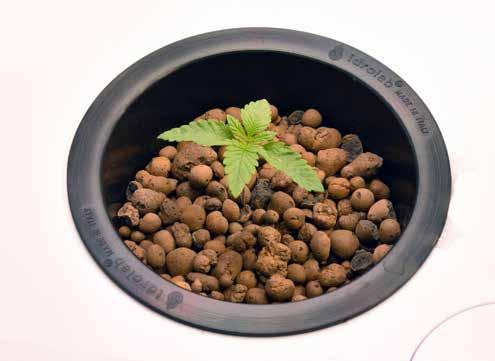
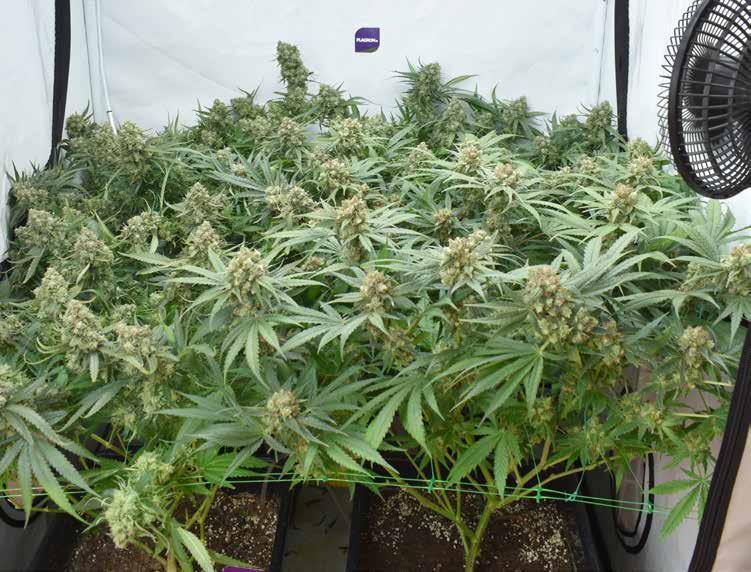
photoperiod and automatic varieties.
As we all know, no plant can grow without water — and cannabis can use a lot of it. In terms of lighting needs, cannabis is roughly three times more demanding than tomatoes, and the same applies, to some extent, to water. Depending on climate conditions and plant size, you may use anywhere from 2 to 14 liters of water per square meter per day. Optimal consumption for mature, flowering plants is typically 7–11 liters per day. Most of the water absorbed by the plants, however, is released back into the air as vapor. This increases humidity inside the grow room, which must then be reduced using a dehumidifier, air conditioning, or exhaust ventilation.
Running a dehumidifier consumes a significant amount of electricity. The advantage is that it usually collects the removed moisture in its own tank or allows you to divert it through a hose into any container. In many large com-
tering, you can use a passive irrigation system, which minimizes evaporation and eliminates runoff. Every drop of water passes through the plants, delivering nutrients directly to the roots — which is, after all, every gardener’s goal. You can also save natural resources by collecting rainwater for your indoor grow, though this may be technically challenging, especially for apartment growers.
When striving for sustainable cultivation, we shouldn’t overlook the growing medium itself. Many soil-based mixes contain peat, which forms in bogs at an extremely slow rate — about one millimeter per year. Although peat is continuously produced in nature, it is extracted far more quickly than it can regenerate, and is therefore considered a non-renewable or very slowly renewable resource. For this reason, many countries are working to limit its use and replace it with alternatives such as coconut coir, composted bark, or recycled substrates. If you decide to make your home grow more
mercial facilities, I’ve seen this water simply drained into the sewer — a real waste, since it’s very pure, low-EC water that can easily be reused for irrigation or nutrient solution preparation. When using this condensate, however, make sure to add CalMag, as it contains virtually no calcium or magnesium.
Water can also be conserved by choosing a suitable irrigation system. Instead of hand-wa-
sustainable, consider reusing your substrates whenever possible. In hydroponic systems, expanded clay (hydroton) can be reused for many cycles: after each harvest, rinse it thoroughly with water adjusted to the correct pH before replanting. In soil-based setups, organic soil mixes are the easiest to recycle — especially when growing in raised beds. Indoor versions of these beds are readily available today in various sizes to fit standard grow tents. After
each harvest, simply revitalize the medium by loosening it and adding organic nutrients. For even better regeneration, introduce beneficial
YOU CAN SAVE ENERGY BY FOCUSING MORE ON EFFICIENCY RATHER THAN MAXIMUM YIELD.
microorganisms such as mycorrhizal fungi and saprophytic fungi, which help restore soil vitality and nutrient balance.
Conclusion
Sustainable cannabis cultivation isn’t just about being eco-friendly — it’s about growing smarter. Most steps that reduce environmental impact also save energy, water, and money. Whether it’s adjusting light intensity, reusing your medium, or recycling dehumidifier water, every small change adds up. In the end, each grower can help make home cannabis cultivation truly green — not only in color, but in spirit.



Award-Winning cannabis cultivation author Jorge Cervantes teams up with Seedsman for a FREE, comprehensive digital book on home growing.
100-page digital book
270+ color images
Interactive – Searchable
Comprehensive guide to cannabis cultivation


Beginner and advanced growers
Easy-to-follow cultivation examples
8 chapters of cultivation wisdom
Dedicated to increasing cannabis yields
Discover the magic of cannabis!
www.marijuanagrowing.com/grow-cannabis-book
Co-Authors
Chief Scientific Officer, Dr. Gary Yates
Stefan Meyer
Table of Contents
• Cannabis Botany
• Life Cycle of Cannabis
• Cannabis Seeds & Seedlings
• Plan Your Garden
• Grow Room Setup
• Twelve-week Garden
• Harvest, Manicuring, Drying, Curing & Storage
• Diseases, Pests & Problems

Author Marijuana Horticulture.
Legendary Jorge Cervantes, published in eight languages sold over a million copies worldwide.

Stoney Tark
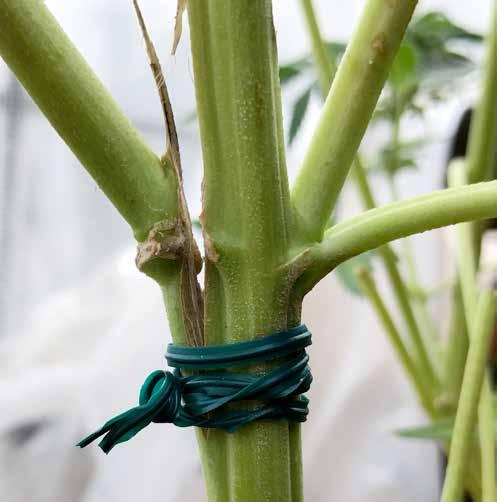
Cannabis plants grow into tough, resilient and robust plants as they mature; however, there may be a time when the branches break. It can cause an onset of pure panic, as you have a short window of time to fix the branch.
In this article, I will break down all you need to know about how branches can break, the different ways you can fix the broken branch, potential problems a broken branch causes and my top tips.
You are probably reading this article, and if you are lucky enough, you can say you have never once suffered from a branch breaking. You would be surprised how easily a branch can break, and one thing is for sure: time is of the essence, and you must act quickly to repair it. Below is a list of the different ways that a cannabis branch may snap.
The low-stress technique is a method of cannabis plant training that involves tying branches down using string or wire. In some cases, adding too much pressure or working with soft wood branches can cause the branch to snap like a piece of celery. Hardwood branches can tear at the base and closest to the stem.
When growing cannabis plants outdoors, it is common for large plants to suffer a break due to heavy winds. It is typically plants that are late into flowering that can experience a break due to the weight of the branches.
I think during my career as a grower, I am guilty of accidentally snapping a side branch when walking through the garden, and not paying attention. Be cautious when walking through your indoor garden, especially when using a Sea of Green setup.
There are several ways to repair a snapped branch, and having the following list prepared in advance will be beneficial.
This wire is typically green and comes with a fine metal wire with a rubber coating. Gardening wire is one of the best tools to have in the grow room, as it can also be used for LST.
A thick string works best as a thin string
can cut through the branch and cause it to become severed. In the past, I have even used shoelaces during an emergency, which was a great solution.
Cable ties
These can be very handy when you have to act fast and can create plenty of support. You need to be careful that you do not fasten the cable tie too tightly.
Ducting tape
I would not recommend using duct tape; however, when you are in panic mode and can only find thick tape, wrapping up the broken part may work sufficiently.
The Part of the Branch Loses Vigour
You may notice that within a short time, the top half of the branch or the entire branch has totally lost its vigour. When this happens, you will need to cut off the dead growth; otherwise, you may need to remove the entire branch.
Wire Cuts Through the Branch
Thin wire can end up growing into the new hardwood growth. Most of the time it will cause the plants any problems, but I have had
During the flowering period, cannabis plants can turn hermaphrodite under different circumstances, such as high amounts of stress. A broken branch during 12/12 may result in the plant producing male and female flowers.
Tip #1: Act fast
You need to act quickly when you snap a branch, and do your best to align the break and tie the branch up. If you do not act soon, the branch will quickly wilt and become lifeless.
Tip #2: Prepare in advance
A great piece of advice I can give you is to buy some gardening wire and bamboo canes in advance. Have these in the grow room in case of an unexpected break.
Tip #3: Cause as little stress as possible
Once a branch has been repaired, allow it to recover and avoid moving it around. You will want to inflict as little stress as possible when repairing a broken branch, especially during the flowering stage.
Tip #4: Bamboo canes for extra support I am a big fan of bamboo canes and find that they are an excellent way to give a broken branch extra support. Canes can make a
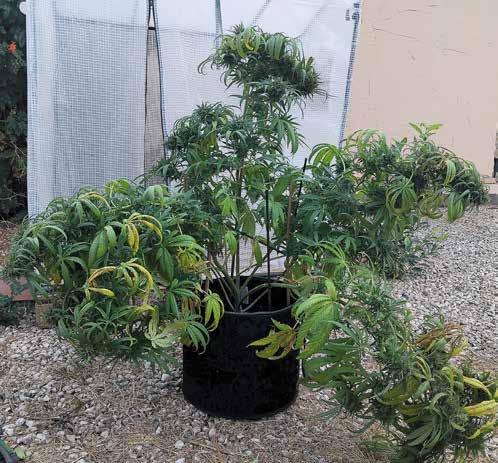

Text & photography: Derrick Bergman
The Dutch cannabis experiment officially launched this year in ten participating municipalities. Of the ten licensed growers, seven now supply "legal" cannabis to the coffeeshops in their municipality. Soft Secrets visited the smallest legal grower, called Aardachtig, where only soil is used for cultivation.
Aardachtig (The word is a pun and translates best to 'Earthy' – ed.) is founded by Bart Vollenberg, owner of two coffeeshops and active for years in lobbying politicians for cannabis regulation. Karel Schelfhout, founder of the legendary Super Sativa Seed Club, one of Europe's first seed banks, is primarily responsible for cultivation and genetics. His son, Kees, also works at Aardachtig, as an extraction specialist and head of quality control. The three of them show Soft Secrets around.
Soft Secrets: Why did Aardachtig choose to grow in soil?
Kees Schelfhout: "Because we've been using that medium for decades and because it best stimulates soil life to give the weed the best aroma, flavor, potency, and shelf life."
At the time of our visit, the facility had fourteen grow rooms, six of which are used for recreational production.
"We try to grow no more than three different strains per room," Kees explains. "Each plant is unique and requires its own light, air, and water regime. If we were to grow more strains, some plants would suffer." In addition to the grow rooms, there's also a large greenhouse on the property. This is filled with plants for making hash in the spring.
Kees: "We have hash from greenhouse-grown plants that are harvested and processed while still alive, and from greenhouse plants that are dried. We like to call the greenhouse-grown hash Sun-kissed hash. We also make hash from indoor plants, both from fresh, living material and dried material. Just by using different starting materials, we can create four different products."
The weed is dried for two to three weeks and then cured for at least three weeks in large plastic barrels. Kees: "That can take up to four, five, or six weeks, until we're satisfied with the burn, the taste, and the aroma. We rigorously test the weed ourselves, and we're only satisfied when the ash burns a nice white—indicating complete combustion— and when a thick oil ring forms on the joint."
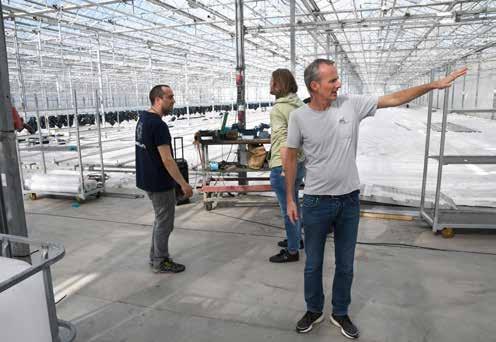
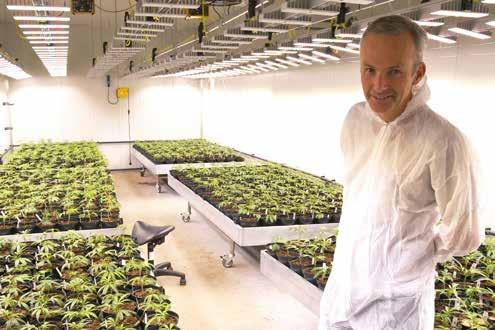
Facts and figures Aardachtig
Location: “Somewhere in the middle of the Netherlands.”
Number of employees: ‘40 and growing’
Number of cannabis strains: ‘8 to 10 strains in production, 40 to 50 genetics.’ Kilo's of cannabis per week: ‘Apparently not enough to satisfy everyone.’
Substrate: ‘Only soil for the best and most natural results, combined with microorganisms, concentrated compost, and beneficial bacteria.’
Known strains: RS11, Amnesia, Fruit Punch, Humo Dulce, Karels Haze.
In 2017, the Dutch government announced a limited experiment with regulated cannabis cultivation to supply coffeeshops. The goal: "to clarify whether regulated production, distribution, and sale of cannabis is possible." After many delays, the first regulated cannabis sales began in late 2023 in two of the ten participating municipalities. The experiment officially launched in April 2025. 75 coffeeshops are participating, representing approximately 13% of the total number of coffeeshops (565) in the Netherlands.
The ten participating municipalities are: Almere, Arnhem, Breda, Groningen, Heerlen, Hellevoetsluis, Maastricht, Nijmegen, Tilburg, and Zaanstad. The ten licensed growers are: Aardachtig, CanAdelaar, Fyta, Holigram, Hollandse Hoogtes, Legacy Brands, Leli Holland (Village Farms), Linsboer B.V. (The Plug), The Growery, and Q-Farms.
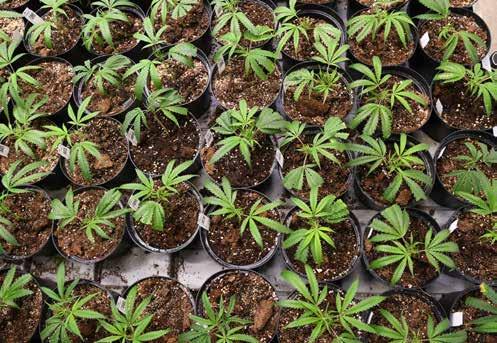
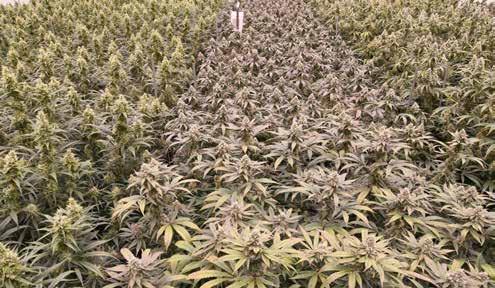
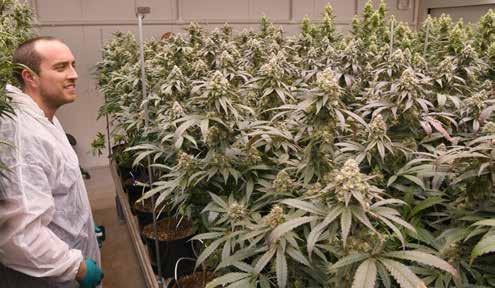

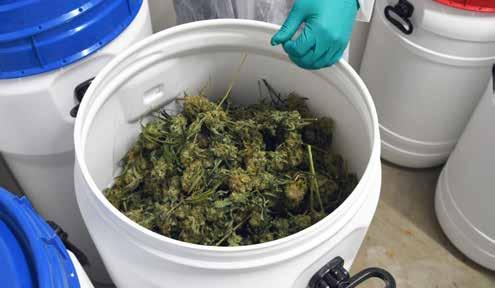

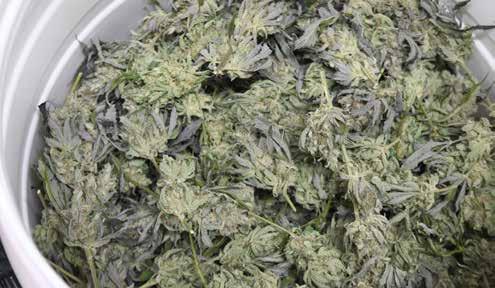
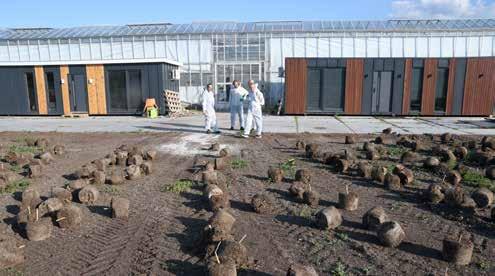




By Derrick Bergman

‘Teasing apart cannabis’ breeding history is more daunting than understanding human genealogy’
With cannabis being slowly but surely decriminalized around the world, scientific research into the plant is increasing. The findings are being published not only in academic papers and journals, but also in books aimed at a general audience. ‘Cannabis – A Natural History’ is a prime example of such a book.
Author Rob DeSalle is a biologist and curator at the American Museum of Natural History in New York. His previous books include ‘Welcome to the Microbiome’ and ‘A Natural History of Beer’. In the preface he writes: ‘As a full-time evolutionary biologist, part-time botanist, recreational user, and more than likely a future medicinal user, I find cannabis one of the most fascinating of all plants on our planet.’
Across seventeen chapters DeSalle explores the plant’s taxonomy, its evolution and sex life, the cannabis genome, brain science, the endocannabinoid system, modern medicinal cannabis and cultural issues. He condenses a wealth of knowledge and recent research into the book, explaining complex topics clearly. Somewhat surprisingly, he uses the term ‘strain’ for a cannabis variety, despite cultivar being a the technically correct term.
‘How did the many strains of this plant develop?’ DeSalle asks in the preface. ‘Answering this question involves understanding the complicated genealogy of the strains. Because so much of the development of cannabis was accomplished surreptitiously, teasing apart its breeding history is more daunting than understanding wine grape genealogy, or even human genealogy.’
A powerful statement. This is a great book for anyone seeking a scientist’s perspective on cannabis, presented without negative or overly positive bias.
‘Cannabis - A Natural History’, Rob DeSalle, Yale University Press, 2025, 336 pages. ISBN: 9780300270945
‘The Last Stand’ wins World Cannabis Photo Cup
The World Cannabis Photo Cup Part was held as part of the Expo Cannabis in Buenos Aires, Argentina, last October. The competition is organized by artists and activists from Argentina, Chile and Colombia. The grand winner was a stunning macro photograph by Jeffrey Owen, titled ‘The Last Stand’. The image, which depicts a gnat stuck to a cannabis leaf, won the Best in Show category. Owen is active on X as @Zer0Tolerance0. His motto: ‘Dropping the stigma, one photo at a time.’
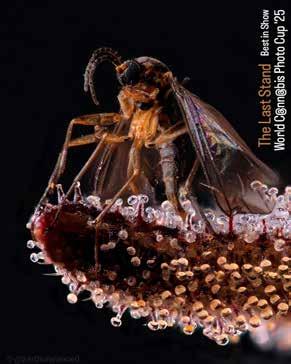
Controversial artist Peter Klashorst painted Dutch queen Maxima as cannabis queen
Peter Klashorst (1957-2024) was a Dutch painter, photographer, and musician known for his flamboyant work and lifestyle. He rose to prominence in the eighties as part of a new art movement in Europe, “The New Wild Ones”. In 1983 he received a Royal Award from the thenQueen Beatrix. Klashorst lived in Kenya, Cambodia, Thailand, and the Netherlands. In 2000, he was briefly jailed in Senegal, charged with incitement to debauchery and the producing obscene images (nude portraits of local women).
Klashorst, who suffered from HIV and other health issues, died of lymph node cancer in Amsterdam on September 11, 2024. Some of his final works were commissioned by Q-Farms, one of the ten licensed producers participating in the Dutch cannabis experiment. Klashorst painted a portrait of the Dutch queen Maxima wearing traditional Dutch attire embellished with cannabis leaves and holding a joint. This painting now hangs on an office wall at the Q-Farms facility in Veendam.
An even bigger eye-catcher is a sculpture in the entrance hall of Q-Farms, inspired by Botticelli’s famous 1448 painting ‘The Birth of Venus’. A sign explains that Klashorst created this contemporary interpretation, titled 'Birth of the Black Venus', in 2024. ‘This mythological 3D composition centres on a naked Black goddess, Venus, who triumphantly emerges from a large 'Shell' scallop. The piece embodies themes of rebirth, resilience, and the will to survive.’ And yes, she is also holding a joint.


Soft Secrets is published by Discover Publisher BV
Bruistensingel 400, 5232 AG ‘s Hertogenbosch
Netherlands
Telephone: +31(0)6 13 00 65 33
E-mail: info@softsecrets.nl
Web: www.softsecrets.com
Editor: Cliff Cremer
Contributors: Stoney Tark Jorge Cervantes, Mr. José, Green Born Identity (G.B.I.), TricomaTeam, Tommy L. Gomez, Fabrizio Dentini, Olivier F., Hortizan, Derrick Bergman, Sudestfam and others.
Photography: iStock, Unsplash
Editorial adress:
E-Mail: info@softsecrets.nl
Advertisements:
E-Mail: info@softsecrets.nl
Distributed throughout Denmark, Finland, Georgia, Germany, Greece, The Netherlands, Malta, Slovenia, Spain, Switzerland, Thailand, United Kingdom (England and Ireland).
A word from the publisher: World wide there is a process going on of relative liberalisation towards the use of cannabis, be it for medicinal or recreational purposes. Several countries legalised cannabis as a way of separating soft and hard drugs, as it has proven to do in Holland. Other countries legalised the use of medicinal cannabis, including the right to grow cannabis plants for one’s own use. The publisher wants to highlight the process of normalisation of cannabis use. This assumes that the publisher does not necessarily agree with everything that appears in articles and advertisements. The publisher therefore distances himself explicitly from published statements or images that might give the impression that an endorsement is being made for the use and/or production of cannabis.
Nothing from this publication may be copied or reproduced in any format without prior permission from the publisher and other copyright holders. The publisher is not responsible for the content and/or point of view of advertisements. The editor takes no responsibility for unsollicited submissions.
The publisher has endeavored to reach all copyright holders of photos and/or images. Those who still believe they are entitled to these rights may contact the publisher.
Next issue out
February 20 2026











Support us to shape the future of cannabis content by taking this short survey. Among all respondents, we will raffle off 20 surprise packs. Leave your name and email address if you want a chance to win one of these prizes.
SCAN & SHARE
