The Salvation Army is a Christian church and registered charity seeking to share the good news of Jesus and nurture committed followers of him. We also serve people without discrimination, care for creation and seek justice and reconciliation. We offer practical support and services in more than 700 centres throughout the UK. Go to salvationarmy.org.uk/find-a-church to find your nearest centre.
What is the War Cry?
The Salvation Army first published a newspaper called the War Cry in London in December 1879, and we have continued to appear every week since then. Our name refers to our battle for people’s hearts and souls as we promote the positive impact of the Christian faith and The Salvation Army’s fight for greater social justice.
Editor: Andrew Stone, Major
Managing Editor: Philip Halcrow
Staff
Staff
Staff
Editorial
Graphic
Graphic
Emily Bright
Claire Brine
Ewan Hall
Linda McTurk
Mark Knight
Natalie Adkins
Email: warcry@salvationarmy.org.uk
The Salvation Army
United Kingdom and Ireland Territory 1 Champion Park London SE5 8FJ
Tel: 0845 634 0101
Subscriptions: 01933 445445 (option 1, option 1) or email: subscriptions@satcol.org
Founders: Catherine and William Booth
International leaders: General Lyndon Buckingham and Commissioner Bronwyn Buckingham
Territorial leaders: Commissioners Jenine and Paul Main
Editor-in-Chief: Major Julian Watchorn
Poetry has the ability to connect with our emotions – its words can make us laugh, cry or feel loved. Well-written verse can even help us on our journey through life.
In this week’s War Cry, we look back on 40 years of Poems on the Underground. It was back in 1986 that selected verses began to appear among the adverts on London’s Tube trains. Many of the works have brightened the journeys of passengers, but some of the poems have also tackled the more difficult experiences of life.
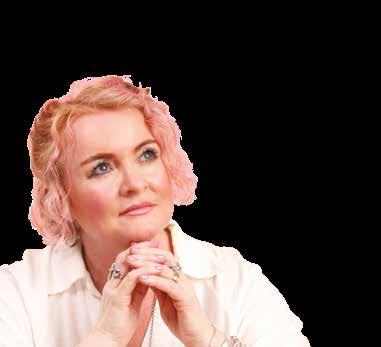
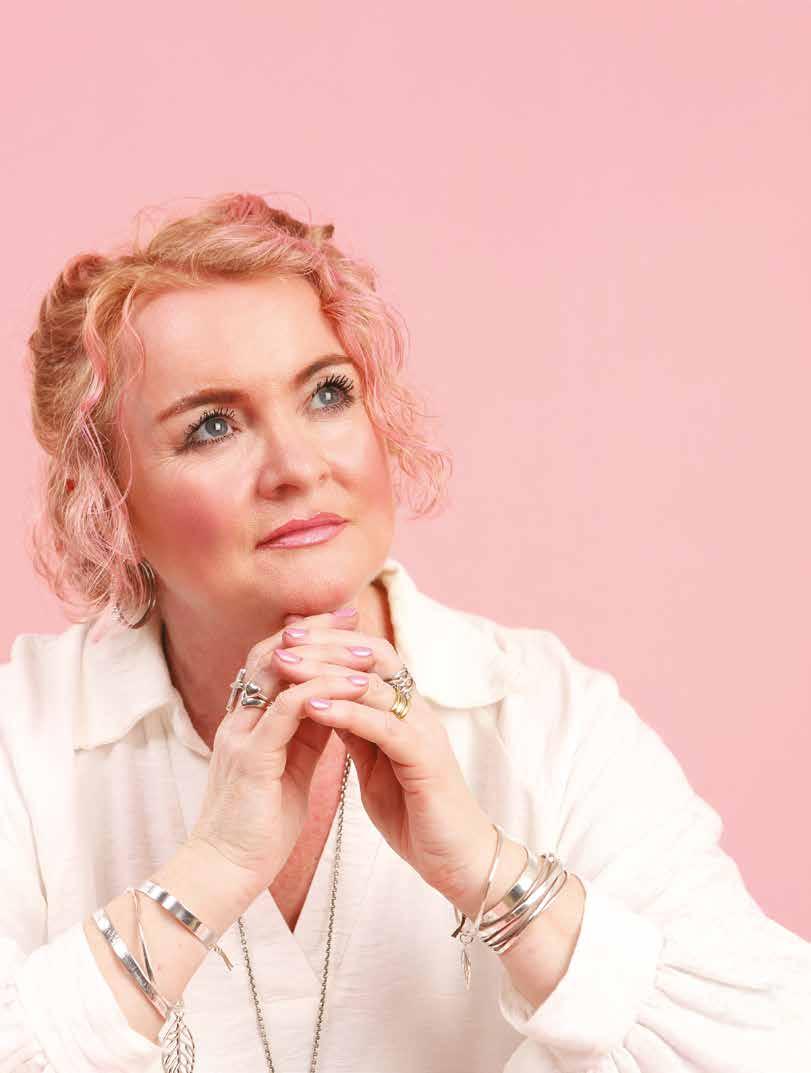
It is not only reading poetry that helps people connect with deep emotions. In this issue, we speak with singer Juliet Dawn, who writes poetry and songs to express her feelings and her Christian faith.
In the interview, Juliet describes some of the challenging life experiences she has faced over the years, including miscarriages and baby loss. Through all those devastating situations, Juliet found that her faith helped her.
‘I knew that God had promised to bring beauty from the ashes,’ she tells us, ‘so I held on to that. I wasn’t willing to throw in the towel when I had seen so much of God’s presence in my life before.’
Juliet uses her words and music to let other people know about the positive difference that God can make in their lives – whatever tough times they are going through.
She says that all the songs on her latest album ‘are about the things that have happened to me on my faith journey’, and she adds: ‘I do feel as though God is calling me to bring a message of hope to the world.’
Regardless of the challenges we may have in our lives right now, the good news of the Christian faith is that we can always experience hope. God doesn’t promise that we will never face tough times, but he does assure us that he will be with us to show us how we can deal with every situation we encounter.
INFO INFO
Baby steps
Adopting couple make progress – slowly
TV preview: Trying BBC1 and iPlayer
By Ewan Hall
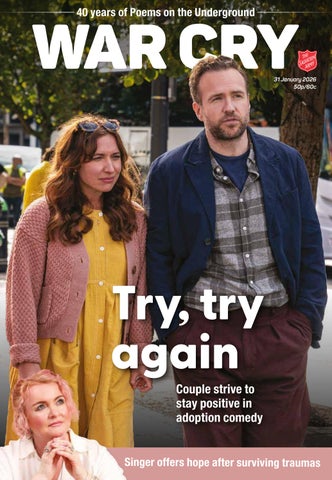
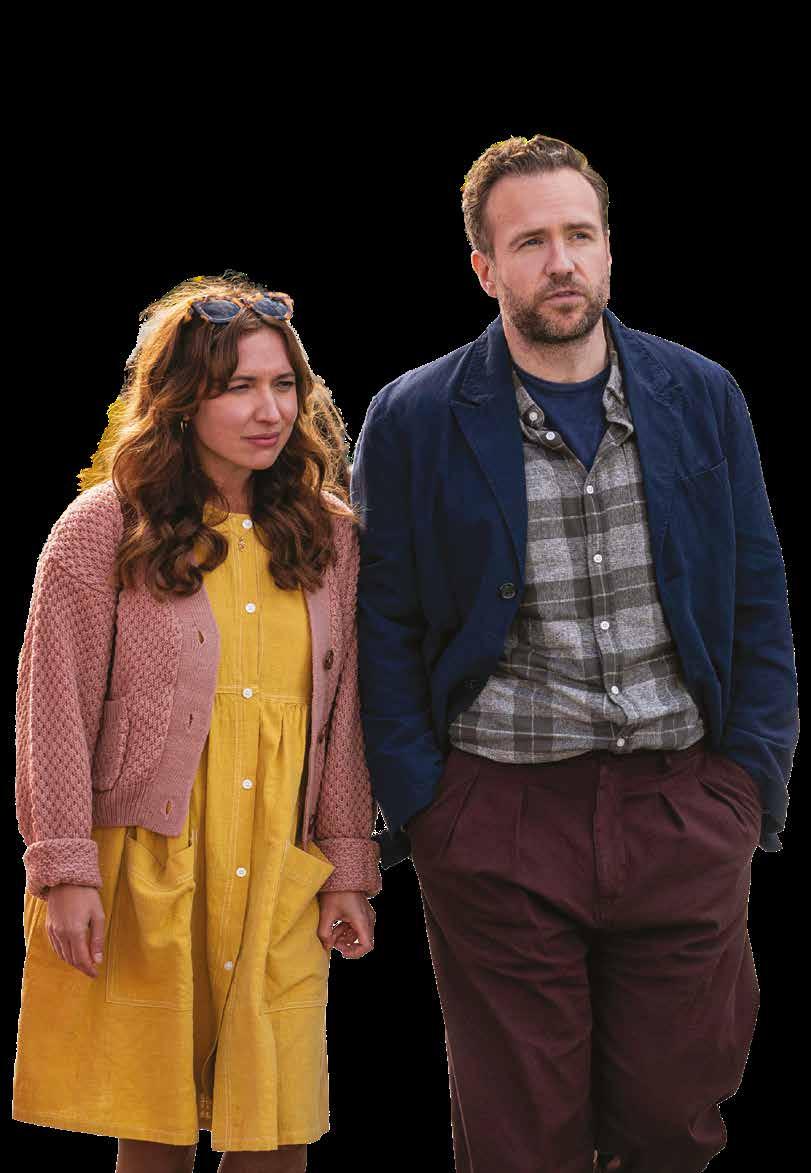
Wannabe parents Nikki (Esther Smith) and Jason (Rafe Spall) are trying their best to navigate the unpredictable world of adoption. After finally being approved by a panel in the first series of the comedy drama Trying – broadcast on BBC1 last year after making its debut on Apple TV – the couple are discovering that being matched with a child is far from straightforward.
While other aspiring adopters seem to be paired up instantly, Nikki and Jason can’t shake the feeling that they’re being left behind. With the help of their eccentric social worker Penny (Imelda Staunton), however, the pair are determined to keep going.
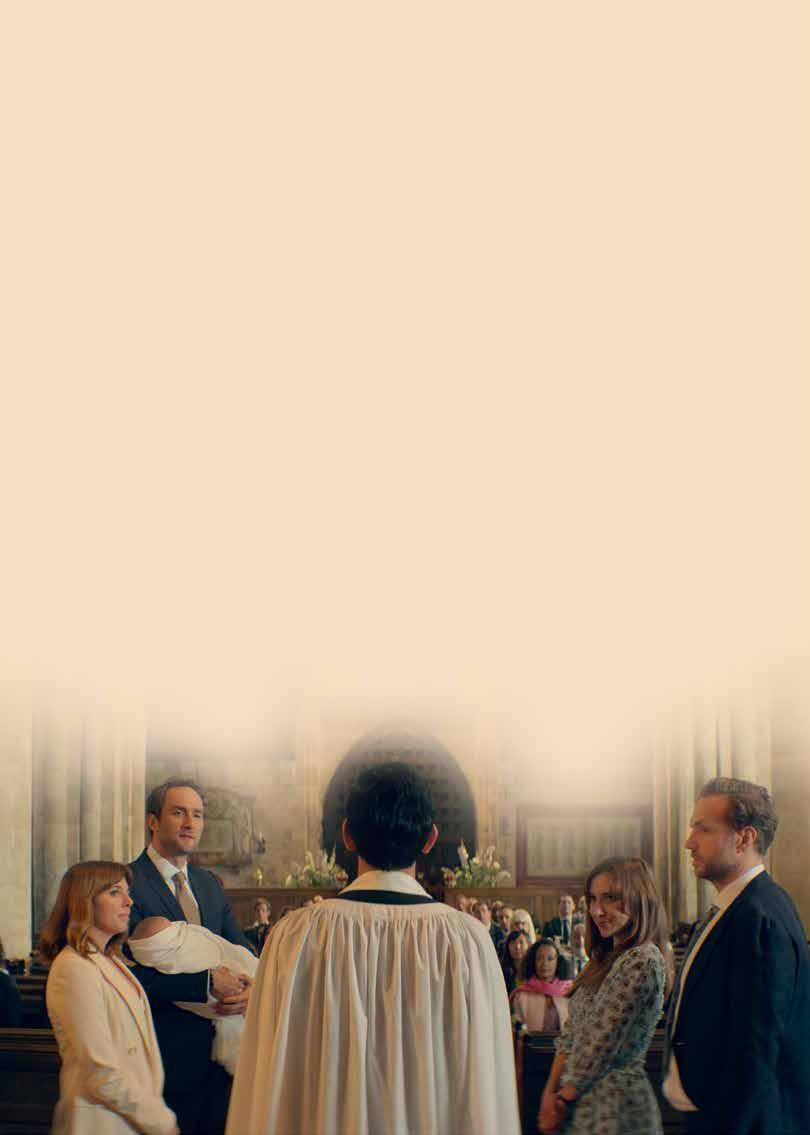
The second series opens with Nikki and Jason attending a christening. Taking a quiet moment outside the church as guests gather, Nikki expresses admiration for her friend Erica (Ophelia Lovibond), who is managing to embrace new motherhood even while having to navigate a divorce. However, Nikki recognises that her friend’s life doesn’t seem so enviable when Freddy (Oliver Chris) – Erica’s ex-husband and the baby’s father – turns up, having been dropped off by his new girlfriend.
Once inside the church, what should be a
quiet, joyful moment turns into chaos when the estranged parents bicker about what their baby should be called. Only when Freddy casually asks the priest for his name do they land on a compromise.
After the service, Nikki and Jason refocus on their own path to parenthood. Penny arrives with promising news – she has identified a boy who could be the right match. The couple share a hopeful moment, excited to be edging closer to becoming parents.
Yet Jason notices Nikki behaving strangely when discussing the potential match. She admits she had always imagined them adopting a girl.
Realising they have been picturing contrasting futures, the couple are forced to confront what they really want – and how they will navigate their differences.
Whether or not we go through exactly the same challenges as those faced by Nikki and Jason, we may recognise the feelings they experience. Many of us have moments when life refuses to move at the pace we hoped for. Other people seem to be getting ahead while we seem to be standing still –or, worse, slipping backwards.
At such moments, it can be hard to have confidence in ourselves and our
decision-making. We can feel vulnerable. But someone is always reaching out to help us – God.
One Bible writer who at times felt vulnerable reflected: ‘The righteous call to the Lord, and he listens; he rescues them from all their troubles’ (Psalm 34:17 Good News Bible).
When life feels as if it’s racing ahead without us, it can be easy to believe that we’re falling behind. But if we choose to talk to God about how we feel, he will respond to the questions that swirl in our minds and quieten the doubts that make us feel stuck. He may not fix every problem we face, but he will support us as we go through them.
If we bring God into our lives, we will see that progress isn’t about keeping up with others but becoming the person he wants us to be. And if we let him help, we will find that his way forward is always worth trying.
Erica, Freddy, Nikki and Jason attend a christening
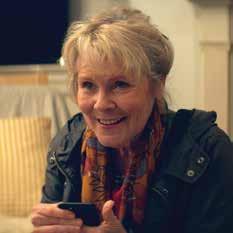
Social worker Penny
talk talk Team talk Team talk ‘ ’
j TEA M TALK
Say a little prayer
Emily
Bright gives her take on a story that has caught the attention of War
Cry reporters
If you were a global leader, what would you pray for? Pope Leo XIV –among his many other priorities – spoke to God on behalf of football fan Jim Sharma after meeting him during a visit to Turkey.
Jim presented the pontiff with a Wolverhampton Wanderers shirt which had ‘Pope’ and ‘1’ printed on the reverse.
‘We’d had a terrible start to the season,’ Jim told BBC Radio WM. ‘I thought, let’s give him a Wolves shirt and see if it can make any difference. He said: “Oh look, my name is on here. This is fantastic. I’ll say a prayer for you.”’
I’ve asked God to help my favourite squads
I find it striking that the Pope said he’d pray for Jim, not necessarily his football team. But after Jim and the Pope’s November meeting, the club, who by that stage had gained only two points all season, showed signs of improvement. They drew against Manchester United, Everton and Newcastle and cruised to a 3-0 win over West Ham.
The results raise the question: Does a global church leader’s prayer carry more weight than others’?
I don’t think it matters whether a praying person is a Christian leader or an atheist turning to God in desperation. In my experience, God always hears prayers and answers them, although not necessarily in a way we expect.
So does praying for a sports team improve their chances? There have been times when I’ve asked God to help my favourite squads –just in case. And, it has to be said, Sale Sharks did win rugby union’s Premiership final in 2005.
But over the years, I’ve realised that a relationship with God isn’t transactional. Our requests aren’t always practical. If both sides ask God for victory, both can’t win.
There’s free will to consider too. Competitive sport would be pointless if God – instead of a player’s performance – decided the outcome of every fixture. Ultimately, I believe that God knows what we need and acts accordingly.
It’s also worth remembering that prayer is not about simply getting a desired result. The goal for people of faith is to build a relationship with God, who loves us regardless of our performance.
WAR
Gen Z are increasingly connecting with religious content via social media, Sky News reported.
An online feature by the broadcaster highlighted the popularity of Christian social media influencers, noting that there are more than 25 million videos posted under the hashtag #ChristianTikTok.
Christian Love Island and TOWIE star Matilda Draper, whose baptism video has received more than 1.3 million views on TikTok, said: ‘There’s so much bad in the world, there’s so much negativity that you see online. The stuff we fill our brain with – it doesn’t have any substance and I do think that people are yearning for purpose and fulfilment.’
She added: ‘I’ve definitely noticed a change in people speaking about God. I see it a lot on TikTok now, young preachers on the street.’
King’s College London lecturer Dr Edward David, who has been researching the rise in religious behaviour among young people, commented: ‘Priests and clerics are telling researchers that they are seeing an influx of young people knocking on their doors because they have encountered a religious idea on Instagram.’
WAR CRYWnRLD
Caleb aims to make faith a stronger thing
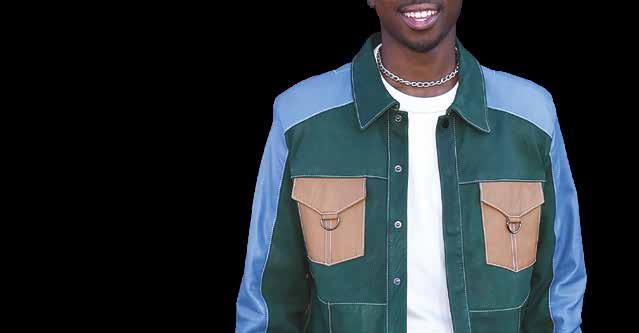
Caleb McLaughlin, who plays Lucas Sinclair in the Netflix series Stranger Things, spoke about God and the value of praying when he was interviewed on the
The actor (pictured) said: ‘I’ve always felt a connection with God in my spirit. I can’t even remember the day it started. It’s just always been a part of me.’
Caleb explained that sometimes it’s easy to ‘live your life ... and stop praying’. But he added that last year he had been working on deepening his faith by talking to God.
‘I did that a lot [in the] summer,’ he said. ‘And I went to church a lot with my family... Got off social media and just started grounding myself a little bit more and talking to God more and it’s been really replenishing.’
Firepit
events spark wellbeing chats
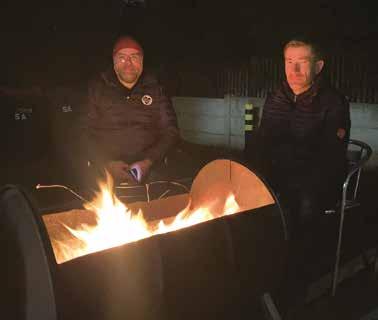
Outdoor firepit gatherings at Rotherham Salvation Army church are providing a space for men to talk about their mental health.
Hosted once a month, the get-together offers men of any age the opportunity to sit round a fire, listen to music, enjoy food and hot drinks, and chat openly with friends.
Josh, a 38-year-old who struggled with suicidal thoughts after experiencing addiction and trauma, said that the gathering has helped him.
‘I struggle to get out of the house because of my mental health, but coming to things like the firepit helps because I’m around people I can call friends,’ he explained.
‘I think as men we tend to bottle things up, but that doesn’t do you any good. The fact I’ve opened up and discussed things has helped halve my problems.’
nReligious people in the UK are more likely to feel thankful for their lives and life in general than people who do not profess a faith, according to a survey commissioned by King’s College London. The poll of 2,050 people, published in its report Grateful Britain? Feelings of Thankfulness, Awe and Wonder among the Public, also found that young adults aged 18 to 34 were around twice as likely as older age groups to say they feel thankful to God.
Bible sales double
Sales of Bibles have more than doubled since 2019, according to new figures.
Christian publisher SPCK Group carried out an analysis of data produced by industry body Nielsen BookScan and found that the number of Bibles sold in the UK rose by 106 per cent between 2019 and 2025.
Commenting on the new analysis, Sam Richardson, CEO of SPCK Group, described the growth as ‘further evidence of a significant cultural shift regarding matters of faith and religion’ in the UK.
‘Atheism, which seemed to be the default choice of Generation X, does not carry the same weight and appeal with younger generations,’ he said. ‘The significant and sustained upward trend in Bible sales suggests that more and more people are investigating the Christian faith themselves and seeking to draw their own conclusions about its truth.’
The Salvation Army’s Paul Huggins and Captain Tim Swansbury run the firepit gatherings for men
STEP BACK IN TIME
Curator JULIE OBERMEYER explains how the William Booth Birthplace Museum in Nottingham offers a glimpse into the early life of The Salvation Army’s co-founder
Interview by Ewan Hall
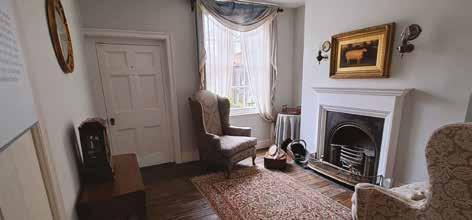
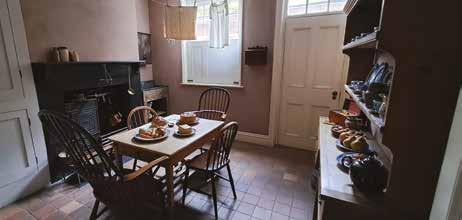
The parlour is one of the four rooms set out in Georgian style
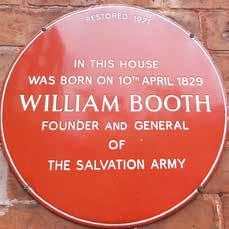
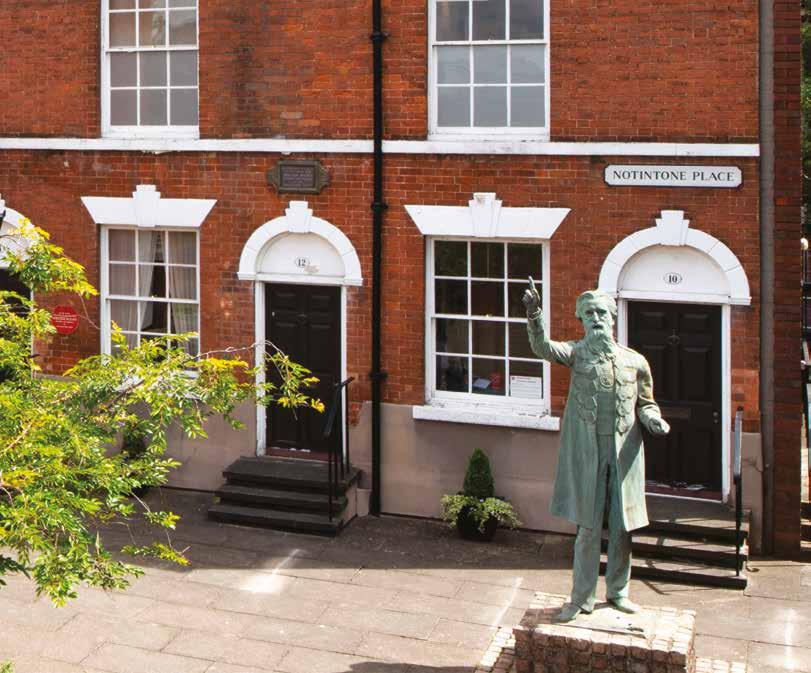
As 2025 becomes history, The Salvation Army’s William Booth Birthplace Museum in Nottingham is bringing the past into 2026. Preserving the childhood home of the church and charity’s co-founder, the building transports visitors back to the year of his birth, 1829, and explores the early life of the Booth family – as well as the influence that the city had on them.
Yet behind the scenes, significant effort is required to keep the historic home in good condition. Much of last year was spent addressing issues typical of a grade II listed building, and the museum had to close for repairs to be carried out.
‘We had major work done last year,’ explains Julie Obermeyer, the museum’s officer and curator. ‘This included repairing the roof and fixing outside walls where damp was getting in, but that’s finished now.’
Julie is eager to resume the work
that earned the museum a TripAdvisor Travellers’ Choice award last year. The venue often hosts school trips as well as local tourists and visitors from around the world.
‘Looking ahead, we’ve got a candlelight tour on 6 February, where visitors can explore the museum in the same light that William Booth would have known,’ says Julie. ‘We also have performances from a school choir and ukulele band, as well as an artist who will run a workshop for all ages.’
Even when no special events are taking place, Julie wants people to visit the house – which is open from Tuesday to Thursday by appointment – and explore the early life of William Booth.
‘The most important part of the museum is a warm greeting when you enter,’ says Julie. ‘But the house itself is the starting point, because it is William Booth’s birthplace. It feels like stepping
on to a different planet – walking back in time and being in the rooms where he lived and formed his ideas.
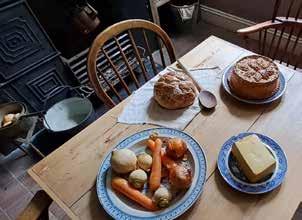
‘In the four Georgian rooms, there’s minimal signage, so the visitor’s imagination takes over. Gentle soundscapes play kitchen noises like a kettle boiling or someone chopping vegetables, and, in the parlour, visitors can hear horses on the flagstones and the church clock tolling. Little touches help bring the rooms to life, with food laid out as if lunch is being prepared and with embroidery left as if someone has just stood up.
‘After those rooms, the museum focuses on William Booth’s time in Nottingham – his early life, meeting his wife, Catherine, her preaching and their children. There’s also material on the early Salvation Army and the spiritual influences that shaped William.’
For Julie, one item in particular defines
Displays in the kitchen bring the room to life
William Booth’s time in Nottingham.
‘It’s the old door from the pawnbroker’s shop where he worked as a teenager,’ she says. ‘It’s scuffed and worn, and it is mounted so it feels like you’re entering the shop. It represents a time of huge change for William.
‘His father went bankrupt and died when William was 13, and in the shop, he saw people in real hardship bringing in whatever they had – pocket watches, wedding rings, even threadbare blankets – just to feed their families. It shaped his heart for people who couldn’t find work or were struggling.
‘When his apprenticeship ended, William couldn’t find work either. During that time, he had his conversion to Christianity at a Methodist church. So, the pawnshop door becomes symbolic – one door closing, another opening –and marks that period of growth and commitment.
‘Visitors really engage with the door, especially schoolchildren. It always gets a reaction and sparks curiosity. For all those reasons, it’s my favourite object.’
Julie believes that the house is only part of the young William’s story, and that the wider city of Nottingham influenced his ideas and opinions.
Being exposed to that energy mattered
‘Nottingham was known as a rebellious city,’ she says. ‘It was associated with figures such as the poet Lord Byron and other writers. Personally, I would include William Booth amongst those rebellious people. During his time here, a strong reform movement emerged, demanding that the wider public be given the right to vote and be represented. I can’t help but think he was
influenced by that atmosphere.
‘His time at Broad Street Chapel in Nottingham was pivotal too. Visiting preachers came from all over, including one from the United States who drew crowds of 2,000 people – a huge number then – and who stayed for two or three months and was like a celebrity. William would have been right in the middle of that energy.
‘Being exposed to that energy mattered. William became further involved at the Broad Street Chapel. As a teenager, he was trained to lead worship services and deliver sermons as a lay preacher, and he was listed on the preaching rota.’
The result of such opportunities was that, by 1865, he was ready to found The Salvation Army with Catherine in London.
Julie reflects: ‘If he had grown up somewhere else, he may not have had that solid foundation.’
A statue of William Booth stands outside the museum
‘Through years of trauma, I clung on to faith in God’
Singer JULIET DAWN describes the pain of a difficult marriage, miscarriages and baby loss – and explains why she is using her story to make a difference
Interview by Claire Brine
At the age of 21, Juliet Dawn made a bold and life-changing decision. ‘No more being flaky or wishy-washy, I was going to consecrate my life to God,’ she says. ‘So I prayed: “God, I want to make a difference – no matter the cost.” Those last four words have shaped the last 35 years of my life.’
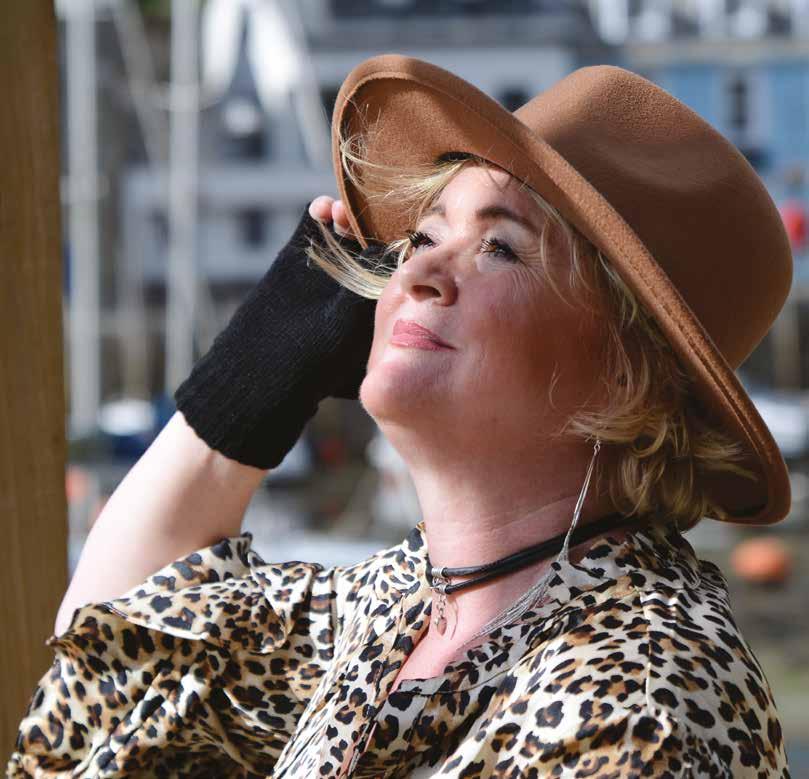
A singer and poet living in Cornwall, Juliet begins our phone conversation by telling me that her story is ‘full of trauma’. Over the past decades, she has suffered a difficult marriage, multiple miscarriages and the loss of her baby twin boys. Facing one devastation after another pushed her
Juliet Dawn
to breaking point – several times. But she found strength in her Christian faith.
‘For a long time, my life felt like it was defined by trauma,’ she says. ‘But, although I crumbled, my faith didn’t. I was too stubborn to give up on it.’
Raised in a Christian family, Juliet was taught from a young age that God loved her and had a purpose for her life. As she grew up, she chose to continue putting her faith in him.
‘My foundational years were so strong in terms of my family and faith,’ she says. ‘I knew that my identity was found in God, and I felt unshakeable.
‘When I finished university, I went to live with my parents in Spain, where they were serving as missionaries. It was there that I prayed about my life making a difference. And it was then that the trauma started.’
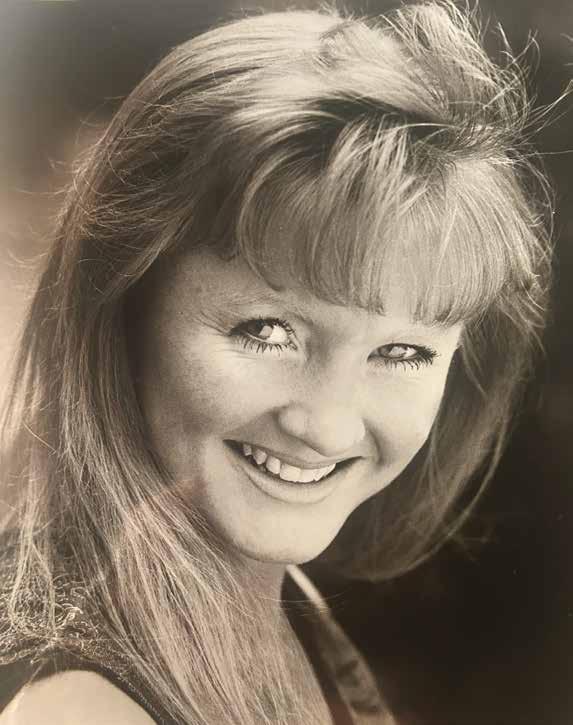
After graduation, Juliet began working as a singer and performer, and was managed professionally by a man who became her husband. The relationship, she tells me, was abusive.
‘He would treat me like a princess but then control me,’ she says. ‘And that lasted for 10 years. Each day, I faced a stomach-churning maze as I thought: How am I going to get through this?
‘A couple of times, when my husband and I were driving to gigs, he threw me out of the car. One time, when we were at a meeting in London about a record deal,
he thought he was about to lose control of me professionally, so he took my handbag and keys and stormed out of the hotel, leaving me in the meeting with all these people staring at me.’
While Juliet felt that she needed to leave her husband, she didn’t know how to go about it.
Miscarriage brings your world crashing down
‘Iwas breaking down, bit by bit,’ she says. ‘I still had strong roots in my Christian faith, but I felt like a tree that had been shaken and lost its leaves.
‘Eventually, after 10 years together, I found the resilience to leave and looked for the right time to do it. I waited until my husband had gone out to a music shop, then grabbed the dog and some of my possessions and went to my parents’ house. For the first time, I spoke about the realities of my marriage.’
Two years later, in 2001, Juliet married Jason, and they made plans to start a family. The couple went on to have three sons together.
‘But we had three miscarriages before our first child was born,’ she says. ‘They happened early on in the pregnancy, but I don’t think that makes the losses any less traumatic. When your whole life’s
focus is on getting pregnant, it affects your hopes, dreams and expectations. It affects you physically and mentally. And when a miscarriage happens, it brings your world crashing down.
‘Then, to decide to try for a baby again takes a lot of energy. You’ve got to pick up all those pieces.’
After grieving the loss of the babies she would never get to meet, Juliet became pregnant again. Nine months later, she gave birth to Samuel. But the pregnancy didn’t come without stress.
‘I was in a head-on car crash while I was pregnant with Sam,’ she says. ‘But, long before it happened, a couple of people had prayed for me at a Christian conference, telling me that I was going to have a son. So when the crash happened, I had confidence that my baby would be OK.’
After Samuel was born, Juliet fell pregnant with twins. Initially, she says, all was progressing well. But then a scan revealed a serious condition called twin-totwin transfusion syndrome.
‘It means the twins were sapping unequally from the placenta,’ she explains. ‘One twin was getting most of the nutrition, and the other not getting enough. The life of each twin was threatened by the other.
‘It was decided that I would need
Turn to page 10 f
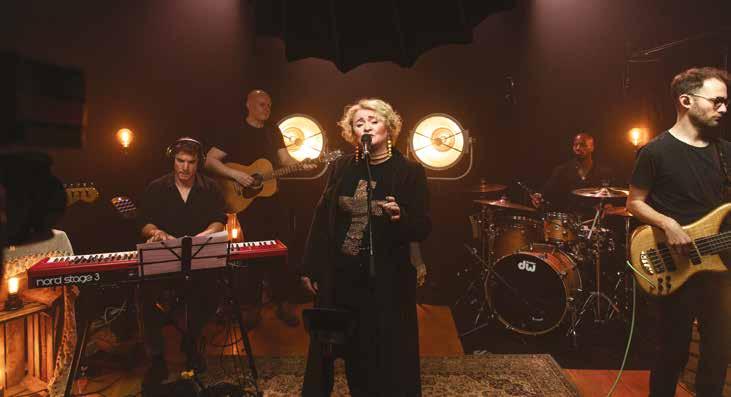
Juliet performs Christian songs
pioneering surgery in London. The procedure was successful, but right at the end of it the registrar removed the probe from my side too quickly. Things went wrong and my blood pressure plummeted. I nearly died. And my amniotic sac was affected, impacting the twins.’
Eventually, Juliet’s condition stabilised and her pregnancy continued. Then, at just 30 weeks, her twin boys were born by emergency caesarean section.
‘Right from the start, they were struggling,’ she says. ‘Louis died within 14 hours. Doctors advised us to take him off the life-support machines because he just wasn’t coping. That was very hard.
‘Once he’d died, the doctor handed him to me, and I half-expected God to bring my baby back to life. I was praying.
I didn’t know what else to do. Holding your dead child isn’t a moment in your life that you get any rehearsal for. But nothing happened. I cried.’
I didn’t feel peace. But I did feel purpose
The couple’s other twin, Elliott, also started to deteriorate. So four days after his birth, having talked with Elliott’s doctors, Juliet and Jason agreed to take him off life support.
‘It broke me,’ says Juliet. ‘I felt confident in my faith and strong mentally – but all the trauma I’d been through began to hit me physically. I developed
viral arthralgia, which is an inflammation of the joints, and fibromyalgia, which caused dizzy spells, numbness and pain. My nervous system was totally breaking down.’
Despite facing indescribable grief and physical pain, Juliet tried to carry on with life. Devastatingly, she suffered another miscarriage.
Then she and Jason had two more sons, Max and Leo. With Max, Juliet experienced what she calls a ‘peaceful’ pregnancy. But with Leo, early scans revealed gastroschisis, meaning that his bowel was growing outside the body.
‘Again, it felt unbearable,’ says Juliet. ‘But I felt the need to pray God’s blessing over Leo in my womb. Every day, I prayed. Doctors told me not to get my hopes up. But when Leo was born, there was no sign of his bowel on the outside of his body. It was inside, which the doctors couldn’t understand. God had done a miracle.’
For Juliet, her son’s healthy birth was a sign that God was close. She believed that he always had been. In spite of the painful experiences she had suffered, she felt the conviction that her faith had been worth fighting for.
‘I saw every trauma that I’d been through as an outworking of what I’d prayed for at the age of 21,’ she says. ‘Back then, I’d prayed to God, “No matter the cost” – and my losses were the high cost I was paying. But the second part of that prayer was that I’d make a difference. And that’s what I try to do today by sharing my story with others. I want to share God’s heart with the world.
‘After losing the twins, I remember crying out to God, asking him why they’d died. I wanted to know when my wilderness would end. I didn’t feel peace. But I did feel purpose. I knew that God had promised to bring beauty from the ashes, so I held on to that. I wasn’t willing to throw in the towel when I had seen so much of God’s presence in my life before.’
It’s a presence that Juliet wants others to experience for themselves – and a subject she explores through poetry and song. Last year, Juliet
Juliet became a singer after graduating from university
travelled to Nashville where she recorded her album, Born to Be
‘All the songs are about things that have happened on my faith journey,’ she says. ‘But I think everyone can find them relatable. One of the tracks, called “Shaken Not Forsaken”, talks about being in the eye of the storm and how God doesn’t forsake us, even though we do feel shaken at times. Another song is called “Arise and Shine”, and that’s about having the courage to stand in God’s light and fulfil his purpose for our lives.
‘I do feel as though God is calling me to bring a message of hope to the world.’
Through the challenges she has faced and overcome, Juliet has no doubt that
her Christian faith has deepened. But the tough times have also enabled her to glimpse the many facets of God’s character.
‘In the Bible, God has several names,’ she explains. ‘There’s Jehovah Rapha, which means “God the healer”, and Jehovah Jireh, “God the provider”. The Bible also talks of Immanuel, meaning “God with us”. And then there’s Abba, which means God the Father. God is all of those things to us at different chapters in our lives.’
Though the future chapters of her story are yet to be written, Juliet approaches every tomorrow with hope.
‘I don’t feel fearful about what lies
ahead,’ she says. ‘But I do sometimes feel fragile. I’m subject to the same pressures and doubts as everyone else. Sometimes I feel stuck.
‘But then I remember that there’s always a bigger picture. God’s ways aren’t always the ways we expect. No character in the Bible ever did things in the “normal” way – and I have to remind myself of that.
‘But whatever our story is, I believe there is always hope. And that hope has to start with faith.’
l For more information visit julietdawn.co.uk
The War Cry invites readers to send in requests for prayer, including the first names of individuals and details of their circumstances, for publication. Send your Prayerlink requests to warcry@ salvationarmy.org.uk or to War Cry, 1 Champion Park, London SE5 8FJ. Mark your correspondence ‘Confidential’.
Becoming a Christian
There is no set formula to becoming a Christian, but many people have found saying this prayer to be a helpful first step to a relationship with God
Nigel Bovey gives chapter
and
verse on each book of the Scriptures
1 Corinthians
The first of two surviving letters written by the missionary Paul to the church in Corinth is a plea for unity among members who had been divided by quarrels. Paul’s aim is to put them straight on the contentious issues.
Some in the church were saying they followed Paul’s teachings; others said they followed different church leaders, such as Peter and Apollos. Paul tells them that Jesus alone should be the focus of their faith and that the salvation made possible through his death and resurrection was God’s idea, not the product of human intelligence. The apostles, therefore, are not to be hero-worshipped, but regarded simply as ‘servants of Christ’ (4:1 New International Version)
A man was reportedly sleeping with his father’s wife. Worse still, the church leaders had not disciplined him. Paul says they should have (chapter 5).
Lord Jesus Christ,
I know that I have done things in my life that are wrong and I’m sorry.
Thank you that I can ask you for forgiveness because of the sacrifice you made when you died on the cross.
Please forgive me and help me to live a better life in the future as I learn how to love you and follow your way of living.
Thank you, Lord Jesus.
If you’ve prayed this prayer, scan the QR code or contact us using the coupon on this page
There were also legal disputes between believers. Paul says these disagreements were to be sorted out within the congregation rather than through the civil authorities (chapter 6). He promotes monogamy, in which husband and wife are equal partners, but insists unmarried people are also to be seen as blessed (7:1–38).
Paul also tells his readers to refrain from eating food that has been offered by non-Christians to idols. They should give up such food not because idols have any power, he argues, but because a Christian’s behaviour is an example to others. The guiding principle is that, while a Christian may do anything that is legal, not everything legal is helpful to a person’s spiritual journey (chapters 8 to 10). Paul also notes that the observance of some religious ceremonies have become unruly. Some participants went hungry; some got drunk. Rather than unifying believers, these ceremonies were dividing them (11:17–34).
At Pentecost, Paul explains, God had given different supernatural gifts to the believers, enabling them to continue the ministry of Jesus. Yet members of the Corinthian church had been judging each other on the basis of which gifts they possessed, and they were misusing some of them. Paul directs them to the motive behind all expressions of the gospel, which is love (chapters 12 to 14).
Paul concludes his letter by examining the crucial importance of the Resurrection. He explains that it is the foundation of Christianity and of the faith’s understanding of the life hereafter (chapter 15).
To receive basic reading about Christianity and information about The Salvation Army, complete this coupon and send it to
War Cry 1 Champion Park London SE5 8FJ a
Or email your name and postal address to warcry@salvationarmy.org.uk
QUICK QUIZ
1 2 3 4 5 6
Which comic actress has written the memoir A Mind of My Own?
In what year was the video game Super Mario Bros first released?
Twin brothers Charlie and Craig Reid make up which Scottish rock duo?
What cells in the human body communicate using synapses?
Alpine, Nordic and telemark are types of which winter sport?
What are the first names of the comedians who star in the TV show Mortimer and Whitehouse: Gone Fishing?
POETRY IN MOTION
Underground scheme has been offering moments of reflection for 40 years
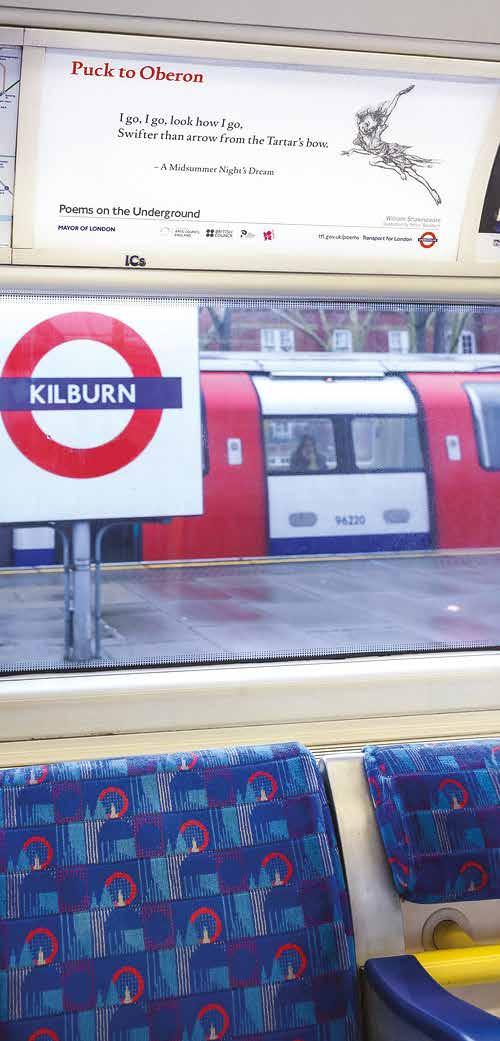
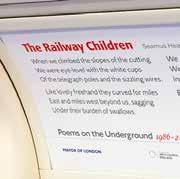
Words by Robert Burns, Percy Bysshe Shelley and Seamus Heaney were among the first to be seen – and 40 years down the line, Poems on the Underground is still going strong. Thanks to the mini-posters slotted among the ads above the seats on Tube carriages, millions of people every day can read poetry while journeying through London.
The scheme began in January 1986, and this year Transport for London (TfL) will be marking the 40th anniversary with poetry posters at certain stations and a free leaflet containing 40 poems that have been used over the years.
Poems are placed on Tube carriages
Poems on the Underground was inspired by an American writer living in London, Judith Chernaik, who suggested it would be good to read a few lines while on the move. London Underground got on board and now releases selections several times a year.
Mark Evers, chief customer officer at TfL, says that the scheme has turned ‘millions of minutes spent travelling into moments of reflection and joy’.
Many of the poems have been joyful. Some – such as Wordsworth’s ‘Composed upon Westminster Bridge’ – have waxed lyrical about the capital itself; others – including Gerard Manley Hopkins’s ‘Inversnaid’ –have celebrated rural scenes.
But the selections have not shied away from darker subjects such as war, prejudice and personal remorse.
The poetry displayed has also contemplated all kinds of love. Passengers may have recognised the happiness of Grace Nichols’s ‘Praise Song for My Mother’ or of Wendy Cope’s evocation of new romance, ‘After the Lunch’. Perhaps some last year were stopped in their tracks by George Herbert’s simply titled ‘Love’, in which the speaker receives a welcome from Love but finds that his ‘soul drew back’ because it feels ‘guilty’ and unworthy.
This is a particular Love, however. This Love talks of having willingly taken the blame for anything that the speaker had done wrong, assuring him of forgiveness and the opportunity of a life-changing relationship.
It’s a sliding doors moment. Herbert’s lines end with the speaker accepting the invitation of this divine Love.
Countless other people have accepted the invitation too – and find that this Love stays with them wherever they go.
Feature by Philip Halcrow
Quick CROSSWORD
ACROSS
1. Colossal (4)
3. Light blow (3)
5. Smaller amount (4)
7. Rise and fall (9)
9. Of the mouth (4)
10. Break (4)
11. Metal structure (5)
14. US film award (5)
15. Made mistake (5)
17. Bury (5)
18. Monarchs (5)
19. Meeting place (5)
20. Weird (5)
23. Overdue (4)
25. At this place (4)
27. Tired (9)
28. Consider (4) 29. Foot part (3) 30. Byway (4)
1. Forbid (4)
2. Cash register (4)
3. Unsteady (5)
4. Mickey’s dog (5)
5. Auction items (4) 6. Halt (4) 7. Enchant (9)
8. Delighted (9)
11. Lever (5)
12. Not yet (5)
13. Boldness (5)
14. Acorn tree (3)
16. Perish (3)
21. Play out (5) 22. Problem (5) 23. Noisy (4) 24. Test (4)
25. Pile (4) 26. Engrave (4)
HONEYC O M B
Each solution starts on the coloured cell and reads clockwise round the number
Floor covering
Domesticated polecat
Female parent
Patriotic song
Proposal in parliament
Lower leg bone
Look up, down, forwards, backwards and diagonally on the grid to find these car manufacturers
Mix the tomatoes, tomato puree, garlic, paprika, mustard, BBQ seasoning, balsamic vinegar, Worcester sauce, BBQ sauce, honey and a squirt of lemon juice in a bowl. Set aside.
Heat the oil in a pan and cook the onion and carrots, covered, for 15 minutes, stirring occasionally, until the vegetables are softened and lightly coloured.
Add the chicken and bacon and cook for 15 minutes, until slightly browned. Stir to ensure nothing sticks to the bottom of the pan.
Add the prepared sauce and bring to a simmer, adjusting the temperature accordingly.
For a thicker sauce, leave the lid off the pan for a few minutes.
Towards the end of cooking, add the grated cheese, to taste, and allow to melt, before serving.