bout 1,150 high school juniors from across Mesa County Valley School District 51 descended on the campus of Colorado Mesa University on Jan. 15 for Workforce Development Day, taking part in career-focused breakout sessions designed to help students explore post-graduation pathways.
The annual event brought students together for a day of hands-on workshops, presentations, and conversations with educators, workforce professionals and local employers. Students rotated through breakout sessions covering entrepreneurship, construction and skilled trades, financial literacy, résumé building and career planning.
The event was designed to expose students to a wide range of career options, including college, technical education, apprenticeships and direct entry into the workforce. Hosting the event on CMU’s campus also gave students firsthand exposure to a postsecondary environment while connecting classroom learning to real-world opportunities.
Local innovation and business development
An entrepreneurship-focused breakout session introduced students to local business development resources and real-world examples of turning ideas into sustainable companies. See story Page 5
Palisade seeks sewer solution
Town of Palisade faces a tightening deadline and limited funds to complete sewer project.— See Page 2
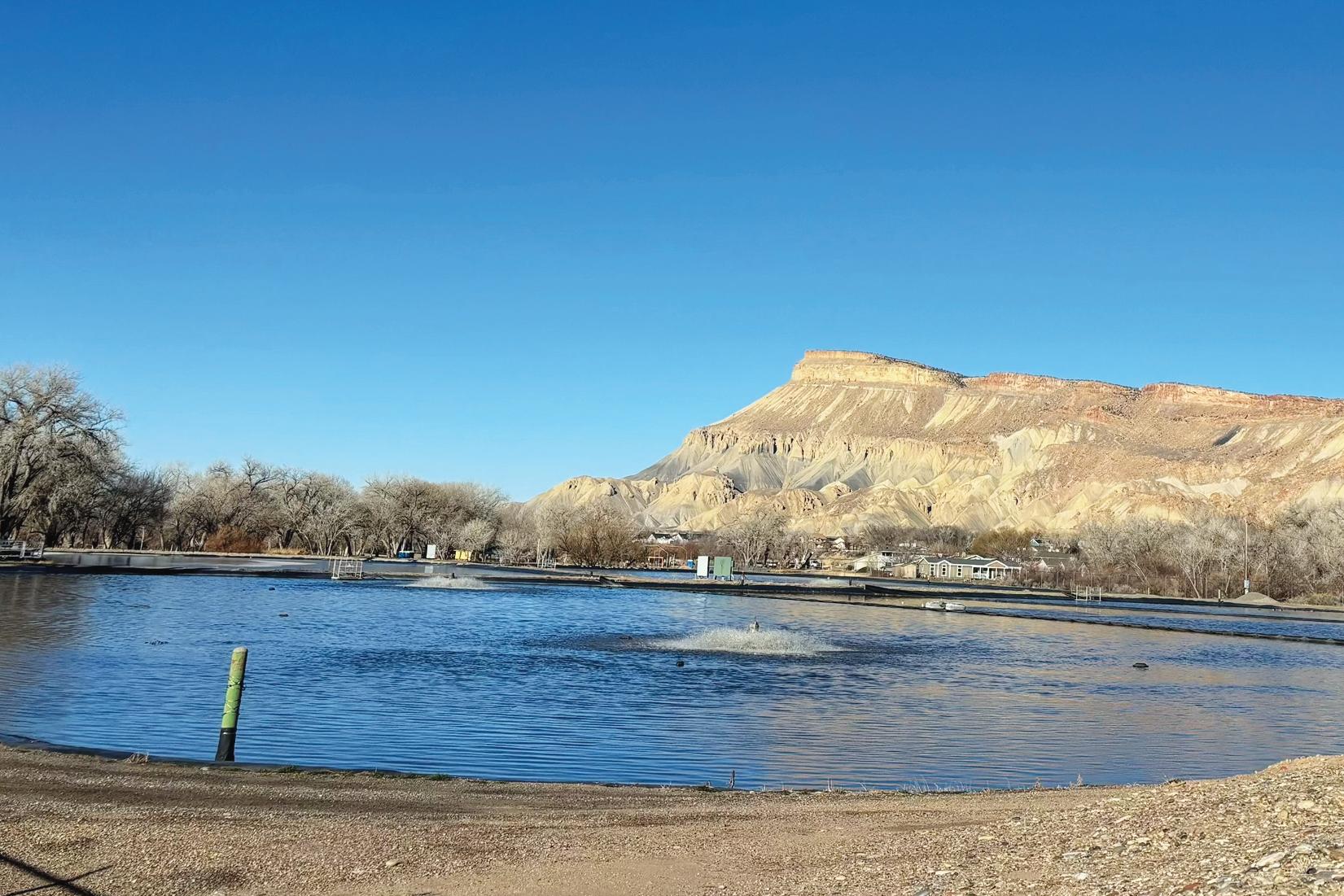
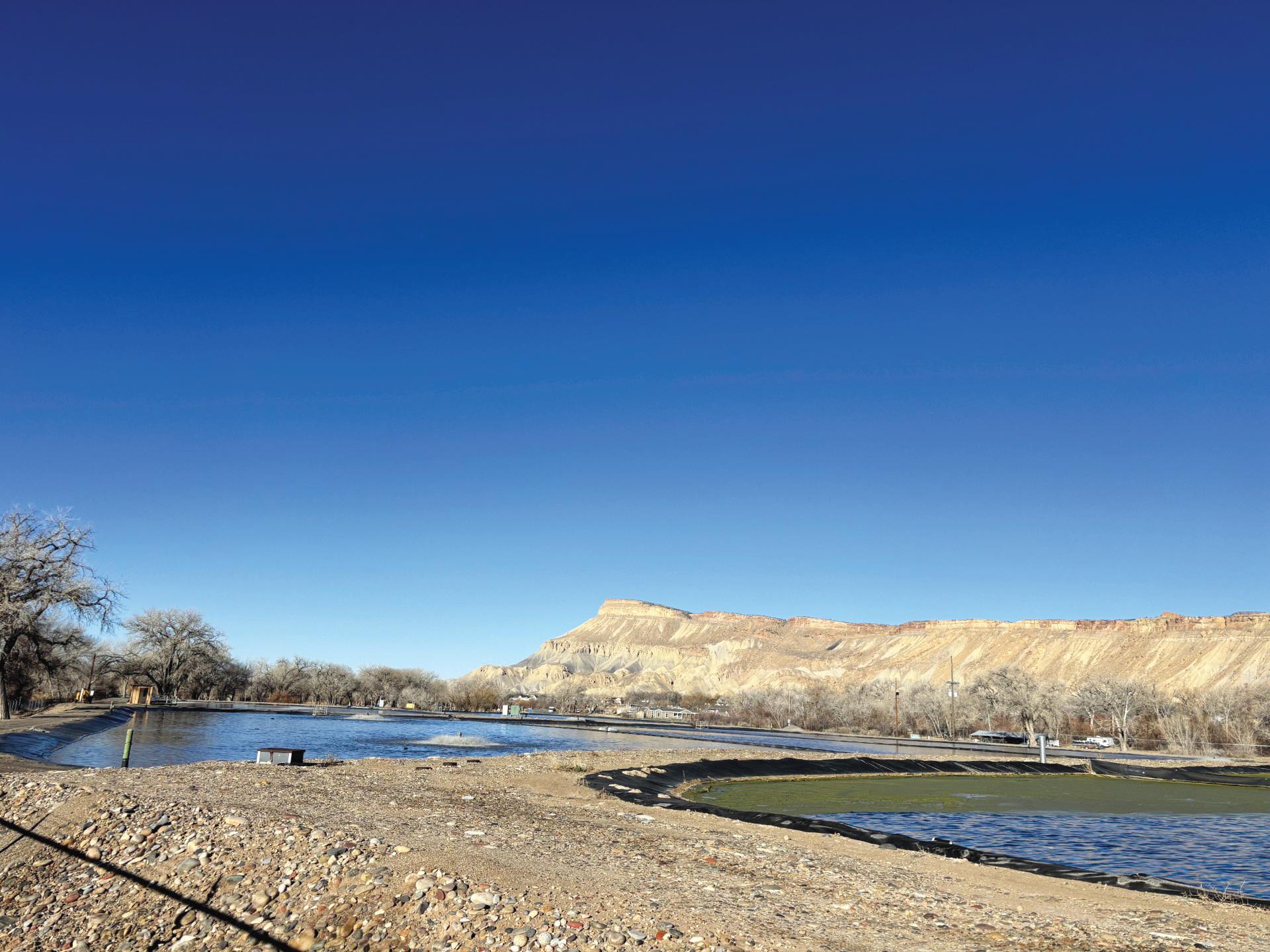
Wastewater lagoons operated in the Town of Palisade by the Colorado River. The town plans to decommission the lagoons as part of a long-term effort to transfer wastewater treatment to the Clifton Sanitation District. Photo by Brandon Leuallen.
These wastewater lagoons that are operated by the Town of Palisade sit along the Colorado River corridor. If deadlines are met, the lagoons will be decommissioned and drained in 2027.
by Brandon Leauallen.
Palisade running tight on time, money on sewer transfer project
Brandon Leuallen
The Business Times
Along-planned effort to transfer the Town of Palisade’s wastewater system to the Clifton Sanitation District is entering a critical phase after construction bids in the fall came in too high for the amount of funding available and as state regulatory compliance and funding deadlines approach.
Town documents show Palisade has been working toward a long-term wastewater solution for more than a decade, following changes to state discharge standards. According to the “Palisade Sewer Fact Sheet – Final,” the Colorado Department of Public Health and Environment reduced allowable organic load limits in 2009, prompting the town to begin evaluating alternatives.
The same document explains that additional effluent limits are anticipated to take effect in 2027, and failure to meet those limits could expose the town to penalties of up to $54,833 per day per violation.
Also, an agreement signed between the Clifton Sanitation District and The Town of Palisade says funding for the project is tied to a completion date of 2027.
The project was previously expected to move into construction in 2024 and to be completed by 2027. However, construction has not yet begun, and after delays the timeline is now running tight.
Seasonal construction constraints
An added complication is that once construction does begin, construction schedules are constrained by irrigation operations, which require work affecting irrigation ditches along the route to be completed after the irrigation season, when the ditches are not in use.
In the Palisade area, the irrigation season typically runs from mid-April through mid-October, limiting ditch-
related construction to late fall and winter.
In an interview with The Business Times, Town Manager Janet Hawkinson said this restriction applies primarily to portions of the sewer pipeline and not to the lift station. The lift station can be constructed year-round, while much of the pipeline work must occur during winter months, and the lagoons can be completed after that point.
With the next round of bids due in February, the lift station could be constructed during the summer months, but there would be little opportunity to begin pipeline construction before the ditches are filled, and the work must wait until the following winter. This creates a narrow window of roughly six months to complete pipeline work before irrigation ditches fill again in April 2027.
A project years in the making
Efforts to replace or supplement Palisade’s lagoon-based wastewater system began well before current town leadership. According to the “Palisade Sewer Fact Sheet – Final,” the town provides wastewater service to approximately 2,400 customers and has evaluated compliance options since at least 2009.
In 2020, the town completed the formal sewer study comparing alternatives.
At the time, the sewer transfer option was identified as the most cost-effective and environmentally preferable approach, allowing Palisade to utilize an existing mechanical treatment facility rather than constructing a new plant along the Colorado River.
Hawkinson said the project was a high priority from the time she was hired as town manager in 2018.
“I want to say when I came on that was the number one priority of the board of trustees,” she said. “We needed to get this project done.”
Hawkinson said the concept of transferring Palisade’s wastewater to Clifton dates back decades and was contemplated when Clifton built its mechanical-treatment facility.
“Clifton Sanitation District, they did construct a mechanical plant, and I don’t have it in front of me when it was constructed, but it was 20 or 30 years ago,” she said. “It was constructed to take Palisade’s sewer, so that it can be treated. It never really took place.”
Hawkinson said consolidating wastewater treatment at Clifton avoids constructing multiple mechanicaltreatment plants along the Colorado River.
“You don’t want a whole bunch of mechanical plants along the Colorado River,” Hawkinson said. “That’s not good for the environment or people.”
Construction delays and rising costs
Initially in 2020 after the town completed its Sewer study, Hawkinson had spoken to the Daily Sentinel, which wrote, “A brand new plant would cost around $15 million, Hawkinson said, while utilizing Clifton’s existing facility would cost around $7 million.”
As planning advanced, the scope and estimated cost of the sewer-transfer project grew to approximately $24 million by 2026, which includes a $6 million sewer tap fee to the Clifton Sanitation District. Hawkinson said only about half of that amount is tied to physical construction.
Hawkinson said construction costs account for roughly $11 to $12 million of the total. She said the project also includes about $2 million in engineering costs, approximately $1.5 million in contingency funding and roughly $1 million in interest associated with the federal loan.
Additional costs include land acquisition, easements, legal and administrative expenses, and the investment or tap fee paid to the Clifton Sanitation District of approximately $6 million.
Hawkinson said all of those components together bring the total project cost to just over $24 million.
See PALISADE on page 6
Photo
‘Just trying to keep it unique’
Fruita Gelato Company aims to be distinctively delicious with its offerings
Tim Harty The Business Times
It has been a mild January with temperatures frequently 15 to 20 degrees higher outside than inside the freezers where Bridgett Legg stores the gelato she serves at Fruita Gelato Company, 156 S. Park Square in downtown Fruita.
It’s nice enough for people to walk and bike and stop for gelato, which Legg hopes is an indication of things to come during the spring and summer.
“The hot days are what I’m excited for, everybody on their bikes around here and everyone that jogs and all that kind of fun stuff,” said Legg, who opened her store Dec. 13, coinciding with the Fruita Parade of Lights. “We just wanted to be a place to come cool off and enjoy a sweet treat.”
Those busier days will come, but until then Legg said people are figuring out her store is open and checking out the 13 different flavors of gelato, Cowpoke Creamers (gelato shakes) and various toppings that can be added.
It helps being located on Park Square.
“It’s absolutely ideal,” she said of the location. “The CBB (Colorado Backcountry Biker) bike shop is right next door with a huge following … and they’re really fun neighbors, too. It’s been great being next door to them.
“Just being a part of this loop with all the traffic that comes out of even City Market, going into town, we absolutely fell in love with it.”
Legg’s instincts were good when she thought about the visibility of her location and the traffic, be it car, bike or foot.
“We were here for about three or four months, just doing buildout and things like that, so I had a ‘Coming Soon’ sign up front for months … We met a lot of folks before we even opened, and we even had a local historian ride by on his bike and tell us a little bit about the building,” she said.
The building is old and historic, and Legg likes that. She said it was built in the 1890s, so it already has so much history, and she’d like Fruita Gelato Company to add to the legacy with the classic craft of making gelato “and then creating new memories in a historic building.”
That wouldn’t happen, though, unless Legg thought people will support it.
“We felt that there was a need,” she said. “I’ve had the neighbors say, ‘Thank you for opening,’ and the community, ‘Thank you for opening, because Fruita needed one of these.’
“Like, that’s what we said. So, instead of doing ice cream, I was like, ‘Let’s do gelato,’ because it’s a little bit more specific and a little bit richer, fuller flavor and a lot bolder. So, we worked off of that.”
Plus, she said, there’s a Dairy Queen down the road, so providing options that people don’t get anywhere else in town was a must, options that are distinct and delicious.
“We feature Italian-made gelato,” Legg said. “Getting the authenticity and the highest quality and consistency was of utmost importance to us.
“We’ve got 13 different flavors of gelato, three different sizes, or we can do cones. I’ve got all kinds of fun candies and some sodas. I wanted to highlight things that make it a little bit more specialty here.”
See FRUITA GELATO on Page 6
Bridget Legg, owner and operator of Fruita Gelato Company, 156 S. Park Square, Unit A, in Fruita, stands behind the display case that houses the gelato. On top of the case are containers of toppings, which allow Legg and customers to get creative. Photo by Tim Harty.
Fruita Gelato Company owner Bridget Legg stands next to shelves that display some of the fun items for sale in her store. She said, “You could buy a Coke and a Sprite and all that kind of stuff at every store in town,” but she wants people to come to her store to get things that aren’t sold everywhere else, “just funny stuff that just makes it a little bit more special and unique.” For instance, Fruita Gelato Company sells: Farrah Fawcett Cream Soda with a label featuring Farrah’s 1976 swimsuit photo that sold more than 12 million posters; Dirt Soda, which claims it’s shoveled and bottled in the U.S.A.; Cobra Kai Black Belt Lemonade; Butter Soda; Bacon Soda; and The Three Stooges Wise Guy Root Beer. Photo by Tim Harty.
Workforce Development Day showcases entrepreneurship, employment opportunities
Continued from Page 1
The session was hosted by Mike Ritter, director of economic development at the Business Incubator Center of Western Colorado.
“We’re a nonprofit, businessdevelopment organization in our community to build up the entrepreneurial ecosystem for Grand Junction, Mesa County, the Western Slope and statewide initiatives,” Ritter told students. “We operate through five different pillars of entrepreneurship.”
Those pillars include businessdevelopment education, access to capital through loan funding, grants and incentives, physical space for earlystage manufacturing and services, and innovation labs focused on prototyping and product development.
“One of the best ways to pursue entrepreneurship is to find a problem and have a passion,” Ritter said. “If you have a passion for something and you can solve a problem and make that thing easier for others, that’s a great way that many people start their businesses.”
Ritter also spoke about the importance of economic diversification and how building a mix of industries helps stabilize the local economy during downturns in any single sector.
Students then heard from Kenneth Riskey, owner of E Bricks Outlet, who described turning a personal frustration into a global business centered on reused LEGO parts.
“I published a list online to see if anybody else had that idea,” Riskey said. “Fast forward 25 years later, we’re still doing the same thing. We ship orders every day to almost every corner of the planet.”
Another presenter, Rysa Ferris, owner of Ferris Mushrooms, told students her consulting-based business model focuses on mushroom cultivation, sustainability and zero-waste production.
Ferris described designing mushroomgrowing systems that repurpose local waste streams while supplying fresh food to restaurants and retailers.
“This was a business with zero waste,” Ferris said. “Everything that we generated could be reused or made into something else, and that was of paramount importance to me.
“We were able to collect the food source for free and then create a byproduct in the end that is needed by farmers. I feel that’s the most ethical way you can begin a business.”
Riskey and Ferris encouraged students to view entrepreneurship as a process rather than a single idea.
Construction, skilled trades emphasize early pathways
A construction-focused breakout session hosted by Careers in Construction, a workforce program run through the Housing & Building Association of Western Colorado, introduced students to careers in construction, design and architecture, with an emphasis on starting early and building
skills while still in high school.
The session was presented by Karrie Kuklish, head of business development at Fixture Studio and committee chair of Careers in Construction of Western Colorado.
Kuklish spoke about the satisfaction of seeing projects move from concept to completion.
“There’s something really powerful about being able to see something that you drew on paper, and then you walk past the building and you’re like, ‘I designed that,’” she told students. “It’s kind of a cool feeling.”
Kuklish told students that years later, she can still look back on buildings she worked on early in her career and feel pride knowing she helped bring them from concept to reality.
She highlighted real-world examples of student work transitioning into active community projects, including a former District 51 student whose architectural design was selected for use by Habitat for Humanity.
“She graduated two years ago, and Habitat actually used one of her full plans and designs,” Kuklish said. “Her house plans are actually being built in the community right now.”
Students asked what daily life looks like in construction-related careers, prompting Kuklish to describe job-site schedules and industry expectations.
“A typical job on a job site, you’re going to start early,” she said. “You’re loading your truck, making sure you have your tools, making sure you have the equipment you need for the day.”
She contrasted job-site work with design-based roles.
“As designers, we’re working with different people every single day,” Kuklish said. “We’re going over plans, changing things, calling contractors, making sure things are lined up. There isn’t anything that’s just typical about it. There’s something different every single day.”
A key theme of the session was encouraging students to explore construction pathways early, including apprenticeships that can begin before graduation.
Students were made aware they can begin apprenticeships while still in high school, allowing them to reach journeyman status sooner after graduation than if they wait.
Kuklish encouraged students to enroll in construction courses offered through their high schools and to work with career and technical education coordinators to pursue job-shadowing opportunities.
“The biggest thing is taking initiative and being coachable,” she said. “That’s exactly what employers are looking for.”
She also highlighted concurrent enrollment opportunities through Colorado Mesa University, including drafting and architecture programs that allow students to earn certificates while still in high school.
“You can come out of high school with certificates and hit the ground running in an apprenticeship immediately after graduation,” Kuklish said.
Fruita Gelato
Basically, Legg believes any time of day and any occasion are better with gelato, especially at her store in Fruita.
“Pairing authentic gelato with local touches, and that’s approachable by everybody in town, is what our primary priority is,” she said. “No matter who you are – old, young, farmer, businessman – this could be a place for you, and come make some new memories.
“And we have seating by design, so you can have a seat, relax, meet your neighbors, hang out and enjoy. So just having that, that experience in that place, here in Fruita.”
MORE ABOUT FRUITA GELATO COMPANY
Fruita Gelato Company is at 156 S. Park Square in downtown Fruita.
Its website is still being designed, but you can follow Fruita Gelato Company on social media, particularly Facebook and Instagram.
“Facebook has been huge for me, absolutely huge,” owner Bridget Legg said.
Hubby lends a hand, support
Originally from Aurora, Legg made her way across the mountains to Fruita because of her husband and former Auroran, Eric Legg, who has lived in Fruita for about 18 years.
“He has been my north star with this entire process,” Bridget said. “He’s helped paint and do construction, and more than anything, just the support and cheering me on. He’s my biggest fan. I couldn’t do it without him.”
their meal.
Career deviation, but not too much
Legg is new to owning and operating a gelato business, but she’s no stranger to food service.
“I’ve been in the restaurant business since I was 15, which was a while ago,” said Legg, who is 47 years old, but added, “You can put 39.”
She said she was the director of food and beverage at a hotel in Palisade for the past six years. Prior to that, she was a director of food and beverage in Black Hawk.
“So I have been in the practice of multiple different types of restaurants, events, weddings, catering,” she said. “I really wanted to just do something special for Fruita, that the locals could enjoy, and keep it as authentic as possible.”
Another way she is trying to distinguish her store is by what she stocks on the shelves.
“You could buy a Coke and a Sprite and all that kind of stuff at every store in town,” she said. “I’ve got a Farrah Fawcett Cream Soda, and a Cobra Kai lemonade and butterflavored soda, just funny stuff that just makes it a little bit more special and unique.”
The Cowpoke Creamers have themes and different toppings.
Wherever the toppings get used, Legg said she’s “just trying to keep it unique, that it’s special just to the shop.”
For example, there’s green army men in gummy form for topping a Cowpoke Creamer named Soldier (pistachio gelato, honey and milk with whipped cream).
“We’re behind our military 100 percent,” she added. “We wanted to do something to show that we appreciate them.”
And for the caffeine-deprived, Fruita Gelato Company blends coffee and tea with gelato in what they call Chillatos.
Legg said the Dusty Trail (tiramisu gelato blended with coffee, poured over ice, topped with English toffee and whipped cream) and Vanilla Brownie (Tahitian vanilla gelato blended with coffee, poured over ice, topped with brownie and whipped cream) are “really popular.”
She added, “What’s wrong with a Vanilla Brownie in the middle of the day?”
Of course, the answer is: absolutely nothing.
“That can pick you up anytime in the afternoon if you’re in a slump,” she said.
Palisade
Continued from Page 2
Funding structure and financial exposure
Resolution 2025-17 – Amended Intergovernmental Agreement with Clifton Sanitation District, including Exhibit A, ties the sewer transfer project to federal loan and grant funding and says, “The funding is tied to a scheduled completion date of 2027.”
Asked about the funding deadline, Hawkinson said the city is still working on the 2027 timeline and is in communication with its partners throughout the process. When asked about if the deadline was not met for some reason, she confirmed the town could file extensions if additional time is needed.
Redesign and rebidding strategy
Hawkinson said the initial round of bids received last fall exceeded the portion of the budget allocated for construction. Engineering estimates placed construction costs at about $11.5 million, she said, but some bids came in as high as $23.5 million for
Bridget added her two stepdaughters helped do all of the painting and decor inside Fruita Gelato Company, and her father and fatherin-law helped build the bars and the tabletops in the store.
“I mean, it was a full family affair that everybody pitched in,” she said, “and it was awesome.”
Counting on foot traffic
Legg already sees walkers stopping at Fruita Gelato Company after they spot it, and she looks forward to more of that when the weather gets warmer.
“There’s just so much walking traffic right here,” she said. “That’s why we love Fruita; everybody walks. Circle Park’s always busy, and a lot of people prefer local businesses, too.”
And for people dining in downtown Fruita, she recommends they make the short walk to Fruita Gelato Company for dessert after they finish
construction alone.
Did she really say she enjoys cleaning?
Saying she looks forward every day to cleaning the glass on the front of the display case that contains the gelato sounds a little odd until Legg explains why.
“My favorite part of the day is cleaning off the glass from all the little, teeny-tiny fingerprints and nose prints from the kids,” she said. “Because I have a really good front-row seat right there when they come in, and (the gelato selection) is a lot for them to take in until they come in a few times. … That’s definitely the funniest part of my day, and I love it. I love hearing all the little things they tell me about their day, or getting to know other parents and fellow business owners.
“It’s been a really great experience just to get deeper into the community ... focusing on just such a special town. It’s great here.”
Because those bids far exceeded the available construction budget based on the engineering estimates, the town rejected all proposals and chose to rebid the project rather than award a contract. Hawkinson said the contractors bidding originally were out-oftown contractors.
To address the cost gap and attract more local contractors, Hawkinson said the town restructured the project into three separate bids: sewer pipeline construction, lift station construction and lagoon decommissioning.
She said the approach is intended to allow multiple contractors to work simultaneously by moving the project into separate bids that can be completed independently
“We have local companies now that are interested in bidding on this project ,because they just want to lay the line,” Hawkinson said.
New bids for the redesigned project are due Feb. 4 at 4 p.m. at Palisade Town Hall.
Fruita Gelato Company owner Bridget Legg sits at one of the tables in her store. She said seating was an important element, designed for customers to hang out, relax and meet their neighbors. Photo by Tim Harty.
NFIB Jobs Report: Owners report mixed employment conditions
NFIB’s December jobs report found 33 percent (seasonally adjusted) of small business owners reported job openings they could not fill in December, unchanged from November.
Unfilled job openings remain above the historical average of 24 percent.
Twenty-eight percent have openings for skilled workers (up 2 points), and 10 percent have openings for unskilled labor (down 2 points).
“The economic climate continues to support the small business labor market,” NFIB Chief Economist Bill Dunkelberg said. “Although employment conditions vary, fewer owners report labor as their biggest challenge while compensation pressures are escalating.”
“Unfortunately, Colorado small business owners are struggling to fill open positions,” NFIB State Director Michael Smith said before the start of Colorado’s 2026 legislative session. “(State lawmakers) should resist proposals that undermine the Labor Peace Act or create more onerous red tape for employers.
These policies only stand to make it more difficult for Main Street Coloradans to operate their businesses and create goodpaying jobs.”
A seasonally adjusted net 17 percent of owners plan to create new jobs in the next three months, down 2 points from November.
Overall, 53 percent of owners reported hiring or trying to hire in December, down 3 points from November. Forty-eight percent of owners (91 percent of those hiring or trying to hire) reported few or no qualified applicants for the positions they were trying to fill (down 2 points).
Twenty-five percent reported few qualified applicants (down 5 points), and 23 percent reported none (up 3 points).
In December, 19 percent of small business owners cited labor quality as their single most important problem, down 2 points from November. Labor costs, reported as the single most important problem by small-business owners, rose 1 point to 9 percent.
Seasonally adjusted, a net 31 percent of small business owners reported raising compensation in December, up 5 points from November. A net 24 percent (seasonally adjusted) plan to raise compensation in the next three months, unchanged from November.
CHANGE MAKE
VOLUNTEER
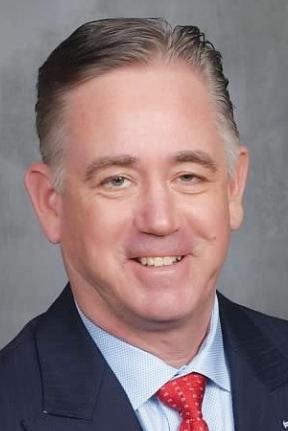
Michael Smith
Ava Health set to open Feb. 9, ‘fill significant gap’
Behavioral healthcare provider Ava Health announced it will open in Grand Junction on Feb. 9. It will occupy several buildings in the area, and the company’s headquarters will be at the former Rocky Mountain Health Plans building at 2784 Crossroads Blvd.
In a Jan. 14 news release, Ava Health described itself as:
• dedicated to delivering accessible, outcome-driven treatment.
• working to fill a significant gap for the region.
• providing private-pay quality care that is accessible to all.
“We founded Ava Health to prove that high-quality behavioral healthcare doesn’t have to be reserved for the top 1 percent,” Ava Health CEO Christopher Bennett said. “Our mission is simple: Make care adaptable, accountable and accessible to every community, starting right here on the Western Slope.”
Bennett added Ava Health chose Grand Junction for its headquarters, “because it sits at the intersection of need and possibility. This community has been underserved for far too long, and we’re committed to building a model here that not only serves our neighbors, but sets a new national standard for what’s possible when care is delivered with dignity, transparency and purpose.”
According to the news release, Ava Health will offer a full continuum of care for mental health and substance-use disorders, including:
• sub-acute stabilization.
• medical detox.
• residential treatment.
• a partial hospitalization program.
• an intensive outpatient program.
ª transitional housing.
• outpatient detox.
• outpatient services.
Ava Health will accept Medicaid, commercial innetwork and out-of-network insurance policies and private pay.
All levels of care are licensed by the Colorado Behavioral Health Administration and will be nationally accredited by the gold standard of healthcare regulatory agencies, The Joint Commission on Accreditation of Healthcare Organizations, the news release said.
Ava Health will work in partnership with community stakeholders such as Intermountain Health St. Mary’s Regional Hospital; Community Hospital; Mesa County Public Health; the 21st Judicial District; Bridges of Colorado; Mesa County Sheriff’s Department; and many others to provide an integrated and community-designed and implemented suite of services to Mesa County.
Ava Health anticipates its presence will have a significant impact in Mesa County, economically and from a community-health-needs perspective.
Bennett said Mesa County faces one of the most significant gaps in behavioral healthcare access in Colorado.
“In the past twelve months alone, 580 individuals in crisis were transported from Mesa County to psychiatric care – 464 of them all the way to the Front Range –because the Western Slope simply lacks the capacity to serve them,” Bennett said. “Right now, there are only 14 acute psychiatric beds between Denver and Salt Lake City, all located at Vail Health.
“This leaves families, law enforcement and emergency rooms carrying a burden they were never designed to hold. Too often, people experiencing a behavioral health crisis end up in jail cells or ER hallways instead of in treatment. At Ava Health, we see this as unacceptable. That’s why we’ve made it a priority to partner with providers and community leaders to expand local access, build the continuum of care that doesn’t exist today, and begin addressing these systemic gaps head-on.”
Ava Health has hired 40 employees with professional positions averaging well above the median annual wage for Mesa County, the news release said. The company anticipates hiring an additional 25 employees within the next two months, collaborating closely with Colorado Mesa University to recruit local talent.
Through the Colorado Enterprise Zone Tax Credit Program, Ava Health is eligible for tax credits, allowing it to reinvest those resources directly back into its staff, services and the community, the news release said.
“From day one, the local support we’ve received in Grand Junction has been nothing short of extraordinary,” Bennett said. “For nearly two years we have embedded ourselves into Grand Junction and Mesa County, with community leaders, partners and stakeholders who have leaned all the way in with us, helping remove barriers and create opportunities, so that Ava Health could take root here. That kind of belief and collaboration doesn’t just help us launch, it ensures we can grow in a way that truly serves this community for decades to come.”
For more information about Ava Health, its mission, and employment opportunities, please visit www. HelloAvaHealth.com.
Christopher Bennett
Colorado nationally regulatory Accreditation of community St. Mary’s Mesa County Bridges of and many community-designed County. have a and from the most access in individuals in psychiatric Range –simply lacks Bennett 14 acute and Salt Health. families, law rooms were never people health crisis hallways Health, That’s why partner with leaders to continuum today, and systemic gaps employees averaging wage for said. The additional months, Colorado Mesa Enterprise Ava Health allowing it to back into community, the support has been Bennett we have Junction community leaders, have leaned remove opportunities, so that That kind doesn’t just grow in community for about Ava employment www.
CMU hires Wadas as water center’s executive director
Colorado Mesa University announced the hiring of Shannon Wadas to be the executive director of the Ruth Powell Hutchins Water Center in Grand Junction.
Wadas, who started her new role Dec. 15, brings to the water center more than 16 years of experience in natural resource and organizational management in public and nonprofit organizations.
Most recently, she worked as a private consultant focused on organizational strategy, partnership collaboration, engagement and capacity building. Her experience includes supporting watershed planning efforts in western Colorado, coordinating and facilitating a water-education course for professionals and helping form a community navigator network in the Upper Rio Grande Basin to accelerate aquatic restoration.
“There is no greater unifying force than water,” Wadas said. “I am thrilled to have the opportunity to catalyze and strengthen the collaborative efforts of CMU and local and regional partners to support important water issues through educational opportunities, research initiatives and thoughtful conversations.”
The Ruth Powell Hutchins Water Center serves as a Western Slope hub for water policy, academic education and applied research. It also supports student programming and interdisciplinary learning opportunities, including water-focused coursework and research, seminars, continuing education classes and a Water Fellows program.
It is the only water center in Colorado located on the main stem of the Colorado
River and in a community shaped by the confluence of the Colorado and Gunnison rivers.
“Shannon brings a wealth of experience and collaborative leadership to CMU that will strengthen the Ruth Powell Hutchins Water Center’s role in bringing people together, fostering innovation in water resource management and cultivating the next generation of water leaders,” CMU President John Marshall said.
Wadas’ hiring is part of a broader partnership between CMU and the Colorado River District to strengthen the water center’s long-term sustainability and capacity to serve as a nonpartisan hub for water policy and academic education on the Western Slope. In 2025, the Colorado River District’s Community Funding Partnership grant program invested $300,000 to aid in the development of leadership, strategy and future sustainability of the water center.
The Colorado River District works across 15 counties in western Colorado to protect water resources and support broader water-management issues affecting the state and the Colorado River Basin.
“Strong water decisions start with strong local knowledge,” said Andy Mueller, general manager of the Colorado River District. “This partnership, paired with Shannon’s leadership, strengthens western Colorado as a hub for research, education and collaboration that will provide essential data and academic scholarship to inform solid policy making for the West Slope and the Colorado River Basin.”
Learn more about the Ruth Powell Hutchins Water Center and its programs at www. coloradomesa.edu/water-center/index.html.
Timeline set for 2026 Fruita city election
Fruita residents will head to the ballot this spring as the City’s regular municipal election is scheduled for April 7. Conducted entirely by mail, ballots will be distributed to registered voters in mid-March, providing an accessible way for the community to participate in choosing local leadership.
Nomination petitions are available now at the City Clerk’s Office, and completed forms with at least 25 signatures from registered Fruita voters must be submitted by Jan. 26.
Fruita operates as a home-rule city under a council-manager form of government. The mayor is elected at large and presides over meetings and represents the city at public events, while the council sets policy direction.
According to the announcement, the ballot will include the election of a mayor for a two-year term and four city council seats, including three four-year positions and one two-year term. Candidates must be at least 21 years old, registered voters and residents of Fruita to qualify.
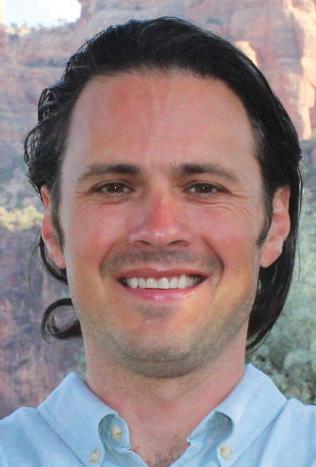
Shannon Wadas
Gunnison rivers. CMU that together, generation of Colorado River serve as a In 2025, invested sustainability of the to protect state and the Mueller, paired with education and inform solid at www.
NFIB survey: Small-business optimism continues to rise
The National Federation of Independent Business Small Business Optimism Index rose 0.5 points in December to 99.5 and remained above its 52-year average of 98, the NFIB said in a Jan. 13 news release.
Of the 10 Optimism Index components, two increased, three decreased, and five were unchanged. An increase in those expecting better business conditions primarily drove the rise in the Optimism Index.
The Uncertainty Index fell 7 points from November to 84, the lowest reading since June 2024.
“2025 ended with a further increase in small business optimism,” NFIB Chief Economist Bill Dunkelberg said. “While Main Street business owners remain concerned about taxes, they anticipate favorable economic conditions in 2026 due to waning cost pressures, easing labor challenges and an increase in capital investments.”
“While optimism is improving, Colorado’s small business owners are still contending with an onerous regulatory environment,” said Michael Smith, NFIB Director for Colorado. “Last year, the General Assembly imposed more red tape on small businesses and made
them unpaid tax collectors on behalf of the state. … As the legislative session gets underway, Main Street is asking lawmakers to protect the Labor Peace Act and resist policy proposals that make it harder to do business in our state.”
In conjunction with the December report, NFIB also released a new episode of the “Small Business by the Numbers” podcast. This is the NFIB Research Center’s new podcast where co-hosts Holly Wade, the executive director of the NFIB Research Center, and Peter Hansen, director of research and policy analysis, discuss the data, stories and economic conditions affecting small businesses nationwide.
Key findings include:
• Twenty percent of small business owners reported taxes as their single most important problem, up 6 points from November and ranking as the top problem. This is the highest reading since May 2021.
• In December, both actual and planned prices fell from the previous month. The net percent of owners raising average selling prices fell 4 points from November to a net 30 percent (seasonally adjusted). A net 28 percent (seasonally adjusted) plan to increase prices in the next
three months (down 2 points).
• A net negative 3 percent of owners reported paying a higher interest rate on their most recent loan, down 5 points from November and the lowest reading since January 2021.
• The net percent of owners expecting better business conditions rose 9 points from November to a net 24 percent (seasonally adjusted), contributing the most to the rise in the Optimism Index. This was the first increase since July.
• When asked to evaluate the overall health of their business, 9 percent rated it excellent (down 2 points), 54 percent rated it good (up 1 point), 34 percent rated it fair (up 4 points), and 3 percent rated it poor (down 2 points).
• The net percent of owners reporting inventory gains rose 6 points to a net negative 1 percent (seasonally adjusted), the highest reading of the year.
• In December, 64 percent of small business owners reported that supply-chain disruptions were affecting their business to some degree, unchanged from November. Beneath simple yes/no impact binary, there was a positive shift from those reporting a significant impact to those reporting a moderate or mild impact.
3-year graduation rate highest in District 51 history
Mesa County Valley School District 51 reported continued gains in graduation outcomes following the Colorado Department of Education’s release of updated graduation rate data.
According to the district, the Class of 2025 achieved the highest three-year graduation rate in District 51 history at 81.9 percent, while the district’s five-year graduation rate (which includes students that were in high school more than four years) climbed to 86.9 percent. District officials also reported a dropout rate of 1.5 percent, remaining below the state average.
District 51 said the past three years represent the highest graduation rates in district history, aligning with the implementation period of the district’s 2022–2025 strategic plan. The district cited significant gains among multilingual learners, special-education students and migrant students.
Fruita Monument High School’s graduation rate was 96 percent, marking its highest graduation rate in five years, according to district data.
In a statement accompanying the news release, District 51 said the results reflect
Central High School graduates toss their caps during the Spring 2025 commencement ceremony, marking the completion of their high school careers as District 51 reported one of the highest graduation rates in district history.
on Endeavor | Endeavor Plus
Garage condo development begins construction
Tim Harty The Business Times
Grand Garages is hosting a groundbreaking ceremony Jan. 22 to mark the start of construction on its garage condominium development at 2467 Industrial Blvd. in Grand Junction.
Grand Garages LLC parent company Playground Properties said in a news release its garage condominiums are designed for individuals and businesses seeking secure, customizable space for vehicles, storage, hobbies and small-business use.
“This project has been a long time coming, and we’re excited to officially
$528,000.
Lodahl said 25 percent of the 50 garage condos that will be built have been reserved or purchased.
“We continue to gather reservations and additional inquiries,” she said. “We have been very excited with the demand for these spaces and the sales velocity. We use a reservation system that starts with a fully refundable deposit and moves to a purchase agreement. This gives our buyers security during the build process and affords us the flexibility to work with their deposits and timing.”
Lodahl said Denver-based dcb Construction Company Inc. is the project’s
break ground in Grand Junction,” said Gerrit Van Maanen, a Playground Properties co-founder and part of the Grand Garages ownership group. “We’re proud to bring a thoughtfully designed space that meets a real need in the community and contributes to the continued growth of the area.”
The sizes of the garage condos range from 700 square feet to 1,900 square feet, and depths of the units range from 35 feet to 60 feet, according to Playground Properties Operations Manager Kristen Lodahl.
She said pricing starts at $199,500 for its smallest available unit, while its largest available unit is priced currently at
general contractor, and, “We are also proud that the majority of the trade partners and material procurement are local to Grand Junction and Mesa County.”
She said the estimated completion date is late summer to early fall this year.
Lodahl said Playground Properties also has a garage condo complex under construction in Golden and “several more in the works across the Front Range, including an upcoming project in Centennial, CO. The team has been involved in dozens of garage condo and self-storage projects all across the U.S.”
For more information about Grand Garages, visit www.grandjunctiongarages. com or call 970-500-2846.
An artist’s rendering of the Grand Garages complex. Photo courtesy Grand Garages.
Strategic assessments drive growth, profitability
Success in business rarely hinges on what you already know. More often, it’s the blind spots, the gaps in understanding about your people, that limit your ability to hire, place, manage and develop team members effectively.
For many business owners, the challenge of building a highperforming team stems from a lack of credible, unbiased information. Without clear insights, decisions about hiring, training and retention become guesswork, and guesswork is costly.
When planning for growth, accurate and impartial data about your workforce is not just helpful, it’s essential. Imagine being able to hire correctly the first time, reduce turnover and increase retention. Picture having the clarity to place team members in roles where they thrive, feel fulfilled and contribute at their highest level. Consider the impact of knowing exactly which training initiatives will deliver the greatest return on investment.
These are not distant ideals; they are achievable outcomes when organizations leverage comprehensive, EEOC-compliant assessments. Assessments provide a structured, evidence-based way to understand the strengths, motivators and potential of your team. They eliminate bias, uncover hidden capabilities and highlight areas for improvement. When used strategically, assessments become more than diagnostic tools, they are catalysts for engagement, productivity and profitability.
Five key assessments stand out as particularly powerful in shaping strong, cohesive teams:
Behavioral assessments help individuals understand themselves and others. By identifying communication styles, stress triggers and tendencies under pressure, DISC assessments foster adaptability and empathy. Employees learn to recognize time-wasters, manage weaknesses and refine their approach to collaboration. For managers, DISC results provide valuable insight into how candidates are likely to perform, making hiring decisions more precise and effective.
Motivators reveal what truly drives a person: the passions; values; and priorities that fuel their actions. Understanding these forces allows leaders to align roles with intrinsic motivation, creating a sense of purpose from Day 1. When coaching and training are tailored to these motivators, team members feel energized and committed. The outcome is a workforce that not only performs, but thrives, because their work resonates with their inner drive.
Emotional intelligence is the ability to perceive, understand and manage emotions, both one’s own and those of others. An EQ assessment highlights how well individuals navigate relationships, handle stress and contribute to collaboration. Teams with high emotional intelligence communicate more effectively, resolve conflicts constructively and maintain resilience in challenging situations. For organizations, this translates into stronger cohesion and higher productivity.
Business acumen reflects how sharply a person interprets experiences and makes decisions. This assessment measures perception and discernment, offering insight into how individuals process information and respond to challenges. Strong acumen correlates directly with superior performance, as team members become more aware of internal and external realities. Leaders gain a window into thought processes that influence outcomes, enabling them to place people in roles where their judgment and decision-making skills shine.
Competency assessments evaluate 25 research-based skills tied to workplace success. They highlight well-developed strengths while identifying gaps that may hinder
performance. Used as a benchmarking tool, competency assessments ensure alignment between individual capabilities and job requirements. For managers, this clarity simplifies training priorities and accelerates professional development, closing skill gaps efficiently and effectively.
Together, these assessments form a comprehensive suite that equips leaders with high-quality, unbiased information. They provide clarity that cannot be achieved through intuition alone. When combined with professional development and coaching, assessments foster buy-in, strengthen communication, and enhance teamwork. The ripple effects are significant: higher productivity; greater job satisfaction; and improved retention.
The benefits extend beyond individual performance. Organizations that integrate assessments into their talent strategy experience measurable improvements in profitability. Hiring becomes more accurate, reducing costly turnover. Training investments yield stronger returns because they target the areas of greatest need. Managers lead with deeper understanding, creating environments where team members feel valued and supported.
The key to unlocking these benefits lies in proper administration and integration. Assessments should not be treated as one-time exercises, but as ongoing tools for growth. When embedded into hiring, coaching and development processes, they create a culture of continuous improvement. Team members gain self-awareness, managers gain actionable insights, and organizations gain a competitive edge.
For business owners committed to building teams of top performers, assessments are not optional, they are essential. They transform uncertainty into clarity, guesswork into strategy and potential into measurable success.
High-quality assessments are more than diagnostic tools; they are strategic assets. When leveraged thoughtfully, they unlock hidden potential, elevate performance and drive profitability. For leaders ready to build resilient, high-performing teams, assessments are the key to sustainable success. F
Marcus Straub owns Life is Great Coaching in Grand Junction. He’s available for free consultations regarding coaching, speaking and trainings. Reach Straub at (970) 2083150, marcus@ligcoaching.com or through the website located at www.ligcoaching.com.
Marcus Straub
There’s a reason they’re called ‘eternal truths’
And there’s a reason why everyone uses them. From preachers to movie stars to the boss you dislike to your parents all the way to the lowest form of life on the planet, that politician you despise so much.
The problem with eternal truths is that while many folks use them to promote their schemes and machinations and Machiavellian maneuvers, they never think those truths also apply to them. And nowhere do they apply more than to our political system.
If you bother to read this column often (which should be a concern, especially if you agree all the time) I have myriad favorites, and pretty much every one of them apply to government and politics. Here’s a particular favorite of mine that rolls around at about this time of year, every year from a guy named Gideon J.
Tucker, a man who I have no idea who he was, just that it’s a pearl of wisdom everyone on every side of politics should take to heart:
“No man’s life, liberty or property are safe while the legislature is in session.”
And guess who just went to work in Denver? That’s right, all those folks we elected who love to tell you and me how to live, or what to do, and most important, what’s best for us, are going back to work to pass laws to force you and me into understanding how to live, what to do and what’s best for us.
After all, winning an election is akin to killing the Kurgan. Once the blessed event occurs, apparently those select few who’ve achieved this greatest accomplishment yell in unison, “I know everything!”
Don’t think so? Just ask them.
Sadly, they don’t have the slightest clue. After all, they are about to introduce how many new laws to make your life better? For us Coloradans the past several years it’s been a thousand or so? Let me ask you this. Did the thousand or so they passed last year improve your life? How about the year before that? Or the year before that? Getting the picture?
Don’t bother to answer, or tell me my numbers are off, because the questions are rhetorical and the answer is obvious. It’s no, by the way. It’s always no. The laws that lawmakers (can we stop calling them that, so they stop making so many?) pass are simply payoffs to cronies who expect a return on their investment in a fellow, fallen human, usually in the form of some money laundering scheme to benefit a benefactor
And if you don’t think both sides do it, you aren’t paying attention. Why is it that Republicans feel the way they do with Pontius Polis in charge of Colorado the same way democrats feel about the Orange Man, Congress and the Supreme Court in Washington, D.C., after this last election? Could it be they feel their life, liberty and property aren’t safe while those folks are “in session?”
The answer to that is yes. And they should be. We all should be. Because after this next session, whether it’s in Washington, Denver or right here in River City, pretty much
all of these folks will be asking for forgiveness, and your vote, in stating another eternal truth from one of the greatest (albeit it simple) minds of the last generation with the words, “Oops, I did it again!” Then, they can go back to their hallowed halls while letting you know, “….they hear you, and they are gonna get back to work, fighting for you.”
Heck, Chuck Schumer just did it the day before I wrote this. How he (and they) gets away with it election after election is beyond me. Yes, progressives, you can insert any name you wish here as well. Do you feel heard? You were. And just like when a conservative speaks out to old Chuck U, it falls on deaf ears. Why? Because your guy (you know, the one you think is above it all as many of us do when it comes to politicians) is just as bad as my guy.
Although if you’ve read my musings long enough, you’d know I don’t think much of my guy, or gal, depending on just who we made the mistake of electing. They all seem to end up the same. Just like we do under the weight of the mountains of laws they pass.
In the truth of a famous golfer judge, “You’ll get nothing and like it.” Although that won’t stop them from promising everything. For that, I’ll add another favorite truth from P.J. O’Rourke:
“The Democrats are the party that says government will make you smarter, taller, richer and remove the crabgrass on your lawn. The Republicans are the party that says government doesn’t work, and then they get elected and prove it.”
Look no further than Minneapolis for your proof. Or public housing. Or property taxes. Or our welfare system. How about wolves? Maybe health care. What kind of toilet to use. I know, the roads you drive on, including the ones all bollard-up in Grand Junction.
The list of telling us what to do, how to live and what’s best for us could fill the volumes of the tax code they pass new laws in every year to make it better and friendlier. How many laws, acts or policies have our lawmakers passed to fix all those problems? And now, they have to pass more laws, spend more money, take more rights away or exert even more power, because they didn’t do enough last time to fix what wasn’t broken or what they broke more from the last time they tried to fix it.
I know, nothing but generalizations and no substance, no facts, Craig. Well, maybe that’s because they’ve taken almost everything else. And now they’re coming back for more.
As my favorite politician once said, “Nearly all men can stand adversity, but if you want to test a man’s character, give him power.” And before you go all in on sexism and start blaming men, just remember which party thinks there’s no difference between men and women. It applies double to politicians.
I guess we won’t be truly free until freedom is just another word for nothin’ left to lose. The legislature is in session, after all.
In Truth and freedom.
FCraig Hall is owner and publisher of The Business Times. Reach him at 424-5133 or publisher@thebusinesstimes.com
Craig Hall
n Christi Reece Group welcomes 2 new members
Marketing Coordinator Ethan Abbs and Administrative Assistant Emily Gonzalez have joined the staff of The Christi Reece Group.
Abbs is a Colorado Mesa University alum who ran track and cross country on scholarship for the Mavericks. With a background in business, Abbs brings analytical strengths and creativity into marketing, where he loves making engaging social media content.
Gonzalez is a native Coloradan who has lived in Grand Junction with her husband, Charles, for the past 10 years. She is a full-time student at Colorado Mesa University and has a background in mortgages and real estate.
“They both bring a high level of enthusiasm and are a great fit with our team,” CEO Christi Reece said.
n Science museum launches trivia nights
EUREKA! McConnell Science Museum, 1400 N. Seventh St., will host Trivia at EUREKA! events Jan. 29 and Feb. 26. Doors open at 6 p.m., and the events will run from 6:30 to 8 p.m., allowing guests to explore the museum’s interactive exhibits before the trivia rounds officially kick off.
The trivia rounds will be entirely dedicated to the world of STEAM (science, technology, engineering, art and math). Questions will range from pop-culture science to historic inventions and are designed to challenge and entertain everyone from casual fans to seasoned experts, EUREKA! said in a news release. Even the prizes for the winning teams will be STEAM-related.
“We wanted to create a fun, social atmosphere where adults can engage with science in a totally different way,” EUREKA! Program Coordinator Kristen Kollus said. “By combining friendly competition with our hands-on exhibits, we’re inviting the community to rediscover their sense of wonder, all while supporting a great cause.”
The event is free to attend, and guests will have the opportunity to purchase beer and wine throughout the evening. Since alcohol is allowed, the event is only for adults over 21 years. Every drink sold has a direct impact on local youth, as all proceeds from the event go toward the EUREKA! Scholarship Fund, which provides camp and program access to students in need throughout the Grand Valley.
n Xcel Energy requests natural gas rate increase
In a Jan. 15 letter to customers, Xcel Energy said it submitted a natural gas rate proposal to the Colorado Public Utilities Commission that will increase an average residential customer’s monthly bill about 11.4 percent, or $7.59, starting in October 2026.
Excel Energy said the requested rate increase reflects the critical investments it made during the past two years. Those investments were made to:
• Provide reliability to avoid outages.
• Strengthen system safety to protect communities and the environment.
• Offer a cost-effective energy solution to help keep customer bills as low as possible.
• Reduce emissions for cleaner air and a healthier Colorado.
n BLM selling 1.1 million board feet of timber
The Bureau of Land Management began a sealed-bid timber sale Jan. 15 in Gunnison for 1.1 million board feet of timber.
The West Fork Ridgeline Timber Sale primarily includes thinned Douglas fir on 808 acres of forest lands and will directly reduce wildfire threats in the area and improve forest health, the BLM said in a news release.
“The BLM is committed to promoting increased timber production and sound forest management by maximizing provisions under our Good Neighbor Authority,” said Rob Potts, the acting Southwest District manager. “Timber production also supports forest management, and wildfire-risk-reduction projects can save lives and communities.”
Sealed bids must be received by Forester Ken Smothers, Bureau of Land Management, 2500 East New York Avenue, Gunnison, CO 81230, prior to 10 a.m. Mountain Daylight
Time on Jan. 29. Any bid received after 10 a.m. on Jan. 29, either by mail or in person, will not be accepted.
For more information, visit www.blm.gov.
n Coffee and conversation with GJ city manager
The City of Grand Junction invites community members to attend Books & Briefings with the City Manager on Jan. 22 from 8 to 9:30 a.m. at the Barnes & Noble Café, 2451 Patterson Road.
All are welcome to stop by for coffee and conversation with City Manager Mike Bennett. The event offers a chance to talk books, hear city updates and learn more about community priorities and work happening across the city.
n Phase Two under way for Four Canyons Parkway
The City of Grand Junction has begun Phase Two of the Four Canyons Parkway project. The transportation improvement is designed to support future growth by reducing traffic on neighborhood streets, easing congestion and improving overall traffic flow along the 25 Road and Patterson Road corridors.
In preparation for roadway construction planned in 2026, Xcel Energy recently completed the 25 Road Natural Gas Project to enhance natural-gas-system safety
Upcoming work will include installation of additional utility infrastructure along 25 Road. As of Jan. 12, the city’s contractor began construction on a small section along 25 Road. Construction along 25 Road will occur in phases to minimize traffic impacts. Work will progress from north to south, ending at the intersection of 25 Road and Patterson Road. During closures, local traffic will be detoured onto nearby residential streets to maintain access to homes, businesses and schools. A map showing the first closure and detour route, as well as more information on the project can be found at: www.gjcity. org/1213/Four-Canyons-Parkway-Project.
Phase Two of Four Canyons Parkway is located east of 24 1⁄2 Road and is currently focused on utility installation prior to roadway construction. Planned improvements include: a new four-lane arterial connecting 24 1⁄2 Road to and along 25 Road south to Patterson Road; a reconfigured intersection at 25 Road to improve traffic capacity and safety; and a widened, reconstructed intersection at 25 Road and Patterson Road in the final stage.
Business Bites: A Couple Items of Note
• Renovation of the building at 119 N. Seventh St. in Grand Junction has begun. The building was the former home of Junct’n Square Pizza and is now leased by Matt Chasseur and Ashley Fees Chasseur, who own fine-dining restaurant Peche in Palisade. Xtract Environmental Services was doing work inside the building a week ago.
A liquor licensing notification for Tiki Bird LLC is posted on the building’s front window, and a planning document filed with the city describes the work with: “Remodel for Tiki Bird Restaurant. Complete overhaul of electrical, mechanical and plumbing infrastructure, including make-up air and exhaust hood system, installing a grease interceptor, and adding two new doors to the South side of the building.”
• The Grand Junction Fire Department classified the cause of the December fire that damaged Junct’n Square Pizza’s food truck as “undetermined,” and the investigation is closed, because there was too much damage to the trailer.
GJFD Public Information Officer Dirk Clingman said firefighters, who responded to the fire at approximately 2:38 a.m. on Dec. 19, had to tear apart some of the trailer, because “the makeup of the trailer along with the insulation made it very hard to extinguish the fire.” The food truck had been parked in a lot at the northwest corner of Ute Avenue and 12th Street.