









Sunday, February 22nd from 11:00am to 2:00pm
After 20 wonderful years, Temple Beth Or’s signature event—the Annual Jewish Food Festival & Treasure Market—is getting an exciting update! Since 2004, the Food Festival & Treasure Market has been a much-anticipated date on the Montgomery calendar, held every year on the last Sunday in February. We’ve welcomed the community into our temple to share delicious Jewish cuisine, friendship, and the fun of finding hidden gems at the Treasure Market.
This year, we’re turning the page to a new chapter: the Treasure Market will be replaced with a juried Art Fair. While we will always treasure the memories of vintage finds and unique goods, we are thrilled to showcase talented artists from across the region. Visitors can expect an inspiring range of work—painting, ceramics, jewelry, mixed media, photography, and more.
For months leading up to the big day Temple members roll up their sleeves to cook and bake together. It’s a beautiful tradition of teamwork and friendship, with one shared goal: providing the very best Jewish delicacies for the greater Montgomery community. Here are just a few of the items we make:
180 loaves of Challah - a traditional, braided bread
640 Challah rolls for our hot plates and veggie plates
Over 5000 pieces of pastries and desserts for our bakery
Over 330 pounds of slow-cooked, beef brisket
More than a thousand hot, fresh, potato latkes
Around 100 quarts of Matzah Ball soup and
Almost 900 cabbage rolls - cabbage leaves stuffed with meat

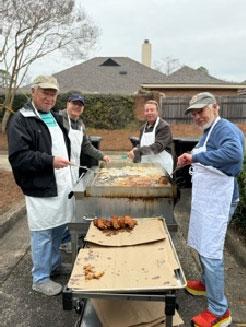






Some of the other mouth-watering Jewish special�es you can purchase to eat in or take out include noodle kugel (noodle and egg casserole made with sugar and raisins) and Quajado (spinach, pasta, egg and cheese casserole). To taste the best of the best, choose from a hot plate consis�ng of beef brisket, kugel, green beans and Challah roll or a veggie plate with Quajado, kugel, a latke and Challah roll. If you’re not up for a full meal, choose from an all-beef hotdog or beef brisket sandwich-both served with chips. Want to have some for later? Visit our Frozen-to-Go sec�on for kugel, Quajado, cabbage rolls, and Matzah Ball soup as well as frozen loaves of Challah and Carnegie Deli cheesecakes & cheesecake bites. This year we have two new cheesecake bite avors - chocolate & raspberry. Are you hungry yet?
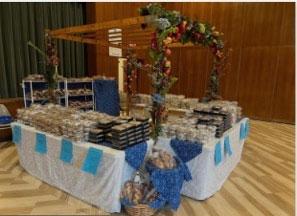
Don’t forget to visit our beau�ful bakery for the many homemade pastries such as strudel, rugelach, mandel bread, curabies (tradi�onal Sephardic sand tarts), Challah and, back by popular demand, praline Matzah.
Once you’ve lled up on all the wonderful foods and delicacies walk down the hall to visit the ar �sts at our Art Fair and nd your new treasures. So many things to choose from - pain�ngs, hand-made jewelry, po�ery, various kinds of art. All perfectly made and ready for purchase.

Once again, Food Fes�val visitors will be treated to the beau�ful music from Dahlia Road. And you won't want to miss the Sanctuary tours and d iscussions led by Rabbi Looper.
See you there!

SUNDAY, FEBRUARY 22, 2026 11am - 2pm
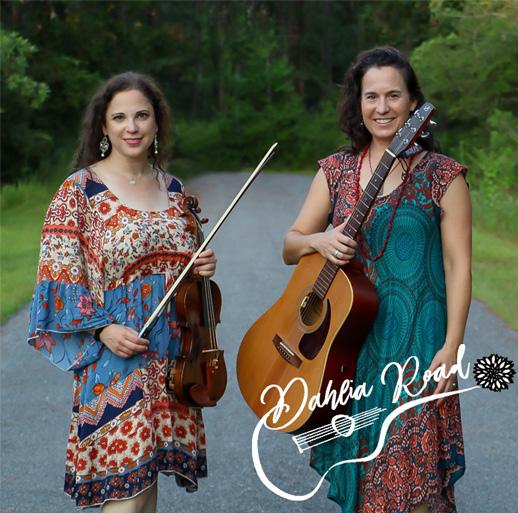
Live Music by Dahlia Road with Dotan Shvorin
GOLD SPONSOR CapTrust
Paragon Construction Regions

PLATINUM SPONSOR
ServisFirst Bank Synovus
SILVER SPONSOR ARO Risk Solutions Owen Aronov Bern, Butler, Capilouto & Massey River Bank & Trust
Total Sports Travel
FROZEN-TO-GO

BRONZE SPONSOR Adams Drugs
Cabbage Rolls, Challah, Kugel, Quajado, Matzah Ball Soup, Carnegie Deli Cheesecakes & Cheesecake Bites
Scan QR Code to place your Frozen-To-Go pre-order and to see the full Food Festival menu. All pre-orders require payment via debit or credit card.








Senior Law Solutions: How to Use AI to Enrich
Dinner Recipe: Best Ever Steak with Garlic Butter
Grumpy But Grateful
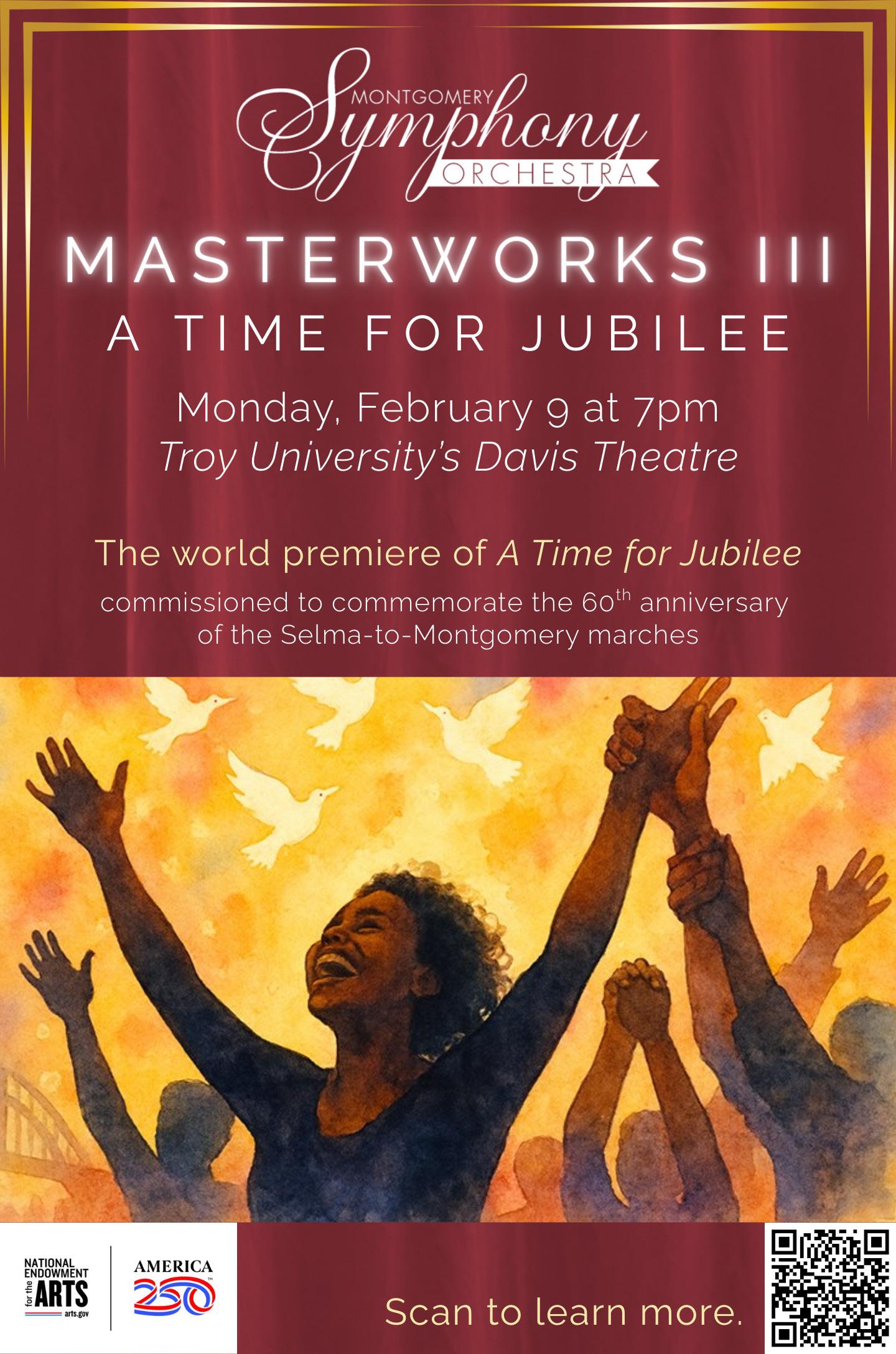
Event: Unforgettable: Tribute to Nat King Cole
Event: The Golden Age of Normandale
Event: A Taste of Ireland
Event: Caregiver of the Month
Event: Cloverdale Mardi Gras and Dog Parade
Event: Wetumpka Mardi Gras Festival
Event: Valentine's Day Wine Dinner
Event: Lunar New Year Kite Festival
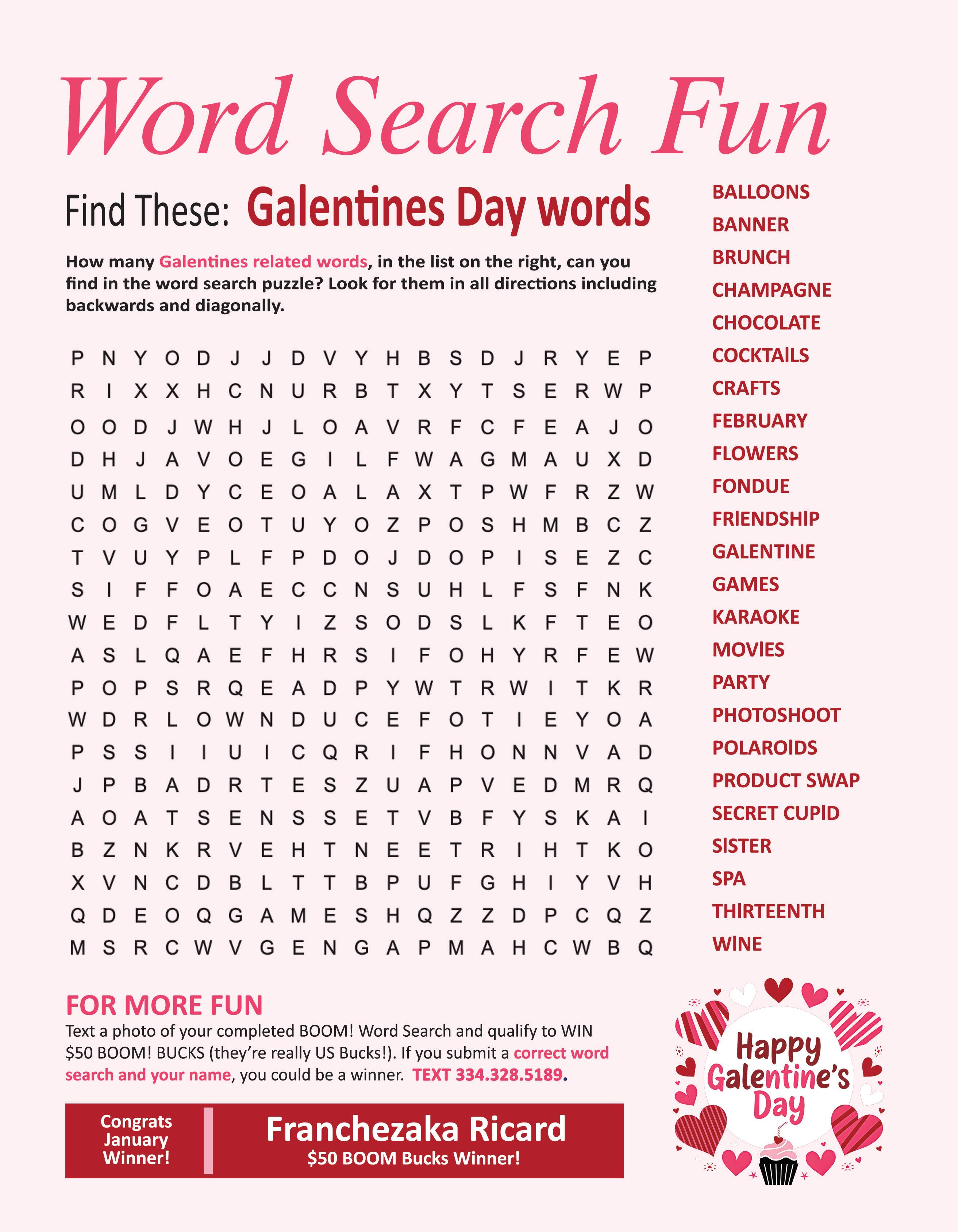
Word Search Contest
Moore Wealth Management


Founder Jim Watson (1950-2024)
Publisher Jason Watson
334.328.5189 cell/text jason@riverregionboom.com
Editor
DeAnne Watson
334.462.0225 cell/text
Contributing Writers
Jeff Barganier
Greg Budell
Archie Grumbleton
Anne Elizabeth McGowin
Susan Moore
Cover Photography
Photography by DiAnna Paulk
photographybydiannapaulk.com
Advertising
Jason Watson, 334.328.5189 jason@riverregionboom.com


February has a way of making us think about love. Not the movie‑script kind. Not just roses and reservations and the perfectly timed card. But the kind of love that actually shows up — year after year, season after season — and quietly holds everything together.
As we were putting this month's issue together, I realized almost every story we’re sharing has to do with love in one form or another.
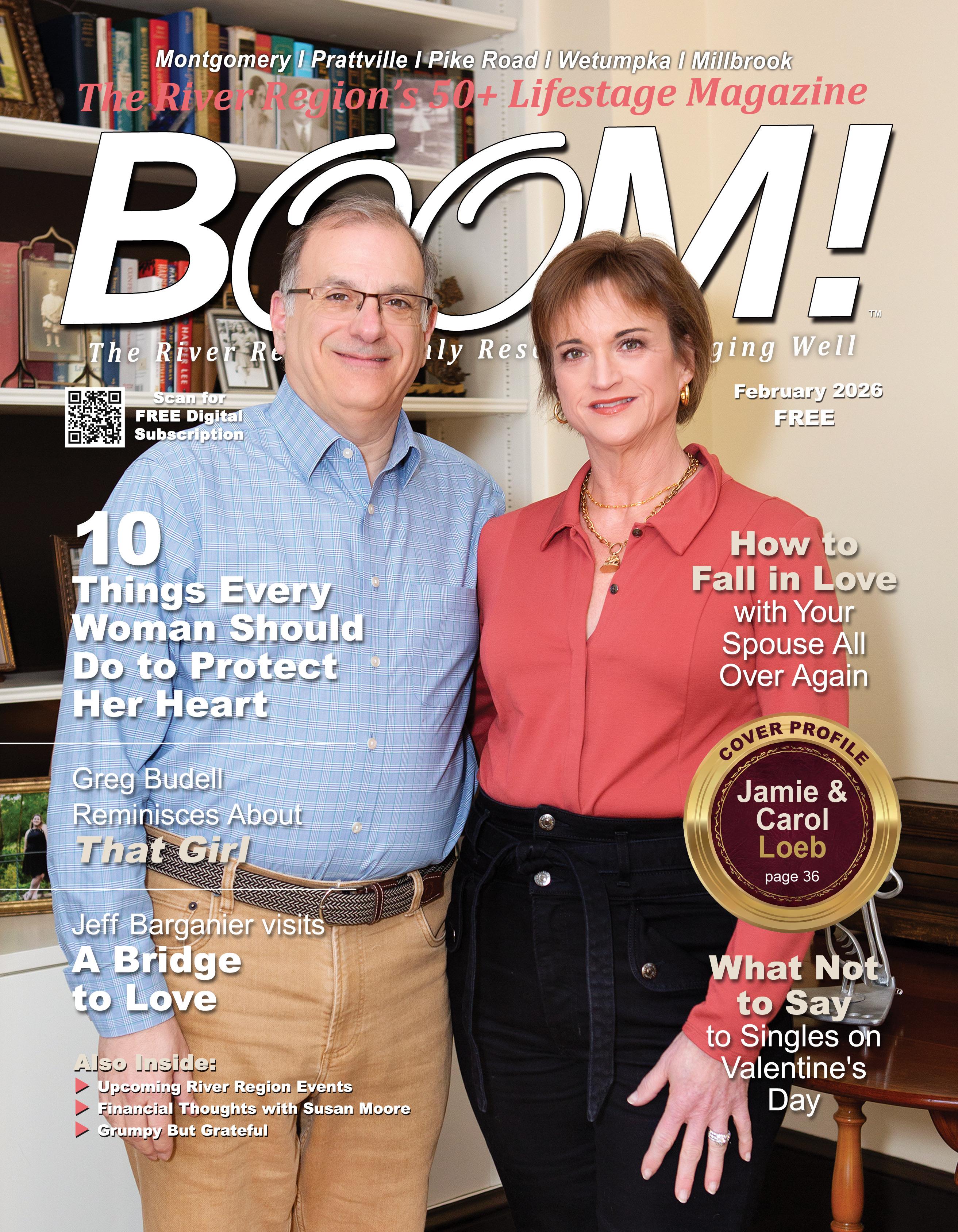
On our cover, Jamie and Carol Loeb remind us what enduring love really looks like. Thirty‑one years of marriage. Building a life, raising daughters, serving their community — and then walking through unimaginable loss together. Their story isn’t about perfection. It’s about choosing one another again and again, even when grief enters the room and changes everything. It’s a beautiful reminder that the strongest love is often the quietest.
Greg Budell takes us back to first love — that unforgettable “that girl,” the one we all remember, the one who taught us something about longing, courage, timing, and growing up. It’s funny and tender and nostalgic, and it reminds us how love leaves fingerprints on every season of our lives.
We even travel with Jeff Barganier to a natural bridge that becomes a bridge to memory, regret, humor, and reflection — and somehow circles back to the simple truth that love still happens best when we look up from our phones and into someone’s eyes.
And tucked inside this issue is a beautiful reminder that even long‑married couples can fall in love all over again — not by going backward, but by paying attention, being kind, trying again, and building something new with the people we’ve become.
As I read through all of it, I couldn’t help but think about my own marriage. Some of you may not know this, but over the last couple of years, I’ve walked through a battle I never expected — stage‑three colon cancer in 2023, and then this year, cancer returning in my liver. There have been long drives to MD Anderson. Hard conversations. Waiting rooms. Tears we didn’t plan on shedding. Nights when fear crept in quietly and refused to leave. And in all of it, one of the clearest gifts God has given me has been my wife, DeAnne.
When life strips things down to what really matters, you learn quickly what you can’t afford to lose. You learn what love actually is. It’s not dramatic. It’s not flashy. It’s walking side‑by‑side into doctors’ offices. Holding hands in silence. Praying when words run out. Choosing faith when the future feels uncertain. Laughing when you can. Crying when you need to. Trusting that God is still writing a good story, even when you can’t see the next chapter.
This month’s issue celebrates all of that. First love. Long love. Love tested by grief. Love rediscovered. Love that heals. Love that stays.
Wherever you find yourself this February — newly in love, decades into marriage, missing someone, healing from loss, or learning how to love again — I hope these pages remind you of something simple and powerful: Love doesn’t expire. Love doesn’t run out of seasons. And sometimes, the deepest love is the one that grows strongest when life gets hardest. From our family to yours, happy Valentine’s Day!






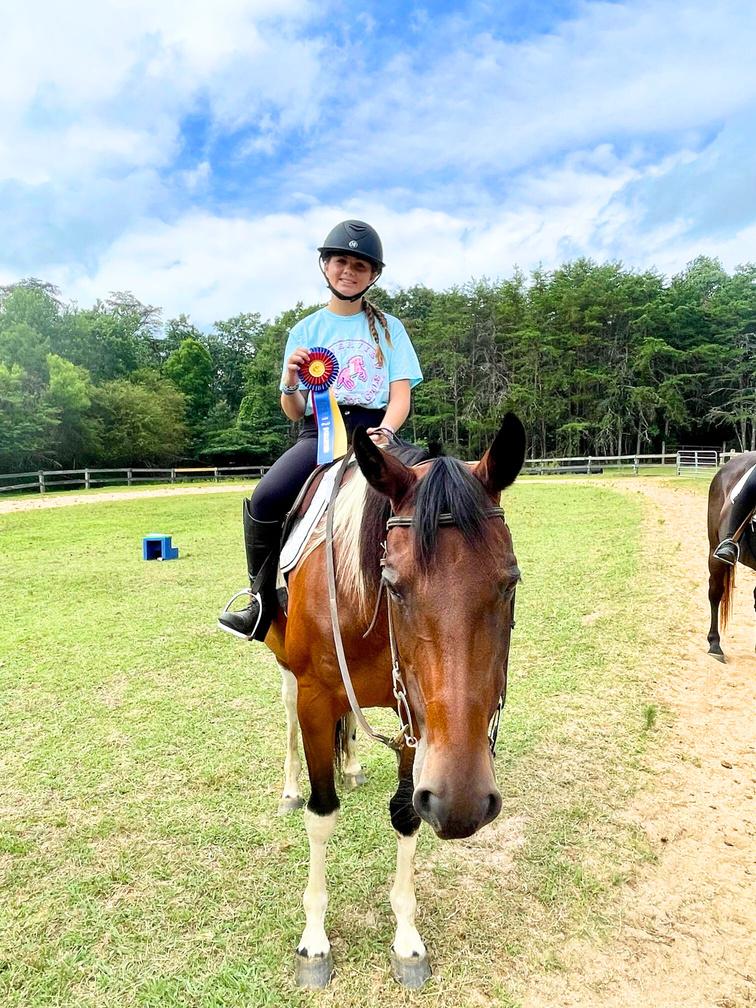
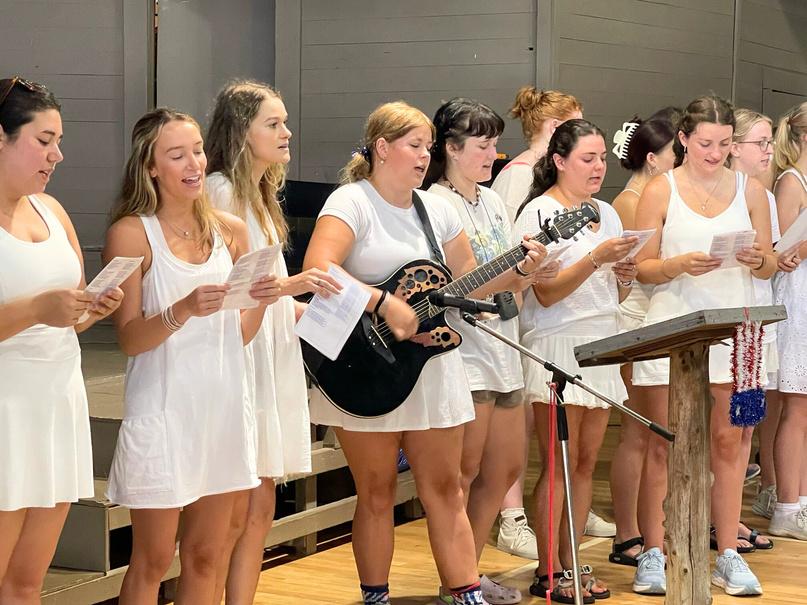
We invite her to reconnect with nature, while enjoying a supportive team atmosphere that nurtures leadership, encouragement, and friendships that will last a

• Riding - English, Western, & Jumping • Swimming • Heated Pool
• Ropes Course • Climbing Tower • Nature Exploration
• Sports • Soccer • Basketball • Gymnastics
• Beach Volleyball • Tennis • Canoeing • Archery • Knitting
• Voice & Music • Cheerleading • Dance • Chorus • Drama
• Arts & Crafts • CIT Program • Campfires every night
• Riverview Refinement & More!









Artificial Intelligence (“AI”) is technology that enables computers/ machines to perform tasks requiring “human like” intelligence. AI has made a name for itself in the last few years. College students use it; professionals use it; even moms use it to make grocery lists and assist in organization. AI is intended to help make life more “user friendly,” and in doing so, it has made both positive and negative contributions in the world.
Seniors can use AI as well, especially for health, safety, independence, and companionship. However, AI users need to be careful when relying on AI information and make sure that the information has been verified by a trusted source. When it comes to seniors, safety is of utmost importance, especially when they are at risk for falls, need assistance with their medications, or just need general health monitoring. Seniors can access AI in various ways to receive assistance. AI apps and devices, such as ElliQ, can help remind seniors when to take their medications, and some devices can actually dispense the medications at the appropriate times. Sensors like a Fitbit, WHOOP band, or a smartwatch can track heart rate, sleep, movement, and falls, just to name a few, and even alert caregivers when appropriate. Some home monitoring devices, such as Aeyesafe, can provide around the clock health monitoring based on behavioral analysis and alert a caregiver to a potential issue when the senior's behavior changes. Independence, companionship, and daily living are all things that

seniors struggle with as they age. Seniors may not be able to do things as they once did, or friends and loved ones may be far away and not able to visit regularly. The use of AI apps and programs assists in making these things easier. Alexa, ONSCREEN, Google assistants, care.coach, EVE, and ElliQ are a few AI systems or devices that can assist with engagement with friends and loved ones, with reminders, with a daily check in with trained medical advocates, or make an AI companion available 24/7. Some of these apps, like ElliQ, can also support memory games to keep the brain active.
AI can help encourage independence, improve safety, reduce loneliness, support caregivers, and,
with the right training, be very easy to use with voice commands. As with any health monitoring system, seniors should discuss AI use with their medical professionals, family, and/or caregivers, and should only use trusted sources for anything AI related.
Senior Law Solutions, LLC offers a variety of opportunities to assist individuals and their families with aspects of Elder Law Care, Estate Planning, and Life Care Planning with individualized plans.
If you have questions or want to learn more, visit www.seniorls.com or call 334. 758.9400. Senior Law Solutions is located at 1043 Ambassador Court, Montgomery, Alabama 36117.
Here for advanced heart care. Here for life.


Your heart deserves care backed by experience. Baptist Health provides advanced cardiac care through highly-trained teams, leading technology, and nationally recognized programs. With ACC accreditation in Heart Failure and the region’s only ACC-accredited Cardiac Cath Lab, Baptist Health is trusted by more cardiac patients than any other system in Central Alabama. BaptistHeartHealth.com ACC-Accredited IN HEART FAILURE CARE THE ONLY HEALTH SYSTEM IN THE REGION




38,691 CARDIAC PATIENTS TREATED BY BAPTIST HEALTH TEAMS IN 2025
Photography provided by Jeff Barganier
It’s a nature-made bridge to nowhere in the middle of nowhere. Nevertheless, it’s easy to find off Highway 278 in Northwest Alabama. Once important to ancient inhabitants, today it’s a significant Alabama tourist attraction.
According to Peter J. Gossett, author of a paper titled Bald Rock: “Natural Bridge, Alabama is located in southwestern Winston County. It’s a popular landmark for tourists all over the country. The town is named for the bridge, which is made out of sandstone and iron ore. It’s sixty feet high and one hundred forty eight feet across.” It’s purportedly the longest natural bridge east of the Rockies.
Recognized as a national park in 1954, it’s believed that Native Americans had been dwelling in the area and underneath this natural formation for centuries. A short distance from the bridge is what is said to be a mysterious carving high up on a cliff wall. But, to me, it appears to be a naturally occurring likeness of a man’s features, kind of like the image on the buffalo nickel. Some believe the so called “carving” may be of a distant past tribal chief. If it was carved, no one knows who did it, when or why. The park’s website also gives a perspective on the face. “Don't miss the Indian face that's etched by nature in the large rock!”

their three boys romp. They loved the park and seemed to be thoroughly enjoying themselves.
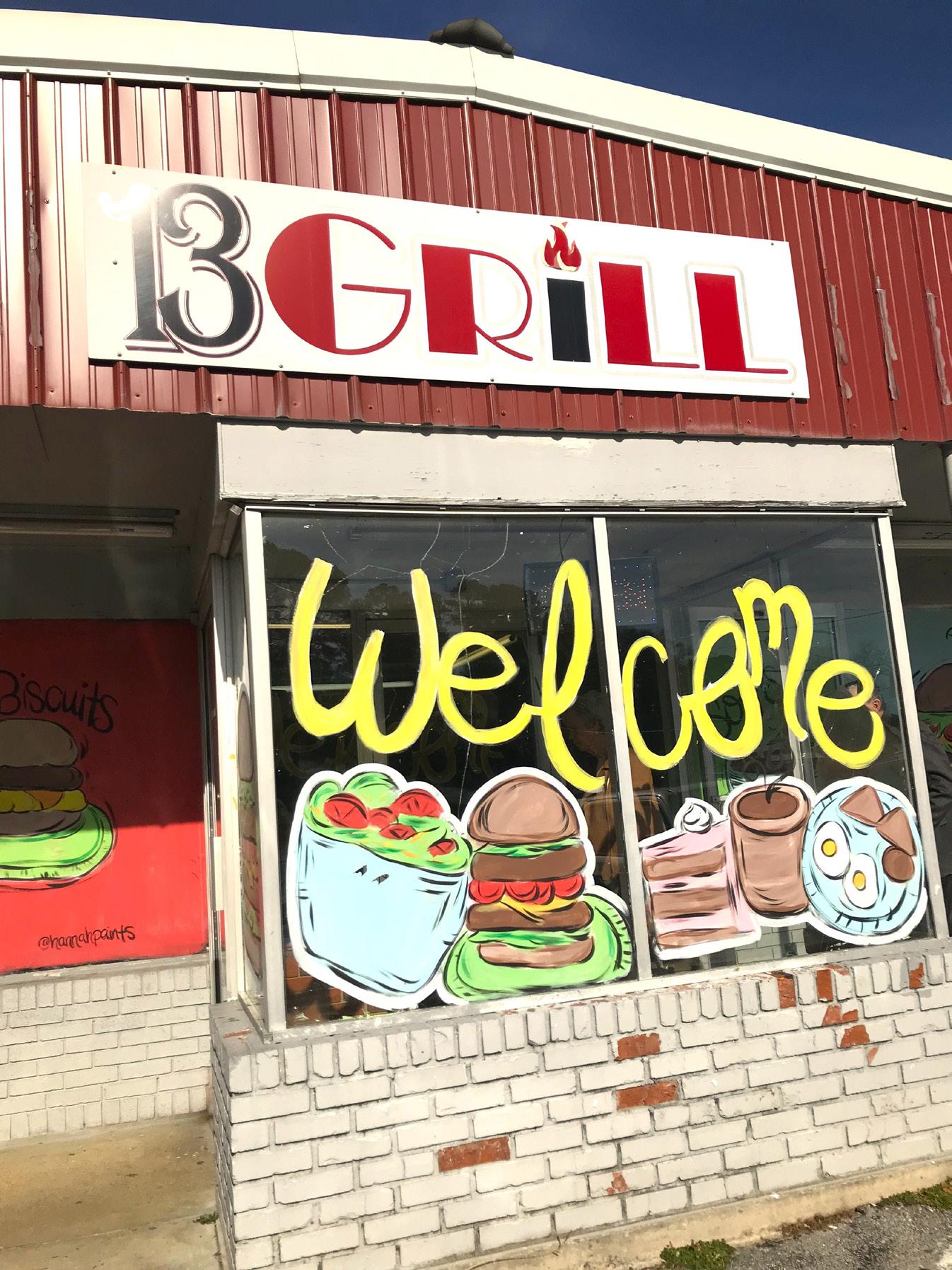
If you do visit the park, I’d suggest “13 Grill” for lunch in nearby Haleyville. The food’s good and the price is right. You’ll love it.
The site continues: “The park has a picnic area perfect for bringing a lunch to eat before or after you hike the approximately 2 mile trail through the park. At the back of the park is a small waterfall that is refreshing to listen to, and there is a stream that runs throughout the park. During the spring, you'll find all kinds of wildflowers, and in the fall, you'll see the vibrant fall foliage. Under the natural bridge at Natural
Bridge Park is a cave like bluff that you can walk around in. This natural bridge formation dates back to two million years ago, and it is known that the Creek Indians lived in the area. They probably used this cave like formation as shelter from the elements. The park also offers a great gift shop that has local products as well as products from all over the U.S. Natural Bridge Park is open daily from 8:00 am to 4:00 pm, year round. Admission. No pets allowed. Service animals are welcome.”
Perhaps Alabama’s natural bridge was formed during Noah’s Flood, circa 2348 BC.
On our recent visit to the park, we met the Roe family from Arkansas. They had been to their annual family Christmas dirt bike racing trip in Talladega. They were passing through the area on the way home when they discovered the park and stopped to let
Speaking of love, I first learned about this natural wonder fifty two years ago while driving to Hamiliton, Alabama. I was escorting a young lady home from the University of Alabama to visit her family. (Or, maybe, she was taking me home to meet her family. Not sure.) We were students; and, maybe, somewhat in love. I don’t remember there being a sign at the entrance. All I remember is her pointing down a road on the right and, in the most feminine voice, sweetly saying, “The natural bridge is right down that road. Would you like to see it?” She seemed a bit crestfallen when I replied that I really didn’t care to see it. What a naïve fool I was. For this was back in an era bereft of cell phones, when young lovers
enjoyed walking together, holding hands, reveling in the majesty of nature, and yes, even making eye contact. “It’s not far,” she gushed. But I was concerned about how far “not far” was. After all, money was tight and gas was .50 cents a gallon!
I had not yet grasped the art of living life in the moment. You see, failing to master the art of living life in the moment is a recipe for how missed opportunities of yesterday become tomorrow’s book of regrets.

I can only imagine what modern day courting must be like with gas prices sky high and every eligible young woman clutching a cell phone, eyes glued to the abominable screen. Today, a poor love sick young gentleman looks over and,
in the seat beside him, his girl is NOT entreating him to go see Natural Bridge. No! She’s pecking away at her iPhone screen, her thumbs frantically working like a couple of woodpeckers competing for pine beetles. How does love even happen anymore? No wonder young people aren’t getting hitched. Marriage is under assault! And the devil’s assault weapon of choice is the cell phone. I think divorce lawyers invented the dang thing.
So, what’s a fellow to do?
Caution, gentlemen: This may or may not work better for you than for me.

When I tried it, Cindy looked at me with concern and said, “What’s wrong?”
But … try this. Try gazing into your significant other’s eyes for several minutes and see what happens. If you don’t, someone else may. A lingering, technology free gaze into her beautiful eyes may turn a bridge to nowhere into a bridge to somewhere. She might even suggest, “Let’s go see Natural Bridge.” Let me know if it works.
Many blessings.
www.northalabama.org/listing/natural bridge park/269/

Barganier is a novelist, travel writer and speaker. He travels far and wide upon the slightest excuse for something interesting to write about. His novels include Lawson’s Bluff (2021); The Slash Brokers (1998). He also manages Cindy Barganier Interiors LLC (www.cindybarganier.com) at The Waters in Pike Road, Alabama. Contact Jeff at Jeffbarganier@knology.net. You may print out his features at www.jeffbarganier.com and take them with you when you travel!



Ingredients:
4 (12-ounce) rib-eye steaks*, 1 1/4-inch-thick, at room temperature
4 tablespoons olive oil
Kosher salt and freshly ground black pepper For the garlic compound butter:
½ cup unsalted butter, at room temperature
¼ cup chopped fresh parsley leaves
3 cloves garlic, minced
1 tablespoon lemon zest
1 teaspoon each of chopped fresh thyme leaves, rosemary, and basil
½ teaspoon kosher salt
¼ teaspoon ground black pepper
⅛ teaspoon cayenne pepper
Instructions:
Preheat oven to broil. Place a large cast iron skillet in the oven. Using paper towels, pat both sides of the steak dry. Drizzle with olive oil; season with salt and pepper, to taste. Remove skillet from the oven and heat over medium-high heat. Place the steak in the middle of the skillet and cook until a dark crust has formed, about 1 minute. Using tongs, flip, and cook for an additional 60 seconds. Place skillet into the oven and cook until desired doneness is reached, about 4-5 minutes for medium-rare, flipping once. Let rest for 3-5 minutes. Serve with garlic compound butter.
To make the garlic compound butter, combine butter, parsley, garlic, lemon zest, thyme, rosemary, basil, salt, pepper and cayenne pepper in a medium bowl. Transfer mixture to parchment paper; shape into a log. Roll in parchment to 1 1/2 inches in diameter, twisting the ends to close. Refrigerate until ready to use, up to 1 week.
https://damndelicious.net/2016/06/23/perfect-steak-wtih-garlic-butter/


On the April 13th episode of her podcast, We Can Do Hard Things with Glennon Doyle, the hosts interviewed actor Julia Louis Dreyfus. One of the topics Louis Dreyfus, 62, spoke about was her experience going to therapy with her mother when both were adults.
Louis Dreyfus explained that her mother had written her a letter in which she expressed her remorse about some things that had happened in the past. Her mother said she wished they could have talked about what happened. Louis Dreyfus responded, "What's stopping us?"
The exchange led Louis Dreyfus, then 60, and her mom, then 87, to go to family therapy together. Louis Dreyfus said, "It was a wonderful experience. Hard, but ultimately very gratifying, and I feel blessed to have been able to have done that with her."
Most people think of family therapy as something for origin families when children are young and everyone lives
under one roof. But as Louis Dreyfus' experience illustrates, therapy can be helpful for families at any age.
For family therapy to be most beneficial, both parties must come into it willing to listen to each other's perspectives and be open to changing current behavior.
Through the years, my 50 minute hours have helped when I’m feeling ‘not okay’ Why Go to Family Therapy as an Adult? Sarah Epstein, a psychotherapist in Philadelphia and Dallas, says, "Adult family therapy can help families work through old hurts, learn better tools to communicate and navigate each person's boundaries more effectively."
Families can get stuck, fighting over the same issues, unable to find a healthy way to communicate with one another and move forward.
"When families come to therapy, one of the first things that happens is that

everybody gets on the same page about the goals," explains Epstein.
"The therapist helps everybody stay aligned with those goals and navigates the differing opinions about the relationship so that each family member's needs in the room are met," she says.
Adult therapy can benefit families as they adjust through various stages of life, such as an adult child living at home or introducing a new romantic partner or new child into the family mix.
It can also help adult siblings as they navigate the challenges of the aging parents they share. And therapy with family can help people understand how their upbringing and family dynamics have continued to impact their lives, including their relationships outside of the family.
For family therapy to be most beneficial, both parties must come into it willing to listen to each other's perspectives and be open to changing current behavior.


Dr. Gail Saltz, clinical associate professor of psychiatry at the NY Presbyterian Hospital Weill Cornell School of Medicine and host of the "How Can I Help?" podcast, says, "Addressing the past isn't about placing blame or punishing someone for what occurred, but about gaining clarity."
Saltz continues, "By understanding what happened and why it happened, family members can hopefully take steps to break bad patterns, let go of resentments
and make changes in how they relate to one another."
If everyone agrees to family therapy, find an impartial mental health professional. It should be someone new to everyone, not a therapist that one of the parties has already seen. Epstein says, "Family therapy is not simply individual therapy with lots of people in the room. It has its methods that require specialized training."
Keep an open mind. Resist the urge to correct a family member's version of events. Remember, everyone will have their perspective. Refrain from placing blame and instead be willing to listen.
In the podcast, Louis Dreyfus discusses how in therapy, both she and her mother were able to discuss their versions of events from the past and acknowledge that they saw things through different lenses then than they did today. According to Saltz, "Children grow up, parents evolve and change too. Who you were then isn't who you necessarily are now."
While discussing past events may be beneficial, therapy shouldn't linger there. "The idea isn't to keep a person 'on the hook' for their misdeeds," says Saltz. "If you say, 'You did X, and that's who you are,' therapy won't be productive. Instead, there needs to be a willingness to forgive and a desire to make changes in the future."
Family therapy does have potential risks. Delving into the past can cause people to get upset and can sometimes lead to more hurt than resolution. It's important to remember the overall goals rather than trying to "win" an argument.
Sometimes, the relationship may be toxic, and discontinuing joint therapy may be necessary (although some people may want to continue working solo to improve their lives). And in some families, estrangement or limited contact is the healthiest solution for one or both parties.
Remember that more than just going to therapy is needed to solve problems. "Participation, hard work, and, many times, some misery are all part of improving relationships," Saltz says.
Such was the case for Louis Dreyfus and her mother. After going to therapy, she and her mother wondered why they hadn't gone together sooner. "It's a great resource if one has access to it," says Louis Dreyfus.
Courtesy of nextavenue.org.

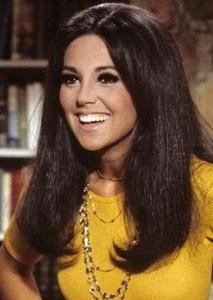
Her name was Anna Marie.
Raven hair, ruby lips, she was my original “Witchy Woman”. From middle school through my sophomore year of high school, I was obsessed with her. I had no chance.
I was an awkward nerd in my early teens (still am). She paid me occasional attention a note in the hallway from time to time, but like most young high school girls, she had her sights on older guys you know, those with a driver’s license, a job, and access to a car.
I thought of Anna during a recent afternoon radio show. My guest, Tom Moore, owns a local store called Trademark Coins and Currency. Tom is cool. A much decorated pilot, Tom served 22 years In the Air Force flying F 15s.
And I thought driving a Corvette was cool. LOL.
I told Tom about being an avid coin collector as a kid. I filled volumes of navy blue books of nickels, dimes, and quarters, constantly searching for the next fit for an open slot. While my friends were excited by The Beatles,
I was hot for a 1943 steel quarter, minted when silver was needed for World War II (or “world war eleven” as a high school student recently called it during a Veteran’s Day celebration).
Those filled books would be worth a small fortune today. Anna Marie is the reason I am savings challenged. Too young to get a job, those collector books filled with change became the bank I borrowed from to send Anna Marie flowers for Valentine’s Day or to finance a movie date on those rare occasions when she’d grant me her time.
It was during this sweet and innocent era that ABC launched a weekly sitcom called “That Girl”.
It starred Marlo Thomas as the raven haired, ruby lipped young woman trying to make it as an actress in New York City. The name of her character? Anne Marie!
I took it as a sign from God. Destiny. While my Anna Marie was busy ignoring me or brushing me off, I had Thursday nights to gaze at an acceptable substitute.

Such as it was for me, an awkward young teen, paralyzed by shyness while seeking the “cool factor” that would get me a second look that wasn’t meant to be. By junior year, I gave up on Anna Marie to find a sweet 16er who seemed to like me for who and what I was. We dated through the remaining years of high school.
Anna Marie continued to date the older guy with the sanitation department job, and she, upon graduation, took a clerical job with the Chicago Transit Authority. She never came to our high school reunions and kind of disappeared.
I lost interest in coin collecting and never filled the empty spaces in my collection books. My new friend Tom Moore estimates the lost coins would be worth about $12,000 dollars, all spent on flowers and banana splits, courting the woman who just wasn’t meant to be that girl.
Marlo Thomas would play That Girl on TV for 5 seasons and went on to marry Phil Donahue of all people! Fast forward to 1992. By then, I’d moved to South Florida and built an impressive radio resume. My dream job was offered a talk show on WLS AM & FM in Chicago, the station I idolized in high school! I couldn’t take it fast enough.
My Dad was still living in the family bungalow on 77th Place, so I took the upstairs bedrooms while looking for permanent quarters downtown. Late one afternoon, the phone rang as I was leaving for work on my nighttime show.
A petite, feminine voice said, “Hello, is this the Budell residence?”
“It is, Greg, speaking,” I replied. “How can I help you?”
I then heard the words: “I don’t know if you’ll remember me or not, but my name is Anna Marie.”
“Remember you?!? My first love! What a terrific surprise!”
“Is that really you on WLS?” she asked.
“Same dork you knew in high school,” I replied.
In the ensuing minutes, we chatted easily and agreed that a lunch date was the way to continue the conversation. During the call, I learned she was still married to the guy with the car and job from high school. Anna Marie was in her 23rd year with the CTA.
We met two days later at a riverside café. She was still a beauty, too. Raven hair, ruby lips, and big dark
Italian eyes that danced and sparkled. She was still crushworthy.
As we were seated, Anna Marie remarked, “You certainly turned out differently from high school”, looking at me the way I wished she had back in the day. She said even more with her eyes and body language. While I’m the guy who never believes any woman ever wants a physical relationship with me, Anna Marie was sending strong signals in that direction.
The woman I wanted first in my life now wanted me.
Dreams come true!
However, in an act of unprecedented maturity on my part, I declined to move on the unspoken invitation. We enjoyed a tremendous couple of hours and parted with no specific plans for another lunch or even a phone call. As she walked away, she looked back at me with a face I will never forget but can’t truly describe. She seemed vexed.
I was satisfied with letting her see I’d built an interesting life and had grown out of that awkward, dorky teen who spent his coin collection wooing her all those years ago.

Life moved on, and I moved back to South Florida later that year. Some years later, I did meet TV’s “That Girl”, Marlo Thomas, and thanked her for being my dream girl during the days of severe teen angst. “Glad I could help!” she said. Marlo was a great interview and beyond charming.
Life is many loves down the road now, but there can only be that one first love, the girl you pined for, and invested your precious coin collection to pursue. Anna Marie, God rest her soul, was That Girl.
Happy Valentine’s Day, my friends!
Greg Budell has lived in Montgomery for 20 years. A 50+ year veteran of radio, TV and writing, Greg hosts the Newstalk 93.1FM Morning Show with Rich Thomas, Susan Woody, and Jay Scott, 6-9 AM Monday - Friday. He returns weekday afternoons from 3-6 PM for Happy Hour with Pamela Dubuque and a variety of sidekicks. His favorite topic is life! Greg can be reached at gregbudell@aol.com.


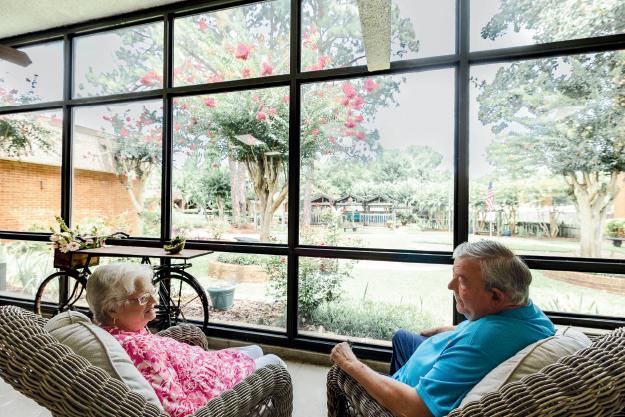
For those not in committed relationships, the first few weeks of February can be an uncomfortable time, especially when they get slammed with questions prying into their love lives. Here are five things we shouldn’t say to our single adult children and another five to avoid when we’re with our single friends, this week or ever.
Don’t say: “You work too hard. How are you ever going to meet anyone?”
Why: “With a statement like this, you’re presuming you have a right to make a judgment about your children’s priorities,” says Jeffrey Arnett, Research Professor of Psychology at Clark University, who has done extensive work with Millennials and their parents and who blogs regularly with Elizabeth Fishel on Next Avenue.
Many people begin to make strides in their careers during their 20s and 30s, which may require putting in long hours at the job. Sometimes an employer demands extreme hours. And, yes, sometimes dedication to employment can get in the way of a person’s love life. Nevertheless, Arnett says that pointing this out to your child isn’t going to get you anywhere.
Say instead: “Is this OK with you that you’re working such long hours?” If you’re concerned about your adult child’s physical and mental well being because of the nature of his or her work, stick to that.
Don’t say: “How do you expect to get married if you keep going out with losers?”
Why: “The number one thing young adults don’t want their parents to comment about is their love life,” says Arnett. Besides, if you call their romantic partners “losers,” you’re implying that they are losers as well. Criticism like that is never wanted.
However, Arnett stresses that if you sense there is something truly wrong with the someone your adult child is dating — you suspect he or she is abusive, an alcoholic or unsteady in other ways — this is one time to intervene.

Say instead: “Have you noticed any patterns in people you go out with that end up causing problems in the relationship?” Says Arnett: “Phrasing it that way shows that you respect your child as an adult.”
Don’t say: “How do you expect anyone to want to go out with you when you don’t care how you look?”
Why: “If your child is struggling with weight, you can be sure he is aware of it, and your criticism will only make him feel worse,” says Arnett.
Say instead: “Are you getting a chance to exercise these days?” True, this won’t get you any information about your child’s love life, but maybe you’ll be able to discuss something equally important: his or her physical well being.
Don’t say: “How do you expect to meet anyone when all your friends are gay?”
Why: “Your children are too old for playdates. You cannot choose their friends,” Arnett points out. Besides, since many 20 and 30 something heterosexuals have friends who are gay, a gay friend is just as likely to introduce your children to dateable people as is any other friend.
Say instead (if it’s true): “My [fill in the blank: cousin, neighbor, friend] has a [fill in the blank: son, daughter, niece, nephew] I think you might like. It doesn’t have to be a date, but can I give you a telephone number?” Most likely, your child will just roll her eyes, but fix ups have been known to produce happy couples.
Don’t say: “Why don’t you socialize for real instead of spending so much time on social media?”
Why: While there are people who confuse social media only friendships with real life ones, parents these days need to recognize that most young people are doing socializing on their phones or computers that is just as real as anything we did on the phone or face to face when we were their age, says Lisa Bahar, a family and marriage therapist in California.
Say instead: “Can you help me understand the way you and your friends use the Internet to talk to each other?”
Again, as Arnett would say, beware of the eyeroll. Many adult single children
don’t want parents mucking about in their relationships. However, your child may be willing to show you how people communicate on Snapchat or even the dating site Tinder, and you could come away with insight into today’s digital socializing.
Non familial relationships in our age group rarely contain the emotional triggers that might lead to a shutdown in communication. And yet, if we’re part of a couple, statements about a friend’s love life may bring on a severe case of foot in the mouth disease.
Don’t say: “Maybe you should get a facelift.”
Why: In certain places and certain economic groups, people commonly opt for cosmetic surgery. (I’m told that in southern California, when one woman is introduced to another, an early question may be: “Who did your boobs?”) Many men and women, however, would feel judged if a friend implied that they could attract dates only by looking younger.
Say instead: “I think you’re beautiful, inside and out.” Says Bahar: “Validate your friends for what they are.”
Don’t say: “Meeting people online is way too dangerous. You could get killed.”
Why: The popularity of online dating services for people ages 50 and up has skyrocketed in the past few years. One of the most trusted sites, Match.com, has spawned a site for singles over age 50, OurTime.com. Two years ago, it already had over one million members. Dr. Gail Saltz, a psychiatrist in New York City, believes that singles over 50, especially women, feel more comfortable using dating sites where they aren’t competing with “younger faces.”
Say instead: “Can I look at the dating site with you?” Even if you’ve been happily married forever, dishing on strangers with a friend can be great fun. And remind online daters to take safety seriously. You’ll find some good pointers here.
Don’t say: “You can’t meet someone if you don’t try something new.”
Why: Even though that statement smacks of truth, you don’t want to criticize a friend who may be feeling vulnerable, Bahar advises.
Say instead: “I was thinking about taking a class one evening a week. Do you want to look through the catalog with me?” This is a great solution because it gives you a chance to spend time with your friend and at the same time put him or her in a situation where there will probably be new people to meet.
Don’t say: “You’re doing this to yourself. You’d be in a relationship if you wanted to be.”
Why: Maybe your friend is avoiding intimacy. But a statement like this sounds cold and uncaring. As we get older, breaking from familiar rhythms becomes more difficult and the pool of dateable people gets smaller, something unattached post 55s feel acutely.
Say instead: “Have you joined Facebook? I keep hearing about people reconnecting with former flames there.” Accusing a friend of inaction won’t get you anywhere, but practical solutions can be useful, says Bahar. Also, don’t sweat it if your friend shrugs off your idea. Maybe he or she just isn’t ready to have a committed relationship.
Don’t say: “It’s just a stage.”
Why: Yes, indeed, it is a stage — it's called “being older and being alone.” Some welcome the freedom that comes with singledom. Others experience solo living as painful.
Say instead: “I know you’d like to be in a romantic relationship, but meanwhile, you have so many people who care about you.” Then act on it. Throw a dinner party for your friend, and perhaps invite a friend of a friend of a friend who might be suitable.
Whether it’s your grown child or a friend whose unattached state you’re worrying about, your role is always to be supportive and non judgmental. And if no one is in the mood to take your advice, laugh your bottom off at these great anti love quotes.

Courtesy of nextavenue.org.







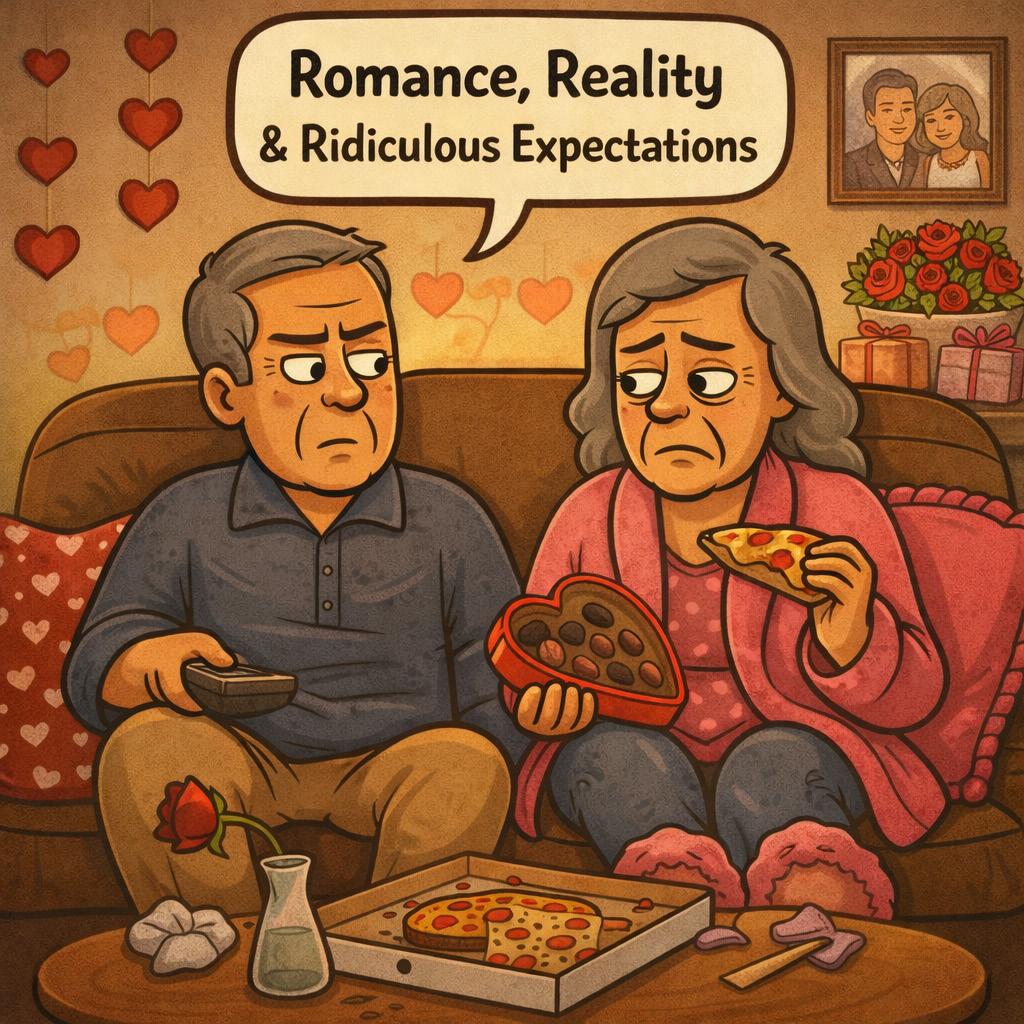
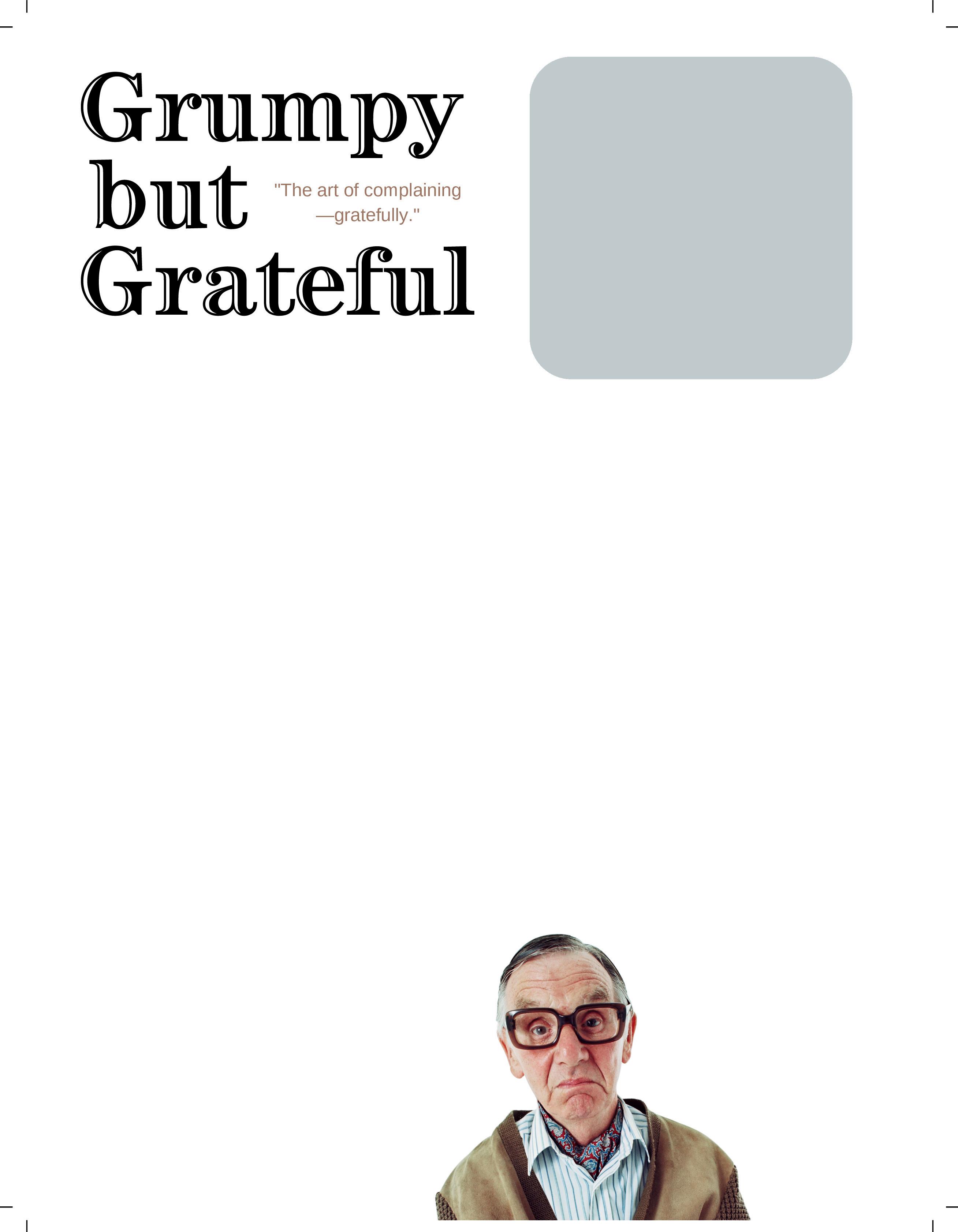
Let’s talk about February. The month of hearts, roses, and relationship expectations so high even Romeo and Juliet would’ve needed couples counseling. Valentine’s Day shows up like that overachieving PTA mom with personalized goodie bags and a themed photo backdrop, while the rest of us are just trying to remember if we bought the card or not.
Somewhere in my past, there was a time when February meant mystery dates, last minute floral deliveries, and hopeful dinner reservations. Now? It means one of us asks the other if we remembered to cancel that unused streaming service before the next billing cycle.
Don’t get me wrong—I love my spouse. We’ve got a rhythm that works. But February has a way of making even the most solid relationships feel like they’re not doing enough. Instagram is full of matching pajama photos and men writing “open letters” to their wives like they’re accepting a Grammy. Meanwhile, I’m over here asking if she wants to split a footlong sub and watch the weather channel.
I once bought a “heart shaped” pizza for Valentine’s. It looked more like a deformed kidney, but I added a candle and called it romance. She rolled her eyes, but I caught her smiling. That’s the kind of love I’ve come to appreciate—the kind that laughs at your effort without dismissing it.
And don’t even get me started on the commercials. Every ad tells us love looks like diamonds, tropical getaways, and couples who wake up in crisp white sheets looking fully moisturized and well rested. I wake up looking like I fought a raccoon in my sleep—and lost.
Then there’s the “Galentine’s” parties, the TikToks of surprise proposals, and the teenage couples aggressively PDA ing in public like they invented love. I saw a young couple at Target last week arguing over throw pillows, and I nearly applauded. That’s real. That’s commitment.
You know what nobody advertises? Love that keeps going when it's boring. Love that gets groceries, changes the oil, and goes to parent teacher conferences. Love that folds your socks the way you like. Love that holds your hand in the hospital, cleans up your messes, and reminds you to take your vitamins.
My back hurts. My knees pop. And sometimes our "romantic getaway" is sitting in the car in silence outside the pharmacy while we both avoid going inside. And you know what? I’m grateful. Because after all the Valentine hype fades
and the last chocolate has been eaten (alone, in the pantry, so you don’t have to share), what’s left is something better than flowers or fancy dinners. What’s left is the quiet, stubborn love that endures.
We’ve seen each other at our worst and chosen each other anyway. We’ve missed dinner reservations, argued over dumb stuff, and fallen asleep before the credits roll. But we’ve also grown something real— something that doesn’t need a reservation or a hashtag to be special. So yes, I’m grumpy. I miss the days when a card and a back rub made me feel like Casanova. Now I’m more like Captain Compression Socks. But I’m grateful. Because the longer I live, the more I realize: the love that lasts isn’t loud. It’s faithful. It’s present. It’s showing up, again and again, even when it’s not easy.
This February, let the roses wilt and the chocolate melt. Give me love with laugh lines, old habits, inside jokes, and a shared calendar. That’s real. That’s romance. And that’s more than enough.
- Archie Grumbleton








Last month my daughter got married. During the ceremony, she and her husband gazed at each other adoringly and joy seemed to exude from every pore in their bodies. I found myself wondering, Have any two people ever been so in love?
Even as I squeezed the hand of my darling husband of 32 years, I felt as if I could never have been as much in love with him as my daughter was with her man on their wedding day.
Or maybe, I mused, love just looks more radiant on young faces. Could love possibly have a shelf life? Does it have “planned obsolescence,” like modern technology?
So I did a little research. What I learned boils down to this: Even a marriage that’s about to smash up against the rocks (barring physical or emotional abuse or criminal acts) can tack its way back into calm and pleasant waters.
We’re not just talking about doing damage control. “It’s almost never too late to start the process of falling in love all over again,” says James Córdova, Ph.D., chair of Clark University's psychology department and head of Clark’s Center for Couples & Family Research.
“One of the things that happens in long term marriages is that the demands of everyday life steal our attention away from our partners — and paying attention to the other is crucial for happy relationships,” Córdova says. This lack of focus on your spouse slowly unravels the fabric of a solid relationship.
Sometimes the disintegration happens over a number of years, during which the couple exist in a kind of emotional limbo. Córdova notes that, statistically, it takes couples up to six years to seek help or advice after they’ve reached a tipping point. And that, he says, only increases the impact on the marriage.
Fritz Galette, Ph.D., a family therapist who hosts the weekly “Ask Dr. Fritz” on New York City’s WWRL, agrees. “By the time I see couples, they’re often in crisis,” he says. “The discontent has been festering for years.”
And yet experts believe that even in cases where the discontent has been on a low boil, there are still ways to revive the old passion.
Galette and Córdova both recommend that couples in crisis seek professional help, whether from clergy or family/ marriage therapists. On top of that,
the following steps can help salvage a troubled marriage.
1. Act like you’re in a new relationship. Galette recommends that couples ask each other the kinds of questions typical of new daters’ “getting to know each other” conversations.
Jill Kaplan, whose 28 year old marriage had been feeling flat, realized that she and her husband, Todd (names have been changed), had fallen so out of sync that the things she was doing to please him were actually annoying him. “I thought he wanted me to watch sports on TV with him," she says. "I really didn’t always want to, but I kept it up for him.”
It took a close friend, who observed the tension in the family room, to get Jill to ask Todd if he really wanted her company. She got a surprising answer. “It turned out that he preferred not to have me there if I wasn’t into the game!” Jill says.
“That was just the first question,” she adds. “Now we’re on to which family we want to spend holidays with and what clothes the other wears that we really like. It’s like he’s my new boyfriend.”
2. Pay attention to your spouse. One of the biggest complaints Galette hears is that couples feel ignored by their mates. Spouses get used to one another and, over time, don’t really notice what they’re each going through.
“Sometimes people think they’re paying attention to their spouses but they really aren’t,” he says. “I advise couples to look into the other’s eyes when they’re having a conversation. It’s much easier to concentrate on someone’s words and share when your partner is looking right at you.”
Galette also promotes an effective technique called active listening. “When one person speaks, the other can’t interrupt.
3. Share new experiences. For years, relationship experts (and every women’s magazine) have been advising couples to set aside time for “date night.” Córdova says that going out and doing things together on a regular basis and creating romantic rituals is good for a relationship. But it's even better to try something out of the ordinary. Get creative and step outside your comfort zone.
Galette agrees. “Doing something new and different together, like taking tennis lessons — which is what my wife and I did recently — enhances your sense of intimacy.”
4. Be affectionate — physically and verbally. Research has established that touch communicates a wider range of emotions than mere gestures. “The science of touch suggests that a pat on the back, a squeeze of the hand, a hug or an arm around the shoulder can save a so so marriage,” writes Sonja Lyubomirsky, Ph.D., a professor of psychology at the University of California, Riverside. “Introducing more (nonsexual) touching and affection on a daily basis will go a long way in rekindling the warmth and tenderness.”
According to Córdova, however, this prescription for tenderness must also include loving language — and it needs to be heartfelt. “I love you” should be more than a reflexive recitation of syllables at the end of a phone call. Instead, say something affectionate and sweet at unexpected times.
5. Always be kind. “It’s not important whether your partner is ‘succeeding’ or ‘failing’ when your goal is to have a genuinely loving relationship,” says Córdova. “If your partner shows up late,
no matter how annoyed you are, you can still respond with kindness.”
Once you start being intentionally kind, says Córdova, “the interaction goes to a new place — the kind you would prefer in a happy marriage.”
But, he cautions, “Being kind when you’re not feeling that way takes practice. It doesn’t come naturally at first, but it can turn into a habit.”
While we can’t realistically expect our long term partner to be the exact same person we married, Córdova says, that may be a positive thing. “It’s like you have a whole new person there beside you — someone you can date, with all the benefits of already being married.” Ultimately, he adds, it’s not so much about going back to what you had before. It’s more about going forward and building something new and better suited to who you’ve each become.
Courtesy of nextavenue.org.


February 12 - 15
The genius of Montgomery’s Nat King Cole will be brought to life by the acclaimed singer, storyteller, and multi instrumentalist John Mark McGaha. $30 $70 https://experiencemontgomeryal.org
February 13
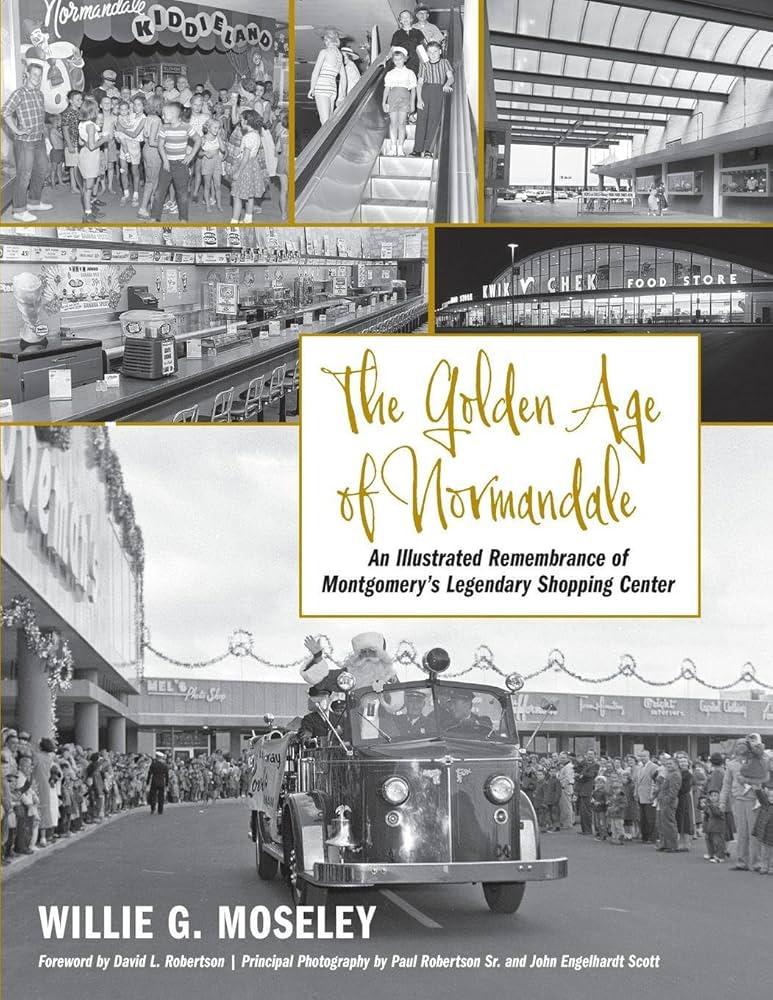
February

Willie Moseley joins us at The NewSouth Bookstore for a talk about Montgomery’s legendary Normandale shopping center in connection with the release of his book, The Golden Age of Normandale. This long awaited work, rich in photos, celebrates the heyday of our city’s first shopping center, developed by the Aronov family, which defined shopping centers for decades to come. https://www.newsouthbookstore.com/
A Taste of Ireland: The Irish Music & Dance Sensation returns to the USA in 2026, following its Off Broadway debut, bringing world class Irish music, dance, and storytelling to stages nationwide. Featuring former World Irish dance champions and performers from Lord of the Dance and Riverdance, the show combines Celtic history, acapella tap battles, folk mash ups, and Irish wit for an unforgettable experience. $43.35 https://www.eventbrite.com

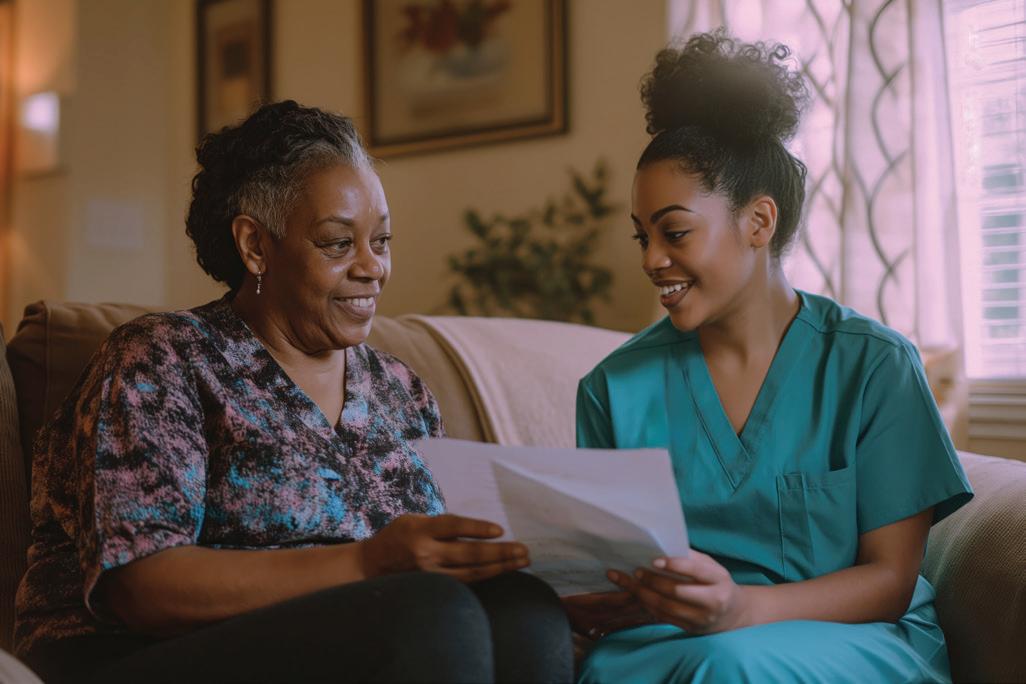
Since joining our team on 11 21 25, Chalea has consistently set the standard for excellence in caregiving. Known for her reliability, heart, and willingness to step up whenever needed, she continually goes above and beyond for both clients and families alike. Chalea’s dedication has not gone unnoticed — she receives ongoing praise and heartfelt shoutouts from the families she serves, a true reflection of her compassion, professionalism, and genuine commitment to care. We celebrate Chalea Blue not only for what she does, but for who she is. Her passion, warmth, and unwavering dedication embody the very mission of Home Care Assistance.
Thank you, Chalea, for the incredible difference you make every single day. We are honored to have you as part of our team and proud to celebrate you! For more information visit www.homecareassistancemontgomery.com.



February 7 I 2:30 PM I Cloverdale Bottom Park
Games, Moon Pies, necklaces, a traditional Second Line, and a festive Dog Parade leading to Frenchie’s. Fun for kids, adults, and pups alike—with a prize for the Best Dressed Dog! More information on Facebook.
February 14 I Downtown Wetumpka
Experience the vibrant Wetumpka Mardi Gras Festival with its array of delectable foods and unique vendors. There’s a culinary delight for every palate, from savory chicken on a stick to smoked turkey legs, alligator sausages, seafood, and more! Enjoy your delicious food while you browse vendors that have fun and creative wares for all ages! https://wetumpkamardigras.com/pages/wetumpka mardi gras festival


February 14 I 12:00 PM I Taste - at Hampstead
Join us for a Valentine's Day Italian Wine Dinner, featuring thoughtfully paired wines and a multi course menu inspired by the flavors of Italy.A perfect evening for food, wine, and romance. $123.40 https://www.tastemgm.com/
February 21 I 1:00 PM to 4:00 PM
A multicultural celebration to bring in new beginnings and the new year. Community members can enjoy multicultural snacks, games, art, kites, and more at this event. Also, you have the chance to compete for grand prizes in the Kite Competition! Attendees can bring their own kites and enter the competition to win and be recognized by ALIEEP. Visit https://alieep.org.

The Newcomers Club of Montgomery welcomes women who are new to the area or simply looking to stay active, connect, and have fun. With monthly luncheons at Arrowhead Country Club, 10 activity groups, and local outings, joining the Newcomers Club is great way to make friends and get involved in the community. Learn more on how to become a part of our vibrant, supportive group of ladies at NewcomersOfMontgomery.com or newcomersmontgomery@gmail.com.

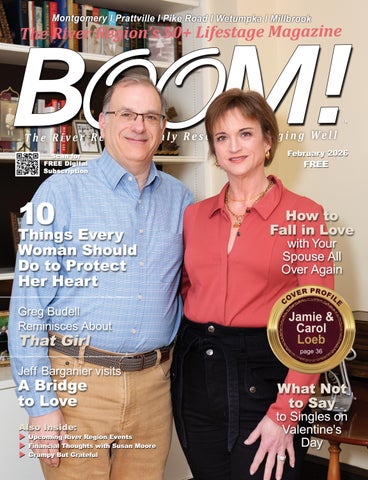
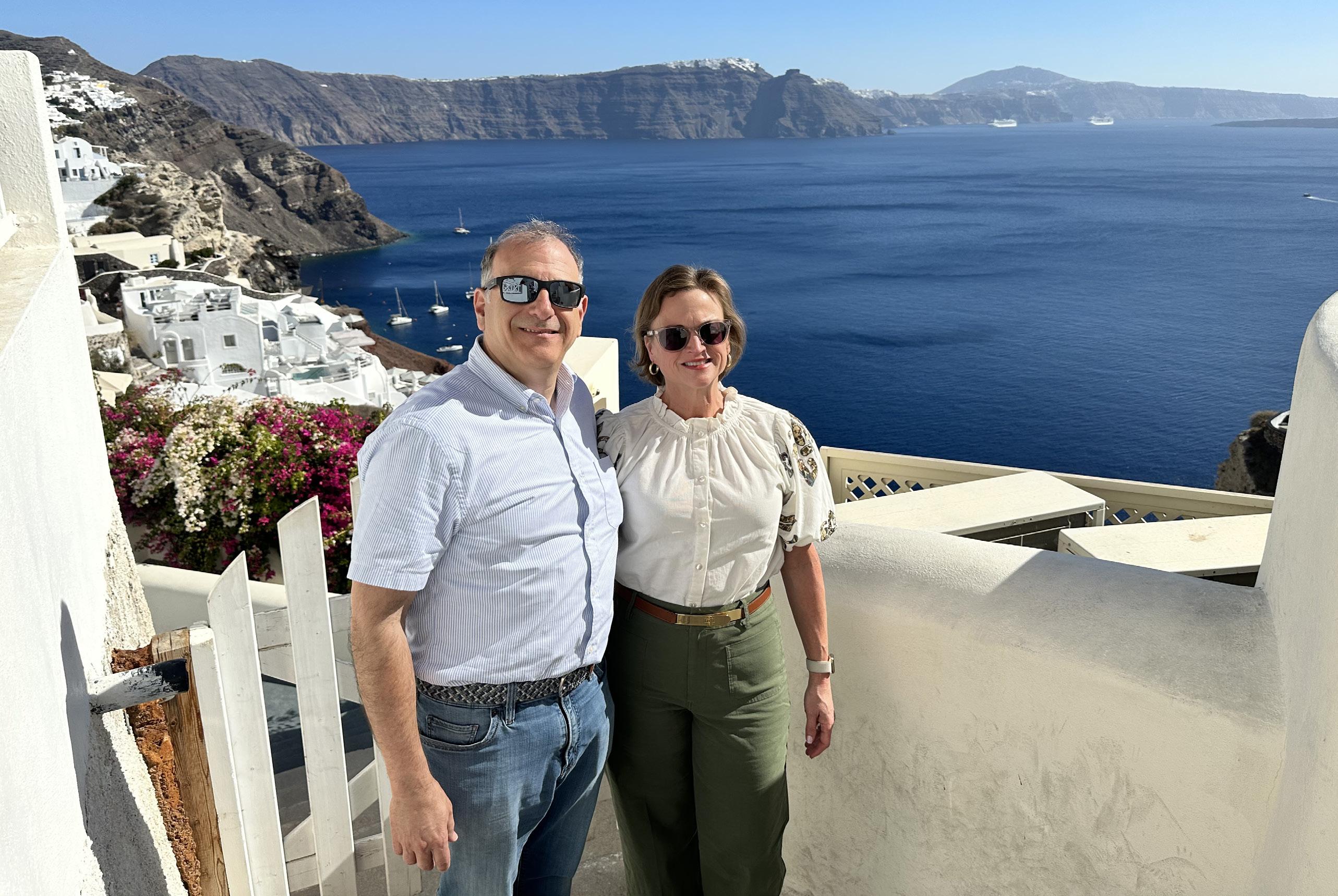
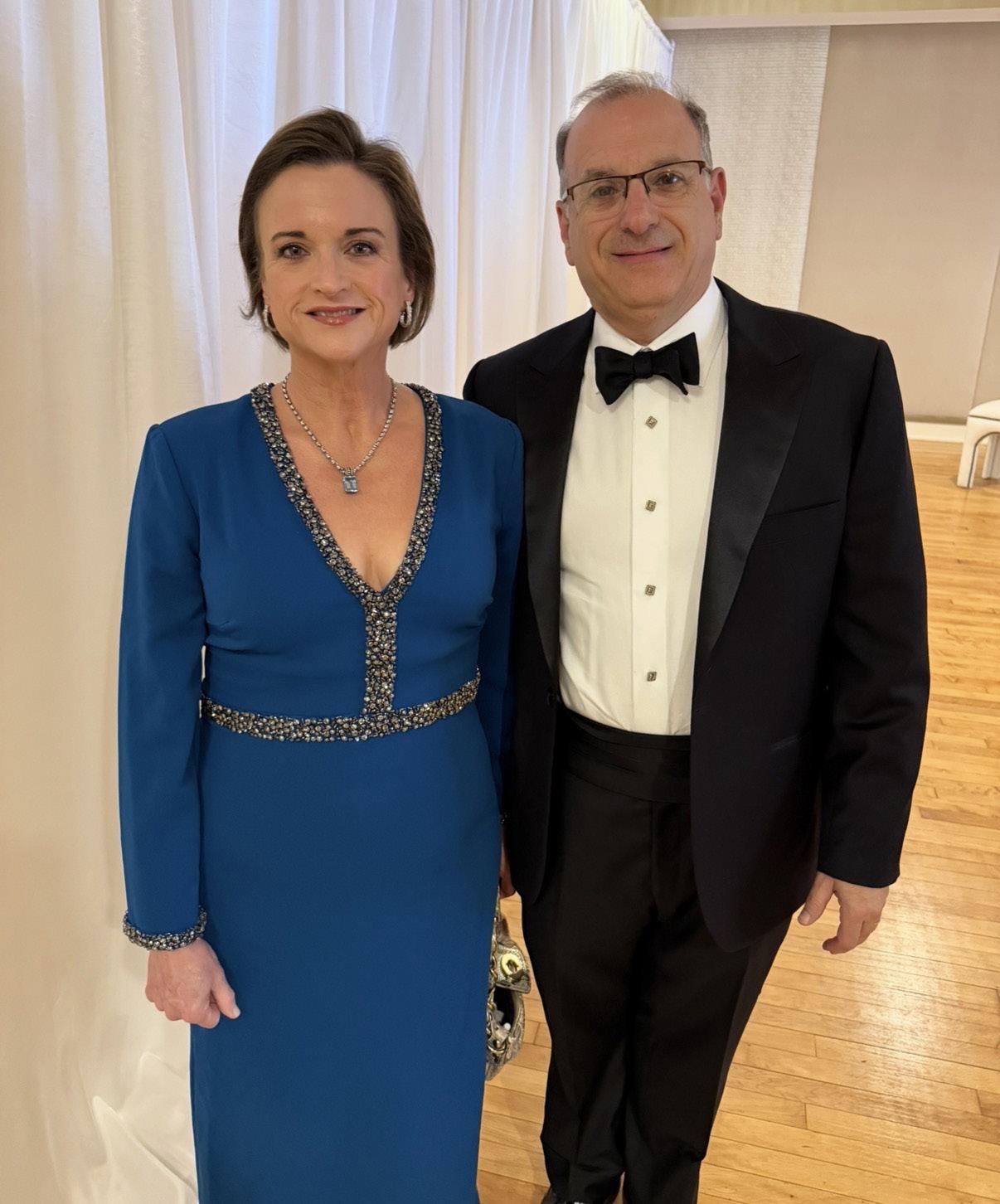
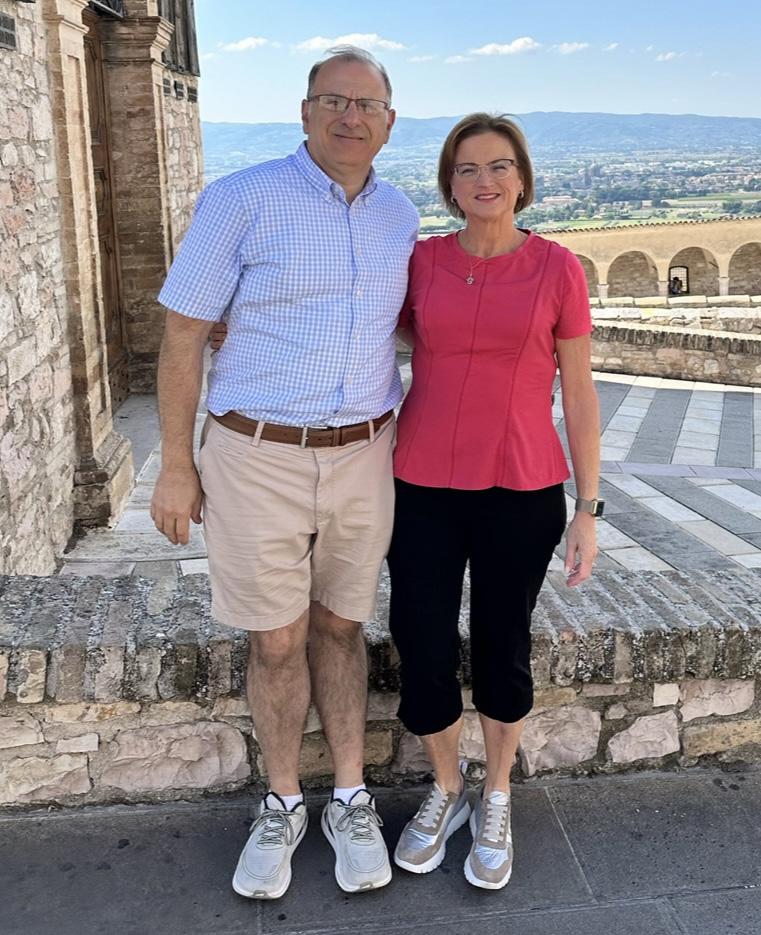
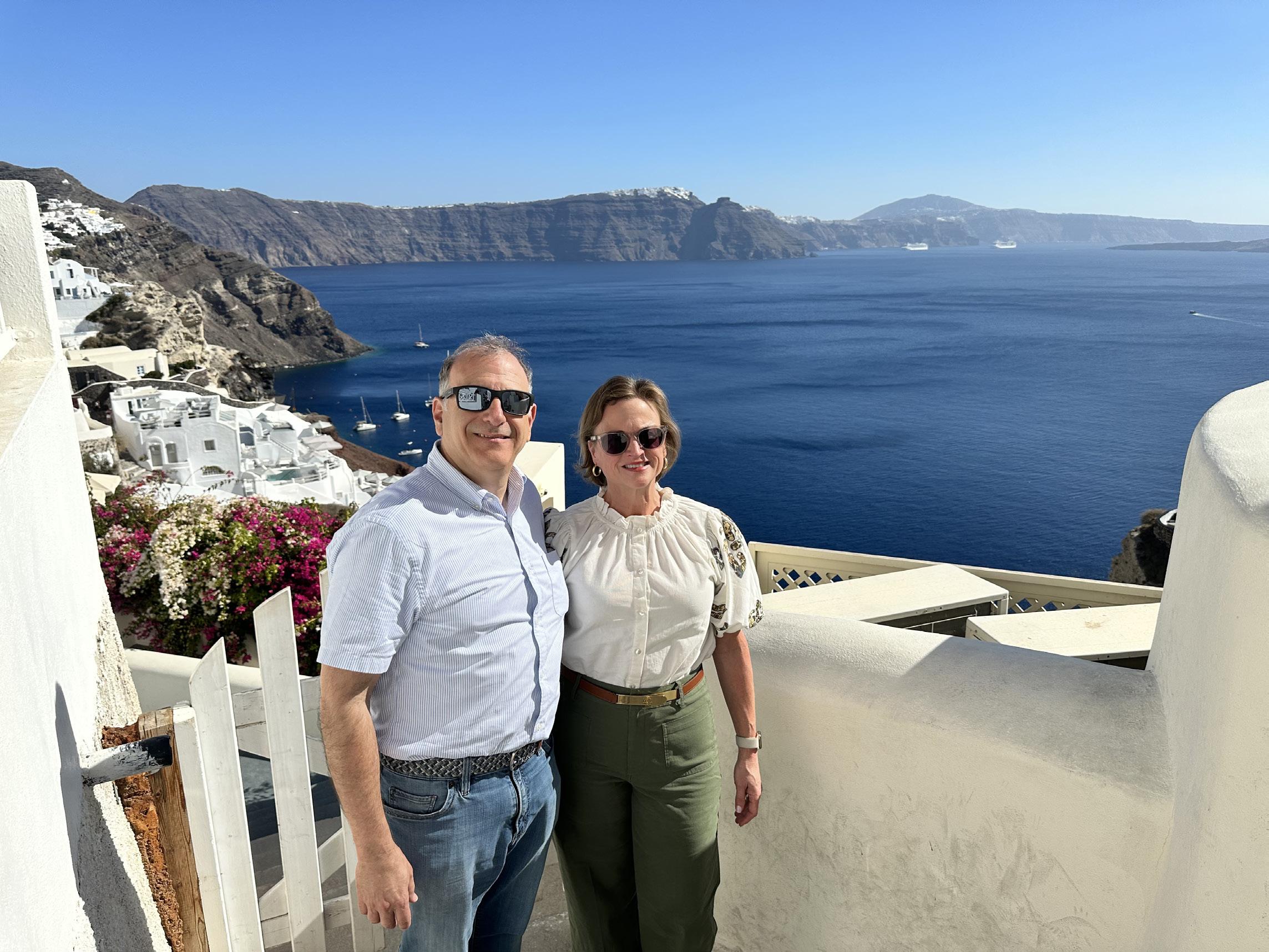
Jamie and Carol Loeb’s story is one of deep roots, enduring partnership, and quiet resilience. Both raised in Montgomery, they chose to build their lives in the River Region, watching it evolve while remaining committed to the community that shaped them. Married for 31 years, their relationship has grown through seasons of joy, professional legacy, service, and profound loss, including the heartbreaking passing of their daughter during the pandemic. Through grief, career transitions, and the shift to empty-nest life, they have remained anchored in friendship, faith, and mutual respect. Together, they model what it means to age with grace—choosing each other daily, honoring both togetherness and individuality, and finding renewal through love, purpose, and community.
BOOM!: You both grew up in Montgomery and chose to build your lives here. What does the River Region mean to you now, looking back over the decades?
Carol: Montgomery will always be home, it’s where we raised our children and where we were raised. So much of who we are is because we grew up here. Looking at how far Montgomery has come, I am grateful for the progress and for the acknowledgment of our troubled history. Equal Justice Initiative is doing amazing things here, and I am grateful to see it, because I think moving forward has to involve acknowledging the past, even if that’s not always pleasant. The revitalization of downtown Montgomery is so refreshing to see.
Jamie: I always knew I was coming back to Montgomery because I wanted to work with my father at his company. I loved my work, and I have loved living in Montgomery all these years. It has been exciting to see all the changes to life in Montgomery, whether it’s the new restaurants and apartments downtown or the new shopping centers and restaurants out east. The River
Region was a great place to raise our family. Now, with the influx of new businesses, the different minority owned restaurants, grocery stores, and businesses have added a rich layer to life here that wasn’t here when we grew up.
BOOM!: You’ve been married for 31 years. When you think about the early days of your relationship, what first drew you to each other?
Carol: I remember thinking Jamie was a lot of fun when I first met him. He liked to host parties and connect with friends. I loved his commitment to his family and his quirky sense of humor. His consistent, loyal devotion has been a rock in our lives all of these years.
Jamie: Carol was always easy to talk to. I have always loved our talking and laughing together. I loved her intellect and how easily she interacted with people. The stuff she remembers. I am four years older, and it is always fun to find things that I remember, but she doesn’t. Even though we both grew up here and knew a lot of the same people, we did not meet until our friends introduced us after college.
BOOM!: Marriage changes over time—careers, kids, seasons of joy and hardship. How has your relationship evolved, and what has helped you stay connected through it all?
Carol: It’s such a journey to spend a life together, raising kids, and getting through the good and the bad. I think Jamie and I do a really good job of staying connected as a couple and allowing each other to be individuals. We really like to spend time together,
especially traveling or just walking the dogs. But we also respect each other’s individual differences. Jamie is more of an extrovert, and I tend to like more downtime to myself.
Jamie: Carol and I wanted the same things for our family. She worked hard raising fantastic girls. Now that we are empty nesters, we take time to enjoy life together either by ourselves or with friends. Just knowing that she is there made it so much easier for me to find solace during our difficult trials of losing a sister, parents, our oldest daughter, and deciding it’s time to close a business I loved. There is no way I could have made it through all that without her support.
BOOM!: You became empty nesters during an incredibly difficult season in 2020. How did that moment reshape yourrelationship with each other?
Carol: This one is harder to answer because our grief was so new and overwhelming at that time. For me, the main goal was to make sure our surviving daughters could move forward with their lives and not have to worry too much about us. I felt strongly that they needed to go back to school or start college without concern for us, even though I knew that would be hard. I think we moved through that time together in a way that strengthened our relationship. Even if we were struggling differently, just knowing the other was there and that we could count on that was everything. As time has moved on, we have both found even more enjoyment and traveling together, both with and without our girls. We enjoy going out with friends and hosting at our home.
Jamie: I am the youngest of 4 children. When I left for school, I saw that my parents became closer and really enjoyed life together. That was a lesson for me to emulate. 2020 was a difficult year for me because I had just closed the company, I lost my mother in February, and in April, we lost our daughter Honor. Experiencing empty nesting and grieving at the same time brought us closer together. We quickly saw how much we relied on each other and that we were there for each other. We are emulating the same joy my parents had.
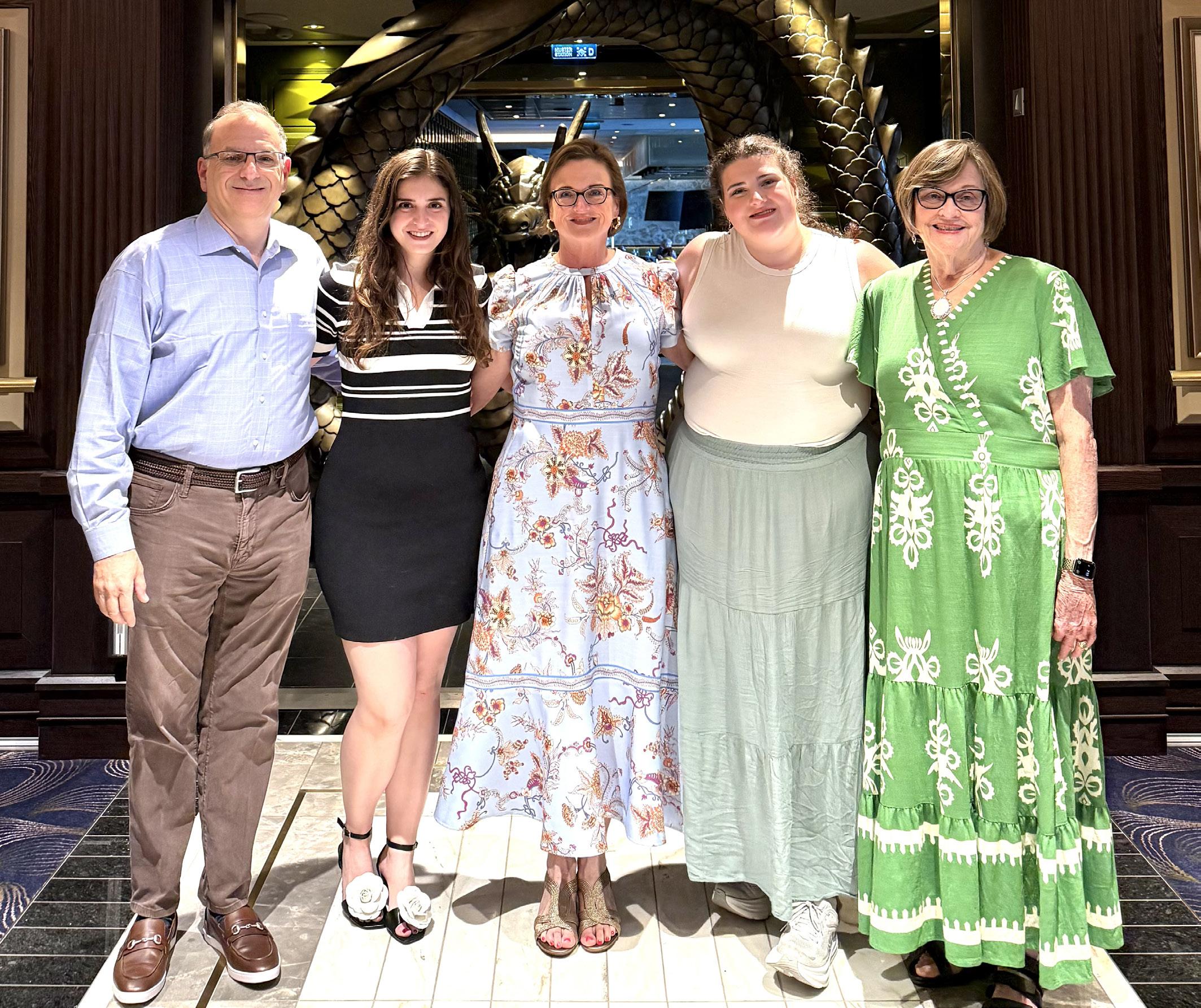
BOOM!: You’ve shared that you grieved differently, yet stayed united. What did it look like to give each other space while still walking through loss together?
Carol: Losing our oldest daughter to Covid was the most devastating thing either one of us had ever endured. While our grieving often looked different, neither of us ever got angry or frustrated over that. We have always had such a strong bond that we could allow one another to grieve in whatever way we needed, without resentment. The thing I remember most from that time was just knowing that Jamie was always there, even if we were on different pages some days with our grief. That’s something I never doubted, and it pulled me through, and continues to do so.
Jamie: Because everyone is different, we all grieve differently, and each person must go through their grief. We did this alone, and we did this together. There are some things that one could talk or read about that the other was not ready to think about. By allowing each of us to grieve in our own way, we gave each other the space to heal and find our way out of the fog so to speak. By doing this and being there for each other, we became closer.
BOOM!: Many couples struggle to remain friends after hardship. It’s clear you genuinely enjoy each other. How do you continue to “choose” one another in this stage of life?
Carol: These days, we really find ourselves enjoying time together, and also respecting our individual time. We
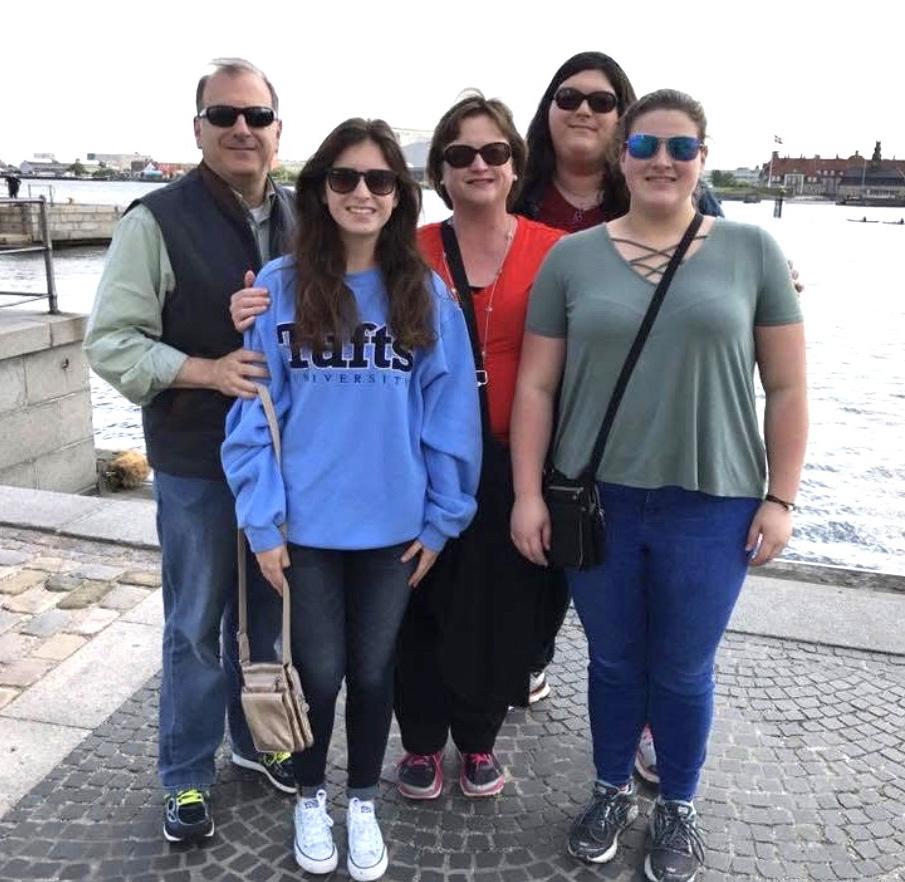
walk our dogs every night and really look forward to that time when we visit and recap the day. We love to plan trips and look forward to times when we can visit our daughters.
Jamie: We still have the same goals and interests. That makes it easier to remain friends and close to each other. We also want to see the other happy. That makes a big difference.
BOOM!: Jamie, you followed in your father’s footsteps at Loeb and Company, eventually leading the company before closing that chapter. What did it mean to carry on that legacy?
Jamie: I always wanted to work with my father in the cotton business. I gravitated to the business while I was in high school. At first, I was worried if I could really follow in his shoes, but in 1996, I chose to transition the company from only selling to US mills by expanding into an export market that we did not know about. Before we made this transition, my father made sure that we all knew the basics of the business. That allowed me to continue in the business through some difficult times.
people lived in the 1850’s. It’s hard to believe that in 2 years, we will be celebrating 60 years of preservation in Montgomery. I know that all the restoration work in downtown is a result of their hard work and advocacy. Today, preservation has changed, and Landmarks wants to be the center of that change in Montgomery. I want to help make sure that we are at the center of preservation and downtown economic development.
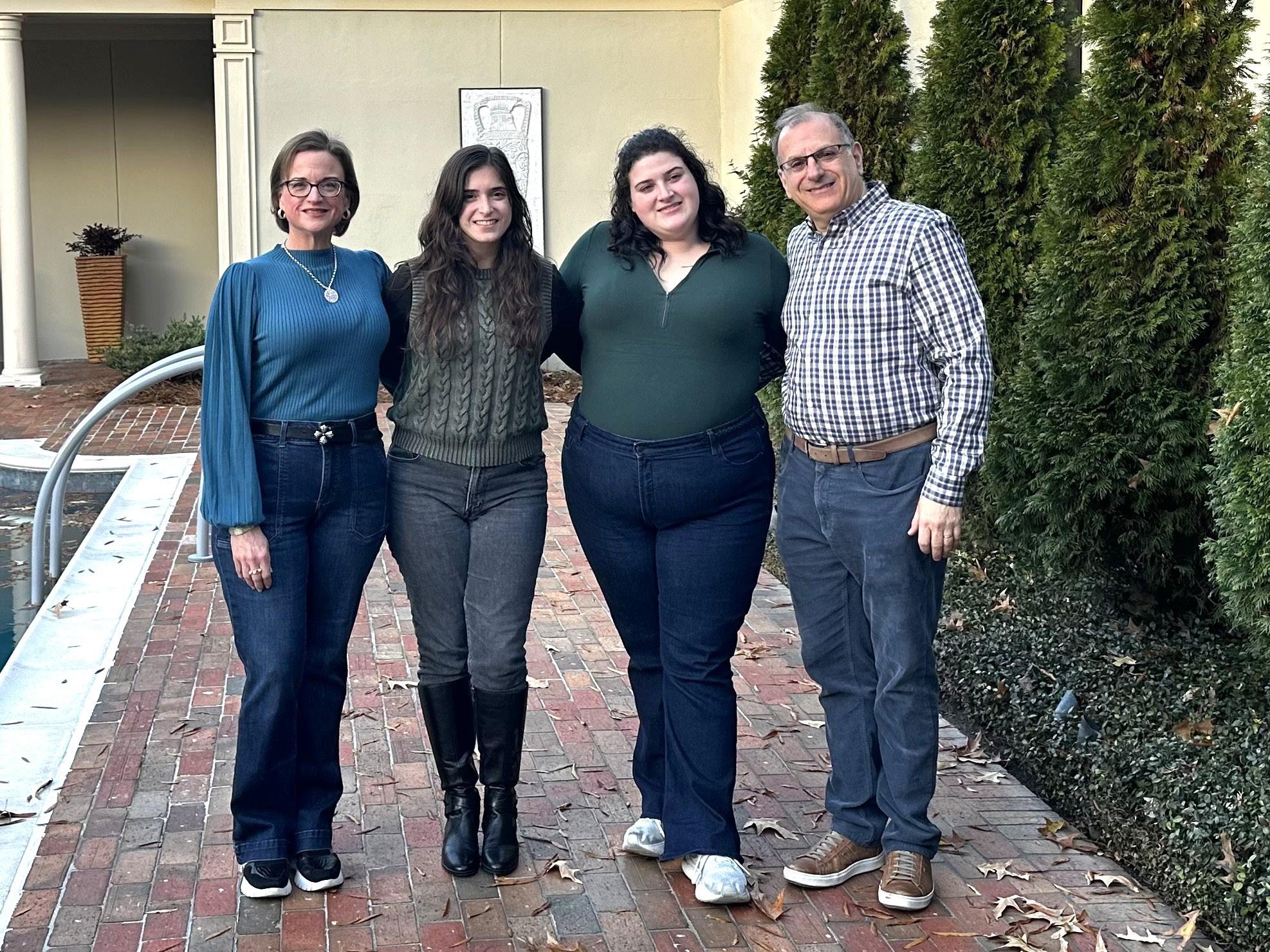
BOOM!: Carol, your health journey has been nothing short of life changing. You’ve lost significant weight, embraced strength training, and reversed major health issues. What motivated you to begin—and what’s kept you going?
BOOM!: Your father also helped found the Landmark Foundation, and you’re now serving as its President. What are you hoping to achieve through your time and service?
Jamie: In 1968, my father and Milo Howard founded Landmarks to preserve Alabama history and show how different
Carol: I am diabetic, which runs in my family, and about 3 1/2 years ago, my doctor switched me to Mounjaro. I had never heard of it and did not know anything about it as far as weight loss. I began to notice the food noise was much decreased, and weight started to come off. I had been strength training for years, but was not making a lot of effort to lose the weight consistently. As I began to see how the medicine was going to support me in my weight loss, I was motivated to work harder. I know some people lose muscle on this medicine, so I increased my strength training and my cardio. It has helped me manage anxiety and grief, and really given me structure. I don’t always love the exercise, but I love the results, and I love how it makes me feel. I love feeling healthier.
BOOM!: How has prioritizing health and movement changed not just your body, but your confidence, energy, and outlook on aging?
Carol: These days, we are learning so much about aging and how to increase our chances of aging more healthfully. Strength training and muscle mass seem to be very important for women as we age, so committing myself to that feels like giving myself a good chance of healthy days ahead. It also makes me feel stronger than I have in years, which is amazing to say when I am 57. It’s gratifying to see what your body is capable of at almost any age. It has really surprised me to see it in a great way.
BOOM!: Volunteering plays a big role in your lives—from Meals on Wheels to the One Place Justice Center. Why is service still so important to you in this season?
Carol: I spent so many years as a stay at home mom, with a daily purpose, that it was important to me to continue that. Getting involved with organizations that help others and strengthen our community was so important to me. Prior to my current Board service, I was also on the board of Montgomery Pride United, which is a cause near and dear to my heart.
Jamie: When I was growing up, my parents constantly taught us that we are supposed to give back to our community through action so that we can make life better for others. I want to spend my time working with organizations that do that. I am rolling off the board of the Community Foundation. I usually try to be involved with 3 4 organizations at a time so that I can give proper service to them.
BOOM!: You’re both deeply involved at Temple Beth Or. What has that faith
community meant to your family over the years? Carol: Our Temple family at Temple Beth Or, and the larger Jewish community, is an anchor in our lives. We truly enjoy working with everyone in the community to strengthen our ties and support our congregation.
Jamie: Temple Beth Or has always been a home for us spiritually and socially. We love being at Temple with our Jewish Family. Growing up here has allowed me to be around people who watched me and our children grow up. We pray, celebrate, and eat together in happy times, and we mourn together during hard times. This gives us a connection to loving people that is hard to find outside our home.
fun kind of busy, and it makes us grateful for each other.
Jamie: I find the Food Festival so important for the Temple. We all grew up with the kitchen as the center in our families’ interactions. So many of us come together to cook, and spending time together in the kitchen allows us to bond in laughter and stories like any other family. Also, the Festival allows Montgomery to see our Temple and have a glimpse into our culture through food. Some people come are coming into the Temple for their first time, and they get to hear from the Rabbi about our services. This is important for our community to learn about us.
BOOM!: Looking ahead—travel, time together, service, and health— what does “aging well” look like for you as a couple, and what hope would you offer other couples walking into this season of life?
BOOM!: The Jewish Food Festival and Art Fair on February 26 is a beloved community event. Why is this fundraiser so important—not just financially, but relationally—for the temple?
Carol: As the food festival and art fair approach, we have all been very busy at work in the kitchen at Temple, baking and cooking things for the event. It really is fun to get in the kitchen with everyone and laugh and talk and bond. Working together toward a common goal can be very igniting. I think that is just as important as the fundraising aspect of this event. I am in charge of the art fair, and we are so excited to offer this to the community and highlight artists and their skills. Those of us who work on the art fair will be so busy on the day, but it’s a
Carol: At the risk of being repetitive, I think it’s so important to make sure you’re doing things as a couple that you enjoy, and that strengthen your relationship and your bond, but also recognize that you are different individuals and allow each other the space for that.
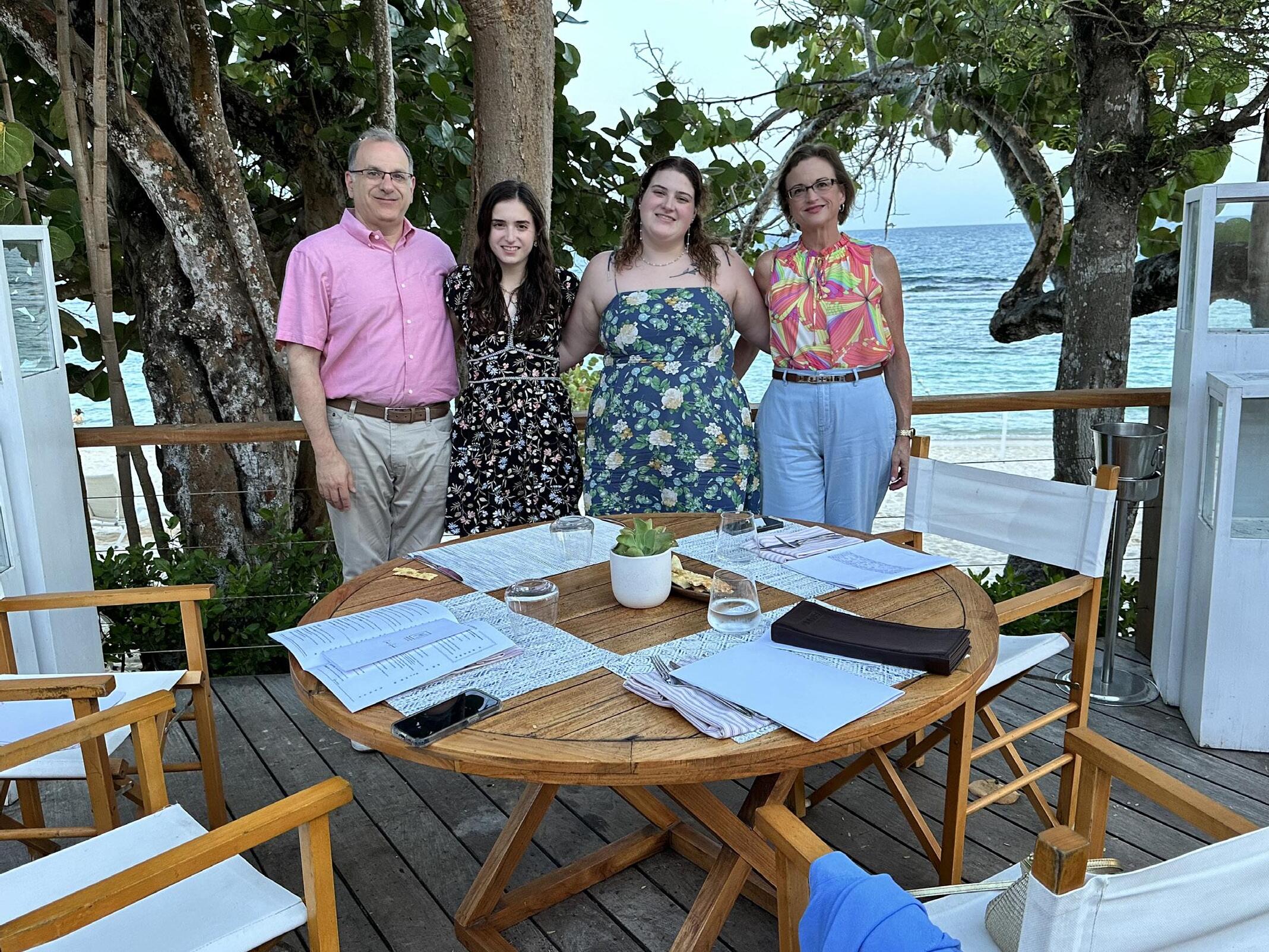
Our girls live in distant cities, but we are in close touch with them frequently, and it makes the distance seem less concerning. We love that they have embraced the world and they’re getting out there and making their own way.
Jamie: I think that staying active physically, socially, and mentally is the best way to age well. I watched my grandfather and parents age gracefully into their late 80’s and mid 90’s while doing this. I hope we can do this as well as they did.
1. Favorite way to spend a quiet evening together: Taking our dogs for a walk and watch some TV.
2. Coffee out or dinner at home? Dinner at home.
3. Who’s more likely to plan a trip? Carol
4. A place in Montgomery that holds special meaning for you: Our home is a refuge for us and we find so much comfort there.
5. Walks, workouts, or weekends away? Walks
6. One thing you still enjoy doing together after all these years: Dinner with friends and traveling.
7. Early riser or night owl? Jamie is an early riser and Carol is a night owl.
8. Favorite meal to share: Asian food.
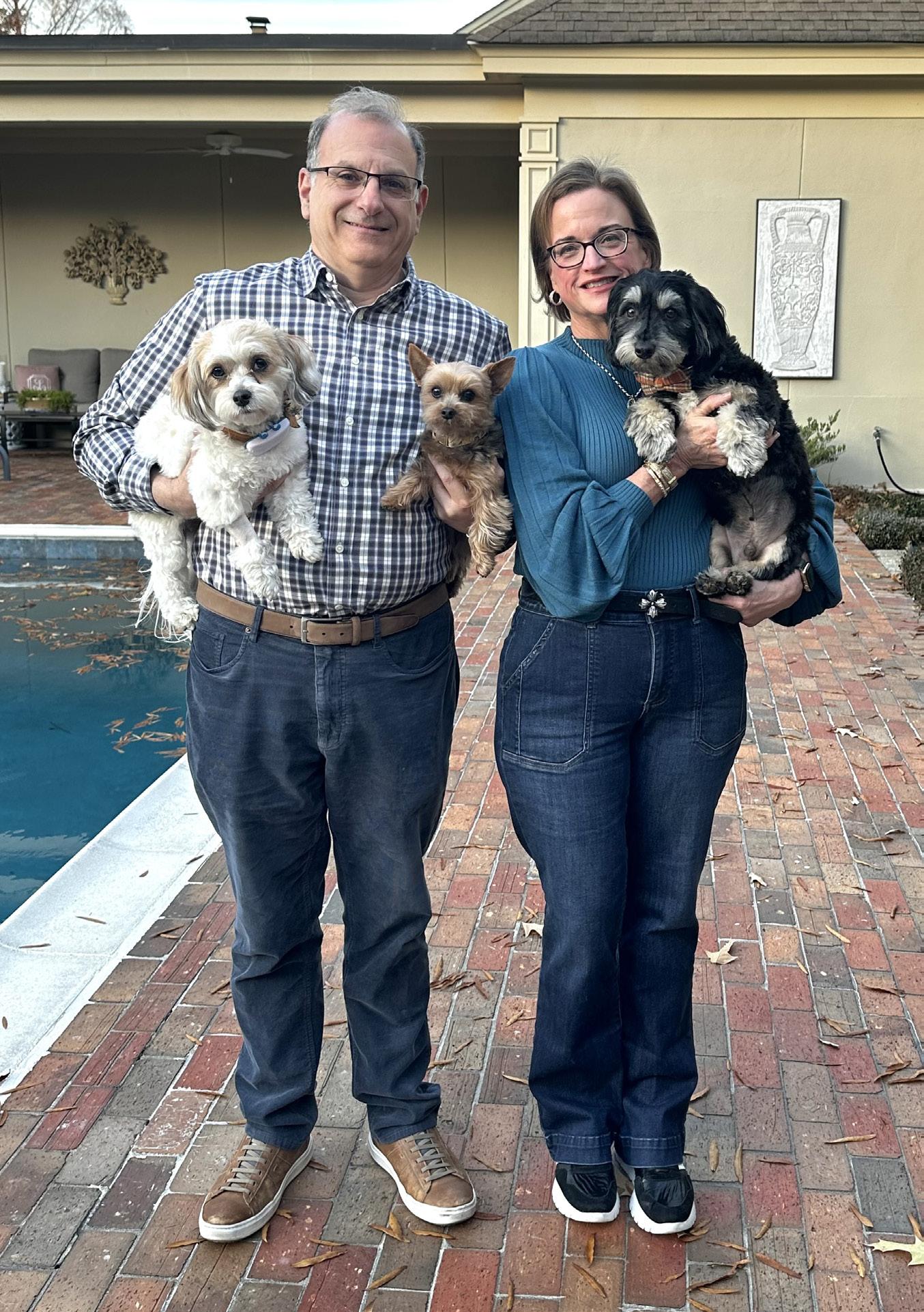
9. Something that makes you laugh together: We got two puppies two years ago, and they are a constant source of entertainment.
10. One word that describes this season of life: Renewal

Every February, the nation shines a spotlight on the devastating toll of heart disease during American Heart Month. If you're a woman, knowing the symptoms and risks that are unique to females can help protect your heart. The good news is that controlling — or even preventing — heart disease is often something women can do for themselves.
Dr. Gretchen Wells, director of the Gill Heart & Vascular Institute's Women's Heart Health Program at the University of Kentucky, says the lifestyle choices and changes that women make — or don't make — really do make a difference in their heart health.
When Wells, a cardiologist, talks to her female patients, she shares these 10 heart health tips and urges patients to write them down:
1. Learn the Symptoms of a Heart Attack
People often assume all heart attacks feel like a crushing sensation in the chest. Men experience this symptom so frequently that it has become recognized as the classic sign of a heart attack. But for women, the symptoms of a heart attack can be different.
Women who have survived a heart attack often report that they experienced one or more of the following symptoms:
• Uncomfortable pressure, squeezing, fullness or pain in the center of your chest. It lasts more than a few minutes or goes away and comes back.
• Pain or discomfort in the upper body. You may experience this in one or both arms, the back, neck, jaw or stomach.
• Shortness of breath. This can occur with or without chest discomfort.
• Breaking out in a cold sweat, nausea or lightheadedness. You may think you have heartburn or indigestion.
• Profound fatigue. Even simple, household tasks might feel exhausting.
If you experience any of these symptoms, call 911.
Smoking is a greater risk factor for heart disease in women than it is in men. Wells urges her patients who smoke to quit. But she acknowledges that smoking "is the most difficult habit to beat, because it's psychologically addictive. If you fail [to quit] one time, that's not permanent. Keep trying."
3.
Losing weight reduces the heart's workload and decreases your chance of developing diabetes.
"If most overweight is carried in the belly, compared to the thighs, there's a higher risk of insulin resistance," says Wells. "Women with waists of thirty five inches or more and men with waists of forty inches or more are at risk [of insulin resistance]," she explains.

The Nurses' Health Study followed a large cohort of nurses for many years to observe the long term effects of their lifestyle habits on their health. The research has led to many insights including information on cardiovascular disease. The study demonstrated that women who exercise, walking briskly 30 minutes for five out of seven days a week, reduce their risk of a heart attack by 50%.
Wells makes sure her patients know how much exercise can help them protect their health. "I tell them it's more effective than all but a few medicines I can prescribe," she says.
While there are other biomarkers that can be considered in assessing heart disease, Wells wants her patients to keep track of their blood glucose, cholesterol and blood pressure measurements.
• Blood glucose should be less than 100.
• LDL cholesterol (the bad kind) should be less than 100, ideally less than 70.
• HDL cholesterol (the good kind) should be greater than 50. If it's less than 50, there's a problem.
Get tested for diabetes if you are experiencing excessive thirst and frequent urination. If you already have the disease, closely monitor your blood glucose level and stick to your doctor's treatment plan.
Women who have diabetes are more likely to develop heart disease than men with the condition. Also, because diabetes can change the way you feel pain, you're at greater risk of having a silent heart attack — without symptoms — says Mayo Clinic.
Your doctor can suggest lifestyle changes you can make to lower blood pressure. Wells recommends the DASH (Dietary Approaches to Stop Hypertension) diet to lower blood pressure and develop healthy eating habits.
The diet promotes a variety of foods rich in nutrients that help lower blood pressure, such as potassium, calcium and magnesium. It also recommends reducing your sodium intake.
Talk to your doctor about whether you should be taking an aspirin regularly (or any other medications for that matter). Aspirin helps some patients avoid heart attacks by keeping their

"Recent metanalyses of earlier studies indicate aspirin may not be beneficial for primary prevention," says Wells. "That should be decided on an individual basis by the patient and physician," she adds.
Wells reminds her patients that the Type A personality (people who are highly competitive, risk takers and impatient) has been strongly associated with heart attacks in men; studies have not yet been definitive for women. She says the quick to anger trait goes with the personality and is not a response to working in a demanding job.
Exercise, meditation, journaling and keeping a gratitude list have all been shown to reduce stress.
Wells' mother suggested this action to learn more about your family's medical history. Heart disease runs in families. Wells says you should find out exactly what type(s) of heart disease your family members had, or have, and discuss it with your doctor.
And if you have any concerns about your heart health, don't wait. Wells says you should schedule an appointment with your physician as soon as possible.










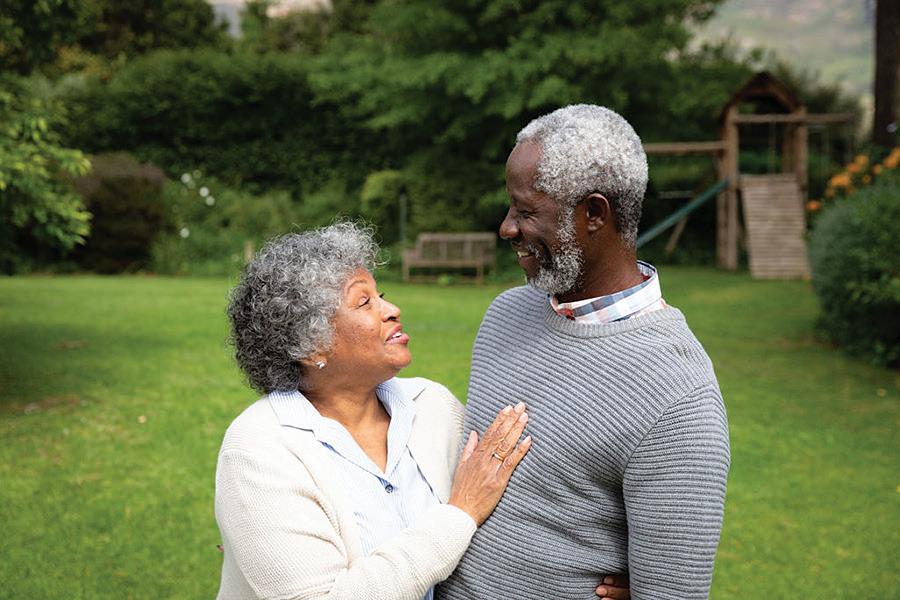
There are big changes to Social Security in 2026. Congress passed a law called the Social Security Fairness Act which could increase Social Security benefits for many Americans, which President Biden signed into law. If some of your career was spent working in non Social Security covered employment, you are probably eligible to collect higher, sometimes substantially higher Social Security benefits, which are based on your own covered work or that of a current or ex spouse, living or deceased. The Act eliminated both the GPO (Government Pension Offset) and the WEP (Windfall Elimination Provision). Those provisions previously reduced retirement benefits and either reduced or eliminated spousal, divorced spouse, widow or widower, and divorced widow or widower benefits of those with pensions or retirement accounts resulting from non covered employment. If you are in this position, you probably know who you are.
In addition, more than 95% of Social Security recipients don’t maximize their benefits, according to a study by the Center for Retirement Research at Boston College. Over 40% of Americans file at age 62, minimizing their benefits if they live into their eighties. By minimizing their benefits, Americans are missing out on tens of thousands or hundreds of thousands of dollars of benefits, if not more, according to Larry Kotlikoff, author of a best selling book
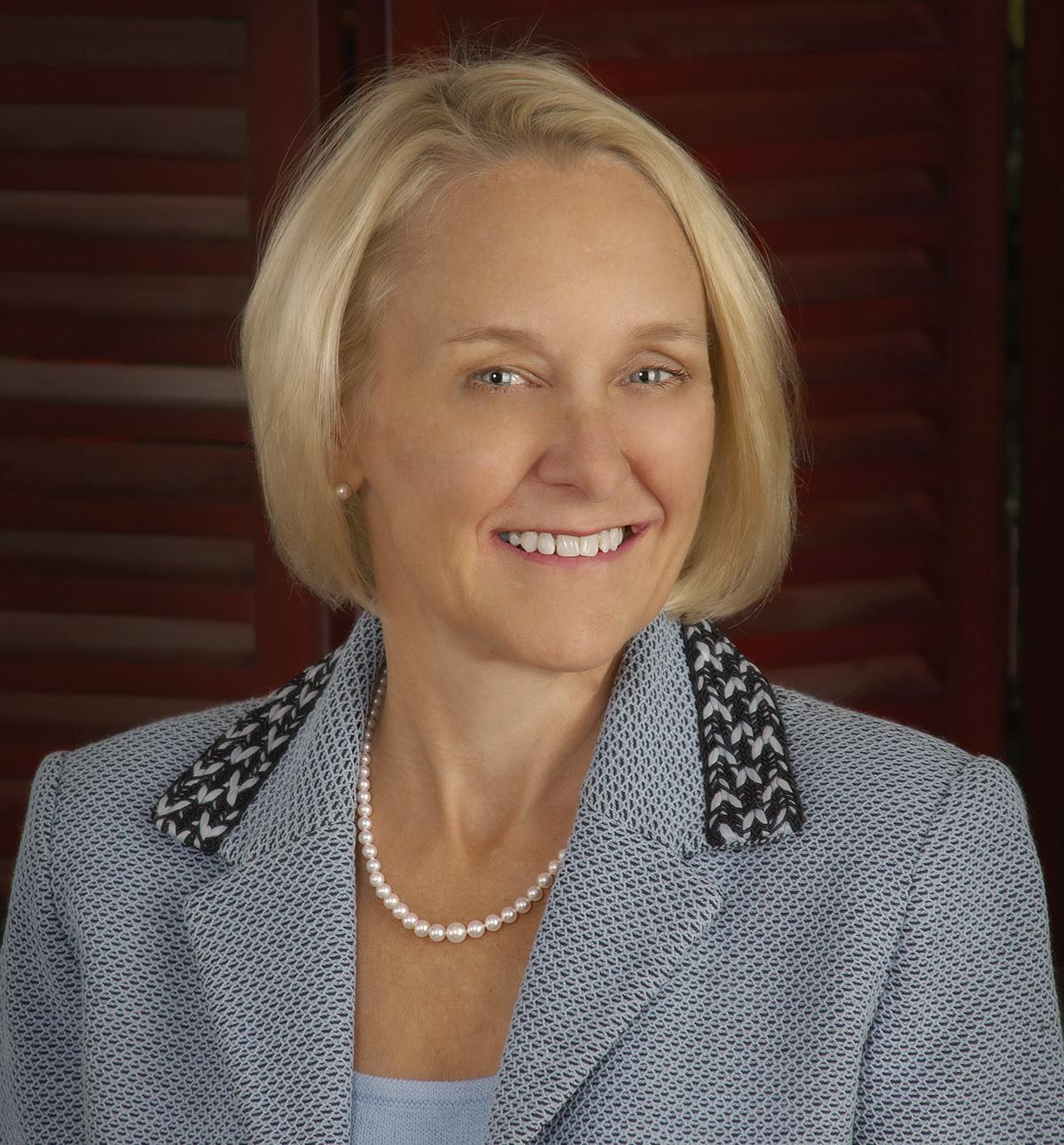
By Susan Clayton Moore, J.D. Moore Wealth Management, Inc.
on maximizing social security benefits that was published in 2015. The problem with maximizing Social Security benefits is how complicated it has become and is likely to remain so for the next several years.
On Wednesday, February 25, 2026, from noon to 1:30 p.m., Susan Moore of Moore Wealth Management, Inc. (MWM) will conduct a complimentary and without obligation “Maximizing Social Security” webinar. There will be both a live and a recorded version. If you would like to be included in the webinar, please call the Moore Wealth Management office for further information or reservations at 334.270.1672, or email sarah@

moorewealthmanagement.com. If you miss the webinar, we also offer free consultations that are without obligation. In addition to explaining the new Social Security Fairness Act, the workshop will also cover how the Social Security system works in general. Specifically, the workshop will discuss different techniques to maximize Social Security including when and how to file, how to lessen taxes on Social Security, and special rules that impact widows and widowers, divorcees and spousal benefits. It pays to know how to maximize your benefits.
Susan Clayton Moore, J.D., is a financial advisor and wealth manager of Moore Wealth Management, Inc., with offices Montgomery and Alexander City, AL. Susan has over $150 million in assets (as of 9.1.24) under management through Kestra Financial and has been a financial planner for over 40 years. Contact Susan at 256.234.2761. Email contact is susan@moorewealthmanagement.com.
The opinions expressed in this commentary are those of the author and may not necessarily reflect those held by Kestra Investment Services, LLC or Kestra Advisory Services, LLC. This is for general information only and is not intended to provide specific investment advice or recommendations for any individual. It is suggested that you consult your financial professional, attorney or tax advisor regarding your individual situation. Securities offered through Kestra Investment Services, LLC (Kestra IS), member FINRA/SIPC. Investment Advisory Services offered through Kestra Advisory Services, LLC (Kestra AS), an affiliate of Kestra IS. Kestra IS or Kestra AS are not affiliated with Moore Wealth Management, Inc. https://www. kestrafinancial.com/disclosures