FIND MORE
SHOP
LOG IN
Primediet Consultant
Subscribe
November 18 2025, 12:26
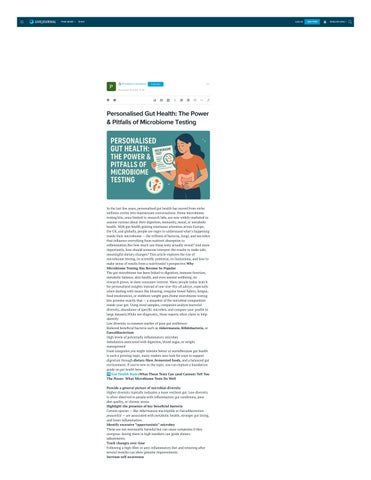
Personalised Gut Health: The Power & Pitfalls of Microbiome Testing
In the last few years, personalised gut health has moved from niche wellness circles into mainstream conversations. Home microbiome testing kits, once limited to research labs, are now widely marketed to anyone curious about their digestion, immunity, mood, or metabolic health. With gut health gaining enormous attention across Europe, the UK, and globally, people are eager to understand what’s happening inside their microbiome — the trillions of bacteria, fungi, and microbes that influence everything from nutrient absorption to inflammation.But how much can these tests actually reveal? And more importantly, how should someone interpret the results to make safe, meaningful dietary changes? This article explores the rise of microbiome testing, its scientific potential, its limitations, and how to make sense of results from a nutritionist’s perspective.Why Microbiome Testing Has Become So Popular The gut microbiome has been linked to digestion, immune function, metabolic balance, skin health, and even mental wellbeing. As research grows, so does consumer interest. Many people today search for personalised insights instead of one-size-fits-all advice, especially when dealing with issues like bloating, irregular bowel habits, fatigue, food intolerances, or stubborn weight gain.Home microbiome testing kits promise exactly that — a snapshot of the microbial composition inside your gut. Using stool samples, companies analyse bacterial diversity, abundance of specific microbes, and compare your profile to large datasets.While not diagnostic, these reports often claim to help identify: Low diversity (a common marker of poor gut resilience) Reduced beneficial bacteria such as Akkermansia, Bifidobacteria, or Faecalibacterium High levels of potentially inflammatory microbes Imbalances associated with digestion, blood sugar, or weight management Food categories you might tolerate better or worseBecause gut health is such a growing topic, many readers now look for ways to support digestion through dietary fibre, fermented foods, and a balanced gut environment. If you're new to the topic, you can explore a foundation guide on gut health here: Gut Health BasicsWhat These Tests Can (and Cannot) Tell You The Power: What Microbiome Tests Do Well
➡️
Provide a general picture of microbial diversity Higher diversity typically indicates a more resilient gut. Low diversity is often observed in people with inflammatory gut conditions, poor diet quality, or chronic stress. Highlight the presence of key beneficial bacteria Certain species — like Akkermansia muciniphila or Faecalibacterium prausnitzii — are associated with metabolic health, stronger gut lining, and lower inflammation. Identify excessive “opportunistic” microbes These are not necessarily harmful but can cause symptoms if they overgrow. Seeing them in high numbers can guide dietary adjustments. Track changes over time Following a high-fibre or anti-inflammatory diet and retesting after several months can show genuine improvements. Increase self-awareness
JOIN FREE
ENGLISH (EN)