BIG RIGS 30 January 2026

Page 1


Jodie Bairstow

CONTACT US

Address: 379 Docklands Drive, Docklands VIC 3008

Phone: 03 9690 8766

Email: editor@bigrigs.com.au

Web: bigrigs.com.au

Accounts: 03 9690 8766

Subscriptions: 03 9690 8766

Classifieds: 0403 626 353

Circulation and distribution

queries: 03 9690 8766 info@bigrigs.com.au

EDITOR

James Graham: 0478 546 462

james.graham@primecreative.com.au

SENIOR REPORTER

Danielle Gullaci 0478 844 797

danielle.gullaci@primecreative.com.au

DESIGN

Alejandro Molano – Art Director Daz Woolley – Art Director

GENERAL MANAGER

Peter Hockings: 0410 334 371

peter.hockings@primecreative.com.au

BUSINESS DEVELOPMENT

MANAGER

Treena Heit: 0403 626 353 treena.heit@primecreative.com.au

CLIENT SUCCESS MANAGER

Katharine Causer: 0423 055 787

katharine.causer@primecreative.com.au

CONTRIBUTORS

Truckin in the Topics/Spy on the Road: Alf Wilson, 0408 009 301

David Vile, Graham Harsant, Geoff Middleton and Jonathan Wallis.

Big Rigs National Road Transport Newspaper is published by Prime Creative Media. It is the largest circulated fortnightly truck publication in Australia with 22,248* copies per fortnight.

*Average circulation per issue in 2025

Truck abandoned after driver dumps load

FAIRFIELD mayor Frank Carbone has sent a warning to illegal dumpers in his Sydney local government area that they will be prosecuted and fined if caught.

Carbone’s message comes after two drivers allegedly dumped building materials on a private property in Fairfield to save on paying tip fees.

“They have no shame, we need to make examples of these people and they will be prosecuted and fined,” Carbone said on social media.

“Residents should remain vigilant, particularly if you own an empty block of land or are about to commence construction.”

Carbone said two large trucks attended the site and unloaded demolition waste, with one of

the trucks caught in the act. Unknown to the offenders, the property was still occupied.

“The driver of the second truck was confronted but fled the scene, leaving the truck behind.”

Carbone said council’s Regional Illegal Dumping Squad, working in conjunction with the NSW Environment Protection Authority, has now referred the matter to NSW Police.

“Although the trucks did not have number plates, we are confident those responsible will be identified and held accountable.

“Illegal dumping is an ongoing issue, both on public and private property.

“Our community are our eyes, please stay vigilant and

report any suspicious activity to council or NSW Police im mediately, so we can stop this illegal activity.”

Under the Protection of the Environment Operations Act 1997, anyone caught dumping larger scale waste can cop a $15,000 on the spot fine, rising to $30,000 for corporations.

For large scale “strict liability waste dumping offences”, such as building materials, individ uals can be fined $500,000 and corporations $2 million – and those figures double if asbestos is involved.

For the wilful disposal of waste that can cause environ mental harm, individuals face up to $2 million and/or seven years’ jail, with corporations on the hook for up to $10 million.

Nearly a third of trucks on Bruce non-compliant

RESULTS from a recent joint operation on the Bruce Highway show that almost one in three intercepted heavy vehicles were found to be non-compliant, said the National Heavy Vehicle Regulator (NHVR).

Operation Overwatch, which ran ahead of the Christmas holidays, saw NHVR Safety and Compliance Officers (SCOs) work in partnership with Queensland Police to conduct roadside inspections along the highway between Maryborough and Miriam Vale.

NHVR Chief Operations Officer Paul Salvati said of-

The Penrite Convoy range offers comprehensive solutions for heavy-duty vehicles, from the latest fully synthetic, semi-synthetic, and mineral oils to suit all engine types. The Convoy heavy-duty engine oil range is designed to protect the engine between service intervals keeping your vehicles on the road and performing at peak efficiency, saving you time and money.

▪ Australian owned and manufactured for Australian conditions

▪ OEM and latest industry approved specifications

▪ Our advanced formulations are designed to significantly reduce engine wear and enhance fuel efficiency, ensuring your vehicles perform at their best

ficers completed more than 140 intercepts, with around a third resulting in detection of non-compliance with the Heavy Vehicle National Law (HVNL).

“Operation Overwatch aimed to reduce high-risk behaviours on one of Queensland’s most dangerous stretches of road, with three fatal crashes recorded in the weeks leading up to the operation,” Salvati said.

“SCOs and police spoke to drivers about a range of issues, including mechanical requirements, dimensions, fatigue, permits, loading and mass.

“Concerningly, we saw 10 infringements related to fatigue, which we know is one of the most dangerous behaviours across industry.”

Salvati said areas such as Iveragh, Miriam Vale and Gin Gin were considered a hot spot for traffic crashes, with many heavy vehicle drivers appealing for the presence of officers in these areas.

“While some of the figures from this operation are disappointing from a compliance standpoint, we are really pleased with industry’s positive response to an increased officer

presence around the highway,” he said.

“It’s encouraging for the NHVR and our partners to hear first-hand from truck drivers that they appreciate our efforts in educating more motorists on how to comply with the HVNL.

“We are also pleased that no crashes occurred during the operation in areas where officers focused.”

Operation Overwatch results

• Intercepts: – Total intercepts 143

– Non-compliant intercepts 49

– Vehicle units inspected 319 (individual prime movers, trailers, dollies, etc)

– Education interactions 14

• Infringements:

– Fatigue 10

– Dimension 5

– Registration 3

– Permit & Vehicle Configuration 3

– Mechanical 3

– Mass 2

• E nforcement activity:

– Total distinct notices: 72

– Defects: 47

One of the trucks was left behind after the alleged offender fled the scene. Image: Mayor Frank Carbone

Quick thinking saves truckie's life in crash

AT first, Stuart Devine thought it was just another routine problem to solve when his phone began to vibrate beside his bed at 6am.

It was the Refrigerated Road Express (RRE) warehouse alerting the transport manager, who had just finished work at 10pm the previous night, that they were having trouble locating truckie Michael ‘Mick’ Shelton.

Alarm bells were immediately ringing in Devine’s head. Shelton, 50, had been doing the same return milk run for nearly two years and was one of the most dependable drivers at RRE, the transport division of parent company First Choice Dairy, one of the biggest milk distributors on the east coast. Everything Shelton did was like clockwork.

The pair had also just spoken at 9.40pm the previous night with all on track for another trouble-free delivery from Saputo Dairy Australia to Nick's Food and Milk in Peakhurst.

Devine immediately jumped on the Cooltrax real-time tracking system installed

on all RRE’s trailers which showed that Shelton’s truck, a new Kenworth K220, was nowhere near the supposed final destination and instead near Greenhills Road at Berrima on the Hume Highway.

“The more I zoomed in the more it showed the dot was in the middle of the highway and there’s no rest bay there,” Devine recalled.

“When I looked at the temperature on the trailer, the return air was up to 20 degrees which tells me that normally happens when you open the back doors – I knew there was a problem.”

Fearing the worst, Devine instantly asked his staff to check on Live Traffic NSW for any reported accidents in that area.

“The round circle where that accident was on Live Traffic was exactly where Mick’s truck was and that’s when I started to panic.”

After a frantic call to Berrima police station for more information, Devine’s worst fears were soon confirmed.

“They rang me back within three minutes to tell me my driver has been airlifted to Liverpool Hospital in a critical condition.

“I just burst into tears – he’s my mate. It’s just that shock.”

Although police had yet to release details on the exact cause of the horrific January 8 crash at issue deadline, Devine understands that Shelton came around a corner at 100km/h to find a B-double crawling along the highway at no more than 2-3km/h.

Shelton, who was hauling 24 pallets weighing 44-tonne, had nowhere to go and just a split second to move the wheel centimetres off a square-on impact. The horrendous collision left the beloved grandfather of four with multiple rib fractures, a cracked sternum and punctured lungs, among other injuries.

Somehow, he still managed to stay conscious throughout the harrowing ordeal as first responders fought to free him from the mangled cab.

The other driver in the incident from Tasfreight was uninjured.

Composing himself as best he could after hearing the news, Devine helped raise the alarm amongst Shelton’s family to head to the hospital as quickly as they could.

“He was touch and go right up to the Saturday [two days after the crash] when they finished the operation,” Devine said.

Devine added that he’ll never forget the wave of relief he had when chatting to Shelton via a video call from his hospital bed just a week after the horrific smash.

“I just told him, ‘I love you man, I’m so glad you’re okay’.

“He’s devastated. He said he remembers seeing nothing, it was dark. He said all he could remember seeing was these back doors and in the last second he swerved as hard as he ould – and then just bang.

“It would have been seconds he had in warning. I’ve driven that road since [the crash] and as you approach that corner there is a bush that blocks

out what’s around that bend.

“You cannot see until you’re on top of it.”

Driving through the crash site a few days later, Devine said the layout of the road made it clear just how little warning Shelton would have had.

Devine said Shelton told him he owed his life to Moss Vale owner-driver Brian Wallder who was first on scene, along with another young truckie carting live ducks who ran back to grab a pinch bar from his cab to tear open the door.

“Mick kept saying, ‘I just want to get out, I’m stuck’, but they kept telling him, you can’t move. Brian was talking to the emergency services at the same time and they were telling him, don’t move him.

That saved his life.

“As soon as they got him out of the truck, he went into cardiac arrest because the blood filled his lungs.”

Shelton said Mick can’t

wait to meet up with Wallder again and thank him.

“He kept telling me that guy saved my life – he’s my saviour, an absolute gentleman.”

A humble Wallder, who was quick to follow-up on Shelton’s condition and offer support, later told Big Rigs he “didn’t really do much” to help at the time.

He had been following Shelton soon after leaving his Moss Vale depot and heading north on the Hume from the Medway Road on-ramp.

Shelton had moved over at the time into the right-hand lane to allow Wallder to enter the highway.

Shelton then moved into the left lane in front of Wallder and the pair stayed in that formation for around 5.5km, at around 80-100 metres apart.

“I was probably only 80 metres behind him when all hell broke loose,” Wallder recalled. “It was unbelievable to see. There were no lights or anything. He just ploughed straight into it [the truck and trailers] doing 100km/h.”

Continued on page 4

Somehow Shelton remained conscious while trapped in the cab as emergency services raced to the scene. Image: RRE
Eyewitness Brian Wallder said Shelton had no chance of avoiding the trailers ahead.
Stuart Devine took pictures and dashcam footage at the accident area a few days later.

‘I thought he had to be dead’

From page 3

LUCKILY truckie Brian Wallder was ‘empty’ at the time but still didn’t come to a halt himself in his Mack Fleet-Liner until around 1015 metres beyond the impact area – the force had pushed the trailers that far down the road.

“I’ve seen a lot of prangs in my 46 years of driving but I’ve never seen one that big,” Wallder said.

“I got out of the truck and didn’t hurry because I thought he had to be dead. But when I got to the door and tried to get it open, I heard him saying, ‘Help me, help me’. I ran back and a young bloke who’d pulled up beside me had a big pinch

bar in the truck, so he got the door open and pulled it back. He was really good.

“Then I was on the phone to triple-0 by that time and said, ‘What do we do? Do we try and get him out of the truck or leave him there? And they said, ‘No, don’t touch him.

Just leave him there, just keep talking to him and try and reassure him there’s someone coming to help him.

“The poor bugger was in a mess – he was jammed up in there pretty bad.”

Wallder said it was only 25 minutes or so before the emergency services arrived but they felt like an eternity.

“I just kept saying, ‘Hang in there mate, someone’s coming’. He must be fairly tough to live through that.”

A shaken Wallder admits that after the accident he was a “bit spooked” leaving so early in the morning on his usual run. He has no doubt that if Shelton’s truck hadn’t collided with the trailers, it would have been him. The truckies have since spoken on the phone and made plans to reunite again while Shelton is recovering in hospital.

Meanwhile, police told Big Rigs no charges would be laid and while the investigation into the cause of the crash continues, no further details were available at issue deadline. The National Heavy Vehicle Regulator said it’s gathering evidence to determine if it will investigate further.

Tasfreight declined Big Rigs’ request to comment.

In the wake of the crash, Mick’s daughter Teghan Shelton has launched a GoFundMe campaign to help ease the financial strain facing the family.

With Mick unable to work and requiring full-time care, Teghan said his wife Paula, a trauma nurse at Campbelltown Hospital, will need to stay home to support him while still meeting ongoing expenses, including their mortgage.

“This was a traumatic experience,” Teghan writes on the fundraiser page. “Something Mick will have to live with for the rest of his life.”

Teghan said the accident resulted in shattered ribs requiring extensive surgery to stabilise his chest with metal plates as he had multiple rib fractures and a cracked sternum.

“The surgeon and anaesthetist reported that he was very lucky to have survived the accident,” Teghan said.

“He also required 12 staples in his head for a large laceration, as well as torn muscles in his shoulder.

“He was on life support and an induced coma for four days, until they could stabilise his chest and keep his pain under control.

“But the physical injuries aren’t the only thing my dad will suffer with.”

Teghan said her father will have eight months of physical recovery.

“But in terms of his mental recovery, we don’t know if my dad will ever be able to get behind the wheel of a truck ever again.

“My dad is lucky to be alive today. He is so incredibly loved by his family, colleagues and close friends.

“He is a loving father and grandfather, as well as a husband.”

To donate, visit gofundme.com and search ‘Victim of the Berrima truck accident’.

At deadline for this issue, the campaign had already raised $15,412 from 135 donations.

Family launches fundraiser as truckie faces long recovery
Teghan, pictured here with Mick, has organised a fundraising campaign to help ease the financial burden for his family. Image: Teghan Shelton
Wallder’s truck can be seen parked just in behind Shelton’s. Image: ABC Illawarra/Facebook

AFTER a restful night at a Marlborough servo, Brisbane truckie Drew William was all set to make the final push up to Townsville from Brisbane driving a semi full of cars for Western Vehicle Movers.

He got one kilometre up the Bruce before he hit the ever-expanding queue of truckies stopped in their tracks by a flooded creek.

William said traffic was brought to a complete standstill after heavy rain in the wake of ex-Tropical Cyclone Koji caused flooding between the two service stations at Marlborough.

2026 QUEENSLAND FLOOD CRISIS

the wheel, William said the disruption was far from unusual during Queensland’s wet season.

“Every couple of years you get the wet season and you’re on the highway.”

This time last year, he was caught out by similar conditions, spending days stuck at Proserpine and Greenvale.

“Still no improvement by the look of it,” he said when asked about the general road conditions on the Bruce Highway since last year’s flooding. “No improvement whatsoever. It’s disappointing.”

“I’ve been stopped since five o’clock this morning,” William told Big Rigs. “It’s just one little creek that’s holding us up and it’s stopped the whole Bruce Highway.”

By the time he spoke to Big Rigs, he had been sitting in the queue for several hours, with word on the UHF suggesting a possible contraflow might be opened to move traffic one lane at a time.

“There’s a fair few here,” he said, adding that rain was continuing to fall, even if it wasn’t particularly heavy at the time.

A veteran of 28 years behind

William was particularly critical of the state of the Bruce Highway north of Gympie, saying investment appeared uneven and slow to deliver meaningful change.

“North of Gympie is shit,” he said bluntly. “They do a couple of intersections up near Maryborough, but that’s it. It took them 12 months to fix one pothole at Clairview.”

He also questioned whether decision-makers truly understood the highway’s condition.

“You never see them hop in a truck and ride the highway,” he said. “They do it in their nice comfortable cars. I’d like

to see them in a truck one time.”

Later that same morning, William was on the move again, but the weather event continued to play havoc with the freight industry throughout the month, prompting the Queensland Trucking Association (QTA) to issue an urgent plea to the state government for industry subsidy support.

The QTA said the current wet season has left many truck fleets immobilised for more than 10 days, leading to daily losses for businesses ranging from an estimated $10,000 to $80,000, depending on fleet size.

The association warned that without intervention, essential supply chains are at risk, and local economies face severe disruption.

This “dire” situation is exacerbating existing economic pressures on an industry a lready operating with tight margins, the QTA added.

“This isn’t just about trucking businesses; it’s about the availability of food, medicine, and critical supplies for every Queenslander.”

The association noted that during the February 2025

‘One little creek’ brings Bruce to standstill

flood event, fleets were forced to apply cost levies, ultimate ly increasing the cost of living in affected areas – a scenario likely to repeat this season without support.

“The inability to recover costs during disruptions places immense strain on businesses, many of which are major employers in regional areas, providing hundreds of local jobs. Without assistance, some may be forced to close, leading to job losses and diminished competition in the market,” Mahon added.

“I know they haven’t done it before but it’s time for them to rethink their approach be-

D ISRI SEATS

SYDNEY

510 Victoria Street, Wetherill Park NSW 2164 Ph. 02 9756 6199, email: isri@isri.com.au, www.isri.com.au

BRISBANE

“There’s a cost related to being stuck somewhere and you’ve got to support your drivers.”

While frustrated by the continued subsidy snubbing, Mahon, however, said he refutes the criticism from some quarters that the $9 billion in Bruce Highway fixes aren’t being rolled out quick enough.

“Ironically, it’s being held up by flooding at the moment but as soon as that has cleared there are quite a few projects that will be underway.”

Mahon said there has been more “glitches” this year on

the Inland Freight Routefall and flooding in Clermont.

“It’s been the reverse of what we had in February [2025]. The Bruce was cut off all over the place and we were using the IFR and this year, to a lesser extent, we’ve been cut off in a number of places on the IFR and we’ve been using the Bruce more.

“But that’s been part of our argument as to why the IFR is so important – we need redundancy between those north-south routes.

“If you haven’t got one, you’ve got the other. You can’t just be cut-off full stop.”

3/120 Gardens Drive, Willawong QLD 4110 Ph. 07 3275 2044, email: sales@isribrisbane.com.au, www.isribrisbane.com.au

BRISBANE NORTH

1/259 Cullen Av, Eagle Farm QLD 4009 Ph 1300 11 4774, email: seats@isrinb.com.au, www.isrinb.com.au

MELBOURNE

Unit 1/569 Somerville Rd, Sunshine West VIC, 3020 Ph. 03 9311 5544, email: sales@isrisunshine.com.au, www.isri.com.au

MACKAY

110 – 120 Maggiolo Drive, Paget QLD 4740 Ph. 07 4952 1844, email: admin@isrimky.com.au, www.isriseatsmackay.com.au

PERTH

408 Welshpool Rd, Welshpool WA 6106 Ph. 08 9362 6800, email: info@mmtisri.com.au, www.mmtisri.com.au

DARWIN

Mobile Sales and Service

Ph. 08 8927 0986, email: info@isridarwin.com.au, www.isridarwin.com.au

NEWCASTLE/HUNTER VALLEY

Ph 02 4932 0600,

Unit 2/13 Hinkler Ave, Rutherford NSW 2320 email: sales@hvss.com.au www.isri.com.au

Truckies were kept waiting for hours in this queue at Marlborough after a small creek overflowed onto the Bruce. Image: Drew William

VICTORIA BUSHFIRE DISASTER

Trucking community rallies together

Amid the heartache and devastation caused by Victoria’s bushfire disaster, the trucking community has banded together to lend a helping hand.

IT was just a week into the new year, when on January 7, as Victorian temperatures peaked past 40 degrees, a number of grass and bushfires began to break out across various parts of Victoria. As fires burned, farmers, businesses, property owners and emergency services braced for the catastrophic fire conditions that were to come on Friday, January 9. High temperatures and strong winds served to fuel existing fires and spark new ones.

Across the next week or so, over 400,000 hectares were burned, hundreds of struc tures destroyed and over 20,000 animals killed. Tragi cally, a cattle farmer also lost his life in the Longwood fire near Seymour in central Vic toria.

A s those impacted were forced to grapple with their losses, livestock farmers were also faced with the challenge of how to feed their surviving livestock.

With that, the true Aussie spirit has shone through, with countless people donating hay and funds. There have been numerous hay runs making their way into fire ravaged towns.

Aussie Hay Runners (AHR) was among the organisations that quickly sprung into ac tion. By Monday, January 12, 28 of their semis had already travelled 19,448 kilometres, delivering 952 bales valued at $114,240 to farmers in Alexandra, Goomalibee, Harcourt, K atamatite, Longwood, Murrindindi and Ruffy. And that was only the beginning.

Recognising that the big trucks couldn’t access some of the roads, the AHR team assembled what was dubbed the “Cute Ute Crew”.

On Saturday, January 17, over 100 utes, numerous trucks and pilots headed into Longwood.

AHR’s Jenny Clear-Boucher said, “It was a massive and a mazing day. There were so many beautiful people doing beautiful things. The Cute Ute Crew donated their time and their petrol, and most borrowed or hired trailers from family, friends or their bosses. Many of them bought farm equipment and purchased hay themselves to take on these runs for the farmers and to support AHR.

“We had four AHR trucks and then other trucks met us along the way, already fully loaded with hay and pallets of food. Everything went to a depot that’s been set up in Longwood and is run by volunteers, and they’ll distribute it all to where it needs to go.”

With the run into Longwood complete, AHR has its

sights set on its next major run, heading into the town of Streatham on January 31, as that town has also been badly impacted. As we went to print, Jenny said she was expecting this run to be even bigger.

From the moment the fires began, Need For Feed has also been hard at work, getting hay to farmers. Just a week after the fires broke out, Need For Feed founder Graham Cockerell told Big Rigs, “We have done a bit already, starting the day after the fires – and we haven’t stopped. There’s been something happening each day. There have been requests for assistance for all the fires, but most of them have been for Longwood,” he said.

“Need For Feed has a depot set up at Euroa and Alexandra, so that’s where we’ve been dropping off the hay. But we’re also really focussed on Longwood, where a lot of properties have been impacted.”

Each year Need For Feed holds an Australia Day Hay Run. While initially planned to head into South Australia’s Riverland area, that trip has been postponed, with the trucks instead heading into fire impacted parts of Victoria.

Graham added that it will take some time for livestock farmers to recover from the impacts of the recent fires.

“This will go for at least three

months, until they get decent rains and feed growing.”

A popular stop for truckies, the Mortlake Roadhouse, in Victoria’s west has also done its bit to show its support to bushfire victims. On Monday, January 12, Mortlake Roadhouse held a special fundraiser to assist those impacted by the fires, with all proceeds from the day donated to Need For Feed.

There was also a bucket on the counter for customers to make donations, and they set up an account for those who wanted to donate but couldn’t get to the roadhouse in person.

Mortlake Roadhouse was able to raise $8388.86, which was donated to Need For Feed.

The Victorian Farmers Federation (VFF) has been coordinating fodder relief for farm-

ers impacted by the Victorian b agreement with the Victorian Government, the VFF enacted the Emergency Fodder Support Program to coordinate the donation of fodder and deliver it to bushfire impacted farmers across Victoria.

Within the first week of its efforts, VFF sent truckloads of donated hay to farmers who needed it. According to the VFF, this went towards feeding over 8000 cattle, over 30,000 sheep, over 300 horses, and more.

Along with the various support organisations, there have been transport operators who have coordinated their own support efforts.

Among these operators was Morris Transport, which was there to help as fires continued

Transport drivers headed into the Longwood, Meredith and Kawarren fire zones to transport cattle to safer areas.

“Our drivers didn’t hesitate –dropping their own plans to be there when it mattered most, ensuring livestock was moved quickly and safely to secure paddocks away from danger,” the company said.

While owner of Hendy Transport, Troy Hendy, was also quick to help. His company is located in St Arnaud in Victoria’s Wimmera region.

Together with good mate Darren Petrie and cousin Gordon Hendy, who both have their own trucks and farms, the trio headed into the town of Alexandra on January 12 to deliver three truckloads of hay.

For those wanting to assist, there are a number of organisations looking for donations and/or drivers to volunteer their time including:

Aussie Hay Runners

Search Aussie Hay Runners on Facebook

Need For Feed

Visit needforfeed.org

Victorian Farmers Federation

Visit vff.org.au/vff-emergency-fodder-program

For those who have been impacted by the bushfire disaster, the Victorian and Australian Governments have recovery support available. Details can be found at vic.gov.au/january-2026-victorian-bushfires.

“We have a great network of farmers around here so all of the hay was donated from farms around St Arnaud. Most farmers donated 10 bales or more,” said Troy.

“During the Black Saturday bushfires where Marysville was hard hit, a lot of those people moved to Alexandra. People lost everything and there were kids who had lost everything. We were the first ones down there on the Sunday night to get toys to those kids.

“When this happened, I called my good mate in Alexandra to see what I could do to help. He said they needed hay.

“It’s going to take a long while to get everything going again there, but it was surprising to see a fair amount of stock still floating around which was really good to see.”

Morris Transport drivers didn’t hesitate to head into the fire zones to move livestock to safety.
A Need For Feed B-double loaded with 67 donated bales of hay. Image: Need For Feed
Victorian Farmers Federation has sent truckloads of donated hay to farmers across the state. Image: VFF

Sleeper Cab Cooling and Heating

Unsung

thing that matters. You stick your nose where it’s not always welcome, and sometimes doors are slammed in your face. And don’t get me started on social media, with its constant barrage of trolls. Call me a dinosaur if you like – at my age, I don’t really care.

But every now and then, the old spark is reignited. It happens when you read stories like those about our hay run heroes on page 6, and if you’re lucky enough to interview truly wonderful, kind and humble people – the sort who quietly reaffirm your faith in humanity.

People like truckie Brian Wallder who was first on the scene at a horrific smash on the Hume earlier this month (see story on pages 3-4). Brian’s first words to us were: “I didn’t do much.” Yes, you did, Brian. You’re a bloody legend.

[In response to: ‘Veteran truckie opens up on why he’s almost ready to hand in the keys after 35 years on the road’]

I’M coming up to 47 years in the industry.

I started on the old Hume Highway. I was on Razorback in the blockades as a young keen fella Anyway, enough about me.

I moved to WA in the late 90s and glad I did.

What’s going on over east is criminal re these overseas drivers.

I did three trips with a single earlier this year [in 2025] from Perth to Queensland. What I saw and the danger I felt crossing the Nullarbor was insane.

I came across local trucks towing B-triples from Melbourne that should never have been allowed on the road.

Drivers that didn’t even know where they were. Main Roads even put up a sign in Coolgardie as these guys were going into Kal completely lost. Break down after breakdown, rollover after rollover and the authorities turn a blind eye.

That’s just one of many very dangerous situations they put me in and that was only over three trips.

I live in the Wheatbelt in WA, the amount of rollovers we have here is a joke and it’s all these idiots.

No one is monitoring these

guys for maintenance and fatigue. Some of the trucks are only a couple year old and they are destroyed.

No idea about keeping a truck safe.

So, who’s responsible? The farmers? CBH? The companies they contract to? Why aren’t they stopping this crap? Of course, $$$$$

I can go on and on about it.

I love what I do, I love going for my drive. I absolutely despise the industry for what it has become.

Haven’t liked the industry for a lot of years now. I ask, who’s to blame?

Mike

[In response to: ‘Truckies urged to help instead of pressing record button’]

BACK in our days of getting a licence, we had to reverse a B-double 70 metres in a straight line, reverse a single trailer around a left blind corner using mirrors, let alone a ll the other hoops we had to jump through to get the license class. These rude arrogant muppets don’t want education, they want a paycheck.

The licence system is about as good as Albo as prime minister – up a croc-infested creek, no paddle and a sinking boat. Back in our days, we didn’t have automatic trucks, and a car licence done in an auto-restricted.

You can’t fix the bottom on the food chain when the roof up top is leaking like Niagara Falls.

The only reason the industry is suffering is because they imported cheap labour, expected us to work for a bowl of rice a day and people left in droves. Companies back in the day employing people sent drivers off for an assessment to make sure they knew how to drive, didn’t f###k their trucks up, drop gearboxes every third set of lights, etc.

GKR drivers stood up…. when is the rest of the industry going to stand up, park up and demand the government fix the issues they created?

Drivers don’t stick together anymore because mainly these imports think of no one but themselves.

They are not interested in learning to drive properly, or they would get appropriate lessons. They don’t stop to check on

people broken down, not even a radio call to check, so I’ll be stuffed if I’m ever going to try help them again.

They can pay a driving school a couple grand, maybe more these days, and learn to drive like we did back in the day. They rely on yardies to put their trailers and trucks together and companies are allowing this.

They are just as bad as the government allowing them on the roads without due care for everyone else using it.

I don’t know of, or have met Jerry Brown-Sarre but finally something to work with from someone who obviously is an industry top gun and sits on our side of the fence.

The most profound and compelling words from Jerry are at the start of his 28 point plan to save our industry [‘Veteran truckie unveils 28-point plan to save trucking’]

“The industry needs peo -

ple to stand up, start an a lliance and LEAD this action. Injustice ONLY survives while good people do nothing.”

This blueprint and initiative of Jerry’s has the ability to transform the transport industry as we know it and create the reform WE deserve.

Nicely done……I’m in!

Cam Deans Corrigin, WA

IN BRIEF

Toowoomba Bypass

Operators and truckies with wider loads should factor in detours when using the Toowoomba Bypass between the Warrego Highway West interchange at Charlton and the Gore Highway interchange at Athol until March.

The Department of Transport and Main Roads (TMR) advises there will be fixed lane closures on the southbound and northbound lanes to carry out pavement stabilisation works.

Restrictions will apply during and after the work hours of 6am-6pm. Vehicles with a ground contact width over 3.5m wide must use the approved detour. Vehicles with load widths over 4m wide must use the approved detour during work hours between 6am-6pm.

Birdsville Track reopens

Following the closure of the Birdsville Track in June 2025 due to floodwaters and the subsequent opening of the Cooper Creek barge to ferry vehicles across, waters have receded and the final closed section of the Birdsville Track in South Australia reopened to traffic in mid-January.

Re-opening this final 5 kilometre section allows freight operators and other road users to fully access the Birdsville Track in South Australia.

It also means the Cooper Creek Barge will no longer be required. The $27.4 million barge transported approximately 13,200 cattle since opening in early November.

A total of 760 vehicles, including 330 heavy vehicles, used the barge while it was in operation.

Upgraded truck stops

Ampol has opened its redeveloped dual Ampol Foodary Eastern Creek service centres in Sydney, featuring new amenities for truckies.

Located on the M4 Motorway in Sydney’s West, the dual truck stops feature separate fuel and diesel canopies, along with parking, a new truckie’s lounge and shower facilities. For electric trucks, both sites feature the AmpCharge network first-of-its-kind, drivethrough EV charging bays, allowing for larger commercial vehicles and EVs with trailers to easily access charging.

On the retail front, the sites include Ampol Foodary, Soul Origin and Hungry Jack’s, among others.

Flood recovery works

Following intense rainfall and flooding in early 2022, which caused significant damage to sections of the Stuart Highway, upgrades have now been completed at Lake Windabout.

An important freight route between South Australia and the Northern Territory, the Stuart Highway runs for almost 1000 kilometres through South Australia, linking Port Augusta to Darwin. The area near Lake Windabout sees an average of 900 vehicles each day, with about 300 of those being heavy vehicles.

In the cooler months, traffic volumes here can peak at 1300 vehicles each day, with up to one third being heavy vehicles.

I started believing in myself again

FOUR years. It’s been four years since I’ve felt the grass underneath my feet. Four years since I ran around kicking the tyres of my truck and trailers to make sure they had air, before heading off for what would normally be the week on the road.

It’s been four years since I danced around on my own two legs and feet. Four years ago I went to work and never returned the same. It’s been a heavy weight to carry that sort of loss around.

Not just the loss of my legs, but the loss of my career, the loss of what I thought my life would look like.

The surgeries that never seemed to end, the medication that filled me with anxiety and made me so tired. The flashbacks and reminders every time I saw a truck.

Nothing could prepare me for the seemingly never-ending grief that comes with that sort of trauma.

I AM PROOF THAT EVEN IN LIFE’S DARKNESS MOMENTS, WE CAN RISE, REBUILD AND CREATE SOMETHING BEAUTIFUL, EVEN IF THAT LOOKS DIFFERENT NOW.”

Twelve hours I spent hanging upside down in that ruck, mostly awake, in pain and terrified, screaming out for my dog who was in the

accident and lived to tell the tale, but what a blessing it was to have a paramedic that would go against his orders to eventually cut my foot off to get me out of that truck, barely alive.

My surgeon ended up having to cut both of my legs off above the knees. It took me almost six months to remember anything about that day.

For the next three years I watched myself slowly fading away mentally. My loud laugh became rare.

I shut the world out not knowing how to explain how completely dead and worthless I felt inside. My spirit was gone and I was in physical pain every hour of the day. I felt trapped and the world around me seemed so distant and scary to face.

One year ago I decided to choose myself. I moved away from the town that felt hard to be in. I threw most of my medication away. I learned that my value doesn’t rise or fall based on who chooses me. I learnt that my scars aren’t shameful, but a symbol of strength.

I am proof that even in life’s darkest moments, we can rise, rebuild and create something beautiful, even if that looks different now.

This past year I made the choice to show up, sometimes strong, sometimes figuring it out, but I learnt that connection is everything. I’ve met so

many genuine people, that I look up to every day. I learnt that I am not the only one who is in this position.

I looked at those people and thought wow, they are amazing, and I started to see that in myself too.

Everyone eventually goes through hard times, loss and grief. That looks different for every single person. It’s about feeling your emotions, accepting that things don’t always go to plan.

I’ve cried so many tears I could have filled a swimming pool, but then I picked myself back up, went to therapy, found happiness in the small

things, and slowly came back to life. I started to believe in hope again and started believing in myself.

I started remembering who I am again and genuinely laughing and appreciating the fact that I am still alive.

I no longer worry about what people think of me, and however long I am lucky enough to live, I will be grateful for everything I have and everyone who has stuck by me because when times are tough, you are the people I think about and am so lucky to have in my life. I hope that I can one day help people the way that you have helped me.

Supporters unite to replace missing memorial

IT was the cruelest of blows for brave truckie widow Delphine Mugridge at the time. her beloved husband Neville ‘Slim’ Mugridge in a twotruck crash on the Eyre high

way about 27km west of Yalata on April 4, 2024, Delphine got news that the roadside memorial in his honour had been

“Who would do something like that? It’s something so

unique that nobody could say, ‘Look what I’ve got’. Everyone’s going to know now that it was stolen,” she told Big Rigs at the time.

Fast forward to January of this year, however, and Delphine is once again thanking the industry for rallying in support.

Earlier this month, Slim’s long-time colleagues at TML Transport, truckie Simon Morrison and wife Cathy, sent her these pictures of a new memorial being re-erected in its original location.

TML Transport boss Lewis Magro said he was only too pleased to play his part in getting the memorial back in its rightful place. Many truckies have stopped there to pay their respects to Slim since the accident that also claimed the lives of two other drivers.

“I did a changeover there the other night and I saw where the accident happened for the first time – it was a bit daunting,” Magro said.

Delphine said she was thrilled to get the news from Simon who was also instrumental in having Slim’s name added to the memorial wall at White Hill, SA, last year.

“Simon knew Nev very well and he got in touch with me after he died. He just goes out of his way to do things – it’s just so much appreciated.

“I wouldn’t have known where to start, especially now being based in Queensland. He obviously had the contacts, and the people donated the work that went into it.”

Delphine said she now wants to make sure the newly cemented memorial stays in place and has contacted the local Yalata council to push her case.

“I have to make sure it stays put, even if I have to pay a fee each year to keep it there.”

While the memorial’s return is welcome news, Delphine continues to advocate for broader change on the licensing laws around overseas drivers she’s campaigned so tirelessly to change as a legacy for Slim.

“I did hear back from the Queensland Parliament and they’re going to make a decision by the end of the year as to what law reforms are going to happen,” she added.

“Victoria is working with the Australian Trucking Association too so everybody’s on board.

“It’s just that they’re not keeping me in the loop about it.”

South Australia is so far the only state or jurisdiction to tighten the licensing pathways open to foreign truck drivers in Australia.

Delphine also recently sent the full 23,319-signature petition supporting changes to Senator Pauline Hanson, hoping she may champion the cause in federal parliament this year.

Delphine said she’ll be doing everything she can to honour Slim’s memory.
Slim’s TML Transport colleagues Simon and Cathy Morrison were thrilled to play their part in re-erecting the memorial in its rightful place. Image: Simon and Cathy Morrison
Michelle picked herself back up, went to therapy and found happiness in the small things. Images: Michelle Pillar
Michelle says she’s now in a good place and has started to believe in herself again.

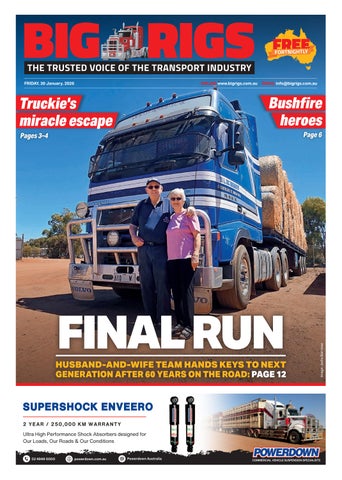
WA truckie, 83, embarks on his final run

At 83 years of age and with over 6 million kilometres under his belt, this legend of the road recently set off on his final run in his beloved Volvo.

FOR Terry Bairstow, 83, trucking has been in his blood since he purchased his first truck – a brand new red International Acco petrol powered V8 – back in 1971.

Though he admits he never really loved that truck, the move sparked a career that spanned close to six decades, carting sheep and grain across Western Australia. Terry even went on to inspire his children and grandchildren to enter the industry too.

“The Acco was a brand new one when I got it but I had lots of trouble with it – and it had no air con!” Terry told Big Rigs

“The Acco had two seats. I used to take a mattress and throw it over the seats and then sleep over the engine in Port Hedland in the heat. One day it was that hot, I saw some water in the river and jumped in. I walked 50 metres back to my truck and my shorts were already dry. Sometimes, I’d get five or six flat tyres in one run. But I just did it and I got the job done.”

Terry has lived in Wagin in Western Australia’s Wheatbelt region for most of his life, however was born and raised on the family farm in Dumbleyung, around 40 kilometres to the east.

“I’ve always enjoyed driving and started learning to drive trucks on the farm from about eight years of age. They were the best apprenticeships back then!

“My brother Musso was also part time in trucks when I was 16 or 17 and we’d do the sheep sales. Loading at midnight, then travelling 300 kilometres to the sheep yards in Perth. I’d be that tired that I’d sleep on the floor in the truck.”

After finishing school, Terry had a go at sheep shearing and sharecropping. After the family farm was sold in 1970, he decided to try his hand at truck driving. “I was about 26 at the time. I got into shearing and didn’t like it so I started working with my brother, helping to cart sheep in small semis.”

At the age of 29, Terry purchased the Acco, which marked the start of Bairstow’s Transport – a business that

continues to this day under the direction of his son Todd Bairstow, who since Terry’s retirement, is the company’s only driver.

Back in the 1970s, after Terry’s Acco came a second-hand M AN, followed by a Volvo G88. “That Volvo really got me going,” said Terry, who’s been loyal to the Volvo brand ever since.

At one point during the 1980s, Bairstow’s Transport got up to a fleet of nine prime movers, today there are three – Terry’s 2007 Volvo FH16, which was purchased from new and has done over 1.5 million kilometres, a 2008 FH16, a lso bought from new and driven by Todd, and another 2013 FH16. “I’ve had over 40 drivers over the years, including Michael Taylor, who really helped us out when Todd spent a few years driving up north,”

added Terry. “Transport is a hard game. I’ve done over 6 million kilometres in a truck.”

It was during the 1980s, when Terry expanded into grain cartage that he also began running road trains.

“With all trucks you have troubles. Things can go wrong and can be expensive, but the Volvos have been good to me. I stuck with Volvo and got to know the people there.”

Terry even struck a close friendship with Max Winkless who brought the Volvo truck brand to Australia. “When Max had new trucks that needed to be delivered to WA, he’d fly me over and pay me to drive the truck back. I loved doing that, it was like a holiday. I’d get to see the countryside,”

Terry fondly remembered.

Terry and his wife Maree Bairstow had five children. Their sons Darran and Todd,

and daughter Susannah all began their driving careers working in the family business and learning the ropes from their father. Darran went out on his own to start his agricultural transport business Flexitrans over 20 years ago. Susannah and her husband Grant went on to run another transport business called McGuffie Wagin Transport. While Todd has continued to work by his father’s side. “Now he’s running the show for me,” said Terry.

While their daughter Jodie Bairstow doesn’t drive trucks, she runs a trucking Facebook group called Truckies Driving Australia and has two sons in the transport industry – one is a truck driver and one does trailer fit-outs. Her son Cody began his truck driving career working for his grandfather at Bairstow’s Transport,

while Darran’s eldest daughter Danee recently upgraded to her MC.

Terry credits Maree with being the backbone of their business. “She is the accountant, the one who kept everything together with all the kids while I was away. She kept everything going and I couldn’t have done any of it without her. She was running the office while also raising our five kids – Darren, Todd, Susannah, Jodie and Marc,” said Terry.

Spending so much time on the road, away from the family, some of the memories Terry cherishes the most is getting to take the kids with him when he did the longer runs over to the east.

“My kids all got brought up coming in the truck with me and they’ve been all over Australia. Maree was bringing the k ids up pretty much on her

own because I was away in the truck, so I loved taking them with me on the trips over east into Queensland – I’d bring them one at a time. We’d get to spend that time together and it was like a working holiday,” recalled Terry.

“Darran and Todd are both really great drivers. They started coming in the truck at around five years old and by 12, I was teaching them how to back the trucks into the yard. The only way they learnt was with me – but now they’ve been telling me how to drive for years!” he joked.

“Darran used to get up to a bit of mischief. At Mt Isa once, Darran was about 15 and I got a bit tired, so he had a drive for about an hour to give me a rest. The only way kids learnt was by being behind the wheel.”

Up until November last year, when Terry was forced to walk away from the job he loved due to his health, he was still doing road trains of grain, fertiliser, gypsum and lime around Western Australia, travelling up to 300 kilometres away. As he explained, “They took my truck licence off me at the end of November. I still miss it. I’m still very comfortable in a truck. But at 83, that’s enough I guess, isn’t it,” Terry said. “It ends up in your blood and just becomes natural.

“I loved being in the truck. Years ago, I even used to leave home late at night and travel 100km down the road so I could sleep in the cab and get a head start for the next day.” Now that he’s no longer on the road – well not in the big rigs anyway – Terry is keeping himself busy with farming and plans to do some travelling across the Nullarbor with the caravan too.

“I bought back Dad’s farm in Dumbleyung in 2011, where I was brought up. I always wanted some land and got that opportunity 15 years ago. I grow about 900-1000 tonne of grain and barley each year. That keeps me busy for part of the year and is a good income as well.

“There are also many places I used to travel to but didn’t ever get the chance to explore properly – so I’d like to go back to some of those places, be able to stop and take my time.”

Terry credits his wife Maree with being the backbone of their business. Images: Jodie Bairstow
An old shot of Terry, snapped with his newly purchased Volvo Globetrotter.
This photo of Terry was taken at his family’s farm back when he was just 18. Terry (right) with Darran and his kids Orson and Eden on a hay run over east a few years ago.
Terry and daughter Jodie during one of their trips together in the late 1980s.

Far from Home but Always Connected.

When loads are heavy and roads are long, the Volvo FH16 doesn’t back down because its Australian Made for our conditions. Powered by the new D17 engine with up to 780 HP and 3800 Nm torque, it conquers heavy hauls effortlessly.

But it’s more than just power, Volvo Action Service ensures you’re always connected with roadside support. Backed by our national dealer network, it means total peace of mind when far away from home.

Volvo Trucks. Driving Progress.

A celebration of Kenworth’s history

What was once a patch of red dirt is now an epic display of Kenworth’s proud history in Australia – and Jim ‘JJ’ Hurley was instrumental in building it into what it is today.

NESTLED in the middle of the desert in Alice Springs, the Kenworth Dealer Hall of Fame is a walk down memory lane. It opened in 2005 with just four trucks. Today it fea tures 18 restored Kenworths and 29 brand new Kenworths that have never been put to work, all added over the past 20 years. The display trucks range in age from a 1965 W923 model; to the first Ken worth ever to be produced in Australia, the K125 Grey Ghost; through to the models of today.

At its peak, the Kenworth Dealer Hall of Fame was at tracting up to 80,000 visitors a year.

The idea for the museum was conceived by Jim ‘JJ’ Hurley and Andrew Wright, then Managing Director of PAC CAR Australia; together with Ken Leakes from Mildura Truck Service and Liz Mar tin who was CEO of the Alice Springs Hall of Fame at the time.

“We came up with the idea that we should build this Kenworth Dealer Hall of Fame to preserve the histo ry of building Kenworths in Australia – the idea was con ceived over a few bottles of red wine,” said JJ.

JJ formed the inaugural committee which consisted of four people – himself, Andrew Wright, Cliff Swane from Inland Trucks in Dubbo and Mike Crawford from CMV Group.

Australia, representing PACCAR’s Kenworth and DAF brands – JJ has spent a lifetime in the industry.

Asked why Alice Springs was chosen as the setting for the Kenworth Dealer Hall of Fame, JJ spoke of two reasons. “One is that the birth of the road train happened in the Northern Territory, and Kenworth’s heartland is in the road train industry, and the other is its dry climate so you don’t get the deterioration and rusting you can get elsewhere.

During Covid when planes were grounded, about 200 of them were parked in the NT for that same reason.”

JJ served as chairman of the museum from 2003, before it was even built, until his retirement from the role on August 30, 2025 – on his 83rd birthday.

Son of one of the two founders of Brown and Hurley –which sits among the largest truck dealership groups in

JJ began working at Brown and Hurley when he was 16 years old. By 1964 the business became the first Australian dealer appointed by Kenworth.

From apprentice mechanic to sales manager, to serving as managing director from 1988 until his semi-retirement in 2012, JJ has lived and breathed trucking all his life.

When JJ got his hands on the first Kenworth ever sold by Brown and Hurley – a W923 model – he set about restoring it.

A little over 60 years ago, that Kenworth W923 was sold for £12,250 – which JJ says equates to roughly $25,500 in today’s terms. Its restoration was a labour of love – and an expensive one at that, with JJ admitting he spent about $120,000 on the project.

“I bought it in the early 90s and it was in a pretty sad condition. It was still being used with a water tank when I got it,” JJ told Big Rigs

“Detroit rebuilt the engine, Goodyear did the tyres, Rockwell rebuilt the back-end – and I still spent $120,000 on it!”

That sparked a lightbulb moment. “I thought if we were to put a new truck in the museum each time Kenworth releases a new model, then in 50 years’ time, we’d already have the truck there and wouldn’t have to spend money to restore it, because it would have come straight from the factory, brand new,” explained JJ.

“I went to Kenworth with this idea – so every time a new Kenworth is sold, PACCAR and the dealer that sold it put money into a fund, then when a new Kenworth model is released, we can purchase one to put into the museum.”

The Kenworth Dealer Hall of Fame opened as a 2000 square metre space with just

four trucks – JJ’s restored 1965 Kenworth W923, a 1971 K125 (better known as the Grey Ghost) and two new trucks, a T604 and T650.

“At the opening, the President of Kenworth in the US, Mike Dosier, was there and he said there was nothing like this in the world,” said JJ.

“We have the first Kenworth ever built in Australia and as history continues, we will have every Kenworth model ever built in Australia,” he proudly revealed.

“I have some of my trucks there, we have customer trucks including from Wickhams and Lindsays, then are some prototype Kenworths that never made it into production – like the T2000. That model was running in the US so they brought some here to trial but it didn’t suit our conditions. There’s a T605 prototype that was built here in Australia but it couldn’t hack the conditions either so it was never released. There’s also a T402 that was made here and tested before being released later on, however they made quite a few changes to that original prototype. Those trucks would have gone to scrap if we didn’t have this museum.”

The most recent truck added to the collection is a C509 with a 60 inch sleeper. “That’s a brand new one, driven from the Kenworth factory in Bayswater, Victoria, to Brown and Hurley in Kyogle, where it was fitted up and then driven straight to Alice Springs,” said JJ.

“With the new trucks we have there, many are set up as working trucks. All Truck Bodies supplied a water tank for one of them, Mixers Australia gave us a new concrete bowl for another, Tefco gave us a tipper body and hoist for one, QMW gave us the rollover protection frame for a mining truck, and Henry Zilkie gave us a bullbar for one. All of the component people we deal with have been really good, and it makes a hell of a difference having a body on the truck. It makes it more interesting.”

With the growth of the number of trucks on display came the need for a bigger facility.

For his services to the industry, JJ was inducted as an Industry Icon at the Road Transport Hall of Fame in 2014, again on his birthday. Then the following year, in 2015, a major extension to the Kenworth Dealer Hall of Fame was opened, named the JJ Hurley Pavilion in his honour. This 2000 square metre extension doubled the museum’s size to 4000 square metres.

“There were probably about 10 new trucks and 10 customer or restored trucks there at that point,” added JJ. “There was an awning being used for some of the trucks which was very dusty so they walled that all in and opened the new pavilion that they named after me. Now it’s almost at capacity so a decision will need to be made on what’s done next.” JJ is rightfully proud of what

the team of dealers involved in the Kenworth Dealer Hall of Fame have been able to achieve. “We took it from an idea with a bit of red dust on the ground to the facility we have there now,” he said.

“When I retired as Managing Director of Brown and Hurley in 2012, I said I was happy to step down as Chairman of the museum but they were happy for me to stay on – so I stayed for another 13 years.”

With JJ’s retirement, John Crawford from the CMV Group has taken over the Chairman role. “I have an enormous amount of passion for this place. John is a great lad and I hope under his leadership, it continues well into the future,” added JJ.

“We’ve had wonderful support from Kenworth management over the years, and from the dealer group and suppliers. Jim McGrath and Mal Toop also visit Alice monthly in a voluntary capacity to caretake and welcome visitors. And Drew Anderson orders all the new trucks, arranges all the fit-outs and processing before they leave for Alice Springs. Without their support it wouldn’t keep going. They’ve always been happy to get behind it and I’m very grateful for that and the work of all our committee members.

“I’d like to see the museum doubled in size to 8000 square metres, that would be my dream – but my real hope is that this museum keeps on going long after I’m gone.”

since restored. It’s pictured with a T909 Doug’s son Gordon purchased 50 years later.
The Kenworth Dealer Hall of Fame is home to 18 restored Kenworths and 29 brand new ones. Image: PACCAR Australia
[L-R] Andrew Wright, Liz Martin, Dr Chris Burns MLA and JJ Hurley at the official opening of the Kenworth Dealer Hall of Fame in 2005.
[L-R] Andrew Wright, Cliff Swane, JJ Hurley and Mike Crawford at the inaugural meeting in Alice Springs in 2004.

Industry tribute to lost truckies

NO sooner had we farewelled a rather tempestuous 2025 then we were again on our way north to Epping Forest on Saturday, January 10, with a foul day forecast with high winds and cold damp weather.

And feeling at the same time so sorry and concerned for friends, including Bette Phillips, and truck drivers in Victoria suffering their catastrophic bushfires and heat.

It was feared this would deter people from attending, and no marquees could be erected for insurance purposes, but this is Tasmania, and at least 300 folk turned up on the day at the Ampol Epping Forest roadhouse for the 11th memorial service at the memorial wall there, and for the dedication of 15 new plaques on the rapidly filling wall.

This in fact brings the number of plaques on the wall to 232, and as Jonathan Price told us, this had necessitated the construction of an extension with the slab already laid in preparation for next year.

On the day we were also pleasantly surprised to see the extensive car/truck parking area had been bituminised making for a much better, drier and cleaner area, but mainly for dampening the dust and flying debris on a windy day.

Fourteen beautifully detailed rigs turned up on the day as well as a good crowd of 300 or so people, both family friends and other interested people, for a time for reflection, but also a time for a welcome get together and catch up.

A gain, there was great country music from Apache to entertain those who attended prior to the service, delivered from the trailer/stage towed by Jonathan Price’s immaculate “Huon Delivery Services” 2019 K-200.

Tia Hodgetts and Amanda Wilson manned a successful stall selling “wall” merchandise, and taking orders, with proceeds going to the “wall”.

Starting punctually at noon, Jonathan Price welcomed the crowd and acknowledged the many people who have worked to make the occasion a success and especially those who had turned up with their trucks on the day.

Following his speech Donna White read the beautiful and emotional “Truckies Poem”

which was very well received.

Then Adam Hodgetts, on behalf of the committee, thanked a ll who had contributed to the installation and maintenance of the Memorial Wall since its opening in 2015, including previous committee members, and donors with a prominent mention of Big Rigs and its much-appreciated continued support for the “memorial wall” and the Tasmanian industry.

The Reverend Rev. Philip Bentley then made a sensitive and thoughtful speech relating to the hard and demanding, and sadly often tragic, life of truck drivers, and their families, and then blessed the wall.

The 15 names were then read out for those to be commemorated this year as follows:

Michael “Mick” Gobbey, Thomas “Tommy” Bishop, James “Jimmy” Sherwood Dunster, Wayne Roberts, Greg “Triff” Triffett, Bobby BobImlach, Scott “Scooter” Craig Rimon, Paul “Vinny” Vincent, R ick “Rockstar” Augostin, Frederick “Freddy” John Williams, Barry “Bazz” Lincoln, Stuart Woolnough, William “Bill” George Free, Vernon “Stork” Lloyd Pyke and Paul “Rowey” Rowe.

One minute’s silence was observed.

Floral tributes were placed against the wall from: “The Tasmanian Memorial Wall”, “The Victorian Truck Drivers Memorial”, and the “White Hill Truck Drivers Memorial” in South Australia, being laid by Rachel Rawlings, Adam Hodgetts and Tia Hodgetts.

The flags were respectfully lowered to half-mast by Wayne Pearce and Jonty Price and then whilst Pipe Major John Fardon from the Launceston RSL Pipes and Drums played “Amazing Grace” and suitable airs, the family and friends of those newly commemorated men filed quietly along placing colourful flowers in the niches alongside their respective plaques.

The 2026 memorial was, against the odds and the weather forecast, another moving and emotional day, one thoughtfully organised with their customary efficiency and due reverence by the committee.

We once again repeat that the road transport industry in Tasmania is indeed fortu-

future memorial plaques, with funding, and council permission, already received.

The newly tarred parking area was also duly noted and greatly appreciated.

This site is situated adjacent

it is a pleasure to see the memorial wall remaining secure in the capable hands of these present committee members who have proven to be truly dedicated guard ians of this important me morial, fulfilling a deep need f hard-working men can be respectfully remembered and their lives celebrated.

their 2004 T650. Images: Jonathan Wallis
and Susan Hinds.
[L-R] Jamie, Dianne and Daniel Free with Bill Free’s ASTL 760 Dodge driven from new in 1967 and now being restored.

THE NEW SHAPE OF EFFICIENCY.

Introducing the Mercedes-Benz Actros ProCabin.

Evolution never stops. The redesigned Actros ProCabin has been reshaped to cut drag and boost your bottom line with ultimate fuel efficiency. Building on recent fuel economy and reliability upgrades, the ProCabin also delivers the kind of safety gains and driver comfort you expect from Mercedes-Benz Trucks.

Cherished ‘Inter’ still goin’ strong

“AUSTRALIAN made, heart and soul…she’ll be right, good as gold.”

Whilst the lyrics are from one of country music juggernaut The Wolfe Brothers’ latest songs, they apply nicely to Tim Blake’s all-Australian International C1600 4x4 truck which is still going strong after 53 years.

The bonneted 1964 ‘Inter’ today is a resident of Tim’s place at Broadford, just north of Melbourne, with the truck getting out and about to heritage rallies and get-togethers on a regular basis.

Late last year, Tim, accompanied by son Archie and father David, had made the trek up into the Riverina to the Urana Heritage Rally, where the C1600 was part of a large contingent of International product on show.

Tim has owned the International for a few years now, and like many project trucks, it has been a gradual overhaul in that time.

At the time of its purchase, Tim was over in New Zealand having found the truck on Facebook Marketplace, with the truck located at Yarram in the Gippsland region of Victoria.

“Dad went and had a look at it while I was over in New Zealand,” Tim explained.

“It was my son’s birthday and I was coming back from New Zealand for the weekend just to surprise him, but the surprise for me was Dad had bought it, so we went and picked this up and drove it back to Broadford.

“It had a blown-out manifold gasket so I drove it back with the windows down and the earmuffs on, so it was a long five-and-a-half-hour trip home.”

IT HAD A BLOWNOUT MANIFOLD GASKET SO I DROVE IT BACK WITH THE WINDOWS DOWN AND THE EARMUFFS ON, SO IT WAS A LONG FIVEAND-A-HALF-HOUR TRIP HOME.”

“It had a flat tray when we bought, we have changed that over to a beavertail.

“Ordinarily it has ramps on the back but they are off at the moment as it’s not good for the fuel economy - last year we bought a tractor up on the back but the fuel bill was monumental.

“I got the little crane for it for nothing so put that on along with the bullbar and visor.

“Some of the rims are yellow, and some army green under the paint, it’s had bits and pieces from everywhere but we have got it up to this state.

“Currently it is running a 282 petrol but have plans to re-power it with a turbo Perkins and a 5-speed at some stage,” he explained.

One of the factors that attracted the Blakes to the truck was its 4x4 capability - and back in the day the 4x4 International was a truck of choice for government departments, and so forth.

Despite some teething troubles on his first drive, Tim has found the Inter has plenty of ability off the blacktop.

ACM BULLBARS FITTING.

Like many vehicles with a few years on the clock, the International has been through the hands of a few owners over its life span and Tim believes it was originally a fire truck with what was then the NSW Bush Fire Brigade, (now the NSW Rural Fire Service).

“I was a bit shocked when we got it out on the road - we didn’t know it was in low-range so we are punching along at about 40k’s and Dad said, ‘It’s going to be a long trip home’, so I thought I better check.

“I put it back into high range and off we went at 90 k home!

With over 30 years of experience in the Bullbar and Bumper Bar industry, we design bullbars that are technically more advanced than others on the market that can result in them being 25% stronger. We design our bars not only from our many years of experien ce but from customer and operator feedback, so that we can supply the industry with ultimate Bullbars, designed for safety, strength, aesthetics, and performance .

“The fella that owned it didn’t have a lot of history of it but I put two and two to-

HOW STRONG IS YOUR BAR?

gether as I had a photo of another C-Line with a fire body on it in the same colours and the same spec so we believe it was a fire truck and a couple of others I have spoken to have said the same thing,” Tim said.

“At some stage it got sold to a trade school, they did a lot of body work on it and that’s when it got painted in Nullarbor Beige and they did a lot of work on the cab as well.

“We bought it off an old couple who had been trying

to get it on the road but they had other things come up so we got it for bugger all.”

STRONG

Working fairly solidly on the truck for about nine months after purchasing it, Tim just missed getting the International to that year’s

Urana Rally, with the truck making its first trek as part of the Crawlin the Hume event the following year.

While the International was in pretty good nick Tim has done a fair bit of work on it.

“But it’s good for us off the road, good for what we do we can send it up and down the hills and it just runs along, you do not even need to use the accelerator, it is just that tourquey,” he said.

Tim has had a long affinity with the beloved International brand and the fact that the

HOW STRONG IS YOUR BAR?

ACM BULLBARS SPECIALISE IN NEW BULLBARS, REPAIRS AND FITTING.

With over 30 years of experience in the Bullbar and Bumper Bar industry, we design bullbars that are technically more advanced than others on the market that can result in them being 25% stronger. We design our bars not only from our many years of experience but from customer and operator feedback, so that we can supply the industry with ultimate Bullbars, designed for safety, strength, aesthetics, and performance.

acmbullbars.com.au

Australian built and bred: Tim Blake’s 1964 C1600. Images: David Vile
The C-Line International range was a popular choice for fire-fighting, with this ex-CFA C1300 still in use as a private farm unit.

truck is an Australian product through and through a lso means a lot.

“I have always been into ‘Inters’ and have loved them for a long time - my grandparents had a market garden and always had Internationals and the name has a lways stuck with me, and of course the name is not around much anymore.

“They did so much for

people back in the day, they were ‘the’ truck of the road. The fact they are all Australian - the engine block is f rom South Australia and it’s all Australian manufacturing which is what I love about it - and International was such an iconic brand in Australia, it is a shame it has all gone,” he lamented. With plenty of work done on the International and

some further future plans for it, Tim (and no doubt young Archie in the future) will be swinging the spanners on the C1600 and giving it a workout for some time yet.

“It was relatively decent when we got it and it had worked its whole life so now it’s just a bit of a toy and we are all just having some fun with it now.”

Tim, Archie and David Blake at Urana with the C1600.

Proudly supporting Reader Rigs

Share your truck pics to win with Shell Rimula

SHELL Rimula has partnered with Big Rigs in a big way – so there are even more reasons to send in your best truck shots.

Each month, the Big Rigs team will choose a #PicOfTheMonth, with the lucky winner receiving a $500 Shell Coles Express Gift Card.

Keep an eye out for our regular posts on the Big Rigs Facebook page, calling for your best truck photos and add yours in

the comments, or email them direct to danielle.gullaci@ primecreative.com.au for your chance to win the main prize.

Don’t forget to include a brief note about the truck and where the photo was taken. We’ll feature some of the best photos in each print edition of Big Rigs, with one winner announced each month.

Keep those amazing truck pics coming!

Aaron Fuller Transport snapped this great shot with the Colbinabbin silos in Victoria as a back-drop.
Zac Van Delft loads hay at Sea Lake, in north-west Victoria.
Jake Hearn snapped this cool pic just south of Winton, while heading back from Darwin.
Filip Schubert felt like he stepped back in time. “Farm pickups, dirt roads and old school trucking, the K125 got a taste of its old life.”
Stew Read shared this snap, giving Blake a hand to transport a 100 tonne vessel from Port Kembla to Bomaderry, NSW.
Steve Ayton loads barley at Mockinya, Victoria, with the Grampians in the background.
Gavan Roy enjoys a spectacular Gulf country sunrise, while heading to Pormpuraaw in Far North Queensland.
Brian Kelly snapped this shot at the Kelly’s Transport depot in Armidale, NSW, back in August during record snowfall for the region.
Darrin shared this shot of the 2002 Mack Titan he drives for Robinson Heavy Haulage.
Sam Dougie Douglas snapped this great shot while working the harvest.
Tom Charlton says “night-time is the right time to send it to Brisbane from Kooragang”.
Mitchell Thomas stops for a break at Glenrowan, Victoria, in Nolans’ new K220.
Courtnee Van Laarhoven and the old girl unload before the storm hits at Breeza, NSW.

Trucks, tractors and plenty of noise

IF you like trucks, tractor pulls and the smell of burning rubber, then Tooradin is the place to go around the middle of January each year.

With a $25 entry fee it is not the cheapest event on the trucking calendar but you do get bang for buck if the above appeals and, looking at the queue of people lined up to get in, the organisers have created a successful formula.

This year (so I was told) there were some 112 trucks on show which was down on the number when I last attended two

plenty of quality on display as the accompanying photos illustrate.

One such was G&D Inverno from Dalmore in Gippsland, who specialise in dangerous goods, carting chemicals to wherever they are needed, and who brought four trucks along to Tooradin for the public to drool over.

Giuseppe, known to all as Peppi, and his wife Danielle have been in business for 26 years – since Peppi decided to branch out from working for his father and go it alone.

“My dad was a truck driver as well,” said Danielle. “So I grew

senger seat, learnt how to service trucks and I would go to truck shows with him. He told me to never marry a truckie but I knew what I was in for when I married Peppi – and who listens to their parents?

“Mind you, when we got married we said that we were never going to have a truck of our own. Now we have seven.”

Peppi added, “I figured if I was going to drive a truck I may as well own it so that’s how it started.”

Two of the trucks the Invernos brought along were Legends, an eight-year-old T900 hich was Rig of the Year in

no and the Dane Bellinger Memorial Truck Show. The other Legend, a much newer SAR won at Alexandra last year. So they are no strangers to winning, but as Danielle is quick to point out, their success is down to their two sons, Jeremy, 23, and Christopher, 19.

“They do everything to make our trucks look as they do – all the polishing and cleaning. We come to the shows to support what they are interested in doing. And it’s not just for the shows; they are like this every day of the week.

“Whenever the trucks are

ly inside. They are in the shed fiddling, polishing, whatever it takes. They will come to an event like this and walk around, studying and looking to see how they can do things even better for the next one. We are very proud of them. Their attention to detail is second to none.”

The boys’ work has paid off, as the Legend SAR will be at the Brisbane Truck Show Best of the Best next year as winner of Alexandra.

“I have the hard task of keeping it in this condition for the next 18 months until we go up there,” laughed Peppi. “I‘ll come home at the end of the week, the boys open the door and see food crumbs on the floor. ‘DAD! You’ve been eating in the truck, what’s going n?’ they’ll say.”

With that attitude the SAR should do well at Brisbane and any other event it attends.

And the Invernos did well at Tooradin winning Best Fleet, the Stuart Baker Memorial Trophy for their Kenworth Legend, and Runner-Up in Best Prime Mover 6 months-2 years, 5-10 years and 20-35 years, so well done lads.

As a postscript, the boys don’t drive for the family but both did apprenticeships. Jeremy is a full-time mechanic and Christopher is in his second year of ngineering.

first and if they want to go driving after that…”

I first interviewed David Rule – who owns Budget Tennis Courts – 10 years ago at Koroit where he won Truck of the Show with his Kenworth T650 – a rigid tautliner. Now he was at Tooradin with his other truck – a K100 tipper. It’s a 1985 model but looks superb both outside and in.

Originally a prime mover owned by Lamattina from Clyde it was a market truck. Two owners later, Dave bought it and did a bare metal restoration.

“Originally it had an 8V92 in it and that dropped a liner. Very few people can work on those now so I put a fully rebuilt Caterpillar 3406E in it. The truck has only done 900,000km from new, so barely run in.”

Apart from being “a pain in the arse to get in and out of” Dave loves the truck, so we were sad to hear that it and the T650 are both up for sale.

“Unfortunately I fractured my back. I’d like to say that I was on top of the 650 and a huge gust of wind blew me off but unfortunately nothing as flash as that. I caught Covid back in September, got really crook, went to bed and passed out for two days.

“Whilst I was unconscious, I fell out of bed and fractured my back. Luckily my son found me. Two weeks in intensive wards now. I will just have to

Peppi and Danielle Inverno with their T900 Legend.
Beribboned Western Star. Must be a ‘Class Act’.
Jeremy and Christopher Inverno, pictured with the Legend SAR, keep the trucks in show-winning form.
David Rule came with his amazing 1985 Kenworth K100, fractured back and all.
Scott McSweeney’s Kenworth ‘Classic’ Big Cab is just as good his Peterbilt, ‘Top Cat’ – and that’s real good.
Paynes Livestock Transport of Pakenham. The closer one is aptly named ‘In Too Deep’.

“I’m not selling the business but just have to do it differently and one of those differences is that my son who works with me can’t drive a manual. So I’ve bought an auto for him.”

So if anyone is looking for a classic 1985 K100 in absolute mint condition and low miles, Dave is asking around $110,000.

For that you’ll not have to spend an extra cent. If you’d like something newer, he’s after around $130K for the T650. You can call him on 0415 543 321. Good luck with your back and the future, Dave.

To view the full list of truck show trophy winners, head to bigrigs.com.au.

FM & GM Green’s spectacular C509 ‘Dirt Diamond’.

Cleaners not just for truckies

A couple of months ago the Aussie Pumps team made a point of complimenting the Big Rigs editor and journalist team. What Aussie Pumps was on about was the way the magazine pays tribute on a regular basis to the people who make the transport in dustry what it is. By that of c themselves.

The fact that Aussie Pumps is the Australian pressure cleaner industry leader, in terms of the development of high-pressure cleaning equipment is by the by. The point is that by reading Big Rigs Newspaper, the team at Aussie gets to better understand the trials and tribulations of the people who put uel in the outback service stations, groceries on the -

kets, and all those other things, there are too many to mention.

Without our road transport industry, and the people who dedicate themselves to driving and often investing everything, they’ve got the challenge of being able to experience the joys of owner driving.

Yes, it’s tough hitting metre-deep potholes and the beauty of travelling at high speed over corrugated outback roads.

“When we read in Big Rigs what Australian truckies have to put up with, we can do nothing but salute!” said Aussie Pumps’ Warwick Lorenz.

Aussie’s response

“Yes, we know that you do all that part. But from our perspective, we don’t only build Australia’s best tanker pumps. More recently we introduced water carts pumps, now sporting 316 stainless steel self-priming centrifugal pumps that will deliver up to 2200 litres a minute. Yes, we do that and lots more,” Warwick added.

We also listen to drivers, many of whom do up to 500 or 600 kilometres a day then at the end of the week have to wash their vehicle. That can be a big effort and takes valuable time which would be

better spent fishing or having a beer with your mates,” said Warwick.

That’s where Aussie comes in with cleaning equipment that is fast, time saving and most of all, safe. Everyone knows that pressure cleaners can be dangerous in the hands of the uninitiated.

Aussie Pumps has a free High Pressure Cleaning Safety Programme. They offer a certificate course, that only takes 20 to 40 minutes to do. Scan the QR Code to access the course.

If you’re using pressure cleaners to clean your rig,

you need to do the training course and see just how Aussie Pumps can literally shave hours off cleaning any ‘big rig’.

They cut their teeth on earthmoving plant and mining gear. Give them a call. Aussie Pumps’ plan is to make your life easier and safer.

For further information on the free truck wash safety training programme and Aussie’s new pressure cleaner service fundamentals, call 02 8865 3500 to get your copy. It features all you need to know about Triplex Pumps.

Scan

The Aussie Scud 400: 4000 psi is a cleaning miracle. Images: Aussie Pumps
This Freightliner could do with a bath.
the QR code to access Aussie Pumps’ free High Pressure Cleaning Safety course

Precision is the new profit

I N the heavy-duty world of bulk haulage and construction materials, the sight of a truck rolling onto a site has always been the ‘moment of truth’. But as we head into 2026, the nature of that transaction has fundamentally shifted. It is no longer just about moving a tonne of gravel or a pallet of bricks from A to B; it is about the service experience surrounding that move.

Our recently completed 2025 State of the Fleet survey, which gathered insights

from fleet leaders across Australia and New Zealand, revealed an industry in a highspeed transition. With rising vehicle costs, increased customer demands to meet new emissions standards and advanced safety features – not forgetting a growing driver shortage – the window to generate a return on investment (RoI) is narrowing. To thrive, fleet owners must move beyond simple tracking and master the ‘what’ of the work itself. Here are three ways to maximise your fleet’s RoI this year.

1. The high cost of the ‘second trip’

The most immediate drain on a fleet’s bottom line is the failed delivery. In bulk haulage, if a driver misses a window at a Tier 1 construction site or delivers to the wrong coordinate, the cost of the job doesn’t just increase – it can more than double. You have the fuel and labour of a second trip, plus the potential loss of materials in shifting the load a second time.

True RoI comes from getting it right the first time. This requires more than just knowing where your trucks are; it requires ‘service-first’ logic. By combining traditional route optimisation with precise delivery templates, you ensure your assets – both

the multi-hundred-thousand-dollar vehicles and your skilled drivers – are utilised to their absolute limit.

2. Bridging the ‘where vs. what’ tech gap

Our 2025 survey found a startling disconnect in the industry: while 95 per cent of fleets use vehicle tracking software, only 50 per cent have tools to manage core operational tasks like DIFOT (Delivery In Full, On Time).

Most owners know where their trucks are, but many lack the data to prove what happened when they got there. This is a massive missed opportunity. By leveraging the GPS data you a lready have and integrating it with a delivery management system, you can offer customers the same level of transparency they get from a pizza delivery even if you’re delivering a shipment of building insulation.

One Australian vWork client has turned this into a major win by providing customers with a live dashboard. Instead of calling dispatch to ask about progress, the customer can see exactly how many jobs are completed and which ones are in transit. This transparency doesn’t just reduce admin – it builds a level of trust that secures long-term contracts.

3. Handling the inevitable: Realtime rescheduling

In Australia, the only constant is change. Whether it’s a sudden downpour, a highway closure, or a delay on the customer’s site, your ability to reschedule ‘on the fly’ is a critical RoI driver. oday’s construction proj

ects have a shrinking tolerance for broad delivery windows. A ‘sometime next week’ promise is now a liability; customers expect an exact date and time at the point of order – and they expect you to stick to it.

Technology that supports three-way, real-time communication between dispatch,

the driver, and the customer allows you to manage these variables. If a truck can leave the depot taking into account current and projected traffic conditions to hit a precise delivery window, you aren’t just delivering goods – you are delivering a complete service experience that protects your margins and your

Roy Moody explains three ways to maximise your fleet’s RoI in 2026. Images: vWork
Roy Moody, CEO of vWork.

A different kind of lubricant

G Lubricant is an innovative product developed by Graphene Manufacturing Group (GMG). It’s designed to save fuel, reduce emissions and protect your engine –and is locally made in Australia too.

Based in Brisbane, GMG is a clean-technology company that has developed and proven its own proprietary production process to manufacture graphene powder from natural gas. This process produces high quality, low cost, and contaminant-free graphene. Why graphene? Because graphene offers exceptional heat and lubrication properties.

Just add it to any mineral or synthetic oil used in an internal combustion engine – including both petrol and diesel (not suitable for Group V synthetic oils). And see for yourself.

Since officially hitting the market less than a year ago, G Lubricant has been receiving stellar reviews from users. Perhaps not that surprising when you consider that the product underwent four years of development, followed by four years of rigorous testing and University of Queensland verification before finally being released to the market in February 2025.

G Lubricant has been shown to increase fuel efficiency by

up to 10 per cent in both diesel and petrol engines. “This product is the result of eight years of development and testing, and we’re continually looking to improve our product even further.”

In high-mileage vehicles – including long distance trucks – those fuel savings can be even greater – with real-world results showing reduced fuel consumption of up to 13 per cent in some cases.

Additionally, G Lubricant significantly reduces friction, resulting in up to 30 per cent less wear on engine parts, helping to further reduce costs and downtime. As your engine heats up

under load, normal oil thins out. But graphene keeps oil viscosity stable even under extreme conditions. It literally fills in microscopic wear scars in your engine, creating a smoother surface that reduces friction.

Testing has shown a 10 per cent reduction in overall engine wear. “For every dollar spent on our product, drivers can save up to $10 in fuel,” said Craig. That’s before counting the savings from extended service intervals and reduced engine wear.”

As trucking fleets continue to look at ways to be more sustainable, G Lubricant is another example of how environmentally conscious businesses can help reduce their impact on the environment. G Lubricant can help reduce harmful NOx emissions by up to 27 per cent,

G Lubricant is available in 500ml bottles (treats 50L of oil) or packs of 8x50ml. Purchase online, with free delivery, at g-lubricant.com.
GMG produces graphene powder from natural gas.
G Lubricant is available in 50ml and 500ml bottles.

Tested tough: How Aussie CTI raises the standard It’s the next evolution in automated trailer cleanout

IN the world of heavy transport, reliability starts with quality materials and it’s confirmed through rigorous testing.

At Aussie CTI we pride ourselves on building every system with premium components that are made to last. But what really sets us apart is our commitment to ensuring our systems are tested before they ever see a truck.

Take our rotators for example. Each one is individually pressure-tested under rotation using custom-built rigs developed by our own team. These machines simulate real operating conditions, allowing us to validate seal integrity and performance under stress, long before the unit is ever fitted to an axle.

Built by experience, designed to perform

Our testing machines weren’t bought off the shelf. They were developed by the same technicians who’ve been building and fitting CTI systems for over a decade.

With years of real-world experience across industries like logging, mining and long-haul freight, our team understood exactly what was needed from a test rig.

The result is a highly controlled, repeatable process that embeds seals correctly, confirms pressure handling under rotation, and ensures every unit meets the same high standard.

“We didn’t just want to build a good product,” explained Aussie CTI Sales Manager Andrew Kee, “we wanted to build one we could guarantee because we test every unit ourselves.”

Consistent testing means fewer failures

When a job gets repetitive, it’s easy for small mistakes to creep in, that’s why we automated our testing process. R ather than relying solely on manual checks, we use machines that apply consistent pressure and rotation to each unit.

This reduces the risk of failure in the field, especially in remote or demanding environments. Whether you’re hauling out of a muddy for-

est track or cruising open highway, you need gear that performs exactly as expected.

Tough components that last

Aussie CTI rotators are built with durability and serviceability in mind. Each unit includes:

• A hard coat anodised 6061 aluminium body, providing excellent corrosion and wear resistance

• Triple-seal protection with long-life Australian-made main seals

• US-made carbide seats for long-term durability

• Double-stacked Nachi bearings for extra stability

• Dual-lip oil seals to block out contaminants

• Nut and tail hose fittings for fast tyre changes

• Stainless steel mounting hardware, designed to fit original axle studs

• Compatibility with most existing CTI systems

These components are selected and assembled for long-term performance, easy servicing, and fewer problems on the road.

Real-world benefits for operators

Our customers see the difference every day. By giving drivers control over tyre pressures through a simple in-cab controller, Aussie CTI systems help improve traction on soft or uneven ground; reduce tyre wear and punctures; provide a smoother, more comfortable ride; im-

prove fuel efficiency; reduce stress on the driveline; and extend the life of tyres and components.

From Tasmanian logging operations to agricultural haulage and long-distance freight, Aussie CTI systems are helping trucks run safer, smoother, and more efficiently across Australia.

Built right. Tested to prove it. Trusted nationwide

At Aussie CTI we don’t just talk about durability – we back it up. Every rotator is tested, every system is built with care, and every customer benefits from technology that’s been engineered for Australian conditions.

Want to see the difference for yourself? Visit the website at aussiecti.com.au or call 0459 222 137 to book a fit-up or learn more.

KEITH Manufacturing Co., a global leader in material han dling innovation, is showcas ing the CleenSweep System – an automated solution de signed to improve trailer clea nout, safety and turnaround time for bulk handling opera tions.

The CleenSweep system au tomates the entire cleanout process, replacing manual tarps, leaf blowers and brooms. By keeping operators out of the trailer, it significantly reduces the risk of falls, sprains and other workplace injuries that typically occur during manu al cleanout. The system helps crews stay productive while maintaining a safer working environment.

Powered by the same hy draulic system that drives the K EITH WALKING FLOOR system, the CleenSweep winch is engineered to adapt to a wide range of trailer configurations. During unloading, the tarp travels smoothly along the inside of the trailer, sweeping residual material toward the discharge point for consistent, thorough cleanout. Once the load is discharged, operators simply retract and reset the tarp at the push of a button, saving time and supporting faster route cycles.

The CleenSweep system performs especially well with materials such as agricultural commodities, wood shavings, soil, compost, and manure, working seamlessly with the KEITH WALKING FLOOR system to reduce cross-contamination between loads. By eliminating the need for drivers to install manual tarps or enter the trailer during cleanout, the system lowers exposure to potential accidents –including the risk of accidental burial if loading begins while someone is inside the trailer. These safety advantages can also contribute to reduced workers’ compensation exposure and insurance costs.

push-button operation, the CleenSweep system provides reliable, repeatable cleanout with every unload – helping operators protect their workforce while improving overall efficiency.

About KEITH Manufacturing Co.

For WALKING FLOOR trailers used on tipping platforms, an optional lock kit secures the tarp inside the trailer during tipping. A spring-brake design simplifies ongoing adjustments, helping maintain proper tension and long-term dependability.

With its fully automated,

KEITH Manufacturing Co., is a global leader in material handling solutions, recognised for engineering innovative systems that streamline the movement and unloading of bulk materials. With more than 70 years of expertise, KEITH serves industries worldwide by delivering unmatched reliability, safety, and efficiency. KEITH revolutionised the industry in 1973 with the introduction of the first commercial moving floor system, enabling safe, efficient, and non-tipping unloading for a wide array of bulk prod-

ucts. KEITH WALKING FLOOR mobile systems remain the cornerstone of the company’s product line, setting the global standard for versatility across agriculture, recycling and waste management, biomass and renewable energy, construction, and industrial markets. Trusted by OEM partners and operators on six continents, KEITH’s solutions offer decades of engineering excellence, worldwide support, and a continuous commitment to safety and innovation. From trailer OEMs to leading fleet operators, KEITH Manufacturing Co. powers operations with proven material handling technology designed to meet the evolving needs of a demanding world.

For more information, please visit the website at KeithWalkingFloor.com.

Rotator testing machines. Images: Aussie CTI
Aussie CTI Meritor rotator assembly.

WITH more than 30 years behind the wheel, Mick Kitto is still enjoying life on the road doing local work around Melbourne.

Based locally, he’s been with Lindsay’s for around three months now driving a Kenworth T409 and says it’s been a good move, with solid people and steady work.

Trucking has always been part of Mick’s world, he tells Big Rigs during a break at the BP in Officer in Melbourne. His dad drove trucks, and growing up around the industry made it a natural path.

Over the years, Mick has worked with a mix of wellknown operators and smaller outfits, building strong local experience and settling into work that suits him.

Most days start early often around 2am with deliveries, pickups, and a run back to depot.

While the work is familiar and steady, Mick says the biggest challenges these days are Melbourne traffic and the condition of the roads.

School holidays offer a brief

break, but once they’re over it’s back to congestion and rough surfaces that make the job tougher than it needs to be.

When it’s time for a break, Mick has a couple of trusted stops. BP Colac has been a regular over the years, and closer to home he rates Kimmy’s Café in Laverton, a truck-friendly spot with good parking and a solid feed exactly what drivers look for on a long shift.

His advice for anyone starting out in trucking is simple but important: slow down and plan ahead.

Mick says not to rely blindly on Google Maps, as it can send drivers through the city or down unsuitable roads.

Taking the time to check your route, knowing where you’re stopping, and asking other drivers for advice can save hours and a lot of stress.

Away from the truck, Mick keeps things pretty simple.

He’s got two teenage kids, enjoys tinkering with cars, and on a Saturday he loves nothing more than having

SEAN Edger is based out of Laverton, and currently drives for Toll behind the wheel of a Volvo FH16.

With five years of trucking experience, Sean says the move into transport came from a long-standing interest in trucks and the right opportunity presenting itself at the right time.

“I’ve always loved trucks,” Sean tells Big Rigs during a catch-up at the Officer BP in Melbourne.

“When the opportunity came up, I thought, why not give it a go? I’ve been on the road ever since.”

At the moment, Sean is hauling a ISO container loaded with carbon dioxide

When asked what they enjoy most about the job, the answer comes easily.

a punt on the horses. It’s his way of switching off after a long week on the road.

After three decades in the seat, Mick’s approach is steady and grounded a reminder that experience, patience, and planning still count in today’s trucking industry

“I just love driving trucks,” Sean says. “There’s a real sense of freedom being on your own, doing your job, just focusing on the road.”

Like many drivers, city work is the toughest part of the job.

“City driving is probably the hardest,” Sean admits. “It can be unpredictable, and you really have to be switched on all the time.”

A typical run might see Sean heading out from Laverton to collect from around the Lang Lang area before returning back to base. While choosing a favourite stretch of road isn’t easy, Sean doesn’t mind the Sydney run.

“I don’t mind it because it’s mostly dual carriageway,”

When it comes to stopping spots, one location stands out.

“I like the Ampol at Pheasants Nest,” Sean says. “Clean showers, good parking, and

it’s usually easy to find a spot heading north.”

Looking ahead, Sean sees a future that stays firmly in trucking ideally away from city congestion.

“I’d love to get into road train work,” Sean says. “Getting out of the city and away from traffic would be ideal.”

Asked about the biggest issues facing the industry, Sean points to safety standards and experience levels.

“There are companies that invest heavily in safety and do everything by the book,” Sean explains. “But then you’ve got others out there cutting corners no dangerous goods licence, loads not secured properly. It puts everyone at risk.”

“You’re working hard, following the rules, and then you see others getting away with it. It’s not good for the

getting into trucking, Sean’s advice is simple.

“Give it a crack,” Sean says. “Don’t be scared. Once you get into it, you’ll love it.”

Sean also credits Toll for investing in their drivers.

“They paid for my dangerous goods licence,” Sean says. “If you show you’re a good operator, companies like that will back you.”

Outside of work, Sean enjoys travelling and has a background as a chef, which led to plenty of international travel before Covid.

“I’d love to get back to travelling more,” Sean says. “Even now, we still do trips with the family when we can.”

At the end of the day, trucking isn’t just a job for Sean it’s a genuine passion.

“I just love being around trucks,” Sean says.

Sean currently drives for Toll behind the wheel of a Volvo FH16.
Mick Kitto has been with Lindsays for around three months now driving a Kenworth T409. Images: Tim Oakes

George loves role

BASED at Innisfail in north Queensland, George Andy drives a Kenworth K200 for Lindsay Transport and says he loves it.

George, 39, was sitting in the driver’s seat when Big Rigs saw him parked at BP Cluden.

“I had carried fish from Innisfail to Sydney and have picked up chilled goods in Townsville for Cairns,” he said.

According to George, the Bruce Highway between Innisfail and Cairns is the section that needs urgent work.

“There are not enough passing lanes and few good rest areas for truckies,” he said.

W hen on the Gregory Development Road, George likes stopping at the Greenvale Roadhouse. “Staff there are friendly and the food is very good,” he said.

George follows rugby league and used to play for the Innisfail Leprechauns in the Cairns and District competition. “My last game was in 2014,” he added.

Quietly spoken George is a genuine lookalike of former Cowboys and Queensland State of origin star Ty Williams

who also came from Innisfail.

Before leaving the roadhouse parking area, I asked Geoge if he’d been held up by flooded highways, which had been causing issues for some drivers when we met. “Not this time but I was last year. Hopefully it will be right in coming days,” he said.

Decades on the road

LONG time driver David Bass works for Harbourside Cold Stores out of their Cairns depot and lives at Mareeba on the Atherton Tablelands.

The 55-year-old truckie was parked up in Townsville on January 9 near his Volvo having a break, when he chatted to Big Rigs

“I have been a truckie since I was 18 and have been with this company for a year. They are good to work for,” he said.

David carts produce between the far north and Brisbane and said the Bruce Highway stretch between Rockhampton and Mackay was bad to travel on.

“I used to be an owner-driver for 16 years when I lived in Rockhampton and have goods from Townsville to Cairns now,” he said.

David’s favourite roadhouses

are BP ones and he says he enjoys bacon and egg burgers.

Outside work David likes fishing and did plenty of that when he lived in Cooktown.

“The creeks up at Cape York are great for fishing,” he added. Because of his surname, I

asked David if he has ever travelled on the Bass Highway in Tasmania.

“No, but people do ask me if I have been across Bass Strait by sea and I haven’t. I have only been around Queensland and NSW,” he said.

Keeping on truckin’

HAPPY driver Michael Stuart has been a truckie for 18 years and during the past four has worked for Tobin’s Transport out of Brisbane.

Michael, 40, had parked up in Townsville near his flashy Kenworth T900 SAR Legend during a hot afternoon earlier this month.

“I do the Brisbane to Cairns run weekly and have general freight on this trip,” he said.

The Carnarvon Highway in Queensland is the one Michael finds challenging to

and Emerald and also around Rolleston are bad,” he said.

Luckily Michael didn’t face any delays after recent heavy rain in the north which closed some highways.

Michael told me he likes stopping at BP Cluden for numerous reasons. “It has good food, lots of parking, clean facilities and I get to meet a mate here sometimes when I have a break,” he said.

He added that more rest areas are required for drivers which are strategically

loves cricket and was on the ball with the score on day four of the fifth Test between Australia and England at the SCG.

“Members of my family are involved in cricket. My favourite player of all time is retired Aussie batsman Damien Martyn,” Michael added. It is now history that Australia won that Test and won the Ashes series four to one. I also asked Michael what he hopes the remainder of 2026 will have in store for him. driving

David Bass has been driving trucks for nearly 40 years.
George Andy works for Lindsay Transport, driving a Kenworth K200. Images: Alf Wilson

Rampant theft at WA hook-up areas

THIEVES

stealing parts, tools and other things from parked trailers at several WA hook up areas.

This has occurred mostly at night and such activity has drivers very angry.

One veteran truckie said he had left his trailer at the Kewdale facility in Perth about 8pm and when he returned at 6am he was fuming.

“Some grubs had removed the airlines and fittings from a trailer and left the plug. I could not build up speed and found air shooting out and it cost me heaps in time and inconvenience,” he said.

The breakdown area at Northam has also been a target for these low lives during the past few months.

“There have been numerous incidences of spare tyres, tools, straps and other things being taken by vandals,” a driver who does a regular run between Adelaide and Perth said.

A driver told Spy that if any of these culprits were caught it would not be good for them. “Theft off trailers in WA is getting really bad,” he said.

Convict heritage investigated

There is a well used saying that most Australians are descendants of convicts.

Especially down in Tasmania where so much evidence remains of when convicts arrived there in the 1800s, such as old buildings including churches, bridges and some roads.

Several truckies from the Apple Isle who are related to each other decided to have their heritage investigated. They were in fact forebears of convicts who arrived in Tasmania.

Port Arthur penal settlement.

One died there and was buried on the “Isle of the Dead” cemetery which is a small island a few hundred metres from Port Arthur.

So they went on a tour of the Isle of the Dead with others but could not check out a tombstone signifying where his relative was buried. That is because convicts were buried near the sea on the island in unmarked graves.

Officers and staff who had worked at Port Arthur are

they are knights of the road if you ask me,” he told Spy.

Simon left his home at age 15 to escape a domestic situation and walked from Brisbane to Sydney to live with his grandma.

“Since then I have had three sons of my own – my youngest child is three and was diagnosed with stage four head and neck cancer and given six months to live. Had a long shot treatment option, we took it, beat the cancer but was broken,” Simon said.

buried on the higher part of -

Of the 1646 graves recorded to exist there, only 180 –those of prison staff and military personnel – are marked.

Spy has visited the Isle of the Dead a few times and found it interesting but access is only allowed during organised daytime tours.

Knights’ description by a captain

Truck drivers have been described as “knights of the roads” by a man who is walking around Australia to raise funds for research into kid’s cancer.

Simon Harvey has been known as “Captain Australia” since he started his walks and was glowing in his praise of drivers.

“The support from the truckie community has been nothing short of wonderful –

“To come back I dressed as superhero Captain Australia and walked Brisbane to Melbourne in Covid time raising $165,000 for the Kids Cancer Project – Captain Australia’s Big Walk.

“So much good came from the walk that I felt I had to do more, so I set out on ‘Captain Australia’s Big Lap and did Brisbane to Melbourne again but kept going – Adelaide, Nullarbor, Perth, Broome, Darwin, Mount Isa, Townsville and now headed back to Brisbane,” he said.

Simon has met thousands of people on his walks and overall truck drivers had been wonderful.

“It mostly started around the Nullarbor where old Slim met his end – Gary, Wombat, so many have stopped to offer kind words and material support, food and drinks. They’ll pull up on a hot afternoon with an icy cold coke then drive away like Batman,” he said.

Most recently Simon said a

bunch with the Ostojic Group out of Mt Isa had regularly pulled up with meals and kindness.

“A gorgeous older couple Barry and Carol who do the run from Tennant Creek to Mount Isa then this fantastic bloke Lenny who does Mount Isa to Charters Towers,” he said.

Bargain hunter meals Reports continue to come to Spy from truck drivers who have patronised roadhouses which serve up tasty and value priced meals.

The latest comes from an interstate owner-operator who stopped off at the Greenvale Roadhouse in Queensland.

“I purchased a hearty breakfast for $17 which was washed down with a pot of tea for $5. That was a bargain and filled me up. A real bargain for just $22,” he told Spy.

The family owned business is located on the Gregory Development Road and also has a grocery store, parking for trucks, toilets and a good menu.

Roaming stock hold up NT drivers

As well as having to cope with bad surfaces on the Tablelands Highway in the NT, drivers also face regular delays when stock wanders onto it.

A driver snapped a pic on his dashcam of stock along the highway about 70km north of the Barkly Homestead.

“They just stand there and even when you honk the horn

Remains of the Port Arthur penal settlement. Image: Alf Wilson
breakfast purchased at Greenvale Roadhouse. Image: Supplied

are reluctant to move,” he said, adding that such stock move freely onto roads because of unfenced areas – and long delays are bad for truckies.

“After I managed to get past them a big herd was on the road a bit further along. Whilst they do cause delays we have to expect that as there are cattle stations on both sides of the road and most are unfenced,” he said.

Practical joke in poor taste

So called mates of a driver who travels far and wide decided to play a joke which had his hopes held high of a financial windfall.

This lad is a member at a large club which holds a draw in the lead up to Christmas and on this occasion the juicy prize for the winner was more than $50,000.

Under the rules, if you are not at the venue for the draw and if you contact organisers within an hour you still win the cash.

He was on holidays far away and his friends decided to contact him to say his name had been drawn.

Excitedly he phoned the venue and was told somebody else was the lucky winner.

“My mates thought it was good for a laugh but I didn’t find it funny,” the victim said.

Bad smell causes evacuation

Numerous truck drivers were having a break at an estab

lishment frequented by many of their colleagues and enjoying a hearty meal.

Most had finished their meal in the eatery and were enjoying a cold ale and yarning about life on the highways and byways.

Without warning a bad smell spread through the eatery which forced the manager and staff to check out the toilets in an endeavour to find the possible source.

Most evacuated and some time later a council worker arrived to explain the reason for the odour.

It was coming from a waste transfer station nearby where a leak had occurred.

Stowaway cane

These unwanted invaders are in plague numbers in north Queensland after be ing sent there from Hawaii in 1935 to control beetles which had a devastating effect on the sugar cane industry.

They bred swiftly and started eating local insects.

W hilst not many are seen across the Queensland border, the odd one finds its way by hitching a lift on a vehicle.

A member of this invasive species, also known as Bufo Marinus, was seen around Lithgow by a local.

This is about 900km south of their usual range.

The pest was originally seen a few blocks from the Great Western Highway and Main Street, Lithgow.

“Cane toads are notorious stowaways on vehicles, so at this stage we think the toad may have travelled on a vehicle, maybe a truck carrying pot plants or gardening supplies, which came from established cane toad populations in Queensland or Northern NSW,” the expert said.

Joke of the week

My file pic of a truck driving towards a heavy vehicle inspection station near Lithgow was humorous for some drivers.

That was after they were told that a cane toad had been spotted near there.

“Why didn’t the inspectors find the cane toad when they checked our trailers,” one quipped.

Tribute to popular driver

The Morgan team put our heads together to come up with an idea to remember him by,” Cameron told Spy. The naming of the truck was unveiled at a ceremony held at Brown and Hurley headquarters.

A cane toad which was seen pected to have arrived there after being a stowaway on a

A man who saw the toad took a picture and reported it directly to the NSW Department of Primary Industries and Regional Development (DPIRD).

A n expert from there said biosecurity officers went to

Over the years Spy has covered numerous “toad out days” in the north when people would catch as many as t hey could and bring them to university and council boffins so they could be humanely euthanised.

By 2011 they were estimated to number over 200 million and have been known

Large north Queensland company Morgan Transport has paid tribute to deceased driver Alan Kimlin by naming a new Kenworth T909 “Learning to Fly” in his honour and memory.

Morgan Transport general manager Cameron Wright said Alan Kimlin was known by many.

“The tribute to Alan was delivered with his family and friends in attendance to laugh, cry and remember the great man,” Cameron said. So how was the name Learning to Fly decided upon.

“I like to name our trucks after Tom Petty songs. Learning to Fly is also a Tom Petty song and was played as they carried the coffin out at his funeral so Clint and myself decided there and then t hat we had to build a truck for Alan and call it that,” said company boss Dave Morgan.

Stock on this NT highway holding up trucks. Image: Supplied
A truck heads towards Lithgow in NSW where a cane toad was seen. Image: Alf Wilson
A driver checks the connections to his trailer in north Queensland. Image: Alf Wilson
The tribute on the new Kenworth to late driver Alan Kimlin. Image: Supplied

32 COLUMNS

Veteran truckie unveils his 28-point plan to fix trucking

TIME is of the essence. You can accept the status quo, or take a stand for your rights, your choice.

Below are the demands of independent contractors and long-distance drivers to the National Heavy Vehicle Regulator (NHVR) and government for safety and for the industry to survive and reduce unnecessary truck fatalities. The industry needs people to stand up, start an alliance and lead this action. Make Australian transport great again in 2026.

Injustice only survives while good people do nothing.

Heavy Vehicle National Law

1. The federal government must remove Queensland’s parliament from assenting to the HVNL, on the grounds that it acts as a rubber stamp for the NTC/ NHVR while ignoring human rights law. The process operates like a one-sided grand jury, hearing evidence from only one party. Responsibility should be transferred to a state with two levels of government and proper checks and balances on submissions.

2. A ll 105,000 long-distance drivers and those required to use work diaries must be treated equally before the law, without discrimination, and afforded the same legal protections as the other 14.5 million workers and 27 million Australians, as provided under the ICCPR, the Australian Constitution, common law, and the Victorian Charter of Human Rights and Responsibilities.

3. Human rights removed from long-distance drivers with the advent of the NHVR must be restored, including protections ensuring equality before the law.

4. This includes removing provisions relating

to strict liability, denial of the mistake-of-fact defence, error of judgment, loss of the privilege against self-incrimination, removal of mens rea, arbitrary deprivation of liberty, penalties for academic errors, and unprovable rules around individual rest periods and fitness to drive. Arbitrary deeming of fatigue and involuntary detention without evidence violates common law human rights protections.

5. Remove the arbitrary counting of work and rest times under Standard Hours (STD), BFM and AFM. Restore STD hours as the sole method of counting hours worked. Remove arbitrary deeming of breach penalties under BFM and STD, as only courts can lawfully determine enforceable wrongdoing.

6 Remove prescriptive hour-counting from the Act. Adopt maximum work hours per 24-hour period, with fatigue protections tailored to individual driver needs on the day.

7. Insert an “impossibility to perform or comply” defence into the HVNL (consistent with legal precedent), recognising governments’ failure to provide adequate rest facilities across all jurisdictions. The Act currently conflicts with ARR s200 and local parking restrictions that make lawful compliance impossible.

8. Remove any provision preventing drivers from exercising their legal rights to have alleged offences adjudicated in the territorial jurisdiction where they are said to have occurred, consistent with separation of powers under the Australian Constitution. Restore rights held prior to the NHVR and HVNL.

8a. Remove provisions that use criminal-law wording to downgrade indictable offences into summary offences without the corresponding rights of defence under state Crimes Acts, Evidence Acts and the Commonwealth Criminal Code.

9 Discontinue the require-

I strongly oppose racism. I hear racist commentary on the radio at times, and it frustrates me because it distracts from where accountability truly belongs.

If Australians are unhappy

guides, as they are often impossible to comply with and create undue risk for drivers.

10. Clarify, as a question of law, whether the HVNL Adoption Act is enforceable in Victoria, having regard to Victorian human rights law and Supreme Court jurisdiction.

11. Compelling drivers to stop at roadside enforcement points without reasonable grounds, and subjecting them to intimidation or harassment that adds up to three hours or more to trip times, constitutes an unfair deprivation of liberty and increases safety risk. Drivers must retain the right to take action against NHVR or police where this occurs.

Primary Duty – Chain of Responsibility

12. A mend the primary duty under CoR to allow independent contractors to bring their own civil action, in any jurisdiction, against any person or entity that offers, compels or induces a freight rate that creates inherent or foreseeable risk to drivers or the public.

13. A ny person or entity that offers or accepts a freight rate that places a contractor or driver at

primary duty of CoR.

Accreditation amendments

14. The H VNL Amendment Bill 2025 accreditation requirements must not apply to any operator required to maintain accreditation due to the prohibitive cost of implementation and ongoing compliance.

Load restraint

15. Re-adopt the original Load Restraint Guide provisions that allowed experienced drivers discretion in load restraint based on skill and knowledge, without diminishing safety requirements.

Driver licensing

16. Immediately end automatic-only heavy vehicle licences. All licences above HR must be obtained using a manual gearbox, noting that a manual licence permits operation of automatic vehicles.

17. Every heavy vehicle driving school must prove it can train drivers to statutory and practical competency standards for each licence class, including manual operation. If a driver is proven incompetent within 18 months, the relevant assessor must lose accreditation.

30–40 years’ experience to determine competency standards for each licence class. Adopt nationally the South Australian system for overseas licences, including mandatory English literacy.

19. Reintroduce minimum time requirements between licence upgrades, particularly for overseas drivers, consistent with South Australia’s ‘Slim’s Law’.

20. Immediately create a new licence class for multi-trailer combinations. Allowing road trains under the MC B-double class is unsafe and has contributed to serious injury and death.

Wages and wage theft

21. Long-distance wages must be set by long-distance drivers themselves, not through the current Fair Work system, which creates conflicts of interest.

22. Remove all non-transport entities and employer-representative bodies from Fair Work wage negotiations for long-distance drivers.

23. Immediately adopt a transparent, enforceable wage methodology that compensates drivers for knowledge and responsibility per tonne and

er trailer. Using Grade 6 LD wages ($54.70 at 42.5 tonnes) as a base equates to 12.8 cents per tonne per kilometre. Current systems deny drivers up to 50–80 per cent of lawful entitlements.

24. Convert kilometre-based rates to hourly rates where required, using average speed conversion.

25. Immediately enforce ATO action against companies knowingly using ABNs to disguise employment, avoid wages, or impose unlawful deductions. Such practices constitute wage theft and render contracts void.

26. Mandate immediate payment for all waiting time, loading and unloading.

27. R DOs and annual leave must be paid at the driver’s normal aggregated wage over the preceding month.

28. Drivers must have the final say on work–life balance and the hours-counting system under which they operate, overriding employer demands.

• Veteran truckie Jerry Brown-Sarre was inducted into the Shell Rimula Wall of Fame at Reunion 2005 and has more than 60 years’ experience in the road freight transport industry.

with heavy-vehicle licensing standards, responsibility sits with the transport minister and government policy, not with individual drivers.

The current standards required to pass HC and MC licences are too low.

For example, new drivers are no longer required to:

• Reverse around a corner

• Perform a proper parallel park

Instead, they are licensed and effectively left to “learn on the road.”

I see the consequences of this every day. Expecting new

HC or MC drivers to teach themselves basic manoeuvres in live traffic is unsafe and unacceptable.

These standards are set by government, often in consultation with people who do not have real truck-industry experience, alongside Registrated Training Organisation owners who financially benefit from lower standards.

At the same time, millions of dollars in taxpayer funding are handed to training organisations — yet the outcome is drivers who cannot safely park or reverse heavy combi-

nations on their own.

This represents a clear con flict of interest.

That is the blind leading the blind.

If the public believes the system isn’t right — they’re correct.

But criticism should be di rected upward, at the deci sion-makers who set and ap prove these standards.

I’m not here to complain —

I’m here to help fix the system.

I am ready to contribute practical, real-world solutions to raise standards and improve safety.

The industry needs people to stand up, start an alliance and lead this action, says Jerry Brown-Sarre. Image: Doublelee/

Navigating transport’s complex landscape

IN the past six months, in response to a call to action from our members, the Queensland Trucking Association, in collaboration with other industry associations, has actively presented the issue of unfair contracting practices to the government, advocating for a level playing field for the road freight industry.

The intention is to address tax aversion and employee employment conditions that are being used to dramatically undercut freight costs, ultimately jeopardising the sustainability and integrity of the sector.

Senator Glenn Sterle is to be commended as a singular voice actively supporting the industry to raise the profile of this issue at a federal level.

It is clear however, that the authorities are not prioritising the concerning impact of losing numerous transport businesses and the long-term consequences this will have on the ability to service the freight task in Australia safely and fairly. Without sufficient diversity in fleets, the industry risks becoming overly reli-

ant on a handful of operators, which can hinder competition and innovation. This lack of diversity may lead to increased costs, reduced service quality, and diminished safety standards, as fewer players are left to meet the growing demands of freight transport. Ultimately, a homogeneous fleet composition undermines the industry’s resilience and jeopardises the fairness and sustainability of the services provided, impacting not only businesses but also consumers across the country. it is imperative to elevate the conversation around the risks associated with insufficient insurance, workers compensation, vehicle maintenance and adequate training of drivers on the road.

In an era where efficiency and speed define success in the logistics and transport sector, we know in Australia, businesses increasingly depend on trucking companies to facilitate the movement of goods. While the allure of lower costs may seem appealing, the ramifications may be inverse to your intentions. Whether you are the freight customer or the prime contractor sub-contracting out work, consider the implications of entrusting your freight to a trucking contractor whose vehicles and drivers lack adequate insurance and workers compensation coverage. Inadequate insurance coverage is a threat throughout the supply

chain, bringing financial instability, reputational risk and unrestrained personal risk.

Moreover, the issue of driver protection cannot be overstated. Drivers are the vital link and face of your logistics operations, and ensuring their health and safety should be a priority for every business engaged with trucking companies.

When drivers lack proper coverage for work-related injuries, the consequences ripple through the supply chain. Unprotected drivers may suffer from avoidable financial hardships, which can lead to diminished morale and engagement. A distressed workforce cannot deliver the excellence that your customers expect, and it can create an environment where safety protocols are overlooked in the pursuit of completing deliveries under pressure.

Fair compensation and working conditions are not just ethical imperatives; they are foundational to creating a safe and reliable workforce. The federal government has recently legislated in the supermarket sector for what is effectively reasonable cost recovery plus a fair margin. Seems reasonable!

On behalf of road freight transport companies, we are strongly urging supply chain customers to fully understand the implications of procurement decisions. It is imperative that you conduct thorough due diligence and

closely scrutinise price variances in tenders, rather than simply settling for the cheapest.

We are aware cost considerations are important, but the long-term survival and sustainability of your business will depend on building relationships with trusted, reputable, and safe transport providers.

By prioritising freight partners who meet high standards of safety and lawful employment practices, you not only protect your own interests but also play a crucial role in upholding the integrity of the entire supply chain. It’s time to take a stand for quality and safety in our industry – your choices matter!

If you are cutting corners, are you preparing a scenario

nesses can forge relationships with trucking partners that align with their values. This is more than a contractual obligation—it’s a commitment to integrity that reverberates through every facet of the supply chain.

The road freight transport industry is at a pivotal crossroads, grappling with a troubling rise in insolvencies that warrants immediate attention.

The alarming frequency of companies collapsing this year highlights a deeper issue within the industry—one that is often overshadowed by an overemphasis on increasing compliance and on-road safety regulations.

While it is undoubtedly crucial to enhance safety measures, focusing solely on

mately jeopardise safety.

In relation to the proposed Heavy Vehicle National Law changes to accreditation standards, there are those who defend them “nothing to see here.” Opinions may vary, but the tables have shifted directly to personal director liability by asked to report how much you spent on safety in your fleet, and all material gathered in the accreditation process being available to prosecute directors.

The broader strategy appears to make circumstances harder for those who participate. Meanwhile, the fabric of the supply chain is being shredded by businesses who are unlawfully engaging drivers on ABNs, and it would appear clients are willing to accept the boundless risks that-

tention from merely enforcing standards to understanding the interconnected factors threatening the industry’s

Grey zone in the chain of responsibility

ONE of the most persistent myths in transport is that engaging a contractor shifts the risk. The assumption goes something like this: “They’re a contractor. They run their own business. They’re re-

a nd work health and safety (WHS) laws, duties don’t disappear when a contractor arrives on site. In many cases, your exposure increases. Th is is the grey zone of chain of responsibility (CoR), the part operators talk about the least, yet the part regulators increasingly examine first.

Before the contractor starts: The due diligence most people skip

If an incident occurs, investigators will ask one simple

Far too often, the answer is silence or a folder of half-complete paperwork.

Basic due diligence is still being missed, even by large operators.

Prior to work beginning, every company should be able to produce clear, contemporaneous records showing that:

• You met the contractor face-to-face (or via video) and discussed safe work practices and expectations.

• A ny required training or testing was completed — not assumed.

• Public liability, professional indemnity and workers compensation policies were checked and kept on file.

• The contractor knows who supervises the work and who to contact.

• They were inducted into your WHS rules, procedures and site layout.

• Hazards were explained, and risk controls agreed.

• Clear instructions were given for reporting incidents or hazards.

• There is written confirmation that the contractor understands and accepts their duties under WHS and your internal requirements. These steps form the evidentiary base of “reasonably practicable” conduct. Without documentation, it did not happen.

During the contract

Once work begins, many operators step back. That is precisely where the legal risk increases.

You cannot “set and forget” a contractor. The company who engages another business must actively monitor them. That means:

• Regular site visits where practicable, to verify compliance, not relying on assumptions.

• Written notes when an issue is raised or needs follow-up.

• Routine confirmations that safety measures remain in place.

• Clear identification of all hazards on site, including confined spaces and restricted zones.

• Making sure the contractor knows the emergency arrangements: – first aid locations – fire equipment – emergency exits

– parking controls

– speed limits

• Involving contractors in your safety committee or toolbox processes.

• Documenting every meeting and every WHS-related interaction.

This is what regulators now expect. Passive oversight is no longer defendable.

Why contractors are front and centre in current enforcement

Recent investigations have shown a common pattern: a contractor is operating “alongside but outside” the business’s safety system. It usually emerges after an incident that policies existed but were not implemented, not monitored, or not communicated.

W hen that happens, liability lands squarely back on t he operator.

Closing the grey zone

Done properly, contractor engagement is not paperwork, it is risk control. It protects your business, your people and the community.

The grey zone only exists because too many operators assume that contractors come with ready-made compliance. They don’t. They bring their own systems, their own gaps, and sometimes their own misconceptions about the law.

If you’re serious about CoR, start treating contractor management the same way you treat fatigue, maintenance or loading: verify, document and follow through. Because once something goes wrong, that grey zone becomes very black and very white and it’s your documentation that decides which side you fall on.

• Hughes Law is led by Belinda Hughes who has deep expertise in safety duty prosecutions and can help you assess what Contractor management might apply in your case. belinda@hugheslaw.com.au

Important notice

This article provides general guidance only and is not intended to cover every circumstance or provide specific legal advice. Each case turns on its own facts and operators should seek independent legal advice.

GARY MAHON CEO of Queensland Trucking Association

Helping road managers make better informed choices

THE National Heavy Vehicle Regulator (NHVR) is excit ed to soon release our new productivity tool, the Freight PASS web app.

Available from February 2026, Freight PASS will help users better understand the productivity, asset impact, safety and sustainability trade-offs of different heavy vehicle configurations.

The app will also allow users to compare these attributes across user-built heavy vehicle configurations - including electric vehicles - with more than 11 million possible combinations.

Freight PASS builds on earlier productivity tools offered by the NHVR, incorporating extensive stakeholder feedback and consolidating the former Freight PASS and Pavement Impact Comparison Calculator into a single, easier-to-use web app.

The new web app will enable users to compare a range of

safety, productivity and sustainability outcomes when different vehicle types are used to undertake a particular freight task.

These comparisons may include vehicle operating costs, travel time, crash likelihood, climate change impacts, pavement wear and other measures.

For industry, Freight PASS can help operators select vehicle designs better aligned with road manager considerations before lodging an access permit application.

Meanwhile, the tool will also help road managers better understand trade-offs for emerging vehicles, such as the relative pavement wear and emissions benefits of an electric heavy vehicle when compared with its diesel equivalent.

Rather than focusing on a single trip, Freight PASS is designed to allow users to consider the cumulative impacts of freight movements over time.

This enables a clearer understanding of how vehicle choice can influence longterm safety risk, environmental impact and economic productivity.

Users will be able to customise vehicle inputs in detail, including axle groups, mass distribution, tyre dimensions, engine types and freight task parameters.

This flexibility supports clear, ‘apples-to-apples’ comparisons between different configurations, helping users make more consistent and informed decisions.

We know balancing safe, sustainable roads with a productive heavy vehicle fleet is complex, particularly when the impacts of different vehicle types are not always well understood.

Freight vehicles rarely undertake a trip only once, yet decisions about heavy vehicle operations and network impacts have often focused on single journeys rather than the overall freight task.

Looking at the bigger picture can help demonstrate how fewer vehicles carrying more freight may reduce environmental impacts, improve safety and lower overall network exposure.

Freight PASS is intended to support this broader, systems-based view by bringing productivity, safety and sus-

tainability metrics alongside traditional engineering considerations. While it’s not an access approval tool and doesn’t replace professional engineering judgement or route-specific assessments, it’s designed to complement existing engineering and access processes.

Developed under the Heavy Vehicle Productivity Plan 2025–2030, Freight PASS represents a step toward a more evidence-based and nationally consistent approach to freight access and policy. The tool is intended to support governments, road managers and industry stakeholders in making better-informed choices.

Ultimately, we look forward to seeing Freight PASS help contribute to decision-making that enables safe, productive and sustainable heavy vehicle movements across Australia. Upon its release, the tool will be accessible via our digital hub, NHVR Go.

Make this road freight industry event your 2026 priority

The VTA’s state conference, from March 22-24 at Silverwater Resort on Phillip Island (San Remo), arrives at a crucial moment.

tensifies advocacy efforts on major policy priorities that will directly influence how operators navigate the year ahead.

AS Victoria’s freight task surges toward a projected doubling by 2050, pressures on operators and supply chains continue to grow at a pace the industry cannot afford to ignore. For many transport businesses, 2026 will be a defining year, one marked by rising operational costs, intensifying customer expectations, and the increasing need for productivity improvements to maintain sustainable operations.

This year’s theme, Freight Never Stops, captures both the essential nature of transport and the unrelenting pressures bearing down on the industry. The conference will bring together senior leaders from transport, government, and regulatory bodies to examine the rising demand on supply chains alongside the forecast doubling of Victoria’s freight task.

It will explore the major challenges and opportunities facing the sector, including infrastructure, productivity, industrial relations, technology adoption, sustainability, and regulatory reform.

These discussions are especially critical as the VTA in-

Sham contracting remains a central concern, continuing to distort competition and compromise driver welfare.

In 2026, the VTA will push for clearer definitions and stronger enforcement that protects legitimate operators.

The state conference will give members a valuable opportunity to hear directly from regulators and policy specialists on how expected reforms may reshape compliance and employment frameworks in the coming year.

The evolving Heavy Vehicle National Law also demands close attention. Proposals for risk based accreditation frameworks and changes to enforcement settings have

raised legitimate questions across the industry about cost, complexity, and fairness. The VTA remains steadfast in advocating for proportionate, practical regulation that improves safety without imposing unreasonable burdens.

The conference will be a critical forum for unpacking these developments and informing the VTA’s ongoing engagement with policymakers. Infrastructure and intermodal connectivity form another cornerstone of the agenda. With major projects like the West Gate Tunnel now operational and new intermodal capacity emerging, the priority for 2026 is ensuring these assets work cohesively and sustainably.

Freight operators require reliable corridors, efficient access, and continued infra-

structure investment to move goods safely and cost effectively. Conference sessions will explore how strategic planning, policy alignment, and ongoing upgrades can support Victoria’s long term freight needs.

The industry’s workforce challenge is equally pressing.

As freight volumes increase, operators need a stable pipeline of skilled workers to maintain safety, efficiency, and service standards.

Workforce development –through training pathways, policy settings, and improved industry visibility – will be essential to meeting the freight task in 2026 and beyond. Attendees can expect thoughtful discussion on skill shortages, industrial settings, and sector wide strategies to build and retain capability.

Against this backdrop of

rising complexity, escalating costs, and intensifying customer expectations, productivity improvements are no longer optional – they are fundamental to business survival.

The 2026 state conference will help operators identify practical strategies to lift productivity through technology, innovation, sustainability pathways, regulatory reform, and better industrial frameworks.

Registrations for the VTA State Conference 2026 are now open. With places filling quickly at Silverwater Resort, the VTA encourages all members to secure their participation early.

To register or view pricing and attendance options, visit vta.com.au or contact the VTA on 03 9646 8590 for further information.

VTA COMMENT
PETER ANDERSON CEO, Victorian Transport Association

GENERAL KNOWLEDGE

Steep descents on SE Freeway

A recently released safety video – part of a series on managing steep descents in the truck – covers what is arguably the highest-profile descent in Australia.

HEAVY vehicle operators and drivers are being urged to prioritise safety and heed warning signs when navigating long, steep descents on South Australia’s South Eastern (SE) Freeway.

The plea from the National Heavy Vehicle Regulator (NHVR) follows the release of a new safety video first announced in October last year.

The new safety video was developed in consultation with NTI, South Australian Road Transport Association (SARTA), and input from the National Truck Accident Research Centre, which aims to familiarise heavy vehicle drivers with the road and outlines critical steps.

“A well-functioning braking system is crucial, particularly on long, steep descents like the SE Freeway, which continues downhill through a major intersection and into an urban area,” NHVR Director of Southern Region Paul Simionato said.

“Operators should ensure their vehicles’ braking systems are meticulously maintained and adjust vehicle

loads appropriately for this challenging route.”

Simionato said use of the engine brake and a low enough gear appropriate for the load you are carrying, and obeying the maximum 60km/h speed limit (unless otherwise signed at a lower speed) is essential to descend safely – noting most loaded trucks will need to travel much slower than 60km/hr to maintain a safe control.

“We’ve seen far too many incidents resulting from poor driver behaviour, faulty or ineffective braking systems, or a failure to comply with safety requirements,” he said.

“This not only puts drivers at risk but also endangers other road users and the communities these vehicles travel through.”

It comes amid significant safety upgrades to the SE Freeway, delivered in Octo-

ber 2025 by the South Australian Department of Infrastructure and Transport.

These upgrades include enhanced signage and pavement markings designed to better educate and alert drivers to the route’s unique challenges, prioritising safer heavy vehicle operations, including:

• Mandatory use of low gear for heavy vehicles, with heavy penalties enforced for non-compliance.

• Simplified wording and symbol-driven designs for improved understanding.

• Greater visibility of safe ty ramp locations and a reminder that their use is free, including vehicle re moval.

“The NHVR remains com mitted to working closely with the heavy vehicle in dustry and its jurisdictional partners to improve safety on Australian roads,” Simionato said.

“By continuing proactive efforts, the heavy vehicle in dustry can play a pivotal role in preventing avoidable inci dents and making our roads safer for all users.”

SARTA Executive Officer

Steve Shearer said almost all of the 700,000 trucks that come down the SE Freeway each year into Adelaide do so safely and legally, and that’s a great credit to the drivers and operators.

“It just takes one driver or operator to get it wrong on any given day and we’ll have another multiple fatality,” he said.

“It’s nearly always a mistake by a driver choosing too high a gear for the load, not

slowing down before commencing the descent, not engaging the engine brake or a mechanical failure. All of those causes are avoidable.”

To view this video, along with other resources about safely descending steep descents, visit nrspp.org.au/ n tarc/managing-steep-descents/. On this page, there are also safety videos covering the Koetong to Bullioh descent and Hyland Highway at Powers Hill, both in Victoria.

A sign showing the profile of the descent.
Safely driving a truck down a steep descent requires preparation, awareness and the right skill levels. Images: NTARC

Brown and Hurley welcomes new recruits

BROWN and Hurley welcomed a select group of apprentices into the business in January, marking the beginning of their careers in the transport industry through a comprehensive induction program designed to set them up for longterm success.

Chosen from thousands of applications, the new apprentices participated in a weeklong induction that went far beyond standard orientation, focusing on building strong foundations, practical skills, and support networks that will serve them throughout their careers.

“Programs like this reflect what Brown and Hurley stands for,” said Brown and Hurley CEO Ryan O’Doherty.

“We believe in investing in people, developing skills from the ground up, and creating pathways for young people to

build meaningful, long-term careers. Apprenticeships are not just about filling roles; they’re about passing on knowledge, upholding standards, and ensuring our industry remains

strong for generations to come.”

The induction week covered essential areas including workplace health and safety, PPE usage, truck and tractor product knowledge, spare parts pro-

cesses, and branch operations.

Apprentices also visited key suppliers including Cummins and smash repair facilities, providing hands-on exposure to the broader industry ecosystem.

Hannah Gaskain, Group HR Manager at Brown and Hurley, said the program had strategic importance.

“Induction week is about far more than ticking boxes or handing out manuals. We create a strong foundation by covering safety, workplace standards, and practical expectations upfront, which reduces risk and builds consistency as apprentices transition into the workforce,” she said.

In a unique addition to this year’s program, Brown and Hurley invited apprentices’ families to a welcoming afternoon, reinforcing support networks and providing insight

into the company’s values and operations.

Brown and Hurley also introduced financial literacy resources, presented by its Chairman, Rob Brown, alongside his business partner, Sue Howard, using the MoneyLike learning resources; recognising that career success extends beyond technical skills.

These practical tools around budgeting and money management aim to support apprentices in building strong futures both professionally and personally.

“I was impressed with how the week was set out. I learned a lot,” said apprentice Anton, from Tolga.

“Being split up into small groups and having shorter sessions was good. I also liked the trip to some suppliers and smash repairs, seeing their facilities and extent of repairs.”

The week concluded with team-building activities including ten-pin bowling, puttputt golf, and slot car racing, helping apprentices bond and form support networks they can rely on throughout their apprenticeships.

As the formal induction ends, apprentices now transition to their respective branches across the network, where they’ll apply their learning in real-world settings supported by experienced mentors.

Tassie’s new driver training program

A new industry-led heavy vehicle driver training and assessment system developed by the Tasmanian Transport Association (TTA) has officially launched in the state.

Devised in direct response to TTA member demand, DriveTrain has been established with the support of the Tasmanian Government and is designed to deliver practi-

cal, high-quality heavy vehicle driver licence training, using experienced driver trainers employed within TTA member businesses.

TTA Chairman John de Bruyn said DriveTrain was developed in response to member demand for a more timely, accessible and industry-aligned heavy vehicle driver licence pathway.

“Our members already provide significant support for their employees as they develop the skills and knowledge to upgrade their heavy vehicle driver licence. DriveTrain formalises this best-practice approach in response to what our members have been asking for,” de Bruyn said.

“It provides a structured system where experienced driver

trainers employed by TTA member businesses can deliver high-quality training and assessment, supporting timely and efficient access to heavy vehicle driver licence services across the state.”

DriveTrain operates within a rigorous regulatory framework to ensure integrity, safety and public confidence. “All TTA DriveTrain heavy vehicle driver

licence endorsed assessors must meet the full requirements set by the Registrar of Motor Vehicles,” de Bruyn added.

“This includes the use of body-worn cameras, conducting assessments only on approved routes, following mandated assessment scripts, and operating under a strict audit and compliance regime.”

DriveTrain has also been

developed in partnership with Tasmanian-based registered training organisation Learning Partners, ensuring nationally recognised units of competency underpin the program while combining real-world industry experience with formal vocational training to deliver a high-quality, consistent and compliant industry-led model.

Brown and Hurley has officially welcomed its 2026 apprenticeship intake. Images: Brown and Hurley
The new apprentices spent their induction week getting stuck into the basics to assist them on their journey ahead.

Turn static files into dynamic content formats.

Create a flipbook
Issuu converts static files into: digital portfolios, online yearbooks, online catalogs, digital photo albums and more. Sign up and create your flipbook.