


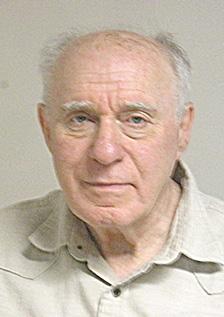
Sel Burrows
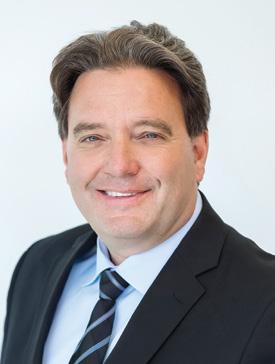
Six years ago, I issued a three-part report, “Making Downtown Safer and Friendlier”. The report was based on our Crime Prevention experience in North Point Douglas. At the time, a report modeled on Minneapolis was accepted and financed.
Crime is up over 30% in the downtown. Studies show that people don’t go downtown because they feel unsafe.
I’m suggesting that my old report be re-examined and updated. The theme of my report was that we can’t hire enough police or social service staff to deal with the enormity of our downtown problem. People living in and working in the downtown must be involved. The community needs to go on the offensive, disrupting criminal behavior.
To deal with crime, you must identify the individuals likely to commit serious crimes, who is committing nuisance crimes and who are the drug dealers? How do we know who they are? We ask the people who know, people who live and hang out in the downtown, businesses who deal with them all the time. Give them a hot line to report what they know and value their input.
In North Point Douglas we discovered that every-
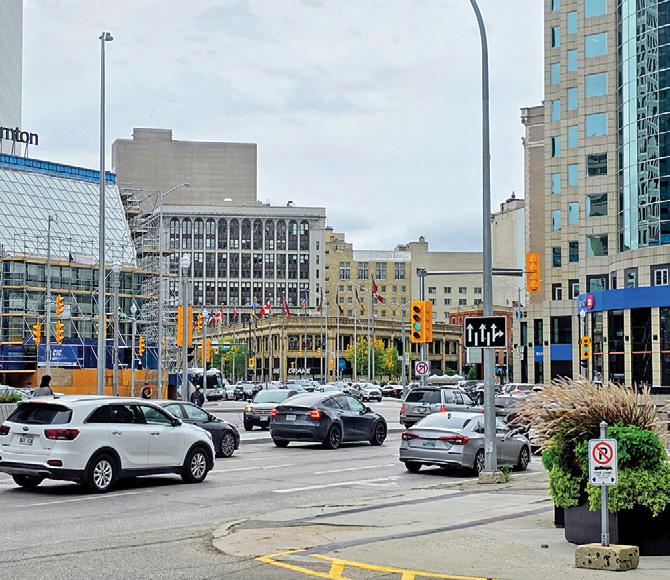
one knew who the drug dealers were, who the people who carried knives or guns were. The same goes for our downtown. Implementing Jane Jacobs concept of “eyes on the street” and our indigenous elders’ concept of banning people who break their communities’ rules provide a whole new positive force to deal with those who commit
Canada spends more on healthcare than almost any G20 country and has the lowest impact/efficacy. We rank near the top among OECD countries for per-capita healthcare spending, but lag behind peers on access, waiting times, health system efficiency, and outcomes for chronic disease and aging populations.
Of the G7 countries, Canada

uses only 20% of the innovative medicines employed by the rest of the G7. These G7 countries have better health cost and better outcomes. One of the keys to their success is access to innovation to improve health outcomes faster
and better.
Innovative medicine refers to more than new drugs. It includes precision medicine, advanced diagnostics, biologics, cell and gene therapies, and data-driven treatment pathways that target the right patient at the right time. These innovations are transforming healthcare globally, shifting systems from reactive, episodic treatment to proactive, personalized care. Yet Canada has been slow to adopt and scale these ad11 ‘Healthcare' u


December 12, 2025, marked two years since my father, Earl Moberg, went missing in the River East area of Winnipeg. Earl was living with dementia. He has not been found and is now presumed deceased. For my family, time has stood still in many ways.
Many readers have followed my father’s story and the advocacy that grew from it. This article is meant to inform the public about where things stand today, why this issue affects far more families than mine, and what still needs to happen. Why this matters
Nearly one million people are expected to be living with dementia in Canada by 2030. Research shows that up to 60 percent of people living with dementia will go missing at some point. When someone with Alzheimer’s disease
5 ‘Silver Alert' u






Follow us online at: lifestyles55.net
Facebook: Lifestyles55
PUBLISHER
Pegasus Publications Inc.
EDITOR
Dorothy Dobbie dorothy@pegasuspublications.net
ART DIRECTOR
Karl Thomsen karl@pegasuspublications.net
GENERAL MANAGER
Shauna Dobbie shauna@pegasuspublications.net
CONTRIBUTORS
Sel Burrows, Marianne Cerilli, Romel Dhalla, Dorothy Dobbie, Shauna Dobbie, Stefano Grande, Evelyn Jacks, Aleah Kamerman, Kevin Klein, Andrea Ladouceur, Ian Leatt, David Leis, Myron Love, Britt Moberg, Fred Morris, Fred Pennel, Darlene Ronald, Seneka Samarasinghe, Trudy Schroeder, Wayne Weedon.
Canadian Publications mail product Sales agreement #40027604
PRINT ADVERTISING
Gord Gage • 204-940-2701 gord.gage@pegasuspublications.net
Nathan Avila 204-940-2726 Nathan@pegasuspublications.net
SUBSCRIPTIONS
If you would like to receive Lifestyles 55, we offer both monthly newspaper and online formats. To place your order, call 204-9402700. Subscriptions are $36.00 per year, plus tax. American Express, MasterCard, Visa and cheques are accepted. To view a back issue online visit lifestyles55.net
Published monthly by:
Pegasus Publications Inc. PO Box 47040, RPO Marion Winnipeg, MB R2H 3G9 204-940-2700
Lifestyles55.net pegasuspublications.net
DISTRIBUTION
Available at more that 20 rural towns and cities as well as more than 100 locations in Winnipeg. If you would like bulk copies of this publication, contact Gord Gage at (204) 940-2701 or gord.gage@ pegasuspublications.net. Also available digitally at whatsupwinnpeg/lifestyles and on Facebook: Lifestyles55
EDITORIAL SUBMISSIONS
Call Dorothy Dobbie at (204) 940-2716 or email dorothy@pegasuspublications.net for more information and guidelines. Any opinions expressed in columns by our contributors are their own opinions entirely and are not necessarily shared by Pegasus Publications Inc. All information presented by the contributors is the responsibility of the writers.
Lifestyles 55 is published monthly. Reproduction in part or in whole is prohibited without seeking permission in writing from the publisher.
Copyright Pegasus Publications Inc.



There is a lot of focus right now on lobbyists, both federally and provincially. Not that this is something new. It was a big topic 30 years ago, so nothing much has changed.
But is the act of lobbying a bad thing? Can you stamp it out with rules and regulations? Or is that just performative political action designed to reassure the public that has been taught to think that lobbyists are evil.
Or is lobbying a necessary thing? Should it be encouraged and enabled?
In my view, every interaction with a politician that involves a policy issue is an act of lobbying. It is a very important part of democracy. Elected representatives need to hear everyone’s views, weigh them, and take all information in as part of their judgement system.
In office, where your role is to be as public as possible, the exact opposite is frequently the reality. Politicians are often isolated and separated from the very people they are supposed to represent. But they need to hear from you, from your neighbour, the local business leader, the associations, the special interest groups. How else can they keep their fingers on the pulse of the public they are there to represent?
Kevin Klein who was diligent in holding these two-way communication events to get a handle on the needs of his constituents.
I find it very annoying when leaders say they are speaking on behalf of all Canadians, when they are speaking only on behalf of themselves. That is not healthy democracy.

Dorothy Dobbie
But aren’t paid lobbyists bad? you ask. Why does being paid make them bad? As long as they are clearly identified as advocating for a group or an interest, lobbyists are merely an efficient way to hear from as many people on one side of an issue as possible.
Think about it. Where do politicians get the information that they need to make decisions and to shape policy? Their sources are limited. They hear from each other, both from members on their own side and the Opposition. They hear from bureaucrats and staff. They hear from the media. If they are on committees, they may hear from expert witnesses. But the information line dries up after that. They need to hear from more people.
Indeed, a large part of the job is listening to people, getting all the information that is available from all the sources you can. Sadly, the information pipeline has become a one-way flow over the past few years. That flow is from the politican to you. When was the last time a politician in your life held a town hall meeting to hear what you have to say? The only one I can think of is
Greetings. Thank you for the December issue of Lifestyles 55. Absolutely plenty to read in that paper.
For over a 100 years, Western medicine has been distilling medicine for – mostly – cancer treatment from mistletoes berries. Iscador is one brand name. (It is an approved homeopathic treatment in Canada -Ed.)
Mostly produced in Switzerland and Germany. There is one hospital, Lucasklinik in Arlesheim, Basel County, Switzerland, specializing one such treatment. And the Weleda



So, lobbying becomes more and more important, but it is necessary to hear from all, not just a favoured few.
Currently in Manitoba, there is a political witch hunt on for the folks who lobbied on behalf of Sio Silica, the company willing to invest significant amounts in Manitoba in order to extract the very pure silica sand to be found here. Silica sand is used in the manufacture of solar panels and for a myriad of other products including in the pharmaceutical industry for bone repair and in drug delivery to keep the products dry. There are those who are vehemently opposed to the project because they have been convinced that the mining method could contaminate their water supply. While studies refute that claim, this is a perfect example of why politicians need to hear from everyone on the issue. And to base final decision of the facts, not kneejerk reactions.
In this case, it is hard to fathom the about face by the NDP government when shortly before the election, the current premier appeared to support the project at a speech to the chamber of commerce in the municipality of Springfield. His ultimate rejection of the idea seems to be politically rather than facts based. That may be due to quiet lobbying, which is where the practice probably gets its bad name.
Many other tough decisions are not so public but just as critical and as long as the lobbying is public and transparent, it can only be a good thing. What reverses that is when there is personal or apparent political gain to be made, shifting decisions away from the public interest.
Rather than shunning lobbying, I say, bring it on. So go ahead and phone or visit your elected rep. Write letters and emails and knock on political office doors to get your two cents heard. There is no guarantee that the decision you want will prevail, but our voice matters and it is the obligation of the politician to listen.
Company is connected to this work. (Weleda is a company operating in Canada that offers naturopathic medicine – Ed.)
Hugh Whistler, A traveler, Brandon Colonial Inn
Dear Hugh,
We appreciate the kind words and information on this amazing plant. Readers should be aware that the berries are also toxic so should not be used unless under the supervision of a medical practitioner. The drug is injected rather than ingested.
Dorothy

The World Economic Forum was dreamed up as the European Management Forum in 1971, by Klaus Schwab, a German mechanical engineer and economist. It morphed into the World Economic Forum (WEF), in 1987, the same year the Group of Thirty, a separate but complementary organization, was born. They work together on trying to shape global financial policy.
Mark Carney was the chair of the Group of 30 from 2022 to 2024, when he stepped down to run for parliament. While it is not clear what year Mark Carney become a member of the G30, his membership is recorded as far back as 2013, a year after becoming the Governor of the Bank of England, although his joining could have been earlier.
The lofty mission of the WEF as stated is to “improve the state of the world”. It brings together “top political, business, and academic leaders who engage in informal dialogue to address common global challenges.” To gain attention, it has relied heavily on predicting crises – none of which have so far materialized, but they make for big headlines in the mainstream media which obliges by passing on a constant diet of fear to the public. That keeps us malleable and open to agendas of change.
Some examples of these predictions included massive unemployment over the next five years due to artificial intelligence. However, market studies predict that the shift to technology will be much more gradual as has always been the case with the introduction of new technology.
need a ‘Great Reset’ of capitalism.”
That kind of language is troublesome and is what gets the conspiracy theorists going.
Who are the WEF “they”? Styling themselves as the global elite, membership consists of a group of highly educated specialists in politics, multinational businesses, the economy, technology, social issues and academic pursuits. Also, they include NGOs, unions, and charitable groups – all self-appointed experts in their fields from around the world. Dressing up this exalted group are journalists and newswriters. They attract about 1,000 media reps to their annual meetings. At their recent meeting in Davos, organizers say nearly 400 top political leaders, including more than 60 heads of state and government, and about 850 chairpersons and chief executives of many of the world's leading companies, attended.
In 2016, the year Justin Trudeau started his decade of decay in this country, the WEF predicted that home ownership would soon be a thing of the past, that we would rent everything from houses to clothing, and that drones would be buzzing about all over the place making deliveries.
They predicted Bitcoin and other cryptocurrenciesy would disappear, but they have not and are in fact growing.
The WEF predicted that fossil fuels would be history by the early 2020s, which not only did not happen, but will not happen for the foreseeable future. WEF climate change models and remedies are among the most shortsighted of their predictions because they do not take into consideration the effect of energy producing countries exporting cleaner fossil-based energy to third world and underdeveloped countries where they are still burning particulate matter.
The WEF predicted that there would be a billion climate refugees by 2030. There would have to be a sudden and cataclysmic shift in the weather for that to happen. They said, “We could be facing the worst depression since the 1930s!” as COVID wound down. It’s been tough cleaning up the mess, but we are nowhere near the 1930 mark economically. Or how about the predicted European recession for 2022/23 due to the Russian war against Ukraine? Didn’t happen.
They often make pronouncements such as, “To achieve a better outcome, the world must act jointly and swiftly to revamp all aspects of our societies and economies, from education to social contracts and working conditions. Every country, from the United States to China, must participate, and every industry, from oil and gas to tech, must be transformed. In short, we
The World Economic Forum is a convening body, conceptualized to bring together political leaders, CEOs, central bankers and large institutional investors in the same room. It is not a shadow government or secret cabal. Yes, it attracts many of the very rich and very powerful because they already have authority over capital, policy or institutions. It does not make laws or set national policy. Davos is where influence gathers in the open, not where the world is secretly run.
And that is precisely why it was the ideal place for Mark Carney to make his speech, a clear warning that growing unilateralism by major powers is increasing risk for countries that rely on stable rules and cooperation.
been dismissed as partisan. Had he said it at the UN, it would have sounded aspirational. Had he said it in Washington or Brussels, it would have looked confrontational. Davos allowed him to signal a shift in assumptions without triggering an immediate political crisis. Everyone knew who Carney was talking about, but he avoided naming Donald Trump, and for good reason. Naming a person turns an analysis into a political fight. Carney’s point was structural: unilateralism is becoming a feature of great power politics, not a quirk of one leader.
By focusing on behaviour rather than a personality, he kept the speech above partisan politics and within the realm of economic risk management. Markets and policymakers treat systemic analysis differently from political rhetoric. That distinction matters.
Meetings are invitation only and are funded by the large multinational companies that are part of the organizations or who wish to attend (pay for access). Their (business bureaucrats) utopian vision is a world where corporations can be convinced to become social agencies that would “serve the interests of all stake holders including employees, customers and the environment.” Well, that didn’t work out too well for Mark Carney. He led the charge with his Glasgow Financial Alliance for Net Zero (GFANZ) project that fell apart last year. Their lofty goal was to encourage members to align their lending, insurance, and investment portfolios with the goal of reaching net-zero greenhouse gas emissions by 2050. It didn’t last a full five years before the major banks all pulled out.
Lately WEF has focused on capturing the masses through a carefully thoughtout media strategy using five-minute podcasts that provide entertainment value while sending subliminal messages to the audience. Shades of propaganda.
Look, the WEF is largely harmless as long as it sticks to its own business. It is not so good when their members begin to infiltrate government as in the case of the Liberal Party where, according to founder Klaus Schwab in a speech at Harvard, the WEF had "penetrated" the cabinets of governments around the world, specifically highlighting the Trudeau cabinet in Canada. Indeed, Chrystia Freeland was on the WEF Board of Trustees along with Mark Carney. Justin Trudeau, Navdeep Bains, Bill Morneau, François-Philippe Champagne, Mélanie Joly, and Catherine McKenna, have all participated in or led sessions at WEF meetings.
So now you are informed. You may love the WEF or not, just don’t be taken in by their self-righteous pronouncements. Why?
The WEF makes me uncomfortable because they are trying to override the democratic process. And if there is one thing I have learned from my tenure as an MP and the many long years I have worked closely with MPs, democracy is messy, often infuriating, sometimes wrong in the short term. But ultimately, the people get it right, making it the best system there is in our lovely, imperfect world.
Carney arrived at Davos with the profile of a former central banker and global economic insider. The expectation was a familiar one: a technocratic speech about inflation, financial stability, climate risk and the need for cooperation to prevent the next crisis. The usual language of policy coordination, resilience and careful optimism.
In other words, reassuring, careful and largely uncontroversial.

Instead, Carney delivered a sharper message. He warned that the global economic system is becoming more fragmented and more dangerous because major powers, particularly the United States, are increasingly willing to act unilaterally in their own interests.
He did not frame this as a moral critique. He framed it as a systemic risk. Sanctions, industrial subsidies, politicized trade rules and the weaponization of economic policy create instability for countries that depend on predictable rules. For middle powers, that instability is not theoretical. It affects trade, investment and financial markets directly.
His conclusion was that middle powers need to cooperate more deliberately, not as a protest bloc, but as a stabilizing force in a more volatile world.
Carney knew the world would be listening. Davos speeches are reported globally and parsed instantly by everyone capable of parsing them. But he also knew the people in the room have influence over their country’s actions.
Davos compresses influence. Finance ministers, central bankers, regulators, institutional investors and corporate leaders are all present at once. When someone with Carney’s background talks about systemic risk, that audience listens as professionals, not as political opponents. The message lands as analysis, not provocation.
Had he said the same thing in a domestic political setting, it would have
Trump responded in character, treating the speech as a political jab and asserting American strength. The reaction was personal and combative rather than substantive. That contrast was revealing. Carney spoke in the language of institutions, risk and coordination. Trump spoke in the language of grievance and power.
Markets largely shrugged at Trump’s response. They paid more attention to Carney’s diagnosis than to Trump’s dismissal. That is telling. Investors care less about rhetoric than about whether the rules of the game are changing.
Carney’s call for middle power cooperation was not radical. It is an extension of what already happens quietly. Middle powers coordinate on banking regulation (Basel Committee on Banking Supervision), climate finance (Green Climate Fund), development lending (World Bank) and trade dispute mechanisms (World Trade Organization). Canada has led coalitions to keep parts of the global trade system functioning as the United States has stepped back. Germany, Japan, Australia and the Nordics do similar work in their domains.
This is not anti-American. It is risk management by countries that cannot afford instability.
Carney’s speech was not a declaration of independence from the United States. It was a recognition that the old assumption, that a single superpower will always underwrite global stability, no longer holds. Middle powers need to hedge, coordinate and build resilience together.
Davos was not a symbolic backdrop. It was the working floor where this argument had the best chance of being heard by the people who price risk, move capital and advise governments. He knew the world would be listening. He chose Davos because he wanted the world, and the people who quietly shape it, to start adjusting their assumptions.

u is not found within the first 12 hours of being lost, the risk becomes grave – there is an approximately 50 percent chance that they will be found injured or deceased due to hypothermia, dehydration, or drowning.
Continued from page 1
My father’s disappearance is not an isolated tragedy. It reflects a growing public safety gap as the number of Canadians living with dementia increases. Minutes and hours can mean the difference between life and death. Prevention is equally critical. Families need timely access to appropriate support, safety planning, and coordinated care as dementia progresses. Without clear clinical pathways and adequate resources through the health system, families are often placed in impossible situations – expected to manage escalating risk without the tools or support required to do so safely.
The National Silver Alert Petition: an important step forward
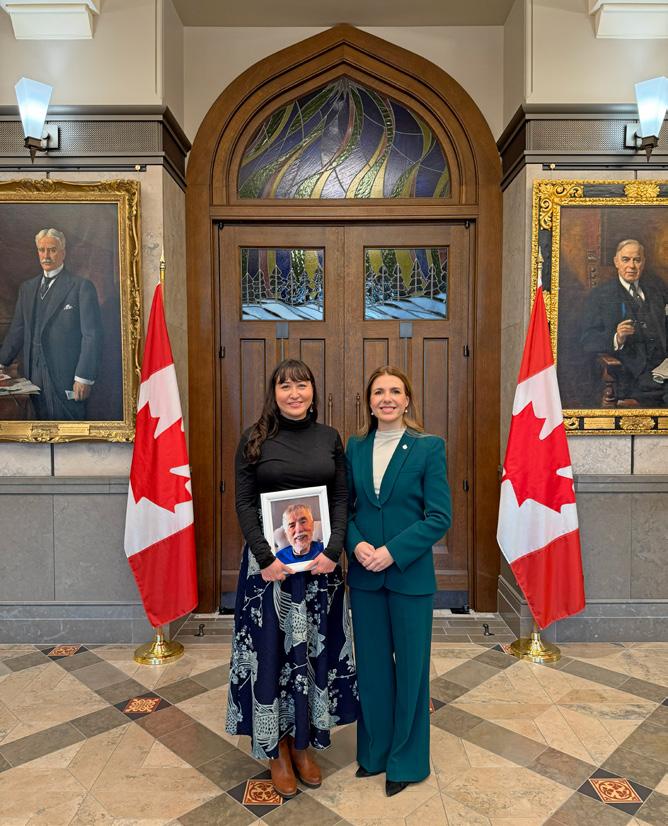
In response to my father’s disappearance, I initiated a petition calling for the creation of a National Silver Alert system. The petition was sponsored by KildonanSt. Paul MP Raquel Dancho, and I am deeply grateful for her support and for the opportunity to be present when the petition was formally presented in the House of Commons on October 28, 2025.
In total, 7,318 Canadians signed the petition through a combination of online and paper signatures. Each name represents a shared belief that older adults living with dementia deserve timely, coordinated, and effective responses when they go missing.
On December 11, 2025, the Government of Canada issued its official response to Petition e-6491. In that response, the Minister of Public Safety acknowledged that a Silver Alert initiative could be integrated into Canada’s existing emergency alert system, Alert Ready. The response noted that such an alert could be issued when a missing person is uncontactable, potentially in danger, living with a major neurocognitive disorder (or showing symptoms in those aged 60 and older), and when sufficient identifying details are available for public dissemination.
The response also drew a clear parallel to Amber
Alerts, describing Silver Alerts as a voluntary partnership that could allow law enforcement to disseminate key details – such as name, photograph, physical description, and vehicle information – directly to mobile devices within a geographically targeted area.
This acknowledgement matters. It confirms what families and advocates have been saying for years: the tools already exist to save lives.
What remains unclear and why advocacy must continue
While the government’s response represents progress, it does not outline a timeline or a clear plan for implementation. Public acknowledgment without
concrete action leaves families in the same vulnerable position they were in before.
At the same time, my family continues to pursue accountability and learning at the provincial level. I advocated for a Critical Incident Review with the Winnipeg Regional Health Authority and my father’s disappearance was found to meet the criteria. The review was completed, with findings and recommendations released in December 2024. In October, my mother and I met with the Winnipeg Regional Health Authority to receive an update on their progress. These steps are important, not only to understand what happened to my father, but to reduce the risk of this happening to others.
I have also requested a provincial review through Manitoba Justice, the Law Enforcement Review Agency, and the Premier’s Office. When Premier Wab Kinew stated publicly, “When someone goes missing in Manitoba, we go looking,” my family took those words seriously. My father is still missing.
A call to action
This work cannot move forward without public engagement. I encourage readers to:
• Contact their Member of Parliament to ask what concrete steps are being taken to advance a National Silver Alert program following the government’s response to Petition e-6491?
• Raise this issue with provincial representatives, as any Silver Alert system will require cooperation between federal, provincial, and local authorities.
• Raise concerns about dementia safety planning and support with provincial representatives, Seniors’ Advocate, or regional health authorities, and ask what clinical pathways and resources are in place to support families as dementia progresses.
My father was a teacher, a lifelong learner, and someone who believed deeply in community. Continuing this advocacy is one way I honour him.
With appropriate support and timely alerts, lives can be protected. We can – and must – do better.
Britt Moberg is the daughter of Earl Moberg.

Help lead a free, fair Manitoba election. Now hiring.
You should consider having the following in place
Will The preparation of a will may seem like a daunting task, however, it is essential to ensure that your property is disposed of according to your wishes upon your death. If you pass away without a valid will, the law states what is to happen to your estate.
Power of Attorney
A power of attorney is a document which appoints an individual to handle your affairs in the event you become mentally incapable of making your own decisions. Nothing prevents you from continuing to make your own decisions while you are still competent.
A power of attorney is an extremely valuable document to have in place in case anything happens to you which affects your mental ability, such as a stroke, coma or dementia.
Health Care Directive (Living Will)
A health care directive, commonly called a living will, is a document which appoints an individual to make decisions with regard to your health care only, while you are alive but unable to express your decisions yourself. This document is distinct from a power of attorney and deals only with health care decisions such as whether life sustaining treatments, such as CPR or blood transfusion, should be continued or withdrawn.
Seniors
Last Will and Testament $225.00 $200.00
Power of Attorney $175.00 $150.00
Health Care Directive $ 75.00 $ 50.00
* plus GST and PST - Rates are per person.
$100.00 *Plus GST and PST - Rates are per person.
Home and hospital visits are also available $250.00* (includes both meetings)
*plus GST and PST Standard
TACIUM VINCENT & ASSOCIATES
206 St. Mary’s Road, Winnipeg, MB R2H 1J3 DAVID G. VINCENT (204) 989-4236
www.taciumvincent.com









Aleah Kamerman, Student, CentrePort Canada Inc.
Amoanab has spent the last four months working as a Supply Management Technician – a job she landed after graduating from RRC Polytech’s Transportation, Logistics and Supply Chain Management (TLSCM) program this past spring.
“Everything I learned at RRC I apply at my job everyday,” said Joana. “When I started here, I didn’t feel lost. I was prepared.”
Joana works for Canadian Blood Services, where transportation logistics are critical.
“Every product – whether it’s blood or plasma – has a journey; it needs to be stored, transported and delivered under specific conditions,” Joana said. “Every step must be tightly controlled because lives are depending on it.”
the Canadian Institute of Traffic and Transportation (CITT) and Supply Chain Manitoba
“What I love about RRC is that we are close with our employers and industry,” Paula said. “We can adapt quickly and gear students to be ready for the workplace.”
The updated curriculum emphasizes project management, communication, teamwork and problemsolving – skills Joana says she uses daily.
RRC Polytech helps the students build these communications skills through industry networking events.

Graduates of the TLSCM program have also found work at places like Bison Transport and CPKC – two companies who operate within the port’s 20,000-acre footprint and are Partners of CentrePort.
This Partnership Program allows companies and organizations to leverage business development, marketing and networking opportunities. RRC Polytech is also a valued Partner, and CentrePort Canada supports RRC students through a $500 scholarship.
Joana was 2025’s recipient of the Diane Gray CentrePort Canada Scholarship, named in honour of Diane Gray, the founding President and CEO who led CentrePort Canada for 14 years.
“Receiving that award encouraged me and reminded me that I'm on the right path,” said Joana. “And with the award being named after Diane Gray herself – someone who is known for her vision, her collaboration and her perseverance – it made me feel connected to a legacy of strong leadership.”
The TLSCM program was redesigned and launched in 2023. According to Paula Havixbeck, the chair of Business & Supply Chain Logistics at RRC Polytech, this required extensive consultation with leaders like
“It's hard for students to network – if this is your first time at post-secondary education or if you're new to Canada, who do you know, right?" said Paula. "So, we try to create opportunities and coach them along."
Nine Manitoba companies from the transportation and supply chain logistics industry visited RRC Polytech’s downtown campus on November 28, including CPKC.
“My thanks goes to Paula for organizing these networking events, because I've learned a lot,” said third term student Kingsley Igbojiuba. “I can see what I need to succeed in the industry: the soft skills, critical thinking, and problem solving – because every day we solve problems.”
The program accepts 32 students every fall, winter and spring. This means smaller class sizes and more time with instructors.
“Our instructors have their boots on the ground –they’re entrenched in their industry,” said Paula. “They know what it takes to get you there to be successful.”
Throughout the 12-month program, students take part in industry case studies and complete an applied capstone project in their final term.
“This project has really exposed me to what the industry is going to look like,” said Kingsley. “We must ask and answer: how do you share tasks? How can you communicate better as a team? How do you find a solution?”
Students are looking forward to completing this project and graduating.
“I’m excited to go into industry,” said Alaapjot Kaur,

standing with her classmates Ravneet Kaur and Ran Zhai who nodded in agreement. “I want to find something I can depend on for the long term.”
The Diane Gray CentrePort Canada Scholarship is meant to support RRC Polytech’s students and especially encourage women in the field.
“Sometimes we feel like we must stay in our comfort zone, like we don’t want to risk anything,” Alaapjot said. “These industries are male-dominated, and it feels like they may not give you a chance.”
The week before the networking event, Ravneet found a job posting that asked applicants to be able to lift a certain weight, and she was unable to meet this requirement.
Joana says the industry has evolving technology that reduces physical barriers.
“I encourage ladies to be open minded, explore new avenues, and not restrict themselves,” she said.
Paula says Diane Gray’s leadership during the 2010s was groundbreaking. “There is an imbalance, and we have to create opportunities to promote and help women and other minorities.”
The current third-term students will have their convocation in June 2026. For more information about the TLSCM program, visit RRC Polytech’s Program Explorer website
Iwas in touch recently with a friend from Minneapolis about her experience with ICE, Immigration & Customs Enforcement. Hearing from someone I know and care about that their shop had been invaded by ICE, looking for employees who might be immigrants or people of colour, was more of a wake-up than watching media reports.
The rapid escalation of authoritarian rule and use of force in the US has me thinking about how tempting it is to continue trying to live normally in these unprecedented times. I considered what can I do as a middle-class Winnipegger? Here’s my list.

1. Be in touch with people you know in the United States or other countries experiencing violence to offer your support, listen to their firsthand accounts of what is happening. Send them information about where to get support and engage in democratic actions.
2. Take a break from violence as entertainment. Discontinue consuming TV shows, movies, games with a lot of violence, particularly violence that’s met with more retaliatory violence as the only option to respond. Notice if you feel different after a week or a month – monitor your re-sensitization to violence.
3. Instead of violence as entertainment, diversify your media diet to
consume news about various conflicts from different points of view, right, left and more centrist. Observe how history, and pretext, or provocation for the conflict is presented, make note of how political, economic, and cultural factors are presented or omitted from the different points of view. Improve your critical thinking skills, and your ability to detect bias and propaganda. Learn the Galtung principles of ethical peace journalism.
4. Learn about oppression, authoritarian rule, and the movements for peace, democracy and freedom from oppression. Build your capacity for conflict resolution, how it escalates and can be de-escalated with different tools and practices. Learn about diplomacy, fair and peaceful negotiation, finding common ground, and reconciliation. Review Gandhian principles of nonviolence and peaceful protest,
5. Explore mindfulness and relaxation techniques, practise them daily to address your anxiety, fear, and reactivity. Spend time outside in nature and doing other things that help you relax and feel calm. Learn more about trauma from violence and war, including vicarious trauma, and polyvagal theory. Consider the impact of threats, oppression and violence on our nervous system, mental health and ability to respond rather than react. Recommit to heal hyper-
vigilance, apathy or depression, and develop your ability to respond calmly rather than react or retaliate out of fear and anger.
6. Donate to an organization working for peace, disarmament, and nonviolence, international cooperation, or groups supporting newcomers, immigrants, especially people of colour or other targeted groups, like LGBTQ2S.
7. Introduce yourself to a neighbour that you don’t know, someone new on your street or someone that you haven’t talked to for a while, particularly if they are different from you in their culture, ethnicity, sexuality, ability, gender expression, etc.
8. Make peace with someone in your life that you’ve had a disagreement with, that you’re avoiding or are in active conflict with. Contact mediation organizations to learn how to approach people in ways that will build bridges in strained relationships, to open the door to reconciliation. Learn how to understand different perspectives without feeling threatened, and yet to be flexible in your views when new evidence requires it. Avoid allowing your ideology to determine your identity and avoid dehumanizing others by seeing them as merely labels or identities.
9. Write your elected representative to express your concerns, and ideas about increased use of force, intimidation, threats, retaliation, and violence in politics and international relations. Encourage governments to opt for cooperative and sustainable development, diplomacy, and fair-trade practises, instead of military options, or
economic warfare, like sanctions and other retaliatory measures that escalate conflict and polarization.
10. When filing your taxes use the Conscientious Canada policy to withhold a percentage of your taxes to match the NATO requirement for Canada moving from about 1 to 5 percent of GDP for military. Advocate for funding sustainable development and diplomacy as priority. Divest your personal finances from violent and autocratic uses, join a credit union and de-corporatize your consumption by shopping local.
11. Join an organization working for peace, and disarmament, make donations to local, national or international groups, or contribute your time and talents instead, or in addition to a financial contribution.
12. Commit to values of peace, nonreactivity and non-violence, the democratic use of power, remember there are always more options to respond than retaliation or surrender. Find those options, feed them. Respond to bullies with compassion and speak peace to power as force, remembering real power is unity and collaboration. Commit to innovating new democratic norms and strategies that are more collective and participatory, that prevent the concentration of power with new procedures and structures not so easily turned into dictatorships and autocracy.
Marianne Cerilli is an educator and former MLA who works at the intersection of learning, community development and politics.
Over three generations, Raber Glove Manufacturing Co. Ltd. has built a solid reputation for quality, consistency and reliability.
At a time when most Winnipegbased garment manufacturers actually farm out production to factories in southeast Asia, Raber Glove remains one of the few that still produces its product right here at home using processes that are little changed since the company’s founding 84 years ago.
“The quality of our product speaks for itself,” says current president Howard Raber. “Everything we make conforms to the same standards of form, fit and function”
the people working the machines, nothing about the glove-making process has changed not even the machines. We have not changed anything. What you see here is the same as it’s been done since day one.”
The Raber Glove story begins in 1925, when Abraham (Harry) Raber, Howard’s grandfather, packed up his young wife and infant son and left Poland for Canada. They settled in Winnipeg where they had family.
After a while, a friend of his taught him how to cut leather and then secured him a job as a glove cutter. By 1934, Abraham understood the glove business and was committed to quality and craftsmanship. He also noticed that no one was making men’s dress gloves in Western Canada. So, Abraham and a partner created a home-based business designing and cobbling together gloves, learning by trial and error. Soon they had perfected their product and were creating warm and durable dress gloves.
The company, which he and his partner appropriately named Perfecfit Gloves, was soon supplying Eaton’s Department Store Mail Order with 80% of its glove product line.
Seven years later, in 1941, Raber sold his share of the business to his partner, and with his son Israel (Sunny) Raber fresh out of business school, started Raber Glove Manufacturing Company Ltd.
It was Sunny Raber who further developed important relationships with wholesalers and companies like MacLeod’s, SAAN Stores, and the Fur Division of the Hudson’s Bay Company which later became the Northwest Company.
Sunny’s son, Howard, joined the company in 1985, thereby ensuring a third generation of Rabers at the helm. The younger Raber literally grew up in the business and knows everything about the manufacturing process.
“The only thing he says he can’t do is sew.
Over the years, Raber Glove has achieved many great accomplishments. Father and son secured the largest contract in the company’s history, which involved manufacturing 122,200 pairs of their Lightweight Thermal Mortar Glove for the Department of National Defense. Other important military contracts included supplying the Canadian Navy with the Anti-Flash Glove (a fire-retardant gauntlet glove), the Canadian Department of National Defense with the Cold Wet Weather Glove, the Flyer’s Glove, the Arid Region Combat Glove, and Temperate Combat Glove.
In addition, Howard forged an important relationship with S.I.R. (Sidney I. Robinson), a mail order house for outdoor gear which later became Cabela’s
Raber Glove’s best-known product though is undoubtedly the “Garbage, Mitt®” . For over eighty years the Raber family has taken the utmost pride in producing this popular mitt. “It’s part of our legacy as a 100% Canadian company and is part of Manitoba’s history as well,” Raber observes. “We first manufactured the product for City of Winnipeg’s garbage men” who spent long days working outside in Winnipeg winters, The mitt is a marvel of warmth and indestructibility.
“It began as a simple, unlined cowhide mitt with a removable liner – tough on the outside, soft and warm on the inside,” he continued. “It soon proved its worth, keeping hands warm and protected while standing up to the rigors of a full day’s work. It is a nostalgic fact that many kids wore Garbage Mitts® instead of hockey gloves, especially in pickup games of street hockey.”
He adds that, in 1998, the mitt was included in the Canadian Oxford Dictionary, in 1998, as a “slang term”, a thickly padded deerskin mitt, typically worn by garbage men in the winter”.
In an interview he gave to the Winnipeg Free Press four years ago – in regard to Raber Glove’s 80th anniversary, he pointed out that “Other than
Computerization or automation is not an option for Raber Glove, he told the Free Press. “The work must be done by hand,” he said. “When you’re working with glove leather, there are so many factors to consider. Our workers use decade-old dies to cut the cow’s leather, pulling it first to ensure it is wide enough to span the knuckles while retaining its stretch.
“Each mitt is a relatively simple product,” he continued. “You’ve got two palms, two backs, two thumbs, that’s 72 pieces to a dozen. A steady hand is needed to paint white numbers onto dress gloves for the RCMP (one of many national organizations with whom the company has a contract) worn by the cavalry of the RCMP’s famous Musical Ride.”
Raber added that the lining is sewn in, as are the
cuffs. All gloves are turned, finger by finger, and pressed on original brass and nickel-plated boards, heated by steam from the basement boiler. They are then examined for imperfections. At each step of the piecework operation, the workers go at their own steady pace.
Raber Glove’s workforce over the years well reflects the demographic changes our community has undergone over time. He notes that in the beginning, the firm’s workers were largely eastern European. In the 1960s, the original sewers were replaced by Portuguese and Italian newcomers and – later still, by Filipino immigrants. Today, Raber Glove’s work floor is again sprinkled with recently arrived Ukrainian refugees.
“I consider the people who work for me part of my extended family,” Raber comments. “They are the people who make me look good.”
Despite more than 40 years in the family business, Howard Raber asserts that he has no plans to retire. “I am happy where we are at,” he says. “I don’t have to chase business anymore. I still love dealing with people and strengthening the relationships we have built with our customers over the years.


Choosing funeral and cemetery plans can be overwhelming to a grieving spouse. Plan the details now. Together. Order your FREE Estate Planning Kit by calling or visiting the locations listed below.

- 819 - 4297
- 817- 8621


She walked in with wet hair, the scent of the sea clinging to her skin like a secret. I had the salmon ready – thick, pink, glistening on the counter – but one look at her and I knew we weren’t just cooking dinner. We were about to make something filthy.
Crab. Shrimp. Cream cheese. Garlic. A little lemon to tease the tongue. It wasn’t about subtlety tonight – it was about excess. About stuffing that tender salmon until it bulged with buttery, ocean-sweet pleasure. She leaned in close, watched my hands work the knife as I slit the fillet open like a promise. A promise to make her moan with the first bite.
We didn’t talk much. Just heat, breath, and the soft sound of seafood surrendering to spice. Her fingers grazed mine as she passed the bowl of crab. The shrimp were still warm from the pan, like her skin when she’d pulled off her coat. Everything about her said feed me – not just with food, but with hunger, with risk, with that desperate need to taste something unforgettable.
spice to keep it hot.
Wicked Twist: Toss in a little diced jalapeño or a splash of bourbon to the filling if you're feeling bold. Or better yet? Drizzle the whole thing in a warm, garliclaced butter right before serving. Watch it drip. Watch her lick it off her fingers.

And this dish – this sinful, stuffed, seafood bomb – was exactly that. Rich, flaky salmon wrapped around hot, creamy crab and shrimp, spiked with Old Bay and kissed with lemon zest. Baked until golden, just starting to ooze at the seams. Like her, after the first taste. Like me, when she licked the sauce off the plate and said, “You didn’t have to make it that dirty.”
Chef’s Tip: Use room temperature cream cheese so it blends smooth with the crab and shrimp – no one wants a clumpy filling. And don’t be shy with the seasoning. Old Bay, cayenne, lemon zest, fresh chives – this is a ménage à trois that needs
Apparently, people have been celebrating Valentine’s Day by sending notes and letters to their lovers since the Middle Ages. The roots of this lover’s festival date back to fertility rites during the Roman Empire, and this festival, like many others, was reformed by the Catholic Church in the third and fourth century. Even Shakespeare and Chaucer played a role in building the reputation of this romantic tradition. Commercially created stationery and cards are a product of more modern times, and the Valentine’s Day traditions have continued to evolve in interesting and
For Serving:
Lemon wedges
Here is what you will need
For the Stuffed Salmon:
4 salmon fillets (skin-on or skinless)
½ cup lump crabmeat (fresh)
½ cup cooked shrimp, finely chopped ¼ cup breadcrumbs (plain or panko)
2 tablespoons unsalted butter, melted
1 small shallot, finely chopped
1 clove garlic, finely chopped
1 tablespoon fresh lemon juice
1 teaspoon fresh parsley, chopped
½ tsp Creole seasoning
Salt and black pepper to taste
Steamed vegetables, rice, or roasted potatoes
The all important how to:
Preheat the oven to 375°F (190°C). Line a baking sheet with parchment paper.
If using skin-on salmon, pat the fillets dry with paper towels and season the flesh side lightly with salt and pepper.
In a mixing bowl, combine the crabmeat, chopped shrimp, breadcrumbs, melted butter, shallot, garlic, lemon juice, parsley, Creole seasoning, salt, and pepper. Mix gently to avoid breaking up the crab too much.
charming ways over the generations. Flowers, cards, jewelry, chocolates, and fancy dinners have become the standard Valentine’s Day offerings between lovers.
The most joyful and fun memories of Valentine’s Day are often those associated with Valentine’s Day in elementary school. The process of writing out cards for all the classmates and the party in the classroom was a very special day. For many people the process of picking just the right card for friends was a challenging process. The funny cards were always the best.
This year has started with more chal-

Place the salmon fillets on the prepared baking sheet, skin-side down (if skin-on).
Divide the crab and shrimp mixture evenly among the fillets, pressing it gently onto the top of each piece of salmon to form a “stuffed” top layer.
Bake the stuffed salmon in the preheated oven for 12–15 minutes, or until the salmon is opaque and flakes easily with a fork. Avoid overcooking to keep the salmon tender and moist.
When serving dress with lemon wedges, with steamed vegetables and rice or potatoes your choice. Happy Valentines Day Ian Leatt is a trained chef from across the pond.
lenges and worries than many. The tensions between nations, citizens, and family members are stressful. Political polarization, financial worries, job loss, cost of living issues, and poverty all take their toll.
It certainly feels as though most of us could use an expression of appreciation, and a token of love would be even better. It seems that all of us will have to find ways of coping with the political and social challenges of our times. I have been thinking that this level of anxiety and concern in our communities calls for a special form of response.
The month of February might be a good month to find ways to brighten the lives of people we encounter at work, in our neighbourhoods, in our families, and friendship groups. Perhaps we can all take on a role as Valentine’s ambassadors to help people feel noticed, appreciated, and loved around
February 14th. Take a treat to the office break room, send Valentine’s cards to friends and family members who live far away, go out for lunch or coffee with old friends, make a chocolate cake, give your children a rose for Valentine’s Day, and do something extra special for your Valentine.
In addition, it might not be a bad idea to specifically reach out to people with whom we have fundamental disagreements in world outlook. One of the challenges I gave myself for 2026 was to have conversations about life and politics with friends and family members with whom I have least in common. I want to see if we can find common ground on anything.
I believe that if we can’t find ways to talk reasonably about difficult issues with people we care about, there is no way that we can possibly find ways of finding ways to resolve bigger picture items in the broader community. I have said that this is not an effort to persuade people of the error of their ways, but conversations to get a better understanding of the issues from a radically different perspective. So far, I have found it a more difficult process than I had expected, but I hope the exercise will bear the fruit of better relationships with people with whom I have recently avoided any conversations of depth. I’m making this my Valentine’s mission. It may not be romantic, but it will probably be worthwhile.




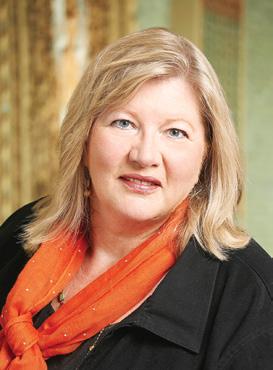
Darlene Ronald
Mozart’s The Marriage of Figaro, a masterful blend of wit, romance, and mistaken identities takes to the stage on April 18, 22, and 24, for the final production of Manitoba Opera’s (MO) 2025/26 season.
This great ensemble comedy is one of the greatest operas ever written. It features a colourful cast of characters and a whirlwind of tricks, disguises, and mistaken identities. From the famous overture to the finale, this social commentary on class and love unfolds with brilliant music, memorable melodies, and heart-breaking tenderness as the characters ponder young love, lost love, and forgiveness.
It’s the eve of Figaro and Susanna’s wedding, but nothing is going right. The Count’s wandering eye has landed on the bride-to-be. Cherubino, the page, is sweet on the Countess and Marcellina, the governess, is chasing after Figaro. Can the servants turn the tables on the masters and save the day? Will love triumph?
Making his Manitoba Opera debut, baritone Phillip Addis, charms as the scheming Count. A veteran of leading roles across North America and Europe, Addis has been praised for his compelling performances, with Opera Canada noting his "excellent" portrayal of Marcello in La Bohème.
Miriam Khalil will also be making
her MO debut. A two-time Junonominated artist, Khalil has established herself as one of Canada’s most versatile and expressive performers. She is sought after for her interpretation of the works of Golijov, Puccini, and Mozart.
American baritone Robert Mellon, praised not only for his "glorious voice that burst[s] out brimming with life and vigor," but also for having "immense skill as an actor," will be making his MO debut as Figaro. Robert has performed with many premier opera companies across the United States.
Also making her company debut, Caitlin Wood will bring her acclaimed comedic timing and vocal brilliance to the beloved character of Susanna. The Edmonton Journal noted that, "Wood’s effervescent stage presence and crystal-clear soprano make her a natural for roles that demand both vocal dexterity and comedic flair."
Peter McGillivray returns as the wily Bartolo. McGillivray is an audience favorite for his comedic timing and resonant bass-baritone. Krisztina Szabó makes her company debut as the feisty Marcellina. Szabó is an artist whose versatility and expressive artistry have made her a standout in opera houses across the country. The cast will also feature James McLennan as Curzio and Basilio, David Watson as Antonio, and Grace Budoloski as Barbarina.
Brandon-born conductor Gordon
Sri Lankan Association of Manitoba: Christmas Ceremony
Sri Lankan Association of Manitoba (SLAM) traditionally conducted the Christmas Ceremony. It was held at the Dakota Community Centre on Sat., Dec. 20, 2025 from 7:00 pm to 10:00 pm.
In Sri Lanka, at the end of November, the tropical cyclone named Ditwah caused severe flooding and landslides, affecting individuals representing approximately eight percent of the total population. There were 640 deaths, and 211 reported missing. Damage in the country was estimated at $1.6 billion (US dollars). All donations collected during this occasion were scheduled to be directed to the relief efforts in Sri Lanka.
(1) Christmas Carols: Kids: number of events and Sri Lankan Seniors Manitoba sang three songs in Sinhala, Tamil & English languages

Lanka Abeyweera, President of SLAM, after discussing this with her Board of Directors, rescheduled the entire Christmas event due to the devastation in Mother Lanka. Some changes were made, specifically stopping loud music and dancing to the beat, changing the venue, and reducing the ticket cost. Before starting the Christmas Ceremony, a two-minute silence was observed to honor people who died due to the above damage.
Program Highlights were as follows:
(2) Santa’s Arrival & Gift Distribution: Children’s Stations, face painting, ornamentmaking, Christmas card crafting. For this event, young girls were assigned as volunteers.
(3) Dinner: Sri Lankan Rice and Curry catering was done by Kottu Talk. Indunil and Malini were there to help
(4) Raffle Tickets & Door Prizes
Sri Lankan Seniors Manitoba annually organizes the Christmas Ceremony in January. In January 2026, it continued. The specialty was that there were more than forty participants. It is our duty to convey sincere thanks to all those who organized Christmas Celebrations.
They arranged yummy food and games. Prizes were offered to those who won games. Sang Christmas Carols in three languages: English, Sinhala, and Tamil. All participated in other planned activities. We wish everyone a very happy New Year 2026.
Three group photos were captured: (a) All attendees, (b) last year's Board Members, and (c) present Board Members.
Gerrard will take the podium to conduct this lively and effervescent production, bringing his dynamic artistry and deep musicality to the score. Winnipegger Robert Herriot will direct the production. Herriot last directed Così fan tutte (2023) for the company.
Composer Wolfgang Amadeus Mo-
zart is considered to be the most comprehensively gifted musician who has ever lived. Despite his relatively short life (36 years), he made a tremendous impact on music, composing over 600 works.
Performances take place at the Centennial Concert Hall. For tickets, go to www.mbopera.ca or call 204-944-8824.


Tax season 2026 has officially started: the 2025 T1 return is online. It’s over 60 pages long, with the schedules attached. But don’t expect to receive those if you request a paper return, which you now must do, as CRA has stopped sending out paper returns. Make no mistake – you still have to file by the deadline: April 30 for most people or June 15 by unincorporated selfemployed. Here’s the challenge:
It’s tough to comply with a complex tax form that’s now largely invisible to most people. Even worse is the unrelenting pace of constant tax change. Add to this the changes in your life: births, deaths, marriages, divorces, incapacity, job termination. Each will have tax consequences, many of which are missed by millions. Increasingly Canadians are turning to a trusted tax advisory team. But how do you recruit and find one? Here are some tips:
Much different is the motivation to meet a deadline-driven need to file a tax return and find a tax specialist who is available, can do this expertly and for a reasonable fee. Failing to comply with CRA, on time, can lead to expensive penalties, interest and tax audit headaches that can last for years. How do you choose your tax team? Forming a great financial advisory team begins with a trusted tax specialist for most people. This can seem daunting, but it’s worth the effort – the results you can achieve in peace of mind can be well worth the professional dollars you’ll spend. Consider the following checklist of tips to help you select your tax team:
• Write down your top ten most pressing financial questions. Remember, there is no such thing as a stupid tax question – so go ahead, write them all down.
ard of your tax and financial affairs. You will want to look for a professional but comfortable working relationship, not an intimidating one.
• Understand service levels. Bookkeepers may or may not offer tax preparation services; personal tax consultants may not be experienced in corporate, trust or cross-border matters; accountants may not work with smaller businesses, legal advisors may specialize in drafting contracts on intellectual property management but not wills or representing you to the Tax Court of Canada. Ask and understand what services the engagement will entail.
• Consider the network. Does your prospective advisor come with a financial advisory team or at a minimum, a broad referral network? That’s important as your net worth grows and as your financial needs change within the family. If you are already connected with other advisors in your network, you may wish to disclose this to connect and onboard everyone on the team.
ment? Was there a solid follow-up and accountability standard? If this person is poised to work with you in trust; the trial needs to have great, not just good, results.
• Make your decision. Choose the advisor(s) you are most comfortable with. One of them will likely evolve to become your most trusted advisor and will help you manage the entire team of stakeholders to your financial peace of mind. A specialist with an RWM™ (Real Wealth Manager) designation, has been trained to take on this role.
Why engage a tax team? Some transactions certainly require it. For example, you are best to get legal advice when you buy or sell a home or business, marry or separate. Importantly, drafting a will, powers of attorney, and health care directives are required legal documents. Without them there can be expensive consequences. Yet, 50% of Canadians don’t have an up-to-date will.
The issue? There is no deadline looming over those legal tasks, or the creation of a financial plan for that matter, until a significant life event occurs. That’s a bad time to make important financial decisions.
Looking for a place to call home that’s affordable, safe and accessible?
• Seek referrals. Ask your family, friends, business mentors and/or associates for references to the financial professionals on your list. Ask them why/how they have had good or bad experiences. What area of specialization was particularly helpful to life, financial or economic circumstances that were encountered?
• Interview at least three. Talking to at least three professionals in each category of specialization may seem like a lot of work, but it will help you to find the right advisor. You should never feel intimidated to probe for the answers you need to understand your obligations. You are looking for a relationship with someone who can be an educator, an advocate and stew-

Look no further than Fred Douglas Chateau (formerly Kiwanis Chateau)!
• LIFE LEASE independent living for 55+ in a close-knit community.
• Prime location with indoor access to shopping, dining, medical services, Arena, the Y and Millennium Library.
• Security and emergency response services for added peace of mind.
• Spacious one-bedroom and two-bedroom options available.
• Features include in-suite washer and dryer, and heated parking.
• Suites can be customized according to your preference.
• Cat-friendly.

430 Webb Place, Wpg, R3B 3J7 204-306-4617 • Email: sisaac@freddouglas.ca www.facebook.com/freddouglaschateau freddouglaschateau.ca
• Fees. Paying professional fees can be a great wealth eroder, or the smartest investment you can make in helping you reach your goals. Find out what they are, how they are charged and when, and don’t be shy about this. Ask about the fee for doing the tax return, what happens if a mistake is made by the professional, and are there extra costs and how much, for helping you get through the post-tax season communications from CRA including an audit.
• Give a trial. Ask the advisor you are thinking of working with to do a small job for you. Evaluate the quality of the work, ability to communicate with you, meet your deadlines and the quality of the solution itself. Was it accurate and did it meet the intended scope of the assign-
• Manage the things that change. Tax season is an important trigger for overall financial planning with a multi-generational family. Families which file returns together can optimize transferable provisions on the return, split income according to the rules and maximize refundable tax credits based on family net income. But they will also be able to approach important life transition discussions with more ease. From investment and retirement planning between spouses, to disability and estate planning, tax is in every picture.
Remember, what’s important is what you keep, after tax, and across the generations. Bottom line: You can’t do everything yourself. This applies to your personal, business and tax affairs. Choosing the right tax specialist can exponentially build your after-tax income, wealth, and future financial freedom. Choosing a professional financial advisory team that’s on the same page will amplify your family wealth management goals. Perhaps most important: these are the hand-picked people who will guide your personal and work family in the way you intended, should something happen to you.
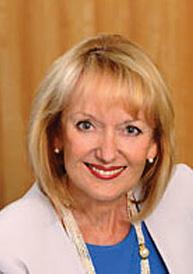
Evelyn Jacks is a national best-selling author, business leader and President of Knowledge Bureau.

vances, often viewing them primarily as cost pressures rather than system-saving investments.
This mindset is costly. Canada’s healthcare system spends enormous sums managing late-stage disease, hospitalizations, emergency care, and long-term institutionalization, rather than preventing deterioration or intervening earlier. Chronic diseases such as diabetes, cardiovascular disease, cancer, and mental illness account for the majority of healthcare spending. Innovative medicines and diagnostics can slow progression, reduce complications, and keep people productive and independent longer. When adoption is delayed, costs are not avoided, they are simply shifted downstream, where they are far higher cost and far less effective.
Much of the Canadian Health Care system’s spending is tied up in acute care that does little to change longterm outcomes. Innovative therapies, particularly those that enable early diagnosis, targeted treatment, and reduced hospital reliance, are not used to their full advantage. Why? There are access delays, fragmented funding decisions, and lowest cost procurement that slows uptake.
higher, are treated as fixed. This leads to a paradox where an innovative therapy that could prevent hospital admissions or surgeries is rejected as “too expensive,” even as the system continues to absorb higher costs elsewhere. The result is a high-cost system that underperforms because it invests too little in interventions that actually change disease trajectories.
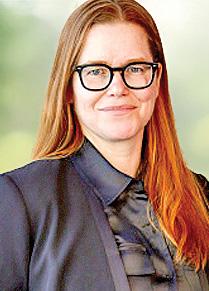
Andrea Ladouceur
Canada’s approach to innovative medicine is often driven by short-term budget silos rather than wholesystem value. Drug budgets are tightly scrutinized, while hospital and physician costs, often many times
Other countries have moved ahead by reframing innovative medicine as a productivity tool for the healthcare system. Jurisdictions that invest earlier in advanced therapies, precision diagnostics, and integrated data systems see gains in survival, quality of life, and workforce participation. They also reduce pressure on hospitals and long-term care. Canada, by contrast, continues to struggle with long approval timelines, uneven provincial access, and limited use of outcomes-based reimbursement models that link payment to real-world results.
Manitoba has an opportunity to lead differently and to inspire others in Canada. With a strong research community, emerging life sciences sector, and manageable system scale, the province could serve as a testbed for innovative medicine adoption tied to measurable outcomes.
Importantly, embracing innovative medicine does not undermine Canada’s public healthcare values. It strengthens them. A system that delays or denies ac-
For many kids, birthdays are full of special moments, but 8-yearold Jaxon has an even more meaningful and inspiring milestone to celebrate. In January 2026, he and his family marked eight years since the heart transplant that saved his life.
“We are thrilled to share that from a heart perspective, Jaxon is doing exceptionally well. We celebrate these milestones knowing that nothing is certain when a child’s health is at risk,” says Kristyn. “We are deeply grateful for his stability and the care he gets at HSC Children's Hospital.”
“I truly believe in the power of donors who invest in HSC Children’s Hospital–because you never know when you or your child may need that care,” says Kristyn. “Every donation matters and makes a real impact.”
Jaxon is a regular visitor at HSC Children’s and has faced many health complications requiring specialist care, visits to Children’s Emergency, and treatments. Fall of 2025 was filled with frequent blood work, scopes, and appointments–some weeks his family was there 2-3 times.
February is Heart Month, a time to bring our awareness to the cardiac care kids in our province need. For Jaxon and his family, that focus is all year round – with many trips to the Travis Price Children’s Heart Centre.
“Jaxon’s journey highlights the critical importance of continued innovation, research, and support for children living with complex medical needs,” says Kristyn.
Jaxon was born with a serious condition called Hypoplastic Left Heart Syndrome, a severe condition where the left side of the heart is underdeveloped, forcing the right side to work harder. He will continue to rely on HSC Children’s Hospital as he grows, and his family is deeply grateful for the state-of-the-art pediatric cardiac clinic, the Travis Price Children’s Heart Centre, made possible by generous donors to the Better Futures campaign like Barb and Gerry Price.
In October 2025, Jaxon was diagnosed with Coronary Allograft Vasculopathy, a long-term complication that can occur after heart transplantation. Thanks to vigilant monitoring, groundbreaking research, and the expertise of his dedicated cardiology team, Jaxon continues to do well and remains under close, proactive care.
“While navigating this level of care can be overwhelming, Jaxon faces it all with courage and strength,” says Kristyn. “I credit the incredible hospital staff and generous donors who help make HSC Children’s a safe, supportive place for children like Jaxon.”
Just one month after his CAV diagnosis, Jaxon also had allergy testing, which confirmed allergies to peanuts, shrimp, and egg. Around the same time, he had a fifth scope to monitor another condition, Eosinophilic Esophagitis, where too many white blood cells build up in the esophagus causing inflammation, difficulty swallowing and pain. Encouragingly, the
cess to effective innovation ultimately erodes equity, as those with means seek alternatives elsewhere. Public systems that strategically adopt innovation can deliver better outcomes for all, not just for those who can navigate or pay their way through gaps.
Canada’s healthcare challenge is not simply underfunding; it is misaligned investment. We pay a lot for care that comes too late and does too little. Innovative medicine offers a path toward higher impact, better outcomes, and more sustainable spending. For Manitoba and the country as a whole, the question is no longer whether we can afford innovation, but whether we can afford to keep ignoring it.
Healthcare innovation is not about chasing trends. It is about stewardship. If we want a system that remains accessible, equitable, and high-quality for future generations, we must be willing to change how we deliver care today. For Canada and Manitoba alike, innovation is no longer a choice. It is a responsibility. Manitoba has the talent, research capacity, and values to lead in healthcare innovation.
Andrea Ladouceur the president and CEO of the Bioscience Associations of Manitoba. She is a visionary, results-driven leader shaping strategy and transformation across finance, technology, energy, climate, health, and the economy. She turns bold ideas into measurable impact by building high-value partnerships, navigating risk, and fostering true collaboration. Through her leadership, Andrea has mobilized the BAM team to accelerate innovation, unlock talent, and strengthen the growth and competitiveness of the bioscience industry.

results showed improvement and healing in his stomach and esophagus compared to his previous scope earlier in 2025.
For a family that spends so many days at HSC Children’s, donors that give with their whole hearts make all the difference.
“From receiving a cozy blanket in emergency, to an Easter Bunny surprise with gifts, to a small gift card that helps ensure parents are cared for too – these acts of kindness make an immeasurable difference,” says Kristyn.
Families like Jaxon’s will continue to benefit from the child-friendly space at the Travis Price Children’s Heart Centre, leading-edge equipment like remote-monitoring equipment and groundbreaking research made possible thanks to donors.
Today, Jaxon continues to thrive and is become a huge sports fan–especially hockey, football, and basketball. He loves attending live games to cheer on the Winnipeg Jets and the Blue Bombers.
Kristyn is deeply thankful for generous donors who have supported her family all throughout their journey.
“Being the recipient of someone’s generosity is a truly humbling experience, and I have seen firsthand the profound impact it has on families like ours.”
Stefano Grande is President and CEO, Children’s Hospital Foundation of Manitoba.
Custom Designed Baskets For All Occasions Make someone smile today! Send a Happy Basket!
The Happy Basket puts a smile on everyone’s face, no matter what their age or occasion may be. Perfectly presented, every gift basket is custom tailored to your specific needs. No two baskets are alike! Happy Baskets are artistic and memorable.

Phone: (204) 218-5222 | https://thehappybasket.ca


crimes in our downtown. There’s not enough room in this article to go into the details but the highlights of a positive action plan to make our downtown safer includes:
• Establishing a Tip Line with flyers and email notices asking people to identify drug dealers and people carrying weapons.
• Immediate eviction notices to drug dealers and seizure of drug dealers’ vehicles based on the tip line information would have an immediate impact.
to immediately seize those weapons.
• The private sector needs to be invited to the Crime Prevention process.
• The Police Community Support Unit would be provided with the identity of people carrying weapons and proceed
Sel Burrows Community Spotlight
The taxi industry has volunteered to set up a Punjabi Language Tip Line. Taxis, cruising downtown could immediately report threatening situations and drug dealers.
The property management industry hates drug dealers and are willing to establish a Tip Line for caretaker. We call it “Eyes
In The Hallways”, allowing rapid eviction of drug dealers. There are hundreds of private security guards and hundreds of camera systems protect-
ing individual properties. Asking security companies to look beyond their private properties would increase the number of eyes on the street with little or no additional cost.
Basically, I am suggesting that the community needs to be mobilized and go on the offensive, identifying those were likely to commit crimes and intervene before the crimes are committed. Disrupting the drug trade so drug dealers won’t want to come in the downtown for fear of their drugs being confiscated and their vehicles seized.
Part three of my report focussed on social equality, and the need to ensure those families growing up in poverty can benefit from being part of our society. Ending massive school chronic absenteeism and providing decent recreation in our poverty areas are highlighted.
In the middle of 1952, Russell Pawley and his wife Velma moved from Brampton, Ontario to Ingersoll Street. Their teenage son Howard enrolled in Grade 12 at Daniel Mac Collegiate. After moving to St. James, Russel served on both the St. James School Board and as a St. James Alderman. In 1981, his son Howard became Manitoba's Premier. Who else has lived part of their lives on Ingersoll?
Ingersoll Street dates back to 1881. The Street is named after Laura Secord's father Thomas Ingersoll. In 1899, Archibald McVicar, a saddler, is the first Ingersoll Street resident mentioned in a Winnipeg Henderson Directory.

The young people of Ingersoll Street had many accomplishments. Evangeline Kenwar (1927), Alberta Pope (1931), and Mildred Herron won colouring contests on the Winnipeg Free Press Boys and Girls Page. In 1948, Richard Beck, a 3rd year engineering student, was awarded a City Hydro work scholarship. In 1951, Bruce Boyd was a member of the Tuxis boys Parliament. CKRC's Young
at Heart Charts bring back memories. In 1968, Candy Bennett and Rosemarie Jung both won prizes of the Top 5 Records. Joe Selinger served in World War 2 as a member of the Regina Rifles. In 1954, Joe and three other Veterans in wheelchairs founded a subscription agency. Joe was involved with the Canadian Paraplegic Association. Ethel Selinger was involved in a neighbourhood coffee club for over 50 years. Ethel was on the board of the First Lutheran Church.
Captain John Wesley Kennedy was involved in both the 1866 Fenian Raids and the 1885 Riel Rebellion. Captain Kennedy was in the painting and decorating business. When Captain Kennedy died in 1910, he was living at 955 Portage Avenue the current site of the Church of Christ.
Herbert Beresford was a Progressive MLA between 1927 and 1931. Mr. Beresford served as President of the Manitoba Association of Land Surveyors. A south Fort Rouge Street is named in his memory. James Simkin (1875-1946) was briefly a school trustee before serving as a
left leaning Winnipeg Alderman between 1923-46. James was a champion of City Hydro and lower milk prices. Islay Mary Colcleugh Sinclair was an authority on the bungee dialect sing song Indian version of the English language.
Johann Beck was the manager of Wallingford Press Johann was the President of the Icelandic Canadian Club. In the 1950s and early 1960s, Einar and Thora Arnason lived on Ingersoll. Einar and Thora were married for 57 years. Einar, a WW2 veteran, owned Plax Lab, a business that made plastic signs. Also, Einar was the Editor of the Logberg, a weekly Icelandic newspaper.
I found a couple of Eatonians. Robert O'Brien managed the toy department. Malcolm Donaldson was another Eatons department manager.
United Church Pastor Grant Smith served many parishes including St. Paul's at Pearl and Notre Dame. Grant enjoyed curling. Grant curled for the Saints in the annual game against the Sinners (the media of course). In 1979, Grant became an Honourary Life Member of the Manitoba Curling Association.
George Gouk was a veteran of both World Wars. In World War 2, George was a member of the Cameron Highliners. In 1942, George won a Distinguished Con-
It is one month into another New Year, and we have the fresh opportunity to re-commit to ourselves for self care and self-improvement. As we get older, these commitments (or resolutions, as most people call them) take on a very different tone. While we can make resolutions in the heat of the moment we can now take to reflect for the rest of the year. It’s not too late to still make a difference in 2026!
For younger folks, it may be as simple as working on their beach bod for the summer or improving their grades at school. But for seniors, New Year's resolutions can help you focus on keeping and improving your health, quality of life, and even emotional well-being.
Making the conscious choice to actively care for yourself is the first and arguably most important step you can take when thinking about a resolution. Consider what changes you can make in your life that will measurably improve it and then create a strategy around how you’re going to reach your goal.
Key components of effective New Year's resolutions
There are some general rules for making a resolution that you can stick to, regardless of age group. The first is setting a goal
worth keeping – in other words, think big! While there’s nothing wrong with making easily attainable goals, like tidying up or expanding your garden, the New Year really gives us an opportunity to be ambitious with our goals.
This year, think about the goals you’ve been putting off because they seem intimidating. Maybe it’s learning a new instrument, finishing a classic novel, or learning to knit – whatever it is, make sure it’s something you’d be proud to achieve.
For seniors, resolutions can enhance your well-being and quality of life. Making a commitment to eating healthier or pursuing some gentle exercise can ensure you remain healthy, mobile and independent for a long time. The first step towards these goals can begin with this New Year. Just make sure to always consult with your doctor before making any sudden dietary or exercise changes!
And to help achieve these ambitious goals, it’s a good idea to break them into bite sized chunks so that you’re not overwhelmed by the scale of your task. Finishing a 1,000-piece puzzle starts with placing the first one, so take time to identify your first few pieces before launching into it.
Resolutions for your body, mind and mood
Keeping your body healthy, your mind sharp and your mood lifted are all essential to ensuring you have wonderful, comfort-
Because I love the city I was born in, I want it to be a healthy welcoming place for everyone. And being of Scottish background, you may notice that all my suggestions come with a very low price-tag. The redevelopment of the downtown by True North and the wonderful redevelopment of The Bay by the Southern Chiefs are important developments. However, the downtown will not become safer if we do not confront the drug industry and those people carrying knives and guns. I guarantee, once downtown people feel respected, they will provide the information we need to make our downtown safer.
Sel Burrows is a Member Order of Manitoba and Coordinator Point Powerline. Previously, he was a member of the Tri-Government Task Force on Illicit Drugs and a member of the Winnipeg Police Advisory Board.
duct Medal for his bravery in the Dieppe Raid. In 1936, Sigridur (Sigga) Johnson married Njal Bardal, a second-generation funeral director. The ceremony, officiated by First Lutheran Pastor B.B. Jonsson, was held at the Ingersoll Street home of Sigga’s parents Helgi and Asta Johnson. Njal went off to War. On Christmas Day 1941, Njal was captured by the Japanese after the Battle of Hong Kong and held by Japan as a Prisoner of War. During the war, Sigga and her young son Neil lived with her parents at their Ingersoll Street home. After the War, Njal returned to the Sherbrook Street Funeral home to assist his aging father A. S. Bardal. Njal and Sigga played a major role in the 1956 establishment of St. Stephens Luteran Church. In celebration of this 70th Anniversary, I am compiling a list of 70 Members of the Church of St. Stephen and St. Bede who will be remembered in a story. Please email me with your nominations. Everyone is allowed to nominate between one and 70 people. We currently have 45 people who have been nominated by at least 2 people. The deadline for nominations is March 1, 2026. You can contact me at fredmorris@hotmail.com with any further questions.
Fred Morris is a Grandfather, Sports Fan and Political Activist.
able senior years. When you’re making your New Year’s resolutions, consider how they factor into these three categories:
For your body: The fuel you power your body with is essential to your physical health. Before you consider an exercise, routine or set any weight loss goals with your doctor, consider your meal plan.
We understand that not everyone has the time, ability, or interest to spend more time cooking. But that doesn't mean you can’t set and meet resolutions to eat healthier. Heart to Home Meals is a great way to ensure nutritious, balanced meals are always on hand - delivered right to your door, easy to store in the freezer and heat in the microwave. If you’re looking to take a first easy step to healthier eating, view our over 200 nutritious meals for a great solution at hearttohomemeals.com
For your mind: With the start of a new year, there comes an opportunity to expand some new hobbies, skills and interests too. But it’s about more than just finding your new favourite pastime. Learning a new skill or even taking up a new interest is a great way to keep your mind sharp. Like any muscle that goes unused, your mind and memory can weaken when they’re not tested. By teaching yourself something new, whether it’s how to play sudoku or the history of ancient Rome, you’re actually strengthening your mind.
For Your Mood: When your body feels
healthy and your mind feels sharp, your mood often benefits as a result. But there’s a lot that can affect how you feel emotionally, and it's just as important to make resolutions that focus specifically on your mental health and mood as it is to make resolutions that focus on your body and brain. Feelings of purpose, connection, and joy don’t always happen automatically - they often grow from small, intentional habits practiced over time.
Making a resolution to stay socially connected can have a powerful impact on emotional wellbeing. Regular conversations, shared activities, or simply checking in with loved ones can help reduce feelings of loneliness and boost mood. Other meaningful resolutions might include making time to practice gratitude or finding moments of calm and relaxation each day. These small but intentional choices can support a more positive outlook and help make everyday life feel more fulfilling.
New Year, new goals
Keeping your New Year’s resolutions isn’t always easy, but it can be extremely worthwhile. By setting ambitious goals that you break into small manageable steps, you can set yourself up for success without feeling overwhelmed. And when your goals tie into your personal well-being, sticking with them leads to healthier, happier living.
Fred Pennell is with Heart to Home Meals.
As a philosophical conservative, supporting greater state intervention in the economy is deeply uncomfortable. Free market capitalism, operating within a predictable and enforceable rule of law, has been the most powerful driver of human prosperity in history. The evidence is overwhelming. Singapore, Hong Kong prior to its handover, and the United States at its most dynamic periods all demonstrate how open markets, competition, and limited government create wealth, innovation, and rising living standards.
By contrast, socialism consistently fails. However noble its intentions, centralized economic planning produces scarcity, stagnation, and ultimately repression. The historical record in the Soviet Union, Venezuela, Cuba, North Korea, and Maoist China is unambiguous. When governments attempt to replace markets rather than regulate them, outcomes deteriorate rapidly and human costs rise, including death.
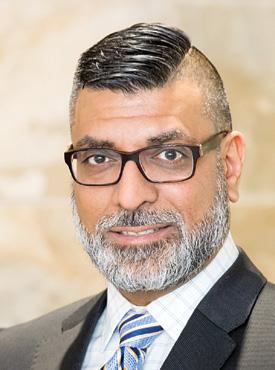
despite decades of rhetoric. Powerful unions, regulated professions, and incumbent firms benefit from fragmentation and have little incentive to surrender local advantage. Even in sectors that clearly underperform, such as health care, reform remains politically untouchable. These realities limit how rapidly Canada can pivot through deregulation alone.
Romel Dhalla On The
State capitalism occupies an uneasy middle ground between these systems. It is neither fully free nor fully planned. In practice, it produces oligopolies, entrenched incumbents, and a close relationship between political power and corporate capital. Europe and Canada already operate within this model to varying degrees. Markets exist, but they are shaped heavily by subsidies, regulatory protection, and selective intervention. Competition is managed rather than unleashed. The best examples of this in Canada our Canadian banks and telecom companies. They are a tax on Canadians, but are essential to our national security. So, we make do.
Ordinarily, I would argue that Canada should move away from this model, not deepen it. After the financial crisis, years ago, a credible case could have been made for deregulation, tax reform, and capital liberalization as the primary tools to restore growth. That opportunity was largely squandered by both Prime Ministers Harper and Trudeau. Today, the constraints are different, and the timeline to act is far shorter that what market reforms would allow, given they need many years to take effect.
Canada now faces a genuine external economic threat. Its dependence on the United States is the most obvious vulnerability. A majority of our exports flow south, and entire sectors, particularly energy, are structurally tied to American infrastructure and policy. If the United States materially raises tariffs or exits the existing free trade framework, the shock to Canada would be severe. Market reforms could help over time, but Canada is a federation with deeply entrenched provincial interests, protectionist instincts, and slow consensus building. Structural liberalization is not something Canada executes quickly, even under pressure.
Interprovincial trade barriers remain largely intact
Energy policy illustrates the cost of this inertia. Over the past decade, Canada deliberately constrained the development of export infrastructure for oil and gas. Whatever one’s view of climate policy, the result is now unavoidable. Canadian heavy crude is overwhelmingly dependent on US Gulf Coast refineries that were originally designed to process Venezuelan oil. Canadian producers benefited when Venezuelan supply was constrained by sanctions. That advantage is now temporary. The consensus appears to be that oil tankers from the South American nation may begin moving oil to US Gulf coast refineries within a two-year window, unless Trump is successful in rapidly accelerating that development.
As Venezuelan production recovers, its crude will compete directly with Alberta’s Western Canadian Select grade heavy oil. It has logistical advantages, arriving by tanker rather than pipeline, and is chemically well suited to existing refinery configurations. If Venezuelan volumes return at scale, Canadian oil will face greater price discounts and potential displacement. That translates directly into lower revenues for producers, provinces, and the federal government. This would affect Manitoba in ways I cannot begin to fathom, as we are one of the primary recipients of equalization program payments that are largely funded by Alberta oil and gas sales.
In a different policy environment, Canada would already have diversified its export routes. The consequence of not having done so is that the country now lacks optionality at precisely the moment it needs it most.
This is where the argument for additional state capitalism, however distasteful, becomes a practical one.
Markets do not reliably build infrastructure whose returns are national, long term, and diffuse. They price in terms of profitability and return on investment, not sovereignty, economic diversification, or bargaining power. The Port of Churchill falls squarely into this category. It is not efficient in a narrow private sense but provides something Canada increasingly lacks: an alternative route to global markets that is not dependent on American infrastructure or consent.
Churchill is Canada’s only deep-water Arctic port connected to the continental rail network. It is not a replacement for Vancouver, nor should it be framed as one. Its value lies in diversification and redundancy. The corridor has undergone substantial rehabilitation
in recent years and is no longer a decaying asset. It can support grain, minerals, and potentially energy exports, while also strengthening Canada’s northern presence at a time when Arctic accessibility and strategic interest are increasing. Developing Churchill into a deep sea industrial, research, and military capable port will not meet private return thresholds. That is precisely why it requires state leadership.
Fiscal reality also matters. Canada’s debt levels are high but not yet constraining in the way they would be during a domestic financial crisis. If trade disruption materializes, the cost of inaction may exceed the cost of targeted public investment. Especially for Manitoba. In that context, accelerating infrastructure development, harmonizing regulations, subsidizing capital formation, and compressing approval timelines become necessary.
The likely outcome of this approach is not attractive. It will increase public debt. It will advantage established firms that know how to navigate government programs. It will deepen Canada’s existing model of corporate welfare and entrenchment. Middle- and lower-income Canadians are unlikely to see immediate gains. In many respects, this will resemble the economic playbook used during the pandemic, except that it will be concentrated to large incumbent enterprises.
I do not like this trajectory. It entrenches many of the same structural distortions that have weakened Canadian growth for years. But the constraints are real and binding. Deregulation cannot be executed quickly enough to offset an external trade shock. Consensus driven reform inside a fragmented federation will not materialize on a timetable that global markets respect. American threats to our economy are very real and are likely headed our way, and Manitoba needs this project to help stabilize its economy for the next several years during this global realignment.
Canada is already a state capitalist economy in practice; the voters made this decision time and again over the past ten years. The meaningful choice now is not between intervention and purity. It is simply a realization that intervention is now required to preserve domestic incumbency and to finally, hopefully, diversify our exports away from the US.
Romel Dhalla, is President of Dhalla Advisory Corp., provides strategic corporate finance advice to companies and high net worth individuals and was a portfolio manager and investment advisor with two major Canadian banks for 17 years. Contact him at romel@dacorp.ca. Any views or opinions represented in this article are personal and belong solely to the author and do not represent those of people, institutions or organizations that the owner may or may not be associated with in professional or personal capacity, unless explicitly stated. Any views or opinions are not intended to malign any religion, ethnic group, club, organization, company, or individual.
Venezuela’s crisis is a warning Canada can’t ignore
What looks like a far-off political mess is exposing how vulnerable Canada really is, especially on energy
The sudden removal of Nicolás Maduro as president of Venezuela is being treated by some in Canada as a distant foreign drama. It isn’t. Venezuela’s political crisis marks a decisive geopolitical shift in the Western Hemisphere, and Canada is poorly positioned for what comes next.
For years, Venezuela functioned less like a sovereign state and more like a criminal enterprise. Under Hugo Chávez and then Maduro, a onceprosperous country collapsed into authoritarianism, corruption and economic ruin. Millions fled. Political opponents were jailed or tortured. State institutions were effectively hollowed out.
Maduro matters, and why Canada should be paying closer attention.
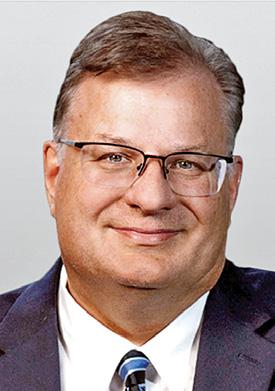
The move was not an impulsive intervention, nor an ideological crusade. It was a strategic decision, carried out with precision, aimed at neutralizing a regime that had become a security liability for the hemisphere. Maduro has been under U.S. indictment for years on drug trafficking and organized crime charges while his government was subject to sweeping international sanctions for human rights abuses and electoral fraud.
process over power. Those tools matter, but they are not substitutes for capability. When institutions fail to act and threats persist, other countries will move. Venezuela is a case study in what happens when patience runs out.
The most immediate consequence for Canada lies in energy. Venezuela possesses the world’s largest proven oil reserves. Its production collapsed under years of mismanagement and sanctions, creating space for Canadian heavy oil to supply U.S. refineries, particularly along the Gulf Coast. That window is now narrowing.
global energy dynamics shift, Canada absorbs the shock rather than shaping it.
The fiscal consequences for Canada are real. Lower energy revenues translate into weaker government finances, fewer private-sector jobs and reduced capacity to fund public services. At a time of slowing growth and mounting deficits, this matters.
What is often missed in Canadian discussions is that this was not merely a domestic tragedy. Venezuela became a regional destabilizer, serving as a hub for drug trafficking, transnational crime and foreign interference, aligning itself closely with China, Russia, Iran and Cuba. Its territory and resources were leveraged in ways openly hostile to Western interests.
That is why the U.S. action against
In effect, Washington signalled that it is once again prepared to enforce order in its own neighbourhood. That shift carries consequences not just for U.S. policy, but for every country that depends on stability and access in the hemisphere.
Canada lives in that neighbourhood, whether it chooses to acknowledge it or not.
For Ottawa, this moment should also prompt a reassessment of how foreign policy is exercised in the modern world. Canada has long favoured multilateral institutions, consensus-building and
As Venezuelan oil re-enters the market under U.S. supervision, Canadian producers face renewed competition in their primary export destination. Canada sells most of its oil to a single customer, at a persistent discount, and has limited capacity to redirect supply when market conditions change.
For years, policymakers insisted this dependence was manageable. Venezuela’s return to the market reveals how fragile that assumption was.
Canada’s vulnerability is the result of choices. Pipeline projects were delayed, cancelled or smothered in regulatory uncertainty. Successive governments promised action, consultations and balance. What they delivered was inertia. The outcome is predictable. When
There is also a broader lesson about realism. Middle powers do not get to opt out of geography or markets. They either adapt or fall behind. Canada’s challenge is not a lack of resources or allies, but a reluctance to align policy with reality.
None of this requires endorsing heavy-handed interventionism or abandoning Canadian values. It requires acknowledging the world as it is. Energy security, economic resilience and strategic relevance are not optional for a trading nation. They are necessities.
The crisis in Venezuela should prompt reflection, not denial. The United States has adjusted to a harsher reality. Canada has not yet done so.
If we continue to hesitate while others move, we will remain reactive rather than influential. That is not a position a serious country should accept.
David Leis is President and CEO of the Frontier Centre for Public Policy and host of the Leaders on the Frontier podcast.

Creative Retirement Manitoba Inc.
204-481-5030, hello@crcentre.ca www.crcentre.ca
WINNIPEG
20 Fort Street Seniors Club
2200-20 Fort Street / FortStSeniors@Shaw.ca
A&O Support Services for Older Adults Inc.
200 - 207 Donald Street 204-956-6440 / Toll Free: 1-888-333-3121 info@aosupportservices.ca www.aosupportservices.ca
Archwood 55 Plus
565 Guilbault Avenue / 204-416-1067 archwood55@shaw.ca archwood55plus.wildapricot.org/ Bleak House Centre 1637 Main Street / 204-338-4723 bleakhousecentre@gmail.com www.bleakhousecentre.com
Brooklands Active Living Centre 1960 William Avenue W 204-632-8367 / bpscc@mymts.net
Centro Caboto Centre 1055 Wilkes Avenue / 204-487-4597 ext. 1 executivedirector@cabotocentre.com www.cabotocentre.com
Charleswood Active Living Centre A 357 Oakdale Drive / 204-897-5263 info@charleswoodseniorcentre.org www.charleswoodseniorcentre.org
Dakota Community Centre 1188 Dakota Street / 204-254-1010 ext. 217 seniorresources@dakotacc.com www.dakotacc.com
Delmar Seniors 110 Adamar Road / 204-421-2592
Dufferin Senior Citizens Inc.
377 Dufferin Avenue / 204-986-2608
Elmwood East Kildonan Active Living Centre 180 Poplar Avenue / 204-669-0750 healthrelations@chalmersrenewal.org chalmersrenewal.org
Garden City Community Centre Seniors 55+ 725 Kingsbury Avenue / 204-940-6111 facilities@gardencitycc.com www.gardencitycc.com/seniors
Golden Rule Seniors Resource Centre 625 Osborne Street / 204-306-1114 goldenrule@swsrc.ca facebook.com/goldenruleseniors
Good Neighbours Active Living Centre 720 Henderson Hwy / 204-669-1710 admin@gnalc.ca / www.gnalc.ca
Gwen Secter Creative Living Centre 1588 Main Street / 204-339-1701 becky@gwensecter.com / www.gwensecter.com
Headingley Seniors’ Services 5353 Portage Avenue / 204-889-3132 ext. 3 seniors@rmofheadingley.ca www.headingleyseniorsservices.ca
Indigenous Senior Resource Centre Inc. A1- 100 Robinson Avenue / 204-586-4595 executivedirector@isrcwpg.ca www.asrcwpg.ca La Fédération des aînés de la francophonie manitobaine inc. 123-400, rue Des Meurons 204-235-0670 / direction@fafm.mb.ca
Manitoba Korean 55+ Centre 900-150 River Avenue 204-996-7003 / www.ksam.ca
North Centennial Seniors Association of Winnipeg Inc. 86 Sinclair Street / 204-582-0066 ncsc@shaw.ca / www.ncseniors.ca
North Point Douglas Senior Centre 117 Euclid Avenue / dzedzora107@gmail.com bkuluk751@gmail.com
Old Grace Housing Co-op 100-200 Arlington Street wellness.oghc@gmail.com
Pembina Active Living (55+) 933 Summerside Avenue / 204-946-0839 office@pal55plus.ca / www.pal55plus.ca
Rady Jewish Community Centre 123 Doncaster Street / 204-477-7539 lmarjovsky@radyjcc.com / www.radyjcc.com
Rainbow Resource Centre 514 St. Mary Avenue / 204-474-0212 ext 255 OTR@rainbowresourcecentre.org www.rainbowresourcecentre.org
The Salvation Army Barbara Mitchell Family Resource Centre 51 Morrow Avenue / 204-946-9153 sheila.keys@salvationarmy.ca
Somali Help Age Association 519 Beverley Street / 204-881-6364 somalihelpage@gmail.com
South Winnipeg Seniors Resource Council 117-1 Morley Ave / 204-478-6169 resources@swsrc.ca / www.swsrc.ca
Southdale Seniors 254 Lakewood Boulevard / 204-257-6171 gm@southdale.ca / www.southdale.ca
Sri Lankan Seniors Manitoba 113 Stan Bailie Drive 204-261-9647 / www.srilankanseniorsmb.ca
St. James-Assiniboia 55+ Centre 3-203 Duffield Street 204-987-8850 / info@stjamescentre.com www.stjamescentre.com
Transcona Council for Seniors 845 Regent Ave / 204-222-9879 tcs@mymts.net / www.transconaseniors.ca
Transcona Retired Citizens Org. 328 Whittier Ave. West 204-222-8473 / trco328@shaw.ca
Vital Seniors 3 St Vital Road / 204-253-0555 stmary@mymts.net www.stmarymagdelenewpg.org
Winnipeg Chinese Senior Association 204-291-7798 / wcsa.wpg@hotmail.com www.winnipegchineseseniors.ca
BEYOND WINNIPEG Ashern
Living Independence for Elders Inc. #4-61 Main Street / 204-768-2187 lifeashern@gmail.com
BEAUSEJOUR
Beau-Head Senior Centre 645 Park Avenue 204-268-2444 / beauhead@mymts.net
BINSCARTH / RUSSELL
Senior Services of Banner County 204-532-2391 seniorservicesofbannercounty@gmail.com
BOISSEVAIN
Seniors’ Services of the Turtle Mountain Area 204-534-6816 / seniorservicetm@gmail.com
BRANDON
Brandon Seniors for Seniors Co-op Inc. 311 Park Avenue E / 204-571-2050 reception@brandons4s.ca / www.brandons4s.ca Health Checks 204-728-1842 / brandonmbhealthchecks.ca healthchecksbrandon@gmail.com
CARMAN
Carman Active Living Centre 47 Ed Belfour Drive / 204-745-2356 www.activelivingcentrecarman.ca
CRANBERRY PORTAGE
Jubilee Recreation of Cranberry Portage Legion Hall 217 2nd Ave. SE / 204-271-3081
CRYSTAL CITY
Crystal City & District Friendship Club Inc. 117 Broadway St. / 431-867-0122 crystalcityfriendship@gmail.com
DAUPHIN
Dauphin Active Living Centre Inc. 55 1st Avenue SE / 204-638-6485 www.dauphinseniors.com
DELORAINE
Deloraine Community Club Inc. 111 South Railway Ave E / 204-747-2846
Seniors’ Outreach Services of BrenWin Inc. 204-747-3283 / sosbrenwin@gmail.com sosbrenwin.com
ELIE
Cartier Senior Citizens Support Committee Inc. 11 Magloire Street, Suite #1 / 204-353-2470 cartierseniors55@outlook.com
ERICKSON
Comfort Drop In Centre 31 Main Street / 204-636-2047 areas@mymts.net
FLIN FLON
Flin Flon Seniors 2 North Avenue / 204-687-7308
GILBERT PLAINS
Gilbert Plains and District Community Resource Council Inc. 204-548-4131 / gpdcrc@mymts.net gpseniors.ca
Gilbert Plains Drop In Centre 22 Main Street North / 204-548-2210
GIMLI
Gimli New Horizons 55+ Centre 17 Loni Beach Road / 204-642-7909 gimli55@mts.net / www.gimlinewhorizons.com
GRAND MARAIS
Grand Marais & District Seniors 36058 PTH 12 / gmdseniors@gmail.com www.gmdseniors.ca
GRANDVIEW
Grandview Seniors Drop In 432 Main Street / 204-546-2272
HAMIOTA
Hamiota 55+ Centre & Restore Community Co-op Inc. 44 Maple Avenue / 204-764-2658
KILLARNEY
Killarney New Horizons Centre 520 Mountain Avenue www.killarneymbseniors.ca
Killarney Service for Seniors 415 Broadway / 204-523-7115 seniorservice@killarney.ca
LA BROQUERIE and STE. ANNE
Seine River Services for Seniors Inc./ Services Rivière Seine pour aînés Inc. 93 Principale Street / 204-424-5285 src@seineriverservicesforseniors.ca seineriverservicesforseniors.ca
LUNDAR
Lundar Community Resources 35 Main Street / 204-762-5378 lcrc@mymts.net
MANITOU
Pembina Community Resource Council 315 Main Street / 204-242-2241 pembinacrc@gmail.com
MINNEDOSA
Minnedosa Senior Citizens Assoc. 31 Main Street S / 204-867-1956 mdsasca@gmail.com
MORDEN
Morden Activity Centre 306 N Railway Street / 204-822-3555 mordenactivitycentre@gmail.com www.mordenseniors.ca
NEEPAWA Neepawa Drop In Centre 310 Davidson Street / 204-476-5103 Neepawa-dropin@outlook.com www.neepawa.ca/district-drop-in-center
NOTRE DAME DE LOURDES Club D’age Dor Notre Dame 204-248-7291 / ndslchezsoi@gmail.com
PILOT MOUND
Pilot Mound Fellowship Centre 203 Broadway Avenue / 204-825-2873
PLUMAS
Plumas Seniors Citizens Club Inc. 102 White Street / 204-386-2029
PORTAGE LA PRAIRIE
Herman Prior Senior Services Centre 40 Royal Road N. / 204-857-6951 hermanpriorcentre@gmail.com www.hermanprior.com
Portage Service for Seniors 40A Royal Road N. / 204-239-6312 psfsmeals@shaw.ca portageservicefors.wixsite.com/psfs
RIVERTON
Riverton Seniors Activity Centre 12 Main Street / 204-378-5155 rdfc@mymts.net / www.rivertonfc.com
ROSSBURN
Rossburn Community Resource Council 71 Main Street / 204-859-3386 rosscomm@outlook.com
SANDY LAKE
Sandy Lake Drop In Centre 100 Main St. / 204-585-2411
Municipality of Harrison Park - Age Friendly Initiative Committee 204-585-5310
SELKIRK
Gordon Howard Centre 384 Eveline Street / 204-785-2092 executivedirector@gordonhoward.ca www.gordonhoward.ca
SNOW LAKE
Snow Lake Senior Centre 71 Balsam Street / 204-358-2151 snowsrs@mymts.net
SOUTH JUNCTION Piney Regional Senior Services 204-437-2604 / lgdseniors@gmail.com
ST. LAURENT Age Friendly Committee of St. Laurent 204-906-9607
STARBUCK
MacDonald Services to Seniors 204-735-3052 / info@mcdonaldseniors.ca www.macdonaldseniors.ca
STEINBACH
Pat Porter Active Living Centre 10 Chrysler Gate / 204-320-4600 ed@patporteralc.com www.patporteralc.com
STONEWALL
South Interlake 55 Plus 374 1st Street West - Oddfellows Hall 204-467-2582 / si55plus@mymts.net www.si55plus.org
SWAN RIVER
Swan River & District Community Resource Council 126 6th Ave N / 204-734-5707 resourcecouncil@srseniorservices.com
Swan River Senior Citizens Centre 702 1st Street North / 204-734-2212 THE PAS The Pas Golden Agers 324 Ross Avenue / 204-623-3663 seniorsthepas@gmail.com
THOMPSON Thompson Seniors Community Resource Council Inc. 4 Nelson Rd. / 204-677-0987 thompsonseniors55@gmail.com thompsonseniors.ca
TREHERNE Treherne Friendship Centre 190 Broadway Street 204-723-2559 / jstate1066@gmail.com
VICTORIA BEACH
East Beaches Social Scene 3 Ateah Road / 204-756-6468 ebssinc1@gmail.com www.ebseniorscene.ca
East Beaches Resource Centre 3 Ateah Road / 204-756-6471 ebresourcec@gmail.com ebresourcec.weebly.com
VIRDEN Seniors Access to Independent Living 204-851-2761 / sail.cao.2023@gmail.com
WINKLER Winkler & District MP Senior Centre 102-650 South Railway Avenue 204-325-8964 director@winklerseniorcentre.com www.winklerseniorcentre.com
Since 2015, Canada has spent roughly 11.2 billion dollars on gender-focused international programming.
When I first saw the chart comparing Canada’s youth unemployment rate to Senegal’s, I assumed it had to be satire. A developing country at 4.1 percent, while Canada sat at 14.7 percent? That defied common sense. So, I checked the sources. Statistics Canada. Trading Economics. Global Affairs Canada. The data was accurate.
Then came the detail that made the picture complete. Ottawa had just announced a 25 million dollar grant to Senegal to support youth employment initiatives.
That is Canadian tax money. It comes from people struggling to cover mortgage renewals and grocery bills. From seniors choosing between heat and medication. From young Canadians who want work and cannot find it. And yet the federal government continues to ship billions overseas as if the needs at home are secondary, or worse, optional.
At home, the numbers tell a very different story. Food bank use now exceeds one million Canadians every single month, according to Food Banks Canada. Shelters in major cities are beyond capacity. Encampments have become permanent fixtures. Youth unemployment is among the highest in the developed world. Full-time entry-level work is increasingly out of reach.
This pattern is not accidental. It is policy.
The Mark Carney government justifies this spending through frameworks like the Feminist International Assistance Policy. It sounds principled, even compassionate. In practice, it has become a blank cheque. Since 2015, Canada has spent roughly 11.2 billion dollars on gender-focused international programming. Another 4 to 6 billion has gone to socalled inclusive governance and political advocacy projects abroad. In total, between 15 and 17 billion dollars has left the country in the past decade for programs that deliver no measurable benefit to Canadians.
This is not emergency disaster relief. This is ongoing, discretionary spending while our own systems are strained to the breaking point.
In Winnipeg, residents are feeling it directly. Property taxes have risen nearly six percent this year alone. Since the current mayor took office, they are up roughly thirteen percent, not including new waste fees or water rate increases. Cities quietly transfer profits from utilities to cover operating shortfalls. Provinces raise fees. Ottawa borrows. The taxpayer absorbs it all.
I have served in both municipal and provincial government. I have watched how public money moves. It does not disappear by accident. It is consumed by process, politics, and priorities that drift far from the people paying the bills. Trips are justified. Programs expand. Committees multiply. Accountability weakens. And every time the answer is the same. Spend now, explain later. There is nothing wrong with helping others. Canadians are generous by nature. But generosity without limits is not virtue. It is negligence.
We are now paying for job training programs overseas while young Canadians cannot get their first real job. We are funding housing initiatives abroad while veterans sleep on our streets. We are underwriting activist programs in foreign capitals while families here are cutting meals to keep the lights on.
Meanwhile, federal debt continues to climb. Interest on that debt now costs tens of billions of dollars annually, making it one of the largest single line items in the federal budget. That is money that produces nothing. No services. No infrastructure. No

opportunity. Just a transfer from taxpayers to creditors. Every dollar borrowed today narrows the options available to the next generation.
Last year alone, Ottawa spent more than a billion dollars providing hotel rooms, meals, and furnishings for newcomers. That figure is documented. The uncomfortable question is how much was spent providing the same level of support to Canadians already here. The silence around that answer is telling. Compassion does not begin with press releases. It begins with responsibility. No household donates money it does not have while its children go hungry. No business invests overseas while ignoring payroll at home. Yet this is exactly how the federal government now operates.
For a defined period of time, Canada needs to turn inward. Non-essential foreign aid should be frozen. Those billions should be redirected to housing, employment, and basic stability for Canadians. That means funding job creation tied to real outcomes. It means accelerating housing supply. It means ensuring veterans are never last in line. It means demanding clear metrics and hard results for every dollar spent.
This is not isolationism. It is stewardship.
Canada cannot lead abroad while failing at home. We cannot export virtue while importing debt. We cannot claim moral authority while our own citizens are lining up for food.
Politicians often confuse spending with caring. They are not the same thing. Writing cheques overseas may feel good in Ottawa, but it does nothing for the young Canadian who wants work, the senior facing eviction, or the family choosing between rent and groceries.
Until every Canadian has a fair chance at dignity and opportunity, our money should stay here. Fix the foundation. Restore accountability. Rebuild trust. Our backyard is not just untidy. It is in disrepair. And it is long past time we stopped ignoring it. Kevin Klein is the publisher of the Winnipeg Sun.