Don Ritenburgh Business Adviser ritenbur@oakland.edu
248.370.2533
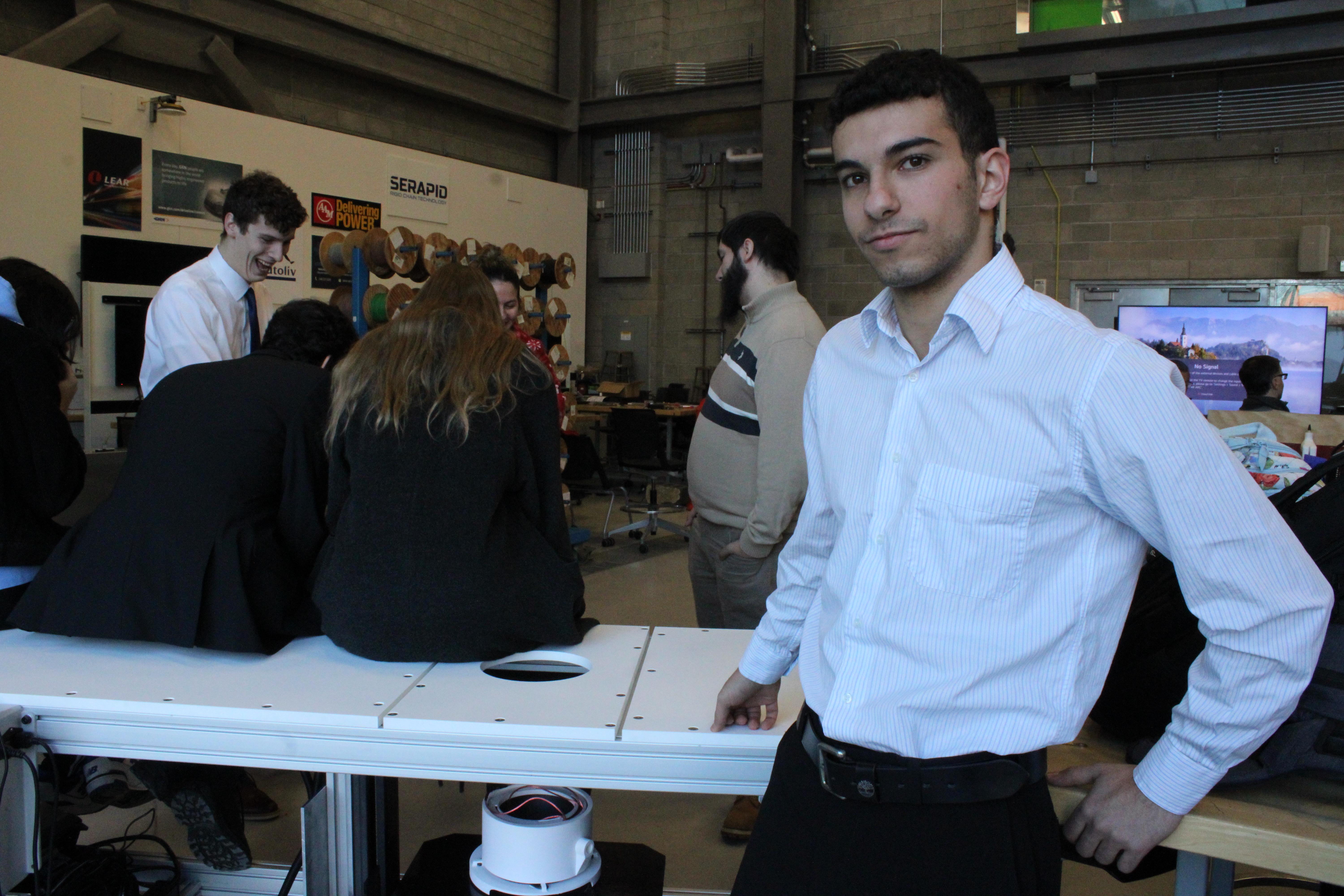
BREAST SCREENING Chris Bastajian, electrical engineering senior, rests after presenting his senior design project, which aims to make breast cancer screening more accurate.
PHOTO BY ADRIAN JIMENEZ MORALES
Magnetic Particle Imaging research: Student success is OU’s success
ADRIAN JIMENEZ MORALES
Campus Editor
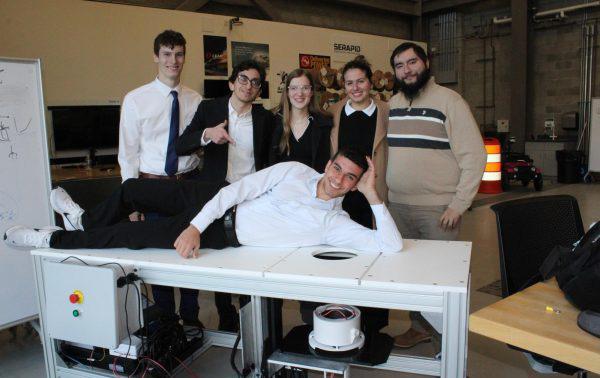
On Dec. 5, six engineering students presented their senior design project, part of the latest advances in Magnetic Particle Imaging (MPI), which promises to advance cancer diagnosis alongside students’ careers.
The project was a perfect example of the symbiotic relationship between faculty research and student learning, yielding professional growth and contributions to fields of research that characterize universities.
“This senior design project is based on my active research in MPI,” physics professor Alexey Tonyushkin said. “Where I’m trying to build an apparatus for MPI imaging and [translating] that to humans.”
The emerging field of magnetic particle imaging, Tonyushkin explained, is a body of research technology used for pre-clinical identification of cancer that can become part of treatment in hospitals. The major challenge, however, is to go from imaging mice to upscaling the technology into human dimensions.
“That’s why it took the field about 20 years to advance to the stage, when finally, several groups have some sort of prototype with a larger field of view that can accommodate, for example, a human head,” Tonyushkin said.
Helping Tonyushkin upscale his MPI apparatus to accommodate a human would allow any ambitious engineering student to go beyond what a typical senior design project would teach them.
“We went through the statics, the dynamics and the cooling for the [mechanical engineering] side of it, which covers all the big hitters for a mechanical engineering degree,” Thomas Michael Rowden, a mechanical engineering senior who participated in the project, said. “Then the electrical side, they covered everything from wires to magnetic fields to attenuations and inductance. So, this really covers the broad strokes of all of [electrical engineering] and [mechanical engineering], with some spillover in bioengineering and physics.”
The interdisciplinary nature of the project not only assembled six talented engineering students but also four professors and a Ph.D. student who assessed, guided and supported them — something unusual for a senior design project.
“Chris does research with Dr. Tonyushkin and we wanted to do a senior design project that had a larger scope than what is generally in senior design projects,” Clare Birley, an electrical engineering senior and project participant, said. “We also wanted to be able to be sponsored by actual research, because then this can get published in journals someday that we can contribute to.”
Chris Bastajian, the crossroad between ambitious engineering students and seasoned interdisciplinary professors, pitched the project idea to faculty and students. In the process, he tackled two goals — securing a senior design project and contributing to the international MPI research.
“My favorite part of the project is getting to collaborate with everyone,” Bastajian, an electrical engineering senior student leading the project, said. “We spent multiple nights over here without sleep and put all that effort into having the product here. Working as part of a team to get the project on, and seeing the result out of it, seeing the frame, looking at the movement of all of the work that we put in, it’s really motivating.”
Characterizing him as a talented student who wanted to be in the lab and hands-on, Tonyushkin said Bastajian finished his MPI spectrometer, a measuring device, when he was a sophomore student. Mostly selftaught, Bastajian presented and won awards at local conferences and strives to advance his education hand in hand with MPI research.
“I plan on joining the master’s program for electrical engineering at Oakland University, and I plan to take this project even [further] with future research,” Bastajian said. “Right now, the device, as it stands, is able to send specific magnetic fields and it will be used in a test study on the different ranges of those fields. But I would like to take it further by actually enabling full 3d imaging with the device.”
The apparatus Bastajian and his fellow students presented was designed for breast cancer imaging, allowing an individual breast to be scanned by the machine while still accommodating the complete body of a person. Consolidating this model to be approved for clinical use at hospitals is the project’s end goal.
Like MRI, Positron Emission Tomography (PET) and Single-Photon Emission Computed Tomography (SPECT), being specialized diagnostic technologies, MPI would provide
additional comprehensive answers to the care team once breast cancer is identified, Tonyushkin explained.
“Breast imaging is one of the most challenging or important imaging tasks in diagnostics, especially for tumor diagnostic and staging and therapy,” Tonyushkin said. “MPI can beat certain other advanced imaging technologies, such as PET, SPECT, because MPI doesn’t have ionizing radiation, and the tracers that we use in MPI are not toxic, unlike the ones used in CT.”
More than a competition, the development of MPI technology at OU focuses on contributing to the established methods of diagnosis to help people. While Tonyushkin and his collaborators have their eyes on that objective, they also focus on mentoring students to become part of those efforts.
“They were available for us when we reached out to them,” Rowden said. “We had issues with timing, with the schooling shut down because of the heating piping. We were able to reach out, thankfully, to Dr. Khain, and talk with the guys and see about getting our pieces in earlier.”
The contributions that the graduating students made alongside their growth as emerging professionals reflected one thing: student success is the SECS’s success and vice versa.
“As engineers, always go to the SECS Career Services; the people that help over there they’re amazing,” Ryan Younes, an electrical engineering student participating in the project, said. “Kelli Foskic, Laura Kroger, they really want you to succeed,” Birley added.
PHOTO BY BY ADRIAN JIMENEZ MORALES
Oakland representative Crystal Brooklier raises $26k, earns statewide Champion title
CAEL TANNER
Features Editor
Crystal Brooklier, a longtime member of Oakland University’s Best Buddies chapter, was named State Champion at Michigan’s 2025 Champion of the Year Gala on Nov. 14 after raising more than $26,000 to support programs that foster friendship, leadership and inclusion for people with intellectual and developmental disabilities (IDD). Brooklier, who was born with Trisomy 18 –a condition that resulted in developmental disability and health challenges – is the first OU representative to win the statewide fundraising honor.
Best Buddies International is a nonprofit organization that provides essential social opportunities for people with IDD through leadership development, integrated employment, inclusive living, and family support. Chapters exist in schools, universities and communities across all 50 states as well as 46 other counties. OU Best Buddies brings together college students and adults with IDD from the Rochester area for social events and one-to-one buddy pairings and community involvement.
Champion of the Year is the organization’s largest annual fundraising campaign. Each fall, the organization selects champion candidates – students, community members or adults with disabilities – from among program participants, who work from August through late November to raise money and awareness for the program. At the campaign’s close, each state holds a Gala with silent and live auctions, where the top fundraiser is named that year’s Champion. 2025 marked Oakland’s third year of participation in the fundraiser.
Brooklier’s victory, announced during the Champion of the Year Gala at Lovett Hall on the Henry Ford Museum grounds, followed months of creative local outreach efforts conducted by Brooklier, her family, and her own Buddy, Faith Peña. She was joined at the Gala by Peña, former Best Buddies at OU President Payton Bucki, current President Maggie Quinn, and others who have supported Brooklier during both the fundraising period and over the past four years of her Best Buddies involvement.
“Crystal has raised more money than any of our previous Oakland candidates have raised combined,” Bucki said. “She really showed that she can do whatever she sets her mind to.”
Crystal Brooklier’s sister, Kara Brooklier, is a neuropsychologist who specializes in neurodevelopmental disorders. Having supported Crystal Brooklier as an informal campaign manager alongside Crystal Brooklier’s mother and niece, she said Crystal Brooklier embraced the competition with enthusiasm, particularly the chance to meet people and promote the group that has supported her.
“Crystal was an intensely good ambassador for Best Buddies,” Kara Brooklier said. “She greeted everyone, shared what the program means to her, and she did a phenomenal job.”
One of Crystal Brooklier’s most successful efforts came during the Arts & Apples Festival
in Rochester. With help from her niece and sister, she held a bake sale in front of their home as festival attendees walked by, raising $750 from passersby who stopped for the baked goods and stayed to learn about Best Buddies.
The family also visited stores in downtown Rochester to gauge interest in donations for the gala’s auctions. Their efforts secured items including a David Yurman bracelet from Tapper’s Jewelry, a dental health package from a local orthodontist, and gift cards for businesses such as Soak Spa in Detroit. Kara Brooklier said her colleagues in Michigan’s medical and disability communities also contributed after hearing Crystal’s story.
“A lot of it was connecting with people that we knew and sharing the mission,” Kara Brooklier said. “We got a beautiful response from physicians, psychologists and other professionals.”
The fundraising season concluded at the Champion of the Year Gala, where supporters from across the state filled the historic ballroom to commence bidding and celebrate the fundraising efforts. Crystal Brooklier, wearing a silver tiara, sat with friends, family and OU Best Buddies members when she was selected from among several other candidates as the champion.
“She was nervous, but definitely excited,” Kara Brooklier said. “When they announced her as the winner, she loved all of the applause and excitement.”
Quinn said Crystal’s recognition reflects both her enthusiasm for the program and the impact she has had on OU’s community.
“Crystal just brings sunshine everywhere,”
Quinn said. “She’s so deserving in representing not only Best Buddies International but also our own OU chapter.”
Kara Brooklier expressed pride in Crystal Brooklier’s commitment to fundraising and the importance of the unique opportunity to see her shine.
“It was wonderful to celebrate the organization and all the joy Crystal brings to this world,” Kara Brooklier said. “We really appreciate all of the Oakland University students that get involved in Best Buddies and invest their time and energy into making some magic happen.”
As the semester winds down and OU Best Buddies prepares for a new semester, chapter leaders envision Crystal Brooklier’s achievement encouraging more students to get involved.
“Best Buddies impacts the lives of people with and without disabilities,” Bucki said. “Crystal’s story shows just how powerful that impact can be.”
Best Buddies at OU is always looking to raise awareness for the inclusion of people with IDD through various facets of programming. For more information and updates on events and campus involvement, visit the OU Best Buddies Facebook and Instagram pages.
PHOTO COURTESY OF KARA BROOKLIER
FEAUTURES
Decrease in gun violence masks a nation that continues to bleed
MARYANNE SANFORD Sports Reporter
The following data from the Gun Violence Archive indicates gun violence statistics in the U.S. between Jan. 1 and Sept. 30, 2025.
11,197 — the total number of shooting deaths.
20,425 — the number of nonfatal injuries.
325 — the number of mass shootings.
309 — the number of deaths from mass shootings.
1,150 — the number of children ages 0-17 who died from gun violence.
In 2025, the United States saw a 14% drop in gunrelated deaths from last year, but many experts say it is nowhere near enough. The decline is tied largely to reduced homicide rates, yet it offers little reassurance that numbers will not rise again. Even with the decrease, the toll remains extraordinarily high compared with other advanced nations, leaving many communities wondering when — or if — the cycle will finally break.
The Gun Violence Archive defines a mass shooting as an incident in which at least four victims are shot, either killed or injured, not including any shooters who may have been harmed.
Gun violence looks different depending on where you live. Some states experience far lower shooting rates, while others face overwhelming levels of loss. The divide reveals a national crisis that is anything but uniform.
Recent data from the Gun Violence Archive shows that Mississippi, Alaska, Louisiana, New Mexico and Alabama rank among the states with the highest gunrelated death rates per capita, with some exceeding
22 to 24 deaths per 100,000 people. These numbers include homicides, suicides and unintentional shootings, underscoring how deeply embedded the issue is in certain regions of the country.
By contrast, states such as Massachusetts, New Jersey, Hawaii, Rhode Island and New York report some of the lowest gun-related death rates in the nation. The contrast highlights how geography, state policy and access to firearms can drastically alter the level of risk communities face.
Schools have also invested more funding in investigating threats in recent years. While those efforts
may improve safety, many argue that they should not be necessary at all. Children should be able to view schools as safe places — not spaces where they practice lockdown drills or wonder whether they will make it home at the end of the day. Teachers shoulder the emotional weight of preparing for dangers they are not trained for, adding pressure to a profession already stretched thin.
Hospitals, too, have become settings where some people report heightened anxiety. Facilities intended to save lives are not immune to violence. Patients sometimes fear that while they wait to be seen, someone could walk through the doors with a gun.
For many Americans, the fear of gunfire has become a constant backdrop to daily life. It shapes how people move through public spaces, alters routines and replaces comfort with caution. The emotional burden of that uncertainty, even for those who have not personally witnessed violence, is difficult to measure.
Advocates say these dangers could be significantly reduced through stricter and more consistent measures, including policies addressing access to firearms, improved mental health screening and expanded early intervention programs. Without meaningful action, they argue, any temporary decline risks becoming nothing more than a statistical interruption in an otherwise persistent trend — one overshadowed by the enduring reality that thousands of American families lose loved ones to preventable violence every year.
How high will the numbers need to climb before the nation moves beyond political stalemates and addresses the crisis directly?
For more information about gun violence, visit the Trace or the Gun Violence Archive.
PHOTO COURTESY OF UNSPLASH
An ode to change and my favorite lipstick
MALLORY WALIGORA
Content Editor
Today, my favorite lipstick ran out of product. I bought it at Target in September 2022, a week before beginning my internship with the government. I had worked a few retail jobs, but this was my first real, professional gig. I wanted to feel older than I was, to be put together enough to be the kind of girl who wore lipstick and worked a desk job.
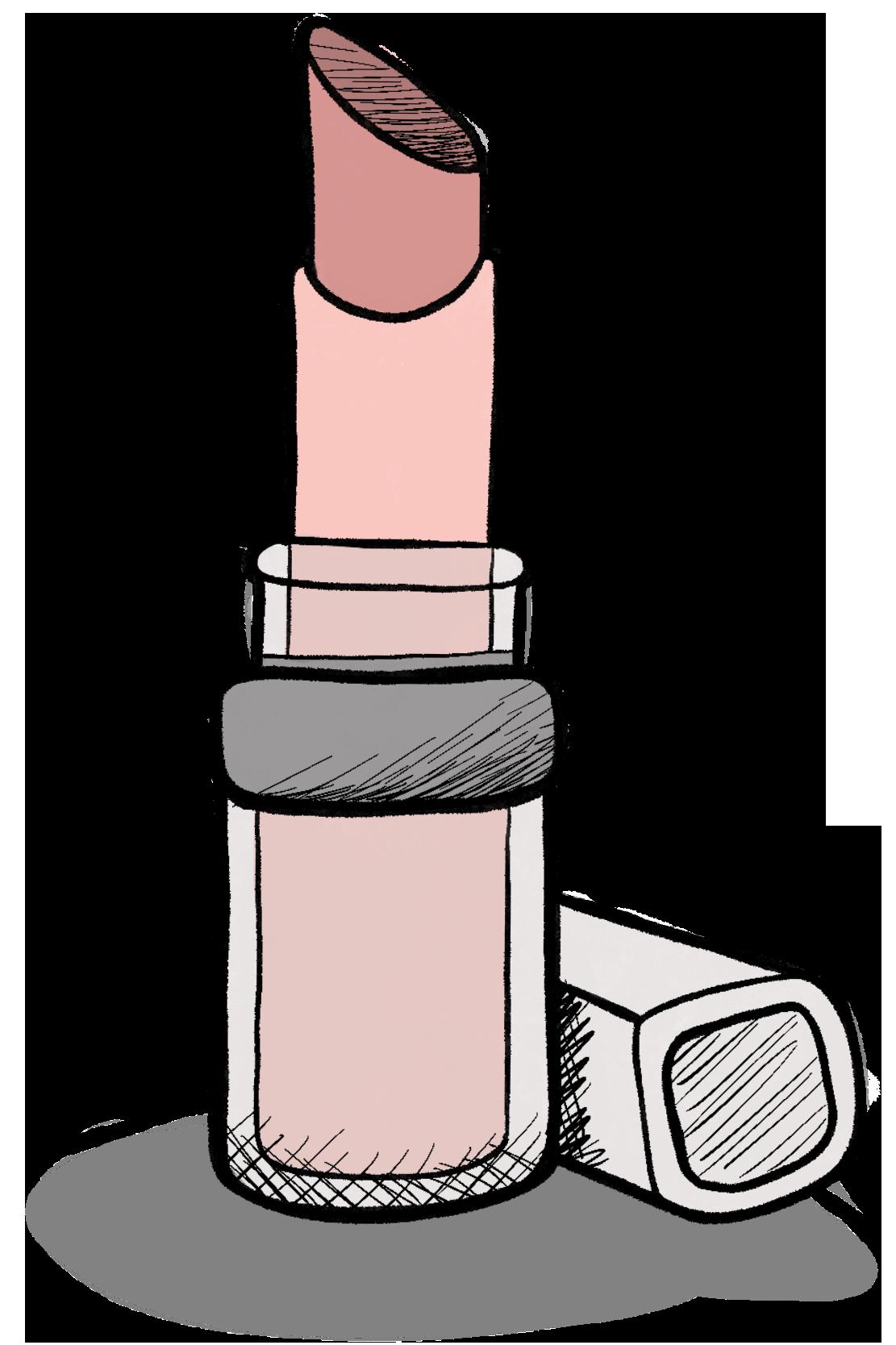
It was a $9 drugstore lipstick — L’Oreal Paris Glow Paradise in shade Nude Heaven, if you’re curious.
Every morning, after applying it carefully, I’d toss it in the front pouch of my backpack at 7:45 a.m. before driving to the office. At noon, after my lunch break, like clockwork, I would take the steps down to the lower basement floor bathroom and reapply it. My Calvin Klein kitten heels would click down the marble stairs, echoing throughout the nearby cubicles. It became my midday ritual.
But now, my lipstick is sitting at the bottom of my trash can, soon to be collected by the trash men on Thursday, where it will go through the local trash sorting facilities and continue its mysterious trash journey. It served me well — three years, which is honestly longer than I expected.
Starting that job marked a new era in my life. I wore dress pants, deposited a paycheck in my savings account, called people “sir,” wore an ID badge, worked election night and small-talked with men 50 years older than me. I processed FOIA requests — a task I now find comically prophetic as a journalist, who now requests them herself.
I look back on my time with the government fondly because it taught me valuable lessons and things I didn’t know I needed to learn. It taught me how to handle stressful situations, how to listen to people when they are upset and how to remain calm in the face of it all.
I’ve always considered myself to be a very sensitive and emotional person. I always cry at Super Bowl commercials, wedding speeches, heartfelt letters or sometimes nothing at all. My mom blames my sensitivity on my astrological sign, Cancer, but I blame it on my disposition. Somewhere along the way, that job toughened me. It didn’t harden my heart, but it taught me how to have tough skin when necessary.
I answered phone calls from residents, never knowing what bizarre complaints or situations people would call in with: a complaint about a noisy neighbor, a resident in need of a lawnmowing service or a question from another department asking for a document. I listened, offered solutions and directed people in the right direction. I didn’t realize it at the time, but I was learning how to communicate across frustration and confusion — skills that I now use in my everyday life.
With enough poking and prodding at dinner parties, I can be convinced to tell one of my two favorite stories about that job: either the one about the helicopter or the one about the mini golf metal dinosaurs. Both stories involve a lot of exposition and background, so I will spare you the details.
Sometimes I recount the time I accidentally created a toxic chemical reaction by mixing bleach and Clorox to clean the office humidifier. A week after that experience, I was sitting in a hazardous waste training seminar, earning a certification I never anticipated needing.
My favorite part of my job was attending the police department and fire department swearing-in ceremonies. The ceremonies happened every few months when a new set of students would graduate from training and officially join the force.
When the calendar reminder pinged, I would leave my desk, walk down with a couple of coworkers and head over to the public auditorium to watch the ceremony. My boss would read an oath using a serious ceremonial tone that he only used for speeches. Around 15 soon-to-be graduates would repeat after him, with their right hand in the air.
I never knew exactly why, but every time, I would cry. Not an embarrassing, dramatic sob, but a quick tearing of my eyes that I would blink away so my coworkers wouldn’t comment.
Their families filled the audience — it was a heartwarming sight I rarely saw in the day-today of my job. Parents held up their iPhones, taking photos and videos of their child. After the ceremony, brothers, partners, moms, dads and friends would hug them and pose for pictures.
I heard snippets of conversations: jokes from siblings, words of endearment and encouragement from proud grandparents. And there I was in the back row: a young intern who simply walked down the hallway because it was on my boss’s schedule.
Walking back to my desk after each ceremony always felt strange. I was clocking in for my 9 to 5, but I had just witnessed a monumental moment in a stranger’s life.
I ended up working there for two and a half years. On my last day, I said goodbye to a place where I spent more time than Oakland University. I felt equal parts relief, nostalgia and fear.
In my freshman year, I was convinced that I would work for the government after graduation. But ironically, it took working in government to realize I didn’t want to work in government at all. At that time, I was scared of what was ahead.
But things turned out fine. My future outside that office building was already waiting for me. I
met new friends, I traveled to new places and I met professors who genuinely cared about my future. I worked new jobs I hadn’t yet considered as a viable career and went on countless adventures I couldn’t have predicted. I started drinking coffee, signed up for a public relations class (and ended up adding it as a second major) and kept moving forward.
My next job I had after leaving the government was working for William Beaumont School of Medicine, doing public relations. To this day, it remains one of my favorite jobs I’ve had. I spent my time as a liberal arts student, trying my hardest to decode medical jargon, nodding to lectures and panels as if I understood the subject. It taught me how to be precise and how to dive headfirst into a new field and pick it up as I went.
Somewhere along the way, my career path has flipped on its head. In a twist I still find poetic, I went from working for the government to writing about the government. Back then, when journalists called the phone line and asked for a quote, I would panic and immediately transfer the call to my supervisor, palms sweaty. I could never imagine that one day, I would be the one making those calls, requesting a quote.
And so, now, my lipstick lies in the trash.
It’s just a drugstore object, but it feels like a capsule holding a past life — a former dream, some great stories and a version of me who believed she was headed in an entirely different direction. But I think that’s the beauty of it all: dreams change, and new opportunities come.
GRAPHICS BY ANNA FRIEDRICH
Legos and butterflies: A whimsical White House Christmas
SARAH WASIELEWSKI Arts Reporter
Every year, the First Lady undertakes one of her most scrutinized duties: decorating the White House for Christmas. Some years the decor is classic and understated, with tasteful Christmas trees and soft garlands. Other years a First Lady’s more unconventional choices spark debate. Melania Trump is no stranger to such criticism, as her towering blood red trees that filled the East Colonnade in Christmas 2018 famously fueled waves of memes and commentary.
This year, Melania Trump’s theme is “Home Is Where The Heart Is,” a reflection of her belief that home is not a physical space, but the warmth and love carried within a person. The renowned designer Hervé Pierre collaborated with Melania, bringing her vision to life across several of the state level rooms.
This year a touch of Michigan is on display in the form of an 18-foot noncolor fir from Korman Farms in Sydney, Michigan. Standing in the Blue Room, the tree commemorates Gold Star families, recognizing the sacrifice and resilience of military personnel and their families.
With the East Wing currently rubble, the Grand Foyer and Cross Hall have taken center stage. Following the sub-theme “Where Love Blooms,” the spaces are filled with a forest of 28 trees decorated in red and gold and accented with amaryllis filled planters.
In a whimsical twist, the “Family Fun Room” features presidential portraits of George Washington and Donald Trump, constructed out of 6,000 Lego pieces. Meanwhile the “Fostering the Future Red
Room” features 3D printed blue butterflies, the symbol of transformation and change, reflecting the First Lady’s advocacy of foster care since 2021.
The State Dining Room hosts the Gingerbread House, a replica of the White House showcasing the south portico. It is constructed out of 120 pounds of gingerbread dough, 100 pounds of pastillage dough, more than 10 pounds of chocolate, nearly 80 pounds of royal icing and 5 pounds of isomalt sugar.
The decorations are cozy and charming, with warm lighting reminiscent of candles and draped green garlands. Playing card houses and domino towers adorn the mantlepieces, using familiar games to bring a homey feeling to the imposing rooms. Overall, 75 wreaths decorate the windows, with more than 50 Christmas trees, 700 feet of garland, 25,000 feet of ribbon and 10,000 butterflies adorning the White House.
But this year’s decorations are fewer than normal. The East Colonnade, typically a major part of the display, is absent due to the demolition of the East Wing. This is part of Trump’s controversial decision to construct a $300 million dollar ballroom, a move many find tactless in an era of increasing living costs and a rising unemployment rate.
While the White House has been closed for touring since the demolition of the East Wing, doors reopened on Dec. 2 allowing the public to once again enjoy the annual tradition that transforms the White House into festive cheer. As always, some will criticize Melania’s decoration choices and others will staunchly support her, but the festive spirit within the historic residence is unmistakable.
Experience an artificial life with “Rental Family”
MARISSA GETSCHMAN Arts Editor
Japan has a service designed to bypass therapy in which civilians will hire actors to play different roles in their lives. Sometimes that is a fake lover to appease elderly family members or a parental figure for comfort or even just a friend to play video games with for a while.
“Rental Family,” directed by Hikari, is a new film released on November 21 starring Brendan Fraser as the token white guy in one such business. Phillip Vanderploeug is a struggling American actor looking to land his next big role in Japan where he has lived for the last 7 years with no luck. When his manager finds him a job working an acting service he’s never heard of, his life is completely flipped upside down.
Phillip quickly lands a number of jobs, two of which are incredibly emotionally taxing; one in which he is to play a journalist interviewing an elderly actor with dementia and one in which he is to play a little girl’s father. Both the elderly man, Kikuo (Akira Emoto), and the child, Mia (Shannon Gormon) don’t know that Phillip is an actor.
The film features complex and very human relationships amidst the blurred lines of reality versus performance. Phillip looks up to Kikuo as a friend and fatherly figure and feels intense parental love for Mia, wanting the best for her in life. He never had a good relationship with his own father which only elevates the attachment he
holds for the job.
But all roles must eventually end and grappling with the grief that accompanies the sudden loss of such an intense connection is hard no matter the angle. Not just Phillip, but all three of his coworkers, Aiko (Mari Yamamoto), Shinji (Takehiro Hira) and Kota (Kimura Bun) struggle with the same pain. The service makes a real impact on people’s lives in a society that still harbors a resentful stigma around therapy, so they all force themselves to keep working.
The cast and crew did an incredible job bringing the story to life and illustrating the complexities the human experience. The whole point of living is to make connections. “Rental Family” offers a plotline where it makes sense to see many different lifestyles and relationship dynamics. No one is ever truly alone if they just take the time to seek out companionship.
Interviews have revealed that the cast and crew have mixed opinions on rental family services and whether or not they should catch on worldwide, but they all seem to agree that there are positive outcomes. There are even similar services available in the states on a voluntary level, rather than a paid gig, geared toward people stuck in hospitals. Sometimes all one really needs is a hand to hold when times get rough.
Overall, “Rental Family” is a beautiful film, both in plotline and scenery, that invites audience members to peer into a number of different companionship dynamics. There are comedic moments and tear-jerking moments that will stick with viewers throughout the film and leave them with a sense of time well spent.
PHOTO COURTESY OF OFFICIAL WHITE HOUSE PHOTOS.
PHOTO COURTESY OF IMDB
Farewell, Graduating Posties:
Farewell Chelsea
Mallory
Chelsea has done a phenomenal job as Editor in Chief this semester. It’s an understatement that The Oakland Post this semester has been challenging due to unprecedented and unpredictable campus news — from the Charlie Kirk protest, to the passing of Glenn McIntosh to the high water high temperature pipe campus closure. Chelsea has addressed all these urgent issues and guided The Post to provide clear, factual and timely coverage of these events, among others.
Outside of journalism, I consider Chelsea to be a close friend of mine and a trusted colleague and confidante. Our late-night FaceTime calls to figure out coverage, or even the occasional Instagram reel, have been fond memories. In the world of journalism, which can become heated and stressful, it’s always been a great time working for Chelsea.
Chelsea is also genuinely super cool: She has better music tastes than anyone else I know and has niche pop culture references that would impress anyone. I would pick Chelsea to be my phone-a-friend on “Who Wants to Be a Millionaire?”
I do not doubt that Chelsea has a remarkably bright future ahead of her. She will do great things.
Adrian
Working alongside Chelsea Bossert has been illuminating. During her time as arts editor, I got to see the behindthe-scenes of intentional cultural reporting. Whether it was dissecting a record-breaking album or discovering the local scene, Chelsea never forgot to elevate campus artists. It was this same devotion to the Golden Grizzlies that made her an admirable Editor-in-Chief. From the day she was designated her new title,
she instinctively became a leader equipped with patience and nerve. She advocated for freedom of the press with the same enthusiasm with which she mentored novice reporters.
More than anything I admire Chelsea as a journalist. She was not afraid to be tenacious during the HTHW pipe coverage or sincere with her Letters from the Editor about the cost of college and the struggles of finding a job as a student. She empowered the entire newsroom and that’s the kind of journalist I aspire to be.
I wish the best for Chelsea, the Editor in Chief who bleeds black and gold.
Cael
I’ve worked with Chelsea only briefly, but the experience was enlightening. Despite the semester’s chaotic news quarter, Chelsea’s periodic letters from the editor offered cogent summations and reflections to guide our readership through dynamic news cycle ups and downs. Her impeccable grasp of current events, both on campus and beyond, offered a sense of stability and perspective supplemented by her wide-ranging musical and artistic elite ball knowledge.
She led the Post decisively, with a particular sense for the nuances of each distinct print section. Recently, her expert handling of updates on the campus closure situation — at a moment’s notice — galvanized her uniquely flexible but comprehensive approach to journalistic leadership. I anticipate career success in Chelsea’s future, wherever it may lead.
Posties: Chelsea and Reagan
Farewell Reagan
Mallory
As much as I consider myself to be a nice and accepting person, I have to admit one thing: I hate the state of Ohio (as a native Michigander), and, de facto, I have a general mistrust and dislike of people from Ohio.
I do not say this lightly: Reagan, born in Ohio, is the rare exception to this rule. She’s driven, smart, passionate, funny and undeniably talented. I’m glad The Post had her on our side.
In fact, I begrudgingly admit that she has shifted my moral compass a little bit to like the state of Ohio.
I know Reagan will do undeniably cool things in her future, whatever she ends up doing. Thanks for tagging along for the ride.
Adrian
Multifaceted is one way to describe Reagan Reetz. Anytime I would run into her in the newsroom, she would always be talking about her different jobs — which felt more like completely different lifetimes thanks to her storytelling skills.
Whether it was working for the government back in Ohio or as an admissions ambassador at OU, Reagan made the workplace feel like home. Offering guidance and laughs, she was always compromised to the never-ending state of campus news, even if that meant pulling over in some random Ohio road to post breaking news about a little university miles away.
In writing and editing, Reagan crafted a digital identity for The Post that allowed for heartfelt stories that were never short of informative.
August
“I bet this is the first time you’ve been in a car with an Ohio plate!” – Reagan Reetz, October 11, 2025.
things and getting our campus community involved online.
Not only could she run an Instagram page, but after seeing her coursework from Graphic Design for Non-Majors and beautiful spreads for BeGolden, it pains me that she had to drop her Graphic Design minor. While her major is neither Design nor Marketing, she does a bang up job at both.
Outside of work, Reagan is one of the funniest, kindest Ohioans I have had the pleasure of knowing (and that says something considering my grandparents met at Michigan State University).
After this week she’ll be moving back home, four hours away instead of the Ann V. Nicholson apartments, the building right next to mine.
I know she’ll do great things. I hope she cherishes her time at the Post as much as we cherished having her here, as a coworker and a dear friend.
story by Mallory Waligora, Cael Tanner, August Wicker, and Adrian Jimenez Morales
graphic by August Wicker
As someone who runs multiple social media accounts for different Oakland University organizations, no one does it like Reagan. She’s always on top of
Nonprofit media hosts “Documenting ICE In Our Communities” workshop
MARYAM MOSS Political Reporter
On Wednesday Nov. 12th, City Bureau, a Chicagobased journalism lab, hosted a Network CoP to give citizens the tools to document U.S. Immigration and Customs Enforcement (ICE) activity.
In the workshop, held between 6:30 p.m. and 8:30 p.m. CT on Zoom, attendees learned about the tactics being used by immigration enforcement officers to intimidate communities and best practices for surveillance.
City Bureau, a Chicago nonprofit newsroom, envisions a future of civic journalism, where all people can gain the tools to hold local government accountable. In 2016, it launched Documenters — a nationwide partnership with other newsrooms that trains and pays people to take notes on meetings that occur in their townships.
These documents are then published on the Documenters.org website, where they become openaccess resources for the community and can benefit local reporting. Since its founding, the program has hired over 4,000 people from 16 states and recruits new members throughout the year at its quarterly orientations.
Chicago has witnessed over 600 new recruitments since early Sept. when the Trump administration announced Operation Midway Blitz — an immigration crackdown said to target undocumented individuals with criminal histories.
However, the number of those arrested with criminal charges or convictions has been declining since April. Instead, people with civil immigration violations—a term used to describe actions like overstaying a visa or crossing the border illegally— now represent the largest group taken into custody by ICE.
On the Nov. 12 live training on Zoom, Documenters learned about the scope of agencies acting under the Department of Homeland Security (DHS). During the 2-hour session, members gained the tools to monitor ICE activity; they were then introduced to the process of creating reliable visual and legal records of abuses committed by agents.
Before diving into the segment “How to Document Immigration and Law Enforcement Activity,” panelists provided insight into certain tactics ICE agents use to facilitate arrests.
On Jan. 21, 2025, the Trump administration declassified sensitive locations—schools, hospitals, and houses of worship —as spaces protected from ICE operations. Although private spaces like residences or ‘Employee Only’ zones require approved search warrants to enter, ICE agents often “mislead” or “misidentify” themselves to gain access.
In Aug. 2025, a settlement to a lawsuit challenging ICE’s home arrest practices in Los Angeles—first issued in 2020 —was approved by U.S. District Court Judge Otis D. Wright II of the Central District of California. It sought to prohibit ICE from misrepresenting their identities or the purpose of an inquiry, necessitating that they first identify themselves as members of the agency.
However, Viri Martinez of the New Jersey Alliance For Immigrant Justice, noted that agents often identify themselves as members of local law enforcement when they show up at a person’s door or try to push through, compelling the resident inside to let them in. In some cases, they may even purport to have a judicial warrant for a search.
During her segment on “An overview of ICE, CBP, and your rights”, Martinez encouraged people to invoke their Fourth, Fifth, and Sixth Amendment rights if approached by an ICE officer: these afford them
protection from unlawful searches and being pressured to disclose information.
Martinez explained that instead of opening the door, a person should first ask agents to identify themselves and request that the warrant be slipped under the door to validate its authenticity. She also screen-shared pictures of documents to help participants distinguish between judicial warrants and ICE-signed warrants. A valid judicial warrant, Martinez said, must be signed by a judge and officialized by the U.S. District Court: An ICE warrant, however, is issued by ICE or DHS and does not permit an officer to enter a home.
Christian Aldana, Learning Manager of Detroit Documenters, discussed how people can protect themselves and others while filming aggressive arrest practices. Aldana emphasized that it is important to assess yours and others’ immigration statuses before filming; Generally, the person with the least risk for being deported should take on this responsibility.
According to Aldana, the camera angle used should focus on agents’ behavior while limiting identifying features of a community or individuals involved should a device be confiscated.
Participants also received training on how to create reliable records of ICE’s actions. Aldana explained that supplementing raw footage with notes that verify the time, location and day of an incident can provide useful contexts if information is shared with an advocacy group.
In Chicago and other cities, immigrant-rights hotlines, community organizations and local media serve as sources of recourse to communities affected
by ICE operations.
Rapid response teams, for example, can alert people of ICE’s presence in an area and provide them with tips on how to keep themselves and their neighborhoods safe. Hotlines like the Family Support Network and Hotline, a service offered by the Illinois Coalition for Immigrant and Refugee Rights (ICIRR), can also send footage received to a team of lawyers. Thus, the critical details of a recording can support local efforts to hold ICE accountable and protect vulnerable members within a community.
However, Aldana cautions that footage shouldn’t be released until consent is obtained from the person involved, their relatives or legal representatives.
“Spread facts not rumors, spread power not panic,” a phrase used by Aldana, became a motto for acting rationally and remaining calm amid the stress of witnessing an arrest.
As the workshop wrapped up, meeting hosts maintained the importance of narrowing in on essential, objective details to prevent misinforming others. These details are represented by the acronym SALUTE — size, activity, location, uniform, time and equipment — to help convey reliable observations.
As illustrated by the tips experts shared throughout the meeting, with a camera in hand, the right knowledge and courage, a bystander can become a citizen journalist — an indispensable line of community defense as ICE operations endure.
PHOTO COURTESY TO BLOOMBERG VIA GETTY IMAGES
Department of Education to not consider nursing as a professional degree
SOPHIA CURRAN Political Editor
On Nov. 6, The Department of Education created a new list of “professional degrees,” excluding nursing and other medical careers from qualifying. The degrees will be facing major federal loan cuts.
The One Big Beautiful Bill Act will redefine the word under the department.
According to the Act, the term “professional degree” does not apply to judgement regarding skillful fields — such as engineering, medicine or law — but rather its application towards higher federal loans.
Students that wish to attend school past their bachelor’s degree are most affected by the decision. Medicine (M.D.), Dentistry (D.D.S./D.M.D.) Law (L.L.B./J.D.) and other high-cost programs will be capped at a $200,000 total federal loan limit.
As for other students who wish to pursue a graduate or doctorate degree in another field, they will now be capped at a $100,000 total federal loan limit.
The following is the list of degrees now not classified as “professional” by the Trump administration:
Nursing
Physician assistants
Physical therapists
Audiologists
Architects
Accountants
Educators
Social workers
On Nov. 7, The American Association of Colleges of
Nursing (AACN) expressed its concern following the administration’s decision to cap the degree of nursing at $100,000.
“The American Association of Colleges of Nursing (AACN) is deeply concerned by the Department of Education’s decision to move forward with a proposed definition of professional degree programs that excludes nursing and significantly limits student loan access,” the association said in an official statement. “Despite broad recognition of the complexity, rigor, and necessity of postbaccalaureate nursing education, the Department’s proposal defines professional programs so narrowly that nursing, the nation’s largest healthcare profession, remains excluded. Should this proposal be finalized, the impact on our alreadychallenged nursing workforce would be devastating.”
Representatives in Congress have been advocating alongside the association. At the Hill, the AACN’S Government Affairs and Policy team presented a webinar titled “What Schools Need to Know About Proposed Federal Loan Limits for Post-Baccalaureate Nursing Students.” In the meeting, the AACN expressed how nursing students will face financial struggles if they are capped $20,500 annually ($100,000 in lifetime limits) instead of their once $50,000 annually ($200,000 in lifetime limits).
AACN has a petition on their website to consider nursing as a professional degree. The petition currently has over 230,000 signatures.
On Nov. 23, Congresswoman Ann Wagner (RMO) released a statement regarding the Department of Education’s “misguided announcement.”
“Nurses are the backbone of our healthcare system and we rely on them to help provide quality patient care at a time when many are at their most vulnerable,” Wagner said.
“I strongly disagree with the Department of Education’s recent changes classifying graduate nursing degrees on a lower footing than other medical degrees and will be making it clear to the Administration that these changes are unacceptable and should be immediately reversed.”
She went on to discuss how these financial decisions will set nursing students back and discredit their work as healthcare providers.
“Education costs are through the roof,” Wagner said. “We all agree that loan caps for many graduate degrees are a vital method to reform the federal student loan system and rein in inflated tuitions, but they should be appropriately implemented for specific graduate degrees that make sense. Nurses should be on level footing with other medical degrees, not on a lower level.”
On Nov. 24, The Department of Education released a “Myth vs. Fact” as a response to the backlash, setting straight how these decisions will affect graduate students, specifically nursing students.
Through their own data analysis, the department found that 95% of students borrow below the annual loan limit and will therefore not be affected by the new caps.
Instead, they hope that these new caps will push for graduate nursing programs “reduce their program costs,” in hope that students will not be left with “unmanageable student loan debt.”
Universities and the White House are again left scrambling to find their own political allies as they face head-to-head — and graduate and doctorate students now must figure out their financial standings and how that will accompany their career goals.
US position on current Russia-Ukraine relations
MATILDE RABAJOLI
Political Reporter
Focus shifts back onto the ongoing war between Ukraine and Russia after the tentative news of Gaza and Israel’s ceasefire holding for more than a month.
The Russian invasion of the Ukrainian nation has hung its head for over three years. The conflict officially began in February of 2022 and has been ongoing since. This, of course, being a product of rising tensions from what the Russian government believed to be ever more Russian territory, and the Ukrainian government, in turn, adhering to their sovereignty.
The United States and both Presidents Biden and Trump have tried to soothe relations and come to a meaningful understanding that would reduce the overall direness of the conflict.
Though a degree of hope has been somewhat foreseeable as European leaders of France, Germany and England are currently meeting with President Volodymyr Zelenskyy of Ukraine.
Prime Minister Keir Starmer invited President Zelenskyy, along with France’s President Emmanuel Macron and Germany’s Chancellor Friedrich Merz in order to discuss what future aid they can deliver to Ukraine’s borders to prolong its sovereignty.
“Ukraine is not on the brink of collapse,” the statement that was released stated. “While we may not be able to immediately reach a peace agreement with Russia, it is essential that we give Ukraine all
the support it needs.”
While these discussions have continued to take place, the other side of the Atlantic holds a key player that has held a complicated relationship with the leaders of President Vladimir Putin and President Zelensky and their respective countries.
“I have to say that I’m a little bit disappointed that President Zelensky hasn’t yet read the proposal,” Trump said. “His people love it, but he hasn’t.”
Though the plans Trump has formally constructed with Russian representatives have famously been
rejected in Kyiv, as it would be forced to reduce its country’s size and military and power by a significant amount.
President Trump has been acting as a public bridge for the two leaders for some time since his return to office. He and his administration have reported about many lengthy conversations with Putin and have reached some plans that will abide by President Putin, but will likely not satisfy the President. Zelensky.
“Russia, I guess, would rather have the whole country, when you think of it, but Russia is, I believe, fine with it,” Trump said. “But I’m not sure that Zelensky is fine with it.”
However, this very plan has been rejected by the people and constructed by the ally that is the US, with Putin and the Russian administration. Both decidedly left Zelensky and his European allies distinctly excluded from the conversation.
The accords would have Ukraine relinquish its wishes to join NATO, give up military independence and actively choose to indict itself with war crimes that Russia has accused it of. Though citizens and soldiers alike are all tired of the war, they have come to the conclusion that Russia is an unreliable partner for any sort of agreement, as their end will likely remain ignored.
“For Ukraine, this is a question of ‘to be or not to be.’ It is better to die standing than to die later as a slave,” Leonid Komsky, a Ukrainian citizen, said.
PHOTO COURTESY OF UKRAINIAN PRESIDENTIAL PRESS OFFICE VIA AP
Robinson’s pure point guard play and zone defense ignite Grizzlies
MIKE OKORONKWO
Sports Reporter
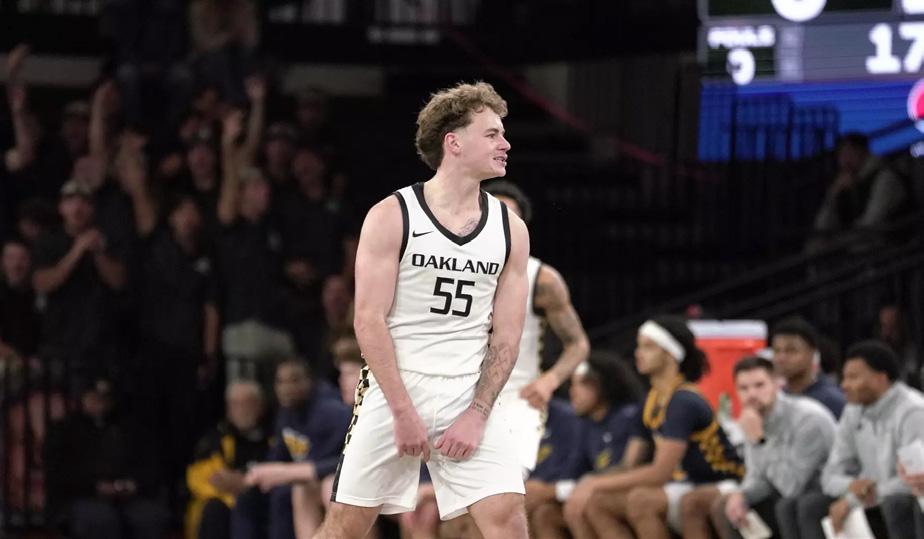
In a high-octane Horizon League opener that saw two teams push the pace to the breaking point, the Oakland Golden Grizzlies (4-5, 1-0 HL) secured a crucial 101-92 home victory over the Purdue Fort Wayne Mastodons (4-6, 0-1 HL). The win was defined not just by Oakland’s signature 3-point barrage (13-for-29, 44.8 percent), but by the electrifying play of Brody Robinson and a clutch defensive adjustment that neutralized the Mastodons’ secondary scoring threats.
Brody Robinson: The offensive conductor Robinson delivered a shooting and facilitating masterclass, leading the charge with 27 points, eight assists and five rebounds. His performance was a clinic in modern guard play.
He was a reliable 3-point shooter (4-for-8), but his most impactful trait was his ability to attack the paint. His exceptional combination of speed, acceleration, deceleration and body control allowed him to beat defenders off the dribble, repeatedly drawing contact to get to the line. He finished the night 9-for-14 from the free-throw line, a clear indication of his relentless pressure.
Robinson’s vision shined through, as he led all players on the court with eight assists, seamlessly transitioning from lead scorer to skilled passer to keep the offense flowing.
The emerging star duo: Robinson and Garrett Finishing second in scoring was Isaac Garrett with 15 points, forming what could be a key duo for the
Grizzlies in tougher fixtures ahead. Garrett was hyperefficient, scoring his points on just 5-for-8 shooting, demonstrating his reliability as an interior threat who can both score and command attention to open up the perimeter for Robinson.
Complementing the scoring was the rising presence of combo forward Michael Houge. Houge is quickly becoming one of the most essential players on the roster, adding the defensive presence Oakland sorely needed. His exceptional movement and commitment to the glass saw him end the game with eight rebounds (two offensive), backed up by a block. His contributions anchored a rebounding advantage that saw Oakland out-rebound the Mastodons 43-33.
Defensive strategy and the Hadnot enigma
The contest was also a battle of wills against two dynamic individual scorers. Purdue Fort Wayne guard Corey Hadnot II delivered a scoring masterclass of his own, leading all players with 33 points on 12for-19 shooting from the field. Hadnot looked almost unstoppable at times, scoring 20 of his points in the first half alone.
However, Oakland’s defense made a crucial strategic adjustment. The implementation of the zone defense was executed well, specifically designed to limit the impact of PFW’s other perimeter threats. This was most effective against sharpshooter Maximus Nelson, whom the defense held to 3-for-11 from the 3-point line, forcing other Mastodons to settle for tougher, less efficient shots. This defensive trade-off was ultimately the difference-maker, as PFW could not sustain a balanced attack around Hadnot’s brilliance.
Clutch shooting overcomes second-half dip
While the team finished the game with a highly efficient 3-point percentage of 44.8 percent (13-for-29), the Grizzlies experienced a noticeable shooting dip in the second half from beyond the arc. After lighting up the scoreboard with eight 3-pointers in the first half (53.3 percent), Oakland settled for 5-for-14 (35.7 percent) in the second.
Despite this cool-down, Oakland’s overall commitment to high-speed offense paid off, leading to a significant 35-14 advantage in fast-break points. This aggressive, transition-focused style, driven by Robinson and complemented by strong defensive rebounding from players like Houge, kept the Mastodons at bay and secured a pivotal nine-point win to open conference play.
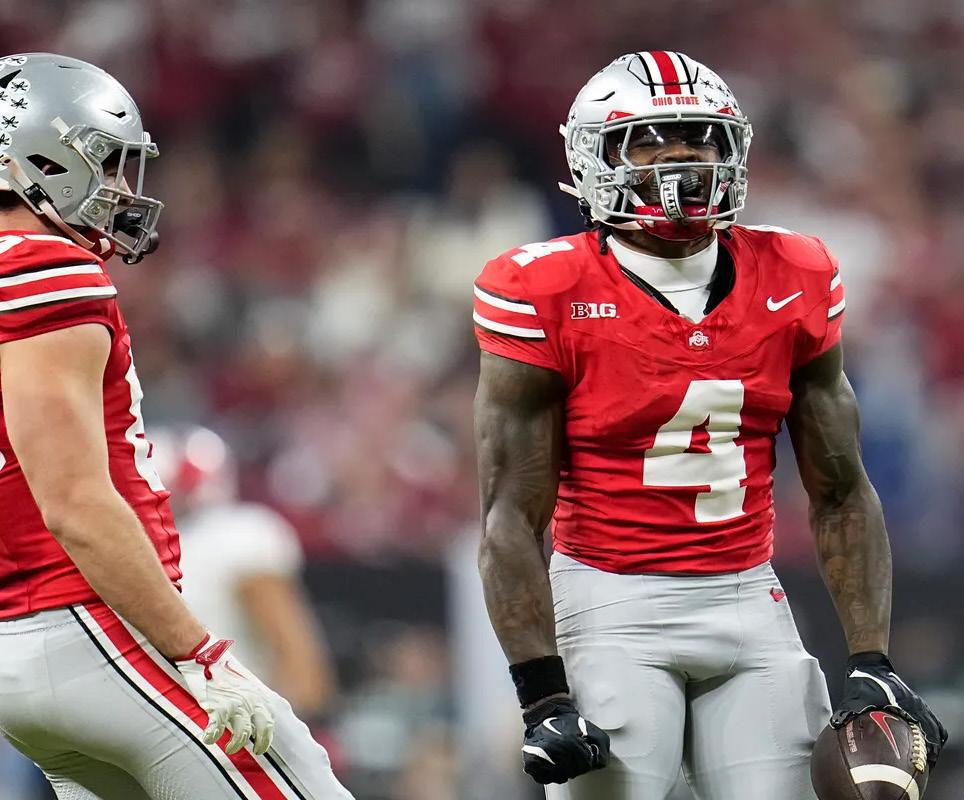
Ohio State reasserts dominance over Michigan in “The Game”
MATT LEWAKOWSKI
Sports Reporter
On Saturday, Nov. 29, “The Game” was held in Ann Arbor. Ohio State and Michigan faced off for the 122nd time in their classic rivalry.
The matchup, often considered the most significant regular-season contest in college football, once again drew national attention and delivered another dramatic chapter.
Whether either team is heavily favored or not, it never seems to matter. A year ago, Ohio State was the best team in the country and Michigan had a down year — yet the Wolverines still scratched and clawed their way to a victory. The bitter rivalry is a must-watch every single year.
The atmosphere, legacy and constant implications surrounding the matchup make it one of the most captivating events in college athletics, and in all of sports. Whether you support the Michigan Wolverines or the Ohio State Buckeyes, the passion of “The Game” is hard to ignore.
After dropping the matchup four times in a row, Ohio State reasserted dominance in the storied rivalry, defeating Michigan 27-9 to snap the losing streak and preserve a perfect 12-0 regular-season record.
Michigan struck first, converting two early drives into field goals and dominating the possession battle early to take a 6-0 lead. But Ohio State answered before the quarter ended with a 24-yard field goal by Jayden Fielding, closing the gap to 6-3.
In the second quarter, Ohio State quarterback Julian Sayin, despite an early interception, began to take
control. On a bold fourth-and-5, he hit wide receiver Jeremiah Smith for a 35-yard touchdown, giving OSU a 10-6 lead.
Later in the quarter, Sayin connected with Brandon Innis on a 4-yard touchdown pass, extending the lead to 17-9 by halftime.
Michigan’s defense bent but didn’t break early on. However, Ohio State came out firing after the half. On the first drive of the second half, Sayin launched a 50yard strike to wideout Carnell Tate for a touchdown, pushing the lead to 24-9. That’s when the Buckeyes took real control.
For good measure, Ohio State tacked on a 23-yard field goal in the fourth quarter to make it 27-9, sealing the win in convincing fashion.
On the stat sheet, the numbers spoke volumes: OSU outgained Michigan 419-163 in total yards, controlled possession for nearly 20 minutes more, and converted 10 of 17 third downs compared to just 1 of 9 for Michigan. It was Michigan’s lowest offensive output of the season.
The loss snapped Michigan’s four-game winning streak in “The Game,” delivering a crushing blow to its hopes of a playoff berth.
Meanwhile, for Ohio State and coach Ryan Day it was redemption. After last season’s upset loss in Columbus, this decisive triumph reestablished OSU’s dominance and set them up for a showdown with the conference’s other unbeaten headliner.
Offensively, Sayin’s poise under pressure — bouncing back from an early interception to deliver three touchdown passes — showed maturity beyond his years. Wideouts Smith and Tate emerged as go-to weapons and dominant playmakers. Meanwhile, Ohio State’s defense stifled Michigan’s attack, limiting the Wolverines to their lowest yardage total of the season. Ohio State dominated all three phases — offense, defense and clock management — delivering a statement win in one of college football’s most storied rivalries.
COURTESY OF AP PHOTO
PHOTO COURTESTY OF OAKLAND UNIVERSITY ATHLETICS
Oakland Women’s Basketball falls to Cleveland State on the blacktop
MARYANNE SANFORD
Sports Reporter
On Saturday, Dec. 6, 2025, the Oakland University women’s basketball team faced off against Cleveland State in the OU Credit Union O’Rena, and despite generating one of its strongest defensive performances of the season, the Golden Grizzlies fell 72-55.
The Grizzlies forced 21 turnovers and held the Horizon League’s top scorer to a season low, but offensive droughts ultimately proved costly against the Vikings’ scoring.
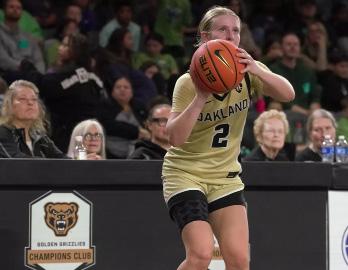
Oakland opened the game with high energy on the defensive end, setting an early tone with strong pressure on the ball. Lianna Baxter recorded a block less than two minutes in, and Makenzie Luehrig stole the ball and transitioned into a bucket to put the Grizzlies on the board.
As the first quarter unraveled, the Grizzlies found their rhythm from beyond the arc. Laya Gold connected on a 3-pointer at the 7:18 mark, and Luehrig buried another 3-pointer late in the quarter to cut their deficit down to five. Moments later, Cali Denson marked Oakland’s third 3-pointer of the quarter, helping the Grizzlies stay within distance as they trailed 17-13.
Denson continued her consistent shooting from
Oakland stayed persistent in the second quarter, as Luehrig and Denson provided early offense to keep the deficit manageable. Gold added a steal and a block during the stretch, but scoring opportunities tightened as Cleveland State controlled the interior and rebounded effectively. Brooke Smith offered a lift late in the quarter, knocking down a timely 3-pointer and a midrange jumper to trim the deficit, but the Grizzlies entered halftime trailing 36-24.
Coming out of halftime, the Grizzlies’ defensive pressure deepened. Oakland forced six turnovers and two steals in the third quarter, creating one of
its most aggressive stretches of the game. Denson opened the half with a 3-pointer and then added two free throws, while Luehrig contributed a steal and an assist to maintain the momentum.
Cleveland State responded with key baskets from Macey Fegan and continued to attack the lane, but Oakland countered by getting to the free-throw line. The Grizzlies went 15-for-21 from the line, marking the third time this season they have made at least 15 free throws while attempting more than 20. Oakland outscored the Vikings 16-14 in the third quarter and cut the deficit to 10, going into the fourth trailing 50-40.
Oakland looked focused for a potential comeback early in the fourth when Sereniti Roberts-Adams converted an and-one layup to bring the Grizzlies within nine points. But Cleveland State quickly regrouped, leaning heavily on Izabella Zingaro, who posted a dominant 22-point, eight-rebound performance in the paint. Point guard Jada Leonard added a game-high 23 points on 8-for-11 shooting, consistently finding flaws in transition and halfcourt sets. The Vikings’ efficiency helped them pull away late, handing the Grizzlies a 72-55 loss.
Despite the loss, many Golden Grizzlies turned in noteworthy performances. Luehrig finished with 13 points, four assists, four rebounds and a gamehigh three steals. Jazmine Dupree-Hebert added three steals during her 19 minutes, giving a steady
College Football Playoff unveils 12-team bracket for 2025–26 season
MATT LEWAKOWSKI Sports Reporter
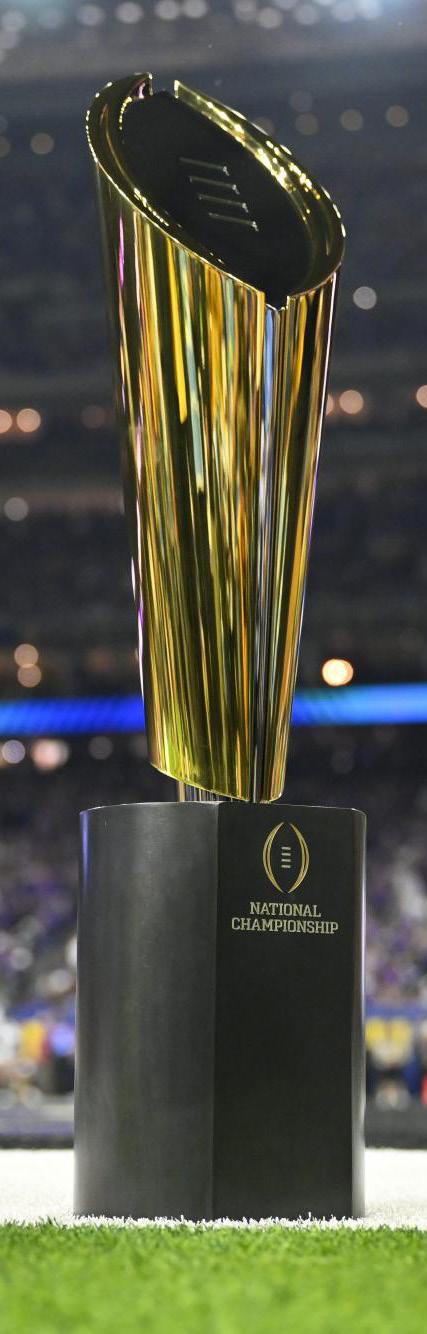
On Sunday, Dec. 7, 2025, the College Football Playoff selection committee revealed the final 12team bracket for the 2025–26 season. The format stays consistent: the five highest-ranked conference champions receive automatic bids, while the next seven best-ranked teams (regardless of conference) fill out the field.
The top four teams earned first-round byes and will skip directly to the quarterfinals. The remaining eight will pair off in first-round games Dec. 19–20, hosted on respective campuses.
Quarterfinal byes
No. 1 Indiana Hoosiers, No. 2 Ohio State Buckeyes, No. 3 Georgia Bulldogs, No. 4 Texas Tech Red Raiders
First-round games
No. 8 Oklahoma Sooners vs. No. 9 Alabama Crimson Tide; No. 7 Texas A&M Aggies vs. No. 10
Miami Hurricanes; No. 6 Ole Miss Rebels vs. No. 11
Tulane Green Wave; No. 5 Oregon Ducks vs. No. 12
James Madison Dukes
Indiana Hoosiers
Indiana punched in as the No. 1 overall seed thanks to a perfect regular season and a championship-game win over Ohio State in the Big Ten title game. Their undefeated run made a bold statement: the Hoosiers aren’t just a surprise — they’re the real deal, ready to challenge traditional powers for the national title.
Ohio State Buckeyes
Ohio State returns to the playoff after another strong season. With a 12-1 record and a résumé filled with solid wins, the Buckeyes earned the No. 2 seed and a bye week. Their consistency and talent kept them among the elite.
Georgia Bulldogs
The Bulldogs, perennial contenders, snagged the No. 3 seed thanks in large part to winning the SEC title game and finishing 12-1. As one of the highestranked conference champions, they were awarded a first-round bye.
Texas Tech Red Raiders
Texas Tech rounds out the bye teams with an 11-1 record and a top-four ranking. Their explosive offense and quality wins pushed them into a privileged position straight to the quarterfinals.
Oregon Ducks
Oregon grabbed the No. 5 seed and will host a firstround game. The Ducks’ 11-1 season and ranking among the top conference champions earned them a spot, though without a bye they’ll need to rally from the jump.
Ole Miss Rebels
The Rebels make history this year as they notch their first-ever CFP berth. At 11-1, Ole Miss benefited from both strong season play and the automatic bid for being among the top-ranked conference champs. They’ll host a first-round game against Tulane.
Texas A&M Aggies
Texas A&M (11-1) slips in as a first-round host, earning the No. 7 seed. Their consistent success in a competitive conference kept them on the committee’s radar, avoiding the uncertainty of “beauty contest” selections.
Oklahoma Sooners
Oklahoma earned the No. 8 seed and will host No. 9 Alabama. An accomplished season despite a couple of setbacks earned them a place in the field, representing a classic Power Five program that delivered when it mattered.
Alabama Crimson Tide
Alabama returned to the CFP as one of the final two at-large picks, grabbing the No. 9 seed even after losing the SEC title game. Their marquee wins and long-standing pedigree carried weight with the committee despite a late-season loss.
Miami Hurricanes
Miami landed the No. 10 seed and the final atlarge slot. Their résumé, including key wins and a strong conference record, edged out several highprofile contenders who fell short. Their inclusion was controversial but underlines the committee’s balancing of recent performance, strength of schedule and head-to-head metrics.
Tulane Green Wave
Among the most surprising stories of 2025: Tulane, from a Group of Five conference, earned the No. 11 seed with an 11-2 record and by winning the American Athletic Conference title game. Their inclusion, along with another non-Power team, highlights the CFP’s commitment to rewarding conference champions, not just traditional giants.
James Madison Dukes
The most remarkable Cinderella story belongs to James Madison. In just their fourth year at the FBS level, the Dukes claimed the Sun Belt Conference title and finished 12-1, earning the No. 12 seed. Their berth marks one of the fastest rises to CFP relevance in recent history.
This year’s playoff bracket blends established powerhouses with scrappy underdogs. Traditional titans like Georgia, Ohio State, Alabama and Oklahoma continue to show why they’re perennial contenders. But the inclusion of two Group of Five champions — Tulane and James Madison — along with first-time arrivals like Ole Miss demonstrates how much the landscape of college football has broadened.
It’s also a reminder that while history and brand name still carry clout, the committee appears willing to reward season-long performance and conference success. That mix creates unpredictability but also hope: Programs that once seemed permanently on the outside looking in now have real chances.
Finally, the bracket sets up high drama: first-round matchups, hard-fought conference rivalries renewed, and depending on how the games go, the potential for underdog upsets or dynasties resuming their reign.
In 2025, the College Football Playoff is more inclusive, more varied and more compelling than ever.
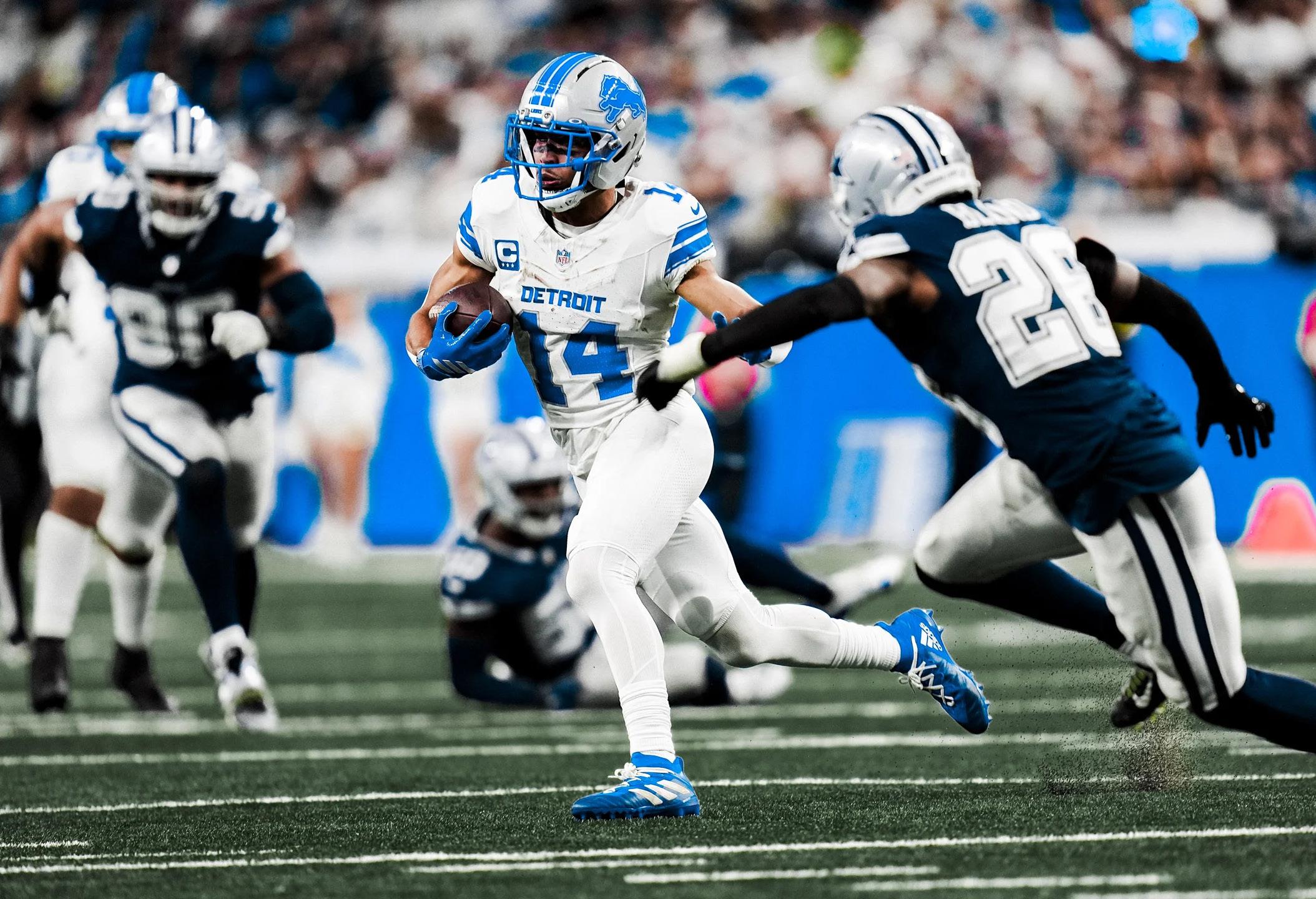
Lions keep playoff hopes alive with 44-30 win over Cowboys
JAMES ELLING Sports Editor
The Detroit Lions proved one thing in a 44-30 win over the Dallas Cowboys: they still have some fight in them.
As much as a Week 14 game can be considered a “must-win,” the Lions’ matchup with the Cowboys was exactly that.
With playoff hopes slowly dwindling after trading wins and losses since a 4-1 start, the Lions reached a tipping point in Week 14 — a loss would be devastating, and a win inspiring.
With a win over the Cowboys on Thursday Night Football, the Lions’ playoff chances would be over 50 percent — with a loss, they’d fall to under 15 percent, according to NFL Next Gen Stats.
The Cowboys came in red-hot, fresh off a Thanksgiving Day win over the Chiefs and an upset over the Eagles the week prior, posing a tall task for the Lions, especially considering Detroit’s injuries.
But with the weight of Detroit on their shoulders, the Lions rallied and got the job done — and in impressive fashion, for what felt like the first time in ages.
Offense
The offense proved that it has not lost its ability to be multidimensional.
Amon-Ra St. Brown was expected to miss the matchup after tweaking his ankle on Thanksgiving.
Head coach Dan Campbell said the injury could sideline St. Brown “a week or two, maybe, if we’re lucky.”
St. Brown fought through the pain and not only suited up but continued to show how versatile and valuable he is. The All-Pro receiver recorded 92 yards on six receptions — and added a gallery of blocking rep masterpieces.
Jameson Williams looked as comfortable as ever out wide, continuing to come into his own. He hauled in seven receptions on nine targets for 96 yards. If Williams continues the trajectory he’s been on since Campbell took over play-calling duties, he could assert himself as one of the league’s premier second receivers.
Jahmyr Gibbs added 77 yards through the air. He struggled to get going in terms of rushing yardage, only notching 43 yards on 12 carries. That said, he punched in three impressive touchdowns, which tied Barry Sanders for the most career touchdowns before a player’s 24th birthday, with 47. Gibbs does not turn 24 until the offseason, so he should independently own that record soon.
David Montgomery, the other half of the Lions’ two-headed backfield monster, rushed for 60 yards despite only carrying the ball six times — largely thanks to an aggressive 35-yard touchdown rush.
Jared Goff looked comfortable for the first time in weeks, completing 25 of 34 passes for 309 yards and a touchdown to Isaac TeSlaa, who has managed to score on a whopping 50 percent of his receptions. Goff spread the ball to seven different receivers.
Defense
The defense held its own against a scorching Cowboys offense led by MVP candidate Dak Prescott.
Kelvin Sheppard’s unit allowed 376 yards to Prescott’s right arm but limited him to one touchdown and forced two interceptions — one to open the second half by Derrick Barnes, and one to seal the win by DJ Reed.
Al-Quadin Muhammed tallied his second threesack game of the year, putting him at a team-high
nine on the season. Detroit is poised to have two players finish with double-digit sacks for the first time since 2010.
Jack Campbell continued to earn his stripes as one of the league’s best linebackers with a fantastic game. He punched out a ball to force a fumble that set up the Montgomery touchdown, and he sacked Prescott for what was nearly a safety.
The Lions played complementary football. Offense, defense. And, finally, special teams.
Special teams has been a calling card of the Lions for the entirety of the Dan Campbell era. The unit has uncharacteristically struggled as of late, but Thursday was redeeming.
The coverage units largely bottled up KaVontae Turpin, the Cowboys’ electric return man.
Jake Bates was nearly perfect on the night, making 5-for-5 extra points and field goal attempts of 38, 47 and 46 yards. His lone miss was blocked by the Cowboys.
Perennial practice squad Lion Tom Kennedy provided a spark in the return game for Detroit. He had three kick returns, all at least 39 yards — the league average return is 26 yards. Kennedy tallied 21 yards on his sole punt return as well.
Looking forward
Moving forward, all three units will need to continue to complement each other in order to make the playoffs.
Since the NFL expanded its playoffs to seven teams per conference in 2020, only two 10-win teams have missed the playoffs. If the Lions finish 10-7, they would almost certainly become the third.
The Lions sit at 8-5 with four games to play. They’ll likely need to win at least three of those games, and sweeping the slate is their only way
to get into the playoffs without relying on other teams to lose — and they’ll have to do it without Brian Branch, who tore his Achilles tendon against Dallas.
On Sunday, Dec. 14, the Lions will head west for a date with the Los Angeles Rams. The Rams have looked like one of the best teams in the NFL. Matthew Stafford could be leading the MVP race, and he has an arsenal of weapons to throw to. LA’s defense is also dangerous — young, fast and talented.
A week later, the Pittsburgh Steelers will come to Ford Field. The Steelers started hot, but they’re slowly falling apart. Detroit must capitalize and win this game to have any level of confidence moving forward.
Detroit’s penultimate matchup of the regular season will come against the Minnesota Vikings. Minnesota gave Detroit fits in their first matchup, and the Lions will have to do a better job of picking up the Vikings’ blitzes and exploiting the weak spots they inevitably create in the defense. Defensively, the Lions should hope and expect that JJ McCarthy looks less like he did in their first matchup and more like he has every other time he’s taken a professional football field.
It could all come down to a Week 18 battle in Chicago. The Bears might be positioned to try to play spoiler for the Lions, or the matchup could be a direct fight for a playoff spot. Regardless, it will almost certainly be a game the Lions have to win. They’ll have to make Caleb Williams uncomfortable and dominate at the point of attack in what should be a physical matchup on a presumably cold January day.
The Cowboys game was a statement. Now comes the real test — Rams, Steelers, Vikings, Bears. Four weeks to prove they belong.
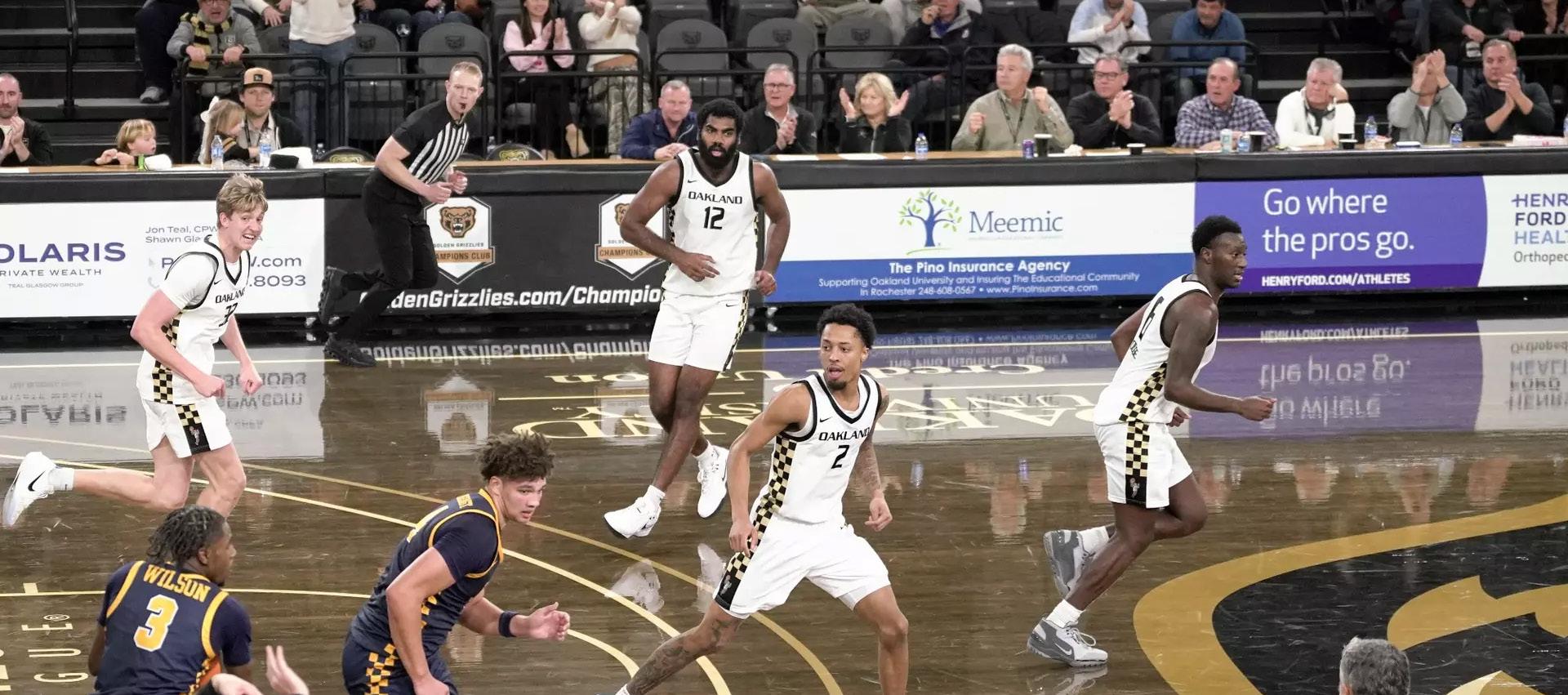
98-97 thriller gives Grizzlies winning record and extends streak to four
MIKE OKORONKWO Sports Reporter
Oakland’s hard work against a brutal nonconference schedule is officially paying off. In a thrilling I-75 rivalry showdown that tested Oakland’s grit and composure, the Golden Grizzlies (6-5, 1-0 HL) narrowly escaped the Toledo Rockets (5-4, 0-0 MAC) with a dramatic 98-97 home victory on Saturday.
The victory is monumental: it marks the program’s 900th win under coach Greg Kampe, extends the Grizzlies’ winning streak to four games and — most significantly — gives Oakland its first winning record of the season at 6-5. This early-season turnaround proves Oakland’s ability to win under duress, a trait that could be massive in terms of leveraging its position in the Horizon League to win the postseason tournament.
Ziare Wells: The clutch masterclass
Oakland overcame multiple deficits, including an 11-point hole, throughout the chaotic game that saw 20 lead changes. The final victory was sealed by the heroic effort of Ziare Wells. Wells delivered a masterclass performance, hitting the game-winning jumper with just seconds remaining.
The aggressive move saw him bump off his defender and finish through contact near the basket, highlighting his athleticism and willingness to get inside when the game was on the line. With a season-high 21 points on 9-for-14 shooting, this was arguably his best game all season. The victory showed a team that simply doesn’t give up down the stretch, a crucial mental edge.
Brody Robinson: Efficiency amidst physicality
Brody Robinson delivered another masterclass in offensive control, contributing 19 points and leading the team with six assists. Robinson was highly efficient, shooting 8-for-14 from the field and hitting three 3-pointers.
The quality of the opponent created new challenges. Robinson didn’t get to the line as often, a difficulty stemming from the increased quality of the opponent and the difficulty of driving in the paint and maintaining body control, especially given that he is undersized. Despite this, Robinson contributed significantly on defense with two steals. His defensive contributions showcase how quickly he has learned the Oakland zone defense and is able to intercept passes within passing lanes and chase loose balls.
Frontcourt versatility and defensive stops
Oakland’s frontcourt demonstrated crucial twoway versatility, though not without significant physical challenges.
Michael Houge played a dominant role, particularly on the defensive end. He came up with an important stop on the last play of the game to prevent Toledo from winning, shutting down a relatively good look at the basket after Wells hit his shot.
Isaac Garrett also proved his commitment as a team player. Garrett came up with one steal and three blocks and displayed good vision and feel passing-wise, continuing to show his versatility on both ends of the court. Meanwhile, Tuburu Naivalurua added a smooth, versatile performance of 18 points, complementing the play of his fellow frontcourt players.
Rebounding concerns and second-chance efficiency
Despite the thrilling win, a key concern remains: boxout discipline. The Grizzlies were out-rebounded by 16 overall (44-28). The team allowed Toledo to grab 17 offensive rebounds, while Oakland managed only seven.
Crucially, however, the stats reveal Oakland’s defensive composure and efficiency. Even with a massive advantage of 17 offensive rebounds, Toledo only converted them into 16 second-chance points. In contrast, Oakland made the most of its limited opportunities, scoring 14 second-chance points off
seven offensive rebounds. This near-equal scoring total, despite a 10-rebound deficit on the offensive glass, highlights the Grizzlies’ ability to lock down Toledo on second looks and their efficiency in converting bonus possessions into points.
A tough game against a gritty Rockets squad
The win was especially hard-earned given the highlevel play of the Toledo Rockets. Freshman guard Leroy Blyden Jr. led the Rockets with 20 points, having played exceptionally well lately. Blyden Jr. is quickly proving why he is regarded as one of the best freshmen in the country, coming into the game averaging 14 points, 5.5 assists, 2.5 steals and 2.1 rebounds per contest.
Other Toledo players who stood out included Sean Craig, who secured a strong double-double with 15 points and 11 rebounds, and Sonny Wilson, who finished with 16 points and seven assists. The physical presence and 16 points from Kyler Vanderjagt were also tough for the Grizzlies to contain. It took a dedicated, complete team effort to overcome a talent-filled squad and secure the pivotal 98-97 victory.
Final word
This gritty 98-97 triumph was not simply a narrow escape; it was the full realization of Kampe’s ambitious scheduling strategy. While the Golden Grizzlies absorbed losses early in the season against titans like Michigan, Houston and Purdue, those battles against elite competition were the furnace in which Oakland’s grit was forged.
By consistently forcing the squad to operate at a championship level, the early losses served as invaluable, high-stakes lessons. The team now possesses a profound competitive clarity — it knows exactly what it takes to perform against the nation’s best and, critically, it knows it can match up. This confidence and battle-tested poise are the dividends now being paid in the form of crucial, characterdefining victories.