
Getting to Swinburne is easy because all campuses are accessible by public transport. Car parking is available at Hawthorn campus for a fee, and free parking is available at Croydon and Wantirna campuses.
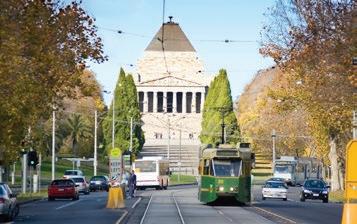
Public transport
For public transport timetables, ticketing information and route maps visit ptv.vic.gov.au
• myki: is Melbourne’s ticketing system. Find out everything you need to know about travelling with myki including how it works, where to buy it and how to top up.
• iUSEpass: is available for international students enrolled in a full-time undergraduate course (Bachelor Degree or Associate Degree) or a higher VE course (Advanced Diploma or Diploma) to purchase a half-price annual myki ticket for the zone/s in which they study.
Apply at StudentHQ Hawthorn for an iUSEpass
When you buy an International Undergraduate Student Education Pass (iUSEpass) you are buying an annual public transport pass at 50% off the normal cost.
The criteria for the iUSEpass are as follows:
• iUSEpass valid for 365 days – one year from activation of the card
• Provides a 50% discount on myki full fares – that is:
- Normal annual pass cost $1521
- iUSEpass cost $760.50
Please note: international students studying ELICOS, Foundation Year, VE certificate and postgraduate programs are currently NOT eligible for the iUSEpass.
For more information, visit ptv.vic.gov.au/tickets/concessions/ international-students
If you are eligible under the criteria listed above, the International Counter at Student HQ Hawthorn will issue a code (unique to you) which you will need to purchase your pass from Public Transport Victoria.
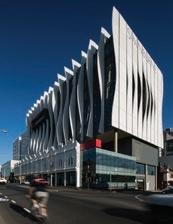

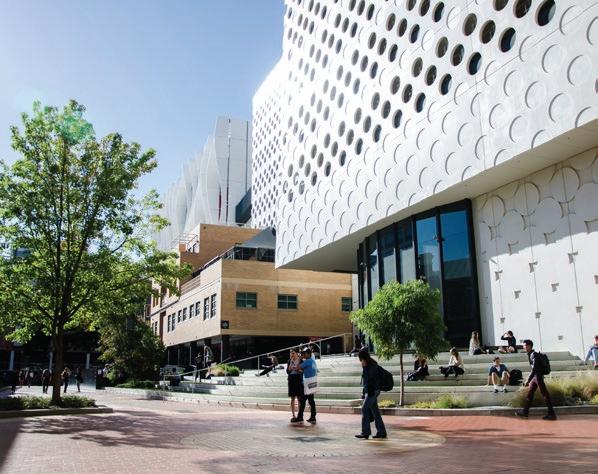
Getting to Swinburne’s Hawthorn campus
John Street, Hawthorn
Train
Glenferrie Station is on the Belgrave, Lilydale and Alamein Lines.
It takes about 10 minutes to travel from Flinders Street Station in the city to Glenferrie Station. It is a one-minute walk to campus.
Tram
No. 16 Melbourne University to Kew via City and St Kilda.
The nearest tram stop is on Glenferrie Road, a five-minute walk from campus.
Bus
No. 624 Kew – Chadstone Shopping Centre – Holmesglen TAFE – Oakleigh.
The bus travels along Auburn Road. From the bus stop it takes about 10 minutes to walk to campus.

Getting to Swinburne’s Wantirna campus
369 Stud Road, Wantirna
Train and bus
Boronia Station is on the Belgrave Line. It takes 50 minutes to travel from Flinders Street Station in the city to Boronia. Bus Nos. 737 and 745 run from Boronia Station to Knox City, which is a short walk from the Wantirna campus.
Bus
Wantirna campus is serviced by many buses which terminate at Knox City Shopping Centre. From Knox City, it is a short walk up Stud Road to the Wantirna campus.
No. 664 Chirnside Park – Knox City
No. 732 Box Hill to Upper Ferntree Gully
No. 737 Croydon to Monash University
No. 738 Mitcham to Knox City
No. 745A Bayswater – Knox City –Wantirna Primary School
No. 755 Bayswater – Knox City via Basin, Boronia, Ferntree Gully
No. 757 Scoresby to Knox City
No. 758 Scoresby to Knox City

What do I need to do?
1. Enrol online
After accepting your offer, you will receive information about enrolling into your course. All Swinburne students are required to enrol online.
This means you can enrol before you arrive in Melbourne. By enrolling online before you arrive, you will be more organised and prepared to make the most of the guidance you will receive during the Welcome and Briefing, and your course-specific orientation day.
What to do if you haven’t enrolled online?
If you are unable to enrol before arriving in Melbourne, you can enrol at a special session during the international student Welcome and Briefing. Student volunteers will be available after the Welcome and Briefing to escort you to where staff will be available to provide assistance with your online enrolment.
Even if you enrol before your arrival, you are still required to attend the Welcome and Briefing which will provide you with an introduction to Orientation Week and the most important people and services available to support your success.
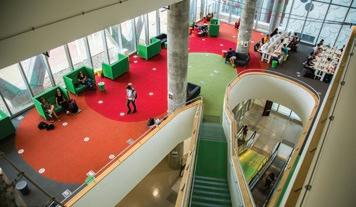
2. Attend the Welcome and Briefing Orientation Week starts with a Welcome and Briefing for international students. This week will give you an introduction to how the most successful students manage their university studies and personal life: how to be aware of what’s important, and how to use all of the support available to your advantage.
The Welcome and Briefing day and your course-specific orientation day are the two most important days for successful transition into your course and the support systems, and provides all the information you will need to make the most of orientation week.
It will also give you the opportunity to meet Swinburne’s International Student Advisers (ISAs) who can provide the advice and support services that will help you adjust to life and study in Australia. In addition, there will be an expo where you can meet and talk to staff from the student support network and local community services. You can also sign up to student clubs, activities and events.
As well as the opportunities above, there is a special ‘Meet & Greet’ session where staff from each faculty will chat with you informally about study at Swinburne and the specialised Strategies for Success program specific to international students.

You must attend the Welcome and Briefing as well as your course-specific orientation which is run by your faculty or school. The Welcome and Briefing day will ensure that you understand the sessions specific to your course later in the week –so don’t miss out on a thing!
3. Attend your course-specific orientation
The orientation program includes a series of course-specific workshops and on-campus activities. It is designed to introduce you to the academic, social and community aspects of student life at Swinburne. The schedule for the day/s specific to your course orientation will be advertised on the orientation website and at the Welcome and Briefing.
During orientation week you can:
• talk to current Swinburne students
• meet your future classmates and teachers
• get advice about your course
• and enjoy the food and on-campus entertainment.
For more information, visit: www.swinburne.edu.au/international/ orientation
International Student Life is made up of a team of International Student Advisers (ISAs) who can provide advice and support on your academic and personal needs during your time at Swinburne. The team includes an accommodation adviser for assistance with all accommodation enquiries and an employability specialist offering a range of employability-focused activities and events especially tailored for international students.
This is a free and confidential service.
Note: If you receive a notice or warning letter from Swinburne, we strongly advise you to take special note of any due dates, speak up early and make sure you understand your rights and responsibilities.
Services include:
• private and confidential advice about managing your personal needs and issues
• advice if you feel confused about your course or any advice given about your studies
• support and advice if you are unsure about a notice you have received from Swinburne
• advice and referral for complaint and grievance processes
• advice before you choose to withdraw or request a release from your course
• an accommodation help desk
• specialised support and workshops for international students to boost their employability
• extensive critical incident support for students affected by accident, illness or home country issues.
For more information, visit www.swinburne.edu.au/student/ international/support.html
Note: Students who experience unexpected or serious illness, injury, or are affected by world or natural events in their home country should notify International Student Life immediately.
For more information, visit www.swinburne.edu.au/student/ international/disasters-internationalevents.html
Swinburne has a confidential counselling service for students who may be experiencing personal or academic difficulties. Counsellors provide support for a range of issues, including:
• personal, relationship and family issues
• effective study and academic progress problems
• studying and learning more effectively
• exam anxiety, motivation and using time more efficiently
• stress, grief and loss
• adjusting to Australian culture and university life.
For more information, visit www.swinburne.edu.au/stuserv/ counselling
Learning and Academic Skills advisers provide advice on how to improve your academic skills and how to meet your course requirements.
For more information, see page 8 or visit www.swinburne.edu.au/student/ study-help/las
Swinburne’s Centre for Career Development offers a range of services that can assist you to plan your career and build a body of experience and skills that will give you an advantage when applying for a job. They also offer one-on-one career counselling. Services include:
• SwinEmploy – online job database for graduate, part-time, casual and voluntary work
• GoinGlobal – international job database
• career counselling
• job search tools
• job application checking
• workshops, conferences and webinars.
For more information, visit www.swin.edu.au/careers

Swinburne Student Amenities Association (SSAA)
The SSAA provides all Swinburne students with free services such as:
• clubs and societies
• orientation activities and events
• independent academic advice and advocacy
• student diary and publications
• Student Leadership and Volunteer Program
• training, workshops and opportunities to discuss any study issues
• legal advice.
For more information, visit www.myssaa.com.au
Swinburne Student Union (SSU)
The Swinburne Student Union (SSU) is Swinburne’s independent, student-run representation, welfare and events service.
They organise fun and interesting events on all campuses throughout the year, including campaigns to represent and protect student interests and rights.
They’re based on Level 4 of the UN building at Hawthorn campus (above the bookshop).
For more information, visit http://ssu.org.au/
The academic environment at Swinburne might be very different to what you are used to. Teaching methods may include lectures, tutorials, classes, laboratory sessions, web-based sessions and other methods.
You will be expected to actively participate in this learning process. You will be encouraged to express, analyse and develop your own ideas and opinions; effectively helping you improve your communications skills. Students are expected to conduct independent study outside of class contact hours as a necessary adjunct to the subject content.
Lectures are designed to help you understand the topic you are studying. Your lecturer summarises the main points of the topic and introduces other related areas. You are expected to attend all lectures, and you are encouraged to take notes during the lectures.
Lecture notes prepared by the lecturer may also be available online. Some lectures are video-taped. Students whose lectures have been recorded can view lectures online after the lecture has been delivered. This will help you to summarise and prepare your own notes if you have missed any important points.
These usually run in conjunction with the lectures. They are conducted in much smaller groups and enable you to ask questions and participate in class discussions. Group work is very common in tutorials and classes, where everybody in the team is expected to contribute, as marks are equally distributed across the group members.
Second-hand textbooks can be purchased from the campus bookshop. You will need to ensure that the author, title and edition of the book you are buying are the same as that on your reading list. The edition of the book is especially important as lecturers often refer to specific page numbers that can vary from one edition to the next. Your lecturer will recommend a specific textbook/s for the subject, but

you are expected to consult a number of different texts, including journals, current newspapers and magazines. The library also holds copies of the recommended texts for many subjects.
The libraries located on each campus provide extensive facilities for all students. Facilities include computer and internet access, equipment loans including laptops, access to online journals and databases, late-night computer lab and group-study rooms.
For more information, visit www.swinburne.edu.au/lib
The Learning and Academic Skills (LAS) Centre provides free academic and learning advice. LAS advisers can help you with reading, writing, listening and speaking skills that will benefit you both in and out of the classroom.
You can make individual appointments with LAS advisers (including maths and computing teachers) to review assignments and prepare for examinations. LAS also run workshops to assist you in developing the necessary skills and techniques to achieve your academic goals. If you wish to practice your listening and speaking skills, and meet some new friends, there is also a conversation group.
For more information, visit www.swinburne.edu.au/international/las
Mathematics and Statistics Help Centre
The Mathematics and Statistics Help Centre (MASH) Centre is a drop-in learning space for students who want to ask questions about the maths and stats in their course. You do not need to book an appointment. MASH is open Monday to Friday from 9.30am to 4.30pm.
For more information, visit www.swinburne.edu.au/mash
All students have the right to complain and appeal if they feel that they have been treated unfairly. For more information about Swinburne’s policies regarding the handling of complaints and appeals, visit www.swinburne.edu.au/policies
These policies include the General Grievance Procedures for Students Policy.
International Student Advisers are available for advice on complaints or appeals processes and the SSAA student advocates can assist students to write and submit letters of complaint or appeal. They will also attend meetings with students to ensure they understand the processes and decisions.

There are many ways of meeting people and making new friends in Melbourne. The best place to begin is to get involved with the activities at Swinburne and to join one of the many clubs on campus.
Student clubs and societies
Have you ever wanted to explore an interest such as art or photography? Or do you want to meet people from another culture? Or meet others from your home country or who are interested in your culture or home country?
At Swinburne you can join one of the many clubs and societies, meet new people and discover a personal interest. Can’t find one you like? Why not ask about creating your own!
For more information, visit www.myssaa.com.au

Welcome and orientation briefing
Your introduction to Swinburne starts with the international student Welcome and Briefing on the first day of Orientation Week. The welcome and orientation briefing provides you with all the information you’ll need to make the most of orientation week. It also introduces you to Swinburne’s International Student Advisers, who will provide advice and support services for the duration of your time at Swinburne. You’ll also receive advice about the rest of Orientation Week and your course-specific orientation program.
Course-specific orientation
The course-specific orientation session is the start of your academic life at Swinburne. Current Swinburne students (O’Hosts) will show you around campus and help you adjust to the university environment. It is an opportunity for you to meet other new students, teachers and representatives from your faculty or school.
Swinburne Student Amenities Association (SSAA)
The SSAA provides opportunities to meet people such as the clubs and societies and orientation activities and events.
For more information, visit www.myssaa.com.au
To help you get involved in university life, students are encouraged to take advantage of the low-cost trips and activities organised for all students by the Swinburne Student Amenities Association (SSAA).
International Student Life also organise events and activities that are specifically designed to help international students understand more about life in Melbourne, and at Swinburne.
For more information, visit www.swinburne.edu.au/student/ international/events
Swinburne newsletters
All students regularly receive the Swinburne Student News via their Swinburne email account.
International students should also subscribe to Freetime news to make sure you never have to be alone. Freetime contains a sample of the social activities and events happening in and around Melbourne. Learn about the exciting events, festivals, and activities happening in your community and get involved by subscribing to Freetime.
Subscribe to freetime@swin.edu.au
Hawthorn Aquatic and Leisure Centre
Swinburne students can swim for free at the Hawthorn Aquatic and Leisure Centre (HALC). All you need to do is present your Swinburne student card at reception. HALC also offers a discounted gym membership for Swinburne students, including group exercise classes on a nocontract (casual) basis. There is a joining fee with the membership, and discounted membership fees are offered to students who join with a friend.
For more information, visit www.hawthorn.boroondaraleisure.com.au
Post
Australia Post manages postal services for Australia.
Examples of postage prices
Small letter within Australia
Airmail letter up to 50g
Asia/Pacific Zone
Rest of World Zone
$1.00*
$1.95*
$2.75*
*Prices correct at time of printing. There are different stamps for use on domestic and international mail. Make sure you ask for the correct type at the post office. There are several post offices located conveniently near campus and the surrounding area.
Hawthorn Post Office
782 Glenferrie Road, Hawthorn (03) 9818 1908
Opening hours*
9am–5pm, Monday to Friday 9am–12pm, Saturday
Closed Sunday
Also: Hawthorn West, Glenferrie South, and Auburn
To find a post office near you, visit www.auspost.com.au
Australia’s country code is +61 and the area code for Victoria (and Melbourne) is 03.
Australia has many mobile phone and home phone service providers. They usually offer a range of phone plans with different fees depending on the kind of phone calls you make. Some companies offer discounts if you have both a home and mobile phone or broadband internet account with them. Shop around to get the best deal.
All costs in this section are approximate. They will vary depending on the telephone company and the contract you choose.
If you decide to have a telephone line in your home, you will normally pay a one-off connection fee and a monthly line rental fee ($20–$30).
Local calls from residential telephones cost around 15–30 cents per call. Calls to mobile phones vary.
For long-distance calls within Australia, charges vary.
For international calls you will normally pay a connection fee and a rate per minute.
It may be cheaper to use a pre-paid phone card to call mobiles, long distance, and/or overseas from your home phone. There are many different phone cards available, offering different rates for different countries. You might like to ask other students which phone cards they use.
You can buy phone cards at convenience stores, some supermarkets at cafés, and online.
There are many mobile phone service providers in Australia, offering pre-paid accounts and/or periodical bills. You will normally pay a connection fee plus a rate per minute for phone calls and a flat rate for SMS. Websites such as www.whistleout.com.au/ mobilephones provide comparisons of the plans available.
Local calls from most payphones cost 50 cents. It may be cheaper to use a phone card for long-distance and international calls.
Telephone directories
Melbourne has two main telephone directories: the Yellow Pages and the White Pages. Use the Yellow Pages if you are searching for a business by category (e.g. bookshops). If you know the name of a business or are looking for a residential address or phone number, use the White Pages.
www.yellowpages.com.au www.whitepages.com.au
Directory assistance
These numbers are for directory assistance from your home phone or from a payphone. You may need to dial a different number from your mobile. Check with your provider.
Local and national: 1223 International: 1225
Computers and internet
There are open access computer laboratories and a wireless laptop borrowing facility at the Hawthorn and Wantirna campus libraries and 24-hour computer and internet access is available at the Hawthorn campus.
Wireless internet access is also available across all campuses.
You will find wireless internet available in some cafés, restaurants and shopping centres.
When you enrol, you will automatically receive an official Swinburne student email address.
Your address will be your student ID number@student.swin.edu.au
To access your email, visit www.its.swinburne.edu.au/students/ email.html
It is very important that you check your Swinburne email regularly as the university sends important messages and official notifications to this address. It is advisable to connect your Swinburne student email to your personal email address if you are concerned you may miss official notices.
Note: Please use your student email account when emailing International Student Advisers or other staff. Staff can then identify you quickly and accurately to reply. For privacy and security reasons, staff cannot confirm a person’s identity from a private email account. Anyone can use your name, but no one can use your student ID account.
Communicating with Swinburne staff Swinburne staff are very helpful and will always take time to listen to your enquiry and try to assist you wherever possible. Swinburne is also a multicultural university, so if you have trouble communicating your enquiry, there may be a staff member who can speak your language – all you have to do is ask.


Opening a bank account
Australia has many banks, building societies and credit unions. The larger banks include ANZ, Commonwealth Bank, National Australia Bank and Westpac. You can choose which bank to use for your banking.
It is advisable to open an account within six weeks of arrival as you will usually need your passport and proof of your enrolment to verify your identity. After this time you may require further proof of identity.
Many banks offer low-cost or no-fee accounts for students – so make sure you ask!
Banking hours
The following are general opening hours – they may vary from bank to bank.
Branches
10am–5pm, Monday to Friday; some branches open on Saturday mornings
Telephone enquiries
8am–8pm, Monday to Friday
Telephone and internet banking 24 hours, 7 days
Receiving money from overseas
The following information is provided as a guide. Please check clearance times and fees with your own bank.
Telegraphic transfer
Money sent by telegraphic transfer can take about three working days to be deposited into your Melbourne bank account. Your Melbourne bank may charge you a fee (approximately $10), which will be paid out of the transferred funds. You may also be charged a currency conversion fee.
Note: If you intend to receive money from overseas via telegraphic transfer, check if the bank in your home country has an agreement with a bank in Melbourne. This may mean lower fees and faster processing times for you.

When you deposit an overseas bank draft into your account, it can take up to 30 days to clear (become available for withdrawal). You may also be charged a currency conversion fee.
There are organisations other than banks where you can send or receive money. For example, many Australia Post branches are agents for Western Union Money Transfer Services.
For information on how to pay your tuition fees, see page 26.
University and parenthood
International Student Life (ISL) runs a Juggling Uni and Parenthood workshop specifically designed to assist and support students with families. The workshop includes presenters from the Department of Education and Training and the local city council, providing students with information, advice and resources to help them manage the challenges of both family and study commitments. For more information about this event and other ISL events, visit www.swinburne.edu.au/ student/international/events
Swinburne childcare centres
Swinburne has childcare centres at Hawthorn, Croydon and Wantirna campuses that are available for the children of Swinburne students and staff. These centres are operated and managed by independent co-operatives and waiting lists may apply. Further information can be obtained by contacting the centres directly.
For more information, visit www.swinburne.edu.au/stuserv/ childcare/

Placing your child in care is a personal decision, and you are encouraged to visit a few different childcare centres before making a decision. It is important to choose a centre that you feel most comfortable with, and one that can meet your child’s needs. The following websites provide information for parents about early childhood education and care for children aged between 0-5 years. You can also search for an approved childcare centre or family day care in your local area.
www.education.vic.gov.au/childhood/ parents/childcare
http://ifp.mychild.gov.au/ ChildCareService/Search.aspx
The Australian Government has maternal and child health centres in every suburb (town) to monitor the health and development of babies and pre-school children aged 0-5 years and provide support for families with young children. The following website offers useful information for parents with young children including where to find a maternal and child health centre in your area, playgroups and parent groups, and information about what you can expect when you visit a maternal and child health nurse.
For more information, visit www.education.vic.gov.au/childhood/ parents/mch
If you have children between five and 17 years of age, who you plan to bring to Australia, you must enrol them in school. Arrangements for enrolment must be made prior to any child arriving in Australia.
For a complete list of Victorian Government primary and secondary schools, as well as information about fees and how to apply, visit www.study.vic.gov.au
Applications to non-government schools must be made directly to the school of your choice.
Enrolling your child in a government school
You will need to complete an online application which is available from the Department of Education website, prior to enrolling your child in a school.
For information about school fees and how to apply, visit www.study.vic.gov.au
A professional health service is available from nurses on all campuses and from general practitioners at the Hawthorn campus by appointment. Staff are friendly and respect the confidentiality of patients regarding their medical, social and financial needs.
There is no gap fee for students with Overseas Student Health Cover.
For more information, visit www.swinburne.edu.au/stuserv/ health
Alternatively, you can find doctors in the Yellow Pages telephone directory or at the Victorian Government Better Health Channel: www.betterhealth.vic.gov.au
In Australia, a pharmacy is often called a ‘chemist’. Pharmacies in Victoria cannot fill prescriptions written by doctors overseas. You will need to see an Australian doctor for a new prescription.
To find a doctor who speaks a language other than English, visit the Health Translations directory: www.healthtranslations.vic.gov.au
If you need emergency medical treatment outside normal business hours, some medical clinics remain open after-hours, so check your local medical clinic for opening hours. There is also a doctoron-call service. Dial 13 SICK (13 7425) to request a doctor to visit you at home after-hours. In an emergency, dial 000.
If you require emergency services in Australia, dial 000. The operator will ask you if you need police, fire, or ambulance and transfer you to the service immediately. The emergency service operator will ask you a series of questions and give you advice. While they are doing this, an emergency service vehicle will be dispatched and on its way to where you are. If you are concerned about your language, ask for an interpreter. Take note of where you are and if possible, the names of the closest intersecting streets. Give the address if you know it, or you can give the name of the nearest street corner.
A ’first-responder’ system operates in Victoria which means that if you are expecting an ambulance, fire fighters may arrive first if they are closer. ALL emergency services in Victoria are trained and carry emergency equipment for urgent medical support until paramedics arrive.
The After-hours Assistance Line is a special support service provided by Swinburne to assist international students with urgent matters and advice after normal business hours. It is available from 5pm to 9am Monday to Friday and 24 hours on weekends. Call: 1800 022 168
The After-hours Assistance Line is operated by advisers who know and understand Swinburne procedures and can provide you with appropriate advice or referral for any concerns or urgent matters that arise after-hours. All calls made to the after-hours assistance line are reported to International Student Life each morning and an International Student Adviser may contact you to offer further support and assistance as needed.
In an emergency situation, dial 000.
All international students are required to maintain Overseas Student Health Cover (OSHC) for the duration of their student visa. OSHC contributes to the cost of your medical expenses in Australia. Allianz Global Assistance OSHC is Swinburne’s preferred overseas student health insurance provider. If you have arranged your OSHC through Swinburne, you are covered by Allianz OSHC. An OSHC Allianz representative is available at Student HQ Hawthorn, Ground floor, Swinburne Place West (SPW), 20 Wakefield Street. The Allianz representative can assist with all claims, and general OSHC enquiries.
The Allianz Global Assistance OSHC website and My OSHC Assistant app provides lots of helpful information:
• find a doctor in your local area that will send your claim directly to Allianz Global Assistance directly (direct bill)
• read more about the benefits of your OSHC cover
• find out where you can meet OSHC representatives
• find a doctor who speaks your language. The ‘About OSHC’ is available in other languages on their website. Visit www.oshcallianzassistance.com.au
E-Membership or membership card
Order your membership card online as soon as you are enrolled www.oshcallianzassistance.com.au
Register your device – you will need to enter your Swinburne email address during the process.
Enter your policy number as your student number followed by ‘SUT’ e.g. 1234567SUT.
You will need to create your own PIN.
Select the My Policy tile and update your details including your passport and nationality.
View your e-membership
If you need to make any changes to your policy, or are having difficulties, please visit the local representative or contact 13 6742.
Or order a membership card from the webpage above. You should carry your membership card with you at all times.
Swinburne Security
Call Swinburne Security on 9214 3333.
Security services include:
• Security escort service – a security officer will walk you to your car.
• Hawthorn Night Bus – takes you to a nearby carpark or public transport at night safely.
• Lost property – call security if you have misplaced personal items.
• Safer Community Program – student welfare support and campus security services (see below).
Safety tips for around campus:
• Familiarise yourself with your campus security office and save the security emergency number 9214 3333 into your phone.
• Hawthorn campus: Building 1A, entry alongside the Glenferrie Railway Station.
• Croydon campus: Building CO, entry from Norton Road, near Gate 1A.
• Wantirna campus: Building WD, located near the campus library.
• Always be alert and aware of your surroundings. If you are using headphones, only use one earplug so you can hear sounds around you.
• Keep your valuables with you at all times.
• Walk in well-lit areas in pairs or groups if possible.
• Use the security escort service or the Night Bus to get to public transport or your car safely.
• Avoid parking your car in an isolated area.
• Close and lock all doors and windows and don’t leave valuables in sight in your car.
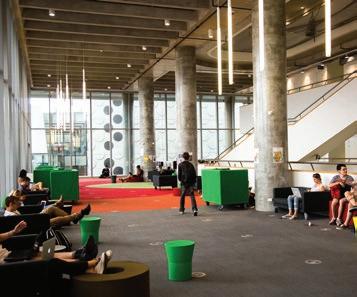
The Safer Community Program provides student welfare support and information about campus security services. It aims to encourage students and staff to play a significant part in campus safety by looking out for one another.
Safer Community can offer:
• A safe space for everyone to voice their concerns about their own safety and wellbeing and that of their peers.
• Personalised student support, safety advice, and referrals for victims of crime, violence, sexual assault, harassment, and bullying.
• Ways to manage behaviours that are worrying you e.g., how to tell someone to ‘please stop and go away’.
The Safe@Swin iPhone and Android app is the official app of the Safer Community Program for students and staff to access contact details for campus security guards, student support services, information on reporting emergencies and safety issues, personal safety tools and advice, campus maps and a range of services to make Swinburne a safer place for everyone. To download the Safe@Swin app, visit www.swinburne.edu.au/safercommunity
The main accommodation options available to international students are:
• On-campus: residential colleges and student apartments
• Off-campus student housing: student apartments and hostels
• Share housing: sharing a house or apartment with other students
• Rental housing: renting a vacant house or apartment
• Homestay: living with a local family.
Many students initially choose oncampus or homestay accommodation, and move to off-campus share or rental accommodation once they are settled.
Temporary accommodation
The three main short-term accommodation options used by international students are:
• On-campus: available at Hawthorn campus
• Backpacker hostels: low-budget dormitory style
• 3-star hotels: hotel-style with shared bathroom
These options are suitable for your initial stay while you are arranging long-term accommodation. Normally, it takes up to two weeks to arrange off-campus accommodation.
Students should book their short-term accommodation as early as possible. Visit www.swinburne.edu.au/stuserv/ accommodation/temporary.html
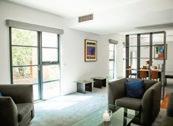
Located in the heart of the Hawthorn campus, these apartments are fully furnished and equipped with modern appliances. Apartments are available as studio, or two-, three- or four-bedroom layouts. Each apartment has separate bathroom and kitchen facilities and includes TV, telephone, broadband internet connection, a fully equipped kitchen and individual locks. The building has a security entrance, communal lounge, study and indoor and outdoor recreation areas. Students only need to bring their clothes, personal items and computer. Easy access and no travel costs to Hawthorn campus for classes, library, computer labs, sports facilities etc.
The Residential College provides fully furnished, single, study bedrooms. Each room has a single bed with bedding, a built-in desk with bookshelf, a sink and vanity cupboard, electric kettle, desk lamp, telephone, broadband internet connection, ergonomic study chair and visitor’s chair. There is central heating in each bedroom and bed linen is provided.
Swinburne
The apartments offer independent living with security entrances and separately keyed bedrooms. The apartments are partly furnished with a single bed in each bedroom; desk and ergonomic chair; telephone and broadband internet connection; kitchen with stove, oven, fridge and electric kettle; gas heating; dining table and chairs; lounge with chairs and coffee table; laundry unit with washing machine and dryer.
For more information about on-campus accommodation, visit www.swinburne.edu.au/stuserv/ accommodation/on-campus
Off-campus accommodation
Homestay accommodation
Homestay is managed by Australian Homestay Network (AHN). Homestay means living with a local family or resident. It is a cultural exchange between a local individual or family (called a Host) and a visiting international student. The student lives as a guest in the Host’s home and the program is a great way for students to learn English and experience the Australian lifestyle.
What is included in homestay?
• supportive, secure family home environment
• two to three meals a day, a furnished bedroom, electricity, gas and water
• professional phone support line, available 24 hours a day, seven days a week
• contents insurance for students and hosts.
Homestay conditions:
• homestay bookings should be made at least ten days prior to arrival
• homestay fee per week is AUD$295* (over 18) and AUD$335* (under 18 years of age)
• telephone calls and Internet charge not included
• students need to give both the Host and AHN Homestay two weeks’ notice when vacating
• placement fee AUD$240* and minimum 28 days / 4 weeks homestay – paid in advance prior to placement
• after the initial 28-day stay, students over 18 may choose further options.
Homestay accommodation can be booked online at www.swinburne.edu. au/international/homestay
*Prices correct at time of printing

Rental accommodation
This means renting an apartment or house. The majority of rental properties are unfurnished and require a 12-month tenancy agreement. This agreement is a legal document which covers the rent and security bond amounts and other conditions and rules. Swinburne Accommodation Adviser can provide information, advice and assistance to find affordable and secure accommodation.
The best place to find rental accommodation is online: www.domain.com.au
www.realestateview.com.au
www.realestate.com.au
Share accommodation
This is a popular option for students. It involves sharing a rented apartment or house with other students. Most rental properties include separate bedrooms with shared bathroom, kitchen and lounge. Housemates normally share the rent and bills between them.
Before deciding on this type of accommodation, you should inspect the property thoroughly. Check that everything in your own room works (e.g. heater and electricity). Also be clear about the terms of the agreement, such as weekly rent, bond, bills, facilities, etc.
Meet all your potential flatmates and discuss your lifestyle with them to make sure that you will be able to live together happily.
It is recommended that you have your name put on the lease (talk to an international student Accommodation Adviser or real estate agent about this). You will also need to find out how many weeks’ notice is required if you decide to move out. Accommodation Advisers have excellent knowledge of the tenancy laws and can help protect you against problems that may arise in share accommodation.
Find share accommodation using the Swinburne Housing Database www.swinburne.studystays.com.au
If you wish to access this database prior to your enrolment please contact a housing officer at your campus. Housing officers will be able to assist you with all matters relating to rental accommodation and your rights and responsibilities when renting a property.
Note: Beware of fake ads and fake landlords or internet classifieds. We advise all students not to hand over money or sign any kind of rental contract before physically sighting the property. If you are unsure, email accommodation@swinburne.edu.au

The accommodation help desk is available all year.
Swinburne International also offers accommodation sessions to advise you on accommodation options and how to arrange them.
Sessions are held three times a year:
• January/February
• June/July
• September/October.
Contact the Accommodation Adviser: Email: accommodation@swin.edu.au
Phone: +61 3 9221 5551
For more information, visit www.swinburne.edu.au/stuserv/ accommodation/student-support.html
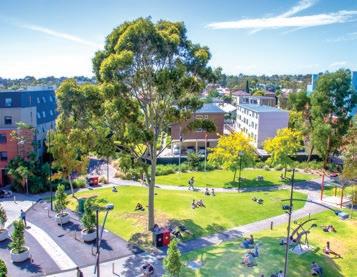
Melbourne is the capital city of the state of Victoria which is located in Australia’s south east. Melbourne is considered to be one of the safest and most liveable cities in the world. The city is home to many people and welcomes a diversity of cultures from all over the world.
Central Melbourne, also known as the central business district (CBD), is situated on the Yarra River and extends to Port Phillip Bay. It’s also known as the ’cultural and cosmopolitan’ city where you will find a little piece of home everywhere you look, with its variety of restaurants, cafes, and markets.
If you are lost or need help in Melbourne, try asking one of the locals for assistance or, in the centre of the city, look for the Melbourne City Ambassadors dressed in red. People in Melbourne are generally friendly and happy to help you.
To get to know the city and surrounds, take a ride on one of the free tourist trams or buses. These services usually operate daily (check the websites for public holidays).
For information about the City Circle Tram, visit www.ptv.vic.gov.au/route/view/1112
For information about the Melbourne Visitor Shuttle, visit www.thatsmelbourne.com.au
Street directories
There are a number of printed street directories available and many Melburnians use the ‘Melway’. You’ll often see a Melway page and grid reference in real estate and other advertisements.
The Melway is a great source of information about Melbourne. It is updated every year and is available for purchase from bookshops, service stations or newsagents for about $63*. It provides street maps, public transport networks and campus maps of universities in Victoria. The Melway also includes locations of places such as tourist spots, public facilities, markets and places of worship.
There are also online street directories, including: www.street-directory.com.au www.whereis.com www.google.com/maps
*Price correct at time of printing
Melbourne has an extensive public transport network known as Metro, made up of three modes of transport – train, tram and bus. One ticket (myki) provides access to all modes of transport.
The network spans Zones 1 and 2 of metropolitan Melbourne, with Zone 1 being inner city, and Zone 2 the suburbs.
Public transport is fairly reliable and safe to use. Most stations and stops display the relevant timetable. Services are reduced on weekends and public holidays.
Timetables and travel guides are available at train stations.

The Public Transport Victoria website also provides timetable and fare information. Check out the Journey Planner function where you can easily find out the right mode of transport for your trip.
The iUSEpass discounted annual ticket is available for eligible international students. Please refer to page 4 of this guide for more information including conditions and purchasing a pass.
For public transport information and timetables, visit www.ptv.vic.gov.au
All Melbourne taxis (cabs) are yellow. Taxi drivers must wear their company uniform and display their photo identification at all times.
Taxis are often found at designated ranks that are clearly signposted at central locations.
Taxi fares can be quite expensive, depending on your journey. Late-night taxi trips from 10pm to 5am must be paid for in advance.
There are additional charges like a latenight surcharge from midnight to 5am, a fee for telephone bookings, using toll roads, or a taxi from the airport rank.
Melbourne’s major taxi companies include:
• Arrow 13 22 11
• Embassy Taxis 13 17 55
• Silver Top 13 10 08
• Yellow Cabs 13 22 27
Wheelchair-accessible taxis are available from Silver Top and Yellow Cabs.
Melbourne is great for cycling: keep fit, have fun, and cut your transport costs. Check the following websites for maps of the on-road bike lanes and off-road paths. You can ride a bike from the city to Hawthorn campus almost entirely on off-road paths.
Cyclists must obey the road rules. This includes wearing an approved helmet, having a warning device (e.g. a bell) on the bike, and having reflectors and lights if you are riding at night or when visibility is low.
Visit www.vicroads.vic.gov.au and click on the Bicycles and Pedestrians icon for road rules, cycling network maps and information about cycling safely.
Bicycle Network is also a great source of information about cycling in Victoria www.bicyclenetwork.com.au

VicRoads is the state government body for vehicle registrations and licences. It provides information services on roads, traffic and road safety.
If you are in Victoria on a temporary student visa you can drive on your current, valid overseas driver’s licence. It must be in English, or accompanied by an English translation, and you must also carry some form of photo identification.
Contact VicRoads if you wish to apply for a Victorian Driver Licence.
In Australia, we drive on the left side of the road. The driver and all passengers must wear seatbelts. In Victoria, speed is limited to 50km/h in built-up areas and 100km/h on freeways, unless signs show
a different speed limit. Speed limits can be lower in some areas or at certain times (e.g. outside a school, the speed limit may be lower at all times, or it may change at certain times on school days).
It is essential that you learn Victoria’s road rules if you plan to drive in Melbourne.
For road rules, VicRoads office locations and other information, visit www.vicroads.vic.gov.au
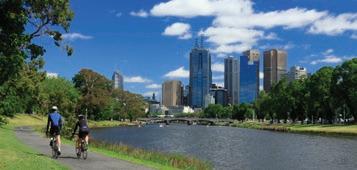


Check the Swinburne International Student Life website for the latest information about what’s on in Melbourne www.swinburne.edu.au/student/ international/events
As well as on-campus events advertised in the student newsletter, you can subscribe to ’Freetime’ social events, a newsletter for international students. Email freetime@swinburne.edu.au
There are many other websites with information about things do in the city and around the state.
www.thatsmelbourne.com.au www.visitvictoria.com.au
Melbourne Visitor Centre Federation Square Cnr Swanston and Flinders Streets (opposite Flinders Street Station) Open daily, 9am to 6pm Closed Good Friday and Christmas Day
Cinemas
Melbourne has a huge range of cinemas: from small art-house theatres to large complexes showing the latest blockbusters.
With your Swinburne ID card, you are eligible to buy student concession tickets at many cinemas. These cost about $13. Discount tickets can also be purchased from the campus bookshops. Cheap tickets are also available at some cinemas on Mondays, Tuesdays or Thursdays. The cheap days vary from cinema to cinema. Check a newspaper for details.
The Couch aims to provide a safe and free space at night time for international students studying in Melbourne to socialise, relax, rest, study, and seek information and assistance. The Couch is open on Sundays, Mondays, Tuesdays, Wednesdays and Thursdays from 5pm to 9pm.
For more information, visit www.salvationarmy.org.au/find-us/ victoria/melbourne614/melbourne614services/the-couch-614/




Shopping is a favourite pastime of Melburnians: from bargain shopping at street markets and factory outlets to the style and sophistication of various shopping precincts. Lots of information is available online.
www.visitmelbourne.com.au
www.visitvictoria.com.au
Supermarkets are a good place to buy your basic necessities and are generally easy to find. Most supermarkets will have produce catering to different dietary needs. Common supermarket chains are Coles, Woolworths, Aldi and IGA.
Many supermarkets are open from 6am until midnight every day except major public holidays.
The various markets around Melbourne are a fantastic source of fresh produce. Many of the markets also sell bargain clothing, arts and crafts, souvenirs and second-hand goods.
Visiting the markets is a great way to experience multicultural Melbourne, with produce, sights and sounds from all over the world.
Camberwell Fresh Food Market
Burwood Road, Camberwell www.camberwellfreshfoodmarket. com.au
Camberwell Sunday Market
Station Street, Camberwell www.sundaymarket.com.au
Centro Box Hill
Whitehorse Road, Box Hill www.boxhillshoppingcentre.com.au
CERES Organic Food and Craft Market
Cnr Stewart and Roberts Streets, East Brunswick www.ceres.org.au/marketandshop
Footscray Market Corner
Hopkins and Leeds Streets, Footscray Prahran Market
Commercial Road, Prahran www.prahranmarket.com.au
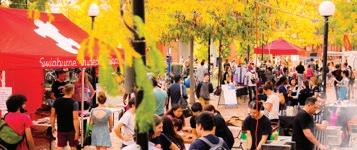
Queen Victoria Market
Cnr Elizabeth and Victoria Streets, Melbourne
www.qvm.com.au
South Melbourne Market
Cnr Cecil and Coventry Streets, South Melbourne www.southmelbournemarket.com.au

Factory outlets sell sample, damaged and old stock and can be a great place to pick up a bargain. Try Bridge Road in Richmond or Smith Street in Collingwood for factory outlets in amongst great cafés and other interesting shops. Or you can head out to the Brand Smart Factory Mall in Nunawading or the Direct Factory Outlet (DFO) in Moorabbin, Essendon or South Wharf for warehouses full of outlet stores.
Department stores
Melbourne has plenty of huge discount department stores such as Kmart, Big W and Target, which are sensible places to buy good value household goods and appliances, basic clothing and underwear.
Myer and David Jones are also large department stores which stock more designer labels and famous brands.
Boutique shopping
Visit Melbourne’s various shopping precincts for locally designed originals and the best of international brands.
Melbourne CBD
Browse through the Melbourne Central, QV or GPO shopping malls, or simply wander down some of our small laneways and arcades like Centre Place or Cathedral Arcade, where some of the most unique and eclectic fashion can be found.
Brunswick Street, Fitzroy
The bohemian heart of Melbourne, where you can find groovy and alternative shops alongside great cafés and bars.
Greville Street, Prahran
A cosmopolitan and quirky part of Melbourne where you can find retro clothing and streetwear near lounge bars and nightclubs.
Eastland Shopping Centre, Ringwood
A shopping complex with over 230 stores and views to the Dandenong Ranges.
Chadstone Shopping Centre, Chadstone
A huge shopping and entertainment complex about 15 km from the city, boasting over 400 stores.

Our list is just the tip of the iceberg! The Age Good Food Under $30 is a great source of recommendations for cafes and restaurants in Melbourne. It can be found at bookshops and newsagents for about $10.
Melbourne is often called the culinary capital of Australia as it is very easy to find delicious and exotic food, whether you are looking for great value or silver service.
Tipping is not mandatory in Melbourne, but you might like to leave a tip if you have received exceptionally good service at a cafe or restaurant. There is no set amount, but 10 per cent of your total bill is acceptable.
Chinatown, Little Bourke Street, City
This colourful, busy and historic precinct offers Chinese and other Asian cuisines to suit various budgets.
Sydney Road, Brunswick
Offers a variety of Middle Eastern restaurants and bakeries and Italian groceries. Many restaurants and food stores on Sydney Road serve or sell Halal food.
Lygon Street, Carlton
Also called ‘Little Italy’, you can find tasty and authentic pasta and pizza at relaxed good-value cafés or up-market restaurants.
Victoria Street, Richmond
The heart of Melbourne’s Vietnamese community, with authentic Asian food at reasonable prices.

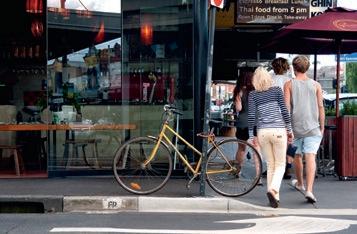
Southbank and Federation Square, City
Try the newest part of Melbourne, where you can find restaurants and bars with great views over the Yarra. Located nearby are laneways where you can discover little cafés and eateries.
Fitzroy and Acland Streets, St Kilda
One of Melbourne’s great beachside precincts, where you can find various open eateries with tables spilling out onto the footpath.
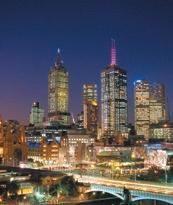
Australia is predominantly a Christian country, but you can also find Buddhist temples, Islamic mosques, Sikh temples, and many other places of worship.
Swinburne chaplains
All Swinburne campuses have access to a chaplain who is available for the whole campus community to help with any issues of life or meaning.
The chaplain can put you in touch with people of your own religious faith or give you information on where to go for worship. Visit www.swinburne.edu.au/chaplaincy
Swinburne multifaith facility
The multifaith facility and mosque at the Hawthorn campus, acknowledges Swinburne’s commitment to religious tolerance and symbolises the centrality of the spiritual dimension to university life. The facility is provided for use by students and staff for reasons associated with faith, meditation or to spend time in quiet reflection. It is accommodating of all religious affiliations and denominations. This dedicated space provides access to:
• chaplains
• a meditative/quiet reflection room
• rooms available for booking your faith-based activity.
The Melway street directory provides a listing of places of worship in Melbourne. You can also find information online.
Anglican www.anglican.com.au
Buddhist www.buddhanet.net
Catholic www.catholic.org.au
Hindu www.hinducouncil.com.au
Islamic www.icv.org.au
Jewish www.jewishaustralia.com.au
Presbyterian www.pcvic.org.au
Seventh-day Adventist www.spd.adventist.org
Sikh www.gurudwara.net
Uniting www.victas.uca.org.au
The Australian Government grants your student visa based on specified conditions. It is your responsibility to ensure that you are aware of these conditions.
Refer to the Department of Immigration and Border protection (DIBP) website for details www.immi.gov.au
An electronic confirmation of enrolment (eCoE) is a document issued by Swinburne International which advises Australian government agencies of the program you are studying, its duration and fees. You must have an eCoE to obtain or renew your student visa.
You must ensure that you always have an eCoE for your current program and that it shows the correct fees and duration. For example, you must obtain a new eCoE and advise DIBP if you have to extend your program or transfer to another program.
It is your responsibility to ensure that you have valid Overseas Student Health Cover throughout your stay in Australia, otherwise it will be a breach of your student visa conditions.
As an international student, you must maintain a valid enrolment status. You will normally be expected to maintain a fulltime study load.
It is a condition of your student visa that you must notify Swinburne of any change in your contact details, that is, your Australian residential address and telephone number.
It is important that you provide an accurate address and update it regularly so that you receive important information that may be sent by Swinburne and government agencies.
You should also ensure that you update your home country contact details with Swinburne if they change. Swinburne recommends that if you do return to your home country at any time during your studies, for example, during university holidays, you should change your postal address to your home country address. This will help to ensure that you receive important correspondence that may be sent to you.
To change your address online, you need to log into your student account and update your details. Visit www.swinburne.edu.au/student
It is a condition of your student visa that you remain with Swinburne for the first six months of your principal course. If you have been granted a visa to undertake two or more courses, the principal course will be the final course in that package.
You are permitted to work a maximum of 40 hours per fortnight during standard teaching periods. If you choose to study subjects during an optional summer or winter teaching period, you will also be limited to 40 hours per fortnight.
Working hours are not limited by your visa during scheduled study breaks. However, workplace law in Australia prevents employers exploiting work hours and worker conditions.
You are advised to understand your workplace rights. Visit www.fairwork.gov.au/employment/ international-students
Course progress and/or attendance
International students are required to comply with the conditions of their visas in relation to making satisfactory academic progress and attending classes.
Swinburne has academic progress requirements. Swinburne’s academic standards of progress are contained in its academic policies. These policies can be accessed online. Visit www.swinburne.edu.au/policies
Students who are not progressing satisfactorily must make themselves available for interviews after the relevant teaching period.
Swinburne is obliged to report students who breach visa conditions relating to satisfactory academic performance to the Australian immigration authorities.
Certain courses have attendance requirements. Students will be made aware of these requirements. Swinburne is obliged to report students who breach visa conditions relating to attendance to the Australian immigration authorities.
You are required to pay your tuition fees by the due date shown on liability statements. If you do not pay your fees by the due date, a late fee will be applied to your debt; you may be withdrawn from your program and reported to the Australian immigration authorities. Students with outstanding debts are also unable to sit examinations, graduate, or access results.
Your student visa is usually valid for the expected duration required to complete your course. If, for some reason, your visa will expire before the expected completion date of your course, you must apply for a new eCoE.
Use the checklist provided on this website to ensure that your application materials are complete before lodging.
The granting of a new eCoE where a student has to extend their course duration is not automatic. Restrictions apply as to whether international students can extend their course duration.
Information about how to apply for a new student visa is available at www.swinburne.edu.au/student/ international/visa/renewal.html
Methods of payment
Electronic payment is the preferred method of payment.
Payment method Details
Online via My Financials
Visa and Mastercard credit or debit card
BPay
Biller code: 334193
Post Billpay Billpay code: 2299
studentHQ
Current students
Login through 'My Financials' (student login required) under the 'Manage my Course' section of the current students website www.swinburne.edu.au/student
Register with your bank, credit union or building society to make a payment from your cheque, savings or credit card account.
The customer reference number is on your Statement of Account.
• online at www.postbillpay.com.au
• via mobile or tablet with the Post Billpay App
• by phone – call 13 18 16
• in person at any Post Office – credit card, EFTPOS or cash
The payment reference number is on your Statement of Account.
On campus in person – 9.00am to 5.30pm weekdays.
• credit card
• EFTPOS
• cheque
Western Union Credit card or bank transfers can be made via https://student.globalpay.wu.com/geo-buyer/sut
Note: If you arrange a payment that’s more than the balance of your account we may decline the payment. This payment may be made by cheque, online banking, automatic payment or direct debit. If the payment is stopped (dishonoured), you will be charged a $100 dishonour fee each time.
Enrolment statement and tax invoice
You will receive a two-page document for each study period. The Statement of Account/Tax Invoice outlines the fees due for the current study period, the total amount payable and due date for payment. The Enrolment Statement/Unit Fees Details lists the units you are enrolled in and being charged for this academic year. It is important that you read the enrolment statement and tax invoice every time you
receive one. You must pay by the expected due date. Paying this amount also confirms that the units listed on the form are correct for the current enrolment period. If you disagree with any of these details you must arrange an appointment with a Course Advice Specialist (CAS) at StudentHQ before the due date to clarify the details. Changes to your enrolment will generate a new invoice.
A direct deposit form will be attached to this invoice.
StudentHQ and International counter
Swinburne Place West
Ground Floor
20 Wakefield Street
HAWTHORN, VIC 3122
www.swinburne.edu.au/international
Opening hours
Monday to Friday: 9am–5pm Closed Saturday, Sunday and public holidays
International Student Life
Swinburne Place West
Level 1
20 Wakefield Street
HAWTHORN, VIC 3122
To make an appointment with an International Student Adviser (ISA)
Telephone: 9214 6741
Email: isa@swin.edu.au
Opening hours
Monday to Friday: 9am–5pm
Closed Saturday, Sunday and public holidays
Emergencies
Police, Fire Brigade or Ambulance
Telephone: 000
Swinburne After-Hours Assistance Line
Telephone: 1800 022 168
Swinburne Security
Telephone: 9214 3333
Department of Immigration and Border Protection (DIBP)
www.immi.gov.au
Telephone: 13 18 81
Monday to Friday: 9am–4pm
Melbourne CBD
Ground Floor Casselden Place
2 Lonsdale Street
MELBOURNE, VIC 3000
Dandenong
51 Princes Highway
DANDENONG, VIC 3175
Translating and Interpreting Service
Translating and Interpreting Service (TIS National) offers a range of services including telephone interpreting. TIS National is available 24 hours a day. Some services have to be arranged in advance. Refer to the TIS National website for a list of services and costs.
Telephone: 13 14 50 www.immi.gov.au/tis
Legal Services
Should you require assistance with legal issues you can contact one of a number of organisations who can provide legal information and advice. They may also offer advice in a number of different languages.
Victoria Legal Aid
Telephone: 9269 0120 or 1800 677 402 www.legalaid.vic.gov.au
Law Institute of Victoria
Telephone: 9607 9311
Email: lawinst@liv.asn.au www.liv.asn.au
1300 368 777 (within Australia) swinburne.edu.au/askgeorge

swinburne.edu.au/twitter
swinburne.edu.au/facebook swinburne.edu.au/youtube
WeChat:SUT1908 instagram.com/swinburne
weibo.com/swinburneuniversity