



BY MAGGIE NUÑEZ-AGUILERA
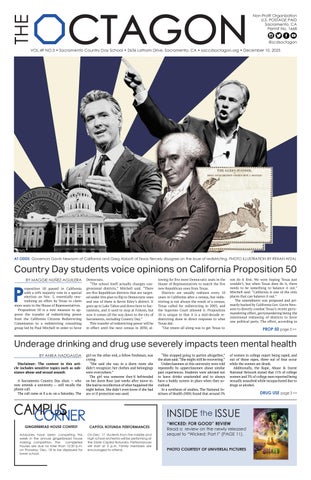
Proposition 50 passed in California with a 64% majority vote in a special election on Nov. 5, essentially neutralizing an effort by Texas to claim more seats in the House of Representatives. Proposition 50 is a new measure to approve the transfer of redistricting power from the California Citizens Redistricting Commission to a redistricting consulting group led by Paul Mitchell in order to favor
Democrats.
“The school itself actually changes congressional districts,” Mitchell said. “There are five Republican districts that are targeted under this plan to flip to Democratic ones and one of them is Kevin Kiley’s district. It goes up to Lake Tahoe and down here to Sacramento, and it used to stop at Folsom, but now it comes all the way down to the city of Sacramento, including Country Day.”
This transfer of redistricting power will be in effect until the next census in 2030, al-
lowing for five more Democratic seats in the House of Representatives to match the five new Republican ones from Texas.
Districts are usually redrawn every 10 years in California after a census, but redistricting is not always the result of a census; Texas called for redistricting in 2003, and the Supreme Court allowed it. Proposition 50 is unique in that it is a mid-decade redistricting done in direct response to what Texas did.
“Our intent all along was to get Texas to
not do it first. We were hoping Texas just wouldn’t, but when Texas does do it, there needs to be something to balance it out.” Mitchell said. “California is one of the only places that can balance it out.”
The amendment was proposed and primarily backed by California Gov. Gavin Newsom to directly combat Texas’s recent gerrymandering effort, gerrymandering being the intentional redrawing of districts to favor one political party. The effort, according to PROP 50 page 3 >>
BY ANIKA NADGAUDA
Disclaimer: The content in this article includes sensitive topics such as substance abuse and sexual assault.
GINGERBREAD HOUSE CONTEST
Advisories have been competing this week in the annual gingerbread house making competiton. The completed houses are due no later than 12:30 p.m. on Thursday, Dec. 18 to be displayed for lower school.
“She said she was in a dorm room she didn’t recognize; her clothes and belongings were everywhere.”
The girl was someone they’d befriended on her dorm floor just weeks after move-in. She had no recollection of what happened the night before. She didn’t even know if she had sex or if protection was used.
A Sacramento Country Day alum — who now attends a university — still recalls the phone call. The call came at 8 a.m. on a Saturday. The girl on the other end, a fellow freshman, was crying.
CAPITOL ROTUNDA PERFORMANCES
On Dec. 17, students from the middle and high school orchestra will be performing at the State Capitol Rotunda. Performances will start at 2 p.m. Family members are encouraged to attend.
“She stopped going to parties altogether,” the alum said. “She might still be recovering.”
Underclassmen at this university were told repeatedly by upperclassmen about similar past experiences. Students were advised not to leave drinks unattended and to always have a buddy system in place when they socialized.
In a synthesis of studies, The National Institues of Health (NIH) found that around 5%
of women in college report being raped, and out of those rapes, three out of four occur while the women are drunk.
Additionally, the Rape, Abuse & Incest National Network stated that 11% of college women and 3% of college men reported being sexually assaulted while incapacitated due to drugs or alcohol.
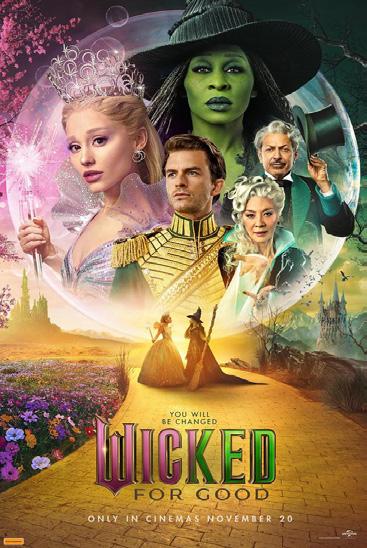
“WICKED: FOR GOOD” REVIEW
Read a review on the newly released sequel to “Wicked: Part I” (PAGE 11). PHOTO COURTESY OF UNIVERSAL PICTURES
EDITORS-IN-CHIEF
Rehan Afzal
Eesha Dhawan
Anisha Mondal
Zema Nasirov
COPY EDITORS
Eesha Dhawan
MaddyRyanSchank Xu
NEWS EDITOR
Kate Barnes
FEATURE EDITOR
Jacob Rabe
SPORTS EDITOR
Parsiny Nijher
A&E/OPINION EDITOR
Anika Nadgauda
PHOTO EDITOR
Rehan Afzal
TECHNOLOGY STAFF
Ryan Xu, manager
Sid Shukla, assistant
PAGE EDITORS
Rehan Afzal
Noor Alameri
Lukas
BY ZACHARY VANDO-MILBERGER
On Oct. 30, Sacramento Country Day School parents received an email with a survey titled “World Language Choices for 2025-26.”
One of the questions asked parents, “If only [Mandarin and French] were offered, which world language is your student most likely to enroll in during middle or high School?”
On Nov. 13, Head of School Lee Thomsen sent a follow-up email which read in part: “Based on survey results, we will continue to offer French and Spanish as our core language programs.”
“It was clear [the school] was looking at replacing French,” an anonymous parent said. “Both of my children take French and they love it. And I’ve had a really excellent experience with the French program at Country Day, through all three divisions [of the school]. The thought that we would lose phenomenal instruction at the school was very upsetting,” said the anonymous parent.
High school French teacher Richard Day was also very worried.
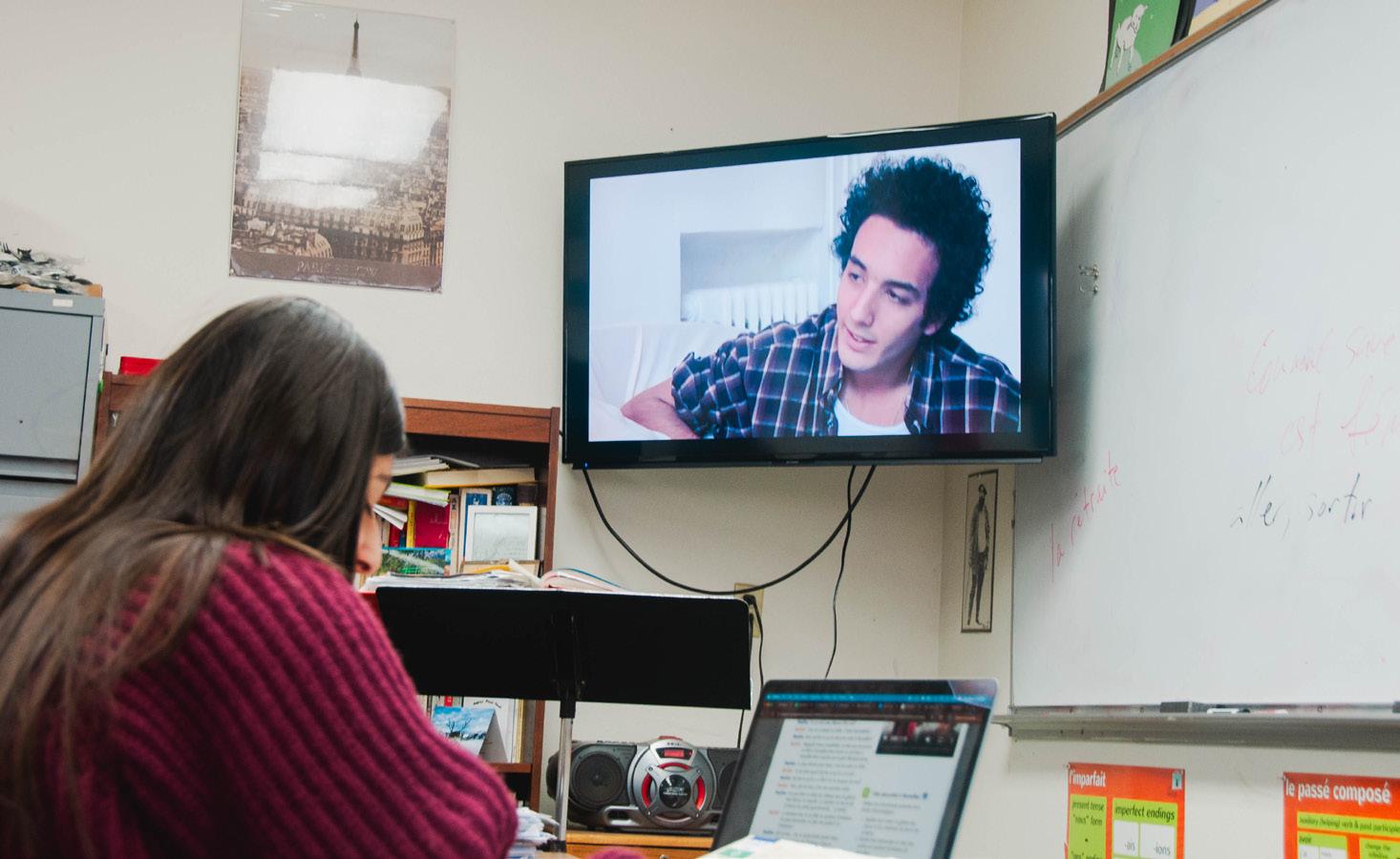
According to Thomsen, the decision to send the survey was based on the expectation that a teacher in the French department would be retiring at the end of the year.
to really divide out over three languages,” he said.
According to Thomsen, one of the main driving factors behind the survey was the fact that they didn’t know if students would gravitate towards Mandarin and away from French and Spanish.
JesseChung
Dizon
Vivian Li
Anisha Mondal
AnikaZemaNadgauda Nasirov
Jacob Rabe
Sid Shukla
Zachary Vando-Milberger
BUSINESS STAFF
Sid Shukla, manager
Ammar Hussain
Parsa Salari
SOCIAL MEDIA STAFF
Anika Nadgauda, editor
REPORTERS
Chloey Fang
Trisha Gandhi
Lucas Holz
Ammar Hussain
Ethan Minton
MaggieParsaNuñez-Aguilera
Salari
Maddy Schank
Khivi Singh
Susie BrendenWang Yu
PHOTOGRAPHERS
Rehan Afzal, editor
Zema Nasirov
MULTIMEDIA STAFF
Ryan Xu, editor
Rehan Afzal
GRAPHIC ARTISTS
Claire Gemmell
Zema Nasirov
Gavin Wang
ADVISER
Andrea Todd
“I would have found it very disappointing because I think [French] is still just as, if not more, important a world language as it was 10 years ago,” Day said.
He was pleased about the results fom the survey. While he is open to increasing the number of languages taught at Country Day, he didn’t want to see French be phased out.
Even with the reassurance that French will continue to be taught, the question remains: Why would the school consider swapping French for a different language?
According to an article from Yale University’s Department of French, French is the fifth most spoken language in the world. The same article predicts French could be the most spoken language in the world by 2050.
In Europe, French is spoken not only in France, but also as an official language in Belgium, Luxembourg, Switzerland and Monaco. It is the official language of the International Olympic Committee, the United Nations, the European Union, NATO, UNESCO, the International Red Cross and the International Court of Justice.
French is also spoken in parts of northern Africa, Canada and South America. In total, 32 states and governments on five continents recognize French as an official language.
Meanwhile, Mandarin is the official language of only China, Taiwan and Singapore. While the actual number of fluent speakers might be larger (1.184 billion), it is confined to only one continent.
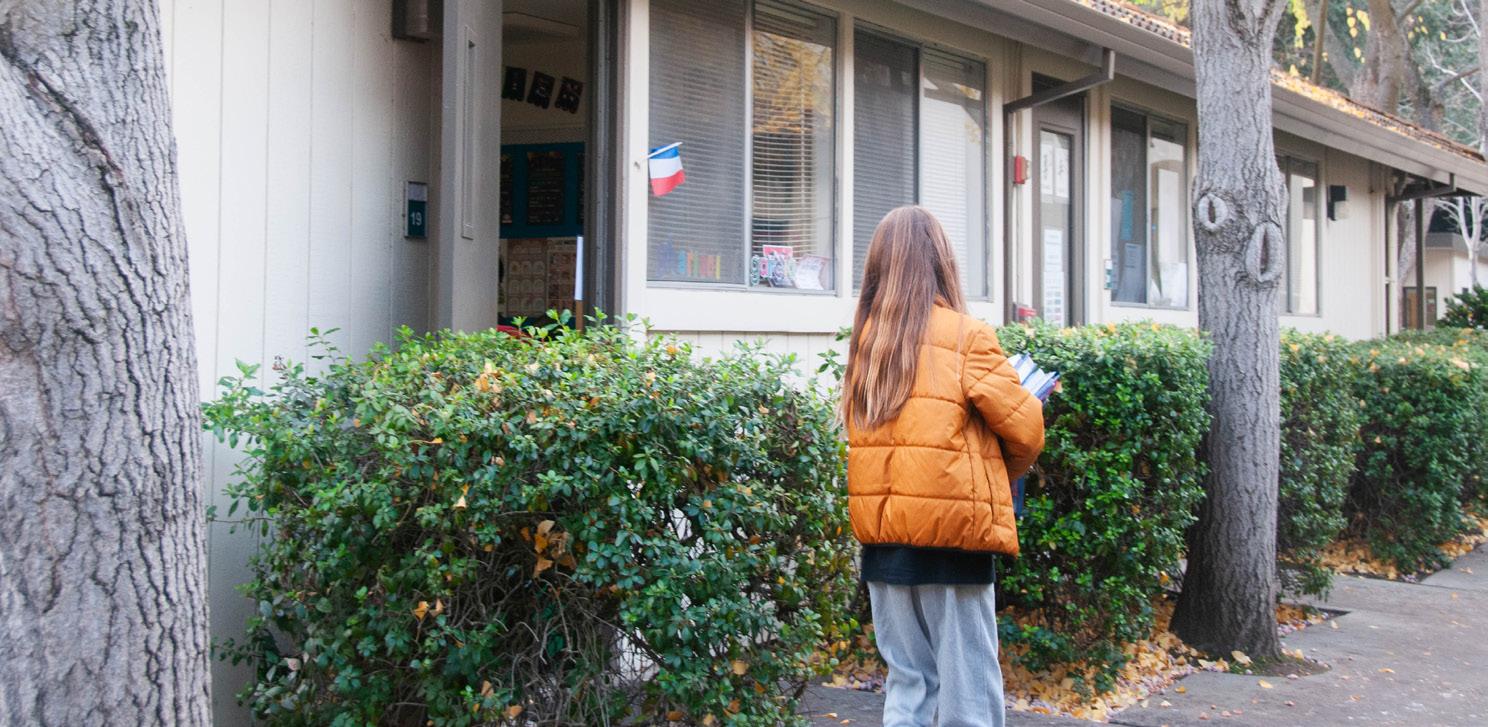
“When someone is retiring, you say ‘does this present us with an opportunity to think differently about things?’” Thomsen said. “I have heard anecdotally that people ask ‘has the school ever planned to offer Mandarin?’ and ‘will the school ever offer Mandarin?’ So we said, ‘let’s see what the popularity of that might be and get some feedback.’”
Another factor considered, according to Thomsen, was the financial feasibility of offering three languages. Previously, Latin, Spanish and French were all offered, but due to decreased popularity, it was no longer a financially viable option for the school to offer all three.
“Spanish has always been very very popular. French has had, historically, a pretty good number of students, but Latin was falling a distant third,” Thomsen said.
The number of students in the Latin program eventually dropped to the point where two teachers were teaching a total of 20 or 30 students.
“After a while, you start to look at your resources, and it really doesn’t make sense to pay two people to teach this number of students,” Thomsen said.
Essentially, Latin lost its student base, causing it to be phased out.
Phasing out unpopular language classes gives the school an opportunity to either divert those resources into adding more popular classes, or supply more resources to a larger program like Spanish that will impact more students, Thomsen said.
“Even with the high school gettinga little bit bigger over the last five years — going from 144 to 180 — there still isn’t enough critical mass of students
It is The Octagon’s policy to correct factual errors and to clarify potentially confusing statements. Email us: octagon@scdsstudent.org
Page 2 “Alexis Covey”: The name and occupation of Alexis Covey’s mother was misrepresented.
In the story her mother was named as Lois, and said to be teaching seventh grade biology at Sacramento Country Day. Her grandmother was named Lois and her mother’s actual name is
line DeLu, and she taught seventh grade life science.
“What we found was that, proportionally, the same amount of kids would have changed from French as from Spanish. It’s not as though everybody taking French would abandon it for Mandarin, and the same goes for Spanish. It seemed to be pretty even,” Thomsen said.
According to Thomsen, the focus is to make the student’s experience at the school the best it can be.
“At the end of the day, Country Day only has so many teachers, it only has so many classrooms, but most importantly, only has so many students. So it is always a bit of a game to try to benefit the most students possible,” Thomsen said.

(continued from page 1)
sources including the Associated Press, was a President Trump directive for Texas Gov. Greg Abbott.
Students at Country Day have mixed feelings about Prop 50 and the gerrymandering in Texas.
Junior Tommy Lu opposed it.
“I don’t like gerrymandering in any form,” he said. “It undermines what our country is supposed to be, at least in terms of its democracy. A lot of us may not agree with the opinions of California Republicans — I personally don’t — but they’re still Californians. They deserve to have their opinions heard.”
Some students believe Proposition 50 serves as a necessary response to President Trump’s redistricting plan in Texas, rather than an effort that diminishes representation of California Republicans.
Sophomore Patrick Tse, who is in favor of Proposition 50, likens it to game theory’s “tit for tat” strategy. “You have two options if someone else breaks the rules and cheats,” Tse said. “You either play by the rules that the other person already broke, or you do what Proposition 50 did and you say, ‘We have to do something about this too. We can’t let the other player keep screwing us over until it’s far too late.”
Senior Lila Reynen, a self-identified Democrat who became eligible to vote in September, deliberately chose not to because of indecision.
“I think there’s a lot of merit to both sides. On one hand, I care a lot about representative democracy, but at the same time, I also care a lot about representative democracy,” she said. “If I were to vote yes, then I think that means I [as a Democrat] would have more accurate representation on a national scale because of the gerrymandering going on in Texas right now, but at the same time, I would be taking away some of the voting power of Republicans in California at the state level.”
Less than a day after Proposition 50’s passing, a Republican-led lawsuit emerged, suing Newsom for violating the 14th and 15th amendments — which guarantee equal protection under state law and prevent the state
and federal government from denying voting rights based on race, respectively. The federal Department of Justice joined the existing lawsuit on Nov. 13.
The lawsuit claims that the new districts redrawn under Newsom prioritize Hispanic voters over other racial groups.
Meanwhile, in November, a panel of three federal judges ruled 2 to 1 that Texas could not use their new gerrymandered maps because they were unconstitutional. Texas appealed to the Supreme Court to temporarily allow them to use the new maps while the case is still being considered. At the time of publication, the Supreme Court is still weighing the case.
Lu emphasizes that the California lawsuit — as well as the other lawsuits — will create further tensions between parties and further divide America.
“I think right now President Lincoln’s quote that ‘A house divided cannot stand’ is ringing truer than ever. The Republicans wish to light a fire with the beams that built our nation, and the Democrats are trying to take apart the house to prevent them from doing so. Either way, if this continues, no one has a house,” he said.
Newsom has been a part of the growing tension between Democrats and Republicans that Lu mentioned, actively making social media posts mocking President Trump. When Texas announced the mid-term redistricting plan this summer, Newsom immediately responded on X with “Two can play that game.”
In addition to being a very vocal voice on X, Newsom is using Instagram to advance his campaign for Proposition 50, posting: “Wake up to what Donald Trump is doing. We can’t stand back and watch this democracy disappear district by district. We have got to meet fire with fire.”
After Proposition 50 passed, Newsom publicly called for other states like Virginia, Maryland, New York and Illinois to redistrict alongside California in a speech given on Nov. 4 at the California Democratic Party Headquarters in Sacramento, Calif.
“We need to see other states [...] meet this moment head on as well,” Newsom said.
Tse disagrees with Newsom’s statement.
“The balance wouldn’t be in order. That’s why it’s a good threat, but it shouldn’t be carried out. Then the power would really be taken away from the people,” he said.
Lu believes that Newsom’s views and actions contradict each other.
“Gov. Newsom is slightly hypocritical in this situation in that his rhetoric — that he’s specifically using to encourage redistricting — is the preservation of democratic values, yet gerrymandering itself is inherently anti-democratic,” Lu said.
Other states are taking action in response to President Trump’s directive. States considering mid-decade redistricting include Florida, Illinois, Colorado, Indiana, Kansas, New York and Nebraska, while Louisiana, Virginia and Maryland are taking congressional steps to study redistricting.
States that have passed new congressional maps include Missouri, North Carolina, Ohio, Utah — and now, California and Texas.
On July 24, The Center for Politics at University of Virginia reported that Republicans have far more plausible options for redrawing district maps than do Democrats, citing the way redistricting is conducted in states like Texas, Ohio and Florida — not by independent commission, in other words.
A 2017 national YouGov.org poll found that 71% of Americans supported the opinion that the Supreme Court should limit lawmaker’s abilities to redraw maps, while 15% did not support this opinion. And a recent poll conducted by CommonCause found that 77% of respondents supported redistricting done by independent commissions only.
Mitchell is one of these people.
“I’ve always supported independent redistricting, and I hope that after this is all over the country will impose a national independent redistricting process so every state has to do it on a bipartisan basis and you don’t have these kind of games with redistricting because it isn’t good for our democracy,” he said.
To communicate to the public the extent gerrymandering is happening in certain states, independent groups have analyzed it, providing their results for free.
For example, after the 2020 census, Princ-
eton University’s Gerrymander Project released their “Redistricting Report Card.” They gave California a B, or “better than average with slight bias.” Texas received a grade of D, or “Poor.”
According to Tufts University’s Center for Information and Research on Civic Learning and Engagement, the turn-out of California voters ages 18 to 29 in 2024 has dropped 9% since 2020.
However, voters in the same age demographic showed up for Proposition 50, supporting it by 80%, according to exit polls reported by the Public Policy Institute of California.
Senior and registered Democrat Dylan Corcoran was one of these voters, voting “yes” on Proposition 50 — marking the first time she has ever voted.
Corcoran said that “more people, specifically younger people, need to vote.”
According to the U.S. Census, only 62% of Americans ages 18 to 24 are registered to vote. According to The CIVICS Center, 12% of Californians ages 16 to 17 are pre-registered to vote.
With young voter turnout at an all-time low, Corcoran urges the school to act.
“I wish Country Day did more stuff getting seniors and juniors to pre-register,” she said.
Patricia Jacobsen, Dean of Student Life, does not disagree. She thinks that families and the school should both collaborate on getting students to pre-register to vote.
“The families could and should be taking care of that stuff too, you know? I think the school could complement those efforts by having the pre-registration forms available or by having a political science club or a government class,” she said.
Jacobsen suggests students get directly involved.
“It was another student who brought this up, right? This is an excellent leadership opportunity for a club to develop, one to get out the word to vote,” she said.
To pre-register to vote in California, youth 16 to 17 must complete a voter registration application on paper or online via the California Secretary of State’s website. Visit RegisterToVote.ca.gov for more information.
(continued from page 1)
The dangers of drinking are not limited to unsafe sex and rape. “Many youth drink, and when they do, they often binge drink,” posts the National Institute on Alcohol Abuse and Alcoholism, a branch of NIH, on their website.
Binge-drinking is defined as the consumption of over four alcoholic drinks for women and five drinks for men over a period of two hours.
Young people are also getting drunk in increasingly “creative” ways, including, but not limited to, the abuse of hand sanitizer and cough syrup, according to The Prevention Council.
In a 2025 study, the Center for Disease Control and Prevention (CDC) states that an estimated 4,000 people under the age of 21 die from alcohol poisoning each year.
It turns out the Country Day alum who helped their friend with the incident had their own problems in high school with what they still refer to as recreational cannabis and alcohol use.
“I took one edible, and then I was high for the whole night. It was the second semester of my junior year so I was insanely stressed. When I got high, all of that kind of just disappeared,” they said. Adding on that, they began taking edibles every time they got stressed, which became more and more often.
A study by the NIH suggests that irregular sleep affects emotional regulation, making teenagers more vulnerable to experimenting with substances that create a calming or numbing effect.
Research from the Journal of the American Medical Association (JAMA) Pediatrics shows that frequent cannabis use is linked to higher rates of anxiety, depression and emotional instability. For some teens, this turns
into emotional dependence.
A 2024 study published in JAMA Pediatrics concluded that the consumption of cannabis more than three times per week in adolescence (ages 10-19) is associated with “less likelihood of high school completion, university enrollment, and post-secondary degree attainment; and increased school dropout rate and school absenteeism.”
Our alum described how weed became their main source of tranquility, and without it, their emotions would “go haywire.” This kind of reliance teaches the brain to use cannabis instead of healthy coping skills.
A 2025 study published by Stanford Medicine reported that young adults and teenagers turn to cannabis because they believe it is safer or less damaging than alcohol or cocaine.
However, cannabis use has correlated with altered brain structure, according to the NIH, including a decrease in subcortical volume and disruptions in executive functioning such as decision making. This causes slowed processing or reaction time and occasionally a type of dementia that can result in major depressive episodes and memory loss issues.
Another anonymous Country Day student now works as a resident assistant (RA) in the most freshman-populated dorm at their university.
“The building has a huge party vibe, and most of the partying that goes on on campus goes on here,” they said.
When a pre-game party goes south, or a kid arrives on campus with substance abuse issues, there have been “jarring EMS incidents,” the RA said.
“We’ve had kids in our building where drinking led to suicidal ideation. After two EMT incidents, one involving involuntary transport, [one student] took a break from school,” they said.
In a study done by the NIH regarding si-
multaneous use of both cannabis and alcohol, 75% of young adults (which the Society for Adolescent Health and Medicine classifies as 18 to 25 years old) also report drinking alcohol.
“I would say most people who smoke weed at school also drink, generally. Some do smoke weed to avoid alcohol, but most do both. A lot of people are stressed during the week then use the weekend to party, and we have a lot more incidents on weekends. Most of the people who are drinking in the dorms are under age, and their intention is to binge drink and get drunk.”
Family environments contribute to potential alcohol and cannabis use as well. According to the NIH, roughly 19 million adolescents in the U.S. live with a parent who has or had a substance use disorder. In these households, alcohol or cannabis use may be more visible or normalized, increasing the risk of early experimentation.
The American Addiction Centers states that “first-degree relatives” (defined as parents, siblings or children) of someone with a history of addiction are four to eight times more likely to develop problems regarding addiction when compared to those who do not have a family member with addiction.
Our alum is one of the latter in that their parents only had the occasional wine and never did cannabis (that they know of), which they claim is why they are not worried about their usage habits.
For those who do have a family history of addiction, a study done by the CDC regarding cannabis use in America reported that an estimated 30% of cannabis users have a “Cannabis Use Disorder,” or CUD.
The CDC also stated that approximately 31% of 12th graders in the U.S. alone report using cannabis in the past year and 6.3% report using cannabis daily over the course of 30 days in 2024.
In a 2015 study, the National Institute of Alcohol Abuse and Alcoholics (NIAAA) found that a majority of underage drinkers obtain alcohol from older friends, siblings or unsecured household supplies — not from stores. Cannabis access follows similar patterns, with teenagers most often obtaining it from peers who use vape cartridges or edibles.
According to the NIH, youth who begin drinking prior to the age of 15 tend to have four to six times the likelihood of life long alcohol dependence than those who wait until age 21.
Public health officials encourage parents to talk to teens early and often about alcohol and cannabis to model safe behavior and create environments that support healthy decision making.
This is why teachers, counselors and parents need to stay alert and talk openly about the real effects of early substance use.
NIH surveys also confirm that teens who use substances early are more likely to struggle with stress, relationships and decision making later on.
Studies in the Open Access Journal of Behavioral Science & Psychology further show that early guidance and supportive adults reduce the likelihood of emotional dependence by giving teens healthier ways to manage pressure. Teens need environments that protect their emotional development — not ones that quietly push them toward harmful coping habits. Many educational institutions such as high schools and universities have on campus programs and faculties to help with this.
“Here’s the thing,” the alum said, “I can’t and don’t talk to my parents or siblings about this. I talk to my friends, and we share experiences. I never want what happened to my friend to happen to me. ”

“When I was three years old, I begged my mother for a pair of wings. I wanted them to be purple and sparkly, and I wanted them to work,” senior Ava Dunham said.
Her mother found her a pair of fake wings that fit most of Dunham’s requirements — but when she took a running leap, she realized that they did not, in fact, allow her to fly.
“I was so disappointed because I wanted them to work. I have wanted to fly since I was very, very little,” she said. According to Dunham, this passion for flying became a huge part of who she is.
“I incorporate it into my schoolwork, into my extracurriculars, into my personality,” she said.
It also influenced her decision to become an astronaut, which she made in first grade. Specifically, Dunham plans to pursue a career in aerospace engineering with a focus on space travel and exploration.
She has, however, faced negative reactions when she told family members or teachers about her plans to go into a STEM field (science, technology, engineering and mathematics).
Some said that she should take a different path, including several elementary school teachers who told her that she should “try something else.”
“It was very discouraging,” she said. “I’ve faced a lot of that, and, in turn, I’ve decided to advocate for women in
The lack of gender equality and protection for women in STEM was part of what inspired Dunham to host the panel.
“The issue is still so prevalent, and I wanted to share that with the Country Day community, especially because we have a science department that is 100% female,” Dunham said. “They all have such amazing stories, and I wanted to share those.”
Senior Ella Martinelli, who co-hosted the panel, said one of her favorite things about Dun ham is her determination to over come the obstacles that female sci entists face.
“She’s known that she wants to go into aerospace engineering, even though it’s very difficult for women to be in that field. I love how she’s not letting outside things impact her dream,” Martinelli said.
Dunham identified several women she idol izes, including Black math ematicians Katherine Johnson, Dorothy Vaughan and Mary Jackson, who are depicted in one of her favorite movies, “Hidden Figures.” Dunham also takes inspiration from astronaut and physicist Sally Ride, who was the first American woman to go to space.
one of her biggest supporters — to supplement her knowledge.
Actually applying math and physics concepts she’s learned about can be difficult, she said.
“I tend to learn a lot more about theoretical practices than realistic applications,” she said.
“But I decided that I wanted to try and build more, and that’s why I created the engineering club.”
Dunham founded Sacramento Country Day’s Engineering Club in her sophomore year with the help of the club’s adviser, then Director of Technology Michael Unti. In the club, students learn technical skills, such as welding and using power tools by completing art projects.
“Some of these skills just aren’t as accessible as I think they should be,” Dunham said.
“You don’t need to be on an oil rig to learn how to weld.”
Dunham and Unti’s ultimate goal was to create a club similar to a shop class — a class offered by some schools that teaches students a range of hands-on skills needed for a trade, such as woodworking or metalworking.
tion of the motor and the seat on the team’s boat.
“Ava, out of nowhere, said, ‘I can weld that. I can weld that this weekend.’ I have never once had a high school student or any of my adult friends say, ‘I can weld that this weekend,’” Jacobsen said.
Dunham’s enthusiasm and hands-on knowledge stand out to Jacobsen.
“When she says she’s into engineering, she means it,” she said. “She’s not a ‘pencil and paper, let me talk about the velocity of the baseball as it exits the park’ kind of person. She’s a ‘let me do that,’ and ‘I have the tools to do it’ kind of person.”
Dunham’s dream of flying also motivated her to get her private pilot license. She’s been preparing recently for a solo flight, during which she will fly the aircraft without an instructor to demonstrate her capabilities.
As of Dec. 5, Dunham has completed 31.5 flight hours of the 40 minimum flight hours required to obtain a license. She flies with Skyrise Aviation, a flight training program at the Sacramento Mather Airport. There, she has lessons twice a week, depending on the weather. The plane she flies is an Evektor EV-97 Harmony, a type of light sport aircraft.
“I look up to all these great women who have really made significant change and allowed people like me to
Dunham also puts her welding skills to use on the Solar Regatta Team as the head of engineering.
She learned the basics of how to weld
“I use the piloting jargon all the time, and my brother gets really irritated with me,” she said. “He’s like, ‘we all know you can fly a plane, Ava.’”
Martinelli also frequently witnesses Dunham’s love of planes.

BY ETHAN MINTON
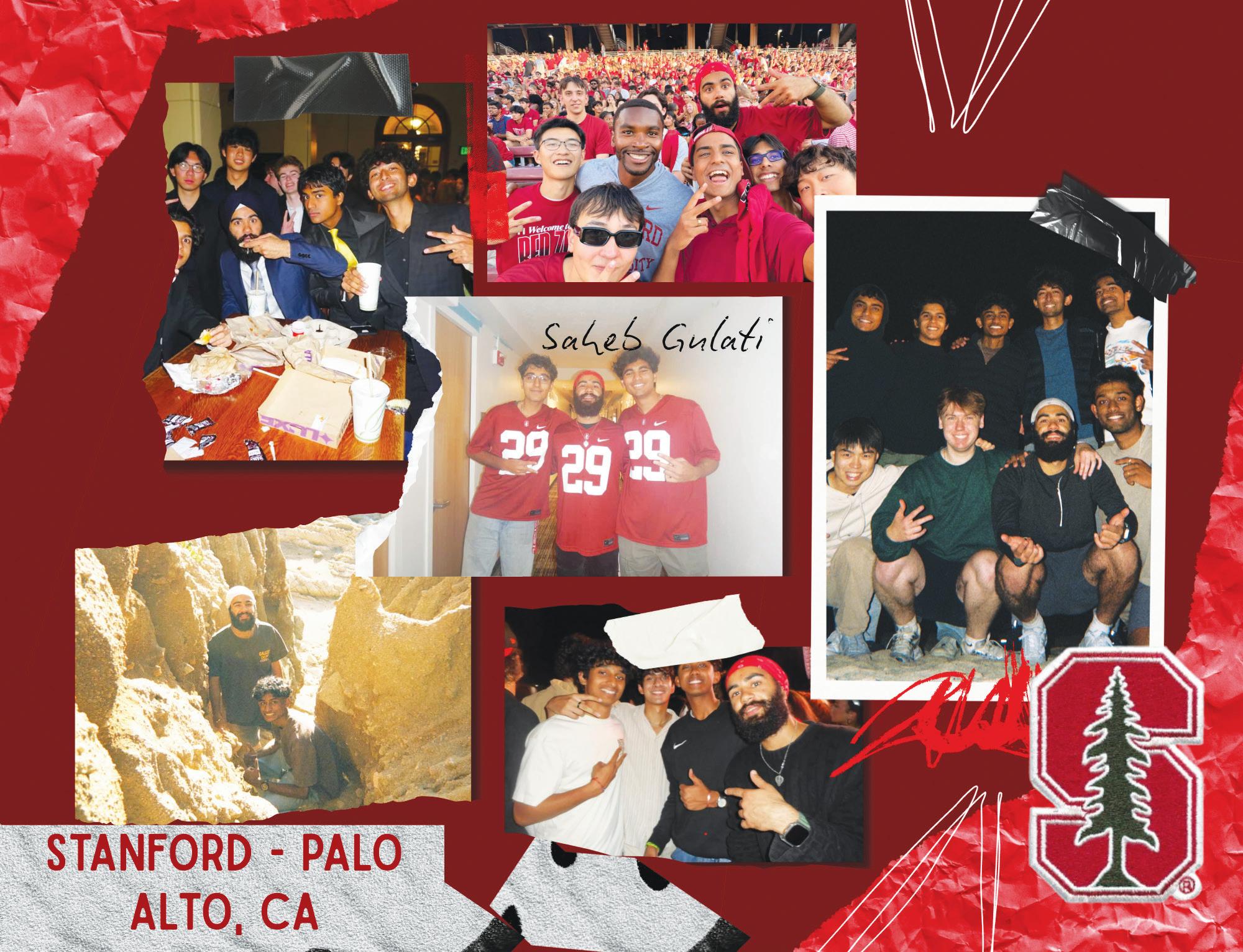
Saheb Gulati, ’25, attends Stanford University, where he is exploring a range of interests and fields. He is still undecided on his major.
Q: Why did you choose to attend Stanford?
A: I think it was the right convergence of different factors, everything from location to academics. But I’ll say, primarily, it was the culture at Stanford.
You are who you surround yourself with and the culture of Stanford is very important. It has an associated culture with it — dynamism and ambition — but also fun. I think it really appealed to me. Also, I’m interested in AI so staying in the Bay Area felt very necessary.
Stanford checked a lot of boxes in my mind, so it was always a question of would Stanford want me, rather than if I’d want Stanford.
Q: What’s your housing situation like?
A: I live in a “Public Service and Civil Engagement” themed house called Otero. It has all four classes in it and there are 80 people in total — around 40 freshmen and 40 various sophomores, juniors and seniors. It’s in a broader complex called Wilbur Hall, where there are mostly freshmen.
It’s a pretty unique experience. There’s a public service track and a specific class [Pathways of Public Service] you have to take as I mentioned.
I would appreciate more social interaction in my dorm. When you mix underclassmen and upperclassmen, there’s less bonding and social activities. I was forced to go and meet many people from other dorms which has been fun.
In terms of actual housing I have no complaints at all. I’m not really a picky person when it comes to that. I love my roommate as well.
I think Stanford usually requires students to take part in a random matching process. You fill out a form with your interests and living preferences and then the school matches you with someone based on your answers.
You don’t know who you’ll be paired up with until you arrive on campus, but as it turns out, my roommate and I have a great
relationship, so it’s always nice to get back after a long day and talk with him.
Q: What classes are you taking currently?
A: I’m taking five classes. The first is PHIL 2: Introduction to Moral Philosophy, [a course that examines major theories of morality and ethical questions from the Western tradition].
Another class is Math 51: Linear Algebra and Multivariable Calculus, a course that provides [unified coverage of linear algebra and multivariable differential calculus].
Another is TAPS 103: Beginning Improvisation, which [teaches spontaneity, cooperation, team building, and rapid problem solving].
My other two classes are seminars. The first is Silicon Valley and the United States Government which features [exclusive insights on tech and government with the builders shaping the future].
The other is Pathways of Public Service, where [students grapple with expanding their conception of PSCE, understanding how their position as Stanford affiliates shapes their interactions in the Bay Area, and having respectful dialogue on complicated topics].
Q: What are you majoring in?
A: I’m actually undecided when it comes to majoring. My situation is complex where there are certain skills and pieces of information that I want to have now which will be useful for the projects and work I’m interested in. Broadly speaking, AI safety and other skills I’ll need down the line.
The philosophy I’m trying to have is that rather than picking a major then choosing classes that are based on it, I’m going the other way around and picking classes that I’m currently interested in and checking those boxes. From there, majors are just categories, so I will eventually determine what categories most align with the classes I like.
Overall, I think I’m going to major in symbolic systems, which is basically an interdisciplinary major that combines computer science, philosophy, linguistics, psychology and math.
There’s also a decent chance that I decide to double major in computer science and philosophy or major in just one of the two or some combination of a technical major and a non-technical minor. That
could look like math and history, or math and classics, or computer science and history, philosophy, or classics.
Q: What does an average day look like for you?
A: One of the things I’ve really appreciated about Stanford is that every day looks pretty different. I think there will be a time in my life when I’ll need a routine, but that time is not now.
During the first quarter of my college experience, I’ve been going with the flow.
On certain days I’ll have classes, so I’m anchored by that. I have adapted my sleep schedule so that I wake up pretty late and I go to sleep very late. I’ll usually start the day with lunch and I use that opportunity to meet new people and schedule meetings. Then I’ll go to class, and afterwards I spend my afternoons working in the library, going to an event or hanging out with friends.
Oftentimes, we’ll co-work in the library. What that means is we get a bunch of friends together, take over a conference room, study together and hold each other accountable. By nighttime, we head to dinner. Then we’ll usually hang out in someone’s dorm and talk until it gets late.
Sometimes we go out for food, other times we bike around and eat on campus at a couple of spots.
Q: What is your favorite part about college?
A: The socialization aspect. To articulate it, the receptiveness of people to social interaction.
Going to Stanford, I expected it to be different from Country Day. What I mean by that is at Country Day, everyone knows you. There are two or three spots on campus — you can go sit in the freshmen quad or in the library. I expected Stanford to be bigger and more unknown to me.
Honestly, Stanford feels very similar to Country Day. Its social environment feels very known to me. I think in a short time, I’ve been able to develop some pretty close friends in a way that reminds me of Country Day, where I’m walking down the hallway and I see somebody I know and I can say “hi.”
Or if I go to the campus library, just like when I went to the Country Day library, there’s always somebody that I can sit with. I really appreciate it when you’re just walking around and you see somebody you
know and you say “Okay, let’s hang out together.”
Q: Do you have any advice for the Class of 2026 as they prepare for college?
A: It’s funny, because there’s this law of equal and opposite advice. Basically the advice you give one person could be taken the opposite way or may not be needed by someone else. Especially when it comes to old adages or sayings that people give.
For example, you could tell one person they need to push themselves a bit harder academically. You can just as easily imagine yourself telling another person they should take it easier and have more social interaction. That’s what makes giving advice very hard.
I think there’s this trap you can fall into, especially in college, but also in high school, where everything is happening at a very fast pace. It’s easy to amble through that, but I would recommend continually asking yourself “what are you doing” and “why are you doing it.”
It’s important to reflect on what your priorities are, what your goals are, and to put yourself in environments to meet those goals and priorities.
I knew when I started my first quarter that I wanted to meet as many people as possible and grow as a person. I thought about how I could go about doing that and then I went and did it. But there were other quarters in my life where I needed to push myself academically. I needed to put my head down and grind, to focus on a certain class or project I was working on.
Whatever your priorities are, make sure you’re actively reflecting about how you can best achieve those things. Don’t let life just pass you by; fight for the things that you value.
FIVE STAR OR SUBPAR?
Quality of classes: School Spirit: Food: Social Scene: Clubs: Location: Student-Teacher
Interactions:



Nov 6, 2025
The Octagon is not meant to be your spare umbrella
BY EDITORIAL STAFF
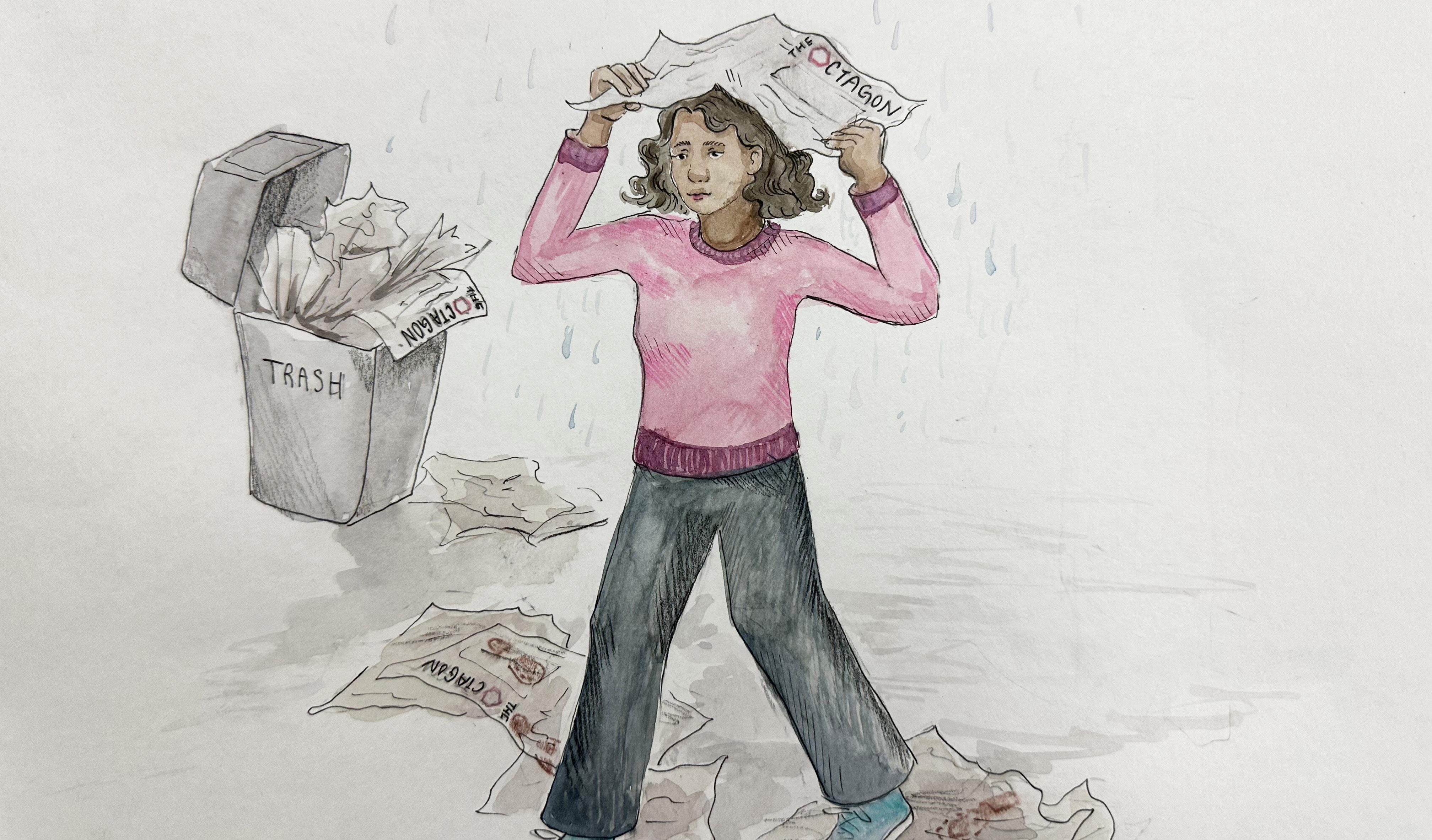
As the initial buzz of students who receive their new issue of The Octagon fades, most papers are seen crumpled, lying on the ground. Some are stamped with muddy footprints, while others are tragically dismembered.
This is the newspaper representing the Sacramento Country Day High School student body and faculty.
What good is it doing anyone there?
The sight of a dismembered Octagon metaphorically demonstrates what is happening to our planet’s nonrecycled newspapers.
The number of schools that produce student-run news outlets has dropped significantly over the past decade.
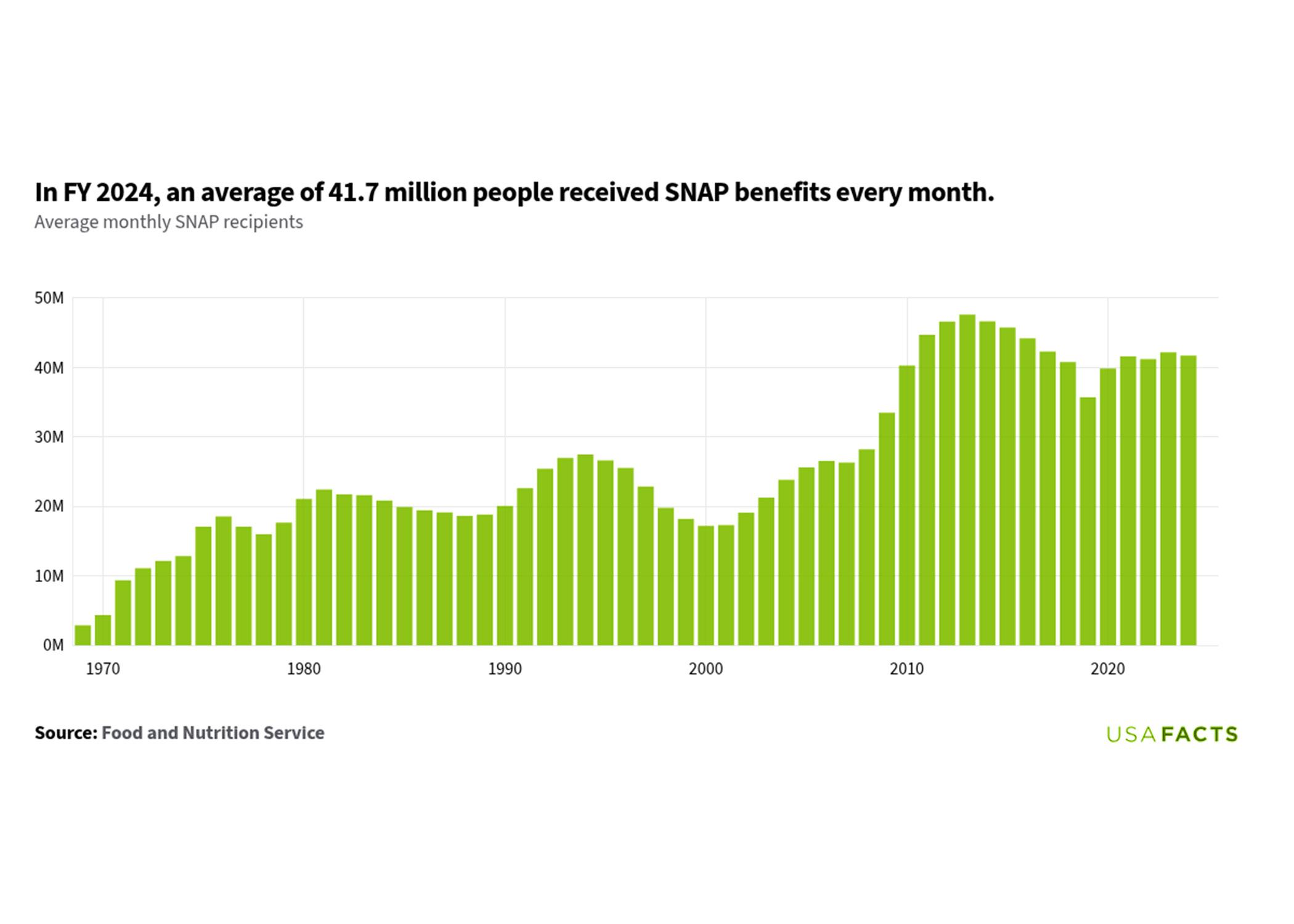
A June 2025 article by The Hechinger Report, an online organization that supports student journalism, found that only 45% of public schools had a newspaper. This number reportedly dropped from 64% a decade ago.
Seeing this decline of print news — be it newspapers or news magazines (especially) within high schools — should make those of us at Sacramento Country Day feel fortunate that we have The Octagon to engage with our school and community. It is a resource we may not have in the future. Readers may have noticed the past three issues of Octagon have arrived on campus late. The reason for this? Our printer is actively laying people off, as the industry is what our print manager described as “dying.” If ours eventually goes under, The Octagon may need to find another printer — or cease print altogether.
In addition, readers may have noticed issues with our Octagon website: It hasn’t been updated since spring of 2025 (and in the case of sports, since February 2023). It is now completely down, and as of now there are no plans to get it back online in the foreseeable future. For now the only version of The Octagon is the one you hold in your hands.
In order for the Sacramento Country Day community to be properly represented, The Octagon needs diverse, specific
and active feedback from our audience, students, faculty, administration and yes — parents. This only comes from reading the paper and providing feedback on a consistent basis.
This lack of interest in reading the school paper may not be solely the fault of students. It may be the result of a general decline in print media which has been happening since the introduction first of television, in the 1960s, then of the World Wide Web (www) in the 1980s.
In 2018, Pew Research reported that social media “edged out” newspapers as a source of daily news. Now seven years later, news is accessible to almost anyone who has access to the internet. (That’s everyone with a mobile phone). Multiple apps and websites, such as Instagram, TikTok, Facebook and X, provide constant information to the general public in long and short-form content.
A study conducted by the National Library of Medicine noted that upwards of 95% of youth ages 13 to 17 report using a social media platform, with “more than a third saying they use social media almost constantly.”
Consequently, many high school students, and even adults, get their news from social media apps such as Instagram and TikTok, where news becomes less reliable. According to a 2023 article published by the World Press Institute, half of those part of Generation Z (“Zoomers,” or those born between 1995 to 2012 according to Pew Research) cite social media as their primary form of news.
Distrust of “the media” is at an all time high nationally. A 2025 Gallup poll found that only 28% of Americans trust the media “a great deal or a fair amount.” According to an MRI Simmons marketing survey, radio ranks as the most “trusted” news source by Americans, followed by newspapers.
On Nov. 13, The Octagon sent out a form regarding social media usage in terms of news. When asked the last time Country Day students read a physical newspaper, of the 46 respondents, 37% of student respondents to a survey said they do so through the Octagon. Additionally, half of the students responding reported that they read long-form digital news, such as
This begs the question: how accurate is the news you’re consuming?
Despite being the top source for news, social media is the least trusted, according to the same survey. There are severe problems with using social media as a primary source of information. Although simple, straightforward videos draw viewers, many important aspects and pieces of news stories get left out to make videos or reports short and concise or even “clickbait.”
This convenience especially draws the attention of teenagers. 73% of Country Day High School students report getting their news from such social media platforms, mainly Instagram.
Using social media for news not only skews different points of view, but can disregard the other side of a story as well. It can lead to more room for error, and even the spread of misinformation, which becomes increasingly likely the more times a video is reposted.
An updated 2023 article published by the United States Public Interest Research Group (PIRG) reported researchers at Massachusetts Institute of Technology (MIT) found what they labeled “fake news” on social media spreads “up to 10 times faster” than accurate news. And according to PIRG, “anyone with a social media account can become a ‘news’ source.”
As stated by social psychologist, Jonathan Haidt, “outrage is the key to virality.”
Videos and even advertisements that pop-up on someone’s feed are tailored by an algorithm. The Public Broadcasting Service (PBS) Learning Media states these algorithms are “designed to keep you on the social media app you are using for as long as possible” by showing you more of the material you click on and spend time on.
As put by PIRG, this is the “business model” for major platforms.
Additionally, the National Library of Medicine said that such algorithms often “fuel hate speech, fake news, and polarization” using algorithmic “filter bubbles” to promote extremist material.
Furthermore, according to PIRG, “outof-context details distort what’s real” and through content sharing, mistaken
impressions can spread almost instantly through a large network of people.
In a world where everyone wants to go viral, PIRG states, in newsreading, when boring-but-true stories compete with “more interesting” stories, the juicier, inaccurate story wins over the reader “seemingly every time.”
Ad Fontes Media provides an interactive chart evaluating all media sources (online and off). This information is made available to students and educators as well as news consumers.
AllSides media points out that a source can be biased but still be accurate: “We are not a Ministry of Truth,” the website states. Other credible sources include the National Public Radio (NPR), the British Broadcasting Corporation (BBC), the Public Broadcasting Service (PBS) and The Wall Street Journal (news, not editorial). Student publications are vital to student body representation. They are a historical record of your life as a student. The Octagon addresses issues that affect students with timely articles and without fear nor favor.
As previously mentioned, school newspapers are fading away, and so is the ability for students to read credible reporting and analysis committed to fairness and accuracy. The Octagon is not perfect. We can do better. Let us know how.
Students, teachers, administrators and parents alike: think of The Octagon as your voice.
When you’re asked to contribute, do so. Provide a comment when asked for one. Express what’s important to you in our pages. When you’re the subject of a story? Please respond to follow-up questions promptly and accurately. If you’re quoted inaccurately or out of context? Let us know and we’ll pull up the transcript and the emails and analyze it with you.
Read your newspaper. It’s yours, not ours. Instead of leaving your torn Octagon issue on the ground, learn about the issues and updates regarding our school and city community, read our “My Angles” that make you think about new opinions and scour through reviews including food, movies and songs. Tell us what you like and don’t like about it. And when you’re done, recycle it.
BY RYAN XU
In 2025, America stands where we were in the 1930’s. We are at an inflection point in world history — when confronted by global adversaries and shrinking political influence, we are deciding to stick our heads in the sand. As democracy backtracks globally and domestically, it’s time to ask where we stand as a country.
We’ve been here before, right before World War II, terrified to get involved again after the mess that was World War I.
Just as the “America First” movement of the 1930s believed that war with Nazi Germany could be avoided through “neutrality” (inaction), our present “America First” movement argues that retreat from global commitments will somehow shield our nation from the authoritarian expansion which it failed to stop in the past.
We signed the Neutrality Acts into law in the 30’s. The premise of inaction disguised as neutrality did not prevent war then, and the same will not prevent war now.
Same slogan. Same mistake.
Supporters of “America First” often claim we should avoid foreign engagement altogether. In reality, the America under the Trump Administration has pursued a selectively interventionist approach while claiming to not want involvement in foreign conflicts. While we refuse to honor our collective security agreements, our “president of peace” threatens military action against Venezuela in a bid to gain popular support. We run from our commitments to democracy and support global authoritarian efforts instead.
Back in 1994, alongside Russia and the UK, the United States (under President Clinton) promised Ukraine’s security in exchange for the surrender of one of the world’s largest nuclear arsenals.
When Russia violated that agreement in 2014 by seizing Crimea and Donbas, the American response was useless. The Obama administration hesitated in providing lethal aid, and relied on sanctions and strongly-worded condemnations. As a result Crimea became a territorial sacrifice-slash- manageable concession to avoid a war with Russia, becoming our 21st century Sudetenland.
When the Kremlin launched its invasion of Ukraine in 2022, it did so with the confidence that the post 2016-divided and self-doubting United States would remain indecisive. Congress under Biden did not initially. Yet when Ukraine was unable to achieve a military breakthrough, Republicans in Congress stalled aid for months, causing catastrophic impacts on the battlefield.
Under President Trump, American foreign policy acts directly in the interests of the Russian Federation under Putin’s leadership. The recent “peace plan” proposed by (real estate mogul turned diplomat) Steve Witkoff was a direct copy of a proposal drafted by Russian diplomats. America has withdrawn military and humanitarianly from West Africa, allowing Russian forces to take our place.
At the same time, Russia has poured millions of dollars into influencing political thought in the United States. In September 2024, two employees of the Russian governmental media outlet Russia Today were indicted by the Department of Justice. The charge? Creating a company which spent nearly 10 million dollars pushing Russian Propaganda via conservative online commentators. This is just one example in a growing trend of foreign actors successfully influencing American domestic politics.
A nation fighting to protect its sovereignty should not have to plead for support from the very country that pledged to protect it thirty years ago. Still, the political rhetoric of “America First” insists that refusing to help somehow keeps Americans safer. It does not. It simply emboldens aggressors who learn that time, propaganda and Western fatigue are more powerful weapons than an army of three million.
Should America stand with authoritarian dictatorships, or with democracies?
When America withholds promised lethal aid to Ukraine, refuses it, or pretends that “peace” can be negotiated through coerced territorial concessions, the answer is clear.
We aren’t neutral. We enable aggression.
The suspension of American humanitarian aid programs under the Trump administration has caused a major humanitarian disaster. It has also created a global power vacuum. American politicians and citizens look away because it’s easy. It’s estimated by the UCLA Fielding School of Public Health
that the U.S. Agency for International Development cuts may cause up to 14 million deaths by 2030.
By advocating for “neutrality” while we cause the starvation of millions, we are directly complicit in the deaths of innocent people.
When we withdraw from international commitments, American adversaries capitalize on it. Worldwide, most understand that international engagement is not “charity” (as Trump sees it) but a significant strategic investment. The North Atlantic Treaty Organization (NATO) was a cornerstone of American defense. Now, in the eyes of our diplomatic corps, it’s become an optional burdensome endeavor.
America — a nation that depends on global trade, international finance, free labor and collective security cannot simply “opt out” of geopolitical realities. English author George Orwell challenged similar efforts for neutrality during WWII, calling them a “bourgeois illusion bred of money and security.” This illusion only exists because previous generations spilled enough blood to build the international order that America now takes for granted.
What makes the moment even more perilous is that America has not corrected course. She does not intend to anytime soon, as the Trump administration doubles down on an “America First” ideology which in practice places America last. If we cannot be trusted to uphold clear, written security assurances, why should any of our allies trust our promises?
The ripple effect of U.S. unreliability extends far beyond Ukraine. It weakens collective security agreements and emboldens America’s competitors to fill the void. It signals to vulnerable states that nuclear disarmament is useless.
What lies beyond is the unraveling of the world order that has kept great power conflict at bay since 1945.
The world does not stand still when America retreats. If Ukraine falls, our allies in Eastern Europe and Asia will draw their own conclusions about their security agreements. Our credibility cannot be rebuilt once it is destroyed.
Standing at this precipice means recognizing inaction has consequences. This extends beyond international politics and permeates our everyday lives. As Orwell put it, “Pacifism is objectively pro-fascist.”
Refusing to choose is still a choice.
BY REHAN AFZAL
“Philosophy? I wouldn’t trust my doctor if he majored in philosophy,” my classmate said as we discussed our college applications. She knew of my plan to go to medical school with a humanities degree, and couldn’t hide her skepticism. While I was bristled at the time, I eventually recognized that her reaction wasn’t unique.
Lucrative fields like science, technology, engineering and mathematics (STEM) are almost always met with enthusiastic nods of approval. When you replace those answers with classics or anthropology and the reaction is entirely different: a relative or friend might ask with thinly-veiled concern, “so what do you plan on doing with that degree?”
I get it. We face a tectonic shift at every level of society due to Artificial Intelligence (AI). High paying jobs are increasingly STEM-focused. In a world that only rewards advancements in technology, one might wonder, “how is studying literature or history worthwhile?”
Every year since 2012, the number of university undergraduates majoring in a humanities discipline in the U.S. has plummeted. Since then there has been a 25% decline, with nearly a fourth of that in 2021-22 alone, according to the American Academy of Arts and Sciences. The historical categories seem to be affected the worst, dropping 37% in the same time period. And it’s not just the lack of student interest; in 2023, Western Virginia University cut its world languages department entirely, along with art history, music and higher education administration.
In 2023, Harvard University invested over $1 billion in a state-of-the-art science center, while its number of English concentrators dropped from 236 in 2008 to just 54 in 2019. Whenever I visit the Sacramento Country Day website, I’m greeted by the school’s #1 STEM high school in Sacramento award banner. Our math and science teachers are excellent. Still, I am left wondering why our top-notch humanities teachers didn’t get the same recognition. When I looked it up, I found that Niche, the organization who awarded the STEM award, doesn’t even have one for the humanities. To me, it seems their messaging is that the humanities don’t matter.
But why is this rapid change happening at such a quick pace?
For many, college is a means to get a high paying job. When considering income status and debt, this makes sense; of course you should be employable after graduating. With the national average student loan debt of $39,075, and STEM majors earning an average of $29,000 more than humanities, parents understandably push their children toward ‘safer’ majors.
But these statistics don’t tell the whole story. In this job market, even STEM majors are struggling, especially those majoring in computer science and engineering. And the majority of STEM majors (62%) wind up in non-STEM careers,
according to the U.S. Department of Commerce. Furthermore, humanities majors do get jobs, and not just as baristas. According to a study by economist Michael L. Nieswiadomy, philosophy majors consistently outperform other majors on the LSAT, which is critical to law school admissions.
Humanities students go on to become executives, consultants and doctors, where they excel due to their different perspectives.
I saw this play out when I read Dr. Atul Gawande’s “Checklist Manifesto.” Gawande works as a surgeon at Brigham and Women’s Hospital, but he studied politics and philosophy while taking creative writing courses in college. He later became a staff writer for the New Yorker. When he discovered that simple checklists could dramatically reduce surgical errors, he didn’t just write an academic paper that would be read by a few professors. Instead, he wrote a compelling, accessible book that reached millions and ended up changing safe surgical practices.
A discipline like creative writing or philosophy can be powerful when paired with a STEM degree, offering a unique perspective in a sea of homogeneous college graduates. A philosophy/computer science student who has read “Practical Ethics” brings a completely new skillset to AI safety. A history major in business school can understand how companies rise and fall.
Studying the great thinkers and leaders of the past can serve as a powerful template to build your own success. Without brilliant minds in the humanities, our society collapses.
The very fabric of our rights, national security, healthcare, sciences and education is deeply rooted in the humanities. It’s time we recognize this reality — our future hangs in the balance.
And as to the concerns about AI: it can already write essays faster and absorb information more efficiently, so won’t the humanities just become obsolete? I argue that with the rise of AI, the humanities will become the only honest fields a student can study. The humanities are fundamentally about the human experience; they depend on your life and values. AI can mimic this process of thinking, but it will never read “The Adventures of Huckleberry Finn” and connect it to lessons from youth.
Last April Daniel Kokotajlo, Scott Alexander, Thomas Larsen, Eli Lifland and Romeo Dean wrote a paper titled “AI 2027.” Their predictions are harrowing. By 2030, they argue, our current AI models will evolve into something called artificial general intelligence, which IBM defines as a model that can “learn and perform any intellectual task that a human being can.” Beyond that, the authors predict the emergence of superintelligence, where AI agents would exceed humans in virtually every discipline.
If this happens, it will be transformative. AI models will run circles around humans in intellectual skills, especially science, engineering and mathematics.
But we can’t let AI become the ultimate arbiter of ethics

and morality. AI cannot feasibly decide if something should be done just because it can. Soon in the future, an AI agent may be able to code with superhuman proficiency, eliminating the need for human software engineers. No matter how proficient it is at coding, though, humans will need to manage its safe implementation and regulation. And who is best suited for that job? Not the coders; they’ll be replaced. An uncertain future will demand the skillset of historians, ethicists and policy experts who understand the pathology of AI and how to keep human interests the priority.
Superintelligence is next on the docket, and when we get there, we’ll need people who excel in the humanities to ensure a safe future for the human race.
Kevin Parker is an Australian Grammy Award-nominated musician who performs under the stage name “Tame Impala.” He recently ended his tour with three sold-out shows in Los Angeles this November — putting something of a question mark on the critical reviews his newest album “Deadbeat” has been getting from fans and critics alike. Many fans (myself included) miss the Parker we first tripped out over. For us, it feels like, with “Deadbeat,” something has died.
Most fans may recognize Parker from Tame Impala’s 2015 platinum album Currents, which featured hit songs such as “The Less I Know The Better,” “Let it Happen” and “New Person, Same Old Mistakes.” Fans yearning for these sounds and themes have accused “Deadbeat” of being too heavily influenced by “bush doof” culture.
“DRACULA”
Initially released as a single on Sept. 26, 2025, “Dracula” is easily the most popular track on “Deadbeat,” having debuted on Billboard’s top 100 at #55. “Dracula” details how Parker hides in the darkness to keep this mysterious facade that he has kept all night until the morning after a party.
Before a word is even said, the “Oh-oh-oh-oh, oh-oh-oh-oh” with the synths that introduces us to the song feel hazy, like waking up the next morning after a wild night you half-remember; the room is still spinning, and your thoughts won’t sit still.
Right off the bat, “Dracula” is everything I anticipated and then some. The spooky, psychedelic tune (which is Parker’s trademark) grabs your attention and doesn’t let go.
Much like “Let it Happen” from “Currents,” it is exactly what I expect from a Tame Impala song, which are often described as psychedelic 60s music fused with modern electronics. This is the classic story of “Dracula,” with the haunting melody and ancient church bells set to drum machines and guitar solos.
Parker sings, “My friends are saying, ‘Shut up, Kevin, just get in the car’ (Kevin) / I just wanna be right where you are (oh, my love),” telling us that despite what his friends want, he refuses to go back to his ordinary, non-party-goer life.
In interviews, Parker has described his earlier life (and albums) as “upbeat” and “very party-driven.” Parker has said, “I actually think looking to the past for inspiration is pretty redundant.” “Dracula” suggests that he may be trying to distance himself from his party-animal era.

“Bush doof” is Western Australian and refers to large, outdoor raves in abandoned areas that feature electronic music and promote art, holistic healing workshops known as a “teknival” (in other words, an Australian Coachella).
In 2010, 17-year-old Parker released his first album, “Innerspeaker,” which would later go on to win Australia’s Triple J Radio’s Album of the Year Award.
Parker continued to build his sound with “Lonerism” in 2012, followed by “Currents” in 2015 and “The Slow Rush” in 2020. All of these albums were written, performed and produced by Parker himself.
Parker’s fifth studio album, “Deadbeat,” broke his fiveyear-long silence on October 17, 2025.
Parker has said that the title and tone of this album takes inspiration from his own life, drawing on themes
“MY OLD WAYS”
of inadequacy, loss and other dreadful feelings we all experience at one point or another.
That said, the album leans into somber tones more than some of his previous work. For the most part, Parker tends to have a very gloomy undertone to them, highlighting Parker’s more sensitive side.
While I’m a Tame Impala fan, and I’m definitely in it for the ride, I don’t know if I’m all here for this new version of Parker’s music. The artistry of the album is executed well, but the melancholy mood of many songs on this album doesn’t quite scratch the same itch as his previous works.
I have selected the three songs on “Deadbeat” that stood out, the reasons why, and whether or not I’d play them on repeat — the way I have played “The Less I Know The Better,” “Borderline” and “Disciples.”
“LOSER”
In the aptly-titled track, Parker reflects the repeated cycle of trying to break a bad habit but eventually giving in to temptation.
From the start, he sings, “I know I, I said never again / Temptation, feels like it never ends.” Parker shares his disappointment through the lyrics and the grave mood of the tune. It captures the feeling of failing to break a habit.
Parker continues this theme: “Thought I would never go back, but just this once.” These lyrics take us into his mind. He is trying to prove that he is trying to change and become a better person; he keeps slipping back into his old ways again.
The melody of this song is captivating and grabs your attention instantly. The piano that greets us at the start brings your hopes up. But much to my disappointment, “My Old Ways” does not keep me interested for long.
The lyrics and tune never change, eventually becoming annoyingly repetitive. The bridge is the same exact beat, tune and lyrics on repeat. Boring stuff to Tame Impala listeners’ ears, as they are expecting Parker’s signature creativity and variety.
“My Old Ways” might be about trying to change — and it’s possible the monotony is Parker’s way of demonstrating how things don’t change. The lyrics talk about the desire for change, but the music never changes. Personally, I hope Parker doesn’t try anything new if this is how the final product is going to be.


Embarking on this review, I said I was along for the ride Parker takes us on. “Loser” is no exception. This track walks us through his attempt to mend a broken past relationship, and it is by far the most reflective and affective song on “Deadbeat.”

It’s a psychedelic, trippy adventure wherein Parker holds our hand and tells us how he wanted to right a wrong and the aftermath of doing so. He sings, “So much for closure, I lost composure / I get the message, I learned my lesson / Tried to correct it, I think I wrecked it.”
It’s confessional, it’s penance; he’s begging and finally resigned to the fact that the relationship may be too damaged to repair. That’s all the stages of grief in three lines of a song. He wants to be on good terms with this person. But instead, he blows it all up, making the whole situation way worse.
First, there’s the title of the track. The melody playing here is just as gloomy as the lyrics. With music that makes you feel like you’re walking around in the rain and lyrics that relive and resonate loss, the whole tone is dark, like from gray to blue to black.
The opening line: “I had to tell ya, it’s now or never,” is very reminiscent of one of the lines in “The Less I Know I Know The Better”: “It’s not now or never / Wait ten years, we’ll be together.” I interpret “Loser” as a love letter to his 2015 era. Making this song very reminiscent of the journeys that Parker takes us on in “Currents” and “The Slow Rush.” “Loser” is the sound fans are so familiar with and have grown to love. This song is an homage to that sound and Parker’s past.




Overall, “Deadbeat” recreates the saddest and perhaps the most miserable periods of Parker’s life. A listener expecting a lighter, dance-vibe album sounding like something he put out five years ago will likely be disappointed.
The word “Deadbeat” (much like the song title “Loser”) is most often associated with the unemployed (and dads who don’t pay child support). Here, for Parker, I suggest the word instead suggests pulling back or slowing down, maybe even reconsidering what direction he should take in his music. This is what this album feels like: a deep and often dismal reflection of the hard truths he has learned — truths that have
ebbed away at the upbeat energy and optimism of his previous (younger) work.
“Deadbeat” remains Parker-esque, atmospheric and introspective, containing flashes of the greatness that made “Currents” unforgettable. But unlike his previous releases, he is no longer looking forward; he’s looking back. Maybe it’s a midlife crisis. Maybe this explains the title of his album, a loaded pun (literally: dead beats).
There is definitely still something meaningful in these songs, and some of them are unforgettable. But I felt like I was mourning Parker’s youth as I listened to this album. I felt as if something had died.

You have probably seen it everywhere. “Wicked” LEGO sets, water bottles, perfumes, toothbrushes and even a chess set.
The marketing for “Wicked: For Good” has plagued every aisle of your local department store. I have found 123 different intellectual property (IP) collaborations for “Wicked.”

It genuinely feels — like Dorothy’s dog Toto — I cannot escape this movie.
“Wicked: For Good” is not good at all. It suffers from the same pacing issues that the first movie, “Wicked: Part I,” had on top of a lack of thematic depth and poor cinematography.
“Wicked: For Good” and “Wicked: Part I” (2024) are adaptations of the Broadway musical “Wicked,” which itself is an adaptation of “The Wicked Years” book series, written by Gregory Maguire.
The original books had a dark, more adult tone, which both the stage and screen adap tations do not take on.
In “Wicked Part I” a gifted, outcast witch, Elphaba Thropp (Cynthia Erivo) and her popular, but untalented classmate Galinda Upland (Ariana Grande) are thrown together as roommates at Shiz University.
At the beginning of the movie, they hate each other. By the end, they are best friends, and Galinda has changed her name to Glinda to honor a professor who kept mispronouncing her name.
The first things that you’re met with while watching this movie are some very poorly-animated CGI models. In the first scene there is a goat.
When I saw this monstrosity, my jaw dropped. It looked like it had been animated by someone who had never seen an animal before in their life.
Not only is the CGI nightmare inducing, the cinematography is awful. The colors are flat and boring; it makes me feel like I’m watching a movie set in World War II, not Oz.
heroines take their final stance and the evil villain gets his comeuppance and we all live happily ever after.
The movie is 2 hours and 13 minutes long. You may have noticed that 20 plus 40 minutes is an hour.
It seems that Director Jon Chu mistook 15 close up shots of Glinda looking vaguely sad for emotional development.
What do we get during that hour and 13 minutes of meandering plot? Love triangles that are far too reminiscent of a low-budget soap opera.
Yes, we have thrown out any plot development, character growth or even brevity for not one but two love triangles.
The first is between Elphaba’s sister, Nessa (Marissa Bode), a Munchkin boy Boq (Ethan Slater) and Glinda. Boq tries to leave Nessa, who tries to use Elphaba’s spellbook to make him stay. This one isn’t too egregious, just a waste of time.
Then, we have our stereotypical “guy-getting-inbetween-two-best-friends” plotline. For a movie whose marketing relies so heavily on the themes of female friendship, it was jarring to see Glinda and
All of that, and a dude is what breaks them up.
In my opinion, the only thing that the Fiyero-Elphaba plotline brings to this movie is “No Good Deed.”
After she and Fiyero (Jonathan Bailey) are split up while Fiyero is helping her escape, Elphaba is falsely under the impression that Fiyero has been captured and killed by the government.
In the only good song of the movie “No Good Deed,” she, for lack of a better phrase, turns wicked. The song was beautifully written, and Erivo brings a new depth to it that made it worth listening to over and over again.
In the song, Elphaba swears never to be good again. She has accepted her title as The Wicked Witch, “All right, enough, so be it / So be it then / Let all Oz be agreed / I’m wicked through and through.”
For four minutes, the movie finds its soul. Then we go back to the surface level plot because we can’t have anything be too meaningful.
The most troubling part of this film for me was the failure of “Wicked: For Good” to carry out its intended theme. It seems that this film wanted to critique the idea of good equals beauty.

“The Wizard of Oz” was the famously first Ameri can Technicolor movie. The fact that a movie set in that world is so drab is tragic.
The most glaringly obvious issue that this movie had was the awful pacing.
The first 20 minutes of “Wicked: For Good” set up what has happened since the first movie and Glinda and Elphaba’s feelings towards each other.
The last 40 are the dramatic conclusion, where our

Elphaba have their first real fight since they became friends be about a guy.
Throughout the movie, neither of them fight when the other refuses to join their side. Elphaba doesn’t even get mad at Glinda for working with The Wizard (Jeff Goldblum), who is actively trying to take her down.
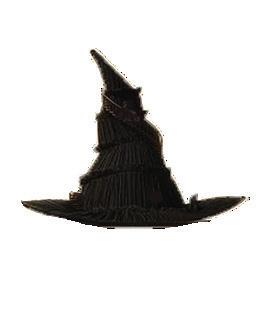

It establishes Elphaba’s radical acts as her becoming the Wicked Witch while Glinda is flying around in a bubble, a very unsubtle metaphor for the fact that she is insulated from the world, from what is really going on.
When Glinda finally realizes that her public image is built on lies, it’s too little too late. There are no real consequences. Glinda lives happily ever after. The rest of the world thinks she is good and Elphaba is evil.
The title song “For Good” perfectly encapsulates everything wrong with this film. It comes at what should be a heartbreaking moment: Elphaba and Glinda are finally reunited and Elphaba has decided to sacrifice herself in order to make Glinda seem good so that she can take over Oz and banish the wizard.
But, because of the lack of actual development in the plot, there are no stakes. I didn’t care about any of the characters so this “heartfelt goodbye” meant nothing except that it felt like I was listening to the same lines.
“Who can say if I’ve been changed for the better? / But because I knew you / I knew you: / I have been changed for good?” over and over again for six minutes.
Like the rest of this movie, “For Good” felt dragged out, fake and cliche.
The only reason that this movie gets any stars at all is Erivo’s performance in “No Good Deed.” Everything else? A waste of time, money and potential.




“I want underwear and socks for Christmas!” said no one, ever. The Octagon asked around campus and compiled a list of holiday gifts as unique as the giftee and the gifter. Never re-gift again!









Kwanzaa is a seven day celebration of African-American and Pan-African history, culture, and community. It spans from Dec. 26 to Jan. 1 and is celebrated annually.
Kwanzaa is centered around the Nguzo Saba, or the Seven Principles, of Umoja (unity), Kujichagulia (Self-Determination), Ujima (collaboration and responsibility), Ujamaa (familyhood), Nia (purpose), Kuumba (creativity) and Imani (faith).
Kwanzaa is a holiday that involves gift-giving, but is not the central focus of the tradi-
Jewelry: A shimmering, unique piece of jewelry is a wonderful gift to give to someone you are close to. Whether it’s a large chain made of gold or a dainty necklace made of shells, an accessory is universally appreciated.
Customize it with the recipient’s name, nickname, birthdate or initials. You can also opt for more unique jewelry items, like charm bracelets or lockets.
If you choose the charm bracelet, select unique charms that remind you of the recipient, and if you go for the locket, have it contain a special picture of you and the recipient together inside.
tion. Gifts that are given are traditionally very practical, educational, and meaningful. Here is a list of seven unique and useful gifts for the seven principles!
1. Family Trip - Umoja
2. Customized journal - Kujichagulia
3. DIY Project Kit - Ujima
4. Handmade Family Photo Album - Ujamaa
5. Compilation of “Why You Matter to Me” Letters from friends and family - Nia
6. Special monogrammed art supplies - Kuumba
7. A 365 Notes of Love JarImani

tival of Light” will be celebrated from Sunday, Dec. 14th to Mon day, Dec. 22 this year. give anything more than choc olate coins, many families now have adapted to giving one small gift to one another per night of the holiday. and TraditionsJewishGifts.com are great sources for unique Ha nukkah gifts, including: engraved menorahs, customized dreidels and jewelry featuring the Star of David with personal touches like inscriptions, initials and birth stones.




shells from a trip that has meaning. Paint a picture for them: You can paint an image of your mom holding you for the first time, your partner’s first date with you, or a core memory with your sibling. This is such a precious gift, and whomever receives it will undoubtedly feel touched. When selecting an image to illustrate, try to target the recipient’s core life memories or memories with you. If you choose to have the image printed onto a canvas, Canvasondemand.com offers various options and pricing.
them, and a page in the back with Mad-Libs about a funny memory with them. Conclude (“Epilogue”) the book with a heartfelt letter to them and a page with pictures of fun moments with them.
One alternative includes a collection of poetry (or a poem) or a song or collection of songs for that person if poetry or songwriting is more your thing?

Online sites like Mint&Lilly, Simple&Dainty and ThingsRemembered offer inscribed items for men and women — not just jewelry, but pens, watches and even something called a “gunmetal skeleton dial pocketwatch.”
A cheaper alternative would be to simply handmake a bracelet using beads, rocks or
Make Someone a Main Character: An “All-About-You” book should be laser-focused on that person who inspired it. It’s a gift straight from the heart and soul. Include a dedication page (the book is obviously going to be dedicated to them) and a table of contents.
It should also have an in depth recount/ retelling of one of your favorite memories or stories with this person, and also a handdrawn illustration to go along with it. It can include an acrostic poem describing
Another alternative is a “lyric book” where you choose a song that reminds you of the recipient and then write lyrics on separate pages with cute photos of the person. Give a Signature Gift: Every family has a famous (or in some cases infamous) recipe. Get this special (preferably handwritten) recipe written onto a plate to keep forever! Prairie Hills Pottery, on Etsy, has plates and dishes to choose from, other items as well, such as ceramic shells for jewelry and a necklace that memorializes someone’s signature (such as your parents’ signatures on your birth certificate). You can also inscribe any special handwritten note to keep forever onto a ceramic piece of your choosing.



Everyone has a musician, play, comedian or sports match they want to see live. There is no better gift than giving someone the opportunity to experience that!
Unsure of what kind of ticket you should get someone?
Music: Let them pick a song to listen to in the car, ask to share Airpods or ask for song recommendations. You can also simply ask what artist they are into at the moment.


Plays and Shows: If the recipient seems into theater, basically any live show will work. You know them, so try to match your choice to their persona. “Hamilton” for the history nerds, “Wicked” for the soft-hearted or “West Side Story” for the romantics.
Check CrestTheater.com for venue schedules and Tower Theater in Sacramento for classic movie showings (“Casablanca,” “Roman Holiday,” “Say Anything,” “Pretty in Pink,” etc.).
Sports: Make a sports-related remark and watch said person respond with something about “their” team. Keep a close eye on their social media to see what they post and ask questions like who their favorite athlete is.

Your ticket doesn’t have to be top billing. Affordable concert tickets are available at smaller venues for your parents’ favorite bands. Artists like Sublime, Janet Jackson, Duran Duran, Brad Paisley and (ask your mom about) Alanis Morisette are playing at Thunder Valley Casino starting at $179 each. Shaun Cassidy (ask Mom) is playing in Napa on MLK weekend; $184 each. Look online for tribute bands as well; many play at Crest Theater and Ace of Spades — both local venues and comparatively inexpensive.
Travel (Pssst...students, leave this article for the parents to find...): Luggage might be boring but what it’s used for is not. Send your giftee to a place that they have always dreamed of exploring. Country Day parents: Treat your favorite children to a mind-blow-

ing surprise trip — without the parents!
A fun way to present this gift would be to buy a travel guide to the place you are sending them and put the airline tickets poking out of the pages of the book. Or “Russian Doll” the tickets (or any smaller gift): wrap the gift in increasingly larger boxes — culminating in a misleadingly huge box. Gift-wrapped boxes within boxes until they finally get to your (enveloped) tickets. Video the whole unwrapping process. Classic.

If you are a teenage gifter unable to afford a big trip there are two long-term thinking alternatives: a savings jar or a travel voucher.
A savings jar is a great way to show someone you care about them and are putting effort in trying to make memories with them. Decorate the jar with stickers, gems and the name of the place you are saving up to go to. Commit to a future trip with siblings and other family members. Make it a goal for a significant anniversary or celebration — even if it’s a few Christmases away.