While the news, however inevitable, may not surprise anyone, it is still a relief to see the government act in its first term to make major changes. These changes will bring real benefits to communities, the environment and economy. For years, people have said the RMA is slow, expensive and complicated. Reform gives us a chance to keep the act’s main goal of managing resources sustainably, while making the system more efficient, predictable and focussed on results.
Reform is also a chance to improve environmental protections. With stronger national standards and clearer rules, the new system can do a better job of protecting our freshwater, biodiversity and coastal areas. Rather than debating the basics in every local plan or consent, communities can spend more time working on real improvements and restoring damaged environments.
A major benefit is that getting consent for projects could become faster and clearer. With simpler processes, fewer repeated plans, and clearer national guidance, we can avoid the delays that often hold up housing, infrastructure and renewable energy projects. This should lower costs for councils, developers and communities, making it easier to tackle the housing shortage and improve important infrastructure.
A simpler and more strategic planning system can help us prepare for the long term. By including climate change adaptation, natural hazard risks and infrastructure planning in early decisions, New Zealand can build safer, more liveable communities that are ready for future challenges.
If done right, RMA reform can give us a planning system that works faster and is more reliable, while also offering better environmental protections and more liveable communities for everyone in New Zealand. It’s the textbook balance.
for Taranaki-King Country
Welcoming farming in 2026
Welcome back to an exciting year of the Waikato Farming Lifestyles. Now owned by Rural Matters Ltd, our team looks forward to keeping our farming community up to date, heard and seen with local stories and news that affect them.
Happy New Year, we are excited to do 2026 with you. Looking forward to the future, we as a company want to keep you informed with relevant news, information and uplifting stories.
Last year, we faced challenges. This publication, once owned by Integrity Community Media, was put into administration and subsequently liquidated. Amid our team’s loyalty in believing that what we do matters, we kept moving forward, with Rural Matters stepping to the fore to own the mastheads.
Emerging victorious, the Farming Lifestyles family is thriving and striving to ensure we bring our readers great content. New opportunities and challenges await us all, but as ever, the farming community keeps going, no matter the situation, and we will continue with you.
As always, our team will scrutinise and inform on political issues, solutions and policies facing farmers this election year. This year, we hope to share the wonderful journeys people have been on, their passions for agriculture and their success in the industry. We will print the latest and upcoming wheels and vehicles in farming, amongst other technologies.
This year, our editor Andy Bryenton has shaken things up with his vision for the paper. In this month’s publication, you will discover feature stories, automotive
successes, local news and other pieces we think you will like —
is a refresh we think our readers will love.
Celebrating more than 30 years of Central Districts Field Days in March, we encourage you to attend the show, make connections, witness inventions and technology benefitting the rural sector and other opportunities.
If there is anything you’d like to see covered this year, any great stories about farming ingenuity, local news or issues, we welcome you to email us at info@rml.nz. If
you wish to advertise, we invite you to call our sales team (contact numbers on page two). We wish everyone a happy, safe and prosperous new year!
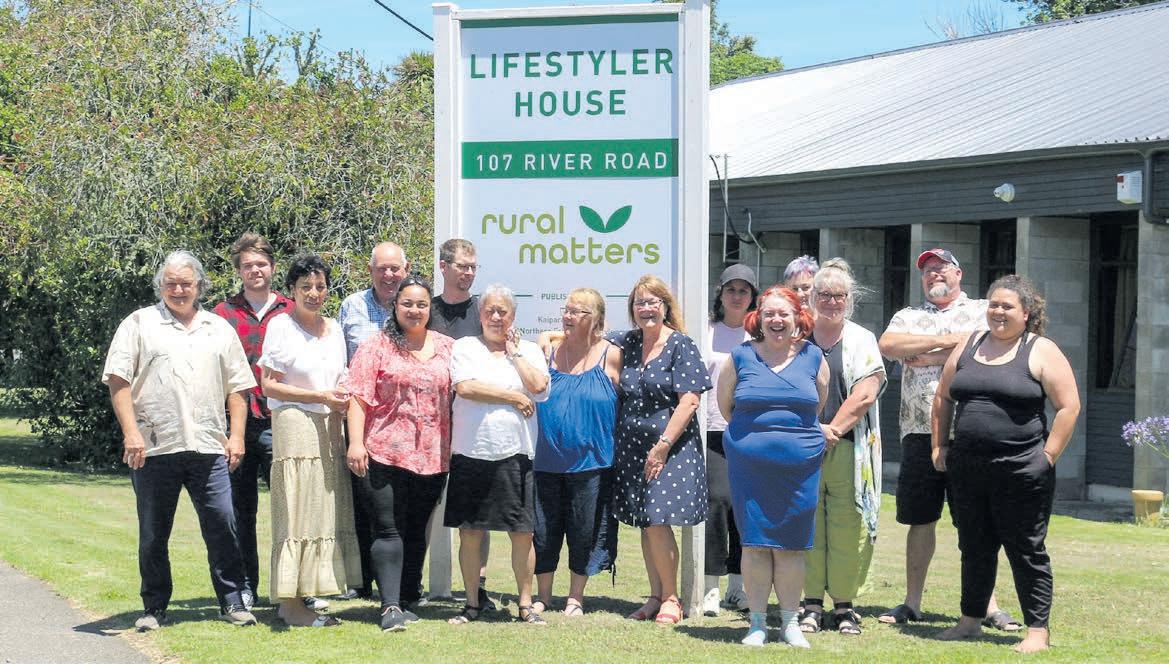
The Rural Matters team is ready to go for another year, ensuring people in businesses and the farming community are heard
it
Farming favourite returns
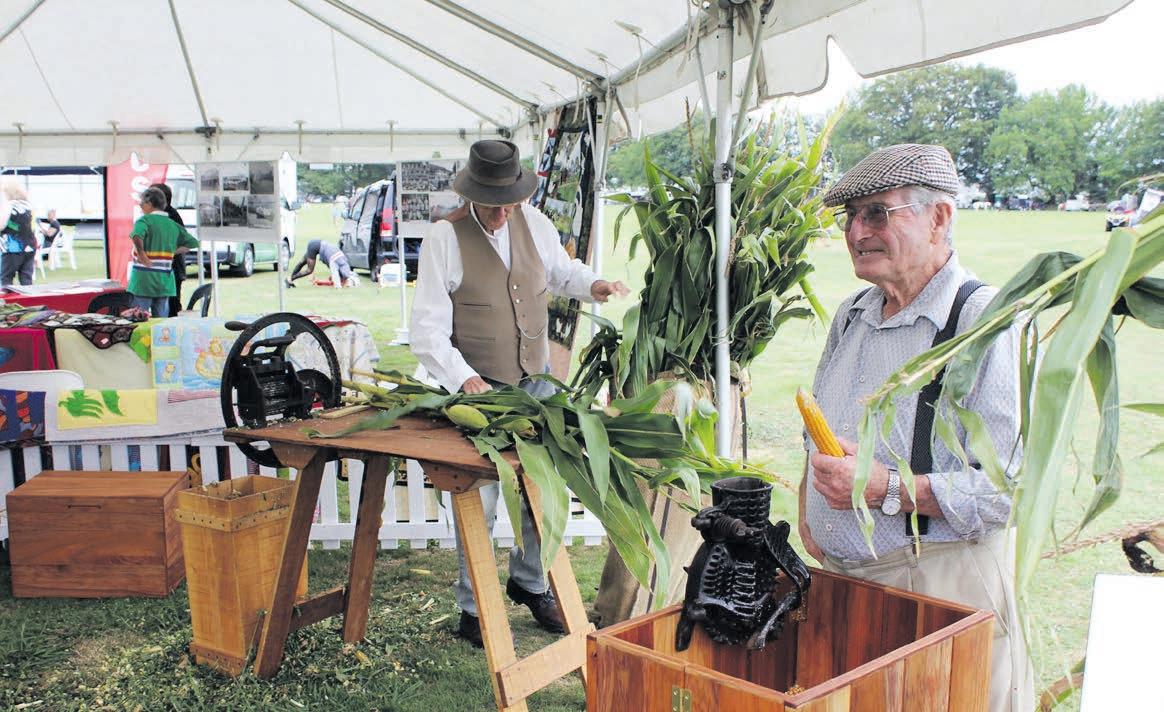
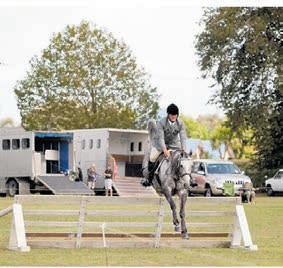
The Morrinsville A&P Show is back once more for families to enjoy the rural pastime on Saturday, March 7 2026, from 9am at the Morrinsville Recreation Grounds.
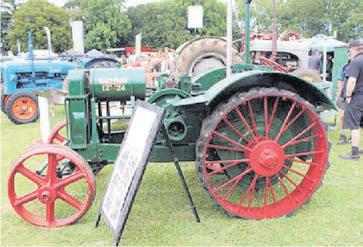
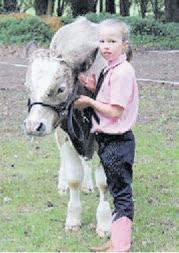
Promising yet another year of farmyard fun, Morrinsville A&P Show president Bruce McRobbie took to the helm and breathed life into what many thought would be the last show in 2017. Now alive with laughter, activities, prizes and animals, visitors have plenty to enjoy.
“It is one of the top one-day A&P shows in the North Island, if not the whole country. Morrinsville has a population of about 10,000 people, and we have drawn about 80% of people to the event,” said president McRobbie.
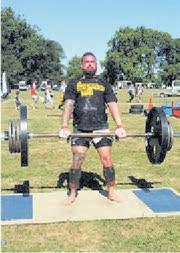
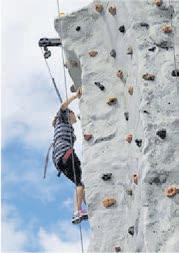
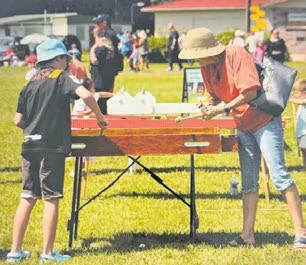
Featuring everyone’s favourite sites and entertainment, people can expect to witness Highland dancers, performing animals, street theatre performances, canine agility courses, farmyard pets, a strongman competition and much more.
At 11am families can enjoy a Teddy Bears’ Picnic, so be sure children arrive with their favourite soft toys. The fun and informal event is great fun and is an opportunity for children to hone their social skills.
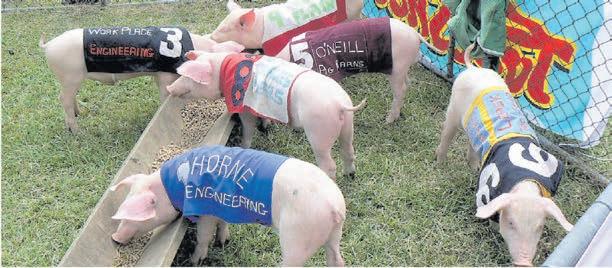
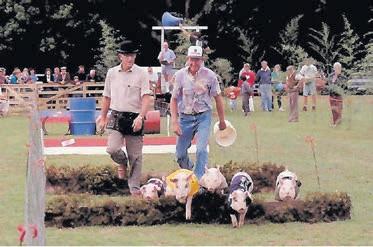
Last year, the committee revived a crowdpleaser. The pig racing event is set to return with the porkers being auctioned off at the end of the last show, with proceeds going to the Child Cancer Foundation.
“It was held at the show two decades ago with great success, and we are bringing it back again this year. All the pigs and races were generously sponsored.”
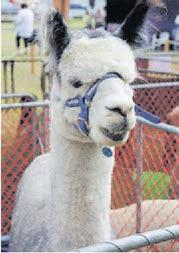
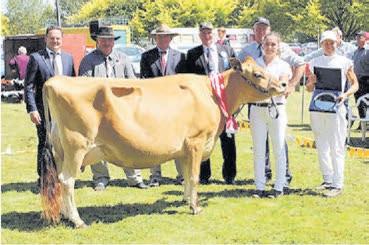
With beef and dairy, equine, goat and alpaca sections promised, kind sponsors
The Morrinsville A&P Show promises another year of fun and farm animals and hopes to draw a big crowd yet again have added to the prize pool, putting cash prizes up to be won. As always, dog trials will feature on the day, a showcase of the bond and intellect of canines and their handlers.
The Highland and National Dancing competition also has a place on the stage,
with competitors ranging in age from children to adults. From Irish jigs to the Sailor’s Hornpipe, the dances will add a splash of Celtic culture to the mix.
Two $250 New World vouchers are up for grabs as gate prizes, with winners
announced between 2.30pm and 2.45pm on the day. People must be on the grounds when it is drawn. For more information, go to morrinsvilleshow.co.nz. The committee is grateful to everyone who has made this event a success time and time again.
A building promise kept
by Andy Bryenton
There’s an entrenched housing crisis to beat, and new laws which came into effect last week will do their bit, says a triumvirate of parliamentarians.
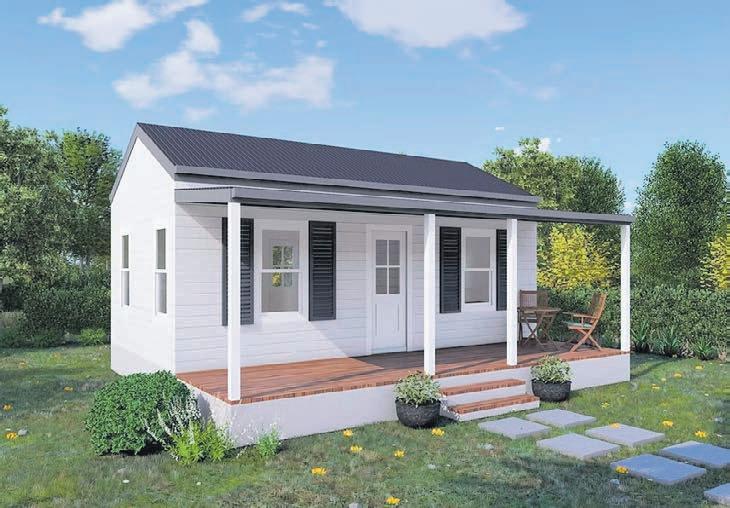
‘Granny flats’ will now be able to be constructed in New Zealand backyards without building or resource consents, meaning that flexible choices for housing multiple generations on one property just became simpler to access.
The new rules mean it could cost thousands of dollars less to construct a small building, and they also slash up to 14 weeks from the building process. That’s critical in areas where accommodation is needed badly, and will have an impact on both residential and rural properties. Small, standalone dwellings with a footprint of up to 70 square metres fall under the new rule.
“We know Kiwis have been feeling the strain of the cost of living, so it’s great to see this long-awaited change, which will provide practical housing solutions that reduce costs for extended families, small communities and even businesses that provide staff accommodation, such as farms,” said Shane Jones, who has strongly advocated for this red-tapebeating measure.
“For too long, it has been overly difficult and expensive to provide the housing solutions New Zealanders need. Red tape has increased the workload for local councils and blocked simple, affordable dwellings that meet families’ housing needs,” said building and construction minister Chris Bishop.
last week
The government expects 13,000 new granny flats to be built in the next ten years, which is not just a boost for housing stocks, but also for the building industry itself. New jobs all along the supply and construction chain will be generated by this simple law change.
There’s the potential, too, for some of those new jobs to be apprenticeships. With the nation looking at a skills shortage, matching up young people in need of work and a viable long-term career path with those trades in need of helping hands should be a no-brainer. Bridging that gap with education, and support for businesses who do the right thing and take on young apprentices, should be a priority for the government, and an election-year issue, say those in the building trade.
Time to check ewes’ udders
Research has shown that checking ewes’ udders a few weeks before mating is better than examining udders at weaning.
Ideally, ewes’ udders should be checked four to six weeks after weaning to ensure there are no defects that could compromise lamb survival and growth rates.
That is because it is easier to feel some defects once the udder has dried off, and many ewes with apparently normal udders at weaning are found to have udder defects four to six weeks later. This is possibly due to post-weaning mastitis.
Studies carried out by Massey University on North Island farms found that on average, five per cent of mixedage ewes have udder defects. Lambs born to ewes with udder defects have a death rate that is three to four times higher than lambs whose dams have normal udders.
Those that do survive grow an average 25g/day less and their average weaning weight is 2kg lighter than their contemporaries as a result.
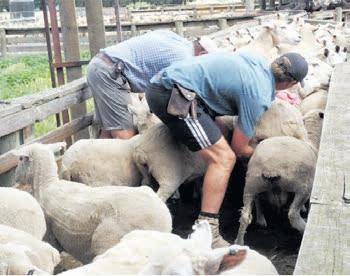
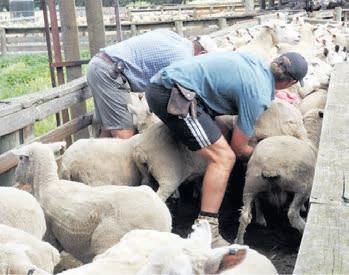
To check udders effectively, they must be palpated. This is best done while the ewe is standing in a race.
Both halves of the udder should be gently squeezed and if possible, the teats rolled between the fingers.
General hardness would indicate mastitis. If the infection is recent, the udder will be hot and swollen, but more
commonly the infection will have been there for a long time, and the udder half or halves will feel hard all over.
Ewes with generalised hardness in one or both halves of their udder should be culled. Lumps within the udder tissue can range in number and size. As a rule, ewes with lumps within the udder tissue should be culled.
If a farmer is short on ewe numbers, then retaining ewes with one or two very small lumps might be alright, provided the lumps are not near the teats. It is normal for some ewes to have lumps just in front of, or behind, the udder. These are attached to the udder but not within the tissue. Ewes with these lumps can be retained.
For more information, visit the Beef + Lamb New Zealand website.
Shane Jones, Chris Bishop and Chris Penk jointly announced the end of resource and building consents for granny flats
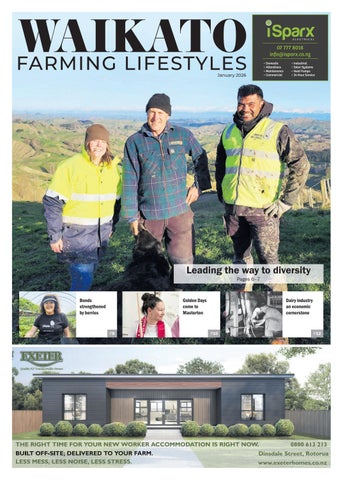
LEADING THE WAY TO DIVERSITY
TBY AMY FIFITA
Established as a public-private partnership, Mānuka Farming NZ was designed to grow the mānuka honey industry through the identification of science-led best practices.
he company continues to help the industry’s recovery, while also advising landowners on the integral role of mānuka as a cornerstone of native planting for land retirement and ecological restoration. It leads the way for farmers to diversify their revenue streams and look after the land for future generations.
“Plantation mānuka honey is still in its infancy,” said client relationship manager Bronwyn Douglas. “The honey industry grew quickly, resulting in an explosion of hives across the country.
“That led to a glut of honey and a fall in prices, driving many beekeepers
away from mānuka. There’s no honey glut, and we‘re seeing prices move upwards sharply.”
Founded more than 12 years ago, as part of MPI’s Primary Growth Partnership programme, Mānuka Farming NZ led trials of purpose-bred mānuka cultivars derived from wild stands throughout New Zealand. The project successfully built a set of protocols to improve the quality and quantity of high-UMF mānuka honey. It includes the use of the mānuka cultivars bred for vigorous growth, increased floral density and fitness for use in various climate conditions.
MIDAS DIAMOND JEWELLERS
Jewellery Design & Repair Services
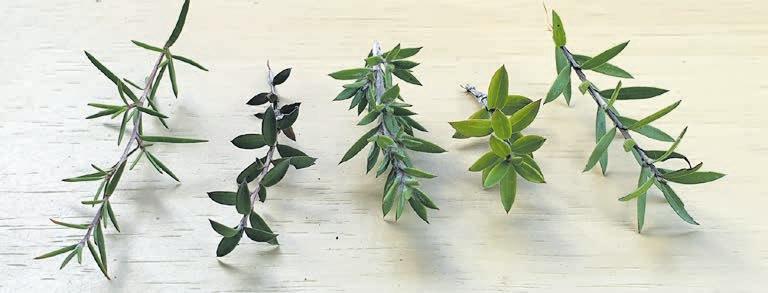
These five different mānuka cultivars showcase the width difference of leaf shape
The company recommends specific cultivars based on the land location to be planted, and site-specific challenges like propensity for drought or frost.
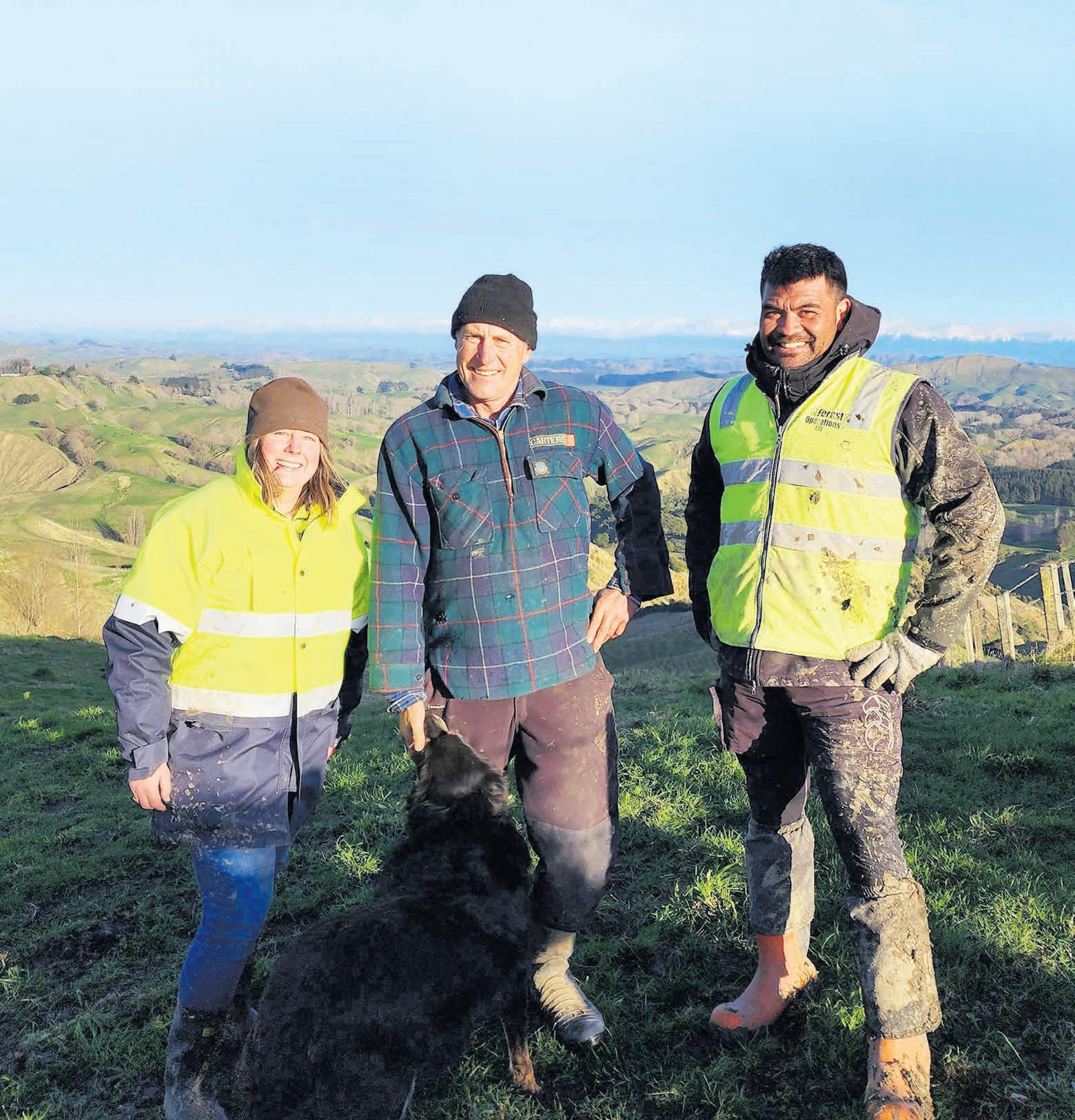
Bronwyn Douglas and the MFNZ planting lead, with regenerative farmer Greg Hart, who is retiring class six and seven erosion-prone land on his farm
“The field research was delivered by Massey University, which also produced three PhD projects from the findings and a wide range of information,” said senior ecologist Maggie Olsen.
“We tested different mānuka cultivars at plantation sites throughout New Zealand. We concentrated our research on a wide variety of important factors for plantation establishment success: tree growth, disease resistance, planting operations, nectar quality, flowering period, honey outcomes and environmental interactions.
“The seed lines developed have improved growing characteristics compared to the wild types. With our cultivar collections, we can match these according to ecotype and region.”
With eight cultivars to select from, farmers from across the country can diversify their revenue streams by adding honey production to the mix. Matching the flowering time and the
bees’ activity time ensures the bees can successfully harvest nectar for honey production.
“We provide our clients with a customised planting plan to meet their specific needs and goals. In addition to recommendations about mānuka cultivars, we also advise on non-mānuka support species suitable for specific locations and integral to bee health.
“By acting as pollen and nectar sources when the mānuka is not flowering, it ensures a diverse diet for the bees’ health. Everyone benefits from diversity in their diet, even the bees.
“We also advise on the optimal number and placement of hives to maximise the time the bees are on the mānuka flower exclusively.
“It adds to the quality and value of the honey. This scientific approach brings much greater certainty and reliability of outcomes for landowners.”
The variety of traits found in specialised mānuka cultivars is not only useful for landowners looking to establish honey production. They are also ideally suited as a cornerstone of land retirement and restoration projects
“For the hard-to-farm steep back country where radiata is unsuitable, mānuka is usually the most cost-effective option. There’s so much erosion-prone land in New Zealand, and mānuka is a great way to anchor those slopes, whether alone or in concert with other tree species. The low-cost option benefits the land,” said Bronwyn.
“Having seed orchards for our special cultivars, we select that seed, grow it in our nurseries and plant out following the plan, normally planting during winter. We also do the essential preparation and post-management for the site — weed and pest control.”
Maggie says many farmers are at the mercy of commodity prices. Mānuka
honey prices aren’t closely tied to those products, which is useful as a complementary source of revenue.
“It creates a carbon revenue, too. It’s a way for farmers to maximise returns from unproductive pastoral land and even beautify their property with trees. You will see the benefits of the native biodiversity, an increase in birds, bees, erosion management and water quality.
“Honey prices are stabilising and increasing steadily. The industry would benefit from having a more stable supply based on purpose-built plantations, rather than relying heavily on the wild supply.
“Our goal is to help landowners meet their economic and ecological goals with maximum reliability and minimum cost. Whether that means establishing a mānuka plantation or retiring unproductive hill-country grazing land, we’ve the practical experience and science-led backing to deliver.”
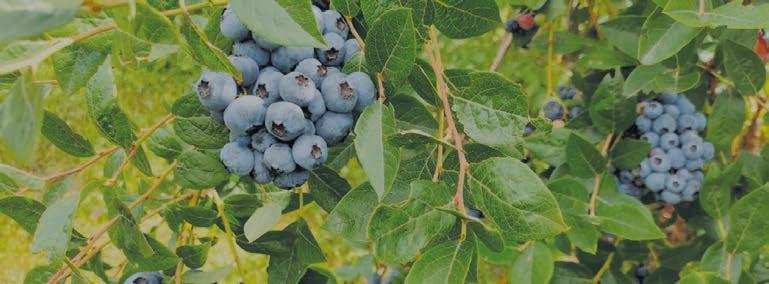
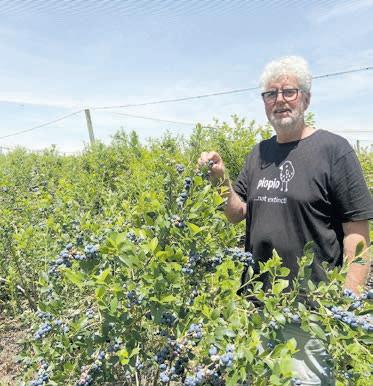
Arriving in Piopio in 1993 with three children, later welcoming their fourth, the Roy family was embraced into what Angela describes as “a lovely community.” Now in their 33rd year of cultivating and harvesting the juicy delights, the berry orchard is the only horticultural operation in the area.
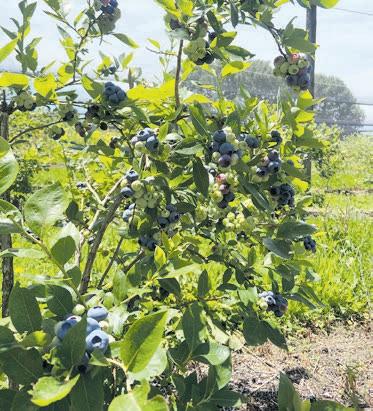
“We are located a couple of kilometres north of Piopio on State Highway Three,” said Mike. “When we arrived in 1993, we purchased a blueberry block that the previous owners had established, and it also had a shop, which was hugely beneficial to us,” said Mike.
“About two decades ago, we bought a neighbouring property, bringing us to 13.5 hectares in total. We grow strawberries,
BONDS STRENGTHENED BY BERRIES
BY AMY FIFITA
blueberries, raspberries and blackberries, all of which are sold through our roadside shop. The shop is open for about six months from Labour Weekend until the end of April.”
Since purchasing the berry farm near Piopio, the family has continued to expand and grow the business into something they are deeply proud of. The Mairoa ash soils, combined with colder winters and regular rainfall, provide nutrient-rich soils for their berries to thrive.
“It is very much a family business, and that extends to our staff,” said Angela.
“Some of our staff have been with us for our whole 32 years.
“Our eldest child, Jessie and her husband, Hamish, live nearby in Āria, where they manage a dairy farm and raise
STUMPCHIPPING & MULCHING
End-to-End Tree Removal & Land Clearing
More than just a mum and dad operation, the Roy’s berry farm is about family, including the younger generation and staff members
their four sons. Jessie manages our shop every weekday throughout the season, and her four boys all get off the school bus here to help in the shop.
A story
years, Mike and Angela Roy, along with their children, daughters and sons-in-law, and even grandchildren, have poured their hearts into building Piopio Berry Orchard into the successful family business it is today.
Mike Roy and his family have expanded the former blueberry block into a farm abundant in not just the blue treats, but also raspberries, blackberries and strawberries
“Our sons, Jack, based in New York, and Tom, who is in the New Zealand Defence Force, helped throughout their childhood. Tom even took a year off to build tunnel houses for the strawberries on the land, and his wife, Siobhan, assisted Jessie in the shop.
“Our youngest child, Maggie, is in London with her husband, Rhys, and their daughter. Maggie does all of the administration and paperwork behind the scenes. Her little girl, Tilly, is about 18 months old. She’s not helping just yet, but she’s an excellent berry taste tester.”
Mike says it’s a very simple business model where they plant, grow, pick, pack, sell, and if it isn’t sold today or tomorrow, they freeze it. While the business model itself is straightforward, some of the
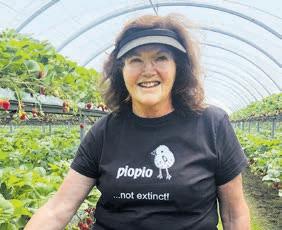
Angela Roy says as a family, they are still passionate about their growing enterprise
orchard’s processes are far from mundane.
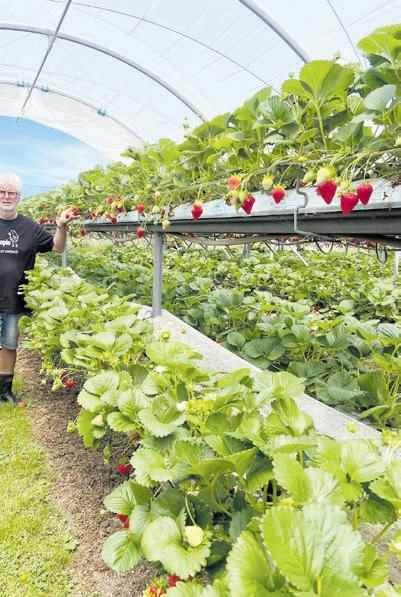
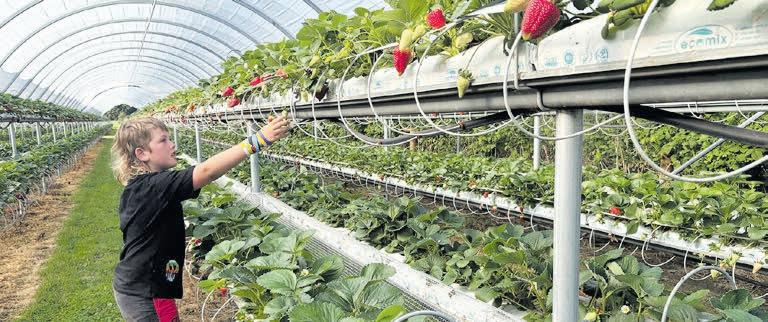
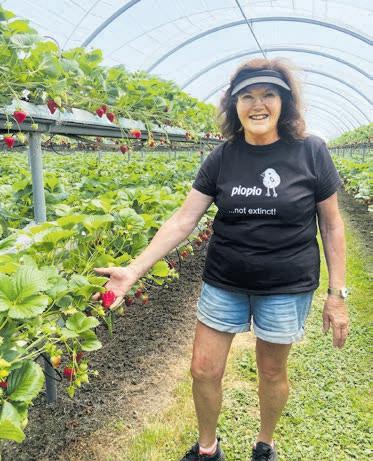
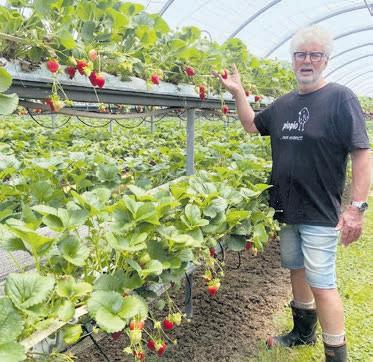
One standout example is the family’s innovative approach to pest control within their strawberry tunnel houses. Integrated pest control involves introducing a predatory insect into the environment to eliminate the ones damaging fruit and plants.
“Growing strawberries under tunnels protects them from frost, hail and heavy rain,” said Mike. “Moreover, because there’s very little moisture inside the tunnel houses, fungal diseases are also reduced.
“Many of the biggest challenges in strawberry growing are almost eliminated, which means we can spray far less. However, the warm, dry conditions inside the tunnels are also ideal for insects, so we need to monitor pest levels carefully.
The latest addition to their operation, the strawberry tunnel houses ensure the berries are protected and can have integrated pest control to deal with unwanted bugs
If you don’t stay on top of it, severe outbreaks can happen very quickly.
“Tunnel houses allow us to use integrated pest management and reduce our need for spraying even further. We introduce predators from Bioforce. When we identify a pest, we contact Bioforce in Auckland, which courier the appropriate predator overnight in small containers.
“The predators are then released into the tunnel houses, where they multiply and get to work to eat the problem pest. Sometimes, they eat it to the point that they die out because they no longer have a food source. If the pest returns weeks later, we simply reintroduce the predator.”
Angela says the method has proven highly effective. While this system can’t
The Roy family grow various berries, selling them fresh, frozen or as real fruit ice cream — their customers keep coming back
be used in open fields, similar care and attention are required across all berry crops.
“Each cultivar has its own requirements, but there are similarities,” said Mike. “Blueberries, raspberries and blackberries are all permanent crops. They all need pruning and training through the winter to ensure a strong crop the following season.
“Strawberries, on the other hand, are an annual crop. We plant them fresh every year in May, allowing some growth before the winter, and they then remain dormant until spring.”
With new processes in place and their operations expanded, Angela says the family’s passion for berry growing remains as strong as ever.
• Interior Design consultation
• Home Interior Styling
• Cushions made to order
• Curtains - fabrics & making
• Blinds & Shutters
• Upholstery
• Home Decor & Giftware
• Furniture
• Faux floral arrangements made to order
74 Mahoe Street, Te Awamutu 3800, (Opp. Red Kitchen Cafe)
W. www.JuliaEmpson.co.nz M. 0274 818 760
TGOLDEN DAYS COME TO MASTERTON
BY PAUL CAMPBELL
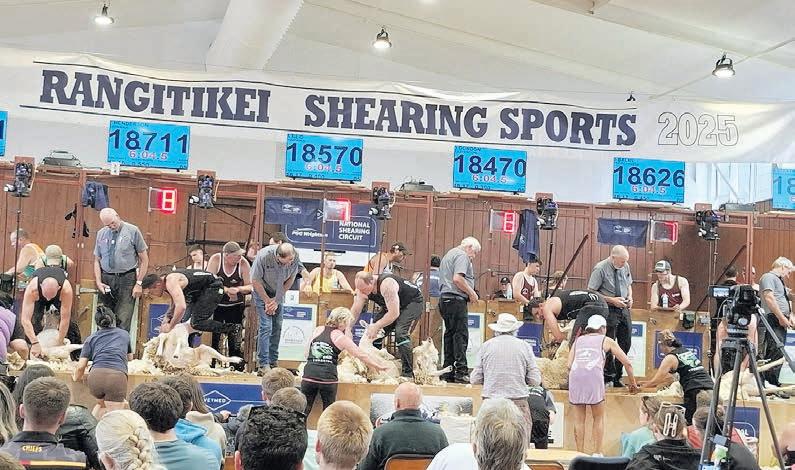
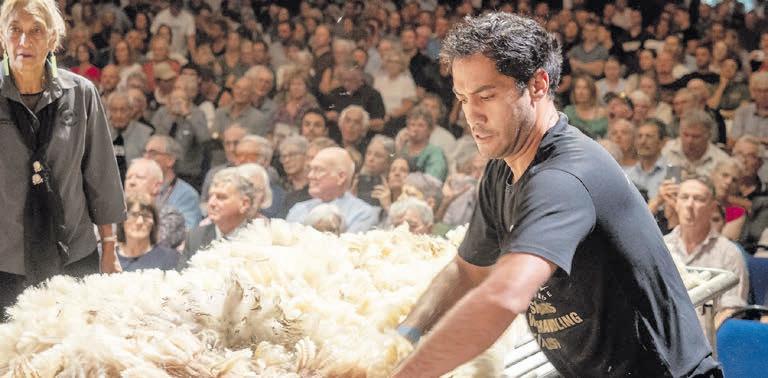
Shearing guns from around New Zealand and worldwide, competition officials and myriad supporters will be gathering in Masterton early next month for the 20th Golden Shears World Championships.
he pinnacle for Shearing Sports New Zealand, and the industry at large, has attracted entries from 28 countries, for six world titles and more than 20 other regular titles to be decided, including the Golden Shears open shearing and woolhandling events.
In all, about 600 competitors will take part, bolstered by about 150 chasing the world titles. Tickets for the major Friday and Saturday night events in Masterton’s War Memorial Stadium, where the Golden Shears international championships have been held annually since 1961, sold out quickly several months ago.
Spectators will also be accommodated in a marquee across the road in Queen Elizabeth Park, while thousands globally are expected to watch the live-stream, covering all events over the four days.
Northland shearer Toa Henderson will be shearing for the ultimate dream when
he represents New Zealand on March 4–7. Winning the Golden Shears and New Zealand Shears open finals in Masterton and Te Kūiti respectively last year, Henderson dominated Shearing Sports New Zealand’s near year-long, eight-round machine shearing selection series.
“He won, winning four of the first five events and finishing runner-up in the other, to secure one of the two berths with a round to spare,” said Shearing Sports NZ spokesman Doug Laing.
A team of two machine shearers, two blades shearers and two wool handlers will represent New Zealand with the goal of restoring the black-shirt pride after New Zealand, for the first time in world championships’ history dating back to 1977, failed to win any of the titles in Scotland in 2023.
New Zealand also missed out on the glamour open shearing individual and teams
Provincial competition sets the stage for world championships titles in Scotland, and four years earlier in France, and also has an old score to settle from when veteran Scotland international
Gavin Mutch won the individual title, the last time the championships were held in Masterton in 2012.
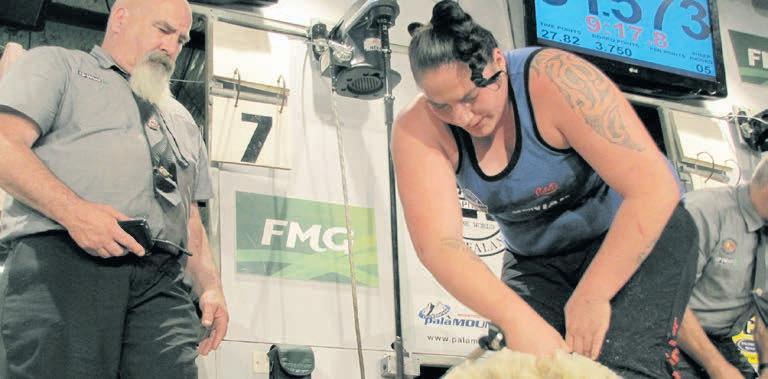
Woman shearer Pagan Rimene who helped set a team lamb record in January.
The turn of events followed a New Zealand domination of the championships over the years. In competition in the Goldens will be the Welsh pairing of defending champion Gwion Evans and new hope Llyr Jones, a regular in New Zealand each summer. There’s also the vastly experienced Scotland team of Mutch and Hamish Mitchell, who won the teams title together in Scotland in 2014, and expatriate Kiwi Matt Smith, shearing for England, where he has been farming for more than 10 years. Ladies will also be competing, and it’s expected to see shearers, including Pagan Rimene who recently set a world record of over 1,900 lambs shorn in eight hours.
Kaiwaka shearer, Toa Henderson has had a dramatic rise in the open ranks since returning eight years ago from a stint in Australia. He is now closing in on a total of 50 wins in the top grade in New Zealand, and showed his talent in top
international class in winning the open title at the Royal Welsh Show in July last year. He will be out to emulate the feat of Northland’s other world champion, Rowland Smith, from Ruawai but based in Hawke’s Bay, who won the 2014 title.
It was back in 1958 that members of the Wairarapa District Young Farmer’s Club proposed a shearing competition at the annual agricultural and pastoral show. With advertising and special invitations, the stage was set for a new sporting spectacle that would impact Masterton in the future.
The competition was a huge success and organisers, Laurie Keats, Iain Douglas and Graham Buckley approached Federated Farmers’ then chairman, Mr Roy O’Hara, and president, Mr Bob Chamberlain, to ask if an annual contest could be staged in more appropriate premises — the War Memorial Stadium.
Golden Shears was the agreed title and from this point in 1960, the world’s greatest shearing competition was conceived. The inaugural Golden Shears of 1961 surpassed all expectations with crowds so great, the local army was called upon to help with control.
Through the 1960s and 70s, before the impact of live sport on TV, the fascination and excitement of Golden
Shears became a household name with seats booked from year to year. Many shearing greats, including Ivan Bowen, Snow Quinn, Roger Cox and Martin Ngataki to mention a few — engraved their names in the record books. In the late 1970s and early 80s many minor shearing competitions sprang up throughout New Zealand. Shearing had entered the world of professionalism.
We provide expert solutions for a dry, healthy home.
Gun woolhandler Joel Henare will have a crack at a third Golden Shears World Championships
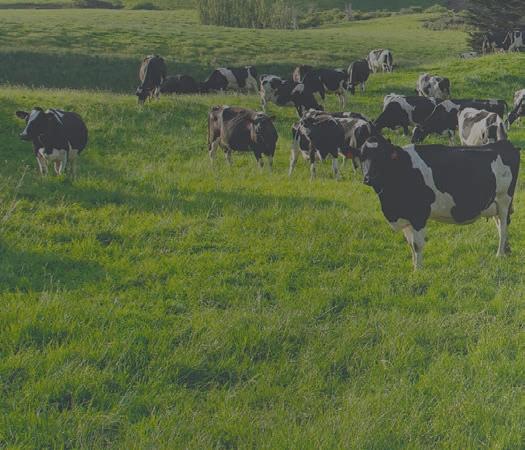
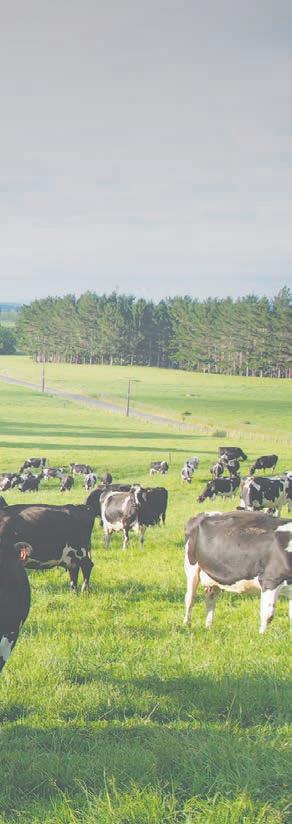
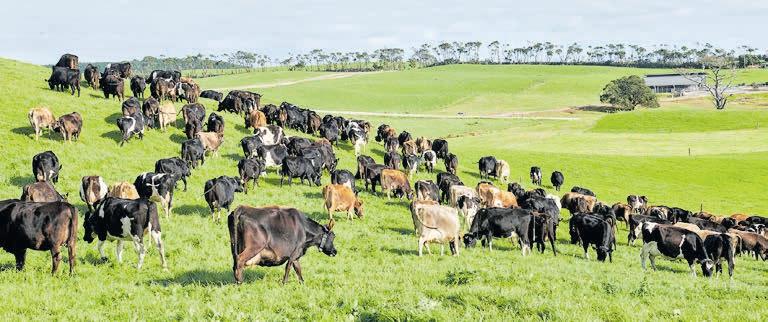
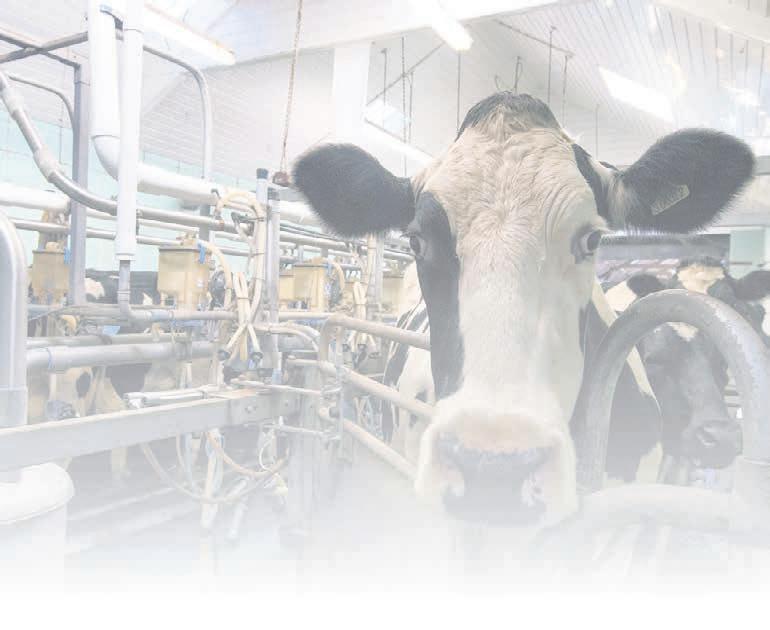
New Zealand dairy farmers are achieving more with fewer cows, shown through record milk production each cow and continued genetic progress according to industry icon DairyNZ.
Statistics shared with the Livestock Improvement Corporation (LIC), show that milksolids production rose 2.9 per cent in 2024/25 to 1.94 billion kilograms, despite a 0.5 per cent fall in cow numbers to 4.68 million.
The lift was driven by record-high productivity for each cow, with the average animal producing 414 kilograms of milksolids, which is up 14kg from last season.
DairyNZ chief executive Campbell Parker says the results reflect farmers’ strong focus on performance and adaptability despite a range of challenges over the past few years.
“Farmers continue to focus on doing things smarter and driving productivity, including managing their herds more efficiently, improving feed use, and leveraging science and technology to lift
We deliver water throughout the Waikato area to residential, farms and business customers. We can cart up to 28,000 lt with truck and trailer.
We can fill anything from your house water tank, through to swimming pools, and farm tanks. We also do water tank cleaning and sterilizing.
BY PAUL CAMPBELL
production per cow, while also responding to higher milk prices last season,” he said.
“The trend towards fewer, larger herds is continuing, but the focus on highperforming, healthy animals remains strong, with fewer cows producing more milk. It’s a real credit to farmers’ skill, resilience, and ongoing investment in herd improvement and farm management. That combination of efficiency and innovation keeps New Zealand dairy farming at the forefront internationally.”
Meanwhile, herd improvement activity strengthened notably in 2024/25, with farmers continuing to invest in data and genetics to support long-term gains.
A total of 3.84 million cows were herdtested, which is a 5% increase from the previous season, with 82% of the national herd tested in 2024/25. The proportion
STEELFRAMED BUILDINGS
A Friendly & Personalised Service
Contact us for a FREE NO OBLIGATION INTERVIEW to discuss your financial requirements
of cows mated to artificial breeding (AB) also increased slightly to 81.5%.
Waikato, of course, is fairly to the fore in the industry with DairyNZ farm sites neighbouring properties in a province with a resonant history. Waikato featured the first top-dressing, the first waxed carton milk and one of the earliest butter factories.
It was one of the original dairy farming regions of New Zealand, and its transformation from forested hills and swampy valleys to productive farmscapes was well underway by the late 19th century.
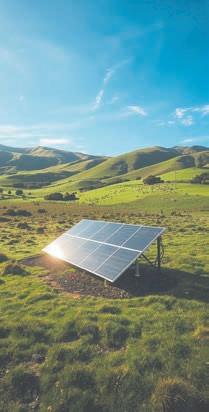
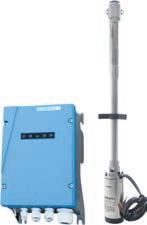
STOCK WATER. NO DIESEL.
German-engineered solar pumping that keeps water flowing for farmers. Simple, reliable and free from diesel
Reliable solutions for your farm
Contact us today to learn how solar can benefit your farm
www ablesolar co nz 09 267 7065
Waikato grass growth is a dairy bonus
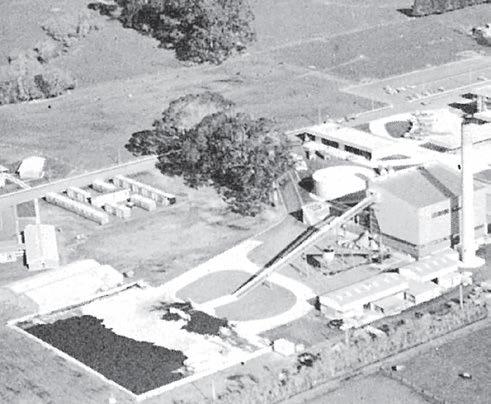
In 1886 the Pukekura Butter Factory, the first in the Waikato, was opened. The skimming station at Matangi supplied cream to this factory until the butter factory at Newstead was established in 1888.
Then 1894 saw the purchase of a cheese factory site adjacent to the railway line at Matangi by the New Zealand Packing Company, followed in 1900 by the opening of a butter factory at Matangi by the New Zealand Dairy Association.
Before dairying emerged as a major rural pursuit, farming in the district around Matangi consisted of wheat and wool production. It is interesting to note that bees played a major role in changing to dairying when they were released into the Waikato in 1886. Bumble bees helped in pollinating clover.
Sir William Goodfellow’s Waikato Cooperative Dairy Company was arranged in
1919 to form the giant New Zealand Cooperative Dairy Company Limited. Later that year, the new milk powder factory was opened by the prime minister, the Hon WF Massey. Although the factory was owned by the NZCDC, it was leased to Joseph Nathan and Company, for the production of Glaxo Milk Powder products.
A typical dairy farm of the early days had 13.6 hectares that wintered 41 head of cattle, milking 27 cows, and had a gross return of £911. The Waikato transformation from forested hills and swampy valleys to productive farmscapes was well underway by the late 19th century. So it would be ironic, but a satisfying example of the circular route environmental history often takes, if the region was one day to become known more for its wetlands, with current moves towards restoration projects.
THE BEST SOLUTION FOR YOUR DAIRY FLOOR RESURFACING
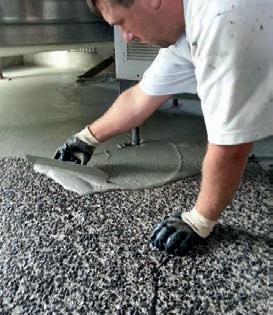
Now there is an extremely cost effective and easy to use product that will bring back your damaged concrete floors to an approved standard.
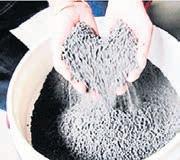
COLOURCRETE DAIRY FLOOR RESURFACER has been specially formulated for the repair of worn or damaged concrete in the dairy industry. Dairy Floor Resurfacer is a two pack system combining a Portland cement, fine aggregate based micro concrete and sophisticated binders that provide superior, compressive, tensile and flexural strength as well as a very high level of abrasion resistance and adhesion. This product is suitable for repairing worn or pitted areas or to provide a non-slip surface where necessary.
A two pot clear epoxy sealer can be supplied to reduce the wearing effects of milk and acid.
COLOURCRETE DAIRY FLOOR RESURFACER can be supplied as a ‘do it yourself kit’ and delivered anywhere in New Zealand or applied, in most areas, by contractors.
COLOURCRETE DAIRY FLOOR RESURFACER
Part A is supplied in 20kg bags and covers approximately 3m square. Part B modifier is supplied in both 10litre and 20litre containers and approximately 4litres per 20kg bag would be required. After trowelling, the surface can be broomed or sponge finished.
Wetlands were once a widespread feature of the landscape within the lower Waikato Basin and Hauraki Plains, through which the Waikato, Waihou and Piako Rivers run. In pre-European times, the extensive swamps of the Waikato basin were an important resource base for Māori. Many pā were sited adjacent to the swamps or in the swamps themselves for its defensive effect — making palisades less necessary.
The region was one of the first to be ‘discovered’ by Cook’s expedition in 1769, and judged as “in every respect the proper place we have yet seen for establishing a colony”. However, it was not until the 1860s that the settlement of the region began in earnest, following the confiscation of large tracts of Māori-owned land in western and central Waikato under the New Zealand Settlements Act 1863.
Large areas of forest were soon cleared for farms raising cattle and sheep, and root and grain crops. Then, with the advent of refrigerated shipping in 1882, Waikato became one of the most productive regions for dairy products. It was ideal country for dairy farms: flat or rolling topography, with high rainfall and sunshine hours, and mild winter temperatures, allowing grass to grow most of the year.
In the process of converting forested areas to farms, many swamps were drained on a large scale by commercial land companies in the 1800s, but drainage schemes continued into the 1900s. Today, only 20% of the original extent of wetlands in the region remain. Two of these, Whangamarino and Kopuatai Peat Dome, are freshwater wetlands of international significance.
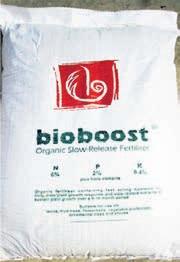
• Organic granular slow release fertiliser
• Weed free - 67% organic matter
• Will not burn plant roots or foliage
• Can be incorporated when planting or used as a top feed
• Fantastic for ALL lawns, flowers, vegetables, roses, trees, shrubs, & container plants
• Bioboost is available from: Selected Garden Centres, Commercial Horticultural, Agricultural & Turf Service Centres
Dairy herds are bringing economic returns
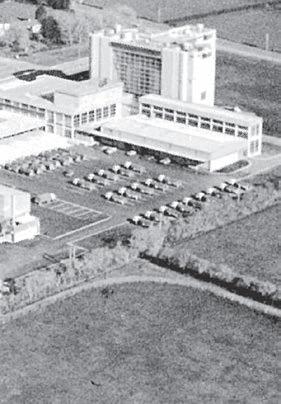
The New Zealand Co-operative Dairy Company milk powder factory in Te Rapa 1969
by Paul Campbell
Lamb prices suggest careful planning
With lamb prices at record highs, many farmers are considering breeding their ewe hoggets for the first time, according to Massey University’s Professor Paul Kenyon, who says while this can increase the total number of lambs weaned and boost farm revenue, it doesn’t automatically mean greater profitability.
Professor Kenyon is the Head of the School of Agriculture and Environment and a Professor in Sheep Husbandry. He says “success depends on careful planning and management. If you’re thinking about breeding hoggets, now is the time to have a well-developed plan to maximise the chance of pregnancy and healthy lambs.”
He lists key considerations for successful hogget breeding as:
• Target weight and condition: Hoggets should be close to 70 per cent of their expected mature weight before mating, or at minimum 65 per cent. You can use the four-tooth ewe weight as a proxy for mature weight. Body condition scores of 2.5 or above are also recommended. Monitoring liveweights and adjusting feed levels now can make a significant difference.
• Animal health: Work with your local veterinarian to ensure a robust animal health plan, including vaccinations, is in place.
• Encouraging cycling: Encourage cycling by introducing vasectomised “teaser” rams 17 days before breeding. Well-grown hoggets may
benefit from an even earlier teaser exposure, for example, 34 or 51 days before mating. It is advised to use a teaser-to-hogget ratio of 1:100.
• Ram introduction: Use mature rams in smaller paddocks, at a ratio of 1:50, since hoggets are shy breeders. Avoid ram genotypes that produce very large lambs, as hoggets have an increased risk of birthing difficulties.
“The most common challenge with hogget breeding is ensuring sufficient feed. Hoggets need to continue growing during pregnancy, gaining at least 130 grams per day to maximise lamb survival and maintain their suitability for rebreeding as two-tooths.”
Massey University modelling shows that, in many cases, farmers can adjust mature ewe numbers to maintain feed availability and still improve profitability by breeding hoggets. However, research also indicates that if mature ewe weaning percentages are below 150 per cent, it may be better to focus on improving mature ewe performance before introducing hogget breeding.
“Our research at Massey underscores the importance of evidence-based
Professor Paul Kenyon
decision-making in agriculture. While high lamb prices are tempting, breeding ewe hoggets can be a profitable way to
increase farm productivity but only if done carefully, with proper feed, animal health and overall farm management.”
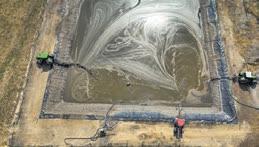
Sludge in your effluent pond?
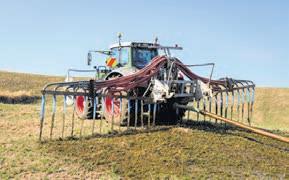
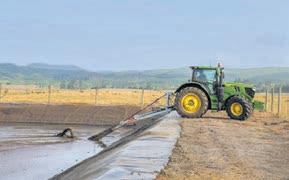
• We have the stirring power to lift sludge out of your pond and spread it on your paddocks
• Umbilical system moves it up to 1.5km efficiently, no wear on races
• Cheaper than tankers or a digger and muckspreader
• Minimal interruption to stock movement on races
• Evenly spread your effluent the full width and length of your paddocks
Key Features:
Different design options available.
Options to suit your budget.
Follow current legislation.
Builders guarantee.
Money locked in and secure.
Solar power options.
Screw piles for foundations or timber piles.
Lodging with council processing if you need.
Options to build on site or off site and delivery (delivery costs tbc).
LAID THAN SPRAYED
by Andy Bryenton
Two in a row for RAV4
The Toyota RAV4 has won a second consecutive people’s choice award and backed up this accolade with a top performance in new vehicle sales, making it the most popular new car in the nation for 2025.
“We are incredibly humbled by the trust New Zealanders continue to place in Toyota, and especially in the RAV4,” said Toyota New Zealand CEO Tatsuya Ishikawa.
“To see it voted people’s choice again and chosen more than any other new vehicle in 2025 is something our entire team is deeply grateful for. Kiwis choose the RAV4 for their families, their work and their adventures. We remain committed to earning that trust every day.”
The latest iteration of Toyota’s midsized SUV has been on forecourts since 2019, and since then, 50,000 have found homes in Kiwi garages and driveways. That’s impressive in a very packed sector, facing pressure from an onslaught of EVs utilising a similar body type and footprint. It’s even more impressive to take the crown of bestseller from the market-dominating utes, which have tussled for the gold medal for more than a decade.
That’s not just here, either. In an act of epochal dethroning, the RAV4 knocked the Ford F-150 off the US top seller’s spot. This, to put it in Kiwi perspective, is like sumo replacing rugby as our national sport.
A total of 11,295 RAV4s rolled out in 2025, helping bust another record. By 2020 the mid-sized Toyota had already exceeded 10 million units manufactured,
and now it’s recognised as the bestselling SUV of all time. Which begs the question: why?
People have taken to the current RAV4 like they did to the VW Beetle, the Mini and the Escort in their respective eras. It just fits the zeitgeist of modern times, it seems. The right size, the right amount of space, the right kind of distinctive but not madcap styling, the right blend of economy and smooth power delivery; it’s not here to set Nurburgring lap times or tow ocean liners, but it’s espresso in the morning. It’s that rare thing in the age of adult fads like the Labubu; popular because it’s good.
I’m a contrarian. I listen to weird bands that don’t make the top 10, love strange car designs like the Alfa GTV and the impractical little MR2, and I would normally disagree with the majority just to preserve a sense of edgy mystique, even if it meant having a second-hand Saab convertible. However, I like the new RAV4 as well. It nailed the ‘utility’ in ‘sports utility vehicle’, and had a good swing at the ‘sports’, too.
This year there will be new RAV4 options on the table, including a plug-in hybrid. My wish list is really only for one little further upgrade: a hydrogen-powered one, and the infrastructure to make it useful all over New Zealand.
selection of concrete products too numerous to mention
RAV4 dethrones Ford F-150, conquers Kiwi hearts and minds, too
•
by Andy Bryenton
A trek through auto history
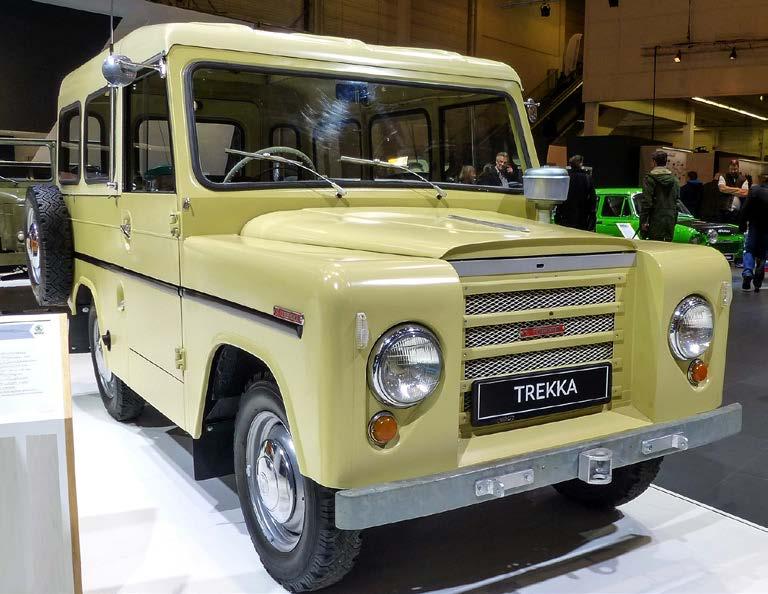
This year marks the 60th birthday of a real Kiwi battler; the little off-road machine they called the Trekka.
It was bold and boxy, innovative and ahead of its time. The crossover SUV before either of those terms existed, the Trekka was the brainchild of Phil Andrews and Noel Turner, who saw the Kiwi public being squeezed by hard-line vehicle importing laws in 1966. Their answer was to build vehicles here, and the recipe they cooked up combined a knowledge of local conditions with tech from behind the iron curtain of the Soviet Bloc.
Under its skin, which resembled a Land Rover in more ways than one, the Trekka was built on the mechanicals of a Skoda Octavia station wagon. A Czech product, in a time when that nation lay under the red empire of cold-war communism, the Skoda was not a common sight on western roads. However, it was built to be simple and tough. These qualities lent themselves well to the design philosophy of the Trekka.
The body design, which was mated to that Czech running gear, was purely Kiwi; in fact, it originated in Kawerau. The Trekka team acknowledged the reality of Kiwi roads in 1966, and called for a light but capable machine. They aimed for the exact qualities, which have made Toyota’s Rav 4 a bestseller in 2025; economy, practicality and the ability to tackle a range of surfaces.
The styling was unapologetically an homage to the ‘landy’, because that’s what worked. Making the entire body and interior locally meant that 70 per cent of the Trekka was Kiwi, and that sidestepped the crushing import rules holding 1960s New Zealand in a kind of automotive limbo. Rural folk who had been forced to carve up Morris Minors into utes or thrash Prefects and Wolseleys down gravel roads were delighted.
The Australians took 50, in exchange for Holdens. The Indonesian government took 100, but allegedly then lost their wallet. Five Trekkas served with distinction at Quy Nhon during the Vietnam War, as part of New Zealand’s civilian hospital mission. All the while, people were buying the little go-anywhere machines in their hundreds. In the end, 2,500 were made.
The 1973 oil crisis, the relaxation of import laws, and the Japanese car boom that followed signalled the end for this bold experiment in local design. Rust and time took their toll, and 60 years on the Trekka is an elusive beast, coveted by collectors. One sits in the Skoda factory museum in the Czech Republic, as an example of how innovation could span the rifts of the cold war. Oddly, the police drive Skoda Octavia station wagons of a more modern type today.
New Zealand’s only mass-produced automobile turns 60 this year
Supply, Planting & Re-Vegetation
by Andy Bryenton
Tank’s tactical superiority
When the GWM Tank 300 broke cover, and photos of this surprising new addition to the competitive SUV segment hit the press, much was made of its sharp looks and classic design cues.
It certainly has an aesthetic impact; a fresh name in the adventure vehicle arena needs to stand out. There are homages, hints and brush strokes from some of the all-time greats combined in that chunky exterior treatment, with its bold, flared wheel arches and aggressive stance. In fact, in real life the Tank 300 manages to be both serious and endearing at once, which is a neat trick.
So, it’s fun to behold, and it’s kitted out with an impressive list of electronic comforts and safety features. The Tank rolled in with a big question hanging next to its very reasonable price, however. It’s named for an indomitable war machine, and on paper it would seem to do everything that some competitors do for twice the price. Still, how would it actually drive, and (to steal a question from the off-roading community) is it a ‘real one’?
Part of the question is answered on the outside, with a look at the big, serious underpinnings of the Tank 300. Underbody protection and large differentials are not the hallmark of a cafe kerb cruiser, and they’re Tank standard. Sit in the driver’s seat and you’ll find switches for front and back diff locks, then two little dials, which will be familiar to anyone who is familiar with 4x4 royalty; a selector for high and low ratio modes, two and four-wheel drive. Then there’s another with options for sand, mud and even rock crawling.
That’s cards-on-the-table stuff, and video evidence of the Tank 300 going places where quad bikes may fear to tread bears out the promise of those tempting dials. However, I’m off to try this machine out in an environment more gruelling than the Dakar rally, a central business district run after school’s out.
Two things stand out dramatically. Firstly, this large, spacious 4x4 feels smaller than it is to drive. You can see
all the corners, and it’s more agile than you might expect. Commanding the Tank comes intuitively, partly in thanks to a very sorted steering set-up, and partly due to how smooth and comfortable it is on the road, even with the big grippy tyres fitted to the example I tried.
There are power variants to choose from, including a 2.4-litre turbo diesel, a 2-litre turbo petrol model and a hybrid, which adds even more on-demand torque.
A plug-in hybrid is on the way for the new year. Pick your favourite, secure in the knowledge that towing up to three tonnes is on the cards, and that all models come packed with features you’d normally pay a whole lot more for.
With standout looks and the ability to go from city streets to uncharted trails, this is one Tank which offers tactical flexibility. You don’t need to be a general to see that taking a closer look is a great strategy.
The GWM Tank 300 represents exceptional value for money; a real SUV amid a field containing many crossovers
by Andy Bryenton
VEHICLES, MACHINERY & EQUIPMENT
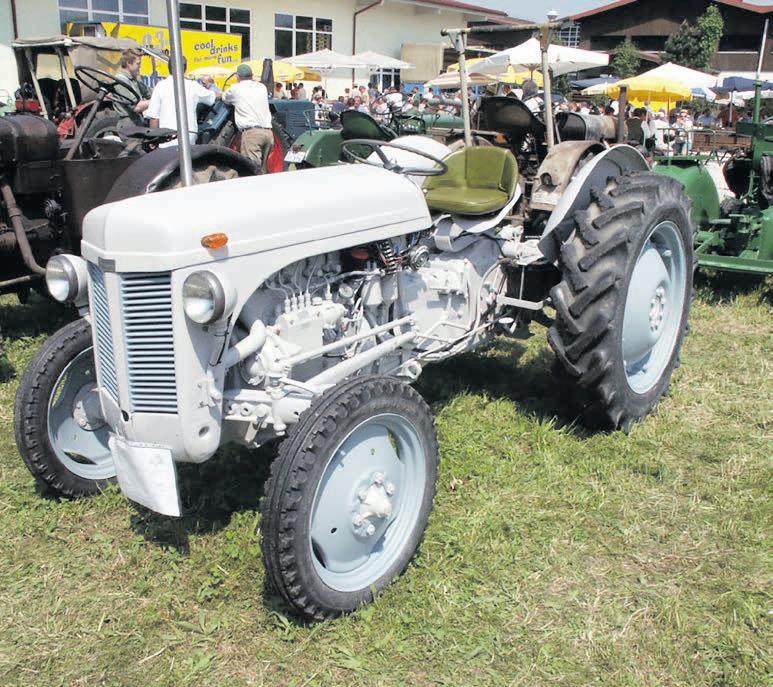
The little grey Fergie turns 80
In 1946, the legendary industrial designer Harry Ferguson sat down to sketch a tractor on his drawing board which would change New Zealand.
The second world war was over, and the mechanisation of farming had come, spurred by the importation of farm machinery from the US, which Kiwis used to feed hungry troops. When Harry designed the TE20, soon to be known as the ‘little grey Fergie’, his plan was to standardise implements and make tractors versatile.
Since 1928 Ferguson had been working to combine his ideas of a threepoint hitch, PTO and suction-side valvecontrolled hydraulic system into one machine. The TE20 popularised this combination worldwide, to the extent that examples sit in museums as far apart as Poland and Canada. With its small size, tight turning radius and reliable, simple motor, the Fergie could outperform horses and access areas too small to be ploughed by bigger machines.
The ability to use one tractor to undertake a whole range of jobs on the farm was game-changing. By 1950 there were more than 60 official implements which could be used with the TE20, including balers, seed drills, ploughs, sickle mowers and cultivators. Generators and pumps could also run from the back of this hardy little machine, which could therefore deliver power and water to places that were otherwise inaccessible.
As a result of its capabilities, the little grey Fergie became a bestseller. It also became a legend. In Australia, there’s a monument to this small utility tractor where the Darling and Murray rivers
The 1946 ‘Fergie’, perhaps New Zealand’s most famous tractor, turns 80 this year
meet. During a huge flood in 1956 the levees burst and the two huge waterways threatened to destroy the town of Wentworth. A fleet of TE20 tractors rebuilt the stop banks and saved the settlement.
A TE20 named Betsy, from Britain, circumnavigated the entire coastline of that island nation in 2003, securing a Guinness World Record for the longest ever journey by tractor, of 5,111 kilometres without a breakdown.
Then there’s the fact that the TE20 is the only tractor ever to feature on a New Zealand bank note. Between 1992 and 2015, the little Fergie was pictured on
the bottom left corner of the five-dollar bill, next to the portrait of Sir Edmund Hillary. It was there because in 1958 the intrepid Sir Ed converted six TE20s to cross Antarctica. They became the first machines to drive to the south pole, and cemented the legacy of the little grey Fergie as a machine which could tackle any task.
DAIRY & LIVESTOCK
Expo headed back to Waikato
Dairy farmers will welcome back the annual New Zealand Dairy Expo, aimed to be a grassroots approach to all things dairy, at the United Matamata Sports Club, Bedford Park, Matamata on February 18 and 19, 8.30am to 3pm for the two days.
“The Dairy Expo is not like the big National Fieldays. It is grassroots, practical, focussed and designed purely for dairy farmers,” said Dairy Expo event coordinator Amanda Hodgson.
“We’re pumped about February’s event. If you’re a dairy farmer this Expo is for you — and you alone.”
Amanda says there will be no lifestyle stalls, crowds or walking for miles to find what attendees need.
“A couple of us that are in the sector organise this event alongside our fulltime jobs, and we keep it intentionally simple because — you — farmers and the good guys of rural NZ, tell us every year that this format works and you love it.
“Every exhibitor/business is vetted. They must have at least 80% of their business in dairying. No spa pools, no knick-knacks, no wet-weather gear, no Tesla cars, nothing off-topic.
“Everything you need is in one compact, easy-to-walk area. Exhibitors keep things simple. Just their best people on the day, ready to talk farming, and solving any problems you need to overcome.”
On Wednesday afternoon, after the Expo wraps up, attendees are welcome to head over to the Matamata Clubrooms from 3.30pm to 6.30pm for a relaxed catch-up.
Two Q&A sessions will be running each day at 10am and 2pm. These alternate across both days, so visitors can catch both topics — no matter which day they attend.
Session 1: Wearable Tech and Boluses
Led by veterinarian Kirsty Ashcroft from Anexa Veterinary Services, Morrinsville. This session dives into everything from cow collars, ear tags and rumen boluses to how these systems integrate, what data matters, and the practical day-to-day realities of using them.
Expect open discussion around accuracy, alerts, reliability, behaviour insights, heat detection, metabolic indicators, and the future of animal monitoring technology. Bring your questions from cost effectiveness to choosing the right system for your farm.
Session
2:
Breeding For the Farming System of the Future
Led by Mark Benns from Your Wingman, this session explores breeding strategies that align with modern dairy farming environments. It covers why breeding decisions need to be made years ahead of infrastructure changes and how to prepare your herd for the systems you want to run in the future.
Topics include genetic selection, environmental pressures, efficiency, adaptability, longevity, and aligning herd development with labour-saving technology
The 2026 New Zealand Dairy Expo covers all things dairy and farm system goals. A practical, strategic conversation for farmers planning ahead. Farmers wishing to attend can register at nzdairyexpo.co.nz/farmer-registration.
by Andy Bryenton
From tariffs to quotas
The end of 2025 saw a major trade deal inked between New Zealand and India, with tariffs eliminated on all but five per cent of exports leaving for the Indian market.
The deal capped a year in which tariffs were the buzzword, thanks to sometimes unpredictable moves from the US government, which caused instability in some spheres of international trade. New Zealand proved to be nimble and well positioned to take advantage; other deals with the United Arab Emirates and the EU deepened economic ties.
In January the talk shifted from tariffs to quotas, with China announcing strict beef import numbers, designed to help its own domestic market with a form of protectionism. New Zealand has been allocated a quota of 206,000 tonnes of beef each year, rising to 214,000 tonnes. Any tonnage above this figure would face duties.
On the face of it, this sounds like a return to some of the restrictive policies of yesteryear, but the devil is in the details of this potentially $1.75 billion development.
“This quota, whilst unwelcome, is larger than the last two years’ beef exports to China of around 150,000 tonnes per year, and New Zealand exports are unlikely to face restraint under the arrangements,” says trade and investment minister Todd McClay.
“I’ve been able to make the case to my Chinese counterparts on three occasions last year that New Zealand exporters are not harming the Chinese beef market and
therefore should not be adversely affected by any safeguard measures. Our quota allocation means beef exports under the China NZ FTA are, in practice, unaffected.”
This means that Kiwi beef headed for China will not be impacted unless output grows; good news for Mr McClay to deliver, as he’s also responsible for the agriculture portfolio. That export tonnage may be needed, though; other nations
may well exceed their quotas, meaning that the headroom New Zealand has been afforded could be a blessing.
China is New Zealand’s second-largest beef market after the United States. In the 12 months to November 2025, 19 per cent of New Zealand’s beef exports by value, $961 million, went to China, representing approximately 4 per cent of China’s total beef imports. The appetite
for high-quality meat in China continues to grow along with that nation’s growing middle class, with 11 million tonnes of beef destined for Chinese supermarkets and restaurants this year.
Beef exports to China face a new quota cap — but it’s one which actually exceeds the amount we send there annually
DAIRY & LIVESTOCK
A birthday for the friendly field days
by Andy Bryenton
Forty years ago an idea was formed among a group of locals in Dargaville who were passionate about farming and about promoting the whole rural sector in Northland.
Back then, in 1985, the local Dargaville Jaycees group assembled an outdoor festival showcasing farming innovations, and held it at the site of the town’s equestrian racetrack. History records that everything came together beautifully except the weather, but despite the deluge the first-ever Northland Field Days was a roaring success, with 80 exhibitors and thousands of guests.
Northland and the field days went together perfectly, and those numbers continued to grow, so much so that a new site was sourced and the whole event expanded to become the biggest outdoor occasion in the north. In terms of size, the Northland Field Days is now the secondbiggest event in its kind nationwide, and because it comes at the very start of the year, it can be the first place where the latest ideas in farming break cover. No matter where you are in the nation, four decades is a milestone to celebrate.
Just as importantly, as the field days celebrates its 40th birthday on February 26, 27 and 28 2026, the event has grown to become a feast of entertainment as well as innovation, a fun three-day festival, as much as it is a showcase of technology and a chance to share ideas.
This year the president and committee have gone all out to deliver a great
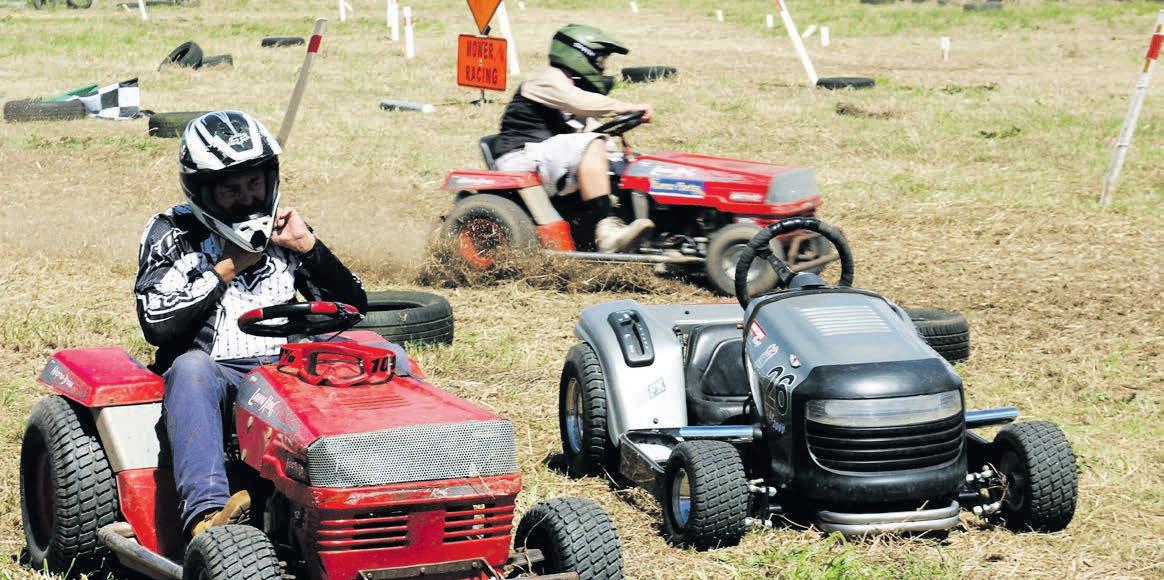
experience. As well as more than 300 exhibitors covering all the sectors of agriculture and horticulture, there will be sheepdog trials, a massive tractor pull contest, 4x4 obstacle tracks, off-road motorcycle drag racing, lawn mower racing and rides for the youngsters. Three food courts, pavilions packed with lifestyle and home ideas, and an entire outdoor zone
filled with boats, bikes, hunting, fishing and off-road adventuring await.
For the big 40th, Northland Field Days is also rolling out the prizes. The tone reflects the ‘muddy boots and milestones’ theme of the three-day festival — if you’re 40 years old, you can come in for free. Everyone who passes through the gate is in to win their choice of a brand-new
Honda quad bike or a Honda outboard motor, too.
If you’re in the rural sector and want to catch a milestone moment, with the chance to see what’s fresh for 2026, plan to visit Dargaville when this huge show is in town. You’ll enjoy the carnival atmosphere and the excitement on display. You can find out more at northlandfielddays.co.nz — see you there.
Racing lawn mowers hit the track at Northland Field Days; just one of the surprising, entertaining sights to see at Northland’s biggest outdoor event.
DAIRY & LIVESTOCK
Uniting town and country
by Denise Gunn
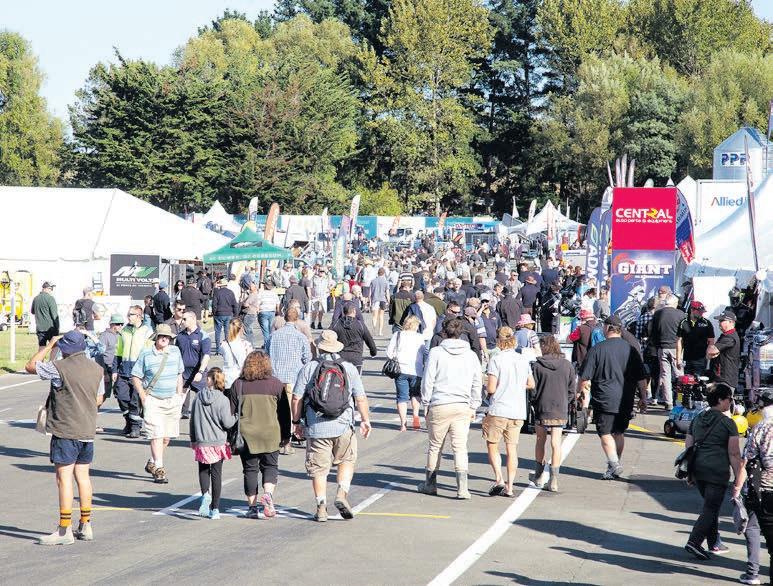
Central Districts Field Days is just around the corner, showcasing the latest in rural innovation,
exhibits on-site at Manfeild Park in Feilding.
Now in its 33rd year, the Central Districts Field Days has grown to become a regular highlight on the rural calendar.
Since its early beginnings with 230 exhibitors setting up their sites in 1993, the field days now sees close to 500 booked well in advance each year.
Over the week leading up to the event, the 33ha Manfeild Park is transformed from a paddock into a small town as exhibitors set up on-site.
The Central Districts Field Days has also evolved into New Zealand’s largest regional agriculture event, drawing a crowd of around 26,000 visitors to the region. With cutting-edge technology and machinery, the latest rural innovations and product launches, along with a range of merchandise and services for the farm, home and lifestyle, the field days have something for everyone. The family-friendly event also provides visitors with an opportunity to view product demonstrations, go shopping, sample gourmet food and beverages, watch competitions and enjoy live entertainment.
The Civil Contractors New Zealand Cable Price National Excavator Operator Competition, the New Zealand Fencing Contractors Central Districts Doubles Fencing Competition, and the Southern North Island Wood Council Golden Loader Competition will be held during the field days. These competitions always draw large crowds keen to watch the action.
Gates open on Thursday, March 19 through to Saturday, March 21 from 9am until 4pm each day. Visitor entrances are off South Street and Kawakawa Road.
A limited number of mobility scooters are available for hire during the event. Bookings are essential by phoning 06 357 7943 or emailing shop@ mobilitymanawatu.co.nz. Hireage is $30 for half a day or $50 per full day.
Tickets are available online now at cdfielddays.co.nz, saving money and time standing in queues. Tickets can be purchased at the gates on the day, too.
Further information is available at cdfielddays.co.nz.
The Central Districts Field Days will be held from Thursday, March 19 to Saturday, March 21