

By Leo Adam Biga
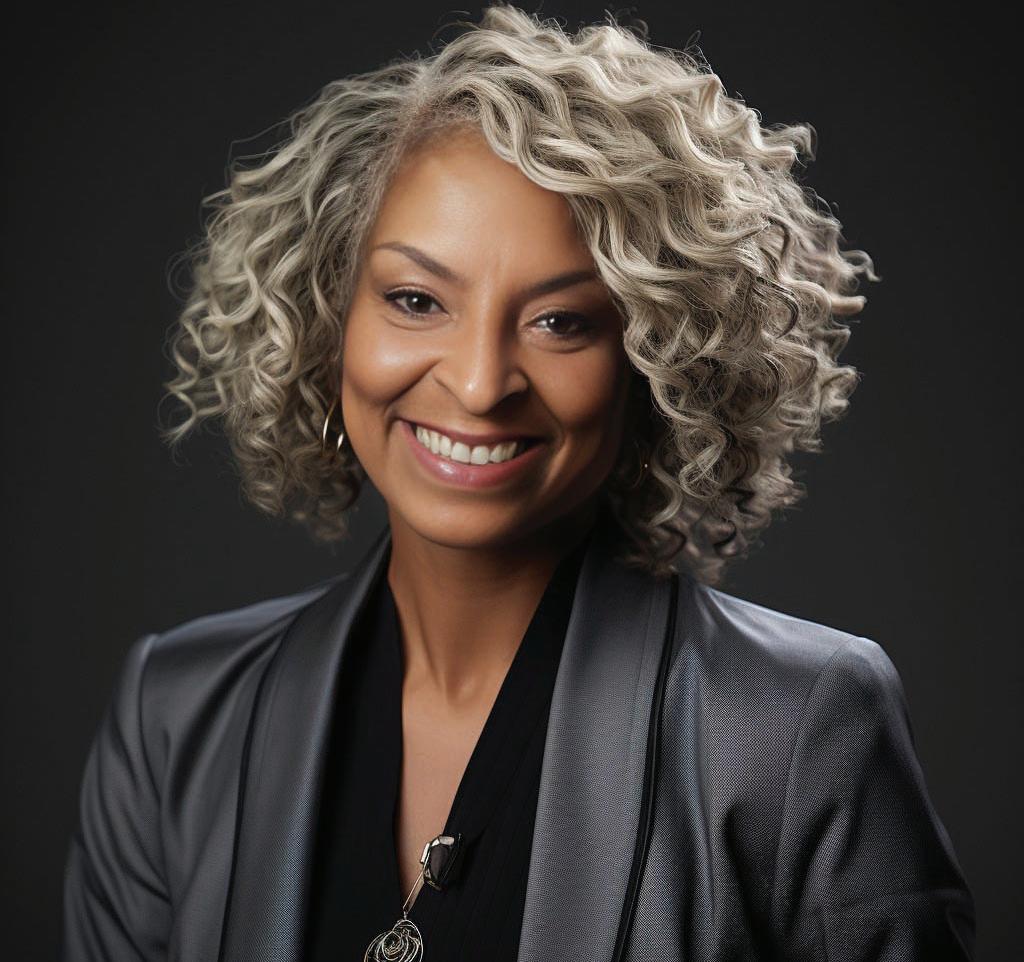
Community activist and advocate Cheryl Weston makes her voice known on civic affairs issues. Her criticism of the Omaha Public Power District still operating coal-burning units at its North Omaha Power Station has appeared in local and statewide news. She even made the Washington Post’s cover for calling out OPPD on breaking a promise to fully transition to natural gas at the plant by 2026.
Weston contends the community’s wellbeing is ignored to appease special interests. The influx of massive data centers from high tech giants Google and META require ever more energy. Meanwhile, a lawsuit by the state attorney general is attempting to force the utility to continue burning coal. Weston asserts the utility prioritizes profit over health.
It is not the first time she’s taken on Goliaths for polluting the environment. As Lead Safe Omaha Coalition director she made the public aware of contaminated soil dangers. The contamination came from generations of ASARCO refining and Aaron Ferer & Sons (later Gould Electronics) recycling operations. Exposure can mean elevated lead blood levels that pose health risks to young children and nursing and pregnant women. She worked with the Environmental Protection Agency (EPA), overseer of the Omaha Lead Superfund Cleanup Site, to ensure monies went to area Black businesses for lead abatement and to health and environmental programs for detection, monitoring, treatment of lead poisoning.
“One of the things I fought for and we were successful – the people most affected by this should get some economic benefit,” she said. She sounds alarm about certain reinvestment in North Omaha
threatening to erase history and displace residents. Gentrification is being closely watched by Weston and others who fear their beloved community is being sold out from under them. She expresses concern that the Nebraska African American Affairs Commission lacks transparency and remains disconnected from the Black community.
Before devoting her energies fulltime to community Weston worked in corporate America – at Northern Natural Gas and Principal Financial Group. She called out employers for not walking the talk of diversity, equity and inclusion.
“I felt like if I didn’t fight for it then what would the ones coming behind me going to get.”
Fellow Omaha activist Anthony Rogers-Wright feels she’’s found her calling. “Her righteousness is rooted in the fact she strives to make sure everyday people can
By Ron Petersen
While curling may not be the oldest sport to play, the game of stones still has a large showing in Omaha. When President of Aksarben Curling, Nic Swiercek, attended the winter U.S. Olympic Team Trials for Curling in 2017, he wasn’t quite sure what to make of a sport, which
consists entirely of stones being slowly slid across an icy surface. After realizing how much fun it looked, Swiercek decided to seek out curling opportunities in town.
“I didn’t know what I was watching or doing but it looked like a lot of fun,” Nic Swiercek said.
--Curling continued on page 8.
access and comprehend complex information … that directly and indirectly implicate Omahans, and her beloved North Omaha community specifically.”
Weston attributes her assertiveness to the strong Black women who raised her. Born in Des Moines, Iowa, she grew up with her maternal grandmother, Senila Williams. The extended family resided in the “Bottoms” of East Des Moines. Selina never got past sixth grade after going to work as a domestic to help support her family. Yet she read at a high school graduate level, said Weston. Despite earning low wages, she purchased two homes, one for herself and one for Cheryl’s parents.
Selina survived a rape at 14 by her white employer. Back then, there was no trauma therapy.
Given all that, Weston said, “It was very impressive to me how far
she had come.” Standing on Selina’s shoulders, Cheryl’s mother, Blanche Williams, became a licensed practical nurse. Their examples of overcoming things drove Weston to achieve.
“I have been surrounded by women of strong convictions and encouragement that taught me and my two siblings that you can be whatever you want to be. That made me want to be strong. Maybe that’s part of why I do what I do and have the desire and passion I have. As strong women we do what we have to do All my life I’ve been able to have determination to be who I am.”
The matriarchs in her life, she said, “were always encouraging to strive to do better, so throughout my youth that’s what I did.” Knowing what her grandma overcame, including losing a home to unpaid taxes – a paltry $42 the county refused to let her make payments on – made Weston take her words to heart.
“I worked harder than what was required. I had to anyway because being Black I knew if I wanted to succeed I had to be better.”
Aspirational lessons also came from her father, who moved the family out of “the Bottoms” to a better life. A spirit of serving others was instilled by her family taking in foster kids, some of whom had been abused. “It gave me insight early on what others didn’t have that I was fortunate to have,” she said.
Weston finds truth in a Malcolm X observation: “The most disrespected person in America is the Black woman. The most unprotected person in America is the Black woman. The most neglected person in America is the Black woman.” Cases of missing Black women go underreported. Black women
--Weston continued on page 10.


Most people picture home health care as something that only follows a hospital stay or major medical event. In reality, many care needs begin quietly—without hospitalization, without surgery, and without warning. A fall that limits mobility, early cognitive decline, or difficulty managing daily tasks can quickly turn everyday life into a challenge.
Non-medical home health care insurance is designed to step in during these moments. It provides support when someone suffers a cognitive impairment or can no longer perform two of the six activities of daily living (ADLs)—and importantly, benefits can begin without requiring a hospital stay.
Non-medical home health care focuses on assistance with daily living rather than medical treatment. This type of care helps people remain safe and independent at home when they are no longer able to manage routine activities on their own.
These needs often arise gradually. Someone may struggle with bathing, dressing, or moving safely around the home. Others may experience memory loss or cognitive changes that make it difficult to manage medications, prepare meals, or handle basic household tasks. While these situations may not require hospitalization, they absolutely require care.
Without coverage in place, families are often left with limited options: Paying out of pocket for help, relying heavily on unpaid family caregivers, or considering institutional care sooner than they would like.
Most non-medical home health care policies use activities of daily living as a trigger for benefits. The six commonly recognized ADLs include:
• Bathing
• Dressing
• Eating
• Transferring (moving in and out of bed or chairs)
• Toileting
• Continence
When an individual is un-
able to perform two or more of these activities without assistance, benefits may become available. This structure recognizes that meaningful care needs exist well before someone becomes severely ill or hospitalized.
In addition to ADLs, cognitive impairment—such as memory loss, confusion, or diminished judgment— will also qualify someone for benefits, even if they are physically capable of performing daily tasks.
One of the most important features of non-medical home health care coverage is that benefits do not depend on a hospital stay. This reflects how care needs actually develop in real life.
Cognitive decline, balance issues, or loss of strength often occur gradually.
Waiting for a hospital admission before coverage begins leaves many people without help when they need it most. Non-medical home health policies recognize that early support can prevent accidents, reduce stress, and help individuals remain safely at home longer.
Benefits from these policies are typically paid directly to the policyholder. This flexibility allows individuals and families to arrange care that fits their unique situation.
Benefits may be used for services such as:
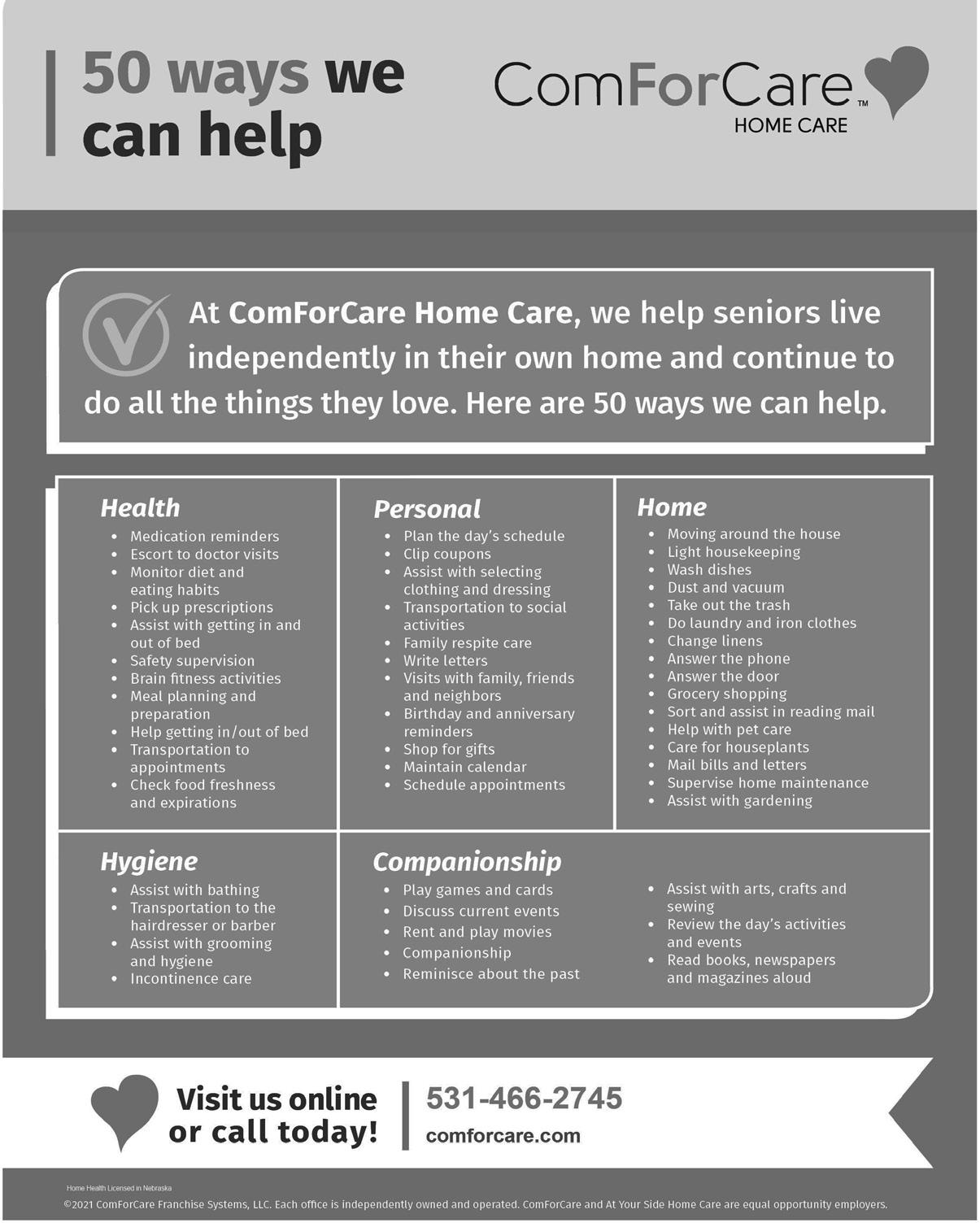
• Assistance with personal care, including bathing and dressing
• Help with meal preparation and light housekeeping
• Supervision and support for individuals with cognitive impairment
• Companionship and safety monitoring
• Support that allows family caregivers to take needed breaks
Because the care is non-medical, it focuses on quality of life, safety, and independence rather than clinical treatment.
When non-medical care needs arise, family members often step in by default. Spouses, adult children, and relatives may find themselves providing daily assistance while juggling work, finances, and their own health.
Over time, this can lead to caregiver burnout, lost income, and emotional strain. Having coverage in place helps relieve some of this pressure by making professional care more accessible and affordable. Even a few hours of paid help each day can make a significant difference for both the individual receiving care and their family.
Non-medical home health care policies are typically more affordable than traditional long-term care insurance and often involve simplified underwriting. Many plans require only a few health questions and no medical exams, making coverage accessible to a wider range of people.
Because these policies focus on short-term or limitedduration benefits, they are designed to provide meaningful support without a long-term financial commitment. For many individuals, this makes non-medical home health coverage a practical and realistic planning option. An 81-year-old woman can get a plan that will give her home health benefits of $50/day plus a $3500 lump sum caregiver benefit for $73.49/month.
Most people want to remain in their homes for as long as possible. Nonmedical home health care coverage supports that goal by providing help early— before a crisis forces difficult decisions. By addressing care needs related to cognitive decline or difficulty with daily activities, these policies help individuals maintain dignity,
--Health Care Plans continued on page 3.
By Ron Petersen
The Bennington Senior Center located at 322 N Molley St. in Bennington is this month’s Senior Center of the Month.
Bennington Senior Center manager Elaine Oetjen has been at the senior center for almost 10 years, and loves her job. Oetjen said her favorite thing about the center is the older adults.
“I love spending time

with them and feeling like I can take care of them for their kids while they are at the center,” Oetjen said.
Bennington has plenty of activities each month including bingo, card games, NutriBingo and more. While they have plenty of
Health Care Plans continued from page 2.
comfort, and control over their daily lives. Early support can also reduce the likelihood of falls, accidents, and unnecessary institutional care.
Planning Ahead Makes All the Difference
The time to think about non-medical home health care is before it’s needed. Once cognitive impairment or functional limitations arise, options become more limited. Non-medical home health insurance is not meant to replace comprehensive longterm care planning, but it can play a valuable role in filling the gap between medical insurance and out-of-pocket caregiving costs. It provides peace of mind knowing that help can be available when daily tasks become difficult—without requiring a hospital stay or major medical event.
A THOUGHTFUL NEXT STEP
If you’re under the age of 85 and staying independent at home matters to you—or if you’re concerned about how cognitive decline or loss of daily function could affect your family—it may be worth learning more about non-medical home health care coverage.
opportunities for activities, they are always looking for more participation.
“I am working on getting more seniors to come,” Oetjen said For more information about the center, please reach out to Oetjen at 402502-9264. The Bennington Senior Center is open on Wednesdays from 9 a.m. to 1 p.m.
A short conversation with an independent, knowledgeable advisor can help you understand how these policies work and whether they fit into your overall planning. Exploring your options now can help ensure that support is available when everyday tasks are no longer so simple.
Mary Hiatt is a Retirement & Insurance Advisor and President of Mary the Medicare Lady (A non-government entity.) She is Certified in Long Term Care Programs, Policies, & Partnerships and Annuities. She offers Educational Workshops on Medicare, Long Term Care and more at no charge. She helps retirees convert their 401Ks and IRA’s into guaranteed income streams as well as helping clients get Medicaid with eligible spend-down plans and Funeral Expense Trusts. Not connected with or endorsed by the U.S. government or the federal Medicare program. Medicare Supplement insurance plans are not connected with or endorsed by the U.S. government or the federal Medicare program. See www.hiattagency.com or contact licensed independent agent mary@hiattagency.com or call or text 402-672-9449 for more information.
The United States Census Bureau’s latest data, released in 2025, show that the poverty rate continues to rise among older adults, reaching 15%.
The following is a statement from Ramsey Alwin, President and CEO of the National Council on Aging (NCOA), on the latest U.S. Census Bureau data on poverty, income, and health insurance in 2024.
“Once again, more older Americans are sinking into poverty, just as 11,000 are turning 65 every day. A country as rich as ours should be shocked that over 9.2 million of our fellow older Americans struggle to cover basic expenses like food and medicine. Aging with dignity continues to be out of reach for far
too many Americans who worked hard and played by the rules.
“Under the Supplemental Poverty Measure (SPM), the older adult poverty rate went up to 15% in 2024, from 14% in the two previous years. SPM is a more accurate representation of economic well-being in our country because it takes into consideration a household’s economic resources, including benefits like food assistance, and compares it with a poverty threshold set to reflect actual spending.
“When we lifted up individuals and families during the pandemic, poverty among older Americans went down to 9.5%. When that help went away, poverty increased. Programs like the Supplemental Nutrition As-

New Horizons is the official publication of the Eastern Nebraska Office on Aging. The paper is distributed free to people over age 60 in Douglas, Sarpy, Dodge, Washington, and Cass counties. Those living outside the five-county region may subscribe for $5 annually. Address all correspondence to: Ron Petersen, Editor, 4780 S. 131st Street, Omaha, NE 68137-1822. Phone 402-444-6654. FAX 402-444-3076.
sistance Program (SNAP), Medicare Savings Programs (MSPs), and Medicaid provide much-needed assistance that must continue. But the recently enacted cuts to SNAP will increase hunger among older Americans and the recently passed Medicaid cuts will lead to a sicker older population.
“As we well know, Social Security continues to be an antipoverty powerhouse, moving 28.7 million people out of poverty under SPM in 2024.
“In America, the ability to age well—with health and financial security—should be a right for every person, not a privilege.”
(Information provided by the National Council on Aging).
E-mail: ron.petersen@enoa.org
Advertisements appearing in New Horizons do not imply endorsement of the advertiser by the Eastern Nebraska Office on Aging. However, complaints about advertisers will be reviewed and, if warranted, their advertising discontinued. Display and insert advertising rates available on request. Open rates are commissionable, with discounts for extended runs. Circulation is 9,000 through direct mail .
Editor................................Ron Petersen, 402-444-6654 Ad Mgr................Mitch Laudenback, 402-444-4148
Contributing Writers.........Leo Biga & Andy Bradley
ENOA Board of Governors: Mary Ann Borgeson, Douglas County, chairperson; Don Kelly, Sarpy County, vice-chairperson; Lisa Kramer, Washington County, secretary; Pat Tawney, Dodge County, & Taylor Boyle, Cass County.
The New Horizons and the Eastern Nebraska Office on Aging (ENOA) complies with applicable federal civil rights laws and does not exclude, deny services to, or otherwise discriminate against any person on the basis of race, color, national origin, disability, age, sex, marital status, veteran status, or religion.
By Kelly C. Bourne
The FTC (Federal Trade Commission) received 6.5 million fraud reports in 2024. The same agency estimated that in 2024 the amount of fraud losses by older Americans could have been as high as $81 billion. Many scam
victims blame themselves for the incident. They think they were foolish or were too trusting. A very common feeling is to be ashamed of having been tricked. The absolute worst case is for a victim to become so depressed and despondent that they consider suicide.

• We Organize pre-move
• Move our Clients
• Mediate Family Issues
• Prepare assets for online auction
• Real Estate Broker
• Licensed Federal Firearm Dealer
• Auto Auction Dealer
• Coin Collections
• Asset Appraisal
• We love to Move Seniors
This negativity isn’t deserved, helpful or healthy. Instead of berating themselves, victims should see themselves as the targets of professional criminals. These criminals are employing increasingly sophisticated tactics to steal from people both in the United States and around the world. Given the right circumstances, everyone can be the victim of a scam artist.
According to the National Institutes of Health (NIH) the mental health impact on scam victims can be severe. It can lead to anxiety, depression, post-traumatic stress disorder (PTSD) and suicidality. Other psychological impacts that were reported included insomnia, excessive worrying and feelings of panic. The mental health issues described by the NIH lasted anywhere from a month up to as long as two years.





credit rating may be impacted. Lenders frequently view large cash advances as signs that the cardholder is in financial trouble.
If one or more card(s) were maxed out it might be difficult to get additional lines of credit.
All victims need to realize that the chances of recovering stolen assets are extremely slim. In a small percentage of cases financial transfers can be stopped or reversed, but most victims need to understand that they won’t be so fortunate. Don’t make financial plans based on the assumption that you’ll ever see that money again.
Unfortunately, scam victims are likely to be the target of additional scam attempts in the future.
If the amount of money stolen from the victim was substantial it can result in long-term financial difficulties for the victim and his or her family. The family budget might have to be trimmed, planned vacations may no longer be possible, retirement may need to be delayed. If the victim is already retired, it may be necessary to return to work if additional income is needed. During the time it takes to recover financially, the victim will be constantly reminded of the incident. All of this adds to the level of stress and negative feelings experienced by the victim. Such reminders will make putting the theft behind them more difficult, but you must move ahead.
If assets were withdrawn from 401K and IRA retirement accounts as a result of the scam, there will likely be tax consequences. Funds that are withdrawn from retirement accounts are often subject to income taxes by the IRS and state taxing agencies.
If 401k funds are withdrawn before you reach age 59 ½ there can be an additional 10% penalty imposed by the IRS. Coming up with money to pay unanticipated taxes and penalties after losing money to a criminal is likely to represent an additional economic hardship.
If the scam involved making charges or cash advances on credit cards, then it’s possible that the victim’s
time. Don’t rush this process. Take it slow.
Connecting with trusted individuals who have been through a similar trauma or a support group dedicated to scam victims helps many people.
Thousands of other victims have survived being scammed and put their incidents behind them. Some groups that can help scam victims are:
• AARP’s Fraud Watch Network support group offers free confidential online support for victims and loved ones by trained volunteers. More information on this program can be obtained at www.aarp.org/ fraudwatchnetwork or by calling 1-877-908-3360.
One swindle that victims frequently face is being contacted by a crook who claims he can help you recover your lost funds for an upfront fee. Never agree to pay anyone in advance with a promise that they can recover money that you previously lost. An arrangement like this is almost certainly just another scam.
STEPS TO RECOVERY
One important step towards healing is to understand that anyone can get scammed. Being a victim doesn’t mean that you’re foolish, careless or ignorant. Scammers are extremely sophisticated and given the opportunity can trick even the most sophisticated person among us. Scam victims have included well-known celebrities, politicians, athletes, movie directors, musicians and even a Nobel Prize winner. Don’t beat yourself up over being taken advantage of by professional criminals.
Self-imposed isolation due to embarrassment or shame after becoming a victim is a natural response, but this is exactly the opposite of what you should do. Being isolated will likely result in you being obsessed with the incident. It would be better to spend time with friends and family. They may not be able to solve this problem for you but getting reassurance from loved ones that you’re a competent person will help. Loss of trust in other people is natural after being victimized. Reaching a point where it feels comfortable trusting others will take
• FightCybercrime.org offers support groups for victims of romance and crypto investment scams. This program will introduce victims to a community of others that share the same experience. The ten-week program is free and led by a counselor and a trauma-informed facilitator. Additional information can be obtained at https://fightcybercrime.org/ programs/romance-scamrecovery-group/
• The National Center for Victims of Crime provides free, confidential support for victims of all types of crime. Specific examples of what this organization does for victims include a helpline that provides information to victims about their rights, financial support and legal services. More information can be found at victimsofcrime.org or by calling or texting 1-855-484-2846
• Information about the Office for Victims of Crime within the U.S. Department of Justice is available at https://ovc.ojp.gov. This website can help victims connect with resources in their state.
• Consumer Financial Protection Bureau offers help for scam victims at https://www.consumerfinance.gov/consumer-tools/ fraud/. This site provides descriptions of many types of scams as well as guidance on how to contact law enforcement and state attorney generals.
Kelly’s newest book, “Ransomware, Viruses, Social Engineering and Other Threats: Protecting Your Digital Assets” is available on Amazon and at The Bookworm.
With nearly 86 billion neurons connecting and communicating in an intricate system, it’s no wonder the brain is considered the most complex organ in the human body.
As our central nervous system’s command center, the brain is responsible for regulating everything from our thoughts, behaviors and emotions to every single one of our bodily functions.
Maybe we shouldn’t be so hard on ourselves when we forget why we came into the kitchen — the brain’s got a lot on its plate.
Still, forgetfulness is never a good feeling. And when it persists – or progresses to something more than just misplacing keys – it’s worth checking out.
But first, let’s take a quick look at the numbers and names. According to National Institutes of Health (NIH) researchers, about 42% of Americans over the age of 55 will develop dementia at some point. As a result of our aging population, new cases of dementia (per year) are expected to double by 2060. What is dementia and what is Alzheimer’s? Many use the terms interchangeably, but dementia is essentially an umbrella term for all types of memory loss, and Alzheimer’s is the most common one.
Believe it or not, there are over 100 different types of dementia! Most are quite rare though: Alzheimer’s disease, frontotemporal dementia, vascular dementia, and dementia with Lewy bodies make up 90 percent of dementia cases.
While many people chalk forgetfulness up to old age, it is not the cause of memory loss. Growing older may put you at a higher risk of developing dementia or Alzheimer’s, but it’s not a normal part of aging. There are many people who live into their 100s without dementia. Other risk factors include:
• uncontrolled diabetes
• high blood pressure
• hearing loss
• use of alcohol or tobacco
• lack of physical activity
• genetics/family history
• traumatic brain injury (TBI) or Down syndrome
The good news? Many of
these risk factors are within our control. In fact, according to 2024 research data, nearly 45% of all dementia cases may be prevented or delayed.
So when should you worry about increasing forgetfulness? Here’s a good rule of thumb: it’s less about forgetting where you put your keys and more about forgetting what the keys are for. It’s problems with thinking, decision-making, judgment and language. Forgetting not just a name but also a familiar face. Remember that stress or anxiety can aggravate memory loss. We may have times of forgetfulness that seem worse than usual. But if we are able to regulate that stress and anxiety, retrace our steps and eventually find that missing item, it’s probably not dementia. What are the early symptoms of dementia then? Here’s a checklist to run through when you’re concerned for yourself or someone else:
1. problems with following directions; struggling to understand or remember steps
2. trouble with reading, writing, or understanding words and language
3. forgetting names, past events, or things you just learned
4. trouble putting your thoughts together or expressing them out loud
5. feeling agitated, restless, nervous, or worried
6. losing interest in things; feeling an overwhelming sense of sadness or depression
7. changes in mood, behavior, or personality
8. increased irritability or frustration
9. paranoia or hallucinations
Check in with your regular primary care provider if you are noticing these early symptoms. If you’re seeing these signs in a friend or relative, be compassionate and considerate in addressing the concerns and encouraging a check-up.
Is there anything you can do to prevent dementia or delay its progression? Yes and yes. Here are seven prevention tips from experts at the Centers for Disease Control (CDC), the
Cleveland Clinic, and the World Health Organization (WHO):
1. Stay physically active.
2. Manage hearing loss issues.
3. Limit or eliminate alcohol intake and tobacco use.
4. Regulate diabetes or high blood pressure through diet, exercise, prescribed medications, and maintaining a healthy weight.
5. Stay connected to friends and family to avoid social isolation, depression, or loneliness.
6. Eat healthy, balanced meals with veggies, fruits, and whole grains.
7. Keep your mind busy and active with puzzles, reading, word games, and more.
A Word from ArchWell Health: Wherever you are on the memory loss journey, you are not alone. The compassionate team at ArchWell Health is always ready to assist caregivers and older adults with their primary care needs.
ou’re invited to visit the La Vista Senior Center, located at 8116 Park View Blvd. The facility provides activity programs and meals Monday through Friday from 8 a.m. to 5 p.m. Please call 402-331-3455 for general Community Center hours.
Meals are served weekdays at 11:30 a.m. Reservations are due by noon the business day prior to the date the participant wishes to attend and can be made by calling 402-331-3455.
A $5 contribution is suggested for the meal if you are age 60 and older. If you are under age 60, then the meal cost is $9.50.
In addition to meals being served daily, the La Vista Senior Center offers a variety of activities such as: Bingo, outings, cooking classes, movies with popcorn, arts and crafts, a variety of card games, quilting, Tai Chi, exercise classes, musical entertainment and various parties. Please visit our website at cityoflavista.org/seniors for updated information or call 402-331-3455.

Traditional funding sources are making it more difficult for ENOA to fulfill its mission.
Partnership opportunities are available to businesses and individuals wanting to help us.
These opportunities include volunteering, memorials, honorariums, gift annuities, and other contributions These gifts are tax exempt.
$50 = Provides one week of Meals on Wheels for one older adult.
$75 = Provides one week of meals and activities at a senior center.
$125 = Full month of bathing assistance.
$175 = Helps provide respite care for an older adult.
$250 = Provides urgent relief and essential support to individuals during unexpected emergencies.
Other amount (please

$50
Debbie Hanslip
Mary Moore
$10
Ken Nisley
The Omaha Fire Department’s Public Education and Affairs Department will install free smoke and/or carbon monoxide detectors inside the residences of area homeowners.
To have a free smoke and/or carbon monoxide detector installed inside your home, send your name, address, and telephone number to:
Omaha Fire Department
Smoke/Carbon Monoxide Requests 1516 Jackson St. Omaha, Neb. 68102
For more information, please call 402-444-3560.
The University of Nebraska Omaha is conducting a research study, is looking for older adults for a study evaluating strategies to improve recovery from long-COVID.
The purpose of this 12 week research study is to find out whether warming your lower body (heat therapy) or walking more often can help people who had COVID-19 and now feel constantly tired or less able to move.
You may qualify if you are 50-90 years old or if you are experiencing lasting symptoms from COVID 19. If you are interested, please call Gwenael Layec at 402554-3779 or email or unovrl@unomaha.edu.
“Old fashioned…. Stuck in their ways…. Cranky…. Passed their prime…. Rigid”
These labels are often used to describe actions of elders. While these terms might describe the behaviors of some older people, I would argue that this is not a true picture of what it means to age. People in their Third Chapter exercise extraordinary flexibility through constantly adapting to changes in their circumstances.
My own father was a great example to me of adaptation and flexibility. When he could no longer handle fulltime farmwork, he cut back and helped my brother part time. When his sight diminished and he could no longer golf, a pastime he loved, he spent more time playing the banjo which he also loved. When he could no longer participate in a polka band, he played more cards. When he could no longer read, he listened more. While Dad had strong opinions that were rooted in his long-held values, he remained engaged and continued to learn.
As I look at my siblings and peers, I see similar adaptive behaviors. We let
By Nancy Hemesath
go of what was good when we can no longer handle what it requires of us. When energy diminishes and physical limitations increase, we move on to the next logical step. For example, we might give up homeownership and all its demands to move to a senior center. This is often a bittersweet move, releasing us from some responsibilities that wear us out, in order to enjoy a life of more socialization and less stress. For this to work, the elder must be flexible and adaptable.
Each of us with our own unique path could trace our story from one circumstance or opportunity to another. We often do it so seamlessly, we hardly notice. The Third Chapter is all about moving from one adaptation to another. For me as I look back over my post-retirement years, I see that camping has been replaced by vacations with in-door plumbing. I notice that less energy for cooking and cleaning has led to more take-out and periodic
visits from cleaners. I do shorter walks when long walks are too taxing. I see myself saying “no” to opportunities that take me out at night more than I like. I know there are many more adjustments around the corner.
Why am I pointing out these patterns of adaptation? Businesses live by the aphorism, “Change or die.”
Hence, we see new logos, new programs, new ads, always being updated. There is a parallel in living our Third Chapter. Stagnation or inactivity is a form of death. Adaptive behavior is a sign of life. As we close out each mini-chapter, it is good and healthy to celebrate what it has meant to us. We can then look forward to what is the next mini-chapter. Embracing these changes is commitment to life itself which is ever-changing. As we open our hands to let go of what was, we are poised to receive the next good thing without rigidity or crankiness.
By Melinda Myers
Add unique flare to this winter’s indoor garden and décor with double amaryllis. The several layers of colorful petals are sure to make a statement wherever they are displayed.
Start the amaryllis season with early blooming varieties grown in the southern hemisphere. Double Alaska features frilly, fully double white flowers with a lime green center. Order bulbs early, store them in a cool, dry, dark location and plant these early blooming bulbs by November 1st if you want flowers for the holiday. Keep the color coming throughout the winter by growing a variety of other double amaryllis grown in the Northern hemisphere that begin blooming in January. Plant a few bulbs every three weeks to extend your enjoyment for several months. Watch the colors change on Double Giant Amadeus amaryllis. The petals start as mostly white with a fine red outline. As the flowers mature, the color intensifies to a blushing pink, coral and salmon.
Now relax and wait a month or more for your amaryllis bulb to wake up and start growing. Water more often once sprouts appear. Enjoy the transformation as the bulb turns into a flowering plant over the next few weeks.
Growing amaryllis indoors will keep you gardening all year long, providing mood-boosting benefits and stress relief. Plus, the colorful blossoms are sure to brighten your winter days.
Melinda Myers has written over 20 gardening books, including Midwest Gardener’s Handbook, 2nd Edition and Small Space Gardening. She hosts The Great Courses “How to Grow Anything” instant video and DVD series and the nationally syndicated Melinda’s Garden Moment radio program. Myers is a columnist and contributing editor for Birds & Blooms magazine and was commissioned by Tree World Plant Care for her expertise in writing this article. Her website is www. MelindaMyers.com.
You’re invited to visit the Fremont Friendship Center, 1730 W. 16th St. (Christensen Field). The facility is open Monday through Thursday from 9 a.m. to 3 p.m. and Friday from 9 a.m. to 12:30 p.m.
A meal is served weekdays @ 11:30 a.m. Reservations, which are due by noon the business day prior to the meal the participant wishes to enjoy, can be made by calling 402727-2815. A $5 contribution is suggested for the meal.
This month’s activities will include:
• February 4: Music with Bill Chrastil @ 10 a.m.
• February 5: Nye Presentation @ 10 a.m.
• February 11: Music with The Links @ 10 a.m.
• February 12: Mobile Library @ 9:30 a.m.
• February 12: Popcorn Bar @ 12 p.m.
• February 16: President’s Day, center is closed.
• February 18: Music with Arthrighteous Brothers @ 10 a.m.
• February 25: Music with Billy Troy @ 10 a.m.
• February 27: Penny auction with Valley Lake @ 10:30 a.m.
Sip and Chat every day. Have coffee and a snack and enjoy making new friends @ 9 a.m.
Craft class on Tuesday afternoons @ 1:30 p.m.
Tai Chi offered every Tuesday and Friday from 9:15-10 a.m.
Bridge every Wednesday @ 12:30 p.m.
Morning Walk Club every Thursday @ 9:30 a.m.
If you can’t stay for lunch with our friends and you currently participate in any activity at the center, you may now order a Grab-n-Go meal to take home for your lunch. Grabn-Go meals must be reserved the day before by noon and the person ordering the lunch must come in to the center to pick it up at 11 a.m. The number of Grab-n-Go lunches are limited to a first come first serve basis. Suggested donation is $5.
For meal reservations and more information, please call Laurie at 402-727-2815.
You’re invited to visit the Many Cultures. One Community – Intercultural Senior Center (ISC), 5545 Center St. The Intercultural Senior Center facility – open weekdays from 8 a.m. to 4:30 p.m. – offers programs and activities from 8 a.m. to 4:30 p.m. Monday to Friday.
In February, visit the ISC for free foot care. The free appointment will include nail trimming, callus care and lotion, and a foot inspection with cleaning. This will be $10 each visit after February.
At ISC, we celebrate cultures, friendships, and healthy living every day.
What makes the ISC unique?
• Cultural Connections: ESL, Spanish, and Chinese classes, citizenship preparation, and global celebrations.
• Fitness & Fun: Tai Chi, Zumba, Salsa, Yoga, Pickleball, Chair Volleyball, and more to keep you active and energized.
• Creative & Social Activities: Jewelry making, crafts, karaoke, dance classes, music clubs, and exciting field trips.
• Health & Wellness Services:
• Foot care and dental care
• New Blood Pressure Hub for heart health
• Nutrition consultations with our Nutrition Coach
• Health fairs and educational presentations
• Medical Care Services: Scheduling and accompanying medical appointments, refilling and picking up medications
• Low-Cost Medical Clinic: Available once a month
• Community Support: Free monthly food pantry, Social Services & Interpretation Services
• Transportation Services: Helping you get where you need to go
• Technology & Learning: Computer classes, tech support, and workshops to keep you connected.
• Meals & Community: Enjoy regular or vegetarian lunches, morning snacks, and coffee chats every Friday. For more information, please call 402-444-6529 or visit the ISC website at interculturalseniorcenter.org.
Intercultural Senior Center – Where cultures connect and friendships grow.
In 1964, President Lyndon B. Johnson issued the first proclamation declaring February American Heart Month. Each year, this is a time to spotlight heart disease, by bringing awareness and sharing how to take steps to prevent this deadly disease. According to the American Heart Association, heart disease is a leading cause of death in the United States for both men and women. They also offer tips on action items you can take to prevent heart disease:
Know your risk. Knowing your risk can help you make lifestyle changes. Eat a healthy diet. Start
making healthy choices that include daily vegetables and less processed foods. Be physically active. Move more – it’s one of the best ways to stay healthy, prevent disease, and age well. Watch your weight. Stay at a healthy weight for you. Check your blood pressure and cholesterol. These are two main risk factors that could lead to heart disease.
Raising awareness is essential not only in the month of February but also year-round. It’s the awareness that can ultimately save a life and on the first
Friday of February, the nation celebrates National Wear Red Day to bring greater attention to heart disease as a leading cause of death for Americans. It’s also the perfect time to take training from the American Red Cross on how to perform Cardiopulmonary Resuscitation (CPR) and how to use an Automated External Defibrillator (AED) to help save lives. Cardiac arrest claims thousands of lives every year. Red Cross CPR/AED classes can help you save a life when every moment counts.
(Information provided by American Red Cross).


Curling continued from page 1.
“You are able to appreciate the game once you learn how to play. It’s a game that is continuing to grow.”
A sport played on ice, curling is where two teams take turns to slide stones made of granite towards a target, called the house.
Traditional curling teams are made up of four players while the mixed doubles variation of the sport consists of teams of two players, one female and one male.
Each player delivers two stones, in consecutive order while alternating with an opponent. Each team uses a set of eight stones all with the same handle color.
Curling is played on a very long strip of specially prepared ice called a sheet.
A sheet of curling ice is over 45 meters long and a maximum of five meters wide. At each end of the sheet there are two circles that look like target, known as houses. Each house consists of four rings which help define which curling stones are closest to the center, commonly known as the button.
“You are not skating on the sheet of ice – we go out and sprinkle water on the ice for the stone to travel on for traction” Swiercek said. “We provide grippers for shoes because the ice is still slippery, but it’s easy to walk on.”
In order to score a point, a team must have one or more of its stones in the house that are closer to the center than any other stone of the opposing team.
The teams take it in turns to deliver their stones from the hack at one end of the sheet to the house at the opposite end. Players must release the stone before the


Curling is often referred to as a lifelong sport because of its accessibility and inclusivity. Curling in very popular among those in Omaha and Lincoln.
hog line for the stone to be considered in play. Stones which do not pass the hog line at the scoring end of the sheet are removed from play. When an end is complete, the next end is played in the opposite direction.
After all stones have been delivered to the scoring end of the sheet, the players themselves calculate the score.
Curling is played over ten ends, however in some formats and competitions this may be reduced to eight ends.
Teams can concede their game earlier than the defined number of ends according to the rules of the competition. The teams with the most points at this stage wins the game.
“It’s a fun game – scoring is similar to bocce ball and there’s some elements of shuffleboard,” Swiercek said. “It’s also like chess –
there can be a lot of strategy, but also a lot of communication. You have to be exact and perfect to make the perfect shot.”
There are plenty of opportunities to participate in curling at Aksarben Curling in Omaha.
From September through April, Aksarben Curling hosts leagues multiple days a week at Baxter Arena and there are also leagues played in Lincoln.
There’s no single age to start competing in curling, as it’s a sport for all ages.
“We’ve always had an age diverse group,” longtime curler in Omaha, Ralph Roza said. “I am one of the oldest curlers — last year we had three generations on one team compete together.”
Back in the late 1980s until today, Roza taught and coached junior curling teams in Omaha dating back to the old Aksarben race-
track. Roza even coached three national junior curling championship teams.
Later in February, Roza and a few other curlers are going to compete in the World Senior Curling Championships in Wisconsin.
“It’s going to be really fun,” Roza said. “We are a close-knit group.”
Another longtime curler and the state of Nebraska’s College Curling Coordinator, Nancy Myers, coaches the curling teams at Creighton University, the University of Nebraska Omaha and at the University of Nebraska-Lincoln.
“At first I was the faculty staff advisor, and I helped them learn to curl, but we built a team and I helped them ever since,” Myers said.
Myers is also the National Coordinator for the USA Curling’s college program,
and she has a voice in putting together this year’s national competition in New York.
“We are trying to grow the sport of curling among universities across the country,” Myers said.
There are a little over 300 members at Aksarben Curling, but the local curling club is always looking for more to join.
“Our long-term goal is to secure a dedicated curling center in the Omaha metro area, to really grow the game and expand ice time,” Swiercek said.
To learn more about curling in Omaha, go to curlaksarben.com.
“There’s a few of us over the age of 65, but curling is a lifelong sport, which is why I enjoy it,” Myers said.
For definition of terms, visit www.nbcolympics. com/news/curling-101-glossary.
For cybercriminals, stealing your login information can be just as valuable as stealing your bank account information. If they gain access to your email and password, they may find clues in your account that they can use to create highly targeted phishing attacks against you, your organization, or your family. Once the hackers have your login information, the hackers can even sell it for payment.
A popular method used to steal your credentials is to use fake login pages to capture your login details. These types of attacks usually start with a phishing email that directs you to use a link in the email to “log in to your account”. The emails are usually authentic-looking and present a seemingly normal request. If you click this link, you’re brought to a login page that looks almost identical to the one you’re used to but is actually a fake page. Once you’ve entered your email
You’re invited to visit the Camelot Friendship Center, 9270 Cady Ave., for regular activities, which include Chair Yoga, card games, Tai Chi, Pinochle, 10 Point Pitch, and bingo. This month’s events include:
• February 11: Craft Day-Learn how to make a Valentine Banner-Limited Space @ 12:30 p.m.
• February 12: Mike McCracken performs compliments of Merrymakers/ Dreamweavers @ 11:45 a.m.
• February 13: Tuesday Tappers Performance @ 11:45 a.m.
• February 16: Closed for President’s Day
• February 19: Presentation “Key Home Care” with Sandra Miller @ 11:45 a.m.
• February 19: Jackpot Bingo @ 12:15 p.m.
• February 26: Team Trivia Challenge @ 12 p.m.
Every Tuesday – Beginners Tap Class @ 12:15 p.m.
Every Wednesday – Chair Volleyball @ 10 a.m.
Everyday – Card Games @ 10 a.m.
Grab N Go meals are available.
For more information, contact Barb at 402-4443091 or barbara.white@ cityofomaha.org.
and password on the fake page, you may be redirected to the real website–leaving you unaware that your login credentials were stolen.
As the first line of defense, always navigate to your account’s login page by typing the web address in your browser, or using a bookmark that you’ve saved–rather than clicking through links in an email. Also, be aware of the following tips to help you identify fake web pages:
• Pay attention to the address bar. To be on the safe side, make sure the website starts with https:// before entering any personal information.
• Check the domain name.
Make sure that the website that you are on is correctly spelled and not mimicking a well known brand or company.
• Watch for poor grammar and spelling. An excess of spelling, punctuation, capitalization, and grammar mistakes can indicate that the website was put together fairly quickly with no regard for professionalism. Look for reliable contact information. If you can find another way to contact the brand or company, reach out to them to confirm the email is real.
• Walk away from deals that are too good to be true. Some retailers will discount older merchandise but if the latest item is also heavily discounted, walk away. For more information, visit KnowBe4.com.








experience a disproportionately high maternal mortality rate. They are underrepresented in many fields, make lower salaries and find upper managerial roles closed. When they do assert themselves, she said, “we’re labeled angry and judged differently.”
Notable Black women of the past she draws courage from include Shirley Chisholm, Fannie Lou Hamer and Shirley Jordan. Weston lives by an axiom of Chisholm, the first Black women elected to the U.S. Congress, that reads: “You don’t make progress by standing on the sidelines, whimpering and complaining. You make progress by implementing ideas.”
Weston starts her day with a morning ritual of meditation, prayer and reciting Chisholm’s words.
Some Omaha women leaders have inspired her as well, including Elizabeth Pittman, Nebraska’s first Black woman judge, and Lerlean Johnson, civil rights champion who brought suit against the Omaha Public Schools to ingrate its classrooms and won. Regarding Johnson, whom she met, Weston said, “She didn’t have education but she had passion and determination to fight for justice. If it’s really important you sometimes have to fight hard for it.”
“It’s women like that I’m inspired by. They inspire me to always stand tall and fight for what you want.”
Weston inspires others herself. In nominating her for the Women On a Mission for Change Legacy award Michele Williams Torrence noted being inspired by Weston’s lead cleanup campaign. Donna Polk, former Nebraska Urban Indian Health Coalition CEO, also came to admire Weston’s resolve. “I was impressed by her commitment - she just wouldn’t give up.” Weston said while she doesn’t do the work to get noticed, she appreciates the accolades, “Things like that make me feel I am doing what I was put on earth as my purpose in life,” she said. “That encourages me to keep doing what I’m doing.”
In her teens Weston and her family relocated to Omaha for an LPN job her mother took at Veterans Hospital. Cheryl graduated from Central High. Even after her parents divorced, she said, “I was blessed to have
strong support and background.” She was a single working mom when she began studies at the University of Nebraska at Omaha, where she made the dean’s list. Feeling out of place and unchallenged she transferred to a College of Saint Mary accelerator program, where she found more challenging curriculum and fellow working moms. She earned a business administration degree.
When Northern Natural Gas was acquired by Enron she had a chance to go to Texas but opted, per her penchant, for a new challenge. She found it at Principal Financial Group.
“I like challenges and I was looking for a change.”
Principal marked her introduction to the financial services field. It proved a good fit.
“I learned so much. I enjoyed it. I loved talking to people about what they could do to build financial wealth and legacy. Many clients were living paycheck to paycheck. I advised them to put aside a little something in their retirement plan from each paycheck, and with their employer matching it they’d have a head start on a more financially secure future.
Helping people is why I stayed so long, almost 14 years, the longest I stayed at any job, before retiring.”
Retired but not old enough then to collect social security, she was open to what may come next. Her curiosity was peaked by an activist friend who suggested the lead issue may interest her. Weston went to a meeting and got hooked. “When I started hearing how children were most affected by it, that made me want to get involved, and I did.”
The skilled networker conducted community outreach to connect residents to Omaha’s HUD lead-abatement program. She developed a referral program with the Douglas County Health Department for families with elevated blood-lead to access to tools to prevent continued lead exposure. She coordinated efforts with environmental and housing advocates.
All her work with Lead Safe Omaha was voluntary. “It was the passion I had. It was hard fought. I feel good about all the years and effort put in because people in the community were able to get jobs. Some started their own small businesses to do lead work.” She started one of her own, Prestigious Solu-
tions, that rehabbed houses. The life-long learner got certified in hazardous waste handling, lead abatement and lead renovation, repair and painting.
She found that being a Black woman owner of a construction company posed “a challenge” in getting clients. “Sometimes it was very difficult.”
She tells young Black entrepreneurs it’s naive “to think opportunities are just going to come to you.” The truth is, if you are Black, you were Black yesterday, you are Black today, and you will be Black tomorrow. You will have to work harder and do things others don’t to be successful. That is what life is. It’s reality.”
Lead Safe Omaha was not her first community advocacy. “The person who inspired me to be active was Senator Ernie Chambers and some of the protests and causes he led. When he called to action I was there.” She participated in his reelection campaigns. Later, she said, “I had opportunities to consult with him and benefit from his insights regarding various topics.”
The lead issue brought her to the forefront. “I like to work behind the scenes. I don’t mind being out front when necessary but I don’t think you have to be out front all the time. I like to sit back and study a situation and then help however I can.”
She sometimes does oneon-one advocacy. A mother couldn’t get OPS officials to explain why her son was expelled and she got banned from its administration building. Weston and others worked with the district to resolve matters.
Knowing she makes a difference is satisfying. “I want to feel like I’m doing what I feel I was put on earth to do – to be that advocate, to be able to help a person who maybe can’t help themselves because they don’t know how or they don’t have the finances or education to do it. If I help one person to have a better life than maybe they’ll reach out and help someone else. That’s how we make a difference,”
Weston enjoys mentoring younger women. “My philosophy is … I can’t give you something that you’re not willing to accept. I always tell those I mentor you don’t have to do what I tell you but always learn in life to listen to what people have to say. It may not be important or of value in that moment but then it might
come back to you in a situation when it can help you.”
NOT ON HER WATCH
The watchdog role she serves today finds her at Omaha City Council, Inland Port Authority and Municipal Land Bank meetings, where she’s citizen journalist and fly-in-the-ointment rolled into one.
“I believe in transparency, accountability and responsibility. Those are things worth fighting for. We have too many people continuing in … the stealing of North Omaha.”
Polk admires Weston being where the action is and reporting back to the community. “She shows up and keeps us informed about what’s going on.”
While Weston embraces reinvestment dollars flowing into North Omaha, where median incomes and education levels are among the lowest in the metro, she wonders who are the real beneficiaries.
“All the data collected on poor, uneducated people is used to obtain money, particularly federal money, and only a trickle of it ends up in North Omaha,” she asserts. “People from outside are able to come in and take that money because they’re ‘helping- developing,’ but to whose benefit? That’s the reason I go to those meetings and speak out. I try to bring more light to it to make sure more of the small businesses get their fair share.”
She welcomes a revitalized North Omaha but fears at whose expense that change impacts.
“Yes, North Omaha is changing but who is the change for? The changes aren’t being made for me and the rest of us who live here. They’re for the people coming in. My whole focus is to make sure we don’t have to move. We own our houses and are paying taxes. We should not have to be forced out.”
As a buffer to gentrification she advocates adopting Community Land Trusts to acquire, hold and manage land for greater community good.
She feels “nothing’s changed” when it comes to the glut of nonprofits and dearth of for-profit businesses on North 24th Street. “You’re not building for economic development when you have nonprofits. They don’t create jobs. They don’t generate commerce.” Weston’s gained more platforms since creating her own content. She hosted
a show on Cox 22. “I did enjoy being on camera to speak about things important to me or to bring more attention or accountability to certain topics. Knowledge is power and broadcasting gives you power to get the education and knowledge out to the people.”
During COVID she took to social media. She began with Real Talk and rebranded to Conversations with Cheryl Weston, the name of her YouTube Channel and website, “It enlarges the audience I can reach.” Along the way others have pointed out “the social capital” she’s built. “I do what I do because I feel you should to the best of your skills or resources help others. Social media introduces me to people who can help. Like the old adage it’s not what you know, it’s who you know.”
Her hard-earned advice for young justice seekers? “Build relationships with people who can help you help others.” When it comes to African Americans, she said, “The only way we will achieve self- determination is by making community, networking.”
She feels older activists have much to offer. “Our years of involvement have given us valuable insights that can help guide and mentor the younger generation. We offer historical context and practical strategies proven effective over time – a great asset when navigating new challenges. At the same time, collaborating with younger activists keeps us energized and open to fresh ideas, fostering a dynamic and impactful movement.”
Rogers-Wright said Weston “serves as an example for younger folk of the mettle and commitment it takes to be an effective justice seeker,” adding, “We have some big fights coming up in North Omaha and the community is in a better position to win them all due to Miss Cheryl steadfastly being in the corner of poor, working class, and all oppressed people.”
Though she holds politicians’ feet to the fire, she’s never held elected office. She twice ran as an independent candidate for Omaha City Council. She feels she would have done better as a Democrat but didn’t like being beholden to anyone or anything. She doesn’t make apologies for herself. With Weston, you take her or leave her, without compromise.
“I am what I am.”
By Ron Petersen
The Eastern Nebraska Office on Aging’s (ENOA)
Forster Grandparent Program provides meaningful opportunities for individuals age 55 and older to remain physically and mentally active by serving as a positive role model to children and youth in their communities.
Foster Grandparents assist children needing special attention in education, healthcare and social development. They volunteer in schools, Head Start Programs, hospitals, and child development centers. Through regular interaction with a Foster Grandparent, children needing special attention have an opportunity

to improve their physical, mental, emotional, and social development.
ENOA’s Foster Grandparent Program continues to look for volunteers.
“We are looking for new volunteers who are encouraging, patient, and kind,” ENOA Foster Grandparent Program Coordinator, Abby Wayman said. “Many of our volunteers share testimony of how being a part of the program has changed their lives and that they are so glad they have a way for them to feel like they are making a big difference in our community.”
Volunteers must be at least age 55, meet an income guideline and be able to serve a minimum of 10 hours per week. All applicants must complete an enrollment process including references and background checks.
In return for their commitment of 10 hours per week, volunteers receive a tax-free stipend of $4.00 per hour, mileage reimbursement and may receive a meal while on duty. In addition, volunteers receive supplemental accidental insurance coverage, and other benefits.
For more information, contact Abby Wayman at 402-444-6536.
Loneliness affects more than a third of Americans. Another third is feeling isolated: they may be living alone, lack transportation, or live far from loved ones.
Loneliness and isolation can have serious health consequences.
Research has shown that people who feel lonely or isolated are at increased risk for developing coronary artery disease, stroke, depression, high blood pressure, declining thinking skills, an inability to perform daily living tasks, or an early death.
The past year, most of us have experienced a life altering sense of gratitude, appreciation and yes, loneliness. Connections with family and friends were altered. We felt lonely and isolated. And as we reemerge, we may struggle to find our way back to “normal”. Below are helpful hints to help you along the way.
Steps you can take to conquer loneliness:
• Connect meaningfully with family and friends in a way that works best for you: whether by phone, via video chat, or even by talking with your neighbors across the fence or in a park.
• Be thankful. Loneliness can lead people to focus on themselves and their hardships. Aim to express appreciation toward friends, family, and strangers.
• Focus on what you can change. Spending time dwelling on your current situation
can perpetuate loneliness; rather, focus your attention on something within your control and work at it.
• Enjoy being busy. Complete a chore, spend time writing, find a new hobby, or just allow yourself to delve into a new activity.
• Remove negativity and smile. Surround yourself with people and activities that bring you joy. Consider taking a break from the news or at least limiting your consumption. Just the act of smiling can make you feel better.
• Be kind, understanding, and patient. Work on treating yourself and others with compassion. Engaging in pleasurable interactions can also help those around you and may result in deeper connections.
• Develop a routine that provides balance and familiarity. Create a daily plan that includes physical activity, time for connecting with loved ones, a project or hobby, and a relaxing pleasure.
• Volunteer. Share your passion and talents with others. Volunteer at a neighborhood school, community center, civic group. Become involved.
Brought to you by Harvard Health Medical School and WorkWell Nebraska, 2025.
Submitted by Karen Rehm, worksite wellness specialist. To contact Karen at 402-483-1077 or send an email to krehm36@gmail.com.
By Tony Harris AARP NE Information Center
On February 18 at 1:30 p.m., everyone is invited to attend an Open House at the AARP Nebraska Information Center.
There won’t be a formal program—just a relaxed atmosphere where you can

enjoy light refreshments, meet new people, and reconnect with familiar faces.
Located at 1941 S 42nd St. in Suite 220, the Information Center is open on Tuesdays, Wednesdays and Thursdays from 10 a.m. until 4 p.m.
If you are interested in becoming more involved, stop by the Information Center to learn more about the many opportunities to get involved in the community by becoming an AARP Nebraska volunteer.
For more information call the Information Center at 402-916-9309.


By Andy Bradley Contributing Writer
The Great Plains Black History Museum at 2221 N. 24th Street is just 1,500 square feet. Although compressed into two rooms – each perhaps the size of your living room –its ora is not unlike the parlors or sitting rooms of old, where your grandfather or great uncle would hold court and regale anyone patient and indulgent enough to listen on those long, leisurely stories of the now-forgotten past – always part fable, part truth.
This museum, with its overflowing shelves and congested walls, is essentially a checkered quilt of the Black experience. Upon crossing the threshold of the 24th Street entrance, it feels like you’re entering your grandmother’s drawing room on a Sunday afternoon. The stories illustrated between the four walls of those two rooms are both jubilant and tragic.
It’s one thing to meander through the exhibits, lingering long enough to take in the sober and joyful stories they illustrate. It’s a far more meaningful and



COURTESY PHOTO: GREAT PLAINS BLACK HISTORY MUSEUM
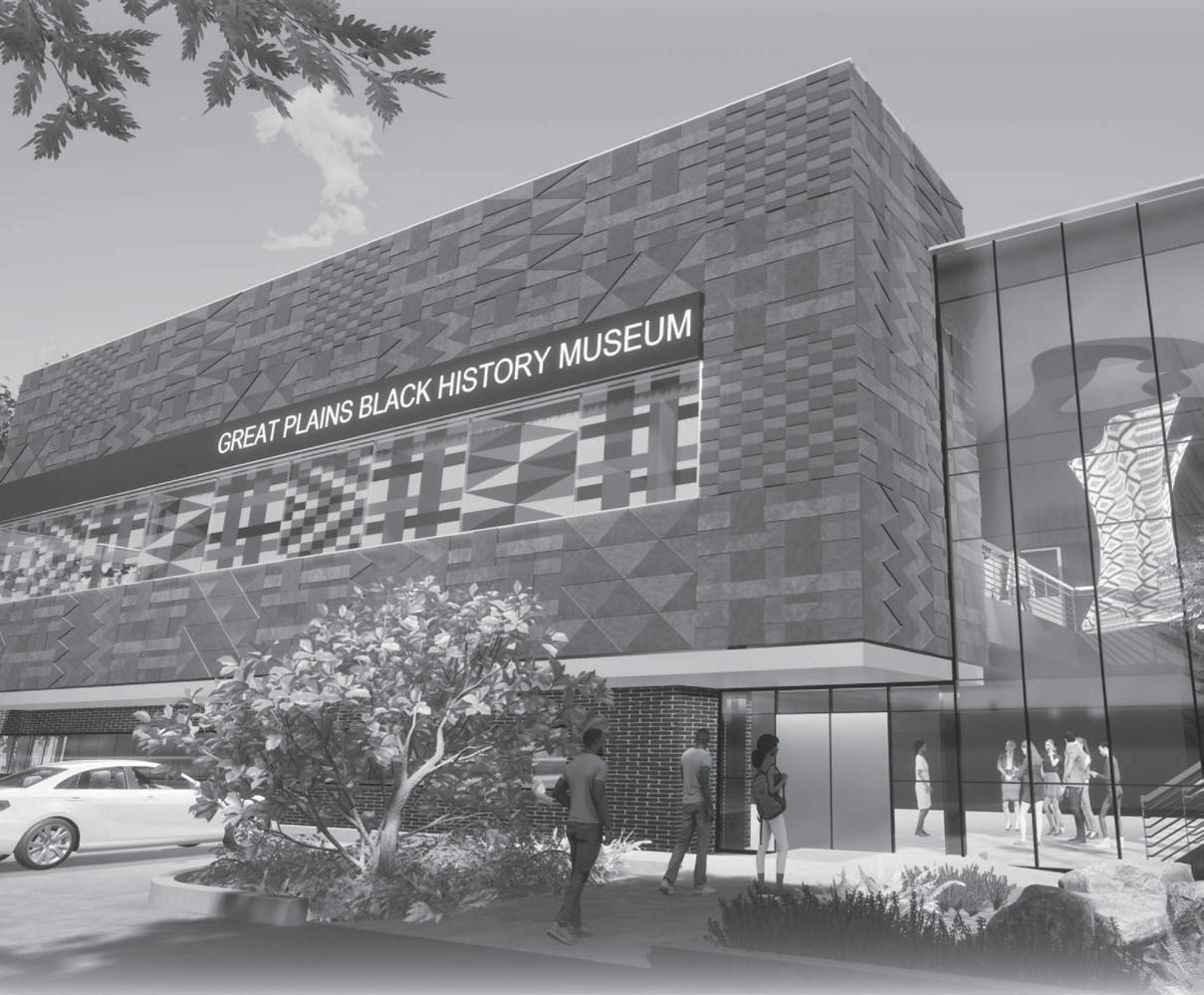
The new Great Plains Black History Museum, planned for a late 2027 or 2028 opening, will provide much-needed space for exhibits and the storage of historic memorabilia.
powerful experience to be escorted through the narrow spaces between exhibits by Eric Ewing, who has led the museum for nearly nine years. Eric’s captivating descriptions will bring to life the Black experience in Omaha and surrounding areas dating back more than 100 years.
The museum is located inside the historic Jewell Building, home of the famous Dreamland Ballroom from its opening in 1923 to 1965. Jazz musicians of global fame performed at Dreamland – Ella Fitzgerald, Nat King Cole, Dizzy Gillespie, Louie Armstrong and countless others.
The Jewell Building was renovated in 1985 and added to the National Register of Historic Places.
The museum, which was founded in 1976 by local activist and historian Bertha Callaway, moved into the Jewell in 2017.
The first room
contains artifacts related to Omaha-area Blacks serving in the military, including an extensive exhibit featuring the seven Tuskegee Airmen from Nebraska. These were African-American military pilots and support personnel who trained at Tuskegee Army Airfield in Alabama during World War II. The unit overcame segregation and discrimination to achieve an outstanding combat record as fighter and bomber escorts, earning legendary status as the “Red Tails.” A framed August, 2004 New Horizons feature about the Tuskegee Airmen is part of the exhibit.
The museum’s entryway also features biographies and street sign replicas of 35 Black Omahans who have made a difference in the development and progress of the city.
For example, Omaha has named streets after John Ewing, Jr., (the city’s
--Museum continued on page 13.
Right now, during Medicare Open Enrollment Period, is a great time to move to ArchWell Health. Our doctors take the time to get to know you — not just your symptoms. With centers right in your neighborhood and same-day sick appointments for members, we help you make better healthcare a part of your daily routine. Plus, our pharmacy team is always just a call away to ensure your medications are current and delivered right to your door. Take charge of your health today — make the move to ArchWell Health.
first Black mayor); and Bertha Calaway (museum founder), and Mildred Brown (Nebraska’s first Black woman publisher). QR codes embedded in these street signs throughout the city tell the comprehensive story of each person honored.
The back room features two predominant themes – “Hate and Hope” – as part of the museum’s permanent exhibits.
The Hate exhibits display the history of lynchings throughout the Great Plains – 114 in all, including two in Omaha (1891 and 1919). Ku Klux Klan (KKK) artifacts are present, including a KKK white robe and a member handbook, “Principals and Purposes of the KKK.”
The story of the Jim Crow era, lasting from the 1870s through at least the mid1960s, is also displayed. It depicts local laws and segregation practices designed to restrict voting, access to education, housing, and accommodations – including lodging, restaurants and transportation.
The Hope focus of the museum features inspiring stories of locals who have excelled in entrepreneurial, political and athletic endeavors. It also highlights persons and organizations risking ridicule, rejection, and even bodily harm through their unflappable advocacy for the rights of African Americans.
One such organization highlighted was the DePorres Club, founded at Creighton University to support local integration efforts, including the successful 1952-1954 bus boycott. Other boycotts targeted major Omaha-area businesses in an effort to promote the hiring of Blacks. Due to its controversial mission, the club left Creighton and moved to the newspaper offices of Mildred Brown’s Omaha Star.
Displays also tell the story of Whitney Young, the executive secretary of the Urban League of Nebraska, who served in that capacity in the 1950s before moving to Washington, D.C., to head the national organization. In that role he helped organize the 1963 March on Washington for Jobs and Freedom, the event featuring Martin Luther King Jr.’s “I Have a Dream” speech.
The museum highlights Martin Luther King’s two visits to Omaha, 1958 and 1960. As a 29-year-old, he spoke at a national Baptist convention at the Omaha Civic Auditorium in 1958, and preached at Salem Baptist Church. In 1960, he spoke again at the Civic Auditorium, predicting “within five years, we will see a breakdown of the
massive resistance to integration.”
Former President Barack Obama’s three visits to Omaha are also described.
Many famous local Black sports heroes grew up within blocks of one another in North Omaha. The museum features photographs and memorabilia from the likes of Bob Gibson, Gale Sayers, Marlon Briscoe, Johnny Rodgers (his Heisman trophy is on display), and others.
The Great Plains Black History Museum will unveil a new exhibit this month, showcasing the dangers Black Americans faced while traveling. The exhibition is presented in tandem with a traveling Smithsonian Institution exhibit, which also opens this month at the Durham Museum.
The Durham exhibit, “The Negro Motorist Green Book” focuses on the national challenges, while the Great Plains Museum will illustrate the local angle, including the celebration of the 40 or so bold North Omaha boarding houses, cafes and filling stations that offered safe passage to Black travelers. The North Omaha Visitor’s Center is planning Saturday tours of some of these locations, according to Ewing.
Much like a AAA guidebook, The Green Book was published and distributed nationwide from 1936 until 1967, providing African American travelers with information on restaurants, gas stations, department stores and other businesses that welcomed Black travelers. Omaha Public Schools high school students did much of the research for the local exhibit, said Ewing.
The exhibition will also focus on regional Sundown Towns, cities that cautioned or outlawed Blacks from being on the streets after dusk.
Last year, 13,000 guests from 47 states and 11 countries visited the museum. To accommodate its growing popularity and archival material, the museum is fundraising for the construction of a new and much larger museum at 23rd and Lake Streets. Groundbreaking is expected this year, with an anticipated opening in late 2027 or early 2028, according to Ewing.
Presumably, the vibe of the new museum will transition from a visit to your grandparent’s home to an excursion to yet another Omaha-based world-class museum.
The Great Plains Black History Museum, 2221 N. 24th St., is open Wednesdays through Saturdays, 1-5 p.m. For tour information and arrangements, contact the museum at (402) 392-7077, or go online to gpblackhistorymuseum.org.
You’re invited to visit the Millard Senior Center at Montclair, 2304 S. 135th Ave., this month for the following:
• February 4: Board Meeting @ 9:30 a.m.
• February 9: Bunco @ 12:15 p.m.
• February 11: P.A.W.S (Puzzles & Words with Seniors) @ 9:45 a.m.
• February 11: Sewing Club meet to make sun dresses and shorts @ 9:30 a.m.
• February 13: Valentine’s Pizza Party @ 11 a.m.
• February 16: Center Closed
• February 23: Book Club: “The Ladies Midnight Swimming Club” by Faith Hogan @ 1 p.m.
• February 24: Hot Cocoa Day @ 10 a.m.
Tai Chi on Mondays and Fridays @ 9:30 a.m.
Bingo every Tuesday and Friday @ 12 p.m.
Sportswear Fridays. Wear your favorite team attire every Friday.
Hand-N-Foot Wednesdays @ 8:30 a.m.
MahJongg Wednesdays @ 1 p.m.
Chair Volleyball Thursdays @ 9:30 a.m.
Dominoes Thursdays @ 12:30 p.m.
For more information, please call 402-546-1270.
First United Methodist Church has some excellent adult curriculums available. They are free for any Christian group which would like to study prayer, discipleship and beliefs. Call First United Methodist Church at 402556-6262 if you wish to receive more information about the list of the studies available.
Students from the University of Nebraska College of Law will help area adults aged 60 and older prepare their wills, powers of attorney, health care powers of attorney and
This is a free service co-sponsored by the Eastern Nebraska Office on Aging (ENOA) and the Department of Health & Human Services, State Unit on Aging.
Documents will be prepared in advance by student attorneys following phone consultation(s) and then finalized during your scheduled appointment in the Omaha area on Friday, April 12.
Pre-registration is required, limited spots are available..
To register for an appointment, contact the University of Nebraska College of Law Clinical Program at 402472-3271. Callers should press “1” when you hear the recording. Registration deadline is March 5.
Life can bring on stress for many of us. Finding ways to relieve stress is important to our overall health and well-being. Caregivers are not immune to this stress.
Please contact Respite Across the Lifespan at edbennett@unmc.edu or 402-559-5732 to find out more about respite services and to locate resources in your area.

By Lois Jordan
February is often associated with heart health, reflection, and caring for the people we love. For those of us who work in longterm care, it is also a time to pause and think deeply about how we care for older adults—especially those who rely on Medicaid for the support they need to live with dignity, safety, and purpose.
At Florence Home, we serve seniors at some of the most vulnerable moments of their lives. Many come to us after a hospitalization, a fall, or a dementia diagnosis that changes everything for them and their families. For many of the residents we serve, Medicaid is not just helpful—it is essential. In fact, across the country, Medicaid is the primary payer for long-term care, supporting seniors who would otherwise have few options after spending down their resources.
Yet today, long-term care providers are being asked to do more with less, at a time when demand has never been higher.

Over the past several years, the cost of providing high-quality care has increased dramatically. Staffing shortages, rising wages, higher food and utility costs, insurance increases, and greater clinical needs—particularly in memory care—have reshaped the landscape of senior care.
At the same time, Medicaid reimbursement has not kept pace. For many providers, rates have remained unchanged for years, even as costs continue to climb.
Providing long-term care with reimbursement that lags years behind reality is not sustainable. It places pressure on providers, caregivers, and ultimately on the seniors and families who depend on us. We are already seeing the consequences. Across Nebraska and the nation, nursing facilities have closed, beds have been taken offline, and waitlists for assisted living and memory care have grown longer. Hospitals are struggling to discharge patients who are medically ready to leave but have nowhere to go. Families are left waiting—often during moments of crisis.
Behind every quality long-term care community is a dedicated workforce. At Florence Home, our caregivers, nurses, dining staff, housekeepers, and support teams are the heart of everything we do. They build relationships, notice small changes, and provide comfort in ways that go far beyond clinical tasks. Our workforce also reflects the diversity of the community we serve. Many of our employees come from historically underrepresented racial and ethnic backgrounds, and long-term care provides stable jobs, career pathways, and purpose-driven work. When Medicaid funding is stable and adequate, it allows providers to invest in staff training, retention, and growth—benefiting employees, residents, and families alike.
One of the most urgent
challenges we face is the growing demand for memory care assisted living.
As dementia diagnoses increase, families are seeking environments that offer safety, structure, and compassion. These programs require specialized staff, enhanced supervision, and thoughtful design—all of which come at a cost.
When reimbursement does not reflect those realities, access becomes limited.
Waitlists grow. Families struggle longer at home. Seniors end up in settings that are not designed to meet their needs. Addressing this gap is critical to ensuring seniors with memory loss receive the right care, at the right time, in the right place.
Caring for seniors is not a partisan issue. It is a shared responsibility—one that involves providers, policymakers, families, and communities working together.
Medicaid works best when it is adequately funded and responsive to the realities people face today.
As a provider, we are committed to responsible stewardship, quality care, and honoring the dignity and individuality of every person we serve.
We are also committed to speaking up when we see systems under strain—not for our own sake, but for the seniors and families who rely on us.
Despite the challenges, I remain hopeful. I see it every day in the compassion of our staff, the resilience of our residents, and the gratitude of families who entrust us with the care of their loved ones.
This February, as we focus on health, connection, and care, let us also recommit to ensuring that long-term care is accessible, sustainable, and worthy of the people it serves. Our seniors deserve nothing less.
Lois Jordan, CEO for Midwest Geriatrics Inc. Management company for Florence Home Healthcare Center, Royale Oaks, and House of Hope Assisted Living and Memory Care
Join Flaherty Senior Consulting for a series of Solutions Group gatherings that will address the questions and challenges caregivers face.
Solutions Groups provide opportunities for caregivers to learn how to deal with various issues, obtain skills and knowledge, engage in discussions, and interact with others in similar circumstances.
Upcoming meeting dates and locations are:
• Feb. 6, April 3, June 5, Aug. 7, Oct. 2, Dec. 4 The Servite Center of Compassion 72nd St. and Ames Cr.
• Feb. 19, April 16, June 18, Aug. 20, Oct. 15, Dec. 17
St. Timothy Lutheran Church 93rd and Dodge streets
• March 11, May 13, July 8, Sept. 9, Nov. 11
St. Vincent de Paul Church 14330 Eagle Run Dr.
• March 22, May 17, July 26, Sept. 27, Nov. 29 Faith Westwood United Methodist Church 4814 Oaks Ln.
The Solutions Groups are facilitated by Nancy Flaherty, MS, CDP, president of Flaherty Senior Consulting. She has extensive experience working with family caregivers and caregiver groups.
For more information, email Nancy at flahertyconsulting@cox.net or call/text her at 402-312-9324.
You’re invited to visit the Florence Senior Center, 2920 Bondesson St.
At the Florence Senior Center, lunch is served at 11:30 am. A select menu is offered Monday thru Friday. Meal reservations must be made one day in advance. Please call by noon the day before for a meal reservation.
The center hosts activites such as Tai Chi, annual picnics/ special events, bingo, cards, gym & game room access, special guest speakers and socials.
Arts and crafts will be held on the third Wednesday of each month. They also provide health and nutrition programs.
For more information, please call Colleen Metz @ 402444-6333.
Legal Aid of Nebraska operates a free telephone access line for Nebraskans ages 60 and older.
Information is offered to help the state’s older men and women with questions on topics like bankruptcy, Homestead Exemptions, powers of attorney, Medicare, Medicaid, and Section 8 housing.
The number for the Elder Access Line is 402-827-5656 in Omaha and 1-800-527-7249 statewide.
This service is available to Nebraskans ages 60 and older regardless of income, race, or ethnicity.
The Legal Aid of Nebraska hours of operation are 9 a.m. to noon and 1 to 3 p.m. Monday through Thursday, and 9 a.m. to noon on Friday.
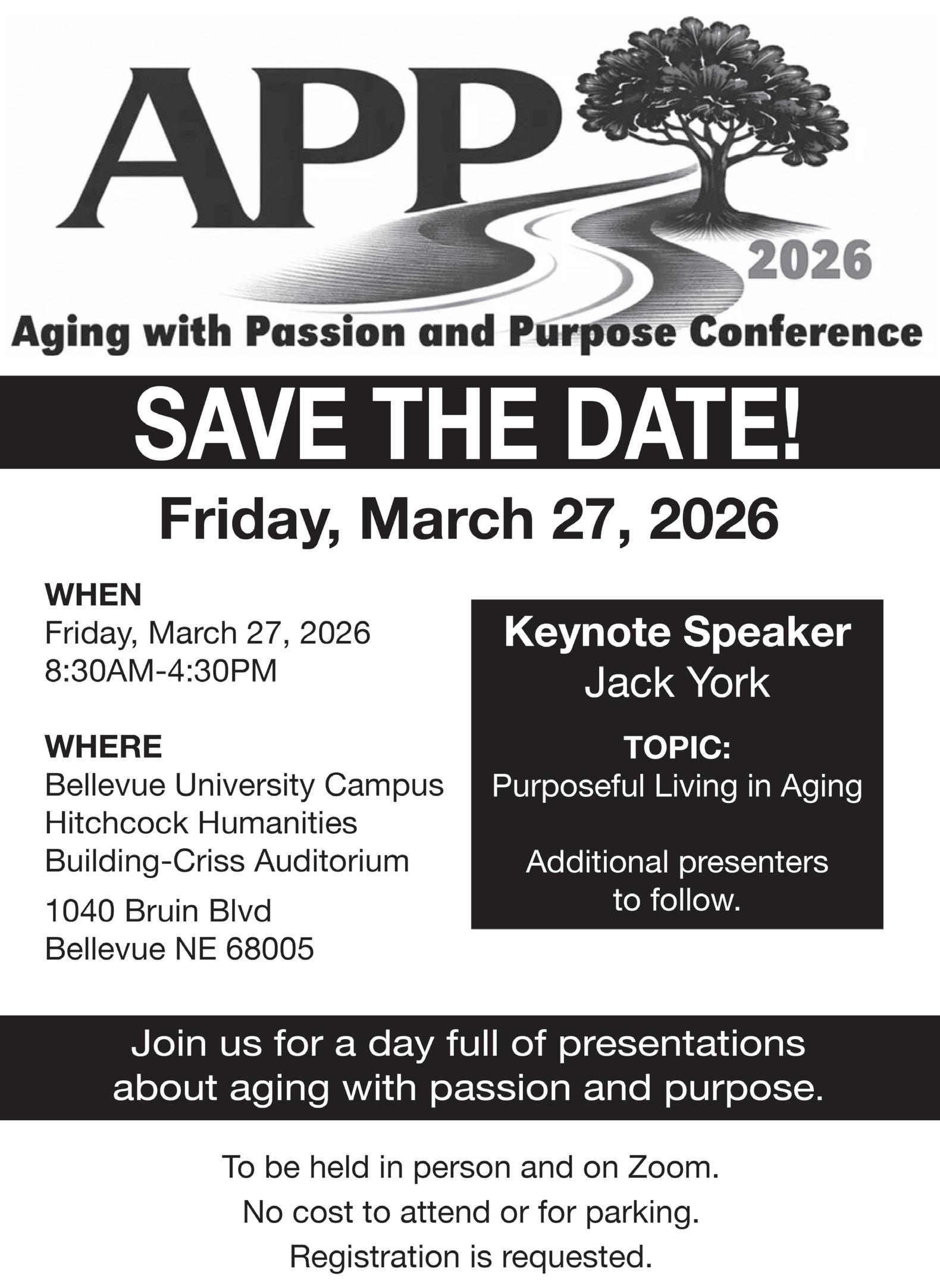





Another successful year for the ENOA Holiday Program! This incredible effort would not be possible without the generosity and dedication of so many. More than 600 clients received gifts, over 70 clients received gift cards, and many others benefited from additional donations such as cleaning supplies, hygiene supplies, clothing, note pads, stamps, pens, paper products, etc. With the support of more than 90 donors, this became a record-breaking year.
We also rely heavily on our staff, who submit client wish lists, deliver gifts and donations, and coordinate countless details behind the scenes. More than 55 staff members contributed to the program’s success. In addition, our 44 SeniorHelp volunteers played a vital role by delivering gifts to 150 clients. We cannot say THANK YOU enough to every person who helps make this program so successful!
Amy Masker
Ardeth
Barb
Barb Parolek
Beta Sigma Phi SororityXi Gamma Epsilon, Cindy Kueffer
Bill Startzer
Blair & Sara Riffel
BLUEBARN Theatre
Bob Sanders
Brad Birkholtz
Carolyn Clark
Chris Bixler
Chris Gillette
Cindy Kirstine
Cindy Shimerda
CORE bank, Michelle Greenwood
Creighton University School of Pharmacy and Health Professions, Brenda Small
Covenant Presbyterian Church, Robin & John Johnson
Dede

Jana
Jeff
Jeri
A special thank you to the following for helping provide Thanksgiving meals to home bound ENOA clients:
• Salvation Army, Dee Brown
•
• PenFed, Renae
If you would like to donate for the holidays in 2026, please contact Danielle Bliven at 402-561-2219.
Preceptor Alpha Sigma,
Priority Insurance,
Sarpy County Courthouse,
St. Patrick Catholic Church (Fremont)
United Republic Bank, Amy Pelz, Anne Riley
United Way of the Midlands, Fratina McCraney
UNMC Engage Wellness, Lesley Wadhams & staff
UNMC Geriatrics, Travis Weyant & staff
UNO Dept. of Gerontology, Kara Negley
Woodmen Life