



























by Molly Christian – NRECA
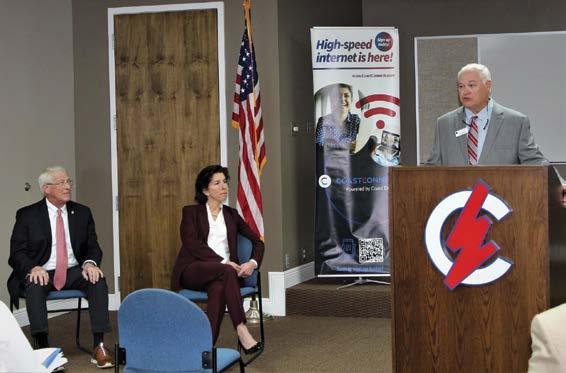
Federal Communications Commissioner Anna Gomez met recently with leaders from six electric cooperatives in Mississippi to discuss their top policy priorities and work to expand high-speed internet access in the state.
The meeting, organized in partnership with NRECA, was held at the Oxford-based headquarters of North East Mississippi Electric Power Association. Attendees discussed co-op efforts to bring affordable, quality broadband to local communities, with more than 200 rural co-ops across the country working to bridge the digital divide.
The FCC supports those efforts through the Universal Service Fund and other measures to expand broadband access.
“We are honored to welcome FCC Commissioner Gomez to our office,” said Randall Abel, CEO of NE SPARC, the broadband division of NEMEPA. “Mississippi is on the forefront of investing in this technology, and we are proud to be part of the effort to bring reliable, high-speed internet to the people we serve.”
The meeting touched on Mississippi electric co-ops’ successful push in 2019 to advance state legislation that allowed them to offer high-speed internet service for the first time.
Since then, co-ops there have been hard at work expanding broadband networks, leveraging the co-op model to quickly and effectively serve their communities.
Across the state, Mississippi co-ops have made $1.39 billion in broadband investments since 2020, installed 41,914 miles of fiber, and signed up 230,788 subscribers, representing 49.3% of potential customers.
Gomez praised their progress, saying Mississippi is a great example for other states.
“I always am impressed with the work of electric cooperatives,” she said.
Gomez also got an update on MS Fiber LLC’s initiative to build middle mile infrastructure that connects local networks that
serve homes, businesses and other end users to the core internet backbone.
Mississippi co-ops providing broadband have historically relied on third-party middle mile networks, a costlier option that gave them less control over those systems. To address those issues, a collection of 17 co-ops launched MS Fiber, which could start taking its first customers early next year.
Gomez and co-op leaders also discussed FCC funding programs, internet affordability, and issues with FCC broadband data collection and maps.
Co-ops at the meeting praised federal initiatives such as the Affordable Connectivity Program, which ran out of funding in 2024, and urged support for programs to make high-speed internet more accessible for low-income households.
They also complimented the FCC’s efforts to improve data collection and mapping of internet speeds and availability, which can guide federal investment in broadband infrastructure. But co-op leaders said the FCC must do more to ensure accuracy, pointing to concerns with the commission’s reliance on providers’ advertised internet speeds.
Meeting participants included Abel and Delta Electric Power Association CEO Harold Pittman, East Mississippi EPA CEO Randy Carroll, Electric Cooperatives of Mississippi CEO Michael Callahan, NE SPARC Chief Technology Officer Nathan Robbins, Tallahatchie Valley EPA CEO Brad Robison, Tishomingo County EPA CEO Cody Durham, and Tombigbee EPA CEO Scott Hendrix.
“Electric co-ops have always been about seeing a need and finding a way to address it,” Robison said. “From bringing electricity to rural Mississippi in the 1930s to bringing high speed internet to the most rural parts of Mississippi today, our goal has always been to make Mississippi better, and to improve the quality of life for all Mississippians.”



“Improving the quality of life for all those we touch.”
The Christmas season is a time of giving and reflection. Memories of family, friends, and gifts often flood our minds. Thoughts of giving back, spreading love, and sharing joy are prevalent, too. But, make no mistake about it, celebrating the birth of Jesus Christ is the real reason for the season.
And let’s embrace acts of kindness to our fellow men and women. Matthew 25:40 says it best: And the King will answer and say to them, “Truly I say to you, to the extent that you did it for one of the least of these brothers or sisters of Mine, you did it for Me.”
Let’s make it a goal to help someone in need. Join me during this season of peace in committing random acts of kindness, like sharing a cup of co ee with a friend in need, cooking and serving food for the hungry or checking on that widow/widower who lives on your street. Let’s embrace this season by showing gratitude and kindness to those around us.
One way we celebrate Christmas here is by donating to our annual Toy Drive (see the sidebar article on this page). Help make Christmas a little brighter by dropping o a toy at your nearest 4-County location. The deadline is Dec. 11.
We hope you enjoy the gift of energy e ciency this Christmas season. Even during the holiday season — when many people are lighting their homes with festive decorations, utilizing inflatables in their yards or staying up late entertaining and cooking for family and friends, we are still working to provide you with the most a ordable electric service.
We help members keep energy use in check by providing energy e ciency tips — through the use of employees, our website
(4county.org), Facebook, and this publication, Today in Mississippi
We help you save driving time by providing the option to pay your bill through bank draft, online, with a mobile app, using kiosks in the community, or simply mailing your payment in. We also help keep your family safe by providing electrical safety tips — information that is especially important this time of year — through the direction of employees and our media resources.
I hope you see how much we care through the benefits, savings, and services we provide, but I also hope you see it in the ways we give back to our community. The 4-County Foundation has given back so much to the communities we serve. (See the article on page 18.)
We are nothing without our members. We recognize that and understand that we cannot thrive unless you thrive, so we do all we can to make sure that our community is strong.
Our o ces will be closed Dec. 24 and Dec. 25 in celebration of Christmas and Jan. 1 in observance of the New Year’s holiday.
From all your friends at 4-County, Merry Christmas and Happy New Year!

by Brian Clark
CEO/General Manager
by Brad Barr
4-County Electric Power Association and FASTnet are encouraging members and customers to help make Christmas better and brighter for area children by taking part in their annual Toy Drive.
Drop-o boxes will be in 4-County o ces through Dec. 11. The co-op is asking its members, employees, and the general public to drop o a new, unwrapped toy in one of the boxes located in the 4-County o ce nearest you.
Collected toys will be delivered to the Salvation Army who will distribute toys throughout the 4-County service area. Last year, employees and members dug deep and collected nearly 300 toys for distribution in 4-County’s service area.
“This is a great Christmas project,” said 4-County Senior Communications Coordinator Brad Barr. “We’re always excited to participate in our annual Toy Drive. A lot of children identified by Salvation Army wouldn’t have the same Christmas experience without the help of this charitable organization and cooperatives, like 4-County.”
Again, the deadline for dropping o toys is Dec. 11. Call Brad at 1-800-431-1544 for more information about the annual Toy Drive project. (Note: Special arrangements to pick up toy donations can also be made by calling Brad.)
4-COUNTY’S ANNUAL DROPOFF LOCATIONS: 4COUNTY OFFICES
DEADLINE: DEC. 11



by Brad Barr
A lot can happen in 50 years.




From a technical viewpoint, it’s 18,250 days. From a personal viewpoint, it’s a lengthy novel with many chapters.
Fifty years ago this month, the year was 1975. The Watergate scandal rocked the nation. The Vietnam War was in its final throes. Disco was entering its heyday. And 18-year-old Albert Jethrow graduated from Caldwell High School and began his marathon 50-year career at 4-County Electric Power Association. It’s a book worth reading. “It represents some of the best years of my life,” Jethrow explained.
Measuring the value of something, or somebody, can be di cult. But co-op o cials, members, and co-workers are doing their best to celebrate the powerful impact that Jethrow has had on 4-County. CEO Brian Clark describes Albert as a valued, dedicated employee. “He is truly an integral part of the 4-County team. Albert has seen this cooperative grow and prosper through the years, and he has been a big part of that,” Clark said.
Albert grew up on the “southside” of Columbus, near the campus of Mississippi University for Women. He and his seven siblings (four brothers and three sisters) enjoyed the nearby Mitchell Elementary School playground. The youngest son, Albert, spent a fair amount of time wetting a fishing hook with his father, Julius. Through the years, Albert’s mother, Bernice, kept the crew in line.
How did Albert’s co-op odyssey begin? The teenager had recently graduated from high school and was working at the Downtowner Hotel in Columbus. He was cleaning the hotel pool and busing tables when a chance encounter helped shape his life. A fellow hotel employee, Shirley Grantham, introduced him to then 4-County General Manager Sylvester Abbott. “I met him that day and started work at 4-County the next day. That’s when the journey began,” Albert said. “I’ll never forget Shirley for that introduction.”
4-County’s original general manager, Louis Wise, was still assisting Abbott with the leadership transition when Albert started his co-op work. Albert has worked under the guidance of every 4-County general manager/CEO – 11 in total.








When people meet me for the first time, sometimes they are meeting 4-County for the first time. I’ve always tried to remember that.

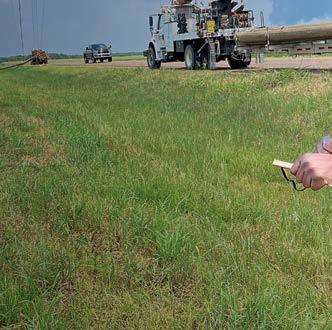
He began his distinguished career Dec. 15, 1975, working as a groundman at the Columbus district o ce in downtown Columbus. Albert progressed through the apprentice lineman program and achieved journeyman status. He worked in district coordinator positions in construction, engineering, and staking at two Columbus district o ce sites before transferring to the Corporate Center, where he continues to work. Albert is a two-time recipient of 4-County’s Outstanding Service award.
Those early days were challenging, but exciting. His first major storm restoration work, for example, happened shortly after his co-op career began. “My first storm was an ice storm. That’s a bad word in the rural electric co-op world,” he said. Co-workers Jody Thompson and George Gerhart accompanied him on the trip to assist a fellow cooperative. “I was just a lad out of high school,” he said. “Line work was brand new to me. There were people in place (like first supervisor, Sammie Olden Evans) that took me under their wings.”
Albert still lives in Columbus with his wife, Christine. They share four children and 13 grandchildren. Albert, or Papa as he is known by his grands, admits that his passion for serving others is fueled by his faith. He is a longtime Sunday School teacher and deacon for Southside Missionary Baptist Church in Columbus. “I believe in the power of Jesus Christ. I want to help people — whether it’s co-workers, customers, church members, neighbors, or friends.”
His career has encompassed the changing landscape of technology. In the early days, when he was working in the staking department with Dale Parra and Bob Herron, the trio mapped everything by hand. “Everything was drawn or mechanical, in nature. Computers were just coming into play. We went through several changes before we got to where we are today.”
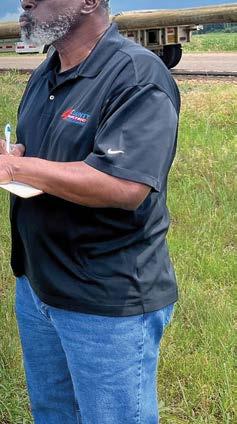
Albert’s name is synonymous with 4-County. Members and employees often call him with questions. He’s glad to answer. “I try to maintain a professional attitude. Each person I deal with deserves that,” he said. First impressions count, Albert added. “When people meet me for the first time, sometimes they are meeting 4-County for the first time. I’ve always tried to remember that.”
4-County’s Keith Monahan, who has worked with Albert for 38 years, described his friend as a knowledgeable voice of reason. “Albert is the go-to guy for information in any number of situations,” he stressed. “I can always count on him to provide me with sound, reasonable direction. I’ve greatly enjoyed working with him.”
Working at 4-County, Albert said, has provided him with opportunities that, otherwise, he may not have had. “It’s enabled me to take care of my family. And 4-County has helped me sharpen my skills. We provide an essential service to our communities.” He has learned to deal with various situations and personalities. “Every customer is di erent,” he stressed. “The service, however, is the same.”
A veteran of customer service, Albert said people should take advantage of the opportunities given to them. “We don’t have a perfect world, but we must support each other. Change is going to come whether you’re ready to accept it, or not. You must accept the change, or you won’t change.”
An important mentor, the late Southside MB Deacon James Hill, once o ered him a piece of advice he continues to use today. “You tell me about now, he told me, and I’ll tell you about yesterday.”
In reflection, Albert embraces his yesterdays, todays, and tomorrows. “It’s been a journey,” he said. “I can’t wait to see what’s next.”






















by Brad Barr
Peace o cers in Starkville have a better peace of mind, thanks to a grant from the 4-County Foundation.
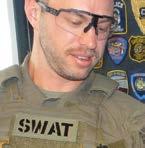
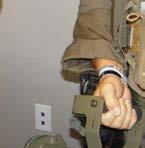
Members of the Starkville Police Department’s Special Weapons and Tactics (SWAT) team recently used a $8,142 grant from the 4-County Foundation to purchase safety and tactical equipment.
A SWAT team is a specialized police unit trained to handle high-risk situations.
Capt. Tyler Davis, SWAT team coordinator, said the unit is, technically, not a budgeted component of the department. It relies on grants, donations, and seizures to keep things running. “If it wasn’t for grants like this one from the 4-County Foundation, we’d have a hard time. The biggest thing is safety for our group. Better equipment helps keep our o cers safer and enables us to do our mission of service,” Davis explained.
Having the right equipment, Davis said, allows the SWAT team to focus on the right situational approach, rather than concerns about equipment. “Ultimately, our goal is to accomplish our missions and get home safely,” Davis said.
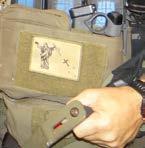


The Starkville SWAT team conducts about 60 to 80 operations each year, focusing on violent crimes, manhunts and searches.
There are 15 SWAT team members in the unit.
The 4-County Foundation is helping the SWAT team meet its needs and fulfill its mission. “The 4-County Foundation is so good to support the communities it serves. This grant is massive for us,” Davis said.
4-County believes in helping the communities it serves. That’s why the cooperative launched the 4-County Foundation, a community service program that has given away over $2.5 million in grants. Since February 2015, participating 4-County members’ utility bills have been rounded up to the nearest dollar; a $125.78 bill, for example, becomes $126. Now, that’s an average of only 49 cents per member, per month. That may not seem like much. But when you multiply those contributions by the thousands of member participants, that’s a lot of pennies!
For more information on the 4-County Foundation, call 1-800-431-1544.





































A tradition of dependable, hometown service since 1937


CARTHAGE: 601-267-5671 | PHILADELPHIA: 601-656-2601 | RANKIN: 601-829-1201 | SEBASTOPOL: 601-625-7422


In accordance with the laws of the State of Mississippi and the bylaws of the Association, three directors will be elected for three year terms. Members will elect one director from Attala County and two directors from Leake County.


(a) It shall be the duty of the Board to appoint, not less than sixty (60) days nor more than ninety (90) days before the date of a meeting of the members at which Board members are to be elected, a Committee on Nominations consisting of three (3) members who shall be selected from the given areas from which Board members are to be elected so as to insure equitable representation. No existing Cooperative employees, agents, o cers, directors or known candidates for director, and close relatives (as hereinafter defined) or members of the same household of existing Cooperative employees, agents, o cers, directors or known candidates for director may serve on such committees. The committee shall receive and consider any suggestion as to nominees submitted in writing by members of the Cooperative consistent with these bylaws. The committee, keeping in mind the principle of equitable representation, shall prepare a list of nominations for Board members, and submit its list to the Secretary not less than thirty (30) days nor more than sixty (60) days before the date of the annual meeting.





(b) Any fifty (50) or more members who are in good standing, are from the given area from which a Board member is to be elected, and acting together, may nominate a Director candidate for the area by petition. Any such petition for nomination must be submitted on a form designated and provided by the Cooperative. Each member signing such petition shall place thereon the date of signing, address, account number and service location of the member. Such nominations made by petition, if any, shall be delivered to the Secretary not less than forty-five (45) days nor more than sixty (60) days before the date of the

annual meeting. Such nominations shall be posted by the Secretary at the same place where the list of nominations made by the Committee on Nominations is posted. A member may not make more than one (1) nomination by petition for each vacancy. If a member signs more than one petition for a director vacancy, then the signature of the member bearing the latest date of signing by the member will be considered and any previously dated signature by the member on any other petition(s) will be deemed invalid, null and void. If a member signs more than one petition on the same date, all signatures of the member bearing the same date of signing will be deemed invalid, null and void.


(c) The Secretary shall prepare and post at the principal o ce of the Cooperative at least twenty (20) days before the meeting a list of nominations for Board members. The Secretary shall be responsible for mailing with the notice of the meeting or separately, but at least ten (10) days before the date of the meeting, a statement of the number of Board members to be elected and the counties they will be elected from and represent, and the name and address of each of the candidates nominated by the Committee on Nominations or by petition.





A report from the Committee of Nominations, along with proxies, ballots and other annual meeting information will be mailed to members in Feb. 2026. As a member-owner of Central Electric Power Association, you have a right to participate in the annual meeting to hear the latest cooperative news and to elect the board of directors.


Mark your calendar for March 17, 2026, and plan to attend Central Electric’s annual meeting at the Carthage Coliseum on Highway 16 in Carthage.















by Scott Flood
Wouldn’t it be great to wake up on a sunny morning, say “Good morning, house!,” and stand back as the right light fixtures flash on, the co eemaker starts, the outdoor security lighting switches o , and the toaster oven starts preheating for your frozen toaster pastry? That may sound like something from science fiction, but today’s smart home electronics make it possible.
Smart devices use digital technology and Wi-Fi to take your home to a new level of convenience and comfort. They can also help you make better use of your electricity, so you can reduce waste and lower your energy bills.
Even if you’ve already put the many advantages of smart electronics to work for your home and family, you might be surprised by some of the newer devices with the potential to change your daily life.
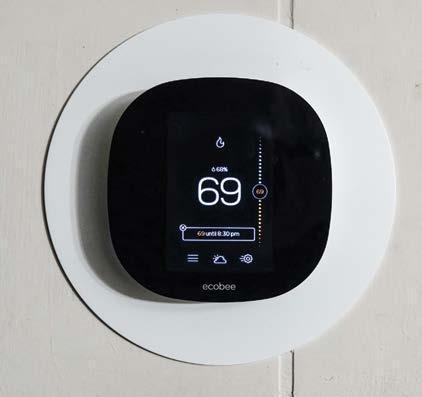
Heating and cooling use more energy than anything else in your home. Replacing your home’s standard thermostat with a smart model can lower your monthly electric bills while keeping you even more comfortable. Smart thermostats learn your daily habits and take over for you. You won’t have to lower your thermostat every evening, because it will happen automatically. Because smart thermostats know exactly when you need electricity and when you don’t, they waste a lot less.
The second-biggest share of your home’s electricity powers appliances, from your refrigerator to your water heater. Smart appliances use Wi-Fi and high-tech sensors to operate more e ciently. A smart washer can sense the size of your load and adjust the water and cycle times accordingly. Smart refrigerators can warn you when the kids leave the door open. And smart water heaters don’t waste energy by heating water while you’re asleep.
An easy and a ordable way to explore smart technology is with smart plugs, which plug into your wall outlets. You can then plug lighting, appliances, and other devices directly into them. You’ll be able to control all those devices through a single app, so you can tell the co eemaker when to start brewing, turn your exterior accent lighting o at dawn, or have your favorite music already streaming as you walk in the door.
Smart power strips look like their ordinary cousins but use smart plugs. They’re particularly helpful at eliminating waste caused by what’s known as “phantom load” – like leaving your phone charger plugged in when it’s not charging.
Replacing your home’s standard thermostat with a smart model can lower your monthly electric bills while keeping you even more comfortable.
Smart appliances use Wi-Fi and high-tech sensors to operate more e ciently.

You wish your family room didn’t face south, because it’s always warm during the day. Smart shades and blinds can help. You can set them to automatically open or close depending on the time of day (and year) or based on your home’s indoor temperature. They can help your air conditioner keep you cooler for less.
When you combine the capabilities of individual smart home electronics with voice assistants, like Amazon Alexa, or wholehome smart energy management systems, they become even more powerful. You can teach voice assistants to carry out multiple tasks that make up your daily routines, like the “good morning, house” message. Energy management systems simplify control of all aspects of your home’s energy use, and some o er specific tips to help you save even more.
While all those smart devices may be able to make your home more energy e cient and your life more comfortable, they’re not perfect. Most require an internet connection, so if your service is down, your smart devices won’t work, either. Smart devices typically don’t receive frequent system updates, like your smart phone or laptop, so be aware of potential security issues. Before you choose any smart home devices, make sure it’s completely secure and compatible with what you have. Then prepare to be amazed by what smart home electronics will do for you!
For more than four decades, business writer Scott Flood has worked with electric cooperatives to build knowledge of energy-related issues among directors, sta , and members.


FROM OUR CO-OP FAMILY TO YOURS, WISHING YOU A HAPPY HOLIDAY SEASON AND A JOYOUS NEW YEAR.
Central Electric Power Association will be closed Dec. 24 - 25 for Christmas and Jan. 1 for New Year’s Day.
To report an outage, please visit www.centralepa.com and click on Report An Outage, call 601-267-3043, or text the word OUT to 866-846-5671 if you are enrolled in the outage texting service. A dispatcher is on duty 24 hours a day, 7 days a week.





















by Qua’Shara Monix
As the Christmas season approaches, it arrives during a year that has tested our patience, our faith, and our unity as a nation. The recent government shutdown and the uncertainty it brought have reminded us that even in a country as strong and resilient as ours, we are all deeply connected. What happens to one a ects us all. In the mist of the noise and confusion, this season gently calls us back to what truly matters… peace, compassion, and love for one another.
At Coahoma Electric Power Association, we are reminded daily that community is not just about electricity flowing through wires, it’s about hearts connected by shared experiences and mutual care. We see neighbors lending a helping hand, churches opening their doors, and families sharing what little they may have to make sure no one is left in the dark, literally or figuratively.















Christmas is not only a time of giving but also a time of understanding. For some, the holidays can magnify feelings of loneliness or loss. To those who feel left out or left behind, know this, you are seen; you are valued, and you are loved. And for those carrying heavy burdens, perhaps your own and those of others, we hope you find rest and renewal in the quiet promise of this season. You are not alone in your struggle, and your strength does not go unnoticed.
May this Christmas bring peace that surpasses all understanding; peace that fills homes, families, and communities with warmth and hope. Let us carry that peace into the new year, choosing kindness over division, generosity over greed, and faith over fear.
From all of us at Coahoma Electric Power Association, we wish you and your family a Merry Christmas filled with light, love, and lasting peace.






Our o ces will be closed Wednesday, Dec. 24, Thursday, Dec. 25, and Friday, Dec. 26, 2025, in observance of Christmas.
Our o ces will be closed Thursday, Jan. 1, and Friday, Jan. 2, in observance of New Year’s Day.










Coahoma Electric Power Association will hold its Annual Meeting of the Membership at 10 a.m. Thursday, Feb. 12, 2026, at Coahoma Electric’s Headquarters multipurpose room at 3355 Rudyard-Jonestown Rd, Coahoma, MS 38617.










by Scott Flood
Wouldn’t it be great to wake up on a sunny morning, say “Good morning, house!,” and stand back as the right light fixtures flash on, the co eemaker starts, the outdoor security lighting switches o , and the toaster oven starts preheating for your frozen toaster pastry? That may sound like something from science fiction, but today’s smart home electronics make it possible.
Smart devices use digital technology and Wi-Fi to take your home to a new level of convenience and comfort. They can also help you make better use of your electricity, so you can reduce waste and lower your energy bills.
Even if you’ve already put the many advantages of smart electronics to work for your home and family, you might be surprised by some of the newer devices with the potential to change your daily life.
Heating and cooling use more energy than anything else in your home. Replacing your home’s standard thermostat with a smart model can lower your monthly electric bills while keeping you even more comfortable. Smart thermostats learn your daily habits and take over for you. You won’t have to lower your thermostat every evening, because it will happen automatically. Because smart thermostats know exactly when you need electricity and when you don’t, they waste a lot less.
The second-biggest share of your home’s electricity powers appliances, from your refrigerator to your water heater. Smart appliances use Wi-Fi and high-tech sensors to operate more e ciently. A smart washer can sense the size of your load and adjust the water and cycle times accordingly. Smart refrigerators can warn you when the kids leave the door open. And smart water heaters don’t waste energy by heating water while you’re asleep.
An easy and a ordable way to explore smart technology is with smart plugs, which plug into your wall outlets. You can then plug lighting, appliances, and other devices directly into them. You’ll be able to control all those devices through a single app, so you can tell the co eemaker when to start brewing, turn your exterior accent lighting o at dawn, or have your favorite music already streaming as you walk in the door.
Smart power strips look like their ordinary cousins but use smart plugs. They’re particularly helpful at eliminating waste caused by what’s known as “phantom load” – like leaving your phone charger plugged in when it’s not charging.
Replacing your home’s standard thermostat with a smart model can lower your monthly electric bills while keeping you even more comfortable.
Smart appliances use Wi-Fi and high-tech sensors to operate more e ciently.
You wish your family room didn’t face south, because it’s always warm during the day. Smart shades and blinds can help. You can set them to automatically open or close depending on the time of day (and year) or based on your home’s indoor temperature. They can help your air conditioner keep you cooler for less.
When you combine the capabilities of individual smart home electronics with voice assistants, like Amazon Alexa, or wholehome smart energy management systems, they become even more powerful. You can teach voice assistants to carry out multiple tasks that make up your daily routines, like the “good morning, house” message. Energy management systems simplify control of all aspects of your home’s energy use, and some o er specific tips to help you save even more.
While all those smart devices may be able to make your home more energy e cient and your life more comfortable, they’re not perfect. Most require an internet connection, so if your service is down, your smart devices won’t work, either. Smart devices typically don’t receive frequent system updates, like your smart phone or laptop, so be aware of potential security issues. Before you choose any smart home devices, make sure it’s completely secure and compatible with what you have. Then prepare to be amazed by what smart home electronics will do for you!
For more than four decades, business writer Scott Flood has worked with electric cooperatives to build knowledge of energy-related issues among directors, sta , and members.





by Miranda Boutelle
I tend to live in the “if it isn’t broken, don’t fix it” school of thought, but a failed water heater can cause damage to your home and property. Emergency replacement of a water heater can add unnecessary cost, not to mention inconvenience.
Here are some signs that your storage water heater might be approaching the end of its life.
The typical lifespan of a storage water heater is 10 to 15 years, according to the U.S. Department of Energy. If your water heater is older than that, plan to replace it soon. Don’t have records of when it was installed? No problem. Find the serial number on the water heater’s sticker or metal plate. Look up the serial number online or call the manufacturer to find its age.
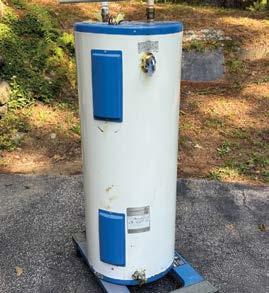
Sediment or water on the floor or at the bottom of the water heater could mean its days are numbered. Sediment can be a sign of corrosion, which leads to a leak or failure.
Seeing rusty or discolored water when you turn on your faucets can be a sign the tank is rusting inside. If water is not getting as hot as it used to, it could be a sign of a failing electric element or a gas burner not functioning properly.
Odd noises could indicate an issue with the components. If you’re hearing unusual noises from your water heater, schedule a checkup with a plumber. Well-functioning water heaters typically don’t make much noise.
A professional plumber may be able to replace failing components. If you are having issues with the tank itself, it’s likely time for a new unit.



We’ve all gotten used to having reliable hot water in our homes. Nobody wants to get caught o guard with an unexpected cold shower or failed water heater.

If you’re in the market for a new water heater, a heat pump water heater might be a good fit for your home. These systems are two to three times more energy e cient than conventional electric-powered tank water heaters, according to the DOE. A federal tax credit is available until Dec. 31. If your water heater is past its useful life or showing any signs of failure, consider investing in a new one before the end of the year.
Even if your water heater is in great shape, you can save at home by lowering your hot water use. Some easy ways to do this are washing laundry in cold water and installing high-performance aerators on faucets and showerheads to reduce the amount of hot water you use. If you have time-ofuse rates, you can save by installing a timer on your water heater to prevent it from operating during peak energy use hours, typically in the mornings and evenings. It also helps lower the strain on your electric utility.
Knowing the signs of water heater failure can save you from home damage and o er opportunities to explore options for more e cient equipment to lower your electric use.
Miranda Boutelle is the chief operating o cer at E ciency Services Group in Oregon, a cooperatively owned energy e ciency company.
If your water heater is 10-15 years old, it’s time to start planning and budgeting for a replacement.











The holiday season is here, and it’s one of my favorite times of the year. Being surrounded by family, gathering with friends and enjoying traditions – all of these things make Christmas a special time for me. It’s also a time to reflect on the past year to think about what has been accomplished and make plans for the new year. This year, my yearly reflection feels a little di erent because I’m not just looking back over the past 12 months, but the entirety of my career at Coast Electric as I prepare for retirement in January.
I have spent the past 30 years working for the members of Coast Electric, and they have been some of the most rewarding of my life. Whether I’m wearing a suit in the boardroom, am out on a job site with our crews or working with our community partners, I am proud of the work we do here and of the things this team accomplishes day in and day out to fulfill our mission. Coast Electric has been around for almost 90 years now, and it will be around for generations to come. I am blessed to have been part of it and to have served each of you.










I want to thank you for the support you’ve shown me and the entire Coast Electric family over the years. Co-ops are strongest when they have a membership that is engaged. When you are an active part of your cooperative, the co-op can better understand your needs and provide the service you deserve. I hope you will continue to be involved and to support the Coast Electric family. Thanks to the men and women I’ve worked with over the years who have worked with such passion and drive to serve our community. And thanks to our members who allow us to power and connect your lives. I wish you all a Merry Christmas, a happy New Year and much joy and success in the future.

by Ron Barnes
President and CEO








Coast Electric and CoastConnect o ces will be closed Thursday and Friday, Dec. 25 - 26, for the Christmas holidays and Thursday, Jan. 1, for New Year’s Day.

Coast Electric dispatchers will be on duty, and crews will be on call. If you need to report an outage, you can text us at 228-338-4644 if you have a mobile number associated with your account. You can also report your outage on coastelectric.coop, use our CE on the Go app, or call 877-769-2372. For 24/7 tech support with CoastConnect, call 877-969-3884.




































Throughout Ron Barnes’ 30-year career at Coast Electric, the cooperative’s mission and cooperative principles have been his north star. New challenges arise daily - technology advances, storms destroy, energy policies change and prices fluctuate. Ron sees each of these challenges as opportunities for growth and innovation. He also knows that staying true to the company mission will guide co-op employees and members through anything that comes their way.
Coast Electric’s mission is to safely provide member-owners superior service and dependable electricity at the lowest possible price and to improve the economy and quality of life in our community. Ron and his sta have worked to remain true to this mission.
“I always put our culture of safety first,” said Barnes. “It’s not a successful day at Coast Electric and CoastConnect unless every person goes home safely to their families.”
After safety, reliability is Ron’s priority. “Our 91,000 members and 25,000 internet subscribers expect their power to be on and their internet to work,” Ron said. “We’ve invested in our infrastructure, and that’s something I’m proud of.”
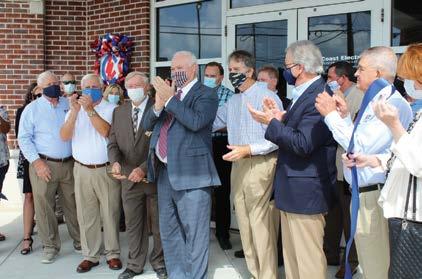










Safely providing reliable, a ordable electric service, with a commitment to serving members 24/7 is an accomplishment on its own. Doing that while achieving top-tier reliability and safety records is an even greater achievement. But those who know Ron Barnes know that he is always striving for more. Even with the co-op’s strong record of service, reliability and safety, Ron always pushed employees to do more for co-op members and for the community we serve. When there is a need, Ron sees an opportunity to fulfill that need. Whether that means creating new programs for members or seeking new ways to serve the community, Ron finds a way to make a di erence.
Coast Electric’s Share Your Blessings fund, an energy assistance program, has relied on contributions from members for many years. Although the program was successful, raising around $50,000 each year, Ron had a vision to make a larger impact. When he became CEO in 2017, Ron talked to the board about the impact the cooperative could make by rounding up participating members’ bills to the next dollar. A few extra pennies or nickels each month seems like something small, but when tens of thousands of members contribute, it makes a big di erence. Since Ron’s e orts to revamp the program, millions of dollars have been invested back into the community and thousands of households have benefited from energy assistance. In 2024 alone, members contributed $265,778.52 to the community trust, which is used for grants for local charitable organizations, with $125,867.22 going to energy assistance for 436 households, and $39,513.81 went to the endowment fund for funding future projects that will make a large impact on the community.
Electric co-ops were formed in the 1930s to bring electric service to rural residents. Before co-ops, only those who lived in more populated areas were able to use electricity to power their homes because the expense was too great for investor-owned companies. Fast forward almost 100 years, and the same pattern could be seen for providing internet service to rural residents. Large, investorowned companies weren’t interested in providing high-speed




internet service to rural residents. Yet again, rural residents didn’t have the same advantages as those in cities. So co-ops throughout the state decided to bring high-speed fiber internet service to their members. Under Ron’s leadership, Coast Electric is one of the co-ops leading the way in Mississippi to ensure rural residents are connected and able to access the services made possible with high-speed internet. In 2020, at the height of the Covid pandemic, CoastConnect began connecting members, so they could access education and healthcare from home, and so they could also work and stay connected with loved ones. CoastConnect started with one connection in Pearl River County and now has over 25,000 subscribers with a subscriber satisfaction score of 91 out of 100.








As a co-op leader, Ron has never forgotten that at the end of every line, is a member. Someone who depends on our service for their quality of life. Whether we are lighting their home, powering their business or keeping them connected, Coast Electric and CoastConnect must always focus on the people we serve. When asked about his leadership philosophy, Ron said using the golden rule is his approach. “You have to treat people the way they want to be treated,” Ron said. “My goal has been to build e ective teams, so that people know they can trust the people they work with and for. I want members to know that more than anything else, we are a company that really cares about them.”
Ron will stay busy after retirement, golfing and gardening, but is most looking forward to traveling with his wife, Angel, and visiting his four children and two grandchildren.

At Coast Electric’s Annual Meeting on Nov. 6, three members were elected as directors for Position Two and received the following votes:
Gilbert Arceneaux – 10,356
Teri Eaton – 10,356
Candace Harper – 10,356
The Annual Meeting is one of the most important nights of the year for your cooperative. Besides allowing us to conduct the business of electing board members to represent you, we also get to spend time getting to know you and learning how we can fulfill our mission of improving your quality of life. We appreciate everyone who attended our meeting, who registered by proxy and who watched the meeting online.
Coast Electric Board President James Baldree announced a capital credit retirement of
$6,397,573
In December, bill credits will be applied to accounts with a capital credit balance of $49.99 or less and checks will be mailed to members with a capital credit balance of $50 or more. Members who have questions about capital credits may visit coastelectric.coop/capital-credits.
Congratulations to our members who won credits on their electric bills by either attending our Annual Meeting or registering online, in one of our o ces or by mail and our grand prize winners listed below. For a full list of winners, visit www.coastelectric.coop/annual-meeting-registration.


$250 Coast Electric Bill Credit – Ida Brown
$500 Coast Electric Bill Credit – Myra Tate
$1,000 Coast Electric Bill Credit – Jewel Lumpkin


$250 Coast Electric Bill Credit – Gloria Farish
$500 Coast Electric Bill Credit – Jesse Brown
$1,000 Coast Electric Bill Credit – Tania Melon
Ford F-150 Winner Armand Serpas Jr.
No worries! Our meeting was recorded and is available on our YouTube channel. Search for Coast Electric.
Coast Electric wants you to reduce your energy use and see savings on your monthly energy costs. Each month, you will have an opportunity to register to win a prize that will help you reduce energy consumption in your home.
Congratulations to Charlene Cannon, the winner of our October Reduce Your Use prize.
Visit www.coastelectric.coop and fill out our entry form. It only takes a few seconds, and you could win a prize that helps you save!


































As we close another year, we want to pause and express gratitude — for you, the members of Delta Electric — for your continued trust and support. Our cooperative was built on the promise of people coming together to improve the quality of life in their communities, and that promise still guides everything we do today.
This past year has been marked by meaningful progress, both in strengthening our local system, and in working at the national level to influence energy policies that directly a ect reliability, a ordability, and resilience.
Over the past year, electric cooperatives across the country came together for advocacy e orts on the EPA’s Power Plant Rule. As originally written, the rule would have forced a rapid shift away from always-available power generation resources, threatening the accessibility of a diverse fuel supply that keeps electricity reliable. Renewable energy sources are an essential and growing part of our energy future, but we also know that the demand for electricity is rising rapidly, and natural gas, coal, and nuclear remain essential for ensuring power is available around the clock. As we collaborated and engaged with policymakers, we pressed for a more balanced approach to generating power — one that supports clean energy innovation while still recognizing the role of traditional resources. Our e orts are helping to shape a more workable path forward that better protects reliability and keeps costs in check for Delta Electric members.
Another area of ongoing progress came through advocacy work on federal permitting reform. For too long, outdated rules and lengthy delays have stood in the way of building critical infrastructure, including



new transmission lines and generation projects. Modernizing this process is essential if we are going to strengthen the electric grid and keep pace with growing demand. This year, electric co-ops helped move the needle on permitting reform, advocating for policies that make the process faster, more predictable and more e cient. Investments we make in infrastructure will reach communities sooner, improving reliability and preparing us for the future.
We’re also seeing progress with bipartisan support of the FEMA Act of 2025, which would speed up the disaster recovery process for electric cooperatives and the communities they serve.
FEMA is a crucial partner for electric co-ops in e orts to restore power after disaster strikes, but currently, the federal reimbursement process after a major storm is slow and full of red tape. If passed, the bill would make FEMA a stronger, more responsive agency to help strengthen rural resilience, protect taxpayer dollars, and ensure essential services are restored as quickly as possible after a natural disaster.
As we look ahead to a new year, we see both challenges and opportunities on the horizon. The energy industry is undergoing significant change driven by the rising need for more electricity, new tools and technologies, and federal energy policies.
The path forward requires innovative thinking and memberfocused solutions. We’re confident that with the dedication of Delta Electric employees and the continued support of our members, we are well positioned to adapt and meet challenges head-on. Through it all, our promise to you remains steadfast: reliable power for today — and tomorrow.














by Scott Flood
Wouldn’t it be great to wake up on a sunny morning, say “Good morning, house!,” and stand back as the right light fixtures flash on, the co eemaker starts, the outdoor security lighting switches o , and the toaster oven starts preheating for your frozen toaster pastry? That may sound like something from science fiction, but today’s smart home electronics make it possible.
Smart devices use digital technology and Wi-Fi to take your home to a new level of convenience and comfort. They can also help you make better use of your electricity so you can reduce waste and lower your energy bills.
Even if you’ve already put the many advantages of smart electronics to work for your home and family, you might be surprised by some of the newer devices with the potential to change your daily life.
Heating and cooling use more energy than anything else in your home. Replacing your home’s standard thermostat with a smart model can lower your monthly electric bills while keeping you even more comfortable. Smart thermostats learn your daily habits and take over for you. You won’t have to lower your thermostat every evening, because it will happen automatically. Because smart thermostats know exactly when you need electricity and when you don’t, they waste a lot less.
The second-biggest share of your home’s electricity powers appliances, from your refrigerator to your water heater. Smart appliances use Wi-Fi and high-tech sensors to operate more e ciently. A smart washer can sense the size of your load and adjust the water and cycle times accordingly. Smart refrigerators can warn you when the kids leave the door open. And smart water heaters don’t waste energy by heating water while you’re asleep.
An easy and a ordable way to explore smart technology is with smart plugs, which plug into your wall outlets. You can then plug lighting, appliances, and other devices directly into them. You’ll be able to control all those devices through a single app, so you can tell the co eemaker when to start brewing, turn your exterior accent lighting o at dawn, or have your favorite music already streaming as you walk in the door.
Smart power strips look like their ordinary cousins but use smart plugs. They’re particularly helpful at eliminating waste caused by what’s known as “phantom load” – like leaving your phone charger plugged in when it’s not charging.
Replacing your home’s standard thermostat with a smart model can lower your monthly electric bills while keeping you even more comfortable.
Smart appliances use Wi-Fi and high-tech sensors to operate more e ciently.
You wish your family room didn’t face south, because it’s always warm during the day. Smart shades and blinds can help. You can set them to automatically open or close depending on the time of day (and year) or based on your home’s indoor temperature. They can help your air conditioner keep you cooler for less.
When you combine the capabilities of individual smart home electronics with voice assistants, like Amazon Alexa, or wholehome smart energy management systems, they become even more powerful. You can teach voice assistants to carry out multiple tasks that make up your daily routines, like the “good morning, house” message. Energy management systems simplify control of all aspects of your home’s energy use, and some o er specific tips to help you save even more.
While all those smart devices may be able to make your home more energy e cient and your life more comfortable, they’re not perfect. Most require an internet connection, so if your service is down, your smart devices won’t work, either. Smart devices typically don’t receive frequent system updates like your smart phone or laptop, so be aware of potential security issues. Before you choose any smart home devices, make sure it’s completely secure and compatible with what you have. Then prepare to be amazed by what smart home electronics will do for you!
For more than four decades, business writer Scott Flood has worked with electric cooperatives to build knowledge of energy-related issues among directors, sta , and members.
by Miranda Boutelle
I tend to live in the “if it isn’t broken, don’t fix it” school of thought, but a failed water heater can cause damage to your home and property. Emergency replacement of a water heater can add unnecessary cost, not to mention inconvenience.
Here are some signs that your storage water heater might be approaching the end of its life.
The typical lifespan of a storage water heater is 10 to 15 years, according to the U.S. Department of Energy. If your water heater is older than that, plan to replace it soon. Don’t have records of when it was installed? No problem. Find the serial number on the water heater’s sticker or metal plate. Look up the serial number online or call the manufacturer to find its age.
Sediment or water on the floor or at the bottom of the water heater could mean its days are numbered. Sediment can be a sign of corrosion, which leads to a leak or failure.
Seeing rusty or discolored water when you turn on your faucets can be a sign the tank is rusting inside. If water is not getting as hot as it used to, it could be a sign of a failing electric element or a gas burner not functioning properly.
Odd noises could indicate an issue with the components. If you’re hearing unusual noises from your water heater, schedule a checkup with a plumber. Well-functioning water heaters typically don’t make much noise.
A professional plumber may be able to replace failing components. If you are having issues with the tank itself, it’s likely time for a new unit.
We’ve all gotten used to having reliable hot water in our homes. Nobody wants to get caught o guard with an unexpected cold shower or failed water heater.
If you’re in the market for a new water heater, a heat pump water heater might be a good fit for your home. These systems are two to three times more energy e cient than conventional electric-powered tank water heaters, according to the DOE. A federal tax credit is available until Dec. 31. If your water heater is past its useful life or showing any signs of failure, consider investing in a new one before the end of the year.
Even if your water heater is in great shape, you can save at home by lowering your hot water use. Some easy ways to do this are washing laundry in cold water and installing high-performance aerators on faucets and showerheads to reduce the amount of hot water you use. If you have time-ofuse rates, you can save by installing a timer on your water heater to prevent it from operating during peak energy use hours, typically in the mornings and evenings. It also helps lower the strain on your electric utility.
Knowing the signs of water heater failure can save you from home damage and o er opportunities to explore options for more e cient equipment to lower your electric use.
Miranda Boutelle is the chief operating o cer at E ciency Services Group in Oregon, a cooperatively owned energy e ciency company.
If your water heater is 10-15 years old, it’s time to start planning and budgeting for a replacement.
























This is the time of year when many of us tend to do some reflection. In saying that, I tend to use this space as an opportunity to do just that on the events of the past year at Dixie Electric. As I began to think through all the things we’ve accomplished together, it’s a reminder of just how deeply “Concern for Community” runs through every part of our cooperative. You know it’s happening day to day, but when you see it all laid out, you can truly see our mission statement in motion.
Several years ago, we made a strategic decision to shift our community-support e orts from broad, national charities to more localized causes — organizations right here in our own communities. That change has allowed us to keep our dollars, time, and energy close to home, where they make a direct and meaningful impact on our members, neighbors, and friends.
Because we never want to become complacent in supporting our communities, each year we look for new ways to make a di erence and new organizations to stand beside. If you know of a local charity or community e ort that could benefit from our support, we encourage you to reach out and let us know. We are here to serve our members and the communities we all call home, and your input helps guide that mission.
This year, we were proud to expand our community outreach in several new directions. One of the most heartwarming additions was our Teddy Bear Drive for Cherished Hearts, a local nonprofit that supports children who are victims of abuse. The trauma these children have gone through and then to have to relive it as they tell their stories was something we had never thought about. So together, our employees and members donated more than 600 new teddy bears to give to children during their forensic interviews — a small comfort that can make a big di erence on one of the hardest days of their young lives.
Our employees also volunteered at Worthy Stables in Petal, a






equine-assisted activities. Worthy Stables serves a wide range of individuals — from women who have experienced trauma to children with special needs and veterans coping with post-traumatic stress. Spending time there reminded us that service takes many forms, and sometimes the simplest acts, like lending a helping hand, can create a lasting impact.
Another new e ort came through our employee candy bar sales, which this year supported Missing Peace, a local organization dedicated to helping women who have been rescued from human tra cking rebuild their lives. This organization is doing incredible work to bring hope and healing where it’s needed most.
We also added a new layer to our educational outreach. Teaching electrical safety has always been a priority, but with technology touching every part of life, we’ve begun teaching elementary students about online safety as well. Helping children understand how to protect themselves on the internet is another way we can live out our cooperative values — caring for our community in practical, forwardthinking ways.
As we close out 2025, I’m reminded that the heart of this cooperative isn’t found in wires or poles — it’s found in people. From all of us at Dixie Electric, Merry Christmas and Happy New Year. We look forward to finding even more ways to make the holidays, and the year ahead, a little brighter for those we serve.



by Randy Smith
General Manager



































































Dixie Electric hosted its 87th Annual Meeting on Oct. 18 with more than 5,400 members casting their votes in this year’s board elections. Member participation continues to play an important role in guiding the direction of our cooperative, and we appreciate everyone who took the time to vote.
This year, Lucy Cooley was reelected to serve District 1, and Sears Ward was reelected to serve District 5.
As part of our ongoing commitment to community, Dixie Electric donates $1 for every vote cast to benefit local charities. This year’s donations will be distributed among The Petal Children’s Task Force, Samaritan’s Closet and Pantry, and The Good Shepherd Clinic, with each organization receiving $1,850.
Members who cast their ballots were also entered into a drawing to win up to a $700 credit on their power bill. The list of prize winners can be found below.
District 1 Charles Woodward – Richton
District 2 Henry Setze – Petal
District 3 Betty Dagons – Hattiesburg
District 4 Ray Glenn – Laurel
District 5 Kerri Parker – Ellisville
District 6 Thomas Burgess Jr – Waynesboro
District 7 Tasha Brewer – Waynesboro









by Amanda Mills


There’s nothing quite like the twinkle of Christmas lights to bring on the holiday cheer. From glowing trees to sparkling rooftops, the sights and sounds of the season help make this time of year magical. Before you plug in those decorations, take a few minutes to ensure your home is safe and shining for all the right reasons.
With a little extra care, you can keep your home safe and your season shining bright.
Light up safely
Before hanging your lights, inspect each strand carefully. Toss any with frayed wires, broken bulbs, or loose connections. Only use lights that are UL-listed for safety — and make sure you’re using indoor lights inside and outdoor lights outside. When stringing them together, check the packaging for how many strands can be safely connected. More isn’t always merrier if it means overloading your outlets!
Don’t overdo the outlets
With everything from blow-up yard decorations to electric candles, it’s easy to run out of plug space fast. Avoid daisy-chaining extension cords or overloading power strips.






Give cords a break






Instead, plug larger decorations directly into wall outlets, and use heavy-duty outdoor cords for anything exposed to the elements.
Keep cords away from doorways, walkways, and anything that could pinch or crush them. Never run cords under rugs — they can overheat and start a fi re. If you’re decorating outside, make sure all connections are elevated and weather-protected.
Tree tips


If you’re putting up a live tree, keep it well-watered, so it doesn’t dry out and become a fi re hazard. Turn o all lights and decorations before heading to bed or leaving home. For artificial trees, look for one labeled “fi re resistant.”
Bright ideas for a safer season
• Use timers or smart plugs to control when lights turn on and o .
• Keep candles at least a foot away from anything that can burn — or opt for fl ameless versions.
• Test your smoke detectors before the holidays begin. The holidays are about joy, togetherness, and making memories. With a little extra care, you can keep your home safe and your season shining bright.












by Amanda Mills



While Christmas can be a little hectic, it always fi lls my heart with gratitude for the simple joys that make life meaningful. Maybe it’s the sparkle of lights downtown, the smell of cinnamon and cider in the air, or the quiet comfort of gathering with family. For me, it’s all of those things, and the reminder that even in the busiest season, there’s beauty in slowing down.
Every Christmas Eve, my family gathers at my parents’ house in our pajamas to bake candy and spend the evening together. It’s a tradition that has lasted as long as I can remember. Over the years, we’ve added a few new faces — my niece and nephew now sit on the counter, chocolate decorating their smiles and evidence of a few “taste tests” along the way — but the feeling is the same. My sister and I side by side with our mom in the kitchen, music playing softly in the background, laughter fi lling the air.
And right on schedule, at 7 p.m. sharp, the television comes on for the 24-hour marathon of "A Christmas Story." That familiar movie becomes the soundtrack to our night as we open gifts, play games, take pictures, and soak in those few hours that always seem to fly by too quickly.
Traditions may stay the same, but the way we experience them has certainly evolved. Technology has made celebrating simpler, smoother, and sometimes even sweeter. Instead of flipping through old recipe books, we can now search for new recipes online or pull up YouTube tutorials that show us exactly how to make something. While









we bake, our “Alexa” keeps the kitchen alive with Christmas classics, usually ending with someone asking for Mariah Carey’s “All I Want for Christmas Is You” as we turn the kitchen into a dance floor.
When DE Fastlink brought fiber internet to our area, it changed more than just how we connect; it changed the way we live. We were able to cut cable television and move to streaming, giving us access to endless free Christmas movies at our fi ngertips on demand while helping my parents save money each month. That’s been such a blessing, especially now that they’re entering retirement and watching every penny a little closer.
I’ll never forget the Christmas I gave them their fi rst Alexa and showed them how to ask it questions about the weather, or how excited they were last year when we set up security cameras around their home so they could check on things with a tap of their phone. They’ve even installed smart plugs to turn their decorations on and o from the comfort of the couch — no more bundling up to unplug the lights outside late at night.
We even shop di erently now. Instead of circling items in catalogs, we send links back and forth to gifts and wish lists, including ones from our favorite local shops that now have an online presence. It’s a nice blend of supporting our community while keeping holiday shopping simple and stress-free.

DE Fastlink has brought more than just internet access — it’s brought connection, convenience, and comfort into our daily lives. It’s helped keep my family connected not just to the world but to each other.
For me, in a season fi lled with joy, family, and reflection, that connection feels like a little bit of Christmas magic all its own.
































MEMBER OWNED. LOCALLY OPERATED. THAT’S THE COOPERATIVE DIFFERENCE.
As the final days of the year draw near and the chill of December settles in, it’s a natural time to pause and reflect on all that we have to be thankful for. The holiday season o ers a moment to look back on the months behind us — to celebrate our successes, appreciate the people who made them possible and look forward with hope to the year ahead.
This year, our annual meeting was a true highlight — a time to share the many accomplishments we’ve achieved together and to express gratitude for the continued trust and support of our members. The progress we’ve made — from system reliability improvements to community initiatives — is a direct result of the dedication and teamwork of our employees, directors and members. Each person plays an important role in making EMEPA the strong, member-focused cooperative it is today.
As I reflect on this season, my thoughts also turn to fond memories of helping my dad make sugarcane syrup each year as November rolled into December. The sweet aroma filled the crisp air as the mill turned, and the syrup slowly cooked to perfection. What I remember most, though, were the people — neighbors and friends who stopped by to visit, lend a hand or simply share a story. Those days at the syrup mill were about more than syrup; they were about community, connection and the shared










DeKalb 601-743-2641 • Louisville 662-773-5741 • Quitman 601-776-6271 • Meridian / After-Hours Outages 601-581-8600
joy of working together — the same values that continue to guide our cooperative every day.
Just as those traditions brought folks together around a common purpose, so too does our work at EMEPA. The success of our cooperative depends on many hands — employees, directors and members — working side by side with dedication and pride.
As we close out another year, I want to extend my heartfelt thanks to each of you for being part of the EMEPA family. Whether you’re stringing up holiday lights, gathering with loved ones or simply taking time to rest and reflect, I hope this season fills your home with peace, gratitude and joy.
From all of us at East Mississippi Electric Power Association — thank you for letting us power your lives, your homes and your communities. We wish you a Merry Christmas, a joyful holiday season and a bright, successful New Year.






by Randy Carroll
CEO — East Mississippi Electric Power Association


From our co-op family to yours, wishing you a happy holiday season and a joyous new year.
East Mississippi Electric Power Association will be closed Wednesday, Dec. 24, and Thursday, Dec. 25, for Christmas and Thursday, Jan. 1 , for New Year’s Day.




























by Abby Berry
Lighting is something most of us don’t think about — until it’s wrong. Maybe the living room feels too dim for reading, or the kitchen lights cast a strange yellow glow. With a little planning, you can make your home brighter, cozier and more energy e cient.
Watts vs. lumens
When shopping for bulbs, remember that watts measure energy use, not brightness. Lumens tell you how much light a bulb gives o — the higher the lumens, the brighter the light. An 800-lumen bulb is roughly equal to a 60-watt incandescent.
LEDs use far less energy, last for years and come in a wide range of brightness levels. Just check your fixture’s wattage limit and stay within safety guidelines.
Bulbs vary in color temperature, from warm yellow to cool white or bluish tones. Mixing di erent tones can make a room look o . To keep lighting consistent, use bulbs of the same brand, color temperature and wattage throughout a space. Replacing all bulbs at once helps maintain a uniform look.


Installing dimmer switches is an easy upgrade that instantly improves flexibility and energy savings. Dimmers let you control brightness and create the right mood for any setting — but make sure your bulbs are labeled “dimmable.” For new installations or upgrades, hire a licensed electrician to ensure safe, e cient wiring.
Fixtures are just as important as bulbs. Ambient lighting, such as ceiling fixtures or sconces, provides overall illumination, while task lighting — like pendants or desk lamps —focuses light where you need it most.
Choose fixtures for both looks and performance. A chandelier might be perfect over the dining table but leave the rest of the room too dim, while oversized fixtures can create glare and waste energy.
Smart lighting combines convenience with e ciency. You can adjust brightness, set schedules or even change colors using your phone or voice assistant. Want lights to dim for movie night or turn on before you get home? Smart bulbs make it simple.
Just remember, smart bulbs need the wall switch left “on” to work remotely. If you prefer a physical switch, try a smart switch — many now include motion sensors for added convenience.
Good lighting doesn’t just brighten your home—it makes it feel better, too. A few thoughtful choices can create spaces that are welcoming, functional and energy smart for years to come.



East Mississippi Electric Power Association’s Board of Directors has approved the retirement of more than $2.2 million in capital credits for the years 1994 and 1995. Capital credits represent members’ share of the co-op’s margins and are returned on a 30-year rotation based on the cooperative’s financial condition and strategic plans. These funds help reduce the need for loans and keep power costs low by supporting operations, such as purchasing trucks, poles and wire. “As a not-for-profit electric cooperative, we belong to the communities we serve, so any excess revenues are shared back with the members,” said CEO Randy Carroll. Learn more at EMEPA.com/account/capital-credits.











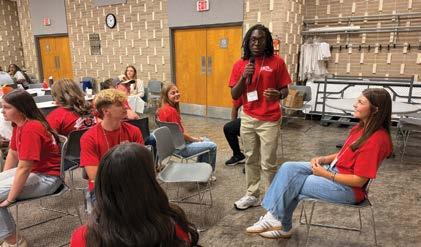
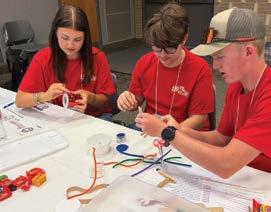
Thirteen local high school juniors got a firsthand look at the world of electric cooperatives during EMEPA’s Cooperative University. The students toured EMEPA facilities, participated in a Life of a Lineman demonstration, learned about electrical safety and met employees who keep the lights on across east Mississippi.
The students also heard from Mississippi legislators in a Q&A panel and learned about electricity generation, transmission and distribution from a Tennessee Valley Authority (TVA) engineer, gaining a full picture of how power reaches their communities.
Each high school in EMEPA’s service area nominates one junior based on academics, leadership and community involvement. During Cooperative University, students participated in personal interviews with a panel of out-of-town judges. Based on both the interviews and leadership observed throughout the day, five students were selected to represent EMEPA at the 2026 Cooperative Youth Leaders Workshop in Jackson, which will bring together over 80 students statewide to explore government and leadership skills.



Those selected will also travel to Washington, D.C., in June 2026 for a weeklong Youth Tour, visiting historic landmarks and meeting Mississippi’s congressional delegation.
“EMEPA’s Cooperative Youth Leaders Program continues to empower young people with the skills and knowledge to make a di erence in their communities,” said Julie Boles, EMEPA’s director of marketing and communication. “These students represent the next generation of leaders, and we are proud to support their journey.”






• Arianna Newton, Enterprise High School
• Cannon Waters, Kemper Academy
• Quinton Harvey, Kemper County High School
• Isiah Hopson, Northeast Lauderdale High School
• Ayla Ann Ryals, Noxapater Attendance Center*
• Macy Wedgeworth, Quitman High School
• Anna Jane Gibson, Russell Christian Academy*
• Evan Broome, Southeast Lauderdale High School
• Brody Gressett, West Lauderdale High School*
• Jordan Miller, Winston Academy
• Marquavious Sillimon, Mississippi School for Math and Science*
• Andrew Battle, Meridian Classical Center for Learning
• Caleb Randall, Lamar High School*
*Students selected for the ECM Cooperative Leaders Workshop and the National Rural Electric Cooperative Association Youth Tour of Washington, D.C.



































The holidays are a time for joy, connection and community. East Mississippi Connect is here to help make the season shine. Whether you’re streaming a Christmas classic, video chatting with loved ones or helping a child send a wish list to Santa, EMC’s reliable fiber internet keeps your celebrations merry and bright.

The holidays are about togetherness, even when you’re miles apart. With EMC’s lightning-fast fiber internet, video calls feel like everyone’s gathered in the same room. No bu ering, no delays—just laughter, smiles and shared moments that bridge the distance. From grandparents watching little ones open gifts to friends catching up over virtual cocoa, EMC helps you stay close when it matters most. Reliable connections make family time simple, seamless and special.
• Tips for fast, crystal-clear video calls.
• Wi-Fi hacks to keep everyone connected.
• Quick online gift ideas for last-minute shoppers.
• The best holiday movies and where to stream them.


Between the decorating, shopping and planning, the season can fly by, but EMC is here to keep it smooth and stress-free. This year, we’ve created the Digital Holiday Streaming Survival Kit, your go-to guide for staying connected and entertained all season long. Inside, you’ll find:
It’s everything you need to keep the magic flowing— powered by EMC’s fast, reliable fiber internet. Visit eastmsconnect.com to download your Holiday Streaming Survival Kit and start celebrating smarter this season.


















Few traditions capture holiday wonder quite like writing to Santa Claus. This year, East Mississippi Connect is helping kids across our communities send their letters straight to the North Pole—at the speed of fiber!


Families can visit eastmsconnect.com to submit letters online or drop them o at any EMC o ce. Each letter will be delivered directly to Santa, and every child will receive a personalized postcard reply.





To make things extra magical, a few lucky letters will even be selected for special holiday doorstep surprises— filled with toys, EMC goodies, books and treats! It’s EMC’s way of spreading joy and connection throughout East Mississippi because the holidays are better when we share them together.
At EMC, we believe the holidays are about more than fast internet—they’re about family, community and creating memories that last. From streaming your favorite movies to helping little ones send letters to Santa, we’re proud to power the moments that make the season bright.
From all of us at East Mississippi Connect—may your holidays be merry, bright and fiber-fast.







































As we close another year, we want to pause and express gratitude — for you, the members of Magnolia Electric Power — for your continued trust and support. Our cooperative was built on the promise of people coming together to improve the quality of life in their communities, and that promise still guides everything we do today.
This past year has been marked by meaningful progress, both in strengthening our local system, and in working at the national level to influence energy policies that directly a ect reliability, a ordability, and resilience.
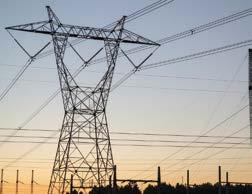
Over the past year, electric cooperatives across the country came together for advocacy e orts on the EPA’s Power Plant Rule. As originally written, the rule would have forced a rapid shift away from always-available power generation resources, threatening the accessibility of a diverse fuel supply that keeps electricity reliable. Renewable energy sources are an essential and growing part of our energy future, but we also know that the demand for electricity is rising rapidly, and natural gas, coal, and nuclear remain essential for ensuring power is available around the clock. As we collaborated and engaged with policymakers, we pressed for a more balanced approach to generating power — one that supports clean energy innovation while still recognizing the role of traditional resources. Our e orts are helping to shape a more workable path forward that better protects reliability and keeps costs in check for Magnolia Electric Power members.
Another area of ongoing progress came through advocacy work on federal permitting reform. For too long, outdated rules and lengthy delays have stood in the way of building critical infrastructure, including new transmission lines and generation projects. Modernizing this process is essential if we are going to strengthen the electric grid and keep pace with growing demand. This year, electric co-ops helped move the needle on permitting reform,
advocating for policies that make the process faster, more predictable and more e cient. Investments we make in infrastructure will reach communities sooner, improving reliability and preparing us for the future.
We’re also seeing progress with bipartisan support of the FEMA Act of 2025, which would speed up the disaster recovery process for electric cooperatives and the communities they serve.
FEMA is a crucial partner for electric co-ops in e orts to restore power after disaster strikes, but currently, the federal reimbursement process after a major storm is slow and full of red tape. If passed, the bill would make FEMA a stronger, more responsive agency to help strengthen rural resilience, protect taxpayer dollars, and ensure essential services are restored as quickly as possible after a natural disaster.
As we look ahead to a new year, we see both challenges and opportunities on the horizon. The energy industry is undergoing significant change driven by the rising need for more electricity, new tools and technologies, and federal energy policies.
The path forward requires innovative thinking and memberfocused solutions. We’re confident that with the dedication of Magnolia Electric Power employees and the continued support of our members, we are well positioned to adapt and meet challenges head-on. Through it all, our promise to you remains steadfast: reliable power for today — and tomorrow.

CEO/General Manager by Darrell Smith



























by Scott Flood









Wouldn’t it be great to wake up on a sunny morning, say “Good morning, house!,” and stand back as the right light fixtures flash on, the co eemaker starts, the outdoor security lighting switches o , and the toaster oven starts preheating for your frozen toaster pastry? That may sound like something from science fiction, but today’s smart home electronics make it possible.
Smart devices use digital technology and Wi-Fi to take your home to a new level of convenience and comfort. They can also help you make better use of your electricity so you can reduce waste and lower your energy bills.
Even if you’ve already put the many advantages of smart electronics to work for your home and family, you might be surprised by some of the newer devices with the potential to change your daily life.
Heating and cooling use more energy than anything else in your home. Replacing your home’s standard thermostat with a smart model can lower your monthly electric bills while keeping you even more comfortable. Smart thermostats learn your daily habits and take over for you. You won’t have to lower your thermostat every evening, because it will happen automatically. Because smart thermostats know exactly when you need electricity and when you don’t, they waste a lot less.
The second-biggest share of your home’s electricity powers appliances, from your refrigerator to your water heater. Smart appliances use Wi-Fi and high-tech sensors to operate more e ciently. A smart washer can sense the size of your load and adjust the water and cycle times accordingly. Smart refrigerators can warn you when the kids leave the door open. And smart water heaters don’t waste energy by heating water while you’re asleep.
An easy and a ordable way to explore smart technology is with smart plugs, which plug into your wall outlets. You can then plug lighting, appliances, and other devices directly into them. You’ll be able to control all those devices through a single app, so you can tell the co eemaker when to start brewing, turn your exterior accent lighting o at dawn, or have your favorite music already streaming as you walk in the door.
Smart power strips look like their ordinary cousins but use smart plugs. They’re particularly helpful at eliminating waste caused by what’s known as “phantom load” – like leaving your phone charger plugged in when it’s not charging.
You wish your family room didn’t face south, because it’s always warm during the day. Smart shades and blinds can help. You can set them to automatically open or close depending on the time of day (and year) or based on your home’s indoor temperature. They can help your air conditioner keep you cooler for less.
When you combine the capabilities of individual smart home electronics with voice assistants, like Amazon Alexa, or wholehome smart energy management systems, they become even more powerful. You can teach voice assistants to carry out multiple tasks that make up your daily routines, like the “good morning, house” message. Energy management systems simplify control of all aspects of your home’s energy use, and some o er specific tips to help you save even more.
While all those smart devices may be able to make your home more energy e cient and your life more comfortable, they’re not perfect. Most require an internet connection, so if your service is down, your smart devices won’t work, either.
Smart devices typically don’t receive frequent system updates, like your smart phone or laptop, so be aware of potential security issues. Before you choose any smart home devices, make sure it’s completely secure and compatible with what you have. Then prepare to be amazed by what smart home electronics will do for you!
For more than four decades, business writer Scott Flood has worked with electric cooperatives to build knowledge of energy-related issues among directors, sta , and members.











In August 2025, Magnolia Electric Power’s employee Dianne Martin saw a Facebook post asking for help knitting beanies for the Mississippi Cancer Institute.
It didn’t take her long to jump into “helping mode” as she checked around and found out the cancer center would accept crocheted beanies, as well.
Martin spoke with MEP’s Manager of Billing Kristy Dunaway about the project and Dunaway put Martin on to another MEP employee, Elizabeth Blansett, who also enjoys crocheting.
Martin and Blansett worked individually on the project at home or during lunch breaks at work.
Blansett, who said she keeps several caps going at one time, said, “I have one by the bed, one by my chair at home, and one that I can crochet during my lunch break.”






Martin had crocheted 15 beanies and Blansett 12 — a total donation of 27 beanies to the Mississippi Cancer Institute at the end of October. The MEP employees also donated $675 to the institute.
“The employees of the cancer institute make care bags for the patients, and they want to include beanies in the care packages,” Martin said.
The Chemo Comfort Bags, as they are called, include Chapstick, blankets, thermometers, socks, lotion, tissues, and hats. The sta is looking to expand on the gifts.
The MEP employees paid for the yarn out of their own pockets. Two other MEP employees donated money to help with the expenses as well.
Martin and Blansett said the beanies will be a continuing project for them.








MEP Linemen will be on call. To report a power outage, call 601-684-4011 or use the SmartHub app.

The Magnolia Electric Power business o ce will be closed Dec. 25 and 26 for Christmas and Jan. 1 for New Year’s Day.












by Miranda Boutelle
I tend to live in the “if it isn’t broken, don’t fix it” school of thought, but a failed water heater can cause damage to your home and property. Emergency replacement of a water heater can add unnecessary cost, not to mention inconvenience.
Here are some signs that your storage water heater might be approaching the end of its life.
The typical lifespan of a storage water heater is 10 to 15 years, according to the U.S. Department of Energy. If your water heater is older than that, plan to replace it soon. Don’t have records of when it was installed? No problem. Find the serial number on the water heater’s sticker or metal plate. Look up the serial number online or call the manufacturer to find its age.
Sediment or water on the floor or at the bottom of the water heater could mean its days are numbered. Sediment can be a sign of corrosion, which leads to a leak or failure.
Seeing rusty or discolored water when you turn on your faucets can be a sign the tank is rusting inside. If water is not getting as hot as it used to, it could be a sign of a failing electric element or a gas burner not functioning properly.
Odd noises could indicate an issue with the components. If you’re hearing unusual noises from your water heater, schedule a checkup with a plumber. Well-functioning water heaters typically don’t make much noise.
A professional plumber may be able to replace failing components. If you are having issues with the tank itself, it’s likely time for a new unit.
We’ve all gotten used to having reliable hot water in our homes. Nobody wants to get caught o guard with an unexpected cold shower or failed water heater.
If you’re in the market for a new water heater, a heat pump water heater might be a good fit for your home. These systems are two to three times more energy e cient than conventional electric-powered tank water heaters, according to the DOE. A federal tax credit is available until Dec. 31. If your water heater is past its useful life or showing any signs of failure, consider investing in a new one before the end of the year.
Even if your water heater is in great shape, you can save at home by lowering your hot water use. Some easy ways to do this are washing laundry in cold water and installing high-performance aerators on faucets and showerheads to reduce the amount of hot water you use. If you have time-ofuse rates, you can save by installing a timer on your water heater to prevent it from operating during peak energy use hours, typically in the mornings and evenings. It also helps lower the strain on your electric utility.
Knowing the signs of water heater failure can save you from home damage and o er opportunities to explore options for more e cient equipment to lower your electric use.
Miranda Boutelle is the chief operating o cer at E ciency Services Group in Oregon, a cooperatively owned energy e ciency company.
If your water heater is 10-15 years old, it’s time to start planning and budgeting for a replacement.








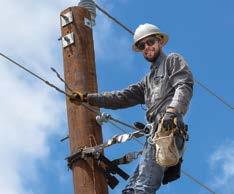
























As we close another year, we want to pause and express gratitude — for you, the members of Monroe County Electric — for your continued trust and support. Our cooperative was built on the promise of people coming together to improve the quality of life in their communities, and that promise still guides everything we do today.
This past year has been marked by meaningful progress, both in strengthening our local system, and in working at the national level to influence energy policies that directly a ect reliability, a ordability, and resilience.
Over the past year, electric cooperatives across the country came together for advocacy e orts on the EPA’s Power Plant Rule. As originally written, the rule would have forced a rapid shift away from always-available power generation resources, threatening the accessibility of a diverse fuel supply that keeps electricity reliable. Renewable energy sources are an essential and growing part of our energy future, but we also know that the demand for electricity is rising rapidly, and natural gas, coal, and nuclear remain essential for ensuring power is available around the clock. As we collaborated and engaged with policymakers, we pressed for a more balanced approach to generating power — one that supports clean energy innovation while still recognizing the role of traditional resources. Our e orts are helping to shape a more workable path forward that better protects reliability and keeps costs in check for Monroe County Electric members.
Another area of ongoing progress came through advocacy work on federal permitting reform. For too long, outdated rules and lengthy delays have stood in the way of building critical infrastructure, including new transmission lines and generation projects.
Modernizing this process is essential if we are going to strengthen the electric grid and keep pace with growing demand. This year, electric co-ops helped move the needle on permitting reform, advocating for policies that make the process faster, more predictable and more e cient. Investments we make in infrastructure will reach communities sooner, improving reliability and preparing us for the future.
We’re also seeing progress with bipartisan support of the FEMA Act of 2025, which would speed up the disaster recovery process for electric cooperatives and the communities they serve.
FEMA is a crucial partner for electric co-ops in e orts to restore power after disaster strikes, but currently, the federal reimbursement process after a major storm is slow and full of red tape. If passed, the bill would make FEMA a stronger, more responsive agency to help strengthen rural resilience, protect taxpayer dollars, and ensure essential services are restored as quickly as possible after a natural disaster.
As we look ahead to a new year, we see both challenges and opportunities on the horizon. The energy industry is undergoing significant change driven by the rising need for more electricity, new tools and technologies, and federal energy policies.
The path forward requires innovative thinking and memberfocused solutions. We’re confident that with the dedication of Monroe County Electric employees and the continued support of our members, we are well positioned to adapt and meet challenges head-on. Through it all, our promise to you remains steadfast: reliable power for today — and tomorrow.
by Scott Flood
Wouldn’t it be great to wake up on a sunny morning, say “Good morning, house!,” and stand back as the right light fixtures flash on, the co eemaker starts, the outdoor security lighting switches o , and the toaster oven starts preheating for your frozen toaster pastry? That may sound like something from science fiction, but today’s smart home electronics make it possible.
Smart devices use digital technology and Wi-Fi to take your home to a new level of convenience and comfort. They can also help you make better use of your electricity, so you can reduce waste and lower your energy bills.
Even if you’ve already put the many advantages of smart electronics to work for your home and family, you might be surprised by some of the newer devices with the potential to change your daily life.
Heating and cooling use more energy than anything else in your home. Replacing your home’s standard thermostat with a smart model can lower your monthly electric bills while keeping you even more comfortable. Smart thermostats learn your daily habits and take over for you. You won’t have to lower your thermostat every evening, because it will happen automatically. Because smart thermostats know exactly when you need electricity and when you don’t, they waste a lot less.
The second-biggest share of your home’s electricity powers appliances, from your refrigerator to your water heater. Smart appliances use Wi-Fi and high-tech sensors to operate more e ciently. A smart washer can sense the size of your load and adjust the water and cycle times accordingly. Smart refrigerators can warn you when the kids leave the door open. And smart water heaters don’t waste energy by heating water while you’re asleep.
An easy and a ordable way to explore smart technology is with smart plugs, which plug into your wall outlets. You can then plug lighting, appliances, and other devices directly into them. You’ll be able to control all those devices through a single app, so you can tell the co eemaker when to start brewing, turn your exterior accent lighting o at dawn, or have your favorite music already streaming as you walk in the door.
Smart power strips look like their ordinary cousins but use smart plugs. They’re particularly helpful at eliminating waste caused by what’s known as “phantom load” – like leaving your phone charger plugged in when it’s not charging.
Replacing your home’s standard thermostat with a smart model can lower your monthly electric bills while keeping you even more comfortable.
Smart appliances use Wi-Fi and high-tech sensors to operate more e ciently.
Photo Source: Samsung
You wish your family room didn’t face south, because it’s always warm during the day. Smart shades and blinds can help. You can set them to automatically open or close depending on the time of day (and year) or based on your home’s indoor temperature. They can help your air conditioner keep you cooler for less.
When you combine the capabilities of individual smart home electronics with voice assistants, like Amazon Alexa, or wholehome smart energy management systems, they become even more powerful. You can teach voice assistants to carry out multiple tasks that make up your daily routines, like the “good morning, house” message. Energy management systems simplify control of all aspects of your home’s energy use, and some o er specific tips to help you save even more.
While all those smart devices may be able to make your home more energy e cient and your life more comfortable, they’re not perfect. Most require an internet connection, so if your service is down, your smart devices won’t work, either.
Smart devices typically don’t receive frequent system updates, like your smart phone or laptop, so be aware of potential security issues. Before you choose any smart home devices, make sure it’s completely secure and compatible with what you have. Then prepare to be amazed by what smart home electronics will do for you!
For more than four decades, business writer Scott Flood has worked with electric cooperatives to build knowledge of energy-related issues among directors, sta , and members.
How can I tell if my water heater needs repair or replacement?
by Miranda Boutelle
I tend to live in the “if it isn’t broken, don’t fix it” school of thought, but a failed water heater can cause damage to your home and property. Emergency replacement of a water heater can add unnecessary cost, not to mention inconvenience.
Here are some signs that your storage water heater might be approaching the end of its life.
The typical lifespan of a storage water heater is 10 to 15 years, according to the U.S. Department of Energy. If your water heater is older than that, plan to replace it soon. Don’t have records of when it was installed? No problem. Find the serial number on the water heater’s sticker or metal plate. Look up the serial number online or call the manufacturer to find its age.
your home.
Sediment or water on the floor or at the bottom of the water heater could mean its days are numbered. Sediment can be a sign of corrosion, which leads to a leak or failure.
Seeing rusty or discolored water when you turn on your faucets can be a sign the tank is rusting inside. If water is not getting as hot as it used to, it could be a sign of a failing electric element or a gas burner not functioning properly.
Odd noises could indicate an issue with the components. If you’re hearing unusual noises from your water heater, schedule a checkup with a plumber. Well-functioning water heaters typically don’t make much noise.
A professional plumber may be able to replace failing components. If you are having issues with the tank itself, it’s likely time for a new unit.
We’ve all gotten used to having reliable hot water in our homes. Nobody wants to get caught o guard with an unexpected cold shower or failed water heater.
If you’re in the market for a new water heater, a heat pump water heater might be a good fit for your home. These systems are two to three times more energy e cient than conventional electric-powered tank water heaters, according to the DOE. A federal tax credit is available until Dec. 31. If your water heater is past its useful life or showing any signs of failure, consider investing in a new one before the end of the year.
Even if your water heater is in great shape, you can save at home by lowering your hot water use. Some easy ways to do this are washing laundry in cold water and installing high-performance aerators on faucets and showerheads to reduce the amount of hot water you use. If you have time-ofuse rates, you can save by installing a timer on your water heater to prevent it from operating during peak energy use hours, typically in the mornings and evenings. It also helps lower the strain on your electric utility.
Knowing the signs of water heater failure can save you from home damage and o er opportunities to explore options for more e cient equipment to lower your electric use.
Miranda Boutelle is the chief operating o cer at E ciency Services Group in Oregon, a cooperatively owned energy e ciency company.
If your water heater is 10-15 years old, it’s time to start planning and budgeting for a replacement.





















December is a great time of year to reflect on accomplishments and challenges. With the challenges, it’s easy to focus on areas of improvement. After all, that’s how individuals and organizations get better.
For those of us in public power, it’s easy to get preoccupied with continuing inflationary costs and supply chain issues. It’s equally disturbing to plan and critique in times of divided leadership. TVA’s unnecessary board turnover and inability to get debt ceiling relief is also deeply concerning.
I’m reminded, however, that even though costs have escalated, we are still able to procure those needed materials to accomplish our work and serve our community. Northcentral strongly values the relationship and partnership we have with suppliers that allow us to accomplish this.
While the TVA board doesn’t have a quorum, they have three sitting members with the servant leadership required to push the nation’s largest public power supplier forward in times of everincreasing demand for electricity. This is all accomplished while being saddled with a statutory debt ceiling established in 1979.
I am most thankful to be surrounded by coworkers that thrive in a culture of safety. While currently in a period of ever-increasing












Merry Christmas, Happy Hanukkah, Happy Kwanzaa, Happy New Year, Stay safe.

by Kevin Doddridge General Manager/CEO













electric contacts in our state and nation, Northcentral continues to foster an environment that demands all employees go home in the same good health as they arrive at work. The continued commitment they show to safety, their community, their families, and our God is truly a blessing. I must remember to be thankful for all of this, all the time.
As the late Bing Crosby croons (sings) in the classic film, “White Christmas,” “When I’m worried, and I can’t sleep, I count my blessings instead of sheep.”













by Ashleigh Ausburn




Every December, two north Mississippi homes transform into landmarks of Christmas cheer. In Olive Branch, Gladys Fleming fills her two-story, 6,500-square-foot home with 20 Christmas trees. In Byhalia, Donna Horne decks her 1945 home with themed trees, a glowing village, and rooms rich with memories.
Both women open their doors to the community each year, not for show, but to share the spirit of giving.
For Gladys, decorating is a labor of love and an act of service. She begins long before Thanksgiving, transforming every room into a warm, festive retreat. Her open house, set for Nov. 29–30 and Dec. 13–14, welcomes guests for a $5 donation to First Baptist Church of Olive Branch.
“I decorate mainly for the senior adults,” she said. “For some, their visit here is the only Christmas they have.”
Fleming’s home glows with care and detail. Guests leave not only inspired by her décor but touched by her purpose: to make the season brighter for others.





A few miles south, Donna Horne’s Byhalia house tells its own story. The home bursts with nostalgia. There’s a gingerbread tree in the kitchen, a hallway lined with hundreds of snowmen, and a Christmas village displayed on old apothecary shelves.
“Each tree represents something,” Donna said. “It’s what’s on the tree that matters.”
The Hornes’ annual open house, planned for Dec. 20, o ers a glimpse inside their winter wonderland. Every room shines with themed displays and sentimental touches — from her mother’s piano sheet music to her grandmother’s rolling pins used to make Christmas cookies with her grandchildren. Guests can also snap pictures with Santa, adding an extra touch of holiday magic to the evening.
Both homes take months of preparation and countless hours of work, but for these women, it’s time well spent.
In Olive Branch and Byhalia, Christmas shines a little brighter thanks to two homes filled with heart, faith, and the simple desire to give back.
Fleming Christmas Open House
• Nov. 29, 4–6 p.m.
If you go:
• Nov. 30, 1–4 p.m.
• Dec. 13, 4–6 p.m.
• Dec. 14, 1–4 p.m.
Admission: $5 donation to First Baptist Church of Olive Branch + canned food for the FBCOB Food Pantry
Horne Family
Christmas Open House
• Dec. 20, 10 a.m.–3 p.m.
Donations accepted for Hearts & Hands Ministry
Byhalia
SATURDAY, DEC. 13
Byhalia Christmas Parade
6:00 p.m. | See ad below
Hernando
MONDAY, DEC. 1
Hernando Christmas Parade
6:30 p.m. | Hernando Square
FRIDAY, DEC. 5
Cookies with Santa
5:00 p.m. | Gale Community Center

SATURDAY, DEC. 6
Southaven Christmas Parade
Candy Cane Lane

10 a.m. | Main Street
Olive Branch
SATURDAY, DEC. 6
Olive Branch Christmas Parade
2:00 p.m. | Old Towne

Santa’s Workshop
Family Craft Festival

Following the parade | Southaven City Hall

Horn Lake
SATURDAY, DEC. 6
Horn Lake Christmas Parade
6:00 p.m. | Horn Lake






















The 74th Annual Meeting of the members of Northcentral Electric Cooperative convened on Oct. 29, at 2 p.m., in the auditorium at 4600 Northcentral Way in Olive Branch, MS.
Northcentral Board President Pat Woods welcomed those attending and called the meeting to order. Pastor Robert Brown of New Beginnings Word Christian Church was called upon to give an invocation.
Northcentral General Counsel Chris Latimer conducted the proceedings of the annual meeting. Latimer reported that three board members were nominated by the members of their respective districts to run for re-election and were uncontested. Their nominations were certified by the Elections and Credentials Committee on Sept. 23, 2025.
30,001 notices were mailed to the membership on Oct. 2, 2025. Additionally, 24,183 electronic notices were emailed to all members with an address on file. Members could either submit their proxy online or by return delivery of the paper proxy. Pursuant to the Cooperative’s bylaws, it would take 5%, or 1,550 members, present or through proxies to meet the








requirements of a quorum. Rita Hobbs, chairperson of the cooperative’s Election Committee, reported that a quorum had been met.
Northcentral’s General Manager and CEO Kevin Doddridge presented the 2025 Annual Report for the Cooperative. Doddridge then addressed questions from the floor of those attending.
Hobbs then confirmed that the voting had ended, and the meeting was recessed while the Election Committee tallied the votes.
The meeting reconvened, and the Election Committee announced they were ready to report the count for the election of directors.
Hobbs presented the election results as follows: In District 3, Phil Lachaussee received 1,791 votes; for District 5, Jerry Nichols received 1,718 votes; and in District 7, Patty Gri n received 1,721 votes. Therefore, Lachaussee, Nichols, and Gri n were all elected for threeyear terms.
There was no further business to come before the meeting, and the meeting was adjourned.







































601-736-2666 | HATTIESBURG: 601-264-2458 |
Member owned. Locally operated. That’s the cooperative di


Sharing light and hope in our communities



The holiday season is a time to celebrate generosity and compassion, values we recently lived out through our partnership with CoBank’s Sharing Success program. Helping our communities succeed is an objective of all electric cooperatives, and CoBank’s Sharing Success program helps fulfill that goal. The program allows banking members, such as PRVEPA, to apply for grants which provide matching funds to help non-profit organizations.



















Giving the gift of opportunity










This year, we were honored to give back to local organizations that embody the spirit of giving every day. Grants were awarded to the Janice Volunteer Fire Department and Tri-Community Fire Department, our local heroes who give their time and courage to protect lives and property. We also supported Homes of Hope for Children in Purvis, a place where at-risk children find safety, warmth, and stability, a gift that lasts far beyond Christmas morning. Their work reminds us that the most meaningful gifts can’t be wrapped; they’re felt in the love and care shown to others.





heroes who give their time and








Powering

















At Pearl River Valley Electric Power Association, the Christmas season reminds us of what it truly means to give. As a member-owned cooperative, we’re dedicated to strengthening the communities we serve all year long, but the spirit of Christmas brings a special focus to giving and working together for the good of all.










Education is a gift that keeps on giving, and through our Round Up for Education Scholarship Program, we’re helping students unwrap new possibilities for their future. Thanks to the generosity of our members who round up their electric bills, more than 2,500 students have been able to pursue higher education at Mississippi community colleges. Each scholarship helps open doors to new opportunities.






Our Cooperative Youth Leaders Program sends two outstanding students to Washington, D.C. Through this program we’re helping them develop leadership skills, build friendships, and see firsthand the power of civic engagement. It’s our way of investing in the next generation, the true future of our communities.



Throughout the year, our employees take joy in giving their time and knowledge back to the community. From career fairs and science days to safety demonstrations and school events, we love inspiring young minds to dream big. Whether it’s teaching kids about energy and safety or helping with hands-on activities, our goal is to keep the spark of learning alive.










At Pearl River Valley Electric, “Powering Together” is more than a motto, it’s a way of life. During this season of giving, we’re reminded that the greatest power we have is the power to help one another. By supporting local heroes, caring for children, and empowering students, we’re working to make our community a better place to live. Together, we’re powering a future filled with brighter days for all.

















Concern for Community, one of the seven cooperative principles, is at the heart of every electric cooperative. This guiding value reminds us that our mission extends beyond providing reliable power; it’s about strengthening the communities we serve through economic support, charitable giving, and active participation.
At Pearl River Valley Electric, we strive to live out this principle every day. And this year, for the first time, we’re proud to recognize one of our members whose dedication to helping others truly embodies what “Concern for Community” means.
Cooperative Energy, our power supplier, created the Powering Possibilities Community Service Grant to honor individuals who selflessly give their time to improve the lives of others. Each year, one outstanding volunteer is selected from each of the 11 electric cooperatives served by Cooperative Energy.
For Pearl River Valley Electric, John Bailey of Hattiesburg has been named this year’s recipient.
Bailey’s commitment to service runs deep. After serving 41 years in the Mississippi National Guard, he has devoted his retirement to volunteer work across the state, the nation, and even abroad. He has served with organizations including Eight Days of Hope, The Lighthouse Rescue Mission, Cali’s Smile, Homes of Hope for Children, and his church, Temple Baptist.




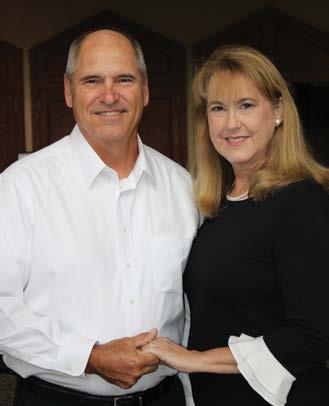


“Don’t ask, ‘Why should I do this?’ Ask, ‘Why shouldn’t I?’” Bailey says. “Hopefully through my actions I’ve improved someone’s life and given them hope.”
Don’t ask, ‘Why should I do this?’ Ask, ‘Why shouldn’t I? Hopefully through my actions I’ve improved someone’s life and given them hope.
From rebuilding homes along the Mississippi Gulf Coast after Hurricane Katrina to assisting flood victims in North Carolina following Hurricane Helene, Bailey continues to live out his belief in helping others wherever there is need. As part of his church’s disaster relief team, he helps feed the hungry and provides aid to families a ected by natural disasters.
As this year’s Powering Possibilities award recipient, Bailey has chosen The Lighthouse Mission to receive the accompanying $1,000 community grant. The organization provides shelter and assistance to mothers with children who are facing financial hardship or escaping abusive situations. Bailey has personally worked with the mission to renovate homes for women in need.
“Recently, The Lighthouse Mission partnered with the City of Hattiesburg to renovate cottages for mothers in need,” Bailey said. “It’s amazing how God works. This $1,000 grant is exactly what the organization needed for repairs.”
Beyond his volunteer work, Bailey is a devoted family man who enjoys spending time with his wife, Kathy, their two children, and two grandchildren.
Through the Powering Possibilities program, Pearl River Valley Electric joins Cooperative Energy in celebrating members like John Bailey, individuals whose service reminds us that together, we’re truly powering possibilities in our communities.

Pearl River Valley Electric’s Cooperative University, now in its fifth year, sends students on a life-changing trip to Washington, D.C. For nearly 40 years, the Electric Cooperatives of Mississippi’s Cooperative Youth Leaders Program has given students the chance to develop leadership skills while learning about the cooperative business model and experiencing the democratic process at state and federal levels.
The first step in the youth leadership program is PRVEPA’s Cooperative University which is held at the National Guard Armory in Columbia. Cooperative University is a one-day event where each school is represented by two students. The day consists of speakers, games, and various demonstrations. This year, speakers included representatives from Cooperative Energy, past leadership program students and local legislators.
“The program has helped so many students realize a dream of traveling to see our nation’s capital,” said Leif Munkel, manager of marketing, communications and member services. “For many students the trip to Washington, D.C. is an eye-
opening experience and exposes them up to a much larger world.”
This year, 14 schools sent 26 students to the Cooperative University on Nov. 5. Judges interviewed all 26 students and chose two winners. This year’s winners are Michelle Xie from Oak Grove High School and Somtochi O ah from Sacred Heart Catholic School.




Michelle Xie is active in Mu Alpha Theta and serves as the junior class secretary. She is also a student representative on the Mississippi State Board of Education. Somtochi O ah is her class’s student council treasurer and is active in Beta Club and Girl Scouts. She also plays soccer for Sacred Heart Catholic High School.
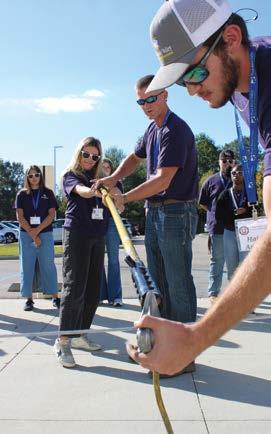

Michelle and Somtochi will join thousands of other students from around the country in June to attend the Youth Tour in Washington, D.C. There they will have the opportunities to meet their Congressional leaders, tour the U.S. Capitol, and do lots of other sightseeing.
Grace Brooks
Ashlynn Broom
Connor Chamberlain
Mac Curtis
Aumni Dillon
Elle Gianola
JP Haddox
Ashley Harvison
Luke Hickman



Meredith Hylender
Kiana Li
Hudson Long
Kenadee Lott
Lauren McDaniel
Sam McKee
Somtochi Offiah
Pennelope Pierce
Emileigh Pounds
Fletcher Rawls
Zeke Robbins
Colt Robertson
Marlie Sanders
Abel Spradling
Brydon Walley
Lauren Westfaul
Michelle Xie























From our co-op family to yours, wishing you a blessed Christmas season and a joyous new year.

All Pearl River Valley Electric o ces will be closed Dec. 24 and 25 for Christmas and Jan. 1 for New Year’s Day. Dispatchers will be on duty.










APPLICATIONS DUE AUG. 14, 2026
• Applications are available at PRVEPA o ces and at prvepa.com.
• Completed applications must be postmarked or emailed by Aug. 14.
• Scholarship recipients must be a PRVEPA member, spouse, or child of a member participating in the Round Up program.
• Recipients must be full time (12 hours or more per semester) freshmen students enrolled in academic or career-technical programs.

• Scholarship funds will be credited to each student’s college account — no checks will be issued to individuals.
• Scholarships should be awarded by the end of September. Students must be enrolled in good standing at the time funds are released to the colleges.

More information is available at prvepa.com.








Funded by members who are rounding up their monthly bills, these scholarships are intended to assist students who will attend a Mississippi community college as a freshman this fall.








































PONTOTOC 662-489-3211 • Fax: 662-489-5156
P.O. Drawer 718 • 12 South Main Street, Pontotoc, MS 38863










BRUCE 662-983-2727 • Fax: 662-983-1335
P.O. Box 415 • 129 South Newberger Street, Bruce, MS 38915


We hope you have a wonderful holiday season, and we wish you a Merry Christmas and Happy New Year! As we gather with those we love, let us not forget the greatest love of all – the love of our Heavenly Father.
Pontotoc Electric will be closed Dec. 24 - 26, 2025, for Christmas Jan. 1, 2026, for New Year’s Day.

To report a power outage after hours or during the holiday, please call: 662-489-6711 (Pontotoc) or 662-983-2727 (Bruce)

PEPA Retired General Manager Chuck Howell has been elevated to the grade of senior member of IEEE, the Institute of Electrical and Electronics Engineers. This is the highest professional grade of IEEE for which a member may apply. Only 10% of the nearly half-million members have achieved this level. We offer our congratulations.







by Jennifer Johnson









PEPA Member Tammy Hatcher has always seen the world as beautiful scenes just waiting for a canvas. Growing up tending to animals on a farm, Hatcher saw the beauty of God’s creation and thought to herself, “I could paint that.” From driving a truck while her dad hauled hay to bush hogging the fields as a teen, Hatcher did her part to help her family, but she knew when the day was done, she was ready to paint.
She said her sister Barbara was a huge influence on her art as a child. “She was 19 years older than me, and I always watched her paint. She gave me tips and taught me a lot over the years.”

Even as a child, Hatcher loved coloring, and she was excited to finish up her chores and have some time to be creative. As she grew up, she found myriad ways to enjoy her artistry. “I used to watch Bob Ross and try to paint something in 30 minutes like he did. I painted decorative designs on gourds for a few years. I found someone in Alabama who had good clay, and I dabbled in pottery for a while. I also made handmade earrings.”

She’s done lots of paintings, including textured ones using a pallet knife. She’s even painted a few wall murals. “I did one with quails on my son’s wall, and I painted the background for a baptistry at a church.”
Her paintings range in price from around $26-$27 for something smaller, or $40-$50 for a larger piece. She paints a lot of whimsical Santas around Christmas time, but her portfolio has everything from a large pink butterfly set of paintings (perfect for a little girl’s room) to a beautiful church scene added to a large ornament for the tree.






Hatcher graduated from Pontotoc High School and went on to college, but the career she saw herself with wasn’t behind a desk or painting at an easel. “I love to paint because it’s a stress reliever.” After a few years of college, Hatcher went back to her original plan to become a hair stylist, graduating from the Jeffie Lyles Cosmetology School in Oxford.
She said she’s always been good with styling hair, even cutting the long hair of friends in high school and college before she had any training. “They trusted me, and I think they were excited about the results.”
Over the years — 43 to be exact — Hatcher said she couldn’t say how many times she has done hair for weekly customers and for weddings, pageants, and proms. Now, she’s starting to slow down some with the salon. “I’m doing it part time, so I have time to keep my grandchildren.” Adeline, 5, Gracie, 2, and newborn Sunnie keep her schedule full and her heart happy.
And where does this artist/cosmetologist/country girl see the future? She laughed and said, “Keeping those grands… and hopefully having more!”
For art inquiries, call Tammy at 662-419-5757.



















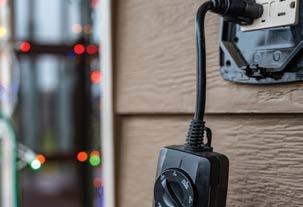


by Jennifer Johnson
Having friends and family over for Christmas this season? We’ve put together some energy efficiency tips that could save you money on your electric bill, while still rolling out the red and green carpet for your guests.
• Program slightly lower temperatures when your home is empty and raise it slightly so it can warm up when guests are starting to arrive.
• Lower your thermostat when cooking. Let your oven and other appliances help keep your home warm.
• Any dishes you can make ahead? You’ll only need to heat those up when guests arrive.
• Put drinks in a cooler. This limits the number of times your refrigerator gets opened at party time.
• Add lighting timers for your Christmas décor. Save energy by having them turn off during the night.























Let’s fi ll the table with holiday favorites that are perfect for entertaining guests (or eating as leftovers later).



Michal Pennington, PEPA Accountant
1 (12 ounces) package. bacon
1 pound mild cheddar cheese, grated
1 bunch green onions
2 cups Hellman’s mayonnaise
½ to 1 teaspoon cayenne pepper
½ cup toasted, slivered almonds Strawberry preserves
Fry bacon until crisp. Drain well and crumble into small pieces. In medium mixing bowl, combine bacon, cheese, green onions, mayonnaise, and cayenne pepper. Mix thoroughly. Place toasted almonds in the bottom of an oiled seven-cup ring mold, and press cheese mixture into mold. Refrigerate overnight, and unmold cheese ring onto platter. Place a small custard cup filled with strawberry preserves in the center of the ring. Serve with crackers and strawberry preserves.
Lavonia Lackey, PEPA Mgr. of Customer Accounts
1 (11 ounces) package pie crust mix
½ teaspoon ground red pepper
1 (5 ounces) jar sharp process cheese spread
¼ teaspoon dry mustard
Process all ingredients in a food processor for 30 seconds or until mixture forms a ball, stopping twice to scrape down sides. Use a cookie press fitted with a bar-shaped disc to shape dough into 2 ½ inch straws following manufacturer’s instructions. Or divide dough in half, and shape each portion into a 7-inch log; wrap in plastic wrap and chill one hour. Cut logs into ¼ inch slices. Place cheese straws on greased baking sheets. Bake at 375 degrees for 8 minutes or until golden. Remove to wire racks to cool. Store in an airtight container. Yield: 5 dozen.


Teresa Petty, PEPA Receptionist
4 eggs, beaten
1¾ cups oil
4 teaspoons vanilla
2 cups sugar
4 cups self-rising flour
Mix eggs, oil, and vanilla. Then add flour and sugar. Drop by teaspoon full onto cookie sheet. Bake at 325 degrees on the top rack. Bake until edges are brown. Remove from cookie sheet as soon as you take them out of the oven.
Curtis (PEPA Retiree) and Seretha Gregory
1 box milk chocolate cake mix
1 tub cool whip
3 boxes chocolate pudding
1 cup chocolate chips
Chocolate syrup as desired
Bake cake according to directions. Mix pudding according to directions. Break cake apart. Distribute into punch bowl. Add a layer of pudding. Next a layer of cool whip. Top with chocolate chips. Repeat layers. Top with chocolate syrup if desired.















As we close another year, I want to pause and express gratitude — for you, the members of Singing River Electric — for your continued trust and support. Our cooperative was built on the promise of people coming together to improve the quality of life in their communities, and that promise still guides everything we do today.
Every decision, whether about delivering reliable electricity, volunteering in our communities, or advocating for smart energy policies, comes back to one simple question: How will this benefit the members we serve?
While federal regulations can seem distant, they shape our daily operations here at home. This past year showed meaningful progress in strengthening our local system and working at the national level to influence energy policies that directly impact reliability, a ordability, and resilience. Electric cooperatives nationwide united for advocacy e orts on the Environmental Protection Agency’s Power Plant Rule. As originally drafted, the rule would have forced a rapid shift away from always-available power sources, threatening the availability of a diverse fuel supply that keeps electricity reliable. Renewable energy sources are an essential and growing part of our energy future, but we also know that electricity demand is rising rapidly. Natural gas, coal, and nuclear remain necessary to ensure power is available 24/7.
Cooperative Energy, our wholesale power provider, collaborated with policymakers on our behalf and pushed for a more balanced approach — one that supports clean energy innovation while recognizing the role of traditional resources. These e orts are shaping a more workable path forward that enhances reliability while keeping costs manageable for our members.
We are also encouraged by the bipartisan support for the FEMA Act of 2025, which seeks to streamline and expedite disaster recovery. While we have been fortunate to avoid tropical storms and hurricanes this year, we all understand the severe and lasting impact these events can have on our communities and infrastructure.
FEMA is a key partner for electric co-ops in restoring power after a major storm, but the current federal reimbursement process is slow and bureaucratic. If passed, this bill would strengthen FEMA, making it more responsive to help boost rural resilience, protect taxpayer dollars, and restore essential services more quickly. Achievements like these are not just victories in Washington, D.C. — they are victories for members like you and me.
Alongside our advocacy e orts, we are preparing for our communities’ future needs by investing in new technologies and programs that enhance service for our members. Our advanced monitoring systems improve daily operations, and we are better equipped to address power delivery challenges before they occur. We continue to support our communities through initiatives such as the Neighbors Helping Neighbors Community Grant program and by promoting safety education. Together, these e orts strengthen our commitment to reliability, safety, and community well-being.
Looking to the new year, I see challenges and opportunities. The path forward requires innovative thinking and solutions focused on members. I am confident that with the dedication of our employees and your continued support, we are wellpositioned to face challenges head-on. Through it all, our promise to you remains steadfast: reliable power for today — and tomorrow.


by Brian Hughey











Gabe Robbins

Energy Services Representative robbins@singingriver.com



Set your home to vacation mode and use less energy if you plan to spend the upcoming holiday season out of town.
• Lower your thermostat a few degrees more than you would if you were at home. Doing this will lower your energy consumption and your bill, especially if temperatures are going to be cooler than normal. When I go out of town and temperatures are going to be above freezing, I completely shut my HVAC system o to eliminate any runtime.
• Create an “away” schedule if you have a smart thermostat.
• Lower your water heater temperature.
• Unplug devices that consume energy even when they are not in use, like phone chargers, toothbrush chargers, TVs, and gaming consoles
Outdoor timers for your lights and decorations are another Christmas energy saver. These devices can be set to run lights during specific time frames to reduce unwanted energy use. LED Christmas lights are the most energy-e cient bulbs, using almost 90% less energy than traditional incandescent ones and lasting significantly longer.















Our o ces will be closed Dec. 24-25 for Christmas and Jan. 1 for New Year’s Day. Dispatchers will be on duty for emergencies and power outages. For 24/7 fiber internet tech support, call 877-636-1702.
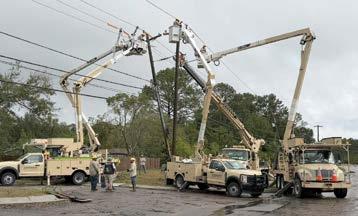
Two confirmed tornadoes in Gautier and Pascagoula caused power outages on Oct. 26.
Singing River Electric linemen replaced a broken pole and transferred lines and attachments to it on Gautier’s Martin Bluff Road. They then went to Hardee’s on Highway 90 to replace a broken pole and run new intricate quad lines needed to serve the restaurant’s electricity load. Linemen also disconnected power to Azteca’s Restaurant & Cantina, which took a direct hit from the tornado.
Contract crews worked along Old Mobile Highway in Pascagoula after tornado damage brought a tree down onto the power lines.
We are thankful for the safety of our members during this storm.
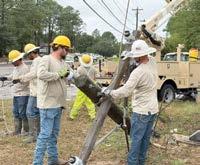
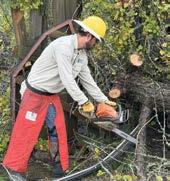
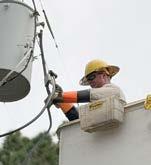
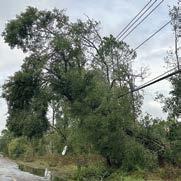
Singing River Electric teamed up with Mississippi Power for the annual Renew Our Rivers event for the lower Pascagoula River system. Launching boats from Little River Marina in Escatawpa, our employees helped remove 3.5 tons of trash from the water and riverbanks, such as TVs, refrigerators, styrofoam, and ice chests.








Step 3: Fiber Construction
Running fiber lines on poles and burying lines underground
• Bayou Cassotte
• Kreole
• Monaco Lake
• Singing River Mall
• Gautier
Step 4: Splicing
• Fountainbleu
• Gulf Park Estates
Connecting fiber lines to the network
• Ocean Springs

Singing River Connect representatives are bringing Webby the Internet Safety Cat to local schools! From discussing the safe use of artificial intelligence (A.I.) at Hearts Home School to playing internet safety bingo with students at Central Elementary in George County, we are going the extra mile to ensure students are equipped with the tools and skills to help them stay safe and be kind online.
Do you want to see Webby at your local school? Visit singingriverconnect.com/webby-the-cat/ to submit your request!
Step 5: Service Drop & Drop
Splicing & Step 6: Installation
Bringing mainline fiber to the exterior of your home and connecting your home to blazing-fast fiber internet
• Hamill Farm
• Sunplex
• Fort Bayou
• Martin Blu
• Hickory Hills
• St. Martin
• Tucker Road
• Forts Lake
• Helena
• Helena Industrial
• Escatawpa South
• All Singing River Electric areas in George, Greene, Perry, Stone, Wayne, Harrison, Mobile, and Washington counties and north Jackson County

Singing River Electric hosted its youth leadership Cooperative University on Oct. 14. Thirteen high school juniors nominated by their schools participated in networking activities and learned about the cooperative form of business, power generation and distribution, outage restoration, electrical safety, and Singing River Connect fiber internet.
A legislative panel discussion, driven by student questions, was a highlight of the day; thank you to Senator Dennis DeBar Jr., Senator Chris Johnson, Representative Elliot Burch, and Representative Steve Lott for serving on the panel.
Each student also participated in a 10-minute interview. Based on participation and interview rankings decided by out-of-town judges from electric cooperatives across the state, three students were selected to attend the 2026 Cooperative Leaders Workshop in Jackson and the 2026 Youth Tour of Washington, D.C.


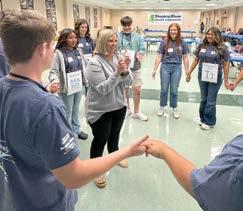


These three students will attend the 2026 Cooperative Youth Leaders Workshop in Jackson and Youth Tour of Washington, D.C.





















As Christmas draws near, we are reminded of what truly matters: faith, family, and serving others. This season has a way of bringing those priorities back into focus. We gather around tables, share meals, give thanks, and do our best to lend a helping hand. Hearts grow softer; patience stretches a little farther, and generosity flows more freely.
At Southern Pine Electric, we see those same values at work every day. They guide how we serve our members and care for our communities. Whether it’s restoring power after a storm, helping a neighbor through our Members Helping Members program, or simply showing kindness in our daily work, our mission has always been about more than electricity. It is about improving the quality of life for our members by shining light in every sense of the word.
Christmas reminds us why that light matters. More than 2,000 years ago, God gave the greatest gift of all, the gift of His Son. That moment changed everything. It brought hope to a weary world and taught us that love is best shown through our actions. When we serve others, we honor that same love and carry it forward.
As we celebrate the birth of Christ, may we all take time to slow down, count our blessings, and share His light with others. And as the new year begins, I hope we continue to live out those same values all year long: faith that guides us, family that grounds us, and service that strengthens us.




From all of us at Southern Pine Electric, thank you for letting us be part of your lives and your homes. May your Christmas be fi lled with peace, joy, and the love of Christ.



by Drummonds McAlpin
President/CEO Southern Pine Electric



This holiday season, all of us at Southern Pine Electric want to wish you and your family a Merry Christmas and a bright New Year. We’re grateful to be a part of your everyday lives, powering your homes, lighting up your celebrations, and making cherished moments just a little warmer and brighter.
As your neighbors, friends, and family, we’re honored to serve you. From every Southern Pine team member, thank you for being part of our cooperative family. May your holidays be filled with peace, joy, and the comfort of home.
Warm holiday wishes, The Southern Pine Electric Family








Every month, thousands of Southern Pine Electric members quietly make a di erence – one penny at a time. By choosing to round up their electric bills to the nearest dollar, these members turn spare change into something powerful: real help for neighbors and communities across Southern Pine’s 11-county service area.
That generosity was on full display on Oct. 2025, when 23 local organizations gathered at Southern Pine’s headquarters in Taylorsville to be recognized as the latest recipients of the cooperative’s Members Helping Members grants. Together, they received $191,933 in funding to strengthen the very communities Southern Pine serves.


Administered by the Pinebelt Foundation, the Members Helping Members program provides grant funding to nonprofits, schools, first responders, and civic organizations that are improving lives through education, public safety, health care, and community outreach.
“Every dollar awarded today came directly from the small monthly donations of Southern Pine members,” said Drummonds McAlpin, president and CEO of Southern Pine Electric. “Your generosity is what makes this program possible. These organizations are living examples of the cooperative spirit in action –neighbors helping neighbors, united by service and compassion.”
Among the recipients were volunteer fire departments upgrading life-saving equipment, food programs feeding hungry families, and schools enhancing learning environments. From Covington County Hospital’s purchase of a new medical device to Wesson Attendance Center’s construction of an outdoor classroom, each project represents a brighter, safer, and stronger future for local communities.
Since its launch, Members Helping Members has distributed over $298,000 to 37 organizations, proving that even the smallest acts of generosity can create lasting impact.
“This program truly is the gift that keeps on giving,” McAlpin said. “It’s proof that when we come together for the common good, our shared kindness can move mountains.”
The next application period for Members Helping Members opens Feb. 1-28. Eligible organizations – including nonprofits, schools, civic groups, and first responders within Southern Pine’s service area – are encouraged to apply.
To learn more about the program, see past recipients, or apply for a grant, visit southernpine.coop/MHM.





















At Southern Pine Electric, we’re here for our members every single day, keeping the lights on, the homes warm, and the wheels of daily life turning. But bringing the power is just part of what we do. Our team is also out in the community, investing time and heart into the people we serve.
You’ll often fi nd us in local schools teaching students about electrical safety, at career fairs helping young people explore future opportunities, or lending a hand to organizations making a di erence in our towns. Whether it’s through education, outreach, or philanthropy, we’re proud to serve not only our members today but also the next generation who will one day call Southern Pine their cooperative.
At Southern Pine, powering our communities means more than electricity. It means empowering people.

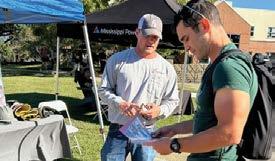

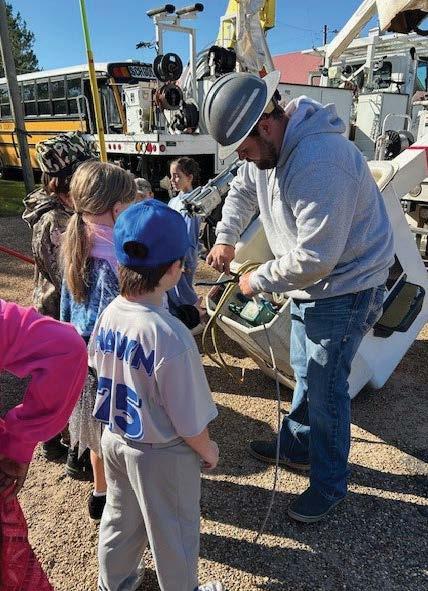
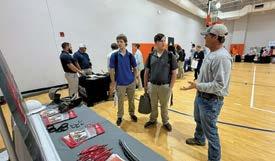








Southern Pine wants you to save on your energy costs by reducing consumption in the winter months as much as possible. Heating costs account for approximately 30% of the average home’s electricity bills. These tips can help you save energy, save money, and stay comfortable during the cold winter months ahead.

• Open curtains on your south-facing windows during the day to allow sunlight to naturally heat your home.
• Close curtains at night to reduce the chill you may feel from cold windows.
• Use a heavy-duty, transparent plastic sheet on a frame or tape clear plastic fi lm to the inside of your window frames during the cold winter months. Make sure the plastic is sealed tightly to the frame to help reduce infi ltration.
• Install tight-fitting, insulating drapes or shades on windows that feel drafty after weatherizing.
• Keep your fi replace damper closed unless a fi re is burning. Keeping the damper open is like keeping a window wide open during the winter; it allows warm air to go right up the chimney.
• If you never use your fi replace, plug and seal the chimney flue.
• Check the seal on the fi replace flue damper and make it as snug as possible.
• Seal the air leaks around utility cut-throughs for pipes (“plumbing penetrations”), gaps around chimneys and recessed lights in insulated ceilings, and unfi nished spaces behind cabinets and closets.
• Add caulk or weatherstripping to seal air leaks around leaky doors and windows.
• Schedule service for your heating system.
• Furnaces and heat pumps: Replace your fi lter once a month or as needed. Find out more about maintaining furnaces or boilers and heat pumps.

• When you are home and awake, set your thermostat as low as is comfortable. Southern Pine recommends no higher than 68 degrees.
• When you are asleep or out of the house, turn your thermostat back 10 to 15 degrees for eight hours and save around 10% a year on your heating and cooling bills. A smart or programmable thermostat can make it easy to set back your temperature.
These cost-saving measures will reduce your energy consumption and, in turn, your energy bill. For more tips, visit southernpine.coop.































Southwest Electric held its 9th annual Cooperative University on Thursday, Oct. 23, at Macedonia Baptist Church in Lincoln County. Fifteen students from nine schools attended the selection process to become the 2026 delegates for Southwest Electric. The students had a full day of learning about the cooperative business model, how electricity is generated and the history of rural electric cooperatives, as well as hearing from elected o cials. They had hands-on experience holding tools the linemen use, learning how a meter works, tying wire to a cross-arm and seeing the inside of a transformer. Out-oftown judges chose a smaller group of students to return Friday, Oct. 24, for interviews. Southwest Electric has participated in the Cooperative Youth Leaders program administered by the Electric Cooperatives of Mississippi for over 30 years.
Nya Brandon - Natchez High School
Caylie Britt - Wesson Attendance Center
Payden Brown - Cathedral High School
Terriona Calvin - Natchez High School
Chance Graves - Cathedral High School
Jamiya Herrington - Je erson County High School
Merissa Johnson - Natchez High School
Mary Katherine Kellum - Brookhaven High School
Carter King - Loyd Star Attendance Center
Kendra McDonald - Natchez Early College Academy
Leslie Smith - Franklin County High School
Michael Smith - Brookhaven Academy
Gavin Upton - Wesson Attendance Center
Ari’Yel Williams - Je erson County High School
Karr Wolfe - Brookhaven High School


A. The students met and discussed topics with state legislators. Pictured in the front row are Sen. Gary Brumfield, Sen. Albert Butler, Rep. Vince Mangold and Rep. Becky Currie. Not pictured is Sen. Jason Barrett.
B. System Engineer Hunter Cooper explained to the students the use of protective devices and transformers installed on our power lines.
C. Meter Technician Ahustyn Smith showed the students the meters used at their homes. D. First Class Lineman Justin May helps a student tie a power line to an insulator.



Ensure a merry and bright holiday season by safely maintaining your tree with the following tips.
Inspect lights Carefully inspect all electric decorations before you use them. Cracked or damaged sockets and/or loose or exposed wires can cause serious shock or start a fire.
Trim the stump Trim the tree’s stump by at least two inches on freshly-cut trees. Allow it to absorb water for 24 hours before bringing it inside.
Water the tree Check the water level daily to ensure your tree stays hydrated. Some trees require up to a gallon of water each day.
Examine cords Examine extension cords and lights for signs of damage. Frayed electric cords should be discarded.
Keep away from heat Make sure your tree is at least three feet away from any heat source like an airduct, fireplace or space heater.
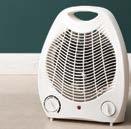
















Our office will be closed Wednesday, Dec. 24 – Thursday, Dec. 25, for Christmas and Thursday, Jan. 1, for New Year’s Day.
Dispatchers will remain on duty, and crews will be on call throughout the holiday weekends. To report an outage, use the SmartHub app, text OUT to 844-975-2728 or call 800-287-8564.








Submitted by Amanda Cranfield
3 large boneless chicken breasts
1 onion (chopped)
1 bell pepper (chopped)
3 tablespoons of minced garlic
1 packet of taco seasoning
2 15 oz. cans of diced tomatoes
1 15 oz. can of whole kernel corn (drained)
1 15 oz. can of black beans (drained and rinsed)
1 6 oz. can of green chiles
4 cups of chicken broth
1 cup of sour cream (to be added at the end of cook time)
Optional for serving: cilantro, fresh lime wedges, and tortilla chips




Add all ingredients to crockpot and cook on low for 6-8 hours or on high for 3-4 hours. Remove chicken and shred. Add sour cream and shredded chicken back into the Crockpot and stir. You can add cilantro, a squeeze of lime juice and tortilla chips to your bowl for next level deliciousness.






















Our power lines distribute the electricity from a substation and deliver it to the homes and businesses we serve. Depending on your location in our service area, there are at least 7,200 volts of electricity in the power lines that lead to your home. That is 60 times the volts in a household wall outlet. At the intersection of the main power line going down the road in front of your house and the secondary power line leading to your home is a transformer. The grey transformers on overhead lines and the green padmount transformers on underground lines operate the same way. They step down the 7,200 volts of electricity to the typical 240 and 120 volt service drop to your home.
Backfeed on power lines happens when electricity flows in the opposite direction from its intended path. An improperly connected or installed generator can be very dangerous for you, your neighbors and our crews working to restore outages. If your home’s breaker panel is connected to the service drop outside, the generator can backfeed the power. The power from a generator can energize the service lines, be stepped up by the transformer and become 7,200 volts of electricity on the main power lines.
When generators backfeed, crews working to restore outages could come in contact with energized lines. The ground near a downed line could become energized near people working or children playing.
A transfer switch is the safest way to ensure your generator is not backfeeding power. Help keep everyone safe by installing a transfer switch at your home or business to ensure your generator is powering only your home during an outage and not backfeeding dangerous power back on to the power lines.




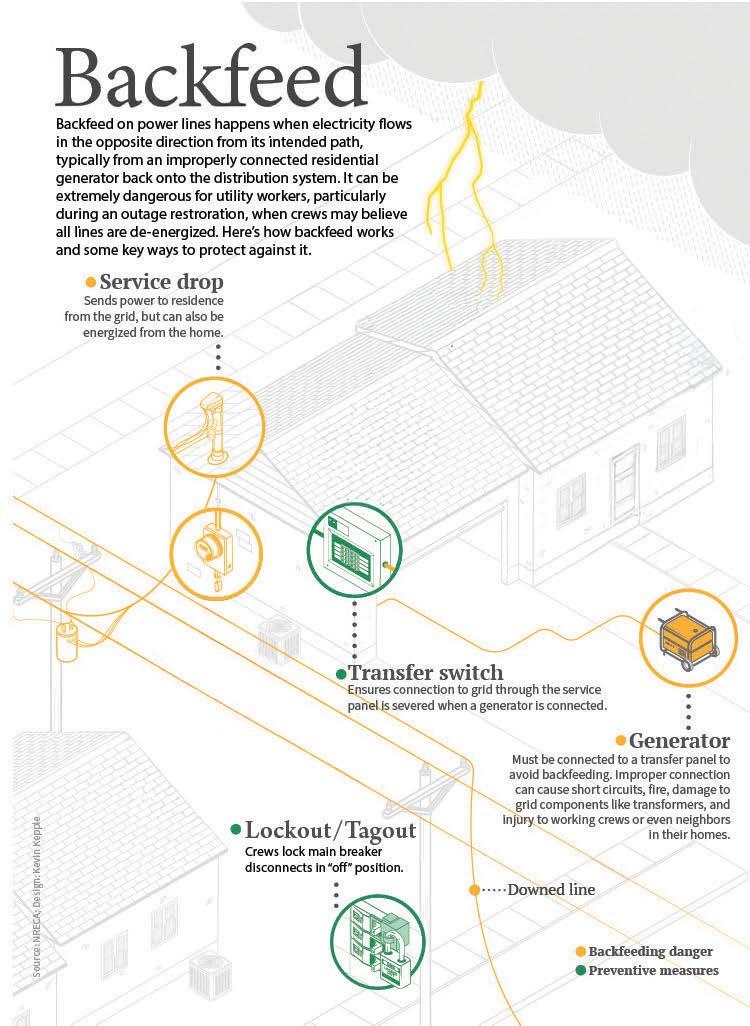



















SERVING MORE THAN 12,600 ELECTRIC METERS IN SEVEN DELTA COUNTIES




Hollandale - 662-827-2262 | Belzoni - 662-247-1909 | Greenville - 662-334-9543 | Rolling Fork - 662-873-4233 | REPORT OUTAGES 866-897-7250 @twincoepa twincoepa.com
As the holiday season approaches, we extend our heartfelt gratitude for your unwavering support throughout the year. Your loyalty is the cornerstone of our success, and we are deeply thankful to have you as a valued member of the Twin County Electric Power Association family.
One of our founding cooperative principles — Concern for Community —resonates deeply as we navigate throughout the season. Across our service areas, families and neighbors may be facing challenging times. In response, Twin County and our dedicated employees rea rm the importance of connection, compassion, and shared purpose. We remain committed to serving you with integrity, reliability, and care. Our cooperative was built on the belief that community matters — and now, more than ever, we hold firmly to that principle.
As we look ahead to the new year, we are proud of the progress we’ve made together and excited to introduce new programs designed to further enrich the lives of our members and strengthen our communities.
We will soon launch our first community foundation program, allowing members to voluntarily round up the cents on their

monthly utility bills. These small contributions will be pooled to support meaningful local initiatives, proving that even the smallest acts of generosity can make a lasting impact.
Your trust in Twin County Electric Power Association fuels our commitment to community progress. With your continued support, we remain dedicated to delivering even greater value, responsiveness, and care in the years ahead.
Wishing you and your loved ones a season filled with peace, health, and joy. May the coming year bring renewed hope and continued strength to our communities.

General Manager by Leslie Holloway



OCT. 30 & 31
HOLLANDALE AND BELZONI
Twin County staff brought the fun to Hollandale and Belzoni by dressing up as Power Rangers and other characters! While the Power Rangers are known for saving the day, we want to remind everyone that our real heroes, the Twin County linemen, wear uniforms everyday — working tirelessly to keep the lights on and our communities safe.
The events were filled with laughter, excitement, and plenty of smiles from children, students, teachers, parents, members—and even a few furry friends! It was a joyful reminder of the power of community and the everyday heroes among us.
















by Scott Flood

















Wouldn’t it be great to wake up on a sunny morning, say “Good morning, house!,” and stand back as the right light fixtures flash on, the co eemaker starts, the outdoor security lighting switches o , and the toaster oven starts preheating for your frozen toaster pastry? That may sound like something from science fiction, but today’s smart home electronics make it possible.
Smart devices use digital technology and Wi-Fi to take your home to a new level of convenience and comfort. They can also help you make better use of your electricity so you can reduce waste and lower your energy bills.
Even if you’ve already put the many advantages of smart electronics to work for your home and family, you might be surprised by some of the newer devices with the potential to change your daily life.
Heating and cooling use more energy than anything else in your home. Replacing your home’s standard thermostat with a smart model can lower your monthly electric bills while keeping you even more comfortable. Smart thermostats learn your daily habits and take over for you. You won’t have to lower your thermostat every evening, because it will happen automatically. Because smart thermostats know exactly when you need electricity and when you don’t, they waste a lot less.
The second-biggest share of your home’s electricity powers appliances, from your refrigerator to your water heater. Smart appliances use Wi-Fi and high-tech sensors to operate more e ciently. A smart washer can sense the size of your load and adjust the water and cycle times accordingly. Smart refrigerators can warn you when the kids leave the door open. And smart water heaters don’t waste energy by heating water while you’re asleep.
An easy and a ordable way to explore smart technology is with smart plugs, which plug into your wall outlets. You can then plug lighting, appliances, and other devices directly into them. You’ll be able to control all those devices through a single app, so you can tell the co eemaker when to start brewing, turn your exterior accent lighting o at dawn, or have your favorite music already streaming as you walk in the door.
Smart power strips look like their ordinary cousins but use smart plugs. They’re particularly helpful at eliminating waste caused by what’s known as “phantom load” – like leaving your phone charger plugged in when it’s not charging.
You wish your family room didn’t face south, because it’s always warm during the day. Smart shades and blinds can help. You can set them to automatically open or close depending on the time of day (and year) or based on your home’s indoor temperature. They can help your air conditioner keep you cooler for less.
When you combine the capabilities of individual smart home electronics with voice assistants, like Amazon Alexa, or wholehome smart energy management systems, they become even more powerful. You can teach voice assistants to carry out multiple tasks that make up your daily routines, like the “good morning, house” message. Energy management systems simplify control of all aspects of your home’s energy use, and some o er specific tips to help you save even more.
While all those smart devices may be able to make your home more energy e cient and your life more comfortable, they’re not perfect. Most require an internet connection, so if your service is down, your smart devices won’t work, either.
Smart devices typically don’t receive frequent system updates like your smart phone or laptop, so be aware of potential security issues. Before you choose any smart home devices, make sure it’s completely secure and compatible with what you have. Then prepare to be amazed by what smart home electronics will do for you!
For more than four decades, business writer Scott Flood has worked with electric cooperatives to build knowledge of energy-related issues among directors, sta , and members.
by Miranda Boutelle
I tend to live in the “if it isn’t broken, don’t fix it” school of thought, but a failed water heater can cause damage to your home and property. Emergency replacement of a water heater can add unnecessary cost, not to mention inconvenience.
Here are some signs that your storage water heater might be approaching the end of its life.
The typical lifespan of a storage water heater is 10 to 15 years, according to the U.S. Department of Energy. If your water heater is older than that, plan to replace it soon. Don’t have records of when it was installed? No problem. Find the serial number on the water heater’s sticker or metal plate. Look up the serial number online or call the manufacturer to find its age.
Sediment or water on the floor or at the bottom of the water heater could mean its days are numbered. Sediment can be a sign of corrosion, which leads to a leak or failure.
Seeing rusty or discolored water when you turn on your faucets can be a sign the tank is rusting inside. If water is not getting as hot as it used to, it could be a sign of a failing electric element or a gas burner not functioning properly.
Odd noises could indicate an issue with the components. If you’re hearing unusual noises from your water heater, schedule a checkup with a plumber. Well-functioning water heaters typically don’t make much noise.
A professional plumber may be able to replace failing components. If you are having issues with the tank itself, it’s likely time for a new unit.
We’ve all gotten used to having reliable hot water in our homes. Nobody wants to get caught o guard with an unexpected cold shower or failed water heater.
If you’re in the market for a new water heater, a heat pump water heater might be a good fit for your home. These systems are two to three times more energy e cient than conventional electric-powered tank water heaters, according to the DOE. A federal tax credit is available until Dec. 31. If your water heater is past its useful life or showing any signs of failure, consider investing in a new one before the end of the year.
Even if your water heater is in great shape, you can save at home by lowering your hot water use. Some easy ways to do this are washing laundry in cold water and installing high-performance aerators on faucets and showerheads to reduce the amount of hot water you use. If you have time-ofuse rates, you can save by installing a timer on your water heater to prevent it from operating during peak energy use hours, typically in the mornings and evenings. It also helps lower the strain on your electric utility.
Knowing the signs of water heater failure can save you from home damage and o er opportunities to explore options for more e cient equipment to lower your electric use.
Miranda Boutelle is the chief operating o cer at E ciency Services Group in Oregon, a cooperatively owned energy e ciency company.
If your water heater is 10-15 years old, it’s time to start planning and budgeting for a replacement.






























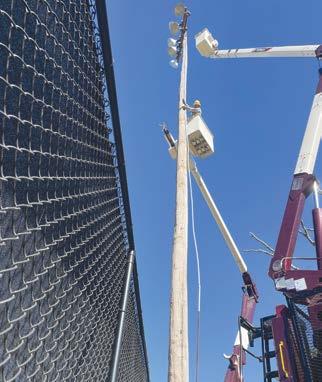
Yazoo Valley Electric Power Association is always pleased to support our local schools when we have an opportunity. Yazoo Valley employees recently helped Benton Academy and Tri-County Academy install new lights on their baseball fields, just in time for the season. Next, Yazoo Valley plans to help Yazoo County Middle School make additional improvements on its school garden.

















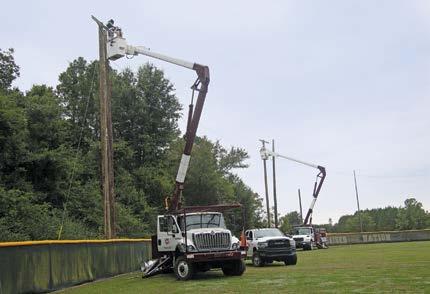




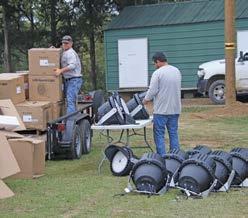


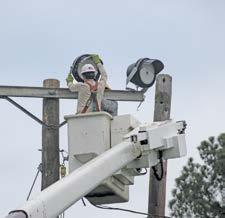




Yazoo Valley Electric Power Association hosted a talented group of local students for the 2025 Cooperative University. After a day of learning about electric cooperatives, the students participated in interviews. Benton Academy junior Chloe May and Manchester Academy junior Maggie Day Ragland were selected as this year’s delegates to represent Yazoo Valley at the Cooperative Youth Workship in Jackson in February and at the Youth Tour of Washington, D.C. in June. Yazoo Valley was joined by judges Chris Hamilton of Twin County Electric, Lydia Walters of the Electric Cooperatives of Mississippi, Jeremy Smith of Southwest Electric, and Tonya Williams with Cooperative Energy.
A. Yazoo Valley hosted a talented group of juniors for the 2025 Cooperative University. Pictured from left are Madison Ledbetter, Addison Green, Nyaah Sha er, Lane Moore, Austin Phetxoumphau, Molly McBride, Maggie Day Ragland, and Chloe May. B. Students talk with Reece Singleton, who works in accounting for Yazoo Valley, about his career path and what he likes about working at an electric cooperative. C. Chloe May, Nyaah Sha er, and Austin Phextoumphau participate in an activity describing the flow of electricity and how it can be interrupted.
D. Johnathon Demita talks to students about the work he does at Yazoo Valley and why he chose to pursue a career at an electric cooperative. E. Students work on an activity that teaches them about the generation and transmission of electricity led by Tonya Williams with Cooperative Energy. F. Yazoo Valley’s Josh Reeves talks about the many responsibilities he has held during his career at Yazoo Valley.
G. Lydia Walters with Electric Cooperatives of Mississippi talks about the history of the Cooperative Youth Leaders program and the opportunities it o ers.



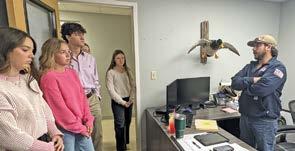

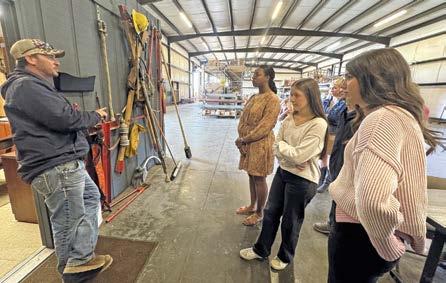











































Yazoo Valley Electric Power Association recently completed pole top rescue training where employees had to climb a utility pole and safely lower a life-sized dummy. The training, which is conducted annually, is designed to teach employees how to rescue an injured coworker in the event of an accident. Yazoo Valley Safety Coordinator Paul Buxton said it’s training that he hopes no one ever needs to use, but it could save someone’s life.







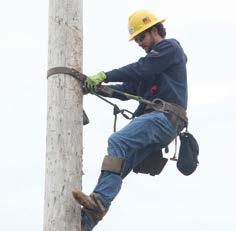





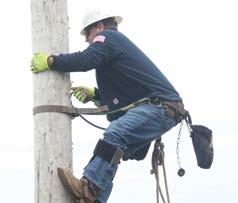





Electric Cooperatives of Mississippi CEO Michael Callahan was feeling a little under the weather when it came time to pen this month’s column.
He asked me to follow up on a cover story we featured in our October 2025 issue.
Something extraordinary happened in Mississippi the weekend of Nov. 7.
Specifically, downtown Jackson was transformed into the cultural and artistic capital of the nation.
For the first time in its 82-year history, The National Folk Festival was held in the Deep South.
The free, three-day outdoor multicultural celebration of music, dance, and traditional arts event set up a three-year residency in downtown Jackson.
That means if you missed it this year, you are in luck.
My wife and I attended all three days, and it was a wonder.
There were six stages with constant live music playing from artists from all over the country.
There were gospel groups, a zydeco band from Opelousas, Louisiana, a bluegrass singer from Kentucky, a country and western band from Montana, salsa and flamenco bands, Korean drummers from Chicago, southern soul artists, and a Washington, D.C. go go/funk band.
Not only did the nation introduce some of their artists to Mississippi, but Mississippi had the opportunity to show o some of its own musical heroes to the visitors.
The weekend kicked o with a march from the Sonic Boom, Jackson State University’s legendary marching band. The night was headlined by another Mississippi legend — blues and R&B singer Bobby Rush. The crowd went crazy for the 92-year-old vocalist who had just been nominated for his 8th Grammy Award earlier in the day.
Over the weekend, we watched Greenville bluesman Keith Johnson, known as “The Prince of the Delta Blues” and Muddy Waters’ great nephew, play sizzing electric guitar.
Speaking of Waters, one of his sidemen, Chicago guitarist John Primer, was honored on stage with a Mississippi Blues Trail marker. Primer, from Camden, Mississippi, then played an electrifying set with his band, the Real Deal Blues Band.
I could go on and on.
Did I already say this entire event was free?
The only moment I felt a twinge of sadness is when I spotted empty seats. The crowds were solid but could have been so much better.
The weather was gorgeous. The environment was extremely safe. I realize there were home games in Oxford and Starkville, but something like the National Folk Festival doesn’t come around very often, much less to our home state.
The National Folk Festival was a true gift to the state, the city, and all its people.
A big thanks to the city of Jackson, the state of Mississippi, city, county, and state law enforcement and first responders, all the amazing volunteers, and the National Council for Traditional Arts for choosing our state.
I hope more Mississippians take advantage of the event over the next two years.
Jackson has had its issues. I know because I live there. But it’s also our capital city. The key word is “our.”
Merry Christmas and I hope you enjoy the issue.

by Steven Ward



They climb the poles at any hour to fix the wires that give us power. In emergencies, when we have no electricity the linemen climb way up high and fix the problems in the blink of an eye. They never let the weather get them down, And you can see their trucks all over town. After storms in other towns, our men get their trucks And go right on down.
Then, when we need others to help us out, All we have to do is give a shout. They are so necessary, there high-wire friends, that we pray God’s special care of our linemen.


by Betty Thomas,
a resident of Hattiesburg, and a member of Pearl River Valley Electric.
What’s Mississippi to you?
What do you treasure most about life in our state? Send your brief thoughts to Today in Mississippi, news@ecm.coop or mail to P.O. Box 3300, Ridgeland, MS 39158. Submit your beautiful digital photo of life in Mississippi to Today in Mississippi, news@ecm.coop