
















COOPERATIVE YOUTH LEADERS





February is one of our favorite months of the year.
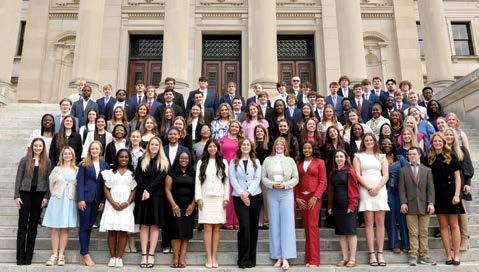
This month, the Electric Cooperatives of Mississippi (ECM) is hosting 84 high school juniors from all around the state for our Cooperative Leaders Workshop.
The delegates will spend three days in Jackson learning about leadership and team building. They will also tour the state capitol and meet their state legislators.
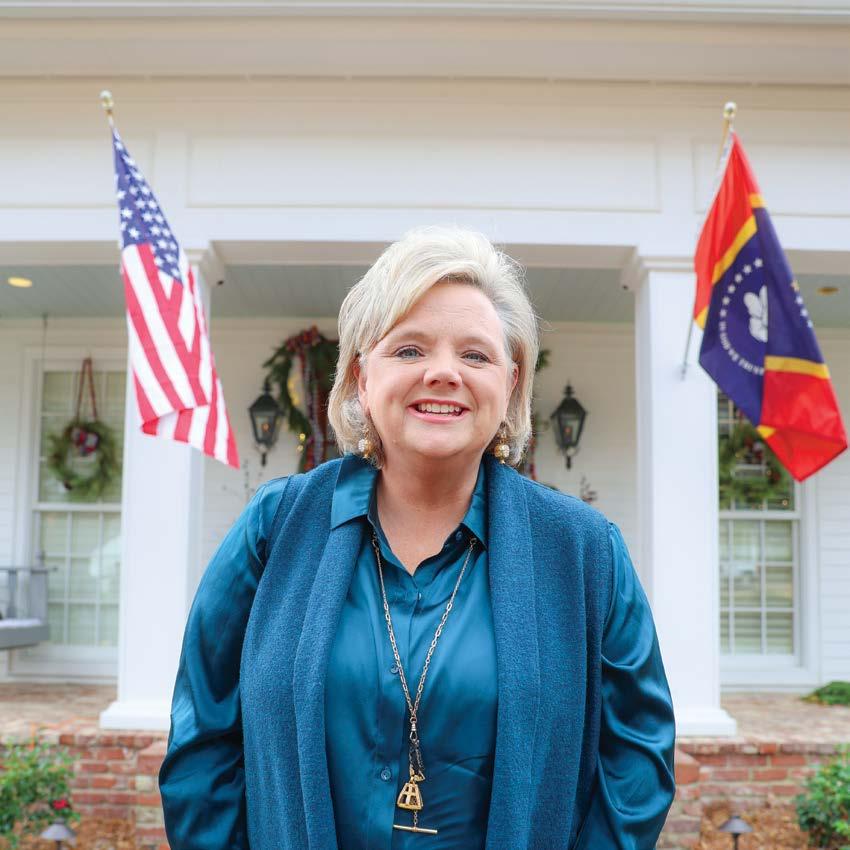
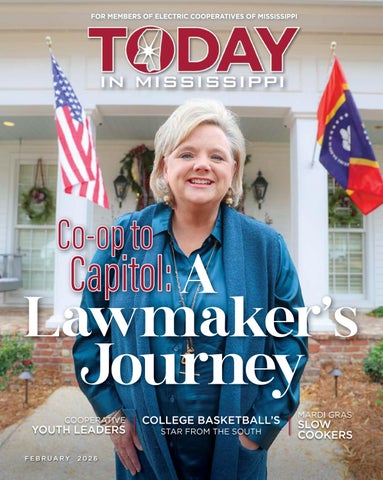
Speaking of state lawmakers, our cover star this month happens to be a member of that influential political body.
And that’s no coincidence.
District 9 State Sen. Nicole Akins Boyd of Oxford spent time telling us about her career journey to the state Legislature. Part of her career origin story is also the origin of ECM’s Cooperative Youth Leaders program.
Boyd was the state’s first Cooperative Youth Leaders delegate.
In 1986, when Boyd was a junior in high school, she was asked by her family’s cooperative — North East Mississippi EPA — to attend the National Rural Electric Cooperative Association’s (NRECA) Youth Tour in D.C. and to come back and report to Mississippi co-op leaders why the state should participate in the national program.
Boyd did just that, and ECM has participated in the NRECA program ever since.
Before the delegates are picked by their sponsoring electric co-ops for inclusion in the program, they attend a Cooperative University put on by the cooperative.
The Cooperative University teaches the students the value of the cooperative business

model and the impact electric cooperatives have on their lives and their communities.
The Cooperative University concept started out with one co-op creating the program and sharing with a few others in 2006. Following strategic planning by ECM’s board of directors to encourage other co-ops to put on the event, 19 electric co-ops now hold Cooperative Universities.
Following the Cooperative University, delegates are chosen to attend the February workshop in Jackson and to go on an all-expense paid trip to Washington, D.C. in June. The sponsoring electric co-ops pay for the trips to Jackson and D.C.
The youth of Mississippi are the future of Mississippi.
Electric cooperatives hope to inspire delegates to lead in some way, so they can give back to the communities that nurtured them.
The delegates might not become a state lawmaker like Boyd, but, hopefully, what they learn in our Cooperative Youth Leaders program is something they can use to make positive change — however small or large — in their community and home state.
We hope you enjoy the issue.

by Michael Callahan
Vice President/CEO









Crosby
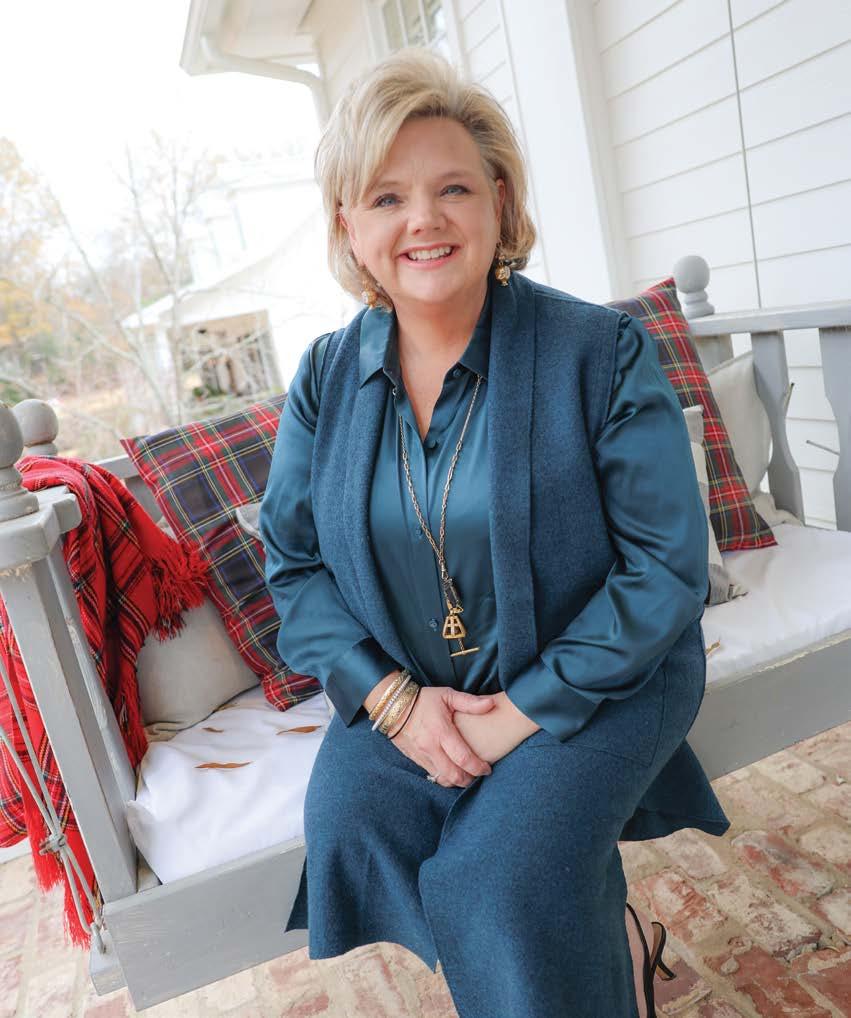
State Sen. Nicole Akin Boyd of Oxford was the state’s first
The Official Publication of the Electric Cooperatives of Mississippi
Vol. 79 No. 2
OFFICERS
Brian Long - President
Shawn Edmondson - First Vice President
Brian Clark - Second Vice President
Je Bowman - Secretary/Treasurer
Michael Callahan - Executive Vice President/CEO
EDITORIAL STAFF
Lydia Walters - VP, Communications
Steven Ward - Editor
Chad Calcote - Creative Director
Kevin Wood - Graphic Designer
Alan Burnitt - Graphic Designer
Jill Sowell - Graphic Designer
Whitley Daughtry - Graphic Designer
Chris Alexander - Member Services Coordinator
Andy Tuccio - Media Solutions Director
Steve Temple - Social Media Director
Julienne Sones - Communication Assistant
EDITORIAL OFFICE & ADVERTISING – 601-605-8600
For delivery questions or issues, call your local co-op.
Acceptance of advertising by Today in Mississippi does not imply endorsement of the advertised product or services by the publisher or Mississippi’s electric power associations. Product satisfaction and delivery responsibility lie solely with the advertiser.
• National advertising representative: American MainStreet Publications, 800-626-1181
Circulation of this issue: 469,430 Non-member subscription price: $9.50 per year.
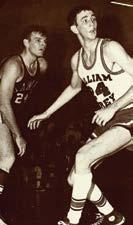
Basketball star Mike Necaise
Today in Mississippi (ISSN 1052-2433) is published 12 times a year by Electric Cooperatives of Mississippi Inc., P.O. Box 3300, Ridgeland, MS 39158-3300, or 665 Highland Colony Parkway, Ridgeland, MS 39157. Phone 601-605-8600. Periodical postage paid at Ridgeland, MS, and additional o ce. The publisher (and/or its agent) reserves the right to refuse or edit all advertising. The magazine is published for members of subscribing co-ops. The magazine is a bene t of membership.
POSTMASTER: Send all UAA to CFS. (See DMM 507.1.5.2) NON-POSTAL AND MILITARY FACILITIES: Electronic address returns requested. www.facebook.com/TodayinMississippi


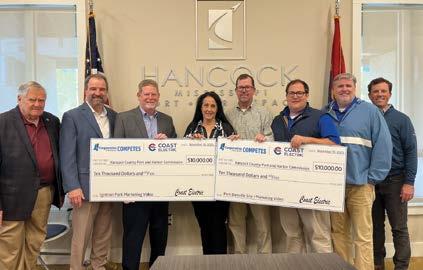
Cooperative Energy, together with the 11 Member distribution cooperatives it serves, announced recently the award of two Cooperative Competes grants to the Hancock County Port and Harbor Commission to assist with the production of marketing for Port Bienville Site No.1 and Ignition Park.
Port Bienville Site No.1 will be a prime, pad-ready parcel located within Port Bienville Industrial Park. The site is directly served by Port Bienville Shortline Railroad and has proximity to U.S. Highway 90 and Interstate 10. The port’s shallow-draft barge canal is suitable for industries requiring flexible, cost-effective logistics. With the commission extending water and sewer utilities to the site, Site No.1 is well-positioned to support heavy manufacturing, logistics, and processing operations. Importantly, all due diligence and environmental studies have been completed for Site No. 1, and the site has earned Bronze Level Designation through CSX’s Select Site Program.
Ignition Park is a newly re-branded, pad-ready industrial development located at Stennis International Airport in Hancock County. After years of infrastructure development, site preparation, and permitting, the commission has now poised to transition into marketing phase for the park. Ignition Park represents a long-term public investment in Mississippi’s economic future, with more than $11.6 million in infrastructure improvements already secured.
The two $10,000 Cooperative Competes grants will be used to assist with production videos that will use aerial drone footage, animated site graphics, infographics, and text overlays to communicate key information such as available sites, infrastructure details, regional connectivity, and workforce strengths. With no voiceover narration, the video will be clean, accessible, and versatile across all
digital platforms including trade shows, prospect outreach, social media, and economic development websites.
In 2023 and 2024, Port Bienville and the Ignition Park enrolled into the Cooperative Energy SiteInvest program, making it eligible for Cooperative Competes grant funds.
The Cooperative Competes initiative is aimed at increasing community competitiveness and encouraging economic growth. A component of the initiative allows economic development organizations to apply for grant funds to support industrial property, workforce, or community development efforts throughout Mississippi.
The House has passed two significant permitting reform bills that would help protect affordable power nationwide by reducing delays for electric cooperatives making crucial improvements to their systems.
“Federal environmental permitting has become increasingly complex, unpredictable and unworkable over time,” said NRECA CEO Jim Matheson. “It interferes with co-op efforts to maintain the infrastructure that is essential to keeping the lights on and build new infrastructure to meet growing demand. These hurdles delay critical projects and can significantly increase costs for electric co-op consumers.”
The bills passed by the House offer solutions to those problems, Matheson said.
House members voted 221-196 on Dec. 18 to approve the bipartisan Standardizing Permitting and Expediting Economic Development (SPEED) Act, which would streamline the requirements imposed by the National Environmental Policy Act
on electric co-ops applying for federal permits to build new generation, transmission and distribution capacity, strengthen existing systems or perform crucial maintenance work.
The bill’s lead sponsors say it would shorten permitting timelines and reduce the frequency of “frivolous litigation” that stymies construction of vital infrastructure.
In another important change, co-ops would no longer have to go through the NEPA review process every time they get federal grants or other types of funding for an improvement project.
The House also voted 221-205 on Dec. 11 to pass the Promoting Efficient Review for Modern Infrastructure Today (PERMIT) Act.
The NRECA-supported bill would improve permitting under the Clean Water Act by cutting red tape and providing greater regulatory certainty for co-ops that obtain permits.
Both bills must still be passed by the Senate and signed into law by President Donald Trump. — NRECA


Though the temperatures have cooled down, it doesn’t mean our gardens have to fade into the background.
Some plants truly shine when the weather turns crisp; they o er long-lasting color and charm throughout the winter months. With a little planning, you can create containers and garden beds that stay vibrant even during the coldest days.
One of my top choices for dependable, cheerful winter color is the pansy.
These cool-season favorites come in just about every color you can imagine. Bright golden yellows, velvety deep purples, snowy whites, and soft pastel blends are just a few of the options available. Modern varieties even feature whiskered faces and ru ed petals for extra personality.
Pansies thrive in full sun to partial shade and appreciate well-drained, fertile soil. Plant pansies in early fall, so they can establish strong roots before winter sets in. Once they’re settled, pansies bloom continuously through frost, and in many cases, right up until spring.
If you want to add height and a bit of drama to your winter display, snapdragons are hard to beat.
Their elegant spikes bring vertical interest to beds and containers. Snapdragons come in an array of bold colors ranging from classic reds and pinks to apricot, peach and bicolor forms.
Snapdragons are surprisingly cold-tolerant, often surviving light freezes and continuing to bloom during mild stretches. They perform best in full sun with rich, well-drained soil.
Violas are another plant that deserves a spot in every coolseason garden.
Violas have smaller blooms than pansies, but they produce them in abundance, often outperforming pansies during the coldest stretches of winter. Violas come in an impressive range of colors and patterns, such as solid, bicolor and speckled forms, as well as the ever-popular jump-ups.
Jump-up violas, often called johnny-jump-ups, are beloved for their charming, cheerful faces and remarkable toughness.
These little plants have a delightful habit of blooming early, bouncing back quickly after cold snaps, and reseeding lightly. This feature allows them to return in unexpected corners of the garden year after year.
One of my top choices for dependable, cheerful winter color is the pansy. These cool-season favorites come in just about every color you can imagine. Bright golden yellows, velvety deep purples, snowy whites and soft pastel blends are just a few of the options available.
Violas prefer full sun and well-drained soil. Because they stay compact, they’re perfect for edging beds, tucking into containers, or mixing in hanging baskets. Their resilience and nonstop blooming make them true winter workhorses.
For a more dynamic planting, mix tall varieties in the back with dwarf or intermediate types at the front for layers of color and texture. Butterflies and other pollinators appreciate snapdragons, even in cooler weather.
Dianthus, a ectionately called “pinks,” round out any winter garden beautifully.



These compact, tidy plants have charming, fringed blossoms in shades of pink, red, lavender, and white. Many varieties are delightfully fragrant, adding a sweet, spicy note to the garden on sunny winter days.
Dianthus thrive in cooler temperatures, making them a natural companion to pansies and snapdragons. Plant them in full sun with soil that drains well, as they dislike staying too wet. With proper conditions, dianthus will bloom intermittently throughout the winter and come back strong in spring. I have a pink dianthus that even blooms well into the summer months. By combining colorful pansies, stately snapdragons, and compact dianthus, you can create a winter garden that’s anything but dull.

by Dr. Eddie Smith
Southern Gardening columnist Dr. Eddie Smith, a gardening specialist and Pearl River County coordinator with the Mississippi State University Extension Service, is an internationally certified arborist, Produce Safety Alliance certified trainer, and one of the developers of the Mississippi Smart Landscapes program that encourages the use of native plants in the landscape.






Among the most popular freshwater fish for Mississippi anglers to catch, crappie breed prolifically and taste great. Sometimes, the coldest days can produce the hottest action.
Mississippi anglers can catch crappie all year long, but late winter and early spring o ers one of the best times to catch the biggest crappie. Before releasing her eggs, pre-spawn female crappie reach their maximum weight for the year.
Crappie usually spawn when water temperatures reach 58 to 65 degrees. In South Mississippi, some crappie might begin spawning in late January or February, depending upon the weather. In the northern part of the Magnolia State, crappie start in late February or early March. The spawning peak runs from mid-March through early April.
The arduous spawning process takes considerable energy. Before spawning, crappie bulk up to build up their energy reserves. While spawning, crappie eat very little, so pre-spawn crappie gorge themselves on anything they can swallow. They particularly like minnows, shiners, shad, and other small baitfish.
Mississippi anglers can catch crappie all year long, but late winter and early spring o ers one of the best times to catch the biggest crappie.
Not all crappie spawn at the same time because waters warm at di erent rates, even in the same lakes. Rivers, such as the Big Black, Pascagoula, Pearl, Tallahatchie, Tombigbee, or Yazoo, tend to carry cooler water and take longer to warm than placid lakes with stable water levels.
In a vast and complex system, crappie might spawn in one cove today and not spawn until weeks later elsewhere. Crappie in a shallow sunny reservoir cove might spawn earlier than their cousins holding on deeper ledges in main channels. A shallow backwater or sunny flat makes a great place to look for early spawners.
Giant females swollen with roe stage in slightly deeper water before heading shallow to meet the males. Look for them at the mouths of small tributaries flowing into larger rivers. In early spring, transition zones that provide access to both deep and shallow water hold good fish.
To catch crappie, anglers must find them. Many people use high-tech electronics to search for fish in deeper water. Others use the old-fashioned methods. Rig several rods in holders o the boat stern and pull multiple baits slowly behind the boat until fish start biting.
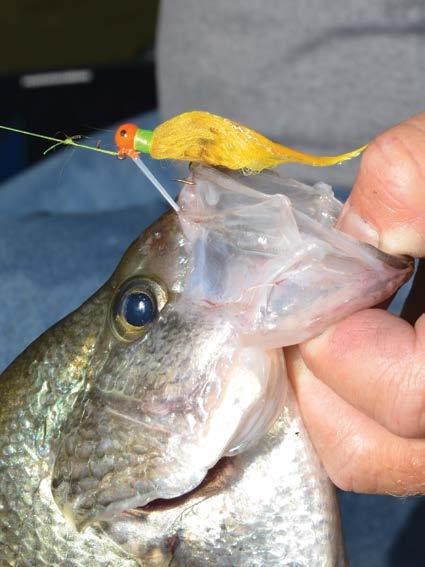
After finding a good spot, many anglers try “spider rigging.” Arrange several rods in holders on the boat bow. Drop small jigs tipped with plastic minnow imitations or live minnows vertically to the chosen depth and move the boat forward slowly with electric power.
Try to place temptations just above where crappie want to hover. They commonly look up to spot prey against the bright surface. By spider rigging, anglers can fish multiple baits and depths simultaneously to see what colors, shapes, sizes, and baits fish want best that day.
Crappie occupy just about every freshwater system in Mississippi from small creeks and farm ponds to large reservoirs. Some better lakes for catching big crappie in Mississippi include Eagle, Enid, Grenada, Pickwick, Ross Barnett, Sardis, Washington, and any old oxbow lakes along the Mississippi River, especially ones that still connect to the river.














by John N. Felsher
John N. Felsher is a professional freelance writer, broadcaster, photographer, and editor who lives in Alabama. An avid sportsman, he’s written more than 3,300 articles for more than 170 di erent magazines on a wide variety of outdoors topics. Contact him at j.felsher@hotmail.com.





























by Steven Ward



When Crosby Parker and Addison Barry attended their respective Cooperative Universities back in the fall of 2024, neither student knew very much about their electric cooperatives.
“Before, I had no idea there was a di erence between an electric co-op and, say, Mississippi Power,” Parker, 18, of Gulfport said.
Barry admitted she even knew less than that.
“I didn’t know anything,” Barry, 17, of Braxton, said laughing.
“But it was so fun and interesting learning about them.”
Parker and Barry have come a long way since then.
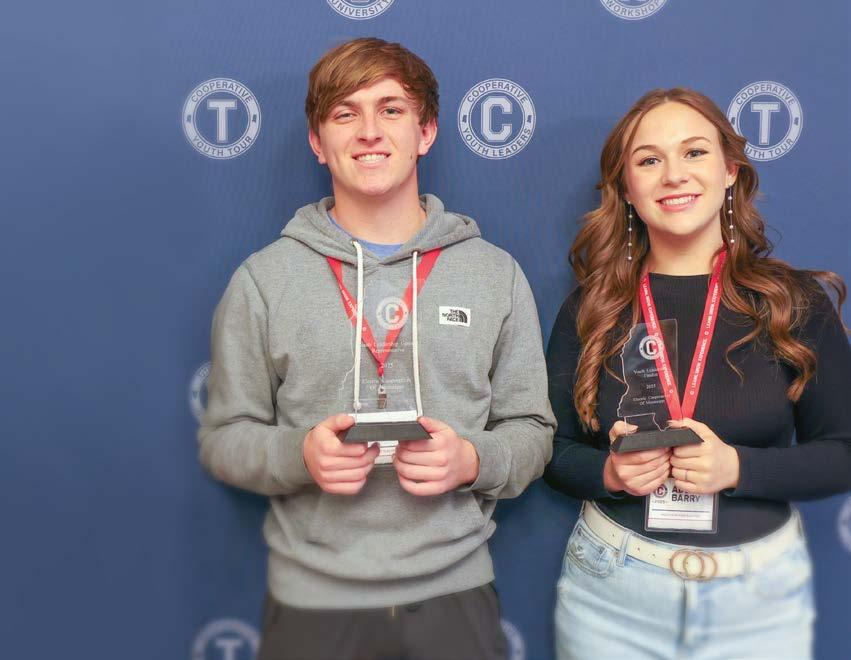
Parker, a member of Coast Electric, and Barry, a member of Southern Pine Electric, represent Mississippi as 2025 National Rural Electric Cooperative Association Youth Leadership Council (YLC) co-delegates.
This year was unique for the Electric Cooperatives of Mississippi’s (ECM) Cooperative Youth Leaders program. Usually, one delegate is chosen to represent the state. Parker was that delegate. However,





Parker won a $10,000 U.S. Senate Youth Program national scholarship that prevented him from carrying out some of his YLC duties. As a result, Barry was picked to serve as a co-delegate this year.
The state YLC competes for the national YLC spokesperson spot against other electric cooperative youth leaders from around the country. The announcement of the winner was made right at press time.
Win or lose, Parker and Barry have already shined as youth leaders in Mississippi with each taking away strong lessons from the Cooperative Youth Leaders program.
Both delegates participated in ECM’s Cooperative Leaders Workshop in Jackson in February of last year. Then, with the other workshop delegates, the pair went on an all-expense paid trip to Washington, D.C. in June 2025. As a result of being chosen to represent the state’s electric co-ops, both students will receive ECM scholarships for college.

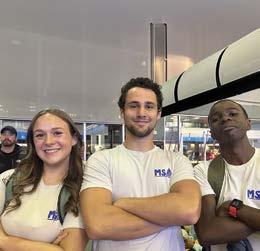
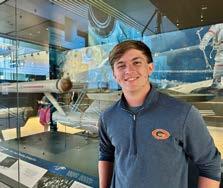
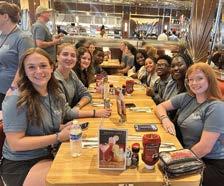
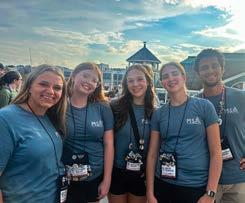



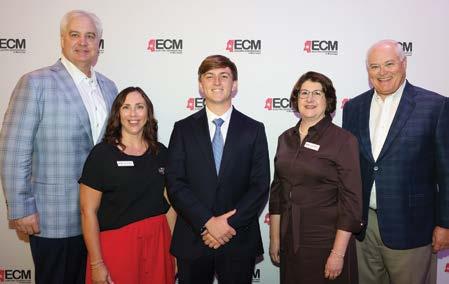
Parker, who will be attending the Massachusetts Institute of Technology (MIT) on an Air Force ROTC scholarship, said the most important lesson he took away from the program was learning how to make an impact today and in the future.
“Leadership is the best way to make a difference,” Parker said.
Parker’s leadership passion has been youth mentorship.
During his time at Gulfport High School, he has been instrumental in a mentorship program that works with students at a local elementary school.
“Kids need support. They don’t always have that at home,” Parker said.
The peer-to-peer program has Parker and other high school mentors meeting with the students to help with academics, to set goals, and even have some fun.
“They need to feel encouraged and feel supported,” Parker said.
Barry, a student council member at Simpson County Academy, plans to attend Mississippi State University and major in pre-med.
Barry said her biggest take away from the ECM program was meeting all the different students from around the state.
“I just knew all the students in that (workshop) room will do amazing things. I really had a much greater appreciation for our home state,” Barry said.
The ECM program forced Barry to step out of her comfort zone, she said.
“The program definitely challenged me,” Barry said.
Both delegates were two of 10 picked at the workshop to interview with judges to compete for the statewide YLC spot. Parker and Barry had to choose from a prompt and had 10 minutes to write a two-minute speech to give to the judges.
Both chose to write about the person who inspires them most.
Parker wrote about his mother, who he said supported him getting involved in robotics. Parker was a robotics program state champion and started a robotics camp for the Boys and Girls Club of Gulfport.
Barry wrote about Pat Lee, the founder of Children of the World, the adoption group that Barry and her family used to adopt her younger sister, Emory, from India. Barry participated in Children of the World mission trips with Lee.
“She has such a tender heart. She really cares about people and that has had a big impact on me,’ Barry said. Because of the YLC program, Parker and Barry not only know now how electric co-ops work and provide power to its members, but they also understand that their co-ops are an integral part of their communities.
“I didn’t realize co-ops were member-owned and so community driven. Co-ops really make a difference in people’s lives,” Parker said.


1-844-AGENT4U












































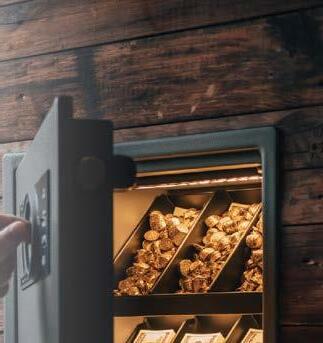

American Gold Reserve is releasing Government issued $5 Gold American Eagles completely free of dealer mark-up for only $459 each. These beautiful $5 Gold American Eagles are a perfect way to enter the gold market. They are set for immediate public release and will sell out fast

• Teach the importance of wealth preservation.
• Great way to pass on wealth to children and grandchildren.
• A symbolic act of the commitment to your family.
• Gold provides your children and grandchildren with a built-in safeguard during times of financial instability.




















Always call 811 BEFORE YOU DIG!



Thinking about a new fence or planting a tree? There's more than just dirt down there! A free call to 811 gets all those underground utility lines marked on your property. Don't guess and be sorry — know what's below and dig safely.







February is known as the month of love. We see it in cards, flowers, and kind words shared with those closest to us. But here at Southern Pine, I’m reminded every year that love shows up in quieter, more meaningful ways through neighbors helping neighbors and communities taking care of one another.
One of the best examples of that love in action is our Members Helping Members program.
Because of the generosity of Southern Pine members who choose to round up their electric bills each month, we are able to turn spare change into real help for real people. Those small round-ups, often just a few cents at a time, add up to powerful support for local nonprofits and community organizations working every day to make life better across our 11-county service area.
I’m proud to share that the application period for Members Helping Members community grants is now open for the month of February.
These grants are designed to support nonprofit organizations that are meeting critical needs right here at home. From food assistance and emergency services to youth programs, education, and community outreach, Members Helping Members helps ensure that compassion stays local and that help reaches the people who need it most.
What makes this program especially meaningful is that it is funded entirely by you, our members. There are no outside donors and no hidden sources of funding. Southern Pine receives no fi nancial benefit from this program, only the satisfaction of seeing our communities made stronger and better. It is neighbors helping

neighbors, plain and simple. When you round up your bill, you are choosing to show love for your community in a practical, lasting way.
Over the past year, I’ve seen fi rsthand the impact these grants can make. I’ve met dedicated volunteers, nonprofit leaders, fi rst responders, and community champions who stretch every dollar to serve others. That’s what cooperative spirit looks like.
If you are part of a nonprofit organization serving Southern Pine members, or if you know of an organization doing good work in your community, I encourage you to apply. The application process is straightforward, and our goal is to make these funds accessible to organizations that are making a real di erence.
February reminds us that love isn’t just something we say, it’s something we do. Every rounded-up bill is a quiet act of kindness. Every grant awarded is a reflection of our members’ hearts. And every life touched is proof that when we come together, even small actions can lead to meaningful change.
Thank you for showing what it means to care for one another. Thank you for believing in your community. And thank you for continuing to support Members Helping Members.
Find out more or apply at southernpine.coop/MHM.

by Drummonds McAlpin
President/CEO Southern Pine Electric















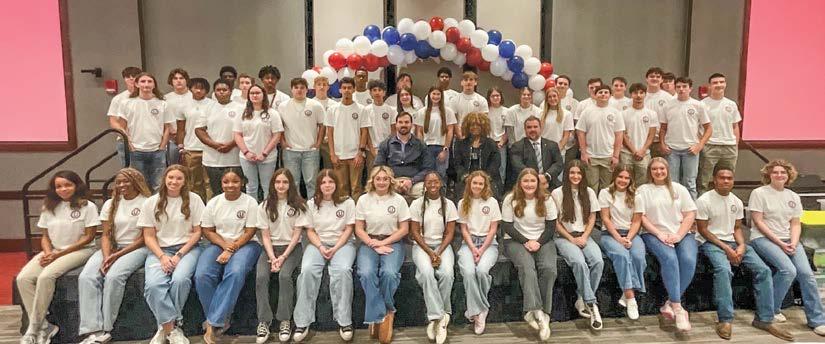
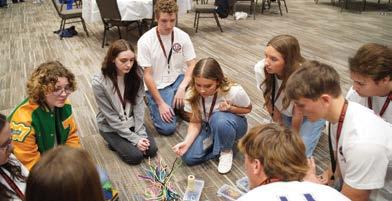
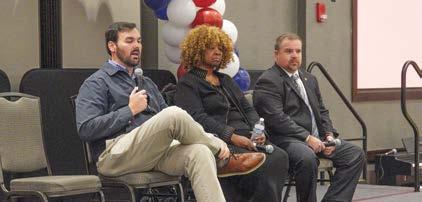
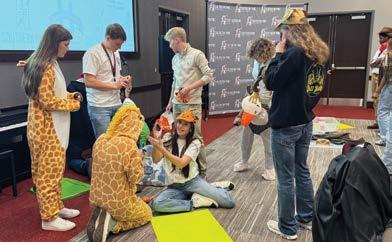
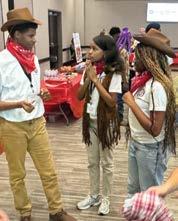
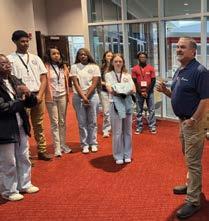
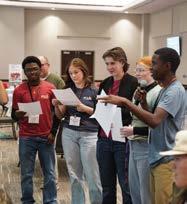
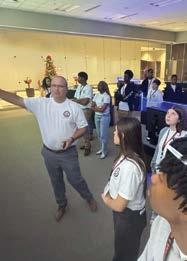
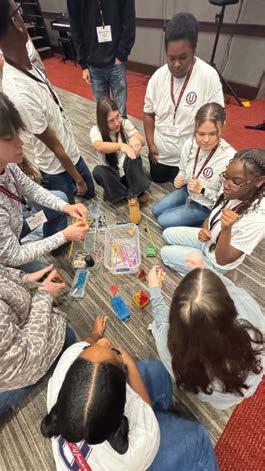
In December, Southern Pine Electric welcomed 48 high school juniors from 30 area high schools to its annual Cooperative University program, a day designed to introduce students to the cooperative business model, the electric power process, and the importance of leadership and teamwork. Held at Southern Pine’s headquarters, the event brought together students from across the cooperative’s service area for hands-on learning and meaningful conversations about service, responsibility, and community.
Throughout the day, students learned how electric cooperatives operate, from generation to delivery, and gained a better understanding of the teamwork required to safely and reliably power homes, schools, and businesses. Southern Pine team members led sessions focused on problem-solving, collaboration, and leadership, giving students a behind-the-scenes look at how cooperation plays a vital role in everyday life.
At the conclusion of Cooperative University, 12 students were selected to return the following day for interviews. From that group, five students were ultimately chosen to serve as Southern Pine’s
delegates in Electric Cooperatives of Mississippi’s Cooperative Youth Leaders program, one of the state’s premier youth leadership opportunities.
These five delegates will represent Southern Pine at the Cooperative Leaders Workshop in Jackson this February, followed by the NRECA’s Electric Cooperative Youth Tour of Washington, D.C., in June. During the tour, delegates will learn more about the United States’ rich history, visit some of our nation’s most treasured sites, and meet with delegates from across America. All expenses for the program are paid by Southern Pine Electric as an investment in developing future leaders.
“Programs like Cooperative University and Cooperative Youth Leaders allow us to invest directly in young people who are curious, capable, and eager to serve,” said Drummonds McAlpin, president and CEO of Southern Pine Electric. “These delegates represent the very best of our communities, and we are proud to support them as they grow as leaders and carry the cooperative spirit forward.”
RYDER IVY
RALEIGH HIGH SCHOOL
PAYTEN MYERS
SIMPSON COUNTY ACADEMY
CARLY GIBSON
SEMINARY HIGH SCHOOL
BAY SPRINGS HIGH SCHOOL
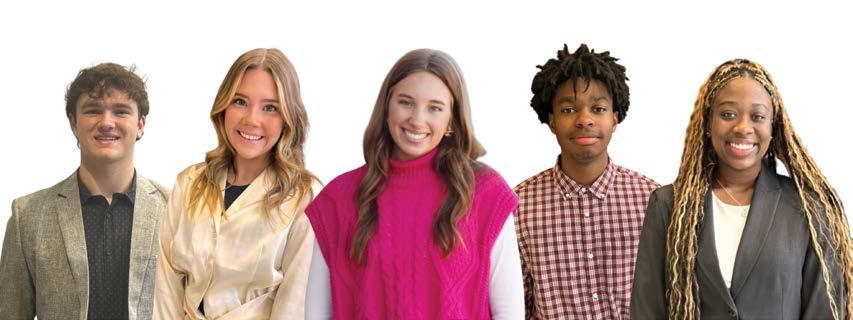
LAWRENCE COUNTY HIGH SCHOOL



Southern Pine Electric is proud to announce Carly Gibson, a junior at Seminary High School, as the cooperative’s Student Ambassador for the 2026–2028 term. Selected through a competitive process, Carly will serve as a representative of Southern Pine while gaining handson experience in communications, public relations, and community engagement across the cooperative’s 11-county service area.
As a Student Ambassador, Carly will be mentored by key cooperative sta and work closely with Southern Pine’s communications team. Through this role, she will gain real-world experience in a wide range of areas, including web design, photography, graphic design, writing press releases and original articles, and representing the cooperative at local and state public service and community events. The program is designed to give students a behind-the-scenes look at how a member-owned electric cooperative communicates with and serves its communities.



“Carly is already a leader in her school, her community, and her church, and that says a lot about her character and her heart for service,” said Drummonds McAlpin, president and CEO of Southern Pine Electric. “We look forward to seeing her apply those experiences in new ways as she helps tell the Southern Pine story and serves our members across the communities we’re proud to call home.”
Carly participated in Southern Pine’s Cooperative University and will serve as one of the 2026 ECM youth leadership delegates, attending the Electric Cooperatives of Mississippi’s Cooperative Leaders Workshop in Jackson, and representing Southern Pine on the all-expenses-paid Youth Tour to Washington, D.C.
Carly is the daughter of Southern Pine members James and Wendy Gibson of Collins.

10 YEARS
Ryan Robertson
Curtis Nelson
Melissa Nixon
Renee Robertson
Michael Helton
Thomas McCallum
Derek Bruce Allen Emanuel Jr.
James Holder
Ronald Hughes
Heather White
Brian Gordon
Jimmy Jordan Timothy McPhail
Brice Hughes
Dale Stewart James Mason
Patrick Qualls
Carolyn Wilson
Ramona Anderson
Lee McCrory
Angela Jordan
David Odom 15 YEARS
Greg Bryant
YEARS
Richelle Smith





If you're tired of having knee pain and want to talk to a doctor that can virtually give you your life back if knee pain is an issue, call Dr. Rob Acord... as he's the only doctor in the area... who has this newly discovered knee pain reduction technology.
If you have knee pain, can't walk because of an old injury, or you just think it's part of getting old, you might want to read this article.
Knee pain is something that disables a lot of people every single year, but most people don't know what to do about it.
Some people immediately opt in for surgery, then some people watch TV and end up buying something they wrap their knee with-hoping it will help, and others just follow orders and take medications which simply block the pain signals while the underlying condition often progresses.
All I'm saying is this. There are a lot of ways to TREAT your knee pain, but which one will really work?
If you've done your research, you know that there are not a lot of things that really work when it comes to actually helping align the knee, taking nerve pressure off the knee, and reducing the pain and swelling.
What if there was a "real solution" that worked from DAY ONE?
Hi, I'm Dr. Rob Acord and I'm here to tell you about a new device called the K.P.R.
I stumbled onto this one-of-a-kind machine at a recent medical conference and tried it myself. THE RESULTS: My knees have never felt so good, and that was after.... just one treatment.
It virtually reduced my knee stiffness by 95%, so I am positive it'll help your knee pain, help you walk better as soon as you get your first treatment, plus help you do some things you used to do without the help of a walker, cane, or someone else helping you

Now, don't get me wrong. I'm not guaranteeing a miracle if you haven't walked in many years.... but this just may be the answer you've been looking for.
Better late than never for sure. You should entertain this option... no matter what's happened to you in the past!
Let me be very clear; I'm here to possibly help you:
Get out of pain
Walk better
Move better
Get up and down better
Get out of chairs easier
AND...
Finally you will be able to move without relying on someone or something else
"What if my knee(s) are BONE ON BONE?"
Here's all I can tell you If you’re bone on bone, and surgery is not an option for you, or surgery didn’t work, this may be the exact treatment you’ve been needing
You'll find out that K P R is an amazing machine when teamed up with our Class IV laser therapy
Great questions and here's the answer: We have a reputation for getting great results, but if you're like most of our patients you know that the knee problem isn't going to just go away on its own. We're also known for our personalized care We don't promise the world, but we will do everything humanly possible to get the results you want.
"I've NEVER done this before!" I'm going to offer you a consultation, knee examination, X-Rays, and TRIAL VISIT for only
$47 $47
We'll know almost IMMEDIATELY if we can help and most importantly, YOU WILL TOO
As you know, it's human nature to procrastinate; this is not the time to do that... WHY?
My Trial Offer goes away at the end of this month It's available as a hard deadline because I have a limited number of trial spots and we are already an extremely busy office. Pick up the phone and call the office now This one call could change the way you walk, feel, and move CALL TODAY!
Dr. Rob Acord, D.C.






by

















by Steven Ward































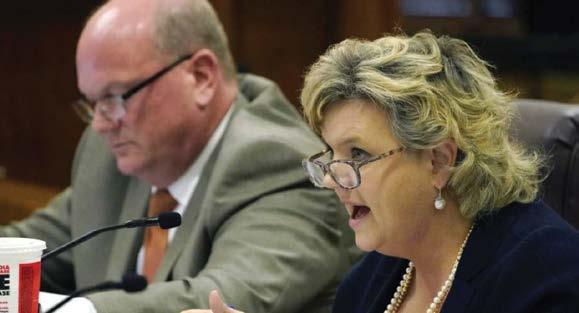
When Nicole Akins Boyd was a junior at Oxford High School in 1986, she received a call from o cials at what was then known as the Electric Power Associations of Mississippi.
They wanted to know if the 17-year-old student was interested in taking an all-expenses paid trip to Washington, D.C.
She had been to D.C. before, but she jumped at the chance for another trip.
“I was enchanted with Washington, D.C. I definitely wanted to go back,” Boyd, 56, told Today in Mississippi recently.
Boyd said the co-op organization wanted her to attend the 1986 National Rural Electric Cooperative Association’s (NRECA) Youth Tour in D.C. and to come back and report to Mississippi co-op leaders why the state should participate in the national program.
Boyd and her family were members of North East Mississippi EPA.
She obviously convinced them.
That trip represented the beginning of the Electric Cooperatives of Mississippi’s Cooperative Youth Leaders program.
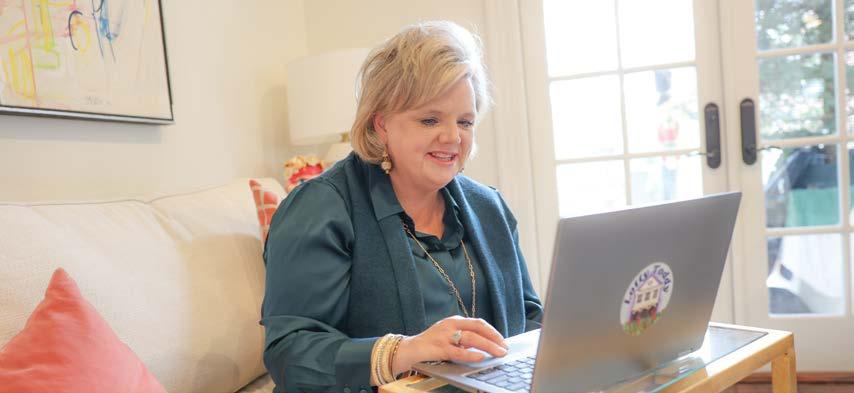
Not only was Boyd the state’s first NRECA Youth Tour student, today she is a Mississippi state senator representing District 9.
Leadership training is a bedrock foundation of Mississippi’s Cooperative Youth Leaders program as well as NRECA’s Cooperative Youth Tour.
Boyd is a shining example of how the program can inspire Mississippi’s youth to make an impact and give back to the communities that nurtured them.
“I loved it and came back from the trip wanting to make positive change,” Boyd said.
The choice of Boyd made sense to co-op leaders.
The only child of a Mississippi State University Extension Service home economist, Boyd traveled with her mother, Joyce Akins, around her territory in Lafayette County teaching homemakers about nutrition, budgeting, sewing, and food preservation.
“There were similarities between electric cooperatives and what my mom did. The folks she worked with were co-op members,” Boyd said.
Boyd was also heavily involved with 4-H as a president and spokesperson. Those positions led to traveling to Washington, D.C. and Chicago before she became aware of the co-op youth tour.
Boyd’s father, Noal Akins, worked for years as a history teacher and later became a member of the Mississippi House of Representatives, where he served four terms from 2004 to 2012.
When co-op leaders reached out to Boyd about the Washington, D.C. trip, Boyd said she didn’t know anything about electric cooperatives.
“Mr. Lovelady (W.N. Lovelady, then-general manager of North East) kind of got me up to speed before the trip. He really schooled me,” Boyd said laughing.
Since Mississippi hadn’t participated in the program, Boyd traveled with students from the Tennessee delegation.
“They took me right in just like I was one of their own,” Boyd said.
Boyd said she had the opportunity to meet with the state’s congressional delegation when she was on the trip.
“What you saw on TV never did Washington, D.C. justice. It was amazing to be there,” Boyd said.
to the national capital where they can actually see what the flag stands for and represents.”
In the following years, some Texas cooperatives sent groups of young people to D.C. to work during the summer in Johnson’s o ce.
In 1958, a co-op in Iowa sponsored the first group of 34 students on a weeklong tour of the nation’s capital. Later that same year, another group of students arrived from Illinois.
By 1959, the “youth tour” had grown to 130 students.
It’s been so critical for kids and families.
For education, telehealth, and working remotely. We are years ahead because of the electric cooperatives.
Boyd also said she made some good friends with some students in the Texas delegation.
Texas was part of the D.C. youth tour’s origin story.
According to NRECA, at the group’s annual meeting in 1957, then-Sen. Lyndon Baines Johnson said in his address to the group, “If one thing comes out of this meeting, it will be sending youngsters
In 1964, NRECA began coordinating joint activities among the state delegations and suggested that co-op representatives from each state arrange to be in D.C. during Youth Tour Week. The first year of the coordinated tour had 400 delegates from 12 states.
When Boyd arrived in June 1986, she was one of 900 delegates from across the country.
Today, almost 1,800 delegates from 45 states attend the weeklong event.
When Boyd came back to Mississippi, she went to the Electric Power Associations of Mississippi’s (now known as the Electric Cooperatives of Mississippi) annual meeting in Gulfport to sell state co-op leaders on sending delegates to NRECA’s Youth Tour annually.







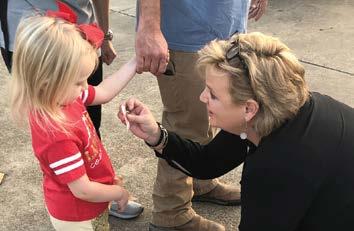
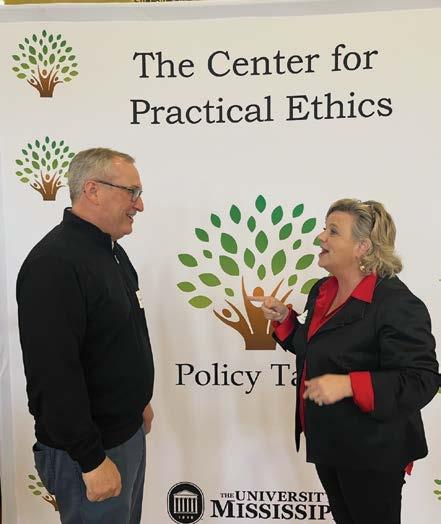
“It was a very worthwhile thing to do. From meeting other students from around the country to showing there was a way for us (Mississippi students) to do more good for our communities,” Boyd said.
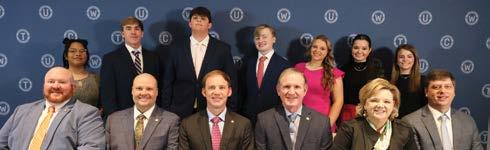
This year will mark the 39th Cooperative Youth Leaders program. Sponsoring co-ops have paid for 84 high school juniors from around the state to attend this June’s youth tour in Washington, D.C.
Boyd wound up graduating from Mississippi State University and getting a law degree from the University of Mississippi.
After graduating from Ole Miss, Boyd worked with the State Attorney General’s O ce in the natural resources division. She also worked with the state Legislature to advocate for anti-tobacco legislation. Later, she worked on children’s and family issues, including on policy proposals involving autism and special needs.
Boyd and her husband, Ole Miss athletics physician Dr. Daniel Boyd, have a 21-year-old son, Speight, who is autistic. The couple also has a daughter, Izzy, who is attending Harvard Law School.
Boyd thought she might be able to become a better advocate for the issues she cared about if she became a lawmaker.

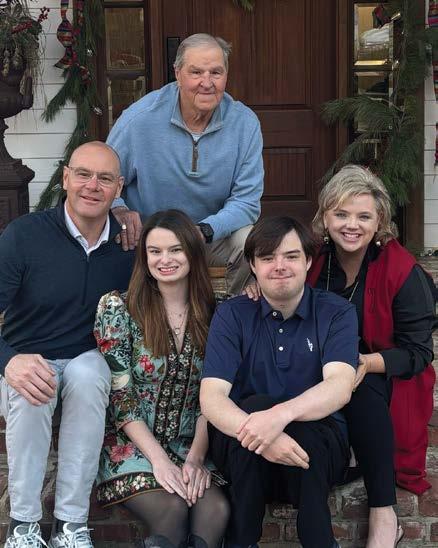

She ran for the Senate District 9 seat in 2019 and was sworn into o ce in 2020.
Boyd represents parts of Lafayette and Panola counties. She has constituents that are members of four di erent electric co-ops — North East, Tallahatchie Valley, Northcentral, and Pontotoc.
“Nicole is an excellent legislator. She is responsive, takes the time to listen to our concerns, and is highly attuned to the needs of Oxford and Lafayette County, as well as the entire state. She is a true asset to Mississippi,” said North East Mississippi EPA General Manager Keith Hayward.
Boyd praised the electric cooperatives in the state for their pioneering work in bringing high-speed internet to rural residents.
“It’s been so critical for kids and families. For education, telehealth, and working remotely. We are years ahead because of the electric cooperatives,” Boyd said.
When asked if her experience with the electric cooperative D.C. youth tour had an impact on her decision to become an elected o cial, she said there was no doubt that it did.
“As a legislator, I’m constantly required to become an expert on all kinds of di erent subjects. At 17 with the youth tour, I learned about that early and had to do something similar. Also, you have to network with di erent people to get things done. Those are important lessons I learned,” Boyd said.






Send us a photo of grandparents with their grandchildren. At whatever age. The photos must be high-resolution JPG files of at least 1 MB in size. Please send the photo as an attachment to an email and send it to news@ecm.coop.
Each entry must be accompanied by photographer or sender’s name, address, and co-op.
SUBMISSION DEADLINE: Feb. 27. Select photos will appear in the April 2026 issue.



• Rate schedule is based on your current age and is guaranteed for the life of the policy.
• Monthly rates as low as $3.49.
• Coverage is also available for your spouse and other family members.
• Benefits will NEVER be canceled or reduced for the life of the policy if premiums are paid on time. Policy
• Rates are based on your children’s or grandchildren’s
• Monthly rates as low as $2.17.
• Benefits will NEVER be reduced or canceled if premiums are paid on time.
• Give your children a financial head start right now. Your policy builds CASH VALUE for your family’s needs.










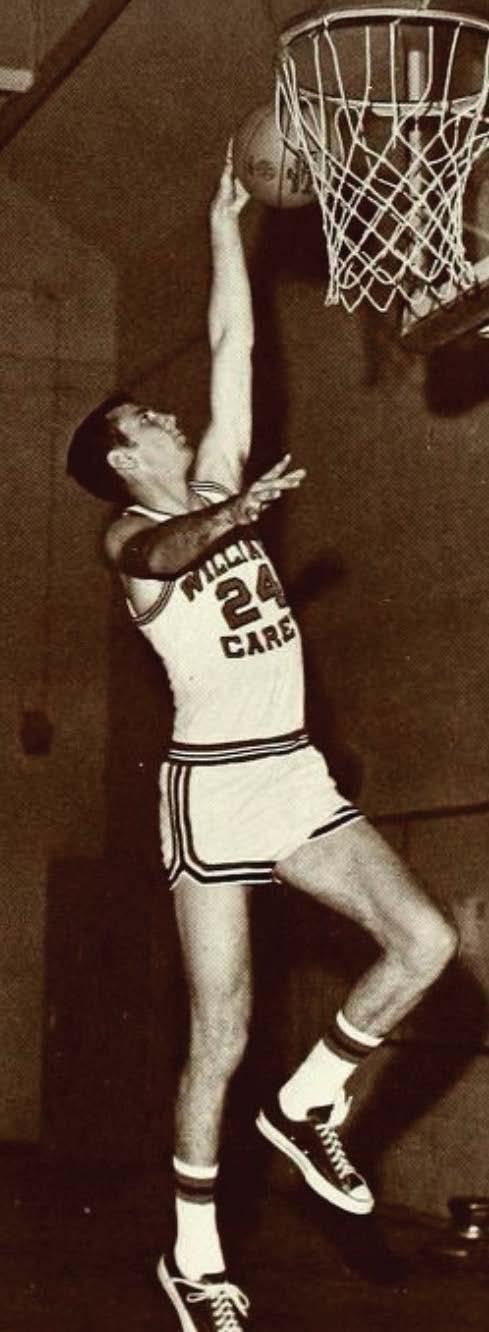


In the 1960s, the southern part of our state produced several big-time college basketball players.
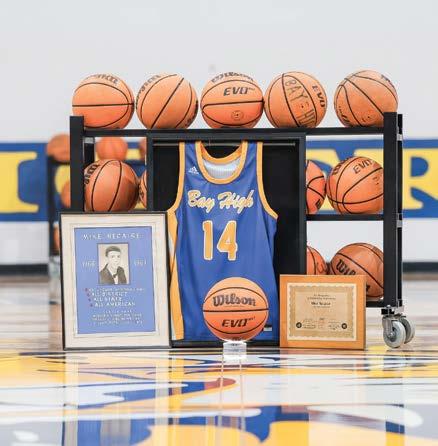
One of those players still talked about today is Mike Necaise of Bay Saint Louis. On the coast, Mike is a basketball legend. You will never hear anyone say a bad word about Mike Necaise.
The talented Bay High School player was one of the top recruits coming out of high school in 1967. Necaise was a big-time scorer as he averaged 41.9 points and 20 rebounds per contest. Bay High had their best season in school history compiling a 32-3 record. “I was fortunate to have great high school teammates and a great coach in Wilmer Seymour, who motivated me to be the best I could be,” Necaise said.
“I was influenced by my older cousins growing up. When they needed an extra player, they would let me play,” stated Necaise. “When I got older, I worked out with Mississippi State basketball great Leland Mitchell.”
Necaise filled about every gymnasium his senior year. He once scored 62 points in three periods before being taken out of a game. He scored over 50 points four times his senior year.
Necaise was chosen to play in the Mississippi Coaches Association All-Star game. He was named Most Valuable O ensive Player in the contest.
The 6-foot, 4-inch center was named to the High School All-American team and to the All-State first team. He was named the Most Valuable Player in the Gulf Coast Conference.
“It was a great honor when Bay High hung my No. 14 jersey up and named the basketball court the ‘Mike Necaise Court’,” Necaise said.
Kentucky, North Carolina, and UCLA were just three of the 100 colleges recruiting the coast legend. At first, Mississippi State won the recruiting war, but Necaise would end up at William Carey College. “The Mississippi State coaches farmed or loaned me to Carey for one year.”
Necaise went to Carey to play in a 1,300 one-sided seat gymnasium. Because of Necaise’s high school fame, the demand for tickets during the early part of the season forced the college to construct 1,100 more seats.
Necaise did not disappoint in his first game as a Crusader. He scored 42 points against Pensacola Naval Station. He scored 21 points in each half, grabbed 15 rebounds, and blocked six shots in that opening win. “Necaise Fever” had moved from the Gulf Coast to the Hattiesburg area.
“After my freshman year, I decided to stay at William Carey. I enjoyed being close to family, and Coach John O’Keefe was the most knowledgeable coach. He taught me so much about the game,” Necaise said.
Necaise averaged 29.1 points his senior season and over his four-year career at William Carey scored 2,107 points and was named an All-American.
“I wish they would have had a three-point line when I was in high school and college,” Necaise said.
William Carey honored Necaise in 1990 by retiring his No. 24 jersey. He is also in the William Carey Sports Hall of Fame.
Seattle drafted Necaise 91st overall in the 1971 NBA Draft. He was also drafted by the New York Nets of the American Basketball Association. He would sign with the Nets. “You know, I played center in high school and forward in college but was asked to play guard with the Nets. It was not a good fit. So, I came back home,” Necaise said.
Necaise returned to the coast and coached high school basketball. A few years later, he moved into the administration of Hancock County schools. Later, he ran four times successfully for Hancock County Chancery Clerk.
Necaise is married to Suzette, and they have four children, Micah, Brian, Brooke, and Brianna. Micah played at William Carey while daughter Brooke signed with Southeastern Louisiana University.

“He’s one of the finest high school basketball players I have ever seen. He is such an unselfish player. Great all-around player, he can rebound, score, and was tough on defense.”
— Former Gulfport High School Hall of Fame coach Bert Jenkins in a December 1966 Biloxi Daily Herald article.
“Mike had terrific elevation on his textbook lefty jump shot. Incredible range and great ability to create shots. Had he not left Mississippi State, I have no doubt that he would have been a first team all SEC player. My dad was the head coach at the University of Southern Mississippi, and he and I attended most of Necaise’s games his senior season.”
— former Chicago Bulls and University of Southern California head coach Tim Floyd.
“Mike Necaise is arguably the greatest basketball player ever to come out of Hancock County, the Mississippi Gulf Coast, and the state. Mike was long, athletic, and could really score but what was so underrated was his unselfishness and ability to pass the ball. He was such an incredible player and a joy to watch.”
— former Picayune High School coach and former Southern Miss Athletic Administration and Coaching professor Larry Ladner, as told to his son Jay, the current USM head basketball coach.
“I cut my sports writing teeth covering William Carey when Mike played. It was fun to go to the games and cover Carey because of the excitement Mike created. He was so talented at scoring. He was a lefty, and he would find a way to create a shot when it looked impossible. He was a very unselfish player and played at a higher level when playing the larger schools. I am still puzzled that Mike Necaise has not been inducted into the Mississippi Sports Hall of Fame”
— Mississippi sportswriter and member of the Mississippi Sports Hall of Fame Rick Cleveland.
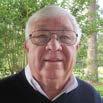
by Dale McKee
Dale McKee is a Waynesboro native who has been writing about sports in Mississippi since 1973. He is a member of Dixie Electric. Contact him at ddmckee18@yahoo.com.











Jambalaya is a savory, one-pot Creole rice dish that is easy and quick to make. Jambalaya uses the “holy trinity” as its aromatic base. The “holy trinity” is celery, bell peppers, and onions. Jazz up a traditional jambalaya by switching up ingredients. Let a traditional recipe be your flexible guide. Replace or complement Andouille with other smoked sausages, such as venison, turkey, or hot Italian sausage. Add in duck, venison, or pork tenderloin in place of chicken. Create a seafood jambalaya using Mississippi Gulf Coast seafood, including shrimp, crabmeat, scallops, or mussels. Add raw seafood near the end of cooking to prevent overcooking.


Red beans and rice is a classic Creole comfort food. It, too, starts with the “holy trinity,” followed by red kidney beans (or small red beans) simmered slowly with a flavorful blend of vegetables, spices, and smoked meat, served over a bed of white rice. Making red beans and rice from scratch with dry beans is the most cost-effective method and can feed a family for very little.
The secret to the best carnival rice dish: use medium-low heat and let each ingredient develop its flavor. Don’t rush it. When you add butter, the “holy trinity,” or spices, stir slowly, let them bloom and soften.
1 pound sausage sliced into rounds (beef, turkey, chicken, or venison)
1 pound shrimp, medium (peeled and deveined)
2 celery stalks, diced
3 cloves garlic, minced
1 green bell pepper, diced
1 onion, medium, diced
1 can tomatoes, with juices (14.5-ounce)
3+ cups chicken broth
1 1/2 cups rice, long-grain
1 tablespoon Cajun seasoning
1/2 teaspoon paprika, smoked
1/2 teaspoon thyme, dried
1/2 teaspoon salt and freshly ground black pepper
2 tablespoons olive oil
In a large Dutch oven or saucepan, heat olive oil over medium. Add sausage rounds and sauté until golden brown — about 5 minutes. Remove sausage and set aside.
In the same pot, add diced onion, bell pepper, and celery. Sauté — about 5 minutes, stirring often, until softened and aromatic. Stir in the minced garlic and cook until fragrant — about another minute.
Add the rice, stir well. Pour in the diced tomatoes (with juice), chicken broth, Cajun seasoning, thyme, paprika, salt, and black pepper. Stir well.
Bring the mixture to a gentle boil. Then reduce the heat, cover, and simmer on low for about 20 minutes. Resist lifting the lid too often — but keep an eye on rice if it needs more broth or water. Add a ½ cup at a time. You want your rice almost done before adding the meat.
Once the rice is tender, stir in the sausage and shrimp. Cover and cook for another 5 minutes, or until the shrimp are pink and fully cooked through.
1 pound dry kidney beans
2 tablespoons olive oil
1 large onion, chopped
1 green bell pepper, chopped
2 stalks celery, chopped
2 tablespoons minced garlic
6 cups water
2 bay leaves
1 tablespoon dried parsley
1 teaspoon dried thyme
1 teaspoon Cajun seasoning
1/2 teaspoon cayenne pepper
1/4 teaspoon dried sage
1 pound sausage sliced into rounds (beef, turkey, chicken, venison)
4 cups long grain white rice, cooked
Rinse dry beans and soak in a large pot of water overnight. Heat oil in a skillet over medium heat. Cook onion, bell pepper, celery, and garlic in olive oil — about 5 minutes.
Rinse beans and transfer to a large pot with 6 cups of water. Stir cooked vegetables into beans. Season with bay leaves, parsley, thyme, Cajun seasoning, cayenne pepper, and sage. Bring to a boil and then reduce heat to medium-low. Simmer for 2 ½ hours or convert it to a crock pot and cook on high for about 1.5 to 2.5 hours, or on low for 4 to 6 hours.
Stir the sausage into beans, and continue to simmer for 30 minutes, till the beans are tender.
Meanwhile, prepare the rice per package instructions.

by Rebecca Turner
Rebecca Turner is an author, registered dietitian, radio host, television presenter, and board-certified in Lifestyle Medicine. She is a lifelong Mississippian and a member of the Central Electric Co-op in Brandon. Find her on social media @RebeccaTurnerTalks or online at RebeccaTurnerNutrition.com.

Events open to the public will be published free of charge as space allows. Submit details at least two months prior to the event date. Submissions must include a phone number with area code for publication. Email to news@ecm.coop. Events are subject to change.
“Diary of a Wimpy Kid -The Musical” Feb 12 -15. Pearl. Pearl Community Theatre will put on the production at The Pirate Auditorium, 180 Mary Ann Dr. Details: 601-214-1888 or visit pearlcommunitytheatrems.org.
Space to Create Writing Retreat. Feb. 26 to March 1. French Camp. Connect with other writers, move forward with writing goals, enjoy time to write, and get feedback on your writing. The retreat will begin at 4 p.m. on Feb. 26 with check in and a dinner at 6 p.m. and will conclude March. 1. The deadline to apply is Feb. 6. Details: Email erinulerich@gmail.com or visit spacetocreatewritinglife.wordpress.com.
The 38th annual Arbor Day 5K-1/4 Mile Disability Run/Walk/Roll. Feb. 28. Biloxi. The event will be held at the Point Cadet Park, 121 Cadet St. The Run is a partnership between the Gulf Coast Running Club, Disability Connection, and the City of Biloxi to encourage people with disabilities to enjoy the healthful fun of a run. The run registration fee is $25 per person. Early discount pre-registration of $22 is available through Feb, 19 at GulfCoastRunningClub.org. All participants receive a t-shirt and free trees while supplies last. Everyone with challenges to running receive a medal. Everyone can enjoy playing basketball or soccer with MS Coast Special Needs Soccer. Registration begins at 8 a.m. The 5K starts at 9 a.m. and the ¼ Mile starts at 9:45 a.m. This fun outdoor event promotes healthy lifestyles to individuals of all ages with and without disabilities. People with disabilities are included in each length of the race, some in racing wheelchairs. The race includes a ¼ mile challenge so that everyone, including those in wheelchairs, can participate in the healthful benefits of a run. Event proceeds support the Disability Connection programs and events. Details: 228-604-4020.
Mississippi Gem and Mineral Society’s Gem Show. Feb. 28 to March 1. Jackson. The event will be held at the Mississippi Trade Mart at the State Fairgrounds. There will be 28 vendors and other educational/research organizations involved in Earth Science on site. There will be various jewelry demonstrations, cabbing demonstrations, a touch and see table, along with children’s activities. Admission is $8 for adults, $5 for students, $2 for scouts and leaders in uniform, and children 5 and under are free. The hours Saturday are 9 a.m. to 6 p.m. The hours Sunday are 9 a.m. to 4 p.m. Details: 601-259-8801.
Mid-South Military History & Civil War Show. March 6 and 7. Southaven. The South’s oldest military history show, will be at the Landers Center on I-55 and Church Road, Exit 287. Open March 6 from 1 p.m. to 6 p.m. and March 7 from 9 a.m. to 5 p.m. Admission is $10 each day for adults, a two-day pass for $15, and children 12 and under free. Parking is free. Vendors from across the country will have quality artifacts from the American Revolution through the 20th Century available to buy, sell, or trade. These include books, documents, prints, uniforms, weapons, relics, photographs, and Native American items. Musicians, re-enactors, and food trucks will be on site. On Saturday, historians will speak on topics from the American Revolution, Civil War, and World War II. Civil War re-enactors with a cannon will be there as well. Details: 901-832-4708 or email dwharrison@aol.com.


Gulf Coast Military Collectors Show. March 27 and 28. Biloxi. The event will be held at Joppa Shriner’s, 13280 Shriner’s Blvd. The show Friday will be from 11 a.m. to 5 p.m. and on Saturday from 9 a.mn. to 4 p.m. Historic artifacts and souvenirs from all periods and wars will be bought, sold, traded, and exhibited. Admission is $7. Details: 228-224-1120 or email terrell.hamilton@gmail.com.
















Occasionally, I hear from some of my old friends from high school or college. I mostly keep up with them (and they with me and Miz Jo) on Facebook. What would we do without social media on which to send our birthday greetings and Christmas cards? Not to mention cell phones to connect with the world — or at least, as much of it as we want to connect with.
Back when cell phones expanded from just talk and text to smart phones, I rebelled. “All I want to do with my phone is make calls,” I announced to no one in particular. Now, making calls is way down on the list of things I use my phone for. My phone has replaced the dictionary, encyclopedias, and road maps — complete with a back-seat driver telling me to “Turn here. Turn here. Recalculating.” I even shoot all my television stories on my phone.
What Gutenberg’s printing press was to the Middle Ages; the capability to modulate electromagnetic waves is to our age. Instant connectivity. The phones give us the entirety of all the knowledge of humanity at our fingertips. Not to mention, it created the medium in which I have been employed since high school- broadcasting.
“High school” brings me back where I started a paragraph or so ago. An old school buddy of mine, Jimmy Slay in Meridian, called and asked me if I would come speak to the senior group at Chucky Baptist Church for their monthly meeting. Jimmy and I took a bunch of classes together when we were at Mississippi College. The one I remember most vividly was biology. We were on the same team dissecting a worm — one worm for three people. I was chosen to do the dissecting. I carefully made the required incisions with the scalpel and pulled back the epidermis without so much as touching a single internal organ. Jimmy was impressed. “Oh Walt!” he said. “You missed your calling! You should have been a worm surgeon!”
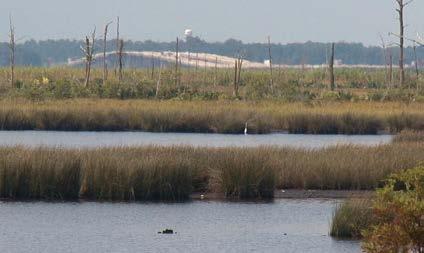
Chunky is in Newton County about 10 miles west of Meridian. It’s on the Chunky River a few miles upstream from Stuckey Bridge, which is supposed to be haunted. The bridge is a few miles upstream from Dunns Falls, the tallest waterfall in Mississippi. A little farther south, the Chunky River merges with Okatibbee Creek near Enterprise to form the Chickasawhay River, which merges with the Leaf River at Merrill to form the Pascagoula River, which empties into the Gulf at Pascagoula to form the oceans of the world.

I have probably done more stories about the Pascagoula than any other single river in the state. For such a short river (two counties long), it has a lot of character. There are high clay banks on the north — through swaps in the middle — to broad saltwater flats at the Gulf. Not only that, but it also still has places where you can’t get any “bars” if you want to disconnect from the world for a while.
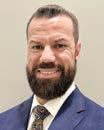
by Walt Grayson
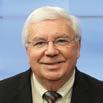
Walt Grayson is the host of “Mississippi Roads” on Mississippi Public Broadcasting television and the author of two “Looking Around Mississippi” books and “Oh! That Reminds Me: More Mississippi Homegrown Stories.” Walt is also a reporter and 4 p.m. news anchor at WJTV in Jackson. He lives in Brandon and is a Central Electric member. Contact him at walt@waltgrayson.com.













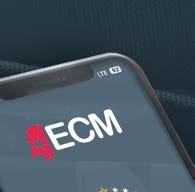










The Electric Cooperatives of Mississippi o ers an easy-to-use mobile app, which provides information on Mississippi’s state and federal elected o cials. Look for “ECM Legislative Roster” in the Apple App Store. An Android version is also available through the Google Play Store.