Frank Wiens
Friday, January 30
7:30 pm
Faye Spanos Concert Hall piano
Auf Flûgeln des Gesanges
Gretchen am Spinnrade
Auf den Wasser zu singen
Felix Mendelssohn (1809–1847)
transc. Franz Liszt
Franz Schubert (1797–1828)
transc. Franz Liszt
Sonata in C major, op. 53 “Waldstein” Allegro con brio
Introduzione: Adagio molto
Rondo: Allegretto moderato
Pause
Ludwig van Beethoven (1770–1827)
JANUARY 30, 2026, 7:30 PM
Causerie (Étude), op. 40, No. 6
Transcendental Etude, op. 11, No. 10 “Lezginka”
César Cui (1835–1918)
Sergey Lyapunov (1859–1924)
June: Barcarolle, op. 37, No. 6
No. 2: Gavotte, from Ten Pieces, op. 12
Pyotr Il’yich Tchaikovsky (1840–1893)
Sergey Prokofiev (1891–1953)
Sonata No. 2 in B-flat minor, op. 36
Allegro agitato
Lento
Allegro molto 19′ 11′ 7′
Sergei Rachmaninoff (1873–1943)
Notes by Frank Wiens
PROGRAM NOTES
Mendelssohn/Schubert/Liszt:
Three Art Song Transcriptions
In addition to being the most famous concert pianist of the nineteenth century and a distinguished composer of numerous works, Franz Liszt was also a champion of the works of other composers. Many of the symphonies of Beethoven and songs of Schubert may have been first heard in many communities in Europe in the form of piano transcriptions included on the programs of this renowned touring artist. These three transcriptions include one art song by Mendelssohn and two by Schubert. Especially in the two Schubert songs, which have very active accompaniments, Liszt cleverly displaces some of the melody notes rhythmically in order to keep the accompaniment part intact.
Beethoven: Sonata in C major, op. 53 “Waldstein”
This sonata is considered one of the hallmark virtuosic sonatas of the middle period of Beethoven’s 32 sonatas for the piano. Unlike some of the others, its nickname of “Waldstein” is because of its dedication to Beethoven’s friend and patron the Count von Waldstein, rather than carrying a descriptive title like “Moonlight,” “Appassionata,” or “Les Adieux.” It is constructed in what appear to be three movements, a sonata allegro design for the first movement and a rondo design for the finale, both with codas. In between is a short meditative section entitled Introduzione, which serves as more of an introduction to the rondo that follows than any kind of substantial slow movement.
Cui: Causerie (Étude), op. 40, No. 6
Despite a very un-Russian name, César Cui is considered part of the Russian five who were trying to create a specific Russian musical language, along with better known composers like Mussorgsky, Rimsky-Korsakov, Balakirev, and Borodin. This work is more of a salon piece and doesn’t seem especially Russian in flavor.
Lyapanov: Transcendental Etude, op. 11, No. 10 “Lezginka”
This composer was a student of Tchaikovsky and Taneyev at the Moscow Conservatory. While he is, like César Cui, not especially well-known, he fell under the influence of the composer Balakirev. That composer’s most famous piano piece is entitled Islamey, and there are similarities in this piece to Balakirev’s signature work for piano. Both have material which has roots
PROGRAM NOTES
in the Caucasus area of central Russia. Balakirev’s own fascination with Liszt influenced Lyapanov to try to create his own version of Transcendental Etudes following the model of Liszt. The name “Lezginka” comes from a fast folk dance from Dagestan.
Tchaikovsky: June: Barcarolle, op. 37, No. 6
This work is from a set of pieces commissioned by Nikolai Bernard, editor of a music magazine, and asking for 12 short pieces to correspond with the months of the year. Written between 1875 and 1876, each piece was to demonstrate the character of that month in Russia. This particular piece has been transcribed for various instruments and for orchestra.
Prokofiev: No. 2: Gavotte, from Ten Pieces, op. 12
This comparatively early work by Prokofiev falls clearly in his neo-classical period. Even though it follows more dissonant and modern sounding works in terms of when it was written, it is still pretty conservative harmonically compared with later works of this composer. In several works in this set Prokofiev uses older dance titles, like Rigaudon, Scherzo, and Allemande. Prokofiev performed this piece frequently as an encore. Coincidentally, both this work and the Tchaikovsky work preceding it share the same key scheme, with the outer sections in G minor and the middle section contrasting in the key of G major.
Rachmaninoff: Sonata No. 2 in B-flat minor, op. 36
Rachmaninoff wrote two piano sonatas, both large, sprawling forms. The second sonata, initially written in 1913, the composer felt had too much superfluous material and in 1931 he made drastic cuts to create this revised version. His friend, the pianist Vladimir Horowitz, thought that the cuts were too drastic, and asked Rachmaninoff’s permission to construct his own version using some of the material that had been in the original. Rachmaninoff gave his permission and Horowitz recorded a version somewhere between the two versions in length. The sonata is in three movements in the normal pattern of a fast movement, followed by a slow movement, followed by a concluding fast movement.
Frank Wiens is a professor emeritus at University of the Pacific, where he taught piano from 1976 until his retirement in 2020.
Wiens’s performing career has taken him to Eastern and Western Europe, Asia, and throughout the United States. Possessing a concerto repertoire of over 35 works, he has been a frequent soloist with symphony orchestras in USA and abroad. His recitals have taken him to major cities like London, Warsaw, Vienna, Seoul, New York, and Los Angeles.
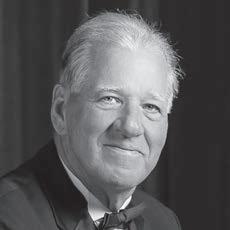
Frank Wiens gave his New York debut at Carnegie Recital Hall. His London recital debut took place in May of 1986. He made his European continental debut in Vienna at the Brahms-Saal of the Musikverein. He has also performed a concert tour of the Soviet Union, Romania, Poland, and two tours in South Korea. Frank Wiens returned to New York to give a recital for the 100th birth anniversary of Prokofiev. He was invited to tour the Soviet Union in April of 1991 in numerous solo and orchestral engagements as part of the 100th anniversary celebrations in Prokofiev’s native land.
In the fall of 1994 Frank Wiens traveled to Bratislava, Slovakia, to record a compact disc including the Rachmaninoff Third Concerto with the Slovakia National Orchestra and the Rachmaninoff Sonata No. 1. The CD was released internationally in 1995 on the Fanfare-Intersound label. Late in 2006, Frank Wiens appeared as soloist with the Orchestra “Dinu Lipatti” in Romania, and gave solo recitals devoted to the music of Chopin at the Chopin Academy and at the Lazienki Palace on Water in Warsaw, Poland.
In 2009 he was the recipient of the Stockton Arts Commission’s award for Outstanding Achievement in Music. Since 1976 he has been at the University of the Pacific Conservatory of Music, where he received the ResearchLecturer Award and the Distinguished Faculty Award. He was awarded the Order of Pacific upon his official retirement in 2020.
Every gift to the Conservatory from an alum, parent, or friend makes an impact on our students. Our students rely on your generosity to enable them to experience a superior education.
Please contact the Assistant Dean for Development at 209.932.2978 to make a gift today. You may also send a check payable to University of the Pacific: Conservatory of Music, University of the Pacific Attn: Assistant Dean for Development 3601 Pacific Avenue Stockton, CA 95211




To view our upcoming events, scan the QR code or visit Pacific.edu/MusicEvents