Even in winter, Wellsboro’s Kyle Bower has people screaming for his hand-crafted ice cream gelato.
Karey Solomon
Lilace Mellin Guignard
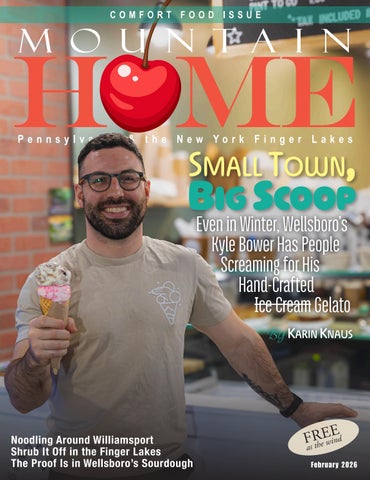
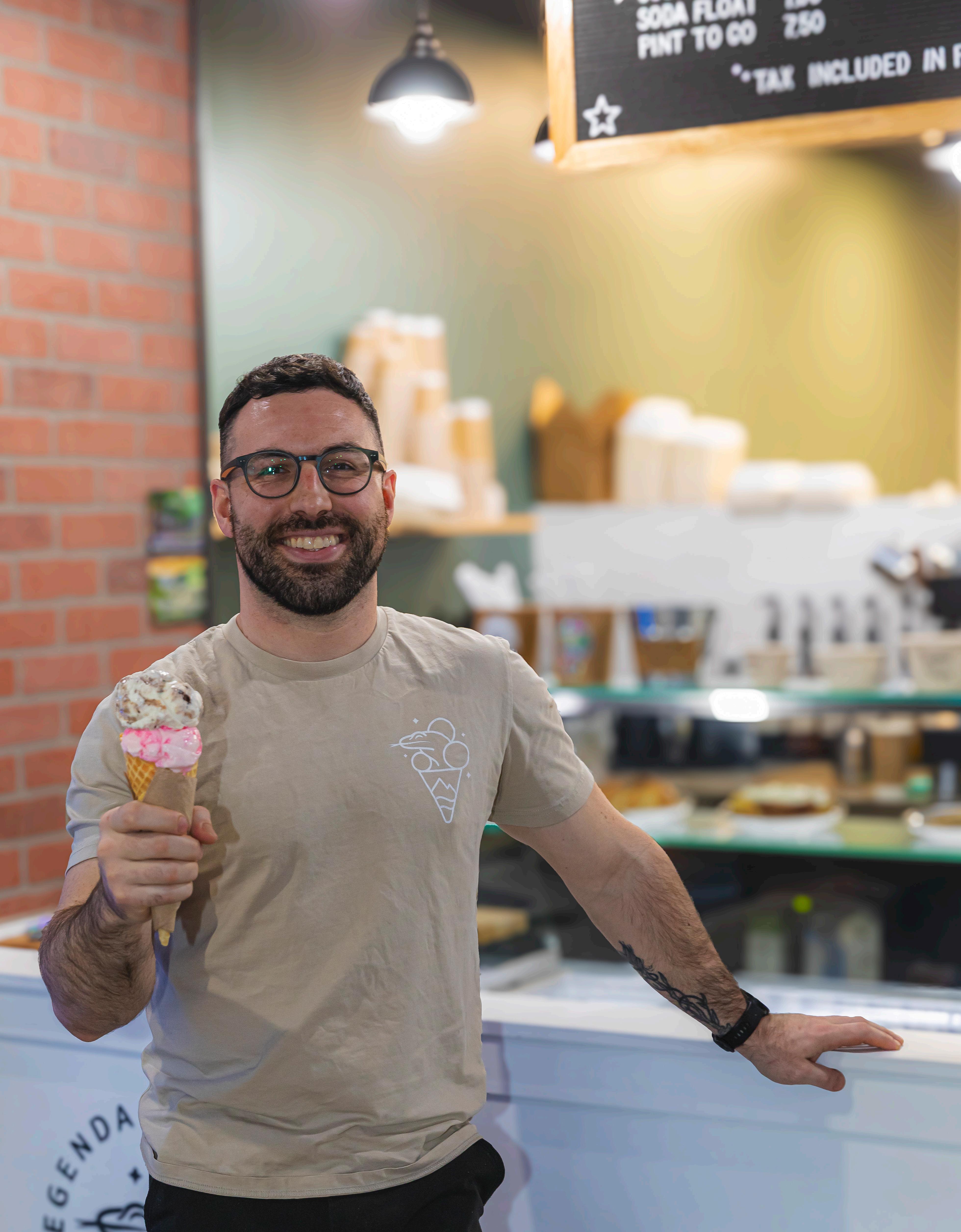
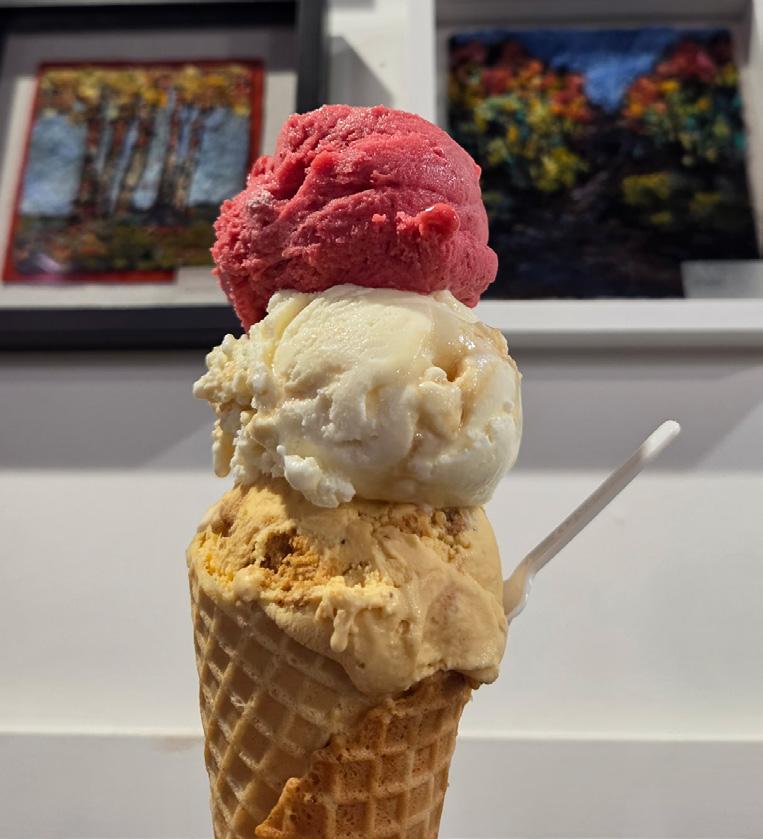
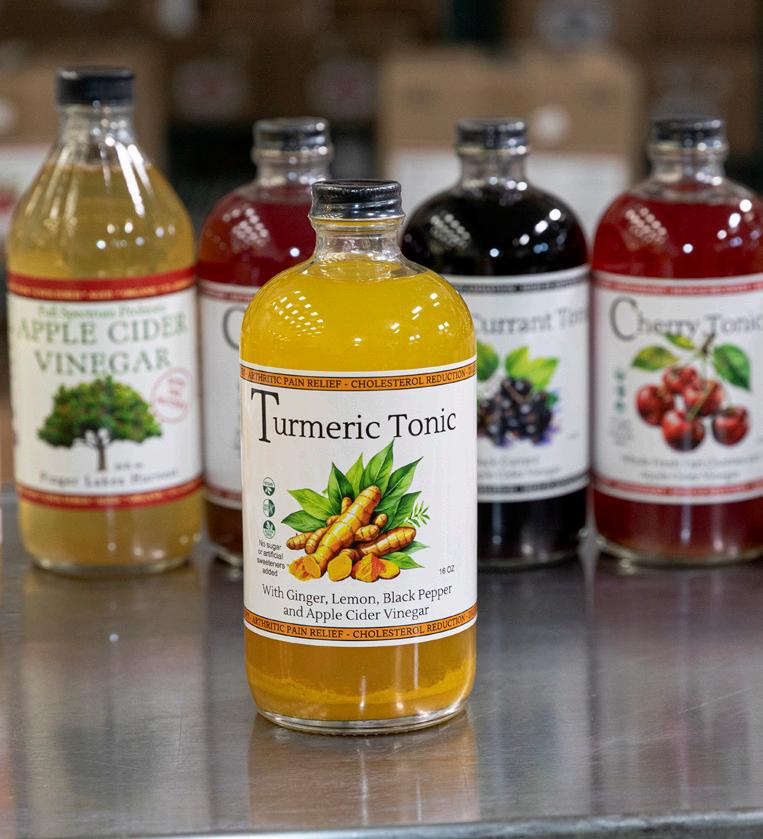
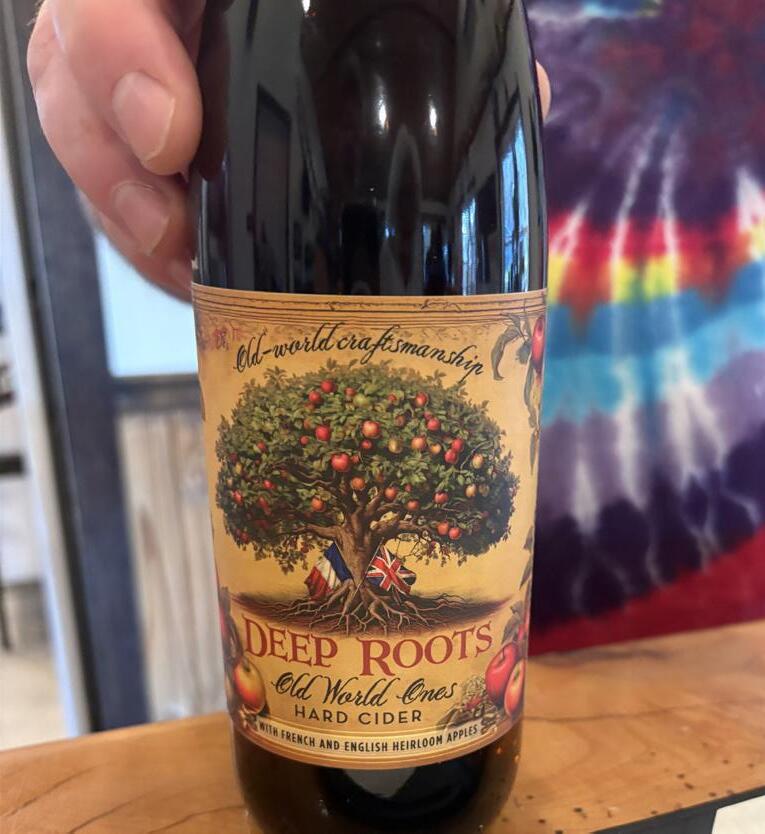
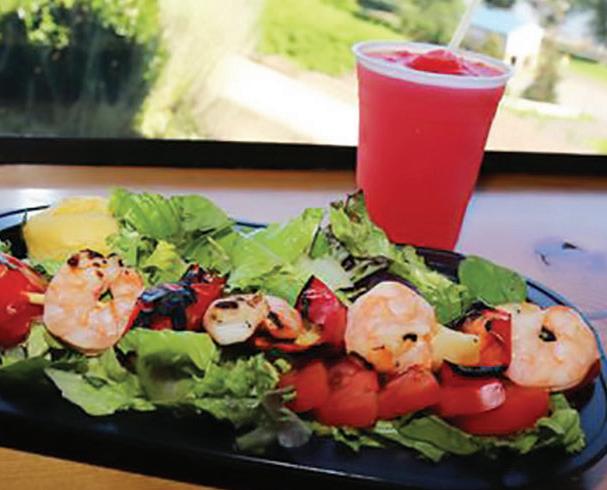
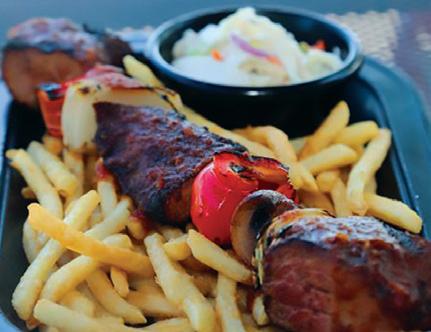
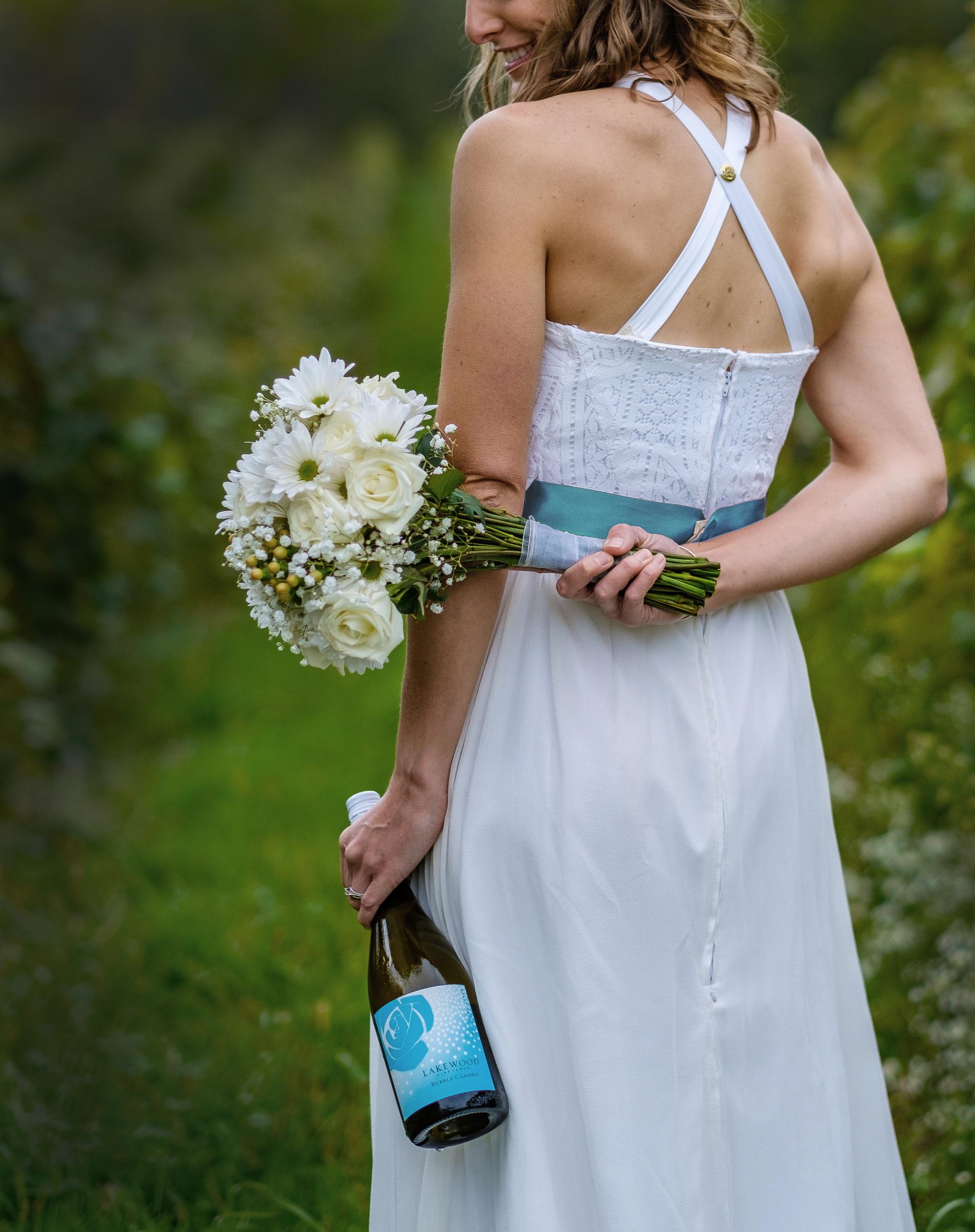
Cover photo Kyle Bower by Wade Spencer. This page (top) Komodo Gelato offerings by Kyle Bower; (middle) Finger Lakes Harvest offerings by Wade Spencer; (bottom) Deep Roots Hard Cider offerings by Lilace Mellin Guignard.
HAMILTON-GIBSON
DUCTIONS
FEB 20, 21, 27, & 28 at 7:30PM FEB 22 & MAR 1 at 2:30PM
THE WAREHOUSE GALLERY THE WAREHOUSE THEATRE
Sponsored by Bev McKnight, and by Dan Usavage and family in memory of Karen Usavage
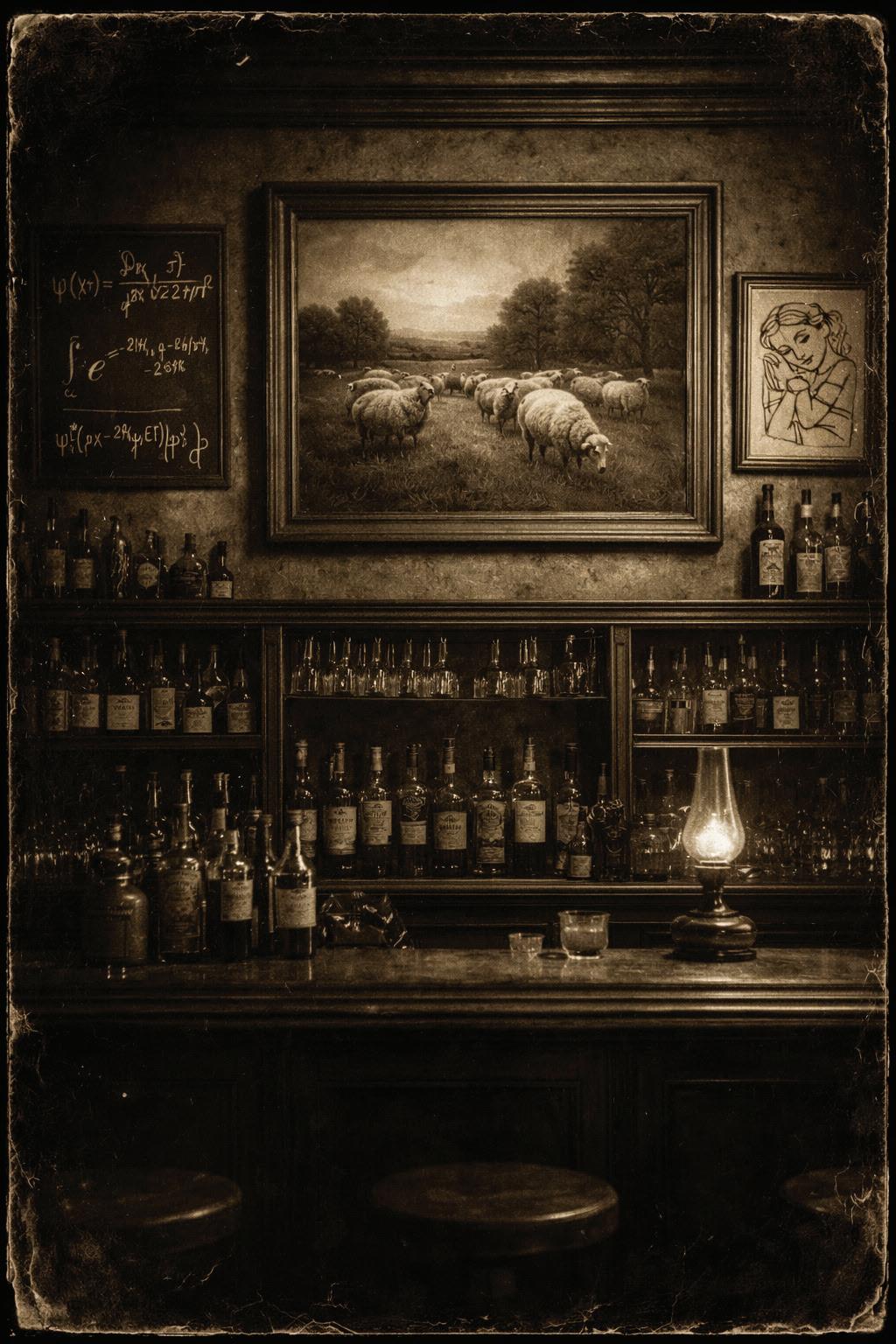
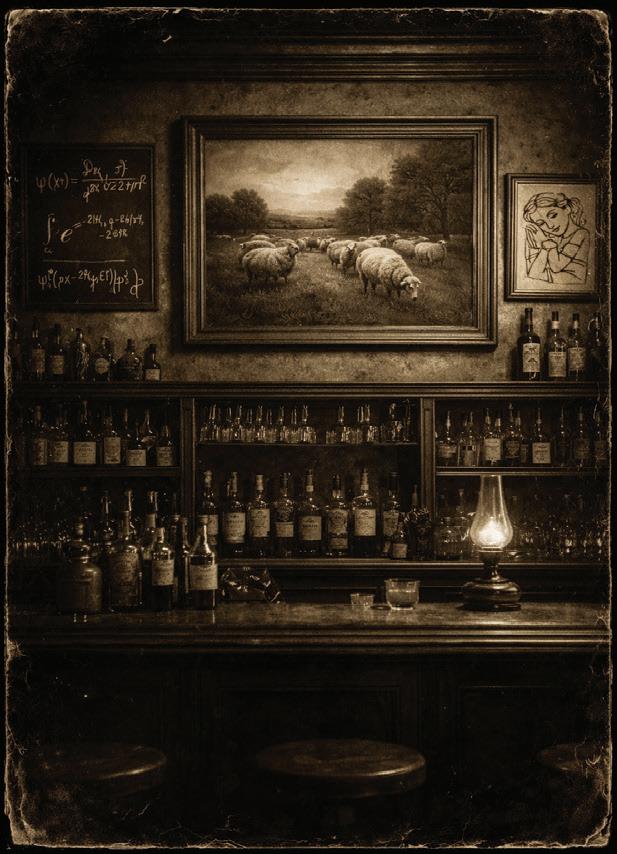
A budding artist and a budding physicist walk into a bar. What sort of explosions are created when you combine the elements of Einstein and Picasso? A zany, thoughtful comedy by one of the great contemporary comedic artists.
Sponsored by:
Larry & Barbara Biddison
Michael & Brandy Hirsch
mountainhomemag.com
E ditors & P ublish E rs
Teresa Banik Capuzzo
Michael Capuzzo
A ssoci A t E E ditor & P ublish E r
Lilace Mellin Guignard
A ssoci A t E P ublish E r
George Bochetto, Esq.
A rt d ir E ctor
Wade Spencer
M A n A ging E ditor
Gayle Morrow
s A l E s r EP r E s E nt A tiv E s
Megan Gallant, Shelley Shank
c ircul A tion d ir E ctor
Michael Banik
A ccounting
Amy Packard
c ov E r d E sign
Wade Spencer
c ontributing W rit E rs
Karin Knaus, Karey Solomon
c ontributing P hotogr AP h E rs
Kyle Bower, Becky Simpson
d istribution t EAM
Dawn Litzelman, Grapevine Distribution, Shea Maier, Linda Roller
TO ADVERTISE: E-mail info@mountainhomemag.com, or call us at (570) 724-3838.
AWARDS: Mountain Home has won over 100 international and statewide journalism awards from the International Regional Magazine Association and the Pennsylvania NewsMedia Association for excellence in writing, photography, and design. DISTRIBUTION: Mountain Home is available “Free as the Wind” at hundreds of locations in Tioga, Potter, Bradford, Lycoming, Union, and Clinton counties in PA and Steuben, Chemung, Schuyler, Yates, Seneca, Tioga, and Ontario counties in NY.
SUBSCRIPTIONS: For a one-year subscription (12 issues), send $24.95, payable to Beagle Media LLC, 39 Water Street, Wellsboro, PA 16901 or visit mountainhomemag.com..
Small Town, Big Scoop Even in Winter, Wellsboro’s Kyle Bower Has People Screaming for His Hand-Crafted Ice Cream Gelato.
By Karin Knaus
Creamy & Cozy
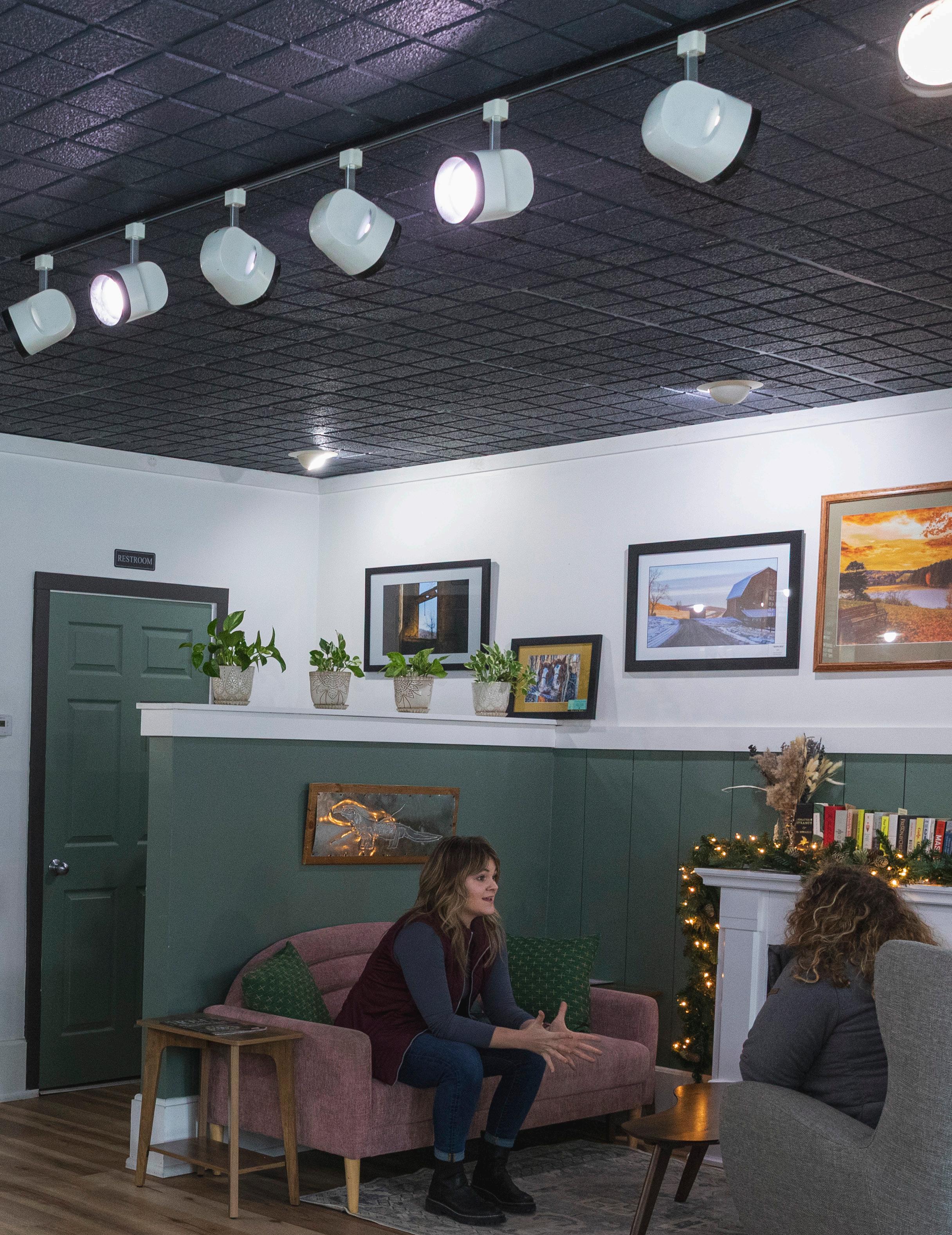
Komodo Gelato’s sitting area by the electric fireplace encourages relaxing and chatting, especially on cold days. Local art graces the walls, local ingredients fill the food, and local high school students take your order and bring it to your table.
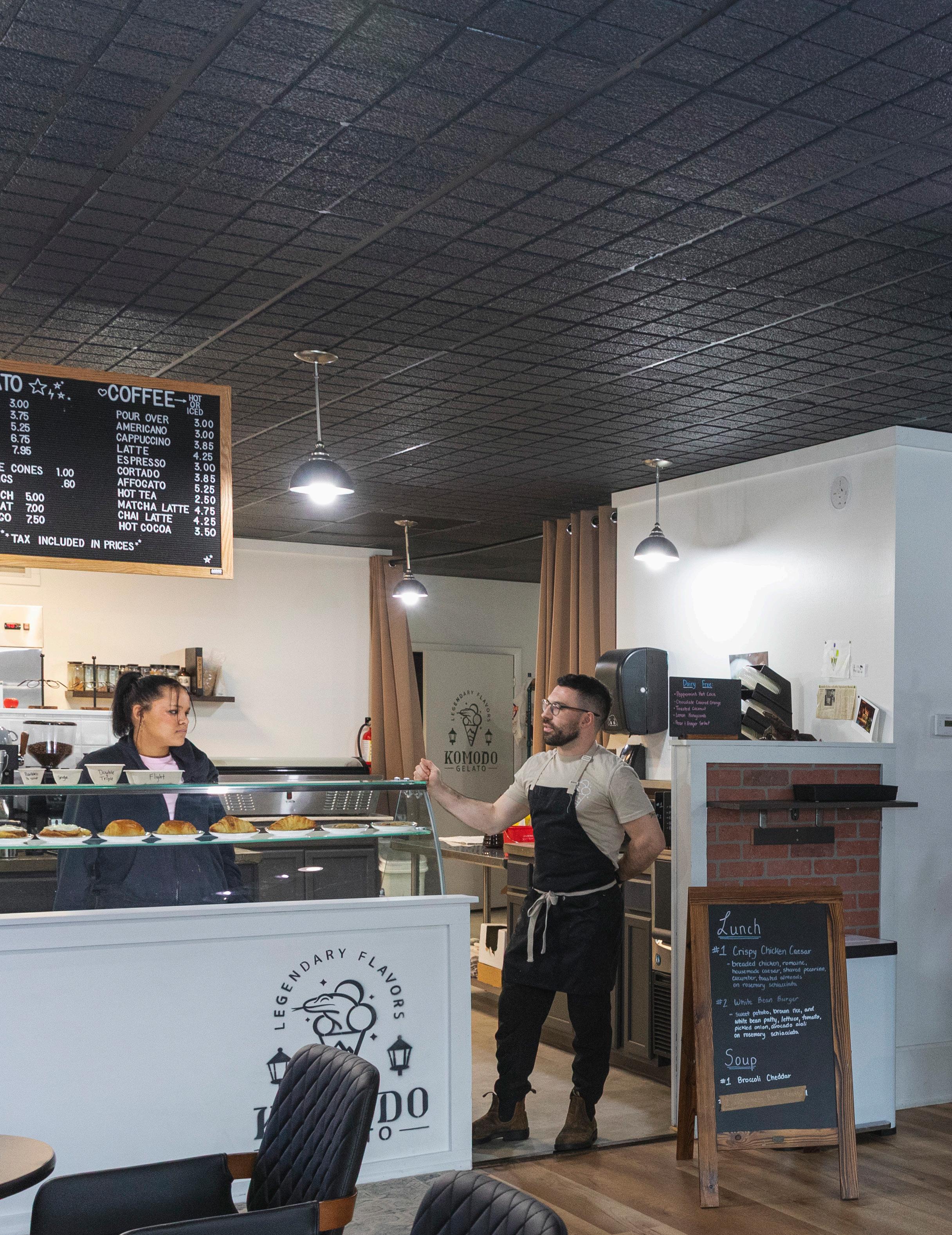
When diners come into this charming, modernized storefront on Crafton Street, they’ll no doubt find families laughing over cups of gelato in one of the comfy seating areas, friends enjoying locally procured and custom-blended coffees at the streetview bar top, and someone plugging away on a laptop over a sandwich-and-soup lunch at a café table.
This off-the-main-drag restaurant with the intriguing name, Komodo Gelato, offers breakfast and lunch sandwiches, soups, coffee and tea specialties, and an enticing, rotating selection of the sweet, velvety gelato that gives the business its name—half of it, anyway.
Owner Kyle Bower describes his business sensibility and philosophy as “first mover.” He likes to be out front with things.
“I always like trying new stuff, even with technology or new ideas…If it doesn’t work, that’s okay, but I’d at least like to try it and see how it’s going to work,” he says.
That acumen is all over Komodo Gelato.
The breakfast and lunch options change every week, and the gelato (which has a lower milk fat content than ice cream, is made with a slower churning process, and is typically served at a slightly warmer temperature than ice cream) features usually include a few tried and true favorites being dipped next to innovative seasonal treats. From Toasted Rice and Mango to Salted Caramel Pretzel, there is something to hit every palate, no matter how adventurous—or not—and surprise even the most ardent fan of a cold, sweet, ice-creamy treat.
With each culinary innovation, Kyle says he’s “trying to balance fat with acidity and herbaceousness, and just trying to meld those together in every dish I create. Even soups—so that it just lights your palate up, which is what I hope people experience when they come in.”
So where does Kyle’s food fearlessness come from? All over, from Tioga County to upstate New York to the Pacific Northwest.
Here, There, and Everywhere
The Long & Tasty Road
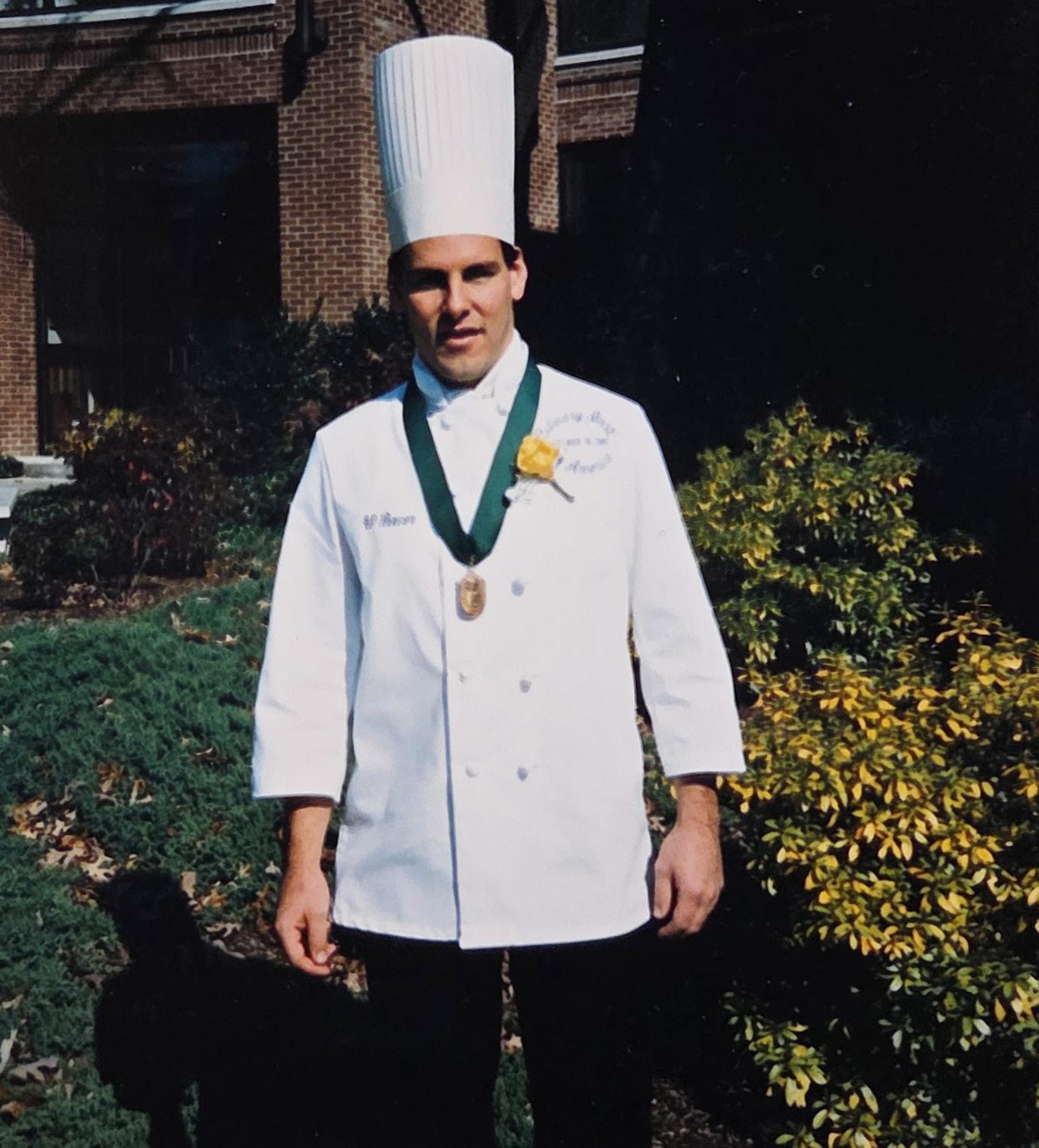
Kyle learned to love food and its preparation first from his father who graduated from the Culinary Institute of America in 1987 (top); his later culinary explorations took Kyle to Oregon and Japan (bottom) before coming to Wellsboro.
Kyle grew up in the Hudson Valley of New York, and his first food influences came from his home kitchen. “My dad went to the Culinary Institute, so I knew how to cook…My dad kind of taught me,” says Kyle. “He asked me if I wanted to go to culinary school, and I said ‘I think I kind of already know everything. I basically learned from you…’” He adds, “And Alton Brown, Jamie Oliver—it was the height of the Food Network.”
After graduating from SUNY New Paltz with a degree in finance, Kyle headed west and landed in Portland, Oregon. During his nearly five years there, he worked for Salt and Straw, a small batch ice cream business. He had visited the business in 2015 before moving to Oregon full time. “They had like a fennel and blood orange and olive oil flavor. And there was no line! They are notorious for long lines.” It seemed like a sign to Kyle that he was supposed to stop in.
(3) Courtesy Kyle Bower
He applied to work at the company when he returned to live there in 2016. “I was trying to use my degree. I initially applied for a purchasing coordinator position. When I was applying, they said they’d already hired someone internally, but they had this pint and prep job, putting the ice cream into pints and chopping up ingredients. I said ‘Yeah, I’ll do that’ since they were hiring from within. I figured I’d move up.”
Kyle stayed with the company as they expanded from fifteen to twenty-five stores and started to increase their presence in the area, gain investors, and move into a large warehouse space. Expansion continued until covid hit the company hard, and they had to lay off employees.
Fortunately for Kyle, he’d already been making plans to move to Wellsboro to be closer to family. Both of his parents grew up here, and he had grandparents still living here. He’d always liked the town, visiting often while growing up.
Before making the move back East, Kyle had talked with Wellsboro entrepreneurs Rick and Lori Beckwith about some business possibilities for a building his family owned on Wellsboro’s Main Street. That plan never came to fruition, but once the Main Street Creamery (one of the Beckwith’s downtown businesses) opened back up in the
spring of 2021, he started making ice cream there and eventually taking shifts in the kitchen at the Beckwith’s restaurant, Beck’s Bistro.
By 2024, Kyle saw his opportunity to do his own thing, and he took it. “I was getting older and didn’t want to wait too long,” he says. Komodo Gelato was born.
What’s in a Name?
“Everybody asks where the name came from. It was an idea in my head to have a hot sauce company, and my buddy out in Portland was going to help me with that. We were just kind of bouncing ideas off each other…and Komodo was the name we came up with because my name is Kyle and his name is Max, so it kind of fit our initials and fit the hot sauce theme.”
He had that name in the back of his head when he decided to bring his own flavors to his new home in Wellsboro.
“I sort of combined all my expertise from all the places I had worked as far as just having fresh quality products and doing the gelato to kind of differentiate myself from everybody in town,” he says.
And differentiate he has. Since opening in October 2024, guests have found dishes like a pork katsu sandwich, ahi tuna with wasabi mayo, soy glaze, and cucumber on a homemade sesame schiacciata (traditional Tuscan-style flatbread), and a BBQ jackfruit sandwich.
Says Kyle, “I just try to stay authentic to whatever culture I’m trying to take ideas from. I like taking little ideas from certain different cultures and applying them to foods from our culture. I think it adds just a little bit of flair and diversity and appreciation and respect for other ways of doing things.”
That aforementioned “first mover” strategy also applies to his ever-changing menu. Each weekend, guests can expect a couple of breakfast options, a couple of lunch/dinner sandwich options, a soup or two, and sometimes, something else entirely.
So far, this year’s weekend offerings have included innovative cuisine like a chimichurri chicken salad sandwich, beef kofta (spicy ground meat) with cucumber salad, red onion, feta, and lemon yogurt sauce, and a Moroccan spiced peanut soup.
But folks planning a visit shouldn’t necessarily expect to see those things on the menu, because it changes every weekend.
“With food, I’m always looking for the next best thing. So I’m just trying out as many things as possible,” says Kyle, who admits that
A-Lot-O Gelato
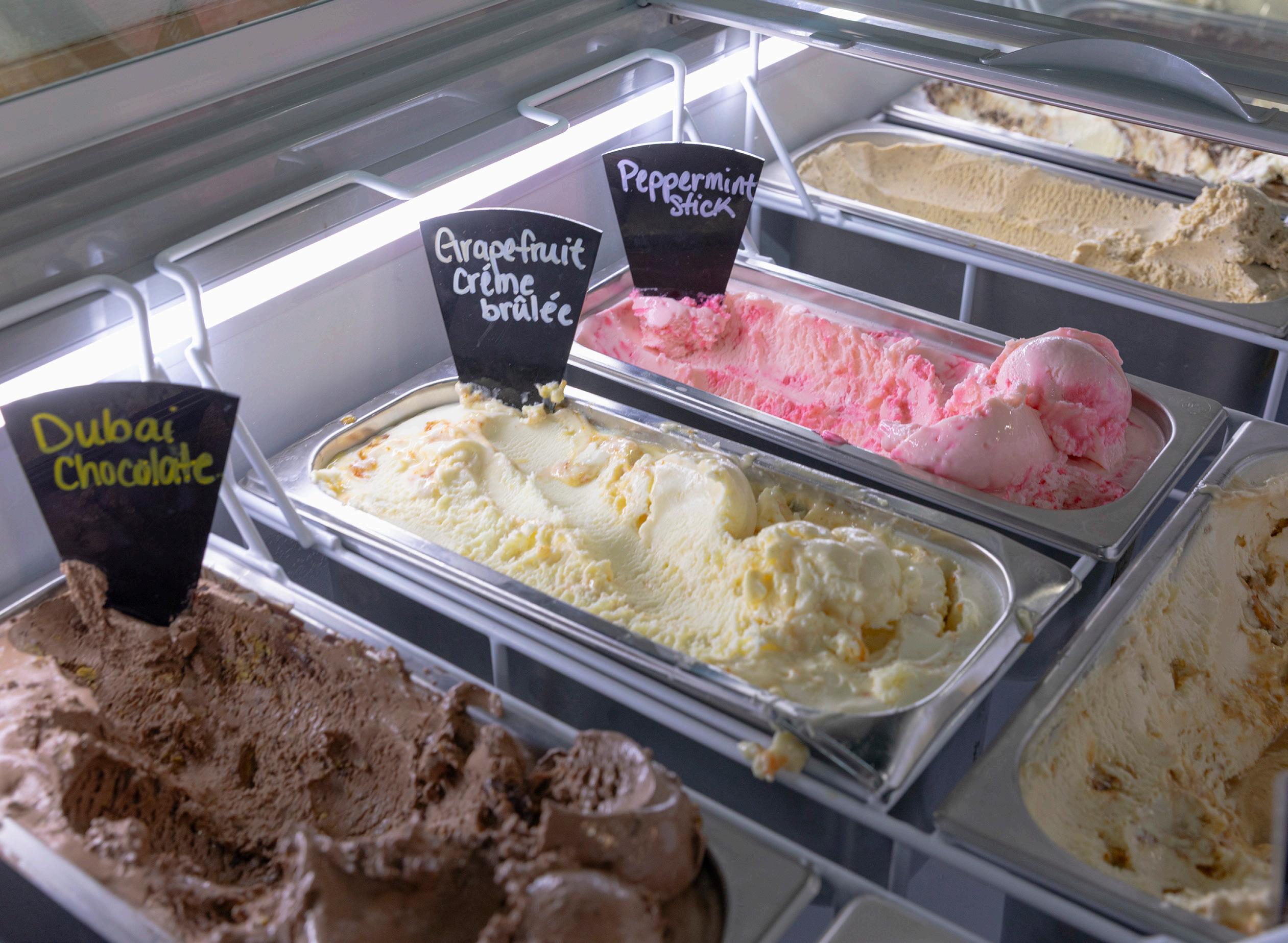
Kyle keeps twelve regular gelato flavors, two sorbets, and four dairy free flavors available. The list changes frequently, so many folks buy a pint or quart of their seasonal favorite to take home.
presents challenges for the restaurant’s many fans. Sometimes people rave about a sandwich from a few weeks prior, but it isn’t likely to make the menu again. “I don’t know if I can do that again. I already did it!” says Kyle.
Kyle’s adventurous food tastes also inform the menu. (He admits to only one thing he really doesn’t like to eat—peas.) “I love to try new stuff myself, and I thought Tioga County needed some more diversity in their food,” he says. “Just the variety of cuisine I eat myself opens up the possibilities for customers as well. We have a good variety. I’ll cook anything. That’s what makes me unique.”
When it comes to the gelato (which, by the way, is the Italian word for ice cream), similarly, the flavors rotate and change, but not every single weekend. Kyle’s goal is still to bring that sense of wonder to his customers just the same. “Because we do have people that come in every week, I do like to try to delight and surprise people with new flavors and new options.”
Innovative seasonal flavors round out the stable of tubs each week, in addition to classic staples like Tahitian Vanilla, Roasted Strawberry, Alabaster Cold Brew Coffee, and Chocolate Stracciatella. Offerings this past year included Matcha Black Sesame, White Cheddar Apple Pie, Peanut Butter Fluff, and Fabled Fudge Brownie.
It’s important to Kyle that the case of gelato options is exciting and worth coming back for. He wants people to experience “different textures, different flavors, pops of color and brightness.”
Keep It Local
Flavors see local influences beyond the ingredients, too, like this writer’s personal favorite, Canyon Fog (named for, you guessed it, the Pennsylvania Grand Canyon), flavored with Earl Grey tea.
Kyle’s eye toward good food and drink also relies on local producers and vendors.
Fruits and vegetables come mainly from Wellsboro’s own Brown’s Produce and Leister’s Market.
“We use Leister’s for fresh fruit—we get all of our apples from them,” says Kyle, and then speaks to the options that Brown’s Produce opens up for Komodo: “A lot of times because he goes to the fruit market, he can get more unique items. So, like, when I needed a case of persimmons, I asked him, or I asked him about ube, different stuff I can’t find in Wellsboro or Tioga County. Or even sometimes, he’ll say ‘I’ve got these extra kiwis that aren’t going to last, can you use them?’ and I say yes and make a kiwi sorbet or something.”
Kyle also features Hillstone Farms for meat for sandwiches when possible, and you can always find their sausage in the weekend’s breakfast specialties. “Sometimes with the local providers, the amount of product I could go through in a day, they can’t always provide in certain cuts, but we try to as much as we can.”
Scoop continued from page 9
Wade Spencer
continued from page 10
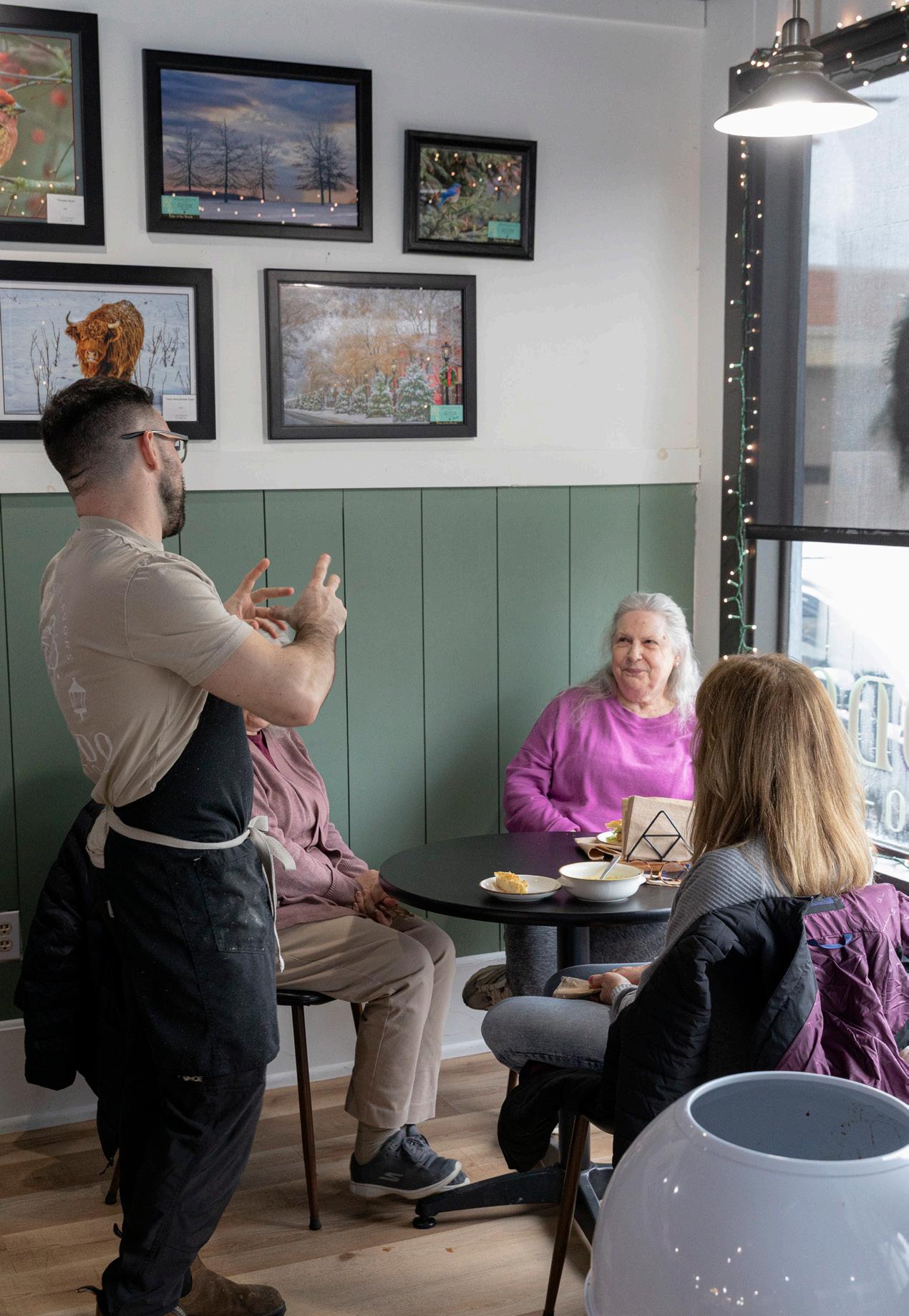
The cozy café is full of meetings and greetings, and Kyle often wanders out to chat. The Friendly Komodo
Troy’s Milky Way Farms provides eight gallons of milk each week that is mostly used in the coffee bar. Dairy for the gelato comes from downstate, where Kyle found a clean label with just basic ingredients. “No artificial preservatives or anything,” says Kyle. “Even a lot of milks these days have polysorbate or carrageenan. I try to get as clean stuff
Customer and local business owner Taylor Nickerson values these partnerships. “Thursday mornings, I enjoy heading over to Komodo Gelato for one of Kyle’s breakfast sandwiches,” she says. “I love that he not only makes everything from scratch, but he also tries to source as much as he can locally. Right there on the board I see Hillstone Farms sausage. I love a business that can have their own unique stamp but also supports other local businesses.”
Other collaborations include a partnership with Innerstoic Cider, whose rosé Kyle used in developing a gelato flavor, Innerstoic Raspberry Rosé. He also concocted two flavors using ciders that they served at the cidery’s Equinox event this past fall.
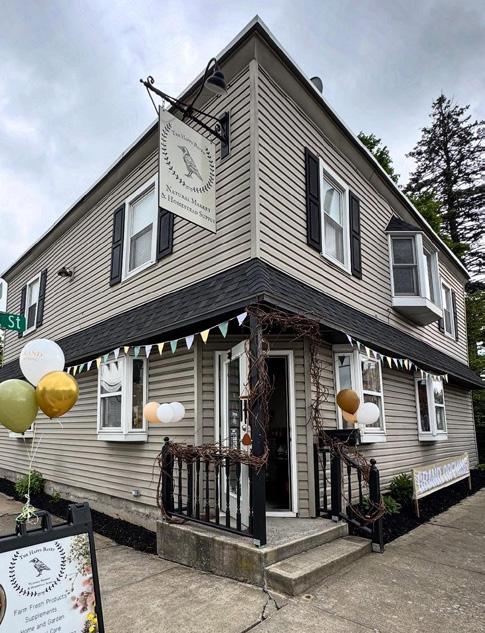
A particularly valuable pairing for Kyle is with Wellsboro’s Happy Raven, a new natural products store. Owner Liz Kreger helped connect him to Milky Way Farms and has helped him partner with other local sources, so he calls her when he needs ideas for a new supplier. “Her focus on environmental sustainability is also pretty cool, because that’s a focus for my shop, too,” says Kyle.
A Recent Twist
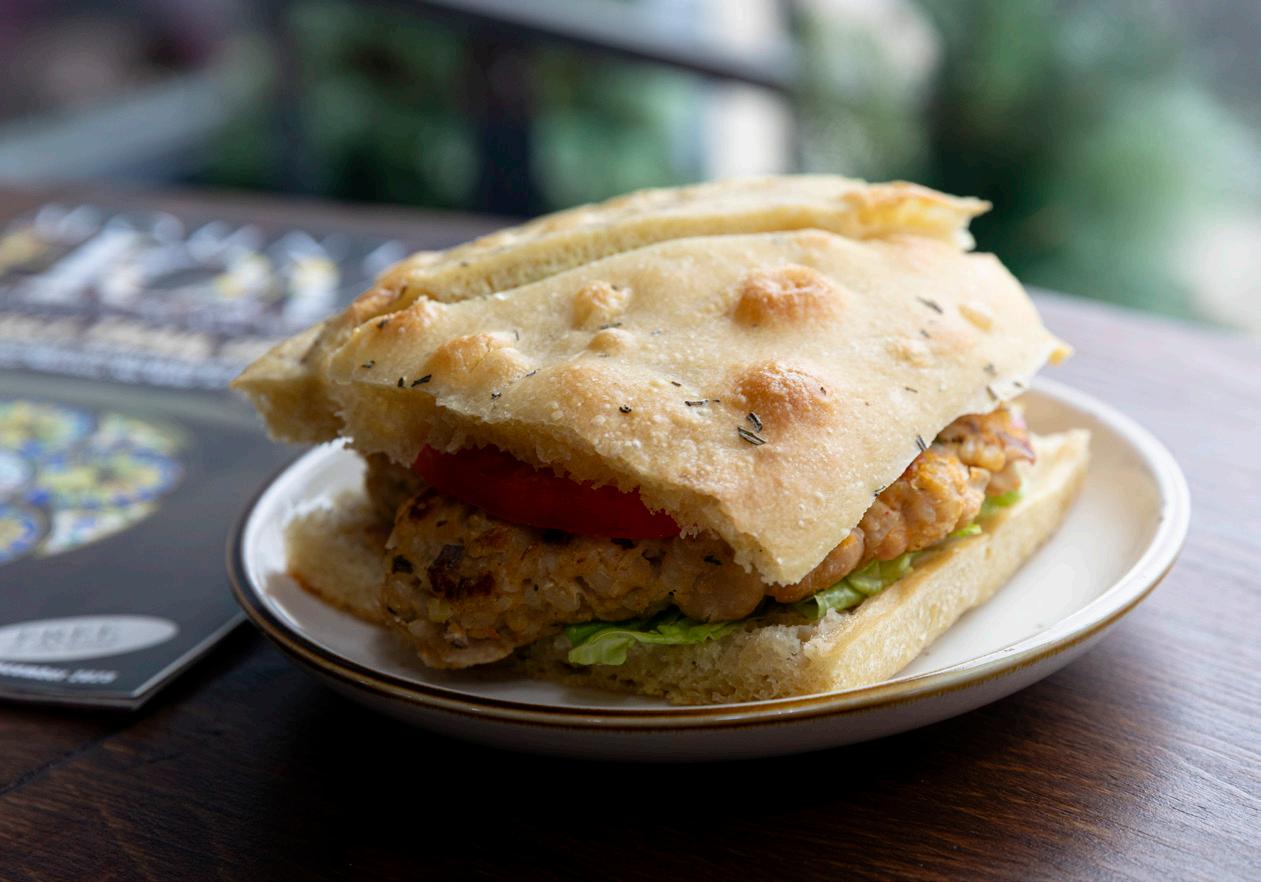
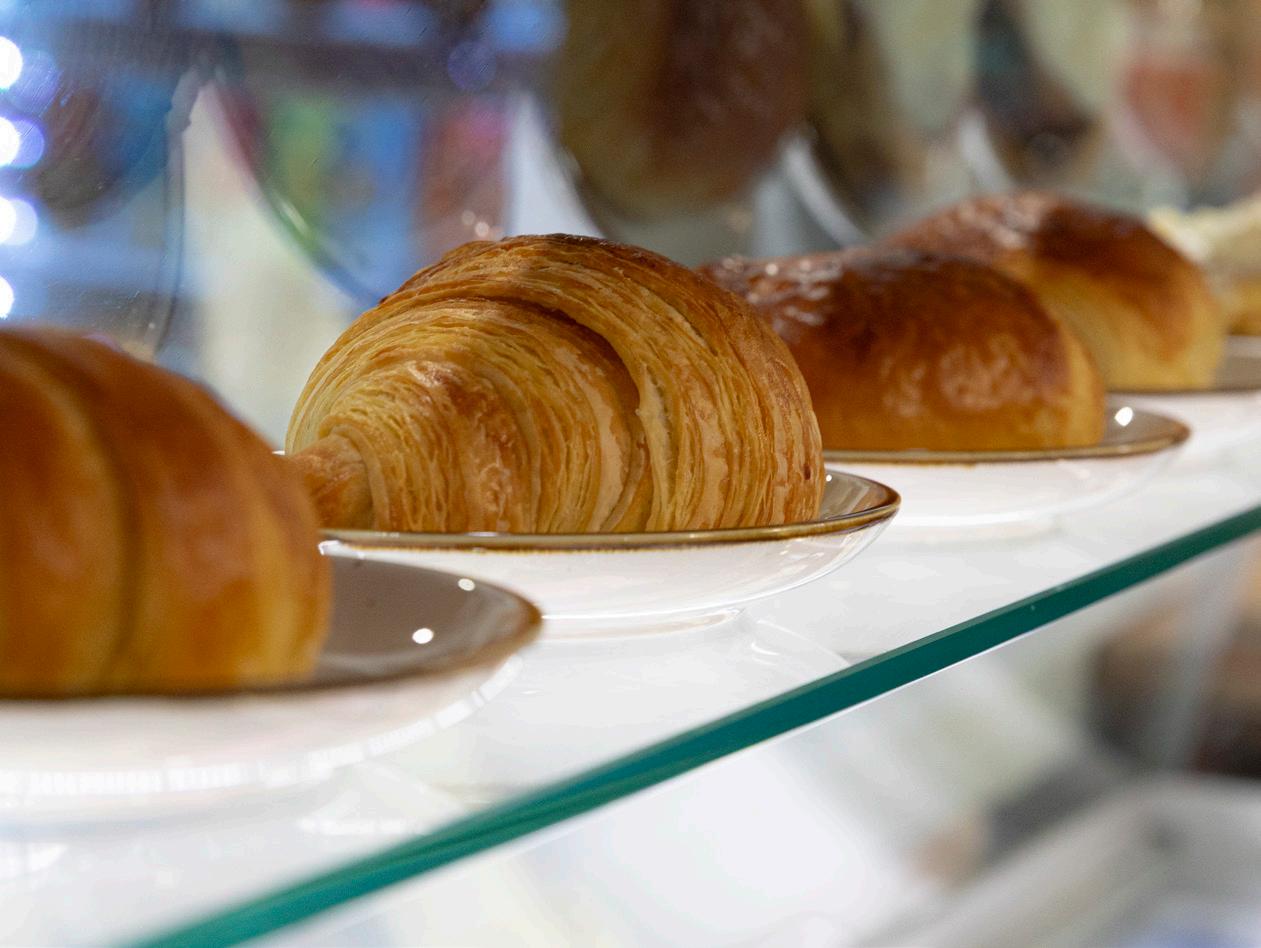
In addition to innovative sandwiches such as the vegetarian white bean burger with avocado aioli on housemade rosemary schiacciata (top), Kyle has started offering croissants. They take three days to prepare but are worth it.
Keeping It Real
Another focus for Kyle is ensuring that what he serves is, indeed, “real food.”
“We are making everything from scratch. I take time—I’m not buying mayonnaise, I’m making that from scratch. I think a lot of the food we eat these days has been infiltrated with a lot of extra stuff. And I think that’s why people trust me. They go, ‘Oh yeah, he actually does care about what he’s putting out. He’ll eat this himself, and he cares what we’re eating as well.’”
That care translates into the aim to provide options for those with dietary restrictions and preferences. Each new menu of gelato flavors includes several that are dairy-free. Local customer Molly Cary lauds the availability of tasty options in the meatless realm.
“The vegetarian options at Komodo are not only delicious, but made with super fresh ingredients and are very ‘cravable,’” she says. Like, for instance, a white bean burger with lettuce, tomato, avocado, pickles, and secret sauce on their signature rosemary schiacciata as a meat-free menu selection.
Moving into a new year, Kyle has plans and ideas for Komodo Gelato’s stable of loyal customers—and those who will be.
“No matter how good something is, I always think I can do better,” he says. “I think the process of trying and the process of continu-
Our expert spine team in north central Pa. diagnoses and treats back and neck pain, spine disorders, and spine injuries. We have the specialty experience and advanced technology to help you get pain free. For more information or to schedule an appointment, call 800-994-5697 or visit UPMC.com/SpineCareNCPA.
Nothing Wasted, Everything Gained
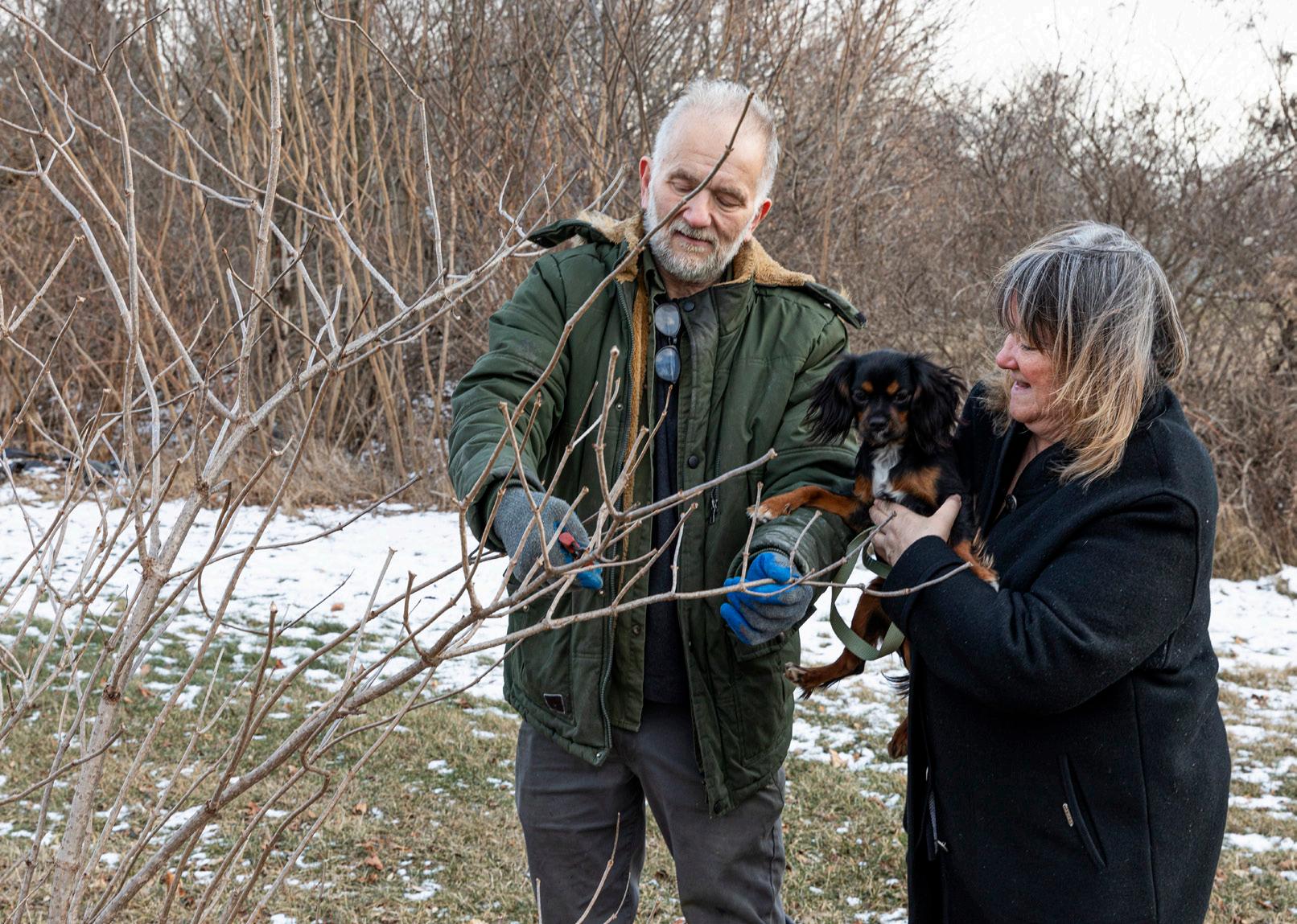
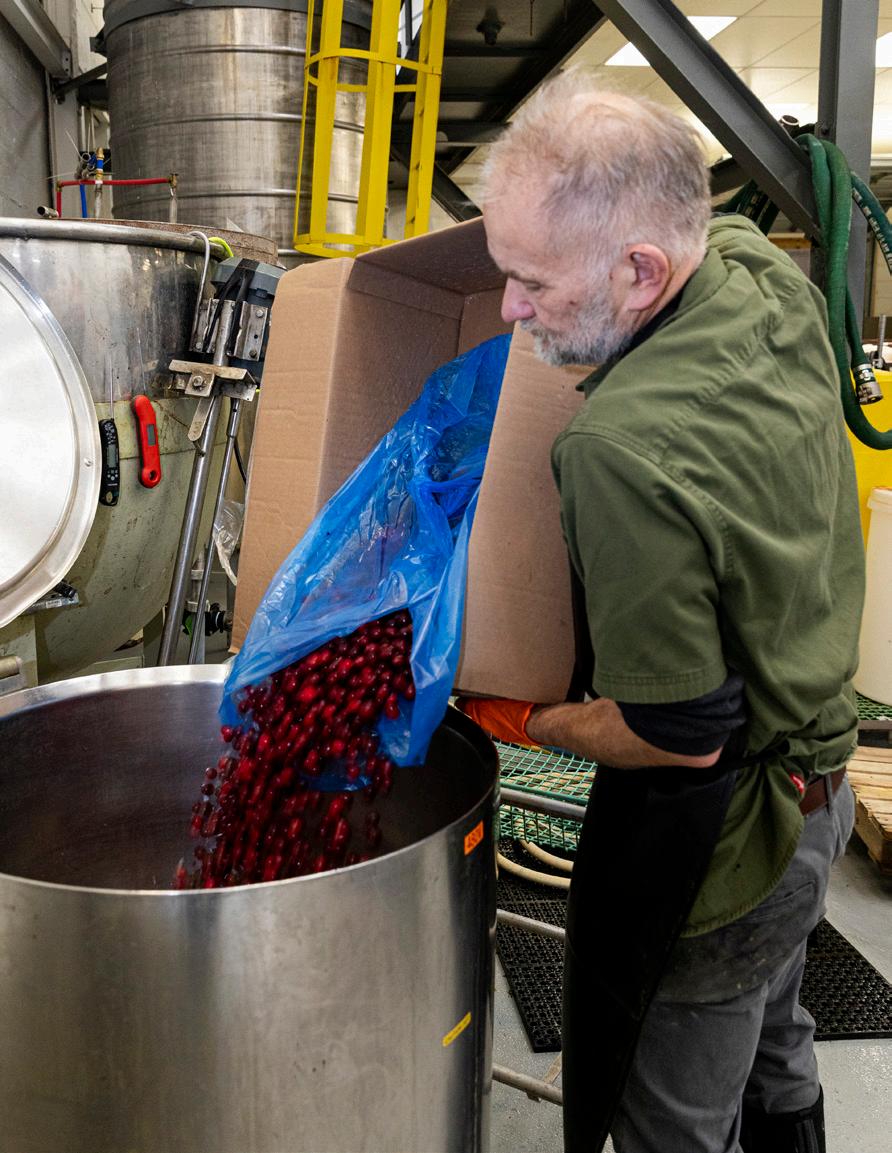
Andri Goncurovs prunes his three-year-old elderberry bushes while Dorothy Milford Poppleton with their puppy Suni Dundee supervise at their zero waste operation; Andri pours cranberries into the prefermentation kettle for non-alcoholic preperation.
Shrubs Branch Out
Old Is New—and Delicious—at Dundee’s Finger Lakes Harvest
By Karey Solomon
“Let food be thy medicine,” goes the adage attributed to Hippocrates, but who wants it if it doesn’t taste good? Enter Finger Lakes Harvest, where beverages are created to not only be delicious but to nourish, delight, and help people stay healthier.
Beyond an anonymous turquoise door above a warehouse loading dock in Dundee is a cavernous workshop where sixty-plus products offered by Finger Lakes Harvest (fingerlakesharvest.com) are slowly and carefully crafted. The scent inside holds the promise of spice, fruit, and general deliciousness. The husband and wife team of Andri Goncurovs and Dorothy Milford Poppleton has spent more than eleven years exploring flavors and crafting recipes in order to bring a revered ancient product—shrub—into the twenty-first century.
Both lifelong foodies who discovered a shared history as commercial bakers when they met, they often talked about once-popular foods long fallen into obscurity. One of these was shrub, a naturally non-alcoholic beverage made by preserving fruit with vinegar, sugar, herbs, and spices. Andri says the process originated in India, then made its way westward to the Middle East, where it was called Shahab, then spread to Italy, where its name might have been shortened to “shrub,” and, from there, throughout Europe. Ben Franklin included
instructions in Poor Richard’s Almanac on how to craft shrubs. Shrub recipes appear in Martha Washington’s family’s cookbooks. Sailors drank it at sea to prevent scurvy. It has a historical connection to western upstate New York, which was a hotbed of the nineteenth century temperance movement.
One Finger Lakes Harvest shrub is called Spice X. It features lemon and spices, and is based on none other than Samuel Clemens’ (Mark Twain’s) recipe for gingerbread that Dorothy’s research turned up from an 1870s issue of Harpers.
It was in 2014 while on vacation that Dorothy spotted a lone bottle of shrub at a farmstand in Ipswich, Massachusetts. She and Andri tried it, liked the taste, and began experimenting with ways to craft it in their home kitchen, beginning with a bushel of peaches. One fruit led to another, more kitchen crafting ensued, and they had a product. Several of them.
Shrub is a multi-purpose drink. It may be enjoyed straight from the bottle as a beverage or marinade. It may be used as an ingredient in salad dressing, or combined with water, juice, or alcohol to create a flavored water, cocktail, or mocktail.
“And we thought, ‘what a great way to showcase all the wonderful fruits we grow in the Finger Lakes,’” Dorothy says.
“We wanted to make something that wasn’t known so much,” Andri explains. They also liked shrub’s health benefits, including its ability to hydrate and serve as a vehicle for nourishing ingredients. One of the first fruits they harvested for shrub-making purposes were wild grapes, he continues, surmising they were “possibly descendants of the ones grown in the 1800s.”
“We’re always looking for unique and interesting foods,” Andri says.
They began selling shrubs at local farmers’ markets, then wholesale across the country, necessitating moves to progressively larger production facilities. When they relocated to the Cornell Agriculture and Food Technology Park in Geneva, it was big enough that Dorothy thought they’d found their forever place. But as the popularity of their products continued to grow, so did their need for additional space. They found it in Dundee, in a building formerly used by the Seneca Grape Juice Company, now known as Seneca Foods, which had relocated to Fairport, New York.
The only drawback was a long commute. Problem solved in late 2024 when they bought a nearby farmhouse with enough land to plant an acre and a half of elderberries and some of the herbs they regularly use. The area around their production space also has land to grow more of their ingredients.
(2)
Wade Spencer
Serendipitously, when Seneca Foods relocated they left behind equipment Andri was able to refurbish. One of his favorite surprises, when he first toured the place, was an enameled sign labeled “Vinegar Production” leading to the portion of the he they had already earmarked for exactly that purpose.
Shrubs and other Finger Lakes Harvest products begin with apple cider, slowly cold-fermented from locally-pressed juice. The cold fermentation takes longer, but it allows the cider to develop into the vinegar they want rather than an alcoholic product. Naturally, people in wine country associate fermentation with the production of alcohol, Andri says, but the low pH of the vinegar means neither bacteria nor yeast can propagate. “That’s why vinegar is a great natural food,” he says.
In nearby containers are fragrant “mother” cultures—different collections of yeast and acetic acid bacteria used to inoculate and “back-ferment” the cider. This is also called the Orleans method, an old French method for fermenting apple cider into vinegar, yielding a product rich in probiotics. “It takes six to eight months,” Andri says, several years more if the final product is intended to become balsamic vinegar.
Fruits are washed, then frozen. This not only allows them to make shrubs year-round, but also bursts the cell sacs and brings the fruit sugars to a more ambient form, he continues. “In the olden days they had to process it right away. But this way, you get a deeper, richer flavor.” The method gets tweaked for each distinct set of ingredients, as each fruit needs slightly different handling.
The thirty varieties of shrub listed on their website include the expected fruits grown in the northeast as well as a chocolate and hot pepper combination they call Coco Loco, and varietals like garlic, ginger, and hot pepper.
The process is slow and cold—only a few degrees above freezing— with most shrubs taking six to eight months, start to finish. Bitters, herbal extracts made from bitter tasting plants and traditionally used as a digestive aid or as a cocktail ingredient, take two to three years; fire ciders, typically a spicy tonic crafted from vinegar, herbs, and spices, and used to support the immune system and as a digestive aid, take eighteen months. Eventually the ingredients are combined, the mixtures are flash-pasteurized, and then bottled. This last can be its own headache, judging from the array of samples in Andri’s office/lab.
“I’ve learned a lot about bottles and caps,” he notes.
Some customers embraced the shrubs but wanted a sugar-free product, which gave rise to their bitters and tonics. Turmeric (anti-inflammatory, a natural antibiotic), ginger (natural pain reliever, digestive aid), and tart cherry (anti-inflammatory, reduces gout attacks) are among the most popular tonics.
The full line of Finger Lakes Harvest products can be found at Oak Hill Bulk Foods, Route 14A, Penn Yan, ordered online, and, with sales across the country, are probably available somewhere near you. Try Gerould’s Pharmacy, with branches in Elmira, Corning, and Horseheads for elderberry syrup, tonics, and fire cider.
Karey Solomon is the author of a poetry chapbook, Voices Like the Sound of Water, a book on frugal living (now out of print), and more than thirty-six needlework books. Her work has also appeared in several fiction and nonfiction anthologies.
Mother Earth
There is a place called the Sourdough Institute. Who knew? I didn’t. It’s in Belgium, which for some reason seems apropos. It had its start in 2008 as the Center for Bread Flavours, and it includes the Sourdough Library, which opened in 2013 and is home to nearly 140 different sourdough samples of various ages and origins. The whole business is a component of a not-for-profit initiative on the part of a global company called Puratos to preserve bread heritage. Puratos, founded in 1919, offers food ingredients and services—with a focus on the baking, patisserie, and chocolate sectors—to companies in over 100 countries
Again, who knew?
Prior to the ready availability of commercial yeast in the latter part of the nineteenth century (thank you, Charles Fleischmann), if you wanted leavened bread you had to rely on the wild yeast and bacteria floating about in your kitchen, a chemical agent like baking soda or baking powder, brewers yeast, or an existing batch of starter.
Where might that come from?
In a kitchen in a house on New Road, just outside of Wellsboro, on a chunk of land called Mama Goose Homestead, Rachel Nance (Preble) and her business partner,
All Rise
By Gayle Morrow
Clay Webster, use a sourdough starter called Black Death to make a few hundred loaves of bread each week. Rachel explains she got B.D. through a “sourdough connoisseur who searches the world for rare, historic cultures.” According to sourdough lore, and there is plenty on various social media sites, along with numerous opportunities to purchase all kinds of starters, Black Death originated in Bavaria some 300 to 400 years ago, around the time of the actual Black Death, and has purportedly been fed and cared for by one family for lo these many centuries.
Further back, there is evidence of bread baking in Babylon from around 4000 BC. Pliny the Elder wrote about Roman bread being leavened with sourdough—this was about 70 AD. It’s a good thing he didn’t wait, because Mt. Vesuvius erupted in 79 AD. Sometime a couple thousand years later, someone salvaged a carbonized loaf of bread from what was one of the destroyed cities, Herculaneum. The loaf was analyzed and determined to be made with sourdough.
The Egyptians painted scenes of bread making on the walls of their tombs. In 2019, Seamus Blackley, the man credited with inventing the Xbox, partnered with a couple of like-minded bread lovers to make sourdough
bread using dormant yeast extracted from an Egyptian bread-baking pot (check it out at atlasobscura.com/articles/what-bread-didancient-egyptians-eat). That starter could be 5,000 years old.
Determining a sourdough starter’s age is not an exact science, however. As Dr. Karl De Smedt, curator of the Sourdough Library (sourdoughinstitute.com), points out, “you can’t carbon date sourdough starter.” It’s probably enough to just say it’s old. Black Death has, as one online site notes, “historic European lineage.” Who wouldn’t want to eat bread with that kind of pedigree?
Rachel’s been successfully minding her own batch of Black Death for about five years. “I had tended to a starter my brother had, but I killed it,” she confesses.
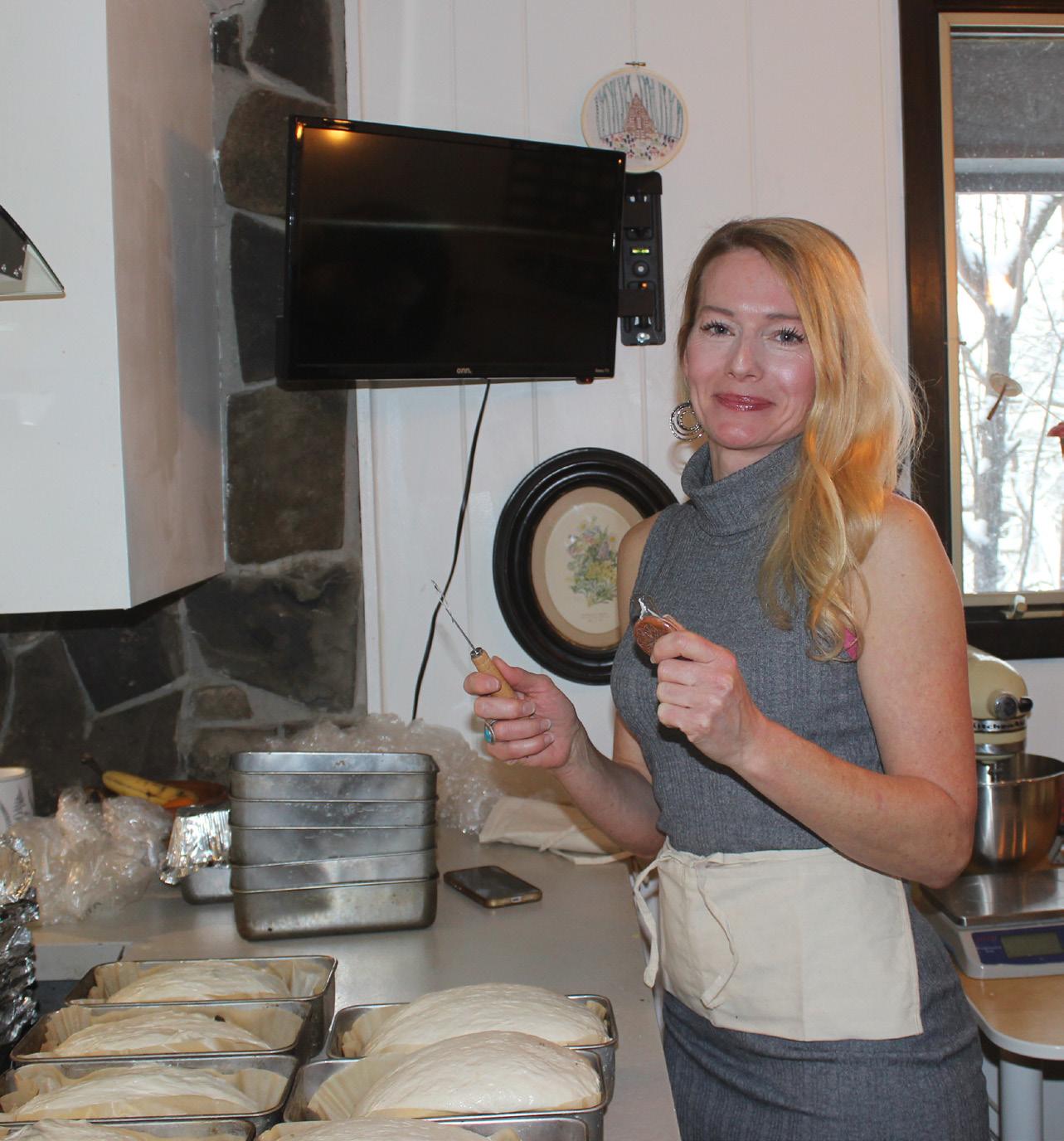
The bread making was trial and error for a time, she continues, until she discovered the autolyse process.
“That cracked the code for me,” she says. Autolyse is part of something called long fermentation, and is basically just mixing the flour, water, and starter first, letting it sit for thirty minutes, then adding the salt, and then allowing it to rest instead of hurrying it along.
“All of our bread is long-fermented, which means it’s given time to develop slowly,”
(3)
Gayle Morrow
Rachel says. “That process improves flavor, texture, and digestibility… it’s how bread was traditionally made, and it makes a real difference. Long fermentation helps break down gluten and phytic acid, which is why many people find traditional sourdough easier to digest than commercial bread.”
From start to end it’s about a two-day process. Rachel and Clay take about a quarter of a cup of starter, add water and flour (they buy King Arthur brand flour in fifty-pound bags), and let it sit for about twelve hours. It will double in volume.
“Then we take almost all of it out and mix it in a five-gallon bucket with more flour and water, and it sits another twelve hours,” she says. That mixture then goes into another larger container with more flour and water, and they mix, and mix, and mix some more. It’s a great arm workout, both agree. Then they add the salt, mix that in, and start stretching and folding the dough. That builds up the gluten structure, Rachel notes. Finally it goes into loaf pans, then into the fridge for twelve hours to cold proof (if you were making bread with commercial yeast, you’d do the proofing at room temperature or in a warm spot).
“That enhances the flavor and breaks down the gluten,” Rachel says.
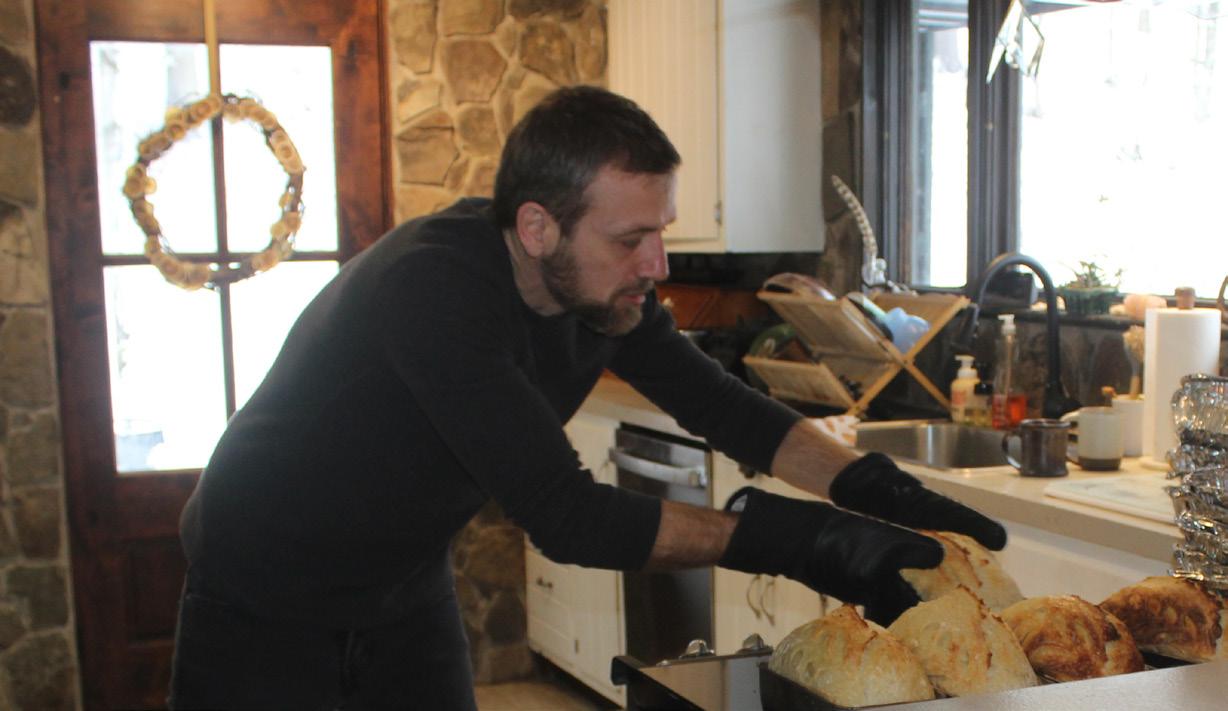
At long last, it’s time for the oven. Clay, who for this round of baking is the one schlepping the trays of loaves up a set of steep steps from where they’ve been proofing downstairs (that’s also a pretty good workout, they both agree), sets the pans on the counter top and explains the double loaf pan method they’re using. Each loaf pan gets a foil pan topper for about half of its baking time. That captures the steam, he says, and “gets more spring” in each loaf.
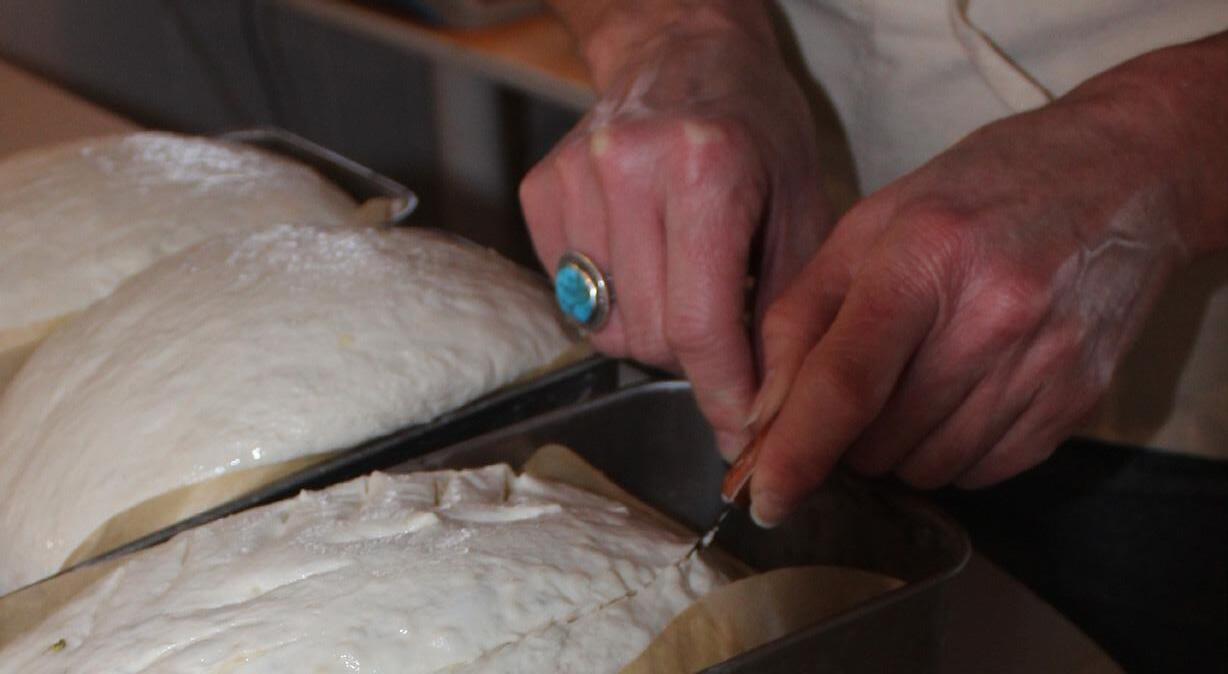
The aroma of baking bread is intoxicating. The loaves coming out of the oven are beautiful—artfully scored, golden brown, oozing history, love, and place. Because sourdough starter is unique to where it lives, “the return of sourdough brings back ‘terroir’ to bread,” as Dr. De Smedt says.
Mama Goose Homestead is a work in progress—like sourdough, it calls for tending and nurturing, it relies on community collaborations and connections, and it’s connected to the land.
“Clay runs Lo-Fi Farms [it’s just over the hill, off Route 287 on the way to Morris], and as we were both building small, values-driven businesses, he stepped in to help keep Mama Goose moving—baking, building systems, and supporting the vision,” Rachel says. “That’s really what this has become: a community-held project. The personal chapters behind Mama Goose are layered, but the heart of the story is really about resilience, home, and choosing to build something enduring for my children and my community.”
Find Mama Goose Homestead’s products in the Wellsboro area at stores and restaurants including The Happy Raven, Pag-Omar Farm Market, Brown’s Produce, The Roost, Hume’s Blooms, and online through Delivered Fresh, a local delivery service for local food.
Discover more at mamagoosehomestead.com, and find their bread and other products in the Wellsboro area at the farmstand at the bottom of the driveway, at stores and restaurants including The Happy Raven, Pag-Omar Farm Market, Brown’s Produce, The Roost, Hume’s Blooms, and online through Delivered Fresh, a local delivery service for local food.
From livestock feeds to garden seeds we’ve got what you need!
Open Mon-Fri 7am-5:30pm, Sat 7am-2pm (570) 376-2351 • 10977 Route 287, Wellsboro, PA
• A wide variety of Tribute Horse Feed
• Tribute Loose Horse Minerals
• Tribute Horse Treats
• Check out the rest of our horse supplies!
March 21, 2026
Tickets just $15
Hosted By Jason Gowin
Featuring Michael Agunbiade, Eric Camp, and Tia Mauro
Stop in and visit us
• Custom Moldings to match your project (radius moldings availble)
• Stair Construction including balusters and handrails
• Cabinetry (custom kitchen, vanity, and more
• Custom Doors
• Solid Wood Tops to match your decor
• Log Siding and Clapboard Siding
• Hardwood Lumber for sale
Ad funded by Bradford Co. Tourism Promotion Agency 50 Ballard Street, Troy, PA
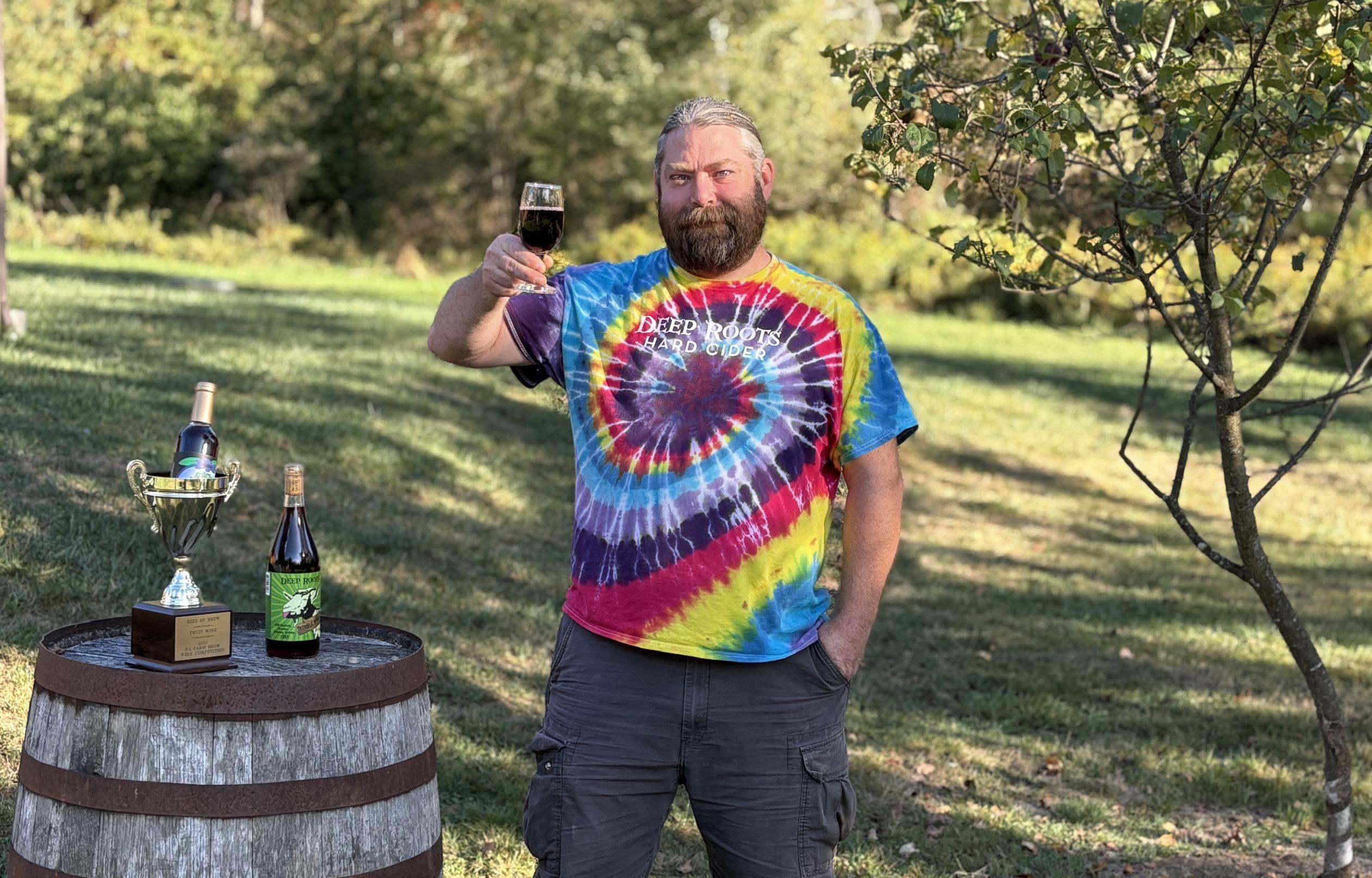
At Deep Roots, Tim Wells blends fruit and geography by choosing apples that don’t fall far from the tree before he works his award-winning magic. Hardcore Cider
How Do You Like Them Apples? Deep Roots Hard Cider Pours Them Dry & Sweet
By Lilace Mellin Guignard
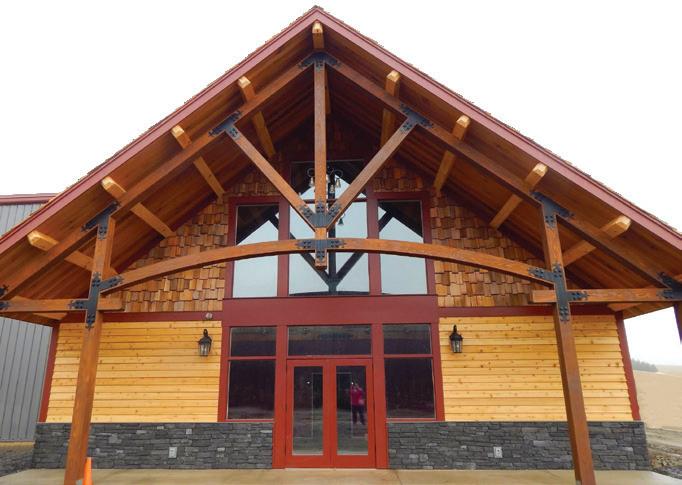
Fifteen minutes from Wyalusing—down not just a back road, but the Back Road—a few picnic tables, a fire ring, and some apple trees gather in front of a new rustic-style one-story tasting room as if they’re old friends hanging out. This is Deep Roots Hard Cider, and when you open the door and see cheery Tim Wells, co-owner and cidermaker, behind the wooden live edge bar, the long drive is forgotten.
After your first sip, the long day is forgotten.
The small tasting room is warm and inviting—inviting folks to talk to strangers, asking them and whoever is behind the bar for some recommendations. Sometimes a person sitting at the bar jumps up to help Tim. All his employees were customers first. The menu has three columns: Purely Apples, Fruits & Sweets, and Dessert & Specialty Wines. With nine ciders on the drier end of the spectrum,
ten ciders on the sweeter side, and eight dessert and specialty wines ready to pour, there is something for every taste. The menu lists alcohol content and residual sugar. There are boozy shakes and good old kid’s shakes. A cooler holds local cheeses, and crunchy snacks are available as well.
Tim grew up in Ithaca and studied entomology and plant science at Cornell. He married his college sweetheart, Lynda (the other co-owner who handles marketing), and they moved onto her grandparent’s property at 348 Back Road, Sugar Run. He didn’t enjoy working in a factory, but he did enjoy his new hobby of making plum wine and hard cider. Lots of their friends enjoyed that, too. What the heck, he started making it to sell. They opened in 2015 with a straight Northern Spy cider, traveling to farm markets and festivals, and sold out. The next year they added raspberry and blueberry ciders and sold out of that.
Tim quit his job at the Dupont factory. Finding rare apples is a passion of his. “I’m an apple dork, if you will,” he says. His dry cider, Old World Ones, is a one-off made from traditional French and English cider apples—meaning they were more bitter. These come from a five-acre orchard that Nat Bouman (who owns Wilding Orchards) planted for his distillery, which is not yet in production. Rather than let the apples go to waste, Nat “one day called me up and asked me if I could use them,” Tim says. It’s been popular, and he’s thinking of making another batch.
He has another cider blended from handpicked wild apples in northeast Pennsylvania. He calls it The Wild Ones, and it varies a bit year to year. Two of the trees they pick wild apples from are on their farm and at least eighty years old. “Lynda’s grandparents probably planted them,” Tim says. They aren’t any
See Apples on page 20
Lilace Mellin
registered variety that he can find, but they were planted purposefully near the original barn that’s no longer there. These are good keepers, taking a long time to brown. “You can slice one and walk away for thirty minutes and it’s just starting to turn. They canned them, and they look beautiful in the jars. My wife has fond memories of the trees. She’s happy we’re using them.”
They won their first double gold in 2020 at the Great Lakes International Cider & Perry (pear cider) Competition for their elderflower champagne-style cider. They won Best of Show Fruit Wine at the 2025 Pennsylvania Farm Show for The Blues, a port-style blueberry wine made with berries from Blueberry Haven in Laceyville. It’s a dessert wine, so it’s sweet. Then just as the sweetness starts to fade, a robustness sneaks in, like a party guest who shows up fashionably late and kicks things into a higher gear. Tim has won lots of ribbons and medals for his concoctions, but Best of Show came with a trophy. “I always wanted a trophy,” he grins.
They brought home three awards from the 2026 Pennsylvania Farm Show in January. Troublemaker won first in fruited sweet cider, by deftly uniting blueberry, blackberry, raspberry, and strawberry flavors. Honey Pommeau, which blends fresh cider and apple brandy and ages in charred American oak barrels—and is then sweetened with a touch of local honey—won third in dessert ciders. (This is a well-decorated dessert wine, with previous awards under its cork.) And Basic B!tch—a pumpkin spice cider—placed third in spiced cider (and gave Ben Wenk of the Pennsylvania Cider Guild pause when announcing the winner).
Tim has new ciders coming this year. “We are bringing back the Sugar Run Sweet by popular demand,” he says. This is a cider he made a few years ago—it has apple syrup (from frozen juice that’s had the water removed) added as a natural sweetener, making it extra appley and fresh. He’s also working on a brand new one that’s going to be called Ginger Empire—hard cider with fresh ginger aged in a rum barrel.
The tasting room is open Friday, Saturday, and Sunday yearround from 11 a.m. to 5 p.m. in winter, changing to 12 to 6 p.m. after daylight savings time. For a visit earlier in the week, call (570) 746-3222 to set up an appointment. Can’t get there? Find a list of places that sell Deep Roots products at deeprootshardcider.com.
Soon you can stay at Back Road Retreats (find them on Airbnb) and enjoy a four-bedroom farmhouse—or the old Cider Shack, relocated for an off-grid getaway. And you’ll get 15 percent off cider! They are hoping to have them operational by the end of May. The spring events season will kick off with their second adult Easter egg hunt on Saturday, April 4, from 1 p.m. to 5 p.m. The Spring Shindig is Saturday, May 23—there’ll be food trucks, a vendor village, and two bands. Tim says to bring your kids and dogs! Follow them on Facebook or sign up for their email newsletter to get updates on these and more events once the days grow longer.
But there’s no need to wait. “We’re only a half mile off the main road, and the township makes sure we’re one of the first roads plowed,” Tim says. If winter has you feeling cooped up, why not take a road trip?
A Back Road trip, that is.
Yummy Umi
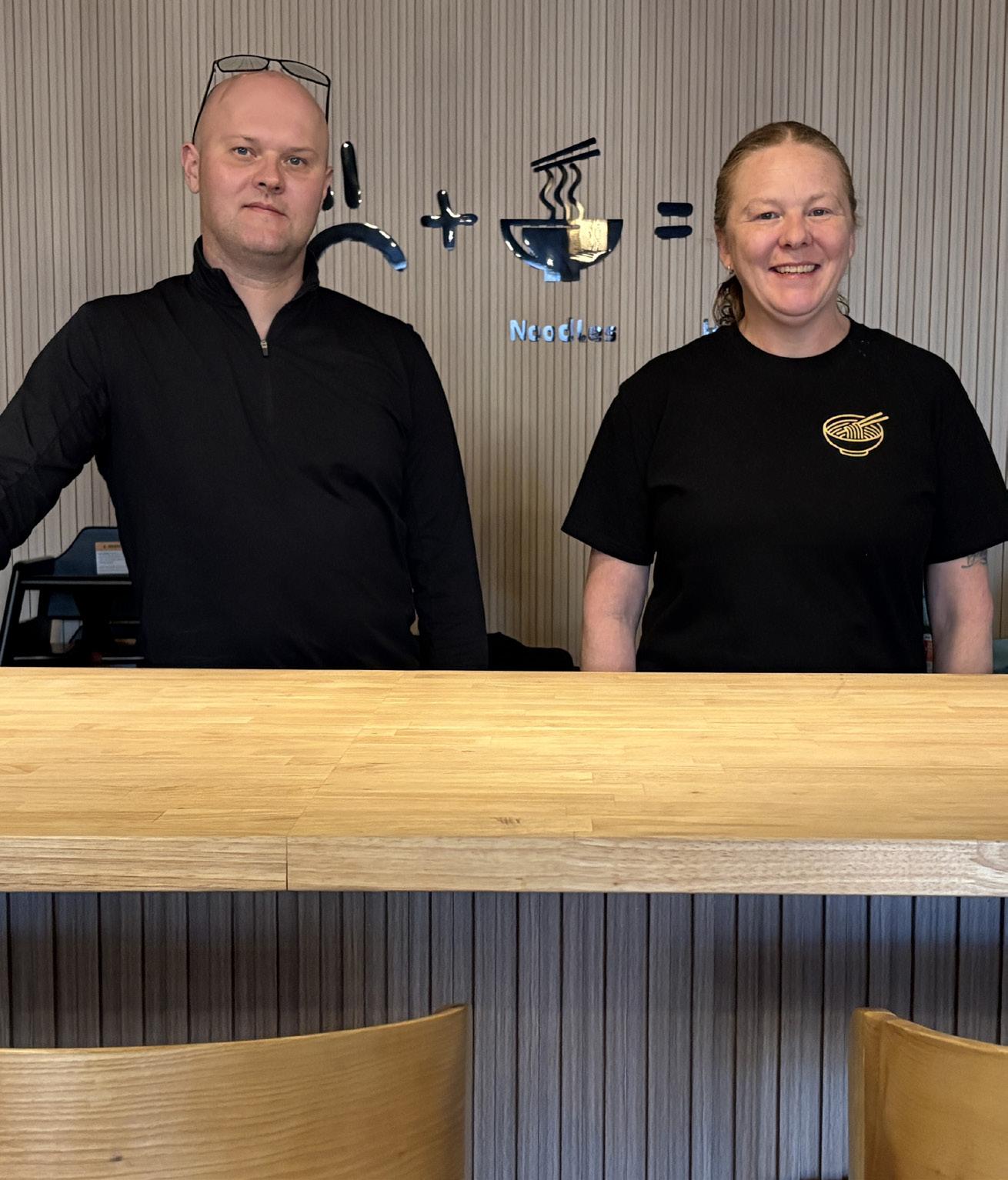
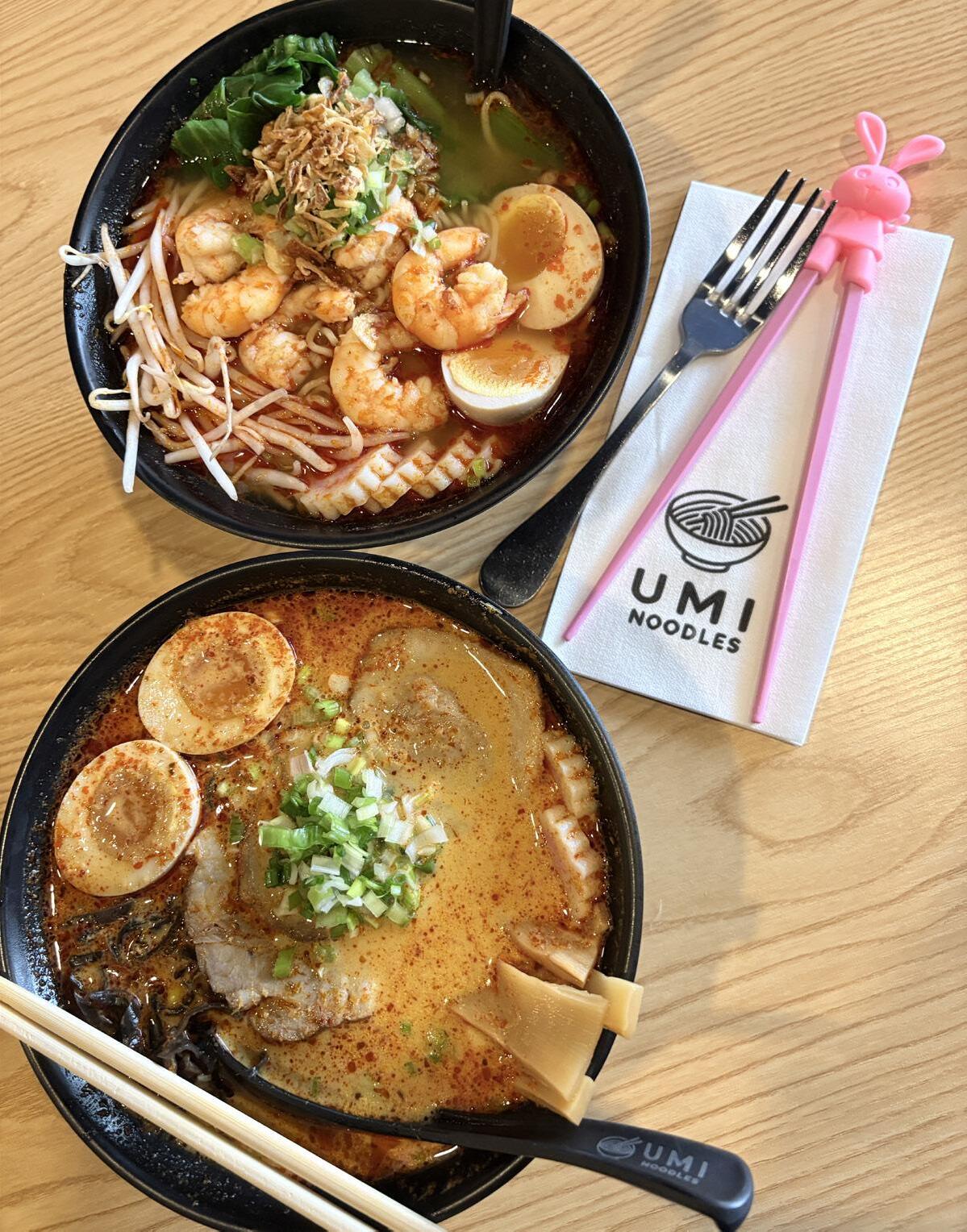
Max (owner) and Joey (server extraordinaire) find a few seconds to pause behind the counter seating at the back of Umi Noodles. On the wall behind them it says “Sad Me + Noodles = Happy Me,” and the curry laksa and prawn noodle soup made this writer very happy.
Noodling Around Umi Noodles Brings Asian Fusion Cuisine to Williamsport
By Lilace Mellin Guignard
“Williamsport really needed a place like this,” says Joey Shultz, as she hustles about the dining room of Umi Noodles at 317 Pine Street, setting down large, steaming black bowls and long narrow black trays. A Williamsport native who has worked in the restaurant business for decades, she predicts, “It’s going to do really well.”
Midway between lunch and dinner rushes, Umi still hosts a steady stream of customers, with two to four tables always occupied. Meanwhile Max, who owns the noodle house with his wife, Zena, gets a call for a large group and starts rearranging tables in preparation. Max is bald with a deep voice and an unexpected accent. He is Russian and Zena is Chinese. They opened Umi—which in Chinese evokes ideas of abundance, luck, prosperity, and plenty—last August.
“Lines were out the door,” Max says. “It made wait times longer, and I had to turn some people away.” English is his second language, and as good as it is he wonders if some
people think he was being rude. This matters a lot to Max, who wants to create a place where everyone feels welcome, and staff are like family. After adjusting his workforce (letting go of people who weren’t friendly or dependable) and preparing better for the large number of customers, things are running smoothly.
Max and Zena met when they both came to this country as international students in 2006 to study at Rockland Community College’s school of business and professional studies, twenty-five miles northwest of New York City. They got married in 2014. Zena worked in noodle houses and Max sold tools through Amazon—“I’m sure that’s where I lost my hair,” he jokes. While they worked and saved, they’d visit a friend in Williamsport several times a year and fell in love with the place. And the pace.
“I would sometimes stay in the car three to four hours a day in New York City,” Max says. “And there are nice people here.” They also noted how much cheaper it was in Williamsport. And Zena saw an opportunity.
“When we come here, I really don’t see any here,” she says about noodle houses, or the lack thereof.
After their daughter was born, their desire to get out of the big city got stronger. Then their friend told them a downtown spot had opened up. When Max and Zena saw the former Boom City site (it moved to 454 Pine Street), they knew it was right. They bought an old house in Loyalsock and moved the whole family, including Max’s parents, to Pennsylvania. In both Chinese and Russian cultures, it’s traditional to live with extended family. And it sure helps when you’re starting a business and have a four-year-old.
“Now I only have a ten-minute commute,” Max smiles.
The next months were busy, with Max doing most of the renovation work on the restaurant himself. Then he went home and worked on the house. He admits to focusing mostly on the restaurant once the bathrooms in the house were working well. At Umi’s there was new flooring, tile for the kitchen,
remodeling the bathroom (he had help from professional plumbers), painting, and adding surveillance cameras. Then there was waiting for the furniture, which took longer than they’d expected, so they opened after the 2025 Little League World Series.
Zena is the cook, having learned during her time working in New York City Japanese restaurants, and has created a menu influenced by many Asians cuisines, including Malaysian, Cantonese, Japanese, Korean, and Vietnamese, but with her own twists. The selection is small but mighty. Appetizers include sushi taco—spicy tuna or spicy salmon in crisp wonton shells with scallions, eel sauce, and spicy mayo—and a seafood pancake full of shrimp, scallops, and squid. Max says a local man comes especially for their crab rangoon, which he says is some of the best he’s ever had. If you don’t lean toward seafood, their housemade pork sausage with garlic sauce may tempt you.
They make their dumplings every morning, including chicken gyoza, steamed jumbo shumai, and pork cabbage dumplings. The shrimp hacao—Chinese dumplings in tender translucent wrapper with dipping sauce—sounds simple but the flavor is memorable. A key component to everything they make is fresh ingredients. They like to buy local, so they purchase from Helmrich’s Seafood on Fifth Street and Tony’s Delicatessen and Fresh Meats on Washington Boulevard. For the Asian items they can’t get locally, such as fish cakes, Max drives to New Jersey.
The main event are the noodle soups. Ramen options include tonkotsu with roasted pork, shoyu with sous vide chicken breast, and curry laksa with pork and coconut milk. A wonton noodle soup uses thin egg noodles, and a spicy wonton soup has no noodles at all. Max says the prawn noodle soup is his favorite, but that the beef pho is hugely popular (and offered for dine-in only). He was pleased to hear from some tourists who travel a lot that this was the best pho they’d had. Vegetarian options include tofu avocado salad, vegetable dumplings, and tofu ramen. Joey even offers kid chopsticks—hot pink plastic sticks with a pink bunny holding them together at the top—to those having a little trouble with the traditional Asian sticks.
The space is tranquil and uncluttered, with furniture Zena chose for its clean lines and minimalistic style. One wall and the ceiling are painted matte charcoal, a color echoed in the cushions. The other walls are a light neutral that matches the blonde wood, except for the front wall of the long narrow space, which has a window adding natural light that’s half a garage door and can be opened in warmer weather.
Style is important to Zena, who ordered to-go bags in Umi Noodles’ colors, a bowl of ramen and their logo on the front, and their info on the sides: (570) 929-8888 and 317umi.com. It’s useful, fun, and free advertising as they get reused. With such large servings, most people who dine in get the bags, too. Joey is skilled at transferring remaining ramen to the quart containers.
“We do all this for our daughter,” Max says. “We invested everything to give her a better life.” Though there are some things they miss about the big city, they don’t miss the bars on the elementary school windows, the drugs, or the crime.
Max says he’d become an angry person. “I wasn’t myself.” But now, even when he’s packing to-go orders and taking reservations nonstop, he’s more relaxed. “People are friendly,” he says. “We like it here.”
Sponsored by:
Blending California & Elmira
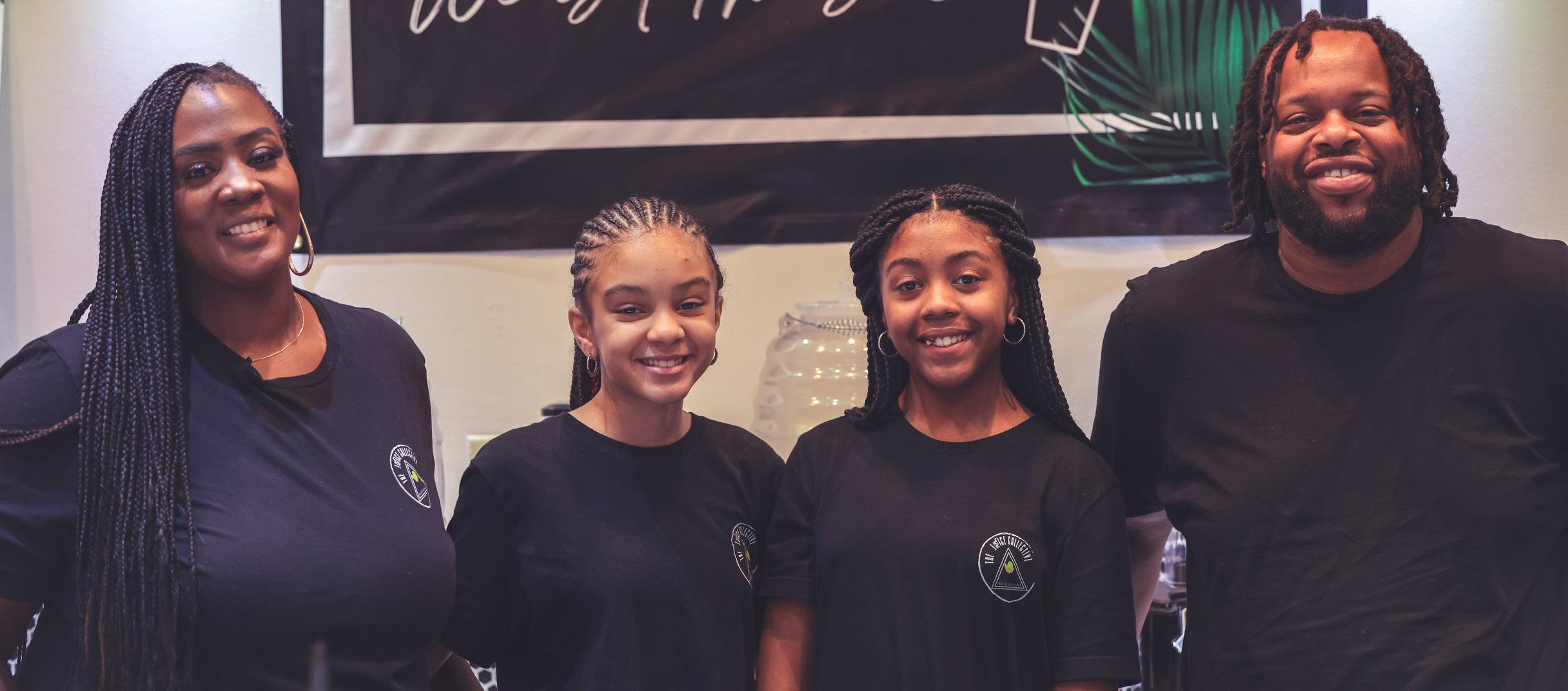
LaTeka Cooke-Davis creates juices aimed at health, especially for cancer patients; nieces Ari and Jay, and husband, John, help, making this a collective endeavor.
A Canvas of Health and Healing
Nutritious and Delicious at Elmira’s Juice Collective
By Karey Solomon
When the Juice Collective opened its doors in Elmira at 149 West Gray Street across from the LECOM Arena, LaTeka Cooke-Davis brought a wealth of knowledge and experience to the enterprise. She’d begun learning about juice years earlier in Los Angeles, when she was diagnosed with a brain tumor and her father, a bishop, thought juices would help her heal. She researched the properties of fruits, veggies, herbs, and spices and found combinations that supported health. In April 2020, the West Coast branch of her family moved to Elmira.
A few months later, her father was diagnosed with multiple myeloma. “It caused me to do further research,” LaTeka says. “I’m passionate about making people feel better.” Soon her father’s cancer progressed beyond treatment.
“As my father was leaving this world, the guidance he shared with me was that what I had been learning wasn’t meant just for him. He encouraged me to share it with others, which is exactly what I’m doing through the Juice Collective,” she says, adding that juice became “my canvas, painted with the colors of home, love, and diverse flavors.”
In Elmira, LaTeka, who attended business school and previously worked in insurance, made juices for friends and her church family. Word spread and she was soon deliv-
ering juices to the wider community. After a successful surgery to remove her tumor, she used juice blends to maintain her own good health, then began offering them at festivals and pop-ups. She got connected to Incubatorworks, a networking program for new entrepreneurs. They helped her find her first space, which was in the Arnot Mall. She moved to her downtown location in early May 2024. She gets help from her husband, John Anthony Davis, her mother, Aurellia Cooke, who is a nurse and owned several restaurants in LA, her nieces Ari and Jay, and sometimes her brother, Corey Cooke, who is a pastor, Elmira council member (Second District), composer, and musician.
In addition to cold-pressed juices combining fruits and vegetables with proven nutritional value and healing properties, LaTeka sources and uses lesser-known ingredients like sea moss (“It has ninety-two minerals and gives natural energy,” she says) and the tropical fruit soursop (“It’s a medicinal fruit that kills cancer and rebuilds cells”). Not sure what to order? Try a “Wellness shot”—a small serving of a juice blend, turmeric, pepper, and ginger. Many of the Juice Collective’s original customers come here to stock up on quantities of juice after cancer treatments at Arnot Ogden Medical Center’s Falck Cancer Center, finding them a good nutritional support when appetite and energy flag. Now a
larger audience comes for juice, soup, vegan grab-and-go wraps, and more. The weekly specials are posted on Facebook along with menu staples like build your own acai bowl, tarragon chicken salad sandwich, marry me chicken soup (LaTeka’s take on a classic dish), vegan zupa Toscana, and banana pudding.
Yes, banana pudding.
“People really love our banana pudding,” LaTeka says. “I try to make forty pounds every few days.”
She also offers bento boxes, each with a full sandwich, a pint of soup, honey corn bread, and a drink for twenty bucks. It’s a popular and healthy grab-and-go, she says.
Current Juice Collective hours are 11 a.m. to 6 p.m. Wednesday through Saturday, but check thejuicecollectiveny.com, Facebook, or call (607) 442-6071 for changes as LaTeka hopes to expand the days and times she’s open. She’s also working on a subscription service “for people who can’t reach us,” so stay tuned for that.
Karey Solomon is the author of a poetry chapbook, Voices Like the Sound of Water, a book on frugal living (now out of print), and more than thirty-six needlework books. Her work has also appeared in several fiction and nonfiction anthologies.
The Mark Twain Building
By CaPrIOTTI PrOPerties
147 West Gray Street, Elmira, New York
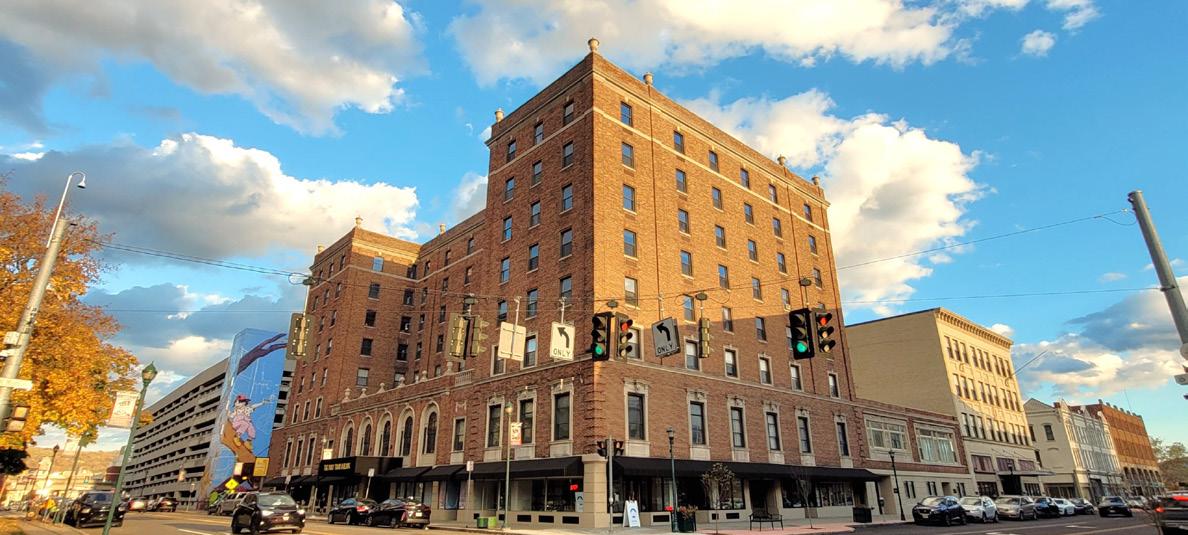
Welcome to the iconic Mark Twain Building, a former hotel dating back to 1929, now boasting all-new luxury apartments in the heart of Downtown Elmira’s rising arts & entertainment district! This staple of Elmira’s skyline has been extensively renovated with great attention to detail by incorporating its historic features of the building into a modern, 21st century “urban-chic” aesthetic.
TheMarkTwainBuilding.COM
Now leasing newly constructed 1, 2, and 3 bedroom apartments on the building’s second floor, in what was the original lobby, parlors, and dining rooms of the hotel! Each of these brand-new apartments include:
- Discounted highspeed internet
- All-new appliances
- In-unit laundry
- All building utilities included
- New AC & heating systems
- Custom lighting fixtures
- Secure covered parking
- On-site office & fulltime maintenance
- Access to study rooms, fitness room, and theater
The Importance of Bringing a Thermos
By Lilace Mellin Guignard
Winter in the Twin Tiers is beautiful. And it can make you crazy. It’s often said among outers (as Nessmuk referred to outdoor enthusiasts) that there’s no such thing as bad weather, just bad gear (or variations to that effect). As outdoor pursuits have become fashionable, so has the gear—from clothing to, now, thermal accessories that do not involve waffle weave. I’m talking about the mug, water bottle, and almighty thermos that can be found in as many colors as there are brands.
I remember the missile-sized red plaid thermoses my parents had when I was growing up, but thermoses quickly became a thing of the past for me. Water bottles, oh, I had plenty of them. My husband and I had lots of gear—in fact one of the fun things about having kids in our late thirties was having money to buy kid-related outdoor apparatus. (That off-road stroller we only used a handful of times.) We always planned
to take our kids on outdoor adventures but were adamant they not be death marches or lessons in how to suffer. Most adults I talk to who “don’t do the outdoors” give me stories of freezing or being hungry on treks with their parents in Vermont in the 1970s. So, Jimmy and I were always prepared. Or so I thought.
Three years after moving to northcentral Pennsylvania, I found myself one winter with a bad case of cabin fever. I had a four-year-old, an eleven-month-old, and if I heard another Wiggles song I was going to scream. The snow outside the window was enchanting, and I needed to see it on trees, not just cars. Jimmy was on winter break at the university when I decided it was time to take Gabe sledding. Our friends Tim and Jackie Schlitzer lived in Arnot on the edge of the Tioga State Forest and knew a good spot, so I packed snacks, we bundled the kids up, and off we went.
When bundling kids, layers are key— put an athletic (synthetic) layer on first, and avoid cotton so the sweat from exertion doesn’t sit against their skin and cool down. My daughter was insulated and in a chest carrier that my coat went over. Gabe was likewise adorned—with the addition of boots. I didn’t anticipate any issues, and had convinced myself this adventure was all for him. Gabe loved the cold. Since he was two he’d sit out by a campfire for hours when it was snowing, listening to Daddy and the Old Man tell stories long after I’d ducked inside the man cave to warm up.
I was surprised, therefore, when we’d hardly even gotten to the spot our friends had in mind—having dragged the sled from their house—when Gabe, who was the most easygoing of kids, declared he wasn’t going sledding, he was going home. No snack in my pockets could change his mind. He marched off while Jimmy and I looked at
each other like “What do we do now?” and “Where the heck does he think he’s going?”
That’s when Jackie pulled out her thermos and announced a hot chocolate break. I thought, “Gabe doesn’t like hot things. This won’t work.” How wrong I was. Maybe it was his crush on Jackie that got him to try a sip (a year later when he had a girlfriend in kindergarten, he’d say Jackie was his first girlfriend), but he drank that cup of cocoa, his small hands wrapped around the thermos lid, and POOF. New child.
The combination of calories and warmth is magical for all ages, but essential when taking children out when it’s cold and they can’t get to shelter easily. We know we burn more calories in winter, and when you’re bonking (a technical term for running out of steam/crashing) having something sweet can quickly adjust your attitude. It’s also true that digesting warm food and drink raises your internal temperature through thermogenesis.
And don’t underestimate the psychological effect such comfort can have on a person. Being really cold feels scary. As adults, we can assess how serious it is and how soon we will be back in a stable environment. Kids cannot. Promising hot cocoa at home afterwards is merely cold comfort.
When kids are old enough to express what they do and don’t enjoy about going outdoors, listen to them. If you have a new experience that you think they’d like, the worst thing you can do is force it on them saying, “Just hang on, you’ll love this!” Maybe that plan is too much all at once, and you can start with a smaller adventure—shorter distance, better weather—or find a friend of theirs who will go too. Bring the snacks you never let them have or grab the fast food you usually forbid. Most of all be flexible. But don’t hesitate to introduce toddlers to winter outdoor fun—just be sure you are exposing them to the fun more than the elements.
After a gradual start near the end of the long, not very steep hill, Gabe enjoyed sledding the whole expanse with an adult. And he really enjoyed seeing his mother hand off the baby and take a ride with Jackie—two adults going much faster, tumbling into the snow at the end.
We didn’t sled long, but we’d made memories, and I never forgot the importance of bringing a thermos. When Gabe started hunting as a teenager, I bought him his first one. I got myself the same kind when I started hunting, too. Screwing the cap off slowly and silently and getting that first whiff of coffee while sitting in a tree stand surrounded by bare branches and snow-covered hills was euphoric. The shivers stopped while I wrapped my hands around the cup, wondering how my son was doing in his tree stand just over the ridge.
There are so many thermoses. They all keep things hot, but if you need something to keep liquid steaming for eight hours or more, check out reviews. Otherwise, just make sure there’s a good seal. I’ve bought and received several over the years, and the value of them lies mostly in the memories they keep eternally warm. When it comes down to it, the best thermos is the one you have in arms’ reach when you—and your kids—are in need of quick calories and heat. Because memory-hunting season is year-round outdoors in the Twin Tiers, and you don’t want to miss a moment.
wells Hotel Lodge
TIOGA COUNTY
Bearly Enough Flowers
Place your Valentine’s Day order by February 10 and receive a free small box
5 North Main Street, Mansfield, PA (570) 463-4377 • bearlyenoughflowers.com
Scoop continued from page 13
ally improving is valuable. Maybe it didn’t get better, but I found a new technique to improve the thing I’ve already done.”
This year he plans to try more special nights like the ramen popups that were a hit during the fall. People knew he had a talent for making ramen from his time cooking at Beck’s, and they had been asking when they would see it here. The subsequent pop-ups were a success. “Doing the ramen nights really taught me if I do something right, something people are asking for, you can see the positive reaction.”
What else does the future look like? Kyle wants to improve the experience of those coming to taste gelato.
“I think when we first opened, people really liked the tasting process—almost treating it more like a wine tasting than a typical ice cream shop, so I think getting more into that, suggesting, ‘Oh, if you’re going to have this gelato, try pairing it with this.’ People won’t do that themselves, so I’d like to help them make better decisions.”
He also plans to work with more local suppliers and do more collaborations like the one he did with Innerstoic. Since posting a thankyou to his local partners during the holidays, he’s been approached by a few more folks he’d like to work with. He’s also hoping that will lead to enough growth that they can try out some more custom flavors.
“One of the benefits we have as a micro gelato maker is we can do stuff to order for weddings or catering events, just one-off, one-day events, and do a tub for them,” he says.
For foodie friends, a fun diversion in any conversation is a discussion of some of the tastiest things eaten lately. This ranges over time from a well-seasoned birthday steak to an absolutely unforgettable slice of brick oven pizza on a trip to the city. Usually what makes these gastronomic gab sessions most interesting and lively is the shared food experience that has been something different. Out of the norm. Not an average sandwich. Not a so-so soup. It’s fresh in ingredients, ideas, and implementation, it’s exciting to the palate, and it leaves you, the consumer, not only thinking about it for a long, long time, but wanting more. More from that place.
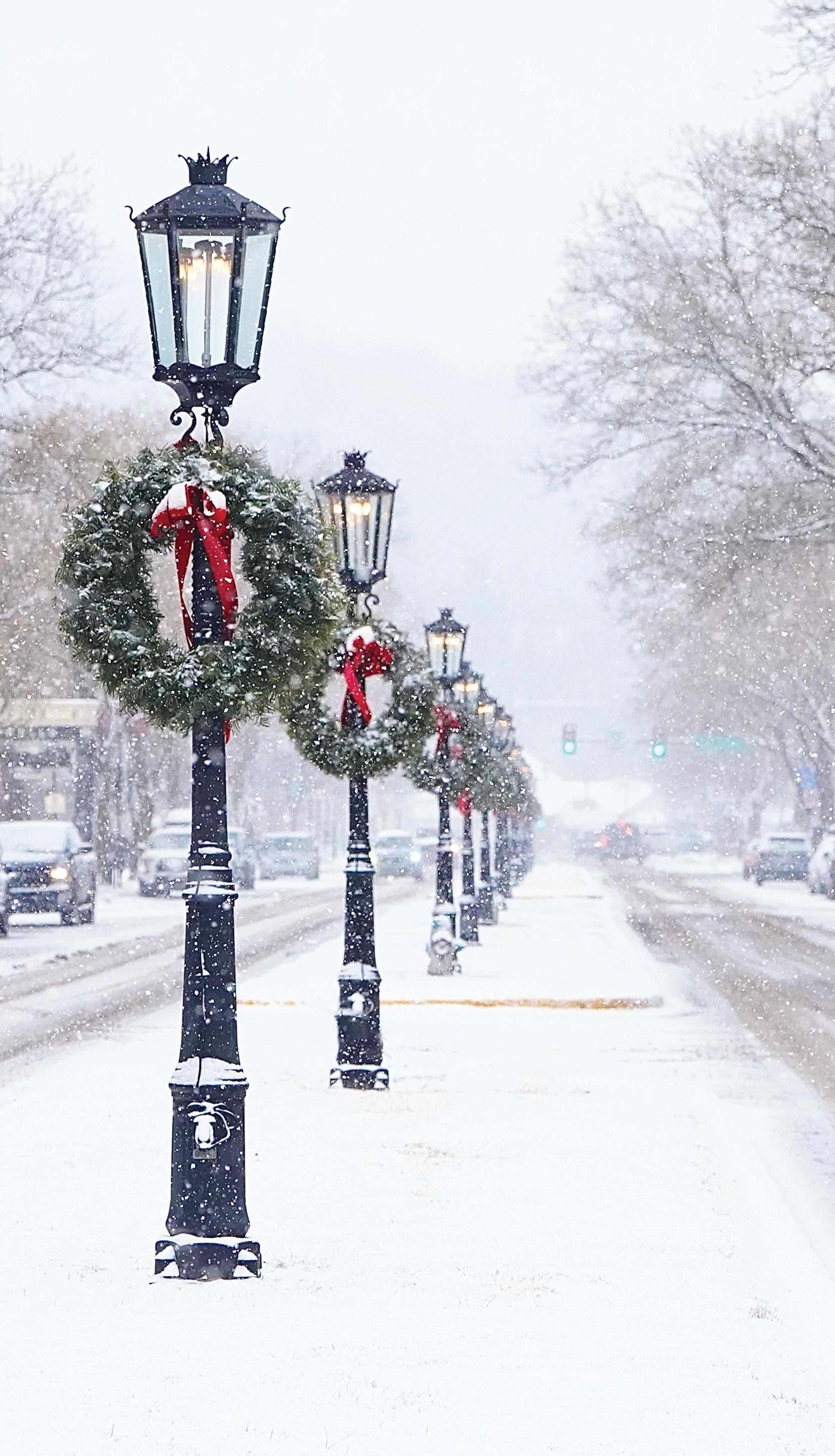
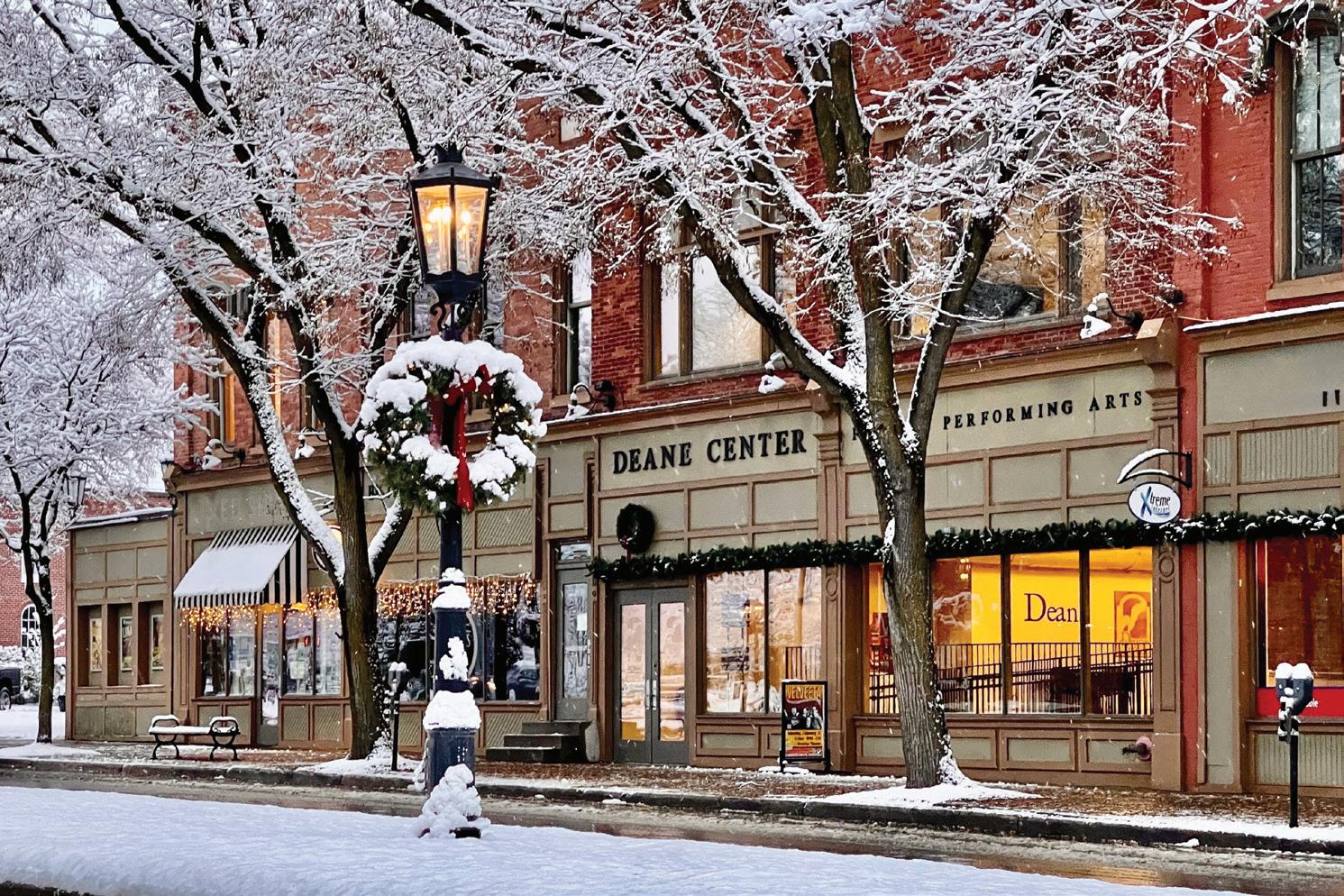
When people have conversations about Wellsboro, it’s usually to rave about the old-time charm of the Hallmark town’s idyllic gaslit streets, the old mysteries of decades-old businesses, and the experience of stepping back in time for a few days. Just one block off Main Street, though, Kyle Bower is delighting and surprising diners by pairing fresh ingredients and ideas with the modern and distinctive flavors.
And, by the way, he hopes to serve you one of the tastiest things you’ve eaten lately.
Visit Komodo’s Facebook or Instagram pages to see what’s on the menu this week, call (570) 948-2599, or, better yet, just pop in at 17½ Crafton Street to try whatever it may be, so you can be a first mover in taste, too.
Karin Knaus is an English teacher in the Northern Tioga School District. She appreciates good food and eats a lot more gelato and delicious sandwiches than she probably should, but with absolutely no regrets.
1 East Park St., Avis, PA 17721 • 570-753-5201 www.TheLibertyBookShop.com
Used, Rare and Out-of-Print Books. Your source for unusual books on any subject. Browse our in-stock selection of over 40,000 hardcover books and paperbacks.
BACK OF THE MOUNTAIN
Chase Your Fairy Tale
By Becky Simpson
In early 2026, my husband and I took our eight-year-old daughter on a snowy outing at Cumming Nature Center in Naples. “The Pines” area of the trails had been calling to my heart to come see it again. It was very cold at just 10 degrees with a windchill.
I bundled up my daughter in all the layers needed to keep her warm enough (hat, scarf, gloves, and snow pants) while my husband got his on. Then I worked on my winter gear, and we all set out into the woods for a hike to set the tone for the New Year.
As we entered the woods it was immediately magical. For one thing, it was noticeably warmer, as the trees protected us from the wind. As soon as we rounded the corner to get to this pine section we all gasped, “Wow.” Morning sun cut sideways through the trees, the beams making tiny, powdered snow glisten in the air from the gentle breeze.
It takes effort to get outside on a cold morning, especially with a child, but it always provides some kind of fairy-tale experience. What a way to start a new day—and a new year.
REIMAGINED
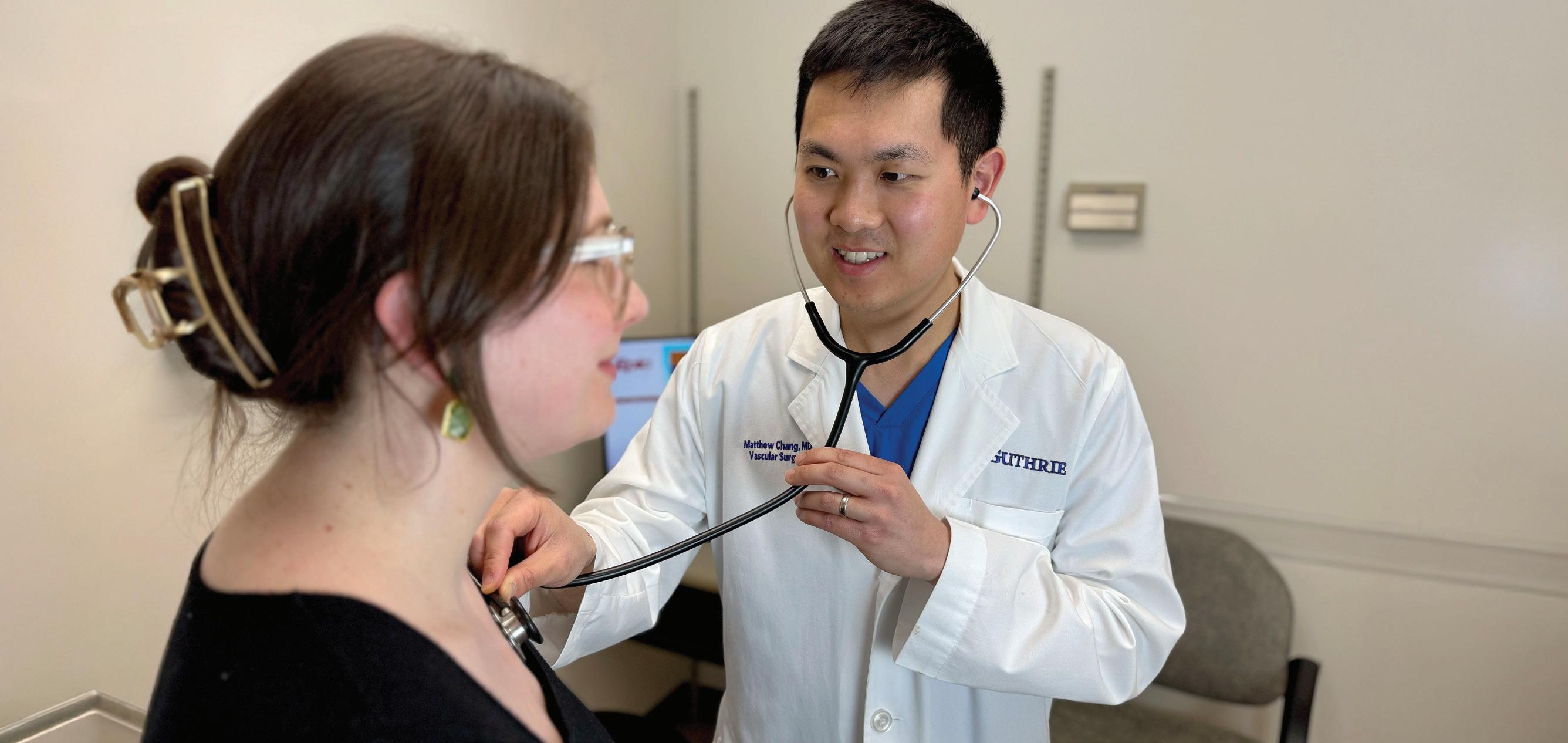
CARDIAC & VASCULAR CARE
REIMAGINING:
ACCESS
Access expert cardiovascular care at any of our 14 locations with convenient scheduling options, including online booking and virtual visits, while benefiting from a team-based approach and personalized care.
REIMAGINING:
INNOVATION
Innovative treatment options such as TAVR, cutting-edge hybrid operating rooms with real-time imaging, and specialized programs such as the Heart Valve Clinic deliver precise care and safer outcomes. On-site clinical trials provide patients with access to research on treatments for conditions such as atrial fibrillation, congestive heart failure, and lipid disorders.
REIMAGINING:
PATIENT-CENTERED CARE
Recover more quickly in a supportive care environment with private rooms and nearby ICU and maintain your long-term heart health with support from one of our comprehensive cardiac rehabilitation programs.
Choose Guthrie, where heart care is truly REIMAGINED.