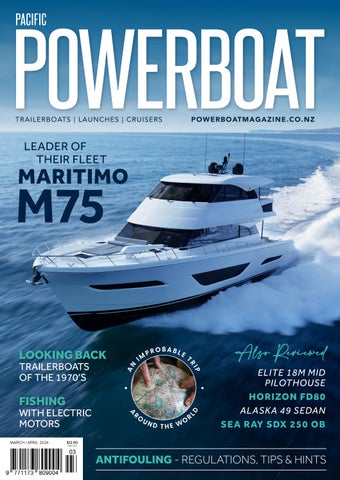

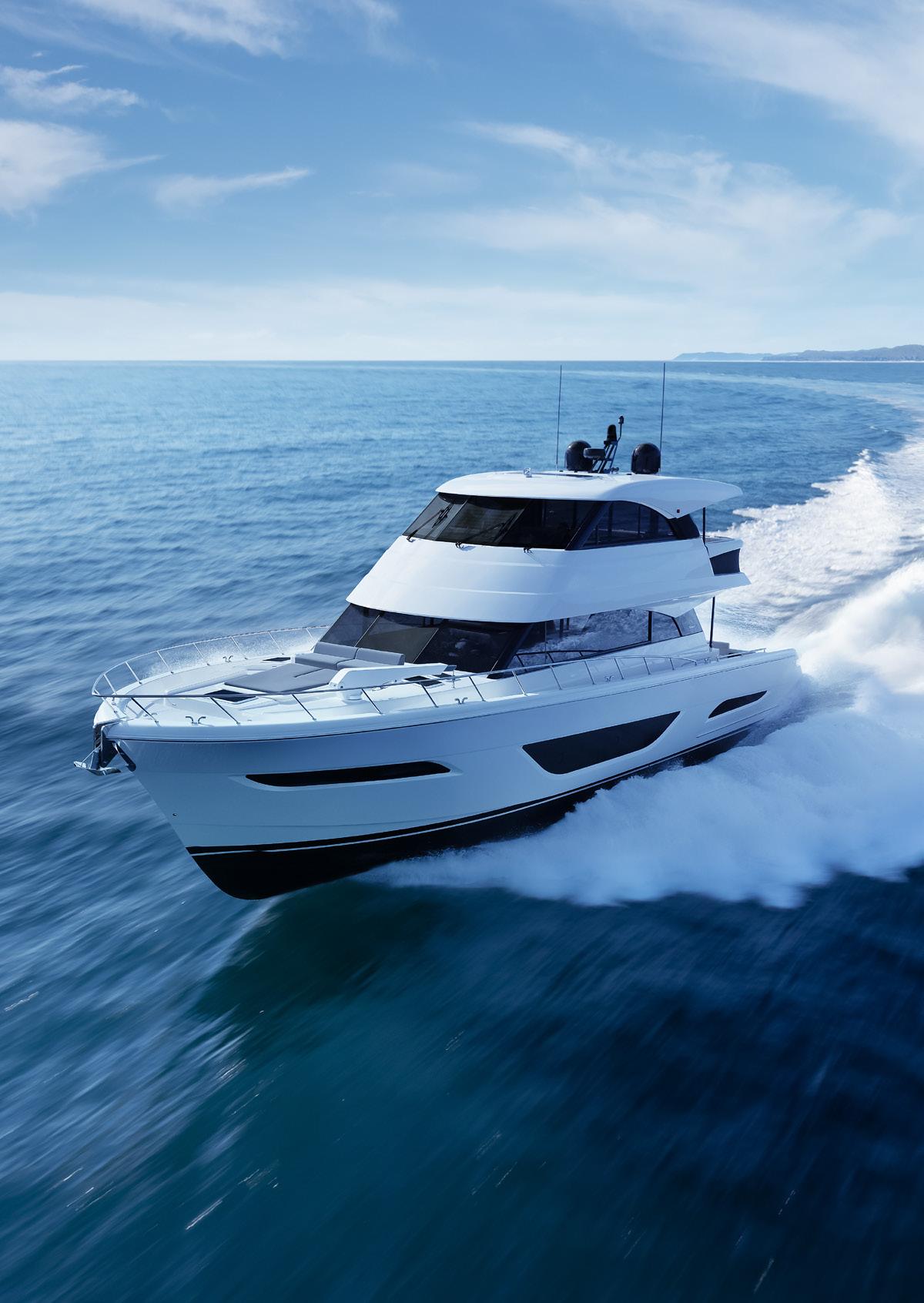
MARCH / APRIL 2024 INCL GST POWERBOATMAGAZINE.CO.NZ TRAILERBOATS | LAUNCHES | CRUISERS $12.90 Also Reviewed ELITE 18M MID PILOTHOUSE HORIZON FD80 ALASKA 49 SEDAN SEA RAY SDX 250 OB LEADER OF ANIMPR O B A BLE TRIP AROUND T HE WORLD LOOKING BACK TRAILERBOATS OF THE 1970’S FISHING WITH ELECTRIC MOTORS THEIR FLEET MARITIMO M75
THE ULTIMATE ADVENTURER
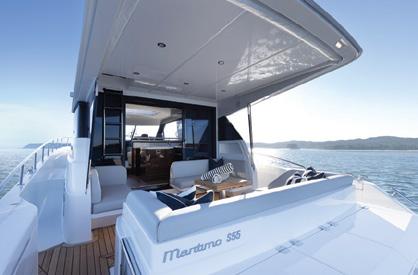
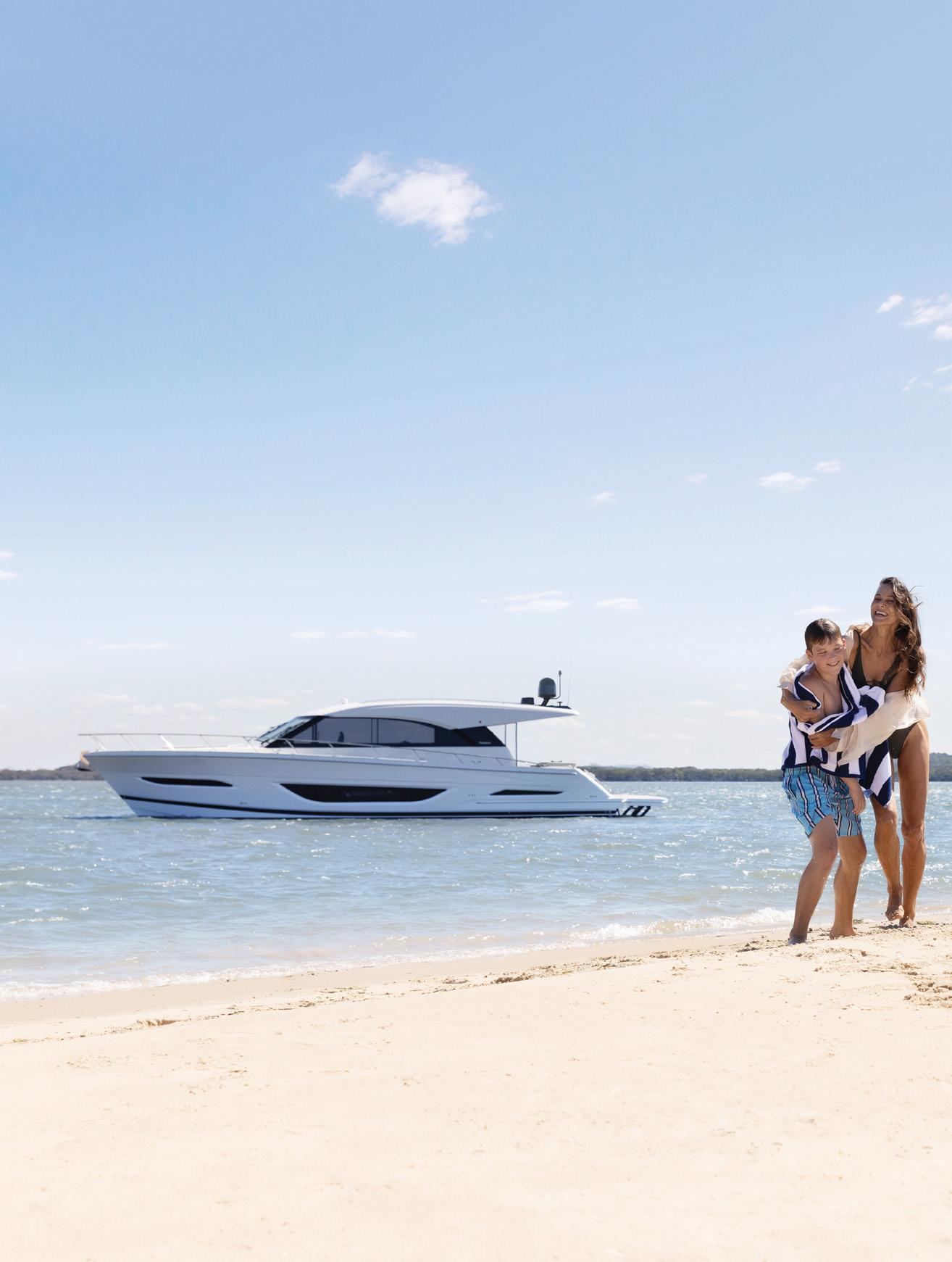
The all new S55 is the latest evolutionary addition to Maritimo’s esteemed sedan motor yacht series, a series renowned for long range adventuring and offshore cruising practicality. Australian built, its powerful exterior form, reimagined entertainment areas, and functional deck spaces reset the international standard for cruising sedan motor yachts. maritimo.com.au
S55

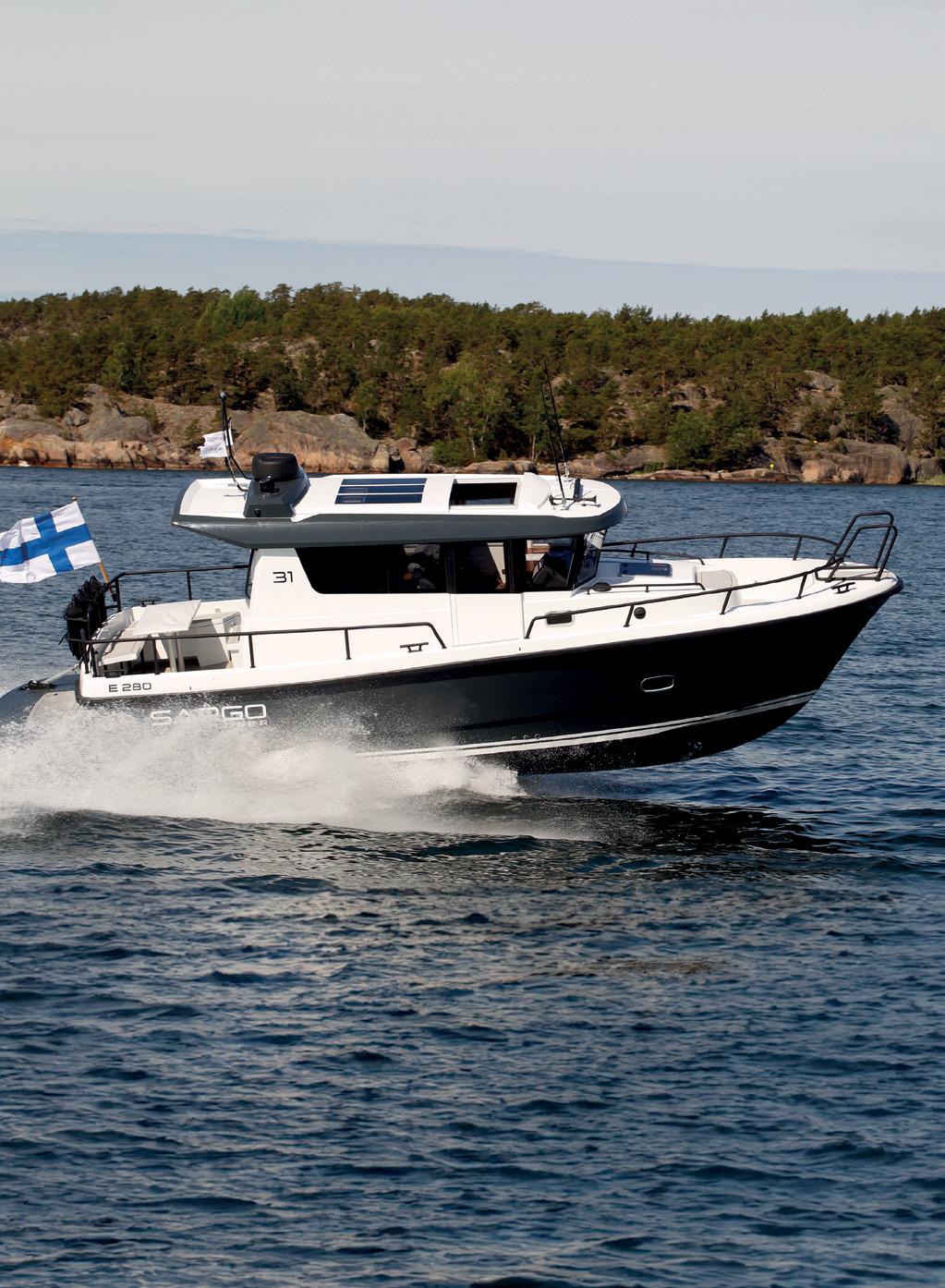
Built in Finland without compromise. Deep V hulls produce a true all-weather, all-season boat. Responsive, sporting, and tough. Let your Sargo take you anywhere. Leighton Henshaw | 027 444 6572 | leighton@europeanmarine.nz Bruce McGill | 021 748 437 | bruce@europeanmarine.nz EMI0021_PM The All-Season Boat sargoboats.nz EuropeanMarine 28 31 33 36 45
Hand-crafted Elegance
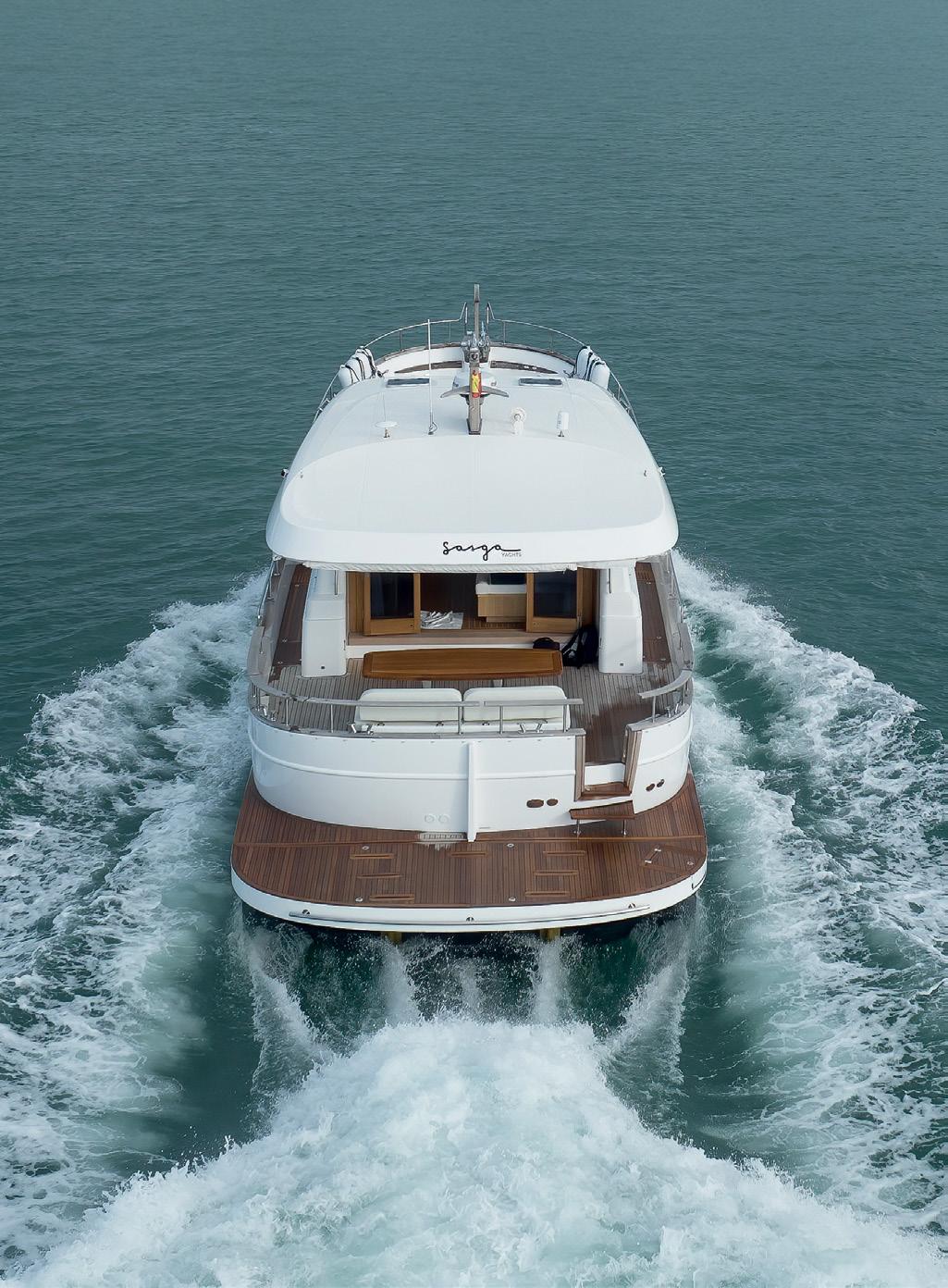
sasgayachts.nz
The hull shape has been developed by fishermen over generations to handle big seas in comfort. All models have a European Category A certification, which is for seas of 4m or more, and force 8 (40 knots) winds. Ideal for New Zealand conditions.
Navigating
Roger
Kiwi
Stealth


Carla
Hot
Aaron
ISSUE #76 MARITIMO M75 ISSUE 76 CONTENTS MARCH APRIL 2024 POWERBOATMAGAZINE.CO.NZ TRAILERBOATS LAUNCHES CRUISERS $12.90 Als R vi w d ELITE 18M MID PILOTHOUSE HORIZON FD80 ALASKA 49 SEDAN SEA RAY SDX 250 OB LEADER OF MARCH APRIL 2024 ANIMPRO B ABLETRIP AROUND T HE WORLD LOOKING BACK TRAILERBOATS OF THE 1970’S FISHING WITH ELECTRIC MOTORS THEIR FLEET MARITIMO M75 SEE PAGE 60 68 AN IMPROBABLE TRIP AROUND THE WORLD –PART ONE
Moore shares his 13-year voyage around the world. 84 THE HISTORY OF KIWI TRAILER BOATS BY THE DECADES
Back Part Three - The 1970s. 92 COASTGUARD EDUCATION
Looking
the seas safely: A guide to boating education. 106 FISHING
with electric motors – with Mat Hewetson. 124 ANTIFOULING
Fishing
Dukeson explores regulations and tips in protecting your bottom.
REGULARS 6 MARCH / APRIL 2024 8 DESIGN FOCUS: ULYSSES
FEATURES
latest
10 PUBLISHER’S COMMENT 2024 – What does it hold? 14 & 16 SEEN & ADMIRED - Manitou Explore 22 MAX - Island Gypsy 50 Wide Body 18 NEWS News, new products, boats and events. 48 POWER ON New products for the powerboating world. 50 ELECTRONICS COLUMN
billionaire Graeme Hart takes delivery of his
superyacht.
new electronics products from some of the world’s leading brands. 52 LEARNING TO LAUNCH It’s a 10-minute job. 54 PHIL GILBERT Stay or go? 56 STRAIGHT FROM THE GALLEY
the Chef,
104 FLETCH’S TIPS
Derek
prepares Seafood Arrabbiata.
Fletcher
tips
years of getting it right
wrong.
shares his
learned after
and getting it
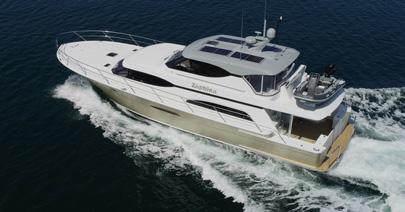
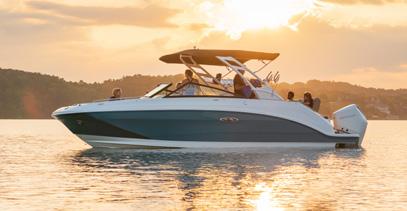
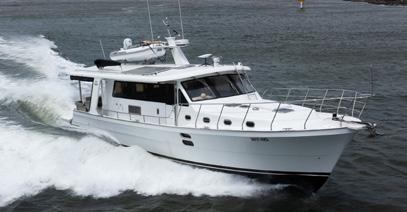
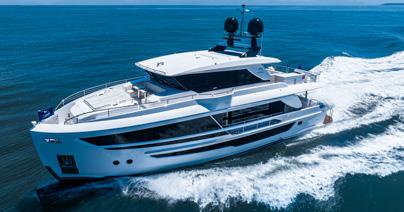
ALWAYS IN GOOD COMPANY THOUSAND REASONS, ONE PARTNER REVIEWS MARITIMO M75 60 ELITE 18M MID PILOTHOUSE 76 SEA RAY SDX 250 OB 96 ALASKA 49 SEDAN 116 HORIZON FD80 136 POWERBOATMAGAZINE.CO.NZ 7
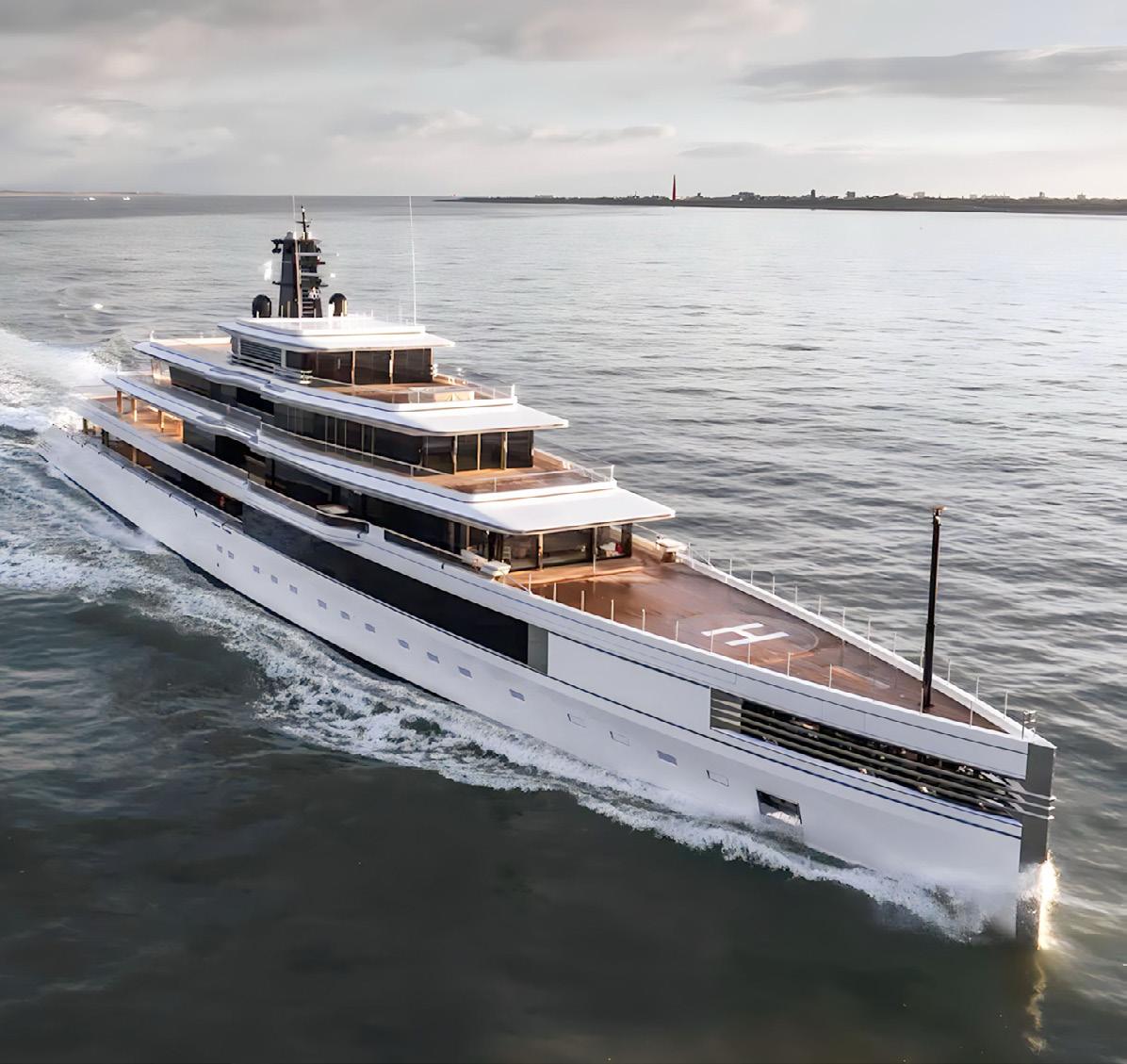
ULYSSES
Kiwi billionaire Graeme Hart has recently taken delivery of his latest superyacht, a remarkable 103-meter custom-built marvel, as revealed by the manufacturer Feadship. Boasting four outdoor hot tubs and a pool spanning the full height of the main deck, accessed via a dedicated pool deck, this vessel is a true engineering feat.
DESIGN FOCUS _ ULYSSES 8 MARCH / APRIL 2024

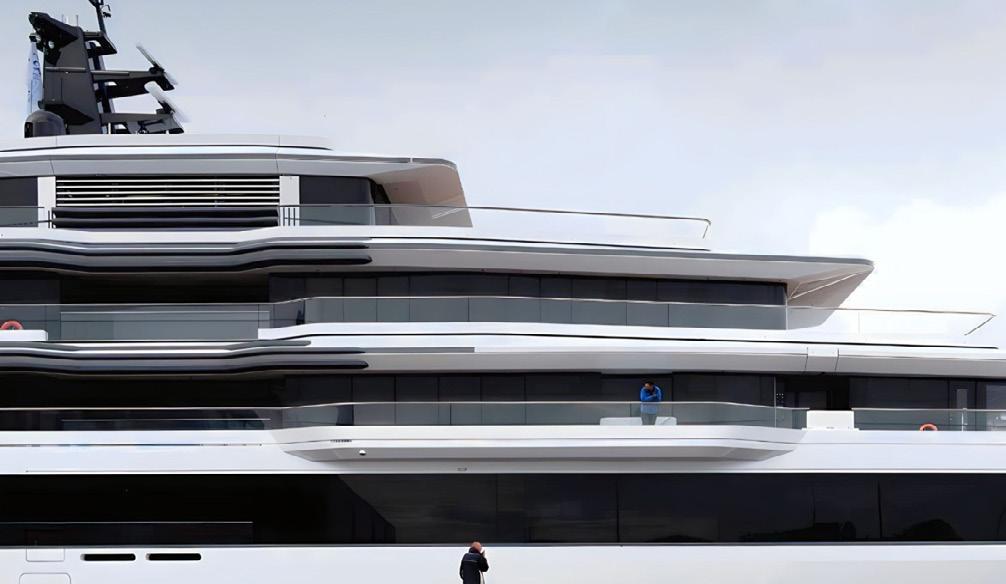
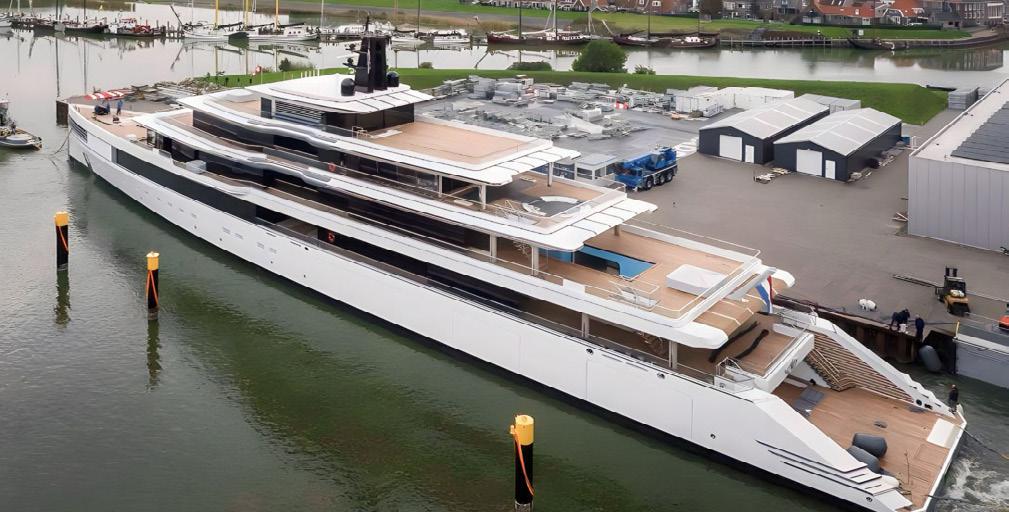
Among its standout features are a helipad, a hangar, and the largest tender boat garage door ever installed by Feadship on a luxury vessel. The christening ceremony took place in the Netherlands, with Graeme Hart's daughter, Gretchen Hawkesby, sharing an exhilarating clip on social media, capturing the traditional champagne bottle smashing on the hull amidst the backdrop of a wet and windy Amsterdam.
The yacht, equipped with 20 crew cabins, seven staterooms for guests,
two VIP guest staterooms, a captain’s cabin, and the owner’s stateroom on a private deck, also houses a discreetly mentioned "hospital" onboard. Unique features include a "towering" glass staircase and elevator in the main atrium, along with a winter garden that opens up to the outdoors.
According to a senior designer and project manager involved in the build, the design was conceptualized in 2020, and the aggressive three-year build schedule underscores the complexity of the project.
SPECIFICATIONS
LENGTH 102.6m / 336'7
BUILDER Feadship
DESIGNER Sinot Yacht Design
INTERIOR DESIGNER
Sinot Yacht Design
BUILT | REFIT 2024
MODEL Custom BEAM 14.4m / 47'3
GROSS TONNAGE 3,000 GT
DRAFT 3.85m / 12'8
CRUISING SPEED 12 Knots
TOP SPEED 17.5 Knots
POWERBOATMAGAZINE.CO.NZ 9
PUBLISHER
Doug Dukeson
D&B Publishing Ltd
EDITORIAL TEAM
Ron Czerniak, Richard Milner, Doug Dukeson, Derek the Chef, Mike Rose, Carla Dukeson, Rebecca Hayter, Phil Gilbert, Aaron Fletcher, Freddy Foote, Peter Morgan, Kyle Barnes editorial@boatmags.com
+64 9 428 2328
ADVERTISING
New Zealand & Australia
Doug Dukeson
+64 9 428 2328
+64 21 772 202 doug@boatmags.com
Holly Dukeson +64 21 028 66849 holly@boatmags.com
PRODUCTION
Annabelle Rose Design design@annabellerose.co.nz
Printer: SCG
WEBSITE
Stealth Media Ltd
Gustav Wentzel
+64 21 0201949 info@stealthmedialtd.co.nz
ACCOUNTS accounts@boatmags.com
+64 9 428 2328
CIRCULATION
Are Direct NZ +64 9 979 3018
Are Direct Aust +61 2 99728886
SUBSCRIPTIONS
(Printed & Digital) subs@boatmags.com
Pacific PowerBoat is published bi-monthly January, March, May, July, September, November
REGISTERED OFFICE
2 McKenzie Ave, Arkles Bay, Whangaparaoa, Auckland, New Zealand.
POSTAL ADDRESS PO Box 886 Whangaparaoa, Auckland 0930, New Zealand.
POWERBOATMAGAZINE.CO.NZ
COPYRIGHT Pacific PowerBoat incorporates: Propeller and Pacific MotorYacht Magazines. The contents are copyright and may not be reproduced without the written consent of the publisher. Unsolicited editorial material may be submitted. While every care is taken, no responsibility is accepted for material submitted. Opinions expressed by contributors are not necessarily those of Pacific PowerBoat Magazine. All rights reserved.
Printed in New Zealand
ISSN 2230-4134 (Printed)
ISSN 2230-4142 (Online)


THE MOST

STOLEN PUBLICATION
Wow, what a fantastic summer we have been enjoying! Kind highs bringing warm weather, with just enough breeze to keep cool and warm water temperatures in the 20s coaxing us back in. Fantastic for both swimming and drawing game fish closer, I have not heard of so many game fish being caught over a season for quite some time.
Writing this in February, I have been catching mixed vibes on how 2024 is going to roll through the coming year. With mainstream media again preaching doom and gloom, while on the other hand, several new brands are feeling confident enough to expand into NZ and Australia. Over the past few weeks, I have also been reading about many large international marine companies, reporting increased profits for the fourth quarter of 2024, with many breaking alltime records. Boat shows are selling out exhibitor space well in advance of the show, all positive vibes. Let’s hope this trend continues, I guess the upcoming Auckland Boat Show (14th – 17th March) with an expected over 500 marine brands and 150 boats on display, will give a good indication of where the market is currently at. PowerBoat Magazine will be at the show with some great subscription offers and our Ultimate Boating Accessory Giveaway - (as we will be at the 2024 Hutchwilco New Zealand Boat Show on May 16th to 19th and attending the Sanctuary Cove Boat Show 23rd May to 26th May).
It was also encouraging to hear, in a recent industry report by NZ Marine, reporting the increased value of a $3 billion industry, with $800 million in exports per year. New Zealanders now own 1,540,000 boats, with those boat numbers increasing by 44,810 per annum.
It has been a busy January and February, moving about the country and TransTasman on business. I have always been proud to see our PowerBoat magazine proudly sitting on sale in the airport and also in the Koru Lounges, both domestic and international. Although, on my two most recent trips, I was alarmed not to see them in the lounge, then having to call at the front desk to ask why they have not been out on display. With the reply being – “Sorry Sir, they come in and we put them out, they just happen to be our most stolen publication,” explained the lounge hostess with a grin on her face – which, on hearing this, made me grin as well.
Happy reading all –we hope to see you at a boat show over the next few months.
Doug Dukeson Publisher
PACIFIC
PUBLISHERS COMMENT _ DOUG DUKESON
10 MARCH / APRIL 2024
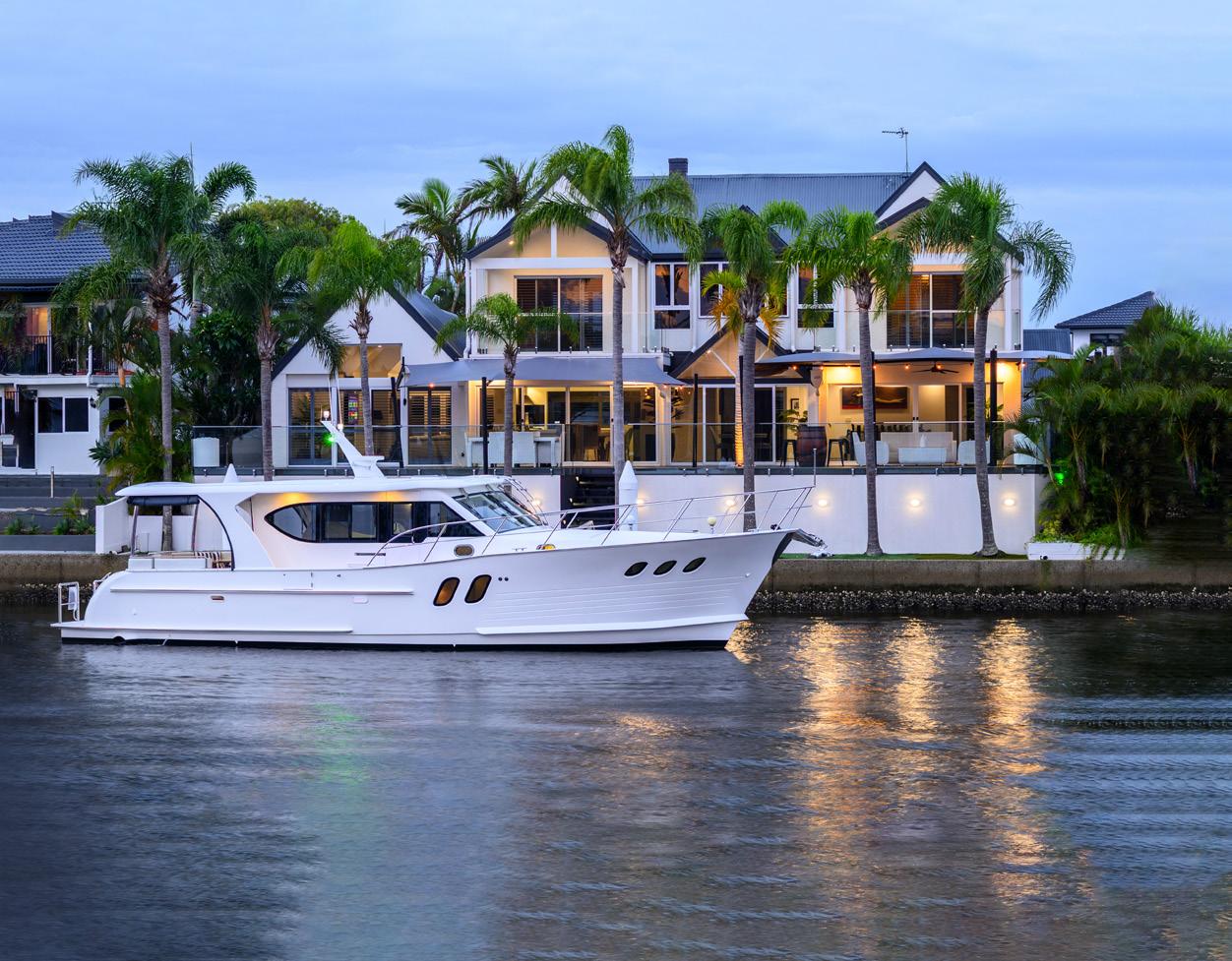
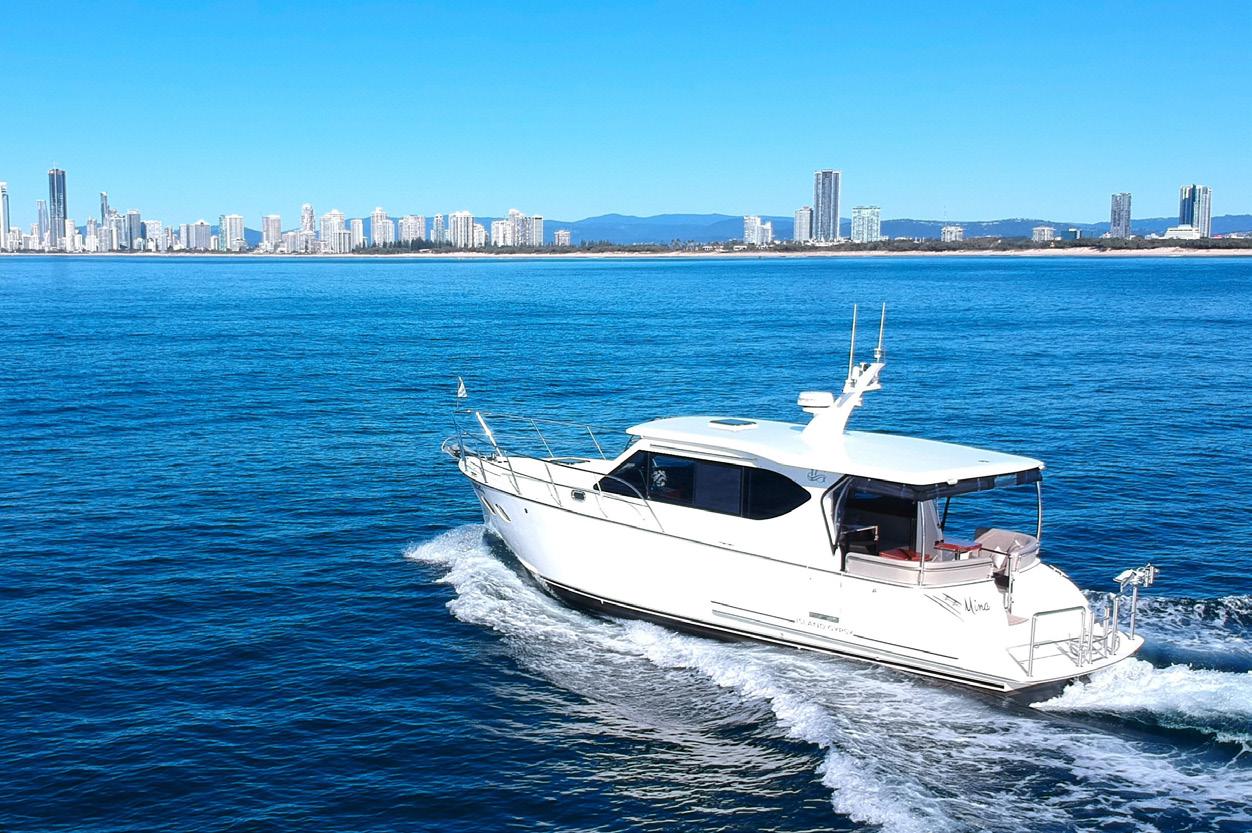
ISLAND GYPSY 50 Wide Body
This luxurious vessel with traditional lines is gaining popularity for its impressive appearance, speed, and tremendous interior volume. It is perfect for those who love spending time on the water ready for an adventure about to happen.
• Two Cabin Layout
• Full beam master
• Two heads
• 800hp Scania
THE NEXT GENERATION OF CLASSIC CRUISERS
ISLAND GYPSY 40 Wide Body
The stunning Island Gypsy 40 features enough space for up to 7 guests, boasting a generous sized cockpit, a spacious saloon for easy entertaining, and stacks of innovative features complete with a luxurious twin cabin fit out.
• Diesel shaft drive
• Full keel protection
• Generator
• Air conditioning
• Bow and stern thrusters
• Shaft drive Contact: Brett Flanagan (Director) P: 0414 997 654 | info@newportmotoryachts.com.au | www.newportmotoryachts.com.au |
DB975 NEWPORT 460 NEWPORT MOTOR YACHTS
Distributed by Newport Motor Yachts P/L
Drive,
Island,
Hope Harbour Marina, 9 John Lund
Hope
QLD 4212
240007
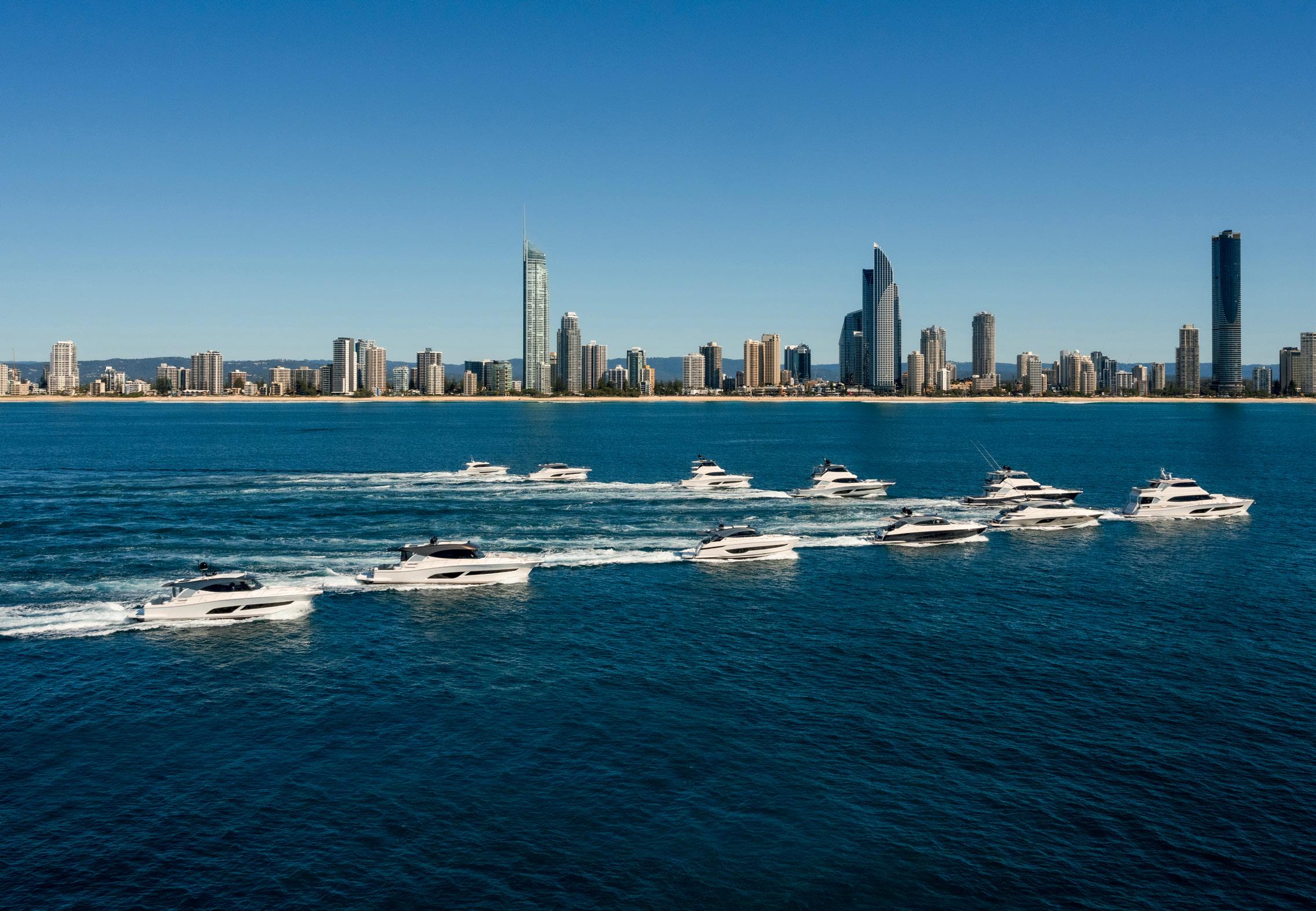
This year’s magnificent fleet will flank an outstanding world premiere yacht at Australia’s only Riviera showcase for 2024. This is your invitation to experience 12-exceptional yachts from 39 to 78 feet. Riviera owners will enjoy exclusive access to an inspiring boating education program and fabulous social events calendar at the Festival of Boating, held within the grand Riviera showcase at Sanctuary Cove from May 23 to 26. Discover more at RivieraAustralia.com AUSTRALIA’S FINEST FLEET On course for Sanctuary Cove International Boat Show 2024
AUSTRALIA SEES A NEW ERA OF BOATING
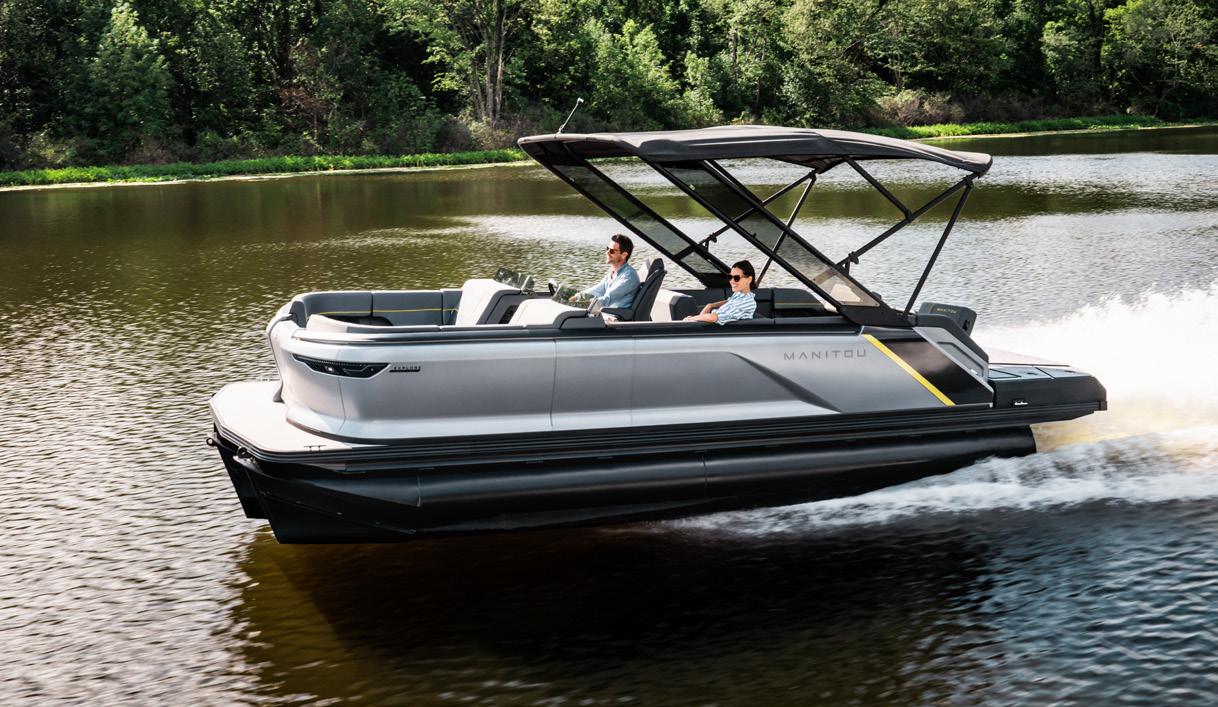
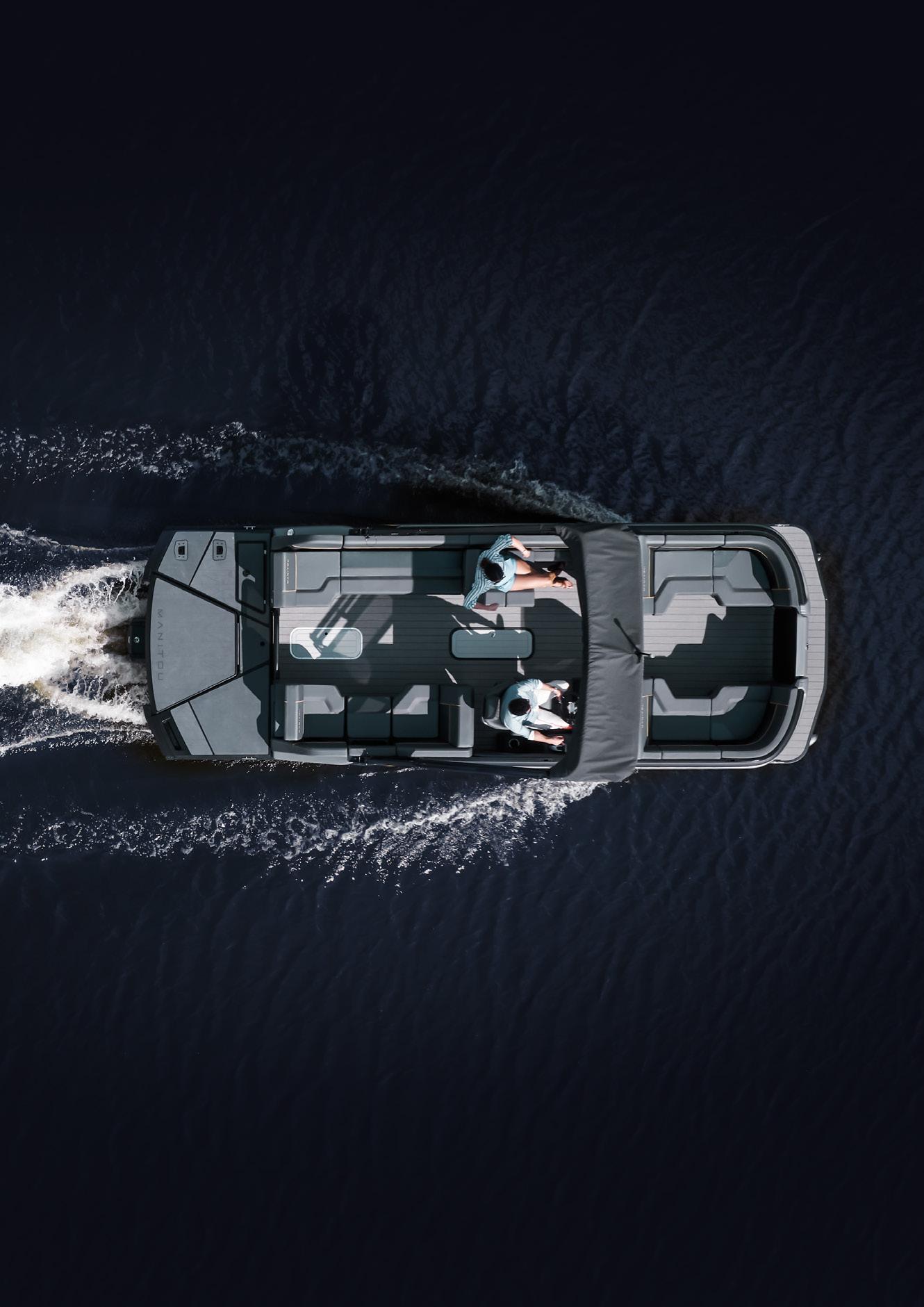
BRP is shaking up the Australasian marine industry with a new generation of boating, bringing one of its international brands to Australian shores. Following nearly 40-years of marine excellence, the brand will make waves in the Australian market for the first time, delivering locals the opportunity to experience the prestigious lifestyle that is synonymous to Manitou.
“First founded in 1986 in North America, the brand has moved mountains in the marine industry with innovation. Amidst redefining the boating industry, one thing has stayed constant; the passion to create a high-quality, attainable pontoon boat. With its legacy, Manitou has established a worldclass reputation of innovation and design that elevates the on-water experience,” Garrett Koschak Business Strategy Manager said.
“A legacy that will now be shared with Australia as we endeavour to further elevate
the industry, challenge norms, and break ground on a global scale; showcasing the full potential of the boating lifestyle to the world.”
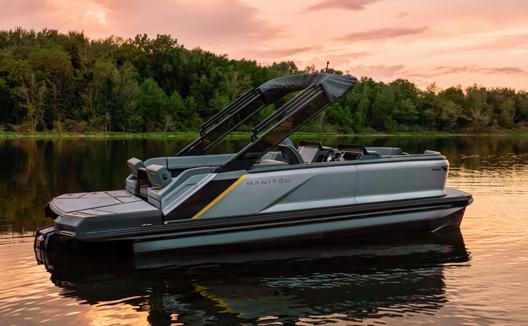
Finessed from a globally acclaimed team of designers and Research and Development professionals, Manitou Pontoon boats are truly unique; this year awarded the National Marine Manufacturers Association (NMMA) Innovation Award in the Pontoon Boat category. The acclaimed marine title came down to the timeless, modern design of the Manitou Explore
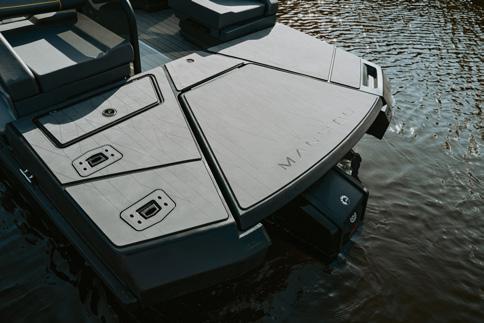
range, coupled with the MAX Deck, which was only made possible with BRP’s revolutionary Rotax S engine; the world's first outboard featuring Stealth Technology. Manitou will release its three Explore 22 MAX models to the Australian market; the Bench, Switchback and Navigator. The three configuration styles are thoughtfully designed to accommodate families, and extended families, of all sizes. The Manitou Explore is exclusively available through a select range of certified dealers.
SEEN & ADMIRED _ MANITOU EXPLORE 22 MAX
MANITOUPONTOONBOATS.COM/AU/EN 14 MARCH / APRIL 2024
It’s
Discover more at ManitouPontoonBoats.com/au/en
a boat made to elevate your every moment. The sleek design of Manitou Pontoon Boats commands an instant impression on the water, while its innovative interior makes the most of every inch of your space. A game-changing MAX Deck combined with the low profile of the Rotax S outboard engine, allows you to enjoy more usable space than any boat in the market, giving you the best value for your money.
TAKE YOUR BOATING TO THE NEXT LEVEL
ISLAND GYPSY 50 WIDE BODY
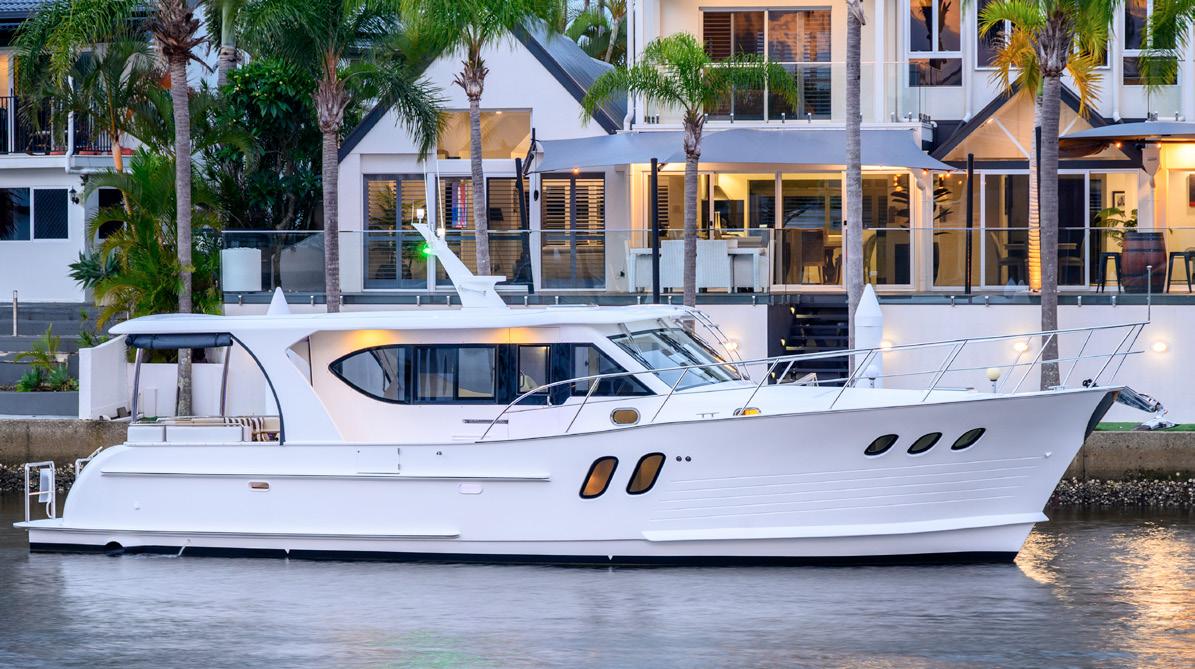
In the realm of luxury yachts, the arrival of the Island Gypsy 50 wide body has sent ripples through the maritime community, offering a seamless blend of luxury, performance, and functionality.
The Island Gypsy 50 is a masterpiece that caters to the discerning tastes of boat enthusiasts. One of its standout features is the mid-ship master cabin, a luxurious retreat with an ensuite that showcases comfort and elegance. The VIP guest cabin and accompanying bathroom are equally impressive, ensuring that every passenger enjoys their experience.
The IG50 features an impressive and economical Scania 800HP electronic engine capable of achieving a vessel speed of 18+knots. This not only guarantees confidence in its performance, but also
positions the Island Gypsy 50 as a top contender in its category. The upgraded 24v bow and stern thrusters further enhance its manoeuvrability and reliability, making docking a breeze.
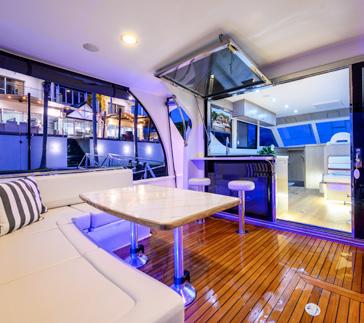
Stepping on board, you'll find an open, flowing cockpit area that invites socializing and entertaining. With a capacity to host 10+ guests, the design of this space ensures that every moment on board is an event to remember.
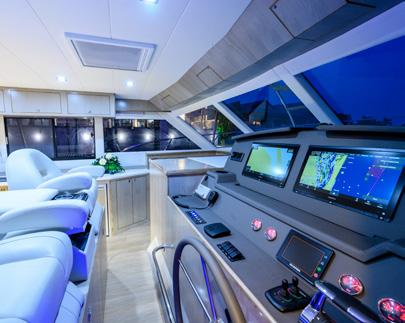
The helm station, designed with the skipper in mind, provides a perfect vantage
point for navigating the vessel while also accompanying guests onboard. The fusion of functionality and luxury in the galley ensures that preparing meals becomes an experience to savour, even on the high seas.
This yacht is not just a vessel; it's an experience waiting to unfold. With its seamless combination of power, elegance, and versatility, it's poised to become the go-to choice for those who demand nothing but the best from their maritime adventures.
SEEN & ADMIRED _ ISLAND GYPSY 50 WIDE BODY
BOATSINTERNATIONAL.COM.AU 16 MARCH / APRIL 2024
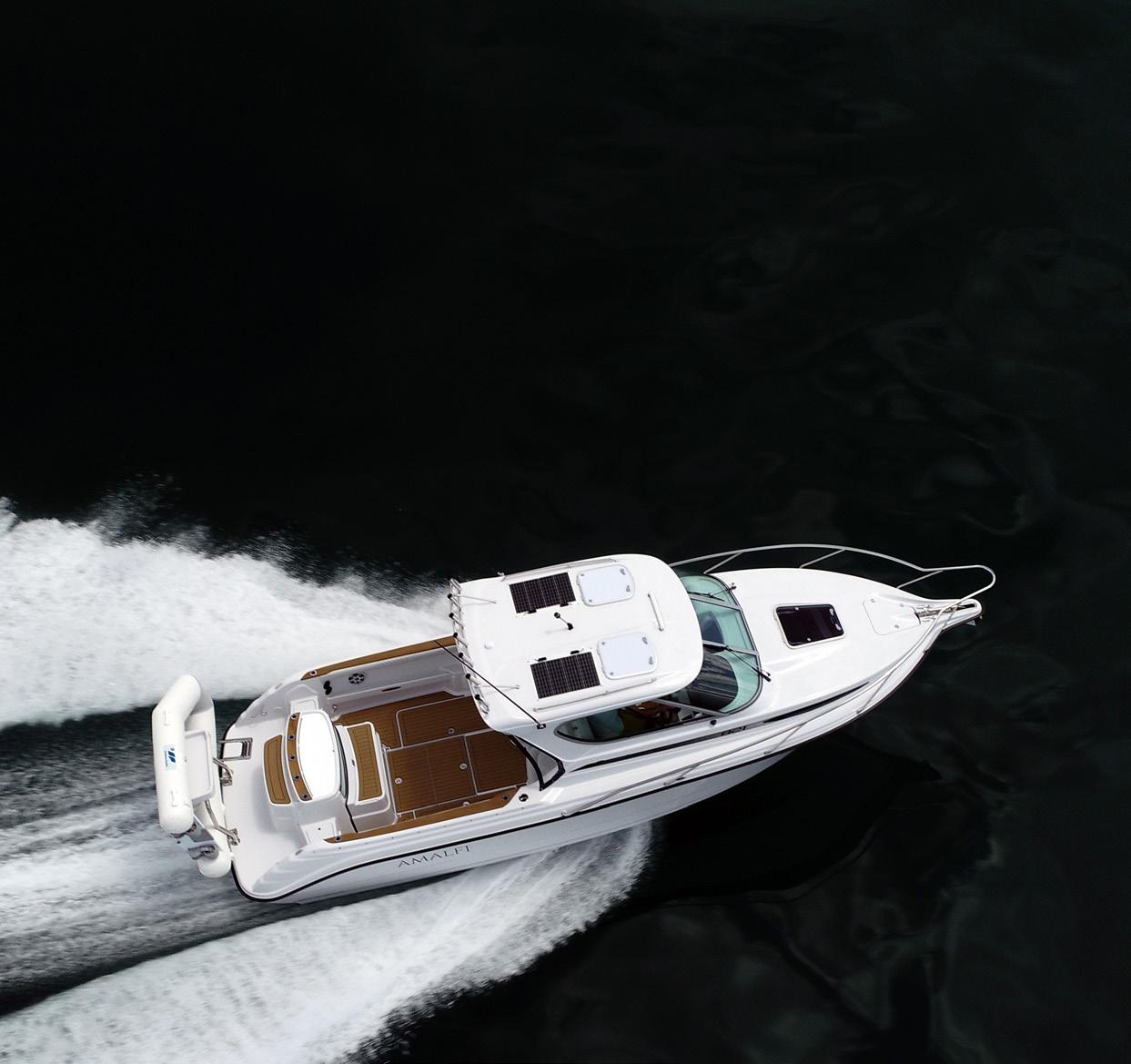
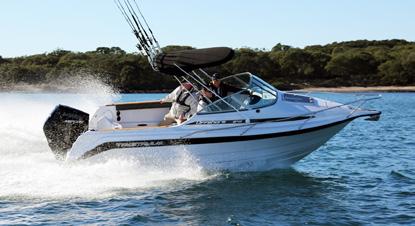
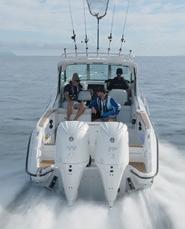
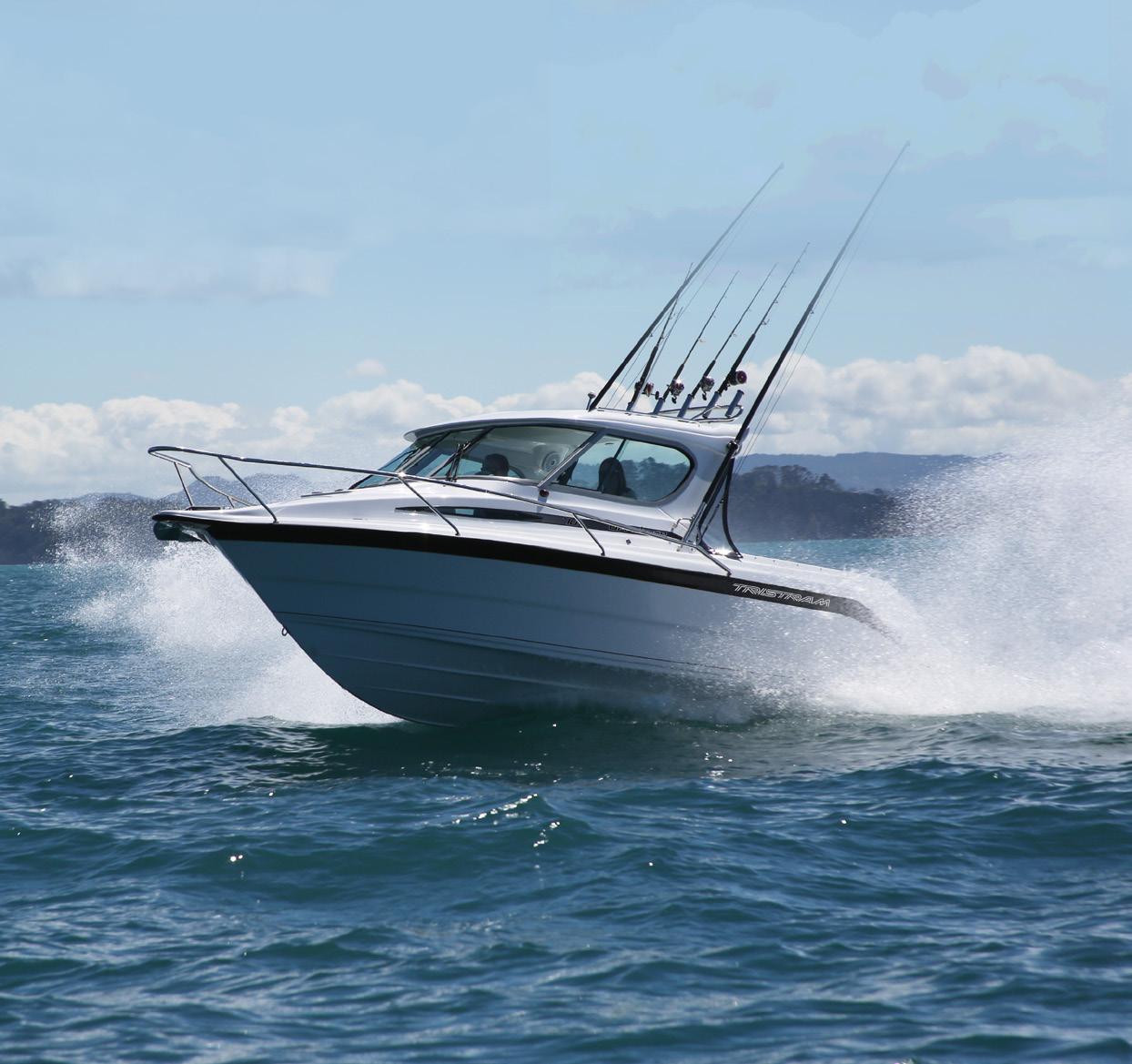
Every element of the Tristram Ownership Experience is premium, from a new models CAD designed inception through to production, handover, and after-sales service. Our diverse range of Tristram Hardtops, Targa Tops and Cabriolets are designed and crafted for offshore performance by a talented team of innovators who live for the ocean. We continue to redefine trailer boating for thousands of proud Tristram owners who seek to venture beyond the ordinary.
Discover more at www.tristram.co.nz and visit our team at the 2024 Auckland Boat Show - Stand OS21, Viaduct Harbour.


SHOWROOM - SERVICE CENTRE - PRODUCTION PLANT 5 Udy Place, Te Rapa Park, Hamilton, NZ Te Rapa Expressway Exit SH1 pacificpowerboat@tristram.co.nz / +64-7-849-5225 PREMIUM OFFSHORE TRAILER BOATS / WWW.TRISTRAM.CO.NZ
AUCKLAND BOAT SHOW
- ALL BOATS, ALL IN ONE PLACE!
New Zealand’s largest on-water boat show is playing host to this year’s new boat releases when it forms part of Moana Auckland this March.
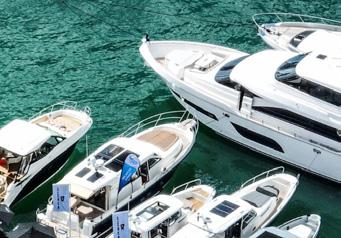
Preparations are underway now for the huge selection of boats journeying to Auckland for the Auckland Boat Show. With more than 500 marine brands, and 150 boats on display, the 2024 show will host this year’s new boat releases with an enormous array of vessels from sailing yachts, to RIBs; trailer boats to luxury motoryachts. It’s a jewel in the crown of Moana Auckland; New Zealand’s Ocean Festival. The show comes on the heels of an industry report by NZ Marine showing the value of the $3billion industry, which achieves $800 million in exports per year. New Zealanders now own 1,540,000 boats with those boat numbers increasing by 44,810 per annum.
A wide range of domestic businesses cater to that demand. Auckland RIB builder, Smuggler Marine, will release its new Strata 750 Centre Console RIB model. With its 27 degree deep vee hull delivering incredible rough water performance, it will also feature Smuggler’s all-new Gen 2 console, which includes an onboard refrigerator under the helm and upgraded seating. Combining one new release with another, the new Strata 750 Centre Console RIB will be powered by the latest Yamaha 250hp four-stroke outboard with Helm Master EX joystick control. That new Yamaha will be alongside other models from the brand, including the release of Yamaha’s new 4.3L F350 V6 outboard. It’ll be fitted to a new Senator RH770, complete with Helm Master EX joystick control and bow thruster integration for on-water demonstrations throughout the duration of the show.
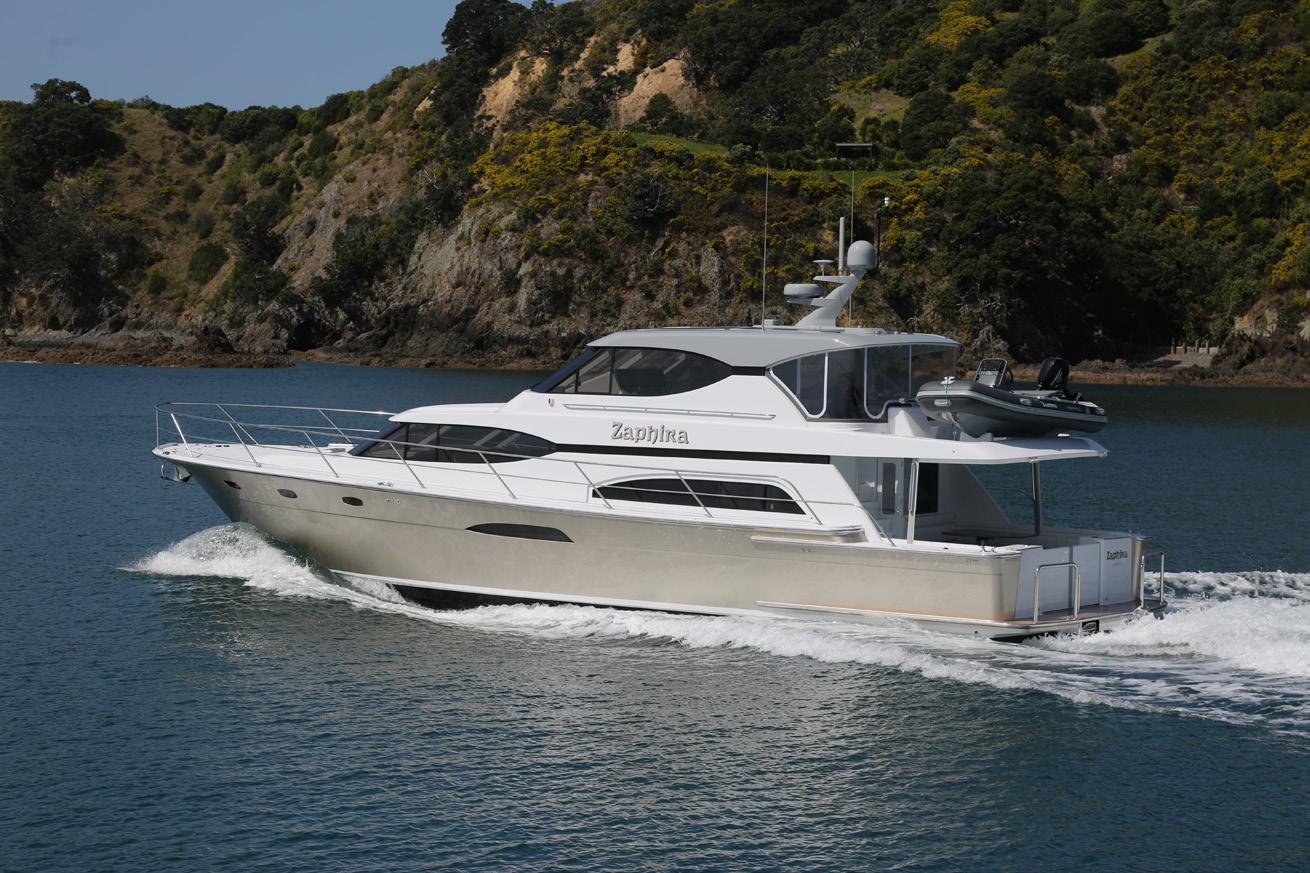
Auckland-custom builder, Lloyd Stephenson Boatbuilders, will present its new launch, Zaphira. This 18 metre is striking in a metallic paint which shines gold as the light changes and highlights the design elements put into this vessel. An expansive pilothouse provides a second entertainment area alongside the helm station, allowing guests to make use of comfortable sofas as they watch the views unfolding outside the three-panelstacking sliding doors to exterior seating on the tender deck. Other new releases at the show include trailer boat debuts, the premier of motoryachts straight from Italy, and a wide range of large luxury motoryachts; both New Zealand-built and imported. The dates of the 2024 show which runs from
14-17th March, have been set to form part of a plethora of on-water activities during summer for the first edition of Moana Auckland. Supported by Tātaki Auckland Unlimited, the festival not only includes the boat show, but 14 other events which celebrate the ocean including a range of regattas and the New Zealand Millennium Cup superyacht regatta, the inaugural Auckland Wooden Boat Festival, the World Manu Champs, Perpetual Guardian’s Sculpture on the Gulf and many more.
The Auckland Boat Show brings festival goers in contact with New Zealand’s, and the international marine industry. Known for its unique sea trial area; the only one of its kind in a New Zealand boat show, it presents attendees with the chance to experience how vessels perform on the water, getting them up close and personal with manufacturers and dealers. It presents the largest collection of vessels on the water available to view in New Zealand, acting as a one-stop shop for the industry to gather with its audience. On land, exhibitors include a range of brands across the industry, including engines, commercial, electrical and paint and antifoul. Tickets are on sale now.
AUCKLAND-BOATSHOW.COM
MOANA AUCKLAND
23 FEB - 24 MARCH
Amonth of exciting marine events! Moana Auckland, New Zealand’s Ocean Festival, is a first of its kind in Tāmaki Makaurau Auckland.
Presented by Tātaki Auckland Unlimited, the festival celebrates the region’s love affair of the ocean –from waka to super yachts – through events and activities both on and off the water. The exciting line-up of events includes our own NZ Millennium Cup 23 to 26 February, and the Auckland Boat Show, 14 to 17 March.
Experience NZ's delicious kaimoana, watch thrilling sailing races, marvel at historic vessels and learn more about our ocean and our heritage against the backdrop of Auckland’s spectacular Hauraki Gulf.
AUCKLANDNZ.COM/MOANA
PACIFIC POWERBOAT _ IT'S SHOW TIME
18 MARCH / APRIL 2024
NEW LOOK HUTCHWILCO NZ BOAT SHOW SET TO MAKE WAVES 16-19 MAY
A truly revitalised and reinvigorated Hutchwilco New Zealand Boat Show will be setting up for visitors to attend from 16 - 19 May 2024 at the Auckland Showgrounds.
Keen anglers in 2024 will be amped to check out the NEW Shimano Fishing Pavilion, featuring cutting-edge fishing technology, and showcasing the NEW Shimano Masterclass Series. A destination where you can enhance your fishing skills with the latest gear, equipment, and of course, expert advice and knowledge to reel in whatever you’re after.
New Zealand’s own fishing royalty Matt Watson will be headlining the Shimano Masterclass Series daily. Matt will be joined by Tony Orton giving tips on how to target kingfish, and the all-important LegaSea crew talking about fish care, zero wastage and fishing sustainability.
Once show attendees have mastered the art of reeling in your catch, they can head to the new Kai Collective to seek out the best produce to accompany it. The Kai Collective will celebrate all things food with a key focus on kaimoana. Family fun is also on the agenda with the 20m long and 9m high giant inflatable pirate ship or see how long the kids can ride on the NEW rodeo Shark, brand NEW to the show and to New Zealand!
With all these changes afoot, what about the Grand Prize boat giveaway? Never fear! This year the Boat Show will give away a $300k+ Surtees/ Yamaha boat and package. The Surtees 750 Game Fisher Enclosed Hull is expertly crafted for the smoothest ride and versatile fishing adventures. It is equipped with the all-new Yamaha F250 DES V6 Offshore 4.2L engine with the ground breaking Yamaha Helm Master® EX boat control system.
The boat’s towability is enhanced by the Futura Trailer’s fully anodized aluminium, weld-free design, minimising corrosion risks. Packed with top-notch features from Garmin, SeaDek, Shimano, BLA, Fusion, and more, this prize is the ultimate package for boating and fishing enthusiasts. The catch… the winner must be at the show or pick up the phone call when the prize is drawn.
GAME CHANGING BOAT AGENCY LANDS AT THE SHOW
- FARNLEY’S YAMAHA

For those who sign up to their VIP EDM Farnley’s Yamaha will be revealing their best kept secret in the coming weeks, with a world revered new boat brand agency entering the New Zealand market for the first time. Farnley’s Yamaha is seeing two distinct groups in the boating world, those who are looking for premium leisure boating experiences versus others who are committed to offshore and inshore anglers and prefer the creature comforts of their investment.
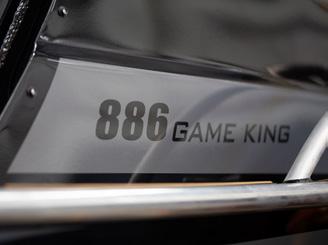
EXTREME MAKES WAVES
Extreme Boats will be introducing their 886 Game King, along with a smaller surprise to be revealed at the show…The 886 Game King features a new hull design offering and exceptional on water performance with a new self-draining deck, underfloor 740 litre fuel tank, curved glass corner windows and XL sliding side windows to name a few of the new features, making this a true offshore fishing weapon, and the new hull design will get you there in comfort and style.
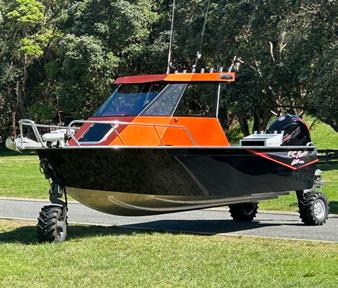
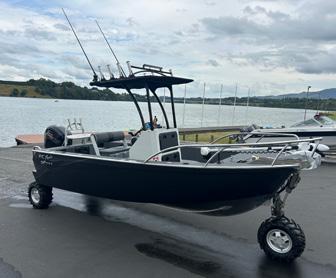
FITS IN YOUR GARAGE
FC Boats are also boasting the boating goods with the FC 600 Hard Top Amphibious and the FC 560 Centre Console Amphibious Electric. Customer feedback was instrumental in developing the groundbreaking FC 600 Hard Top Amphibious in partnership with Anura. Making the most of available fishing space, whilst being an exceptional on water performer, it also fits under a 2.4m high garage, and inside 7m of length.
INTERESTING FACT:
In a recent industry report by NZ Marine, it reports the increased value of the now $3 billion industry, with $800 million in exports per year. New Zealanders now own 1,540,000 boats, with those boat numbers increasing by 44,810 per annum Tickets are on sale now for the Hutchwilco Boat Show.
BOATSHOW.CO.NZ POWERBOATMAGAZINE.CO.NZ 19
BIG NAMES AND NEW PRODUCTS AT THE SANCTUARY COVE INTERNATIONAL BOAT SHOW.
23 – 26 MAY
The Sanctuary Cove International Boat Show (SCIBS), being staged from May 23 to 26, 2024, is close to full capacity and attracting many of the biggest and best marine brands.
M
ulpha Events General Manager Johan Hasser said: “With 85% of exhibition space already booked, we are thrilled to play host to the industry’s finest. We encourage businesses who still want to secure space to submit their applications now as we expect to finalise allocations in the coming
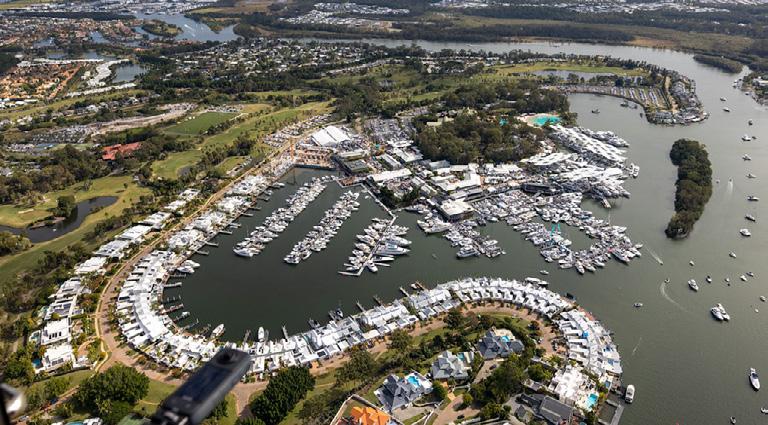
weeks. SCIBS is where the marine business does business, and our exhibitors have a great track record in securing strong sales at the event. We’re extremely proud of our reputation as one of the leading showcases in the region for those in the marine sector.” With the show synonymous with attracting the biggest names in boating from around the globe, Mr Hasser says attendees should expect to see world-leading ocean craft make their debut. “We’re thrilled that many of the world’s foremost marine manufacturers are choosing SCIBS to launch their new products, with the announcement of many brands and models
never before seen in Australia.”
Early bird general admission tickets and the all-new Lagoon Beach Club VIP Experience tickets are on sale now. Tickets can only be purchased online – there will not be a Box Office at the Show. Early bird tickets are available now until May 8 from $30 (kids under 16 enter for free with a paying adult). Early bird ticket holders will also have the opportunity to enter the draw to WIN the ultimate Hunter Valley vineyard getaway at The Lane Retreat, Bimbadgen, the region’s newest accommodation destination, valued at $3,000.
SANCTUARYCOVEBOATSHOW.COM.AU
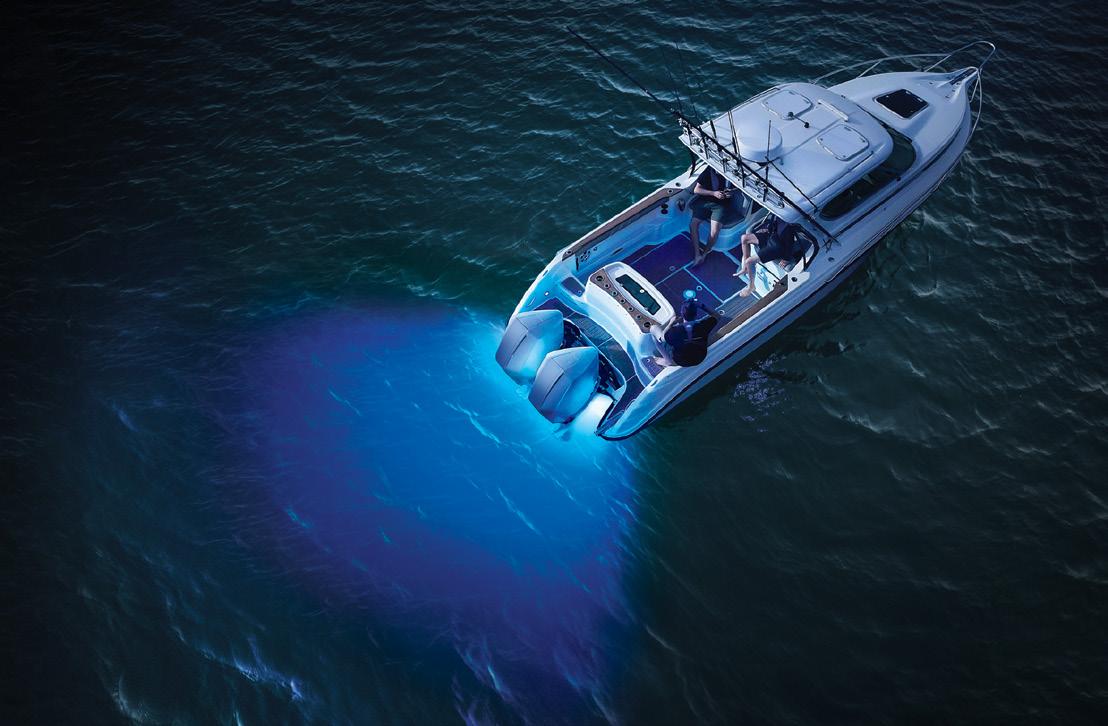
UNDERWATER BRILLIANCE
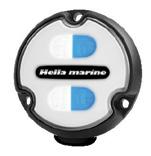
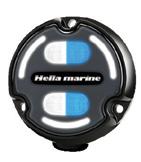
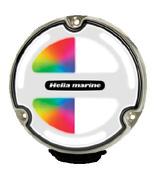
Elevate your underwater lighting experience with Hella marine’s Apelo Underwater Lights. Choose intense white, vibrant blue, or full spectrum RGB colour. Lumen outputs range from an impressive 1800 lumens, to an incredible 6000 lumens. Dive into innovation and elegance.
www.hellamarine.com
Apelo Underwater Lights
Hella marine PPB APELO Horiz 184x130 -2024.indd 1 12-Feb-24 10:48:19 AM
PACIFIC POWERBOAT _ IT'S SHOW TIME 20 MARCH / APRIL 2024
SYDNEY INTERNATIONAL BOAT SHOW RETURNS TO DARLING HARBOUR. 1-4
AUGUST
Presented by the Boating Industry Association Ltd (BIA) in conjunction with event delivery partner, Mulpha Events, the four-day event set amongst Sydney’s iconic Darling Harbour, will showcase the best of the boating lifestyle.
From the large fleet of powerboats and sailboats on the event marina, through to a host of premium exhibitors displaying the latest trailer boats, personal watercraft, and marine technology in the exhibition halls. Exhibitors looking to further enhance their presence and customer reach across the Australian marine industry are encouraged to register, with applications now open.
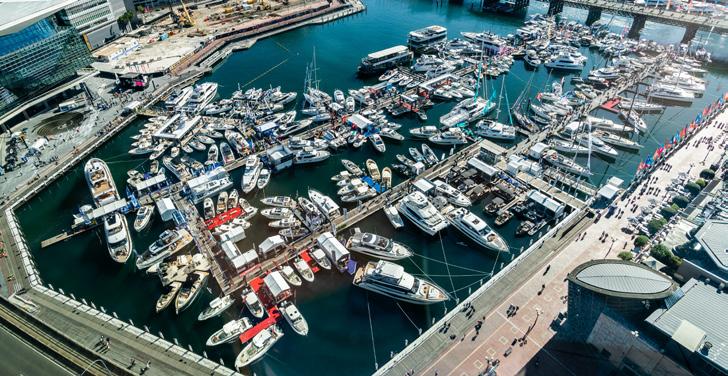
After strong visitation last year, 2024 is set to be even bigger, with highlights to include an on-water display with more than 200 boats, over 19,000sqm of indoor exhibitor space, and a host of popular entertainment and activities, such as fishing masterclasses, water sports demonstrations, marine education, marine industry awards, and a variety of kids’ activities.
BIA President, Adam Smith said the Sydney International Boat Show is a highlight of the boating events calendar, as well as a popular day out for the whole family. “Whilst the Show caters to everything the serious or new-entry boater requires in one location, it really has become a great day out for all ages
and interests, especially those exploring options to immerse themselves in the great outdoors on our famous harbour and fantastic waterways across the State,” Mr Smith said.
Off the back of last year’s event the BIA commissioned an independent economic and social impact report for the first time. The findings revealed that the event had an AUD$345M impact on the economy, created 980 jobs and generated approximately AUD$147 million in sales and orders based on respondent estimates. The report also found the event, which attracted close to 47,000 visitors, not only delivered a significant economic result but also proved a success in social benefit.
SYDNEYBOATSHOW.COM.AU

POWERBOATMAGAZINE.CO.NZ 21
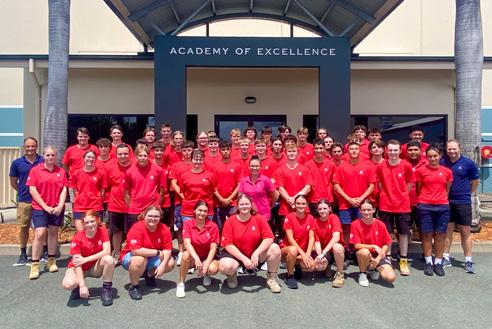
RIVIERA OPENS NEW APPRENTICE ACADEMY OF EXCELLENCE




Australia’s premium luxury motor yacht builder Riviera is making a significant investment in the future of young Australians seeking a career in the marine industry by opening its own state-of-the-art training centre, The Riviera Academy of Excellence.
The Academy, based within Riviera’s 16.8-hectare Gold Coast facility will allow the motor yacht builder to train, in partnership with Major Training Group, their 150 apprentices onsite across 10 individual trades, including composite technology, marine craft construction, diesel fitting and cabinetmaking. The centre was officially opened on January 12 to coincide with the company’s 2024 apprentice sign on day, which saw 52 bright new apprentices welcomed - 27 school based and 25 full time apprentices - for what is the biggest training intake in the company’s history clock on for their first week as aspiring boat builders.
“It’s always an exciting day for these young apprentices and their proud families,” said Keira Badke, Riviera Apprentice and Training Manager. Our holistic training program offers strong support for our apprentices where we teach their chosen trade skills alongside coaching life skills to help nurture world class people that will help build our world class motor yachts.
The Academy was officially opened by Senior Training Instructor Darren Kearns and Instructor Justin Leigh-Smith who both completed their apprenticeships in 1996 in marine craft construction with Justin serving his apprenticeship with Riviera. Both also have had esteemed careers with Riviera with Darren serving over 18 years and Justin 30 years.
Riviera is responsible for training over 400 tradespeople through its award-winning apprenticeship program over the past 30 years, which involves partnerships with 37 schools in southeast Queensland and northern New South Wales. Rodney Longhurst, Riviera’s owner and a former carpenter and joinery apprentice himself, is extremely passionate about supporting the growth opportunities of his team. “I’m exceptionally proud that our Riviera team will be mentoring these talented new apprentices and giving them such a great opportunity - it’s immensely rewarding for me, personally, to see our apprentices develop into such accomplished mature adults and great Australians, all with world leading boat building skills,” he says.
RIVIERAAUSTRALIA.COM
www.maxwellmarine.com KEEPING THE WORLD ANCHORED SINCE 1969 www.maxwellmarine.com THE WORLD 1969 PACIFIC POWERBOAT _ NEWS
22 MARCH / APRIL 2024
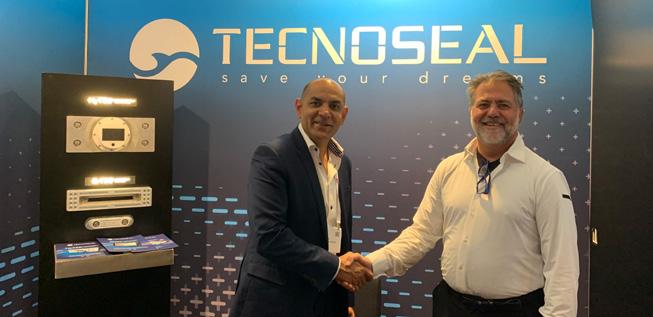
TENOB SOLE DISTRIBUTOR FOR TECNOSEAL
With over 30 years’ experience, Tecnoseal is one of the world’s leading manufacture and suppliers of sacrificial anodes for a diverse range of industries.
100% Cadmium free and 100% manufactured in Italy, Fabio Scribani, the export sales manager for Tecnoseal is pleased to announce that ‘Tenob Wholesale Marine will be the sole distributor for Tecnoseal in NZ.’ Fabio visited Danny Bassi, managing director of Tenob Wholesale Marine in
NZ, in summer 2023 and was impressed with Tenob Marine’s product portfolio and its supply chain to the marine industry. Danny believes Tecnoseal will be a good fit with Tenob and is pleased to provide the industry with this quality recognized brand and its extensive range.
TENOB.CO.NZ
DOMETIC NRX REFRIGERATORS
Dometic brings its newest, most energy efficient marine refrigeration solutions to the Pacific boating market.
These new Dometic NRX refrigerators combine industryleading energy efficiency with sleek design and quality finish, using up to 25% less current than comparable refrigerator models currently in the market. The NRX Compressor Refrigerator is the latest innovation from Dometic. The NRX delivers an energy-efficient cooling solution with the versatility to be used independently as a fridge, freezer, or both.
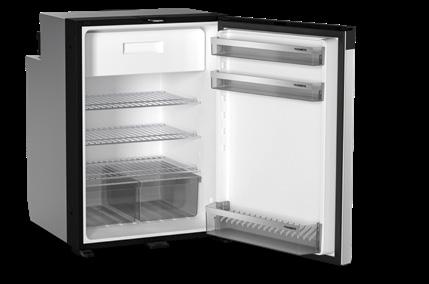
Three different operating modes are controlled by a very compact and powerful compressor. Eco, Performance (for quick cool-down), and Quiet can be selected from the touch control panel. The NRX-S door incorporates a stainless steel 316 fully-flush front panel and a convenient full-width handle. The interior includes a removable freezer compartment, multiple stainless steel shelves, two crispers, a bottle holder, and door shelves. “Powered by our latest innovative compressor unit, the Dometic NRX Series represents a significant leap in refrigerator technology. With its sleek design and unparalleled energy efficiency, this compressor-cooled marvel sets a new standard in refrigeration.” Says Eric Fetchko, President of the Marine Segment at Dometic. DOMETIC.COM





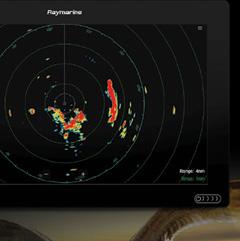
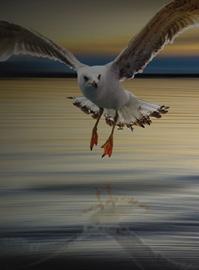








Designed like a seabird. Sleek and aerodynamic with 360-degree situational awareness featuring Cyclone Bird Mode technology to get you to the fish faster.


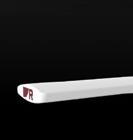
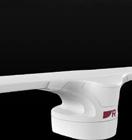
LAB0692 WWW.LUSTY-BLUNDELL.CO.NZ CYCLONE RADAR Aircraft wing inspired Enhanced Bird Mode RangeFusion™ technology High speed 60 rpm imaging
EVOLVED FOR THE OCEAN
POWERBOATMAGAZINE.CO.NZ 23
ANURA'S S25 AMPHIBIOUS SYSTEM IN ACTION AT THE AUCKLAND BOAT SHOW
Anura, a leader in amphibious technology, will showcase its innovative tech at the upcoming Auckland Boat Show. This marks Anura's inaugural participation in the renowned event, where the company will have on display its popular S25 amphibious system.
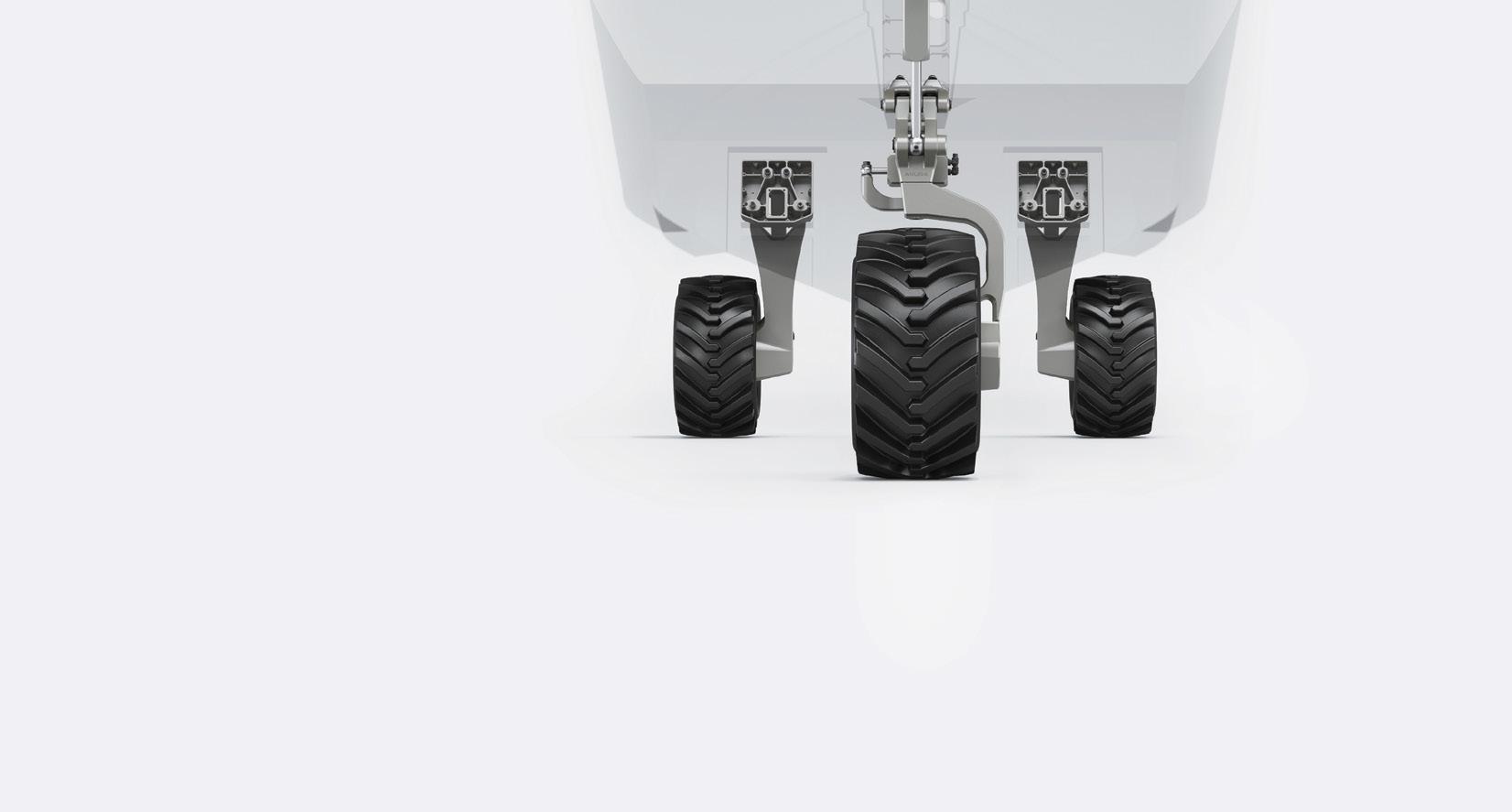
Anura is at the forefront of amphibious technology with many marine manufacturers incorporating its systems into their latest craft designs. At the Auckland Boat Show, Anura will proudly present a unique display that includes a working S25 amphibious system. Featuring front and back wheel assemblies along with
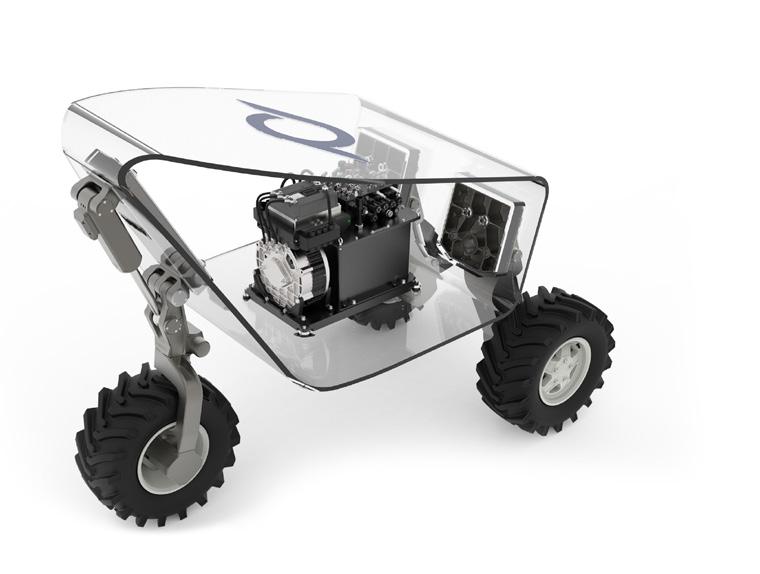
an electric over hydraulic power unit, the setup allows visitors to observe the system in action, providing insight into Anura's advanced technology.
The Anura team will be available throughout the event to answer questions about design, functionality, and installation. Anura offers a range of systems tailored to different craft sizes and applications, from
small tenders to large vessels. Don't miss the opportunity to explore Anura's marine innovation at the Auckland Boat Show. Visit their exhibit on Stand 101 near the main entrance to experience the S25 amphibious system up close and discover how Anura is shaping the future of amphibious technology.
ANURA.NZ
PACIFIC POWERBOAT _ NEWS
24 MARCH / APRIL 2024
ILIAD CATAMARANS UNVEILS NEW FLAGSHIP MODEL
ILIAD Catamarans has recently announced details of its new flagship model, the ILIAD 75. Designed to deliver breathtaking performance with class-leading fuel efficiency, this superb motor yacht is ideal for discerning owners who want to go further in consummate style.
With a remarkable selection of areas to relax or enjoy social gatherings with friends and family, the ILIAD 75 is conceptualised to be the quintessential entertainer. Her flexible layout options also make her ideal for charter, providing exceptional living space and comfort for guests to experience the world’s most beautiful cruising grounds. This impressive catamaran is designed to achieve
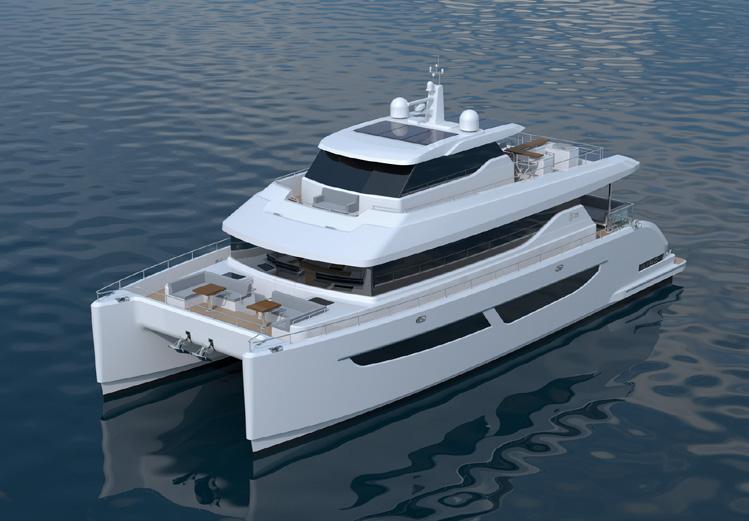
exhilarating top speeds, while cruising at low speeds provides a range of more than 4,000nm.
With its outstanding range and fuel efficiency, clients can explore the world’s most remote and picturesque cruising grounds or simply enjoy five-star luxury closer to home. With state-of-the-art technology and a class-leading design, the ILIAD 75 has been conceptualised to afford ease of handling and optimal safety
in all conditions. The yacht’s exquisite accommodations are beautifully appointed with generous headroom, natural light and an abundance of storage for extended cruising.
This flagship model will be the jewel in the crown of the shipyard’s range, which comprises the ILIAD 53S, ILIAD 53E (electric hybrid version), ILIAD 53F and ILIAD 62.
ILIADCATAMARANS.COM
REALISE YOUR DREAM
Ready to experience the amazing journey of building your own boat
Come and see us on Zaphira at the Auckland boat show 14 -17 March, 2024 Lloydstevensonyachts.co.nz

POWERBOATMAGAZINE.CO.NZ 25
NIMBUS GROUPALUKIN OCEAN 8 & STREAM RIB 560
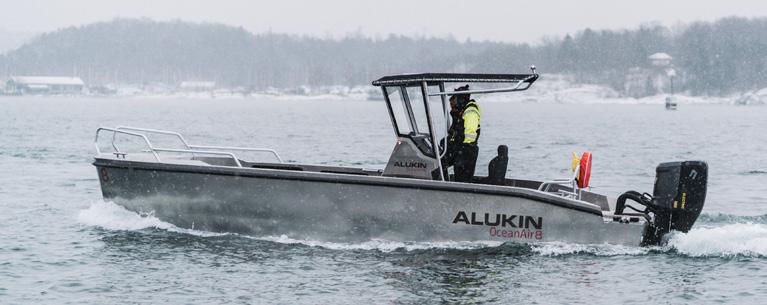
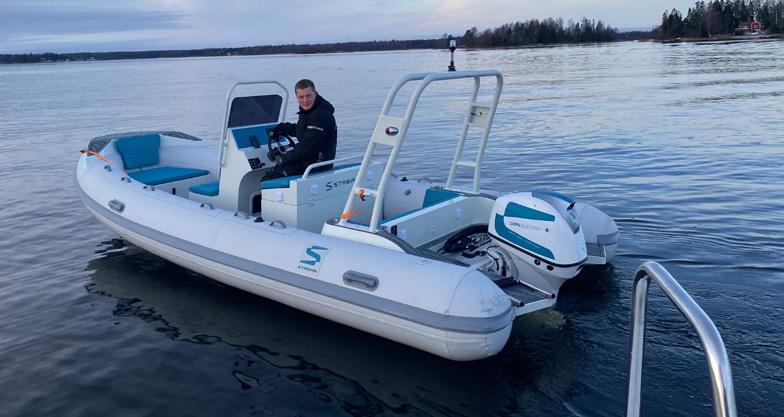
Nimbus Groups AB exhibited Alukin’s new and energy efficient concept boat Alukin Ocean Air 8 at the recent international trade fair Boot Düsseldorf, as well as a new RIB (rigid inflatable boat) with an electric engine from Stream, one of the Group’s brands.
"Sustainability is increasingly important within the boating industry and Alukin Ocean Air 8 is based on a new and very interesting hull technology with great energy saving potential. But the RIB technology is also of great interest from a sustainability perspective as these types of boats do not require as much power and thus are easy to electrify”, Michael Bohm, CMO at Nimbus Group says.
Alukin Ocean Air 8 is a concept boat that has been developed in collaboration between Nimbus Group’s brand Alukin and the two Norwegian companies Pascal Technologies AS and Evoy AS. The hull is based on Pascal Technologies’ energy efficient AirHull technology which requires up to 50 percent less energy for propulsion which increases the boat’s range by 50-100 percent compared to using a traditional hull. By using aluminium for Ocean Air 8’s hull and superstructure the boat is 100
THE NEW FINSEEKERS 240 DC AND 245 WA ARE HERE
The Finseeker 240 DC is designed for serious fishing, with luxurious touches and entertainment features for the perfect all-around family boat.
Port and starboard cockpit bench seats stow away for additional fishing areas. The heavy-duty hard top provides cover from sun and inclement weather. And the head compartment is an important convenience for family fun and comfort.
The new Finseeker by Crownline 245 WA features a 360-degree walk-around for
percent recyclable, which further reduces the boat’s environmental impact.
The new RIB from Stream carries the name Stream Rib 560 and is equipped with a 50hp electric outboard motor. The boat is the first of two aluminum RIBs, coming in two different sizes, that are being launched by Stream during 2024. The boats are affordable options for anyone who wants to drive an electric boat at cruising speed. Charging is done with ordinary 230-volt household electricity and depending on
speed, you can enjoy the sea life up to 8 hours.
Additionally, the new Nimbus W11, which was presented at the boat fair in Cannes, is on display for the first time at Boot in Düsseldorf. Nimbus brand manager Jonas Göthberg will also give an update on the new Nimbus Coupé 465, being launched during 2024, at the press event on the first day in Düsseldorf.
SPORTSMARINE.CO.NZ
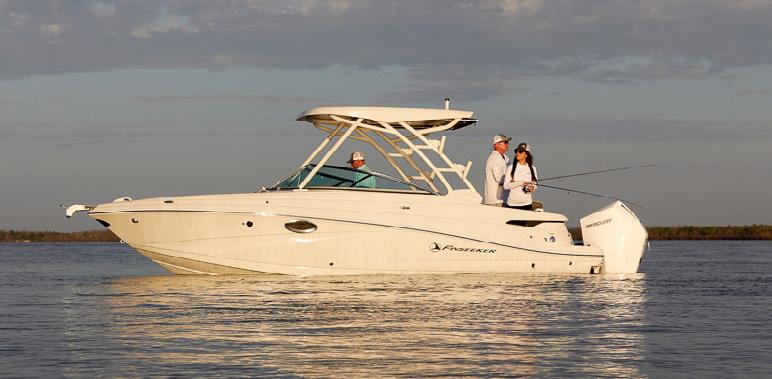
increased fishability. A great fishing / family boat, the 245 WA is trailerable and has a small cabin area with more than 6 feet of headroom, U-shaped seating with filler cushions to form a sleeping area, a portable head, microwave, and sink. The cockpit area seats six, with flip-up features for enhanced
fishing capability. The standard fiberglass hard top has rear-facing LED work lights, 4 rod holders, overhead lights and walkaround grab rails, providing protection from the elements during a full day out on the water.
EUROCITYMARINE.CO.NZ
PACIFIC POWERBOAT _ NEWS
26 MARCH / APRIL 2024
VIADUCT EVENTS CENTRE AND JELLICOE HARBOUR WWW.AUCKLAND-BOATSHOW.COM TICKETS ON SALE NOW!
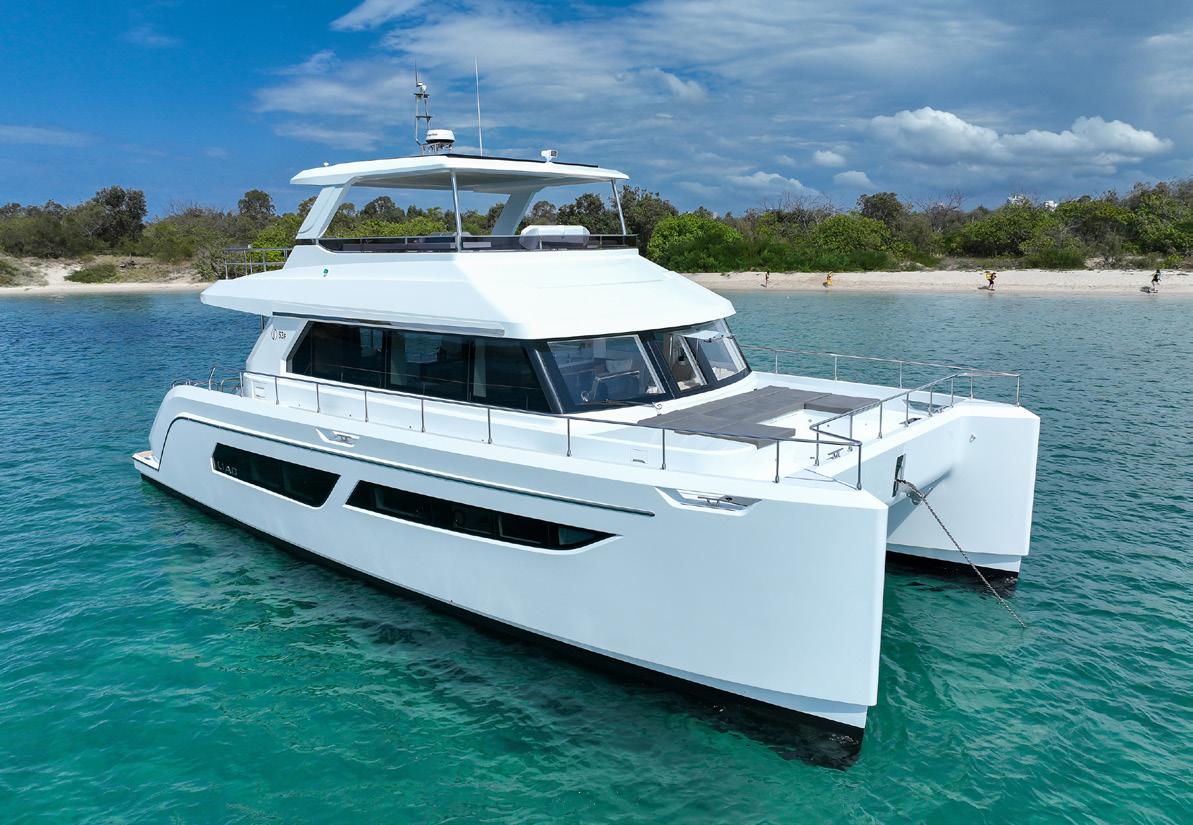
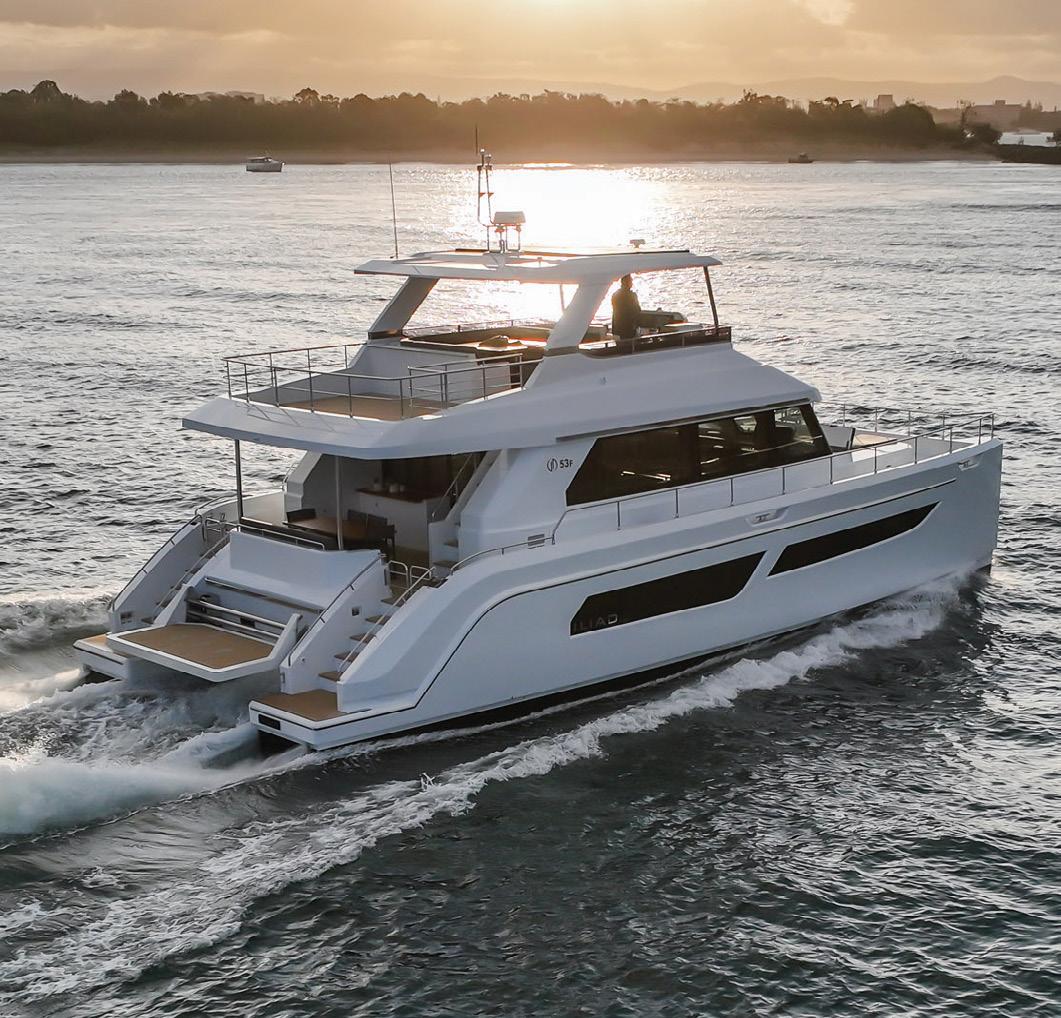
This impressive model – the flybridge version of the shipyard’s 53 Serieswas recognised by the awards committee for its outstanding range, exceptional quality of craftsmanship and extraordinary volume. The ILIAD 53F features one of the highest bridge deck clearances in its market segment, with a high freeboard to provide comfortable passage in challenging conditions. Powered by 440hp Volvo or Yanmar engines (Cummins optional), the motor yacht delivers a top speed of 21 knots (lightship), while cruising long range at low speeds will afford more than 2,500 nautical miles.
The catamaran’s interior living space is unprecedented and comprises an
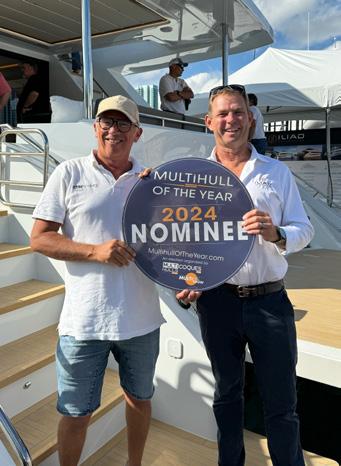
ILIAD 53F NOMINATED FOR MULTIHULL OF THE YEAR AWARD
ILIAD Catamarans continues to impress with its ILIAD 53F power catamaran nominated for the prestigious 2024 Multihull of the Year awards. The nomination was announced by Multihulls World at the opening of the Miami International Boat Show where ILIAD Catamarans is staging its US premiere with the ILIAD 53F on display. Votes for the ILIAD 53F can be cast at multihulloftheyear.com
expansive forward lounge, helm station (optional) and dining for 6-8 people. Accommodation onboard is generous and beautifully designed with the master suite encompassing an entire hull and featuring an oversized island queen bed, panoramic windows and spacious ensuite. Fitted with the finest European appliances, the galley is sleek and practical with its island bench, full-size refrigerator and freezer, and welldesigned storage.
The ILIAD 53F boasts exceptional outdoor space for entertaining and relaxing, and the cockpit features a bar area and dining setting for up to ten guests. The flybridge sets a new reference in use of space, features and comfort. The optional tender platform
is ideal for safe sea access when swimming or diving and makes a superb sunbathing spot when the tender is deployed.
The ILIAD 53F is already enjoying strong popularity in the Asia Pacific region with several of the 53 Series models sold, including the ILIAD 53S sedan version. The ILIAD 53E Hybrid Electric version was also announced in late 2023, offering buyers a superb solution for sustainable cruising. In addition to the ILIAD 53 Series, the shipyard’s range also comprises the ILIAD 62 and the recently unveiled ILIAD 75 flagship model.
ILIADCATAMARANS.COM
YACHTSALESCO.COM
PACIFIC POWERBOAT _ NEWS
28 MARCH / APRIL 2024


+61 (0) 7 5452 5164 info@yachtsalesco.com yachtsalesco.com Incorporating Multihull Solutions multihullsolutions.com.au Luxurious long-range power catamarans delivering class-leading fuel efficiency with commanding performance and outstanding living space. Incorporating Go Further. ILIADCATAMARANS.COM 53S | 53E | 53F | 62 | 75 ILIAD 53S ON DISPLAY AT SANCTUARY COVE INTERNATIONAL BOAT SHOW

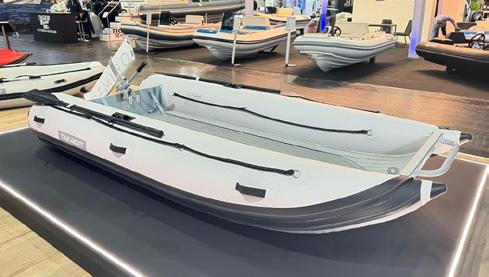
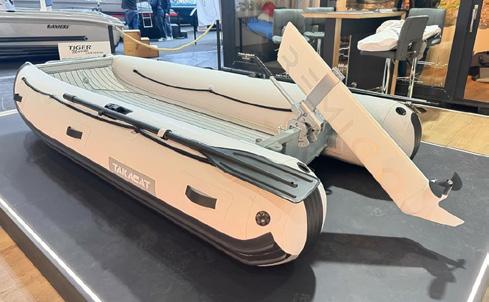
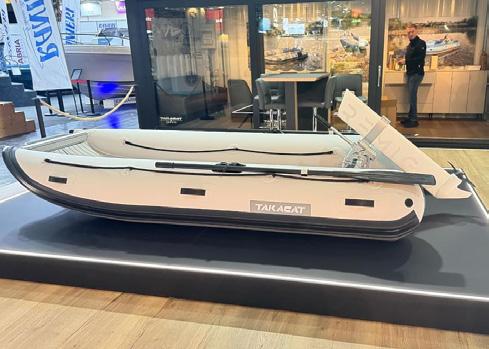
TAKACAT RELEASE NEW LX-R SERIES
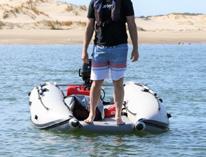
The Takacat T340LX-R, being the smallest in the new LX-R series, debuted at the recent Boot Boatshow in Dusseldorf. The new T460LX-R is due for release at the Auckland Boat show in March. Look for the full review in the May/June issue of PowerBoatmagazine.
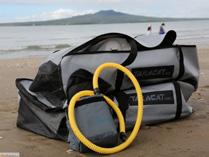
The Game-Changing Takacat LX-R Series has been crafted for adventurers who demand performance and toughness. The new T460LX-R has a beam of 2m and oversize tubes. It offers huge buoyancy and load carrying capacity along with the renown Takacat stability. Engines of up to 100kg can be fitted, however the efficient hull can run anything from 15hp to 50hp, offering great performance. Takacat inflatable tubes are manufactured in a durable 1.2mm TPU fabric which is UV resistant and features 4 air chambers. Engine and Trailer Package options are also available. TAKACAT.CO.NZ

ULTIMATE PORTABLE BOATS SINCE 2007 Takacat NZ Ltd sales@takacat.co.nz | P: (+64) 021 822 285 DB874 www.takacat.co.nz
PACIFIC POWERBOAT _ NEWS 30 MARCH / APRIL 2024
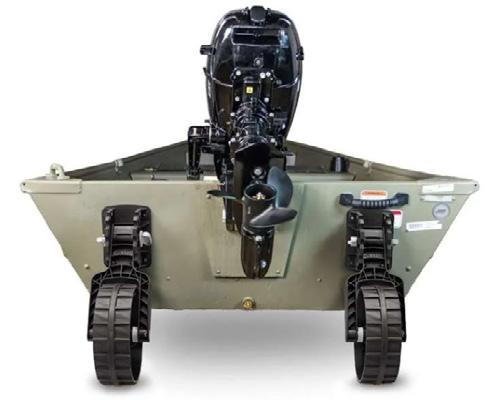
RAILBLAZA’S C-TUG DINGHY WHEELS
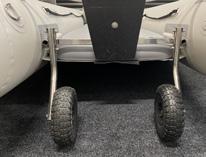
Hard-working boaties, Railblaza has the perfect solution to make your day on the water a little more stress-free! The C-TUG Dinghy Wheels are the ultimate companion for your boat – lightweight, durable and ideal for inflatable boats or any lightweight aluminium boats.
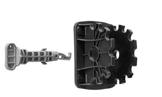
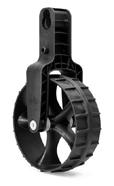
Say goodbye to struggling with heavy loads – just attach the wheels to your watercraft and watch how easy it glides up the beach or down the boat ramp! Made from a robust material and designed to last, these wheels can handle whatever terrains you put them through. So in those days when you don’t feel like taking an arm workout along with your adventure, just grab the C-TUG Dinghy Wheels instead and move effortlessly onto your next destination.
RAILBLAZA.COM
QUAD LOCK’S NEW SUCTION BASE
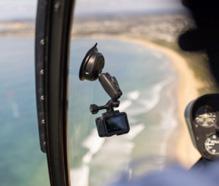
Move it, reattach it, trust it. Quad Lock expands its mounting system with an exciting new addition: the 360 Suction Base. This accessory unleashes new levels of versatility and security for attaching your phone or action camera to almost any surface.
The Quad Lock 360 Suction Base is a high-strength solution for mounting your phone or action camera with ease. The secret lies in its powerful suction technology - the lever actuates the suction cup, creating a vacuum against the application surface. Simply use the built-in lever to lock and unlock the mount onto any smooth, non-porous surface such as glass, metal, or fibreglass.














QUADLOCKCASE.NET/COLLECTIONS/QUAD-LOCK-360 WHOLESALE MARINE Importer | Manufacturer | Distributor www.tenob.co.nz Tenob Wholesale Marine | 241 Ti Rakau Drive | Burswood 2013 | Auckland | New Zealand | Ph +64 9 273 9180 | sales@tenob.co.nz www.tenob.co.nz Ph: 0800 273 9180 DB970 FOR PRODUCT ENQUIRIES CONTACT HIGH RESOLUTION LOGOS: HIGH RESOLUTION LOGOS: HIGH RESOLUTION LOGOS: LEADING ELECTRICAL DESIGN HIGH RESOLUTION LOGOS: LEADING ELECTRICAL DESIGN HIGH RESOLUTION LOGOS: LEADING ELECTRICAL DESIGN HIGH RESOLUTION LOGOS: LEADING ELECTRICAL DESIGN HIGH RESOLUTION LOGOS: LEADING ELECTRICAL DESIGN HIGH RESOLUTION LOGOS: LEADING ELECTRICAL DESIGN HIGH RESOLUTION LOGOS: LEADING ELECTRICAL DESIGN HIGH RESOLUTION LOGOS: LEADING ELECTRICAL DESIGN HIGH RESOLUTION LOGOS: LEADING ELECTRICAL DESIGN HIGH RESOLUTION LOGOS: LEADING ELECTRICAL DESIGN LEADING ELECTRICAL DESIGN HIGH RESOLUTION LOGOS: LEADING ELECTRICAL DESIGN HIGH RESOLUTION LOGOS: LEADING ELECTRICAL DESIGN HIGH RESOLUTION LOGOS: LEADING ELECTRICAL DESIGN HIGH RESOLUTION LOGOS: LEADING ELECTRICAL DESIGN HIGH RESOLUTION LOGOS: LEADING ELECTRICAL DESIGN LEADING ELECTRICAL DESIGN HIGH RESOLUTION LOGOS: LEADING ELECTRICAL DESIGN HIGH RESOLUTION LOGOS: LEADING ELECTRICAL DESIGN HIGH RESOLUTION LOGOS: LEADING ELECTRICAL DESIGN HIGH RESOLUTION LOGOS: LEADING ELECTRICAL DESIGN Quality Marine Products backed by outstanding Service. POWERBOATMAGAZINE.CO.NZ 31
PROPSPEED ACHIEVES
EXCEPTIONAL
RESULTS IN A 3RD PARTY FUEL EFFICIENCY TEST
Propspeed, leading innovator of underwater foul-release coatings, announced today that Netherlands-based shipbuilder Padmos conducted an independent test in conjunction with Techbinder, a data-driven vessel optimization technology firm, of the Propspeed system on one of their vessels, with results concluding that Propspeed significantly reduced fuel and power consumption as well as load on the vessel.
The test, carried out after the vessel’s hull and running gear was freshly cleaned, was conducted by having the commercial fishing vessel Windroos navigate a set course twice: once without Propspeed coating, and once with Propspeed applied. Between the two trips, Windroos saw a 7.5% reduction in fuel consumption and a 4.7% decrease in kilowatt usage at cruising speed after the application of Propspeed compared with a clean propeller.
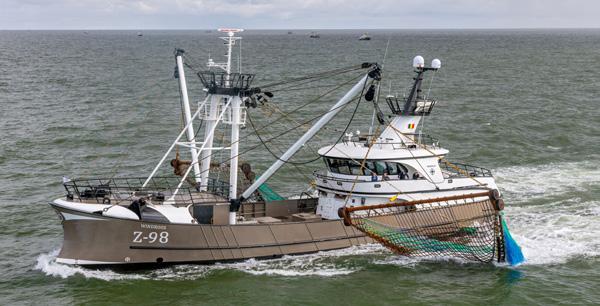
“The data that we gathered suggest a clear improvement in performance of the vessel with Propspeed from the day it was applied,” said Ing. Maurits van Maaren, Naval Architect, Padmos. “Impressed by these results, we’re now implementing Propspeed on all of our vessels and recommending it to our customers.”
“We’ve done our own exhaustive testing of our products but partnering with a commercial operator to come to the same conclusion through data, that Propspeed is a proven, high-impact, low-investment,
energy-saving technology that enhances a vessel’s efficiency and environmental sustainability, is an important milestone,” said Marcus Hamilton, CEO, Propspeed. “Padmos is a trusted, renowned shipbuilder worldwide, and Techbinder is a leader in data capture and insight. Working together with both businesses helped us deliver a study that was both data-driven and scientific. Their work supports our assertion that Propspeed is an important part of the solution to reduce fuel and power consumption while improving operational cost for fleet owners and operators.”
Data surrounding engine performance and shaft measurements were collected and analyzed by the Techbinder team using their Pharos Compact to measure torque, RPM of the shaft and power.
PROPSPEED.COM
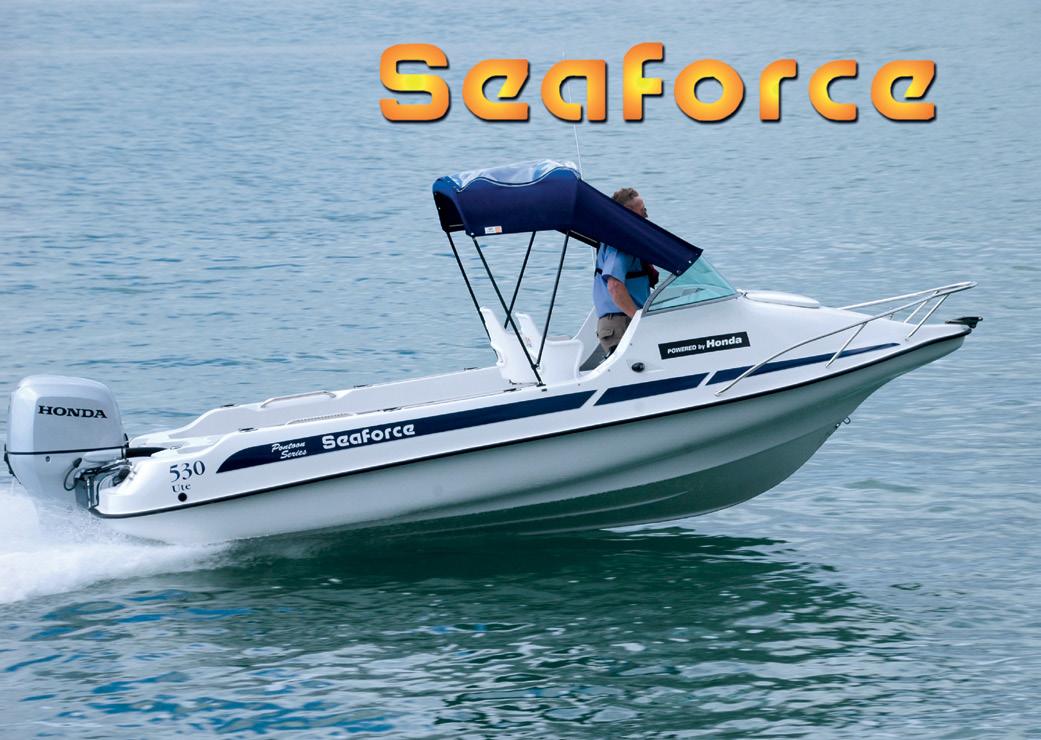


PACIFIC POWERBOAT _ NEWS DB377 FIBREGLASS PONTOON BOATS TM TM www.seaforce.co.nz
530 Skipa
530 Ute
Seaforce
Seaforce
530 Mate SEE THE FULL RANGE AT 32 MARCH / APRIL 2024
Seaforce
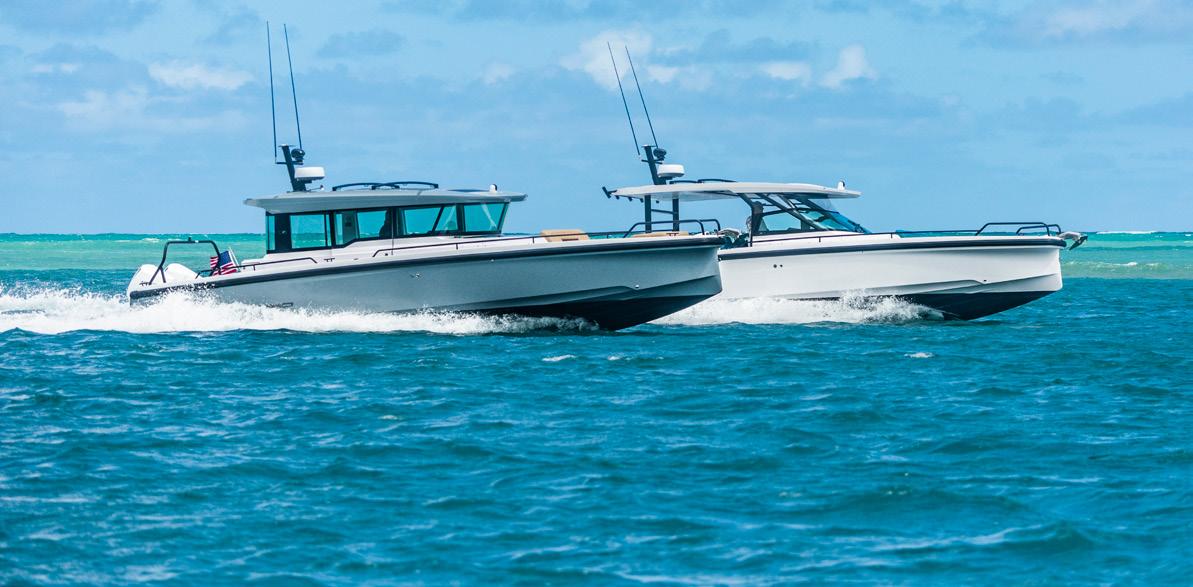
AXOPAR RANGE PREMIERES AT AUCKLAND BOAT SHOW
Discover the allure of the Axopar 37 Sun Top and Cross Cabin at their New Zealand premiere at the Auckland Boat Show; also on display is the multi-award-winning Axopar 28 Cabin. The Axopar range all feature the iconic twin-stepped and deep V "Sharp entry hull", ensuring responsive handling, supreme comfort, and remarkable fuel efficiency, perfect for cruising New Zealand's unpredictable coastline.
Redefined for the ultimate experience
The 37 range offers innovative features, including gullwing doors connecting the forward cabin with the outdoors seamlessly and optional roof racks, for every adventure. Both models offer sun or shade with an electric retractable sunroof. The 37 Sun Top notably offers open-air freedom and alfresco social spaces, while the 37 Cross Cabin offers comfortable interiors and large doors, redefining allweather boating, the ideal companion for extended voyages.
EYACHTS.COM.AU
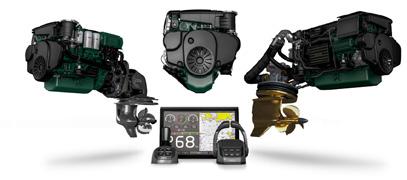
Introducing a new generation of our D4 and D6 propulsion packages, from 150–480 hp. After having spent years refining and developing the proven platform ever further, this complete system delivers new exciting features – from helm to propeller. All to offer you the ultimate boating experience. Visit our store or www.volpower.co.nz to learn more.
New D4 & D6 propulsion packages
Authorized dealer for Volvo Penta Distributed by Volpower NZ Limited for New Zealand & Pacific Islands ph. 0800 865 769 or 09 2744305 www.volpower.co.nz
POWERBOATMAGAZINE.CO.NZ 33
HAINES HUNTER HQ AND TREV TERRY
FORGE ALLIANCE
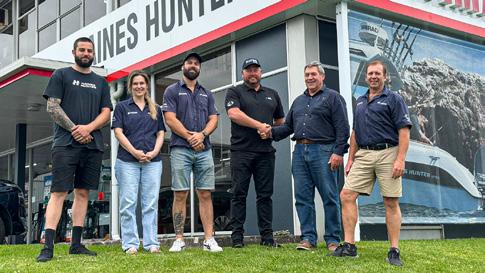
Haines Hunter HQ proudly announced its strategic alliance with Trev Terry Marine Ltd at 50 Cawley Street, Ellerslie, Auckland, effective December 14th 2023.
This collaboration marks a significant milestone in strengthening the Haines Hunter brand and their marine industry presence in this iconic location.
Denis Kendall and Brock Terry, express their excitement about this unified effort. By joining forces at this prominent address Trev Terry and Haines Hunter HQ can offer unparalleled service and products to boating enthusiasts across a wide range.
“We’re delighted about this alliance” said Denis Kendall. “Our combined efforts will grow our Retail presence in the Auckland Boating region.” Brock Terry added “This collaboration is about delivering an extraordinary experience for our customers in Auckland and beyond.”
TREVTERRYMARINE.CO.NZ
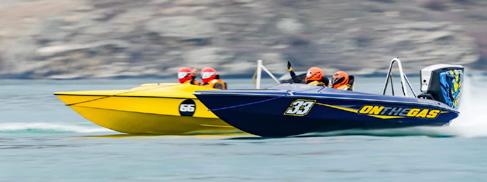
Lake Dunstan, Cromwell , Alexandra: 6-7 APRIL
Te Anau: 11 MAY
Benmore Avimore: 1-2 JUNE
Tekapo -Timaru: 29-30 JUNE
Lake Waihola: 20 JULY
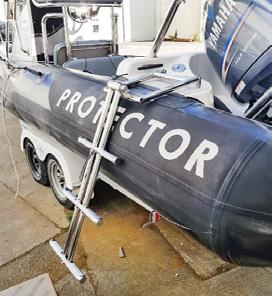
DB214 Call us for more info: p: +64 9 422 3595 or e: mx@pl.net. 59 Woodcocks Rd, Warkworth 0910. NZ DB702 Crafted Marine Grade 316 Stainless Steel Transom Ladders, Removable Gunwale Ladders,Telescopic Ladders, RIB Ladders, Handrails, fittings and accessories.
CHOOSE FROM AN EXTENSIVE RANGE CUSTOMISED OPTIONS AVAILABLE www.dixon.co.nz PACIFIC POWERBOAT _ NEWS
QUALITY LADDERS
2024 NZBMC BOAT MARATHON SOUTH ISLAND RACE DATES
34 MARCH / APRIL 2024
RIVIERA PRAISE THEIR TEAM AS THEY
REFLECT ON 2023
Riviera owner Rodney Longhurst and CEO Wes Moxey have credited the tireless effort and dedication of their team for Riviera’s global success as a builder of premium luxury motor yachts.
Speaking to the 900-strong team at the year-end celebrations on the Gold Coast, Mr Longhurst said he was absolutely committed to the continued investment in his people, technologies and their everexpanding facility. “Our extraordinary success goes beyond Queensland, beyond Australia. Our owners around the world love what our team is designing and creating, but most of all they love our innovation, constant refinement and our commitment to them, allowing them to enjoy their best boating experience possible,” he said. “That’s why we are always investing in you, our people, why we
continue to invest in new technologies, and our facility, so that we can continue to be the very best.”
At the start of the year, Riviera’s highly awarded apprenticeship program welcomed 29 talented young apprentices and 10 enthusiastic mature-age apprentices. In 2023, Riviera was announced as the Large Employer of the Year for the Southeast region, in the Queensland Training Awards. “Our position in the global boating industry continues to grow. After 43 years


and the launching of almost 6,000 motor yachts, Riviera is regarded internationally as one of the world’s leading motor yacht builders. We exported over 60 percent of our yachts in 2023 to the Americas, New Zealand, Europe, the Middle East and Asia,” Mr Longhurst said. We are inspired by the global Riviera family of motor yacht owners and we are grateful for their trust. They excite us every day to be different and better,” Mr Longhurst said.
RIVIERAAUSTRALIA.COM
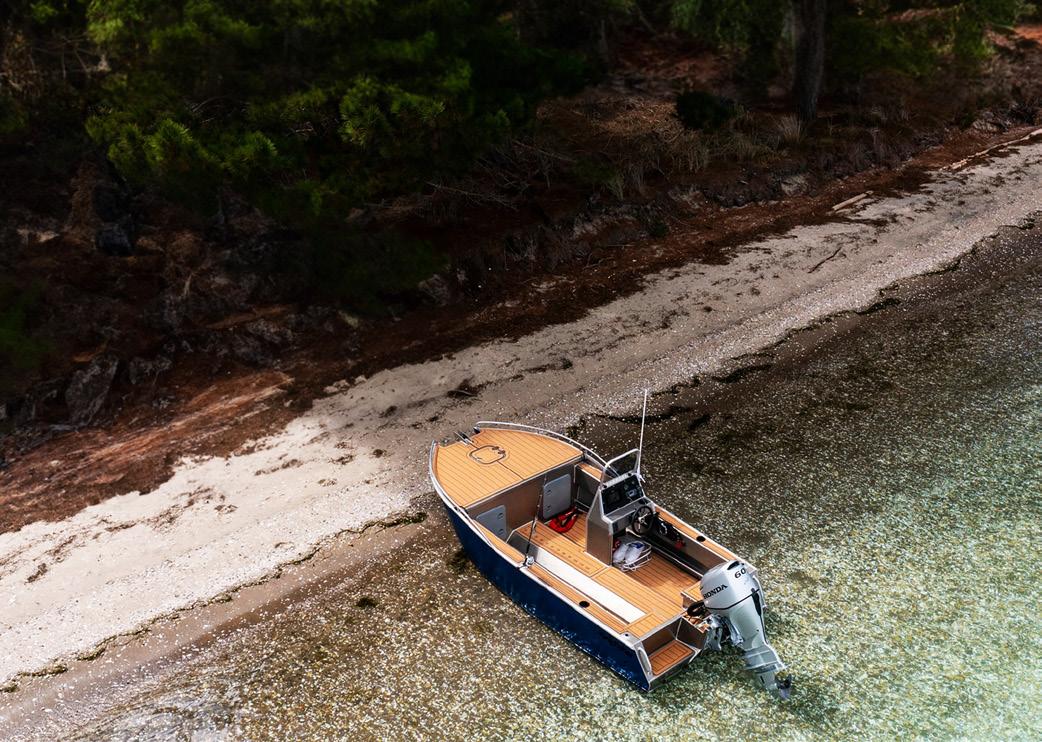
www.udek.co.nz 0800 114 222 sales@ultralon.co.nz Durable Anti-slip UV stable Stain resistant Start your U-DEK journey today! Low maintenance Customised design POWERBOATMAGAZINE.CO.NZ 35
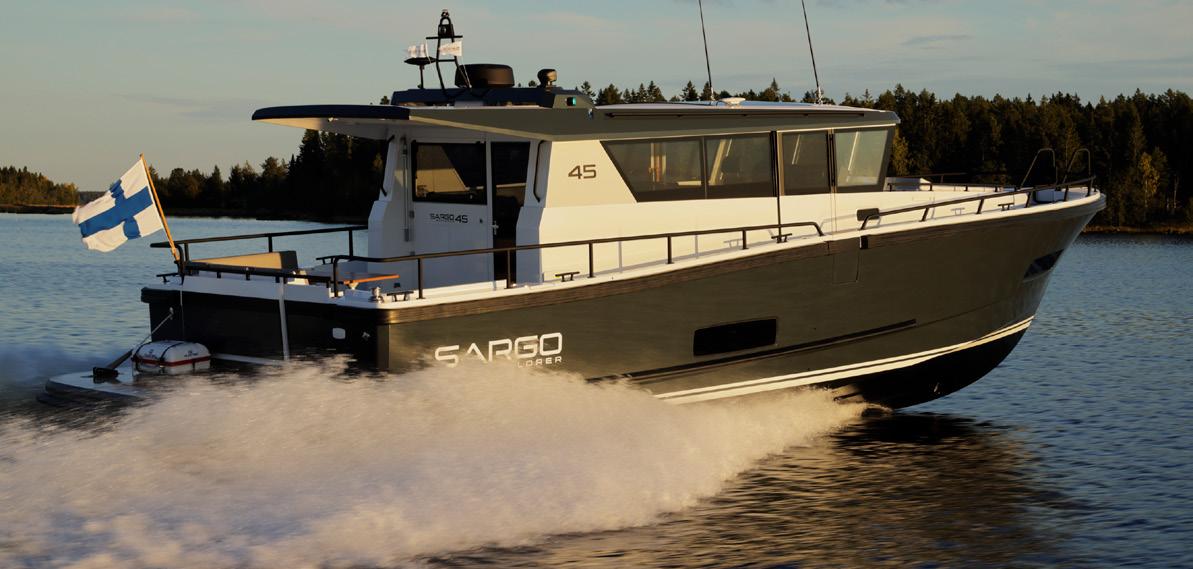
SARGO 45 WINS ADVENTURE BOAT DIVISION - 2024 MOTOR BOAT AWARDS
There’s the easy-access side-hinging engine hatch, the hidden fender baskets and the widediameter fuel fillers. There’s the double-glazed pilothouse windows and the big internal dinette, which is slightly elevated to preserve your allround views. And then there’s the sociable bow dinette with its table and bracket stowed in a rubber-lined locker directly next door.
While a soft, dry ride and a wide range of flat, comfortable cruising speeds are ideal for long offshore passages, the two or three-cabin lower deck layout also enables tailoring the boat specifically to your lifestyle. You can opt for IPS or sterndrives, as well as the dynamic-looking Explorer package. And the appeal of this mighty offshore pilothouse cruiser will only increase once the flybridge variant becomes available.
New Zealand distributor, European Marine, has a Sargo 45 on order, and will have a 36 on display at the upcoming Auckland Boat Show.
SARGOBOATS.NZ




PACIFIC POWERBOAT _ NEWS
36 MARCH / APRIL 2024
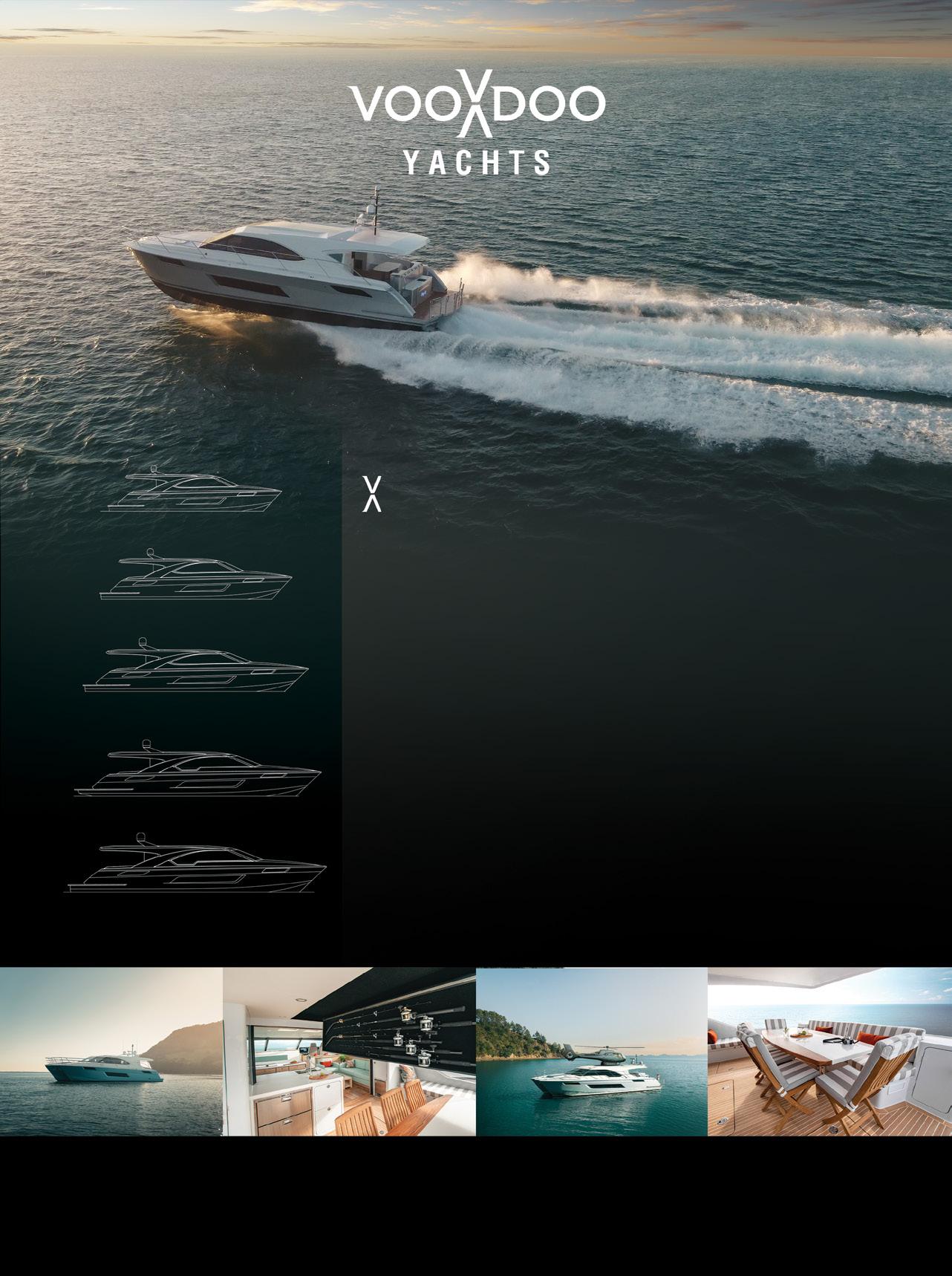
The Voodoo Xpedition Foiler range of hydrofoil assisted power catamarans are set apart by their ability to cover huge open ocean distances at high speeds in absolute comfort And with incredible efficiency
Contemporary interiors, light, flowing spaces and sustainable selections refine the extreme performance
Devastatingly fast, immensely capable and supremely comfortable The Voodoo Xpedition Foiler truly is the ultimate boat for the modern day adventurer
Get your key to unlock the oceans
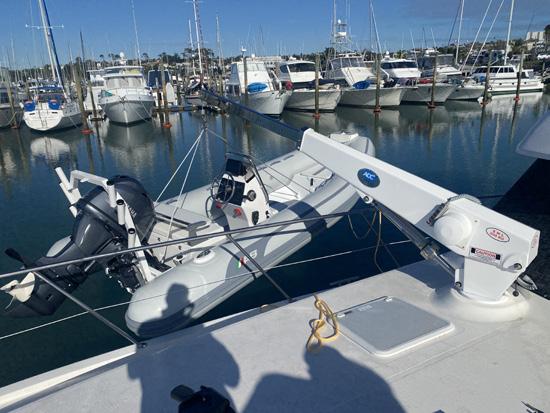
Quality 316 Stainless Steel Made From Full Electric and Hydraulic Options Options 200KG - Available 1500KG
Single Stage and Fixed Boom Hydraulic Swim Platforms Motor Yacht Service 09
Installation Completed at Our Hobsonville Location
NZ Warranty and After-Sales Agent for Maritimo Also Agents For:


YANMAR AND WILLIAMS JET TENDERS COLLABORATE
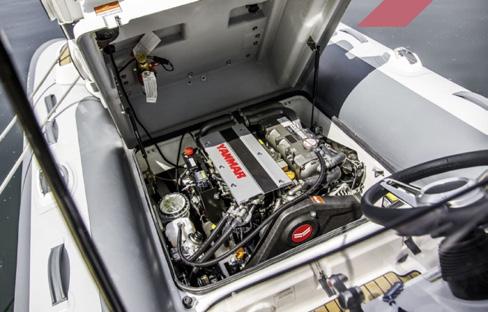
YANMAR Marine International’s (YMI) line-up of HVO approved engines are selected throughout the marine industry worldwide as a leading, trusted and efficient propulsion solution for a variety of applications. Through YANMAR’s commitment to sustainability, these collaborations ensure that YMI’s partners also benefit from and enhance their eco credentials by reducing their impact on the environment.
Williams Tenders, the world's foremost jet tender specialist, has successfully approved HVO100 fuel for use on all YANMAR 4JH engine-powered tenders, including the DieselJet 415, 445, and 505, as well as SOLAS 505, allowing customers to reduce their carbon footprint without compromising on performance.
The strategic move by Williams Jet Tenders ensures that all new product developments and testing powered by YANMAR multi-fuel ICE engines will utilize HVO100. YMI Director of Sales and Marketing, Floris Lettinga commented; “YANMAR Marine International is proud to partner with Williams Tenders, a collaboration perfectly aligned with YANMAR’S commitment to sustainability.
By integrating YANMAR’S HVO approved engines across the Williams Tenders' range of boats and vehicles, we are not just propelling innovation; we are supporting our customers in propelling a sustainable journey towards a cleaner future. Together, we help our customers navigate the steps towards optimising cutting-edge technology with environmental consciousness.”
Sarah Moore, Sustainability Specialist at Williams Jet Tenders, commented; "We are committed to finding innovative sustainable solutions that reduce the direct emissions impact from our factory and our vehicles. By using UCO HVO, a renewable fuel made from waste cooking oil, we will accelerate our efforts to decarbonize and improve air quality. As we carry out exploratory testing on our products, it will allow us to confirm HVO use in more of our tenders, enabling us to achieve a greater reduction in our carbon footprint as more Williams Jet Tender engines are approved for use.”
YANMAR Marine International is proud to be a key partner in advancing sustainable marine solutions and looks forward to further collaborations with industry leaders dedicated to a cleaner, greener future.
YANMAR.COM/MARINE/
New Zealand Agent For: WWW.MYSC.CO.NZ
and Supplied Installed
| www.mysc.co.nz | info@mysc.co.nz
416 1179 Centre
12 Clearwater Cove, , Auckland NZ Hobsonville Marina
DB978 PACIFIC POWERBOAT _ NEWS
38 MARCH / APRIL 2024
HEAD OUT. DON’T SPLASH OUT. Walk into your Suzuki dealer today and head out with a quiet, economical and reliable Fully Fitted Suzuki DF90 Four Stroke for just $15,999. www.suzukimarine.co.nz INTEREST P.A. FOR 24 MONTHS NO DEPOSIT % PLUS SAVE $1,000 90HP 25" SHAFT ONLY T&Cs: This no deposit and 0% p.a. interest rate finance offer is fixed for 24 months and available on new DF90ATX 25” shaft only purchased between 1/2/24 and 30/4/24 at participating Suzuki dealers. A PPSR fee of $10.35, a monthly maintenance fee of $2, a UDC loan fee of $130 and a dealer origination fee will apply (your dealer can tell you their applicable fee). The loan is provided by UDC Finance Limited. UDC’s lending criteria and standard terms and conditions apply. Fully fitted price includes control cables, analogue gauge side mount control, propeller and boat fitting. Price excludes removal of previous outboard motor and controls, repairs to electrical systems, fuel system/dash repairs, and transom repairs. While stock lasts. TRACTXXXXXX
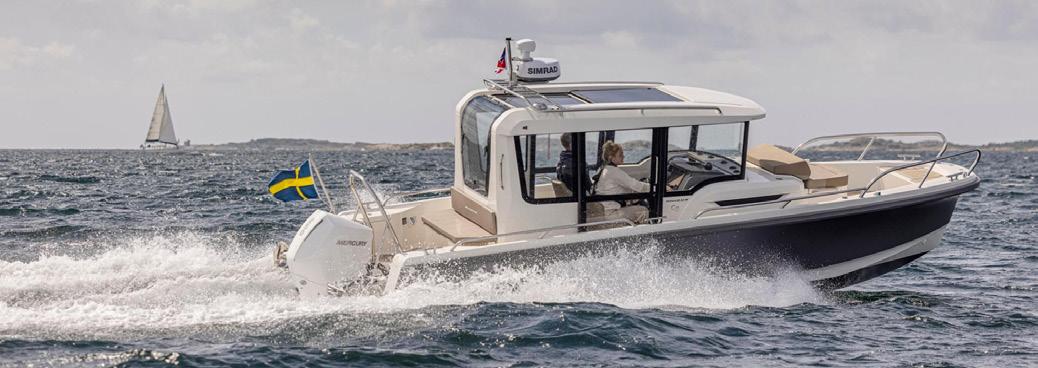
NIMBUS COMMUTER 8SMART & AGILE
The C8 is a purpose-built, rapid commuter vessel constructed to meet the needs of year-round commuters, active day-trippers, or those planning shorter journeys with overnight stays.
Being trailerable, the Nimbus C8 is an extremely flexible boat designed to fit your lifestyle. There is now no waterway you can't explore. Nimbus has
incorporated all their important design cues and innovative features into a trailer boat size - Rod holders, overhead lights and walk-around grab rails, providing protection from the elements during a full day out on the water. In the C8, priority is given to space, surfaces, and functionality that provide freedom on board. The result is easily accessible storage spaces, wide walkways, large sliding doors, and plenty of lounging areas.
Like its siblings, the C8 features a wide walk-around design. Boasting a high freeboard and solid stainless steel grab rails along the entire length of the boat, you can't help but feel safe and secure while on board. When out driving, Nimbus C8 offers comfortable seating for both the driver and
its passengers. The swivelling helm seats can easily be turned towards the passenger sofa and the table extended to a full dinner table. The passenger sofa can be converted to an extra bed for two children or one adult.
The foredeck of the C8 offers a multifunctional space with seating that can be transformed into lounge, chill or drive mode depending on the situation. The light and spacious cockpit offers plenty of natural light thanks to its extra-large glass doors, the sliding glass roof hatch and the openable aft deck hatch. The boat can easily be transformed from closed to open within seconds.
SPORTSMARINE.COM
UNLEASH YOUR BOAT’S POTENTIAL


PACIFIC POWERBOAT _ NEWS www.gtmarine.co.nz
40 MARCH / APRIL 2024
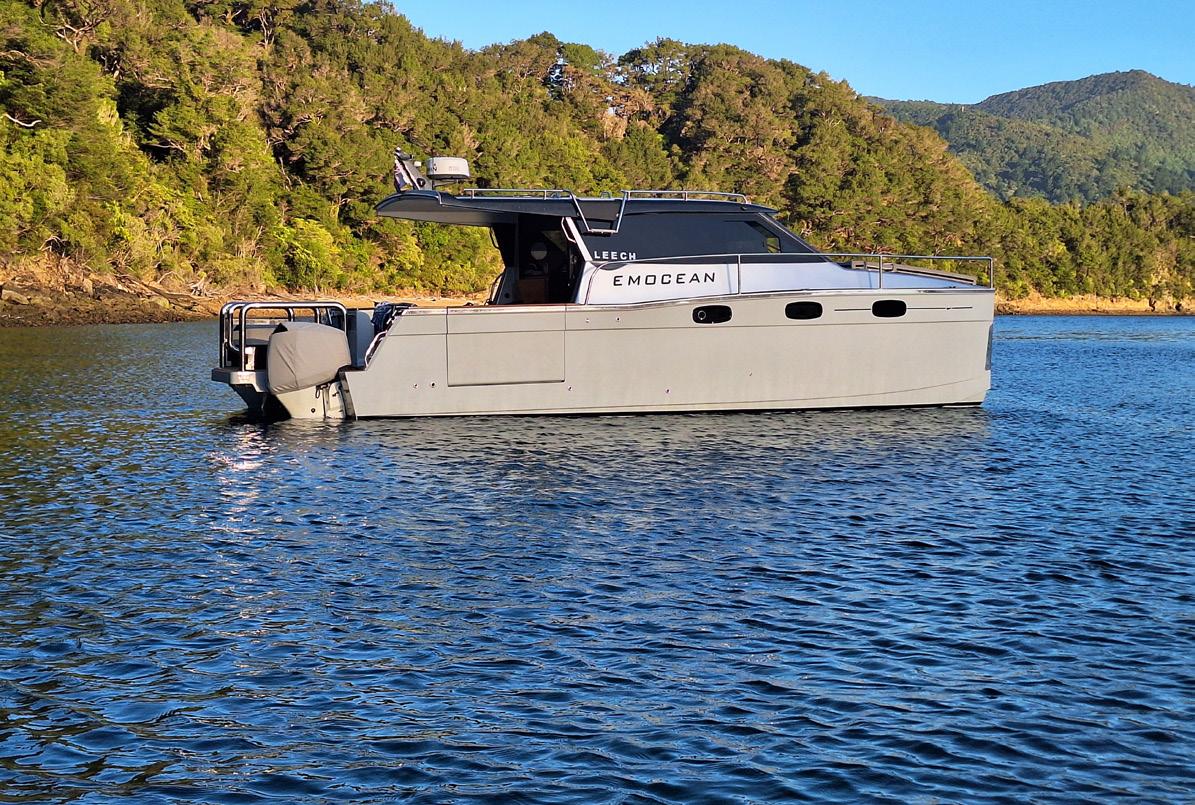
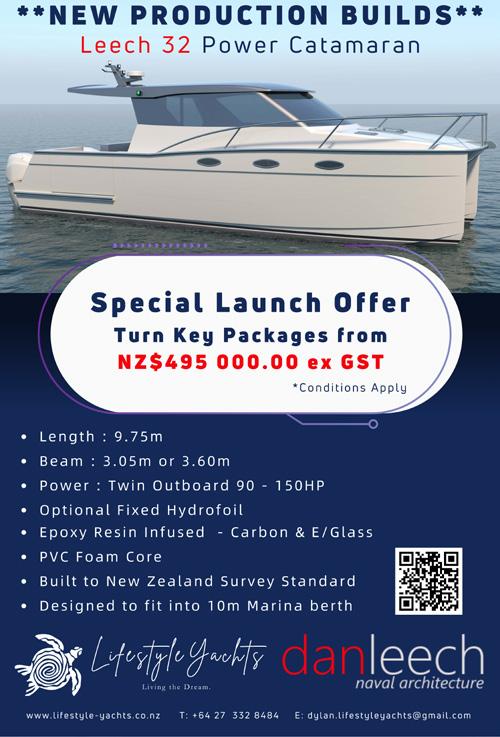
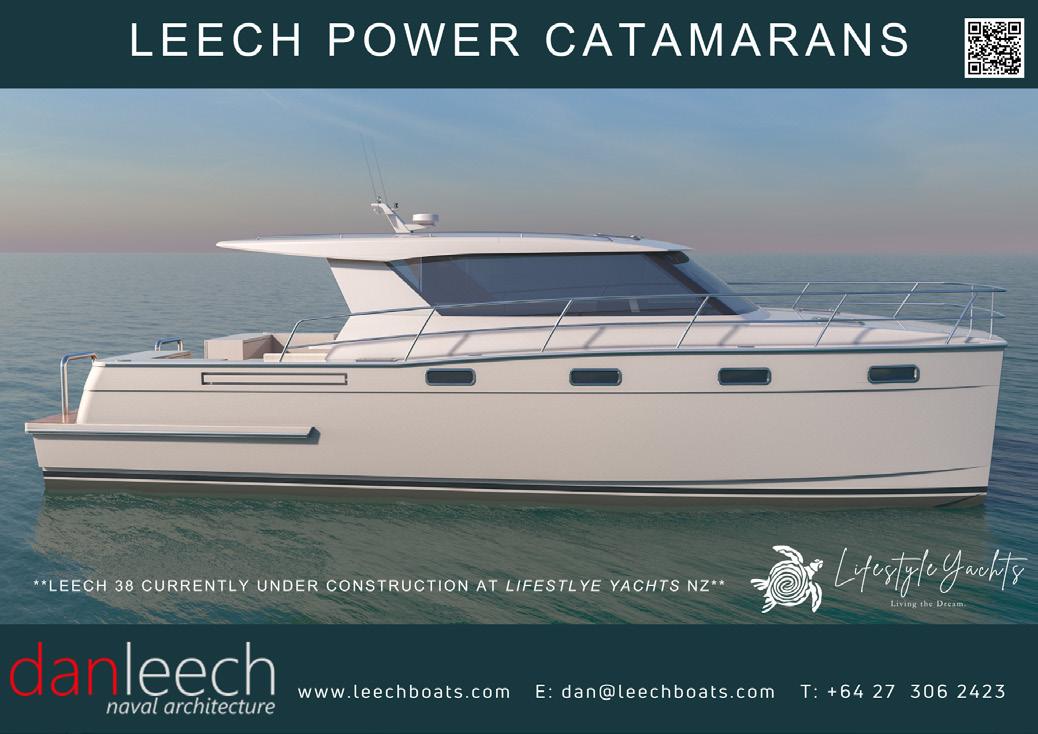
LEECH 980 POWER CAT
The Leech 980 Power Cat boasts a robust yet lightweight structure crafted from full composites, featuring e-glass/epoxy laminates flanking a foam core.
This construction ensures durability and enhances the vessel's performance while maintaining a quiet environment. Interior highlights encompass full standing headroom, a forward queen-size berth, head and shower facilities, and a spacious galley in the saloon. Additionally, the cockpit offers convenient features like a fold-down hull side panel for side boarding and a sizable aft boarding platform, with optional built-in seating. Power options range from twin 90hp to
twin 150hp 4-stroke outboards, with an available foil for increased performance. The combination of the lightweight structure, efficient hull design, and foil enables the use of smaller engines and reduces fuel consumption. With a beam of 3.050m, the option to trailer the boat is feasible. Moreover, an upcoming 3.600m beam version is currently in construction, expanding the range's versatility. LEECHBOATS.COM
POWERBOATMAGAZINE.CO.NZ 41
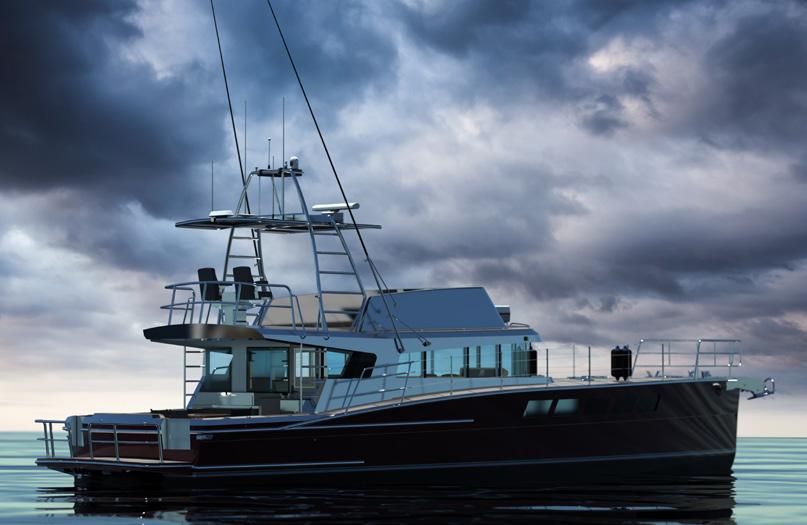
INTRODUCING THE DICKEY BOAT’S PACIFIC 62
Jason Dickey of Dickey Boats is proud to introduce the Pacific 62’s development and build process - from concept and design, to construction, fit-out, launch and beyond!
This long-range sport-fishing cruiser blends supreme fuel efficiency, self-sufficiency, and versatility in an adventurous, yet comfortable craft.
Featuring the same unrivalled build quality and attention to detail as their acclaimed Semifly and Custom ranges, the vessel’s exceptional seakeeping and generous living facilities allows for local excursions and extended sea voyages bringing flexibility and purpose to the class.
The Pacific 62 is designed by seafarers to accommodate adventures big and small, with all the amenities and space serious fishers and divers expect. High levels of equipment customisation can be accommodated as required to meet any potential owner's specific requirements.
Jason explains “My early years working at sea taught me just how much of the ocean, even comparatively close to our doorstep, is yet to be fully explored. For me, marine
exploration locally or far beyond the horizon is the ultimate personal adventure. As boat-builders we have always applied The Dickey Boats team is eagerly anticipating the launch of its new Pacific 62, scheduled for late autumn this year. The vessel is set to be the most capable and versatile craft in the company’s history.
This long-range sport-fishing cruiser embodies Jason Dickey’s vision of an adventure-bound sport-fisher. It combines supreme fuel efficiency, ocean-going selfsufficiency, and unparalleled versatility, positioning the Pacific 62 to pioneer a new class of recreational vessel. Designed from the keel up, the Pacific 62 is tailor-made for extended sea voyages through the Pacific and beyond, while still being ideally suited for closer, local excursions.
True to the spirit of Dickey Boats, the Pacific 62 offers extensive customisation options to meet the high expectations of
owners. This special craft stands out with its all-encompassing sport-fishing and passage-making package, without ever compromising on safety or fuel efficiency. Dickey Boats is also thrilled to present two of its premier models at the forthcoming 2024 Auckland Boat Show. This year, they will showcase their flagship, the Semifly 45, along with the popular Semifly 32. These models will be presented in full, offering attendees an intimate view of their most recent advancements in marine craftsmanship. The Dickey Boats team is keen to reunite with old friends and welcome new ones, eager to discuss your boating dreams and introduce our range of models, including the soon-to-launch Pacific 62.
DICKEYBOATS.COM/BOAT-MODELS/ PACIFIC-62


Clear Protective Coating Preserves both Metal and Painted Surfaces Highly Corrosion Resistant Highly Cleanable Surface Restores Paint Appearance Long Lasting Protection www.nyalic.co.nz 0800 692 542 0274 351 069 sales@nyalic.co.nz Protecting Marine Craft in New Zealand and the world for 30 years PACIFIC POWERBOAT _ NEWS
42 MARCH / APRIL 2024
BREATHE NEW LIFE INTO YOUR VESSEL WITH A NEW NANNI ENGINE
For many boat owners, the thought of repowering their beloved boat can be daunting. The process can seem complex and expensive, leaving you wondering if it's truly worth the investment. But what if there was a way to revitalise your boat's performance, fuel efficiency, and overall cruising experience without breaking the bank? Enter Nanni engines, the trusted brand that has been synonymous with marine diesel excellence since 1952.
Nanni's extensive range of marine diesel engines caters to a wide variety of vessels, ranging from 10 to 320hp. Whether you're seeking a reliable workhorse for extended voyages or a powerful engine for day trips, Nanni has the perfect solution. One of the key advantages of choosing
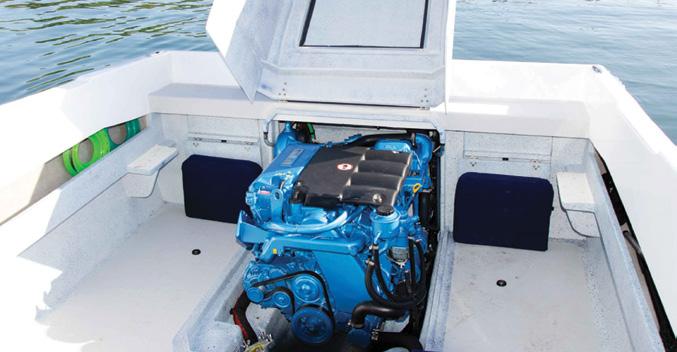
Nanni for your repowering project is their renowned reliability. Built using a Toyota, Kubota, or John Deere base, Nanni engines are known for their durability and ability to withstand even the harshest marine environments. This translates to peace of mind on the water, knowing that your engine will get you where you need to go, time and time again.
In addition to reliability, Nanni engines are celebrated for their impressive fuel efficiency. When comparing engines of the same horsepower from similar brands, Nanni engines deliver higher performance, with lower revs, providing an economic advantage. This makes them a particularly attractive option for boat owners who enjoy extended cruising or those seeking to reduce their environmental impact.
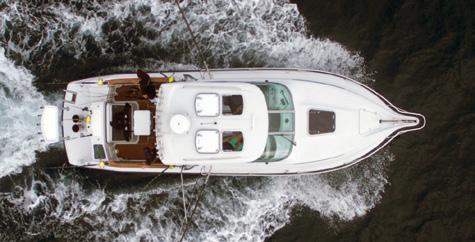
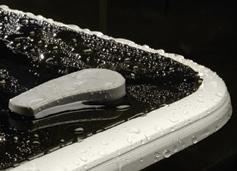
Cule hatches are proudly made in NZ so we can customise to your needs and supply any parts.
Easy online purchasing backed by friendly local customer service and a manufacturers warranty.
Get in touch to discuss your next project.
With a global network of authorised dealers and service centres, Nanni owners can access expert assistance and genuine parts wherever their boating adventures take them. This level of support gives you the confidence and assurance that you'll never be left stranded, no matter where you are. General Marine Services (GMS) is the official distributor of Nanni engines for New Zealand. GMS expertise and service ensures your repowering project is a success. Nanni will be on display at the Auckland Boat Show (Stand 103), with support from the team from Nanni Australia. Take advantage of the opportunity to directly interact with Nanni specialists and get all your questions answered face-to-face.
GENERALMARINE.CO.NZ
Call 09 835 9706 or visit culemarine.co.nz
POWERBOATMAGAZINE.CO.NZ 43
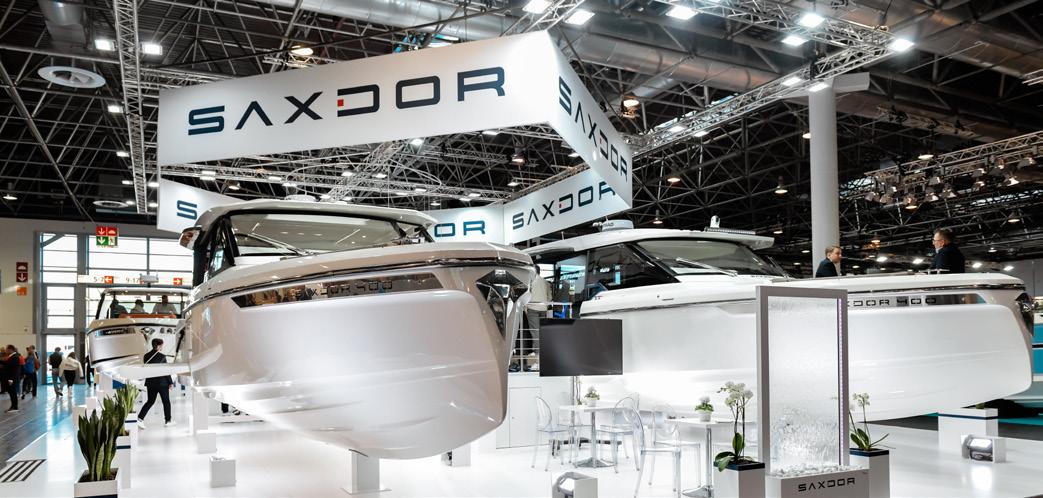
SAXDOR YACHTS SURPRISE THE MARKET AT BOOT DÜSSELDORF
Saxdor Yachts held a press conference recently at Boot Düsseldorf to announce two new models: a new flagship, the Saxdor 460 GTC, and the Saxdor 320 GTWA.
The event was held at the brand’s stand, with the new Saxdor 400 GTC on display for her World Premiere. Attracting interest from across the nautical community, the brand’s latest 40-footer boasts a complete offer for seafaring families across Europe’s diverse climates.
The surprise announcement of the two new models builds on the growth of the shipyard, which is expected to carry it to 100 million euros in revenue this year. Even as the range reaches up to 46 feet, Saxdor maintains a strong presence in the market of smaller boats as well. The Saxdor 270’s victory in the “Sportsboats under 30ft” category of the MBY Awards attests to the brand’s persistent leadership.
SPORTSMARINE.CO.NZ
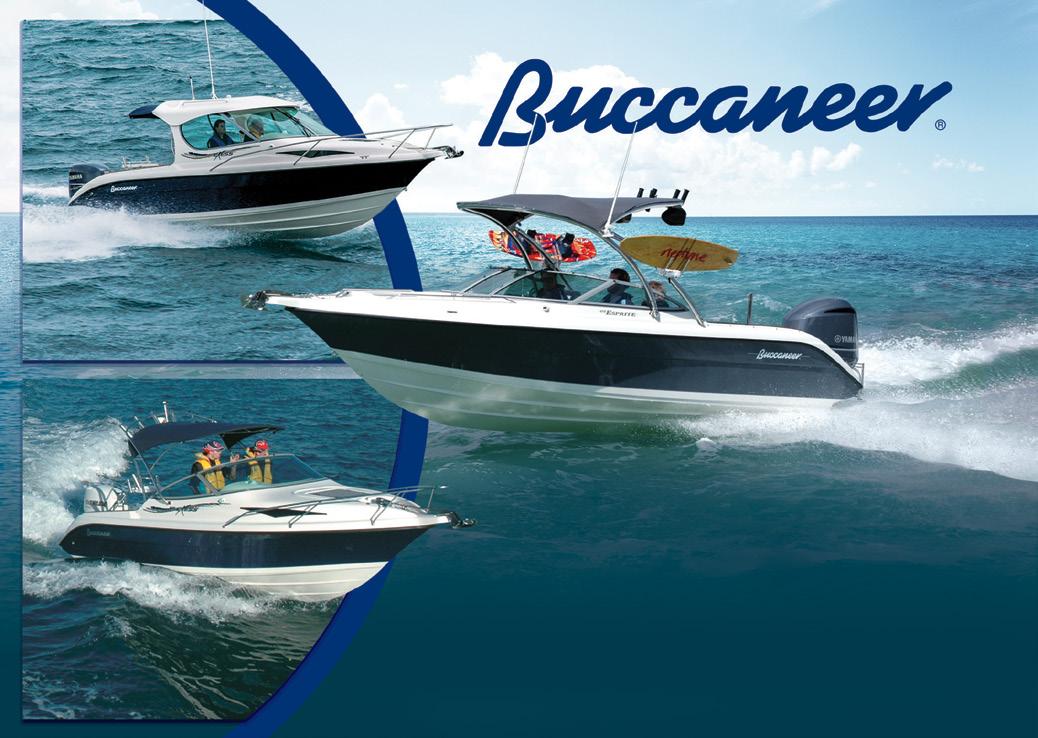
NEW HORIZONS DISCOVER WE WILL SORT THE HOW! YOU DECIDE THE WHERE AND WHY... For the full range visit: www.buccaneer.co.nz 650 Esprite 685 Exess 565 Exess DB936 PACIFIC POWERBOAT _ NEWS PACIFIC POWERBOAT _ NEWS
44 MARCH / APRIL 2024
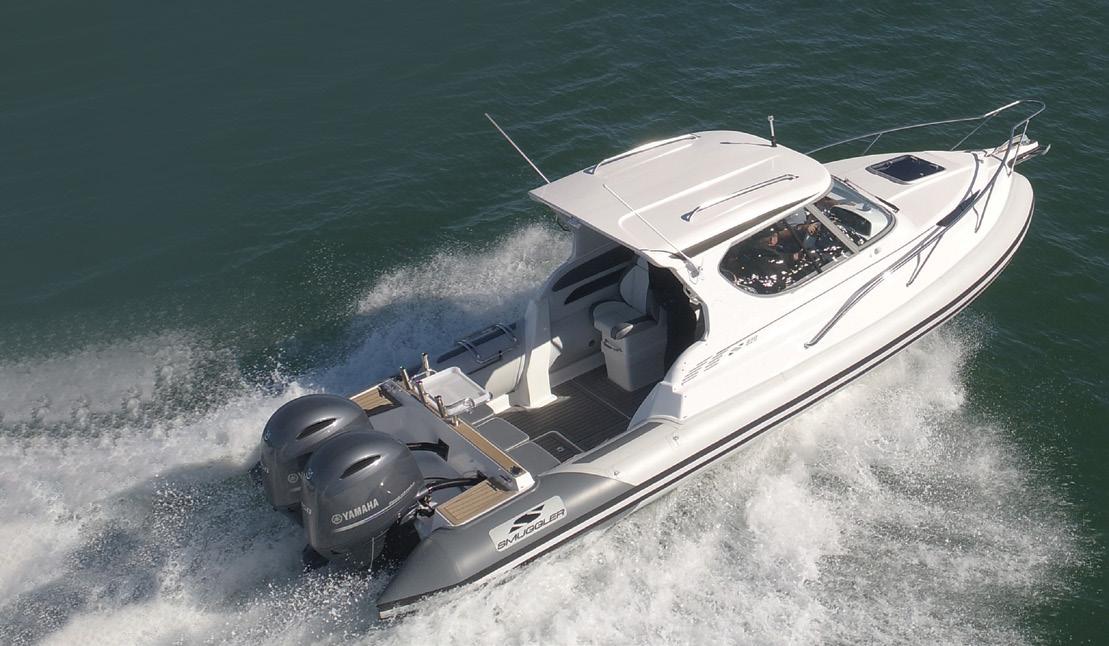
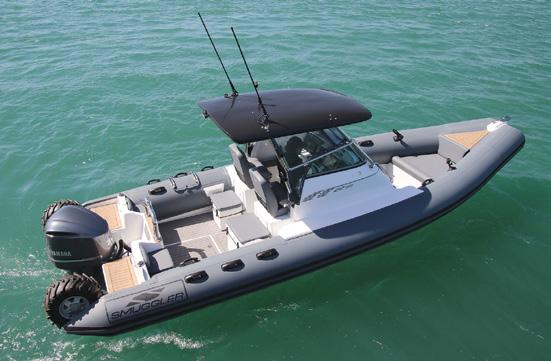
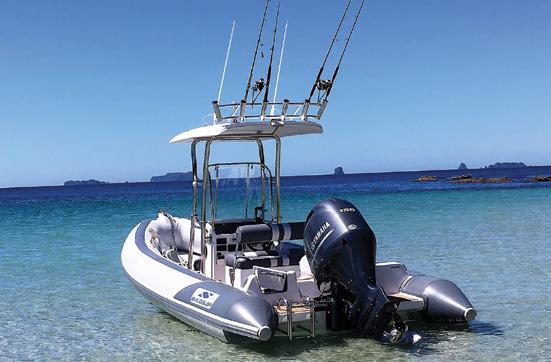
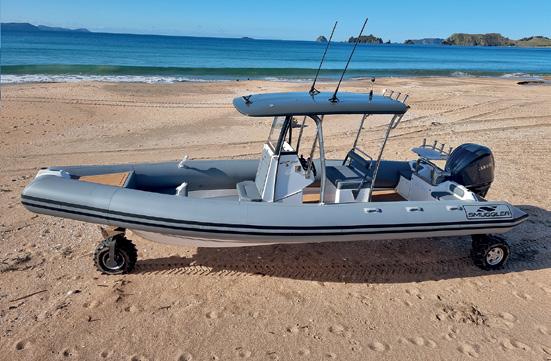
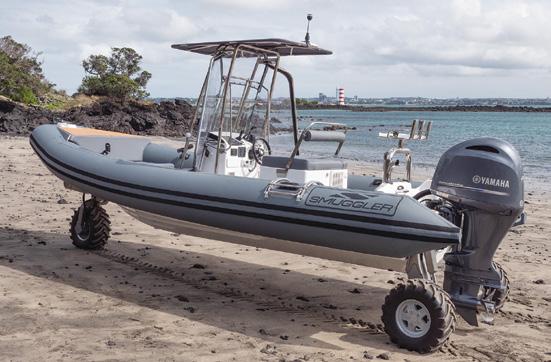


FOLLOW OUR STORY @SMUGGLERMARINE INFO@SMUGGLER.CO.NZ +64 9 838 9024 SMUGGLER.CO.NZ FOLLOW OUR STORY @SMUGGLERMARINE INFO@SMUGGLER.CO.NZ +64 9 838 9024 SMUGGLER.CO.NZ 004SM
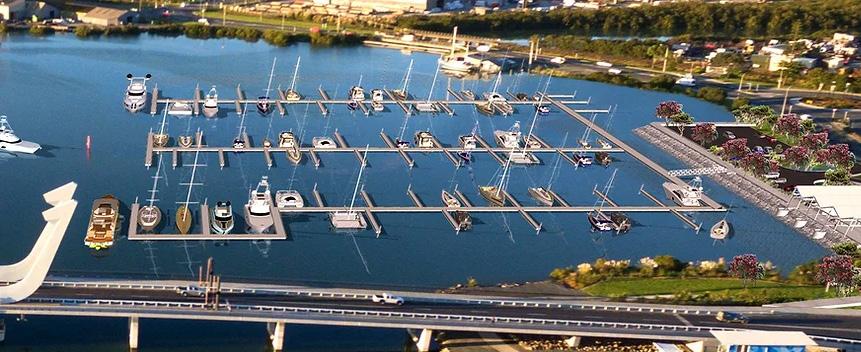
DIGGING OKARA MARINAAHEAD OF SCHEDULE
Total Marine's two dredging barges have already dug out 30,000m³ for a water access channel to the land reclamation footprint. It is pleasing to see the program is a week ahead of schedule leading up to the required seven-week resource consent condition pause over the warmer summer period. The Onerahi road traffic and boating visitors to the city will get a month's break from the trucking and barging. A big thank you must be given to the public who have been very courteous in slowing down for the drivers.
The restart in February will see the beginning of the reclamation work from the shoreside. This will involve temporary road truck access and fencing to separate the work site from the footpath. Pile driving will also begin in February around the reclamation perimeter which will stabilize the ground when placing imported hard fill into the reclamation. The top of the piles will be at the armour toe (bottom) of the seawall. Mudcrete (mixed mud and cement) will be used to form the seawall bung around the top of the driven piles, which will add further stability.
Until now the physical work has been beneath the water. At low tide it is a bit more exciting now that we can see the edge which is being cut around the reclamation footprint.
Total Marine have also operated in Tutukaka and Waiheke Island the past year. Other clients include Westhaven, Whangamata, Seaview and Orakei Marinas.
WHANGAREIMARINA.COM
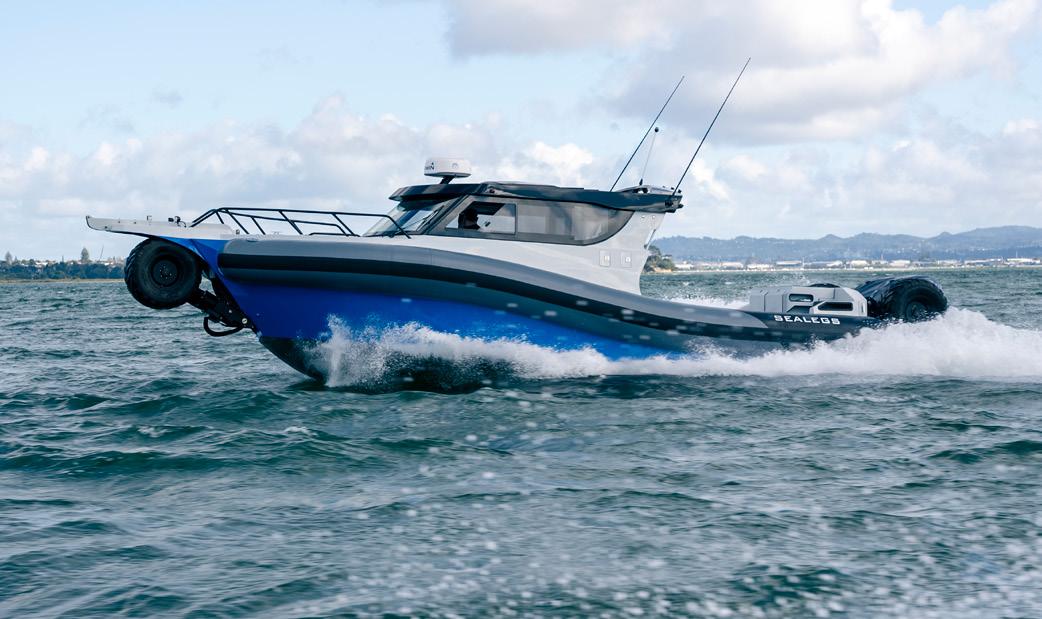
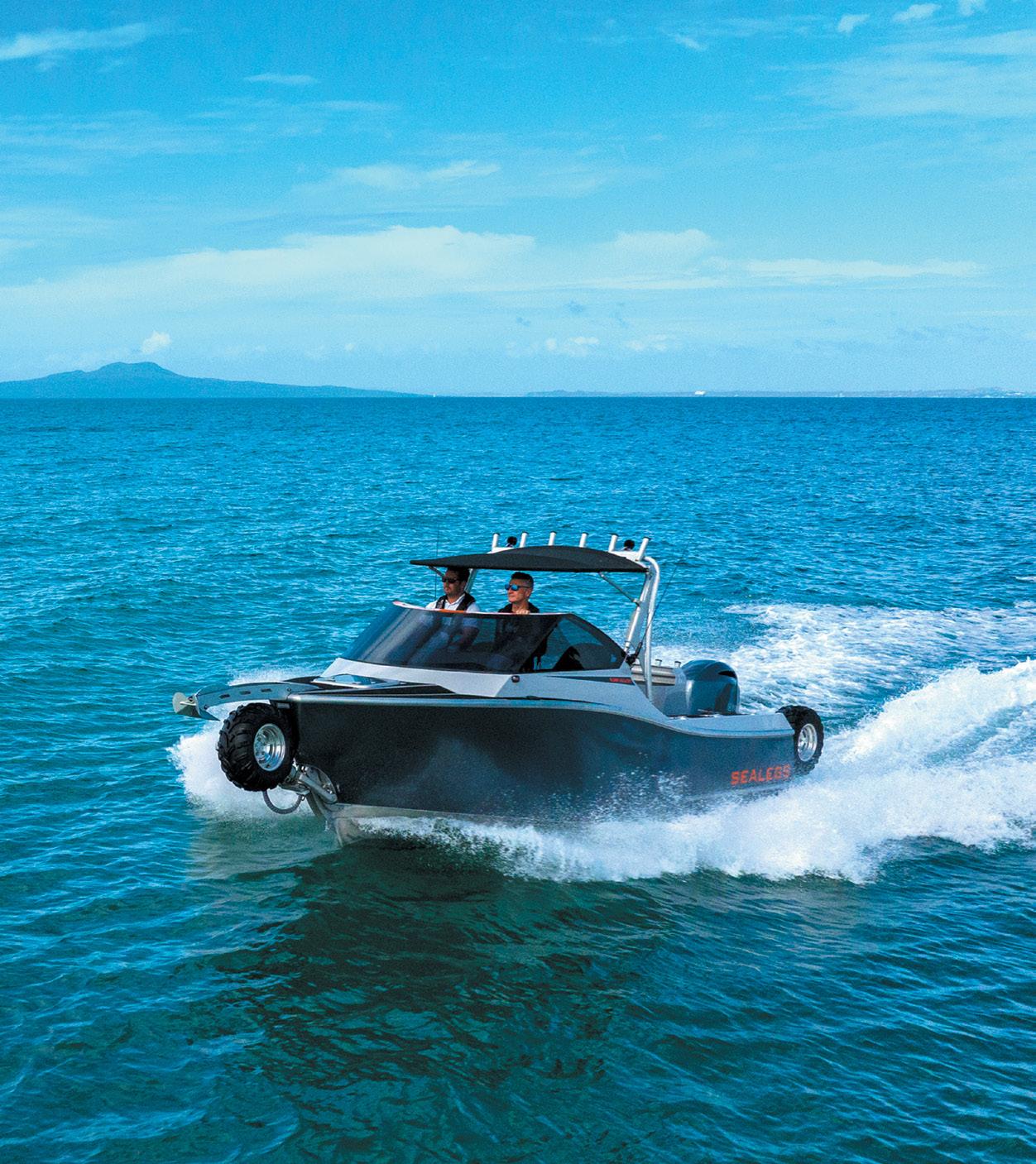
SEALEGS - LATEST AND GREATEST - 12RC
The excitement is building…. Sealegs have announced the latest build of their spectacular 12-metre amphibious cabin RIB, the class leading 12RC, is due to hit the waves over the coming weeks.
At over 40 feet long and powered by a pair of mighty V12 Mercury 600HP Verado outboards, the pinnacle of the Sealegs amphibious range is certainly something special and
will certainly be one not to miss. Rumour has it this craft may also be lining up to be on public display at an upcoming boat show….. watch this space for further details.
SEALEGS.COM
PACIFIC POWERBOAT _ NEWS
46 MARCH / APRIL 2024
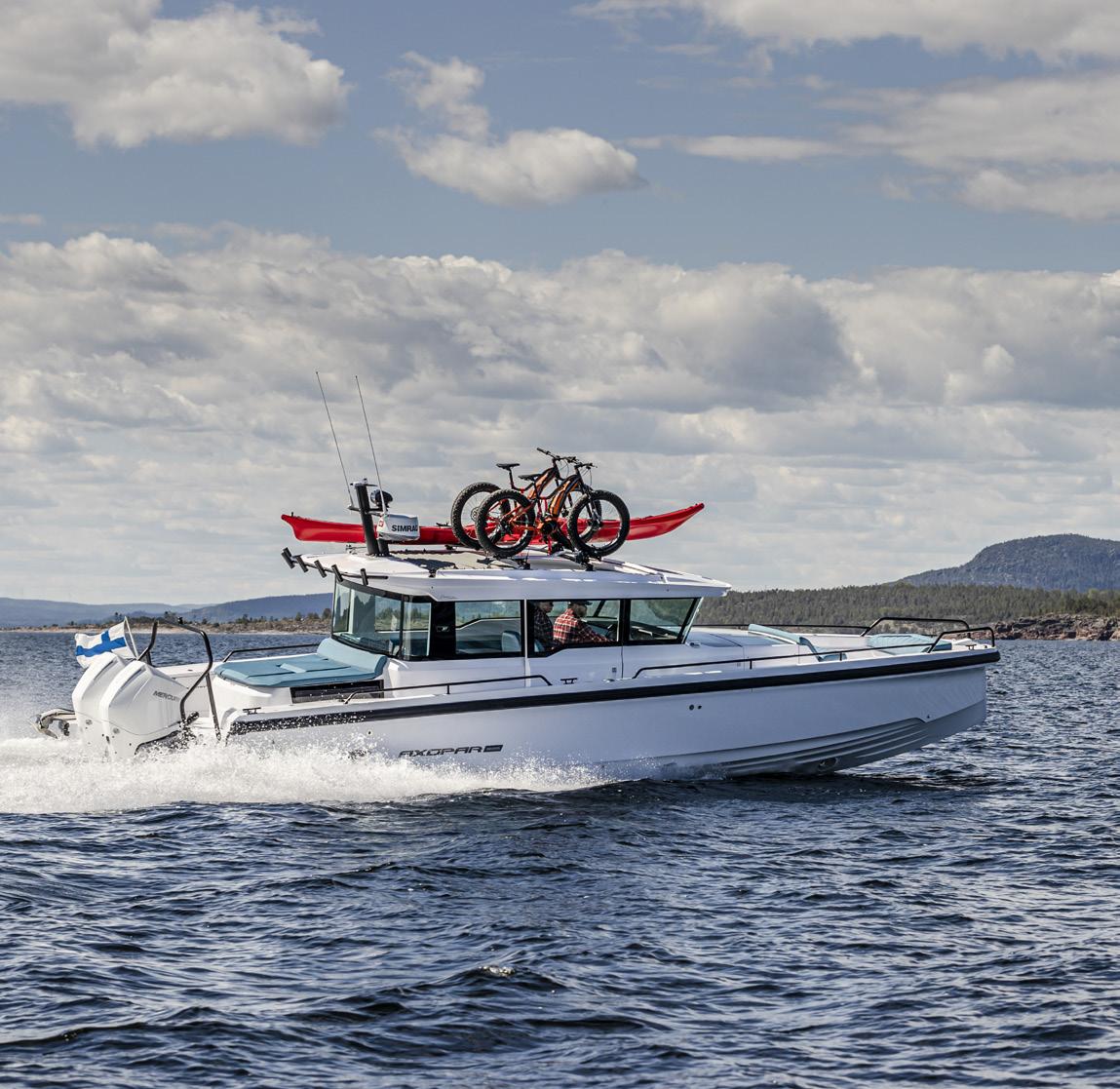
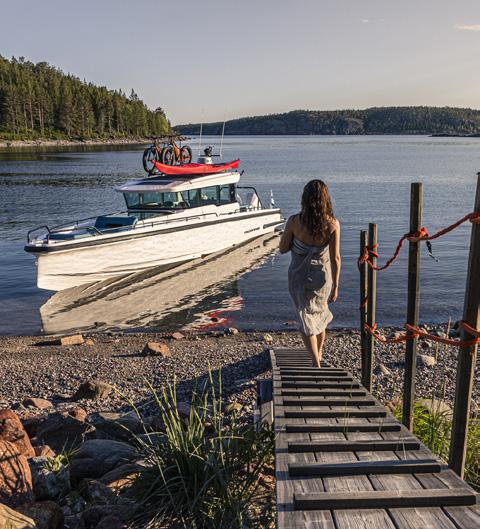


THE ULTIMATE ADVENTURE BOAT
Discover the enduring appeal of the Axopar 37 Cross Cabin, designed to conquer New Zealand’s and Australia’s rugged conditions. With its proven track record and unmatched capabilities, this boat offers unparalleled comfort, safety, and agility. Enjoy social outdoor and indoor spaces and the versatility of an outboard walkaround centre-console with a spacious, fully enclosed weather proofed cabin.
Whether navigating choppy waters or exploring remote coastlines, the Axopar 37 X Cabin delivers the reliability and performance needed for unforgettable adventures.
PREMIERING AT AUCKLAND BOAT SHOW
EXCLUSIVE AU & NZ AXOPAR DEALER Learn more at eyachts.co.nz boats@eyachts.co.nz (09) 534 7196 37 EXPLORE FURTHER...
2 Ara-Tai Road, Anchor Building, Unit B1, Half Moon Bay, Auckland
YAMAHA ANNOUNCES RELEASE OF ALL-NEW F350 V6 4.3L OUTBOARD
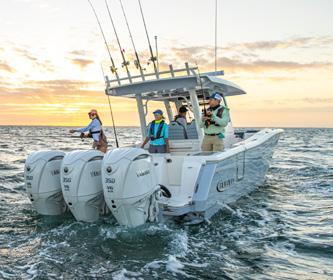
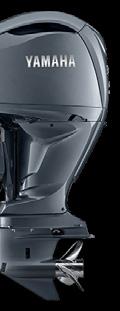
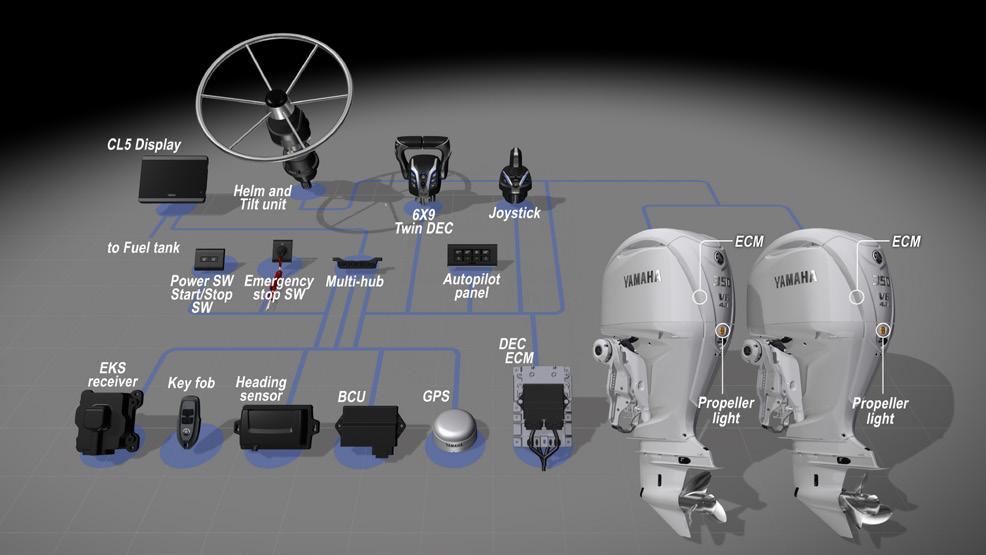
Yamaha Marine New Zealand has announced the release of their widely anticipated all-new F350 V6 4.3L horsepower outboard. The new engine combines big horsepower, state-of-the-art features, industry leading boat control integration and premium level performance and reliability.
The new F350 has been built on Yamaha’s most reliable and proven big-block V6 platform, which has been completely redesigned with an upgraded 4.3 Litre capacity, extra-strong gear case and many other engineering enhancements brought across from Yamaha’s pinnacle XTO 450 horsepower outboard – making it the most advanced V6 outboard Yamaha has ever produced. This engine delivers a genuine 350 horsepower in an impressive 286kg industry-leading lightweight package, making it more suitable to a wider range of offshore boating applications than ever before.
The new F350 is both smart and good looking, coming with Yamaha’s state-of-the-art built-in Digital Electric Steering. Neat and compact, this integrated steering system delivers extremely smooth, quiet and responsive steering, with additional technical smarts to give skippers even more control over their boat. The enhanced heat management system keeps everything nice and cool under the cowling. This not only improves engine durability and reliability but creates more available amps, when it is needed most, at idle.
When it comes to cutting-edge technology, nothing compares with the integration of the new F350 and Yamaha’s exclusive Helm Master® EX (HMEX) boat control system (sold separately). Now with the additional precision control of a Variable Speed Bow Thruster (optional), on single to quad outboard applications, HMEX delivers a premium experience.
To handle the enormous power generated by the new F350, Yamaha’s engineers have enhanced the gear case, ensuring maximum torque transfer from the power head to the propeller and improved longterm durability. The enhanced gear case also features Yamaha’s Thrust Enhancing Reverse Exhaust (TERE) technology, which redirects exhaust bubbles away from the prop when operating in reverse and under 2500RPM, resulting in cleaner water.
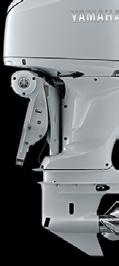
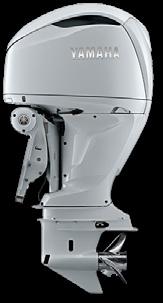
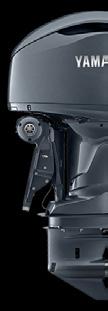
For an improved user experience, the new F350 comes with Yamaha’s TotalTiltTM feature, delivering faster and easier engine tilting. TotalTiltTM allows the user to completely tilt the engine up from any position with a simple double-push of the “UP” trim/tilt button, or fully tilt down (to bottom of tilt range) by the same double push of the “DOWN” trim/tilt button. Another handy feature is the optional dual flush system, allowing the boater to flush the engine from in the boat, or multiple engines at once.
With an early production unit already landed in New Zealand, and fitted to a Senator RH770, first impressions of the new motor have exceeded expectations with the package delivering more response, torque, economy and functionality over previous engine applications.
YAMAHA-MOTOR.CO.NZ
PACIFIC POWERBOAT _ POWER ON 48 MARCH / APRIL 2024
PROPULSION UNVEILS ELITE ELECTRIC OUTBOARD MOTOR
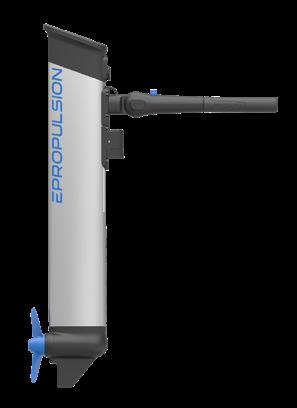
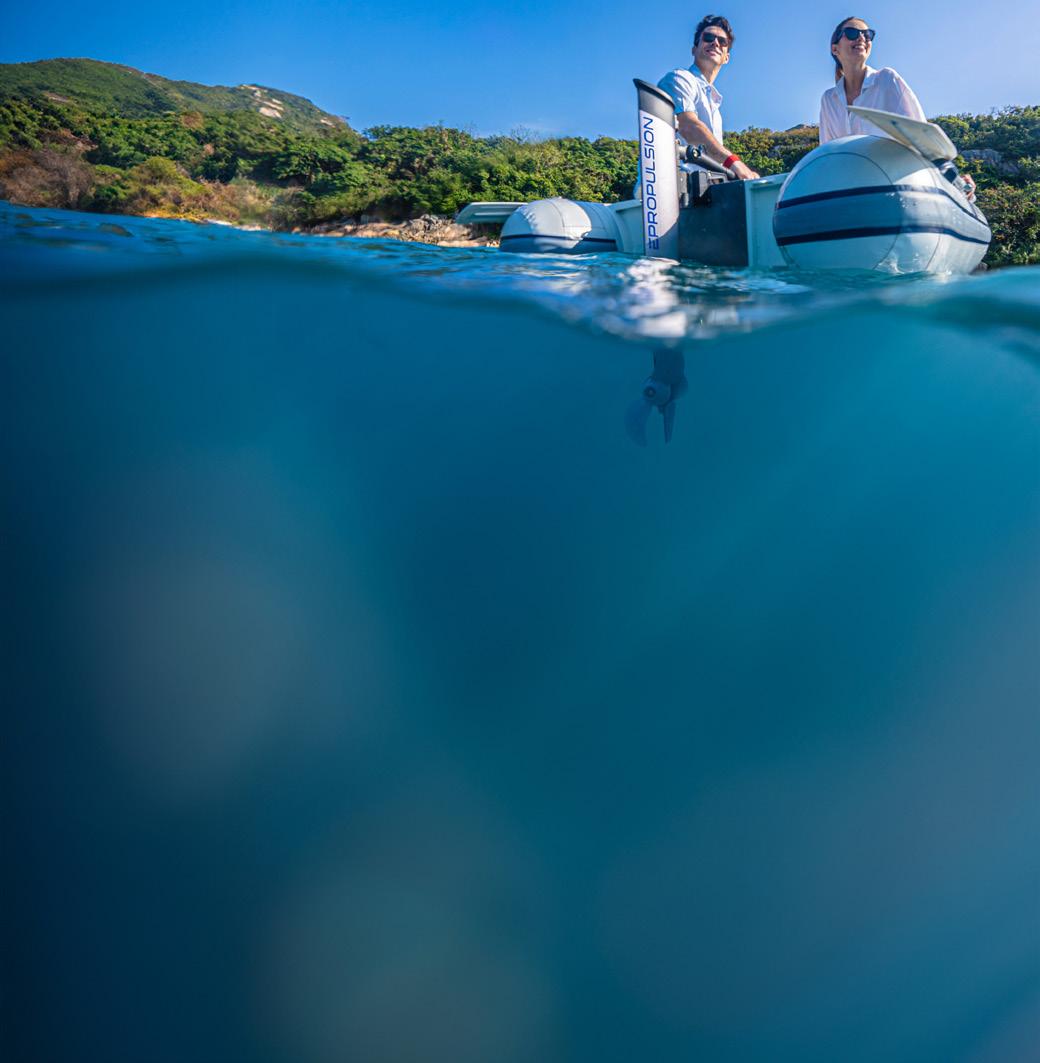
ePropulsion, a global leader in marine electric propulsion systems and services, is proud to announce the global launch of its latest innovation, the eLite electric outboard motor. This ground breaking new product was showcased at boot Düsseldorf, the world’s largest indoor boat and watersports show.
The eLite benefits from nominal power of 500W and a maximum power in boost mode of 750W. It has been created for the tender and smaller boating market.
The direct-drive motor and advanced design propeller deliver high efficiency with near-silent operation. With a focus on minimal maintenance and cutting-edge technology, this addition to the range raises the bar in electric boating standards. Boasting a gamechanging compact and lightweight design, weighing just 6.7kg (excluding bracket) and measuring a mere 297 x 75 x 890mm, the eLite is easily manoeuvred and very transportable.
The eLite features easy removal and installation facilitated by its one-click quick release system, which eliminates the need for electrical connections or tools. Users can effortlessly lift the motor on or off for charging or maintenance while securely leaving the clamp bracket in place, all at the touch of a button.
Designed for comfort and adaptability, the eLite features an ergonomic, easy-grip twist grab handle which effortlessly and precisely controls forward, reverse and power output. It is extendable, foldable and the angle is adjustable for a personalised boating experience. The eLite also includes an adjustable shaft length to accommodate numerous boat sizes and types. Additionally, it offers multiple angles for trim and tilt. An intuitive digital control and display provides essential information including battery level, power output, system status, and alerts. It also has a single button control
TORQEEDO ACQUIRED BY YAMAHA
to select mode and switch the main display from power output to battery level with ease. Safe, Reliable and eco-friendly, the eLite sets itself apart with an integrated Lithium-ion battery featuring a Smart Battery Management System for energy efficient operations and extended battery life. The eLite offers multiple charging options, including 110/220V AC, 12V DC, and solar with the use of optional ePropulsion converters. Furthermore, a convenient USB-C output allows users to charge and power other electrical devices. Engineered to the highest standards of water resistance, it is IP67 waterproof and designed to withstand the harshest marine conditions with an aerospace-grade aluminium alloy casing. Built-in safety features include an emergency magnetic kill switch and anti-grounding mode, reducing the likelihood of damage from underwater obstacles.
EPROPULSION.COM


Yamaha has recently announced that it has concluded a stock purchase agreement to acquire all shares of German electric motor manufacturer Torqeedo from former owner DEUTZ AG. Yamaha says the acquisition strengthens the company’s development capabilities in the field of electric propulsion, in keeping with its long-term Connected, Autonomous,
Shared Electric (CASE) Strategy which outlines the general direction for the marine business in Yamaha’s current mediumterm management plan.The company also noted the acquisition of Torqeedo will accelerate its efforts toward achieving carbon neutrality in the marine industry and fast-track the establishment of a small electric propulsion lineup, driving
“synergies for creating mid-range electric outboard motors as Yamaha aims to become a leader in the growing market for electric boat propulsion.”
The agreement is expected to close by the end of the first quarter of 2024.
YAMAHA-MOTOR.CO.NZ
POWERBOATMAGAZINE.CO.NZ 49
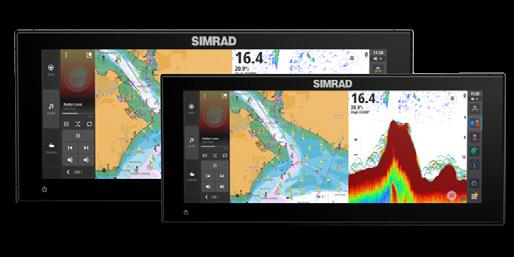
SIMRAD INTRODUCES THE WORLD’S FIRST ULTRAWIDE MARINE DISPLAY
Simrad have introduced the NSX® ULTRAWIDE, the world’s first fully-featured ultrawide marine display. Delivering all the benefits of dual screens in one place, the new NSX ULTRAWIDE is up to 63% wider than the NSX.
“With a show-stopping aesthetic and enhanced functionality, the NSX ULTRAWIDE is setting a new standard in the marketplace, and we are proud to pave the way,” said Kevin Steinbraker, VP and General Manager, Digital Systems of Navico Group. “Whether in their cars, computer monitor at work, or the TVs in their homes, consumers have grown accustomed to and love the benefits of ultrawide screens. Now they can have those same experiences at the helm with immersive graphics and flexible viewing splits. The NSX ULTRAWIDE offers a new perspective on boating that consumers won’t want to go without.”
Available in 12-inch and 15-inch screen sizes, the NSX ULTRAWIDE is a versatile premium solution for a variety of vessel types including surf/wake, pontoons, cruisers, and small to midsize centre consoles. The latest C-MAP DISCOVER™ X charts are optimized specifically for NSX, and the NSX ULTRAWIDE display’s high pixel density shows super–sharp resolution letting users appreciate unprecedented levels of detail. For avid anglers, extra detail can be added with an upgrade to REVEAL™ X, featuring incredible shaded relief and satellite imagery. The X-Gen charts also unlock a host of ground-breaking new features, such as the new C-MAP Safety Alerts – built to automatically alert users to hazards up ahead, ranging from shallow waters to buoys.
SIMRAD-YACHTING.COM
H20 SONICSHIELD
The H20 Sonicshield is an environmentally friendly anti-fouling system that works based on ultrasonic vibrations. Ultrasonic anti-fouling works by means of bringing an object in vibration in the ultrasonic sound range between 20-40 kHz, this creates an inhospitable environment for especially calcium-like growth such as mussels and barnacles to settle. The system consists of a control unit that works on 12v or 24v to which 2 transducers are connected. These are the so-called speakers that bring the sound vibration into the hull. The system consumes very little power, each speaker consumes about as much as an LED lamp. This innovation provides an effective and low-power solution for preventing the attachment of marine organisms to hulls, promoting a cleaner and more sustainable marine environment.
NZMPS.CO.NZ
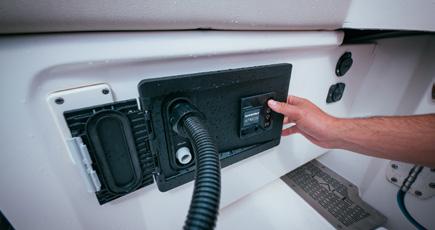
SCANSTRUT’S NEW ATMOS
Scanstrut’s new ATMOS is an in-built air station that makes it super-easy to quickly inflatable and deflate a wide range of paddleboards, kayaks and towable “toys”. Specifically engineered to cope with the harsh marine environment, the stylish, waterproof ATMOS features an innovative two-stage, brushless pump that quickly and easily delivers both High Volume Low Pressure air (for larger inflatable objects such as kayaks, large tubes and bathing platforms) and High Pressure Low Volume air (perfect for inflating smaller toys like SUPs, inflatable kayaks and tubes that require a higher level of pressure for optimum performance).
The ATMOS air station can deliver up to 20PSI and automatically switches from the HVLP pump to the HPLV pump at 1.1PSI. The ATMOS unit features Soft Touch TPE buttons with a non-slip texture that provides a tactile surface and that’s easy to use even with wet hands or in inclement weather. ATMOS’s bright, cutting-edge LCD display boasts extra wide viewing angles providing a great view of the screen from anywhere on board, even on the brightest days. A helpful Live Voltage readout also makes it easy to keep track of the boat’s battery health. Thanks to its compact and shallow design, the versatile ATMOS air station can be installed almost anywhere on board, including in seating, in a console or by the swim platform, making it easy to access whenever it’s needed. ATMOS comes with a 2.5m long hose, six handy hose adapters (Boston Valve, C7 Valve, H3/ HR Valve, Pinch Valves and 805 Valve) and an attractive sun cover.
LUSTY-BLUNDELL.CO.NZ

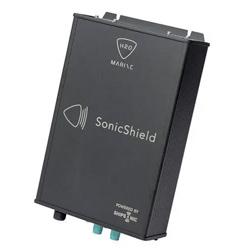
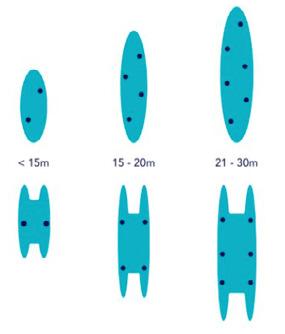
PACIFIC POWERBOAT _ ELECTRONICS
50 MARCH / APRIL 2024
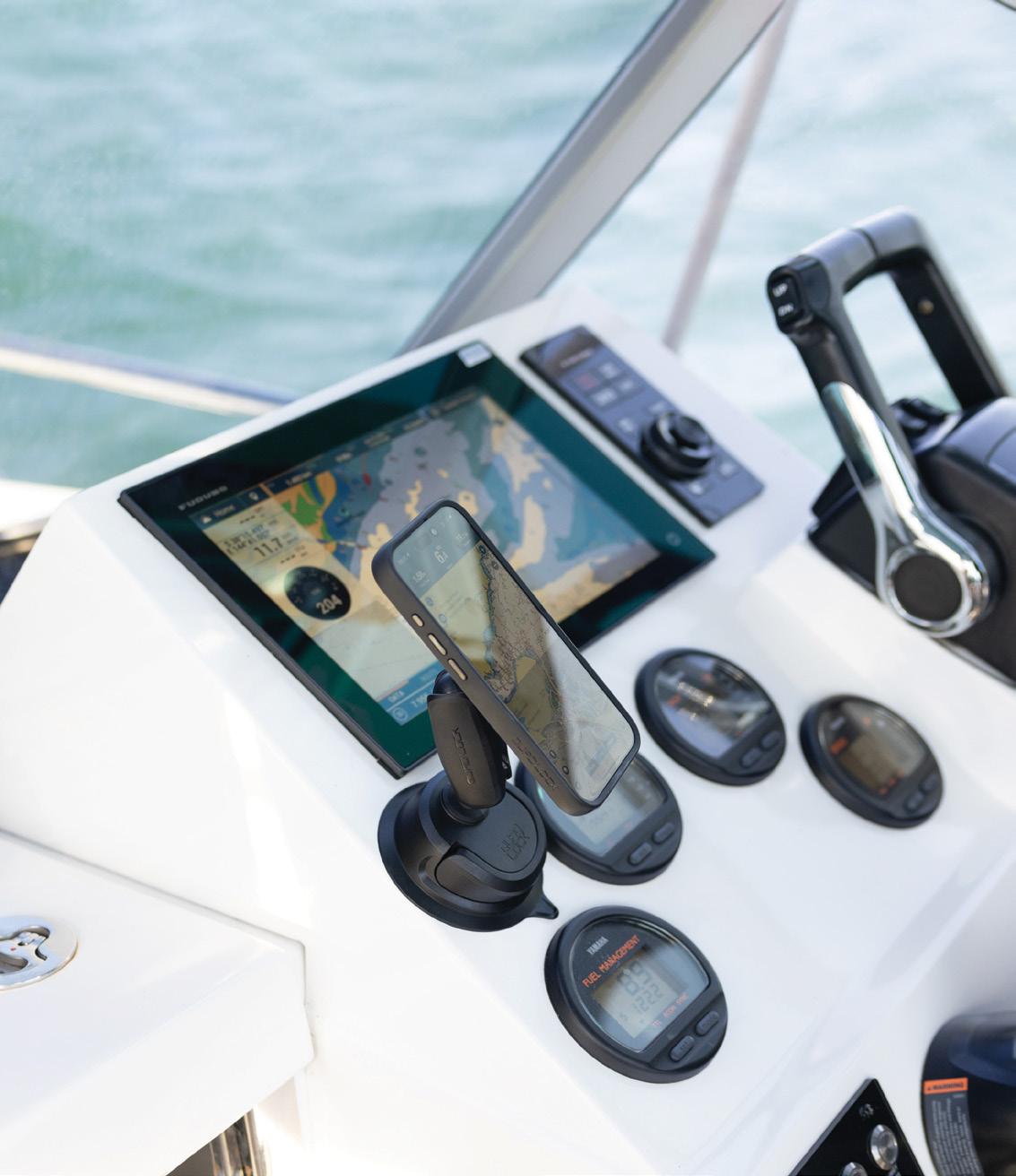
STRONG & SECURE MOUNTING

IT’S A 10-MINUTE JOB…
Some boat jobs can be completed in 10 minutes, but never assume that or say it out loud. They will hear you.
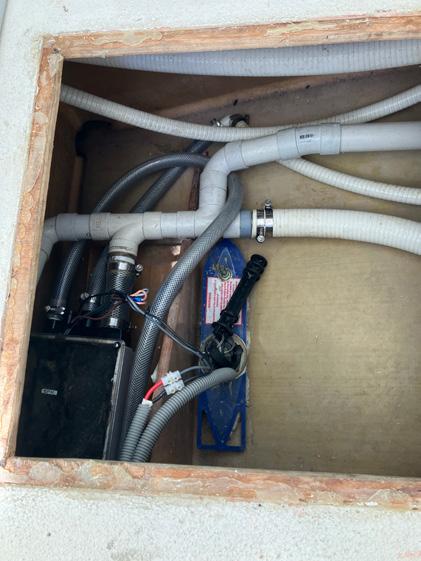
The original lunch box, before removal.
It began when the for’ard bilge alarm kept sounding just after someone had run a tap. I slipped into super sleuth mode to discover how grey water was getting into the for’ard bilge. First stop was to break the seal and pull up the shower drain. There I discovered what I call the sump pump and a boat builder calls a lunch box, because it resembles a Click Clack container. Instead of sandwiches, it has a filter where grey water enters and a float pump which sends the water to the grey water tank or overboard. The lunch box was leaking, so I decided to replace it. Then I said those words: ‘This job’s going to be easy. Ten minutes.’
I took photos of the hose and wire connections and used my black pen to identify each PVC pipe: galley, shower, basin. I love my black pen. Then I removed the old lunch box and put the new one in place. Oh, darn. The original PVC pipes must have been installed before the lunch box, with the assumption that the filter was on the outboard side and the float pump on the inboard side, but in real life, it was the other way around. Rather than re-do the PVC piping, the installer had swapped the filter and float pump around in the lunch box. I could have done that, too, but I didn’t want to mess with brand new equipment.
I couldn’t reroute the hose connections within the confines of the bilge, so the next option was to cut the PVC and install new PVC. There, I ran out of courage, but it was
such a silly little job, several boat builders were too busy. Eventually I found a lovely retired boat builder who took pity on me. From diagnosis to repair? About six months, mainly due to my procrastination skills.
My next job involved the switch that links the house and engine batteries. The outer fairing had fallen off and refused to click back on. It was broken, but replacement seemed straightforward: a 10-minute job. The manufacturer explained that a certain batch of switches had proven faulty. If I sent them the switch, they would replace it, free of charge. I was starting to understand that the important part of the switch wasn’t sticking out of the bulkhead, it was connected to cables inside the bulkhead. That was a space in which it was impossible to fit two arms, a torch and at least one eyeball at one time, but eventually, I had the faulty switch on its way to Auckland.
Meanwhile, I belatedly read the instructions. Before doing anything, they emphasised, disconnect the negative terminals of all batteries. Oops. The main battery was a simple spanner job; the house battery involved a bolt that screwed into the battery. That was new for me, but it was only 24V. How bad could it be? As I’d feared, replacing that switch was a contortionist’s dream. It was amazing how long I tried to do it a way that clearly wasn’t working before trying something different, including going home to get my head torch.
I wanted to fit the switch so that its ON and OFF positions lined up exactly with
those of the neighbouring switch, but the gods of electrical switches save that privilege for high-paid professionals. Finally, the switch was working. Then I reconnected the main engine battery, which went fine, and the house battery. . . ORANGE SPARKS! ARCING LIGHTS! PIERCING SCREAM! Not that it mattered because no one was around to hear.
I’m guessing my socket handle touched the positive terminal while the business end was touching the negative, and that 24V matters more than I thought. According to Google, I’d got off lightly. My black pen was busy writing on the battery box: DON’T LET SOCKET TOUCH BOTH TERMINALS.
Still, I hadn’t learned. There was a dribble from the toilet discharge hose. I decided the reinforced hose between the nylon sea cock and the valve that directs black water to the holding tank or overboard must have split. I was hauling out the boat to put an anode on the prop shaft so I would replace the hose at the same time. 10-minute job, max.
What a freaking *&^%$ of a job. Hours, I mean, hours, getting that hose off. I got someone else to replace it. The dribble still dribbled.
The anode was straight forward, except that I didn’t know the diameter of the prop shaft until the boat was out of the water and it was the only size of anode that was out of stock at Burnsco. Apart from that, it was a 10-minute job.
REBECCAHAYTER.CO.NZ
LEARNING TO LAUNCH _ REBECCA HAYTER
52 MARCH / APRIL 2024

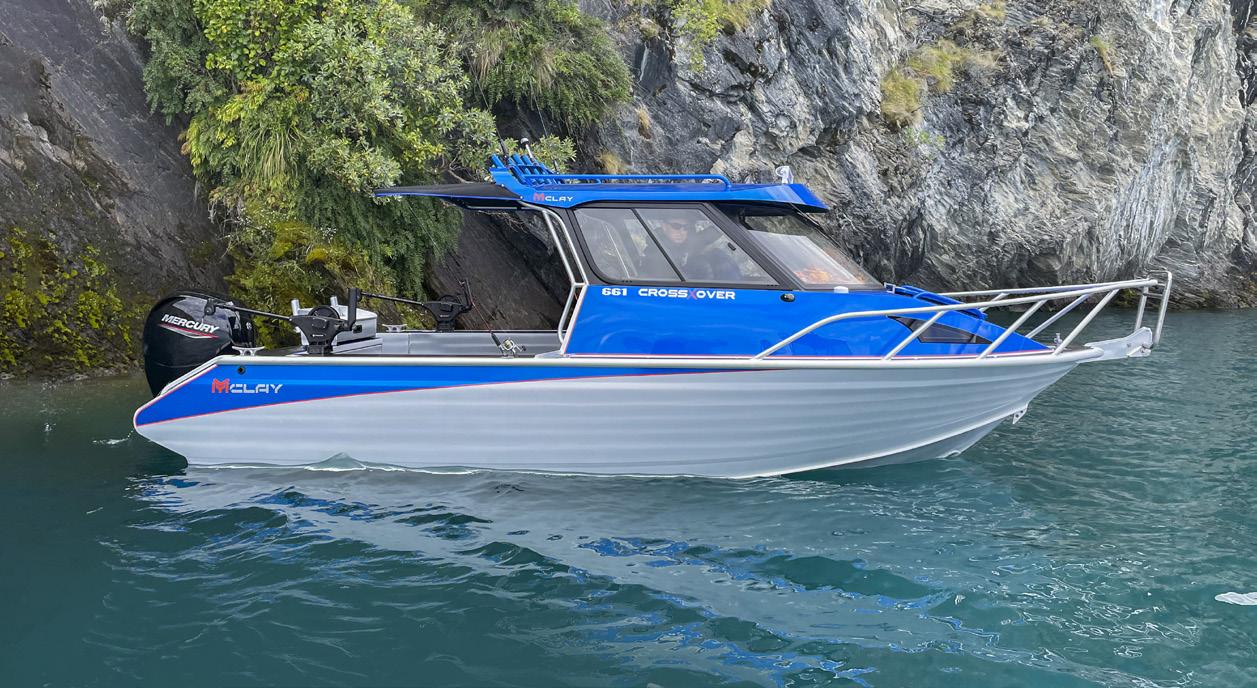

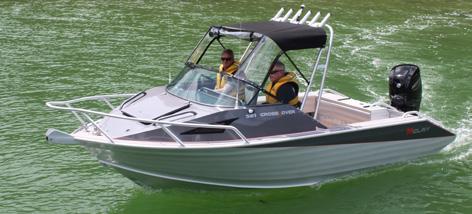
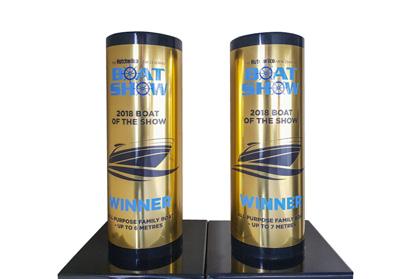
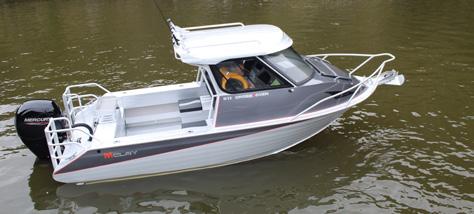
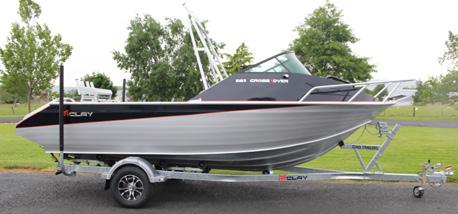
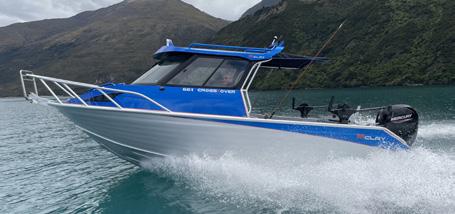


MULTI AWARD WINNING BRAND Go to our website for specifications and pricing or get down to your local dealer 611 HT CROSSXOVER 581 CROSSXOVER 601 CROSSXOVER 661 HT CROSSXOVER MCLAY BOATS ARE AVAILABLE FROM DEALERSHIPS NATIONWIDE: WHANGAREI: Warren Hay Marine, ph 09 430 2666 AUCKLAND: Fish City, Albany, ph 09 476 4282 HAMILTON: Fish City, Frankton, ph 07 846 6675 WHAKATANE: Oceansports Marine Ltd, ph 07 308 4241 WELLINGTON: Boat City, ph 04 298 5931 MOTUEKA: Bays Boating, ph 03 528 5200 DUNEDIN: McLay Boats Milton, ph 03 417 8135 www.mclayboats.co.nz Cross over SERIES
The view across to Louganville, from Oure Island
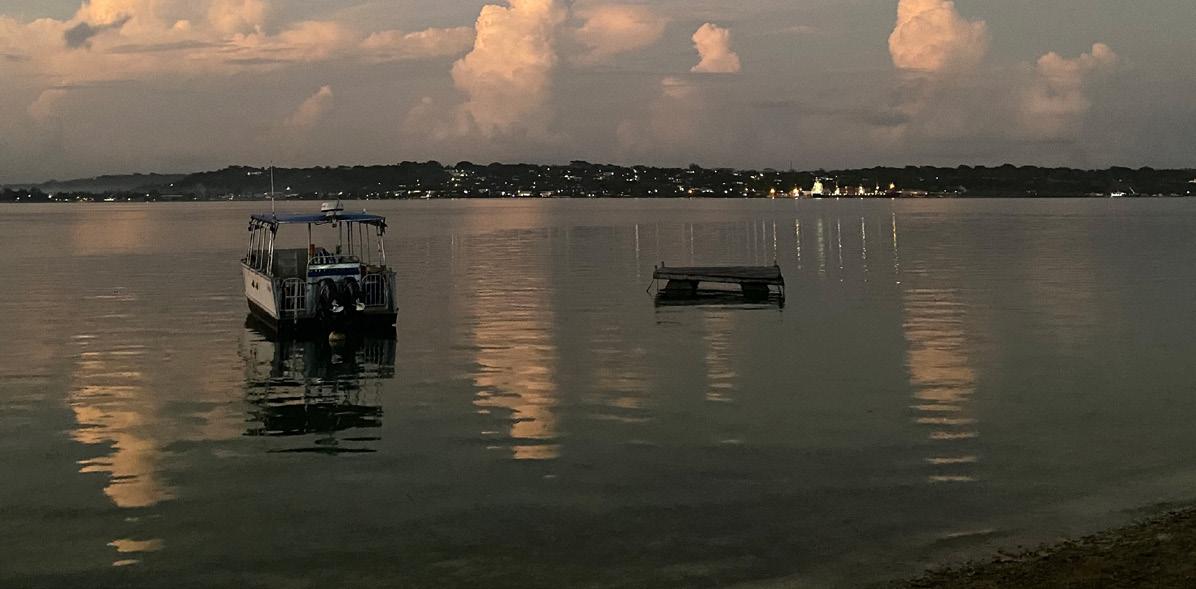
STAY OR GO?
Having just penned last month’s toilet tissue, the Ministry of Biosecurity (who are they?) announced the (re-)instigation of no anchoring bans for areas of Kawau, Waiheke, Bay of Islands and Great Barrier, to prevent the spread of Caulerpa Weed.
For Great Barrier they made the whole of the Western side, from Cape Barrier to the northern side of Kaikoura Island a no stop zone. You could anchor inside Fitzroy, or the northern side of Abercrombie (Nagels, etc.). This edict was delivered with little to no fanfare or publicity just prior to many leaving on their Christmas cruise. Given this is the main cruising ground, it seems many stayed away. I am told policing of this ban in many areas was undertaken by locals. I hear some caught anchoring where forbidden, just pleaded ignorance of the extended boundaries. Locals cannot police and fine, so I don’t know how these edicts were enforced.
Which brings us to the weather…
Having been blown or flooded from the New Zealand cruising grounds over the past few seasons, and gaining inspiration from the Niue trip featuring our Editors in the last edition of this January/February magazine, we decided damn the Cyclone season and flew to another untouched paradise, Vanuatu. I had been there once, for 3 days, many moons ago, in pursuit of a nautical bargain, so knew it intimately!
Landing at Port Vila, we transhipped immediately to Santo, around 200nm north for the genuine holiday experience. As luck would have it, while we were away, New Zealand bathed in sunny windless days and balmy nights. Reading reports in NZ of heat waves with temperatures as high as 30 degrees, we sneered. At our Oure
Island resort, just off Louganville, the water temperature was 28-29 degrees, and with day temps of 35 degrees in the shade by the bar! Humidity is one drop removed from rain, so @99%, much care and attention had to be taken with re-hydration of your body. Tuskers, a local beer, proved almost adequate if taken in sufficient amounts.
It is a beautiful tropical place, seriously friendly locals, and poor. Infrastructure is rudimentary, or non-existent outside of the main areas. In NZ there is a veritable chorus of morally injured motorists complaining about a pothole or two. In Vanuatu, many roads are a pothole, with some bits of road around these van eaters. Most vehicles were well used, and our taxi vans all had dodgy (damaged) suspension which created sensations not dissimilar to being afloat, on all but the best bits of road. Looking forward whilst travelling was not for the faint hearted, as vans and cars going both ways swerved all over the place to avoid vanishing into a void. To be fair, most vehicles as a consequence, travel at a fairly sedate pace. We did get one tourist van driver who thought Lewis Hamilton was a ladies blouse, and let no vehicle hold up his passage through to the front of the grid. Quite character forming!
Nearly all tourist attractions have swimming beaches or pools as a destination. We have never spent so much time in the water. Apparently there are only 120,000 tourist visitors per annum for the entire New Hebrides as Vanuatu was once known. Like Niue, and Fiji before, this will undoubtedly
increase once it is discovered what a laid back holiday Vanuatu offers. We were warned that our timing was not ‘usual’ as it is very hot, and cyclones abound during the Dec/March time frame. We lucked out, with only one serious tropical rainstorm which included the most amazing thunder and lightning right above us. Our bure was hit by lightning, frying the lights and power for a while. I videoed a bit of this for posterity and the grandkids. NZ does have a presence in Santo. We have two Police Emissaries there (the Aussies have 3), and we have/are building a new prison for them, a generous gesture. Returning to Port Vila, things are slightly less rustic, but still very hot and humid. Port Vila is what Suva was like in the early days, with a central developed area and resorting to tin shacks and even more basic accommodation quickly, once off the beaten track. Every local we met seemed happy and helpful.
I am not sure of the local requirements regarding cruising, but there are 82 islands in Vanuatu, and lots of beautiful beaches, mini harbours and shelter. It would be worth a visit in a comfortable (air conditioned) craft if the opportunity arose. I am told the fishing is as good as anywhere. It was actually very pleasant returning to NZ and its cool day temperatures.
The picture is the view across to Louganville, from Oure Island, with storm clouds brewing, and towering Cumulus. Go there Aussies and Kiwis’, it’s worth it!
WHAT IS THE QUESTION? PHIL GILBERT
54 MARCH / APRIL 2024
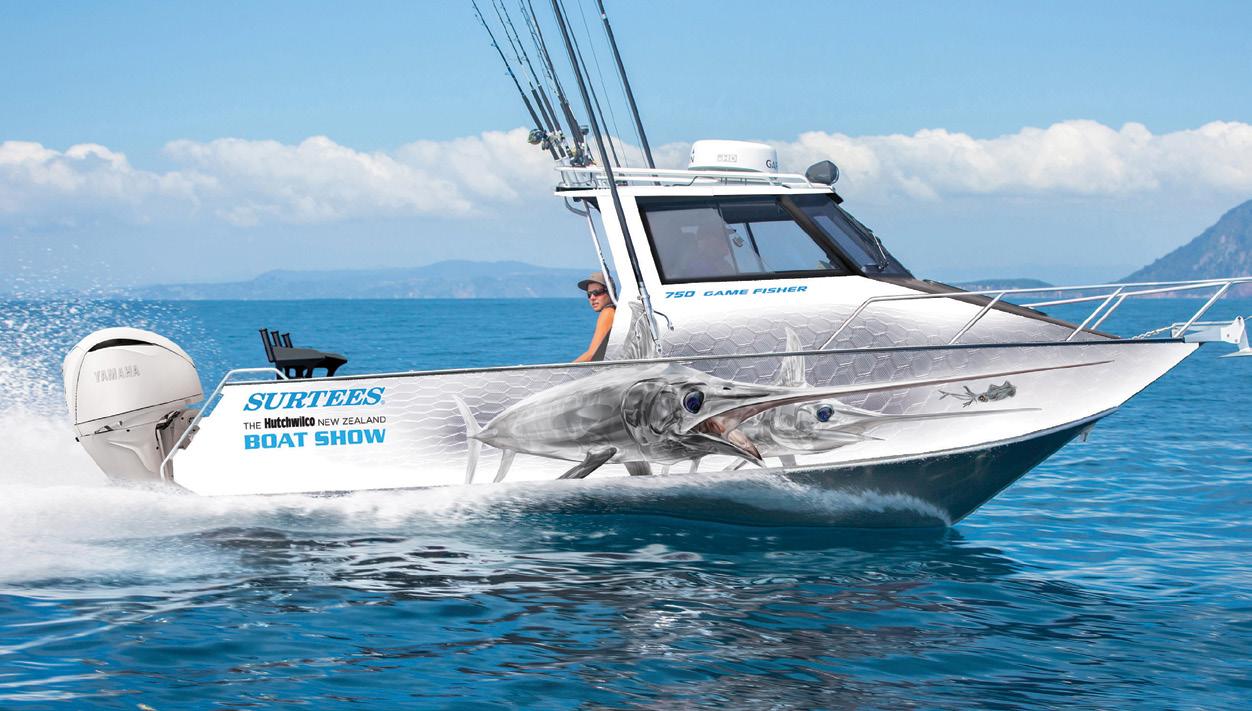



Tickets On sale Now! 16 - 19 May 2024 Auckland Showgrounds Buy your tickets online to double your chances of winning this $300k+ Surtees/Yamaha Grand Prize Boat!* *Terms & Conditions apply. See boatshow.co.nz for full details. WIN THIS BOAT Buy tickets at boatshow.co.nz PROUDLY SPONSORED BY:
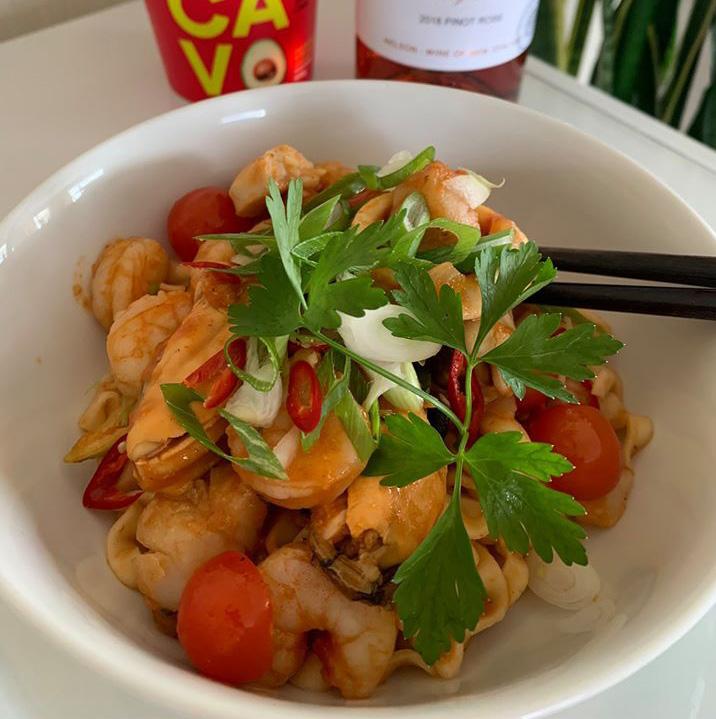
SEAFOOD ARRABBIATA
Some might think seafood and pasta may not go together, but this is a dish that knocks flavour out of the park! Pasta in a hearty tomato sauce accompanied by a variety of delicious seafood, doesn't get any better than this.
INGREDIENTS
200g uncooked fettuccine or linguini
6 - 12 scallops
2 littleneck clams / cockles
12 mussels, scrubbed and debearded
6 - 12 prawns peeled and deveined
1/2 cup chopped onion
1/4 to 1/2 tsp flaked red pepper
3 garlic cloves, minced
2 tbsp tomato paste
1 can diced tomatoes, drained
1/2 cup fish stock
2 tbsp chopped fresh parsley
1 tbsp thinly sliced fresh basil
2 tbsp tbsp Chilli Coconut & Avocado Oil (divided)
METHOD
Cook pasta according to package directions, drain. Heat 1x Tbsp Chilli Coconut & Avocado Oil in a large non-stick skillet over medium-high heat. Add scallops and prawn to pan; cook 3 minutes. Remove scallop mixture from pan; keep warm.
Heat remaining 1x Tbsp Chilli Coconut & Avocado Oil in pan over medium-high heat.
Add onion, red pepper, and garlic; cook for 2 minutes. Add tomato paste and tomatoes; bring to a boil, and cook for 2 minutes.
Add fish stock; cook for 1 minute.
Add clams; cover, reduce heat to medium, and cook for 4 minutes.
Add mussels; cover and cook for 3 minutes or until clams and mussels open. Discard any unopened shells. Stir in scallop mixture and parsley; cook for 1 minute or until thoroughly heated.
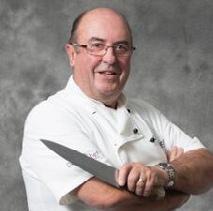
Chef's tip:
Serve over pasta. Sprinkle with picked coriander or fresh basil.
PAIRING PERFECTLY...
with Derek’s tasty Seafood Arrabbiata is the 2023 Anchorage Pinot Rosé Delicious red berry fruits with hints of spice and a touch of residual sugar, pair wonderfully with the subtle heat and fresh seasonal fare in this scrumptious Seafood Arrabbiata.
ANCHORAGEWINES.CO.NZ
STRAIGHT FROM THE GALLEY WITH DEREK THE CHE, CHEFLINE14@GMAIL.COM
56 MARCH / APRIL 2024
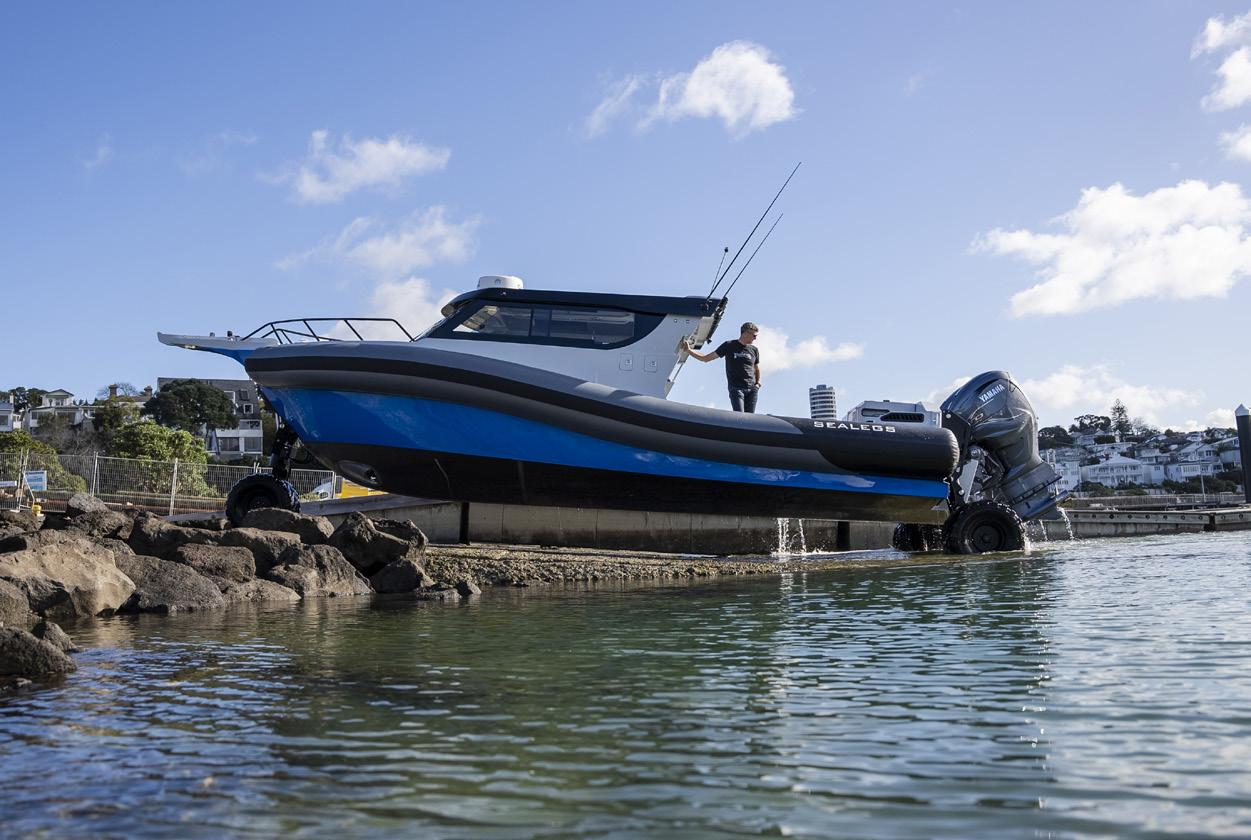
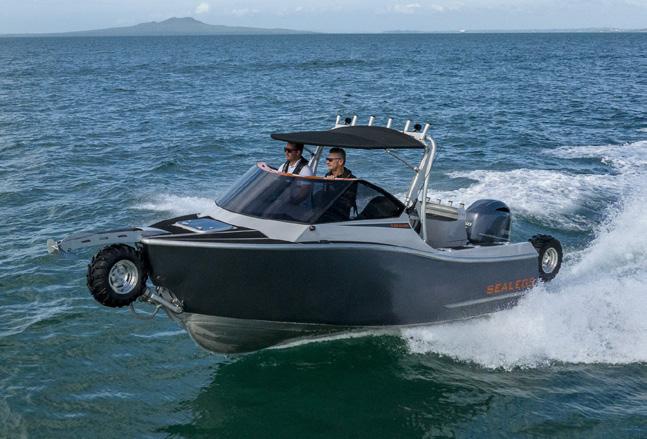
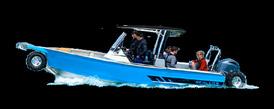
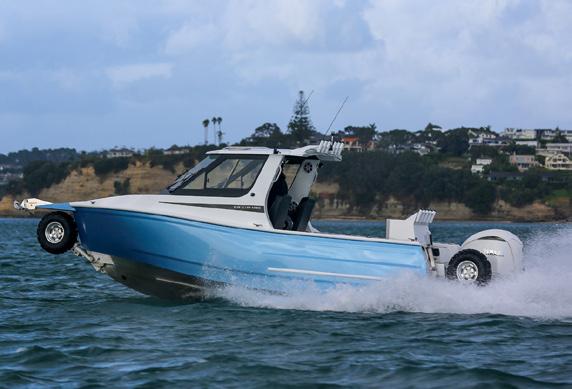
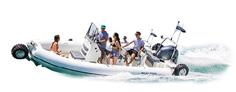
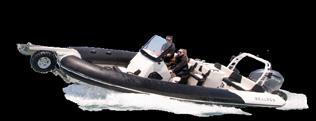
0800 SEALEGS | WWW.SEALEGS.COM | INFO@SEALEGS.COM | SEALEGS SHOWROOM: PARKHEAD PLACE, ALBANY, AUCKLAND 7.1M RIB 7.5M RIB 6.1M RIB 8.5M CABIN 9.0M RIB 12M CABIN 6.5M CUDDY 3.8M TENDER BOOK YOUR DEMO TODAY! - CALL US 0800 SEALEGS THE WORLD’S LARGEST RANGE OF AMPHIBIOUS BOATS FROM THE WORLD LEADERS IN AMPHIBIOUS TECHNOLOGY
CUDDY CABIN
6.5M
8.5M ALLOY CABIN
7.5M ALLOY
12M CABIN RIB
MARITIMO GOING GLOBAL
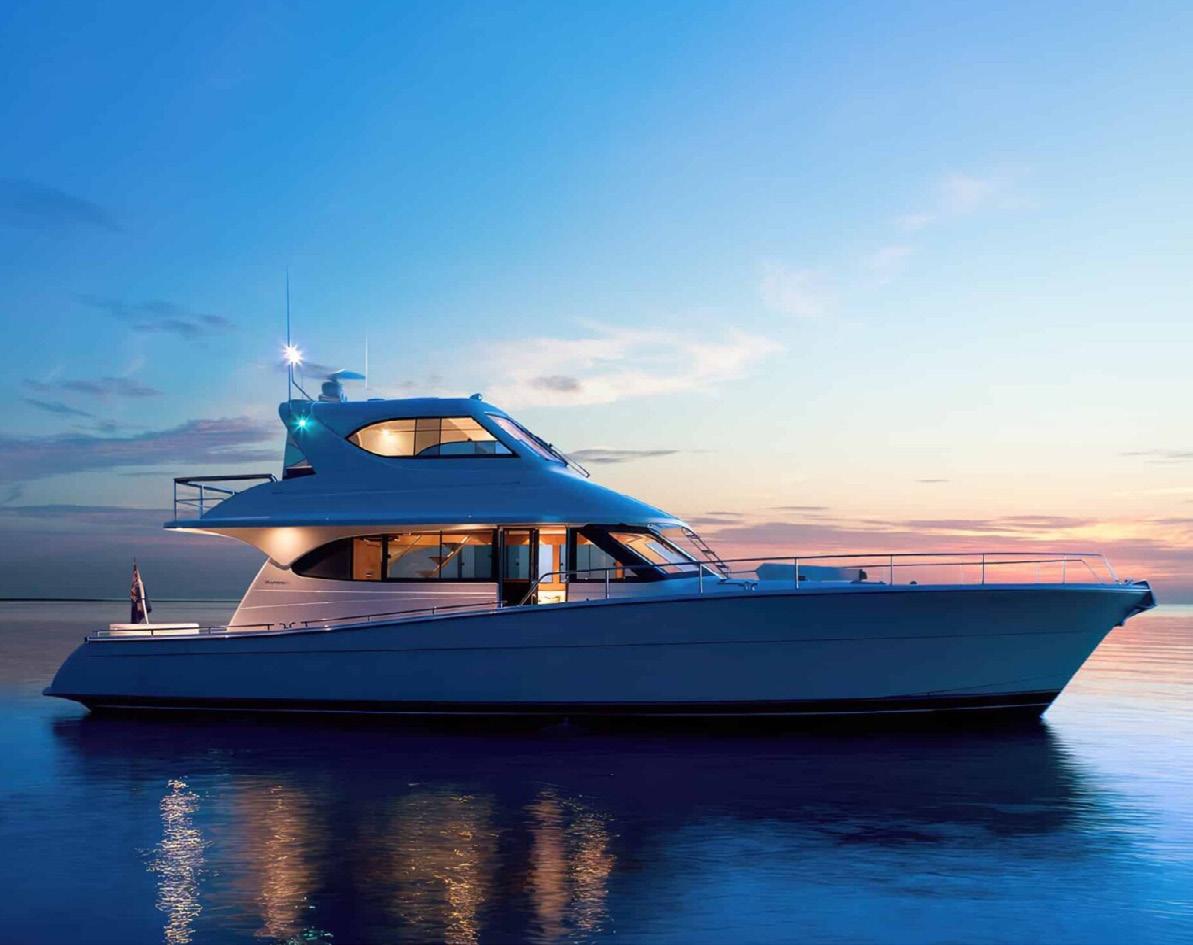
FIn the fourth chapter of Maritimo’s 20th-anniversary celebration, Maritimo’s global success takes the spotlight, as the brand is propelled into New Zealand, the USA and other international markets, always to owners with a passion for blue water boating.
rom the time of its launch in 2003, Maritimo attracted the attention of boat owners around the world. Today, Maritimo exports around half of its annual production to international owners.
US boating proponent, Dave Northrop had collaborated with Bill since 1995, and marketed his unique sports cruisers and fishing boats in America under the Wellcraft Brand. A decade later, much water under the bridge in terms of Bill’s sale of his former business, Dave visited the 2005 Sydney International Boat Show representing an American boat brand and happened to bump into Bill at Starbucks.
“We share a passion for boats and coffee,” recalls Dave with his customary humour.
“Once we caught up on various events since we’d last spoken, Bill asked me if I’d seen his boat – which he described as being the boat he always wanted to build for himself: the Maritimo 60. It was the talk of the boat show, and it was very clear to me that it was perfectly suited to the American market.”
And thus, recommenced the highly successful partnership between Bill and Dave Northrop that propelled Maritimo into the Americas. “The Maritimo 60 was unique and superior to any other 60-foot
motor yacht on the market because it offered several unique features that have become Maritimo hallmarks: a spacious enclosed sky lounge that was comparable to much larger superyachts, an interior
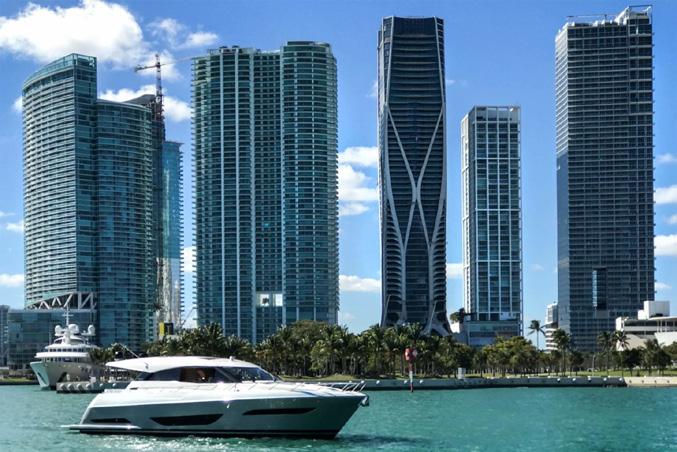
MARITIMO 20 TH ANNIVERSARY CHAPTER 4
58 MARCH / APRIL 2024
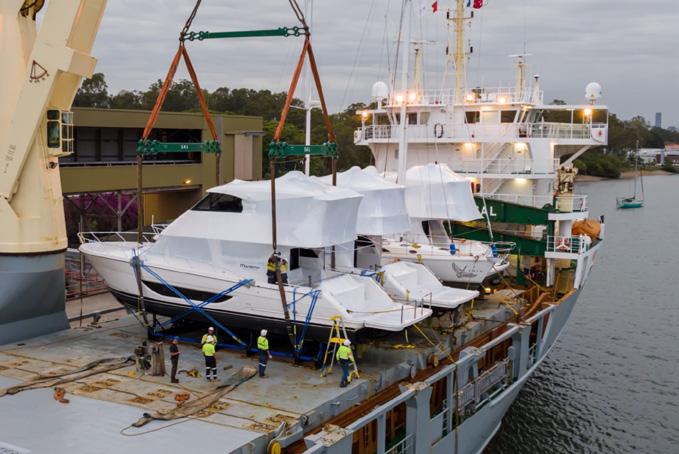
stairway that boaters or pets of any age could easily and safely use to access the bridge, an aft galley perfect for entertaining, and safe, recessed side walkarounds to the foredeck which suit ages 3 to 103!
During that first year, Dave signed up seven dealers and introduced the Maritimo 48, 52, and 60 at six major boat shows. These pioneer models and Maritimo’s commitment to the continual evolution of design and styling, based largely on owner input, paved the way for today’s innovative model range, comprising the M55, M60, M600 and the flagships M75 and S75. Concurrently with success in the US, Maritimo struck a chord in New Zealand and was making inroads into other international markets.
New Zealand dealers, Motor Yacht Centre and Ownaship in Auckland built an energetic owner community, active in Maritimo Musters and exploring the pristine cruising grounds of Aotearoa and beyond. Ross “Rossco” Willaton, who was a contractor to Maritimo from the early days and joined full-time not long after, was responsible for overseeing delivery, warranty and handover of many of the Maritimos that made their way overseas – some into remote and unusual destinations.
A Marine Mechanic by trade and with a background in offshore powerboat racing, Rossco was part of Bill Barry-Cotter’s race team, and his son, Andrew grew up with Tom Barry-Cotter – both of them inheriting their dads’ love of racing.
Rossco has delivered Maritimos to intrepid owners in England, Canada, Papua New Guinea, Thursday Island and Vladivostok, Russia’s bay city, which was a memorable handover that involved Rossco taking the helm while the new owner and his friends enjoyed a hunting expedition and many, many celebratory crates of vodka!
The advent of the GFC in 2007-8 impacted boat manufacturers around the world, but some markets flourished, as Dave Northrop recounts. “The GFC stalled sales in the US just as the market was beginning to accelerate, however, while the US market was soft, Maritimo Americas recognised the comparative strength of the Caribbean and South American markets, where the boating lifestyle is popular as they are very social and family-oriented.
Maritimo appointed dealers in Puerto Rico, the Dominican Republic, French West Indies, Panama and Venezuela which provided steady sales while primary markets were dormant.
Another Maritimo milestone Dave recalls with pride was the introduction of the revolutionary X60 and X50 Sport Motor Yachts featuring superyacht sized beach club cabins in a 50-foot and 60-foot coupe.
“Once again Maritimo shocked the market, and the competition. This accomplishment was still at fever pitch when the Maritimo design team launched the enclosed flybridge game changer, the M55 in 2021. The response was so overwhelming in the Americas and Maritimo sold 36 of this impressive model at the 2021 Fort Lauderdale International Boat Show.
After 20 years of involvement propelling the Maritimo brand into The Americas, Dave is now preparing for retirement, handing the baton to a seasoned sales professional to lead Maritimo into its next phase. Keith Teynor has been appointed Managing Partner for Maritimo Americas, overseeing sales, logistics, marketing and service for the company within the United
States, Canada, and South America, while Josh Northrop, Dave’s son, is now Factory Sales Specialist at Maritimo Americas, focusing on growing their sales and service throughout the Americas.
With a focus on promoting Maritimo in South-East Asia, the Middle East and Europe, Derrick Nowak was appointed Global Business Development Manager in 2022, based at Maritimo’s Gold Coast headquarters. “The entire Asian boating market is rapidly changing with the financial centre shifting from Hong Kong to Singapore,” he explains. “This has created a hub for boating and boat sales. Customers come to Singapore from all over Asia, China, Hong Kong, Indonesia, Thailand for business interests and at the same time enjoy pursuing their boating dreams.
“We have partnered with The Yacht Sales Co. as they are perfectly situated to service the growth in local ownership with offices in Thailand, Singapore, Hong Kong and agents in the Philippines and Malaysia. Last year Derrick onboarded our new dealer in Japan, Eins A Resport. “In Eins A Resort we have a highly skilled & respected partner with a proven record | of effective customer service, so we are thrilled with this appointment that will drive Maritimo’ s success in Japan.” The 1st Maritimo into Japan will arrive in Febuary 2024 to a excited owner. Derrick and Rossco will be there to support the commissioning of this M55. Another M55 will follow later in 2024. The next phase of expansion in Europe is underway, and Maritimo has commenced the search for new dealers in Northern Europe. Moving into the next decade, Maritimo has confidence in our people, processes and product, with investment in continual innovation and commitment to creating handcrafted, long-range, worldclass motor yachts.
Stay tuned for next story as we take a look at the Maritimo Family. Defining the Maritimo Experience.
MARITIMO.COM.AU
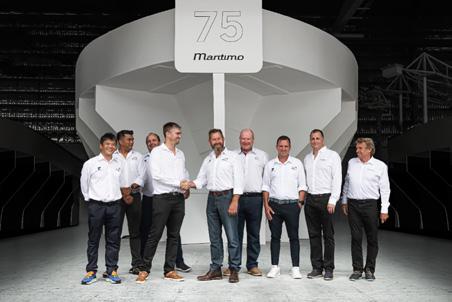
POWERBOATMAGAZINE.CO.NZ 59
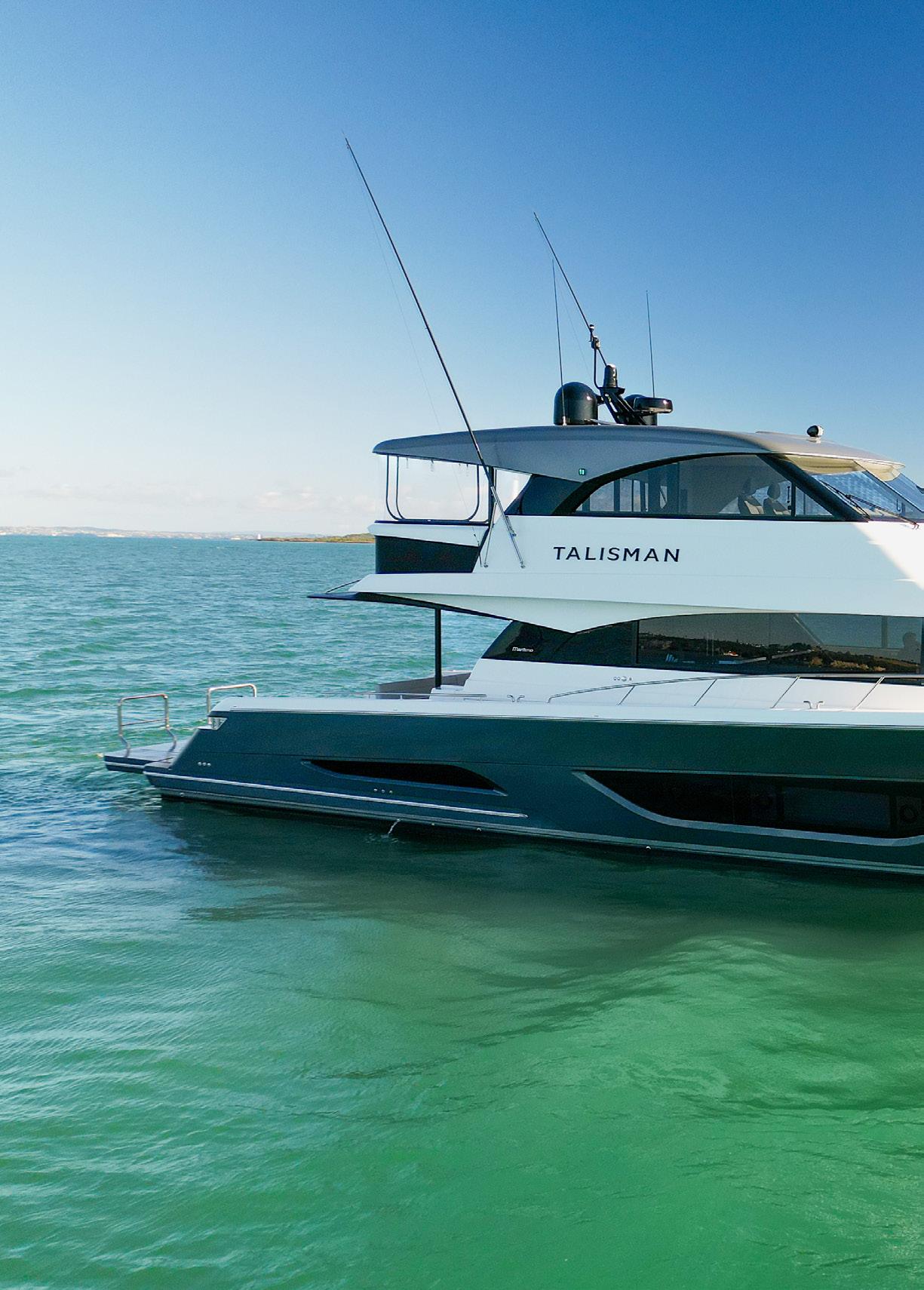
The collaboration between a major Australian luxury boat manufacturer, a long-time Kiwi boatie and a support company for motor yacht owners has resulted in a stunning Maritimo M75 that is virtually as easy to control as a 6-metre runabout!
PACIFIC POWERBOAT REVIE WS _ MARITIMO M75 60 MARCH / APRIL 2024
An IMPRESSIVE TALISMAN of big boat ease & efficiency
BY MIKE ROSE
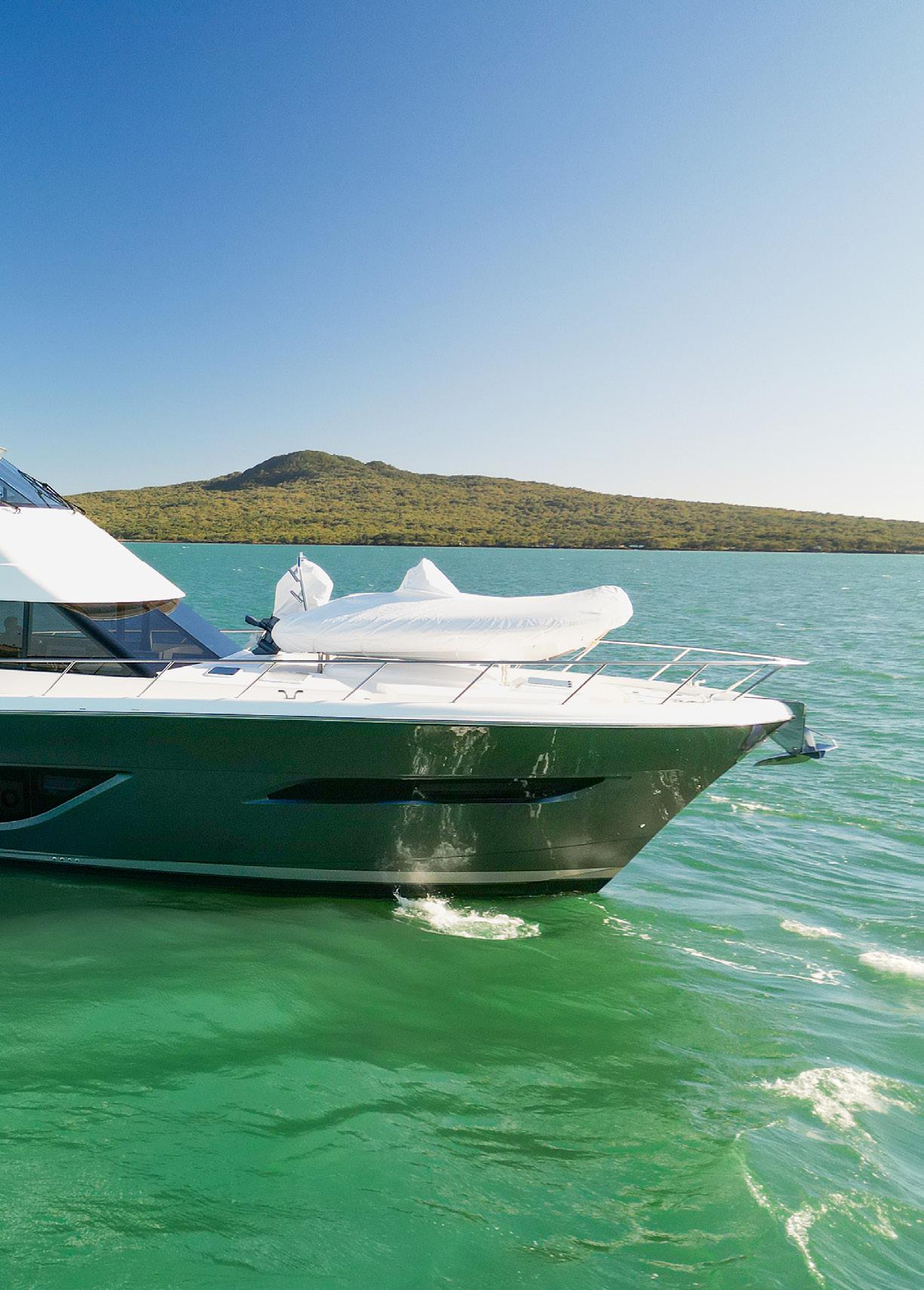
Talisman’s owner is a Kiwi who has literally been boating all his life. From powerboating with his parents as a child, to having his own trailer boats as a young man, before first moving into launches in his 30s, he has always been one who loved the boating lifestyle.
Now in his late ‘50s and keen to get into a larger, motoryacht-style of cruiser, he became aware of Maritimo’s latest flagship and was immediately impressed.
“Maritimo’s new styling is much more European, more modern,” he says. In particular, he liked the far beamier flybridge, the open plan galley, the uppercockpit area for outdoor dining and the expansive adventure deck. Also attractive were the way the big opening panoramic windows in both the saloon area and flybridge complemented the feeling of open space.
He was also fortunate in having a good, long-term relationship with Dean and Glynis Ryder from Motor Yacht Services.
“I can’t speak highly enough of them,” he says. “Dean not only really knows his stuff, he has also been a long-time warranty and service agent for Maritimo, knows the boats inside out and has great relationships with all the key people at the factory.
“Glynis took ownership of our boat from the start so it’s been a real partnership.”
Talisman’s owner not only liked the new look of the latest M75, he was also impressed by the company’s opportunity for customisation.
POWERBOATMAGAZINE.CO.NZ 61
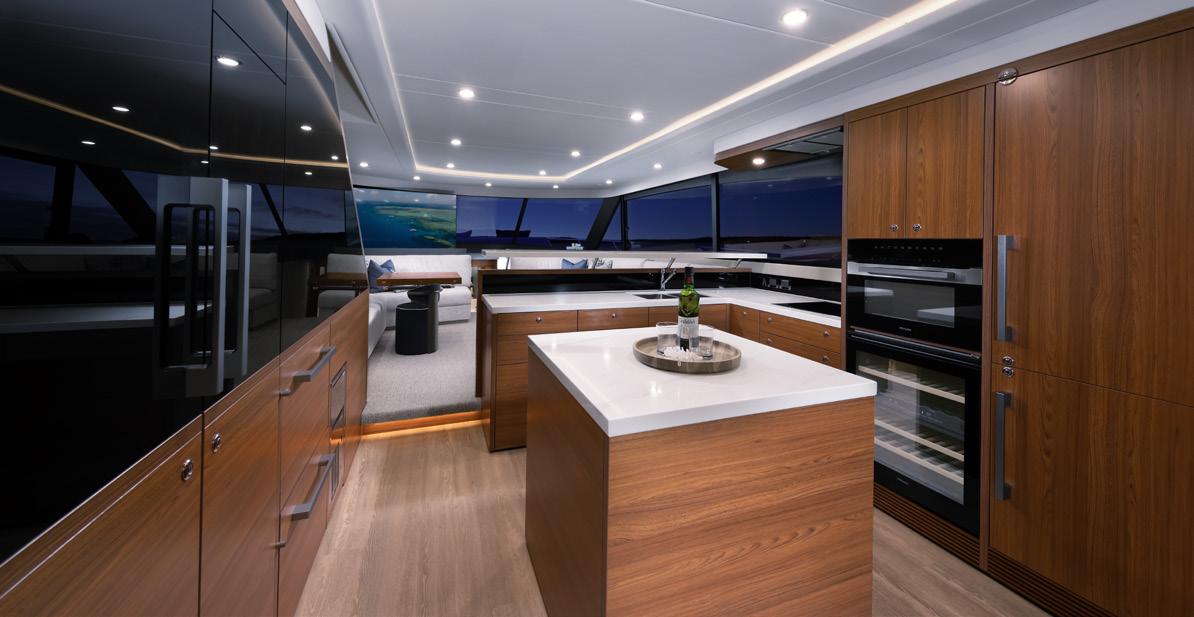
Talisman’s owners’ love of good food is obvious from the amount of effort they have put into the design of their aft- positioned galley.
The station is impressive with three matching Simrad MFD screens seamlessly connecting to Talisman’s numerous inputs and the CZone system.
“I wanted a boat that was really leading edge in terms of design. However, it also had to be ultra-reliable and easy and enjoyable to operate. I didn’t want to need a crew to go somewhere. My wife and I wanted a boat that we could take out, enjoy and bring home with just the two of us.”
The key to help make that a reality was the installation of a comprehensive CZone digital switching system, and Fathom e-Power System (see the sidebar on this system, at the end of this article). A first for Maritimo and one of the most all-encompassing digital monitoring and control systems available.
Thanks to the owner’s vision, Dean’s input and knowledge and the hard work of some pretty clever people at Maritimo as well as input from Navico Group application engineering team and integration specialist, Talisman now proudly boasts a system that, with literally a single touch of a screen, controls every single aspect of every on-board system, including the entire AC and DC electrical circuits, from anywhere on board or around the world.
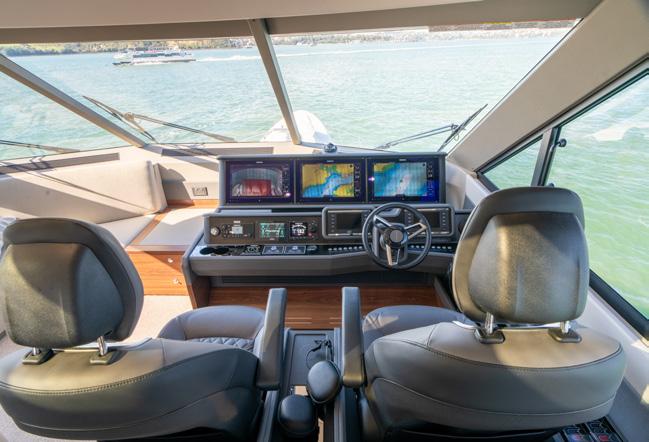
And, while it did require quite a lot of effort to set up at the factory, it is now super-easy to adjust. For example, after noticing that the few 240v plugs that were running off the inverter allowed power at all times, as opposed to those requiring the generator, the owner simply made a few adjustments made on his control screen.
Talisman is fitted solely with lithium batteries (with the exception of the starting batteries). This clearly requires a pretty sophisticated set up and BMS (battery management system) and the boat has just that, with a Mastervolt lithium battery bank and a 6th generation Mastervolt BMS.
With the owner liking to run a quiet boat (when stationary) most, if not all, of the time, efficient use of the ship’s power was also an absolute must. With full air conditioning and two Mitsubishi ARG gyro stabilisers on board, there was no getting away from the dual generator set-up but, thanks to the focus on efficiency and the Fathom e-Power System that allows CZone integration with the battery bank and inverters, these are rarely employed.
Another clearly worthwhile customisation has been the installation of the Humphrees dynamic Interceptor trim tabs. Automatic, a metre deep and fitted with their own gyros, they are, says the owner, so good “you almost don’t need the stabilisers”.
He should know. After picking up Talisman from Maritimo’s Gold Coast yard, he and Dean ran down to Newcastle (to meet the ship taking her across the Tasman). Despite some less than ideal weather, the 75 performed flawlessly, running, at 24 knots, flat and along its waterline the whole way.
Since its arrival in New Zealand, Talisman has also completed a couple of reasonably-sized trips around the Gulf. In an incredible endorsement of both Maritimo’s pre-delivery process and Dean Ryder’s guidance, there have been no (repeat, no) significant problems at all.
As the owner, who has taken delivery of several other straight-from-the-factory vessels in the past, notes: that’s almost completely unheard of.
PACIFIC POWERBOAT REVIE WS _ MARITIMO M75
62 MARCH / APRIL 2024
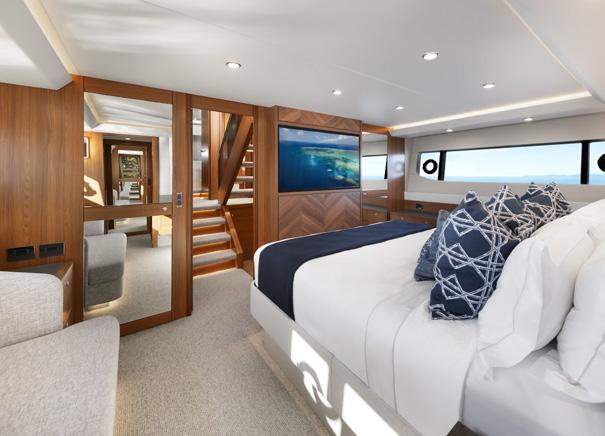
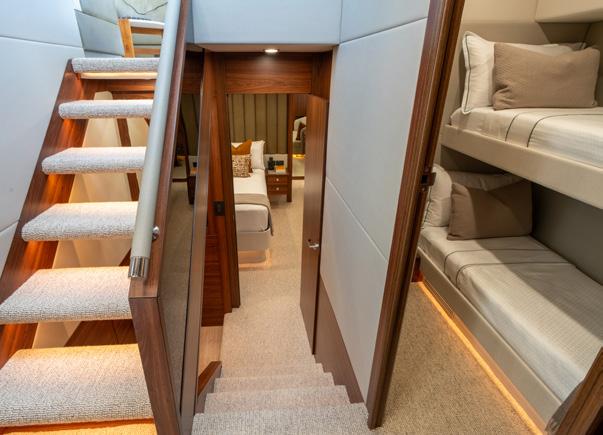
MORE ONBOARD CUSTOMISATION:
Maritimo also allows their owners some customisation in their galleys and on-board layouts and Talisman’s owners’ love of good food is obvious from the amount of effort they have put into the design of their aftpositioned galley.
Most noticeable is the island bench. Perfectly positioned midway between the work spaces and utilities on each side, it not only provides a large surface on which to work, it also houses an extra wide dishwasher and a custom spice rack.
Situated to service both the saloon further forward and the large outdoor dining area, easily accessed through wide-opening sliding glass doors, the galley and adjacent saloon are finished with an attractive satin walnut veneer.
In the saloon, this is complemented by L- and U-shaped settees and three ottomans, all covered in olive green leather, exceptionally large opening side windows and the obligatory pop-up TV.
Given Talisman’s size, it is no surprise that there is a wide range of cabins (and berths) to accommodate friends and family. In addition to the main cabin (full width athwartships), there is a full-size VIP guest cabin in the bow, and a twin berth (the two can slide together to make a double) and Pullman cabin (two single berths, one above the other) at the foot of the stairs.
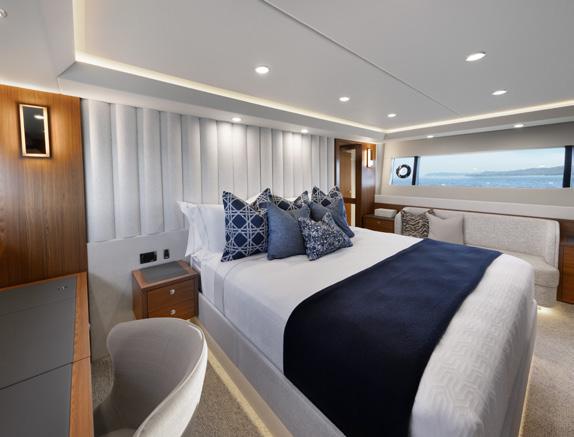
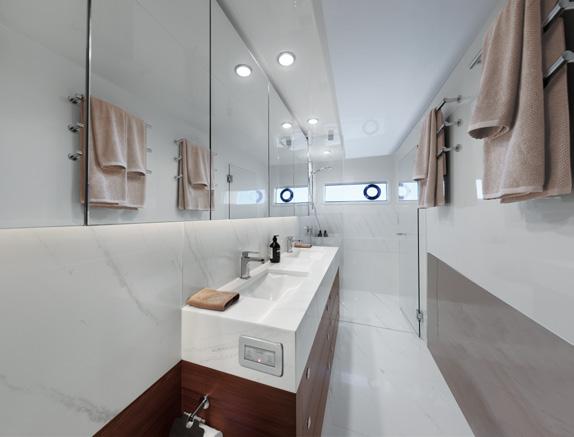
Clever touches down here include the easy-to access huge stowage space under the VIP cabin’s island queen berth; a day head that, depending on which door is in use, can be an ensuite for the twin cabin; and, in the master cabin, a full-length office area (so the owner can work while at sea); Maritimo opening portholes in the large side windows and a giant, delightfully spacious ensuite with everything one would expect on a vessel of this class.
MASSIVE ADVENTURE DECK
Talisman’s “adventure deck” is a massive two-tiered affair. On the top level, flowing seamlessly into the galley, is the large outdoor entertainment area. A large dining table, painstakingly designed to maximise the available space, is serviced by settees on all four sides and the entire area is completely shielded from above by a combination of the flybridge overhang and a custom canvas awning. The lower area is for the more adventurous activities. Big enough to accommodate large numbers at the same time, it has been left wonderfully uncluttered. In fact, apart from the forward console (housing a freezer, barbecue and companionway down to the engine room) and, on the full width rise-and fall bracket, the 2.8m Takacat (for ferrying the owners and their rather large dog to the beach), there is nothing to interfere with the important businesses of fishing, gearing up for a dive,
Top left and right: Talisman’s full beam amidships main cabin is of superyacht quality. It features a huge bulkhead TV, a full length office area (so the owner can work while at sea) and Maritimo opening portholes in the large side windows.
The smallest of the four cabins is the Pullman-style twin berth bunkroom.
A giant, delightfully spacious ensuite with everything one would expect on a vessel of this class.
POWERBOATMAGAZINE.CO.NZ 63
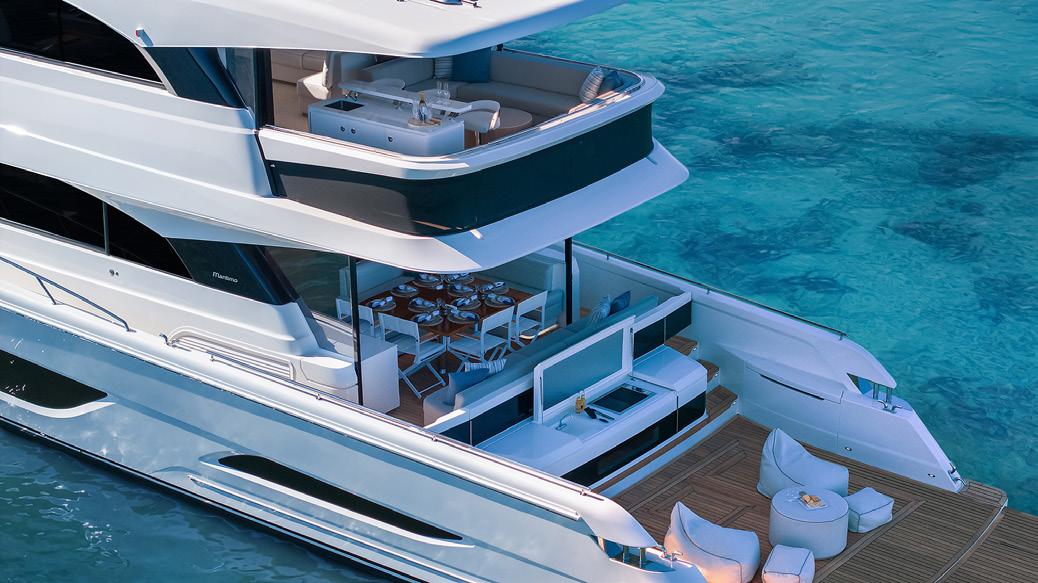
Talisman features two distinct outdoor entertainment areas as well as a massive 'adventure deck', complete with rise and fall platform.
The super-wide flybridge means there is ample room for all who wish to be here and a variety of spaces in which to relax.
swimming and generally enjoying oneself.
Virtually the entire lower section of the adventure deck hinges hydraulically open to reveal a giant lazarette. Despite this being home to Talisman’s 1400-litre water supply (there is also a watermaker if needed), one of the two stabiliser gyros and the electric outboard for the dinghy, there is still a huge amount of room to house paddleboards, fishing gear and anything else one might need for a fun day on the water.
Although one can access the engine room via a large hatch further forward, the simplest way to do it is via the companionway in the console. At its base is an area Maritimo originally had designated for crew quarters. However, as the owner had no intention of carrying crew, this has been repurposed as the ship’s utility room with a side-by-side washer and drier and space left over for an owner’s workshop (fed with natural light thanks to a window into the cockpit) and a handy tackle locker.
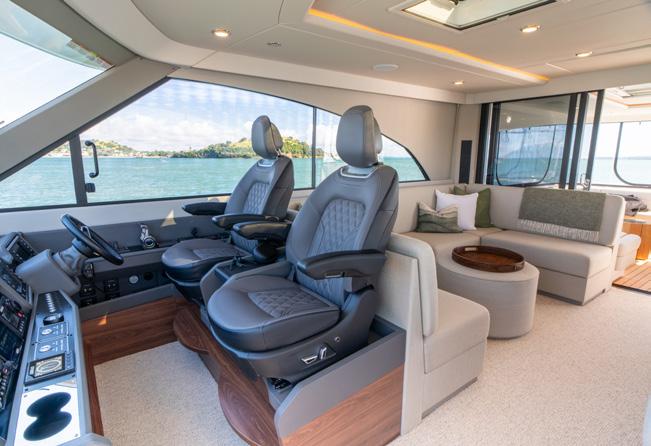
Talisman is powered by twin V10 MTU 1625s, engines the owner describes as “the most beautiful motors”, in part because there is almost no servicing required for the first 5 years and because of how quiet they are. They are not small yet, despite being accompanied by the second gyro, a watermaker, two generators, an air conditioning system, a significant percentage of the ship’s 10,400 litres of diesel (the main tank is under the master berth amidships) and all the other systems needed to run such a very sophisticated vessel, there is plenty of space to move around and to make any adjustments that might be needed.
SUPERWIDE FLYBRIDGE
Even after seeing from the dock just how beamy Talisman’s flybridge is, especially when compared with similar-sized vessels nearby, it is not until one is actually on it that one can truly appreciate just how spacious this area is.
With the twin-chair helm station on starboard, there is space alongside for a comfortable settee so guests can be close by while underway.
Further aft is another large settee. This faces a pop-up swivelling TV “for watching sport” (and which can be seen from the spacious deck out the back). Should additional berthage be required, this settee converts into a double.
In addition to the large opening side windows, there are twin skylights above the station and settee and a huge sunroof further aft.
What would have once been called a poop deck (and now is referred to as the aft balcony) is yet another wonderful feature of this design. Large, completely covered (and able to be enclosed), it features a wet bar, complete with bar stools, large settees and bean bags and is a great place on which to relax or watch the activities taking place below.
PACIFIC POWERBOAT REVIE WS _ MARITIMO M75
64 MARCH / APRIL 2024
and Supplied Installed
Quality 316 Stainless Steel Made From Full Electric and Hydraulic Options
200KG - Available 1500KG
Options
Single Stage and Fixed Boom
Hydraulic Swim Platforms
Installation Completed at Our Hobsonville Location
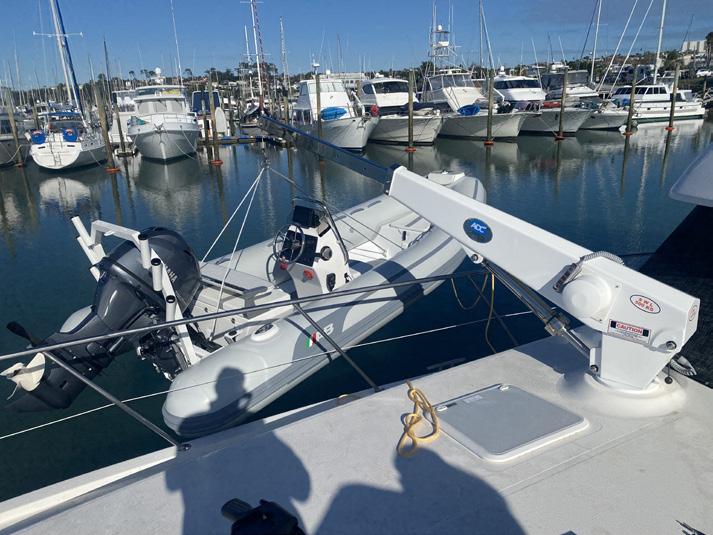
Motor Yacht Service 09 416 1179 Centre |
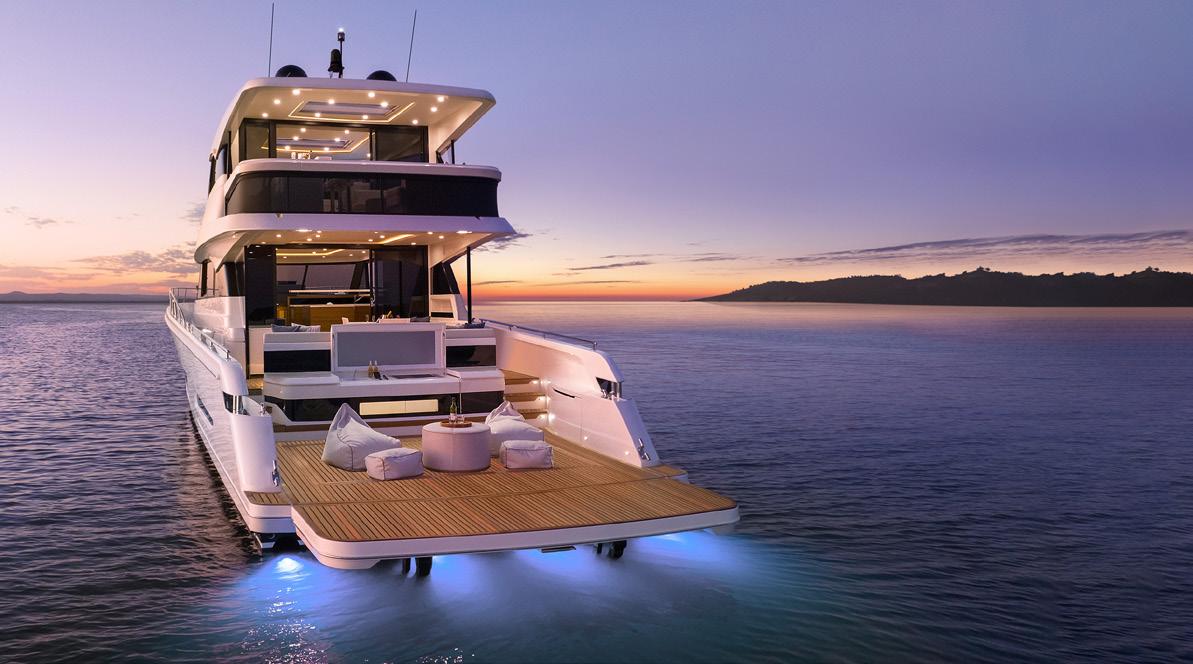
The station is, as one would imagine, impressive. Three matching Simrad MFD screens seamlessly connect to Talisman’s numerous inputs (radar, GPS chartplotting, sonar, autopilot, various cameras: reversing, engine room, cockpit anchor and FLIR night vision) and the CZone system. Although Talisman sports the traditional steering wheel and gear/throttle controls, it is actually mainly controlled at slow speeds by a joystick. Set up to simultaneously control both the engines and the bow and stern thrusters, it ensures that manoeuvring Talisman is a simple, one-hand operation, even in the tight quarters of the strongly affected by current Bayswater Marina on a blustery day.
A similar level of easy control is available through the owner’s Remote Yacht Controller or a second joystick in the cockpit. Getting Talisman ready for departure is also an easy, one-touch operation. On the CZone screen, the owner simply chooses the Daytime Cruising mode and the system ensures everything is ready to go. All that needs to be done is to cast off the lines. If having to move anchorages at night, the CZone night mode ensures the Simrad displays are muted and only red lights are on near the station. Again, all that is required is to raise the anchor.
PERFORMANCE
Even though Talisman, with all its extras, weighs in at an impressive 70 tonnes, it is definitely no slouch. With its 3200-odd horsepower at full strength, it can hit a ground-swallowing 30 knots. Even at normal cruise speeds, this large beast can quickly get to its destination at a comfortable 24 knots.
However, as relaxation rather than speed is more the aim, the owner chooses instead to get along at a relatively sedate, but by no means sluggish, 10-11 knots, using just 58 litres per hour.
SUMMARY
Not all manufacturers of luxury motor yachts are willing to allow such a large degree of customisation as Maritimo has with Talisman. On the other, not as many owners have as a clear a vision (and the experience to back it up) and the knowledgeable support (“almost a partnership”) as Talisman’s owner enjoys with Dean Ryder.
The result is an incredible blend of some of the most sophisticated systems alongside an almost astonishing ease of use. There would be very few vessels of this size where the owners would feel comfortable heading to sea (and returning home to their marina berth) with just the two of them on board. One can only applaud the collaboration that has made this possible.
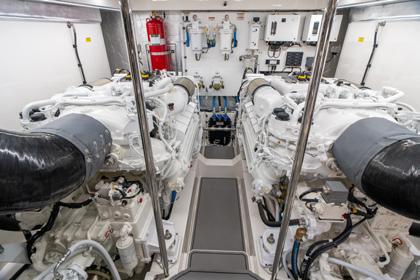
The twin MTU 1625s are capable of propelling the 70-tonne Talisman to an impressive 30 knots.
However one looks at it, the M75 is an outstanding new flagship for Maritimo.
SPECIFICATIONS
Designer Maritimo
LOA 24.5 (incl hydraulic swim platform)
LOH 22.4
Beam 6.0
Displ (Dry) 55,200
Max Speed 30
Construction Fibreglass
Fuel Cap 10,000
Water Cap 1,400
Engines Make MTU
HP 1625 x 2
Drive Train ZF
Thrusters Side-Power hydraulic
Trim Tabs Humphree Dynamic
Gyr ARG x 2
Lighting LED extensive
Batteries Mastervolt Lithium
Management CZone
Windlass Muir Thor hydraulic
Ent System JL Audio, Starlink, Sat TV
Underwater Lights Aqualuma Blue, 8
Flooring Teak outside, Cavalier Bremworth inside MARITIMO.COM.AU
MOTORYACHTSERVICECENTRE.CO.NZ
PERFORMANCE DATA
Based on 90% of fuel capacity
PACIFIC POWERBOAT REVIE WS _ MARITIMO M75
RPM KNOTS LPH LPNM RANGE 600 7 16 2.29 3938 800 8.7 32 3.68 2447 1000 10 58 5.80 1552 1200 11.6 100 8.62 1044 1400 12.5 158 12.64 712 1600 14.2 244 17.18 524 1800 19.6 301 15.36 586 2000 23 375 16.30 552 2200 26.5 481 18.15 496 2400 29 563 19.41 464 WOT 31 585 18.87 477
66 MARCH / APRIL 2024
The Team at Navico Group, including Application Engineers and the Technical Sales team, played a pivotal role in the customization of the electronics and power systems aboard Talisman. The project represented the inaugural installation of CZone digital switching aboard a Martimo vessel, demanding a concerted effort from all involved to achieve the customer brief.
The high level customization seen here is made possible by Navico Groups portfolio of leading brands, which makes it easier for the OEM by dealing with one business partner rather than multiple 3rd party integrations. This installation incorporates cutting-edge Lithium-ion technology and premier offerings from Mastervolt, CZone, and Simrad to deliver a comprehensive
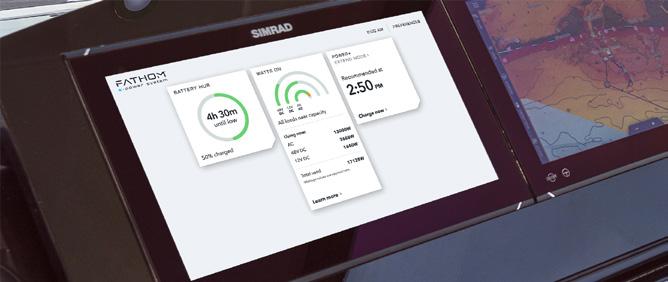
power management solution that reduces overall complexity of vessel handling, giving boat owners more control and enhancing their time on the water.
The Fathom e-Power system by Navico Group represents a significant leap in marine power management offering unparalleled integration of critical systems for the end-user. This system offers seamless integration of Mastervolt’s power systems, CZones digital switching technology, and Simrad Multi-function displays.
For consumers this translates to a seamless customised experience where power management, system monitoring and navigation can be seamlessly
controlled by a single platform, enhancing the boating experience, and significantly improving safely and efficiency on the water.
For OEM’s the Fathom system offers a compelling value proposition, by consolidating products from all brands under the Navico Group umbrella, Fathom reduces complexity, accelerates the design and installation phases and the customizable nature of the Fathom e-Power system means that OEMs can more easily tailor solutions to meet the specific demands on their customers, enhancing product appeal and customer satisfaction.
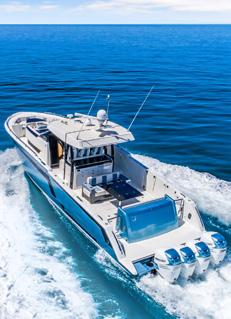

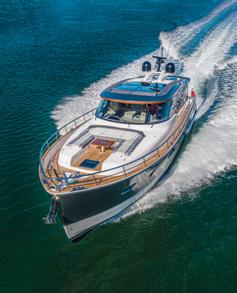



WHATEVER WAY YOU WANT YOUR POWER BOAT FIX PACIFIC WWW.BOATMAGS.COM TRAILERBOATS LAUNCHES CRUISERS ALSO REVIEWED BONUS 2020 PWC ANNUAL FOCUS POWER 33 HIGHFIELD 660 PATROL INTEGRITY 340XS RIBS PROJECT 12 NEWPORT 460 NIMBUS C9 OCEAN ALEXANDER DIVERGENCE 45 NOVEMBER DECEMBER 2019 PWC 2020 BUYERS GUIDE New Colours & Innovations HOW TO CATCH BIG SNAPPER The gear, the bait & the technique NIMBUS C9 NEWPORT 460 INTEGRITY 340XS FOCUS POWER 33 JP RIBS PROJECT K 12 HIGHFIELD 660 PATROL JANUARY FEBRUARY 2021 $10.00 DNA 590 XHT BELIZE 66 SEDAN AQUALINE 545CC SEALEGS 6.1 ALLOY CROWNLINE 264 CR HAMILTONJET E740 TRISTRAM 640 CABRIOLET JANUARY FEBRUARY 2021 PACIFIC WWW.POWERBOATMAGAZINE.COM TRAILERBOATS LAUNCHES CRUISERS BONUS ALLOY BOAT MAGAZINE CONTINUING THE PASSION XHT WINCHES DNA 590 XHT Belize 66 Sedan Aqualine 545CC Sealegs 6.1 Alloy HamiltonJet e740 Crownline 264 CR Tristram 640 Cabriolet THE HISTORY OF TRAILERBOAT WINCHES Reviews 7 CLASSIC RACEBOAT CARACAT TOO 66 SEDAN CATCHING KINGFISH USING A FLY HOW THE OUTBOARD HELPED WIN A WAR DIESEL ENGINE MYTHS PRINTED SUBSCRIPTION One year subscription Delivered to your door One year digital subscription with unlimited access to back issues, boat reviews and features. DIGITAL SUBSCRIPTION Free DB960b $58 Save 25% $20 A free subscription to our PowerBoat Weekly E-News www.powerboatmagazine.co.nz Save 33% FATHOM E-POWER Transforming the Marine Industry
NAVICO.COM/FATHOM POWERBOATMAGAZINE.CO.NZ 67

FEATURE _ AN IMPROBABLE TRIP AROUND THE WORLD 68 MARCH / APRIL 2024
AN IMPROBABLE TRIP AROUND THE WORLD
What started as a 4-month cruise to Mexico turned into a made-for-Hollywood, 13-year voyage around the world. As told to Daniel Harding Jr.
BY DANIEL HARDING, POWER AND MOTORYACHT

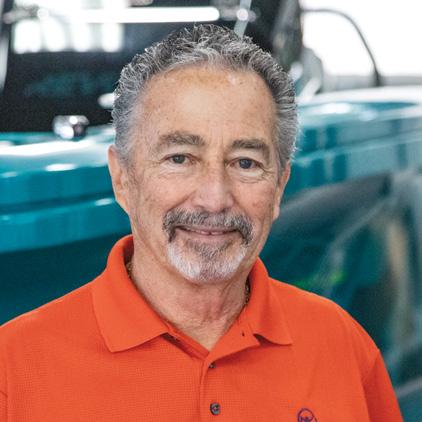 ROGER MOORE
POWERBOATMAGAZINE.CO.NZ 69
I’d met Roger Moore a few times in passing. The founder of the Nautical Ventures–a boat dealer powerhouse that sells some of the biggest brands–almost always has an easy smile etched in a trimmed, salt and pepper goatee along with a bright orange polo, a marketing tool he created to help his team stand out on the docks and at boat shows.
The few times I met him, the master conversationalist had a glint in his yes and slight smirk while offering hints about an around-theworld-trip he and his wife undertook years ago. I had a feeling that if we could sit uninterrupted, he would have an unbelievable story to share, so I set an appointment to his corner office at his Ft. Lauderdale location (a converted BMW dealership on South Federal Highway).
Over the next few hours Roger sat back and shared the story of his improbable trip around the world to me with a casualness that you and I would use when discussing the week’s weather.
He explained how he and his late wife, Samantha, originally set out to cruise from California to Mexico over the span of a couple months aboard their 63-foot Cheoy Lee motorsailer. Spontaneity, love, an openness to adventure and a heaping dose of luck turned that coastal jaunt into a 13-year, around the world adventure that, if not for the photo evidence, you would think he was making up.
What follows is but a taste of the once-in-ahundred-lifetimes adventure he experienced. Let me warn you now, his story will likely inspire you to cruise beyond your own comfort zone.
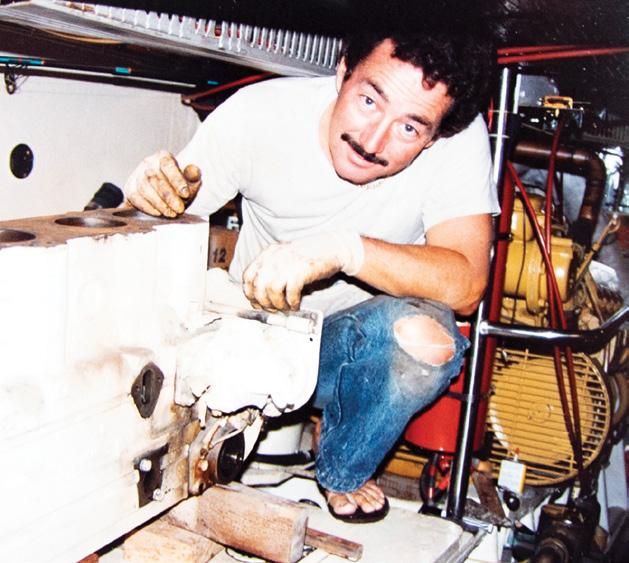
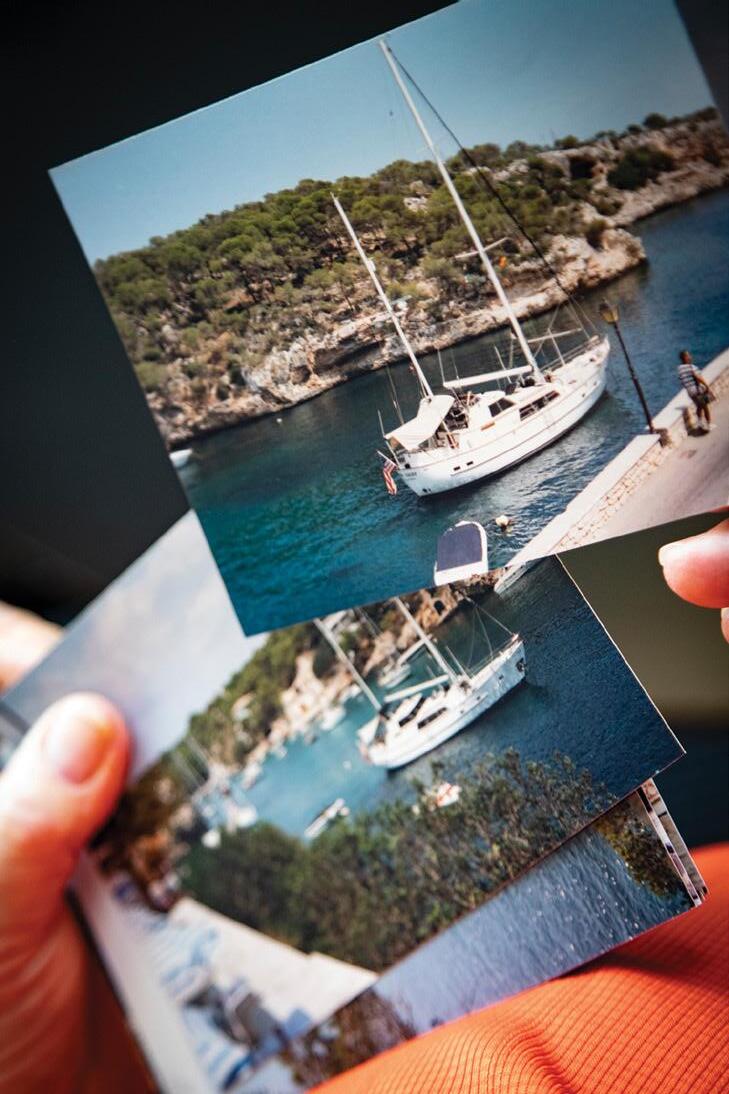
At the time of his trip, a 63-foot boat was not all that common but it served as a comfortable home-away-from-home for 13 years.
FEATURE _ AN IMPROBABLE TRIP AROUND THE WORLD
DECADES AFTER HIS ROUND-THE-WORLD-ADVENTURE, ROGER MOORE STILL HAS A PASSION FOR BOATING—AND SHARING IT WITH OTHERS.
70 MARCH / APRIL 2024
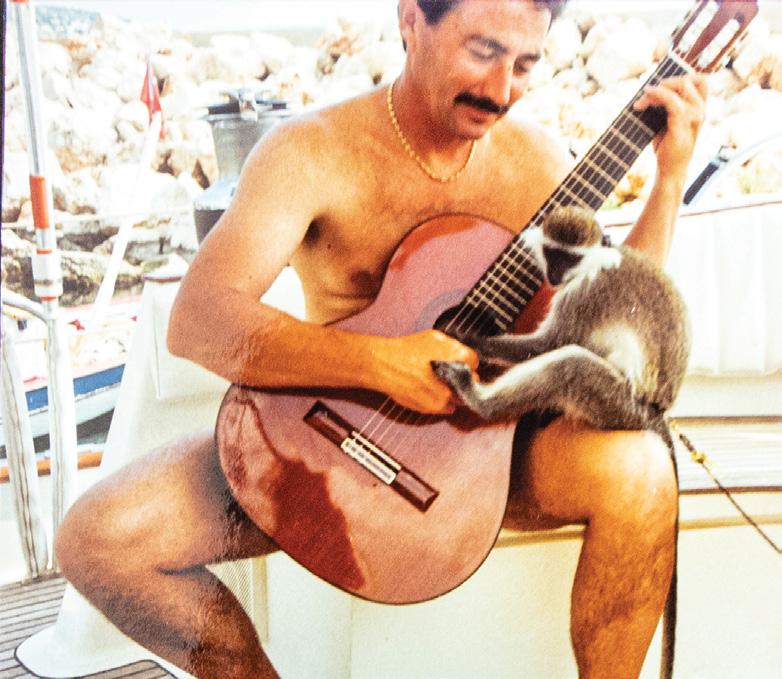
A sense of adventure and almost child-like curiosity led Moore to learn about many different cultures and make all sorts of friends.
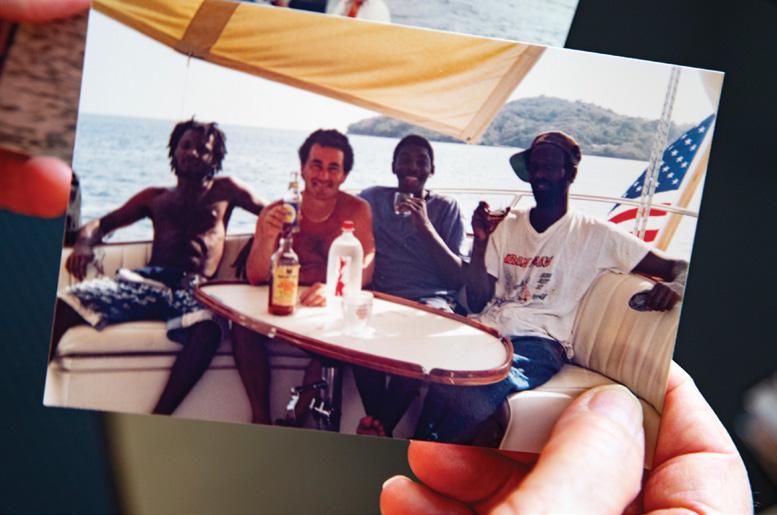
Improbable Pacific Crossing
It was never my dream to go around the world. In 1986 we sold a business we’d built for 14 years and I said to my wife, "Hey, honey, why don't we get a boat and cruise down the coast of California?" And she gave me this rather strange look saying, "What are you talking about?" But she was phenomenal. She would follow all my crazy ideas. So we bought a Cheoy Lee Motorsailer.
But the intent was to take four months and to just cruise down the coast of California, gunkholing. We hit every port, every anchorage that you can hit. And we loved it, absolutely loved it. I remember the first time we anchored, she was petrified, this 130-pound anchor with I don't know three-quarter-inch chain and all this. When it started to lower, it made a lot of noise and it was a lot of power. And she learned how to do that. And she learned how to do everything on the boat, as you'll see, as this story unfolds and what ended up happening.
But we spent the four months cruising down the coast of California and looked at one another, said, "This is great. Let's go to Mexico." And she looked at me and said, "I love it. Let's go." So we gunkholed our way all the way down to Acapulco. And if you look I've got a globe here. If you look it's a long way down, and then what do you do?
Samantha would comment that NASA puts people on the moon with less planning than these people we met in Acapulco that were going to cross the Pacific. And when they mentioned it to me, I was not interested. It's a 2,850-nautical-mile voyage with nothing in between. So it's quite a commitment. I was not interested. That was not the goal. A month later, off we went.
The captains, there were originally four of us, and we determined that the way we'd start this trip was based on waterline length so that when we were in the middle of the voyage, we'd be in the closest proximity to one another, so we could help one another.
So we had a 63 Cheoy Lee. So we were the last to leave, having the longest waterline length and the highest speed. One boat went down to try and pick up the southeast trades, another one went ahead of us, and the other boat opted out. They got nervous and didn't go. So there were basically three of us that crossed. They all laughed at me because we had
POWERBOATMAGAZINE.CO.NZ 71
a motorsailer and they had pure sailboats. And I was over filling up what the generator burned the night before to make sure I had every drop of fuel that I could have on this voyage. And we held quite a bit. It was like 1,450 gallons or something, a lot of fuel.
We leave from Acapulco. The boat name was Good Grief, and we take Good Grief out. And we're about 12 hours into this voyage at night, and Samantha took the first watch. She was the night person. And as we were switching watch, I went down, and I go to step on the bed, and the carpet's wet in the master stateroom. And I go, "Oh my God. How can this be?" So I taste it. It's salt water. And I don't want to say I panicked, but I said, "We're only 12 hours into this multi-week journey. Let's turn around." And Samantha, man, it chokes me up thinking. She said, "Why don't we just approach this like we were halfway? What would you do?" I said, "Well, we'll figure out where it's coming from." And that was kind of an interesting thing. I started tearing out the furniture in the master cabin. I had a battery-powered saw. I cut the back of the settee out, and exposed that there was water coming from the aft bulkhead through a hole that they had produced at the factory. It had a six or eight-inch exhaust hose. And when they cut the hole, they just put a whole bunch of different holes and then punched the hole out. So there were all these sharp little triangles where the hole remained.
So, what we did is we shut down that engine. We turned on the other engine, and I got a patch. I had some rubber material and some silicone, so I patched it, put some big hose clamps on it, and I think to this day it's the same.
Samantha was phenomenal. And we had biorhythms that were perfect because we'd do six on and six off. You hear of so many people, two on two off, and you don't get any good sleep. It's really tough on you. But six on and six off, it was perfect. We could have gone for six months.
It was phenomenal. We'd have breakfast together. Whoever was tired, napped. And she learned to do the engine room inspections.
So, here we are about halfway and have to describe the three boats. We're doing fine. The folks that went to pick up the southeast trades with a pure sailboat had all kinds of problems. They ran really low on fuel. They had to sail. They were in the doldrums. We had Ham radio contacts at noon and midnight every day to check on each other. And they were struggling. Then the other
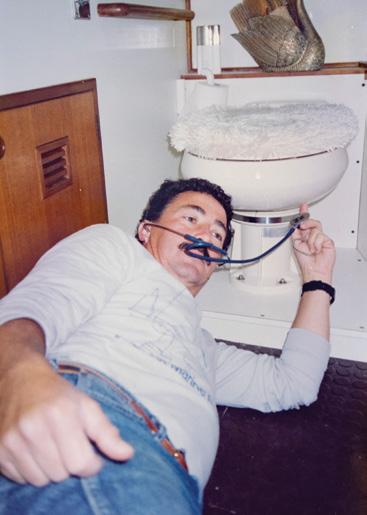
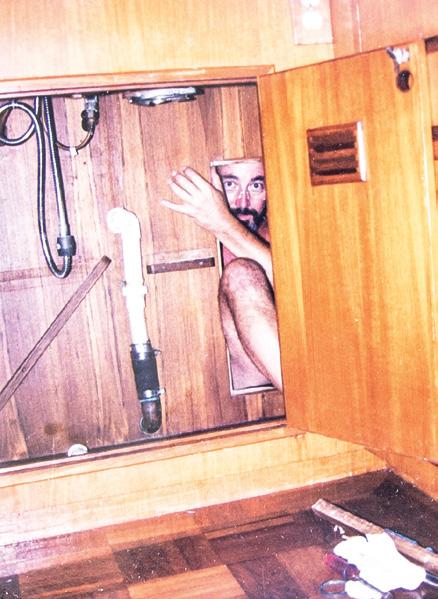
From the head, to behind bulkheads and in the engine room there was always work to be done.
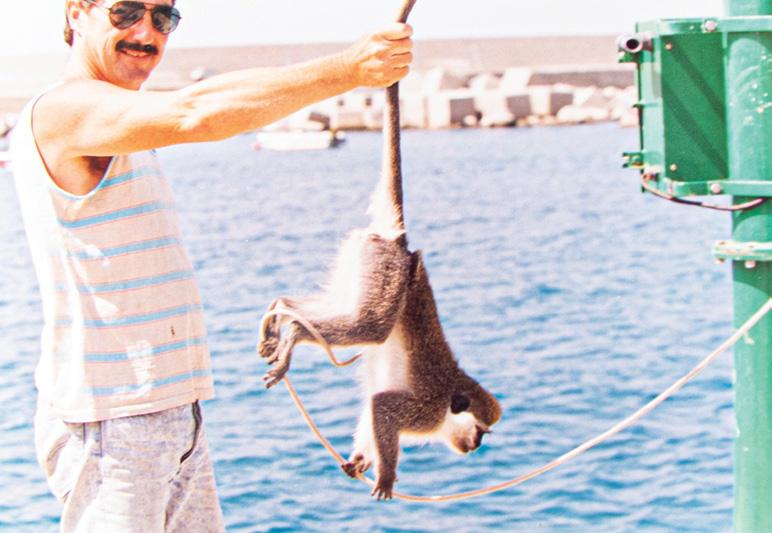
Often monkeying around with something.
FEATURE _ AN IMPROBABLE TRIP AROUND THE WORLD
72 MARCH / APRIL 2024













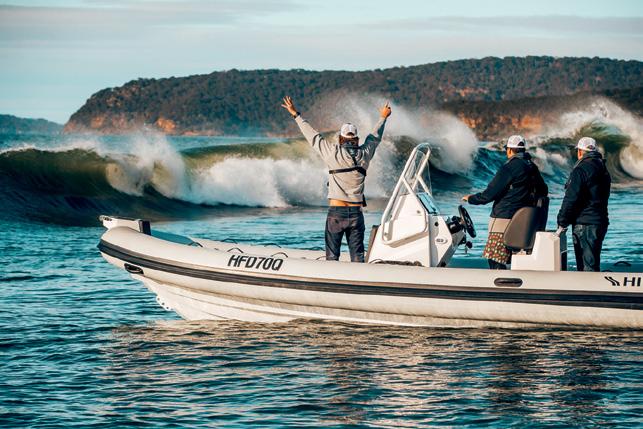
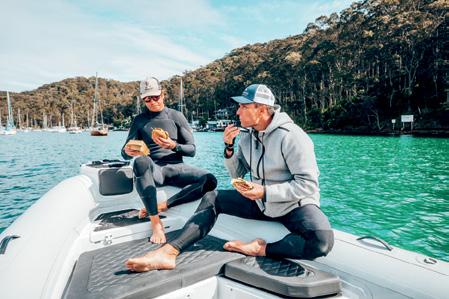



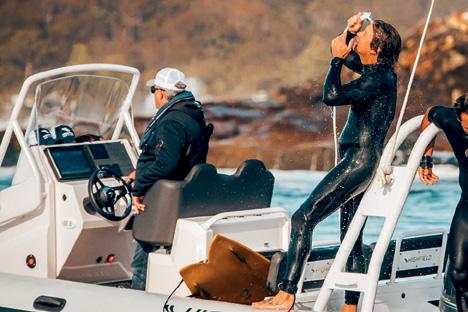
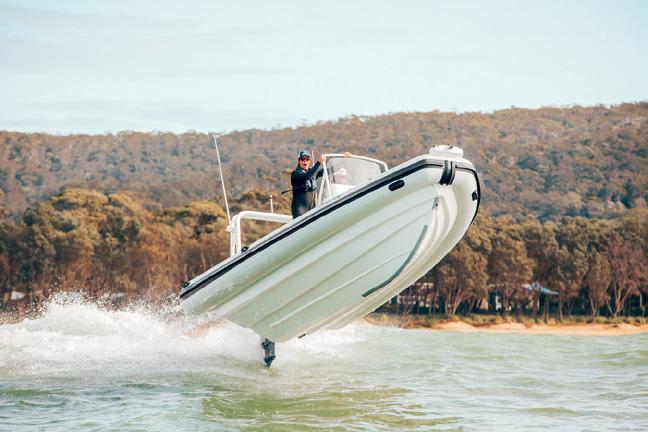


/HIGHFIELDBOATSPACIFIC YOUTUBE.COM/HIGHFIELDBOATS @HIGHFIELDBOATS_PACIFIC WWW.HIGHFIELDBOATS.COM.AU THE ALL NEW SPORT 700 14 719cm 285l 250hp
weather
dry,
DB948a VICTORIA Sundance Marine 1300 55 00 89 NEW SOUTH WALES (N) Lejen Marine 02 9979 4533 WESTERN AUSTRALIA RIB Worx 08 9430 7007 NEW SOUTH WALES (S) Marineco 0414 609 799 TASMANIA Rubber Ducky 0437 910 378 SOUTH AUSTRALIA Lenta Marine 08 8472 8295 QUEENSLAND Northside Marine 07 3265 8000 NEW ZEALAND Aakron Xpress 09 427 4613
The Sport 700 is a boat that is as at home for a day relaxing at anchor as it is when the
gets up. The proven 26 degree deadrise hull eats the chop and keeps you and your family
comfortable and secure in all conditions.
was a doctor and a nurse on a boat called Kahuna. And we were getting close to one another in the middle of the ocean. So we modified our courses, and we lowered sail. They swam over to my boat with line and a bottle of wine in the middle of the ocean. We had wine on the back deck, and their boat would disappear behind our boat. The seas are huge out there, but they're big rollers. So they'd just disappear and then reappear. And here we are, two boats sitting in the middle of nowhere, and I said, "Well, how's your trip going?" And they said, "It's going great. But, man, we're really low on water. It's so hot. And we're showering more often and trying to rinse off." And I said, "Well, how many hoses have you got?" They had two. We had two. So we hooked the hoses together. I had a watermaker, so I filled their tank up in the middle of the Pacific Ocean.
So, they were elated. I said, "Do you need anything else?" "No, we're great." So off we go, and we sail away. And the next day at noon, in the radio contact Jerry says, "Roger, there's a helicopter hovering overhead." And I said, "Jerry, are you hallucinating? There's no helicopter that can make it 1,500 miles." He said, "Shut up, Roger, there's a helicopter here. I'll call you back." So we find out that there was a long-liner fishing boat out in the middle of the Pacific. And they have a helicopter that they send out to spot fish, and then they send their launches out to go fish them. So, when they saw this guy's American flag, they said, "Do you need anything?" Well, they didn't have the guts to ask me for fuel because they laughed at me when I was putting fuel in the boat.
So, they dispatched one of the boats to them and gave them 30 gallons of diesel for nothing. And they brought two quarts of chocolate ice cream for them. So, here's a boat that gets water, fuel and ice cream delivered in the middle of this journey.
Tonga
Tonga in the north island group called Vava'u. And we put down a mooring there, which was another whole experience, put down this mooring in a very safe place, considered a hurricane hole. And we spent seven months in Tonga. The stories about this were some really meaningful life stories.
Where we were anchored in order to get fuel or food or
whatever, we have to launch the dinghy and go ashore. So if you want to get fuel for the dinghy, you can figure six or seven hours. By the time you get it over there, take the tank out of the boat, hike up to the city, to the village and get the fuel and come back. So nothing happens quickly. But what else are you doing? So you're living this adventure. And when I first got there, we really enjoyed watching videos on the boat. So we brought a whole bunch of VHS tapes. Dating myself, right? And so I went to the video store and I met the owner of the video store and I said, "Hey, I got a deal for you," because I like deals. And I said, "We've got a pretty nice video library, but I've seen them all. We're going to be here for several months. I'm going to bring you my whole library. You can rent it, do whatever you want with it. And I get to pick whatever I want and I'll use your library, and you don't charge me anything. So, we both win."
So, we became really good buddies with this guy and his family. And so, we made this deal. It was fun. So he introduced us to his brother-in-law who owns the grocery store. And when I say grocery store, this is basic stuff. So, we became very good friends, they had us over to eat and there’s dirt floors, kids running around naked, they eat and there's food all over them and it's a slice of life that we don't really see, normal
for them. And at one point they were so good to us. So nice to us, that I said to Samantha, I said, "Let's have them out to the boat and have a nice Western dinner for them. Let's show them another slice of life." So they agreed, "Well, we'll come out on Friday night." I said, "Okay, great." So, I go that day and they say let's do next week." So the next week comes, they can't do it next week. And finally, I said, "Come on, we're friends. What's the problem here?" They said, "Well, you've invited us, but you didn't invite our kids. We don't go anywhere without our kids." And I said, "Well, in America, if you're invited to dinner with your friends, the kids are not invited." I mean, this is an adult thing, an adult experience. And I'm imagining these kids on our boat.
Three kids and we've got white carpet in the boat, and to have these kids walking around with food and I didn't want to do it.
Finally came up with an idea that we would take the boat to a close resort, and they would come join us and they'd swim out to the boat, so they'd all be clean, and they'd come out to the boat and we had dinner on the boat and they'd swam back.
And the next thing that was amazing is when I told them it’s unusual for us to invite kids when it's an adult party, they said, "I heard that when your parents get old, you put them in a home for somebody else to take care of them."
FEATURE _ AN IMPROBABLE TRIP AROUND THE WORLD
74 MARCH / APRIL 2024
I said, "Yeah." He says, "How could you do that? They wiped your butt. They took care of you. They loved you. They gave you everything you wanted. And when they need you let them go be with somebody else that doesn't love them, and that's just caring for them. How can you possibly treat your family like that?” I go, "Wow." Perspective. And they're about family. And we're about getting ahead and making more money and doing more things. And that was kind of eye-opening.
Read Part Two in the upcoming May / June issue of PowerBoat Magazine
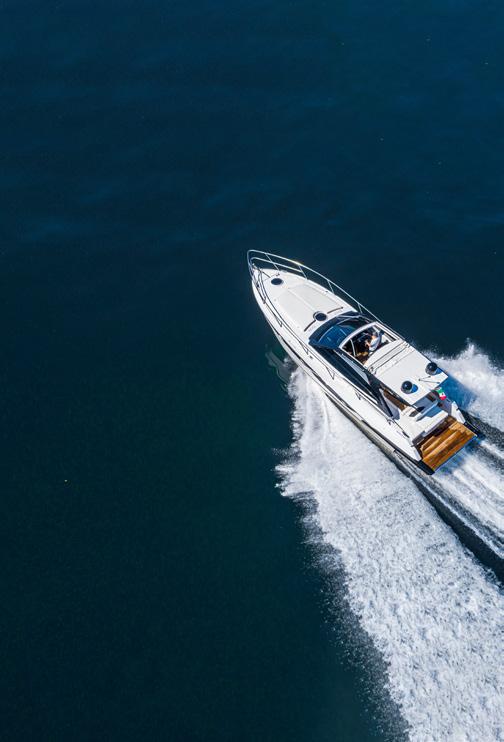


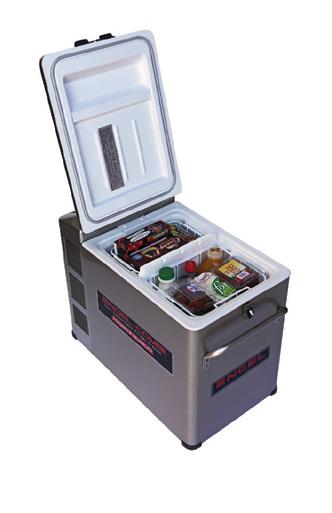


Scan to subscribe Stay ahead of the game by signing up to our FREE Powerboat Magazine Weekly E-News. TRAILERBOATS I LAUNCHES I CRUISERS WWW.POWERBOATMAGAZINE.CO.NZ Be the first to know about the latest Power Boat updates and releases! DB981 PPB0714 Engel 40 Litre Combi Fridge / Freezer This new model is a new combination Fridge and Freezer, with added features including the removable internal divider and thermostatically controlled fan. The MT45FCP gives three versatile configurations; Freezer 16 litres / Fridge 23 Litres (total 39 Litres) option 1 Refrigerator Only (Divider removed total 40 Litres) option 2 Freezer 22Litres / Fridge 17 litres (total 39 Litres) option 3 This model also includes the user-friendly digital control with LED display, along with built in battery monitor. Supplied with both cords, the 12 volt cord that plugs straight into your vehicle’s cigarette socket and the 240 volt lead with three pin plug, (Auto switching). For more information visit: www.engelnewzealand.co.nz Three-Year Warranty Engel’s latest addition POWERBOATMAGAZINE.CO.NZ 75
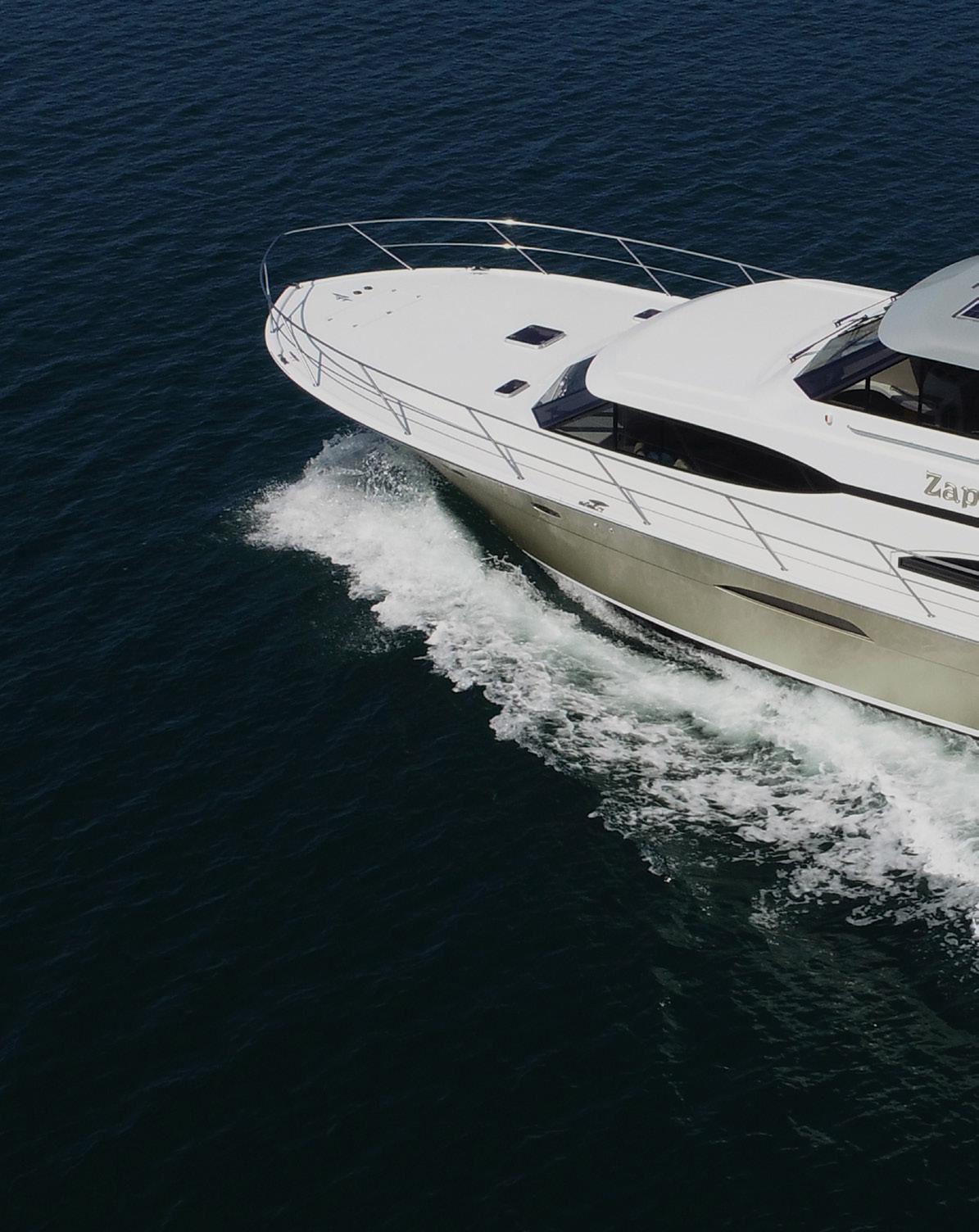
WHERE THE BOAT’S HEART BEATS
With gold-bronze metallic paintwork and an elegant, balanced profile, the 18m Upfold Elite mid-pilothouse
Zaphira by Lloyd Stevenson Boatbuilders, cut quite a dash in the Bay of Islands on her summer cruise. Like many Upfold owners, Rod and Gae of Zaphira are repeat customers for obvious reasons – and not so obvious.
BRYCE TAYLOR
BY REBECCA HAYTER | PHOTOS
PACIFIC POWERBOAT REVIE WS _ ZAPHIRA 18M ELITE
76 MARCH / APRIL 2024
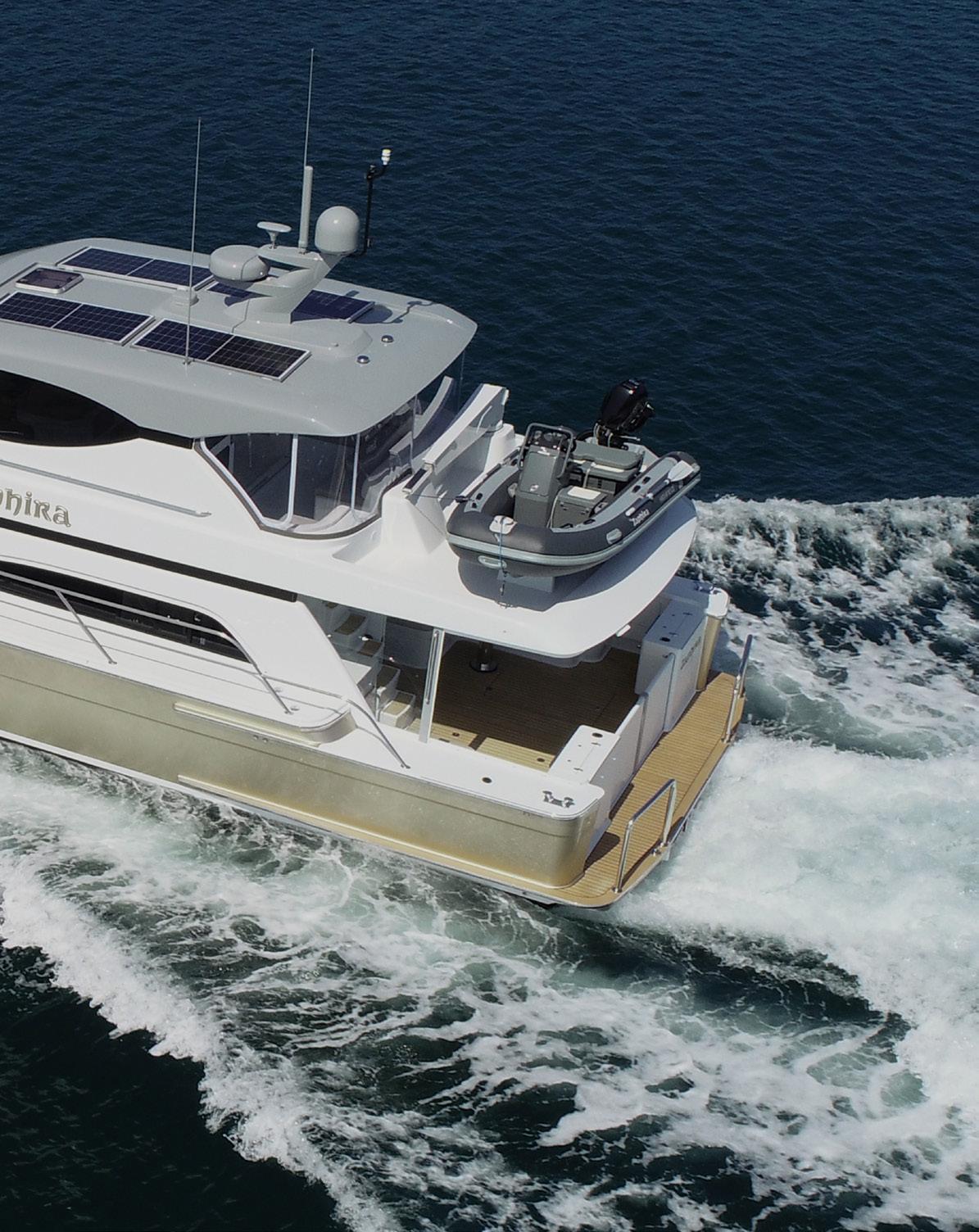
Sure, Zaphira looks styley, the mid-pilothouse concept is hugely successful and the customised interior perfectly suits Rod and Gae, but ultimately the enjoyment and value in boat ownership are in the ease of operation, so for this review I’m taking a different approach. We’re heading below decks to the heart of Zaphira: the engine room. It’s a favourite place for Rod, too –and so it should be, says Benji Saynor, head engineer at Lloyd Stevenson Boatbuilders. ‘We don’t just design the engine room for
practicality,’ says Saynor, who joined Lloyd Stevenson Boatbuilders 16 years ago. ‘We do it for looks as well. It’s got to be a show piece. It should be that the owner can take a mate down there and show it off like he shows off his car in his garage.’
Awww. Now motoryacht owners around New Zealand know that someone understands them. It gets better, because Saynor is just loving the twin 800hp MAN 588kW engines. ‘MAN are beautiful looking engines. I’ve always said that,’ he says. ‘They are super quiet. It’s the first time I’ve ever worked with MAN engines and I’d
love to install more.’ Quietness was a major reason why Upfold and Stevenson selected MAN, having seen and barely-heard the twin MAN engines operating in the Upfold Elite 18m Sportfisher Peregrine and 18m Sportfisher Crazy Diamond. ‘The MAN engines are smooth and quiet, especially at idle and start-up,’ Upfold says. That’s especially relevant in a mid-pilothouse configuration which sites the engines under the saloon sole.
But, enough MAN love. Apart from aesthetics, the engines’ installation is designed to enhance their
POWERBOATMAGAZINE.CO.NZ 77
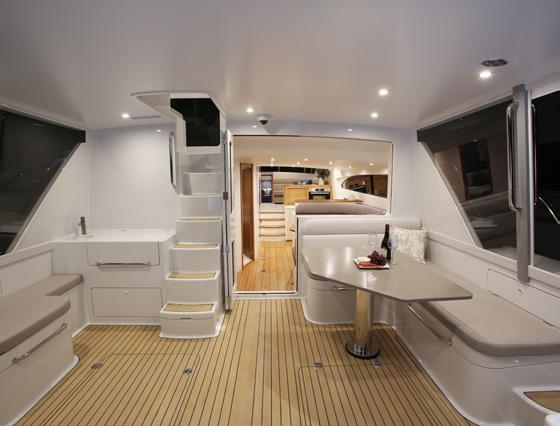
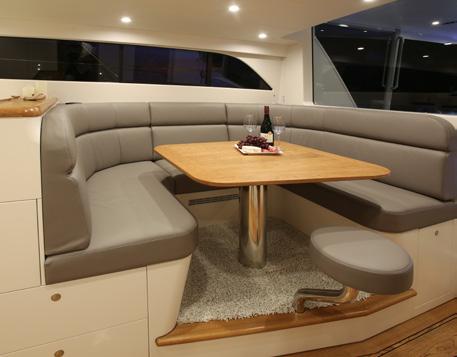
Zaphira’s cockpit, looking forward to the dinette and galley, with external steps to the flybridge.
The saloon, looking aft, to galley and dining to starboard; steps to flybridge helmstation to port.
The window between cockpit and dinette lowers into the seat bulkhead, providing open-air flow between the two areas.
The galley has generous bench space.
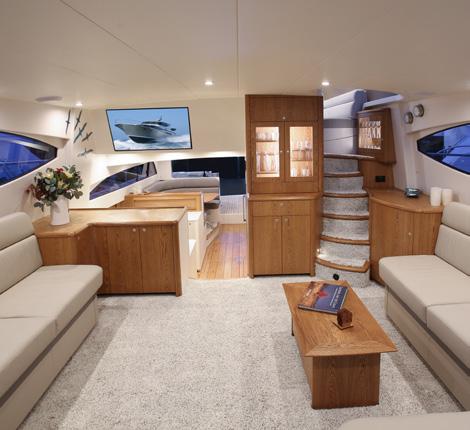
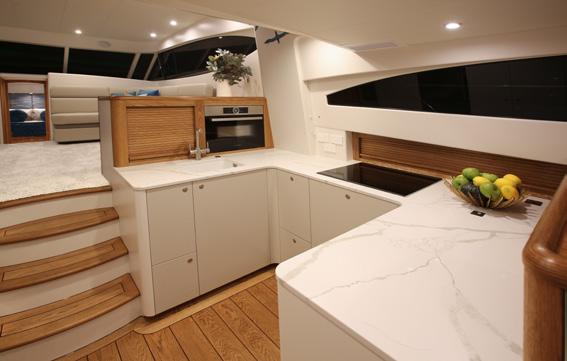
smooth running. ‘We have the 30.5-inch x 32.5-inch propellers on a 2.5-inch drive shaft which couples to a thrust bearing,’ he says. ‘From that we use a cardan or universal shaft which links to the back of the Twin Disc Quickshift transmission. Effectively, we’ve taken all the thrust from the propeller and pushed it all into the structure of the boat through the thrust bearing. This takes the thrust load off the engine and makes for a much smoother ride on the boat.’ Zaphira’s 1600hp gives her a planing speed of around 15 knots and a top speed of 30 knots at 2300rpm. Rod generally cruises Zaphira at around 15-18 knots. For our run on Zaphira, we had calm conditions, but Rod recounts a trip home from Kawau Island to Sandspit in a 1.5-2m swell in beam seas at 20 knots. ‘So it was a bit of a rocky ride, but Zaphira just kept going,’ he says. Upfold has designed the hull with his signature silent chines in a warped planing hull with diminishing deadrise aft. This suits the mid-pilothouse boats because, as dictated by the layout, the engines are well forward. The diminishing deadrise reduces displacement aft to keep the boat at optimum trim, fore and aft. ‘It is an easily pushed hull,’ Upfold says. Rod and Gae were happy that they cruised from Sandspit to the Bay of Islands using half the amount of fuel of a similar-sized, heavier flybridge boat travelling at the same speed. As for boat handling at low speeds, Rod and Gae are even more comfortable with Zaphira than their
previous Upfold Elite 16m Maeve, thanks to EJS (Express Joystick System). Zaphira has bow and stern thrusters, twin propellers and throttles, but managing them together demands a high degree of multi-tasking. Zaphira has EJS on her flybridge helm and the auxiliary helm, port-side on the aft flybridge deck. With the EJS function engaged, the skipper moves the joystick to reflect how he/she wants the boat to move, and the EJS makes it happen.
It has three modes: docking, hold and drift. The EJS docking mode works as described above. In EJS hold mode, the EJS uses the GPS to hold the boat stationary, regardless of wind and tide. It’s handy for arranging fenders and dock lines before entering a marina, especially singlehanded. If there’s a sticky moment in berthing, the skipper can hit ‘hold’ while planning the exit strategy. The EJS drift function is primarily for fishing. The skipper sets a heading and allows the boat to drift with wind or current at the designated drift speed. ‘This EJS was the first we’d fitted ourselves,’ says Stevenson. ‘Normally the boatbuilder would buy the system and Twin Disc would supply all the rubber hoses at the lengths provided, but Benji decided to install solid stainless tube instead. He used flexible hose only for the connection to each component. When the EJS representative signed it off, he wrote that it was probably the best installation of an EJS system he had seen for a long time.’
PACIFIC POWERBOAT REVIE WS _ ZAPHIRA 18M ELITE 78 MARCH / APRIL 2024
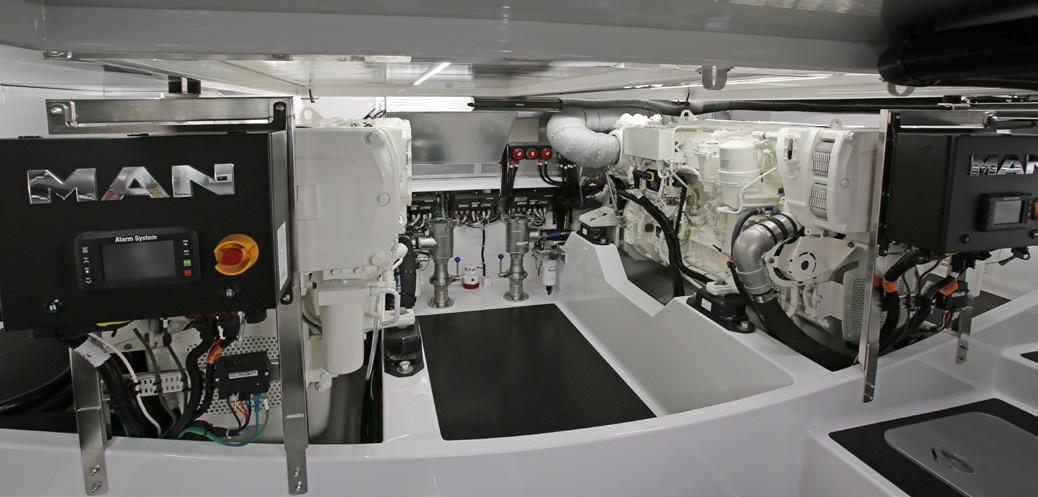
Saynor used stainless steel pipes instead of hoses for longevity and because it enables a quieter system with better hydraulic pressure. The installation is immaculate and out of sight, as the engineers were able to schedule their work with the builders as the engine room took shape – an advantage of a custom build in which nearly every part of the boat is built in-house.
In engine room décor, bulky exhaust systems are, well, bulky. ‘It is quite an elaborate system,’ Saynor says. ‘It is a wet exhaust system, [meaning that it uses water to cool the exhaust gases] but to incorporate the air vents we had to run a dry exhaust system to start off with, then we run a water mixer which cools the gases and then exits underwater through the hull. That was many man hours in design and fabrication, of which 99 per cent was done in-house by engineer Sam Hill.’
Sparkling white engine rooms require housework.
Zaphira has a fully plumbed Wetvac system and hot and cold water on tap for cleaning and hand washing. The MAN engines have electric oil pumps which ensure clean oil changes. Any leaks of hydraulic oil can be identified as relating to either the EJS system, dinghy davit or steering system by its colour pigment of red, blue or standard yellow. Lloyd Stevenson Boatbuilders is big on easy maintenance. ‘We service 95 per cent of our own boats,’ Stevenson says, ‘so when the boys are fitting out the boat, they’ve got future servicing in mind. Anywhere there is a join or something that needs to be serviced, it is accessible without needing specialist tools,’ says Saynor.
Both engines run off a main diesel tank of 4400 litres, supported by two long range integral tanks of 800 litres per side, giving a total capacity of 6000 litres. Diesel can be transferred between tanks with a reversible pump managed by CZone. It means Rod and Gae can cruise for several weeks without refuelling. Also with long term cruising in mind, Zaphira has a 240V DC water pump for the main house fresh water system, with a back-up pump connected to the watermaker, requiring only a turning of a valve in the engine room to bring it into service.
Another piece of equipment taking care of business is the Onan 18kW generator in the lazarette. Zaphira has four Mastervolt lithium ion 24-6000 house batteries providing up to 920 amp hours capacity. If the batteries are getting low while the boat is at anchor, the generator starts automatically, then shuts down when the batteries are charged to a certain percentage.
To reduce generator time, Zaphira has solar panels, installed out of sight below the lip of the flybridge roof.
The antennae mast was designed without wings as their shadow would have seriously compromised the solar panels’ power output. On cold days, an Airtronic diesel heater in the engine room is ducted to warm the galley, flybridge helmstation, main saloon and forward cabin.
Rod and Gae love their boat’s features. ‘When you get a new boat, you want to have as much new technology as you can, as it is quickly outdated,’ Rod says.
The systems are easily managed with full AC/DC CZone which allows control of all electrical systems via touch screen. A central monitoring app allows Rod
Zaphira’s engineroom, home to the immaculate installation of the twin 800hp MAN 588kW engines and other ship’s systems.
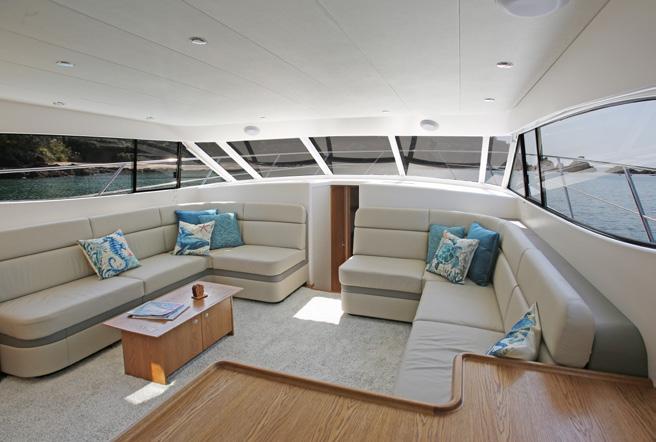
POWERBOATMAGAZINE.CO.NZ 79
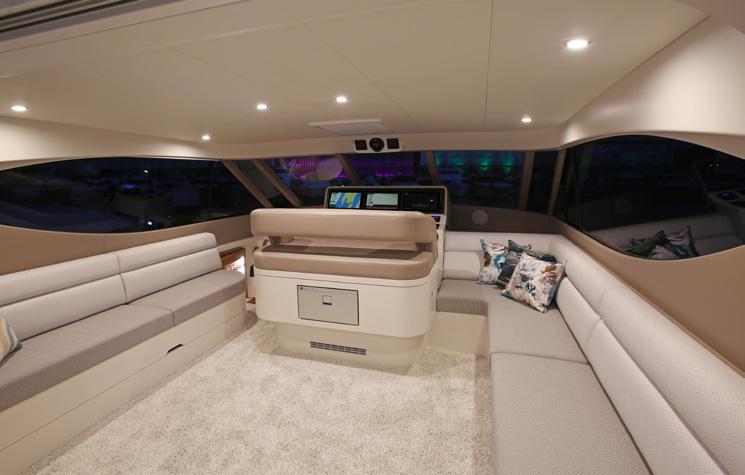
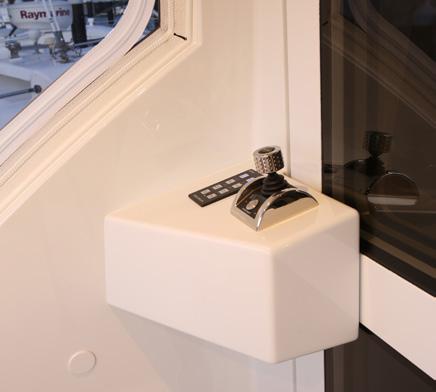
The helmstation: the seat flips forward to provide a serving space, above a small fridge.
The master ensuite bathroom with full-size shower and Tecma electric toilet.
The EJS joystick on the port side pilothouse deck, to assist with berthing.
The guest cabin on the maindeck, near the galley; its bathroom serves as day head for the cockpit.
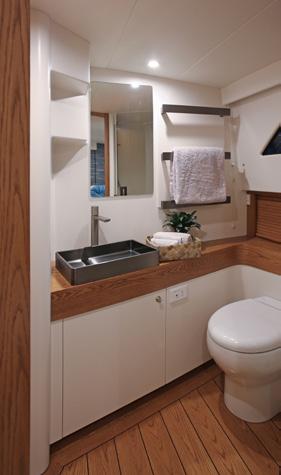
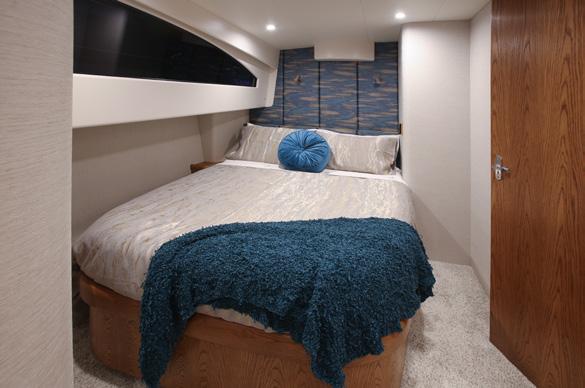
and Gae, Saynor and Lloyd Stevenson Boatbuilders’ electronics expert Angus Small to monitor Zaphira’s status in aspects such as battery, water and fuel capacity, and details such as speed and position anywhere in the world. Anyone authorised to use/access the app, including the owners or designated Lloyd Stevenson Boatbuilders staff, can manage the boat’s systems such as power generation or switch on the fridges prior to a voyage.
As a mid-pilothouse, Zaphira’s layout is similar to other Upfold Elite models such as Antiquity, Maeve and Vanquish. However, every boat can be customised to the exact owners needs. This includes interior and exterior styling and layout.
On Zaphira, the cockpit welcomes with al fresco dining to starboard, closely associated with a doorway and electric, receding window to the inside dining.
To port, is a double cabin with ensuite/day head. The galley is for’ard to starboard with lots and lots of chef accoutrements: boiling water on tap, bulk stowage in a locker beneath the sole, a full size domestic fridge with a discreet safety lock, microwave/convection oven, dishwasher and stunning stoneware bench. Steps lead up into the saloon where seating includes twin recliner chairs to enjoy TV and delicious almost
all-round views. To port, aft, steps lead between glassware cabinets to the flybridge helmstation with more seating and an enclosed Juliet balcony, also home to the auxiliary helm. Forward from the saloon, steps lead down to the accommodation: a for’ard master cabin and ensuite, and the second guest cabin to starboard with a single and double bunk, stacked, and access to the engine room.
When I visited Zaphira in the Bay of Islands, it was less than a year since her launching. I arrived on Emperor, the 14.5m mid-pilothouse owned by Bill and Christine Upfold since Upfold built her in 1989. It was a worthy comparison. Although Emperor is without the modern advances such as CZone and EJS, she has been well maintained and her fundamental systems in engineering, electrics and plumbing, with some upgrades, continue to operate smoothly, more than three decades on.
Upfold’s attention to design and installation is fundamental to happy, successful boat ownership. It’s continued in the workmanship of Lloyd Stevenson Boatbuilders, as on all its builds and is a sure reason why customers keep coming back.
PACIFIC POWERBOAT REVIE WS _ ZAPHIRA 18M ELITE
80 MARCH / APRIL 2024
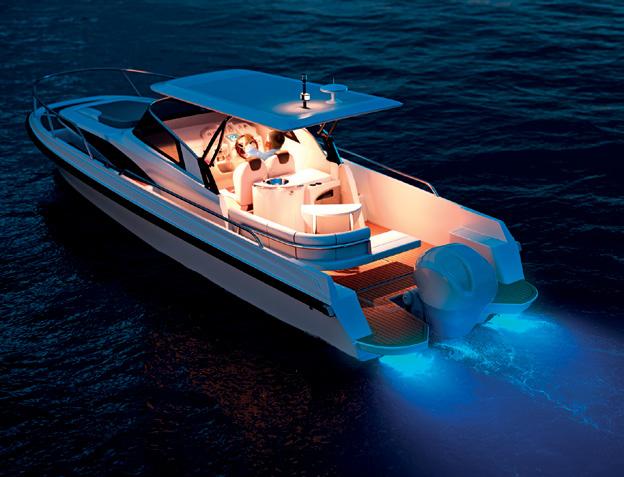
Setting a new standard in trim & stabilization. Again. Priced for 20-45ft boats.
TAKES YOUR BOATING TO THE NEXT LEVEL
TAKES YOUR BOATING TO THE NEXT LEVEL
standard in stabilization. Again. 20-45ft boats.
is an automatic trim brings world class and fuel savings. 20-45ft boats.
Setting a new standard in trim & stabilization. Again. Priced for 20-45ft boats.
Setting a new standard in trim & stabilization. Again. Priced for 20-45ft boats.
LIGHTNING by HumphreeTM is an automatic trim & stabilization system that brings world class comfort, increased speed and fuel savings. LIGHTNING is suitable for 20-45ft boats.
advanced technology, mobile app integration, LED lighting system is
LIGHTNING by HumphreeTM is an automatic trim & stabilization system that brings world class comfort, increased speed and fuel savings. LIGHTNING is suitable for 20-45ft boats.
Its combination of our advanced technology, user-friendly interface, mobile app integration, and beautiful underwater LED lighting system is what truly sets it apart.
propulsion system you use; sterndrive, inboard—this perfect choice for new refit a used boat. It level.
Its combination of our advanced technology, user-friendly interface, mobile app integration, and beautiful underwater LED lighting system is what truly sets it apart.
No matter which propulsion system you use; outboards, electric, sterndrive, inboard—this new system will be the perfect choice for new build boats or for when you refit a used boat. It will take you to the next level.
No matter which propulsion system you use; outboards, electric, sterndrive, inboard—this new system will be the perfect choice for new build boats or for when you refit a used boat. It will take you to the next level.

TAKES YOUR BOATING TO THE NEXT LEVEL
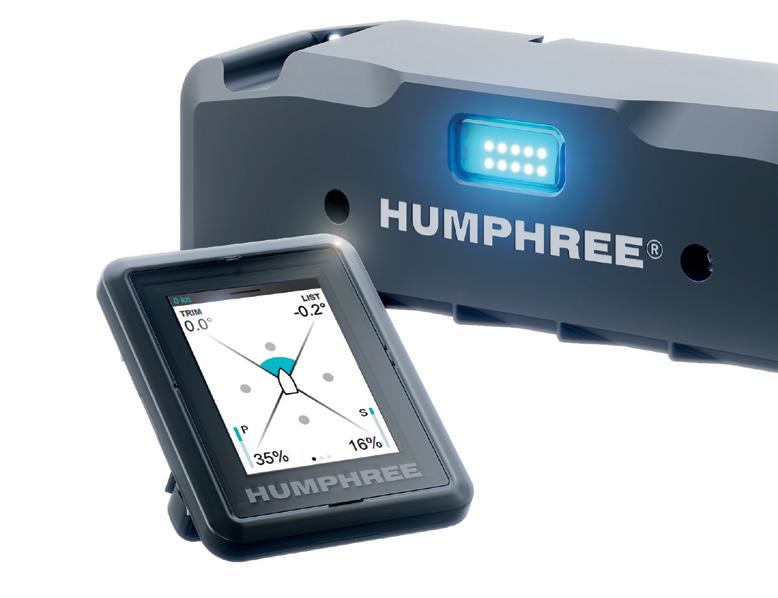

VISIT THE LIGHTNING WEB PAGE BY SCANNING THE QR CODE WITH YOUR SMARTPHONE Auto Trim • Pitch Control • Auto List • Coordinated Turn • Roll Stabilization AUTOMATIC
FUNCTIONS
VISIT THE LIGHTNING WEB PAGE BY SCANNING THE QR CODE WITH YOUR SMARTPHONE Auto Trim • Pitch Control • Auto List • Coordinated Turn • Roll Stabilization AUTOMATIC FUNCTIONS Priced for 20-45ft boats.
VISIT THE LIGHTNING PAGE BY SCANNING QR CODE WITH YOUR SMARTPHONE Pitch Control • Auto List • Coordinated Turn • Roll Stabilization AUTOMATIC FUNCTIONS DB965 Humphree Distributor New Zealand & Pacific Islands: Volpower NZ Limited. Ph: 0800 865 769 or 09 274 4305 www.volpower.co.nz
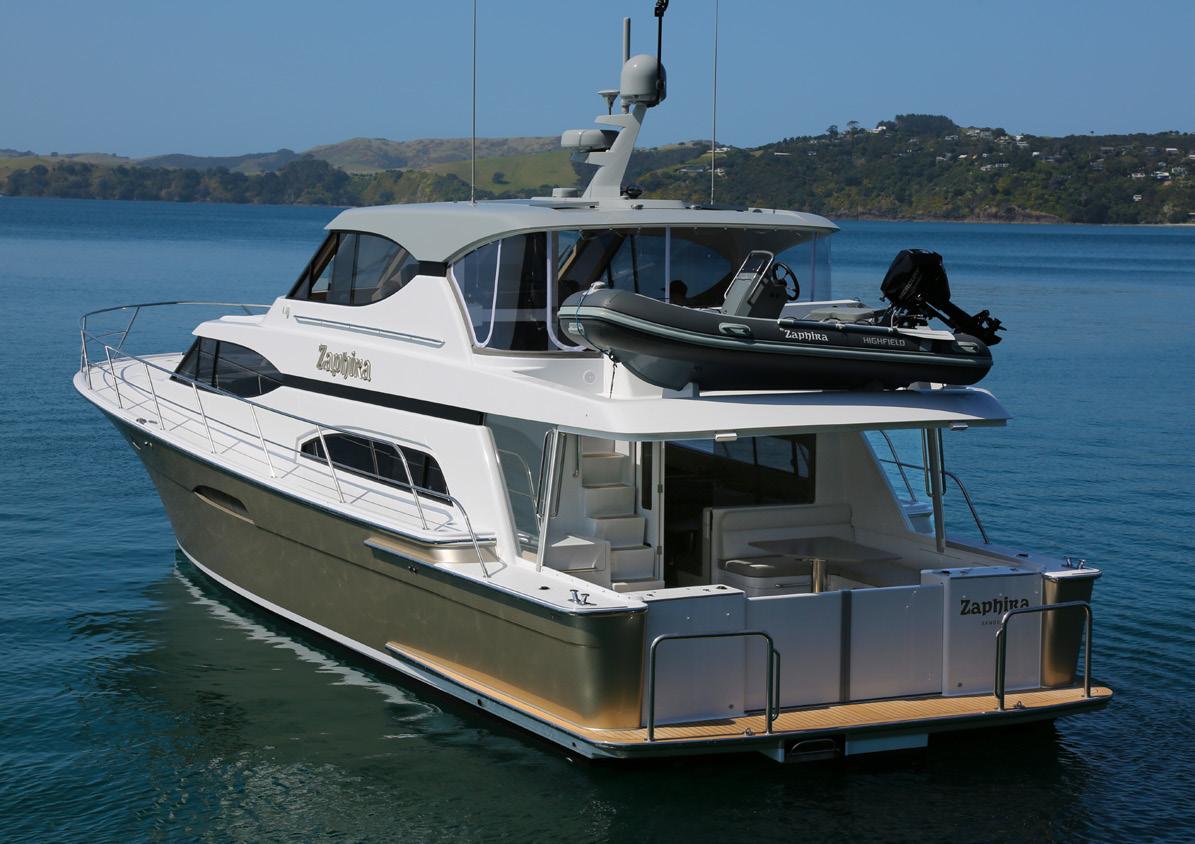
SPECIFICATIONS
Construction Balsa core, E glass epoxy composite
LOA 18m
Beam 5.4m
Draft 1.2m
Displacement 28,000kg
Deadrise 11 to 26 degrees
Fuel 6000L
Engines 2 x MAN i6 @ 800hp/ Twin disc MGX 5096a
Drive Shaft
Fuel capacity 4,400lt
(6,000lt extended range)
Gearboxes Twin Disc Quickshift
Genset Onan 18kW
Water capacity 900lt, plus 210 l/hr Watermaker
Hot water capacity 200 L
Holding tank 300L
Cruising speed up to 25 knots
Max
ELITEMARINE.CO.NZ
LLOYDSTEVENSONYACHTS.CO.NZ
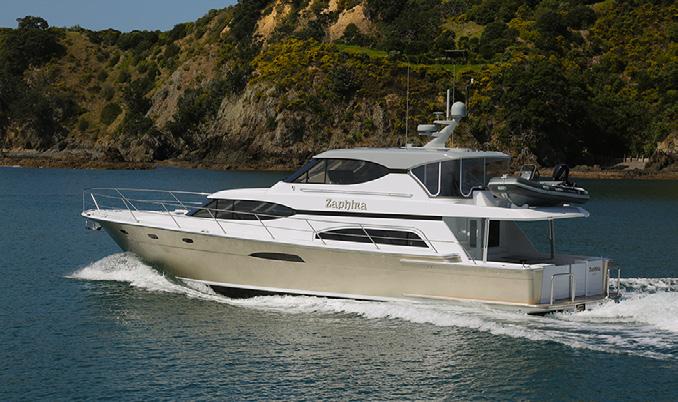
PERFORMANCE DATA
laden)
speed 29.5 kt (fully
PACIFIC POWERBOAT REVIE WS _ ZAPHIRA 18M ELITE
RPM Fuel Speed L/nm Range 900 27 8.8 3.1 1760 1200 66 9.7 6.8 794 1400 98 13 7.5 716 1600 133 16.3 8.2 662 1800 172 20 8.6 628 1950 206 22.8 9.0 598 2150 272 26 10.5 516 2300 308 28 11.0 491 WOT 322 29 11.1 486 Range is based on 90% of fuel cap, vessel fully laden 82 MARCH / APRIL 2024
Discover the MAN difference.
‘
It’s been a pleasure working with the team at Lloyd Stevenson, dedicated to delivering
To read more MAN success stories, scan the QR code or contact us on:
Engine sales: man@seapower.com.au | www.mandiesel.com.au
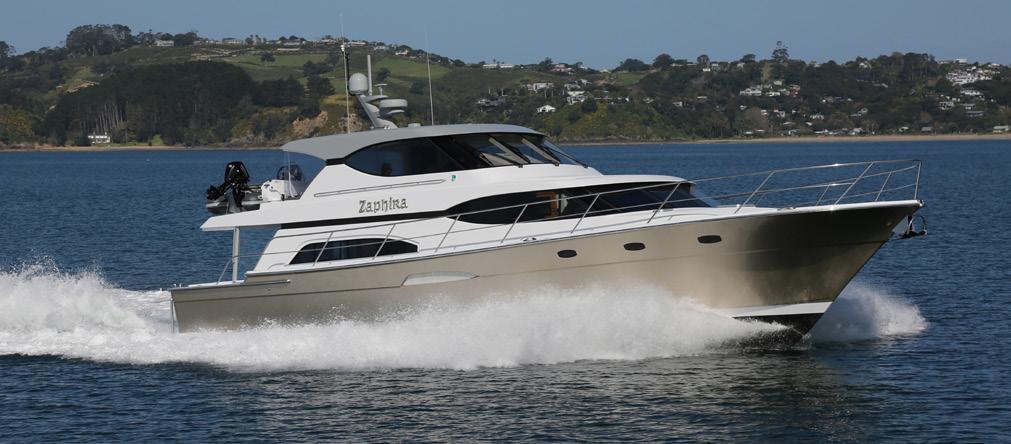




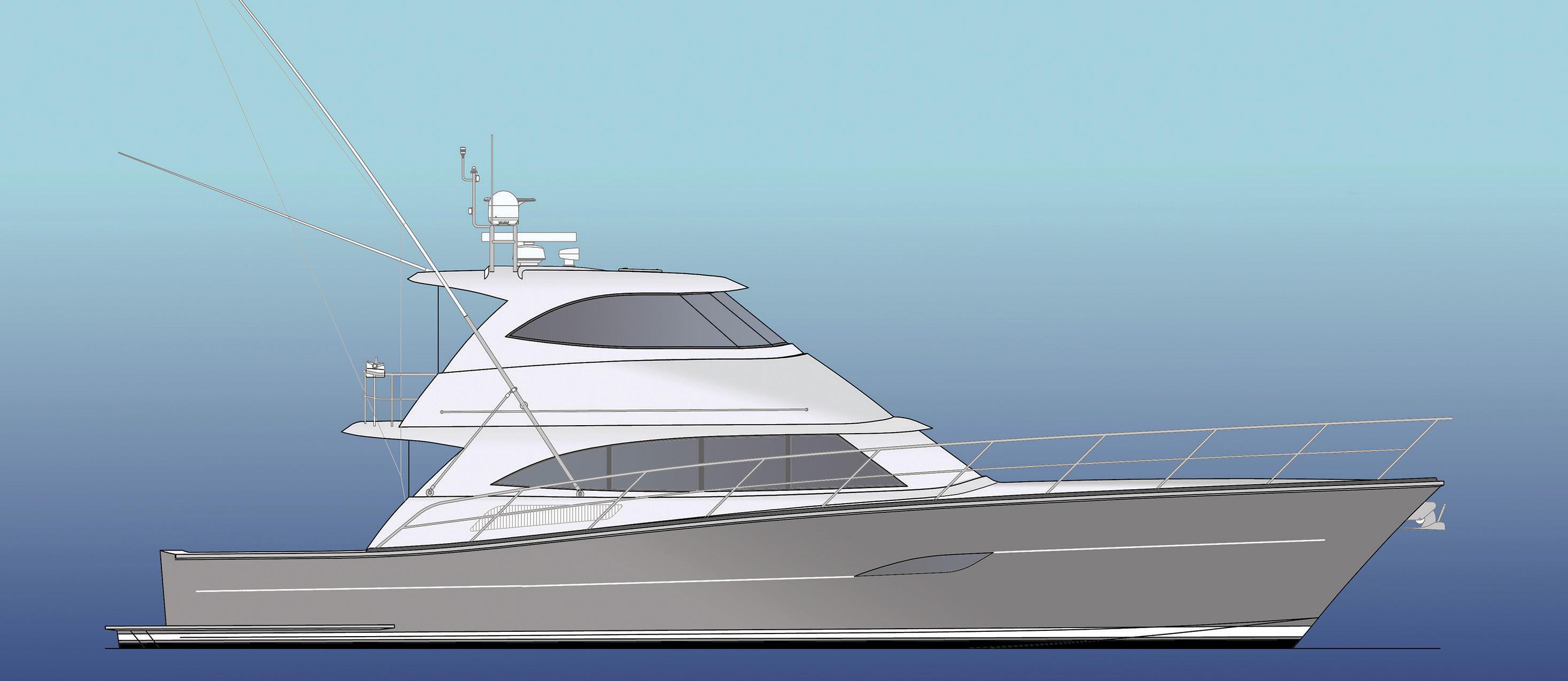
www.lloydstevenson.co.nz www.lloydstevenson.co.nz Custom design Sedan, Mid-Pilothouse and Sportsfisher Motor Yachts www. elite marine.co.nz • +64 (0) 9 530 8501 www.webermarine.co.nz www.lloydstevenson.co.nz www.lloydstevenson.co.nz Custom design Sedan, Mid-Pilothouse and Sportsfisher Motor Yachts www. elite marine.co.nz • +64 (0) 9 530 8501 www.webermarine.co.nz www.lloydstevenson.co.nz www.lloydstevenson.co.nz Custom design Sedan, Mid-Pilothouse and Sportsfisher Motor Yachts www. elite marine.co.nz • +64 (0) 9 530 8501 www.webermarine.co.nz www. elite marine.co.nz • +64 0274 853 235 lloydstevensonyachts.co.nz DB976 Elite 18m Mid-Pilothouse
smooth
idle
‘The MAN engines are
and quiet, especially at
and start-up,’
…cruised…using half the amount of fuel of a similar-sized, heavier flybridge boat travelling at the same speed.’
quality,
exceptional
a core value of MAN engines.
DB976
POWERBOATMAGAZINE.CO.NZ 83
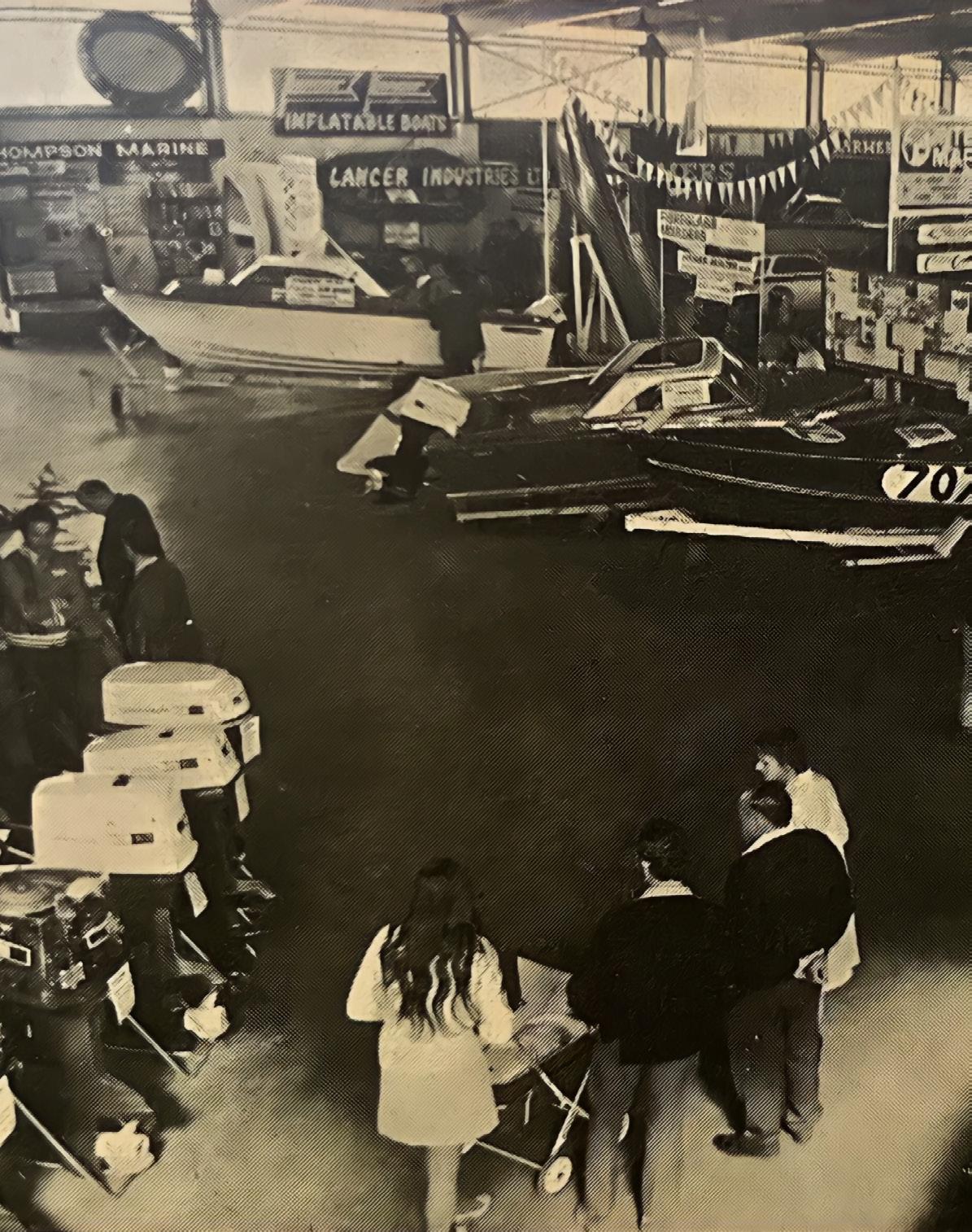
A HISTORY OF KIWI TRAILER BOATS BY THE DECADES
PART THREE: The 1970's
BY DOUG DUKESON & PETER MORGAN
KIWI TRAILER BOATS BY THE DECADES _ THE 1970S
84 MARCH / APRIL 2024
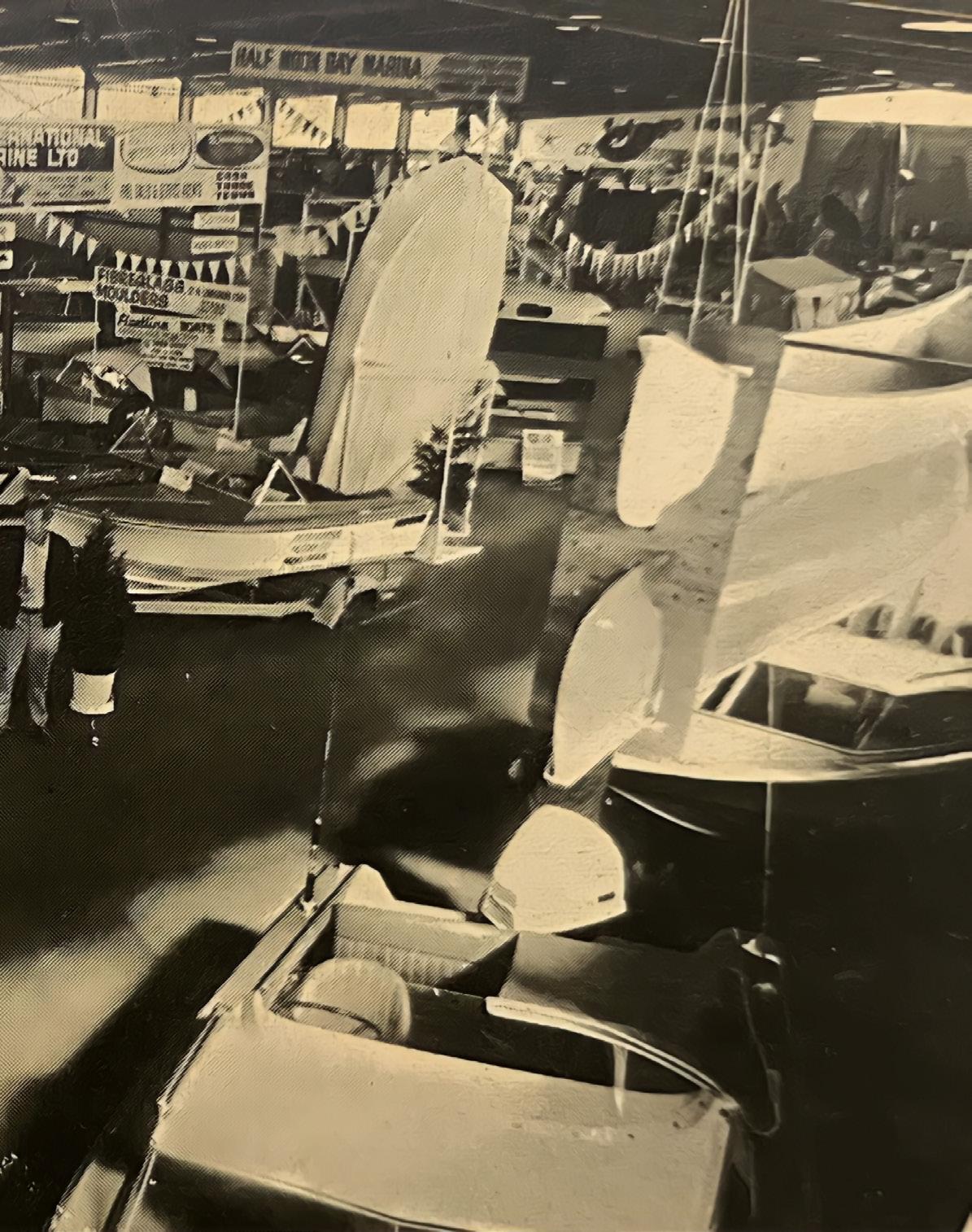
Boat Shows in the 70’s were popular and well supported
POWERBOATMAGAZINE.CO.NZ 85
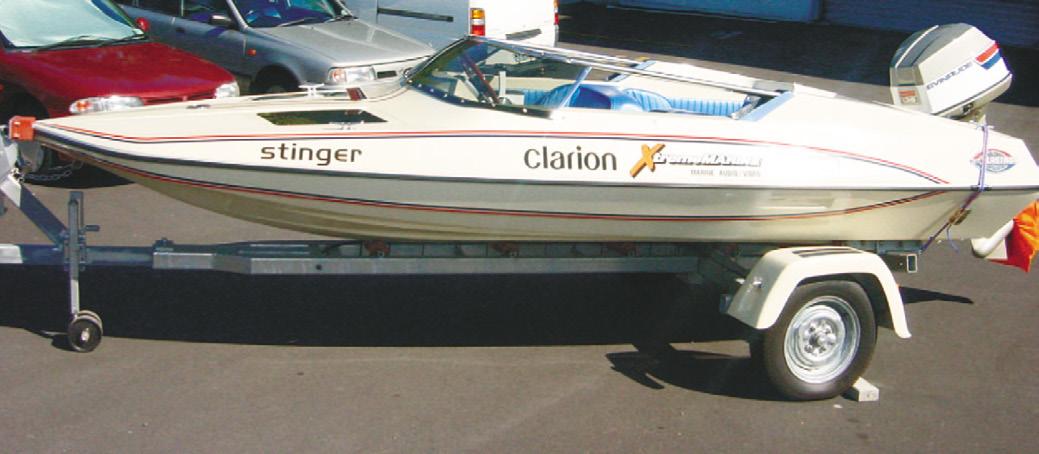
1970
• Top selling outboards brands were Mercury, Johnson, Evinrude, Chrysler and British Seagull.
• The Bonito 16 announced the arrival on the market of Bonito Boats, a name that is still very much part of the boating scene today.
• MerCruiser, OMC, Chrysler and Volvo Penta sterndrives installed in 6m plus cabin cruisers became more popular.
• Peter Knight drove Roadrunner to his third consecutive Masport Cup win.
• Mike Dempster broke the NZ outboard speed record with 102.8mph and then on the next run flipped over backwards. Bell-X-II also cracked the ton with a speed of 101.2 mph.
• Glastron boats from the USA became available in New Zealand.
• Mariner outboards were released by Monarch Distributors Ltd with a range from 2hp to 55hp.
• The 11ft 6in (3.5m) PMC Fisherman open runabout topped over 500 sales.
• Offshore rules for the North Island stated that all advertising material shall be limited to the aft 25% of a boat . The reason was to stop major sponsors and big money entering the sport!
• Bay Marine of Tauranga introduced two fibreglass boats to the market, Bay Cruiser 19 and Bay Cruiser 22.
• Jack Gallagher’s tunnel hull, Hi-Jack, dominated the South Island marathon circuit.
• Miss Kiwi won the Rio Balsas jetboat race in Mexico.
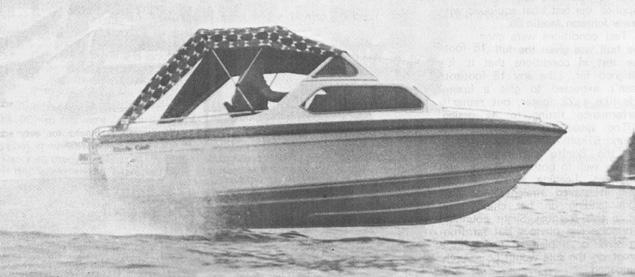
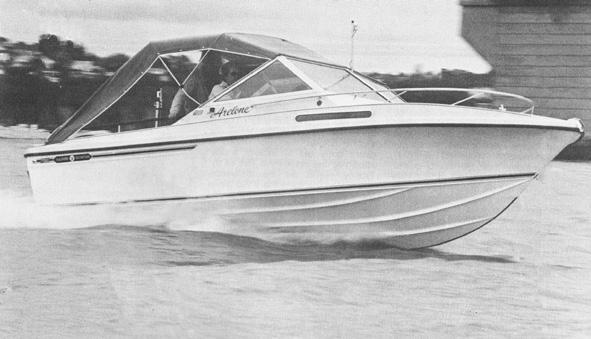
1971
• Full face helmets were banned from speedboat racing in New Zealand.
• New Zealand’s first all-aluminium boat trailer was built by Petone based Aluminium Services Ltd for boats up to 15ft.
• A team from Hamilton Marine successfully negotiated the 2718-mile Zaire River in two 18ft Ford powered Hamilton jetboats.
• Ron Archer won an unprecedented 9 out of 9 races in Class E, in his Volvo-Penta powered Headhunter and took out the championship.
• Neil McCorkindale won an unprecedented third successive overall win in the Epiglass 40-mile race on Auckland Harbour, driving Jacqui Hunter, his Haines Hunter V163 runabout.
• New model releases included the Haines Hunter V198, Cresta Craft V26, Apollo 6.6, Bay Cruiser V7, Sportsman 22 and Steadecraft 14’3” (4.3m) runabout, designed and built by Keith Eade, who had considerable success racing a cut-down, lightweight version.
KIWI TRAILER BOATS BY THE DECADES _ THE 1970S
Glastron boats, originating from the United States, were available in New Zealand.
The Bonito 16 was regarded as one of the prestige boats of its day.
86 MARCH / APRIL 2024
Haines Hunter rewrote the book on 6m cabin cruisers with the V198.
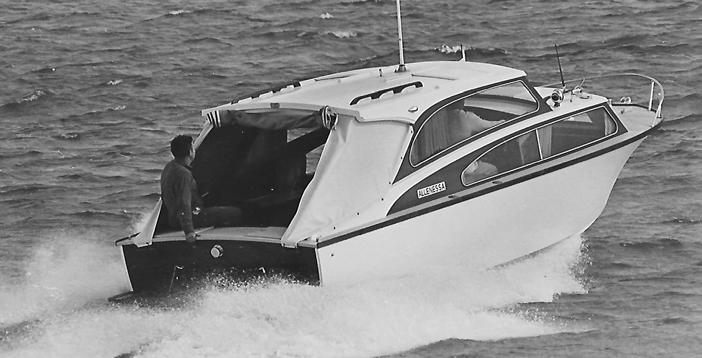
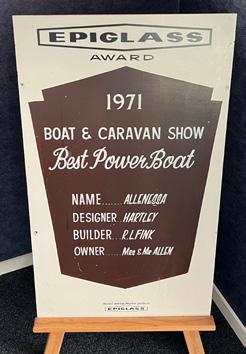
Flying under the radar in Hamilton was Ray Fink Boatbuilders
Ray started commercially boatbuilding in 1960, building a 20 footer for a Hamilton client. Ray progressed into a rural property in the mid 60’s to Tamahere between Hamilton and Cambridge where he lived and worked in his factory for 36 years.
Ray built a numerous number of timber and plywood boats from runabouts to launches and a commercial fishing and crayfishing vessel for Kawhia on the Westcoast in 1981.
Quality was Ray’s passion building with varnished mahogany in many cases. Ray managed in his career to building just on 50 new boats with one built in 1971 a 24 foot trailer boat winning boat of the show at the Greenlane Boatshow with a boat called Allenessa.
Ray employed a number of staff over the years, two of whom were his sons.
Lance after eleven years working for Ray let alone his school holiday jobs went into boatbuilding business with his wife
Enjoy hassle-free boating with a monthly subscription
to build up Tristram Marine which now has a third Fink generation running the company (Tristram and Kingsley).
Ray’s youngest son Andrew worked for Ray Fink Boatbuilders for many years and then took over Ray’s business and went on to build along with his wife many launches for both New Zealand and Australia.
These legacies, Ray now 92, is very proud to have been the instigator to both of their successes.
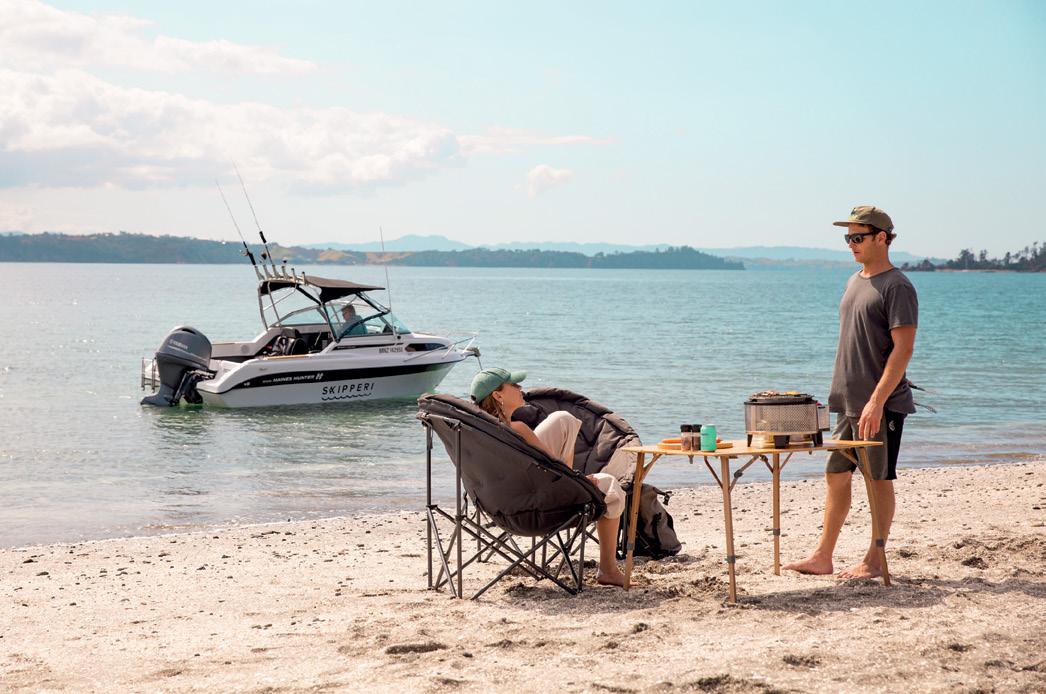
Plan your dream day out on the water and reserve your boat of choice through the app. Skipperi offers the world´s easiest way to enjoy boating. With a monthly subscription you’ll get access to a new, fully equipped, smart fleet of motorboats without the hassle of ownership.
Limited spots available. Subscribe now!
skipperi.nz
POWERBOATMAGAZINE.CO.NZ 87
Ray Fink Boatbuilders win The Boat of the Show at the 1971 Greenlane Boatshow with a boat called Allenessa.
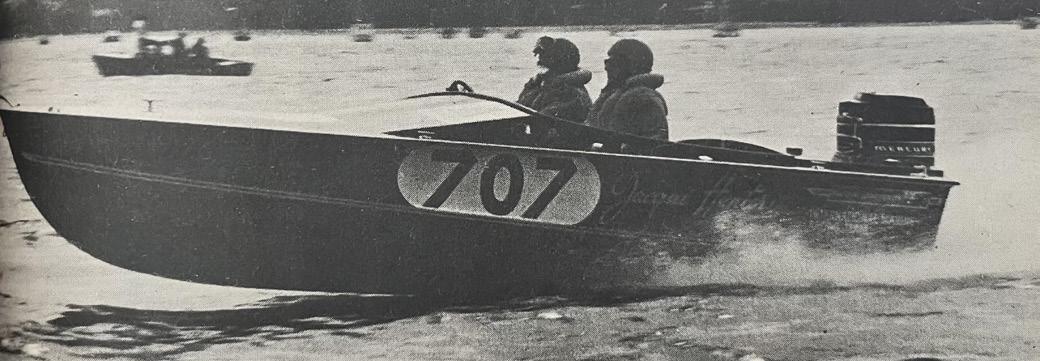
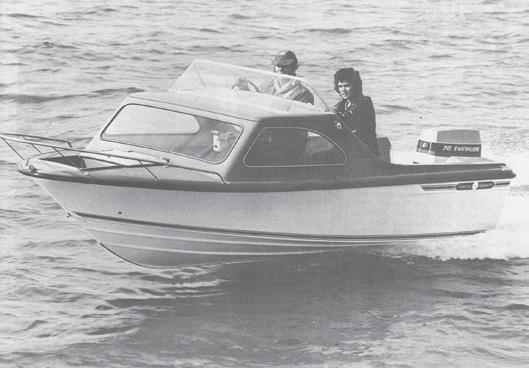
1972
• The McGregor brothers retained the Masport Cup and continued to dominate the unlimited hydroplane scene in Air New Zealand.
• Neil McCorkindale sold Jacqui Hunter, his Haines Hunter V163 runabout, and replaced it with a new boat, naturally named Jacqui Hunter II, a cut-down Haines Hunter V19 runabout powered by a Mercury 135hp “tower of power”. Cutting the gunwale height reduced the length from 18’4” (5.59m) to 17’6” (5.33m). In its first race, the Auckland 6-hour Atlantic Boat Show Marathon, Neil and longtime crewman Garry Feran came 6th on speed and 1st on handicap.
• Talk of boat registration was outlined by the Ministry of Transport, but despite a lot of talk, nothing has ever happened, to this day!
• Alli-Craft joined the growing tinnie market, with a 12ft 6in runabout.
• Other new releases included the Bonito 16 sports runabout, Morgan 6.3, Sea Nymph Sovereign 716, Marlborough 415, Fi Glass Dominator and Fi-Glass Viscount.
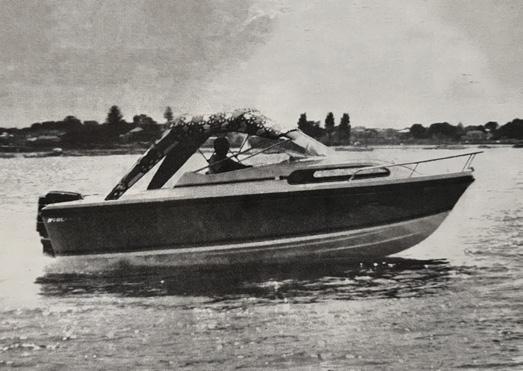
• The Morgan 6.3 made its debut at the Auckland Boat Show in September 1972.
• Phillip Mills launched Wrangler, a 24ft Ryancraft offshore tunnel hull powered by twin Johnson V6 200s, then the largest offshore catamaran in Australasia. He had outstanding success both in the South and North Island.
• Frank McLeod broke world and Australasian class records with his inboard hydroplane, Miss Wix. Speed was 128.9 mph.
• The number of trailer boats built under 20ft (6.1 m) in the 1971-72 period was 2795.
• The directors of Wiseman’s (known as the sports stores conducted by experts) with over 40 branches throughout New Zealand, responded to the company’s poor performance by closing some branches and offering the others to their respective managers.
Les Miller was the manager of the Newmarket branch, which was known as Wiseman’s Boating and Machinery Centre, which sold
Fleetline fibreglass runabouts, notably the 4.5m Sapphire, designed by Rex Henry and made by Fibreglass Moulders Ltd, and Haines Hunter boats, notably the V198, also made by Fibreglass Moulders Ltd, under licence to the Haines family company, of Queensland.
Les Miller wanted to purchase Wiseman’s Newmarket business, but needed a partner as he lacked the resources to do so on his own. With a lot of help from his accountant, Don St Clair Brown, Miller was introduced to Bill Moyes and the new company became Miller Moyes Boating Centre. In 1975, Miller and Moyes purchased a car dealership in Panmure. The next year, Bill Moyes decided to expand the car business and wanted to merge their boat business with their car business. Les Miller wasn’t in favour of that, and the pair struck a deal which gave Miller ownership of the marine operation and Moyes went on to become a big name in the Auckland car business, based in Panmure.
KIWI TRAILER BOATS BY THE DECADES _ THE 1970S
Jacqui Hunter II competing in her first race
Fleetline moulders extremely popular Fleetline Sapphire 4.5, sold in excess of 2500 units
88 MARCH / APRIL 2024
The Fi-Glass Viscount was one of the most popular boats in the 1970's, with many still around today.
• Peter Knight won back the Masport Cup in The Godfather.
• A split in the offshore powerboat racing ranks in Auckland saw the formation of the Northern Offshore Powerboat Club dedicated to racing, leaving the Auckland PBRO to run rally events.
• New model releases included Manta 464 and 488, Bonito 20, Smuggler 6.3, L28 Lindstrom, Steadecraft V166, Trophy Conqueror and Hamilton 210.
• The inaugural Atlantic 100 rally attracted 73 entries and was won by an eight-year-old 16ft Frank Pelin designed plywood runabout, powered by a 65 hp Mercury and skippered by Neil McCorkindale and Gary Feran.
• Barry Ford launched his Cougar catamaran, Typhoon at Akaroa and won convincingly. It marked a new era in racing and set the standards for winning boats in the future.
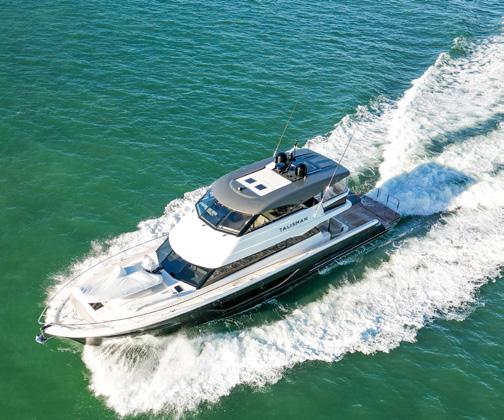
Fishers Sports and Trawlers Yachts,
Allowcrewandmovearoundsafely
• The first-ever offshore marathon was held, with 43 starters running in a three-day event from Tutukaka to Auckland. The first Citizen Watch Marathon was won by Maurie Begley’s Clipper 26SR, Miss Trailways.
Keepyourvesselsteadywhendocking
Effectiveattrollingandzerospeeds Theonlyno-maintenancegyroavailable
• Peter Knight raced in the World 7-Litre hydroplane championships in Los Angeles in a chartered boat and finished third.
• Smuggler Boats introduced the very popular Smuggler 6.3, in cabin and runabout versions.
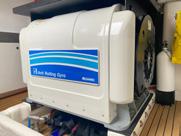
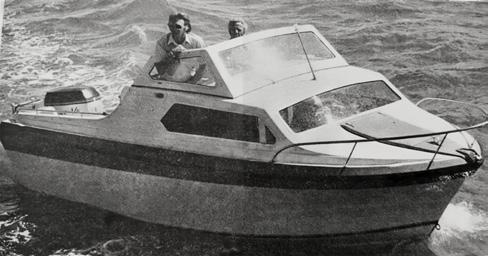
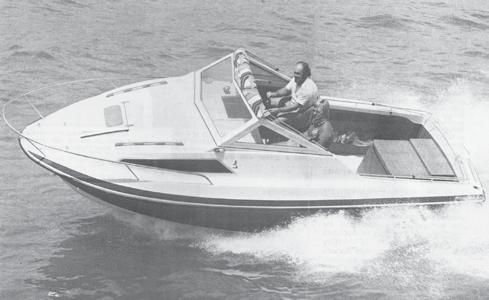
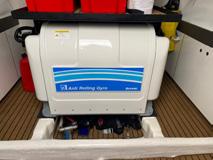
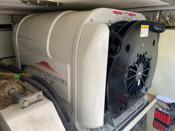



Agent for Maritimo REDUCE Your Boat Roll At anchor and underway Fishers Sports and Trawlers Yachts, Luxury For For Luxury Yachts, Trawlers and Sports Fishers move around safely dining and setting for or anchored out vessel steady when docking
at trolling and zero speeds The only no-maintenance gyro available to Easy use, just flip a switch Improves fuel efficiency www.mysc.co.nz | 416 1179 Motor Yacht Service info@mysc.co.nz Centre | 09 WWW.MYSC.CO.NZ 12 Clearwater Cove, Hobsonville Marina, Auckland, NZ Also Agents for: DB979 NZWarrantyandAfter-Sales AgentforMaritimo REDUCE YourBoatRoll Atanchorand underway Fishers Sports and Trawlers Yachts, Luxury For For Luxury Yachts, Trawlers and Sports Fishers
diningand settingfor
Effective
Allowcrewandmovearoundsafely Providesacomfortable
toEasyuse,justflipaswitch Improvesfuelefficiency www.mysc.co.nz| 4161179 MotorYachtService info@mysc.co.nz Centre |09 WWW.MYSC.CO.NZ 12ClearwaterCove, HobsonvilleMarina,Auckland,NZ AlsoAgentsfor: NZWarrantyandAfter-Sales AgentforMaritimo REDUCE YourBoatRoll Atanchorand underway
Luxury For For Luxury Yachts, Trawlers
Sports Fishers
Sleepincomfort oranchoredout Keepyourvesselsteadywhendocking Effectiveattrollingandzerospeeds Theonlyno-maintenancegyroavailable
and
guests to Providesacomfortable diningand
settingfor
oranchoredout at the dock
entertaining
Sleepincomfort
toEasyuse,justflipaswitch
www.mysc.co.nz| 4161179 MotorYachtService info@mysc.co.nz Centre |09 WWW.MYSC.CO.NZ 12ClearwaterCove, HobsonvilleMarina,Auckland,NZ AlsoAgentsfor: 1973
Improvesfuelefficiency
The Smuggler 6.3 was available in both cabin and runabout versions.
POWERBOATMAGAZINE.CO.NZ 89
The Bonito 20 made its debut.
1974
• Sales of boat plans for home builders started to wane as more and more stock production fibreglass boats became available.
• Brian and Louise Pearce crossed the Tasman in a Cresta Craft 26ft Galaxy. They took 53 hours from Houhora to Norfolk Island, 65 hours from Norfolk to Lord Howe and a further 46 hours from Lord Howe to Sydney.
• Jim McAlpine broke the Bay of Islands to Auckland speed record in Pizza Hut, with a time of 2hrs 20 mins. Ken Lusty then dropped that to 2hr 14min 24 secs, using the same boat.
• Jim McAlpine, Ron Archer and Bob Menzies competed in the gruelling Pacific 1000 in the 26ft Pizza Hut and finished seventh. Warwick Irvine’s 6m monohull from New Zealand took a creditable fifth.
• Through to the mid 1970’s Seacraft experienced spectacular growth. It was during this period that the company opened a factory in Fiji to support the developing export market. The NZ domestic market was enjoying unprecedented growth and the range of Sea Craft fibreglass boats benefitted hugely at this time.
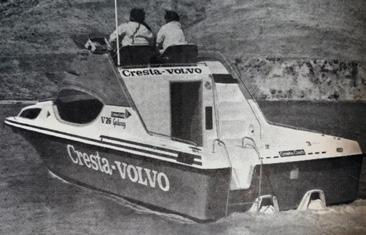
1976
• The Johnson 235hp V6 retailed for $6621, the Mercury 200hp V6 for $5983 and the Suzuki 65 for $2749. Top-selling outboards were Johnson/ Evinrude, Mercury and Chrysler.
• The popular Seacraft Sierra makes its first appearance.
• A new brand name emerged from the Waikato – Buccaneer – designed and built by Gerry Gerrand. The first model was a 4.7m cabin boat, the next a runabout version –and the rest is history!
Fi-Glass introduced the Baron.
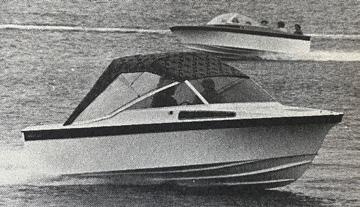
Morgan 6.3
• OMC released 200hp 90-degree V6 Johnson and Evinrude outboards for the 1976 model year. These were the first V6 production outboards.
• Not long after, Mercury Marine responded with the 175hp 60-degree V6 Black Max, and the outboard horsepower race was on. It continues to this day!
• Marksply dominated the top end of the trailer boat market with their Marksply 776 flybridge cruiser and the Marksply 686 weekender.
• In response to (or was it in anticipation of?) the introduction of V6 outboards, Fi-Glass introduced the Baron, a 7m ‘scaled-up’ Viscount.
• Another fuel crisis – the third in the 1970s – caused a lot of offshore and circuit racing events to be cancelled or cut down by as much as 50%. It also put a further dampener on the sales of powerboats, as they became even more expensive to run.
• A big swing towards trailer yachts cut into the trailer boat market as owners sold their ‘gas guzzling’ outboards in favour of sails. It didn’t last long and within a few years trailer yacht sales decreased dramatically.
• Doug Cameron won the Masport Cup despite a broken propeller. The McGregor brothers’ Air New Zealand was held up by a Cook Strait shipping strike and missed the race.
• The Ministry of Transport brought in a regulation to make it illegal to dangle your arms and legs over the bow of a small boat doing more than 5 knots.
• The seven-day, five-stage Citizen Watch marathon was won by Roger Wood in his Cougar catamaran, Typhoon.
• Keith Eade won the Glenvale Driver of the Year award after a most successful circuit racing season.
• John Garrity won his debut marathon race at Queenstown in his new Cougar tunnel hull, Visor and later in the year took third overall in the Pacific 1000 off Queensland.
• The Morgan 5.3 – little sister to the Morgan 6.3 – was introduced. Designer Peter Morgan, having had a ‘Eureka’ moment while having his morning shower, first had his 6.3 hull mould gelcoated, then filled the bottom spray strake with polyester ‘bog’. He then had fibreglass gunstock sprayed into the 6.3 hull mould, and added a couple of temporary mdf bulkheads. After the 5.3 hull plug was removed from the 6.3 hull mould, he used a cold chisel to whack off the bottom spray strake that had previously been filled with ‘bog’, then cut a 178mm-wide longitudinal slice from the centre, including the two bulkheads, and cut around the topsides 40mm above the knuckle, thus making the topsides the same height as his original Aurora, which had been used as the hull plug for the Clipper 20. Next, after joining the port and starboard halves together whilst keeping the deadrise unchanged, he shortened the piece of the 6.3 hull by the appropriate amount for the making of the 5.3 hull plug, and then added a flat transom with radiused corners. After fairing and spraying with 2-pot polyurethane reaction lacquer, the hull plug was ready for the 5.3 hull mould to be made. Next came work on the deck plug, incorporating similar styling to that of the 6.3, but with a two-flat-panel front windscreen in armourplate glass.
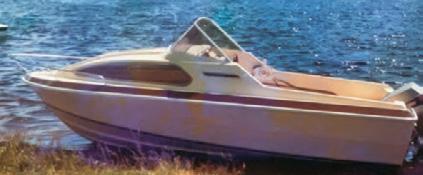
KIWI TRAILER BOATS BY THE DECADES _ THE 1970S
1975
The new Cresta Craft Galaxy 26 footer attempted the first Tasman Crossing by runabout.
90 MARCH / APRIL 2024
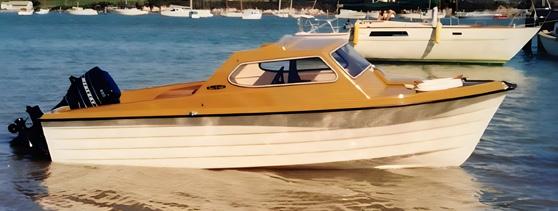
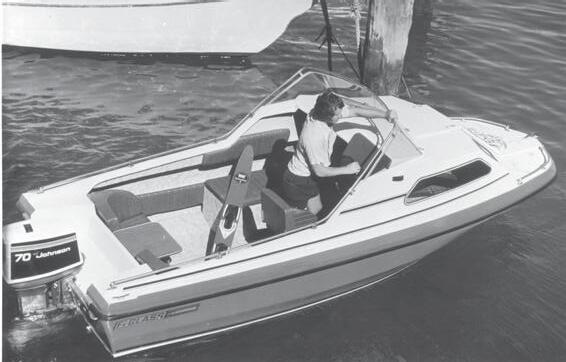
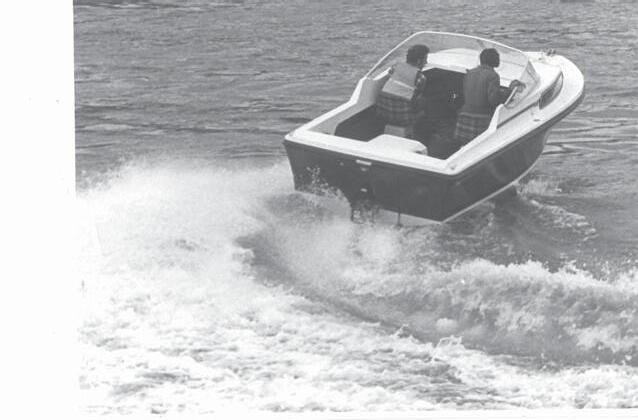
The 1970's was a busy time for Fi-Glass with the release of the Viscount, Lightening, Warrior, Sidewinder, Dominator and Scamp models.
1977
• Fi-Glass introduced the 17ft (5.2m) Warrior which became one of the top-selling models in the Fi-Glass range. A more modern version of it is still being produced today. It has a re-designed hull and has been lengthened by the addition of an integral bowsprit and a portofino transom.
• Fibreglass Moulders introduced the Fleetline Solitaire, a 5.0m cuddy cabin convertible. Like its smaller Sapphire siblings, it was designed by Rex Henry.
• Fibreglass Moulders also introduced the Haines Hunter V17R, a deep-V runabout designed by John Haines. This model replaced the V17, which had originally been ‘designed’ simply by shortening a V19, the hull of which had been ‘flopped’ by the Haines family company from a hull originally designed by Ray Hunt and produced in the USA as the O’Day 18 and in the UK as the Fairey Marine
• By 1977 world events started to impact the NZ economy - fuel crisis, carless days etc.
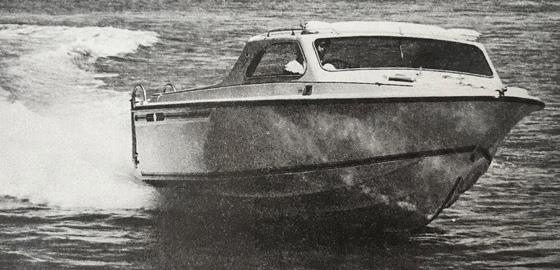
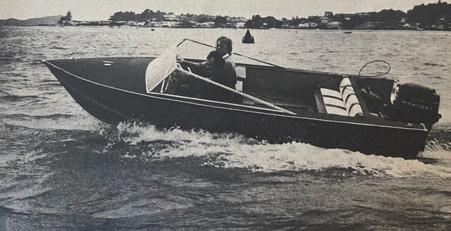
1978
• Buccaneer Pleasure Craft Ltd introduced its second hull design, a 5.6m, available as a cabin boat and also as a runabout.
• Alloy boat builders started to have a stronger presence in trailerable powerboating, including large brands such as Ramco and Fyran, becoming popular in the late 1970’s.
• C.W.F. Hamilton, the inventor of the modern water jet unit, passed away.
1979
• Imposed in June without warning, Prime Minister Muldoon’s 20% boat and caravan tax hit both industries hard, with massive lay-offs right across the markets. The impact of sales tax was severe. In some cases such as Seacraft, production went from three boats a week to one new boat for the year.
• Many companies closed and it took years for the boat industry to build itself back. The tax was effectively halved in 1986 when GST was introduced, initially at 10%.
• The Luxury Tax certainly cooled the market and in the early 1980’s it took a ‘bit of paddling’ to get the industry back up and running again... Which we will cover in our next issue...
 The debut of the Seacraft Sierra took place in 1976.
Fiberglass Moulders released the Fleetline Solitaire.
C.W.F Hamilton passed away.
Prime Minister Muldoon imposed a 20% boat and caravan tax.
Buccaneer introduced its second hull design, a 5.6m
Fyran gained popularity as an alloy boat builder.
Fi-Glass Lightneing Cabin
The debut of the Seacraft Sierra took place in 1976.
Fiberglass Moulders released the Fleetline Solitaire.
C.W.F Hamilton passed away.
Prime Minister Muldoon imposed a 20% boat and caravan tax.
Buccaneer introduced its second hull design, a 5.6m
Fyran gained popularity as an alloy boat builder.
Fi-Glass Lightneing Cabin
POWERBOATMAGAZINE.CO.NZ 91
Fi-Glass Warrior
NAVIGATING THE SEAS SAFELY A GUIDE TO BOATING EDUCATION!
There's nothing quite like a day out on the water, feeling the sun on your face and the wind in your hair. But whether you're new to boating or have years of experience, it's important to prioritise safety first. That's where boating education comes in.
COASTGUARD EDUCATION _ NAVIGATING THE SEAS SAFELY
92 MARCH / APRIL 2024
A
t Coastguard Boating Education, we offer a range of courses designed to help you navigate the seas safely and with confidence. In this article, we'll explore the different pathways you can take to educate yourself and expand your boating knowledge.
NEW TO BOATING
For those who are new to boating, Coastguard Boating Education offers a clear pathway to get you started. This can be taken over a number of years and becomes more relevant with the experience you gain and the amount of time on the water.
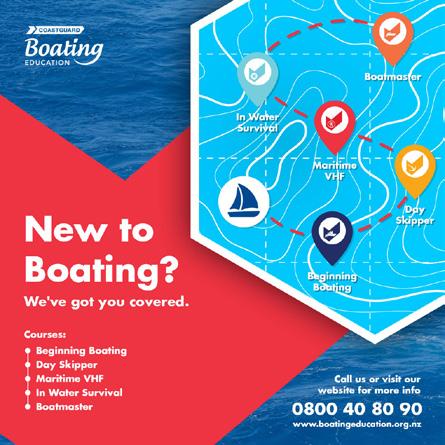
NEW TO BOATING PATHWAY:
BEGINNING BOATING | DAY SKIPPER | MARITIME VHF CERTIFICATE | IN WATER SURVIVAL
If you are new to boating then the Beginning Boating course is the place to start. It’s a FREE online course perfect for those with little to no boating experience and covers the basics, including safety equipment, basic boating rules and trip planning.
From there, the Day Skipper course delves deeper into boat handling techniques, navigation and weather patterns, preparing you for short day cruises and being in charge of a small vessel.
The VHF Course is also critical for boaties, as it covers proper radio usage and distress signals and is a legal requirement if you wish to operate a VHF onboard your vessel.
Once you have these three courses under your belt you can then consider taking some additional courses such as the in-water survival course which is ensures that you have the necessary skills to handle emergency situations on the water. The course helps you understand the potential risks aboard a small vessel, the best safety equipment to carry, how it functions, and how to properly use it. It also includes a fun practical, in-water component. For those who have experience under their belts, there's always more to learn.
If you have already completed the Day Skipper course and have your VHF licence, then a typical pathway for the more experienced boatie could include The More Experience Boating Pathway.
MORE EXPERIENCE BOATING PATHWAY:
BOATMASTER | COASTAL MEDIC | INBOARD & OUTBOARD ENGINE MAINTENANCE
The Boatmaster course is a comprehensive course for boaties with current knowledge and experience. It applies to a wide range of vessels including yachts, launches, and powerboats.
The material extends your knowledge in - chartwork, navigation techniques, distress signals, emergency procedures, knots, rope work, and provides a thorough understanding of the rules of the road at sea. It enables you to have the knowledge to go further afield and navigate at night.
If you are thinking of going further afield it may be prevalent to take your Coastal Medic course which is marine specific to sailors covering emergency response to life threatening conditions. It covers primary care, medical emergencies and trauma. It is a one day course that is worth taking and could help you save a life one day.
It’s always worth having some knowledge on your engine as when it stops working at sea you may need it to get home. The engine maintenance courses are one day courses and can be for inboard or outboard engines. These courses cover identification, engine care, maintenance, and trouble-shooting.
POWERBOATMAGAZINE.CO.NZ 93
BLUE WATER OFFSHORE SAILING PATHWAY
BOATMASTER | OFFSHORE MEDIC | ADVANCED SEA SURVIVAL | MRROC OR MSROC | RADAR
If you're interested in offshore sailing, the Category 1 certification is a must-have. This certification means you have met the requirements for offshore sailing, including having certain qualifications for sea survival and first-aid. All of these qualifications can be obtained through Coastguard Boating Education courses, such as the Offshore Medic course, which covers offshore medical skills, emergency response plans, and search and rescue techniques and the Advanced Sea Survival course.
Other courses that are very helpful when thinking about blue water sailing are the MRROC (Maritime Restricted Radiotelephone Operator Certificate) which covers SSB radio and MSROC (Maritime Short Range Operator’s Certificate) which is a requirement for anyone wishing to operate a digital VHF radio in Europe and Australasia, and a prerequisite for the RYA Yachtmaster Certificates of Competence. If you do these two courses together there is a discounted rate.
There is also the radar course which is very helpful should you have one on board. Achieving Category 1 certification opens up new possibilities for bluewater sailing adventures, giving you the skills and knowledge to tackle a range of offshore situations.
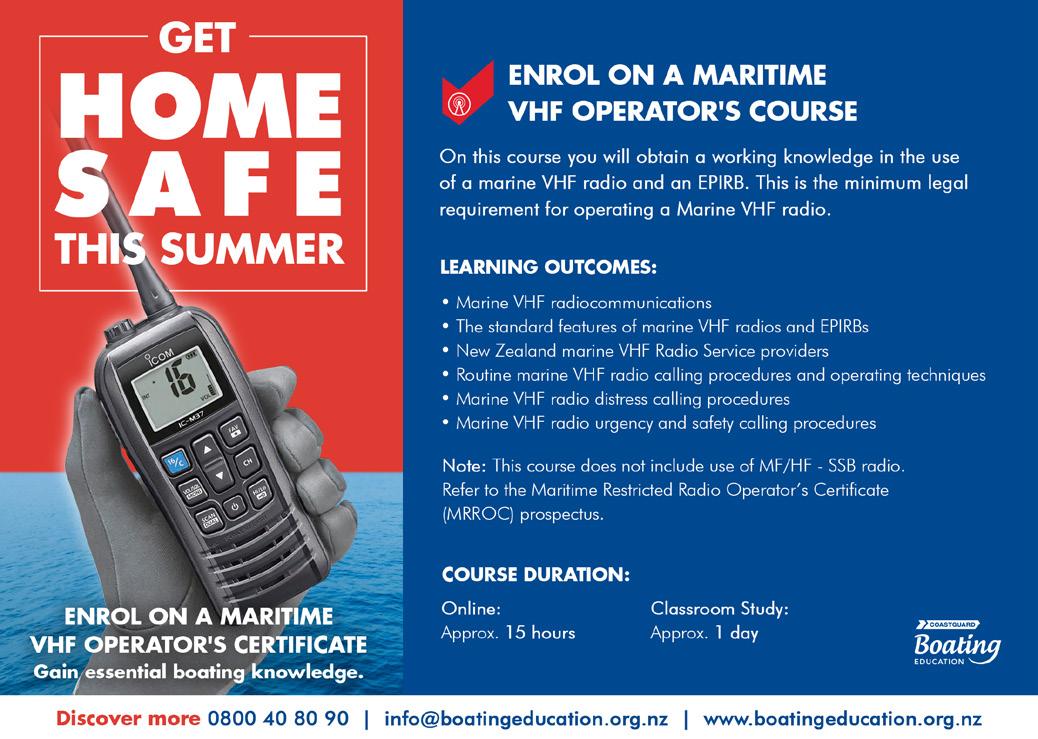
COASTGUARD EDUCATION _ NAVIGATING THE SEAS SAFELY
94 MARCH / APRIL 2024
Boating education is crucial for anyone who spends time on the water. Whether you're a seasoned boatie or just starting out, there's always something new to learn. Coastguard Boating Education offers a variety of courses designed to help you navigate the seas safely and confidently. From the Beginning Boating course to the Category 1 certification, there's apathway for everyone to expand their boating knowledge. By investing in education, you'll be better equipped to handle emergencies, understand navigation, and enjoy your time on the water to the fullest. So,
what are you waiting for? Let's

BOATINGEDUCATION.ORG.NZ
undewerway! POWERBOATMAGAZINE.CO.NZ 95
get
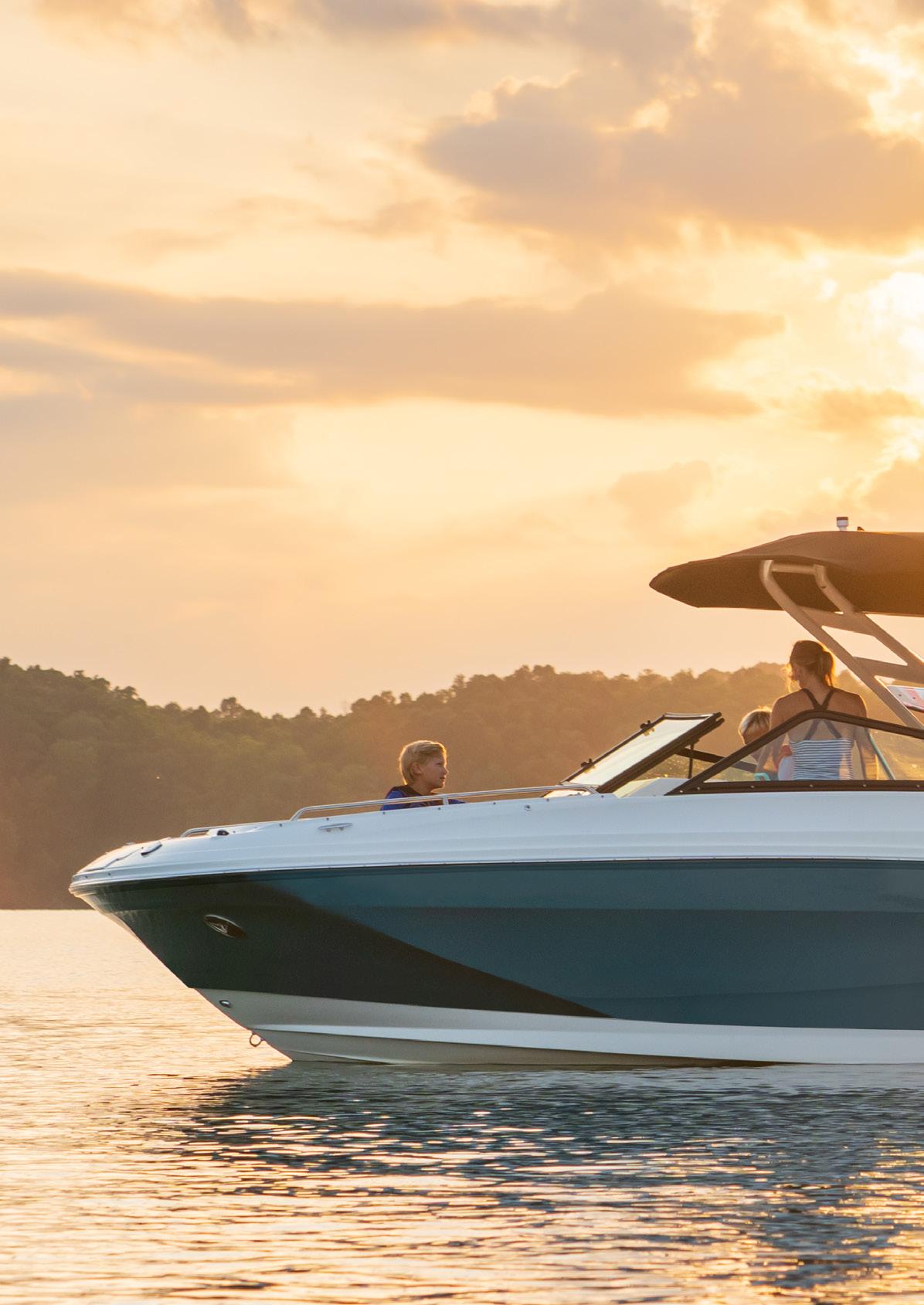
DESIGNED FOR FAMILY FUN & ENTERTAINING!
The Sea Ray SDX 250 OB is a deckboat (bowrider) with a wide topside flare forward providing social space for up to 14 people. This Mercury outboard-powered sibling to the sterndrive version allows more room and storage for families and friends.
BY BOATTEST.COM
PACIFIC POWERBOAT REVIE WS _ SEA RAY SDX 250 OB 96 MARCH / APRIL 2024
Sea Ray offers the SDX 250 in outboard (OB) or sterndrive models. The standard OB model with a 200-hp Mercury Verado, the test boat with the 300-hp option.
MISSION
A deckboat is exactly what the name implies, a boat with lots of deck space. The SDX 250 OB is roomier than a normal bowrider. The flared hull design in the topsides forward creates this more than usual deck space translating to more room for families, friends, seating, amenities, and stowage.
DESIGN
The Sea Ray SDX 250 OB has more seating space than one might expect in a 7.6 m (25’) boat, due in part to the unusual port side walk-through designed to create flow through the boat.
MAJOR FEATURES
• Fore-and-aft facing bow seating.
• Double helm bench seat with reversible backrest.
• Sliding cockpit seating w/multiple convertible backrests.
• Mercury Verado outboard with power tilt and trim.
• Mercury VesselView®
• Deep-v hull with 21-degree deadrise
Reversible seatbacks maximize seating flexibility. The design has married a flared
topside to a v-hull, which is becoming more common in bowriders and runabouts seeking more space on deck. Although Sea Ray has adopted this concept for the SDX 250 OB to increase space, it is unusual to see a 7.6 m (25’) deckboat with such well-thought-out flow through the social zones. It has all the social zones owners have come to expect and the intentional traffic flow pattern from the aft swim platform through the cockpit to the spacious bow seating is designed to connect the zones and maximize each zone’s seating.
The SDX 250 OB is the smallest of the SDX series, but like the larger 8.2 m (27’) and 8.8 m (29’) models, is available with Merc sterndrives or outboards. The outboard version of the SDX 250 provides more in-deck storage space on board.
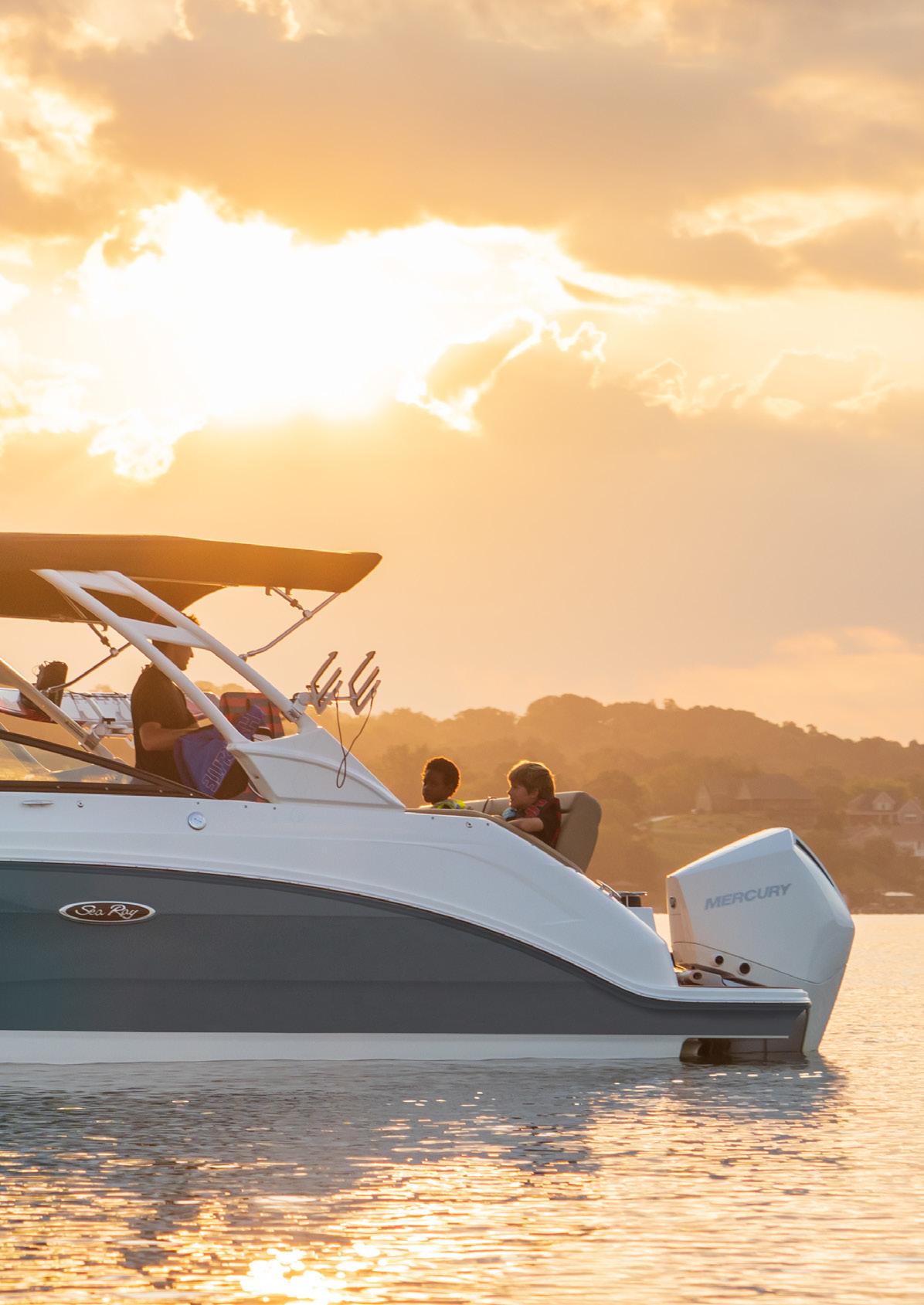
A great family day boat with lots of room for the kids and their water toys.
POWERBOATMAGAZINE.CO.NZ 97
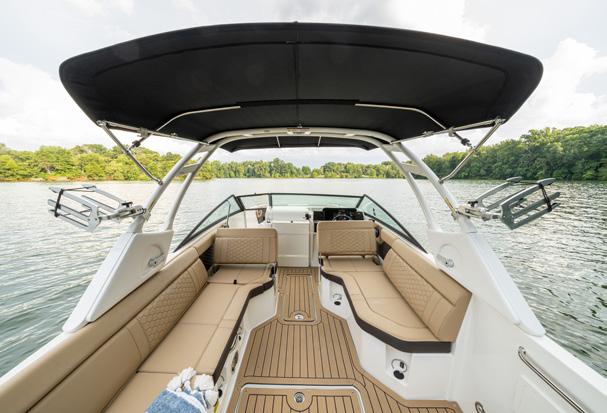
Clockwise from top left, easy walk through access.
Ample entertaining room with space saving features such as easy-stow tables.
Convienently located and stow away, fresh water shower near the stern is a pleasureable addition.
Access to the huge swim platform is not hindered by the Mercury Verado Outboard.
The head (toilet) compartment with cushions removed and showing additional storage space
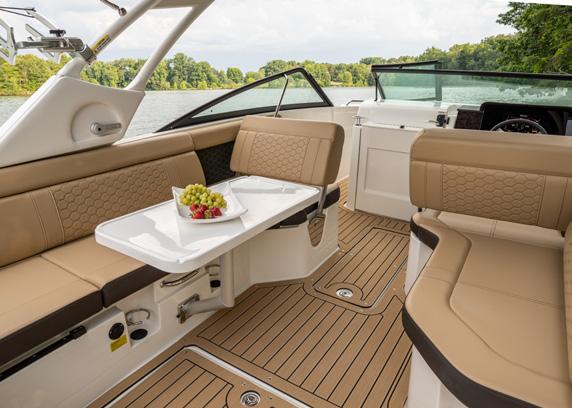
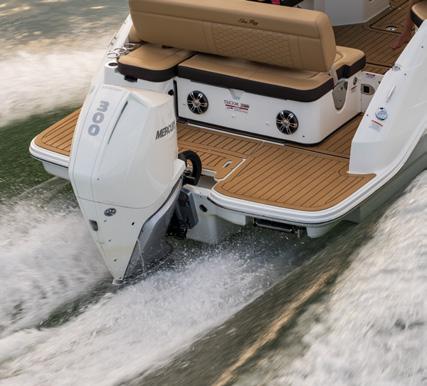
DEEP V HULL
Four parallel lifting strakes run the full length of the deep-v hull. A 21-degree deadrise at the transom is on the high end for inshore boats of this type, while the bow has a soft chine dropping to a fairly deep-v that cuts efficiently through the water at nonplaning speeds.
CONSTRUCTION
Sea Ray claims its manufacturing facility is the most advanced boat-manufacturing plant in the world.
That’s a hard claim to verify but Sea Ray is now part of Brunswick Boat Group and automation on the shop floor is evident. One verifiable fact about Sea Ray is worth particular note. The average employee tenure in its plant is 18 years.
In addition to state-of-the-art computer design and development, a mock-up of each new Sea Ray model is constructed out of foam and other materials to create the look and feel of the boats that will be built from the design. A plug is carved out of foam using company-owned milling machines and will be used to build a precision mould to create a prototype. Each new prototype model is put through a minimum sixweek’s on-water testing to check everything out before proceeding to final design, fabrication, lamination, and assembly.
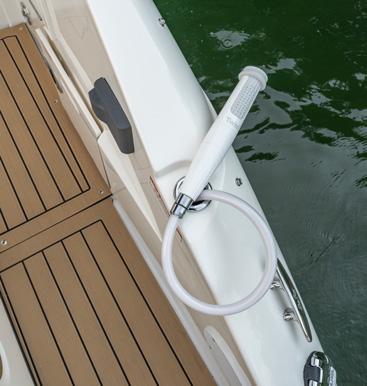
The Sea Ray plant prides itself on precision, fabricating more than 5,000 parts a day, all cut with computer-guided precision tools. Amazingly, considering the company sells 35 models from 5.8 m to 19.8 m (19’ to 65’), almost everything that goes into a Sea Ray is fabricated or created in-house. Robotic arms evenly apply gel coat, ensuring the same amount of material is consistently applied to all surfaces. This combination of technology, automation and experienced craftsmanship gives the Sea Ray SDX 250 OB a superior fit and finish, sturdy construction and outstanding style.
PERFORMANCE
The deep-v hull sheds water to the side during a WOT (Wide Open Throttle) turn of 41 knots (75 km/hour46.9 mph), ensuring a dry, stable, exhilarating ride for everyone aboard.
THE NUMBERS
With an LOA of 8.38m (27’6”), a beam of 2.59 m (8'6"), a draft of 91.44 cm (36”) and an empty weight of 2,521 kg (5,557 lbs) while carrying 203L (53 gallons) - 84% of fuel, and three people onboard, the estimated test weight was 2,939 kg (6,480 lbs) With a single 300-hp Mercury Verado turning a 17P Rev 4 propeller wound up to 6000 rpm, the SDX
PACIFIC POWERBOAT REVIE WS _ SEA RAY SDX 250 OB
98 MARCH / APRIL 2024
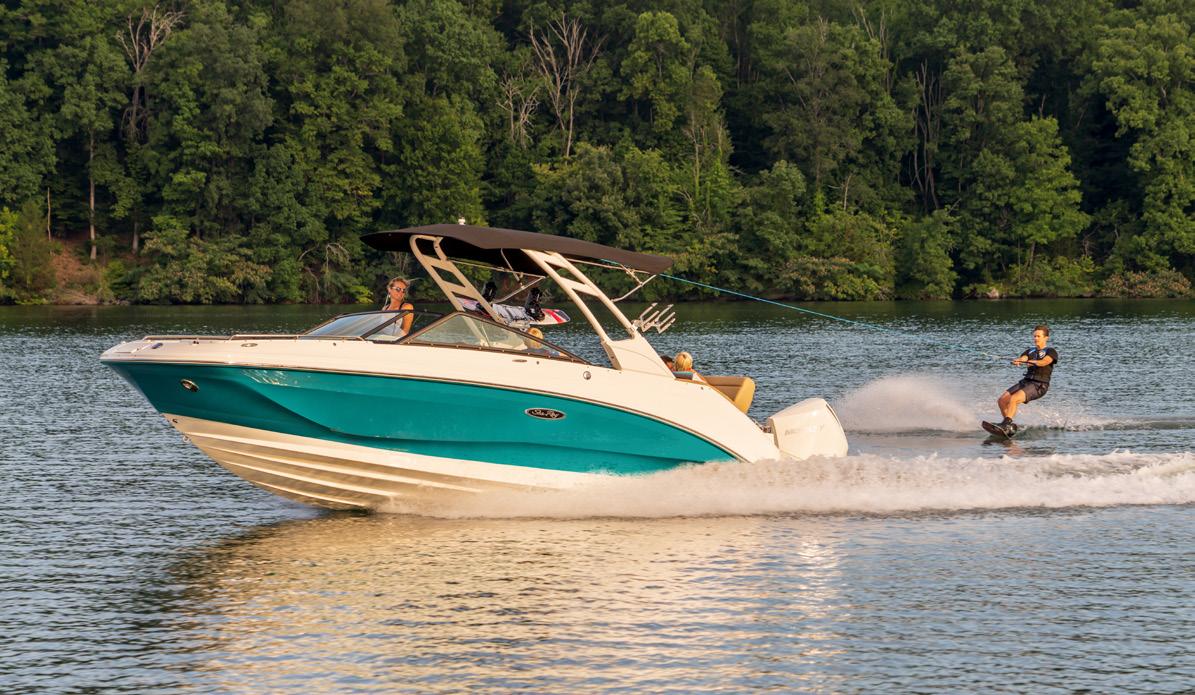
250 OB reached a top speed of 75.4 kph (46.9 mph). Optimal cruise came in at 4500 rpm and 52.8 kph (32.8 mph) using 45.1 lph (11.9 gph) or 1.17 kpl (2.8 mpg) giving a range of 251 km (156 miles), while still holding back a 10% reserve of the boat's 238 L (63-gallon) total fuel capacity.
ACCELERATION
The SDX 250 OB reached planing speed in 4.3 seconds with minimal bowrise, accelerated to 32 kph (20 mph) in 5.7 seconds and 48 kph (30 mph) in 9.2.
HANDLING
Turns have a solid feel with a 17-degree roll and barely a hint of chine walk. This is a nice handling boat that’s very responsive to the helm and shows no pounding or hull slap across moderate waves. If she bleeds speed, with the stern almost falling off a turn, just keep adding power through the hardest turns. There is no problem in normal turns and none of our aggressive manoeuvres caused the prop to cavitate.
POWER OPTIONS
The standard Sea Ray SDX 250 OB package comes with a 200-hp Mercury four-stroke outboard engine. Power options include a 250-hp Mercury Verado with the maximum power option being a 300-hp Mercury Verado; both available in black or white.
SWIM PLATFORM
Boarding over the SeaDek non-skid-covered swim platform, Sea Ray has focused on maintaining space while still providing a mounting point for the outboard and enough buoyancy to prevent a decelerating stern wave washing over. There’s even space for a builtin insulated chilly bin with support struts holding the hatch open. A concealed, under swim platform,
reboarding ladder telescopes out from the starboard side of the platform.
LARGE BOARD STORAGE
Plenty of large board storage (wakeboards and skis) is found below the port swim lounger going all the way to the front of the port cockpit seating 2.29 m forward and which is fitted with a track alongside that allows the sun pad to shift 43 cm back whenever more flexible and versatile seating for a large group in the cockpit is required while underway. The aft lounge even has USB connectivity and an accessory plug.
COCKPIT
Access to the cockpit is via the 38.1 cm wide starboard side walkway, where you will also find a hinged cover hiding the battery switch. A handy location whenever boarding or leaving requires powering up or down. Additional seating along the starboard side makes the cockpit into a conversation pit.
PEDESTAL TABLE, SEAT BACK AND UPHOLSTERY
A removeable pedestal table, easily mounted in the bow and cockpit, is secured to a side mount, adding greatly to the area’s functionality, especially when the seatback, padded and upholstered on both sides, can be flipped and used for either a swim lounger sunpad or when the cockpit seating seatbacks from the helm seats are flipped to provide more cockpit room. When the party transitions into the cockpit, simply slide the unique swim sun pad seat base aft, 43 cm and flip the backrest. This is a great space utilization as neither the swim platform nor aft lounger should be used while the boat is underway. Upholstery details add to the quality feel of the SDX, with beverage holders tucked into the face of the seat bases. The companion and helm seats also
With impressive acceleration and handling, the SDX250 OB makes for a great water ski and wake boarding craft.
POWERBOATMAGAZINE.CO.NZ 99
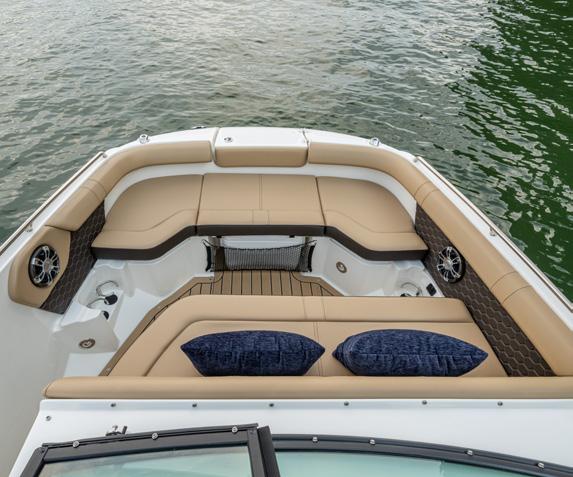
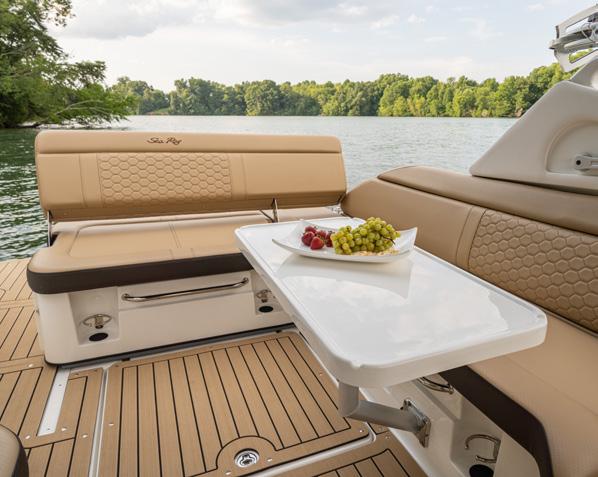
Ample space abounds and the forward area provides a large sun-lounging area with comfortable cushions and stereo system.
Whether it be the bow or stern areas, as well as everywhere in between, it is easy to see how the SDX250 can comfortably accomodate up to 14 people for a day out on the water.
have seatbacks that flip, which easily allows these seats to be utilized in the cockpit grouping or to face forward when underway.
STORAGE SPACE
In-deck storage space, recaptured from the inboard model, provides more storage in the outboard model. Under the port seat, there’s dedicated space for the table pedestal, fire extinguisher and a removable chilly bin with a second 23.66L removable chilly bin located below the starboard cockpit seat. Forward in the cockpit is another in-deck compartment that includes dedicated storage for the sun pad conversion bow fillers.
OPTIONAL BIMINI AND WAKE TOWER
An optional Bimini adds overhead protection with an optional wake tower also available.
HELM AND STEERING WHEEL
The helm console, with a centre head compartment door alongside, has a soft touch dash 17.78 cm below the windshield frame providing a simple uncluttered appearance. Optional 22.86 - 30.48 cm Simrad displays can be configured to the helmsman’s personal choice. Both come with Mercury’s VesselView® link displaying full engine readouts and diagnostics. All the information needed to make life easier on the water. Our test boat was upgraded with the Simrad multi-function display that features a preloaded chart plotter, sonar with transducer and media connectivity, while the standard panel has analogue gauges.
The kill switch safety cable dangles from the shift/ throttle control where it’s least likely to get accidentally tangled during operation and when it’s time to get underway, the helm seatback reverses from cockpit to helm configuration, with an adjustable flip-up bolster for added comfort.
Soft-touch horizontal helm surfaces add a tempering texture in an area that’s usually all about technology
while faux marble panels on either side of the MFD add additional style to the helm station. Another soft-touch panel with beverage holders on either side creates a narrow shelf with a convenient cubby cut into the centre of the panel. The power-assisted wheel is mounted to a tilt base.
DISPLAY OPTIONS
Display options are clearly labelled with high-contrast lettering to make them visible in heavy glare and ‘Smart Tow’ includes towing modes for pre-programmed tow speeds and ramp settings. The drag and drop features enable users to create their own combination screens. Rounding out the package are the award-winning Apollo series Fusion stereo, horn button and three electrical switches mounted to the left of the wheel with USB connections and the ignition to starboard.
HEAD
Adding a large head to a 7.62 m deck boat won’t make it an overnighter but adds a level of comfort not often seen in boats of this class. The head door, with an integrated glove box to port of the helm gives access to an expanded and cushioned head compartment that runs from just short of the port side, under the helm console to the starboard bulkhead and forward under the bow seating. A ‘mini cabin’ at best but is a space one can get out of the sun for a short time.
The toilet has a hinged cover cushion that drops over it as a filler. Also shown is the head compartment devoid of cushions. Note the additional storage under the step and the moulded platforms. A pump-out toilet system is optional.
BOW
The bow is accessed from a 38.1 cm offset walkthrough to port with a door that can act as an air dam when the windshield is closed. When open, the windshield latches into position. The latching hatch and opening windshield allow the bow to be isolated or opened according to the needs of those onboard.
PACIFIC POWERBOAT REVIE WS _ SEA RAY SDX 250 OB
100 MARCH / APRIL 2024

SUPERIOR TO WASH AND WAXES, USES AN ACRYLIONIC FORMULA, DESIGNED FOR USE WITH SALT-ATTACK MIXER
Cleans and protects your boat and vehicle, removes stubborn road grime. CLEANS GLASS & CLEARS
STAINLESS AND ALLOY Cleans, shines and protects.
ENVIRONMENTALLY FRIENDLY AND BIODEGRADABLE
Leaves behind a harder-than-wax protection and shine which is analytically tested to protect and delay the speed of UV damage.


Leaves a streak free finish, also removes black streaks.




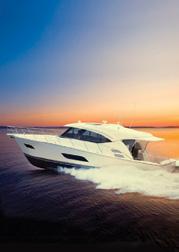

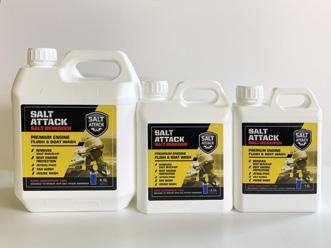






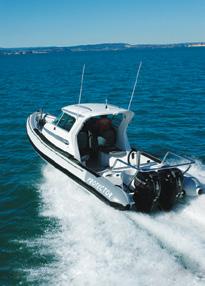

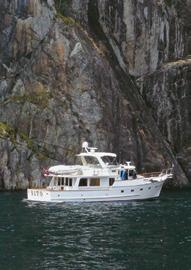


MARINE/RV WASHCOAT & SHINE WHOLESALE MARINE DIRECT NZ LTD FREEPHONE 0800 272 589 www.salt-attack.com 9 out of 10 engines fail due to salt corrosion. ACT NOW and flush your engine! SALT ATTACK SALT REMOVER SUPER CONCENTRATE 1:500 Designed to operate with salt-attack dispenser REMOVES SALT BUILD-UP BEST ENGINE PROTECTION HOUSE WASH PREMIUM ENGINE FLUSH & BOAT WASH Stand 109 DB973 Riviera 515 SUV Fleming 58 McLay 581 CrossXover Grady White Canyon 376 Bayliner 642 Overnighter Pacific PowerBoat July/August 2014 Also Reviewed: July/August 2014 TRAILERBOATS LAUNCHES & CRUISERS PACIFIC Hamilton Island • Envoy in Greece • Boat Show Reports RIVIERA 515 SUV Light & Bright Same Boat 4 drive options Which is best? EPIRBS & PLBS All the facts GRady WHI canyon 376 BayLInER 642 ERnIGHtER On The Level Techo trim tabs STABICRAFT SUPERCAB 2050 TROPHY PRIZE ALLOY BOAT MAGAZINE ssue Southern XP816 Bluefin 665 Scorpion 470 Senator RH650 Surtees 5.5 HT Profile 635 Stabicraft 2050 Aqualine 645 $10.00 inc GST MAY 2014 2 THE PROGRESSION of LURES Southern XP816 Scorpion 470 Mk2 Aqualine 645 Profile 635 Surtees 5.5 Hard Top Bluefin 665 ALSO REVIEWED REVIEWED PACIFIC THE 100% RIB MAGAZINE Buyers Guide TO 5.5M CENTRE CONSOLES 5 BOATS REVIEWED Luxury Tenders Big Bucks Boating EXPORT SUCCESS Kiwi RIB builders doing it right overseas EPIRBS Things you should know Rayglass 9m Protector Changing for the Better Explorer 50 Alaska 59 Sedan Integrity 44 ISSUE Pacific PassageMaker 2014 ANNUAL A FLEMING IN NORWAY Exploring the Fjords 2014 ANNUAL SATCOM AT SEA Keeping In Touching ON DEMAND POWER Facts about Generators Reviewed: $10 incl. gst • LIVING THE DREAM • THE ULTIMATE LIGHT • Integrity 44 Alaska 59 Sedan Explorer 50 Target your advertising message with precision PPB0914 The dedicated nature of our range of marine publications delivers a highly targeted audience to our advertisers – Offering your products and brand a receptive audience. Don’t miss your opportunity to reach your target market, call Doug Dukeson +64 (0) 9 428 2328 or Alex Ram +64 (0) 9 428 7277 Australian Advertising: Peter Rhodes +61 (0) 3 8786 8993 Or visit www. Phone Doug Dukeson: +64 (0) 9 428 2328 Email: doug@boatmags.com Or visit: www.powerboatmagazine.co.nz DB946 POWERBOATMAGAZINE.CO.NZ 101
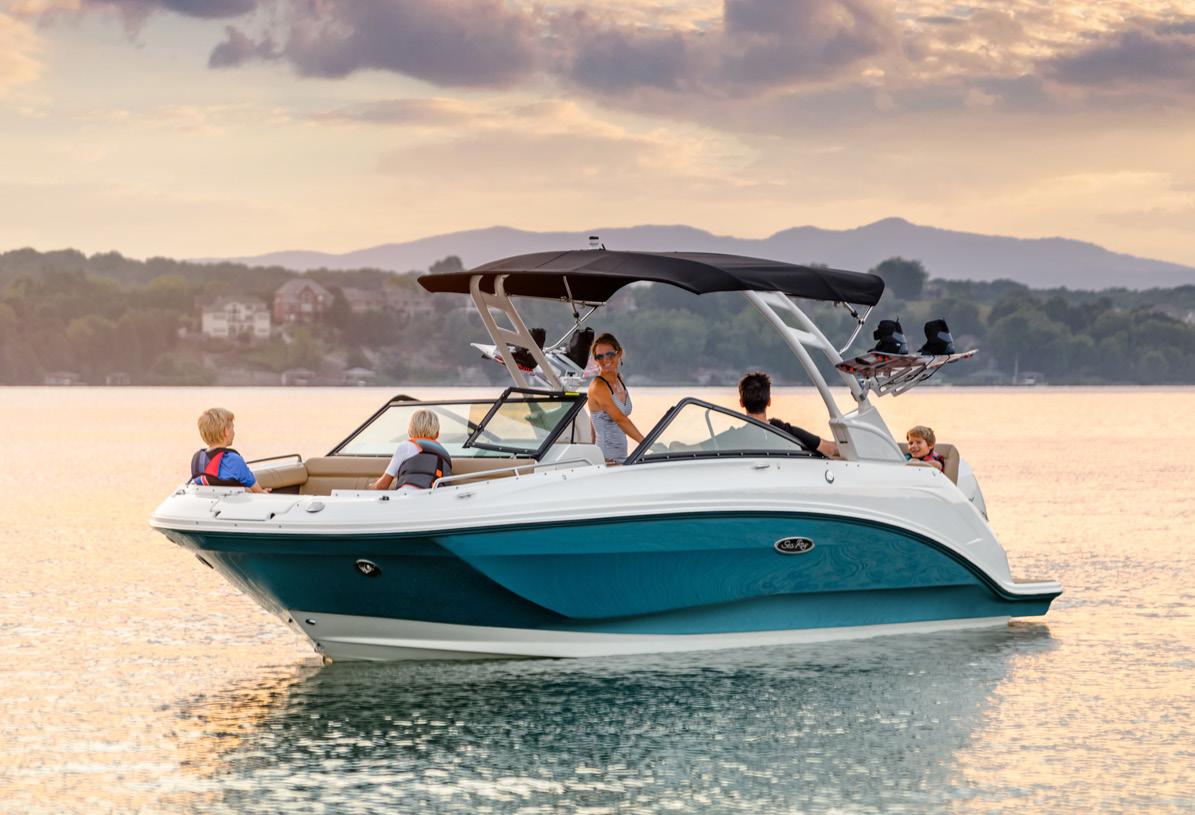
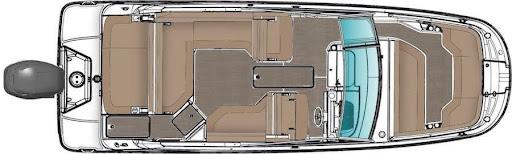
This offset access allows expanded forward seating with a three-across rear seat and a full-width forward seat with a 12.7 cm full wrap around bolster. Beverage holders, speakers and upscale fit and finish are all present, as is connectivity and charging. For safety, the bow area’s depth is 78.74 cm to the cap rail with the stainless grab rail mounted 7.62 cm above, conforming to ABYC standards. Filler cushions can convert the entire area into a sun pad. Behind a black net under the forward seat is another 23.65L chilly bin with additional storage under the bow seat side cushions.
ANCHOR LOCKER
Another hatch on the foredeck has a turn and lock latch concealing a forward swim ladder above the anchor locker. No need to swim to the stern when diving from the bow area.
OBSERVATIONS
The Sea Ray SDX 250 OB is a day boat with a larger head compartment than is normally found on this size boat. She has substantial power and performance, especially with the 300-hp option. This vessel should satisfy buyers who enjoy driving a comfortable boat and want to spend their days on the water socializing, enjoying towed water sports or simply swimming off the boat. Big enough for 14 people, makes it the right size for family fun and entertaining.
PERFORMANCE DATA
Length overall 8.38 m BEAM 2.59 m Dry weight 2,521 kg Tested weight 2,939 kg Draft 0.91 m Deadrise/transom 21-deg Weight capacity 1,043 kg Person capacity 14 Fuel capacity 238 l Water capacity 38 l Total weight 2,939 kg Tested engine 1 x 300-hp Mercury Verado SPORTSMARINE.CO.NZ
SPECIFICATIONS
RPM KPH Knots LPH KPL 600 5.1 2.7 2.6 1.8 1000 7.6 4 4.5 1.6 1500 10.5 5.7 7.6 1.4 2000 13.2 7.1 12.1 1.1 2500 14.6 7.9 18.2 0.8 3000 19.3 10.4 24.2 0.8 3500 26.2 14.1 32.9 0.8 4000 42.8 23.1 37.9 1.1 4500 52.8 28.5 45 1.2 5000 61.5 33.2 55.6 1.1 5500 68.1 36.7 70 1 6000 75.5 40.7 85.9 0.9 An aesthetically pleasing design is both functional and pleasing to the eye.
PACIFIC POWERBOAT REVIE WS _ SEA RAY SDX 250 OB 102 MARCH / APRIL 2024
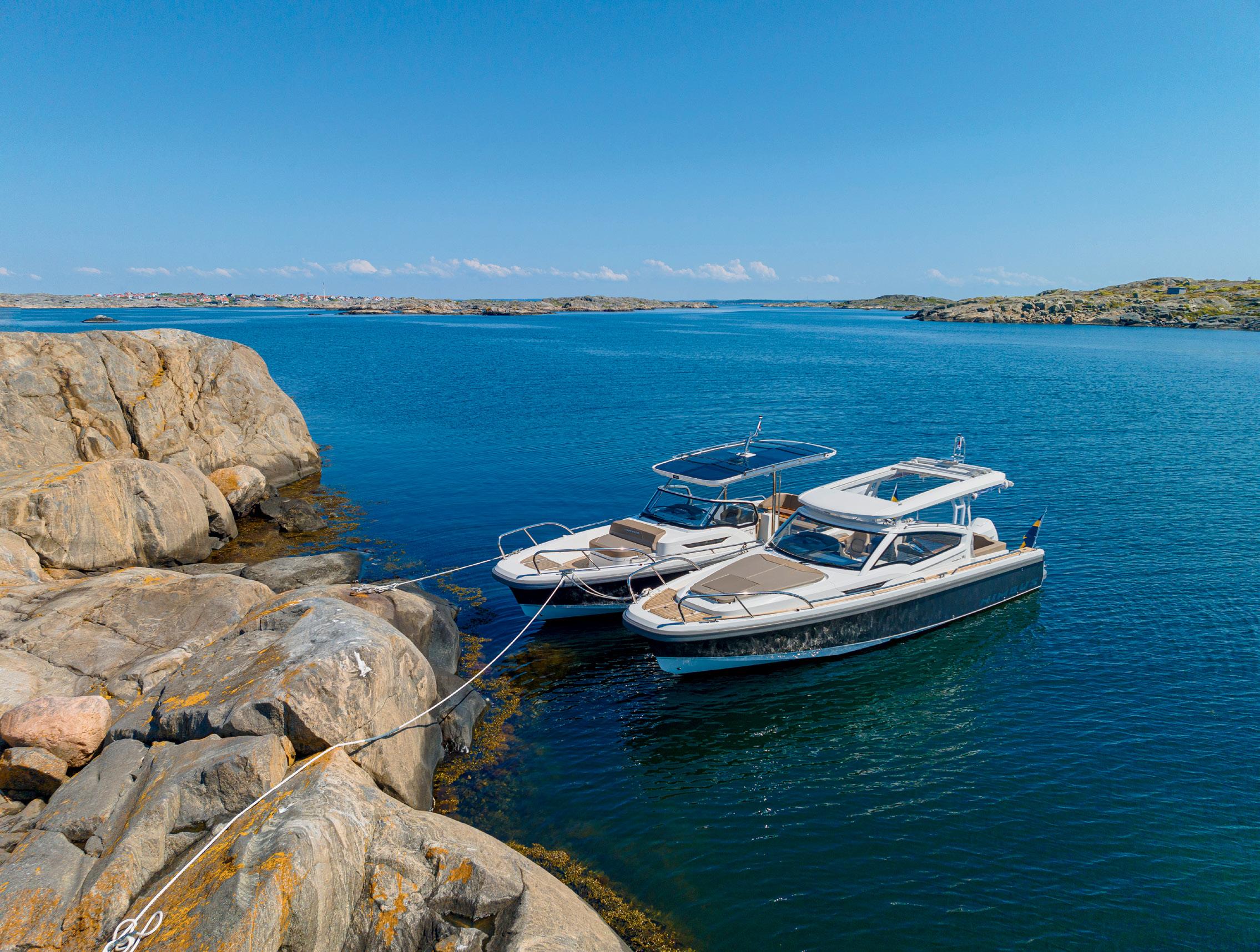
Sydney | 758 Pittwater Road (02) 9938 6018
Auckland | 131 Westhaven Drive (09) 274 9918
Christchurch | 507 Moorhouse Avenue (03) 379 9208


Learn more about Nimbus at nimbus.se OFFICIAL DISTRIBUTOR 9 SERIES Scan for more info FIND THE BOAT FOR YOUR LIFESTYLE AVAILABLE NOW
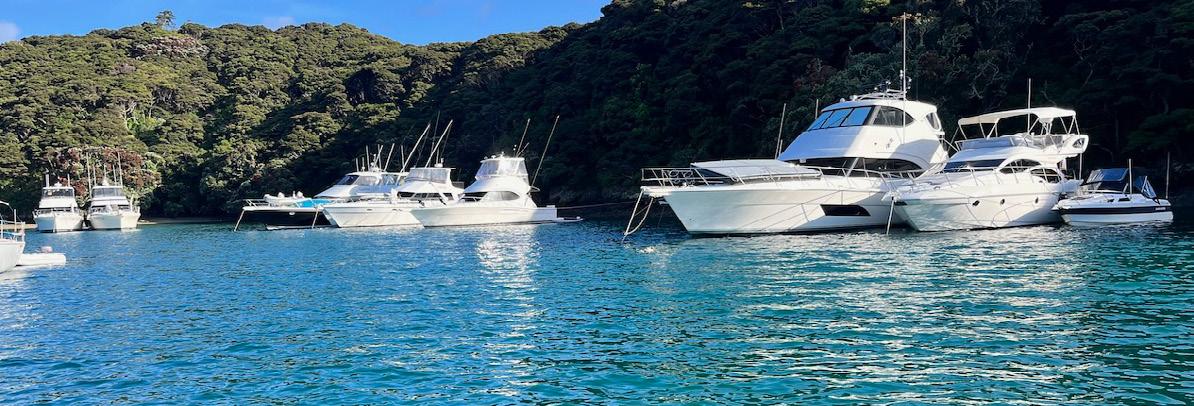
FLETCH'S TIPS
Boat courtesy this summer is an important part of creating a positive and enjoyable day out on the water for all.
Courtesy starts with respecting the personal space of other boaters, not too close when passing anchored vessels, always maintaining a slow and steady speed to minimize wake disturbance. Another point is maintaining an appropriate noise level that is fundamental in promoting courtesy on the water and all boat owners/personal watercraft operators should be mindful of the
TIP #141
NIGHT TIME NAVIGATION:
If boating at night, ensure all navigation lights are working correctly. Familiarize yourself with the different lighting configurations for various vessels. Reduce your speed and stay vigilant, as navigation becomes more challenging in the dark.
Pro Tip: you always have the option of reducing speed, it’s better to arrive late than not at all.
impact their vessel’s engine noise makes. In calm anchorages or peaceful coves, minimizing noise ensures that fellow boaters can enjoy the serenity of the surroundings undisturbed. By adhering to these basic principles of courtesy, boaters contribute to a community-like minded atmosphere on the water.
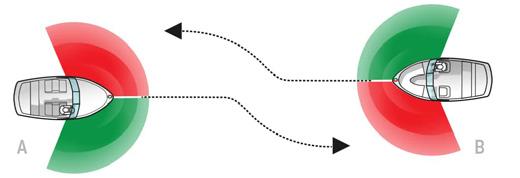
TIP #142
UNDERSTANDING BOAT TRAFFIC:
Be aware of other boats and their behaviours on the water. Understanding the basic rules of boat traffic, such as right of way and overtaking, this helps prevent accidents. Stay alert, use your horn when necessary, and maintain a safe distance from other vessels.



Trusted brands expert advice Available from leading boating stores DB966 NOTEWORTHY FLETCH'S BOAT TIPS
104 MARCH / APRIL 2024
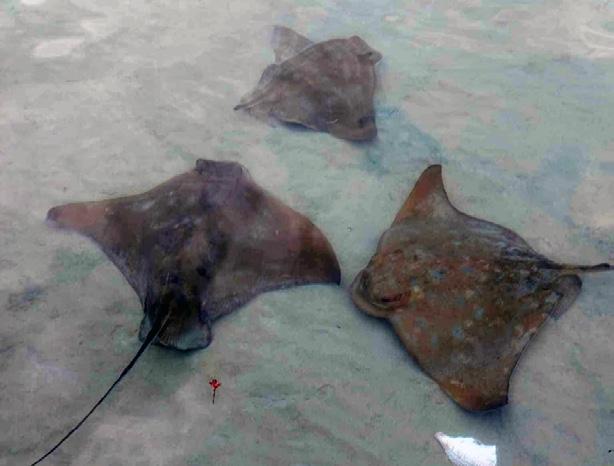
TIP #144
PROPER LOADING:BOAT
Distribute passengers evenly across your boat to maintain stability. Follow your boat manufacturer's guidelines for maximum number of people capacity and avoid overloading. Proper loading ensures better handling and reduces the risk of capsizing in rough weather.
TIP #143 WILDLIFE RESPECT:
Respect the natural habitat and wildlife while boating. Keep a safe distance from marine animals and nesting areas. Avoid excessive noise, and dispose of rubbish responsibly. Being a considerate boater helps preserve the beauty of the waters for everyone.
Pro Tip: sometimes the wildlife will come to you, these stingrays visited me during the summer at Tiritiri Matangi Island
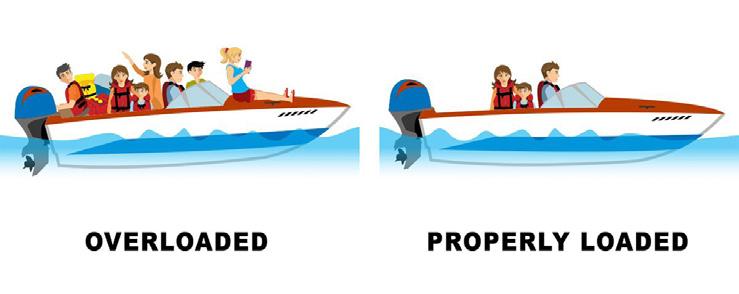
TIP #145
Knowing how to tie basic knots is a fundamental boating skill. Master knots like the bowline, cleat hitch, and figure-eight knot. These knots come in handy for securing your boat to a dock or tying down equipment. Pro Tip: ANIMATEDKNOTS.COM/ BASIC-KNOTS

www batterytownmarine co nz 0800 962 288
LEARN KNOTS:BASIC
POWERBOATMAGAZINE.CO.NZ 105
STEALTH FISHING
WITH ELECTRIC TROLLING MOTORS
The benefits of using electric trolling motors and electric engines for anglers, with their reduced noise on the water, avoiding spooking fish, is priceless. Writer Mat Hewetson now considers them a must have for any boat angler.
BY MATHEW HEWETSON - FISHING GODZONE EDITOR
STEALTH FISHING _ ELECTRIC TROLLING MOTORS
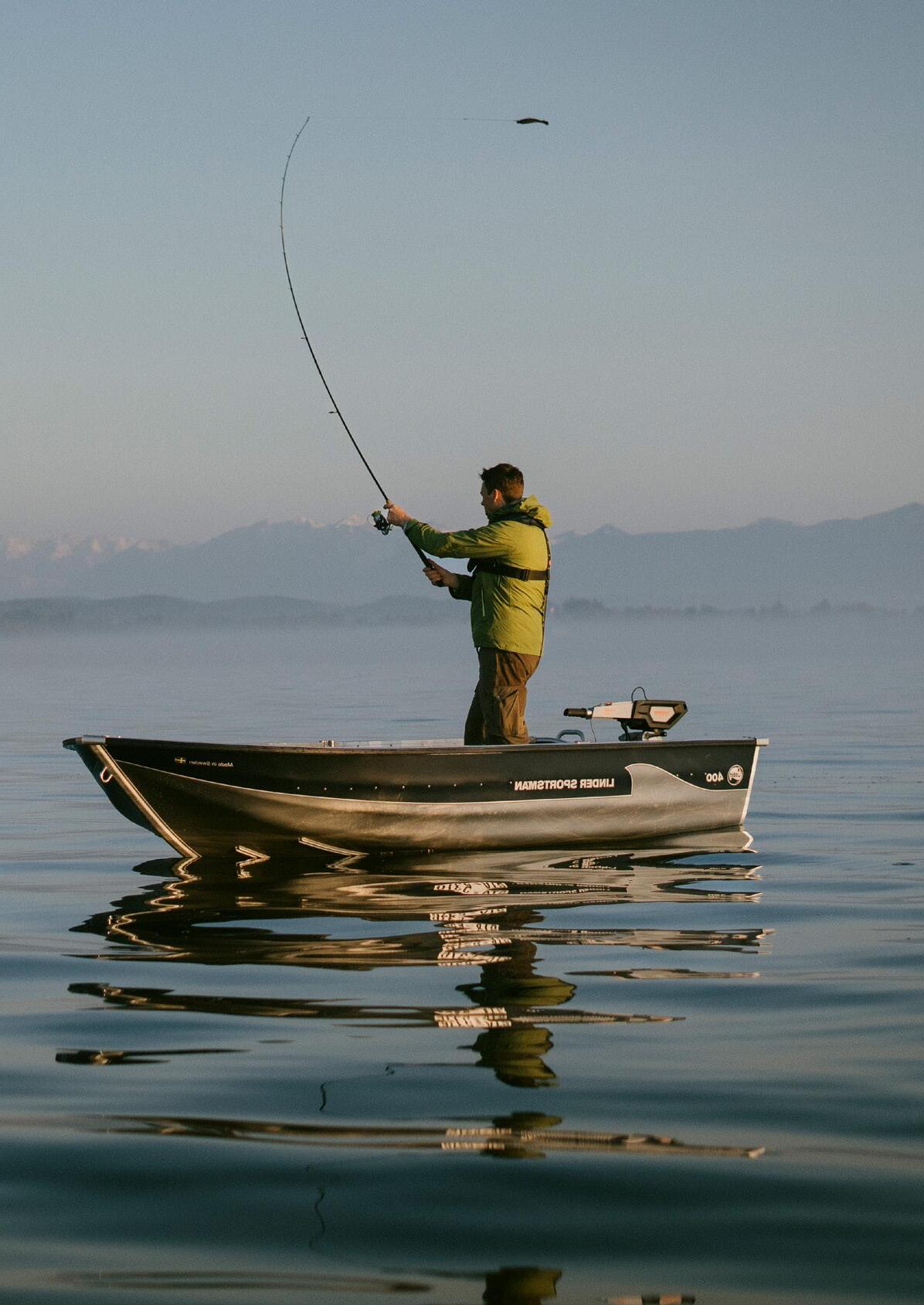
There are many new exciting electric outboards and motors coming onto the market for boat propulsion, but electric trolling motors such as Minn Kota and MotorGuide have been around for a long time with American anglers the leading market for using them.
Kiwi anglers have been relatively late adopters of the technology for fishing, especially in saltwater but they are now becoming a standard item on new boat builds, just like a chartplotter is a given.
Several years ago, I saw their benefits immediately when I was invited to fish aboard a 6m Surtees that had a Minn Kota mounted on its bow. We had shot out off Tauranga to fish a couple of marks for bluenose and the electric motor held us exactly over the spot in 300m of water and we almost instantly pulled up three bluenose on just one drop! It really opened my eyes to what they could do and since then, I have been a big spokesperson for using them fishing.
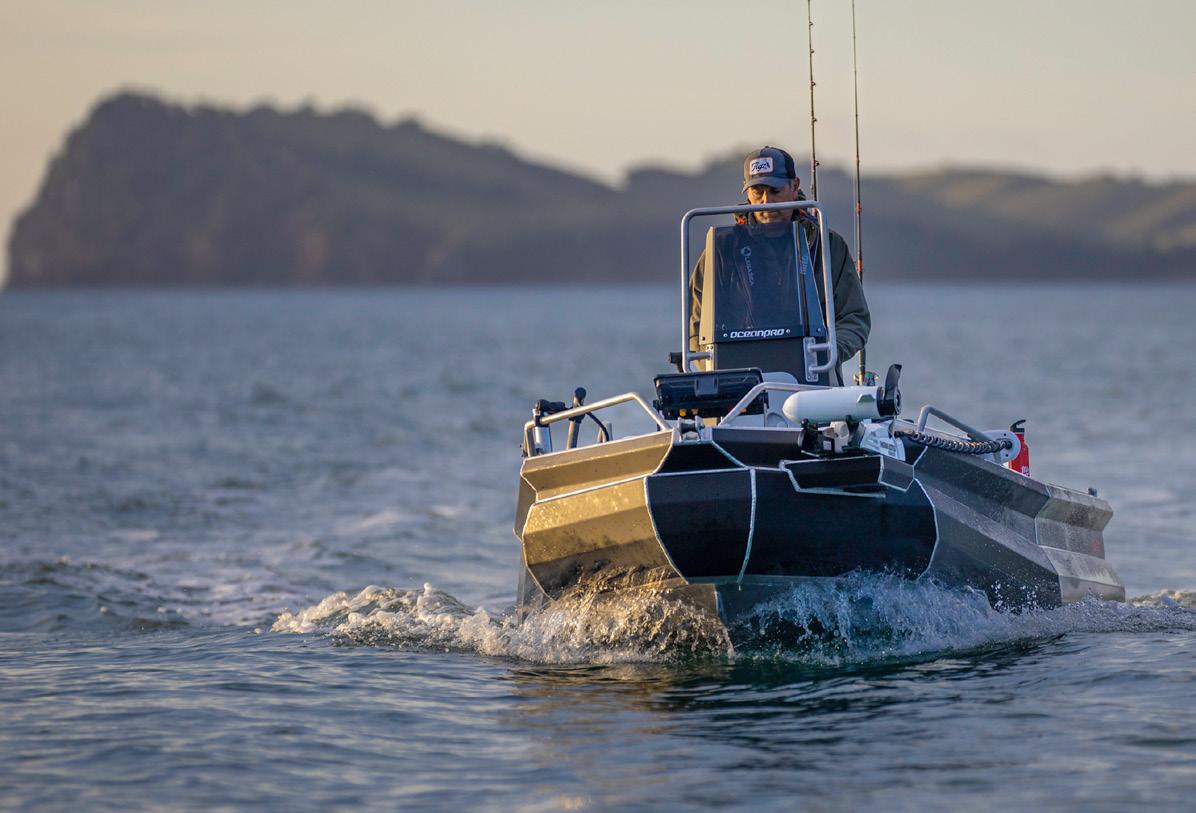
Heading out in the boat and Matt watches for sign on the sounder to then deploy the Minn Kota and spot lock over it.
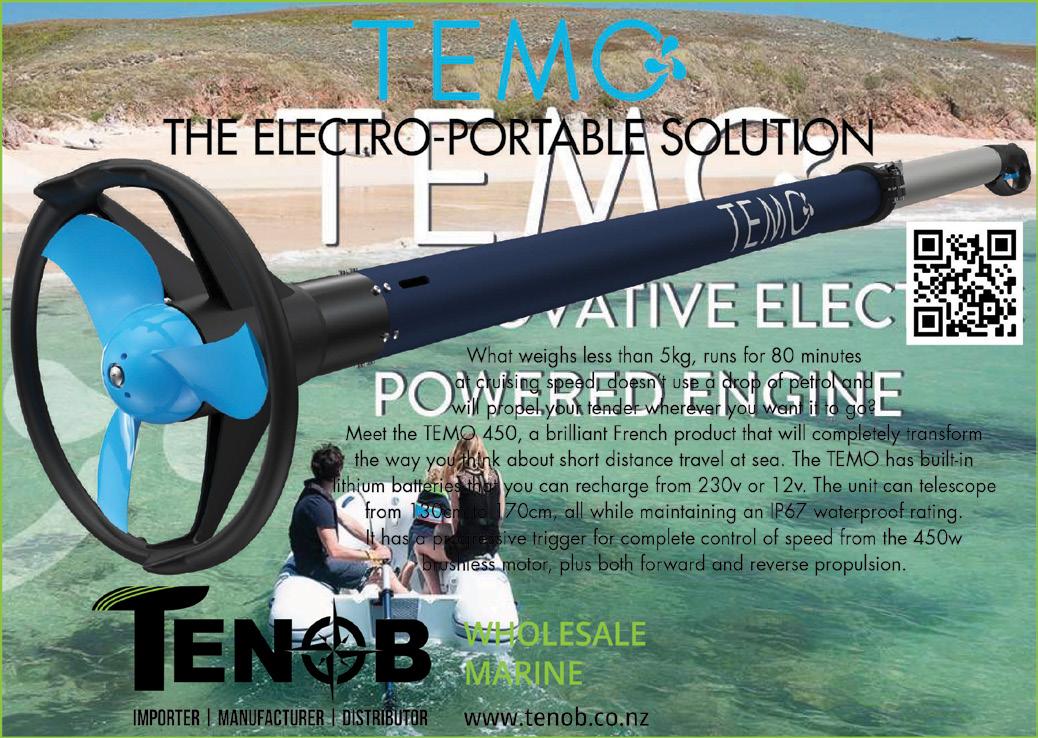
STEALTH FISHING _ ELECTRIC TROLLING MOTORS 108 MARCH / APRIL 2024 For more information, contact: sales@tenob.co.nz 0800 273 9180 DB884
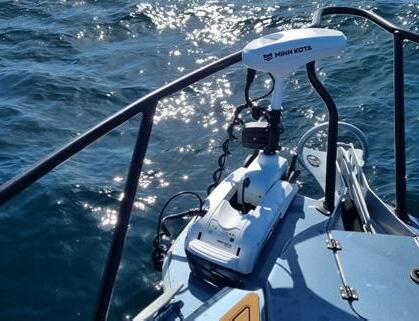
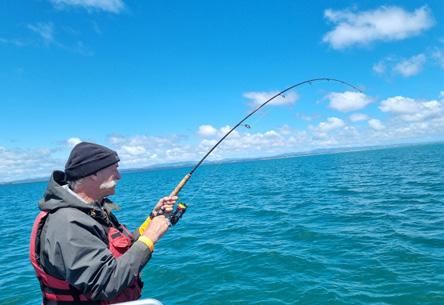
Hooked up! A good fish hits a softbait in the shallow waters of the Ranganunu Harbour while using the Minn Kota to keep over the sand bank with shellfish where fish are feeding.
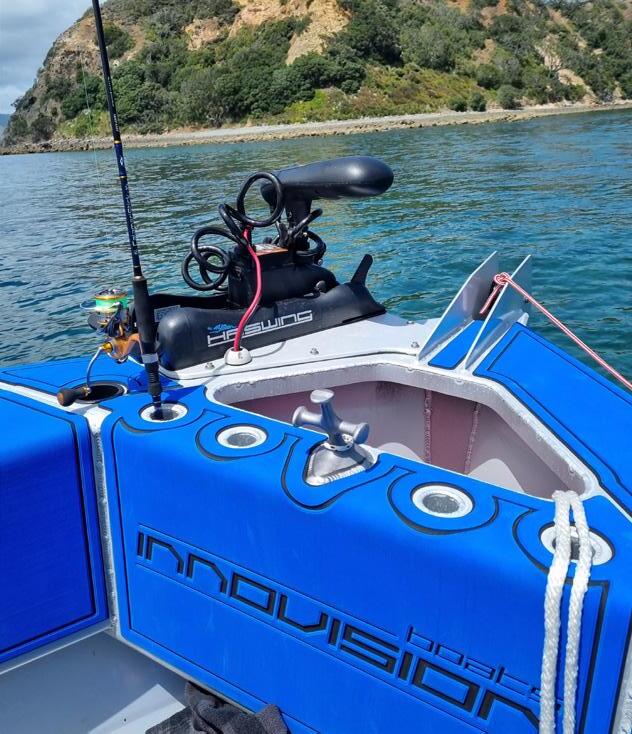
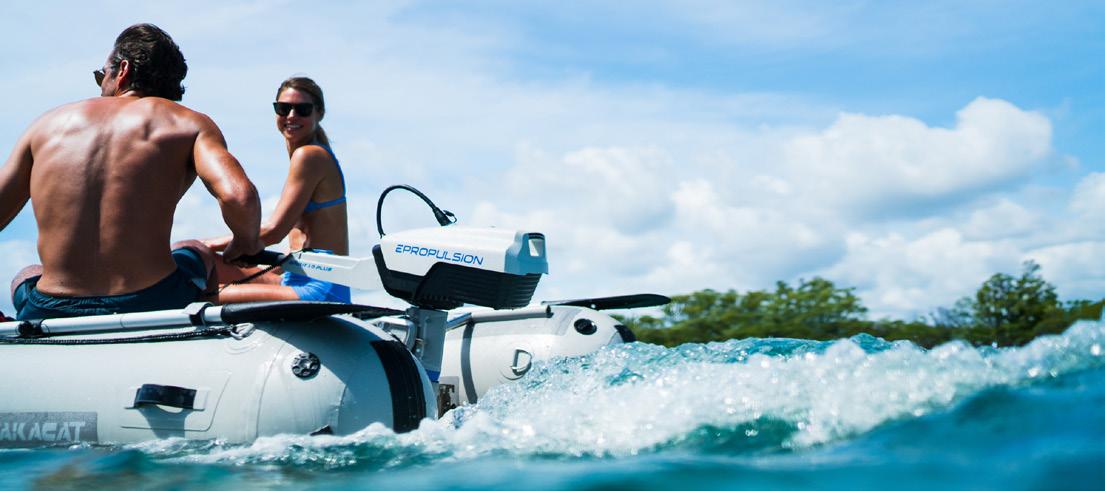
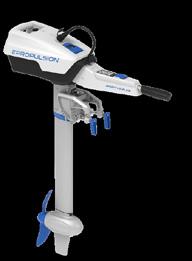
THE NAVY EVO SERIES
Hydrogeneration, Maintenance-Free, Direct-Drive Ideal for fishing boats, dinghies, daysailers and cruising sailboats.
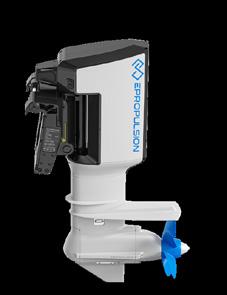
THE X SERIES ELECTRIC OUTBOARD
Clean, Quiet, Powerful, Easy To Use
Choose from the X12 12kW, X20 20kW or X40 40kW.
I-SERIES ELECTRIC INBOARD MOTOR
Highly-Integrated, Compact, Smart, Connectivity
Explore the I-10 10kW, I-20 20kW, I-40 40kW.
WWW.EVOCEAN.CO.NZ
TO BE THE NEW ZEALAND
EPROPULSION
EVOCEAN IS PROUD
DISTRIBUTOR FOR
Evocean December Advert.indd 6 4/12/2023 1:49:41 PM
An electric trolling motor such as a Minn Kota is a great tool to aid anglers when on the water.
POWERBOATMAGAZINE.CO.NZ 109
The Haswing is another example of an electric trolling motor that is available for kiwi anglers.
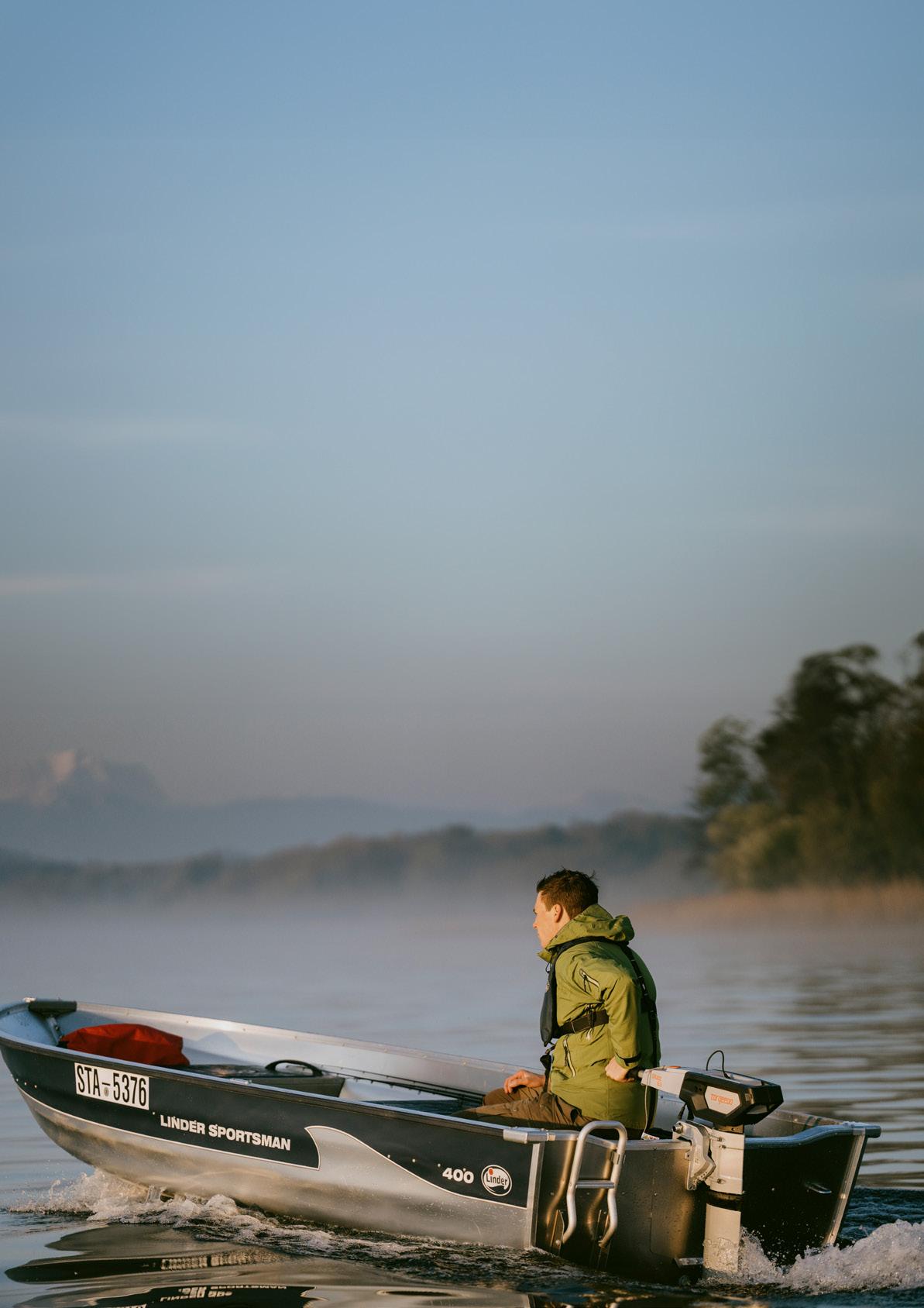
SHALLOW STEALTH
Being a keen softbaiting and lure angler almost exclusively when on the boat these days, I deploy a Minn Kota on my Oceanpro centre console for stealth. Venturing into the shallows (under 10m) around offshore islands or the coastline to work softbaits for fish is a successful approach. It produces even better results when you limit your noise levels. This is why kayak anglers catch a lot of big fish, they have almost no noise and can quietly work their softbaits or lures along the coastline.
I like to cut my outboard from 50-60m out to drift in and then use the electric motor to move around stealthy and cast around the area, until I find fish. Then I spot lock the boat to land fish and/or keep casting in the general area where I just had strikes. This means you aren’t starting the outboard up to move about and the noise can really put fish off in the shallows.
When fishing in shallow harbours I also like to deploy the electric motor as we drift along, and spot lock our position once we get interest in our lures. Recently on a late spring trip to the Far North to fish off Rangiputa in the Ranganunu Harbour, I was fishing with local Craig Jenkins, and we found a good patch of big trevally in under 5m of water that were feeding right up on top of a sand bank and out of the deeper channel. The strong wind gusts and 4-5knot current that day was pushing us along too quickly, so we used the Minn Kota to hold us over the sand bank and keep catching trevs on our softbaits.
Even if you aren’t a keen softbait or lure angler, you can use an electric trolling motor to lock your position over a reef or a mark to berley on and drop baits back. The motors are so quiet, and they don’t have the same sound as an anchor rope and chain in the water that can spook fish. Remember sounds travel up to four times faster underwater than in the air!
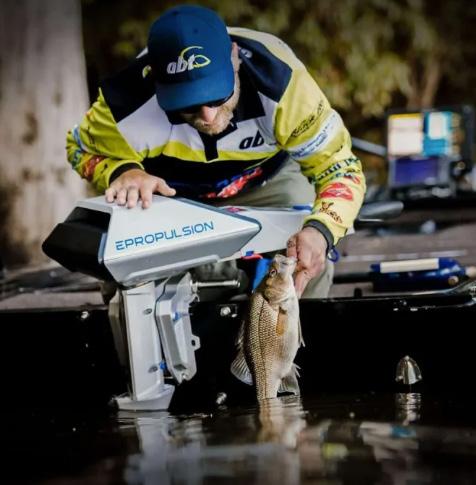
STEALTH FISHING _ ELECTRIC TROLLING MOTORS 110 MARCH / APRIL 2024 110
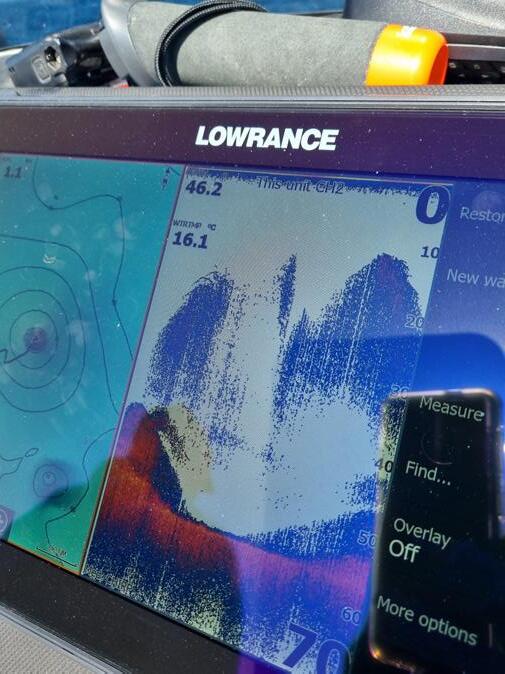
Finding good bait schools, you can use an electric trolling motor to keep your position over the fish and drop lures onto them.
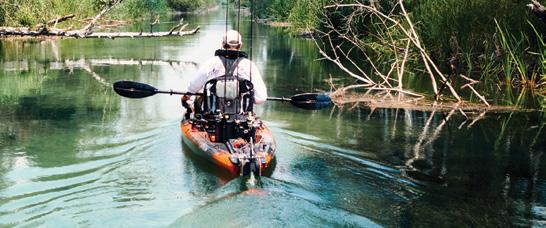
Time
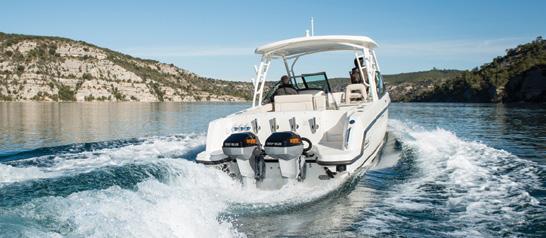
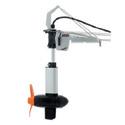
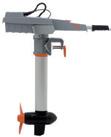
TECH USED
The wireless systems used on trolling motors are incredible with many options and functions. Using my Minn Kota as an example - with i-Pilot it helps to deliver speed, steering, Spot-Lock, and your ability to record and retrace paths on the water. With new Bluetooth connectivity to provide a fast, secure connection and allow for easy software updates via your Apple or Android device to add new features to your system. Spot-Lock is a GPS anchor hold on your fishing spot, using state-of-the-art algorithms to provide an accurate hold on the water. With i-Tracks a hardware and software algorithm that allows you to hold over spots more accurately, while Go-To feature will return you to your i-Track or Spot-Lock position automatically by activating your motor. Minn Kota’s CoPilot function also means you can control speed, steering, prop on/ off and high-speed bypass from your i-Pilot wireless remote, so you can keep on fishing anywhere on the boat.
While I have been most familiar with using Minn Kota’s with our fishing, there are now many more options now available for kiwi boaties worth considering. There are specific electric trolling motors and many brands distributing electric motors, offering the stealthy reduced noise option, not spooking fish on your arrival.
Do your research online, ask questions to any boat owners you know who have an electric trolling motor and talk to your local boat dealer for helpful information about sizes and installation.
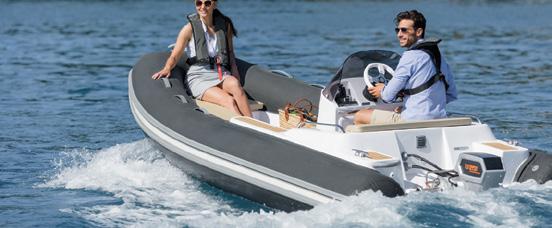
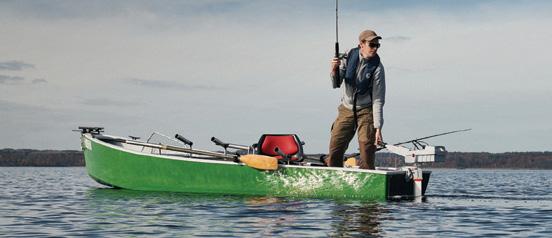
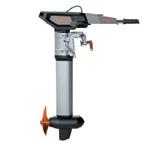
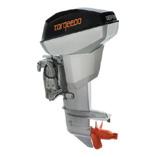
485-550 HP
to go electric. TR AVEL ULTRALIGHT CRUIS E POWERBOATMAGAZINE.CO.NZ 111
30R
AUSSIE & NZ
Alexander Marine as exclusive importers of Ocean Alexander Motor Yachts, is pleased to present the Ocean Alexander 30R to the Australian and New Zealand boating market.
Evan K Marshall’s 30R design has rapidly gained popularity among yacht buyers, evidenced by the swift delivery of multiple hulls and retail orders scheduled for construction. Powerful engines. unwavering safety, luxurious spaces and breathtaking views.
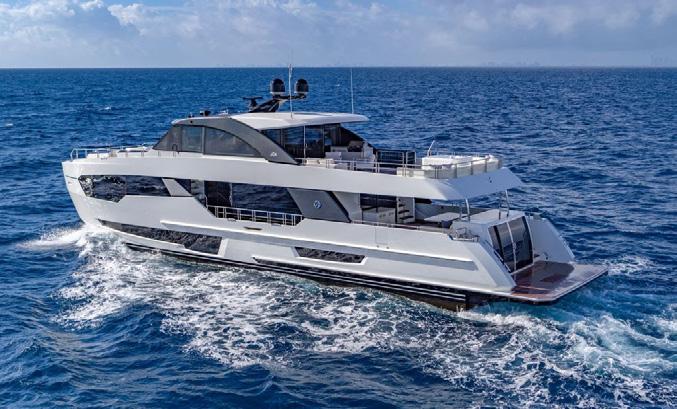
They transformed everything without sacrificing anything. Her elegant, light interior décor adds a richness of depth and character. Alternatively, Ocean Alexander’s signature dark interior colour palette will appeal to selected buyers. Depending on owner’s requirements, this model is available in both the Skylounge and New Generation Pilothouse (NGP)
Alexander Marine specialise in the sale of new and premium brokerage motor yachts. They are the exclusive importer and distributor for Ocean Alexander and Galeon Yachts in Australia and New Zealand. Recently they have also been appointed the Queensland dealer for Whitehaven Motor Yachts.
ALEXANDERMARINEAUST.COM.AU
HORIZON YACHTS LAUNCHES FD110 CROWNED EAGLE
This is the second Horizon build for experienced owners, who specified numerous customizations including forward crew quarters.
Horizon Yachts has launched and delivered a new FD110 Tri-Deck, Crowned Eagle. The fifth hull of the superyacht Fast Displacement (FD) model, this FD110 was built for repeat owners who, after actively cruising aboard and enjoying their FD92 Tri-Deck Crowned Eagle, selected the FD110 Tri-Deck platform upon which they could customize a layout to suit their lifestyle. Boasting a five-stateroom layout with an on-deck master suite, enclosed sky-lounge, beach club and crew quarters for up to six, the FD110 Tri-Deck offers superyacht amenities and high-volume space to match.
HORIZONYACHT.COM
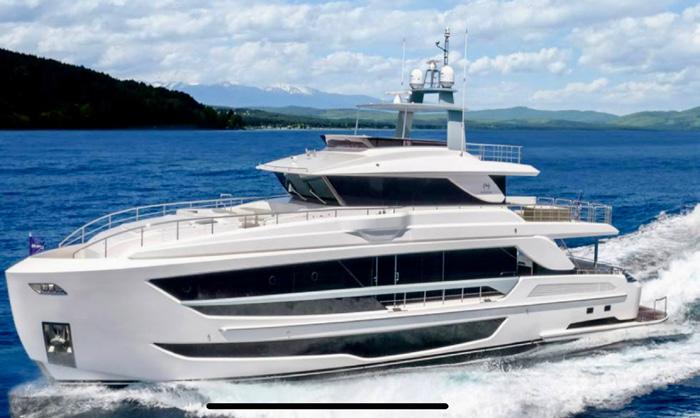
NEWS DEDICATED TO TRAWLERS, PASSAGE MAKERS & CRUISING ALEXANDER MARINE PRESENTS OCEAN ALEXANDER
TO
112 MARCH / APRIL 2024
GRAND BANKS 54 SUSTAINS SUCCESS AT BOOT DÜSSELDORF
Sometimes, in the pursuit of the cutting edge, boatbuilders leave their heritage in their wake. Not so with Grand Banks Yachts.
Under the leadership of worldrenowned ocean-racing sailing champion Mark Richards, the company has created vessels that push the envelope in terms of construction and technology while still proudly embracing their DNA. The Grand Banks 54 is a perfect example of this philosophy.
The GB54 has been ergonomically designed to keep the workload of owner-operators to a minimum. At the helm station, you’ll find the control interface inspires that delightful
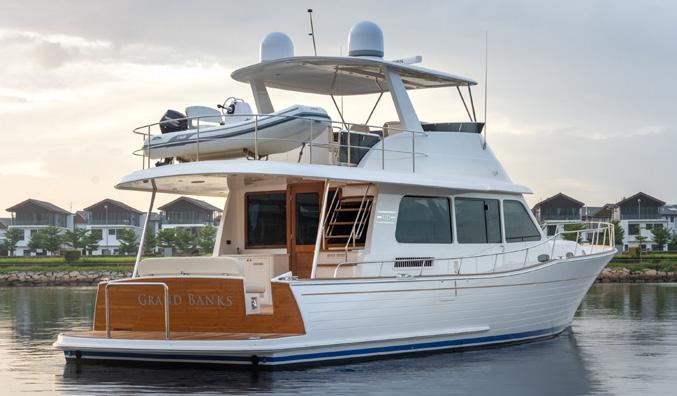
feeling of having power at your fingertips. Like allGrand Banks models, each GB54 is built to order and designed with owner satisfaction in mind. To that end, there are several layout, accommodations, and propulsion options for owners to choose from. including galley-up or down, and two- or three-stateroom variations.
The GB54 is built with the company’s
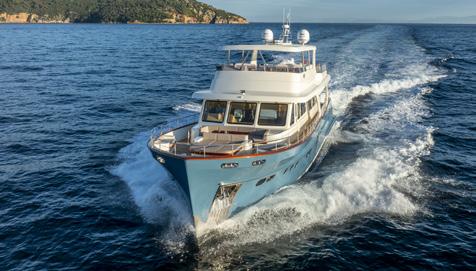
Abundant outdoor spaces, providing diverse spots across the boat, custom layout designed to meet client needs and cold-moulded composite construction with highquality finishing.
Vicem has released further details of the beautiful 95-foot yacht it has built for a discerning Australian client. The highly customised design constitutes a worthy addition to the celebrated Cruiser line, which runs from 67ft to 107ft LOA. Across her three decks, the new yacht showcases the design DNA that has made Vicem yachts instantly recognisable. From the spacious flybridge and well-shaded aft cockpit to the highquality interior finish, she is every inch a Vicem.
The Vicem 95 will make its first public appearance in the spring 2024 at the Sanctuary Cove International Boat show, near Gold Coast.
proprietary V-Warp® Technology
Trademarks of a V-Warp hull include a fine entry on the bow, graceful curvature amidships, and a minimal deadrise at the transom, all of which reduces drag while adding buoyancy, stability, and lift, allowing the boat to reach planning speeds with minimal energy and effort.
GRANDBANKS.COM
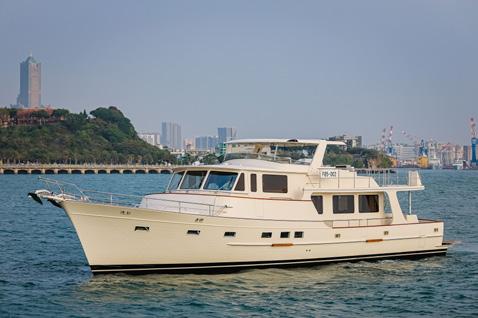
FLEMING 85: RIDING A WAVE OF POPULARITY
The Fleming 85, a relatively new addition to the market and was meticulously crafted to epitomize the pinnacle of ocean-faring pilothouse motor yachts. Evidently, it has captured the essence of passage-making excellence. The fourth Fleming 85 was recently launched and they currently have another four 85’s in build for anxious owners.
With true ocean crossing range, the Fleming 85 (25.9m) will take you anywhere you want to be in the world, in total comfort, grace and peace of mind.
FLEMINGYACHTS.COM
VICEMYACHTS.COM
EXQUISITE NEW VICEM 95 SUPERYACHT ARRIVES IN AUSTRALIA
POWERBOATMAGAZINE.CO.NZ 113
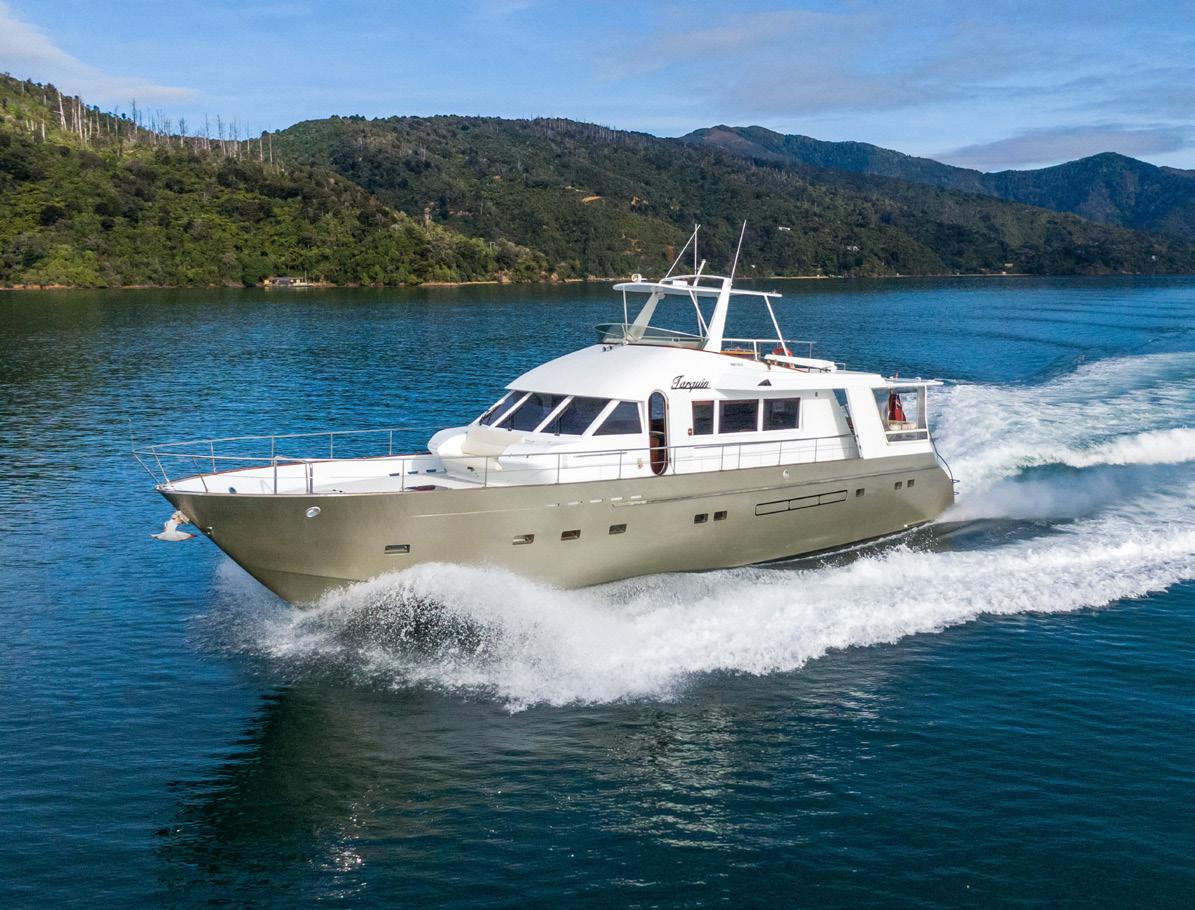
Tarquin underway
LUXURY COASTAL CRUISER TARQUIN FOR SALE
The 20m luxury motor yacht
Tarquin is the ideal vessel for stylish, safe and uncomplicated cruising around New Zealand.
Tarquin, meaning ruler of a kingdom, is presented for sale in immaculate condition, including topsides in stunning bronze metallic paint.
Built in GRP by Halmatic in the UK, Tarquin exudes classic, ship-like lines and distinctive sweeping stairways that will always be in style. Nelson businessman Dick Potton imported Tarquin as hull and decks, a specialty for Halmatic, to New Zealand in 1977. He commissioned her fit-out in Nelson to his specifications.
Following many years with Potton, Tarquin spent time in Auckland and the Gold Coast. In 2016, she underwent a $700,000
refit by Tory Channel Contracting in Picton for a high-end Marlborough Sounds charter business. This included interior styling by Sylvia Hayward which retained many original features such as an inlaid table on the aft deck, now surrounded by newly upholstered booth seats and cushions in stylish white.
Feel the relaxed, cruising vibe right here. This is the place for family gatherings, fine dining, corporate events and al fresco entertaining; Tarquin recently renewed a survey for 50 guests. The aft deck overlooks the generous swimboard, a few easy steps below and the fun base for the tender, water toys and fishing platform.
The aft deck lounge is serviced by a day head to port. To starboard, a stairway leads to the flybridge helm, seating with all-round
views and an electric davit to launch and retrieve the Takakat inflatable dinghy.
On the main deck, wide glass doors lead from the aft deck lounge to spacious saloon seating, dining, coffee machine and bar fridge, and bridge. Doors either side of the helmstation open to wide walkaround sidedecks, creating an easy flow throughout the motoryacht. The foredeck has comfortable seating and an uncluttered view of the surroundings.
Tarquin’s new bow and rear thrusters with helm and remote controls and hydraulic-electric capstan make her easily managed by an owner/skipper. However, with comfortable crew quarters for four belowdecks, there is the option of professional crew.
LISTING -TARQUIN
114 MARCH / APRIL 2024
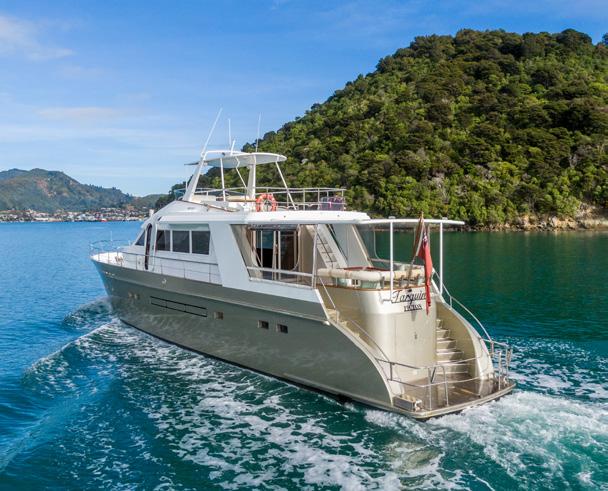
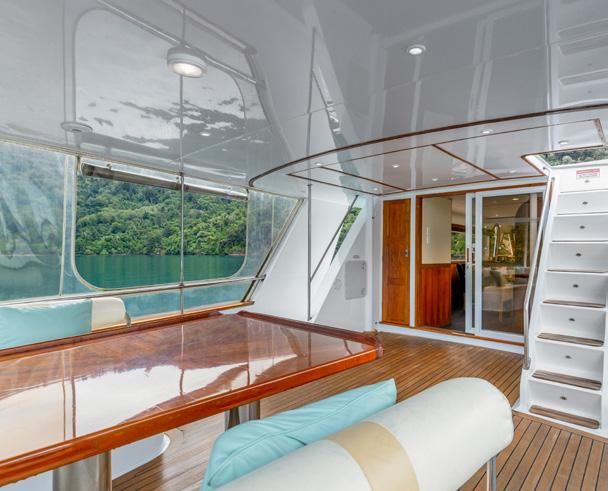
This motoryacht is ideal for coastal cruising and passagemaking. Powered with a pair of recently serviced Detroit V71 655 HP diesels powering new propellers on shaft drives, Tarquin cruises at approximately 12kts with a top speed of 16kts. She carries 5500 litres of fuel and has a range of 650nm at 12kts.
Electronics onboard include VHF radio, radar, GPS, autopilot, depth sounder, engine surveillance camera, and sound system, as well as new underwater lights, house and start batteries, and Victron Inverter and charger.
The two Westerbeke generators (25kva & 7.5kva) are recently serviced; the shore power has a current EWOF.
Belowdecks, Tarquin provides highend accommodation with three large staterooms: two doubles with ensuites and
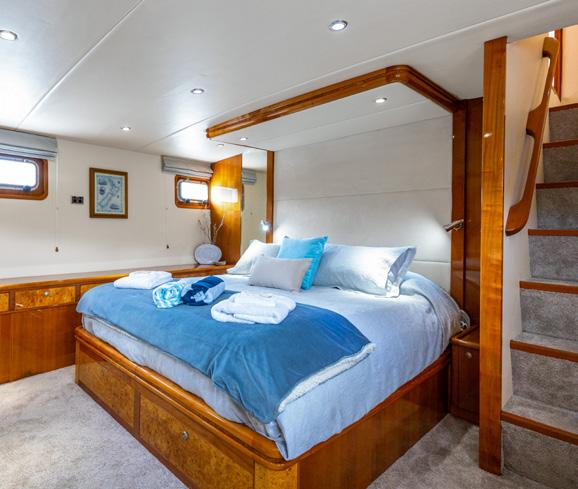
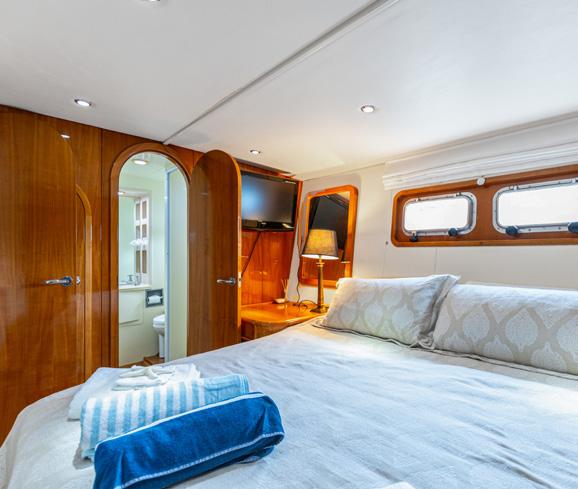
a twin-plus one with a shared bathroom facility. Including the crew quarters, there are berths for 11 people.
Sylvia Hayward’s uncluttered décor blends materials and textures in colours that reflect the sea and sand of the beautiful Marlborough Sounds. In charter, Tarquin was advertised at prices from $44,000 per week, for six guests with three crew.
The spacious galley is a home cook and chef’s delight with plenty of bench space, a French door-style electric fridge, bar fridge, built-in freezer, dishwasher, electric induction hobs and an electric oven. The galley is fully stocked with cookware, and plates and cutlery for 12 guests.
With fresh antifoul and Propspeed, Tarquin is ready for adventure as a family boat, liveaboard or charter vessel at a very reasonable price.
TARQUIN
HALMATIC 20M
Loa 21.9m
Beam 5.1m
Draft 1.4m
Cruising speed 12kts
Top speed 16kts
Displacement 32 tonnes
Cabins 3 double cabins, 2 with ensuites
Crew quarters four single berths
Fuel 5509 litres, approx
Range @ 12 knots 650nm, approx.
Engines twin Detroit V71 655hp
Survey new, for 50 guests
Price $595,000 plus GST
Contact Call Simon 021 319 992
Stateroom
Guest room
POWERBOATMAGAZINE.CO.NZ 115
Al fresco
The Alaska 49 Sedan is designed and purpose built from the ground up for the east coast of Australia’s cruising grounds by LeighSmith Yachts. These vessels are built in a 21,800m2 shipyard, which occupies a 193-metre shoreline with its own marina and is capable of building vessels up to 130 feet. Leigh-Smith Yachts in Sanctuary Cove is the only place in the world to procure one of these.
Family ties
The Leigh-Smith family has been selling boats in Australia for over five generations and I was shown around the vessel by the latest recruit into the family business, Tom Leigh-Smith.
“When it comes to the Alaska 49, the way the vessel is finished and the cost of the vessel at $1.7m to $1.8m makes it extremely good value compared to a lot of its direct competitors in the marketplace.
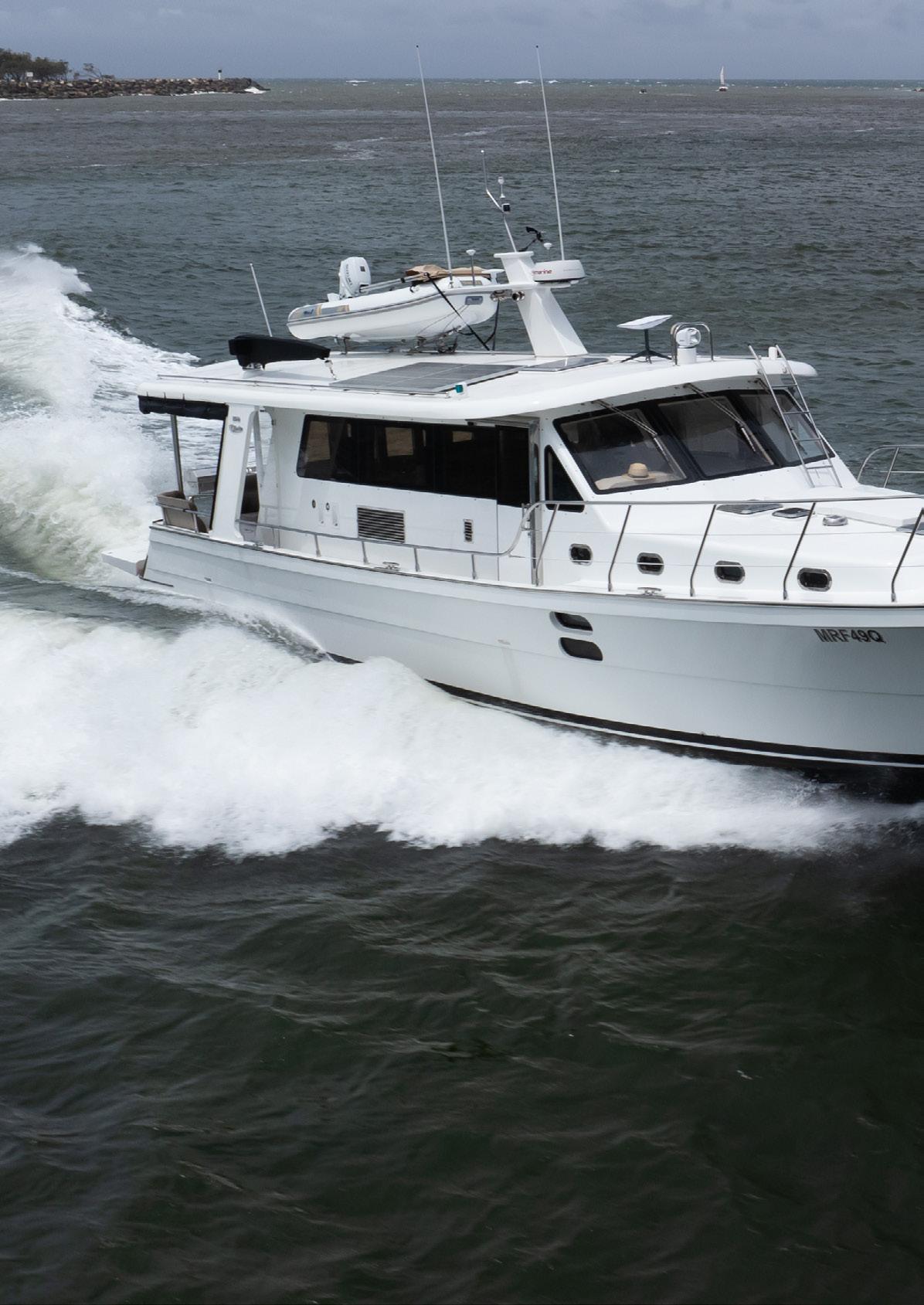
“The boat was developed from the ground up. This is my family’s brainchild that has been continuously worked on from the idea’s inception. We are coming up to hull number 100 and have been building these vessels for 21 years. From Alaska's inception, every single hull has evolved while staying true to the core meaning behind the boat."
"It's a very traditional boat with lots of timber, true nautical styling and we are constantly tweaking and modernising the
BOAT REVIEW > ALASKA 49 SEDAN
116 MARCH / APRIL 2024
The Alaska 49 Sedan is a true classic with its broad bow and tons of room for all.
PERFORMER Established
A true classic gentleman’s cruiser with feisty performance.
BY KYLE BARNES
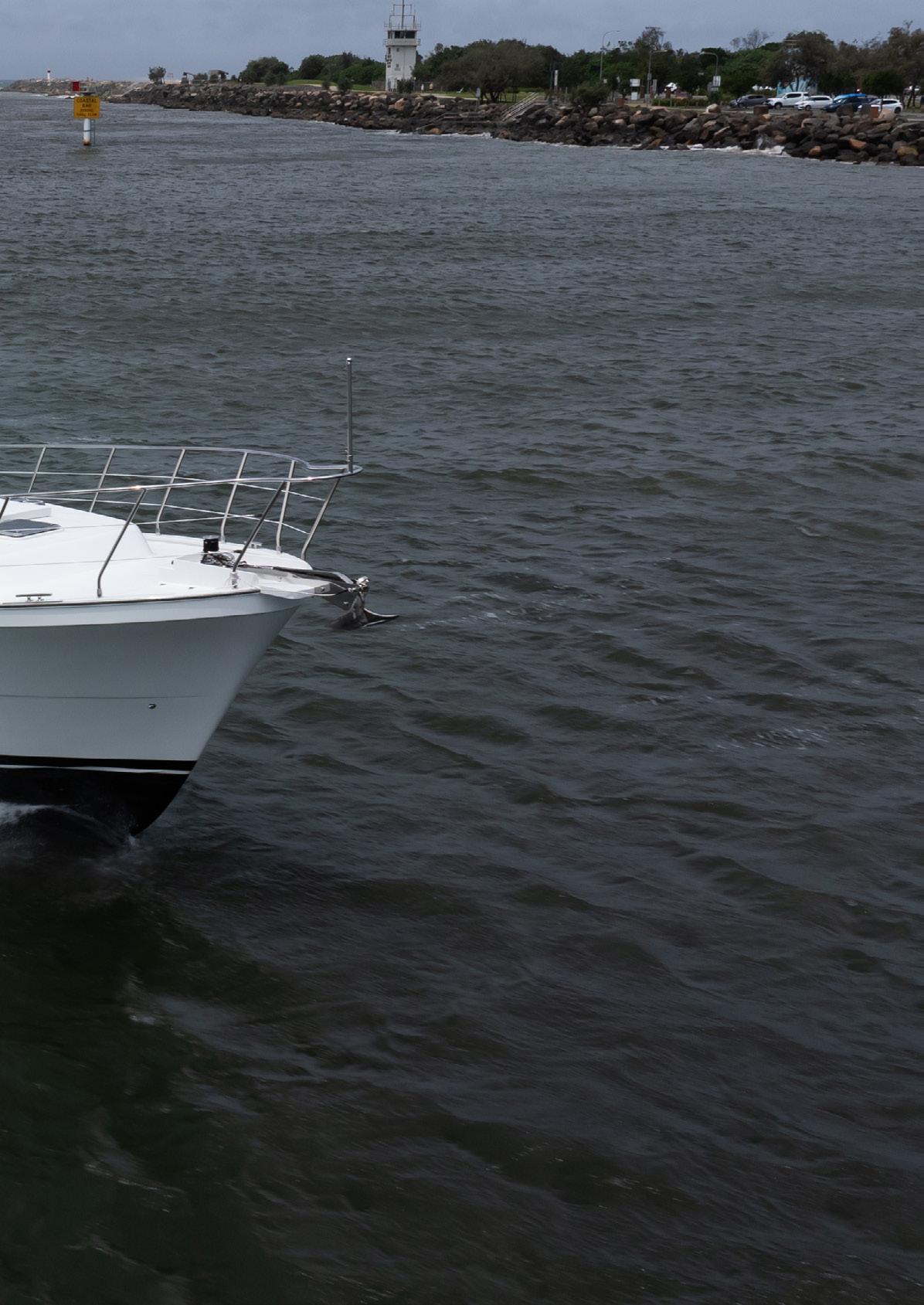
brand's timeless design, engineering and onboard systems. Alaska Motor Yachts are the pride of the Leigh-Smith Yachts team, a pride that each owner shares and takes with them long after the sales process. With every new Alaska, direct input from new and used owners alike further refines and evolves the future product. It’s this willingness to listen and learn from the end user that ensures the designs, performance and finishes in the Alaska range continue to astonish buyers and exceed expectations.”
Elegant lines
The lines on this vessel and its broader shape are elegant and practical. From her waterline up to her flat-hooded saloon there are all the trademarks of cruising experience and know how. Setting it off aloft is a fantastic looking radar arch and behind that is a huge space which doubles as a home for a large tender.
The vessel is constructed from hand-laid fibreglass, a long process that takes three months to mould in order to prevent air
into the glass mix which in turn rigours the hull against osmosis. The hull is split chine with a three-quarter keel, which sits around six inches below the lowest propeller point in order to protect the props in case of grounding – unlikely with the navigation equipment aboard!
Tom says with a long range cruise speed of 9 knots you are burning around 32 litres per hour, but as I soon found out this spirited hull is capable of 20 knots plus, and where it sits in the sweet spot in terms of planing is most efficient around 17 knots.
POWERBOATMAGAZINE.CO.NZ 117
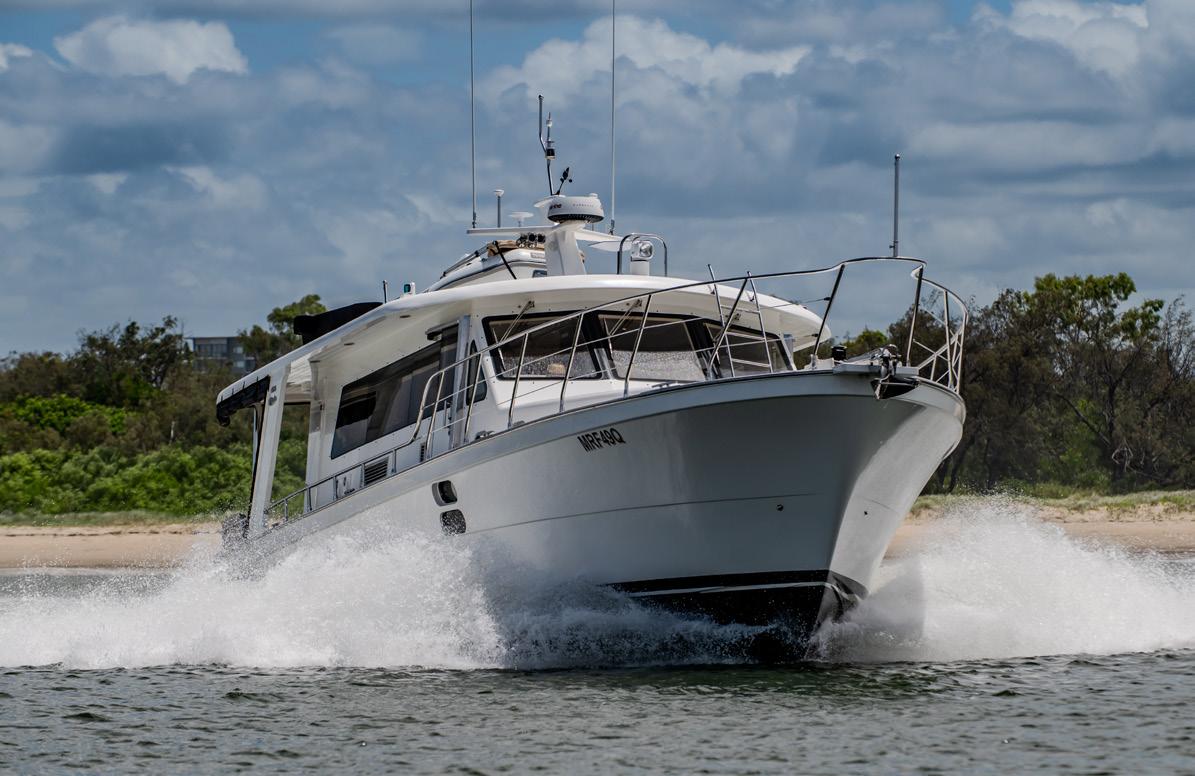
Naval heritage
I walk around the vessel, at times forgetting she is brand new, the naval heritage runs deep within her bones and around every corner there is a salute to the maritime past. Traditional hand-built high gloss cherry timber with boat building craftsmanship coupled with stunning fabrics and cutting edge composites all combine for a really wonderful interior space. You will literally feel the thousands of man hours in every vessel as you pass through each carefully designed purposeful area of the boat.
for a full ship management system. And the flat panel in front of the helm houses the round chrome dials and gauges for more engine room intel as well as the thruster controls and electronic throttles. Right next to the helm is a dog-down bulkhead door preventing water ingress, another is mounted opposite the helm on the portside.
One is very impressive with hidden compartments, revealing the remote control Dockmate, which is simple to use from any position on the ship.
Accommodations
A
The stunning blue back-lit engine room is a talking piece.
The Quick MC2 Gyro does a fabulous job of minimising roll and pitch.
There is a luxurious C-shaped settee aft with two builtin sofa seats opposite to starboard which complement the wide plank teak and holly floor. The hood lining and benchtops in the galley shine light back onto the woodwork, making the whole saloon fresh and vibrant while maintaining its link to the past. The galley takes up the entire saloon forward of the diner and aft of the helm station, with lashings of room and wide, fresh benches.
Being all on the one level, with only a few steps down to the accommodations and a step into the cockpit, this is a truly social boat ready to host family and friends. The visibility runs all the way from the aft swim platform through the fold-away glass doors at the rear of the saloon up to the helm station. The starboard helm is what I can only describe as a modern classic, hewn out of the cherry timber on sand-coloured panelling. It controls the twin Cummins QSB 480 HP engines and thrusters both ends of the hull.
The head up position is centred by a large multifunction display surrounded by smaller display panels
A couple of steps down from the saloon and bridge reveal the owner’s suite on the starboard side. This opens up to the companionway with large double doors with the head of the bed against the engine room bulkhead with plenty of natural light by way of curved rectangular portholes and reflective surfaces. It has its own head and rain shower. The laundry area is located by lifting the steps which come down from the saloon into the accommodations and there is an abundance of space for storage next to the washing machine/dryer. Towards the bow is the second cabin where a V-berth arrangement awaits your guests, again with plenty of light courtesy of the skylight and gloss wood.
Up on deck this boat has beautiful lines with practicable applications drawn from what is clearly real sea experience. The foredeck is long and spacious with big flat areas and you can even pull back on some of the skylights so you can button a sun lounge into place. The rails are hip-high and it is one foot after the other skirting around the gunwales beside the saloon. But don’t forget those side doors from the bridge that
Above: A feisty performer with plenty of get up and go!
Opposite page Left to Right: The alfresco and indoor connects as one for a truly social vessel.
modern classic helm is hewn out of cherry timber – a real nod to its maritime past.
BOAT REVIEW > ALASKA 49 SEDAN 118 MARCH / APRIL 2024
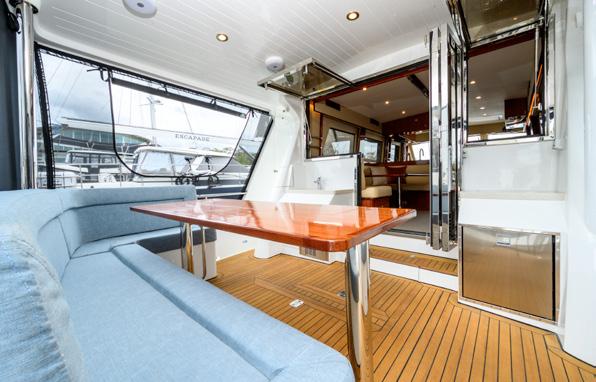
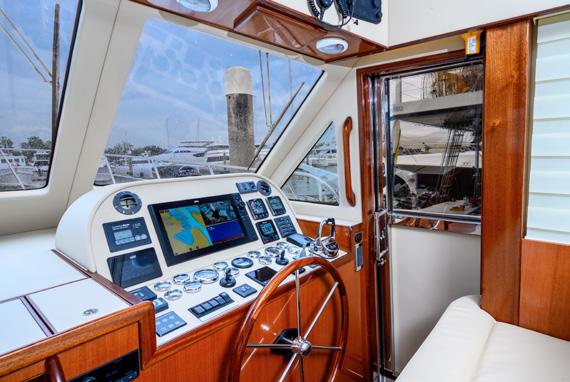
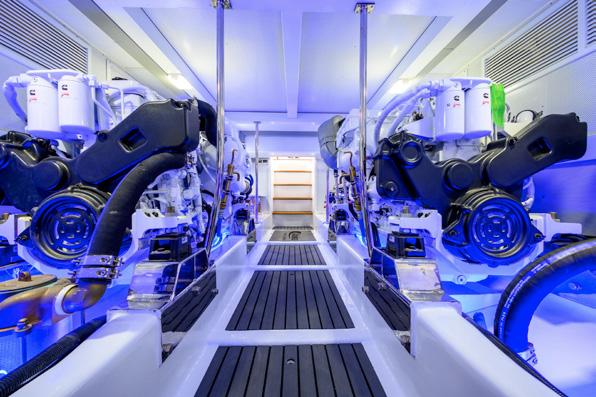
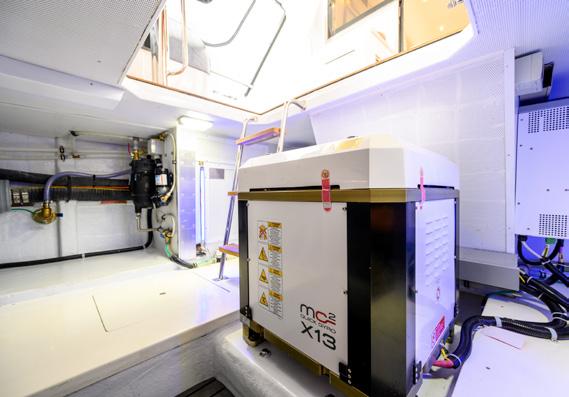
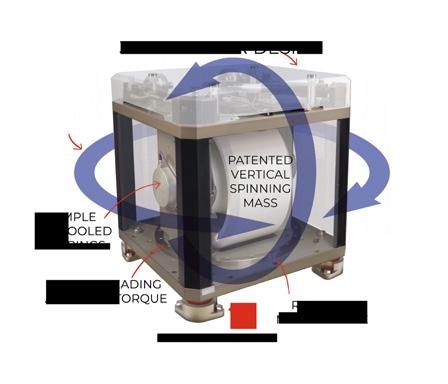
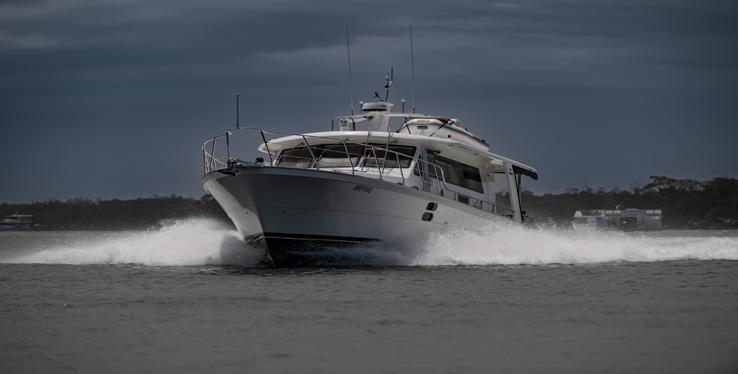



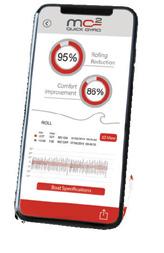




New Zealand yards that fit our machines SMALLER•SIMPLER•SMARTER Market leading anti-roll torque for safer and more comfortable boating. WE GUARANTEE PERFORMANCE Quality, Value and Service Since 1976 GOLD COAST CITY MARINA G45, 76-84 Waterway Drive Coomera, QLD W: GineicoMarine.com.au | T: (+64) 21 275 7608 AS SEEN FITTED ON THE ALASKA 49 SEDAN POWERBOATMAGAZINE.CO.NZ 119
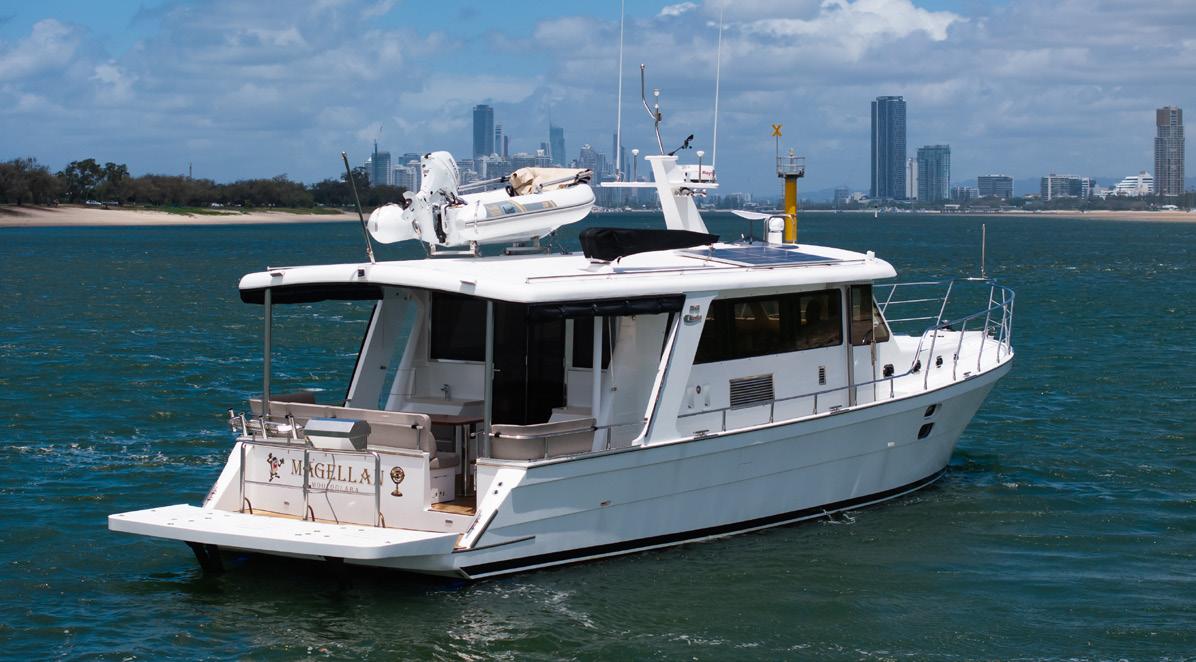
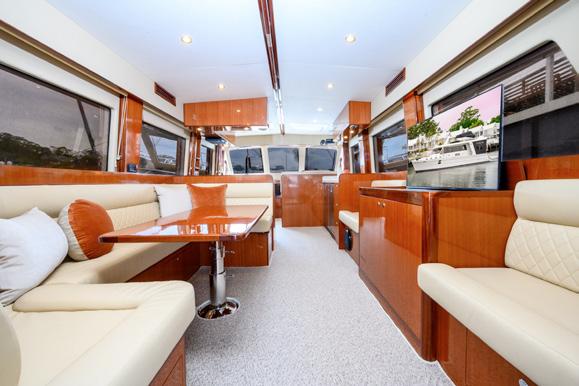
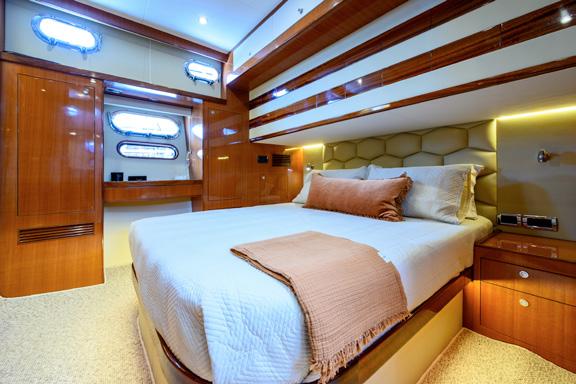
With its beautiful lines this vessel is a definite head-turner.
A luxurious C-shaped settee aft with two built-in sofa seats opposite to starboard complement the wide plank teak and holly floor.
With its boat building craftsmanship, coupled with stunning fabrics and cutting edge composites, you will literally feel the thousands of man hours in every vessel.
get you out on the bow quick sticks from both sides of the saloon. The side gunwales also have fabulous gates which would be particularly handy when rafting in the evening.
Outer edge
Boarding from the stern is a decent sized fixed platform with a barbeque and rod holder. The particular vessel we were on had a hydraulic boarding platform bolted and reinforced through the hull further aft, to which its 1.2-metre length made a good addition in terms of a large, safe place to board smaller craft, dive from or simply sit at water level and enjoy the view.
Through the starboard transom door, is a large cockpit space that opens up into the saloon via the aforementioned double-chrome framed doors and two large saloon windows. It virtually makes the inside indistinguishable from the cockpit except for the small
step and change of flooring underfoot. The cockpit itself is a large 4.2 metres wide, just shy of the beam of the boat, with a fitted L-shaped dining arrangement and a -legged table. For the afternoon drinks hour there is an ice maker to port and a fridge to starboardneatly tucked away on the saloon bulkhead.
Staying stable
Down in the lazarette there is plenty of storage space as well as a Quick MC² Gyro humming away and doing a fabulous job of minimising roll and pitch especially when large vessels roared past on the Broadwater. These are a nifty idea that can be fitted, or retrofitted, to most vessels, from just 20 ft up. The Quick MC² Gyro is physically smaller than other brands and great for this style of boat. They also do not require any through-hull work with Quick MC² being air cooled rather than water cooled like some of the others.
BOAT REVIEW > ALASKA 49 SEDAN 120 MARCH / APRIL 2024
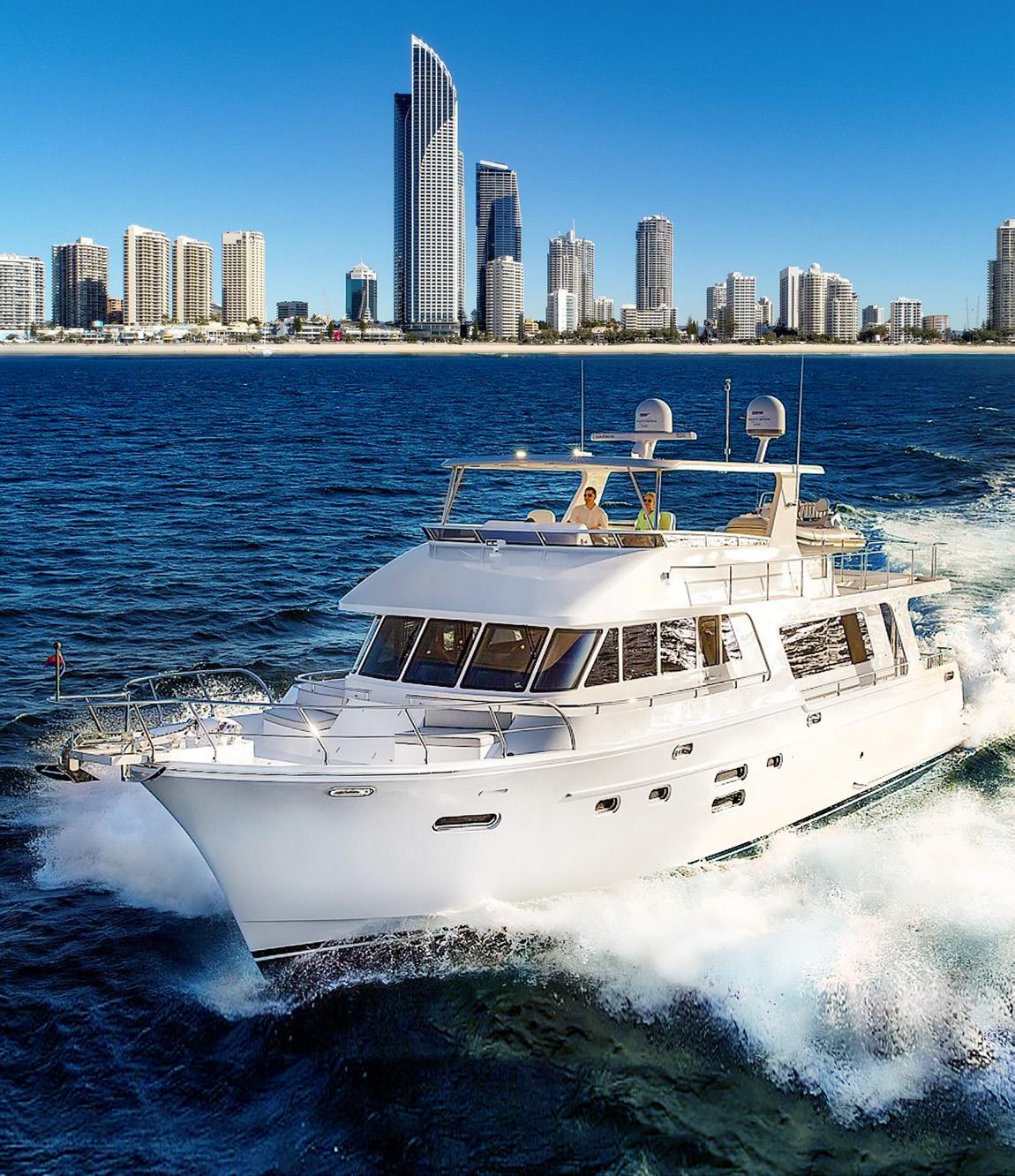
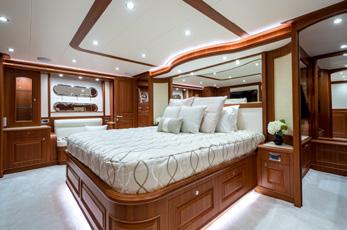
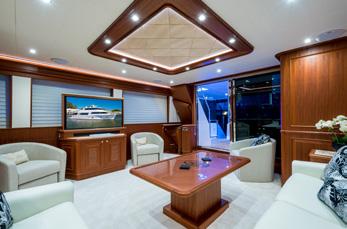
Leigh-Smith Yachts are excited to announce the addition of a new stock yacht set to be delivered to our shores in 2024. Labelled as “80 feet of yacht in a 68 foot hull” by our friends at BoatTest.com, the four-stateroom, four-head E680 cruises effortlessly at 10 knots in absolute luxury. Comfort on-board is at the heart of the E680’s conception, offering users a functional layout and an interior brimming with the highest quality finishes. With extraordinary sea-keeping ability, twin 1,136hp CAT C18’s on straight shafts and an 8,000L fuel capacity, the E680 is ready to comfortably tackle any journey.
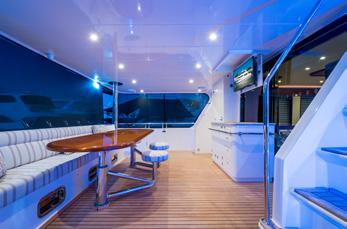

680
www.leigh-smith.com 07 5577 9200 sales@leigh-smith.com
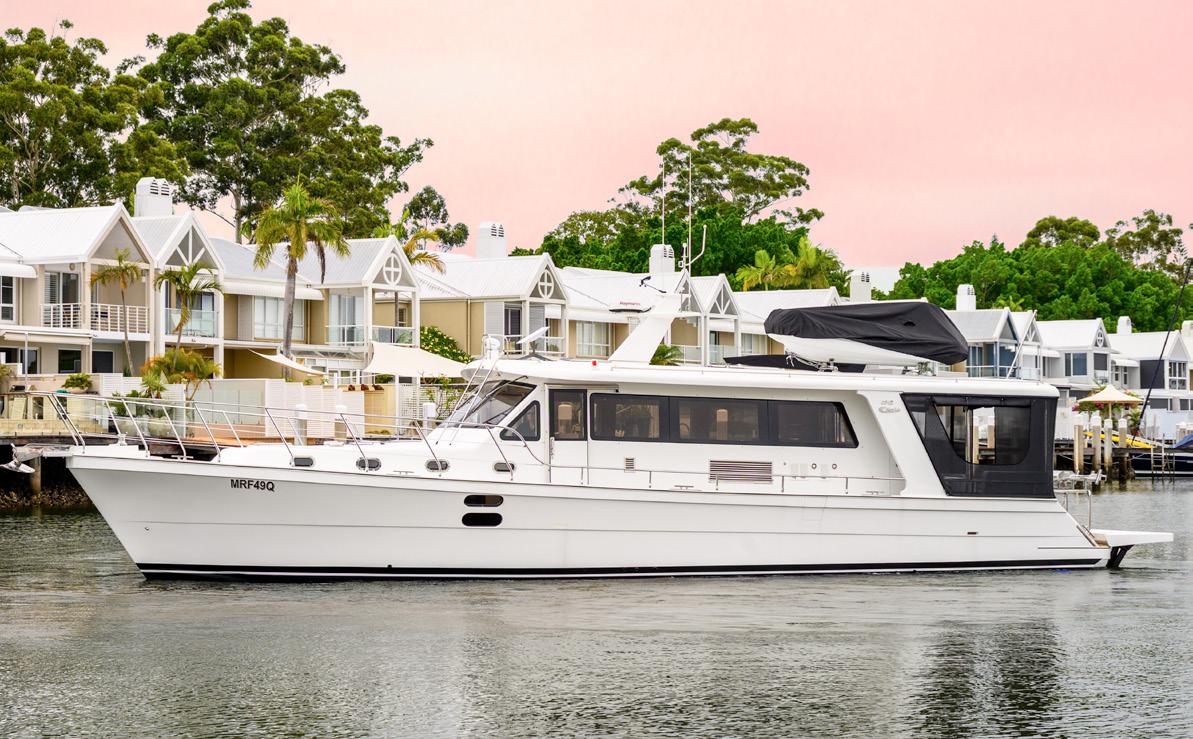
With its poise and elegance this vessel shines in any marina.
Performance
We didn’t have time to leave the confines of the flat, calm Broadwater but I sighted the following fuel consumptions.
Full fuel tanks, light winds, quarter fill fresh water.
• 9 knots @ 32lph
• 13 knots @80lph
• 17 knots @110lph
• 18.2 knots @ 125 lph
• 20 knots @ 180lph
It is important to note, while conducting these quick tests, the ambient engine noise whether you are standing over the engine rooms, in the saloon or down in the bow is quiet and reflects great sound engineering qualities. You are perfectly able to talk to one’s fellow crew with a quiet “inside voice” rather than competing with the rattle and hum of the engineering.

Scan
The Alaska 49 is actually 53-feet overall or 16 metres on the nose. Put that together with a 4.25 metre beam and you have a big volume vessel, and combined with the water maker and fuel capacity, it presents itself as an excellent mid-range cruiser. If it’s simple boating with minimal maintenance and a focus on luxurious living spaces that you are after, this established performer is truly one of the best motor yachts on the market today.
“...this established performer is truly one of the best motor yachts on the market today.”
SPECIFICATIONS
Boat Design Name : Alaska 49
Style: Sedan
Price : Available on request
L.O.A: 16 m 53’
Beam: 4.25 m 14’
Draft: 1.2 Mm 3’10”
Fuel Capacity: 2,560 Litres 676 Gals
Water Capacity : 780 Litres 206 Gals
Weight: (Dry) 19,000 Kg 41,900lbs
Std Marine Engines : Twin Cummins QSB 480 HP
Generator : Onan 11 KW with Sound Shield
Air Conditioning: Marine-Air
Navigation: Raymarine Axiom Pro Hybrid LEIGH-SMITH.COM
BOAT REVIEW > ALASKA 49 SEDAN
to watch the boat tour.
122 MARCH / APRIL 2024
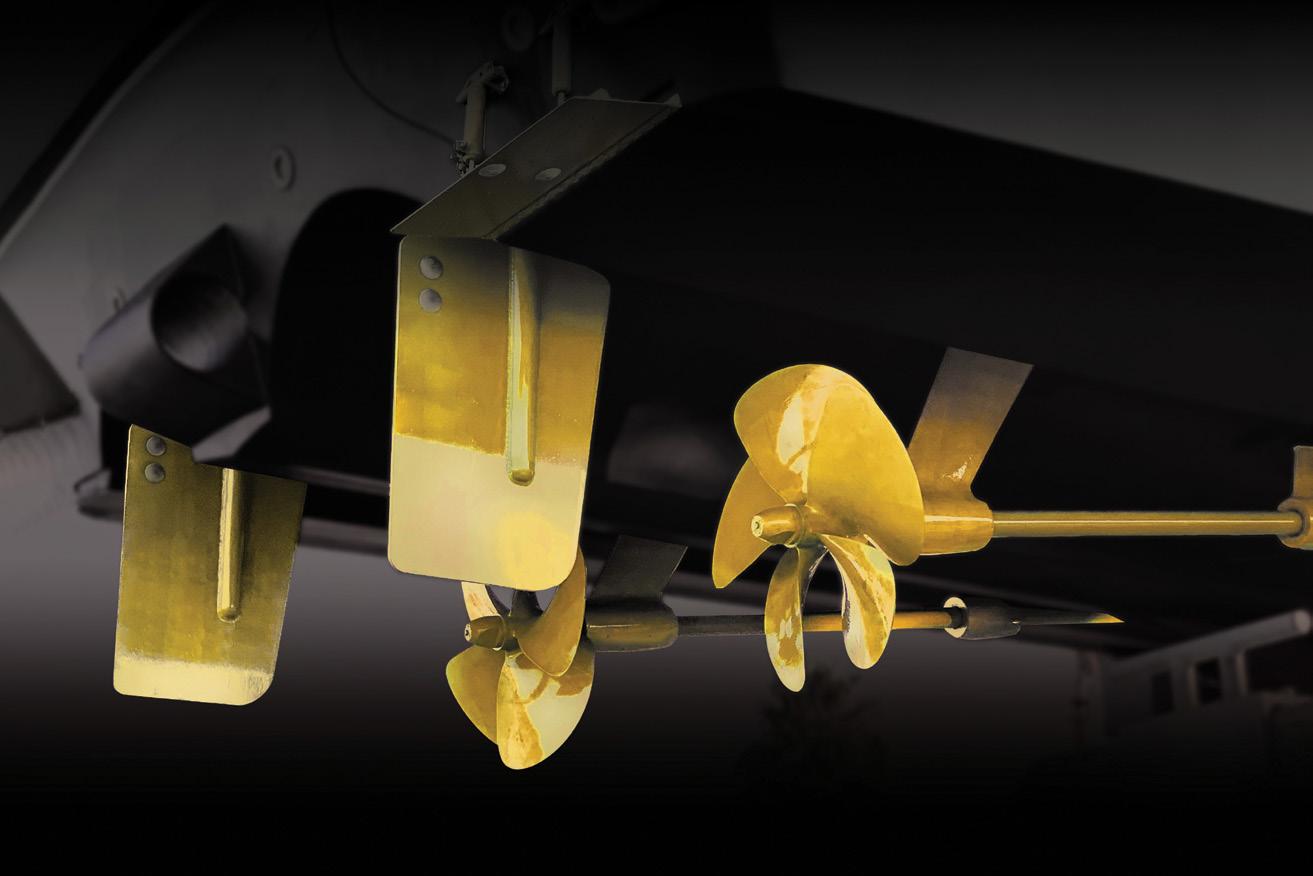

POWERBOATMAGAZINE.CO.NZ 123
ANTIFOULING
Regulations & tips to protect your bottom!
Carla Dukeson takes a good look at Antifouling options and new regulations.
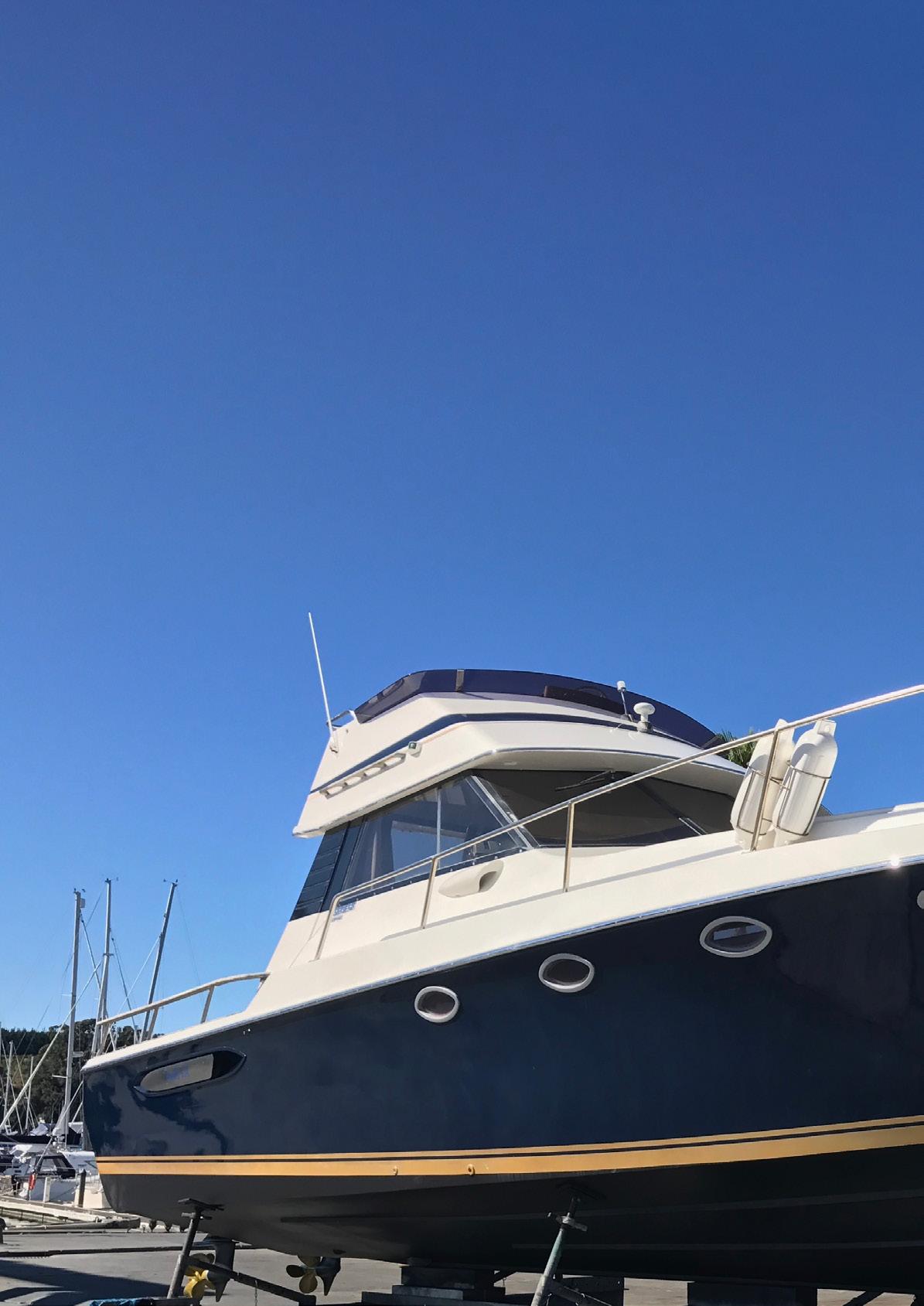
ANTIFOULING > REGULATIONS & TIPS
124 MARCH / APRIL 2024
ANTIFOULING
As winter approaches, while most boat owners aren’t using their boats as much as in the height of the summer, it is the perfect time to get to grips with maintenance –and maintenance doesn't come more important than keeping your bottom clean.
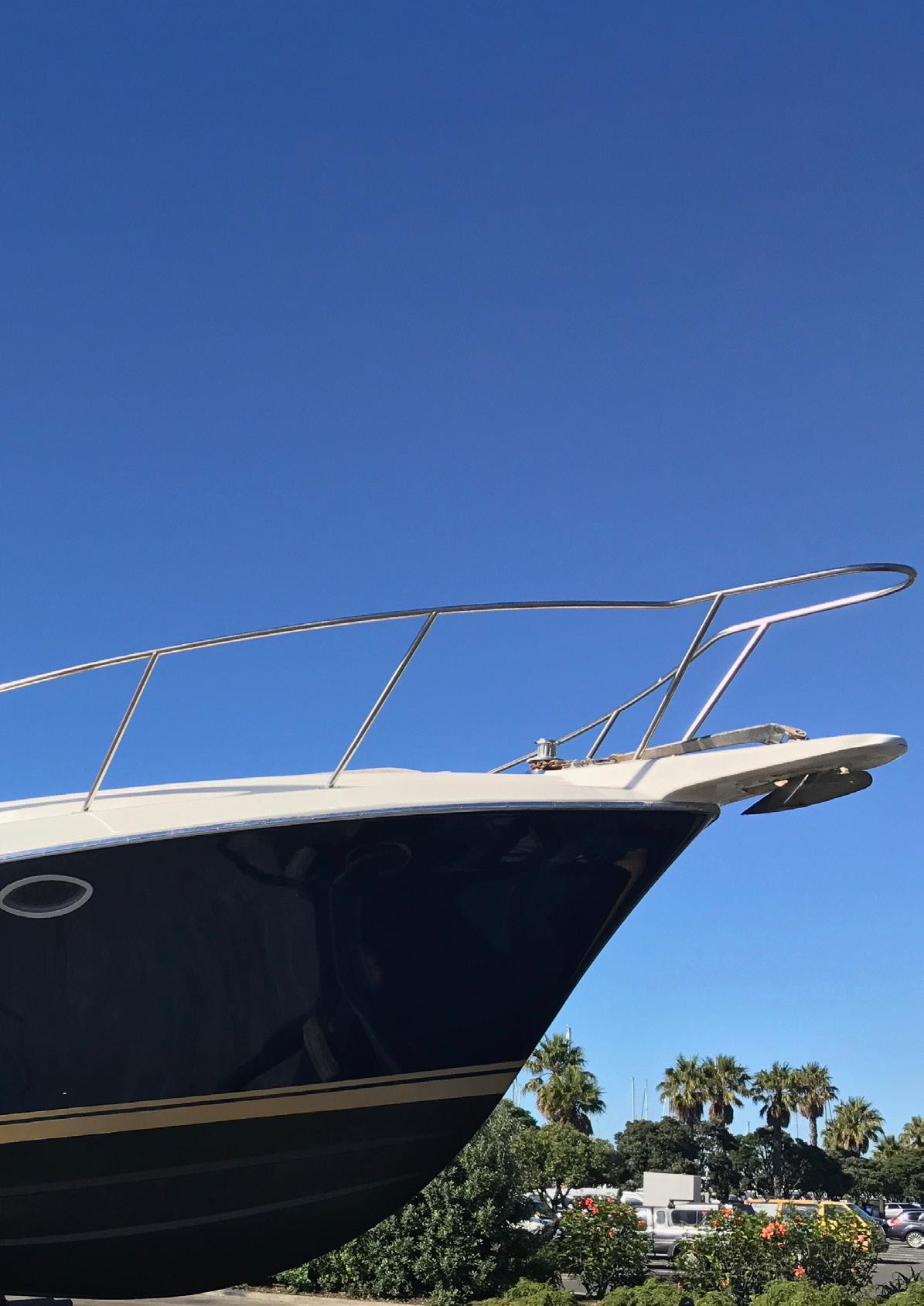
New Zealand and Australian boaties are understandably proud of their magnificent coastal and inland waterways, but it’s important we all do our bit to make sure our playgrounds don’t become infested with invasive marine pests. The key way to achieve this is by hauling your boat out of the water if it spends a significant amount of time moored. Haul it out and give its bottom a good clean and recoat with a quality antifoul.
POWERBOATMAGAZINE.CO.NZ 125
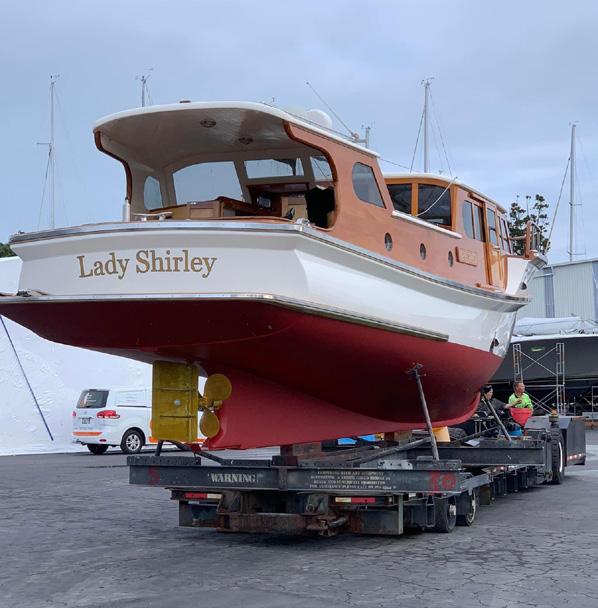
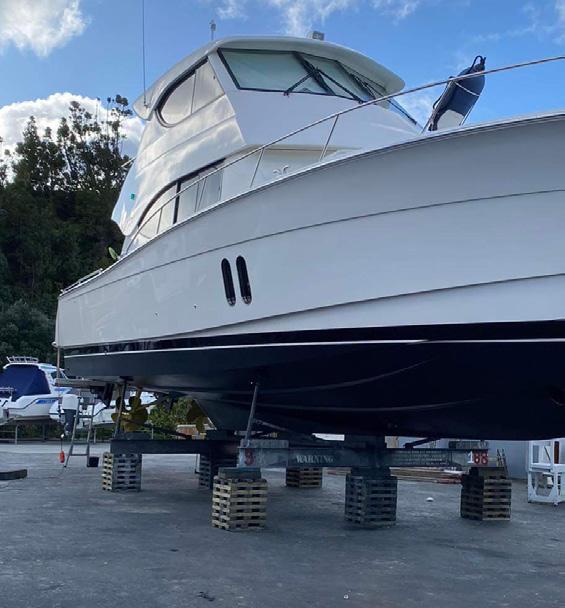
1. Why do you need antifouling?
Antifouling, as its name suggests, inhibits fouling of the boat – that is, all those hitchhiking pests such as barnacles, slime and weed which attach to the bottom of the boat. As well as helping to keep these pests out of the food chain, antifouling also inhibits them from causing damage to the hull, therefore reducing its speed through the water, and affecting fuel economy. Traditional antifouling paint does this by slowly releasing biocides which hinder the growth, or repel underwater life. Most antifouling contains copper compounds.
2. Types of antifouling:
Antifouling coatings should be suitable not just for the type of hull you have but also for the way in which you use the boat. Most, but not all copper based antifouling should not be used on an aluminium boat. Choose the right paint for your hull type and underwater metals as they should be protected by a primer to act as a barrier between copper oxide based antifoulings and metals like aluminum, stainless steel, and bronze in order to prevent electrolysis between dissimilar metals.
Antifouling paints can be classified as either hard or soft:
Hard (“contact leaching” type) – Hard antifoulings work by releasing biocide from the surface of the coating to deter fouling organisms. Hard antifoulings don’t really wear, but abrasive material in the water such as silt and sand may lead to a very minor reduction in the film build. Biocide leaching rate reduces over the lifetime of the product. After a few seasons, there may be a residual build-up of product that needs to be removed.
If you have a fast boat, or a fast boat that is used very regularly, then hard antifouling is usually the preferred product to choose. Boats moored in fresh water normally use these types as eroding antifoulings are designed to erode in salt water and may not erode sufficiently in fresh water. For those who like to race, hard products are a good option as they can be burnished or wet sanded to a smooth finish prior to racing.
Soft (“eroding” or “ablative” type) –Eroding antifoulings, also known as soft or ablative antifoulings, also work by releasing biocide. There are only a handful of products that only work in salt water, generally all ablative or polishing paints work in fresh, brackish, and salt water. It is a combination of the resin technology and the usage of the boat that wears the paint away.
Eroding antifoulings are great for those who prefer a low maintenance option,
as generally speaking, there is far less accumulation of old paint on the hull after each season. However, a slow build up can still occur if excessive paint is applied at each application, which eventually needs to be removed, as it may become unstable and lead to problems when new antifouling is applied.
Soft antifouling splits into two types:
Ablative – erodes unevenly, wears off faster where water flow past surface is greater, so not always suitable for high speed craft which are used frequently as the thickness of the film may be reduced too quickly; can be left out of the water for long periods.
Self-polishing and CoPolymer – Within this group of eroding/ablative types, there is sub- groups of products known as selfpolishing and copolymer antifoulings. With most polishing paints being co-polymers (two or more polymers being combined), only a few are true self polishing and that depends on the resin technology. These include products such as Intermational’s Micron 99 which is a true self polishing product - where the wear rate is a set rate and it doesn’t matter if the boat is moving or at the dock, giving boaters the benefits of both a polishing and hard antifouling. These types of antifoul are generally used by larger vessel owners who require longer periods between maintenance and anyone after increased all-round performance.
ANTIFOULING > REGULATIONS & TIPS
126 MARCH / APRIL 2024
A couple of fresh new antifouls applied
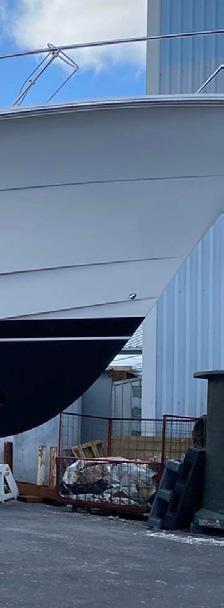
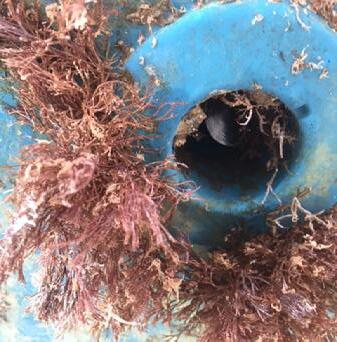
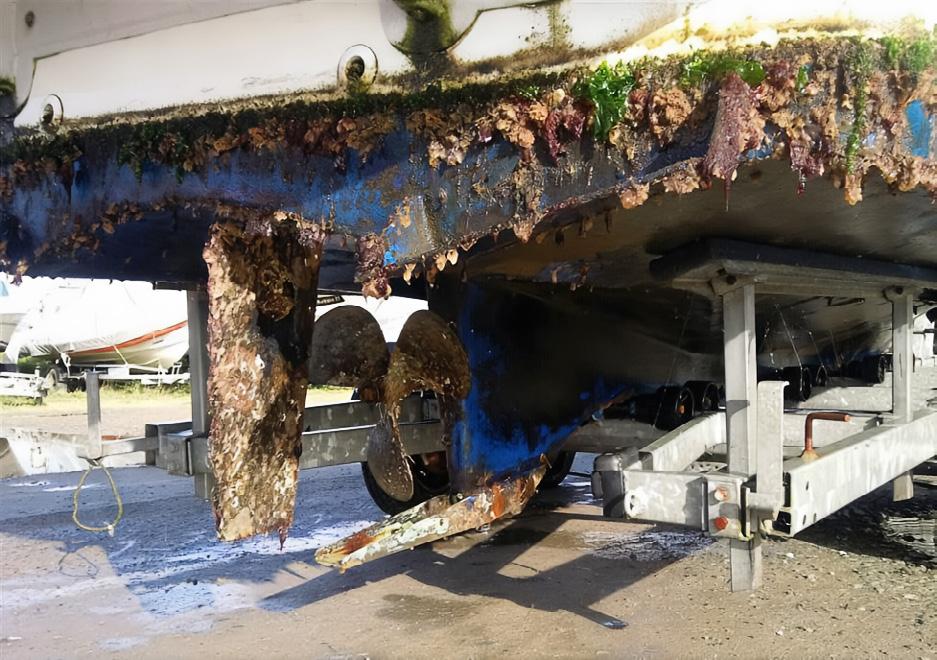
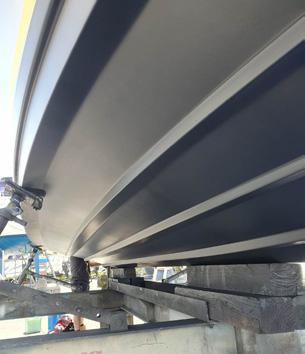
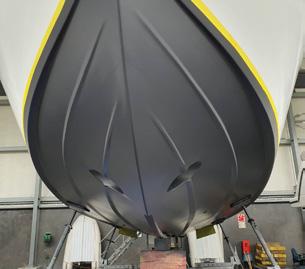





We’re Keen Yachties Too We provide mobile marine services Auckland wide Antifoul • Touch up & repaints Propspeed • Gel Coat Repairs Detailing • Repairs Bryce Wood 027 444 6583 & Toni Wood 027 487 3981 aboveandbelowmarine@gmail.com | aboveandbelowmarine.co.nz • Antifoul • Touch ups • Repaints • Propspeed • Gel Coat Repairs • Detailing • Repairs We’re Keen Boaties Too We provide mobile marine services Auckland wide Call us for your free no obligation quote Bryce Wood 027 444 6583 & Toni Wood aboveandbelowmarine@gmail.com aboveandbelowmarine.co.nz DB972 You & your family can trust a CPC Boat. cpcstandard.com APPROVED BY Companies that are approved to build boats to CPC certified standards are: Buccaneer Boats DNA Boats Extreme Boats FC Boats Fi-Glass FREWZA Boats Haines Hunter Huntsman Boats Innovision Boats Kingfisher Boats KiwiKraft McLay Boats Marco Boats Offshore Boats Rayglass Salthouse Boatbuilders Seaforce Marine Smuggler Marine Southern Boats Stabicraft Tristram Marine A hull in desperate need of attention POWERBOATMAGAZINE.CO.NZ 127
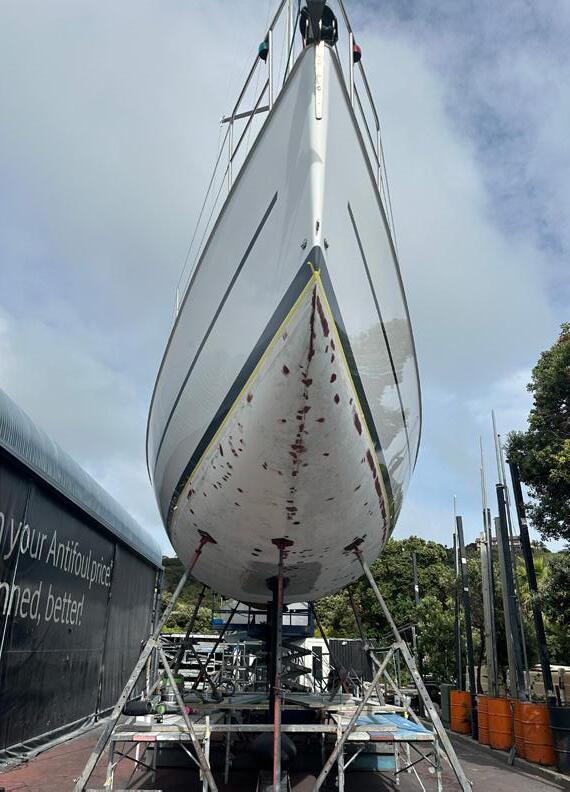
BEFORE AFTTER
A hull that has had the antifoul removed - been sanded, filled, and epoxy undercoat applied along with some fresh new antifouling!
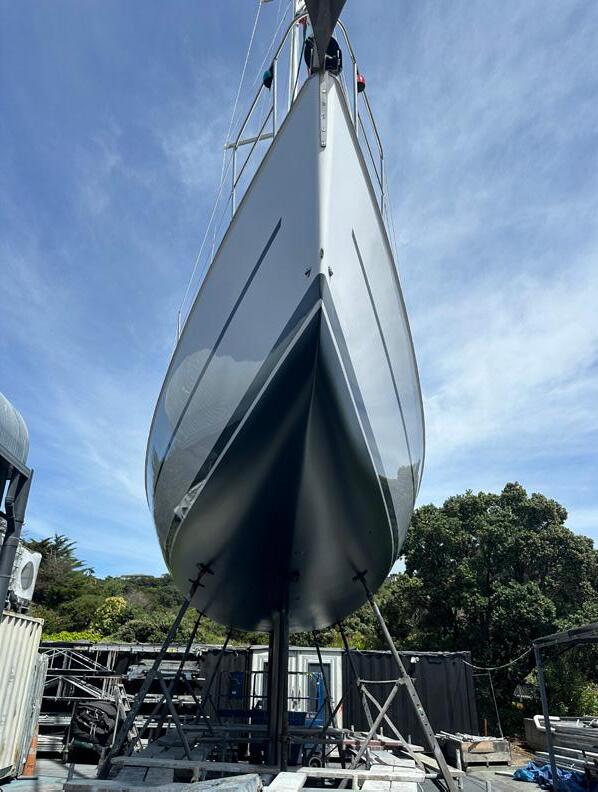
Most popular, common and widely used paints from leading suppliers are as follows:
AKZONOBEL - INTERNATIONAL PAINTS
Micron 99 – Micron 99 is a premium true Self Polishing Copolymer (SPC) with Biolux Technology antifouling that provides protection from the harshest hard and soft growth while at the dock and underway. The unique SPC technology helps improve hull efficiencies. For Australian boaters must be on boats over 25 meters.
Micron AP – Advanced performance for difficult fouling in all environments, formulated for use in challenging high fouling areas such as tropical waters and known difficult fouling regions. Incorporates Biolux Technology to help block slime and algae.
Micron Extra 2 – A high strength polishing antifoul with Biolux technology, for even longer lasting protection in most fouling conditions.
Micron One – Ideal for most boaters looking for a fast drying high strength antifouling that wears away with use.
Trilux 33 – A premium antifouling for use on all substrates including aluminum hulls and drives, with added Biolux Technology delivers protection against hard and soft growth in all water types. Available in bright colors, including white.
Ultra 2 – A high-performing hard antifouling with Biolux Technology, ideal for power and sail boats thanks to its smooth, low-friction surface and scrubbable finish.
VC Offshore Hard Racing Antifouling – an antifouling specially formulated for racing, sailing and power boats in salt or fresh water.
ALTEX COATINGS
Altex No. 5 - a multi-season antifoul, containing high levels of cuprous oxide, a self-polishing/ablative mechanism inhibits the attachment of fouling organisms and suitable for moored boats and pleasure boats that require a low maintenance antifoul.
Sea-Zone 60 – a new generation silyl acrylate formulation that protects hulls from marine growth through a selfpolishing hydrolysis action. The silyl acrylate, cuprous oxide and co-biocide combination provide outstanding protection.
Pettit Hydrocoat – this is an advanced technology, water-based, ablative antifouling offering multiseason protection against
ANTIFOULING > REGULATIONS & TIPS
128 MARCH / APRIL 2024

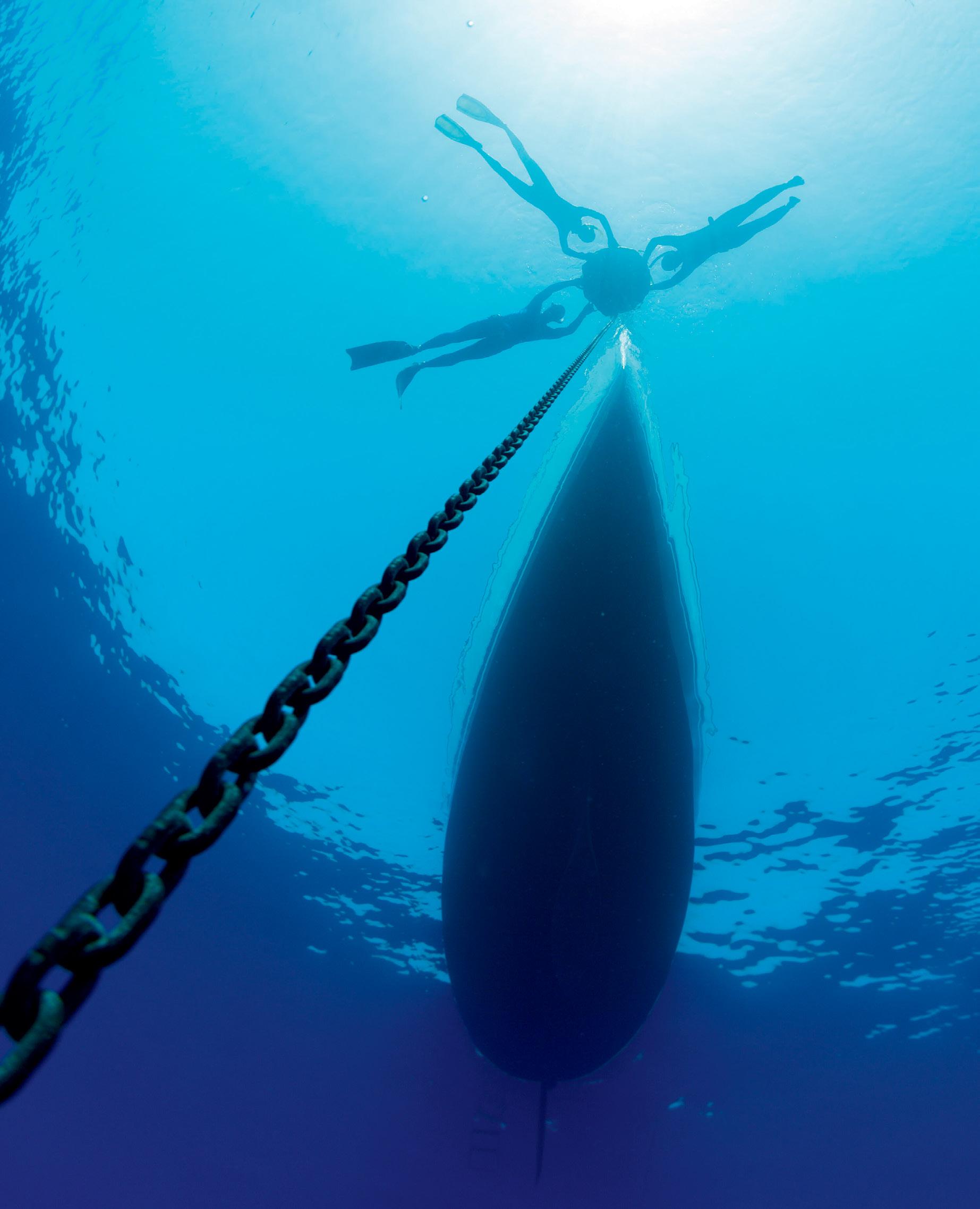
Unlock the Power of Unlock the Power of NZ Protection, NZ Protection, EPA approved HSR000041, HSR000951, HSR101519 altexboatpaint.com W I T H A L T E X A N T I F O U L S , L O C A L L Y T E S T E D A N D T A I L O R - M A D E F O R S U C C E S S .
most types of fouling. This technology replaces the harsh solvents found in most bottom paints with water. The ablative surface wears away with use, exposing fresh biocides while eliminating paint build up.
Pettit Vivid – Vivid’s hybrid technology incorporates all the benefits of both ablative and hard paints. Its hard, smooth surface withstands trailering and is easily burnished to a high performance racing finish. Vivid can be used on aluminium hulls and outdrives.
HEMPEL
Olympic 86901 – Hempel’s Olympic is a high solids, tin-free, self-polishing antifoul.
Aluxtra NCT – A premium self-polishing antifouling with Nano Capsule Technology for aluminium vessels, propellers and stern gear. Biocides are contained within the core of the nano capsules which are released when the outer shell of the capsule comes into contact with water and dissolves.
Globic NCT – A premium, copper based self-polishing antifouling with Nano Capsule Technology as above for GRP, steel and wood substrates.
SEA HAWK
(A brand of AkzoNobel)
Biocop TF - developed as an alternative to tin-based antifouling paints to protect against the harshest marine environments and provide maximum protection. A new dual-biocide technology and revolutionary polymer binder system “PL3” produces an engineered biocide that leaves no harmful effects on the environment. Biocop TF is considered a top performer among antifouling paints and is safe in salt or fresh water on boats of all sizes.
Cukote - A high loading of cuprous oxide makes this formulation a top performer, even in the most severe fouling areas. As a polishing coating, there is no buildup of bottom paint over time. The hull and underwater surface remains smooth and clean. Cukote copolymer can also withstand
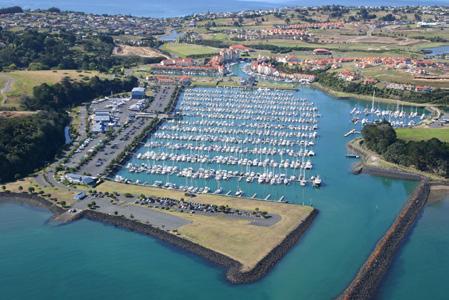
removal from water without affecting its antifouling properties.
AF33 - A harder ablative antifoulant, yielding a more durable finish on all types of vessels. AF33 is a popular choice for discerning captains of workboats, daysailers and serious cruising vessels.
WAR PAINT MARINE ANTIFOUL

A premium Kiwi engineered product by Wet & Forget using modern copolymer resins which contains high levels of cuprous oxide, to fight against a wide range of marine fouling organisms. It has a low ablation rate which allows for all methods of cleaning without significant coating loss. Can be burnished during use to promote speed advantage. Good compatibility over most other antifouls. 16 different colours! Great for racing, cruising, planing or displacement launches.
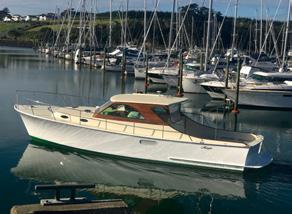
DB252 HibiscusMarineCoatings.co.nz For more information phone: 09 428 3906 Gulf Harbour Marina, Gulf Harbour, Auckland, NZ • ANTIFOULING • POLISHING • TOUCH-UPS • REPAINTS • PROPSPEED • MAST & BOOMS Blending quality marine products, craftsmanship and customer care. ANTIFOULING > REGULATIONS & TIPS
130 MARCH / APRIL 2024
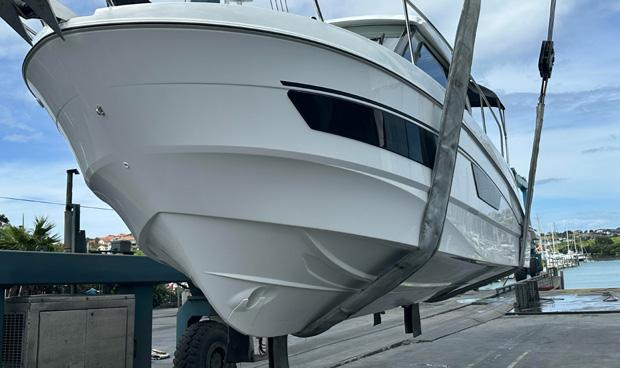
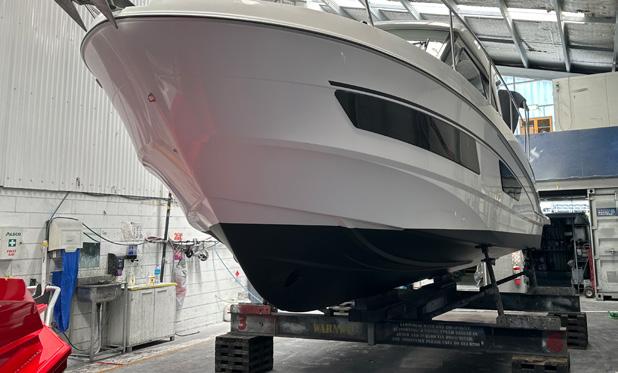
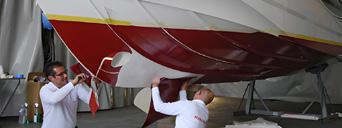
MacGlide Fouling Release Film
• MacGlide is a self-adhesive film that suits all types of boats (motor and sail) under 40 metres that are designed to reach speeds up to 30 knots.
• Motorboat owners will see reduced fuel consumption (typically 5-6% less), and sailors will enjoy higher maximum speeds.
• The film will last up to five years – compared with 6-8 months for existing anti-fouling agent performance.
• As a rough guide, installation on a 10 metre boat (material supply and application) will save you at least 25% over 5 years.
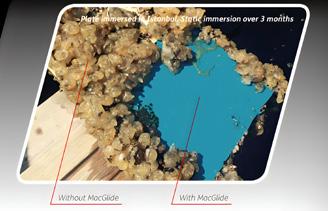

3. Compatibility
If you’re redoing your antifoul for the umpteenth time then you’ll know what type you have used in the past. However, if you’re applying the first coat to a newly acquired secondhand boat or for the first time, then it’s vital to make sure you’re using something which is compatible with what was on the hull before.
The first step is to try and establish what the old antifouling is. Do you have the old paint tin lying about? If you are a new owner, can you ask the previous owner what they used for antifouling. If you’re still unsure, wet the boat and rub the hull with your hand to find out whether it’s hard or soft. The old rule of thumb is that you can put soft on hard but not hard on soft. However, the products have now changed and in some brand’s ranges you can put hard on soft.
Generally you have three options:-
• Known antifouling: Check for compatibility – there are charts available, or you can check with a professional applicator.
• Unknown antifouling and in good shape: Sand back where necessary and apply a tie coat of sealer.
• Unknown antifouling and in bad shape: Remove old coats of antifouling, prime and then antifoul.
And remember when you’re applying antifouling this time, keep a tin, record or photo handy, so you know what type you used, for the next time you’re redoing the antifoul.
WRAPPING BOATS!
Marine Protection Solutions (MPSNZ) has the knowledge and experience for you and your boat. Vinyl wrapping is fast becoming a great cost competitive alternative to paint with some of the vinyl’s outdoor durability lasting up to 10 years! With a huge range of colours available from matte to gloss metallic the options are endless. MPSNZ offer free measure and quotes and can discuss the best options for your boat. Please feel free to contact us today!
Phone: 027 282 5999 or 027 255 2207
Email: info@nzmps.co.nz
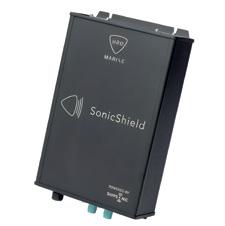
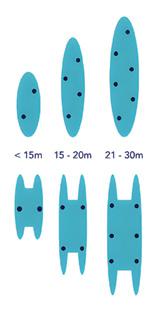
Ultrasonic anti-fouling works by means of bringing an object in vibration in the ultrasonic sound range between 2040 kHz, this creates an inhospitable environment for especially calcium-like growth such as mussels and barnacles to settle. The system consists of a control unit that works on 12v or 24v to which 2 transducers are connected. These are the so-called speakers that bring the sound vibration into the hull. The system consumes very little power, each speaker consumes about as much as an LED light.
 H20 SonicShield Ultrasonic Anti-Fouling
Location of the transducers
H20 SonicShield Ultrasonic Anti-Fouling
Location of the transducers
DB973
BEFORE AFTER
POWERBOATMAGAZINE.CO.NZ 131
Brand new coats of antifoul applied to this new hull.
MacGlide applied and ready to hit the water!
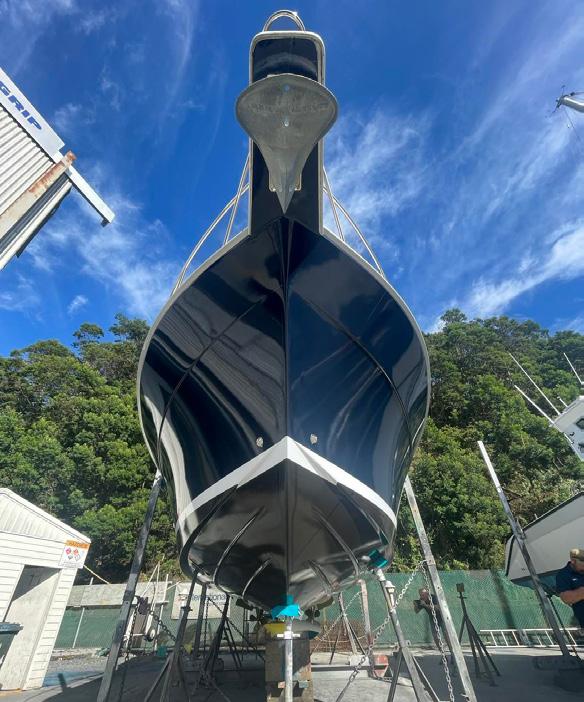
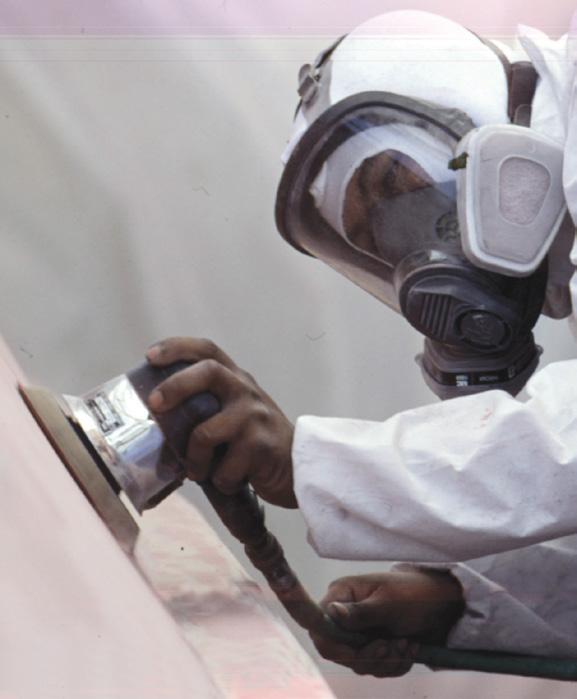
4. Regulations in New Zealand
Over the past few years, New Zealand’s Environmental Protection Authority has been introducing new rules about how antifouling paints are produced, used and applied.
The most important changes are that importers and manufacturers must provide more safety info on the cans. Since July 1, 2015, anywhere antifouling is being sanded, scrubbed down or painted must be clearly designated as a Controlled Work Area. Effectively this means having to wear proper protective equipment, display signage that the work is being carried out, and collect and dispose of all waste in accordance with strict regulations. If you’re getting the work done by a pro then they’ll have this all under control, but you won’t be able to dry-sand existing antifouling and if you’re using a spray application then you’ll need proper respiratory gear. Brushes and rollers are still fine.
Many of the rules around antifouling paints changed in 2017, with many now illegal to import or manufacture in New Zealand. The Environmental Protection Authority looked into the rule for all antifouling
Important to have the right PPE gear when working with antifouling.
paints in 2013, including which paints should be sold and used in New Zealand. After consulting a wide range of people, including the paint and marine industries, commercial and recreational boat users, and other government agencies, they decided to phase out some paints over the following four years. That meant, from June 2017 onwards, antifouling paints containing diuron, octhilinone or ziram could not be imported or manufactured in New Zealand. While these paints were important for New Zealand biosecurity, to inhibit unwanted organisms being introduced and spread by fouled vessels, these paints are slow-release toxic coatings. When numbers of boats are moored together in marinas and harbours, these toxic substances can build up to concentrations that are harmful to people and the marine environment. This ban was on future importing and manufacturing, meaning suppliers and retailers could only sell paints containing diuron, octhilinone or ziram on hand. Disposal of those paints had to be managed carefully, due to the ecotoxic and other hazardous properties of this type of paint.
Antifouling paints must never be dumped in general landfill or sewerage sites, or in the environment on land or in the water.
Fast track to August 2023, and new EPA rules came into play, which has been a recent hot topic of many boat owners, suppliers, manufacturers and professional applicators. As of 1 August 2023, the New Zealand Environmental Protection Authority banned the use of antifouling paints containing thiram, diuron, octhilinone and ziram. The EPA said that after reviewing information about the effects and feedback from the public consultation on antifouling paints, it decided the use of some of the paints lead to more risks than benefits.
Even though antifouling paints work by inhibiting the growth of marine plants and animals on boats, helping control marine pests and keeping boats efficient, it also creates risks. The substances can harm marine environments and the people who use the products.
Even though all antifouling paints now supplied and used in New Zealand don’t contain these substances, it has caused boat owners, suppliers, manufacturers and professional applicators to look into alternative methods of antifouling. We look more closely into some of these alternatives.
ANTIFOULING > REGULATIONS & TIPS
132 MARCH / APRIL 2024

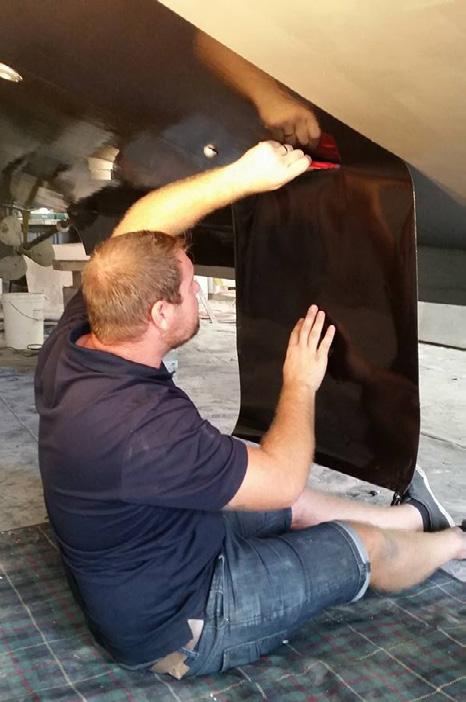
MacGlide being carefully applied by the team at MPSNZ.
SILICONE-BASED FRCS (FRCS: FOUL RELEASE COATINGS
These coatings are more environmentally friendly and chemically stable with drag reduction properties. However, their poor mechanical strength, low adhesion strength to substrates, and low fouling resistance has been said to possibly limit their applications. The addition of nanofillers or chemical modification with epoxy and urethane can improve the tensile or adhesion strength of FRCs, but it usually reduces its elasticity and hence the fouling-release ability. The addition of fluids such as amphiphiles or silicone oil can improve their fouling resistance but may reduce the mechanical strength. The functionalization of FRCs with zwitterions, quaternary ammonium salts, and antifoulants can effectively improve their fouling resistance but make them swell in marine environments or increase their elastic moduli. The surface-enriched, non-leaching strategy may be a good way to optimize the FR performance and mechanical properties of silicone-based FRCs. Self-healing FRCs can even work upon damage, but their mechanical properties are often not high enough. The organic–inorganic hybrid functional silicone is the combination of
silicone elastomer and inorganic particles with antifouling groups. They can have good FR performance and mechanical properties at the same time, and they may represent the new generation of FRCs.
Modification of silicone-based FRCs and the construction of new fouling-release surfaces have included:
- mechanical property improvement by physically mixing them with nanofillers
- adhesion strength improvement by the introduction of epoxy or urethane/urea into the silicone to improve both the mechanical strength and adhesion to a substrate - fouling resistant improvement under static conditions - by the introduction of antifoulants such as amphiphiles, zwitterions and quaternary ammonium salts. PEGbased amphiphiles have resistance to protein and cell adhesion due to their hydration layer and steric excluded volume effects, therefore attempts have been made to use them in marine antifouling coatings.
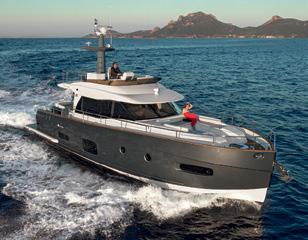
POWERBOATMAGAZINE.CO.NZ 133
Coppercoat being applied.
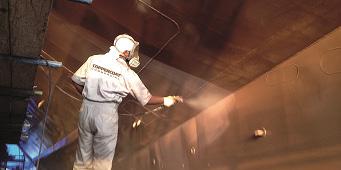
A couple of the silicon-based FRC’s on offer are as follows:-
Intersleek 1100SR - An advanced fluoropolymer foul release coating, Intersleek 1100SR is biocide-free and designed for application onto the underwater hull. Intersleek 1100SR provides up to 9% fuel savings and CO2 reductions compared to conventional antifouling coatings. Its smooth low friction surface delivers excellent in-service performance with 1.2% speed loss delivered over the docking cycle. Easy clean and foul release features deliver performance satisfaction with fuel and cost savings, together with true biocide-free credentials. Intersleek 1100SR provides ultimate fuel savings via superior underwater hull performance. Unique foul release technology provides enhanced fouling control. It provides the best efficiency for vessels from the start and throughout the vessel life cycle. Over 6,400 ships have been coated with Intersleek technology within the last 20 years, delivering cost savings under the current and future environmental regulation.
Hempaguard X7 - is a new revolutionary fouling defence product. It is an advanced fouling defence coating based on ActiGuard® technology which utilizes the added effect of advanced hydrogel silicone and an efficient fouling inhibiting biocide. This boosts the antifouling barrier and prolongs the fouling free period. It therefore offers high level fuel savings and up to 90 months protection on a large range of vessel types, substrates, speeds and voyage factors. It also offers long idle periods (up to 120 days). Gives a Glossy finish. Available in Black and Red. Application is recommended only by professional applicators, by airless spray, spray, brush and roll (touch up areas).
MACGLIDE
This a product with two uses, for boaties looking for high glide performance and for environmentally friendly antifouling solutions. It is a three-layer polymer self-
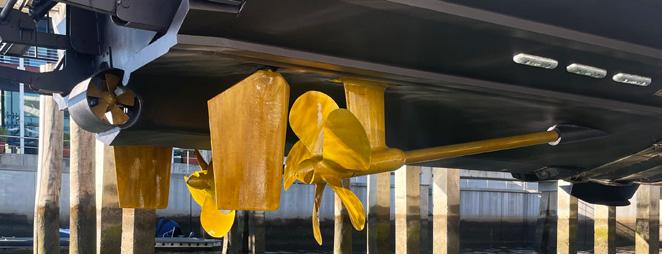
adhesive film. The principle is based on the low surface tension and smooth finish of the upper layer in contact with the water, reducing considerably any loss of momentum. The combination of adhesive film and silicon layer provide a biocidefree antifouling solution. The antifouling function lasts for the entire maintenance period for the upper layer. The boat begins to clean itself (at a speed of 8 knots) and is easy to clean by hand when the boat is not moving using a soft brush, sponge, window squeegee or soft glove. The advantage of the adhesive film is that it is easy to replace any part of it that is damaged (in the form of a patch available separately).
Propspeed freshly applied to protect the running gear of this launch.
COPPERCOAT
Coppercoat is not a paint, it is a two-part epoxy coating that prevents fouling for 10 or more years, and also provides hull substrate protection for aluminium, steel, GRP and wooden vessels. Proven on almost 100,000 vessels worldwide, Coppercoat has a very low coefficient of drag and is favoured by racing yachts and powerboat owners seeking improved speed, lower fuel consumption and reduced emissions.
Coppercoat is solvent-free, electrolytically inert and classified as non-eroding and non-hazardous {EPA 2023]. It does not discharge ozone depleting VOCs into the atmosphere, nor does it discharge biocides, silicone or plastics into our marine environment. The performance of Coppercoat is unaffected by 2023 EPA Regulations restricting biocides in antifouling paints and it is an International Award Winner for Environmental Responsibility. Any initial cost premium that may exist for Coppercoat compared to multilayer antifouling alternatives, is typically erased after two years and thereafter, the product delivers significant cost savings year after year.
Coppercoat maintenance requirements are minimal, saving thousands of dollars on annual maintenance.
PROPSPEED - RUNNING GEAR PROTECTION
There are a number of specialist coatings, designed to prevent marine growth from bonding to metal surfaces on your running gear. These are usually made up of an etching primer, which bonds to the metal substrate and a clear coat, which provides an ultra-smooth outer layer. It’s so slick that marine growth can’t get a grip on it.
Propspeed, the original and we believe, the best performing foul-release coating in the industry, has been tried and tested around the world since 1999 and is a defence against marine growth and corrosion for all underwater metal assets. It provides a strong long- lasting adhesion to metals and protects underwater metal assets for 12-24 months. It is biocide free, being a foulrelease coating, not an antifoul, creating a surface that’s tough for marine organisms to adhere to.
SUMMARY
If you need to antifoul your boat, also be sure to choose an antifouling that fits your schedule and will allow you to launch it within the recommended time frame. Antifoulings have specific time-windows between application and launch and if you miss that window, extra work to reactivate the surface will be required to ensure the antifouling hasn’t sealed off and will release biocides once launched.
Finally, remember that painting a boat bottom is a dirty, labour-intensive, difficult job — especially if it has to be stripped first. Unless you really enjoy DIY work, don’t mind getting grimy, and have plenty of time on your hands, this is probably a job you want to leave to the professionals. Properly applied, with good quality antifouling, will still give very good protection for up to two years (and in some cases considerably longer).
ANTIFOULING > REGULATIONS & TIPS
134 MARCH / APRIL 2024

Some boaties still haven’t tried our antifoul... Those who have - won’t try anything else!
Declare on marine fouling!
Developed & manufactured here in NZ by our technical team - mad keen boaties themselves!

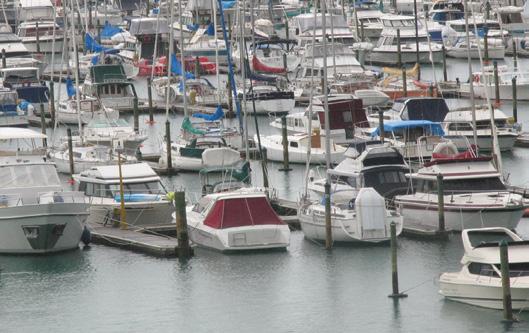
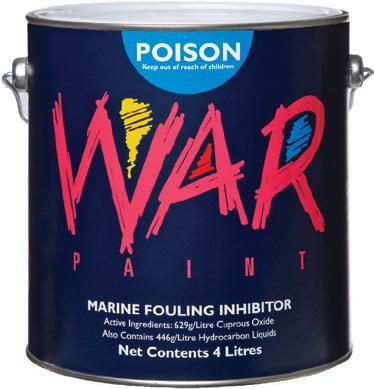
Wet and Forget Ready to Use:
• Compatible over other antifoulings
• Exceptionally high loadings of cuprous oxide
• You will achieve a sprayed finish with your roller, for all you do-it-yourselfers!
• Semi ablative to allow washdown without removing paint for a race-ready finish.
• Deal to that green algae and black mould on any exterior surface on your boat.
• Use on Teak Decks, Gel Coat, Sails, Sail Covers, Awnings or any fabric covers or clears.
• Will not affect stitching or exotic sail fabrics.
• Perfect for RIBs when the mould is growing on the PVC tubes.

Salt Shaker Salt Removal Products:

• Boat & Trailer Wash , salt removal, gives additional corrosion protection for galvanised boat trailers.
• 2L makes approximately 240L of product.
• Fresh water does not dissolve salt effectively, but the surfactants in Salt Shaker, attack the salt molecule, allowing the salt to be flushed away.
• Reapply to galvanised trailer, springs and brakes to help prevent corrosion!
RTU Fishing Tackle Wash is also for salt removal on reels, roller guides and rods
More info on www.wetandforget.co.nz
Another great product from
The ultimate
ENTERTAINER
Exemplifying the ideal fusion of style and spaciousness, in a fast displacement motor yacht.
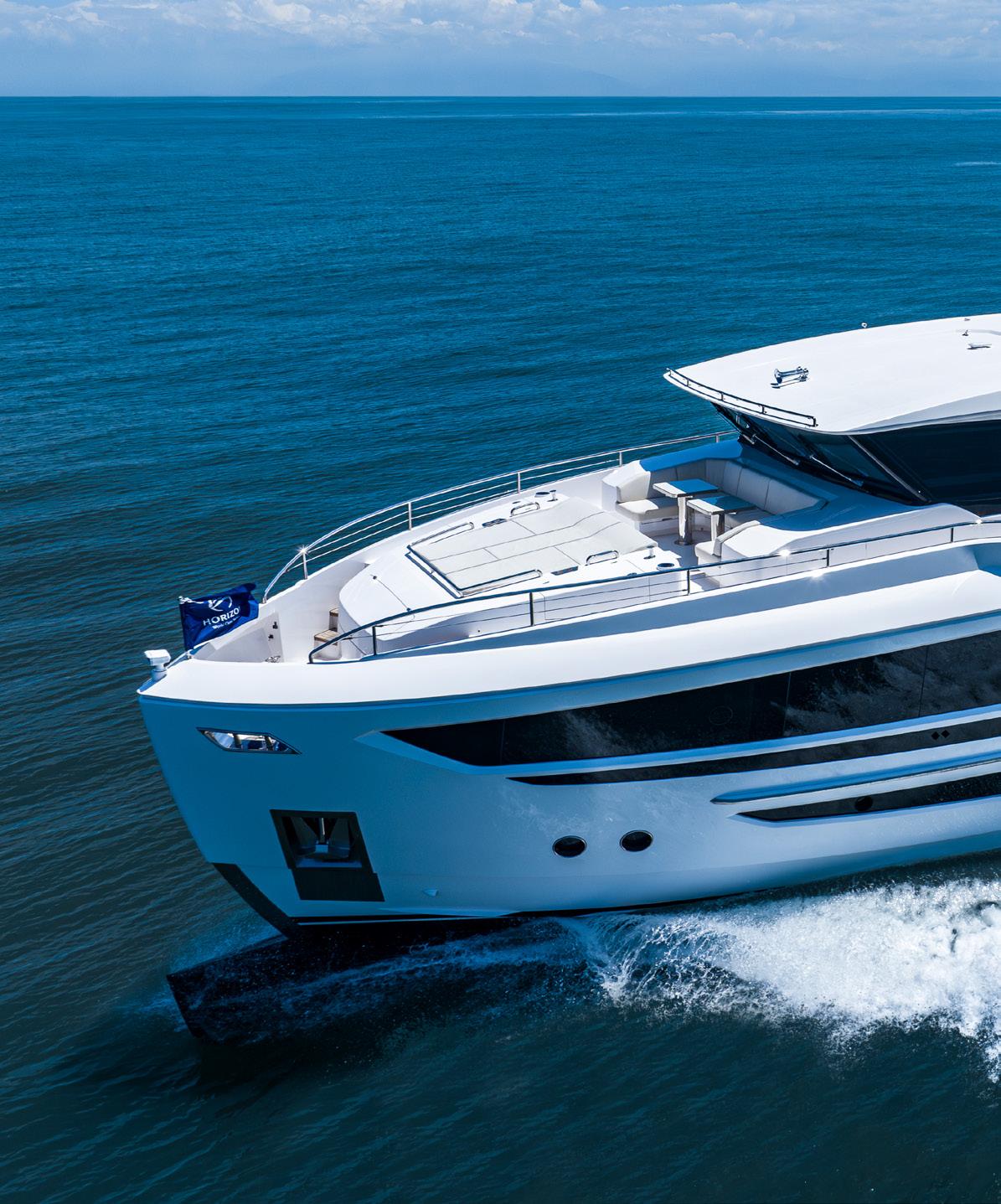
Amonster truck among utes, or the love child between an icebreaker and a luxurious Scandi-styled penthouse apartment.
These are my first thoughts as I am shown around the Horizon FD 80 by Horizon Yacht Australia business manager Erica Rae. Erica is a 15-year veteran of the motor yacht building company which has the largest on water display of Horizon Yachts in the world, based at Sanctuary Cove in
south-east Queensland. It is also rumoured that she has more than a bit of a hand in the interior selections of the vessel, which makes sense. It might not be PC to say, but it has a woman’s touch.
It’s a true passage maker, and from the dock, craning my head skyward to see the topsides above the boat’s truly ominous flaring bow, was a dwarfing experience. And we are talking about not one, but a row of seven of these megatrons, on the one arm and a total of 17 in the confines of
this inland marina. It’s also where you spot the bulbous bow just below the waterline, piercing forward. Fun fact, the bulbous bow concept is credited back to a naval architect who used the ‘bulbous forefoot’ as a ramming device to scuttle ships in his design of the US Delaware in 1910 during WWI. As it turns out, with ramming out of fashion these days, he was onto something that had vast fuel economy benefits. Apartment-style living - The middle or main deck houses the owner’s apartment-
BOAT REVIEW > HORIZON FD80 SKYLINE MOTOR YACHT
136 MARCH / APRIL 2024
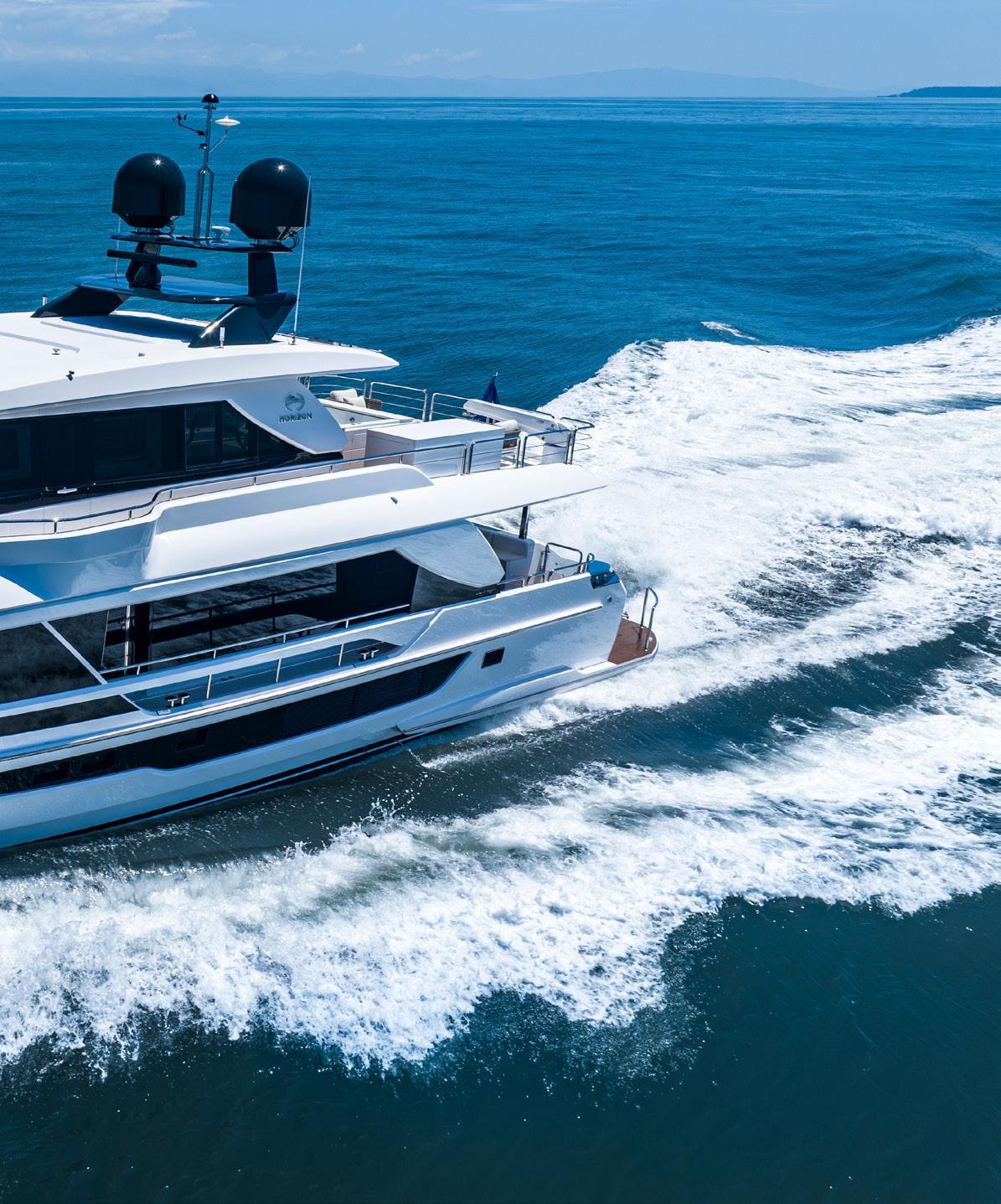
style accommodation, and with just a few steps from the waterline, it’s all one level. Starting with the cockpit, it’s huge with a large dining table for 10 and walk around side decks as well as a wet bar, the first of two teppanyaki barbeques and a dropdown TV - and we haven’t stepped inside yet. The walk around deck that leads forward can be shutdown with wind doors that, when underway or at anchor, stop your guests getting blown about. And then it’s through
the full width and height doors that slide away to reveal a designer-influenced cavernous space that seamlessly flows all the way forward past the galley to the owner’s suite.
“We are finding that some of our new owners that are on the younger side are looking for boats with a more modern interior and we are trying to appeal to that niche with this Cor D Rover design
interior,” Erica says. “We also have a lot of clients who are getting on the older side so having the living and entertaining areas and master all on the same deck makes the FD series appealing to them as they don’t have to worry about the trip up and down the stairs.”
The well-appointed galley looks aft to the saloon with its huge, light coloured, softly curved portside lounge. It also comes
POWERBOATMAGAZINE.CO.NZ 137
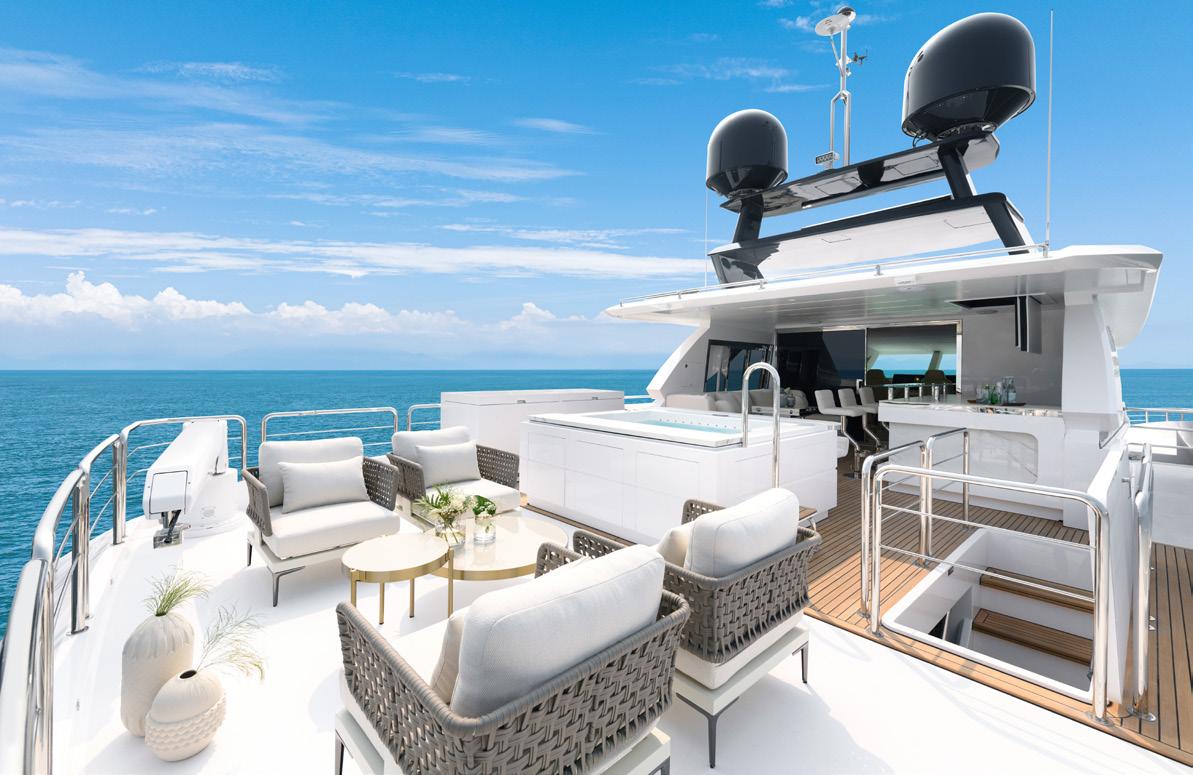
The Skydeck is complete with a huge spa pool, massive outdoor fridge/freezer combo and another comfy rattan-style free standing lounge suite
complete with bar chairs that, with a quick shuffle, can be swapped to the starboard side to change the breakfast bar into a formal dining table for six.
The galley also features a centre island of Hermitage Cambria quartz, with its delicate gold veining swirling in both tight and open patterns, creating lighter and darker pools of colour.
It’s an elegant warm design that glistens – and a theme that runs right through the vessel.
The galley has everything you might expect with a vessel of this price tag including a dishwasher, convection oven and normal oven, stove top (with a view!), a trash compactor and a separate full-sized fridge and freezer a true ‘home away from home’ with that beautiful fresh, light styling championed by a single gold tap and under bench sink. There’s an electric drop-down panel that separates the island and most of the galley from the view of the saloon if needed, perhaps when you have your personal chef onboard who is reluctant to share recipes and techniques.
The saloon and galley areas are filled, it seems, with secrets. Wall panels open up every few steps with just a simple touch. One forward on the starboard side reveals a massive crawl space which contains a lot of the electronics, most sparkies used to crawling around tiny switchboard cabinets would consider this a relative castle. Also hidden behind the panelling is a spacious day head, tucked away in the portside aft area of the
saloon opposite the stairs to the crew quarters. Who knew? The saloon and galley area combined is direct from the pages of an upmarket designer magazine, with huge full height windows that run the length of the saloon. The curves in the ceiling, with camouflaged lights which match the floor and carve out spaces, turn a mammoth cavernous arena into a chic and wellproportioned apartment. There are water views from every vantage point, bringing the outdoors in, and televisions and electric blinds melt seamlessly away out of sight into the ceilings and cabinetry. A sturdy glass door either side of the saloon, combined with opening the aft doors, creates plenty of cross breeze combinations for any situation. Further forward, past the galley and just before the owner’s suite on the starboard side, is a set of clandestine stairs. The timber treads seemingly float in the air using a glass wall and some pretty ingenious construction. They lead aft and up to the bridge and down to the other three passenger cabins.
Owner’s suite - From there we head into the owner’s suite. With its massive skylight above the bed and extensive fore-to-aft windows it is a deceptively sizable space and more than adequate digs for the most discerning owner. The cabinetry and more hidden compartments make this sanctuary extensive in terms of closet space, personal office configuration and a huge amount of repository spots for everything you need on an extended trip. This forward cabin arrangement
BOAT REVIEW > HORIZON FD80 SKYLINE MOTOR YACHT
138 MARCH / APRIL 2024
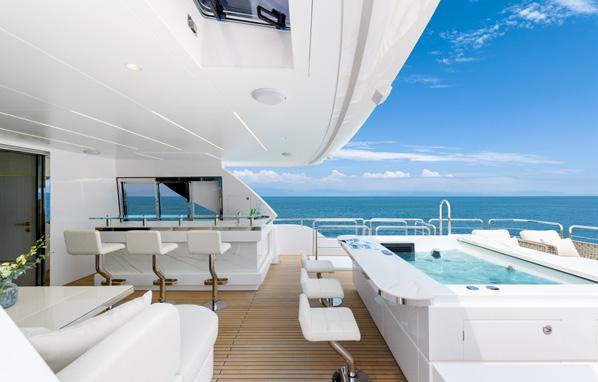
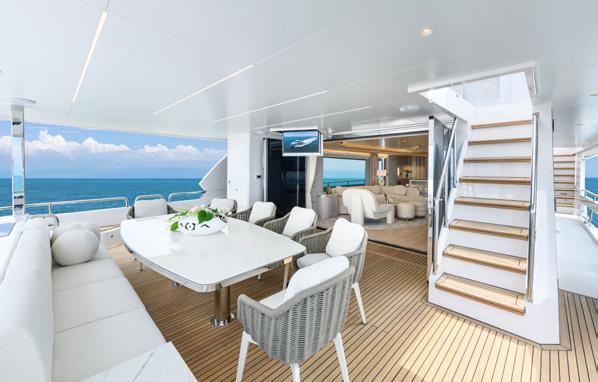
boasts a huge bed, sumptuous carpet and the gold and Scandi-theme continues all the way from the saloon - with small changes as you head forward. The windows on either side of the room doth the hat to its predecessors with old-style portholes imbedded in the glass which can be opened for a cross breeze. The whole feeling of being part of the great outdoors while secure in your suite is achieved with the room seemingly floating above the water or being able to be totally buttoned up and blackened down for a cosy night’s rest. The bathroom is tucked away behind the rounded ribbed wall and cleverly disguised behind a door which blends into the wall. Again, light and bright with that beautiful quartz complemented by gold tapware along with cleverly tucked away lighting systems for top-end hotel ambience.
Guest accommodations - Down the companionway to the sea-level deck, we turn towards the bow and there’s a portside full-sized laundry, tied into the theme of the vessel including the quartz, light timber, hidden mood lighting and a gold under bench square sink and tap set. Further forward is the first bedroom where two large single beds splay along both sides of the hull underneath a couple of well-placed traditional portholes. With the touch of a button they come together to form a large double bed. There is a midsized bathroom and head as well as plenty of space including a wardrobe. Back past the laundry towards
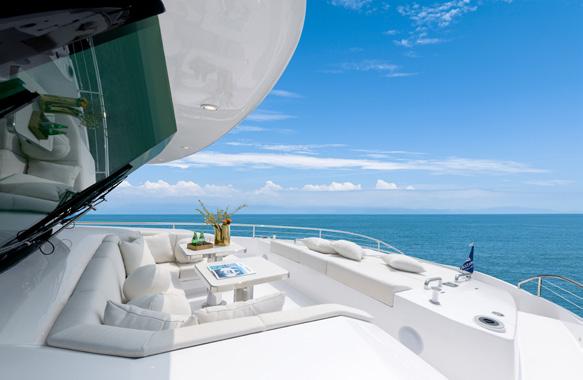
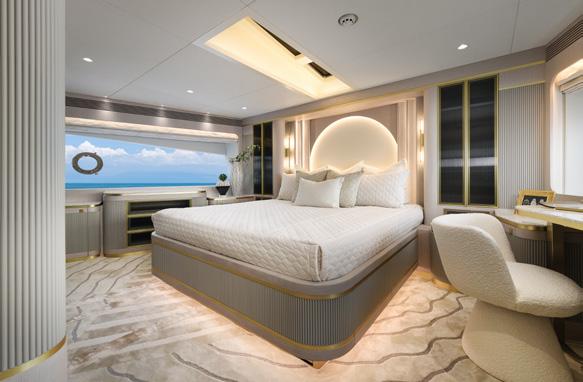
the stern, are a pigeon pair of cabins lying athwartships that are so identical I had to push my arm through one door before I went in, it looked as if it was a mirror or trick of the light. They are hotel room-sized suites with bathrooms which boast such a high collaboration of workmanship, and that quartz, they look almost moulded as one.
Pilot house - Back up to the main saloon and then up the floating stairs we come to the stunning pilot house with huge, raked windows and a massive brow to keep out the sun. The view from the flybridge truly gives you scale when looking at boats of a similar length around the marina and there are many. But it becomes very apparent to you as you stand there at the command post that you are aboard a comparatively large vessel in terms of height and girth. The pilothouse is decked out with three sturdy leather helm chairs and a set of three large 22-inch multi-function programmable displays for easy navigation are set into the eyes forward portion of the helm station. It is high tech without feeling like you’re on the bridge of the Starship Enterprise. A simple set of throttles, thruster controls and a plethora of perfectly balanced port and starboard controls and instruments are laid out flat on the helm station in front of the leatherbound midships’ helm. It has a real ship feeling with the softness of the hood lining and gold on light wood design. Bulkhead sealed-style doors with dog down (handles are at either
Water views, from every vantage point, bring the outdoors in
For those who want to get away, this neat spot on the bow, is the perfect space
Whether it’s family or friends, there’s room for everyone at this gorgeous dining setting
The owner’s suite boasts a huge bed, sumptuous carpet and the gold and Scandi-theme continues all the way from the saloon
POWERBOATMAGAZINE.CO.NZ 139
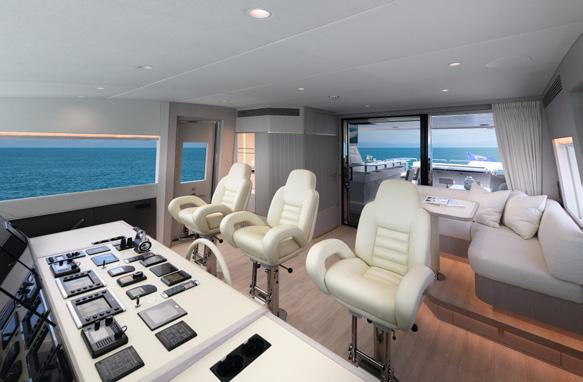
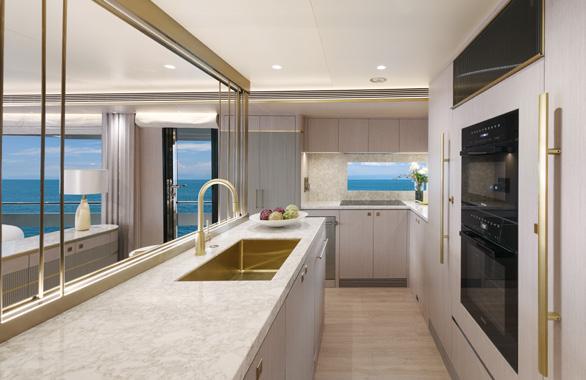
The pilot house has huge raked windows, a massive brow and three helm chairs for anyone who wants to keep the skipper company
The curves in the ceiling, with camouflaged lights turn a mammoth arena into a chic and well proportioned apartment
The galley features a centre island of Heritage Cambria quartz, with delicate gold veining creating light & dark pools of colour
The ‘simple is best’ layout in the engine room is uncomplicatedwell laid out and extremely function
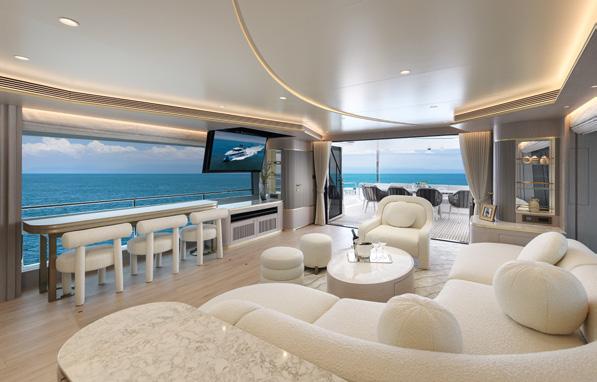
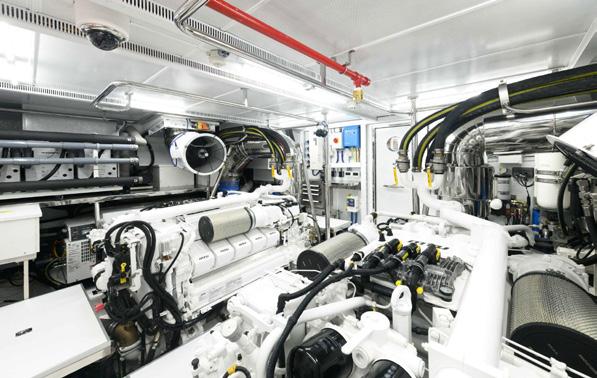
side of the wheelhouse for when the weather gets a little sporty to prevent water ingress. The station overlooks a couple of sunbeds forward as well as the deck carved in a couple of deep paths with hip-high rails to keep you safe. These economies of forward deck space and different deck heights produce a huge amount of extra storage. Back in the pilothouse, there is also a day head and a corner lounge and table and the walkways around the pilothouse and the visibility to the waterline and from stem to stern is astounding. The vessel can be parked with a simple walk around wireless remote Yacht Controller instead of a joystick. Solid buttons to go ahead and astern, port or starboard, as well as bow and stern sliding buttons are a breath of fresh air. In terms of getting my head around new technical systems and procedures I am not much chop and a bit of a traditionalist. I even struggle with my Netflix setup. But this craft’s manoeuvring systems are beautifully simple and uncomplicated with traditional propellers over rudders and thrusters either end. It can be shoehorned into the tightest spots around the marina or even into a coral bombie field for a dive.
Skydeck - Further aft on the top deck, through heavy double glass doors, is the skydeck where the second teppanyaki barbeque is stashed away into a huge wet bar and a lounge suite that looks like an outdoor version of the one in the main saloon with its lovely curves and styling. The area wouldn’t be complete
without a huge spa pool, massive outdoor fridge/freezer combo and another rattan-style free standing lounge suite near the davit crane at the stern. These can also be stowed away in one of this ship’s many hidey-holes to make way for a large RIB to be docked.
Engine room- We finish the tour with another surprise. Once we find our way down through the steps at the rear of the saloon we emerge and turn towards the bow into the very roomy engine room, certainly an engineer’s dream, and a tall one with big shoulders at that. Housing an array of long-range water makers and black and grey water systems, all comfortable and accessible to work on, we find the elephants in the room. The twin MTU 10V2000 1,600hp mains and twin Onan 27kW. The machinery space is kept cool by the massive overhead twin breathers sucking the hot air away from the space. The ‘simple is best’ layout in the workspaces of the engine room and bridge are uncomplicated and it wouldn’t surprise me if they were designed or replicated from the same merchant navy workrooms as they are well laid out, ordered and extremely functional.
Crew quarters - I am not quite at the crescendo yet as we come out of the engine room and spot the first of the two utilitarian double-berth crew quarters and nicely laid out kitchenette which doubles as a cocktail bar for the beach club.
BOAT REVIEW > HORIZON FD80 SKYLINE MOTOR YACHT 140 MARCH / APRIL 2024
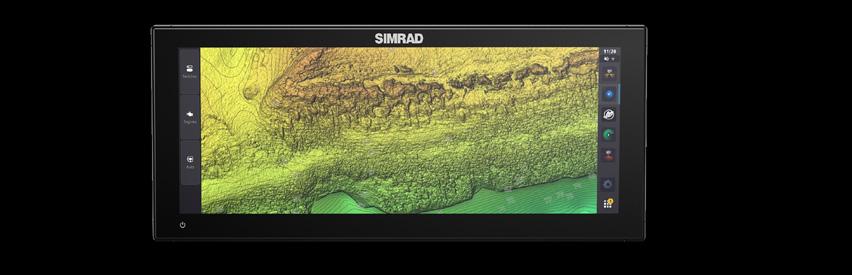
NSX® ULTRAWIDE brings all the benefits of dual screens to a single display for our most immersive experience yet. Get a truly unique, eye-catching dash, see apps as they were meant to be seen, and ®’s X-Gen charts in more detail than ever. Welcome to the future of Why settle for anything less? simrad-yachting.com/nsx-ultrawide C-MAP® REVEAL™ X charts sold separately. ®Reg. U.S. Pat. & Tm. Off, and ™ common law marks. Visit www.navico.com/intellectual-property to review the global trademark rights and accreditations for Navico Group and other entities.
NEVER SETTLE
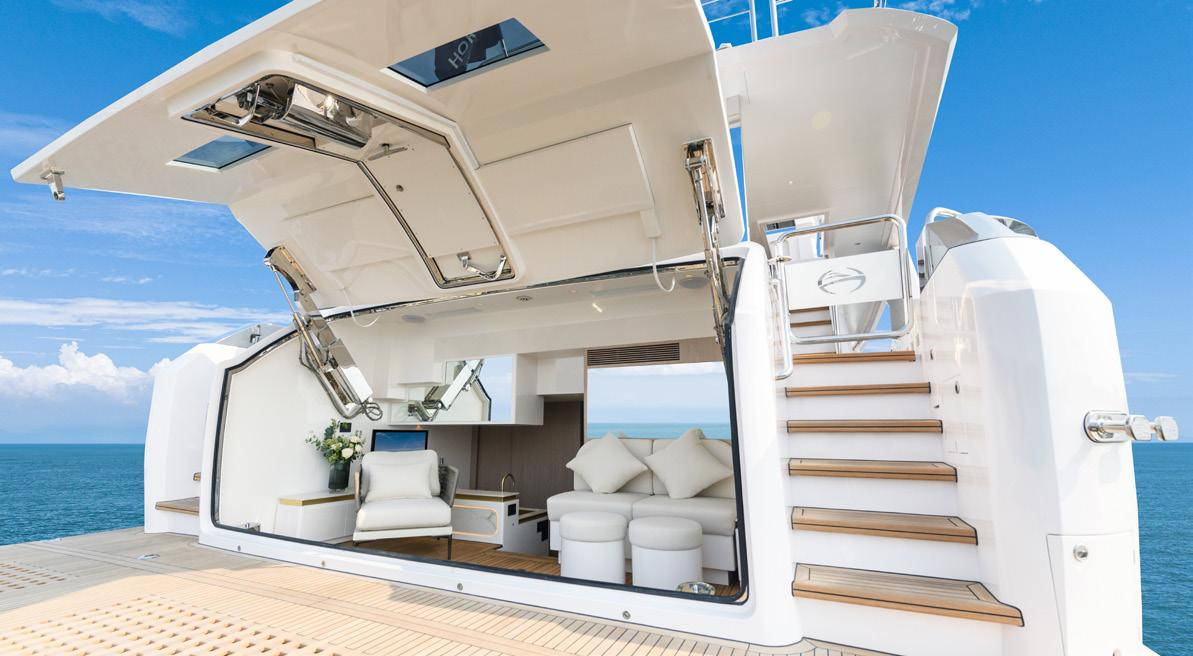
The Beach Club and crew quarters are now being used by some as the perfect teenage retreat –lucky kids!

The Beach Club - The club starts up when the back transom is lifted and forms a hood over the furniture in what would traditionally be called the lazarette part of the vessel. The view is exquisite, water level with full head height which leads out over the adjustable height swim platform. Erica said while the formal use of the lazarette was to store the toys, some self-drive owners were using the beach club and crew quarters as the perfect teenage retreat. Lucky kids!
In the family way - If it all sounds like a lot to take in, don’t worry. You are never alone. “Once you purchase a boat from us you are part of the ‘Horizon Family’. We have clients from all over Australia and New Zealand and we look after our clients throughout the entire process. We are also unique in that where many boat manufacturers do a one-day hand over, give you the keys and say ‘see you later’, we, after a day’s dock training, are usually onboard for the maiden voyage to go through all the systems over a few days.”
The new Horizon FD80 Skydeck is a highvolume fast displacement motor yacht (hence the FD in the title) and balances style and space with superyacht amenities. She is a beautifully balanced pedigree of fine furnishings and top end finishings combined with some refreshing simple non-complicated workspaces for the serious mariner – the true passage maker of a motor vessel.
SPECIFICATIONS
Boat Design Name Horizon FD80 Skyline Motor Yacht
L.O.A 80' 7" (24.56 m)
L.W.L 74' 6" (22.70 m)
Beam 22' 6” (6.87 m)
Draft 5' 7" (1.70 m)
Fuel Capacity 3,170 US gals (12,000ltrs)
Fresh Water Capacity 400 US gals (1,500ltrs)
Engines Twin MTU 10V2000 1,600hp
Generators Twin Onan 27kW (50Hz)
Side Power VF1650 stabilizers
Side Power SH550 bow thruster + SH420 stern thruster
Steelhead davit ES1500 (680kg/1,500lbs)
Stella Aquarius fully-automatic watermakers
Czone monitoring system
Contact Horizon Yachts Australia +61 7 5577 9009 HORIZONYACHTAUS.COM
PERFORMANCE
RPM Knots L/h Hours Range 900 8.3 38.8 309.3 2567 1200 10.2 80.3 149.3 1523 1500 12.1 154.1 77.9 938 1800 13.6 252.1 47.6 647 2000 15.3 335.1 35.8 546 2100 16.3 382.2 31.4 512 2450 22.1 615.4 19.5 430 NB: Design load with Half Fuel and Half Water
DATA
BOAT REVIEW > HORIZON FD80 SKYLINE MOTOR YACHT 142 MARCH / APRIL 2024
Scan to watch the boat tour.

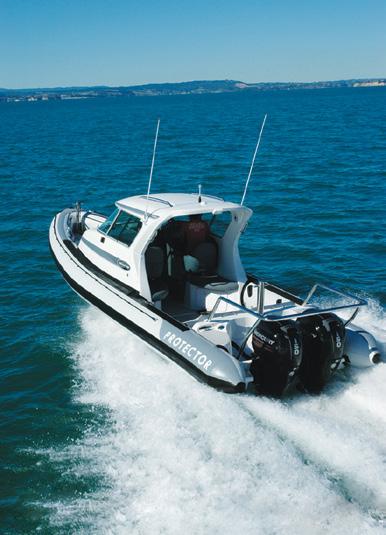
Unashamedly 100% devoted and dedicated to power boating and everything about them !! NO YACHTING NO ROCK FISHING NO KAYAKING Read ONLY about your boating passion - The style of boating that interests you!! www.powerboatmagazine.co.nz to get YOUR dose of YOUR boating passion DB927P TRAILERBOATS I LAUNCHES I CRUISERS WWW.POWERBOATMAGAZINE.CO.NZ

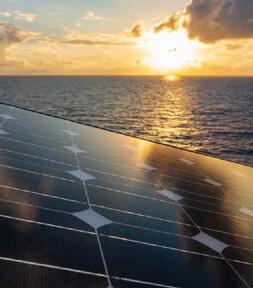

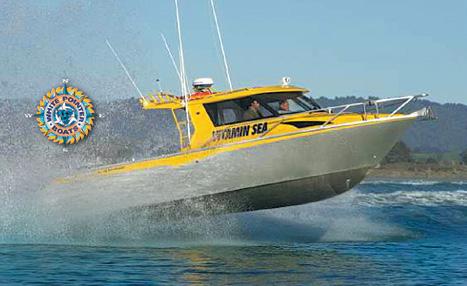


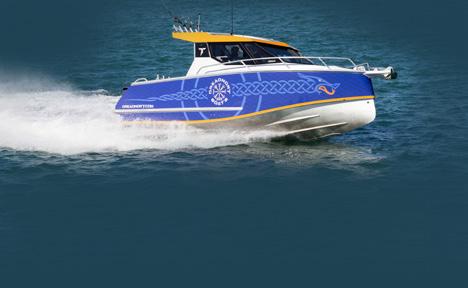

Kotaro Fuse Certified Boat Builder and Marine Painter M: 021 260 2047 E: yamatomarine@gmail.com • Refits • Repair • Maintenance • Teak Decking • Interior Cabinetry Servicing Northland Wide M: 021 260 2047 | E: yamatomarine@gmail.com DB958 Boatbuilding & Cabinetry >> DIRECTORY BOAT BUILDERS & DESIGNERS, SALES & SERVICE, PRODUCT & ACCESSORIES
TRAILERBOATS I LAUNCHES I CRUISERS Contact: Holly@boatmags.com or Doug@boatmags.com For just $75 per month…. Cost effective – Targeted advertising. DB938 Blair Lewis B.Eng AM.Rina Naval Architect Transformarine@gmail.com +64 21 613 990 Stuart Dawe Shipwright Altechmarine02@gmail.com +64 21 833 080 @DREADNORTBOATS | VISIT THE WEBSITE TO SEE THE FULL RANGE DB947 ROGER HILL YACHT DESIGN LTD www.powercatsnz.com Ph +64 9 537 2644 Mob +64 274 595 822 roger@powercatsnz.com WHITE POINTER BOATS Custom Alloy Sports Fishing Boats “Ride with the best” 1 8 9 S t a n l e y R o a d , G i s b o r n e 189 Stanley Road, Gisborne P h : 0 6 8 6 8 6 5 1 9 F a x : 0 6 8 6 8 9 9 3 9 Ph: 06 868 6519 Fax: 06 868 9939 M o b : 0 2 7 5 8 1 5 0 0 7 E m a i l : r e x @ w h i t e p o i n t e r b o a t s . c o . n z Mob: 0275 815007 Email: rex@whitepointerboats.co.nz We b w w w. w h i t e p o i n t e r b o a t s . c o . n z Web www.whitepointerboats.co.nz 144 MARCH / APRIL 2024
ADVERTISE HERE

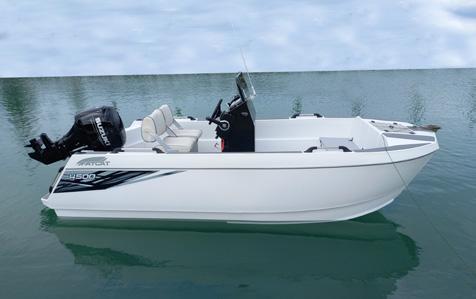









DB056 AUCKLAND’S SPECIALIST BOAT REPAIR CENTRE Insurance Work Specialists • Launch, Yacht and Runabout Repairs • Antifouling and Gelcoat Work • Full Marine Maintenance Service Spraypainting and Jetski Repairs 58 Diana Drive, Glenfield Steve@boatrepairs.co.nz www.boatrepairs.co.nz Phone: 09 441 2000 Fax: 09 441 4000 Mob: 021 908 156 Recognised member DB009 9/623 Whangaparaoa Road, Stanmore Bay, Auckland Ph: (09) 424 0004, M: 021 1142 444, E: info@fatcat.nz www.fatcat.nz DB908 Antifouling – Touch ups – Valet – Refits e: dale@touchofgloss.co.nz | P: 0275 951 443 www. touch of gloss .co.nz DB192 •Fibreglass & Timber Repairs •Spray Painting & Gelcoating •Insurance work •Antifouling Talk to us first for all your info@southaucklandboatrepairs.co.nz www.superiorgroup.co.nz 25-27 Holmes Rd, Manurewa. PO Box 75-486. Manukau 2243 Ph (09) 267 8498 DB359 DB261 Durable kitset pods for pontoon and houseboats, jetties, barges, floating docks, walkways and more www.pontoonz.com | pontoonz@gmail.com | +64 27 555 2000 >> DIRECTORY BOAT BUILDERS & DESIGNERS, SALES & SERVICE, PRODUCT & ACCESSORIES POWERBOATMAGAZINE.CO.NZ 145

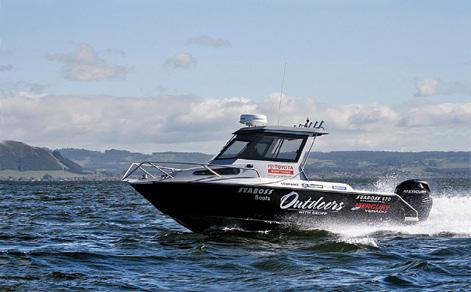


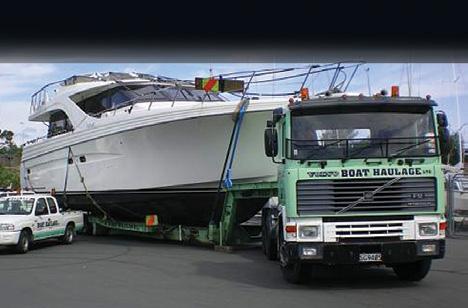





T hompson Marine T >> DIRECTORY BOAT BUILDERS & DESIGNERS, SALES & SERVICE, PRODUCT & ACCESSORIES www.salt-attack.com SALT ATTACK SALT REMOVERS KILLS SALT CORROSION Marsden Marine Services Ltd Ship Surveyors, Valuers & Consultants REPLACEMENT WINDSCREENS FOR ALL MAKES AND MODELS INSURANCE QUOTES REPLACE LIKE NEW Call 09 278 9816 www.sandbrooks.co.nz DB264 FREE Office: (09) 4838 111 – Pete: 0274 731 260 – Luke: 021 686 394 Email: pete@boathaulage.co.nz • Boatbuilding • Repairs, Refits and Renovations • Maintenance & Servicing • Teak Decks For a Free Quote Call +64 21 040 8049 tim@marramarine.co.nz | www.marramarine.nz DB959 DB112 146 MARCH / APRIL 2024
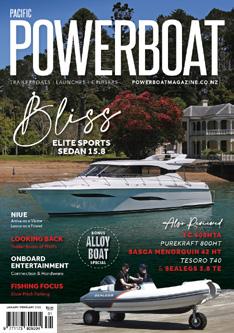


Above and Below 127 Altex Coatings 129 Anura 24 Auckland Boat Show 27 Battery Town 105 BRP Manitou 15 Buccaneer 44 Coastguard Education 94 CPC 127 Cule Marine 43 Dixon 34 E- Yachts 47 E-News 75 Elite Marine 83 Engel 75 EPropulsion 109 GT Marine 40 Hella 20 Hibiscus Marine Coatings 130 Highfield 73 Hull Well 133 Humphree 81 Hutchwilco 95 Hutchwilco NZ Boat Show 55 Island Gypsy 11 Leech Boats 41 Leigh Smith Yachts 121 Lifestyle Yachts 40 Lloyd Stevenson BBuild 25 MAN Engines 83 Marine Protection Solutions 131 Maritimo 2 McLay Boats 53 Motor Yacht Service ADC 38 Motor Yacht Service Centre 65 Motor Yacht Service Gyro 89 Nanni 36 Nic deMay Yachts 21 Nyalic 42 OceanBridge 43 Pantaenius 7 Propspeed 123 Quad Lock 51 Quick Gineico 119 Raymarine 23 Riviera 12 Sasga / Sargo 4 Seaforce Boats 32 Sealegs 57 Simrad 141 Skipperi 87 Smuggler 45 Sports Marine 103 Suzuki 39 Takacat 30 Tarquin 114 Tarquin 115 Tenob 31 Tenob 104 Tenob 108 The Yacht Sales Co 29 TNL 34 Torqeedo 111 Tristram Marine 17 UDEK 35 Vetus Maxwell 22 Volvo Penta 33 VooDoo Yachts 37 War Paint 135 Wholesale Marine 101 Yamaha OBC ADVERTISERS INDEX WHATEVER WAY YOU WANT YOUR POWER BOAT FIX PRINTED SUBSCRIPTION One year subscription Delivered to your door One year digital subscription with unlimited access to back issues, boat reviews and features. DIGITAL SUBSCRIPTION PRINT & DIGITAL DB980 $58 Save 25% $20 $68 www.powerboatmagazine.co.nz Save 33% Save $10 POWERBOATMAGAZINE.CO.NZ 147
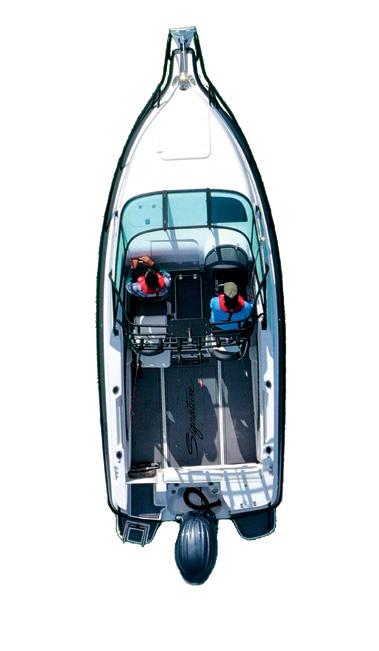
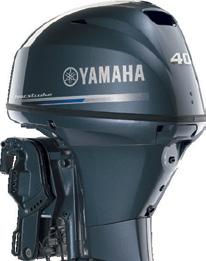
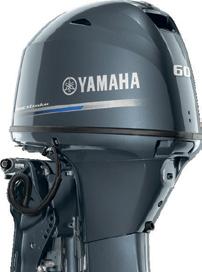
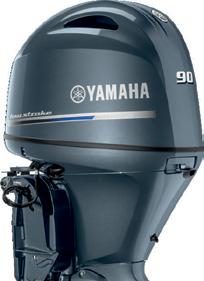
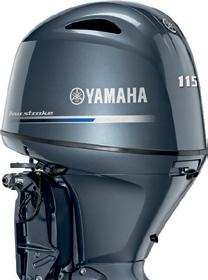
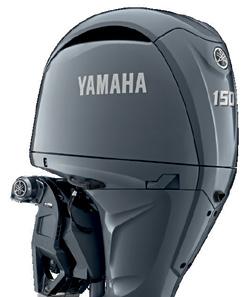
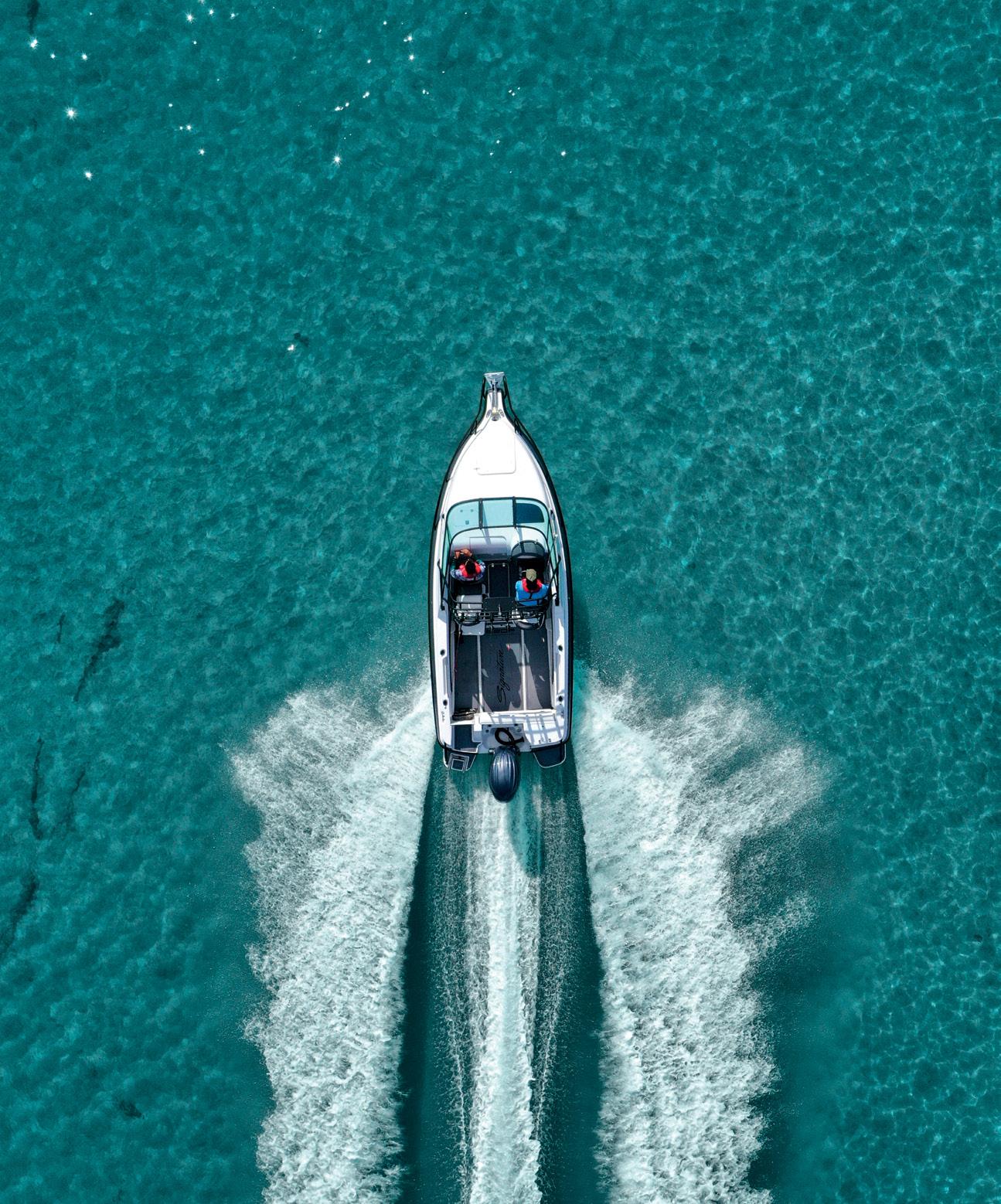

FULLY FITTED* Reel in the good times Digital Gauge Remote Fitting
Control Cables *Terms and conditions: All prices stated above are GST inclusive. Promotion available between 01/02/24 to 30/04/24 on new and eligible four-stroke F40LA, F60LB, F90LB, F115XB & F150XC outboards, through participating authorised Yamaha outboard dealers, while stocks last. Fully Fitted RRP for new F40LA is $11,499 inc GST, F60LB is $14,499 inc GST, F90LB (F90LB, F90LB2, F90XB, F90XB) is $17,299 inc GST, F115XB (F115LB, F115LB2, F115XB, F115XB2, LF115XB, LF115XB2) is $21,499 & F150XC (F150LC, F150XC, LF150XC) is $26,999. Offer available for private buyers only on specified models and where warranty is registered on or before the 30/04/24. Fully Fitted Offer pricing includes 703 remote control, 6Y8 gauges, propeller (SS Talon for F150, F115, F90, and AL K series for F60 & F40), control cables, and boat fitting. Price excludes removal of previous outboard motor and controls, repairs to electrical systems, fuel system/dash repairs, or steering systems, and transom repairs. Not available in conjunction with any other offers. OFFER ENDS 30/04/24 /YamahaMarineNZ yamaha-motor.co.nz $0 DEPOSIT FINANCE AVAILABLE WITH YMF FROM F60 $14,499 F40 $11,499 F90 $17,299 F115 $21,499 F150XC $26,999
Propeller