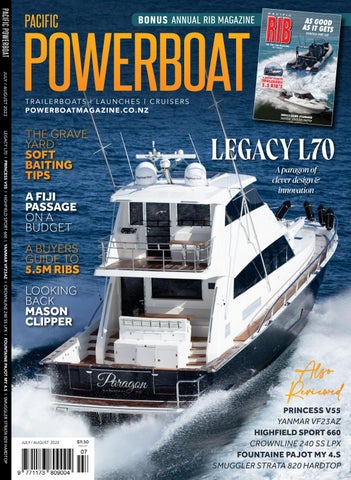


JULY / AUGUST 2023 INCL GST POWERBOATMAGAZINE.CO.NZ TRAILERBOATS | LAUNCHES | CRUISERS BONUS ANNUAL RIB MAGAZINE PACIFIC THE 100% RIB MAGAZINE 2023 ANNUAL THRILLS COME STANDARD SMUGGLER STRATA 820 HARDTOP AS GOOD AS IT GETS HIGHFIELD SPORT 660 A BUYERS GUIDE TO TRAILERABLE 5.5 RIB’S JULY / AUGUST 2023 LEGACY L70 I PRINCESS V55 I HIGHFIELD SPORT 660 I YANMAR VF23AZ I CROWNLINE 240 SS LPX I FOUNTAINE PAJOT MY 4.S I SMUGGLER STRATA 820 HARDTOP $11.50 Also Reviewed LEGACY L70 THE GRAVE YARDSOFT BAITING TIPS A FIJI PASSAGE ON A BUDGET A BUYERS GUIDE TO 5.5M RIBS LOOKING BACK MASON CLIPPER PRINCESS V55 YANMAR VF23AZ HIGHFIELD SPORT 660 CROWNLINE 240 SS LPX FOUNTAINE PAJOT MY 4.S SMUGGLER STRATA 820 HARDTOP A paragon of clever design & innovation
THE LEADER OF THE FLEET
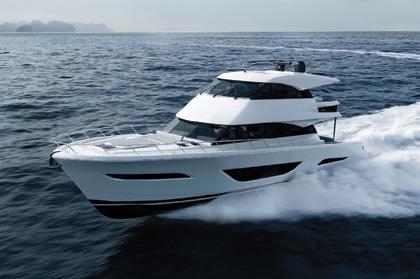
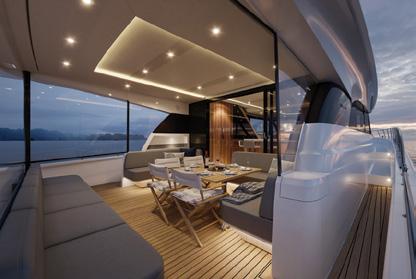
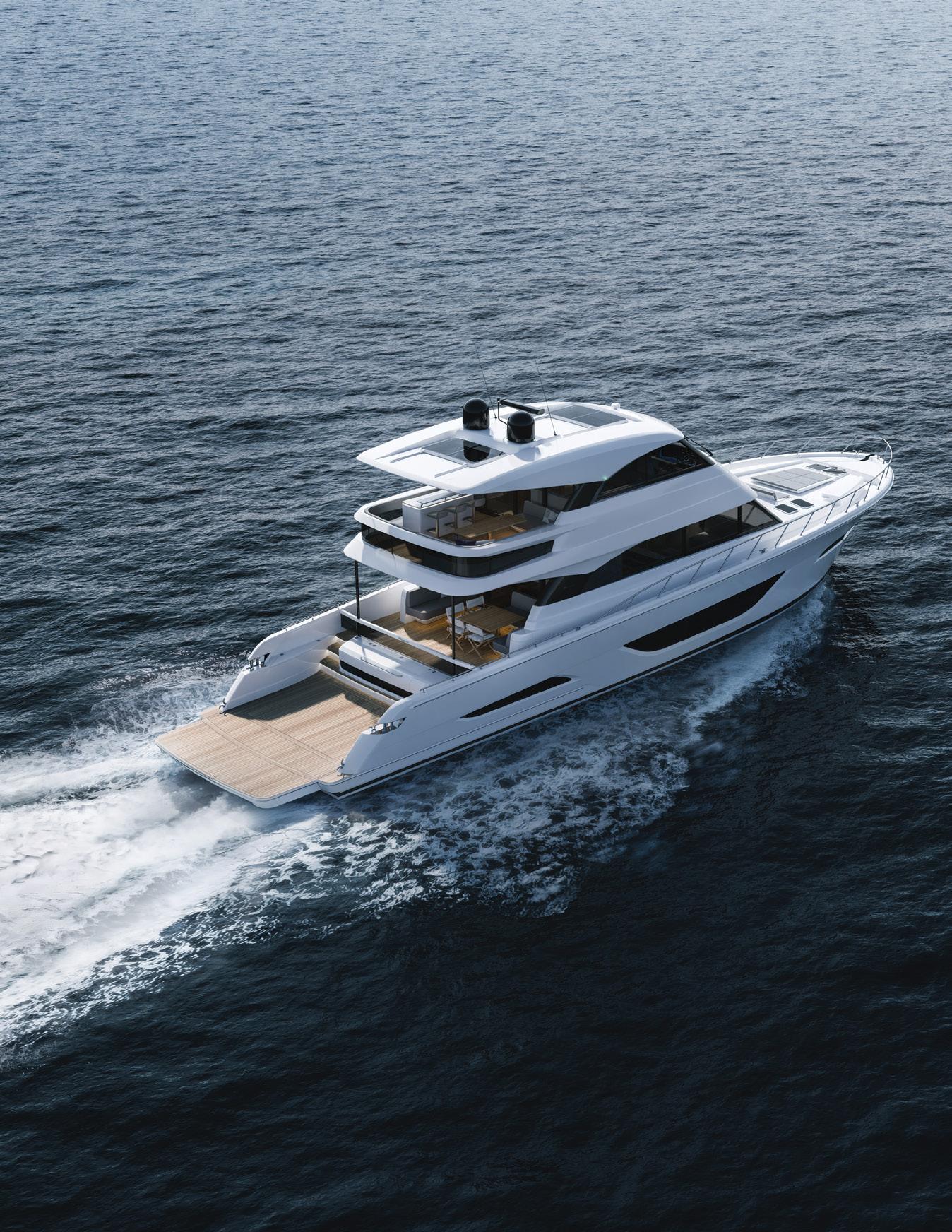
The all new M75 flybridge motor yacht combines a synergy of balanced proportions, grace and purpose with an immensity of deck and interior spaces to cater for a vast range of entertaining, relaxation, or adventuring activities. Australian built, its powerful exterior form and grand luxurious spaces reset the international standard for cruising flybridge motor yachts. Global Launch at the Maritimo Boat Show Sanctuary Cove 14-15 July. maritimo.com.au
M75

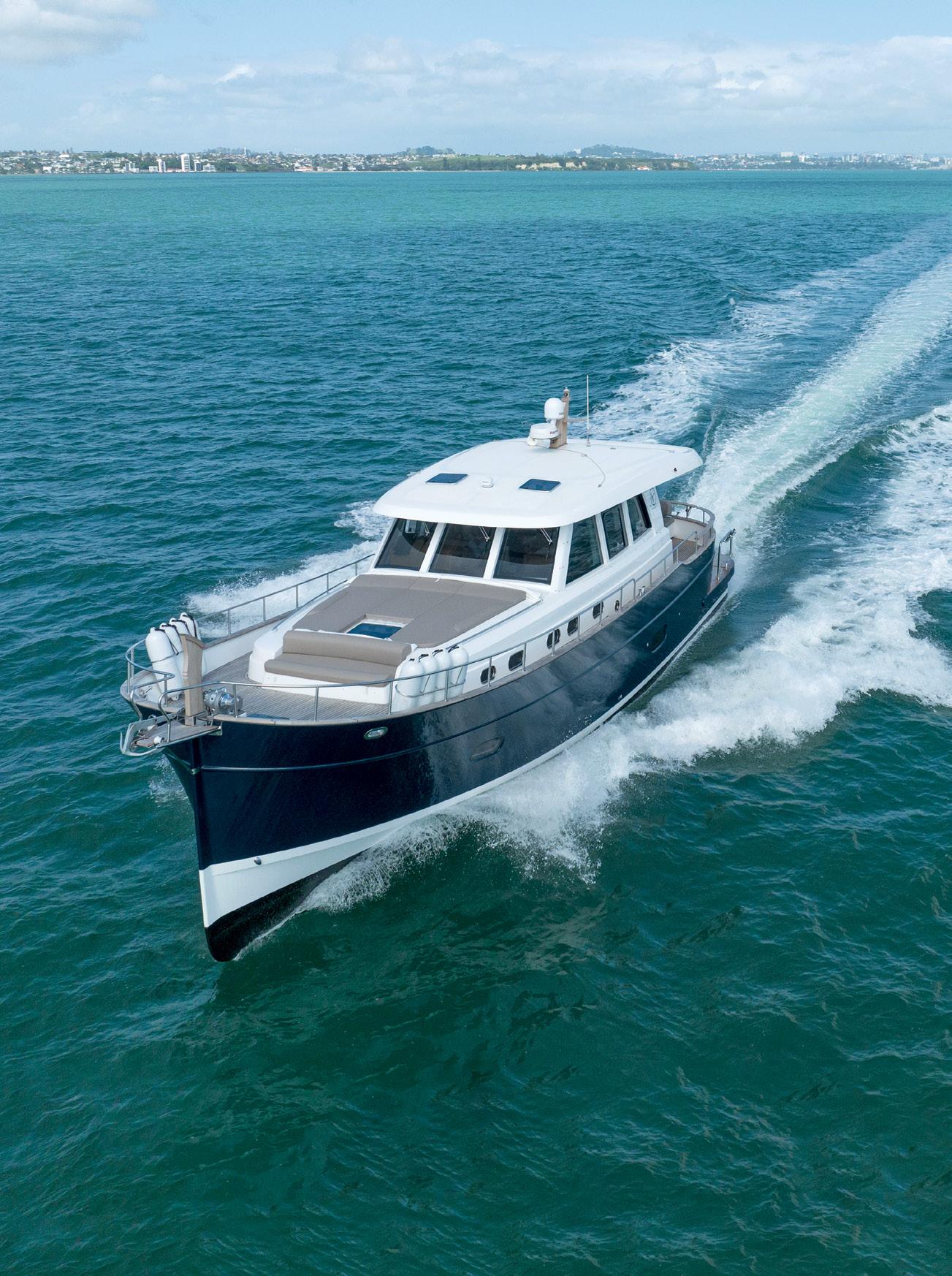
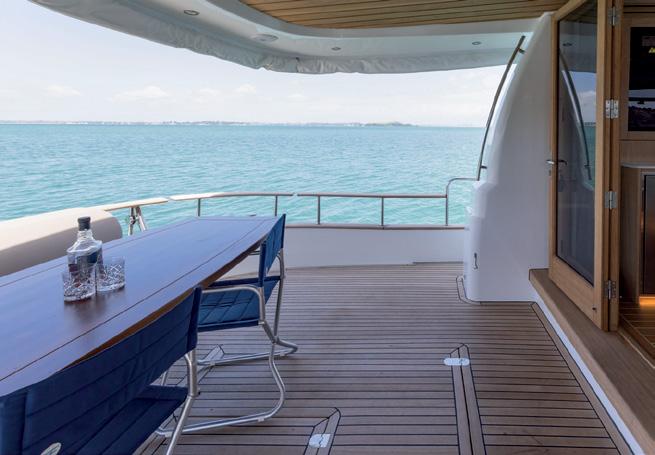
Sasga Yachts New Zealand Bruce McGill – Sales Director | 021 748 437 | bruce@sasgayachts.nz Ernest Henshaw – Director | 021 669 133 | ernest@sasgayachts.nz Christine Bird – Sales Executive | 021 0220 5398 | christine@sasgayachts.nz EMI0014_PM An unmatched combination of sea-handling, safety, comfort, and hand crafted elegance.
sasgayachts.nz Menorquín 54’ – available ex Auckland
70
FIJI
What would it take to buy a boat, kit it out, learn how to sail and get it to Fiji ? One New Zealand couple did just that and this is their story!
88
LOOKING
An advert in the 1960s edition of Sea Spray magazine read, “whoever said there was no such thing as the perfect boat, obviously never owned a Clipper”.
98

PEOPLE IN BUSINESS –DEMAY YACHTS
Over the company's 25-year history, Nic de Mey Yachts has become one of NZ's premium boat-building companies. He talks to PPB about his growth, success and future goals.
110
COASTGUARD EDUCATION
Whether you’re using your boat for fishing, skiing, diving, day cruising or overnighting, it’s important to take essential safety gear every time you head out on the water.

120
SOFTBAIT FISHING

Fishing Godzone Editor, Matt Hewetson loves winter softbaiting and provides his tips to help put more fish in your bin. 132 RIBS
Built for Purpose. We take a look at what's available in the trailerable 5.5m RIB market.


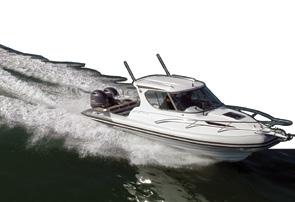
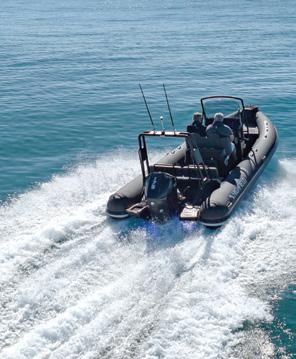
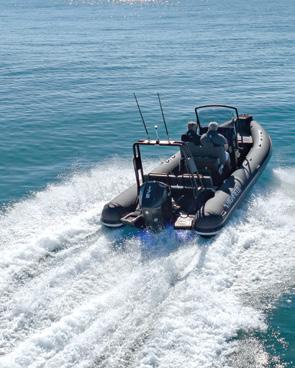
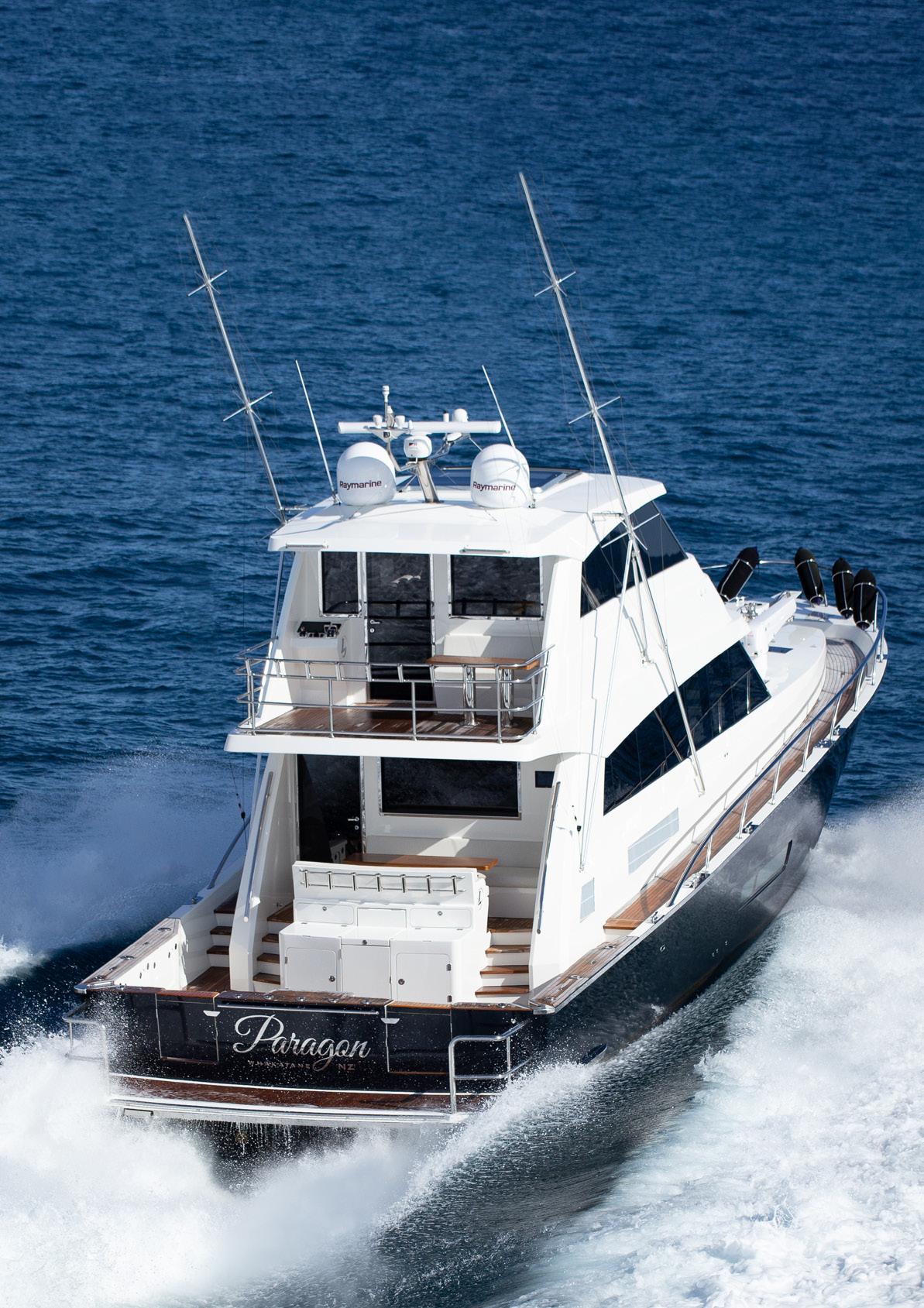
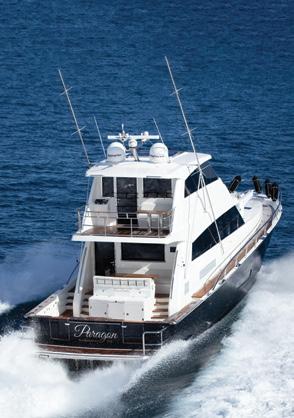
ISSUE #72 Legacy’s 24m flagship A paragon of clever design and innovation. SEE PAGE 62 2023 RIB ANNUAL Highfield Sport 660 As good as it gets. SEE PAGE 131
PASSAGE
BACK – CLIPPER
CONTENTS ISSUE 72
Digital readers - click play buttons to watch video review online at powerboatmagazine.co.nz 62 LEGACY 70 80 PRINCESS V55 92 CROWNLINE 240 SS LPX 102 FOUNTAINE PAJOT MY4.S 114 YANMAR VF23AZ 134 SMUGGLER STRATA 820 HARDTOP 148 HIGHFIELD SPORT 660 PACIFIC THE 100% RIB MAGAZINE 2023 ANNUAL THRILLS COME STANDARD SMUGGLER STRATA 820 HARDTOP AS GOOD AS IT GETS HIGHFIELD SPORT 660 A BUYERS GUIDE TO TRAILERABLE 5.5 RIB’S JULY AUGUST 2023 POWERBOATMAGAZINE.CO.NZ TRAILERBOATS LAUNCHES CRUISERS BONUS ANNUAL RIB MAGAZINE PACIFIC COME SMUGGLER 820 HARDTOP AS GOOD AS IT GETS SPORT 660 TRAILERABLE 5.5 RIB’S JULY AUGUST 2023 LEGACY L70 PRINCESS V55 HIGHFIELD SPORT 660 YANMAR VF23AZ CROWNLINE 240 SS LPX FOUNTAINE PAJOT MY 4.S SMUGGLER STRATA 820 HARDTOP $11.50 Also Reviewed LEGACY L70 THE GRAVE YARDSOFT BAITING TIPS PLANNING FOR A FIJI PASSAGE A BUYERS GUIDE TO 5.5M RIBS LOOKING BACK MASON CLIPPER PRINCESS V55 YANMAR VF23AZ HIGHFIELD SPORT 660 CROWNLINE 240 SS LPX FOUNTAINE PAJOT MY 4.S SMUGGLER STRATA 820 HARDTOP A paragon of clever design & innovation 6 JULY / AUGUST 2023 70 FIJI PASSAGE 92 CROWNLINE 240 SS LPX 98 DEMAY YACHTS 114 YANMAR VF23AZ
Reviews Features
8 DESIGN FOCUS: PLECTRUM
A 74m concept foiling yacht called Plectrum has been revealed by Italian studio Lazzarini Design Studio.
1 0 EDITOR’S COMMENT
Clocking up the airpoints.
1 2 PUBLISHER’S COMMENT
Registration and licensing for boaties!
1 4 GUEST COMMENT
Neil Surtees 2023 Inductee into the NZ Boat Show Hall of Fame.
16 & 18 SEEN & ADMIRED
Chaparral 250 OSX Vicem Classic 55 Sedan
2 0 NEWS
News, new products, boats and events.
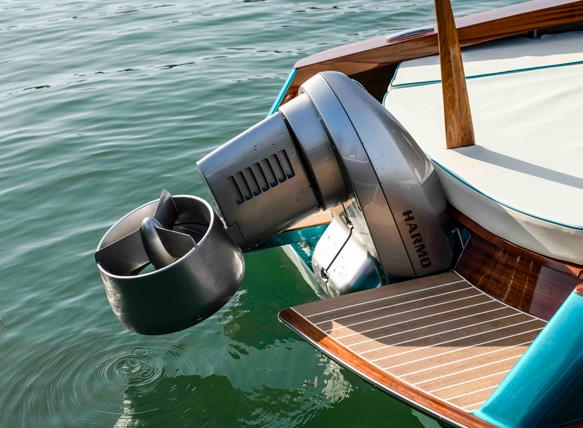
52 POWER ON Next-Generation boat manoeuvring system from Yamaha.
5 4 ELECTRONICS COLUMN
Hot new products from some of the world’s leading brands.
5 6 STRAIGHT FROM THE GALLEY
Derek the Chef, prepares BBQ Spiced Salmon.
58
WHAT IS THE QUESTION? Atmospheric River.
6 0 HIGH HEELS TO SEA BOOTS Surveys for bed-time reading.
12 6 FLETCH’S TIPS
Aaron Fletcher shares his tips learned after years of getting it right and getting it wrong.
POWERBOATMAGAZINE.CO.NZ 7
DURABLE LOW MAINTENANCE CUSTOMISED DESIGN 0800 114 222 sales@ultralon.co.nz udek.com
Regulars
52 POWER ON
PLECTRUM
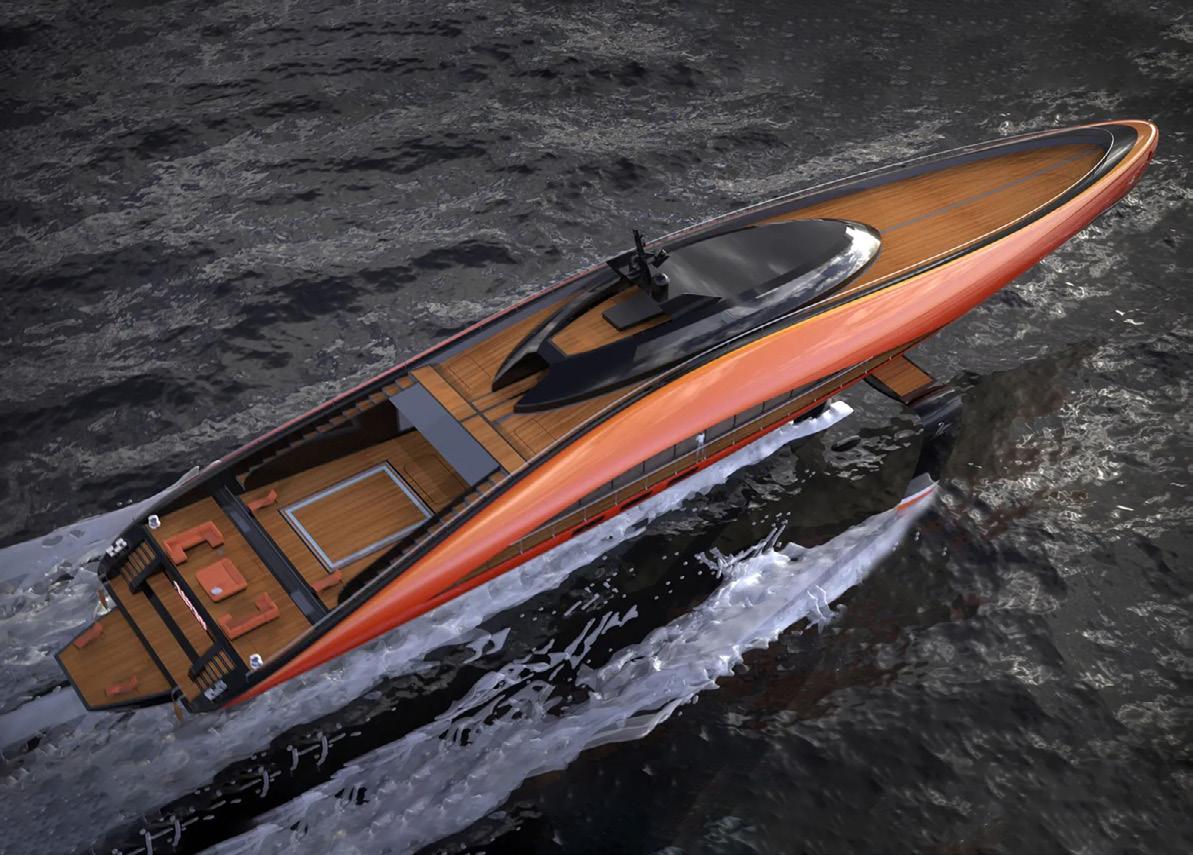
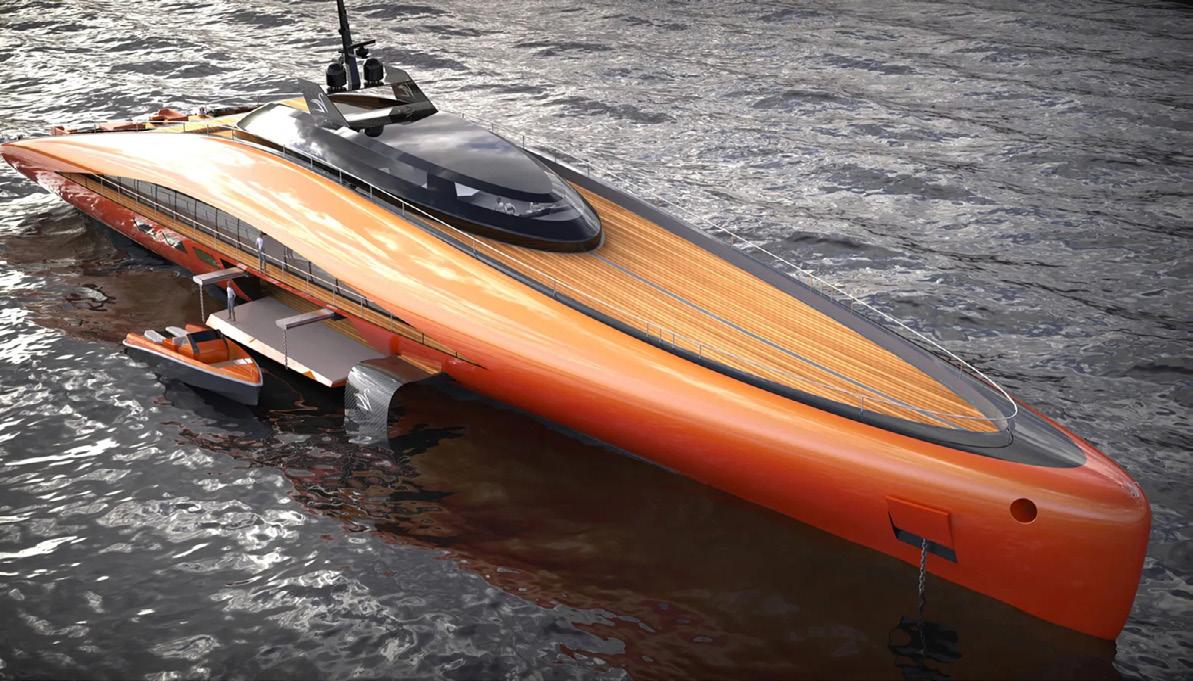
A 74m concept foiling yacht called Plectrum has been revealed by Italian studio Lazzarini Design Studio.
DESIGN
8 JULY / AUGUST 2023
FOCUS _ PLECTRUM
The design takes inspiration from the more contemporary America’s Cup sailboatsspecifically the Luna Rossa design- and would be the largest example of foiling technology installed on a yacht. Top speed would be an impressive 75 knots and the yacht would be constructed entirely in carbon. The foiling superyacht was designed to reach her impressive top speeds by “flying over the waterline.”
Instead of being pushed by the wind, Plectrum is lifted above the water and moves via propulsion from three hydrogenpowered motors capable of 5,000hp each. Her hydrofoil technology has been envisioned with an adjustable beam of up to 20m that can be reduced to 15m when the yacht is berthed or at anchor. The draught would be 6.5m. Finished in a striking burnt orange shade, Plectrum’s exterior design is defined by a smooth, streamlined silhouette with flat arched sides that form the side
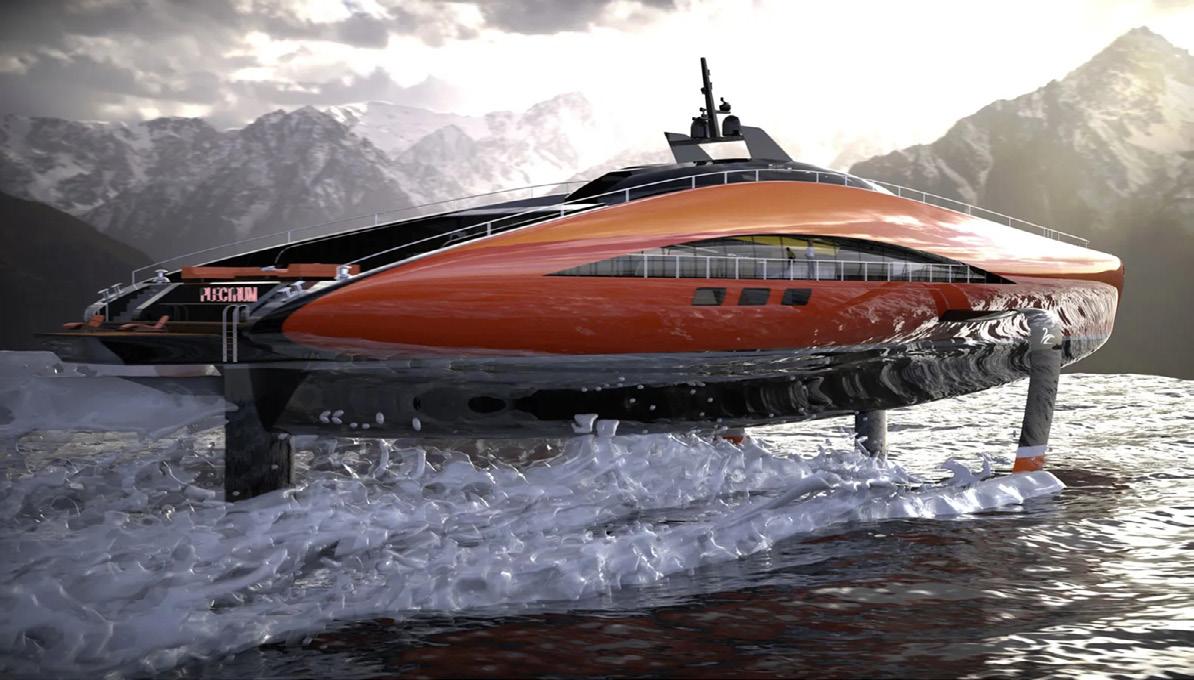
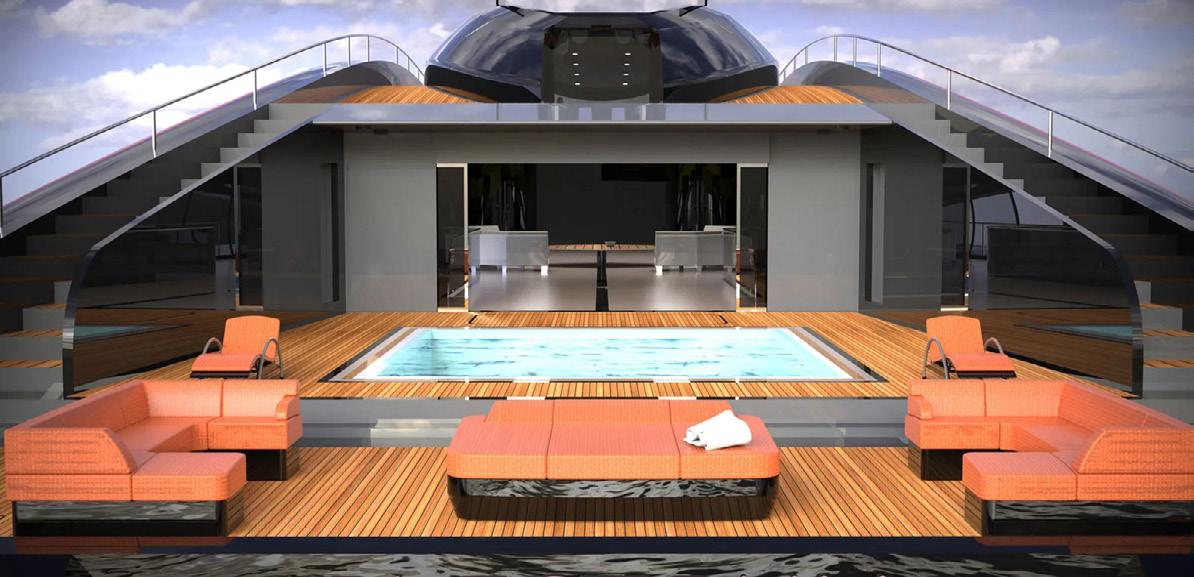
decks and garage openings. The yacht's living spaces are split across f our decks, with the main body offering six guest cabins and an owner's suite. Preliminary renderings also boast a helipad located on the bow and a large beach club on the aft complete with a pool. There is amidships storage for tenders, plus a garage at the stern for a car.
LAZZARINIDESIGNSTUDIO.COM POWERBOATMAGAZINE.CO.NZ 9
PUBLISHER D&B Publishing Ltd

EDITORIAL TEAM
Barry Thompson,
editorial@boatmags.com
+64 9 428 2328
ADVERTISING
New Zealand & Australia
Doug Dukeson +64 9 428 2328
+64 21 772 202 doug@boatmags.com
Holly Dukeson +64 21 028 66849 holly@boatmags.com
PRODUCTION
Annabelle Rose Design +64 27 427 4559 design@annabellerose.co.nz
Printer: SCG
WEBSITE Stealth Media Ltd
Gustav Wentzel +64 21 0201949 info@stealthmedialtd.co.nz
ACCOUNTS accounts@boatmags.com

+64 9 428 2328
CIRCULATION
Are Direct NZ +64 9 979 3018
Are Direct Aust +61 2 99728886
SUBSCRIPTIONS (Printed & Digital) subs@boatmags.com Pacific PowerBoat is published bi-monthly January,
CLOCKING UP THE AIRPOINTS
In the past few months, I have been clocking up a lot of airpoints, and there is still plenty more to come. A few days following the Hutchwilco New Zealand Boat Show, I was in Sanctuary Cove, Gold Coast, for the annual Sanctuary Cove International Boat Show (SCIBS). After four days at the Hutchwilco NZ Boat Show, I came away with mixed feelings. While undoubtedly, sales were made, and the business was there to be had, it wasn’t like it was a few years ago. Dealers I spoke to sold boats in fewer numbers than usual but had the bonus of offering shorter delivery times. Once again, the proliferation of alloy hardtops was plain to see, and as I walked around the show, I was amazed at the quality and finish this sector of the market has achieved. I have said that Kiwi alloy hardtop trailer boats are the best in the world. No one even comes close. While a couple of non-trailerable production boats were on display, it was again predominantly a trailer boat show, and it always will be.
The Auckland Boat Show held less than two months prior, was dominated by nontrailerable boats in the water and that worked with sales made by a number of the leading brands. Trailer boat sales were poor, and the on-land exhibitors like us didn’t do well. The overall number of attendees wasn’t huge, and I think much more needs to be done to promote the show. Walking to the show from the downtown ferry terminal, I saw no signs to say there was a show at all until I arrived at the entrance gate. Flags on power poles, billboards and some prominent signage nearby would have helped. Anyway, back to my travels. SCIBS was amazing. Another huge and successful show that had a large attendance over the four perfect weather days. While the Hutchwilco show was noticeable for its alloy hardtops, SCIBS was equally strong in 20m plus motor yachts. The impressive displays from brands such as Princess, Ocean Alexander, Riviera, Maritimo and Horizon were world-class. And a lot of that was under Sanctuary Cove’s covered marina area.
I was back in NZ for a week and then returned to the Gold Coast for boat reviews on an Iliad 43S, Vicem 55 and Highfield 660 Sport. Plans were also to do the new Riviera 585 SUV and Maritimo S75, both of which were unavailable at the time. So a week later, I flew back and reviewed the S75 on the Gold Coast. But wait, there’s more. It was a trip to China in late June to visit the Aquila factory and then a week later on the Goldie again to review the Riviera 565SUV.
I have had the chance to review some fabulous boats in the past few months, both locally and overseas, and I look forward to bringing them to you on the pages of Pacific PowerBoat magazine in forthcoming issues.
Ron Czerniak, Richard Milner, Doug Dukeson, Derek the Chef, Laurie Canfield, Mike Rose, Carla Dukeson, Rebecca Hayter, Phil Gilbert, Aaron Fletcher
REGISTERED OFFICE
Ave, Arkles Bay, Whangaparaoa, Auckland, New Zealand. POSTAL ADDRESS
Box 886 Whangaparaoa, Auckland 0930, New Zealand. POWERBOATMAGAZINE.CO.NZ All rights reserved. Reprinting in whole or part is expressly forbidden, except by written permission of the publisher. Printed in New Zealand ISSN 2230-4134 (Printed) ISSN 2230-4142 (Online) PACIFIC EDITOR'S NOTE _ BARRY THOMPSON
March, May, July, September, November
2 McKenzie
PO
10 JULY / AUGUST 2023
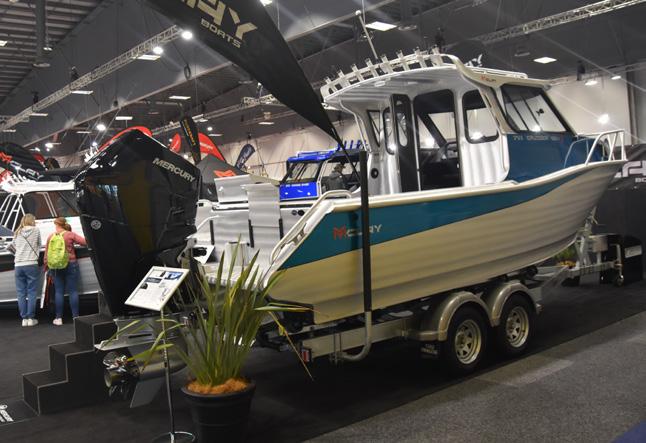
Alloy hardtop trailer boats were in abundancy at the Hutchwilco NZ Boat Show.
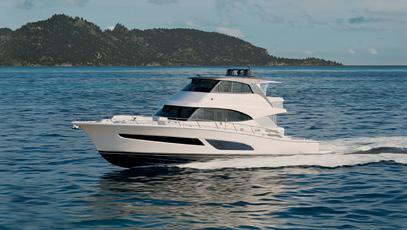
RIVIERA 58 SPORTS MOTOR YACHT IN A LEAGUE OF ITS OWN
WORLD PREMIERE 2023
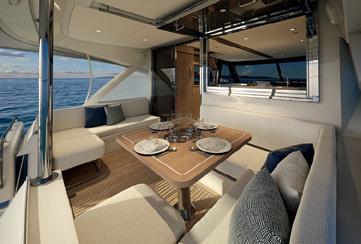
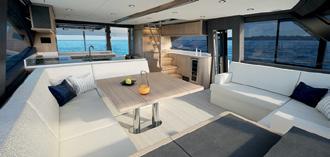
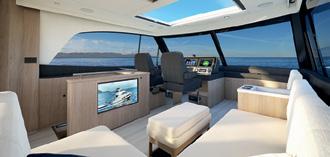
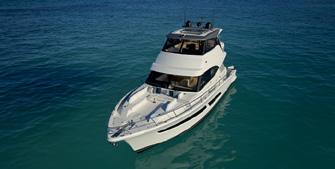
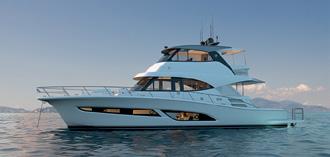
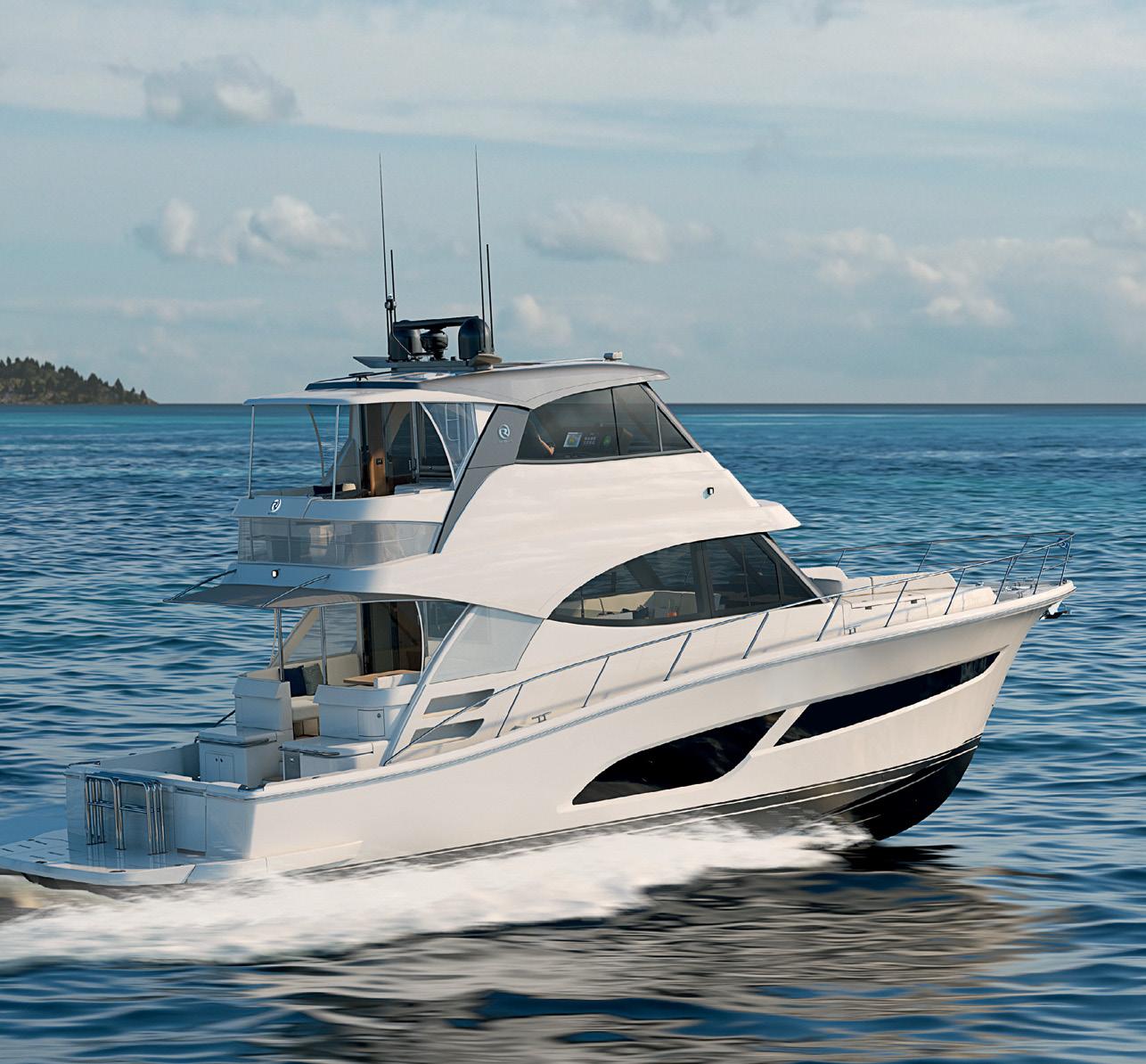
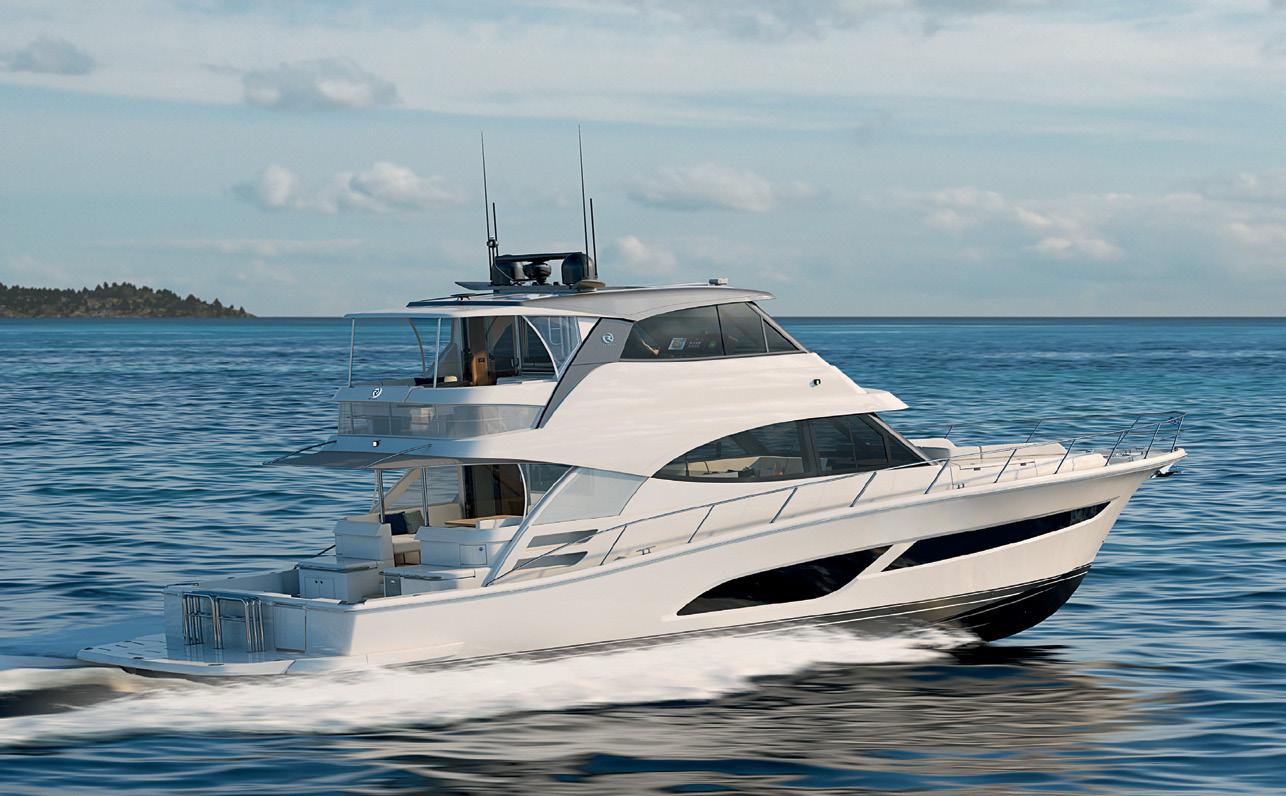
Riviera’s outstanding 58 Sports Motor Yacht is the result of decades of innovation and evolution; combining lighter, stronger materials, an advanced hull design and leading-edge boat building methods. The new 58 has it all: a wide, uncluttered all water sports cockpit, walk around side decks, foredeck lounge and entertaining zone, all weather alfresco deck entertaining and spacious, luxurious saloon with internal staircase to a fully-enclosed air-conditioned flybridge and stateof-the-art helm. The three stateroom, three bathroom accommodation deck features a luxurious full-beam master suite, and versatile utility room or crew cabin. Riviera’s renowned blue-water pedigree, superb hand-crafted quality and easy-to-use technology means you can look forward to unlimited adventure in absolute luxury. Discover more at RivieraAustralia.com
230004
REGISTRATION AND LICENSING FOR BOATIES!
Iheard recently that TAIC (Transport Accident Investigation Commission) is again making noises about the regulation of recreational boats and their skippers.This suggestion came about after the investigation of the capsize of a recreational boat on the Manukau Bar on 16 October 2021, in which three of the four people on board died.
A 5.5 metre recreational power boat was returning from a fishing trip outside Manukau Harbour. While crossing the bar, a series of steep, breaking waves swamped the boat, its engine lost power, and it capsized and sank. A boat occupant called 111 and a rescue helicopter and two nearby private vessels responded promptly, recovering all four from the water. None wore lifejackets and sadly only one person survived.
These boaties did not seem to know the bar or local area and were not well prepared for the bar crossing. More recently, there was the case of the Russell Blue ferry collision where the historic blue wooden ferry made a sad, final journey across the Bay of Islands, after sinking following on from a collision involving a high-speed powerboat, this is now under investigation. Fortunately, there were no fatalities in this situation. There have been suggestions from witnesses that possibly there was no skipper at the helm of the speeding powerboat.
While I am all for fewer deaths on the water, I feel the ‘kiwi’ boating public would be hard done by, having to start registering their boats and/or possibly being forced to obtain a boat license before taking to the waters, adding another cost to the price of boating. We want safer waters for all – but I honestly believe the same exact idiots are going to be out there doing the same dumb shit, just like we see on our roads every day. Unlicensed drivers performing foolish stunts risking their own lives and the lives of others around them. Often these fools are in unregistered and uninsured vehicles, which I am picking will be the same on the water. It will be the honest straight up boatie, sucking up the expense of the introduction and administration of such a system.

Perhaps a compulsory Coastguard Day Skipper course or something similar is the answer to start with anyway. I don’t know, but I am sure, if the bureaucrats get involved, it will be a long and drawn out process, with many a headache.


On a positive note – we have just finished up exhibiting and attending the Hutchwilco NZ Boat Show and the Sanctuary Cove Boat Show, with reasonable sales being made in New Zealand, and good sales being made in Australia, particularly in the 10 meter plus range.

Enjoy this winter issue, hopefully keeping your boating appetite wetted, for the upcoming boating season.

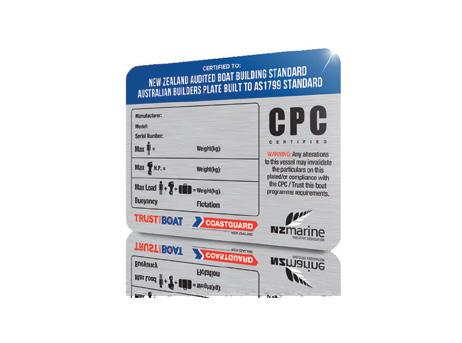
DB214 You & your family can trust a CPC Boat. cpcstandard.com Companies that are approved to build boats to CPC certified standards are: Buccaneer Boats Extreme Boats Fi-Glass Haines Hunter Frewza Boats Huntsman Boats Rayglass Salthouse Boatbuilders McLay Boats Marco Boats KiwiKraft Offshore Boats NZ Stabicraft Southern Boats Tristram Marine Ultimate Boats Smuggler Marine Seaforce Marine APPROVED BY PUBLISHERS COMMENT _ DOUG DUKESON
12 JULY / AUGUST 2023

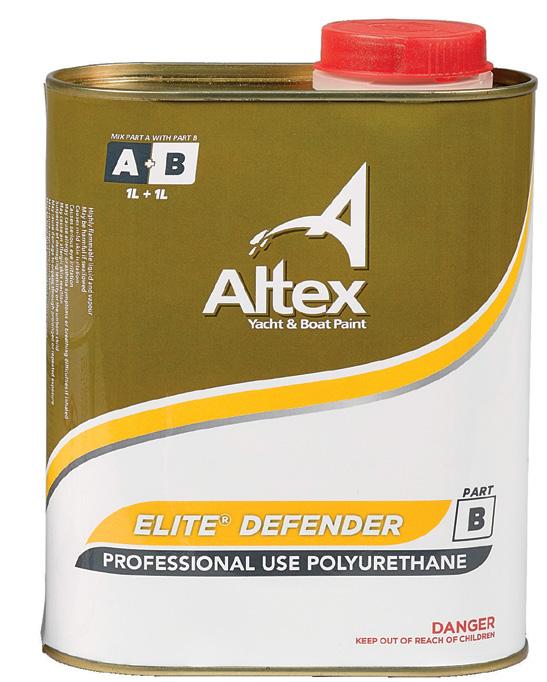
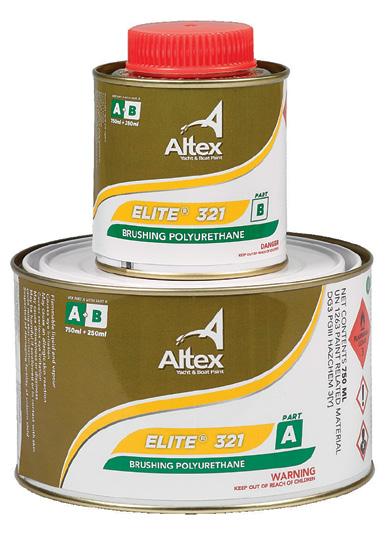
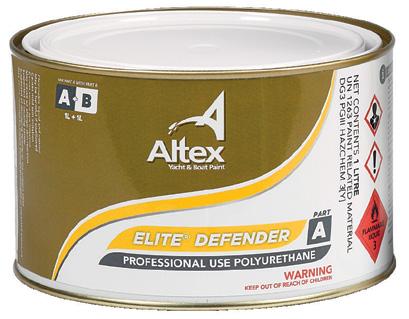
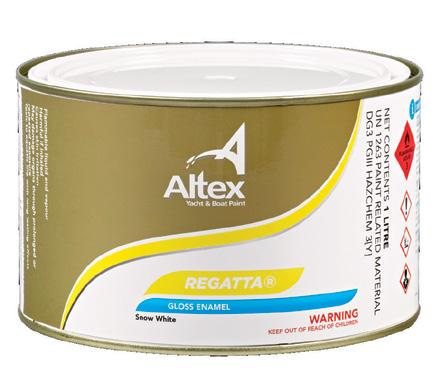
altexboatpaint.com Top Coats Range Brilliant Coats for Brilliant Boats The brushable professional finish. Easy as 123. 321 Professional grade / luxury marine finish –ELITE® DEFENDER PROFESSIONAL USE POLYURETHANE Quality, easy to apply single pack enamel REGATTA® DIY OR PROFESSIONAL APPLICATION Choose the right coat to protect your boat, reflecting your hard work. GET THAT WET LOOK GLOSS
WHATEVER LIES AHEAD...
Aboilermaker by trade, Neil started in the industry by building jet boats “for a bit of extra cash”. He then, in what was to become typical Neil Surtees fashion, started designing and building his own.
Asked to build a racing jet boat in aluminium and noticing that it went well, he “got into aluminium”. A keen fisho he then decided to build himself a fishing boat. It, too, went well.
Other people saw it, liked it and started putting in orders. Almost by accident, from his backyard workshop in Kawerau, Neil was suddenly an aluminium fishing boat builder.
In 1993, he bought a place nearer Whakatane and, although it came with a house and shed, Neil says he wouldn’t even let his dog stay in the house. As a result, he and his wife lived in the shed while he built boats: a one-man-business popping out a 6.1-metre every nine days. Shortly after, he added a 5.5-metre model and was soon busy enough to hire staff.
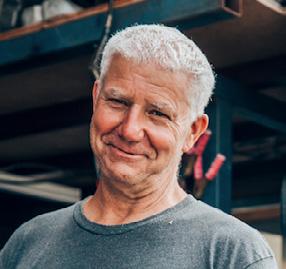
He fixed up the house, now the Surtees office, and suddenly had a thriving business. With an aeroplane-wing-like design under a fully welded floor, his boats were so tough, he was able to offer a 10-year hull warranty, unheard of at the time.
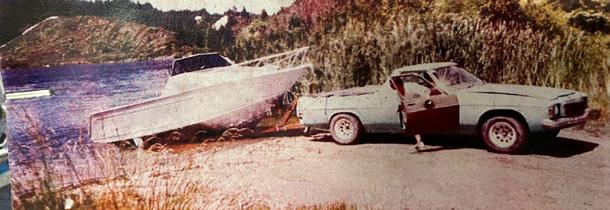
It was not just the floors that were fully welded, so were all the seams (most aluminium boats at the time were riveted). The boats were also packed full of Neil’s innovations:
• a flooding keel, then a completely new concept for recreational trailer boats and one that added an unheard-of level of stability to deep vee boats

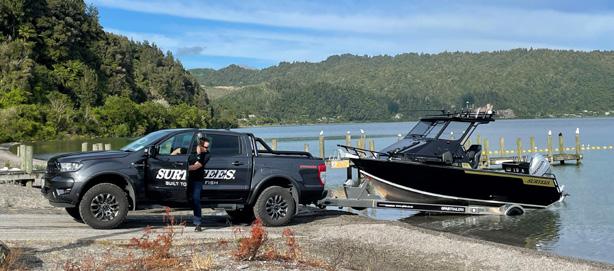
• a drive on/drive off catch to make it easy for an owner to launch and retrieve on their own
• fold-away side seats and clip-on rod holders to name just a few.
Always very focussed on his staff, Neil employed locals wherever possible, took on apprentices from the very early days and introduced a unique artisan single-builder-all-the-way-through approach that built pride in a way a production line never could.
Neil remains one of four shareholders in Surtees Boats, a company that now turns out between 300 and 400 boats a year and employs over 60 people, including 11 apprentices.
Surtees Boats have won numerous Boat of the Show Awards and that shortest ever Awards acceptance speech? It was just one word long: “Grouse!”
GUEST COMMENT _ NEIL SURTEES 2023 INDUCTEE INTO THE NZ BOAT SHOW HALL OF FAME
THOUSAND REASONS, ONE PARTNER
THE WORLD’S LEADING BOAT INSURER!
14 JULY / AUGUST 2023
First ever Surtees
New Halo ® 2000 and 3000 Open Array Radar See Near & Far Superior range and clarity –Enables you to navigate safely through crowded waters or poor visibility. New Bird+ Mode* For offshore sportfishing enthusiasts and commercial anglers – Easily locate feeding flocks as far as 8nm away Target Tracking Track up to 50 vessels within a defined area, and monitor their course and speed. VelocityTrack™ Color-coded targets so you can identify potential threats at a glance. When it comes to safety, situational awareness is everything. simrad-yachting.com/halo Our Most Powerful Radar Yet ®Reg. U.S. Pat. & Tm. Off, and ™ common law marks. Visit www.navico.com/intellectual-property to review the global trademark rights and accreditations for Navico Group and other entities. *Featured on Halo 3000 series.
CHAPARRAL 250 OSX
The Chaparral 250 OSX places a premium on passenger capacity and luxurious amenities. Powered by a single outboard up to 250 hp.
The Chaparral 250 OSX’s mission is to be a day boat for an active family. She has versatile seating with convertible backrests and deep passenger areas thanks to her “raised beltline” design, which make the boat safer and dryer. A private head can be optioned with an electric toilet,
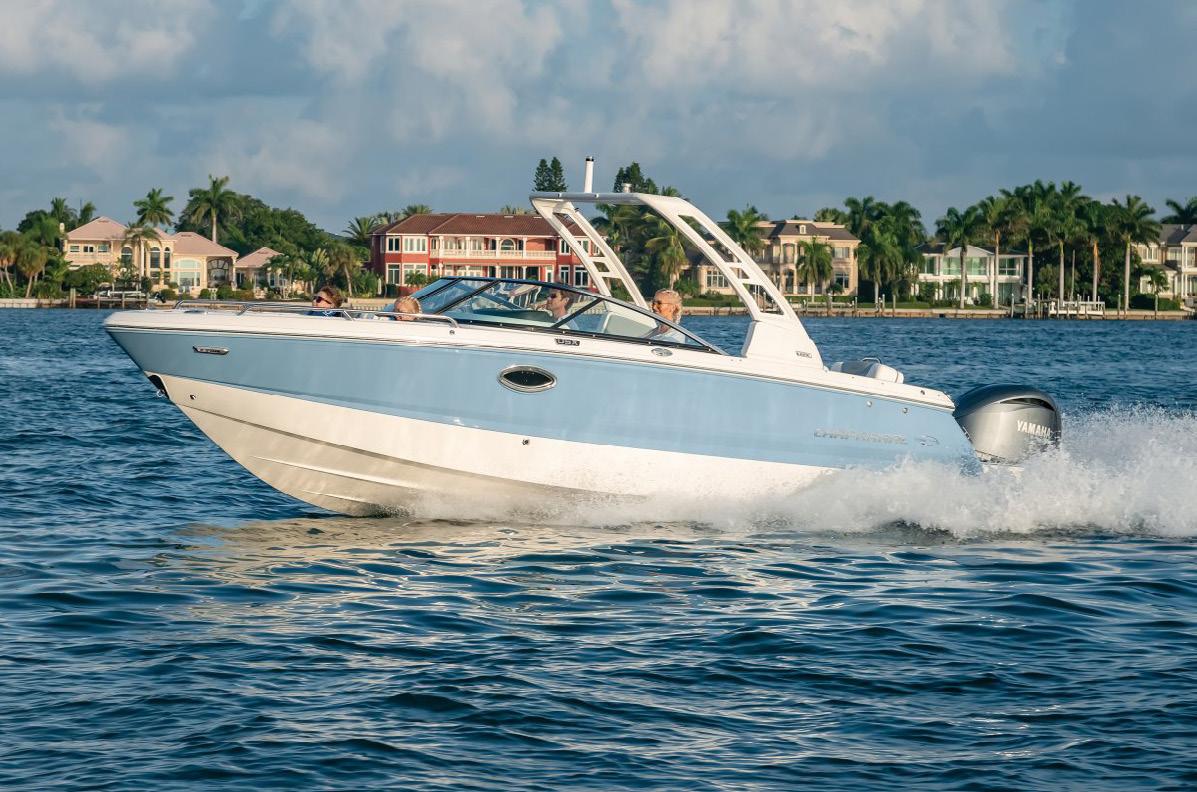
which the family will appreciate. The 250 OSX is a boat that epitomizes the outboard-powered bowrider class, taking full advantage of the open space that would have been occupied by a sterndrive engine by placing the aft seats lower in the boat and by creating spacious storage
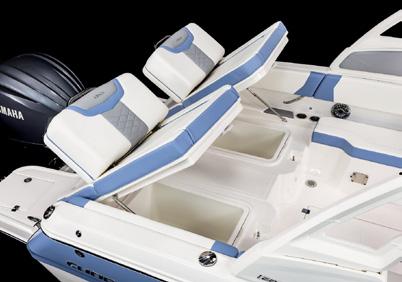
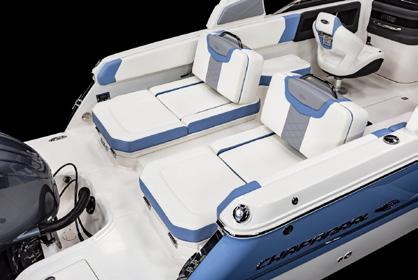
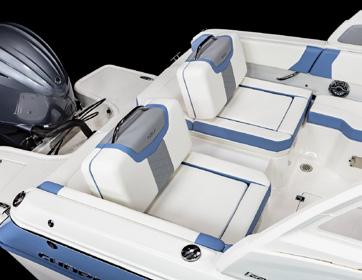
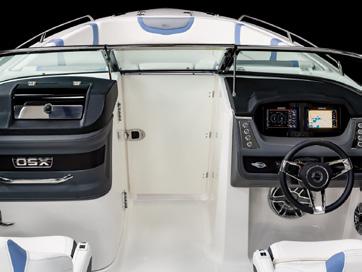
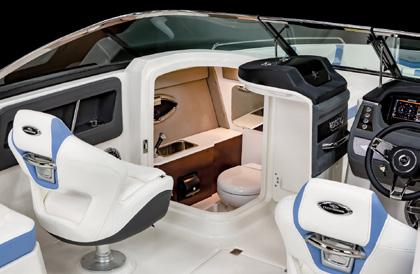
and access to mechanical equipment. From what we have seen, this boat has a quality feel throughout and is thoughtfully laid out with an emphasis on openness and being uncluttered.
Look for the full review in an upcoming issue of PowerBoat Magazine.
For more information contact:
NZ
Wanaka Marine & Sport
Ph +64 (0)3 443 9062
WANAKAMARINE.CO.NZ
Australia
Aussie Boat Sales
Ph +61 (0)3 9397 6977
AUSSIEBOATSALES.COM.AU
SEEN & ADMIRED _ CHAPARRAL 250 OSX
16 JULY / AUGUST 2023
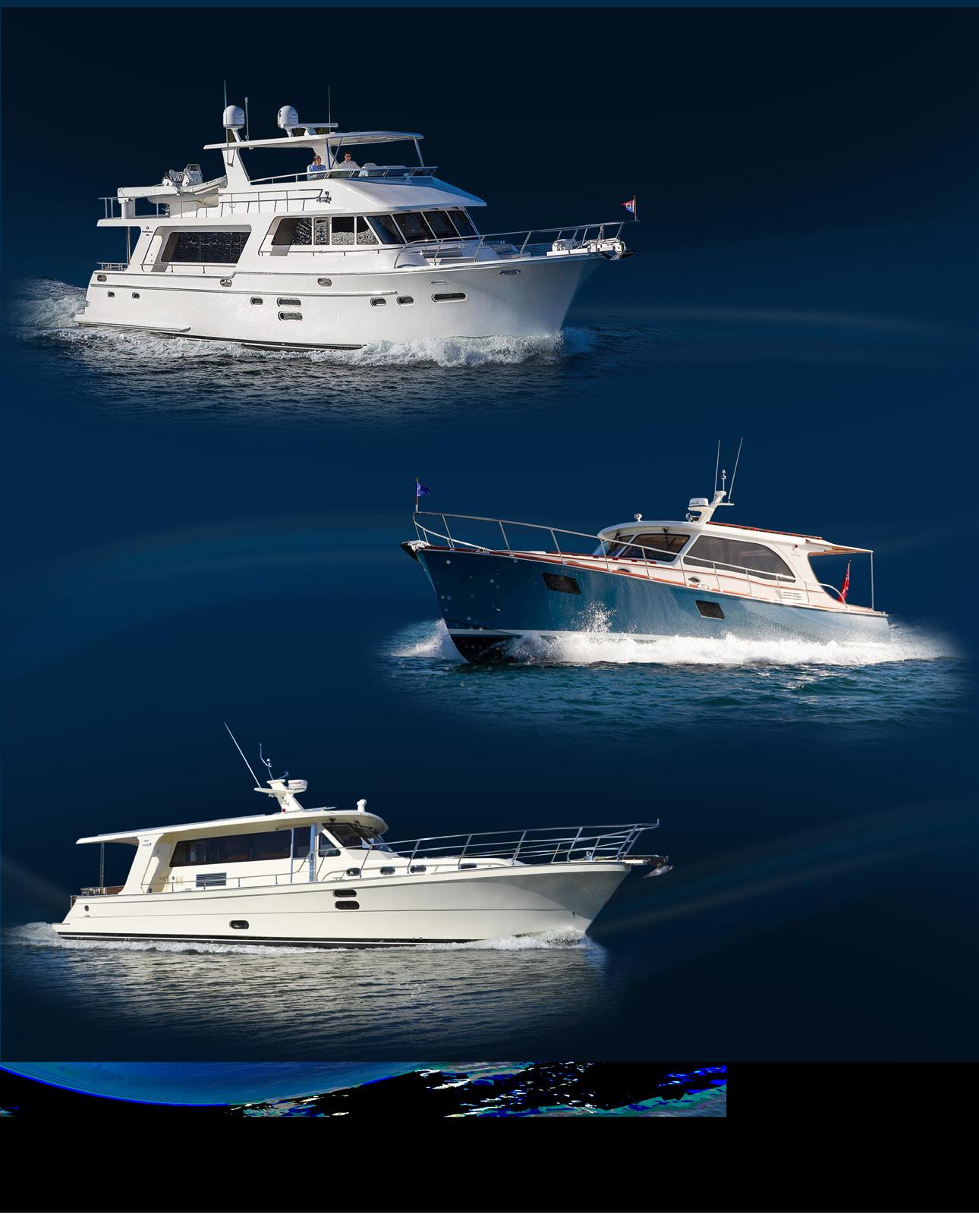

International Yacht Brokers specialising in new & pre-owned luxury motor yachts since 1964. Shop 42 D&E Quay Street, Sanctuary Cove Queensland, Australia 4212 07 5577 9200 sales@leigh-smith.com www.leigh-smith.com 68 ENDURANCE | In Build Delivery Q2 2024 55 VICEM CLASSIC Immediate Delivery 44, 47, 49 ALASKA Order Now for 2024 Delivery
TIMELESS BEAUTY
Released at the recent SCIBS, the 2023 Vicem Classic 55 Sedan is already turning heads. A beautifully crafted yacht that combines classic style with modern amenities, this vessel has been designed to provide a luxurious and relaxed cruising experience, with its sleek lines and spacious interior.
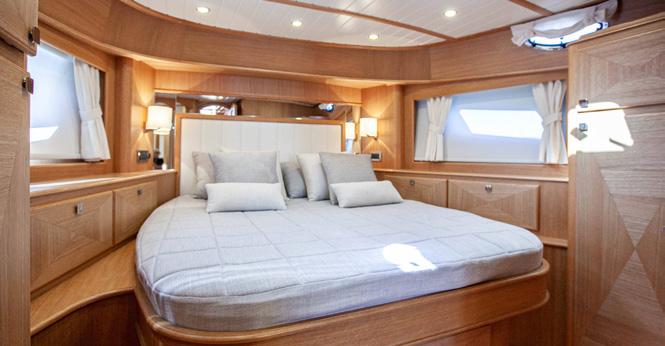
At 55 feet in length and with a 16 feet beam, the Vicem Classic 55 Sedan is spacious enough to accommodate up to six guests. The yacht features three staterooms, each with its own en-suite bathroom, ensuring privacy and comfort for all onboard.
The yacht's interior is finished with high-gloss mahogany, providing a warm and elegant atmosphere.
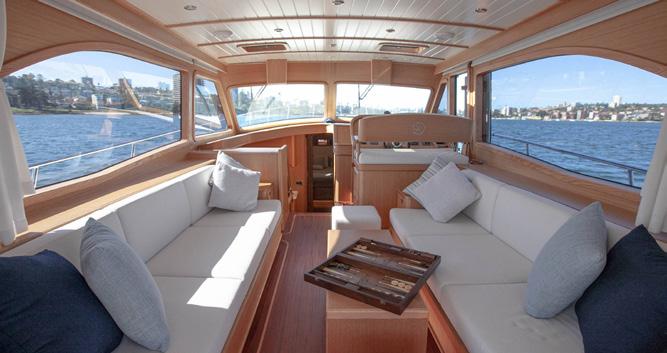
The spacious cockpit of the Vicem Classic 55 Sedan features a teak dining table with ample seating for all guests, perfect for enjoying meals or cocktails al fresco. The exterior of the yacht is equally impressive, with its classic lines and deep-V hull ensuring a smooth and stable ride, even in rough seas. The teak decks and varnished mahogany trim give the yacht a timeless elegance.
Providing a top speed of 28 knots and a cruising speed of 22 knots, the Vicem Classic 55 Sedan is powered by twin IPS700 Volvo Pentas.
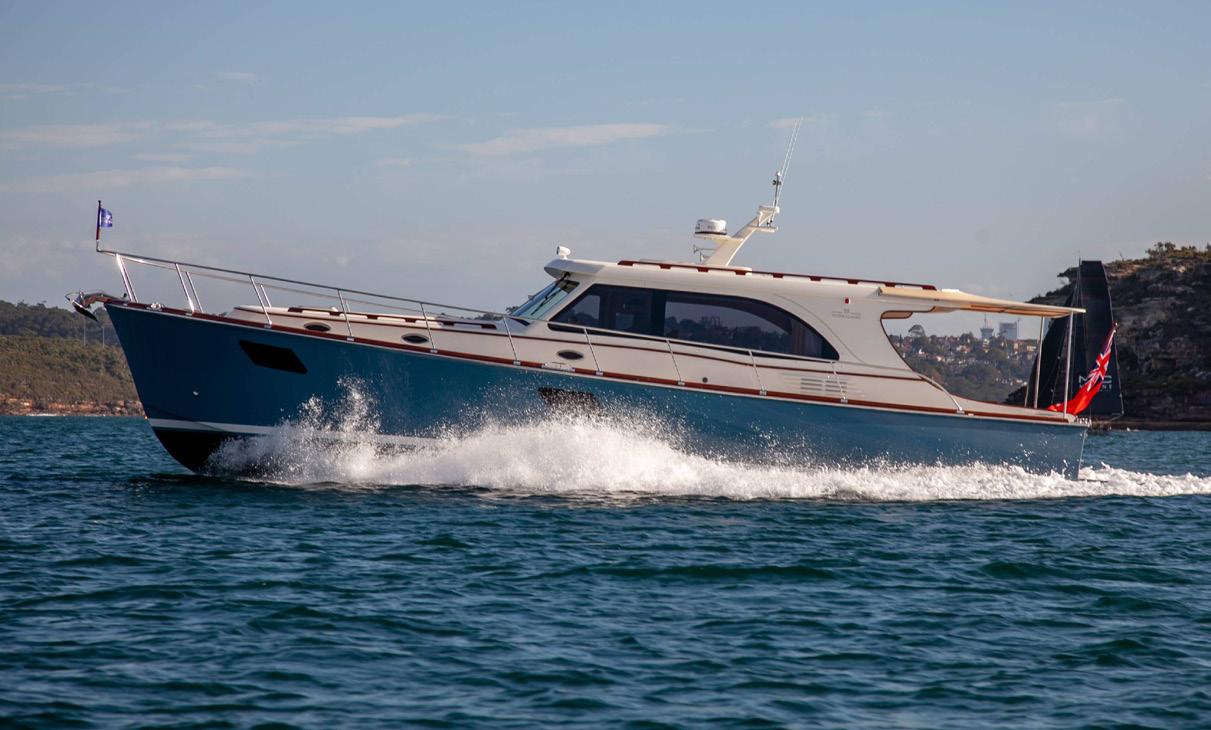
Overall, the 2023 Vicem Classic 55 Sedanis a stunning vessel that combines classic style with modern engineering and design. Whether you're looking for a luxurious family cruiser or a stylish yacht for entertaining, this timeless, elegant lady is sure to exceed your expectations.
Look for a full review on the Vicem 55 in an upcoming issue of Pacific PowerBoat magazine.
LEIGH-SMITH.COM
SEEN & ADMIRED _ VICEM CLASSIC 55 SEDAN
18 JULY / AUGUST 2023
Priced for 20-45ft boats.
Setting a new standard in trim & stabilization. Again. Priced for 20-45ft boats.

TAKES YOUR BOATING TO THE NEXT LEVEL standard in stabilization. Again. 20-45ft boats.
Setting a new standard in trim & stabilization. Again.
Priced for 20-45ft boats.
is an automatic trim brings world class and fuel savings. 20-45ft boats. advanced technology, mobile app integration, LED lighting system is propulsion system you use; sterndrive, inboard—this perfect choice for new refit a used boat. It level.
Setting a new standard in trim & stabilization. Again.
Priced for 20-45ft boats.
LIGHTNING by HumphreeTM is an automatic trim & stabilization system that brings world class comfort, increased speed and fuel savings. LIGHTNING is suitable for 20-45ft boats.
TAKES YOUR BOATING TO THE NEXT LEVEL
TAKES YOUR BOATING TO THE NEXT LEVEL
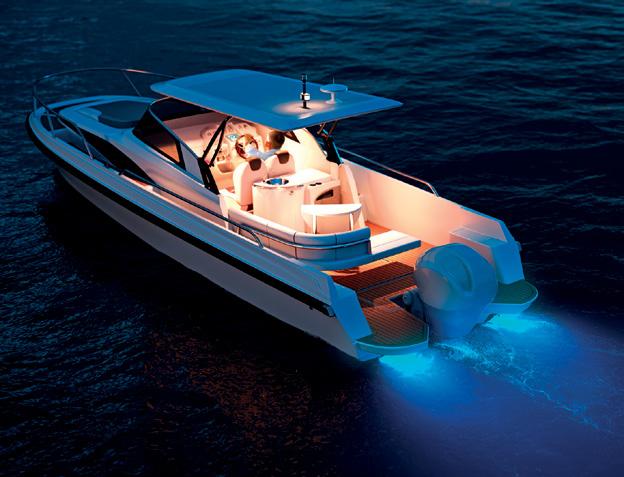
LIGHTNING by HumphreeTM is an automatic trim & stabilization system that brings world class comfort, increased speed and fuel savings. LIGHTNING is suitable for 20-45ft boats.
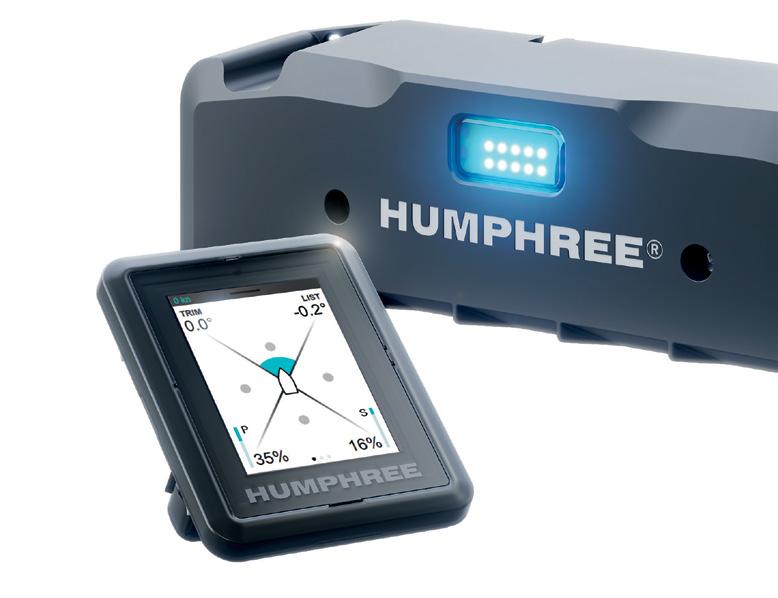
Its combination of our advanced technology, user-friendly interface, mobile app integration, and beautiful underwater LED lighting system is what truly sets it apart.
Its combination of our advanced technology, user-friendly interface, mobile app integration, and beautiful underwater LED lighting system is what truly sets it apart.
No matter which propulsion system you use; outboards, electric, sterndrive, inboard—this new system will be the perfect choice for new build boats or for when you refit a used boat. It will take you to the next level.
No matter which propulsion system you use; outboards, electric, sterndrive, inboard—this new system will be the perfect choice for new build boats or for when you refit a used boat. It will take you to the next level.
AUTOMATIC
AUTOMATIC FUNCTIONS
YOUR SMARTPHONE

Auto Trim • Pitch Control • Auto List • Coordinated Turn • Roll Stabilization
VISIT THE LIGHTNING WEB PAGE BY SCANNING THE QR CODE WITH
VISIT THE LIGHTNING WEB PAGE BY SCANNING THE QR CODE WITH YOUR SMARTPHONE Auto Trim • Pitch Control • Auto List • Coordinated Turn • Roll Stabilization AUTOMATIC FUNCTIONS
VISIT THE LIGHTNING PAGE BY SCANNING QR CODE WITH YOUR SMARTPHONE Pitch Control • Auto List • Coordinated Turn • Roll Stabilization
FUNCTIONS COMING SOON DB907 Humphree Distributor New Zealand & Pacific Islands: Volpower NZ Limited. Ph: 0800 865 769 or 09 274 4305 www.volpower.co.nz
SUCCESSFUL SHOW PROOF OF KIWIS’ LOVE OF BOATING & FISHING
The highly successful 2023 Hutchwilco New Zealand Boat Show has again proved how much Kiwis love their boating and fishing. Despite concerns about the state of the economy and a fairly scary weather forecast, Kiwis not only flocked to the show, they opened their wallets while there. By the end of the show, there were SOLD signs everyone and thousands of keen anglers had walked away with new rods, reels, lures and tackle.
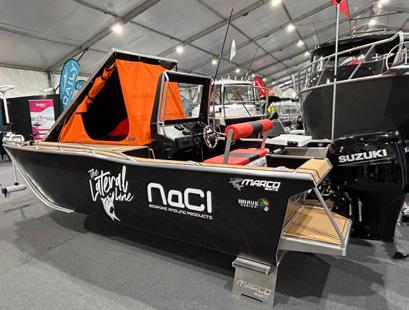
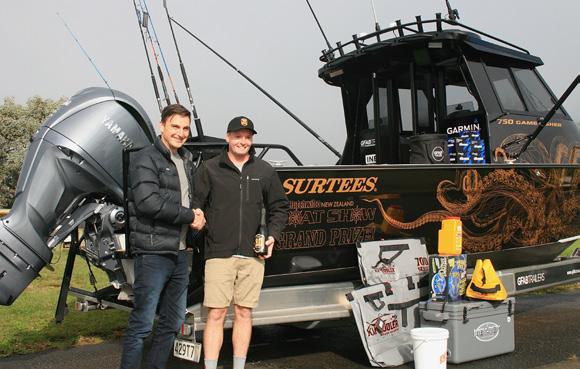
The show, as always, saw the debut of dozens of new boat models, along with the unveiling of the world’s latest outboards, electronics and accessories. While the chance to see, touch and often to buy these new releases was a major drawcard for the almost 32,000 paying visitors, so too was the chance to win this year’s Surtees/Yamaha Grand Prize. Featuring a 30th anniversary Limited Edition Surtees 750 Game Fisher enclosed cabin, the 2023 Grand Prize was powered by a 250hp Yamaha V6 DES Offshore series outboard, complete with the Helm Master EX boat control system, came packed with a comprehensive suite of Garmin electronics and sat on a custom-built GFAB tandemaxle trailer, complete with Credo in-cab wireless braking system. It was worth a cool $300,000 and, thanks to new owners XPO’s exciting new ticketing and scanning technology, attracted a whopping 24,468 entries.
For the second time in just three years, the winner of this year’s Surtees/Yamaha Grand Prize was a young man from Hamilton. Blair Morland, a self-employed builder, is not only from the same city as 2021 Grand Prize winner Paul Clout, he also employs Paul’s cousin as an apprentice! Although the 29-year-old Blair is a keen game fisher, regularly fishing out of Raglan and having already caught a number of striped marlin, the 2023 Surtees/Yamaha Grand Prize will be his first boat. He says he was saving to buy a house but now, not
surprisingly, “that can wait”. Whangarei’s Offshore Boats made it two from two when they took out the Altus Industrial Aluminium Boat of the Show Supreme Winner Award for the second year in a row. Their winning Offshore 850HT also won the Boat of the Show Special Fishing Boat Open and Best New Model while the company’s Offshore 700HT won the Boat of the Show All Purpose Family Boat up to 7 Metres Award.
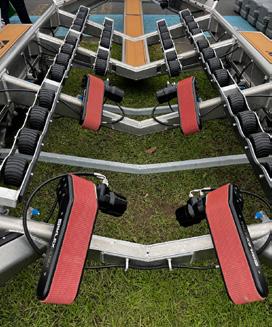
The Altus Industrial Aluminium Boat of the Show Most Innovative Boat Award went to the Marco Boats 500 Sojourn and the New Zealand Boat Show Most Innovative Product Award was won by the Balex Ultra Trailer.
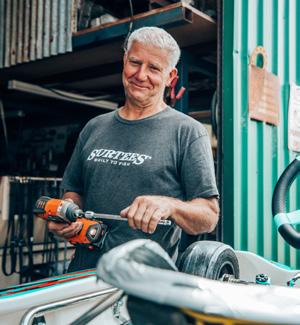
Surtees Boats founder, Neil Surtees was recognised for his contribution to innovation and clever thinking in fishing boat design by being inducted into the New Zealand Boat Show Hall of Fame. Neil is still a shareholder in Surtees, which now produces 300-400 boats a year, employs over 60 people, including 11 apprentices and boasts a comprehensive dealer network in both New Zealand and Australia. They also now sell into the US and Europe. With planning already well underway for next year’s show, organisers have announced that the 2024 Hutchwilco New Zealand Boat Show, will be held at the Auckland Showgrounds in Greenlane, Auckland on May 16-19, 2024. BOATSHOW.CO.NZ
Other worthy Altus Industrial Aluminium Boat of the Show Award winners were:
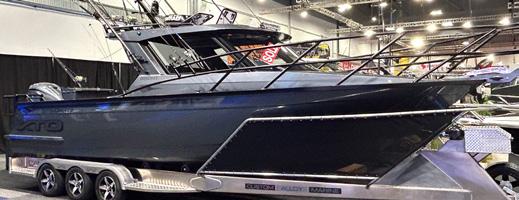
Launch: Beneteau Antares II
Specialist Fishing Boat Up To 6
Metres: Senator 500
Specialist Fishing Boat Up To 7
Metres: Extreme 646 Walk Around
Specialist Fishing Boat Up To 8 Metres: Innovision Boats 757
Explorer Custom
All Purpose Family Boat Up To 6
Metres: Dreadnort V4000 Tiller
All Purpose Family Boat Up To 8 Metres: Machina 731
All Purpose Family Boat Open: Purekraft 800HT
PACIFIC POWERBOAT _ NEWS
Boat Show owner Brent Spillane with Grand Prize winner Blair Morland
Winner Supreme, Offshore 850HT
Neil Surtees, 2023 Hall of Fame inductee Balex Ultra Trailer
20 JULY / AUGUST 2023
Marco Boats 500 Sojourn
SCIBS LIVED UP TO ITS REPUTATION AS ULTIMATE BOATING & MARINE LIFESTYLE SHOWCASE
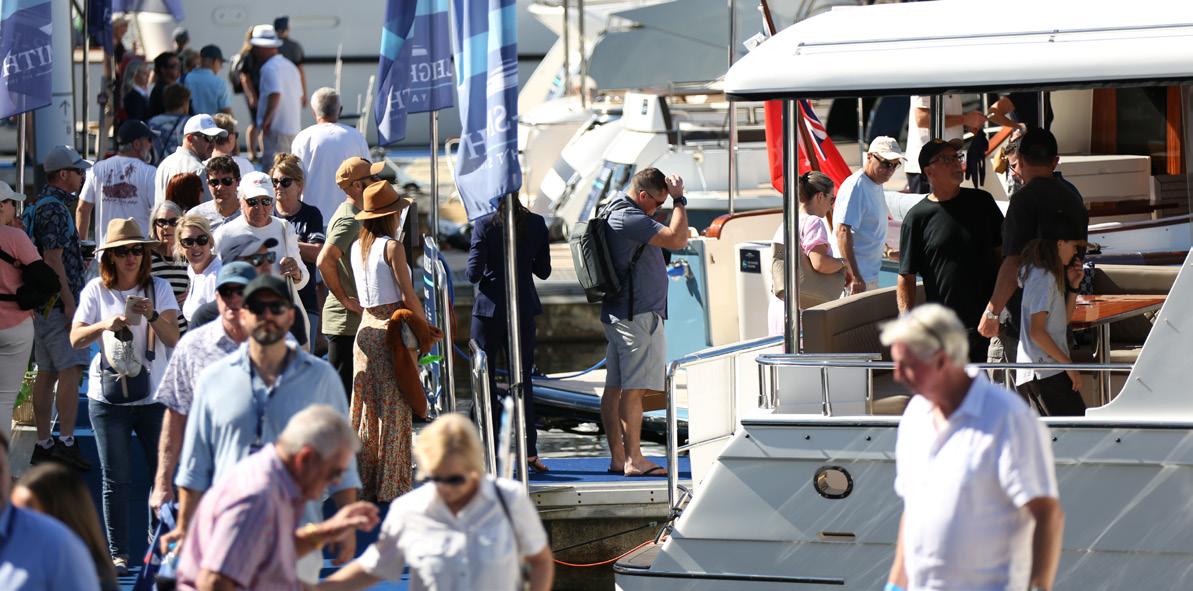
Over four action-packed days, SCIBS 2023 attracted 47,345 visitors who flocked from all over the globe to view thousands of marine products, and an impressive 740 vessel line up, including an all-time record of 315 boats on water and over 100 Australian, Asia-Pacific and World premieres. “The feedback we’re receiving from exhibitors and visitors is extraordinary, and the exceptional growth of the event supports that. SCIBS is recognised by the industry as a must-attend event on the international boat show calendar, providing an unparalleled opportunity to market and sell products whilst showcasing the boating lifestyle,” said SCIBS General Manager Johan Hasser.
Mr Hasser said the enthusiasm from exhibitors for the Show has been a driving force behind the ongoing investment in Sanctuary Cove by parent company Mulpha Australia, including the recent expansion of the marina to include an additional 28 berths and the upcoming development of another superyacht arm by the new year. “The Show is very much a collaboration between everyone involved - us, our sponsors and partners and exhibitors. We’re passionate about ensuring an exceptional visitor experience and the best platform for exhibitors to showcase their products to an engaged audience. It’s proved to be a very
successful strategy, with this year being our biggest and best in our 34 year history.”
Greg Haines from Princess Yachts says his team believes SCIBS 2023 has produced some of the strongest leads of any boat show they have participated in. “We are finding there is a lot of interest in the bigger boats - boats above 65 feet. We held the Southern Hemisphere launch of the Y72 at this year’s Show which has been really well received. We have five or six people interested in purchasing the Y72.”
Stephen Milne from local luxury motor yacht builder Riviera Australia says the show has been a huge success for the renowned brand. “It has just been a tremendous show for Riviera,” Mr Milne says. “The weather has been incredible; the crowds have been very strong and the feedback and interest in the Riviera motor yachts of today, has never been stronger. SCIBS 2023 has been a wonderful opportunity to display the finest fleet of Rivieras that we have ever showcased at a boat show. We displayed 11 yachts, from 39 to 78 feet. The reaction to the fleet and particularly our world premiere - the 585 SUV - has been exceptional. This year, luxury local boating brand Maritimo, say they saw more people through their display than ever before.
Maritimo Managing Director Tom BarryCotter says his team has been thrilled to see the response to their range. “It has
been great to see such strong sales interest in Maritimo,” Mr Barry-Cotter said. “The leads have been very strong and while we are still tallying, it could be a record number of sales from this year’s SCIBS which is just fantastic. The sales generated from this Show will be keeping us busy for the next few years.
Erica Rae of Horizon Yachts says SCIBS has generated over $40 million in sales just the first three days. “This has been the busiest Show we have had in the past five or six years,” Ms Rae said. “It has been phenomenal; the number of enquiries we have had come through. The crowds have been extraordinary, it has been really very busy.
Mark Elkington, CEO, Multihull Solutions and The Yacht Sales Co said SCIBS 2023 has achieved outstanding results for his companies.
The Sanctuary Cove International Boat Show 2023 also saw an extraordinary milestone with the highly successful launch of Sanctuary Cove’s first ever waterfront penthouses, the exclusive unveiling of two luxurious residences that crown the Harbour One apartments and overlook the stunning Sanctuary Cove marina. The 35th Sanctuary Cove International Boat
Show will be held from May 23-26, 2024.
SANCTUARYCOVEBOATSHOW.COM.AU
POWERBOATMAGAZINE.CO.NZ 21
The 34th edition of the Sanctuary Cove International Boat Show (SCIBS) has cemented its position as the Southern Hemisphere’s leading boating and marine showcase, boasting impressive attendance, exceptional sales and a vibrant, festival atmosphere.
SYDNEY INTERNATIONAL BOAT SHOW TICKETS
NOW ON SALE
Tickets are now on sale for the 54th Sydney International Boat Show set to run from 3-6 August 2023 at the International Convention Centre, Sydney and the adjoining purpose-built marina on Cockle Bay at Darling Harbour.
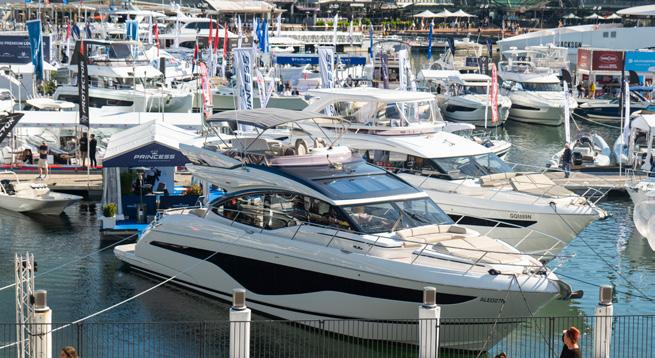
One-day early bird tickets are $25 + booking fee (early bird runs until midnight on 26 July). Early bird ticket purchasers have the chance to win $10,000 ‘Boat Show Dollars’ to spend with an exhibitor at the show. Children under 16 years of age are admitted free with a paying adult.
Whether you’re boating and fishing on Australia’s inland waterways or prefer the open waters off the coast, the Sydney International Boat Show promises everything for the avid boatie, with new vessels, new tackle and loads of technology designed to make your adventure on the
MARITIMO S75 LAUNCH
water even more enjoyable.
The Sydney International Boat Show presents a comprehensive range of boats assembled in one location. Whether you love the humble tinny or kayak, the latest design in popular trailer boats and fishing vessels, or the most luxurious of oceangoing yachts and power cruisers, the show is the one place to find the latest gear and a tantalising range of vessels available today and special offers.
For those who particularly love fishing, learn how to fish like never before at the show’s fishing masterclasses, included with the cost of entry. A massive 60 per cent of people visiting the show express an interest
in fishing. The fishing masterclasses reflect that interest, with presentations ranging from inland waterway fishing to the more adventurous offshore competitions, presenting videos, photos and stories to match. You might even get the chance to chat one-on-one with Show Ambassador, Rugby League great and fishing legend, Andrew ‘ET’ Ettingshausen.
Tickets are only available online, there will not be a box office at the Show. To purchase tickets, visit sydneyboatshow.com.au and click on the ‘Buy Tickets’ button or visit Oztix.
SYDNEYBOATSHOW.COM.AU
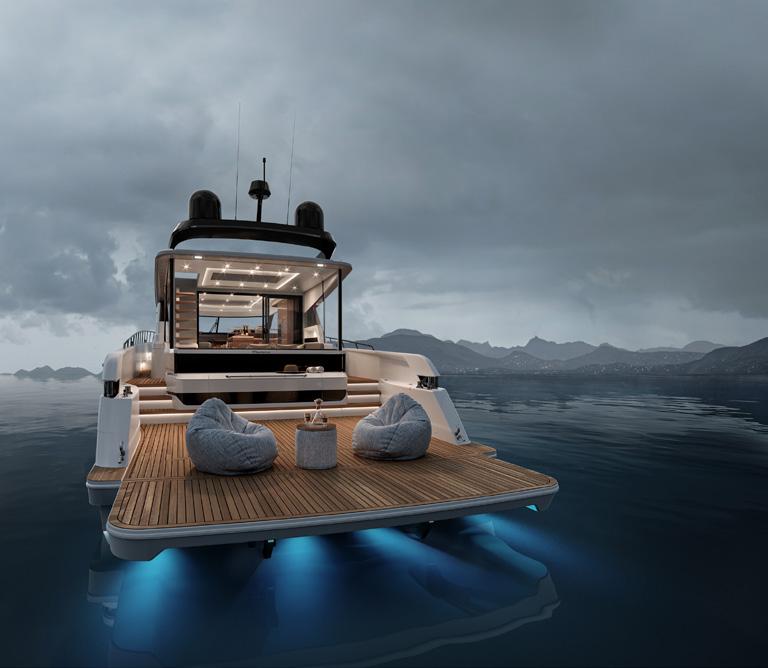
Australia’s leading luxury long range motor yacht manufacturer, Maritimo, ran an exclusive global launch for the new S75 Sedan Motor Yacht at the recent Sanctuary Cove International Boat Show 2023.
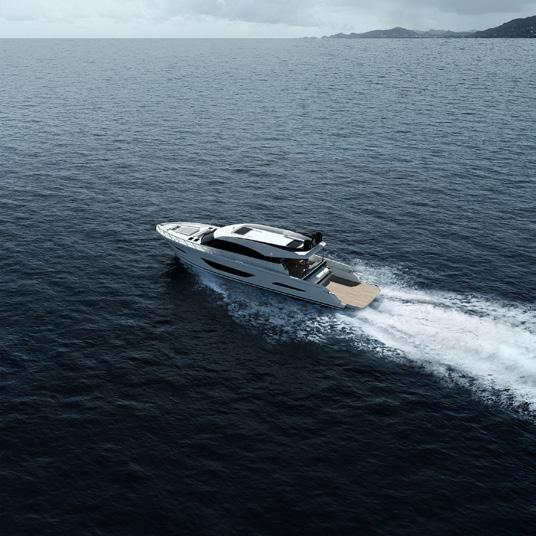
emand for private viewings was very high and bookings for M75 Flybridge Motor Yacht tours were conducted at the Maritimo factory. At SCIBS the S75 flagship was flanked by their M55 and S55 Motor Yachts as well as their inspired M600 and S600 Offshore Series. The glamorous M60 Motor Yacht rounded out Maritimo’s display.
In the coming months the new M75 will have its own exclusive VIP Global Launch Party, as an integral part of their 20th anniversary celebrations.
MARITIMO.COM.AU
PACIFIC POWERBOAT _ NEWS
22 JULY / AUGUST 2023
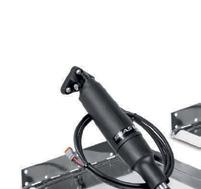
DOMETIC TRIM TABS



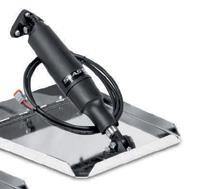
COMPLETE CONTROL AT THE TOUCH OF A DIAL
The intuitive dial controller is what makes the Dometic Adaptive and Standard systems unique. The dial allows for easy and extremely precise adjustment, removing any guesswork from levelling your boat. The controller allows you to easily adjust the pitch and roll to get your boat on plane quickly and efficiently.

WHY TRIM TABS


• Increase fuel efficiency
• Optimise your boats performance

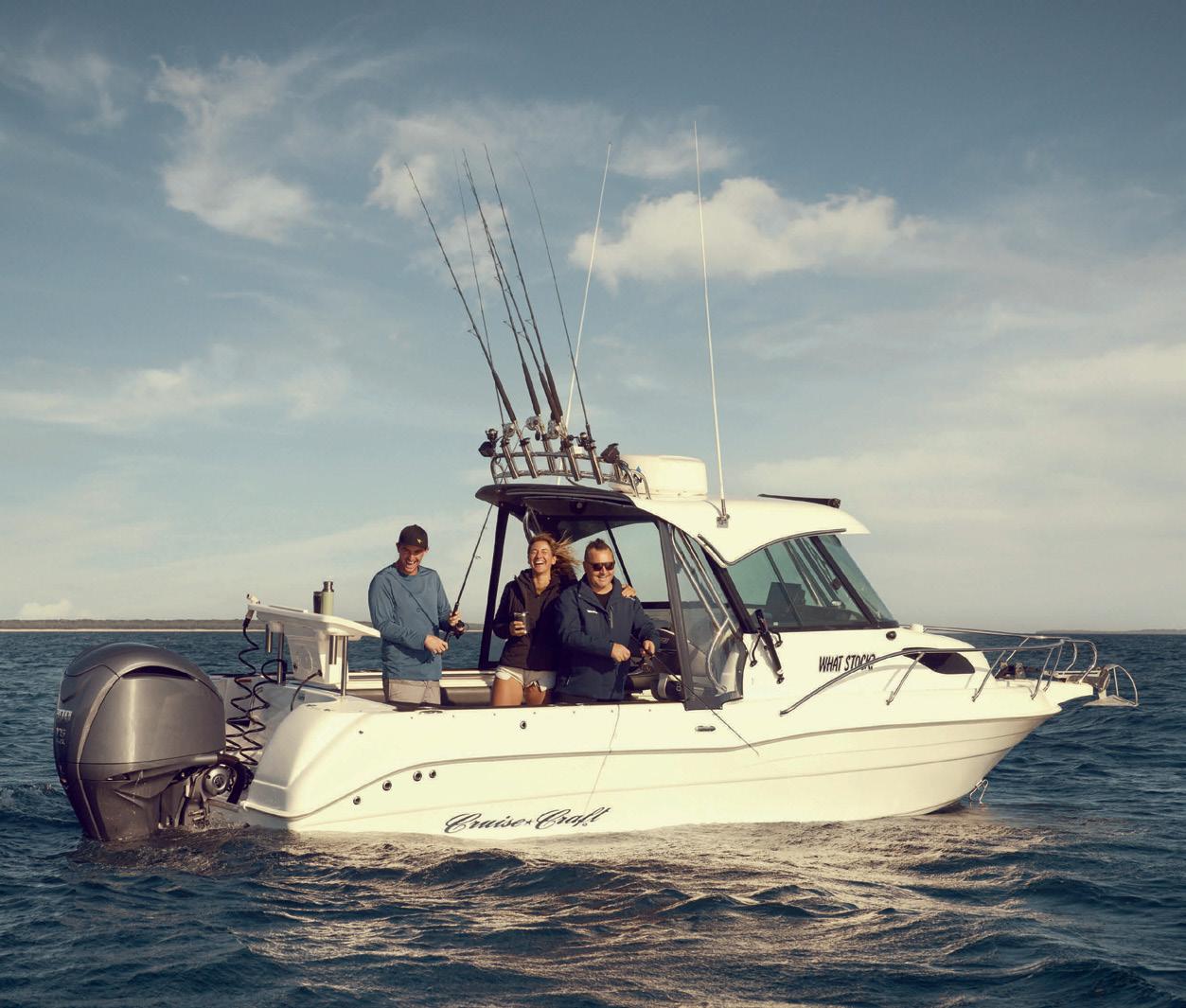
• Increase visibility by adjusting the bow down
• Increase safety and comfort


Find Out More
dometic.com
NEW AIR CONDITIONING FROM WEBASTO
The BlueCool V-PRO Series is the most efficient and user-friendly chilled water air conditioning system Webasto has developed to date.
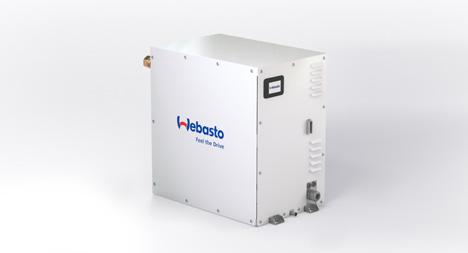
The new marine air conditioning solution is available in four modular units with 60, 90, 130 or 180 kBTU/h, which together provide up to one million BTU/h of system cooling capacity. The units operate fully autonomously for high system availability and continuous operation. Thanks to a titanium seawater heat exchanger, the system is particularly resistant to corrosion. The integrated monitoring of the water flow in the seawater and cold-water systems also ensures reliable operation. Various equipment options such as pipe manifolds, mounting racks or system control cabinets allow customization according to customer requirements. WEBASTO-GROUP.COM
AKZONOBEL LAUNCHES NEW TOPSIDE SYSTEM
AkzoNobel has recently launched a new topside system in its yacht coatings portfolio that is easier to apply than traditional one part systems, furthering its commitment to developing products and solutions that make boaters’ lives easier.
The system contains two new products under its high-performance International range, One UP and Toplac Plus.

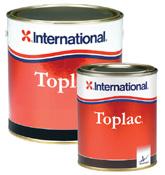
One UP is a new versatile undercoat and primer in one that saves boaters in time and costs by not only drying faster, but requiring fewer coats on both wood and metal, while also providing protection for fibreglass. The next generation of the renowned Toplac topcoat from the International brand, Toplac Plus is a premium silicone alkyd topcoat, that is suitable for all substrates above the waterline. It improves upon the original formula with superior flow and levelling that eliminates the need for tipping when using a roller. This makes Toplac Plus quicker and easier to use for DIY boaters and professionals alike. It also benefits from improved aesthetics over Toplac in terms of Distinction Of Image (DOI) which measures the clarity of the reflection in the finish.

Boat owners wanting to benefit from Toplac’s industry-leading high performance will have 16 bright colours to choose from, from the day of launch. INTERNATIONAL-YACHTPAINT.COM


PACIFIC POWERBOAT _ NEWS
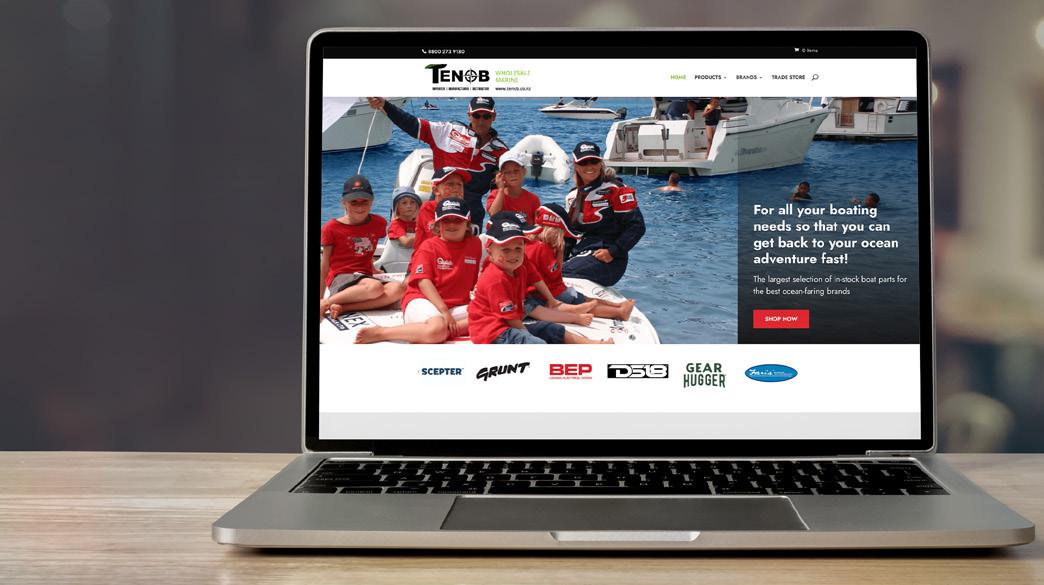
WHOLESALE MARINE Importer | Manufacturer | Distributor www.tenob.co.nz Tenob Wholesale Marine | 241 Ti Rakau Drive | Burswood 2013 | Auckland, New Zealand | Ph +64 9 273 9180 | sales@tenob.co.nz www.tenob.co.nz FOR PRODUCT ENQUIRIES Ph: 0800 273 9180 DB951 ACCESS ALL YOUR BOATING NEEDS FROM RESPECTED BRANDS So convenient! SHOP NOW VISIT OUR NEW EASY VIEW WEBSITE TODAY 24 JULY / AUGUST 2023
The Voodoo Xpedition Foiler range of hydrofoil assisted power catamarans are set apart by their ability to cover huge open ocean distances at high speeds in absolute comfort And with incredible efficiency
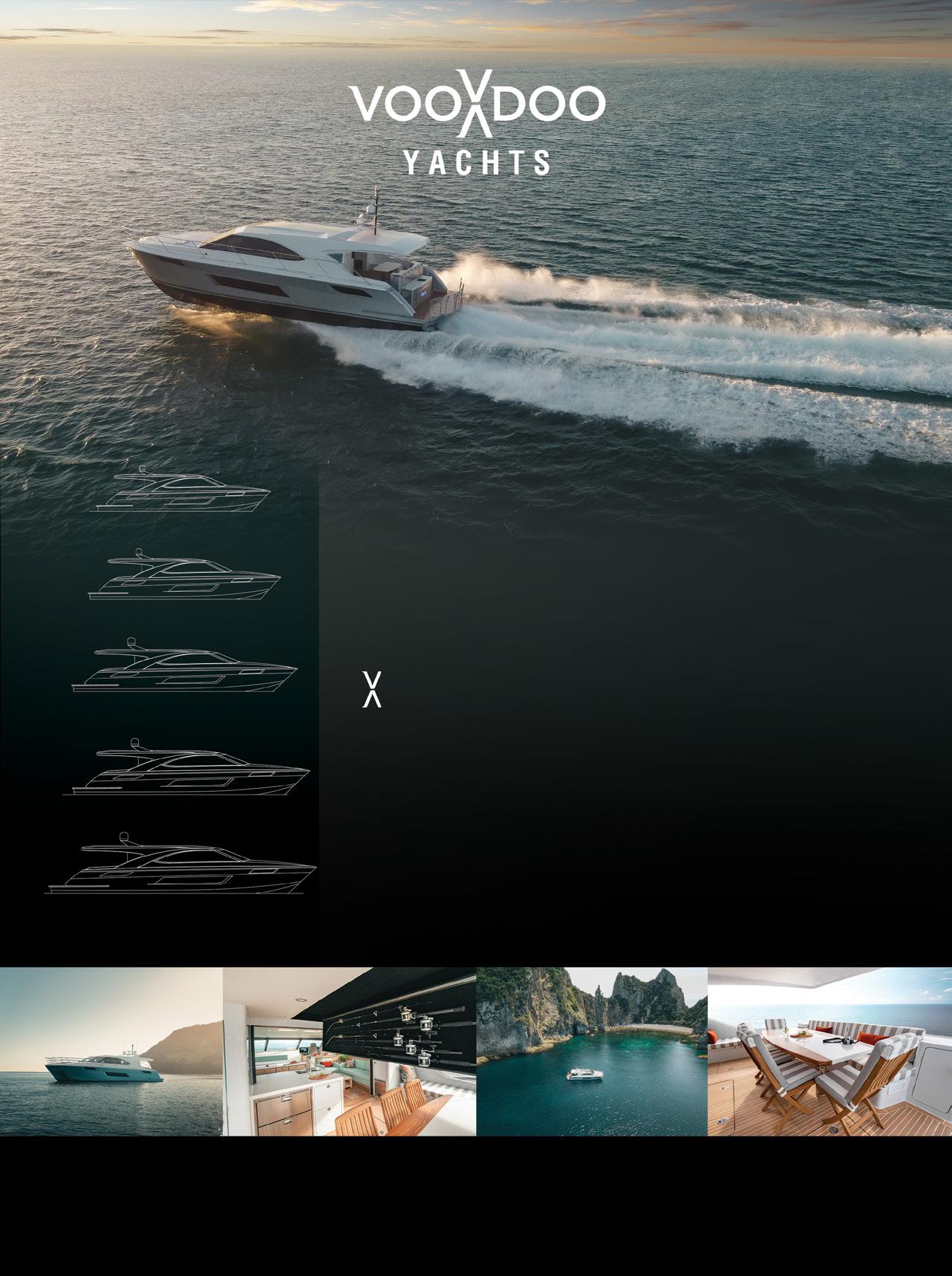
Contemporary interiors, light, flowing spaces and sustainable selections refine the extreme performance
Devastatingly fast, immensely capable and supremely comfortable. The Voodoo Xpedition Foiler truly is the ultimate boat for the modern day adventurer
Get your key to unlock the oceans


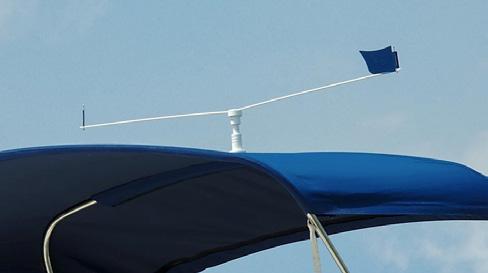
STOPGULL AIR XL –SEAGULL DETERRENT
The StopGull Air is the device designed to avoid landing of gulls and coastal birds on boats' hardtops, inflatable boats and professional vessels.
The StopGull Air is easy to install and it can be folded or removed from its base and stowed. It works by wind action on the flags housed at the ends of the bars, making a rotational movement to avoid gulls and shorebirds perching on the boat. The StopGull Air works with mild or strong winds and it has an open diameter of 185cm. The StopGull Air XL has an open diameter of 235cm. The StopGull Air can be applied to any place of your boat through their 8 optional supports.
TENOB.CO.NZ
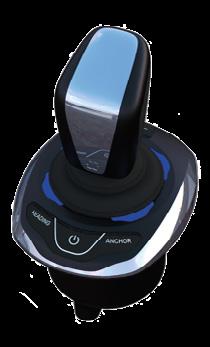
ULTRAFLEX’S INTEGRA JS JOYSTICK
Ultraflex’s new Integra JS joystick combines with the company’s Integra EPS electronic power steering to interface directly with Suzuki outboards, giving incredible steering manoeuvrability and advanced fishing functionality.
At low speeds (at ramps, alongside wharves or in marinas) Integra JS effortlessly moves the boat in any direction: forward, reverse, sideways or diagonally and even enables it to spin on its own axis.
In addition, Integra JS specialist fishing modes give total control when bottom or drift fishing. Position Hold maintains a GPS position using the engine’s RPM and steering, Heading Hold positions the bow at a set heading while drifting with the current and wind and Heading and Hold virtually “anchors” the boat in a set position and heading.
Fully customisable to each skipper’s preference, Integra EPS automatically adjusts helm turns in its Auto Cruise and Auto Sport driving modes, increasing or decreasing steering turns depending on the engine’s RPM. With customisable adjustments over the RPM range, Integra EPS offers more helm feedback at higher speeds (for a positive controlled steering experience). At lower speeds, a lighter feedback plus reduced turns gives more responsive control when manoeuvring at close quarters.
With an autopilot that direct interfaces with Raymarine and Garmin electronics, Integra EPS is suitable for all outboard makes while the Integra JS joystick interfaces directly with Suzuki outboards. LUSTY-BLUNDELL.CO.NZ
PACIFIC POWERBOAT _ NEWS Phone Doug Dukeson +64 (0) 9 428 2328 Email: doug@boatmags.com Or visit www.powerboatmagazine.co.nz DB946a
26 JULY / AUGUST 2023
NEW SEA RAY SLX 280 OUTBOARD
Sea Ray are happy to officially welcome the newest addition to the SLX family.
With head-turning elegance, the stylish Sea Ray SLX 280 Outboard offers a modern and athletic design along with powerful propulsion and innovative amenities that elevate the boating experience. This next chapter for SLX is based on the design of their award-winning new SLX 260 series but with more space and power.
The SLX 280 Outboard, at 9.58m is not just stylish, but also boasts a contemporary, athletic design and powerful propulsion that promises an exceptional boating experience. This watercraft has been thoughtfully crafted to provide ample space, improved seating, and seamless storage.
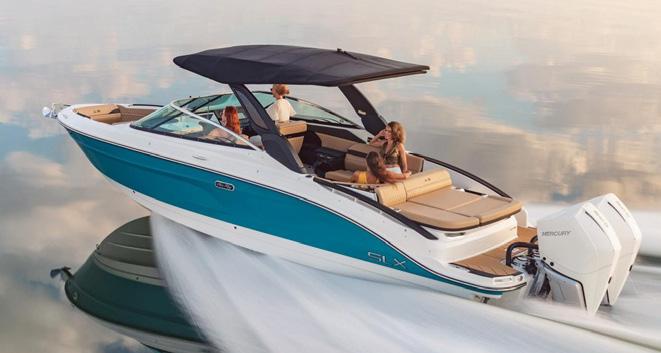
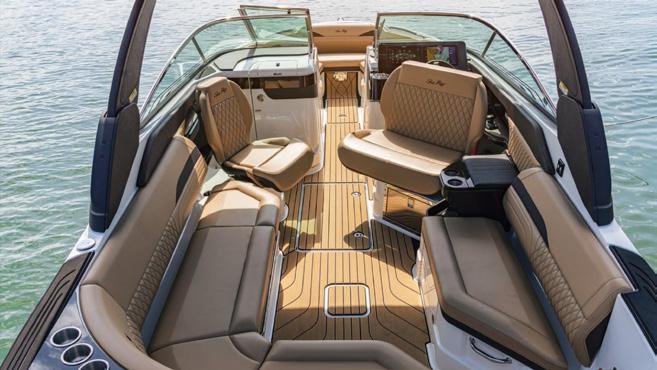
Its U-shaped bow offers the perfect setting for socializing, while the optional next-generation Power Tower provides ample sun coverage. Additionally, the expanded cockpit features plush inviting comforts. With everything onboard optimized for space and function, you can fully immerse yourself in the experience and focus on having fun.
SPORTSMARINE.COM
Power and

Power and performance. Redefined.
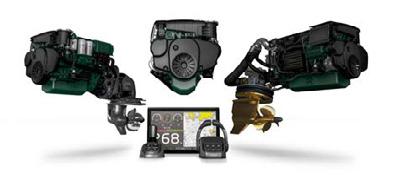
New D4 & D6 propulsion packages
New D4 & D6 propulsion packages
Introducing a new generation of our D4 and D6 propulsion packages, from 150–480 hp. After having spent years refining and developing the proven platform ever further, this complete system delivers new exciting features – from helm to propeller. All to offer you a more powerful and reliable experience. Learn more at: www.volvopenta.com
Redefined.
performance.
Introducing a new generation of our D4 and D6 propulsion packages, from 150–480 hp. After having spent years refining and developing the proven platform ever further, this complete system delivers new exciting features – from helm to propeller. All to offer you a more powerful and reliable experience. Learn more at: www.volvopenta.com
Volpower nz Limited 09 274 4305 | www.volpower.co.nz DB872
POWERBOATMAGAZINE.CO.NZ 27
NAUTI-CRAFT MARINE SUSPENSION BOAT SETS SAIL FOR NORTH AMERICA
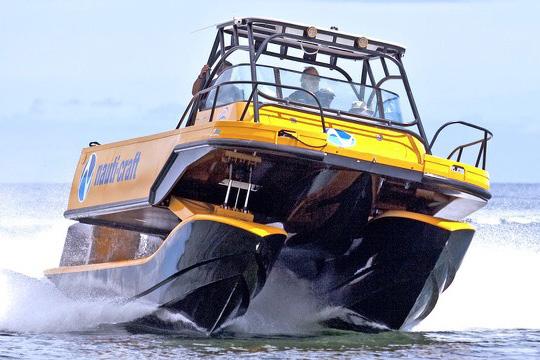
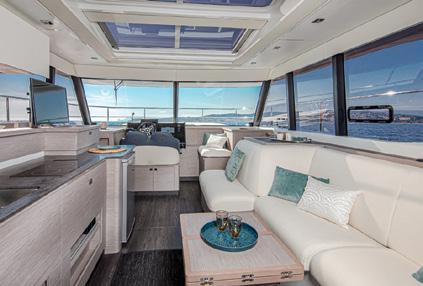
Nauti-Craft, a pioneering company in marine technology, has announced its partnership with Wavecalmer, a leading innovator in the boating industry.
This partnership marks a milestone as Wavecalmer becomes the first company to license and utilise Nauti Craft’s revolutionary technology for its boats in North America. The first boat of its kind,
built by Nauti-Craft for Wavecalmer, is set to be shipped from Dunsborough, Australia, to America, in mid June. Wavecalmer will use this boat as a demonstrator, while making plans to set up production facilities to build fiberglass and aluminium boats in the United States. The president of Wavecalmer, Joe Johnson, is a skilled and experienced mariner and boat builder, who has been in Dunsborough for two months working with the Nauti-Craft technical team getting hands on experience with this innovative technology. This collaboration combines Nauti-Craft’s expertise in marine engineering with Wavecalmer’s passion for delivering exceptional boating solutions.
“We are thrilled to partner with Wavecalmer and bring our innovative technology to the North American boating market” said Mark Schiller, Managing Director at Nauti-Craft. Joe Johnson, President of Wavecalmer added, “We are excited to be at the forefront of this technology in the USA, and can’t wait for the arrival of this vessel to our shores”.
Both Nauti-Craft and Wavecalmer are committed to delivering ground-breaking solutions that exceed customer expectations. This partnership demonstrates the shared vision and dedication of both companies to push the boundaries of what is possible in the boating industry
PACIFIC POWERBOAT _ NEWS MY4.S AVAILABLE FOR DELIVERY EARLY 2024 MY4.S | MY5 | MY6 | Power 67 Dominic Lowe: +64 (0) 21 426 600 Head Office: +61 (0) 7 5452 5164 info@yachtsalesco.com info@multihullsolutions.co.nz yachtsalesco.com multihullsolutions.nz
| WAVECALMER.COM 28 JULY / AUGUST 2023
NAUTI-CRAFT.COM
PEAK AT ED-TEC’S PROBLEM-SOLVING DURING TESTS OF ED-QDRIVE
eD-TEC, manufacturer of holistic marine e-drive platforms, is in the testing phase of its eD-QDrive high-performance electric drive unveiled in September 2022. It was Thomas Edison, who suggested that genius was 1 percent inspiration and 99 percent perspiration. For the 'Believer Team' at marine tech start-up eD-TEC, the path to the commercial launch of the all-electric, highperformance eD-QDrive certainly proves the point.
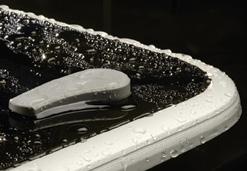
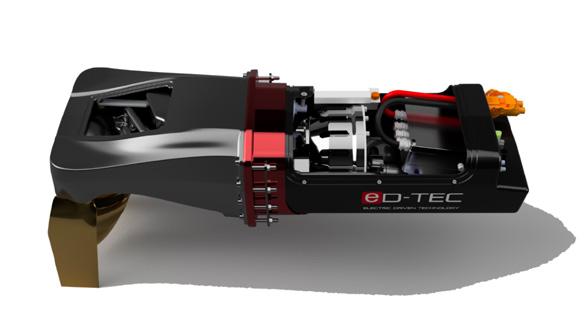
The company’s genius is to be found in an all-new plugand-play electric sterndrive system and the technology stack that accompanies it. Unveiled in September 2022, it quickly sent excited shockwaves through the yachting industry with the promise of the first commercial installation on a powercat design called the Silent-Speed 28 in early 2023. The brainchild of former VW Group Chief Strategy Officer Michael Jost, who has gathered a team of believers working both within eD-TEC and as partner companies, the eD-QDrive comprises a transom-mounted sterndrive unit with surface-piercing propeller that is linked to a high-power electric motor, in turn fed by a battery bank with a high C-rate, and controlled by an advanced hardware and software backbone.
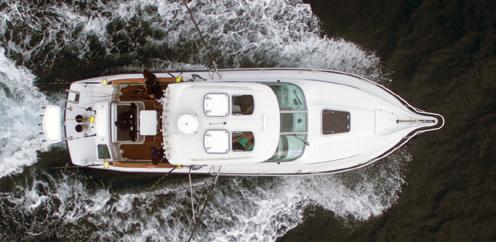
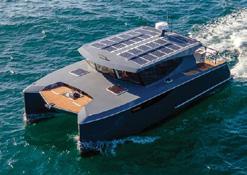

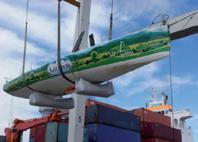
With the inspiration unveiled, the perspiration began. The team hope to be testing fully in the water in the next two to three weeks both using the powercat and also a strikinglooking monohull they built specially as a test platform. “We also fully expect to find new problems because there is no one else developing this type of high-performance, full-electric technology,” says Jost. The boat is ready, the drives are ready and we are finally ready for the sea".
For all the drama – and the perspiration – Jost points out that these are the necessary steps you have to make when you set out to change the game. And importantly the trials, tests and problem-solving have proven two things – that the concept behind the system works, and that the eD-QDrive and its supporting technology stack also works.
Q-SPD.COM
PREMIER SHIPPING • Specialist Worldwide Shipping of Boats and Marine Equipment • Contact us for a quote: Nigel Black, Trade Manager – Projects and Marine P: +64 9488 5836 M: +64 21 909 703 E: nigelb@oceanbridge.co.nz DB734 www.oceanbridge.co.nz Members of: NZ Marine Export Group NZ Marine Industry Assn
touch to discuss
Call 09 835 9706 or visit culemarine.co.nz POWERBOATMAGAZINE.CO.NZ 29
Cule hatches are proudly made in NZ so we can customise to your needs and supply any parts. Easy online purchasing backed by friendly local customer service and a manufacturers warranty. Get in
your next project.
RIVIERA ANNOUNCES NEW 585 SUV – WORLD PREMIERE

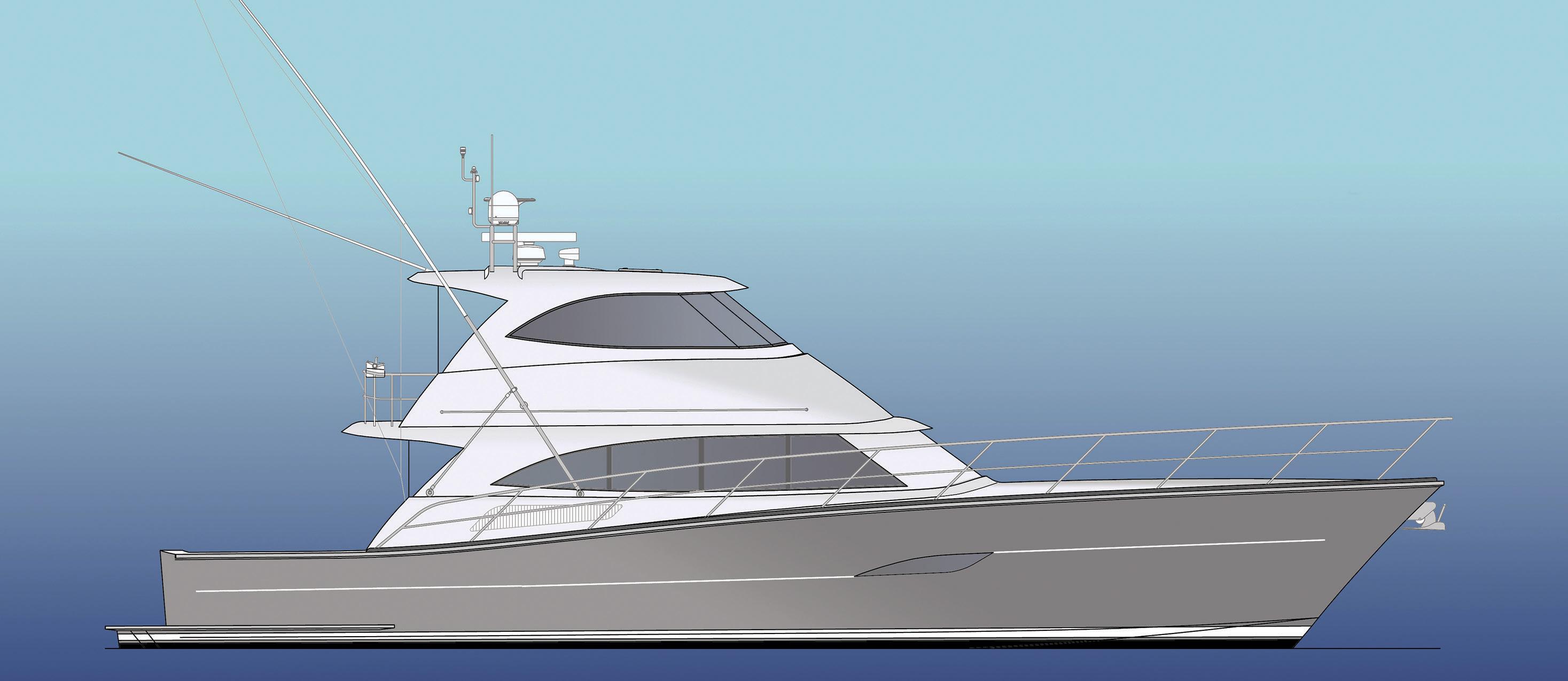
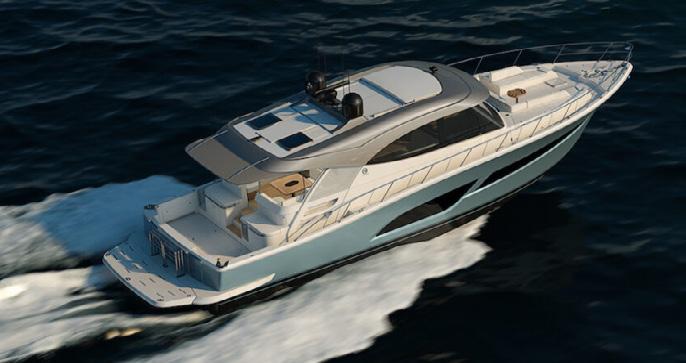
Australian luxury motor yacht builder, Riviera, has announced a sophisticated new yacht that will join its exceptional SUV Collection, the 585. She is the pinnacle of 10 years of evolution and the launch of more than 220 SUV yachts from 39 to 64 feet in length since Riviera pioneered the SUV concept with the 445 model in 2012.
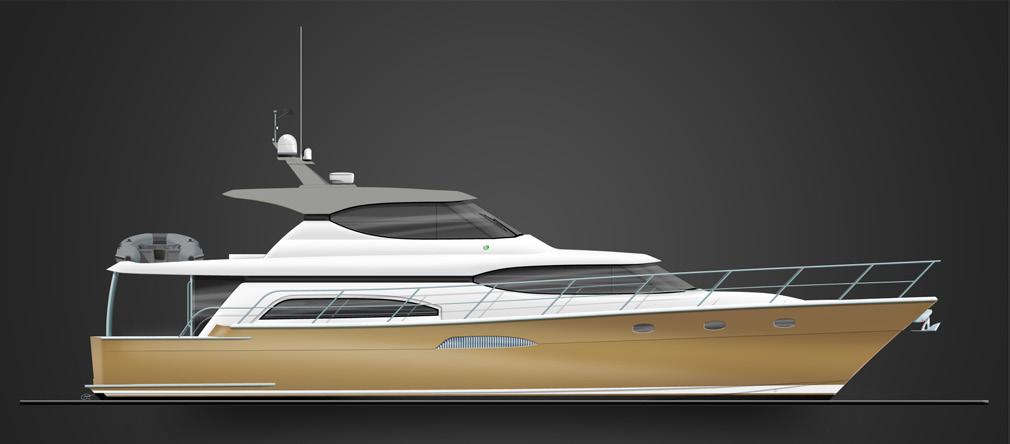
Offering supreme luxury, elegant styling, and exhilarating performance, the Riviera 585 SUV had her world premiere at the recent Sanctuary Cove International Boat Show this year. The 585 is a significant addition to the SUV collection, with welcoming spaces from stem to stern, offering exceptional


comfort, whilst enhancing the superb indoor/outdoor lifestyle features that make the SUV models so popular. The Riviera design team’s clever use of space aboard this new yacht has created an exceptional design, including three large staterooms and three bathrooms, as well as a marvellous space aft of the full-beam midships master suite that can be configured as a utility room, laundry, crew quarters, or additional accommodation with its own bathroom. She offers the latest generation SUV design qualities, including an expansive water sports space, where the cockpit opens out to the boarding platform, a
superb semi-enclosed alfresco deck, and an inviting foredeck entertaining space with a comfortable wrap-around lounge.

Riviera Australia owner Rodney Longhurst praised the efforts of the 900-strong Riviera design and production team. “The pride and passion that our incredible team has for creating world-class luxury motor yachts is truly amazing. I believe our new 585 SUV will bring great joy and happiness to the lives of many Riviera. Seeing how our Riviera yachts of today enrich our owners and their families’ lives is a great sense of inspiration for us all,” said Rodney. RIVIERAAUSTRALIA.COM
PACIFIC POWERBOAT _ NEWS www.lloydstevenson.co.nz www.lloydstevenson.co.nz Custom design Sedan, Mid-Pilothouse and Sportsfisher Motor Yachts www. elite marine.co.nz • +64 (0) 9 530 8501 www.webermarine.co.nz www.lloydstevenson.co.nz www.lloydstevenson.co.nz Custom design Sedan, Mid-Pilothouse and Sportsfisher Motor Yachts www. elite marine.co.nz • +64 (0) 9 530 8501 www.webermarine.co.nz www.lloydstevenson.co.nz www.lloydstevenson.co.nz Custom design Sedan, Mid-Pilothouse and Sportsfisher Motor Yachts www. elite marine.co.nz • +64 (0) 9 530 8501 www.webermarine.co.nz www. elite marine.co.nz • +64 0274 853 235 DB919 lloydstevensonyachts.co.nz
30 JULY / AUGUST 2023
ENERTEC MARINE RELEASE 4TH GENERATION OF SOLAR PANELS
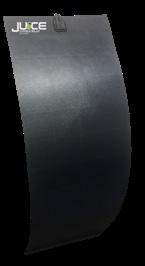
Enertec Marine have released the 4th generation of Juice Flexible, walkable solar panels.
While these panels still use SunPower solar cells, said to be one of the world’s most efficient, the construction of these panels has now been improved to make them even more robust than they already were.
To achieve this, Juice flexible solar panels now use a new construction method with new materials to allow them to take the weight of being walked across. This in turn, increases the possible options to locate your Juice flexible solar panels.
The Generation 4 easy install, Juice Flexible Solar panel is highly efficiency, light weight, has great aesthetics with less windage though the slenderness. And now strong enough to walk on. Panels are now available in 55W, 100W 110W, 145W and 195W sizes. ENERTECMARINE.CO.NZ
RAILBLAZA OPENS EUROPEAN WAREHOUSE
NZ-based mounting systems specialist, Railblaza, expands on the continent.
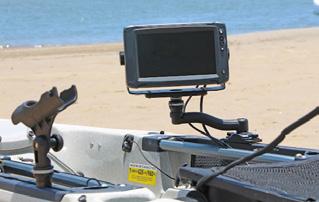
The New Zealand-based mounting systems manufacturer, has opened a 3PL (Third-Party Logistics) European warehouse in the Netherlands. The expansion will enhance the company’s distribution capabilities, reduce delivery times, and provide a greater service to customers across the continent, Railblaza says. Founded by Ross Pratt in 2010, Railblaza offers a wide range of products, but core items include kayak carts, rod holders and a range of unique mounts made from reinforced plastic, stainless steel and anodised aluminium.
The European warehouse will manage logistics for the fastestmoving and most popular lines. Inventory includes the highdemand C-TUG kayak, canoe, and dinghy transport products, innovative new HEXX heavy-duty fish finder and live sonar transducer mounts, rod holders, action camera booms, gunnel track storage systems, and more.
“We are thrilled to expand our operations in Europe and begin shipping from our logistics partner’s warehouse in the Netherlands,” says Peter Dudman, Railblaza EMEA sales director. The Netherlands is renowned for its world-class logistics infrastructure, making it an ideal location for the new warehouse. The strategic placement will enable Railblaza to leverage the country’s rail and road transportation networks, to ensure timely delivery of products to customers across Europe. Orders will begin shipping on May 31. RAILBLAZA.COM
POWERBOATMAGAZINE.CO.NZ 31
CHAPARRAL SHINES
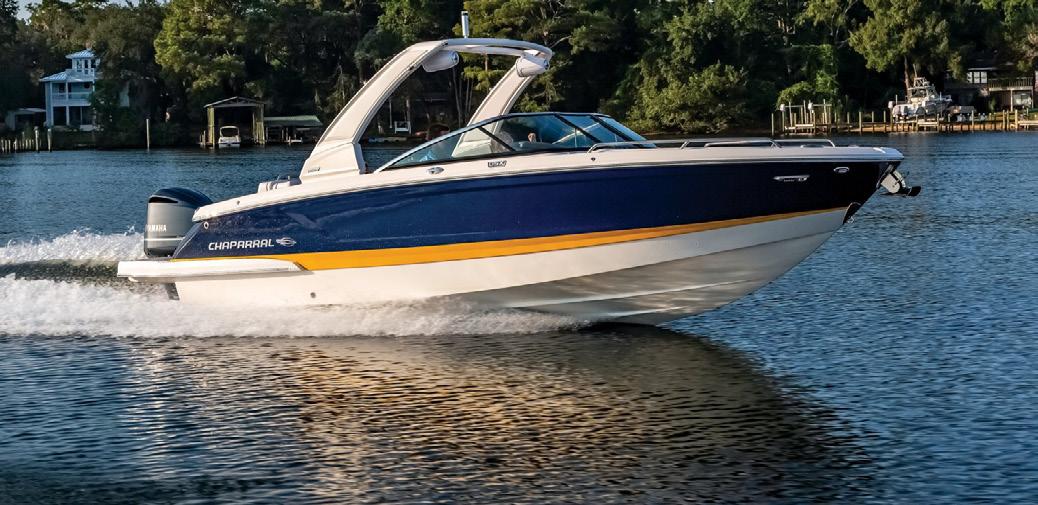
Celebrating the 20th year of Chaparral’s first showing at SCIBS; Chaparral Queensland dealer - Spirit Marine - put together a line-up of the latest outboard models, including the brand new 270 OSX.

‘We enjoyed sharing the latest on offer from Chaparral with a cross section
AT SCIBS
of sports boats, ski/fish and premium bowriders on display’, said Steve Plant from Spirit Marine. ‘Chaparral hold market share in the U.S bowrider segment for good reason; their commitment to quality, performance and innovation, along with their world renowned ‘Saltwater Tough’ construction and materials are second to none; and their designs really do suit the Queensland lifestyle’, he said.
Chaparral will be celebrating its 60th anniversary next year – a massive milestone for any business, made even more impressive considering the founder, Buck Pegg, still turns on the lights every morning, working with a team of over 1000 dedicated craftsmen to design and build an outstanding range of award-winning boats.

CHAPARRALBOATS.COM
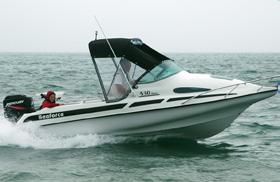
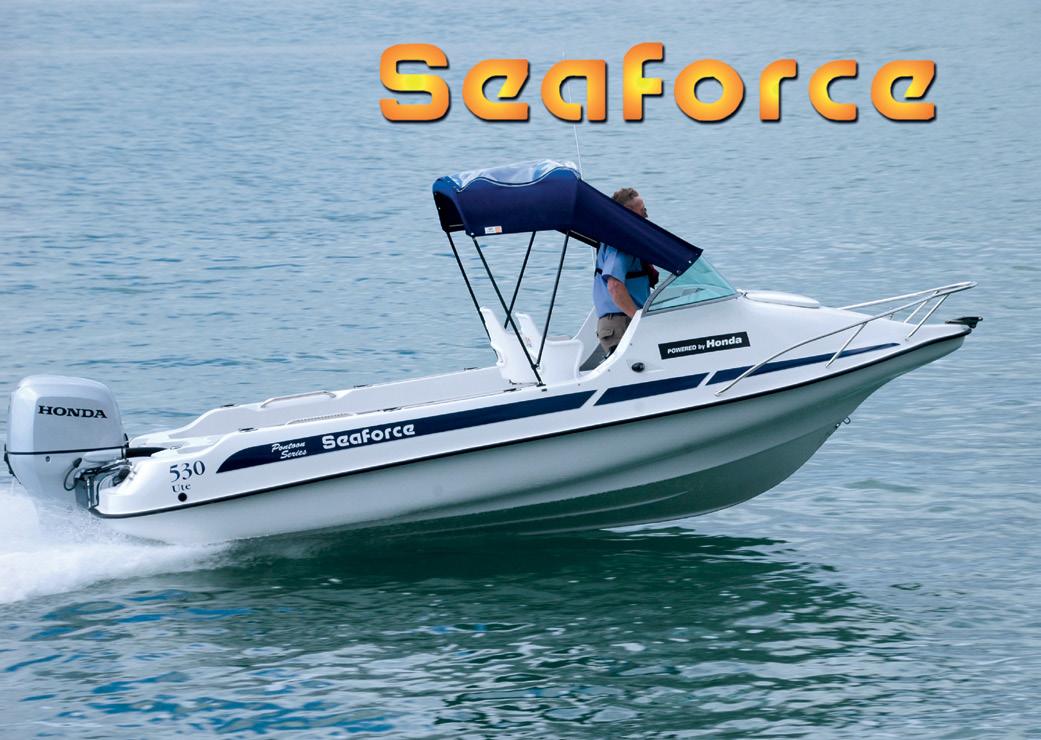
DB377 FIBREGLASS PONTOON BOATS TM TM www.seaforce.co.nz
Seaforce 530 Skipa
Seaforce 530 Ute
SEE THE FULL RANGE AT PACIFIC POWERBOAT _ NEWS
Seaforce 530 Mate
32 JULY / AUGUST 2023
RECORD SHOWCASE OF AQUILA CATS AT SCIBS
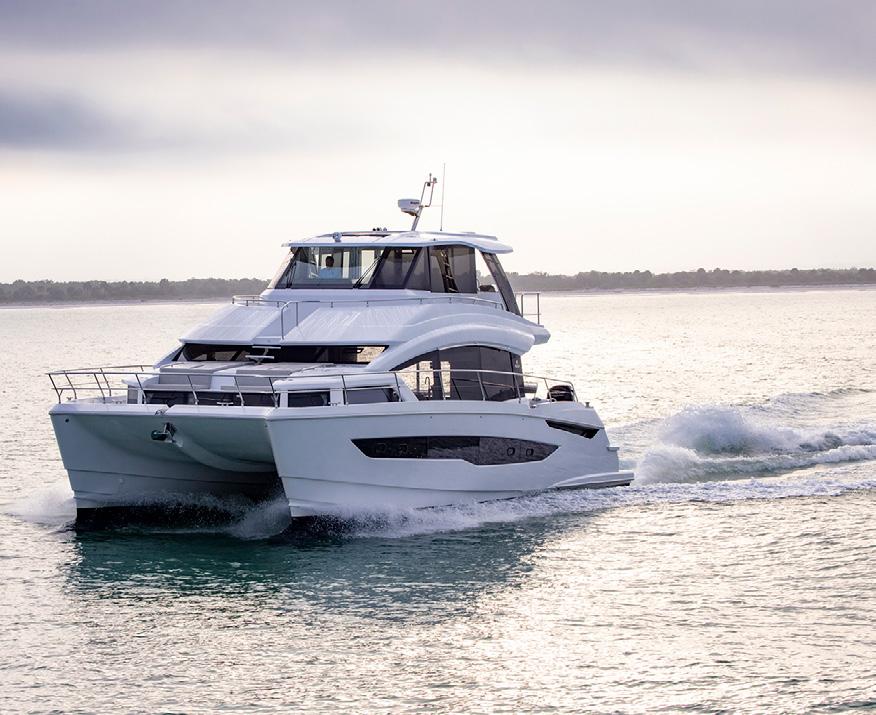
The Whitehaven Group, which represents Aquila in Australia and New Zealand, was proud to exhibit its largest ever line-up of Aquila power cats at the recent SCIBS.
Aquila is one of the world’s largest power catamaran brands, with more than 40 years’ manufacturing experience working in collaboration with award-winning designers. Aquila International Sales Manager, Yvan Eymieu attended this year’s SCIBS, testament to the importance of Australia as a mature multihull market and the significance of the regional launch of the new Aquila 54. “We’re excited to have presented our Aquila Catamarans at the Sanctuary Cove Boat Show once more,” said Yvan. Australia has consistently been a key market for the development of our brand. Our exclusive representative, the Whitehaven Group always exhibits great professionalism and dedication to customers.”
Details of the exciting new Aquila 42 were also available at SCIBS. The Aquila 42 debuted in February 2023 at the Miami International Boat Show and features vast entertaining space and luxurious accommodation. The first Aquila 42 headed down under will be delivered to her owner in Auckland, New Zealand in October. AQUILABOATS.COM.AU
View Our A ward Winning Boats
Website: www.admiralboatsnz.co.nz

Phone: +64 2796009027

Email: info@admiralboats.co.nz
POWERBOATMAGAZINE.CO.NZ 33
ENL CONTINUE SUPPORT OF THE NZFCF CONFERENCE AND NZ SHIPWRECK TRUST
Electronic Navigation Ltd (ENL) have continued their support of the New Zealand Federation of Commercial Fishermen (NZFCF), by attending and sponsoring their annual conference held in Blenheim recently. ENL are a proud NZFCF member and are a Gold Sponsor of the annual event.
The conference brings fishers and industry supporters together from across New Zealand to network and catch up on the latest issues and recent innovations related to fishing and the marine environment.
Running concurrent to the conference there is also a trade exhibition for suppliers to present their products and services to the commercial fishing industry. ENL displayed their leading brands, including TimeZero, Marport, FURUNO, and the locally developed WASSP Multibeam Sounder system.
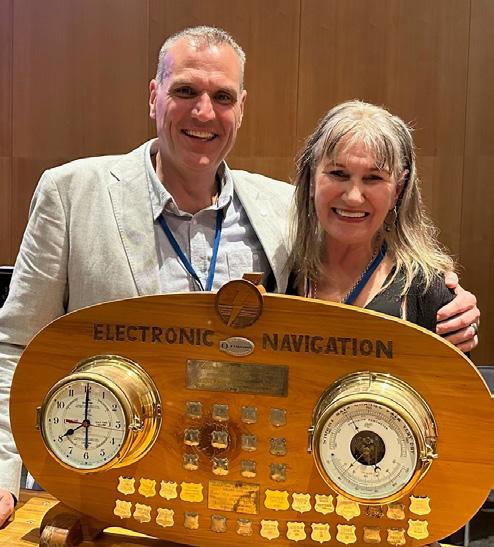
The Electronic Navigation Shield Recipient award was also presented at the conference.
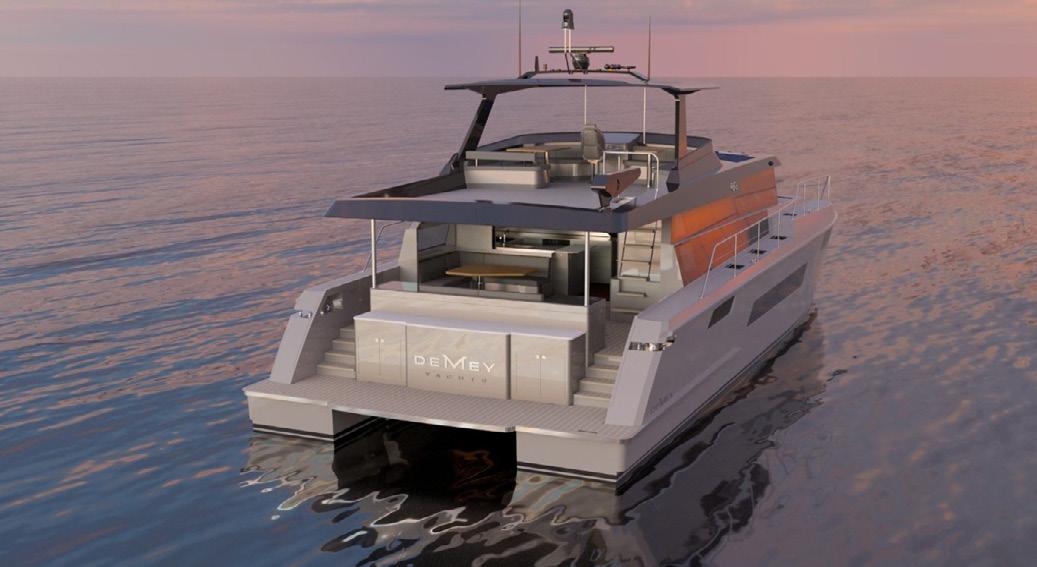
DEMEY YACHTSSPACESHIP 60
DEMEY Yachts has finalised the design of a fixed hardtop and flybridge entertainment area on its 18-metre builds. It is codenamed it the SPACESHIP 60, due to its vast amount of interior and exterior space, and its length in feet.
Since 1986, the award has gone to a member who has gone beyond to support and promote the Federation. This year’s recipient was Donna Wells from FinestKind Limited (pictured with Richard Bowe, CS&MO, ENL). Donna runs a successful seafood quota brokerage and is a provider of quality seafood, based in Nelson.
The conference also saw the Shipwreck auction which raises funds for the Shipwreck Welfare Trust. This year for such
a worthy cause, ENL donated a TimeZero Professional software suite with PBG, Charting and High-Res Bathymetric data and a FURUNO FCV-588 Fish finder. Combined, they fetched $5,400 at auction! In total the 2023 auction raised over $40,000 to help families of fishermen lost at sea. ENL.CO.NZ
The flybridge design is unique with quite a large forward entertainment area with two wrap-around settees separated by a centreline helm station, plus the ability to store paddleboards, kayaks or small sailboats on the 26 m2 rear deck. This becomes very useful when you get to your destination, allowing
guests able to actively explore their surroundings instead of being confined to the boat.
A custom-designed 3.8m carbon tender catamaran is housed in its own tender garage under the lower cockpit floor with an innovative launching system to make launch and retrieval a one-person
operation.
Both current builds are identical, one to remain in NZ and the other off to Sydney, Australia. The Spaceship 60 is available as a semi-production build with the next available build slot in November 2023.
PACIFIC POWERBOAT _ NEWS
NICDEMEYYACHTS.COM
34 JULY / AUGUST 2023













DREADNORT’S LATEST10M CABIN CRUISER
Dreadnort Boats is the product of a collaboration between two companies, Transformarine Naval Architects and Altech Marine.
They are pleased to introduce the Dreadnort V10000. It has a hull length of 10m and a beam overall of 3.3m. Power depends on customer preference – single or twin diesel inboards or twin outboards. The transom configuration also depends on customer preference, whether a game fishing transom designed for backing up or a boarding platform. With its long waterline length, displacement hull speed is around 7.5knots making for efficient gamefish trolling. Accommodation forward comprises a double birth and bunks with head and shower. The saloon features horseshoe seating to port, with the table dropping to form another double berth, galley and helm station to starboard. With the vertical bow design this boat, the useable interior space should be compared to an 11.5m boat with a conventional bow. Transformarine has also started preliminary drawings for 12m and 13.1m versions.
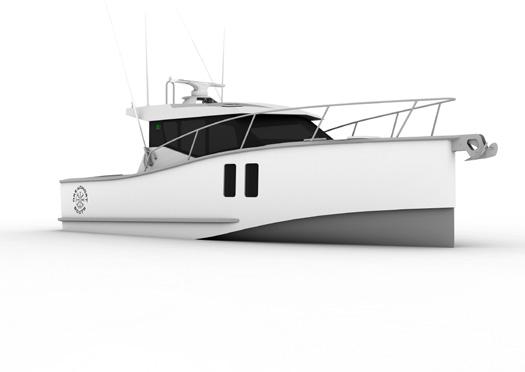
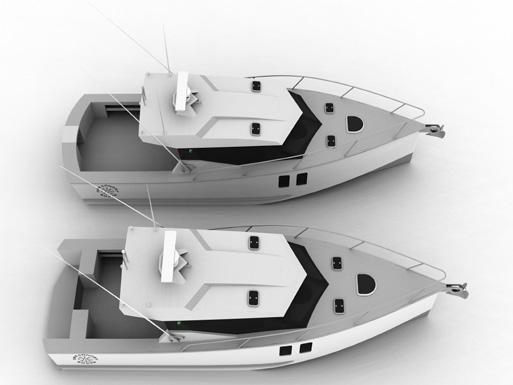
TRANSFORMARINE.COM | DREADNORT.COM
FROM POWER TO SUPERPOWER
Volvo Penta introduces all-new IPS Professional Platform
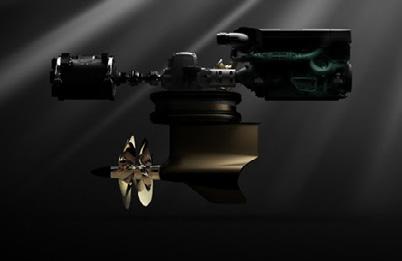
Volvo Penta introduces the Inboard Performance System (IPS) professional platform – the next evolution in their fully integrated helm-topropeller experience. Targeted for 2025, this ground breaking innovation offers unparalleled comfort, performance, and sustainability for a new class of marine vessels. Building upon the revolutionary efficiency of Volvo Penta IPS, this new platform promises a powerful and flexible solution for professional vessels and superyachts from 25 to 55+ meters with top speed from 12-40 knots. “Our passion, experience and history of proven results with Volvo Penta IPS are an integral part of our ongoing technology development – with the aim to reach new heights with this new professional platform,” says Johan
Inden, president of Volvo Penta’s marine business.
The Volvo Penta IPS professional platform introduces a brand-new premium level of sustainable experience. It features the largest and most powerful platform in the Volvo Penta IPS range –including a new, larger marine drive, Volvo Penta IPS 40. The new drive is designed with a pioneering dual power input concept, which manages the power to the water in the most efficient way, but also acts an important enabler to utilize different combinations of energy sources.
Starting series production in 2025, the new Volvo Penta IPS 40 drive will be powered by two Volvo Penta D13 engines, paired with a compact after treatment system to comply with the latest IMO Tier III standards. But, the platform is already prepared for a mix of power sources; from combustion engines running on renewable fuels to fully electric or hybrid solutions. The dual power input design offers flexibility and modularity on the journey towards increased sustainability.
The new Volvo Penta IPS professional platform is installed as twin, triple or quad, meaning each vessel will have from 4 to 8 power sources. The complete package from helm to propeller is designed, verified and serviced by one integrator – Volvo Penta.
“This new Volvo Penta IPS platform has the same performance traits that have delivered a premium solution for countless vessels and now it will provide a smoother on-water experience for the professional and
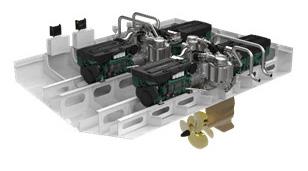
superyacht segments,” Johan says. “Now an entirely new group of owners and marine professionals can benefit from the most fully integrated system on the market that really brings new levels of performance, efficiency and reliability.”
Volvo Penta is carrying out in-house development to ensure thorough in-water testing using its own passenger high-speed ferry test boat, strategically located near its marine test facility in Gothenburg, Sweden. Rigorous testing is in progress to ensure the durability and performance of the propulsion package, with field tests in an offshore-energy crew transfer vessel serving as the subsequent phase leading up to the anticipated 2025 delivery.
“The new Volvo Penta IPS is a powerful platform that will provide the ultimate helm-to-propeller experience. It builds on a rich tradition of forward-thinking Volvo Penta design that puts people at the heart,” Johan says. “We are eager to expand this platform to a whole new class of professional marine segments, while at the same time, enabling the move toward increased sustainability at sea. It is an exciting time for the marine industry, and we believe our new Volvo Penta IPS professional platform will be the next gamechanger.” VOLVOPENTA.COM/MARINE/
PACIFIC POWERBOAT _ NEWS
36 JULY / AUGUST 2023
THE 80 KNOT DAY BOAT
For those wishing to acquire the ultimate day boat with jaw dropping design, exemplary quality, and also one truly capable of delivering the sheer pace and thrills of a performance sports boat, then a Hydrolift X Series offers the perfect day out on the water.
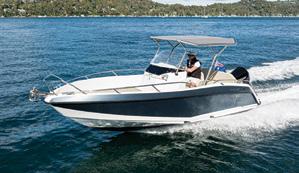
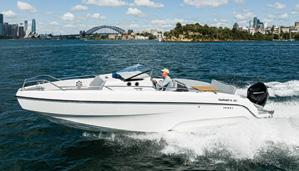
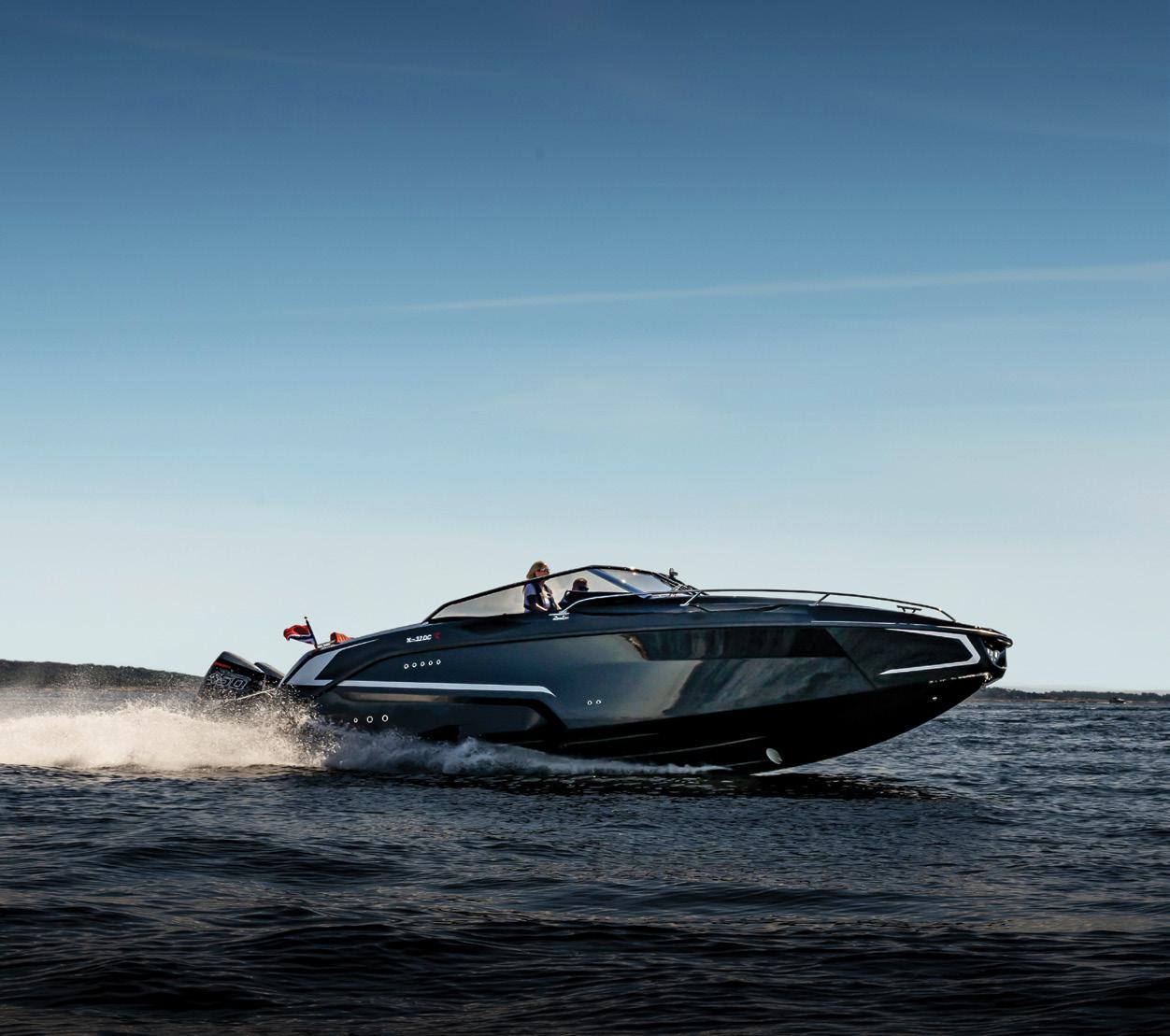
Each boat is beautifully appointed and crafted by hand to the most exacting of standards as you would expect from Norway, a country known for its world-class boat building heritage and coupled with the experience from offshore power boat racing which in the DNA of Hydrolift.
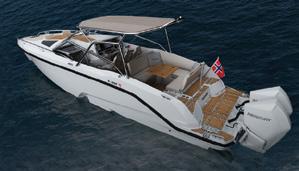

Exclusivity is assured with only a handful of boats being made available from this iconic boat builder so now is the time to act and secure your order.
Please contact us to express your interest, or to make an appointment to view our available models at the 2023 Sydney International Boat Show - August 3-6.


Ocean Boats Princes St Marina, 16 Princes St, Newport NSW www.oceanboats.com.au 0409 838 498 | 0422 843 933 X32 S AVAILABLE FOR IMMEDIATE DELIVERY X26 S ON DISPLAY X22 ON DISPLAY X32 DC ON DISPLAY Credit: Dan Jones Boat Life Credit: Dan Jones Boat Life
FORTUNATELY, IT’S EASY TO CATCH AT THE SYDNEY INTERNATIONAL BOAT SHOW.
MARITIMO CELEBRATES 20 YEARS
- 2003 – 2023
Chapter 1 - Don’t count the days. Make the days count.
This year, 2023, marks the twentieth year of Maritimo, the luxury long range motor yacht manufacturer that has firmly etched itself within the very fabric of Australian business success stories. Twenty years is indeed a milestone and will be widely celebrated, but it will be done so without shifting the balance from always looking forward with vision for the future.
Maritimo, now with Tom BarryCotter at the helm of a team some 300 strong in this their 20th year will see the global launch of the most grand and spectacular yachts produced by the company to date - the glorious M75 Flybridge Motor Yacht and S75 Sedan Motor Yacht. These magnificent vessels are the culmination of three years of design and development and many hundreds of thousands of hours, committing a considerable investment by the company and its people in these vessels’ creation. Twentyyear anniversaries are signified with the colours of emerald or white, quite fitting when one can imagine these vessels’ imposing, yet sublime white forms, at rest on a glittering ocean of green.
To understand how Maritimo came to be we need to take a glimpse further back in time, prior to its formation in 2003. Let’s go back to where the journey began and get a picture of the man who made it a reality. That man is Bill BarryCotter OM.
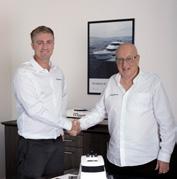
Bill was born post war to comfortable beginnings in the small NSW town of Adelong, at the base of the Snowy Mountains. His parents were very well respected in the community, as you’d expect from a School Ma’am and a local builder. It may well be that Bill would have followed his father’s footsteps if it wasn’t for a moment in time when, as a teenager, he experienced for the first time sailing a boat on Sydney’s Pittwater. Certainly this new found passion for water and boats, coupled with his desire
to work with his hands, led to a boat building apprenticeship at the age of 16. By 19 he had already built his own boat and when his apprenticeship was completed, his new employer, Cedric Williams, was retiring and handed him the reins (and the tools). The year was 1966 and Mariner Cruisers was born with Bill Barry-Cotter its creator then only 21 years of age. By 1978 Mariner had become the largest boat manufacturer in Australia and now ‘ripe for the picking’ Bill sold his interests that year to a multi-national firm and stayed on at the company for a further 12 months.
The departure from Mariner was the catalyst for the creation of Bill’s next major venture and in 1980 Riviera was created. Many successes, accolades and successful models followed, along with major growth and acquisitions, notably Mariner Cruisers.
In 2002 Bill saw an opportunity and accepted an offer for a buyout of his ownership in Riviera from a private equity group, who were backing a consortium of Riviera Dealers. Riviera had grown over the last two decades to become the most prestigious boat builder in Australia, significantly with production numbers over 350 boats per year and an annual turn-over of $300M. The offer however to stay on as R & D Consultant didn’t sit well with Bill and a few days after the financial deal was done, he left the company that he had created and had built to such a grand scale. At 59 years of age, it was
time to create something even better. Bill’s vision and passion remained unquenched as he rallied to create a brand and a range of vessels that would define the market and change the boating landscape in Australia. In 2003 Maritimo was born.
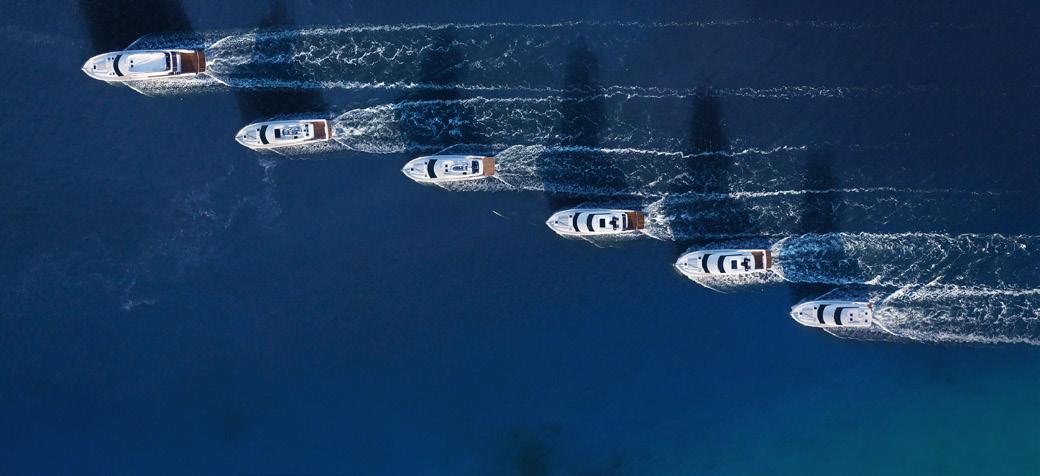
The establishment of the Maritimo Headquarters at Hope Island in 2003 saw the 2004 creation of the highly successful Maritimo 60 long range cruising Flybridge Motor Yacht, which went on to win the coveted ‘Boat of the Year’ award by the Australian Marine Industries. The era of the internal staircase, walk-around decks, and aft galley, pioneered by Maritimo, had arrived.
Clearly no stranger to hard work and a ‘roll up your sleeves and get on with it’ mentality, Bill’s vision and hard work had paid off early. The Maritimo 60 debuted at the Sydney Boat Show in 2004 to high acclaim, sales order books were filling up as the market embraced revolutionary features not seen before and that are still part of the winning Maritimo design and build formula of today.
Maritimo was on the map, the foundations had been laid and Bill Barry-Cotter’s grand vision for Maritimo was beginning to play out.
Over the coming months to commemorate this 20th year anniversary for Maritimo we will share with you stories, interviews and anecdotes of the last 20 years of the Maritimo evolution.
MARITIMO.COM.AU
PACIFIC POWERBOAT _ NEWS
38 JULY / AUGUST 2023
ALL ABOARD SYDNEY
AUGUST 3-6, 2023 DARLING HARBOUR AT


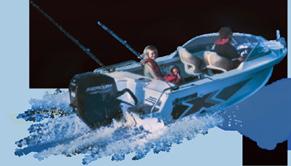
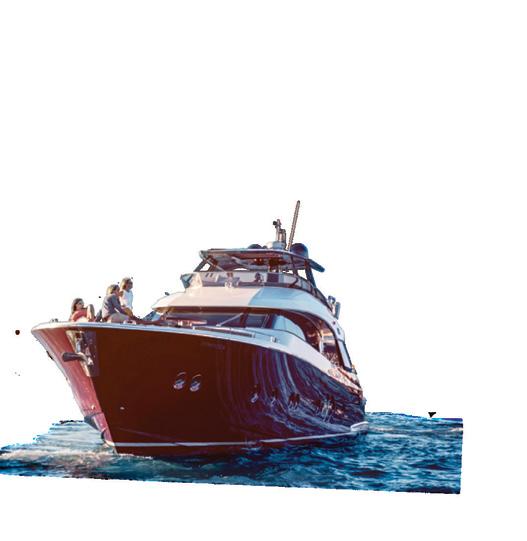
From paddleboards to power cruisers, sail boats to fishing gear, the Sydney International Boat Show is your opportunity to check out the best and brightest in boating, watercraft and marine tech in one stunning location. It’s the ultimate marine showcase that absolutely everyone can enjoy.
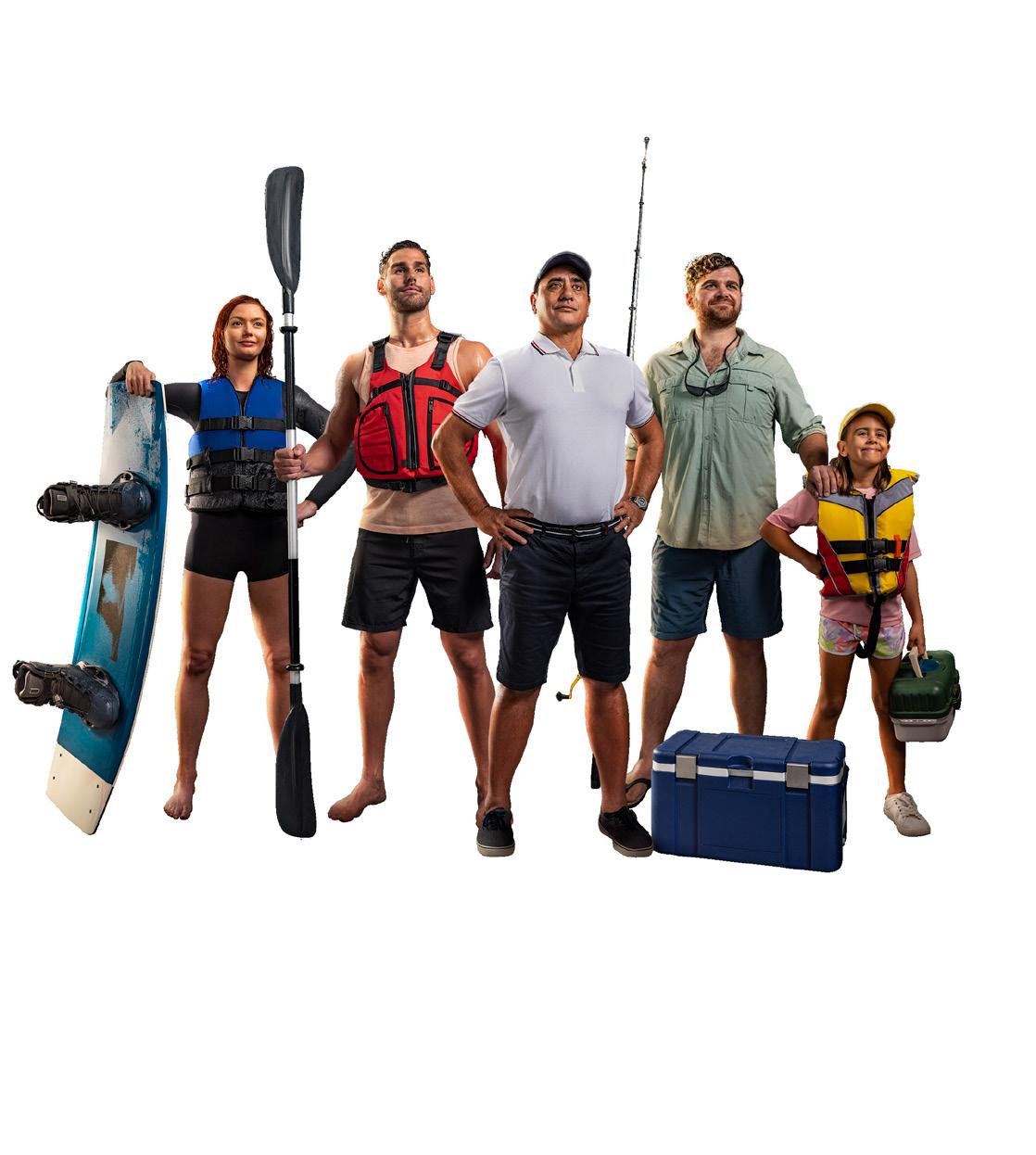
Clear your calendar for the marine celebration of the year.
PROUDLY OWNED BY EVENT DELIVERY PARTNER SUPPORTED BY MEDIA PARTNERS OFFICIAL EVENT PARTNERS
THE WORLD’S GREATEST SPORT BOATS
ZF CELEBRATES NEW POD 4600 PROPULSION SYSTEM
At the recent Sanctuary Cove International Boat Show, ZF in Oceania celebrated its new POD 4600 propulsion system, which made its global debut last year.
The ZF POD 4600 propulsion system is designed for vessels with planing and semi-displacement hulls measuring up to 130 feet. This new drive technology is compatible with all main OEM engines up to 1,700 hp at a maximum of 2,450 rpm, and is suitable for a wide range of recreational and professional applications. For recreational vessels, this includes both planing and semi-displacement yachts, while professional purposes include pilot boats, supply vessels, small ferries, as well as patrol and rescue boats. The ZF POD 4600 propulsion system can be configurated in a two-unit (for vessels measuring 80 to 100 feet) or three-unit layout (for ships measuring up to 130 feet), depending on the application. Compared to other pod systems on the market, the POD 4600 is up to twice as powerful while still consuming up to 15 percent less fuel than a traditional shaft line propulsion.
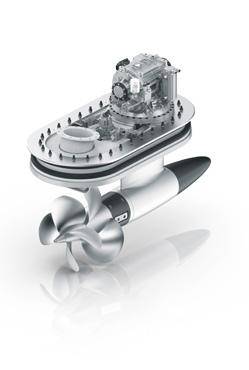
The POD 4600 propulsion system continues ZF’s long-standing reputation of delivering high-performance marine driveline solutions, with over 60 years of innovation experience. This industry-leading experience is showcased throughout ZF’s Virtual Marine Showroom, an interactive website which allows users to take a deep dive into the full suite of ZF marine products. Highlighted on the website are E-mobility options, digitalisation, motion control and propulsion systems from ZF, including key products such as the new POD 4600, as well as the Total Command marine propulsion control family for leisure and commercial vehicles, and the new AT 80 hybrid thruster system. ZF.COM/MARINE
WHISPER POWER GOES INTERNATIONAL
chaparralboats.com



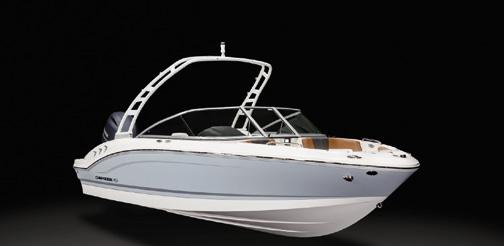
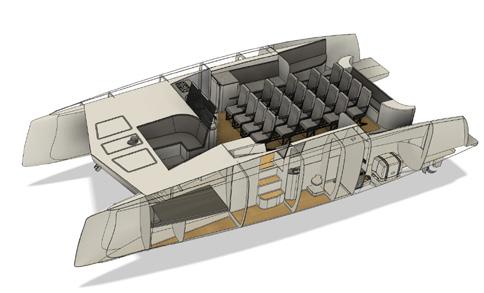
The Earthling E-Propulsion team have recently been in South Korea where the E40 was featured at the Busan Boat Show. They are also doing an E-THOS system (similar to the Earthling E40) for the military in South Korea. It was surprising to the team how even a small Kiwi company can export technology to South Korea. The E40T (taxi/tourist) version will be promoted in Australia and South East Asia, it is exactly the same as the original E40, with a different deck arrangement and double the solar power. The original E40 is relocating to the Gold Coast in August. Making available a very unique “try before you buy” experience on a 40ft electric catamaran.
EARTHLINGETHOS.COM


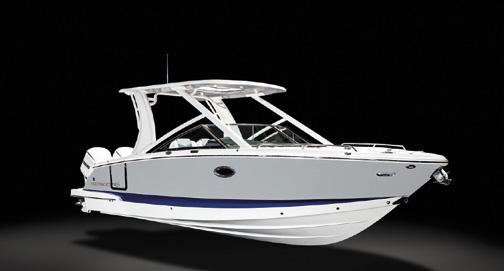
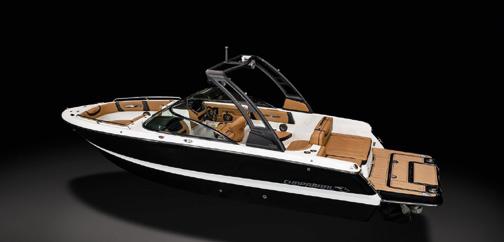
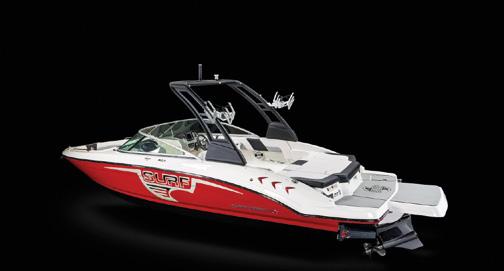
247-347 SSX 250-300 OSX 21-30 SURF
21-23 SSI
PACIFIC POWERBOAT _ NEWS
40 JULY / AUGUST 2023
HAINES HUNTER
SF485 - A GENUINE 'BIG' LITTLE BOAT
They say good things come in small packages, and that couldn’t be more true with the Haines Hunter SF485. The smallest model in their range measuring 5.2m overall, the SF485 is a great boat for a wide variety of kiwi boaties.
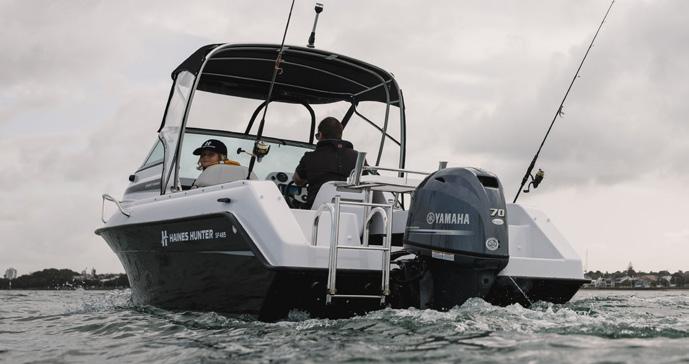
Not only have Haines Hunter designed it to appeal to the experienced boat owner who may want to downsize to something smaller for inshore fishing and general boating but it’s a great boat for those who are new to boating. With the SF485 coming equipped with a single axle multi roller trailer, it weighs just 950kg with drum winch and Bimini top, making it an incredible easy boat to tow, launch, retrieve, and store! Storage is something that a small boat often lacks, but the SF485 has plenty of space to stow all gear. There are full-length side shelves
that come complete with rod racks either side and a generous moulded storage bin in the sole, running the entire length of the cockpit. This is covered with twin lids and can be used as one large wet locker or optioned with an underfloor stainless steel fuel tank. There’s also space aplenty for fishing rods, water skis, wakeboards or even dive bottles. The standard boat comes with twin soft rider pedestal swivelling seats, however Haines do offer an option of their famous and comfortable back-to-back deluxe seats. Or there is an option for a combination of the two! Added to that, there are the twin rear moulded jump seats in the aft corners of the cockpit.
For added protection from the elements be it the sun or rain, Haines Hunter recently added a fold down Bimini top with built in rocket launcher as an option. It provides extra rod storage, yet is versatile enough to fold down if you want to store the boat in a garage or shed. Another great option offered is Ultralon U-Dek Marine Decking which gives a softer feel underfoot, is durable and very easy to clean and maintain. The SF485’s 17-degree hull is incredible efficient, and with that, doesn’t require lots of horsepower. In fact the SF485 can be powered by as little as a 50hp four-stroke and can also handle up to 70hp.
HAINESHUNTER.CO.NZ
POWERBOATMAGAZINE.CO.NZ 41
The Alexander Marine Australia team was delighted to display an Ocean Alexander 28E model at the recent SCIBSthis year in conjunction with Neptune Oceanic who offer a shared superyacht ownership experience.
Ocean Alexander continues to experience strong sales across all three of their model ranges, and also have an exciting new model to debut later this year. The diversity of the range sets Ocean Alexander part from the rest, catering to the various segments of the superyacht market with a strong emphasis on user
DOMETIC LAUNCHES THE BREATHE IONIZER
Dometic launches an innovative accessory that easily purifies the air onboard any vessel, providing a more comfortable and healthy onboard environment. The Dometic Breathe Ionizer also eliminates stale air and foul odours to ensure enjoyable boating experiences.
Dometic’s new Breathe Ionizer is a quick and innovative way to add air purification to any vessel. This
OCEAN ALEXANDER 28E AND NEPTUNE OCEANIC SYNDICATION
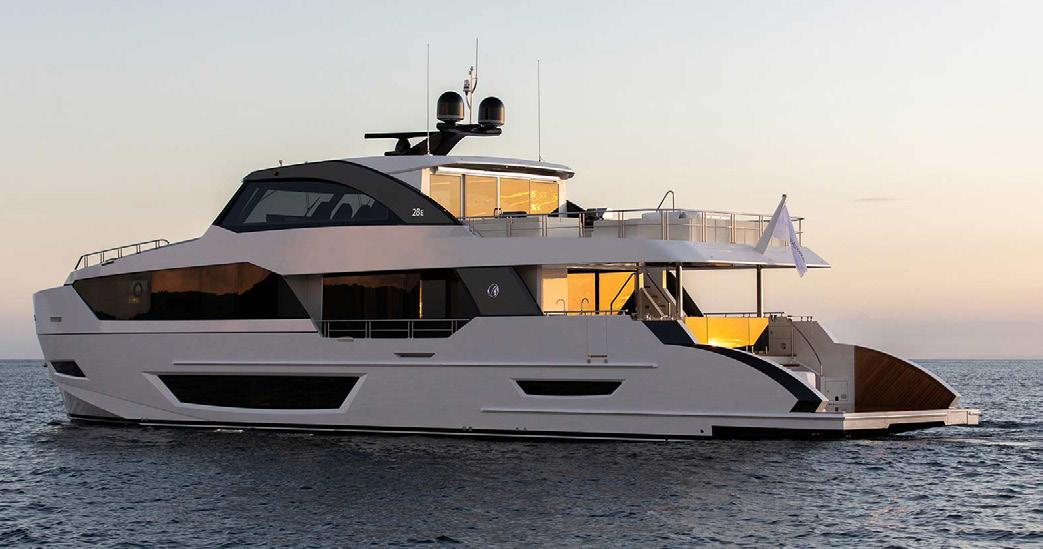
experience. The success of the brand relies on 45 years of yacht building and listening closely to both long term and new customer demands in order to create exquisite yachts that are both stylish and seaworthy with exceptional attention to detail to enrich their owners’ lives on board. Neptune Oceanic specialise in shared superyacht ownership, private vessel acquisition and vessel management and are offering a select few a rare opportunity to indulge in shared ownership of the luxurious Ocean Alexander 28E. This exclusive program is launching in August and is unlike any other in Australia. Christian Markgraaff from Neptune Oceanic said “We are excited to launch something
that doesn’t currently exist in the Australian marketplace. Not only will the owners be able to enjoy the glamour and luxury of superyacht ownership for a fraction of the cost and none of the hassle, but they will also have all their holiday needs met with our included concierge travel service.” Neptune Oceanics’ signature ownership model is fully managed and professionally crewed. 8 weeks of the year is allocated to charter with revenue shared by the owners. It’s also a terrific investment opportunity, and revenue for charter can be used towards running costs”, said Markgraaff.
ALEXANDERMARINEAUST.COM.AU
NEPTUNEOCEANIC.COM
affordable, easy-to-install and easy-touse air conditioning/heating accessory is now brought to boat owners and boating enthusiasts in Australia. Dometic’s Breathe Ionizer was developed to solve a common problem faced by boaters around the world. Time on the water is supposed to be about enjoying fresh air and sunshine outdoors, yet the air inside staterooms, salons, galleys and other interior spaces and compartments is often stale and smelly. Mould, mildew, and a host of other pollutants/allergens often create bad odours and impact the ability to fully enjoy time aboard. Dometic’s Breathe Ionizer uses positively and negatively charged ions to reduce pathogens and mould spores by attacking their core structure. Both odours and Volatile Organic Compounds (VOCs) are reduced as ions break them down on a molecular level. Dometic’s new system also
removes allergens and dust from the air. As ions in the air are attracted to particles, their size is increased. This allows them to be easily caught in the filters, or causes them to fall out of the air. This is a simpler, less expensive alternative to air purifiers using traditional technology like HEPA Filters and UV light. Dometic’s Breathe Ionizer is also easier to add to existing climate control systems aboard today’s boats.
DOMETIC.COM
PACIFIC POWERBOAT _ NEWS
42 JULY / AUGUST 2023
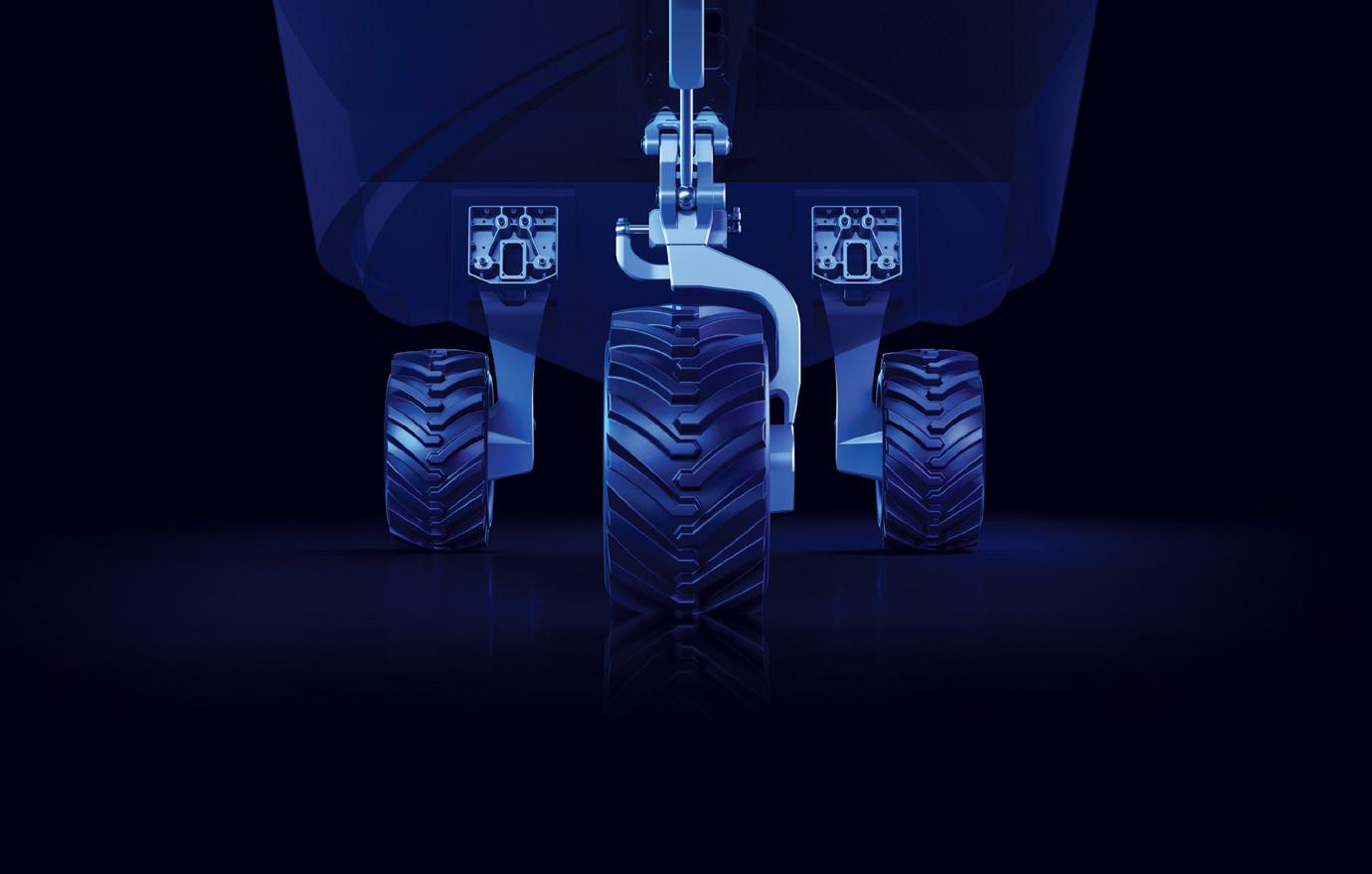
BOAT SHOW AWARD WON BY A TRAILER
When the Hutchwilco New Zealand Boat Show announced its Most Innovative Product Award for 2023, it certainly raised a few eyebrows. That’s because it didn’t go to a boat – it went to a trailer!
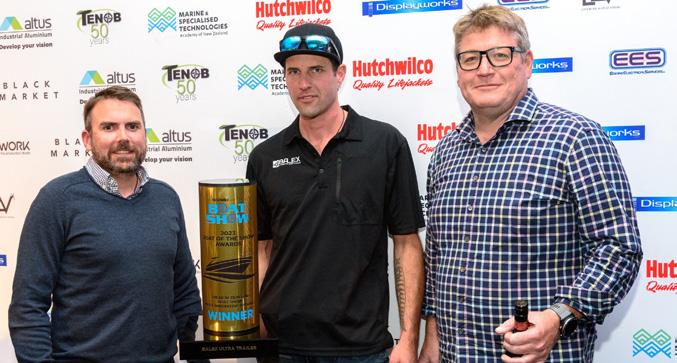
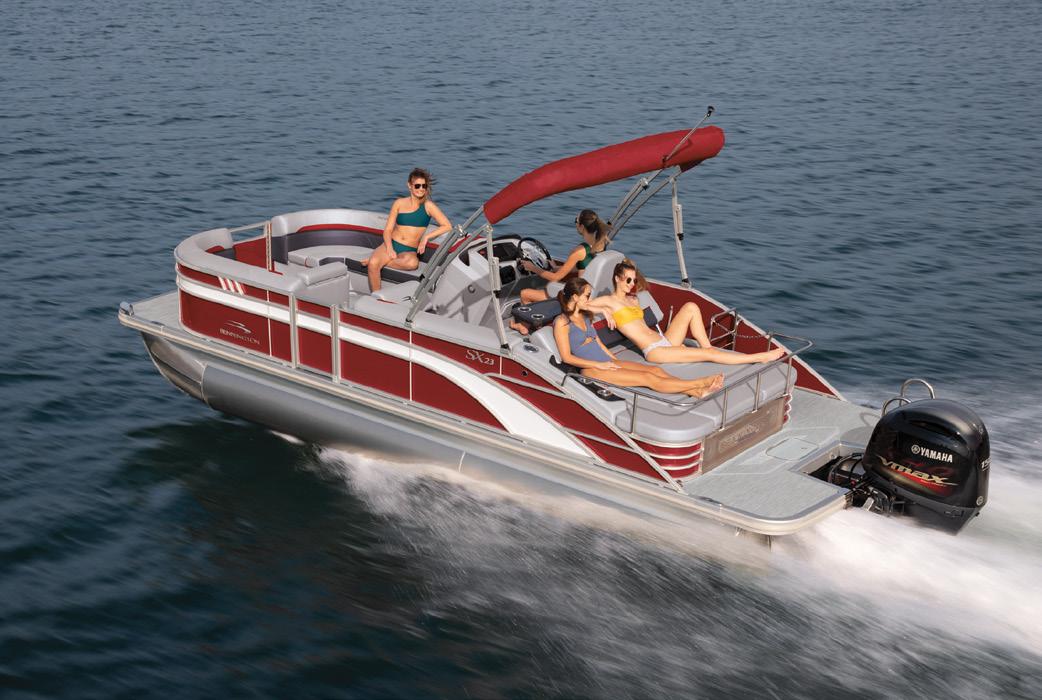
However, when you see how the engineers at Balex have re-invented it, you can easily understand why this new trailer got the nod. Long recognised for its innovation credentials, Balex is the company that introduced the Automatic Boat Loader – a real gamechanger for boaties fed up with the drawbacks of manual launching and retrieving. The powerful marine grade hydraulic system can even be operated via remote control. No need to clamber down slippery boat ramps to hook or unhook your boat, no more tiresome, inaccurate winching, no more power loading. With this brilliant technology fully integrated into the new trailer design, the team at Balex then applied its know-how to everything from
the jockey wheel up. Along the way they’ve set new benchmarks for strength, safety and towability.
Three additional features really make their presence felt. Firstly, the multi-bunk roller system, custom designed by Balex, is frictionless and centres your boat with ease. Secondly, when you’ve launched or retrieved your boat, the Balex integrated washdown system (with on board tank) enables you to quickly wash any saltwater off key components at the touch of a button. And thirdly, the Wireless Braking System shortens stopping distance for safer, more comfortable towing - and is adjustable from your car seat.
Made right here in NZ from marine grade 5083 aluminium that is lightweight, has excellent corrosion resistance and is folded for extra strength, a Balex trailer feels as good on the road as it does on the ramp. In fact, towing your boat is as stress-free as launching it. All this innovation should not really come as a surprise, after all, as well as the Automatic Boat Loader, the Balex design team has developed a self-loading floating dock. This enables you to keep your boat out of the water while tethered in its pen at the marina, reducing the need for anti-fouling.
BALEXMARINE.COM
L UXU R Y P ERFOR M ANCE BOATS Trev Terry Marine 27 Nukuhau St, Taupo 3330 54 Anderson Rd, Wanaka 9305 www.benningtonmarine.com/en-nz/ BENNINGTON DRIVEN BY EXCELLENCE POWERBOATMAGAZINE.CO.NZ 43
RIVIERA CELEBRATES OUTSTANDING TEAMWORK

The 900-strong team at Riviera, Australia's acclaimed luxury motor yacht builder, has celebrated outstanding teamwork at the recent Sanctuary Cove International Boat Show with a special luncheon at the company's Gold Coast facility.
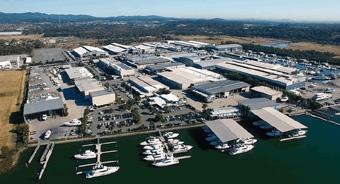
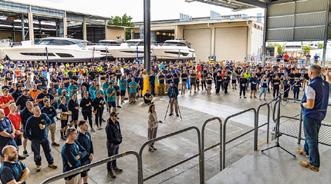
Company owner Rodney Longhurst praised the entire team for their drive to create the ultimate boating experience for Riviera yacht owners and showcase visitors. He said it required extraordinary teamwork to prepare the largest showcase of new motor yachts at the show, to create an inspiring atmosphere for visitors from across Australia and around the world and to bring to life the boating education on-water workshops, seminars and glittering social events for Riviera's exclusive owners Festival of Boating during the show. Addressing the assembled team,
Mr Longhurst said: "My belief over the past 12 years of ownership has been that through our unity we are smarter and harder-working and as a result, we can create greatness that our yacht owners truly appreciate. And you have done just that – not only in the lead-up to the show and over the four days, but every day you come to work here at Coomera.
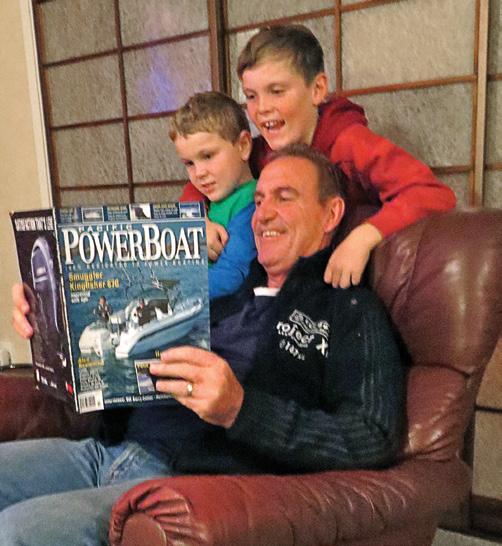

“The World Premiere of 585 SUV was outstanding and our fleet of 11 Sport Yachts, Sports Motor Yachts, SUVs and flagship Motor Yacht from 39 to 78 feet, was the finest we have ever displayed. On the opening day of the show we also announced our next new model that will premiere in late 2023, the magnificent 58 Sports Motor Yacht. Your combined efforts have made Riviera a world-class luxury boat builder. And it's everyone here, the laminators, the engineers, electricians and boat builders, our receptionists, customer care team and the many people who
work behind the scenes to help create our excellence. Every position and every place, you are all a part of what makes Riviera special, that’s what makes it a family for our owners and for us, our team here onsite. This is something that we should all be extremely proud of.
The appreciation for the Riviera teams efforts was also expressed by Riviera owners during and following the show. "There’s not much in the world that equals a Riviera”, the Huston family from Papua New Guinea. “It’s just nice to see details getting better every time”, Jacky Dijk from Thailand. “We love the Riviera brand. We purchased a 505 SUV and wanted to upgrade to the 585. We love the fit and finish of the boat and that’s what made us come here”, Joe and Heidi from America. “The best part of having a Riviera is the follow-up service, it’s amazing”, Kristie and Dale Stott from Australia. RIVIERA.COM
PACIFIC POWERBOAT _ NEWS
The Perfect Father’s Day Gift for the Power Boating Dad in Your family! The Perfect Father’s Day Gift for the Power Boating Dad in Your family! Name: Address: Postcode: Phone: 1 year (6 issues) NZ$51.00 AU$112.00 Subscription Type: New Renewal Gift Voucher Payment Enclosed: $ Cheque Visa Mastercard Bankcard Signature: Card No: Expiry date: Send to: Pacific PowerBoat Subscription Service PO Box 886, Whangaparaoa, Auckland 0930, NZ or visit www.boatmags.com Gift Receiver's name: Address: Postcode: DB918a 44 JULY / AUGUST 2023
Right now you can get the Suzuki DF140BTX with mechanical controls for the Fully Fitted price of $22,000. Or add some extra WOW by upgrading to the exciting Drive By Wire technology of the DF140BTG Fully Fitted for just $23,000, a saving of $3,445 on the RRP. With its smooth shift and operation, and lean burn technology, you’ll be blown-away by its outstanding performance. Find out more today, visit suzukimarine.co.nz
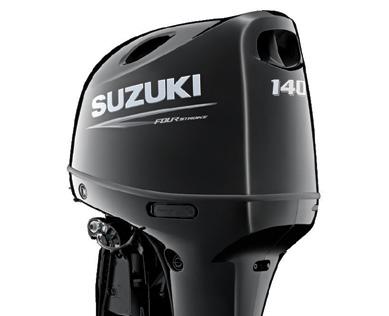
T&Cs:
TRT65859_DF140BTG__PPB
Change up and Fully Fitted offer is available on new Suzuki DF140BTX/G OMB between 01/07/23 and 30/09/23 at participating Suzuki dealers while stock lasts. Fully fitted price includes side mount control, engine gauge, propeller, control cables, and boat fitting. Price excludes removal of previous outboard motor and controls, repairs to electrical systems, fuel system/dash repairs, or steering systems, and transom repairs. Excludes demo units and all other promotions.
NEED A THRUSTER BUT CAN’T FIT A
PROPSPEED APPOINTS NEW CEO

Propspeed, leading innovator of underwater foul-release coatings, announces the promotion of Marcus Hamilton from the International Sales Director to the position of CEO.

In his new role he will be responsible for directing all operations for the company and driving its growth and success. “I am proud to have worked with the sales team and our partners to expand Propspeed’s presence worldwide as the leader in protecting underwater assets,” said Hamilton. Hamilton comes to the position with more than 10 years of experience in the marine industry. Propspeed products include Propspeed for running gear and any underwater metals, Foulfree for transducers and Lightspeed for underwater lighting. The latest addition to the product line is StripspeedTM, a solvent-based paint stripper for underwater metals.
PROPSPEED.COM





Jet Thruster Micro is a compact, powerful thruster designed mainly for trailer boats, small launches and yachts.
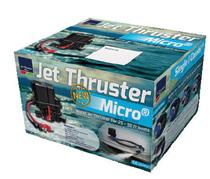
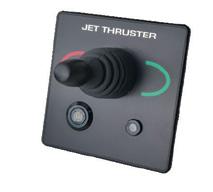
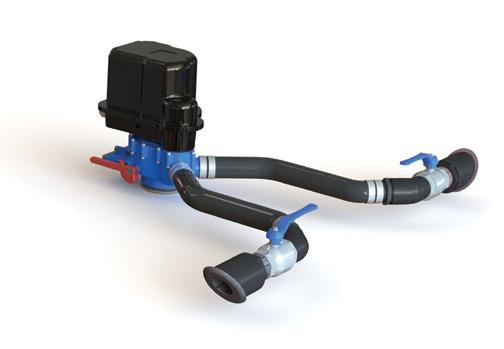
Water drawn into the pump unit via a 76mm inlet is pumped at high pressure through small 60mm nozzles just below the waterline on either side of the bow (or stern).
Pump Unit Dimensions: 350mm (H) x 230 (W) x 340 (L). Weight: 15 kG. IP Protection.
Thru-Hulls: Composite, fibre-reinforced.
Flexible Hose: 52mm Ø x 5.0 meters (or longer)
NEW SENIOR PRODUCT MANAGER AT ENL GROUP
Because the nozzles are installed further forward than possible with a tunnel, the 30 kG force delivered is far more effective due to the increased fulcrum.
Pump Unit can be mounted close to the middle of the boat, needs to be 150mm below the water line to be fully flooded.
Nick Fogarty has been appointed the new Senior Product Manager at Electronic Navigation Ltd (ENL).
The role will see him oversee the Product Management direction of the company’s Multibeam Sounder System - WASSP as well as overseeing future product roll out for Furuno products into the New Zealand market. Fogarty has been with ENL over 15-years and has worked in various roles since 2008. Head of Sales & Marketing for ENL Group, Richard Bowe says Fogarty’s appointment is part of ENL’s strategy of re-deploying key staff into more senior roles. “Nick is widely known and respected in the Marine Industry here in New Zealand. His technical knowledge of the products is significant, and with that he also has a great understanding of the needs of the users,” says Mr Bowe. “ENL and the wider Group have significant R&D planned for the coming years, particularly with our multibeam sounder system – WASSP. ENL.CO.NZ

PACIFIC POWERBOAT _ NEWS
12 VDC Motor & Pump IP Protection Cover Direction Valve 60mm Nozzles Gate Valve Shut Off QUALIT Y MARINE PRODUCTS FROM AROUND THE WORLD
THRUSTERS for Boats up to 9.0 Meters www.sopac.co.nz 09 448 5900 | info@sopac.co.nz 41c William Pickering Dr, Albany, Auckland.
WATER JET BOW
TUNNEL ?? - READ ON
46 JULY / AUGUST 2023
YESSSS ANNOUNCES NEW JOINT CEO





YESSSS, a business and marketing consultancy firm in the marine industry, have announced the appointment of Chris Baird as joint CEO alongside Nona Pedersen. Baird brings a wealth of experience and expertise to the YESSSS team from his 30 years in the marine industry. “I am very excited to join YESSSS and work with the team to help marine businesses achieve their goals,” said Baird. “We are delighted to welcome Chris to the YESSSS family,” said Nona Pedersen, joint CEO of YESSSS. Chris’s extensive experience in the marine industry and proven track record of success make him another invaluable addition to the company. With his help, we look forward to enhancing (or expanding) our top-tier marketing and business consultancy services to our clients.” YESSSS.COM


NEW TECHNICAL SALES ROLE AT LUSTY & BLUNDELL










Liam Clark takes on a new technical sales role at Lusty & Blundell Ltd, one of New Zealand’s leading distributors of topquality marine products and systems.
L&B has expanded showroom manager Liam Clark’s role into the crucial area of technical sales. Based at L&B’s head office in Albany, on Auckland’s North Shore, Liam’s key area of focus will be Raymarine’s market-leading marine electronics. This will include working with key customers to understand what they are trying to achieve and then suggesting the best possible packages to meet their needs. Having joined L&B in 2018 in a 19-year-old junior sales support role, Liam’s ability to quickly absorb new information saw him become an integral member of Lusty & Blundell’s internal sales team before being promoted to showroom manager in 2022.
“Liam’s on-water experience and the additional knowledge he has gained since joining L&B has given him an extremely sound understanding of our broad range of products,” says L&B sales director Cameron Maher. “Liam’s enthusiasm to service our clients and run his team is an inspiration to all of us.” Liam grew up around the ocean and boats and is an avid boatie, spearfisher and multiple boat owner. Liam says he is very excited about his latest role and how dynamic it is. “This new position will allow me to use the skills and experience I already have to gain an even deeper understanding of our huge range of great products". LUSTY-BLUNDELL.CO.NZ
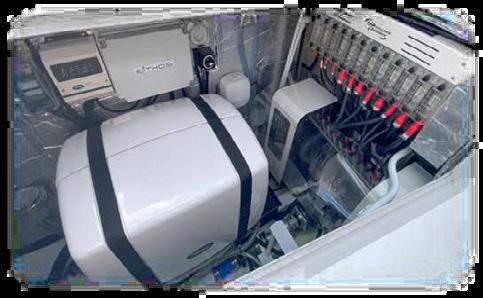
b attery specialists • supply • consultation • battery management N 8 -1 0 4 6 H N S ales C ontac t: Dr ew K os ie C ompany B a t t er y Tec hnol ogy N Z L t d FAO John <s ales @batter ydirec t c o nz> (ar twork in-hous e) N 7 -1 0 4 6 H N A r e a o f O p e r a t i o n : N AT I O N A L Contact J ohn Dale on 0800 128 olt) | Email: s ales @ batter ydirect. co. nz Batter y Technology New Zealan 3 L AN D ME N T K S onnens chien • Hardcore Fullriver • Vis ion Bos ch • Powers onic Vertex • Exide Century • Odys s ey Trojan • Delkor Brands we repres ent include: www batterydirect co nz Contact John Dale on 0800 128 658 (0800 12 Volt) Email: sales@batterydirect.co.nz Battery Technology New Zealand Limited PO Box 907 Whangaparaoa 0943 We support multiple brands & have a high level of electrochemical understanding which puts us in the unique position to specify the correct battery for your vessel. 40 odd years marine experience and 3000 battery models listed “ We have electrochemical knowledge to understand your battery & electrical knowledge to understand its duty” Free Shipping ! PEOPLE ON THE MOVE
Complete E40 Catamaran - Complete E-THOS systems Email: info@EarthlingEthos.com POWERBOATMAGAZINE.CO.NZ 47
Systems Integrators
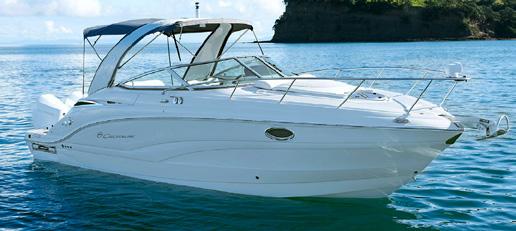
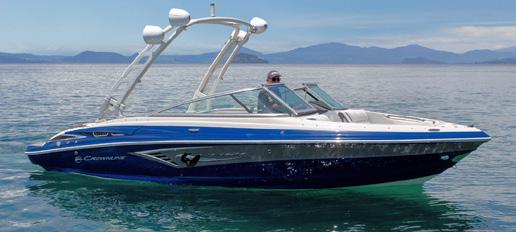
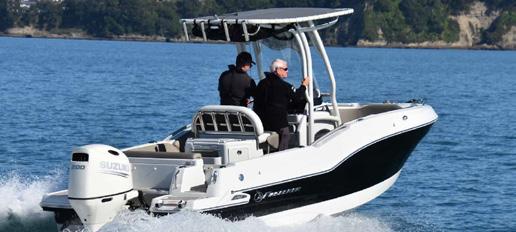
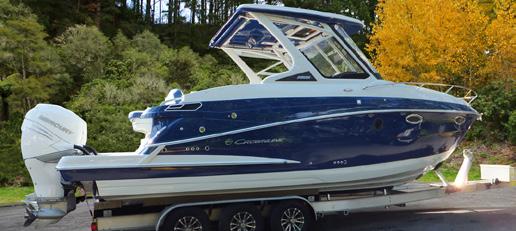
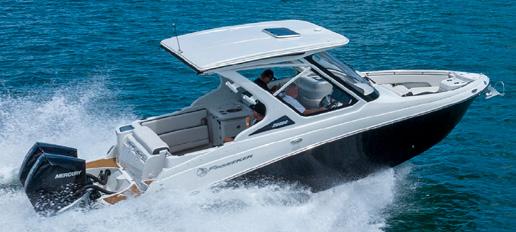
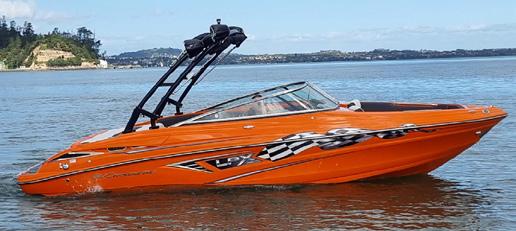
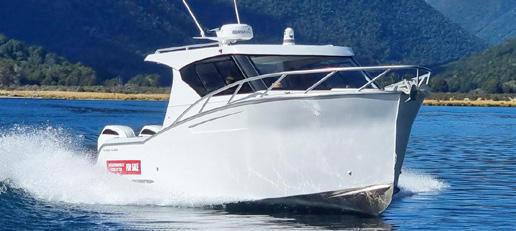
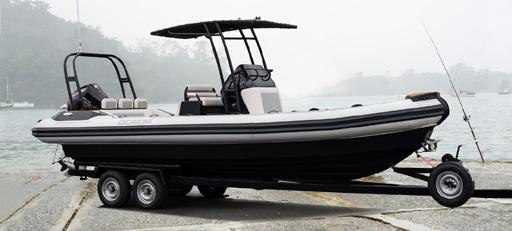
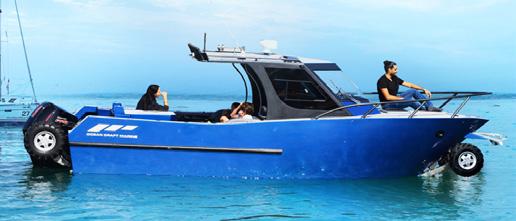
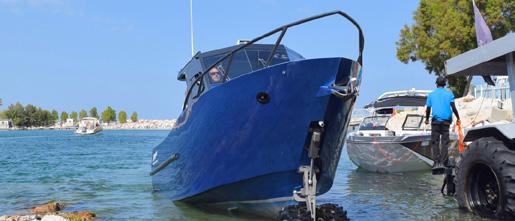
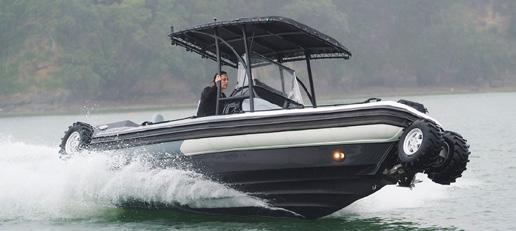
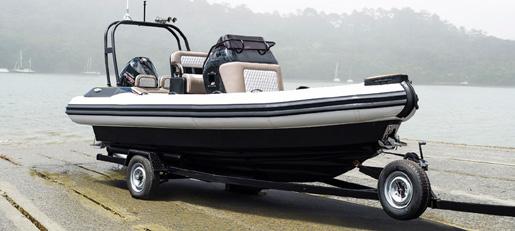


NZ LEADS RECREATIONAL BOATING WITH DESIGN AND PRODUCTION
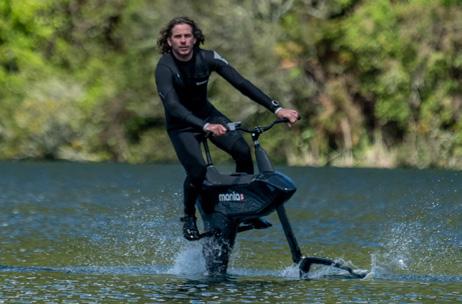
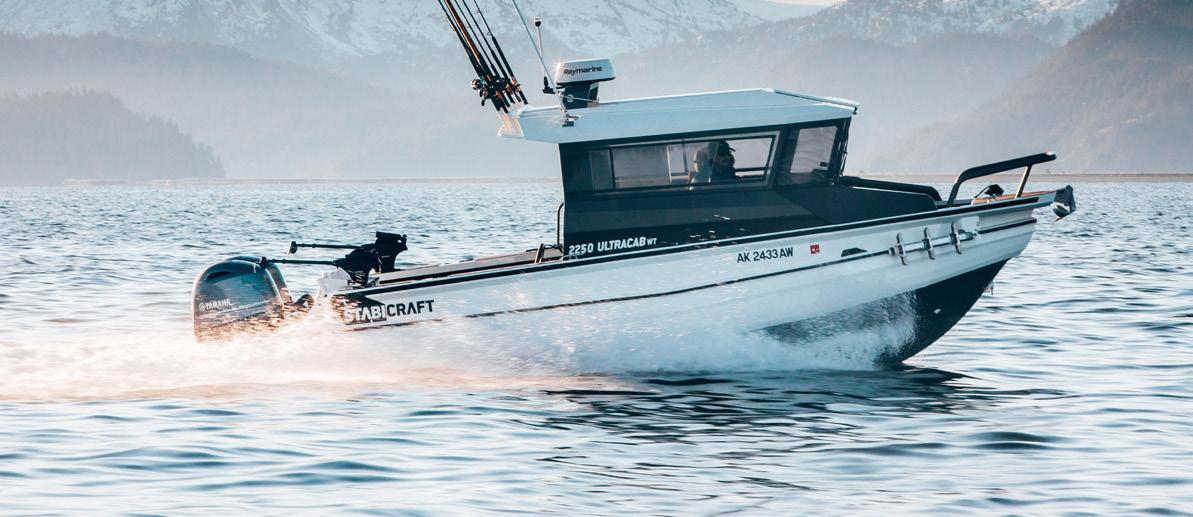
With its diverse marine environments, from protected harbours to rugged ocean waters, New Zealand has made an exceptional impact on the global market. By focusing on the design and build of recreational products, New Zealand marine companies emphasize the use of materials that can withstand a diverse range of conditions, have a long lifespan, and can be used year-round.
The kiwi boatbuilding expertise and equipment hardware capabilities have grown out of a thriving and everexpanding recreational marine culture. From high-quality boat design to composite construction, interior fittings, woodwork and marine electronics, the country has emerged as a leader of the marine industry. As a global leader in boat design and construction, New Zealand brands such as Stabicraft, which has shown profound growth as one of the largest aluminium boat manufacturers in the country, are sought after internationally. An example of New Zealand’s widening sphere of influence, Stabicraft recently announced its first manufacturing facility in North America, located in Port Angeles, Washington. This expansion serves as just one example of New Zealand’s widening sphere of influence. New Zealand’s companies have not only excelled in traditional boat design but have also produced a range of worldclass recreational vehicles and marine
equipment, such as Manta5’s Hydrofoiler water bike. Taking the world by storm as a revolutionary, first-of-its-kind product, the water bike allows customers a surreal cycling experience on water. Now, a second generation of the bike is hitting the market, providing consumers with a no noise, no wake, and emission-free alternative personal watercraft.
New Zealand professionals design marine equipment of all kinds, including VETUS Maxwell’s anchoring solutions by Maxwell Marine. With over 50 years of industry expertise and continuous hands-on research and development, Maxwell’s anchoring solutions are designed to alleviate the stress of anchoring for the full spectrum of customers from recreational to superyachts. When it comes to essential boat components such as thru-hull fittings, there is no room to compromise on quality. Designed and manufactured in New Zealand, Tru-Design Certified Ball Valves are specifically crafted for use in marine applications, both above
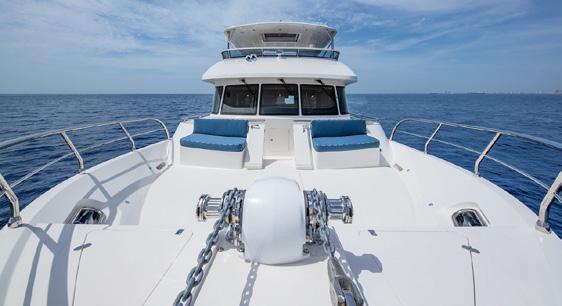
and below the waterline. Manufactured from a glass-reinforced nylon composites, the full line of Tru-Design parts is lightweight, durable, and high-strength. “We are confident that regardless of the type of product you need, if it says, ‘New Zealand made,’ it is of the highest quality and designed by some of the most innovative minds,” said Scott Wentworth, New Zealand Trade and Enterprise’s USbased Business Development Manager for Marine. “We are very proud of the distinguished New Zealand brands that manufacture boats, parts and accessories for the marine industry and echo their pride in identifying themselves as New Zealand companies.” The New Zealand marine sector is highly regarded in the global industry, with a worldwide reputation for producing high-quality products across multiple segments of marine products.
NZTE.GOVT.NZ/PAGE/NEWZEALAND-MARINE-DIRECTORYNORTH-AMERICA
PACIFIC POWERBOAT _ NEWS 50 JULY / AUGUST 2023
DOMETIC TRIM TABS
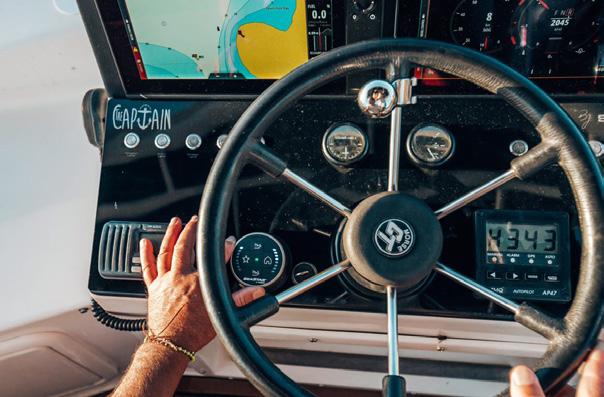
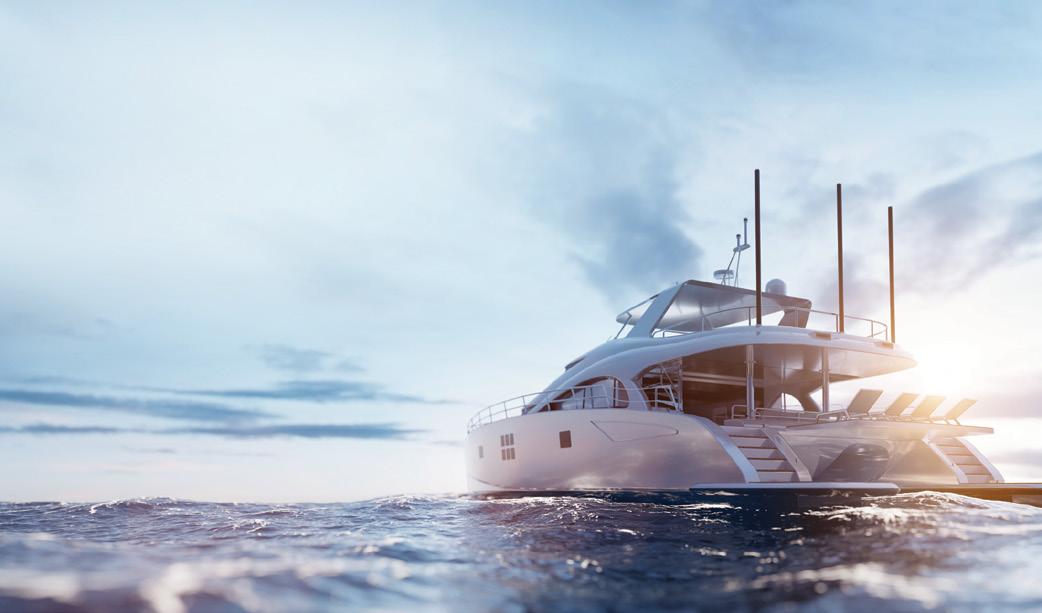
Aussie icon, Timothy Stenlake, better known as “Timmy Turtle” lives in tropical North Queensland but is often on the road seeking out his next on-the-water adventure. After a career as a professional canoe marathon athlete, he is remaining true to his water lifestyle but has traded in his canoe for a boat and captures his incredible fishing and outdoor adventures on camera sharing them with his YouTube and social media community.
“Timmy says”…. “The Dometic Trim Tabs have been an awesome addition to the boat. I didn’t think I would be using them as much as I have in the 6 months since getting the boat on the water! Every trip is different - from packing the boat full of gear to the number of passengers and conditions. The Dometic trim tabs have come in handy making the boat feel safer by being able to level it out in any conditions the weather has thrown at me. Being a rear centre console, the weight in the back of the boat has a lot more effect on the lean of a boat than the weight at
the front. Passengers sitting with me at the back can throw the boat off balance a lot while travelling. Also, the prop torque of the 300hp motor on the backvalways leans the boat to the left when taking off. Depending on how many revs the motor is at depends on how much the boat leans. This is something I didn’t take into consideration, having never owned a big boat before. I am constantly on the trim tabs adjusting the roll and making sure that the boat is perfectly level. If not, it can feel very unsafe when navigating tough conditions with a boat always on the lean.
I also did the full installation of the trim tabs myself, everything apart from wiring the power to the bus bar under the console. As someone who has never fitted a large boat out before, I found the installation process quite easy. The installation manual that came with the trim tabs was extremely easy to follow. It explains every part of the set-up process perfectly, and even someone with no previous experience would find the process easy.
DOMETIC.COM/EN-AU/OUTDOOR/ LP/TRIM-TABS

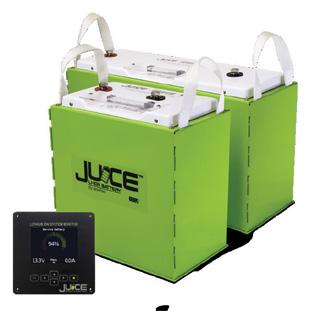
5G Miro Place, Albany, Auckland, New Zealand p. 09 414 4730 | info@enertec.net.nz | www.enertecmarine.com Powered by Batteries Juice Lithium Ion batteries Designed for today’s electric drive vessels
POWERBOATMAGAZINE.CO.NZ 51
NEXT-GENERATION BOAT MANOEUVRING SYSTEM FROM YAMAHA
Yamaha Motor
New Zealand
has announced the arrival of the first Harmo propulsion unit - the ‘next-generation boat-manoeuvring system platform’ consisting of a propulsion unit powered by an electric motor, a remotecontrol box, and a joystick that enables more intuitive operation. Developed with the aim of providing a smart package boat that brings passengers more comfort due to the quietness unique to that of electric motors. Harmo, which derives its name from harmony between a vessel, its propulsion system and its passengers as well as with the environment, is much more than just another electric outboard.
Fully designed, developed, and manufactured by Yamaha, it’s a complete boat control system that combines advanced electrical propulsion with proven
joystick technology to offer virtually silent operation, quick response, crisp and dramatic manoeuvring, and easy-to-understand and operate controls.
Combining advanced engineering, future vision and high environmental awareness, Harmo is Yamaha’s latest example of its CommandBlue advanced engineering and design philosophy. CommandBlue drives design and development of new, connected technologies and technology-based products from the consumer’s perspective, specifically to simplify boating and instil deep feelings of confidence, satisfaction, and excitement while on the water.
Harmo is powered by an innovative rim-drive electric motor that is mounted around the outside edge of the impeller blade, rather than at the centre of it. This allows Harmo to turn an immense, specially designed impeller for outstanding thrust
in a unique housing that adds additional control surface.
By coupling a 48V power supply with a high-yield, low-drag 3.7-kilowatt motor, HARMO’s rim-drive and specially encased impeller provide an incredible 225 pounds of static thrust — the equivalent of a conventional 9.9 horsepower internal combustion outboard. In addition, the Harmo unit itself is virtually maintenancefree. Run time depends on battery type, size, configuration, and throttle setting.
Featuring integrated Digital Electric Steering (DES), Helm Master EX joystick, and a super-wide 140° total steering angle, Harmo combines strong, smooth acceleration with incredibly sharp handling and control — including rotating a single-engine boat within its length and true lateral operation when used as twins. Available in single or twin configurations, the Harmo system can effectively manoeuvre boats up to 32’ in most conditions.
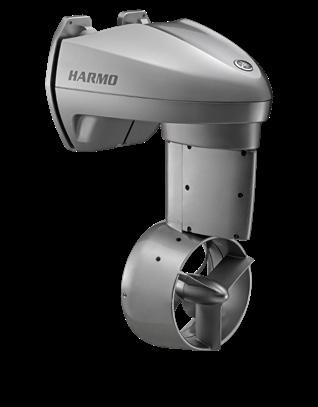
YAMAHA-MOTOR.CO.NZ
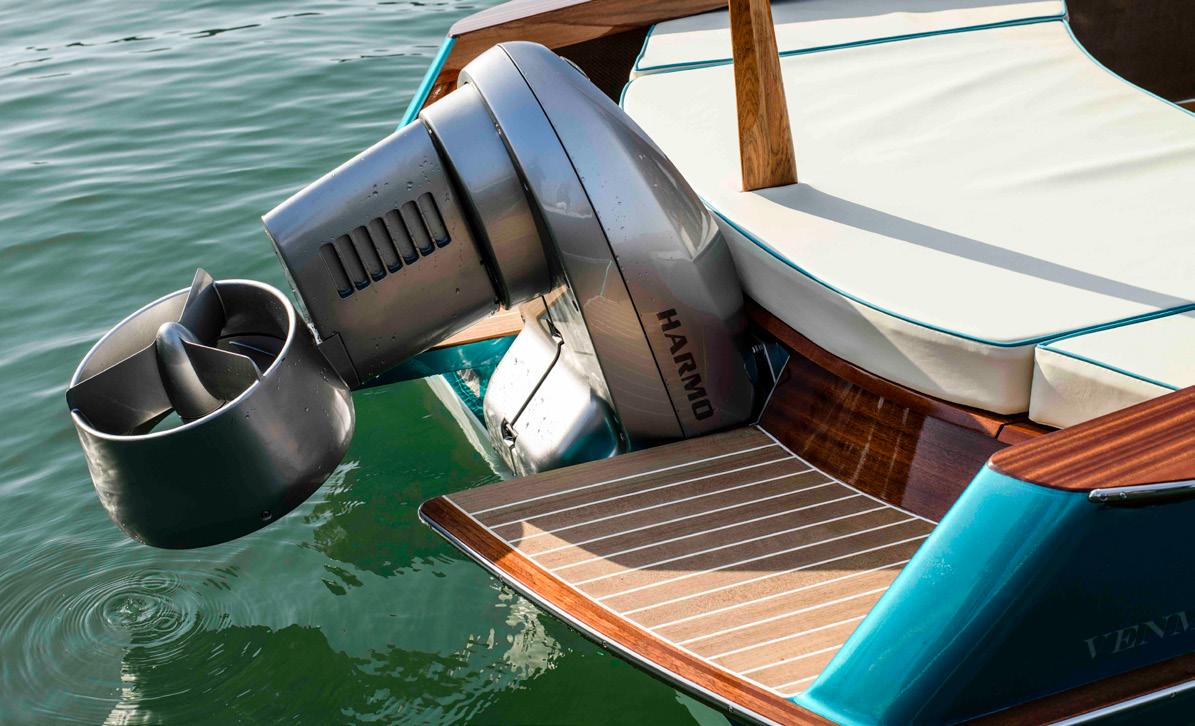
PACIFIC POWERBOAT _ POWER ON
52 JULY / AUGUST 2023

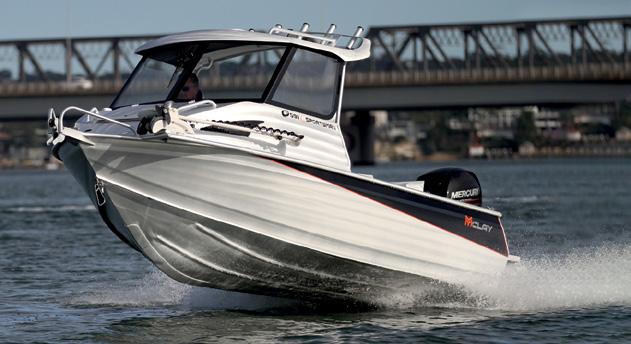
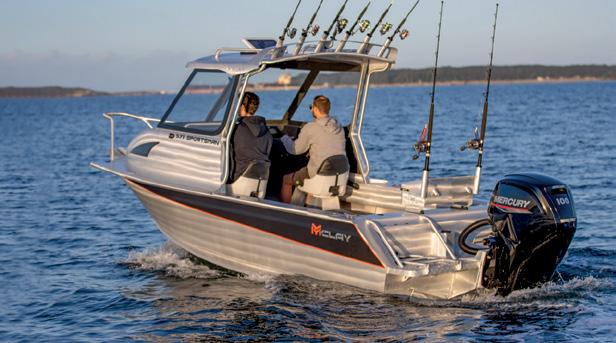


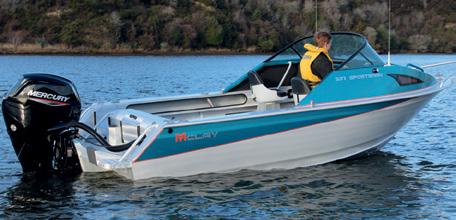
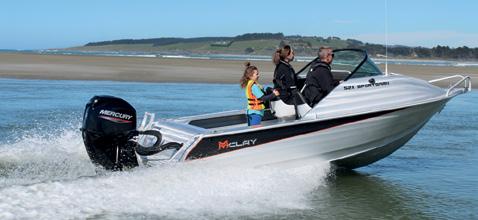
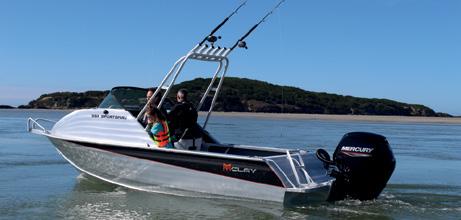
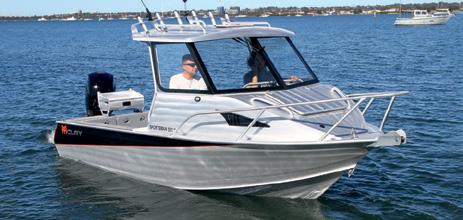
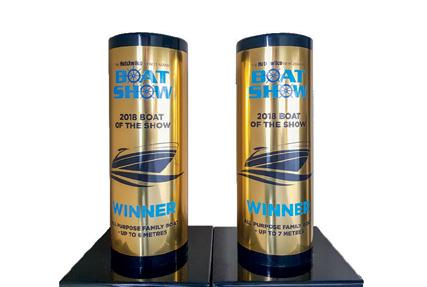



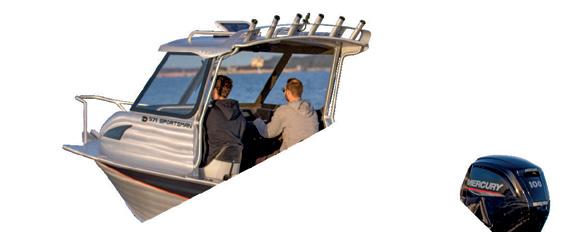
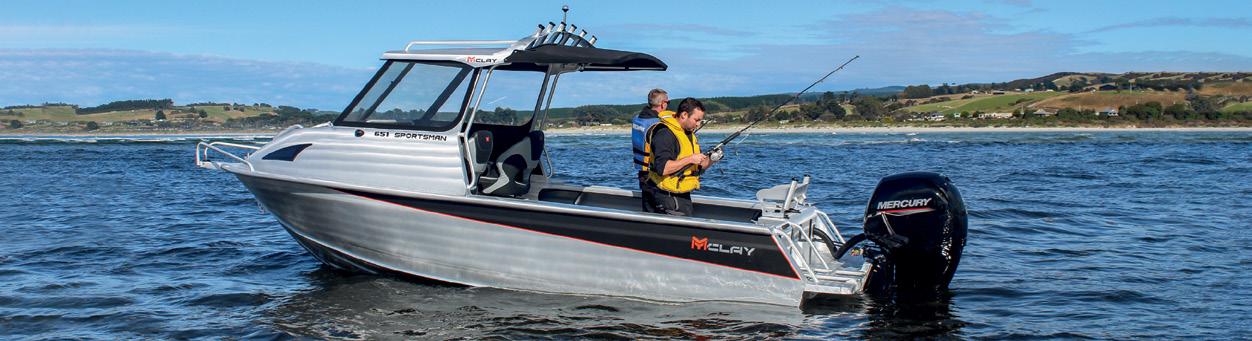


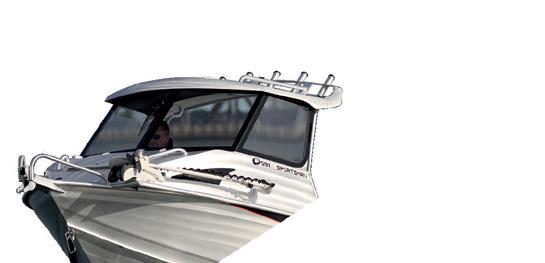
MULTI AWARD WINNING BRAND Go to our website for specifications and pricing or get down to your local dealer SPORTSMAN 521 SPORTSMAN 571 SPORTSMAN 551 SPORTSMAN HT591 MCLAY BOATS ARE AVAILABLE FROM DEALERSHIPS NATIONWIDE: WHANGAREI: Warren Hay Marine, ph 09 430 2666 AUCKLAND: Fish City, Albany, ph 09 476 4282 HAMILTON: Fish City, Frankton, ph 07 846 6675 WHAKATANE: Oceansports Marine Ltd, ph 07 308 4241 WELLINGTON: Boat City, ph 04 298 5931 MOTUEKA: Bays Boating, ph 03 528 5200 DUNEDIN: McLay Boats Milton, ph 03 417 8135 www.mclayboats.co.nz 571 SPORTSMAN HARDTOP DB940 SPORTSMAN 651 HARDTOP NEW MODEL POWERBOATMAGAZINE.CO.NZ 53
NEW SIMRAD HALO RADARS
Simrad Yachting has unveiled two of its new highperformance radar products with the Simrad HALO 2000 and 3000 now available to customers around the world.
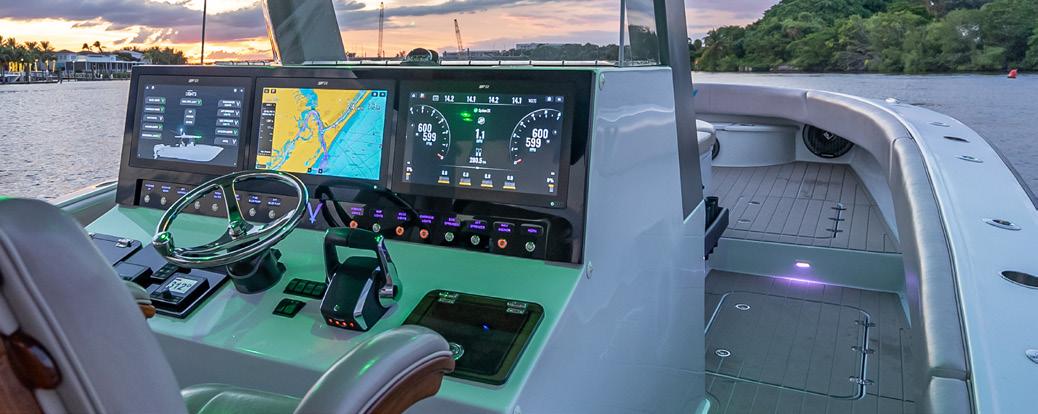
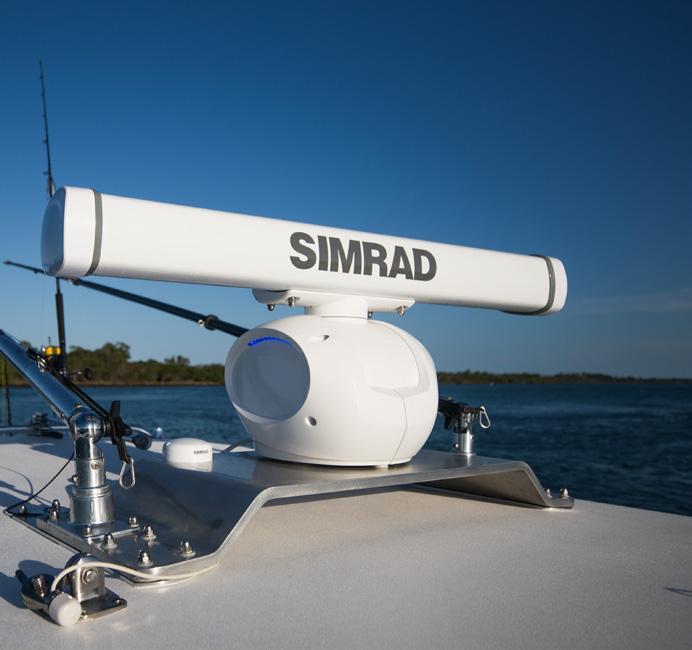
The HALO 2000 and HALO 3000 both feature higher power pulse compression and improved detection ranges to offer the most powerful Simrad HALO radars on the market. Other key integrations like Bird+ Mode, ZoneTrack and support for Dangerous Target Alerts provide users even more technical and safety benefits.
HALO 2000 comes with 50 watts of power, ensuring visibility out to 72 nautical miles, while HALO 3000, Simrad Yachting’s most powerful open array radar with 130 watts of power, provides visibility out to 96 nautical miles. That power is combined with world class beam sharpening for enhanced target separation that is unmatched in the marketplace.
Other technical upgrades include award-winning modes, situational awareness enhancements and ZoneTrack merged into the Simrad brand’s decades of expertise and experience in radar. On the HALO 3000, the new Bird+ Mode activates the radar to solely focus on maximizing 130 watts of power on targeting and identifying flocks of birds at ranges of up to eight nautical miles.
Day or night, rain or fog, the HALO 2000 and 3000 are a powerful extra set of eyes to help boaters stay aware of approaching vessels, weather, and obstacles. NAVICO.COM
RAYMARINE’S STUNNING NEW FLAGSHIP AXIOM 2 XL
Raymarine’s stunning new Axiom 2 XL is the premium range of chartplotters for owners and skippers who demand only the very best.
Thanks to Raymarine’s exclusive, nano-coating technology, Axiom 2 XL models not only do everything faster, they also do everything better and in all weather conditions. Their ruggedly
beautiful screens are as at home in an exposed cockpit as they are in an enclosed glass bridge station. Effortlessly able to repel water, they enable their skippers to confidently use their touchscreen controls in even the most adverse of weather.
Axiom 2 XL’s new super-bright, wide-angle displays also ensure all those on the bridge or in the cockpit have a great view of what is on the screens and their advanced colour palettes deliver a huge range of even brighter colours, along with outstanding non-reflective visibility on even the brightest of days.
In addition, Axiom 2 XL’s clever new
ambient light sensor will automatically adjust the display’s brightness, ensuring the clearest possible viewing during the brightest day, in the middle of the darkest night and at all times in between. Fitted with Raymarine’s renowned LightHouse operating system, the Axiom 2 XL models also offer seamless advanced engine integration, advanced sailing tools and easy connection to the very best CHIRP sonar modules, transducers and radars and the most compact, high definition day/night IP cameras. Raymarine’s new premium Axiom 2 XL chartplotters come in 16, 19, 22 and 24in. LUSTY-BLUNDELL.CO.NZ
PACIFIC POWERBOAT _ ELECTRONICS
54 JULY / AUGUST 2023
DC THRUSTERS
Lusty & Blundell has announced the arrival of the world’s most powerful thrusters, Vetus’ new Bow Pro 385 and 420.
Designed for larger vessels in the 25-40m range, the powerful new models offer all the unique benefits of the Vetus Bow Pro range and are true one-ofa-kind extended run time thrusters, using maintenance-free brushless induction motors to provide a far quieter experience. Both new thrusters have in-built DC-DC chargers enabling their batteries to be charged back from an alternative lower voltage DC source. The new 385 models work on 24vDC while the 420 series thrusters use 48vDC.
Like all models in the BOW PRO range, the new thrusters come with a joystick control complete with a temporary hold function. This allows the skipper to easily keep the vessel in position against a marina finger, wharf or fuel jetty so passengers can embark or disembark without the need to tie up. The thrusters also, when using a Vetus CANBUS joystick, offer full proportionality of power (from 25% to 100%). This further enhances exact manoeuvring and greatly reduces the chances of damage to either the vessel or the marina.
Another bonus is that, in a reduced thrust mode, these powerful models offer unlimited run times, governed only by their battery capacity (eg: at 100%, the thruster will operate for a long 10 min before automatically reducing power).



All Vetus Bow Pro thrusters are designed for dual (bow and stern) thruster installations and come with Vetus’ new double thruster control panel. Featuring a powerful multi-axis twist joystick, this allows owners, with just a twist of their wrist, to effortlessly move their vessel in any direction or position.
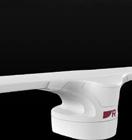
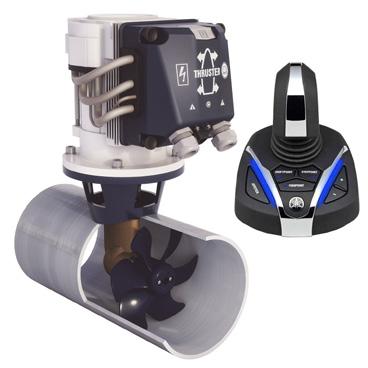
LUSTY-BLUNDELL.CO.NZ
VETUS BOW PRO & HELM MASTER EX

Vetus’ BOW PRO thruster range now seamlessly integrates with Yamaha's Helm Master EX boat control system giving boaties and fishers unparalleled, pinpoint control over their boat at all times.
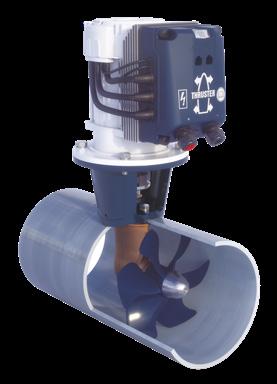
Using just Helm Master’s single intuitive joystick skippers can simply “point” where and in what direction they want their vessel to go and the BOW PRO will combine with the engines to ensure it goes directly there.
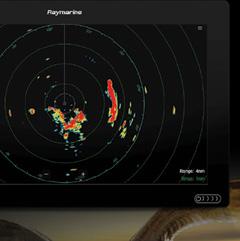
This is not only a huge advantage when docking or close quarter manoeuvring (especially in higher winds) but also a massive bonus for fishers, especially those targeting deeper waters.

Combining Vetus’ proportional control BOW PRO with Helm Master EX also increases a boat’s steering efficiency, reducing fuel consumption and the maintenance-free brushless induction motors are very quiet.
Grant Matthews from Vetus’ New Zealand distributors Lusty & Blundell, says, as specialists in tailoring batteries and battery management systems to individual boats, L&B also has the perfect solution for anyone wanting an even longer runtime.
“We are very experienced in creating systems for those wanting prolonged fishing sessions in challenging conditions,” he says. “We can provide the ideal combination of lithium & AGM batteries, onboard charging solutions, smart DC-DC chargers and offwater charging solutions, both plug-in or solar.”









LUSTY-BLUNDELL.CO.NZ

LAB0692 WWW.LUSTY-BLUNDELL.CO.NZ CYCLONE RADAR Aircraft
Enhanced
RangeFusion™ technology High
60
imaging Designed like a seabird. Sleek and aerodynamic with 360-degree situational awareness featuring Cyclone Bird Mode technology to get you to the
faster. EVOLVED
wing inspired
Bird Mode
speed
rpm
fish
FOR THE OCEAN
POWERBOATMAGAZINE.CO.NZ 55
BBQ SPICED SALMON
New Zealand's salmon farmers rate their king salmon among the world's best and so do overseas customers. King salmon are the oiliest, a good thing for texture, flavour and omega 3 content.

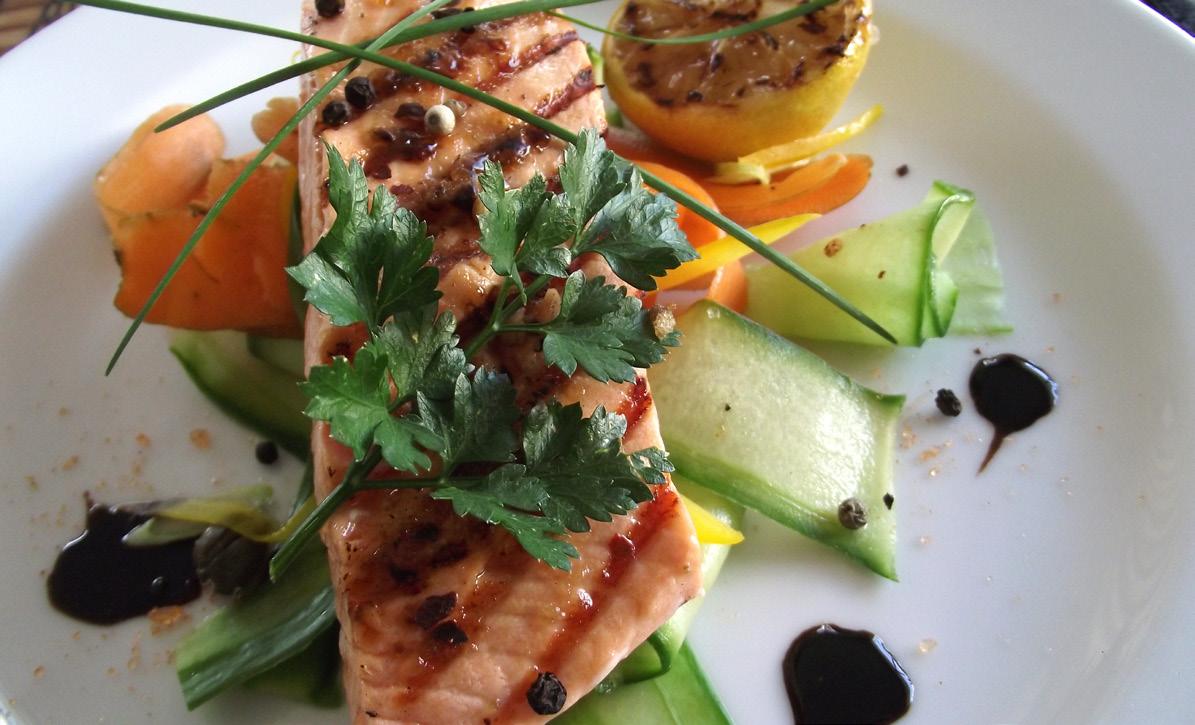
INGREDIENTS
4 salmon steaks or fillets
¼ cup pineapple juice
2 tbsp fresh lemon juice
2 tbsp brown sugar
4 tsp chilli powder
¾ tsp cumin
½ tsp salt
¼ tsp cinnamon
1 tsp peppercorns
lemon wedges (optional)
METHOD:
1. Combine pineapple juice, lemon juice and salmon fillets in a zip-type plastic bag, seal and marinate in refrigerator for 1 hour, turning occasionally.
2. Preheat bbq grill to med. Then brush with cocavo lemon lime and extra virgin avocado oil.
3. Remove fish from bag, discard marinade.
4. Combine sugar, chilli powder, cumin, salt, cinnamon, and peppercorns. Rub over fish.
5. Place onto the grill and cook for 2- 3 minutes each side. Or until reached to your desired taste.
Meanwhile make the salad:
1. Using a peeler, scrape down the carrot and cucumber roll into circles then drop onto the plate.
2. Cut yellow or red capsicum into thin slices and place around the plate.
Garnish with coriander sprigs then serve with lemon, if desired.
Enjoy with HUNTER WINES CHARDONNAY 2021
The wine has a complex, gun-flint nose with beautiful flavours of white peach and grapefruit characters with some citrus undertones. The palate shows a tight midpalate with sweet vanilla wood characters that leads into a complex and lengthy finish.
STRAIGHT
CHEFLINE14@GMAIL.COM
FROM THE GALLEY WITH DEREK THE CHEF,
56 JULY / AUGUST 2023
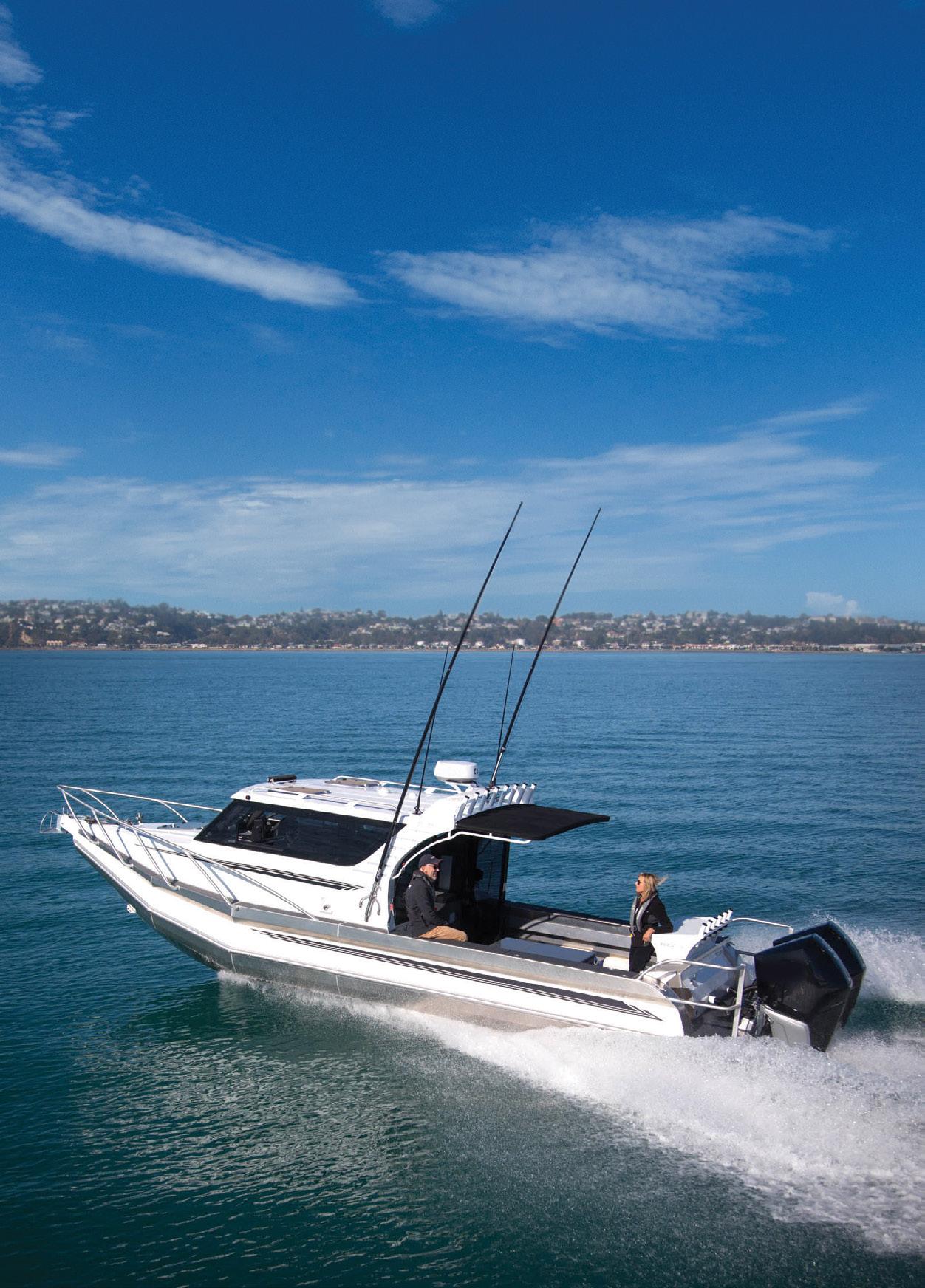
BUYING AN ENGINE
174 HP?
make sure it meets the environmental emission standards. Find out more at maritimenz.govt.nz/recboatemissions Whānau, air and ocean. Together, let’s protect them.
OVER
Then
ATMOSPHERIC RIVER
Explained simply it meant that it rained long and hard through most of summer, with resultant slips, flooding, and inundation to significant areas of NZ. From a boating perspective it meant large fiscal savings on fuel, fish tackle, bait, and essential liquid supplies, from the $$ amounts normally expended over the summer period. We hardly got to Marsden, with road closures, and other issues. Only one fishing trip of 3 hours between Jan and May, and that was in pretty average weather, but blind determination to use the boat prevailed over common sense. I am sure this was the sentiment of many. Maybe we will have one of those classic mild, beautiful day, flat calm winters this year…. But having despaired of a break in the weather, we leapt aboard the motorhome and pursued our other addiction... Golf.
A two week warm up around midNorthland in March, then 1 month voyage down to the piece of NZ hanging off the bottom of the North Island, during April/ May. We only had a few bad days during the March safari which augured well we figured.
Being a boating addict, I stopped for lunch at the Taupo marina by Motuoapa, North of Turangi on day 1. What an excellent facility with a mish mash of old and new craft. Our trip over the Cook Strait on Bluebridge was uneventful, calm and on time. I went looking for my last Explorer at Waikawa. This was the first time I had seen the latest extensions to the marina, and was impressed on how big the marina is
now. Well done too, with good breakwaters and plenty of big boat berths. We tried to continue our marine interaction with clinical examinations of the Kaikoura area. This included videoing a cray boat casually driving onto its haulout trailer in lumpy conditions. A very impressive display. Further down the coast, we saw large craft in what appeared to be a raised waterway at Kaiapoi, one of which I was involved with many moons ago - these craft were well inland. We visited the beach at Moeraki, and saw a few big round stones in the sand. Oamaru and its port was a great example of our older coastal shipping history, and like Napier, has maximised the buildings and sheds left on the demise of this industry. Revisiting coastline we had previously seen from a few miles offshore, when we circumnavigated NZ, we congratulated ourselves on how good our personal weather forecasting had been back then, as we had great runs up the coast from Stewart Island to Dunedin, then on to Akaroa. With the unsettled weather currently prevailing over NZ, the swell and wave action was either impressive or scary. It was rough everywhere we visited. Owata, and its blowhole merited another video, and the Caitlins on the whole were torrid. Certainly we would not have enjoyed our coastal passages in these conditions. Bluff, its port and surrounds is a boating mecca for masochists. We even visited the Maritime Museum there! One learns new stuff every day. I did not know the main berthage area for shipping was reclaimed and man made in the 50’s. Quite a feat
then, and one that would probably never occur under all the laws, iwi requirements and RMA consents needed nowadays. I also did not know the Dog Island lighthouse keepers’ daughter got pregnant, and nobody could confirm the sire..! There was only her Dad and the assistant keeper residing on the island, so t’was easy to understand the mystery! Riverton was a very pretty spot, but I did wonder as to the approach in serious weather, it being calm(ish) on the day of our visit.
In Queenstown we found a new motorhome park, along from the marina on Frankton Arm, with an excellent vista, and close enough to the water to keep the boatie in me satisfied.
All through our travels, Auckland, and Northland were being hammered by wind and rain. We had one night at Gore where it blew hard enough to make us move the motorhome behind shelter in the golf club car park. Much easier to do than lifting and resetting the anchor in the pitch black and howling wind conditions normally prevailing in any crowded bay. The rest of our trip, including the return across the Strait, was conducted in excellent, sunny and warm conditions. We altered our course at Wanaka, to avoid the “Atmospheric River” which had moved down from the North Island and was rendering the West Coast undesirable for passage making by road - otherwise I could have looked at the fishing boats at Westport and Greymouth. My partner was sad for me, of course! Did I mention we played lots of golf?
WHAT IS THE QUESTION? PHIL GILBERT
The weathermen have come up with this new term to help explain the summer that wasn’t.
58 JULY / AUGUST 2023
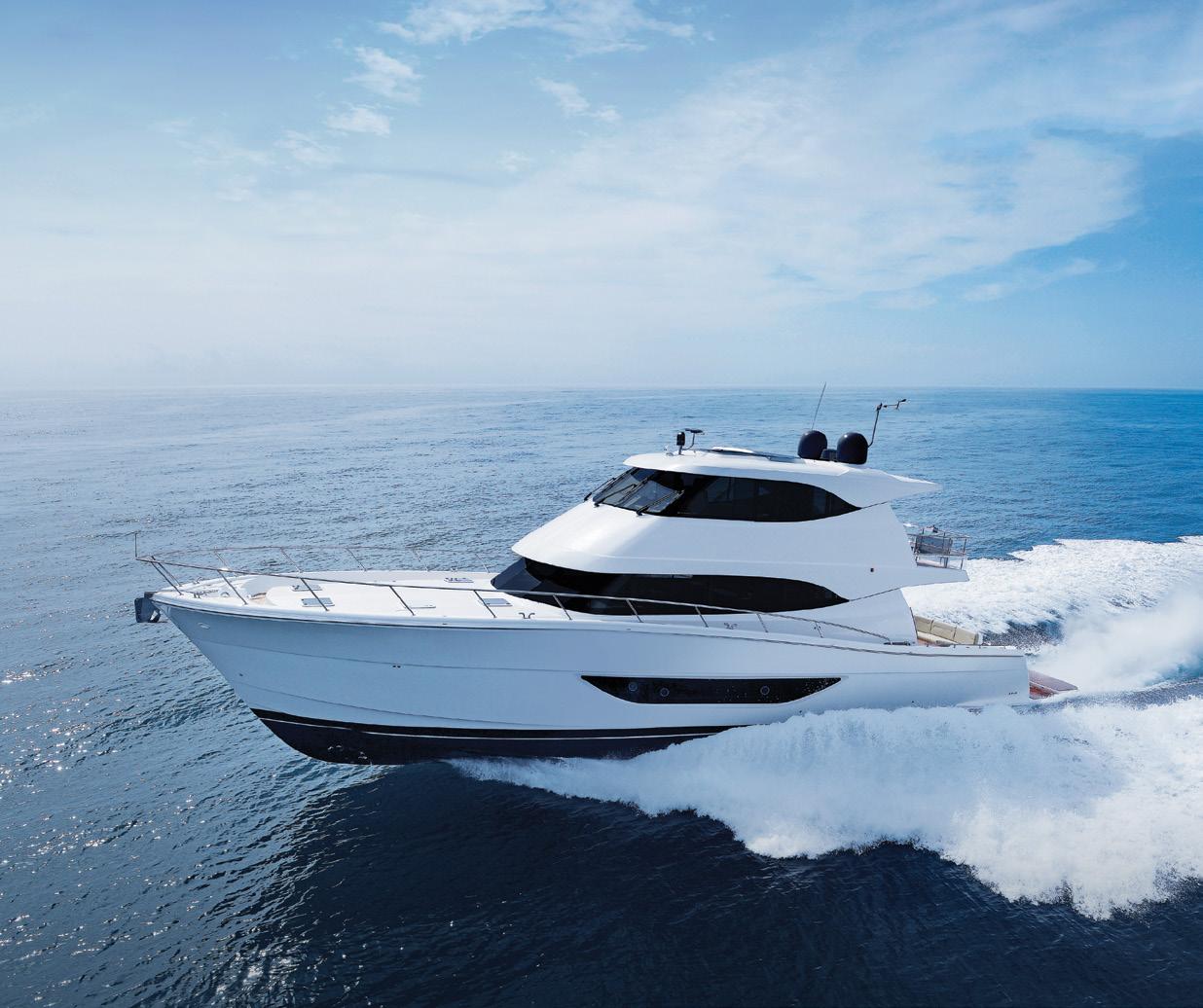



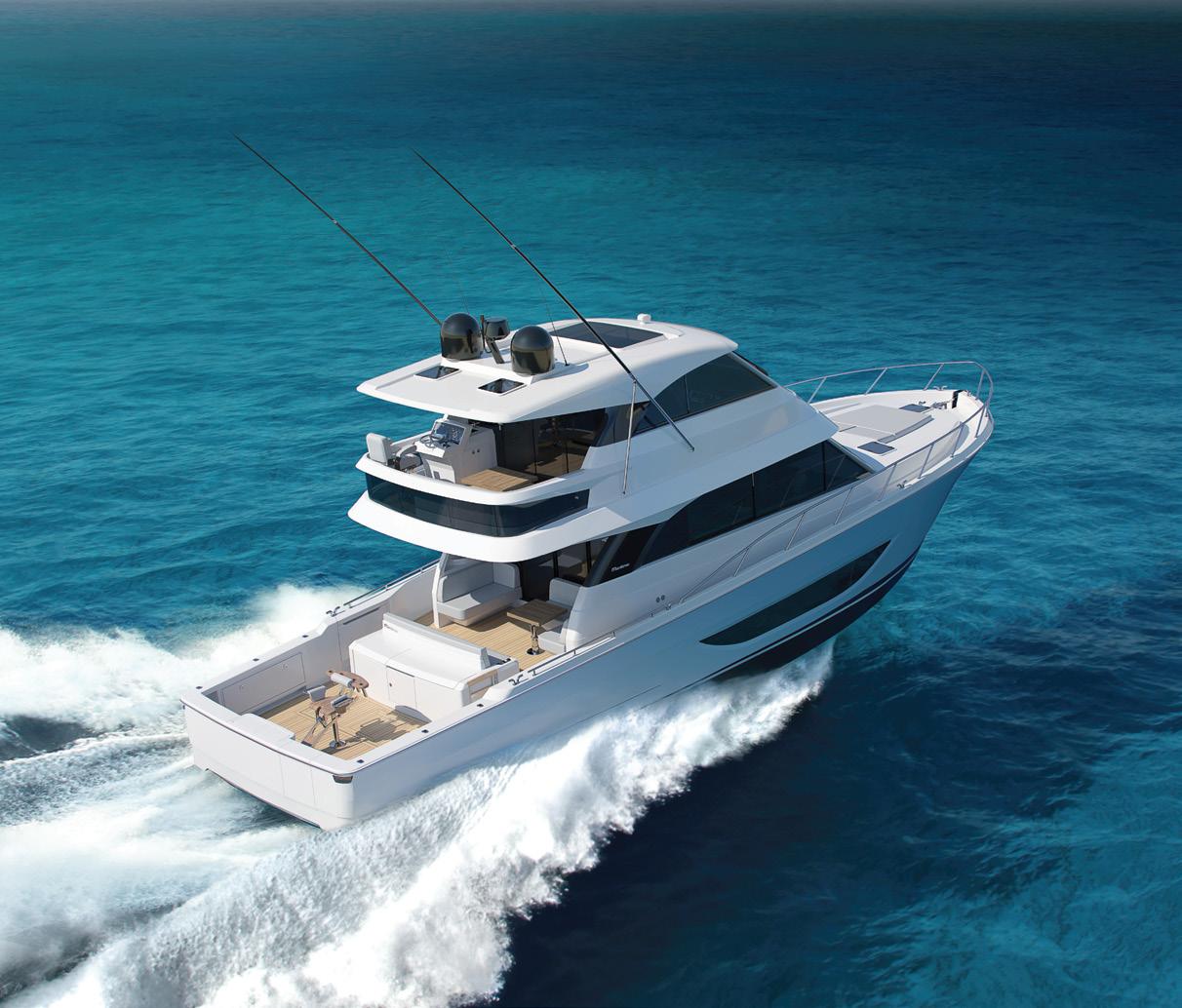

SUPPORT, SERVICE, REFITS. Clearwater Cove, Hobsonville Marina, West Harbour, Auckland, NZ. info@motoryachtservicecentre.co.nz MOTOR YACHT SERVICING & CUSTOMISATION Engine Servicing Boat Building Hull Extensions Gyro Installations Electronic Upgrades Custom Stainless Timber Work Gel Coat Repairs Interior Fit-Outs Upholstery Upgrades Valet Services Anti- Fouling Painting AGENTS FOR: CALL +64 9 416 1179 OR +64 274 725 242 MOTORYACHTSERVICECENTRE.CO.NZ • Allow crew and guests to move around safely and enjoy themselves. • Provides a comfortable setting for dining and entertaining. • Sleep in comfort at the dock or anchored out. • Keeps your vessel steady when docking. Effective at trolling and at ‘zero’ speeds. • Less maintenance means more time to fish. Easy to use, just flip a switch. Improves fuel efficiency. re d u ce At anchor and underway your boat roll re d u ce At anchor and underway your boat roll For Luxury Yachts, Trawlers and Sports Fishers There are over 3000 installed worldwide MARITIMO WARRANTY AND SERVICE AGENT
SURVEYS FOR BED-TIME READING
So when I bought my Franklin 925 launch, my friend Ian Franklin, who had built the boat, recommended I get three surveys –one each for the hull, engine and electrical system, and to include these as conditions in the Sale & Purchase Agreement. Getting three surveys sounded expensive. Yep, like insurance. You pay $x now so that, hopefully, you don’t have to pay $xxx later. I booked the hull and engine surveys for the same day. If they went well, I’d arrange the electrical survey for a later date. I was looking forward to survey day. The broker, the engineer, the builder, the owner and the prospective owner (me) took the boat for a run on Queen Charlotte Sound before lining up for the travelift. Frankie built seven Franklin 925 launches in the 2000s and has surveyed most of them over the years, so he knew to check the exhaust outlet. He had originally installed these in stainless steel, but they had proved vulnerable to salt water corrosion. Most of them had been replaced with composite exhausts, but my boat still had the original in stainless steel and it was showing signs of pitting.
Replacing it in composite was a relatively quick, simple job that would stretch into a Covid-enhanced, months-long saga. Of course it would; it’s a boat.
Graeme Fineran, highly recommended by Frankie, did the Engine Visual Inspection. It was good overall, but noted corrosion on the exhaust pipe, which should be repaired. But since the exhaust was going to be replaced anyway, I viewed that as a happy coincidence.
Most surveys include recommendations for the short term; eg, replacing the primary fuel filter and treating minor corrosion on


the drive shaft. And for the long term; eg, the universal joints were showing a little bit of clearance and might need attention later. So far, so good. Also on Frankie’s recommendation, I booked marine electrician Phil Martin for the electrical survey, specifically to check the batteries, their charging system and the anchor winch – all of which might be even to avoid emergencies. I thought the electrical survey would be a formality. I was in for a shock. The survey said the engine and house batteries were well overdue for replacement. Oh, and such batteries are priced in the thousands. But, no problem, because the electrical survey was a condition in the S&P Agreement.
Or not. The S&P Agreement had been written up in a busy office when we were all excited about how well the boat had gone and how I would soon take ownership, and as I signed the contract, I didn’t notice the electrical survey had inadvertently been missed out. Luckily, it was included in an email and we came to an arrangement, but it was a reminder to always check before signing.
So, the sale went ahead, but that shouldn’t be the end of the survey story. I ticked off the short term recommendations in the first few weeks of boat ownership, but it’s easy to forget about the long term issues that may develop. For that reason, I review the surveys at regular intervals and especially before a particular maintenance schedule or haulout. It would be frustrating to suffer a major issue that had been forewarned on the survey.
Meanwhile, I had applied for boat insurance, but the insurance company declined to accept the hull survey because it was done by Ian Franklin. They felt that, as
that Frankie was perfect for the job – after all, he had specifically checked for corrosion in the stainless steel exhaust. The insurance company agreed.
I also arranged for an inspection of the LPG system prior to getting a Certificate of Compliance. New rules required me to fit stainless steel over the timber trim around the stove. Although it wasn’t deemed necessary, I ended up replacing the entire system, including the gas bottle and hoses, for peace of mind.
Another advantage of the surveys was meeting experts in my boat’s primary systems: construction, engineering and electrics. All three surveyors earned gold star entries in my logbook’s Team Page, where I note who’s worked on the boat and how I felt about them.
For me, as a late starter in launches, I appreciate any extra coaching in boat maintenance.
Graeme hit the perfect level of enginespeak: not too techy, not too basic. I can get a bit defensive if someone’s explaining something to me I already know, but I’ve learned to shut up in case I miss something. Graeme listed the jobs I could easily tackle myself, like changing the filters and cleaning the air filter. I noted them in the ship’s log with Graeme’s comments: ‘It will need a determined wiggle,’ and, ‘Don’t drop the o-ring.’ Both applied to the secondary fuel filter.
Recently I heard of someone who has commissioned a survey for a boat they’ve owned for 15 years, even though they have no intention of selling. Surveys are another kind of insurance – as long as you remember to read them.

60 JULY / AUGUST 2023
HIGH HEELS TO SEABOOTS _ REBEECCA HAYTER
Boat surveys are like first cousins to insurance – something you pay for reluctantly and hope they prove to be unnecessary.














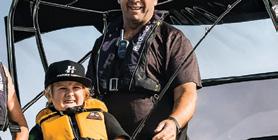
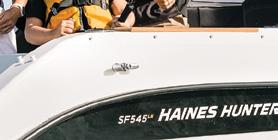
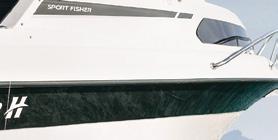

































Legacy’s 24m flagship a Paragon of clever design and innovation
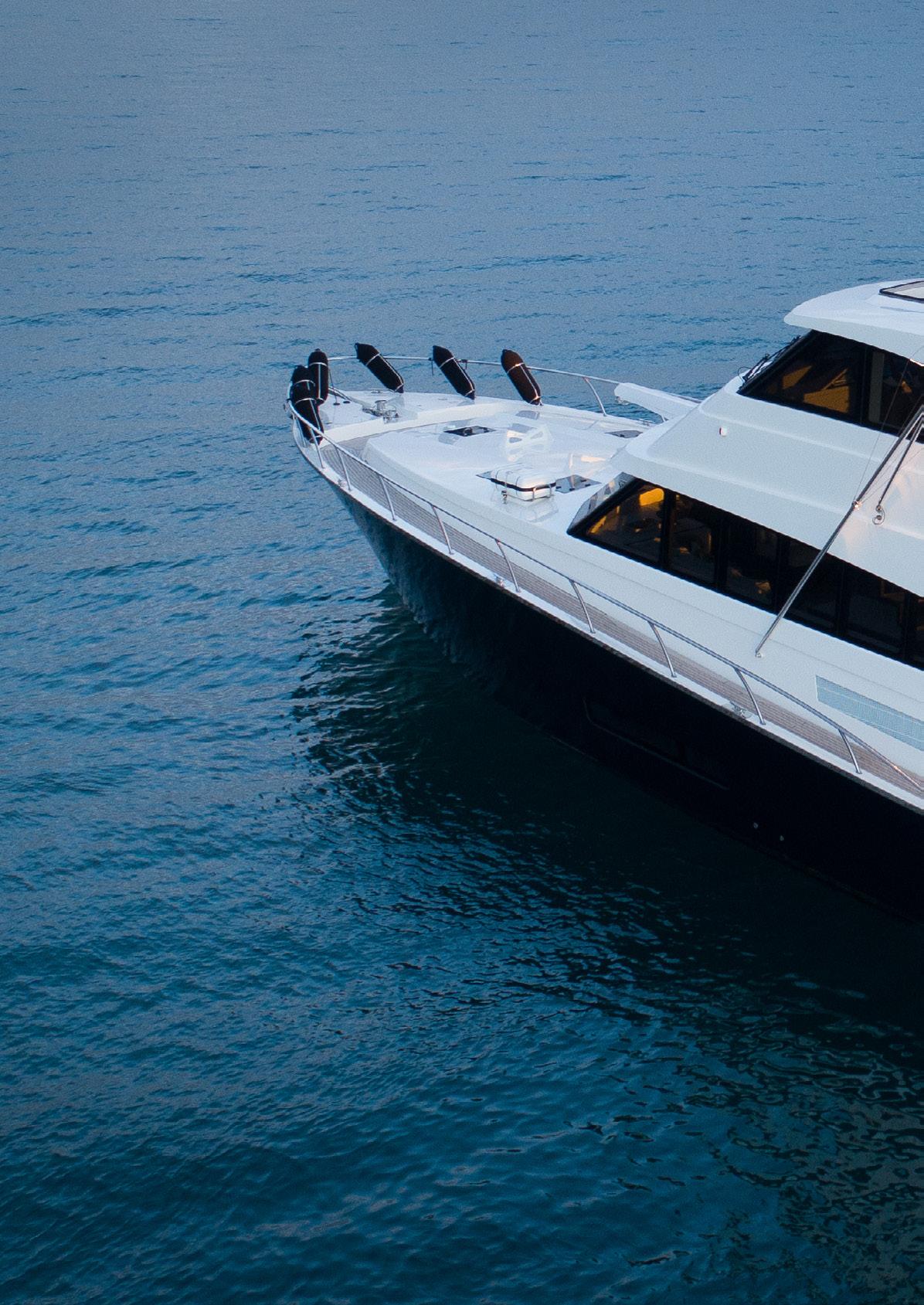
Seriously successful boatbuilder’s own offshore-capable cruiser packed full of clever ideas and innovative design touches.
WORDS BY MIKE ROSE
PACIFIC POWERBOAT REVIE WS _ LEGACY MARINE L70
62 JULY / AUGUST 2023
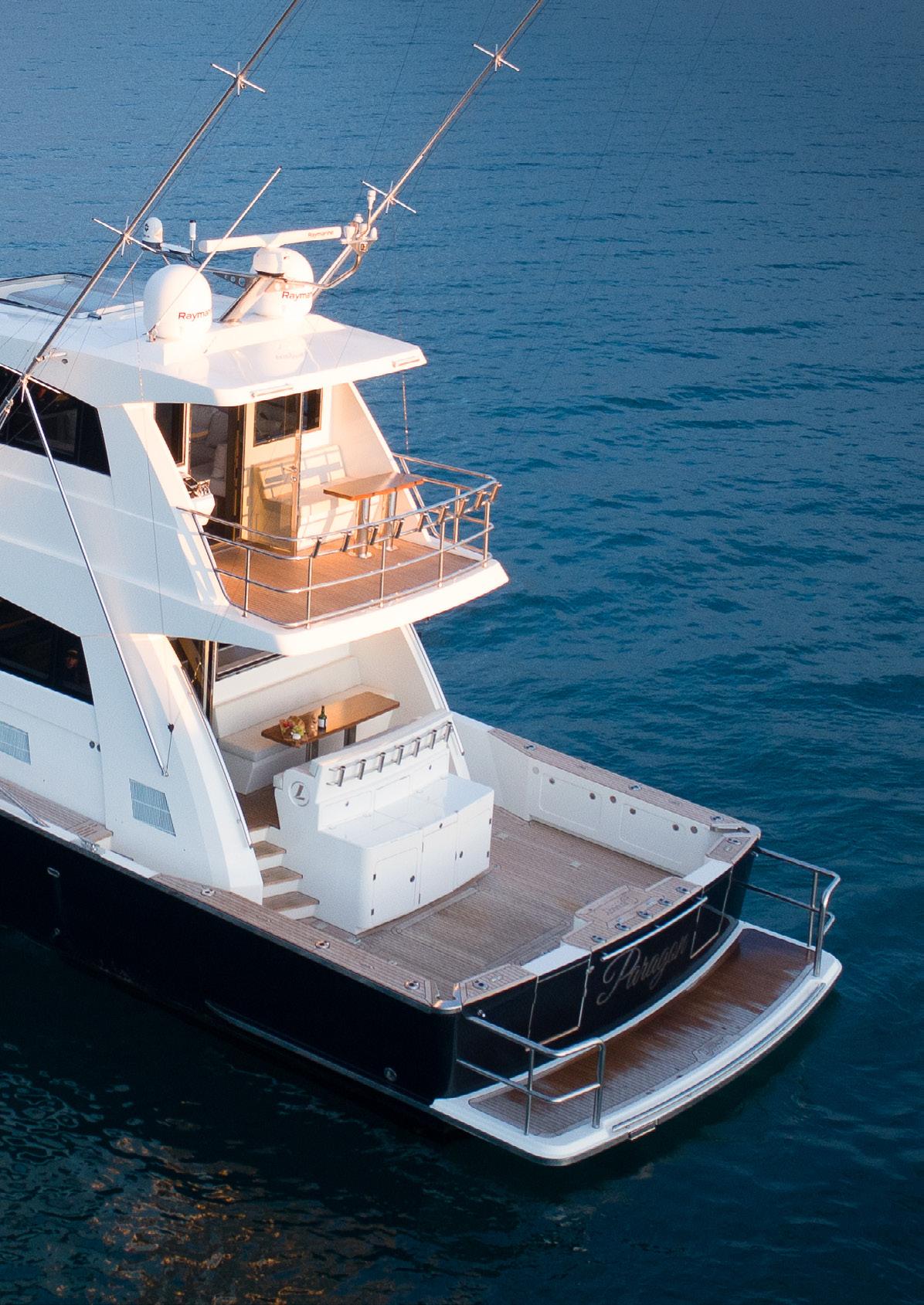
POWERBOATMAGAZINE.CO.NZ 63
Glenn Shaw has long been a man driven by a passion to create the best possible boats, especially fishing boats, he can.
Starting in a shed on the banks of the Rangitaiki River some 25 years ago, with not much more than an engineering background and a deep love of boats and boating, he has built his Extreme Boats brand into one of New Zealand’s most successful and most highly awarded manufacturers of aluminium fishing boats. Along the way, he out-grew those riverside premises and moved into a modern factory and showroom on the side of the main road into Whakatane. Extreme Boats, still a family-owned concern involving Glenn, his wife Di and sons Ben and Todd, now boasts over 100 staff, produces over 300 boats a year and exports around the world, including to Australia, New Caledonia, the United States and Europe.
Once a virtual one-man brand, Extreme now completes virtually every part of their manufacturing process in house, employing their own designers, CNC operators, fabricators, painters, upholsterers and marine technicians.
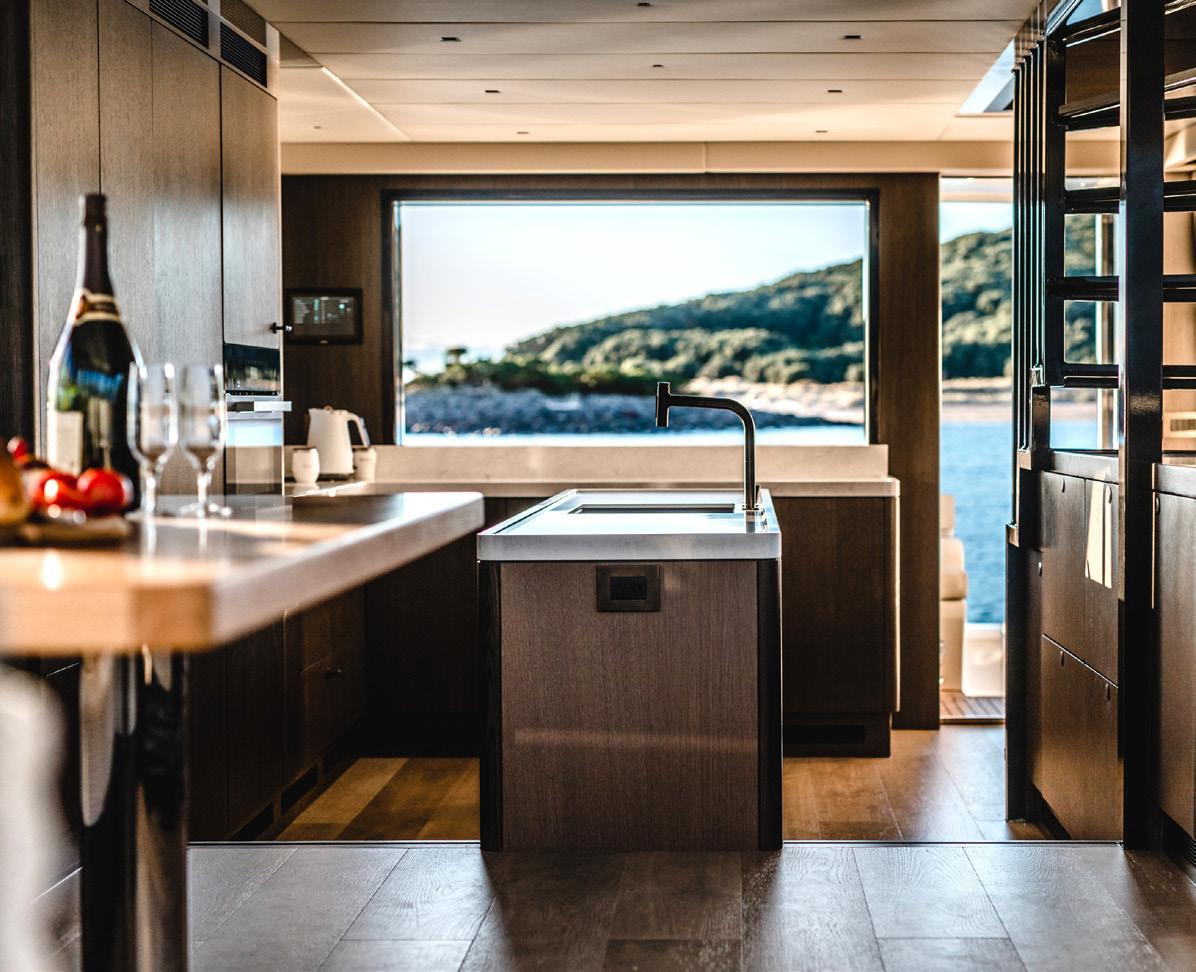
Having achieved virtually everything he could in the world of trailerable fishing boats, in the mid-2010s
Glenn turned his attention to larger vessels, those
capable of extended coastal or offshore cruising. In his typically positive, go-for-the-doctor fashion he decided to start not with something small or even mid-sized but with a ’70-footer’ - a 24m flagship for his new Legacy brand and a cruiser capable of transporting him and his family up to Tonga and around the islands.
Launched just last year, when Pacific Powerboat visited in late May, the aptly-named Paragon already had multiple coastal journeys (down to East Cape and up to the Bay of Islands) under her keel. She had also already tagged and released 12 marlin and yet, apart from the pre-departure preparations underway, looked as though she had been launched just that morning.
Just as Glenn had bucked the preference for GRP in setting up Extreme all those years ago, so he has again chosen to stick with aluminium for his new Legacy brand. Not that one can easily tell.
At first glance, the finish, compound curves, attention to detail and deft touches all speak of a fortune spent on GRP moulds and endless hours of sanding. Yet nothing could be further from the truth. Using the company’s in-house CNC experts and overseen by Glenn this first Legacy boasts lines and a quality of finish that is almost superyacht-like.
PACIFIC POWERBOAT REVIE WS _ LEGACY MARINE L70 64 JULY / AUGUST 2023
An ocean-going galley with easy access to the cockpit lounge.
INNOVATIVE FEATURES
As one would expect from a man who has spent decades building boats, hours upon countless hours chasing big fish and who has owned multiple launches, Paragon is packed full of innovative yet intensely practical features. For a start, the cockpit is a completely sharp corner free zone. There is absolutely nothing at all for a line, a piece of clothing or a section of skin to catch on. All edges are rounded; all hatches, catches and hinges recessed. Even the doors to the multiple stowage lockers are machined recessed.
The transom doors are another clever feature. One simply lifts the transom section above the door which then swings open automatically and clicks into place. Rather than being low down or under a step or a seat, the large livebait tank is handily positioned in the middle of the transom and comes complete with a pair of tuna tubes.
Other innovative touches in the cockpit include a huge (232-litre) underfloor ice bin (serviced by a choice of fresh or salt ice) to complement the two underfloor, stowage or fish bins; a clever multi-layer rod locker (also under the cockpit sole and capable of holding up to 23 rods and reels); recessed electric reel sockets; and
a full length aft platform with a long “holding” rail for swimmers, protective pushpits in each quarter and a “hidden” boarding ladder.
A centre station divides the cockpit from the outdoor “viewing lounge” above and houses an array of purposedesigned lure and tackle lockers, an electric hotplate, wash-down station (with push button hot and cold water), outdoor fridge and freezer and a handy outlet for a water blaster to ensure everything stays clean, no matter how messy the fishing.
The station also provides access to Paragon’s very impressive engine room. Built to survey (Lloyds and DND), it features a thick fireproof door, a full fire-suppression system and a surprisingly spacious layout with loads of good headroom throughout. An underwater exhaust system ensures quiet running, all the electrical wiring is tidily installed in lockers in the forward bulkhead and a C-Zone monitoring panel gives instant access to all the ship’s systems.
Paragon is a 240v ship with power supplied by a pair of Fisher Panda PMS45i 45kpa generators, Mastervolt inverters and an 800amp/hr lithium house battery bank. And, if there was any doubt that this is primarily a fishing boat, that is put to bed by the rack of gold reel beddecked rods hanging from the ceiling.
Paragon’s flybridge boasts enough comfortable seating for the whole crew.
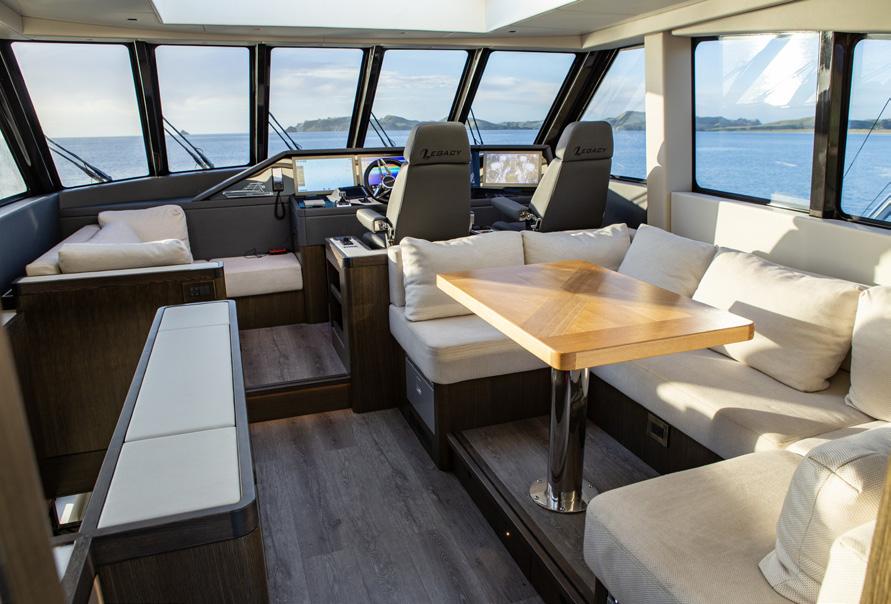
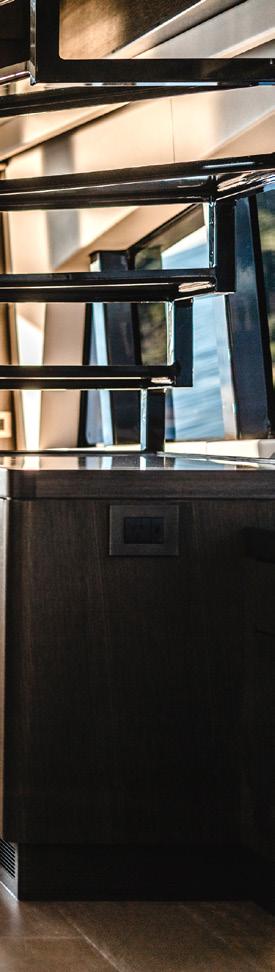
POWERBOATMAGAZINE.CO.NZ 65
Extreme completes virtually every part of their manufacturing process in house, employing their own designers, CNC operators, fabricators, painters, upholsterers and marine technicians
PRACTICALLY STYLISH
With Paragon’s interior, Legacy has managed to combine the practicality needed for a “hard-out” fishing boat with the classy, modern style one would expect on a 24m motoryacht. One of the first things one notices is the see-through stairway up to the bridge. Probably best described as “industrial chic” it perfectly encapsulates that combination referred to above. Like the galley and saloon floors, its steps are hard-wearing timber, meaning they can easily cope with sets of wet feet returning from a swim or a session on the rods. Its ladder-like, no-back design means it does not act as a block to the those on the settee wanting to look aft or those heading inside and wanting to know what is happening in the saloon. The aft galley is perfectly positioned to service both the saloon and those in the upper cockpit’s viewing lounge (through the aft bulkhead’s wide electric window). Its layout is also ideal for a boat designed for oceanic passage-making: compact with no wide open spaces
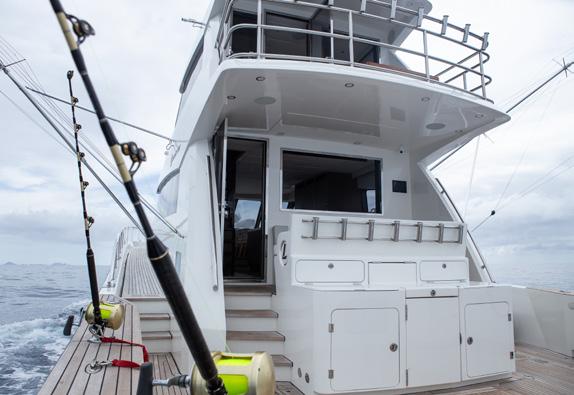
and everything needed within easy reach. There is also loads of fridge and freezer stowage, again ideal for those pre-frozen meals that are so handy when out at sea in inclement weather.
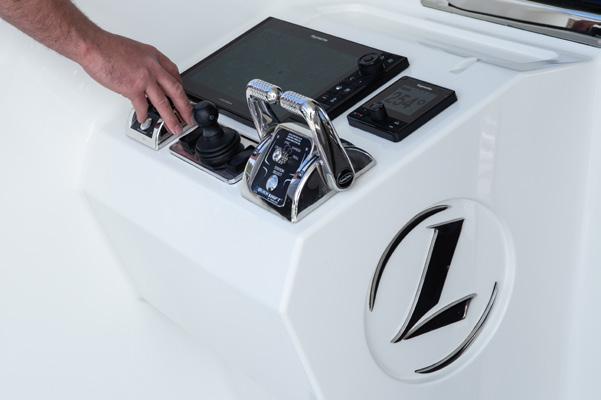
The décor, courtesy of Donna Maree Interiors and Di Shaw, is a combination of oak veneer facias and Hi Mac tops, the latter all featuring recessed lips; solid oak tables and free-standing chairs and cream-coloured settees, ceiling, pelmets and surrounds.
The saloon has been set high enough to ensure really good all-round visibility through the large windscreen and side windows, all of which are 16mm thick for safe passage-making without the need for storm shutters. The upholstery on the free-standing chairs comes complete with domed “wing flaps” that attach to the table’s underside to ensure they stay in place during rougher weather and there is a pop-up TV at the front that can connect to the internet anywhere in the world.
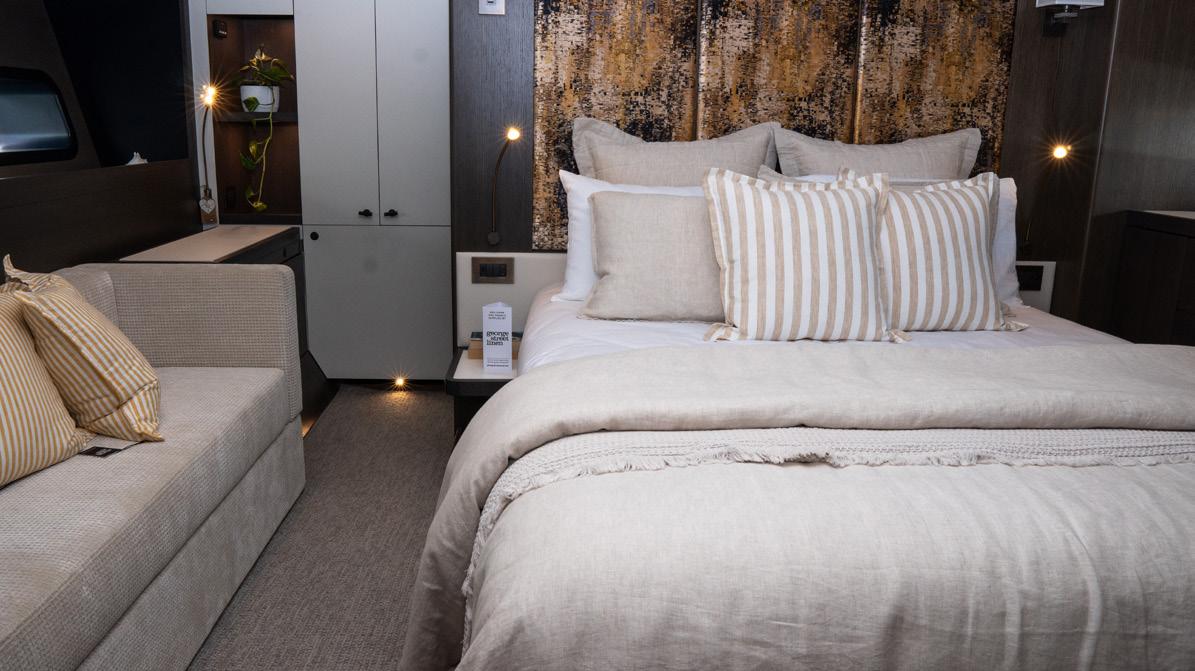 The owner’s full beam stateroom is a thing of beauty.
A cockpit designed to fish.
The owner’s full beam stateroom is a thing of beauty.
A cockpit designed to fish.
PACIFIC POWERBOAT REVIE WS _ LEGACY MARINE L70 66 JULY / AUGUST 2023
A second station overlooking the cockpit makes it easy to dock, or back up on that big fish.
CLASSY ACCOMMODATION
If the emphasis in the galley and saloon has been on hard-wearing practicality, this definitely changes once one enters the companionway down to the accommodation area of the ship. Here the timber floors are replaced by wool carpet, the ship-wide air con is suddenly much more noticeable and a quiet air of classy luxury prevails.
The Shaws are clearly a sociable bunch, there is definitely no shortage of accommodation on Paragon. In addition to the owner’s full-beam stateroom and large ensuite in the centre of the boat, there is a queen berth VIP suite (again complete with ensuite); a queen berth guest cabin with day head close by and a Pullman cabin with single berths one above the other.
The cabins all have their own control systems for both the air con and for a selection of music and there are TVs in both the master and VIP cabins. All the skylights are fitted with both insect screens (a real must in the
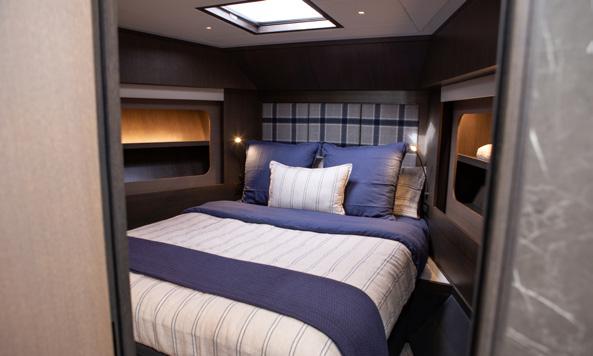
tropics) and shutters. There is a Miele laundry (washer and dryer) secreted behind a side bulkhead and, the more one looks, the more obvious it is that every single square centimetre of space has been put to good use.
GLASS BRIDGE
Paragon’s glass bridge helm station is a true information hub. Four 19in Raymarine Axiom screens dominate, displaying the incoming data from the chartplotter module, the twin Airmar 3kW transducers, the specialist ultra-wide frequency transducer (ideal for chasing broadbill swordfish), the 4kW Raymarine Magnum 72nm open array radar and the multitude of FLIR and Raymarine cameras (thermal, cockpit and engine room).
The Twin Disc joystick control and Raymarine autopilot ensure the two large MAN 1900hp V12 diesels follow the skipper’s commands; they come complete with features such as “station hold”. Twin Disc bow and stern thrusters give even greater manoeuvrability when
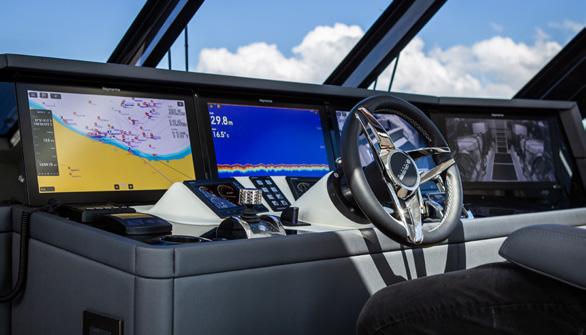
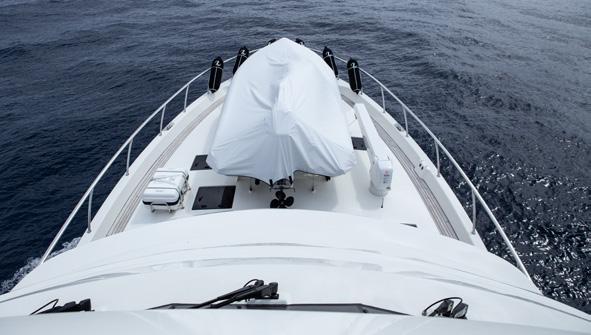
A Steelhead davit makes it is easy to launch the L70’s 5m tender and an 8-person liferaft is close at hand, too.
Paragon’s glass bridge features four inter-linked Axiom 19” displays and a Twin Disc joystick for effortless control.
Guests can enjoy the queen-berth VIP suite.
The owner’s stateroom features a large ensuite, complete with very spacious shower.
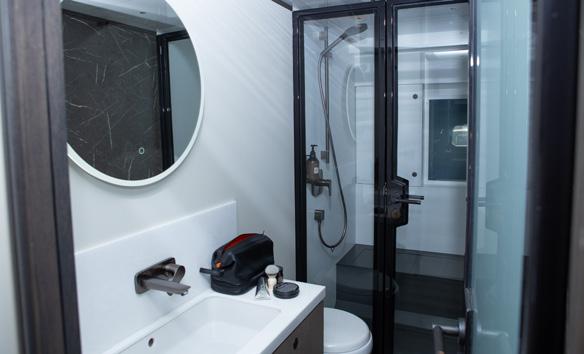
The engine room is a mechanic’s dream with full head height, comprehensive tool chests and easy, spacious access to all Paragon’s vital systems.
The open plan design seamlessly links the saloon, galley and cockpit.
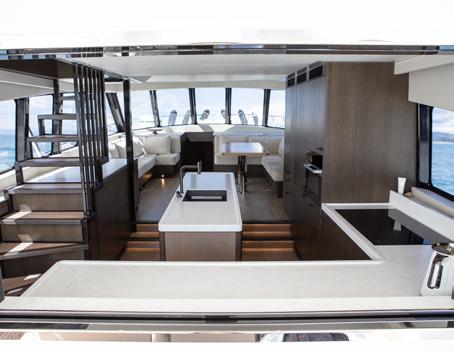
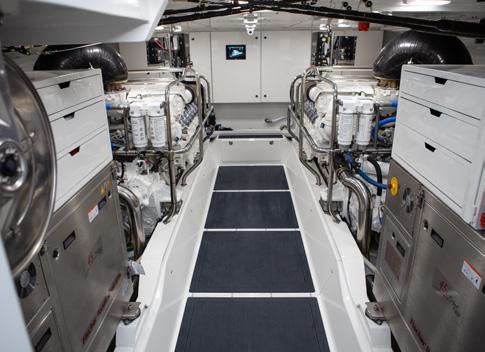
POWERBOATMAGAZINE.CO.NZ 67
required, the C-Zone control panel provides all the digital switching and there is even a weather station providing up to the minute information on the wind strength and direction. While there are just the two large comfortable helm chairs, there is plenty of both space and comfortable seating here for the rest of the crew, too. Paragon’s
SPECIFICATIONS
Boat Design Name Paragon
Year Launched 2022
Builder Legacy Marine
Designer David Devilliers
LOA 24m (78ft)
Beam 6.2m
Max Speed 36 knots
Construction Aluminium
Fuel Cap 9000 litres
Water Cap 1000 litres
Engine Make 2 x MAN V12 1900hp diesels
Drive Train Conventional drives
Generator 2x Fischer-Panda PMS45i
Thrusters Twin Disc Stabiliser/Gyro Seakeeper 26
Underwater Lights Bluefin
Anchor Winch Muir 4500 Capstan
Aircon Dometic
MFD 4 x 19in Raymarine AXIOM XL (linked to 3kW & 2kW thru-hull transducers)
Contact todd@legacymarine.co.nz
Any other notable options fitted: FLIR M346c thermal camera; Raymarine
4kW Magnum 72nm open array radar; Baur dive compressor; Twin Disc electronic joystick control; Twin Disc vessel position hold; Electroguard live anoding system; fresh/salt water icemaker feeding into insulated underfloor fish bin; Raymarine engine room and cockpit cameras; 15.2m Rupp hydraulic outriggers; Vesper VHF/AIS system; Webasto sunroof; 5m aluminium tender w/Mercury
bridge can easily seat up to 10, there is a huge electric Webasto sunroof for fresh air and cooling breezes and a brace of Dometic fridge drawers should anyone get thirsty.
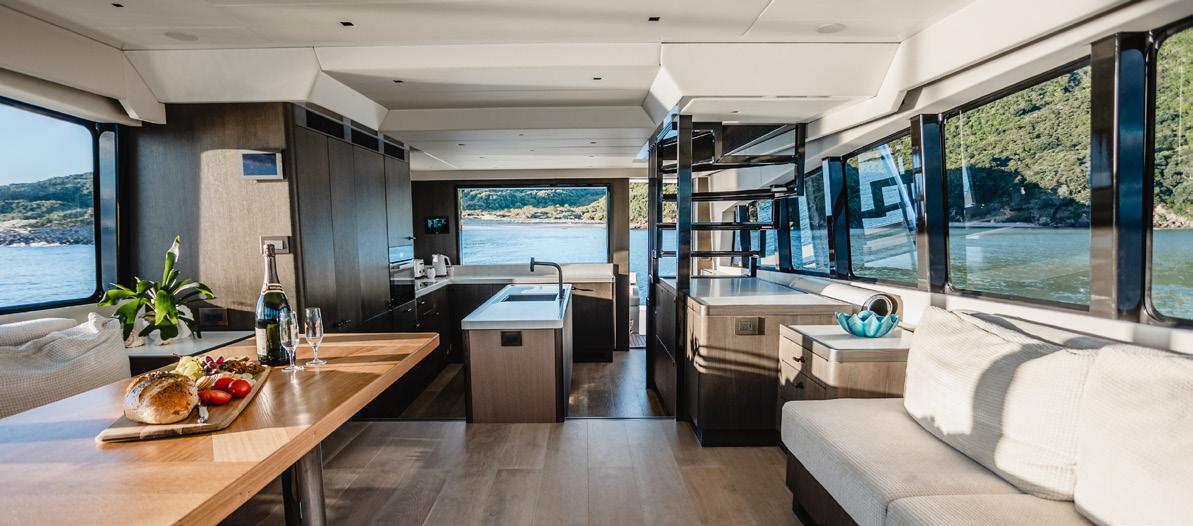
Out the back, a poop deck provides a superb wee grandstand from which to watch the fishing action below, as well as a handy vantage point, complete with docking station and 12in Axiom screen, from which to control the boat. There is also an electric/hydraulic control for the 15m-long outriggers and more rod holders (another 9).
Another drop-down electric window complements the sturdy stainless steel door, adding more ventilation and ensuring the two flybridge areas easily connect. When it’s time to anchor, there’s a Muir 4500 capstan windlass to do the heavy lifting and, for getting to and from the shore, a 5m tender (built in-house, of course) and its 60hp Mercury are able to be easily launched and retrieved thanks to the Steelhead ES1500 davit. And, should things somehow go horribly wrong, there is a self-deploying 8-man liferaft.
There are a couple of other pretty special bits of kit, too. An Electroguard live anoding system automatically neutralises any stray electric current in the waters around Paragon and a Seakeeper 26 gyro stabiliser ensures the boats always remains on an even keel.
SUMMARY
This first L70 is not just a stylishly-designed, extremely-practical ocean-going vessel, it is a pretty good performer, too. Despite weighing in at around 60 tonnes, it boasts a top speed of 36 knots and cruises at 9-10 knots using 2.51 litres per nautical mile. With a 9000-litre fuel capacity, it easily has the range to get from its home port of Whakatane to this winter’s cruising ground in Vava’u in the north of Tonga.
While the L70 was Legacy Marine’s first offering it is by no means the company’s only. There are already two L35s and a L45 in the water and a L52 catamaran and L55 enclosed flybridge sportsfisher under construction. There are, no doubt, many more to come.
PACIFIC POWERBOAT REVIE WS _ LEGACY MARINE L70
Hard-wearing timber floors ensure Paragon’s interior is as practical as it is luxurious.
68 JULY / AUGUST 2023
A new era in Aluminium Motor Yachts
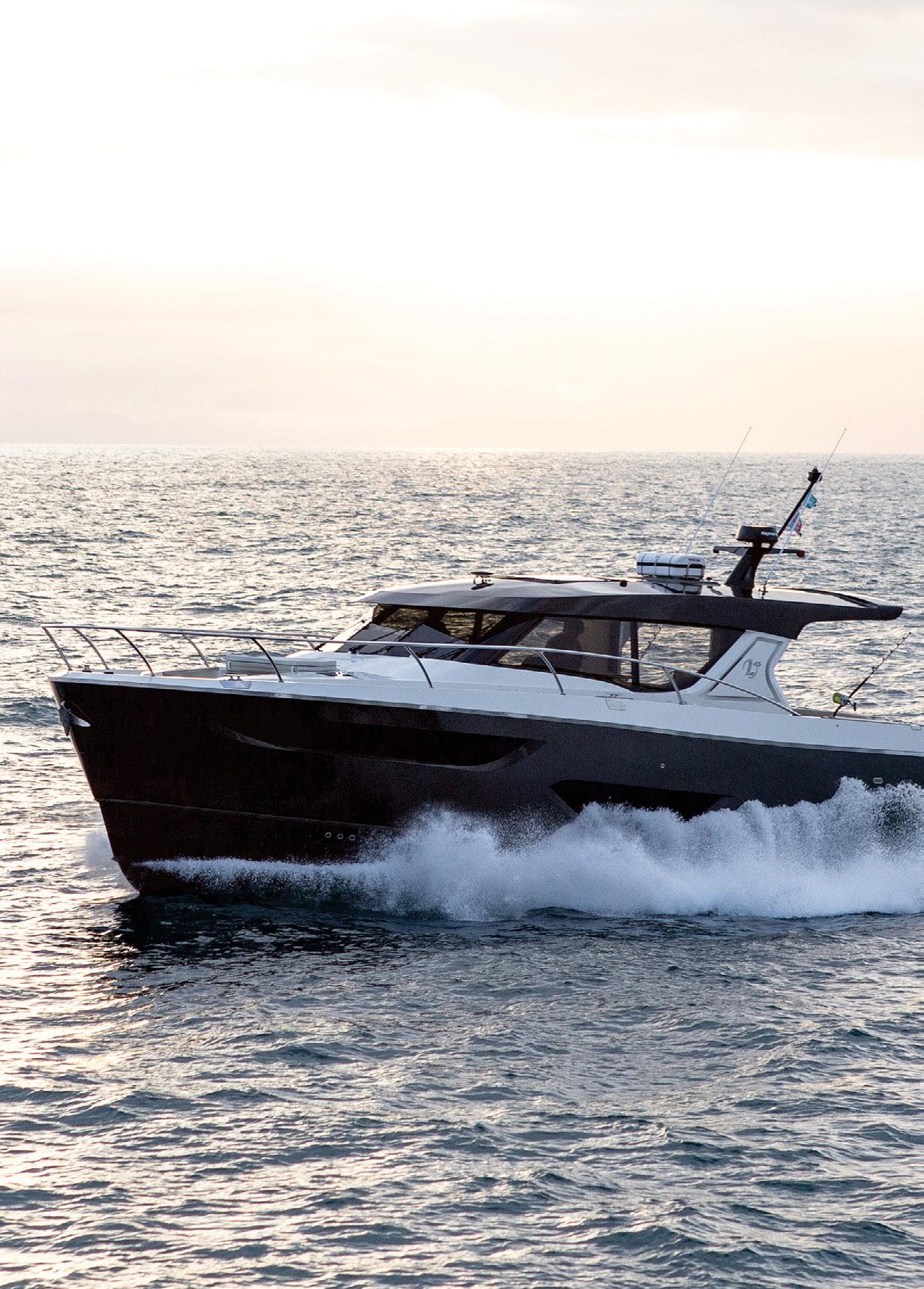
S U P E R I O R
I N E V E R Y W A Y
Legacy Marine has been established with the vision to better what exists - not match it. Equally suitable for those that thrive on offshore adventures or the inshore entertainer, the Legacy range inspires confidence in every way and will fulfill your on water desires in unmatched comfort, quality and functionality. It is time to live a life full of endless possibilities and experience the exceptional - it is time to create your Legacy

W W W . L E G A C Y M A R I N E . C O .N Z L 3 5 | L 4 5 | L 5 5 | L 7 0
BUDGETING & PLANNING FOR A FIJI PASSAGE
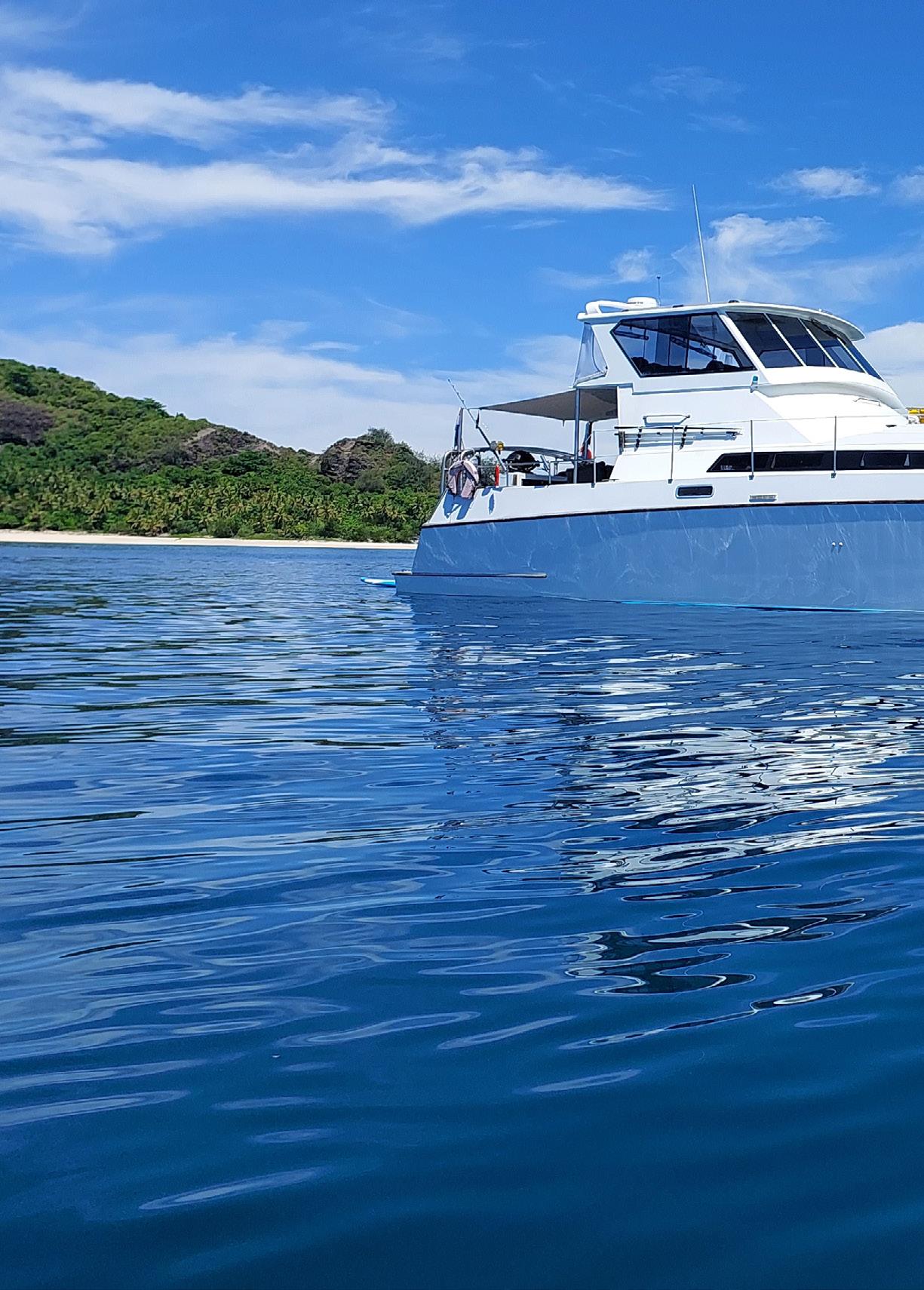
What would it take to buy a boat, kit it out, learn how to sail and get it to Fiji ? One New Zealand couple did just that and this is their story!
WORDS BY KEVIN LUDLOW
FIJI _ BUDGETING & PLANNING
70 JULY / AUGUST 2023
Whilst sitting at the bar at Musket Cove Yacht Club in Fiji during a week's holiday, we heard about a couple's adventures sailing around the South Pacific for ten years, it sounded great. We got back to Auckland and almost immediately went into the first Covid lockdown. This gave us plenty of time to begin our search for the right vessel - this was the start of our adventure. The ‘we’ in this tale are myself, Kevin 53 and Sonya 46, the youngest of our five children (from blended families) was about to turn eighteen and had just gone flatting. We both had some boating experience, mainly lake boats for skiing and wakeboarding. I had spent a little time on friends' boats in the Mediterranean many years before.
What would it take to buy a boat, kit it out, learn how to sail and get it to Fiji ?
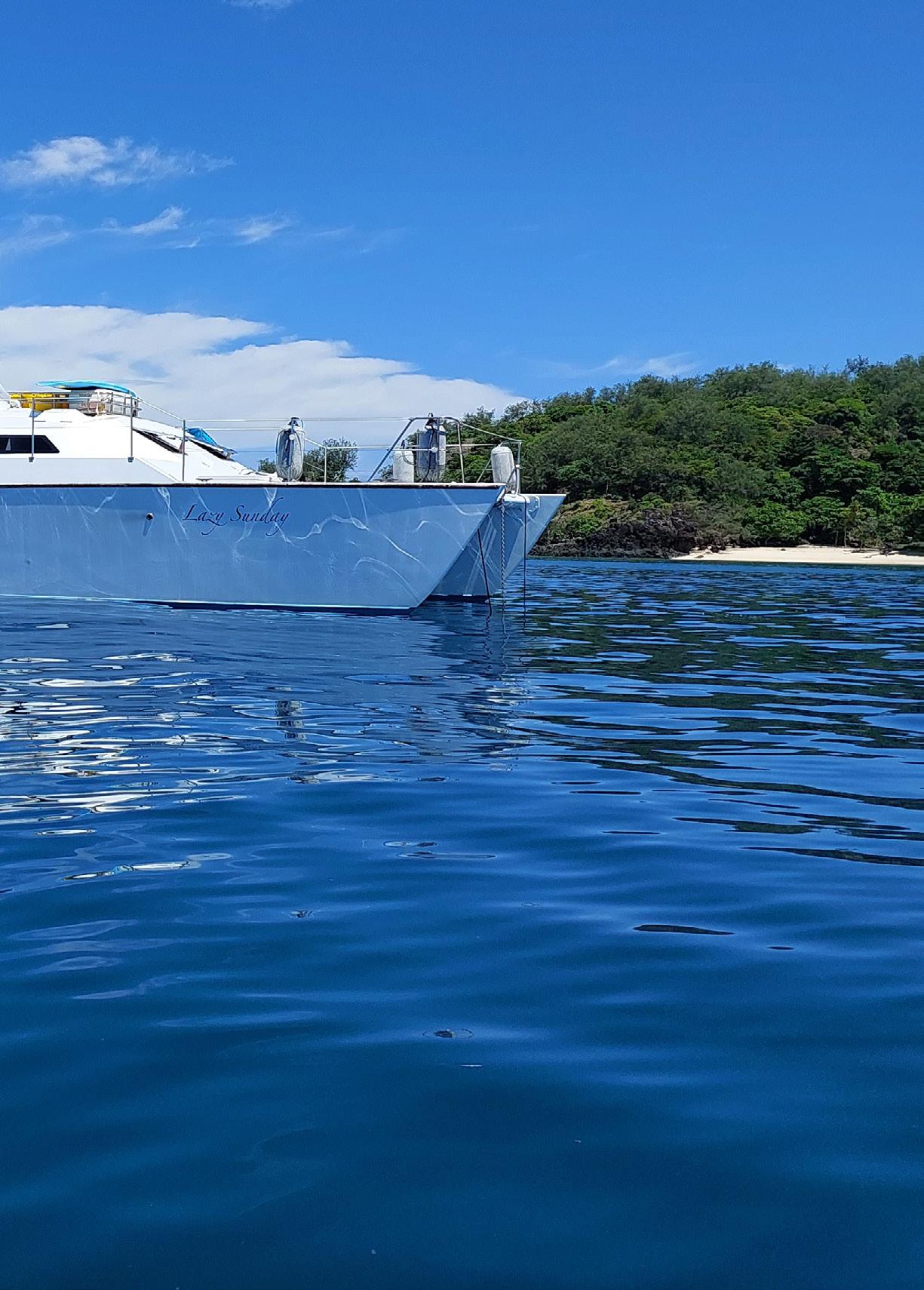
We started with a budget of $150k NZD for purchase and $50k to get her ready, this snuck up to $200k and $100k quite
quickly. At the time we were looking at sailing, as every boat at Musket marina was a yacht and that’s how we thought it had to be. Looking online we soon had a shortlist, plus an ‘almost free’ boat that a friend's father was trying to get rid of. Lockdown ended but still not much travel or association was allowed, the list got longer. Brokers were obviously being inundated with enquiries at the time as they either never got back to us or lost interest once they heard the plan.
Anyway, we went to see the almost free boat at Gulf Harbour in Auckland. It appeared to be in pretty good shape but needed a new motor hence the almost free. The big downside for me was its size, a fraction over 10m, how could we live onboard something so small ? Sonya fell in love with it immediately, “Lets have it, learn how to sail then find the boat we really need”. I soon talked her out of that idea and off we went to Whangarei to look at some more. Now it was my turn to fall in love, from
the pontoon at the marina I could clearly see the Mason 48 we were there to view but couldn’t get through the gate to it! It looked perfect - fresh paint, newly stained teak and deck fittings polished to within an inch of their lives. Finally we got onboard, the owner and broker had been onboard plotting while we were waiting. Covered pilothouse, large living area, rebuilt motor, new electronics to be installed – it was looking good. In my mind the cabins were too small but I was quickly told they are that size on yachts. The owner’s cabin didn’t even have a double bed, maybe a king single at best. There was room for the bed frame to be extended and I mentioned this to the broker, “You wont sleep together on passage and it will be too hot in Fiji so don’t worry about it” was his answer. The Mason was currently in first place on our list.
Next was an aluminium Ovni 43, on the hard with a young French couple living onboard. They wouldn’t get off for the viewing so five of us crammed into a very
POWERBOATMAGAZINE.CO.NZ 71
Looking pretty at Navadra
small space for almost an hour. It was immediately struck from the list. On the way back to Auckland we stopped to see another near Warkworth, I remember little except it was 53’ with a very dark wood interior and plenty of green paint, two no goes for me.
The Mason was looking to be the one, so I rang the broker to go further and was advised that the price no longer included new electronics or the tender and outboard – Really!?!? An email arrived from him listing what we would probably have to spend to get her ready to sail, anywhere, not only to Fiji. It soon became clear why I had fallen for her, there was no clutter on the deck, or anywhere for that matter. The only thing that hadn’t been removed was the rigging. There were no sails, lines, fenders, nothing. It was all to be bought – by us!
The only other yacht worth mentioning was a Moody 43 we were shown at Gulf Harbour. Sonya loved its white interior (the purple leather on the couches needed replacing) and decent size master cabin. I was dubious of the 2.4m draft and the oversize sails (very experienced racer owner apparently). A phone call from the broker
one evening advised us it had to be sold and offers would be looked at. Sonya wanted it, I didn’t. We knew nothing about sailing in Fiji (or anywhere else for that matter) but I remember being told that the deeper the draft the further away from the islands you had to anchor (oh how I laugh thinking back to that now). I also didn’t want to learn how to sail in a semi race boat. Sonya made a drunken offer, it was accepted – I was not happy. I have never wriggled out of a deal before (a shaken hand or an offer was always a done deal) but, on this occasion, I just couldn’t, nothing was in writing so thankfully, I got us out of it.
Back to the internet and I started looking on YouTube for ocean crossing powerboat videos. Aha, it could be done, trawler style were the key words and, if you are working on a larger budget than us, Nordhavn was another. This quickly led me on to TradeMe with new search parameters and a very short list was in place. No point going to see any of them until I did some more homework, out came the calculator. I based everything on the crossing to Fiji taking six days (144 hours) so, in an ideal world, something that burned ten litres an hour (10l/hr) would be perfect but we could go a little higher
if need be. And if you remember what the price of diesel was in May/June 2020? A lot less than now!
Hmm, this was going to be like finding a needle in a haystack. Most powerboats are……. powerful, which wasn’t going to work in my plan. There were a few trawler styles available but either small or expensive, maybe just out of our meagre budget. What I needed was something to jump out at me and make me want to go and view it.
There it was, a 1963 DeVries 17m steel motor yacht, powered by twin 110hp motors, it had arrived in NZ in the 80s so had definitely crossed oceans before. Apparently much money had been spent by the current owner getting her back to a usable state.
I spoke with the broker, advised our plan and organised a day to view her, he also thought he had a couple of other listings that may be of interest. Once again I was travelling to Whangarei on the road that I hated the most in NZ, single lanes, logging trucks, steep hills, 50 km/hr through villages – grrrrr. I rounded the corner and started to see boats on moorings and
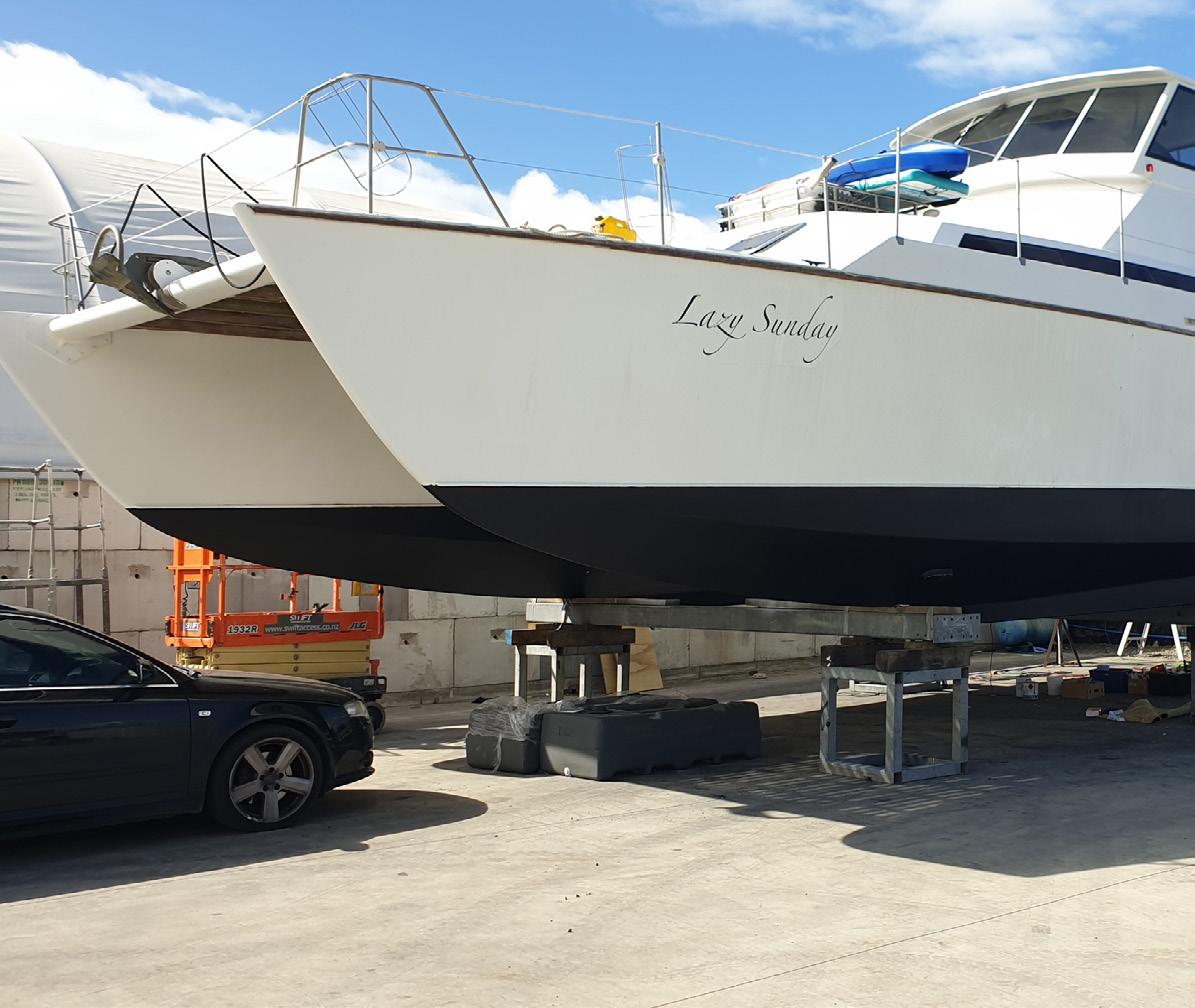
FIJI _ BUDGETING & PLANNING 72 JULY / AUGUST 2023
then….. there she was, side on, looking majestic. I imagined Grace Kelly stepping off her, in St Tropez in the 60s, maybe James Hunt in the 70s. The broker arrived and launched his dinghy, we putted over to her, my love fading with every metre but there was still hope surely?
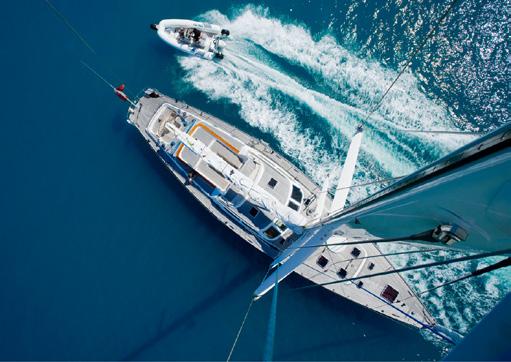
We climbed onboard via the, what I considered, very classy folding steps and platform. My first step on deck was greeted with a squirt of water through the teak just in front of me – oh no! Every step caused another squirt or puddle, I now knew why it needed new teak but instantly I thought ‘what will the steel be like when the teak is removed?’
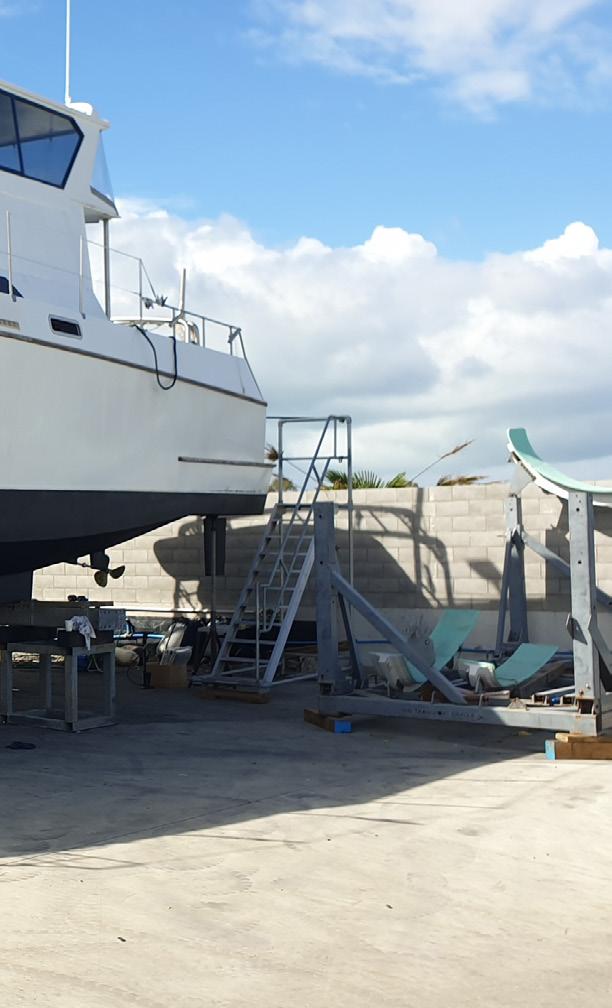
Into the bridge and there was water on every surface, no seals on the sliding windows allowing rain and spray in constantly. The ‘electronics’ package reminded me of that from a submarine in a WW2 movie. Further in and my mood was lifted, money had definitely been spent in the galley and main bathroom. Stainless steel tops throughout the galley, full size stove, decent cabinetry and plenty of room for refrigeration to be added. The bathroom had been tiled throughout and resembled a wet room style seen in hotels – very nice. Down to the engine room, I don’t remember too much, other than there being no history whatsoever of any maintenance and no hour meters.
I left still with some hope but that was quickly dashed when I got back home and started researching teak decks on steel boats, MAN engine rebuilds and electronics packages. Actually, what crossed it off my list more than any of those, was the broker saying that the price was firm, the owner would not budge a cent
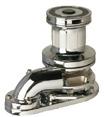
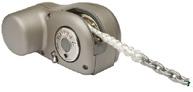
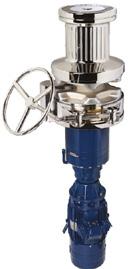
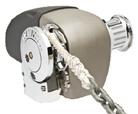



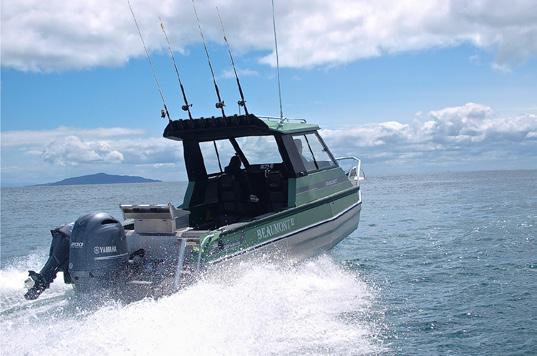
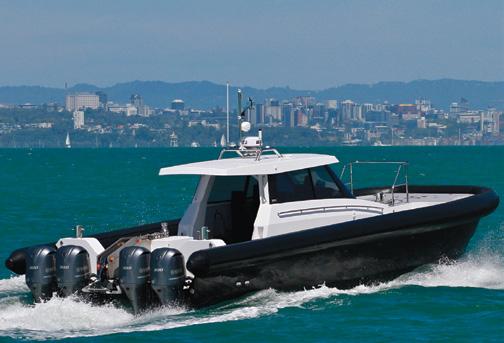
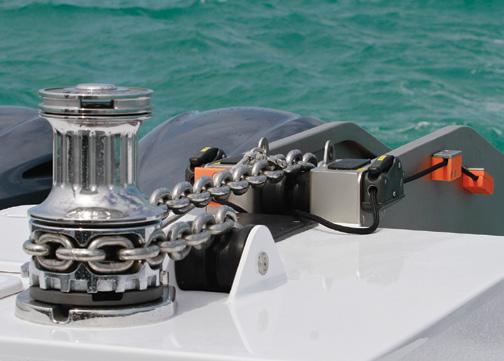
POWERBOATMAGAZINE.CO.NZ 73 www.maxwellmarine.com KEEPING THE WORLD ANCHORED SINCE 1969 www.maxwellmarine.com www.maxwellmarine.com THE WORLD ANCHORED
Clean bottom at Tamaki Marine Park
on the price, despite it having been on the market for a long while.
We loaded up the dinghy and drove another 20 km to launch again. I could see the boat about 400m away, it certainly wasn’t pretty to look at. If it had been grey I would have expected a gun on the front, maybe it will deter pirates? The closer we got, I knew some paint was required but OMG it looked terrible with rust, and rust stains all over the white topsides. When climbing on I could see that the blue hull paint was bubbling everywhere too. Apparently built to do exactly the trip we were planning, the owner lost interest at the end and had a quick coat of automotive paint applied without sandblasting and sold it on. I understand, but cannot confirm, that the owner we were dealing with now was told this and was going to get it properly repainted but did nothing for the three years he owned her allowing her to fall into this state.
Luckily I had gone alone to these viewings as Sonya would have not have even gone aboard, if she had, I think there would have been screams. There were beer cans
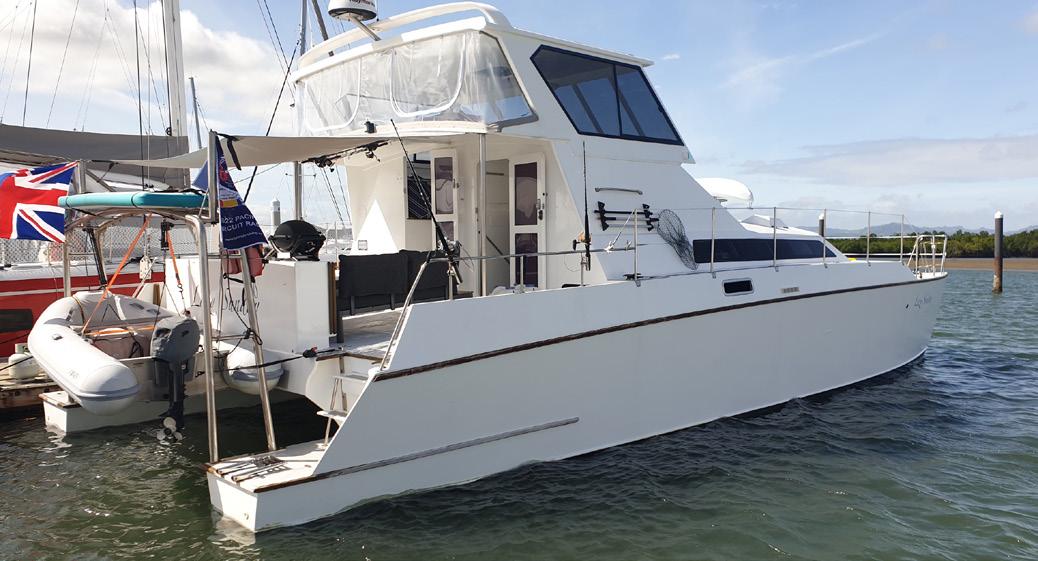
throughout, empty cans and some bottles strewn everywhere, no carpet could be seen and cigarettes had been put out on the galley benchtops and in saucepans. My super sight saw through all this and looked at the modern style and luxury fittings used, the captain's seat and the array of electronics, the amazing visibility through huge windows – it would be perfect! Down into the engine room and I was in love again, a single MAN 400hp (detuned for continuous rating) with only 300 hrs on the clock. Possibly a bit thirstier than we wanted but I’ll come back to that. Ten house batteries, fuel polishing system, fuel transfer system for balance, watermaker, etc, etc – yes please!
Back home and I had some serious work to do on convincing my wife. I had told the broker that it had to be tidied up (a lot!) before I could possibly bring her to view. No amount of explaining what it could look like inside (while tripping over beer cans) was going to work. ‘Sorry darling I left my phone in the car’ got me out of showing her anything other than the brokers website pics and a warning that the exterior needed cosmetic attention (‘maybe 20k darling’)
got her to agree to take a day off work and join me on the terrible roads to Whangarei again. The broker advised it was tidy, date and time was agreed and off we went.
Her smile was dropping a few millimetres with each 50m we travelled across the water until it had become a frown. My hopeful grin did not improve the situation. The electrically operated duckboard had been lowered (I don’t remember using it on first visit) and we climbed aboard. I think the original plan would have been to use wood but, maybe, in the final cost cutting a piece of white plastic (think kitchen chopping board) had been used. Unlike a kitchen chopping board it was incredibly slippery and the three of us skated in through the transom gate and onto the checker plate style rear deck. Sonya immediately saw the built in washer/dryer, sink and chest freezer, a hint of a smile? But she soon went back to looking at her feet and the rust that was either plainly visible or bubbling up through the white painted checker.
Inside, and I was thankful that the owner had done a pretty good job of tidying up, not a beer can or ciggie butt in sight.
FIJI _ BUDGETING & PLANNING
"Her smile was dropping a few millimetres with each 50m we travelled across the water until it had become a frown."
74 JULY / AUGUST 2023
On the Q dock at Denarau
We wandered around and the smile was definitely returning – hooray! Up to the flybridge and it started to go again, more rust and stains everywhere, even I was now dreading to see a paint quote. So a deal was struck, subject to the usual survey and sea trial, but I had also built in a ‘get out’ clause if the paint quote was more than $60k (yes I drifted up a little bit on my original guestimate).
I joined her a couple of weeks later for the cruise round to Whangarei harbour where she was to be hauled out, paint quoted then surveyed. She went amazingly well, cruising at 9 kn. I think the motor was under 1000 rpm, and docking was easy, with bow thruster and joystick steering from the flybridge. I just couldn’t believe she was in our budget.
While still in the water one paint guy arrived, looked and walked away saying it was too big for his company to tackle. The next arrived and he said yes they could do it and would prepare a quote as quickly as possible. A couple of days later and I got the call I wanted but without the news I wanted. ‘We are up to $120k and haven’t finished, do you want me to
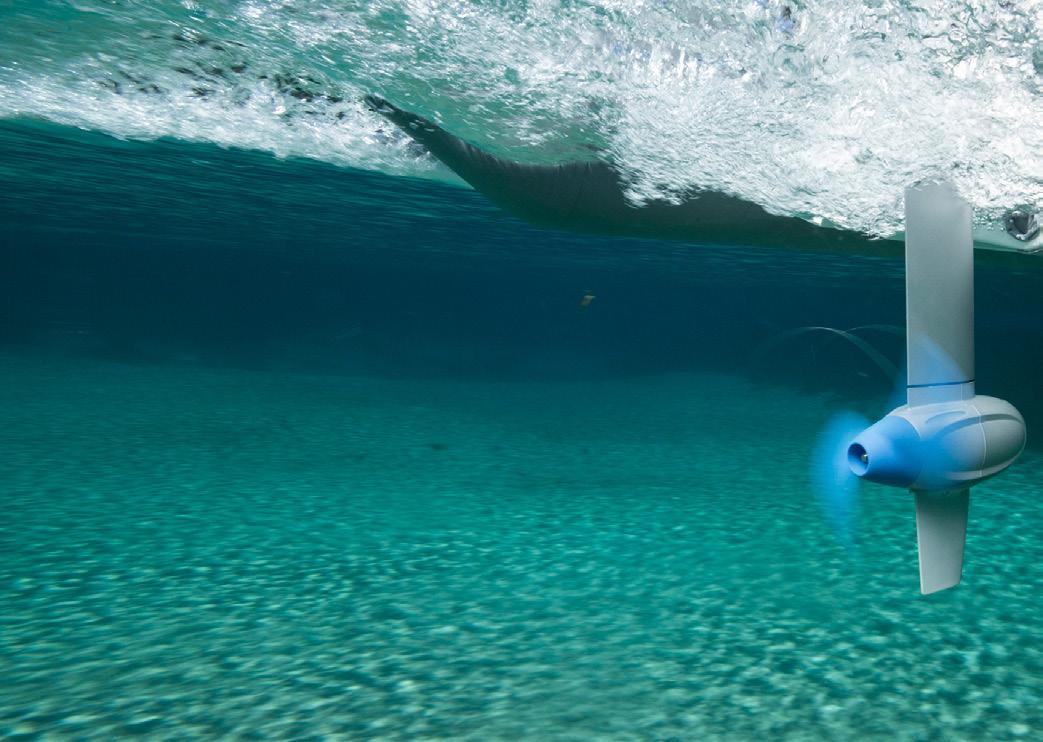
go further?’ I disappointedly said no and we chatted about how it had got so high, I also found out there would be lots of extras that couldn’t be quoted for. The entire boat needed sandblasting which meant removal of every deck fitting, window and electrical item. There was every possibility most of the windows would break during this procedure apparently and removing rusted deck fittings is an unknown quantity so there would definitely be some fabrication work too. A chat with the broker then a further call advising the owner would not renegotiate at all meant we were walking away. Despite being a pretty ugly boat it would have been
perfect if the owner had just done what he should when he bought it.
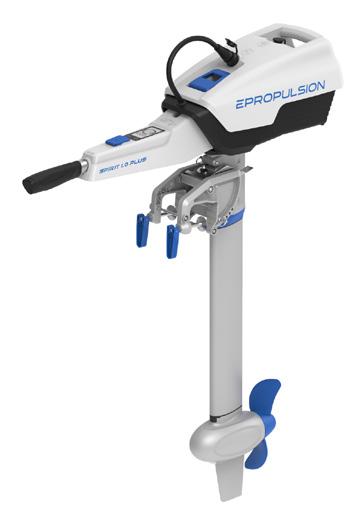
My wife had had enough ! ‘I’m not looking anymore’ she said, ‘I need a break from boats’.
So I rang our broker, he was the only one we were dealing with now, and advised him not to call for three months while we got over our disappointments and relaxed a bit. It was only a couple of weeks before I saw his name flash up on my phone screen ‘this had better be good’ I answered with.
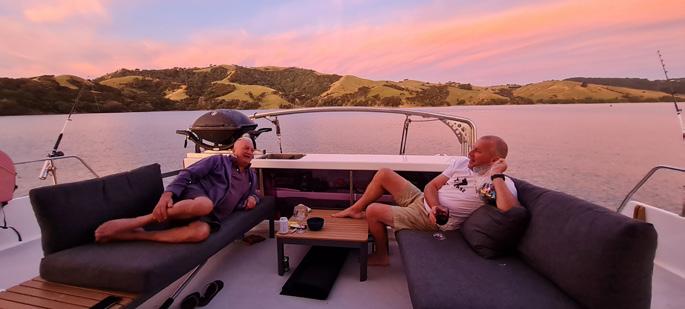
Winter entertaining POWERBOATMAGAZINE.CO.NZ 75
He said it was and asked if I remembered the powercat he had mentioned, yes I did but it was well out of our price range (the last advert I saw said $295k and I knew it had started off around $375k). Apparently the marriage breakup it was involved in had become so toxic it had to go, plus the marina berth it lived in (with the wife living onboard) had just been sold and they had done quite well with that. Off I went on my least favourite road to Tutukaka marina.
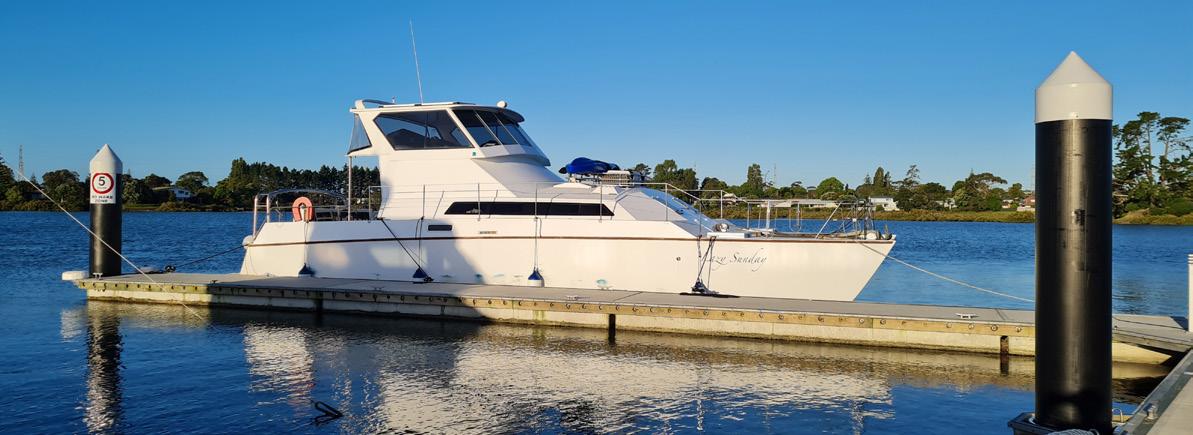
So, Westaway was a 15.2m Ron Given design sailing catamaran that had had its sails and rigging removed and a flybridge added. Apparently the owners had a sailing cat but wanted a powercat for fishing trips too. At this point I will mention that getting any info about the vessel was quite difficult, the wife not knowing too much about its original purchase and the works completed and the husband not really contactable. That may have had something to do with the time it had been on the market but I think the main reason was that it had such a limited customer base to appeal to. As a sailing cat it would have sold immediately at its original price point (high 3s) or as a powercat with twin 300hp engines but a sailor didn’t want to pay for diesel and a power boat owner, normally, wants to get somewhere quicker than her 65hp Volvos would allow. For us things were looking good.
I left with plenty of pics and drove back to AKL to my wife’s office, we then drove to Gulf Harbour as I had organised another viewing for the day. A 42’ trawler style with a newly rebuilt 135hp motor and new electronics, for sale by owner. It was a lovely craft, in pristine condition throughout, and, if I’m honest, I preferred it over the powercat. The only downside was the ladder to the flybridge, my wife had recently had surgery on her knee and it hadn’t made it any better, so this would be an issue. That evening she studied pics and listing
details on TradeMe, finally announcing that real estate was king and we should go for the bigger of the two. Not quite my way of narrowing down a purchase of this magnitude but who was I to argue?
I wanted to offer $200k but thought it a little too harsh, as I thought a broker would take 5% we went in at $210k so they would get a clear $200k, obviously subject to survey and sea trial.
Now, big advice time, DO NOT employ the services of a surveyor because of their nice website and because they seem like a nice chap. Ask friends, ask at marinas and look at sample surveys. I did not do this and it caused many problems and expenses down the line. Also, never ever use the services of said surveyor who advises he is also a boat builder and can deal with all of the issues that arose in the survey in a timely and professional manner. That is all I will say on the matter, apart from that nearly seven weeks later we got to collect our (unfinished) boat, now named Lazy Sunday, from Whangarei and not the two weeks we were advised.
After all that, the big job started, learning how to operate this 15.2m x 6.9m beast was fine but docking was not so easy. Another tip, do not buy a boat and then try to find somewhere to keep it (unless it’s a trailer boat and you have a quarter acre section). We had no idea that there were so few catamaran berths in Auckland and even less idea that they were all full as very few had been able to leave New Zealand because of Covid. Brooklands Boat Club (BBC) at Clevedon (Wairoa river) came to the rescue and offered us an 18m pole mooring. I had no idea what that was, but took it anyway and drove down to have a look. What could possibly go wrong? There were lots of boats there including a much larger cat than us (Cool Bananas, a lovely looking vessel) so how hard could it be. Well for someone
who knew very little about currents, windage, etc it was pretty tough but a great learning curve. Much shouting from helm to deck on both departure and arrival from the BBC strengthened our marriage too (I can say that now but at the time……). It actually got to the point where we both got nervous and snappy while driving to the BBC to leave or when we pulled anchor somewhere to head back. I would however, highly recommend BBC, it was incredibly friendly with knowledgeable people and had some services, all for an incredibly reasonable price.
It was whilst investigating places to be hauled out that I came across Tamaki
FIJI _ BUDGETING & PLANNING
76 JULY / AUGUST 2023
Last day at Tamaki Marine Park
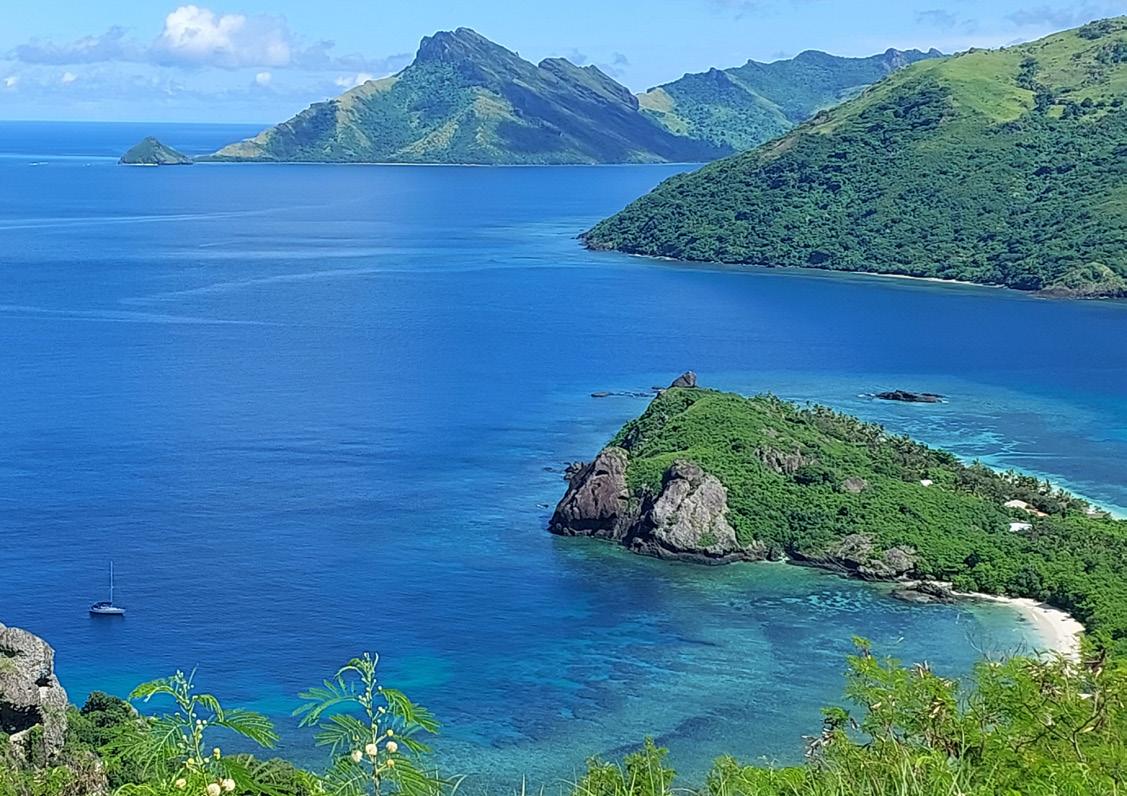
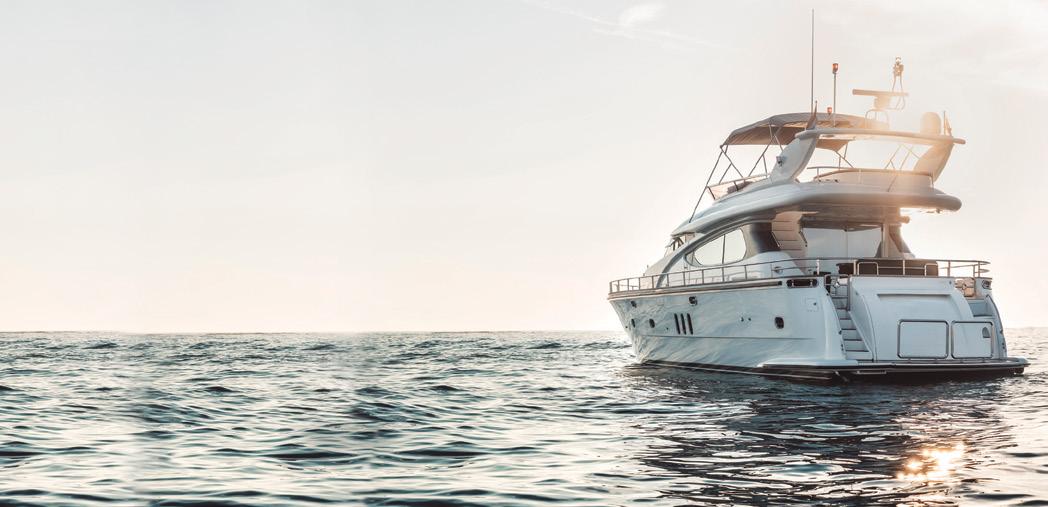

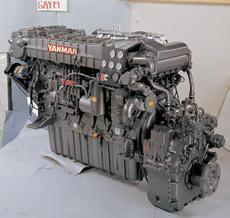
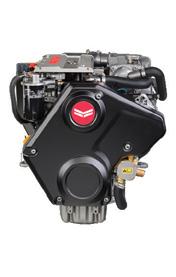
POWERBOATMAGAZINE.CO.NZ 77
Marine Park (TMP) at Mt Wellington. I drove out to look at the facilities one day and realised that I had been down the street many times but had no idea there was a river or marina at the end. Whilst organising the haul out I asked if they had a berth free for us. After yes was the answer, more paperwork was signed. Now I could organise contractors to carry out some of the works I knew were required that were too big for me to do. Three weeks later we zigzagged down the Tamaki river to Lazy Sunday’s new home.
Condon Marine Services at TMP turned out to be one of our best finds, all work carried out in a timely and sensibly priced fashion to a super high standard. I even started turning up for Friday pm beers with them each week, they were polite enough never to tell me I wasn’t welcome. Following is a list of works completed by myself and other contractors over the next year, most of this was done while in the water, only a few jobs required hauling out and I would pack those together so we only spent a total of three weeks on the hard in that year.
Raymarine Axiom 9+ chart plotter & auto pilot, Raymarine Quantum Radar, complete rewire, solar install – 1245w of panels, 800ah Lithium Ion batteries, dinghy arch, new forward hatches (750x750), new anchor chain 100m, new rope rub rails, new bilge pumps, new water pumps & accumulator, new hosing throughout, new basins, shrub, taps, etc, new plastic diesel tanks fwd & aft plus shelf in front locker for 15 x 20L jerry cans each side, Rainman watermaker fitted, Natures Head composting toilets installed, side portholes resealed, new VHF radio x 2, new floodlight, new flare packs, fire extinguishers throughout, hulls repainted, flybridge repainted, Kiwi Grip on deck repainted, liferaft (8man) installed, new steps to flybridge, new sugar scoop steps, new convection oven, induction hob, etc, new dock lines, new fenders and new latches throughout.
Our other amazing find was Brad at A1 Marine Electrical, after being let down by several electrical companies either not turning up or, at the last minute, advising they were too busy he was a god send.
I had done quite a bit of online research regarding solar on a boat, the general consensus was that unless you had a full Victron/Battlborn system it would fail completely and burn your boat down in about a month. I also did some research
with friends who owned coastal baches and had solar which proved interesting. One of these friends previously owned a boat and said he had seen no difference in the quality of equipment installed on that than he purchased for his bach. He gave me the supplier's details and off I went. I wanted 3 x 415w panels and between 800 and 1000ah of lithium batteries all to be used in 12v. I don’t know why I insisted on 12v as lots of people advised me 24 or 48 would have been better. Maybe my limited knowledge of electrical stuff contributed and the fact that the Volvo’s are 12v.
My opinion remains that the solar system is only as good as its installation so more thanks go to Brad at A1. We didn’t even plug into shore power at the marina in NZ after its install and we’ve only used the generator in Fiji on a few occasions when there has been bad weather for several days.
It was whilst on the hard at TMP the first time that someone mentioned this thing called Cat 1, apparently some sort of safety thing to stop stupid English/ Australian couples taking to the waters of NZ before heading to the islands. It turns out this wouldn’t affect our plan as we had registered Lazy Sunday overseas because we did not know where we would end up with her. In the end it did affect our plan as once my wife got wind of it she said the rules were there for a reason and we should abide by them. We left New Zealand with the Island Cruising Rally (huge thanks to Viki Moore) who required a letter from a Cat 1 inspector confirming that Lazy Sunday was up to a high (if not quite Cat 1) standard. The only couple of things I think we wouldn’t pass on are window storm covers on the flybridge and internal floors screwed down (I needed to be able to check engines each day). We did the medical courses and ‘in sea survival’ (well my wife did, I couldn’t swim at that point so no point me doing it) - you have to have at least one experienced blue water crew member onboard for Cat 1 as well. We already had one crew member sorted, a good friend who had some boating experience but was calm under pressure and had some mechanical and electrical knowledge. My wife decided that we needed a fourth and spoke to the parents of her daughter's friend who were volunteers in the Coastguard. The father would love to but couldn’t at the time we wished to go so they put it up on the Coastguard chat group and the next day
we got an email from a chap who became the fourth musketeer.
On the 4th May 2022 the four of us were sitting on the back of Lazy Sunday going through a few things when my wife announced “I feel that because of Kevin’s cavalier attitude to safety and procedures I should be skipper on the passage”, she sat back in her seat and waited. “Yes, I think so too” said I and the other guys agreed. She let out a sigh of relief and laughed “that was easier than I expected”. So with a new skipper (not at the helm) on the 6th May 2022 at 11.30am we left Opua marina knowing that we had seven or eight days to get to Denarau before some bad weather hit Fiji, no pressure then!
There were five or six other rally boats within sight for most of the day and a couple stayed with us for most of that evening. We had been doing quite nicely at 2000 rpm staying around 7.2 kn but as the winds and sea increased our speed started dropping off which allowed a sailing cat past us during the night. I came back on watch in the morning after a pretty rough
FIJI _ BUDGETING & PLANNING 78 JULY / AUGUST 2023
night and checked our progress – not good, averaging about 5.9 if I recall. I upped the revs to 2200 and on we crashed. The first two and a half days were pretty awful, 3 to 4m swells, plenty of chop and wind on the beam.
During day 3 everything calmed and we were able to move around the boat without fear of falling over and we could use the outdoor furniture, we even caught a fish. It stayed like this for a couple of days and spirits were high, everyone had showered, had hot meals, a laugh and our speed was back on track. By now we were at 2400 rpm to make up some of the time we had lost earlier. As a cost saver the new diesel tanks in the aft lockers were not plumbed in, just storage tanks which we had to pump out from. Much merriment ensued as I did
the port side only to find the rotary hand pump sprayed a nice jet over me with each rotation – back in the shower.
Day 5 and the wind and chop returned, we didn’t care now and as the front and mid fuel tanks were full again we wouldn’t need to be outside unless there was some sort of emergency. We were a dry boat on passage but had all agreed that a beer or glass of bubbles would be fine, once when we saw land.
“Land ahoy” was shouted early on day 6 but no one wanted a drink.
147 hours (6 days, 3hrs) after leaving Opua we were tied on at Denarau marina, one other boat (Leopard 46 I believe) from the rally already there (some were going
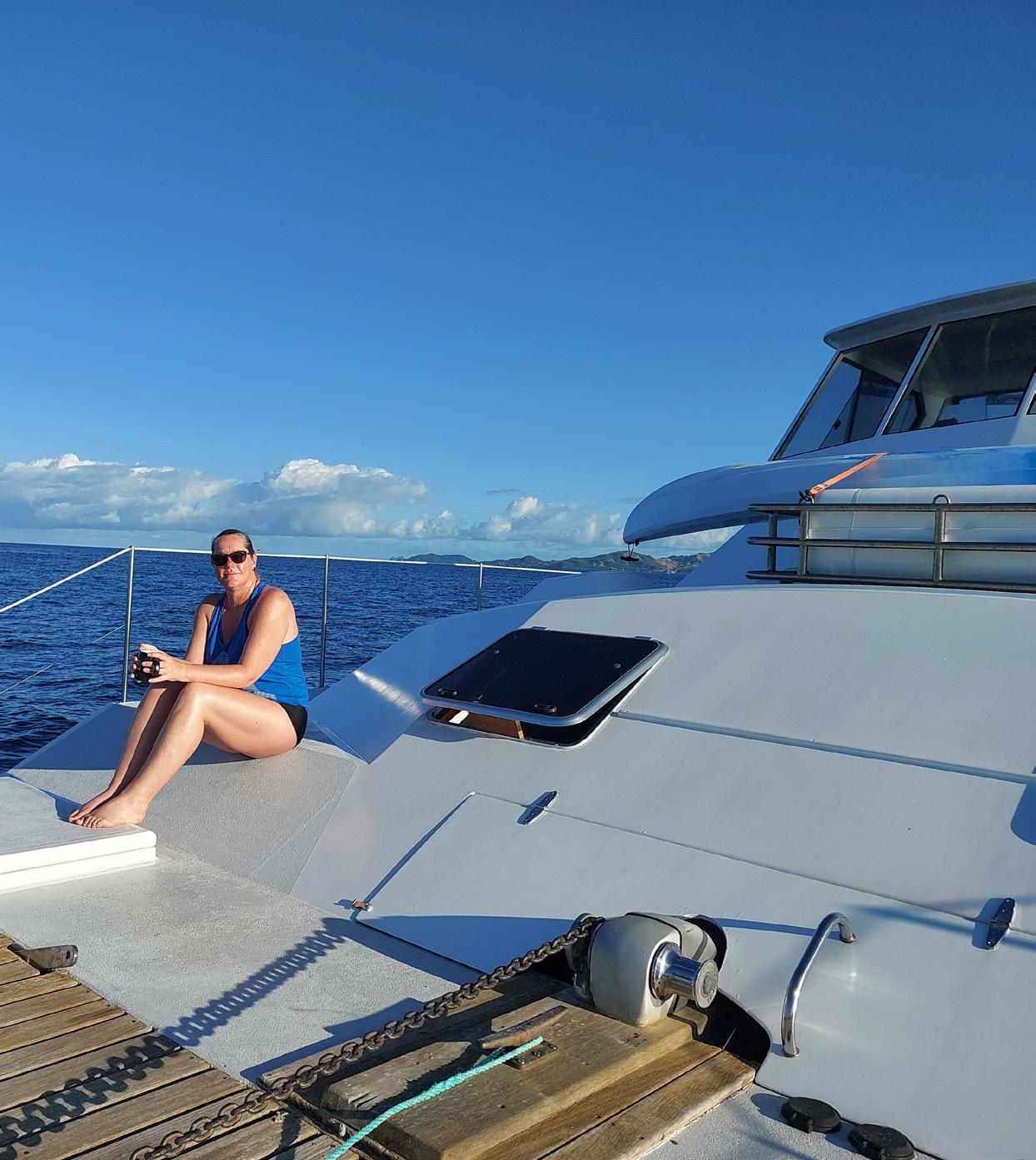
to Savusavu), now it was time for those bubbles. “Would we do it again”? Yes definitely! We learnt a lot from that passage, the most important lesson was planning, especially weather. We were all chomping at the bit to go and it probably wasn’t the best weather window. Since being in Fiji we study the weather much closer and check long distance forecasts daily. We have not been caught out yet even when coming and going from Fulaga (furthest island from mainland). I would wholeheartedly recommend the trip if you were thinking about it - Fiji is such a wonderful place to explore and the fishing is awesome!
Follow our adventures...
FB – Lazy Sunday Insta - @cruisinglazysunday
"Fiji is such a wonderful place to explore and the fishing is awesome."
POWERBOATMAGAZINE.CO.NZ 79
One of many friends who visited
FAMILY
Princess Yachts have been gracing the waters around the world since 1965, and New Zealand and Australia are no strangers to the brand. The imposing new V55, with its vibrant exterior profile, reinforces the brand's commitment to excellence.
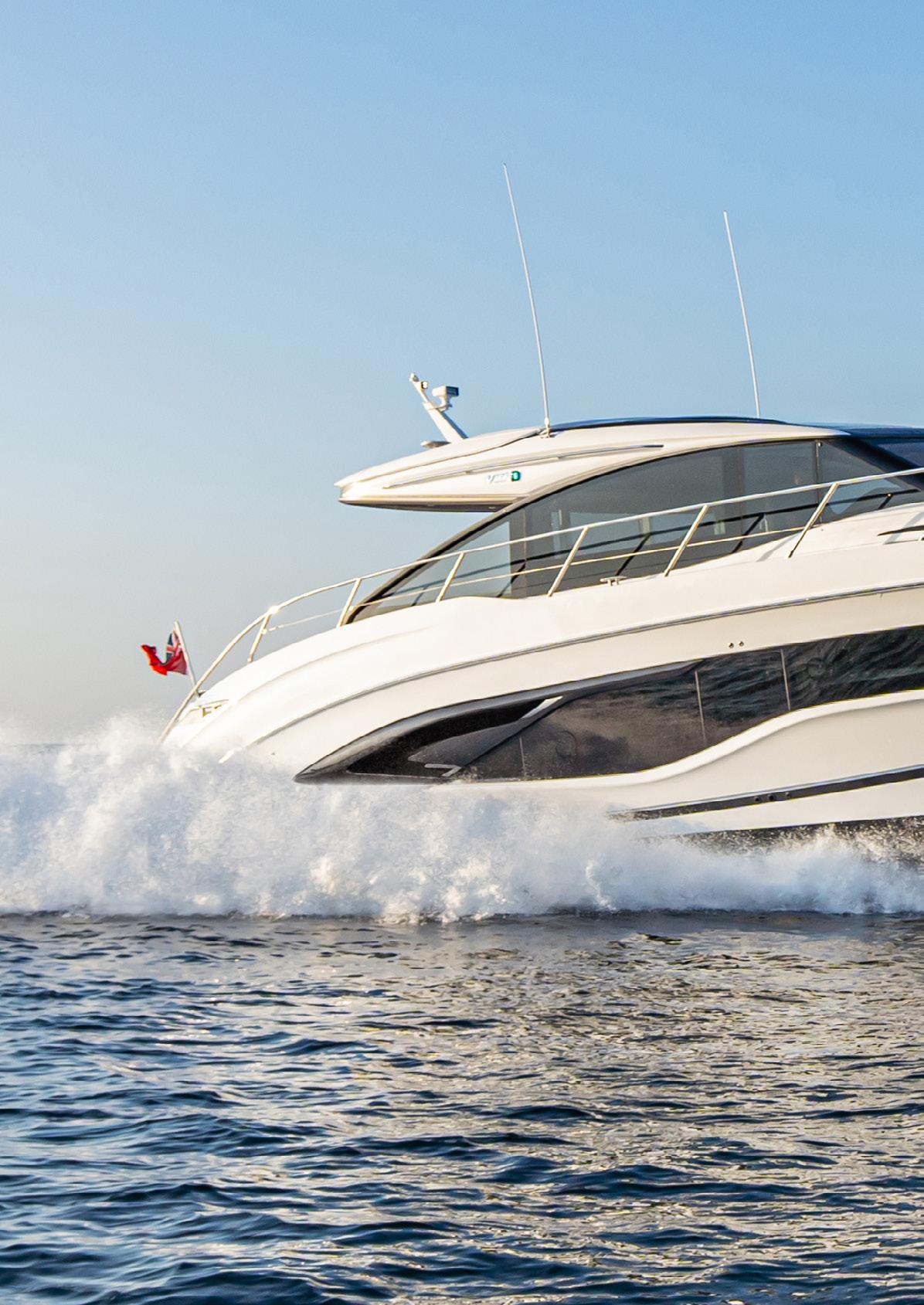
80 JULY / AUGUST 2023
PACIFIC POWERBOAT REVIE WS _ PRINCESS V55
WORDS BY BARRY THOMPSON
HERITAGE
The V55 features all the exceptional performance qualities synonymous with the Princess V Class range, which now encompasses six models. Starting with the V40 right through to the V78, the flagship of the V Series, there is a common theme and styling profile that flows accordingly to the model's dimensions. Sophistication, style and strength are inherent in every Princess, but the layouts also have a sense of purpose.
Princess says that the V55 is athletic, dynamic and

luxurious. Simply put, it is a great performer on the water, looks exceptional from any angle, and is exceptionally well-appointed inside and out. When I first saw the V55, I had to say it was a gold medal winner for exterior styling. The design bears the hallmark of Pininfarina, which worked on the deck in particular. Moored stationary at the dock, I saw that this boat wanted to go and was waiting for someone to cast off the lines. So after a brief walk-through with Jack Ludemann, Marketing and Sales Coordinator for Princess Importers, Sports Marine, we did just that.
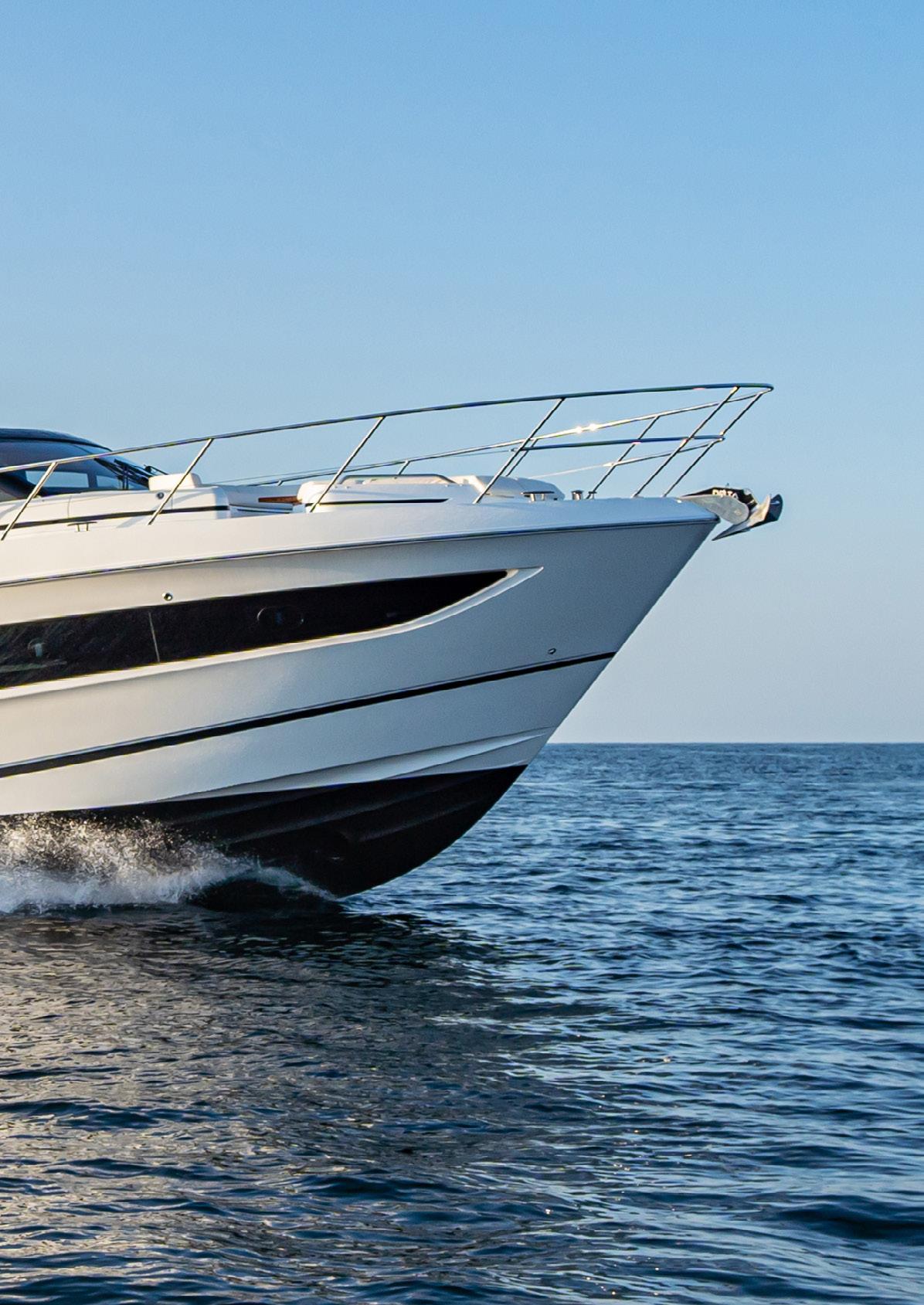 The V55 joins a distinguished fleet including a V65, V60 and V40.
POWERBOATMAGAZINE.CO.NZ 81
VIEW THE VIDEO AT powerboatmagazine.co.nz
If you appreciate a good helm layout then you will love what Princess have done with
QUIET ACHIEVER
As we idled out of the marina, the twin Volvo Penta D13s were humming quietly in the stern, ready to be unleashed. Being a sport sedan style, there is only one helm station, so any engine noise will likely be accentuated at the helm when you drive. In the V55, they have encased the engine room in sound-deadening material that keeps the decibel reading at the helm and even the master stateroom minimal. Full roar is around 70 dB, and at cruise, this drops to around 64db, which is acceptable.
The V55 is a boat that loves to play, and what a pleasure it is to drive. It has just one power option, which is plenty; with 2000hp on tap through shafts, the V55 is good for around 35-36 knots. Pushing the throttles to their stops and dropping the Bennett tabs down, the deep vee hull slid quickly onto the plane and reached
maximum rpm and speed quickly. It handles the choppy water without any issues, with a positive, responsive helm and retains a level attitude when turning. This is also helped by the optional Seakeeper NG9 gyro we had on the boat.
At around 2000 rpm, I did nearly 25 knots using 220 lph of fuel. That gives a range of approximately 250nm. At 30 knots, we used around 300 lph, and at top speed, 35 knots @ 2450 rpm.
If you appreciate a good helm layout, you will love what Princess has done with the V55. The old word ergonomics comes to mind with everything, and there is much where it should be. Controls are all close to hand, and the pair of Garmin 16s MFDs and the Volvo Penta engine management displays dominate the dash.
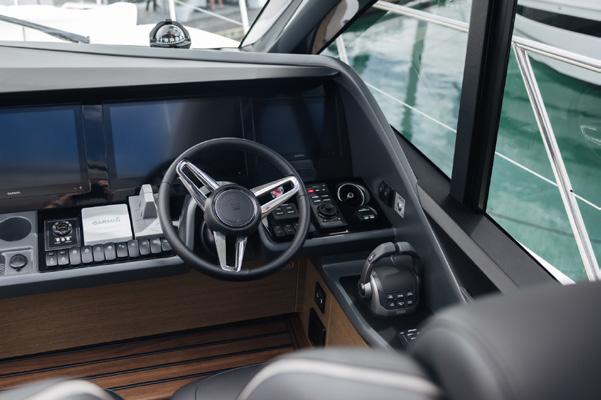
There are twin adjustable seats, with visibility from the helm excellent and with minimal bow attitude, you have
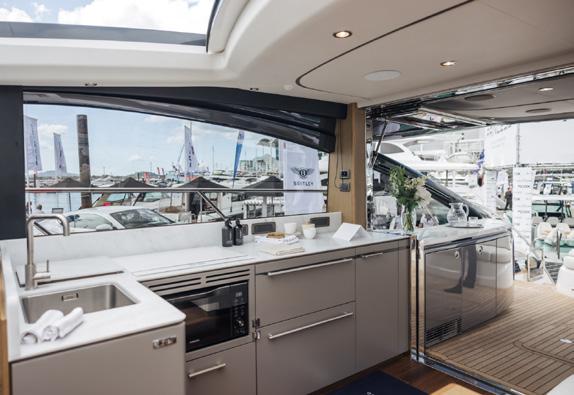
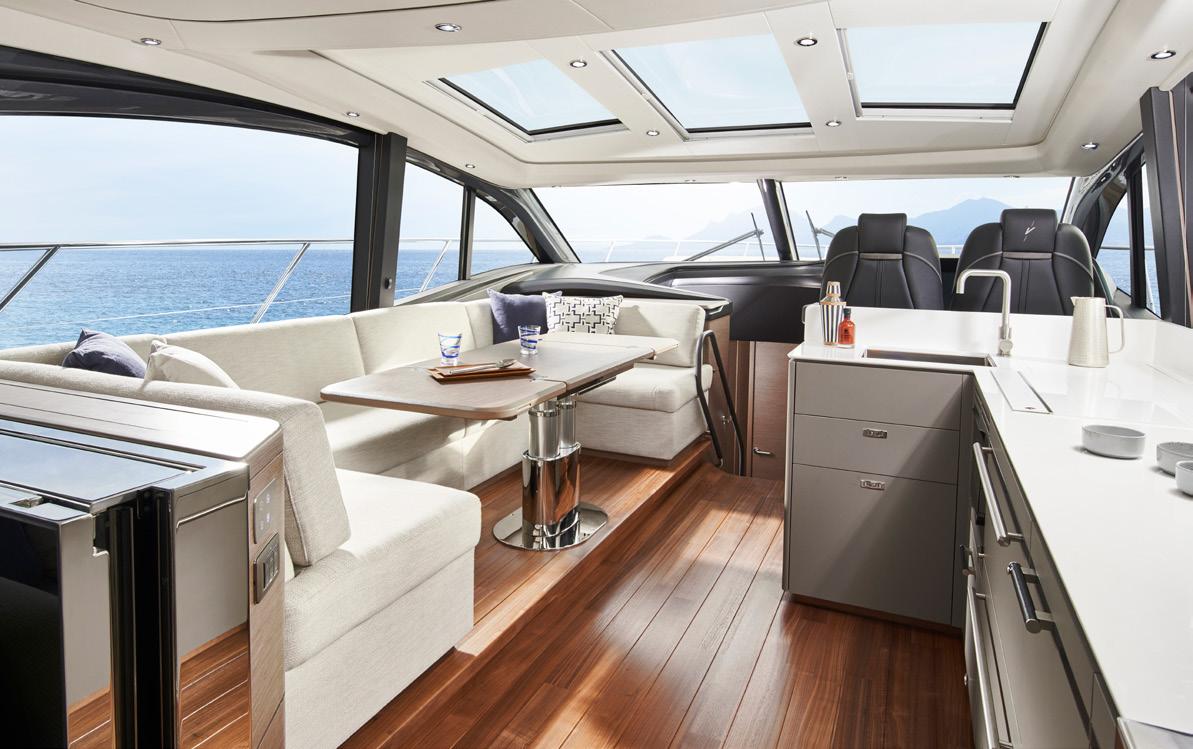 An inviting saloon bathed in natural light.
The galley is one long unit down the starboard side.
An inviting saloon bathed in natural light.
The galley is one long unit down the starboard side.
82 JULY / AUGUST 2023 PACIFIC POWERBOAT REVIE WS _ PRINCESS V55
the V55.
an unobstructed view when underway. Need some fresh air. Then you have drop-down forward side windows and an electric opening roof with integrated blinds. I liked how Princess has kept all the cabinetry down low, emphasising big side windows to maximise your view outside. The galley, for example, is one long unit down the starboard side with all storage under the large white solid-state surface, which includes a convection microwave oven and fridge/freezer. A ceramic 4-zone white hob blends in with the bench top. I particularly liked the hi/low electrical operated glass and plate storage tower that pops up from the corner of the bench. With the help of a stainless steel framed dropdown patio door, the galley countertop extends through to the cockpit wet bar. This blends the interior and exterior spaces, and with a flat wooden sole with no steps, it is a seamless transition from one to the other.
Genuine teak is used on the cockpit, platform and side decks.
Every aspect of the interior design has been well thought out. It's practical and functional but with a touch of elegance. It is also quite contemporary with a perfect blend of light fabrics, Rovere Oak timbers and dark timber flooring. It is bathed in natural light, which gives you a real feeling of space. You can choose from an extensive range of upholstery fabrics, carpets and timbers.
The U-shaped port side sofa has storage below, plus a high/low folding dining table that can be lowered to form an extra berth. Not that you should need it with three cabins forward plus a crew quarters aft. At the rear of the saloon, there's a 50" TV that's both retractable and reversible.
The V55 is an ideal boat for day cruising, weekends away or a long summer cruise.
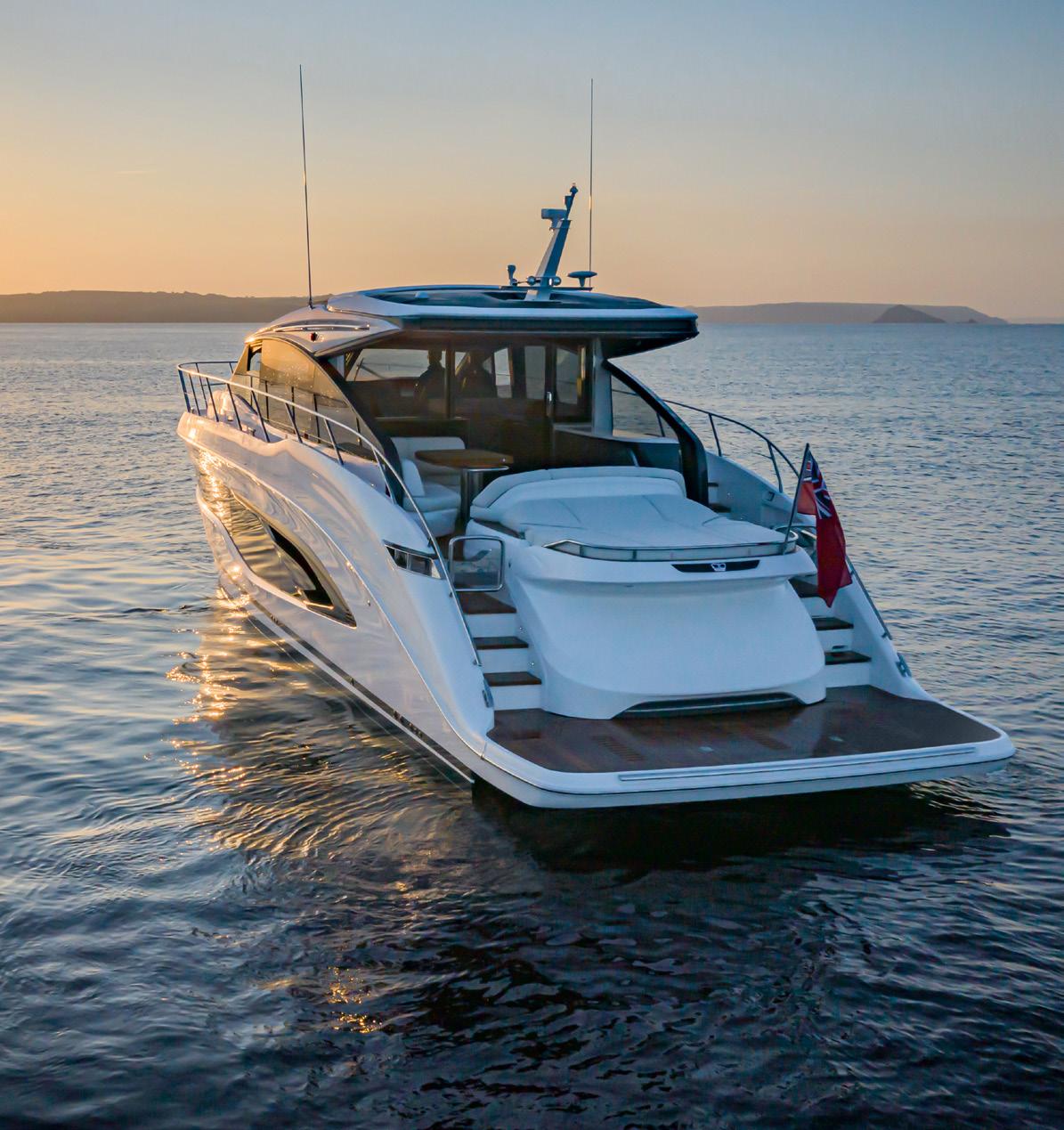
POWERBOATMAGAZINE.CO.NZ 83
THREE CABINS
The Princess V55 is the traditional three-cabin, twoen-suite arrangement, with berths provided for six. The master stateroom runs full beam, with a two-seat sofa, a sideboard unit to starboard with storage lockers, drawers and an integrated dresser. The owners have an en-suite with a generous shower and a washer/dryer unit on the opposite side of the companionway. The panoramic windows come with an opening port on either side. There are two guest cabins, a forward suite with a double berth that can be slid open to form two singles, plus a starboard side cabin with twin bunks. Each share a bathroom which also serves as the boat's day head. All cabins are of a generous size, with loads of natural light
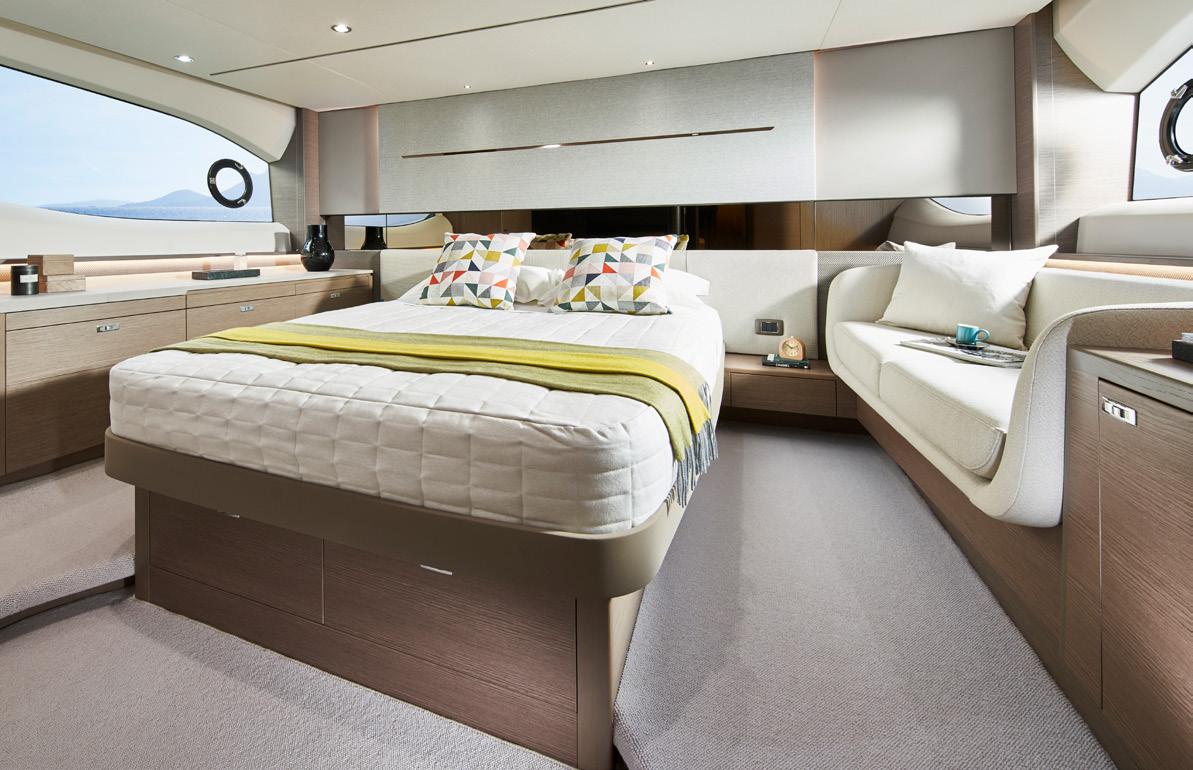
flooding in and plenty of storage. Should you need to accommodate more guests or family, you can turn the rear lazarette into a single berth cabin with a bathroom. Overall, if you count the dining table option, you can sleep nine people. Sounds crowded to me.
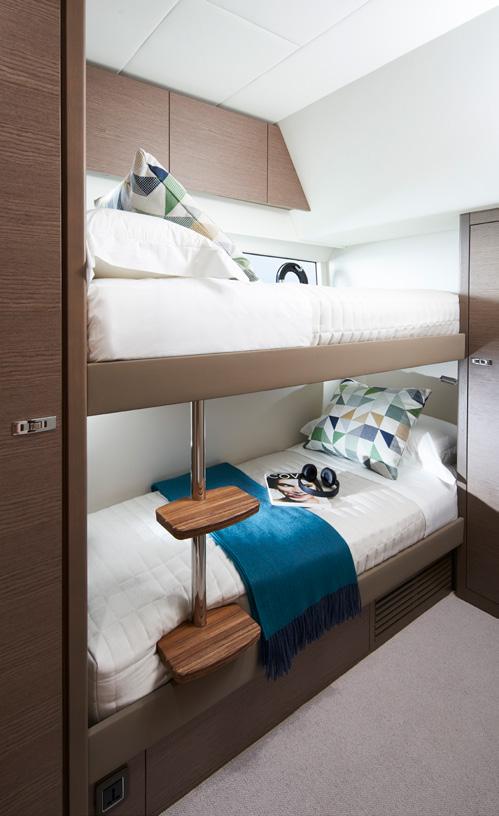
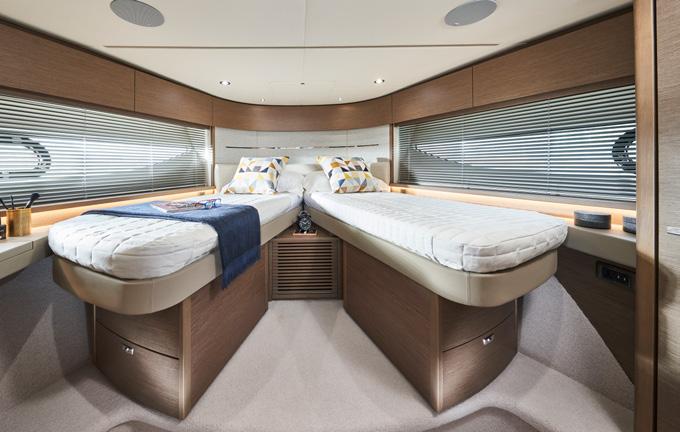 The master stateroom runs full beam, with a two-seat sofa.
Double of two singles, it’s your choice in the VIP.
The starboard side cabin with twin bunks is one of two guest rooms.
The master stateroom runs full beam, with a two-seat sofa.
Double of two singles, it’s your choice in the VIP.
The starboard side cabin with twin bunks is one of two guest rooms.
84 JULY / AUGUST 2023 PACIFIC POWERBOAT REVIE WS _ PRINCESS V55
ANTIFOUL SPECIAL
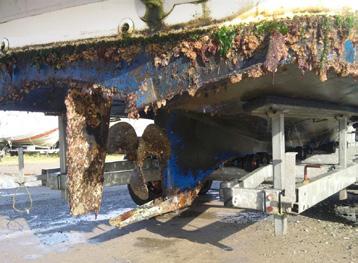
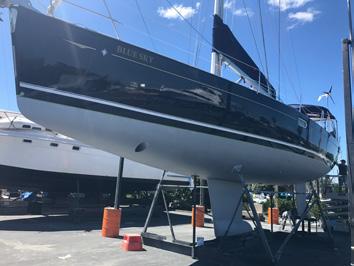
1. 20% OFF ALL PAINT AND MATERIALS
2. 10% OFF LABOUR CHARGES
3. THE BEST HARD STAND RATE AVAILABLE
Take advantage of the quieter Winter Period !
Antifouling can be one of those hassle jobs you love to put off. But we all know that delaying your antifoul can lead to avoidable major and expensive problems with your boat. We have the experienced staff, specialist tools and highly refined systems, matched to manufacturers specifications, that make us confident to claim to be one of New Zealand’s best marine coating business, set up to deliver a quality paint service at a competitive price.
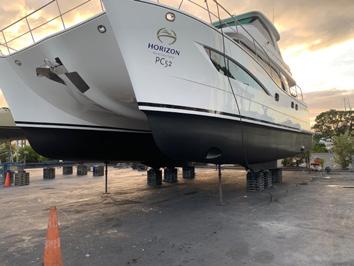
1. 20% OFF ALL PAINT AND MATERIALS
2. 10% OFF LABOUR CHARGES
3. THE BEST HARD STAND RATE AVAILABLE
Book today - as space, labour and availability is limited.
Phone: 09 428 3906
Carla Dukeson. Phone 021 224 3933
HMC03A
carla@hibiscusmarinecoatings.co.nz
hibiscusmarinecoatings.co.nz
RELAX IN COMFORT
Regarding spaces to relax outside, the Princess V55 offers two areas, one on the foredeck and the other in the cockpit. The cockpit has an L shape settee to starboard with a fold-out dining table. Bring in a couple of loose chairs, and you can have 6-8 people dining. Opposite is the wet bar, complete with a bbq, drawer fridge and more storage. While the overhanging roofline extends a couple of meters back over the cockpit, a retractable soft sun shade extends to the sunpad. There is a rear bench seat with access on either side via transom gates to the high-low teak platform and the dinghy garage. The V55 garage is big enough for a 3.45m tender (in our case, a Williams Jet 345) and comes with a sunpad on top. Plus, if you need more outdoor seating, a walk-through lounge area is on the foredeck.
PERFORMANCE DATA : 2 X VOLVO PENTA D13 @ 1000HP
The V Series has proven popular with Kiwis, and the V55 joins a distinguished fleet including a V65, V60 and V40, all of which share a common DNA and, while being very individual, all share the same design language. The V55 is ideal for day cruising, weekends away or a long summer cruise. It covers it all.
SPECIFICATIONS
Boat Design Name Princess V55
Year Launched Nov 2023
Builder Princess LOA 17.29m
Beam 4.66m
Draft 1.40m
Displacement (half) 31194kgs
Max Speed 37 kots
Construction GRP
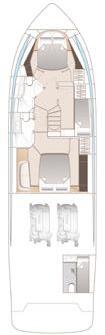
Fuel Capacity 2500 litres
Water Capacity 477 litres
Engines Make/HP 2 x Volvo Penta D13 @ 1000hp
Trim Tabs Bennett
Gyro Seakeeper
Bow Thruster Side Power
Air Conditioning Dometic
Watermaker Aqua
Anchor Winch Lewmar
Entertainment Fusion
Flooring Teak
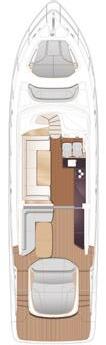
MFD 2 x Garmin 16
VHF Garmin
Tender Williams Jet
Base Price of Boat $NZ3.6 million
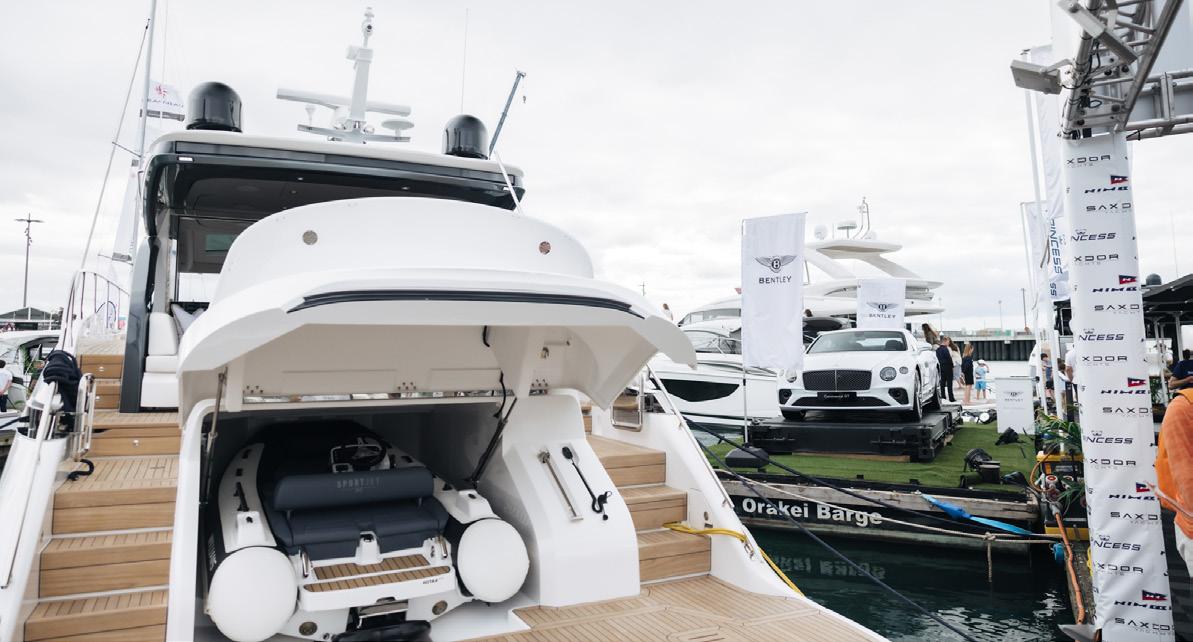
Price As Tested $NZ4.3 million
Contact Sports Marine SPORTSMARINE.CO.NZ
Note: Range is based on 90% of fuel capacity, in calm conditions.
86 JULY / AUGUST 2023 PACIFIC POWERBOAT REVIE WS _ PRINCESS V55
The V55 garage is big enough for a 3.45m tender.
RPM Knots L/h L/NM Range (NM) 1000 9.0 43.5 4.900 400 1200 10.5 74 7.100 270 1400 12.2 108 8.900 220 1600 16.0 149.5 9.400 210 1800 20.2 194 9.700 200 2000 25.2 241 9.600 200 2200 29.5 284 9.700 200 2400 33.5 340 11.000 180 WOT 35.0 352 11.000 180
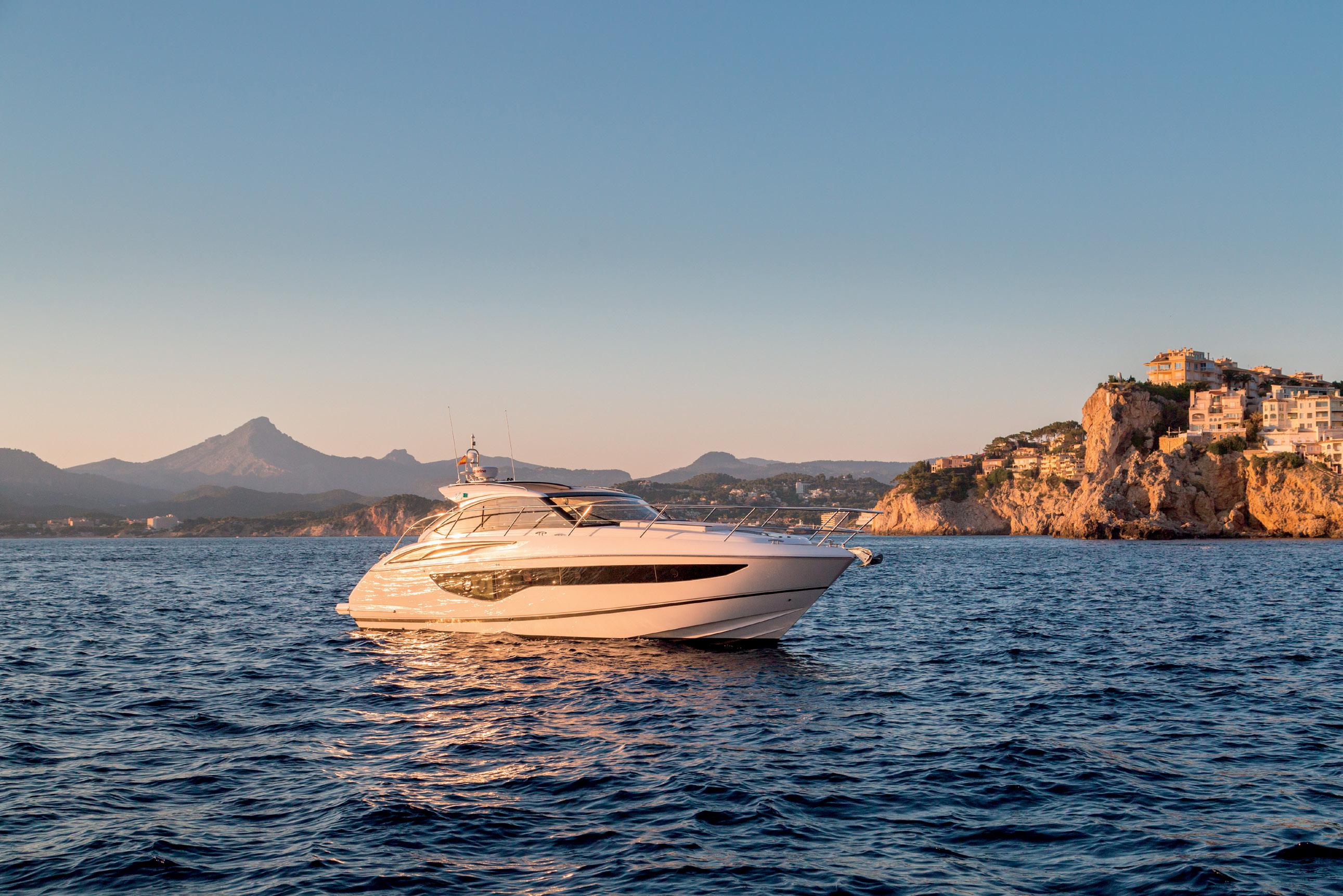



Arriving December 2023 Auckland | 131 Westhaven Drive (09) 274 9918 Christchurch | 507 Moorhouse Avenue (03) 379 9208 Learn more about Princess at PRINCESSYACHTS.COM O F F I C I A L D I S T R I B U T O R Scan for listing details
MASON CLIPPER
An advert in the 1960s edition of Sea Spray magazine read:
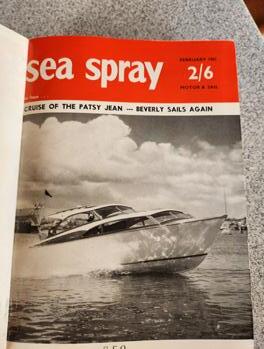
The world's finest power boat- for those people in the position to demand it. The advert said, Whoever said there was no such thing as the perfect boat, obviously never owned a Clipper. If there was ever a Kiwi boat brand that defined Kiwi trailer boating at its very best, it has to be the Mason Marine Clipper.
WORDS BY BARRY THOMPSON
In its day, it was the most expensive trailer boat on the market, and people didn't mind paying for it.
Undoubtedly the most luxurious and outstanding boat in its class, the Clipper 24 epitomised the elite end of trailer boating. The Tony Mason-designed Clipper 24 was a fast cruiser, a true weekender in every sense, and the layout was sumptuous by the day's standards.
Then as now, quality and class don't come cheaply, and in 1977, a hull alone was $20,000, and a complete boat package would set you back around $30,000. That same year, a Cresta Craft V19, Fi Glass Viscount or Morgan 6.3 could be put on the water fully spec'd for around $13,000. Plus, you needed a reasonably large car because it had a towing weight of 25002700 kg. Remembering this was pre SUVs
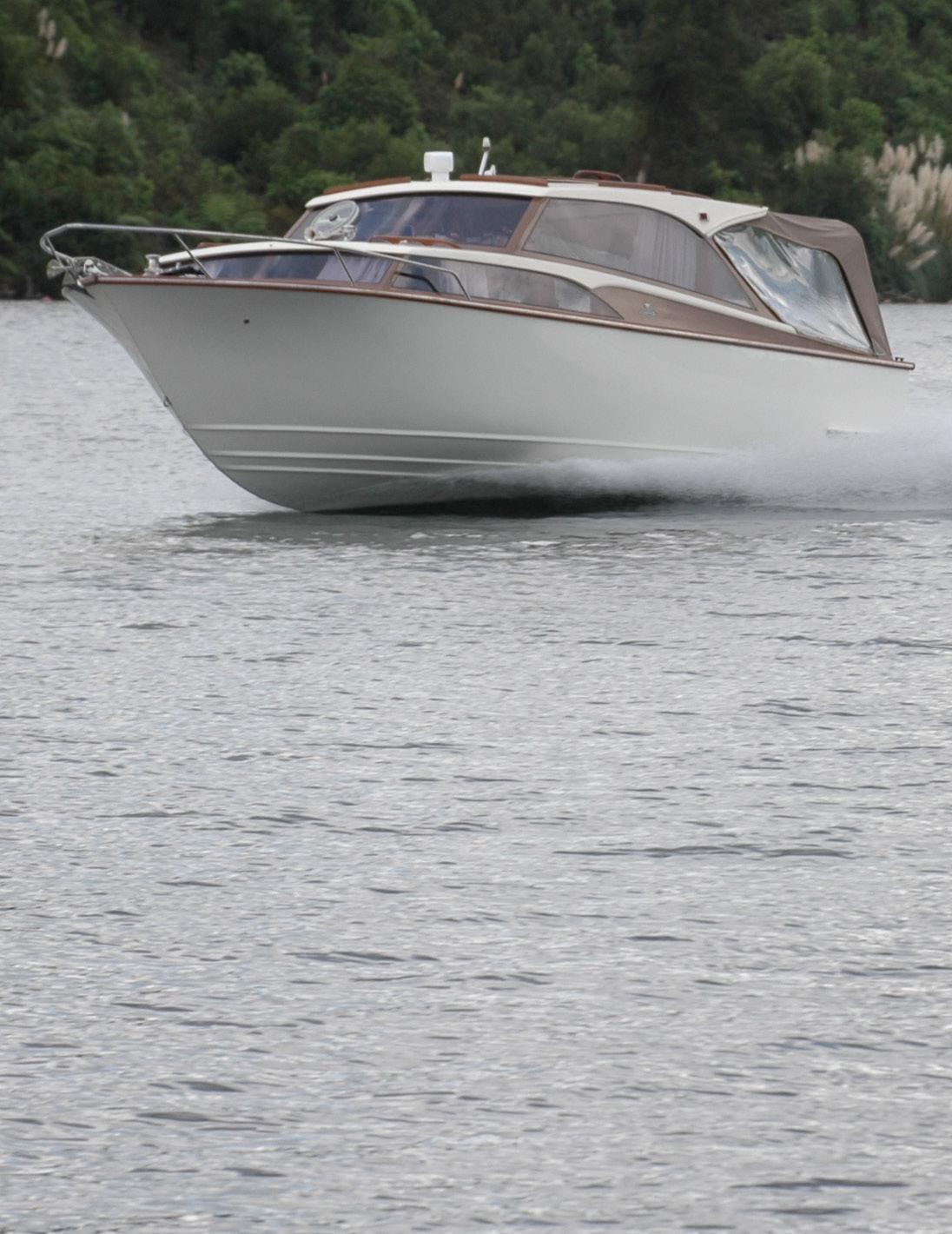
and crew cab utes, so a popular choice was the Mk10, later the XJ6 Jaguar or Chev Impala. But you got the quintessential luxury trailer boat that was a league above everything else.
Owning a Clipper was a status symbol, and many well-known Kiwis had one in their driveway. The Clipper looked different from everything else and was one of the earliest production trailerable weekenders.
LOOKING BACK MASON CLIPPER
88 JULY / AUGUST 2023
The first Clipper
BIRTH OF THE CLIPPER
In 1951 Tony and his old Airforce buddy Cliff Sutton started Sutton Mason Ltd selling household detergent. Then a year later, they turned to boat building with Tony's new Marlin series of runabouts from their Stoddard Rd Mt Roskill Auckland factory.
The very first Marlin ever built was a 17-footer powered by twin Ford 10 engines and was launched in 1952. Over the next seven years, Marlin powerboats were produced in great numbers and became one of the better selling trailer boats of the post-war era. In 1957 Tony sold his interest in Sutton Mason Ltd and returned to the Airforce for a short time before forming Mason Marine Clippers in late 1959.
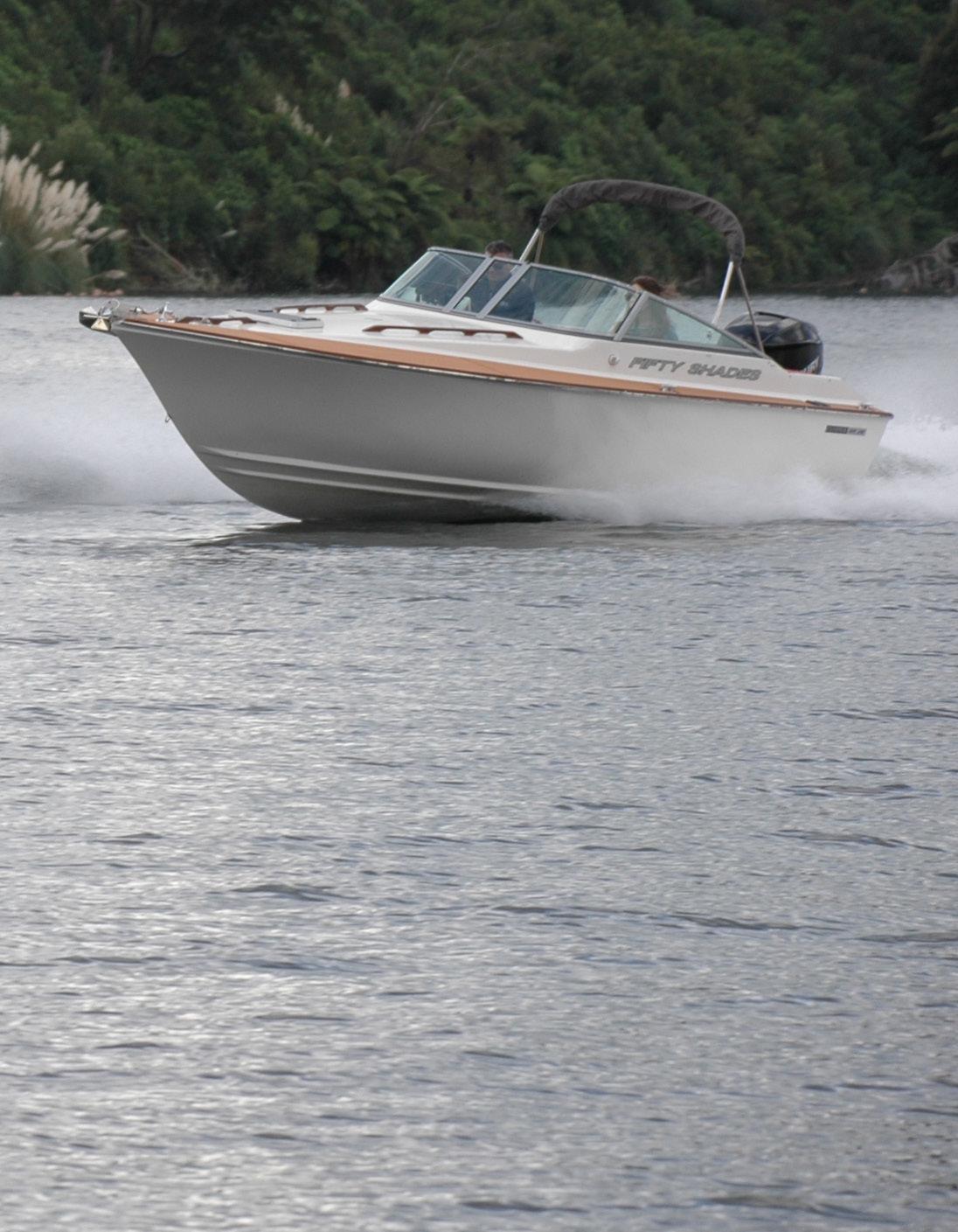
Mason Marine started in mid-1959 in Mt Eden before moving to Archers Rd Takapuna when the Auckland Harbour Bridge opened. In 1960 the first stripplanked cedar/fibreglass Clipper 23, Geo, came out of the new Wairau Road factory. Tony admits he was influenced by Ray Hunt with his revolutionary' deep vee' hull form and Lindsay Lord's monohedron hull shapes and composite construction.
In an interview in 1984 in NZ Powerboat magazine, Tony said," I was beginning to believe that it was not just the prop size, the hull shape or the size of the motor
that made a good boat, it was the balance of all three".
Geo was built for cruising and fishing throughout the Hauraki Gulf. It was a standard small window Clipper 23ft powered by the Graymarine Fireball V8 rated at 188hp running through a Warner Velvet Drive Hydraulic gearbox. In their day, Clippers were a work of art and considered one of the finest built boats in the country. The Mason Marine reputation was born and reinforced when he was awarded the Industrial Design Award for |his boat designs. However, everything changed by the mid1960s when fibreglass-reinforced plastic (GRP) found its way into boat building. The day of the wooden production boat was all but over, so Tony had to hang up the hammer and chisel and enter the world of gel coats and resins. The first full 'glass' Clipper 24 was produced in 1974.
As much as Tony loved building timber boats, he needed to change with the times or be left behind.
CLASS OF ITS OWN
The Clipper was in a class of its own and stayed there for many years until the advent of the larger all-fibreglass production cruisers such as the early Marklines.
When the last of the Clipper 24s was built by Mason Marine in Auckland in 1980,
something you see very often, a
there were 103 on the water. Built in GRP, the first 'glass' Clipper was launched in 1967. Before that, apart from the hull, the cabin tops, decks and coamings were all timber and ply. With the advent of the GRP version, production increased dramatically from the North Shore factory, but not at the expense of the quality and high finish associated with the boat. No expense was spared to maintain the highest standards, from the hull laminate to the many coats of varnish on the mahogany bulkheads.
The Clipper 24 was based on a round bilge 24 deg deep V hull that gave a soft ride and nice re-entry in a seaway.
Power options were many, from Chrysler or Volvo sterndrives, twin outboards and even jet units. A 360ci Chrysler/Volvo 280 leg was right for 40mph, and twin Volvo 130s gave a top speed of around 35mph. While V8 sterndrives were the most popular, when the V6 outboard hit the market, the opportunity to provide even more cockpit space was available. However, few outboard versions were built as they had to be twin rigs to get sufficient weight to keep the hull deep enough in the water to be stable at rest. Besides, the maximum shaft length for an outboard in those days was 20 inches, so a single outboard was out of the question, as the powerhead would have been too close to the water.
Not
Clipper 24 (Benedictine) and a Clipper 26SR (Fifty Shades), both owned by Greg Dutton from Hamilton.
POWERBOATMAGAZINE.CO.NZ 89
CLIPPER 42
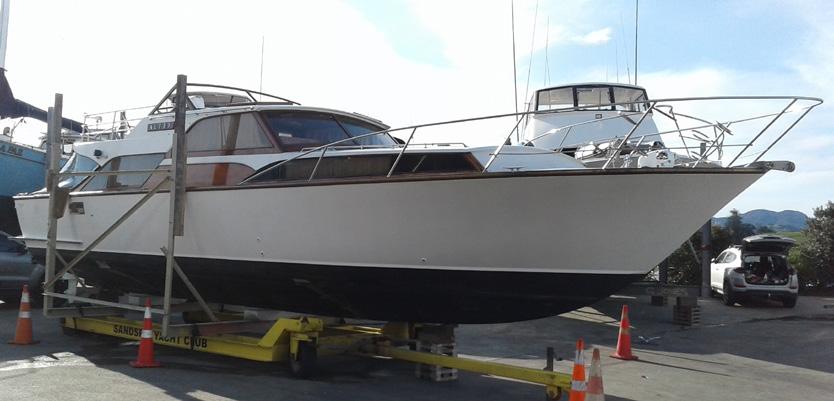
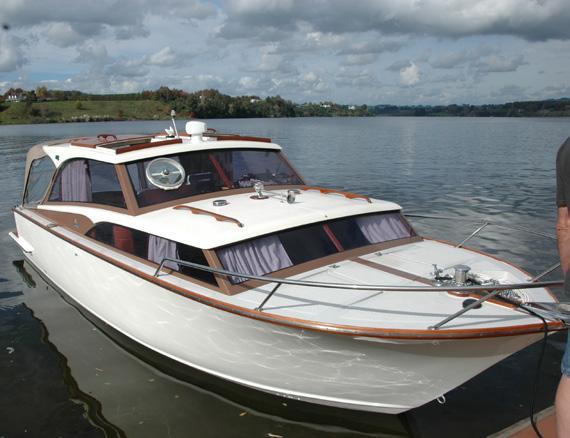
An enquiry from the USA for a 45-footer (13.7m) led to preliminary design work on the larger boat, but when the deal fell through, Tony decided to go ahead anyway. Surprisingly only two were ever built (Alibi and Crescendo), and both are still in use today. The Clipper 42 was as outstanding and eye-catching as the Clipper 24. Alibi is currently in the final stages of a complete refurbishment by Sandspit based Greg Lees Boat Builder. They have lovingly restored this fine lady to its former glory, which looks stunning.
It was, in essence, a Clipper 24 on steroids and it gave Tony another dimension to expand his design talents. Released in 1979, the Clipper 42 was 12.8m x 3.7m with a draft of 900mm and fully laden, displaced around 9 tonnes.
Alibi was the prototype, built with a sandwich construction of strip-planked Cedar, fibreglassed on both sides. A mould was taken off the prototype so that all future boats could be full GRP with a balsa core. However, Crescendo was the only boat ever pulled from the mould. As was a trademark of all Mason Clippers, the timberwork inside was all mahogany joinery
and ply, and the cabin lining was a specially made padded vinyl. The Clipper 42 Alibi is still powered by the original pair of Chrysler-Mitsubishi CN-55TI diesel engines producing 200hp @ 3150 rpm. All this power goes through Warner gearboxes and Stern Power outdrives. The top speed is around 22 knots.
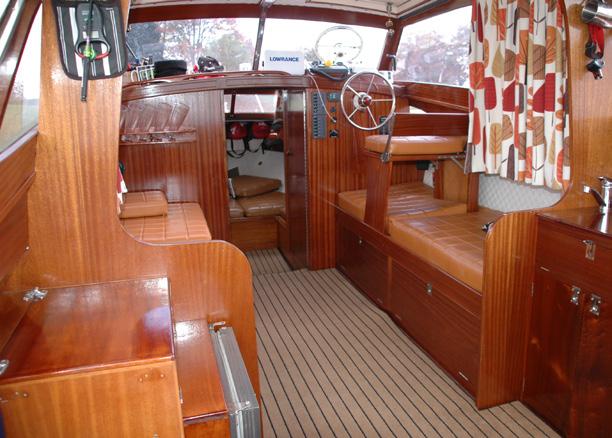
LET'S GO RACING
As the founding father of offshore powerboat racing in New Zealand, it was inevitable that Tony would design an offshore racing Clipper. This came in 1971 with the Clipper 26SR, Clipper Commander. Powered initially with triple V4 Johnson outboards, it looked the part but continually retired from races with the outside lower units destroyed.
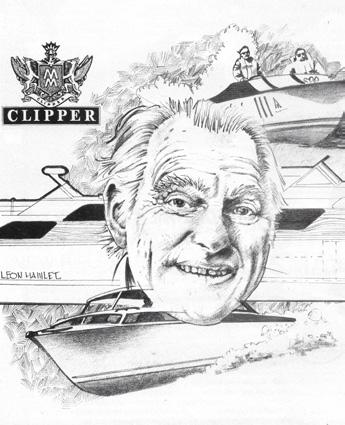
The 26SR featured the same rounded chine styling of the Clipper 24 but was a completely different hull. The deadrise was increased from 23 deg to 24 deg, the beam decreased from 8ft to 7ft, and the moulded hull length went from 24ft 6in to 26ft. Designed primarily as an offshore race boat, the 26SR was suitable for twin sterndrive or twin/triple outboard power. Built only to
special order, the 26SR was the only stock fibreglass racing/sports hull of its size in the country. It did, however, have a timber deck.
Clipper Commander was the cedar plug for all the Clipper 26SRs that followed, and surprisingly there were only six built. Most are still around today and, while not racing anymore, have been turned into fast eyeturning pleasure boats.
Mason Marine closed their doors in 1984, one of the many boat builders that could not survive Muldoons 20% boat tax introduced in the 1979 Budget. Tony closed up shop and the moulds were retired. Over the years, around a dozen Clipper models and over 200 boats were built, including the 26, 33, 36 and 42 footers. When Mason Marone closed its doors, all the moulds, apart from the 26SR, were taken to a farm, crushed and buried. The n26SR mould still exists today in Taumaranui. Today there is a resurgence of interest in the Clipper, and as quickly as they appear on the market, they get sold. Many are lovingly restored and brought back to their original finery. It is common to hear that the new owners restrict their Clipper to freshwater use only.
LOOKING BACK JESSE JAMES
Tony Mason was a brilliant designer and perfectionist in everything he did.
Alibi, the first Clipper 42, has undergone a total refurbishment by Greg Lees Boatbuilders.
The classic Clipper 24 is one of New Zealand's most iconic boats.
90 JULY / AUGUST 2023 LOOKING BACK MASON CLIPPER
Every Clipper 24 had a distinctive interior with its mahogany timbers and joinery.
RACING DYNASTY


The second SR26 built was for Max Johnson in 1973, who bolted triple Mercury 150s (the most powerful you could buy) on his bright red boat he called Clipper Comsec. This was one of the most successful race boats of its time and I had the chance to have a run in it on Auckland Harbour prior to an Auckland race. Low deckline and big bolster seats meant from the waist up you were exposed, something that you wouldn't even contemplate today. Top speed was around 70-73 mph.
After going through a few owners and racing for a while as Tuxedo Junction and Clipper Cosmos with twin outboards, it has been fully restored and given a fantastic new cabin line with luxury appointments as a day cruiser and weekender. Back under the Clipper Comsec name and now in white livery it resides in Tauranga with a couple of Yamaha 200s on the transom.
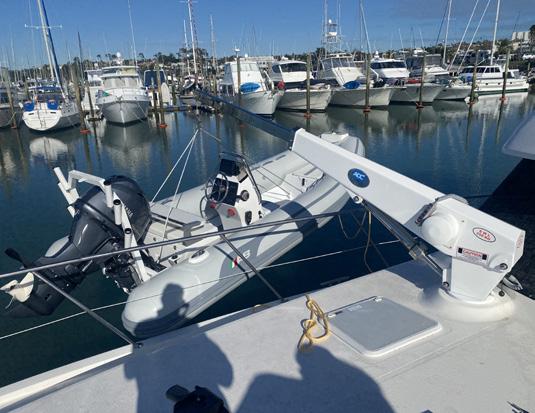
In December 1974, Tom and Horace Manville took delivery of 'Clipper Black Jack' the third SR26 built. Powered firstly by twin Volvo inline six-cylinder petrol engine's through Volvo 270 Drive's and then later V8 small block Fords. After a successful racing career, the boat was unfortunately destroyed in a factory fire in 1977. Morrie Begley purchased Hull #4 in early 1975, who also went down the twin Volvo power path. Racing as 'Çlipper Go Go' in B Class then as 'Miss Trailways' also in B Class it was repowered with twin Ford V8s (ex Manville Brother's BlackJack) and raced in A Class as 'Miss Lees' and finally as 'Clipper Crichton Ford' winning the NZ Off Shore Championship in 78/79 and 79/80.
Hull #5 was probably the most unusual as it was a very cut down SR26 hull that raced as Super Cryzol by Stan Ash. Power was a single Mercury outboard and it ran with some success in C Class. Not sure what happened to the boat or where it is now.
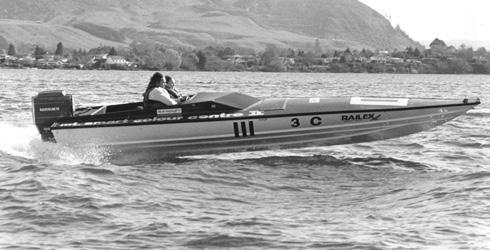
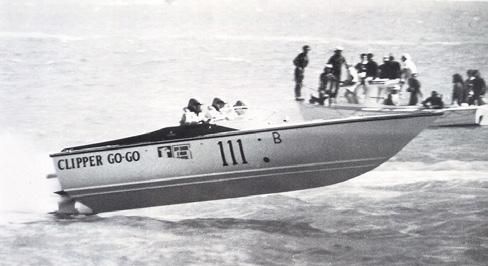
While the first five SR26s all ended up on the offshore racing circuit, the last two were built for firstly John Spencer in 1980 (Man O War/ 2 x BMW sterndrives) and in 1983 Peter Spencer had boatbuilder Pete Sowman produce the last ever SR26 and named it Jaws. By this time Mason Marine had closed, but the mould was still around and in great shape to create another hull. Original power was a pair of Yamaha Precision Blend 140s. This is now owned by Greg Dutton (DMW Trailers) who has restored and repowered it with a Mercury 275.
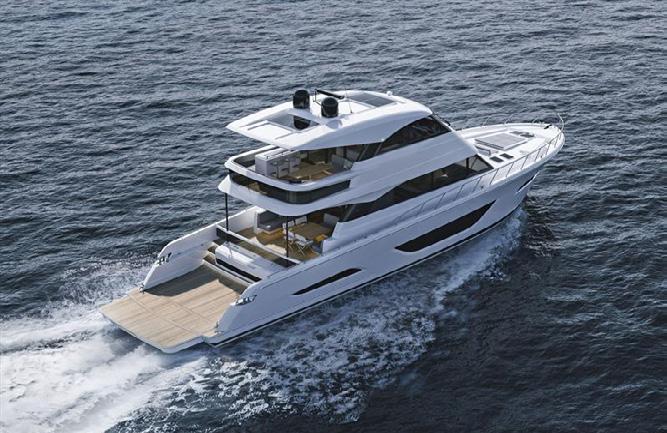
The SR26 certainly belongs in the same classic niche as the Clipper 24 and it is great to see that there are still five examples still being used and enjoyed.

New Zealand Agent For: WWW.MYSC.CO.NZ and Supplied Installed Quality 316 Stainless Steel Made From Full Electric and Hydraulic Options Options 200KG - Available 1500KG Single Stage and Fixed Boom Hydraulic Swim Platforms Motor Yacht Service 09 416 1179 Centre | www.mysc.co.nz | info@mysc.co.nz 12 Clearwater Cove, , Auckland NZ Hobsonville Marina Installation Completed at Our Hobsonville Location NZ Warranty and After-Sales Agent for Maritimo Also Agents For:
Hull #5 was probably the most unusual as it was a very cut down SR26 hull that raced as Super Cryzol by Stan Ash.
POWERBOATMAGAZINE.CO.NZ 91
Clipper Go Go was one of the most successful SR26s on the North Island offshore circuit.
PARTY animal

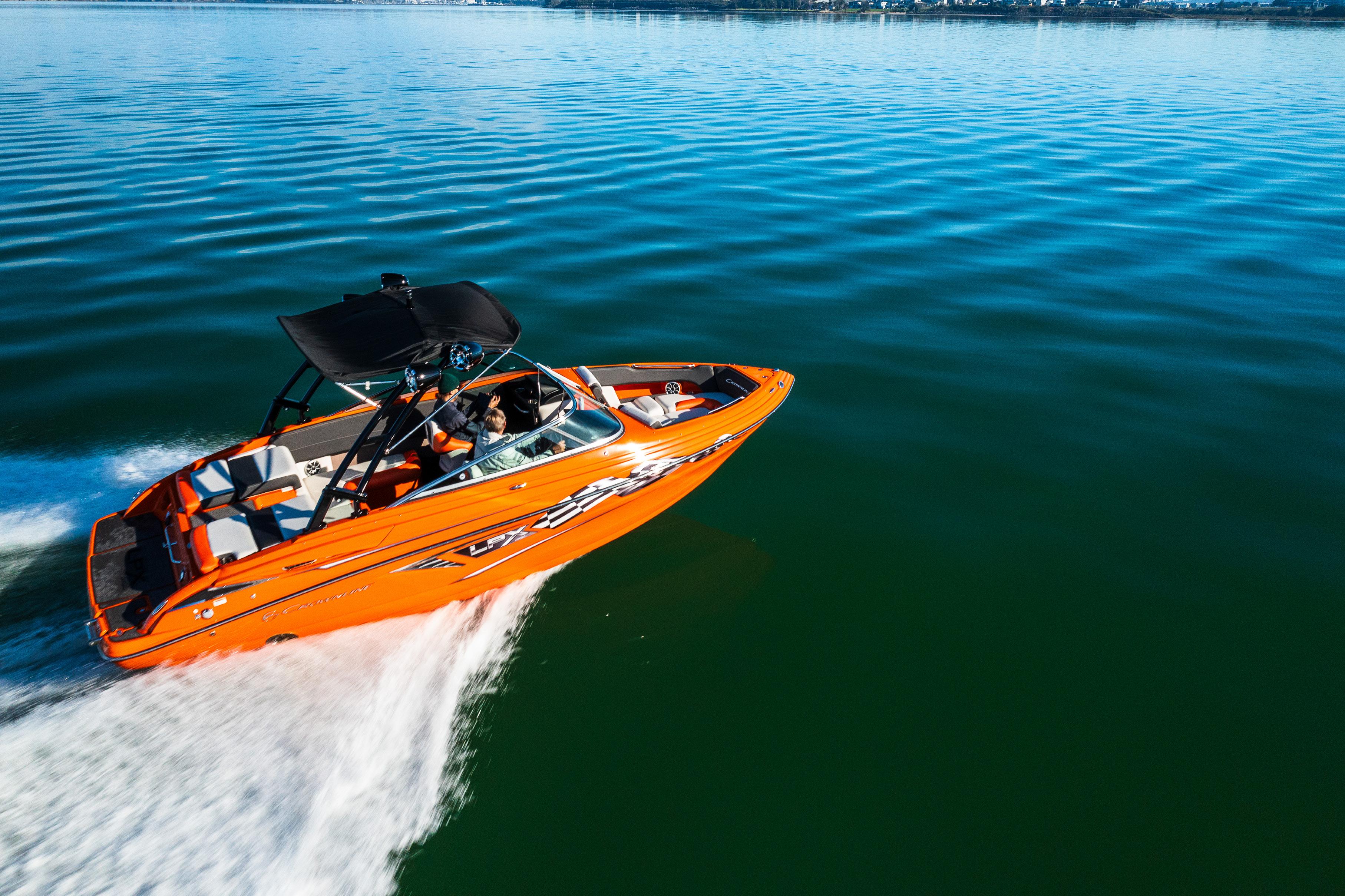
PACIFIC POWERBOAT REVIE WS _ CROWNLINE 240 SS LPX 92 JULY / AUGUST 2023
From the hand-stitch panelling to the stainless brow on the screen, the Crownline 240 SS is all about style, quality and a boat that your mates will take a second look at. Barry Thompson took the first 240 SS LPX in the country for a run on Auckland Harbour and discovered there is more to boating than going fishing.
Like most Kiwi boaties, I am a keen fisherman, and my current boat is set up for nothing else. However, there was a time when fishing was not my only water-borne pleasure. I brought up three boys who were mad keen on wakeboarding and also family picnics to the islands of the Hauraki Gulf, Mercury Islands and the Bay of Islands. Fishing was one of our activities but for my three sons, not number one.
They started on tubes and kneeboards and graduated to being damn good at wakeboarding and wake surfing. So when I reviewed the 240 SS LPX, my mind returned to those earlier years. While fibreglass bowriders, such as the Crownline SS series, are not mainstream in New Zealand, in the USA they are commonplace. Crownline is just one of those, and while they have a considerable reputation for quality and have built over 75000 boats, they are only now being recognised in New Zealand and Australia. That's thanks to Terry Elmsly, the founder of Euro City Marine. When he launched the company three years ago, he did it in style and wasn't afraid to buck the local trends. One of the first brands he imported was Crownline and its fishingorientated partner Finseeker. Success took time, but the Crownline and Finseeker names have been spreading, and in the past few years, despite Covid, sales have been steady and growing. Plus, not only did he secure the distribution rights for NZ but also for Australia and several countries in Sth East Asia.
"It's hard to bring a new brand to market, especially one that many Kiwis feel doesn't suit their needs", says Terry.
"However, we have made some good inroads into the smaller cruiser market and also our Finseeker fishing boat range, and I feel confident that the Crownline SS bowriders will also find their niche following", he added.
I have already reviewed a couple of the more ski/wake dedicated Crownline bowriders, but that's where the 240 SS LPX is different. This multi-tasking sport boat will appeal to anyone wanting a fun craft that oozes style, comfort and pizzazz. The Crownline 240 SS is one of eight models in the SS series, with SS standing for super sport. It makes sense when you look at any of the boats in the range. They are designed for performance and having fun on the water. While they are not dedicated wakeboard, wave or ski boats, in their style, they are suited to the casual enthusiast of any of the above.
The 240 SS is around midway in the fleet, which starts with the 6.15m 200 SS and runs through to the 8.79m 290 SS. They are all sterndrive powered and bowriders.
POWERBOATMAGAZINE.CO.NZ 93
The boat attracted a lot of attention at the Auckland Boat Show earlier this year.
The Gen 2 dash has a black shrouded double stitched eyebrow over two 7" Garmin screens.
Full width sunpad or a pair of aft seats. It’s your choice.
The bow seating is shaped to be efficiently designed for maximum comfort and finished to the highest quality.
The 240 SS was released simultaneously as the 210 SS and 240 SS and featured Crownline's newest additions to the range, such as extended custom windshields to offer better protection in the cockpit. However, the 240 SS stands alone with additional features such as a new board assist ladder, wrap-around stern seating and a seat assembly in the bow that hinges up to expose a massive storage area.
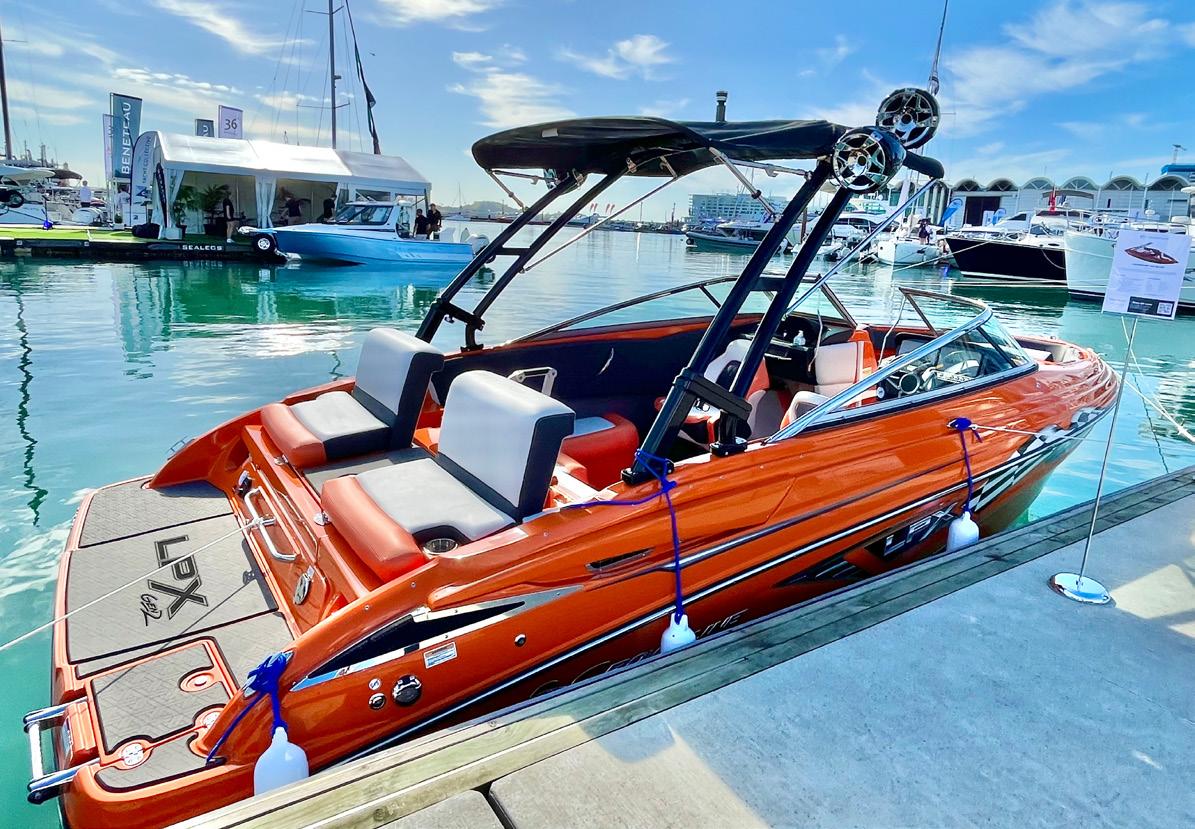
The first 240 SS in the country is one of two models in the LPX series, which has custom LPX graphics and a low-profile black LPX windscreen, giving the boat a racey look. LPX translates to luxury, performance and extras and delivers in all three areas. As the brochure says, the bright hull graphics and solid colour gel coat are not for the shy or introverted. Our boat was finished in a bright orange, or as Crownline like to call it, Moonstone. There are other colour options available for both the hull and interior.
While the LPX Series has been around since the '90s, Crownline has taken them to the next level with the release of the Gen 2 version. The layout is the same as the 240 SS, and it's just the cosmetics and profile that changes.
POWER PLUS
The 240 SS LPX is based on Crownline's performanceproven FAST Tab hull. The acronym stands for finassisted safe turn. In practice, a FAST Tab hull's vented chines aerate the running surface to reduce drag, and the fin-like tabs keep those vents from producing handling quirks. The hull sticks flat and tight in turns,
is responsive to trim, and gets loads of air under it at speed. The hull starts at 39 deg entry and tapers aft to 19 at the transom, with and a wide reverse chine that helps lift the boat onto the plane and maintain a low spray angle at speed.
Four engine options exist for the 240 SS LPX, from the Mercruiser 6.2 litre @ 300hp to the Mercruiser 8.2L @ 430hp. Our boat was running a 350hp Mercruiser 6.2 litre with DTS controls, plus the Corsa quick and quiet plus thru-side exhaust. Flat out, I saw close to 40 knots (46mph) on the GPS, and it felt like it wanted to go faster. This boat eats horsepower, and I would go all the way and drop in the 430hp option if it was my boat. I found the boat was at home cruising around 30 knots (34.5mph) and even at towing speeds it felt like it could do it all day.
Visibility from the helm is excellent, as is the driving position. An adjustable wheel and seat allows you to position yourself in the best position. There is the option of a rear mounted mirror or even a stern camera to keep in touch with anyone you’re towing.
FINER DETAILS
Crownline has caught the finer details with this boat, and I was impressed with the built-in boarding assist handle that drops in the centre walk-through. This folds flat when unused, and a cushion covers the entire step-through area. This also allows you to have a full-width sunpad or a couple of seats facing aft. Great place to keep an eye on the kids in the water.
A U-shape rear lounge, plus a pair of adjustable
PACIFIC POWERBOAT REVIE WS _ CROWNLINE 240 SS LPX 94 JULY / AUGUST 2023
bucket seats forward, dominate the cockpit. The impactresistant bucket seats with bolster cushions on both are part of the Gen 2 package. Another cool feature of the cockpit is the LED lighting, spreading throughout the boat and extending through to the transom and underwater. Plus, there are stainless steel drink holders everywhere. Forward of the passenger seat is a locker which can be used for storage or is big enough to double as a cooler bin.
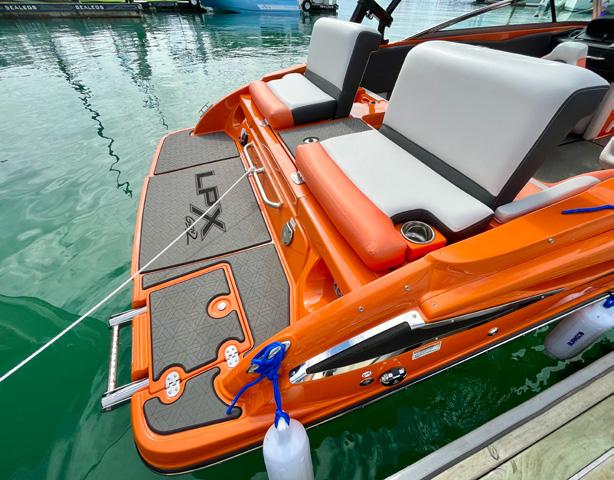
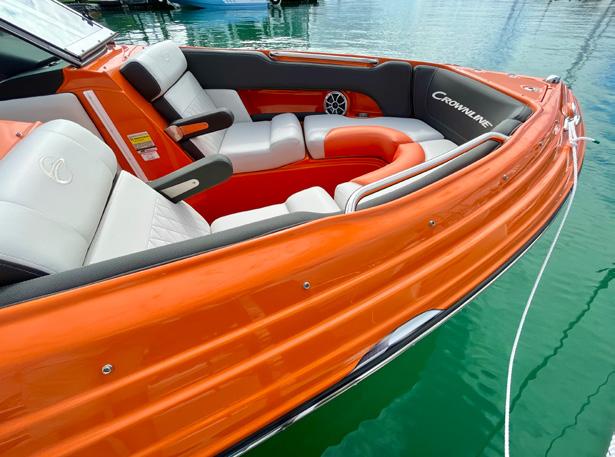
Finished in a diamond stitched pattern tri-colour upholstery with snap-in carpets, the finish and presentation are exceptional. You have the option of faux teak on the sole, which would be my choice. A side table which is stowed under the cockpit sole can be fixed either in the bow or stern areas. There is storage under the squabs, a water toys locker in the centre of the cockpit sole and side trays. But wait, there's more. When you raise the aft sunpad, you get access to the Mercruiser, dual batteries, and a couple of extra storage lockers. Add these to the ones in the bow, and it is easy to see that Crownline has made the best use of all the available spaces.
The Gen 2 dash has a black shrouded double stitched eyebrow over two 7" Garmin screens. The console has it all, distinguished by the billet machined alloy accents with push button switches that illuminate at night.
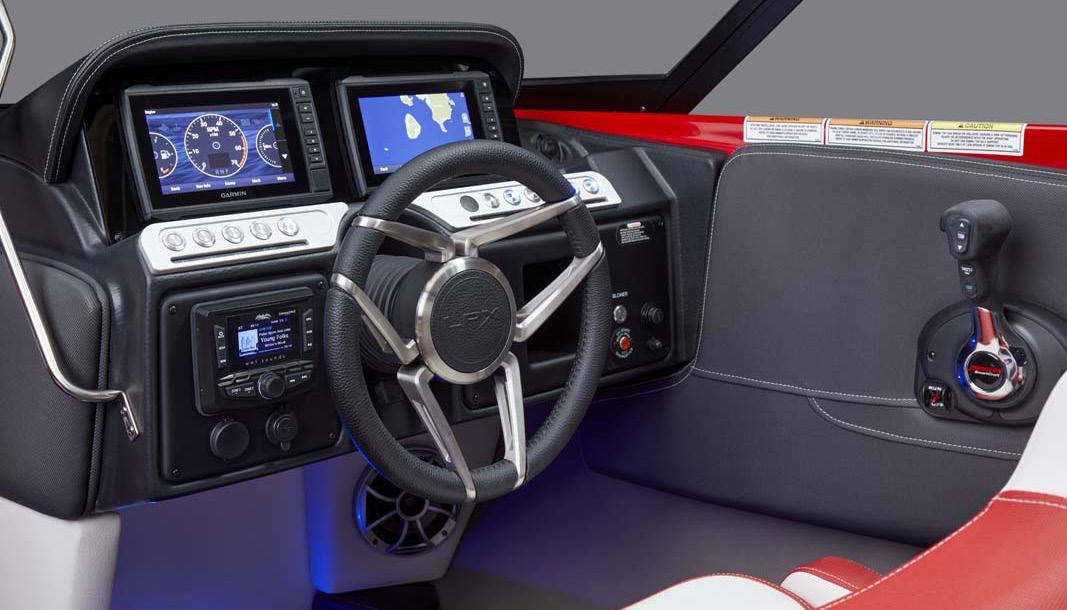
GREAT SEATING
I have always been a Bowrider fan, and no one does it better than American brands. They made it an art form, and the 240 SS LPX shows that. The seats are thickly padded, shaped to be efficiently designed for maximum comfort and finished to the highest quality. There is an infill that transforms the entire bow into one sunpad.
A drop in solid panel stops most of the wind from funnelling through the walk-through into the cockpit when underway. The bow seats hinge up to give access to generous forward storage and an anchor locker forward. While this only comes with pop-up side cleats and no fairlead, you can get a custommade bollard and fairlead arrangement made locally. The anchor locker also has enough space for a small drum winch.
POWERBOATMAGAZINE.CO.NZ 95
The LPX in the 240 SS LPX, translates to luxury, performance and extras and it delivers in all three areas.
The seating is both functional and entertaing.
The passenger seat locker can be used for storage or a cooler bin.
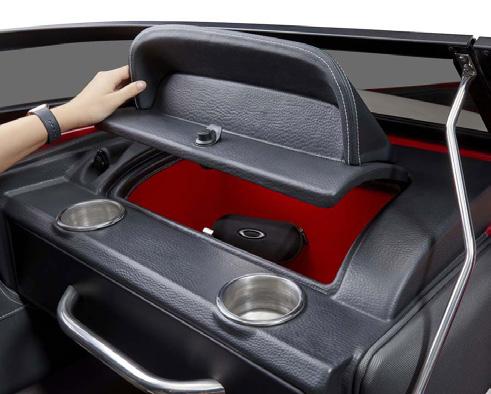
BUSY TRANSOM
The stern features a large boarding platform, or as Crownline like to call it, a social swim platform, and comes with a dropdown ladder that stows below the platform, so you don't kick your toes on it. The same goes for all the deck cleats, which can be popped up when required. There is also a hand-held transom shower to wash off all that salt water. While a range of forward-facing wakeboard towers is available, complete with fore and aft-facing biminis, if you don't want that option, there is a built-in ski tow mount on the transom. The platform is perfect when stepping into your bindings or jumping off with your surf skate. Two of eight Wet Sound speakers are nearby to boom out some decibels to get you in the mood.
If you are in the market for an American style mutlifunctional bowrider then the Crownline 240SS LPX is worth considering. There are a number on the market in New Zealand and the Crownline is certainly right up there amongst the best of them.
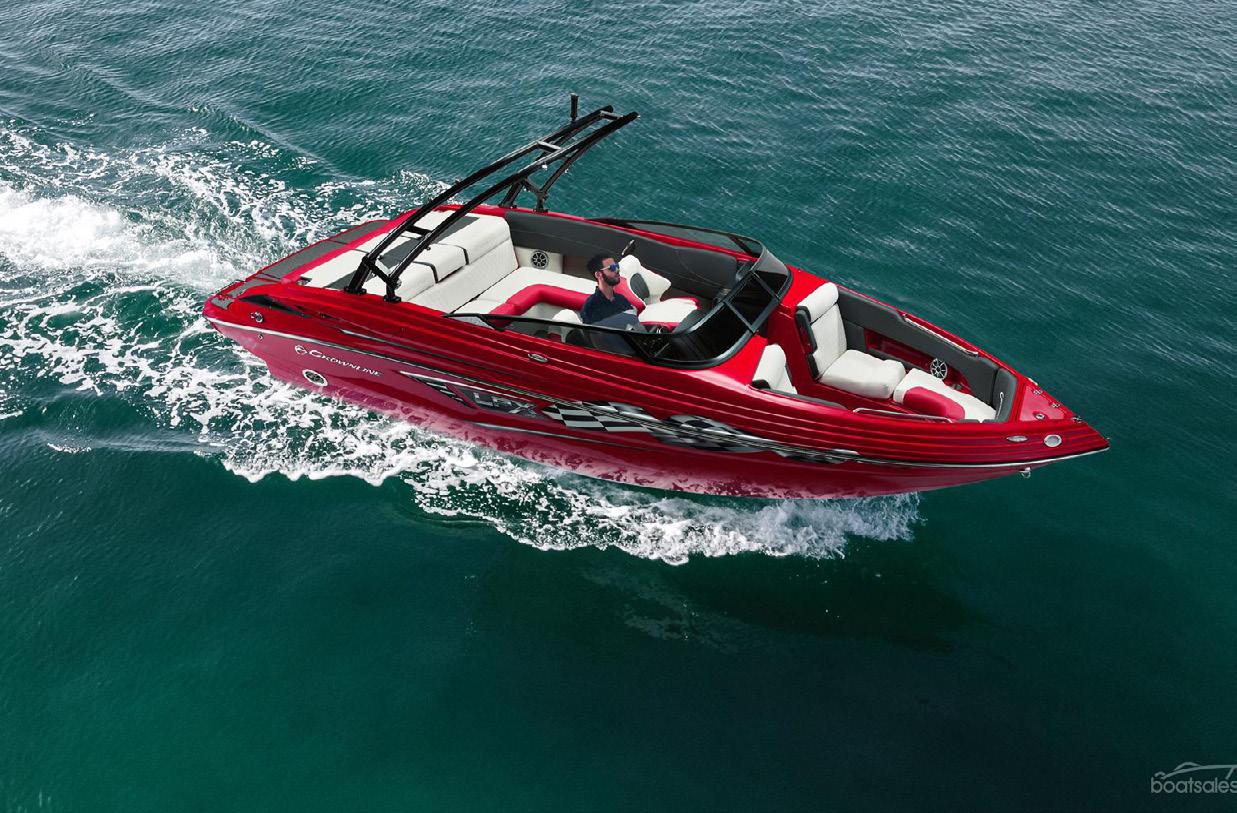
SPECIFICATIONS
Boat Design Name Crownline 240 SS LPX
Year Launched 2023
Price As Tested $NZ279,995
Style Runabout Builder Crownline Boats
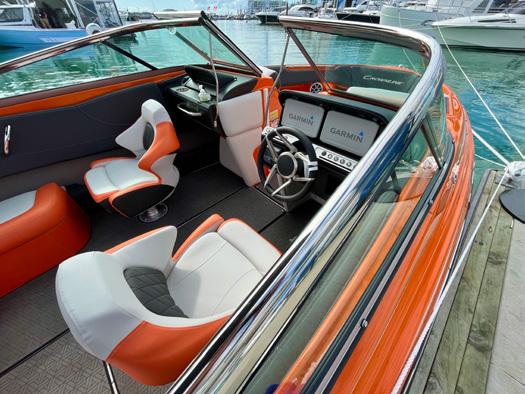
LOA 7.26m
Beam 2.59m
Deadrise 19 deg
Displacement (Dry) 2300 kg kgs (Approx)
Max Speed 40 knots
Construction GRP
Fuel Cap 163 litres
Engine Make Mercruiser 6.2 Litre 350
MFD 2 x Garmin 7”
Ent System Wet Sound Contact EUROCITYMARINE.CO.NZ
PACIFIC POWERBOAT REVIE WS _ CROWNLINE 240 SS LPX
96 JULY / AUGUST 2023

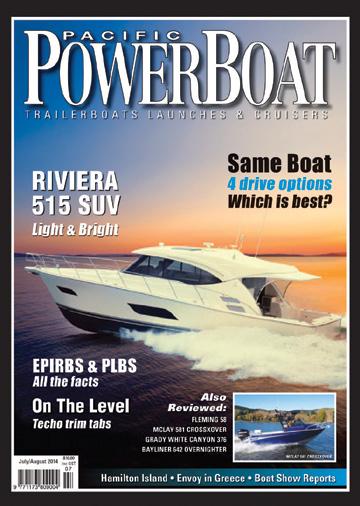
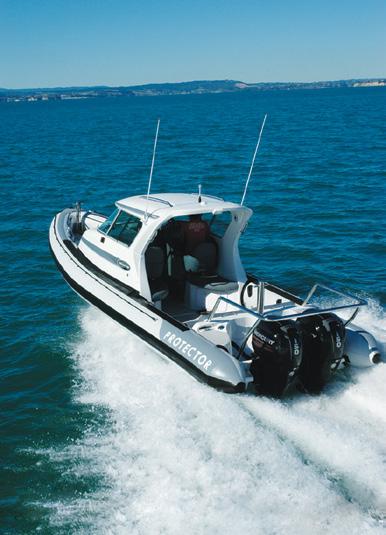
Unashamedly 100% devoted and dedicated to power boating and everything about them !!
YACHTING NO ROCK FISHING NO KAYAKING Read ONLY about your boating passion - The style of boating that interests you!! www.powerboatmagazine.co.nz to get YOUR dose of YOUR boating passion DB927P
WWW.POWERBOATMAGAZINE.CO.NZ
NO
TRAILERBOATS I LAUNCHES I CRUISERS
OFFSHORE RACERS TO CRUISING CATS
Over the company's 25-year history, Nic de Mey Yachts has become one of New Zealand's premium boat-building companies. With a committed team of passionate boat builders and top-quality facilities in his Tauranga-based workshop, Nic de Mey builds world-class boats for clients worldwide.Currently completing two 60ft powercats, plus an order book full of ultra-fast ski boats, owner Nic de Mey is one of the busiest custom builders in the country and talked to PPB about his growth, success and future goals.
WHEN DID YOU GET INVOLVED WITH THE MARINE BUSINESS?
I am a qualified boatbuilder and started my career with an apprenticeship at race and luxury yacht builders Marten Marine Industries. I trained under specialists in advanced composite construction. I worked on boats for America's Cup and Whitbread / Volvo Ocean Race boats before working on superyachts and all the systems and finishes they entail.
I am very keen on any form of boat racing, from yachts to powerboats. Since 1994, I have ski raced competitively on the New Zealand water ski racing circuit and have represented NZ at World Championship events. I started my boat-building business in Auckland before moving the company and family down to my hometown of Tauranga.
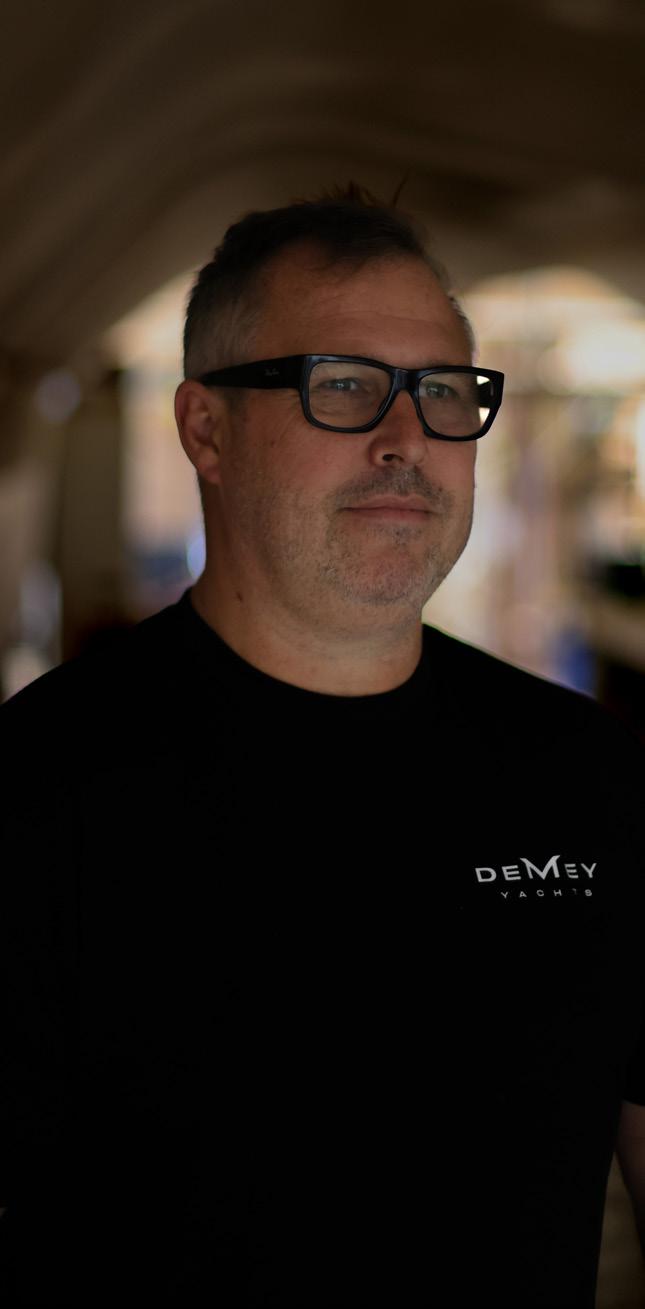
When not building boats, I love enjoying the great NZ outdoors with my family – mainly getting out on the water to fish, dive and water ski."
WHEN DID YOU START ON YOUR OWN?
1994, I had the support of my then boss Steve Marten who fed me work to get me started; it was something he didn't have to do. It's something that I've been extremely grateful for, and he's been a friend and mentor to this day. He had me building carbon rowing skiffs, weapon systems for the Australian Navy, and carbon booms for Superyachts. He would come around to my small factory and hang out. I get what that was about now, having about 30 staff and a big building around my neck. Our first custom yacht build was a sailing cat called Silver Raider, built in 1995, which dominated the Auckland multihull scene for many years. It progressed into larger and more complex vessels, utilising advanced composite construction. The largest project to date is U21, a 21m foiling catamaran for renowned NZ businessman Graeme Hart, who is very passionate about the process of designing and building boats, a great guy; the world needs more of them.
COMPANY PROFILE _ NIC DE MEY YACHTS
98 JULY / AUGUST 2023
Nic de Mey started his boat building business in 1994.
HOW HAS THE DIRECTION OR FOCUS OF THE COMPANY CHANGED IN RECENT YEARS?
It's been an exciting progression, not without its failures and sidesteps; when I first started, due to my training, I could only offer boats built out of advanced composites; there weren't too many clients wanting cruising boats built like an Americas Cup Boat way back in the early 2000s, so work was very up and down. There was also a vast amount of work we couldn't discuss or show people. It was also before social media, so getting my name out there was tough. One minute we were doing 80-hour weeks; the next, I let people go, struggling to make ends meet. There were tough times that I wouldn't want to repeat.
It was about 2010 when I noticed a distinct shift towards "civilian" projects becoming very focussed on building lightweight, stiff boats, particularly power catamarans; I had invested heavily in perfecting the enclosed moulding technique, which is just a superior way to build a boat, all of
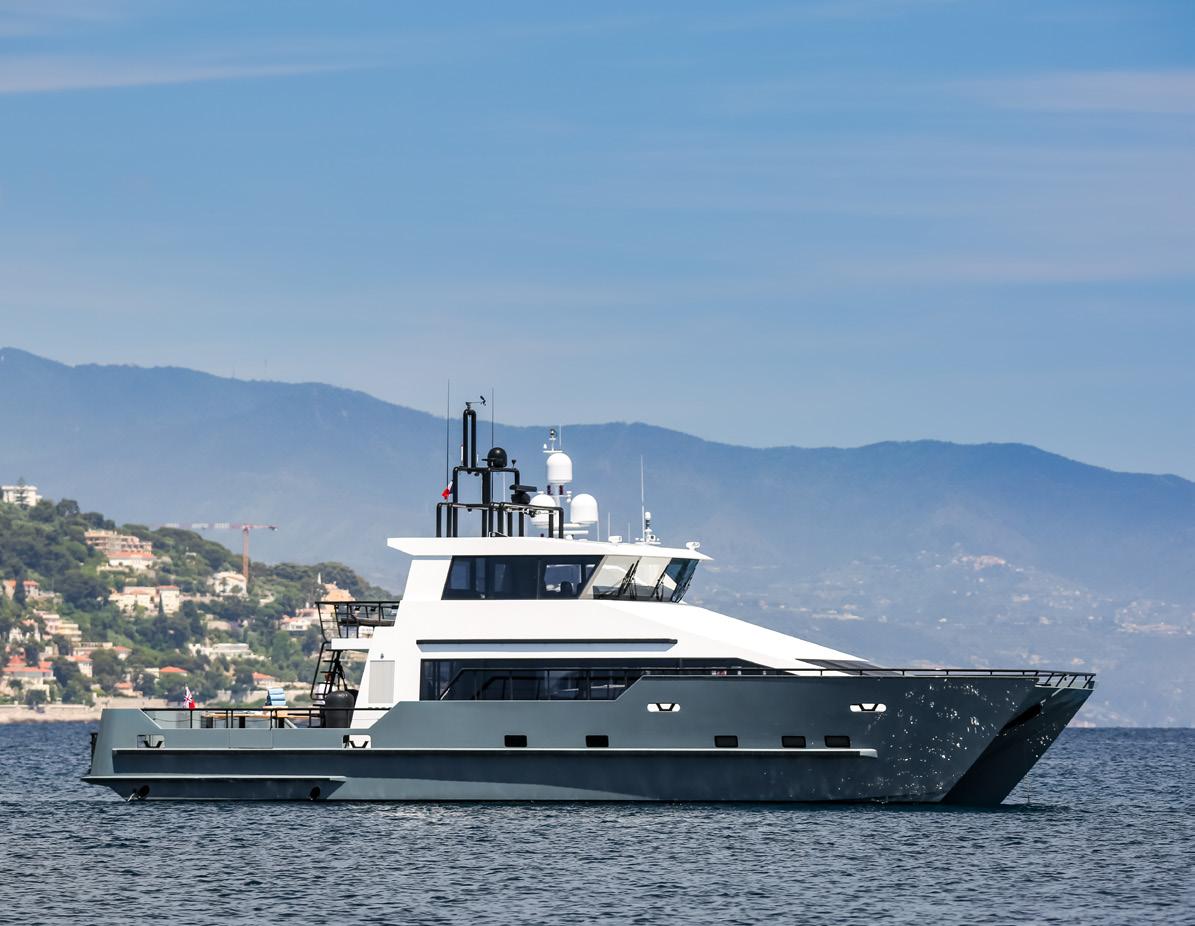
a sudden. I was one of the few that could successfully pull off big projects that were technically challenging to build. The phone started ringing and hasn't stopped. The business has moved from race boats and parts to building highly advanced composite luxury boats. The way we have embraced technology in general, from in-house design to CNC and 3D printing, has separated us from our competitors; We would be dead in the water without computers and CNC machines. I don't know how other builders do it sometimes. We are very team-focused nowadays; it's not all about me; I'm a very small part of it now, and my role is split between quality control and build details, design and sales. The team I'm surrounded by is fantastic, and they deserve credit for what we achieve. I'm very grateful for all of them.
IS CUSTOM BUILDS A MAINSTAY OF THE COMPANY?
They always have and will be very important to us. Every customer gets involved in the build process; I would say
every customer we have had has enjoyed the construction process just as much as actually using the boat once it's in the water.
However, some customers don't have the time or the inclination to go down the custom-build route; it can be initially very daunting and perceived as risky.
That's why we are offering the Spaceship 60 Explorer catamaran as a semi-production boat, a very high-end cruising power cat, as good as any custom build, the difference being that we can walk them through a Spaceship, take them for a ride and then give them a fixed price and delivery date. They know exactly what they are getting, all of the problems have been solved, and they know what it's going to cost.
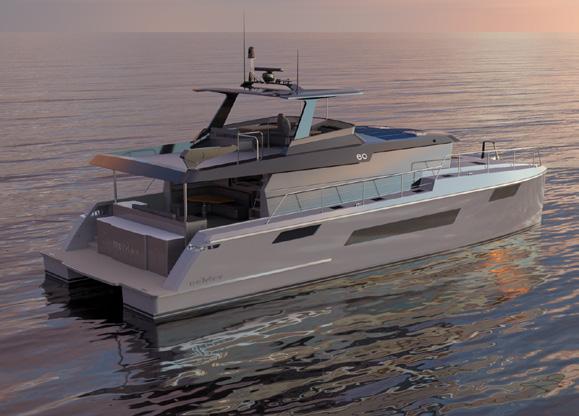
This is the advantage production builders have over custom builders, a fixed price, demo models and an early delivery date.
WHAT IS HAPPENING WITH PHANTOM BOATS?
We have just launched our new model, Phantom F2, which I've been told they're more a work of art than a race boat.
 The largest project to date is U21, a 21m foiling catamaran for renowned NZ businessman Graeme Hart.
POWERBOATMAGAZINE.CO.NZ 99
Nic de Mey have just launched their new model Phantom F2.
I got a little carried away with how good they are, they're definitely a passion project more than a commercial exercise, but they symbolise what we can do as a company, so they have to be much better than just good. The initial plan was to design and build a boat that dominates races, a level of build and design that others couldn't match easily; there were numerous design iterations, before we settled on what it is now carbon with a foam core, infused, no expense spared. If you had told me twenty years ago that's how I'd be building ski race boats, I would have laughed.
WHAT IS THE INTEREST LIKE WITH THE DEMEY 60 SPACESHIP?
The marketplace has nothing like it, so the phones have been ringing. It's usually someone looking at a Fleming or Nordhaven-style explorer yacht, so the conversation always starts with litres per nautical mile and range; customers are beginning to think about fuel and servicing costs, along with going on long cruising expeditions.
The powercat explorer yacht market has taken off, and it's a market that's got huge potential. It also is a semi-displacement hull form, which lends itself to having a hybrid power train. We are very interested in pursuing it but don't believe fully electric is the answer and won't be for some time yet.
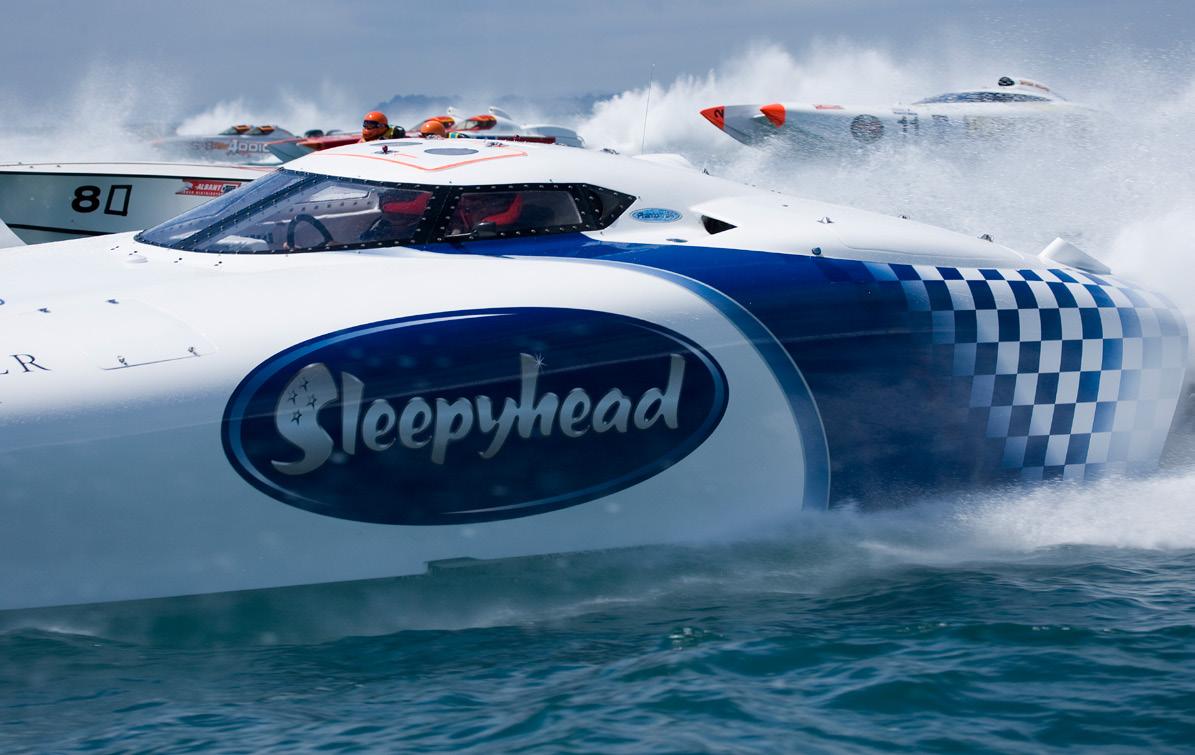
AFTER THE DEMEY 60S GET LAUNCHED, WHAT NEXT?
I'm a custom boatbuilder, so this question always fills me with dread. The plan is to build another Spaceship, plus we are also working with Roger Hill on two bigger projects.
DO YOU HAVE OTHER BUILDERS BUILDING TO YOUR DESIGN, OR IS ALL THAT IN-HOUSE?
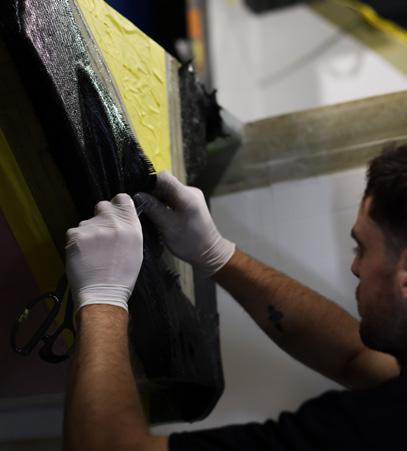
Design has always been a huge part of the business. But it's always something we need to be conscious of regarding getting offside with designers that may be looking at us to build a boat but think we are going to steal all their IP. We have an excellent relationship with Roger Hill, the designer of the Spaceship '60s, and we work very well together. It has become a very symbiotic relationship. But the reality is we do a lot of design work for other clients, such as the latest Haines Hunter 635 and a 16.5 mt semidisplacement powercat being built in Tauranga by Craig Wild. It's an exciting project as designer Ron Given asked us to design the boat using his hull form ideas, but sadly Ron just passed away before seeing the finished design, which is due to be launched in early 2025.
HOW DO YOU SEE THE MARKET TRENDS IN THE FUTURE?
Semi-displacement and foil-assisted catamarans are just starting to become popular along with explorer yachts, with this market growing exponentially in the next ten years. Production boatbuilders such as Riviera and Maritimo are attracting a whole new customer base to boating. Once experienced, a few will ring when upgrading to the next production model can't achieve their wish list. Hybrids will become popular, solely electric will be great for ferries and dayboat situations. On the construction and design side, technology such as VR to not only design boats but also show customers what they are getting will be a must; being proactive with things like printing and CNC machines will be crucial.
COMPANY PROFILE _ NIC DE MEY YACHTS
100 JULY / AUGUST 2023
Offshore race boat, Sleepyhead was one of de Mey’s earliest high tech race boats.
WHAT OVERSEAS INTEREST DO YOU HAVE?
One of our current Spaceships under construction is for a Sydney client and 80% of our enquiries are from overseas; the catamaran market in the U.S. is just starting to take off, for instance.

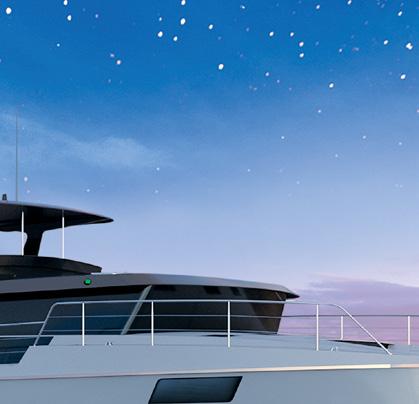
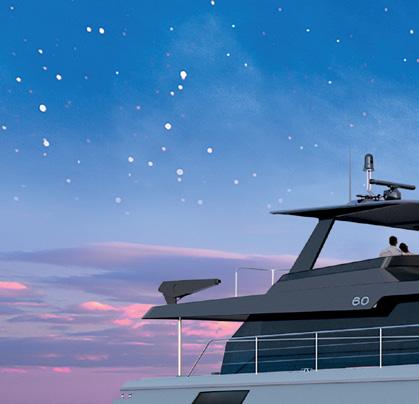
IS THERE ANY PROJECT YOU WOULD LIKE TO START IN THE FUTURE?
I'm open to all projects, race and pleasure. For me, it's more about working with clients with a boat they want built after years of boating and working bloody hard. They come to me to now bring that dream to life. It's a huge responsibility, and these are the best builds to be a part of. We have two happening right now, and it's happy days.
WHAT IS YOUR BUILD CAPACITY?
Depending on the size, currently, we can and are building two 18m catamarans simultaneously. It would be nice to get a stagger happening and launch one every six or so months. We have a five-year strategy that involves growing in size. What Ian Cook from YDL has achieved is a huge inspiration and something I aspire to. I cold-called Ian ten or so years ago and asked his advice on what I was I was doing right and what I was doing wrong. It was a humble sit-down conversation where I walked away with an extensive list of wrongs; I'm crossing them off steadily. I still got a few to go, but I'm getting there.
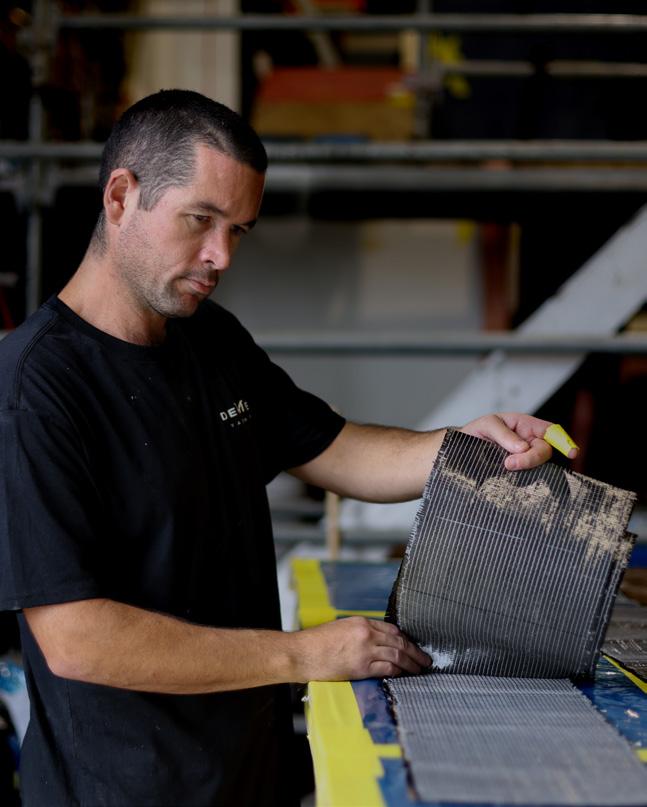
POWERBOATMAGAZINE.CO.NZ 101
Two Spaceship 60s are currently in build.
WORDS
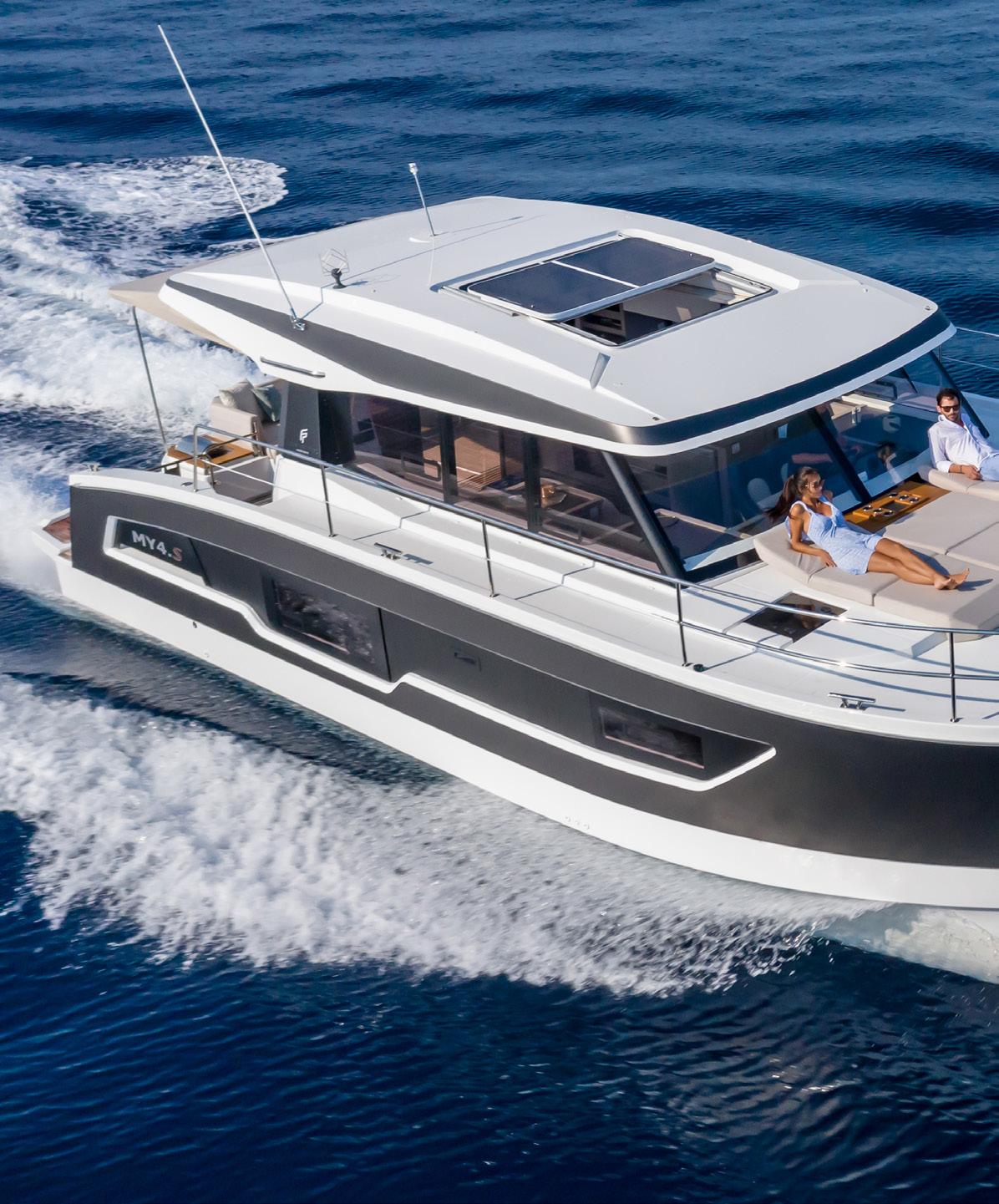
PACIFIC POWERBOAT REVIE WS _ FOUNTAINE PAJOT MY4.S 102 JULY / AUGUST 2023
BY BOATTEST.COM A Cruising Couple’s CATAMARAN
More than 20 years ago, Fountaine Pajot launched its first trawler catamaran. Ten years ago, the Fountaine Pajot Motor Yachts brand was launched, which gave rise to the MY 37, the MY 40 and the MY 44. However, these yachts weren’t being compared fairly to monohulls of similar size. The MY37 offered the volume of a 12 m to 14 m monohull, the MY40 was more like a motor yacht of 15 m to 17 m and on and on. So, a name change was in order. The MY40 became the MY5, the MY44 became the MY6 and this test boat with an LOA of 11 m is the MY4.S. Presumably, “S” is for Sedan.
MISSION
The Fountaine Pajot MY4.S is a boat specifically designed for a cruising couple that wants to cruise in the 20-knot realm. Not 30, and certainly not spend all day at a 6-knot trawler speed either. With her low bridge clearance of 3.78 m thanks to her not having a flying bridge, and no plans to add one, she’s ideal for coastal and bay cruising before returning with ease, especially to any of Australia’s “bridge-height” restricted waterways.
HANDLING
HEAD SEAS
Running in the “less than ideal” conditions of our test day gave us some nice opportunities to really get the feel for what this boat is capable of. And she’s well suited for snotty conditions. Once you get the hang of how this yacht handles, it's a lot of fun and she has some interesting personality traits. For example, running in head seas at about 13-14 knots, there's a pocket of air that gets underneath the hull and it has a bit of a sneeze effect as we come down on the waves. And I can create that at will. Just slow down and, as the bow drops, she’ll sneeze and spray over the front of the boat. But if you add power and get her up to around 18 knots, she’ll start slicing through these waves and things smooth out considerably. That’s her sweet spot, at least in these conditions. Slowing down
is not necessarily the proper course of action in heavy seas.
FOLLOWING SEAS
Now with following seas, the opposite is true. You want that pocket of air to work with the moulded-in spray rails to cushion and keep from stuffing the bows and bring her up and over the back side of each wave. She can keep up a good speed and slice right through the waves. She will have the stern get pushed around a bit so be prepared to get more aggressive on the steering, but it’s a much smoother ride.
BEAM SEAS
These are wetter but entirely more stable. The waves hit the high topsides and throw spray into the wind and on the boat. It’s simple physics and it is what it is. The point is, we were out
testing this boat and got full speed numbers in rotten conditions when others were running back into the inlet for cover. That speaks volumes about this boat and why I love cats so much.
ENGINES/ENGINE ROOM
Power choices for the MY4.S are twin shaft drive 150hp or 250hp. This boat is powered by twin 250-hp Yanmar 4LV engines. The engine compartments are small but that's to be expected in a catamaran of this size. Everything is still orderly and easy to get to. Both port and starboard compartments are largely identical. The main difference is that the port side has an inverter and hot water heater while the starboard has the 8kW generator. Behind and under the aft deck are the running gear. The starboard side also has the hydraulics for the swim platform.
POWERBOATMAGAZINE.CO.NZ 103
BOAT INSPECTION STERN
The full-beam swim platform is hydraulic. With a 393.98 cm depth and a lift capacity of 250 kg it can be used for launching a RIB or PWC. There's a 7.62 cm toe rail at the trailing edge that, along with a 68.58 cm high grab rail along the transom, adds a measure of safety. To the starboard side, there’s a reboarding ladder. It’s a four-step model and it includes high side rails to aid in reboarding.
COCKPIT
The cockpit is accessed from stairs to both port and starboard. Because the cockpit sofa is offset to port, there’s a narrower 43 cm entry to that side as opposed to the 71 cm entry to starboard. The starboard side also has an electric grill alongside. Seating consists of an 2.6 m U-shaped sofa that will wrap around an optional table. We can convert the seating into chaise lounges or a double-wide sun pad. The cockpit area is surprisingly roomy at 2.6 m x full beam, plus there's a 2 m high overhead. At the trailing edge, there’s an optional shade that goes to the back of the seating.
BOW
As we make our way up the side decks, there are three 30.48 cm high steps but that gives us good headroom down below so it's a fair trade off. There’s a comfortable 61 cm wide walkway, plus Fountaine Pajot added a 76 cm grab rail to the cabin side. There are three 30 cm cleats to each side and a Quick windlass is fully forward. There’s another social zone in the bow with sun pads measuring 250 cm wide and each of the chaise lounges is 195 cm long. They can either lay flat or ratchet up into the chaise positions. A teak assembly with beverage holders is in between. A sunshade can be added to the entire bow area.
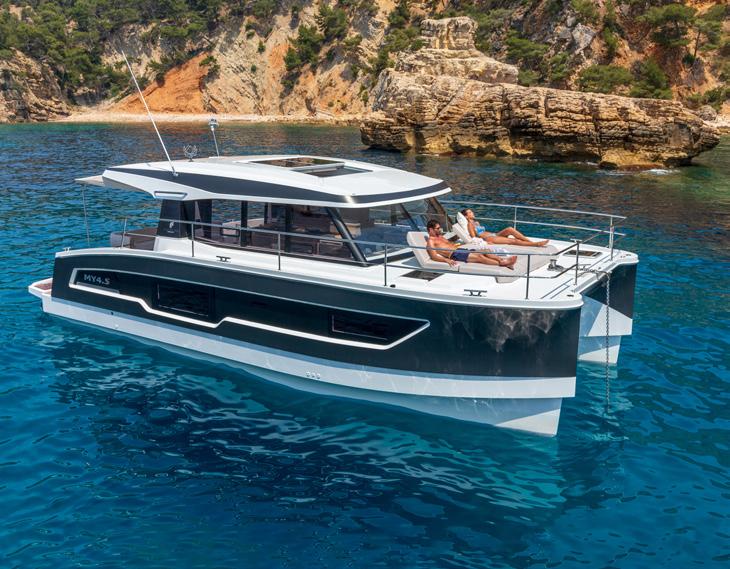
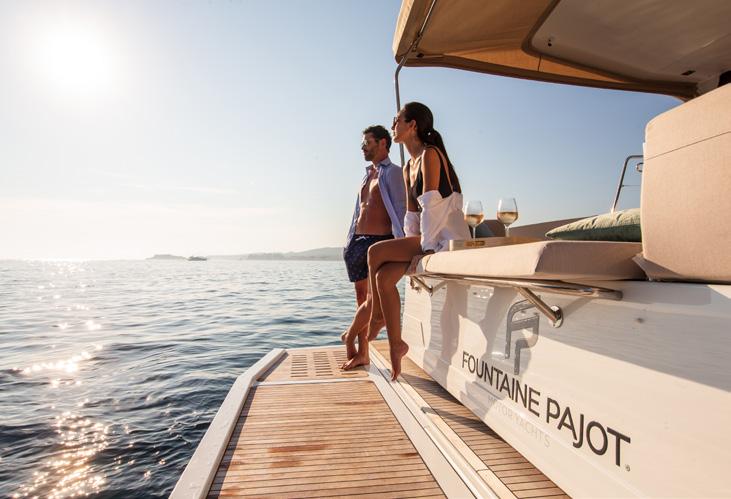
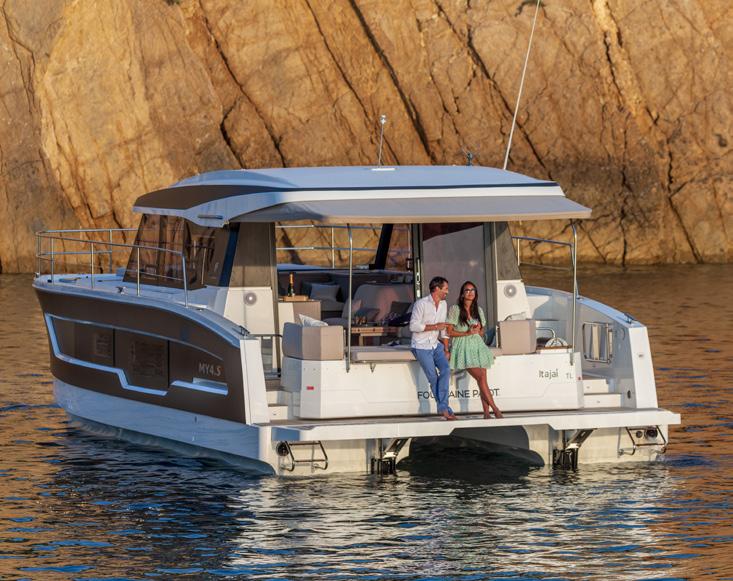
INTERIOR
When moving to the interior, the sliding doors open three ways -- as a single, double-wide to port or a double-wide to starboard. With the doors slid to starboard, there is the advantage of blending the serving area of the galley with the cockpit deck much more seamlessly. With the doors slid to port, the seating areas are blended and the gathering areas are much larger. That will provide an opening of 175 cm, 94 cm at its narrowest right at the aft corner of the salon bench.
PACIFIC POWERBOAT REVIE WS _ FOUNTAINE PAJOT MY4.S 104 JULY / AUGUST 2023
The platform is covered in optional synthetic teak. Natural teak is also an option.
SALOON
As we step inside, there’s a roomy interior with 2.08 m high headroom. There’s plenty of natural light coming in from all the 81 cm high windows surrounding the entire space. Seating starts with a 172 cm bench over on the starboard side and then it wraps around to a 104 cm bench. This is all wrapping around a table that is expandable with two leafs. It’s on a high/low pedestal so that it can drop for conversion into another berth.
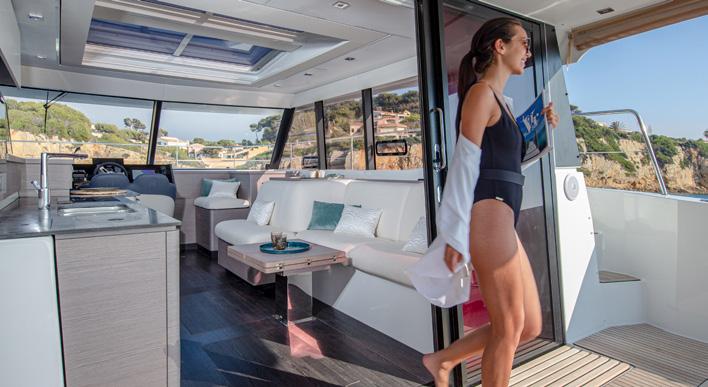
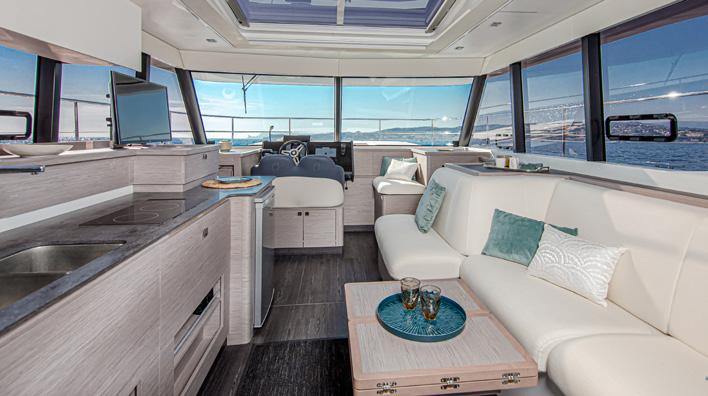
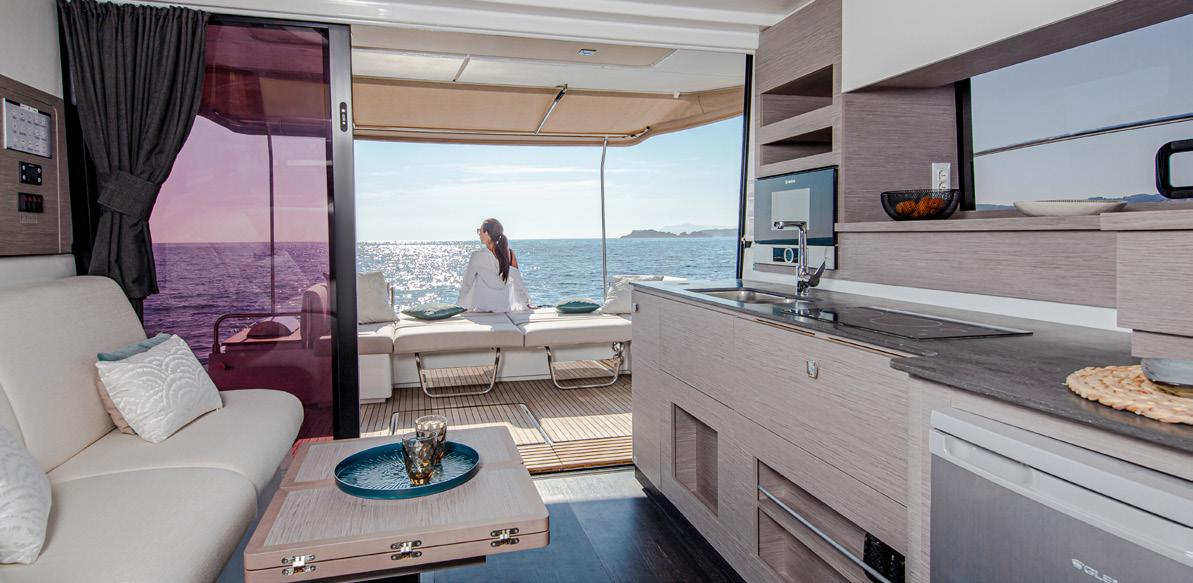
GALLEY
Across to port is the galley area. There’s a double basin stainless steel sink, a twoburner electric stove and plenty of open counter space for food prep. Storage is seemingly everywhere and that’s a theme that’s carried throughout the boat. Because this is a cat, there are three huge storage compartments even in the deck. So this is a boat that can spend extended periods of time away from the dock.
Missing from the galley equation is a microwave, but that’s because this owner didn’t request one. There’s a refrigerator/ freezer below the counter and forward. A TV goes on top of the counter, but a drop-down version would be preferred to one that doesn’t permanently disrupt the view out the window.
Climate control is hardly a concern on the MY4.S as there’s a 28,000 BTU air conditioning system countering any greenhouse effect of the 360-degrees of glass. If fresh air is desired, just open the side portlights and push a button to roll back the 203 cm x 165 cm sunroof. And of course, there are the aft doors. All of this combined will ventilate the whole deck quite sufficiently.
IT’S ALL ABOUT CHOICES
One thing we can't help but notice is that Fountaine Pajot went the extra effort to maintain neutrality regarding the fit and finish. There are whites, beiges, earth tones… they left it up to the owner of the boat to bring in their own colours because that's a personal choice as you make your way around the world. The MY4.S is offered as either a three-stateroom/two-head yacht or a fourstateroom/two-head yacht.
POWERBOATMAGAZINE.CO.NZ 105
Stepping inside, we see a wideopen layout with plenty of natural light and high overheads.
MASTER STATEROOM
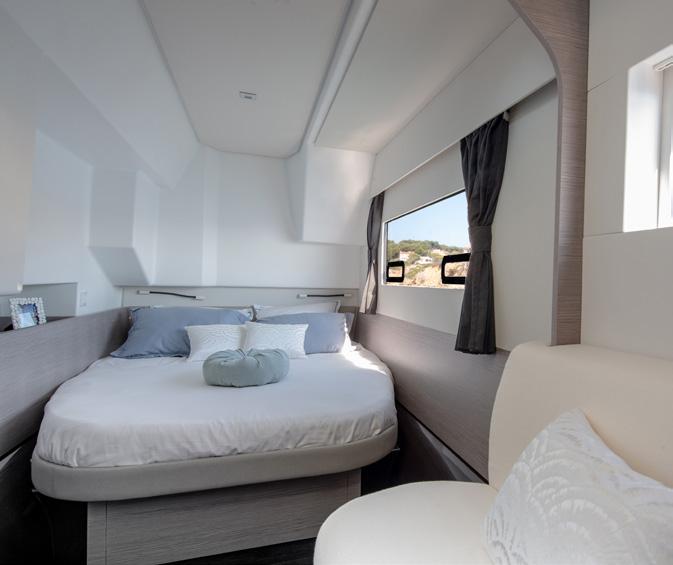
Our test boat is the three-stateroom version with the master on the port side. It can be closed off with a sliding door at the 58.42 cm wide companionway stairs. The berth is aft in a roomy stateroom with 1.93 m headroom. Hull side windows have two opening portlights. A storage cubby is to the starboard side and there's additional storage underneath the 198.12 cm x 160.02 cm berth.
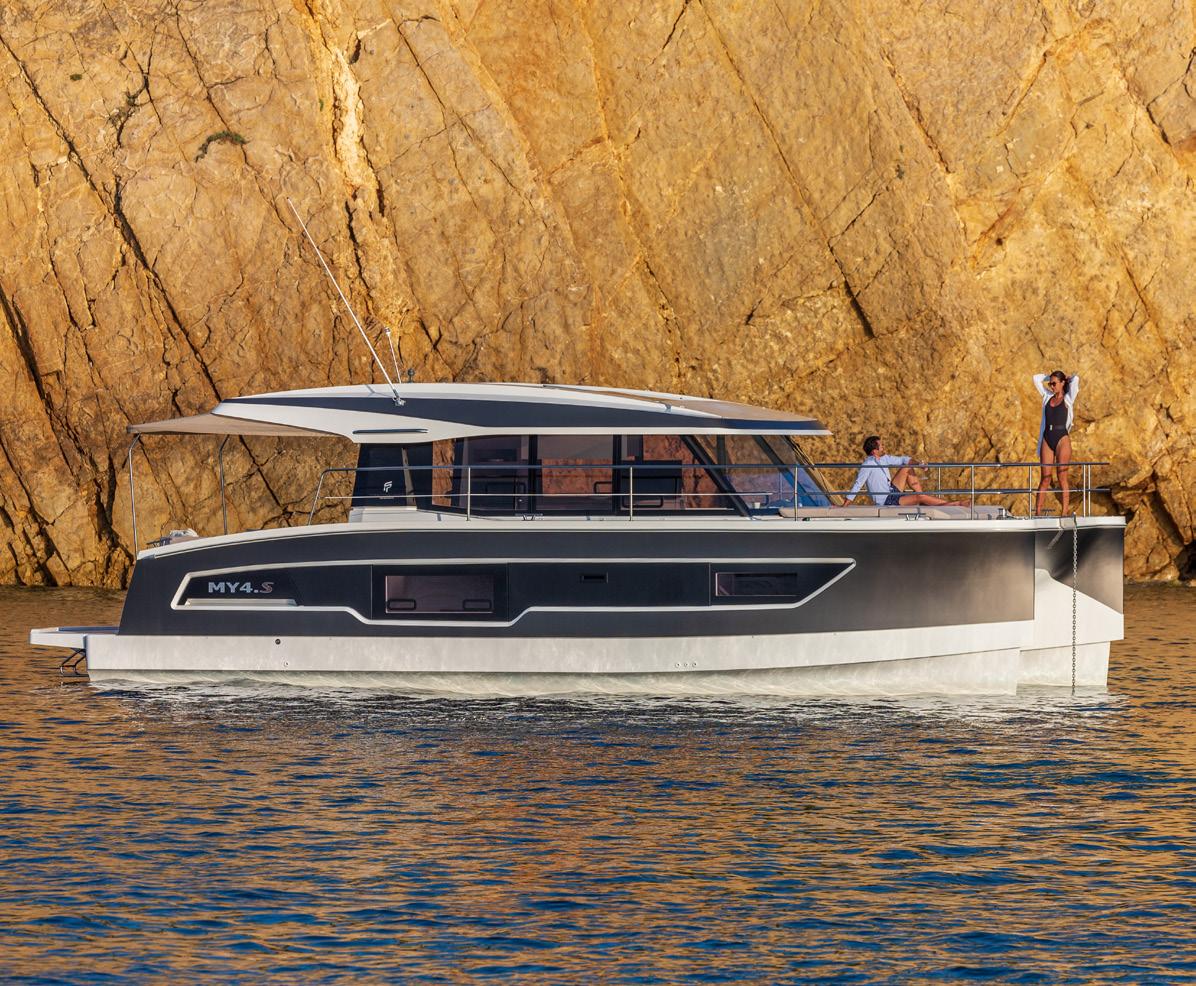
Moving forward, there's a 111.76 cm loveseat just underneath the natural light from a hull side window with an integrated portlight for ventilation. This sits directly across from the companionway stairs. It abuts a hanging locker that's across from a full-length mirror mounted to the open sliding companionway door.
HEAD
Just forward, there's a doorway leading into a storage area just before the head compartment. This space can be optioned out for a laundry area with a combination
washer dryer. The doorway leading into this storage area is part of a structural bulkhead, so in the four-stateroom version, this is the doorway to the optional fourth stateroom.
The loveseat area then becomes the head. In this layout, the head is forward. There’s a sink opposite the electric flush toilet. The walk-in shower is fully forward.
PACIFIC POWERBOAT REVIE WS _ FOUNTAINE PAJOT MY4.S
The master berth extends the full width of the hull. With high overhead and a large window inviting natural light.
106 JULY / AUGUST 2023
“It’s a nice mix of form, function and good looks. Fountaine Pajot should be proud of this yacht.”
VIP
Two more staterooms are to the starboard hull. The VIP is aft with a 200.66 cm x 157.48 cm berth mounted along the keel that goes out to the width of the hull. There's a hull side window with two opening portlights and a curtain pulls across for privacy. There's a hanging locker just forward providing the storage.
HEAD
Moving forward the head is next. It’s a shared head as well as a day head. It has an opening portlight for ventilation and an electric flush toilet. The fiberglass sink has storage underneath. Headroom in this compartment is 6’8” (2.03 m). Directly across from the head is a refrigerator/freezer with four compartments, the top one being a freezer.
GUEST STATEROOM
Fully forward is the guest stateroom with an overhead clearance at the entrance of 1.9 m. This has more of a trapezoidal design that narrows at the front, so its
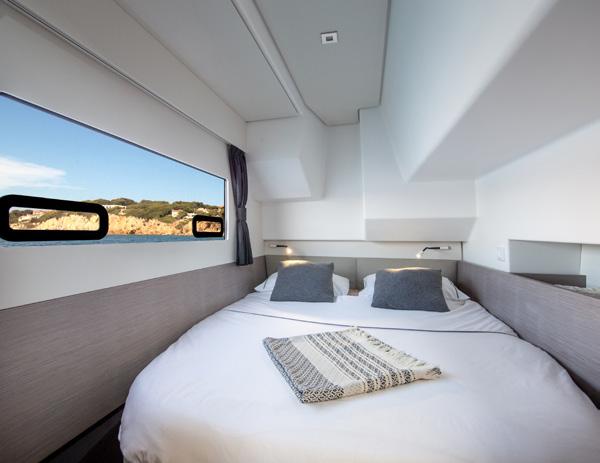
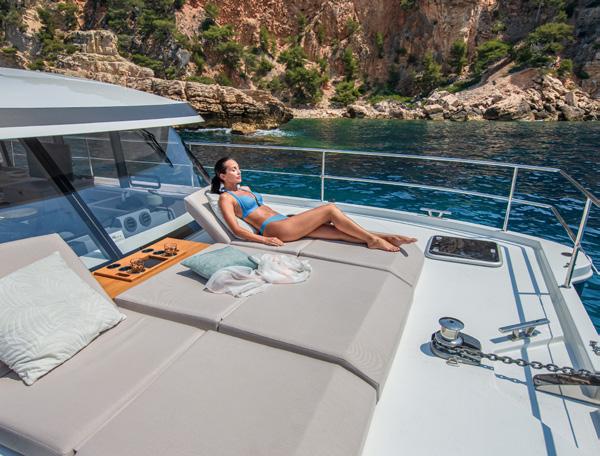
average measurements are 200.66 cm x 73.66 cm. There's another hull side window with a single opening portlight and a curtain that slides across for privacy. There's a hanging locker and storage alongside the berth. Overhead is a hatch providing more natural light and it can be closed off with a privacy shade.
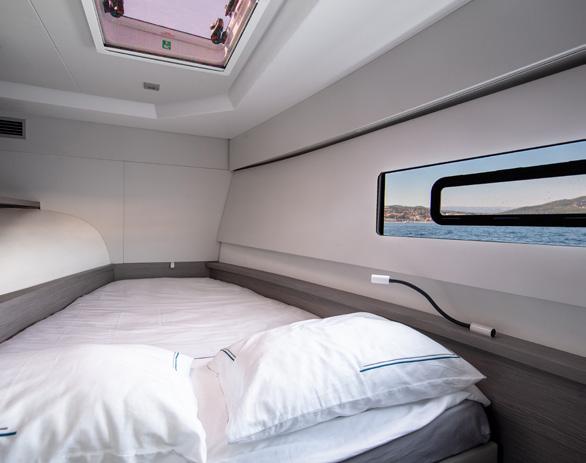
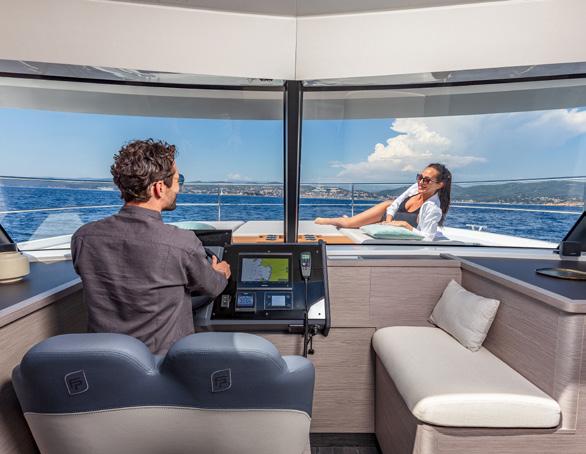
HELM
The helm features double-wide seats with two individual flip bolsters. The console starts with a Garmin VHF, but there's no clip to hang it on, seemingly because the owner hasn’t decided on its location. Right on the side of the main display would be a good spot where it would be easily viewed. The workhorse of the panel is the 30.48 cm multi-function display. Not only is it delivering the nav, sonar, radar, engine display, etc., but it also interacts with the Scheiber Touchscreen that allows controllability of the vessel’s switching and tank monitoring. So we have that on a separate screen below the Garmin and it’s on the larger screen as well.
The Garmin autopilot is just underneath. The steering wheel is mounted to a fixed base. Interestingly enough, there’s also a switch to have the AIS set to transmit the vessel’s position or be in silent mode. The Yanmar display is just above the wheel. The engine controls are to the left-hand side, close to the side cabinet. At first glance, seemingly too close, but once underway it became quite comfortable to rest the hand on the side console and manipulate the sticks, or if in sync mode, the stick. At the top of the panel, there’s a light on a gooseneck that switches from white to red. To the other side is the joystick for the bow thruster. Because the props are so far apart, the manoeuvrability of this yacht is outstanding. I barely touched this control when threading my way out of a very tight docking. While we have switching for all the electrical functions on the MFD screen, we still need mechanical switching for some things needed right away, such as the horn and the wind shield wipers. Those switches are located above the windshield and to the left.
Much like the master, the VIP berth extends to the full width of the hull.
The guest berth narrows at the forward end, with a single window and an overhead hatch providing natural light.
The sun pads on the bow have ratcheting head cushions that can be put into chaise lounge positions.
POWERBOATMAGAZINE.CO.NZ 107
The helm is well laid out and comfortable.
OBSERVATIONS
There’s a lot to like in the MY4.S at the dock and certainly underway. As a cruising couple’s boat, she’s well suited for extended times away from the dock as she has storage seemingly everywhere. The 20-knot speed is a sweet spot of cruisability for the distance crowd. Slower will get more distance and loiter time but there’s little need for speeding faster to those distant locations. It’s a nice mix of form, function and good looks. Fountaine Pajot should be proud of this yacht.
SPECIFICATIONS
Priced From AUD $987,400
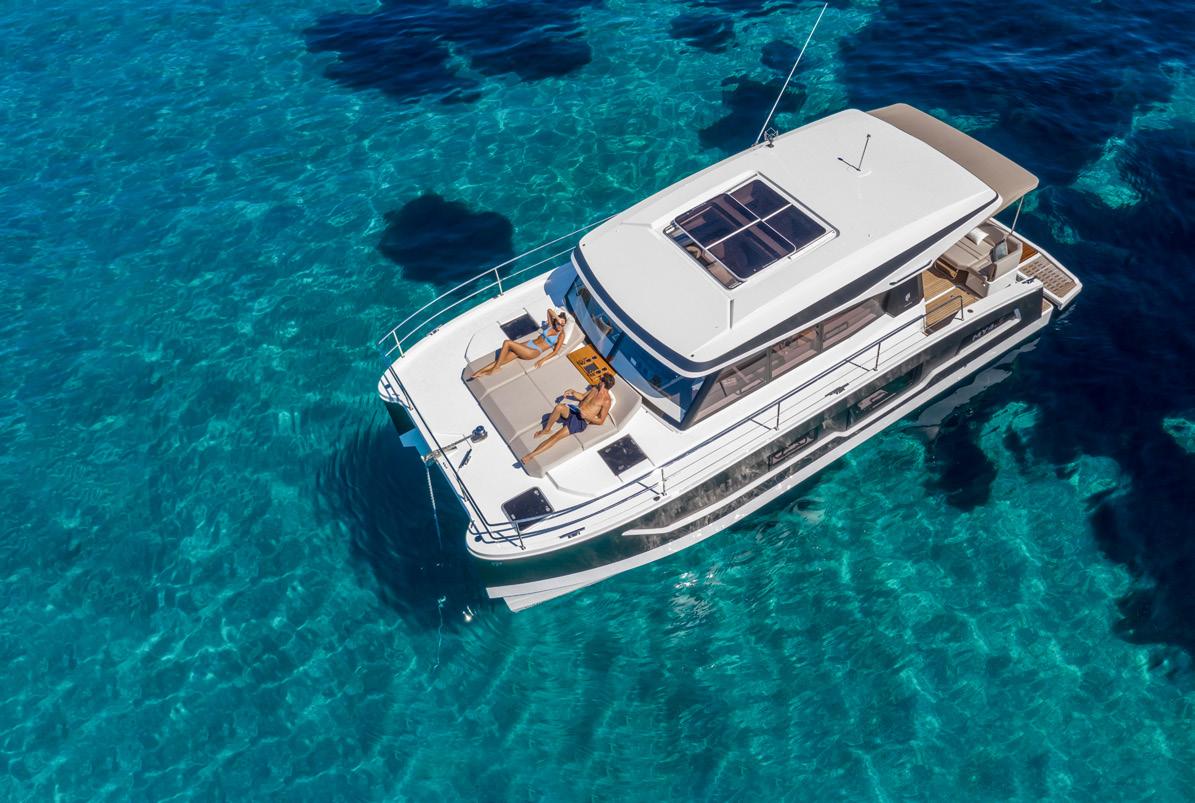
Priced From NZ$ $1,090,850
Length overall 11m
Beam 5.1m
Tested weight 10,480.25 kg
Draft .8m
Fuel capacity 1,196.19 l
Water capacity 348.25 l
Total weight 10,480.25 kg
Tested
PERFORMANCE DATA :
Contact details Multihull Solutions Aust +61 (0) 7 5452 5164 NZ +64 (0) 9 217 0600 info@multihullsolutions.com.au MULTIHULLSOLUTIONS.COM.AU PACIFIC POWERBOAT REVIE WS _ FOUNTAINE PAJOT MY4.S
engine 2 x 250-hp Yanmar 4lv
108 JULY / AUGUST 2023
2 X 250-HP YANMAR 4LV RPM KPH Knots LPH 700 5.5 2.9 1.9 1000 8.2 4.4 3.4 1250 10.5 5.6 5.7 1500 12.2 6.6 9.1 1750 14.6 7.9 12.5 2000 15.8 8.5 18.2 2200 16.6 9 24.6 2400 16.9 9.1 31.8 2600 19.3 10.4 40.5 2800 26.9 14.5 46.2 3000 28.6 15.5 56.8 3200 29.8 16.1 67 3400 34.8 18.7 82.9 3600 36.2 19.5 91.2 3800 39.8 21.4 106 Note: Range is based on 90% of fuel capacity, in calm conditions.
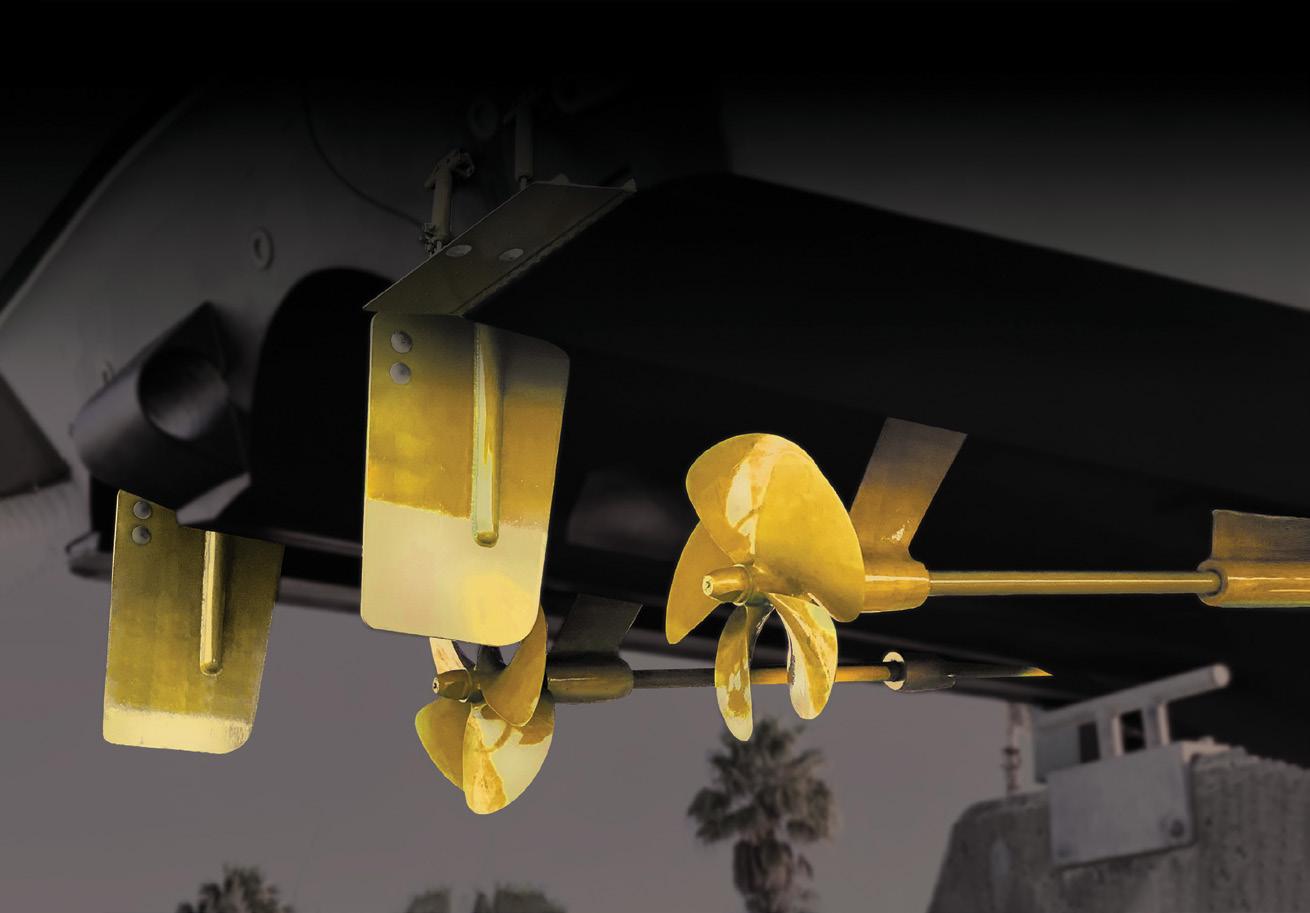
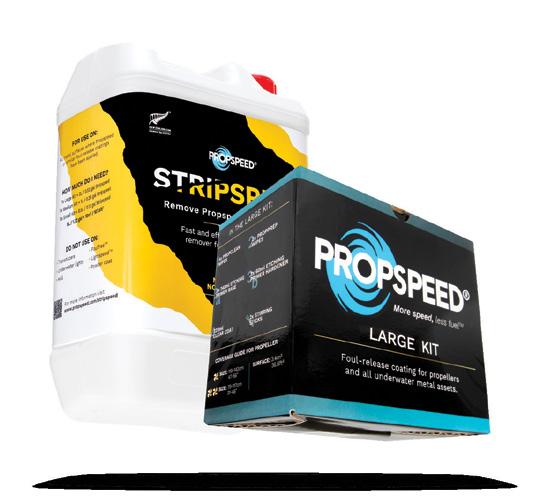
BE BOAT SAFE BE BOAT READY
Whether you’re using your boat for fishing, skiing, diving, day cruising or overnighting, it’s important to be boat safe and to remember to take essential safety gear every time you head out on the water. Whether you keep it onboard your vessel or in a grab bag it’s important to inspect the safety equipment periodically and ensure it is in good working order and fit for purpose.
Dependent on the kind and size of your vessel Coastguard New Zealand does recommend different safety items, but there is some basic gear that all vessels should have no matter what size to help keep them safe and out of trouble.
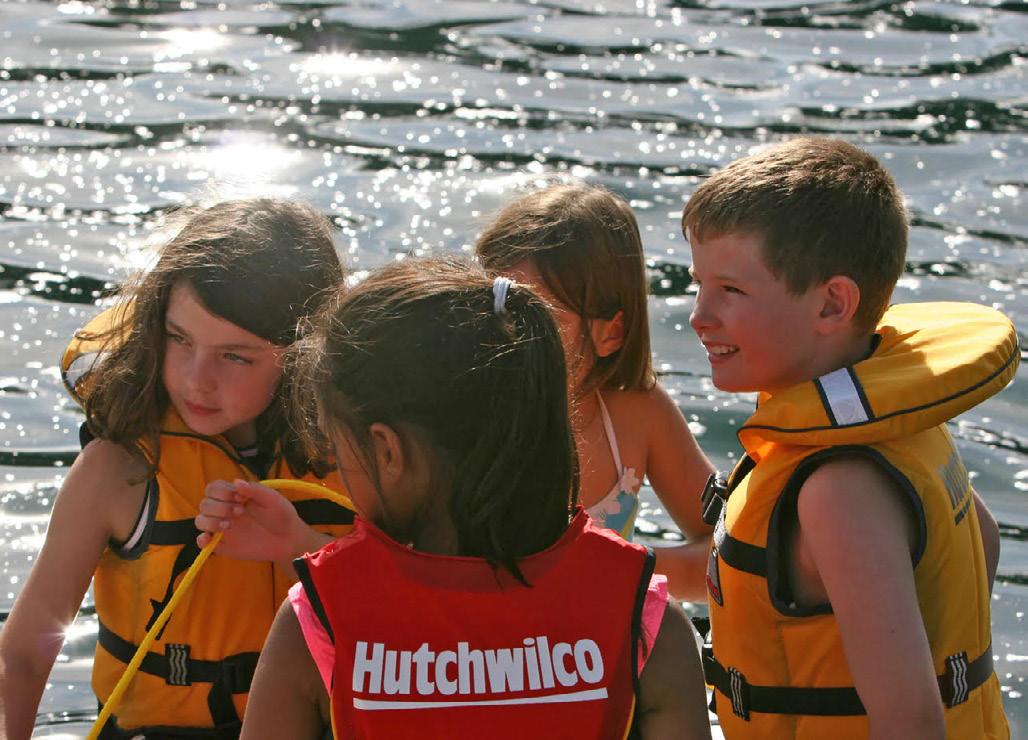
COASTGUARD EDUCATION
110 JULY / AUGUST 2023 COASTGUARD EDUCATION _ SAFETY ITEMS
6 ESSENTIAL ITEMS OF SAFETY EQUIPMENT FOR YOUR BOAT
A few “must haves” as well as “should haves” to carry on board your boat.
LIFEJACKETS & WEARABLE PERSONAL FLOTATION DEVICES (PFDS)
Lifejackets have come along way over the past few years and they have also come down in price, so there is no excuse not to have these onboard your vessel. It is imperative that a wearable PFD lifejacket is accessible and readily available for each person on board.
If you’re towing a skier or have a wake surfer behind the boat, he or she will need to be wearing a PFD as well. It is recommended that kids 12 and under should always wear their PFD on a moving vessel. Likewise, everyone riding a personal watercraft (PWC) must wear a PFD.
The skipper of the vessel must ensure that lifejackets are worn at times of heightened risk, such as during rough weather, when crossing a bar, or if there is a very elderly or non-swimmer on board.
In some areas of the country, local bylaws require PFD’s to be worn at all times on vessels of 6m or under. Please check with your local harbour master for the rules in your area. Coastguard NZ recommends that everyone wears a PFD at all times when on board a vessel.
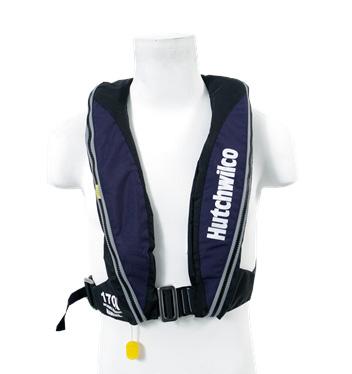
and offshore medical training, you need to attend a classroom course. The coastal medic course is a 2 day course and is the prerequisite to
offshore medic. These courses provide comprehensive instruction in a variety of topics including CPR, first aid, patient assessment, shock management, wound care, bone fractures, dislocation care and much more. After completing these courses successfully, students will receive official certification which is valid for two years after completion date so it’s important to stay up-to-date with your certifications if you plan on spending lots of time at sea!
ANCHOR, CHAIN & WARP
The anchor, chain and warp (rope) is an essential safety item as it can be used to attach the boat to the seabed in a bay or anchorage. It can also be used to hold the boats position and stop it drifting in an emergency. The anchor needs to be heavy enough, and of the right type, to safely secure the boat to the seabed.
Chain
Chain is used to help hold the anchor rope down on the bottom so that the anchor is not pulled up and out of the sea bed. The chain will also survive the rough treatment from sharp objects on the sea bed when the boat swings around the anchor.
Warp (anchor rope)
What length of warp you need depends on the depth of water you will anchor in. Consider tidal rise and fall; weather condition; and the number of other boats around you. A minimum of 30 metres should be carried on any boat.
Nylon is ideal as an anchor warp as it is strong, sinks, and has some stretch. Never use polypropylene for an anchor warp, because it floats, and can get tangled around the propellers of other boats.
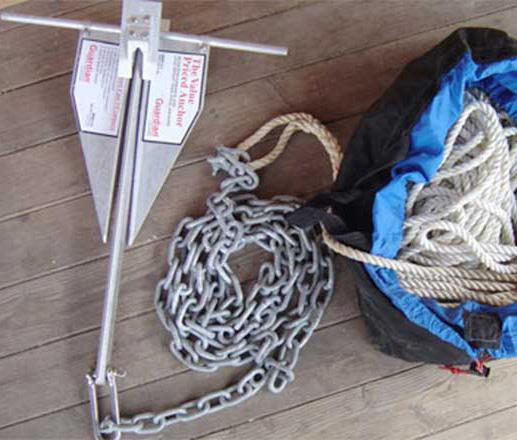
1 2
POWERBOATMAGAZINE.CO.NZ 111
SIGNALLING EQUIPMENT
AIR HORN CELL PHONE
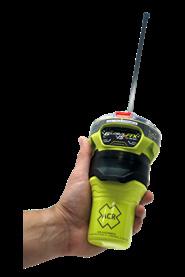
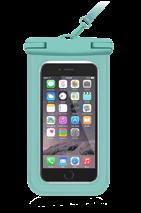
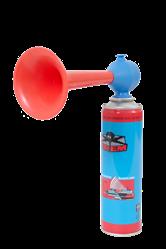
VHF RADIO MIRROR OR HELIOGRAPH EPIRB PLASTIC WHISTLE (ON PFD)
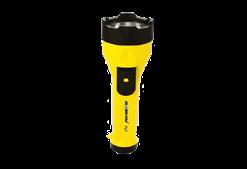
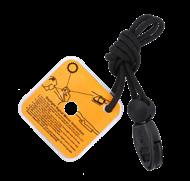
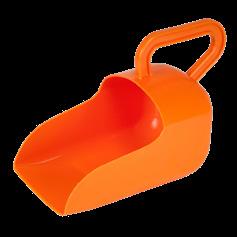
A marine VHF radio allows you to obtain regular marine weather forecasts and to contact the shore or other boaties in an emergency. It’s a key piece of safety equipment and something every boat owner should have. Why not enrol in a Maritime VHF Operators Certificate (MVOC) course to receive the correct training and to become a licensed user, which is mandatory. A handheld VHF is suitable and recommended for small boats without a power supply.
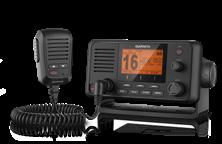
Cell phone
112 JULY / AUGUST 2023 COASTGUARD EDUCATION _ SAFETY ITEMS
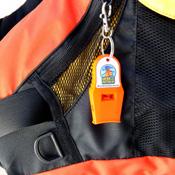
SECONDARY PROPULSION
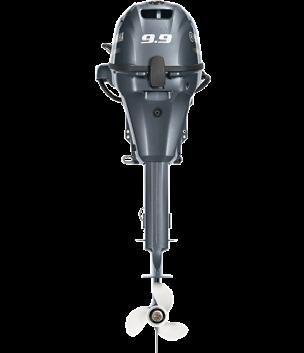
A back-up means of getting you to safety if you break down. Options include:
• AUXILIARY ENGINE
• OARS / PADDLES
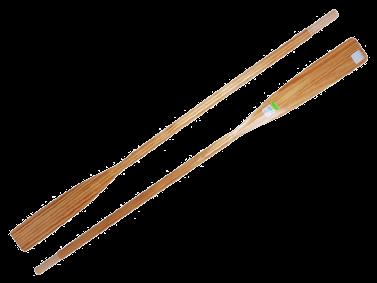
• JURY RIG SAIL
• KEDGING (USING AN ANCHOR)
BAILER
Never let water build up in a boat as it affects stability. If this happens you need to remove it as quickly as possible. There are many ways you can do this from the sedentary bucket (with a line attached) to a bilge pump (manual or electric). If you do not have either of these then you c ould use a sponge, or a two-litre plastic container with the bottom cut off to bail out the water. These are all useful methods of removing excess water from the boat.
4 5 6
FIRE EXTINGUISHERS

Any boat which has a motor or carries flammable liquids or gas needs to carry a fire extinguisher. This should be placed in a dry and accessible position. Know what type of extinguisher you have and how to use it before you need it and ensure it is serviced annually.
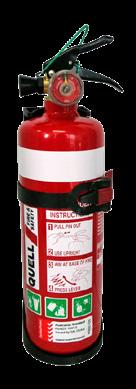
7
ADDITIONAL EQUIPMENT
In addition to the six essential items each boat should carry, we also recommend a few more items:
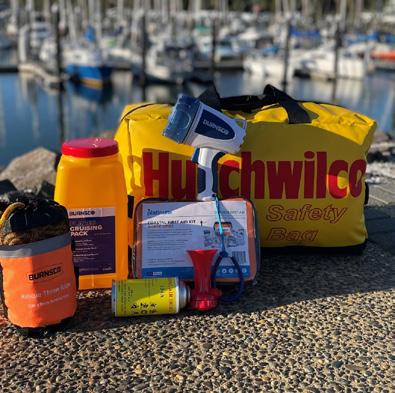
• FIRST AID KIT
• SPARE ENGINE PARTS
• TOOLS
• SPARE ROPE
• LOCAL CHARTS
• COMPASS
• CHANGE OF WARM CLOTHES
• SHARP KNIFE COASTGUARD EDUCATION
TORCH
Signalling equipment is used to summon help if you need it (day or night). It’s adviseable to always carry at least two types: 3 MARINE
FLARES AND SMOKE SIGNALS
Marine VHF Radio
We all have a mobile and we use them every minute of the day but we should not rely on a cell phone as the only means of communication. There is often poor coverage at sea. They don’t work when wet, and other boats nearby are NOT able to hear you call for help. If you do have one, take it with you, but keep it in a dry bag or water-proof zip-lock bag.
The main objective of boating is to have fun, while staying safe. Much of the safety equipment listed above is designed to keep you and your boat safe in an emergency so you can keep the boat afloat, and call for help. The use of all of this equipment is covered in Coastguard Boating Education’s Day Skipper course. The use of VHF radio, and qualifying for the Marine VHF Radio Operators’ certificate is covered in the VHF Radio course. Both of these courses are available online, or in a classroom course near you.
BOATING SAFETY CODE - KNOW BEFORE YOU GO
Before you go boating on our seas, lakes and rivers, get familiar with New Zealand’s Boating Safety Code. Five simple rules will help you to stay safe, no matter what kind of boat you use.
1. LIFE JACKETS
2. SKIPPER RESPONSIBILITY
3. COMMUNICATIONS
4. MARINE WEATHER
5. AVOID ALCOHOL
Details on these, and other courses offered by CBE, are found on the CBE website:
BOATINGEDUCATION.ORG.NZ
ENROL ON A BOATMASTER COURSE
Gain detailed boating knowledge.
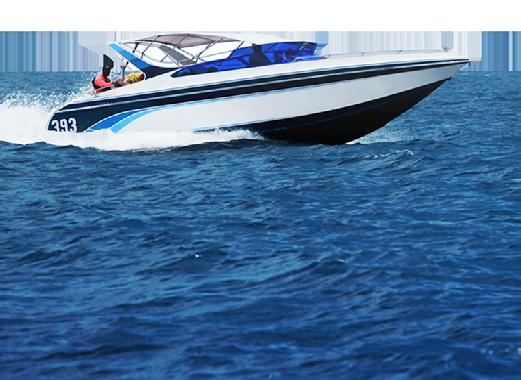
It applies to a wide range of vessels including yachts, launches, and powerboats. As part of the pathway of Coastguard Boating Education courses, the material extends your knowledge in - chartwork, navigation techniques, distress signals, emergency procedures, knots, rope work, and provides a thorough understanding of the rules of the road at sea.
The Boatmaster course is a comprehensive course for boaties with current knowledge and experience. DURATION
30 hours (classroom) plus self-study, followed by a written and oral assessment. The home study option for Boatmaster must be completed within 6 months.
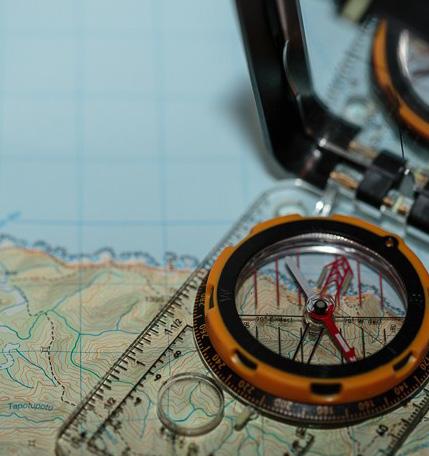
QUALIFICATION
NZ Boatmaster Certificate
OPTIONS
COURSE
days Classroom Study
be completed
Home Study Discover more 0800 40 80 90 | info@boatingeducations.org.nz | www.boatingeducation.org.nz
ENROL ON A BOATMASTER COURSE. UPSKILL
Approx. 4
To
in 6 months
THIS WINTER
POWERBOATMAGAZINE.CO.NZ 113
SERIOUS ABOUT FISHING
Ayear ago I tested FatCat’s 4500 Fisherman Open, single console and tiller steer craft (Pacific Power Boat May/June 2022 issue). I concluded that article with the following summary.
“Bloody good looking fishing boat mate, how much?” said a guy walking down the pier at Gulf Harbour. We had just launched the Yanmar VF23AZ at Gulf Harbour on a stunning June morning prior to heading out into mirror calm water to run this very different Japanese fishing boat. To be honest I wasn’t really sure I would like it, but after that remark I thought maybe I am being a bit hasty. After running the boat I was pleasantly surprised. My earlier concerns were answered and I reckon the boat, given a few alterations will be well suited to the Kiwi fishing scene.
Yanmar is a global corporate known in the marine industry, especially in New Zealand and Australia, for its diesel engines. But did you know there is another side to Yanmar that also targets the recreational boatie? They build boats. And not just a few small boats. Since 1972, Yanmar Shipbuilding Co., Ltd has been selling boats in Japan. In 2020 they re-branded
to Yanmar Marine International Asia, and have expanded their reach to New Zealand, with the first models from their 17-boat range appearing at last month's Hutchwilco New Zealand boat show and SCIBS.
The introductory model to New Zealand, the VF23AZ, will particularly suit those looking for a no-frills fishing platform. There's no shower or galley and limited accommodation, but then that's why the boat is so fishingorientated and targeted to the Japanese fishing market. In Japan, recreational boating is more about fishing than cruising and overnighting. However, Yanmar does a range of cruisers also to suit that market. Kiwis can be pedantic about the finer details, and while there are some shortcomings in the layout and execution of the concept, generally, it's a decent boat.
The VF23AZ is the smallest boat in the range, which runs from 7.50m to 15m, with every model being a hardtop or flybridge for models over 11m.. The VZ23AZ or Zarpa23-II is one of three boats in the Zarpa series, which includes two larger models, the Zarpa26-11 and the Zarpa28II. All three share the same primary platform with the space and dimensions determined by size.
Barry Thompson checks out the first Yanmar powerboat to arrive in New Zealand and admits it differs from what he expected.
PACIFIC POWERBOAT REVIE WS _ YANMAR VF23AZ 114 JULY / AUGUST 2023
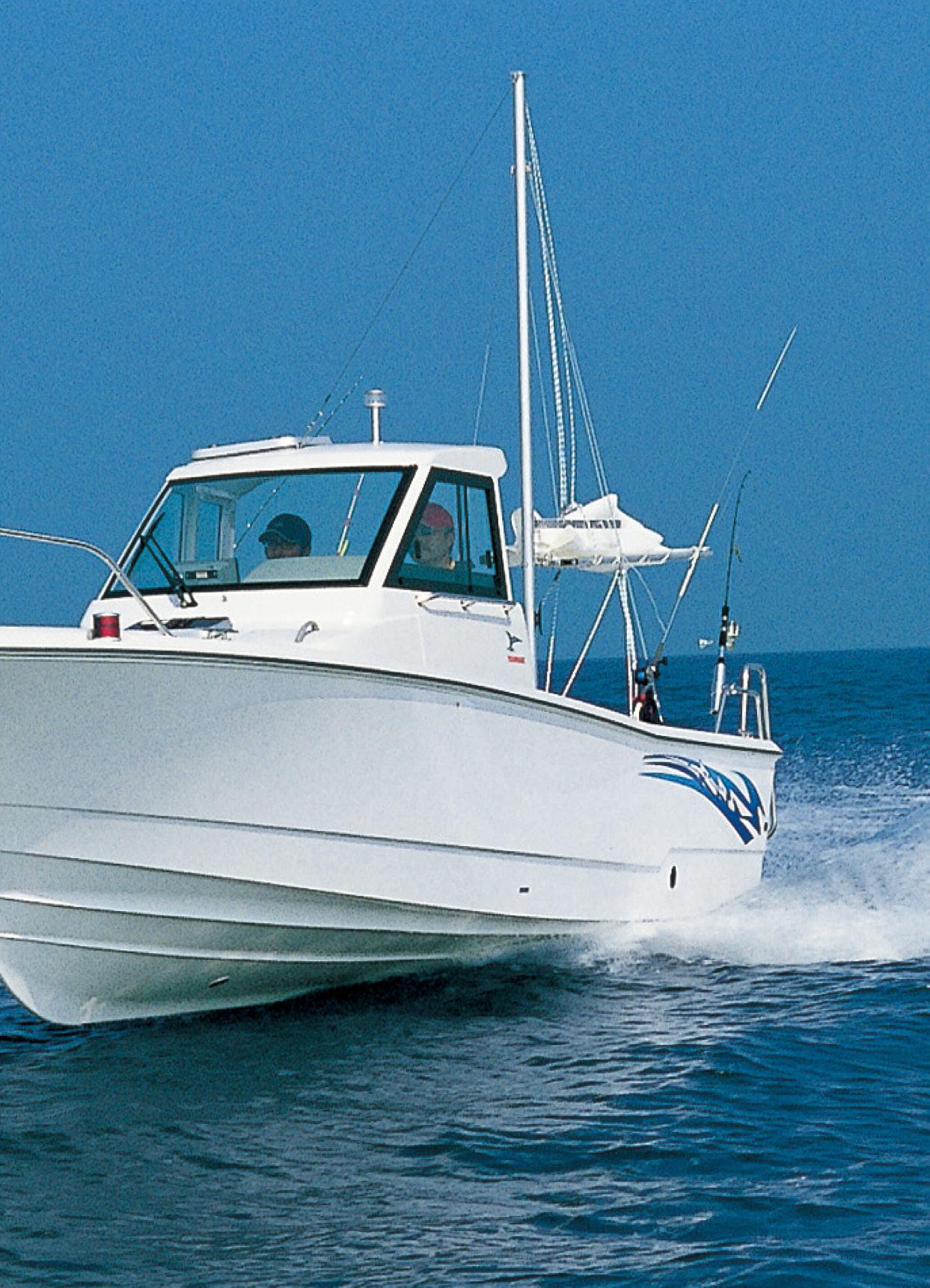
POWERBOATMAGAZINE.CO.NZ 115
The Yanmar has an aggressive bow to handle the rougher water.
The side door opens to provide more open fishing space in the cockpit.
There is plenty of space around the engine box.
LOW PROFILE
While the VF23AZ has a pleasing low profile due to the SPS (more on that later) and looks sharp from most angles, it may also be detrimental. Some Kiwis will find the low height under the hardtop a bit daunting. I would like to see this raised to at least 2.0m, which is the height I would need if I wanted to stand to drive. The larger Zarpa 26 and 28 both have headroom.
“This is something I hope to rectify in the future with either a higher cabin top or to remove the fibreglass hardtop altogether and replace with a removeable soft cover which I feel will bring it more into line with what Kiwi fishermen want in a boat", says the importer. He added that the feedback he gathered when the boat was displayed at the Hutchwilco NZ Boat Show was invaluable.
Amongst those are a larger overhead hatch in the full hardtop model, a hinged hatch on the live bait tank, a fully adjustable helm seat and the option of a second passenger seat. All that done I reckon it’s going to have a lot more local appeal.
The helm seat is the only cushioned seating provided in the boat, but there are plenty of handholds for your passengers. It wouldn't be too much extra to
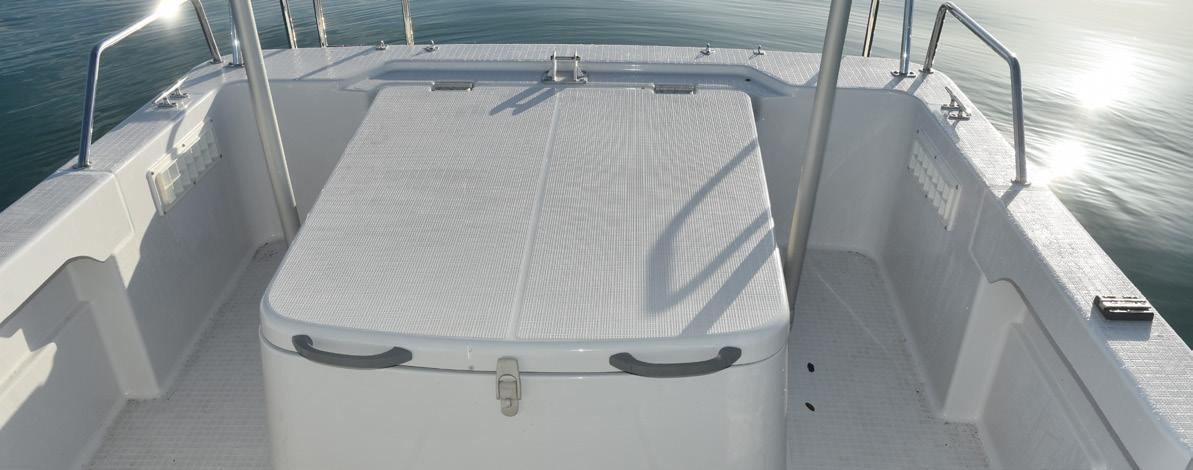
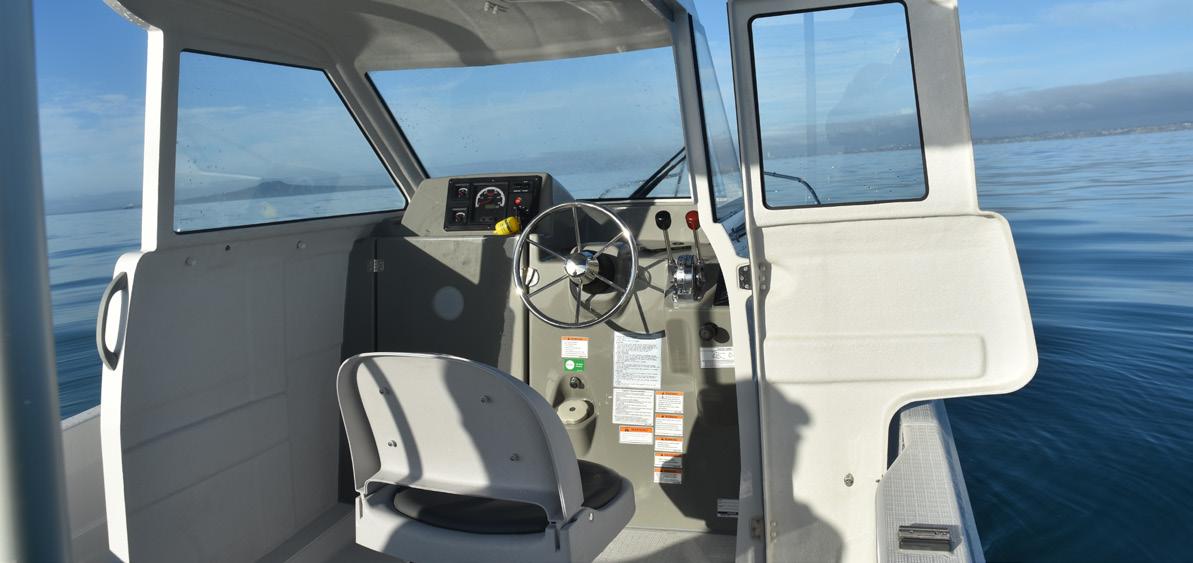
get a cushion made for the engine box if you wanted more dedicated seating. However, seated, it was fine, with good visibility all around. I wasn't sure about having the instrument cluster on the opposite side of the wheel, but it somehow works. However, this does leave space in front of the helm for a decent size MFD, which you will look at more often than the tacho and engine instruments.
Access to the forward cabin is via a fold-away solid cabin door. It was more a place to stow gear, although, with a full side-to-side foam berth, it's also plenty big enough for a couple of people to overnight. There is a marine toilet under the squab but no shower aboard. There is no galley, so if you are going to any cooking, I suggest a rail-mounted Magna BBQ.
Fishing space is always an important consideration, and the VF23AZ has plenty. This is divided between the open bow with its deep coamings and flat surfaces and the aft cockpit, providing ample foot space for 4-6 fishermen. An interesting feature is how the helm side door swings into the bulwark to open up more potential fishing space in the cockpit.
The engine box doubles as somewhere to sit or mount a bait board. I would go for a rail-mounted bait board
PACIFIC POWERBOAT REVIE WS _ YANMAR VF23AZ
116 JULY / AUGUST 2023
and have an esky bin handy for your bait. Some of the standard features on the boat included twin rear boarding steps with a drop-down stainless ladder, two skylight hatches and bow and stern rails. There are three underfloor lockers, so there is plenty of provision for your catch. The centre one is dedicated as a live bait tank. This is a simple system that uses natural water flow rather than any pumps. It’s a huge space that works very effectively. Rod holders will need to be added, but again rail or deck mounted, there is plenty of space.
You may notice from the images that there is no deck windlass installed. This is an option; you can choose a deck-mounted windlass or a below-deck drum winch. There is plenty of space in the anchor locker for either.
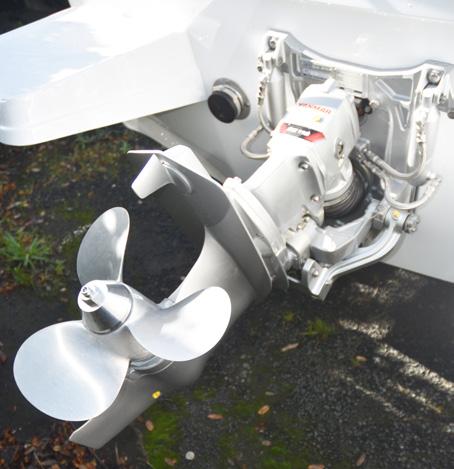
STEADY CRUISE
Yanmar spent a lot of time developing the hull lines using 3D CAD technology that enables highly accurate moulds. Construction is GRP. The deep vee hull shape provides an excellent ride, and I found it extremely stable and soft riding in the choppy waters during our test. However, I missed the ability to stand at the helm, which may be easily fixed with a larger opening
sunroof. Even with only 90hp, the boat is quick to plane and quickly reaches the engine's maximum 3850rpm. It is also very dry, pushing the spray low and away from the boat. This boat is not about speed, it's about having a good ride when underway, especially when trolling. Yanmar diesel engine technology is ideally suited to slow running with quiet and smooth operation. As part of the power train package of the boat, the trolling device allows you to run the engine at very low rpm, economically, for long periods. With the engine running at 600rpm and the slow speed engaged, the speed can be as low as .5-1 knot, which when run in conjunction with the sail will just about give you a ‘spot-lock’ position. This can be adjusted higher if you have a stronger current or wind. The boat's heart is a a four-cylinder 4JH3-HTZY1
Yanmar diesel and, running through a Yanmar SZ 113 sterndrive. This compact 90hp engine gives the VF23AZ a top speed of 26 knots @ 3850 rpm. At low-speed trolling mode, the fuel burn is a respectable 3.0 lph, @ 1500rpm. If your fishing grounds are well offshore, you want the best range possible from the standard 100-litre fuel tank. Cruising
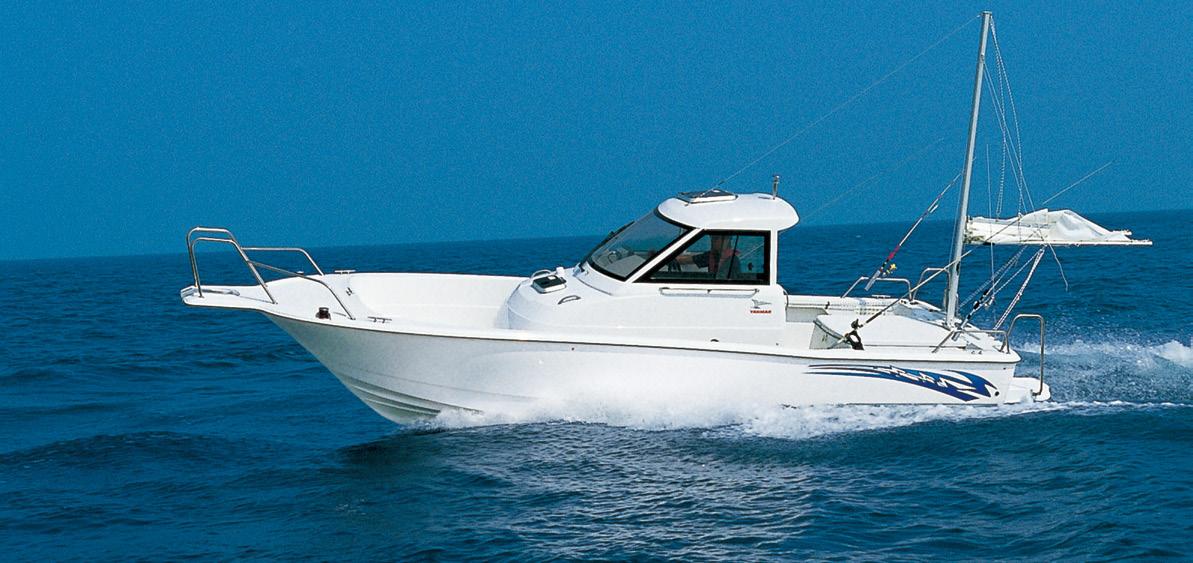
The VF23AZ has a pleasing low profile and looks sharp from most angles.
A Yanmar fourcylinder engine runs through a Yanmar SZ 113 sterndrive.
There are three floor bins with the centre one a live bait tank.
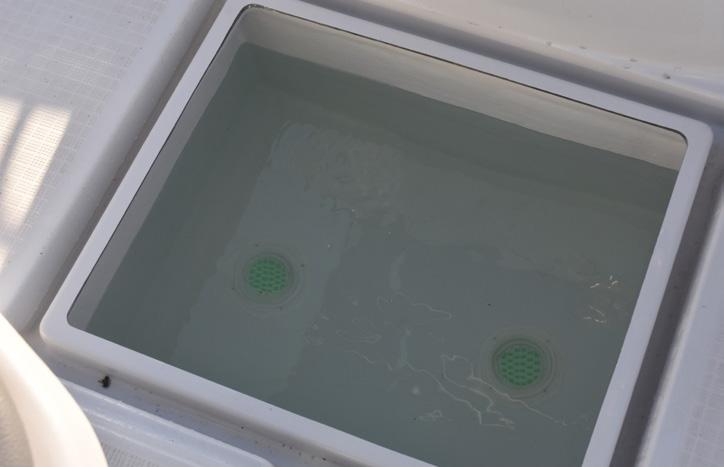
POWERBOATMAGAZINE.CO.NZ 117
One of the unique features of the VF23AZ is the unique trolling system or SPS (Sail Positioning System).
There is an optional large pad with a toilet below in the cuddy.
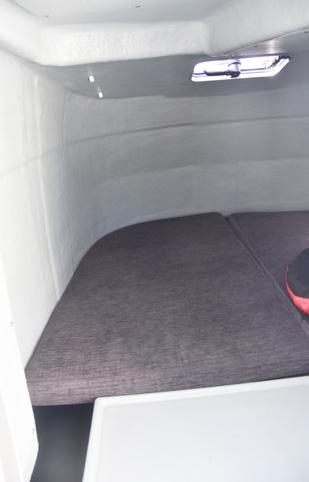
A great open space for casting a few lines.
around 3000 rpm will give you a speed of about 16 knots and a fuel burn of 13-15 lph. One of the unique features of the VF23AZ is the unique trolling system or SPS (Sail Positioning System). Now, what the hell is that I hear you say? The name derived from old sailing ships with four or more masts and was the sail nearest the stern. It was as far aft of the balance point of the hull for maximum leverage. Simply put, it is a pair of small sails specially developed with fishing in mind, such as stopping without an anchor and drifting along with the current while holding the boat at a fixed heading. You can easily drop them down when not required, and when you find your fishing spot and want to drift, you raise them and let the wind and current do the rest. Certainly, something I have never seen before on a powerboat. Plus, it works exceptionally well.
A DIFFERENT LOOK
Yanmar Marine International's mission statement is "Shaping the future of exceptional marine experience with innovative technologies". They have achieved that and gone outside the box to present something challenging the norm. Does it work, and will the Kiwi market accept it? Only time will tell.
But wait, there's more. When you look at the Yanmar brochure, you will see a lot of other models that would be well suited to the Kiwi market. One is the VX30BV which was on display at the recent SCIBS in Australia. A 10m cabin cruiser powered by a single Yanmar 8LV350, it ticks all the boxes for space and appointments for anyone looking for a combo fishing/ overnighting sedan. This may be the next model that Yanmar brings into the country. If so, I look forward to getting aboard.
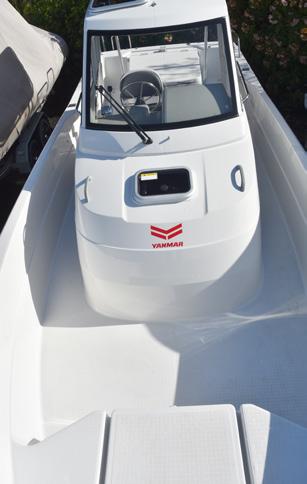
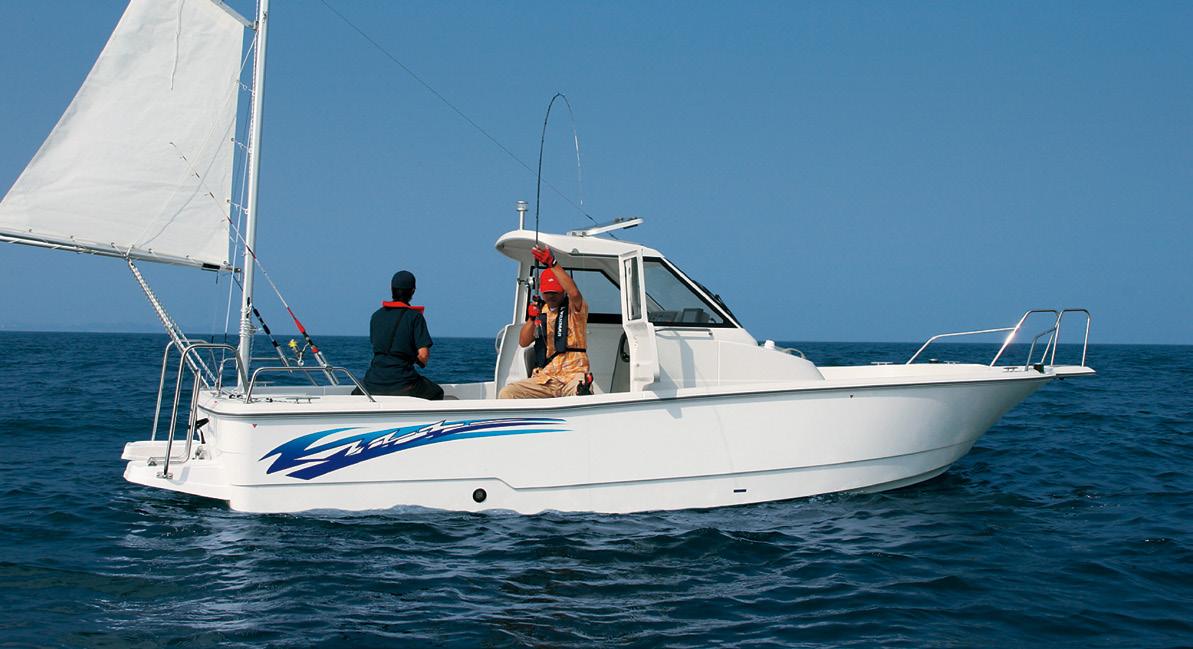
SPECIFICATIONS
Boat Design Name Yanmar VF23AZ (Zarpa 23II)
Year Launched in New Zealand 2023
Style Walkaround
Builder Yanmar Marine International Asia
LOA 7.50m
Beam 2.24m
Deadrise 11.2 deg
Max Speed 26 knots
Construction GRP
Fuel Cap 100 litres
Engine Make Yanmar 4JH3-HTZY1
Drive System Yanmar SZ113 sterndrive Propeller 17" SS
Contact contact_ymia@yanmar.com
YANMAR.COM
PACIFIC POWERBOAT REVIE WS _ YANMAR VF23AZ
118 JULY / AUGUST 2023
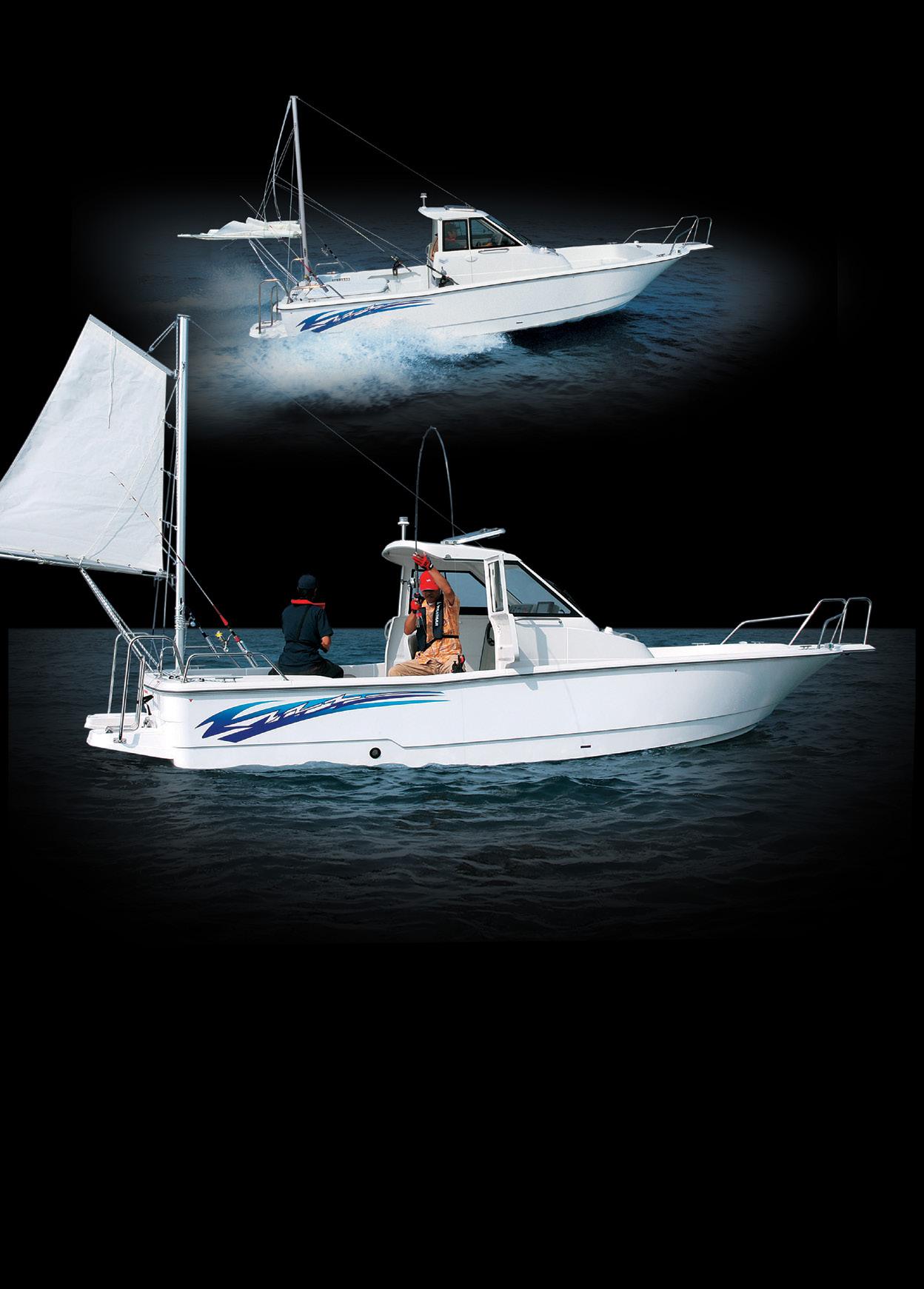
GRAVEYARD WINTER SOFTBAITING TIPS
Fishing Godzone Editor, Matt Hewetson loves winter softbaiting and provides his tips to help put more fish in your bin.
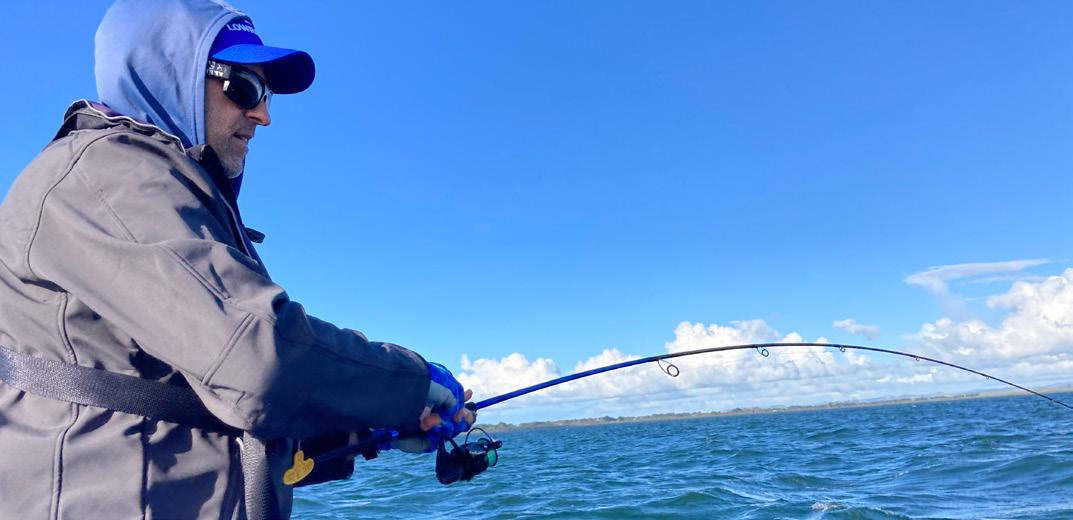

Early winter is one of my favourite times of the year to softbait, the snapper come in close looking to feed up before the depths of winter and the busy summer activity from other water users has died down, so the fishing isn’t so fickle. Summer is too hot for my liking as I prefer the cooler days on the water and some of my best softbaiting is usually in May and June especially out on the Kaipara.
WEST IS BEST
I grew up fishing the Kaipara harbour and the snapper are found here in good numbers and size in Godzone’s largest harbour. The harbour tides on average rise and fall 2.10m and current here is amazing, running around five knots at the height of its flow (9km/h with a spring tide) at the entrance channel with 1,990 million cubic metres per tidal movement!
This means two things; you drift a long way fast when softbaiting and the snapper use this current when hooked. So, you are fighting a fish and the current to land your fish. I also believe the
snapper we catch here in the Tasman side are built different to those on the east side. They are longer and have a much bigger tail, it makes sense as they need a longer paddle to live in these currents. They are also always on the move with less reefs or structure available in a sandy bottomed harbour to reside in as their eastern cousins over on the Pacific coast.
We typically head to the ‘graveyard’ which starts under the northern Pouto light house and runs to the entrance near the unforgiving ‘bar’. Along this stretch of water which runs from 18m-50m in parts, are huge mussel beds which the fish are feeding on. The sounder will show sharp drop offs and good fish sign hard on the bottom under larger baitfish schools, this is where the snapper are feeding.
FISHING _ WITH SOFTBAIT
120 JULY / AUGUST 2023
Wrap
up warm and enjoy what winter fishing has to offer.
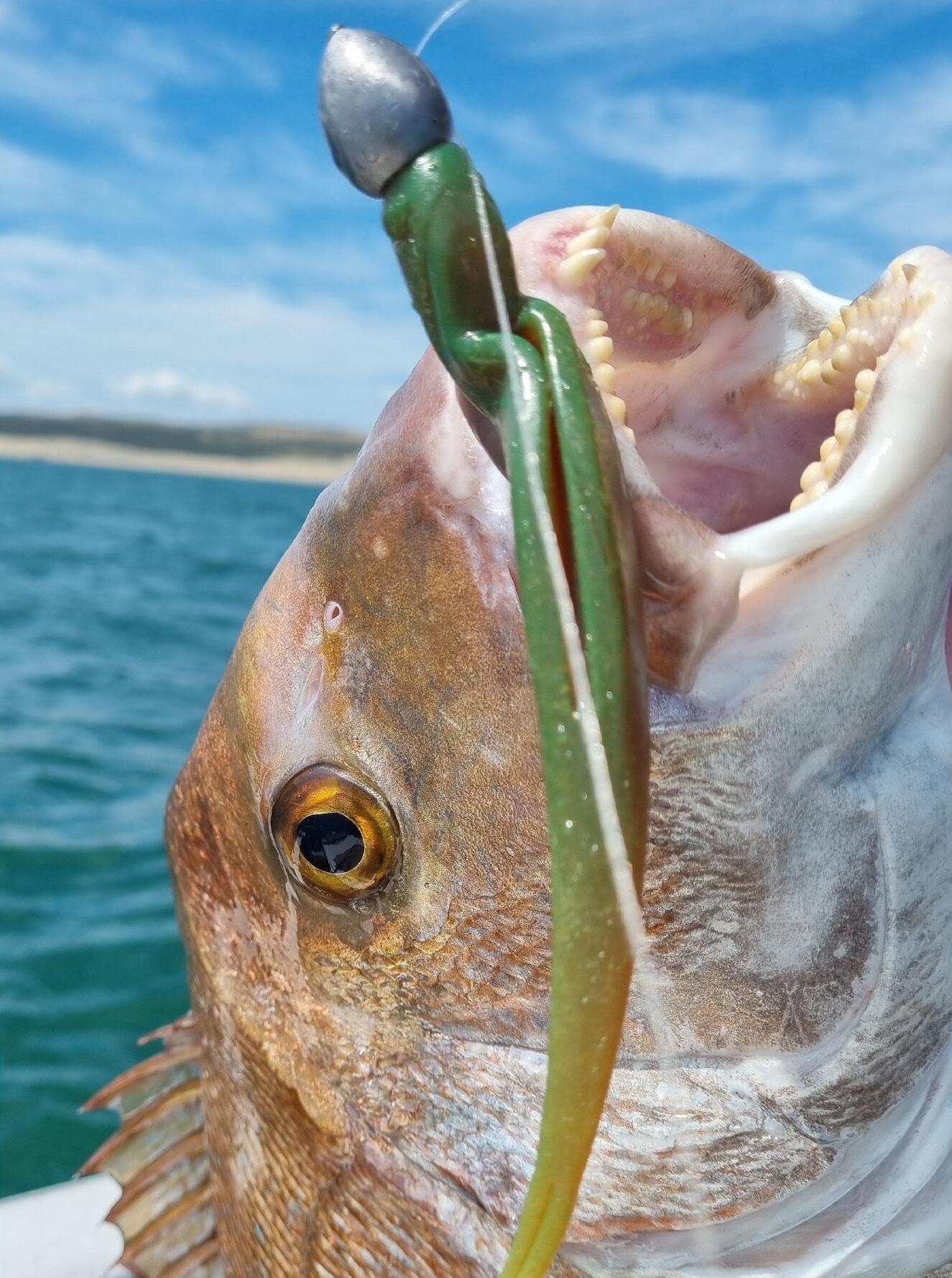
POWERBOATMAGAZINE.CO.NZ 121
Z-man 7” Motor Oil softbaits with 1oz Light Bulb jig head are a top lure at the ‘graveyard’ as a match for green mussels that snapper are feeding on.
HEAVY JIG HEADS WITH LARGE SOFTBAITS
You need to drop down 1oz+ jig heads with large 7” softbaits to get noticed in the murky waters and reach the bottom. When the current is really humming, we add small 1/2oz ball sinkers above the jig head to help get down. If you hook a big fish, it pays to have someone on the wheel to keep over the fish because if you get a lot of angle, it will throw the softbait or bend out the hook. This has happened on many trips and our catch rate goes up with a good boat person, remember 25-30lb fish are often caught here with many more lost in the punishing currents.
The boat drifts fast here so you need to be moving a lot, going back to where you found the sign or hooked fish to drop again. Don’t bother using a drogue either, this catches in the current and makes you drift even faster.
If you live in Northland, the best boat ramps to launch from is at Ruawai (takes about an hour to reach graveyard), Port Albert (under an hour) and for Auckland anglers then Shelly Beach out from Helensville (about an hour).
The shallow water fishing in the harbour is also particularly good, drifting the channels on the outgoing tide or up on top of the sand banks covered by high tide (only 1-2m deep) will produce gurnard, trevally, and snapper.
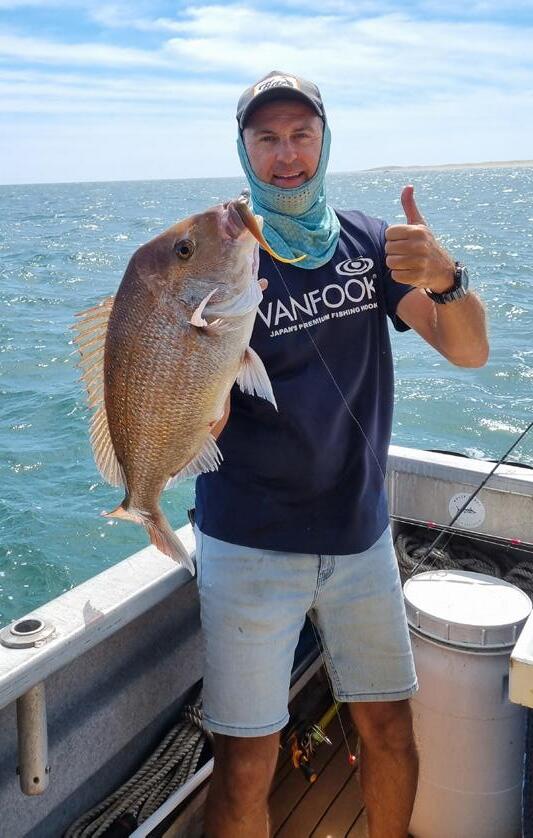
The water looks murky in the shallow Kaipara harbour and many anglers think the west coast doesn’t fish lures well but that is a total myth.
FISHING _ WITH SOFTBAIT
“A Minn Kota is lethal for this style of fishing, we have fished using them a lot over the past few years and our catch rate has gone up because they give you an edge in the shallows.”
122 JULY / AUGUST 2023
The writer scored a solid 6kg fish drifting in the ‘graveyard’ which fires in winter.
The Kaipara Harbour in winter offers outstanding softbaiting.
POWERBOATMAGAZINE.CO.NZ 123
EAST COAST GO SHALLOW
On the east side, I like to head into the shallows early in the morning prospecting the coastline behind breakers on a sandy beach, into quiet bays on outer islands and along the coast away from other boaties.
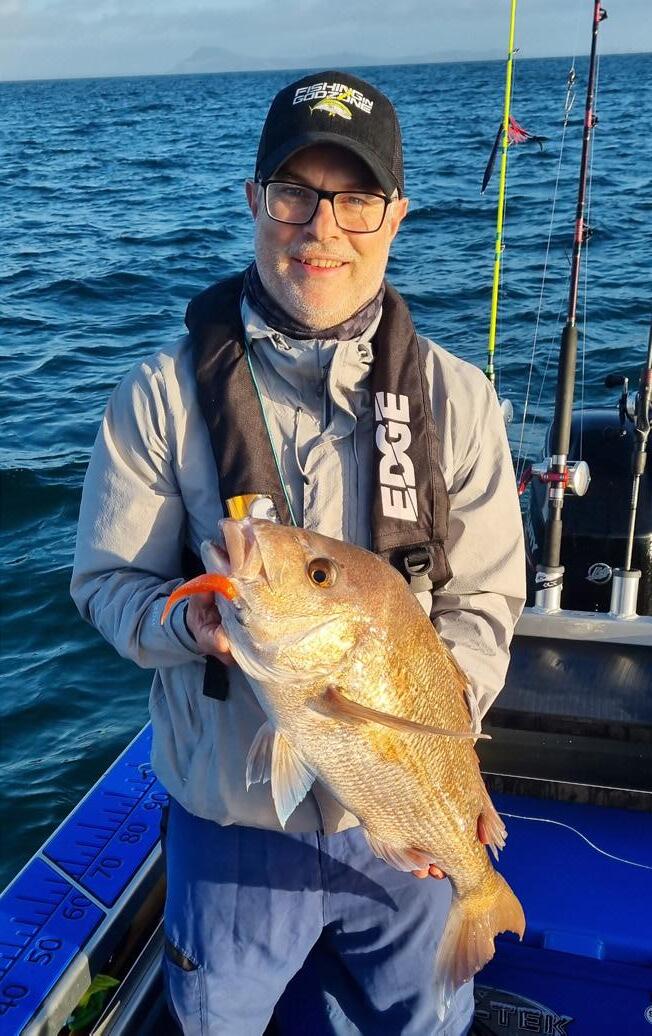
The key here is stealth and to come into these areas early and with as less noise as possible. So, bringing the boat in from 100m out at idle speed and turning off the outboard to drift into your casting zone. A Minn Kota is lethal for this style of fishing, we have fished using them a lot over the past few years and our catch rate has gone up because they give you an edge in the shallows.
Use the Minn Kota to explore the coastline quietly and cast your softbaits into the rocks and work back to the boat. We typically use 1/2oz Light Bulb jig heads matched to a Z-man 5” Jerk Shadz or Paddlerz. This gives good weight for casting 30-40m out and keep moving the lure steadily to prevent if from snagging in the foul.
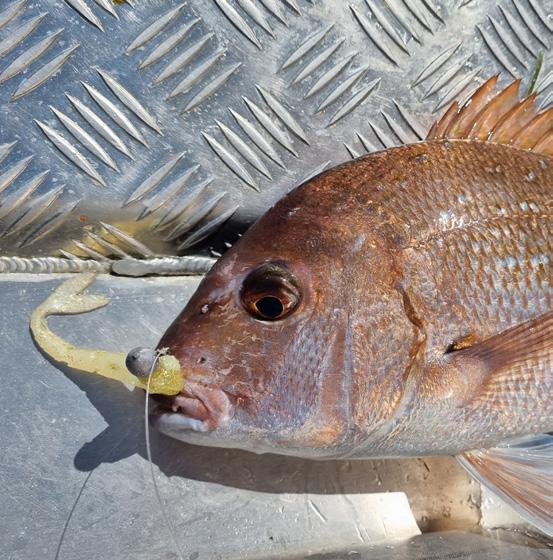
We will fish the shallows from daylight until about 11am and when the sun is high overhead, move out to deeper water (15m+) to look for fish sign on the sounder. The fish leave the shallow water for the safety of deeper spots and especially after a high tide in the morning with retreating low tide.
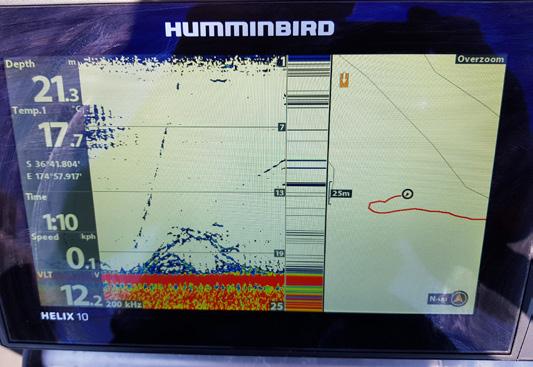
Heading into deeper water you will want to go up in jig head weight to 5/8 or 3/4oz and if more current is running, even 1oz jig heads. I prefer to fish with larger softbaits in deeper water so switch to either a Z-man 7” Jerk Shadz or 6” Darterz which have become a new favourite.
People ask me what softbaits I use, I honestly reply only Z-man and I have a few that are my favourite colours or styles, but they all work, and their tough durability means they are simply the best softbait hands down.
FISHING _ WITH SOFTBAIT
Looking for fish sign to drop softbaits onto is best after midday when the sun is higher, and fish go deeper.
124 JULY / AUGUST 2023
The newer Z-man Darterz 6” Beer Run colour has become a new favourite of the writer.
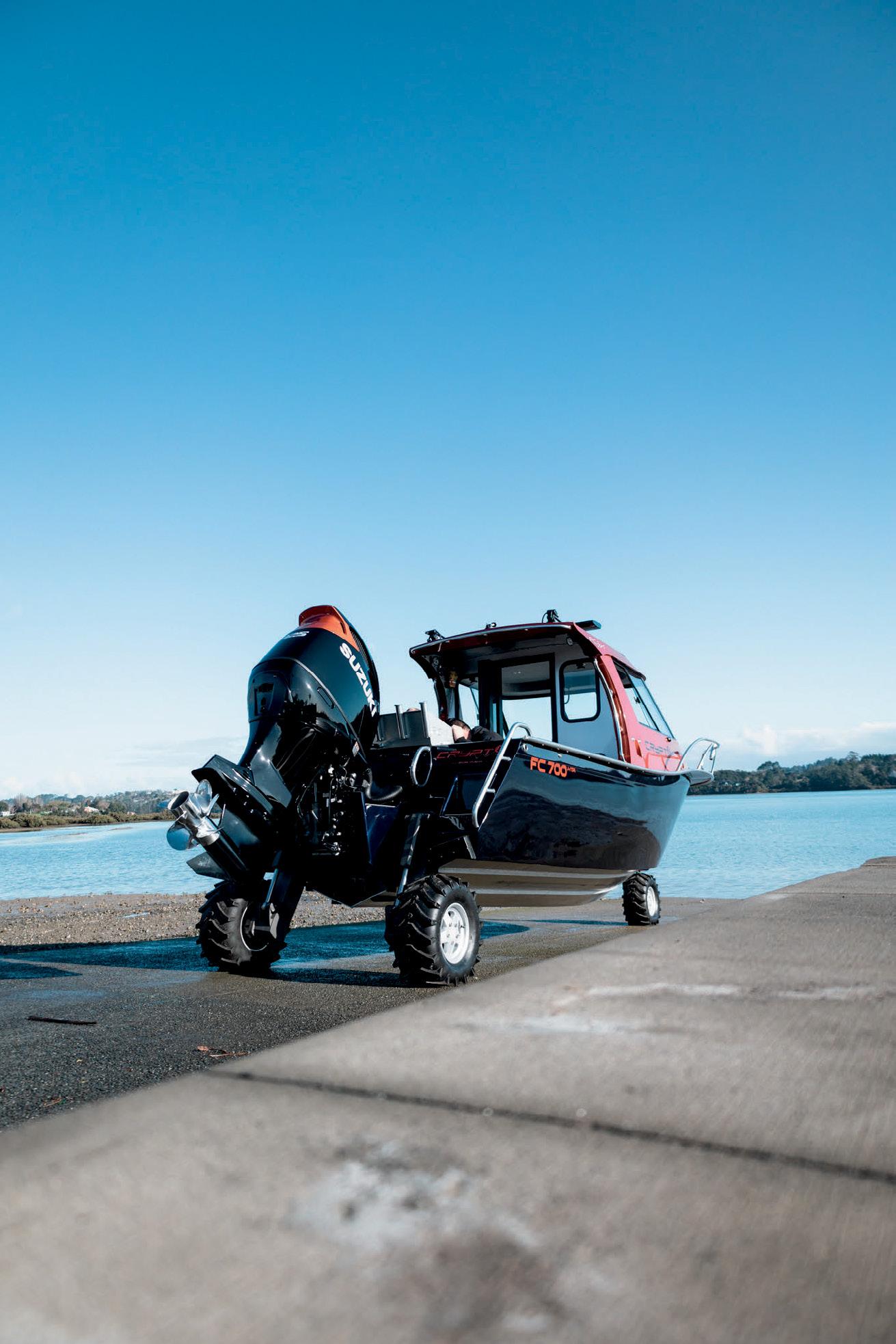


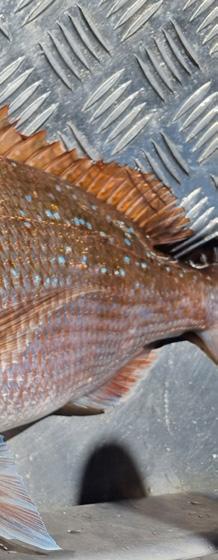
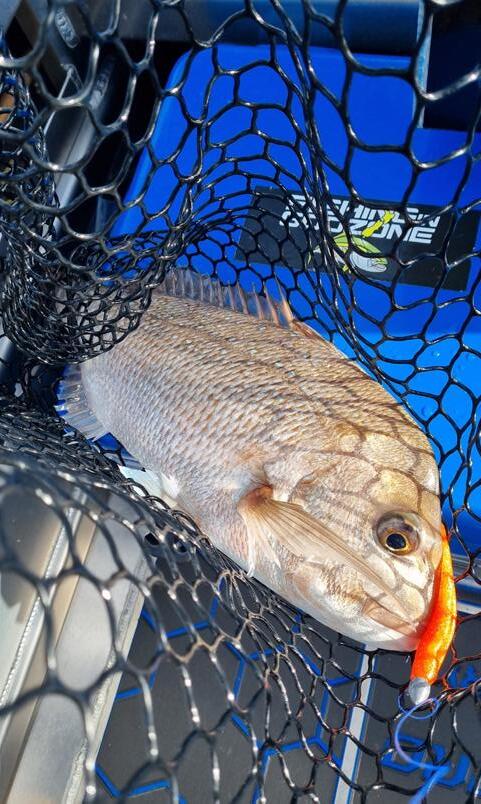
S C A N M E F C 7 0 0 H T A - B U I L D I N G N O W LENGTH: 7.0 m BEAM: 2.5 m TOW WEIGHT: 3,450 kg FUEL CAPACITY: 280 L LOA ON TRAILER: 9.85 m AMPHIBIOUS SYSTEM: Anura S25 PRICE: from $379,995 F R O M L A N D T O S E A I N F R O M L A N D T O S E A I N S E C O N D S S E C O N D S T H E F C 7 0 0 H A R D T O P A M P H I B I O U S Max Christensen | General Manager |max@fcboats.co.nz Ben Warren | Sales Manager | ben@fcboats.co.nz
265 Kahikatea Drive, Frankton, Hamilton fcboats.co.nz
“The water looks murky in the shallow Kaipara harbour and many anglers think the west coast doesn’t fish lures well but that is a total myth.”
POWERBOATMAGAZINE.CO.NZ 125
Left: Softbaits come through again.
FLETCH'S TIPS
The Hutchwilco New Zealand Boat Show last month has been a resounding success for both marine retailers and boat owners, the range of products and technology has been inspiring and in some cases were jaw dropping. The new systems now available to boat owners will change how future skippers manage their vessels and maintain their fishing gear. I can’t wait to get some of this new tech installed!

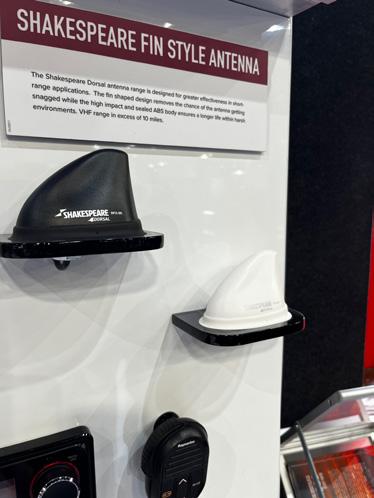
SHARK FIN SOUP

Lusty & Blundell showed off the latest VHF aerial with the Shakespeare Fin Style Antenna. This neat wee aerial provides the same function as a standard long whip style antenna without the risk of getting snagged. You can pick these up for under $200, from your local marine supplier, however they are designed for short range application.
TRAILER FLUSH
The team at Balex Marine created a purpose-built trailer that uses their auto boat loading system, however I was really impressed with their fresh water flush system, it uses a standard 12v pump and a 20 litre built in tank on a short timer so as soon as you take the trailer out of the water you can activate the pump and it washes down all the brake and leaf springs.
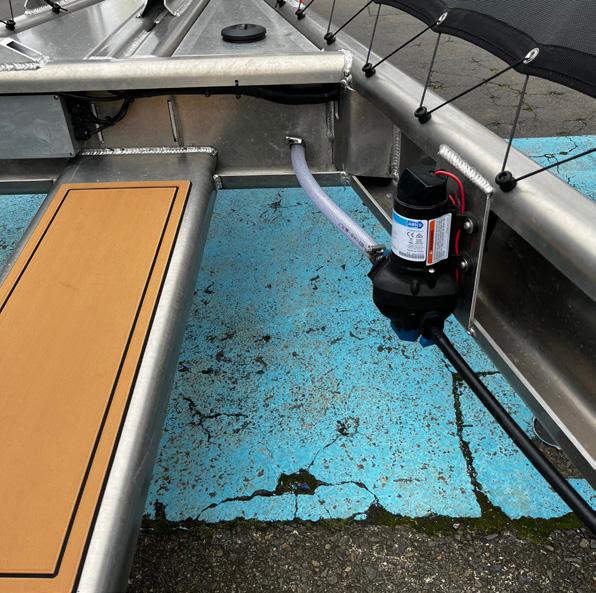
NOTEWORTHY FLETCH'S BOAT TIPS
TIP #122 TIP #123
Trusted brands expert advice Available from leading boating stores DB759 126 JULY / AUGUST 2023
UNWANTED GROWTH
This marine growth is the result of not securing an inflatable, in this instance one of the lines came loose leaving the tender sitting slightly in the water which caused this growth within a few weeks causing damage to the soft hull of the tender.

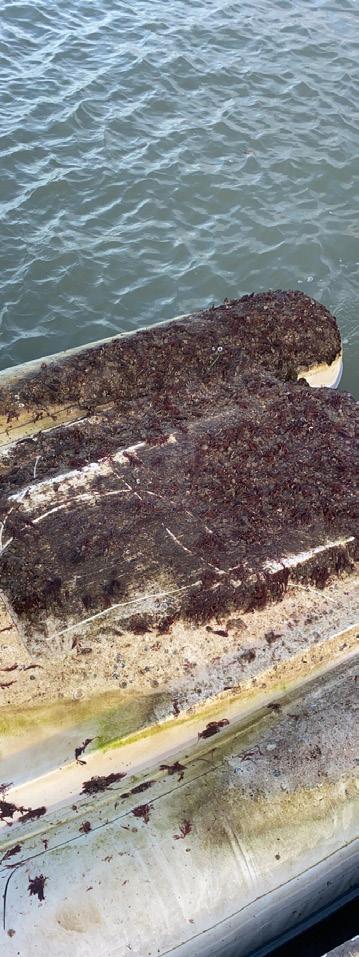
Pro Tip: Always make sure you secure your boat tender including using double lines and proper secure points. Also, if you have marine growth like this don’t let it dry out, remove when still wet and use a soft scrubbing brush with a plastic scraper.
RUST NEVER SLEEPS
WATER PUMP SERVICING
I’m not sure how many times I keep reminding people to always have their engine water pump checked and replaced. This is the result of an outboard that wasn’t serviced on a regular basis and when the owner really needed the engine to be fully functioning it over-heated causing damage to the outboard pistons. Always make sure you check your engine water pump is working correctly, if you are unsure how to do this, your local marine mechanic will be happy to show you.
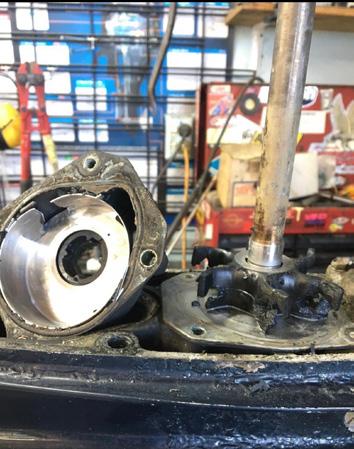
One of the dreaded issues with trailer boat ownership is corrosion on the cross members and axles. Usually it starts with surface rust on the lower parts where drainage holes can get blocked. Cleaning and washing down after each launch is critical in keeping the rust down to a minimum, however, when it comes to W.O.F time having a clean and well-presented trailer makes it easier to get it passed with all the correct checks. Some products like spray on zinc or grey primer do work but will only last a few weeks before it starts to show signs of stains, requiring a re-application. I was recommended using Resene Alumastic, which is a high-build 2 x pot epoxy paint, this stuff really stops the rust stains and is very hard wearing.
Pro Tip: make sure you remove all the old flaking paint and wire brush all areas before applying Alumastic.
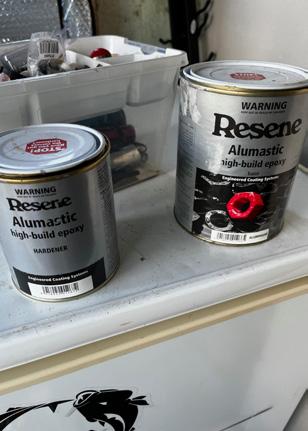
TIP #124
TIP #125
TIP #126
www batterytownmarine co nz 0800 962 288
POWERBOATMAGAZINE.CO.NZ 127
Pro Tip: replace your impellers every 2-3 years, even if you don’t use the engine that often, rubber will eventually go hard and perish.







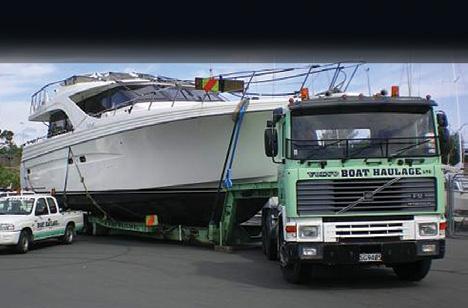




>> DIRECTORY BOAT BUILDERS & DESIGNERS, SALES & SERVICE, PRODUCT & ACCESSORIES www.salt-attack.com SALT ATTACK SALT REMOVERS KILLS SALT CORROSION Marsden Marine Services Ltd Ship Surveyors, Valuers & Consultants REPLACEMENT WINDSCREENS FOR ALL MAKES AND MODELS INSURANCE QUOTES REPLACE LIKE NEW Call 09 278 9816 www.sandbrooks.co.nz DB264 FREE Office: (09) 4838 111 – Pete: 0274 731 260 – Luke: 021 686 394 Email: pete@boathaulage.co.nz We Service all brands Agents for: HOLIDAY OUTBOARD SERVICES & BOAT STORAGE HOLIDAY OUTBOARD SERVICES & BOAT STORAGE holidayoutboards@xtra.co.nz 209 Bush Road, Albany 0632 ph: 09 448 1650 fax: 09 448 1651 www.holidayoutboards.co.nz DB112 Dare to be Different www.aircat.nz | info@aircat.nz | Ph: Roger: +64 21 953 060 | Brian: +64 27 259 5111 DB898 128 JULY / AUGUST 2023
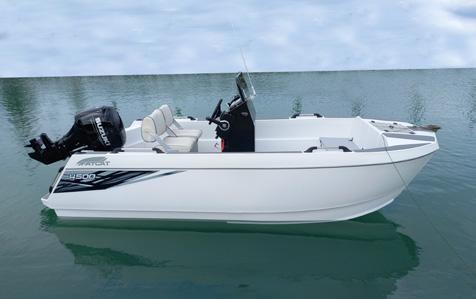







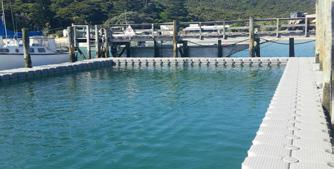
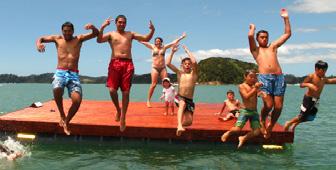
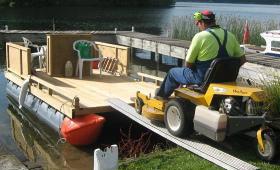



DB056 AUCKLAND’S SPECIALIST BOAT REPAIR CENTRE Insurance Work Specialists • Launch, Yacht and Runabout Repairs • Antifouling and Gelcoat Work • Full Marine Maintenance Service Spraypainting and Jetski Repairs 58 Diana Drive, Glenfield Steve@boatrepairs.co.nz www.boatrepairs.co.nz Phone: 09 441 2000 Fax: 09 441 4000 Mob: 021 908 156 Recognised member DB009 9/623 Whangaparaoa Road, Stanmore Bay, Auckland Ph: (09) 424 0004, M: 021 1142 444, E: info@fatcat.nz www.fatcat.nz DB908 Antifouling – Touch ups – Valet – Refits e: dale@touchofgloss.co.nz | P: 0275 951 443 www. touch of gloss .co.nz DB192 •Fibreglass & Timber Repairs •Spray Painting & Gelcoating •Insurance work •Antifouling Talk to us first for all your info@southaucklandboatrepairs.co.nz www.superiorgroup.co.nz 25-27 Holmes Rd, Manurewa. PO Box 75-486. Manukau 2243 Ph (09) 267 8498 DB359 DB261 Durable kitset pods for pontoon and houseboats, jetties, barges, floating docks, walkways and more www.pontoonz.com | pontoonz@gmail.com | +64 27 555 2000 >> DIRECTORY BOAT BUILDERS & DESIGNERS, SALES & SERVICE, PRODUCT & ACCESSORIES POWERBOATMAGAZINE.CO.NZ 129
HERE

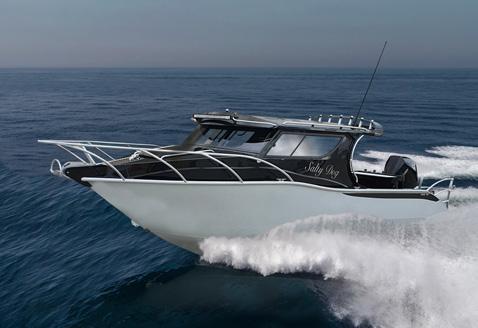
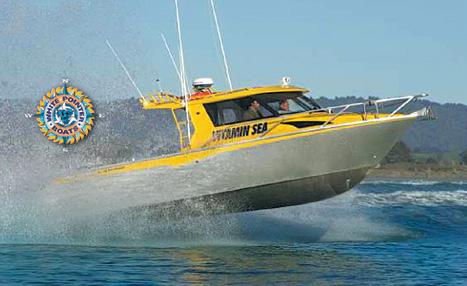
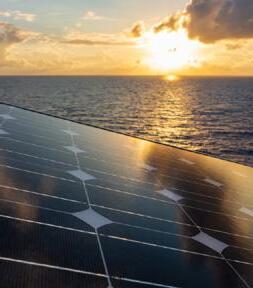


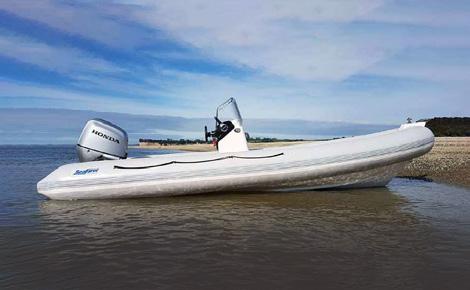




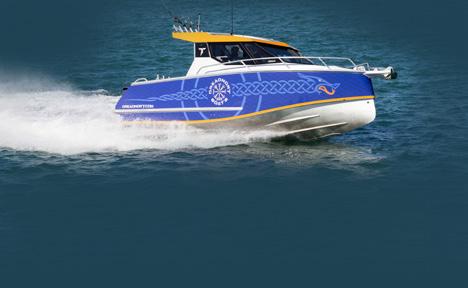

>> DIRECTORY BOAT BUILDERS & DESIGNERS, SALES & SERVICE, PRODUCT & ACCESSORIES ADVERTISE
TRAILERBOATS I LAUNCHES I CRUISERS Contact: Holly@boatmags.com or Doug@boatmags.com For just $75 per month…. Cost effective – Targeted advertising. DB938 Blair Lewis B.Eng AM.Rina Naval Architect Transformarine@gmail.com +64 21 613 990 Stuart Dawe Shipwright Altechmarine02@gmail.com +64 21 833 080 @DREADNORTBOATS | VISIT THE WEBSITE TO SEE THE FULL RANGE DB947 DB368 1487A State Highway 17, Dairy Flat, Auckland. Ph: 021 570 505 | e: info@seafarerinflatables.co.nz | www.seafarerinflatables.co.nz SF600R Custom built inflatables, re-tubes & repair of any inflatable ROGER HILL YACHT DESIGN LTD www.powercatsnz.com Ph +64 9 537 2644 Mob +64 274 595 822 roger@powercatsnz.com
Custom Alloy Sports Fishing Boats “Ride with the best” 1 8 9 S t a n l e y R o a d , G i s b o r n e 189 Stanley Road, Gisborne P h : 0 6 8 6 8 6 5 1 9 F a x : 0 6 8 6 8 9 9 3 9 Ph: 06 868 6519 Fax: 06 868 9939 M o b : 0 2 7 5 8 1 5 0 0 7 E m a i l : r e x @ w h i t e p o i n t e r b o a t s . c o . n z Mob: 0275 815007 Email: rex@whitepointerboats.co.nz We b w w w. w h i t e p o i n t e r b o a t s . c o . n z Web www.whitepointerboats.co.nz info@hydromarine.co.nz p: 021 833 795 https://www.facebook.com/customboa/ DB826A 130 JULY / AUGUST 2023
WHITE POINTER BOATS