

By Sam Robinson SENIOR REPORTER
By Ebony JJ Curry SENIOR REPORTER
The chair of the Democratic Party Black Caucus is defending Secretary of State Jocelyn Benson against allegations of racial discrimination made by MDOS employees in a Wayne County court filing this week.
Four African American employees of the Michigan Department of State filed a lawsuit in Wayne County Circuit Court last week, accusing the agency and senior officials of race-based discrimination.
By Ebony JJ Curry SENIOR REPORTER
The allegations come as Benson, who is named in the suit, is gaining momentum as the front-runner to be the Michigan Democratic Party’s nominee for governor. Benson’s conservative rivals have already begun to circulate the allegations in an attempt to discourage Black voters from supporting her campaign.
Late Thursday night, Sept. 14, a historic moment unfolded in American labor relations as the United Auto Workers (UAW) union initiated a strike against Ford, General Motors (GM), and Stellantis. For the first time, the union took simultaneous action against all three major Detroit-based automakers. The action involves approximately 13,000 UAW members in assembly plants across Michigan, Ohio, and Missouri, who walked off their jobs after existing labor contracts expired at 11:59 p.m.
IThe only Black candidate in the race, Lt. Gov. Garlin Gilchrist, dropped out Monday to run for Secretary of State. Genesee County Sheriff Chris Swanson is also running for governor as a Democrat.
n a breathtaking celebration of talent, determination, and the unyielding spirit of Black excellence, the Michigan Chronicle marked its 10th Annual 40 Under 40 event Thursday evening. This year’s soirée, drenched in the theme “All Black Everything with Gold Accents,” transcended expectations and essentially illuminated the golden gems within the true essence of Black excellence. Hosted by the charismatic duo of Andre Ash and Lynzee Mychael from Michigan Chronicle’s Finally Friday, the night was a triumph for the city of Detroit and its vibrant community of young Black pro-
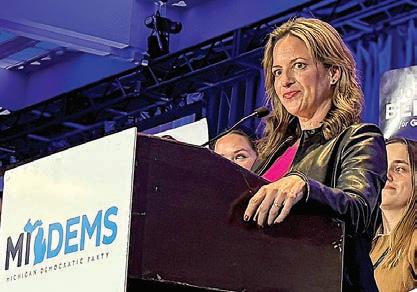
own path to success. Clement “Fame” Brown, the cre-
ative mind behind Three Thirteen Detroit’s Brand Name, received the prestigious Entrepreneur of the Year Award. Brown’s commitment to empowering the city through fashion and entrepreneurship has left an indelible mark.
The evening sparkled with a golden promise as we celebrated remarkable individuals from various walks of life. Among the honorees were the brilliant and visionary co-founders of Detroit Hives, Nicole Lindsey and Timothy Paul Jackson. Their work has not only changed the landscape of beekeeping and urban farming in Detroit but also exemplified the transformative impact Black professionals can have on their communities.
“Entrepreneur of the year – that’s a big deal,” said Brown. “It’s always an honor to be honored and it’s always a blessing to be in a room full of so many talented, accomplished, and popular people that look like me. I’m geeked. I started making and selling clothes as a kid and I always knew that I would have a business, but I never knew it would be Detroit’s brand name business, so I take a lot of pride in the fact that our business represents our city’s pride.”
By Sam Robinson SENIOR REPORTER
Taking home the Corporate Excellence Award was Dannis Mitchell, Director of Community Engagement at Barton Malow.
By Ebony JJ Curry SENIOR REPORTER
The Department of State, in a statement, strongly denied the claims, calling the allegations “absolutely false.”
Shortly before midnight on Sept. 14, GM released a statement expressing disappointment with the strike action, despite offering what it termed an “unprecedented economic package” that included also expressed disappointment in a statement, saying the company immediately went into contingency mode to protect its operations.
Ash
Democrats say Republican leaders are operating in bad faith and far outside the limits of the law.
DIGITAL ANCHOR
ness district that had been the lifeblood of the community.
“Together we have created a social, environmental, and financial impact through bees,” said Jackson. Lindsey followed that sentiment with, “It is through our local partnerships and collaborative efforts that we exist in over 28 plus locations managing the health of 4.5 million honeybees – humbly speaking our movement has inspired others locally, nationally, and even internationally to take on similar missions.”
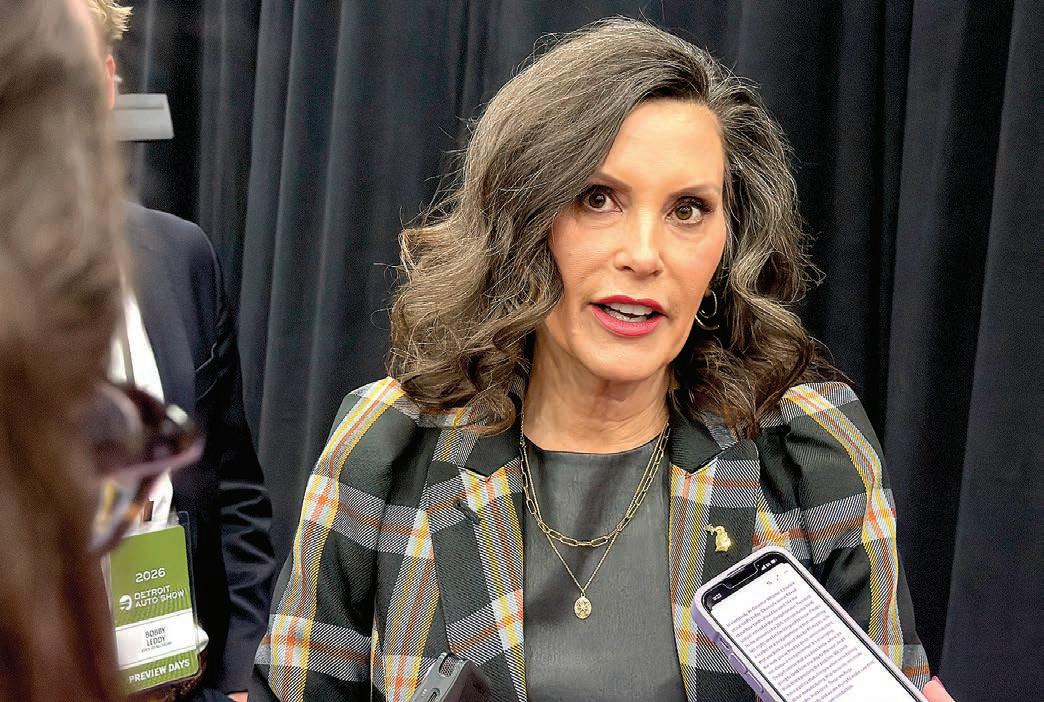
Michigan Governor Gretchen Whitmer isn’t letting her party chair’s public feud with former Detroit Mayor Mike Duggan get in the way of complimenting the job he did as mayor of Detroit.
“We will vigorously defend this case in court and continue to operate at the highest standards of transparency, ethics, and professionalism,” the department wrote in a statement from a spokesperson.
For many Detroiters, Interstate 375, or I-375, has long been just another stretch of urban highway, a concrete artery connecting different parts of the city. To some, it’s a mere convenience; to others, it’s an unremarkable part of their daily commute. However, there’s a deeper, far more troubling story beneath the surface of this seemingly ordinary freeway—a story of pain, displacement, and the lasting impact on Black Detroiters.
Attorney Leonard Mungo, of Mungo & Mungo At Law, represents the four former employees. Plaintiffs include David Murray, an executive office analyst; Elvine Vanbolden, a state administrative manager; Mychael Foster, a training specialist; and Nirva Civilus, a director of public engagement.
Detroit Hives, a pioneering organization founded by Lindsey and Jackson, harnesses the power of urban beekeeping to revitalize neighborhoods in the Motor City. Their initiative not only addresses critical issues like environmental conservation but also provides valuable education and employment opportunities to Black De-
The lawsuit names Benson, COO Jackie Venton, chief of staff Christina Anderson, and John Strotdbeck, a division administrator, as defendants.
The UAW has branded the industrial action as the “Stand-Up Strike,” focusing on specific plants within each automaker. UAW President Shawn Fain stated, “This strategy will keep the companies guessing. It will give our national negotiators maximum leverage and flexibility in bargaining. And if we need to go all out, we will. Everything is on the table.” Union leaders have also indicated that additional plants could be targeted in future waves if negotiations remain stalled.
It’s a history marred by pain, injustice, and economic devastation. More than 130,000 residents, primarily Black, were forcibly displaced. Families were uprooted, generational wealth was obliterated, and a thriving community was torn asunder. The wounds inflicted by I-375 run deep, transcending the physical barrier of a freeway to penetrate the very soul of Black Detroiters.
A string of shootings in Greektown in mid-April left both visitors and residents of this bustling downtown destination in awe. One of these shootings tragically claimed the life of a popular and beloved security guard following a dispute with a patron.
“Well, you know what, Duggan did a good job as mayor here,” Whitmer told the Michigan Chronicle during an interview after her annual address at the auto conference. “I am a Democrat; I’ll be supporting the Democratic nominee for governor. But Duggan and I worked well together.”
own.
“It is so important to recognize that there are young leaders across the country, many that are born here in Detroit. I represent our city nationally and I tell people, ‘Yea I’m a D-girl I’m from the west-side of Detroit,’” Mitchell expressed. “But more importantly, I’ve been able to have experiences within an industry that not many of us, specifically women of color, have the opportunity to engage in and I’ve been the youngest person in the room, the only Black person in the room, and the only Sistah in the room, and I really had to articulate the importance of showing up, giving chances when others won’t, and being persistent.” As a trailblazing Black woman thriving in a predominantly male-dominated industry, her unwavering commitment to fortifying the connections between businesses and Detroit’s communities is unde-
The compliment came after Duggan had said recently he supports Whitmer’s bipartisan approach to governing since the election of President Donald Trump in 2024.
This painful legacy can be traced back to the nation’s interstate highway program of 1956—a program that aimed to connect the country but often did so at the expense of marginalized communities. In the case of I-375, it meant carving a path through the heart of Black Detroit, reinforcing segregation, and perpetuating inequality.
towards mending the wounds inflicted on Black Detroiters and restoring a sense of belonging that was so callously torn away in the past.
The I-375 Boulevard Project is about more than just correcting historical injustices; it’s about redefining the future. It will connect downtown Detroit to surrounding neighborhoods, bridging the gap that was placed upon the city decades ago.
“I think this campaign has shown that it has zero movement and zero real grassroots support throughout the state,” Hertel said during a virtual media roundtable earlier this month. “I think it’s going to be a problem when it comes to getting on the ballot and I think it’s going to be a problem when there isn’t anyone to actually do the work of knocking doors and talking to voters.”
The male suspect allegedly shot the guard before fleeing the scene, while his female companion is accused of concealing the weapon in her bra.
The governor said the president’s contentious language and rhetoric contributed to the kidnapping attempt against her.
During a virtual press conference of his own, Duggan referenced Democrats attacking Whitmer for not being hard enough on Trump, saying he won’t let the line of attack bother him.
The allegations in the lawsuit include retaliation for complaining about unfair treatment amid a racially hostile workplace that favored and gave special treatment to white employees.
By Andre Ash DIGITAL ANCHOR
“MDOS’s White managers and supervisors have adopted and regularly engage in a pattern and practice of applying said written and unwritten policies rules and guidelines as stated above subjectively and in an unlawful racially discriminatory manner towards MDOS’s African American employees and in a more favorable way toward its White employees,” the lawsuit reads.
The tale begins in what is now Lafayette Park, once known as Black Bottom—a neighborhood rooted in African-American culture and history. Named after its dark, fertile soil, Black Bottom flourished during the mid1900s, nurturing the dreams and aspirations of prominent Detroiters like Coleman Young, Joe Louis, and numerous other Detroit legends. But in the name of urban renewal in the 1950s, this vibrant neighborhood was systematically dismantled, erased from the map, and replaced by a lifeless stretch of asphalt.
Whitmer made appeals to conservatives last year, including trips to the White House and a positive public relationship with the president.
A Holistic Approach to Providing Shelter and Support for Detroit’s Unhoused People
These incidents unfolded during an unseasonably warm spring, leading to increased pedestrian traffic and heightened tensions in the densely populated downtown area.
For one to aptly recognize the harm caused by such projects, it is vital to note that some of the planners and politicians behind those projects built them directly through the heart of vibrant, populated communities—oftentimes to reinforce segregation and sometimes as part of a direct effort to replace or eliminate Black neighborhoods.
Fain clarified the union’s strategy: “I want to give a major shoutout to the thousands of members who are on the picket lines right now fighting for all of us. The Stand-Up Strike is a new approach to striking. Instead of striking all plants at once, select locals will be called on to stand up and walk out on strike. This is our generation’s answer to the movement that built our union – the sit-down strikes of 1937. We told the Big 3 that Sept. 14 was the deadline and we meant it. We gave the companies our economic demands eight weeks ago and it took more than a month to get to the table.”
While the residential areas bore the brunt of this demolition, the heart of Black Bottom, its thriving business center, remained largely untouched. Restaurants, theaters, clubs, and bars—the very places that brought Detroit’s Black community together—were concentrated around Hastings Street, the epicenter of African-American culture in the city.
At the crux of the suit is the use of state vehicles, the dispensing of discipline to employees, and the use of performance improvement plans. The attorney representing the plaintiffs says the four Black employees received unequal discipline com-
The union is pushing for a comprehensive list of demands. This
Homelessness continues to plague urban communities, with families and individuals grappling with the challenges of making ends meet in today’s economic climate. Whether it’s struggling to meet monthly mortgage payments or coping with soaring rental costs in a housing market marked by shockingly high prices, a variety of factors contribute to the growing issue of people becoming unhoused.
Duggan told CNN in September last year that Whitmer’s approach to working with Trump has saved thousands of Michigan jobs. Whitmer credited the White House for her efforts to bring a significant investment to a Macomb County Air Force base.
It’s a stark change from the relationship the president and governor held a few years ago.
Housing Resource Helpline in response to the challenges that residents face in navigating the complex system of housing services. The helpline provides a single point of contact for people seeking housing assistance and connects them with the resources they need.
During his first term, Trump helped turn Whitmer into a national brand after Democratic supporters took his “That woman from Michigan” comments and made them their
Meagan DunnJulie Schneider
Historically, shelters have provided a temporary respite for those in need, often serving as the first or second option after exhausting alternatives like staying with friends or family. Shelters offer a place to rest one’s head and a warm meal, albeit sometimes for extended periods. For others, being unhoused means living in cars or makeshift outdoor
Then, in a cruel twist of fate, Hastings Street, too, was obliterated a few years later, making way for the construction of I-375. This marked the final blow, sealing the fate of Black Bottom and signaling the beginning of the end for Paradise Valley, the Black busi-
“Just last week, the president of the United States stood before the American people and refused to condemn white supremacists and hate groups, like these two Michigan militia groups,” Whitmer said after President Trump told the Proud Boys to “Stand back and stand by” while debating former President Joe Biden in October 2020.
Support for the helpline comes from the Gilbert Family Foundation, which has pledged $10 million over three years to fund the program. Wayne Metro Community Action Agency manages the helpline, making it accessible to all Detroit residents. This initiative simplifies access to the City’s various housing services, ensuring that residents in need can easily find assistance.
Today, the resurgence of Paradise Valley stands as a testament to the indomitable spirit of Black Detroiters and the enduring legacy of Black excellence. This historic district, once a vibrant hub for Black businesses and culture, is experiencing a renaissance that harkens back to its glory days. The destruction of Black Bottom may have torn apart a thriving community, but the resolute determination of a new generation of entrepreneurs and visionaries is reclaiming that lost legacy.
“For a guy who doesn’t think I can win, he sure does spend a lot of time talking about me,” Duggan said of Hertel, a former Mid-Michigan state senator.
The surge in crime and the influx of visitors to Detroit’s downtown core garnered the attention of the Detroit Police Department (DPD), catching them somewhat off guard.
Whitmer also complimented new Detroit Mayor Mary Sheffield, the first woman to lead the state’s largest city, who she says will become a partner to the state.
But now, after decades of enduring the scars of I-375, there is a glimmer of hope on the horizon. Plans have been unveiled to transform this once-divisive freeway into a vision that seeks to right the wrongs of the past while heralding a new era of inclusivity and community revitalization.
Duggan has been criticized by Michigan Democratic Party chair Curtis Hertel for taking money from Republican donors and for not being critical of Trump. Duggan’s independent campaign has taken aim at both sides of the political aisle, even as
By Ebony JJ Curry SENIOR REPORTER
By Lynzee Mychael MULTIMEDIA JOURNALIST
The causes of homelessness are as diverse and complex as the individuals experiencing it. In response, the City of Detroit has adopted a holistic approach to combat this issue.
“Providing services and high-quality housing to persons at risk of or who are experiencing homelessness is a key priority of the City of Detroit, said Julie Schneider, Director of Detroit’s Housing and Revitalization Department.

“This means focusing on building the pipeline of supportive housing and coordinating with the Continuum of Care on the delivery of critical resources such as emergency shelter, rapid rehousing, and diversion and prevention programs. It also means preserving and expanding affordable housing options for Detroiters of all incomes and improving housing stability though comprehensive service offerings available through the Detroit Housing Resource HelpLine and Detroit Housing Services Division within HRD.”

Darnell Currie Jr. was 9. A’millah Currie was 2. They died in their family van inside the Hollywood Casino at Greektown parking garage after their mother, Tateona Williams, ran out of options for a safe, warm place to sleep. Detroit watched that loss unfold and recognized the part nobody wants to say out loud: children can die from poverty here, not because their parents didn’t love them, but because the systems built to catch families before the crisis did not move fast enough.
In May 2023, the City of Detroit launched the Detroit

From the days of the Great Migration when thousands of Black families flocked to Detroit in search of jobs and a better life, to the pivotal role they played in the city’s cultural and musical heritage, Black Detroiters have left an indelible mark on the city. However, in recent years, Detroit has experienced significant gentrification, which has raised concerns about the displacement of long-standing Black residents. Similar to a setting sun, there’s a rising spirit, and Black Detroiters are reclaiming their place in the city, despite the challenges posed by gentrification.
“The city and its partners offer a lot of great services to help Detroiters with their housing needs, but they don’t mean much if people don’t know how to access them,” said Mayor Mike Duggan. “Thanks to the efforts of our partners and the generous support of the Gilbert Family Foundation, we now have a simple process to guide residents to the right housing resource and a growing number of programs to help them.”
The Gilbert Family Foundation’s broader commitment involves pledging $500 million to support projects across Detroit over the next ten years, with housing initiatives being a significant part of their contribution.
Notably, Detroit has witnessed a consistent decrease in recent years, with the number of unhoused residents steadi ly declining. In 2019, approximately 7,847 people were unhoused and entered the City’s community response system. In 2021, about 5,687 people experienced homelessness.
According to the City of Detroit, since the start of the fiscal year 2019 to 2021, Detroit saw a 28% decrease in the
Detroiters know the maze. A mother trying to keep DTE from shutting the lights off. A senior juggling insulin, rent, and bus fare. A young person couch-surfing who gets told to call three different numbers depending on which door they walk through first. Poverty in this city has never been a single problem with a single fix. It shows up as an overdue bill, a missed appointment,
During the Great Migration, thousands of Black families from the South came to Detroit in search of jobs in the booming automobile industry. Despite facing discrimination and segregation, they built vibrant communities on the city’s east
James White, Chief of Police for the Detroit Police Department, said: “We were caught somewhat flat-footed right out the gate. By design we went into the spring deployment, which is less than the mid-summer deployment, and saw we say an uptick in violence that first warm weekend.”
Fueled by more than $100 million from the Infrastructure Investment and Jobs Act and other partners, this ambitious project aims to create jobs, remove barriers to economic growth, and reconnect the neighborhood with the rest of Detroit. It is a step
In the heart of Paradise Valley, Blackowned businesses are not just flourishing but thriving, offering diverse services, products, and experiences that pay homage to the past while paving the way for a prosperous future. From jazz clubs to soul food restaurants, the Black Press, and art galleries to fashion boutiques, this revival is breathing life into the very essence of what once made this neighborhood a vibrant cultural epicenter. It’s a resurgence that extends beyond brick and mortar; it represents the resurgence of a spirit that refuses to be subdued.
“I’m really excited about Mayor Sheffield,” Whitmer said. “I’ve had a number of conversations with her over the years, but certainly very recently as well I think that she’s going to be a great leader for the city of Detroit. We need to do what we can do keep this region strong and healthy
Chief White attributes the violence in Greektown to a combination of weather conditions and a surge in population.
He explained, “ We saw numbers downtown that we have not seen, ever. People are emerging from COVID and there’s a feeling that we’re in a post-COVID era… and with the venues downtown and the reasons to come down with all the activities that are going on, we saw hundreds of more people and, in particularly, young folks, teenagers that we hadn’t seen.”
Detroit City Councilman Fred Durhal III, representing District 7, where Eastern Market resides, told the Michigan Chronicle, “It’s still very early in the process, MDOT is
Responding swiftly to the surge in violence, DPD adjusted its deployment plans. Rather than waiting for mid-summer, they deployed officers in the spring itself to address the situation.
a landlord’s threat, a child’s asthma, a mother’s postpartum depression, a family’s eviction notice.
and west sides.
cine and healthcare, may be adversely impacted by the decision to overturn Roe v. Wade.
the rights of all women are continued.
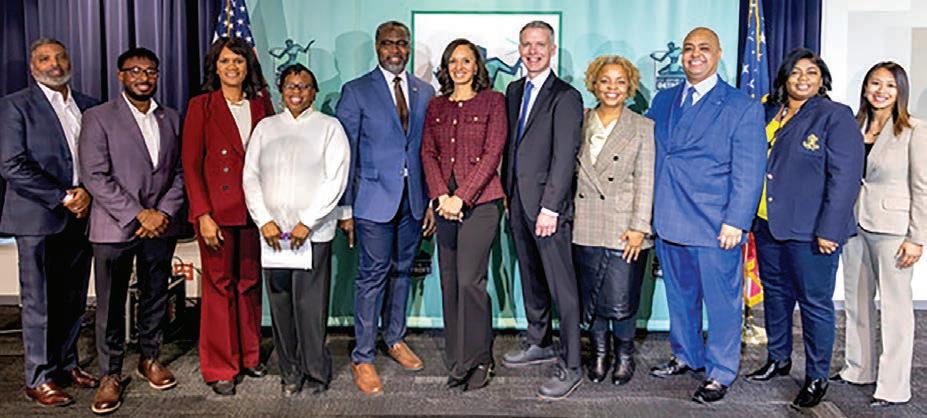
made to Detroiters throughout our campaign,” Sheffield said. “Detroit can’t reach its full potential if families are struggling just to meet their basic needs. This new structure allows us to confront poverty directly—by aligning health, human services and homelessness prevention around a single, coordinated strategy that puts residents first.”
Elected officials are also working to keep Roe v. Wade intact thus holding off Michigan’s 1931 trigger ban. Gover nor Gretchen Whitmer released a statement saying, in part:
“The words ‘Roe over turned’ are no longer theoretical. I want every Michigander to know— no matter what happens in D.C., I’m going to fight like hell to protect access to safe, legal abortion in Michigan…”
Shaefer will oversee the Detroit Health Department, the Office of Immigrant Affairs and Economic Inclusion, and a newly created Department of Human, Homeless, and Family Services led by Benita R. Miller, a Detroit native and longtime child welfare and maternal health leader.
Census data puts Detroit’s poverty rate at 31.5 percent — about one in three residents—and Detroit remains a predominantly Black city, with 76.8 percent of residents identifying as Black alone. That context matters because poverty in Detroit has never been race-neutral. It has been shaped by housing discrimination, job loss tied to regional and national economic shifts, health inequities, school instability, and the long shadow of policies that treated Black neighborhoods like disposable infrastructure.
“PPMI has been preparing for this moment since the results of the 2016 election were final. We recently filed a lawsuit to stop the 1931 law from going into effect, and we’ve also asked the state courts to affirm that the Michigan constitution does already contain a right to abortion. Our advocacy arm, Planned Parenthood Advocates of Michigan, is a founding member of the coalition that launched Reproductive Freedom for All, a ballot initiative to affirm the right to abortion and reproductive freedom in the state constitution,” said Vasquez Giroux. “The bottom line is that we will do everything in our power to keep abortion legal in Michigan, and if SCOTUS makes that impossible, we will do everything we can to ensure our patients can access the care they need.”

More than legal implications, overturning Roe v. Wade would impact several systems across the spectrum. With the potential to drive both foster and adoption numbers upward, a ban on abortions could leave many women to choose a less safe route restoring ‘back alley’ and illegal abortion practices, including self-abortions. Moreover, African American women and women of color, who already have a long-storied history with access and inclusion in medi-
The new department’s stated focus includes housing services, utility assistance, transportation, income supports, and a simplified navigation system that connects basic needs to longer-term stability efforts like home repair and homeownership support.
corporate boards to have more diverse representation and pass the legislation.
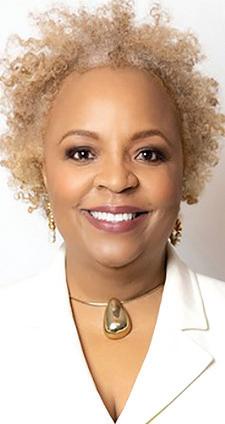
a bigger Michigan conversation about whose expertise gets elevated, whose communities get experimented on, and what accountability looks like when universities and institutions retreat from equity language while continuing to profit from proximity to Black life.
islature adopts it.
When government is fragmented, people with the least time, the least transportation, and the least flexibility pay the highest cost.
Increase school funding: Statutory changes to increase the School Aid Fund revenue by at least $3.6 billion and establish a permanent weighted funding formula based on student and community needs and universal preschool (0-3).
A centralized system can reduce duplication, speed up referrals, and stop forcing families to “prove” their struggle at multiple desks. If the “no wrong door” concept becomes real practice — not a slogan — it can mean fewer evictions triggered by paperwork delays, fewer utility shutoffs that snowball into health crises, and fewer missed opportunities for families already navigating instability.
Simply, we need people who care about other people.
Better collection and analysis of criminal justice data: BLAC recommends data collection and professional analysis be initiated with the assistance of our Attorney General, Michigan Commission on Law Enforcement Standards (MCOLES), Association of Michigan Prosecutors and other stakeholders to collaborate, collect and analyze data strategically.
Linda Little, president and CEO of the Neighborhood Service Organization and a co-chair of the city’s Health, Human Services, Homelessness & Poverty Solutions Committee, framed the change as a move from recommendation to action.
Ban no-knock warrants: Urging the House Government Operations Committee to hold hearings on HB 5013 and other legislation that would ban or limit the use of noknock or quick knock warrants, and urging the state legislature to pass meaningful reform and advise Gov. Whitmer to sign the bill after the leg-
the chancellor embraces.
“From the beginning of the transition, our committee emphasized the need for a coordinated, resident-centered approach to health, human services, homelessness, and poverty reduction,” Little said. “The creation of this new department and leadership role reflects the Mayor’s commitment to acting on those recommendations quickly. Addressing poverty and its impact on health and housing is essential to improving outcomes for Detroit families, and this structure positions the city to do that work more effectively.”
The University of Michigan announced in late March 2025 that it was closing its central DEI office and ending its campuswide DEI strategic plan, changes that leaders tied to shifting federal pressure and policy direction. In other words, UM stepped back from the formal infrastructure many Black students, staff, and community partners relied on as proof that equity was more than branding. That decision has consequences for trust — especially in Detroit, where institutions have a long history of studying the city while leaving residents to live with the outcomes.
Reject censorship in history instruction: Encouraging Gov. Whitmer to ensure the goal for Michigan schools should be history instruction that is presented by professionals with the subject matter expertise, pedagogical skills, and judgment necessary to present complex information to students that are grounded in provable facts and add to the understanding of modern-day America.
Still, the appointment lands inside
Shaefer says the city’s model is meant to tackle systems, not just symptoms.
“What we are really concerned about is the impact on our patients. Access to abortion is already out of reach for far too many Michiganders, especially Black people and people of color who face additional barriers to care as a result of systemic inequalities and institutional racism. Losing access to legal abortion will impact those communities most, forcing people to become parents or expand their families against their will. Being able to decide and control if, when and how to become a parent is central to building and living a healthy, happy life,” said Vasquez Giroux.
what the Supreme Court will rule in the upcoming days. Despite the decision, advocates on both sides of the argument are willing to continue their pursuits.
“Poverty is the result of systems that fail to serve families as they should–but that means these systems can be reimagined and rebuilt to empower families to lead healthy and full lives,” he said. “This role is about leveraging data, analysis, lived experience, and harnessing meaningful connections across city departments, universities, and every level of government to break down barriers and help Detroiters thrive. By aligning health, human services and homelessness prevention, Detroit is poised to set a national standard for cities striving to combat poverty and improve quality of life.”
Detroit’s lived experience includes a deep and justified skepticism of systems that arrive with credentials but leave without consequences when harm is done.
Beyond the scope of pro-choice versus prolife, the fight for reproductive choice is one of freedom. As Michigan officials work to ensure each woman who finds herself in the position to choose has access to care without the threat of legal action, many wonder
That is why Sheffield’s choice to place a UofM leader at the helm of Detroit’s poverty-response apparatus carries dual meaning.
“Overturning Roe v. Wade would be a terrible break with nearly 50 years of judicial precedent and – more importantly – a blow against individual freedom. It is my hope that the majority of justices will reject the findings of this draft. If that is not the case, we need to stand with Senate Majority Leader Schumer and Gov. Whitmer in support of their efforts to preserve the right to reproductive freedom,” said Chair Alisha Bell, on behalf of the Wayne County Commission.
If this reorganization is going to work for Black Detroit, success has to be measurable in outcomes that residents can feel: fewer people getting lost between agencies, fewer shutoff notices turning into crises, fewer families bouncing between shelters and temporary housing, and faster stabilization for parents with newborns.
One test is already on the calendar: Rx Kids.
The health committee recommends reviewing state licensure policies to address the barriers that Black psychologists face in obtaining licensure in Michigan.
On paper, Shaefer brings national policy credibility and deep research experience. In the street-level reality of Detroit, he will also be tested by whether “data” is used to deepen resident power or to rationalize cuts, consolidations, and slow-moving reforms that never reach the block.
Ensure equitable distribution of state health funds: Ensure all Michigan communities with a significant Black population receive adequate funds to address mental health issues.
The city says the new department will direct Detroit’s largest expansion of Rx Kids to date when it launches in the coming months. The program, started in Flint in 2024, provides cash support during pregnancy and early infancy, and Detroit is preparing to adopt it under Sheffield’s administration. If implemented well, Rx Kids could be a direct intervention for Black maternal and infant health disparities by easing financial stress during the most vulnerable months — when rent, food, diapers, and transportation collide with medical appointments and recovery.





From page A-1
pared to white employees and watched as less qualified white employees were promoted ahead of them.
“I think there’s more to this story, but Jocelyn’s background makes me feel better about it,” Michigan Democratic Party Black Caucus Chair Keith Williams told Michigan Chronicle Thursday. “Not too many white people go down and work for Judge Damon Keith, he was a great advocate for our community.”
Benson began her law career as a clerk for the late Keith, whose decisions helped combat systemic racism in private and public life, as well as in schools.
Increase mental health supports for the Black community: Recommending Michigan set a goal of increasing the number of Black mental health service providers by 20% each year over five years.
Shaefer is widely known for research on extreme poverty and social policy, including the 2015 book $2.00 a Day: Living on Almost Nothing in America, named among the New York Times Book Review’s 100 Notable Books of 2015. The city also points to national recognition of his work and the role poverty research played in shaping debates like the 2021 expanded Child Tax Credit, which drove a major decline in child poverty during its brief run. He previously served as a special counselor on anti-poverty policy at the Michigan Department of Health and Human Services from 2019 to 2021, with the city citing his contributions to the Energy Direct program that reduced utility shutoffs and Michigan’s COVID-era eviction prevention effort.
Protecting Black voting rights: Urge state officials to remain vigilant in the fight against schemes to disenfranchise Michiganders of color.
“BLAC members have worked hard to identify the needs of the Black community and we feel these recommendations will provide a solid first step towards breaking down barriers in education, community safety, health and business,” said BLAC Co-Chair Dr. Donna L. Bell.
Utility shutoffs and housing instability hit Black households hardest because Black households are more likely to have lower wealth, higher rent burdens, and more exposure to the compounding costs of missed work, health emergencies, and transportation gaps. The question residents will ask is whether this new structure changes the daily math.
“Families should not have to navigate a maze to get help,” Miller said. “This new department is about building a system that centers dignity, trust and access. We can address real barriers Detroit families face and create pathways to stability, health and opportunity by listening to our communities and coordinating services more effectively.”
Detroit does not need another plan that sounds good in a press conference and disappears inside a fiscal year. It needs a public-facing system that tells residents where to go, what to expect, how quickly help will move, and who is responsible when it doesn’t.
If Sheffield’s new structure delivers on its promise, the payoff for Black Detroit could be tangible: fewer families falling through cracks that were designed into the system, faster crisis response, stronger prevention, and a clearer path from survival to stability.
Williams also mentioned that Benson began her career investigating hate crimes at the Southern Poverty Law Center in Montgomery, Alabama.
Williams, who endorsed Benson this week as the leader of Michigan’s Democratic Party Black Caucus, said he’s motivated to endorse candidates based on whether he believes they will deliver economic opportunity and upward mobility to Black residents.
“I have witnessed African Americans, such as, Mychael Foster and Elvine Vanbolden, being harassed and discriminated against up to the point of my departure from MDOS in 2025. Vanbolden was pressured to hire a White applicant over a more qualified African American applicant by her White supervisor. When she refused to do so she was falsely accused of engaging in improper hiring practices based on race. This same White Supervisor gave Elvine an unjustifiable low rating on her annual performance appraisal. Vanbolden appealed this unjustifiable low job performance rating to me. I requested the White supervisor to produce documents to justify said low job performance rating and the White supervisor could not produce any objective evidence to justify the low job performance rating she gave Vanbolden. I then instructed the White supervisor to provide Vanbolden ‘s with a job performance rating in accordance with the objective evidence of Vanbolden’s actual job performance. This has happened more than once to Vanbolden. MDOS’s unfair and unlawful treatment of its African American employees occurs regularly.”
and moving forward to greater opportunities.”
On Thursday at the auto show, Whitmer also announced she signed an executive order to study the use of a natural form of hydrogen gas that could be used as a clean energy source.
The governor could end her tenure
“I think of transformational leadership as a thoughtful approach that causes people to change but also causes the systems and circumstances they are operating in to change too,” Ivory said. “Transformational change doesn’t just ask people to do certain things; it asks them to change their view of what’s possible and excites them to drive that change together because they believe that what they’re doing will create positive change for everyone. That’s how entire systems change because people believe that they need to for themselves and others to live better lives.”
BLAC will hold a virtual town hall meeting to discuss its policy recommendations on Thursday, May 12 at 4 p.m. Join BLAC and a virtual audience in discussing the recommendations to support the Black community.
“Chancellor Ivery is a true transformational leader and an outstanding CEO, who is more than worthy of the CEO of the Year Award he just received, “ said Prof. James C. Mays, who teaches entrepreneurship and supply chain management at WCCCD’s Corporate College. “In his 27 years at WCCCD, Dr. Ivery has elevated WCCCD to become nationally recognized for excellence and innovation and preparing our students professionally and personally to do great things in the world.”
this year with the most favorable poll numbers of any Michigan governor since George Romney, according to pollster Richard Czuba.
In a new poll, 60% of participants said they approved of Whitmer’s job performance, while 38% disapproved.
If it fails, it will deepen the city’s institutional trust gap and reinforce the belief that Detroit remains a proving ground for ideas that never fully commit to the people living them.
BLAC is housed in the Michigan Department of Labor and Economic Opportunity. Members represent many professional backgrounds, including economics, law, public safety, health and wellness, arts and culture and media. They leverage their experiences and expertise to make recommendations to the governor on critical issues affecting the Black community.
The Detroit News and WDIV/Channel 4 this week published a new tele-
You can reach Ebony at ecurry@ michronicle.com
phone survey of 600 likely general election voters. For the Michigan governor’s race, the poll showed U.S. Rep. John James at 32%, Democratic Secretary of State Jocelyn Benson at 32%, and Duggan at 26%.
Czuba told The News he expects the race to replace term-limited Gov. Whitmer to be a close one, with or without Duggan.
To learn more about BLAC and this upcoming event, visit www.michigan.gov/BLAC.
You can reach Sam at srobinson@ michronicle.com.

“To give my endorsement I have to feel she’s going to do right by my people,” Williams said. “She’s straight up with me — my gut feeling is that she is not a racist. We all fall short in the glory of God sometimes, but I think people need to get to know her.”
The lawsuit also includes an affidavit statement from Angela Harness, who served as the chair of the MDOS’ race task force. She alleges the lack of clear policies, “resulted in MDOS creating, nurturing maintaining and condoning a racially hostile environment against its African Americans.”
Harness herself filed a discrimination suit against the department, which resulted in a separation agreement worth $775,000.
Here is part of Harnes’ statement, which details the alleged discrimination:
Harness claims the MDOS received a $500,000 grant to conduct diversity work and training in 2023, but only conducted one training after Anderson, the department’s chief of staff, directed against conducting the training. She claims the move was approved by Benson.
The department did not reply to questions about Harness’s claims related to the grant she claims went unused.
Another person who gave an affidavit statement, not named as a plaintiff, was former Assistant Secretary of State Heaster Wheeler, who said the department’s failure to address racial discrimination was one of the reasons he left.
You can reach Sam at srobinson@michronicle.com.


A3 | January 21-27, 2026
By Sam Robinson SENIOR REPORTER
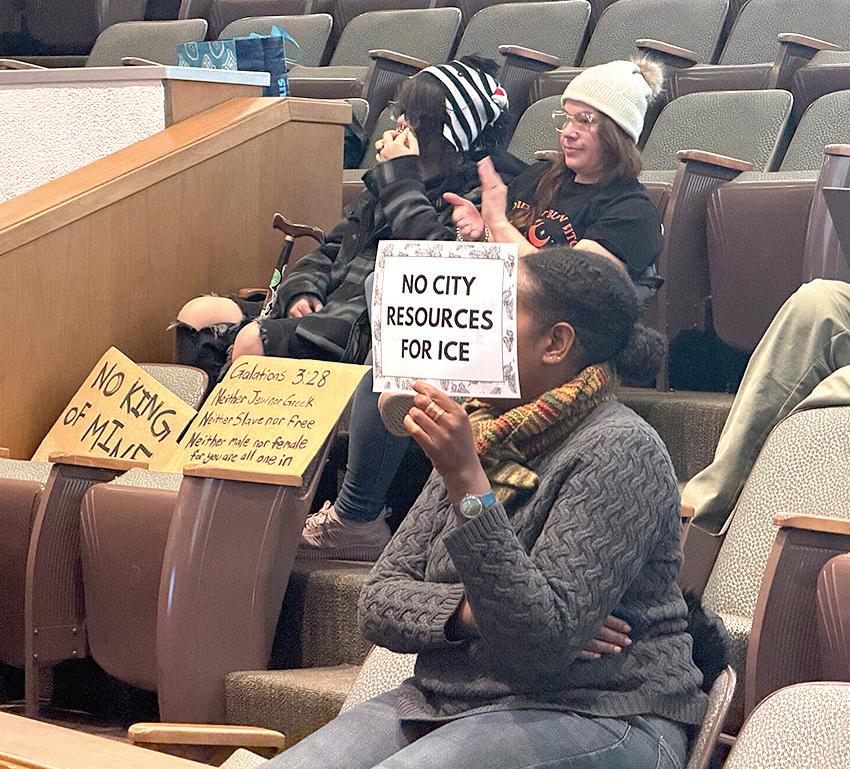
More than 30 pro-immigrant activists packed the Erma Henderson Auditorium on the 11th floor of the Coleman A. Young Municipal Center Tuesday to support a memo forwarded by council member Gabriela Santiago-Romero.
Santiago-Romero’s memo to Detroit Police Chief Todd Bettison dated Jan. 8 asks the city’s legislative policy division to answer key questions related to the Detroit Police Department’s involvement with Immigration and Customs Enforcement (ICE).
The answers to Santiago-Romero’s questions should paint a clearer picture showing exactly how ICE is being supported in Detroit by city taxpayers.
Activists and advocates who came to council to speak Tuesday said they’ve seen ICE agents put Detroit residents in dangerous situations like dragging them out of their cars across broken glass from damaged windows.
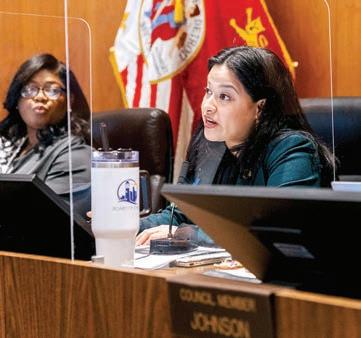
“We’ve seen DPD threaten to call ICE on a 17-year-old high school student,” Noelle Bellinger said. Bellinger’s comments prompted city council president James Tate to send a member of his staff to learn more about her claims.
Elana Harrada, an activist who has assisted detainees taken to the North Lake ICE facility in Baldwin, Mich., said the rights of undocumented immigrants are being violated everyday while they are detained in inhumane conditions.
Santiago-Romero’s memo asks what city resources are going toward ICE activities, and how many times DPD officers or city owned space like parking lots or the storage of unmarked vehicles have assisted federal immigration agents.
The Southwest Detroit council woman has urged her fellow council members to support ordinances limiting ICE activity in the city. Santiago-Romero last year said she agreed with former Mayor Mike Duggan, who said he wouldn’t formally declare Detroit a “Sanctuary City,” to not draw unnecessary attention to the city.
But that didn’t stop activists for calling for the declaration that would prevent the police department from working with ICE agents in any way.
Some who came to council Tuesday spoke against the mostly younger crowd of pro-immigrant activists. At one point, one
See OPPOSE ICE IN DETROIT
Page A-4

By Sam Robinson SENIOR REPORTER
The president’s visit to Detroit to speak at the Motor City Casino on Tuesday was met by hundreds of protestors who stood on the corner of Temple and Trumbull before marching from the casino to Michigan Avenue in Corktown.
A diverse group of demonstrators was sprawled across the intersection at Trumbull Avenue outside of the Motor City Casino on Tuesday afternoon. People who came were opponents of the federal administration, Iranian immigrants asking Trump to support their cause amid anti-government protests, and at least one Republican supporter of Trump.
Two demonstrators were detained by police as officers asked the crowd to move away from the building that would eventually host President Donald Trump.
Some who attended the protest came directly after speaking at Detroit City Council, where pro-immigrant advocates urged council members to draft an ordinance limiting the powers of federal immigration agents in Detroit.
While most of the public commenters at the council meeting on Tuesday were supportive of the group of advocates, some longtime residents said they felt like the needs of immigrants were being prioritized over those of Black Americans.
Detroit resident Beverly Kindle Walker said at the protest that Black Americans should support other groups facing persecution from the Trump administration.
“Even though we’re citizens of this country, our rights are still being violated,” Walker told Michigan Chronicle as she marched down Trumbull Avenue with the crowd. “We’re next. In the words of John Lewis, we need to ‘Get in the Way!’”
Yvonne Wyborny, a woman carrying petitions that would ban political dona-
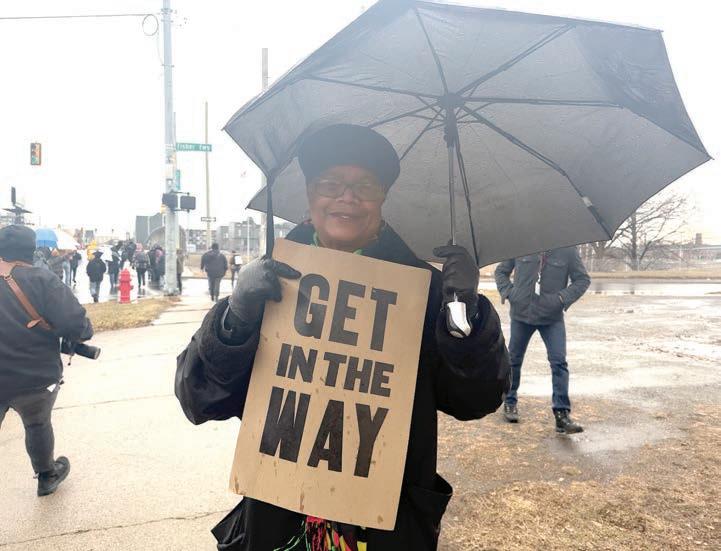
tions from DTE and Consumers Energy, said she came to the protest because “someone has to stand up.”
“I’m opposed to pretty much everything this administration is doing,” Wyborny said.
She expressed concern over cuts to the SNAP food stamp program, which she says is only going to get worse. “It’s going to be devastating for so many people,” she said.
Another protestor, Don Brickner, compared ICE to the Nazi Germany Gestapo, and said sending military personnel into U.S. cities is something he would expect of an authoritarian leader.
“This is the first time we’ve had an autocratic dictatorial thug in office,” Brickner said. “I mean, Trump is a 34 count convicted felon, and a court adjudicated sex offender. So what do we do? We have to get out and protest and make our voice heard.”
Inside the casino, Trump promised Michiganders that prices were coming down thanks to his tariff policies that opponents say are putting Michigan
workers at risk. At the same time, the UAW has supported “targeted tariffs” in an attempt to bring more manufacturing jobs back to the U.S. However, detractors point to several mass auto industry layoffs since the policy was implemented.
In a statement following Trump’s remarks, DNC Chair Ken Martin pointed to a new Detroit News poll that found nearly two-thirds of Michiganders said household costs are increasing.
“Today, Donald Trump travelled to Michigan to try to sell his failed economic policies, which are raising costs for Michiganders and destroying thousands of jobs across the state,” Martin said. “Trump’s trip comes the same day as a new Detroit News poll that found that nearly two-thirds of Michiganders said they are seeing their household costs increase under Trump — and twice as many gave Trump an ‘F’ grade for handling the economy as gave him an ‘A.” You can reach Sam at srobinson@ michronicle.com
By Ebony JJ Curry SENIOR REPORTER
Detroit Public School Community District (DPSCD) board elected LaTrice McClendon as president Tuesday, putting a DPSCD parent of three and fourth-year trustee in the seat that sets the board’s agenda and tone for a district still fighting to raise literacy, cut chronic absenteeism, and rebuild community trust in how decisions get made.
“This is my fourth year on the board, and this is the last year in this term unless I decide to run again,” McClendon said.
“I started off as just a regular board member. I had to learn the ropes. I’ve been on several committees,” she said. “Last year I was the vice chair.” McClendon said she had the opportunity to serve as president last year, yet stepped back when then-colleague Corletta Vaughn wanted the role. “This year, the board collectively voted me in as president of the Board of
Education,” she said.
The 2026 officer slate reflects that shift: McClendon as president, Bishop Corletta Vaughn, Ph.D., as vice president, Monique Bryant as secretary, and Dr. Iris Taylor as treasurer, according to the district’s announcement following the organizational meeting.
McClendon’s presidency arrives with a profile Detroiters know beyond education politics.
She joined the John S. and James L. Knight Foundation in August 2023 as director of the Detroit program, overseeing investments meant to strengthen informed communities and support projects tied to Detroit’s culture and resident power. The Michigan Chronicle has also publicly recognized her as a Power 50 leader, placing her among those shaping the region’s political, economic, and civic direction.
That civic résumé does not erase the basics of what families want from DPSCD. It raises
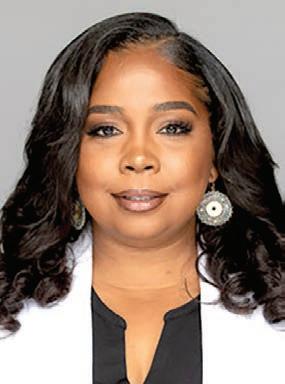
the expectation that the board can communicate clearly, govern with discipline, and push the district toward measurable improvements.
“As a parent, I’m not just talking about school board stuff and making decisions in theory. I’m making it in practice,” McClendon said. “I have three children in
the district, some in middle school and one in high school. I understand what my children face every day they walk into a Detroit public school.”
“I believe that diversity of thought matters,” she said. “My heartbeat and my goal for this role is to make sure that we are grounded and reaffirmed that our students should come first. At every decision we make, every policy we consider, every dollar we advocate, all of that must be centered around what is best for the young people we serve.”
Chronic absenteeism remains one of the loudest warning signs across Michigan, and DPSCD is still battling rates that would overwhelm most districts. State data reported in 2024–25 shows 60.9% of DPSCD students missed 10% or more of the school year, though the same data also shows Detroit’s rate has improved enough to dip below its pre-pandemic benchmark for the first time in years.
Literacy remains another high-
stakes pressure point. Detroit has seen incremental gains on state assessments, including an 11-year high in third-grade reading proficiency, yet the share of students reaching proficiency is still far below statewide rates, a gap that shapes everything from long-term graduation outcomes to whether students can fully access advanced coursework later on.
McClendon’s answer to that reality is governance that the public can actually see.
“Because we are a governance board, strong governance means transparency,” she said. “It is our job as a board to ensure that our one employee, which is our superintendent, upholds the district’s vision and mission.”
“For me this year, I’m pushing this concept of transparency,” she said.
“Stakeholders should know exactly what we’re doing. We should be listening to our stake-
From page A-3
anti-immigrant public commenter was escorted out of the room after a shouting match began between himself and some of the activists.
Since President Donald Trump took office on Jan. 1, residents in Southwest Detroit have reported more aggressive tactics from ICE agents.
“Beyond ICE requesting assistance, how often has DPD initiated contact with ICE for identification, interpretation, or other law enforcement support in 2025? Provide the dates and purpose for these requests,” Santiago-Romero’s office wrote in her memo.
Victoria Camille, a board of police commissioner representing District 7 said she supports Santiago-Romero’s efforts to limit the abilities of ICE to operate throughout the city.
“We must not allow a Renee Good here in Detroit,” Camille said.
Activists across the country have ramped up activity in the days since ICE agent Jonathan Ross shot and killed a 37-year-old mother, Renee Good.
Claude Norwood, the Grand River Community Block Club president, said during public comment that residents’ rights should not be violated.
“We know this is a big issue, we just want some transparency on this issue,” Norwood said. “We know it exists, we need more people in power to investigate. Why isn’t their body cam on? It should come on for the people. The first words in the Constitution say, ‘We the Poeple.'”
Omar Santana, US Army veteran in District 5 assisting newcoming migrants, said he’s moved families from home to home because they are worried they’re being stalked by unmarked agents.
“It might not be your reality, but it’s the reality of many Detroit residents right now. These people are newcomers… The system is corrupted, it is corrupted against Black and Brown people. They are weaponizing against us. This administration terrible.”
Cassandra Rodriguez said new Detroit Mayor Mary Sheffield has an opportunity to set a precedent for the type of mayor she wants to be, she could follow in the follow in the footsteps of Chicago Mayor
Brandon Johnson and other progressive mayors.
“When I see Spirit of Detroit, I see a beacon of hope, not a symbol of compliance,” said Jackson Robak of the Detroit Anti-War Committee.
District 4 council member Latisha Johnson said she has also heard ICE activity impacting residents in her district on the city’s east side.
“I do know that there is a growing percentage of immigrants moving into District 4, I want to be able to support them as well,” Johnson said.
Coleman Young II suggested ICE infringing on resident’s rights was an issue he heard about years ago as a state legislator.
“This is serious,” he said. “I think part of this…. There is a spirit of Latino hatred, islamophobia… These are the folks who tend our farms, pick our fruits, build our houses. These are the folks who maintain America. I think it’s disgusting for us to turn our back on the very people who have maintained this country for so long… We need to vote on this in the utmost.”
He urged council members to act out of a moral and humanitarian obligation.
Santiago-Romero thanked residents who came to council to support her memorandum.
“We have to be working together,” Santiago-Romero said. “We have to figure out what we can do legally to protect residents. the government is not here to save us, what is the next step? It is mutual aid, it is organizing.”
Santiago-Romero said Detroit does not see ICE activity the same way residents in Chicago or Los Angeles are experiencing sweeping raids.
“But ICE is coming into our neighborhoods at 3am, 4am. They are fast, they are quiet, they are targeted. They look differently thatn they do in other cities… You can be on call if things happen. Building the infrastrcutre of care and response that we need. I hope the mayor and DPD can share what the city already has in place. DPD is not allowed to ask anyone for immigration status, we are not supposed to be using any resources for immigration enforcement.
“There is real consequence that if we do something formally that state or federal funding that can be cut. I do believe we have a mayor who wants to protect residents.”
holders. We should be open about the decisions that are being made.”
She described one immediate change meant to reduce confusion and stop information from traveling through separate committee lanes. The board is moving away from siloed committee meetings where different audiences hear different information at different times.
“We used to meet with individual committees for academics, finance, and policy,” McClendon said. “We’re going to start having one meeting as a whole to break down silos and allow the public and ourselves to hear information at the same time, disseminated from our superintendent.”
She said the board is also planning more study sessions “where the board as well as the community can get a better understanding of what’s happening all around the district.
“Our priorities have to remain clear,” she said. “We need to advance literacy in our schools. We need to focus on college and career readiness. We need to focus on whole child support.”
Her “whole child” approach includes what Detroit families have been saying for years: students do not arrive at school as blank slates. Transportation, health needs, housing instability, and family stress show up in attendance patterns and classroom performance. McClendon did not treat chronic absenteeism as a moral failure. She framed it as a system problem that requires the district to respond with urgency and strategy.
“We have a lot of work to do,” she said. “We have to close the gap with our chronic absenteeism. We have to make sure our kids are able to get to school, whether they’re using the city bus or riding a bus service that we provide.”
That emphasis on getting students to the building connects directly to what the numbers say about opportunity. Detroit students have shown they can improve when conditions support them. The district has also invested in attendance work over time through strategies that include outreach and partnerships, efforts that have been linked to Detroit’s recent progress compared to earlier pandemic years.
McClendon repeatedly returned to collaboration, arguing that the district cannot operate like a stand-alone institution in a city where families rely on layered systems to survive. “We need more collaboration and partnerships because I really believe it takes a village,” she said. “We can do a better job with our relationships. We should be connecting with nonprofits, grandparents, and really the whole community.”
She also spoke about building a strong relationship with Detroit’s new mayor, Mary Sheffield, noting that city leadership has signaled education as a priority and that coordination matters if the goal is to put students first across systems that touch their lives.
Her view of Detroit students is also a direct pushback against the narrative that frames DPSCD kids as deficient.
“We have brilliant minds, brilliant children,” she said. “We have an opportunity issue. We have to make sure we give all of our students opportunities to excel.”
McClendon’s most personal argument for the district came through her own schooling and her choice as a parent.
“I’m a proud DPSC grad,” she said. “I’ve had the privilege of being a bank president. I’ve had the privilege of being an executive on several levels, managing local foundation work. I’ve always carried the pride of being a DPSCD student.”
“My children are in DPSCD not because I have to,” she said. “I could afford private school. They’re in DPSCD because I know we have excellent schools, excellent teachers, excellent administrators. I know they can get an excellent education.”
“I want my children to say they were proud, just like I was proud,” she said. “My education helped me get to where I am today.”
The board’s leadership shift is now set for the 2026 governance year, McClendon said the role is effective immediately following the organizational meeting and framed the moment as one that should bring partners to the table, not add another layer of talk.
Parents and taxpayers will judge the presidency by outcomes and clarity: whether literacy gains grow beyond incremental improvements, whether attendance continues trending down from crisis-level absence, whether decision-making becomes easier to track, and whether the board’s public posture matches what families experience when they need help.
McClendon said the standard is not complicated.
“Our students should come first,” she said. “Every decision we make, every policy we consider, every dollar we advocate must be centered around what is best for the young people we serve.”



A5 | January 21-27, 2026
Sponsored by JPMorganChase
AI is not just a buzzword. It is a force already reshaping the city’s economic landscape. Much of the national conversation has centered on job disruption, and it is a valid concern. Earlier this year, several leading technology companies announced significant job cuts as they increased investment in AI capabilities.
These dynamics raise the question: If AI can perform more tasks at lower cost, what does that mean for employment, consumer demand and the broader economy?
Recent analysis from Jacob Manoukian, J.P. Morgan Private Bank’s U.S. Head of Investment Strategy, provides important context.
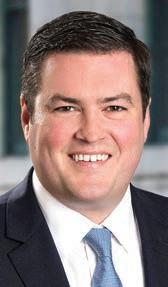
In his piece “Jobs in the AI Revolution: Disruption Today, Growth Tomorrow,” Manoukian argues that while AI will displace certain tasks, the broader pattern will likely mirror past technological shifts. Throughout history, from the steam engine to electricity to the mainframe computer, innovation has initially displaced workers, but ultimately expanded industries, created new roles and delivered powerful waves of productivity growth. His piece highlights that early adoption tends to create the impression of destruction, while the full economic cycle typically produces reinvention, new demand and broader opportunity.
Our 2026 Global Investment Outlook echoes this theme. The AI investment boom already accounts for roughly 1% of U.S. GDP, and historical comparisons suggest that could double. AI is driving down the marginal cost of cognition, much as past technologies lowered the costs of transportation, power and information processing. When those costs fell, demand surged, new industries emerged and productivity growth accelerated.
What Detroit Can Expect
In cities across the U.S., the impact of AI is already visible across key sectors such as healthcare, pharmaceuticals, financial services, energy and education. Hospitals and research centers are pioneering new diagnostic tools and supporting better clinical decisions. On the factory floor, smart automation is being adopted to improve efficiency, enhance precision and streamline production processes in industries like pharmaceuticals, chemicals and food manufacturing.
Financial institutions across the country are also exploring AI-driven ways to simplify operations and manage risk more effectively, while energy companies are leveraging data and machine-learning models to help optimize output and improve reliability. At the same time, leading universities are driving much of this innovation, helping to connect research, industry and talent.
Early research suggests that many of these AI applications focus on augmentation rather than full automation, supporting workers in their roles instead of replacing them entirely. Humans still retain an advantage in areas such as common sense, emotional intelligence, dexterity and adaptive learning, which remain difficult for AI to replicate.
The Road Ahead
Historically, technological breakthroughs have reduced costs, expanded demand and driven long periods of productivity growth. AI is beginning to replicate this pattern by lowering the cost of expertise and enabling companies to accomplish more with fewer resources. As organizations reinvest AI-driven efficiencies into new capabilities, Detroit could see growth in new types of roles, businesses and services that do not yet exist today.
For informational/educational purposes only: Views and strategies described on this article or provided via links may not be appropriate for everyone and are not intended as specific advice/rec-
See AI REVOLUTION Page A-6

By Ebony JJ Curry SENIOR REPORTER
Thursday morning, Jan. 15, 2026, came with snow and a 7 a.m. start.
Huntington Place already had its usual “Detroit Auto Show energy” moving through it –the kind of energy that pulls in families, executives, union folks, and tourists all at once. But for the official kickoff of the 21st season of Michigan Chronicle’s Pancakes & Politics, the special Auto Show edition brought a different kind of traffic into the building. It brought more than 300 people – all of whom came for the region’s next chapter, and not just the displays.
This year marks the Michigan Chronicle’s 90th anniversary, and the paper opened by telling the truth about its roots the way Black institutions do when they are still standing after generations of disruption.
“Welcome, fearless warriors.” said Real Times Media CEO and Michigan Chronicle publisher Hiram E. Jackson. “Thank you for being here despite the weather this morning. We’re serious about informing and entertaining our community.
Pancakes & Politics is all about a series that talks about the most important issues that are happening right here. This is our 90th year of the Michigan Chronicle. In 1936 a young man came to Detroit with $5 in his pocket and set up shop in Par-
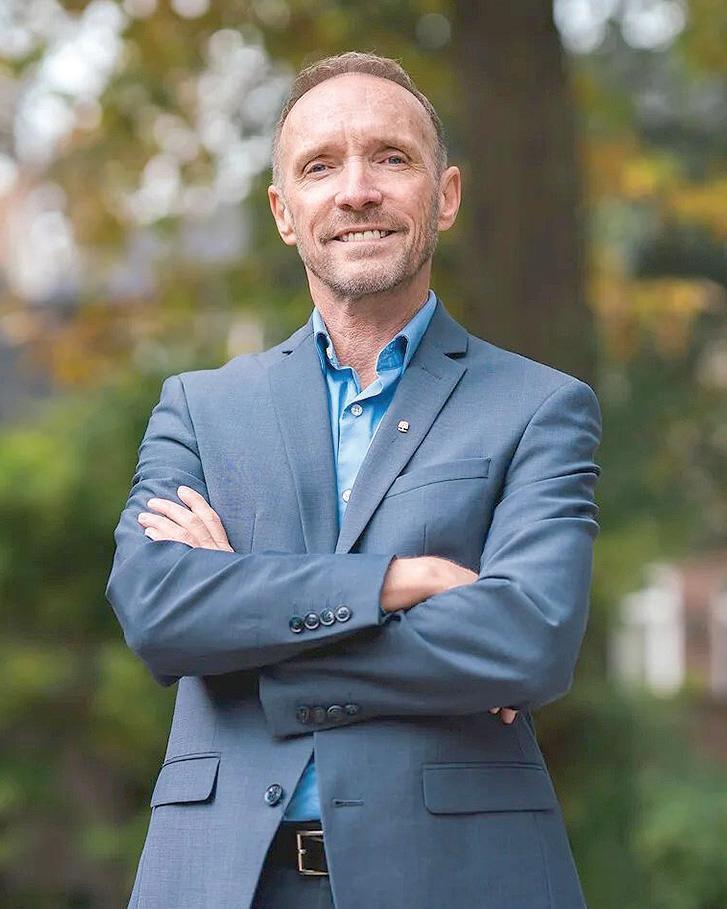
adise Valley and today, we still own the land that was bought.”
He also nodded to a Chronicle legacy tied directly to Detroit’s mobility story, which made for a fitting tie-in of the Auto Show partnership. “For 10 years we had a program called Driven. We had a 10-year run and hopefully we can bring that back one day. We are really excited about being here.”
That framing mattered in a room built around Detroit’s signature industry. The panel that followed was moderated by Dennis Archer Jr., who has been asking questions on the Pancakes & Politics stage now for nearly 10 years, and it stayed focused on what this show means beyond nostalgia. Investment, workforce, land, and the question that keeps coming back in Detroit, no matter how many cranes go up: who is being brought up with it?
Sam Klamet, the director of the Detroit Auto Show, placed the Chronicle partnership alongside the show’s regional reach. “I’m really proud of this partnership and this relationship. We know what this show means to the region and to have a relationship with an institution like the Michigan Chronicle is crucial to have conversations about how to move us forward.”
The panel included Jared Fleisher,
CEO of Bedrock; Wayne County Executive Warren C. Evans; and Chris Thomas, co-founder and partner at Assembly Ventures.
The discussion opened on the scale of Detroit’s automotive influence. “The global impact of the automotive industry and the auto show is historical,” Archer mentioned. From there, the conversation turned into a direct question about history and responsibility — and what the region is doing with the power it claims.
Fleisher spoke about the way the auto industry still anchors Detroit’s global identity, tying that legacy to Bedrock’s downtown footprint and the corporate presence moving into Hudson’s. “Tomorrow we have an event at the Hudson’s Site to welcome GM and I’ve been thinking about what to say. But what has dawned on me is pride and thankfulness. We have three of the greatest auto corporations in the world. GM is in our building and Ford made a tremendous contribution to the Michigan Central Station.”
He called the industry foundational to the country’s economic story. “We need to remember that this is a foundation of our country’s industrial base.”
Evans took that foundation and pushed the conversation toward the people Detroit history often leaves
By Jeremy Allen EXECUTIVE EDITOR
Oakland County Executive Dave Coulter announced the launch of a new financial disclosure page on the county’s website on Jan. 15, a move aimed at expanding transparency and strengthening public trust in county government. The new webpage makes personal financial disclosure forms publicly available for the county executive, deputy county executives, and the county’s chief financial officer.
The disclosures fulfill a commitment Coulter made in December to voluntarily post financial information annually for senior executive staff. While some levels of government require financial disclosures by elected officials, Michigan does not currently have a statewide law mandating such reporting for officials at this level. County leaders said the absence of a legal requirement created
an opportunity for Oakland County to take proactive steps to demonstrate accountability.
The new page can be accessed at oakgov.com/government/county-executive/disclosures and will be updated annually. It is intended to give residents greater insight into the financial interests of the county’s top administrators, helping to reduce concerns about potential conflicts of interest and reinforcing ethical standards in public service.
“Transparency is essential to maintain the public’s confidence in how their government operates,” Coulter said. “While there is not yet state law requiring such financial disclosure for elected officials, I believe we should lead by example. That’s why my senior leadership team and I are making these disclosures available to the public.”
County officials said the decision to publish the information was driven by growing public expectations for openness in government and increased scrutiny of how public officials manage both public resources and their personal financial affairs.
In recent years, communities across Michigan and the nation have called for clearer ethical standards and easier access to information about those in positions of power. By voluntarily releasing this information, Oakland County leadership aims to address those concerns directly. The financial disclosure forms outline various sources of income, assets, and other financial interests held by the county executive and senior leadership. Making the forms publicly accessible allows residents,

By Anthony O. Kellum
CONTRIBUTING WRITER
A Necessary Reset. Why Housing Must Be Treated as a National Emergency Property has always been more than shelter. For Black Americans, it has been the most contested pathway to stability, citizenship, and generational wealth. From redlining to restrictive covenants to modern zoning laws that quietly reproduce exclusion, housing policy has never been neutral. It has either expanded access or reinforced inequality.
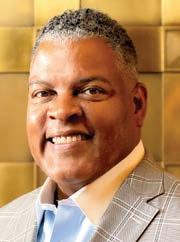
Anthony O. Kellum
That is why the National Housing Emergency Act of 2026, introduced by U.S. Senator Elissa Slotkin (D–MI), deserves serious attention. Not uncritical praise but rigorous engagement. In my view, this legislation represents the right direction and a strong starting point for confronting a crisis that has been decades in the making.
This bill does something rare in American housing policy: it treats the shortage of housing as both an economic threat and a national security issue, and it responds with the full capacity of the federal government. That framing matters.
The Reality We Must Name
We are living through a structural housing crisis. Housing supply has failed to keep pace with population growth for decades. Zoning laws and local resistance have artificially constrained new construction. Homeownership, especially for Black middle-class families, has become increasingly unattainable. The racial wealth gap continues to widen because property ownership remains the primary driver of intergenerational wealth.
What the National Housing Emergency Act of 2026 Actually Does
At its core, this legislation requires the President to declare a national housing emergency and invoke the Defense Production Act an authority historically reserved for wartime or major national crises. The bill remains in effect until four million new or rehabilitated homes are produced, or until October 2031, whichever comes first.
Using Federal Power to Increase Housing Supply
The bill authorizes the federal government to direct domestic industries to produce essential housing materials such as lumber, steel, and manufactured housing components at scale. The Defense Production Act has previously been used to produce military equipment, accelerate vaccine manufacturing, and stabilize critical supply chains. Applying it to housing acknowledges a truth Black communities have long understood housing stability is foundational to economic security.
Cutting Red Tape That Has Quietly Preserved Exclusion
Many of the barriers to housing are not economic but political and local. This legislation pressures states and municipalities to eliminate zoning laws that restrict housing growth. It encourages the conversion of underused commercial properties into residential housing, challenges single-family-only zoning, and supports accessory dwelling units, often referred to as in-law suites or granny flats.
For Black communities historically boxed out by zoning codes designed to exclude, this is significant. Zoning has
often functioned as the modern language of segregation legal, subtle, and deeply effective.
No Blank Checks: Federal Dollars With Accountability
The Act establishes a Pro-Growth Requirement tied to federal funding. Communities that demonstrate housing growth and remove barriers are rewarded with federal dollars. Communities that refuse to grow are held accountable. This flips the traditional dynamic in which exclusionary localities benefit from federal resources while blocking housing access for working families.
A Temporary Freeze on Anti-Housing Regulations
During the declared emergency, the bill prohibits states and local governments from implementing or enforcing new laws or regulations that impose a substantial burden on housing construction or rehabilitation. This provision is critical. Too often, progress is quietly undermined by procedural delays and new regulatory hurdles. The emergency period creates a clear runway for action.
Quality Matters: Guardrails Against Exploitation
Expansion without standards invites exploitation. The bill addresses this by establishing minimum residential code standards for all homes built or rehabilitated during the emergency. This protects against the replication of poor-quality housing that has historically been concentrated in Black and low-income communities under the banner of affordability.
Why This Matters for Black America
Black homeownership is not simply about individual success. Ownership stabilizes neighborhoods, strengthens schools, anchors local economies, and allows families to pass assets not just memories to the next generation.
This legislation does not solve every problem. It does not erase the racial wealth gap overnight. But it creates structural conditions in which ownership becomes possible again, particularly for middle-class and working families who have done everything right and still been priced out.
A Starting Point, Not the Finish Line
This bill is not the destination. It is a meaningful course correction. For too long, housing policy has been reactive, fragmented, and timid. The National Housing Emergency Act of 2026 is assertive. It acknowledges that the market alone will not fix a crisis it helped create.
From a Property is Power perspective, the bill aligns with a core truth ownership is not accidental. It is engineered by policy, by access, and by intention. This legislation signals a willingness to engineer opportunity rather than preserve scarcity.
Final Thought: From Emergency to Equity
Declaring a housing emergency is not an admission of failure, it is an acknowledgment of reality. The real question is what follows.
If this bill is paired with targeted homeownership programs, fair lending enforcement, financial education, and community-based implementation, then it can become more than legislation. It can become leverage. And leverage, when applied correctly, transforms property into long-term economic agency.
This is why I believe this is the right direction and a necessary starting point.
Property is Power! is a movement to promote home and community ownership. Studies indicate homeownership leads to higher graduation rates, family wealth, and community involvement.
behind when development starts getting celebrated. When Archer posed the question about the importance of the evolving automotive industry, Evans reached back to the early promise of industrial work and contrasted it with the barriers many residents face now.
“The automotive industry has been doing well with the assistance of the municipality, but what sticks in my mind in terms of the new automotive industry, is early on, for $5 a day, you didn’t have to have skill, people worked and they were able to buy automobiles because they worked,” Evans said. “The skills training today is critical. There are lots of programs around, but whether or not the programs reach the people who actually need them is faint. We can’t gloss over the chronically unemployed folks who are out there. That’s where we have to focus going forward.”
Thomas grounded the moment in a larger identity question that Detroit has been wrestling with for years: How do we respect what Motor City built without letting the city get trapped inside its past?
“Automotive cannot be what it was, and I love that. There’s only one Motor City, and that’s true, but what are we going to be next? For our city and our people to thrive we have to think bigger. We need to be very focused on what we’re going to be today.”
Evans pressed the workforce point again, naming what often gets buried inside broad “skilled trades” messaging.
“I strongly believe that somebody has to be in charge of the process. We’re fooling ourselves if we think K-12 and the skilled trades are working the way they should. The trades
still don’t include minorities the way people claim. A lot of young Black men who try to get into those jobs get washed out along the way, and then folks label them like they aren’t trying to work,” he said.
He also described gaps between education and actual labor needs. “If I look at K-12 and the relevance of community college classes to the jobs that are needed, there’s a real gap there.”
The conversation moved into development priorities and what it takes to move a regional economy forward. Fleisher pointed to Detroit’s core as an engine and described Bedrock’s development focus as part of building a stronger city, linking that to the riverfront as a “big play.”
Simply put, Archer asked, “So, how do we move our regional economy forward?”
“A huge part is relative to training programs and taking it to the next level and for Bedrock, it’s building a strong Detroit,” Fleisher said. “We have a city that has a decade of comeback, but that’s after 50 years of decline. And now we have a new mayor, Mayor Sheffield, who gets it. The urban core is still the economic engine, so we continue to take our core to the next level, and the riverfront is part of that. Imagine what our visitation would look like if we had the best riverfront in the country. This is a big play. Whatever we are doing we want to do it in partnership. Let’s build more, let’s build faster, and let’s bring more people up as we do it.”
Then the room got to a subject Detroit doesn’t let anyone skate past: displacement tied to infrastructure, specifically I-375.
Evans laid out his frustration with how the project was framed and rolled out.
watchdog groups, and the media to review the information without the need for formal requests, reducing barriers to public oversight.
Coulter’s administration emphasized that the initiative is not only about compliance or optics, but about setting a tone for ethical governance. County leaders said they hope the disclosure page will encourage informed civic engagement and demonstrate that transparency can be implemented without waiting for legislative mandates.
The launch of the disclosure page also reflects broader conversations within county government about trust and accountability. Officials noted that when residents have confidence in their leaders, it strengthens relationships between the public and local government and supports more effective policymaking. By taking this step, Oakland County positions itself among a growing number of local governments choosing to go beyond minimum requirements to make information more accessible. Coulter said the administration will continue to look for ways to expand transparency and ensure residents can see how their government operates at every level.
ommendation for any business. Information has been obtained from sources believed to be reliable, but JPMorgan Chase & Co. or its affiliates and/or subsidiaries do not warrant its completeness or accuracy. The material is not intended to provide legal, tax, or financial advice or to indicate the availability or suitability of any JPMorgan Chase Bank, N.A. product or service. You should carefully consider
your needs and objectives before making any decisions and consult the appropriate professional(s). Outlooks and past performance are not guarantees of future results. JPMorgan Chase & Co. and its affiliates are not responsible for, and do not provide or endorse third party products, services, or other content. Deposit products provided JPMorgan Chase Bank, N.A. Member FDIC. Equal Opportunity Lender. © 2025 JPMorgan Chase & Co.
“MDOT (Michigan Department of Transportation) does a good job of building roads and selling projects,” he said. “So, the whole issue of 375 started out from a phony premise that pissed me off from day one because they tried to sell it as a reparation.”
Evans described promised communication that did not happen and questioned whether the resources make sense given other needs. He also rejected messaging he viewed as insulting. “I do get offended when you get a project like that and try to sell it as reparations,” Evans said. “I’m not trying to be a naysayer. I’m trying to be a team player, but I need a team that isn’t playing class-A bull.”
Fleisher offered a measured take on the project’s current version.
“On a scale to 1-10 I’m a five, and what the executive mentioned about the prior plan he is right but the new incarnation is fine because it is no longer saying it’s the reparation of the century. The project is a quarter-scale of ambition from Gratiot to the riverfront. I share the view of, is this the best use of resources, but in it of itself it’s become a better project,” he said. By the end of the discussion, the theme was clear.
Detroit can celebrate the auto show and still ask harder questions in the same breath. The region can talk about growth and still be pressed on whether the growth reaches the people who need it most. That’s what Pancakes & Politics has always been built for — a place where Detroit gets to hear leaders speak plainly, and where the Chronicle keeps doing what it has done since 1936: document the stakes while the city decides what it’s going to be next.
You can reach Ebony at ecurry@ michronicle.com.
. If you require assistance prior to e-filing, contact Commission staff at (517) 284-8090 or by email at: LARA-MPSC-edockets@michigan.gov
Any person wishing to intervene and become a party to the case shall electronically file a petition to intervene with this Commission by February 3, 2026. (Interested persons may elect to file using the traditional paper format.) The proof of service shall indicate service upon DTE Gas Company’s attorney, Carlton D. Watson, One Energy Plaza, 1650 WCB, Detroit, MI 48226. The prehearing is scheduled to be held remotely by video conference or teleconference. Persons filing a petition to intervene will be advised of the process for participating in the hearing.
Any person wishing to appear at the hearing to make a statement of position without becoming a party to the case may participate by filing an appearance. To file an appearance, the individual must attend the hearing and advise the presiding administrative law judge of their wish to make a statement of position. Mich Admin Code, R 792.10413 (Rule 413). Any person wishing to file a public comment may do so by filing a written statement in this docket. The written statement may be mailed or emailed and should reference Case No. U-21889. Statements may be emailed to: LARA-MPSC-edockets@michigan.gov. Statements may be mailed to: Executive Secretary, Michigan Public Service Commission,
‘Never Far from My Heart’

By Sam Robinson SENIOR REPORTER
Lt. Gov. Garlin Gilchrist, in a recent Michigan Chronicle interview, days before he announced his intent to drop out of the governor’s race, said he would defend democracy while improving the department to make branches more accessible, if elected as Secretary of State.
Gilchrist’s official announcement that he would be launching a campaign for Secretary of State instead of continuing a run for governor came Monday, Jan. 12, and he now joins four other Democratic candidates for Michigan Secretary of State. Two candidates are also from Detroit: former state Sen. Adam Hollier and Deputy Secretary of State Aghogho Edevbie.
Ingham County Clerk Barb Byrum and former state lottery commissioner Suzanna Shkreli are also running.
Democratic delegates at the state party’s nominating convention on April 19, not voters during a primary election, determine the candidate who will face the Republican.
Dropping out of the race opens up the field for Democratic frontrunner Secretary of State Jocelyn Benson and Genesee County Sheriff Chris Swanson, who said Monday he feels like momentum is growing.
The interview has been edited for length and clarity.
Q: Have you spoken to the other Secretary of State candidates?
Gilchrist: I have been having communication with the other folks… I’m not going to speak for them, but what I will say is that I am uniquely equipped to qualify for this role. I think what this role needs in this moment, so I’m standing up to offer that to delegates and voters.”
Q: Did you face pressure from Democratic Party leadership to drop your bid for governor?
Gilchrist: “There’s nobody pressuring me from any corner of our movement to do this. But this is coming from is while going around Michigan, not only just for the both of the last seven years and for the last year, talking to people about what they confronted.
I heard them screaming about prices and childcare and healthcare and all that. But there was this remarkable consistency with which people also said, ‘Look, I’m worried about Trump.’ Just in general. He’s dangerous, erratic, he’s reckless, he hurts people. But he is also particularly uninterested in the Democratic process. He has been willing to send people to Michigan to attack and undermine it. What people worried about was if they broke that system, it would take away a tool that we have. If we can’t have a voting system that we can trust in that works, I can’t vote in people who are going to hold utility companies accountable. I can’t vote in people who are going to get money out of politics.
It triggered me upon reflection, just back to my roots — the first time I ran for office, I ran to be an election administrator. I ran for Detroit City Clerk in 2017. It’s not something that’s ever been far from my heart. I’m uniquely equipped as a software developer and engineer to be the one to protect that stand tall against that.”
Q: Were you surprised when some of the progressive Detroit area Democrats supported Benson over you?
Gilchrist: “People make decisions for a whole host of reasons. I’m sure that if you maybe had a conversation with them you could write about that. What I will say is that it has been interesting this year for
people to… I don’t think I’ve changed. I worked in the progressive movement. If you want to talk about progressive receipts, I got them. Those credentials are there and are clear. Campaigns are about getting people to know you better. You know, to the extent that I have campaigned statewide before, it was in the context of being Gov. Gretchen Whitmer’s partner. I think as people have gotten to spend more time looking at me and who I am as a person, as a parent, as a spouse, as an engineer, and as a progressive, people have been able to see something that they didn’t pay as much attention to. I hope as a Secretary of State candidate they’re going to continue to see and understand more, and I hope that that’s something that I can use to earn their support.”
Q: What did you make of the blowback you received from some of your own supporters over the NSFWJasmine Crockett TikTok video that went viral during your campaign for governor?
Gilchrist: People vote for a person. I think my job is to tell my story and how that story will lead to something better for people in Michigan. I recognize people are going to talk, and I get that. Some of them said it directly to me, right? I’m good. But what I also know is true is that I got something to offer, and it’s my job to offer people support for it. That doesn’t mean everybody is always going to understand everything that’s going on, or people might have a problem with it. That’s all good. It is what it is.
Q: How would you improve the Department of State and Secretary of State branches if elected?
Gilchrist: “There remain significant challenges with the campaign finance website. That’s something that I can make right work with those professionals to address
By Ebony JJ Curry SENIOR REPORTER
DTE Energy is putting $15 million on the table for winter utility help across Michigan, splitting the money evenly among three nonprofits that already do the day-today work of keeping households connected when heat bills outrun paychecks.
The company said Thursday, Jan. 8, 2026, that it will donate $5 million each to The Heat and Warmth Fund (THAW), United Way for Southeastern Michigan, and The Salvation Army Great Lakes Division. The funds are intended to support energy assistance during what DTE described as Michigan’s coldest months, with a focus on helping families heat their homes and stay safe through the winter.
“Michigan winters can be harsh, and we know how hard this season can be for families,” said Joi Harris, DTE’s president and CEO. “We want every household to feel safe and warm, and this donation is just one way we’re standing alongside the communities we serve to provide relief and hope during these challenging months.”
Contrarily, when it comes to one’s everyday reality, Detroiters have been walking into winter with the same knot in their stom-
ach when the DTE bill hits the mailbox or the phone screen.
A hike on a utility bill doesn’t land like a simple inconvenience when rent is due, gas is low, and the fridge is already thin. For plenty of families, a higher heat bill forces a monthly negotiation inside the house: groceries or prescriptions, lights or a copay, keeping the furnace steady or risking another past-due balance that grows faster than a paycheck. That stress shows up in the quiet ways—parents stretching meals, seniors turning the thermostat down too far, people delaying refills, folks hoping the next shutoff notice comes after payday.
Black families tend to feel that squeeze first and longest because the country’s inequities don’t stop at the front door. Historic disinvestment, lower household wealth, wage gaps, and higher rates of housing insecurity mean there’s less cushion when costs rise, so the same DTE increase hits harder in Black neighborhoods than it does in places where savings accounts and credit limits can absorb the blow. When systems are built to punish lateness and reward stability, communities that have been denied stability for generations are left carrying the heaviest consequences—late fees, shutoff threats, and the constant

stress of choosing survival needs against each other.
DTE said the donation will help thousands of vulnerable residents by supporting several types of emergency and stabilizing assistance. That includes preventing or minimizing service disruption, lowering or eliminating past-due balances, providing emergency help during extreme weather events, and connecting customers to longer-term resources for energy affordability and stability.
Each of the three nonprofit partners serves residents who are elderly, unemployed, underemployed, disabled, or otherwise in need across Michigan, according to DTE’s announcement. The organizations also help households enroll in affordable payment plans such as DTE’s Low Income Self-Sufficiency Plan (LSP), which the company highlighted as part of its longer-term affordability approach.
United Way for Southeastern Michigan President and CEO Dr. Darienne Hudson said the need for utility help keeps rising alongside everyday costs.
“As the cost of living continues to rise, more families across Southeastern Michigan are struggling,” Hudson said. “This generous donation strengthens our ability to provide critical utility payment
those challenges and make it better. While there has been improvement, we still need to bring the services that we offer and the experience that we offer fully into the 21st Century. And you know, that’s something that I believe I’ve done through my career. Making a system run for people, making government systems work for people. I started with this city government— I created the city of Detroit open data portal, I wrote the Improve Detroit app.”
Garlin isn’t the only candidate saying there are strategic ways to improve customer experience at Secretary of State branch offices and the Department of State.
In the video announcing her campaign, Shkreli has pledged to create digital driver’s licenses and report election results faster. She also proposed that the state introduce walk-in hours for seniors.
The appointment-only system Benson implemented has sped up service, but has been criticized by Republican opponents.
Alyssa Bradley, a spokesperson for Benson’s gubernatorial campaign, defended the improvements to customer service at the Secretary of State branches.
“When Secretary Benson took office, Michigan’s Secretary of State system was broken. Families waited for hours just to get their IDs, employees worked late into the night, and every one of her predecessors said it couldn’t be fixed or refused to try,” Bradley said. “Secretary Benson proved them wrong. She visited all 131 branch offices in her first 100 days and set a clear goal: 30 minutes or less. Now, more than 90 percent of customers are served in 20 minutes or less… Of course there’s more work to do. There always is. But you cannot deny what Secretary Benson has accomplished.” You can reach Sam at srobinson@ michronicle.com.

assistance, which makes a tremendous difference for households in need. We are grateful for DTE’s partnership and for their continued commitment to supporting our communities when families need it most.”
For Detroit and other communities where winter can expose every weak spot in a household budget, utility assistance is not abstract. A past-due balance can stack quickly when groceries, prescriptions, rent, and transportation already compete for the same dollars. Seniors living on fixed incomes and residents with disabilities often face the sharpest math, especially when cold snaps hit and staying warm becomes a safety issue.
DTE said help is available now and urged customers to move quickly. Residents can call 211 to connect with local energy assistance agencies, which can walk
them through the application process and help identify the best options for their situation.
The company framed the $15 million donation as a complement to its broader affordability and energy assistance initiatives, including bill assistance programs and proactive customer outreach. DTE also pointed customers to additional programs it says are available during winter months, including Senior Winter Protection, Active Military Protection, and Medical Emergency Protection.
For families feeling the pressure right now, the message from every corner of this announcement is urgency. Reach out early, ask for the options, and get connected to an agency that can help before a shutoff notice becomes a crisis.
You can reach Ebony at ecurry@ michronicle.com.
























By Miss AJ Williams
Let’s be honest. When Black women say they want a soft life, we are rarely just talking about silk robes or passport stamps. We’re talking about liberation. About living a life with less struggle. A life where rest isn’t something you have to earn, but something you deserve by simply existing. A life where we can be tender, feel joy without guilt, and breathe without bracing for impact.
But for many of us, softness feels foreign. Or worse, unsafe.
The phrase “soft life” has gone viral, often romanticized with aesthetic routines, luxury escapes, and curated calm. But beneath the surface lies something deeper—a yearning that’s been tucked inside us for generations. It’s a spiritual hunger to heal from the weight of inherited struggle, from the constant pressure to be everything to everyone, all the time.
We were raised on strength. Taught to wear it like armor. Told it was our birthright and our burden. For generations, Black women have been the backbone of families, communities, and entire movements. We’ve carried it all. And in the process, we’ve lost touch with what it means to just be. We’ve internalized the idea that ease is a reward, not a right.

The “strong Black woman” archetype may have roots in resilience, but too often it functions as a cage. One that denies us rest, that questions our softness, that views our boundaries as betrayal. And when we finally begin to step back from that narrative, to say no, to prioritize ourselves, to want something gentler, it can feel disorienting.
But choosing ease is not weakness. It is radical. In a culture that measures our worth by how much we produce and how much we can endure, reclaiming rest is spiritual warfare.
Audre Lorde told us that caring for ourselves is not self-indulgence. It is self-preservation. And in this world, that preservation must be sacred. We are not machines. We are not meant to grind ourselves into the ground. We are meant to live. To feel. To heal. Imagine waking up and not feeling guilty for doing nothing. Imagine saying no and feeling no shame. Imagine being able to cry without rushing to explain why. That is the soft life. And it’s deeper than any trend. It’s a return to self.
Our ancestors knew this. They practiced rest. They honored the seasons. They listened to spirit and to their bodies. Their rituals weren’t about productivity. They were about preservation, about alignment, about listening. They bathed with herbs, prayed aloud, talked to the moon, and lit candles for their own peace of mind. These were sacred acts, not luxuries.
Softness isn’t something we’re learning for the first time. It’s something we’re remembering. Reclaiming ease is about more than spa days and slow mornings. It’s about reimagining a life where we get to be whole, where our labor isn’t our only language, where we can choose peace without needing permission. The soft life isn’t an aesthetic. It’s not a trend. It’s a reclamation. And it belongs to us.

By Jeremy Allen EXECUTIVE EDITOR
On an autumn night in Paris, in the middle of one of the most competitive and crowded contemporary art weeks on the global calendar, hundreds of people chose to spend their time learning about Detroit.
Not its cars. Not its factories. Not even its music.
They came to encounter its artists, and for the people behind the Detroit Salon, that moment was not an accident. It was the point.
Detroit Salon is a long-term, citywide cultural initiative designed to position Detroit as a global center for contemporary art by elevating the city’s artists, institutions, and creative ecosystems on an international stage. Modeled after the historical idea of the salon as a place of gathering, exchange, and intellectual rigor, Detroit Salon brings together artists, curators, collectors, cultural institutions, philanthropic leaders, and civic partners to collectively tell Detroit’s story through art.
The initiative is rooted in the belief that Detroit has long been producing world-class contemporary art, even when it has lacked the visibility, infrastructure, or access afforded to cities like New York, Los Angeles, or Paris.
The project unfolds through a multiyear global strategy that includes exhibitions, artist exchanges, public programming, and partnerships in major
cities around the world, culminating in a large-scale contemporary art event in Detroit in 2028.
Rather than focusing solely on a single exhibition or moment, Detroit Salon is designed to strengthen Detroit’s art ecosystem over time by creating new professional opportunities for artists, building international awareness of the city’s creative output, and inviting the global art world to experience Detroit firsthand.
At its core, Detroit Salon is both outward-facing and deeply local: it seeks to amplify Detroit artists globally while reinvesting that attention, energy, and opportunity back into the city and its communities.
“We were captured by founder Julie Egan’s vision to highlight Detroit artists for the world,” said Claude Molinari, president and CEO of Visit Detroit, one of the first investors in the effort.
“We’re known for a lot of things in Detroit. We’re known for innovation, we’re known for music, we’re known for engineering and architecture, but we’re also known for our fantastic artists.”
As the curator of Detroit Salon’s Paris exhibition, Juana Williams played a pivotal role in translating the city’s creative energy onto an international stage. She described the opportunity as a way for Detroit artists to be seen and recognized as part of the global contemporary art conversation.
“Part of the reason why we selected
Paris for this pilot was to really test the waters and see if the world would engage with Detroit artists,” Williams explained. “We wanted to see if these artists could hold their own in one of the most competitive art environments in the world, and the response was overwhelmingly positive.”
Williams emphasized that the Paris show was as much about creating meaningful experiences for the artists themselves as it was about promoting the city.
“For the artists, it was about professional development and growth,” she said. “Being able to exhibit in a major museum in Paris, being able to exhibit in a major art show in Paris, it’s sort of career changing.” She highlighted how the exhibition allowed the artists to engage directly with collectors, curators, and international audiences, offering insights and connections that could shape the trajectory of their careers for years to come.
In curating the show, Williams sought to create a space that reflected Detroit’s communal and welcoming spirit.
She explained, “We wanted the exhibition to feel like a gathering, like a salon. It wasn’t just about the artwork on the walls – it was about the interactions, the conversations, the ability for people to meet the artists directly and learn from them.” This approach showcased the art itself, but it also conveyed


By Jeremy Allen EXECUTIVE EDITOR
For jazz lovers in the Motor City, Jan. 30, 2026, will be a night to remember as The Cookers take the stage at the Detroit Music Hall. The septet, whose members span more than six decades of jazz history, brings a signature blend of fiery post-bop and soulful hard bop that has earned them acclaim at festivals and venues worldwide.
Founded nearly two decades ago by trumpeter David Weiss, The Cookers are as much a living tribute to jazz’s golden era as they are a modern ensemble pushing its boundaries.
“Detroit is one of the top two or three jazz cities in this country,” Weiss said in an interview with Michigan Chronicle. “Historically, it’s one of the most important cities in jazz, and the fanbase is still knowledgeable and devoted. It’s a pleasure to play there.” The ensemble’s members include veterans who came up in the heady mid-1960s jazz scene, performing with legends like Herbie Hancock, Charles Lloyd, Max Roach, and Sonny Rollins, alongside younger players steeped in that same tradition. Weiss emphasizes that the group is committed to honoring that legacy and also to moving the music forward.
“We try to express ourselves in a certain

the collaborative and inclusive culture that underpins Detroit Salon, demonstrating that the city’s creative community thrives when its members are connected, supported, and visible on a global stage – all with a sense of urgency.
And for Molinari, the urgency was clear. “I try to work with an unreasonable sense of urgency on everything,” he said. “I think it’s underappreciated, globally, just how much Detroit contributes to the art scene.”
The Detroit Salon’s fall trip to Paris –timed with Art Basel Paris and Paris Art Week – was designed to confront that gap head-on.
Egan described the decision as both symbolic and strategic.
“Paris has, for centuries, been known to be a place that welcomes artists from all around the world as, kind of, a center for cultural diplomacy,” she said. “But it’s also strategic in the sense that we knew this would be an incredible opportunity because all the world would be watching this in Paris. We really felt Detroit should be at the center of that, and that Detroit deserved to be at the center of that.”
The goal, Egan explained, is not just a single exhibition, but a long runway toward 2028, when the Detroit Salon plans to invite the global art world to Detroit for a major contemporary art event.
“Sometimes you have to go to the world before the world comes to you,” she said.
Paris was one of seven cities where Detroit artists will be showcased nationally and globally in the years leading up to that moment.
What happened in Paris exceeded expectations. Molinari, who traveled in from London, admitted he thought interest would build slowly.
“First of all, I was blown away by how many people were interested,” he said. “The exhibit was beautiful. It was really well done.” He recalled standing on a deck surrounded by Parisians and realizing, “All these people from France are here to check out Detroit. I mean, again, you’re in the city of lights on a Saturday night, and you’re saying, ‘You know what I could do? I want to come and check out this Detroit exhibit.’”
At the Palais de Tokyo, Egan said, crowds became so large that people had to queue outside. At Art Basel, Detroit Salon’s space saw as many visitors as any other exhibit.
“We heard over and over again: ‘We’re so happy Detroit is here. We’re so excited to learn more about Detroit. We didn’t expect to see Detroit here,’” she said. “It reaffirmed this idea that the world needs to get better acquainted with the breadth and depth and brilliance of what Detroit has always had to offer.”
That visibility mattered deeply to the
artists themselves. Rather than relying on curators or intermediaries, Detroit Salon placed artists directly in conversation with visitors.
“Instead of having other people talk about the artist’s work, they were physically present in the Art Basel space, talking about their work with visitors,” Egan said. “You would walk into our space and it was like a party… and they would ask about a piece, and we’d be like, ‘Well, you can just ask the artist themselves.’”
For Angelique Power, president and CEO of the Skillman Foundation, that direct participation is inseparable from youth development. Skillman supported Detroit Salon’s Paris effort by investing in Detroit students who are musicians, not as spectators but as featured artists.
Skillman helped fund the Paris trip for Detroit Public Schools Community District’s All-City Marching Band, an ensemble made up of students from high schools across the city, such as Cass Tech, Martin Luther King Jr., Detroit School of Arts, and Renaissance.
“Art itself is localized travel,” Power said. “When you participate in art, it allows you to journey toward empathy of another… and travel itself is one of the best forms of education that there is.” She emphasized how transformative that experience can be. “You see how big and vast the world is. And it changes you. It changes everyone.”
Power spoke candidly about the consequences of removing arts from schools – a problem that has been plaguing districts like Detroit ever since funding began decreasing more than a decade ago.
She said that she hopes Detroit Salon will work alongside other programs in the city that showcase how important it is to invest in the arts.
“When we remove arts from students’ lives… we do not allow an individual or a school or a community to flourish,” she said. “Young people learn differently. I’m a visual learner. Some are kinetic learners.”
Detroit Salon represents both exposure and possibility, she said.
“For young Detroiters who are musicians to bring their music and their ideas into the mix of this world gathering… we knew that we had to be a part of that.”
That belief in art as both workforce development and civic investment echoes Molinari’s view. When asked about critics who argue that funding for arts initiatives should be diverted to more pressing needs of the city’s residents, he didn’t dismiss the tension. Instead, he reframed it.
“Investing in the arts, investing in events, investing in infrastructure, all of these things improve cities,” he said. “If what we’re doing is going to benefit Southeast Michiganders and put them to work, I think that’s worth investing in.” He added pointedly, “If Julie Egan wasn’t so indefatigable, and so committed to launching an event that can create circumstances where maybe a starving artist can become a well-
paid artist, I think that’s a benefit.”
At its core, Detroit Salon is about breaking silos – between artists, institutions, funders, and cities. Egan said the very choice of the salon model was intentional. “The salon has always been more about gathering… many individuals sharing new ideas and having honest conversation,” she said. “We’re really trying to evoke the strength of Detroit’s broader art ecosystem rather than only a set of individuals.”
That ecosystem spans far beyond a single organization. Egan emphasized that Detroit Salon is powered by committees of cultural institutions, artists, patrons, and partners across Michigan. “It really is not at all about any person or any specific entity,” she said. “Something like this takes a whole lot of effort and thought and work and dedication.
Michael Shaw of Hudson-Webber, a longtime advocate for Detroit’s creative community, highlighted the importance of supporting young artists and ensuring that opportunities like Detroit Salon are accessible to emerging talent.
Reflecting on the city’s evolving arts ecosystem, he noted, “Detroit has historically operated in pockets, and in silos. Over the past decade, we’ve been able to strengthen partnerships, public-private partnerships, and cross-sector partnerships, and that’s really what’s helped Detroit emerge from where it was to where we are now.”
Shaw emphasized that initiatives like Detroit Salon both elevate individual artists and strengthen the broader cultural fabric of the city, creating cohesion among organizations, neighborhoods, and creative leaders.
Shaw also pointed to the significance of youth engagement and the role of philanthropic support in sustaining Detroit’s creative future.
“The opportunity is to take all of these successful projects that are happening right now across the city, but in isolation, and to create a cohesive vision for Detroit into the future,” he said. By connecting young artists with mentorship, funding, and professional platforms, Shaw explained, Detroit Salon helps cultivate the next generation of cultural leaders while positioning the city as a hub of innovation and artistic excellence on a global scale.
“And it’s just so Detroit,” he added.
As the city looks ahead to 2028, Molinari sees success not in metrics alone but in momentum. “Having one – like having a show – is the most important thing,” he said. “Launch the thing. And then you can build on that.” Whether the ripple is small or massive, he believes the act of showing up matters. “Number one, let’s actually do it.”
In Paris, Detroit did exactly that. And in doing so, it reminded the global art world – and perhaps itself – that Detroit’s greatest export may indeed be its artists, finally speaking in their own voices, on their own terms, and on a stage big enough to hear them.

From page B-1
way, to uphold the tradition while keeping it alive and evolving,” he said.
The Cookers’ upcoming Detroit concert follows a high-profile decision to withdraw from a New Year’s Eve performance at the Kennedy Center in Washington, D.C. It was a choice that attracted national attention and speculation. Reports at the time suggested the withdrawal was politically motivated after the center’s building displayed the name of former President Donald Trump. Weiss, who sometimes serves as a de facto spokesperson for the band, stresses a more nuanced reasoning behind the decision.
“It was a reaction to the world we’re living in, not an overt political protest,” Weiss said. He explained that the invitation initially came through longtime staffers who had built the Kennedy Center’s jazz program over decades, including work with Billy Taylor. When those staff members were replaced, the circumstances changed.
“The symbolism became a bit too much. It wasn’t a manageable thing for us, and the timing was challenging. Our priority is to play music, not to get embroiled in political controversy,” Weiss said.
He also highlighted the age and history of the band’s older members, most of whom are in well into their 80s.
“They’ve done their work, fought their battles, and now they just want peace and quiet. They want to go out playing music, not making strong political statements,” he said. The decision, he said, reflects a desire to keep the focus on the art form that has defined their lives rather than to take sides in contemporary debates. For fans attending the Detroit Music Hall performance, the promise is pure jazz.
The group’s press release notes their “aggressive mid-’60s spirit” and “pyrotechnic playing” that channels the energy and innovation of the era while remaining rooted in teamwork and ensemble interplay. The Cookers have graced stages from Newport to Northsea, from Jerusalem to Dizzy’s Club Coca-Cola in New York, and their sixth album, Look Out!, showcases their ongoing commitment to high-level musicianship and boundary-pushing compositions.
“We’ve been doing this band for 19 years, and our fans know us,” Weiss said. “They expect a certain level of intensity and passion, but our goal is always to keep moving the music forward. People come to hear the fire and the spirit that inspired the greats like Coltrane and Miles Davis, and we try to honor that every night.”
Despite the weight of history and the occasional spotlight from national controversies, Weiss says The Cookers are focused on the music itself.
“At the end of the day, we want to perform. That’s all we ever really want to do. The political climate is something we observe, but it’s not the reason we’re on stage.”
The Cookers’ Detroit performance promises to deliver that philosophy in full. Audiences can expect a set that spans fiery originals, expansive improvisation, and a palpable sense of jazz as a living, breathing art form. For Weiss and his bandmates, the city’s rich jazz heritage offers the perfect backdrop.
“Playing in Detroit, you feel the knowledge and the devotion of the audience,” Weiss said. “It reminds us why we do this. Music born from struggle, insistence on freedom, and expression — that’s what jazz has always been about. That’s what we’re bringing to the stage.”
Tickets for the concert on Jan. 30 at 8 p.m. are available through the Detroit Music Hall box office. With decades of experience, a deep respect for jazz history, and a drive to innovate, The Cookers are poised to deliver a night of music that celebrates both legacy and the living spirit of jazz.


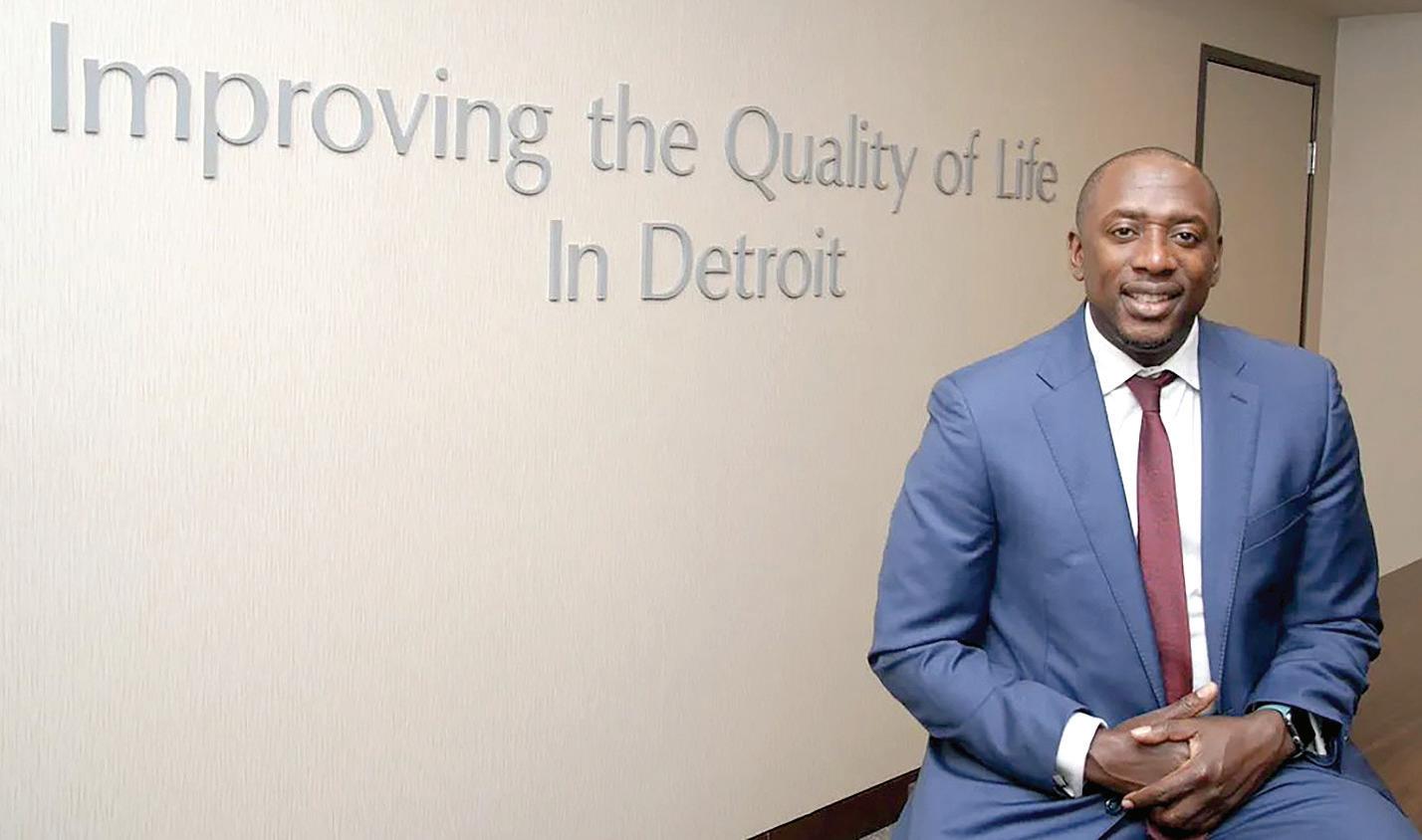
By Jeremy Allen EXECUTIVE EDITOR
The Hudson-Webber Foundation Board of Trustees has approved $900,000 in new grants to support nonprofit organizations working to strengthen neighborhoods, expand housing opportunities, enhance public safety, and advance inclusive public policy across Detroit and the surrounding region.
The grants, approved at the Board’s December 2025 meeting, will support a mix of programmatic initiatives and core operating needs for organizations whose work directly impacts Detroit residents. According to the Foundation, the investments are designed to address evolving community needs while reinforcing Hudson-Webber’s long-standing funding priorities around equity, economic opportunity, and civic well-being.
“These investments reflect Hudson-Webber’s commitment to supporting organizations that are driving meaningful, measurable progress for Detroiters,” said Donald Rencher, president and CEO of the Hudson-Webber Foundation. “From strengthening neighborhood safety and expanding access to housing, to advancing sound public policy and informed civic engagement, these partners are helping build the systems and conditions necessary for a more equitable, resilient and thriving Detroit.”
Organizations receiving grants include the Center for Michigan, Citizens Research Council, Detroit Economic Growth Associ-
ation, Detroit Public Safety Foundation, and the Michigan League for Public Policy. Together, the funded efforts span housing stabilization, violence prevention, policy research, journalism, and economic opportunity.
A portion of the funding will support built environment initiatives led by the Detroit Economic Growth Association. One grant will support the Citywide Home Repair Taskforce, a collaborative effort aimed at improving coordination of home repair services across Detroit. The task force brings together more than 40 partners, including the City of Detroit, home repair providers, funders, and utility companies, to streamline systems and make it easier for residents to repair and maintain their homes. The goal is to help preserve existing housing stock, reduce barriers to repairs, and stabilize neighborhoods.
The Board of Trustees also approved a separate $100,000 grant to support the Pro-Housing In-Fill Program. This initiative focuses on developing single-family homes and other small-scale housing by addressing financial and regulatory challenges that make housing difficult to build or afford. By increasing access to family-friendly housing options, the program aims to strengthen Detroit’s competitiveness and promote long-term, sustainable growth.
Public safety and violence prevention are also a focus of the new grants. The Detroit Public Safety Foundation received $200,000 to support the City of Detroit’s planning, design, and launch of an Office
Triumph Church, led by Rev. Solomon Kinloch Jr., will host a special Prayer Breakfast honoring the life and legacy of Dr. Martin Luther King Jr. on Monday, Jan. 29, at Detroit’s historic Fisher Theatre. The annual gathering is expected to draw more than 2,000 attendees and will begin at 9:30 a.m., bringing together faith leaders, community members, and civic partners for a morning of prayer and reflection.
This year’s program will feature Rev. Dr. Lance Watson as the guest speaker. Watson, a Detroit native, is the senior pastor of St. Paul Baptist Church in Richmond, Virginia, and is widely known for his preaching, leadership, and commitment to social justice. His return to Detroit for the event underscores the city’s continued connection to Dr. King’s message and the role of the Black church in advancing that work.

Rev. Kinloch said the Prayer Breakfast is designed not only to honor Dr. King’s memory but also to challenge attendees to recommit themselves to the unfinished work of justice and equality.
“This is a moment to pause, pray, and remember that Dr. King’s work is not finished,” Kinloch said. “His legacy calls each of us to action— to love boldly, serve faithfully, and work collectively for a more just and compassionate society.”
The MLK Legacy Prayer Breakfast has become a significant annual event in Detroit, offering a space for spiritual grounding while addressing the moral and social responsibilities that Dr. King championed. Organizers say the gathering is intentionally inclusive, welcoming people from different denominations, backgrounds, and generations who share a commitment to service and community uplift.
The Fisher Theatre, one of Detroit’s most iconic venues, will serve as the backdrop for the event, reinforcing the significance of the occasion. With registration already exceeding 2,000 people, organizers anticipate a full house and a strong showing from across the region.
Admission to the Prayer Breakfast is free, but registration is required due to limited seating. Community members and members of the media are encouraged to attend. Registration can be completed through the Triumph Church website.
In addition to prayer and the keynote message, the breakfast will focus on reflection and recommitment to Dr. King’s enduring vision of justice, unity, and service. Organizers say the event is meant to inspire participants to carry that vision forward in their own neighborhoods, churches, and workplaces.
Triumph Church has long been active in community engagement throughout Detroit, and Rev. Kinloch has been a visible voice on issues affecting the city, including economic equity, education, and faith-based civic involvement. Those commitments showcased during Pastor Kinloch’s recent Detroit mayoral campaign, and hosting the MLK Legacy Prayer Breakfast, he said, are part of that ongoing mission.
The Fisher Theatre is located at 3011 W. Grand Blvd. in Detroit. For more information, residents can visit triumphch.org, email Triumph Church at officeofthepastor@triumphch.org, or call (313) 386-8044.
of Neighborhood Safety. The proposed office would bring together the city’s Community Violence Intervention work, the Mental Health Co-Response Program, and youth safety and mentorship initiatives under a single coordinated structure. City leaders intend for the office to better align funding, establish clear standards for service providers, strengthen governance, and advocate for sustained resources, resulting in a more coordinated and effective approach to public safety.
Detroit’s Community Violence Intervention efforts have already demonstrated measurable impact. Initially launched with philanthropic support, including significant involvement from the Hudson-Webber Foundation, Force Detroit became the city’s first formal CVI organization. Since then, CVI has evolved into a city-led strategy supported by federal and philanthropic funding and implemented in partnership with community-based organizations. The programs currently operate in six designated zones across Detroit and rely on outreach workers with lived experience. All six zones have reported crime declines that exceed citywide trends, contributing to historic reductions in violence.
In addition to program-specific grants, the Foundation announced core policy grants providing general operating support to three organizations focused on inclusive and shared prosperity. The Center for Michigan will receive funding to support its Detroit-based journalism initiative, Bridge Detroit, which produces

By Jeremy Allen EXECUTIVE EDITOR
She’s worked closely for years with grieving families. Now, Detroit mortician and funeral professional Charli E. Rose, FD, has released a new planning tool aimed at helping individuals and families navigate end-of-life decisions with greater clarity and peace of mind.
The tool is called “My Final Wishes Planner” and serves as a guided journal that helps people document important information, outline personal preferences, and reduce the emotional and logistical burden often placed on loved ones during times of loss.
Rose developed the planner based on her extensive professional experience as a licensed funeral director and as Division Director of the Wayne County Medical Examiner’s Office. Over the years, she has seen how the absence of clear instructions can complicate an already painful moment for families, leading to confusion, delays, and added stress.
“After more than a decade in this profession, the pattern was undeniable,” says Rose. “Families were grieving and trying to make major decisions in the middle of crisis. I created this planner because no one deserves to leave their loved ones with guesswork. Preparation is one of the greatest gifts we can leave behind.”
community-centered reporting and uses deep engagement to elevate issues identified by Detroiter-led staff. Over the grant period, Bridge Detroit is expected to continue serving as an important information resource for residents and to strengthen coverage around state-level elections.
The Citizens Research Council will receive support to continue its nonpartisan analysis of key policy issues facing Michigan, including education, healthcare, public finance, and economic development. With a renewed focus on Detroit’s public sector, the organization will provide budget and economic analysis for the city and advance research related to inclusive growth and tax reform.
The Michigan League for Public Policy has been awarded a $200,000 grant to advance its economic opportunity agenda. MLPP has recently deployed community engagement staff in Detroit to help connect residents with state decision-makers through training and advocacy tools. The organization will focus on protecting public programs such as SNAP, TANF, and workforce initiatives, while also advancing policies like the Working Family Tax Credit or Child Credit aimed at reducing poverty, with significant impact for Detroit families.
By supporting these organizations and others within its policy and research portfolio, the Hudson-Webber Foundation continues to invest in an integrated network of partners working to improve the economic stability and overall well-being of Detroiters.
The “My Final Wishes Planner” is intended to serve as a comprehensive resource that guides users through a wide range of practical and personal considerations. It includes sections for recording vital documents and key personal information, preferences for funeral, memorial, or celebration-of-life services, and guidance related to financial, legal, and estate matters.
The planner also provides space for personal letters, reflections, and legacy notes, allowing individuals to express their values and final messages in their own words. Additional sections are dedicated to listing important contacts, account information, and instructions that survivors may need to manage affairs after a death.
Unlike basic checklists or templates, the planner is designed to be both structured and reflective. Rose emphasizes that the goal is not only organization, but also communication. By encouraging people to think through their wishes in advance and document them clearly, the planner helps families avoid misunderstandings and conflicting accounts during an already emotional time.
The tool is also designed with funeral professionals in mind. Funeral directors are often called upon to guide families who arrive with little information, incomplete paperwork, or differing opinions about what their loved one would have wanted. These situations can delay arrangements and add tension among family members.
“This planner strengthens the relationship between the funeral home and the family,” Rose explains. “When people walk in prepared, directors can focus on honoring the individual—not sorting through paperwork, confusion, or disagreements.”
By providing a clear framework for documenting wishes, the planner allows funeral directors to better support families and ensure services align with the individual’s intentions. It also helps streamline the planning process, making it easier for professionals to deliver compassionate, efficient care.
The release of the “My Final Wishes Planner” comes at a time when conversations around legacy, values, and end-of-life planning are becoming more common nationwide.
Rose sees the planner as part of a broader movement to normalize these discussions and empower people to take an active role in planning for the future. She is particularly focused on reaching communities that may have limited access to estate planning resources or have historically avoided end-of-life conversations.
Rose’s mission centers on education and empowerment, helping individuals understand that planning ahead is not about anticipating death, but about caring for those who will be left behind. Through thoughtful preparation, families can be spared unnecessary stress and given space to focus on remembrance and healing.
The “My Final Wishes” planner is now available for purchase at CharliRose.com.

By Jeremy Allen EXECUTIVE EDITOR
As Boys & Girls Clubs approaches its 100th year of service, the organization is reclaiming its Detroit roots while laying the groundwork for a new generation of creative and economic opportunity.
During the Detroit Auto Show’s Charity Preview, the organization announced it is officially changing its name from Boys & Girls Clubs of Southeastern Michigan to Boys & Girls Clubs of Greater Detroit, a move leaders say honors its origins while reflecting its expanding regional and national impact.

The announcement comes as global music stars Usher and Detroit’s own Big Sean commit a $1 million investment to a new entertainment and innovation incubator that will anchor the organization’s future at Michigan Central.
“This moment is deeply meaningful,” said Shawn H. Wilson, President & CEO of Boys & Girls Clubs of Greater Detroit. “As we celebrate our centennial, this name is both a homecoming and a statement of purpose. We were founded in Detroit in 1926, and Detroit remains at the heart of everything we do. Boys & Girls Clubs of Greater Detroit reflects our legacy, our responsibility, and our commitment to expanding opportunity for young people across the region for the next hundred years.”
Originally incorporated as the Boys Club of Detroit, the organization has served generations of young people for nearly a century. Leadership says the return to a Detroit-forward name reinforces its identity as a regional anchor institution while signaling where it is headed next.
That future includes the Detroit Entertainment Innovation Incubator, a 13,000-square-foot, state-of-the-art facility set to open in Feb. 2026 inside the new Michigan Central Boys & Girls Club location at The Station. The $1 million investment from Usher and Big Sean – both alumni of the Boys & Girls Club – will support the incubator, which will be led by their philanthropic organizations, Usher’s New Look and the Sean Anderson Foundation.
“Detroit is where my creativity was born. From freestyling in my mom’s basement to performing on the biggest stages in the world,” Big Sean said in a release. “The Innovation Incubator is about showing young people that they don’t have to leave Detroit to chase opportunity, they can build it right here.”
The incubator will feature a virtual production studio, spe-

cial effects lab, creators lounge, autonomous training center, and innovation lab designed to connect youth to emerging industries including film, music production, AI, immersive technologies, mobility, and advanced manufacturing. Youth ages 14–24 will receive industry-recognized credentials through partners such as Emory University’s Goizueta Business School and Ilitch Sports + Entertainment, along with mentorship and seed funding to launch creative ventures and startups.
Wilson said the collaboration represents a deeper shift in how youth development connects to ownership and equity.
“Together, with our amazing partners, we’re transforming talent into capital and creativity into generational wealth,” Wilson said.
Board Chair Roderick Hardamon emphasized that the organization’s name change is more than symbolic.
“This is not a rebrand for novelty’s sake,” Hardamon said. “It is a return to who we have always been. Boys & Girls Clubs of Greater Detroit honors our origins as the Boys Club of Detroit while clearly communicating our role today as a regional anchor institution.”
Usher said the project reflects his lifelong commitment to access and mentorship.
“I’ve always been a true believer in igniting a spark in the next generation to be better and have access to things we didn’t,” Usher said. “This new spark lab in Detroit with my friend and fellow Boys & Girls Club alum Big Sean will not only minimize the access gap for the youth but also prepare them for greatness.”
The incubator marks the fifth major investment by the Sean Anderson Foundation in support of the organization since 2018. The foundation has already funded four fully operational Big Sean Studios inside local Clubs, serving more than 10,000 youth.
As Boys & Girls Clubs of Greater Detroit enters its second century, leadership says the mission remains unchanged: providing safe spaces, caring mentors, and pathways to academic success, leadership, and economic mobility – now with Detroit’s name, history, and future firmly at the center.



KIPP Detroit Imani Academy is a Detroit-founded and Detroit led school on Detroit’s west side committed to a future without limits for all kids. We believe every student walks through the doors of our school bearing gifts. At KIPP Detroit Imani Academy, we support every student to see those gifts, then build the skills and confidence they need to pursue their highest aspirations.
KIPP Detroit Imani Academy is now accepting applications for Kindergarten, First Grade, Second Grade, Third Grade and Fourth Grade for Fall 2026!
Please visit kippdetroit.org to start the enrollment process. The open enrollment period will run from Monday, December 1, 2025 until Thursday, January 29, 2026. If necessary, a random selection drawing will take place on Friday, January 30, 2026 at 19321 W. Chicago, Detroit, MI 48228 at 10am. For more information, please visit www.kippdetroit.org or call 313-474-2777.

The Detroit Public Schools Community District is seeking general contracting firms for the interior renovation of an existing science lab, teacher prep room, storage room, and classroom to support the new graphic arts CTE program at Edwin C. Denby High School located at 12800 Kelly Rd., Detroit, MI 48224 under RFP 26-0203.
There will be a mandatory in-person walk through for this solicitation at 7:00 a.m. on January 23, 2026. The walkthrough will be held at Edwin C. Denby High School located at 12800 Kelly Rd, Detroit, MI 48224. There will be an optional pre-bid conference for this solicitation hosted virtually via Microsoft Teams at 9:00 a.m. on January 23, 2026. The pre-bid conference can be accessed using the following link:
https://tinyurl.com/yfezzwmz Call In: (313) 462-2305
Conference Id: 993 335 909#
The due date for proposals is 12:00 p.m. on February 11, 2026. Late proposals will not be accepted.
A virtual Public Opening will occur at 12:00 p.m. on February 11, 2026, and can be accessed using the below link.
https://tinyurl.com/yandzyzr Call In: (313) 462-2305
Conference ID: 180 801 063#
This project is subject to Michigan State Prevailing Wage Laws (Michigan Public Act 10 of 2023) and the contractor must pay prevailing wages and fringe benefits to all its contractors, subcontractors, and construction mechanics working on the project in accordance with Michigan Public Act 10 of 2023.
All bids must be accompanied by a sworn and notarized statement disclosing any familial relationship that exists between the submitting company and any employee of DPSCD. DPSCD shall not accept a bid that does not include this sworn and notarized disclosure statement.
If you have questions, please contact the Procurement Department at (313) 873-6531.


Scan the QR Code
(StatePoint) Unprecedented. That’s the consensus for the 2025 economy. Business leaders navigated supply chain challenges, geopolitical tensions, technology disruptions, economic uncertainty and government shutdown. It’s natural they look toward 2026 with concern.
According to Wells Fargo Commercial Banking, having weathered 2025 affords an opportunity for decision-makers who prioritize resilience, innovation and talent development.
Here are three ways your business can tap into 2026 opportunities:
1. Stress Test
While the goal should always be to increase resiliency and mitigate weakness, these pursuits should especially be a priority during economic uncertainty. To stay competitive, companies must understand their current strengths and weaknesses and also precisely anticipate opportunities and risks. Conduct a series of best/ worst/probable simulations to model budgeting impacts, and stress test your credit facility’s structure to ensure they meet potential needs.
Using these insights to drive dynamic cash flow strategies and assess organizational agility can enable your company to respond swiftly by activating strategic, operational and financial levers. For example, exploring financing options like assetbased lending can help an asset-rich company preserve cash flow and secure working capital, enabling you to make strategic decisions rather than reacting to urgent demands.
For companies seeking to prepare and strategically position themselves, selfevaluation through simulation is not a nice-to-have. It’s a must-have.

2. Innovate Intentionally
Innovation — especially through AI and automation — is a priority for more than 70% of commercial businesses nationwide, according to a survey from Bain & Company.
McKinsey reports that over 62% are piloting AI agents while 80% are looking to increase efficiency through AI initiatives, according to Deloitte. Despite this enthusiasm, management that doesn’t carefully align innovation investment with operational goals, risks hindering organizational progress. Without disciplined planning, your company may over-invest in technology while neglecting other critical areas, disrupting balance sheets and employee engagement.
Instead, your firm should deliberately integrate new capabilities without losing sight of your long-term vision. Further, leaders should evaluate if additional cybersecurity measures or fraud insurance are needed. Regularly consulting with strategic advisors (lawyers, accountants, bankers) who can evaluate progress and provide expertise can help you mitigate this risk.
3. Empower Talent
Despite deliberate and thoughtful strategies, if business leaders fail to engage employees and prioritize talent development, long-term productivity and adaptability could be at risk. Tools and preparedness research are only effective if people remain central to strategy.
A Society for Human Resource Management study finds that organizations that invest in talent see reduced turnover. This investment also has a real dollar return; McKinsey reports that human capital development drives revenue and better integration of technology — which is especially important as AI applications increase.
Companies with training programs generate more income per employee and enjoy 24%
(Family Features) American teens are preparing for a workforce shaped by AI, new approaches to education and economic uncertainty. While challenges are real, optimism remains high.

In fact, 94% of teens said they are optimistic about their future careers, reflecting a strong sense of hope and ambition, according to research from Junior Achievement and Citizens. The two organizations have partnered for more than 18 years to advance financial empowerment nationwide, with the bank allocating funding and volunteer support, including more than $630,000 in 2025 to support financial empowerment programs that give people the confidence and tools they need to budget, save, invest and
However, 57% of teens surveyed believe AI has negatively impacted their career outlook, raising concerns about job replacement and the need for new skills.
“Today’s teens face a rapidly changing world, from the rise of AI to shifts in education and careers,” said Susan LaMonica, chief human resources officer at Citizens. “The survey shows they know the importance of adaptability and continuous learning.”
To help teens build skills for emerging roles and navigate their futures, consider these tips from the experts at Junior Achievement, the world’s largest organization dedicated to giving young people the knowledge and skills they need to own their economic success, plan for their futures and make smart academic and economic choices.
Explore Internships
Success depends on more than credentials alone. Survey respondents believe networking (50%) and internships (41%) are keys to future success. What’s more, 56% believe real-world experience is more valuable than a four-year degree. Internships can provide that experience and allow students to test their interest in a field while building their professional networks, developing skills that can be applied to a range of career paths, identifying strengths and weaknesses and clarifying future goals.
Consider Post-High School Education
Teens’ perspectives on education reflect their uneasiness. Only 40% of teens surveyed believe a four-year degree is always a good investment. At the same time, about 6 in 10 believe a bachelor’s or graduate degree is still necessary for their chosen profession, which shows how complicated these decisions can be. While many careers require a college diploma, that isn’t the only path to career success. In addition to traditional four-year universities, consider alternate education paths such as trade schools or technical programs, apprenticeships, two-year degree programs or professional certifications if applicable to your career path.
Weigh Passion Against Pay
While most teens surveyed (63%) said they would prefer a good-paying job even if it comes with stress, many are weighing passion against pay as they explore career opportunities. In fact, some top industries in which teens plan to pursue a job include health care and life sciences (30%), arts and music (27%) and content creation and digital media (25%), further showcasing that willingness. Many students are also exploring less traditional routes to build security and opportunity, with 87% expecting to earn extra income through side hustles, gig work or social media content creation.
“The data illustrates how the stressors on young people are compounding year after year,” said Tim Greinert, president of Junior Achievement USA. “It also shows how resilient and savvy students are these days in terms of understanding the world around them and deciphering the best path to the future that’s best for them.”

To learn more about preparing for future success and find full survey results, visit JA.org/FutureOfWork.

services of the Detroit at Work One Stop System. The findings from the surveys will be analyzed and put into interim and final reports to be submitted to LISC. Specifically, Detroit LISC is seeking those with proven experience in the following areas:
(StatePoint) Looking for a high-paying job in a growing profession? Here’s what to know about some of today’s top professions offering generous compensation and good job security: Health Care
✓ Evaluation ✓ Survey Creation, Distribution and Collection
The U.S. population is aging, and the demand for health-care professionals is growing. The Bureau of Labor and Statistics reports that nurse practitioners and physician assistants are among the top 20 fastest-growing professions nationwide, both earning median pay well over $100,000 per year. Trusted and valued by patients, peers and physicians, both career paths offer rich intangible rewards, along with longterm job security.
Financial Planning
Analysis
develop deep subject matter expertise in everything from tax and estate planning to retirement income analysis and debt management.
Report Development
Program Design
With a median annual compensation of $185,000, financial planning is a job that pays well. And given the rigorous, comprehensive training CFP® professionals undergo, it’s no surprise they earn 13% more than other financial planners, and commonly receive generous benefits packages and other perks.
Visit https://www.lisc.org/detroit/about-us/careers/ to download full RFP. Responses to this RFP are due Friday, October 21 and should be emailed to kgallick@lisc.org. LISC is committed to working with Small Business Enterprises (SBEs), Minority-Owned Business Enterprises (MBEs), and Women-Owned Business Enterprises (WBEs). LISC encourages submissions from SBEs, MBEs, and WBEs.
To learn more about the financial planning profession, along with the numerous career advantages CFP® certification affords, visit CFP.net. Information Technology
A growing talent shortage in the financial planning profession means that this career path is likely one that will offer job security for years to come. In fact, a recent study by McKinsey & Co. predicts that by 2034, U.S. wealth management firms could be about 100,000 financial advisors short of the number needed to fulfill customer demand.
The Suburban Mobility Authority for Regional Transportation (SMART) is soliciting RFQs for Pre-Employment, Drug, and Alcohol Screenings Control No. 23-3659. RFQ forms may be obtained beginning October 19, 2022, from http://www.mitn.info. RFQs are due by 3:00 PM ET, November 11, 2022
In particular, consumers and firms are actively seeking advisors who meet specific requirements; 81% prefer an advisor who takes all areas of their financial life into account and 90% see an advisor’s certifications as important. This is why CERTIFIED FINANCIAL PLANNER® certification can give financial planners at any stage of their career a leg up. During the certification process, CFP® professionals

With technologies such as machine learning, artificial intelligence (AI) and cloud computing being introduced into workplace processes, organizations will need freshly-minted information technology (IT) professionals with expertise in these areas to seamlessly implement these tools into their business models. At the same time, IT professionals are needed to protect companies from emerging cybersecurity threats. With a median salary of $169,510 and an unemployment rate at just 1.4%, according to U.S. News and World Report, IT managers are wellcompensated and job-secure.
Whether you’re a young person investigating postgraduation opportunities or a mid-life career-changer, understanding industry trends can help you align your career goals with greater financial security.