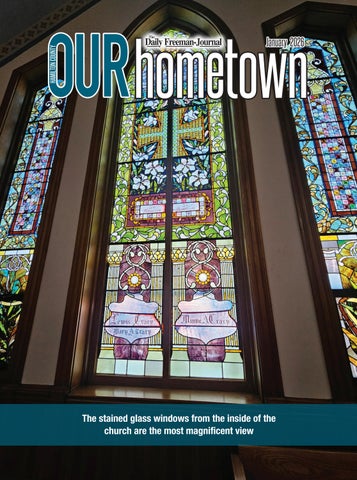
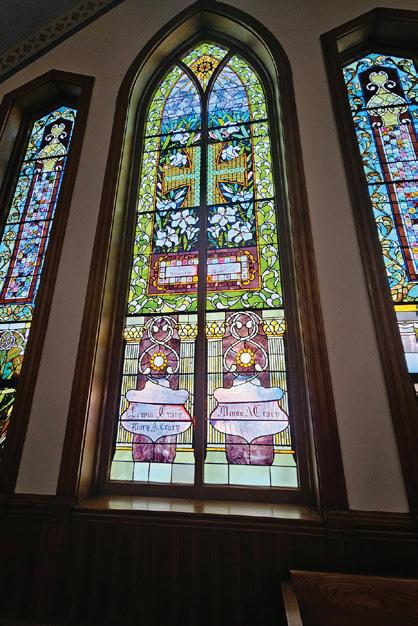
The stained glass windows from the inside of the church are the most magnificent view
PUBLISHER GRANT GIBBONS
EDITOR KOLLEEN TAYLOR
ADVERTISING TREVOR CHRISTENSEN LEANNE DARR
GRAPHIC DESIGN MICHELLE COLSHAN
STORY BY KOLLEEN TAYLOR LORI BERGLUND
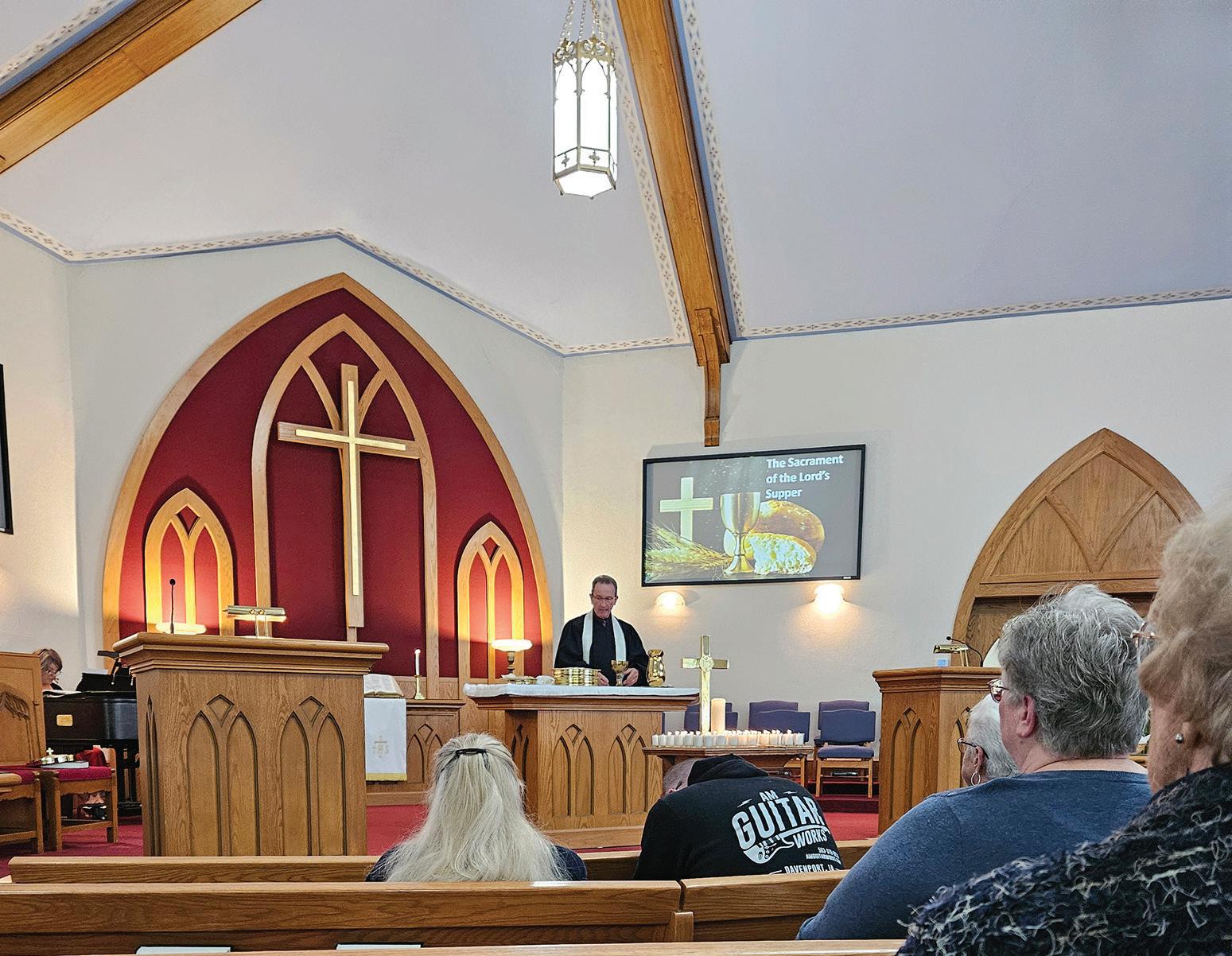
Rev. Craig Blaufuss leads the congregation during the All Saints service held in the fall each year. During this service a candle is lit for all members of the congregation who has died since the prior years service. This format was also used at the Ecumenical Blue Christmas service hosted by the church this past December.
Part 1: Church family
Spiritual guidance with love makes the First Congregational United Church of Christ a family
By Kolleen Taylor
It’s not just a building, it’s not just a church.
Its history and family, faithfulness and leadership all wrapped up in a cozy blanket of love that makes the First Congregational United Church of Christ special.
But there are over seven generations of whispers from the founders that linger in the rafters. The whispers push the congregation to do more, to be more, to help more.
This all stems back to leadership. Names like Kendall Young, the McMurrays, the Covils, the McKees, the Groves and Gescheidlers. Names that continue to link the current congregation to the past. Countless business owners, bank officers, determined farmers and their families who volunteered to not just build a church, but a community.
“I was called to this church in 2010 and I told the search committee that I would plan to stay seven to nine years,” Pastor Craig Blaufuss said, “I did not believe long-term pastorates were generally in the best interests of a congregation.”
“I’m now in my 16th year of service here,” he continued,”Which is a testimony to the life of faith of this church and also to my relationship with her members.”
The members include families who have had ancestors attend this church for over 100 years.
“My daughter Allison calls the church her home,” said Alan Yungclas, “and she hasn’t lived here for almost 30 years.” Yungclas is a descendent of one of the early families of the church, “I have five generations of history here.”
But the church isn’t just living in the past. Visitors sense a difference when they come through the doors. There is a warm, welcoming feeling. It’s not just a friendly church. It is a church built on the history of this community, this county. And it isn’t just those who grew up in the church who feel this way.
“It’s always felt very welcoming,” says Margie Wood, who joined the church in the 1970’s and now lives in Fort Dodge. “It’s why I keep driving here. I feel like it’s home.”
Sharon Perry agreed. She joined the church in 1990’s and also drives over 30 miles to attend church. “This church feels like family,” she said.
It’s not just the people, nor the minister. There is something that comes from beyond the walls, and
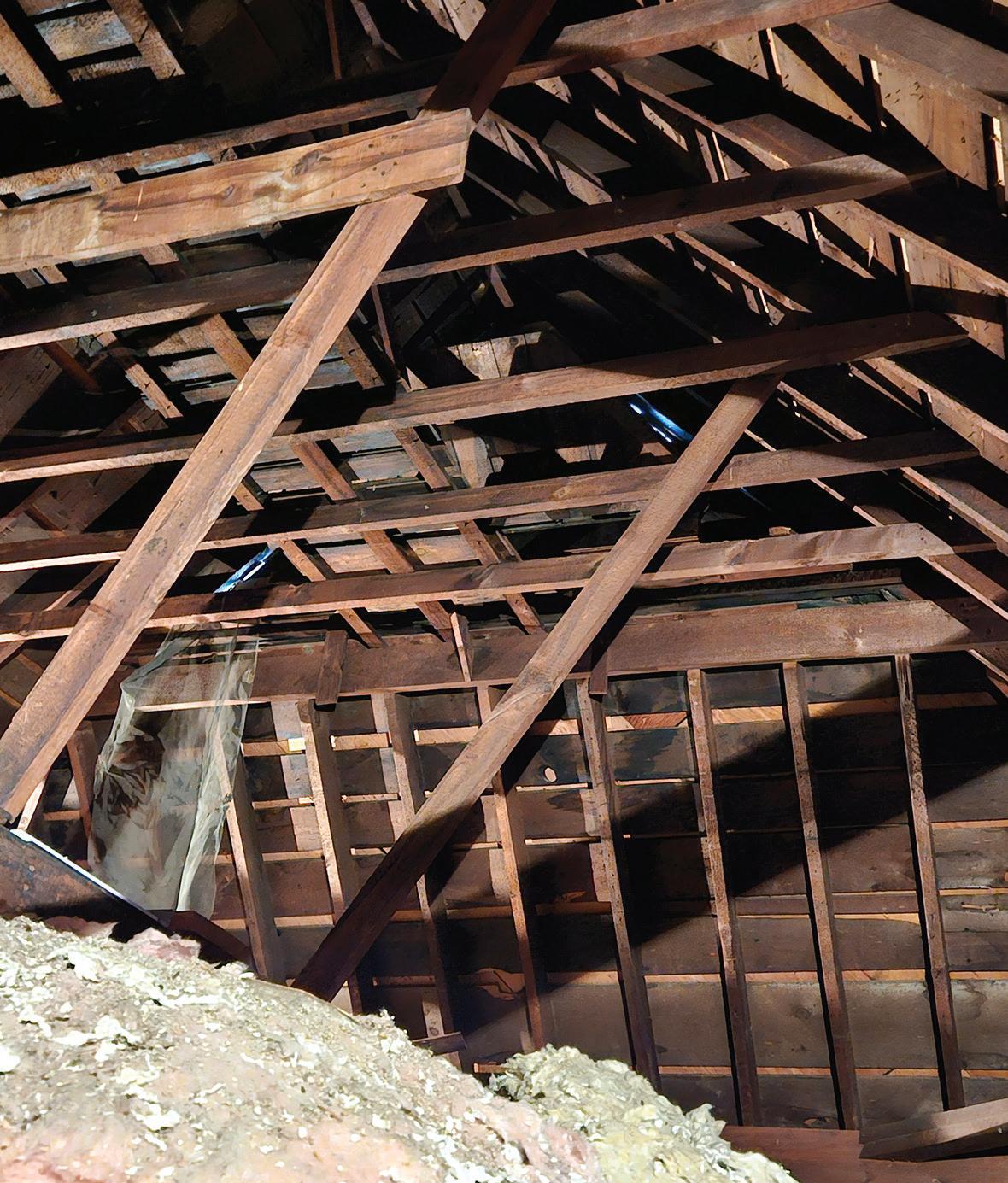
Construction above the sanctuary involves wood that dates back to the 1860’s. It’s a rare chance to walk around the attic above the dome in the church, but there too, the church has to address maintenance on the building.
if you are quiet one can sense several hundred years of faithful servants. It breathes of the faithfulness that keeps this active congregation strong, even as church attendance has declined from it’s peak.
“This church has many strengths, including an inclusive theology that accepts people where they are on their journey of faith,” said Blaufuss.”Our motto is ‘no matter who you are, or where you are at on life’s journey, you are welcome here’--and it has been my experience that this congregation lives that motto out.”
Patty Gescheidler, who will be the church moderator in 2026, and whose heritage goes back to 1864 speaks to the commitment to help others.
“When I lost my job, lost my mom, lost my home, this is what kept me going,” Gescheidler said,
“Without Pastor Craig, without the church, I wouldn’t be here any more.”
Saving the children of the church, saving the people of the community. It comes with the name.
The word congregational in the name of the church indicates it is a church of the people. It’s a connection with God that points to our need to serve.
And serve is what the Congregational Church in Webster City does.
Members of the congregation have taken a serious approach to mission work throughout the years. Today the mission board of the church reaches out every week, every month; not just globally, but locally where they can see the importance of their work.
They work to fund projects that go far beyond the church walls; to local causes; schools, childcare centers, shelters and disaster relief. They provide meals during the summer, during the school year, provide aid and money for stray animals and those who help care for them.
They also go to neighboring communities to help, serving meals in the prison, providing food and clothing, supplies to the shelters.
When disasters hit beyond our reach, from wildfires, hurricanes, tornados and floods, there are always offerings to support those in need. There are continual contributions toward the Heifer Project, the food pantries and Ecumenical Ministries.
Members take their commitment to serving on various boards to support these and other projects in the community and those communities nearby.
The attitude to serve is prominent in the daily work of the church and the story from the pulpit.
“This church has a very active Mission Board and they continue to offer mission opportunities to the congregation at large,” Blaufuss said, “ Our church conducts large thrift sales, with the proceeds all going to mission work. We have served summer lunches both at the school
system and in the park. We now have a Clothes Closet in our lower level where folk can get clothing if they are in need. We are regular supporters of ACE and UDMO and the local food pantries in town, and we support the missions of the local Ministerial Association, including the school Backpack Program and Ecumenical Human Needs.“
The membership does not turn its back on international needs either said Blaufuss.
“We are also active in the missions of our denomination which have a national and global reach, and we have also supported nondenominational global initiatives like CROP, Heifer Project, Stepping Forward ministries of Romania, SERRV, and KIVA microloans to women,” he said.
“This congregation is very friendly, and its members work together very well. They know and care for each other! That kind of closeness and mutual care is very important to me as a pastor, and that is one of the principal reasons I have remained as pastor of this church.”
Rev. Blaufuss is nearing retirement, and the end of his service to the First Congregational United Church of Christ. After providing thought inspiring sermons, Christian education and spiritual guidance that has blessed the congregation, his step away from the church,his departure will be more like losing a dear member of the family.
Although the church membership has been searching for a new minister, the number of people training to enter the ministry are few. With guidance from Pastor Blaufuss, members
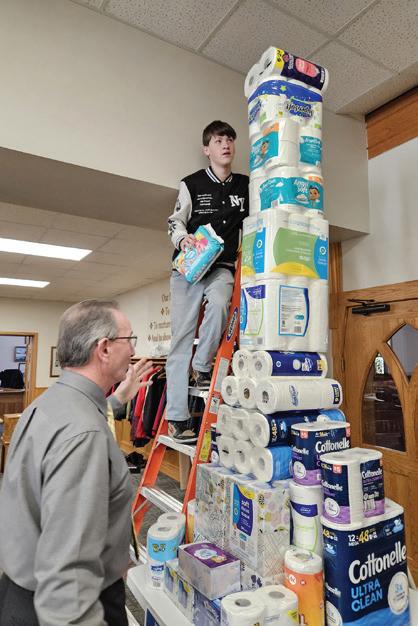
Building a tower from paper products are Pastor Craig Blaufuss and Tristan Tusing who were hoping the paper donations donated by church members for the food bank requests would reach the ceiling. They did!
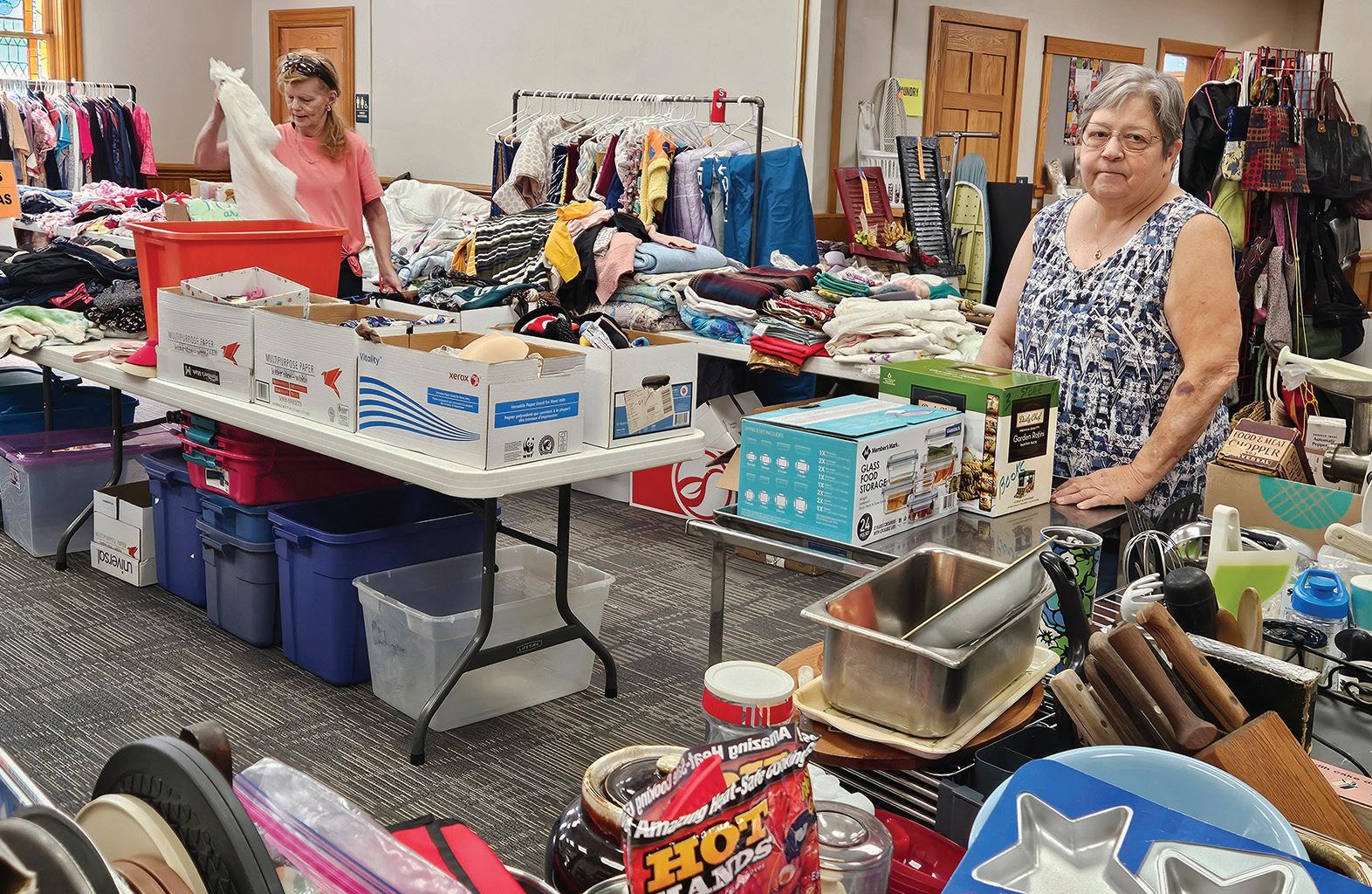
The semi-annual thrift sale at the First Congregational Church normally generates around $2,000 to $3,000. All the proceeds after expenses go into community needs. Benefactors are almost always outside organizations that need money, often the food pantries, the Cat Hut, ACE (All Cultures Equal), DSAOC, Ecumenical Human Needs, Backpack program, and many others.
have taken steps to fill in upon his departure. Wil Groves, another descendent from the early church, has been in charge of a task force to address the changes in the church, and serves on the search committee. As a progressive step, members of the church have signed up for the many roles the minister plays in the congregation in the event a new minister cannot be found.
Members have already stepped into the pulpit, trained with the pastor, creating another layer of service not only for each other but to the community at large.
They are ready for the next generation.
Part 2: 135 years and still standing strong: the structure behind the people
By Kolleen Taylor
The history of the First Congregational Church is well documented, with file drawers of minutes and records dating back to the first days of congregating.
The first records of this church say simply: “Met on the 12th of August , 1855 to organize a Congregational Church in Webster City, consisting of five members: George D. Wheeler and wife, Leslie Grant and wife and John G. Hancock.”
This meeting for the organization was held less than a year after the plat of the town of Newcastle was signed, only thirty days after the signing at Newcastle of the plat of the town of Webster City and twentyeight days before the post office was established.
These words open a well documented history of the church that was printed first at the 100th anniversary, then at its 150th anniversary. 2025 marked the 170th year since it was organized.
These contents were compiled from minutes and records that remain in fireproof files and cabinets. The pages are worn and yellowed, but the precious information is compiled in the history books of the church.
The church members were meeting in homes and in stores in those earliest years, eventually stepping up to meeting at the log built school house. The first building owned by Congregational Church was in 1864, when the school was purchased when a new school building was constructed in Webster City The congregation modified it and set it up as a meeting house, where they would worship.
By January of 1869, a building committee was formed to build a new church. Several members of that committee are known for other good deeds in the city. They were Henry McKee, Hiram Zelie, Jesse R.
Burgess, Kendall Young and Jacob M. Funk. The new wood church was ready for worship by December 1869, but was not dedicated until January of 1871.
However, by 1890, the congregation had outgrown the church and a new building committee was established. Again, those names would be familiar as Covil, Estes, McMurray, McMurchy and Eyer were appointed.
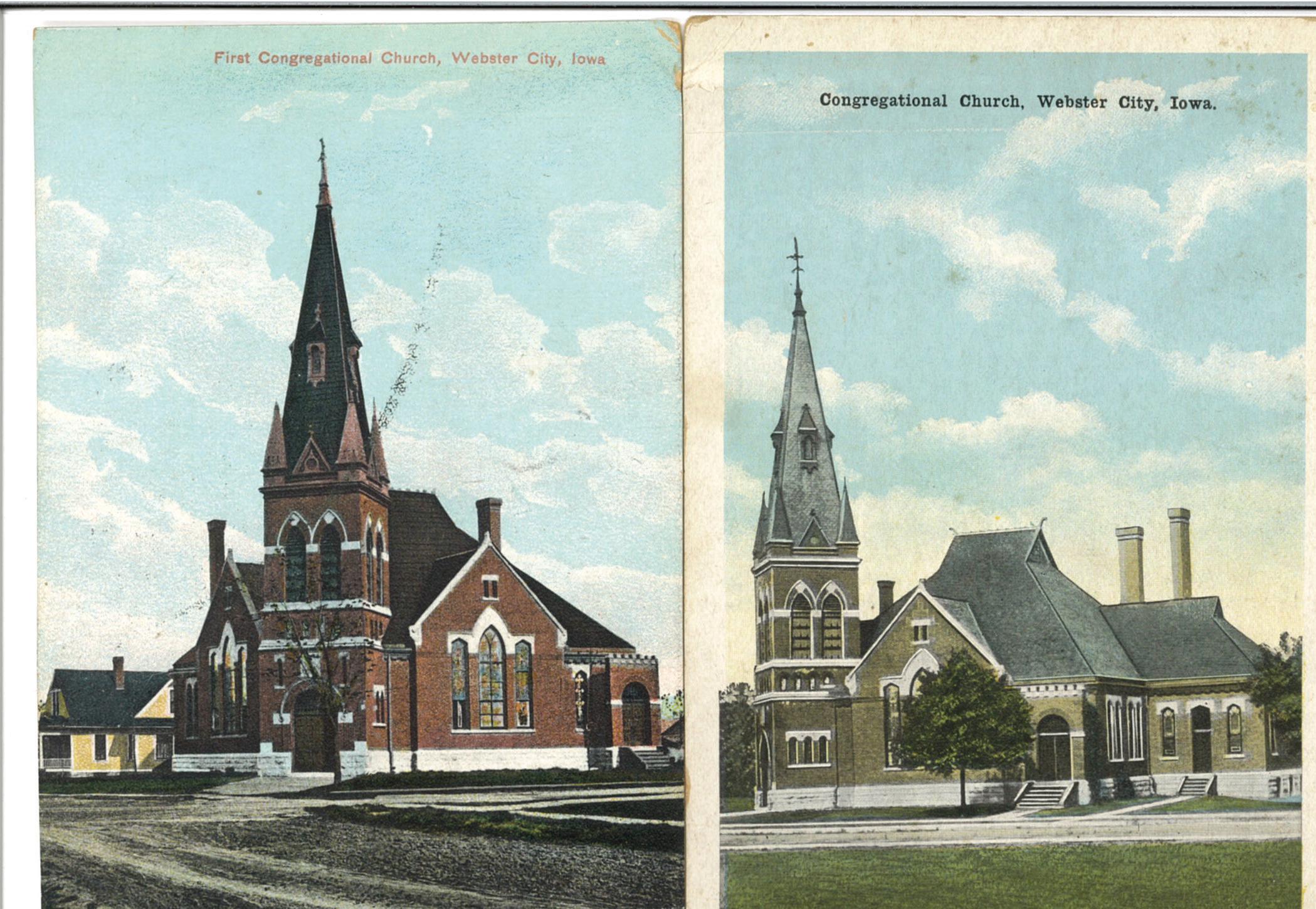
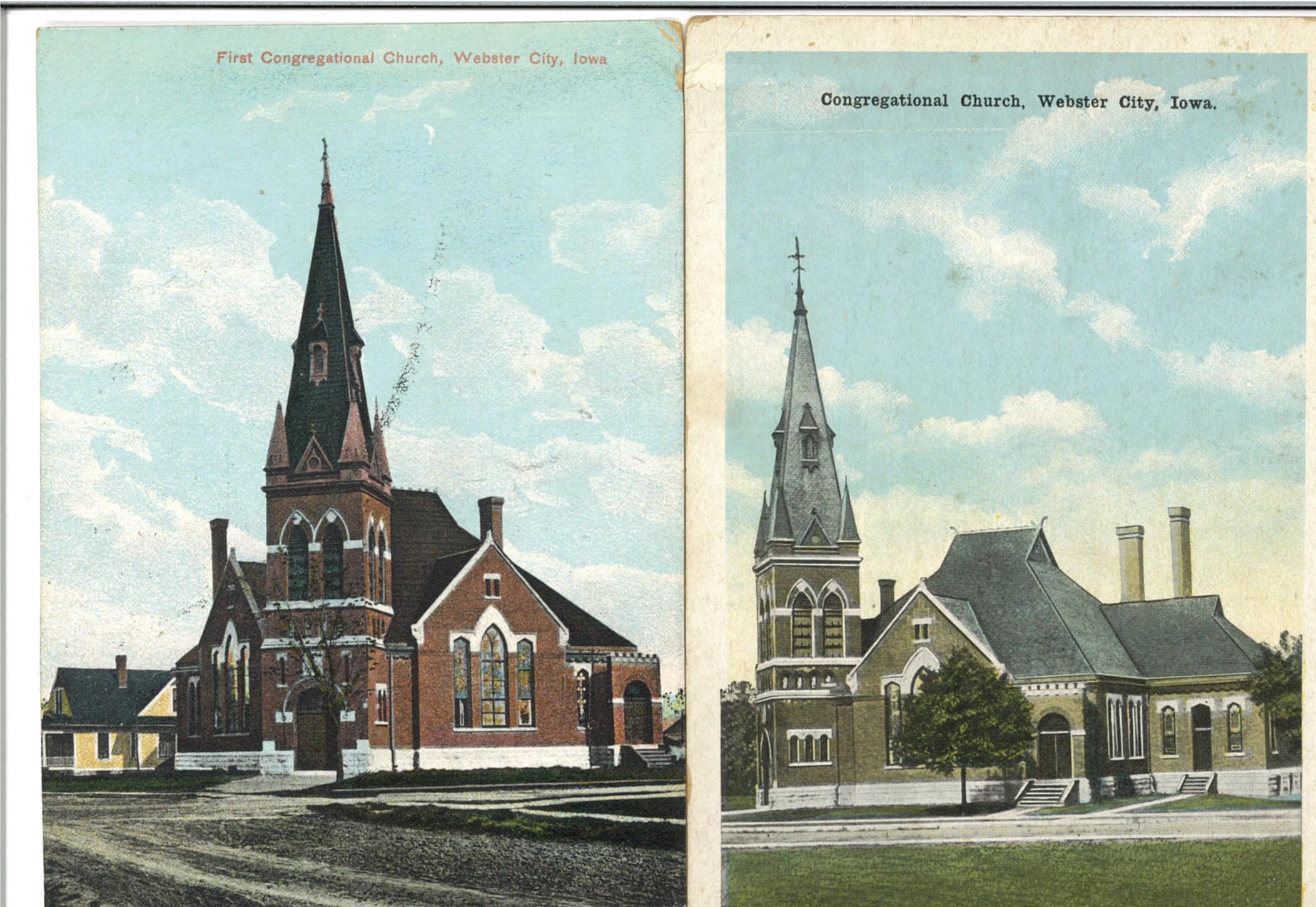
When the wooden church was torn down, the practical church members used many of the materials in the new, brick faced building. It was dedicated January 1, 1891.
Today we see on the corner of Willson and Bank Streets, the church after remodeling and much repair. Gone are the tall steeples and chimneys. A flat roof tops the belltower. Additions and remodeling have altered it from the interior, with new roofs, tuckpointing and replacement of heating and cooling systems many times over.
But the old bones are more than 135 years old. You can see those bones when you climb to the attic through the bell tower. You can see the foundation made of brick and stone in the catacombs under the sanctuary.
Its rafters and foundation were built by hands that made sure services were held in the midst of the
prairie. Meeting together since 1855, the history of the church includes relics and pieces of a time when construction had no cranes, when timbers were hand cut, and bricks were created out of local materials by dedicated manpower.
The church itself won’t make the list of historic places, even though it has many elements of its origin. It’s been remodeled over the years, accommodating a growing congregation, aging members and expanding church needs.
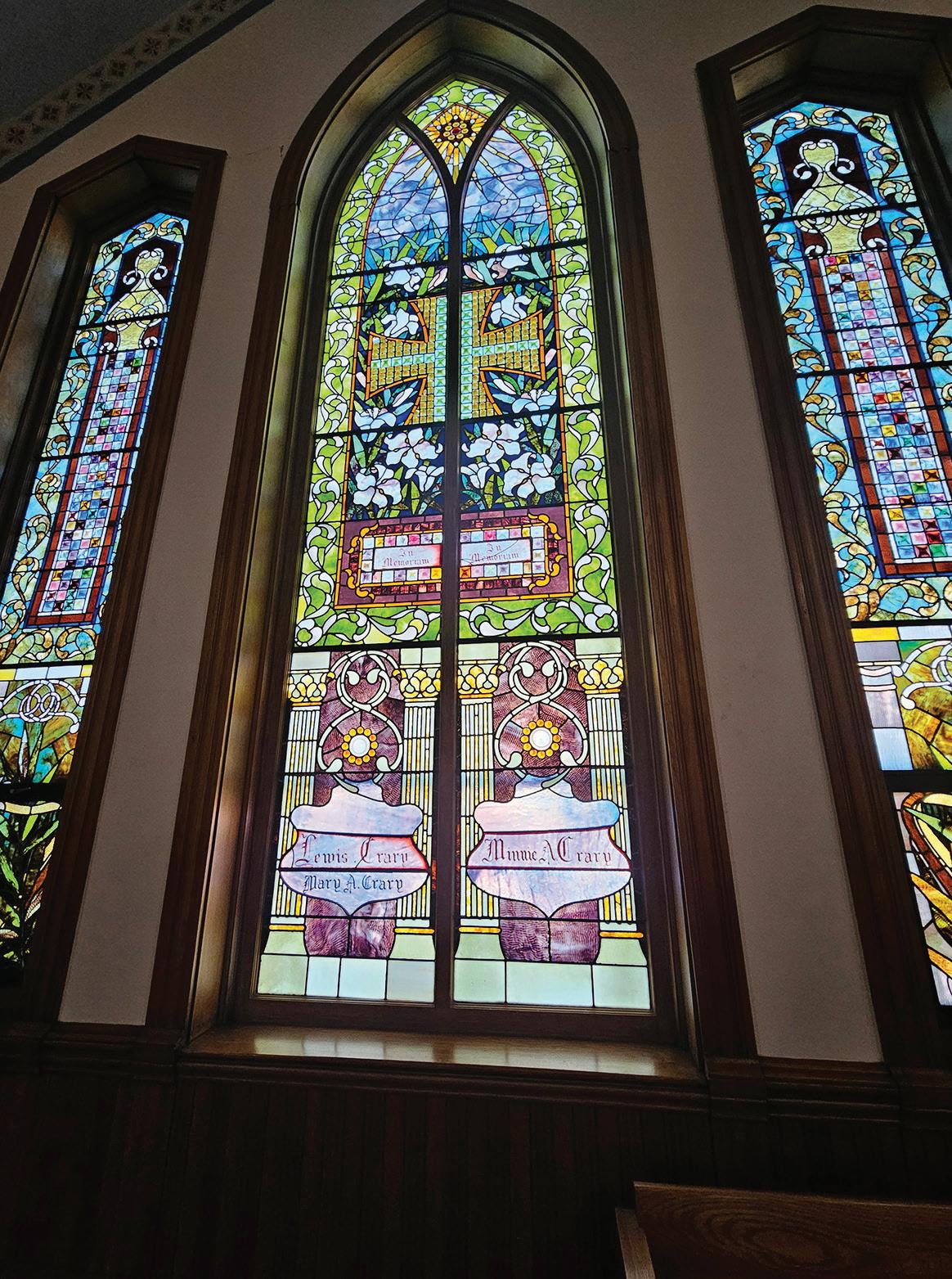
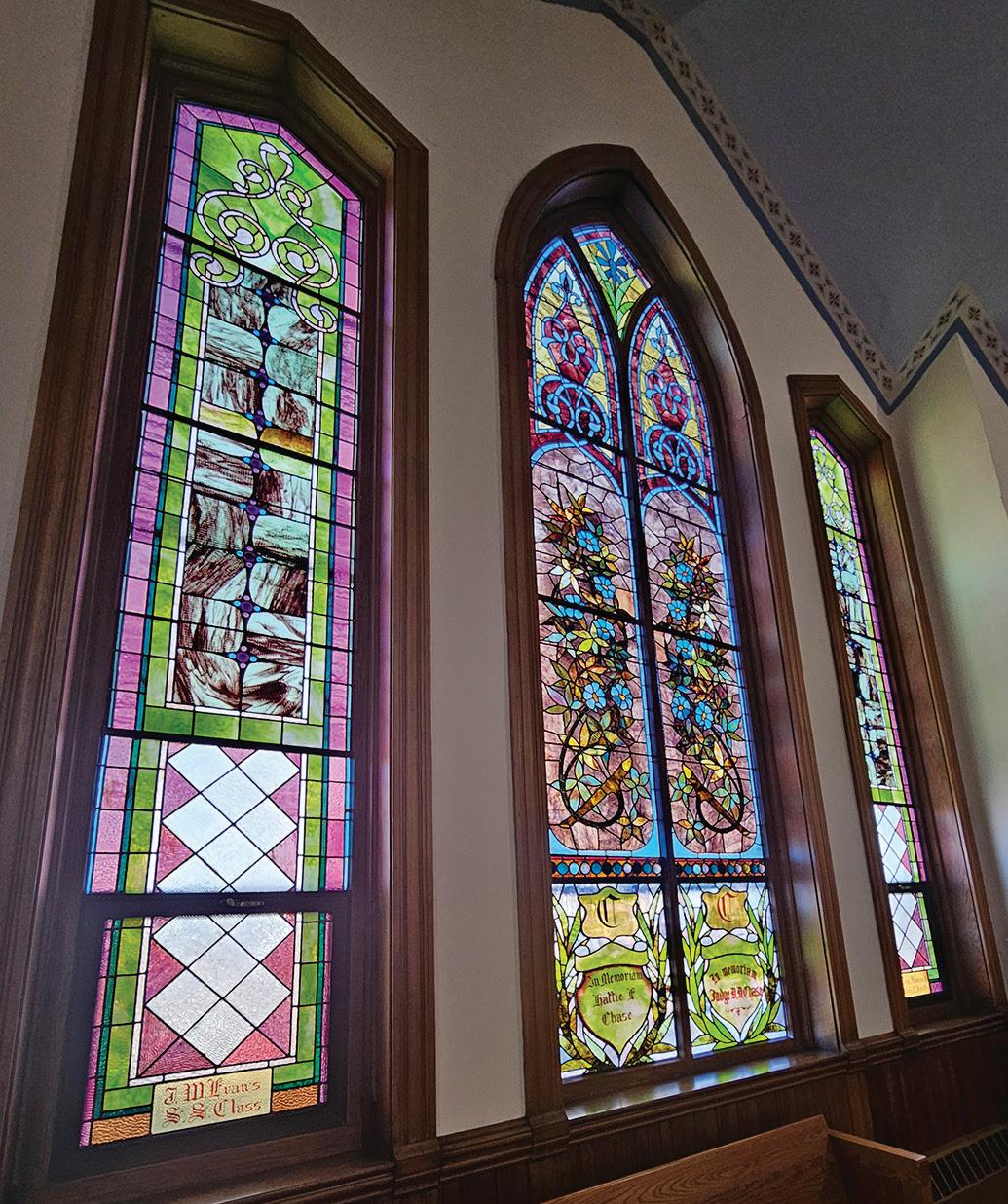
The sanctuary itself is almost a work of art. The acoustics make the organ swell inside reaching into the soul of the congregation. Standing at the pulpit, the brilliant colors of the stained glass windows sparkle, allowing the joy of color dance within the pews. The bejeweled windows create a sense of beauty and calm that settles the soul.
Those windows face north, south, east and west. They were placed lovingly into the sanctuary with the type of artistry and craftsmanship that would be nearly impossible to duplicate today. The majesty of just the windows makes your heart open a bit wider, your brain comprehending the skill and beauty that was available in this country church.
Those windows which light up our sanctuary, were carefully restored during the last decade. At a cost which seemed overwhelming at the time, the funds were raised amongst the congregation. Professionals came and slowly dismantled the windows, taking great care to document with precision and respect.
They said they were special. The membership agreed.
Today, despite the efforts to maintain the oldest churches in our state and country, many are disappearing. Taking with them are the congregations that supported them, the people who became family, those who sacrificed so much to build them.
Reverend Craig Blaufuss, who has served as pastor of this church since 2010, watched the stained glass project in awe.
“We take great pride in our building which was constructed in 1890, with additions and modernizations going on to this day,” he said, “ Like many churches of our times we are struggling with attendance and attracting younger families, but our church remains faithful to the gospel, to the work placed before us in this community and beyond, and to one another.”
In spite of the expense of maintaining the historic church, the membership doesn’t slight the ongoing mission work to the greater community and instead raises money from within to make repairs to the existing church.
It’s a constant issue that is addressed by the trustees and cabinet members of the church. Currently work has been contracted on the belltower, a section of the church that is not used but for an entrance. A choice was made to maintain the current look of the church, hiring a mason who understood the brick, the limestone and the bones that hid under each layer.
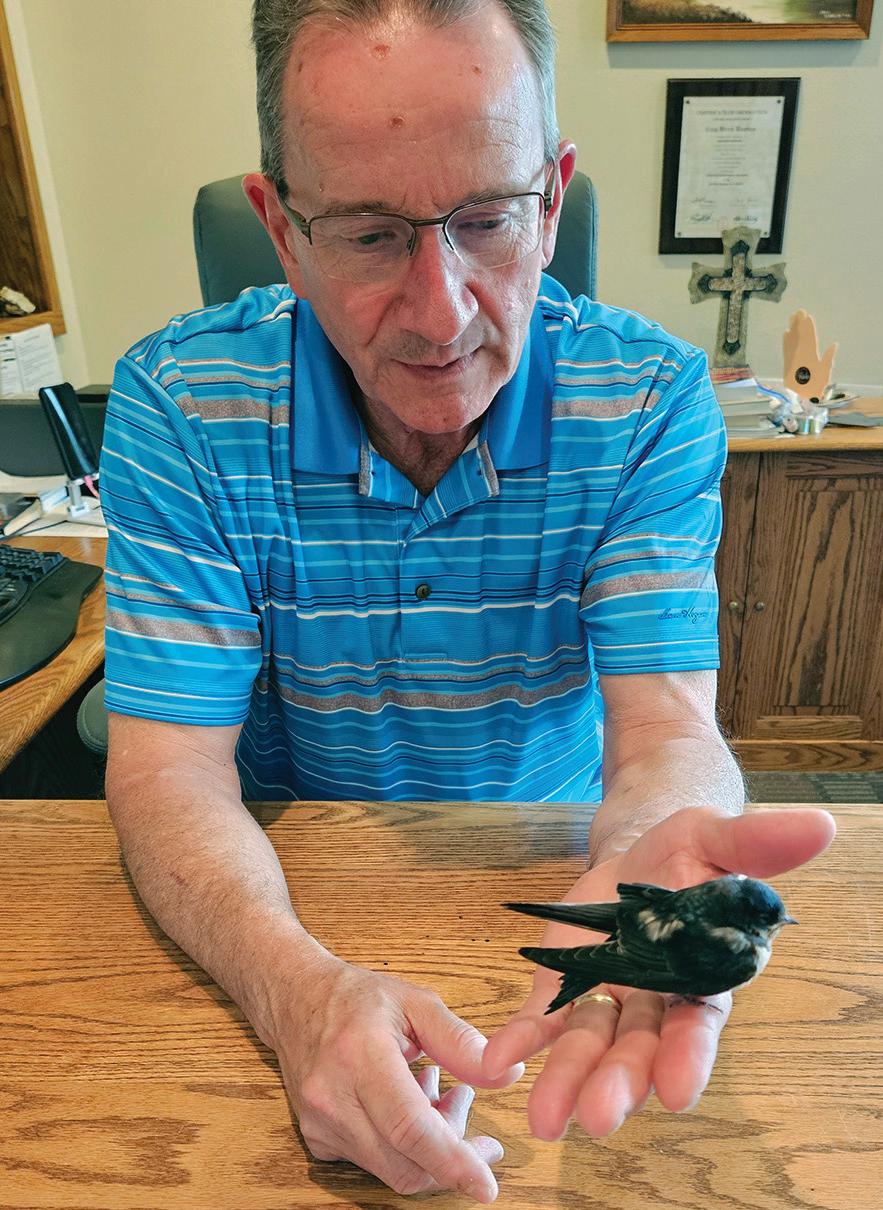
Pastor Craig Blaufuss of the First Congregational Church tries to save a small bird he found lying on a sidwalk outside a business. His love of animals, nature and all of God’s creatures is often expressed during his sermons. His message of God’s love doesn’t stop with people.
Construction practices have changed a lot between 1855 and2026. The challenge for repairs was to find someone who understood the materials that were used in the church, and then know how to repair or replace them.
James Vesey of Fort Dodge is the mason the church has hired to do the most recent work on the brick and foundation. His work began in 2025, examining the materials used, and then systematically correcting problems he encountered.
It’s a labor of love, a love of the old bones, the generations of sacrifice that created the building, the love of history, the love of family.
For the love of service to God.
Books We Love
The passing of Tatiana Schlossberg in recent weeks took me back to one of my favorite books; one that I had not read for many years, but which has at least one quote that I think of often.
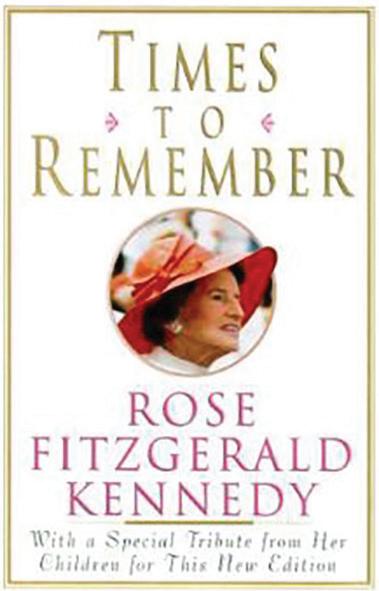
“Birds sing after a storm; why shouldn’t people feel as free to delight in whatever sunlight remains to them,” wrote Rose Fitzgerald Kennedy in her 1974 autobiography, “Times To Remember”.
That line has often reminded me that we must always look for bright skies when we are walking through the storms of life. It’s a reminder for those who grieve that it’s not only OK to smile and laugh again, but it’s really the best way to honor the one for whom we grieve.
If I could send Tatiana’s mother, Caroline Kennedy Schlossberg, anything right now, I would send her a fresh copy of her grandmother’s memoir, “Times To Remember”. It is a beautiful story of finding strength amid the challenges of life.
by Lori Berglund
Times to Remember
Be sure to sing after every storm
Despite great wealth, few mothers have experienced a harder life than Rose Fitzgerald Kennedy. She would bury four of her nine children. Her eldest son, Joseph P. Kennedy, was killed when his plane exploded in World War II. Daughter Kathleen Kennedy Cavendish was killed in a plane crash in 1948. President John F. Kennedy was assassinated in 1963, followed by Sen. Robert F. Kennedy, assassinated in 1968.
No wealth can make up for such a life of loss for a mother.
But “Times to Remember” is not a ‘woe is me’ memoir. You will find no self-pity in these pages. It is the story of an extraordinary life lived on the world stage throughout most of the 20th century. She was a woman who was never free of public criticism, but few would ever say that she was anything less than a vision of grace under pressure — even extreme pressure.
Grace and dignity, I believe, could do much to help the world today. It’s not that we need to dress up when we board an airplane (although I really don’t care for pajamas at the shopping mall), but we should always conduct ourselves in a way that respects others.
In “Times to Remember”, readers will be taken back to when this iconic family first came to the United States as a result of the potato famine that swept through Ireland in the mid 19th century. Readers will learn about her childhood as the daughter of Boston Mayor, John Francis Fitzgerald, or ‘Honey Fitz,’ as he was known.
It continues on to her marriage to Joseph Kennedy, Sr. and his work as ambassador to Great Britain in the years leading up to World War II. For me, the interesting perspective is that the senior Kennedy was an isolationist and was eventually fired by President Franklin Roosevelt from the post of ambassador prior to Pearl Harbor.
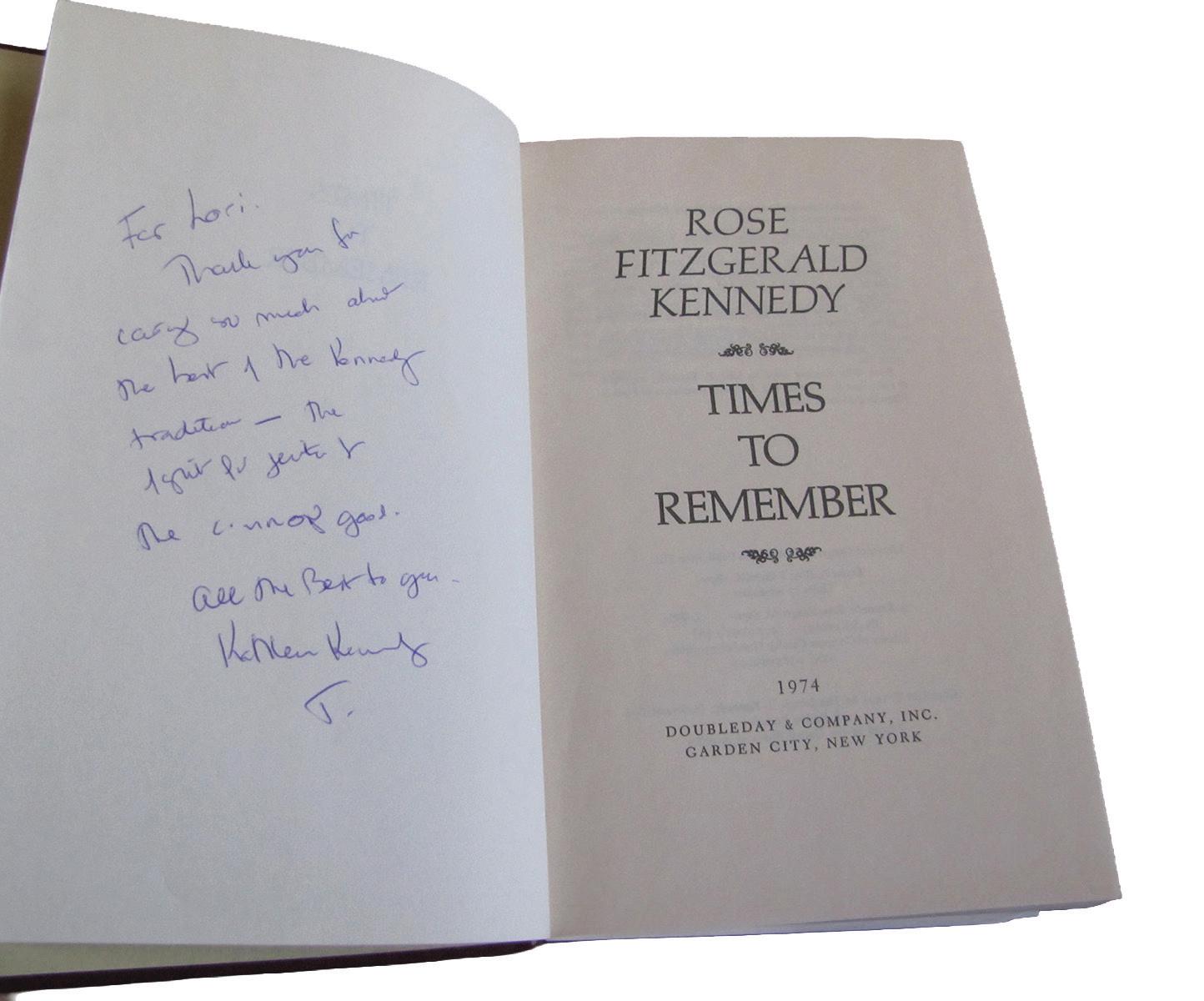
Photo by Lori Berglund
Rose Fitzgerald Kennedy’s granddaughter, Kathleen Kennedy Townsend, autographed this copy of “Times to Remember” during a 2007 visit to the Webster City home of Ron and Janet Adams. She was in the community to campaign on behalf of Hillary Rodham Clinton.
We sometimes forget that we didn’t really want to go to war. We were bombed into it. I think that it is worth remembering this: why would any father of nine want to enter a war hastily? There is no more serious business, and why shouldn’t we seek to stay out of war when possible? Later on, the former Ambassador Kennedy would indeed come to support the Allied efforts during World War II.
The book includes an interesting mixture of family photos that are sometimes funny and sometimes amazingly grand. It’s striking to realize that this is a family who has attended the coronation of British monarchs, the elevation of Roman Catholic pontiffs and the swearing-in of U.S. presidents. Those are great pictures.
I also love the one of the future Sen. Edward M. Kennedy with brother Bobby in their gas masks as little boys, photographed while living in England during 1939. The gas masks were not things of play, but a fact of life in London at that time.
The book continues on to the post-war years and the election of President Kennedy. We all know how the story ends. But it’s interesting to read how the family sometimes responded to tragedy.
Now, to be sure, this is written as a loving memoir about her family. Rose Fitzgerald Kennedy is not going to air dirty laundry. I wouldn’t expect that. And heaven knows that enough other writers have taken care of that job over the years.
If you wish to learn a little history and be uplifted along the way, I really can recommend “Times to Remember.” So if the long winter has you down, make note: If the matriarch of a family with so much tragedy can write a book with this much optimism, we should all look ahead for the positive things in life.
Spring is coming, and one day soon we can each walk outside and hear the birds lifting their small voices in jubilant song after a rain storm.
CITY SCENE
Mayon John Hawkins
Happy New Year Webster City, all
the best for 2026.
Webster City has a new makeup of City Council this year, and I look forward to working with them to keep making our City better. Change is good; it gives us a chance to look at things differently and often for the better. Change is not always easy but we are constantly changing even if we don’t notice.
Webster City’s new Wastewater Treatment Plant is finally becoming a reality with DNR approvals, contracts being looked at and contractors being hired this year. John Harrenstein, our City Manager, has been working on the new designs to make this an affordable WWTP for Webster City since he was hired, as he saw no good way for us with the proposal we had. John now is in his third year with us and has been a great change that we needed.
CITY SCENE
CITY SCENE
Downtown buildings, always a controversial subject, is a necessity for us to be involved in, more than just making ordinances and enforcing them. We are looking at partnering with the building owners to do the work needed to keep them from deteriorating and also have them create a good source of income from upstairs rentals so they can afford to do the upkeep needed for any building.
We do not know what this collaboration will look like yet but it is one of many things the Council will be working on this season.
Housing is also a constant problem for us at City Hall. I believe we are having too many houses abandoned or in such a bad condition we have no choice than to take them down. We have programs at the City to help low to moderate income residents that own their house and are in good standing with payments and taxes to receive funds that are forgivable to repair your house. If you think you fall into this category, please call City Hall 515-832-9151 to see what is available to you. Heart of Iowa Regional Housing Trust Fund is one funding source. A house
is like your car. It needs servicing, some parts last for years, others need yearly work. Let us try to do better with what we have.
We have a lot to be proud of in Webster City and Hamilton County. Great schools, great library, great recreation center, great parks and trail systems, great hospital and great people working to make everything happen and great neighbors and friends.
I am proud to say I live here and try to make a difference whenever I can. Let’s have a great year. Help your neighbors, volunteer when you can, make a difference. All the best!
John Hawkins, Mayor Webster City
LET’S EAT
Zesty wings make a perfect playoff party palate pleaser
Football fans know there’s nothing quite like the playoffs. Whether your passion rests with college football or the action on the professional gridiron, there’s plenty of exciting football to watch in the early weeks of winter.
Game watch parties are wildly popular. Indeed, big games are even more enjoyable when watched alongside fellow fans. When hosting a game watch party at home, certain culinary staples, including chicken wings, need to make an appearance. Fans hosting playoff parties this playoff season can ensure guests get what they need by offering up these “Zesty Chicken Wings” from Lines+Angles.
Zesty Chicken Wings
Makes 4 servings
For the marinade:
1 tablespoon olive oil
1 small white onion, finely chopped
2 cloves of garlic, finely chopped
1⁄2 cup fresh cilantro, finely chopped
2 tablespoons fresh lemon zest
2 tablespoons fresh lemon juice
2 cups Barbecue sauce (your favorite)
1⁄4 cup sherry vinegar
1 teaspoon turmeric
For the chicken wings:
1 1⁄2 pounds chicken wings
Salt, to taste
Freshly ground black pepper, to taste
1 tablespoon oil, for the grill
1. Combine all of the ingredients for the marinade in a food processor. Pulse until blended well.
2. Rinse chicken wings under cold running water and pat dry with paper towels. Season with salt and pepper.
3. Place the marinade and chicken wings into a large resealable plastic storage bag. Seal the bag securely. Squeeze the bag several times coating the chicken wings thoroughly with marinade. Place the bag in the refrigerator and marinate overnight.
4. Prepare the grill for direct grilling. Brush the grill grate lightly with oil. Barbecue the wings over medium hot coals or at medium high-heat for 5-7 minutes on each side (turning once, halfway through) until they are cooked through and golden brown.
5. Serve with your favorite dipping sauce (optional).
LANDMARKS
How well DO YOU know Hamilton County?
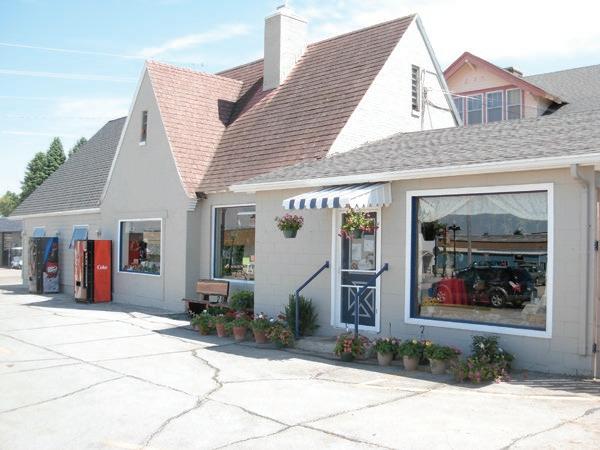
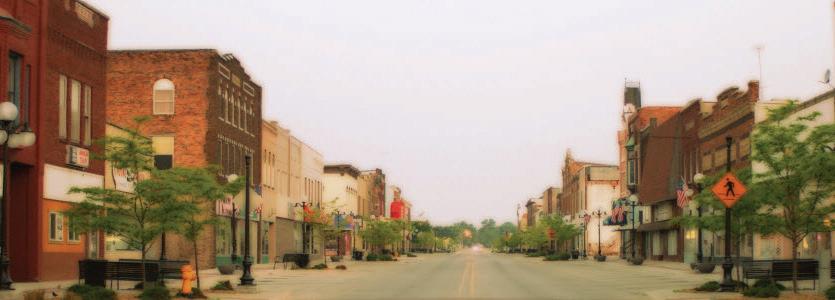
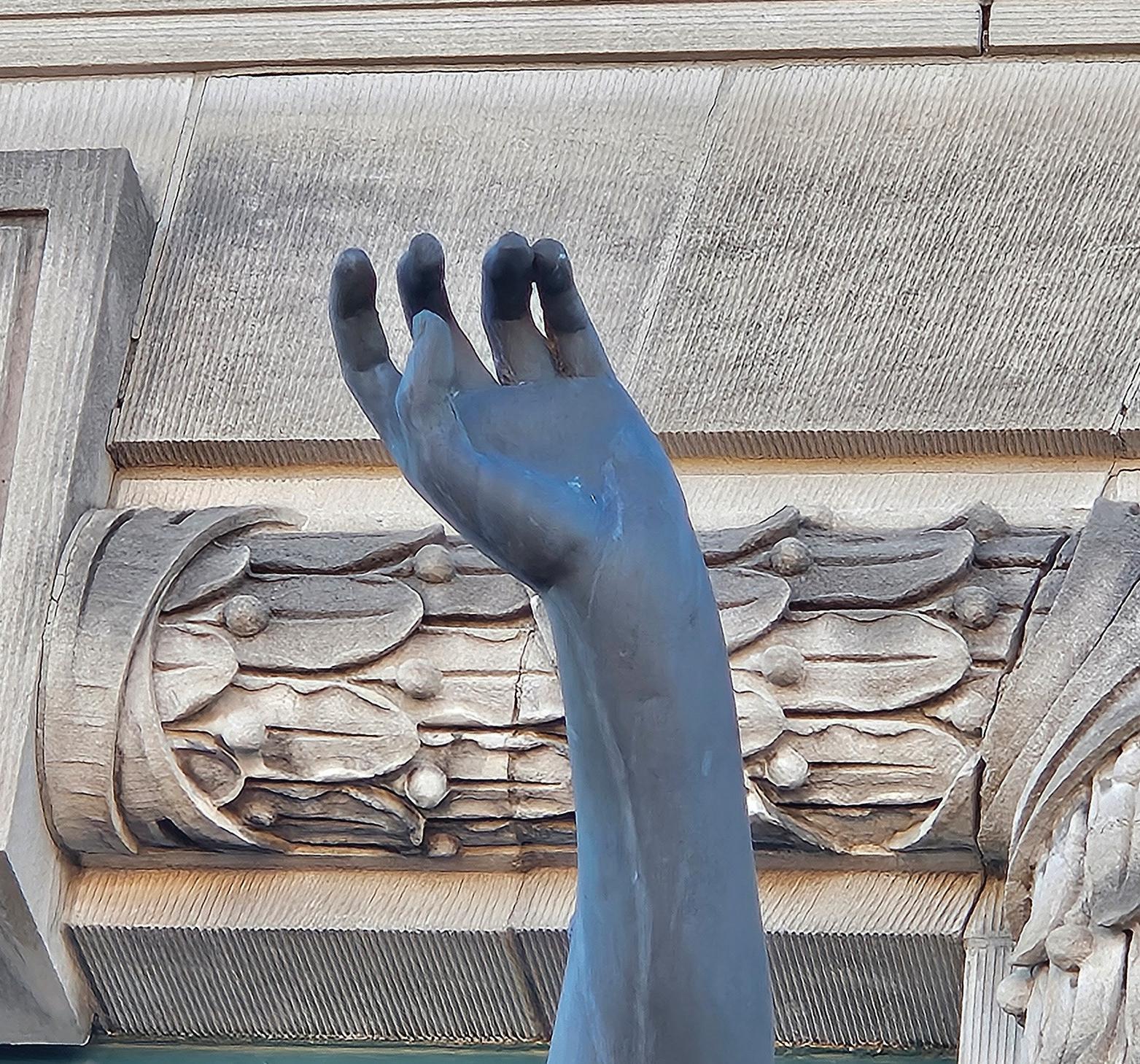
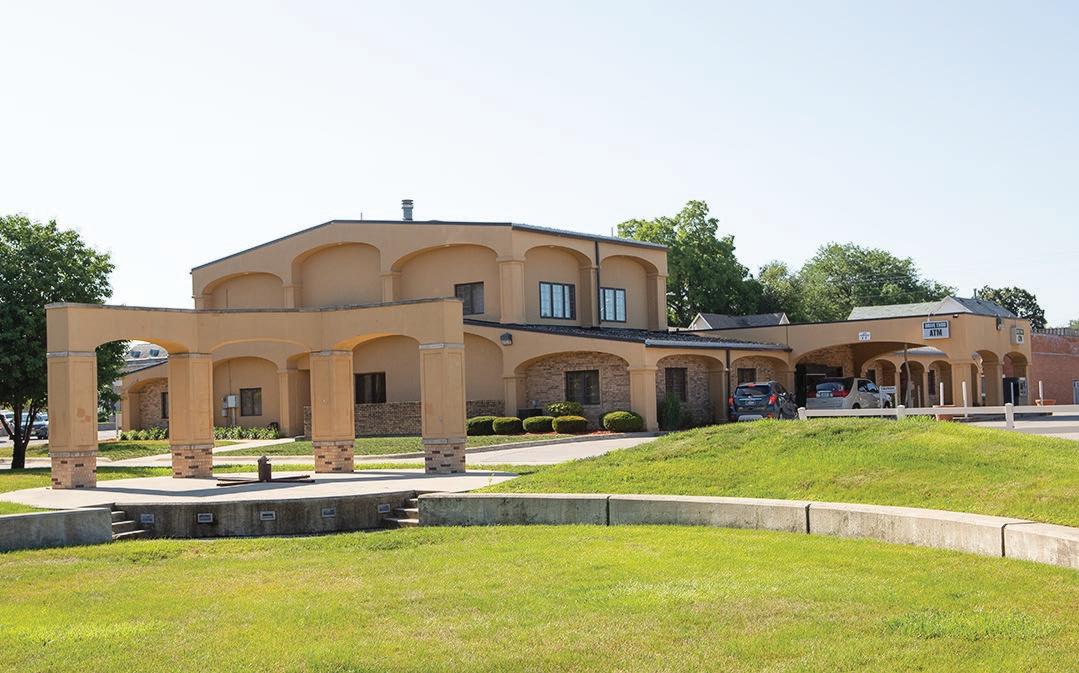
Look at these photos and see if you can identify these local landmarks.
Photo #1
SAVVY SENIOR
by Jim Miller
What You Should Know About Prepaid Funeral Plans
Dear Savvy Senior ,
I have been thinking about planning my funeral in advance so my kids won’t have to later but would like to inquire about prepaying. Is it a good idea to prepay for a funeral that you might not need for a while?
Aging Annie
Dear Annie,
Planning your funeral in advance is definitely a smart move. Not only does it give you time to make a thoughtful decision on the type of service you want, it also allows you to shop around to find a good funeral provider, and it will spare your adult children the burden of making these decisions at an emotional time.
But preplanning a funeral doesn’t mean you have to prepay too. In fact, the Funeral Consumer Alliance, a national nonprofit funeral consumer protection organization, doesn’t recommend it unless you need to spend down your financial resources so you can qualify for Medicaid. Here’s what you should know.
Preneed Arrangements
Most funeral homes today offer what is known as “preneed plans” which allow you to prearrange for the type of funeral services you want and prepay with a lump sum or through installments. The funeral home either puts your money in a trust fund with the payout triggered by your death or buys an insurance policy naming itself as the beneficiary. If you’re interested in this route, make sure you’re being guaranteed the services you specify at the contracted price. Some contracts call for additional payments for final expense funding, which means that if the funeral home’s charges increase between the time you sign up and the time you sign off, somebody will have to pay the difference. Here are some additional questions you should ask before committing:
• Can you cancel the contract and get a full refund if you change your mind?
• Will your money earn interest? If so, how much? Who gets it?
• If there is an insurance policy involved, is there a waiting period before it takes effect? How long?
• Are the prices locked in or will an additional payment be required at the time of death?
• Are you protected if the funeral home goes out of business or if it’s bought out by another company?
• What happens if you move? Can the plan be transferred to another funeral home in a different state?
• If there’s money left over after your funeral, will your heirs get it, or does the home keep it?
If you decide to prepay, be sure to get all the details of the agreement in writing and give copies to your family so they know what’s expected. If they aren’t aware that you’ve made plans, your wishes may not be carried out. And if they don’t know that you’ve prepaid the funeral costs, they could end up paying for the same arrangements.
Other Payment Option
While prepaying your funeral may seem like a convenient way to go, from a financial point of view, there are better options available.
For example, if you have a life insurance policy, many policies will pay a lump sum when you die to your beneficiaries to be used for your funeral expenses. The payment is made soon after you die and doesn’t have to go through probate.
Or you could set up a payable-on-death (or POD) account at your bank or credit union, naming the person you want to handle your arrangements as the beneficiary. POD accounts also are called Totten Trusts. With this type of account, you maintain control of your money, so you can tap the funds in an emergency, collect the interest and change the beneficiary. When you die, your beneficiary collects the balance without the delay of probate.
Breakfast sandwiches are an early morning comfort food
Fried Egg, Bacon, Cheese and Tomatoes on a Bread Roll
Makes 4 servings
4 bread rolls, split in half horizontally and toasted
8 slices thick bacon
4 large eggs Salt, to taste Freshly ground black pepper, to taste
4 slices cheddar cheese
1 fresh tomato, rinsed and sliced
Comfort food is often associated with dinner fixtures like meatloaf and baked ziti. But comfort also can be served up at the breakfast table.
Breakfast sandwiches are wildly popular and can act as early morning fuel after a good night’s rest. When the urge strikes to prepare some early morning comfort food, cooks can look to this recipe for “Fried Egg, Bacon, Cheese, and Tomatoes on a Bread Roll” courtesy of Lines+Angles.
1. In a skillet set over medium-high heat, cook the bacon until nicely browned and crispy. Drain bacon on paper towels.
2. Remove most of the bacon drippings from the pan and fry the eggs to your liking. Season to taste with salt and pepper.
3. Arrange a slice of cheese and 2 slices of cooked bacon on the bottom half of each roll. Add tomato slices and a fried egg to each. Top with the remaining half of the bread roll. Serve.